
Height is still the reason most couples come to me for a stacked cake, but the requests have changed. People now ask for one clear idea carried all the way up: smooth buttercream with pressed petals, Lambeth piping, a single color, a sculpted tier. A cake built around one idea reads well from across the room and still holds up when the photographer leans in. Below are thirty versions I’m asked about most, with notes on how each one behaves once it leaves my kitchen and sits on a reception table for a few hours.
Guest Count Sets the Tier Sizes Before Style Does
The first number I ask for is not your budget, it’s how many people will actually eat cake. Tier sizes follow from that. Wedding portions are small, about one inch wide and two inches deep from a four-inch-tall tier, so the cake needed is usually smaller than couples expect.
- A 6-inch round gives roughly 12 wedding slices, an 8-inch about 24, a 10-inch about 38 and a 12-inch about 56. Bakers cut differently, so treat these as rough guides.
- Square tiers give a few more slices than round ones of the same width.
- If you want more height than your guest count needs, ask about one or two decorated dummy tiers made of foam. They look identical and cost less, though the price difference varies by baker.
- If you plan to save the top tier for an anniversary, take it out of the serving count.
I’d also ask whether you want slices served from the display cake at all. Many venues cut from a kitchen cake so the display can stay standing for photos longer, which changes the size you need.
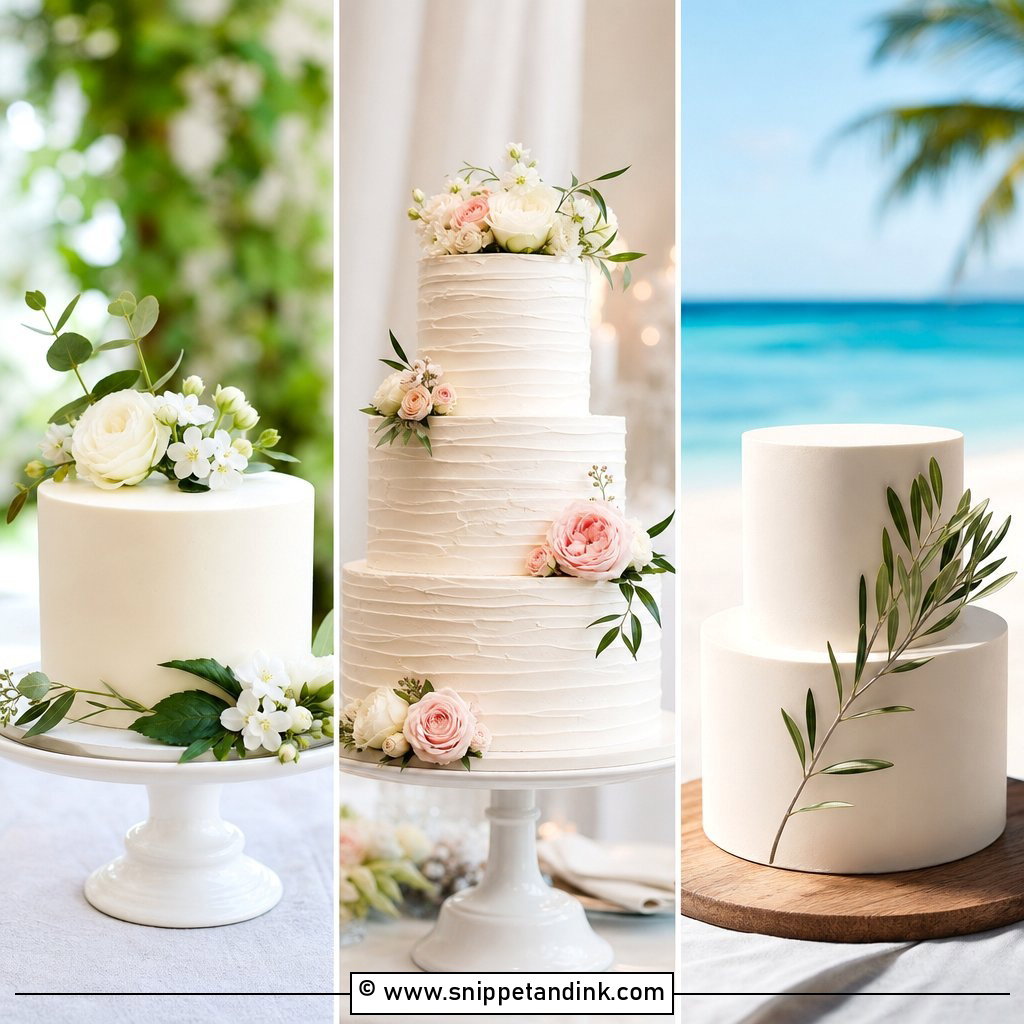
1. Classic White Tiered Wedding Cake
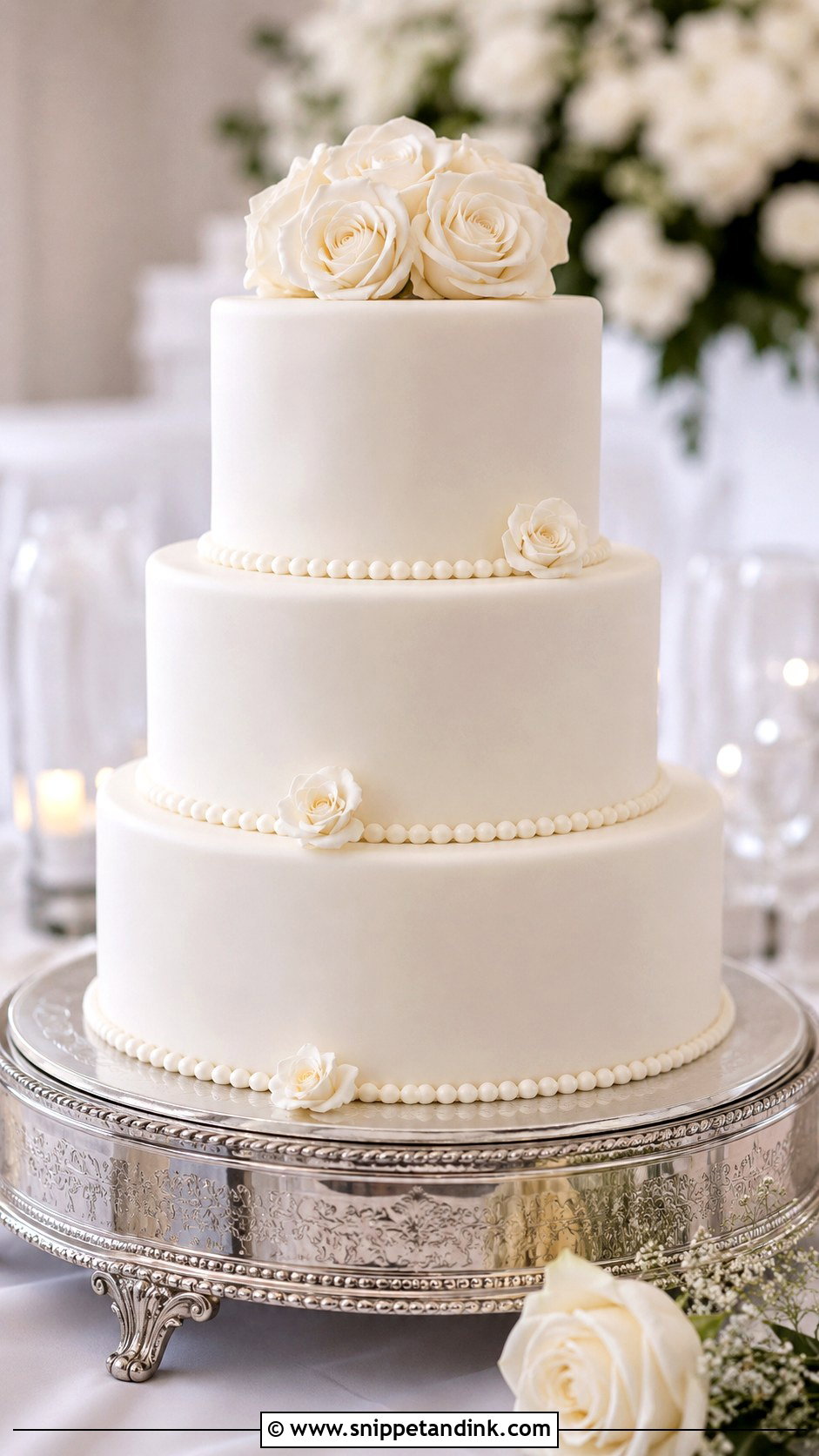
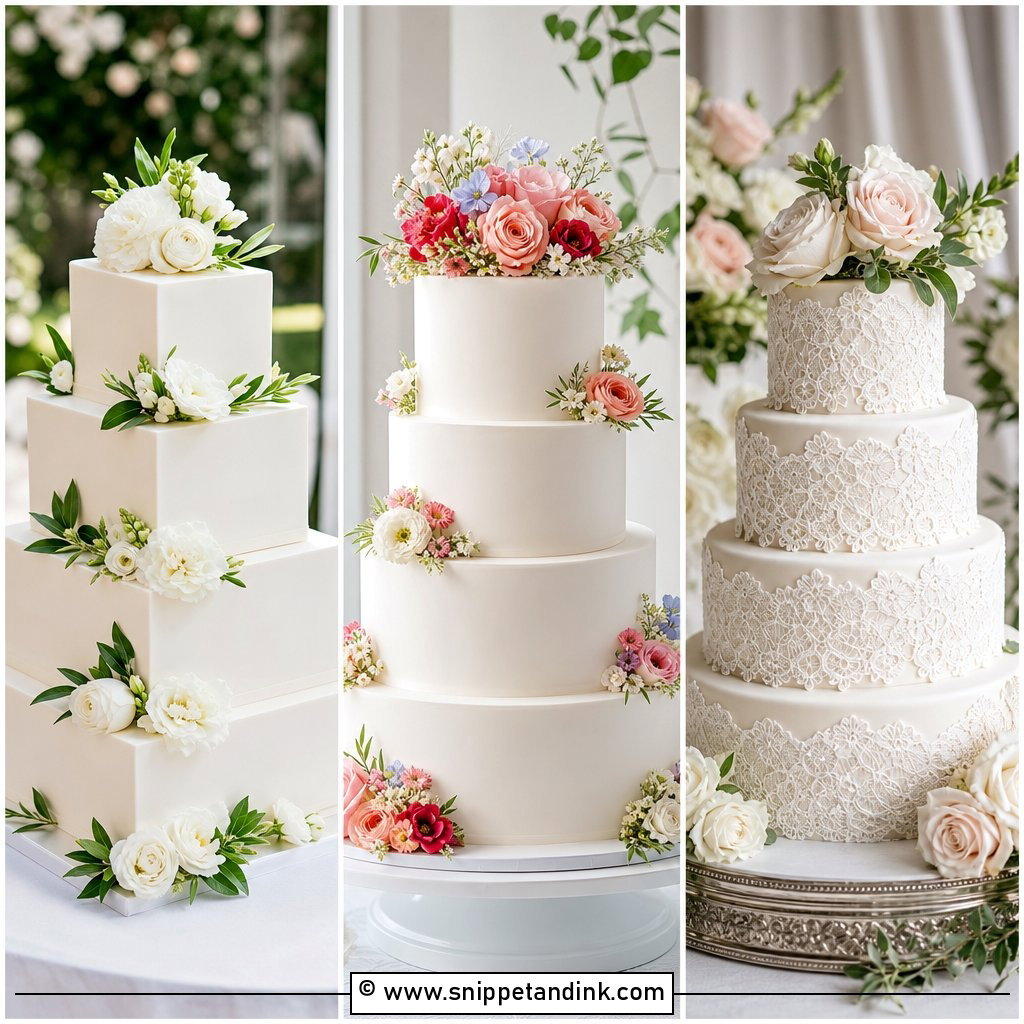
A classic white tiered wedding cake is the design I can match to almost any room, because white picks up the color of the light around it. The thing I watch is the white itself: pure white fondant can look bluish under cool LED uplighting, so I often tint buttercream a touch toward ivory. Pearl piping, a few sugar flowers or one satin ribbon are enough detail. Vanilla bean, almond or champagne sponge suits most guests. I also vary the tier heights a little, which is what stops a white cake looking like it came off a shelf.
2. Three Tier Wedding Cake
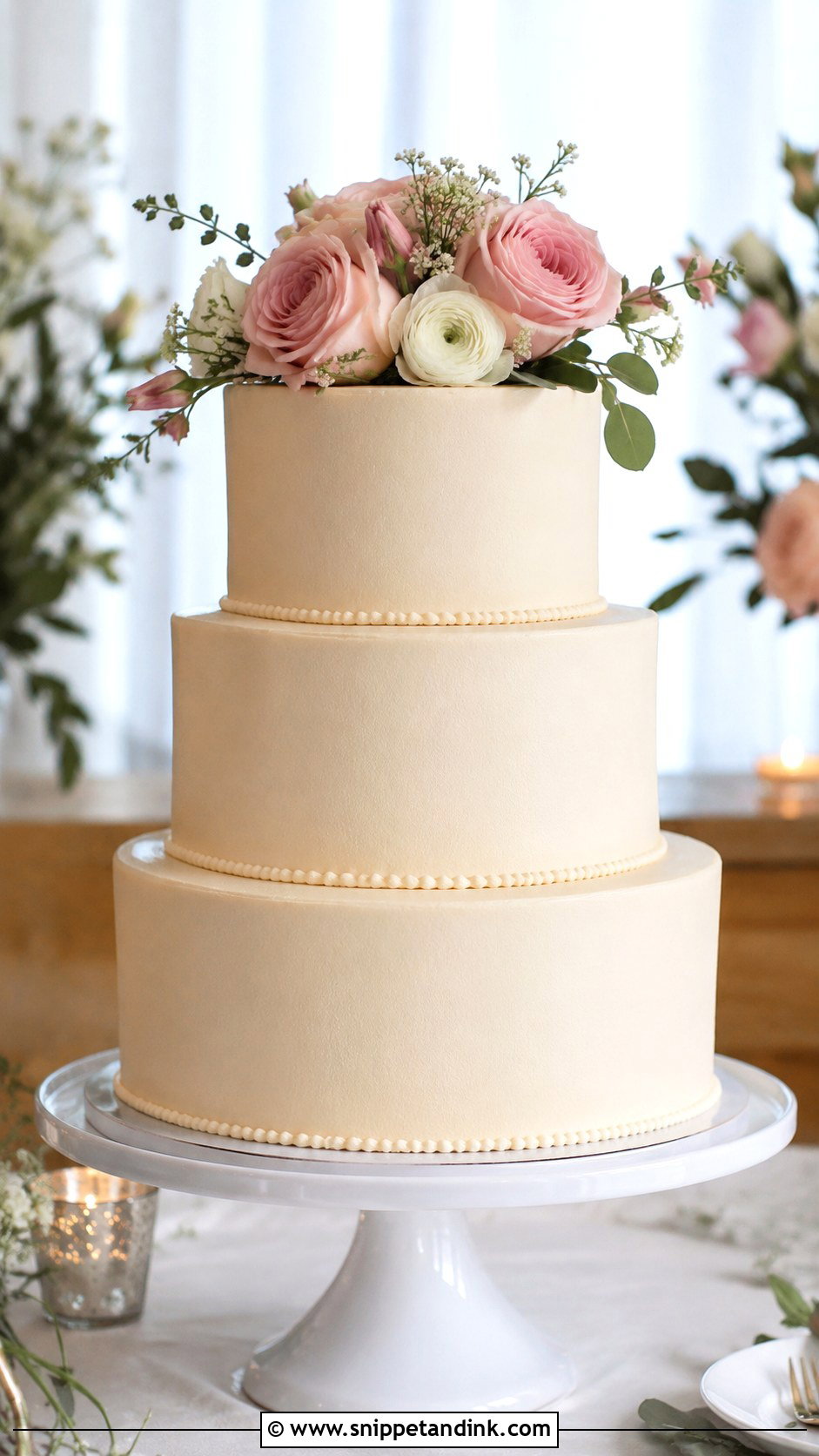
A three tier wedding cake gives a proper cake-table moment without the structural fuss of taller builds. Three tiers of 6, 8 and 10 inches feed roughly 70 to 80 guests at a standard wedding slice, which is why so many medium-size weddings land here. If you want contrast, I’d texture only the middle tier and keep the top and bottom smooth. For flavor, I usually suggest one crowd-pleaser for the bottom tier, since it feeds the most people, and something more adventurous on the top two.
3. Two Tier Wedding Cake
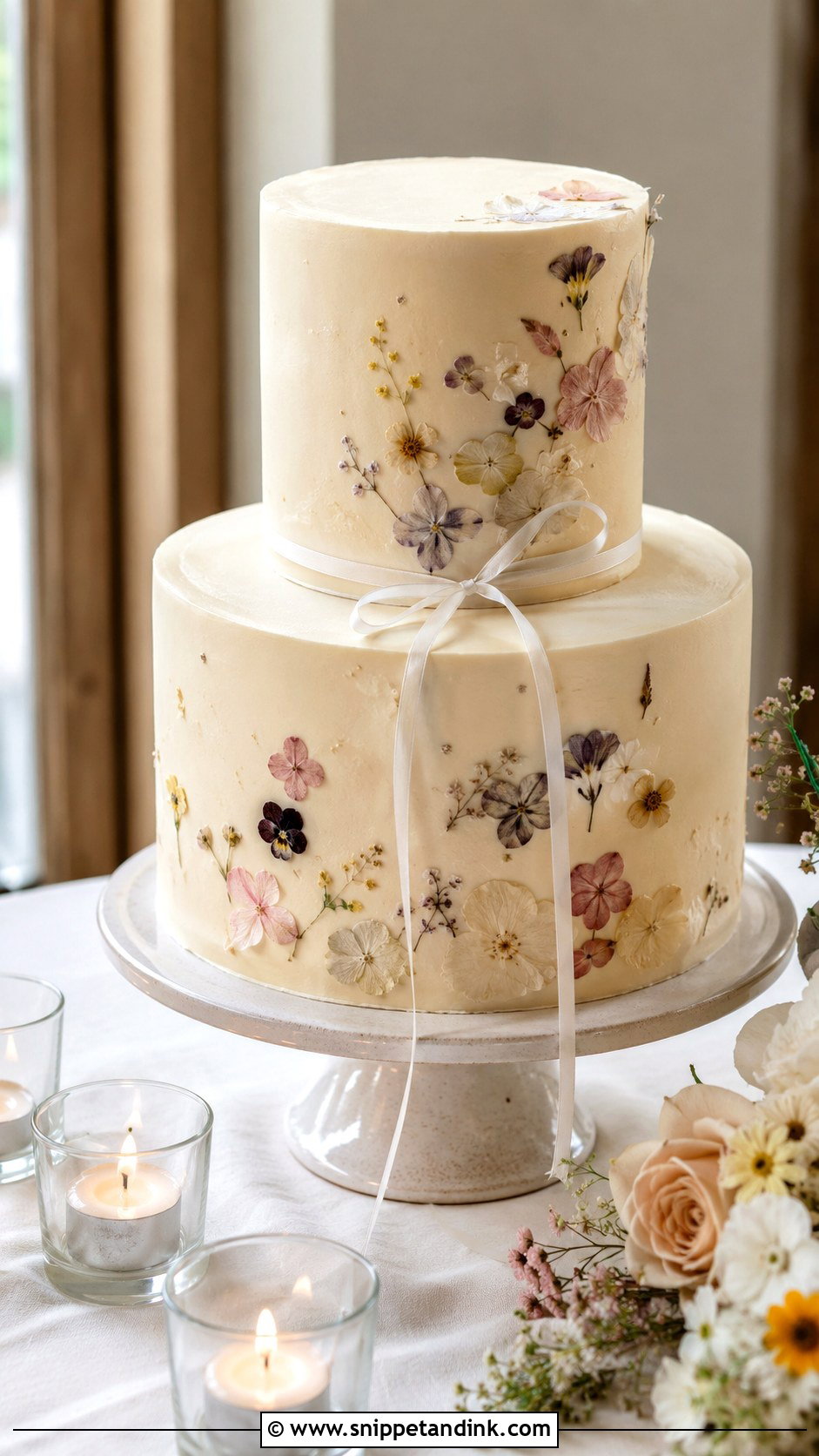
Two tiers suit elopements, brunch receptions and weddings where a dessert table does most of the feeding. The risk is that two tiers look squat in photos. I fix that with proportion: a wide base and a noticeably taller top tier, then a raised stand so the cake sits at eye level. Pressed petals or a clean ribbon are plenty. It also makes a good cutting cake when the kitchen serves sheet cake behind the scenes, and nobody at the tables can tell.
4. Four Tier Wedding Cake
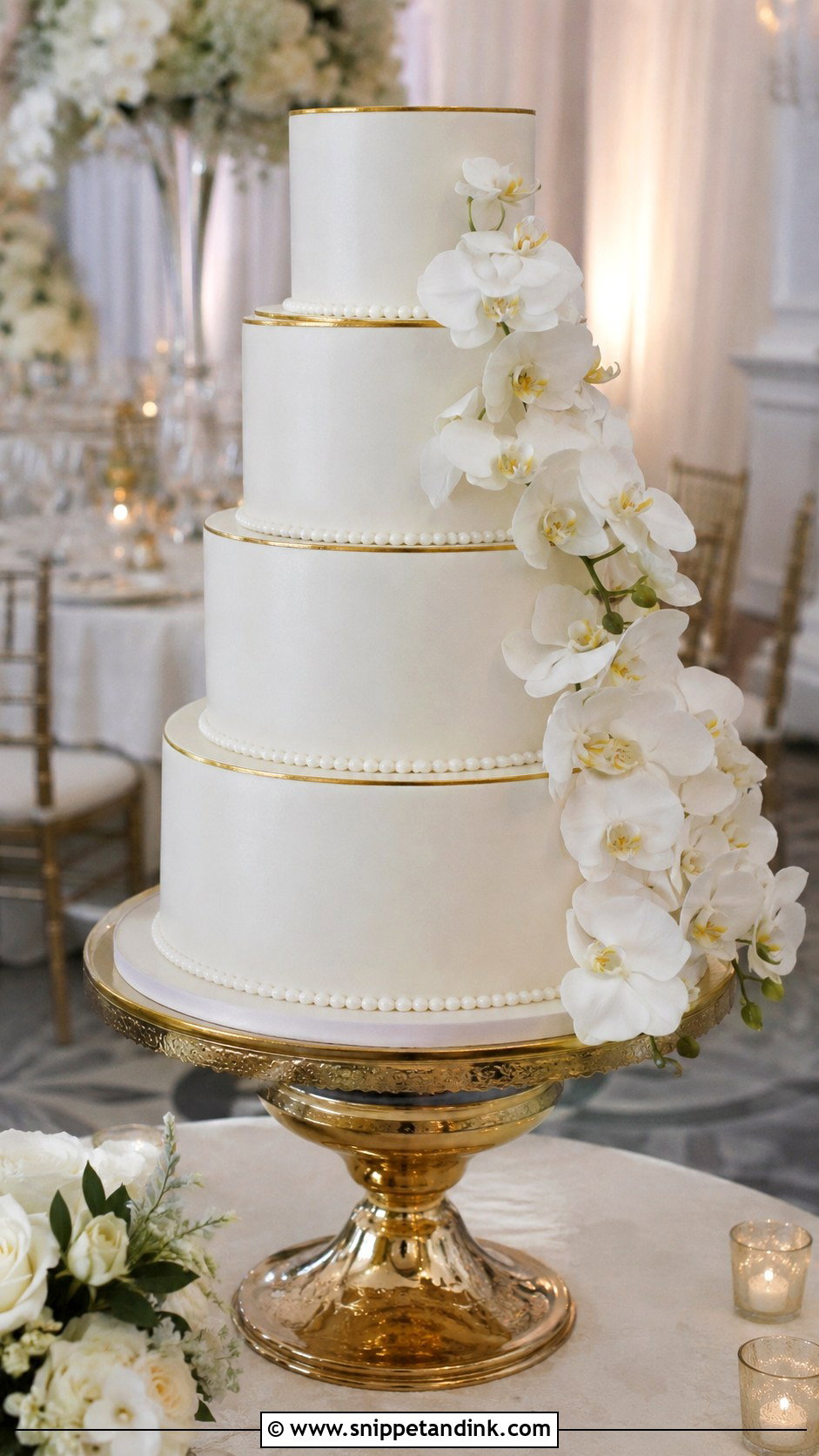
Four tiers belong in big rooms with high ceilings, where a smaller cake would disappear. At this size the engineering matters more than the decoration. Every tier needs its own cake board and a set of dowels, and a center dowel through the whole stack if it travels assembled. Mixing flavors by tier works well here: vanilla bean, lemon, chocolate and almond gives guests a real choice. Ask any baker you’re considering how they support and transport a cake this tall before you talk about flowers.
5. Tall Tiered Wedding Cake
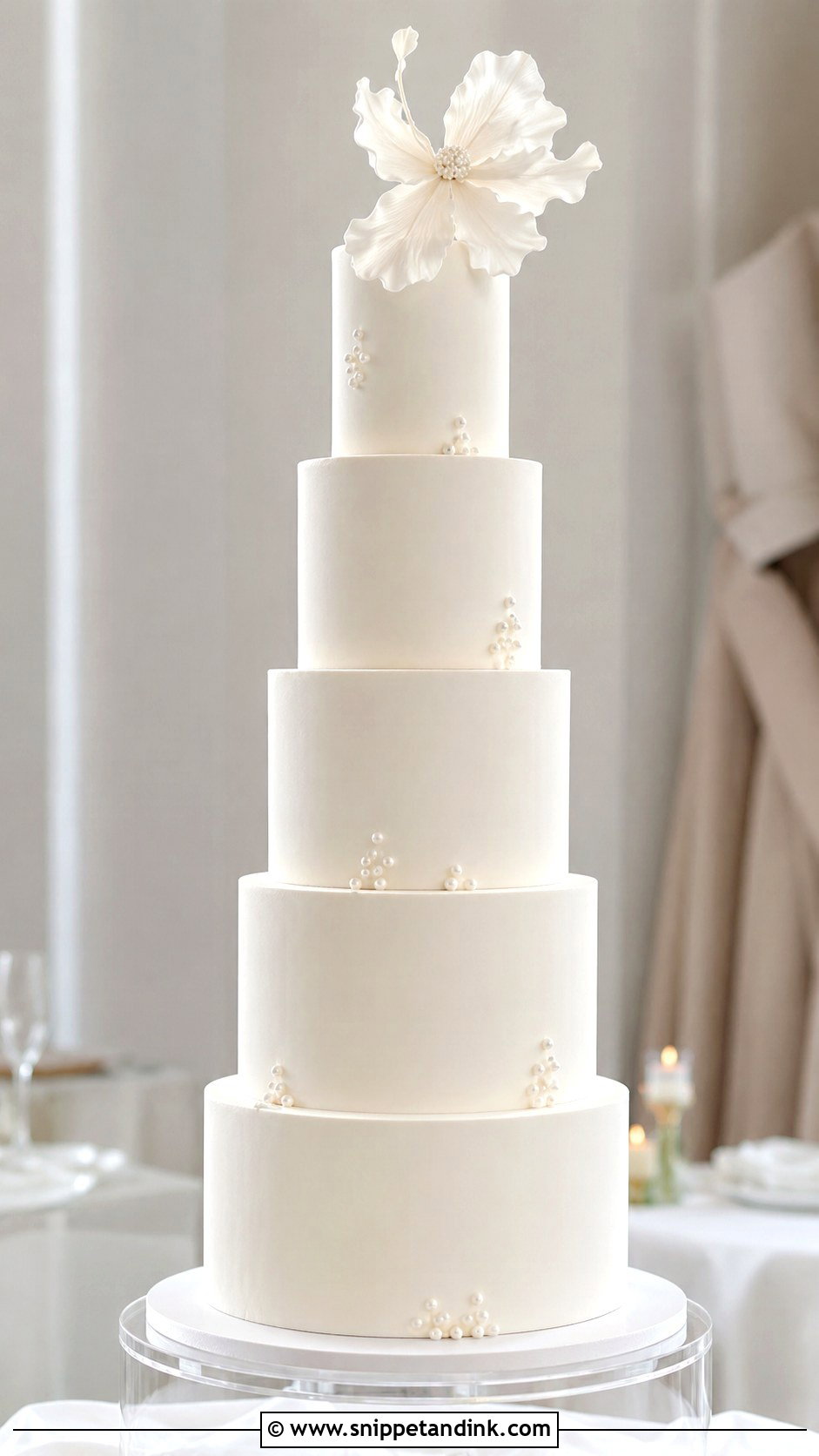
Tall tiers, often 5 to 6 inches each instead of the usual 4, give a slim, editorial shape. I build each extra-tall tier as two stacked cakes with its own board inside, otherwise the sponge compresses and the sides bulge by evening. Smooth buttercream with razor edges shows off the height best. A small floral cluster near the base and one near the top softens it. Keep the table clear around the stand; clutter shortens a tall cake visually.
6. Round Tiered Wedding Cake
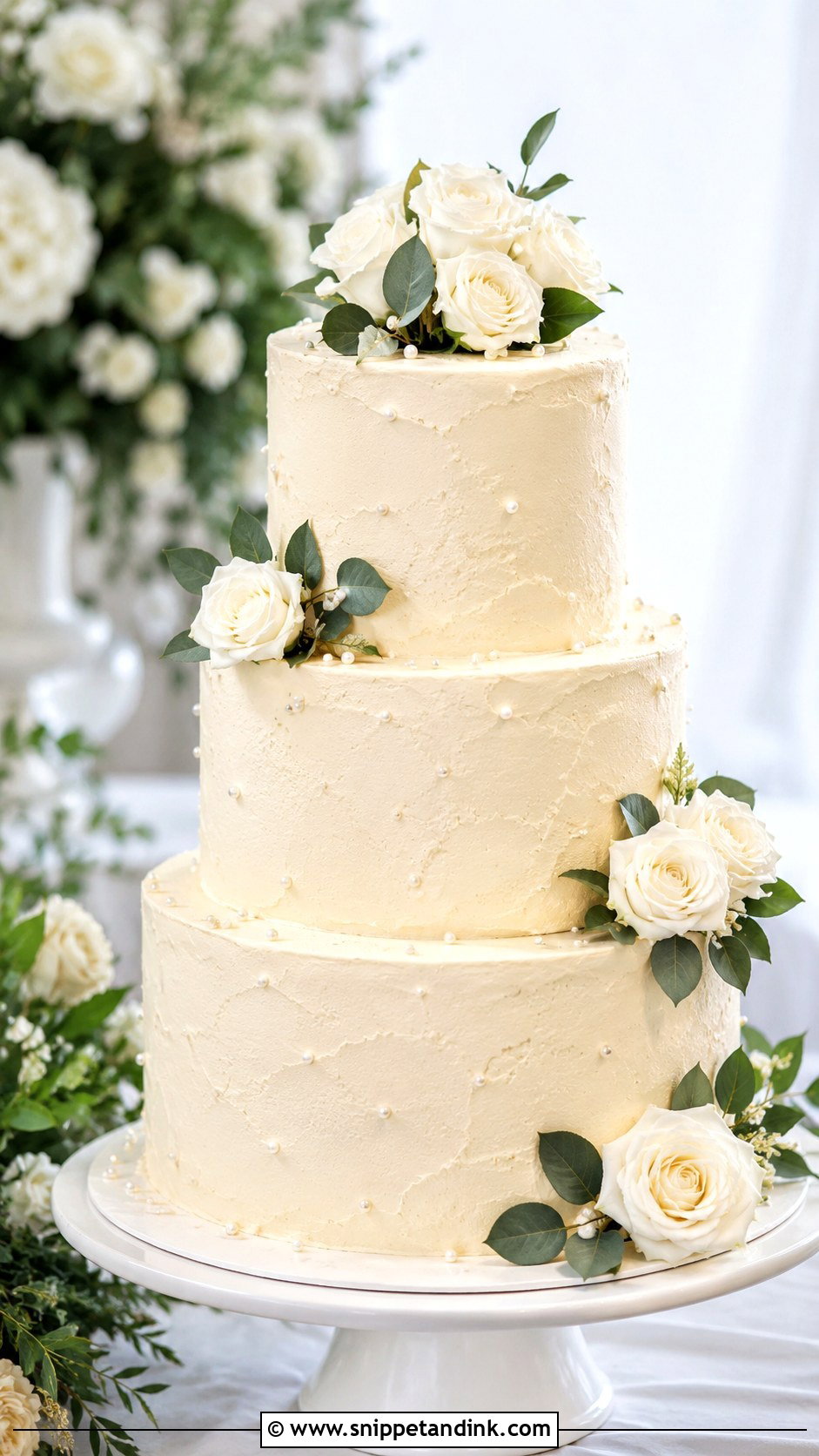
Round tiers are the shape I trust most structurally. They stack centerd, they cut into neat wedges, and the weight spreads evenly over the dowels. That reliability frees you to go any direction with the finish, from piped borders to smooth sides. If a client wants classic with a current feel, I’ll suggest soft ivory instead of bright white, then roses, orchids or ranunculus placed in one cluster rather than a ring.
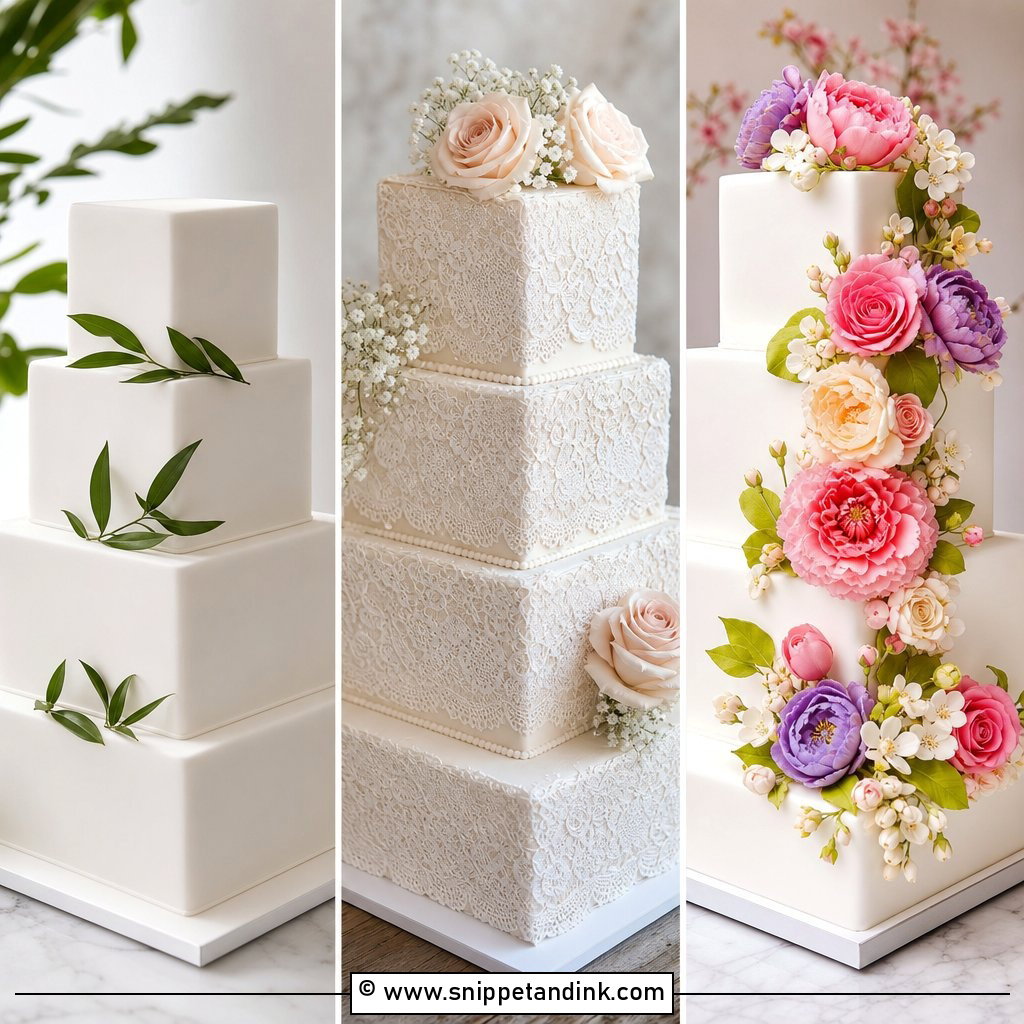
7. Square Tiered Wedding Cake
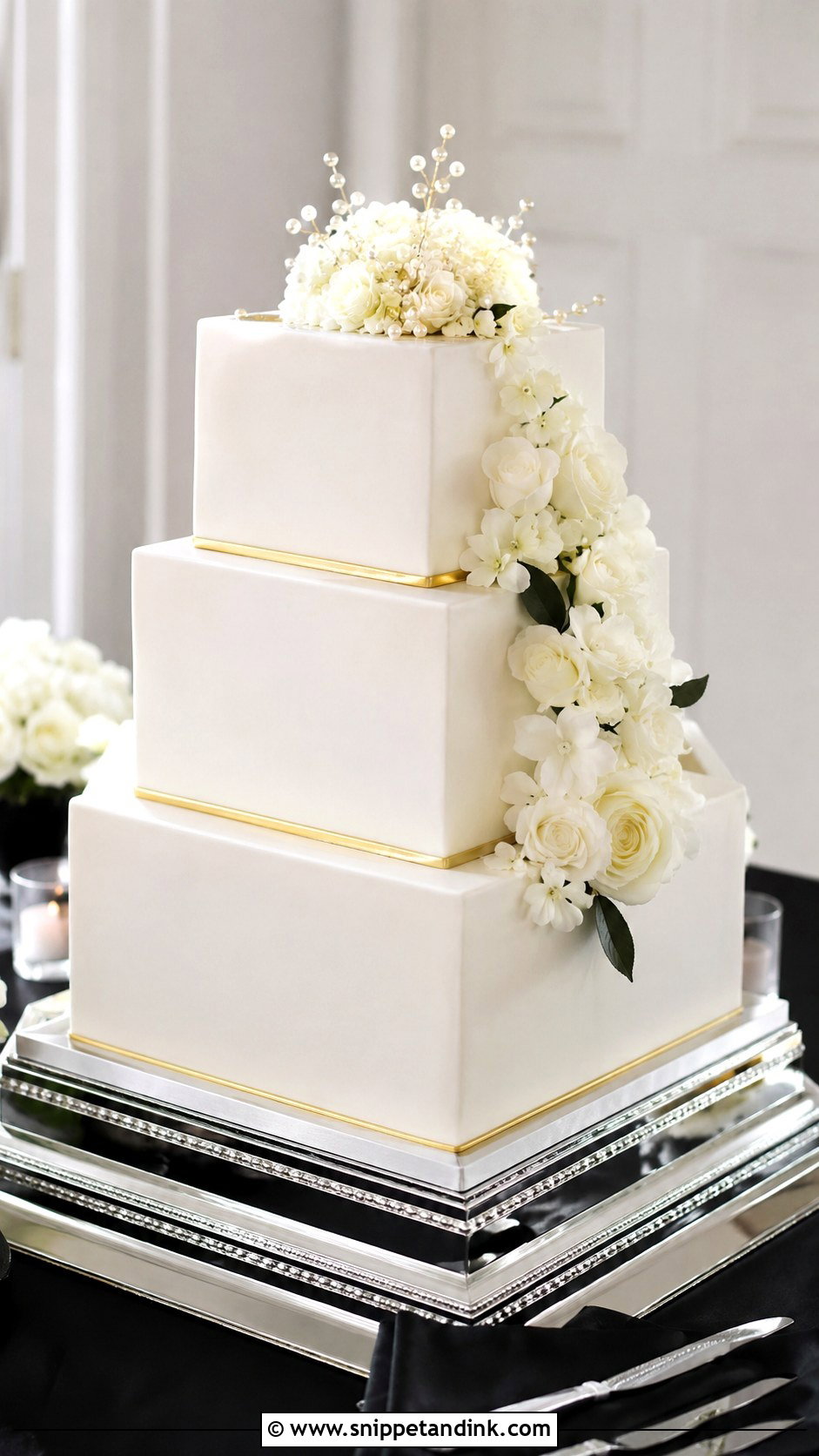
Square tiers look sharp and architectural, which suits black-tie rooms and gallery venues. They are also harder to finish well. Every corner is a place where buttercream rounds off or fondant tears, so I usually cover square tiers in fondant over firm ganache for crisp points. Square cakes also yield more slices per tier than round ones of the same width. Keep decoration to one idea, such as a floral cascade or metallic trim, and consider stacking slightly off-center for movement. Almond, mocha or dark chocolate fit the formal look.
8. Hexagon Tiered Wedding Cake
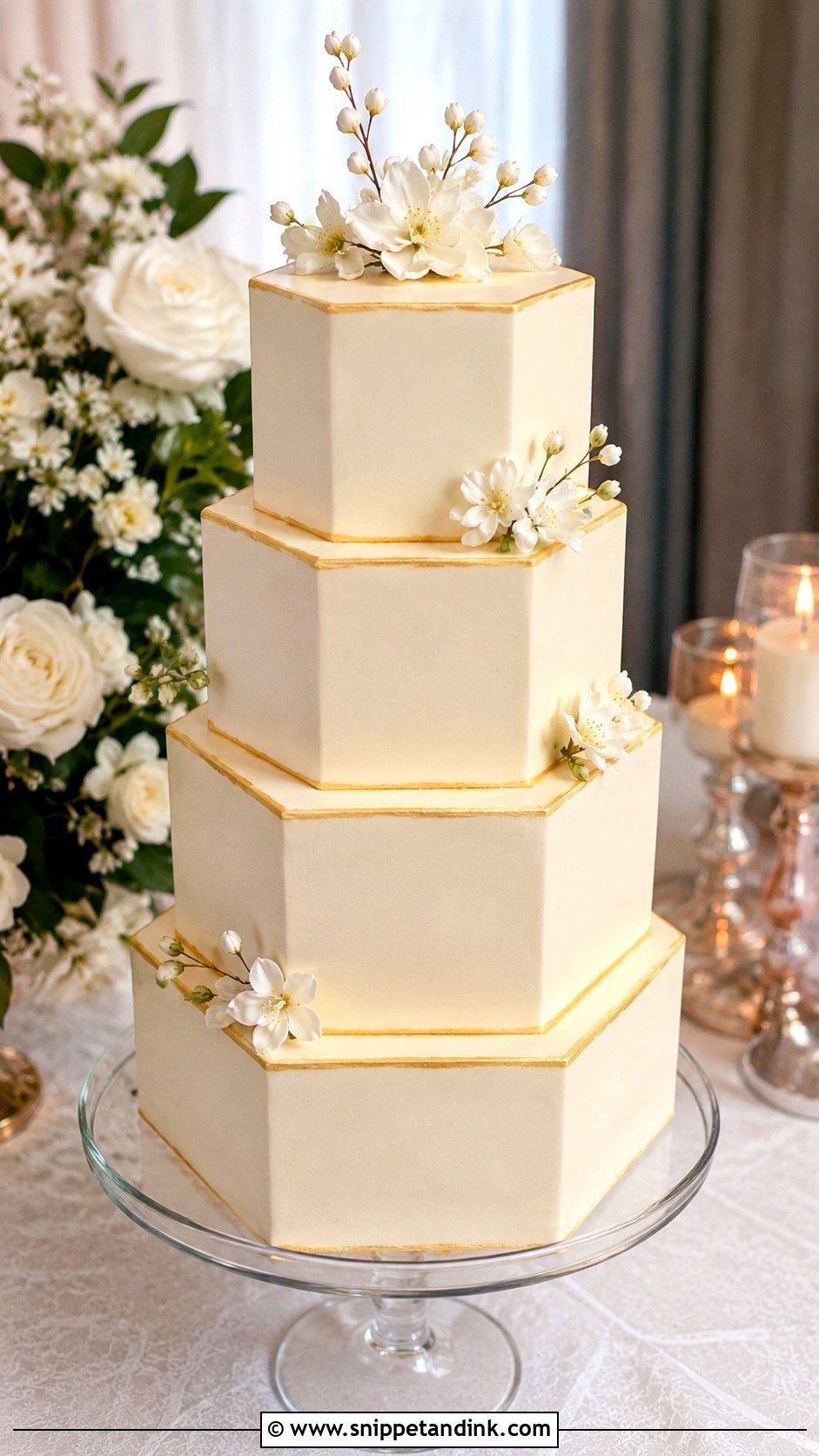
A hexagon gives you six flat faces, so even a plain white cake catches light differently on each side. The flat panels are a gift for decoration: I hand-paint on them, run edible gold along the edges, or tuck small florals at alternate corners. Like squares, hexagons need a firm ganache base to keep their angles. Pick a tight palette, such as ivory and sage, so the geometry stays readable in photos.
9. Semi Naked Tiered Wedding Cake
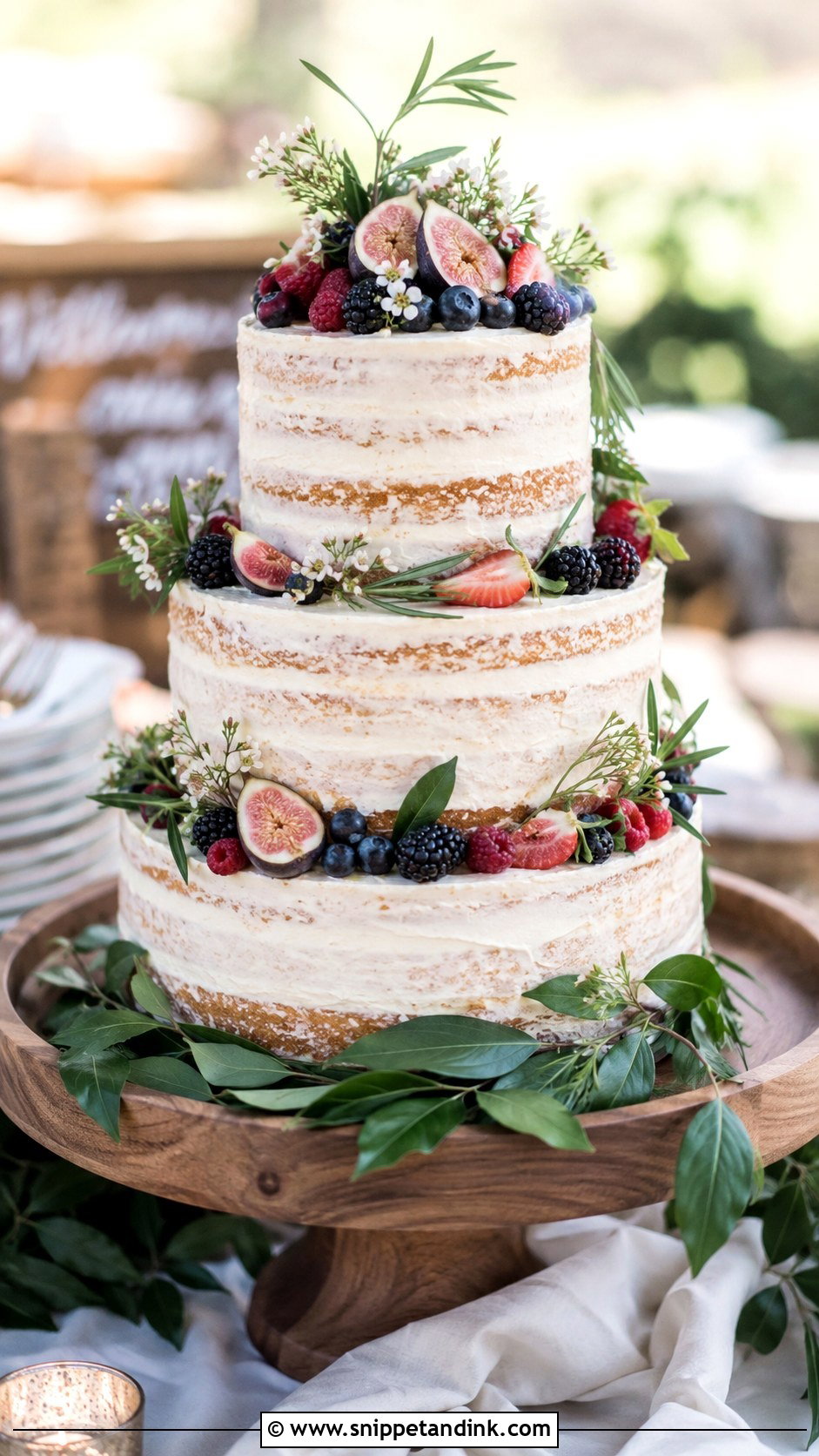
Semi naked cakes show the sponge through a thin scrape of frosting, which is the charm and the weakness. Exposed crumb dries out much faster than a fully coated cake, so I seal the sponge with syrup and ask for the cake to be set out as late as the venue allows. Vanilla, lemon, carrot and spice look attractive through the scrape because the color of the cake becomes part of the design. Berries, figs or greenery finish it. Clean, level stacking is what separates this from a cake that looks unfinished.
10. Buttercream Tiered Wedding Cake
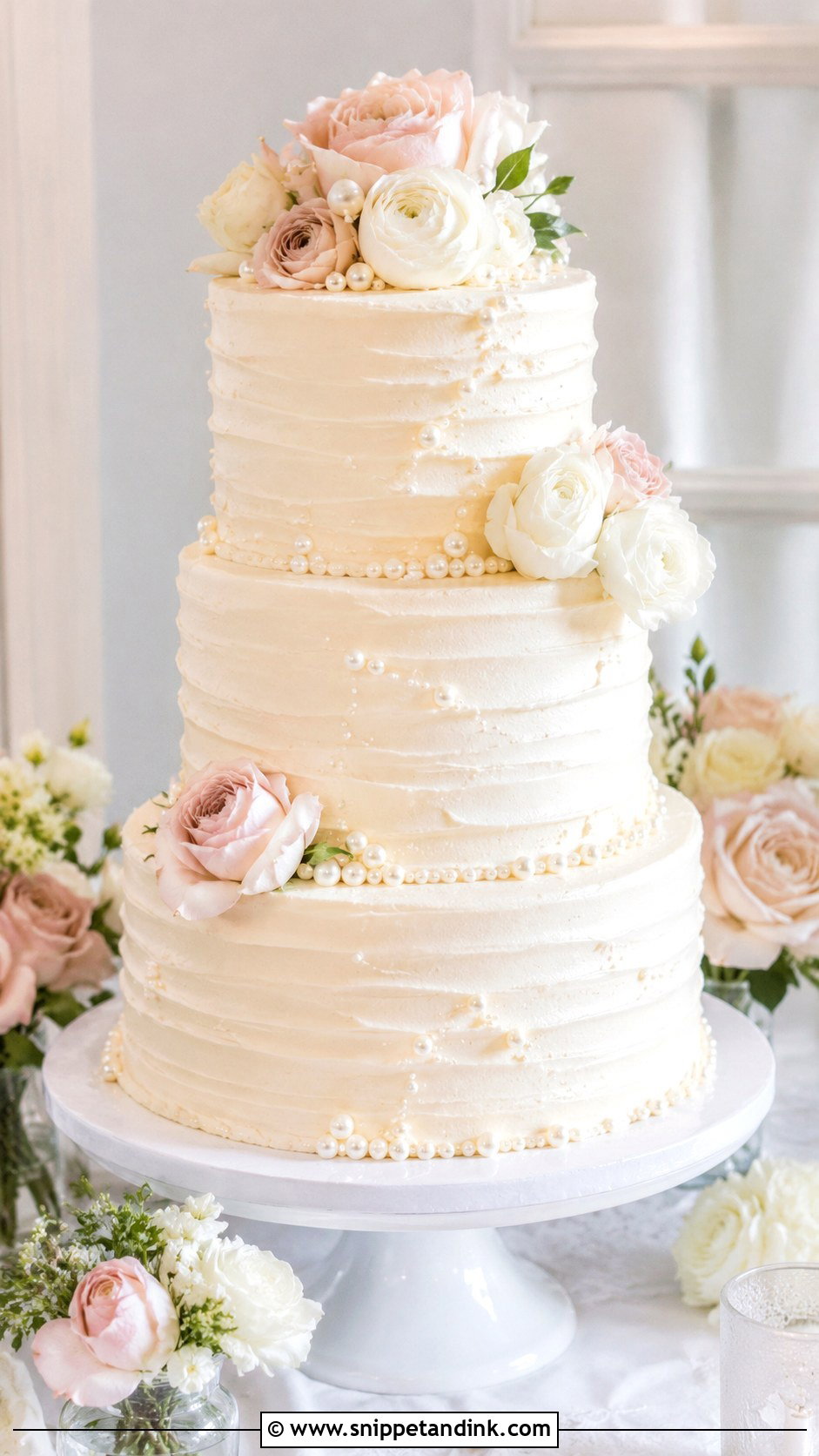
Buttercream is what most of my couples end up choosing, because it tastes better than fondant to most guests and can be smooth, ridged, swooped or piped into flowers. Its limit is heat. American buttercream starts to slump in a warm marquee, while Swiss or Italian meringue buttercream holds a little better and tastes lighter. For summer weddings, I plan the display time around the room temperature, not the timeline, and I’d tell you honestly if your venue is too warm for an outdoor display.
11. Fondant Tiered Wedding Cake
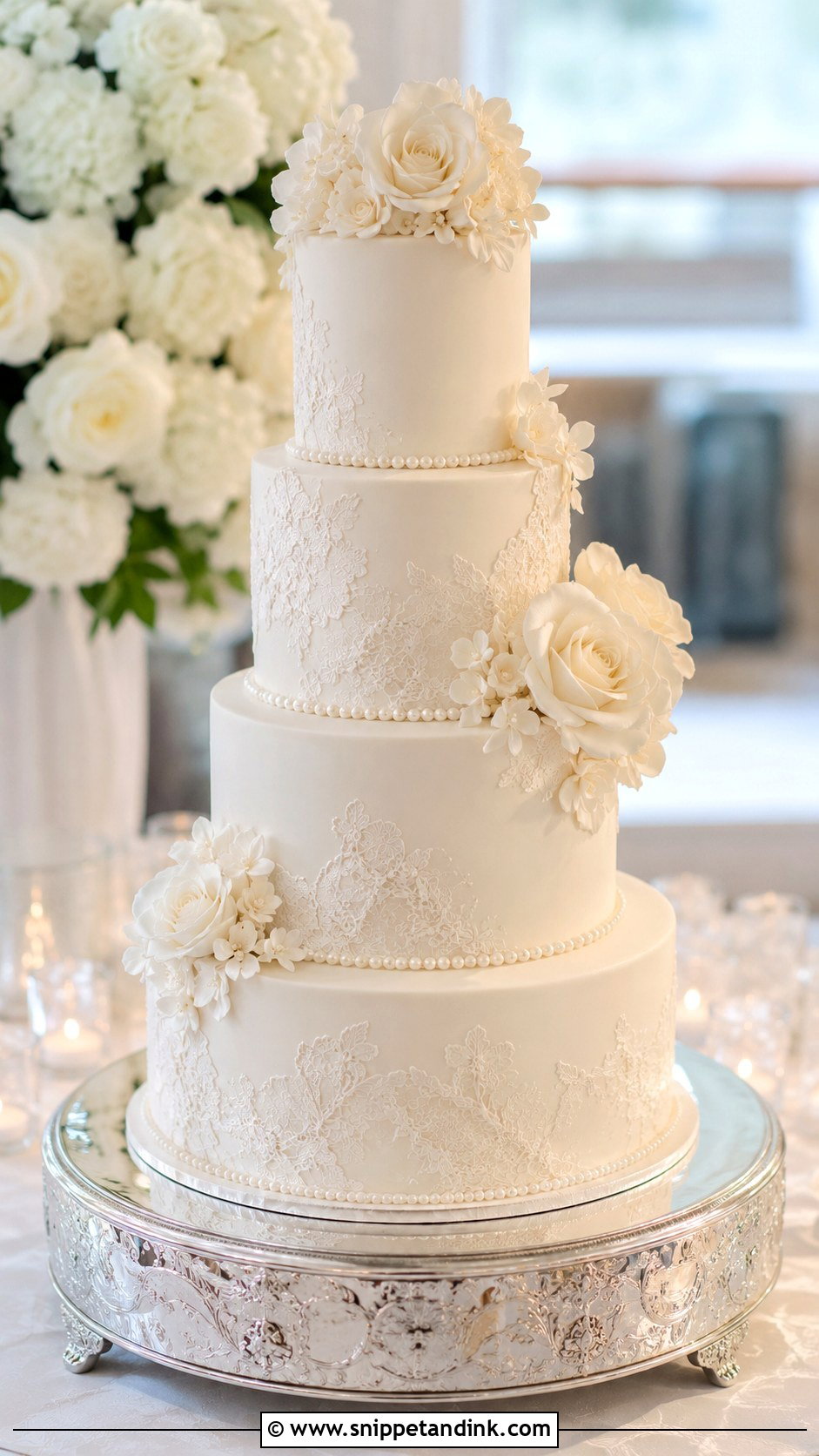
Fondant gives me the most control: knife-sharp edges, embossing, painted designs and a surface that sugar flowers can sit on. It also protects the cake underneath in warm rooms better than buttercream. The trade-off is taste, and many guests peel it off, so I keep it thin over a layer of ganache. Choose one main feature, lace, pearls or a monogram, because fondant crowded with detail looks heavy fast. Fillings can still be seasonal and moist inside.
12. Vintage Tiered Wedding Cake
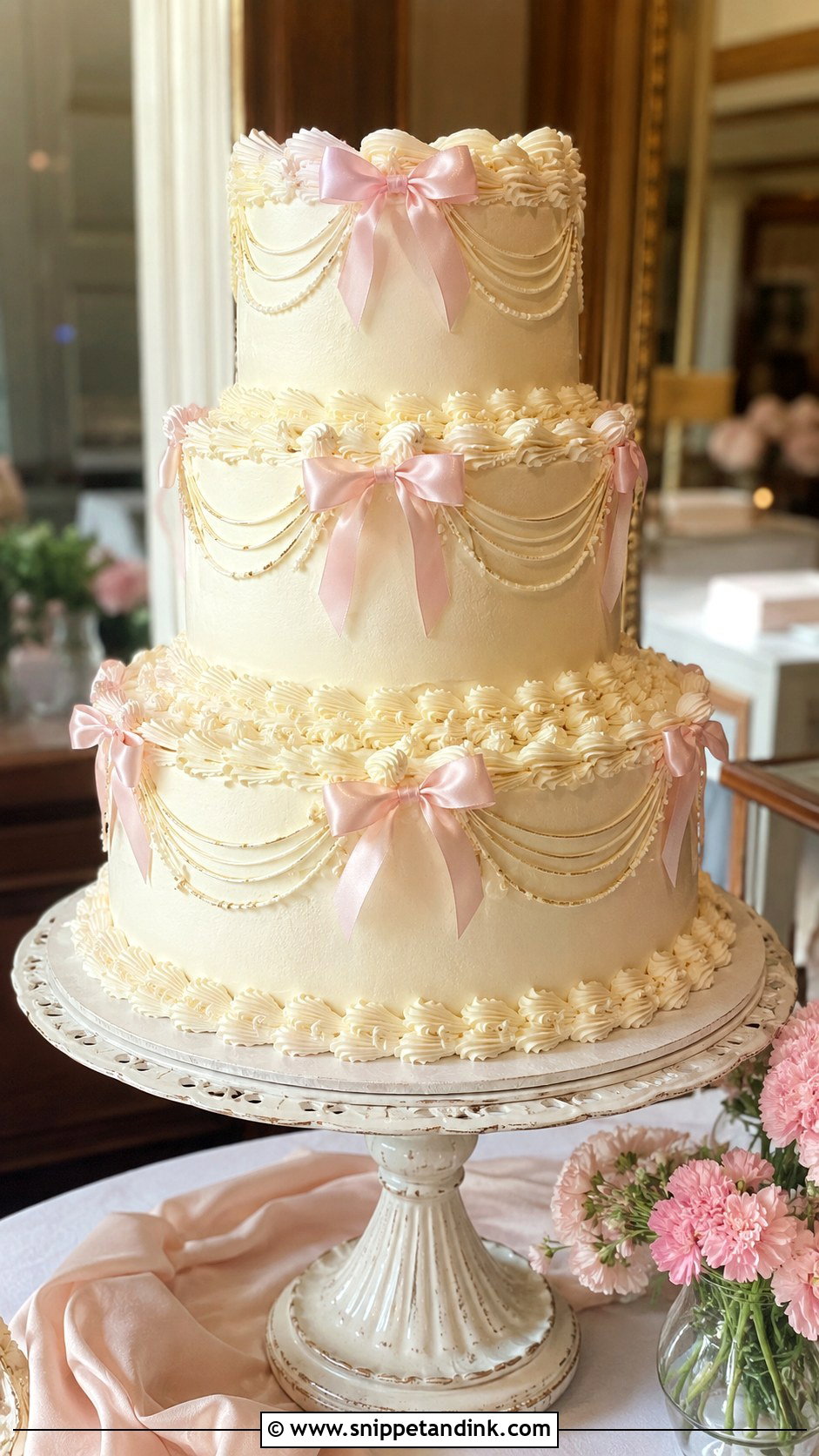
Vintage piping, with its shells, swags, bows and Lambeth over-piping, is having a real revival, and it’s the most time-consuming finish I do. Each layer of piping has to crust before the next goes on, so a fully piped tall cake can take a full day of decorating. All-white piping reads grand; blush, butter yellow or pale blue piping on ivory reads playful. Keep the table spare so the piping does the talking. Vanilla or almond sponge fits the period feel.
13. Pearl Tiered Wedding Cake
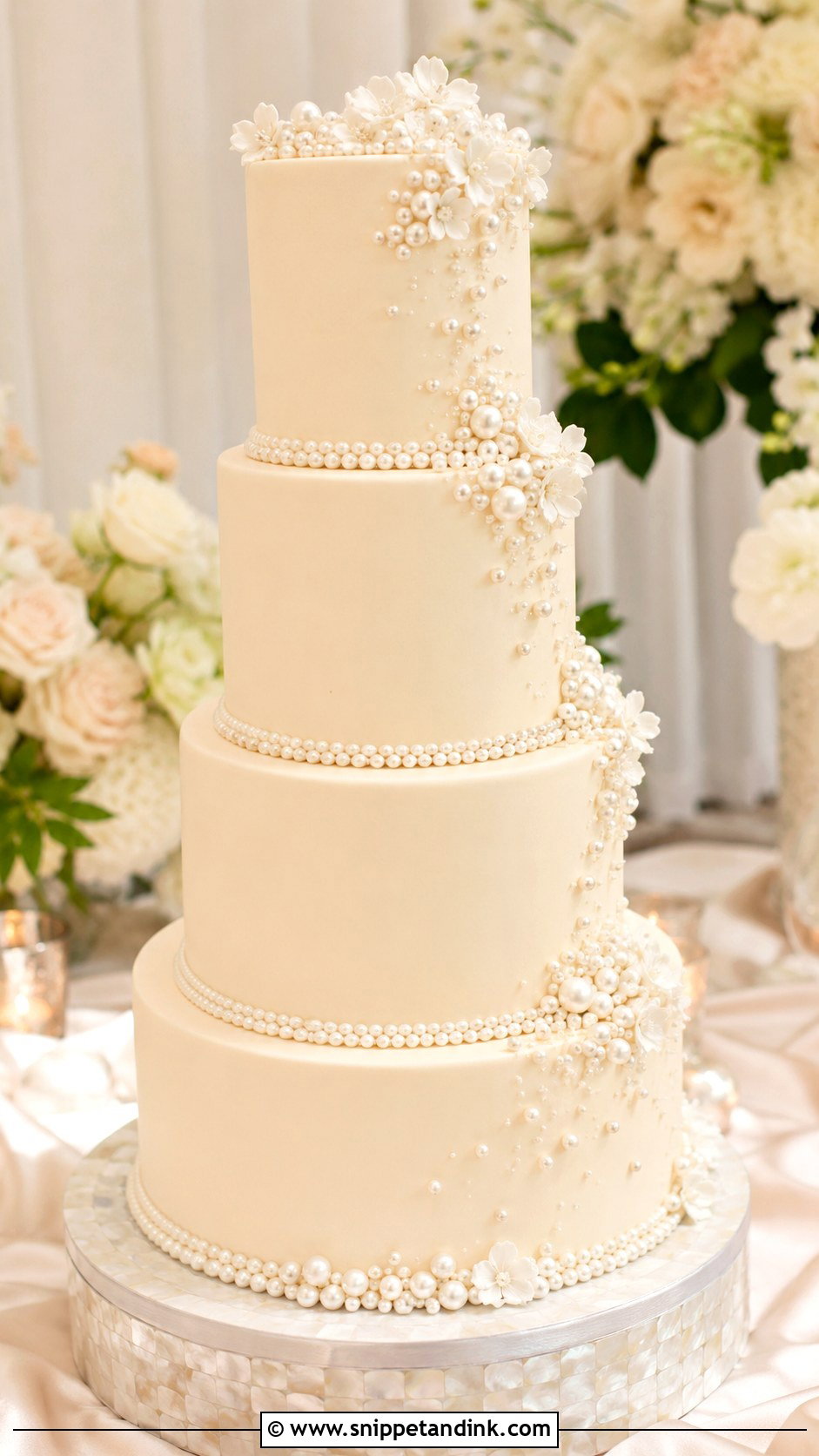
Edible pearls give shine without any color, which is why they pair so well with satin dresses and pearl accessories. Sugar pearls can be scattered, set in borders, run in vertical lines or packed across one whole tier. One practical warning: the hard sugar kind are tough to bite, so I keep them to decoration guests can push aside and use softer fondant pearls on surfaces that get sliced. White, ivory or champagne frosting keeps it refined. Vanilla bean, coconut or white chocolate sponge matches the soft finish.
14. Floral Tiered Wedding Cake
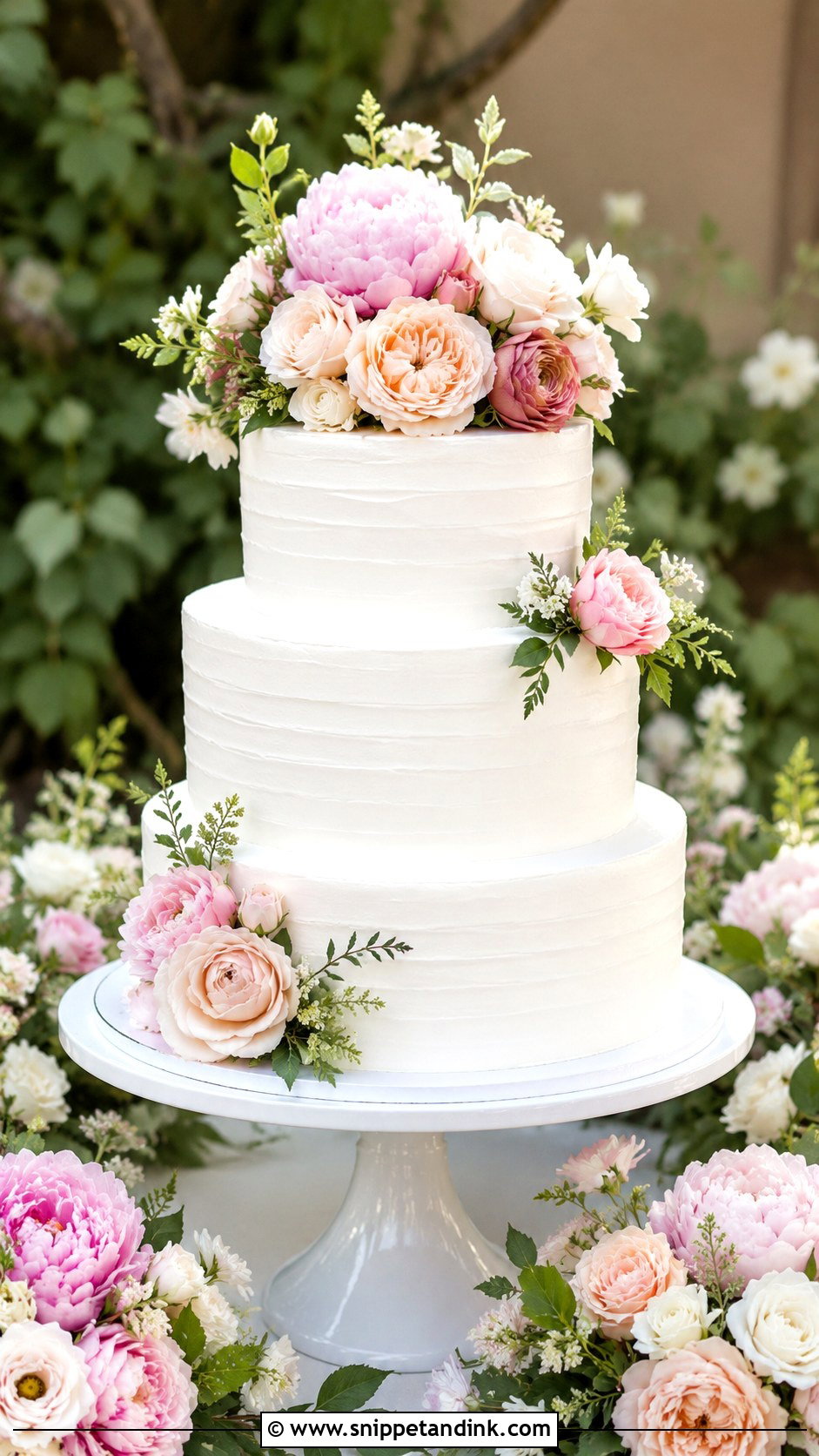
Flowers tie a cake to the rest of the wedding faster than anything else, and they can be fresh, sugar, pressed, dried or piped. Fresh blooms are the area where I’m strictest. Many popular flowers are not safe to touch food, so stems are wrapped in floral tape and pushed into food-safe picks, or the flowers sit on a barrier and never pierce the cake. Roses, peonies and ranunculus give a romantic look; small loose blooms read as garden; one variety in a tight cluster reads modern. Confirm who is responsible for the flowers, florist or baker, before the day.
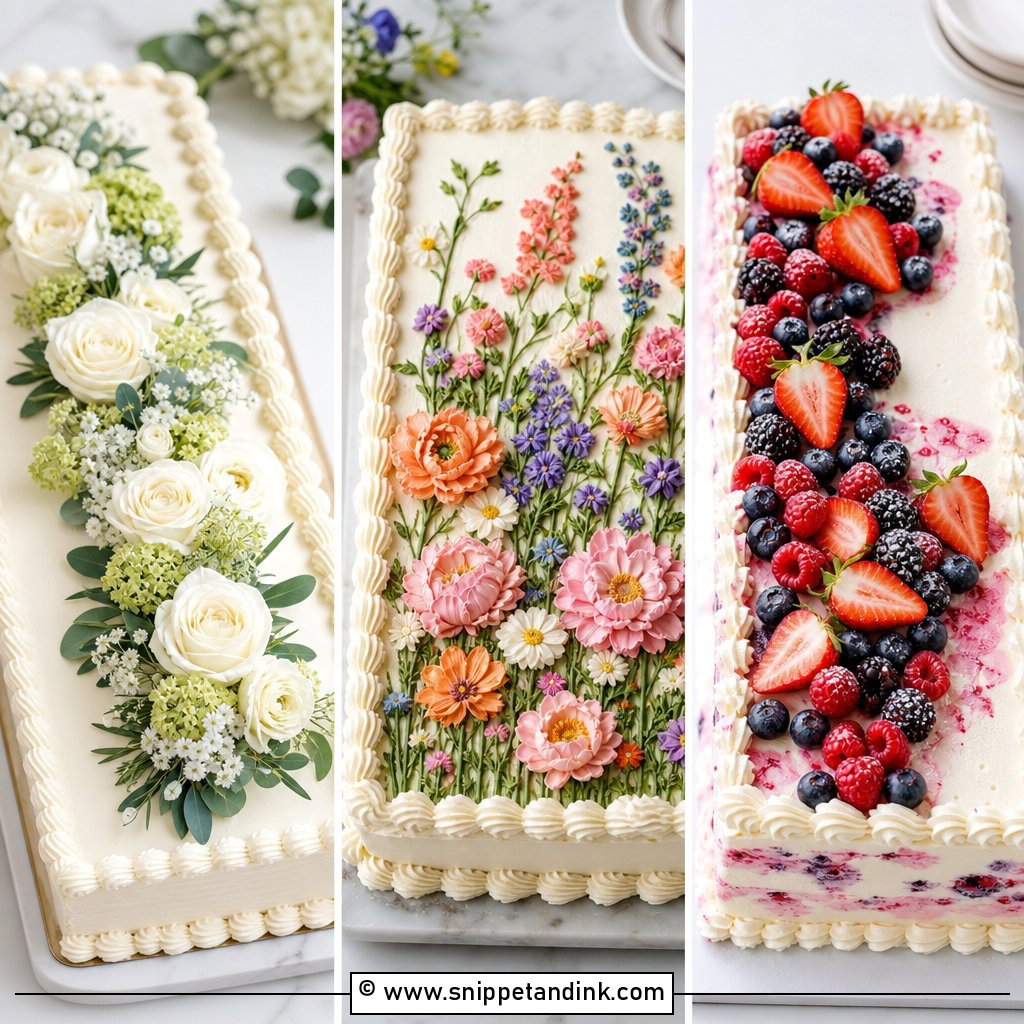

15. Cascading Flower Tiered Wedding Cake
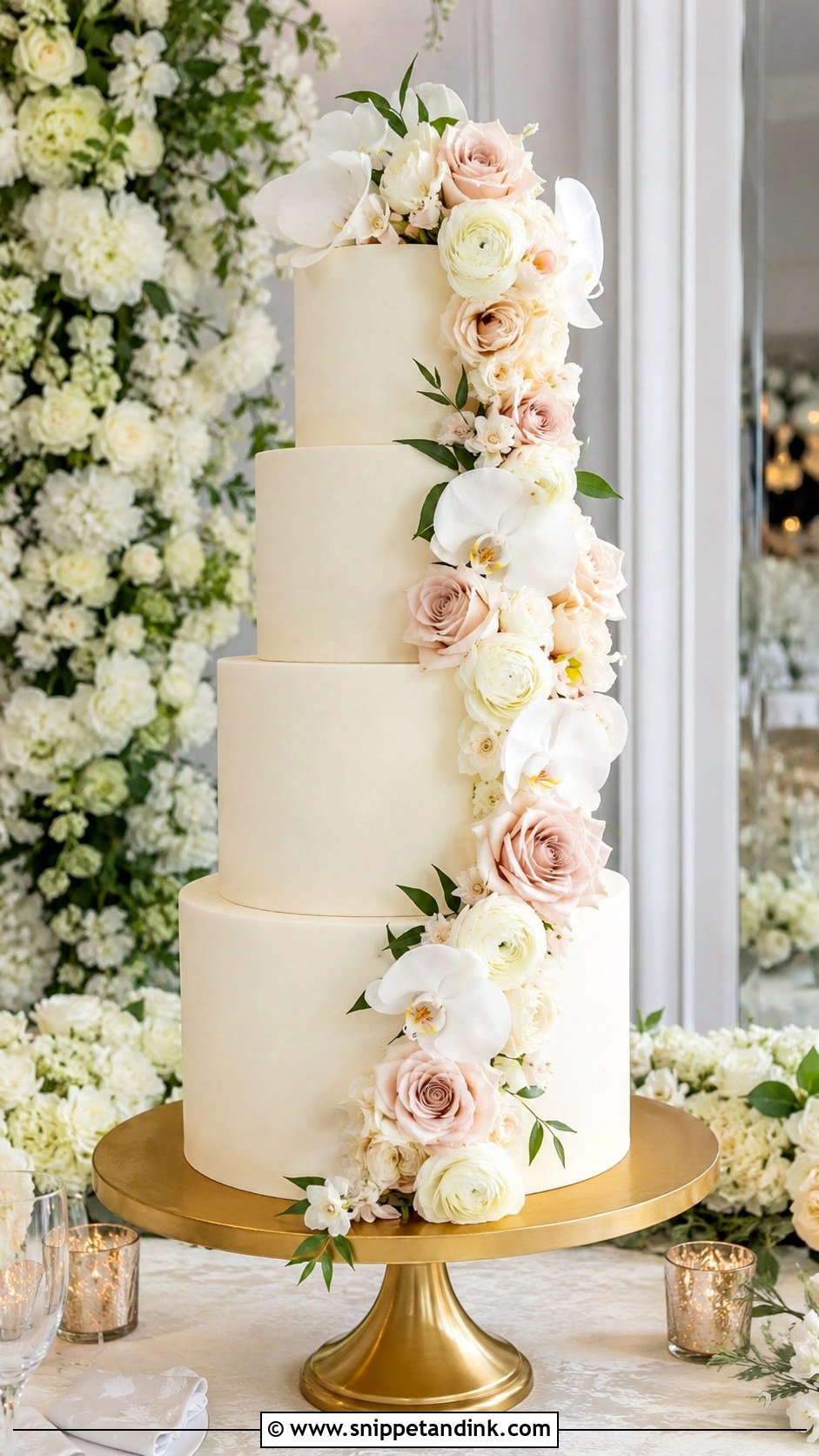
A cascade travels from the top tier down one side, so it needs room to move. That is why it looks best on three, four, or five tiers rather than two. I place the heaviest blooms near the top, where the stack is most stable, and taper to smaller flowers and trailing greenery lower down so the line has direction. White roses and blush blooms keep it soft; coral, lavender or deep berry shades suit a colorful reception. Smooth buttercream or fondant underneath stops texture fighting the flowers. Think about the angle too: a cascade reads best photographed from the front and slightly to the side it falls on.
16. Pressed Flower Tiered Wedding Cake
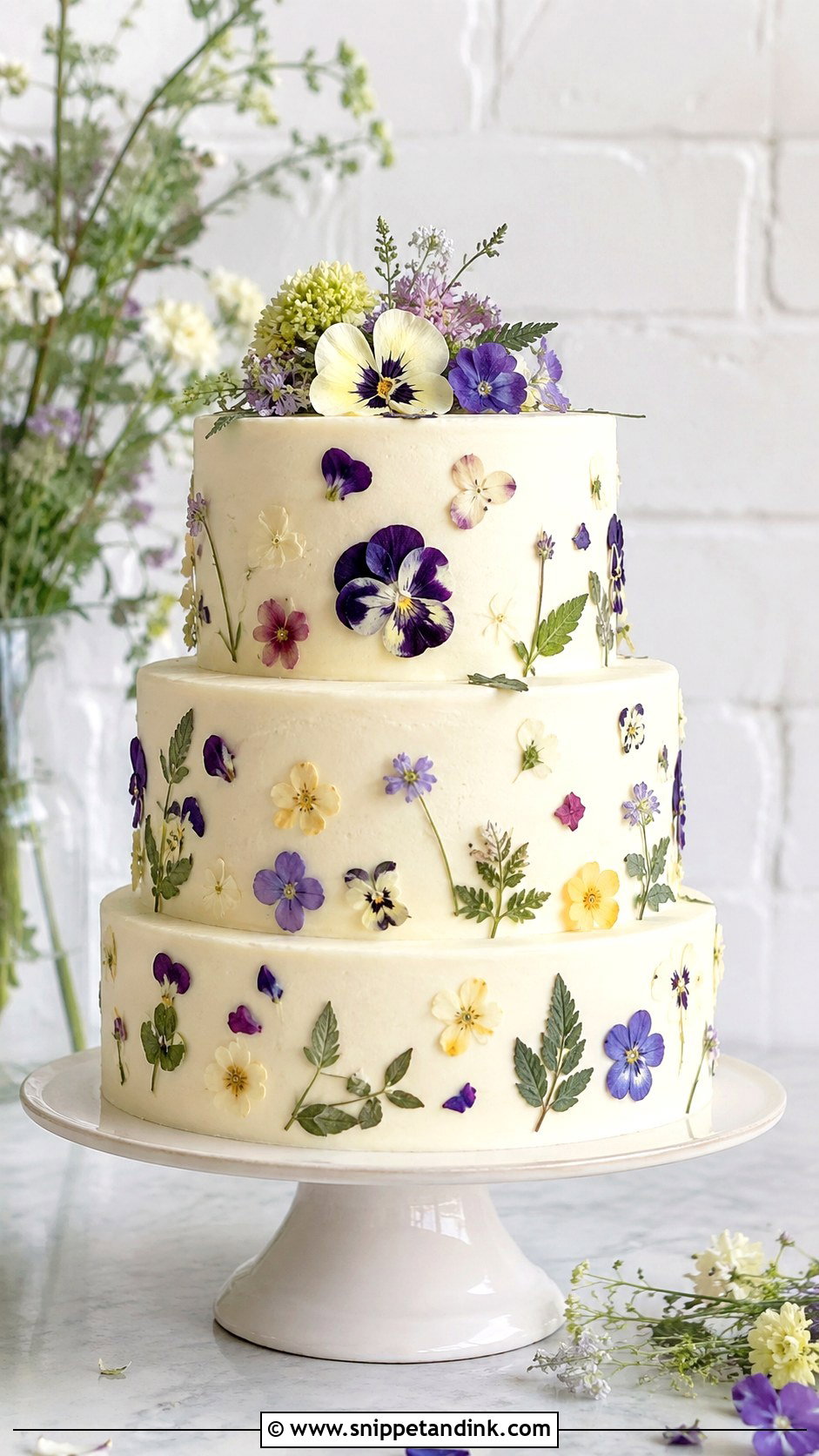
Pressed flowers lie flat against the frosting, so the cake looks like a botanical page. The flowers have to be edible varieties pressed and dried specifically for food, such as violas, pansies, cornflowers and small fern fronds. I press them onto a freshly smoothed white or ivory buttercream while it is still slightly tacky, which helps them stick without glue. Space them out; a crowded design loses the delicacy. Lemon, honey, lavender and elderflower sponges suit the spring mood, and close-up photos are where this cake shines.
17. Greenery Tiered Wedding Cake
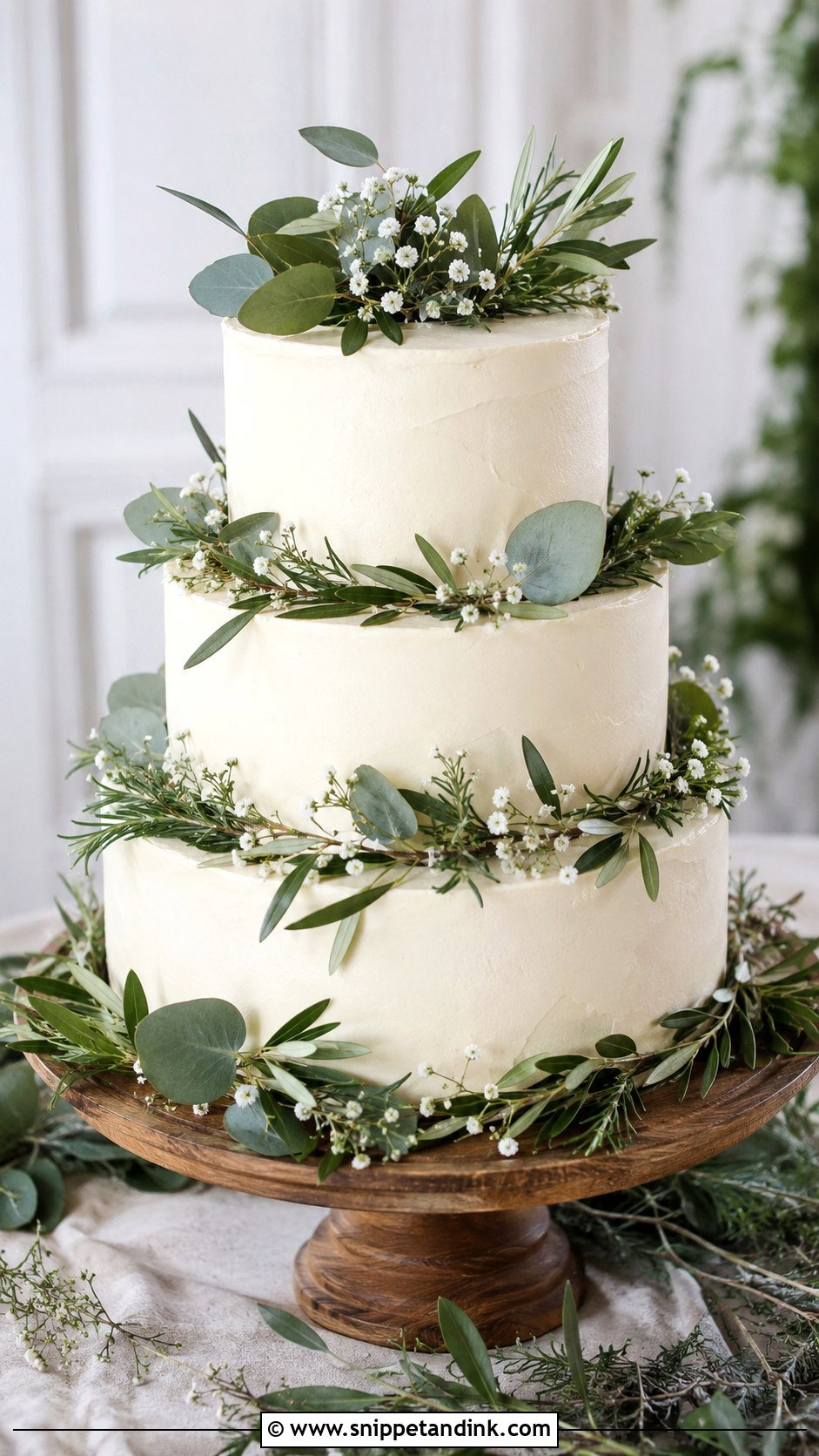
Greenery adds movement without adding color, which makes it a safe bet for neutral palettes. Not every leaf belongs near food, though. Eucalyptus is one that many bakers keep away from direct contact, so I place it on a barrier or swap in rosemary, olive branches or bay, which are edible herbs and smell good next to the cake. A white buttercream base keeps it clean; a semi-naked finish loosens it. Greenery can climb one side, wrap each tier or sit only at the base. Ask how it will be attached before you approve the sketch.
18. Gold Tiered Wedding Cake
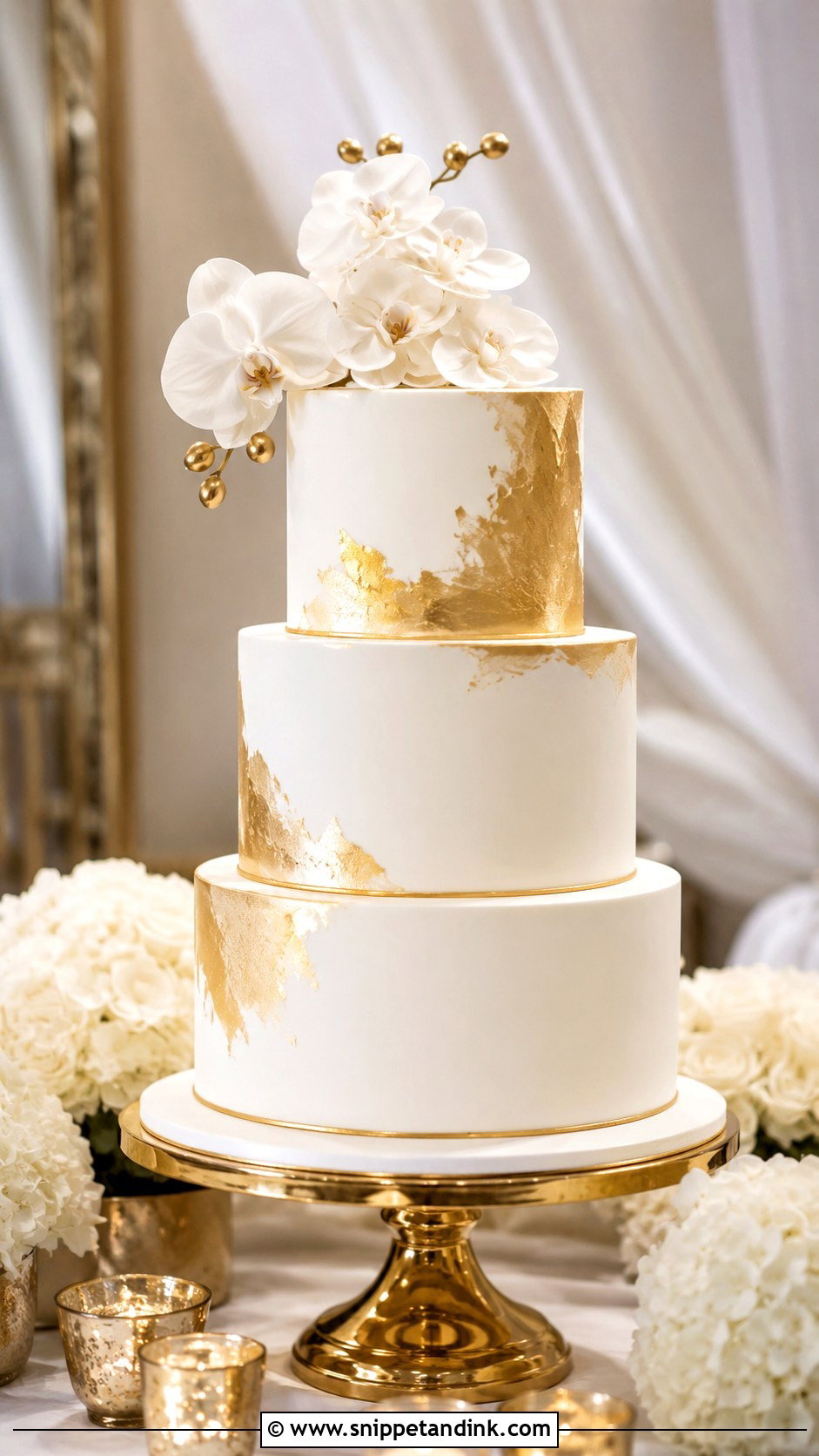
Gold works best in small doses: a painted edge, a brushed tier, a stencil or a scatter of leaf. I use edible gold leaf and lustre dusts that are labeled as food-grade, because some craft glitters are sold for cakes but are non-toxic decoration only, not food. Gold sits well against ivory, champagne, black, emerald or deep navy. A little catches the candlelight; full coverage starts to look like a trophy. Champagne or almond sponge carries the theme inside.
19. Black And White Tiered Wedding Cake
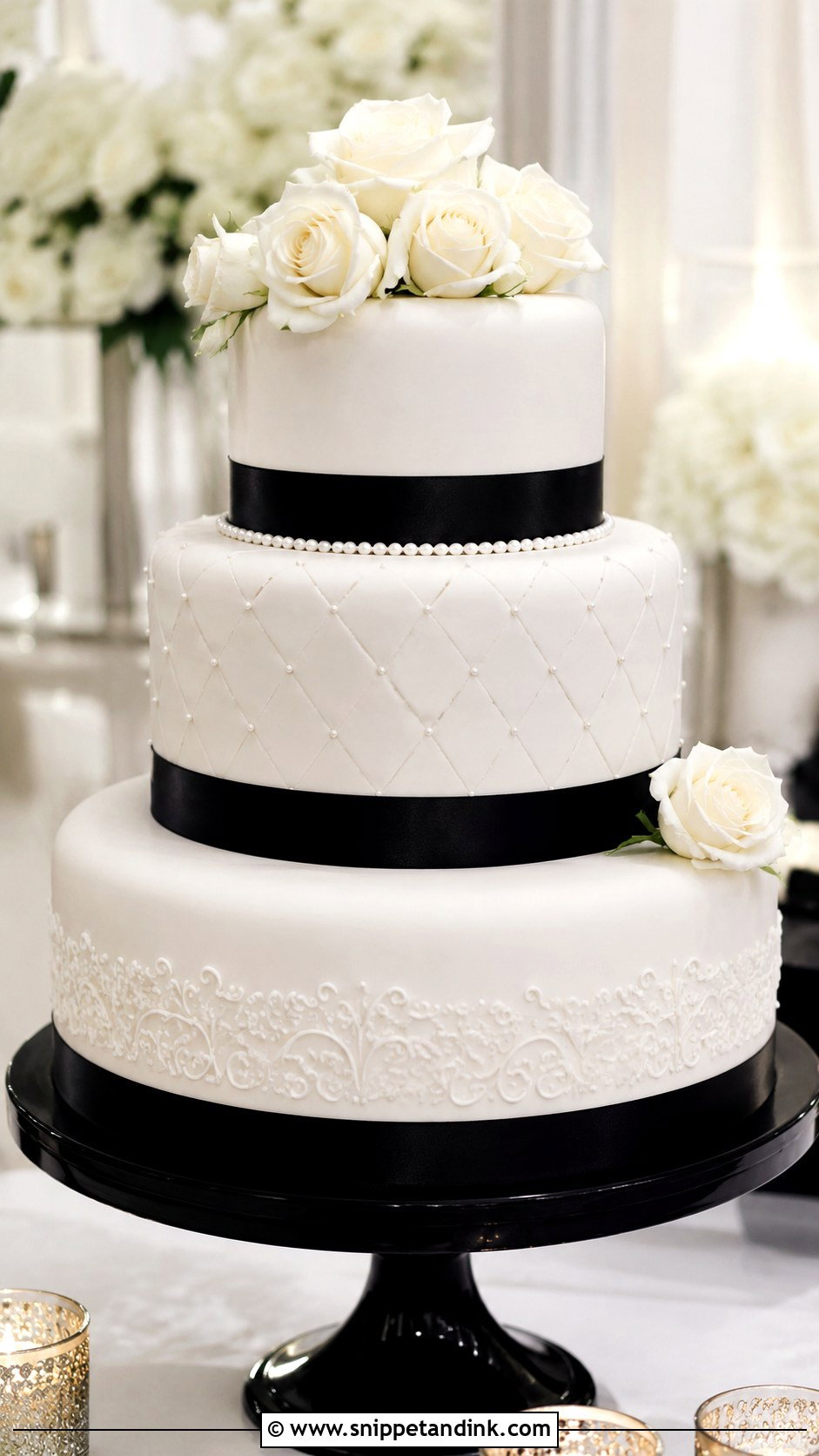
Black and white is striking, especially at evening receptions, but black icing is tricky. Getting a true black takes a lot of coloring, which can taste bitter and stain teeth, so I keep black to accents: ribbon, painted lines, bows, or a single dark tier made from cocoa-based fondant. White as the main color keeps the cake from looking heavy. Pearls or geometric white lines add balance. Vanilla, chocolate, red velvet or cookies and cream all fit, and a plain stand keeps the contrast crisp.
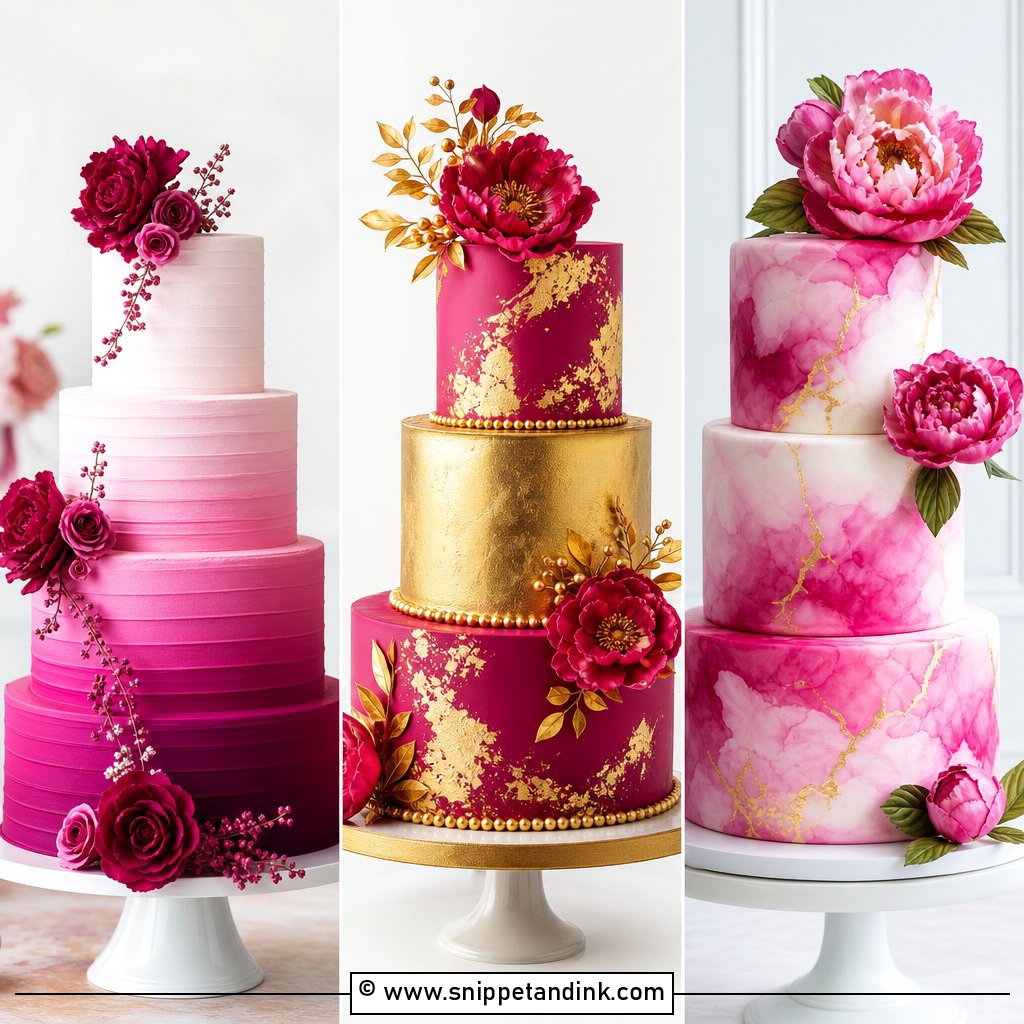
20. Blush Tiered Wedding Cake
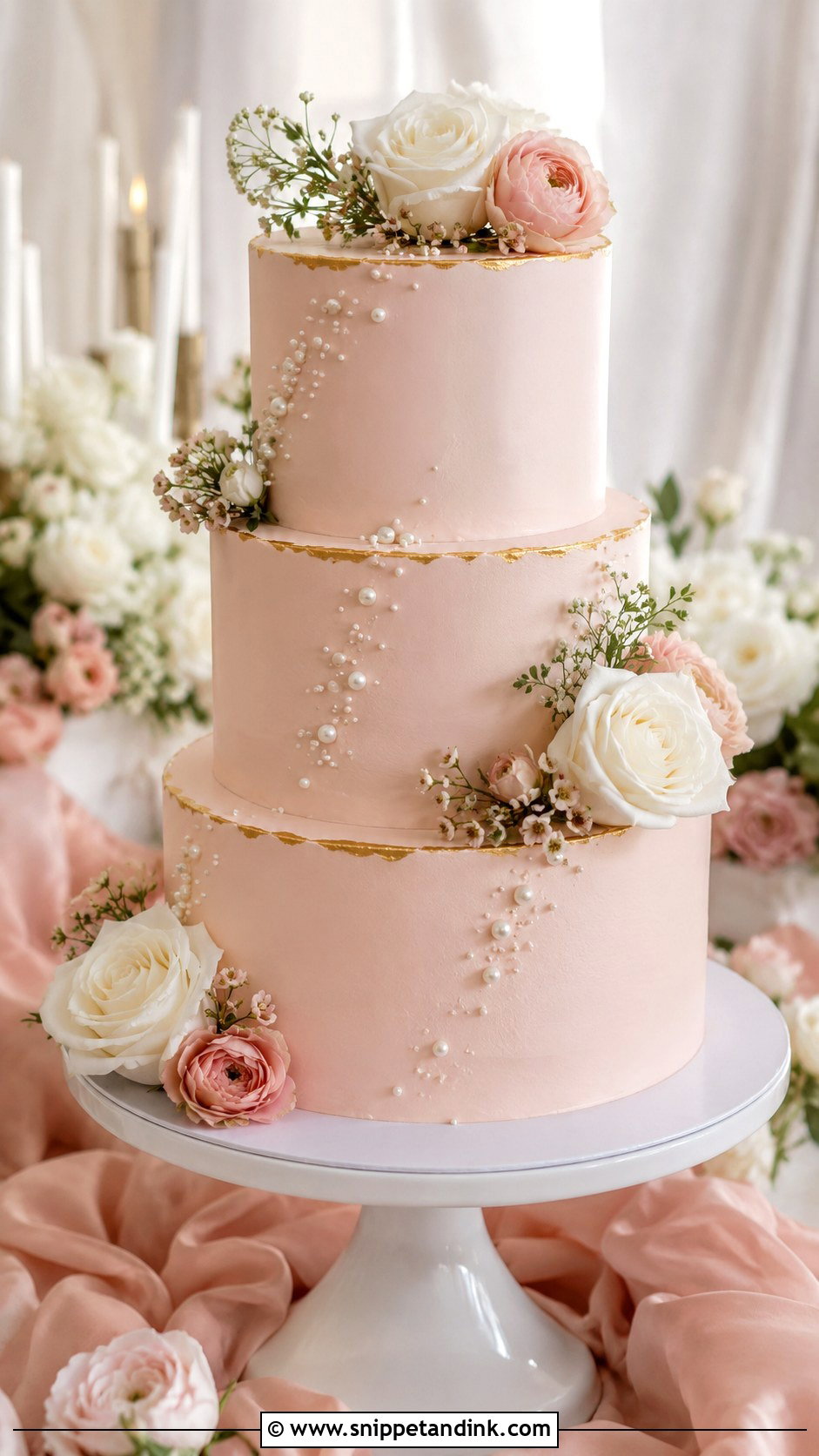
Blush ranges from barely pink to dusty rose, mauve and peach. The shade I mix depends on the room: warm candlelight pushes pink toward peach, while daylight shows it truer. I always ask for a fabric swatch from the bridesmaid dresses or linens and match under the light the reception will actually have. Pair blush buttercream with white flowers and pearls for classic, or smooth blush fondant with one sculpted bloom for modern. Strawberry, raspberry or champagne sponge suits the color.
21. Blue Tiered Wedding Cake
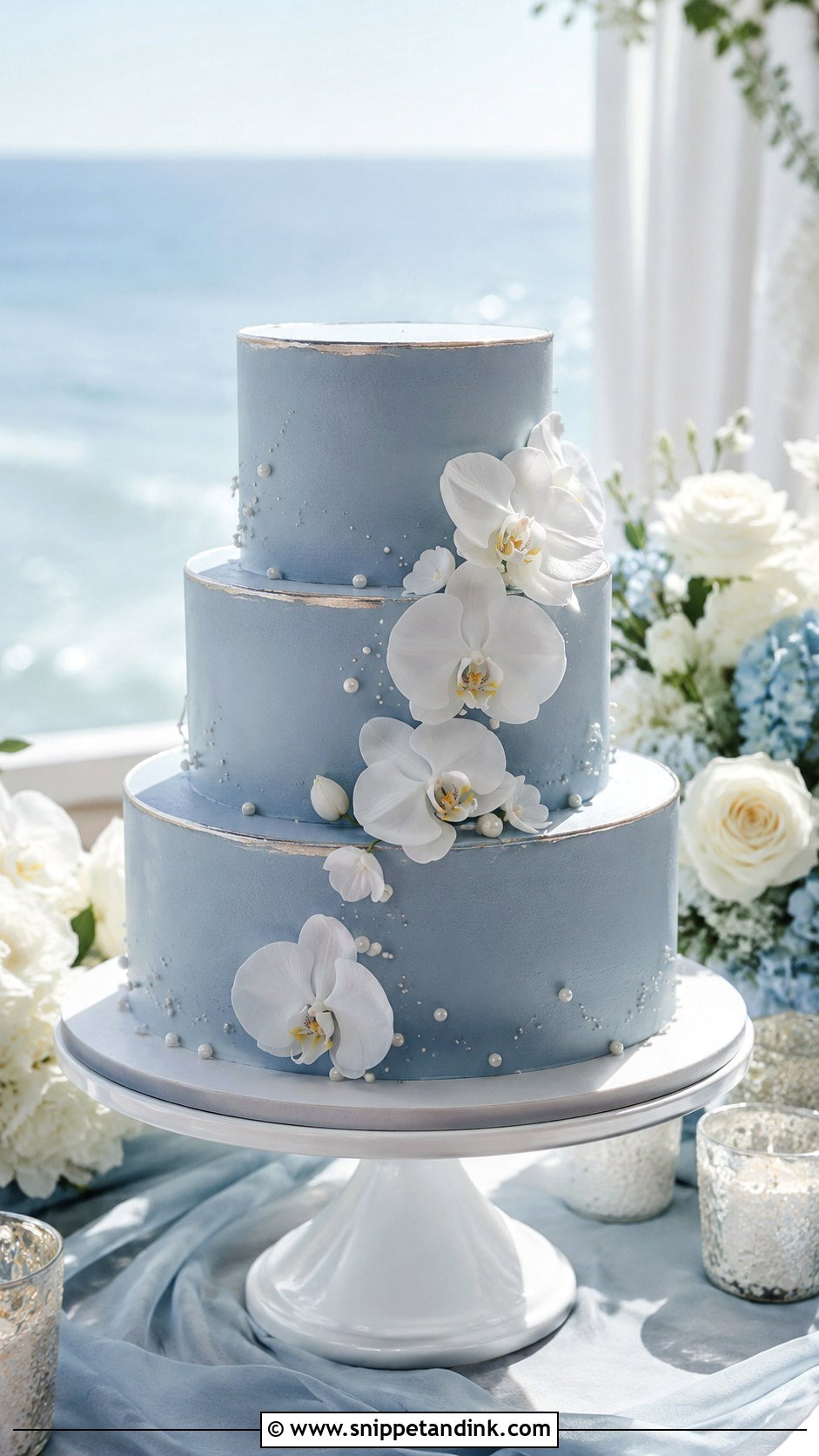
Blue is a color I mix with care, because it shifts more than any other cake color. Soft blue can go gray under some reception lighting, and dusty or slate blue can look flat in photos if it is too muted. I test a swatch on a small cake before committing the whole order. Keep the finish simple so the color carries it: smooth buttercream, light piping, white flowers or silver accents. For a beach setting, a hint of shell texture is enough. Lemon, coconut or blueberry filling suits the cool palette.
22. Green Tiered Wedding Cake
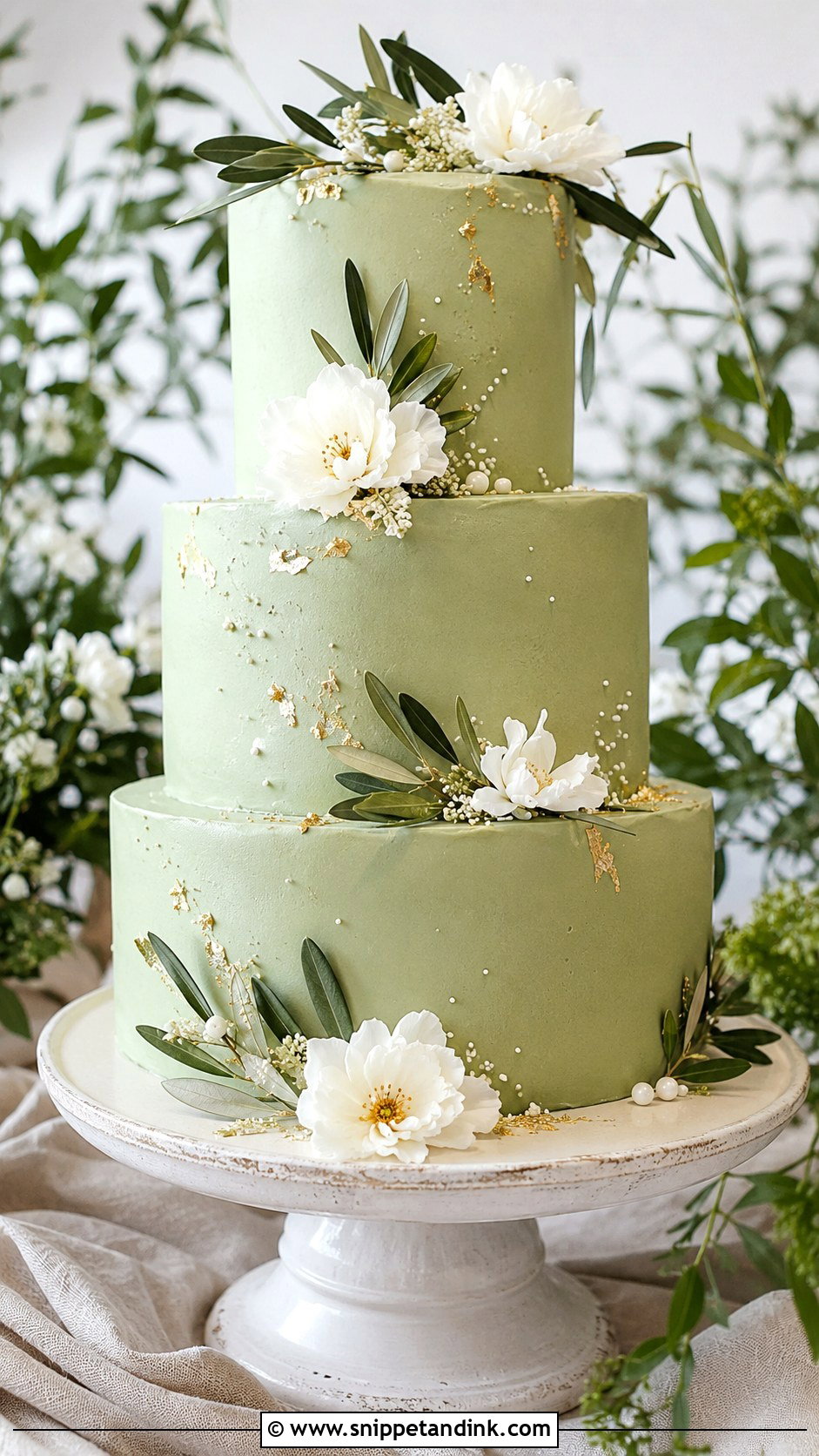
Green changes character by shade. Sage is soft and garden-like, olive feels earthy, emerald turns formal and dramatic. Deep greens need a lot of coloring, so I often use green on just one tier and keep the others ivory, which also keeps the cake from looking heavy. White flowers, gold accents or fine piping pull it back toward wedding territory. Pistachio, matcha and lemon sponges make the theme edible, and green sits nicely with wood tables and linen.
23. Marble Tiered Wedding Cake
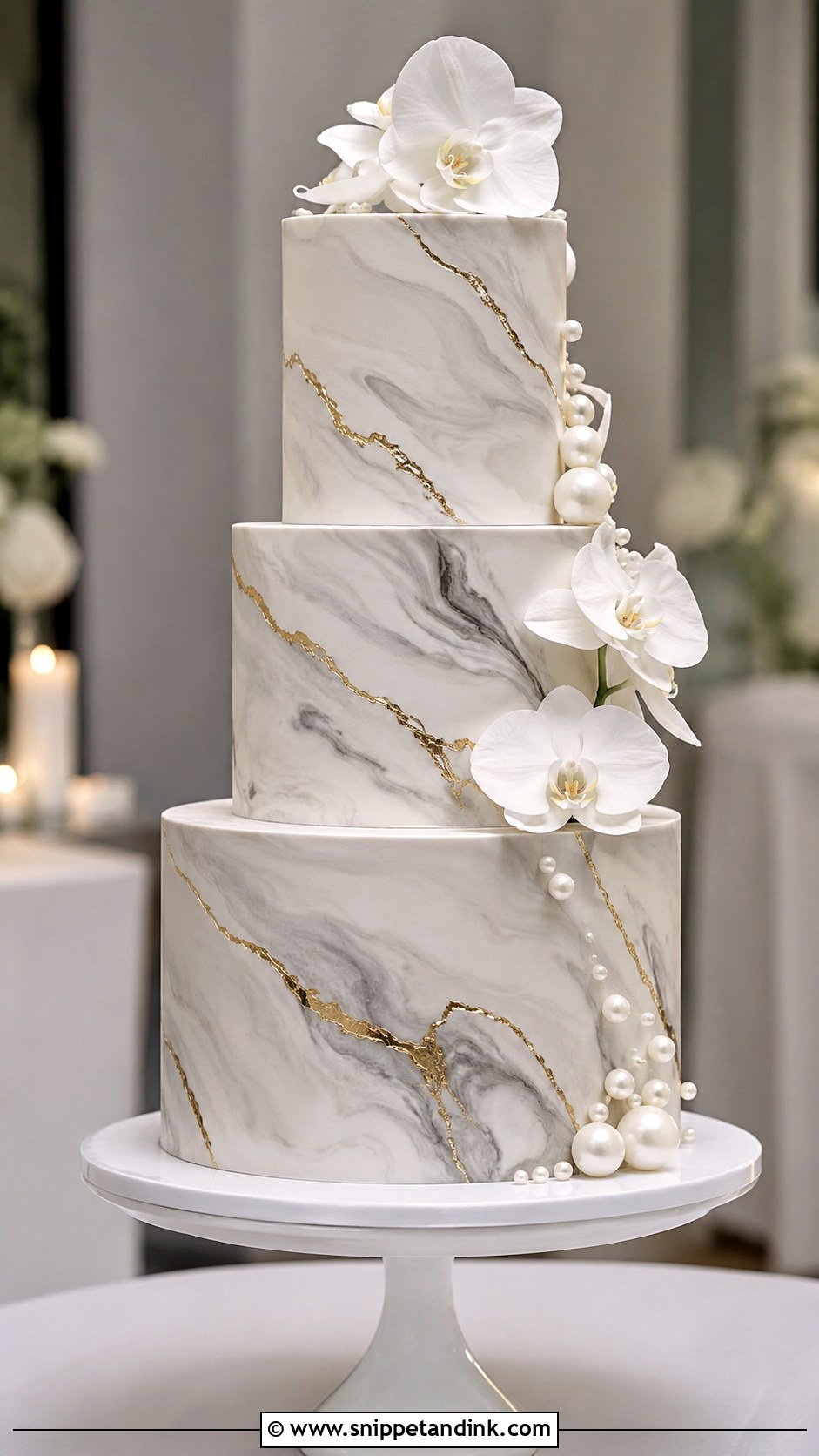
Marble is almost always done in fondant: I twist colored and white fondant together and roll it so the veining runs naturally, which means no two tiers look identical. Gray, beige, blush, blue or green veining can match the palette. Keep everything else restrained so the pattern reads clearly; a few gold lines or one sugar orchid are plenty. It suits hotel venues and loft spaces. Vanilla, chocolate, mocha or almond fit the clean look.
24. Textured Tiered Wedding Cake
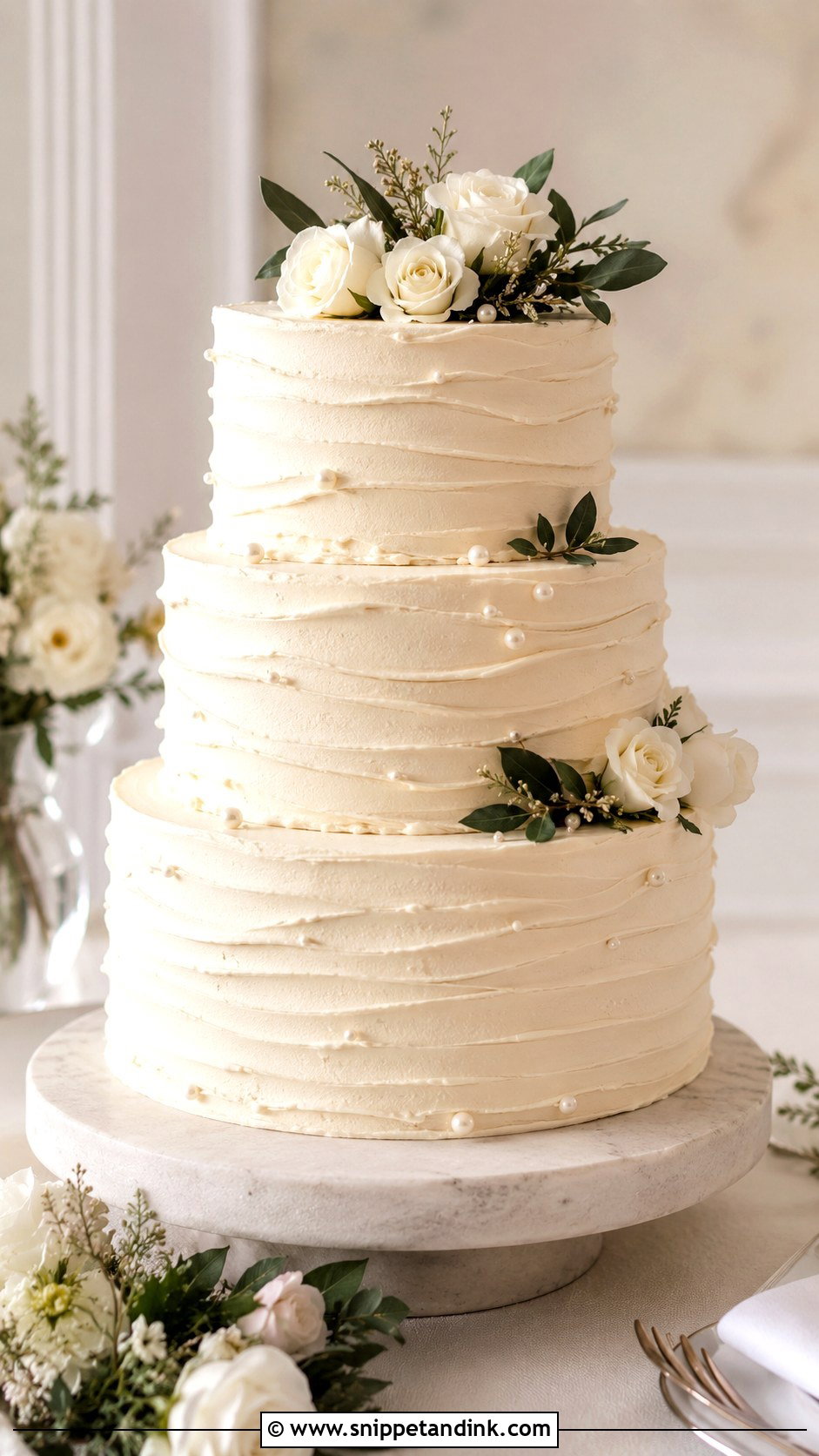
Texture is my favorite answer for couples who want interest but no extra color. Ridged buttercream, rough palette knife strokes, ruffles, lace impressions and wave patterns all catch side light and create shadow. The deeper the texture, the plainer the color should be, so white, ivory, champagne or pale blush work best. One small floral cluster finishes it. Because the pattern wraps all the way round, a textured cake looks good from any side of the room.


25. Ruffle Tiered Wedding Cake
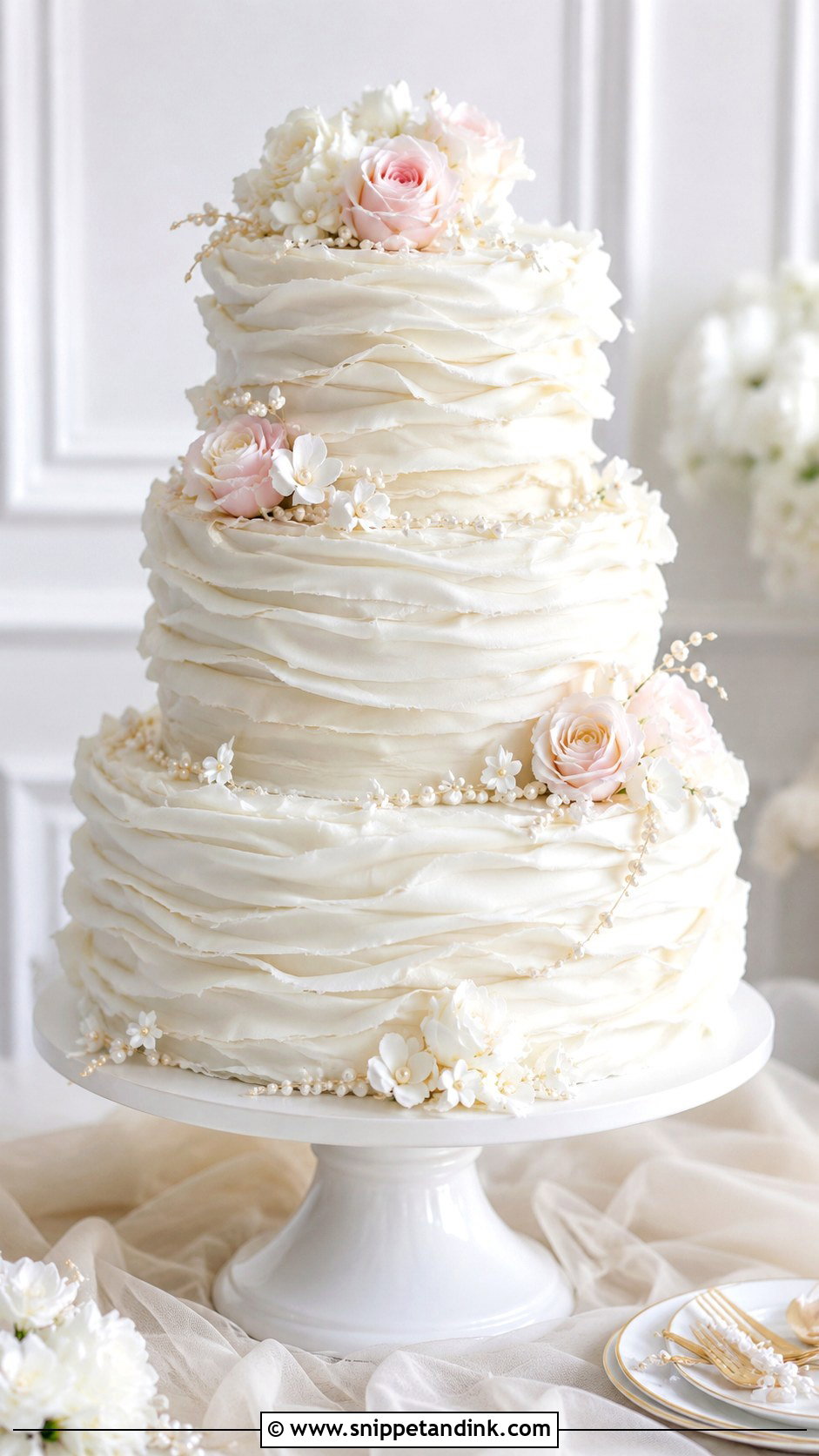
Ruffles are made by piping or by layering thin strips of fondant or wafer paper, and they add real weight and decorating time. I usually put them on one statement tier or the bottom tier rather than the whole cake, which keeps the price and the bulk sensible. They echo tulle and organza skirts nicely. White or ivory reads classic; blush or champagne adds warmth. A few roses or sugar blossoms are all the extra decoration needed. Vanilla, coconut or raspberry suits the light feel.
26. Drip Tiered Wedding Cake
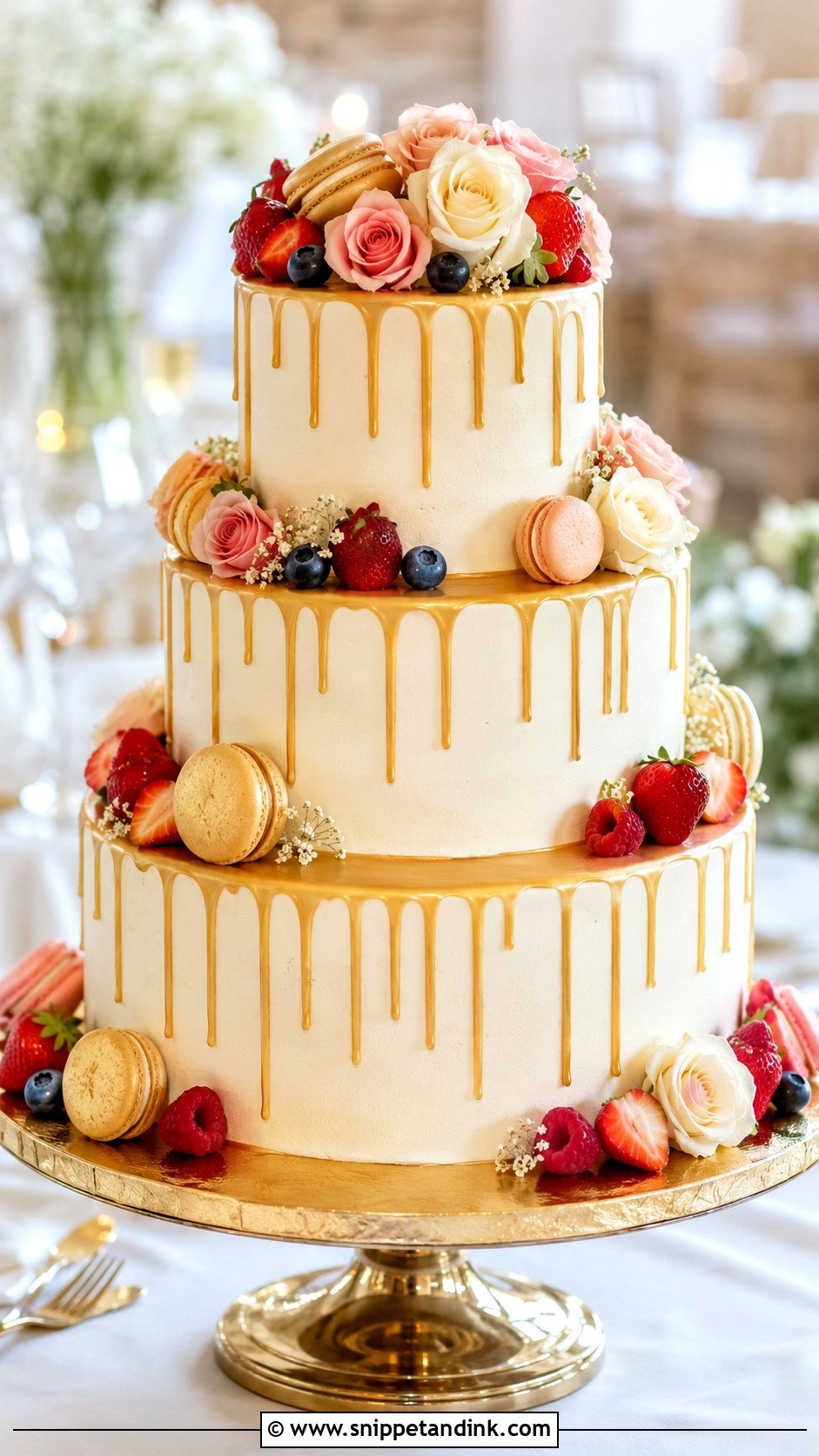
A drip is ganache poured over a chilled cake so it sets in controlled runs. For weddings I keep the drips short and even, because long uneven ones read as messy in photos. Temperature is everything: ganache that is too warm runs to the board, too cool and it sits in lumps. White chocolate, caramel, dark chocolate, gold-painted or colored drips all work. A white cake with a gold drip feels glam, while a chocolate drip cake feels rich and cozy. Chocolate raspberry, vanilla caramel and lemon blueberry make good pairings. In a hot room, drips soften, so this is a cake to keep cool until it is served.
27. Fruit Tiered Wedding Cake
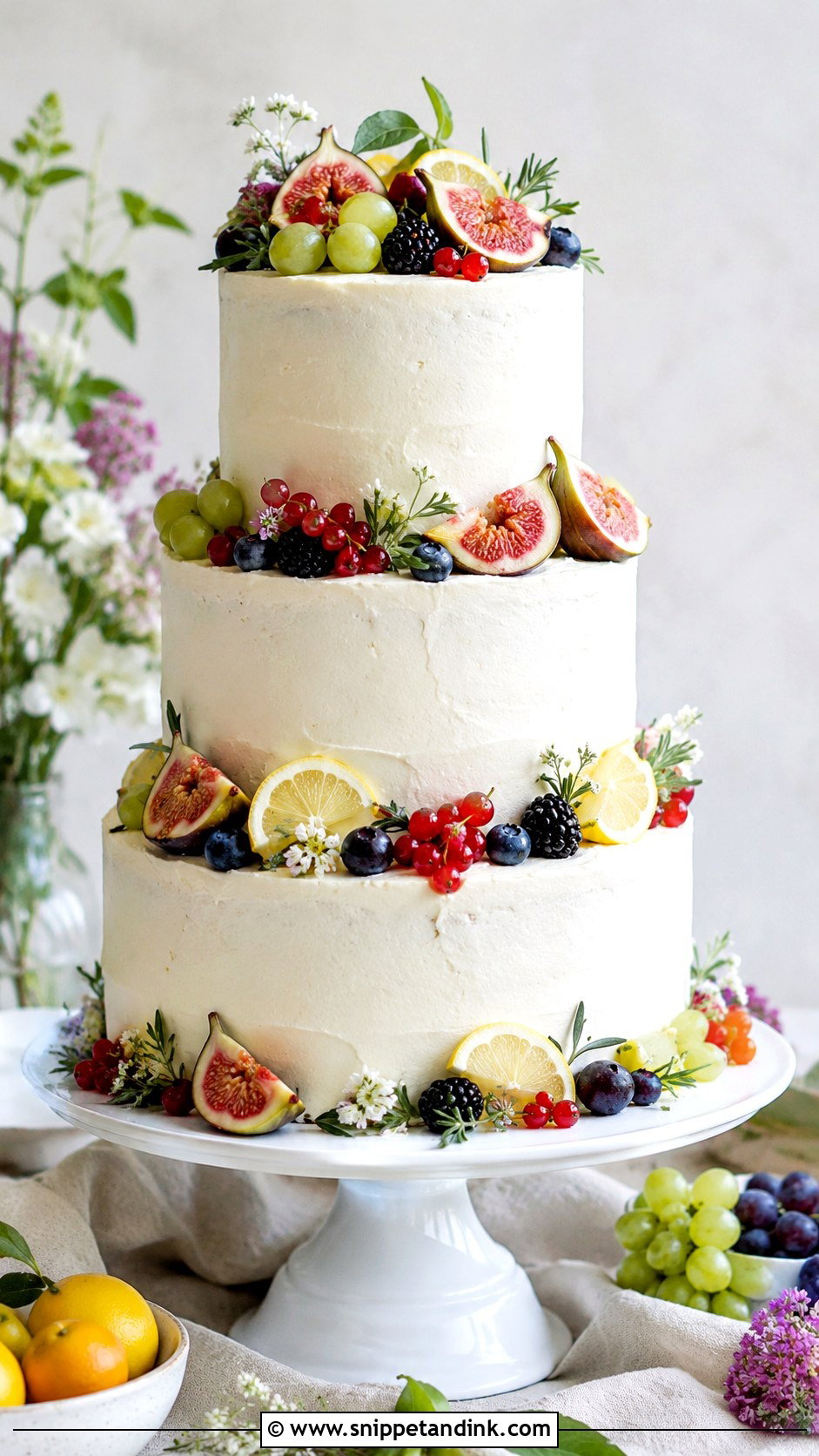
Fresh fruit looks wonderful but weeps. Cut fruit releases juice into the frosting within a few hours, so I add berries, figs, grapes, citrus slices, pears, cherries and pomegranate on site, as late as possible, and brush cut surfaces with a light glaze to keep them glossy. Keep the frosting simple, smooth buttercream or semi-naked, so the fruit becomes the decoration. A dusting of powdered sugar or a few herbs softens it. Match fruit to sponge: lemon with berries, almond with figs, vanilla with citrus.
28. Beach Tiered Wedding Cake
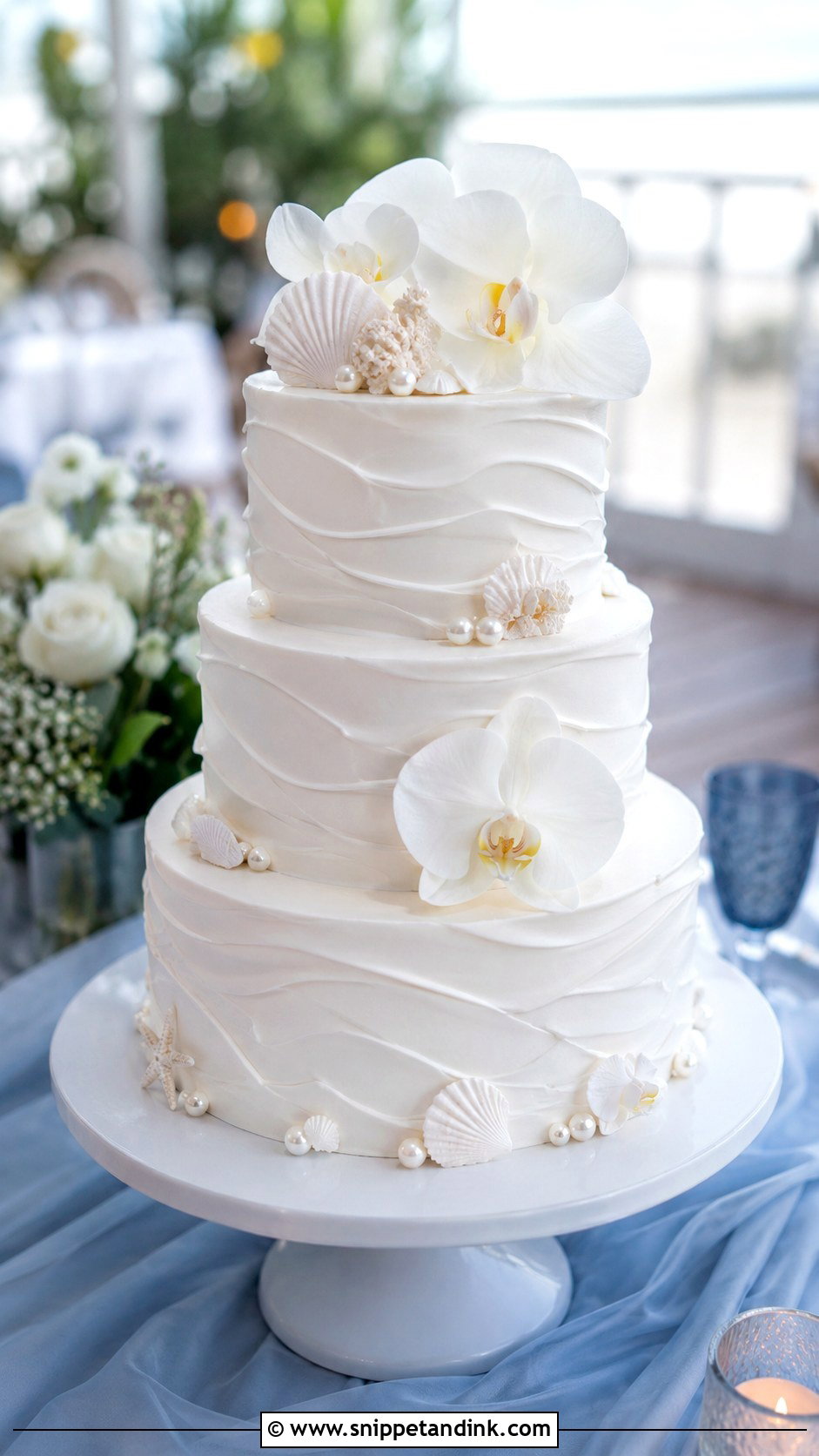
A beach tiered wedding cake should hint at the coast, not shout it. Sand, ivory, pale blue and sea-glass green, a watercolor wash or a subtle wave pattern say enough. The real problem at the beach is heat, humidity and sun, so I build these cakes on ganache under fondant and ask for the table to be in full shade. White orchids, a few refined sugar shells or pearls finish it. Coconut, lime, passion fruit and lemon suit the setting.
29. Rustic Tiered Wedding Cake
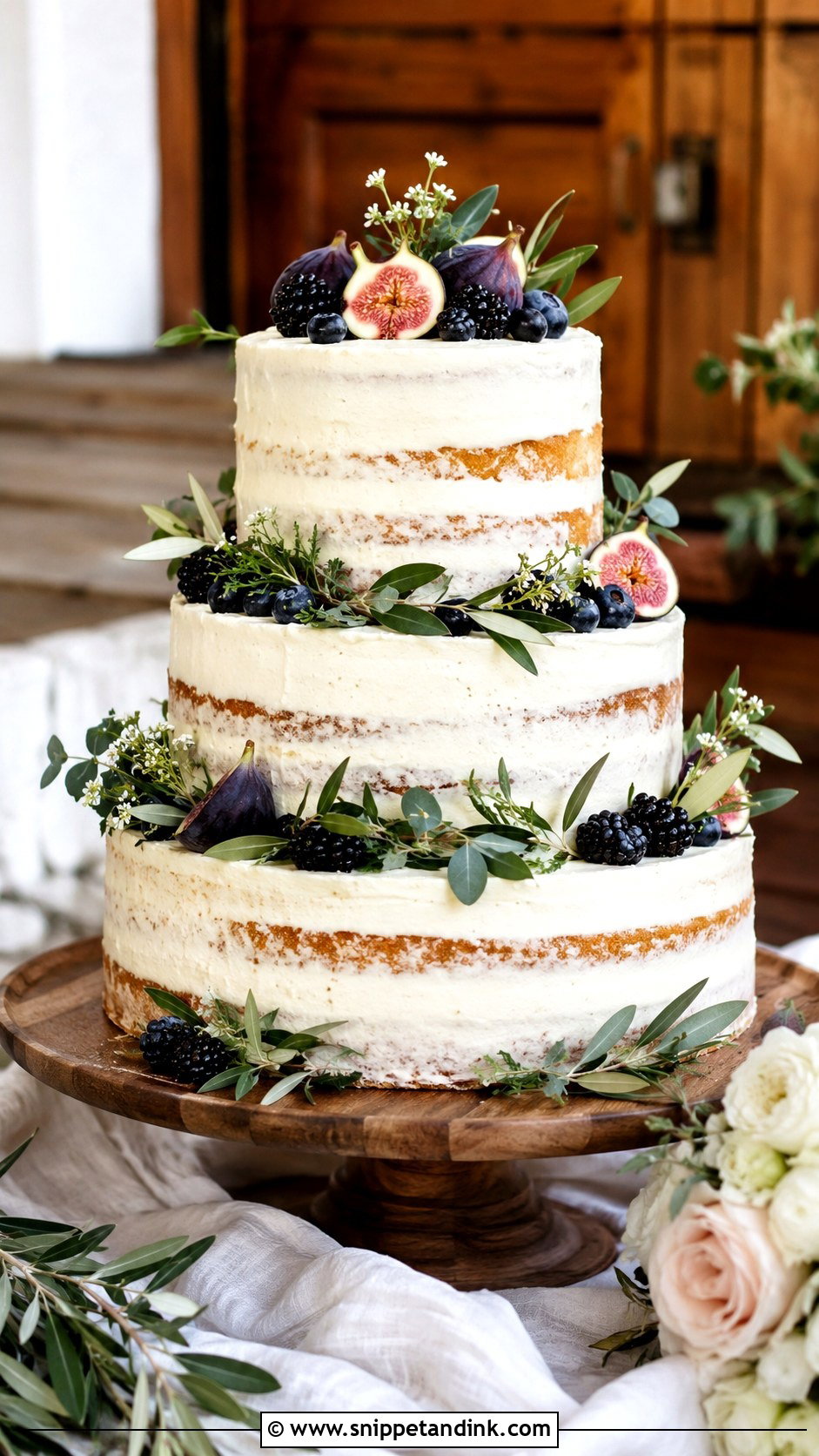
Rustic cakes are meant to look relaxed, but they still need to be built properly. A barn or vineyard is often warmer and less level than a ballroom, so I check the table is stable and out of direct sun. Semi-naked frosting, textured buttercream and a wood slice stand set the tone; berries, greenery and simple flowers finish it. Carrot, spice, apple and almond sponges fit the season. A small nod to the setting, olive branches at a vineyard or wildflowers in a meadow, makes it feel personal.
30. Modern Tiered Wedding Cake
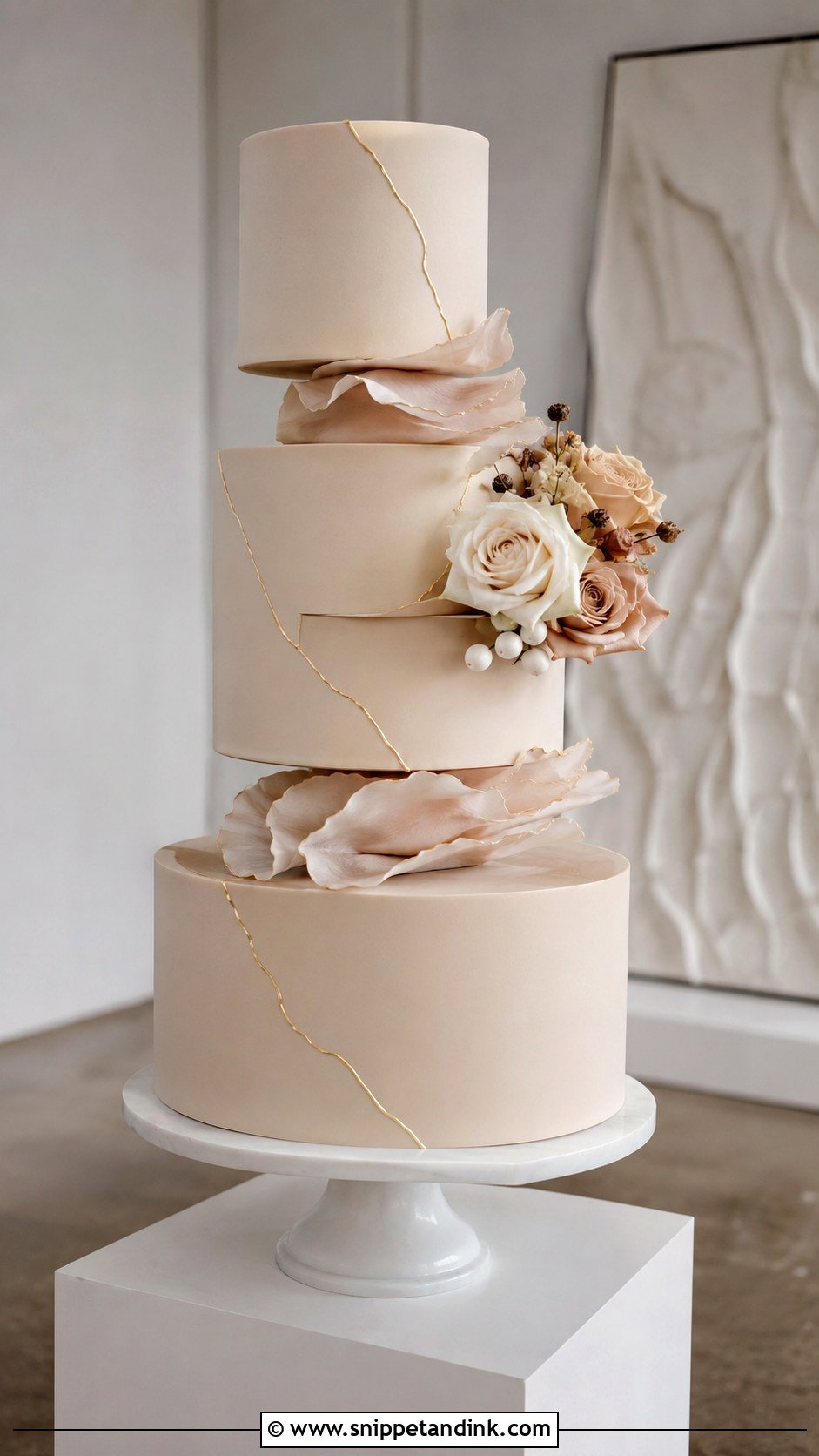
Modern cakes depend on one strong decision: extra-tall tiers, offset stacking, a single bold color, sharp edges or a sculptural sugar piece. Everything else gets taken away. That restraint is harder than it sounds, because every flaw shows on a minimal cake, so finish quality matters more here than anywhere else in this list. White-on-white texture, a black ribbon or abstract sugar petals all suit. Vanilla bean, dark chocolate, pistachio or espresso sponges match the clean look.
Dowels, Delivery and the Hour Before the Cut
A tiered cake is a small building. Each tier sits on its own board, held up by dowels pushed into the tier below, and that is what stops a four tier cake from sinking into itself. When you’re comparing bakers, ask how they support tiers and whether they deliver stacked or assemble on site. Tall or heavy cakes are often driven in pieces and stacked at the venue, which is safer on bumpy roads.
Where the cake table goes
I always ask to see the spot. Direct sun through a window, a radiator, a heater in a marquee or a candle wall right behind the cake will soften buttercream and make drips run. A cake moved from a cold van into a warm, humid room can also sweat, with beads of moisture appearing on fondant. It dries off if left alone, so nobody should wipe it.
On the day
- Make sure the table is level and sturdy; a wobbly folding table is the most common cause of a leaning cake.
- Name one person at the venue who knows which tiers are real and which are dummies, and whether the top tier is being boxed up.
- Ask your baker to leave a short cutting guide, because cutting a tiered cake starts with removing the dowels, not slicing straight down.
A Cake Built Around Your Room, Your Season and Your Guest List
Start with what the cake has to do: feed a certain number of guests, suit the room’s size and light, survive the season and match the rest of the styling. A two tier cake can be exactly right for an intimate reception, while a tall four tier cake belongs in a grand ballroom. Buttercream tastes soft, fondant gives structure, flowers add romance and texture adds depth. Bring two or three photos you love to your tasting, tell your baker which detail drew you to each one, and let them adjust size, flavor and finish for your real wedding.
You'll Like These Ideas:












Leave a Reply