
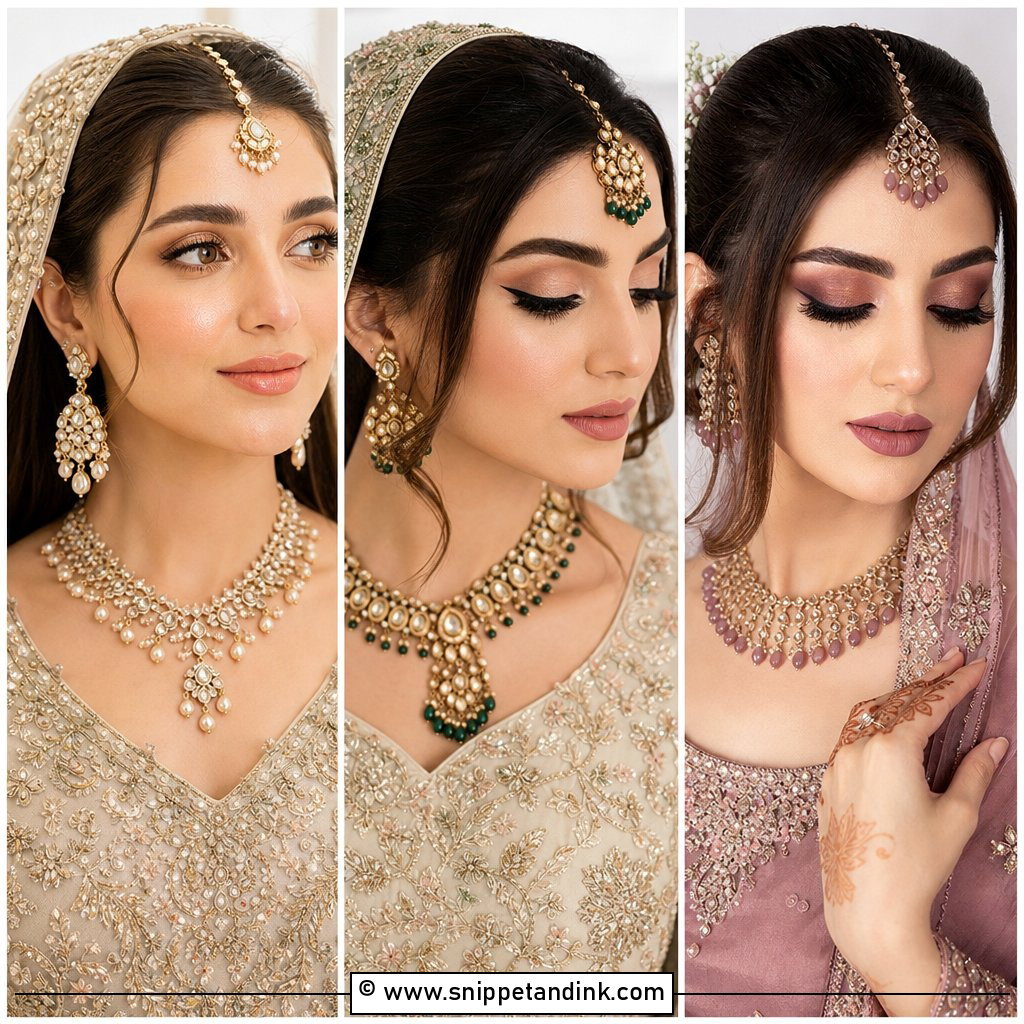
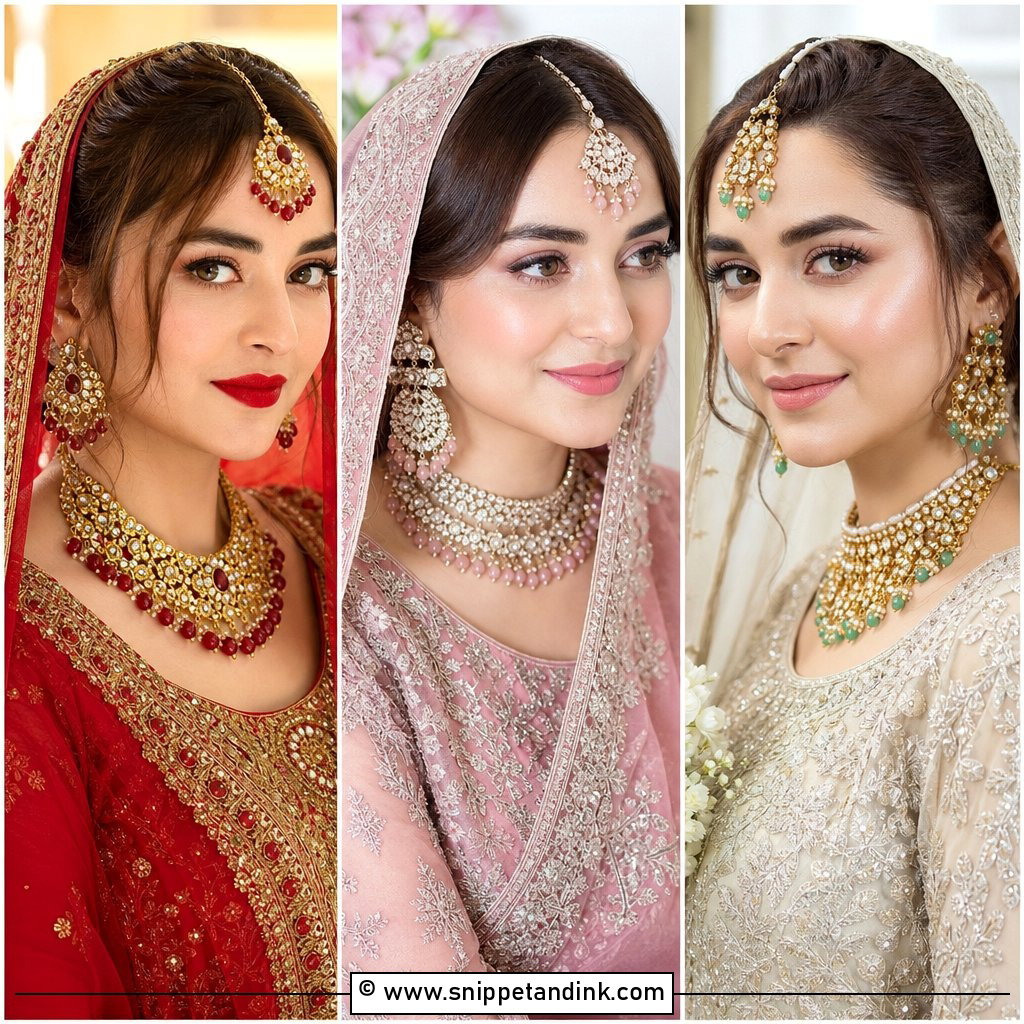
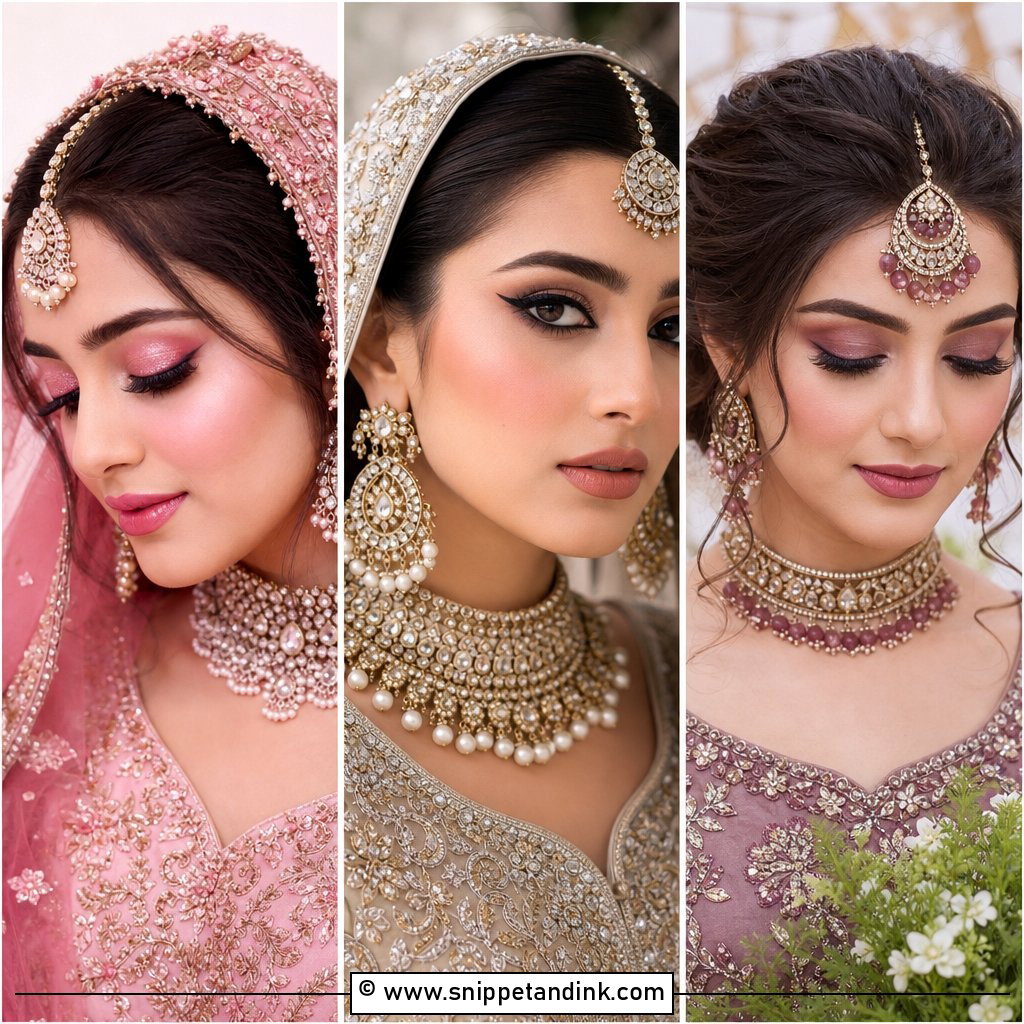
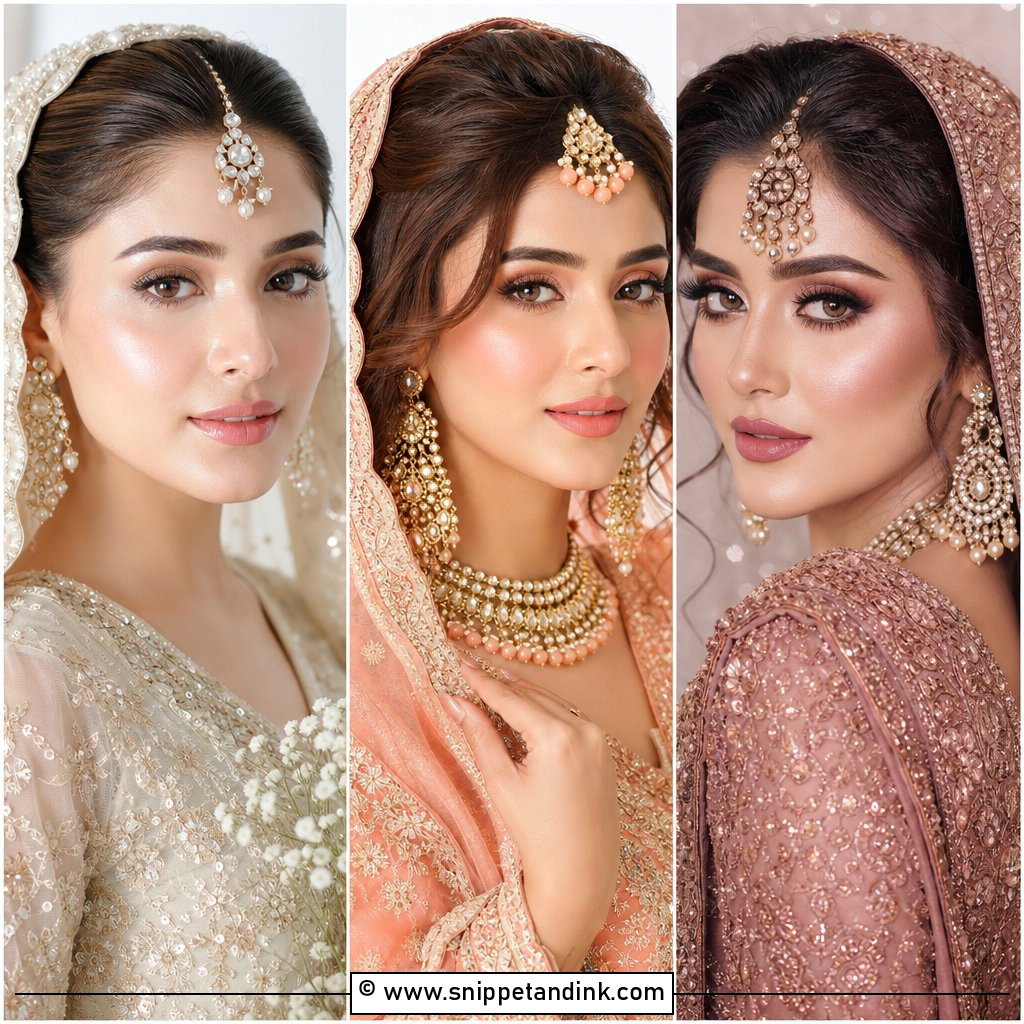
An Indian wedding asks a lot of a bride’s face. The ceremony can run for hours under hot lights, the jewelry is heavy and close to the skin, and the photographs are taken from inches away and across a crowded hall. Good bridal makeup handles all of that and still looks like you. Regional traditions shape the starting point, whether that’s red and gold for a Bengali bride or a dewy finish with temple jewelry in the South, but the outfit, the ceremony time and your own skin decide the details. Below are 20 looks I’d build for lehengas, sarees, shararas and fusion outfits, with notes on the eyes, lips and base for each, plus what I’d watch out for.
Shade Matching Under Mandap Lights and Camera Flash
Indian wedding photos are taken in very different light within the same day: daylight for the haldi, warm yellow bulbs at the mandap, harsh flash at the reception. A foundation that looks right in your bathroom mirror can turn ashy or orange in every one of those.
At the trial, I match the foundation on the jawline and down the neck, never on the back of the hand. Blouses often show the collarbones and back, so the base has to blend into the chest and shoulders too. I then take photos in daylight and with flash to check for problems.
- Flashback, the white cast that appears in flash photos, comes from some setting powders and from mineral sunscreen under the base. I keep both away from the face on the wedding day.
- Grey or ashy skin usually means the foundation is too cool or too light for your undertone. Warm olive and deep skin tones need a base with a gold or red undertone.
- An orange jaw line is the opposite problem: too much warmth or bronzer on cooler skin.
- Under warm mandap lighting, a little less bronzer goes a long way, because the light adds warmth on its own.
1. Red Lehenga Indian Bridal Look
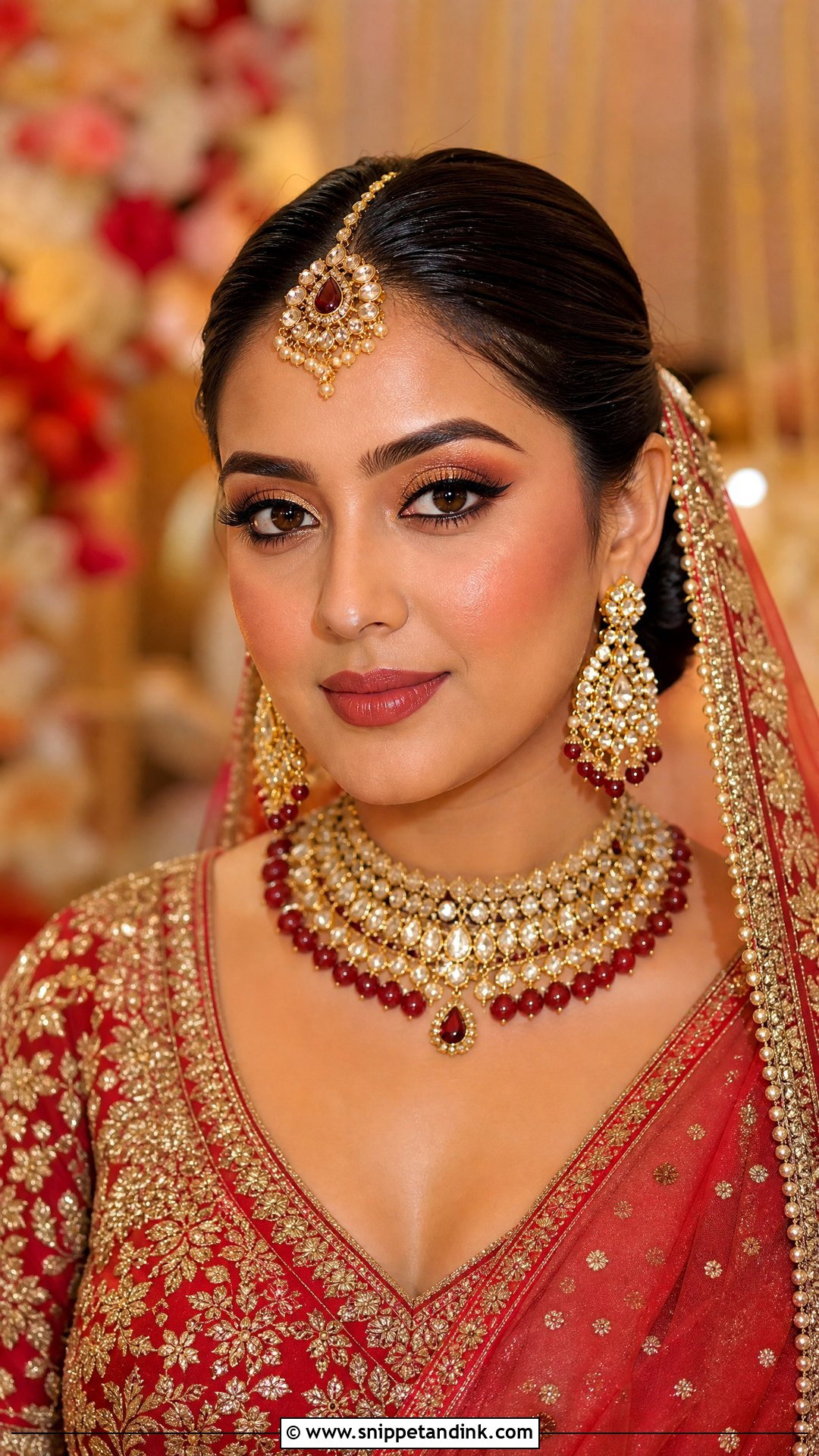
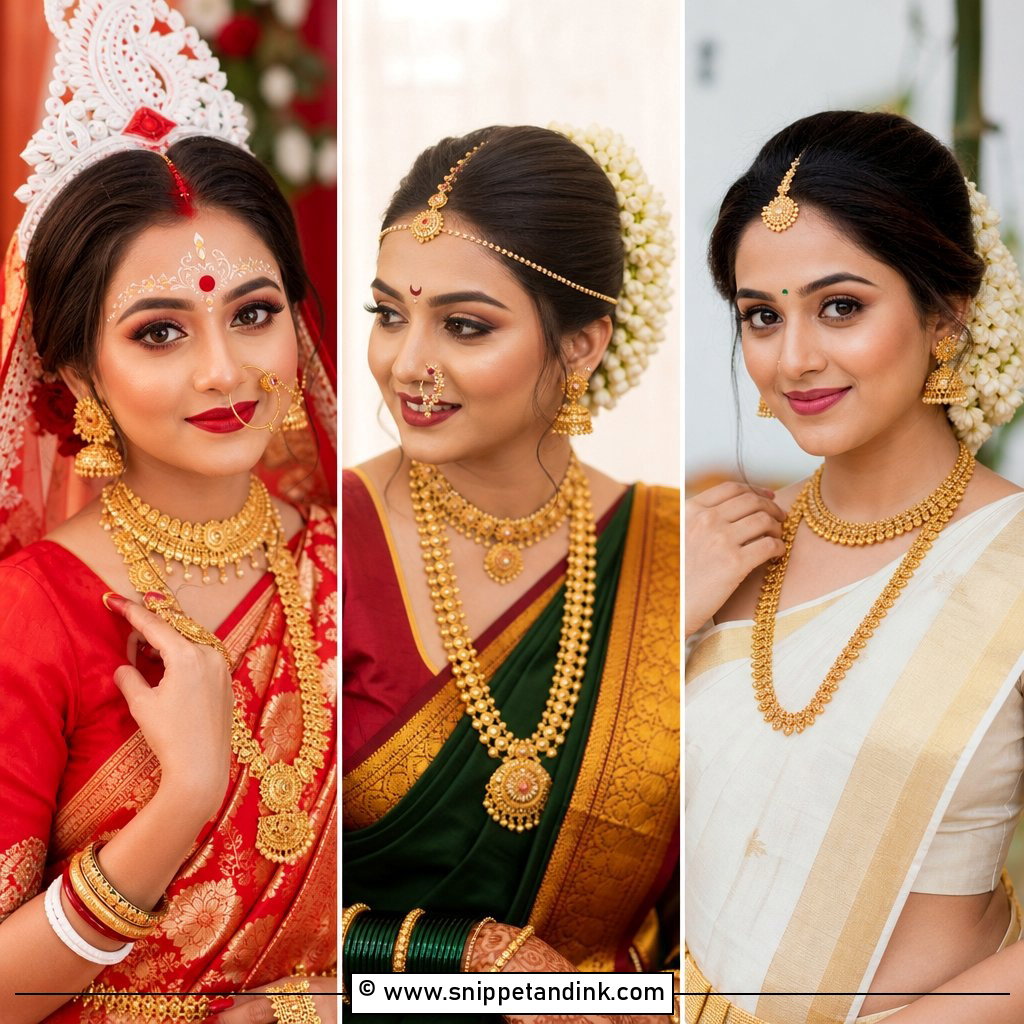
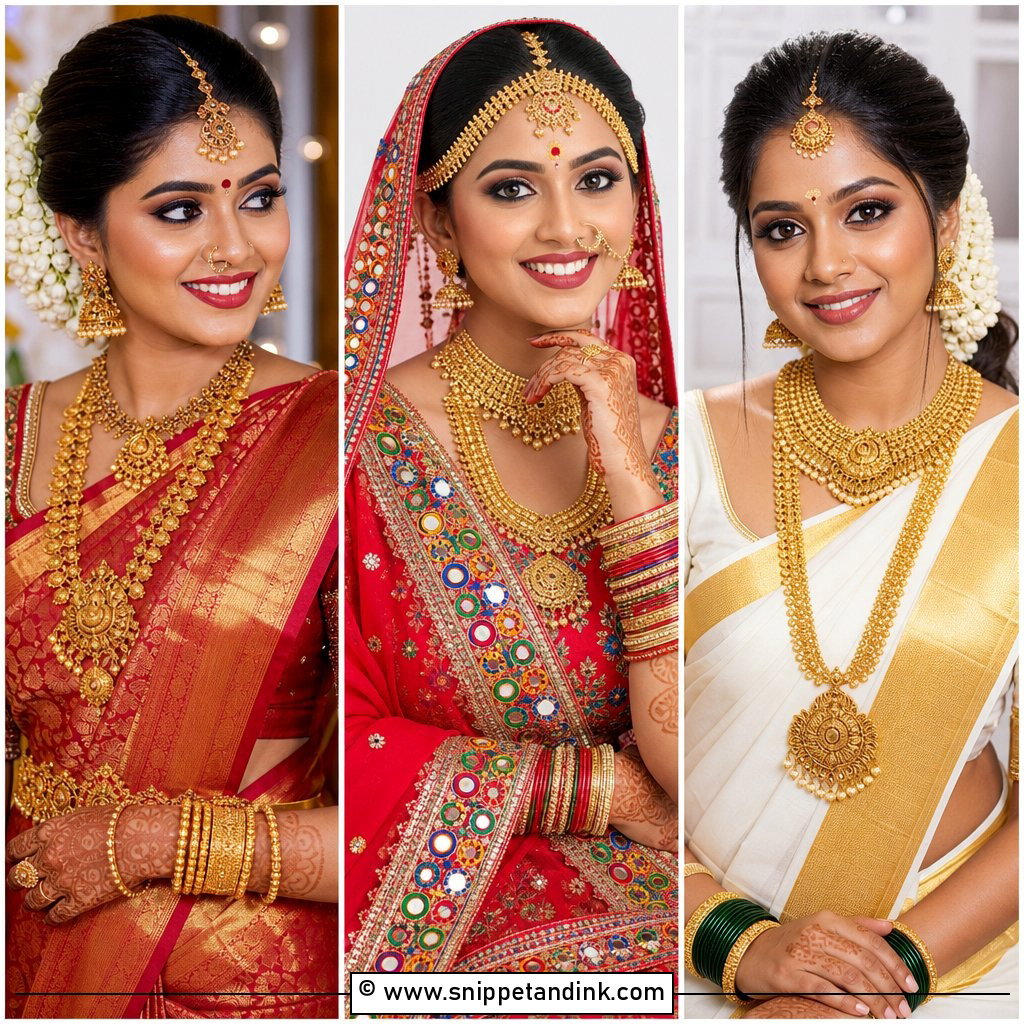
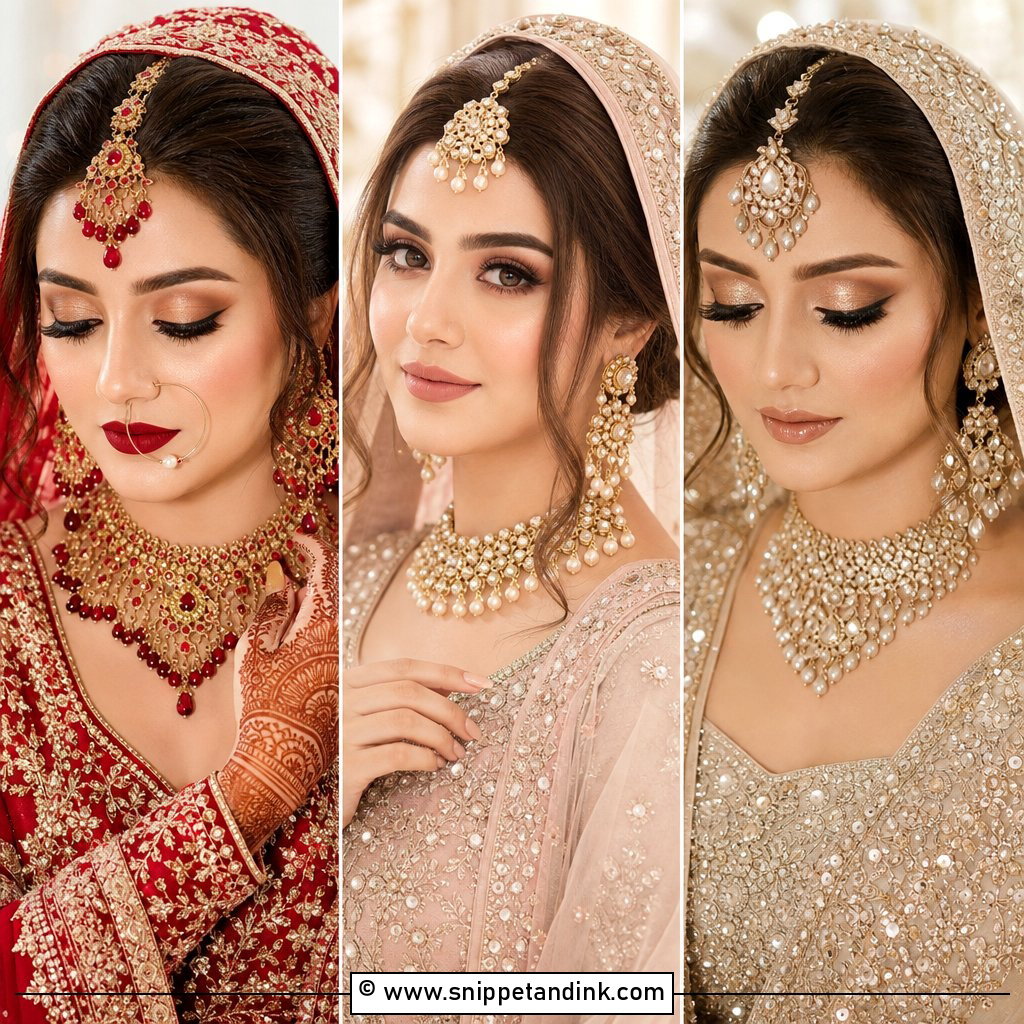
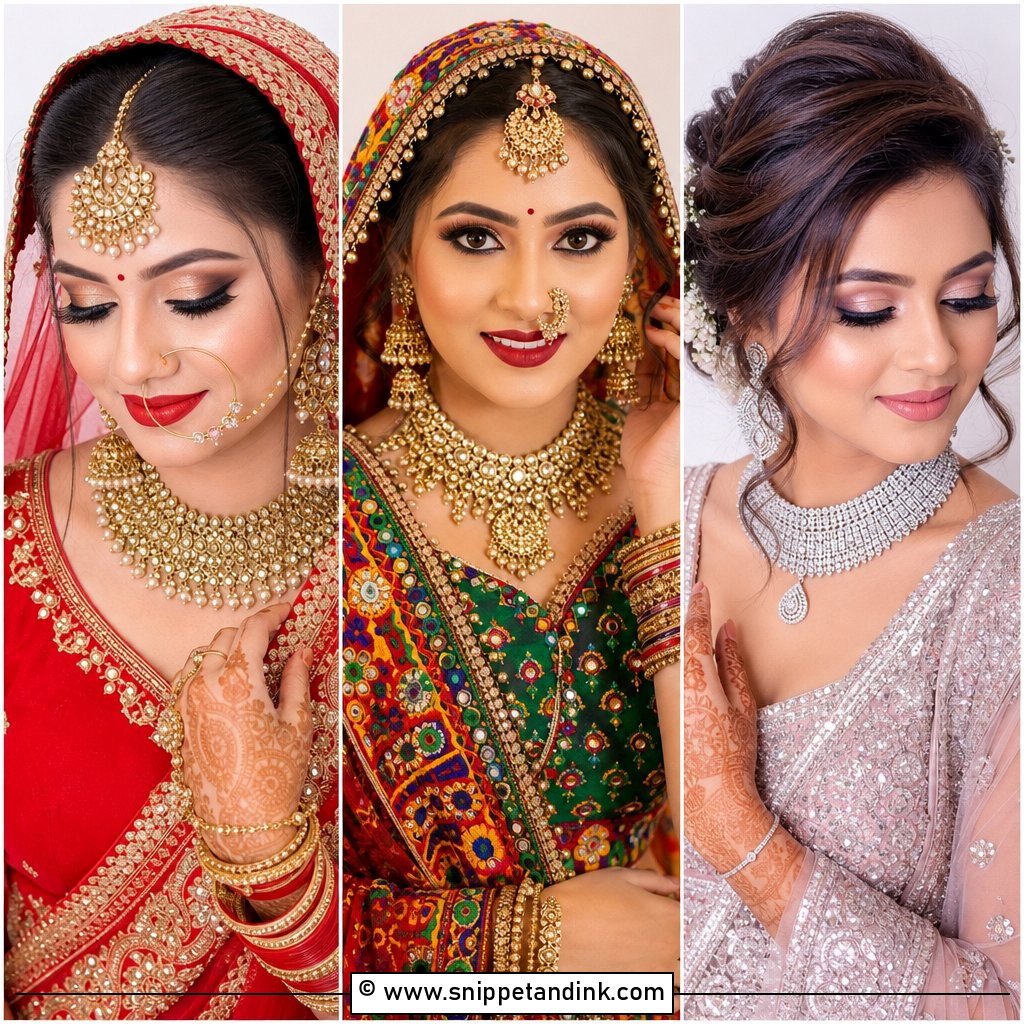
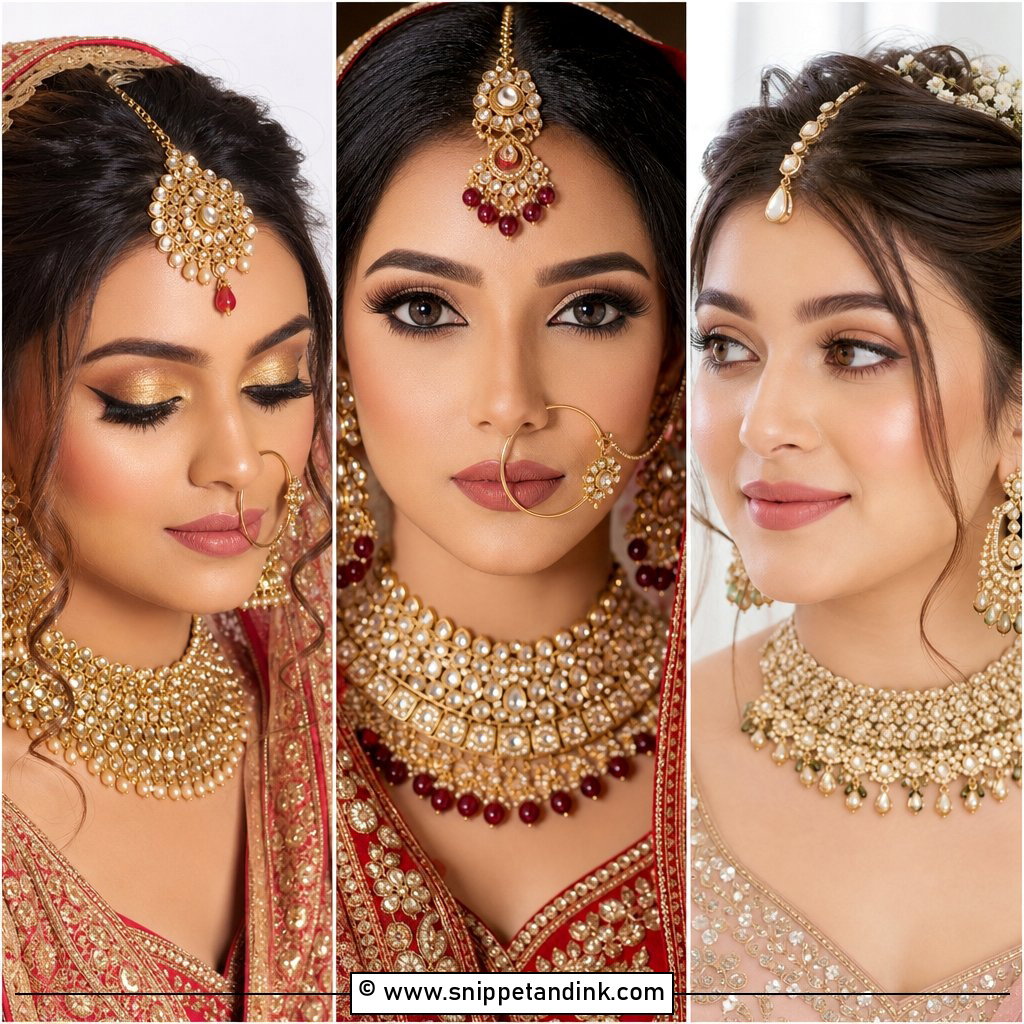
The red lehenga is still the look I’m booked for most, and the risk is always overload: heavy red fabric, gold jewelry and a full face can swallow the bride. I keep the base satin rather than matte so the skin doesn’t go flat next to the shine of the zari, sculpt the cheeks softly, and put warm gold highlight only on the high points. Bronze and antique gold on the lids with black kohl and full lashes gives depth. Brows stay defined but soft. On lips, I’d match the depth of the lehenga: a deep nude for a maroon outfit, a true red when the fabric is bright. Get the red lehenga Indian bridal look right at the trial with your actual dupatta, because red reflects onto the face.
2. South Indian Bridal Look
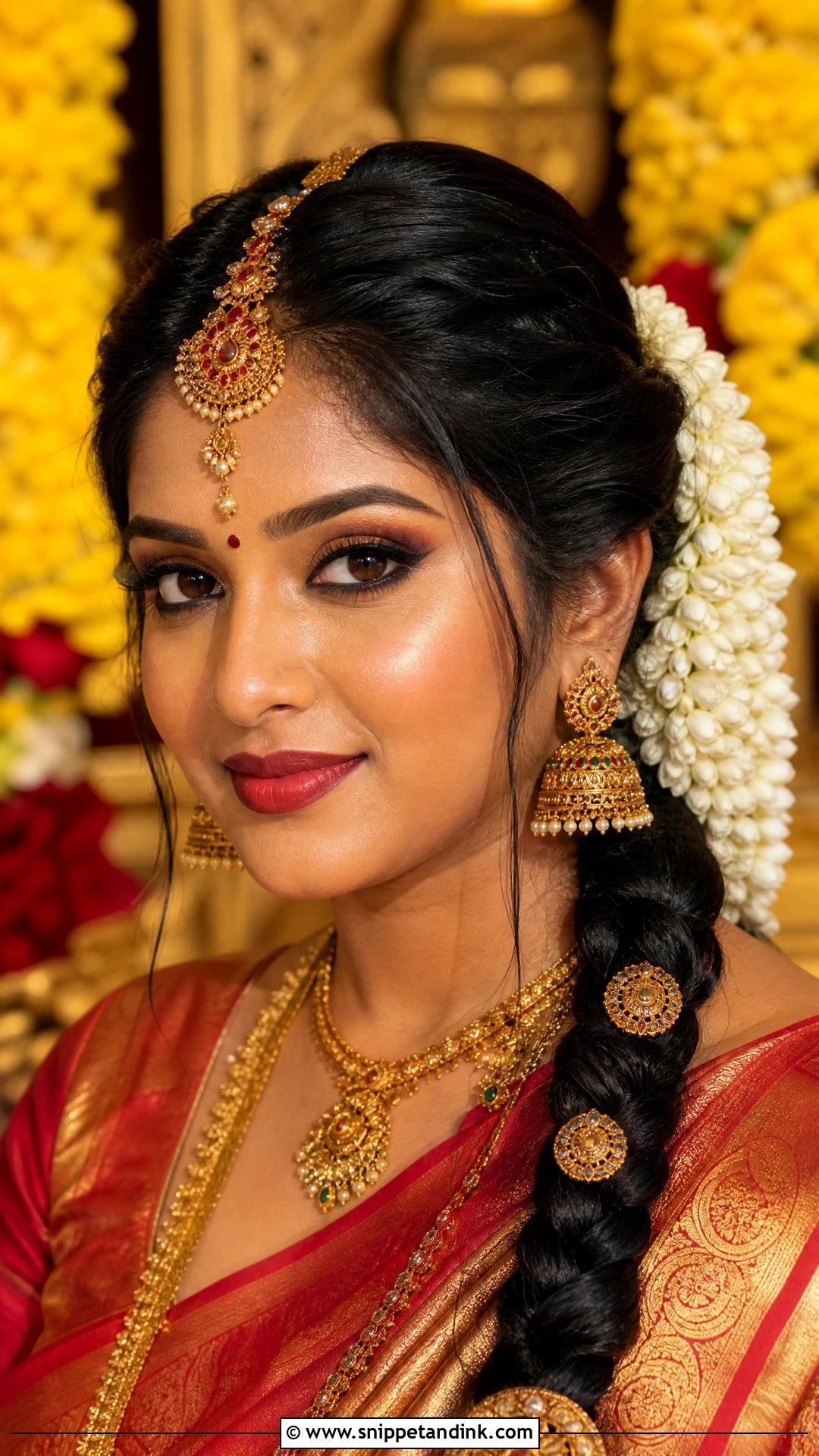
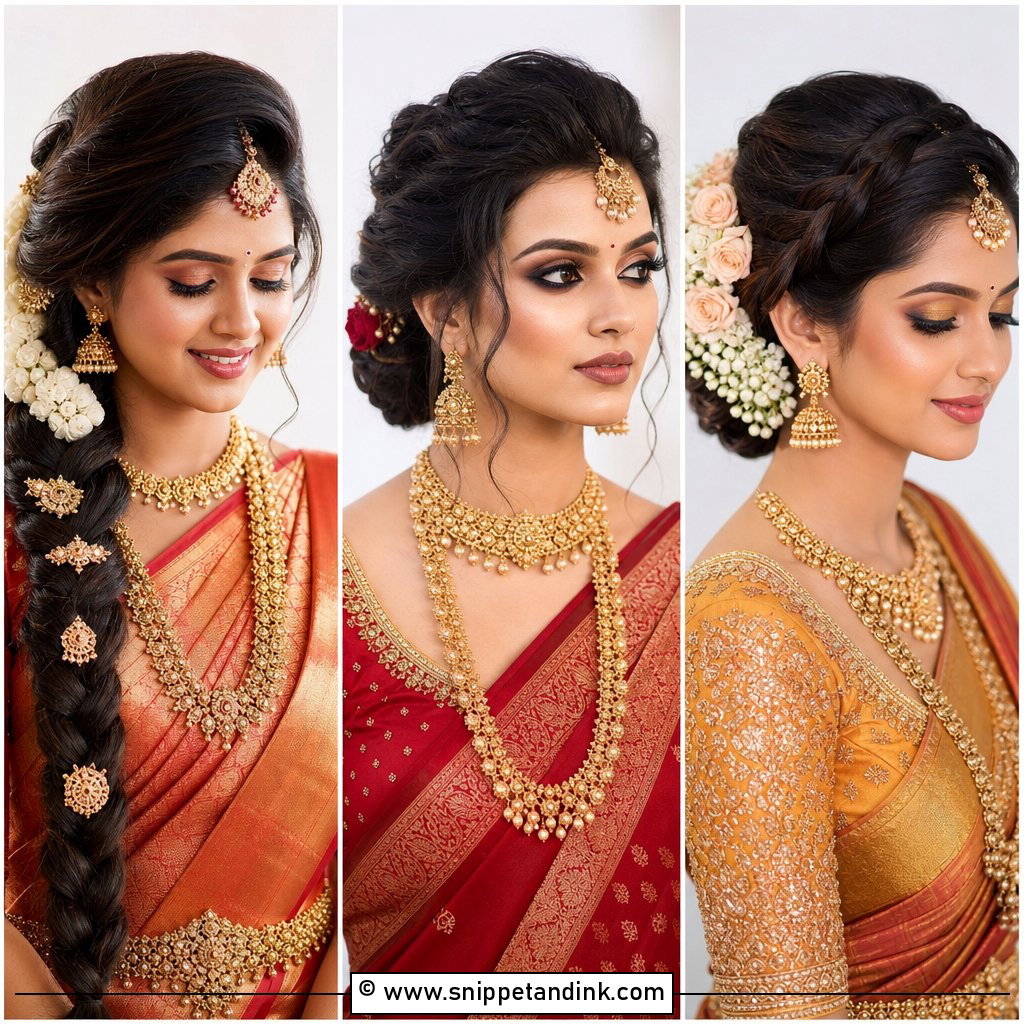
South Indian ceremonies are often in the morning, and daylight is unforgiving of heavy base. I go for skin that glows without looking oily, with a soft contour, a peach blush and a gold-toned highlight that stays subtle. Kanjeevaram silk and temple jewelry carry a lot of visual weight, so the eyes need definition: warm brown shadow, black liner and kajal, lashes curled upward. A brick red lip sits well against most silk sarees. Jasmine in the hair and a smooth braid or bun finish it.
3. Bengali Bridal Look
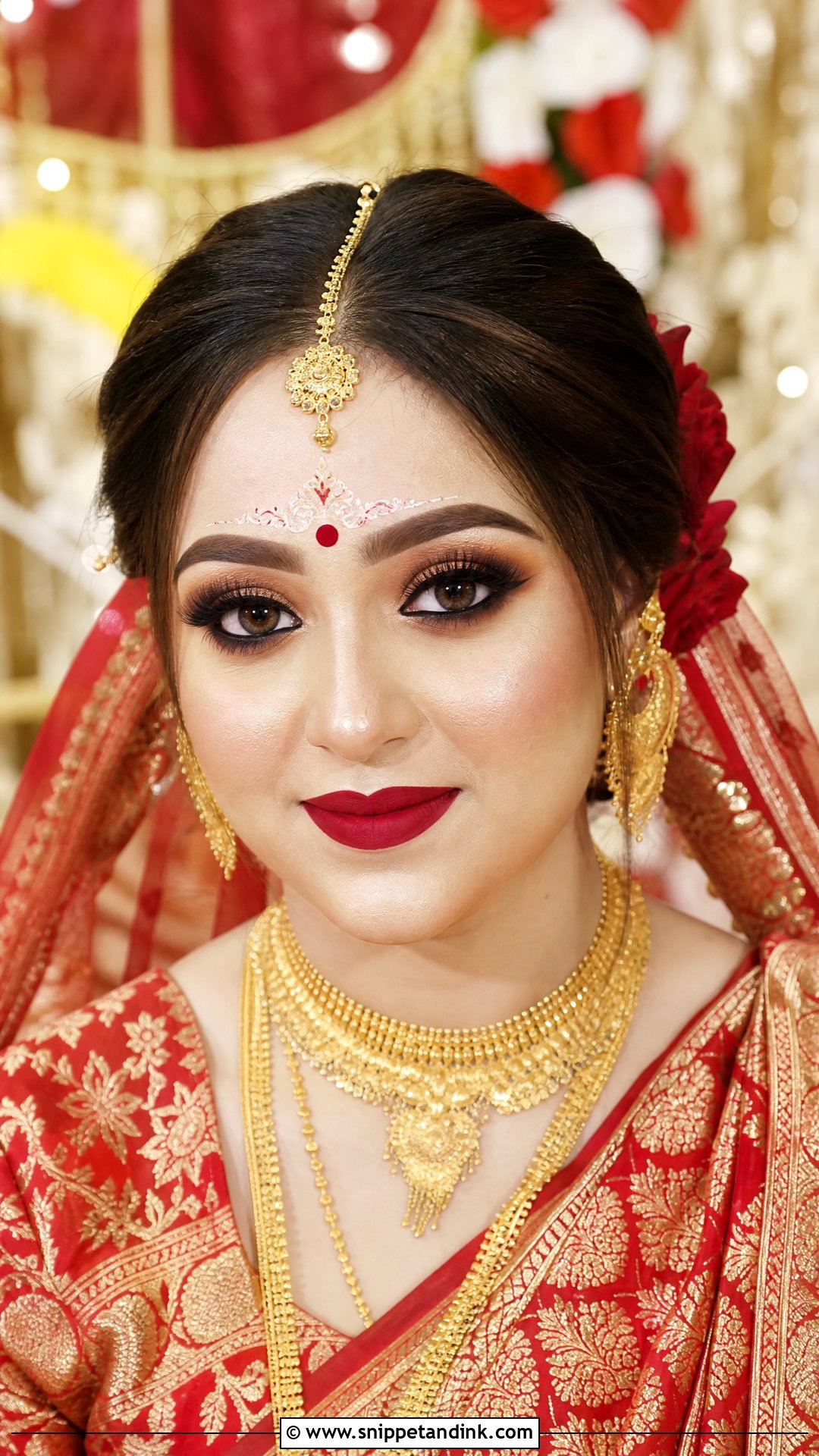
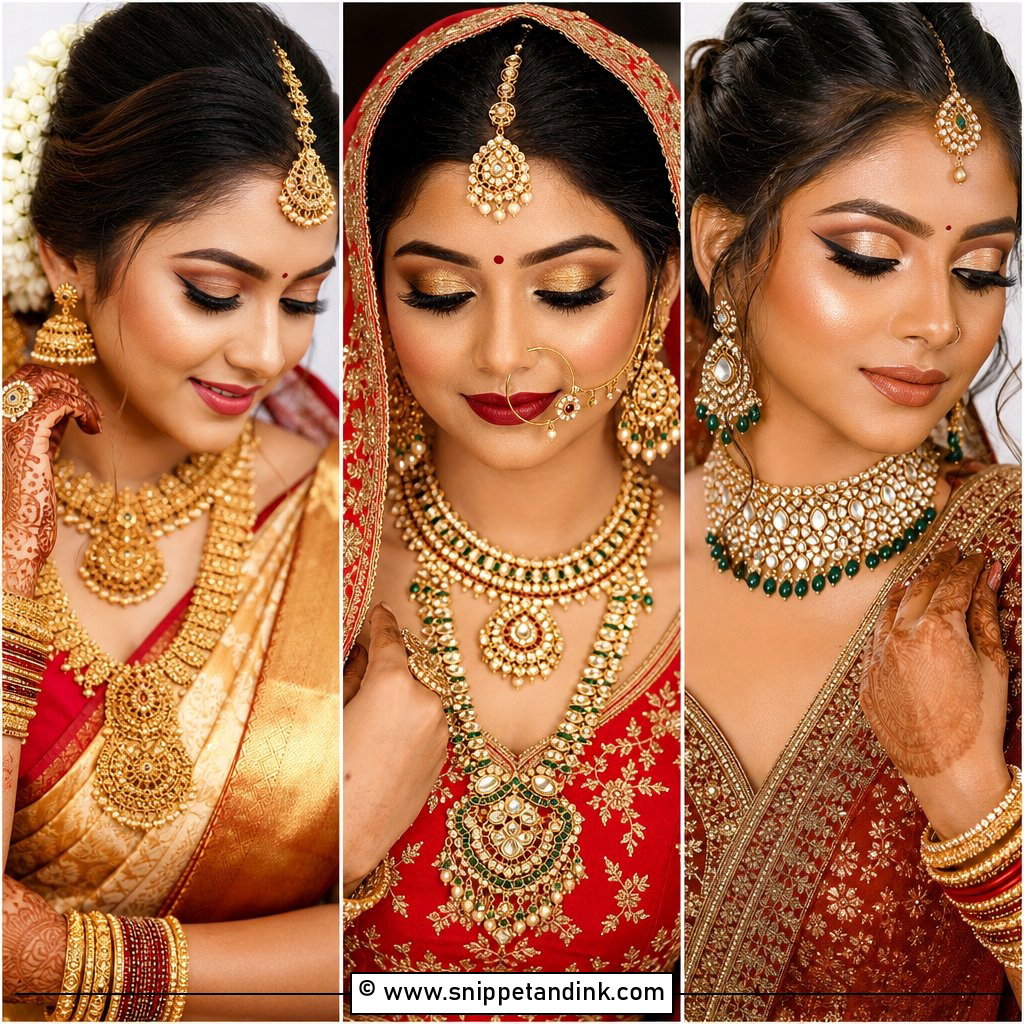
Everything in a Bengali bridal look points to the eyes. The alta, the red Banarasi, the sindoor and the chandan dots on the forehead frame them, so I build thick black liner, kajal on the waterline and full lashes over a brown-gold lid. The chandan design needs a smooth, matte forehead or it cracks, so I set that area more firmly than the cheeks. A true crimson lip finishes it. Leave the cheekbones with a slight sheen so the face doesn’t go flat under the heavy red.
4. Punjabi Bridal Look
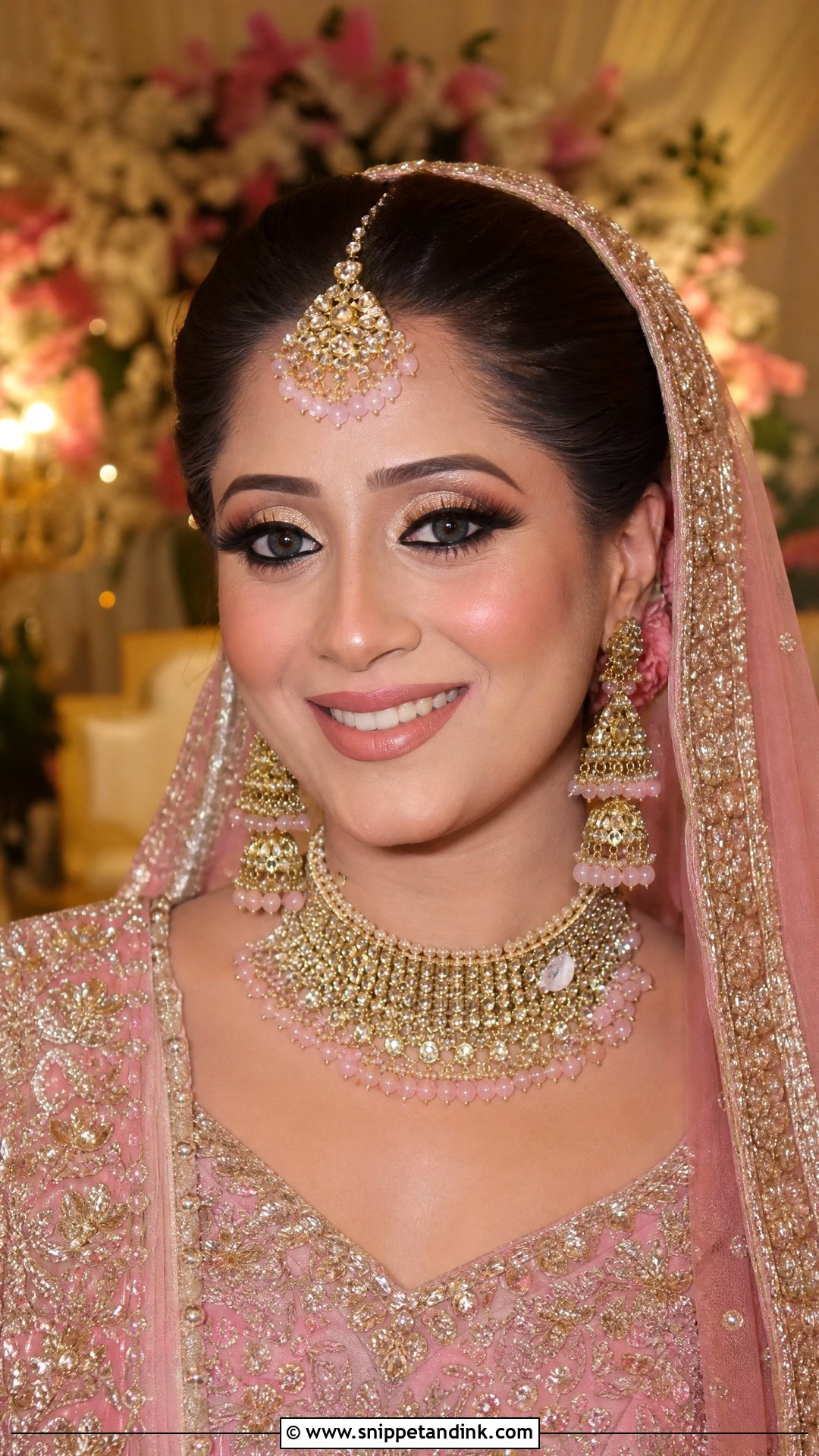
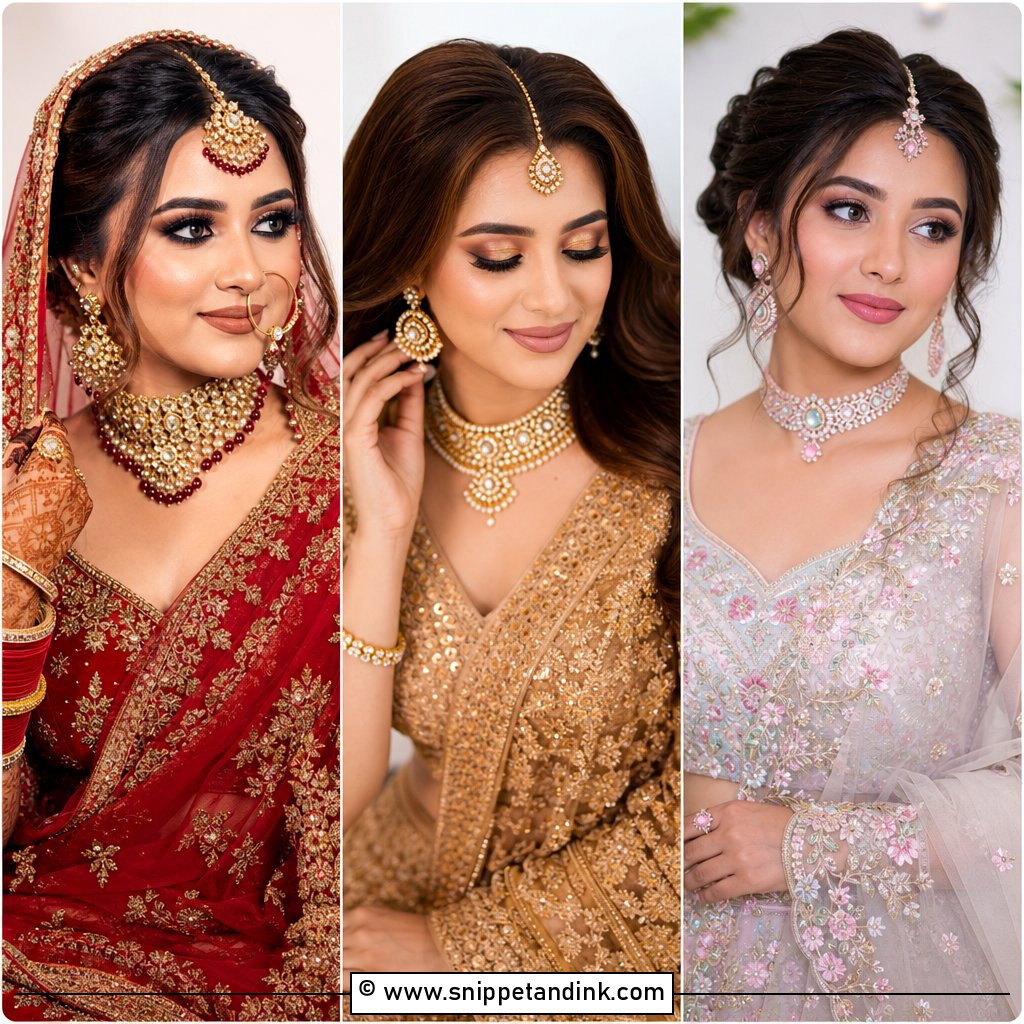
With a heavily embroidered lehenga, a chooda up to the elbows and kaleeras swinging from the wrists, a Punjabi bridal look needs makeup that can hold its own. I use a satin-matte base, contour that’s visible from a distance and a warm peach blush. Champagne shimmer on the center of the lid with bronze in the crease and black liner gives a lot of focus. Because the eyes are strong, I usually steer the lip toward a soft berry. Punjabi weddings often include a lot of dancing, so I set the base more heavily on the T-zone than I would for a quieter ceremony.
5. Maharashtrian Bridal Look
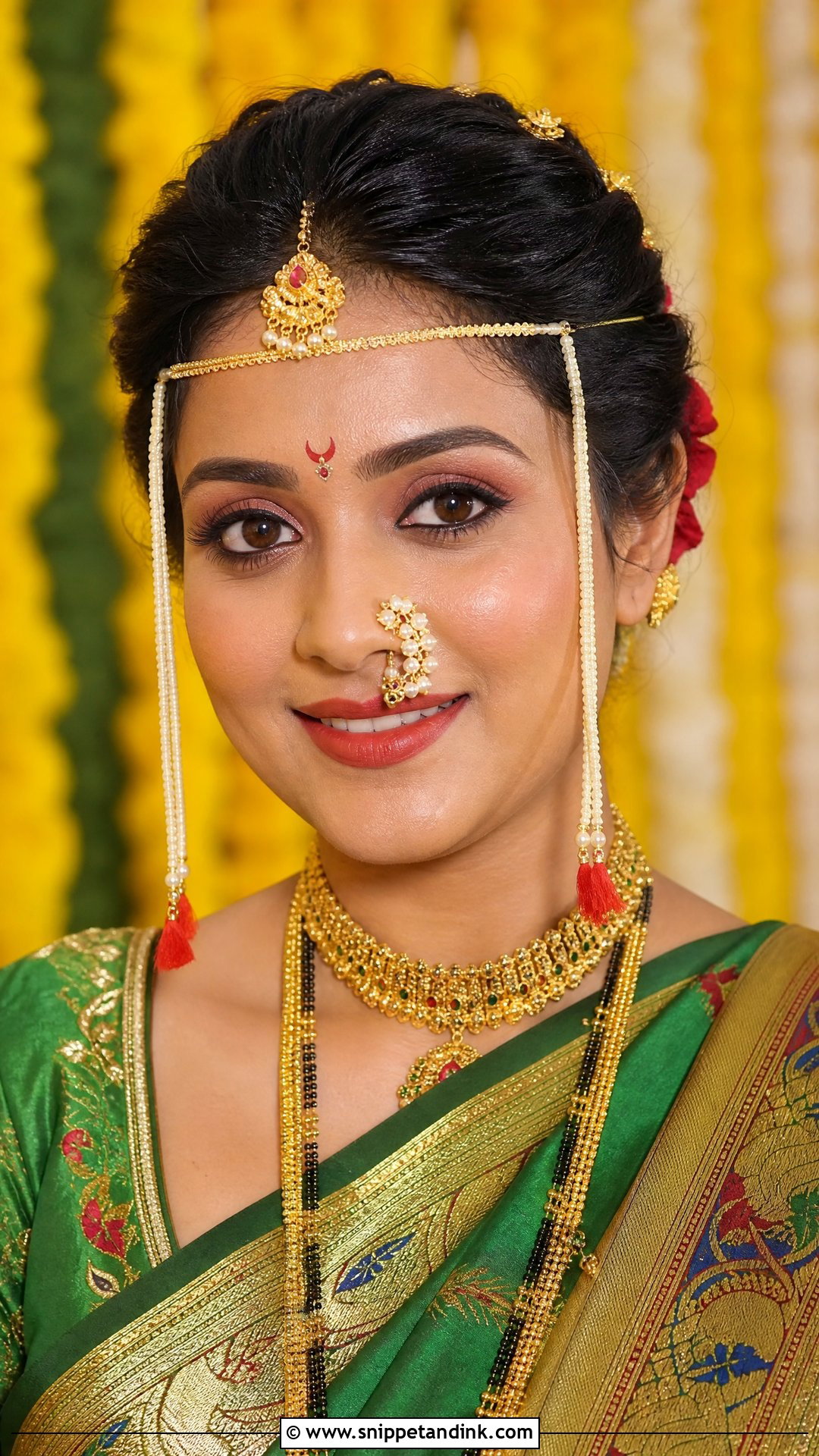
A Paithani saree, a nath and a mundavalya across the forehead already say a great deal. The makeup should stay warm and refined. I use a natural satin base, peach blush and a little gold highlight, with copper on the lids and thin black liner. The nath is the detail people miss: it sits over the upper lip, so I avoid glossy lip formulas that get on the ring and keep the lip shape clean so the pearl outline stays crisp. A coral-red lip suits the traditional colors.
6. Gujarati Bridal Look
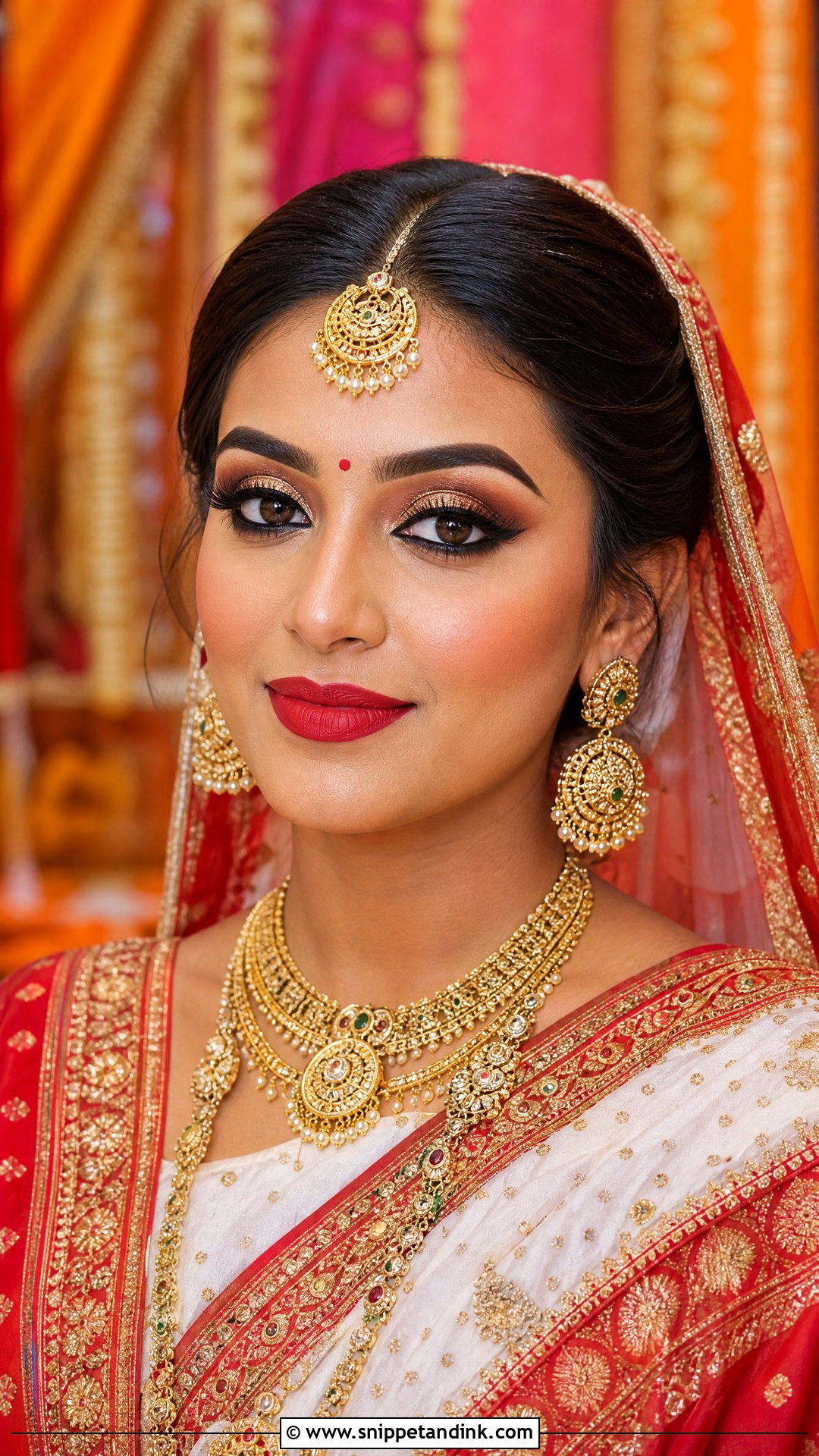
Panetar and gharchola sarees are bright red and white, and Gujarati ceremonies run long and lively. I go matte on the base to control shine through the garba and the pheras, with a coral blush and a champagne-gold highlight. Gold shimmer on the lids, brown in the crease, black liner and comfortable lashes give definition. A warm red or terracotta lip works with both the red and the white. I always check the look from the side at the trial, since the saree pallu is often draped over the head and casts shadow on the face.
7. Rajasthani Bridal Look
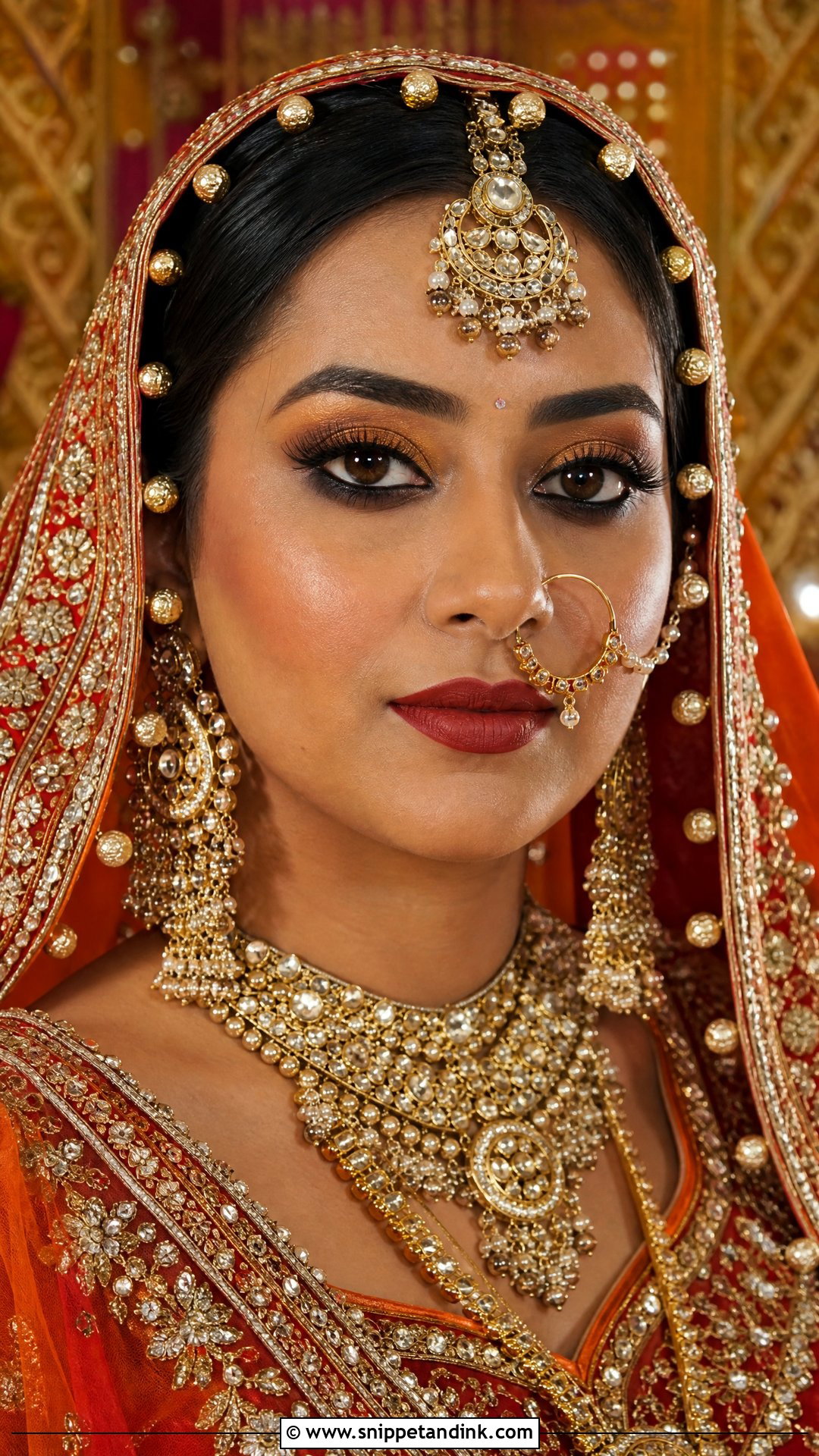
A Rajasthani outfit is ornate: a poshak, heavy dupatta, borla and layered jewelry. The makeup has to be structured to match. I use a long-wear base with soft matte coverage and a terracotta blush, then build copper and deep brown on the eyes with bold kohl and a wing. A brick red lip gives the face strength against all that detail. Highlight stays controlled, because the kundan and the mirror work already throw light everywhere.
8. Pastel Lehenga Indian Bridal Look
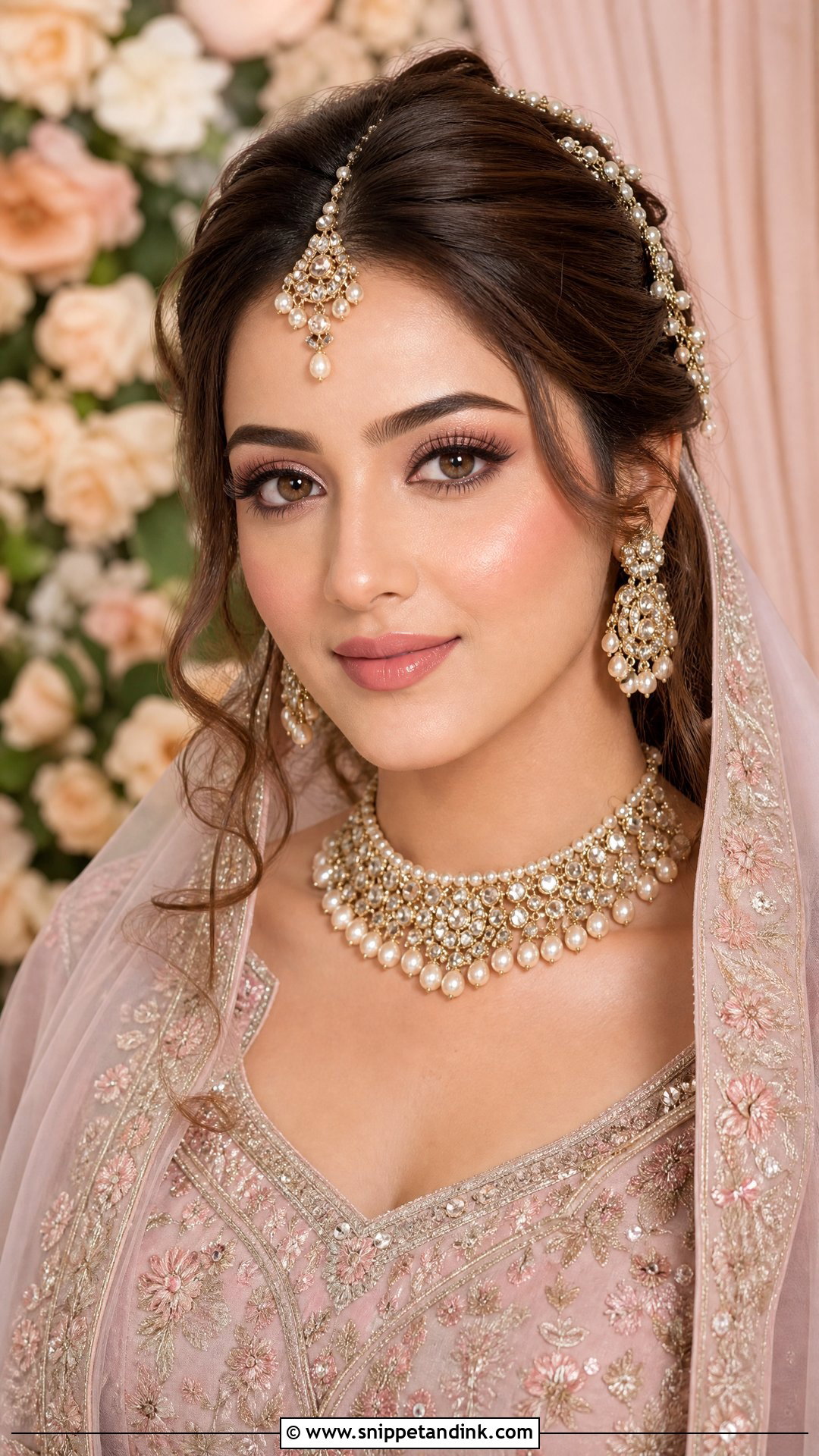
Pastel lehengas are where I see the most washed-out wedding photos. Blush pink, mint and lavender reflect very little color onto the face, so skin can look grey in photographs unless the base has warmth. I use a luminous foundation, cream blush placed a little higher than usual, and soft rose or taupe on the eyes with brown liner and wispy lashes. Harsh black liner fights with pastel fabric, so I only use it if you want more contrast. A peach or rose gloss keeps the lip fresh.
9. Gold Smokey Eye Indian Bridal Look
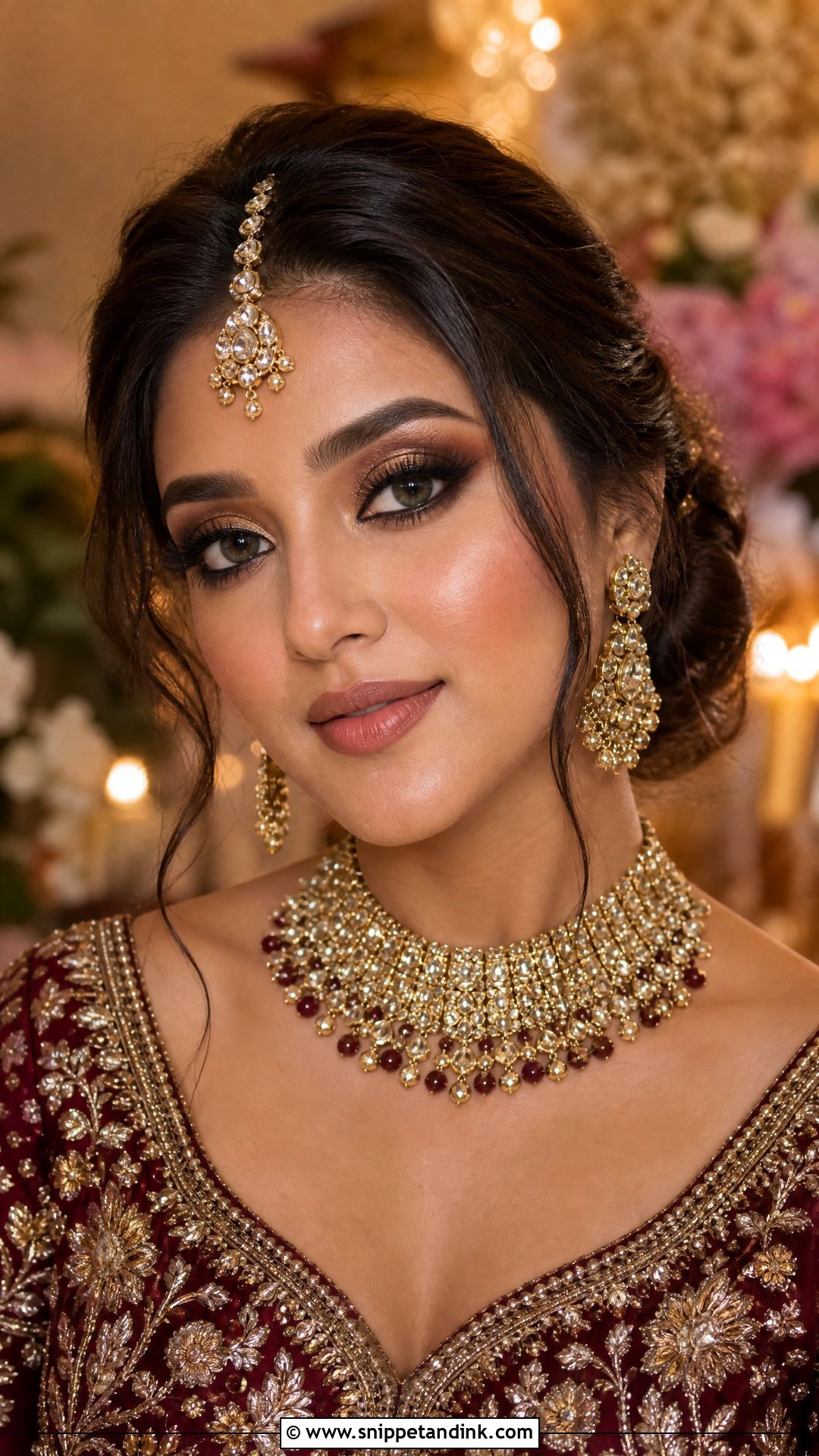
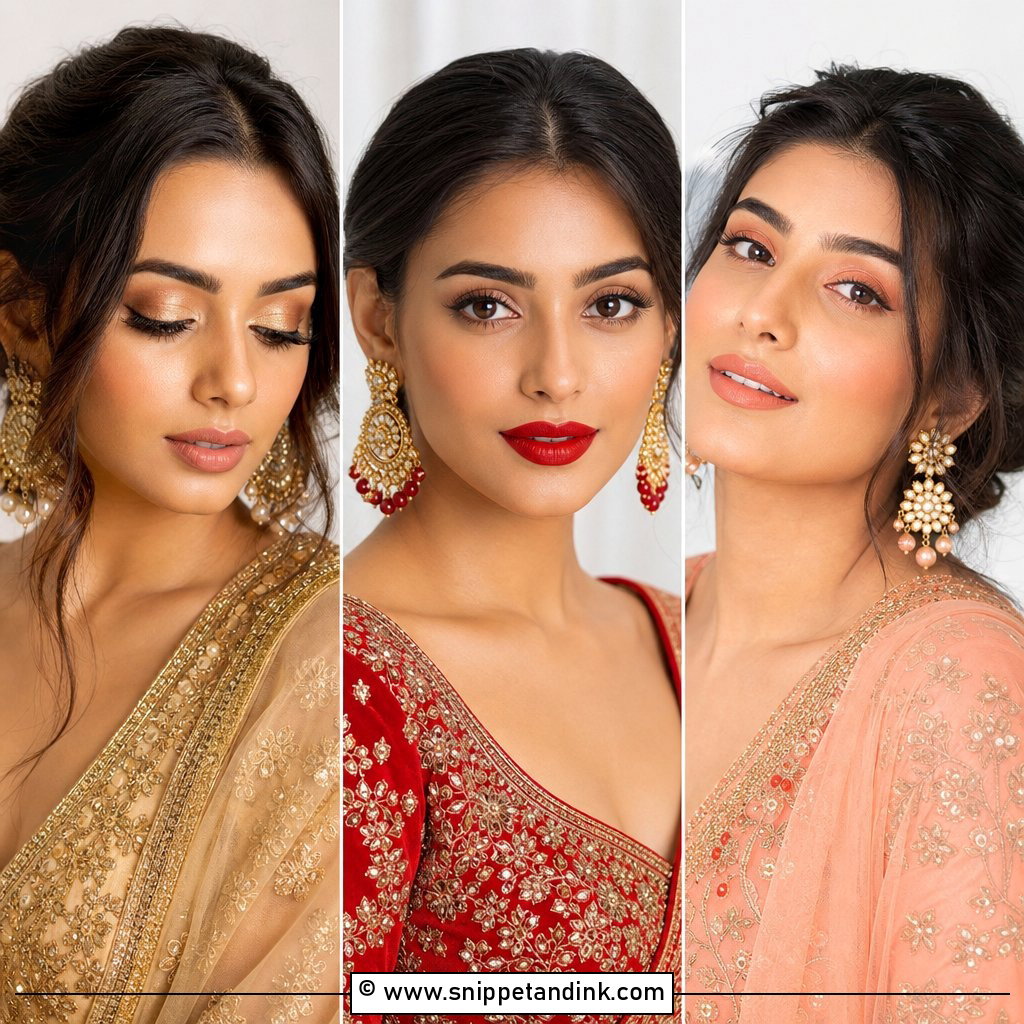
Gold on the eyes is my default for evening ceremonies and heavy lehengas. I blend antique gold across the lid, deepen the outer corner with chocolate brown, and run black liner tight to the lash line. Kajal and full lashes complete it. The rest of the face supports: satin base, soft contour, warm blush. With eyes this strong, a muted peach lip keeps the face balanced. It suits red, maroon and emerald outfits, and under warm evening light the gold reflects nicely.
10. Soft Glam Indian Bridal Look
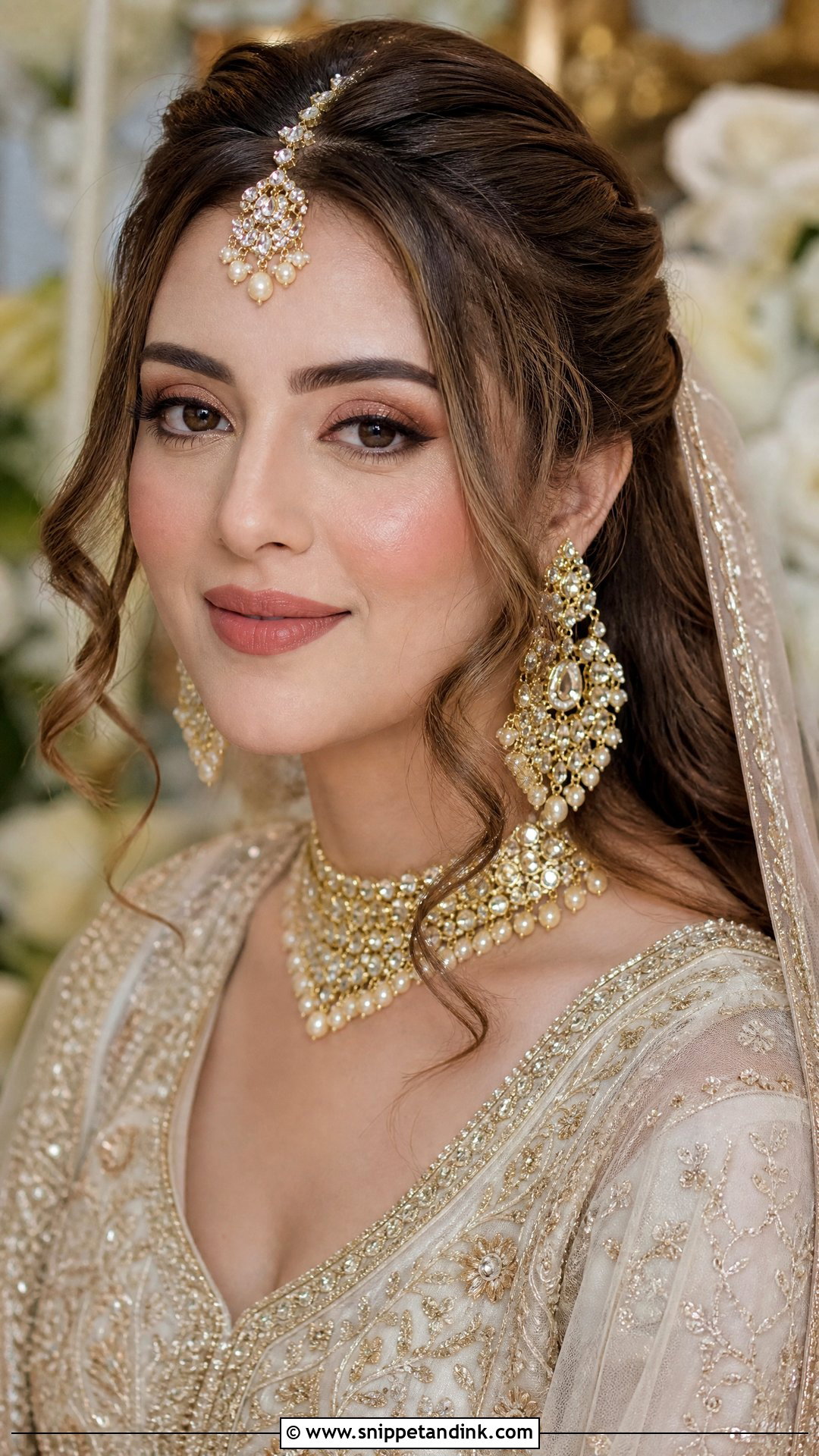
Soft glam is what I recommend to brides who rarely wear makeup and are nervous about looking unlike themselves. It’s still full coverage where needed, but everything is blended out. I use a medium-coverage base, a soft concealer and cream blush, with beige and brown shadow, a thin liner and natural lashes. Skipping kajal on the lower waterline makes the eyes look more open. A nude rose lip suits most skin tones. Remember that photography softens makeup, so soft glam should look slightly stronger in the mirror than you’d expect.
11. Matte Indian Bridal Look
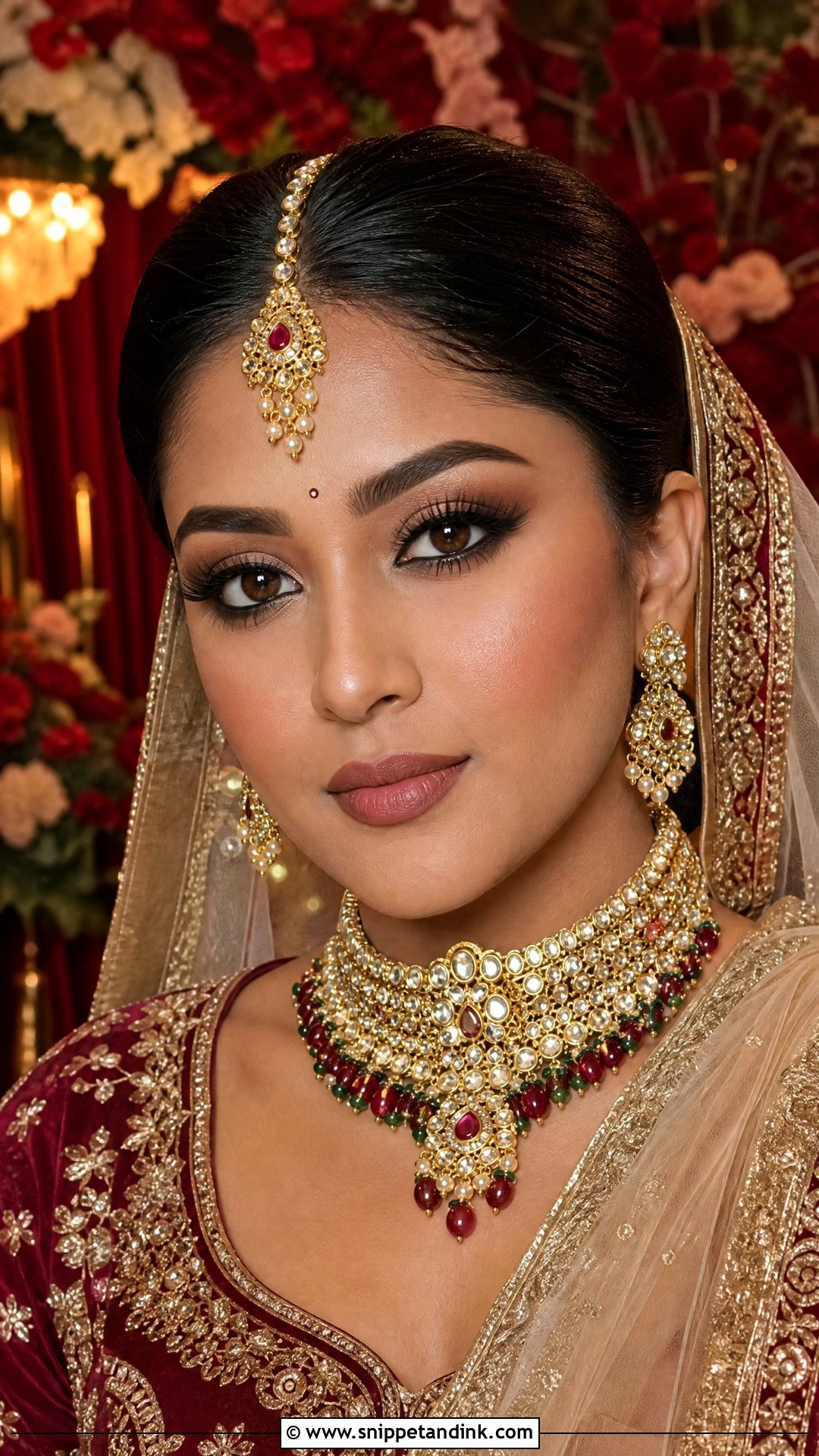
Matte suits long ceremonies, humid weather and oily skin. The mistake is going too dry, which makes skin look flat and settles into lines by the evening. I use a pore-smoothing primer, a long-wear foundation and finely milled powder only on the T-zone and under the eyes. A powder bronzer and terracotta blush warm it up. Matte brown or plum shadow, a precise liner and defined lashes go on the eyes. A matte brick lip holds up well. With a heavily embroidered outfit, a matte face looks clean and controlled.
12. Dewy Indian Bridal Look
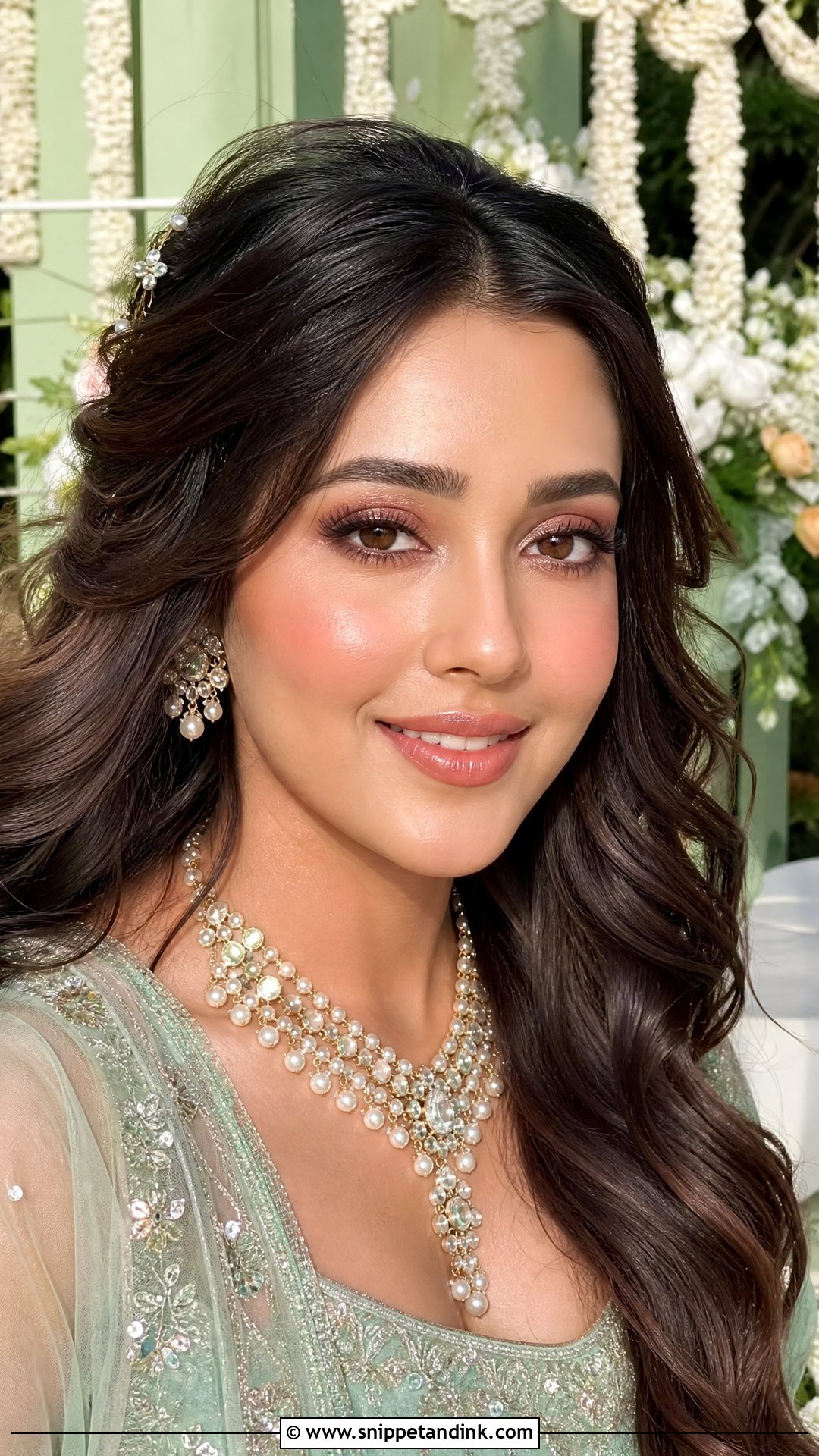
Dewy skin depends on where the glow sits, not how much of it there is. I place shine on the cheekbones, the bridge of the nose and the inner corners of the eyes, and keep the T-zone matte so it doesn’t turn greasy by the second hour. A hydrating primer, luminous foundation and liquid blush in peach make the base. Champagne shimmer on the lids, brown liner and curled lashes keep the eyes light. I’d avoid this finish for very oily skin or a long outdoor summer ceremony.
13. Nude Lip Indian Bridal Look
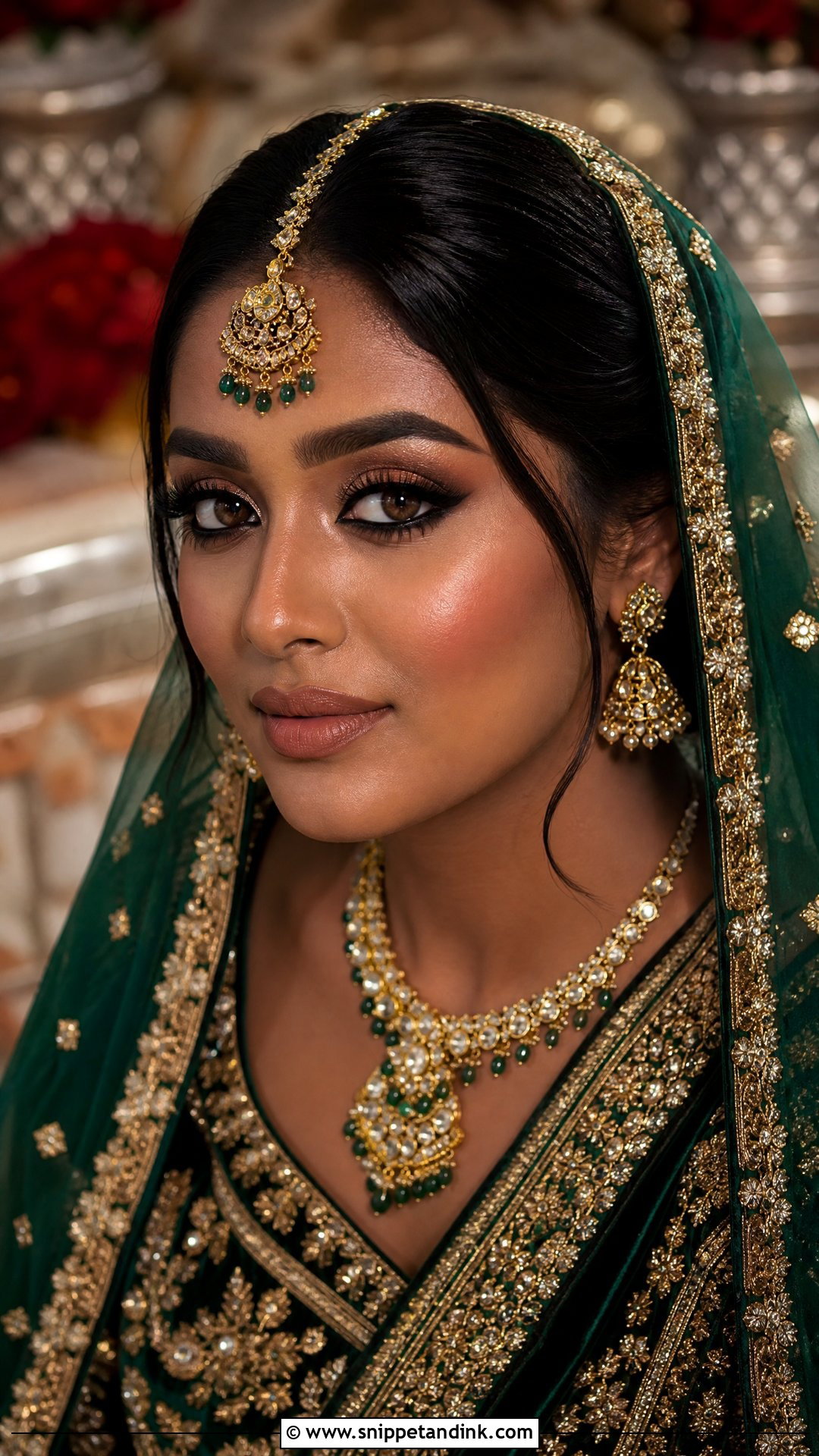
A nude lip can make the whole face look tired if the eyes and cheeks aren’t defined enough to carry it. The shade has to match your undertone: peach nudes on fair skin, rose nudes on light and medium skin, caramel on tan skin, brown nudes on deep skin. A nude that’s lighter than your natural lip is what makes brides look washed out in photos. I add warmth with blush and keep the eyes bronze or gold with liner, kajal and lashes. With heavy jewelry or a bright outfit, this balance works well.
14. Red Lip Indian Bridal Look
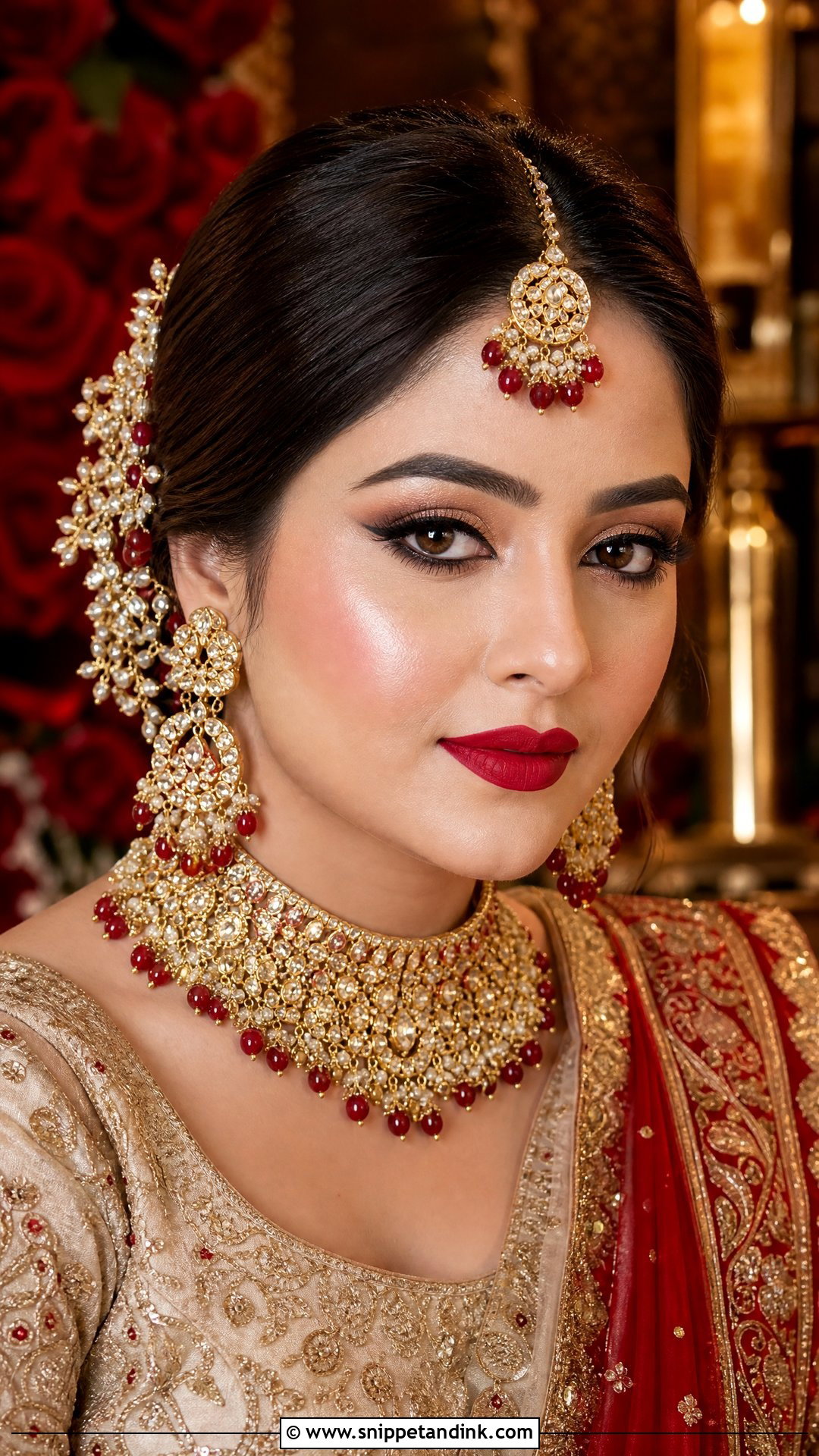
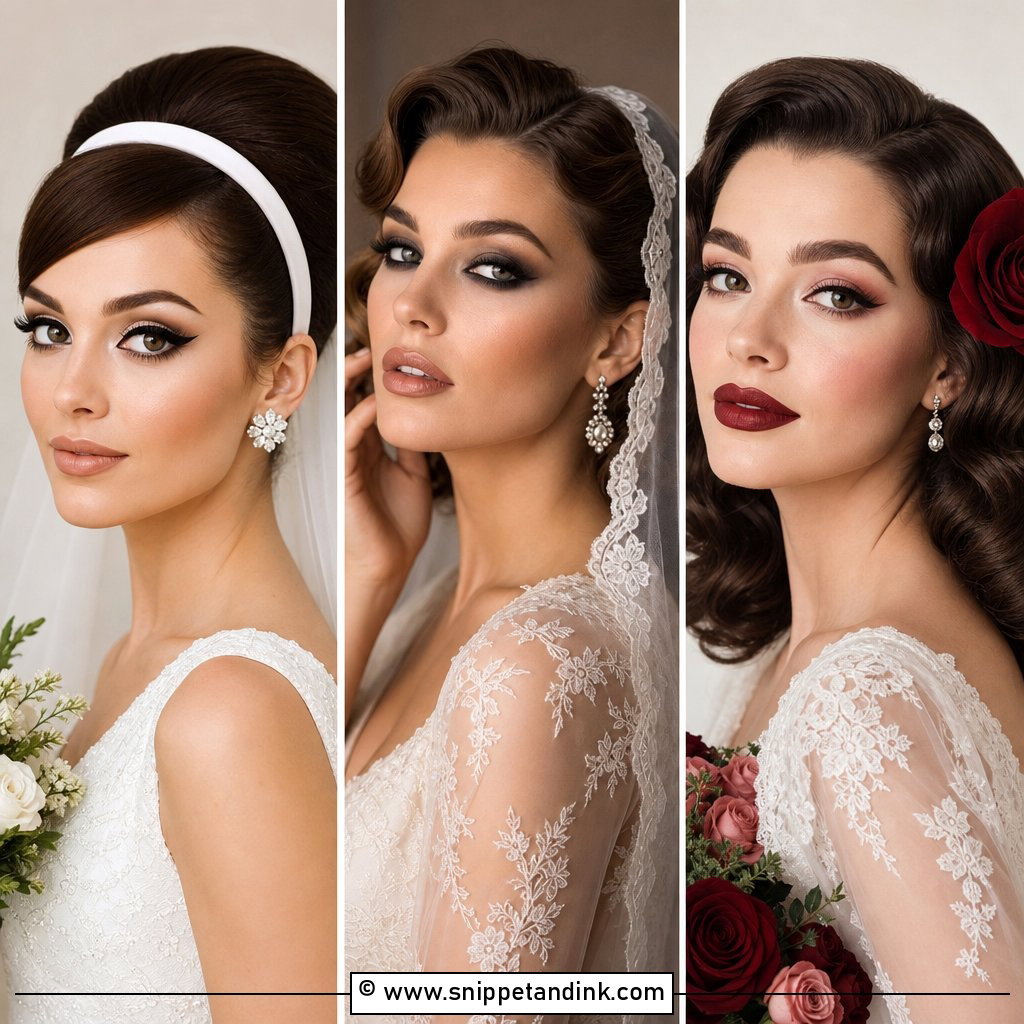
A red lip asks for restraint everywhere else. I keep the base flawless, the contour soft, the blush natural and the eyes neutral with brown shadow, black liner and lifted lashes. Glitter on the lid competes with the lip, so I skip it. The red itself matters: blue-reds look crisp on cool undertones, brick reds feel warm and traditional, deep crimson reads as regal. I line the lip fully and use a transfer-resistant formula, because a red lip smudges onto the dupatta and the groom’s cheek.
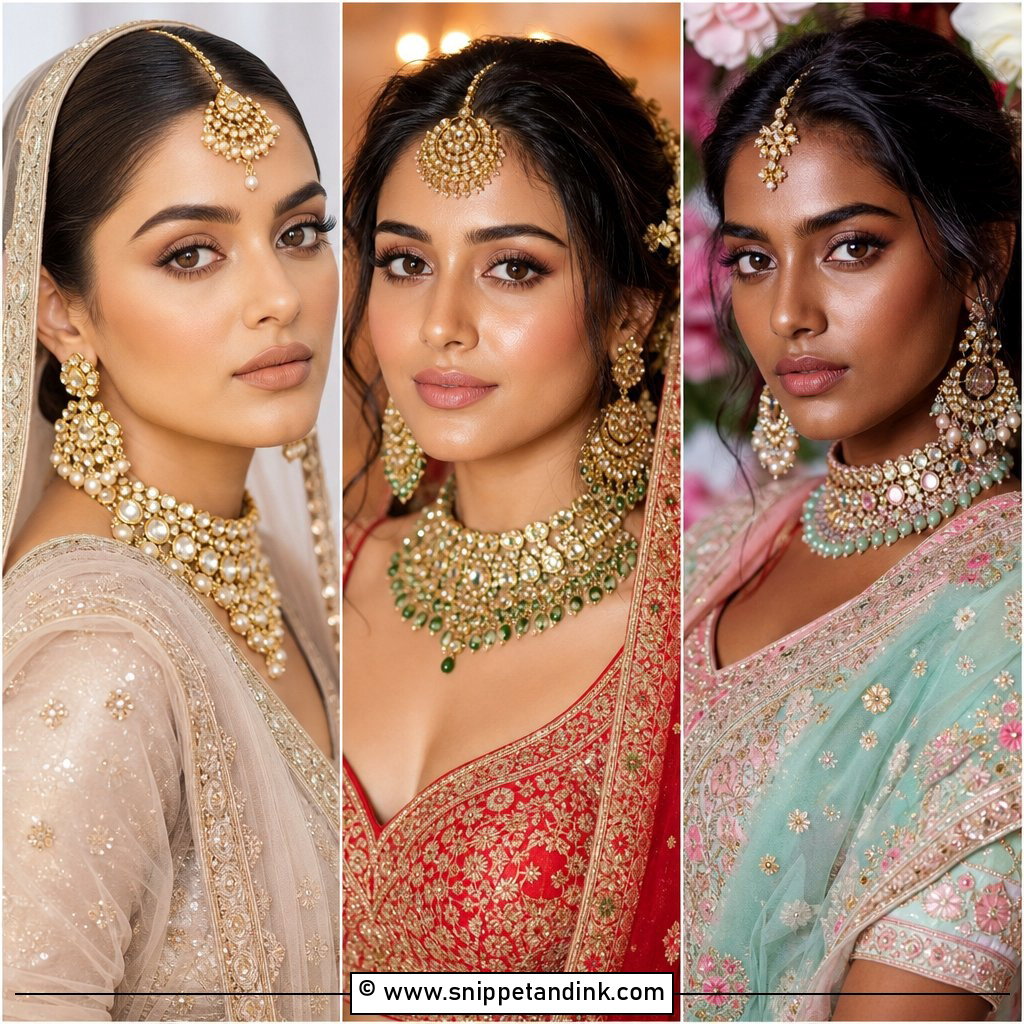
15. Smokey Eye Indian Bridal Look
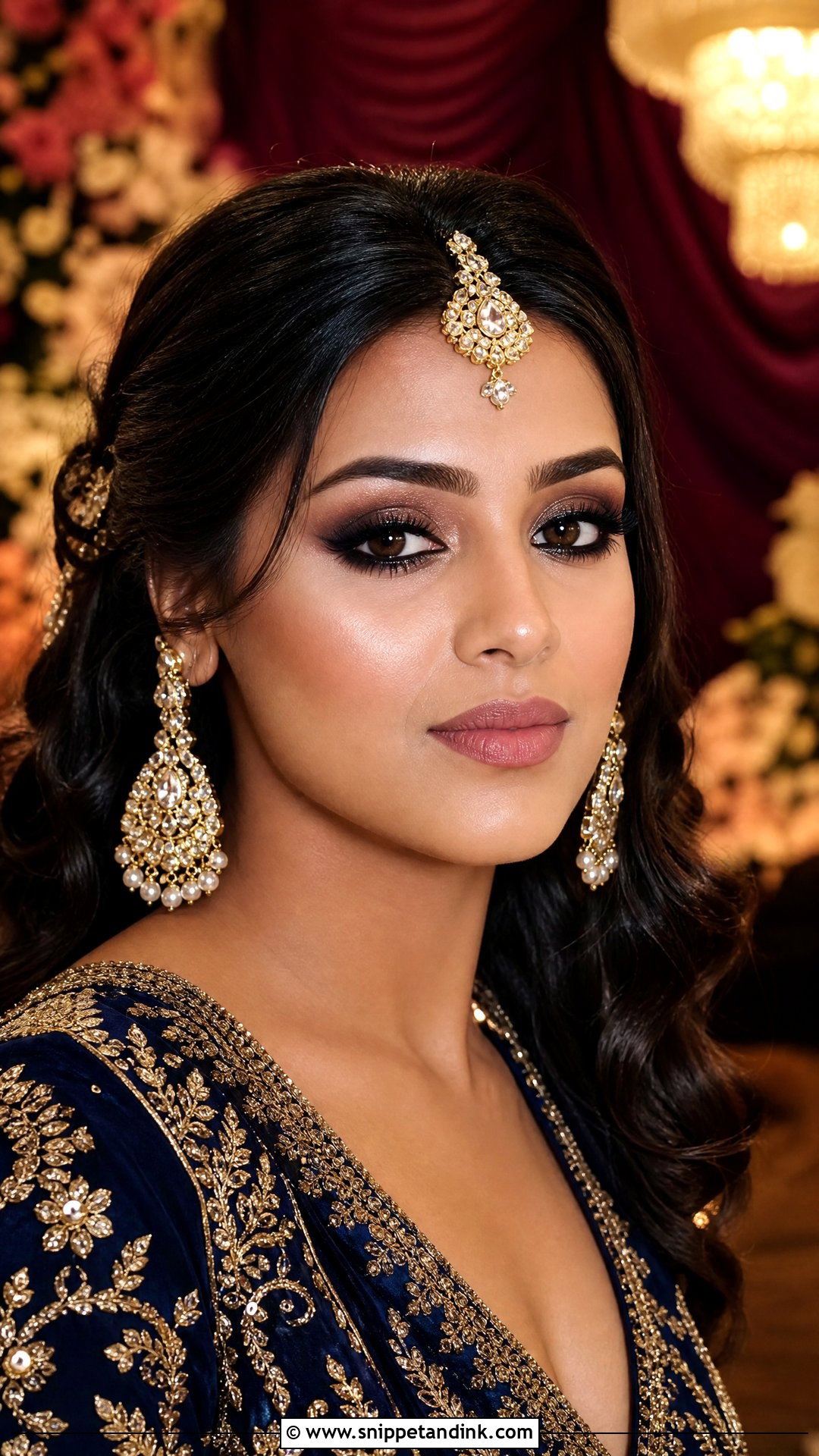
Intensity on the eyes suits evening ceremonies and receptions, but a black smokey eye under warm lighting can look heavy. I work in brown, charcoal, bronze or plum, and blend it out carefully so no edges show. The base stays balanced with satin foundation, gentle contour and warm blush. Kajal, a smudged liner and full lashes add depth. A muted mauve lip is the safest pairing. Darker lehengas and jewel-toned sarees wear this well, and it reads clearly in low light.
16. Minimal Indian Bridal Look
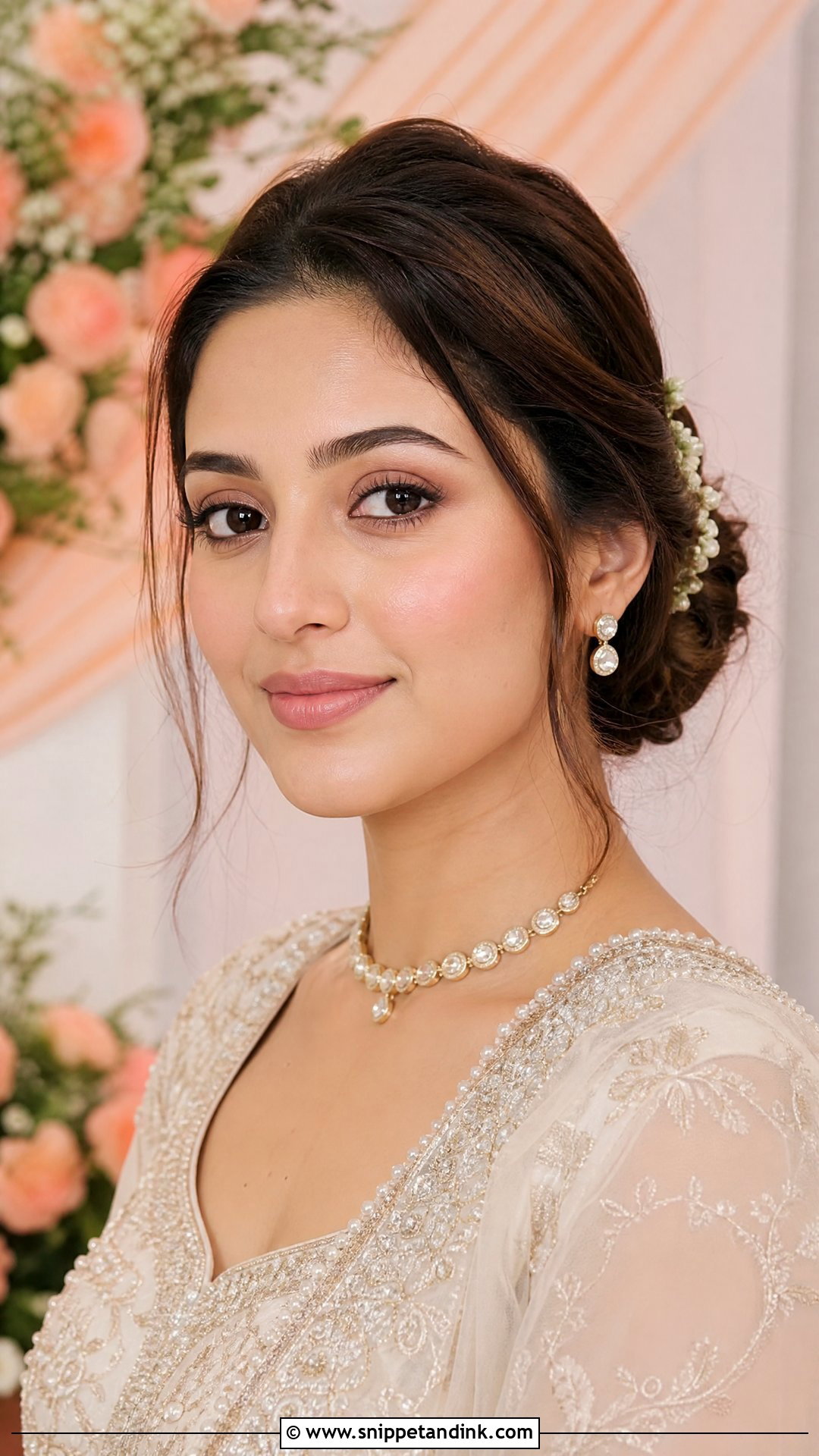
Minimal doesn’t mean bare. The point is that everything is blended, soft and intentional, so you look like a polished version of yourself. I use a skin-like foundation, spot concealer, cream blush and a light dusting of powder only where needed. Taupe shadow, tightlined liner and natural lashes keep the eyes open. Brows are groomed but not blocky. A tinted rose lip finishes it. This works for intimate ceremonies, civil weddings and delicate pastel outfits, but under a heavy dupatta or bold jewelry it can disappear.
17. Muslim Indian Bridal Look
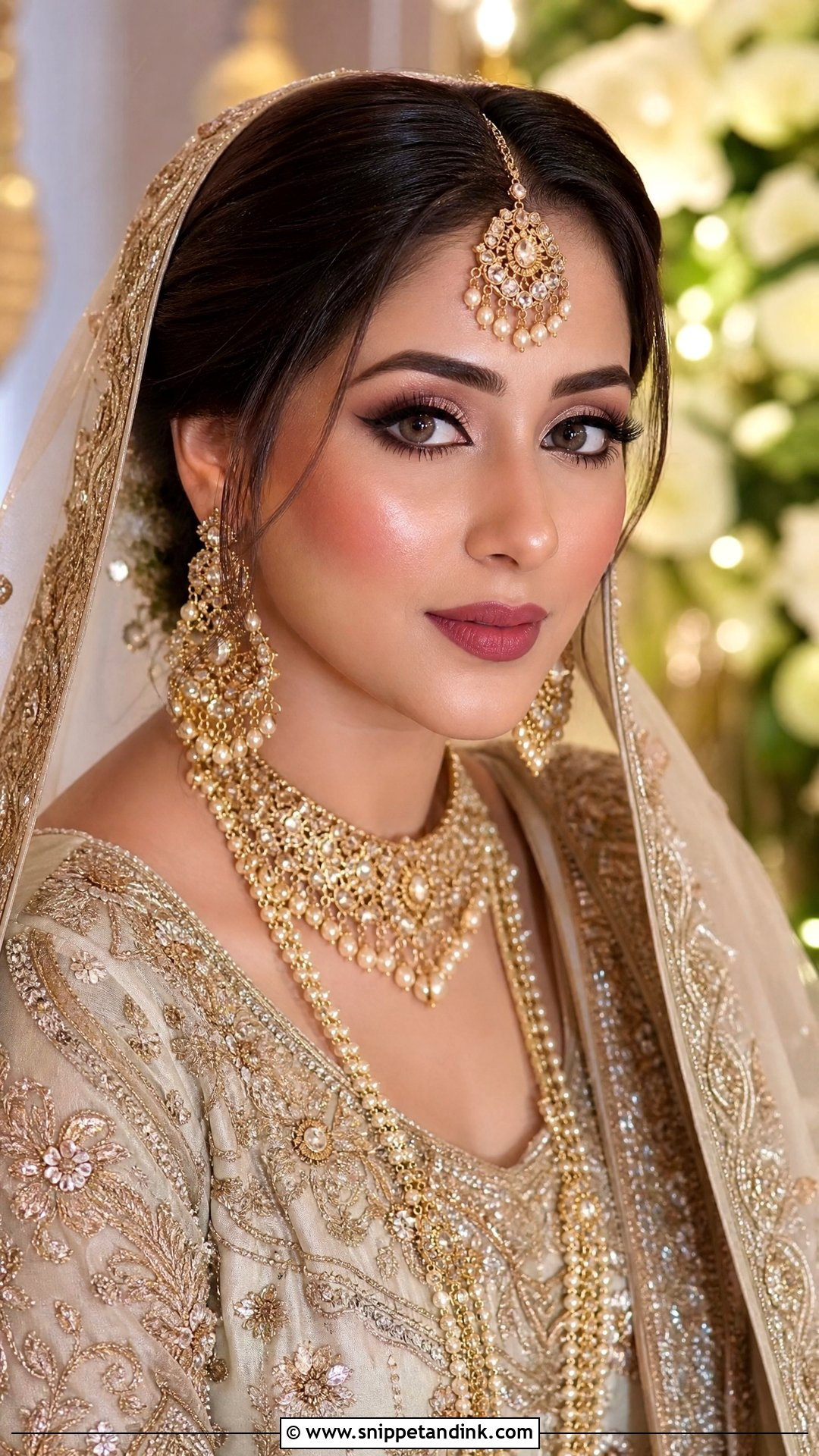
Shararas, ghararas and intricately embroidered dupattas often feature in a Muslim Indian bridal look, and the makeup can be soft glam or full glam depending on the outfit’s weight. I use a smooth satin base with rose blush, subtle contour and a refined highlight. Champagne or mauve on the eyes with a winged liner and full lashes adds depth; kajal can be added if the outfit is darker. A rose nude or berry lip finishes it. If a veil or dupatta will be pulled forward during the nikah, I check that lashes and liner still look good from below.
18. Christian Indian Bridal Look
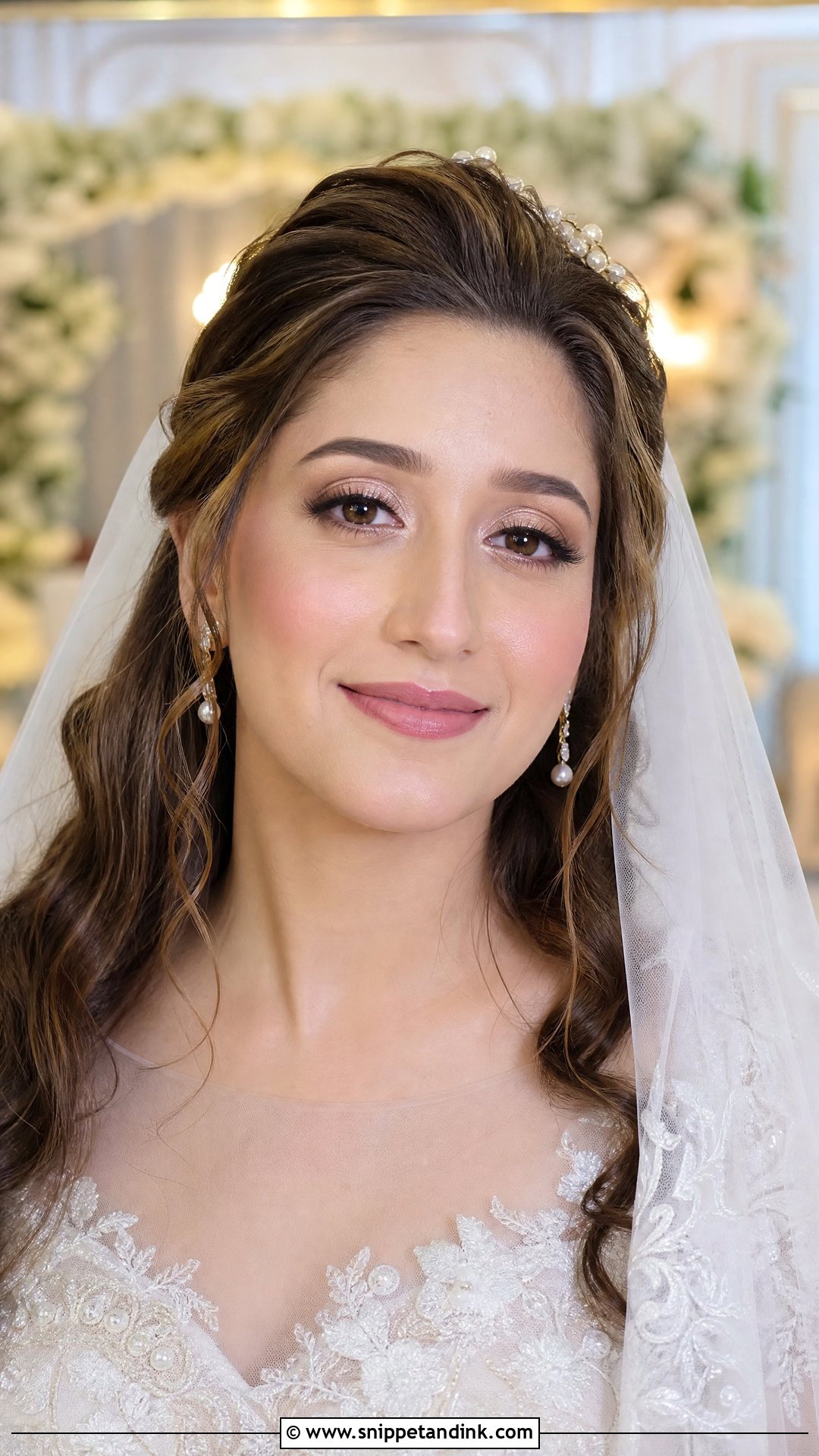
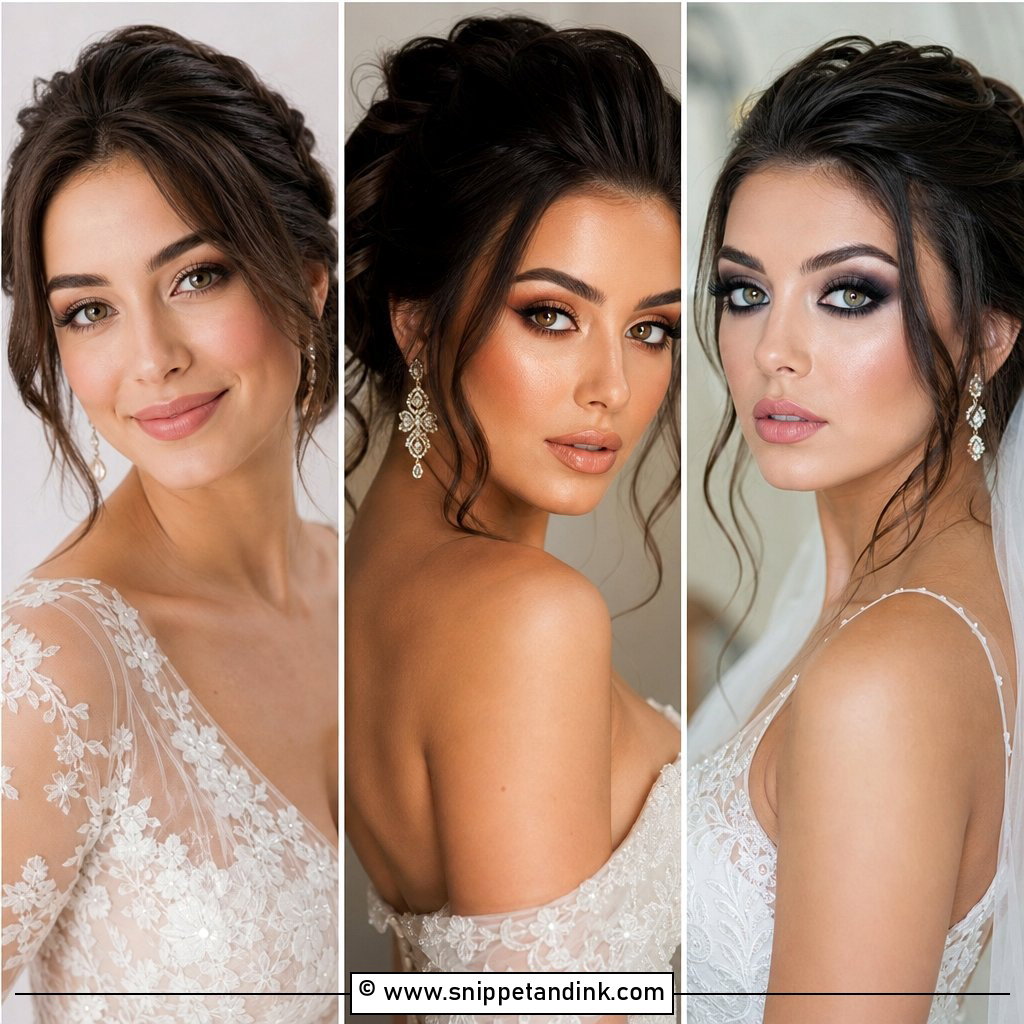
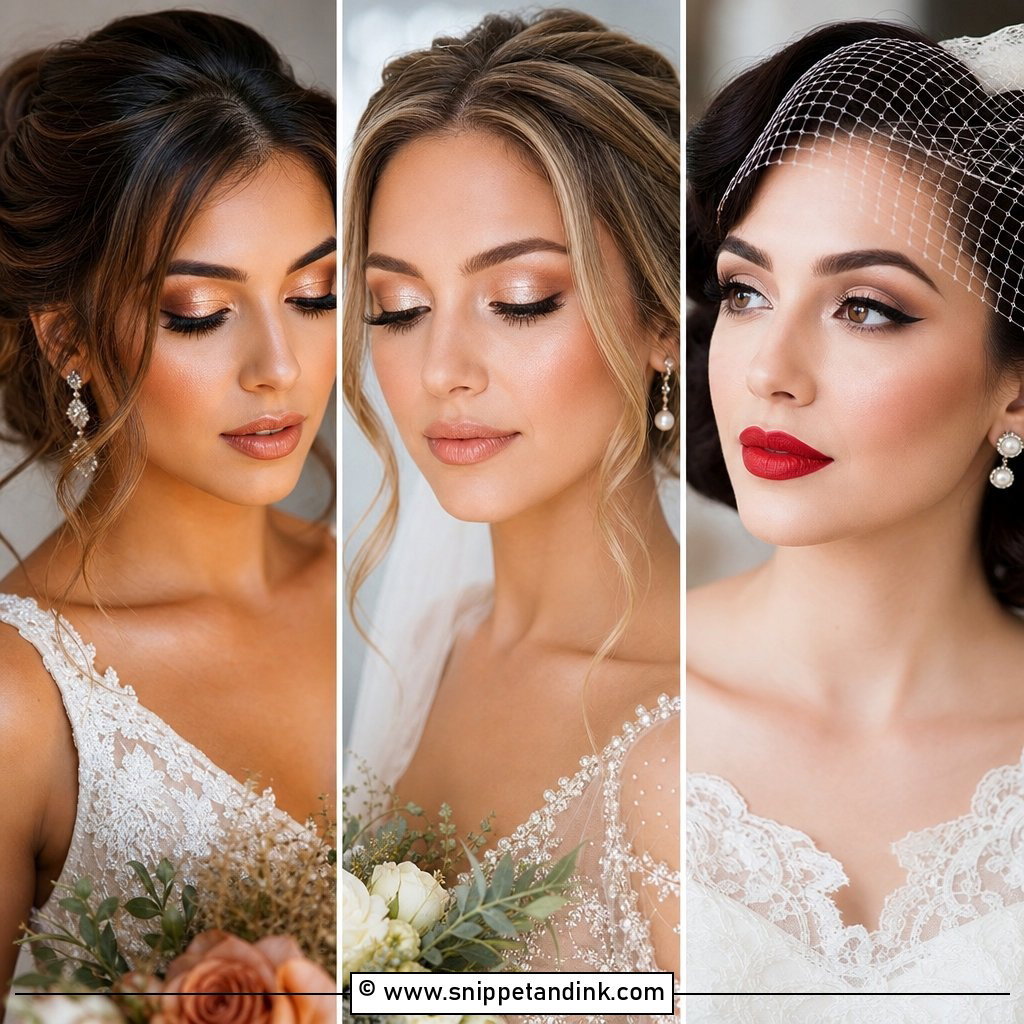
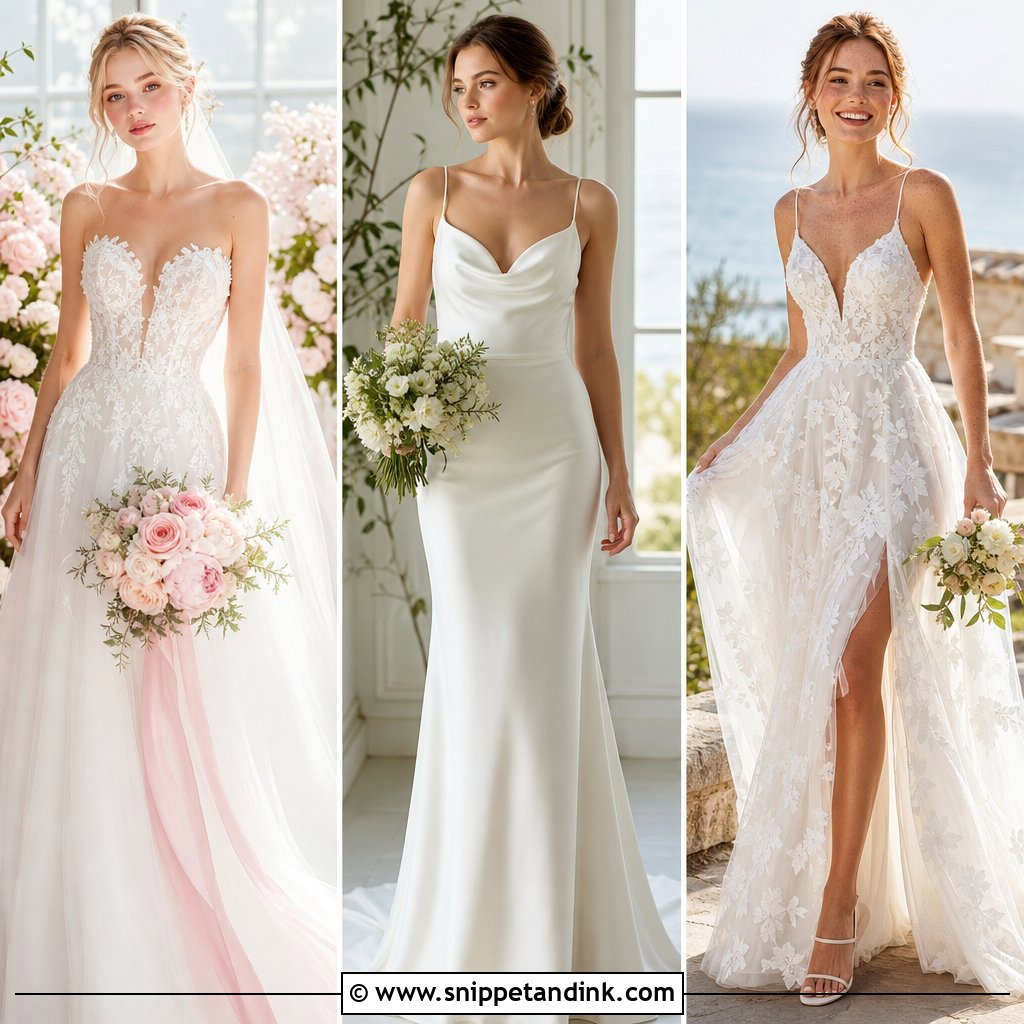
White and ivory gowns, veils and saree-gowns sit right next to the face, and they can make skin look sallow if the foundation is too yellow or too pale. I match the base carefully under the light of the church or venue and add a soft pink or peach blush to bring color back. Champagne or rose-gold shadow, a thin liner and separated lashes keep the eyes fresh. A nude rose lip suits most white outfits. White fabric also picks up foundation transfer, so I set the jawline and neck well.
19. Reception Indian Bridal Look
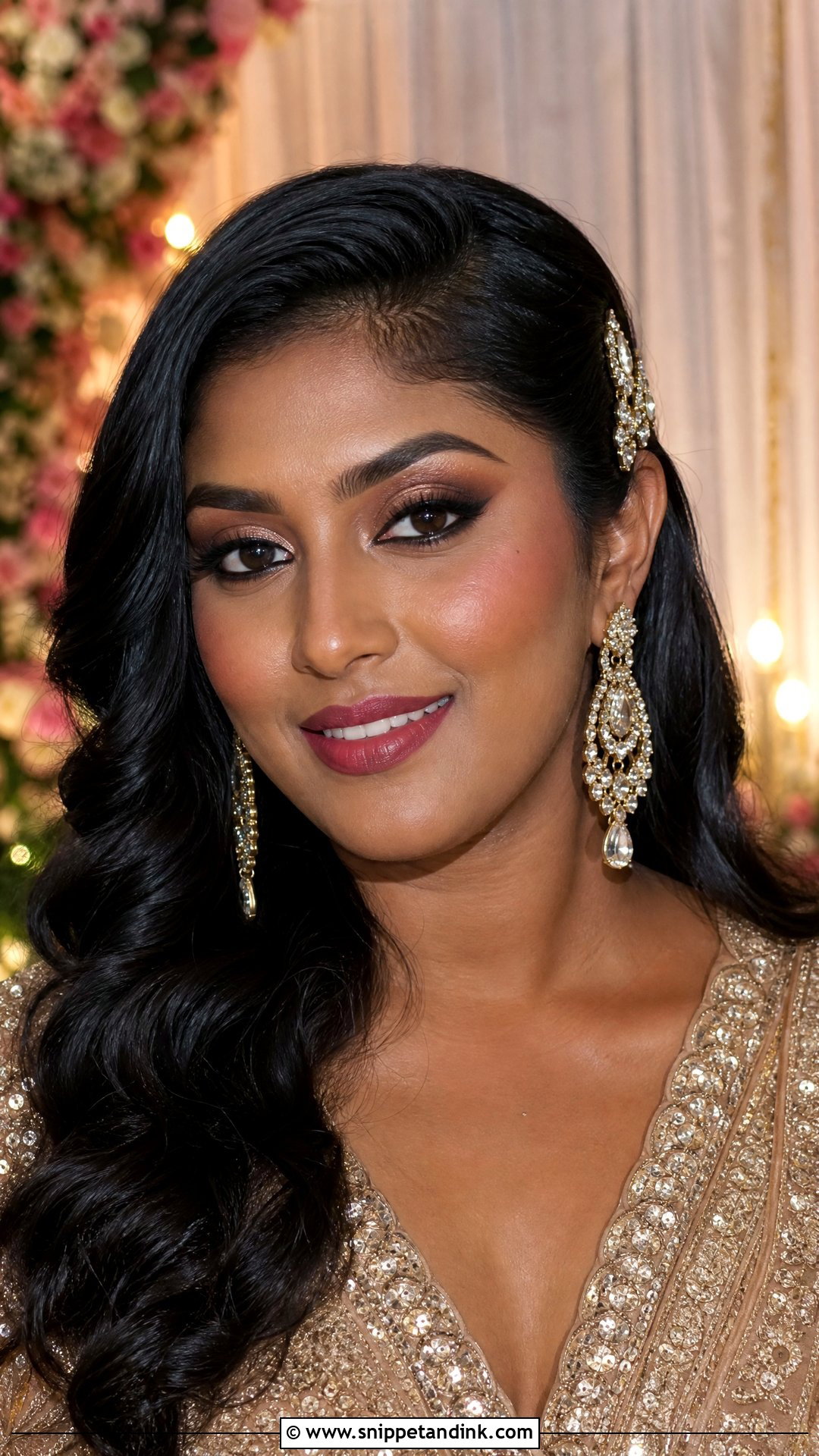
Receptions are the moment I push the makeup further. The lighting is usually darker and warmer, and there are hours of greeting and photographs. I use a long-wear foundation, brighten under the eyes, contour more strongly and add a metallic highlight. Bronze smokey shadow with shimmer on the center lid, a wing and dramatic lashes give the eyes impact. The lip should match the outfit’s depth, often a mauve or deep rose. Gowns, lehengas, sarees and Indo-western outfits all suit it.
20. Haldi Indian Bridal Look
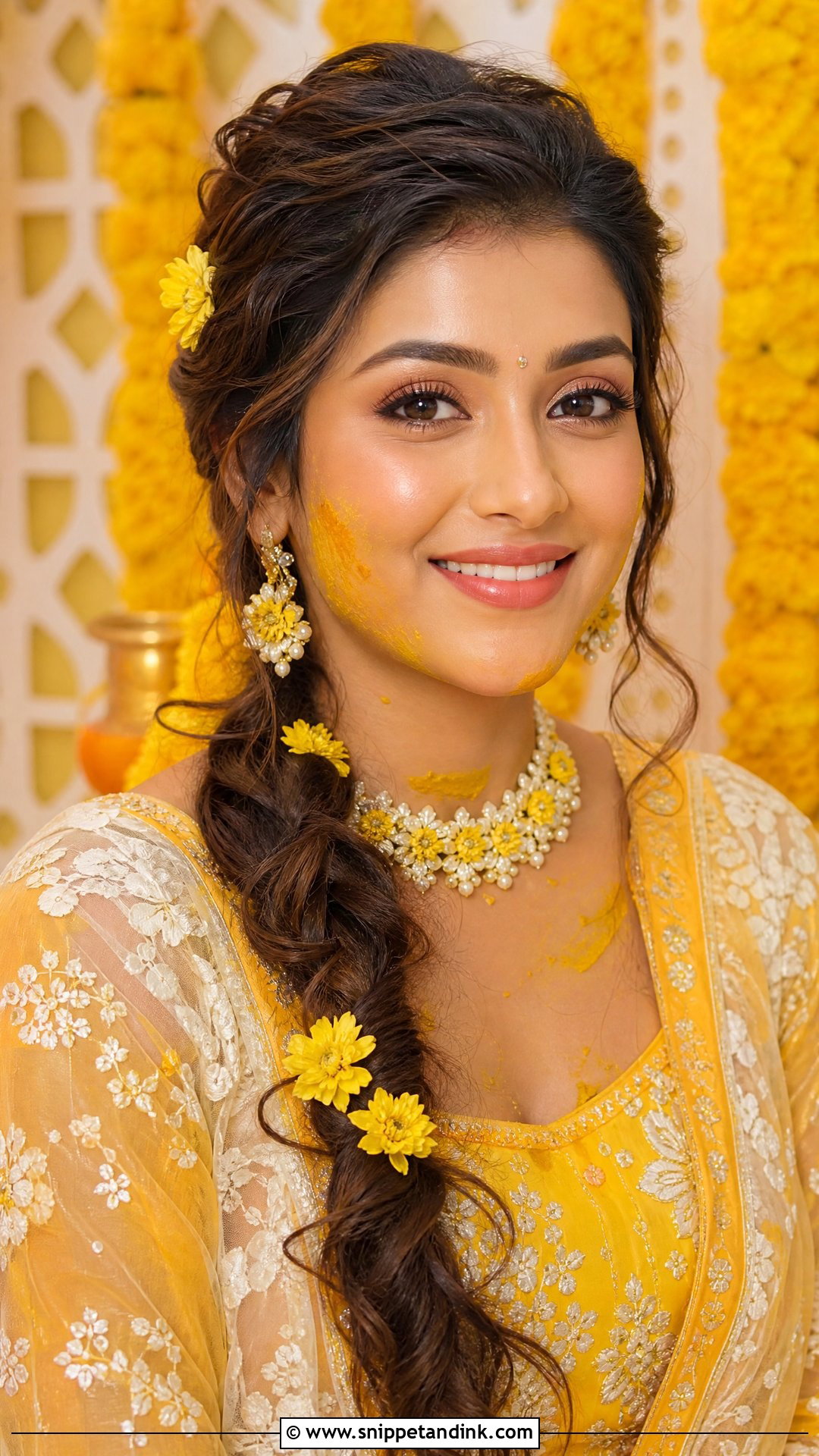
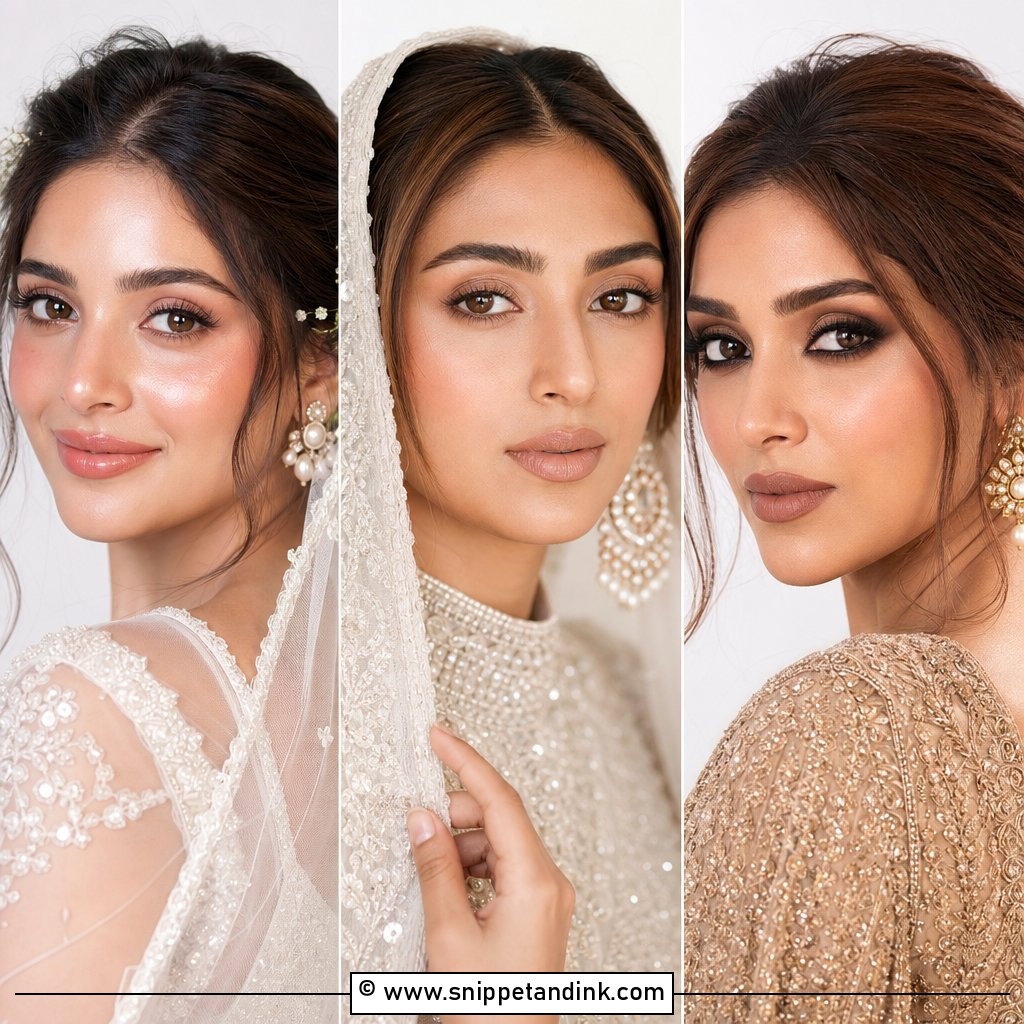
Haldi is messy by design. The paste goes on the face, arms and feet, so a Haldi Indian bridal look should be light and largely waterproof. I use a tinted moisturizer or a thin foundation, waterproof concealer, cream blush and a little golden glow. Peach or gold shimmer on the lids, brown liner and waterproof mascara stay put. Heavy kajal smudges as soon as the turmeric goes on, so I leave it off. A coral lip is cheerful and easy to reapply. Expect to remove everything afterwards with a gentle oil cleanser.
Facials, Threading and Peels: What to Stop and When
Most skin disasters I see on wedding mornings come from a treatment done too close to the date. Skin needs time to settle before it will hold makeup well.
- Chemical peels and new active ingredients such as retinoids should stop at least two to three weeks before the wedding. Peeling skin will lift through foundation.
- A facial is best a week or more ahead. Extractions can leave red marks that take several days to fade.
- Threading and waxing should be done two to three days before, so any redness or bumps have calmed down.
- Skip trying new skincare products in the final month. Allergic reactions or breakouts don’t respect timelines.
The Small Pouch Someone Should Carry for You
On long wedding days, I hand a small kit to a sister or friend: your lipstick and liner, blotting papers, a small powder, cotton buds and a mini eye drop bottle. Blotting before powdering keeps the base from getting cakey. For a long function, a lip touch-up before the photos matters most, because the lip is the first thing to fade after eating and drinking.
A Face That Lasts From Pheras to the Last Photo
The right bridal look supports your outfit, the ceremony’s timing and your skin. Long-wear base products, defined eyes, a lip color that suits your undertone and blush and highlight placed with intent will carry any of the styles above. Before you decide, think about the lighting, how heavy your jewelry is and where your dupatta will sit. Most of all, the makeup should photograph well and still look like you when you glance in the mirror at the end of the night.
You'll Like These Ideas:


Leave a Reply