
A Marwadi bridal look is built around a few pieces that carry real meaning: the poshak or lehenga, the odhni over the head, and jewellery like the borla, aad and nath. Red and maroon still dominate, worked in gota patti, zardozi or zari. When I style a Rajasthani bride, the outfit is only half the job; the other half is making sure the head drape, the jewellery weight and the hair all support each other through hours of ritual. These 25 ideas range from classic poshaks to pastel and minimal looks, each with what I’d watch for when wearing it.
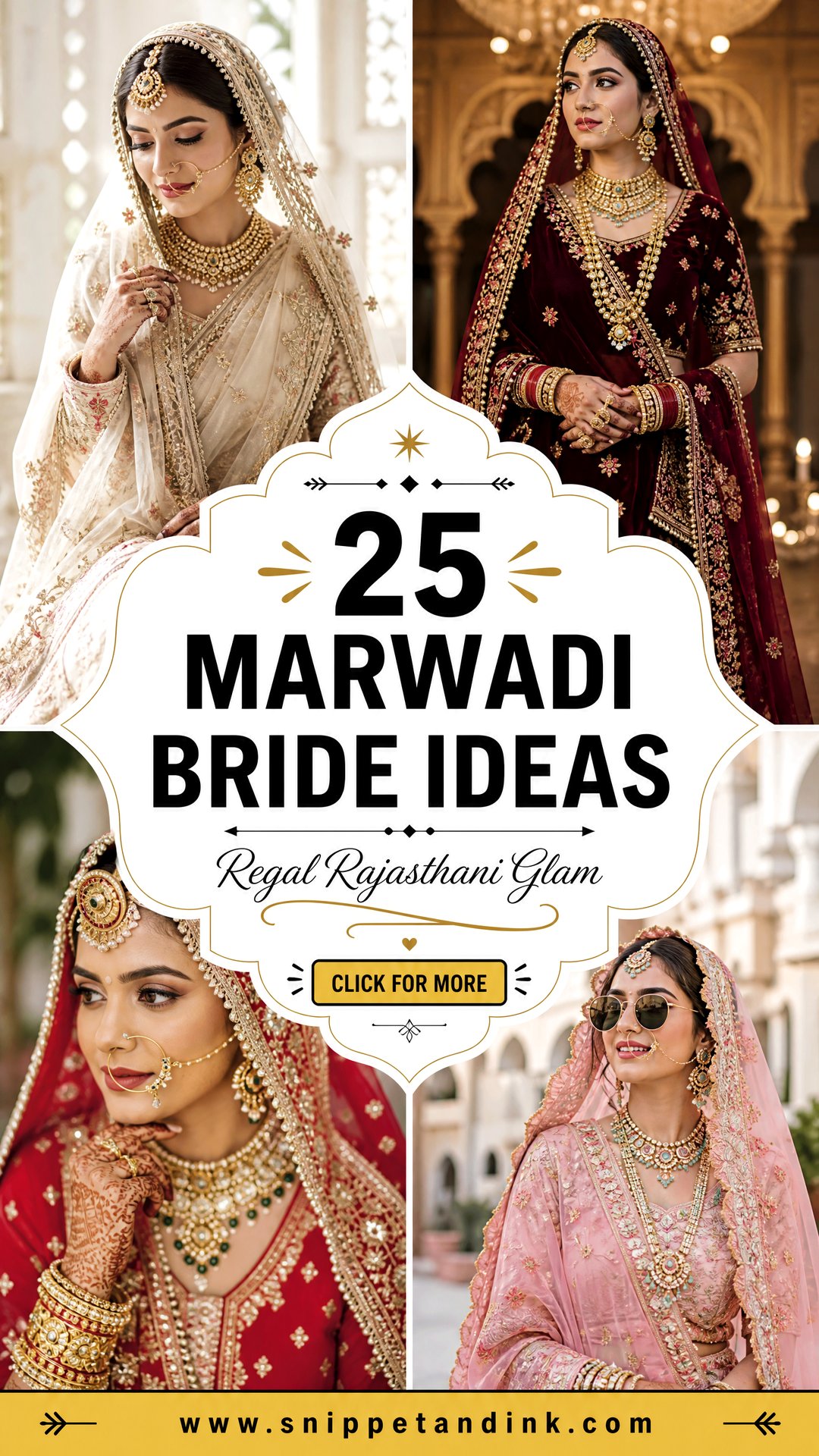
Planning the Head Drape, Borla and Hair as One Piece
In a Marwadi look, the head carries more weight than any other part of the outfit: the borla, a matha patti, the nath chain and one or two dupattas all meet there. I plan them together at a trial before the lehenga is even finalised, because a heavy odhni can push a borla out of place and a loose bun can’t support a nath chain.
- Set the hair first. A firm low bun or braid gives the pins something to grip.
- Place the borla at the hairline and secure its chain along the parting.
- Anchor the nath chain behind the ear into the bun.
- Pin the shoulder dupatta at the blouse.
- Set the head dupatta last, behind the borla, with U-pins into the bun so it doesn’t slip during the pheras.
At the trial, I’d also bow, turn your head quickly and sit down on a low seat, as you will during rituals. If anything shifts, adjust it then. Bring the actual dupatta and jewellery, not substitutes, as weight changes everything.
Heavy borlas and naths can leave a dull ache after several hours. I build in a short break between the pheras and the reception when the bride can loosen the head dupatta and lift the nath for a few minutes, and I keep spare U-pins and a small mirror in my kit for resetting everything afterwards.
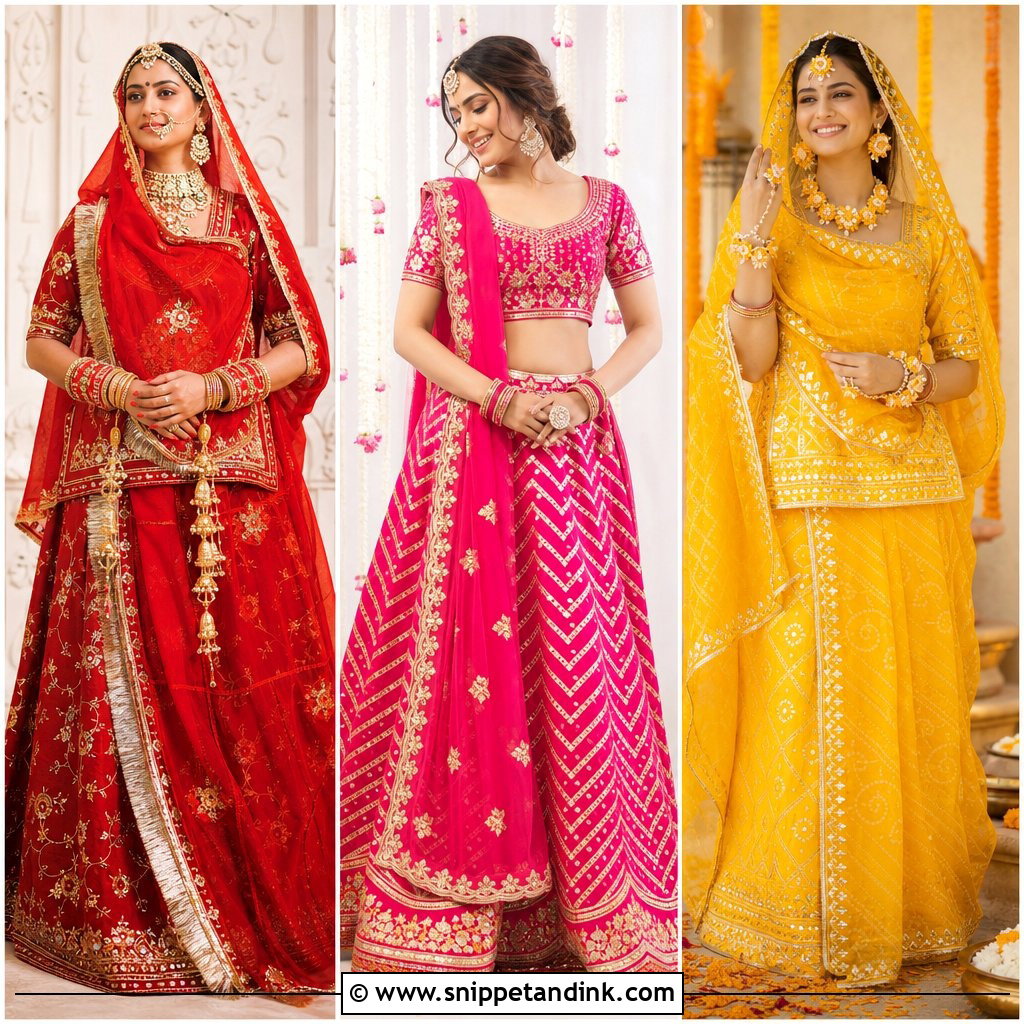
1. Red Marwadi Bridal Poshak
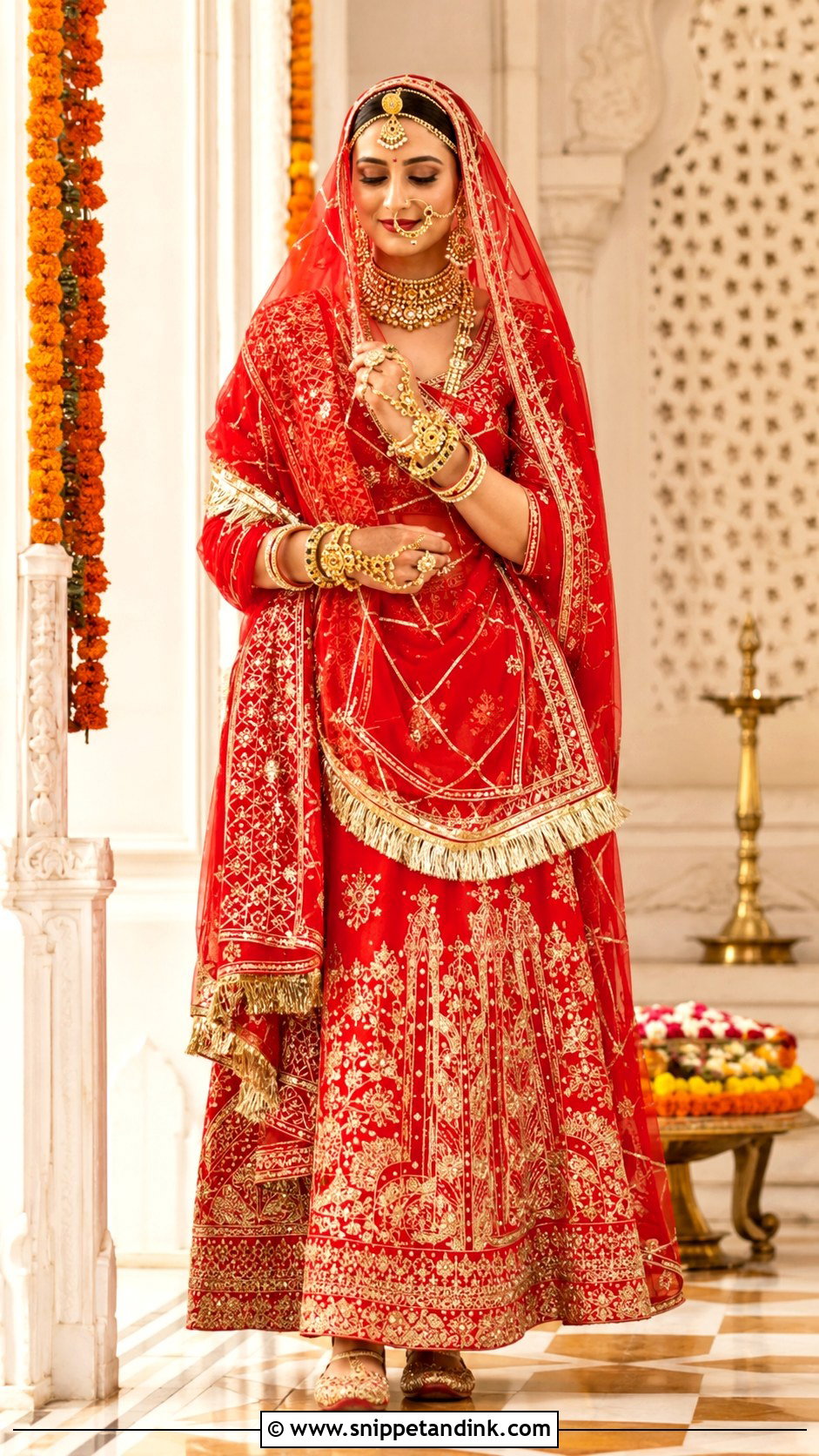
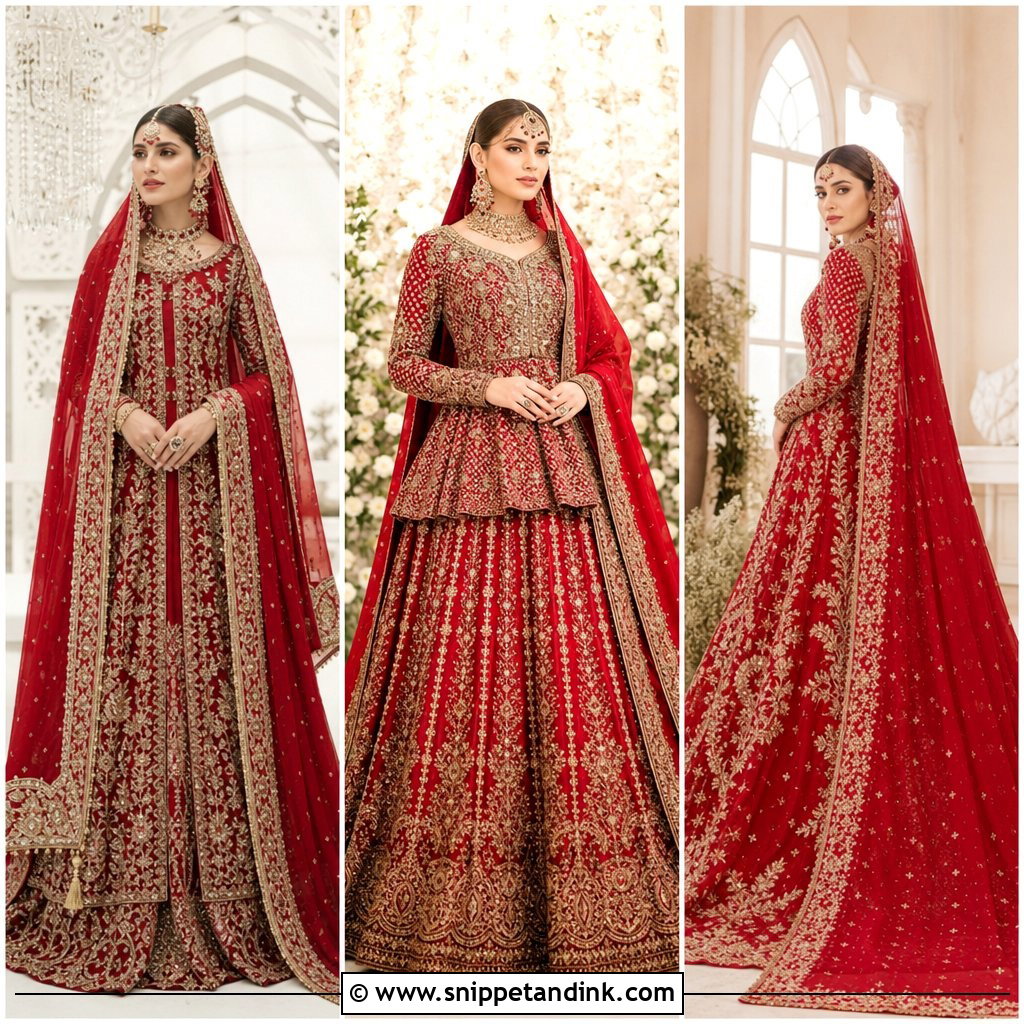
A full red poshak has four parts, the lehenga, kurti, kanchli and odhni, and each one adds weight, so I always plan the jewellery around how heavy the fabric already is. Silk or brocade with gota patti is lighter than velvet with dense zardozi, which matters during long pheras. The borla, aad, nath, hathphool, bajuband and bangles all belong here. I keep makeup classic with defined eyes and a deep red lip. Embroidered juttis are kinder than heels under a skirt this full.
2. Maroon Marwadi Bridal Lehenga
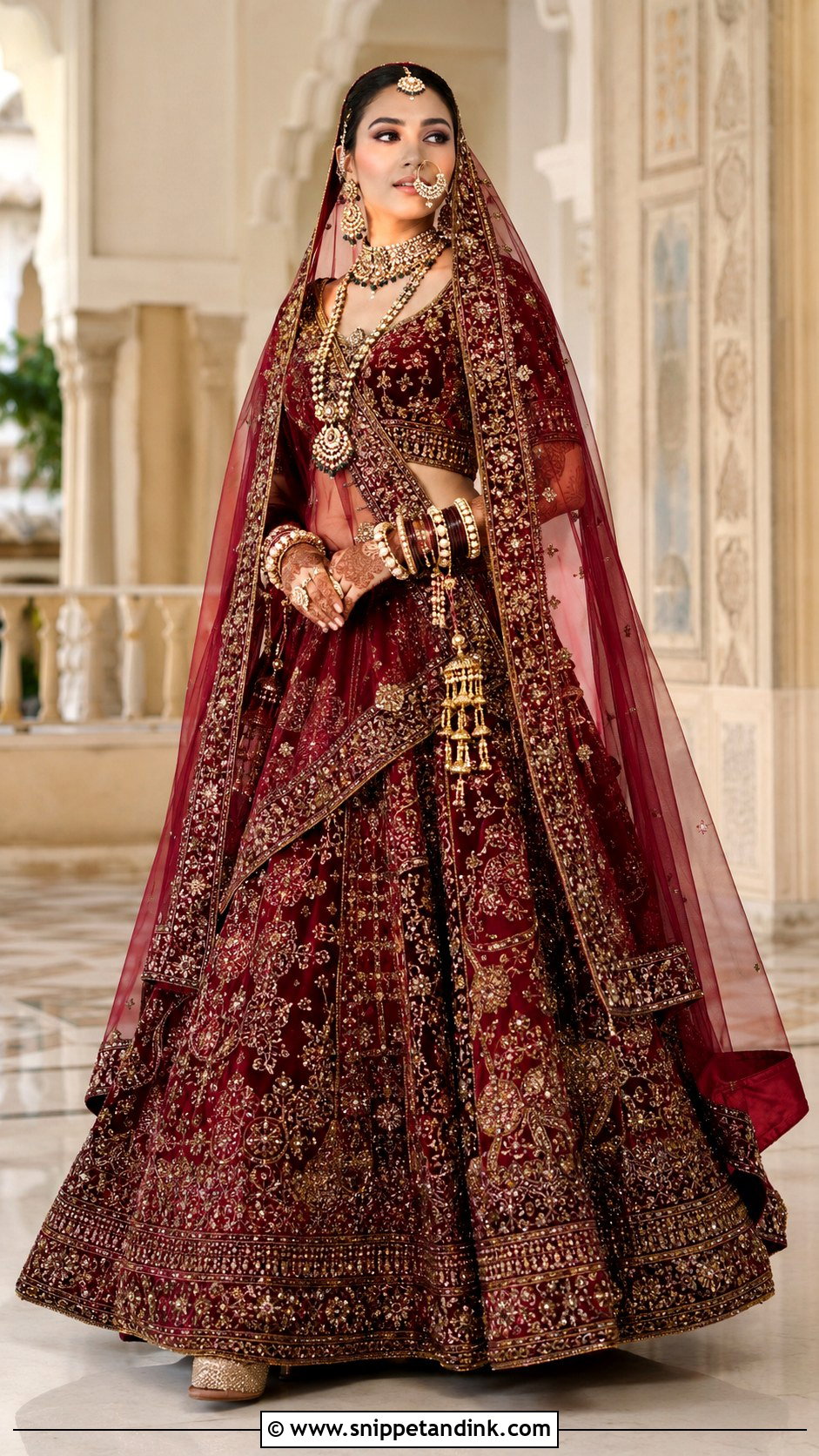
Maroon gives depth in evening light where bright red can flatten slightly in photos, which is why I suggest it for night pheras and winter weddings. Antique gold embroidery and scalloped dupatta borders suit it best. Choose elbow or full sleeves on the blouse if your polki set is heavy, as the balance looks better. A second dupatta over the head adds ceremony. Warm brown eyeshadow, kohl and a berry lip finish it, with the dupatta pleats pinned flat at the shoulder so they don’t slide.
3. Bandhani Marwadi Bride Look
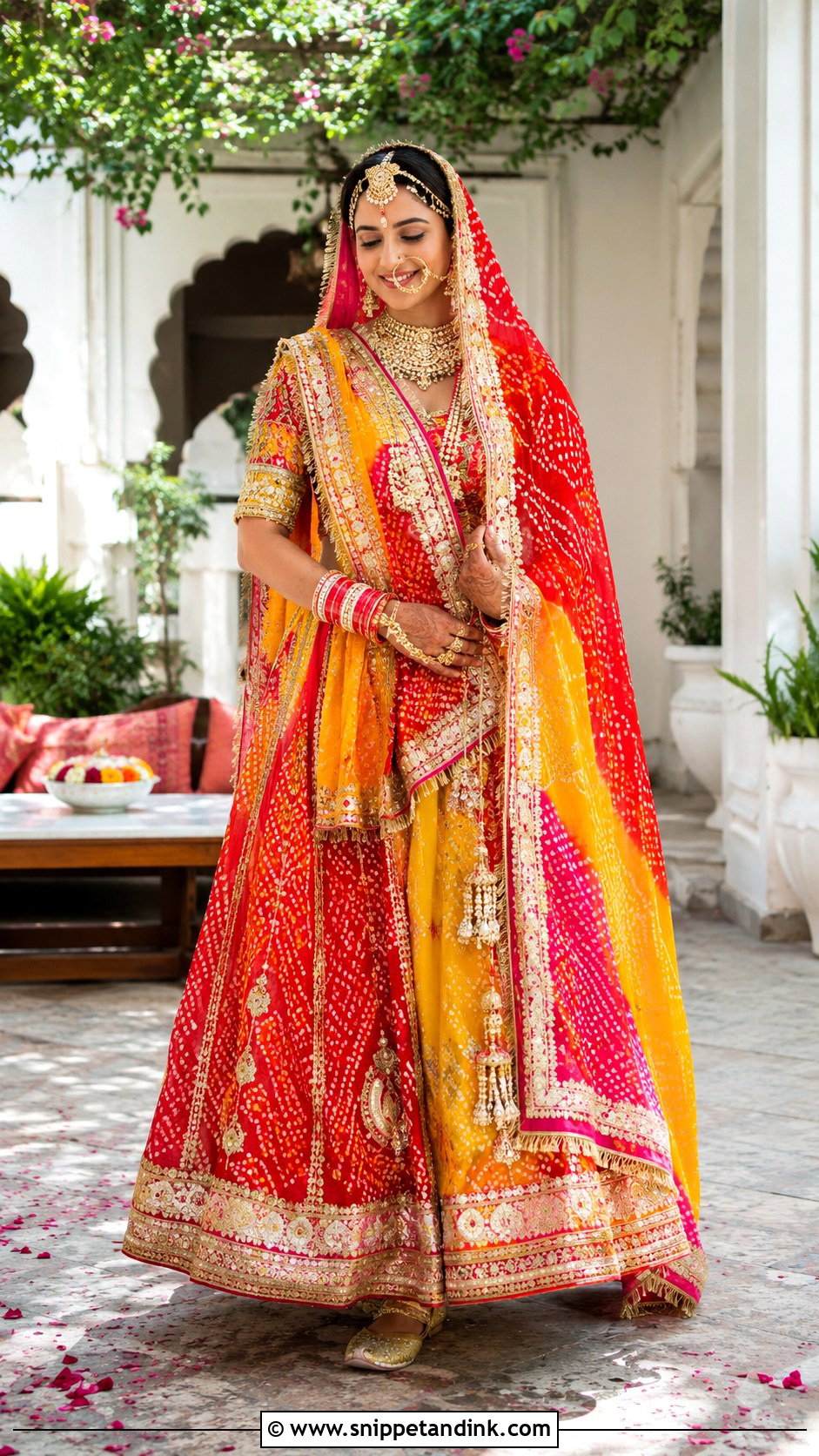
Bandhani carries meaning in Rajasthani families, and a single bandhani odhni can turn a plain silk lehenga into a bridal outfit. Real hand-tied bandhani has tiny raised dots and slight irregularity; printed versions look flat up close, which shows in portraits. I’d pair a red or yellow bandhani odhni with a gota-bordered lehenga for mehendi, pithi or a daytime ceremony. Borla, rakhdi, aad and chooda-style bangles finish it, and a braid with small flowers keeps it fresh.
4. Gota Patti Marwadi Bridal Lehenga
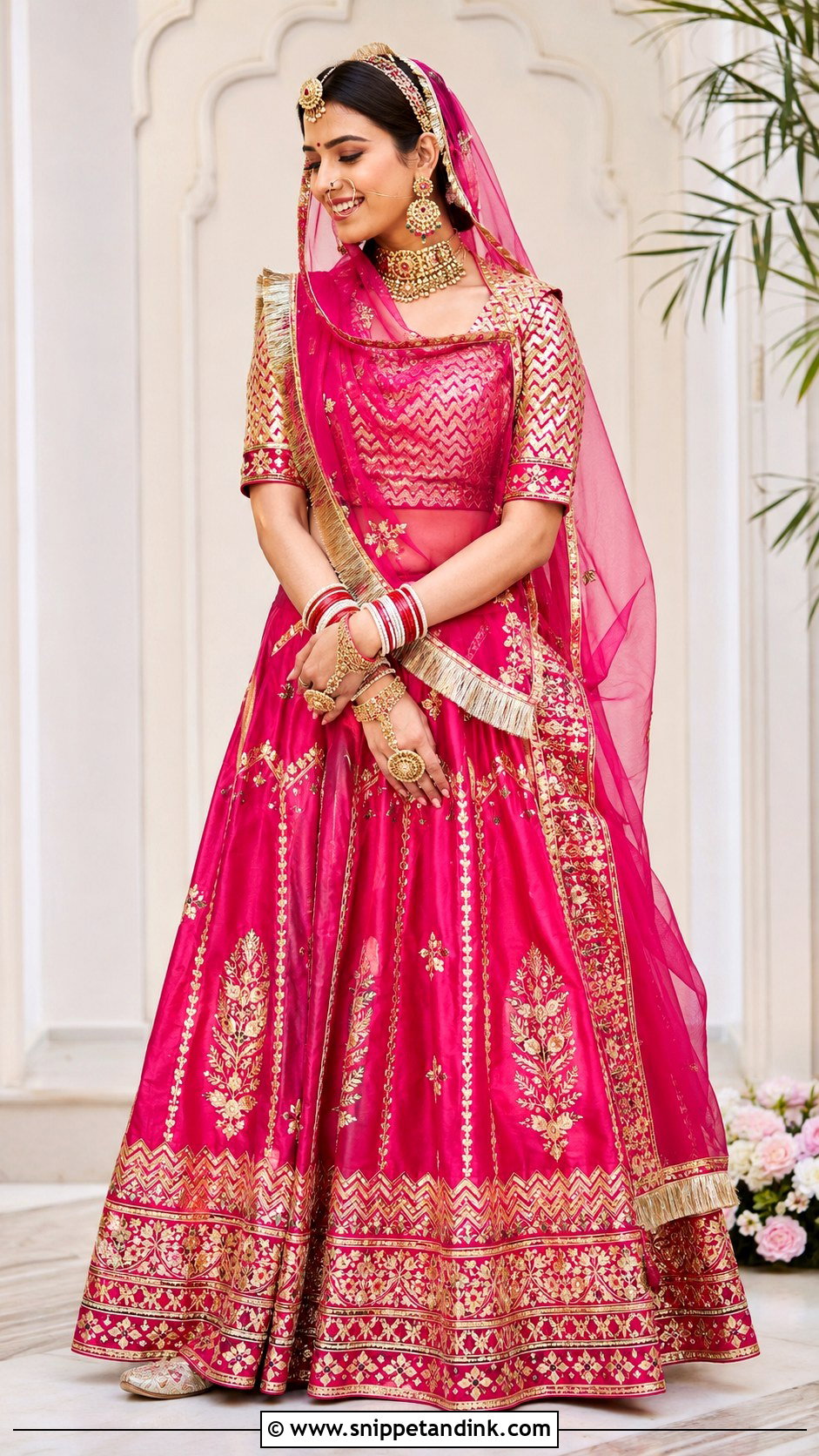
Gota patti is metallic ribbon appliqued onto fabric, so it reflects light without the weight of dense embroidery. That makes it a practical pick for brides who’ll be sitting through long rituals in warm weather. Red, rani pink and emerald all take gold gota well. Wide dupatta borders and detailed sleeves look complete in portraits. If the lehenga is bright, I keep the skin matte and the eye defined so the face doesn’t compete with the fabric.
5. Royal Blue Marwadi Bridal Lehenga
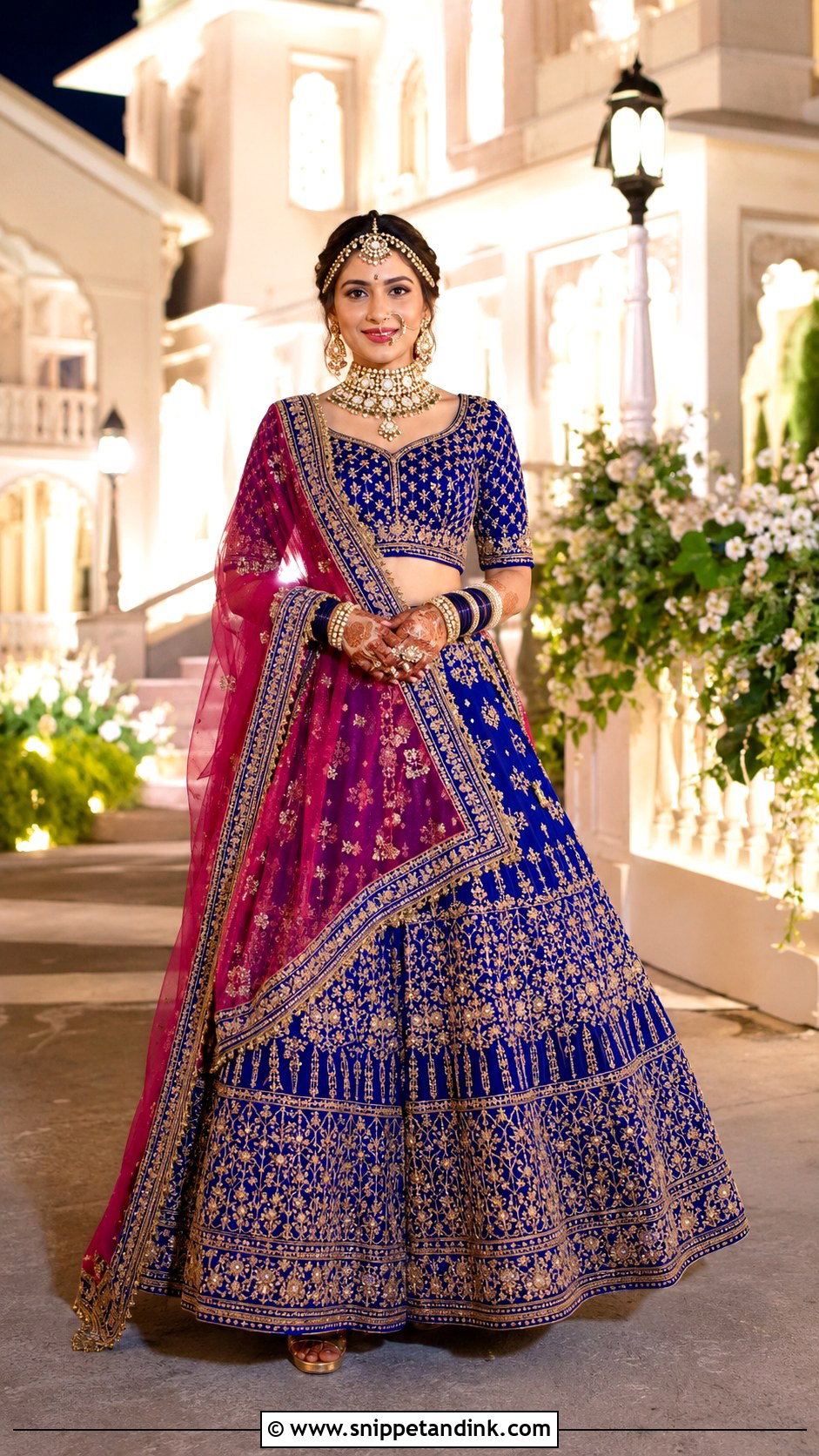
Royal blue is a bold step away from red, and I’d keep it for the sangeet or reception unless the family is comfortable with it for the main ceremony. Antique gold zari and mirror accents stand out strongly against blue. To keep the look clearly bridal, I lean on the jewellery: kundan or polki, a borla matha patti and a statement choker. A red or magenta dupatta pulls it back toward tradition. Lips in rose or berry keep the colour story calm.
6. Emerald Green Marwadi Bride Look
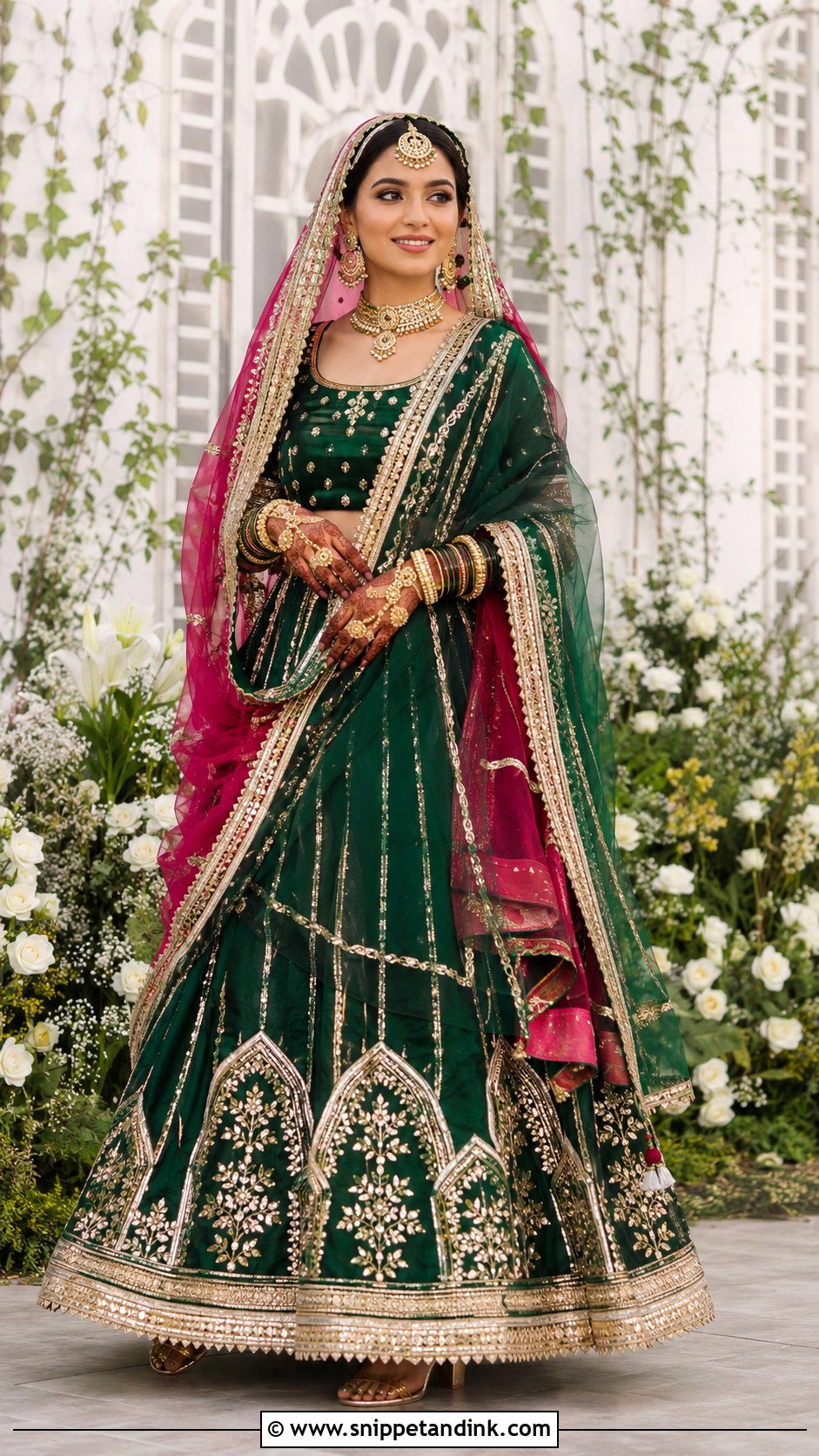
Green is often worn for mehendi in Rajasthani families, and emerald photographs richly under both daylight and warm lamps. A green lehenga with gold gota or mirror work pairs well with a red, yellow or pink odhni for contrast. I balance the jewellery: borla, aad, jhumkas, bangles and hathphool, without stacking every necklace. Bronze eyes and a muted pink lip suit the colour. Gold juttis are easiest for a long function.
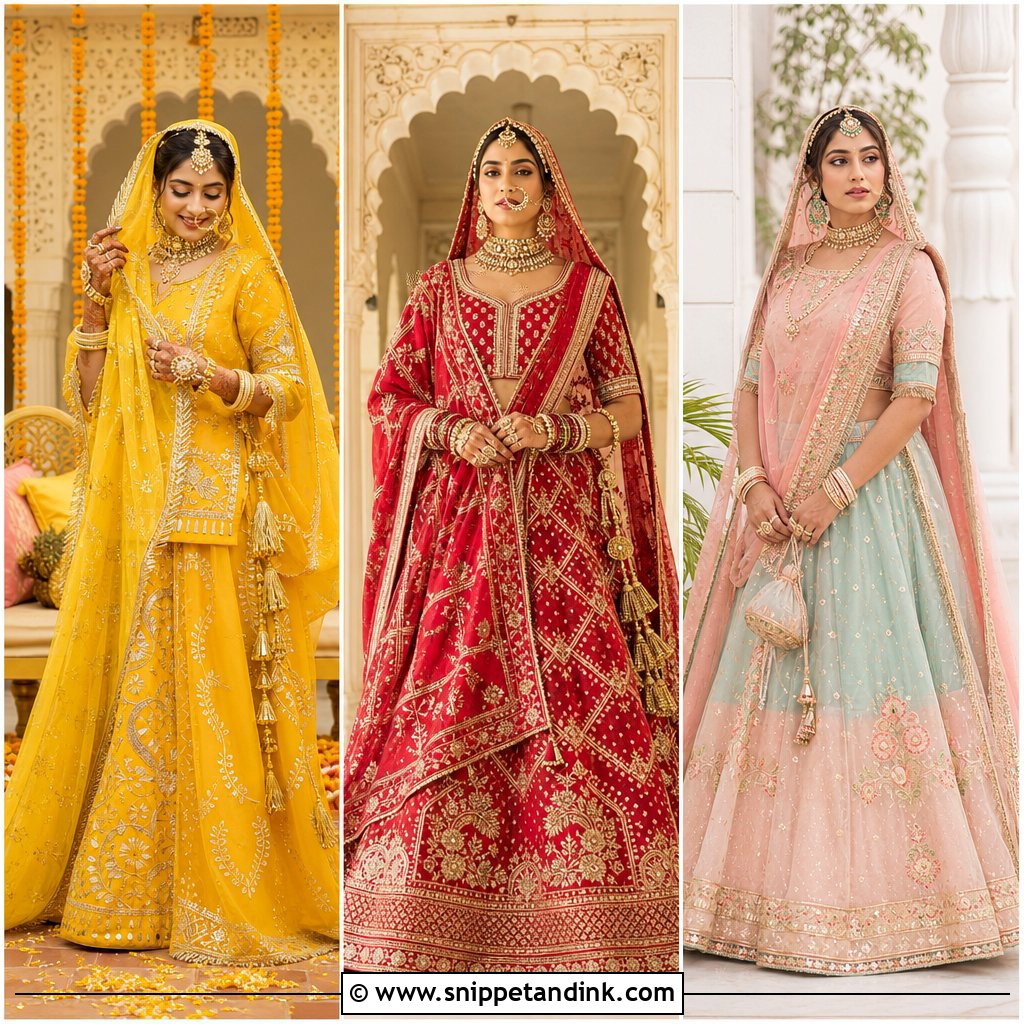
7. Yellow Marwadi Haldi Bride Outfit
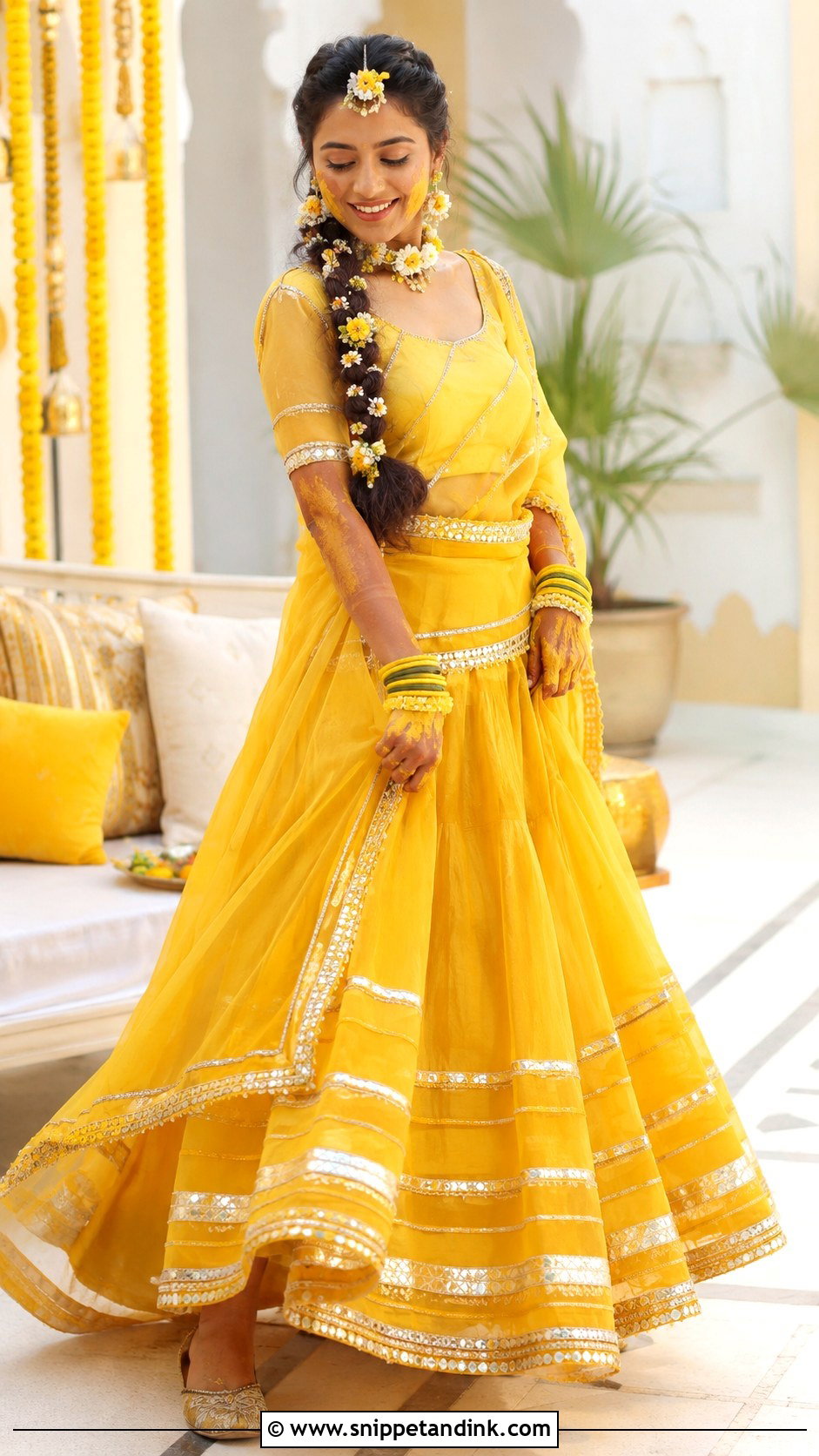
At a haldi, the outfit will get turmeric on it, so I don’t put brides in delicate silk here. A cotton or light georgette yellow Marwadi haldi bride outfit with gota borders washes better and lets you sit on the floor easily. Mustard suits deeper skin tones; lemon yellow suits fairer ones. Floral jewellery, a small borla and juttis keep it light. Dewy makeup and a braid with fresh flowers suit the mood.
8. Pink Marwadi Mehendi Bride Look
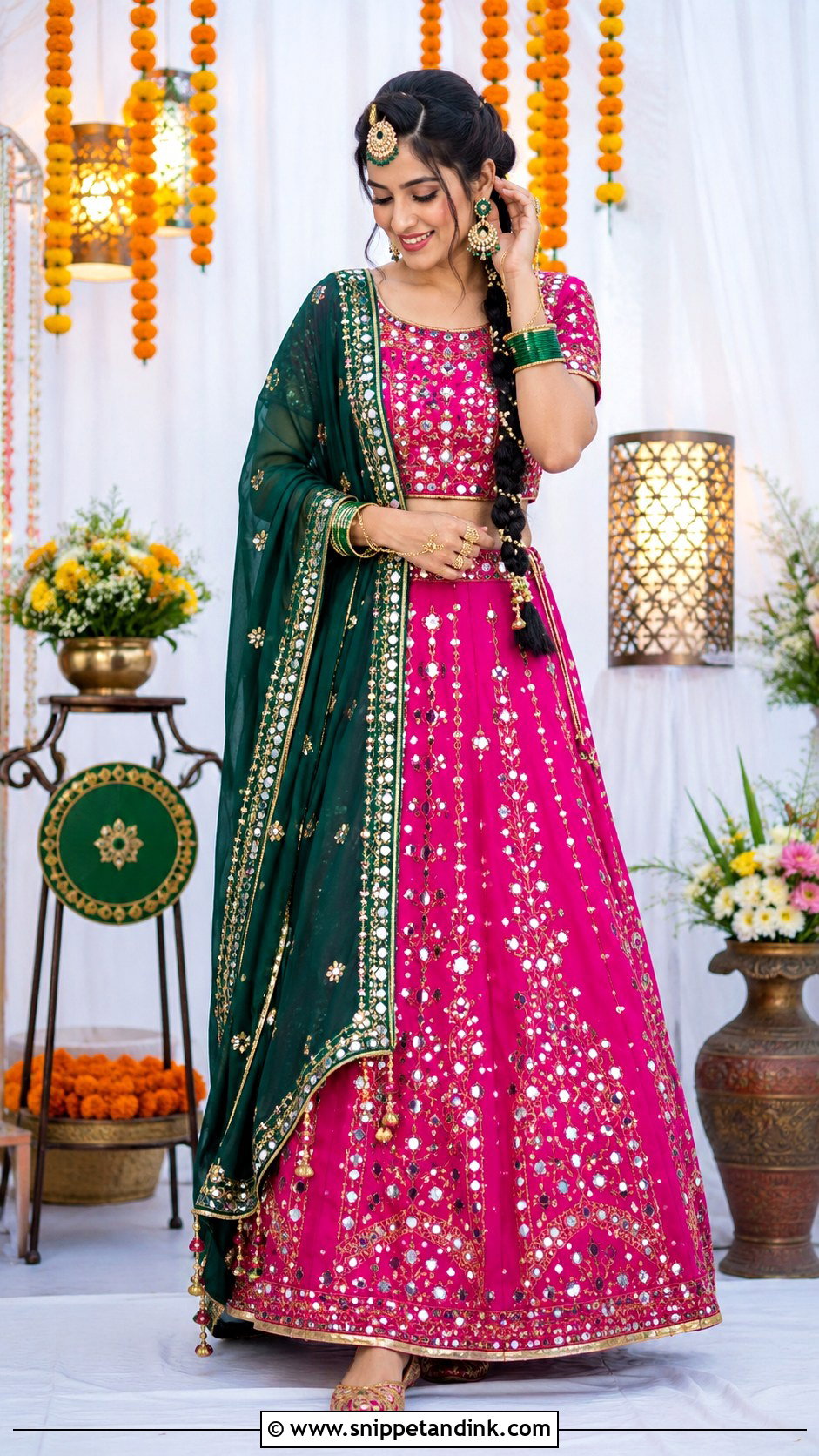
Sleeves matter at the mehendi. The artist needs your arms clear to the elbow or beyond, and the paste needs hours to dry, so I’d choose a pink Marwadi mehendi bride look with short or three-quarter sleeves and skip the bracelets until it’s finished. Rani pink with mirror work or colourful thread embroidery reads joyful in photos. A green, yellow or orange dupatta adds contrast. A borla, jhumkas and comfortable juttis keep it practical.
9. Orange Marwadi Bride Poshak
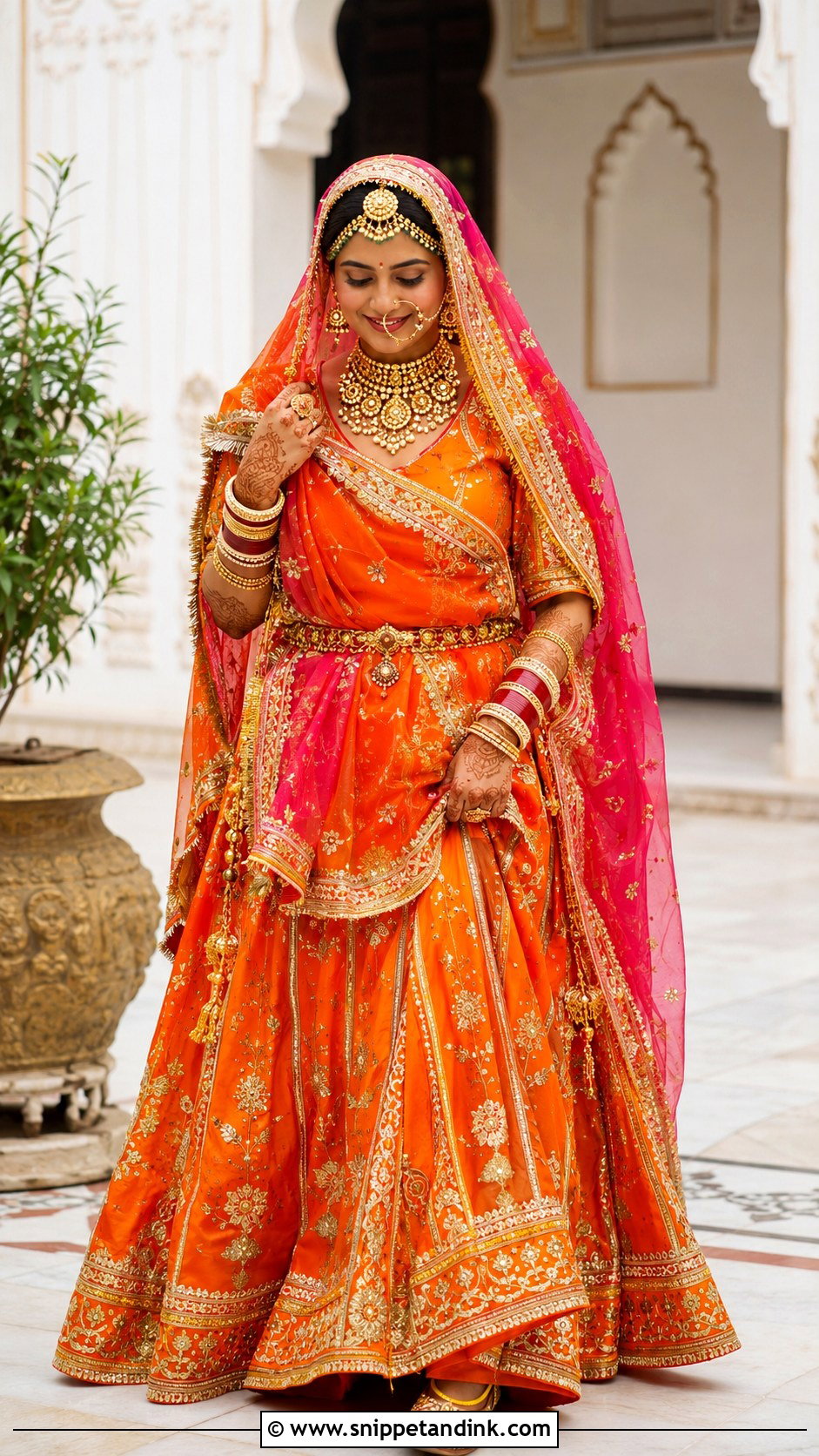
Orange is a warm, auspicious shade in many Rajasthani homes, and I love it for daytime pujas and family rituals. Saffron, rust and burnt orange each suit different undertones; rust tends to flatter deeper skin, saffron brightens lighter skin. Gold gota or dori work stays visible against it. A red or magenta odhni makes it more bridal, a matching drape keeps it cleaner. Kohl eyes and a peach lip suit the colour well.
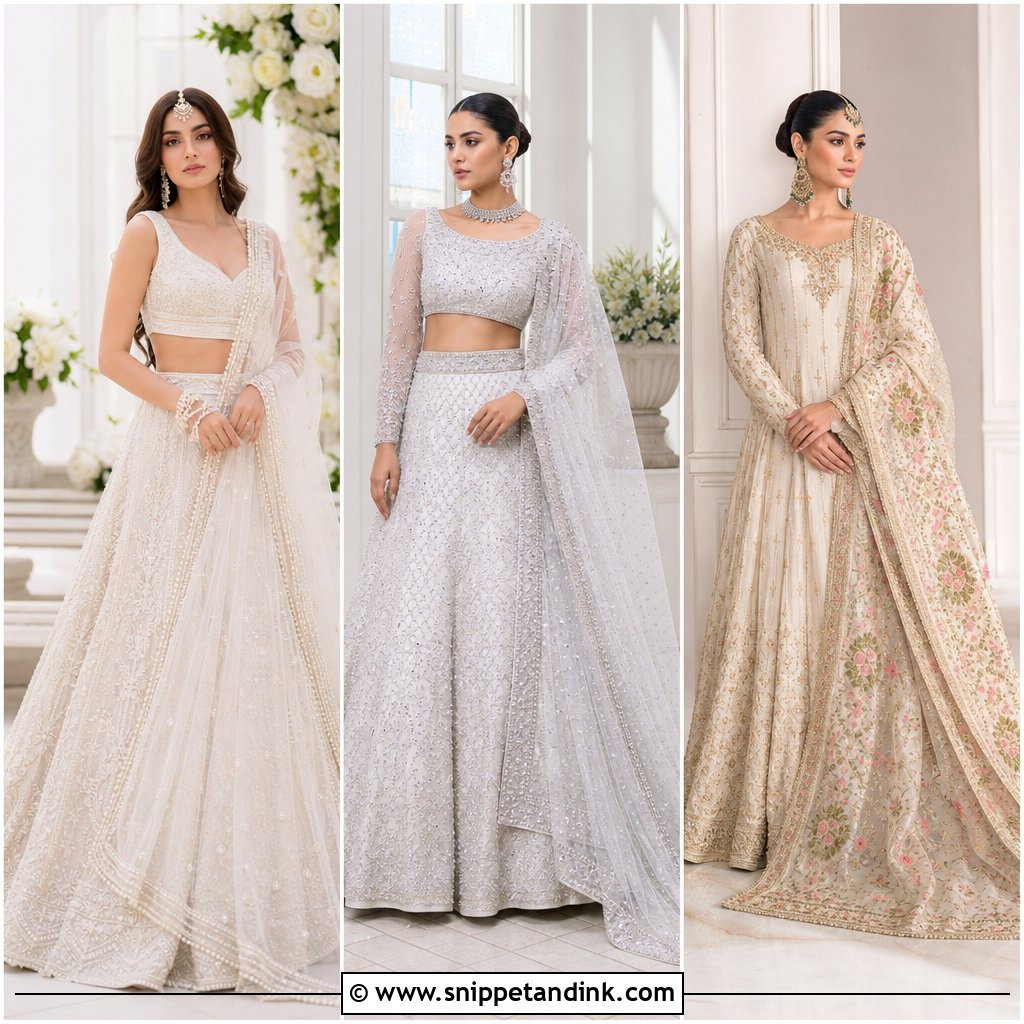
10. Pastel Marwadi Bridal Lehenga
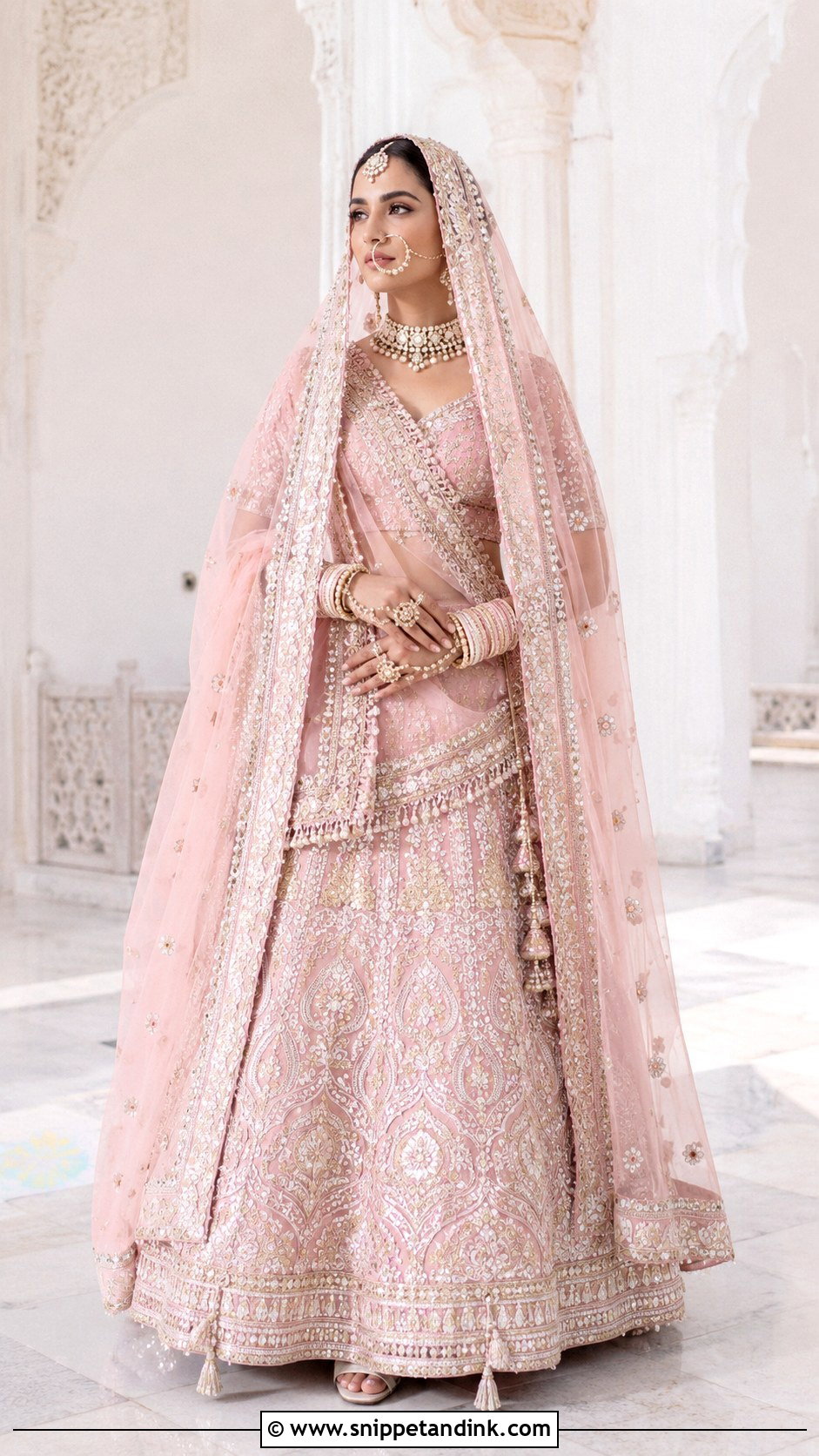
Pastels need weight in the detailing or they can read as a guest outfit next to a family dressed in red. That’s why I pair blush, mint or powder blue with dense gota patti, zardozi, pearl or mirror work, and keep the jewellery fully traditional: borla, aad, rani haar, nath and bangles. Pastels work for day weddings and destination functions. I’d check with elders early, since some families expect red for the pheras.
11. Ivory Marwadi Bride Look
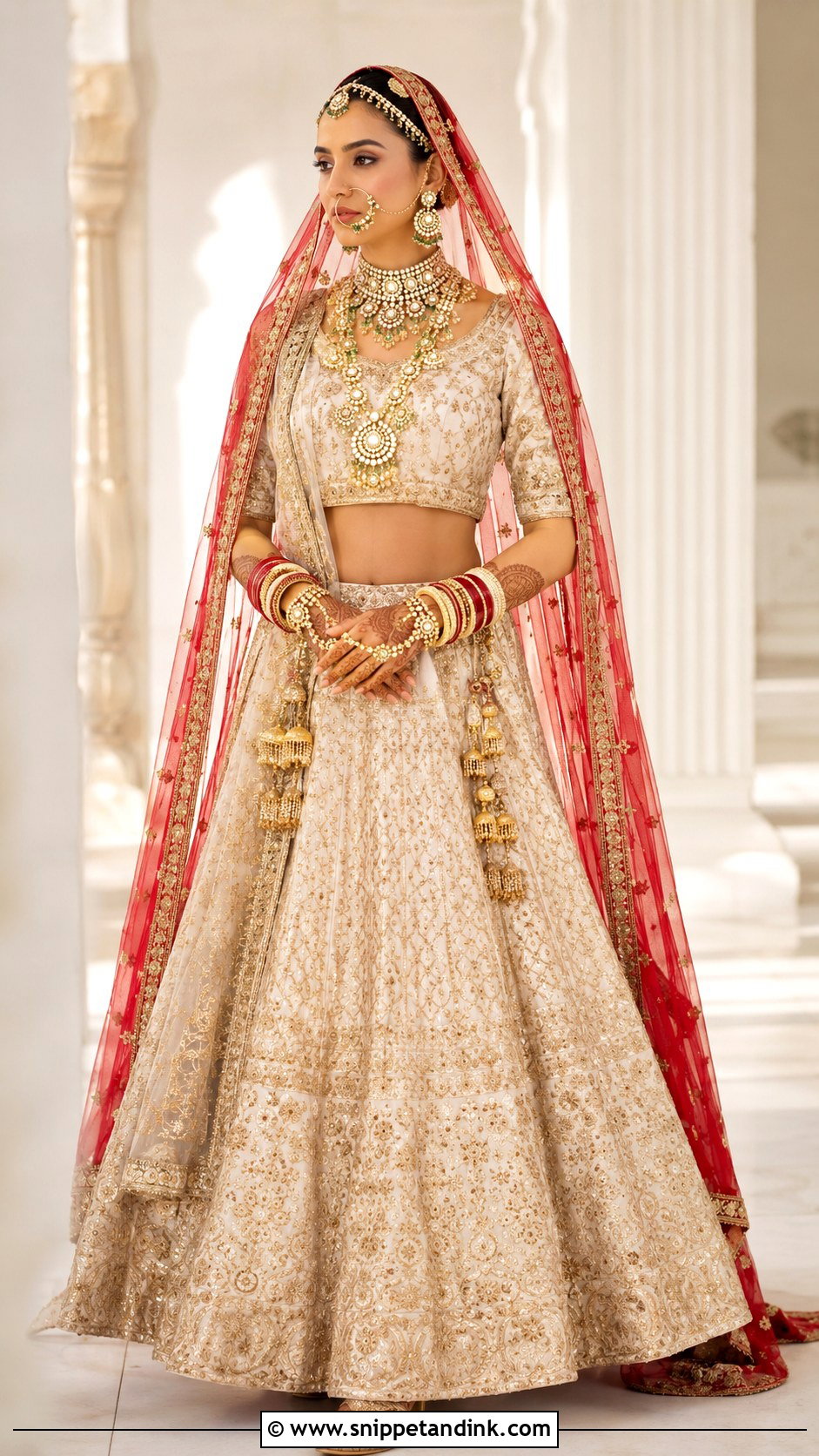
An ivory lehenga becomes bridal through contrast. A red, maroon or bandhani dupatta over the head brings warmth back to the face and keeps the traditional reading clear. Antique gold embroidery suits ivory better than bright yellow gold. Rich polki, aad, borla, nath and hathphool carry the look. Ivory marks easily, so I keep wipes and a stain pen in my kit and remind brides to be careful with sindoor and haldi.
12. Velvet Marwadi Bridal Lehenga
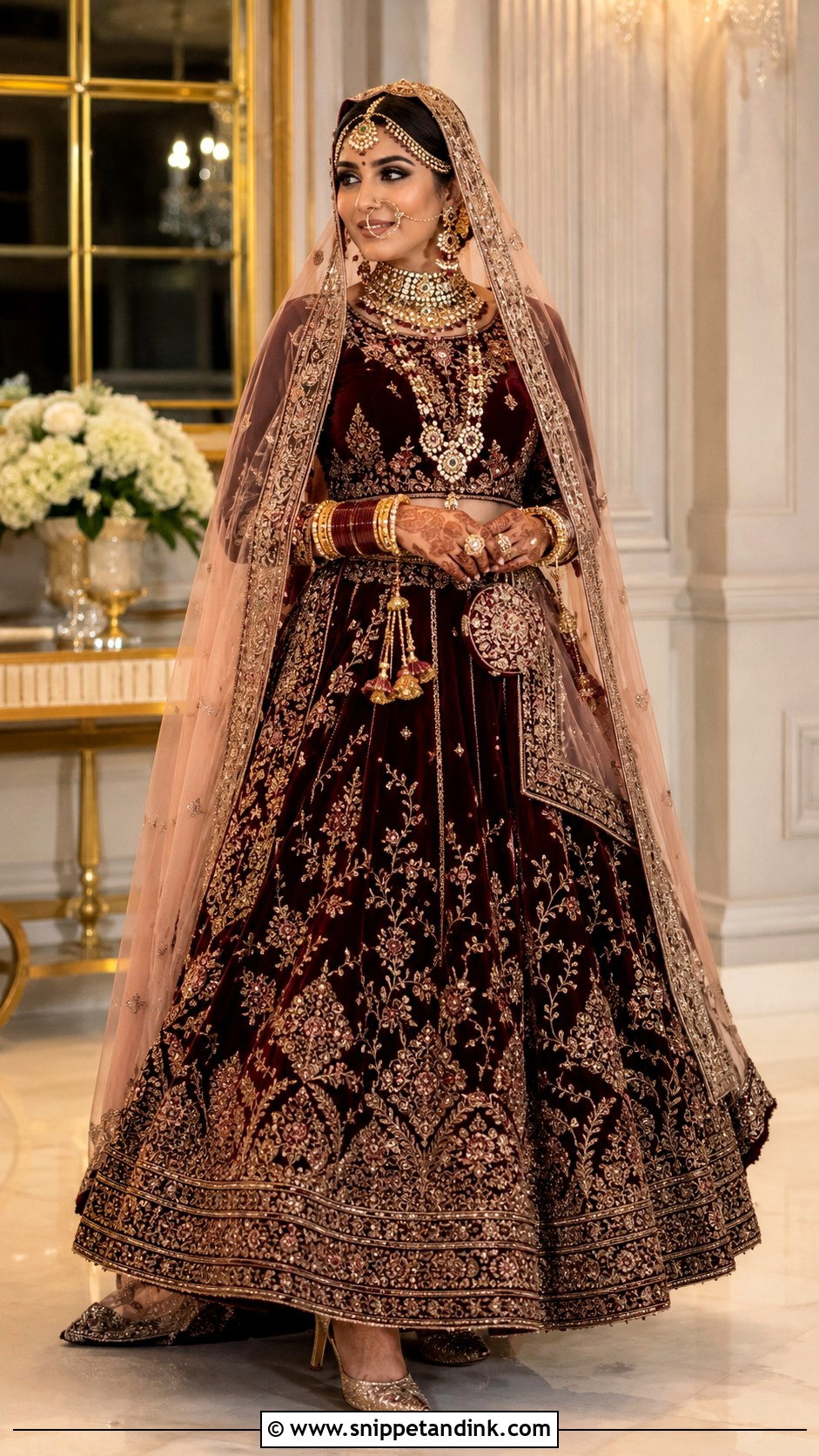
Velvet with dabka or zardozi can be very heavy, sometimes heavy enough that brides feel it in the hips after an hour of standing. I balance that with a light net dupatta on the shoulder and a structured head veil. Deep red, maroon, emerald and wine suit velvet’s depth. A matte base works better than a dewy one here, as shine on the face fights with the pile of the fabric. Comfortable heels or juttis are essential.
13. Mirror Work Marwadi Bride Outfit
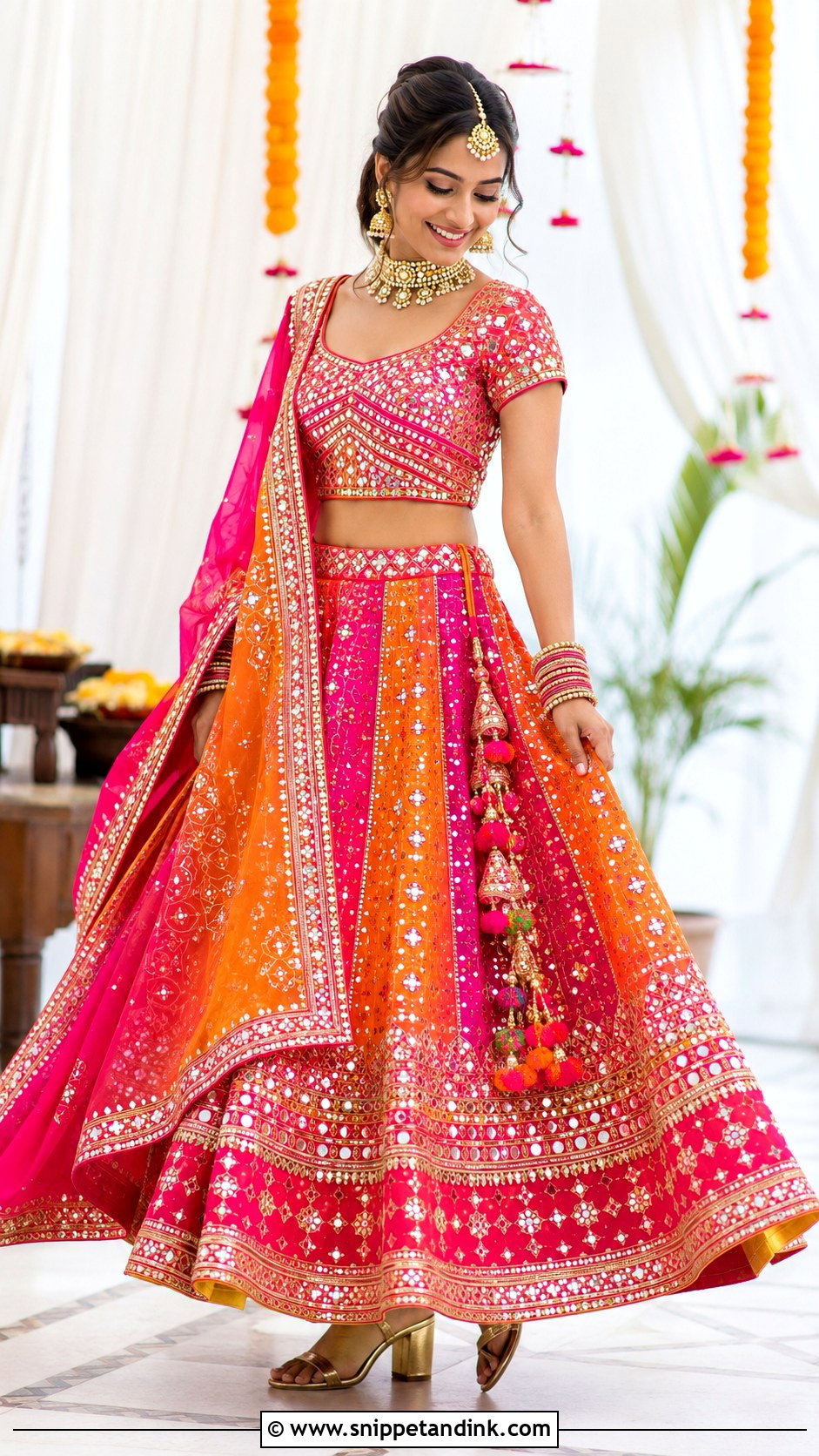
Mirrors flash under camera light, so I tell brides to avoid heavy layering of reflective jewellery on top of a mirror work outfit. It’s festive and very much a regional craft, best for daytime events, mehendi and sangeet. A red, orange or yellow lehenga with mirror accents and gota borders, plus a dupatta with a finished edge to frame the face. Mirrors can scratch delicate skin on the inner arm, so check the blouse lining.
14. Zardozi Marwadi Bridal Lehenga
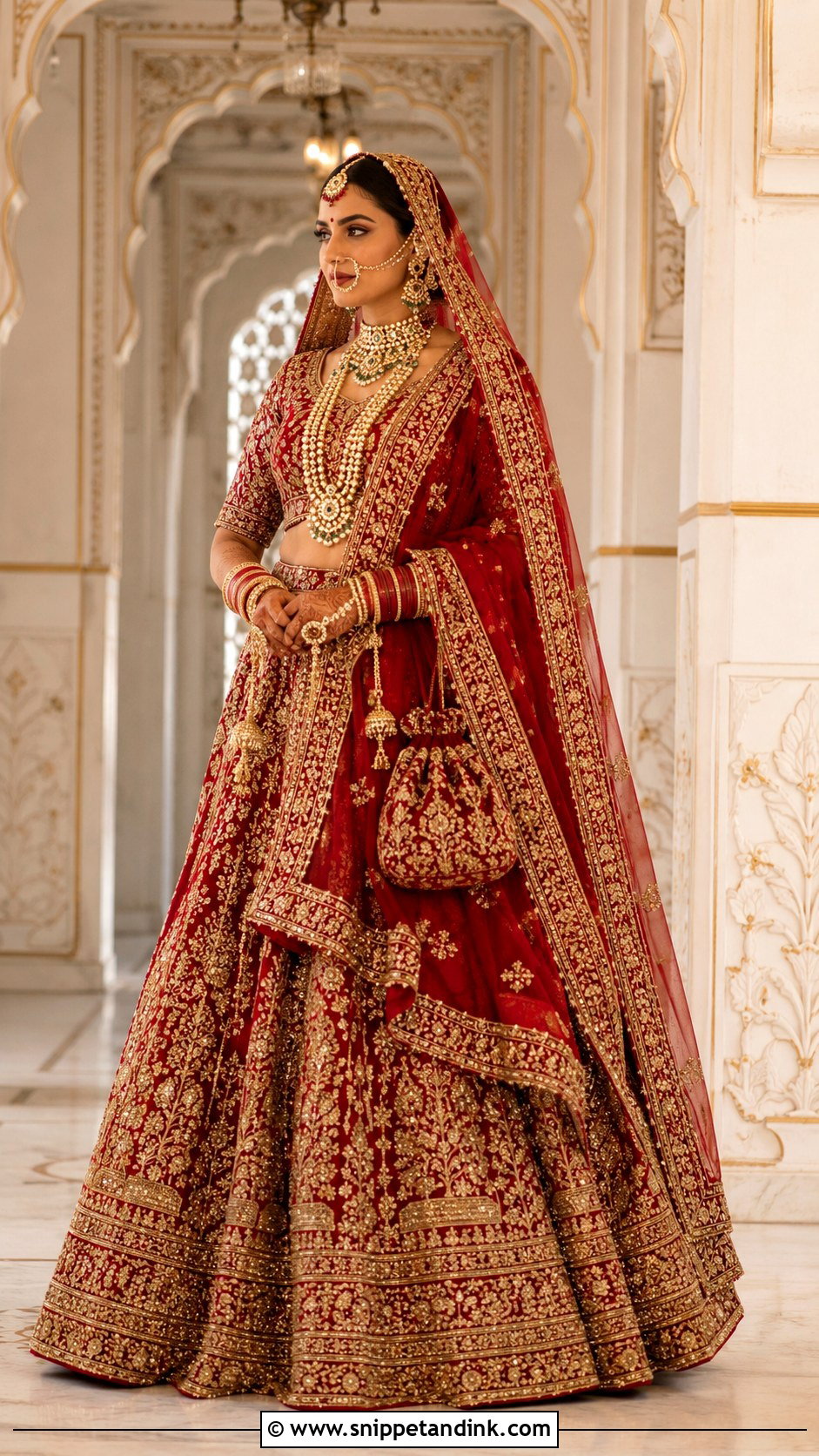
Zardozi is metal-thread embroidery and it’s the heirloom choice for the main ceremony. It’s also visually heavy, so I pick jewellery that complements rather than competes: a borla, aad, polki rani haar, nath and hathphool, without extra layers. The dupatta should have a border that sits neatly over the head without slipping. Kohl-lined eyes and a classic red lip suit it. Embroidered heels and a traditional potli finish it.



15. Double Dupatta Marwadi Bride Look
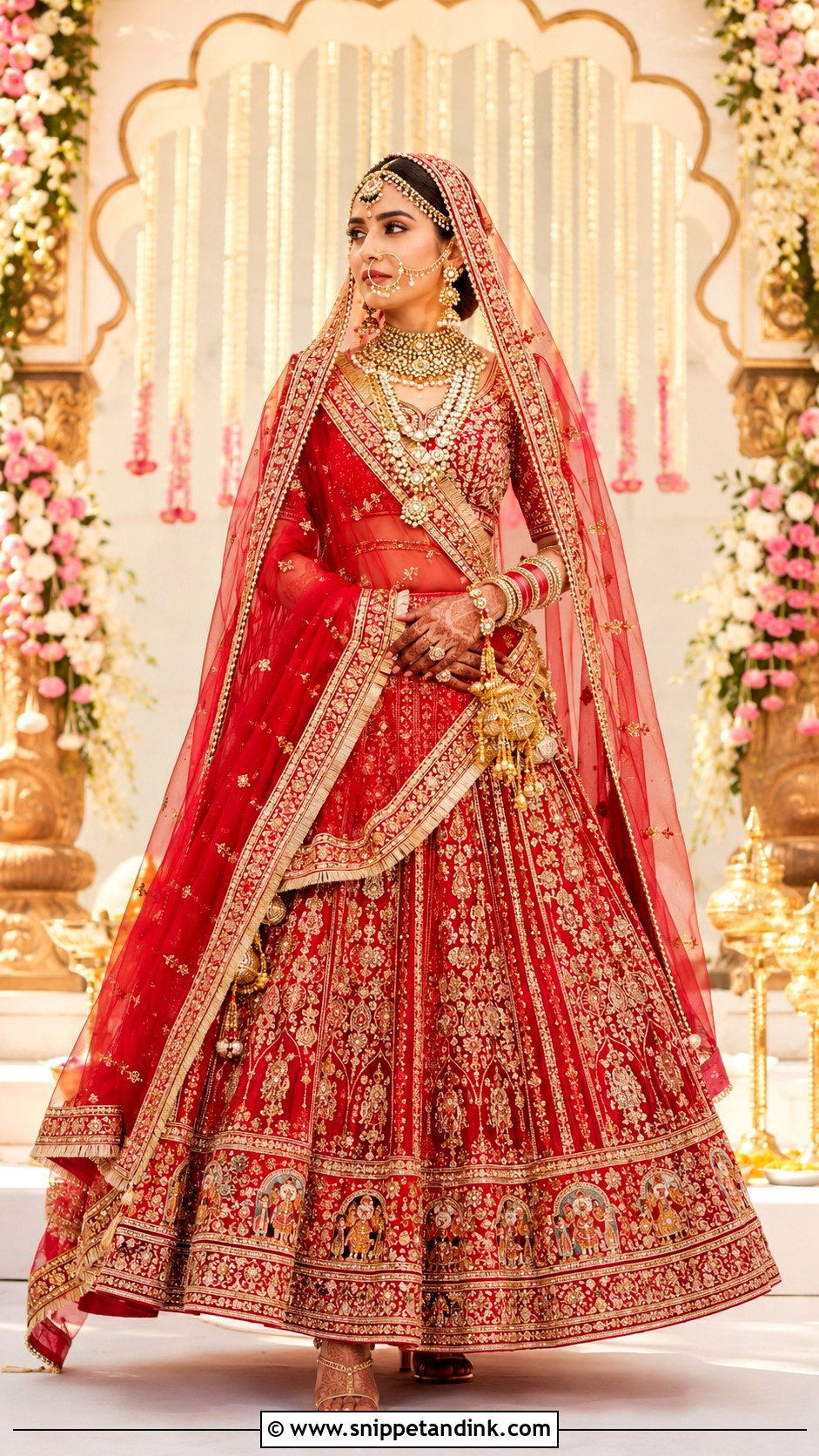
Two dupattas look grand, but they need careful pinning, because they pull against each other if one slides. I drape the heavier dupatta on the shoulder first and pin it at the blouse, then set the lighter net, organza or bandhani dupatta over the head and anchor it to the bun with U-pins. The head dupatta’s border frames your face in close-ups, so choose it with care. This is the look I suggest for pheras and family portraits.
16. Borla Marwadi Bridal Look
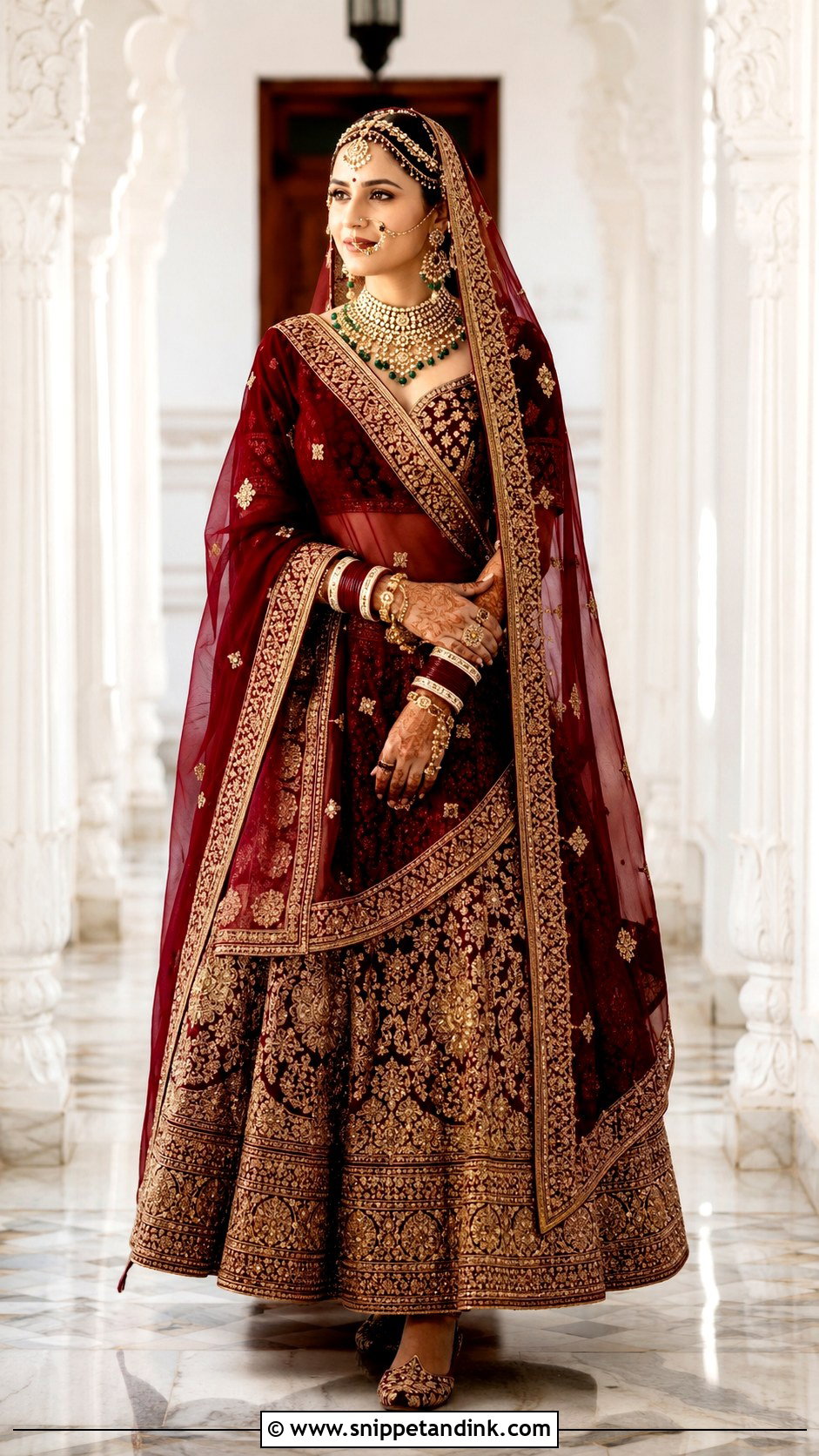
The borla sits at the centre of the hairline, held by a thread or chain that runs back along the parting. It needs a firm base: I backcomb a small section at the crown and pin the chain into it so the borla doesn’t tip forward when you bow. A neat centre parting, a low bun or a long braid all support it. The odhni should rest behind it, not over it. Keep makeup clean around the forehead so the ornament reads clearly.
17. Aad Necklace Marwadi Bride Look
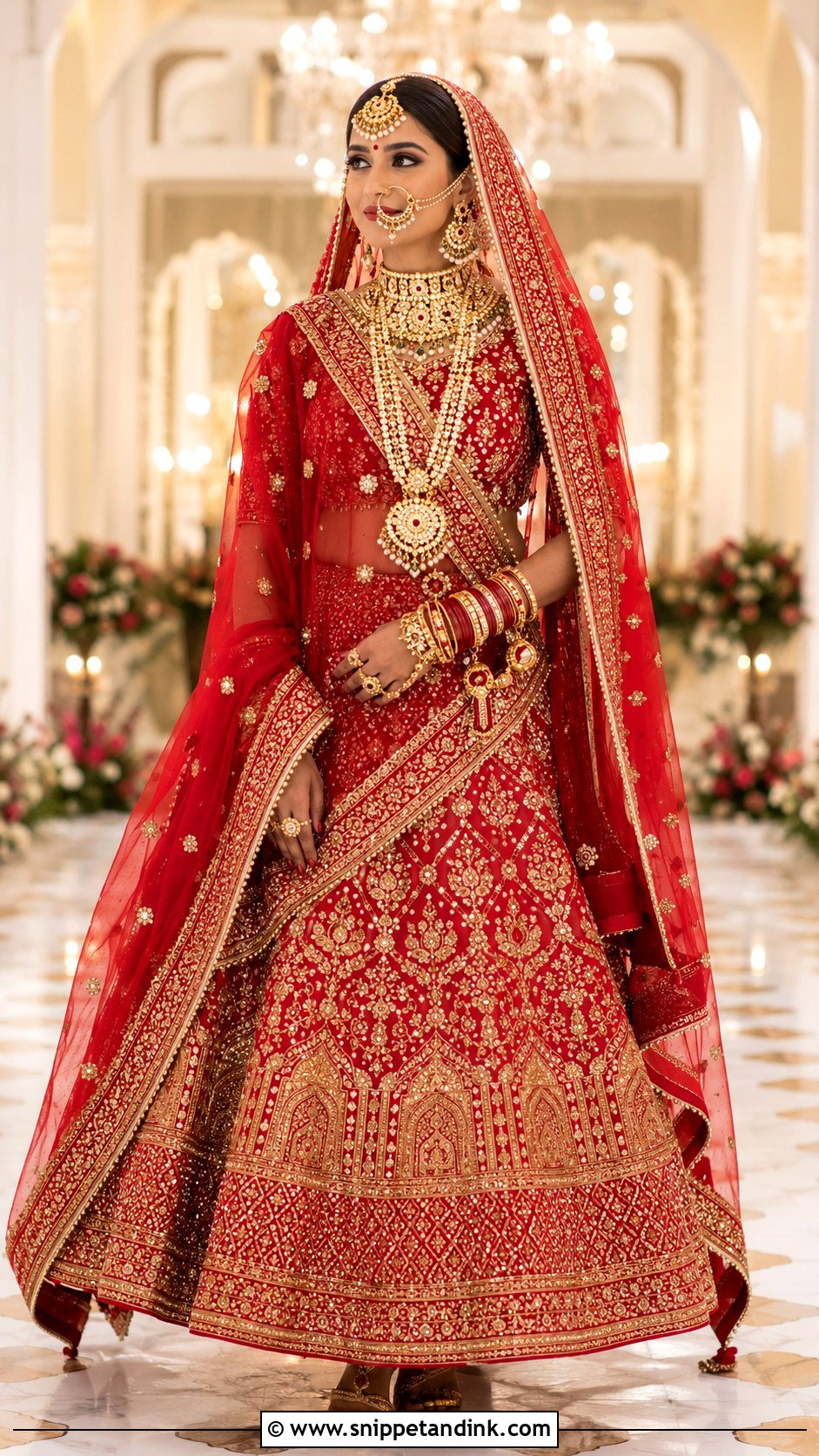
The aad sits high on the neck, so the blouse neckline has to leave room for it. A round, sweetheart or modest square neckline works; a high collar crowds it and pushes it up into the chin. If the aad is heavy, I keep embroidery near the neckline simpler so the two don’t clash. Pair it with a red, maroon or green lehenga, a borla, nath and bangles. A low bun keeps the neck visible.
18. Nath Marwadi Bride Look
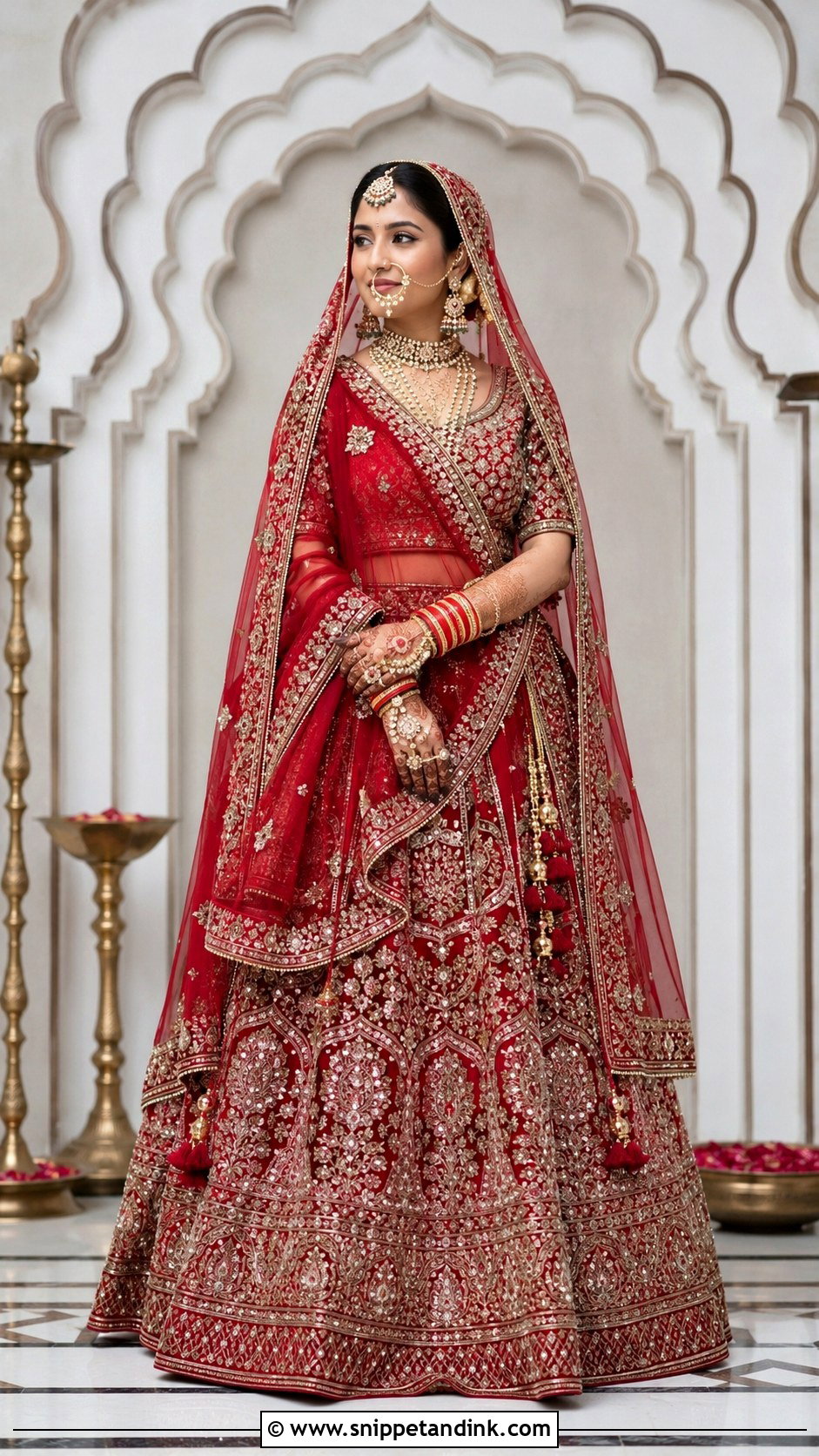
A large nath is heavier than it looks, and the chain needs a secure anchor in the hair so the weight doesn’t pull on the nose. I pin the chain into the bun or braid behind the ear before the bride stands up. Some brides use a clip-on for comfort if they aren’t pierced. Because the nath draws the eye to the centre of the face, I focus makeup on the eyes and keep the lip classic. Finish with bangles and hathphool.
19. Polki Marwadi Bridal Lehenga
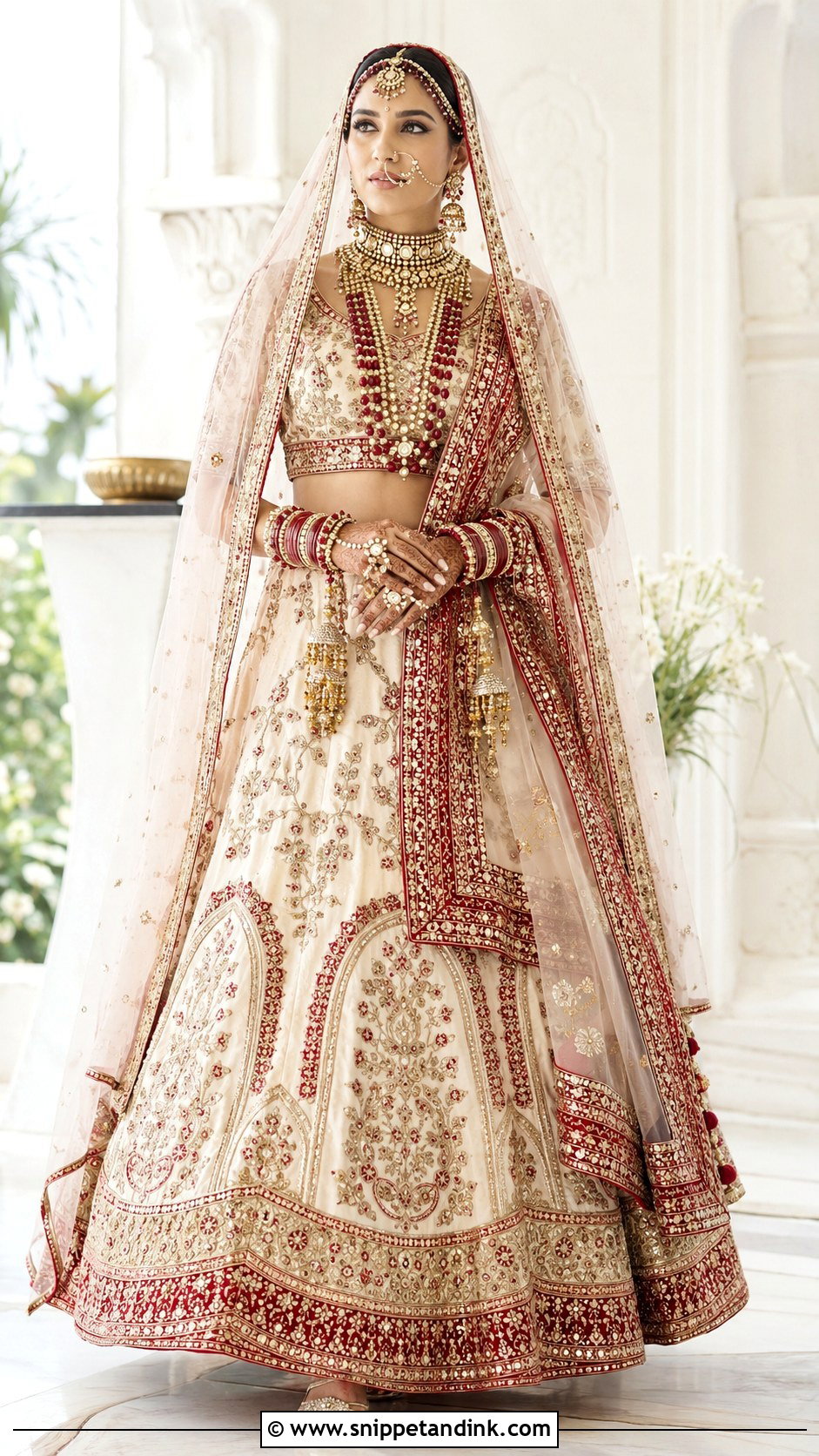
Polki uses uncut diamonds, so it has a softer, warmer glow than faceted stones. That’s why it pairs so well with red, maroon, ivory and emerald. I balance it against the lehenga: if the outfit is heavily worked, a slightly lighter polki choker, rani haar set; if the lehenga is softer, the full layering of borla, earrings and nath. A sheer dupatta with a clear border sits nicely over the head.


20. Kundan Marwadi Bride Look
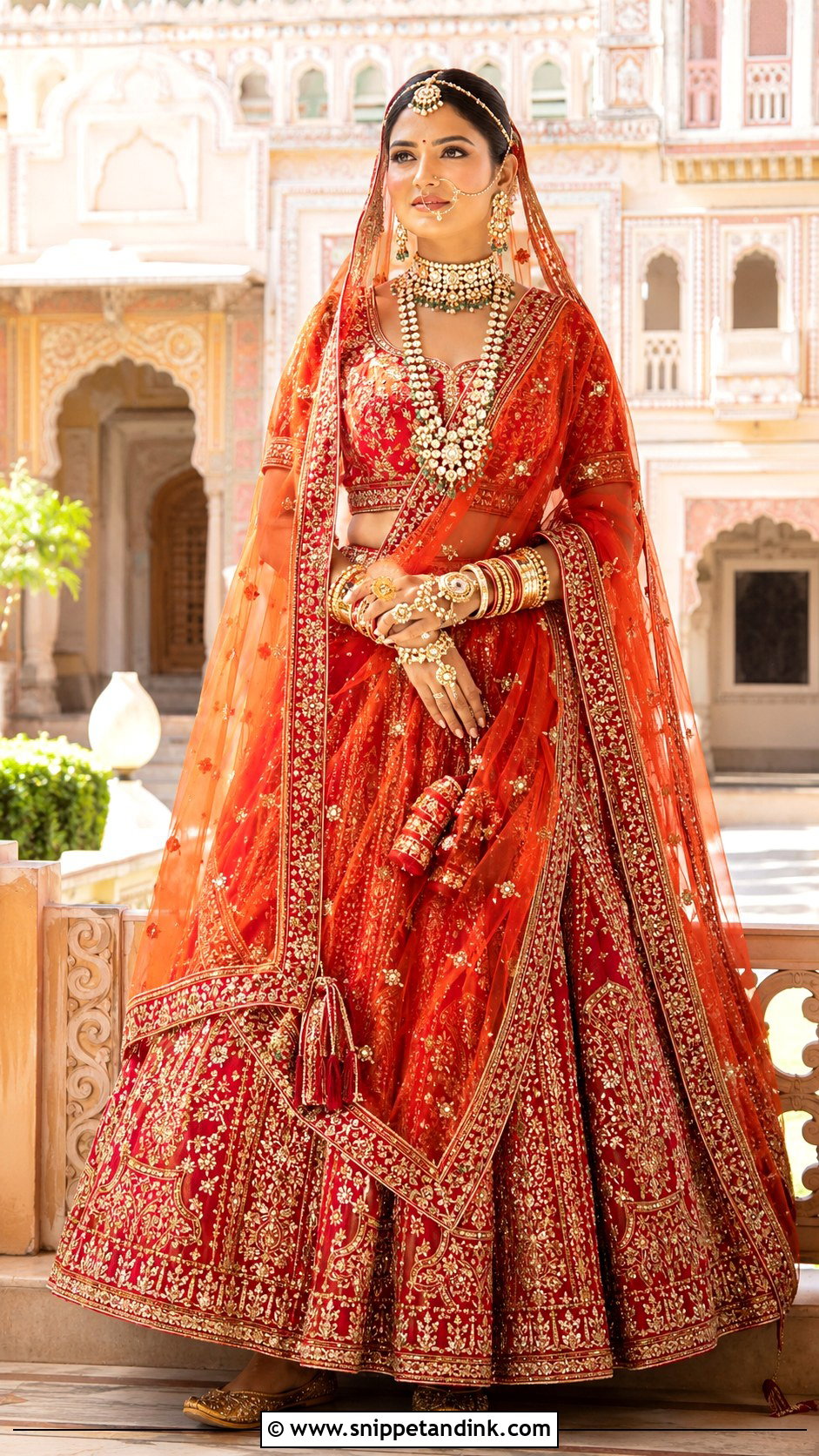
Kundan is set in gold foil and often backed with meenakari, which makes it bright and festive next to warm colours like red, orange and rani pink. I’d keep the full kundan set, borla, choker, long necklace, earrings and hathphool, for the main ceremony, and add the nath only then. For pre-wedding events, drop a layer. A sleek bun with gajra suits it. Warm makeup with a coral or soft red lip works well.
21. Marwadi Bride Saree Look
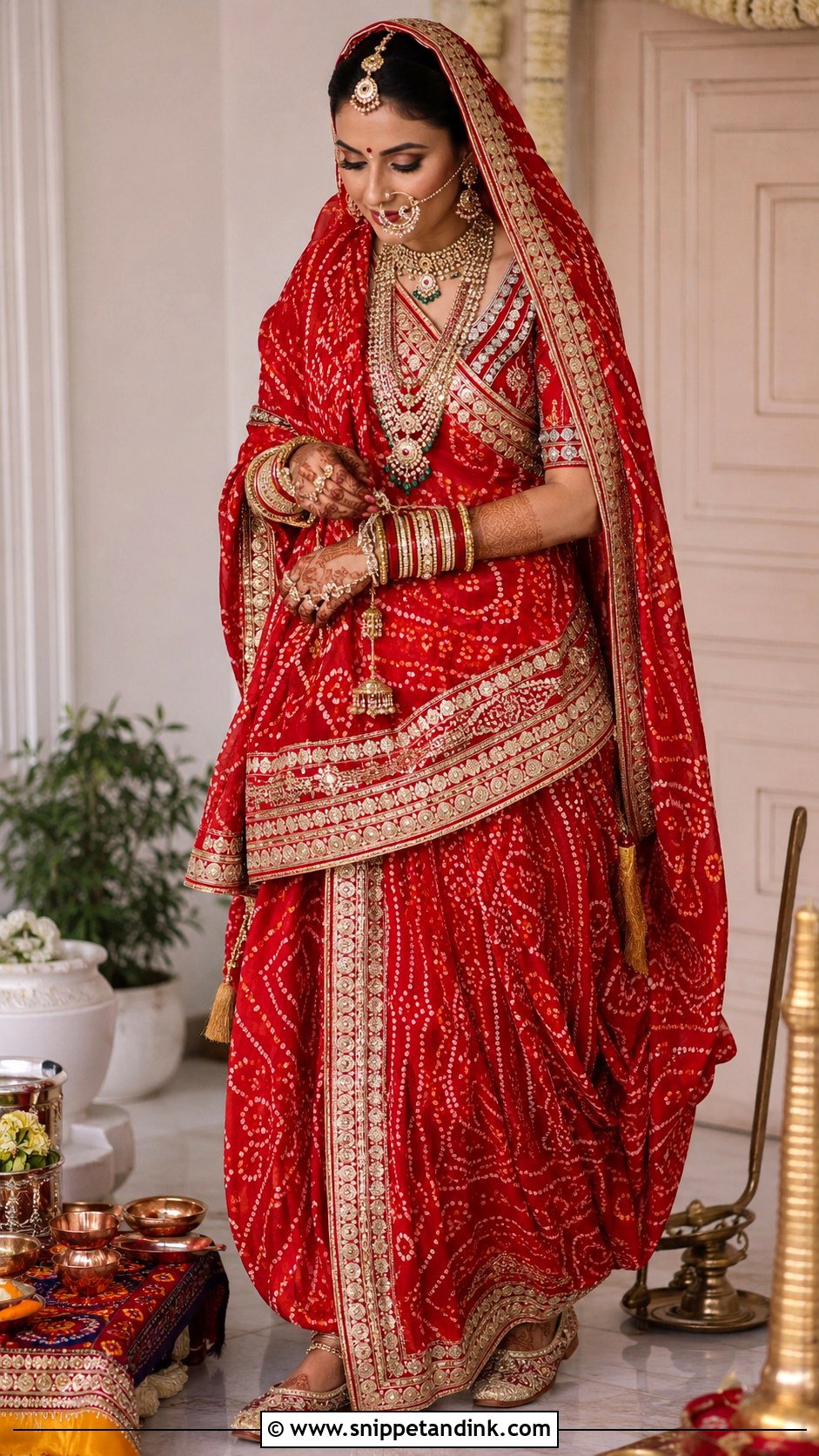
A saree shows the drape from every angle, so the pleats need to fall cleanly. I pin them at the waist and once more just above the knee so they don’t splay when you walk. Silk, bandhani or leheriya sarees in red or maroon, with a head pallu, keep the Marwadi feel. Add the borla, aad, nath and hathphool to make it bridal. It suits engagements, receptions and smaller ceremonies.
22. Leheriya Marwadi Bride Outfit
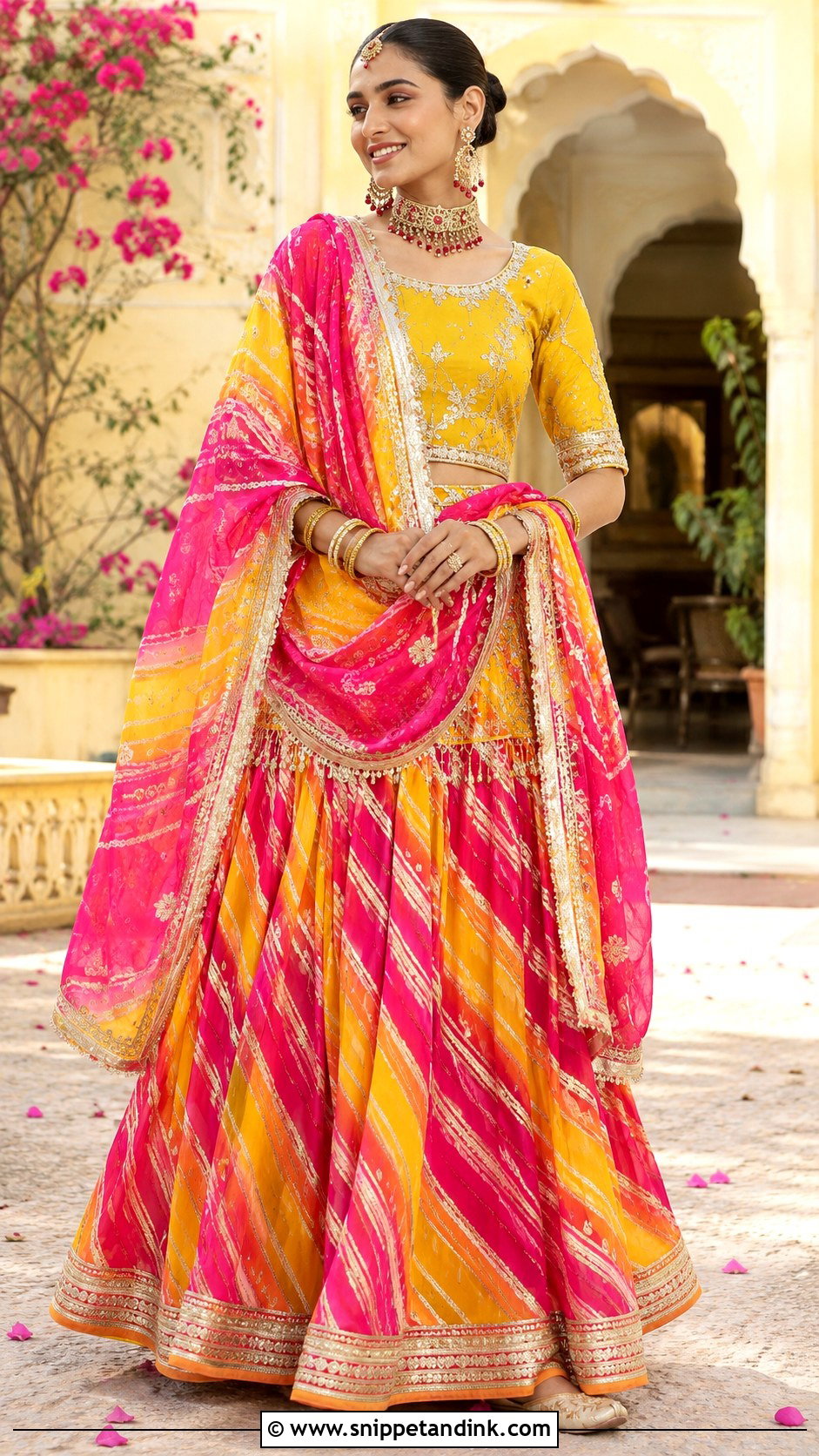
Leheriya is tie-dyed in diagonal waves, and it’s lighter and more casual than bandhani, which is why I keep it for pre-wedding functions. A bright leheriya lehenga, saree or dupatta paired with a solid embroidered blouse stays balanced. Gota borders make it more ceremonial. I’d suggest it for haldi, mehendi, welcome lunch events, with lighter jewellery and braided hair.
23. Marwadi Reception Bride Lehenga
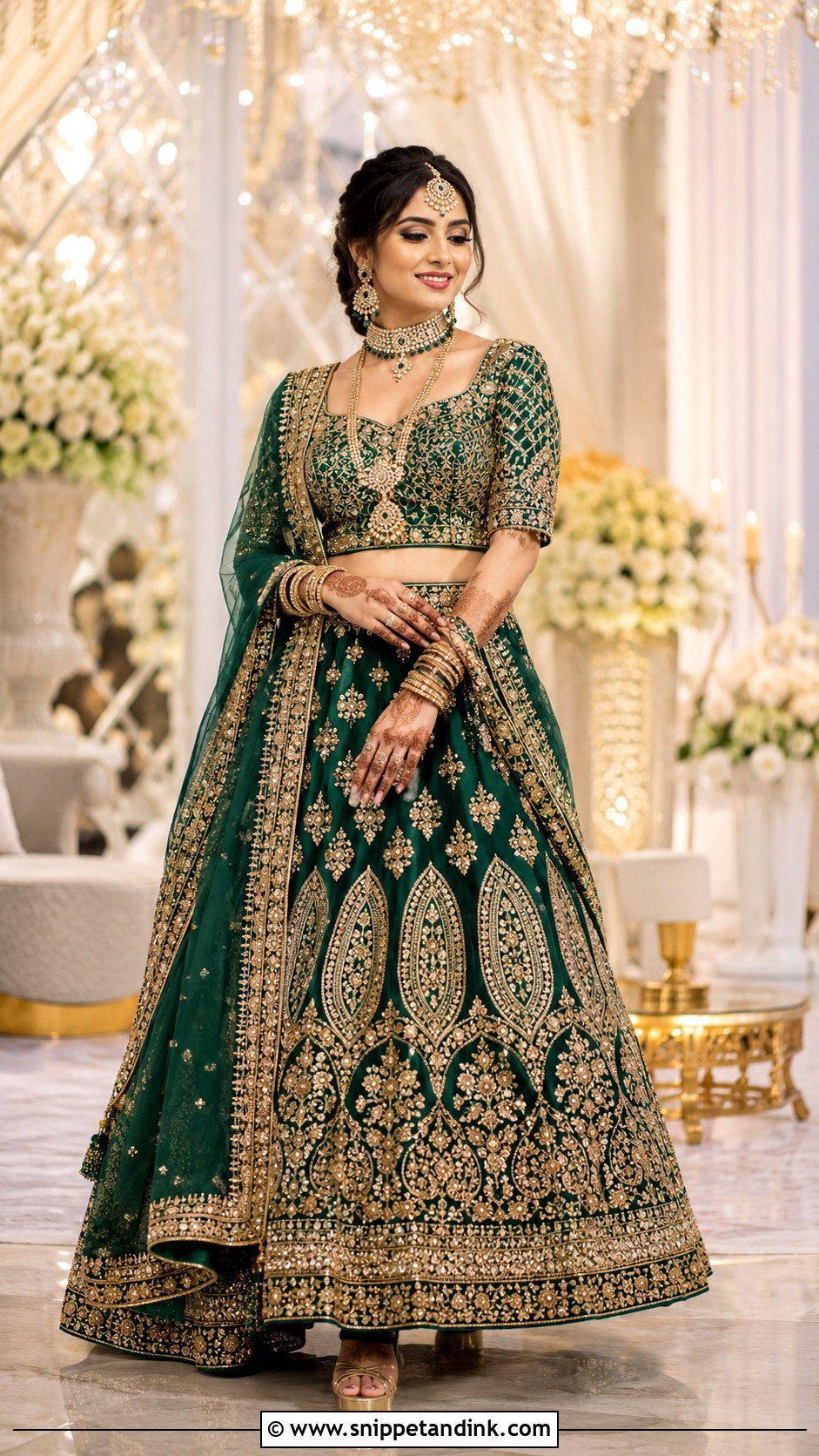
Reception outfits get the most standing time, so comfort rises up my list here. A slightly lighter lehenga in champagne gold, emerald or deep maroon still carries embroidery but doesn’t drag by the second hour of greeting guests. Many brides swap the borla for a matha patti or a sleek maang tikka at this point. A choker, long necklace and heels finish it. Makeup can go a touch more luminous for evening light.
24. Minimal Marwadi Bride Look
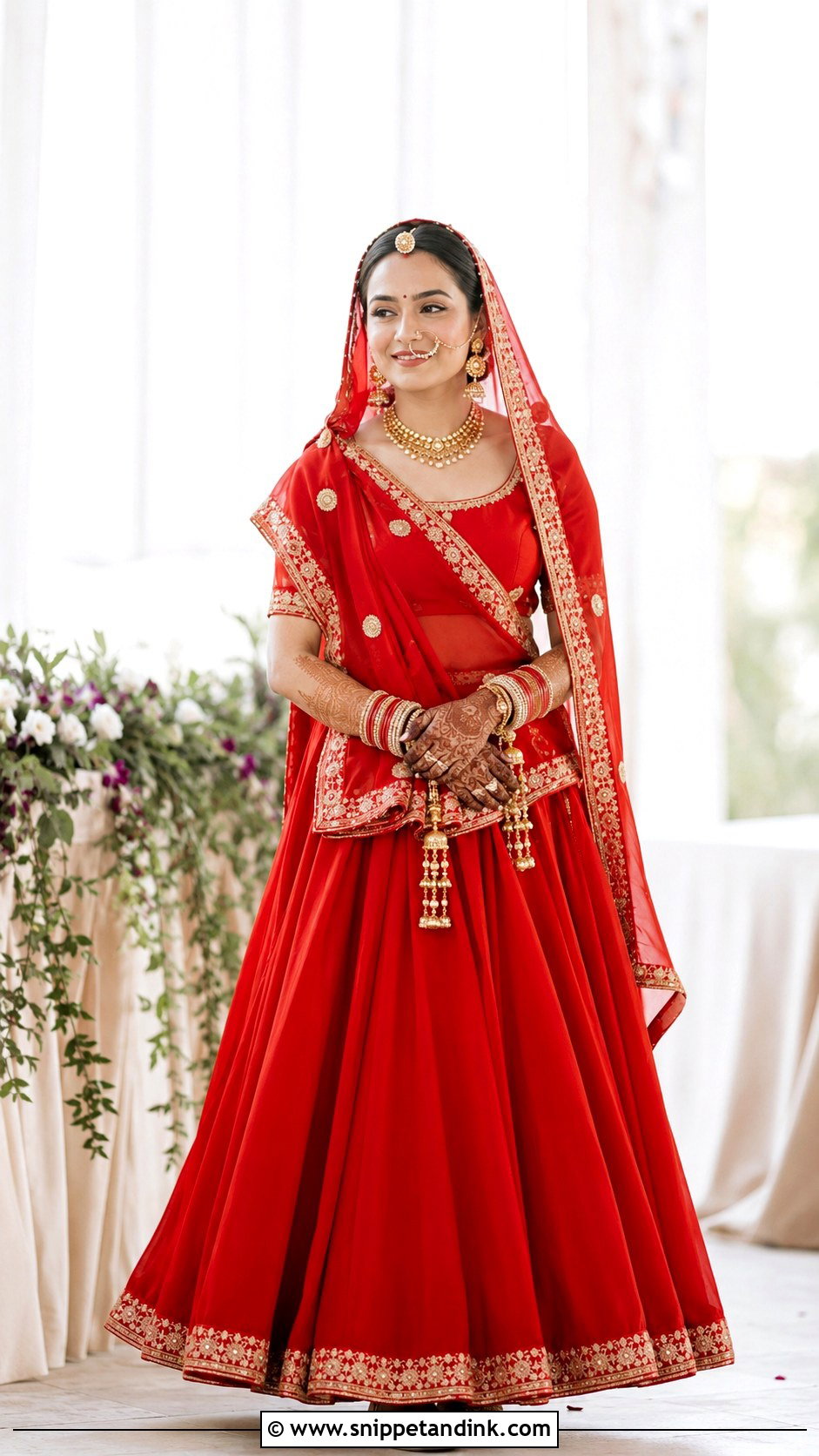
A minimal Marwadi look still needs the markers that make it read as Marwadi: a borla, an aad and a head drape. I’d keep those and scale back everything else, with one strong outfit piece, a red silk lehenga or a bandhani dupatta, and a fitted blouse. Soft matte makeup and a natural lip suit intimate weddings and temple ceremonies. It’s a real relief for brides who find full traditional jewellery overwhelming.



25. Modern Marwadi Bride Look
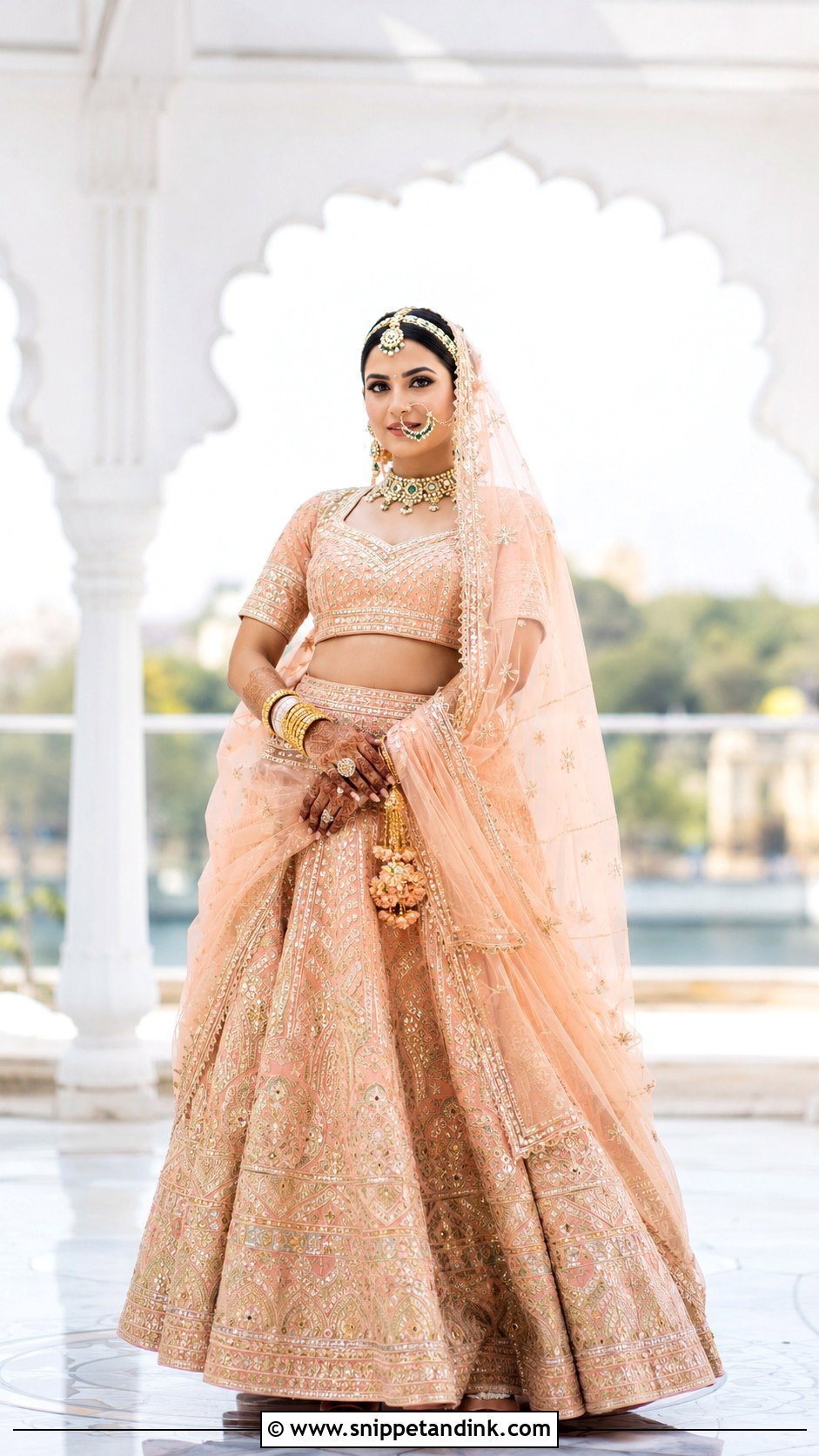
Modern Marwadi styling works best when the cultural pieces stay obvious and the modern part comes from the cut or fabric. A pastel lehenga with full traditional jewellery, or a red lehenga with a contemporary blouse, keeps the identity clear. Lighter fabrics and cleaner embroidery help destination brides stay comfortable. Pin the dupatta securely, and choose heels or juttis based on the venue floor.
Storing Gota, Zardozi and Bandhani Once the Wedding Is Over
Bridal Rajasthani outfits are often passed down, so how they’re put away matters. Metallic gota and zardozi threads tarnish when they’re exposed to damp air, perfume and the plastic covers garments often come home in.
- Air the outfit for a day before storing, away from direct sun, so any sweat dries out.
- Have stains from haldi, sindoor or food dry cleaned by someone experienced with embroidered pieces. Don’t scrub at home.
- Wrap each piece in soft muslin or cotton, never plastic, which traps moisture.
- Fold with tissue between layers of embroidery so the metal doesn’t rub, and refold along different lines every few months.
- Keep heavy velvet lehengas flat or loosely rolled rather than on a hanger, which stretches the waistband.
Bandhani dye can run, so keep it separate from ivory or pastel pieces. Jewellery should go back in its own box, wrapped individually so stones and kundan settings don’t scratch each other.
Tradition You Can Wear for Hours
A Marwadi bride carries a lot of history on her head and shoulders, quite literally. The outfit, odhni, borla, aad and nath should work together, and they need planning around the ceremony, the weather and how many hours you’ll be wearing them. Settle the drape, jewellery weight, footwear and hair at a trial, not on the morning. Classic red, pastel or minimal, a look built that way will feel rooted in tradition and still comfortable enough to enjoy.
You'll Like These Ideas:








Leave a Reply