
Pastels give Indian wedding wear a softer mood without taking away any of the richness. Powder blue sarees, blush lehengas and mint Anarkalis suit day ceremonies, garden venues, destination weddings and receptions alike. What makes them work is balance between colour, fabric, embroidery, jewellery and shoes you can stand in. A bride can go for dense handwork and statement pieces; bridesmaids and guests should dial the embellishment down. I always ask three things first: which function, what time of day, and whether the couple has set a dress code. The twenty looks below cover classic shapes and newer combinations, each styled from head to toe.
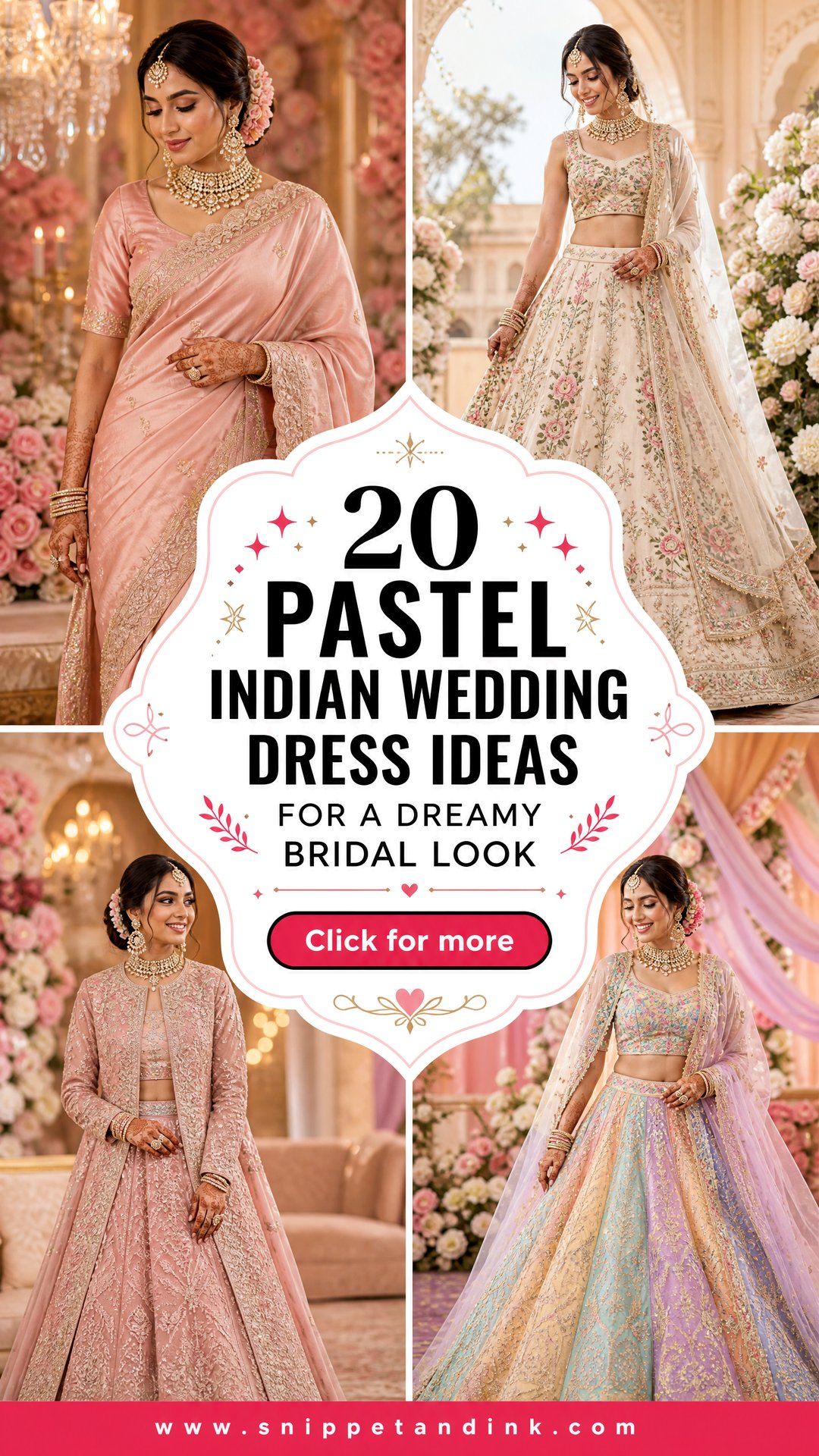
How Much Embroidery Each Role Should Wear
The same pastel lehenga can be bridal or entirely suitable for a guest, and the difference is mostly the amount of work. When I dress a family in pastels, I set a ladder of embellishment so the bride stays at the top and nobody accidentally outshines her.
- Bride: full handwork, zardozi or dense sequins, a heavy dupatta, layered jewellery and a maang tikka or matha patti.
- Sisters and bridesmaids: medium work on the blouse and border, a lighter dupatta and one statement piece of jewellery.
- Mothers and aunts: rich fabric like silk with a strong border, less surface work and traditional gold.
- Guests: light threadwork, small sequins or print, and jewellery kept to earrings and bangles.
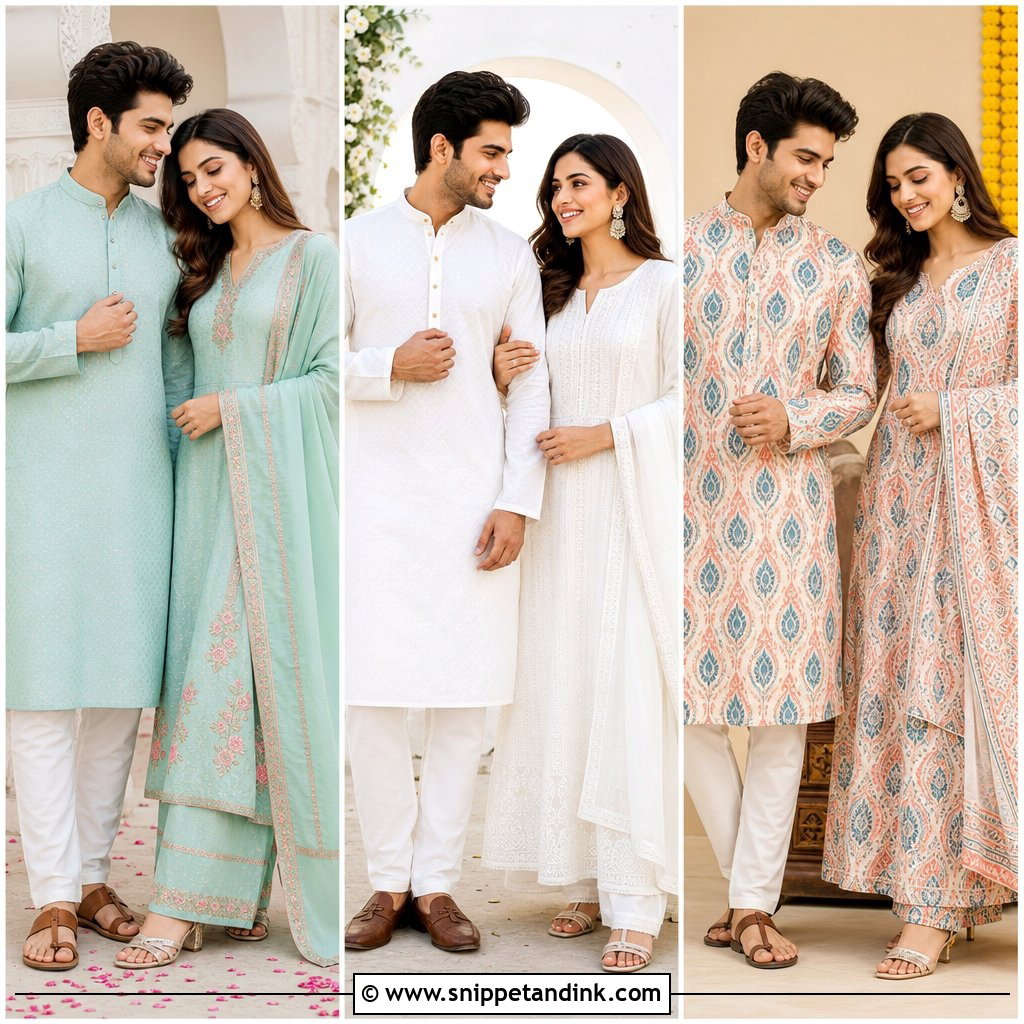
If the bridal party is coordinating, choose one colour family and let each person pick her own silhouette. A sister who hates sarees will look far better in a sharara of the same shade.
1. Pastel Pink Floral Lehenga
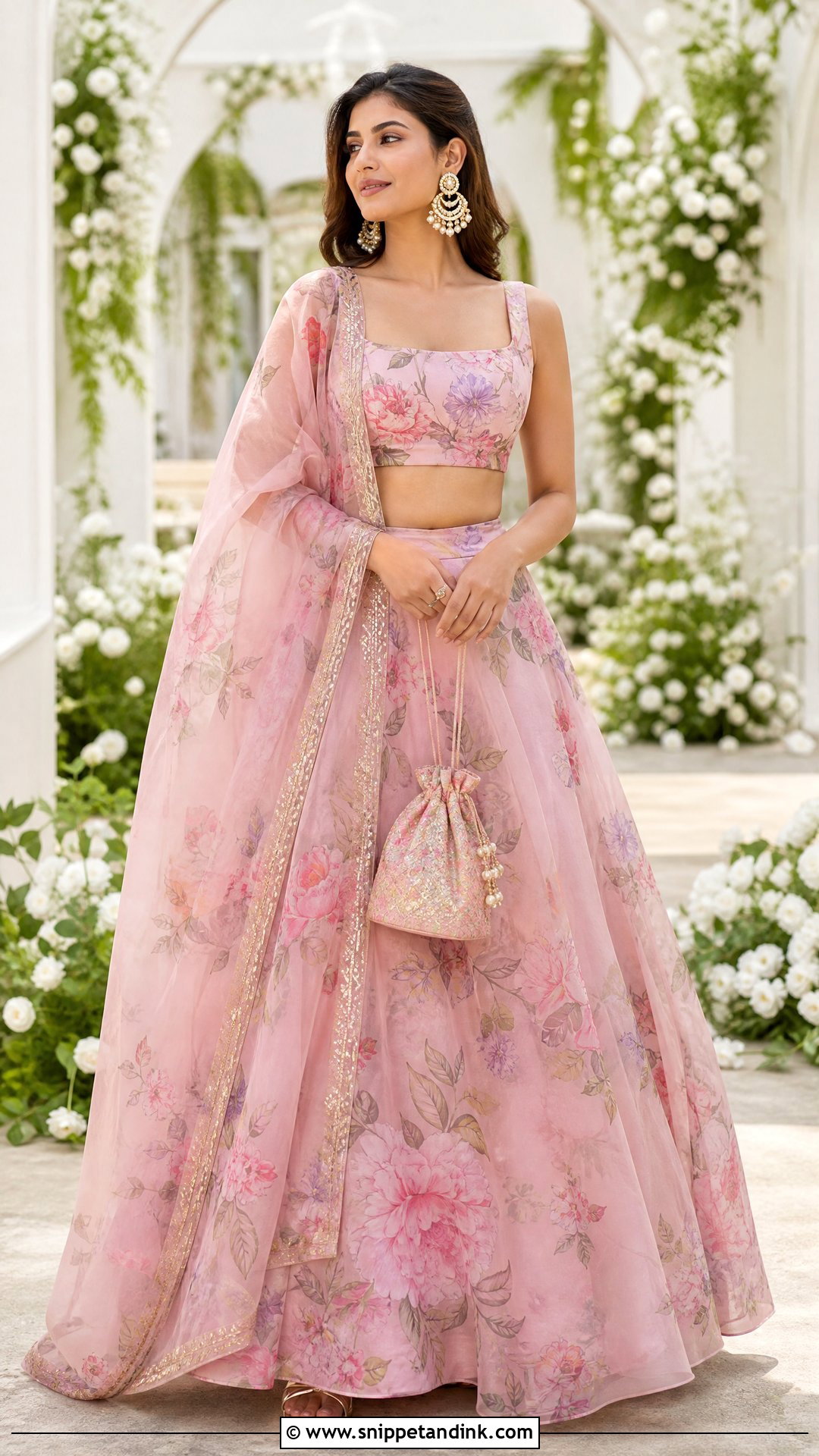
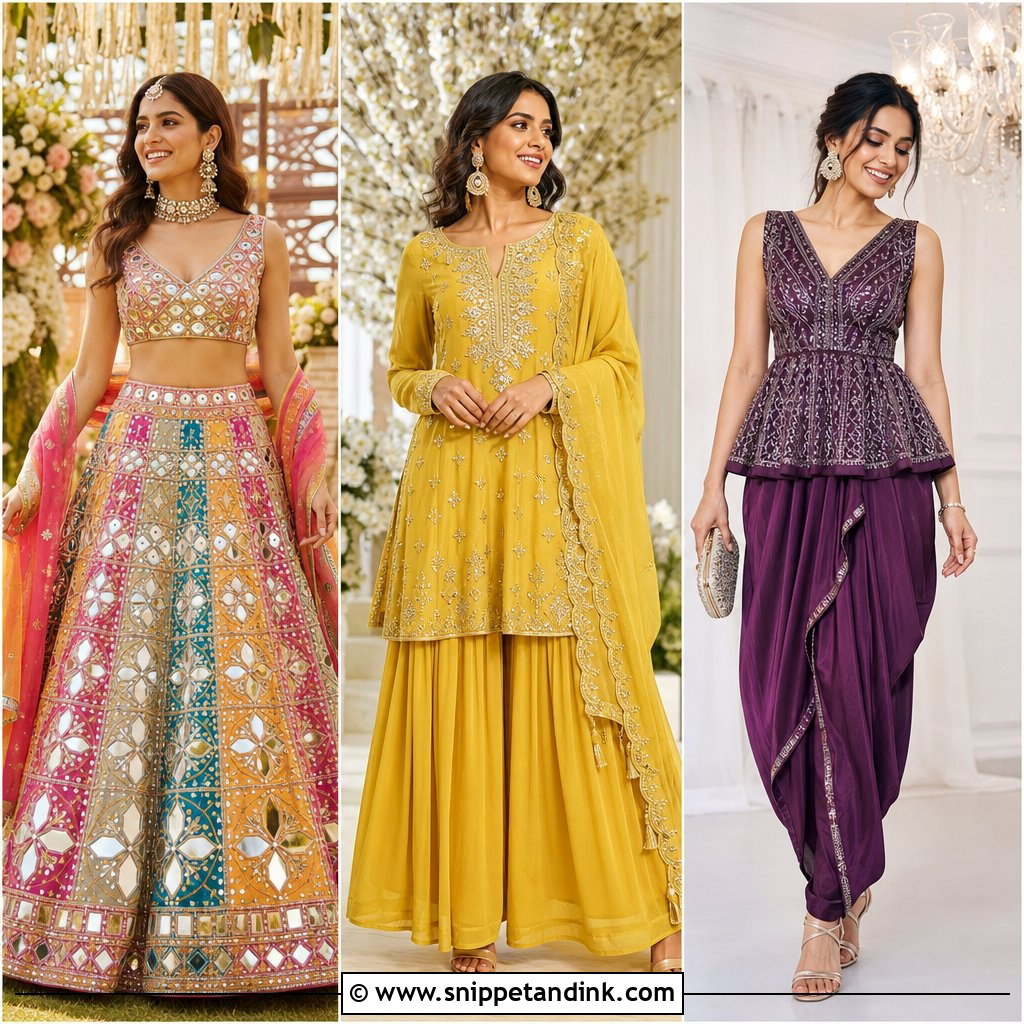
A pastel pink floral lehenga is the outfit I’d choose for a daytime engagement or an outdoor sangeet. Organza or georgette with embroidered flowers keeps it light; dense metallic work turns a pale pink heavy and slightly brassy. The blouse can have short sleeves, a square neck or a supportive scoop. A sheer pink dupatta over one shoulder is easy to manage. Pearl chandbalis, a small embroidered potli and metallic block heels finish it. A bride can add a jewelled waist belt and a bigger necklace. Fresh flowers in a low bun look sweet, but pin them in last, since they wilt in a hot room within a few hours.
2. Powder Blue Organza Saree
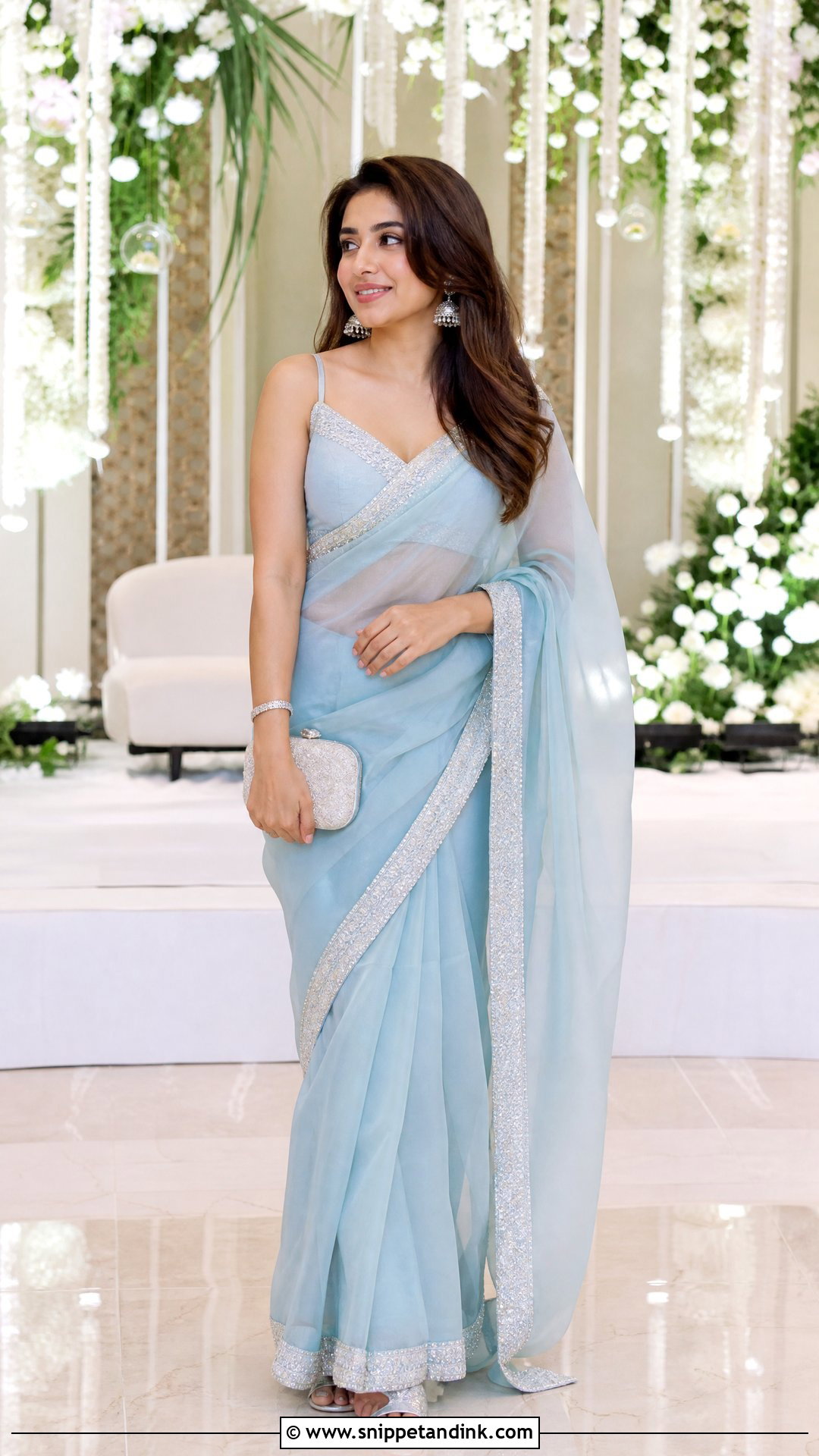
Organza gives a powder blue saree enough body to look formal while staying airy. A fine embroidered border, scattered sequins or small appliques are enough. A matching blouse is the safe choice, and silver, ivory or pale lavender gives contrast. Pleat it traditionally for the ceremony; a pre-stitched version is easier at a reception. Organza is slippery against itself, so I set the pleats with two pins and a firm tuck rather than relying on the petticoat alone. Silver jhumkas, a slim bracelet, an embellished clutch and low metallic heels suit it. A center-parted bun or polished waves and a soft pink lip complete the cool palette.
3. Mint Green Anarkali Suit
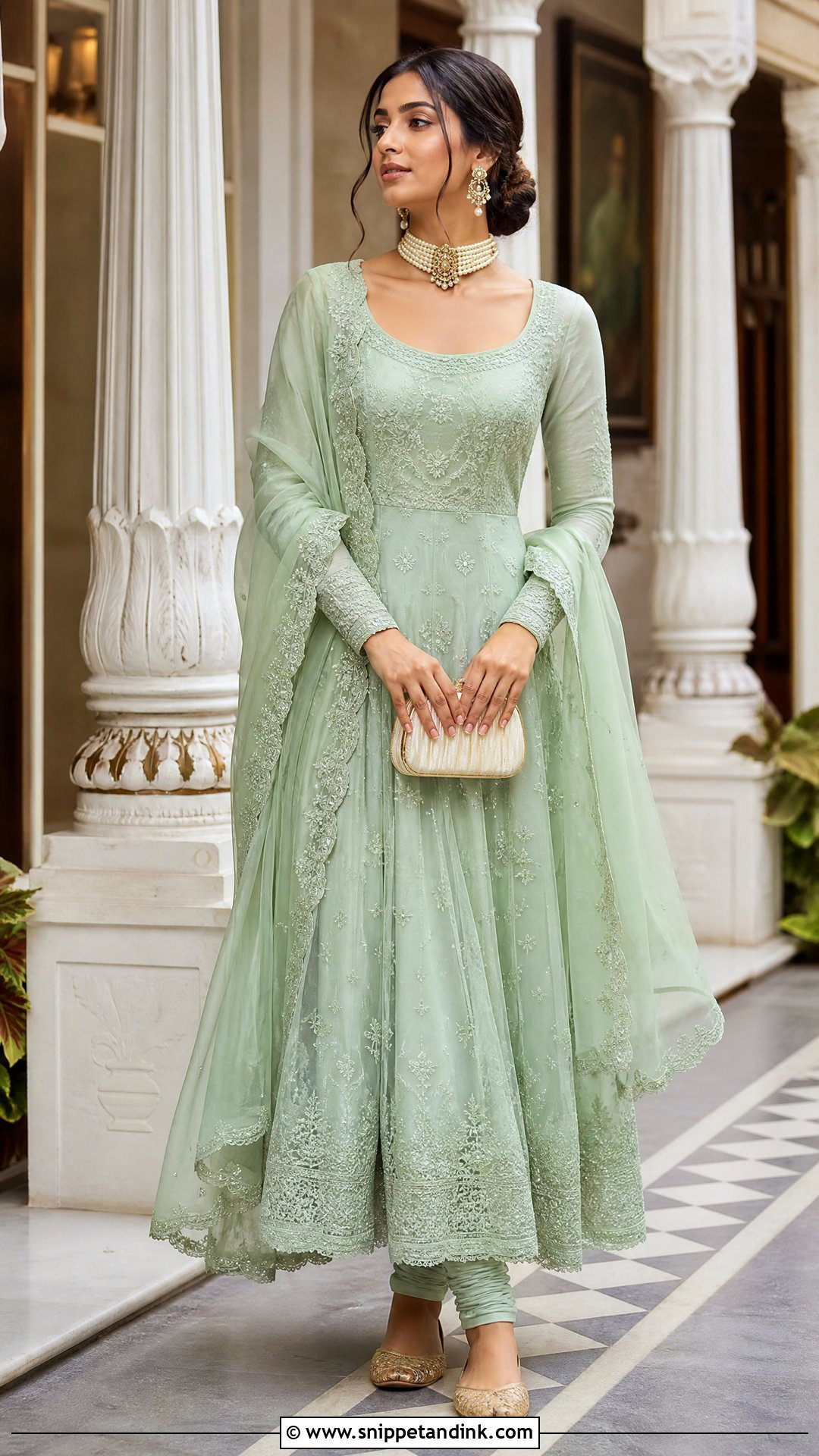
A mint Anarkali is graceful at a ceremony, and it’s one of the few pastels that looks fresh on a hot afternoon. A floor-length cut with a defined waist, a proper lining and fine threadwork over the bodice is what I’d look for. Vertical embroidery lengthens; a wider skirt gives more room to walk and sit. Fitted churidar and a sheer dupatta with a scalloped edge complete it. Pearl drops, a delicate choker and a mint or ivory clutch suit the colour, with gold juttis or block heels. Choose the neckline and sleeves to suit the venue, since temples and gurdwaras usually expect more coverage than a hotel ballroom.
4. Peach Sharara Set
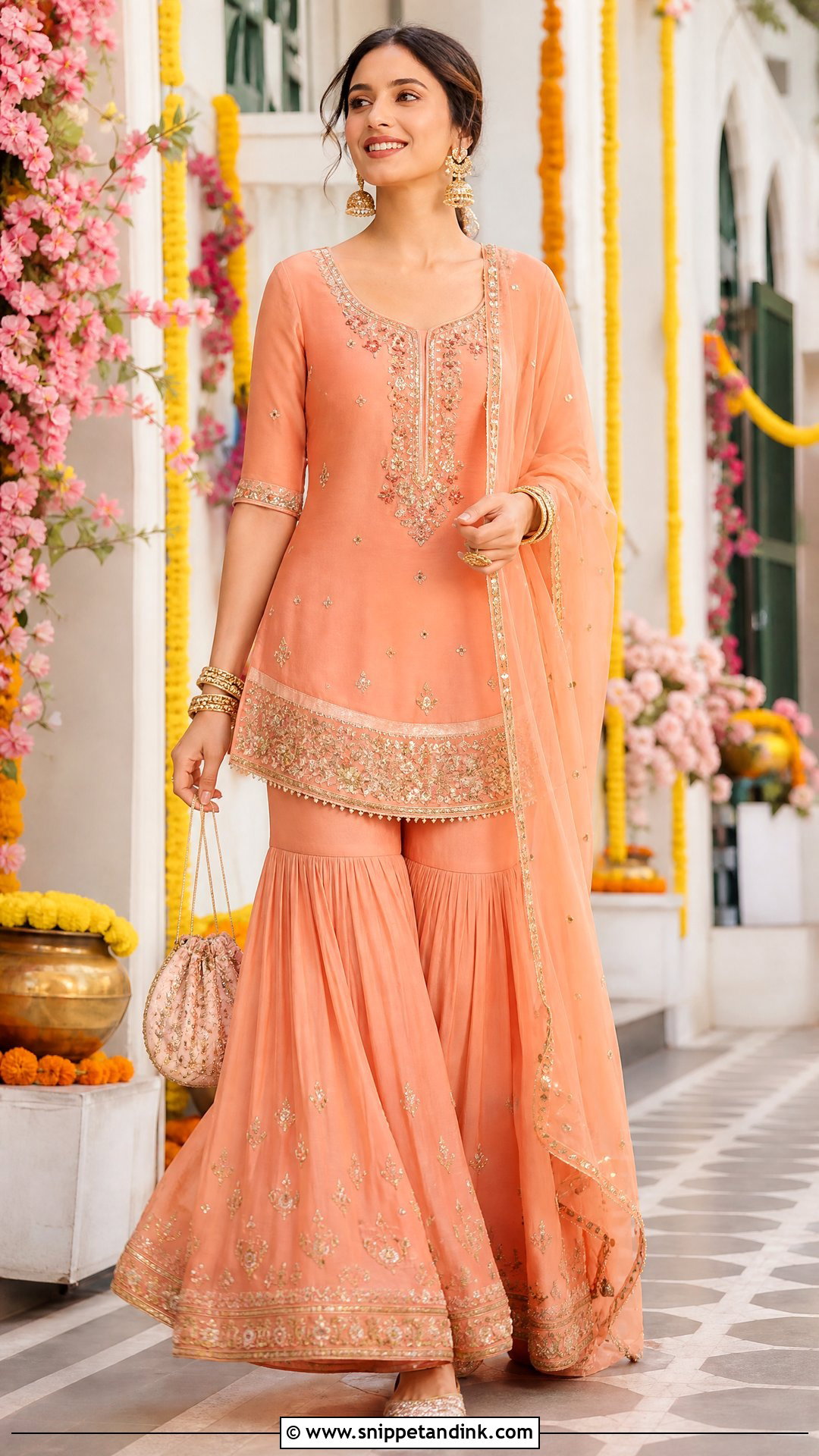
Planning to dance most of the night? A peach sharara set is built for it. Wide flared pants with a short embroidered kurta ending around the upper thigh keep the flare visible and the proportions balanced. I tell clients to loop the dupatta over one shoulder and catch the end at the wrist with a bracelet, which keeps both hands free and stops it trailing on the floor. Gold jhumkas, stacked bangles and a beaded potli add tradition. Florals suit daytime; light sequins suit night. Cushioned juttis or sturdy platforms, a textured ponytail and fresh peach makeup finish it.
5. Lavender Sequin Lehenga
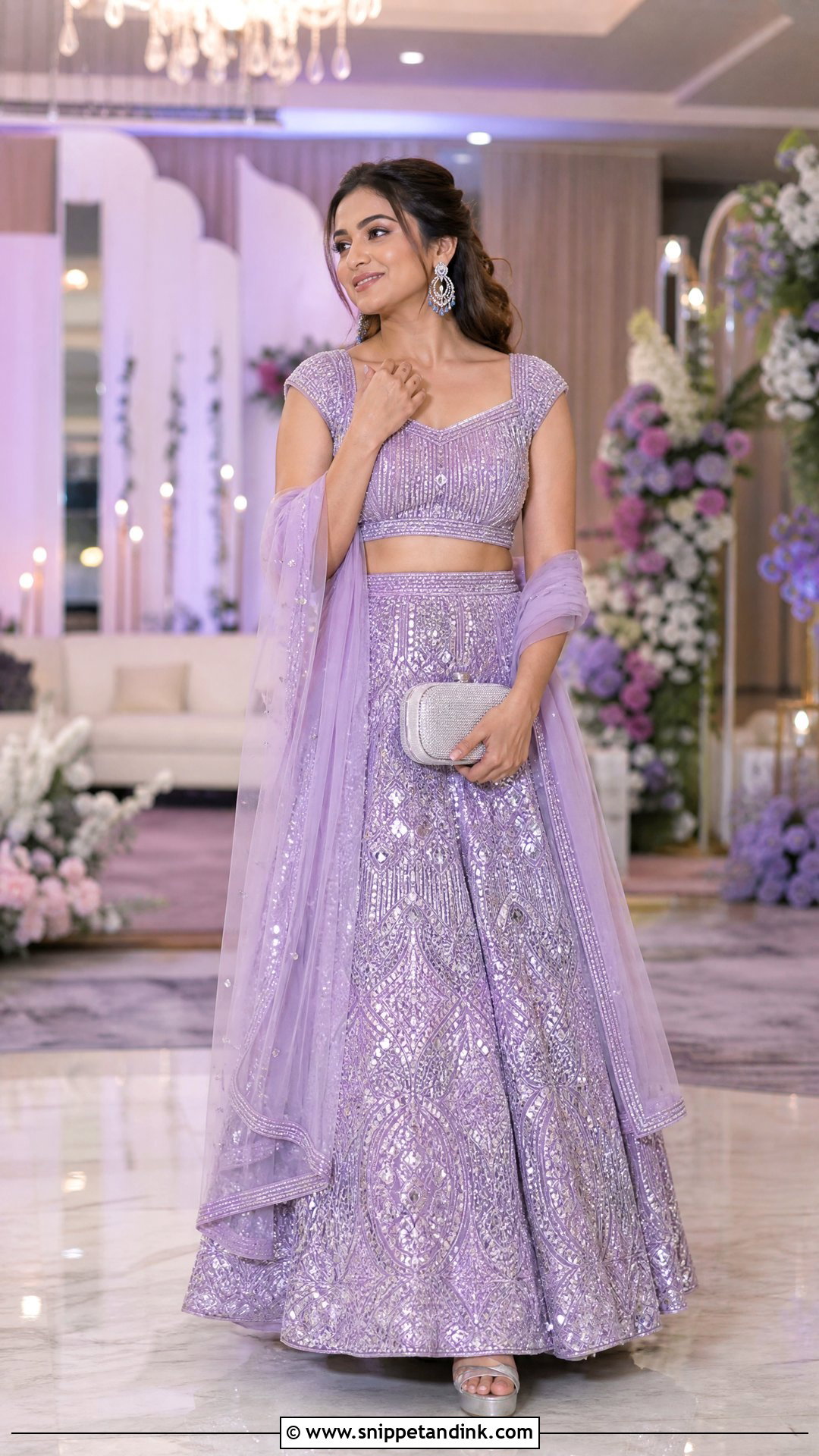
Sequins give lavender a party personality for a sangeet or reception. The detail I watch is where the work sits: evenly spread sequins move well, while a heavy band at the hem drags the skirt and makes it swing like a bell. A structured blouse with supportive straps, cap sleeves or a modest V-neck balances the skirt. A light net dupatta is optional if the blouse gives enough coverage and the dress code allows. Crystal earrings, a silver minaudiere and platform heels suit it. Bridesmaids can share the shade and vary their blouse shapes. A sleek ponytail and a mauve lip finish it.
6. Blush Pink Silk Saree
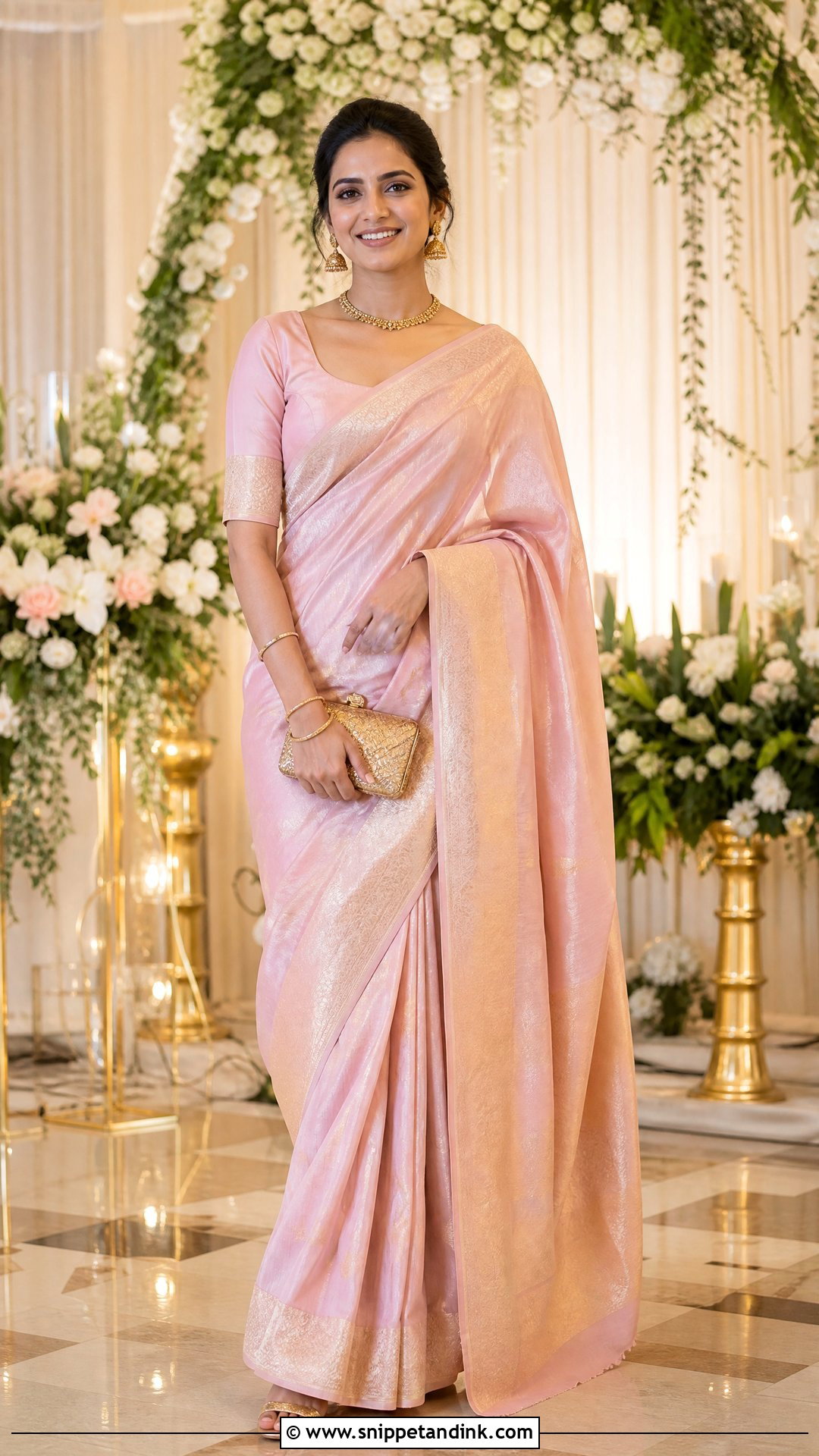
Silk gives a blush saree a more ceremonial finish than any sheer fabric can. A silk blend is lighter for warm weather; traditional woven silk suits a formal indoor wedding. The gold zari border isn’t just decoration, because it gives a pale colour an edge and stops it looking flat in photos. A fitted gold, rose or matching blouse with elbow sleeves, a short gold necklace, earrings and slim bangles complete it, with a brocade clutch and cushioned heels. Jasmine in a low bun smells wonderful and looks traditional. Brides, relatives and guests can all wear this; only the amount of work should change.
7. Sage Green Gharara Set
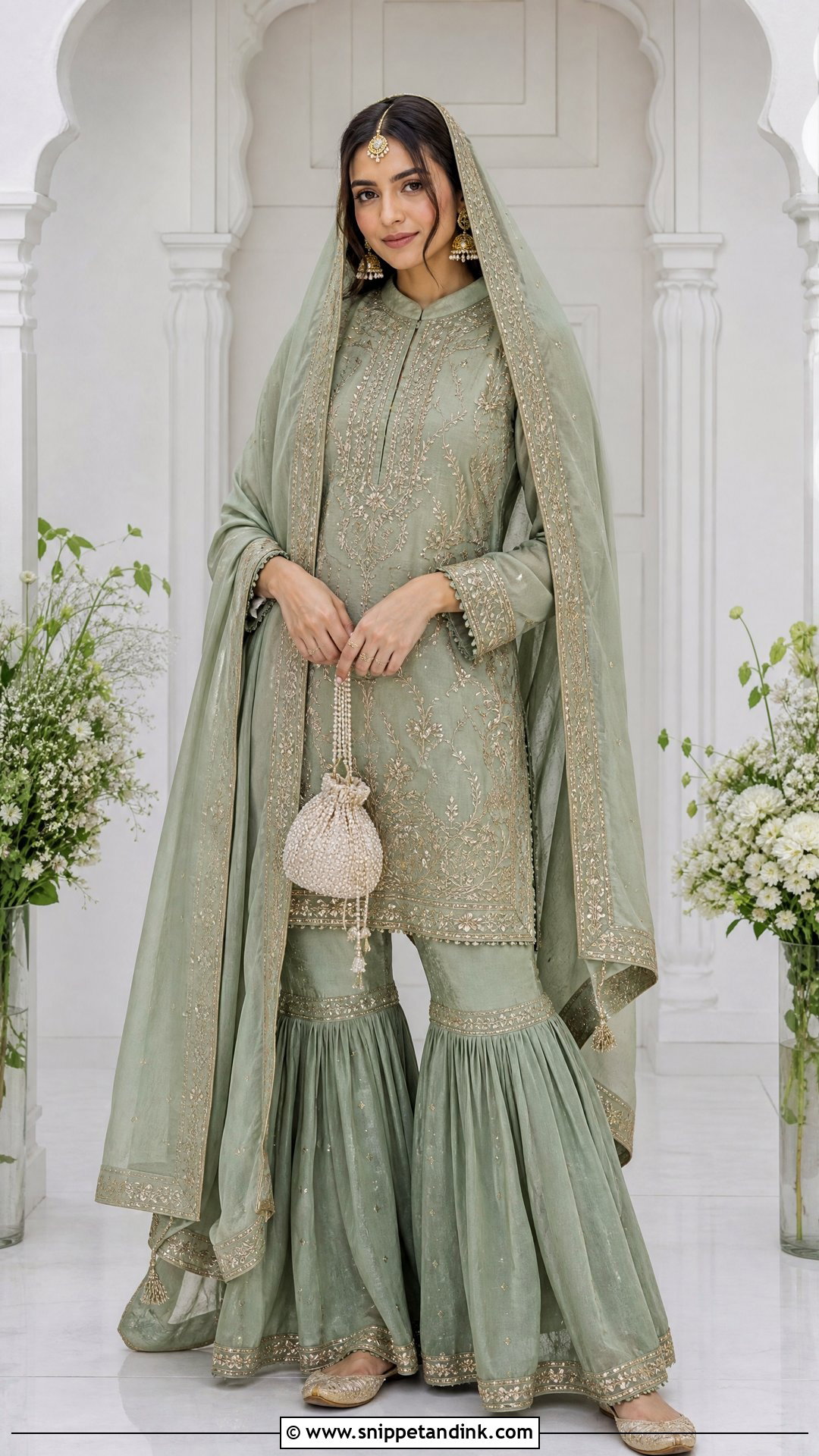
A sage green gharara set suits a nikah or a formal daytime gathering very well. A knee-length kurta over trousers that fit to the knee and flare below is the classic shape, with zari, gota or tonal thread outlining the construction. When the ceremony calls for a covered head, I pin the dupatta at the crown and again behind each ear, so it stays put when you bow your head and doesn’t slide during the vows. Antique gold earrings, a small maang tikka, a pearl-trimmed potli and flat juttis finish it. A soft updo or side-parted waves suit the regal mood.
8. Lemon Yellow Chikankari Suit
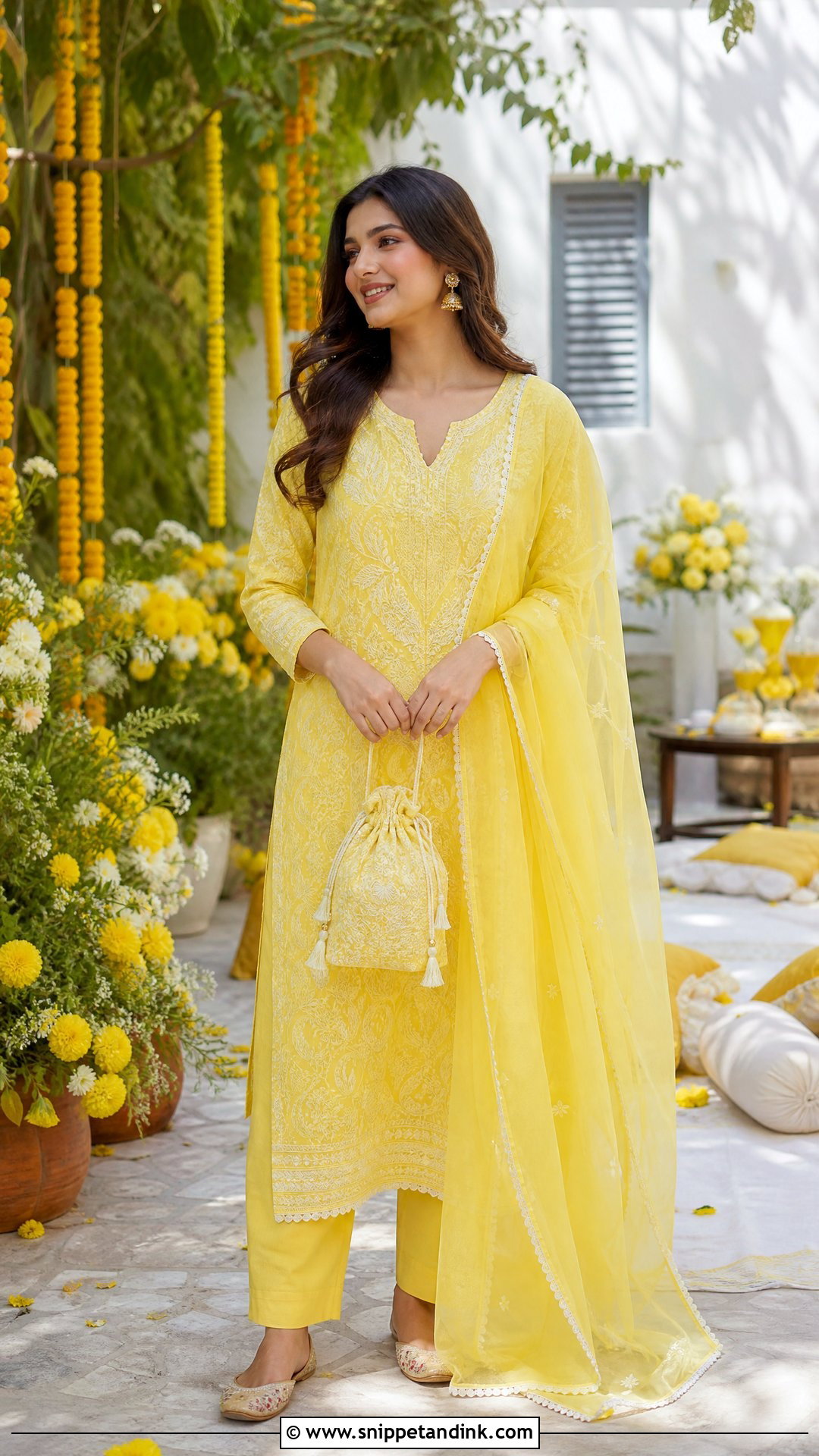
A lemon yellow chikankari suit is made for a haldi, a mehndi or a relaxed morning function. Cotton-silk, georgette or light organza with tonal embroidery breathes in the heat. Straight pants look clean; palazzos let more air in. A sheer dupatta with pearl, sequin or scalloped edges adds a festive touch. Floral jewellery suits a haldi, but pearl hoops or small gold jhumkas let you wear the outfit again elsewhere. Neutral juttis, a woven potli, glowing skin and a peach lip finish it. Turmeric stains yellow cotton less visibly than any other pastel, which is one reason it’s the haldi favourite.
9. Ivory Pastel Floral Lehenga
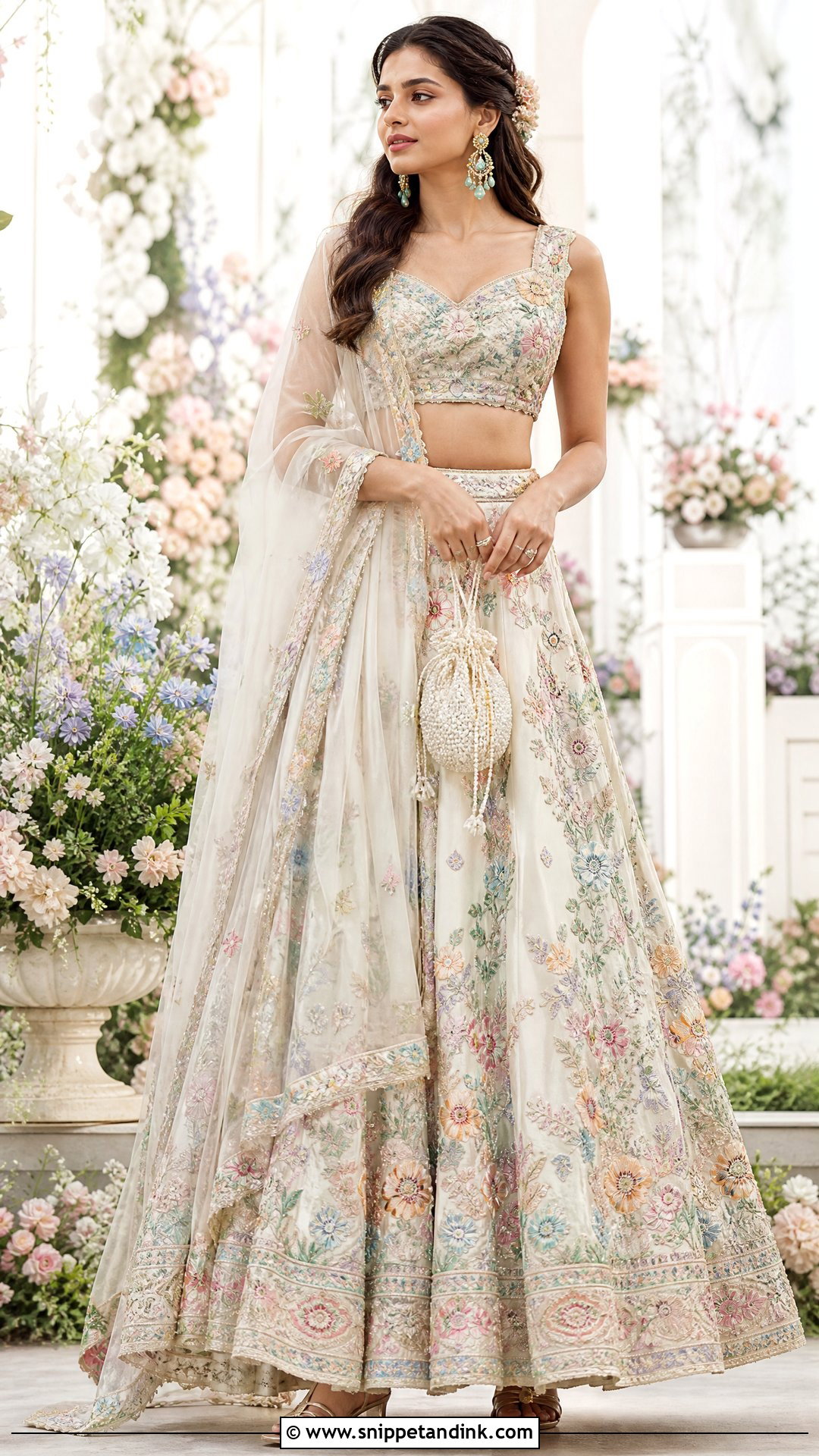
An ivory lehenga with pastel flowers gives you every soft colour at once. Blush, mint, lilac, peach and powder blue motifs on a light organza or raw silk base, with an ivory embroidered blouse and a sheer dupatta edged in the same florals, look fresh and garden-like. Brides can go for raised embroidery and a big necklace; guests should keep the motifs small. Pastel gemstone earrings, a pearl potli and champagne block heels suit it. A word of caution for guests: ivory and white carry different meanings across communities, and at some weddings they look bridal or are kept for mourning. Ask the hosts before you wear it.
10. Dusty Rose Jacket Lehenga
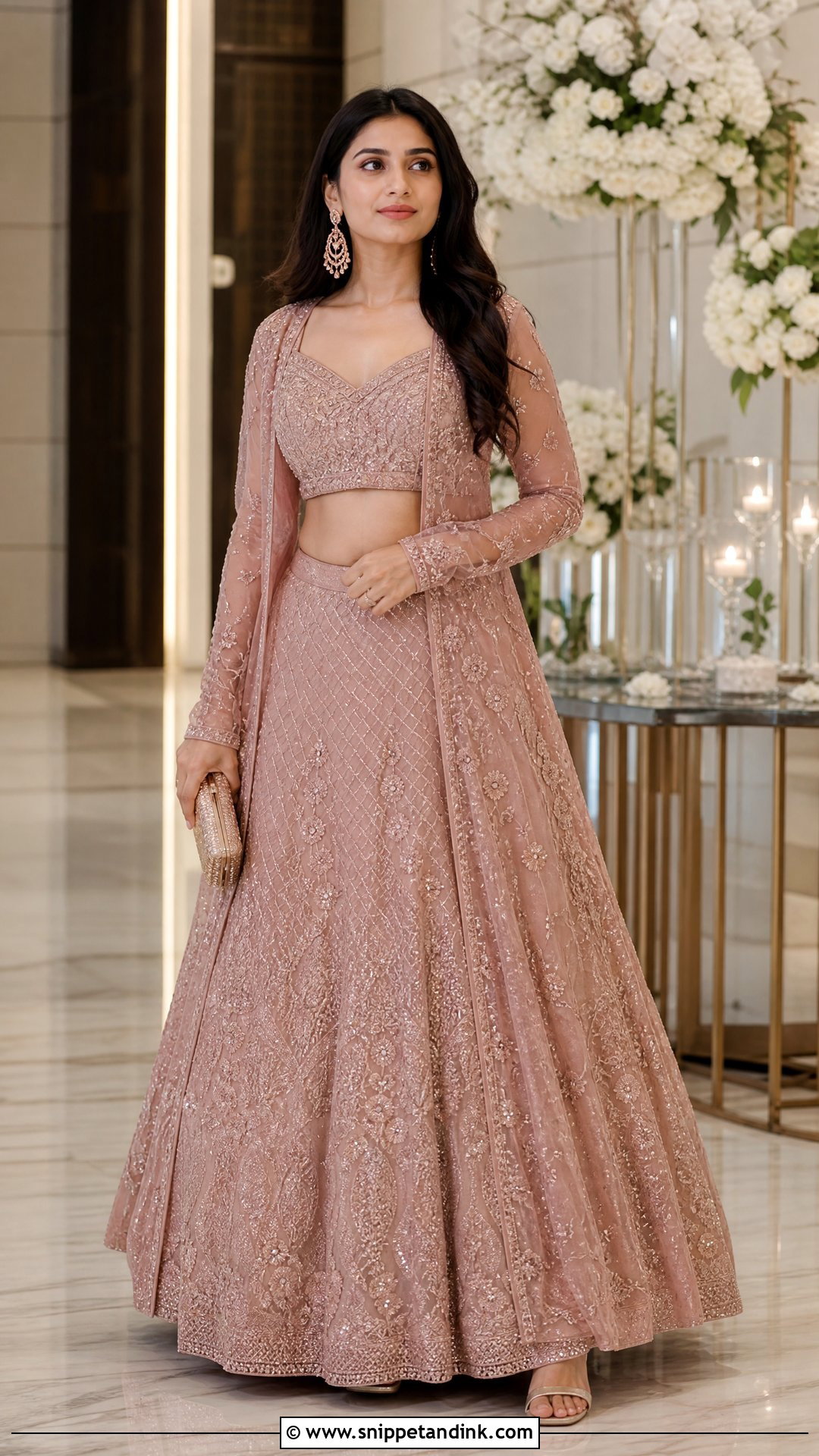
Layering turns a dusty rose lehenga into something more modern, and it solves the coverage question neatly. A lightly embroidered skirt and fitted blouse sit under a long sheer jacket that falls near the hem. Open fronts move freely; a belted or fastened jacket defines the waist. It replaces the dupatta, which makes dancing and greeting relatives much easier. Rose gold earrings, a structured clutch and stable block heels complete it. In a crowded hall, a jacket adds heat, so I’d choose net or organza over anything lined. Bridesmaids can match jackets and choose their own blouse necklines.
11. Lilac Pre-Draped Saree
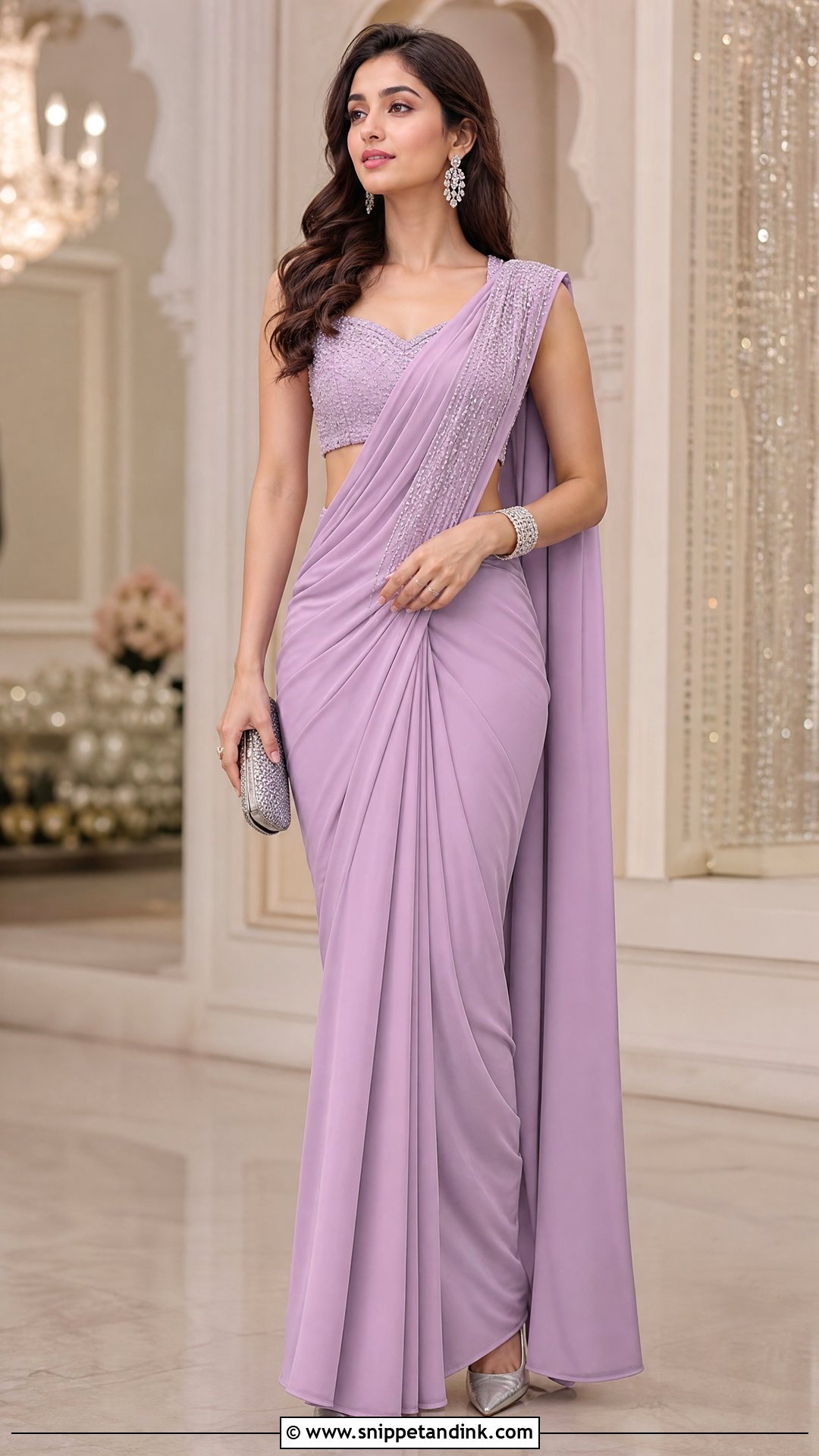
A pre-draped lilac saree is the answer for anyone who wants the saree line without the pleating. Crepe, chiffon or satin should fall smoothly and let you walk normally. The stitched pallu should sit firmly on the shoulder without pinning the arm down; I check by having the client lift a glass and hug someone. A structured blouse with tonal beadwork, small cutouts or elbow sleeves suits it. Crystal drops, a slim cuff and a silver clutch are enough. Pointed metallic heels lengthen the line, though flats are kinder on lawns. A sleek bun or side-swept waves finish an engagement or reception look.
12. Pistachio Green Palazzo Suit
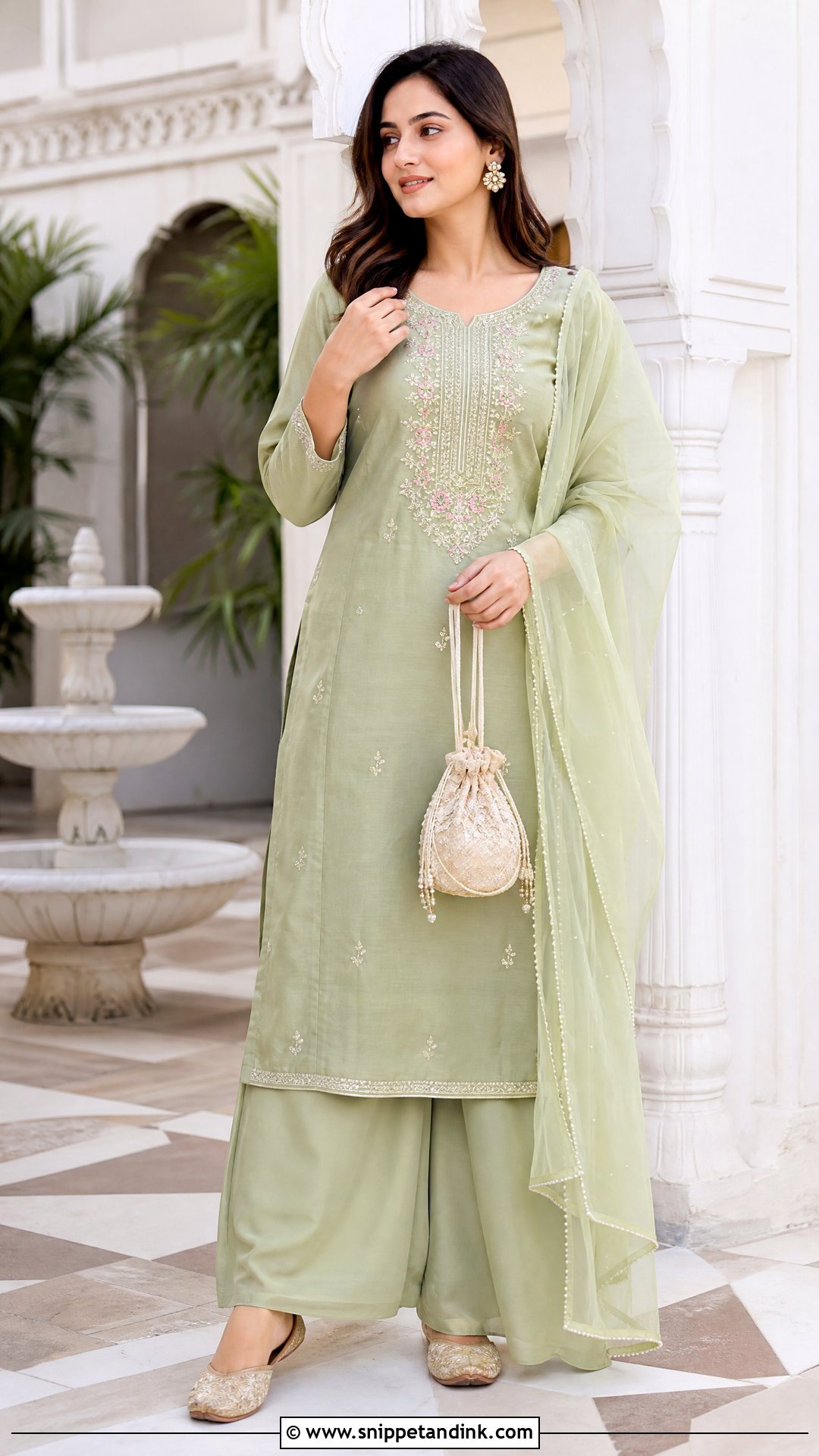
A pistachio palazzo suit is understated and comfortable for a wedding that runs from lunch into the night. A straight or slightly flared kurta with side slits, light embroidery and a neckline that suits your jewellery is the base. The palazzos should skim the floor without covering the shoes, because a hem that drags is a trip hazard on stairs. A light organza dupatta with pearl edging, kundan studs, a cream potli and gold juttis or low block heels complete it. This is the outfit I’d suggest for older relatives and anyone who needs to sit, stand and move easily all day.
13. Baby Blue Cape Lehenga
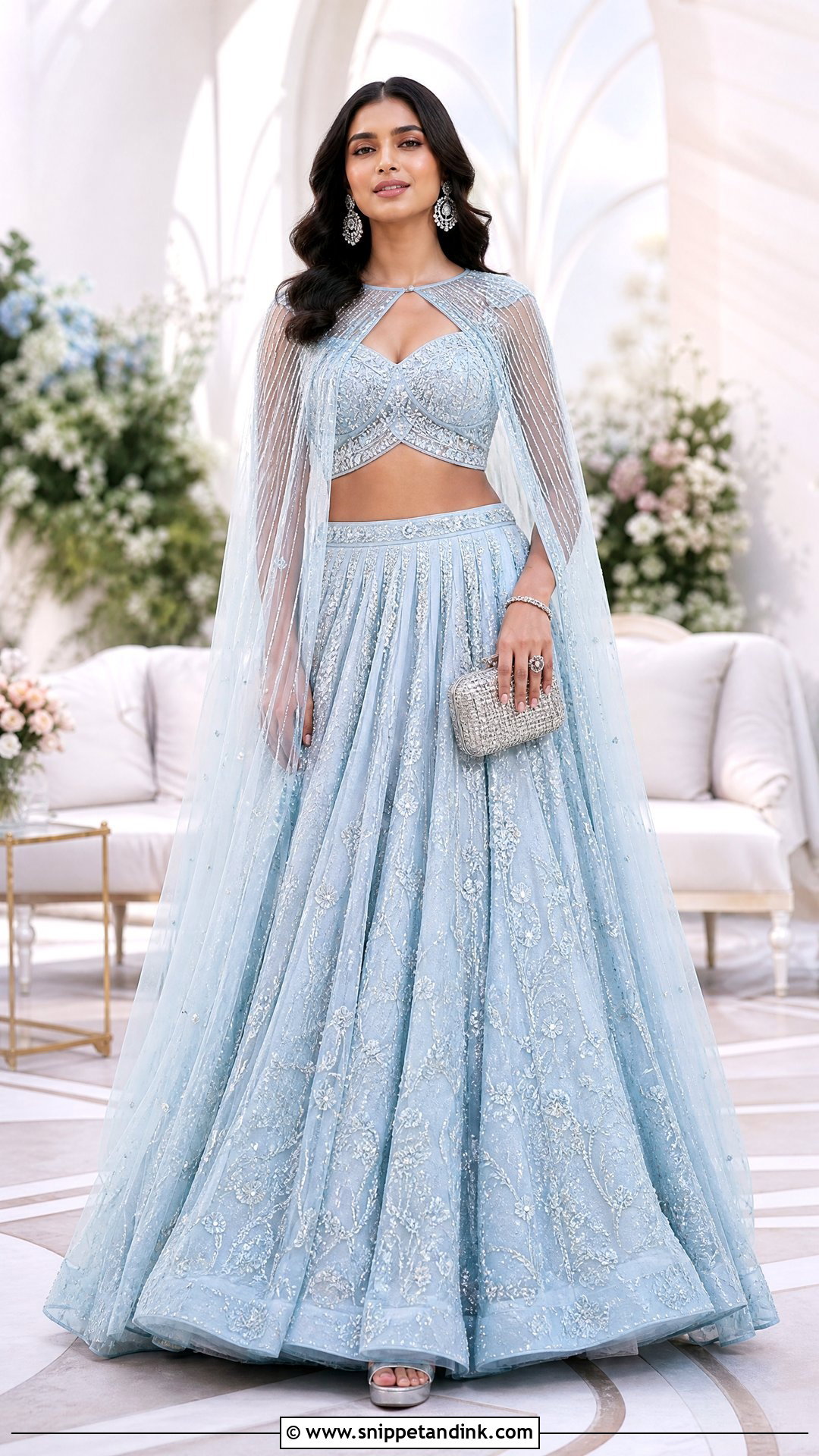
A sheer cape brings drama to a baby blue lehenga without the fuss of draping a dupatta. Pair a flowing skirt and a fitted blouse with a shoulder or floor-length cape with fine beadwork. The cape has to stay light; a heavily beaded one drags the shoulders back and flattens the colour. A defined waist and a clean neckline keep the structure underneath. Skip the necklace if the cape is worked near the collar. Silver earrings, a jewelled box clutch and platforms under the skirt finish it. A high ponytail or sleek bun keeps the upper half uncluttered for a reception or sangeet.
14. Coral Pink Anarkali Gown
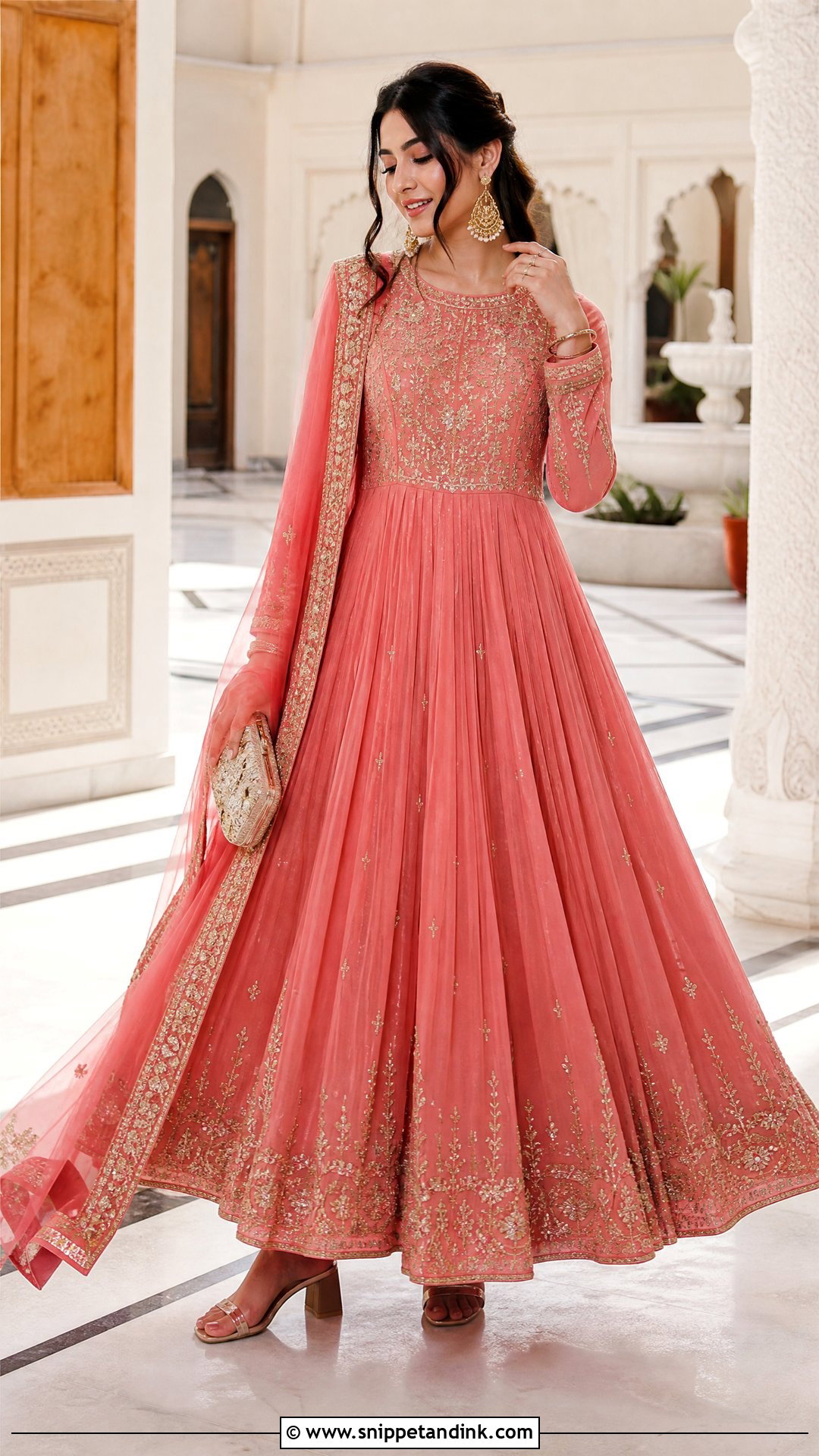
Soft coral sits between peach and pink, and it brings warmth to an Anarkali while staying gentle. A floor-length gown with a fitted bodice and a generous flare, plus gold threadwork at the neck, waist and cuffs, gives shape without covering the whole dress. Wear a sheer dupatta for a traditional ceremony and leave it off at a modern reception. Gold chandbalis, slim bangles and an embroidered clutch suit the warm tone. A full Anarkali skirt is heavier than it looks, so block heels are steadier than stilettos. Petite women look taller with smaller motifs and a slightly raised waist.

15. Mauve Ruffle Saree
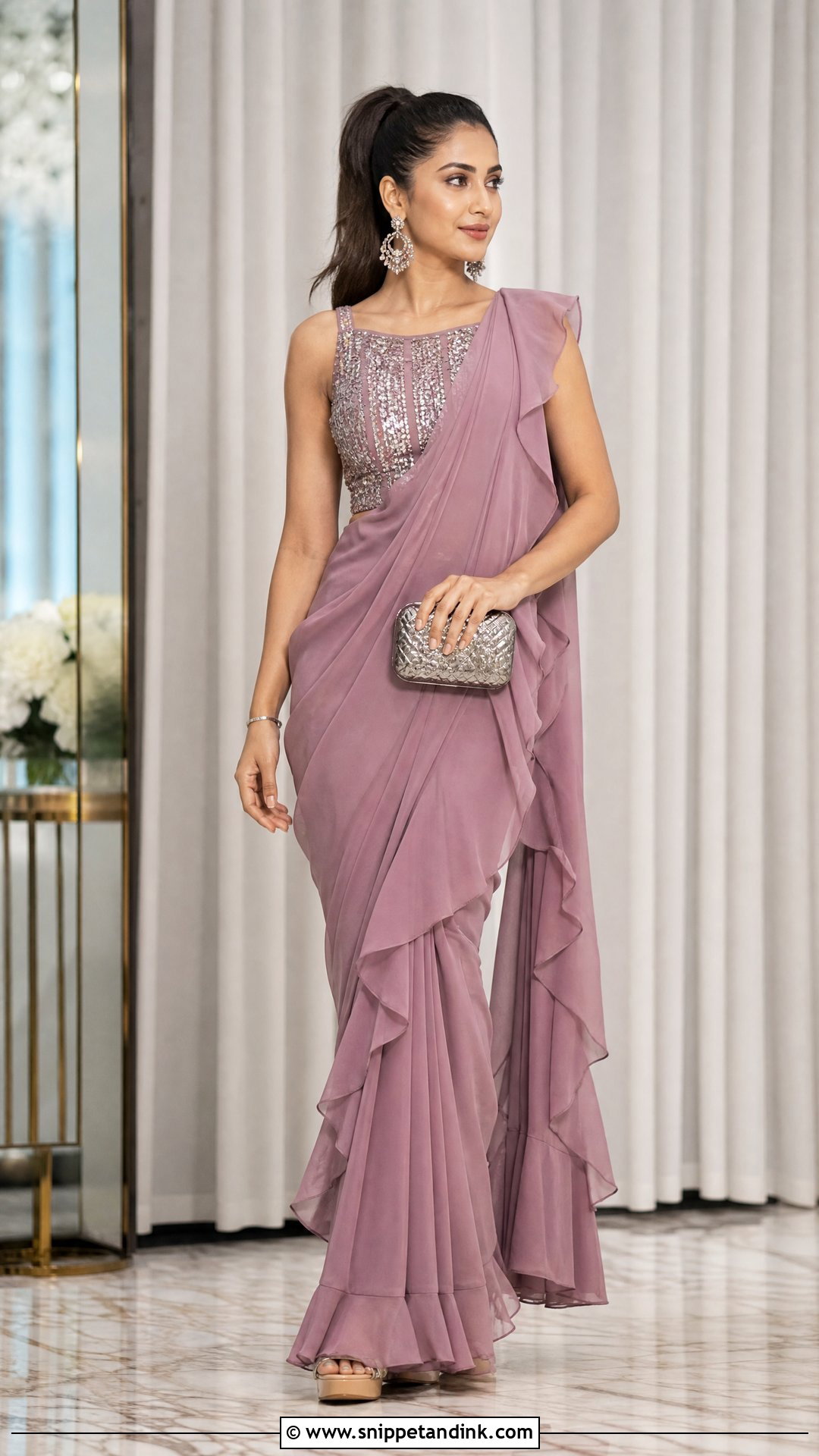
Ruffles give a mauve saree a light, flirty swing for an engagement, cocktail-style function or a reception. I’d choose a pre-draped version with ruffles kept to the hem or pallu; ruffles everywhere look fussy. A fitted sequin blouse in mauve, silver or dusty pink adds sparkle. One pair of statement earrings and a bracelet beat a large necklace here. The ruffled hem catches on buckles and heel tips, so wear closed or smooth heels. A sleek high ponytail shows off the blouse. This is a good pick for guests who like the saree shape but not the work of wearing one.
16. Seafoam Green Skirt And Crop Top
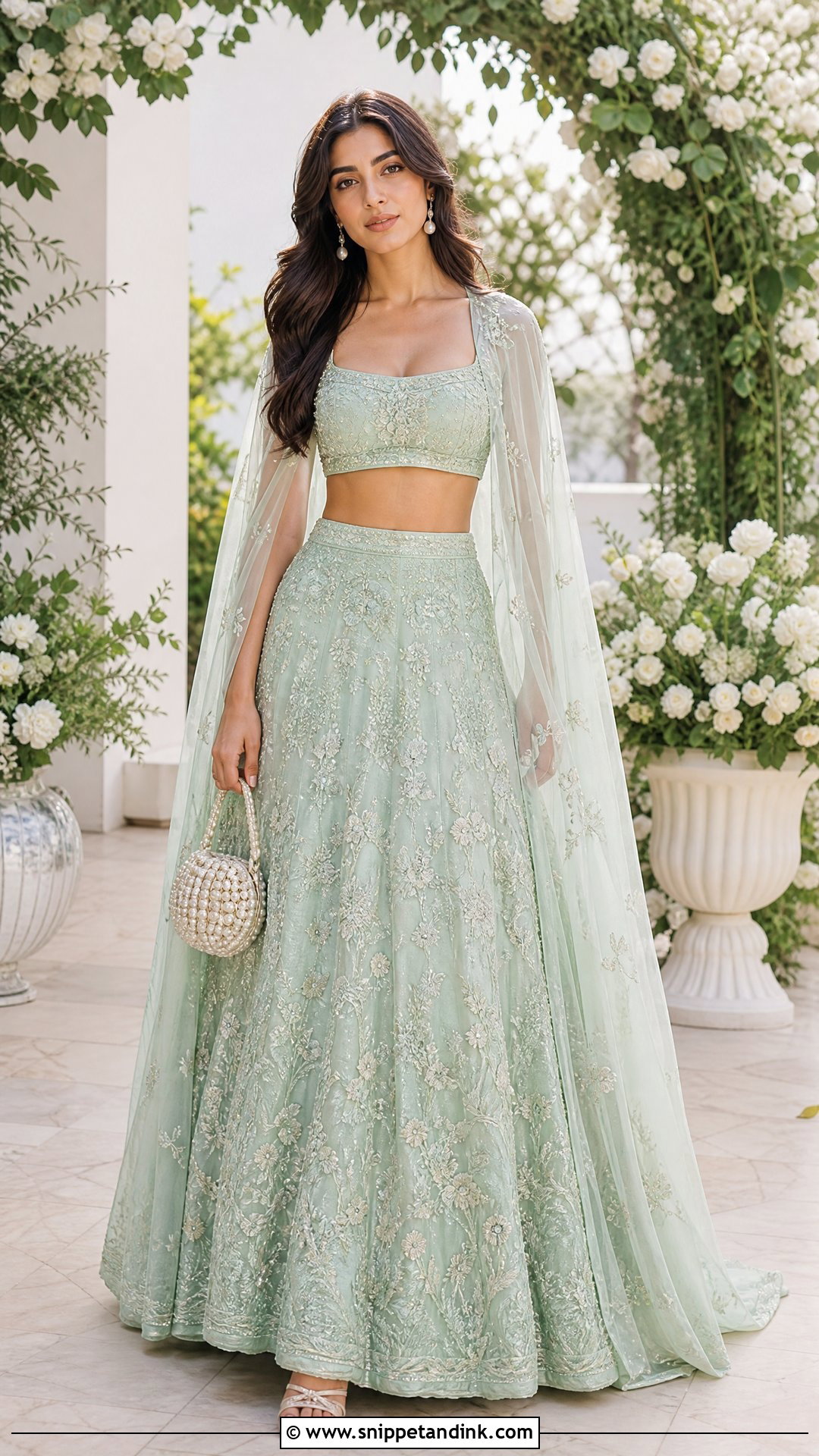
Seafoam is calm and fresh, and a skirt with a crop top is the most modern way to wear it at a wedding. A high-waisted flowing skirt with light embroidery and a fitted top that actually supports the bust are the base. To make it wedding-appropriate, add an embroidered cape, a long jacket or a draped dupatta. If the skirt is heavily worked, keep the top simple, and do the opposite if the skirt is plain. A crop top should meet the skirt waistband when you lift your arms; I’d test that before the event. Pearl earrings, a beaded bag and champagne sandals finish it.
17. Pastel Multicolor Lehenga
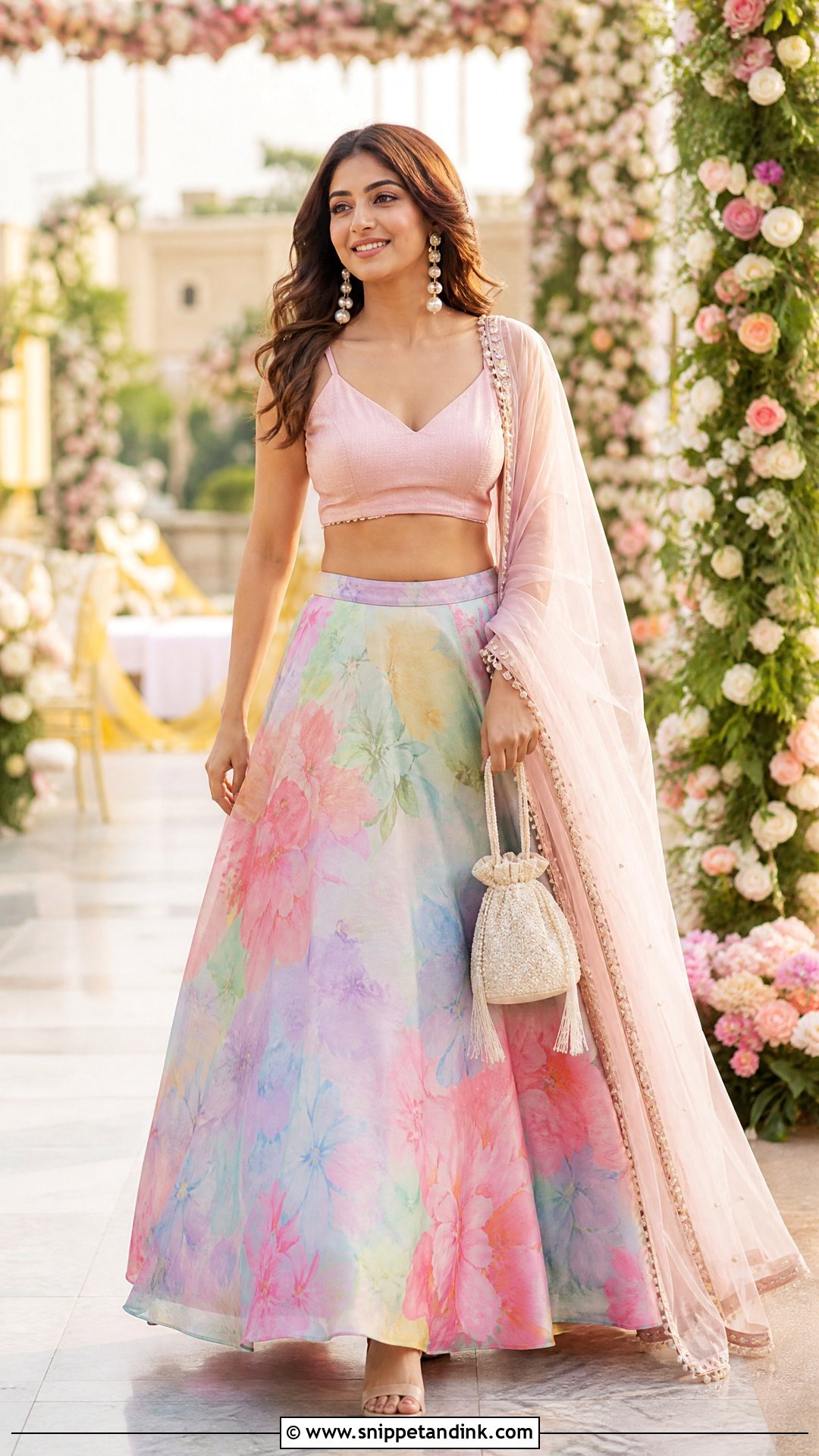
Can’t settle on one pastel? A multicolour lehenga lets you wear several. Watercolour prints, embroidered panels or florals in pink, blue, yellow, mint and lilac look cheerful, so the rest of the outfit has to calm down. A solid blouse in one of the quieter colours, and a dupatta matching the blouse or the least dominant shade, keep it together. Pearl earrings, a neutral potli and champagne heels are reliable. Keep the hair simple, with loose waves or a low bun. It suits bridesmaids at a daytime sangeet or mehndi, especially when each one picks a different base colour.
18. Champagne Embroidered Salwar Suit
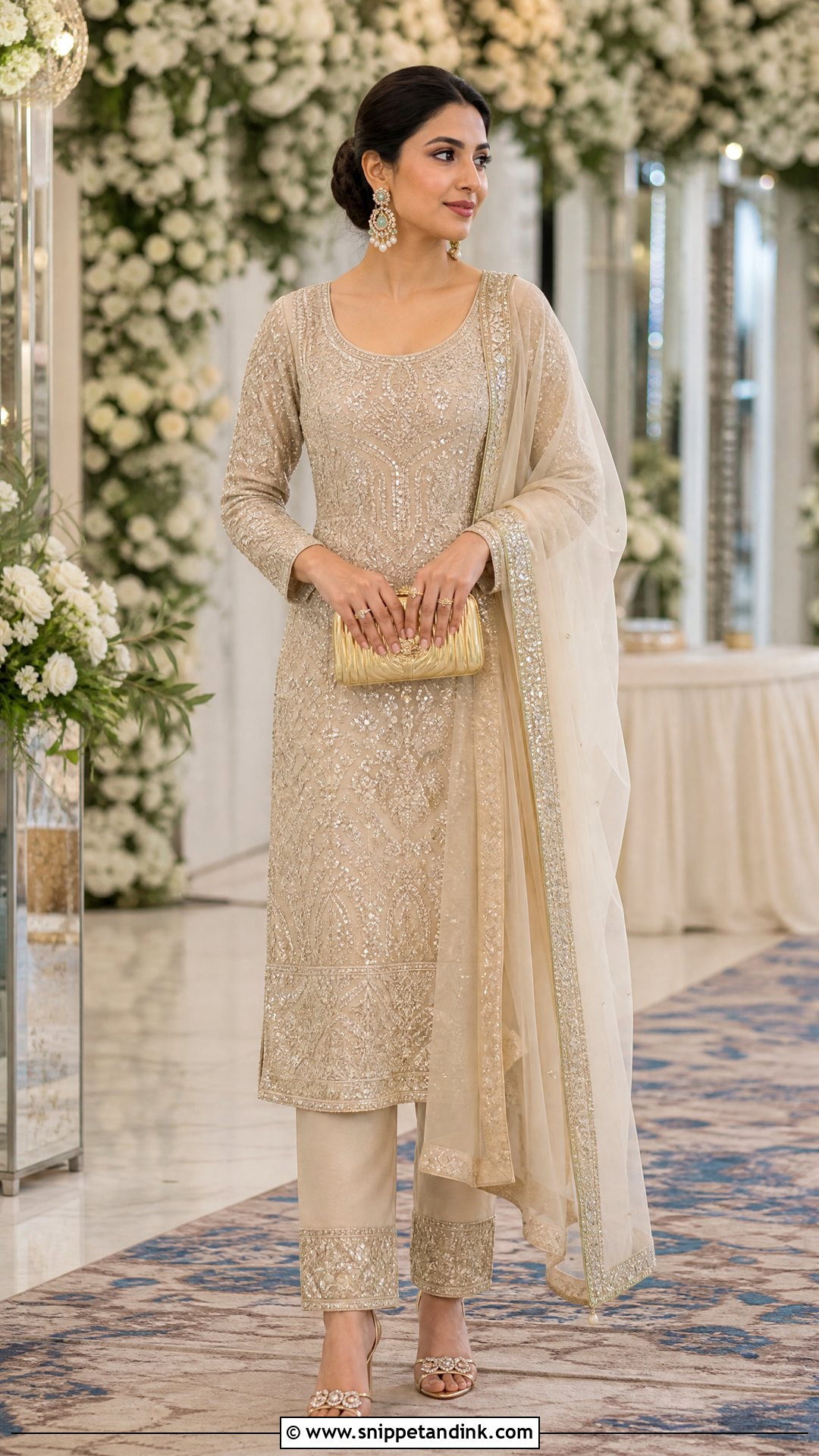
Champagne falls between beige, gold and blush, which makes it sophisticated and also tricky. On some skin tones it blends straight into the complexion and the face disappears. I’d choose a neckline, border or dupatta with enough contrast to frame the face. A long embroidered kameez, straight pants and a sheer dupatta with a narrow metallic edge make the base, with tonal sequins, pearls and fine threadwork for depth. Emerald, ruby or pastel gemstone earrings add a controlled pop. A structured gold clutch and embellished heels finish it. Guests should avoid very ornate versions if champagne is close to the bride’s palette.
19. Powder Pink Dhoti Pant Set
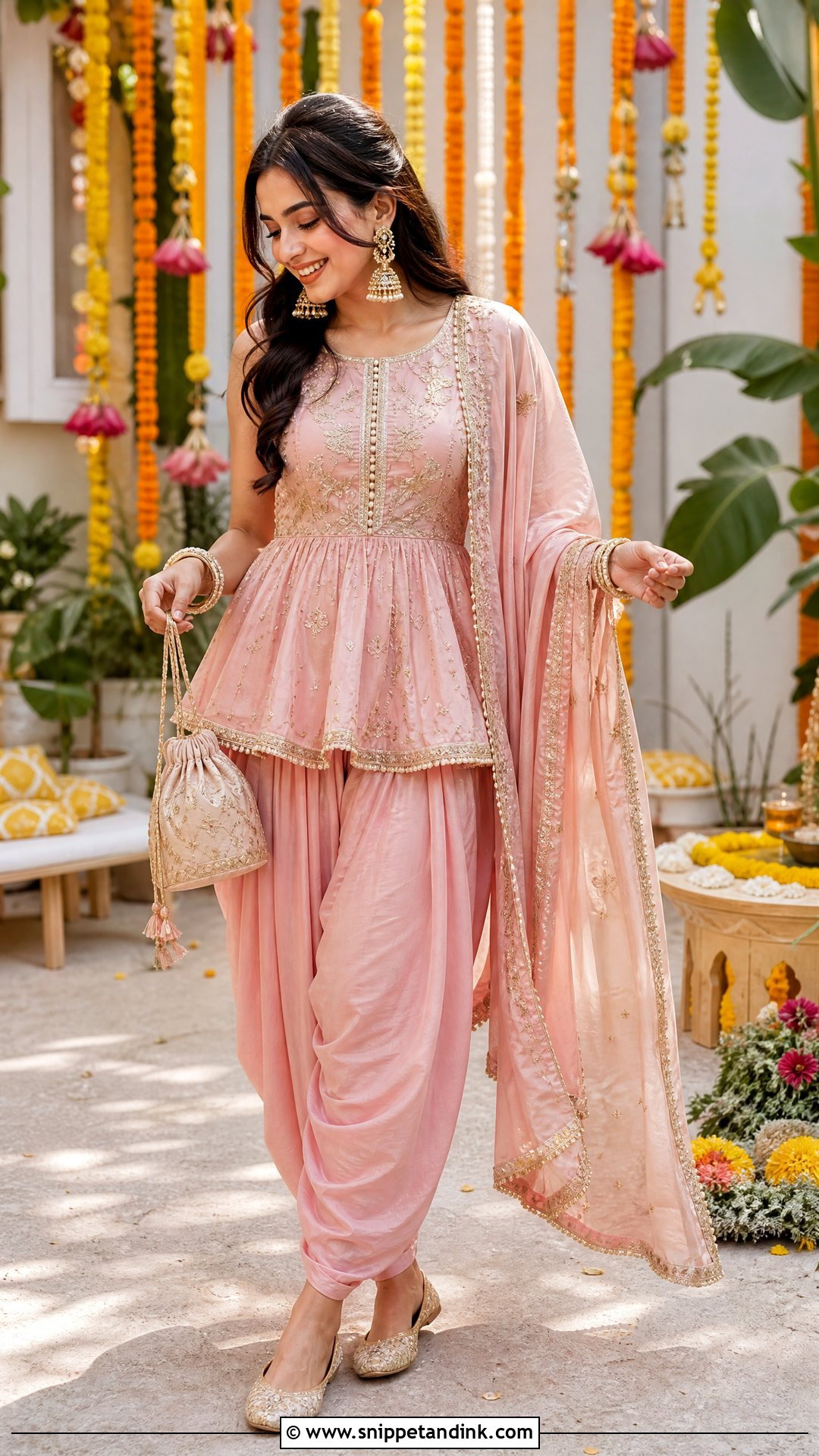
For a more fashion-led mehndi or sangeet, try a powder pink dhoti pant set with a structured peplum top. The gathered pants give volume at the legs, while the peplum defines the waist. Embroidered borders, mirror work or fine gota give it a festive character. Dhoti pants have a dropped crotch, so heeled juttis or platforms help balance the low line and keep the legs looking long. A light dupatta pinned at one shoulder, statement jhumkas, slim bangles and an embroidered potli complete it. A high ponytail or loose braid suits all the movement you’ll be doing.


20. Periwinkle Peplum Sharara
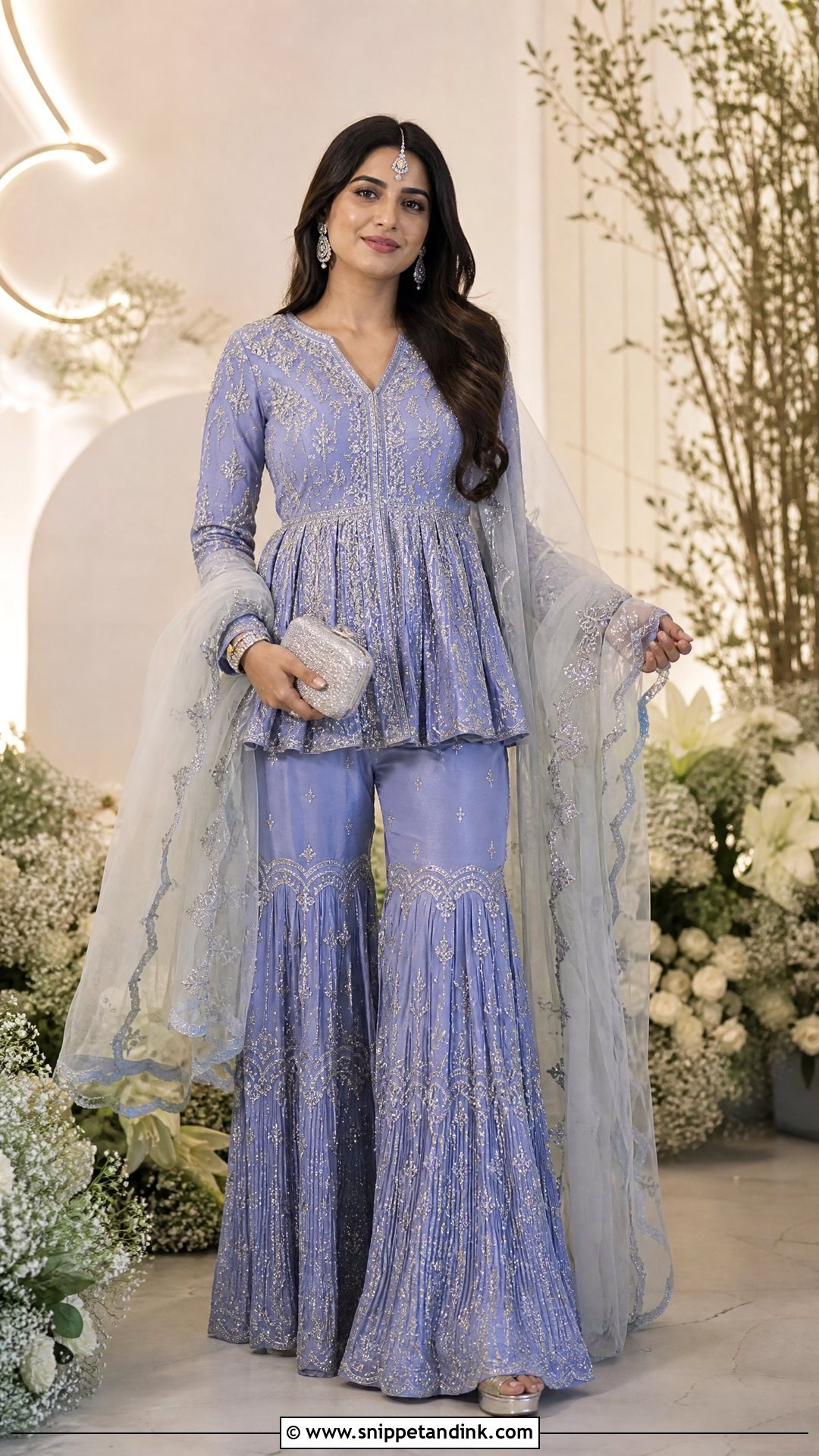
Periwinkle mixes lavender and blue, and it holds its colour well under both daylight and evening lights. Build the outfit around a structured peplum kurta and a matching flared sharara. Concentrating embroidery at the neckline, waist and pant flare defines each part of the shape. A sheer dupatta in periwinkle or pale silver, pinned at one shoulder, crystal earrings, a delicate maang tikka and a compact clutch add sparkle without competing with the colour. Silver platforms or cushioned juttis work underneath. A centre-parted low bun looks formal; loose waves feel more relaxed.
Keeping a Pale Outfit From Washing Out Your Face
Pastels reflect light up into the face, and on many skin tones that light flattens the features. The outfit can look lovely on the hanger and leave you looking tired in photos. I add contrast close to the face: a darker border on the dupatta, a blouse a shade deeper than the skirt, or warm gold jewellery rather than silver.
- Warm undertones usually glow in peach, coral, butter yellow and pistachio.
- Cool undertones tend to suit powder blue, lavender, icy pink and mint.
- Deeper skin tones carry pastels very well when the jewellery is gold and the lip has some colour.
Makeup notes for pastel outfits
Bring a swatch of the outfit to your makeup trial. A pale lehenga needs slightly more definition at the brows and eyes than you’d expect, or the face fades next to the fabric. Ask your artist to avoid powders that flash white under camera flash, and keep a blotting paper and your lip colour in the potli for touch-ups between functions.
Soft Colour for the Bride, Her Sisters and Every Guest
A pastel outfit should look right for the ceremony, respect the family’s customs and let you get through every function without counting the hours. Pink lehengas feel romantic; powder blue sarees and lilac drapes feel polished. Anarkalis, shararas, ghararas and palazzo suits give more coverage and more freedom to move. Before you buy, think about your role, the ceremony, the venue and anything the couple has asked of guests. Let embroidery give depth, then add jewellery, shoes and a practical bag without crowding the look. Most of all, make sure it fits securely, because nothing ruins a pastel faster than a constant adjustment.
You'll Like These Ideas:







Leave a Reply