
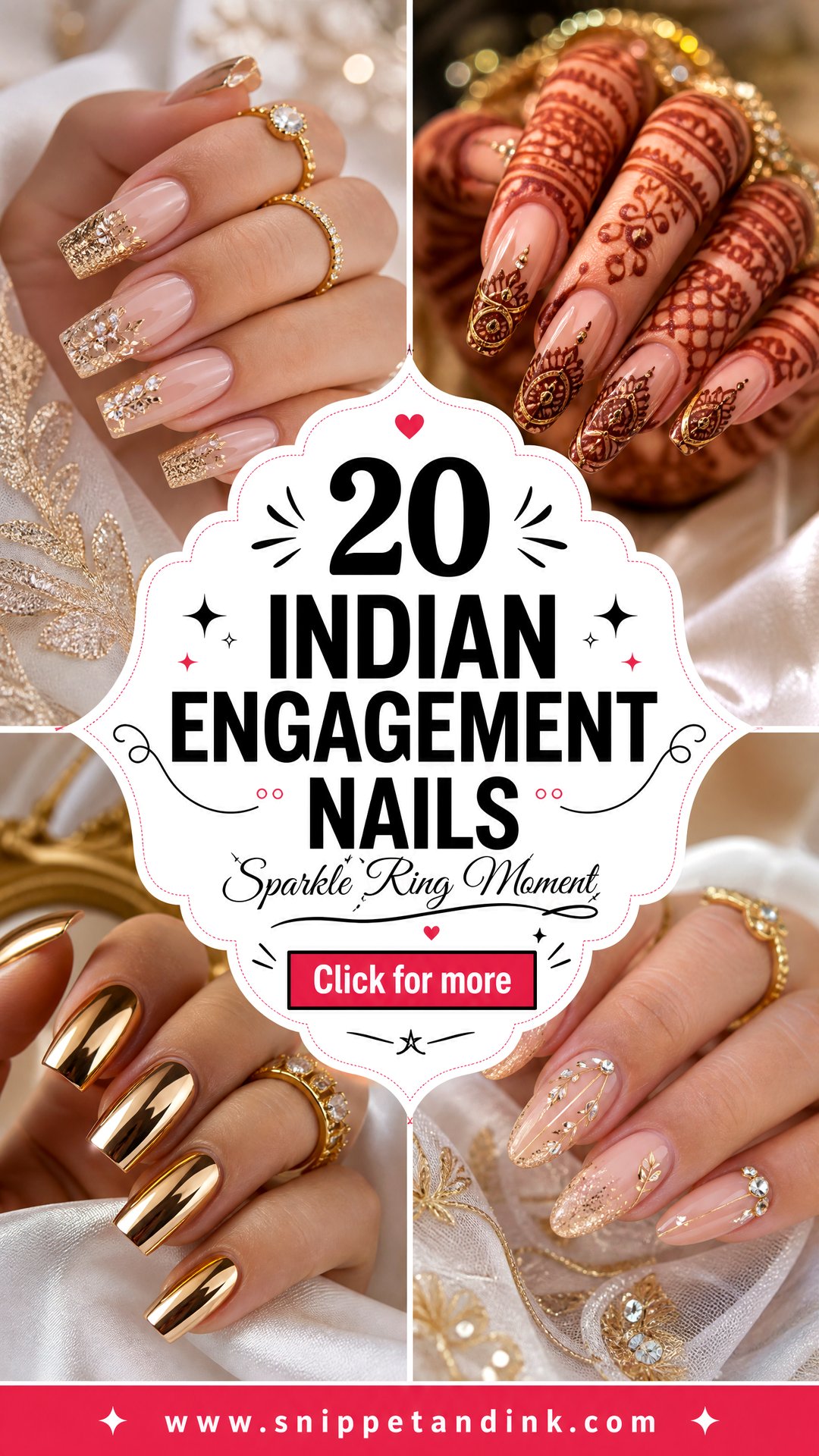
An engagement manicure has a harder job than most people expect. It sits right next to fresh mehndi, a ring that everyone wants to photograph, stacked bangles and an outfit that may be covered in zari. I plan these sets around the hands rather than the outfit alone: how long the nails are, how dark the henna will stain, and how much the ring should stand out. The Indian engagement nail looks below range from a plain glossy French to stones and paisley art, and I’ve noted for each one where it works and where it struggles.
Mehndi First or Manicure First?
This is the question I get most from Indian brides, and the answer is almost always manicure first. Book your nails a day or two before the mehndi is applied. Filing, soaking and buffing after henna can dull a fresh stain on the fingertips, and the acetone used to remove old gel is drying on skin that should be left alone while the colour deepens.
Doing the manicure first has a second advantage. Gel acts as a barrier, so henna paste that touches the nail won’t stain the nail plate orange the way it does on bare nails. Ask your mehndi artist to keep the paste off the nails anyway, and wipe any that lands there before it dries. Cuticles will still pick up some colour, which most brides like.
How the Two Colours Interact
Henna starts out bright orange and darkens to a deep brown over the next day or two. Pick your polish shade for that final colour, not the orange you see on the first evening. Reds, maroons, nudes and gold sit well with brown henna. Cool blues and neon pinks fight it.
1. Indian Engagement Red Gold Nails
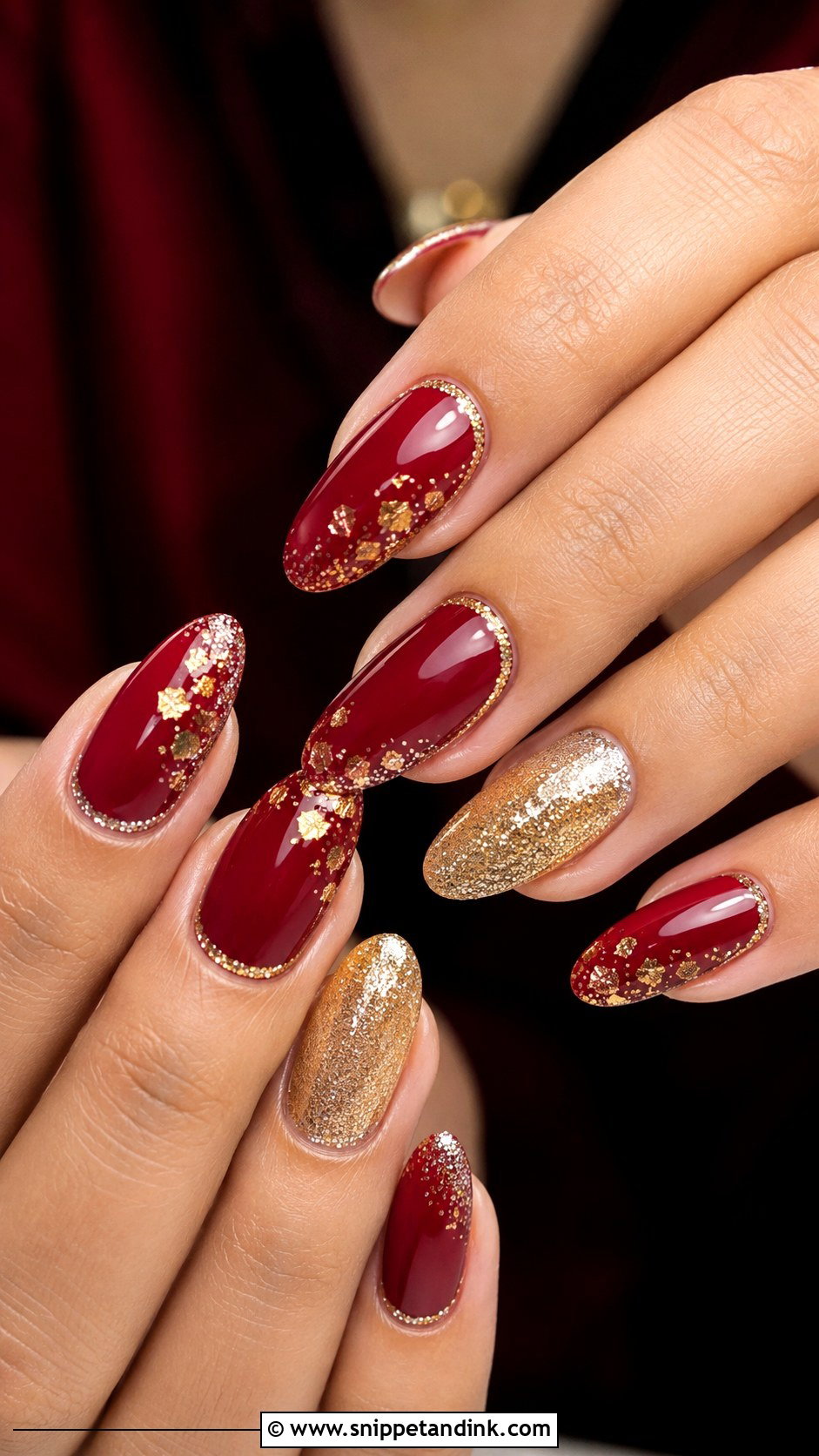
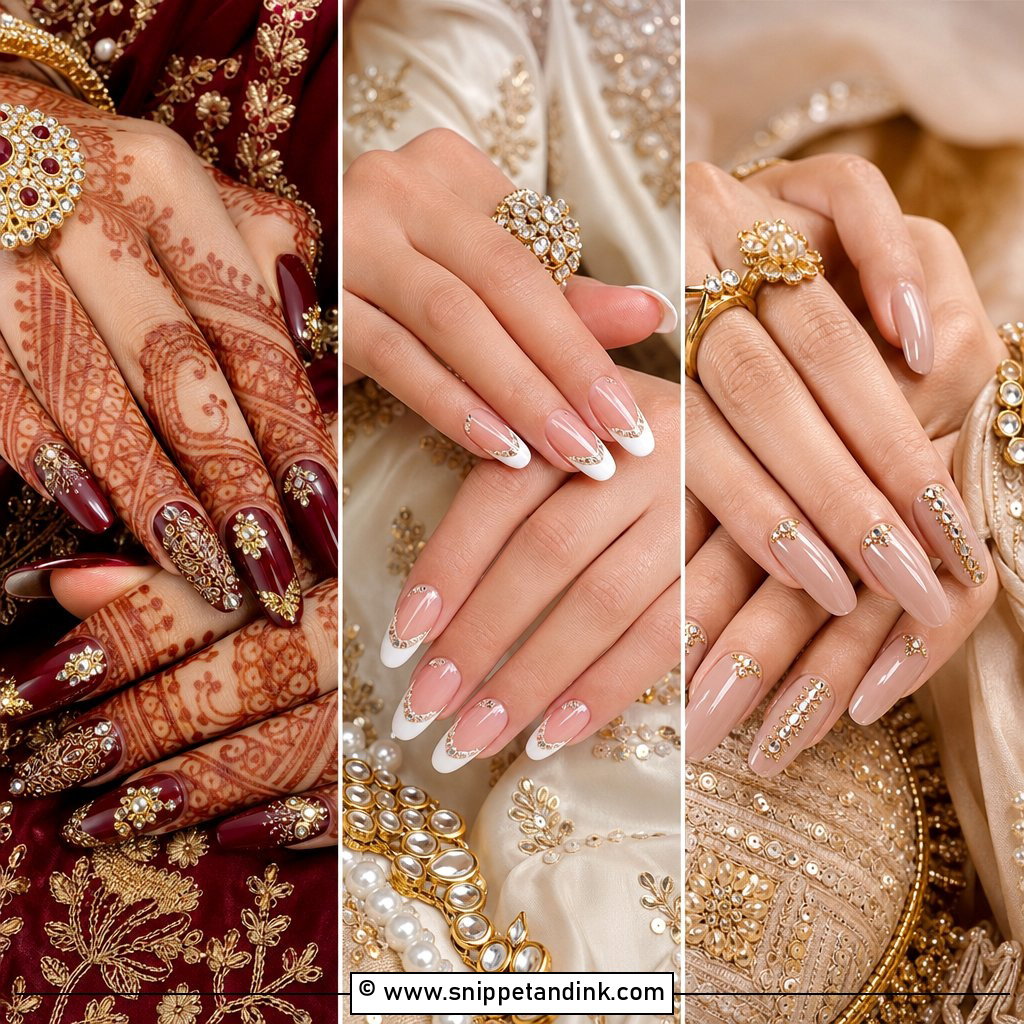
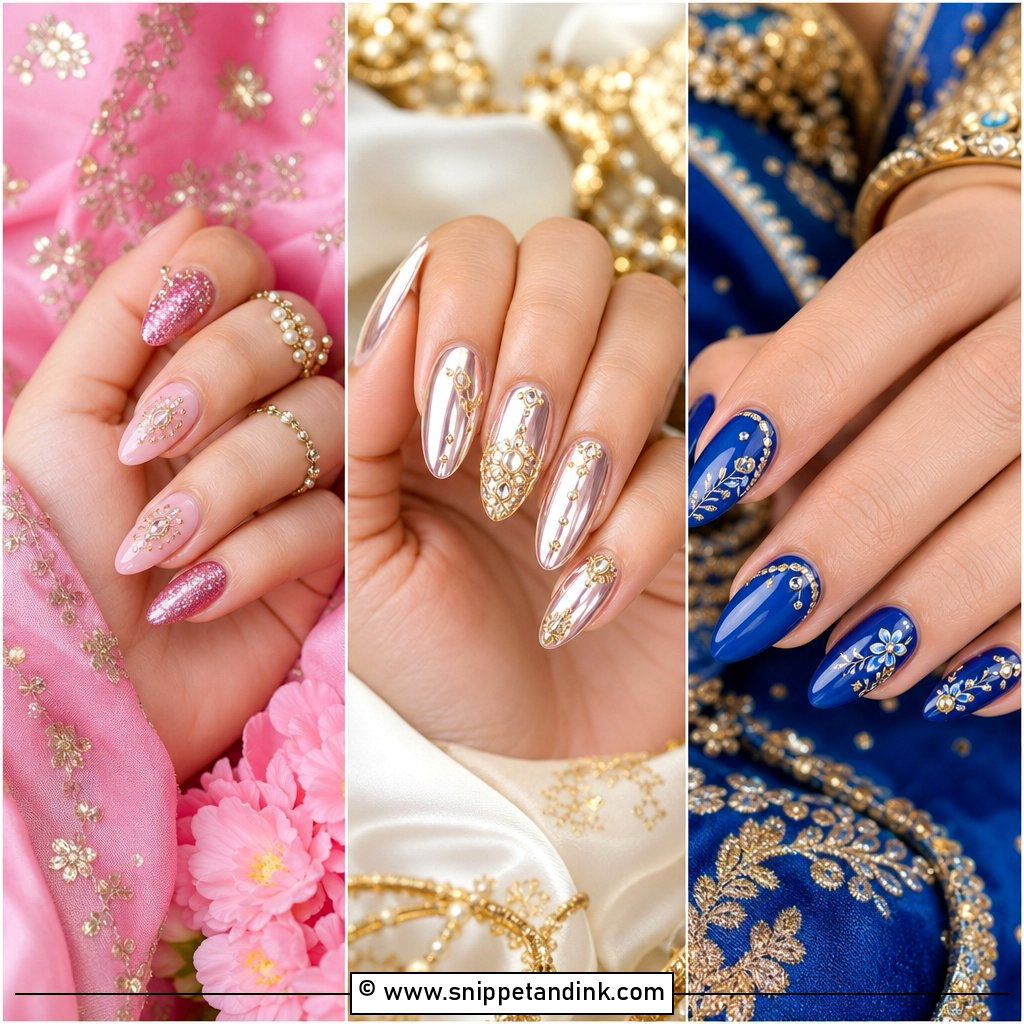
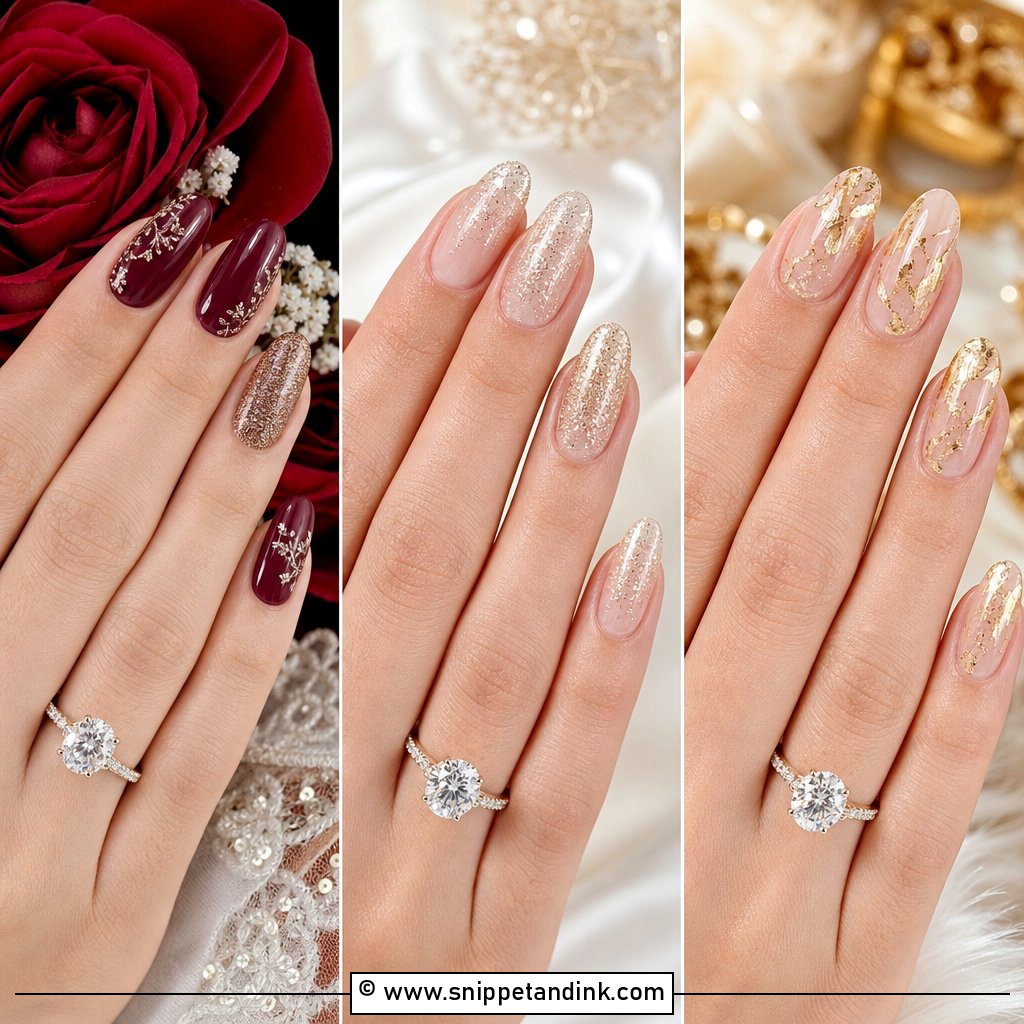
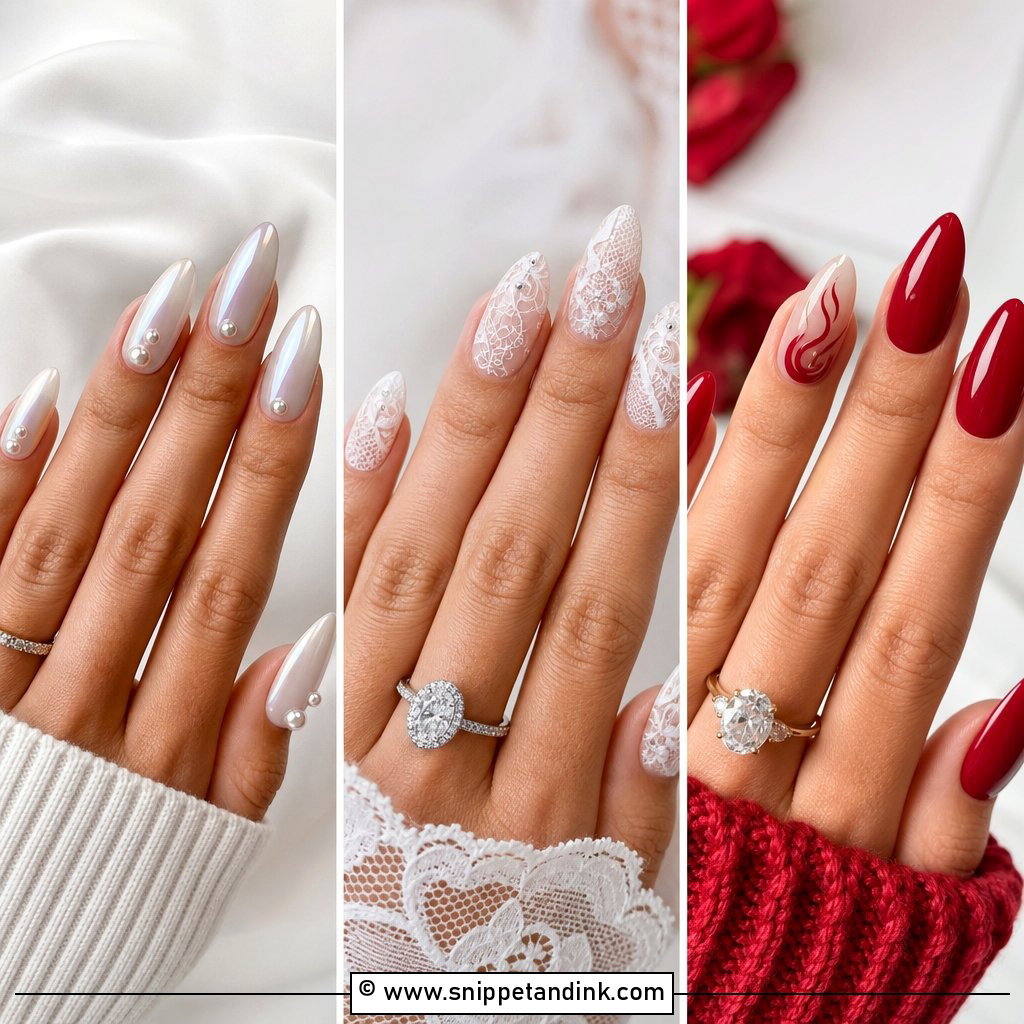
Red with gold is the classic for a reason: it echoes bangles, zari and the warm brown of a good mehndi stain. I keep the gold to two or three accent nails and use fine foil or a thin striping line rather than full glitter, otherwise the ring loses the spotlight in close-ups. Almond, oval and coffin give gold detail enough room to read. On short nails, a single gold line at the cuticle does more than foil, which tends to look crowded on a small nail bed.
2. Indian Engagement Maroon Nails
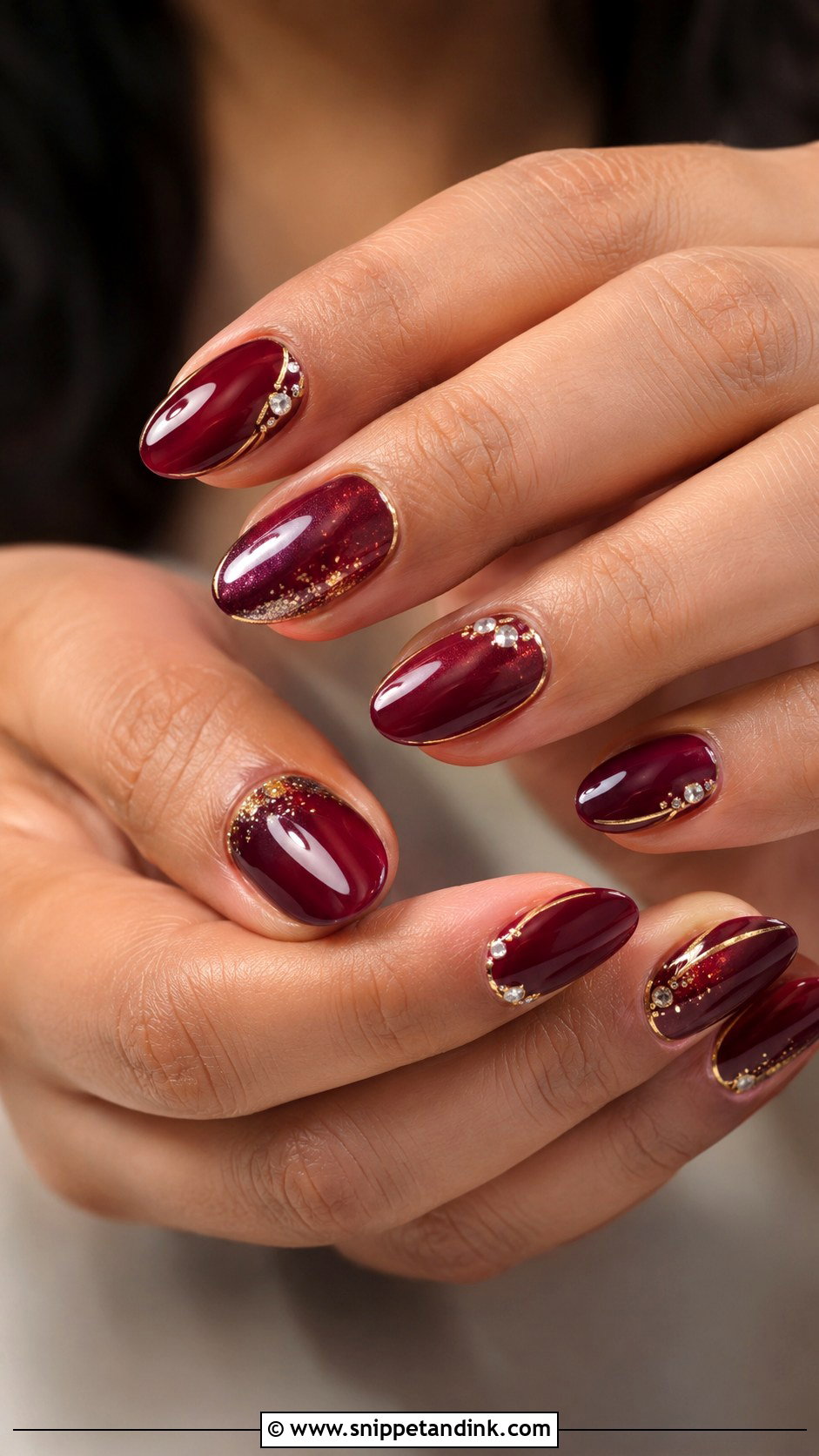
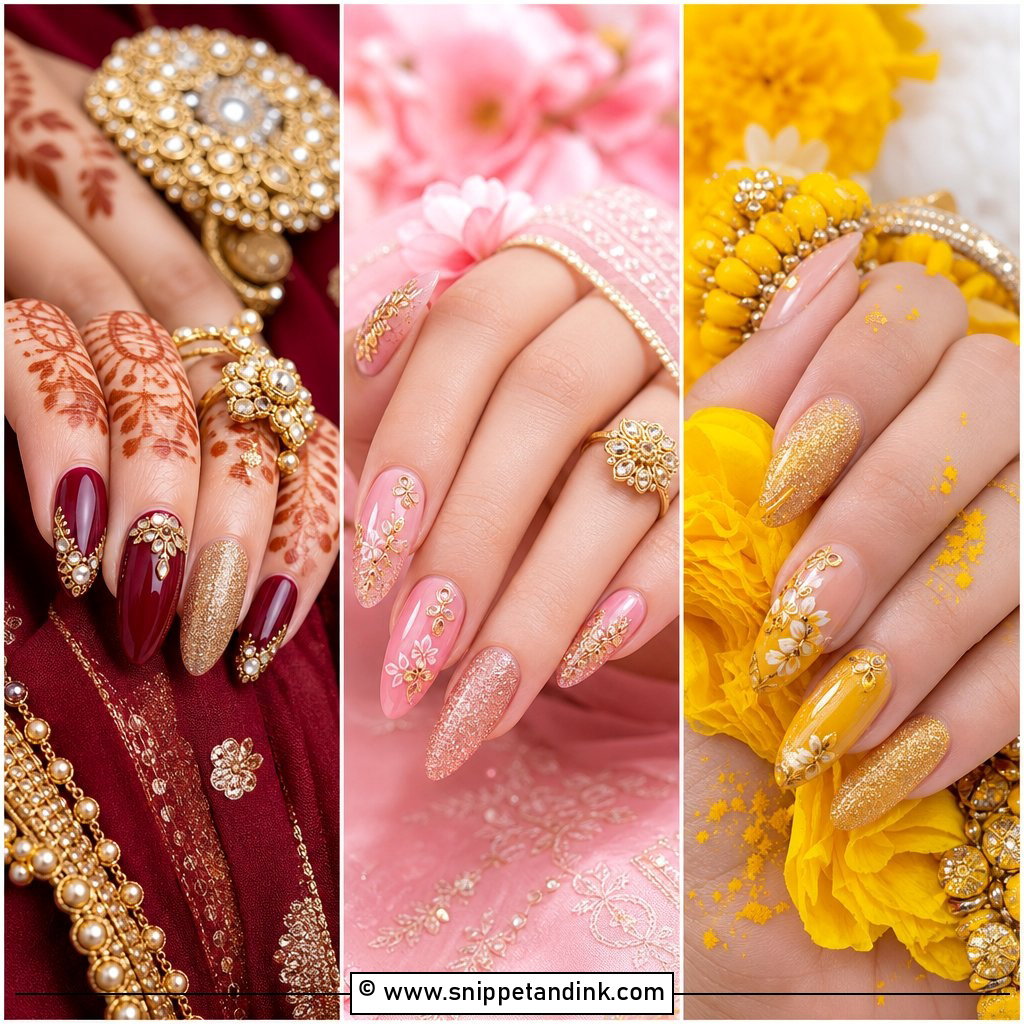
Maroon reads softer than bright red but keeps the traditional depth, and it sits very comfortably next to dark henna because the two share a brown undertone. I’d choose it for wine, emerald, beige and gold outfits. A full glossy set needs nothing else; if you want a festive touch, a shimmer top coat or a thin gold outline on one nail is enough. One thing to know: deep maroon shows every chip and uneven cuticle line, so the prep has to be clean.
3. Indian Engagement Nude Gold Nails
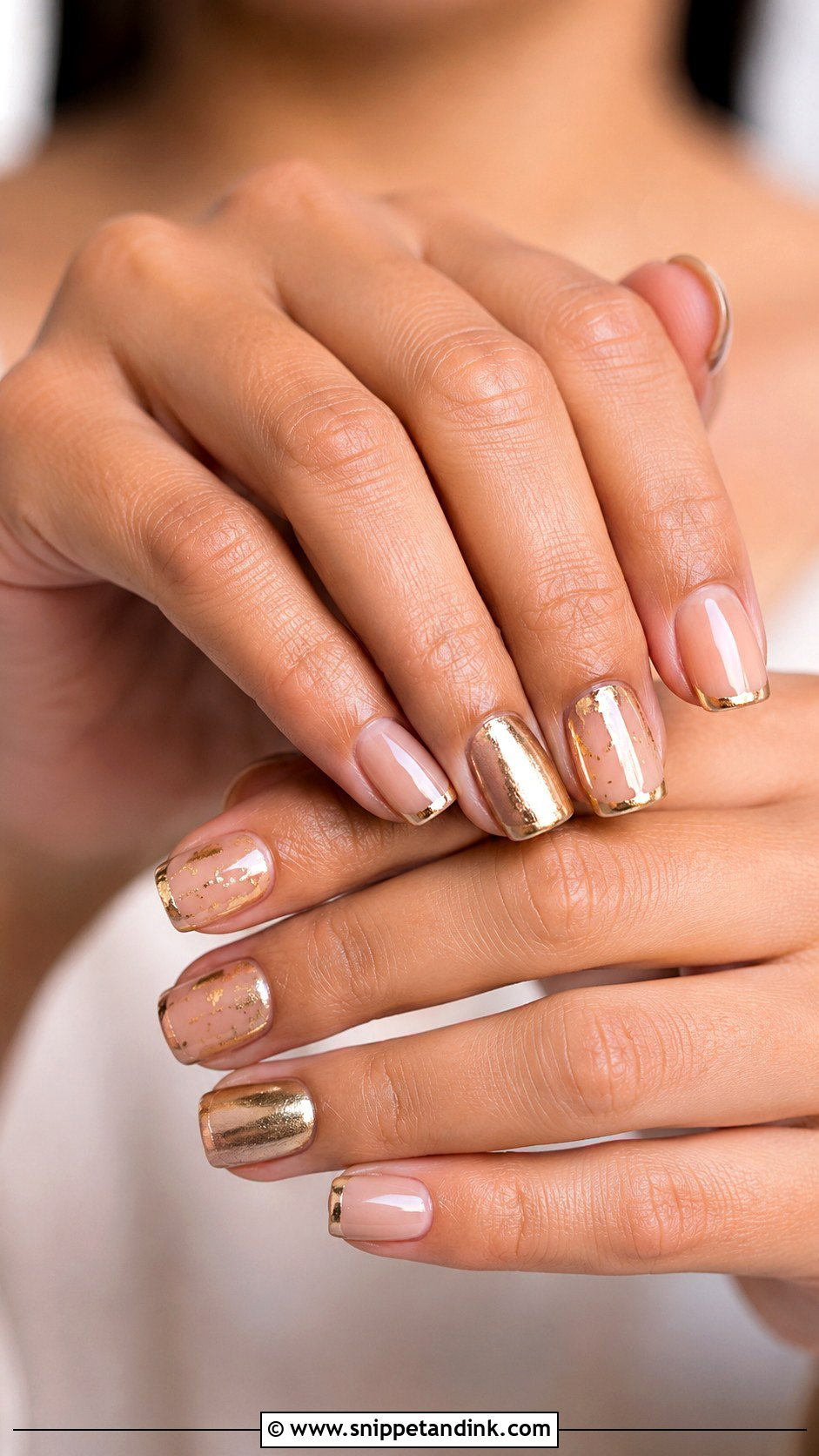
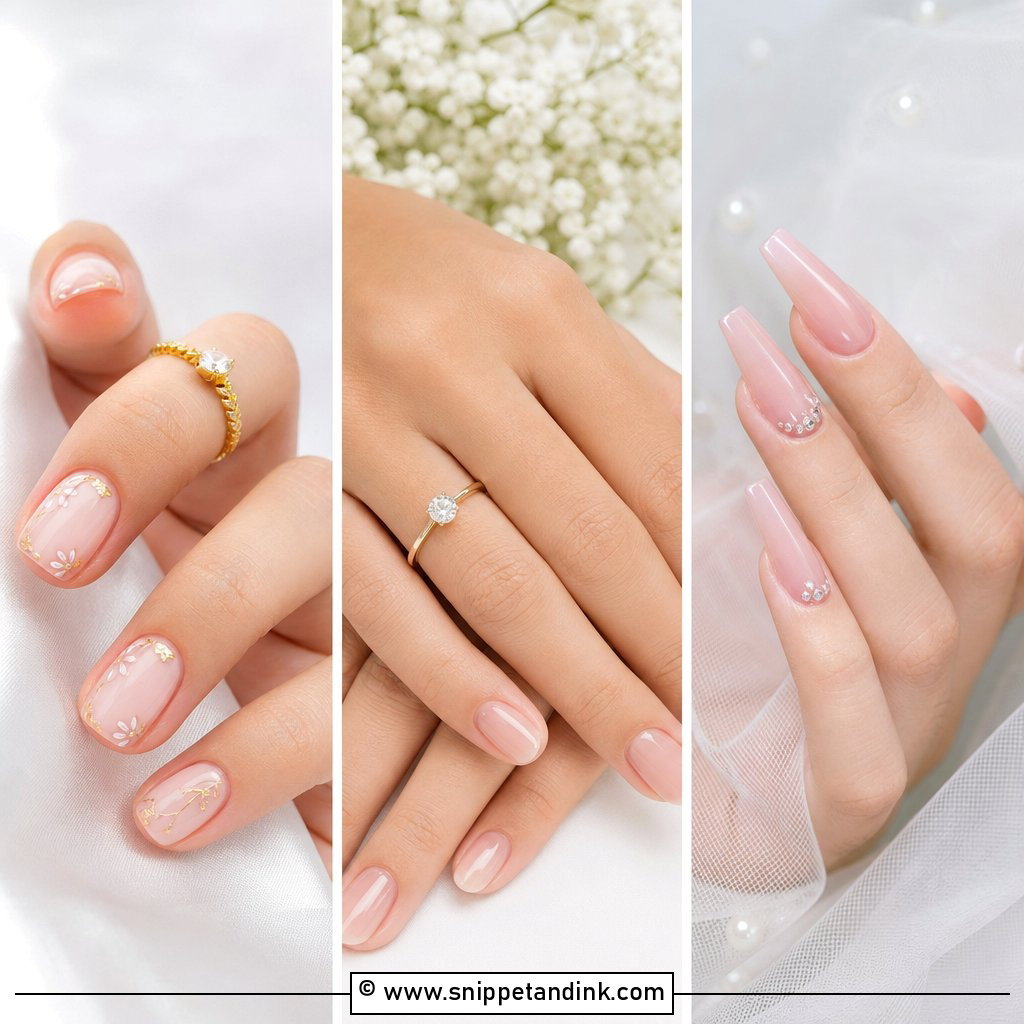
Nude with gold is my default suggestion when the outfit and jewellery are already heavy. A nude matched to the hand lengthens the fingers, so the ring finger looks slimmer in photos. The shade decides everything here. Peachy nudes suit warm skin, rosy ones suit cool skin, and deeper skin needs a beige-brown or caramel nude, because a pale pink nude looks chalky against it. Gold French tips or tiny metallic motifs keep it festive.
4. Indian Engagement French Tip Nails
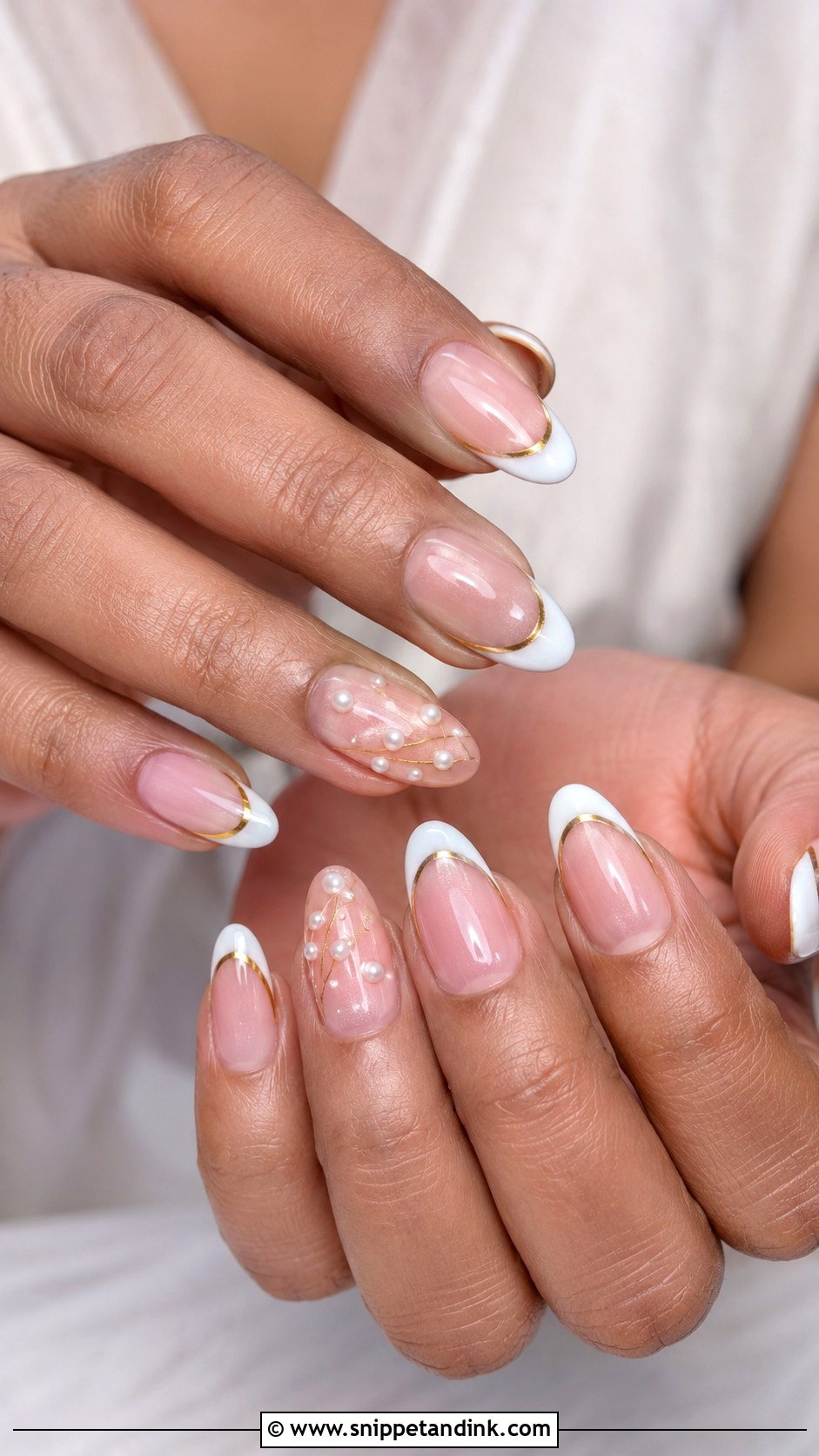
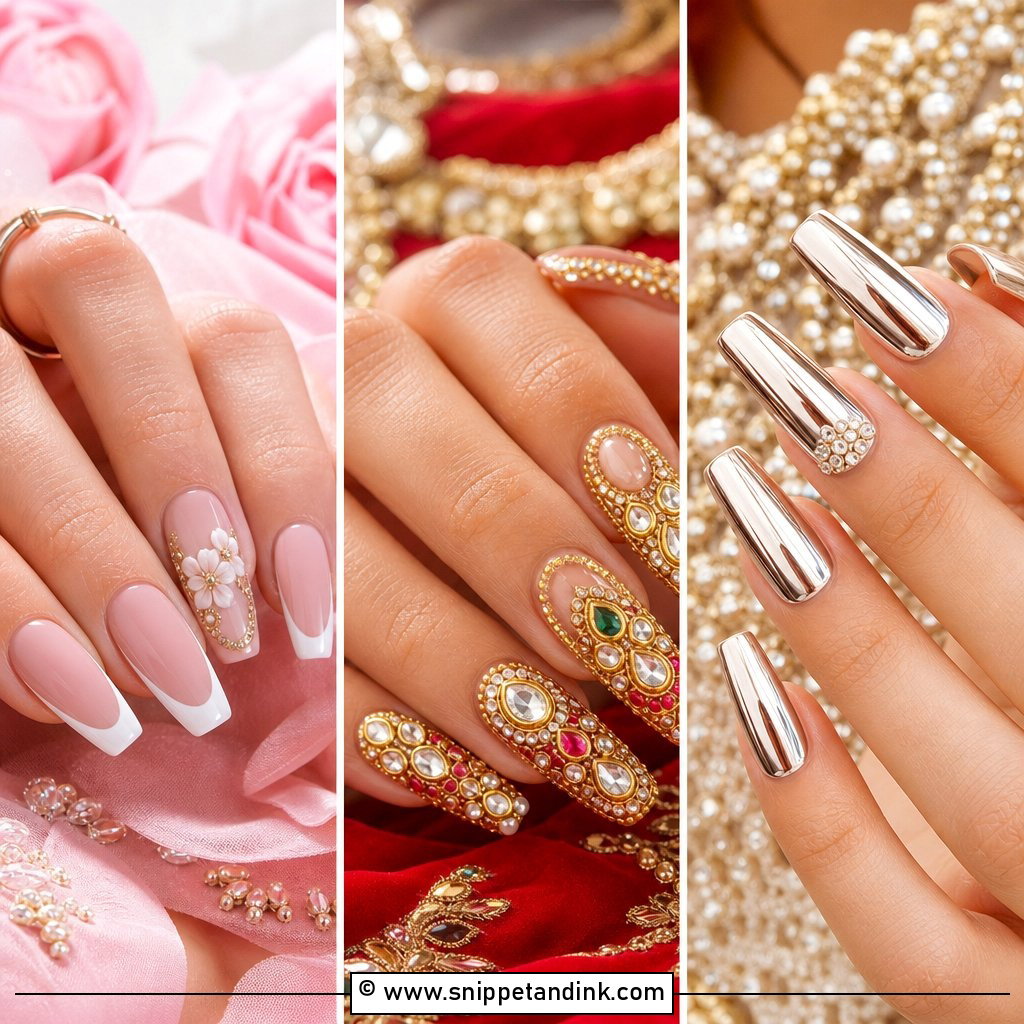
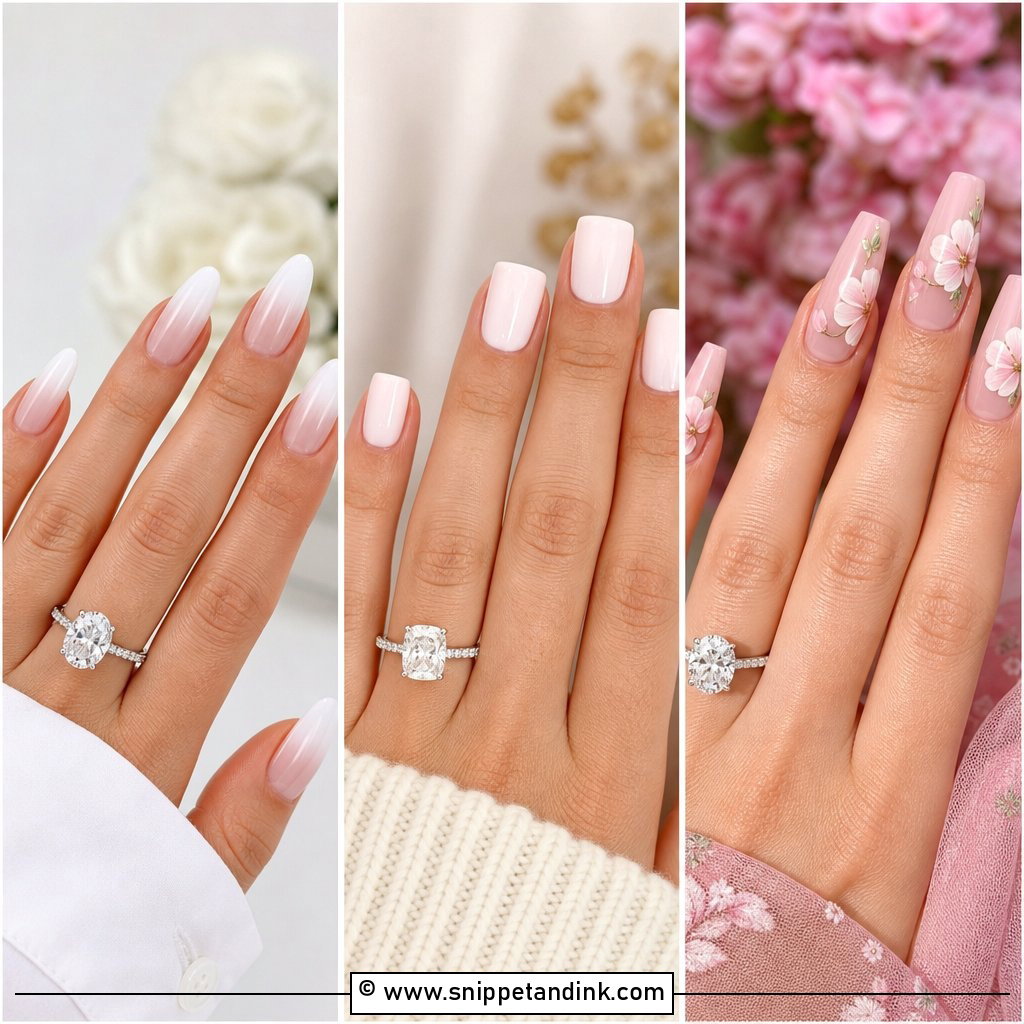
A French manicure is the safest set for ring photos because the clean tip line draws the eye straight to the band. For an Indian engagement I’d swap plain white for a gold, red or pearl-lined tip, or put a shimmer base under a crisp white edge. Getting a thin, even smile line takes real time at the appointment, so book a longer slot for it. Almond and oval soften it; square looks sharper and more modern.
5. Indian Engagement Pearl Nails
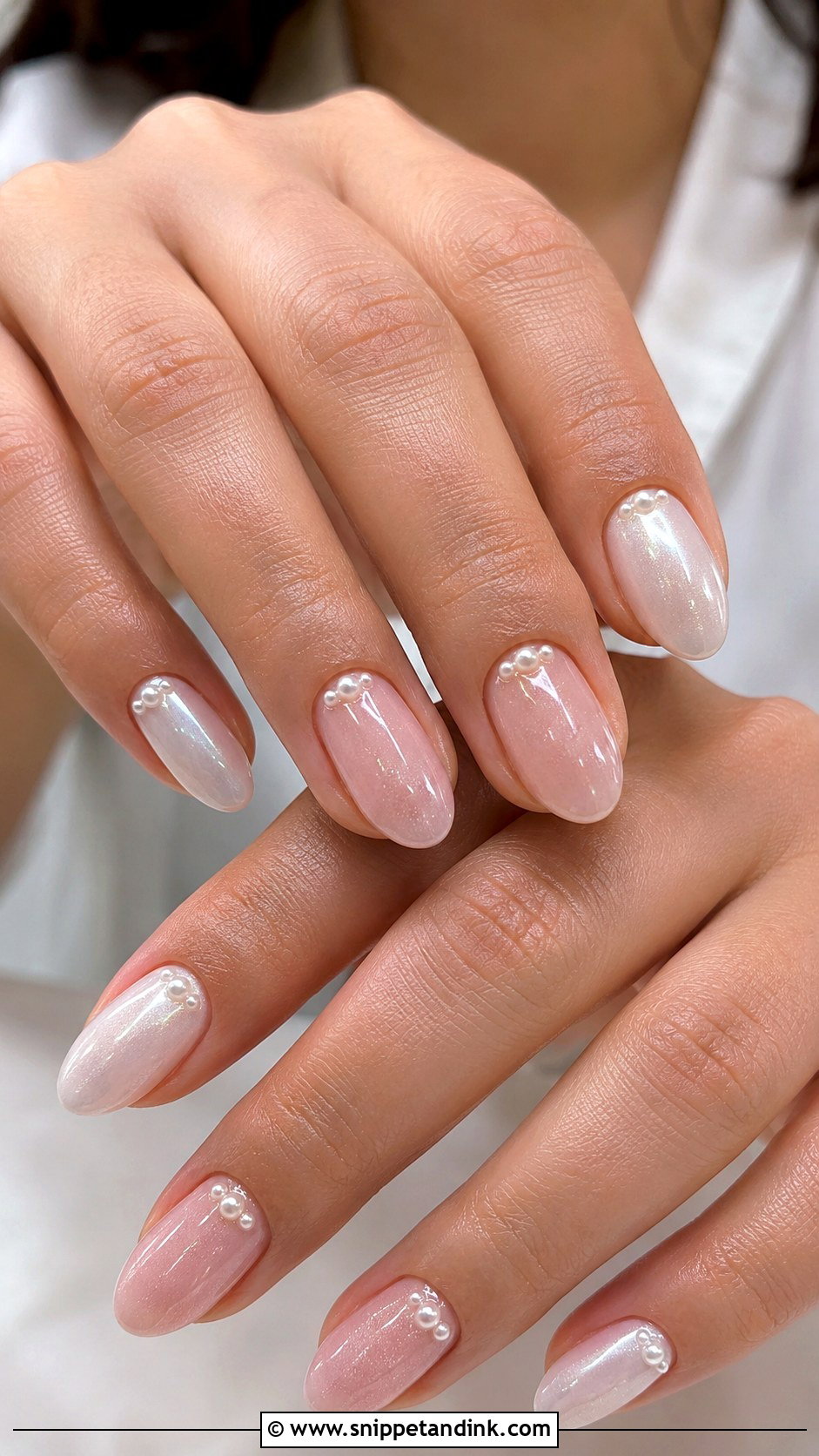
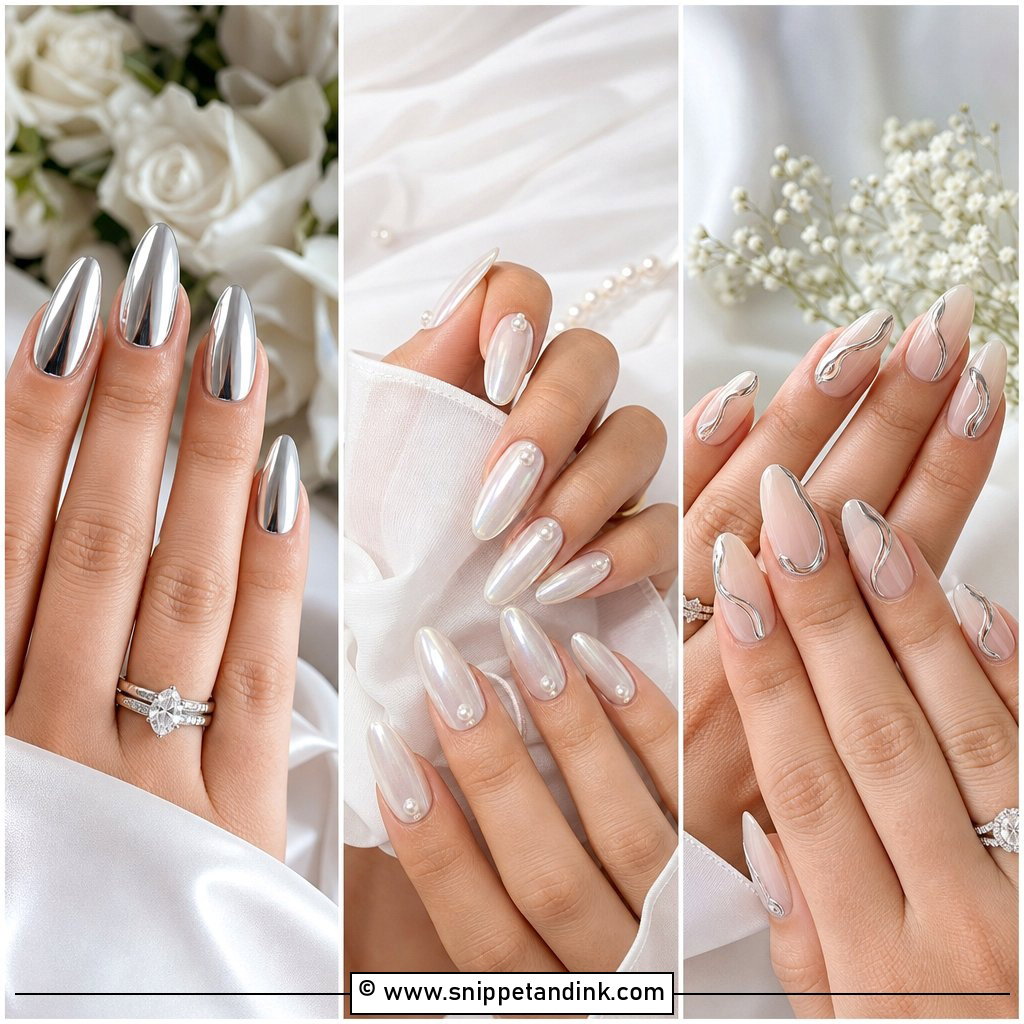
Pearl nails start from a sheer pink, milky white or champagne base, with small pearls set near the cuticle, along the tip or on one accent nail. I use the smallest flat-backed pearls for an engagement, since larger ones catch on dupatta net and lehenga embroidery all evening. They suit pastel outfits, ivory and gold jewellery. A glossy top coat around each pearl seals the edge so it doesn’t pop off when you’re greeting people.
6. Indian Engagement Mehndi Nails
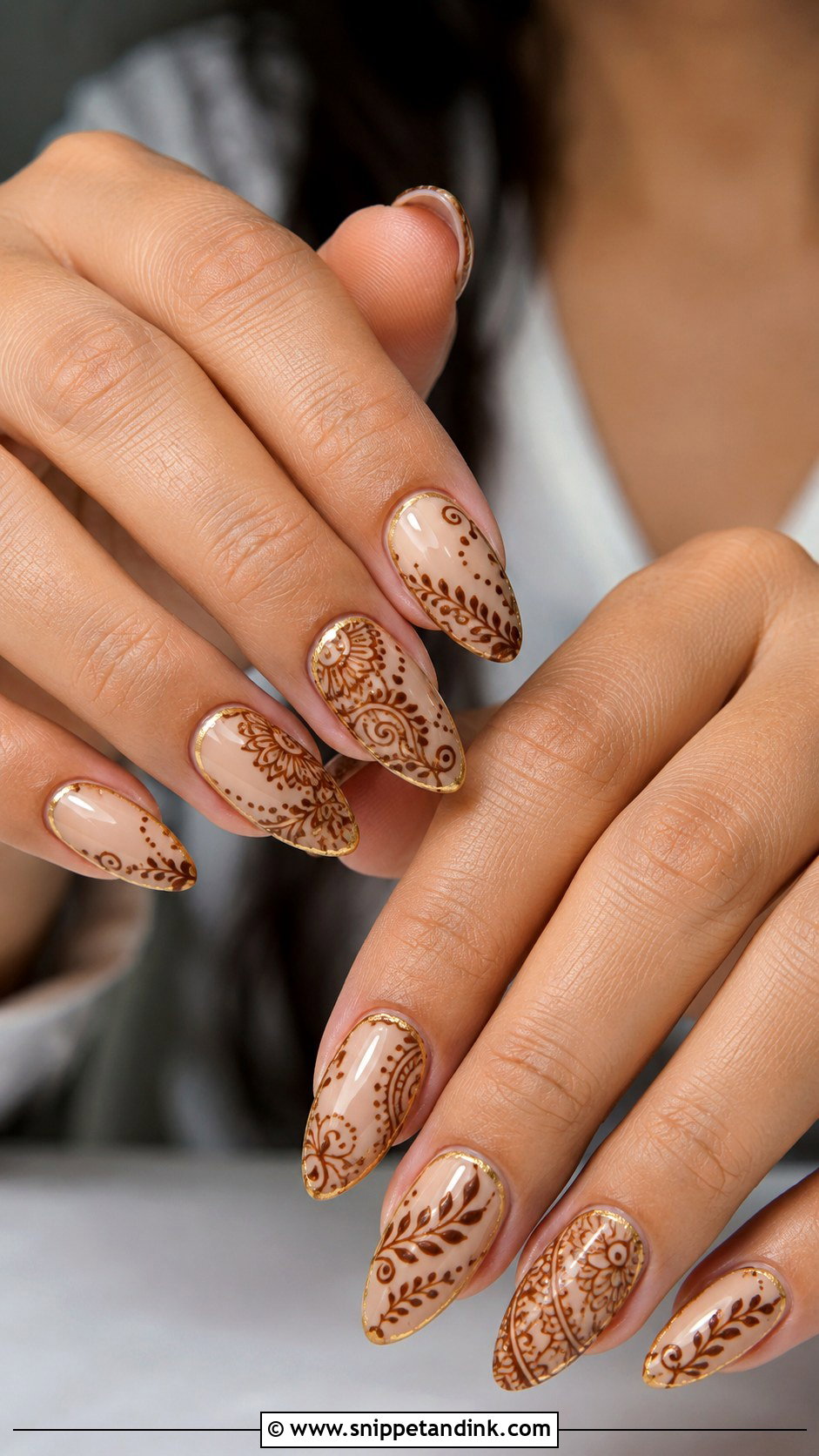
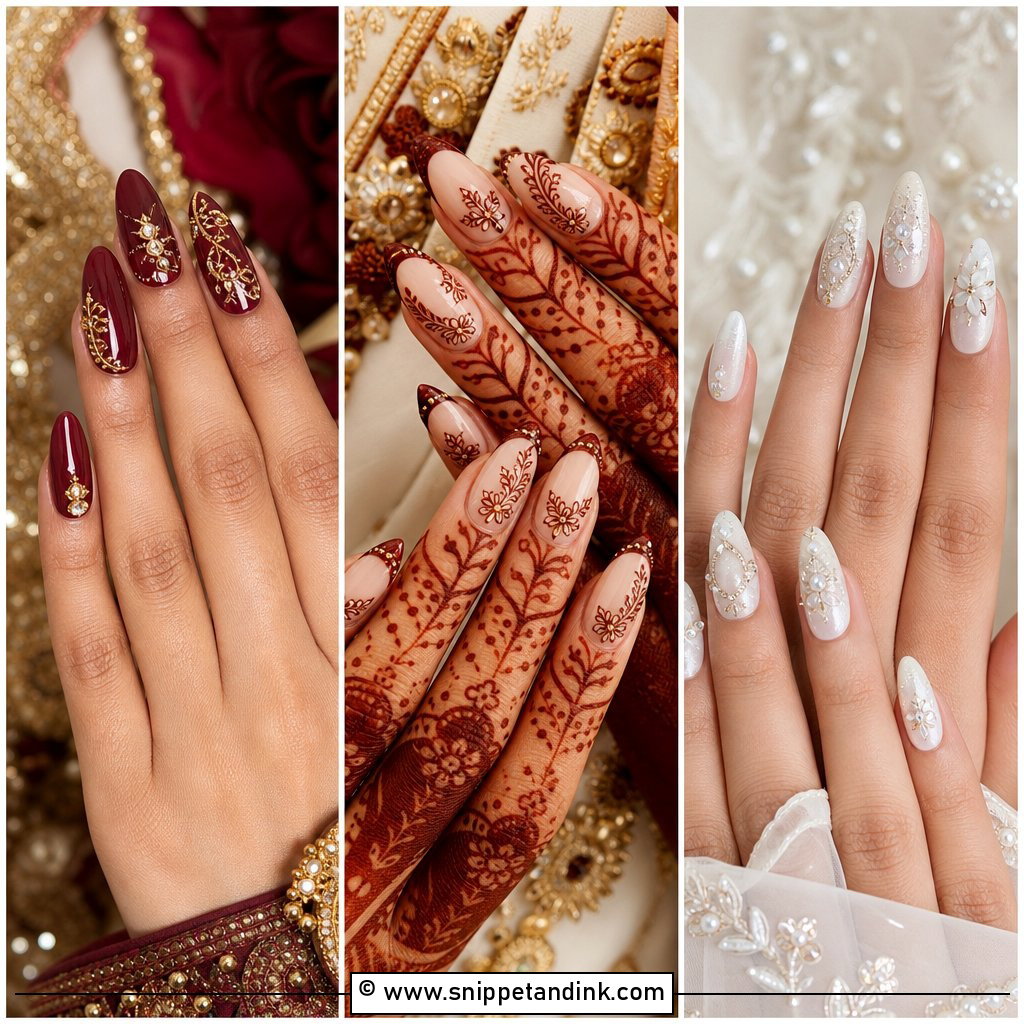
Painting mehndi motifs on the nails ties the manicure to the actual henna patterns on your hands. I like to see a photo of the mehndi design first, so the paisleys and vines on the nails pick up the same shapes. Brown or maroon linework over a nude or ivory base looks closest to real henna. Fine linework is hand-painted with a striping brush and takes time, so two accent nails with the rest glossy nude is a sensible middle ground if your appointment is short.
7. Indian Engagement Chrome Nails
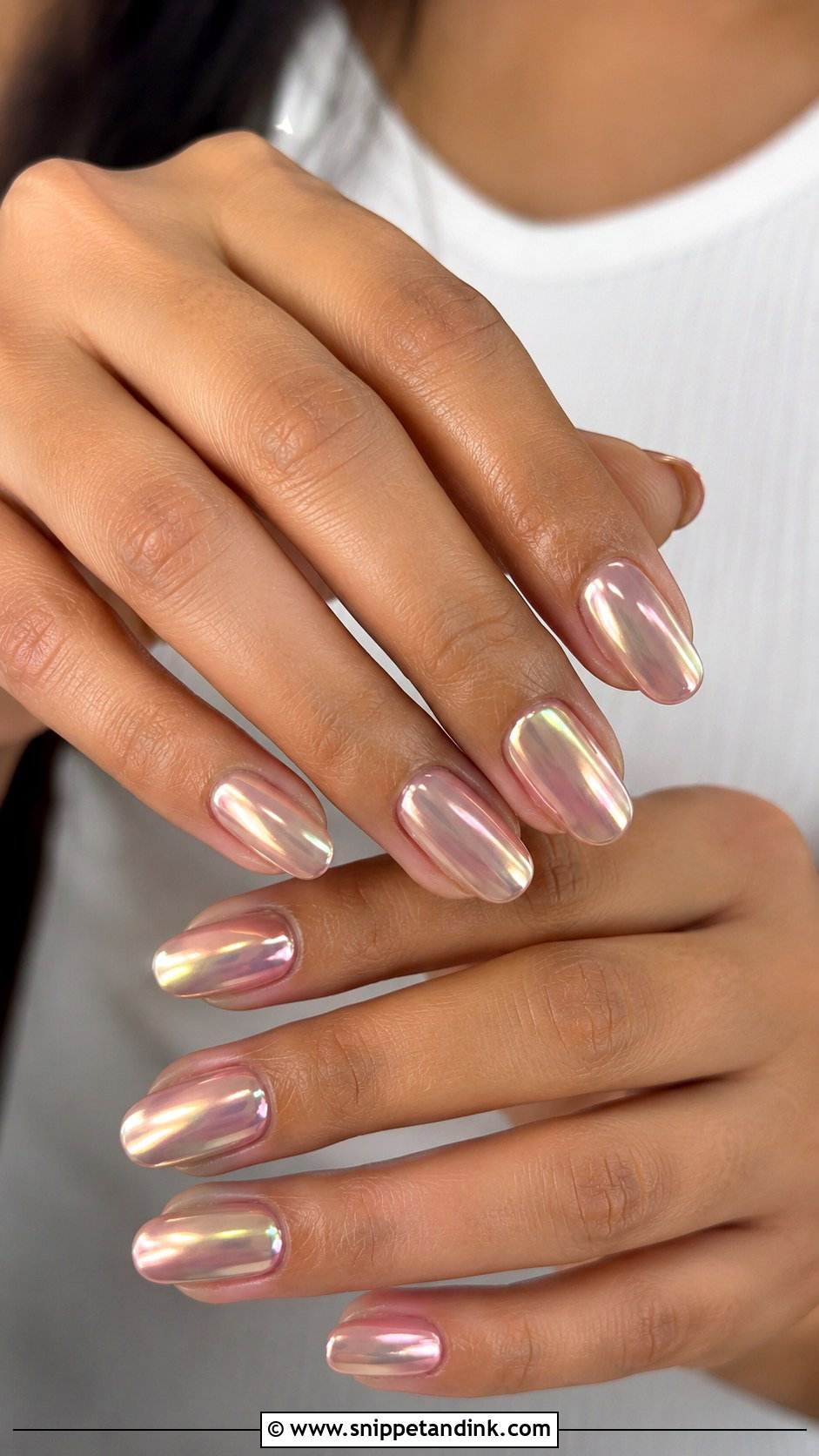
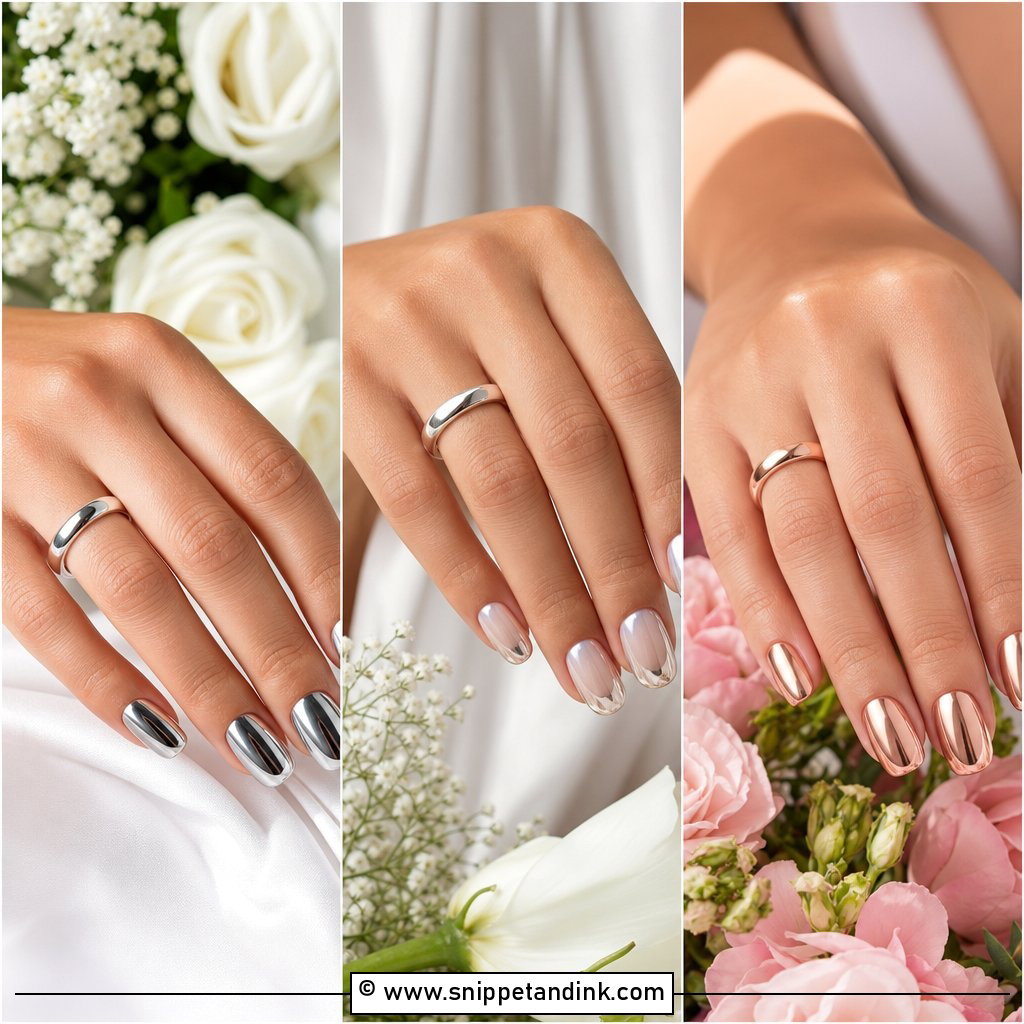
Chrome gives shine without glitter texture, and under venue lights it looks almost metallic. Soft gold, rose gold, champagne, pearl and blush chrome are the shades I reach for at engagements. Warm gold chrome suits outfits with gold work; pearl or rose chrome suits pastels. Chrome powder only sits smoothly on a gel base, and it shows any bump in the nail, so smooth almond or oval shapes give the cleanest result. It can be glaring under direct flash, so ask your photographer to diffuse it for ring close-ups.
8. Indian Engagement Ombré Nails
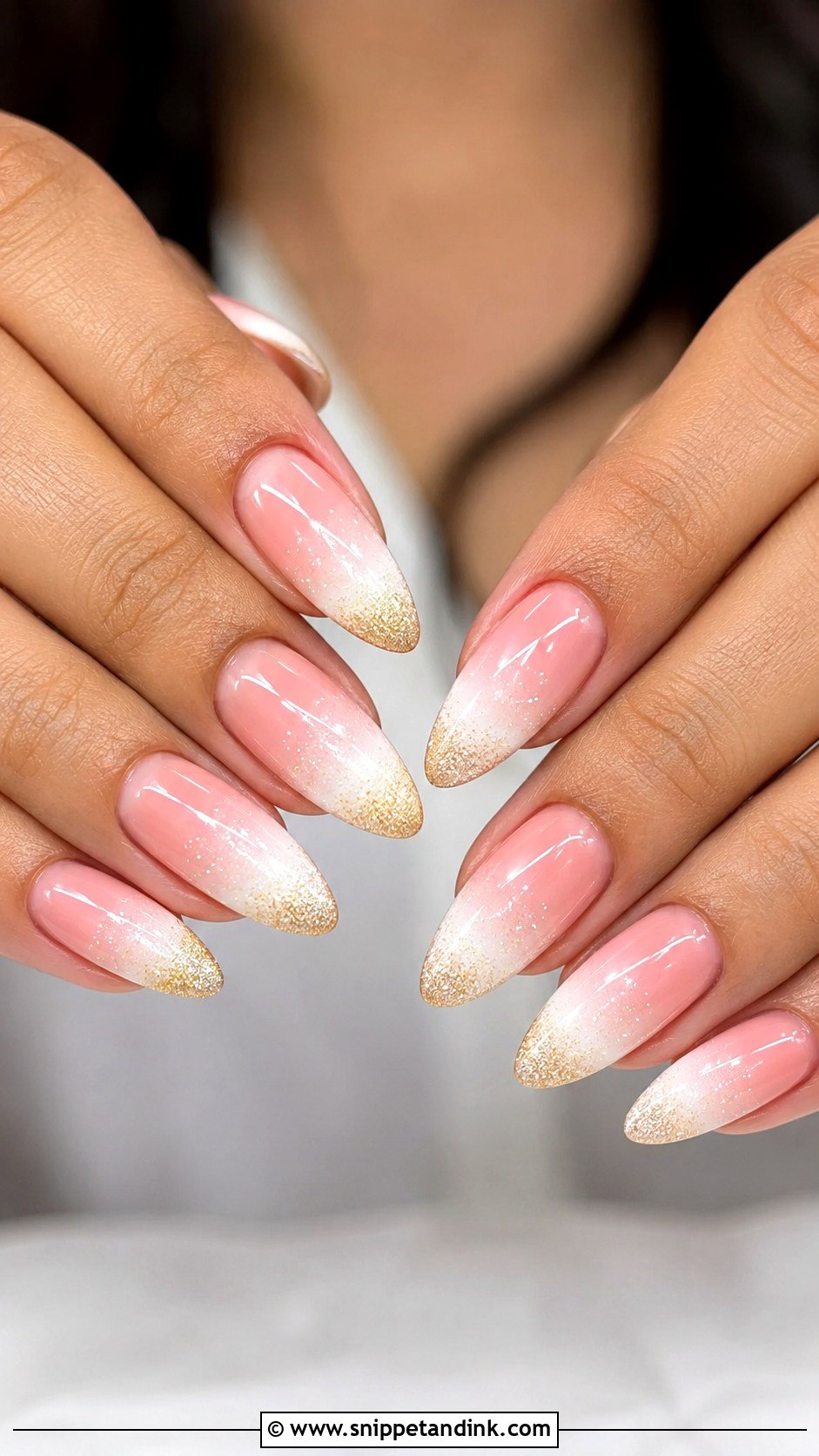
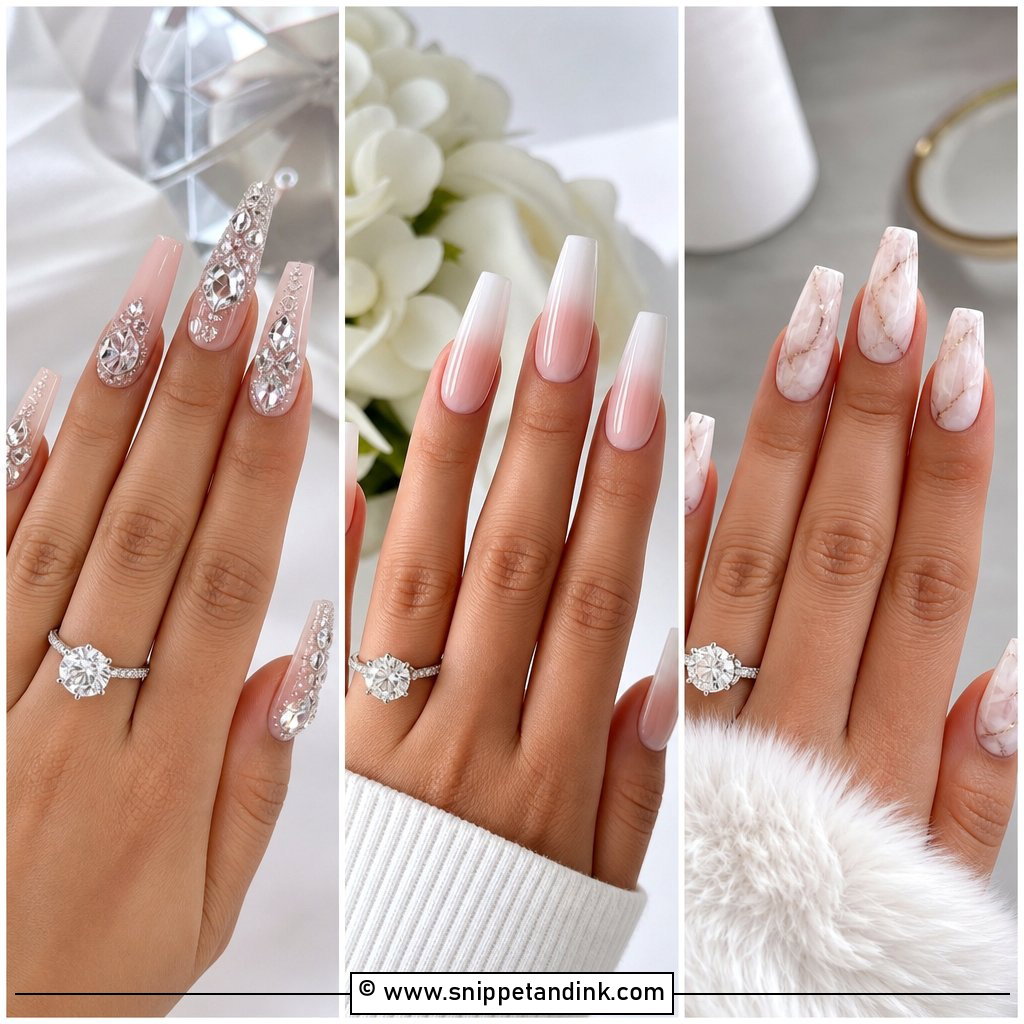
An ombré fade gives depth without decoration, and it is the most forgiving set as nails grow, provided the base sits close to your natural nail colour. Pink to white, nude to gold and peach to champagne all suit Indian outfits. For a red lehenga, a red to maroon fade. I build gradients with a sponge or airbrush and then seal them with a thick top coat, otherwise the fade looks grainy up close.
9. Indian Engagement Glitter Nails
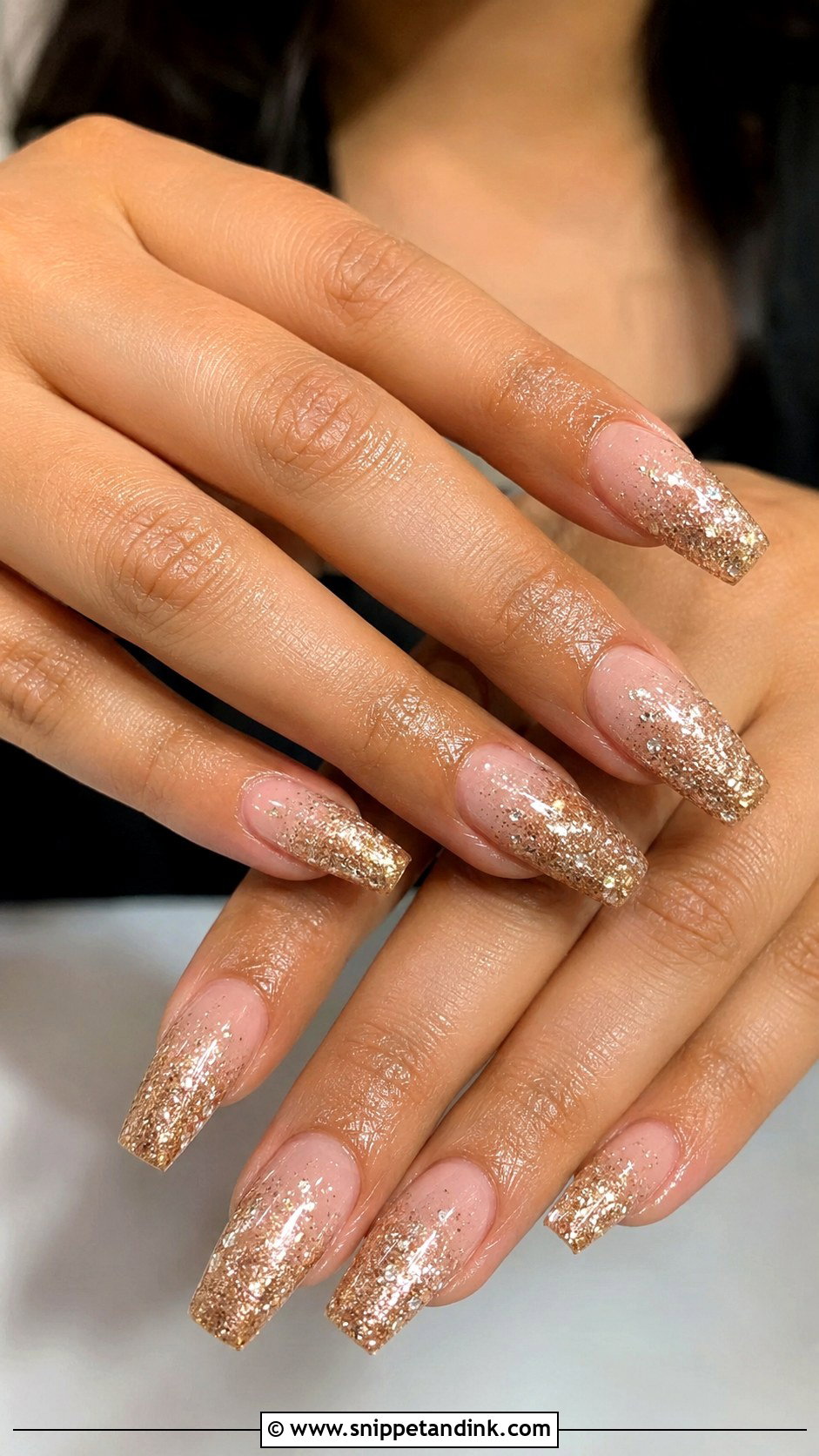
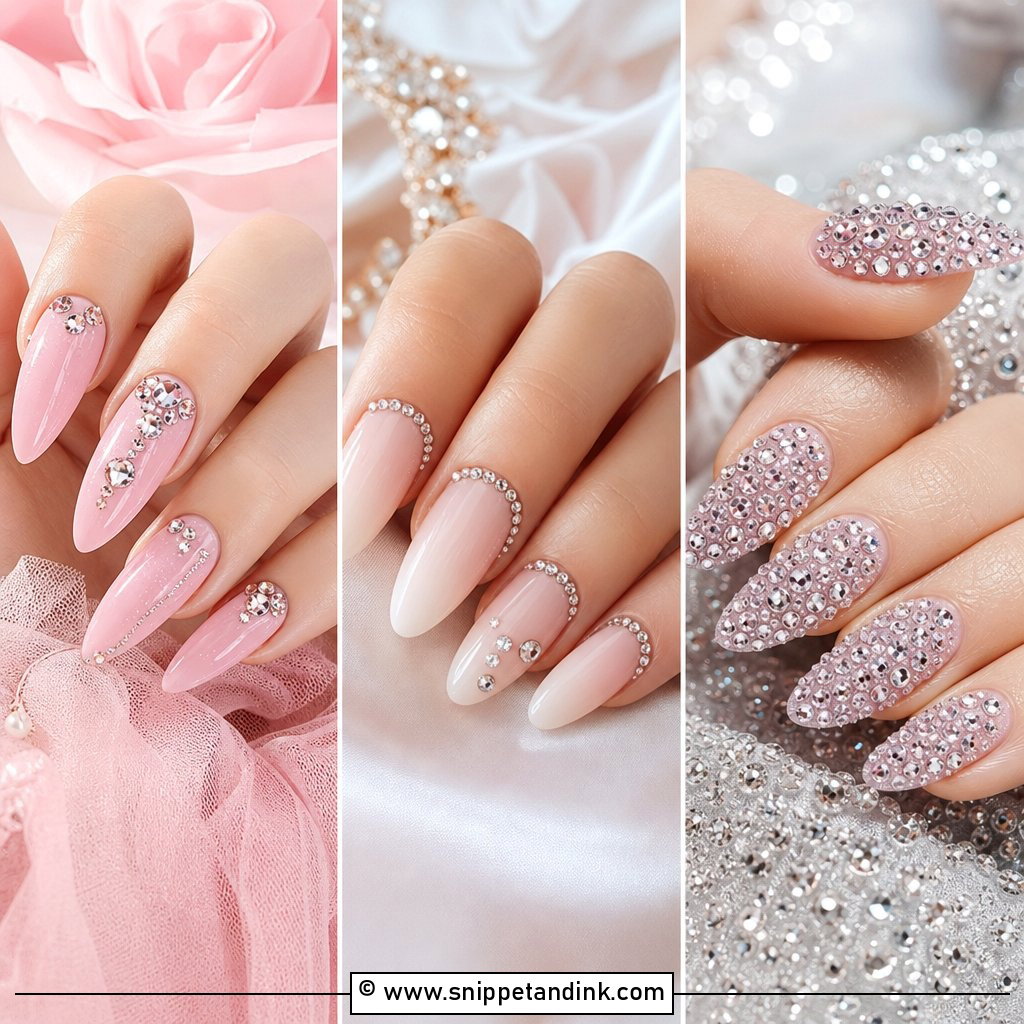
Glitter looks expensive when the particles are fine and the placement is planned. Chunky glitter looks crafty in close-up photos and feels rough when it isn’t fully encapsulated in gel. I prefer gold, rose gold or champagne micro-glitter, either faded from the tip or used as a thin French line. Keep it to two accent nails if your outfit already sparkles. Bright venue lighting makes even a little glitter read strongly.
10. Indian Engagement White Gold Nails
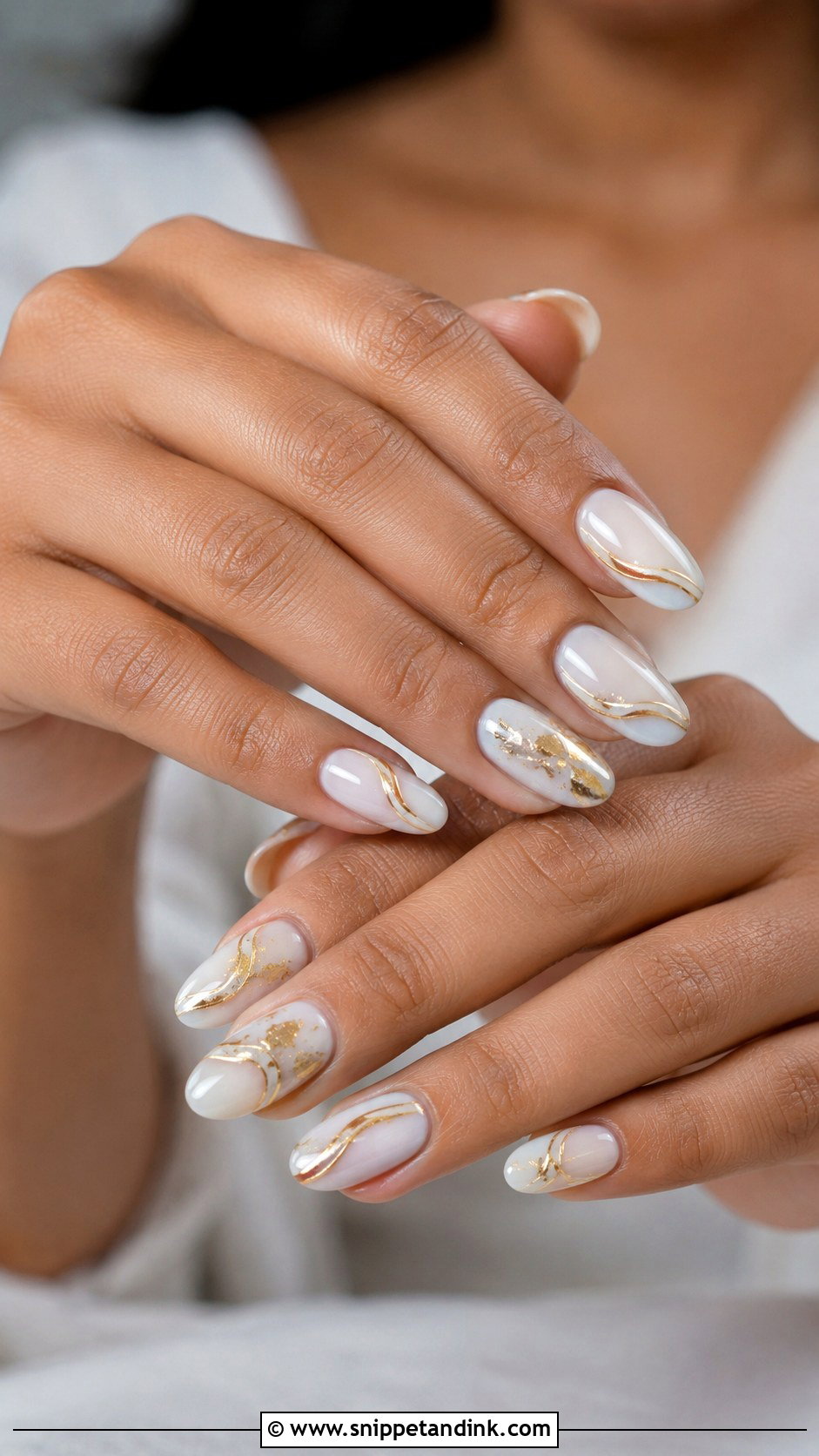
White and gold suit ivory, champagne and pastel engagement outfits and look especially right next to kundan jewellery. Pure opaque white can look stark against warm skin and henna, so I usually mix a milky white or sheer ivory instead. Gold foil or a thin metallic line adds the traditional warmth. Almond and coffin make it look formal; short ovals keep it soft.
11. Indian Engagement Pink Nails
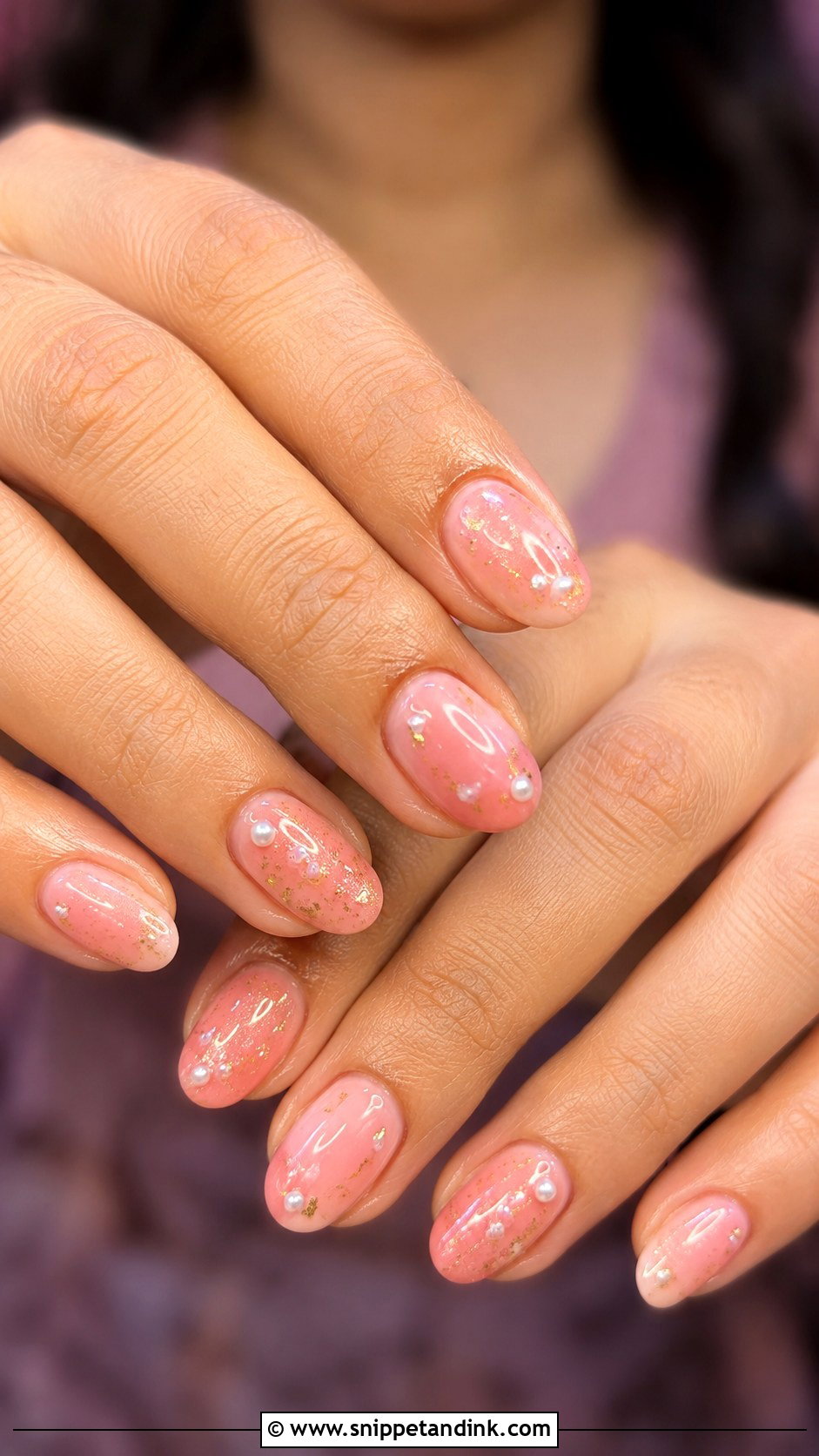
Pink is the easiest colour to match to an outfit, and against a brown henna stain a clean blush pink looks fresh rather than sweet. Dusty pink and rose pink suit lehengas and anarkalis in jewel tones; baby pink works with pastels. You can add pearls, a little foil or a chrome rub. I’d avoid neon or very cool pinks next to deep orange henna, because the clash is obvious in photographs.
12. Indian Engagement Burgundy Nails
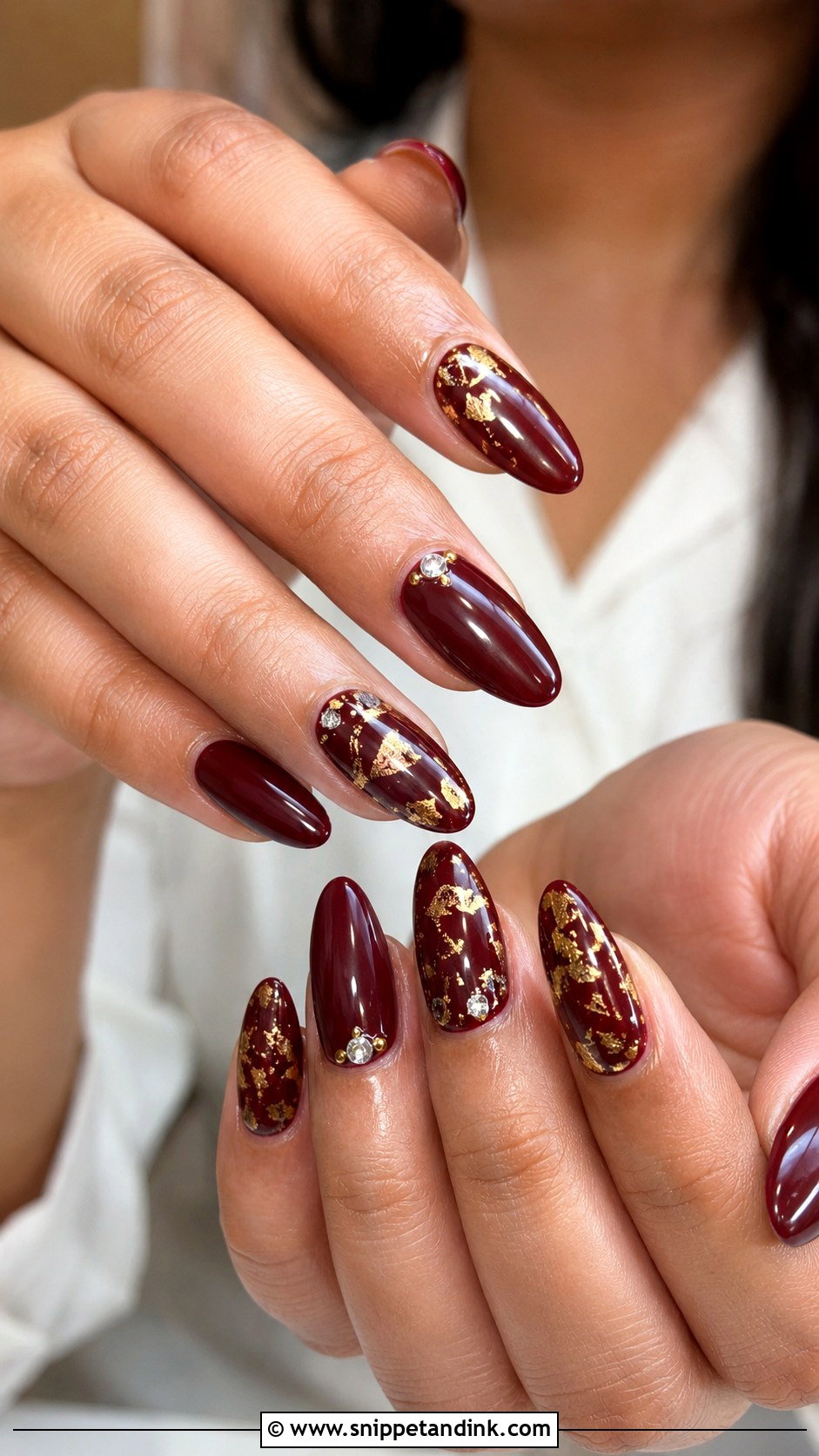
Burgundy nails sit between red and plum, with enough purple in them to flatter most skin tones. A glossy full set works alone; for more depth I’d add a velvet cat eye layer rather than stones. It pairs with gold, cream, emerald, navy and blush outfits. Oval keeps it classic. Long coffin burgundy is dramatic but shows regrowth quickly, so time the appointment close to the event.
13. Indian Engagement Floral Nails
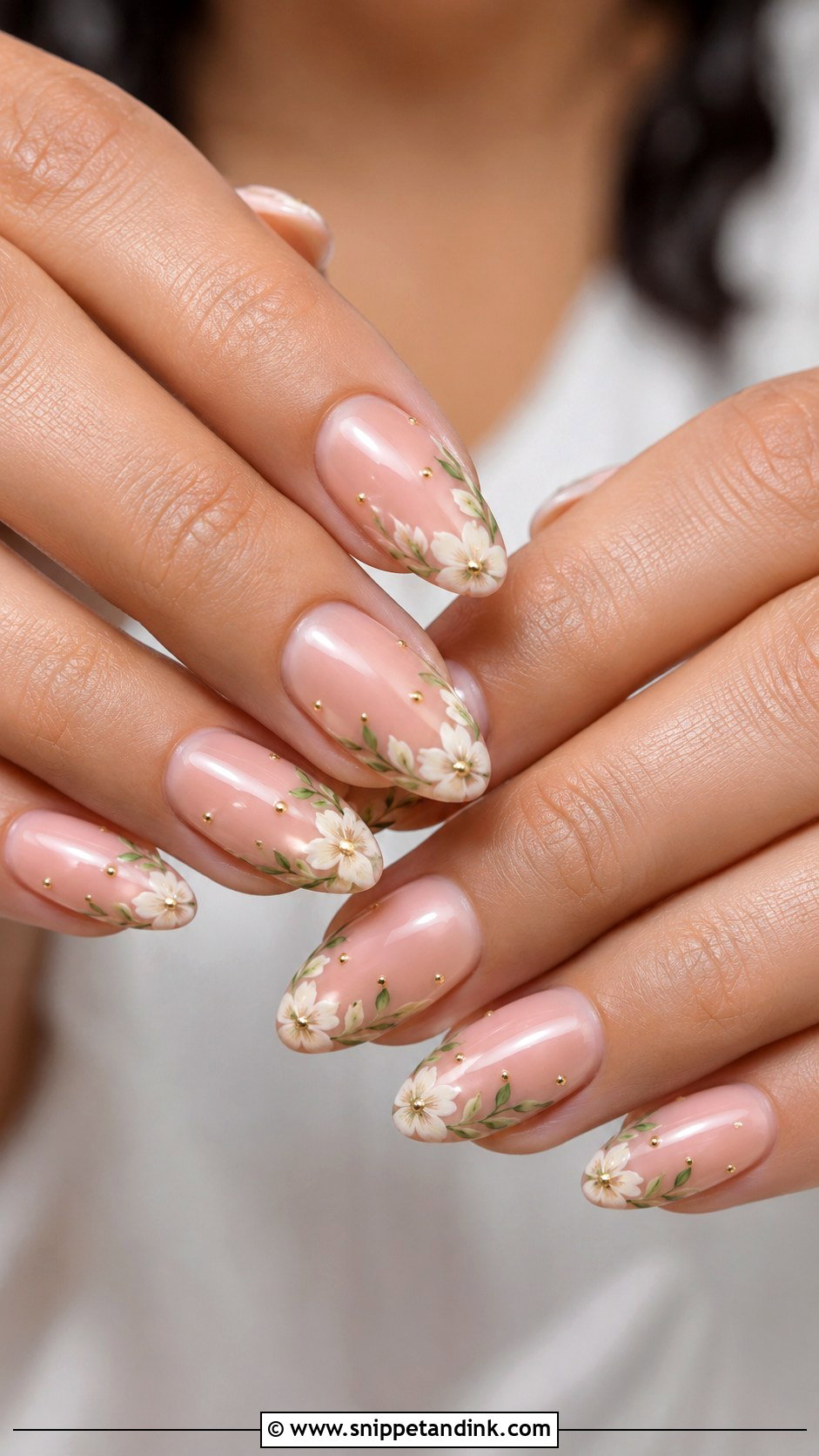
Hand-painted florals need restraint at an engagement. Large blooms across every nail compete with the mehndi, which is already a floral pattern. I paint fine petals and small vines on two or three nails, with gold dots or a pearl centre, and keep the other nails a solid soft colour. Over nude, peach or ivory, this suits floral lehengas and daytime ceremonies.
14. Indian Engagement Kundan Nails
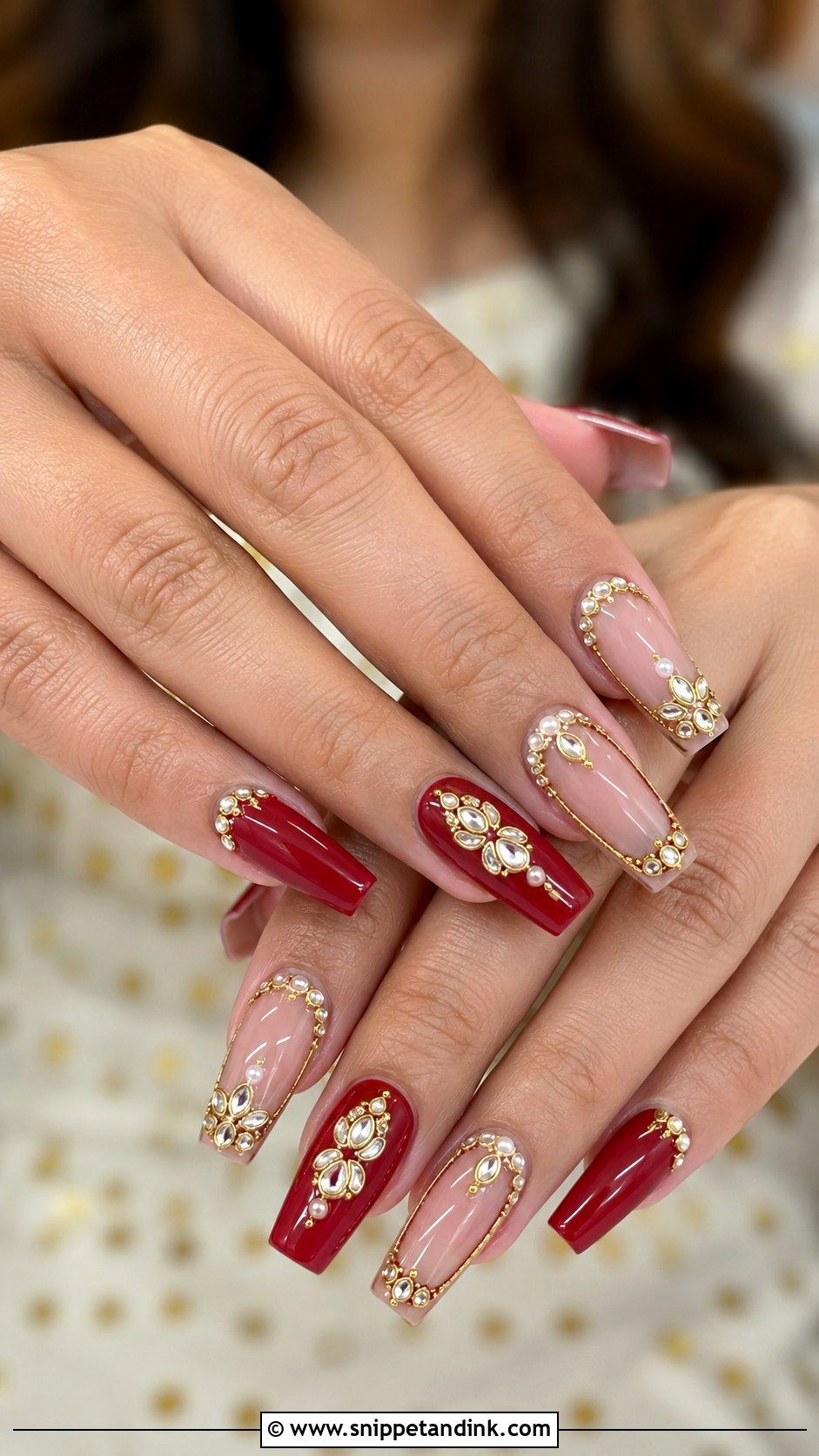
Kundan-style nails treat each accent like a piece of jewellery, with tiny flat stones, gold outlines and pearls over a red, maroon, nude or emerald base. Comfort is the real limit. Big stones snag hair and fabric, and they make it awkward to eat, greet guests or hold the ring box. I set small stones near the cuticle or along the tip on one statement nail per hand and leave the rest plain. Next to heavy bridal jewellery, that’s plenty.
15. Indian Engagement Minimal Nails
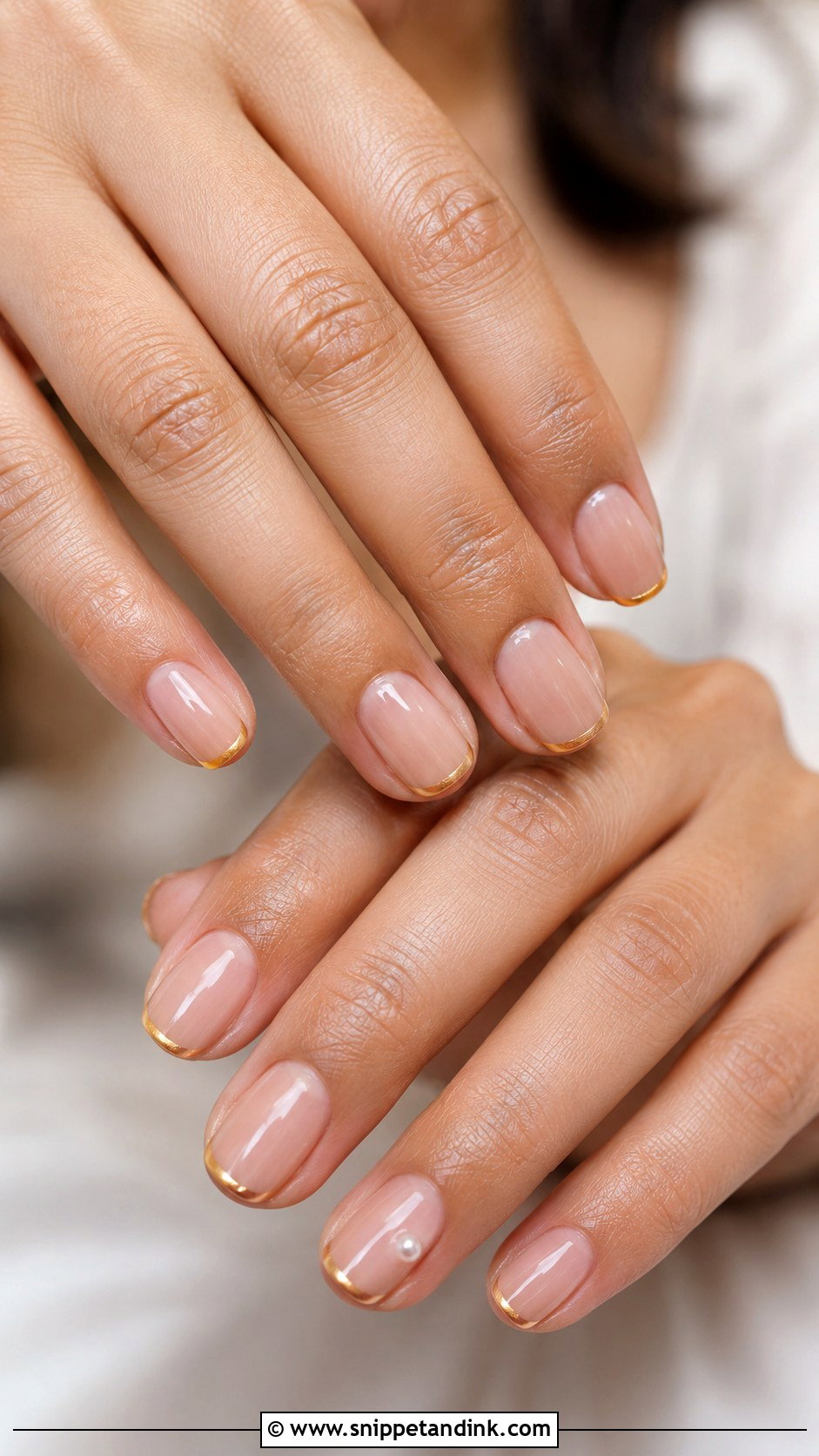
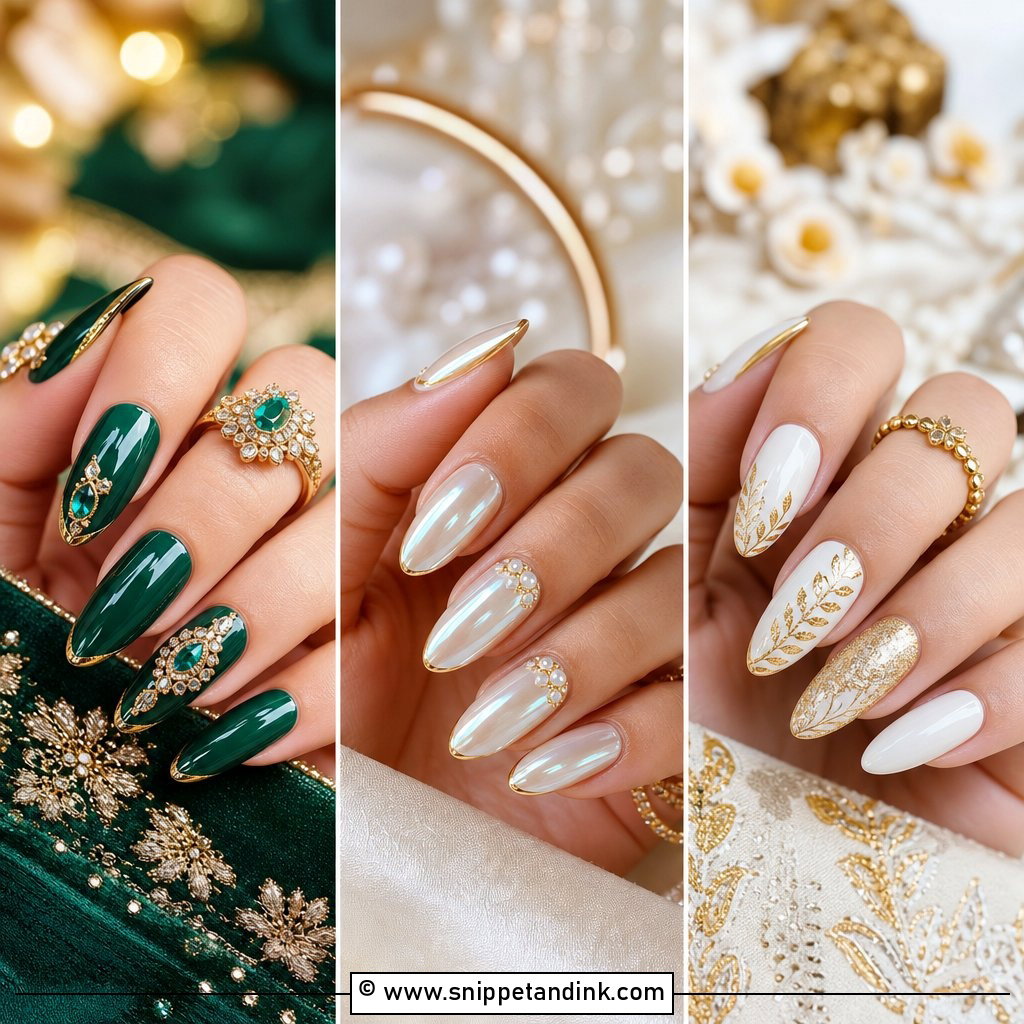
A minimal set is often the smartest call when the outfit, jewellery and mehndi are already detailed. A sheer nude, soft pink or milky base with one small gold line, a tiny pearl or a micro French tip keeps the hands looking finished. It suits short nails and anyone who doesn’t usually wear enhancements. With so little decoration, shape and cuticle work carry the look, so I spend most of the appointment on those.
16. Indian Engagement Almond Nails
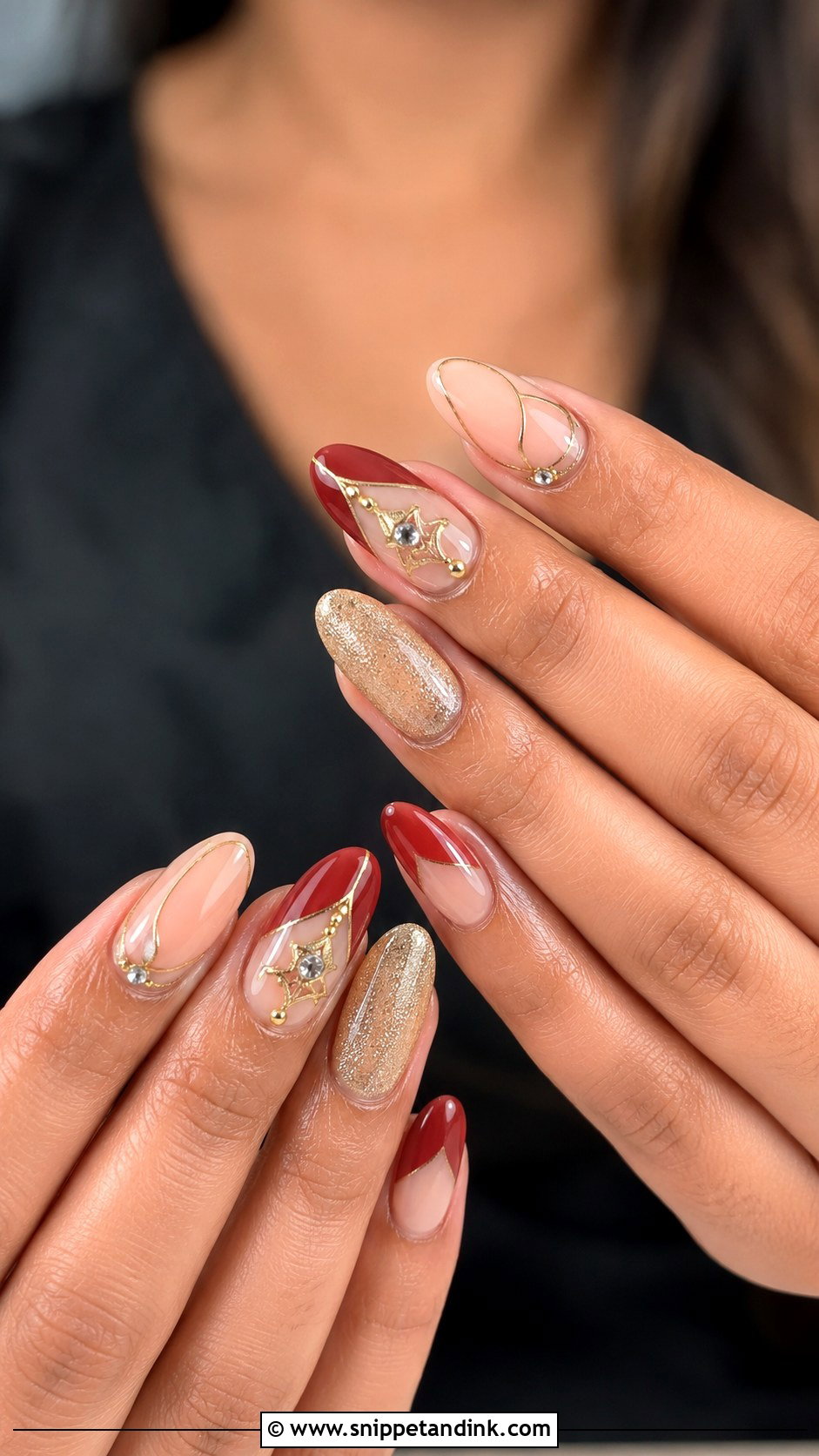
Almond is the shape I recommend most for engagement photos. The tapered tip lengthens the fingers, and the rounded point looks soft next to mehndi rather than sharp. It takes almost any design, from red and gold to chrome and florals. Medium length is the practical choice. Very long almond tips are fragile at the point and can crack when you’re adjusting a heavy dupatta.
17. Indian Engagement Short Nails
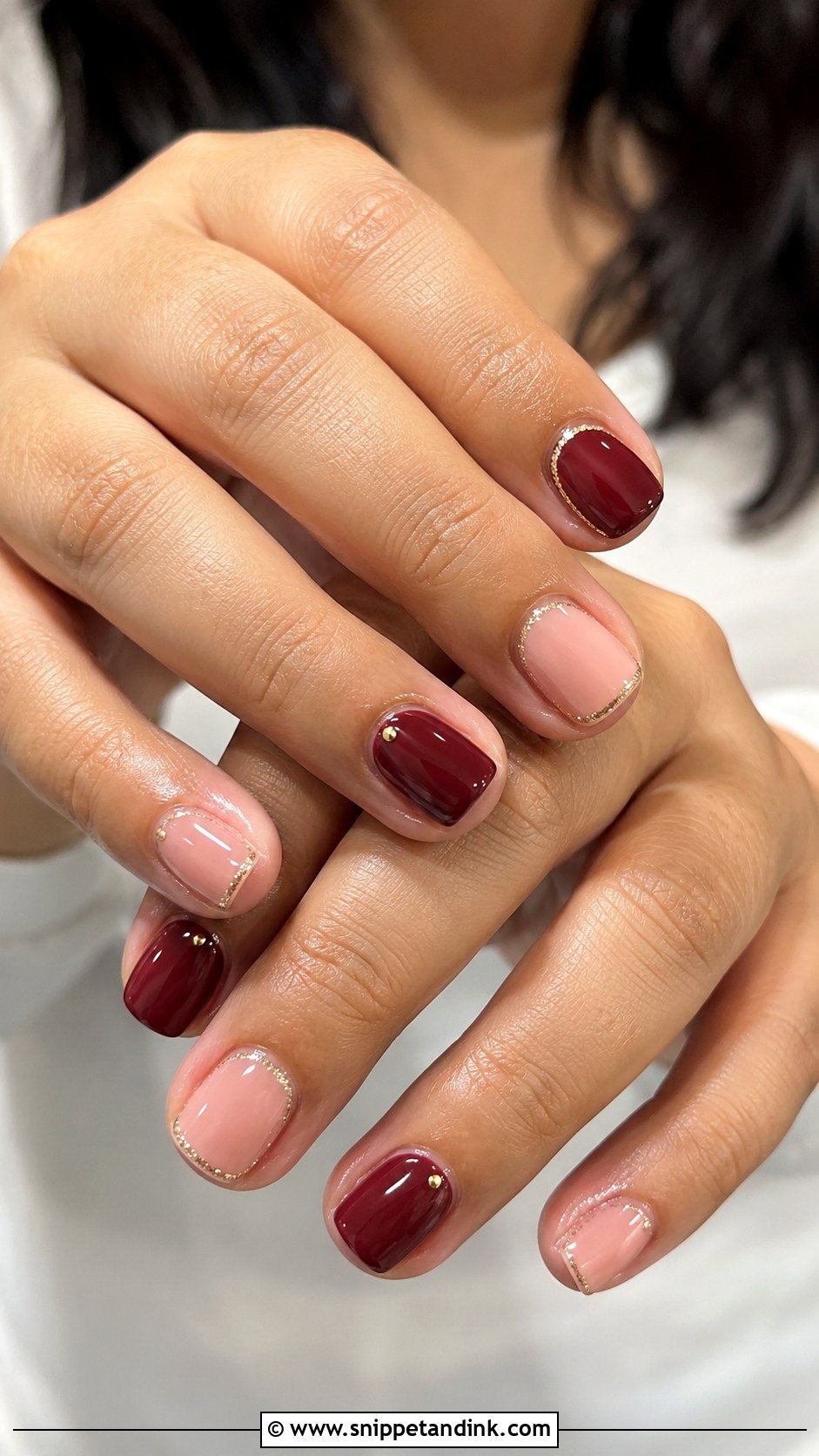
Short nails photograph well when the shape is even and the cuticles are tidy, and they are much easier to live with across several events. Glossy red, nude with gold, maroon or milky white all suit them. Keep the art small: micro French tips, tiny gold dots or a single fine floral. Large stones overwhelm a short nail bed. A rounded square or short oval is the most flattering outline.
18. Indian Engagement Coffin Nails
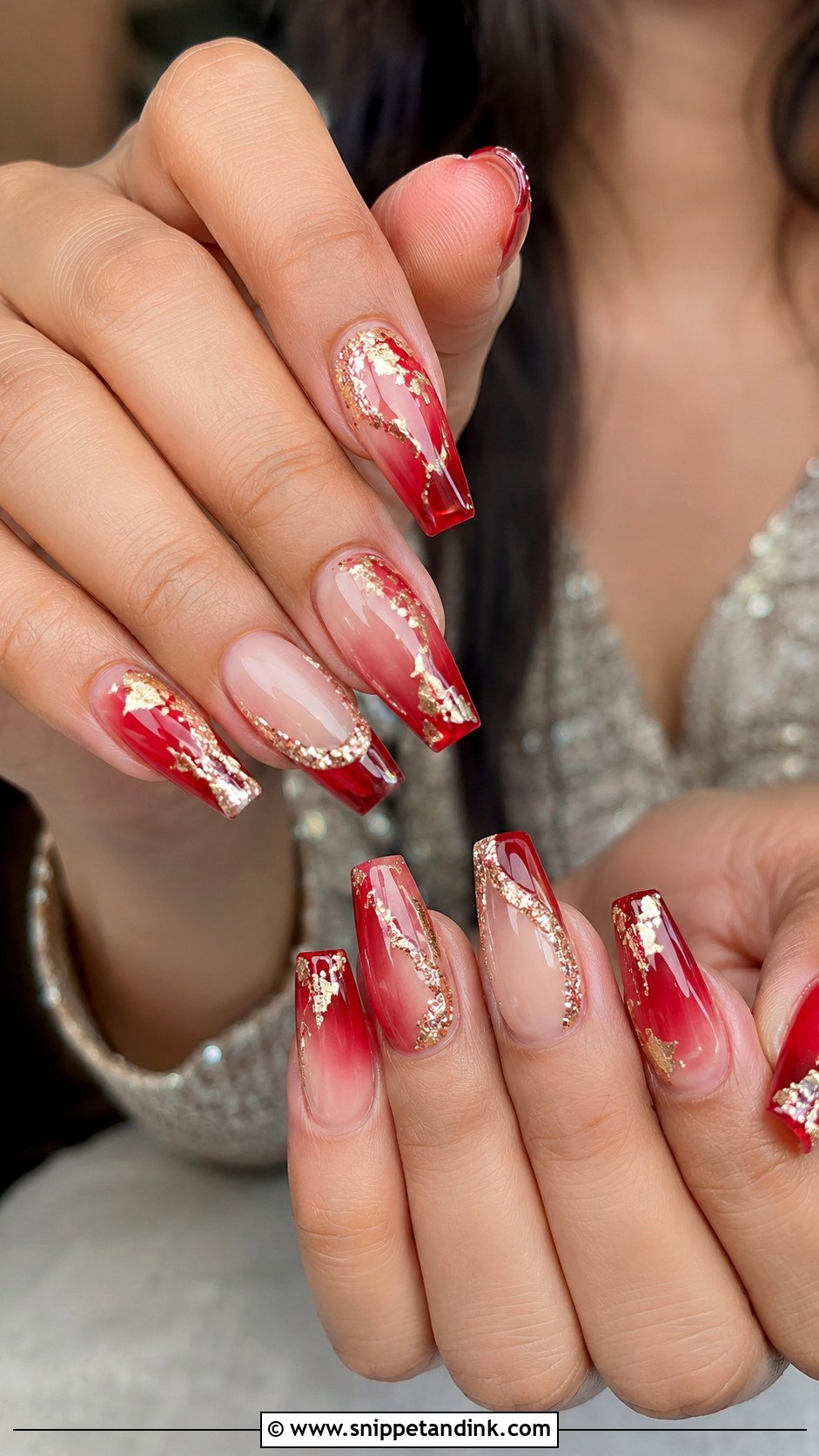
Coffin nails have tapered sides and a flat tip, which gives a wide canvas for red ombré, gold foil, chrome, glitter tips or mehndi art. Because the shape is already dramatic, I keep the palette to two or three shades. Medium length is far easier to wear than very long coffins, which catch on clothing and make fastening jewellery fiddly. If you’ve never worn extensions, try a set a few weeks before the engagement.
19. Indian Engagement Pastel Nails
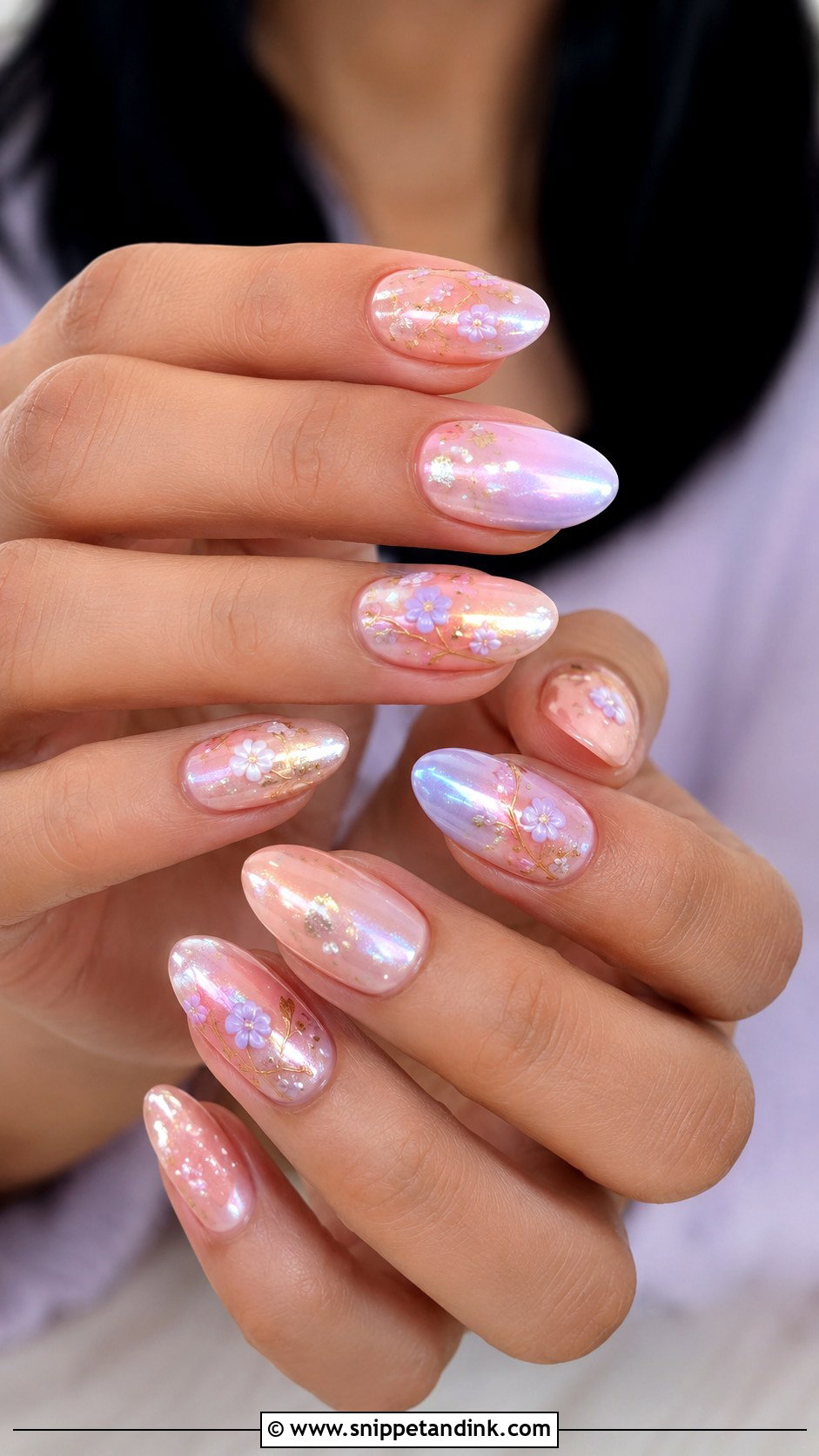
Pastel nails match soft outfits in blush, mint, lavender, powder blue and peach, and they suit daytime ceremonies. The risk is that pastels can look flat or chalky. I add a pearl or chrome finish, a little gold foil or a fine glitter fade to give them light. Against a dark henna stain, pastel pink with gold or lavender with pearl chrome reads festive without looking heavy.
20. Indian Engagement Cat Eye Nails
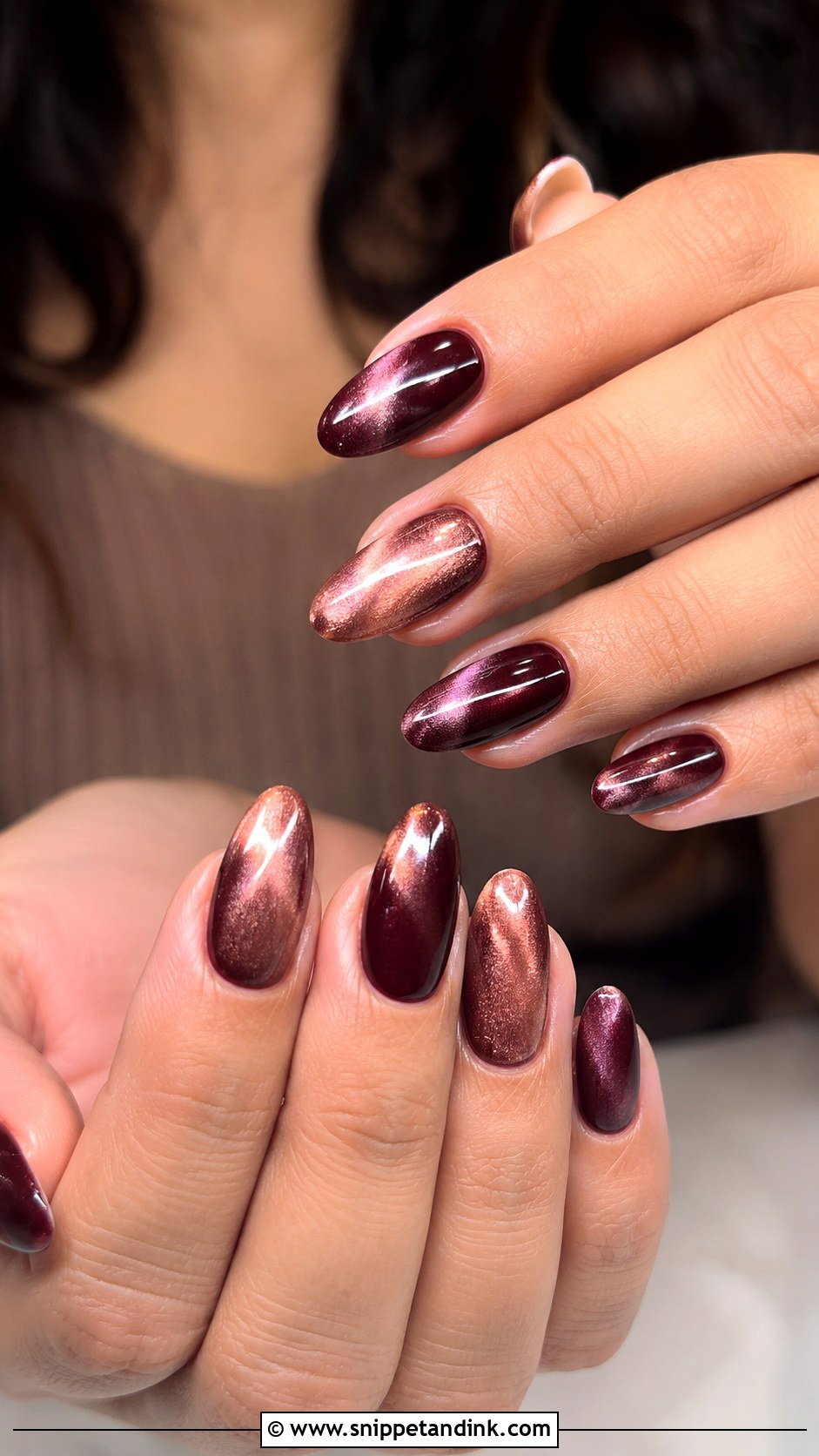
Cat eye polish uses magnetic particles that I pull into a band of light with a magnet before curing, so the shine moves as your hand turns. That movement shows up well in video and ring photos. Champagne, rose gold, maroon, burgundy, emerald, bronze and soft pink are good engagement shades. Wear it on every nail or on one or two accents over nude. It sits best on almond and oval shapes, where the curve shows off the band.
Your Hands Up Close in the Ring Shot
The ring photo is usually a macro shot, so it shows things you’d never notice in the mirror. Dry cuticles, a lifted edge on one nail or a smudge of top coat on the skin all show clearly. These are the checks I make before a bride leaves my table.
- Cuticle oil every evening until the engagement, and a drop on the morning, wiped off before photos so it doesn’t look greasy.
- Nail length in proportion to the ring: a large stone looks best with medium nails rather than very long ones that dwarf it.
- Colour that contrasts with the metal, so a yellow gold band doesn’t vanish against gold foil on the same finger.
- A clean ring finger, with the art moved to the middle or index nail if the ring is ornate.
Gel, Builder or Press-Ons for a Busy Week
Gel polish is the most reliable choice for an engagement because it cures hard and won’t smudge while henna dries. Structured builder gel adds strength to natural nails that tend to snap. Good press-ons are fine for a one-day event, but they can pop off during long functions with lots of hand contact, so carry the glue. If you have other events in the same month, plan the timing so one set covers them without heavy regrowth.
The Set That Suits Your Ring, Your Mehndi and Your Weekend
Pick the set around your mehndi, your ring and how many events you have, then let the outfit settle the colour. Traditional sets lean red, maroon, gold, kundan or mehndi art; softer ones lean nude, pearl, French or pastel; chrome, cat eye and ombré read more modern. The most detailed set isn’t always the most flattering. Clean shape, tidy cuticles and a colour that suits your skin will matter more in the ring close-up than anything else.
You'll Like These Ideas:


Leave a Reply