
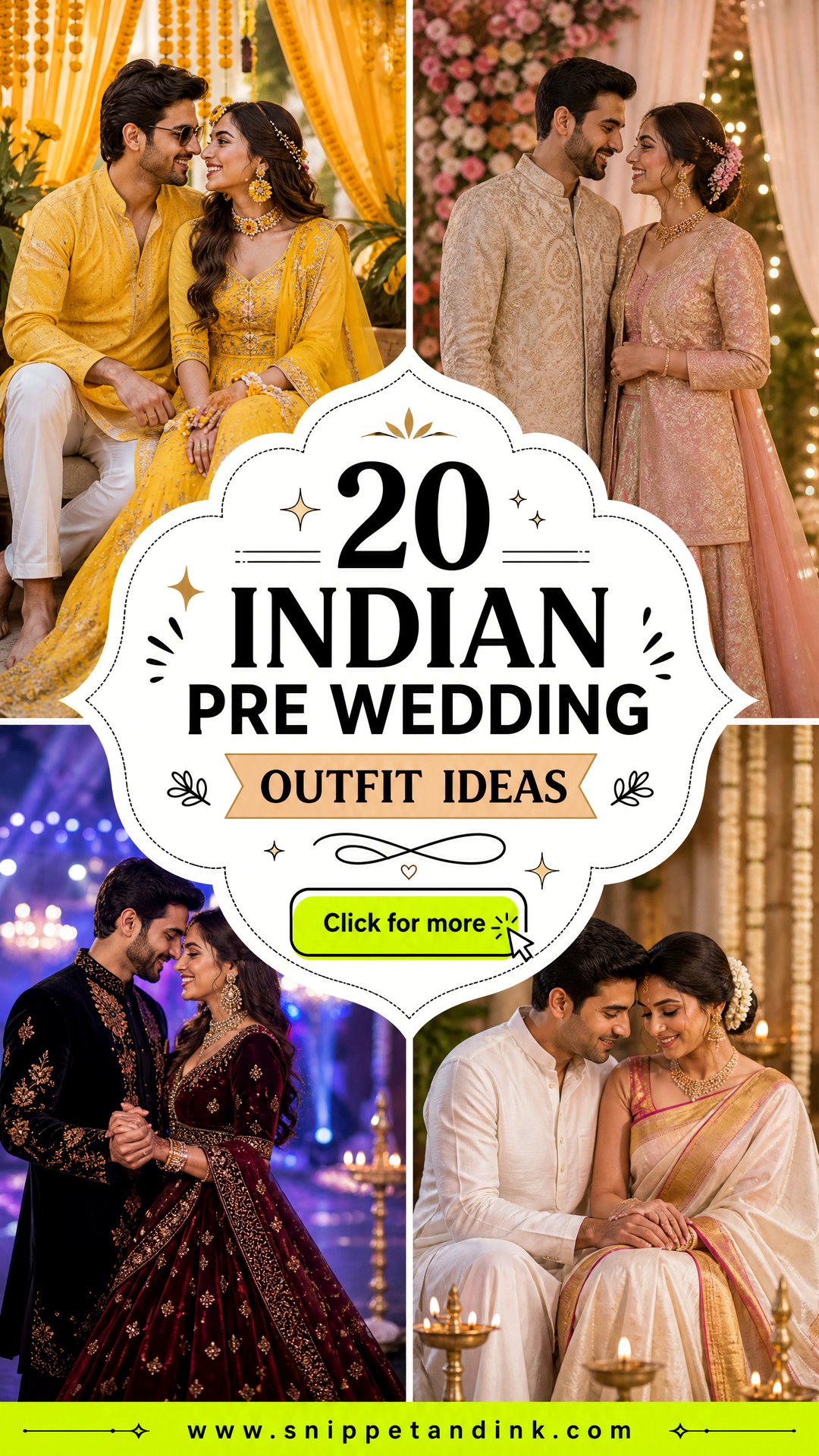
The pre-wedding functions are where I get to have the most fun with color, because nobody expects the restraint of the main ceremony. Each event asks something different of an outfit, though. At the mehndi you’ll sit still for hours with your arms out. Haldi gets messy. The sangeet means dancing, and a roka or engagement means close family photos. Below are twenty outfits matched to those events, from twirl-friendly lehengas and sharara sets to sarees and fusion pieces. Light fabrics suit the daytime functions, while sequins and metallic work come out at night. For each one I’ve noted how a bride would dress it up and how a bridesmaid or guest would tone it down.
Packing Four Functions Into One Wedding Weekend
Most of the pre-wedding problems I fix aren’t about the outfit at all. They’re about a missing blouse, a crushed lehenga or earrings left in the wrong bag. When clients travel for a wedding, I pack each function as a complete kit.
- One garment bag per event, labeled with the function and day. Blouse, skirt or saree, dupatta, petticoat and the right bra all go in together.
- A zip pouch pinned inside each bag with that outfit’s jewelry, safety pins and any hair accessories.
- Lehengas travel best rolled loosely inside a skirt bag, never folded sharply across the embroidery, which leaves a permanent crease line.
- Sarees fold flat with tissue paper between the layers so zari doesn’t rub.
Pack a handheld steamer. Hotel irons are risky on organza and velvet, and steam relaxes travel creases without flattening embroidery. Hang everything as soon as you arrive.
For a bride, I build the outfit changes into the schedule. A full change with hair and makeup touch-ups takes longer than anyone expects, often close to an hour, so a haldi and a mehndi on the same day need a real gap between them.
1. Yellow Floral Lehenga For Haldi
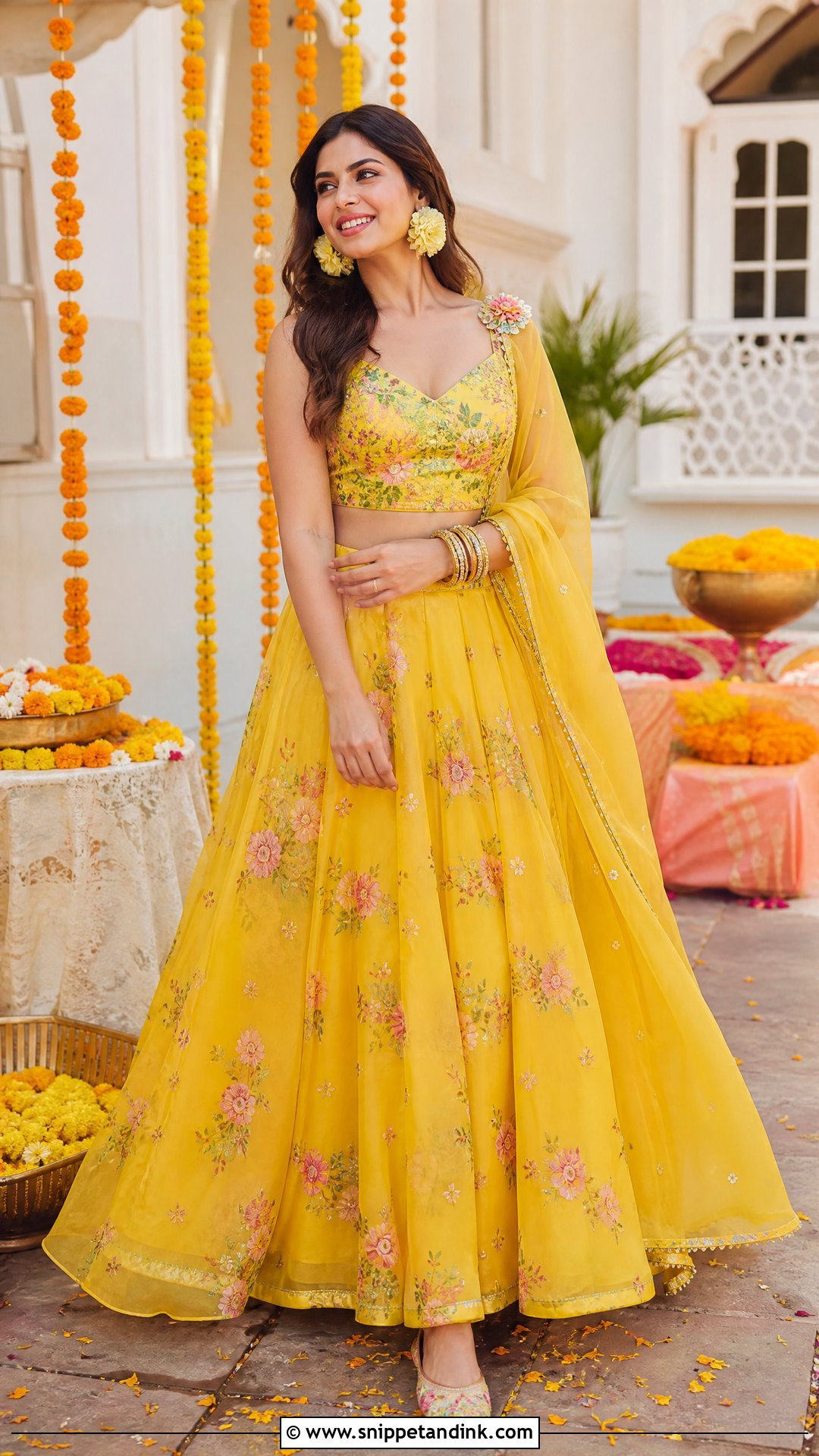
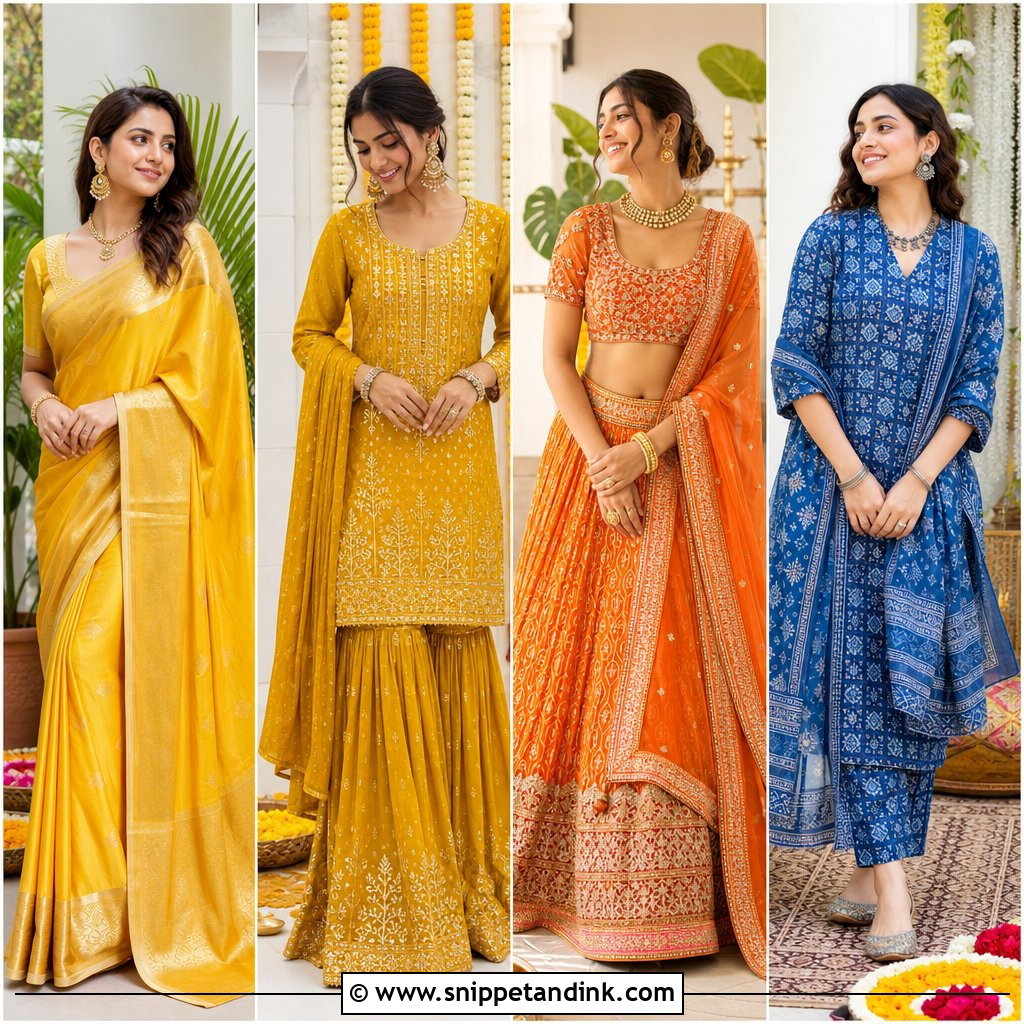
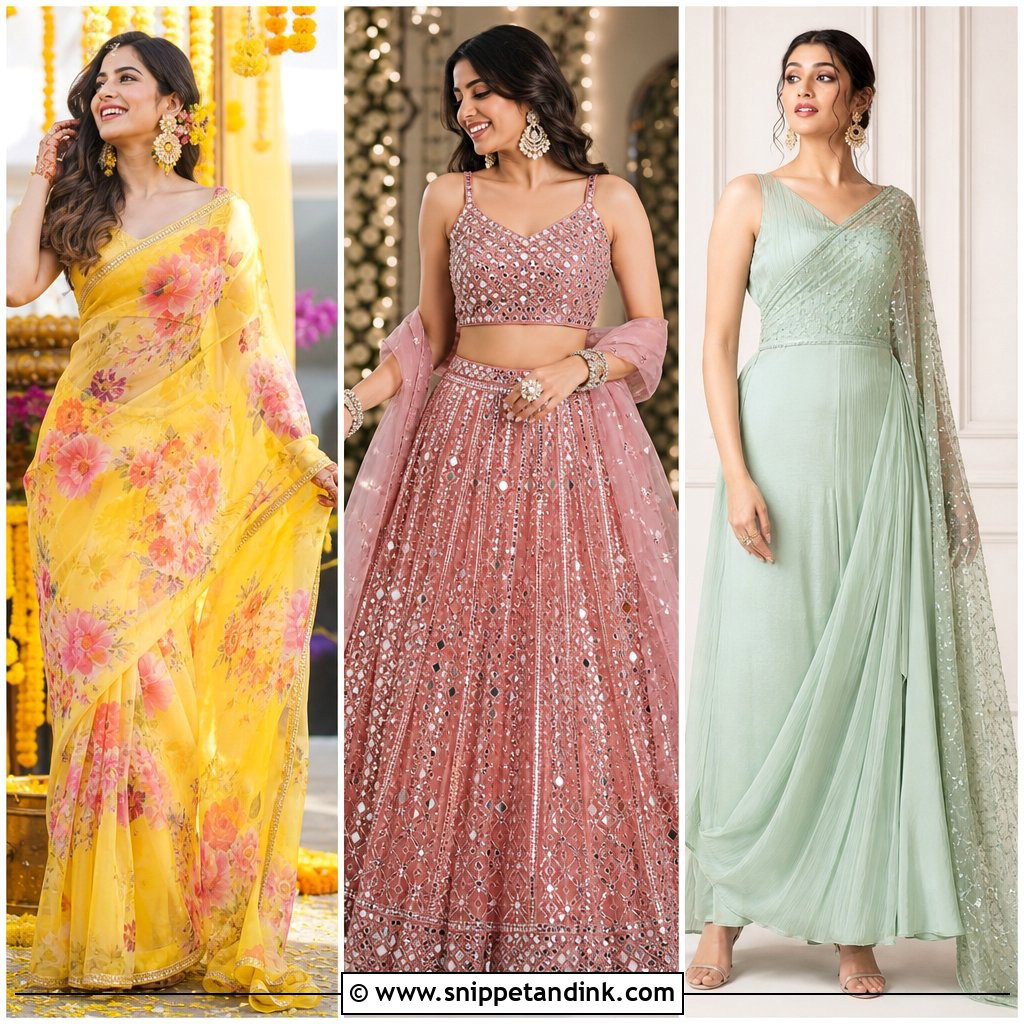
A yellow floral lehenga is the haldi outfit I’m asked about most, and I’d always choose georgette or organza with a printed floral over plain fabric, because print hides turmeric. Pair a comfortable cropped blouse with a soft dupatta pinned at the shoulder. A bride can add floral embroidery, a scalloped border or small mirrors; a guest is better in a simple print. Floral earrings, stacked bangles and juttis or flat sandals finish it, with a loose braid and small flowers. Leave heirloom fabrics at home today.
2. Yellow Sharara Suit For Haldi
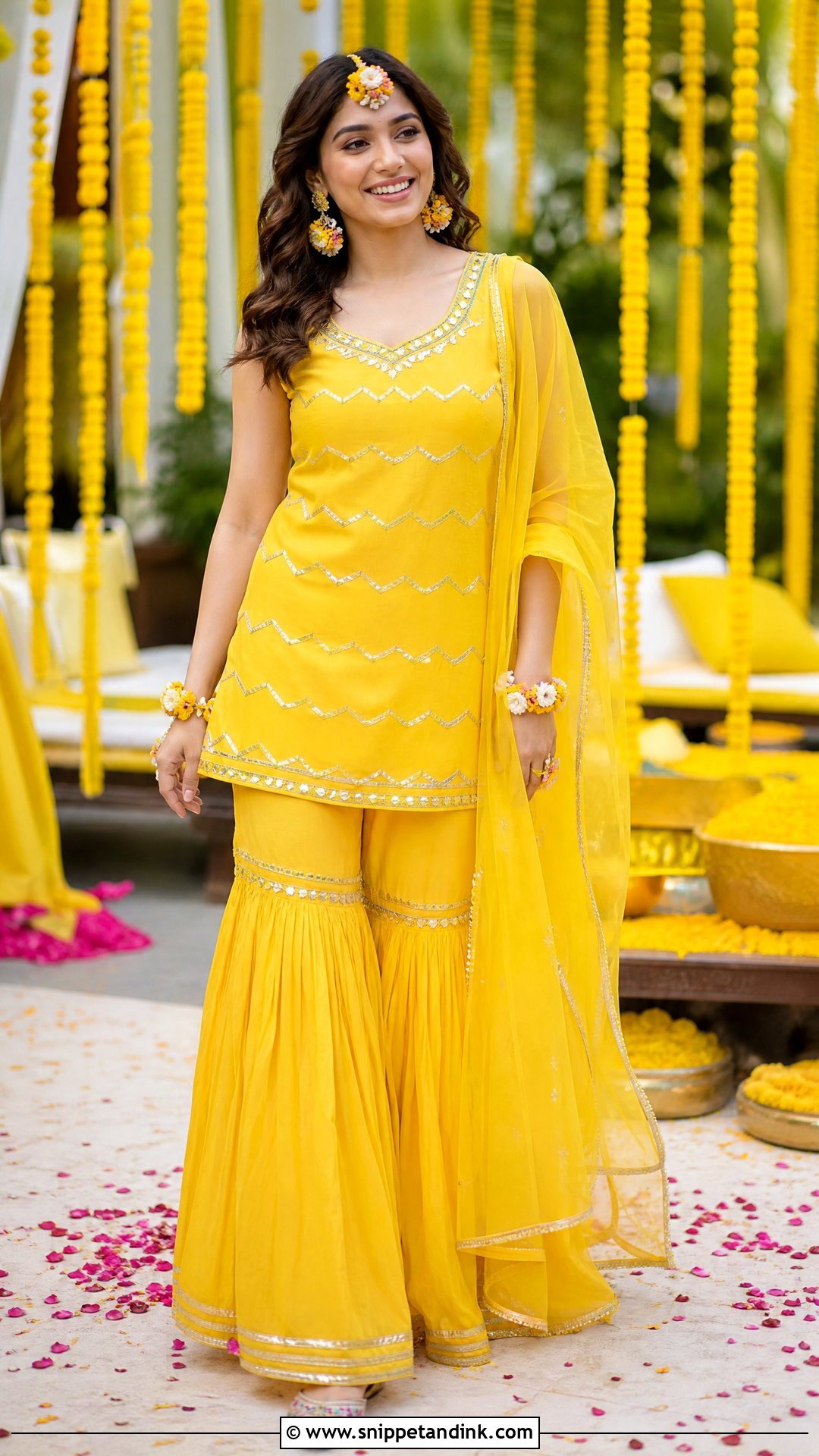
Sharara suits are easy to sit in, which matters at haldi, when you’ll spend a good while on a low stool while relatives apply paste. Choose a yellow set with a short kurti and wide pants in cotton silk, crepe or georgette; cotton silk breathes best outdoors. Subtle gota trim or small mirrors give enough shine. Pin the dupatta at one shoulder so it doesn’t slide into the paste bowl. Floral bangles, gold-toned earrings and juttis complete the set. A bride can layer jewelry. As a guest, I’d keep it to one pair of earrings and a few bangles, with a low ponytail.
3. White And Yellow Saree For Haldi
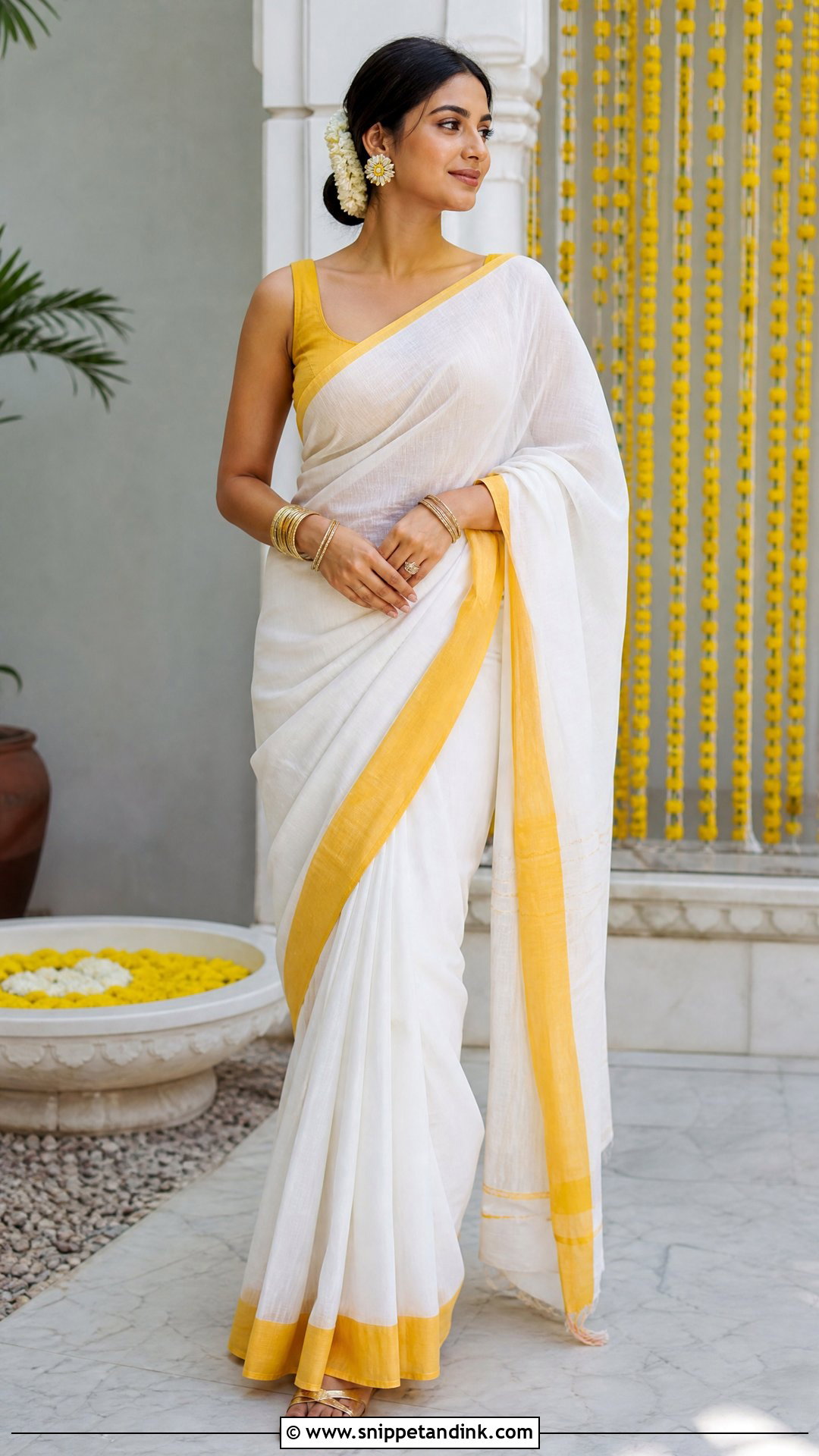
White and yellow make a clean haldi saree, though I’d check one thing first: in some families white carries mourning associations, so ask before you commit. If it’s welcome, choose cotton, chiffon or soft organza with a yellow border, floral print or light embroidery, and pair it with a mustard or marigold blouse. Cotton is the fabric I’d pick, since it rinses out far more easily than organza. Pin the pleats firmly. Flat sandals, flower jewelry and small gold hoops keep it relaxed. A pre-stitched version saves you from re-tucking with turmeric on your hands.
4. Orange Anarkali Suit For Haldi
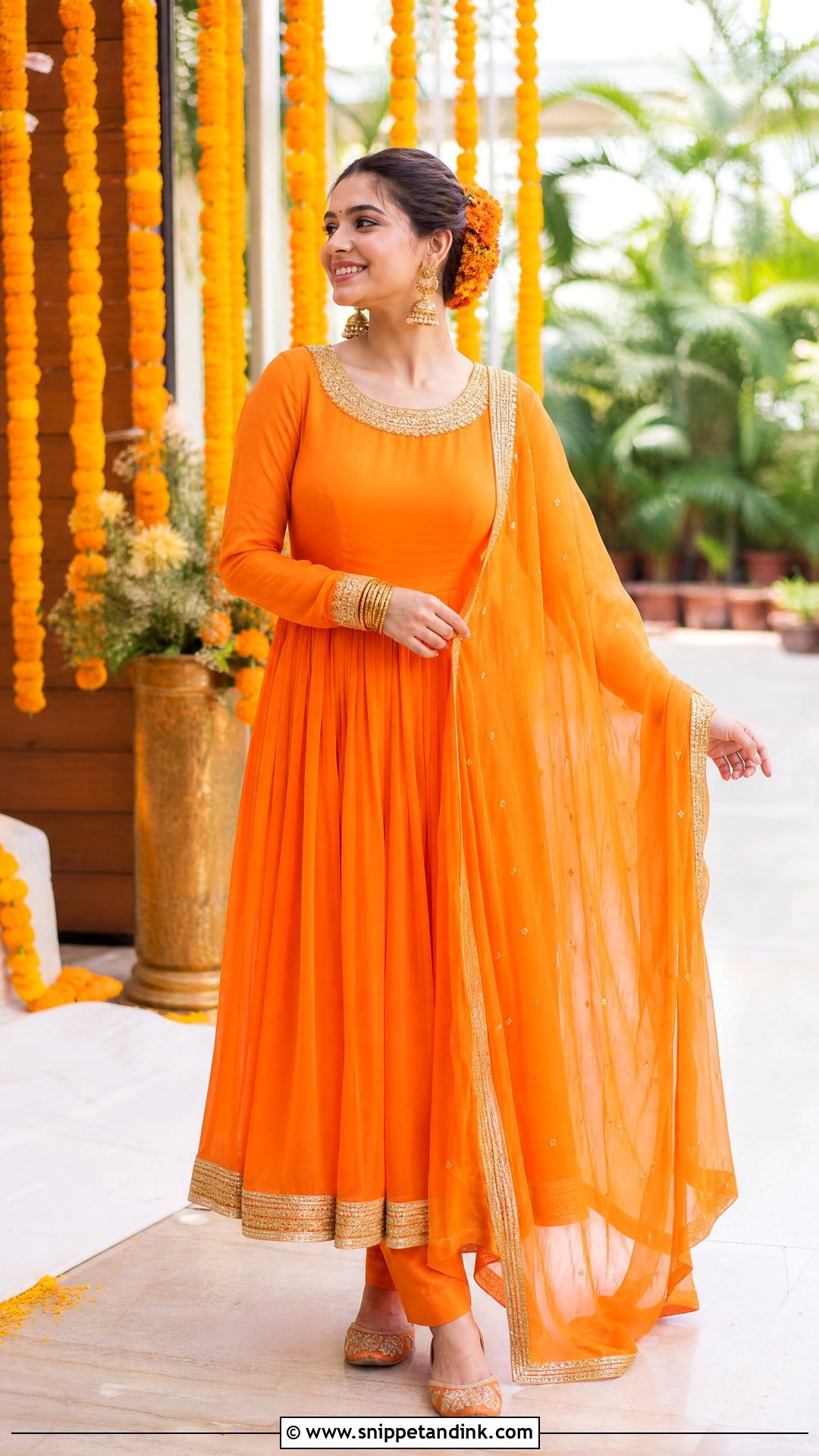
Orange is underused at haldi, and it photographs warmly outdoors. Choose an Anarkali suit in tangerine, marigold or soft coral with a fitted bodice and a flowing skirt. Cotton silk holds a structured shape; georgette moves more lightly. Small gota motifs or restrained mirror work add detail without weight. Straight pants and a sheer dupatta over one arm complete it, with gold jhumkas, slim bangles and juttis. Brides tend to suit a sleek bun with fresh flowers; guests can leave hair in loose waves. It’s the haldi outfit I’d suggest to anyone wanting full coverage.
5. Green Mirror Work Lehenga For Mehndi
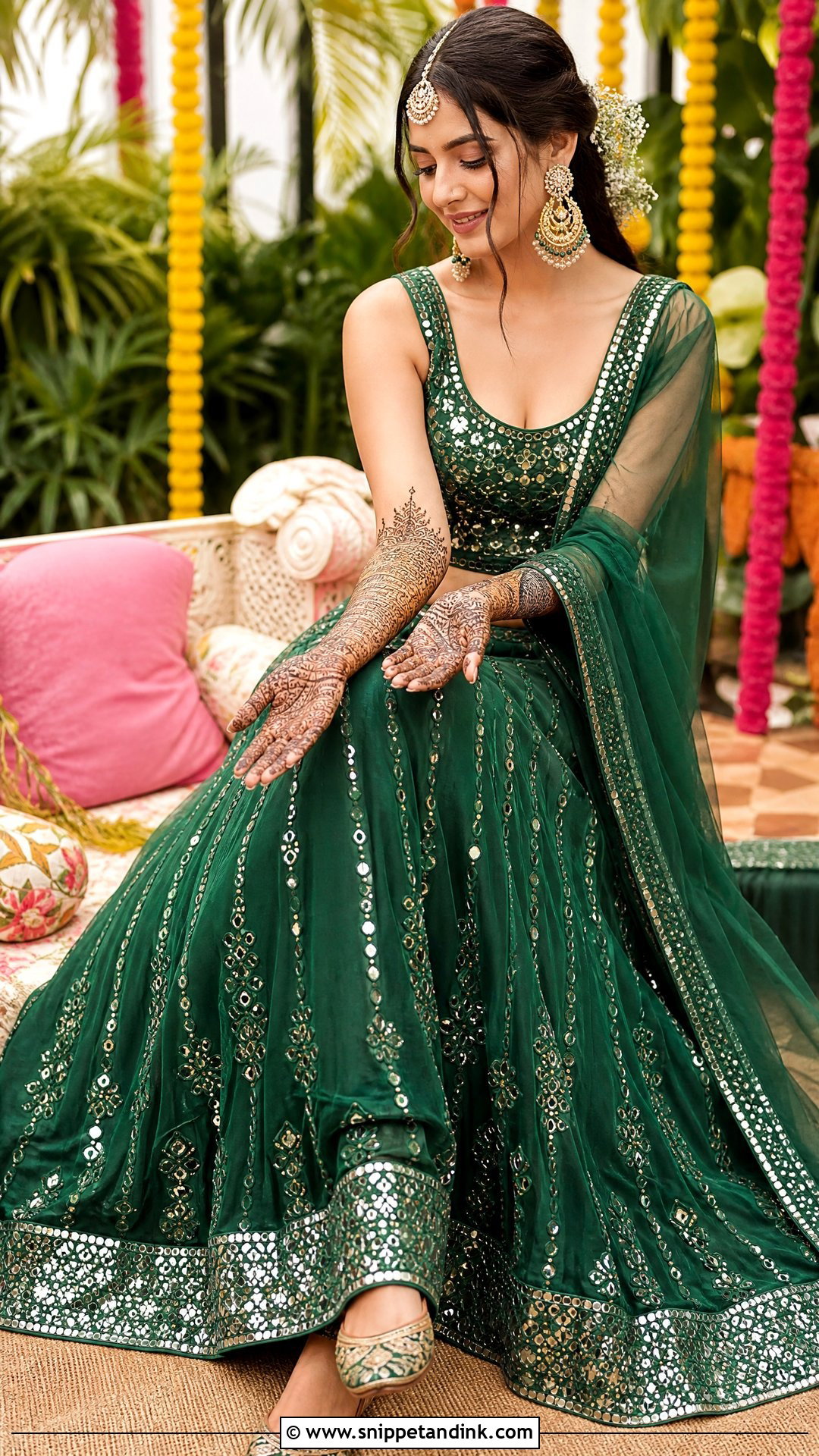
Mehndi outfits have one job that matters more than color: they must leave your hands and forearms free for the artist. That’s why I choose short-sleeved or sleeveless blouses for this green mirror-work lehenga, in emerald, parrot green, olive or mint. A light skirt with scattered mirrors handles sitting and dancing. Drape the dupatta over one shoulder, never across both arms, or it’ll brush the wet paste. Chandbalis, a maang tikka and juttis complete it. A bride can add colorful tassels or pink accents. Tie your hair back; loose strands stick to henna and smudge it.
6. Bandhani Sharara Suit For Mehndi
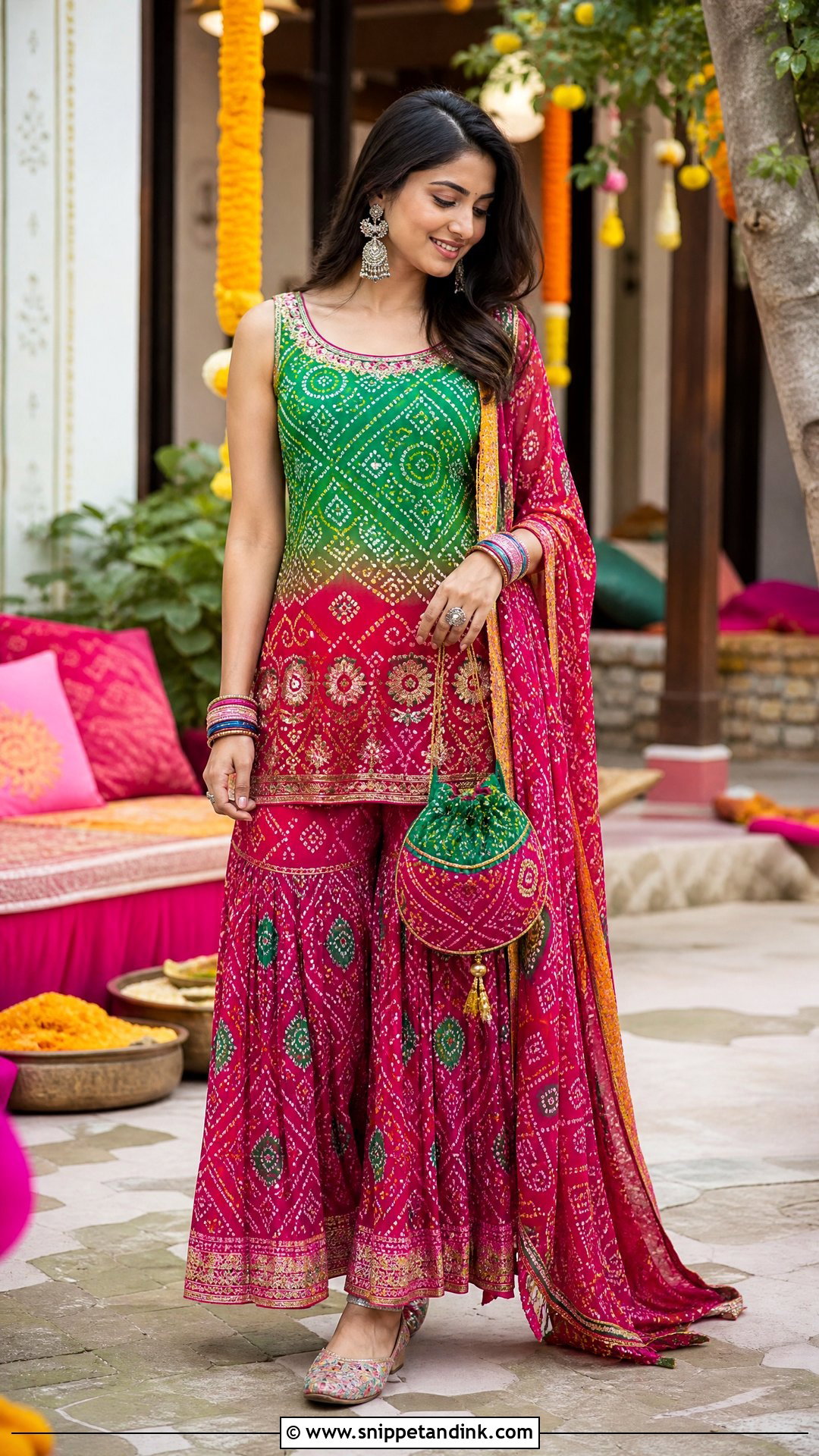
Bandhani is tie-dyed in tiny dots, and on a sharara it reads instantly as celebration. A green, fuchsia, purple or multicolored kurti with flared pants and a light dupatta is plenty; with the print already busy, I keep embroidery to the neckline, cuffs and hem. Go sleeveless if you’re getting henna on your arms. Oxidized silver earrings, colorful bangles and flat juttis you can slip off easily suit it. A bride might add a decorative waist belt or contrasting dupatta, while a guest needs little more than small earrings and a potli. Expect a long, relaxed afternoon in it.
7. Floral Gharara Set For Mehndi
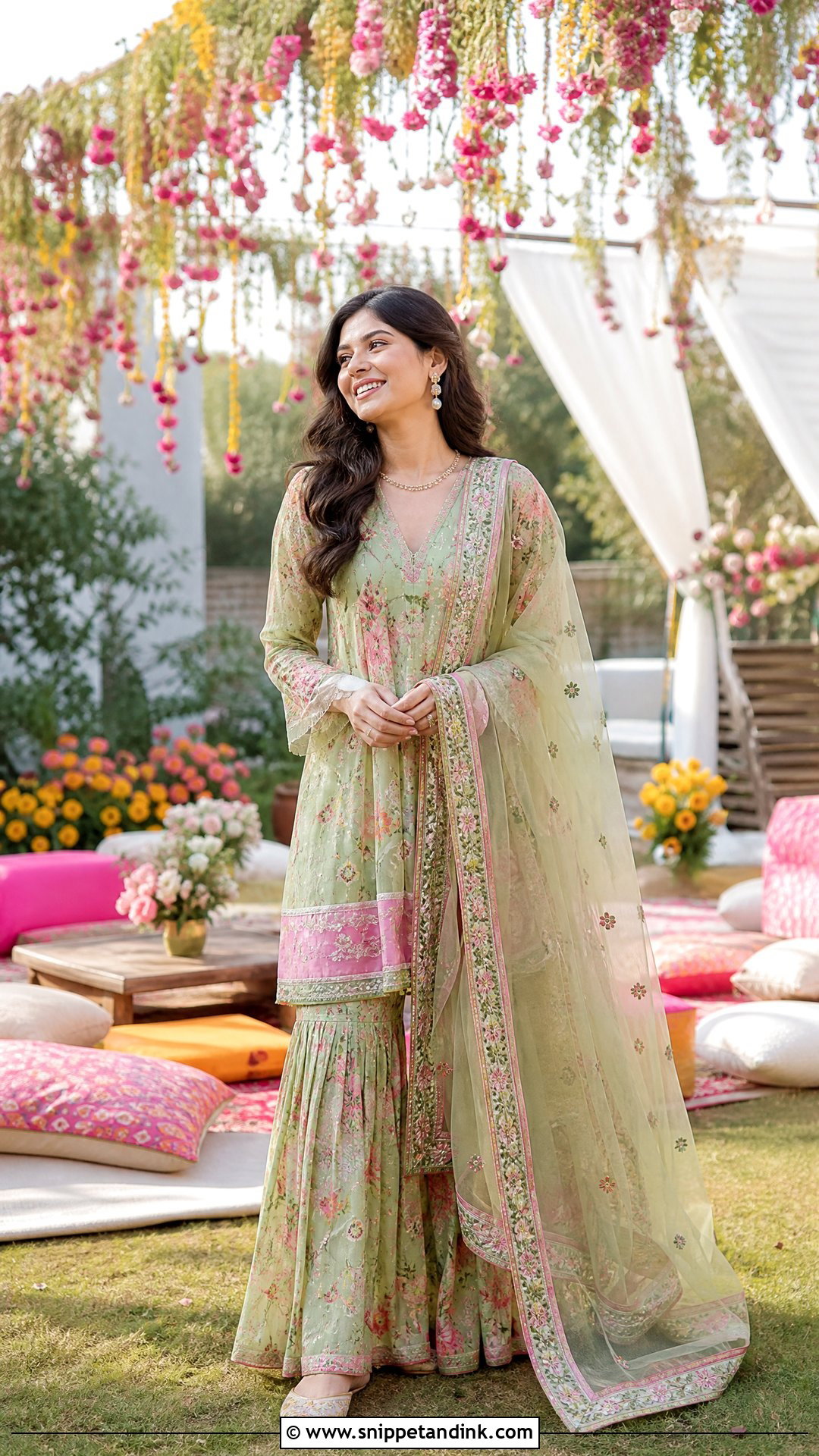
A floral gharara looks fresh for a daytime mehndi. Wear a fitted kurti with gharara pants that flare from the knee and a sheer dupatta with a matching border. Green and pink florals are the classic choice, though lavender, peach and blue suit a pastel theme. Chiffon, georgette or light cotton silk keep it from bulking up at the knee. Pearl-accented earrings, a delicate necklace and embroidered flats finish it, with half-up hair. Keep sleeves short so the henna shows. A heavier border marks the bride; a guest should choose lighter detailing so nobody mistakes the two.
8. Cape And Palazzo Set For Mehndi
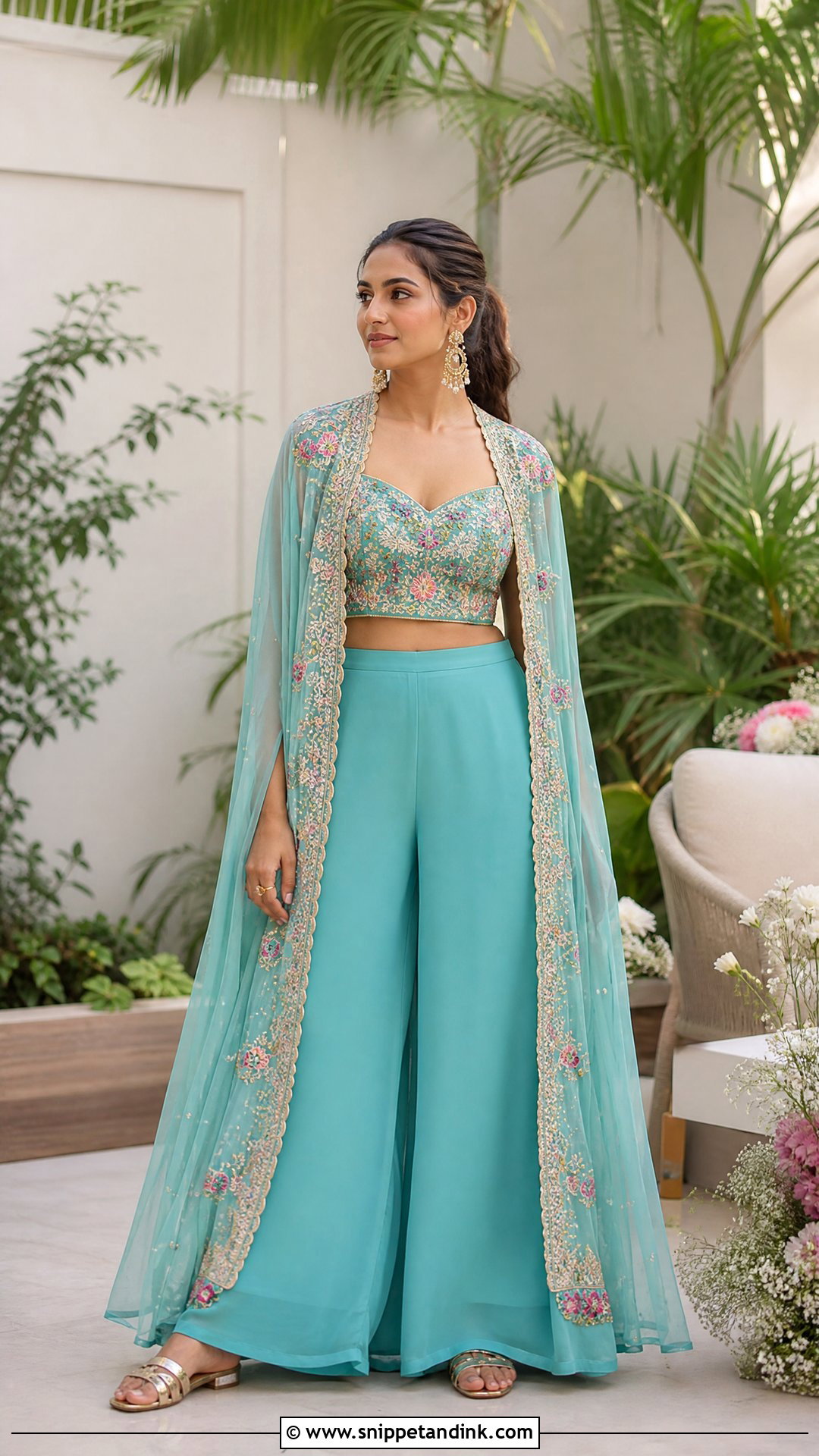
Want a contemporary mehndi outfit without giving up Indian details? An embroidered crop top, flowing palazzos and a light cape is the answer I give most often. The cape does the dupatta’s job without falling forward onto your hands. Jewel green, turquoise, pink or purple suit a bright setting; mint and lilac suit a softer theme. Keep the embroidery to the neckline and cape border. Statement earrings and metallic flat sandals, and save the bracelet until the henna is dry. A sleek ponytail suits the shape. It works especially well at a garden or resort mehndi.
9. Sequin Lehenga For Sangeet
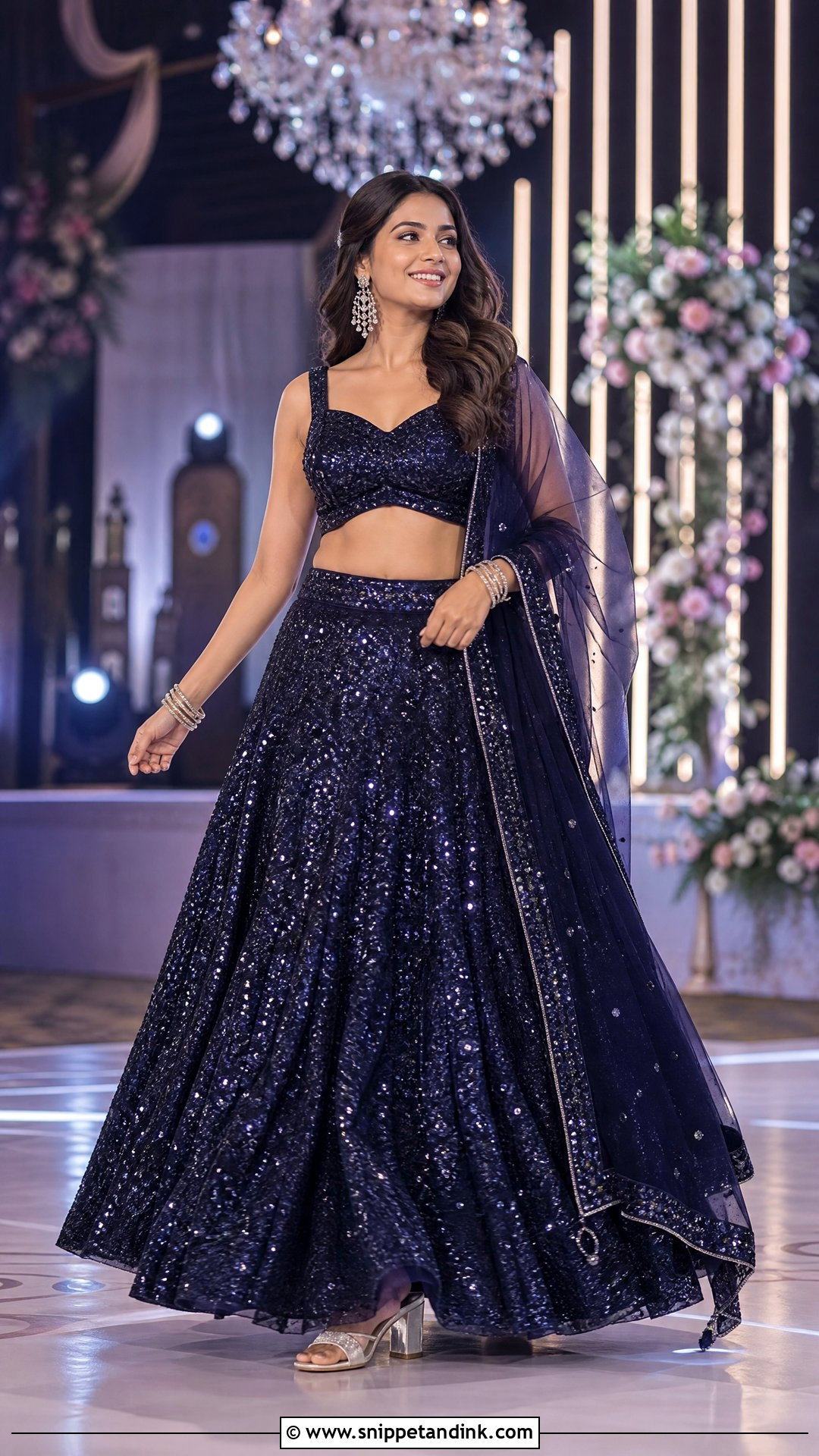
Sangeet is when I let clients go glamorous, because evening lights make sequins come alive. Choose a sequin skirt in navy, emerald, plum, silver or deep pink with a supportive blouse and a light dupatta. The flare should let you dance, and the hem must clear the floor in your shoes. A bride can choose dense work, a statement neckline and layered jewelry, while a guest looks better in scattered sequins and smaller accessories. Wear block heels or cushioned platforms, not delicate straps. Pin the dupatta at the shoulder and waist before the first song. One thing to check: sequins on the inside of the arm scratch when you dance, so look at the blouse underarm.
10. Pre Draped Saree For Sangeet
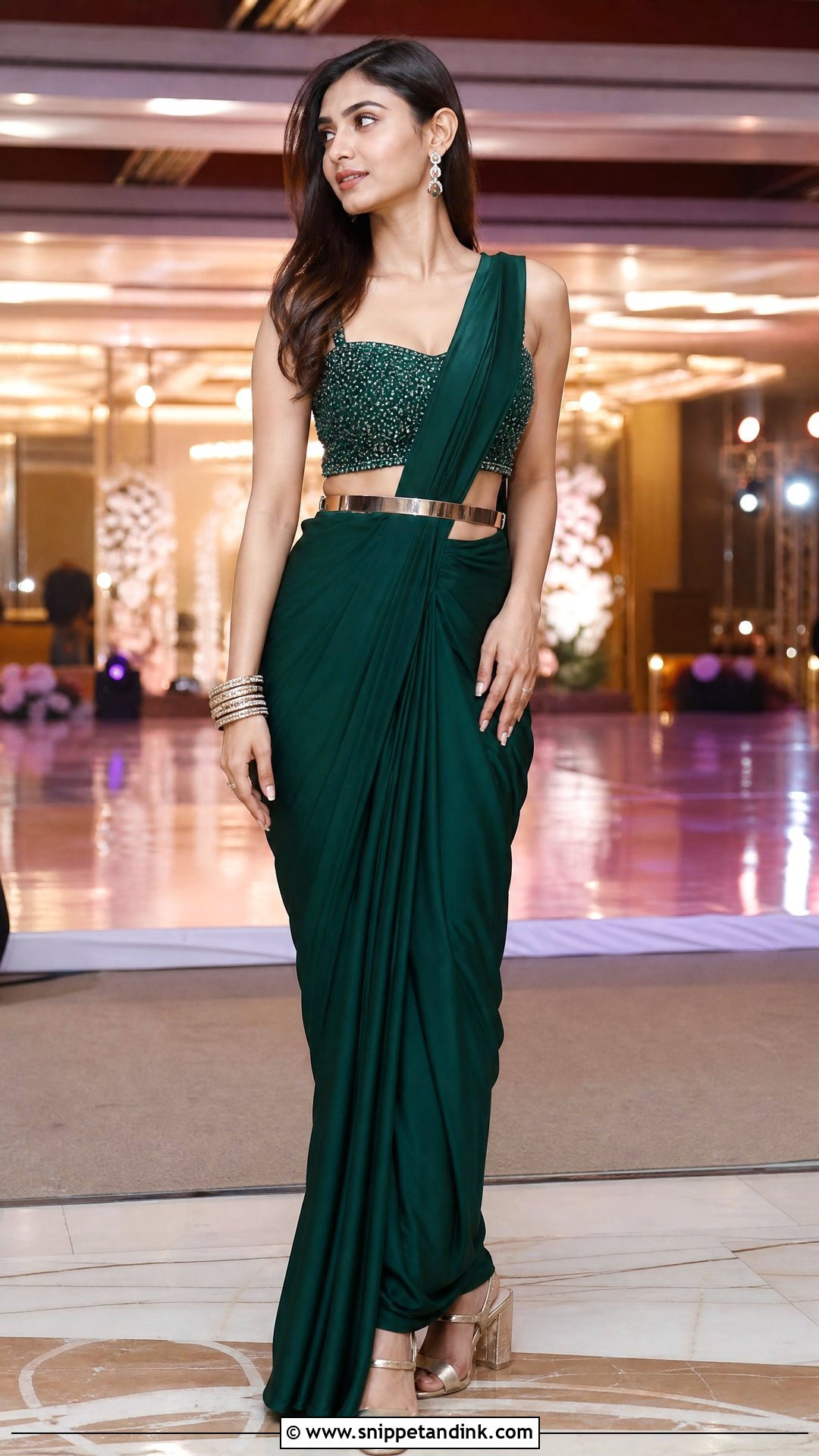
A pre-draped saree gives you the drape without the risk, and it’s the saree I’d send any bride to a sangeet in if she plans to perform. Choose satin, crepe or georgette in a jewel tone or metallic, with an embellished, structured blouse that has secure straps. A slim belt holds the pallu in place. Drop earrings, stacked bangles and block heels finish it. Brides can go further with crystal embroidery or a fringed blouse; a guest suits a monochrome saree and simpler neckline. Rehearse your choreography in it once. Walk, sit and dance, and see what moves.
11. Dhoti Pants And Crop Top For Sangeet
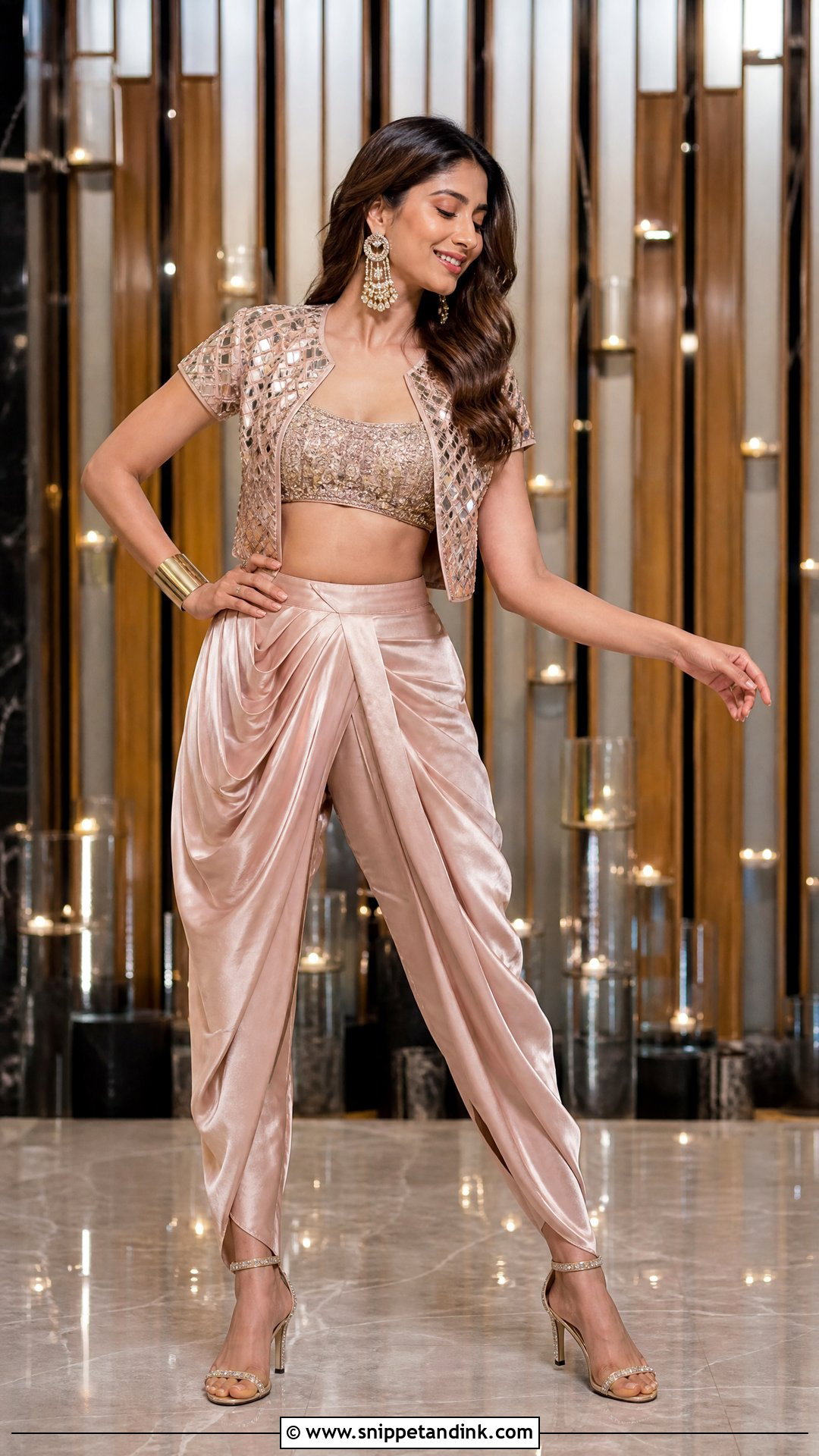
Dhoti pants are made for choreographed sangeet performances; the gathered drape moves well and never wraps around your legs mid-step. Pair metallic or jewel-toned dhoti pants with an embroidered crop top and a short jacket, cape or draped stole. Silk blends, crepe or satin fall smoothly without bulk. Bold earrings, a cuff and secure heels or embellished flats suit it. A high ponytail shows the neckline. I’d give a bride a mirror-work or crystal jacket and a guest a printed layer. Set the hem above the floor to prevent tripping.
12. Embroidered Indo Western Gown For Sangeet
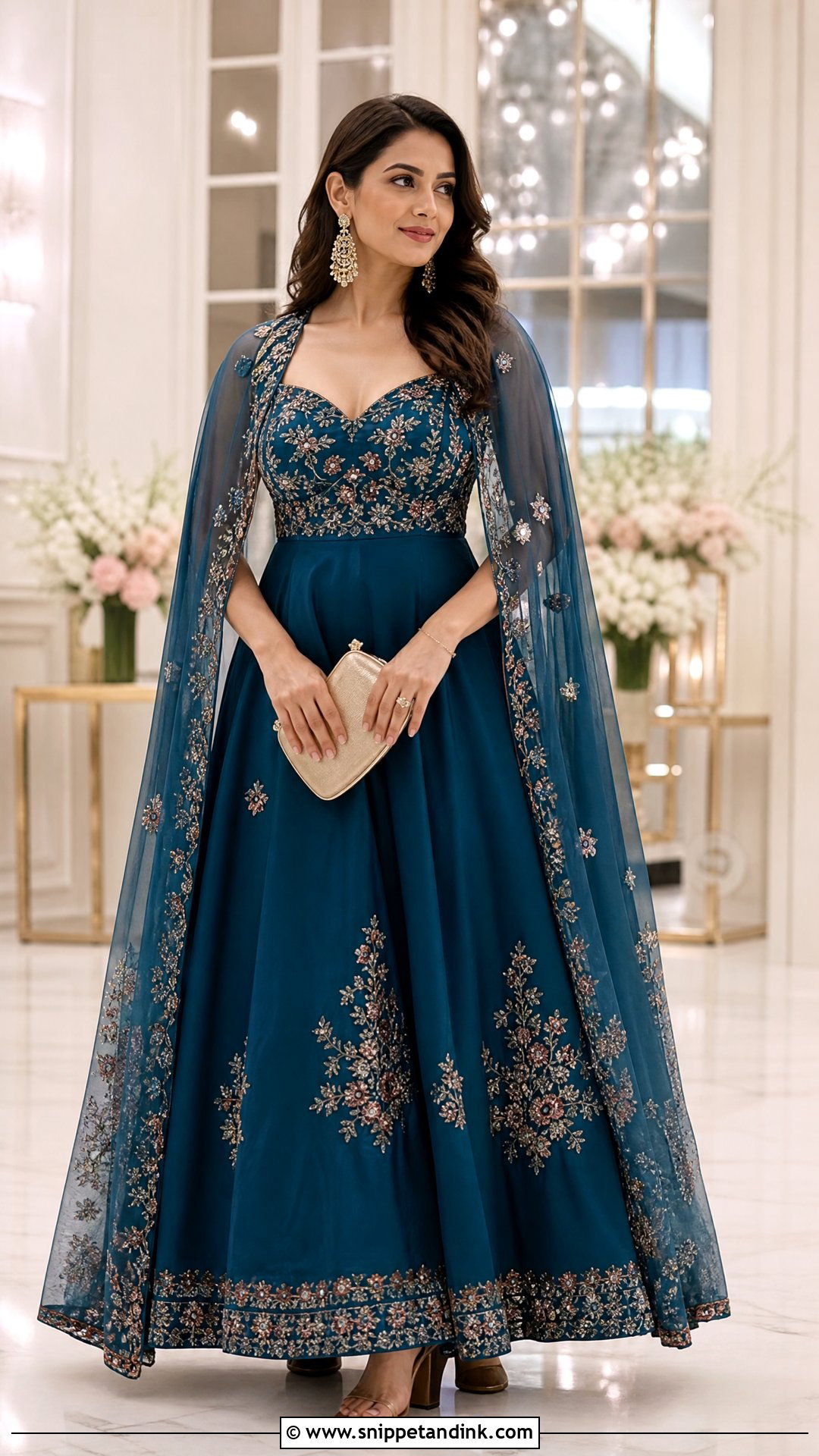
An embroidered Indo-Western gown gives you drama in one piece, with no skirt, blouse and dupatta to coordinate. Look for floor length, Indian embroidery, a defined waist and a skirt that moves. Deep blue, wine, teal, magenta and bronze glow under evening lights. A bride might choose a detachable cape, beaded bodice or embroidered train; a guest should keep the hem clean and manageable. Statement earrings, a cocktail ring, block heels and a small clutch finish it. At the fitting, climb a few stairs and dance a little. Gowns that look fine standing still often restrict the knee.
13. Pastel Organza Lehenga For Engagement
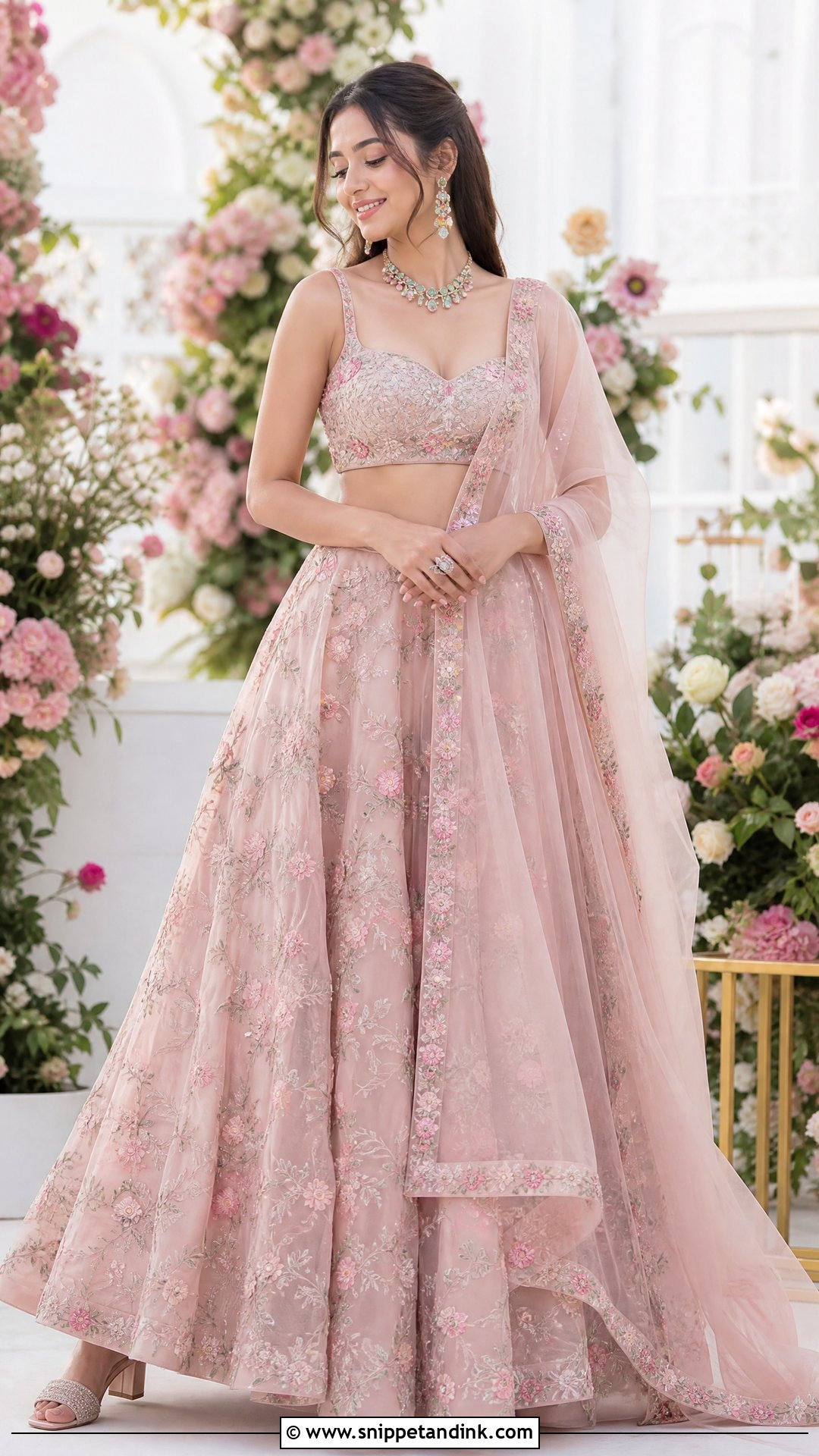
Pastel organza suits an engagement and looks soft in daylight photos. Blush, powder blue, pistachio, peach or lavender with floral embroidery or fine threadwork are my usual picks. Organza adds volume on its own, so keep the blouse fitted and the dupatta light. One warning from many engagement shoots: very pale colors wash out under strong flash or harsh sun. I add definition with a contrasting border, a richer blouse or colorful jewelry. A bride can wear a necklace, drop earrings and a maang tikka; a guest can drop the headpiece. Pointed block heels, and soft waves or a polished bun.
14. Silk Saree For Engagement
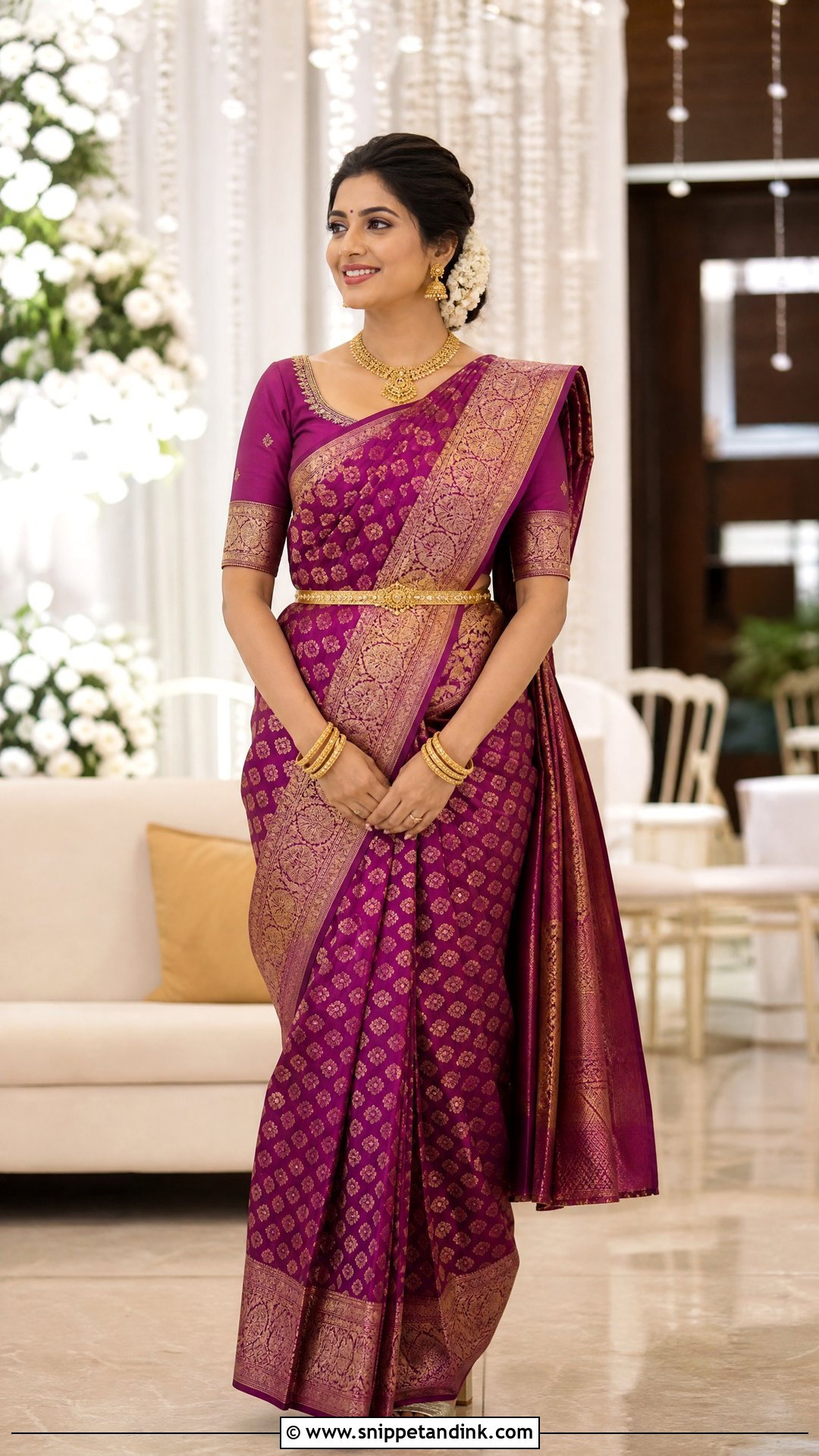
A silk saree suits a traditional engagement or formal family gathering, and it’s the outfit where I encourage clients to wear a weave from their own background: Banarasi, Kanjeevaram, Chanderi or another regional silk. Jewel tones suit evening; pastel silk works by day. A well-fitted blouse with elbow sleeves, a square neck or subtle embroidery completes it, with gold jewelry, bangles, a small bindi and comfortable heels. For an heirloom saree, update the blouse and jewelry instead of altering the saree itself; old silk can split along fold lines if it’s cut or restitched.
15. Ivory Chikankari Anarkali For Roka
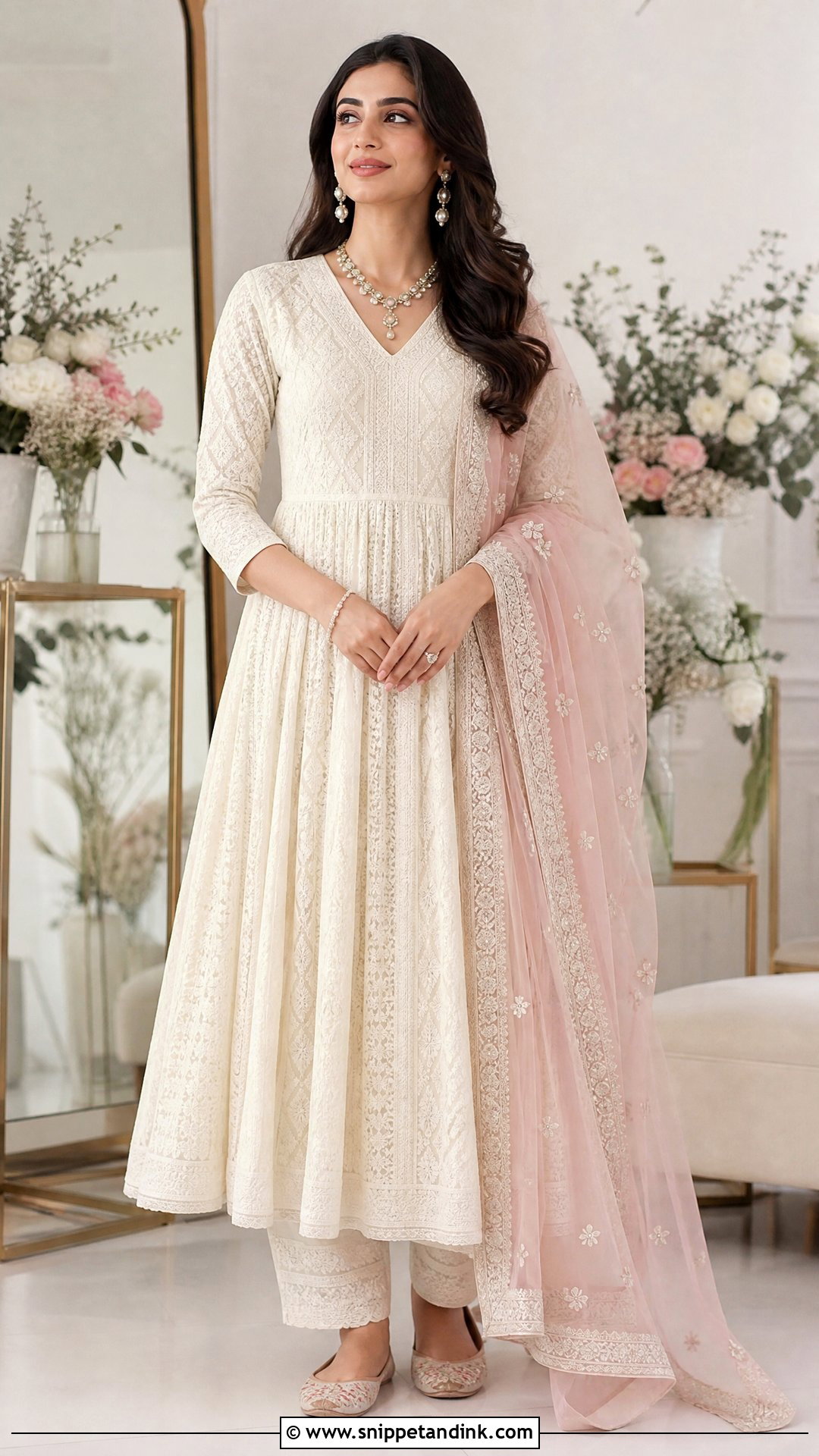
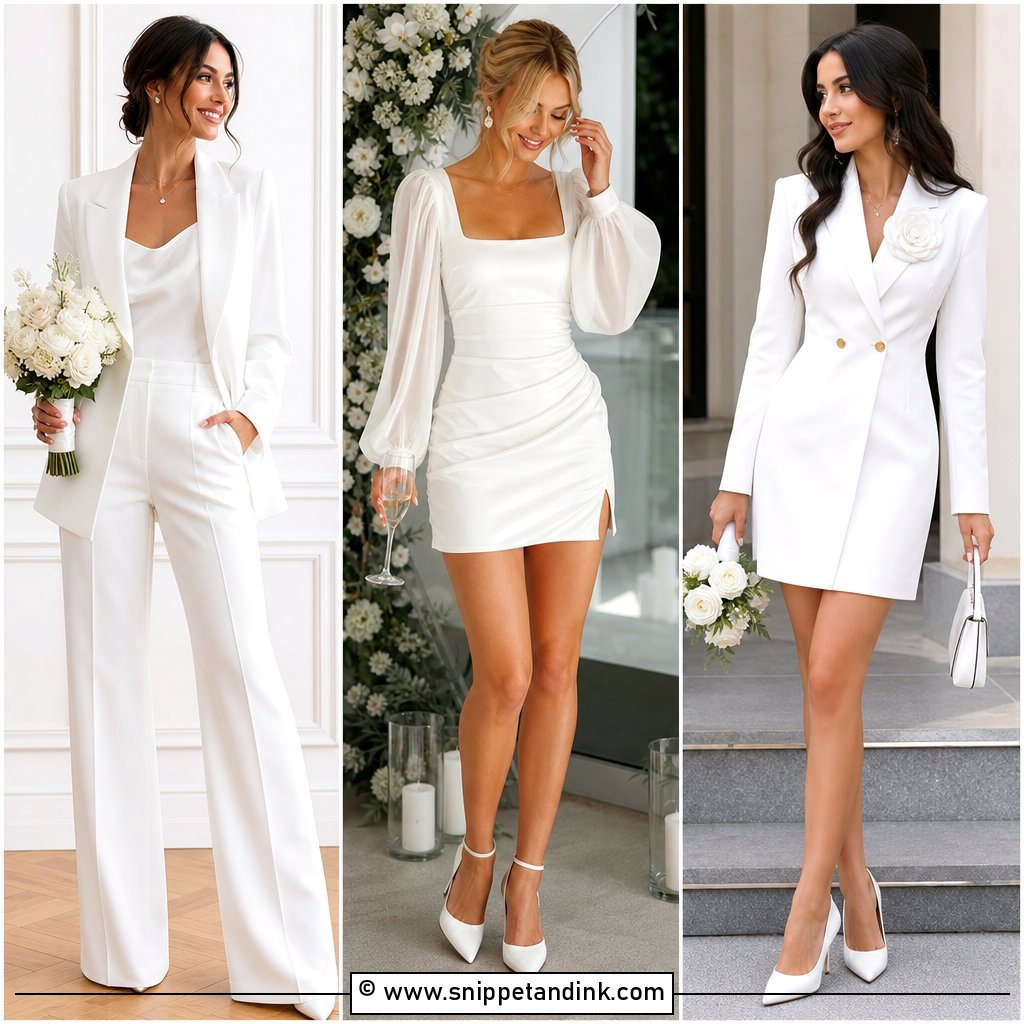
An ivory chikankari Anarkali is quietly elegant at a daytime roka. White and ivory carry different meanings across Indian communities, so I’d always confirm the color with the family first. Pair the Anarkali with fitted pants and a pastel, floral or lightly embellished dupatta; blush, mint, yellow or powder blue add color without overwhelming the fine threadwork. Check for a lining. Chikankari on unlined cotton or georgette is sheer in daylight. Pearl earrings, a slim bracelet and embroidered juttis are enough, with a low bun or smooth half-up style.
16. Brocade Kurta And Skirt For Roka
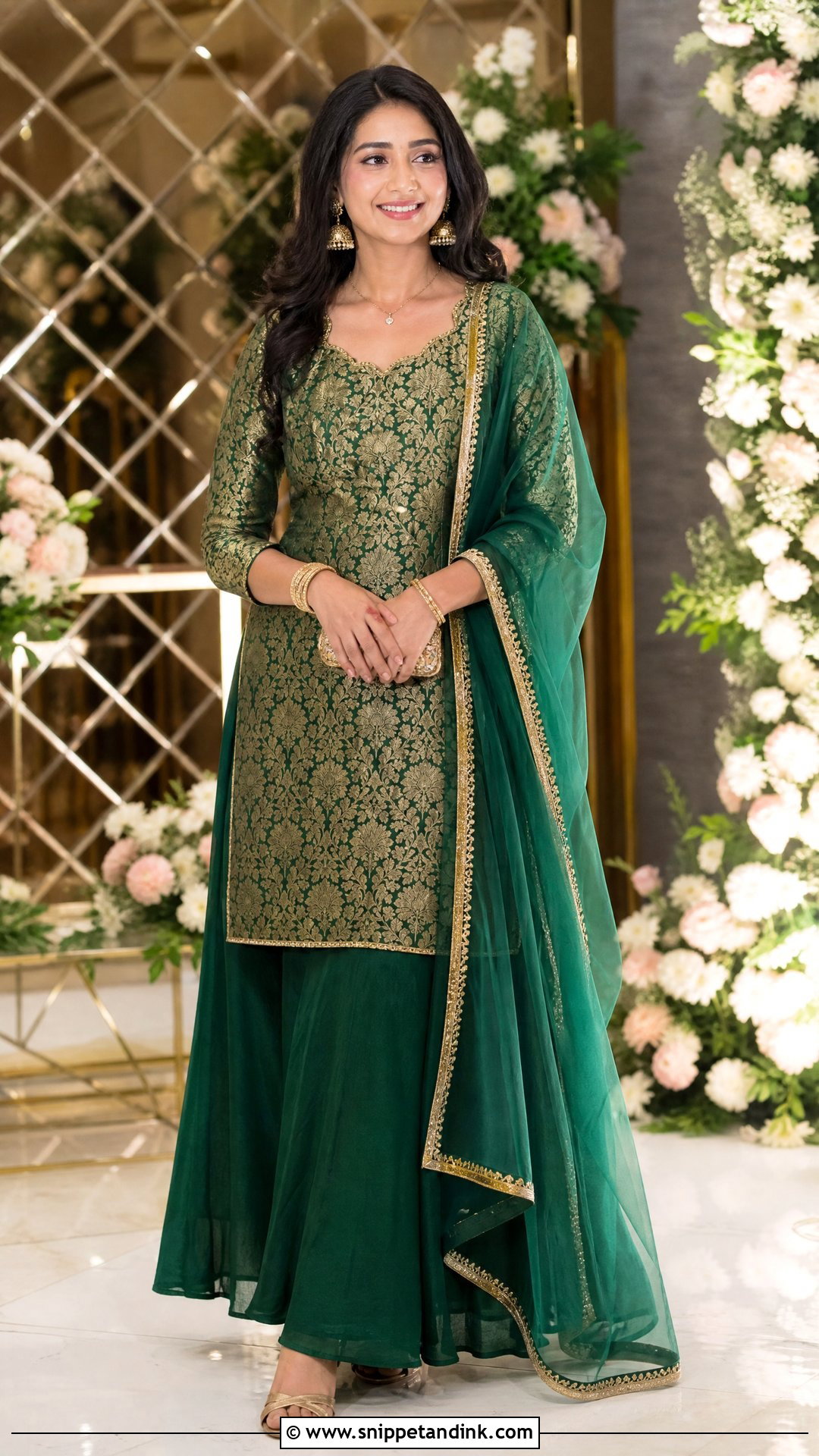
A brocade kurta with a flowing skirt gives traditional richness in two easy pieces. Choose a fitted, hip-length kurta in gold, pink, green or blue and balance it with a plain or lightly embroidered skirt, or reverse it with a simple kurta over a brocade skirt. Only one piece should be brocade; two heavy weaves together look stiff. Add a sheer dupatta with a narrow border, jhumkas, a small necklace, bangles and low block heels. The kurta should end above the widest part of the skirt so the proportions stay clear. It suits an intimate roka and family photos.
17. Pant Saree For Cocktail Party
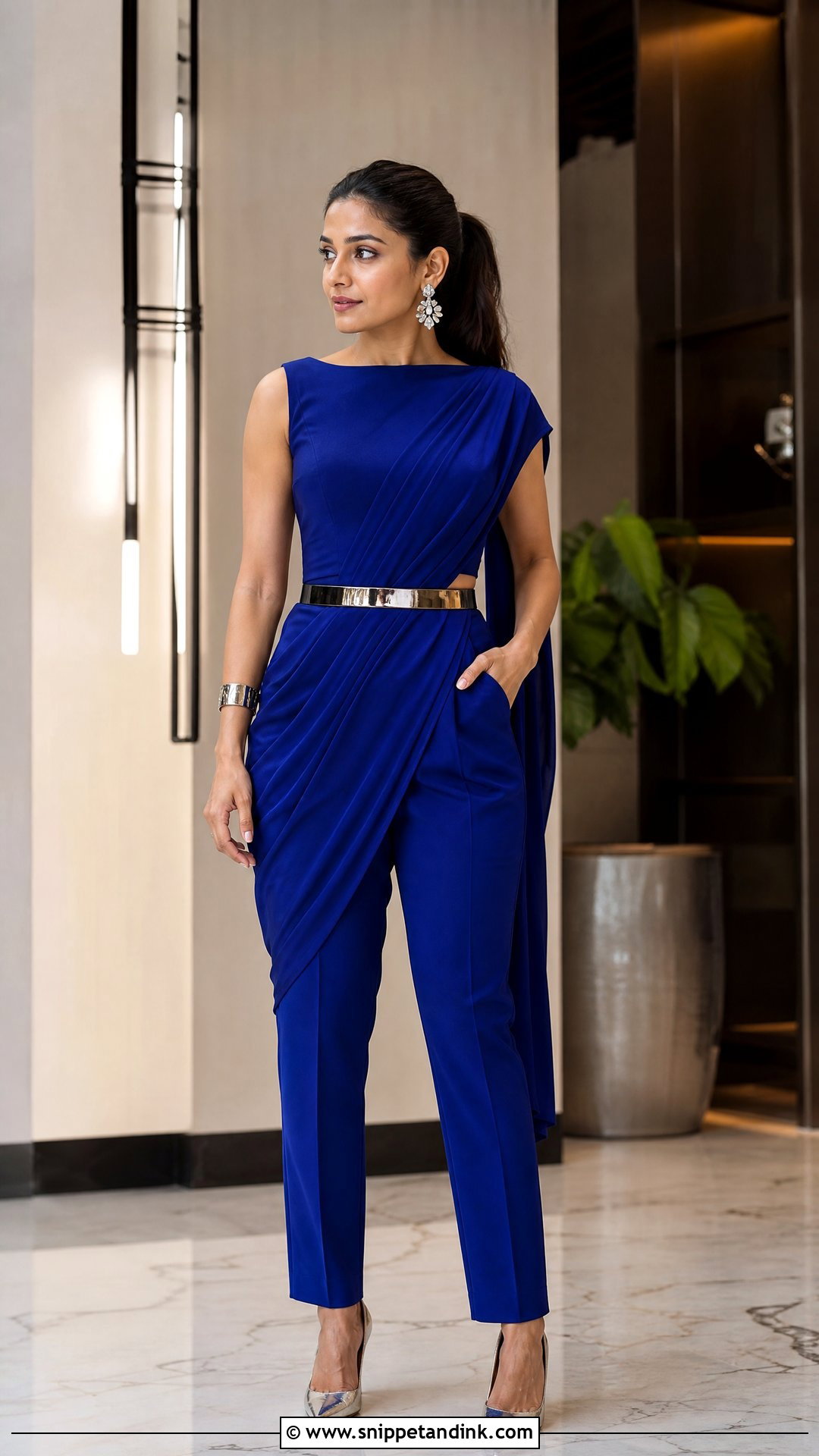
The pant saree combines tailored trousers with an attached pallu, so you get the drape without managing pleats. Choose satin, crepe or light silk with a fitted blouse. Some families welcome black at a cocktail party and others avoid it, so check before buying. Emerald, cobalt, burgundy, silver and rose gold are equally sharp. A metallic waist belt, sculptural earrings and pointed heels define the silhouette, with a sleek ponytail or center-parted bun. For the bride, an embellished pallu or statement blouse; for a guest, keep one part plain.
18. Velvet Lehenga For Winter Sangeet
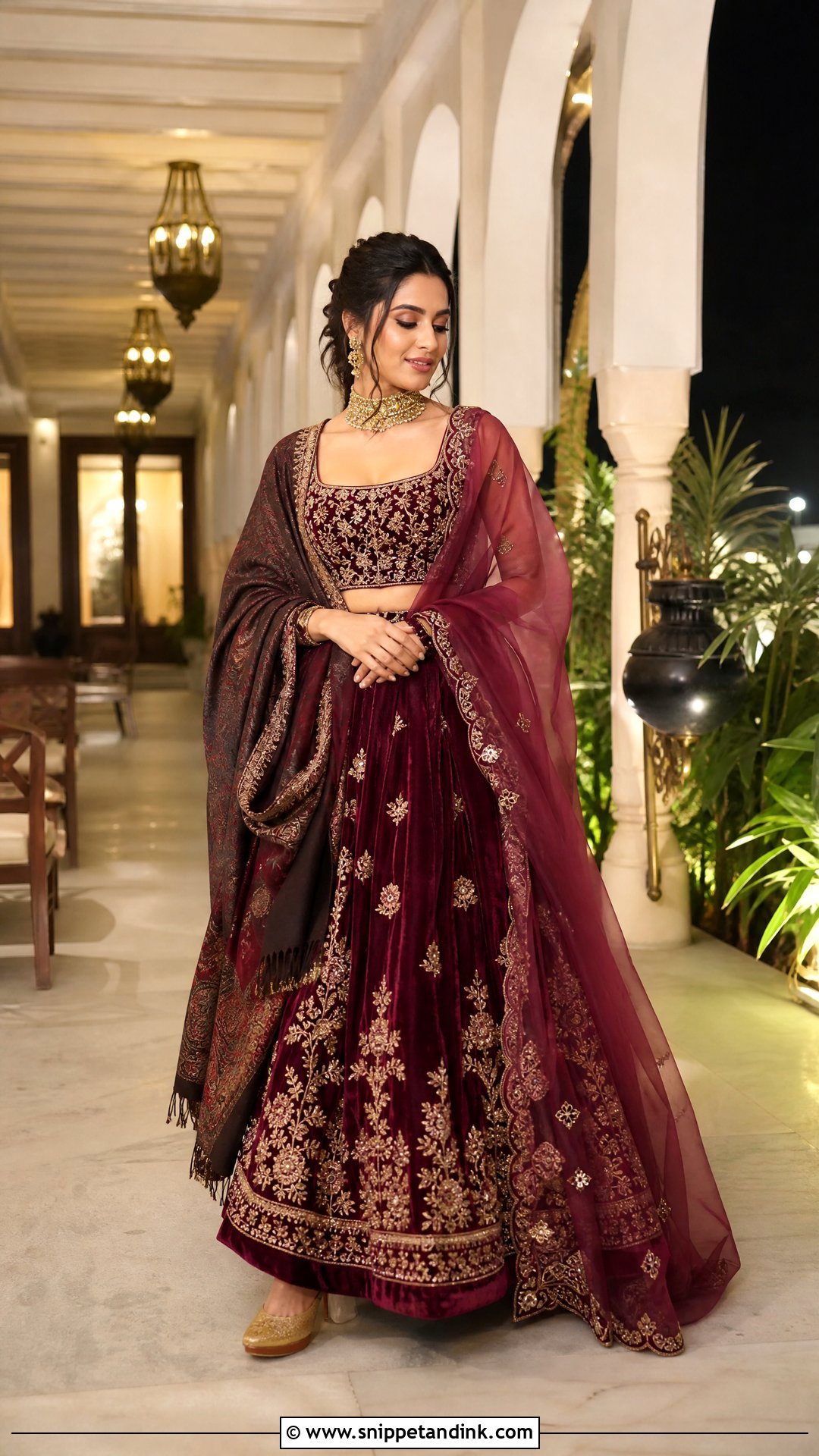
Velvet comes into its own at a winter sangeet, especially an outdoor one. Emerald, maroon, navy, plum or deep teal with zari, beads or antique gold work are rich without trying. Velvet is heavy, so I balance it with a fitted blouse and a light net or organza dupatta. A bride can wear a full embroidered set and layered jewelry, while a guest could pair a velvet blouse with a plainer skirt. A choker, matching earrings and closed-toe block heels finish it, plus a shawl for the outdoor part of the night. Velvet doesn’t stretch and adds bulk at seams, so the waistband, sleeves and panels need careful tailoring.
19. Printed Lehenga For Daytime Celebration
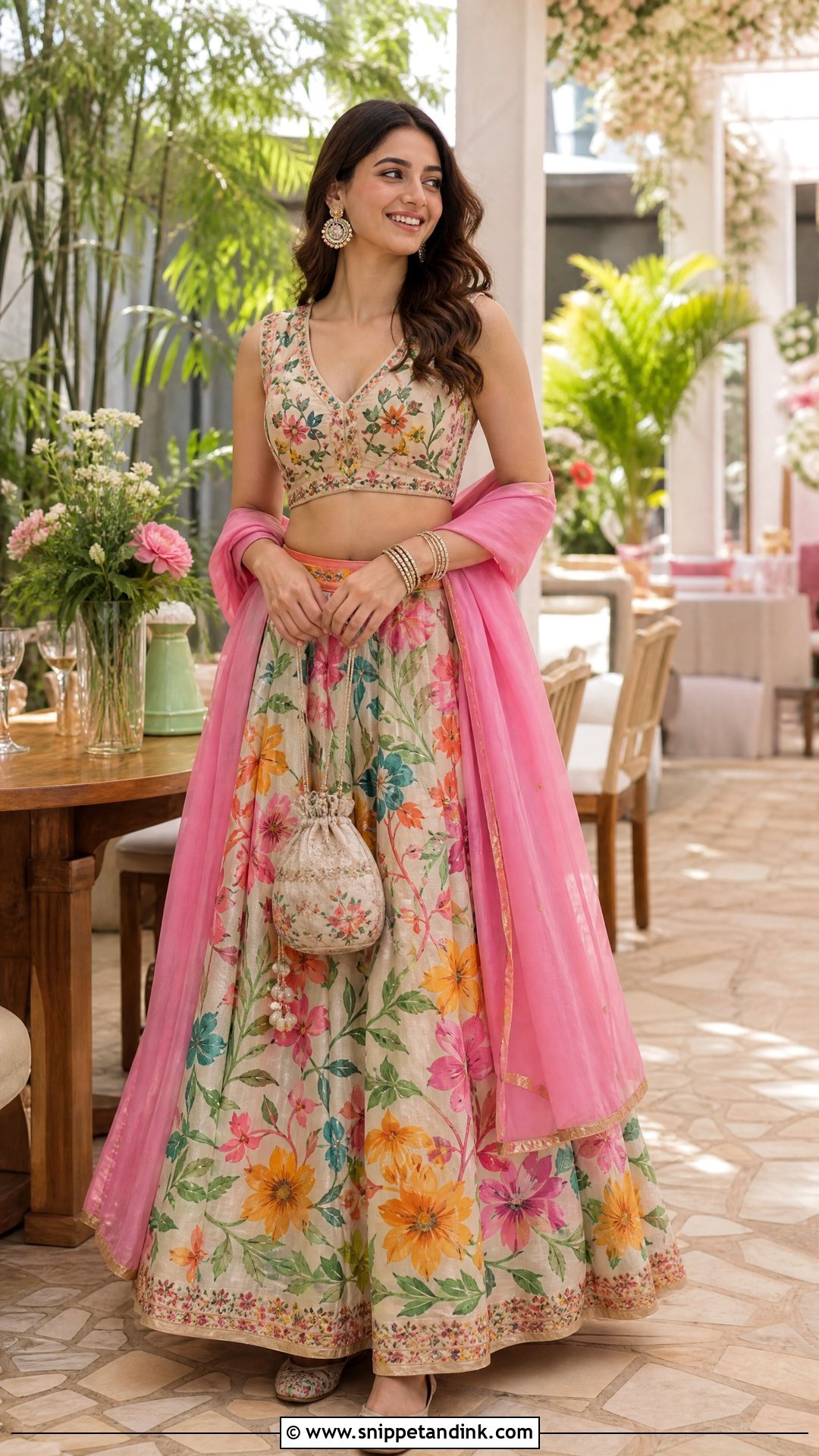
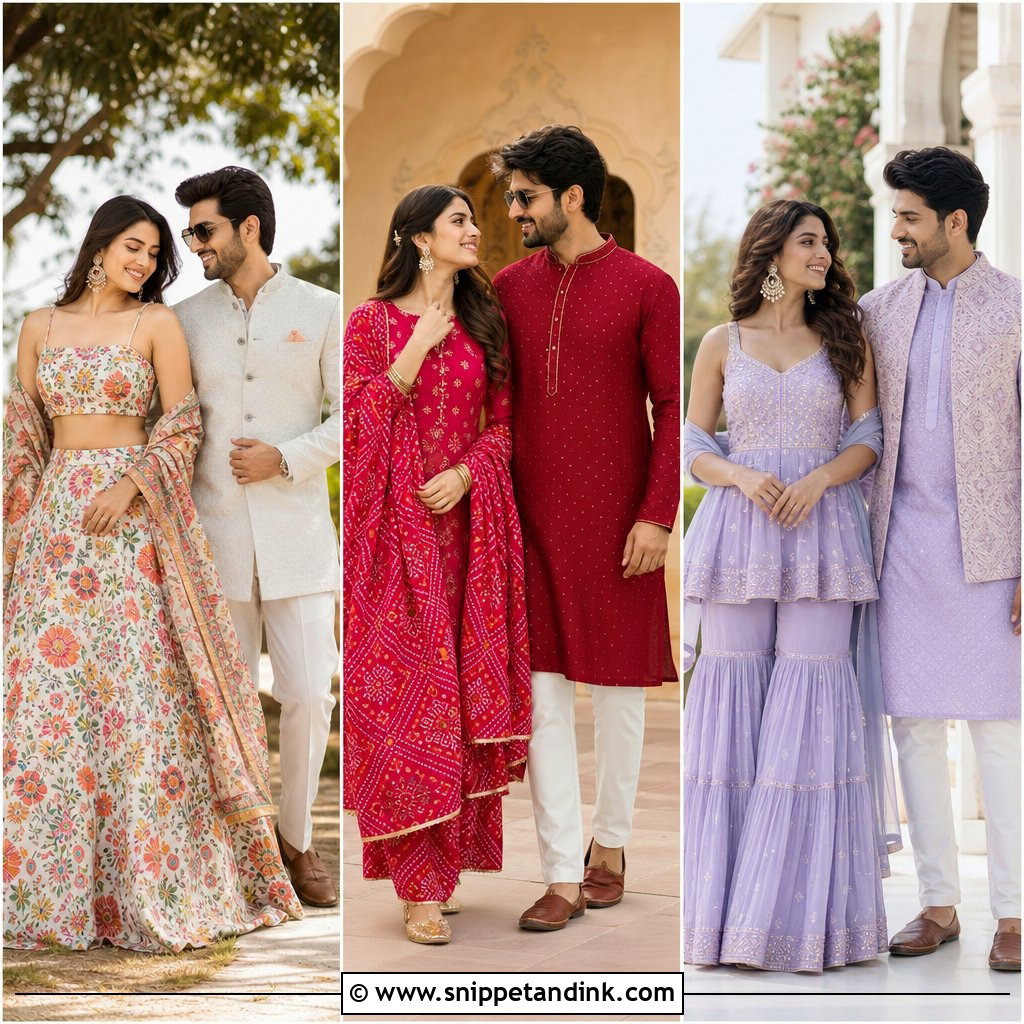
A printed lehenga is the most practical outfit on this list for a welcome party, bridal brunch or combined daytime mehndi. Botanical, geometric, paisley or block prints in cotton silk, chiffon or georgette keep it light. Pair it with a coordinating blouse and a plain dupatta that picks up one print color. A bride can add an embroidered waistband, tassels or a statement necklace, and guests can stay relaxed with medium earrings. Juttis, kolhapuris or low wedges suit an outdoor venue. I recommend prints for destination weddings, since they pack small and wrinkles hardly show.

20. Handloom Saree For Intimate Ceremony
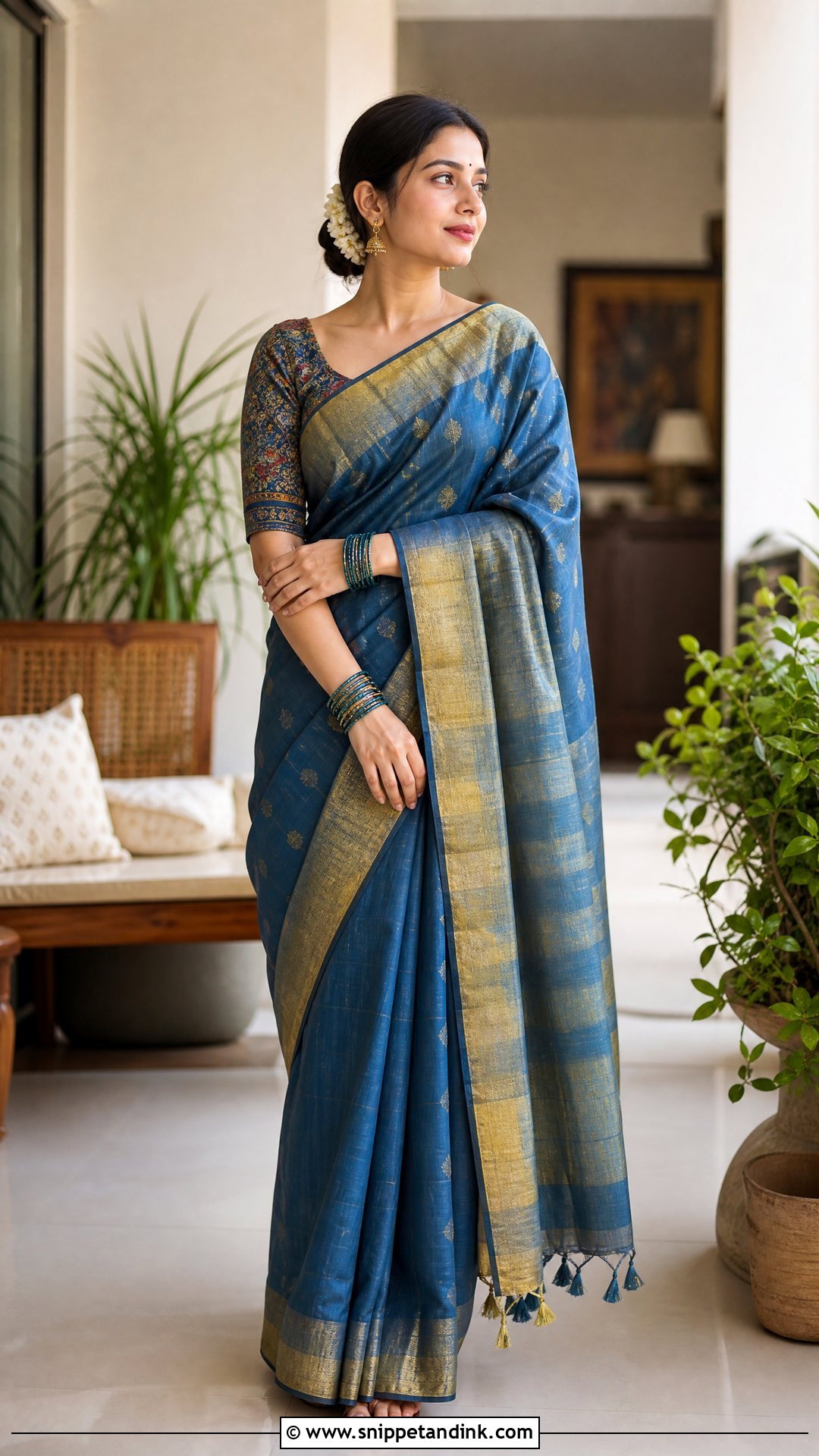
For a small puja or family ceremony, a handloom saree feels right without much decoration. Cotton silk, linen, Chanderi, Maheshwari or a weave from your region all suit it. Pair it with a contrasting blouse in a comfortable, modest cut. Traditional earrings, glass bangles, a bindi and low sandals or juttis complete it; a bride might add heirloom jewelry or flowers around a bun. Handloom creases, so I steam it before draping and use discreet pins at the pleats. It suits ceremonies centered on family and ritual rather than entertainment.
Will the Dye Run? Wet Haldi, Fresh Henna and Your Clothes
Two of these functions involve wet, staining pastes, and the outfit itself can be part of the problem. Strongly dyed fabrics, bandhani especially, can bleed when they get wet, so a soaked pink dupatta at a haldi may leave color on a white kurta beneath it. If you’re wearing a bright piece over a light one, rinse a hidden corner of the bright fabric at home first and see if color comes out on a white cloth.
Henna is the other risk. Fresh paste stains fabric easily, and the lemon-sugar mixture artists dab on to keep it moist makes it sticky as well. I tell brides to keep a cotton towel across their lap while the design dries, and to hold off on dressing in their best mehndi outfit until the arms are done, or to change into it afterward if the photographs allow.
If something does stain
Scrape off any paste, rinse cold water through the back of the fabric and keep it out of hot water. Washable cotton can go in the sun for a few hours, which fades turmeric. Silk, velvet and anything embroidered should go to a dry cleaner quickly, with a note saying what the stain is.
Fewer Outfits, Better Fitted, Across the Whole Weekend
A pre-wedding wardrobe works when each outfit suits its event and you’re comfortable in all of them. Start with the venue, dress code, weather and your role, then use breathable fabrics by day and richer textures at night. Secure drapes, sensible hems and supportive shoes let you move freely at the haldi, mehndi and sangeet alike. Brides can raise the embroidery and jewelry; guests keep accessories simpler. From a classic saree to a cape set, I’d rather you wear four well-fitted outfits than six rushed ones.
You'll Like These Ideas:



Leave a Reply