
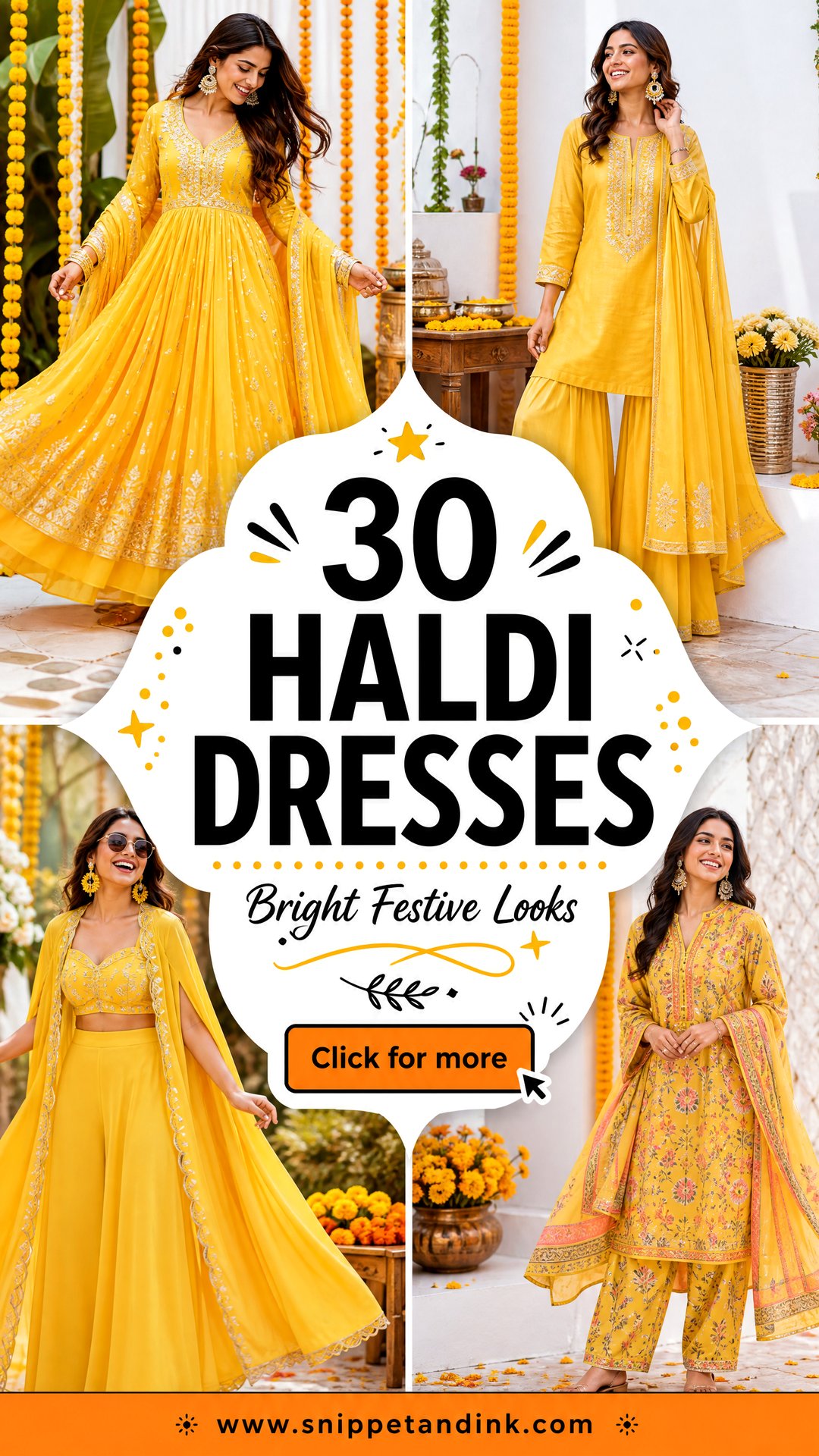
Haldi is the most relaxed of the wedding functions, and it’s also the one where clothes get the hardest use. There’s turmeric, music, flowers, a lot of hugging and usually some dancing, all in daylight. Most of the people I dress for it aren’t the bride. They’re sisters, cousins, bridesmaids, mothers and friends who want to look festive without overshadowing her or ruining something expensive. Yellow is still the default, but ivory, orange, lime, green, florals, mirror work, chikankari and Indo-western sets all have a place. Below are thirty outfits, with notes on who each one suits and what to watch for.
Is Yellow Expected? Reading a Haldi Dress Code as a Guest
Haldi customs vary a lot between regions and families, so the safest first step is to ask the host. Some families want every guest in yellow for the photos. Others prefer guests in any bright color so the bride stands out. A few ask for a specific shade. One message to the bride’s sister or mother saves you a wasted outfit.
If nobody gives guidance, these are the rules I follow when dressing guests:
- Stay a step lighter than the bride. Skip heavy bridal embroidery, a full mirror-work lehenga or a red outfit.
- Assume you’ll get paste on you, especially if you’re close family. Choose something washable.
- Check the crowd. With many elders present, a jacket, cape or longer blouse avoids any awkwardness.
- Ask about the venue. A rooftop, a lawn and a living-room floor each call for different shoes and hem lengths.
1. Yellow Lehenga For Haldi
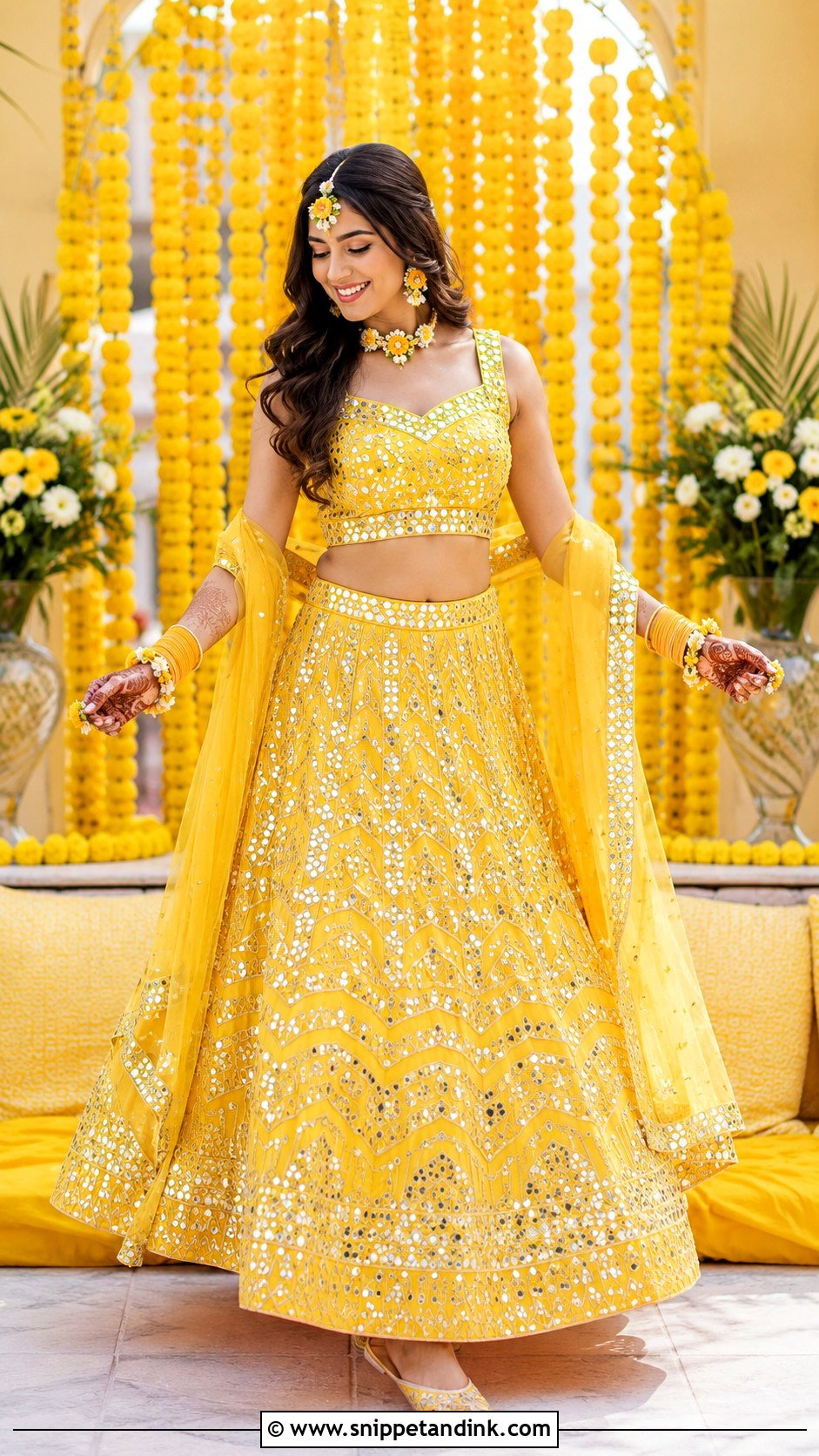
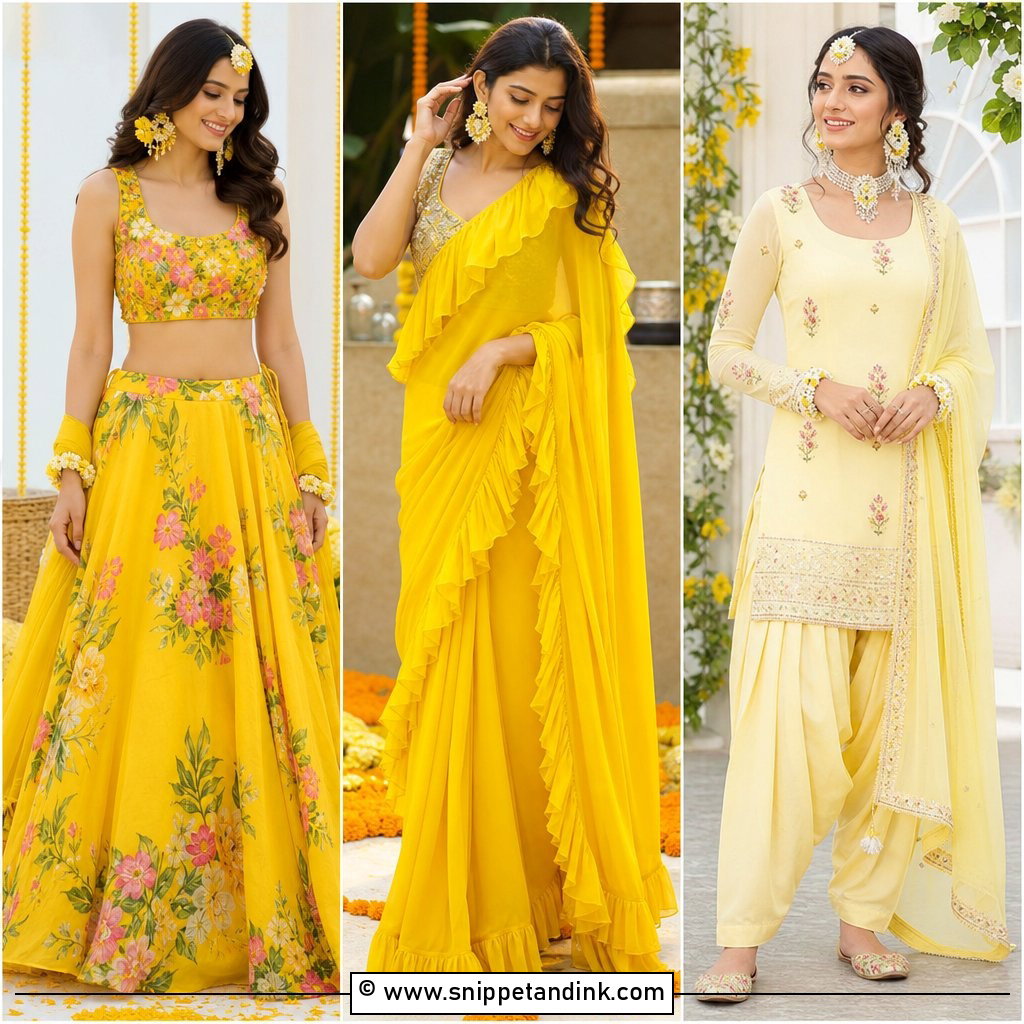
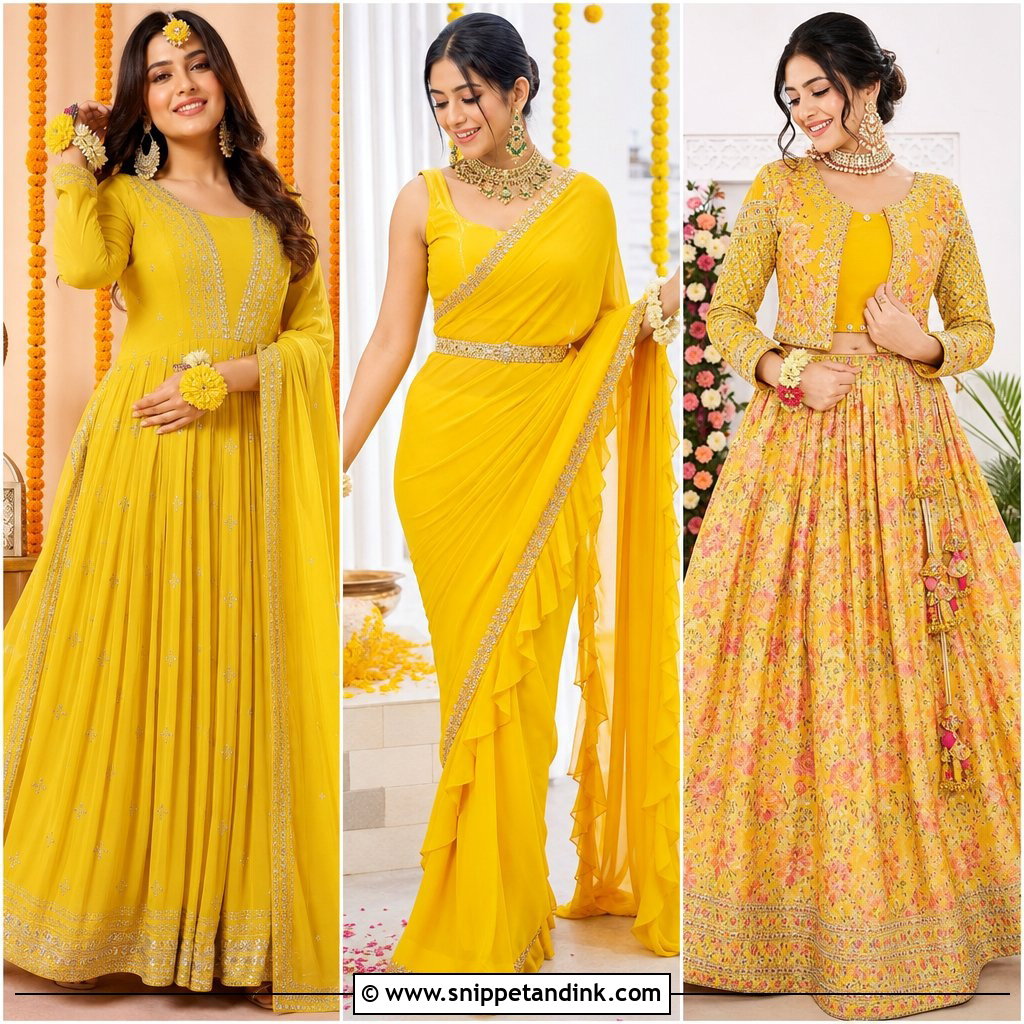
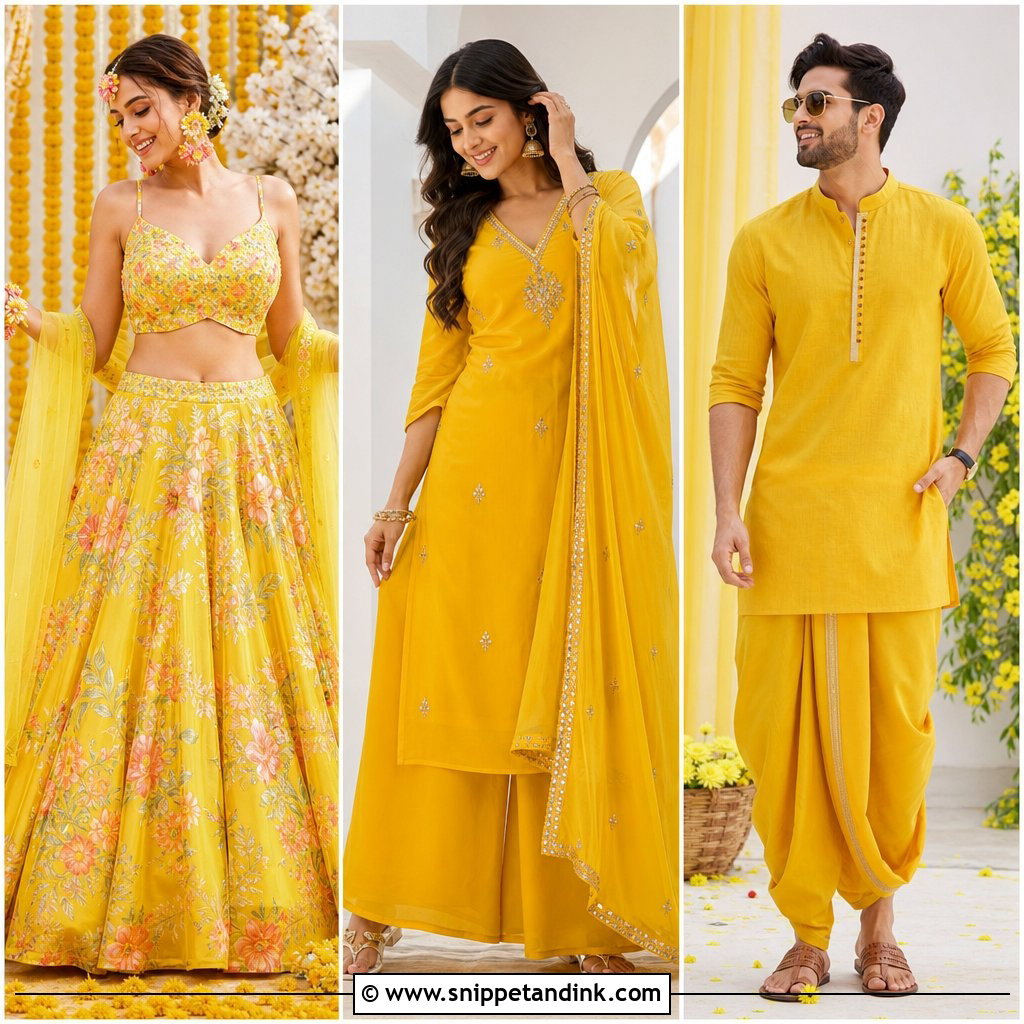
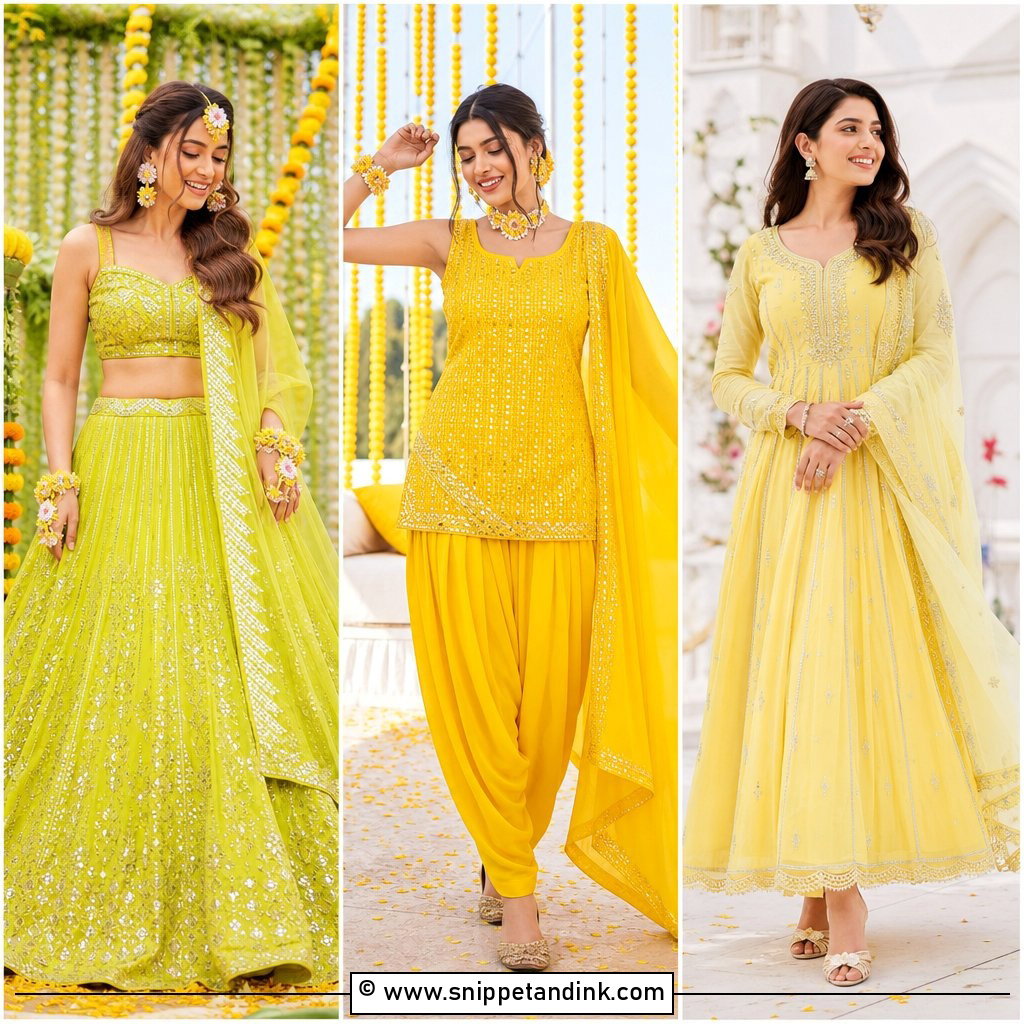
Yellow lehengas are the easiest way to look right at a haldi, and lightweight georgette, cotton silk, organza or chiffon keeps you comfortable sitting and dancing. For the bride, a yellow lehenga with mirror work, gota patti, thread embroidery or floral appliqué is festive without weight. As a guest, I’d go simpler: a printed skirt, plain blouse and soft dupatta, so you don’t echo the bride’s outfit. Jhumkas, bangles, flowers in the hair and juttis or block heels finish it, with glowing skin and peachy lips.
2. White Lehenga For Haldi
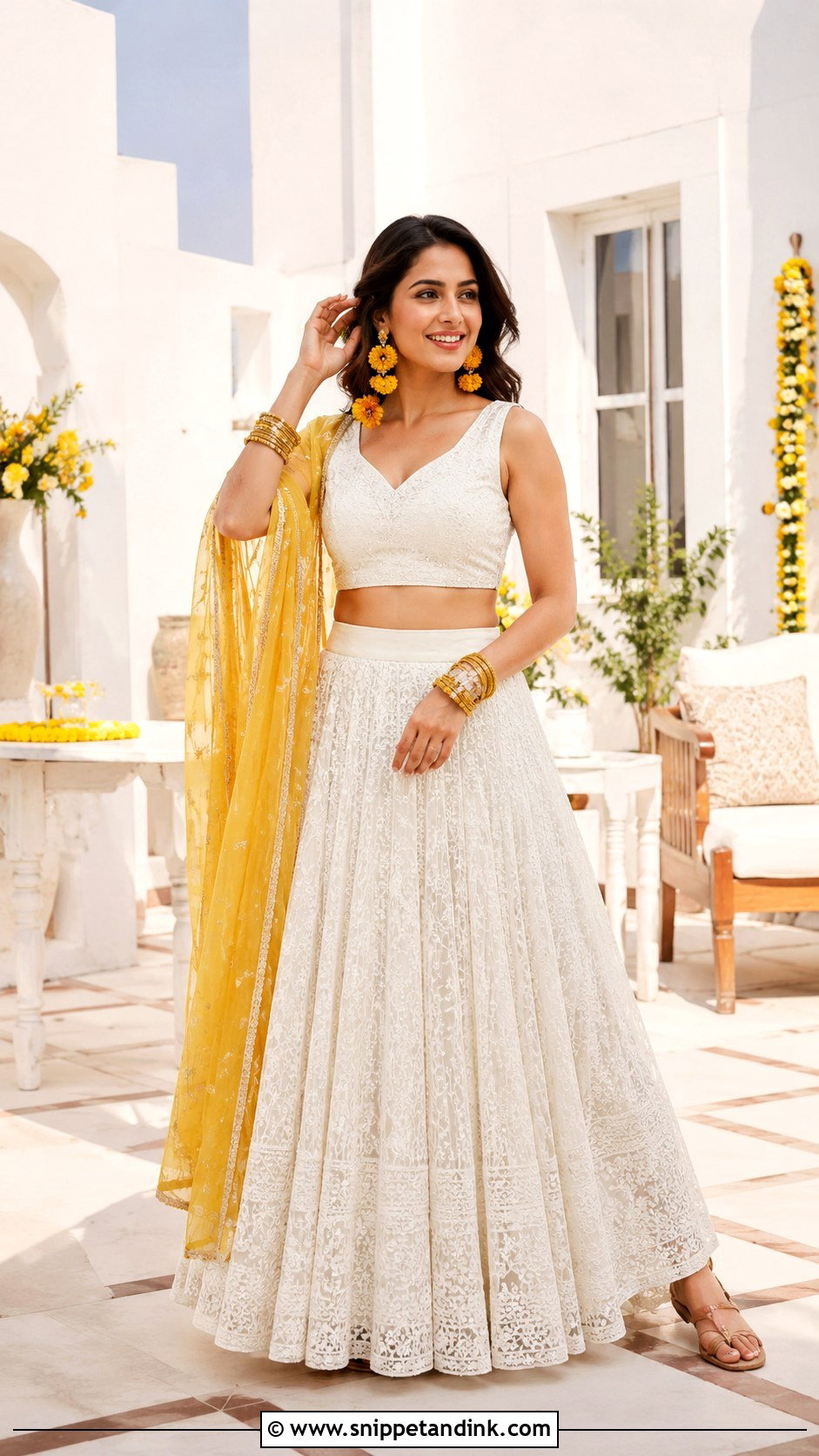
Ivory looks fresh, and turmeric streaks show up vividly on it, which some brides love in their photos. That same quality makes it a risk for guests, so wear ivory only if you’re fine with a permanent yellow souvenir. Off-white, pearl or cream feel warmer than stark white. Yellow floral embroidery, mirror borders or a bright dupatta tie it back to the ceremony. Yellow bangles, flower jewelry and gold-toned sandals finish the look.
3. Yellow Saree For Haldi
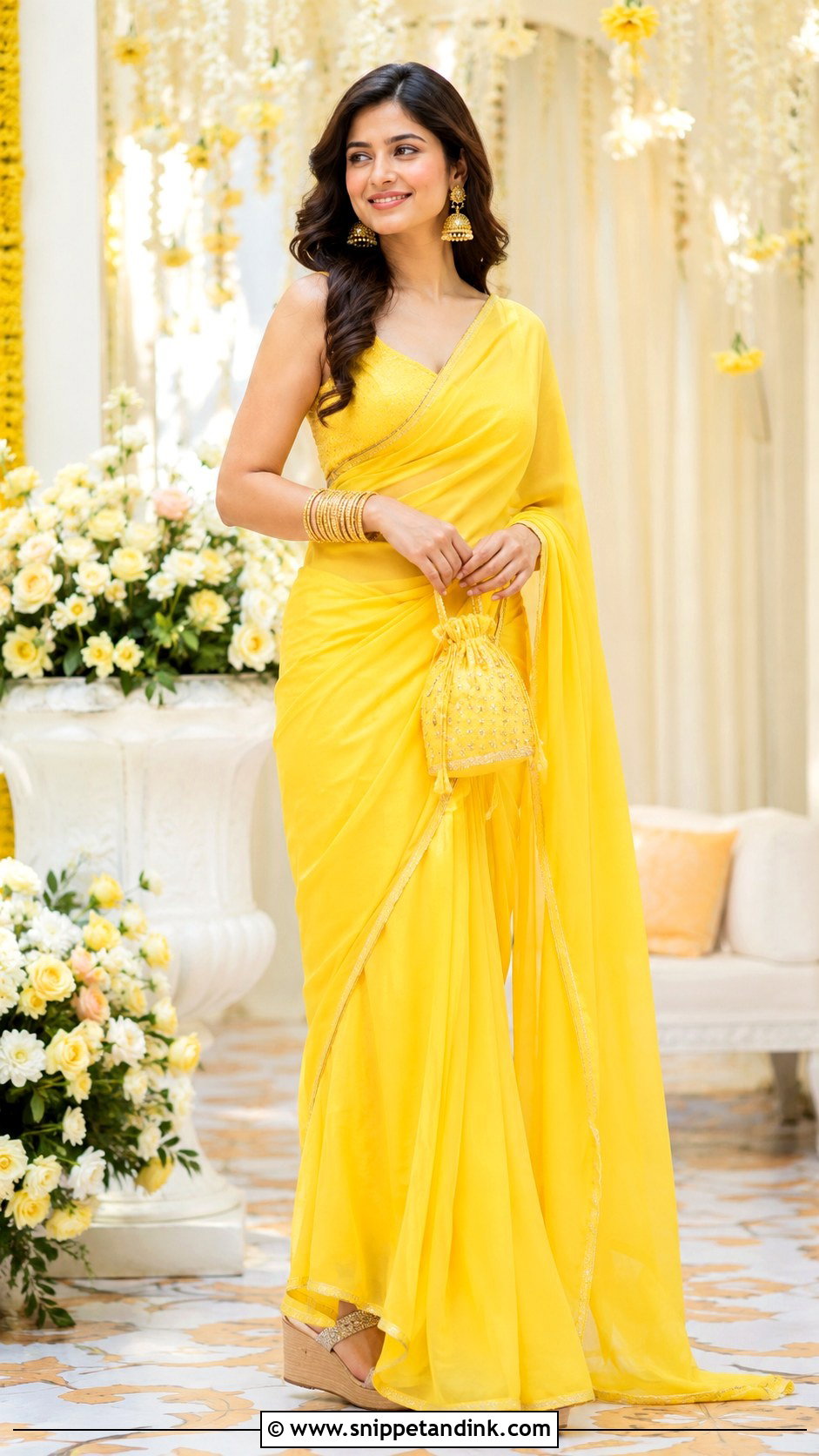
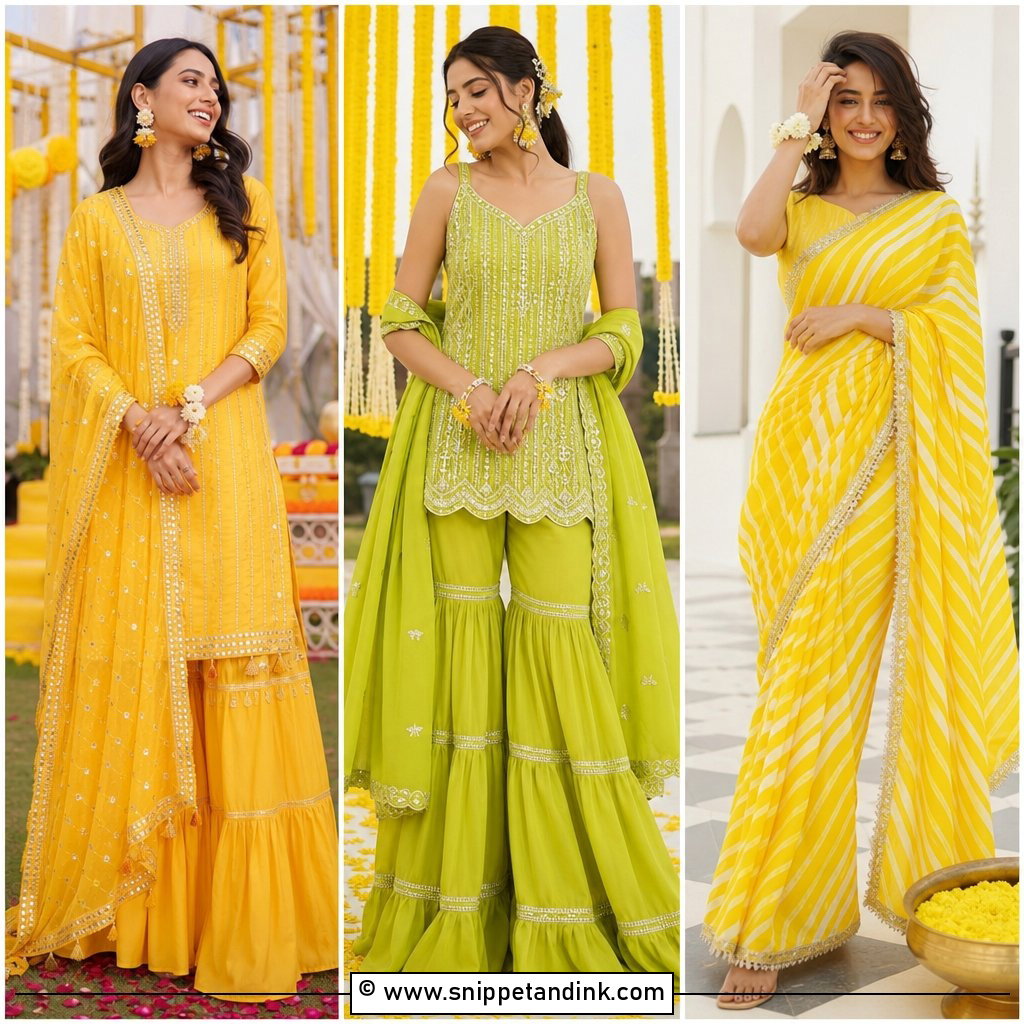
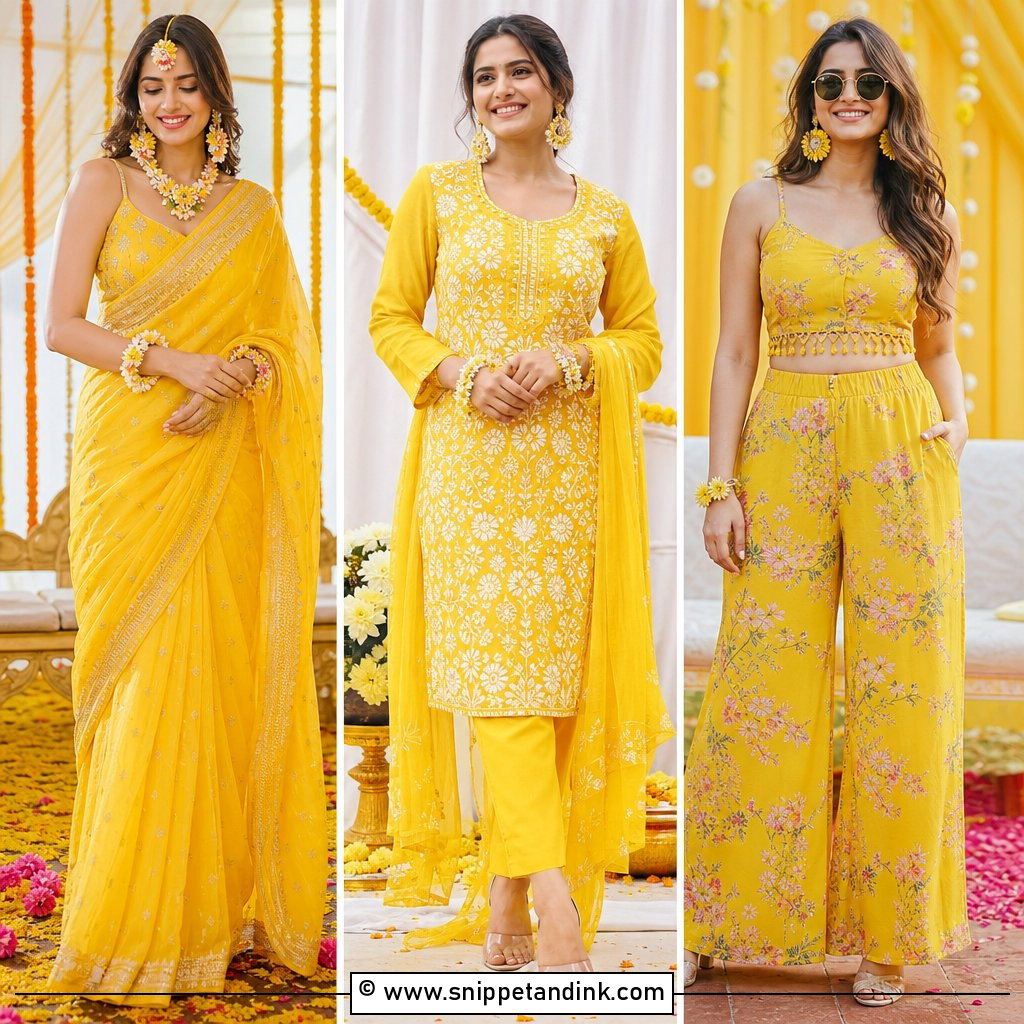
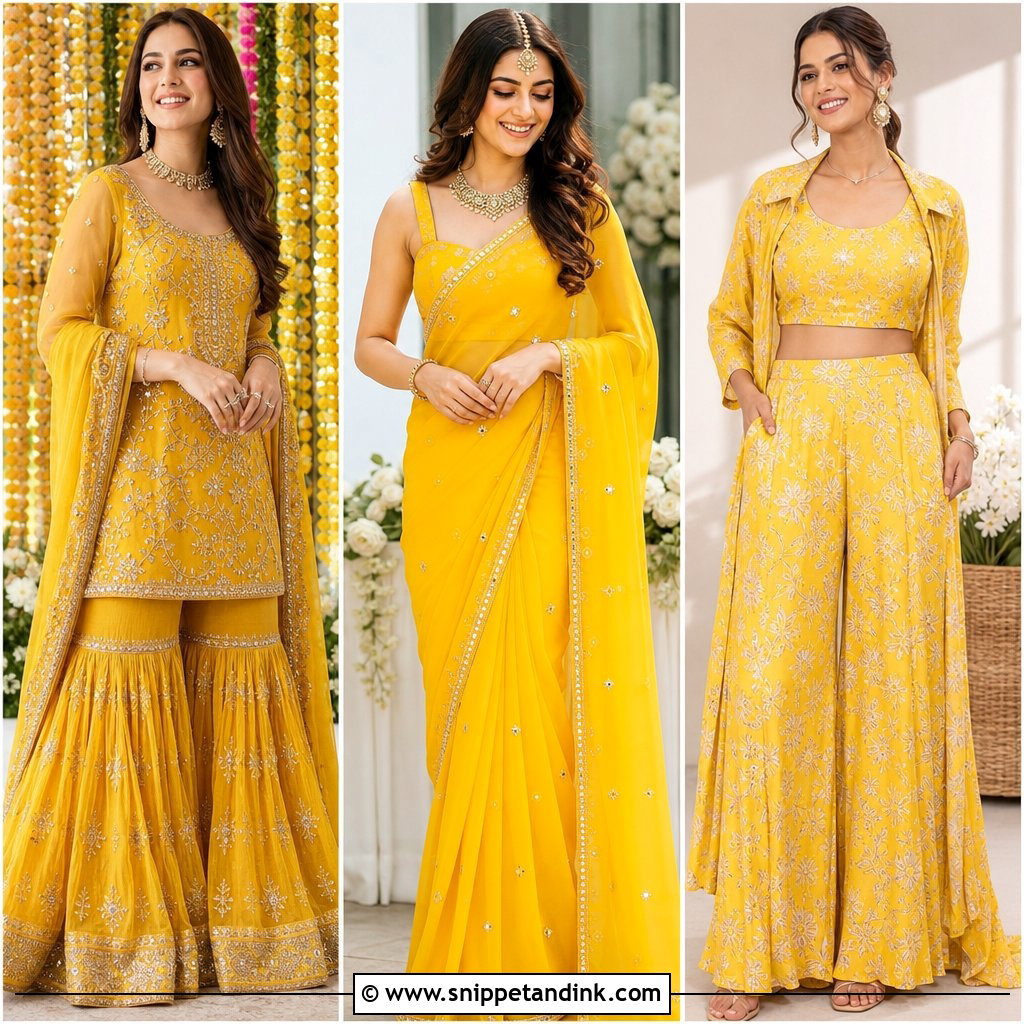
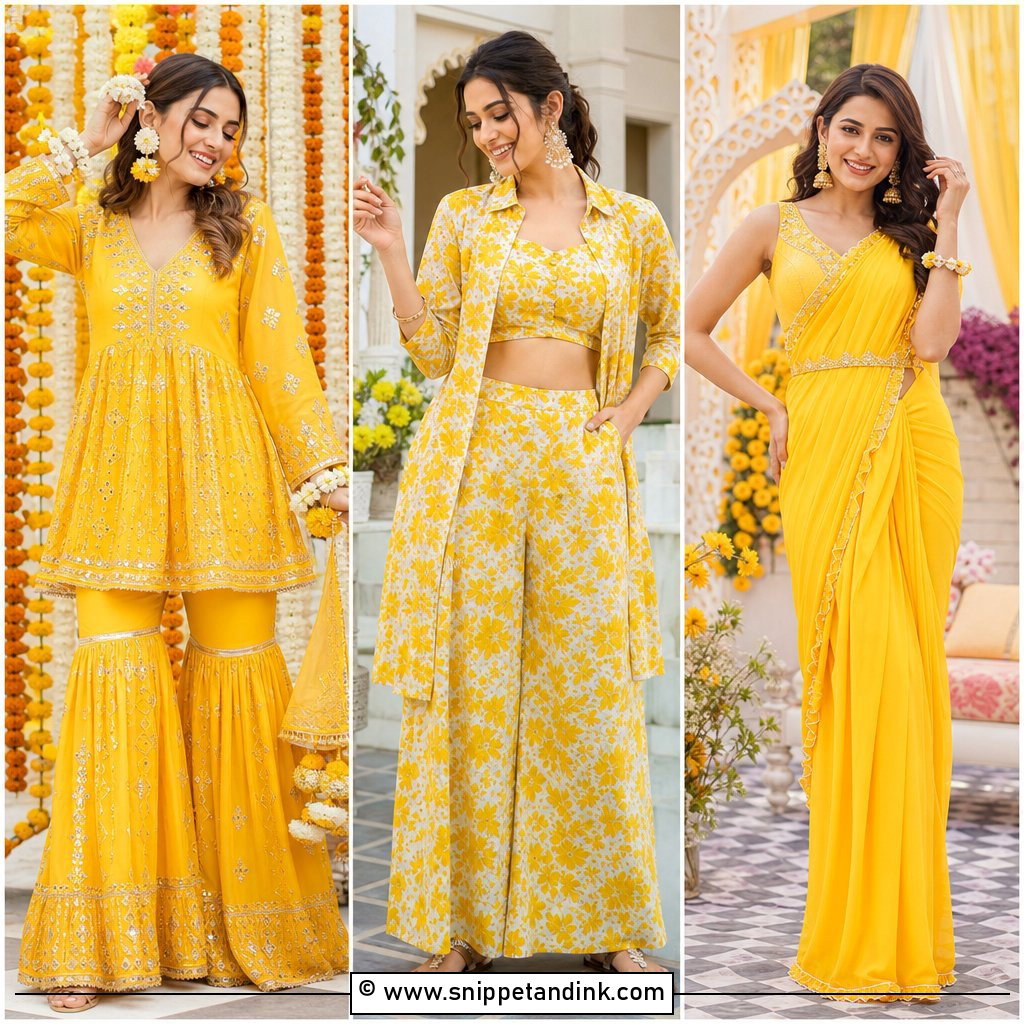
A yellow saree works for every age at a haldi, which makes it a good choice when mothers, aunts and sisters want to coordinate. Brides can choose organza with embroidery, a ruffled saree or silk with a bold border. Guests usually do better in cotton, chiffon or a printed saree that breathes in daytime heat. A sleeveless blouse, potli bag, fresh flowers and gold jhumkas suit it. Outdoors, flats or wedges beat narrow heels. Pin the pallu firmly at the shoulder so it doesn’t slide when you lean in to apply paste.
4. Yellow Sharara Set For Haldi
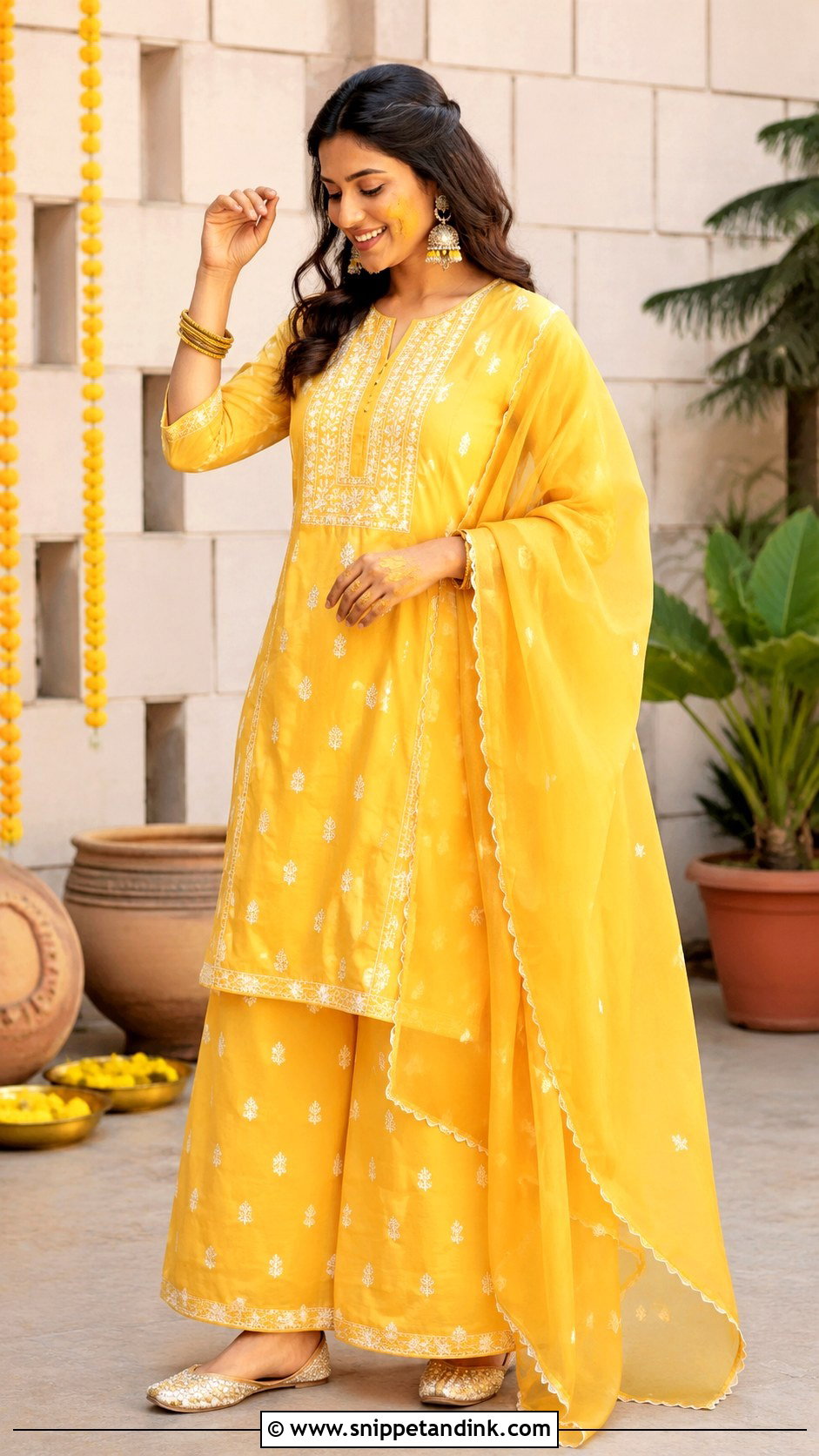
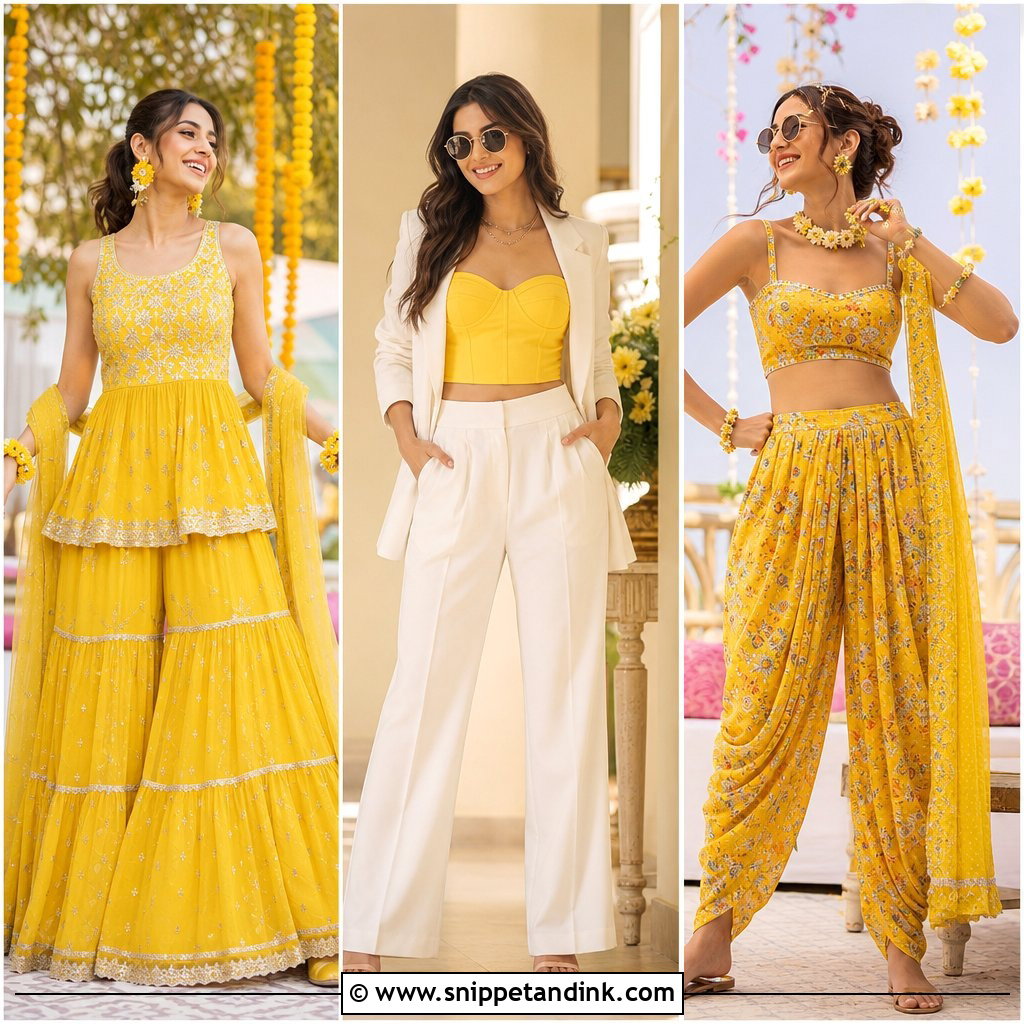
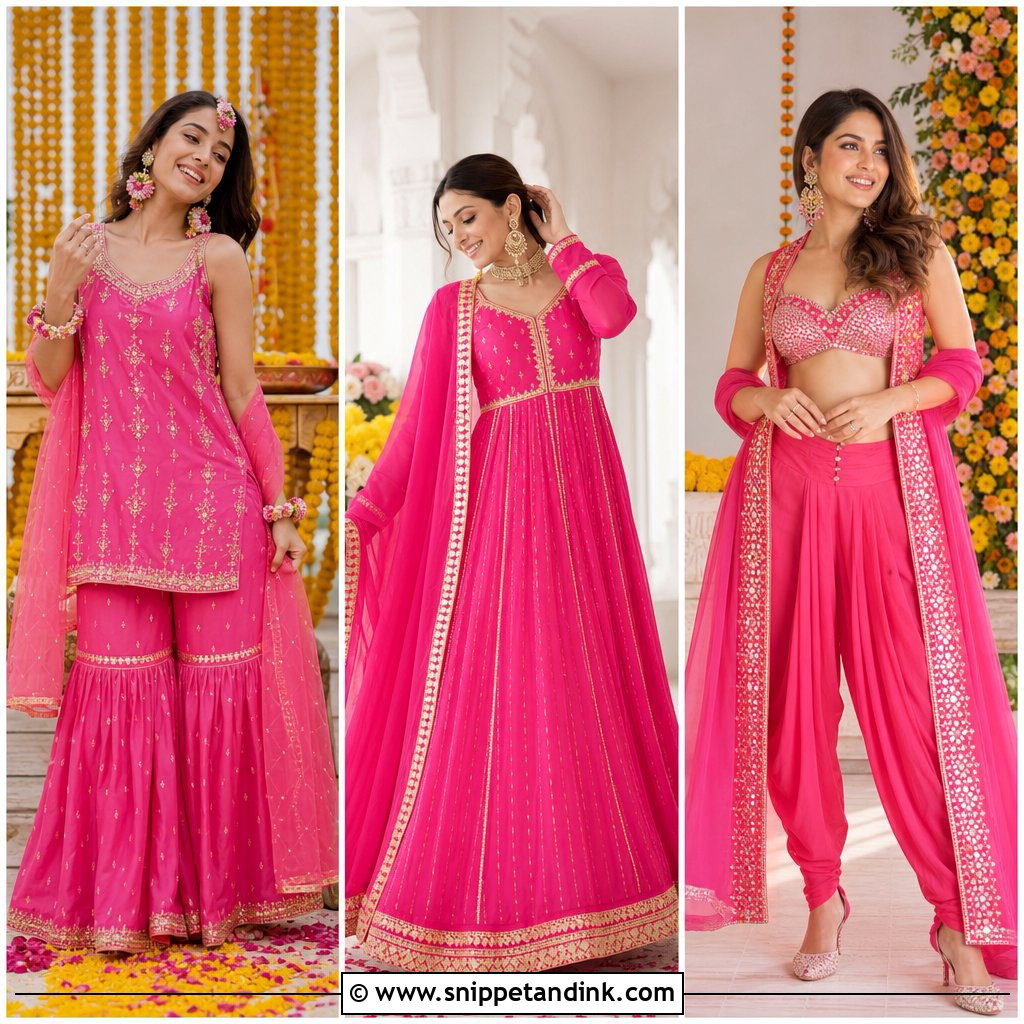
Sharara sets are what I recommend most to the women who will actually be working at the haldi: carrying the paste bowl, managing flowers, wrangling children. The flared bottoms look festive and the kurti stays put. A short kurti with mirror work, chikankari, gota borders or light embroidery balances the volume below. A printed dupatta lifts a plain yellow sharara without weight. Chandbalis, stacked bangles and embroidered juttis complete it.
5. Yellow Anarkali Suit For Haldi
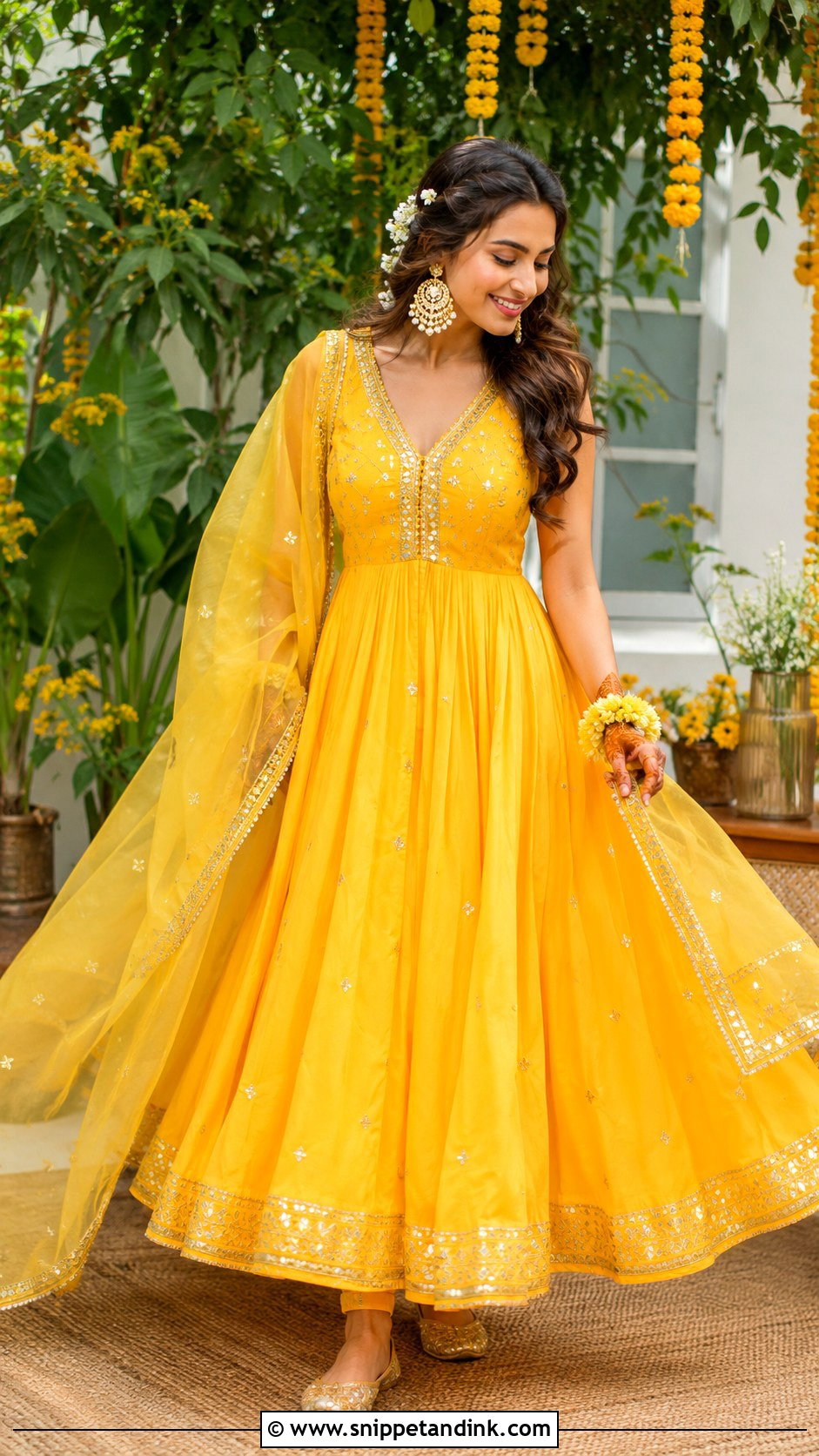
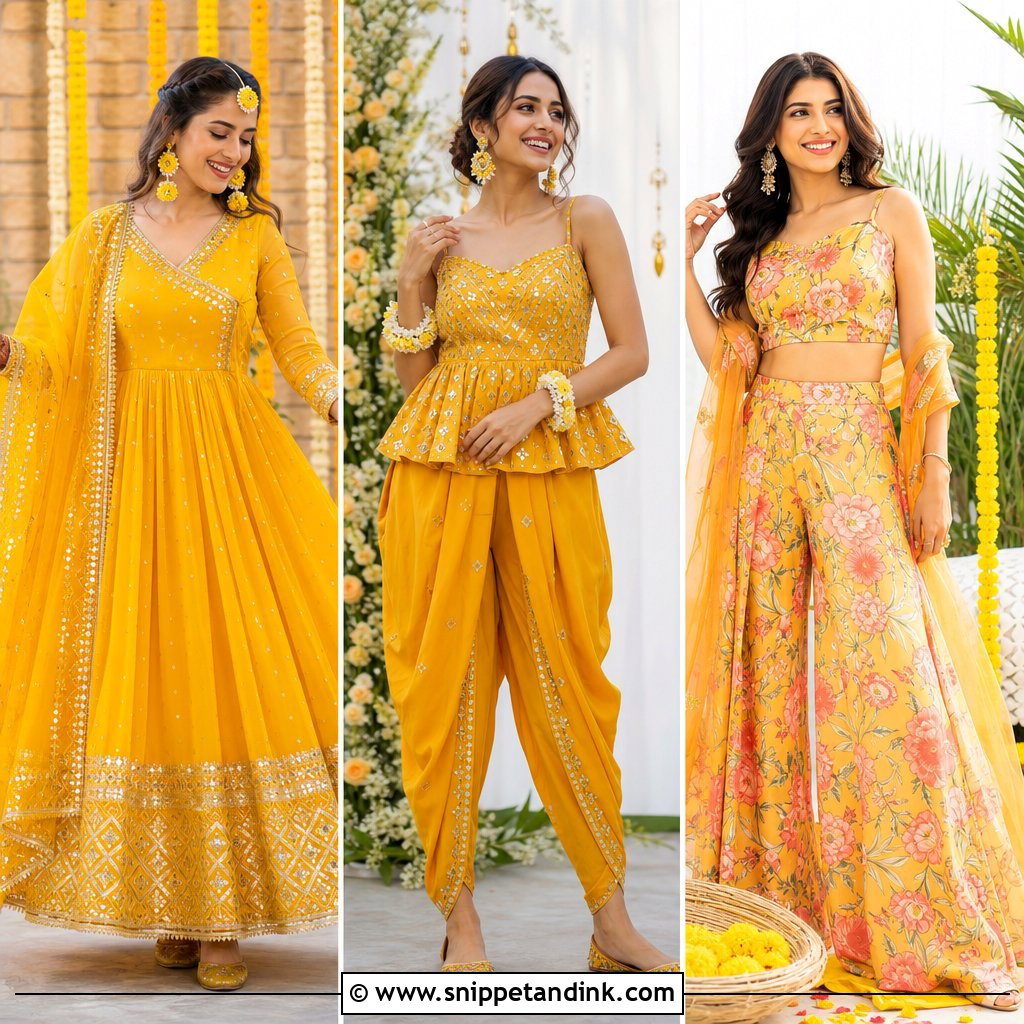
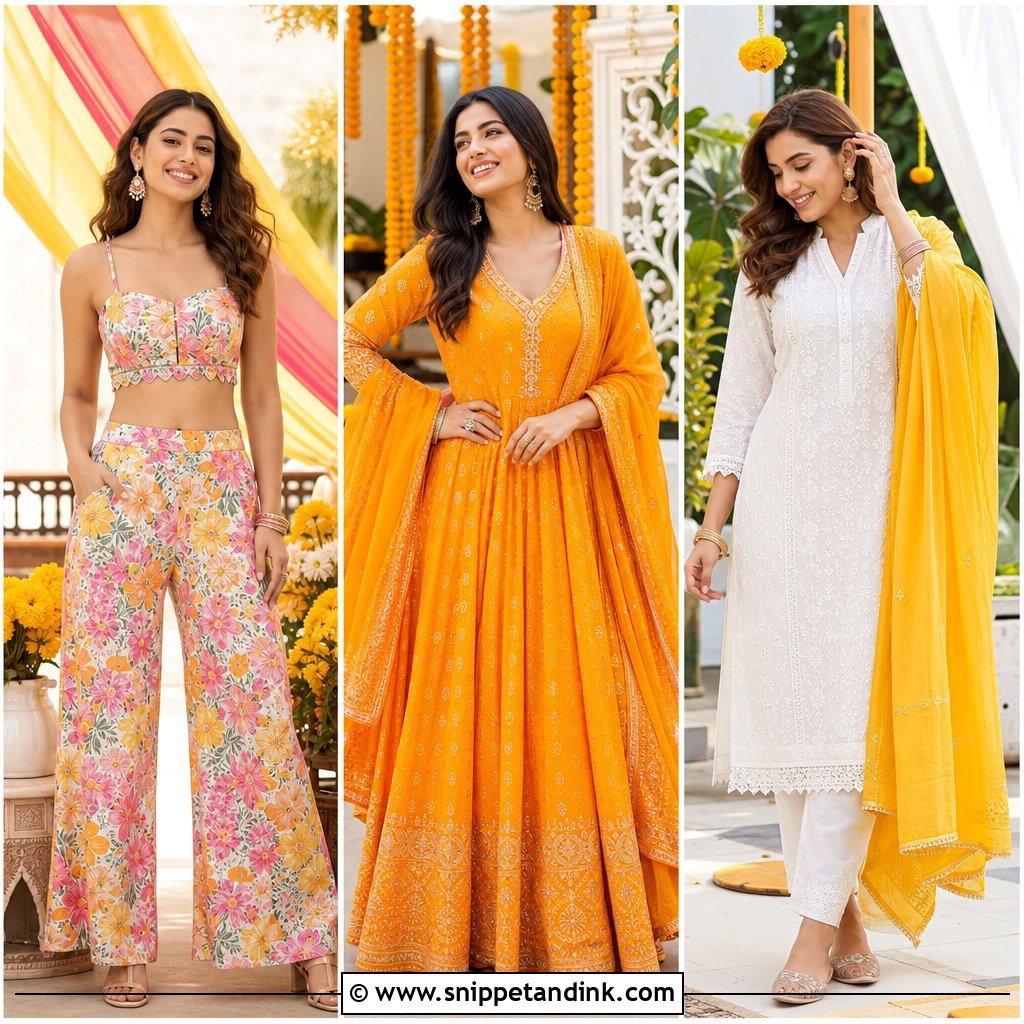
An Anarkali flares as you move, which is exactly why it looks good in walking and twirling shots. Brides can choose one with mirror work, zari or floral embroidery; guests look polished in plain cotton or georgette with a light dupatta. Lemon, butter and marigold yellows are softest in daylight. I’d keep the flare to knee level rather than floor-length if you’ll be sitting on the ground, since a full Anarkali skirt gets trodden on. Statement earrings, curls or a low bun and embellished flats finish it.
6. Yellow Kurta Palazzo Set For Haldi
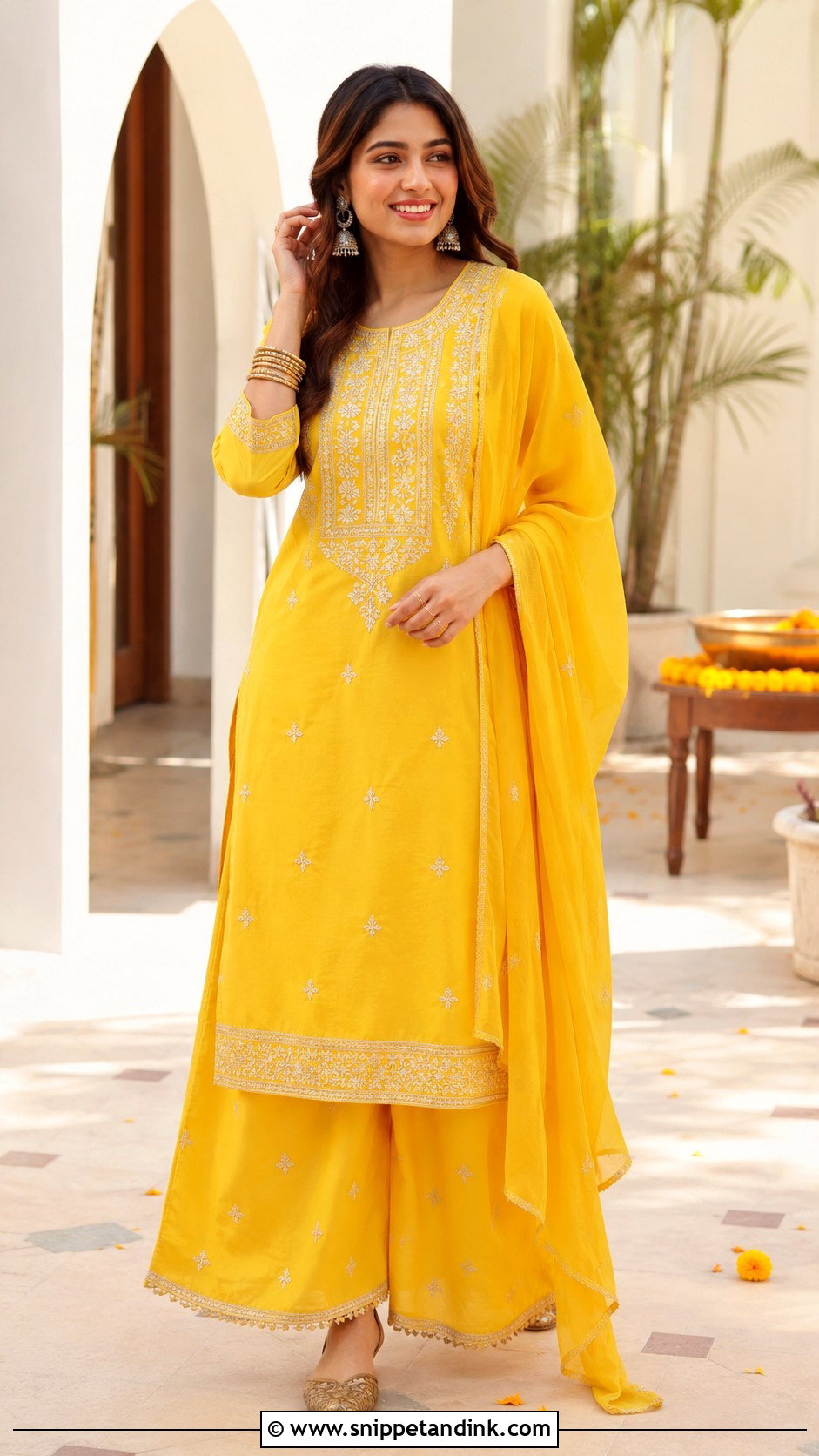
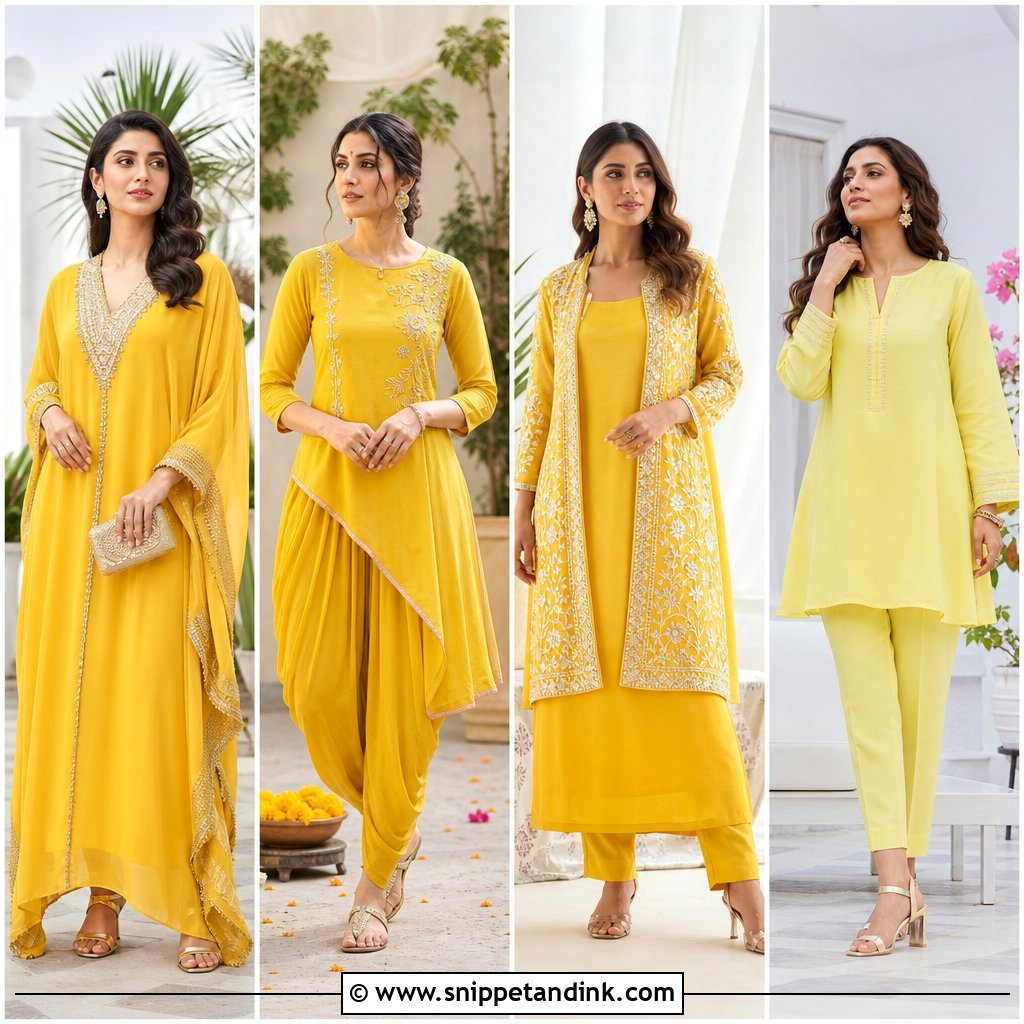
Few outfits are as practical as a kurta with palazzos, and it’s my default for guests and close family who’ll be on their feet for hours. A straight or A-line kurta with wide-leg palazzos in cotton, silk blend or muslin stays comfortable all day. Light embroidery, block prints, mirror borders or a scalloped dupatta make it special. Oxidized earrings, gold bangles, a small potli and cushioned flats complete it. It’s also the most modest option here without being heavy.
7. Floral Lehenga For Haldi
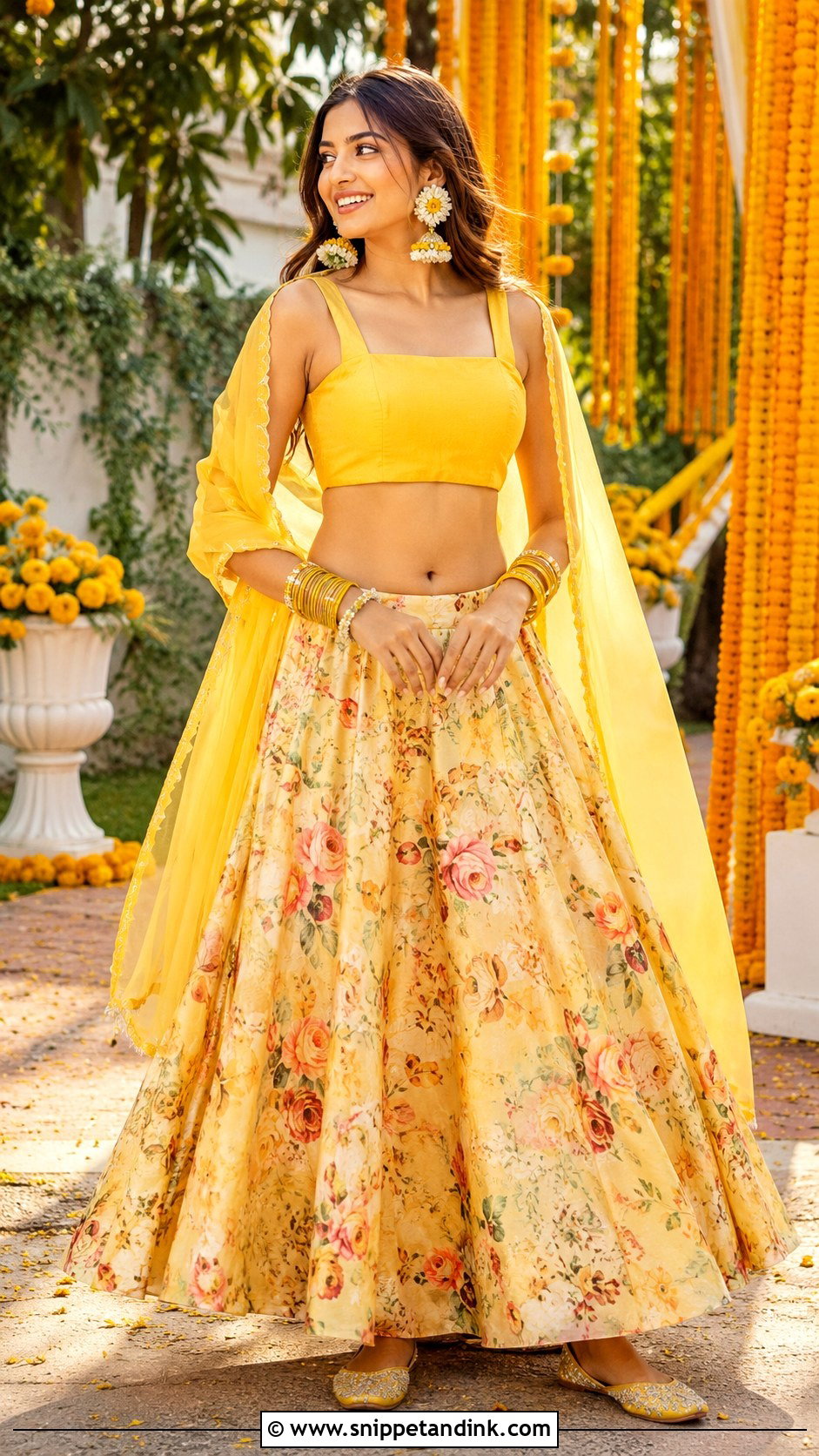
Florals feel like a garden party, and they’re forgiving: a busy print hides turmeric much better than a solid. Yellow florals are classic, but ivory with yellow flowers, pink and yellow blooms or marigold patterns work too. A floral skirt with a solid blouse keeps it balanced. Add a sheer dupatta, flower earrings and a few bangles. Brides can choose 3D or embroidered flowers. Guests should keep the print smaller and softer, so the bride’s outfit stays the boldest in the frame.
8. Chikankari Suit For Haldi
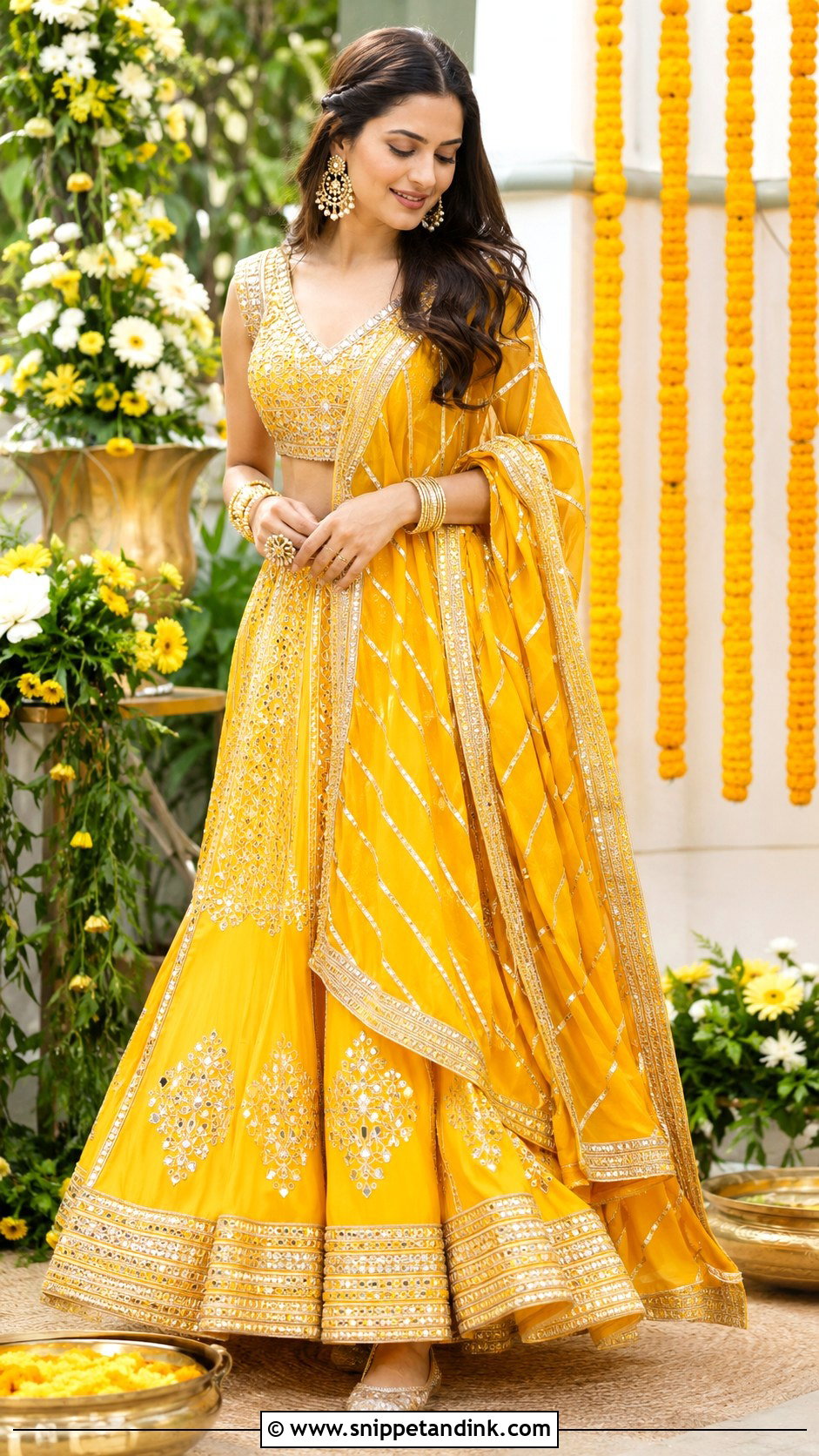
Chikankari is fine hand embroidery from Lucknow, and its open stitching makes it one of the coolest things you can wear on a hot morning. Yellow chikankari looks traditional; white or ivory with yellow accessories looks airy. Choose straight pants, palazzos or a sharara depending on how dressy you want it. A mukaish or mirror dupatta adds sparkle. Pearls, fresh flowers, embroidered flats and a simple clutch finish it. It rewears well too, as long as turmeric is rinsed out the same day.
9. Mirror Work Lehenga For Haldi
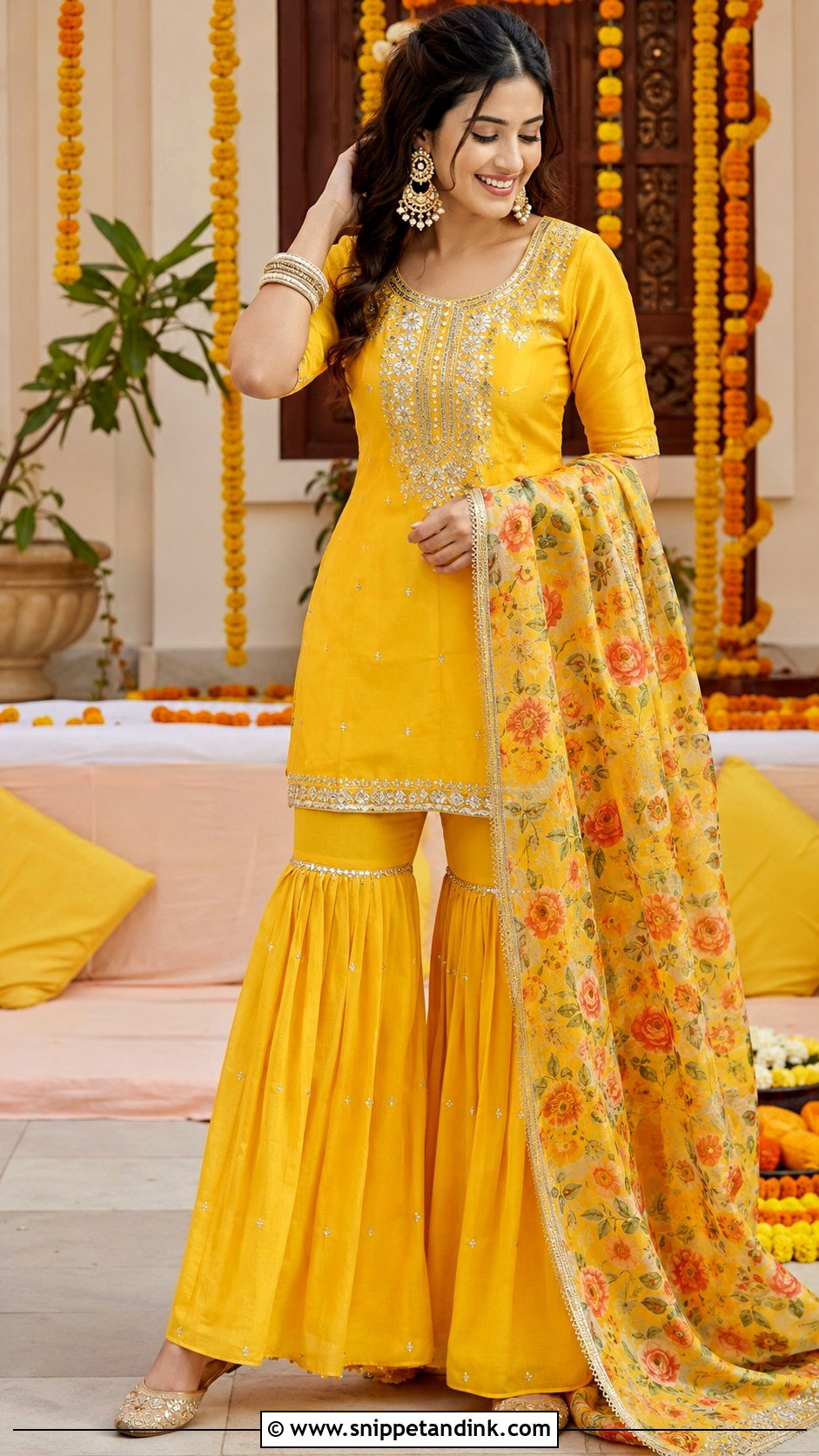
Mirror work does what jewelry would otherwise have to do: it catches daylight in small flashes. On a yellow, mustard, lime or ivory base, keep the blouse and dupatta lighter so it isn’t overwhelming. Brides can wear a full mirror-work blouse with a softer skirt; guests suit mirror borders or scattered detail. I like mirror work for haldi partly because paste wipes off glass easily. Simple earrings, bangles, wedges or juttis, fresh makeup and relaxed hair are enough.
10. Gota Patti Lehenga For Haldi
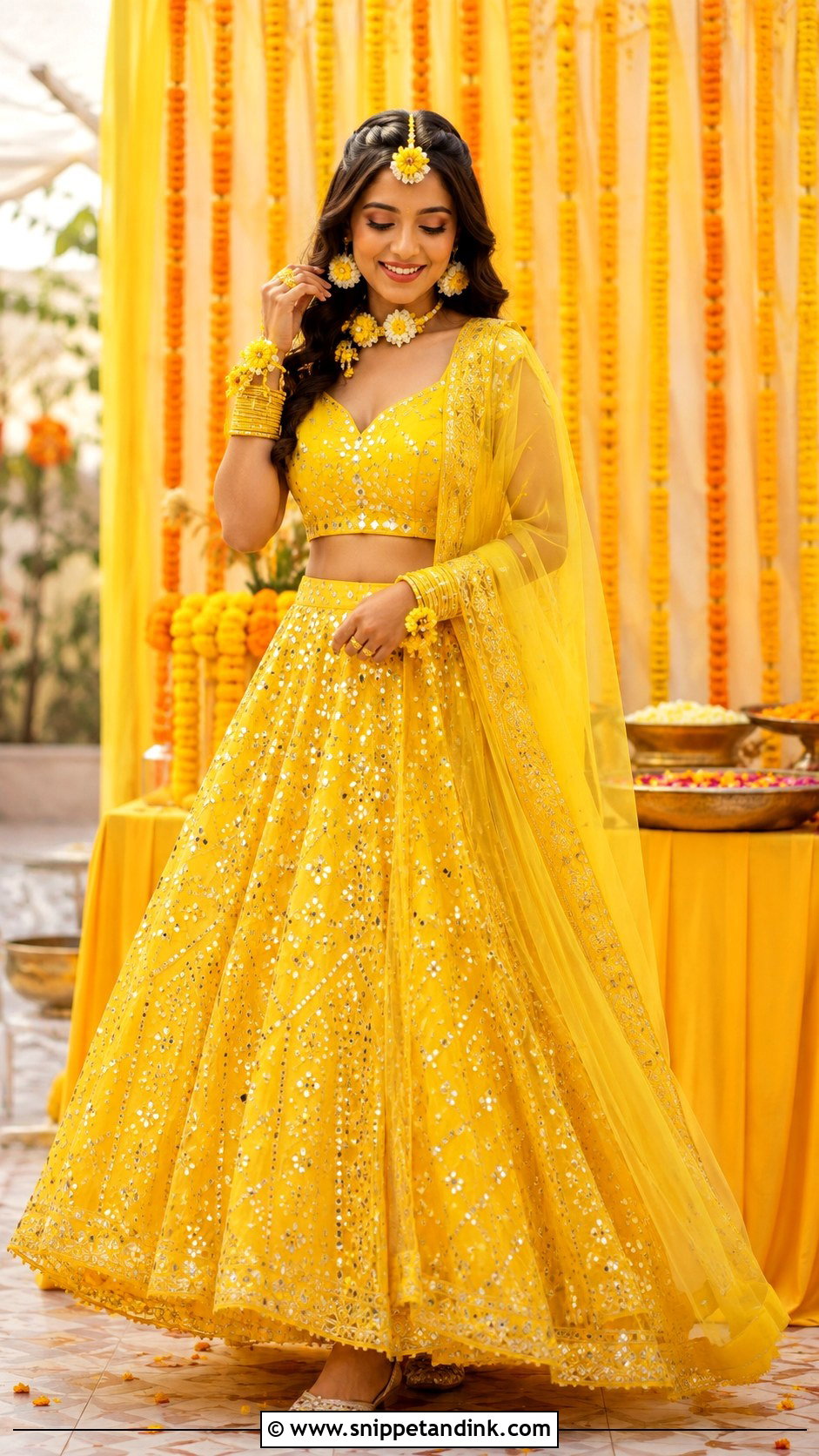
Gota patti is metallic ribbon stitched onto fabric, so it gives shine at a fraction of the weight of zari embroidery. Yellow, mango, marigold and orange all look rich with gold gota. A flared lehenga with a fitted blouse and soft dupatta suits brides and bridesmaids. For guests, I’d choose gota borders rather than all-over work. Kundan earrings, a maang tikka, bangles and embellished juttis finish it. If paste lands on the gota, dab rather than rub, as the ribbon edges can lift.
11. Yellow Gharara Set For Haldi
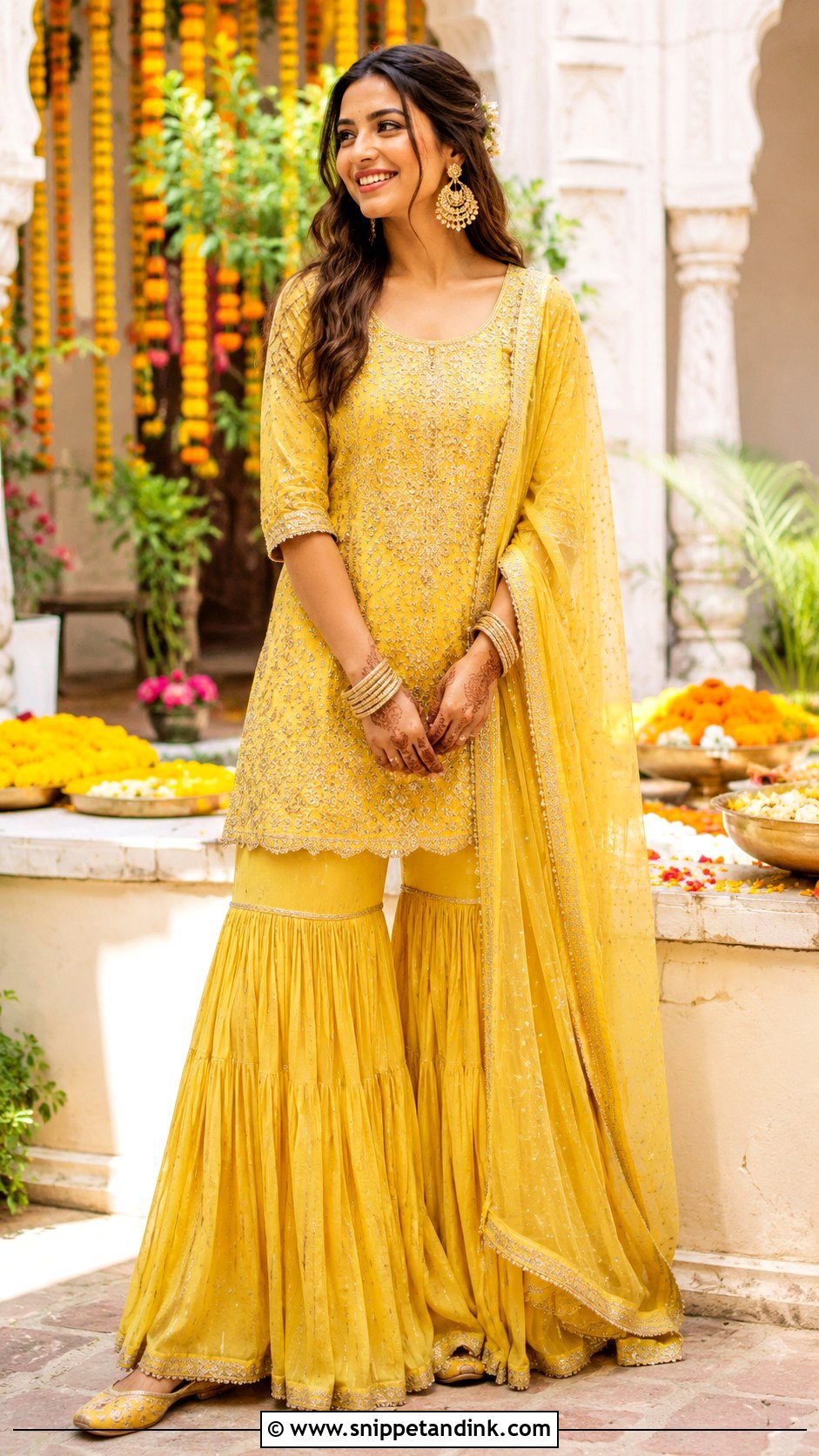
The gharara’s gathered joint at the knee is what sets it apart from palazzos, and it’s usually trimmed with gota or lace. That joint pulls when you sit cross-legged, so try it on the floor before buying. A short embroidered or mirror-accented kurti keeps it festive. Drape a light dupatta over one shoulder. Chandbalis, bangles and embroidered flats complete it. For a group of sisters, coordinated ghararas in different yellows look planned without looking like uniforms.
12. Yellow Maxi Dress For Haldi
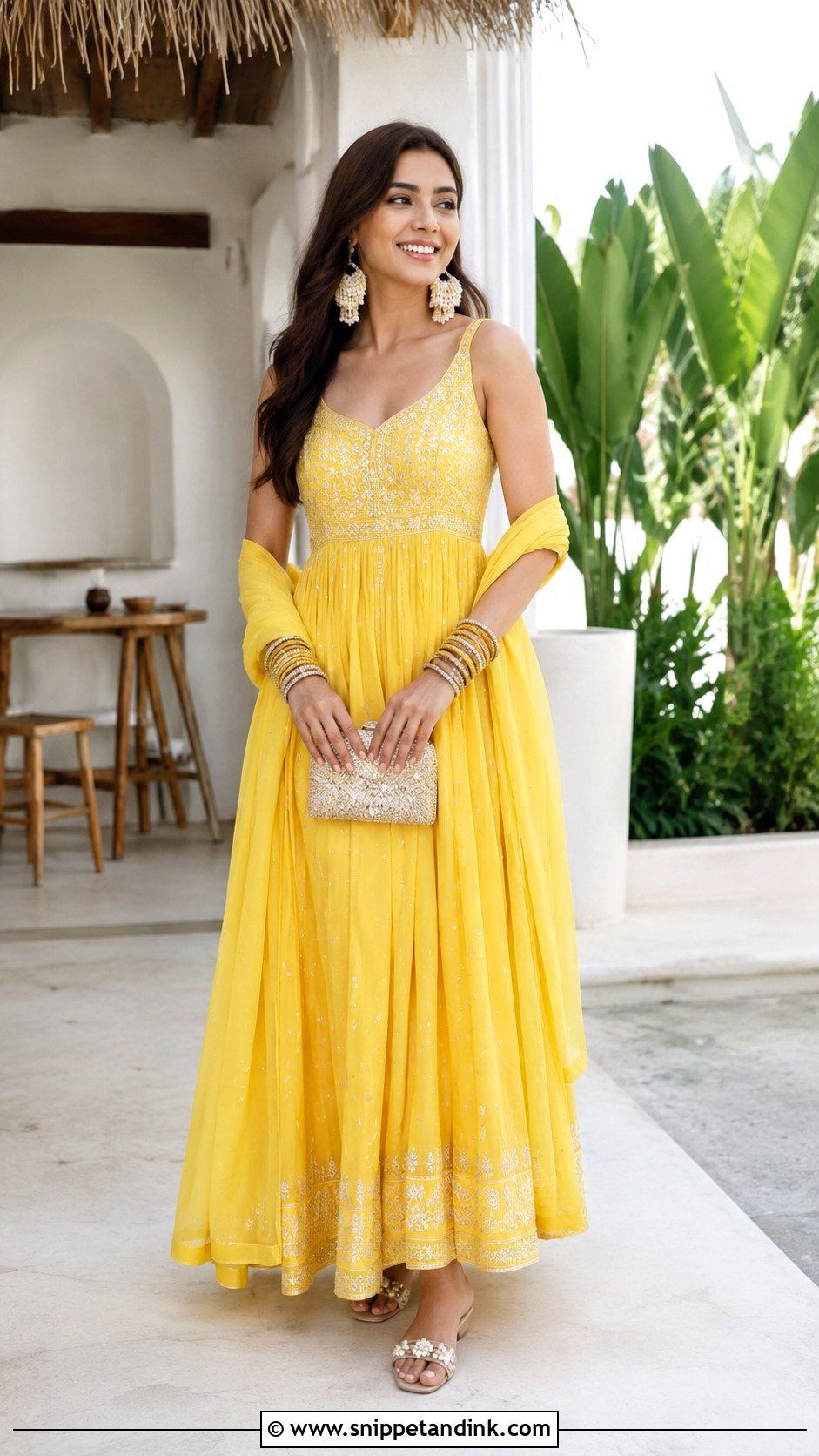
A maxi is the easiest Indo-western route for a guest, and it suits relaxed daytime events. Flowing cotton, linen blend, chiffon or georgette with subtle embroidery, block prints or floral detail keeps it festive. Statement earrings, bangles, embellished sandals and a small ethnic clutch push it past casual. Add a light dupatta or cape for coverage. I suggest this most for destination weddings and mixed-culture celebrations, where some guests are unfamiliar with traditional dress.
13. Yellow Co Ord Set For Haldi
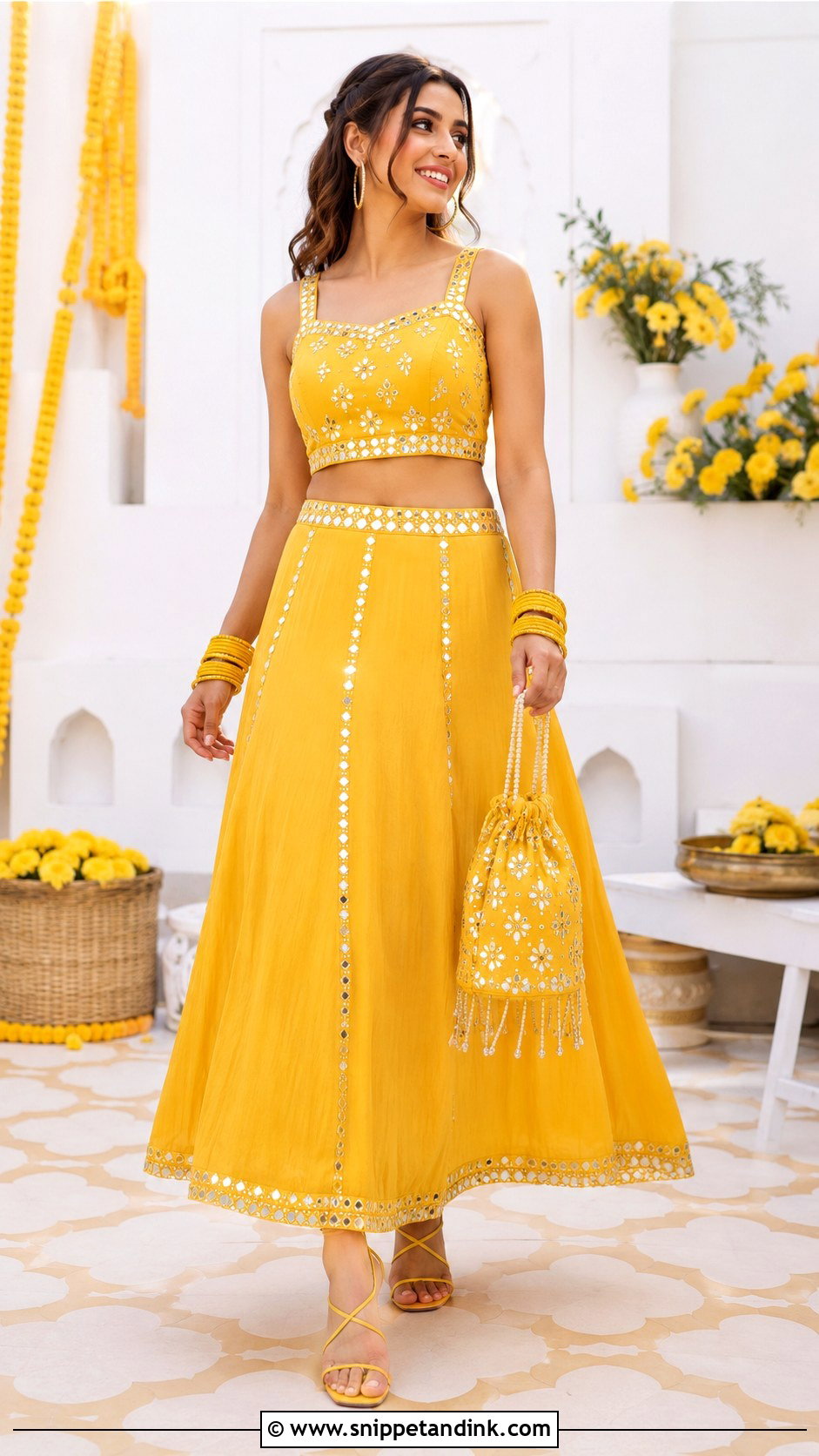
A yellow co ord set is a smart haldi option for women who want modern clothes they’ll wear again. A crop top with a matching skirt, a short kurta with wide pants or a peplum with palazzos all count. Matching pieces look intentional, and the relaxed shapes stay comfortable. Mirror trim, thread work, tassels or printed borders add festivity. Hoops, bangles, strappy flats and a small sling or potli suit it. Afterwards, the separates split up into a dozen ordinary outfits.
14. Yellow Cape Set For Haldi
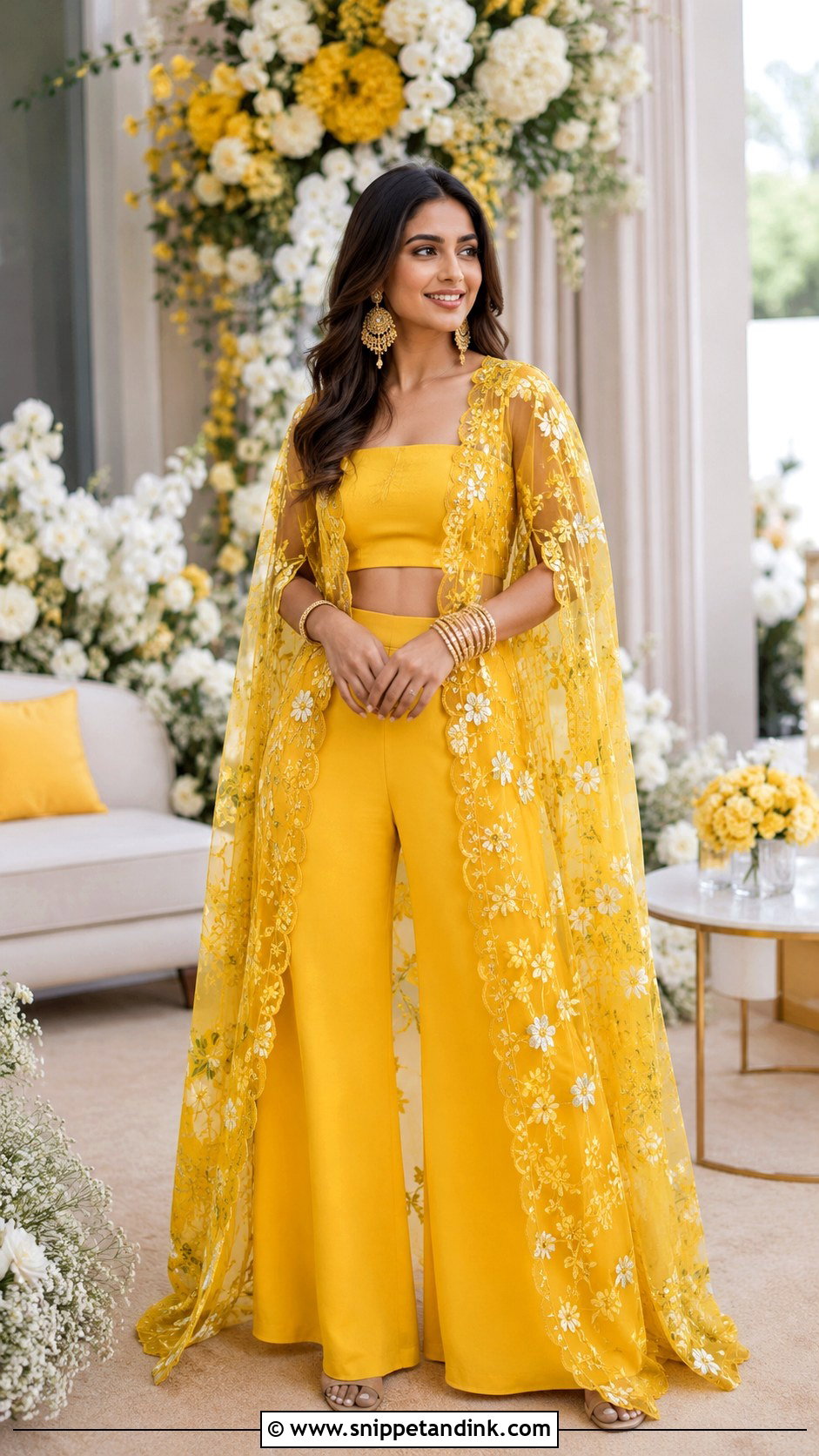
A cape replaces the dupatta and stays on your shoulders, which is a relief if you’re the one passing paste and flowers around. Choose a crop top and skirt with a sheer cape, a kurta and pants with an embroidered one, or a dhoti set with a flowing overlay. Keep the base plain and let the cape carry the embroidery, tassels or mirror work. Sleek earrings, soft waves and heels or flats you can stand in finish it.


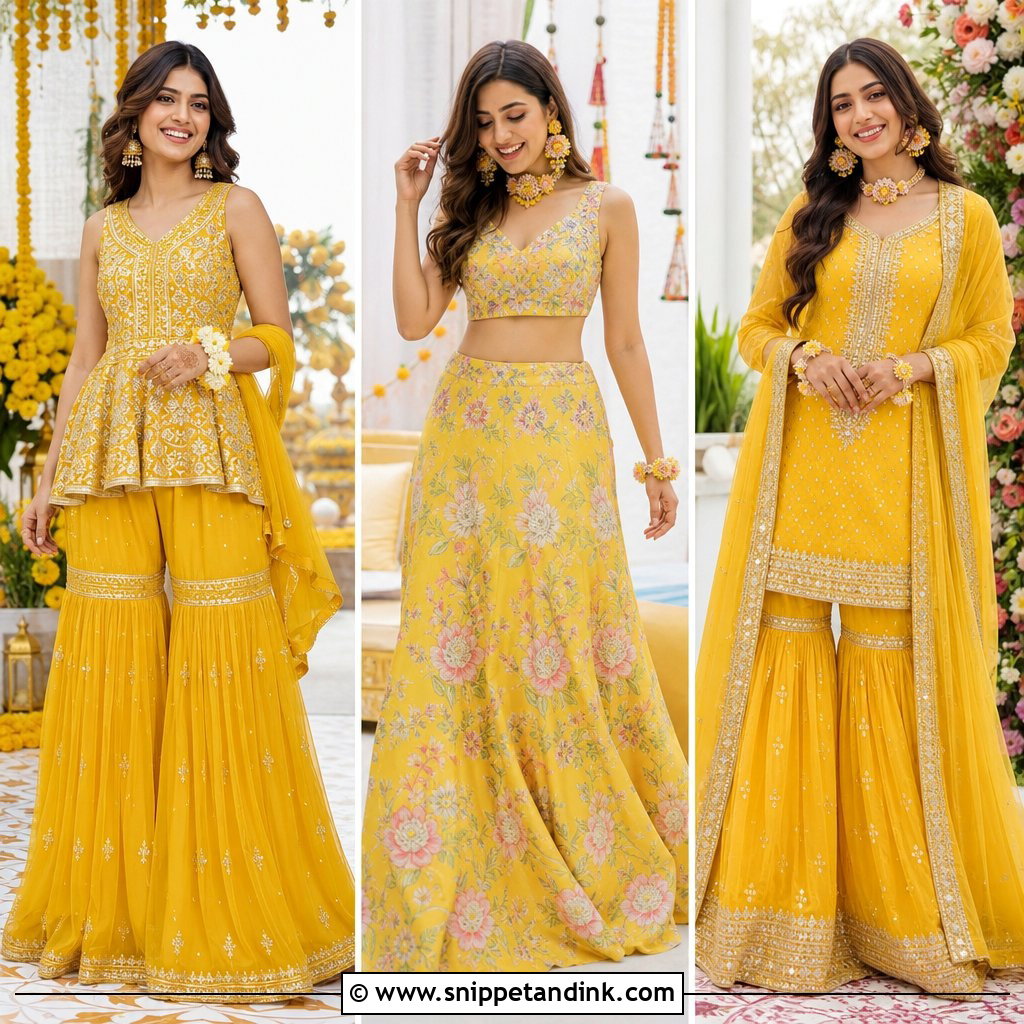
15. Yellow Dhoti Set For Haldi
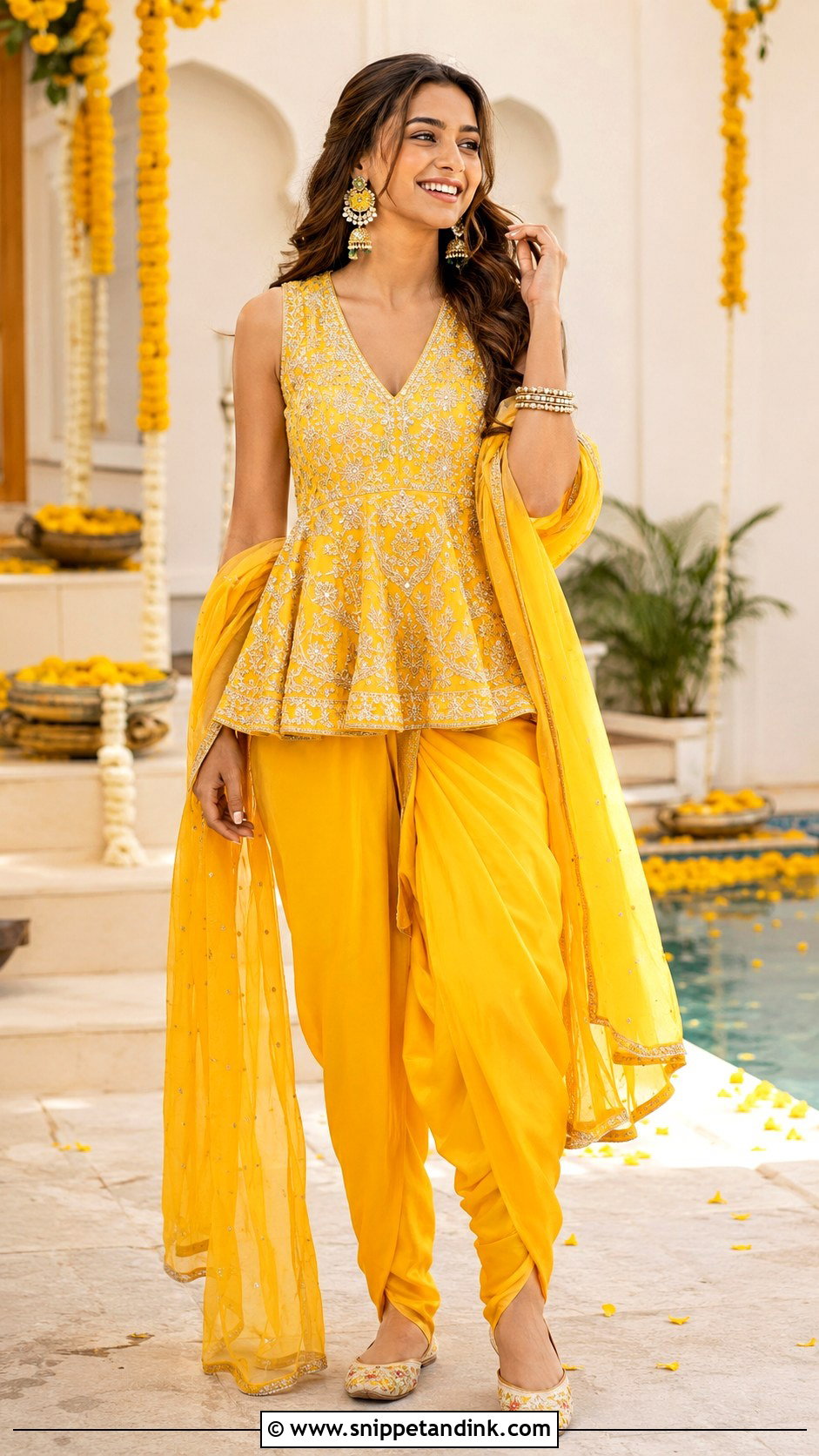
A yellow dhoti set is for the cousin who plans to dance. The draped, pleated bottoms move freely, and a short kurti, peplum or crop blouse keeps the top festive. Add a dupatta or jacket for coverage. I’d make sure the drape is stitched rather than tied, since a tied dhoti loosens over a day of sitting and standing. Statement earrings, bangles and embroidered juttis complete it, with a slick bun or soft ponytail.
16. Yellow Jacket Lehenga For Haldi
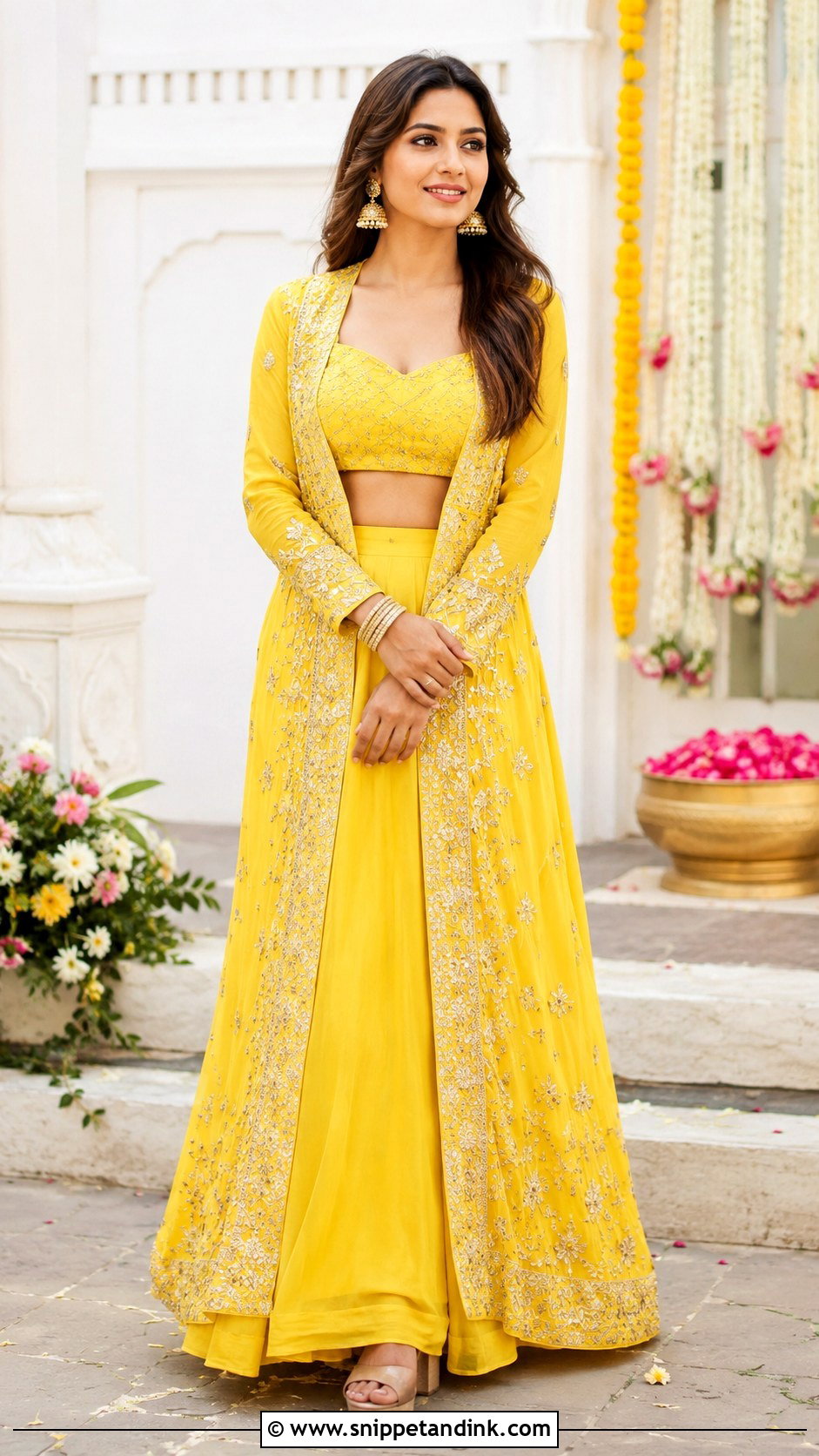
A jacket gives structure and coverage, and it never slips the way a dupatta does. It can be short, long, sheer, embroidered or printed. A plain lehenga and blouse instantly look finished under a statement jacket. Brides can choose floral appliqué or mirror work, while guests look right in printed cotton or light georgette. Jhumkas, bangles and wedges finish it. Many older relatives appreciate the coverage at family ceremonies, which is worth knowing if you’re unsure of the crowd.
17. Mustard Saree For Haldi
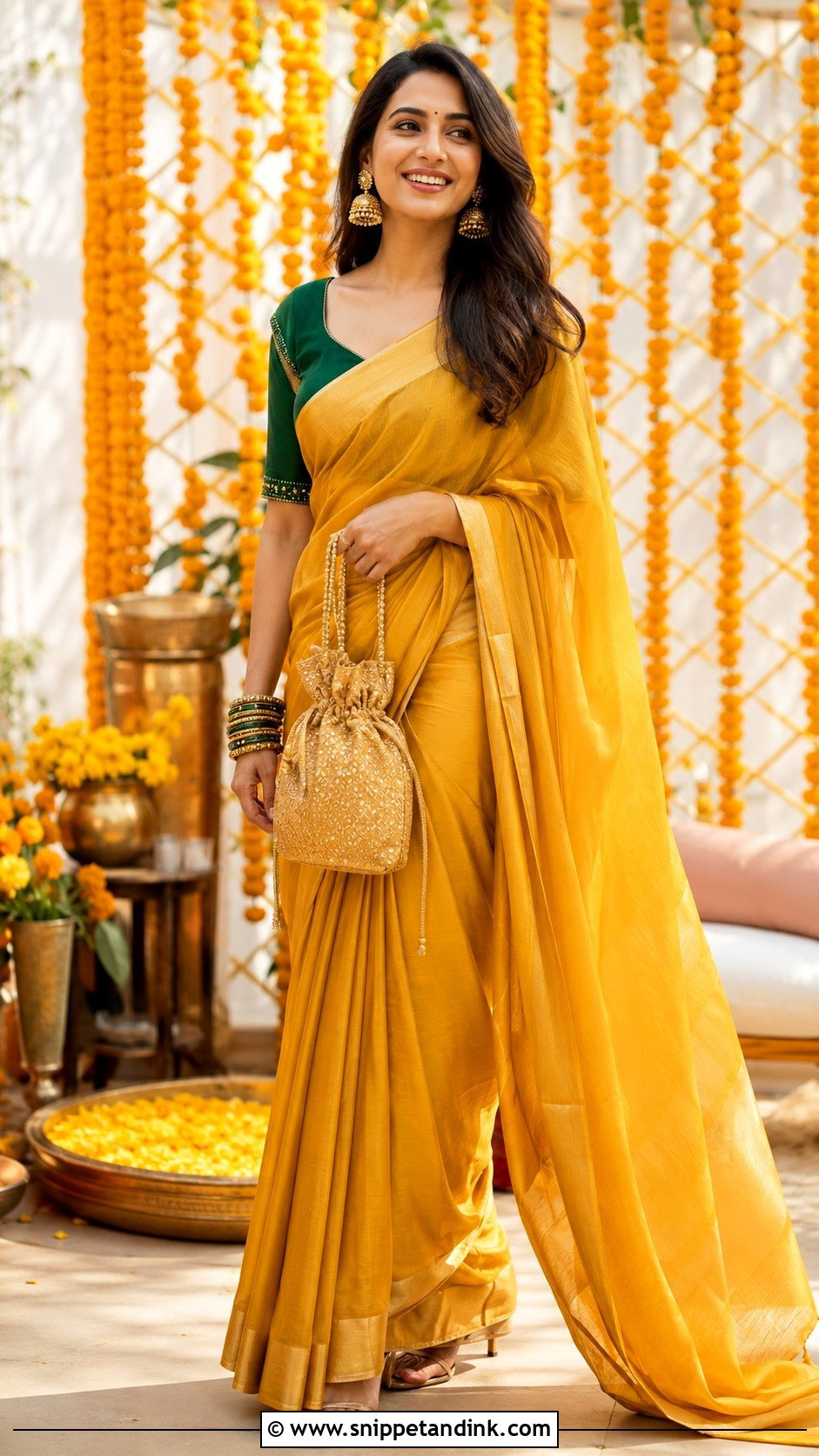
Mustard is yellow’s deeper cousin, and it flatters deeper skin tones and golden afternoon light especially well. Silk, linen, chiffon or organza all work, depending on formality. A contrast blouse in white, pink, green or orange makes it feel current. Gold earrings, stacked bangles, a potli and walkable sandals complete it. Mustard also hides minor turmeric marks better than pale yellow, which is why I suggest it to mothers and aunts who’ll be applying the paste.
18. Orange Lehenga For Haldi
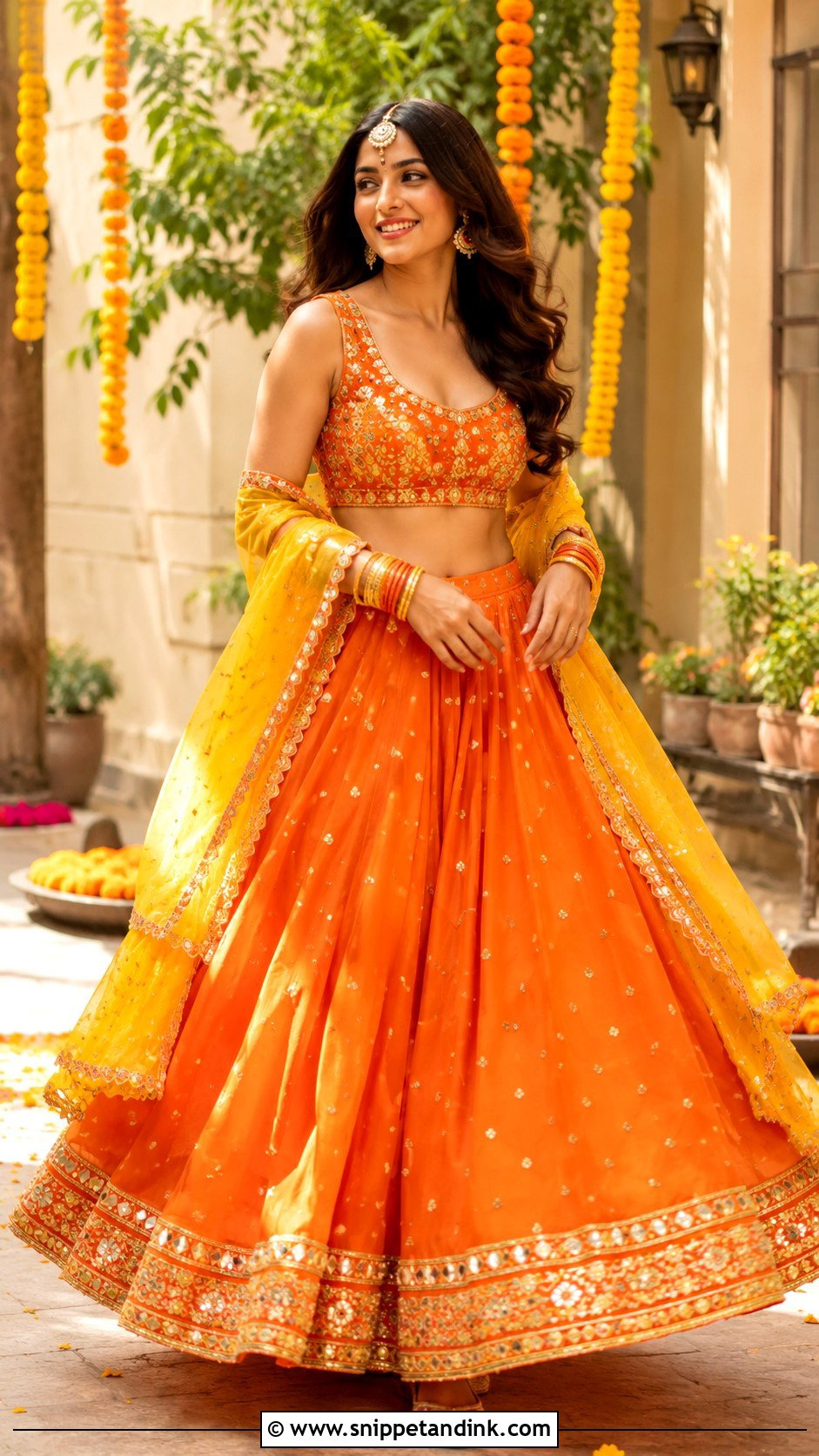
Orange keeps you inside the warm haldi palette while stepping out of the yellow crowd. Marigold, tangerine, mango or saffron all look cheerful in daylight. A light lehenga with gota patti, mirror work or floral embroidery is festive without formality. Pair it with gold jewelry, a yellow or pink dupatta and embellished flats; brides can add flower jewelry. Against yellow decor, orange looks coordinated rather than identical, which is what you want in group photos.
19. Lime Green Lehenga For Haldi
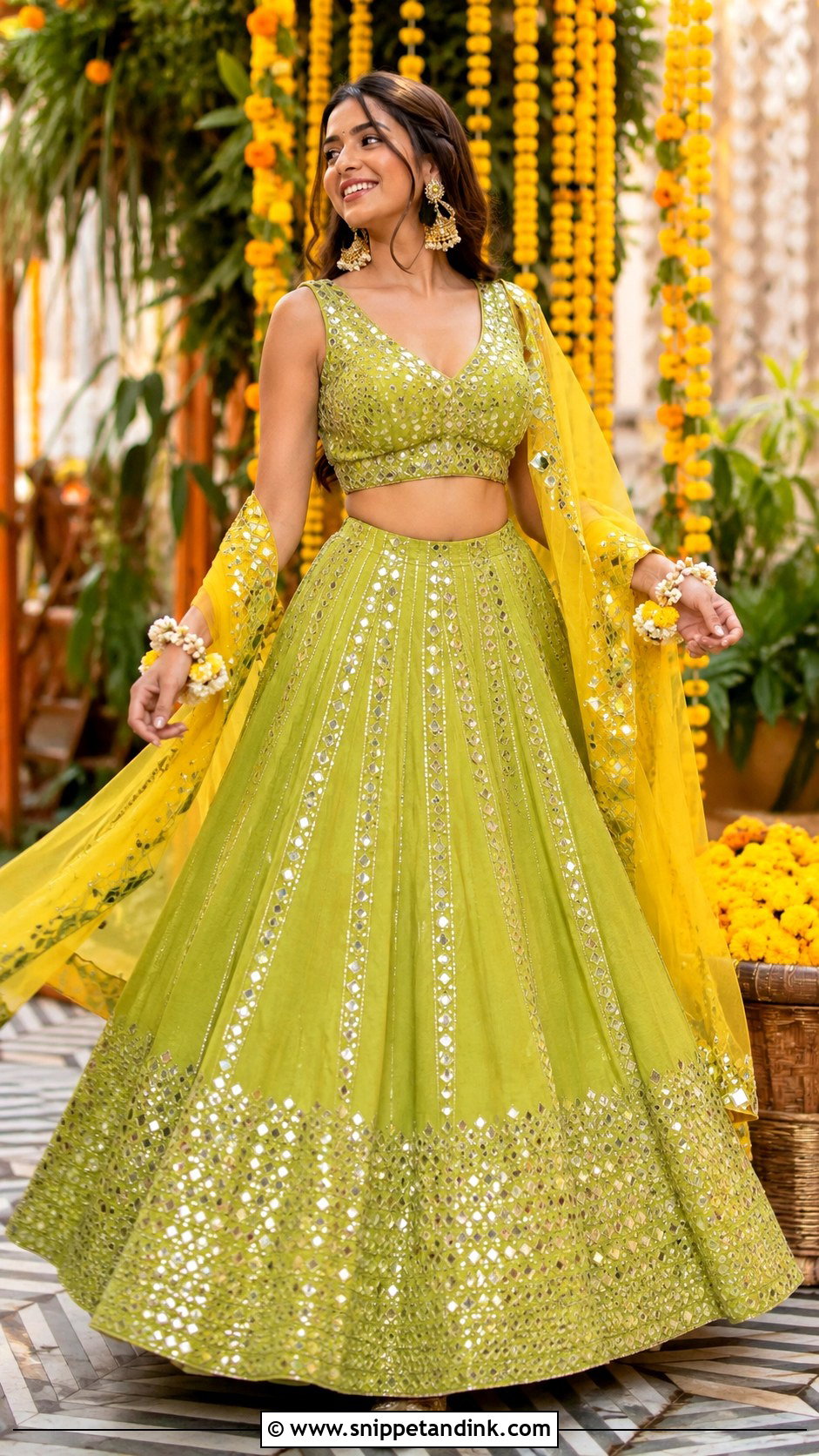
Lime green stands out in a sea of yellow and still feels like it belongs. A lightweight lehenga with mirror work, thread embroidery or floral print suits the morning. Pull it back to the ceremony with a yellow dupatta or yellow flower jewelry. Gold or pearl accessories soften the brightness. Before buying, check the green against your face in daylight; sharp lime suits warm skin, while a softer pistachio is kinder to cool undertones. Keep makeup glowing and simple.
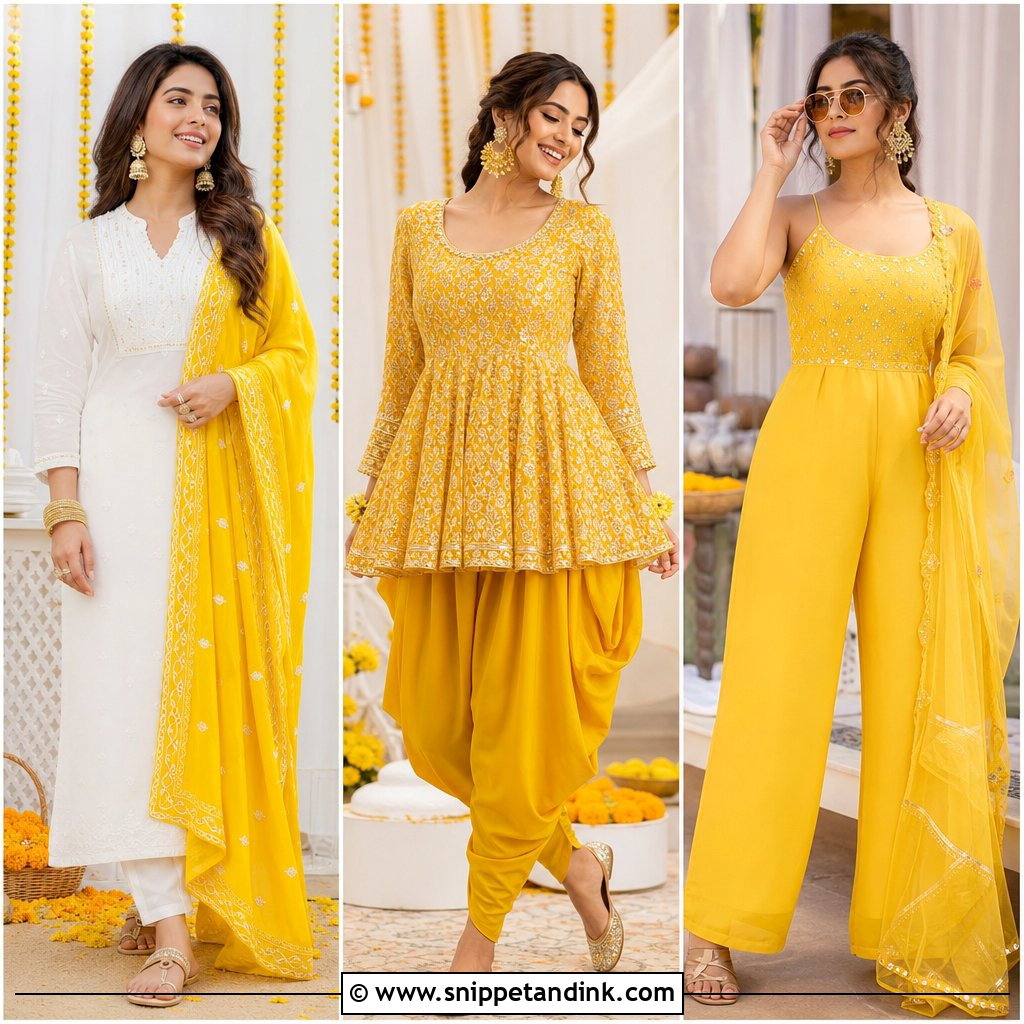
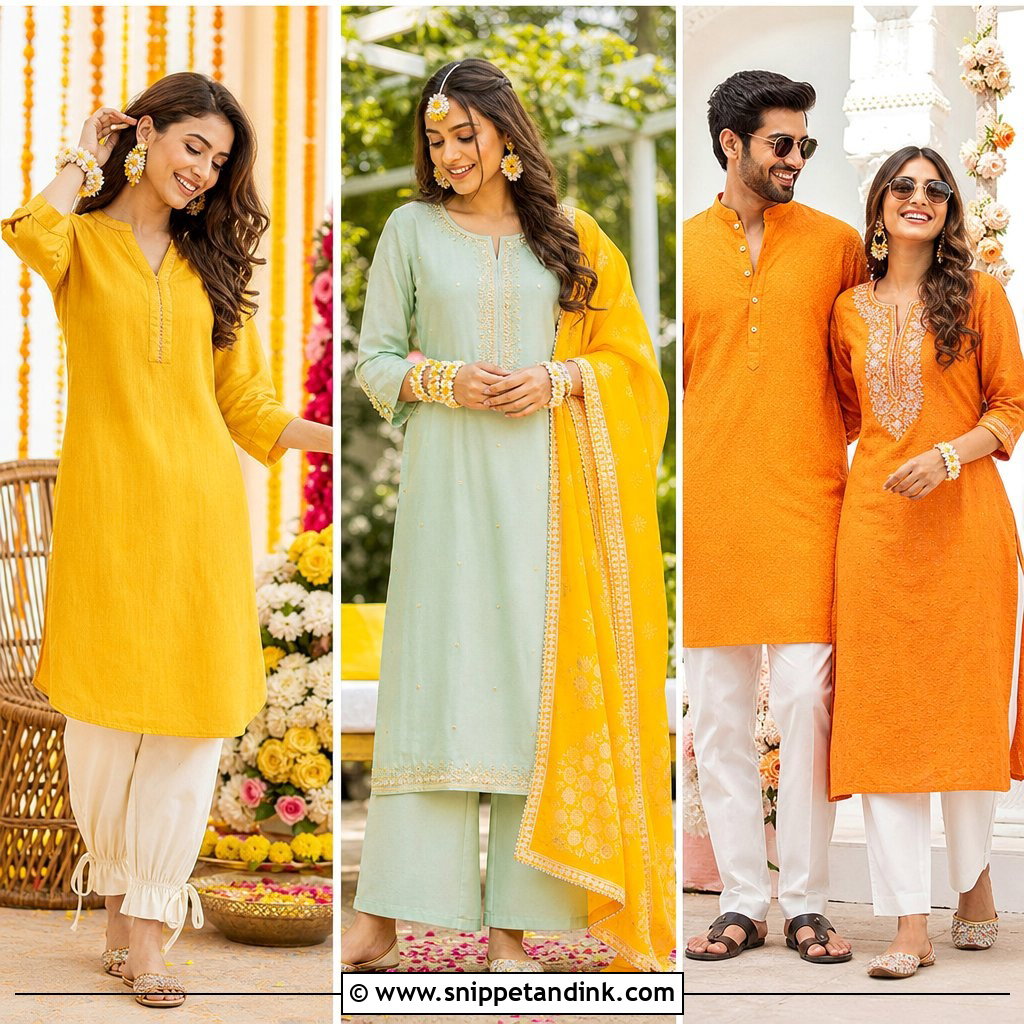
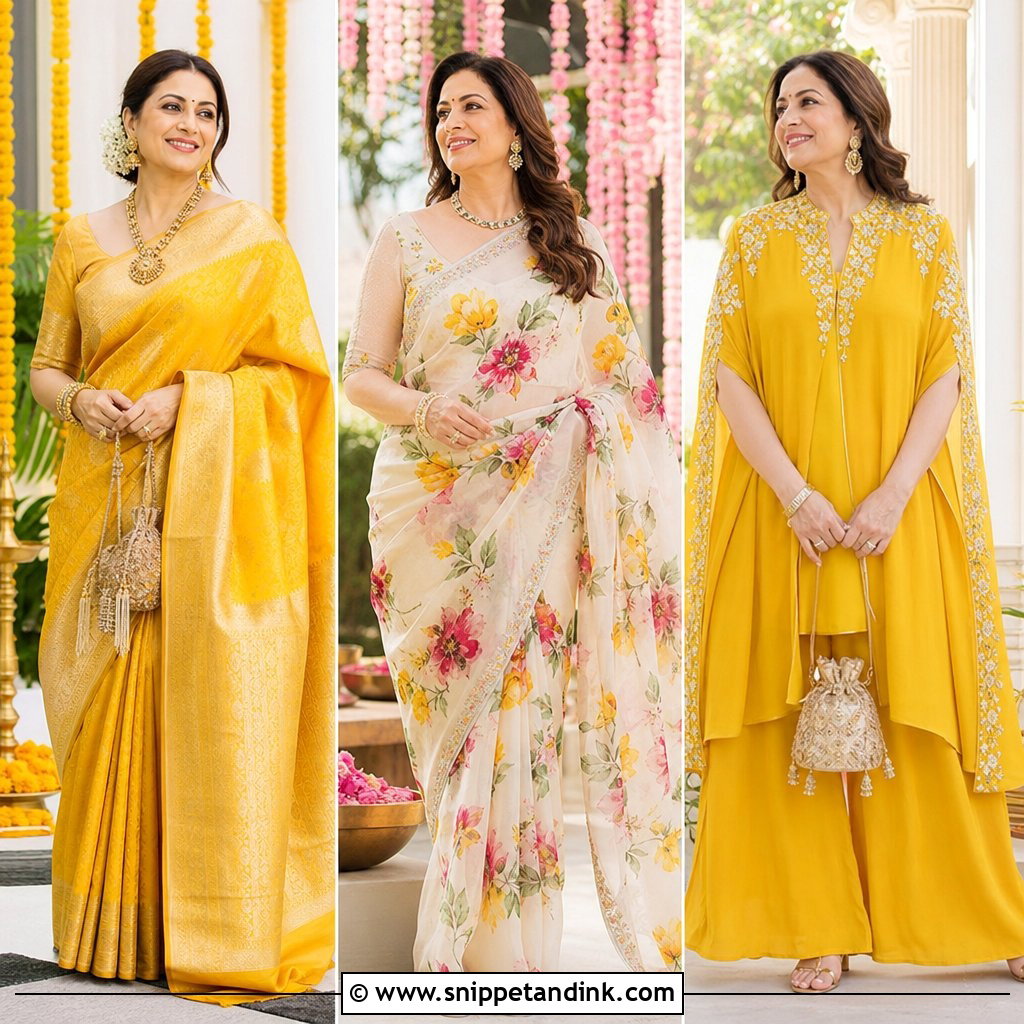
20. Green Sharara Set For Haldi
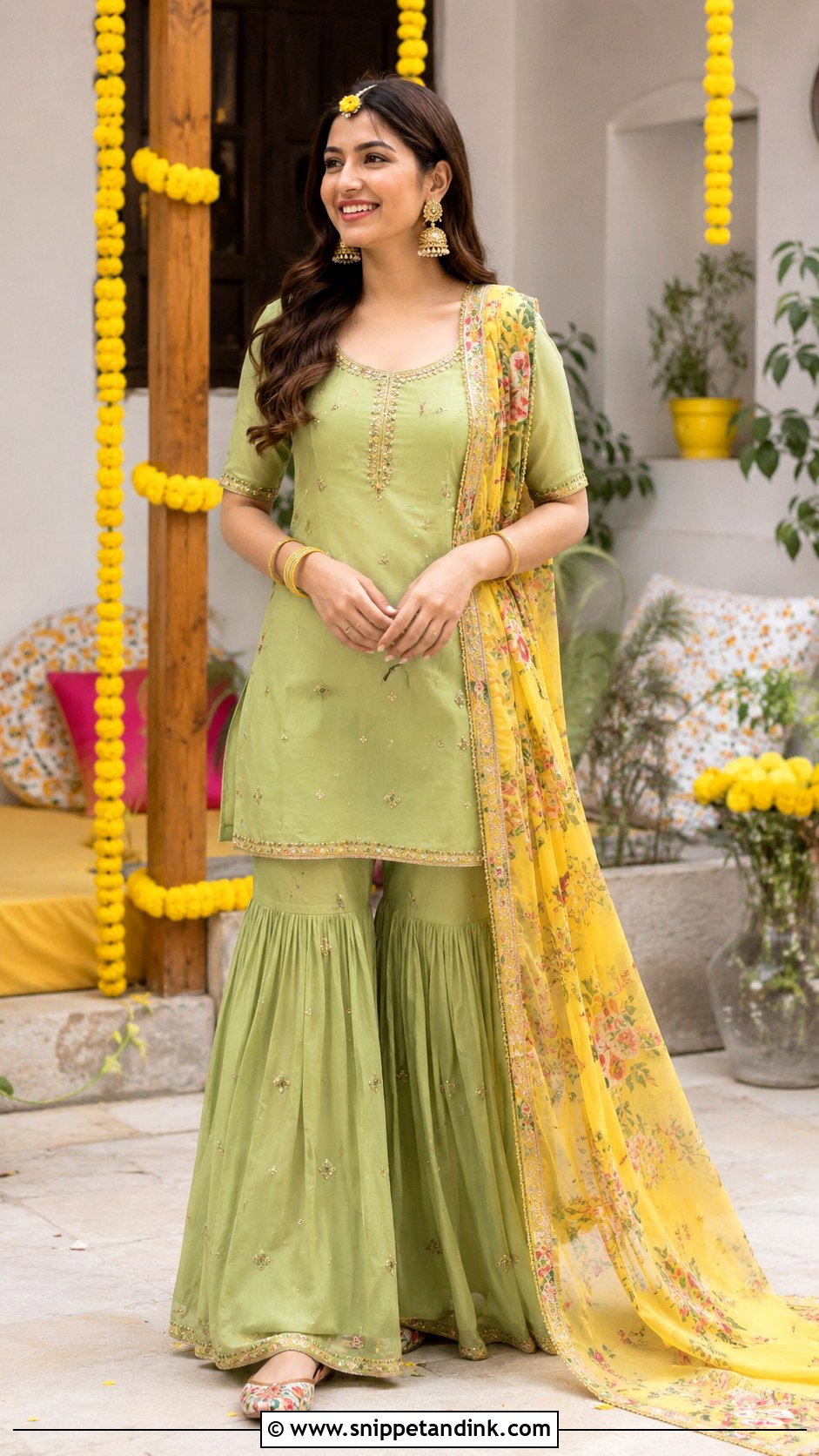
A green sharara is the outfit I’d point a guest toward when she wants color but doesn’t want to compete with the bride. Lime, pistachio, mint, parrot and mehendi green all suit daytime. A short kurti with a flared sharara gives shape, and a yellow or floral dupatta connects it to the theme. Gold jhumkas, bangles and juttis complete it. Green and marigold look well together in photos, so it also brightens the group shots.
21. Pastel Yellow Lehenga For Haldi
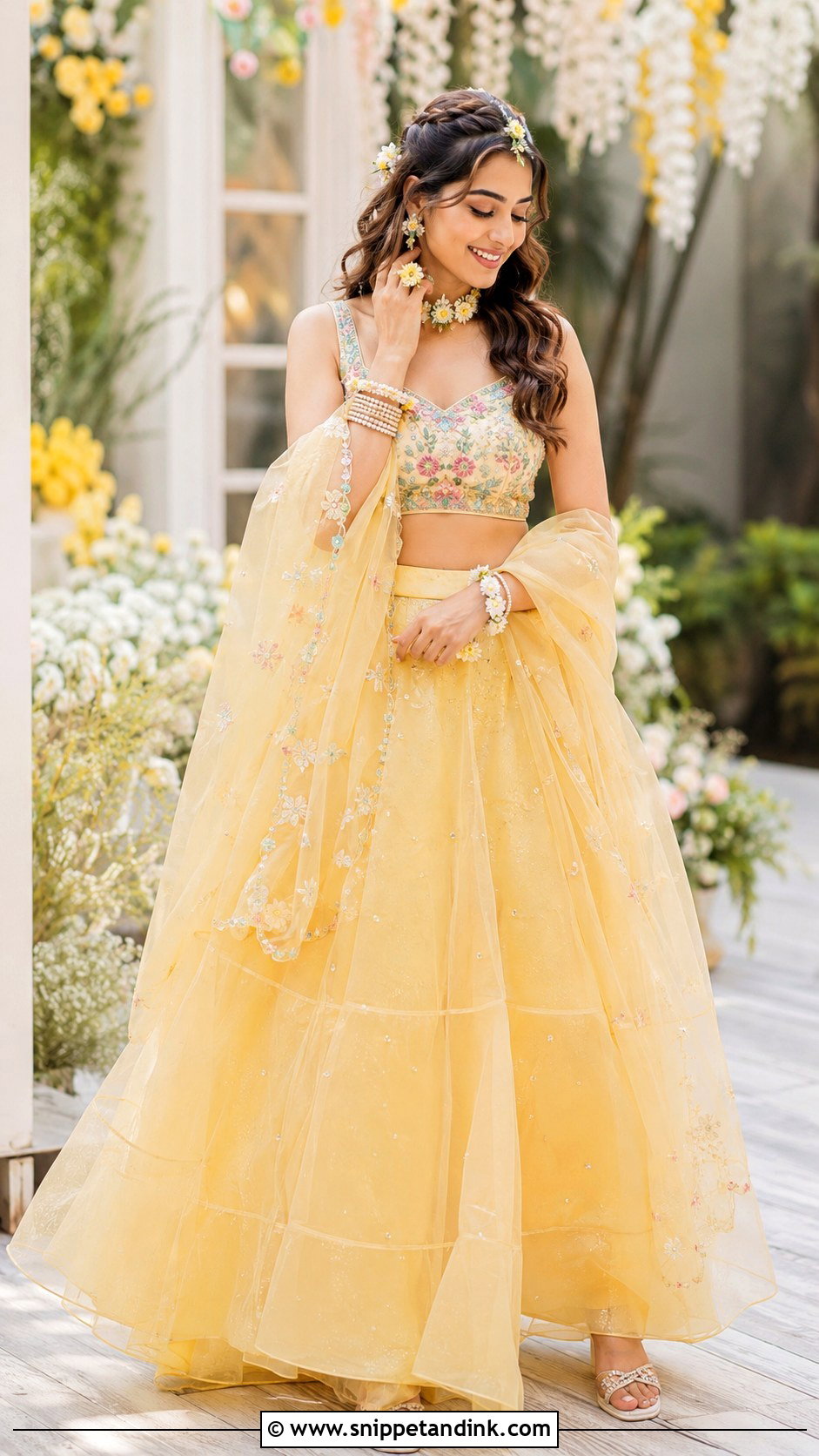
Pastel yellow is softer and more romantic: butter, lemon cream or pale marigold in organza, chiffon or georgette. Floral embroidery or a few sequins keep it festive. Brides can wear it with flower jewelry and a sheer dupatta; guests suit simple earrings and a few bangles. I’d mention that pastels show paste more than strong yellow, so it’s a better choice if you’re watching rather than applying. Gardens, beach resorts and small family haldis suit it.
22. Ivory Sharara Set For Haldi
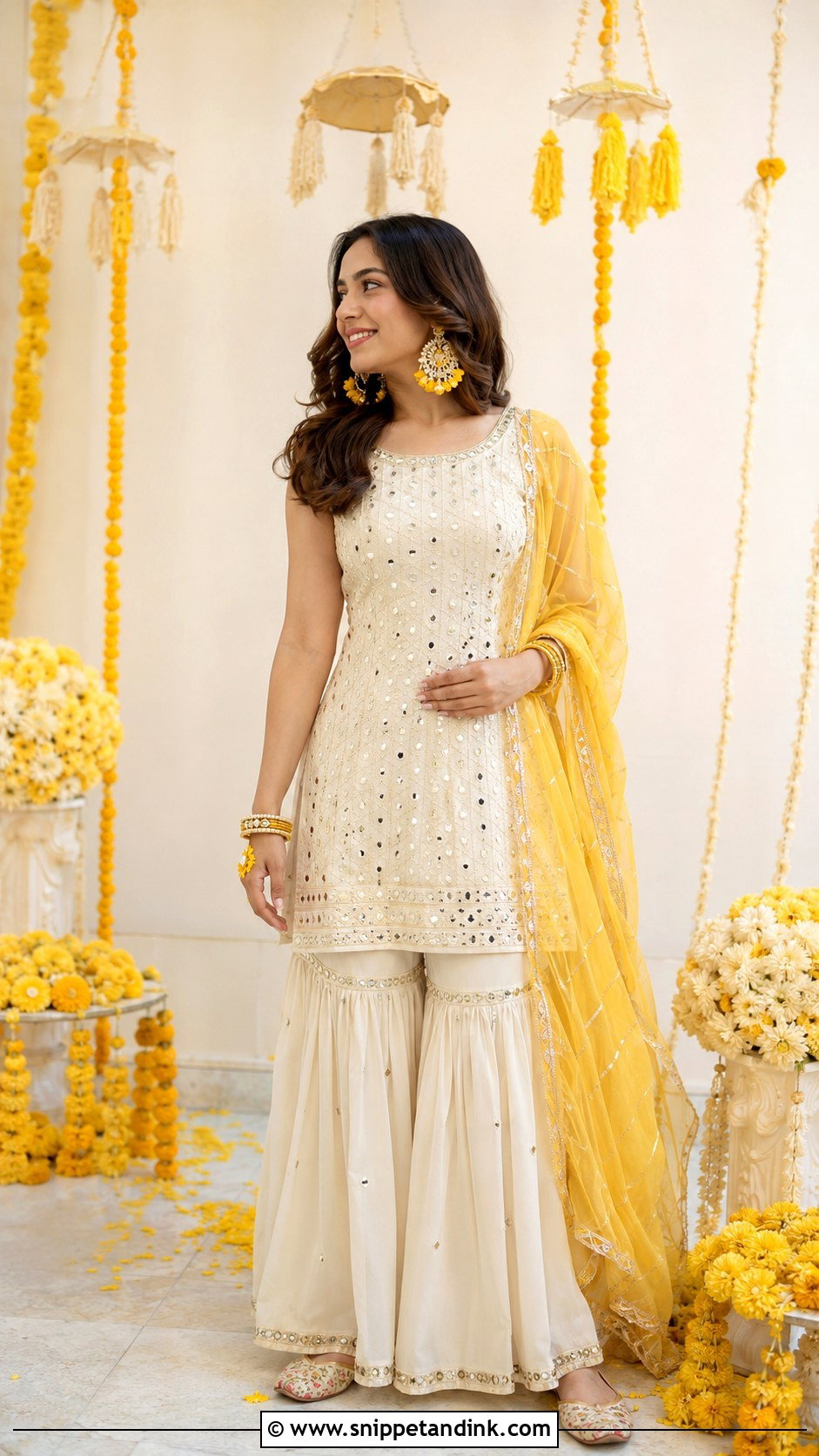
Ivory with yellow accessories is a clean, modern look, and it lets the flowers and decor do the coloring. Choose an ivory kurti with mirror work, chikankari or small gold details. A yellow dupatta, marigold earrings, gold bangles and embroidered flats complete it. Practical advice: wear washable fabric, or take your photos before the paste starts and change afterwards. A bride can wear it for a clean look, and guests who dislike bright yellow find it easy.
23. Printed Kurta Set For Haldi
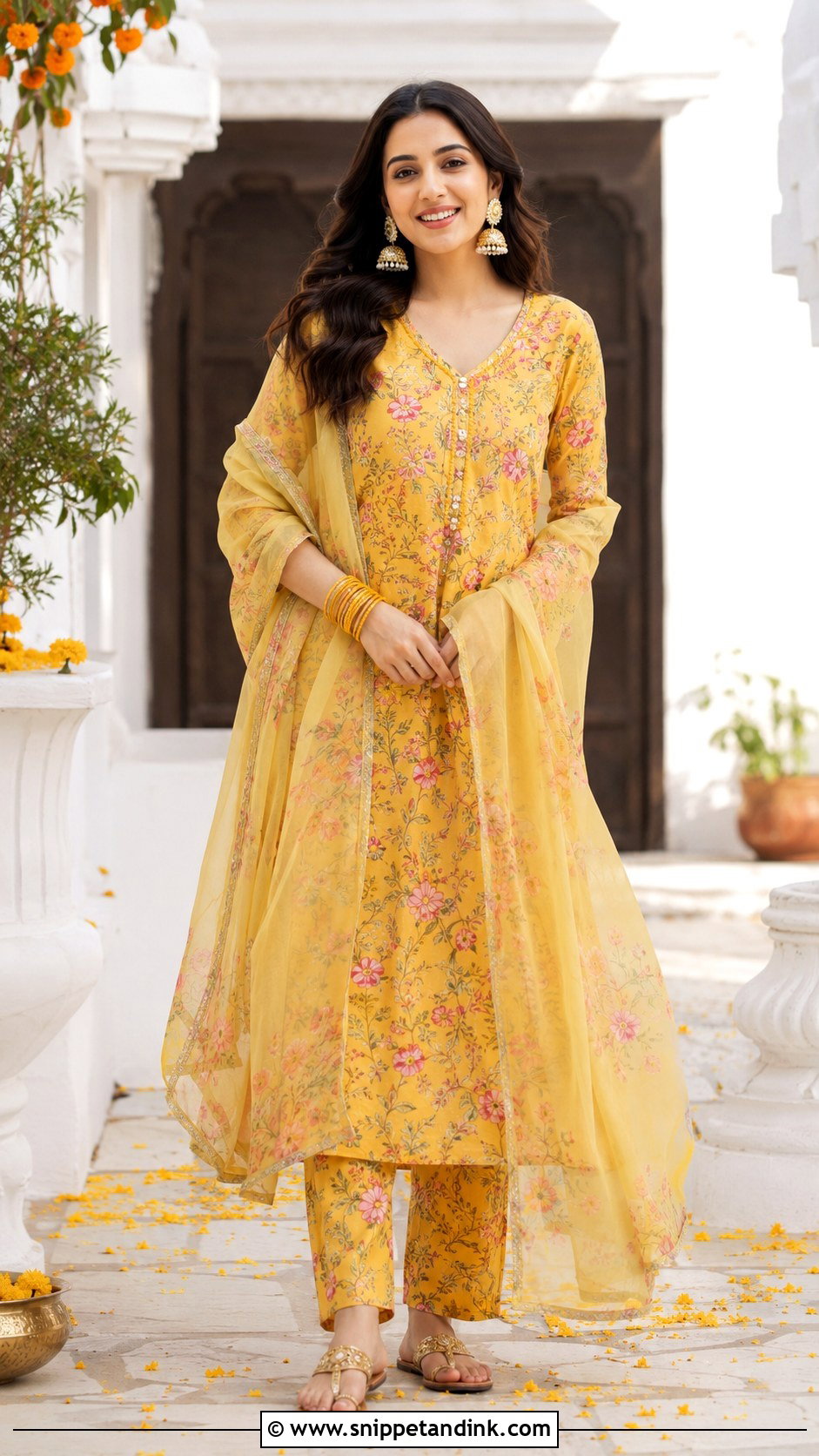
A printed kurta set is the outfit you’ll wear most after the wedding. Floral, block, paisley and marigold-style motifs all suit the occasion, in yellow, orange, ivory or green. A straight kurta with pants looks polished, and an A-line with palazzos feels relaxed. A light dupatta, statement earrings, bangles and flat sandals finish it. Cotton prints also pack well and come out of a suitcase with fewer creases, which helps if you’re travelling for the wedding.
24. Ruffle Saree For Haldi
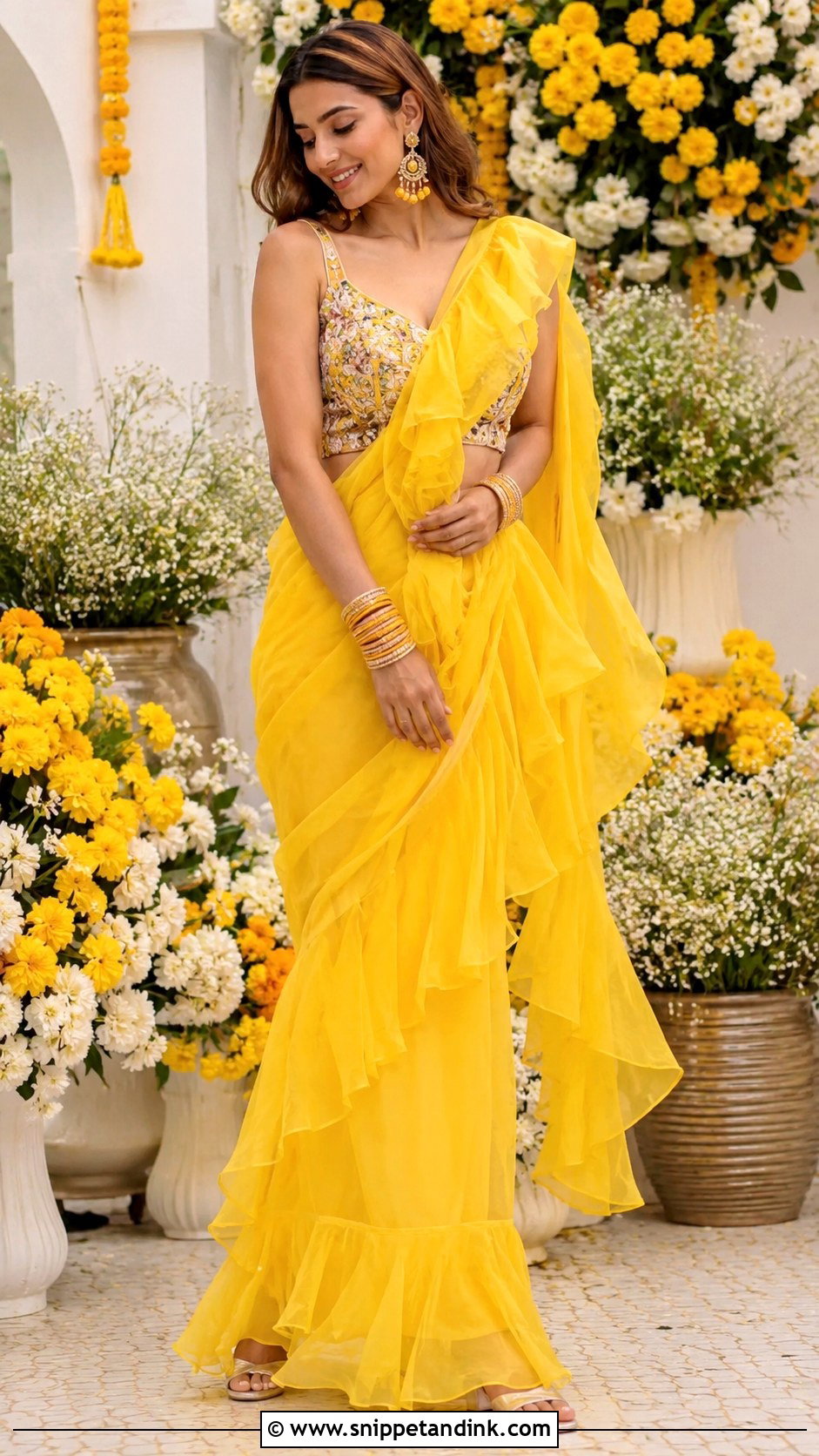
Ruffle sarees are usually pre-stitched or semi-stitched at the pleats, which makes them far quicker to put on than a traditional drape. The ruffled border moves well in candid shots. Yellow, ivory, orange or floral prints suit haldi. A fitted blouse balances the volume. Statement earrings, stacked bangles, a sleek bun and block heels or wedges complete it. Brides can choose a more detailed mirror-work blouse; guests should keep the saree light and simple.
25. Organza Saree For Haldi
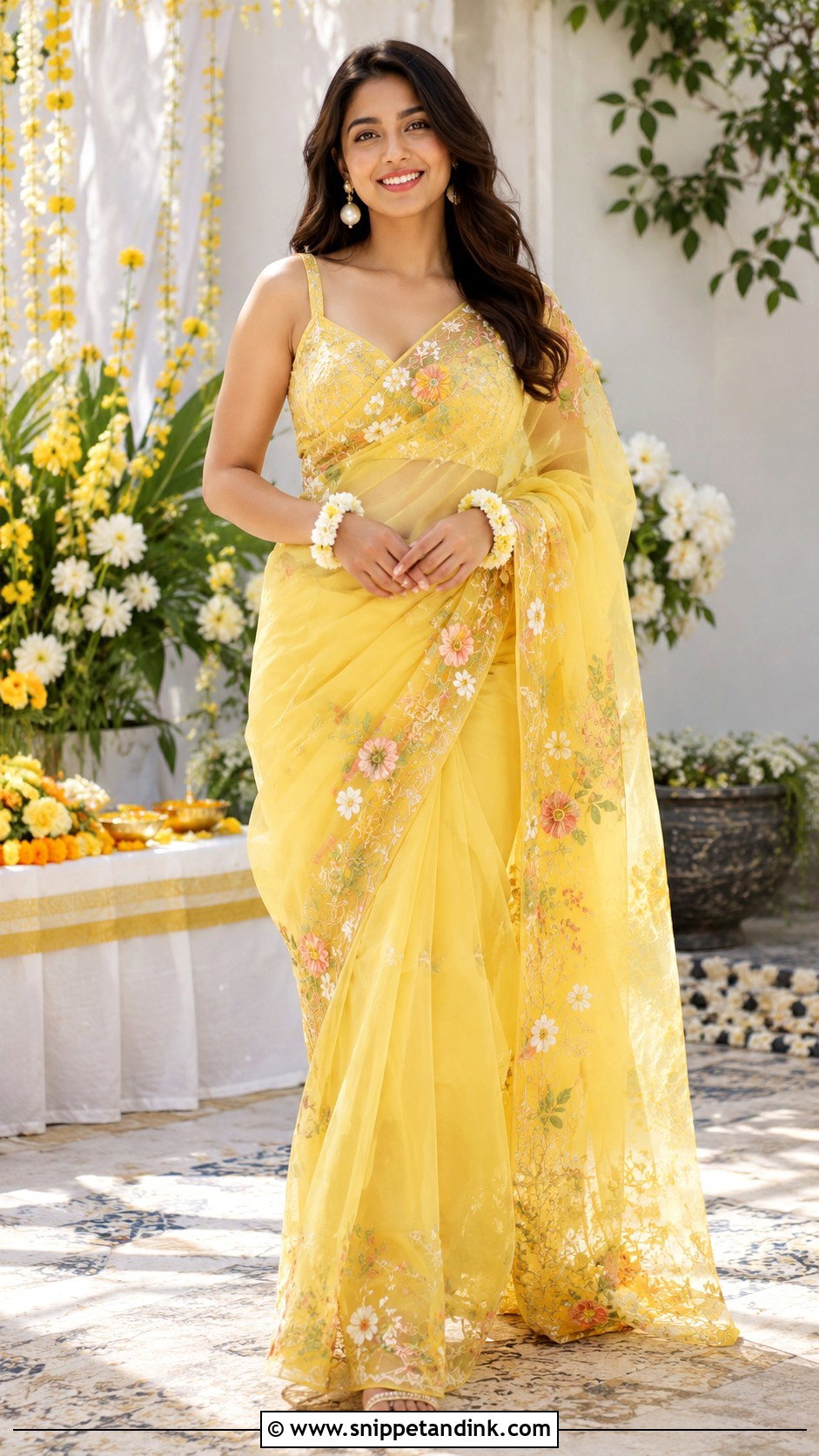
Organza is crisp and slightly sheer, with a soft structure that makes even a plain saree look special. Yellow organza with floral embroidery is classic, and ivory with yellow flowers feels modern. Because it’s sheer, the blouse fit and pallu drape show clearly, so have both done properly. Organza creases where it’s folded, so hang it the night before rather than leaving it in a bag. Pearl earrings, floral bangles and comfortable heels or flats are enough.
26. Bandhani Lehenga For Haldi
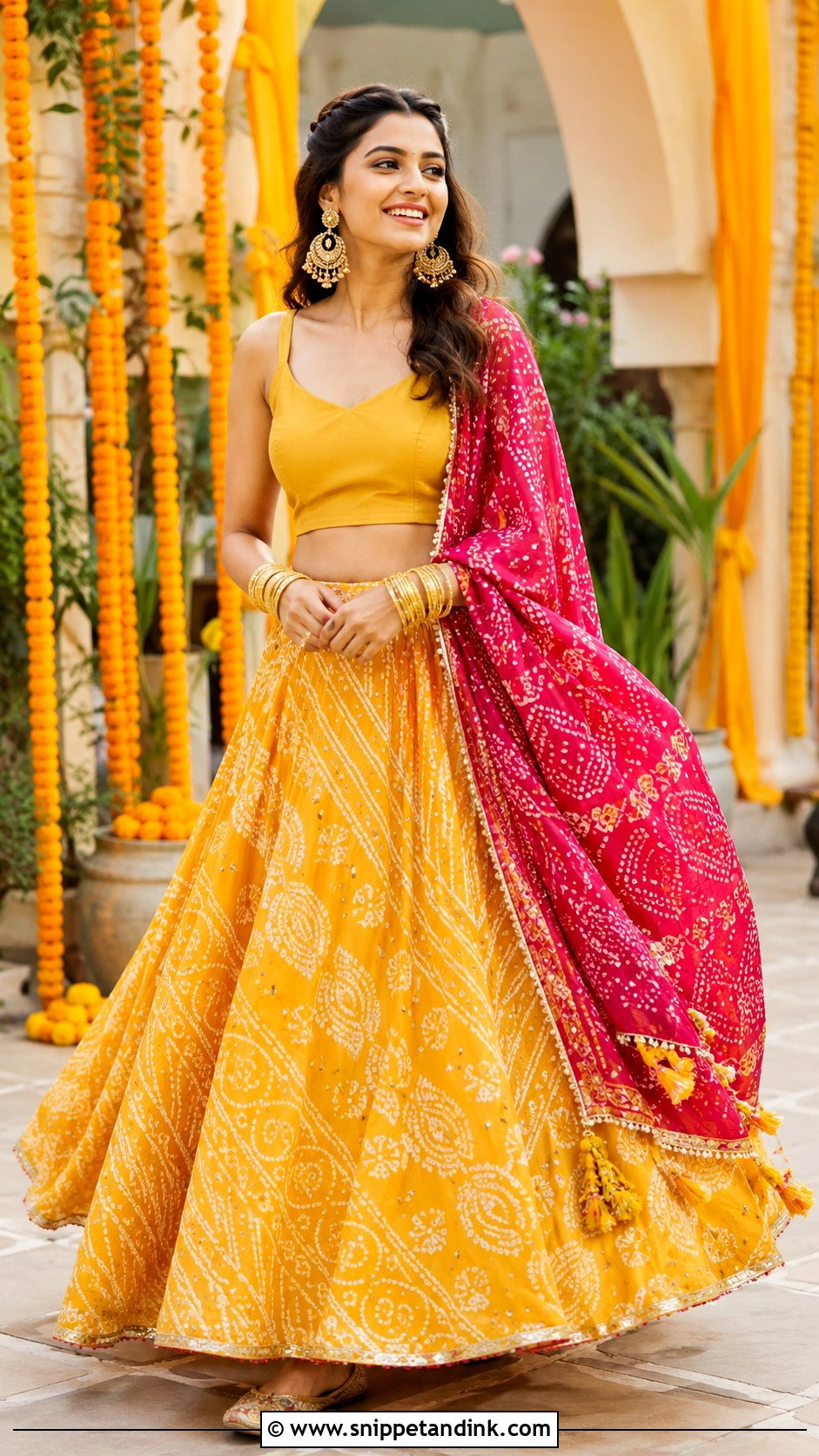
A bandhani lehenga carries color and texture with no embroidery, because the pattern is made by tying tiny knots in the cloth before dyeing. Yellow is the favorite, though orange, green, pink and ivory combinations look festive too. Pair a bandhani skirt with a plain blouse and a contrast dupatta. Silver or gold earrings, bangles and juttis finish it. Brides can choose a richer border or mirror details. Hand-dyed bandhani can bleed when wet, so don’t let a damp dupatta sit against a white blouse.
27. Yellow Peplum Sharara Set For Haldi
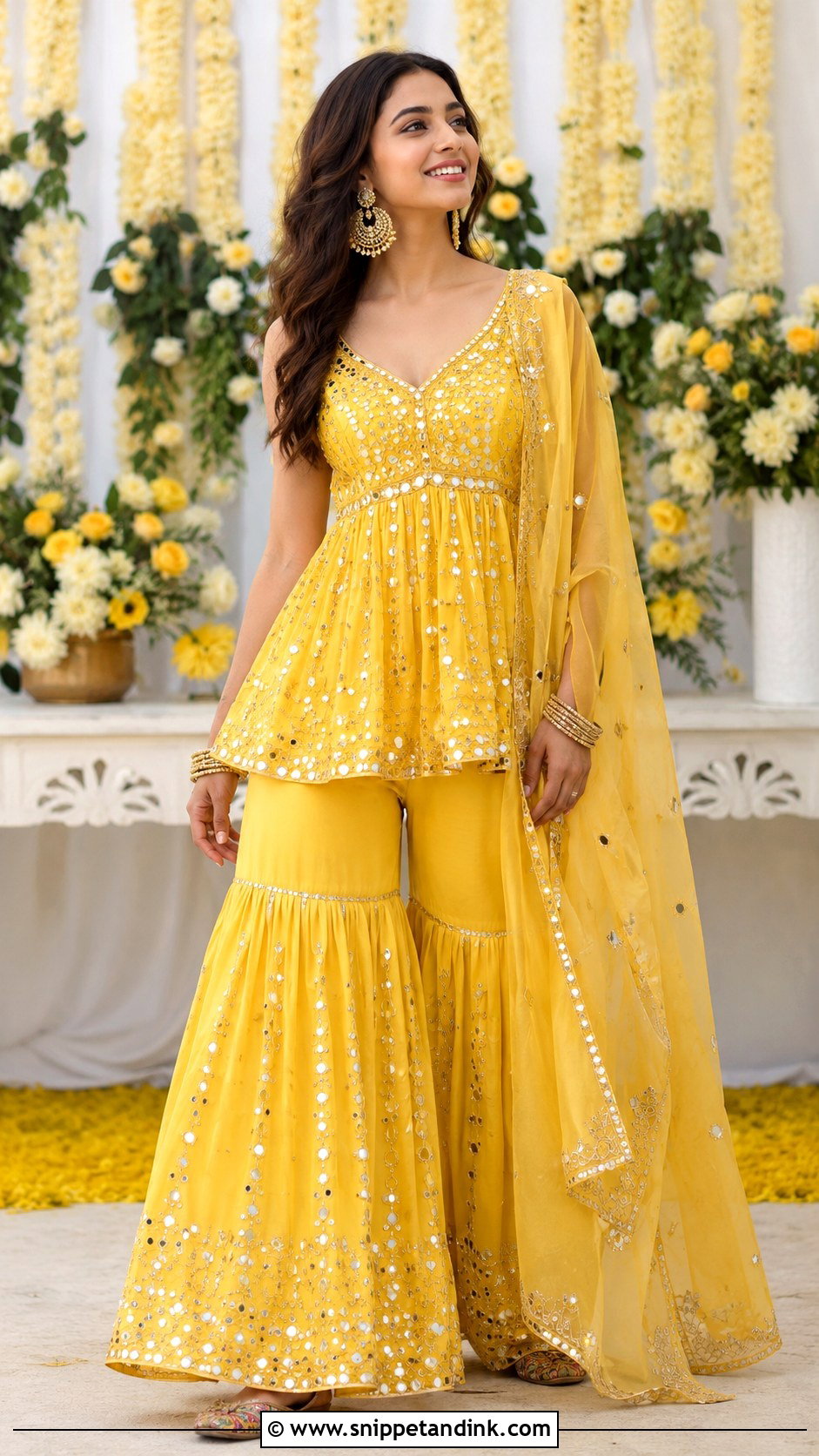
Peplum sharara sets suit bridesmaids and sisters who want a defined waist without a fitted dress. The peplum shapes the waist and covers the waistband, while the sharara gives movement. Mirror work, thread embroidery, tassels or floral detail make it festive. Drape a light dupatta over one shoulder or skip it if the top is busy. Chandbalis, soft curls and embellished flats complete it, and you can sit and dance in it for hours.
28. Yellow Skirt And Crop Top For Haldi
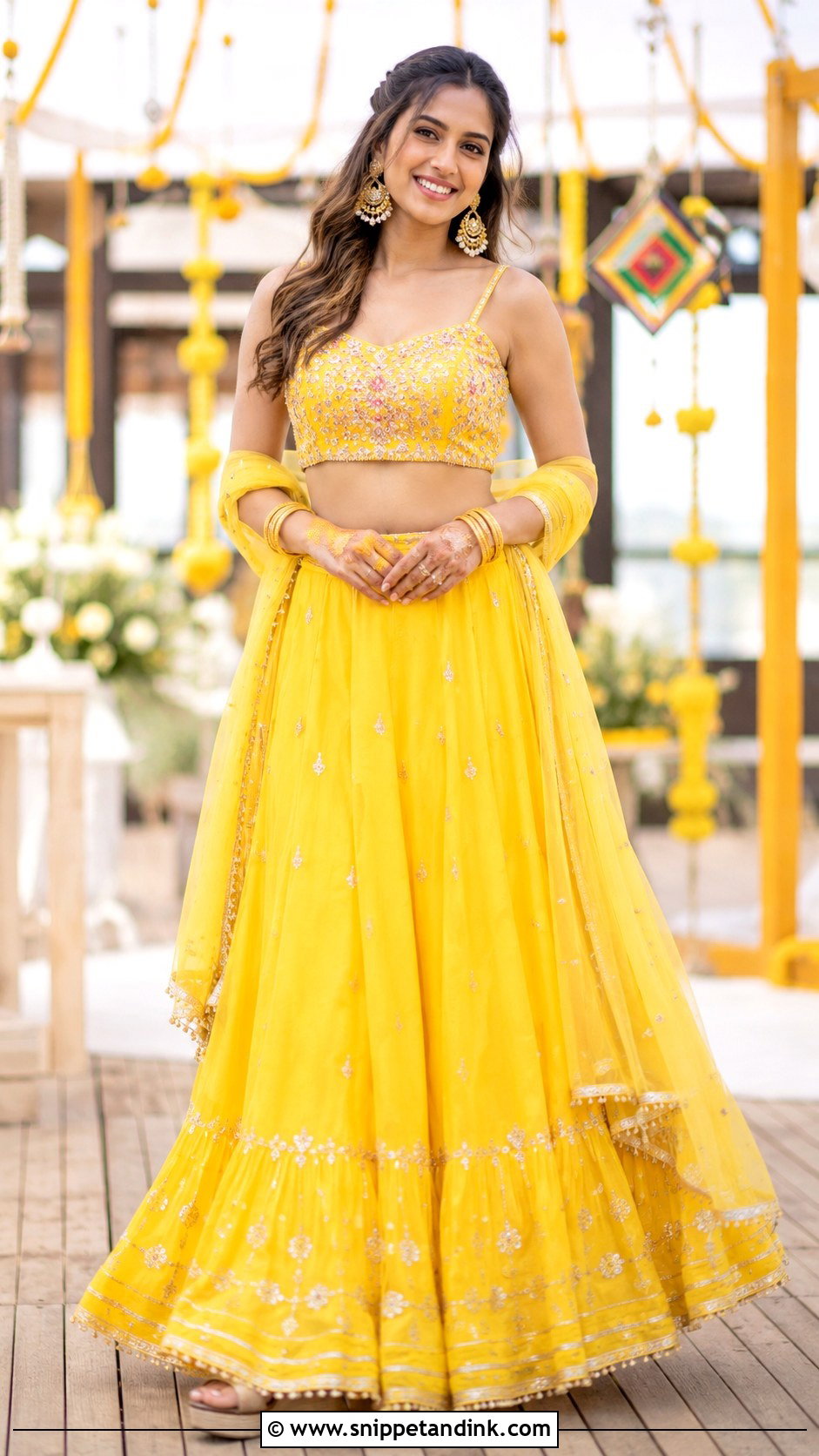
A yellow skirt with a crop top gives a lehenga look with less formality. A flared skirt in cotton silk, georgette or organza with an embroidered, mirror-work or printed crop top works well. Add a dupatta for a traditional finish or a cape for something modern. Bangles, earrings and juttis or wedges complete it. Younger guests and cousins tend to love it. I’d keep the crop length modest if elders are present; a blouse that meets the skirt waistband when you raise your arms avoids awkward moments.
29. Yellow Kaftan Dress For Haldi
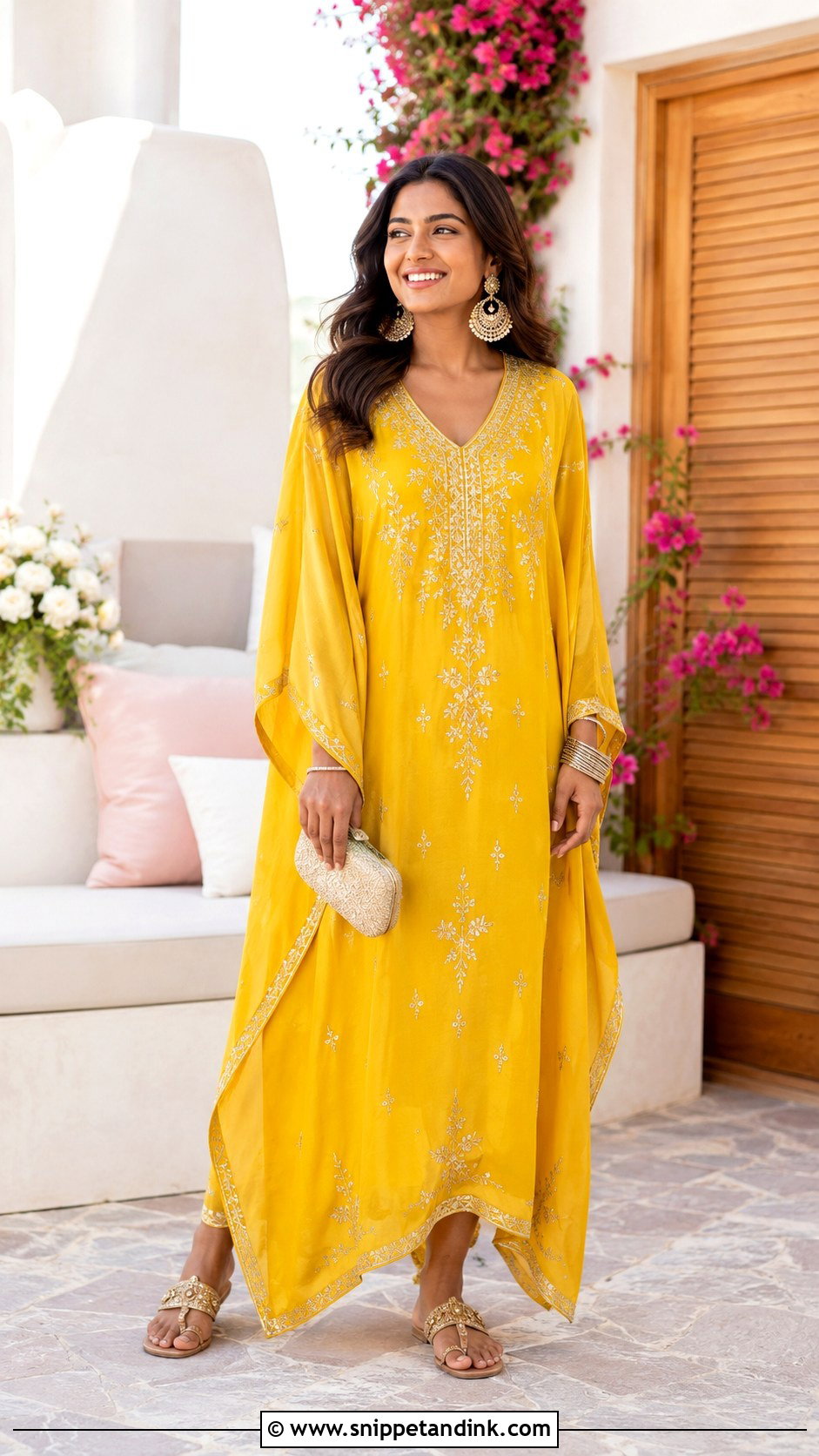
Kaftans suit home functions, resort weddings and very hot days, because air moves through them freely. Choose one with embroidery, mirror trim, tassels or block prints so it reads as festive rather than loungewear. Statement earrings, bangles, embellished sandals and a small clutch complete it. A belt defines the waist; worn loose it’s breezier. Mothers and older guests often find it the most comfortable outfit here, and it gives full coverage with plenty of color.
30. Yellow Jumpsuit For Haldi
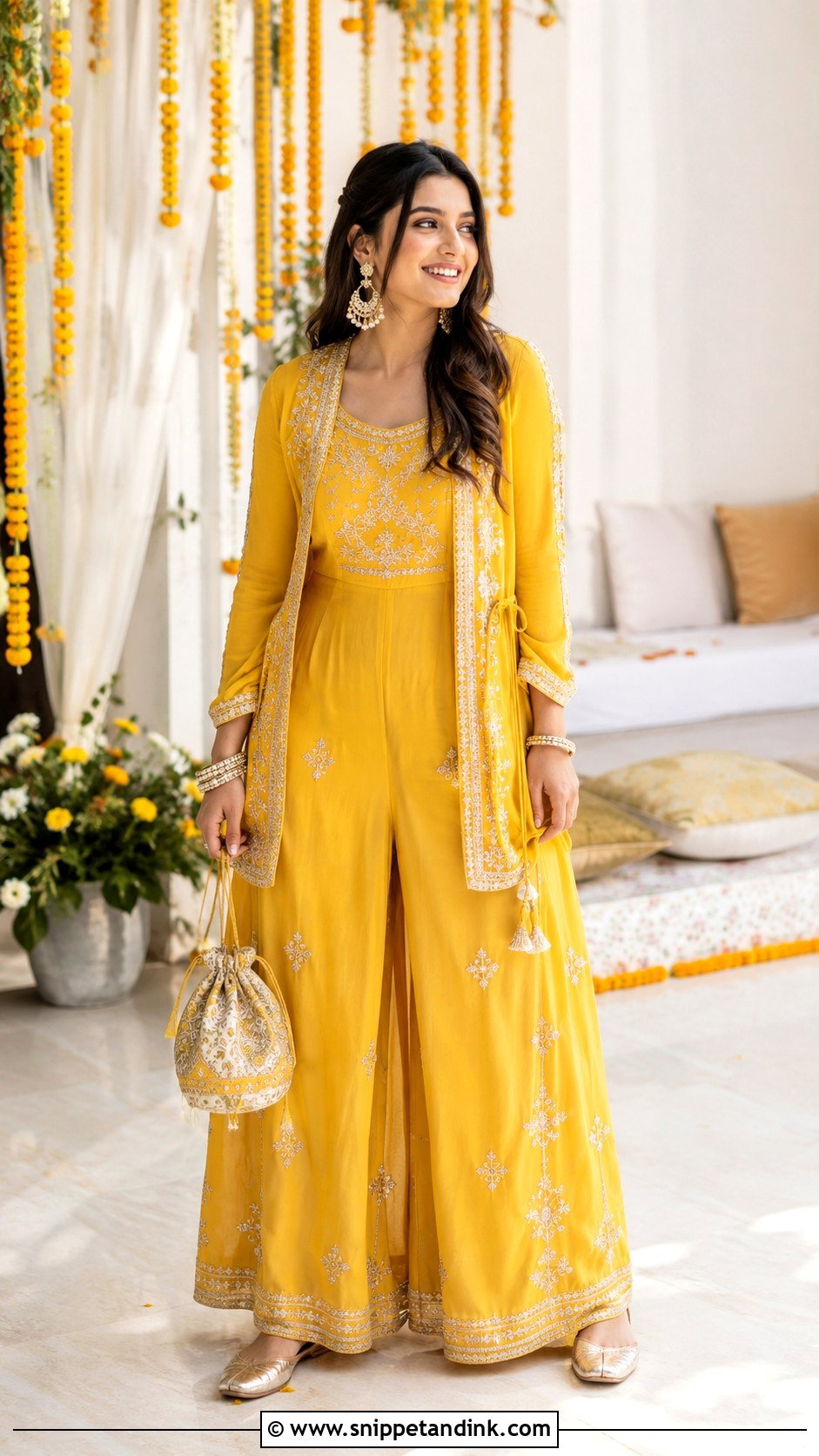
A jumpsuit is the modern guest’s choice. Look for wide legs with embroidery, a cape overlay, a draped dupatta detail or a festive belt. The one-piece shape is easy to wear and travels well. Statement earrings, bangles, metallic flats or block heels finish it. For a more traditional family, add a light dupatta or long ethnic jacket. Just check the closure before you buy: a back zip is awkward to manage alone, especially with turmeric on your hands.
Sisters and Cousins in Shades of Yellow
When a group of women wants to coordinate for the haldi, I avoid identical outfits. Identical clothes look like staff uniforms in photos, and they rarely suit every body and skin tone. A planned spread of related colors looks better and is easier to buy.
- Agree on a color family, such as lemon to mustard, or yellow plus one accent like green or pink.
- Let each person choose her own silhouette, whether a sharara, saree, lehenga or kurta set.
- Tie the group together with one shared detail: matching flower jewelry, the same dupatta print or the same bangle color.
- Keep the bride’s color out of the group so she stays easy to spot.
If you’re the one applying the paste
Take rings off first, because turmeric settles into stone settings and is hard to clean out. Roll long sleeves above the elbow or wear short ones. Keep a wet cloth nearby for your hands. Coconut oil or a little oil-based cleanser helps lift turmeric from skin and nails afterwards, followed by soap and water.
Lighter Than the Bride, Brighter Than Everyday
The right haldi outfit lets you join in without worrying about your clothes. Yellow lehengas, sarees, shararas and kurta sets remain the classics, while ivory, green, orange, florals, capes, kaftans and jumpsuits all fit modern celebrations. Choose breathable fabric, secure drapes and easy shoes, and match the level of detail to your role. Brides can go more ornate; guests are better off lighter, washable and reusable.
You'll Like These Ideas:






Leave a Reply