
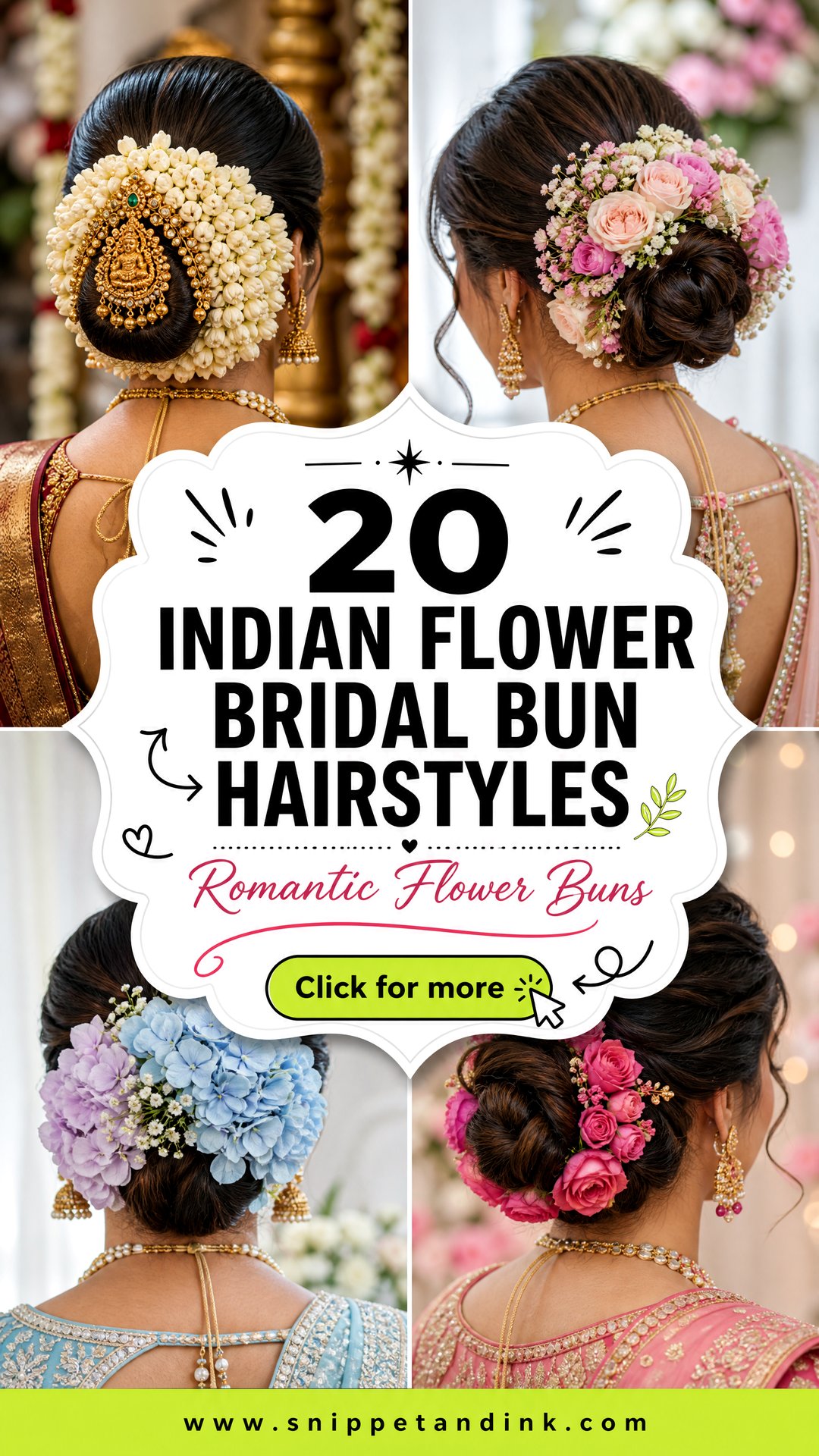
Fresh flowers change how I build a bridal bun. They add weight, they wilt, some of them shed, and they have to be in the hair for hours of rituals before anyone sits down to eat. So when a bride shows me a floral bun she likes, my first questions are about the flowers rather than the hair: which blooms, who is bringing them, and how long the day runs. Jasmine, roses, baby’s breath and marigolds all behave differently once they’re pinned in. Below are twenty floral buns I’d happily put on an Indian bride, with notes on what each one needs to hold up.
Jasmine Browns, Orchids Don’t: How Each Flower Lasts in a Bun
Every flower behaves differently once it’s cut and pinned close to warm skin. I plan the bun around what will still look fresh at the last photograph, not at the first.
- Jasmine and mogra: smell wonderful, but the buds open and turn brown where they’re touched. Keep the strings in a damp cloth in the fridge and bring a spare.
- Roses: buds hold far better than open heads. Expect some softening by evening in heat.
- Orchids: among the hardiest. They tolerate warmth and handling well.
- Baby’s breath: dries in place and looks tidy for hours.
- Marigolds: tough and heat tolerant, but bulky. Use small heads.
- Hydrangeas: wilt fastest out of water. Best for short events only.
Never store bridal flowers in a freezer or next to fruit, and don’t mist them heavily once they’re in the hair, because water drips onto the neck and the blouse. A light mist on the flowers before pinning is enough.
1. Jasmine Gajra Bun
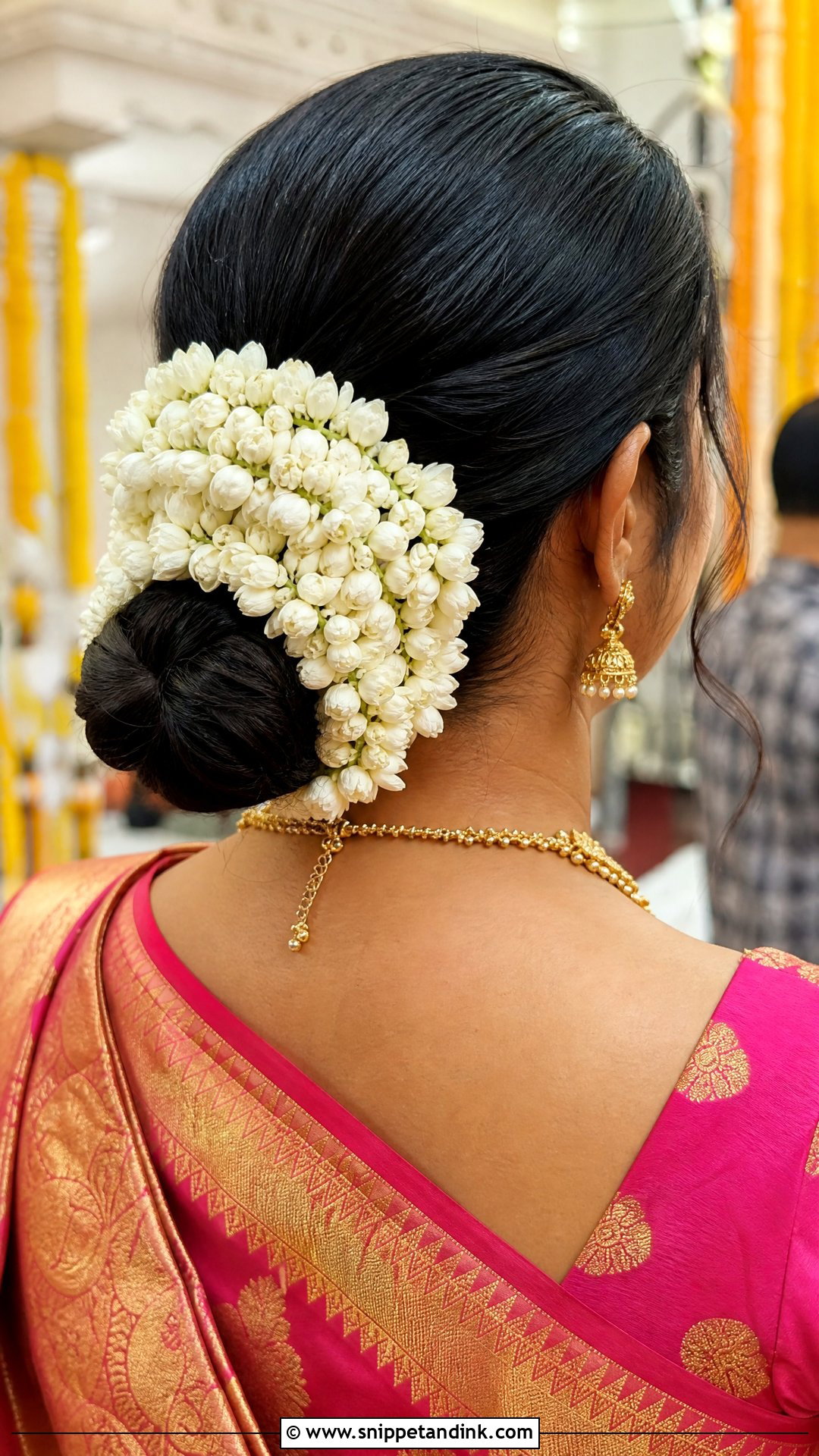
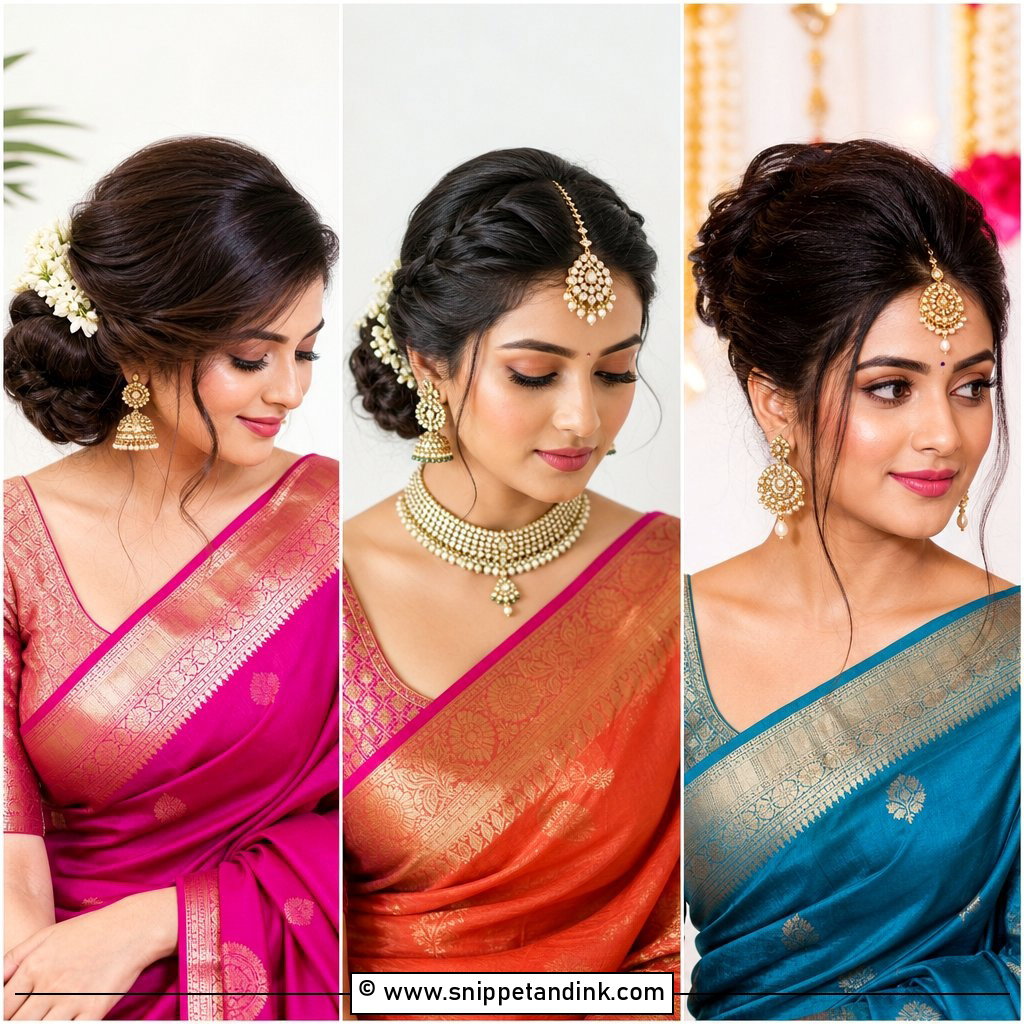
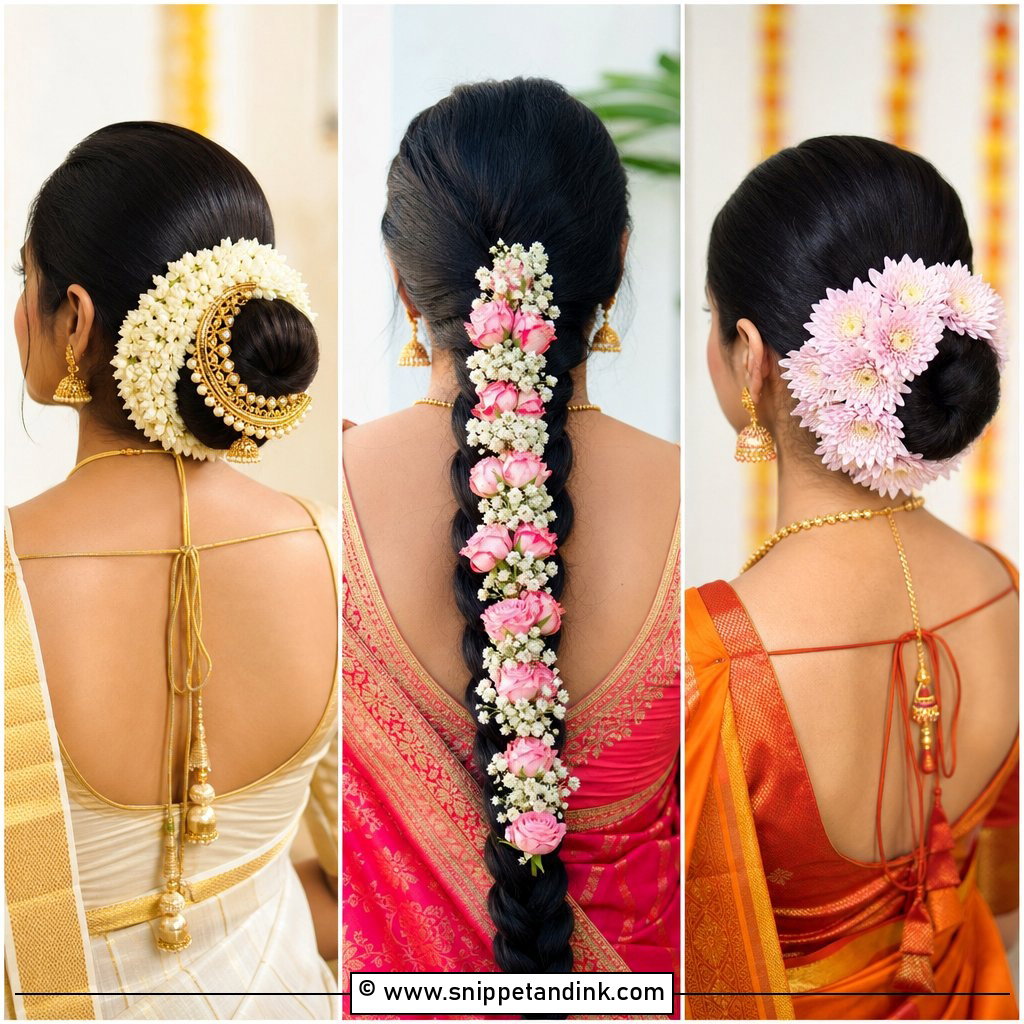
A low bun circled in jasmine gajra is the South Indian classic, and rows of mogra look crisp against dark hair and bright silk. I pin each row separately with U-pins rather than wrapping one long string, so if one row loosens the rest stay put. Jasmine adds more bulk than weight, which lets the bun look fuller without extra padding. The buds open and brown as the day goes on, so if the ceremony is long, ask for a spare string for later photos.
2. Red Rose Bridal Bun
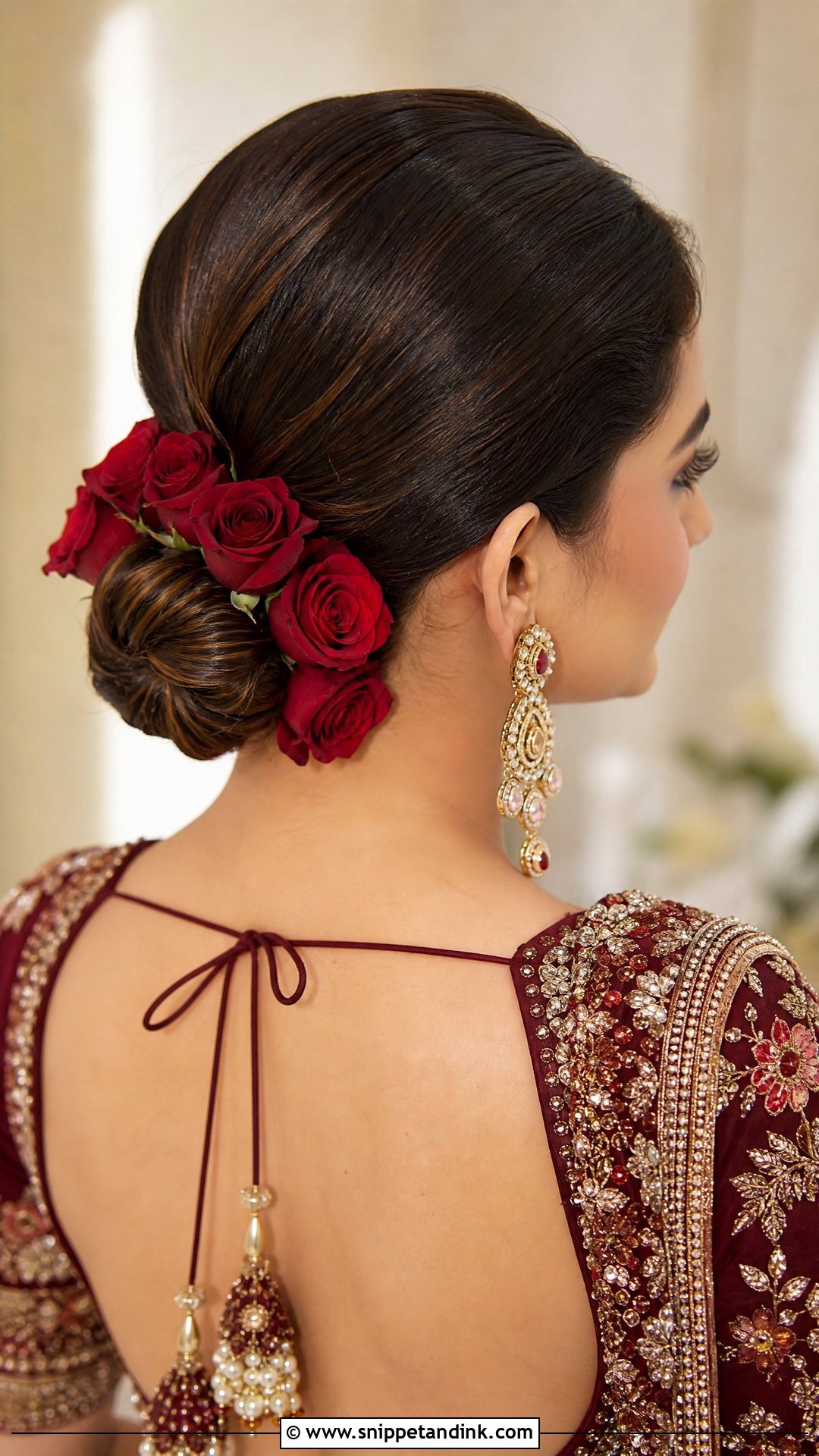
Red rose buds tucked around a bun suit deep red and maroon lehengas and show up strongly against black hair. I use buds rather than open roses because open heads drop petals by the reception. Each stem is cut short and pinned at an angle into the bun so the flower faces outward. A half-circle on the visible side is often enough; a full wrap adds weight. Statement earrings and a maang tikka balance the colour at the front.
3. Baby’s Breath Floral Bun
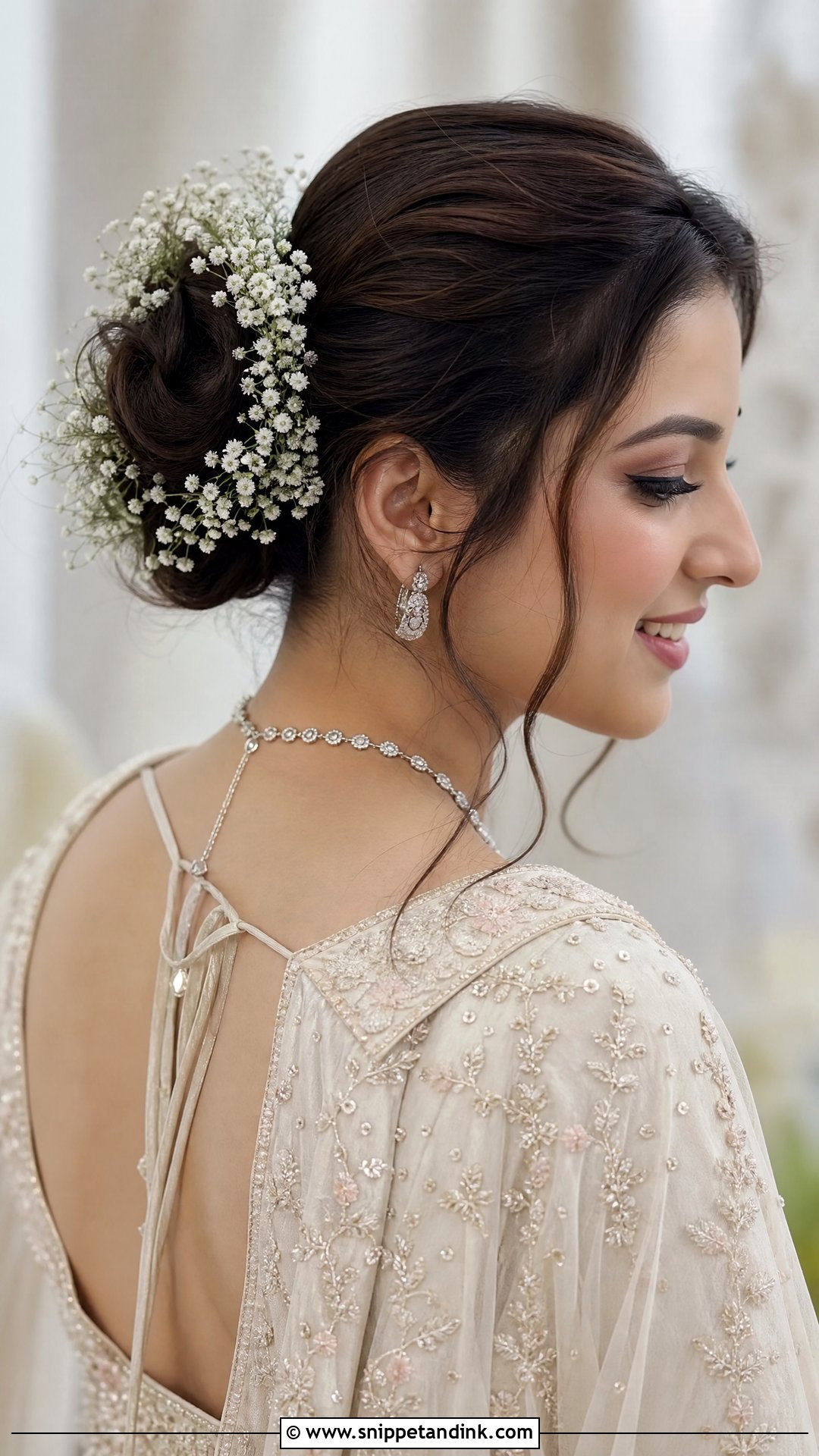
Baby’s breath is light, cheap and very forgiving, which is why it suits a first-time floral bun. The tiny white clusters soften the outline of a messy or sleek bun and read well with pastel lehengas and ivory outfits. It dries in place rather than wilting dramatically, so it still looks tidy late in the day. The only catch is the smell. Some people find it unpleasant up close, so sniff a bunch before committing.
4. Marigold Wrapped Bun
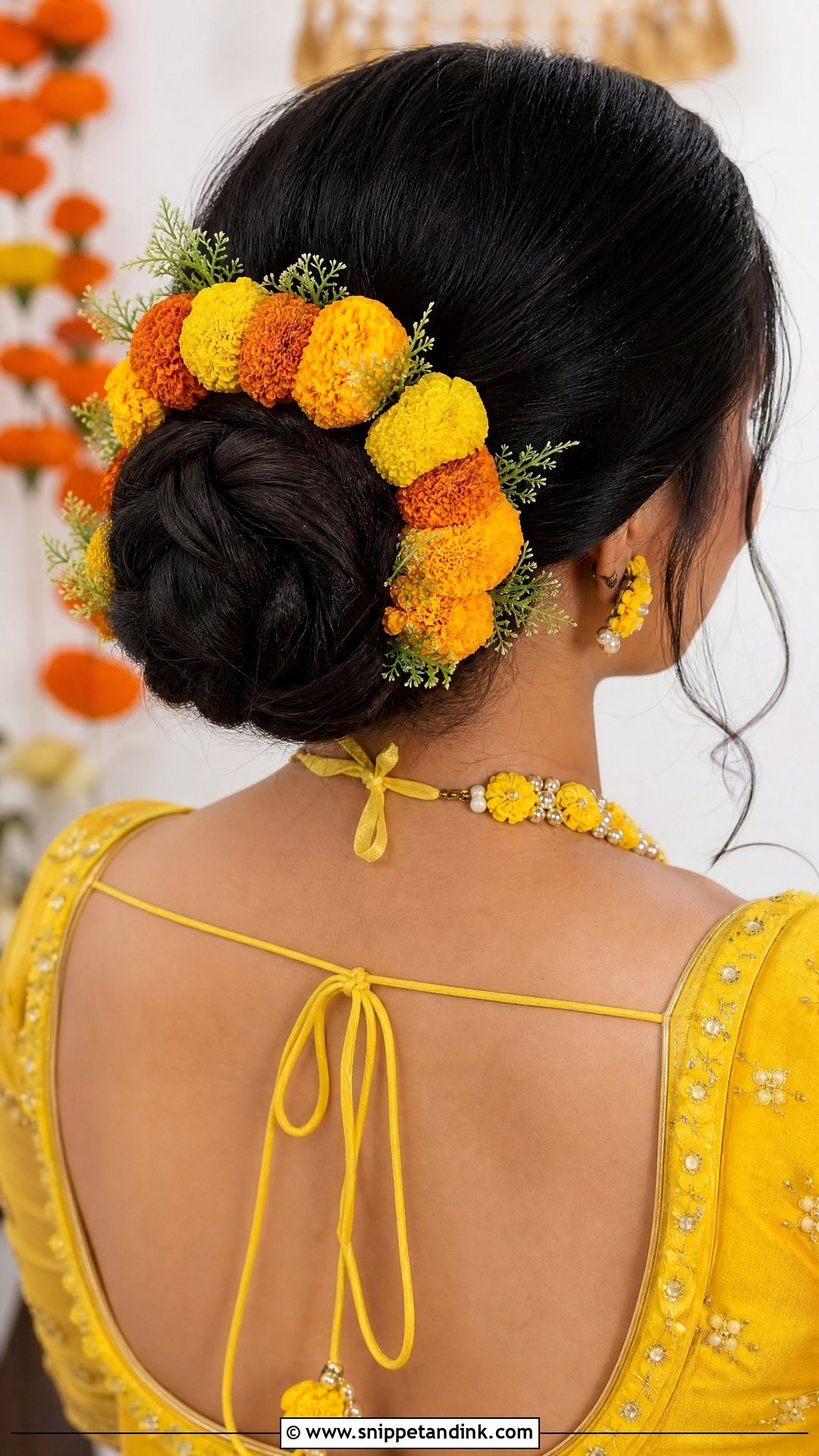
Marigolds are tough, bright and easy to find, and they belong at haldi or mehndi functions. The orange and yellow heads glow against yellow outfits. I wire small marigold heads or use short strings rather than full-size blooms, because large heads make the bun look bulky and crush when you lean back. They hold their shape in heat far better than roses. Turmeric paste stains marigolds too, so expect them to look a little used by the end of a haldi.
5. Pink Rose Messy Bun
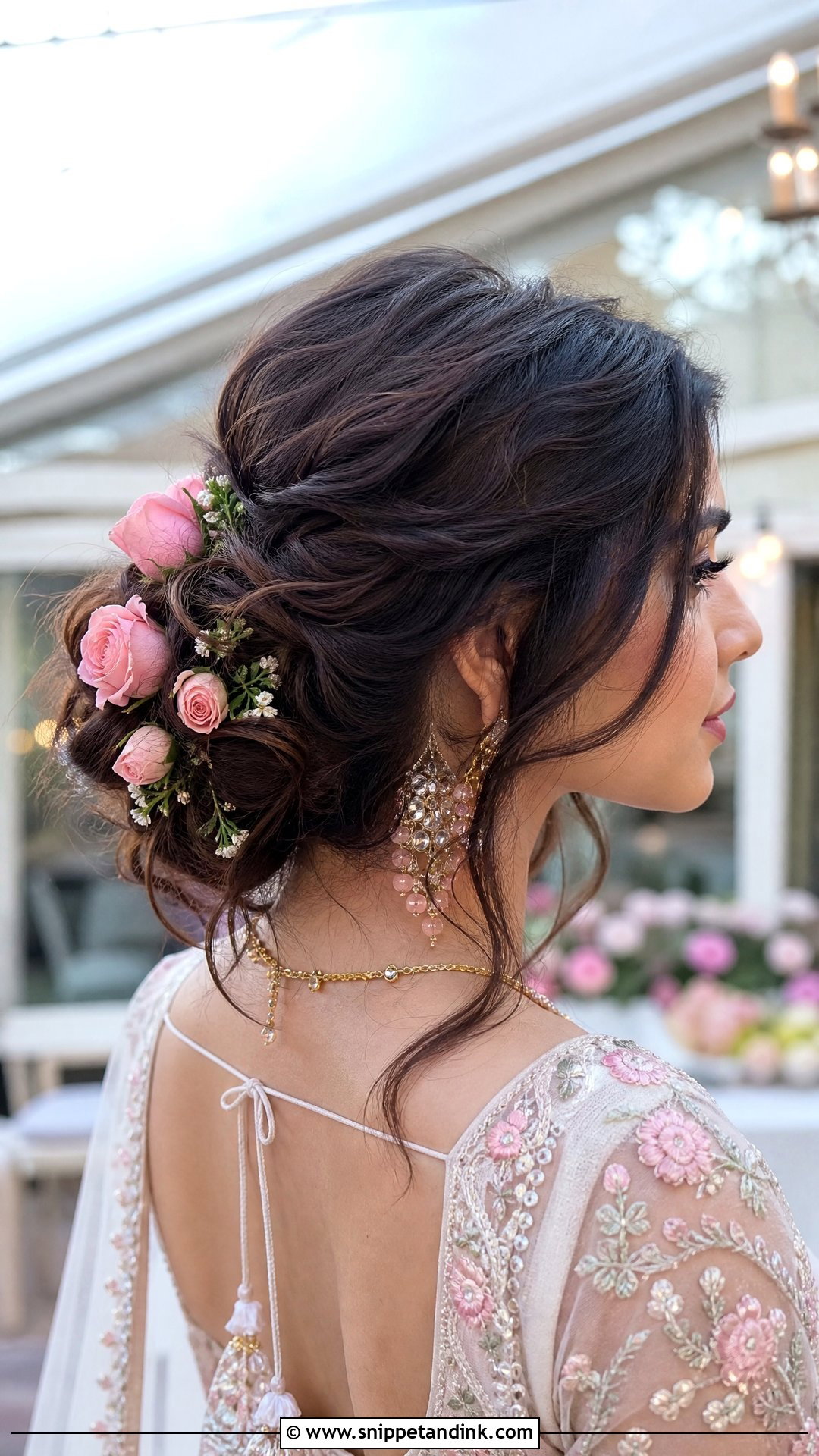
Pink rose buds in a loose, textured low bun give a softer finish that suits embroidered pastel lehengas. Messy should still be secure. I build the texture with a dry texture spray and pin it in sections, then tuck the buds into the gaps. Fine hair needs more pins than you’d think here, because loose sections slip once flowers add weight. A few face-framing strands keep it soft, but I keep them short of the jawline so they don’t catch in lipstick.
6. Braided Bun with Fresh Flowers
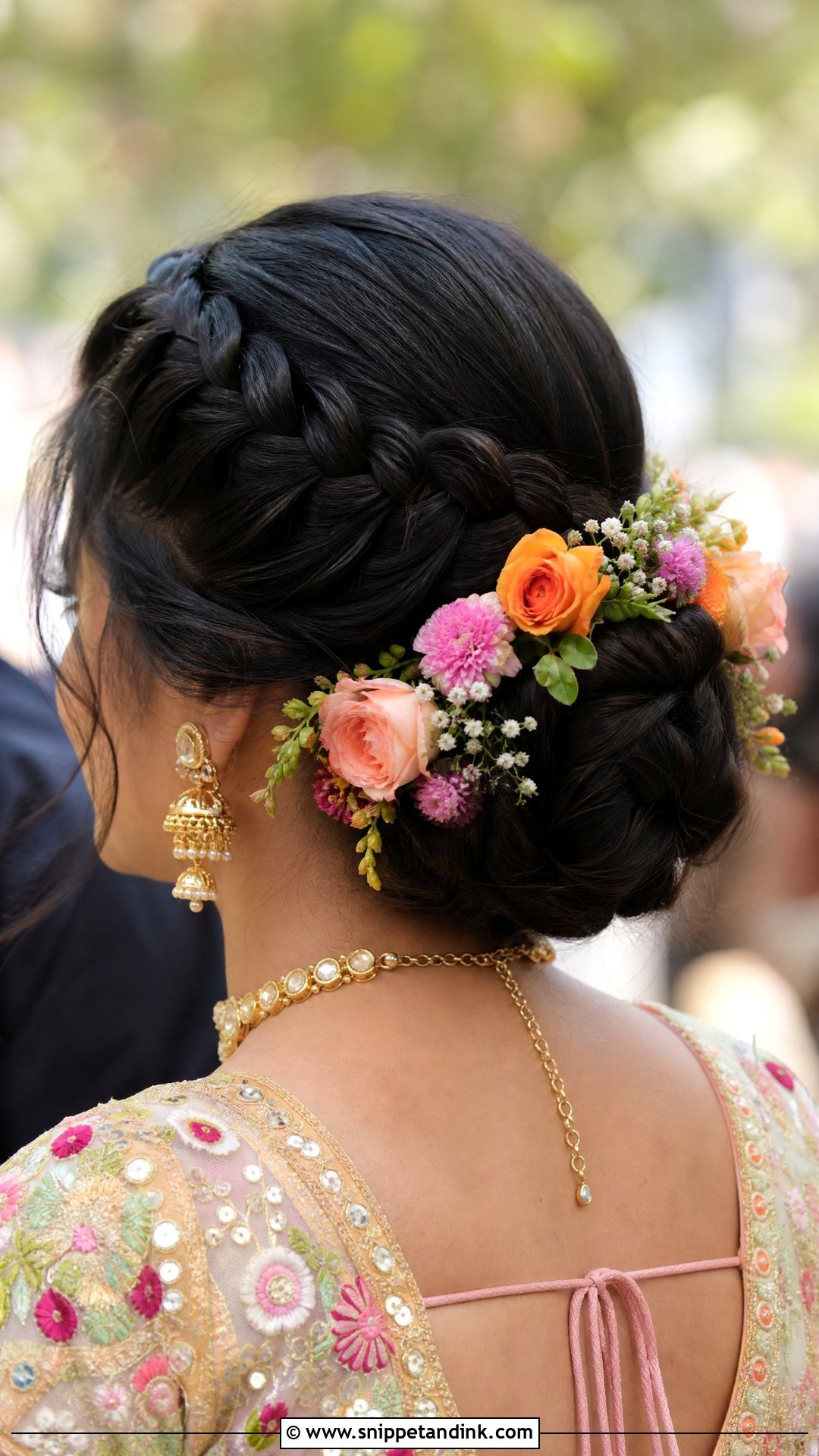
Coiling a thick braid into a bun gives the flowers a textured base to grip, so stems slide into the braid’s gaps instead of needing extra pins. It is one of the most secure floral buns I do, and it suits long days. Roses, jasmine or mixed blooms all work. If your hair is shoulder length, a braided bun may need a small extension to give enough braid to coil.
7. South Indian Temple Bun with Flowers
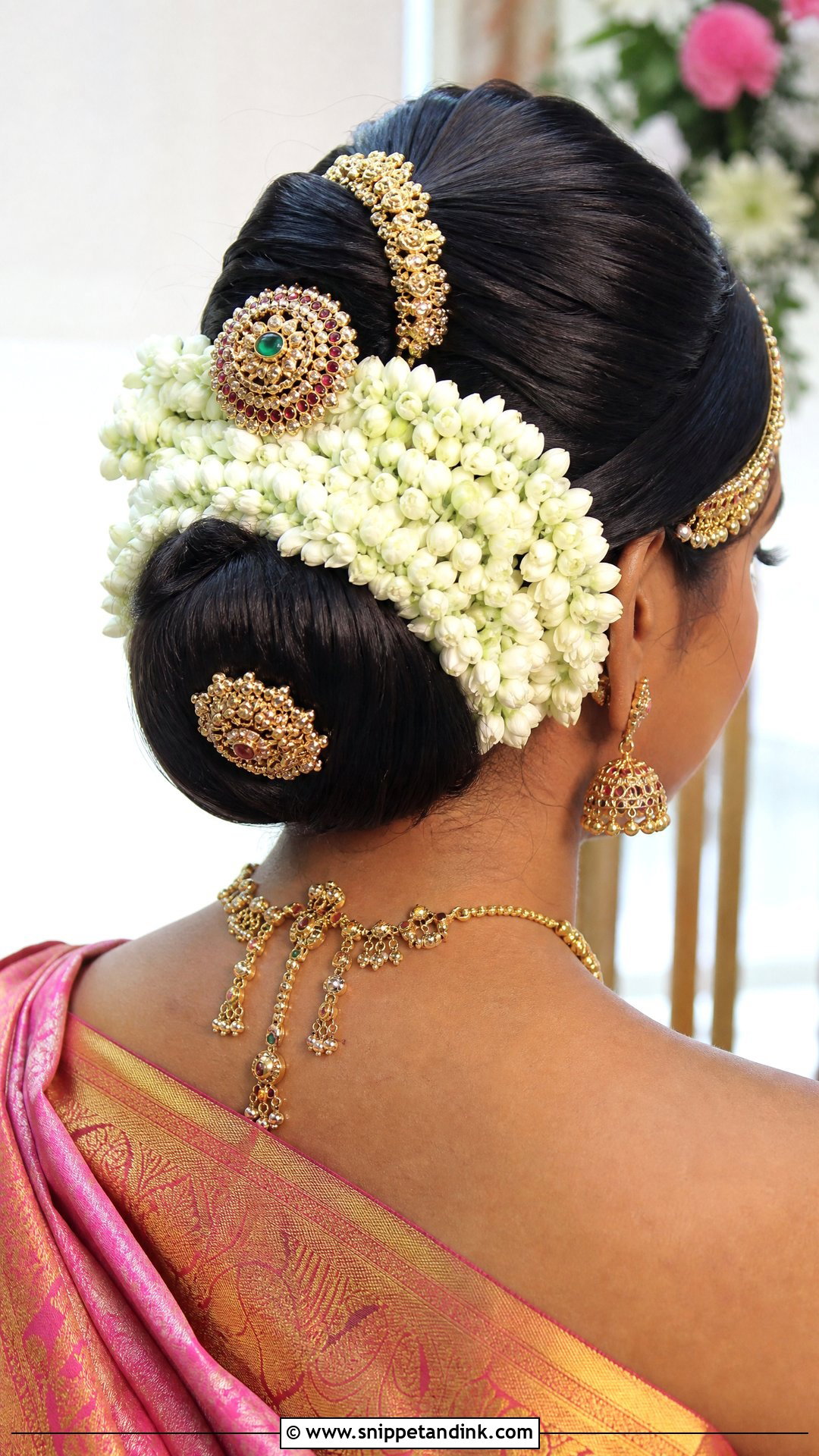
The South Indian temple bun is large, structured and usually built over a filler or extension to get its size. Rows of jasmine wrap it, often alongside traditional hair jewellery like the jadanagam. It is worn with silk Kanjeevaram sarees and gold temple jewellery. This is the heaviest bun on the list once the ornaments go on, so I anchor the base with crossed pins at several points and check the weight at a trial. A bride should be able to turn her head without feeling it drag.
8. Rose and Baby’s Breath Combination Bun
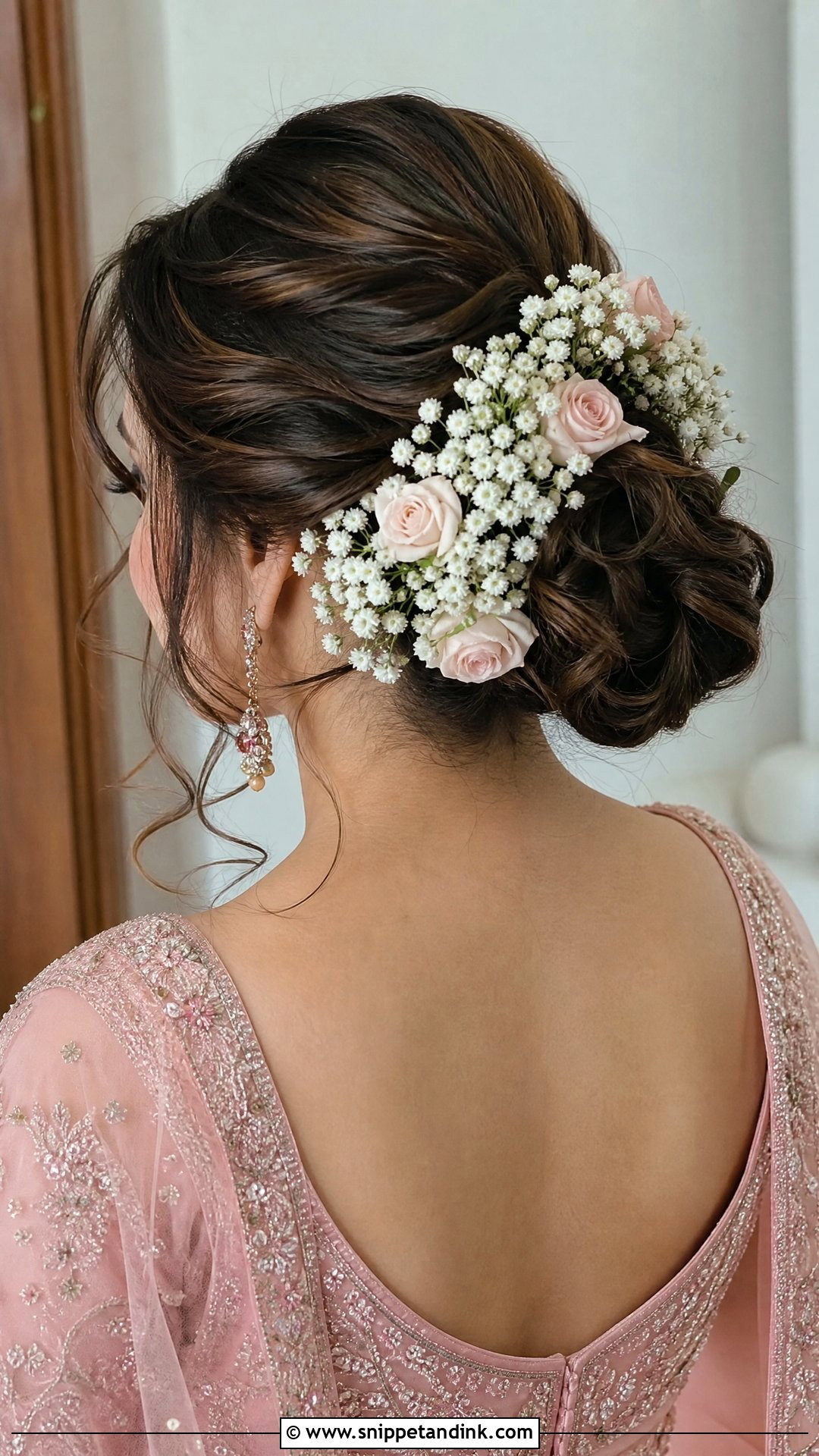
Roses and baby’s breath work together because they do opposite jobs. The roses give colour and structure; the baby’s breath fills the gaps between them, so you need fewer roses to make the bun look full. Blush with white is the most common pairing, but cream with peach looks softer next to gold jewellery. I place the roses first and fill in afterward, never the other way around.
9. Low Bun with Orchids
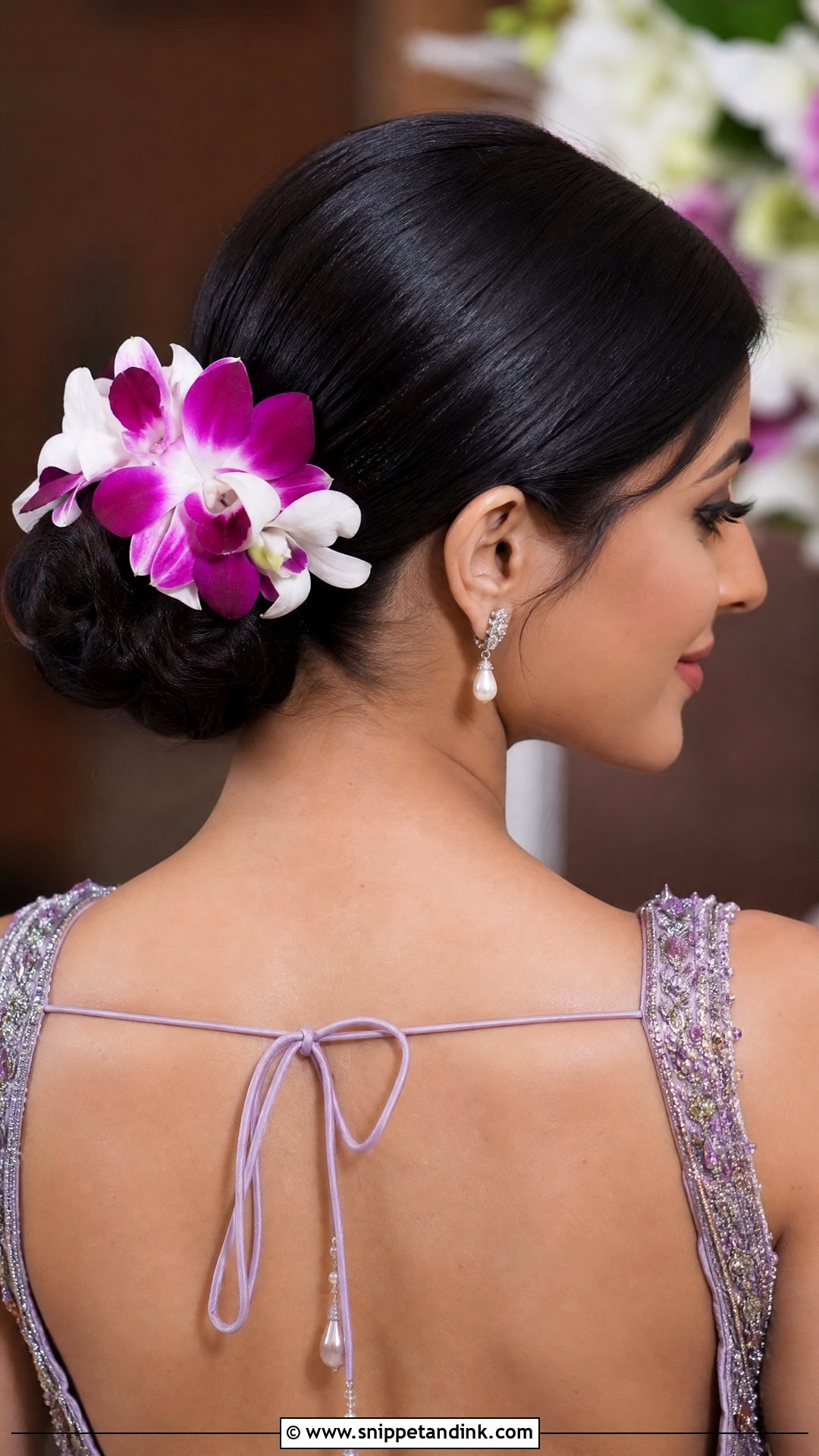
Orchids are my favourite flower for a long day. Dendrobium and similar orchids hold up in heat much better than roses, and two or three heads make a clear shape without needing many stems. They sit best on a smooth low bun, where the petals have room. White, purple and pink varieties make it easy to match an outfit. Keep jewellery quieter so the flower is the focus, which suits a reception or evening event.
10. Messy Bun with Mogra Strands
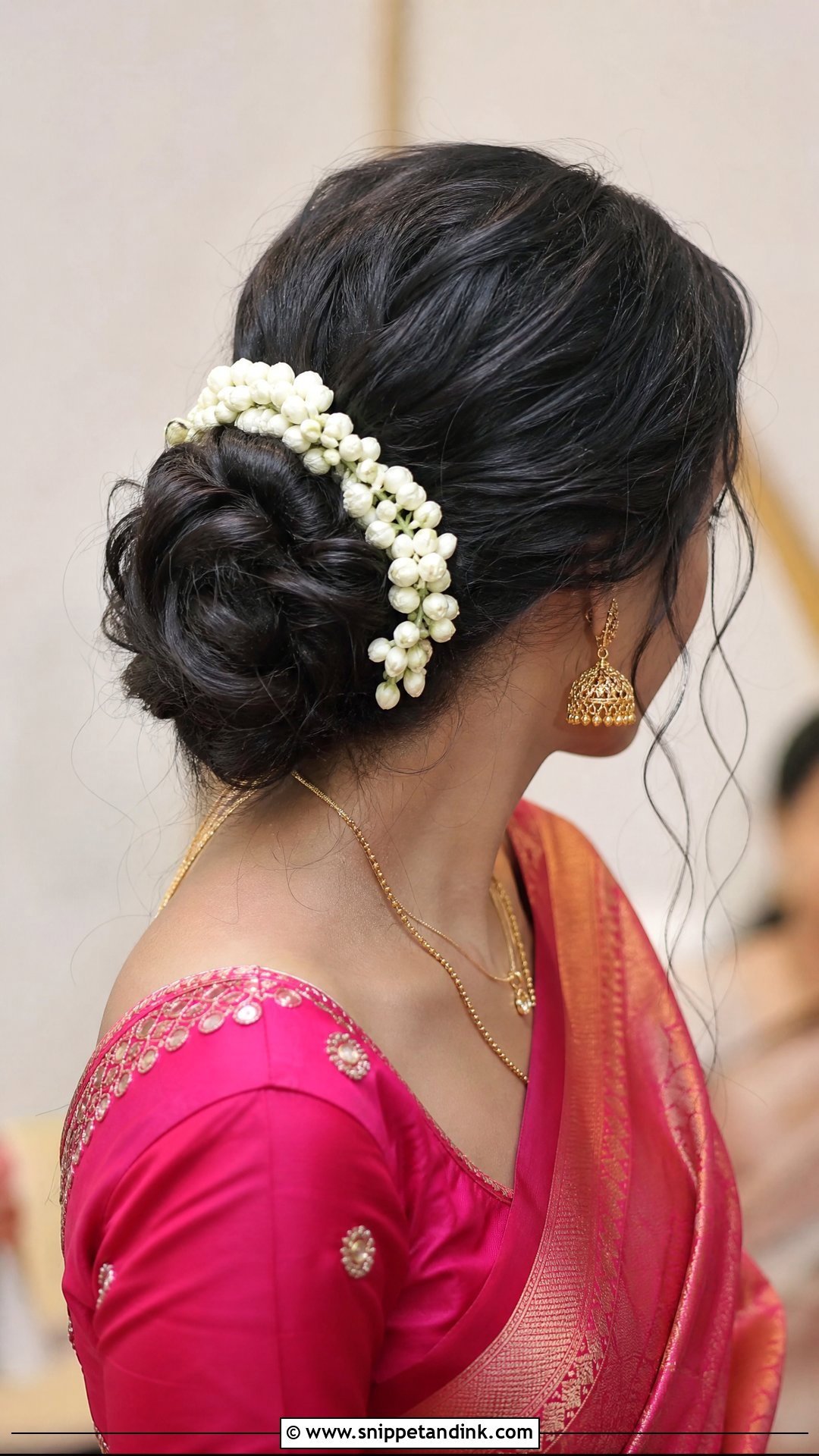
Mogra strands woven through a loosely gathered bun give a relaxed shape with a traditional scent. I weave them in as I build the bun rather than wrapping them on at the end, so the strands sit inside the texture and don’t slide. This works with sarees and lehengas in soft or bright shades. Remember that jasmine scent is strong close to the face, and some brides with headaches or allergies prefer it at the back only.
11. Side Swept Floral Bun
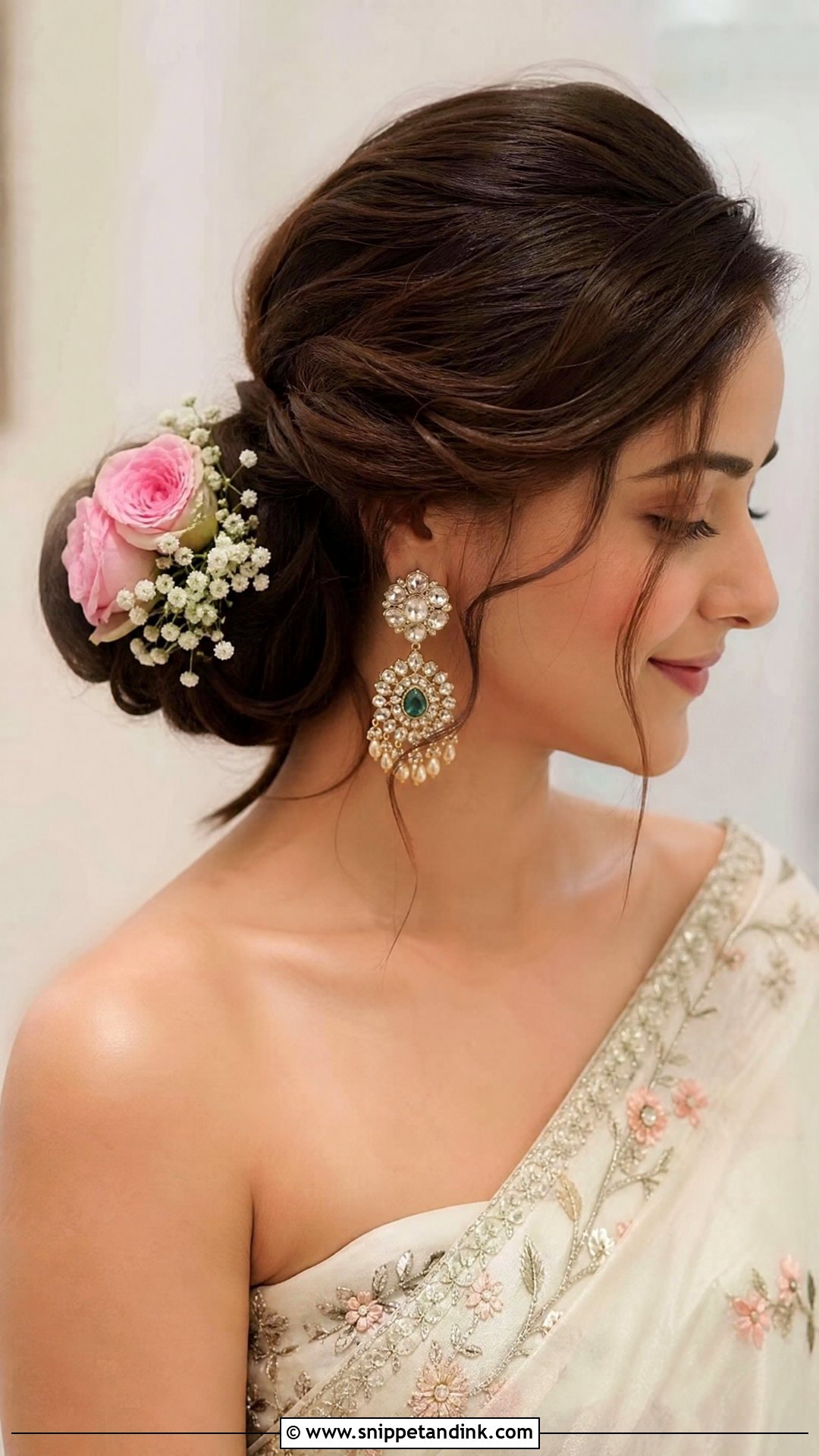
A bun gathered low on one side shows the neck and lets an earring stand out on the bare side. It sits nicely with one-shoulder blouses. The weight of the flowers pulls an off-centre bun toward the back of the head, so I add an extra row of anchoring pins on the side it sits. Roses, baby’s breath or mixed blooms all suit it. I’d skip it under a heavy dupatta draped over both shoulders, which hides the line.
12. Bridal Bun with Mixed Flowers
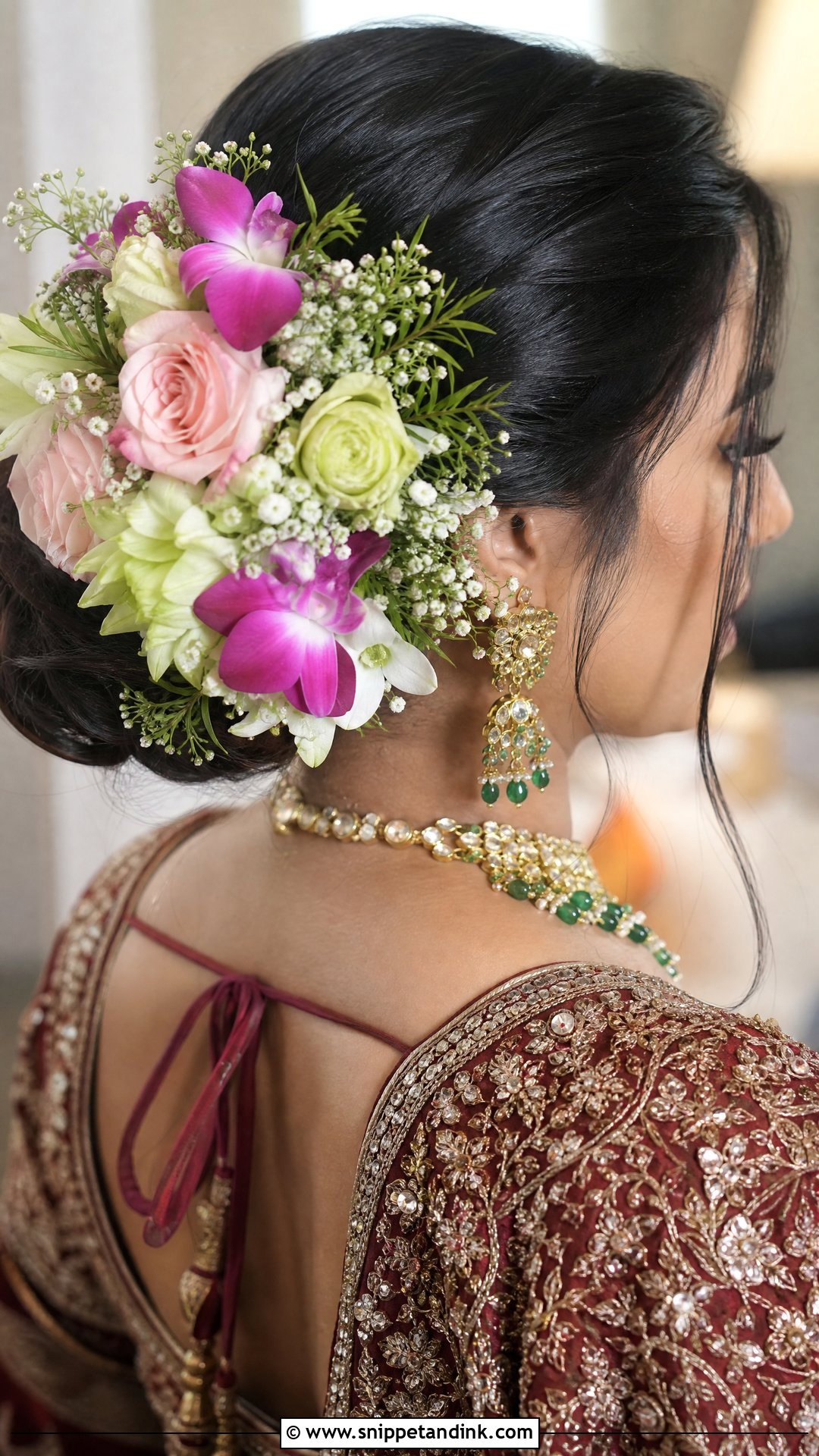
Mixing roses, baby’s breath, orchids and greenery gives a garden-like bun with layered texture. The colours can follow your wedding palette. The risk is overloading: too many varieties make the bun look like a centrepiece rather than hair. I work with three types at most, and I keep greenery small, because leaves wilt and curl faster than petals in heat.
13. Donut Bun with Floral Border
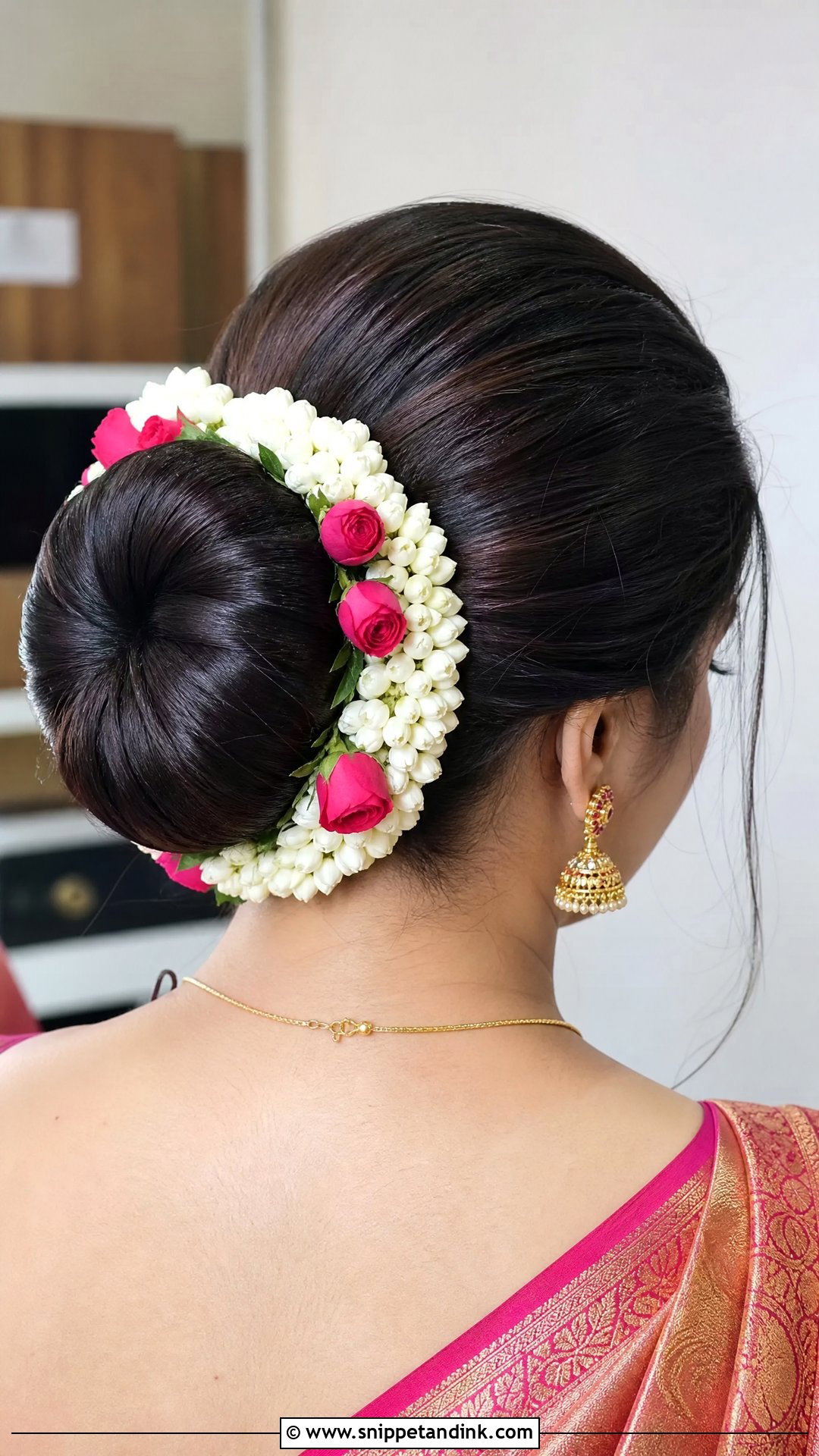
A donut bun is the cleanest base for a flower border. The ring shapes the hair into a full, even circle, and a neat row of jasmine, roses or small mixed blooms outlines it. I match the donut to the bride’s hair colour and cover it fully, since the border only goes around the edge and any gap shows. It suits traditional and modern outfits equally and stays tidy under a dupatta.
14. Pearl and Flower Bridal Bun
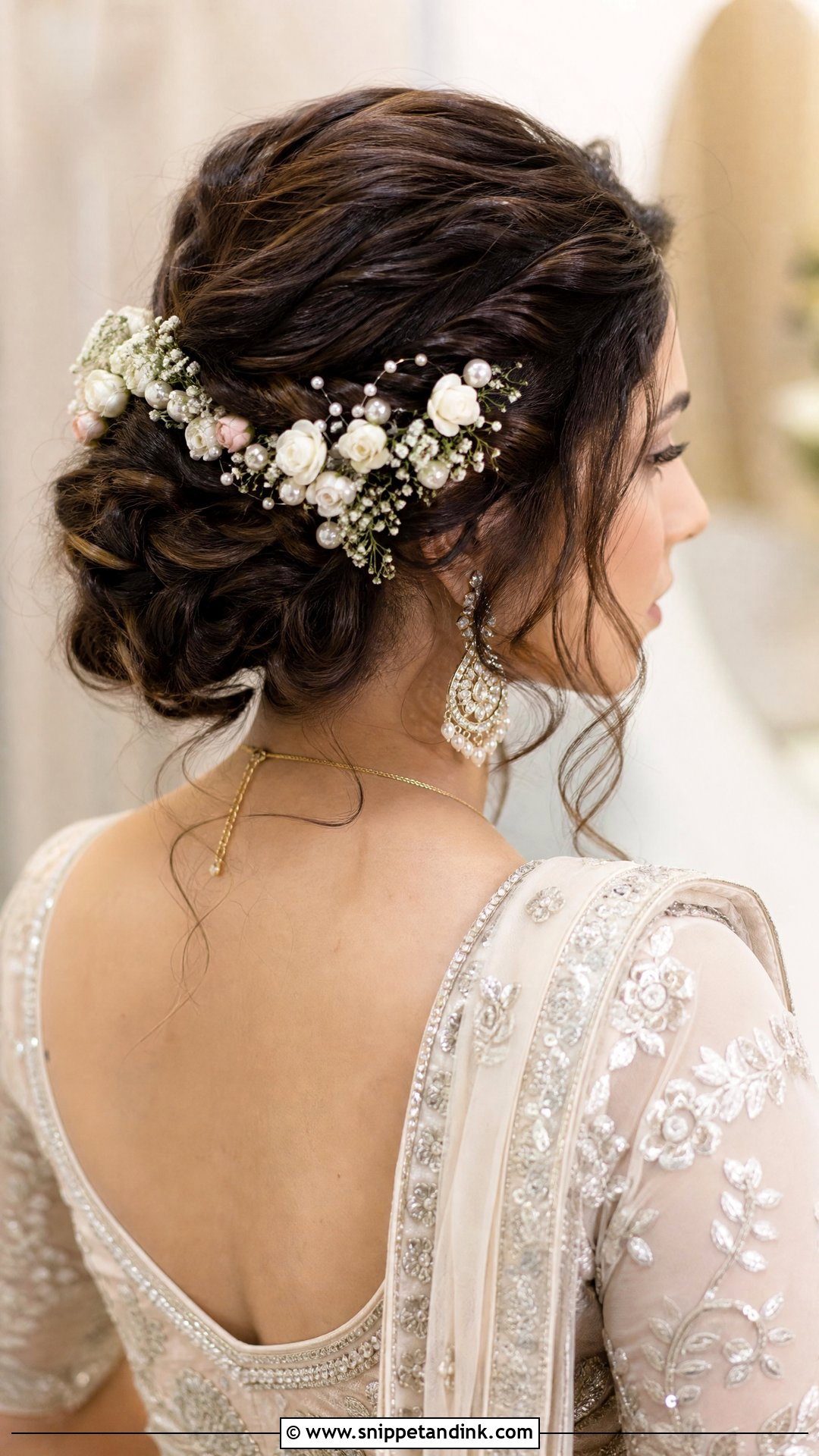
Pearls threaded alongside baby’s breath or small roses add a little light without the flowers needing to do all the work. I use strands of faux pearls on a wire or pearl-headed pins, because loose strings can slide off the bun. Pastel and ivory outfits suit it. Pearls also last all day, so if the flowers tire by the evening, the bun still looks finished.

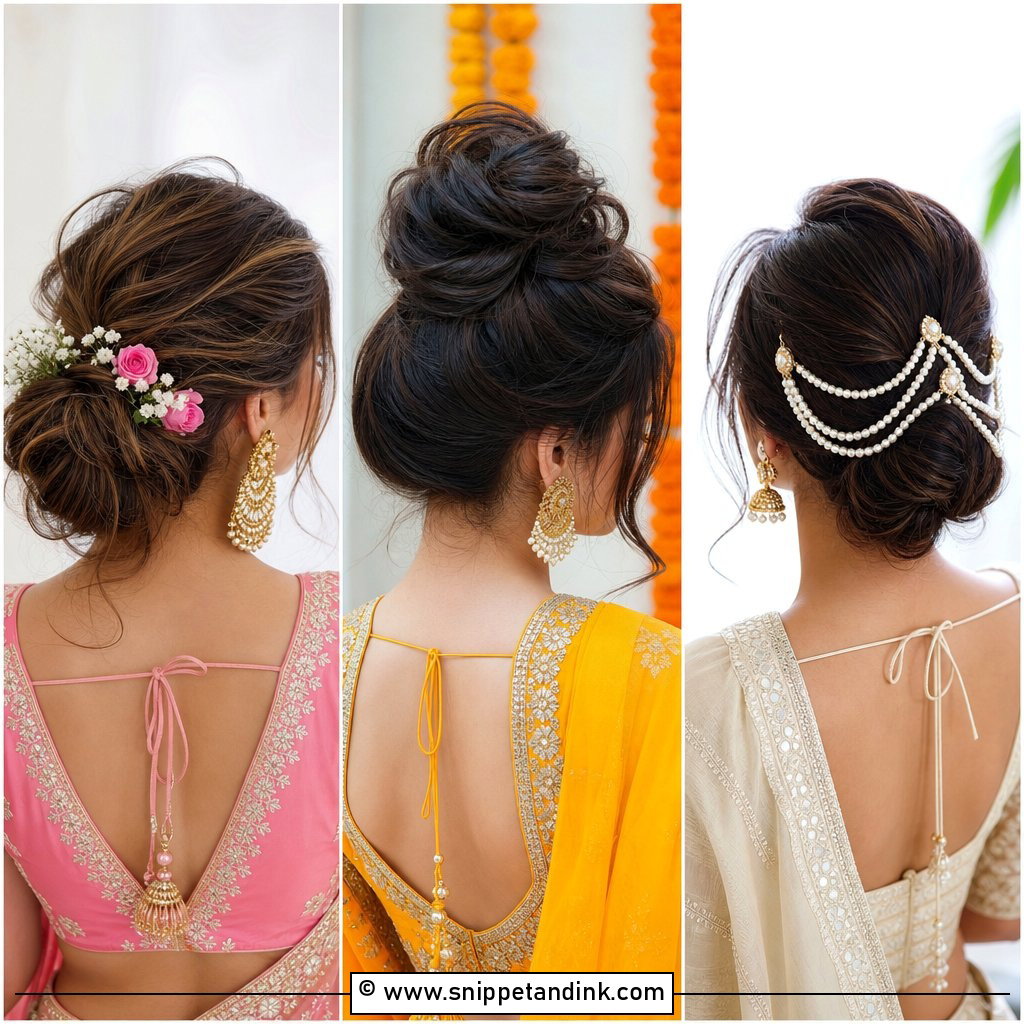
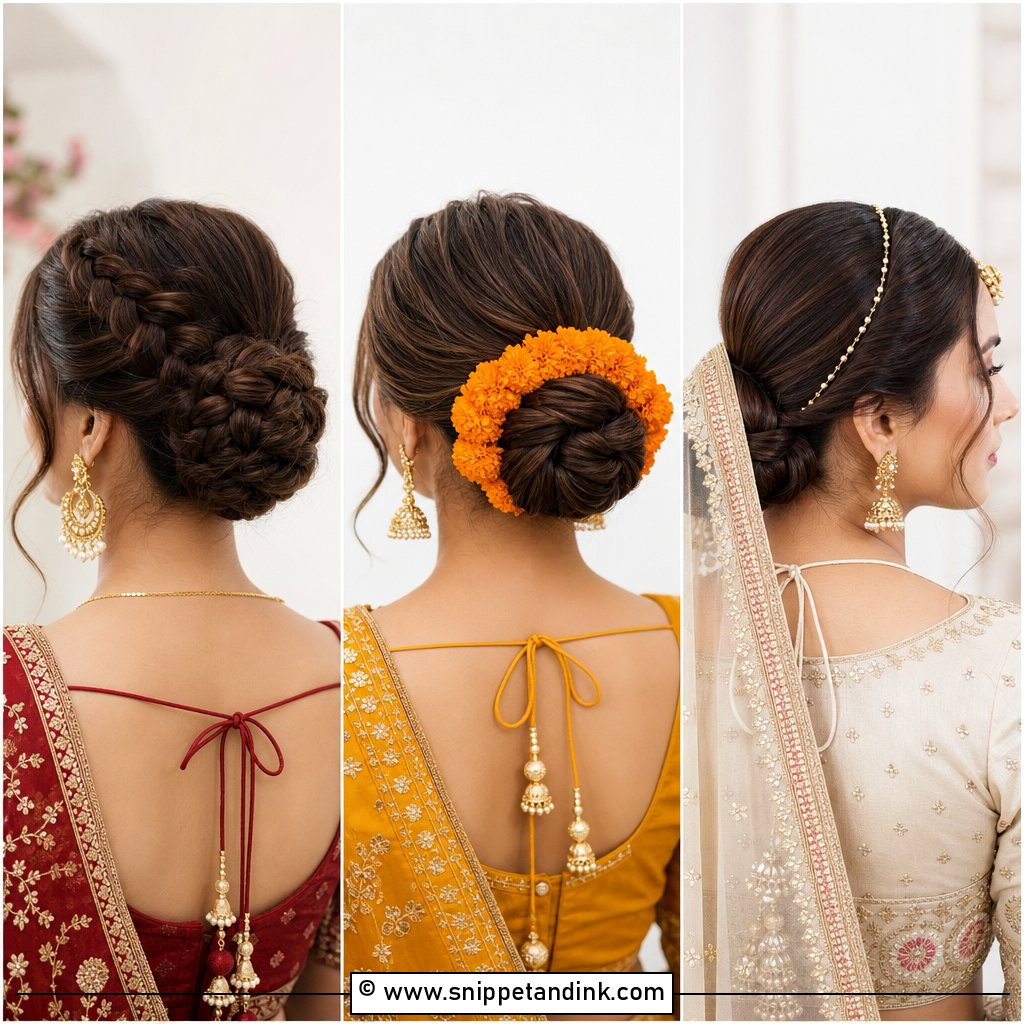
15. Floral Braided Crown Bun
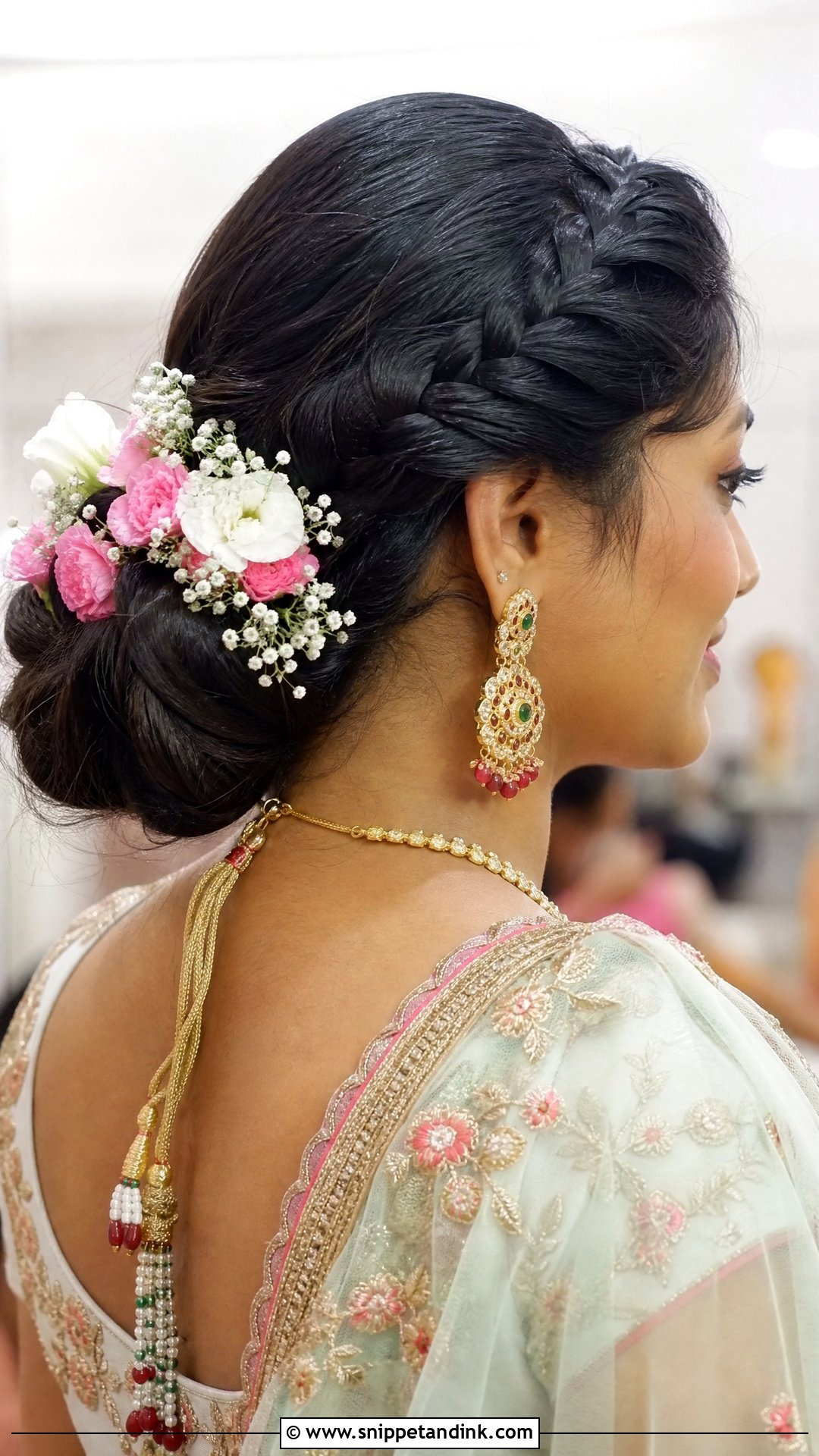
A braided crown leading into a floral bun is detailed and formal. I braid the crown first and pin it flat before building the bun, so the braid supports the weight of the flowers along it. Flowers tucked into the crown braid sit close to the face, so choose small, light blooms there and keep the bigger ones in the bun. A flowing dupatta over this style needs careful pinning so it doesn’t flatten the crown.
16. Low Bun with Trailing Flowers
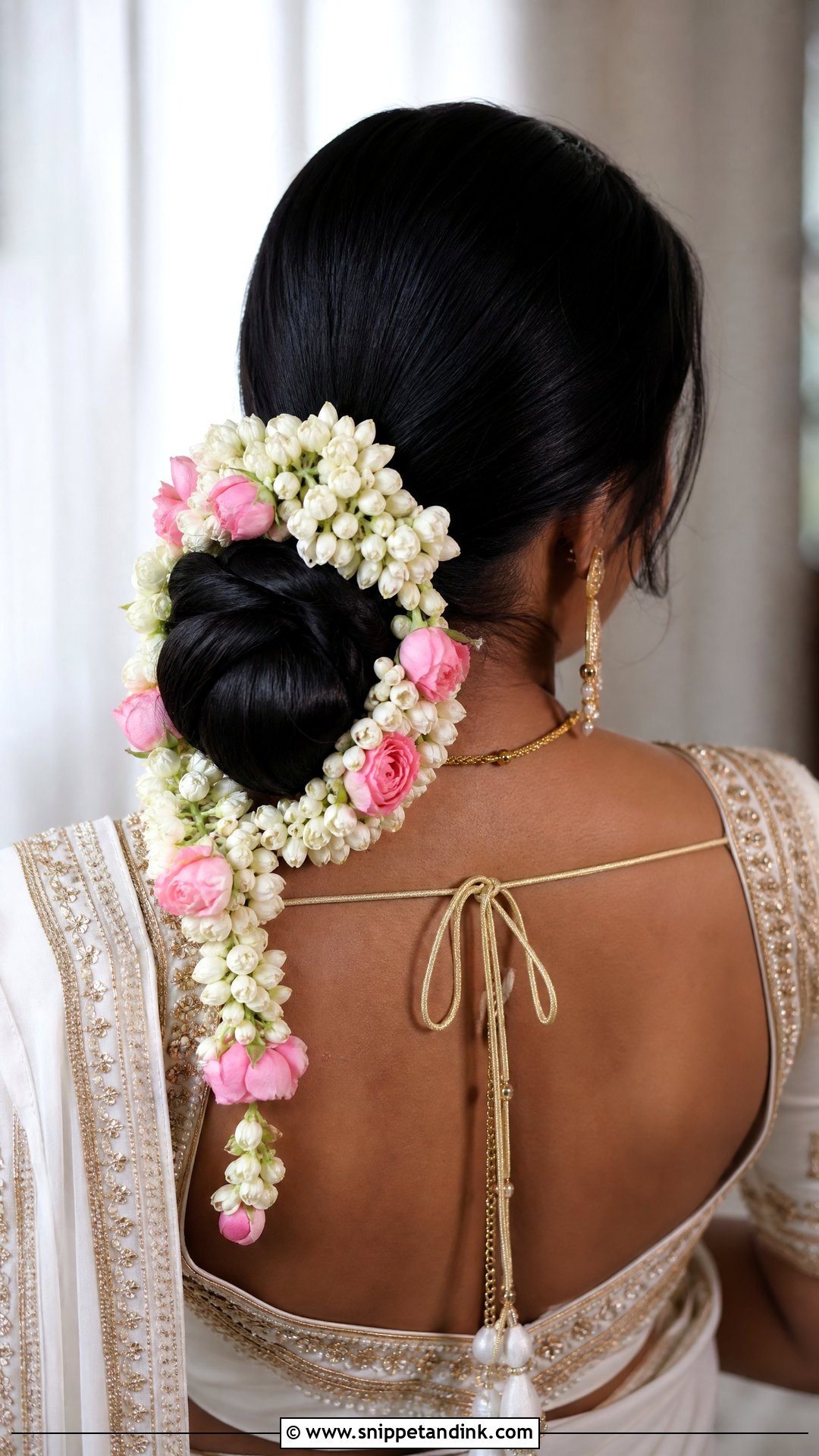
Trailing flowers fall from a low bun toward the neck or shoulder. Jasmine strands are the easiest to trail because they’re light and flexible; roses need wiring to fall in a controlled line. This style is made for backless or low-cut blouses. I check that the trailing end doesn’t rest on a necklace clasp or rub the skin, and I keep it short enough that it won’t tangle when the bride sits.
17. Maharashtrian Bun with Flowers
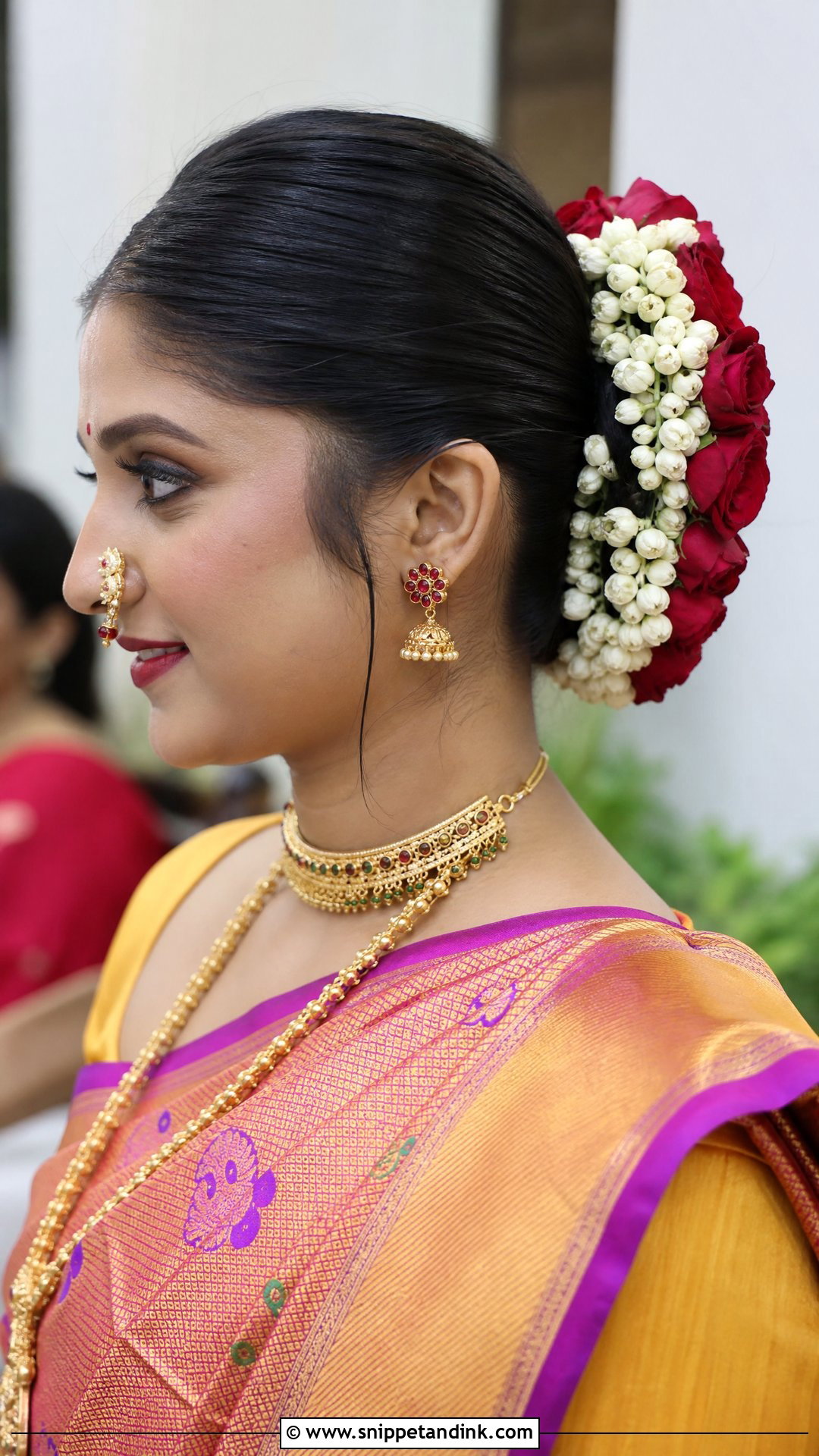
Inspired by traditional Maharashtrian bridal looks, this neat bun is circled with rows of mogra or roses and worn with the nath and traditional jewellery. With a Paithani saree, the bun has to stay compact and tidy because the drape and jewellery carry so much detail. I set it slightly higher than a nape bun so the flowers are visible from the front in photos. The structure matters more than volume here.
18. Bun with Hydrangea Flowers
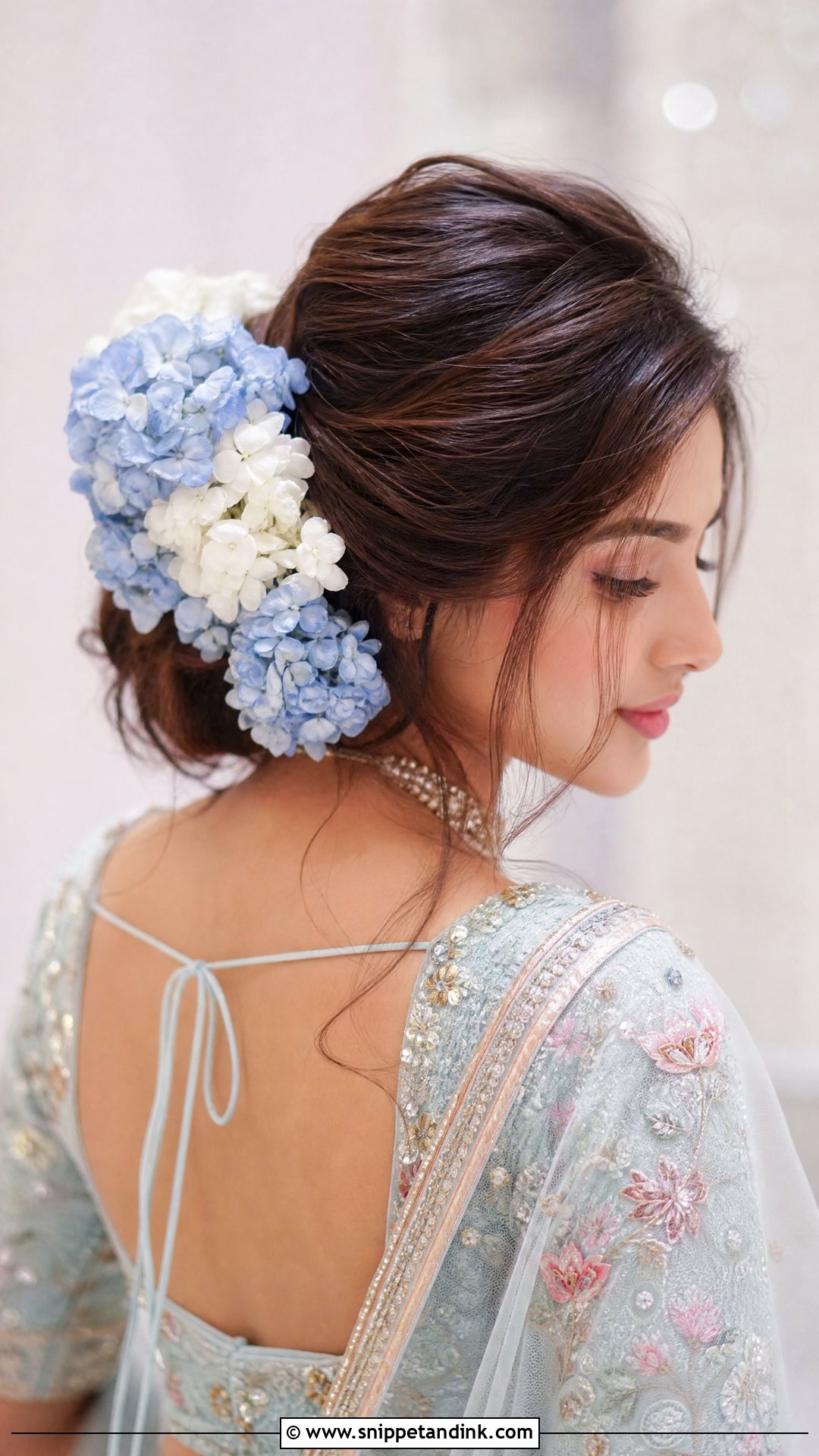
Hydrangeas give instant volume, but they are the thirstiest flower in this list and wilt quickly out of water, sometimes within a few hours on a warm day. I only use them for a short event or when the florist can condition them well beforehand. Blue, white and pink varieties suit pastel lehengas. If the day is long or hot, consider good silk hydrangea florets instead.
19. Half Up Floral Bun
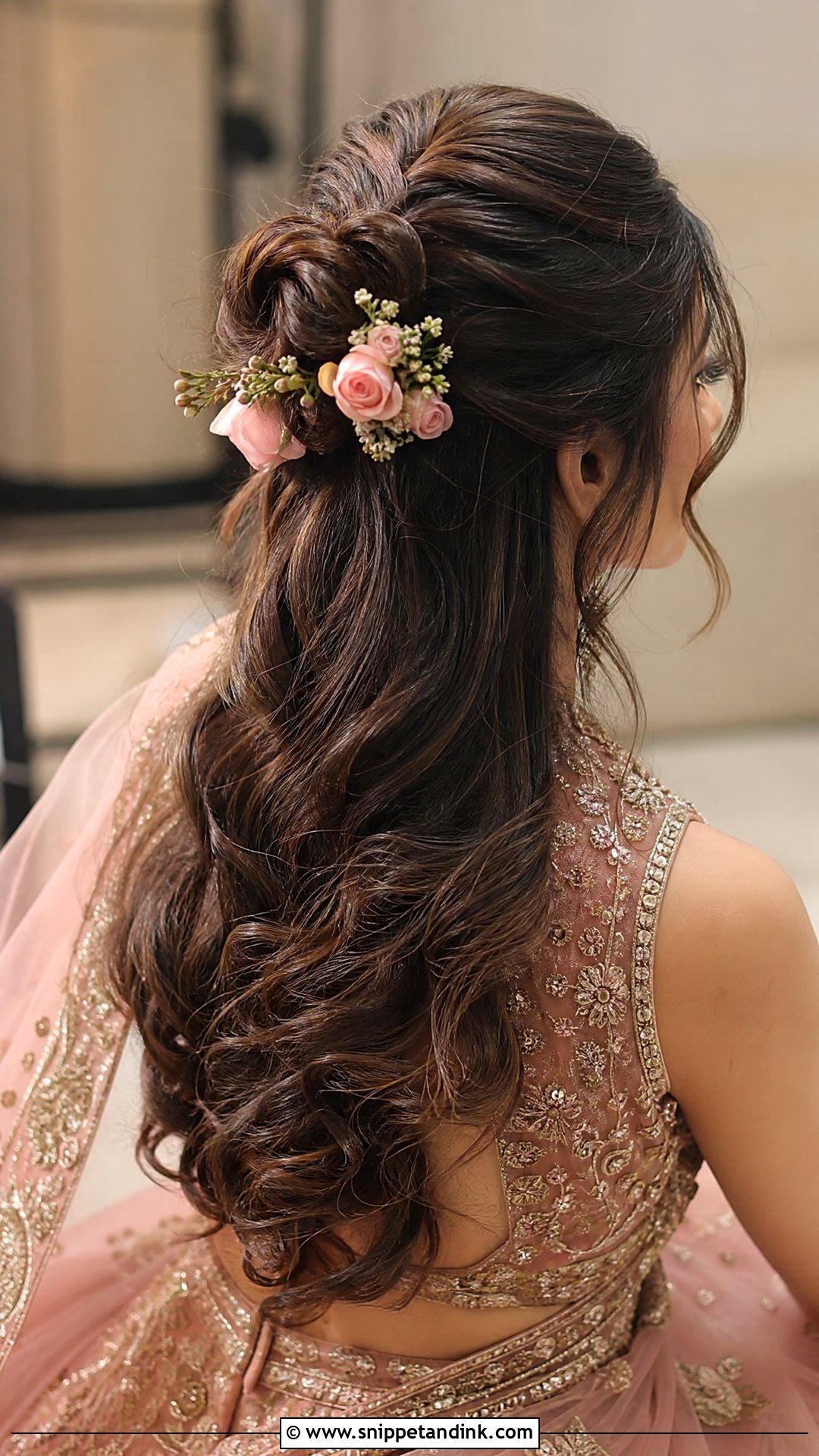
A half-up floral bun keeps the top section off the face and lets long hair show down the back. I curl the loose lengths and set them before the flowers go in, so the curls aren’t disturbed later. Roses or baby’s breath suit the small bun. It is less secure than a full updo under a heavy dupatta, so I suggest it mostly for receptions and pre-wedding functions.
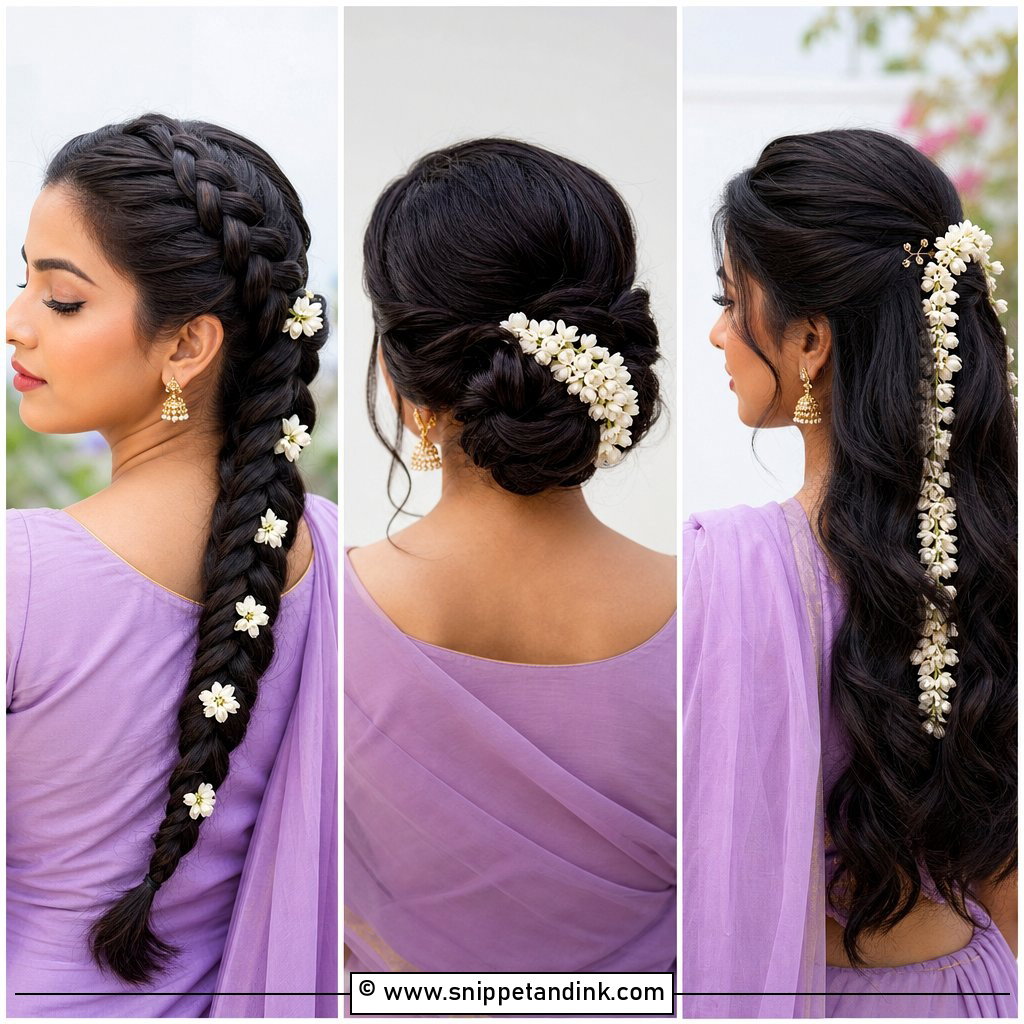

20. Rose Twist Bridal Bun
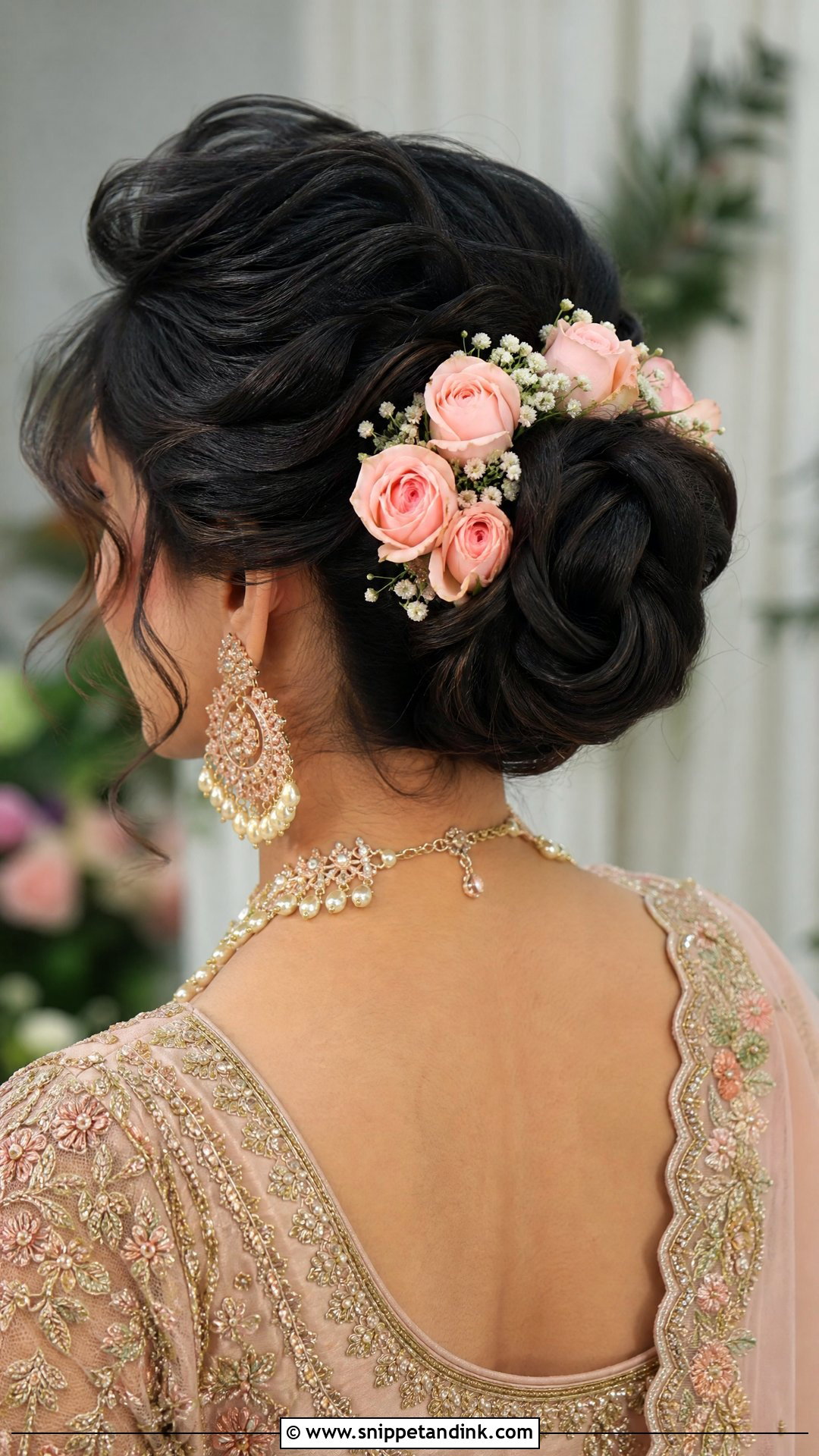
Twisting sections of hair into a coiled bun leaves small pockets between the twists, and rose buds tucked into those pockets look like they grew there. It takes longer than most buns because each twist is pinned individually. Blush and deep red both work. Pair it with an embroidered lehenga and statement jewellery. On very fine hair, I add a small filler inside so the twists have something to wrap around.
Who Brings the Flowers, and When They Go In
Most problems with floral buns happen because nobody owned the flowers. The florist assumes the stylist will bring them; the stylist assumes the family is ordering. Settle it weeks ahead and tell your stylist exactly what is coming, in what quantity and in what form, such as loose heads, strings or wired picks.
The Order I Work In on the Morning
- Prep and set the hair, including curls for any loose sections.
- Build the bun and anchor it with crossed pins.
- Place jewellery such as the tikka or jadanagam.
- Add the flowers last, after makeup is finished, so they are freshest for the ceremony.
- Pin the dupatta around the finished bun.
If the flowers arrive late, I pin a temporary ornament in their place so photos can begin, then swap. Ask the florist for flowers with short stems already trimmed, which saves time and keeps sap off your hair.
Scent, Pollen and a Sensitive Scalp
A bun full of jasmine sits a few centimetres from your nose for the whole day. If strong scents give you headaches, keep the fragrant flowers at the back and use unscented blooms like orchids near the face. Lilies and some wild greenery drop pollen that stains fabric, so I leave them out of bridal hair altogether. And if your scalp reacts to plant sap, ask for every stem to be wrapped in floral tape before it goes near the hair.
Plan the Flowers Before You Plan the Bun
Fresh flowers bring fragrance and tradition that no ornament can, but they need planning. Decide which blooms suit the length of your day, who will supply them and when they arrive, and test the weight at your trial. Then build the bun to fit the flowers, whether that’s a jasmine gajra, a rose twist or a soft cloud of baby’s breath. Bring photos of your outfit and jewellery so your stylist can balance the whole look.
You'll Like These Ideas:



Leave a Reply