
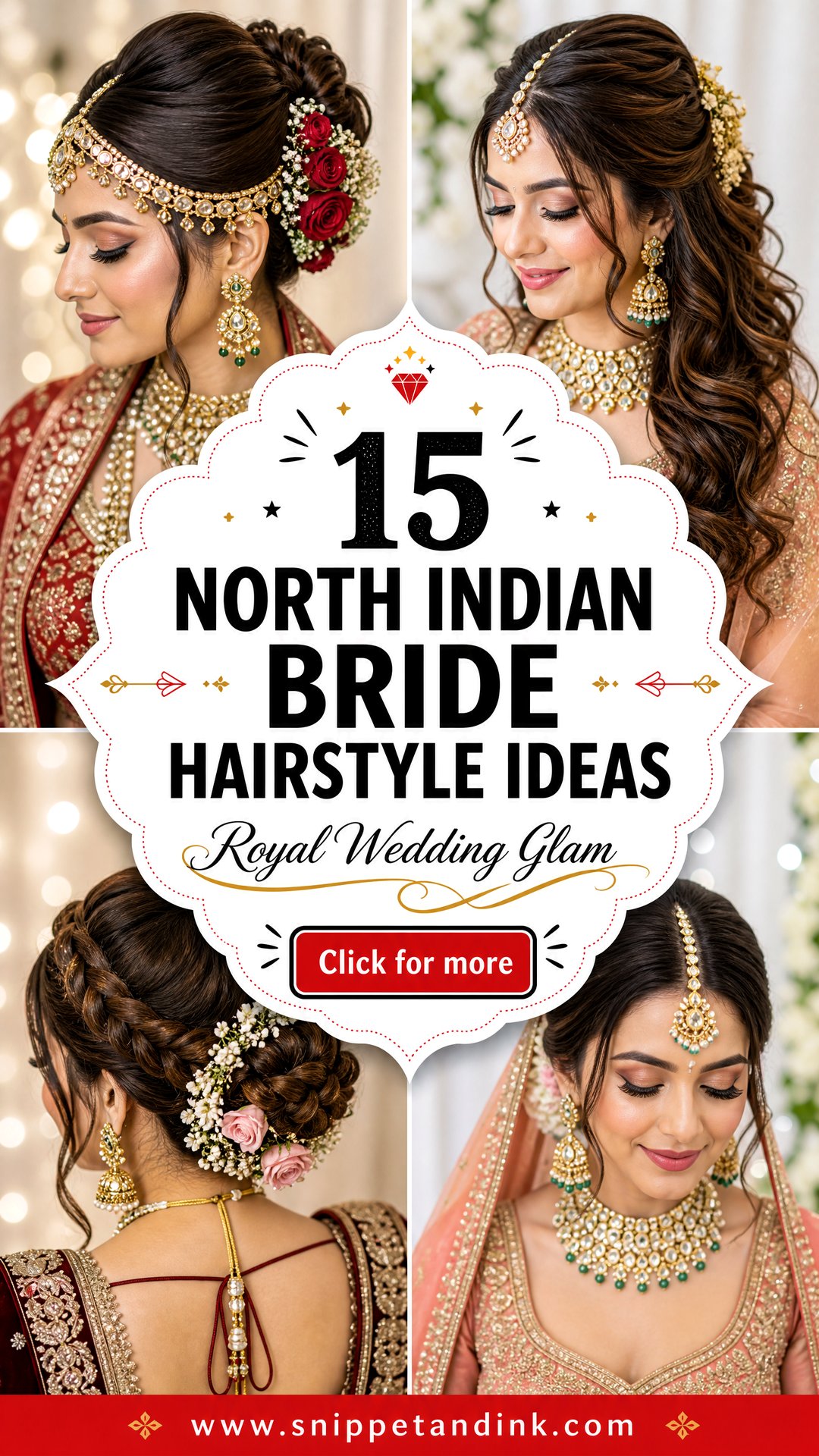
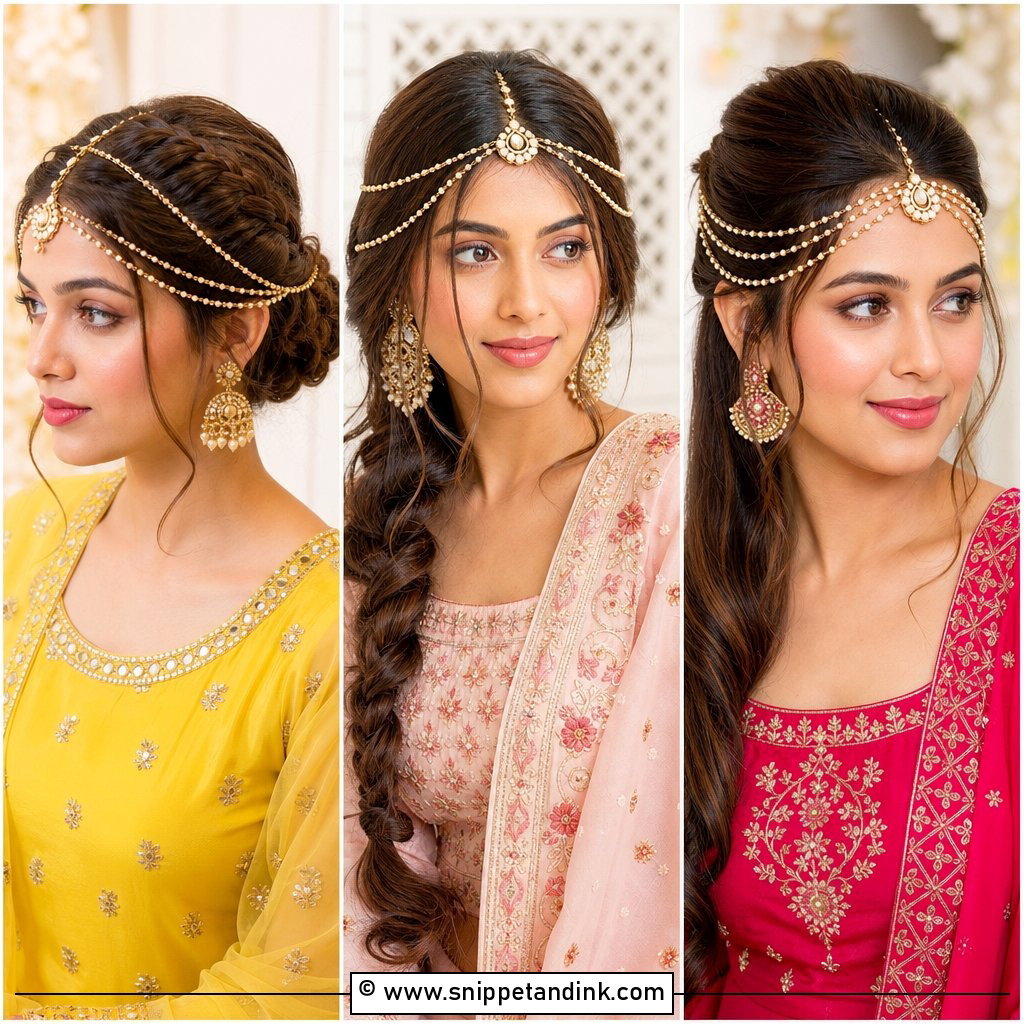
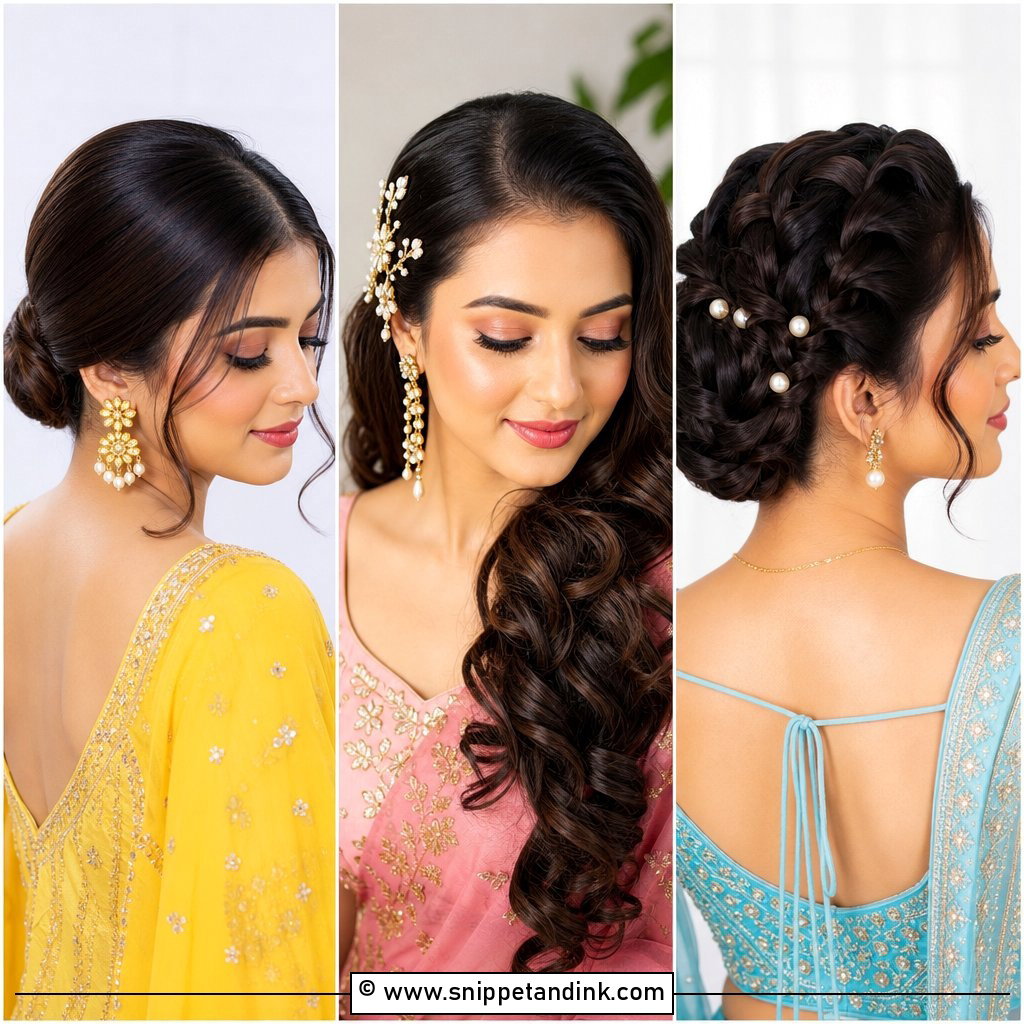
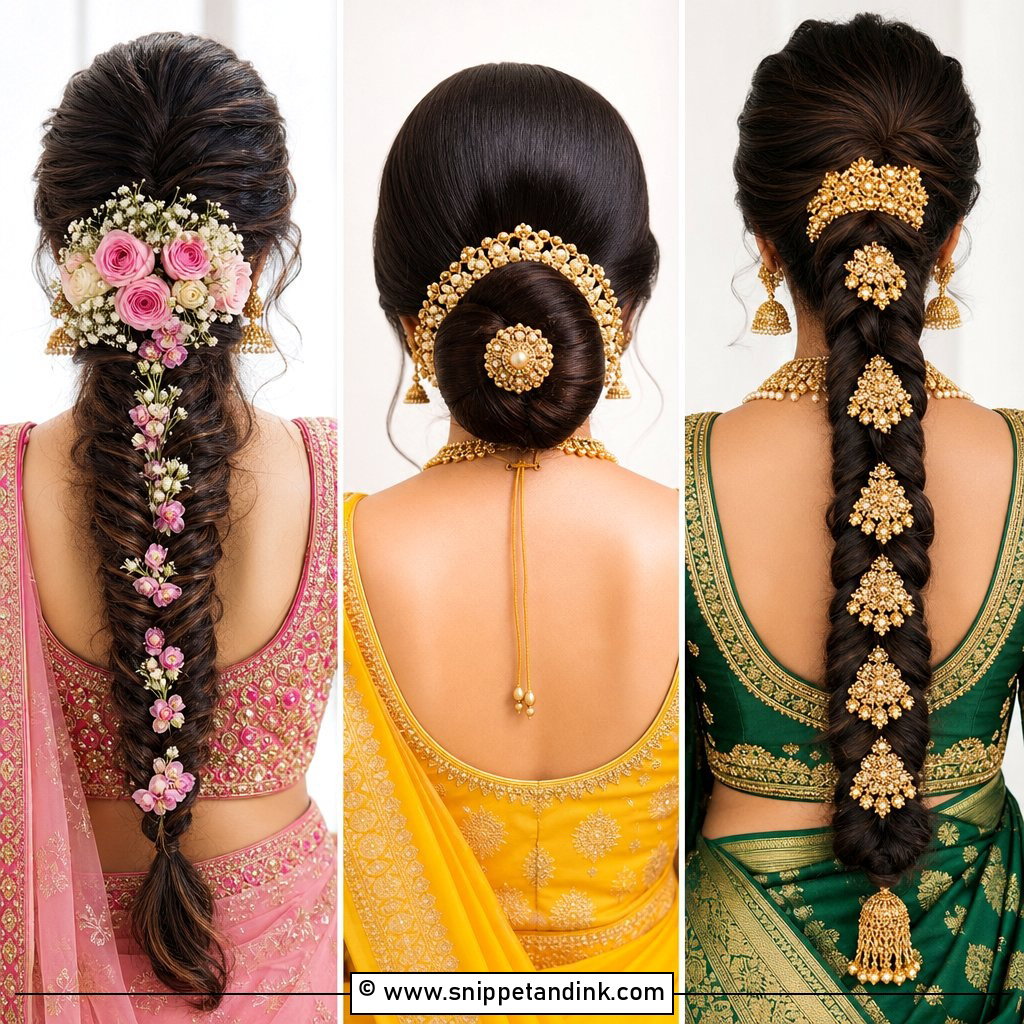
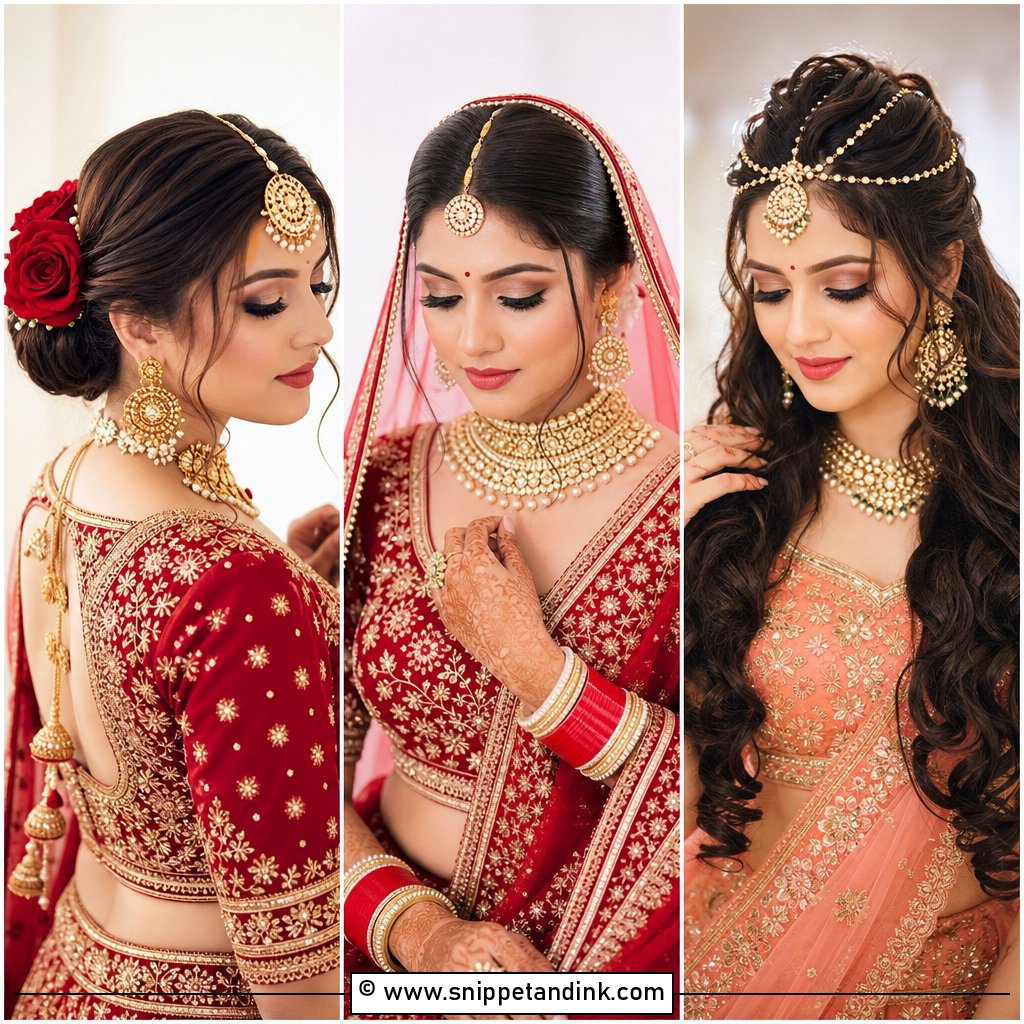
North Indian bridal hair carries more hardware than almost any other wedding look I work on. Between a heavy dupatta, matha patti, maang tikka, passa, chooda, nath and layered necklaces, the hairstyle is really a support structure that also has to look good up close. I plan every one of these styles from the jewelry outward. The fifteen looks below cover buns, curls, braids and flower work for lehengas, shararas, sarees and reception gowns, with notes on which events each one actually survives.
Jewelry Goes On Before the Last Pin
In North Indian bridal hair, the order things go on decides whether they stay on. I finish the base style, then place the maang tikka and matha patti, then the passa, and only after that the dupatta. Each piece is pinned into the hair underneath it, not just hooked on top. If the dupatta goes on first, the jewelry ends up wedged under fabric and the chain tilts the moment you turn your head.
- Bring the actual pieces to your trial. A kundan matha patti and a light gold one need very different anchoring.
- Tell your stylist which side the passa sits on, so the parting and bun placement are planned around it.
- Ask for a small hook or loop sewn onto a heavy dupatta, so pins go through thread rather than through delicate embroidery.
A heavy dupatta also puts constant backward pull on the front of the hairline. Over several hours that can cause a real headache. I spread its weight across six to eight pins set into the bun or braid, which feels far lighter than two big pins near the crown.
1. North Indian Bridal Bun With Dupatta
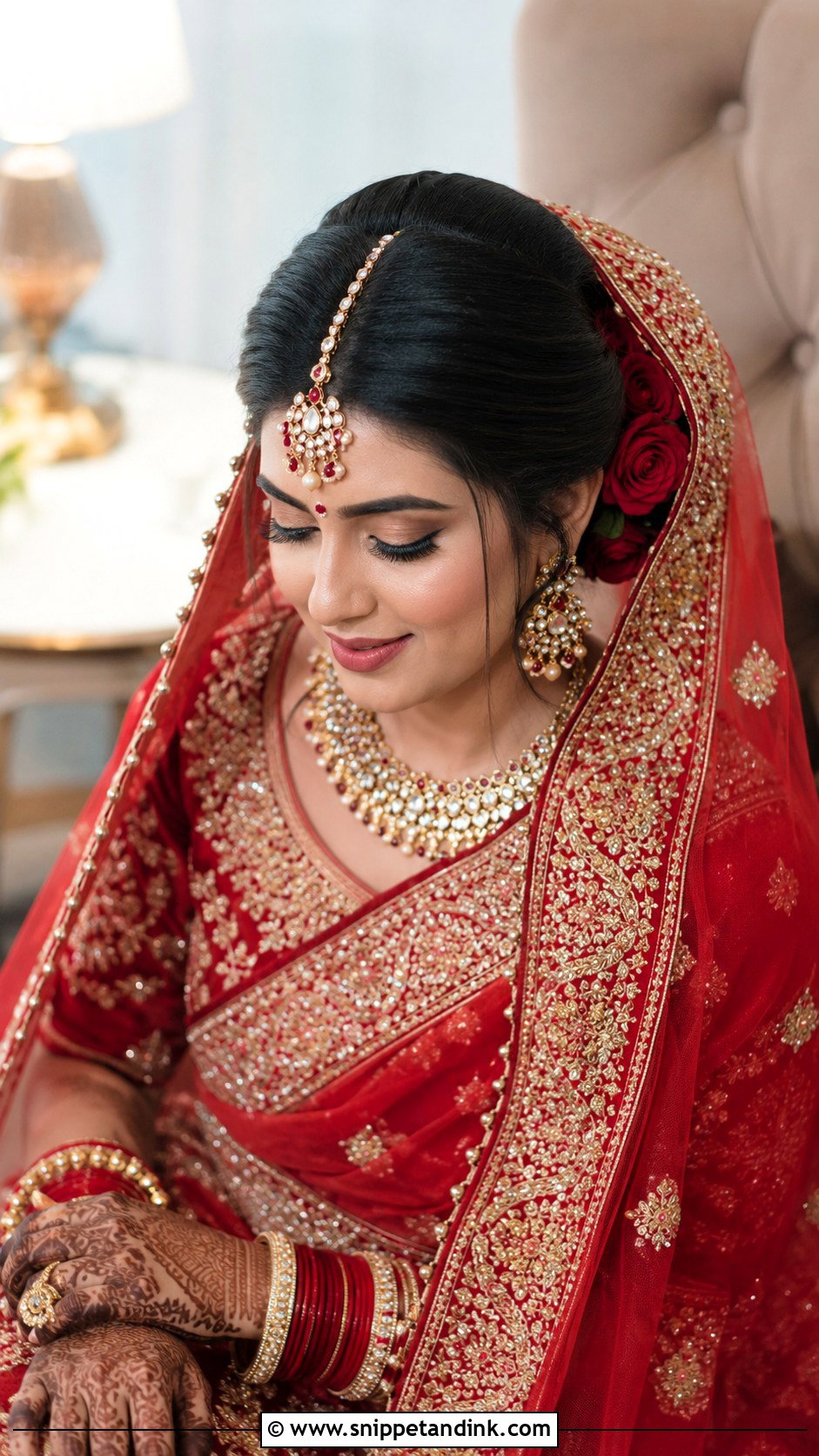
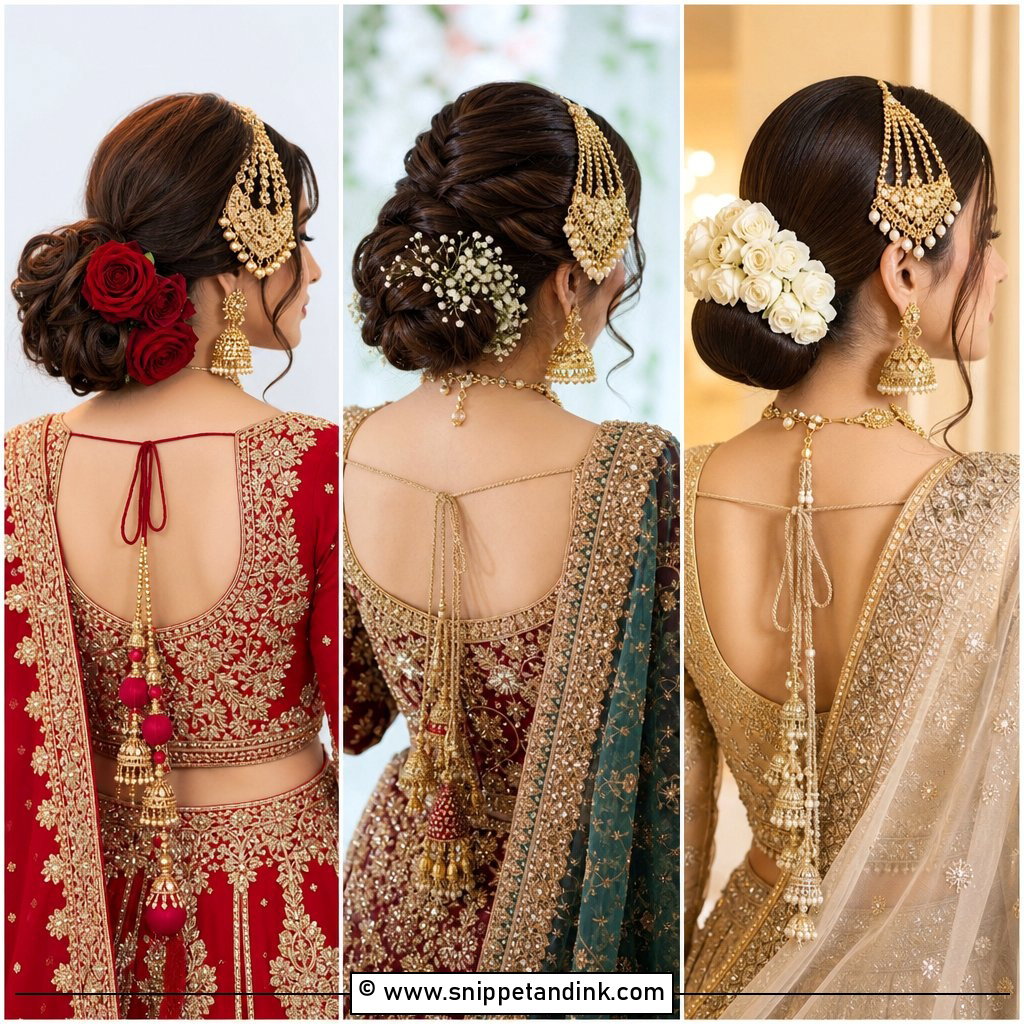
This is the style I reach for most on the main wedding day, because a bridal bun with dupatta gives the veil something solid to grip. I build the bun first, then sink the dupatta pins into its base rather than into loose hair, which is what stops a heavily embroidered border from sliding backwards during the pheras. Low at the nape suits a round face and a choker; slightly higher at the back gives a longer neck line. Keep the center part clean for the tikka and leave only two face pieces, or the dupatta edge will flatten them into stringy strands by lunch.
2. Sleek Low Bridal Bun
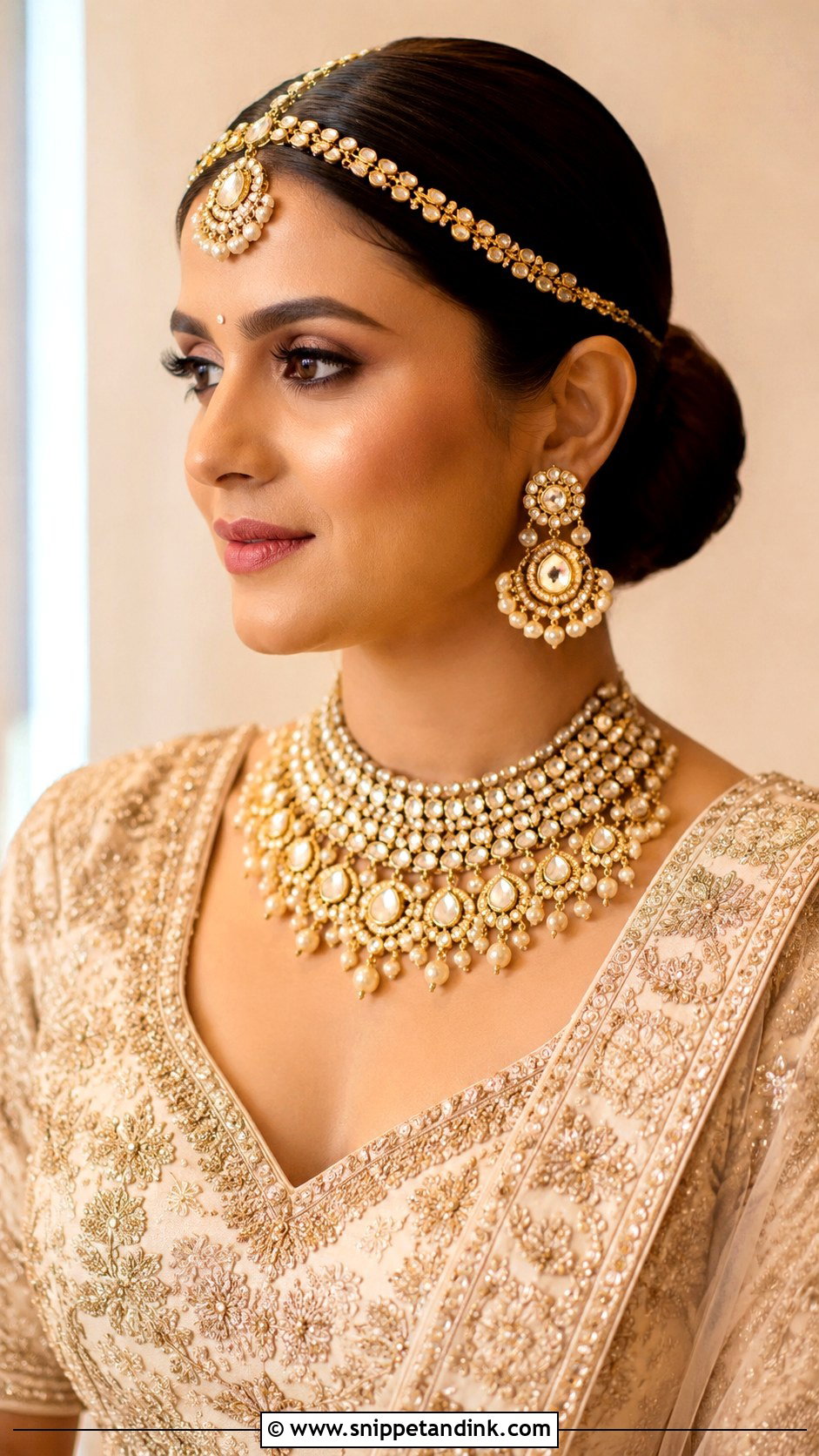
A sleek low bun puts all the attention on the jewelry and the blouse neckline. The work is in the smoothing: I blow the hair completely straight at the root before gathering it, because any leftover wave shows as a ripple under flash. Most brides need a padding donut or a few weft pieces to get real size at the nape. One honest warning: this look is unforgiving on very fine hair with a visible scalp at the part, where a softer, slightly lifted crown hides more.
3. High Bridal Bun With Matha Patti
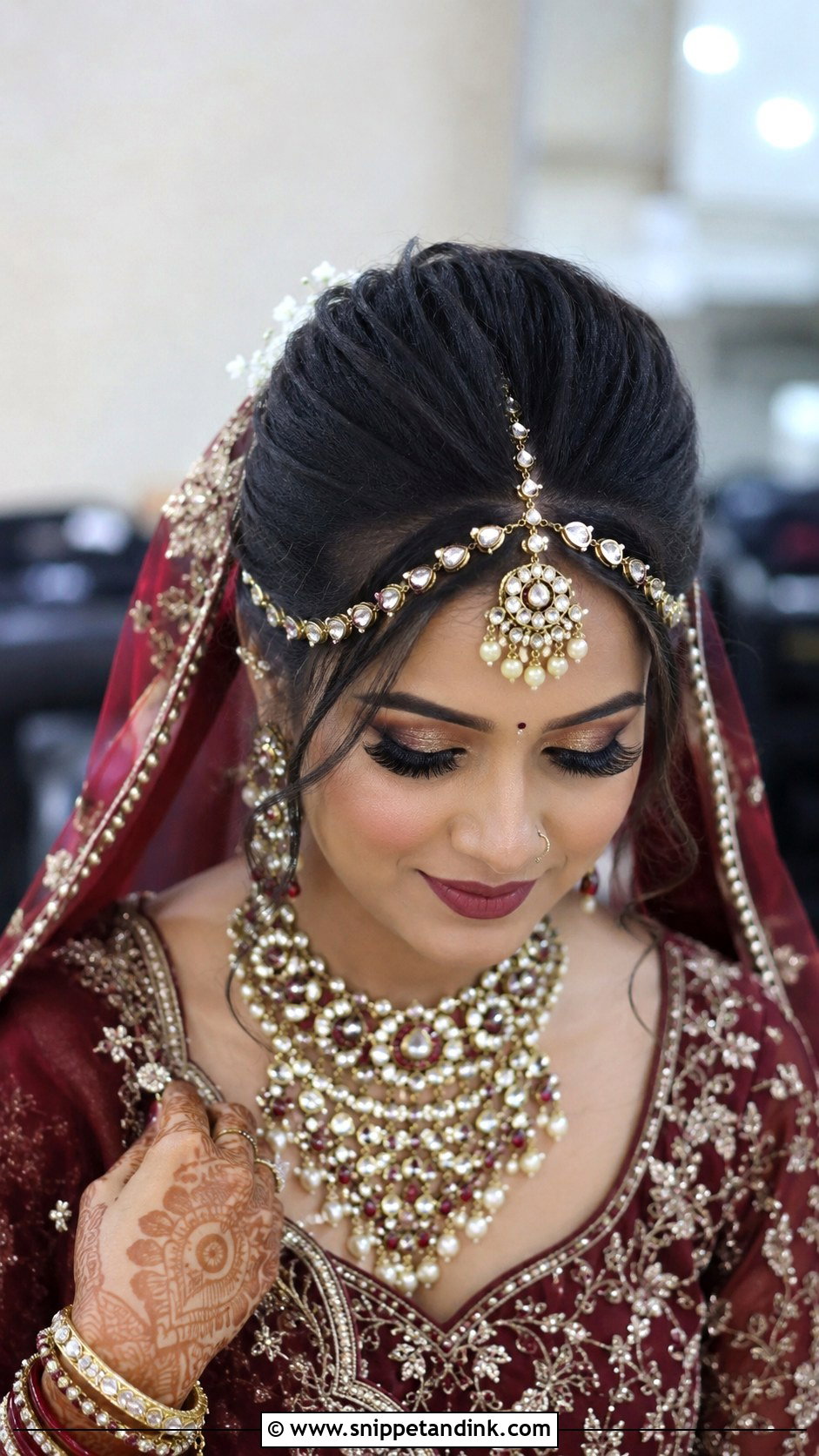
A high bun with a matha patti gives the tallest silhouette in this list, and it pairs naturally with red, maroon, gold or ivory lehengas. The height also changes how the dupatta falls: pinned behind a high bun, it stands away from the head and frames the face like a hood. The catch is the matha patti chain. It has to run over a flat, smooth front section, so I keep the volume behind the chain line and never tease the area it sits on. Flowers belong at the back of this one, not near the forehead jewelry.
4. Braided Bridal Bun
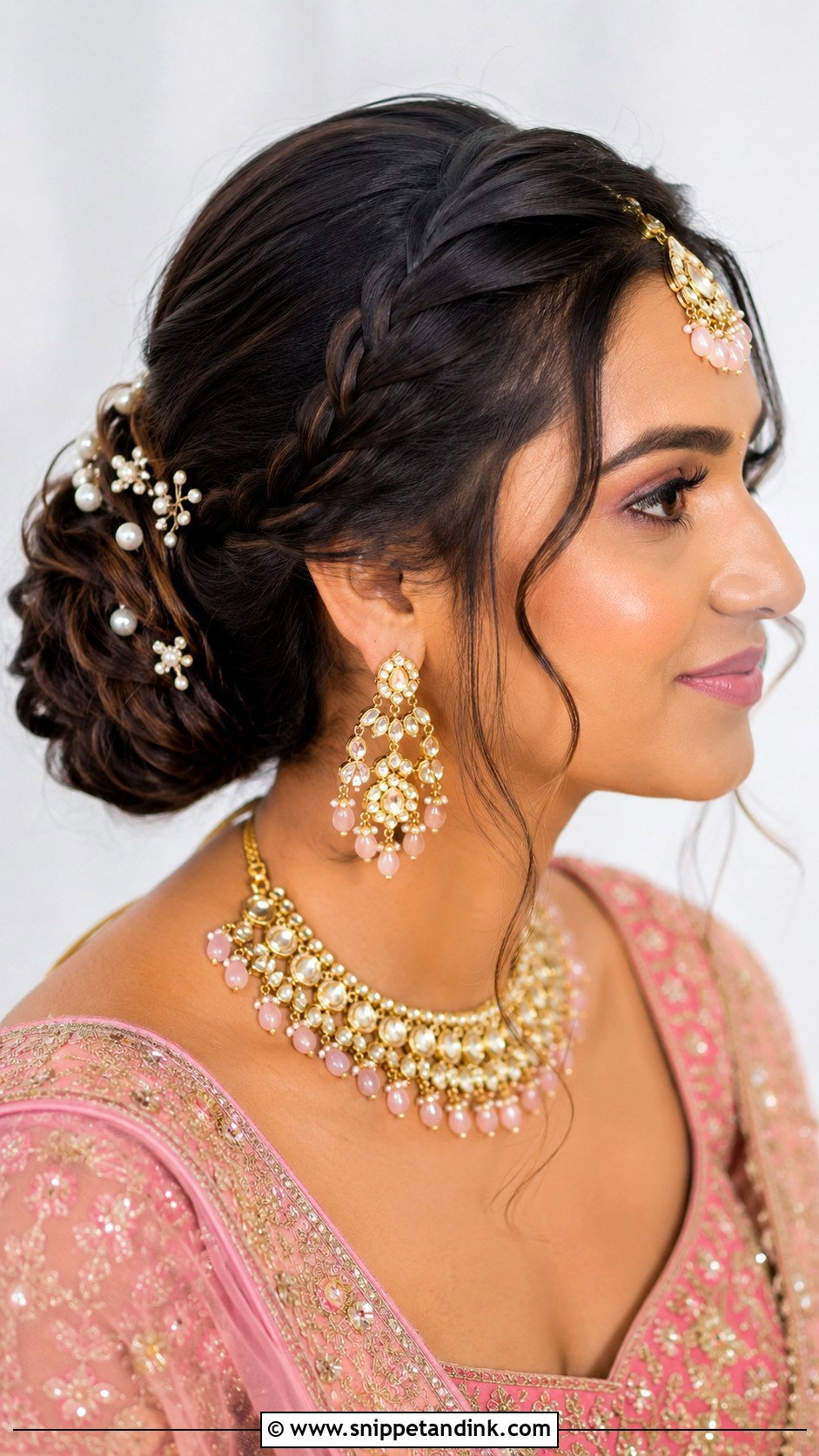
Braids add grip as well as detail, which is why I like a braided bun under a dupatta. Pins hold far better inside braided sections than inside smooth hair, so the veil stays put even when relatives tug at it for photos. The braid can wrap the bun, run along one side or circle the crown. Kundan pins and small roses sit neatly in the braid gaps. If your hair is layered with short ends, expect a few pieces to pop out of the braid; I set those with a little gel before the dupatta goes on.
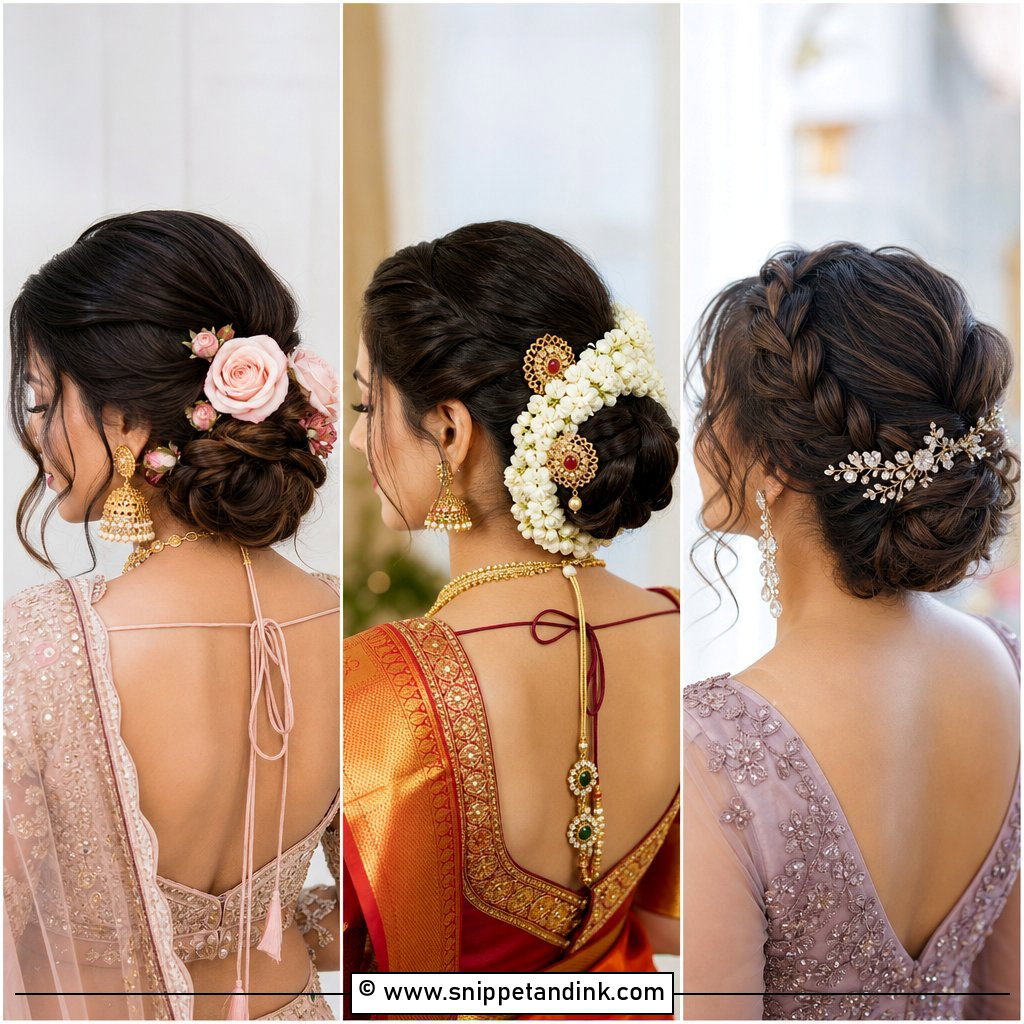
5. Floral Bridal Bun With Roses
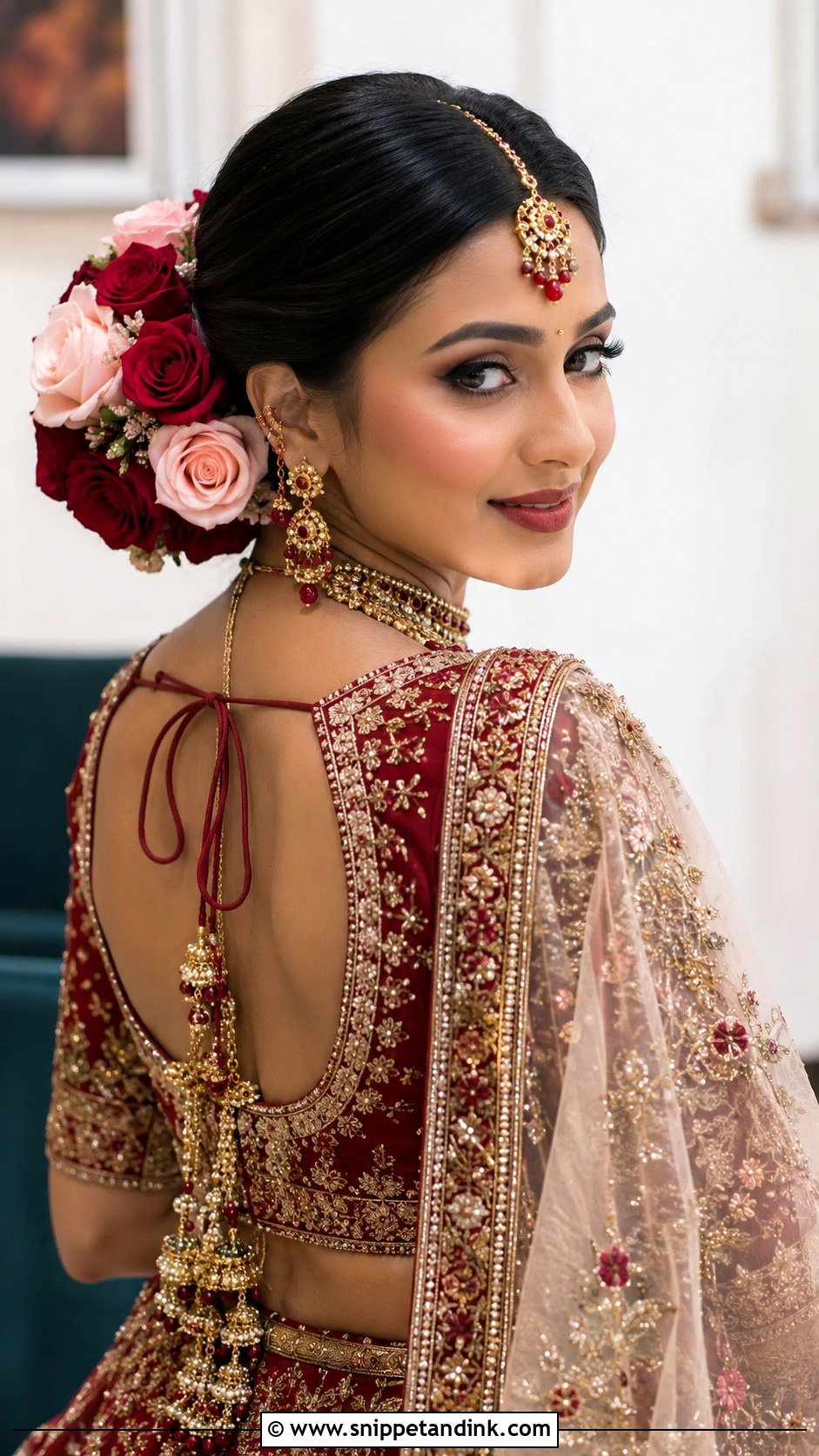
Roses around a bun are one of the most traditional finishes in Indian bridal hair, and they read rich on camera. Red roses suit a red lehenga; peach and ivory work better with pastels. Fresh roses are heavier than they look, so I wire or pin each one into the bun itself and keep them off the crown, where they would push the dupatta up into a bump. From the back this look gives your photographer something to shoot during the getting-ready hour. Match the petal shade to the outfit under daylight, since rose colors shift a lot under warm indoor lights.
6. Gajra Bridal Bun
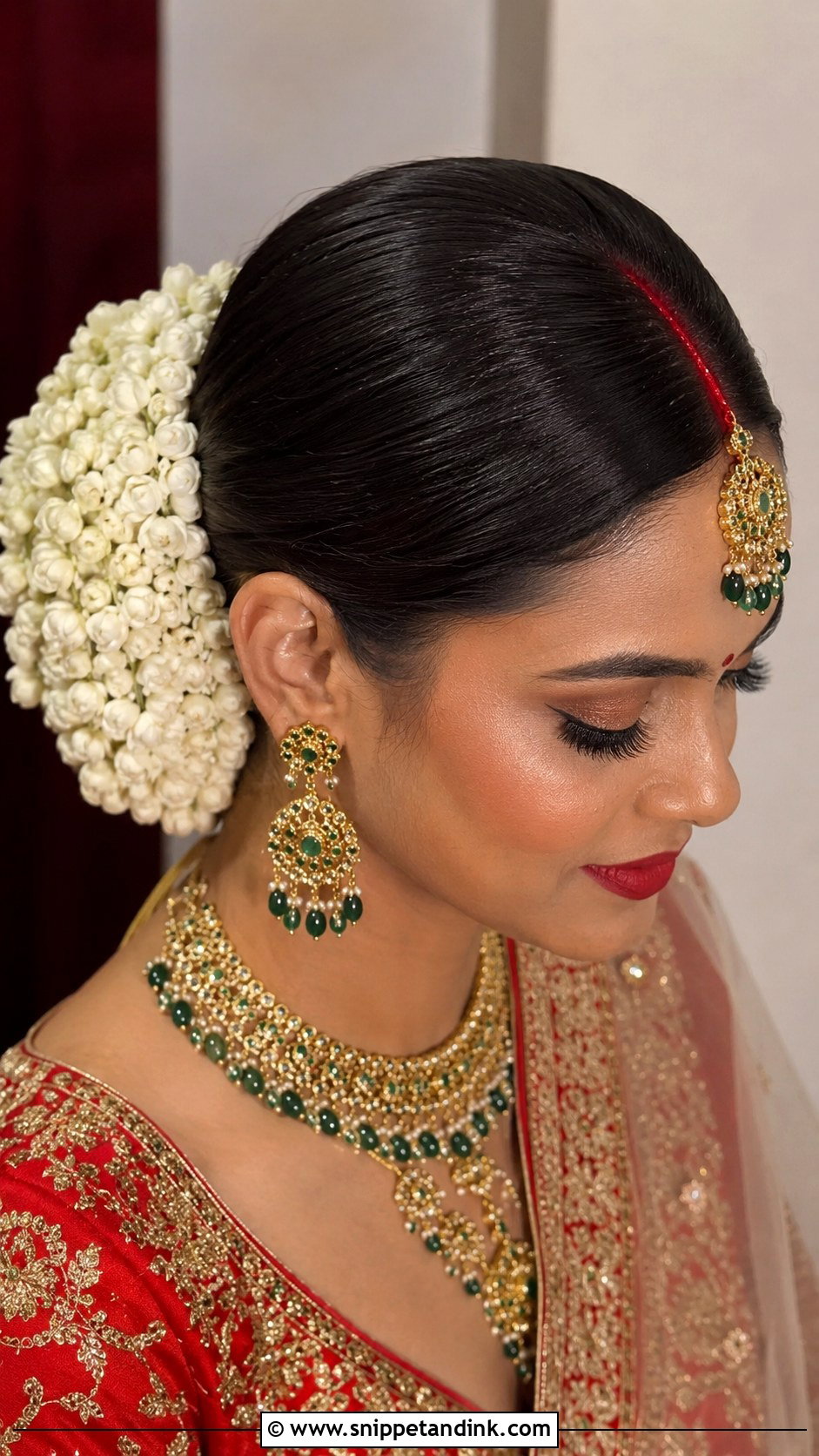
Fresh mogra wrapped around a gajra bridal bun brings fragrance and a very classic finish to a red bridal outfit, especially for pheras and temple weddings. A thick gajra on a low bun feels old-world; a thinner strand on a textured bun looks more current. Jasmine is heavy when it is fresh, and it shifts as it warms. I anchor the strand with U pins every few centimetres instead of relying on two pins at the ends, and I ask for the flowers to arrive as late as possible so they are still white when the ceremony starts.
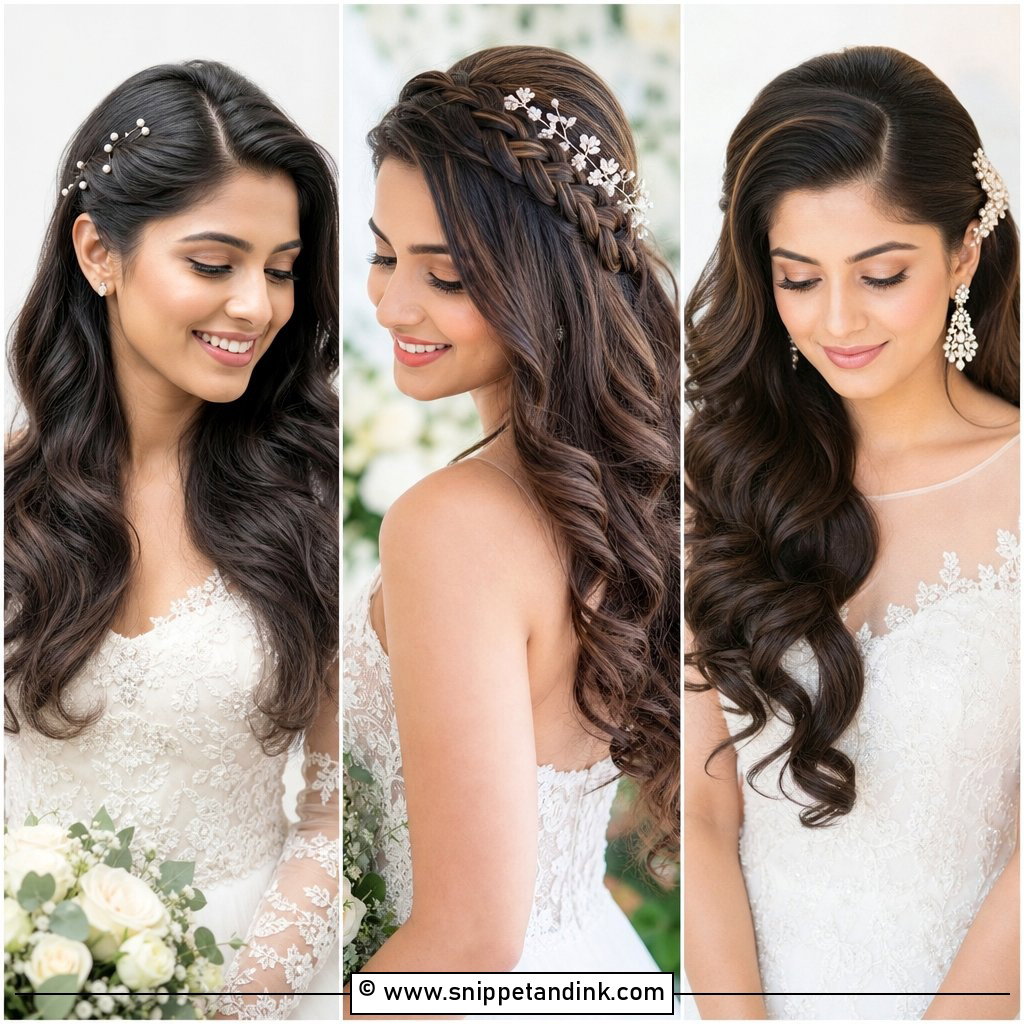
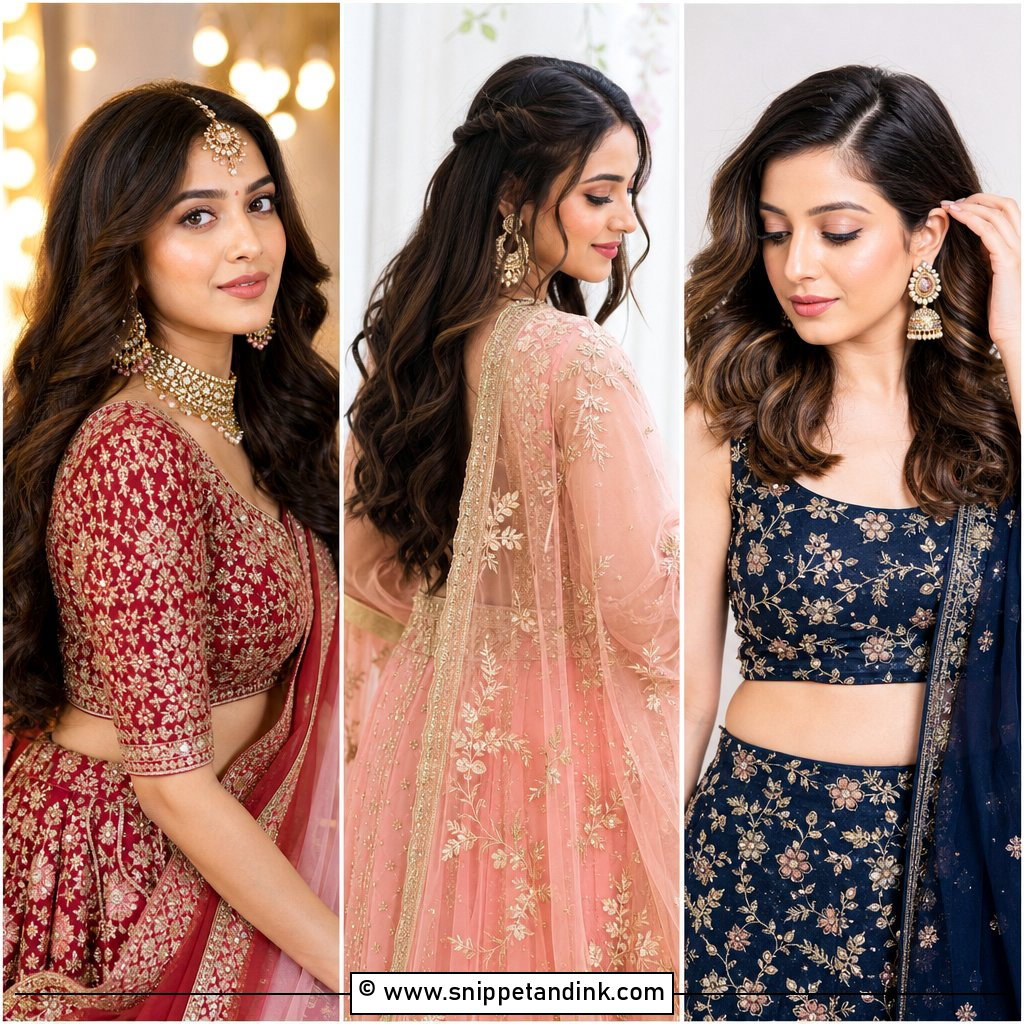
7. Open Curls Bridal Hairstyle
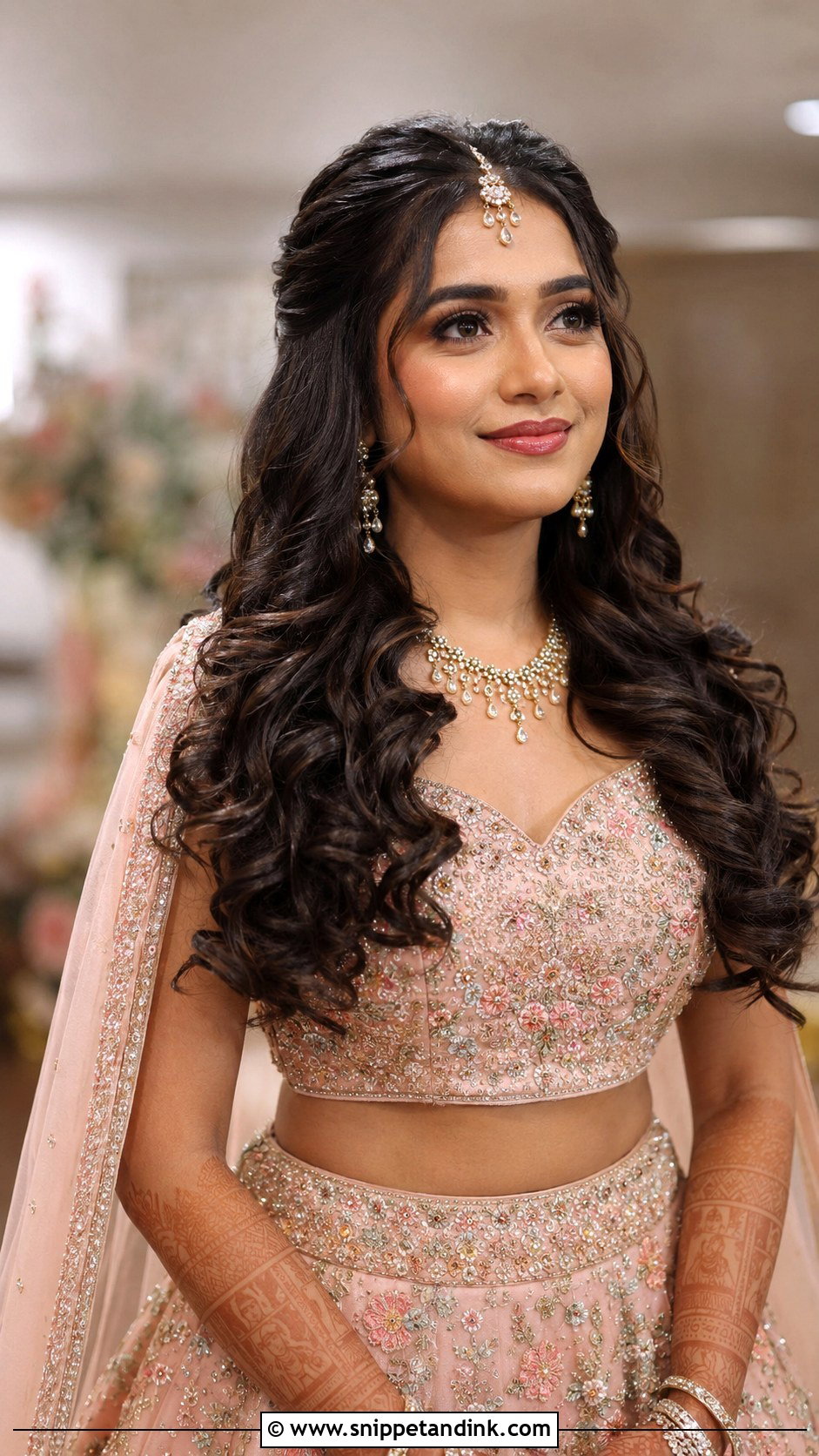
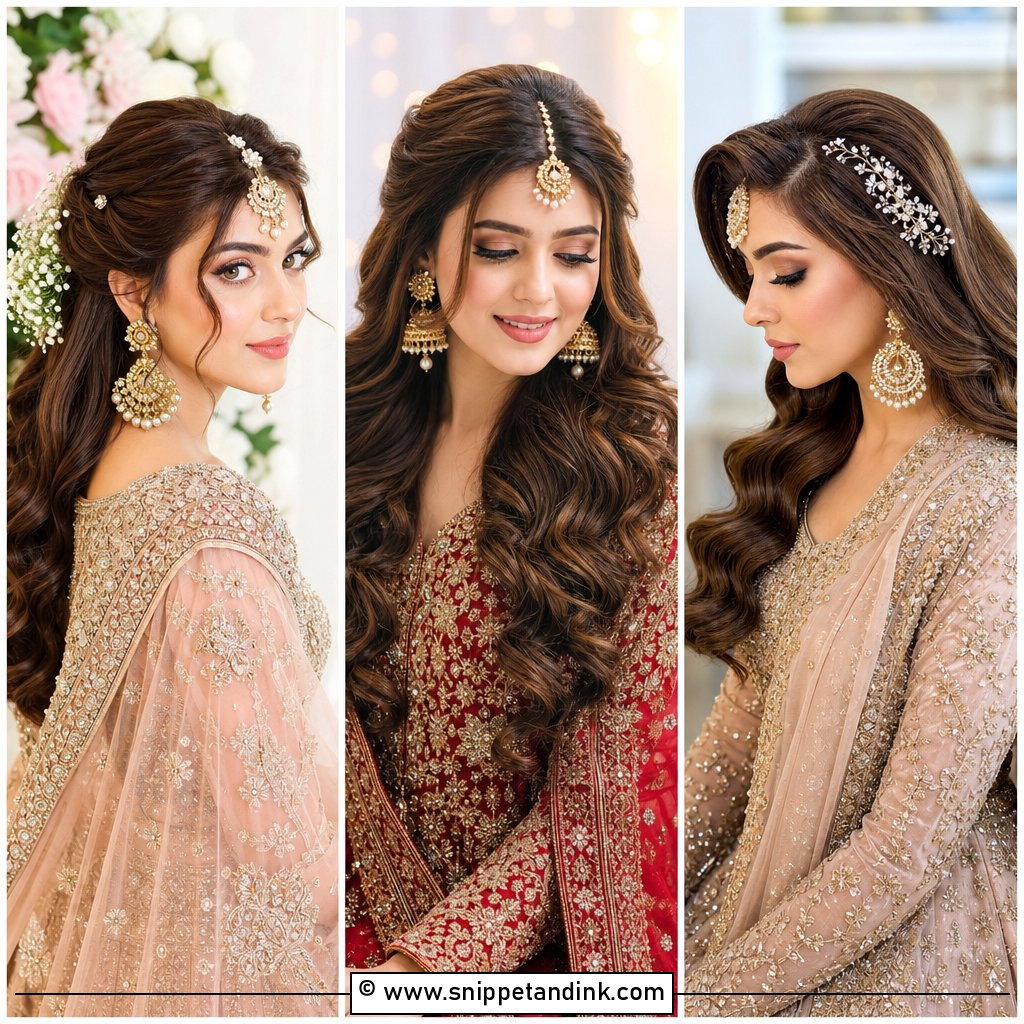
Open curls are my first suggestion for sangeet, engagement, or reception events, and almost never for the main ceremony. A heavy dupatta pinned on top crushes curls within an hour. If you want them anyway, the dupatta has to drape behind the shoulders. I set each curl and let it cool fully before brushing, which is what keeps the shape through dancing. Center part with a tikka reads bridal; a side part leaves room for a passa or a big earring.
8. Half Up Bridal Hairstyle
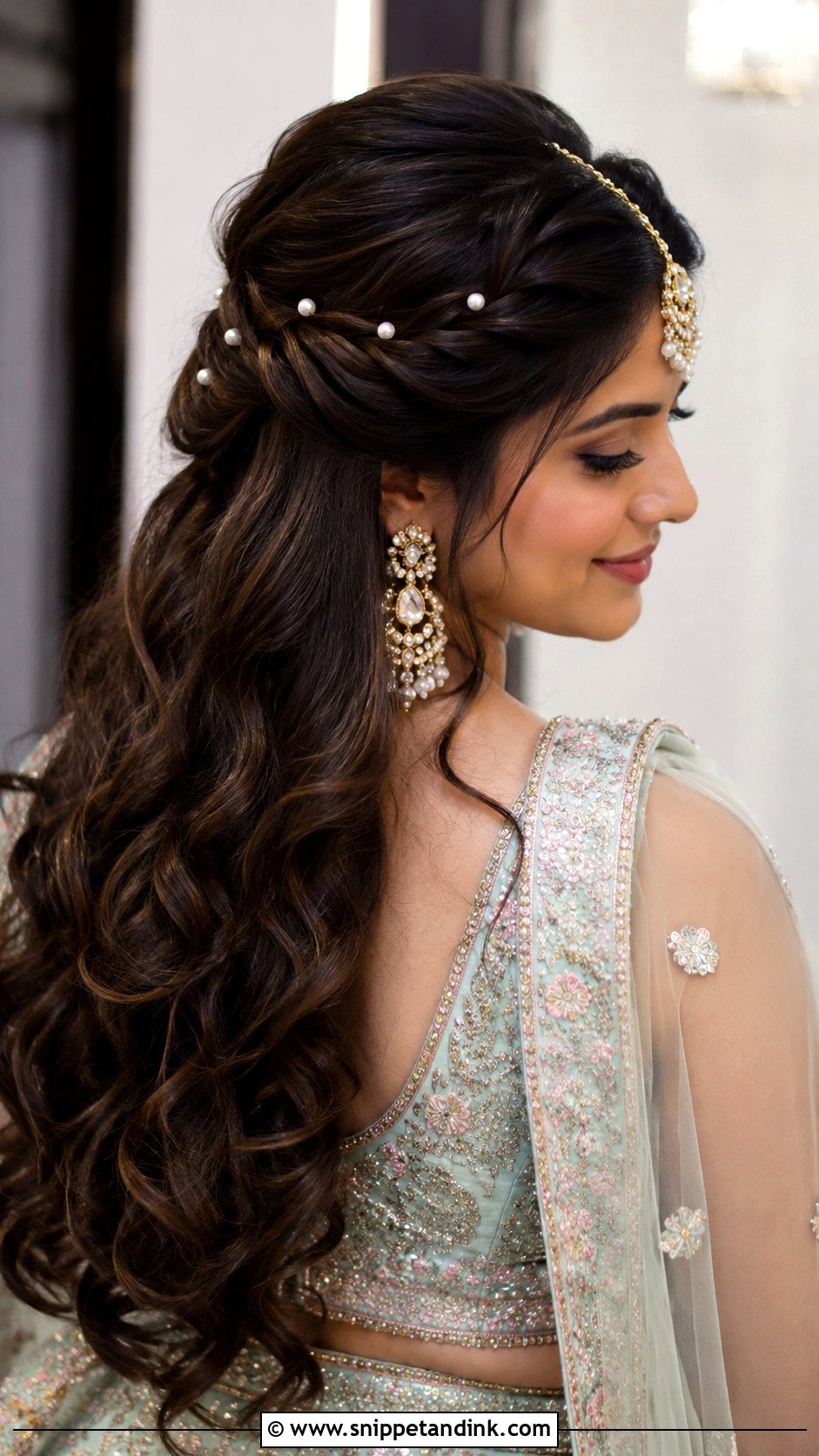
Half up hair keeps the front tidy for jewelry while the length stays loose. I twist or braid the crown section and pin it with crossed bobby pins, since a single clip tends to slide down under the weight of the lengths. Curls through the ends add fullness. This one suits mehendi, cocktail and reception better than pheras, because a dupatta has nowhere secure to anchor. Clip-in extensions help if your own length thins out below the shoulders.
9. Side Swept Bridal Curls
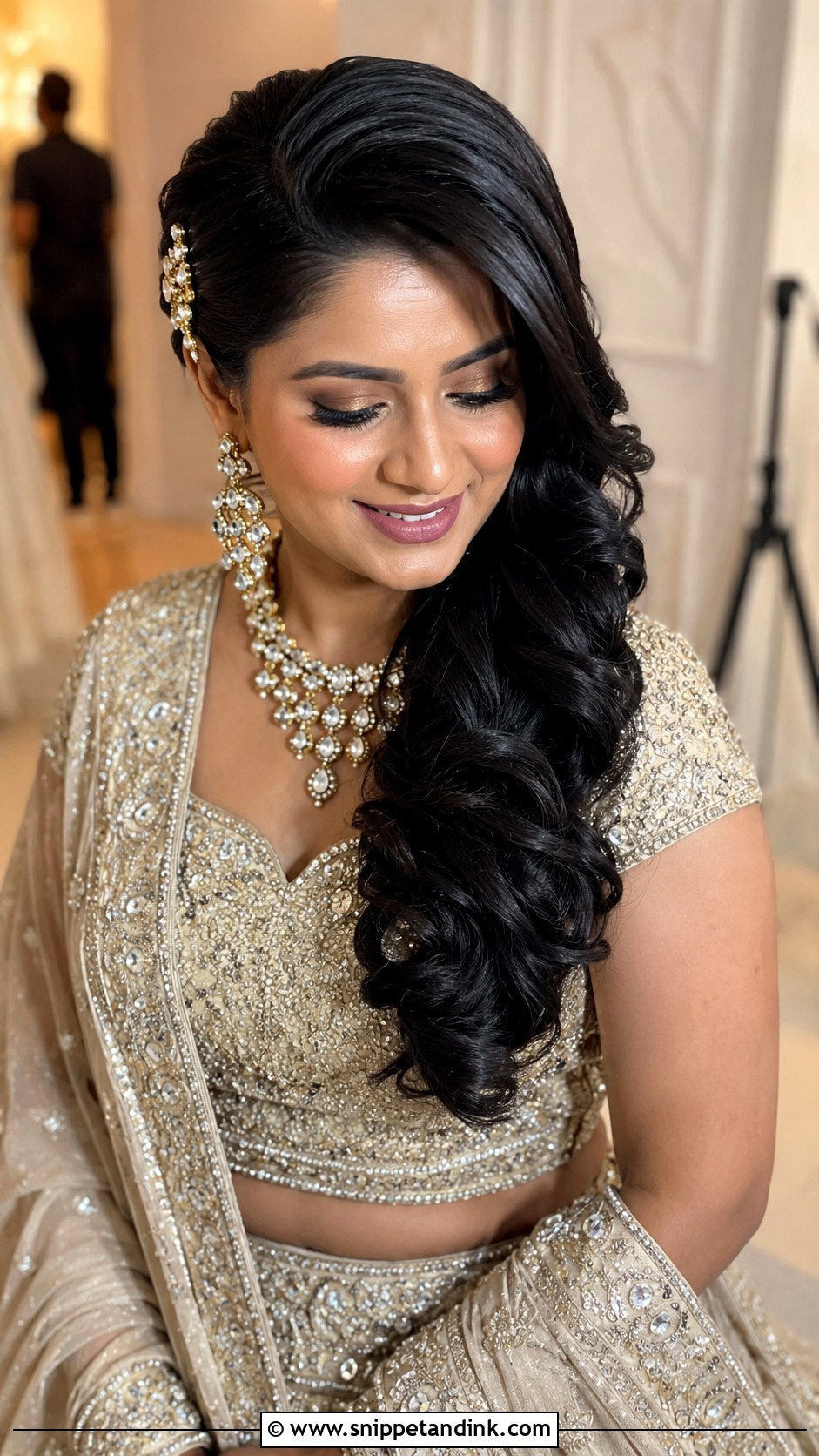
Side swept curls turn your length into part of the outfit, which suits a lehenga blouse with a deep back, a saree drape or a gown. The bare side gives a passa, jhoomar or big earring space to show. The thing most people don’t see is the pinning: I bring the hair across and lock it with a hidden row of crossed pins behind the ear on the bare side. Without that row, the curls drift back toward the center within the first set of photos. Lift at the roots matters too, or the swept side looks heavy.
10. Fishtail Braid Bridal Hairstyle
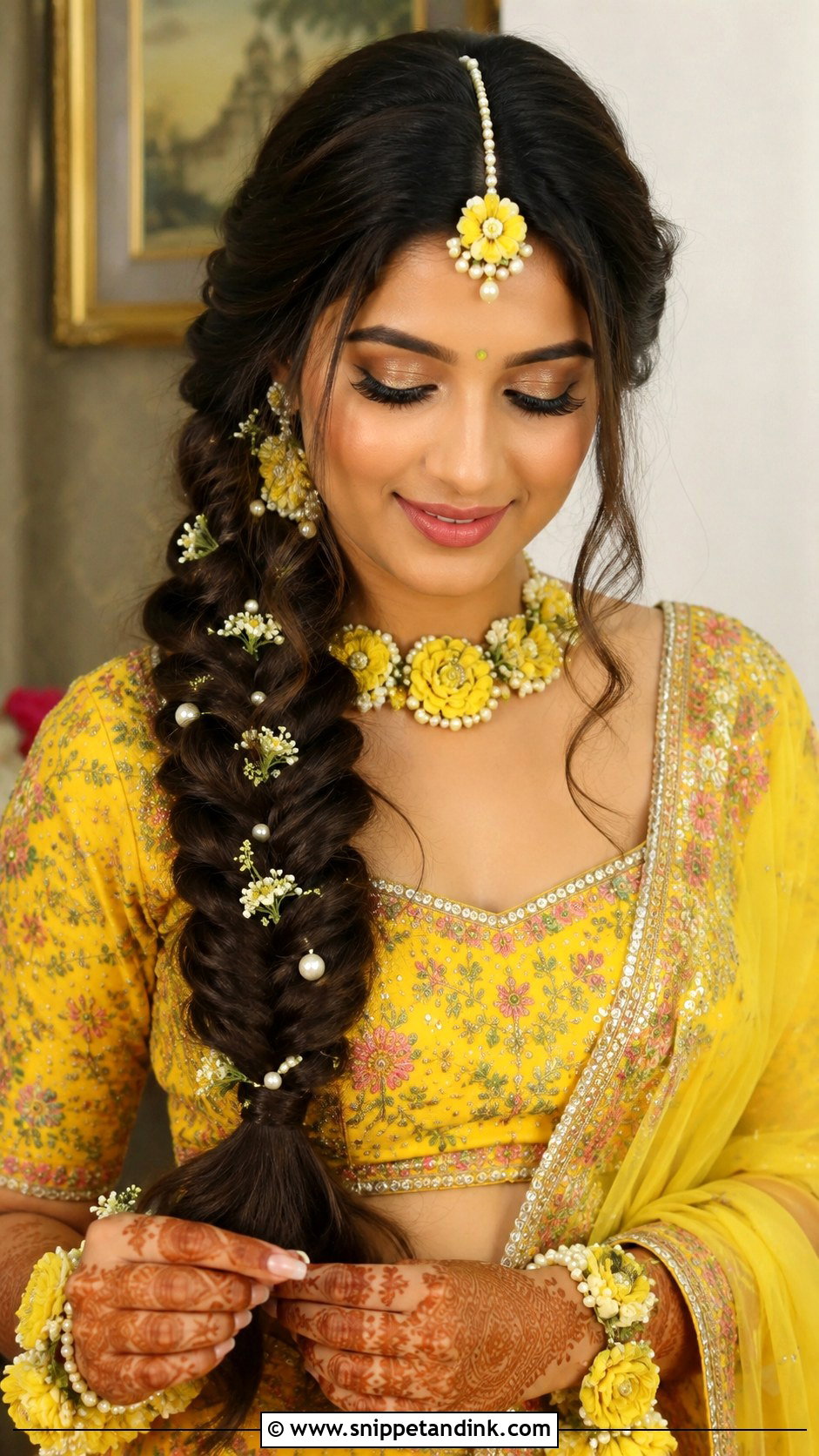
A fishtail braid gives detail without the weight of a bun, and it can sit down the back or over one shoulder. I recommend it for mehendi, haldi, sangeet, or a lighter ceremony outfit. Fishtails need length; below the shoulder blades works, shorter hair usually needs clip-ins to get enough sections. I braid it tight first, secure the end, then pull the edges loose, which keeps it full without unravelling through a long day. Small flowers or pearl pins slide between the plaits easily.
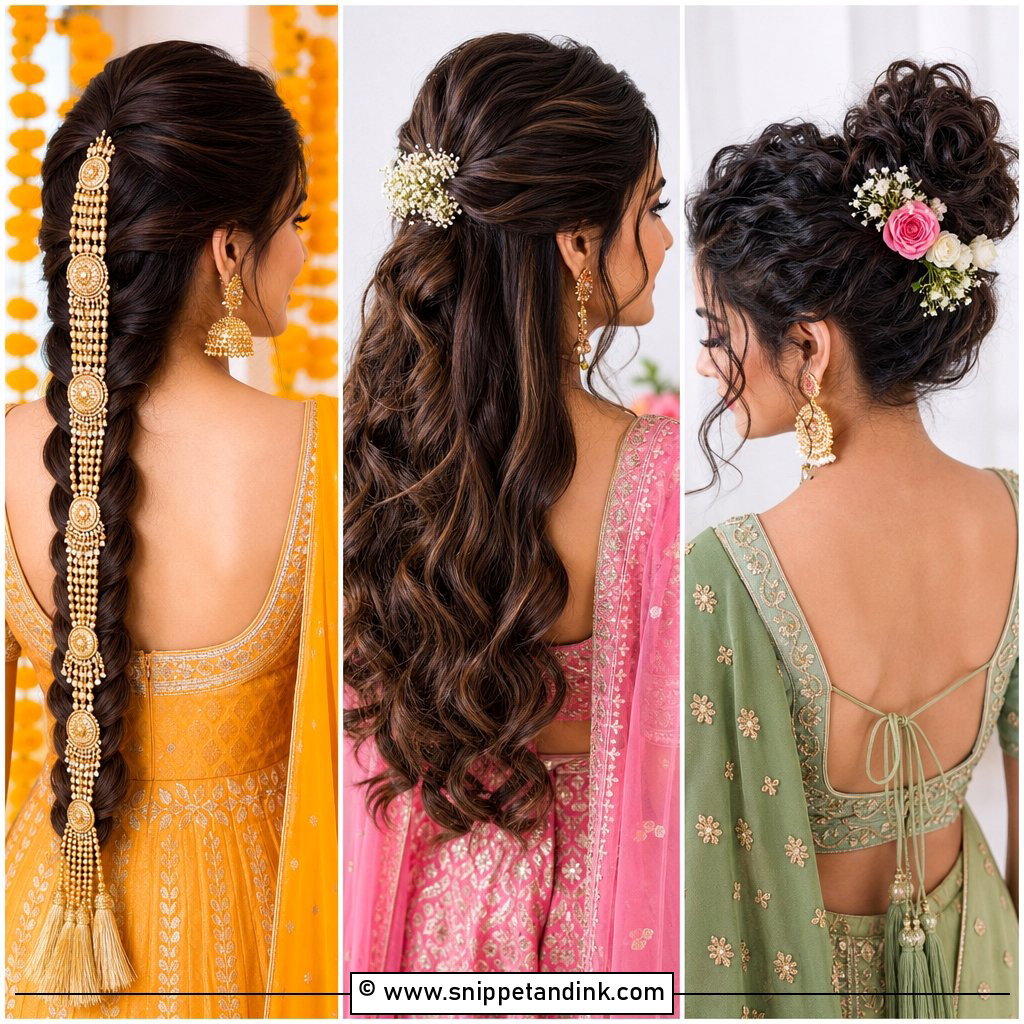
11. Parandi Bridal Braid
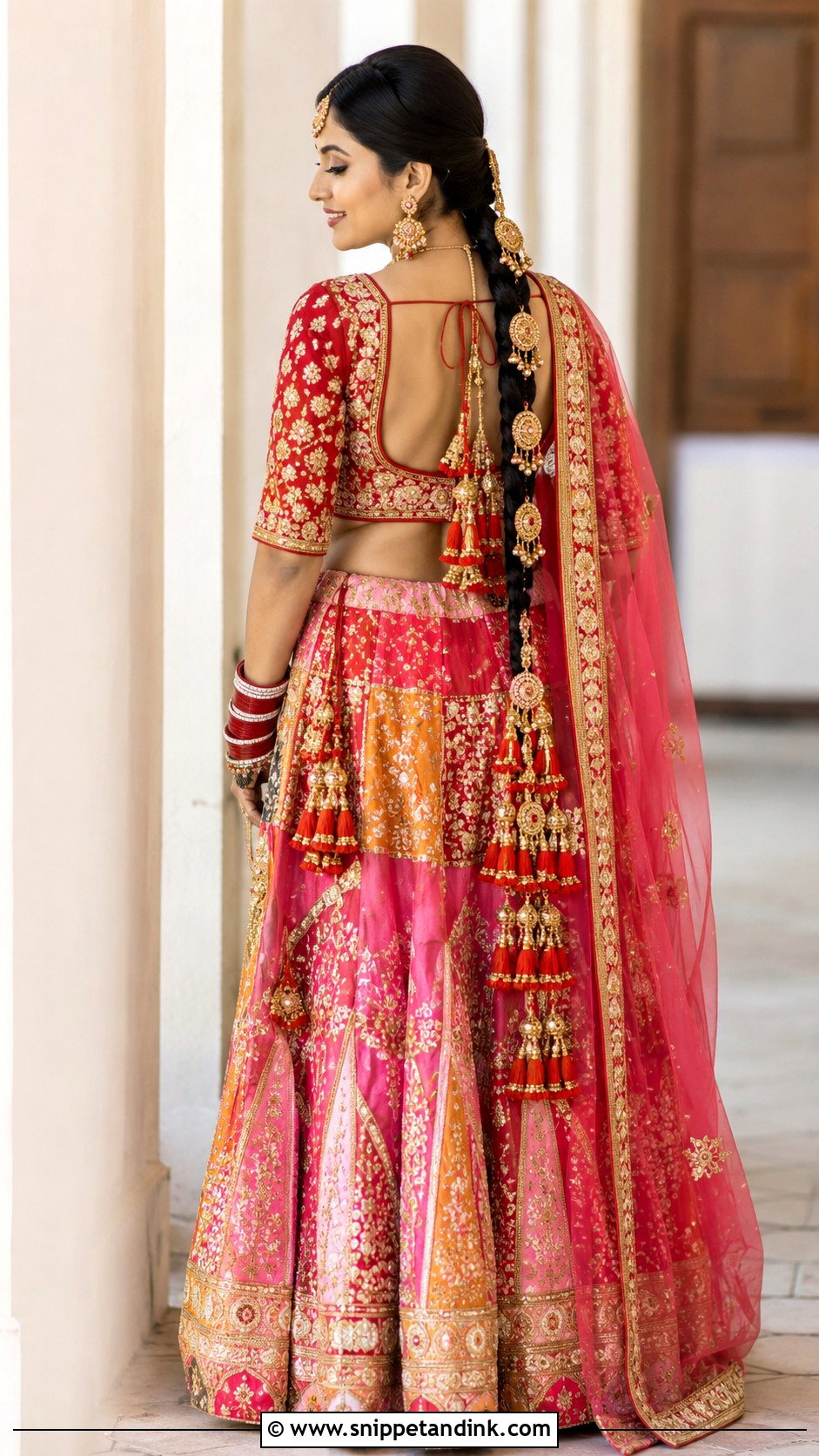
A parandi bridal braid carries Punjabi tradition straight into the hairstyle, with color and tassels that swing when you move. It shines at mehendi, sangeet and the wedding morning rituals. Parandis add their own length and weight, so on shorter or fine hair I braid the parandi in from the nape rather than from the crown, which keeps it from pulling on the scalp. Match it to the lehenga, dupatta border or kaleere, and choose gota or gold thread if you want it to feel more bridal than festive.
12. Crown Braid Bridal Bun
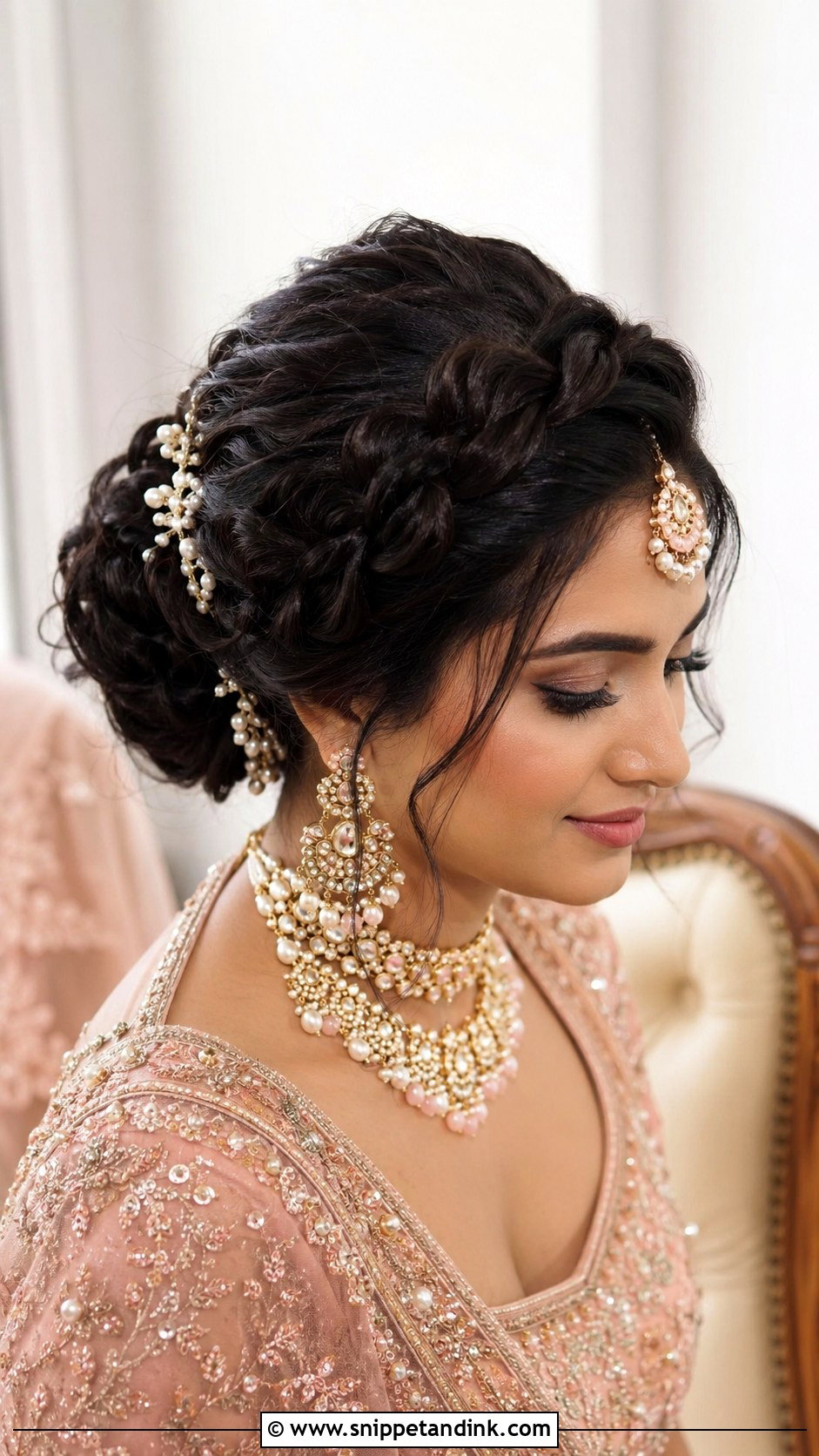
The crown braid runs across the front or side of the head and feeds into a bun at the back, which means some detail stays visible even with the dupatta on. I place the braid just forward of where the veil sits, so the edge of the dupatta lines up against it rather than covering it. It works with a maang tikka or a slim matha patti. Avoid pairing it with a very wide matha patti, because the two compete for the same space on the forehead.
13. Center Part Bridal Hairstyle
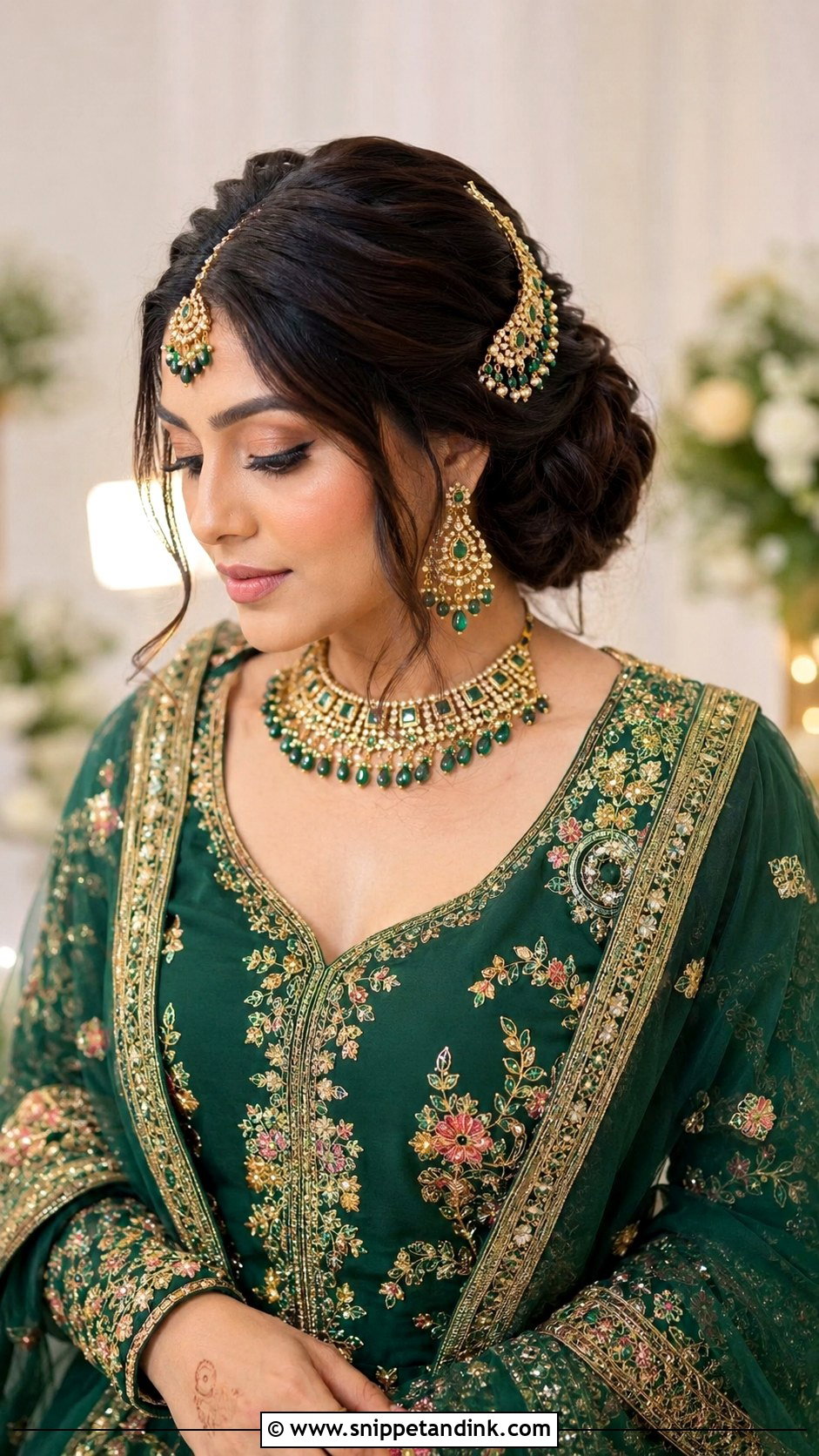
The center part does more for traditional jewelry than any other single detail. It gives the maang tikka a straight line to sit on and leaves room for sindoor during the ceremony. From there the hair can become a bun, braid, half up look or open curls. I cut the part with the tail of a comb and smooth it with a toothbrush and a little gel, then add volume behind it so the front doesn’t look flat. If your natural part sits off center, give it a week of training at home before the wedding.
14. Passa Bridal Hairstyle
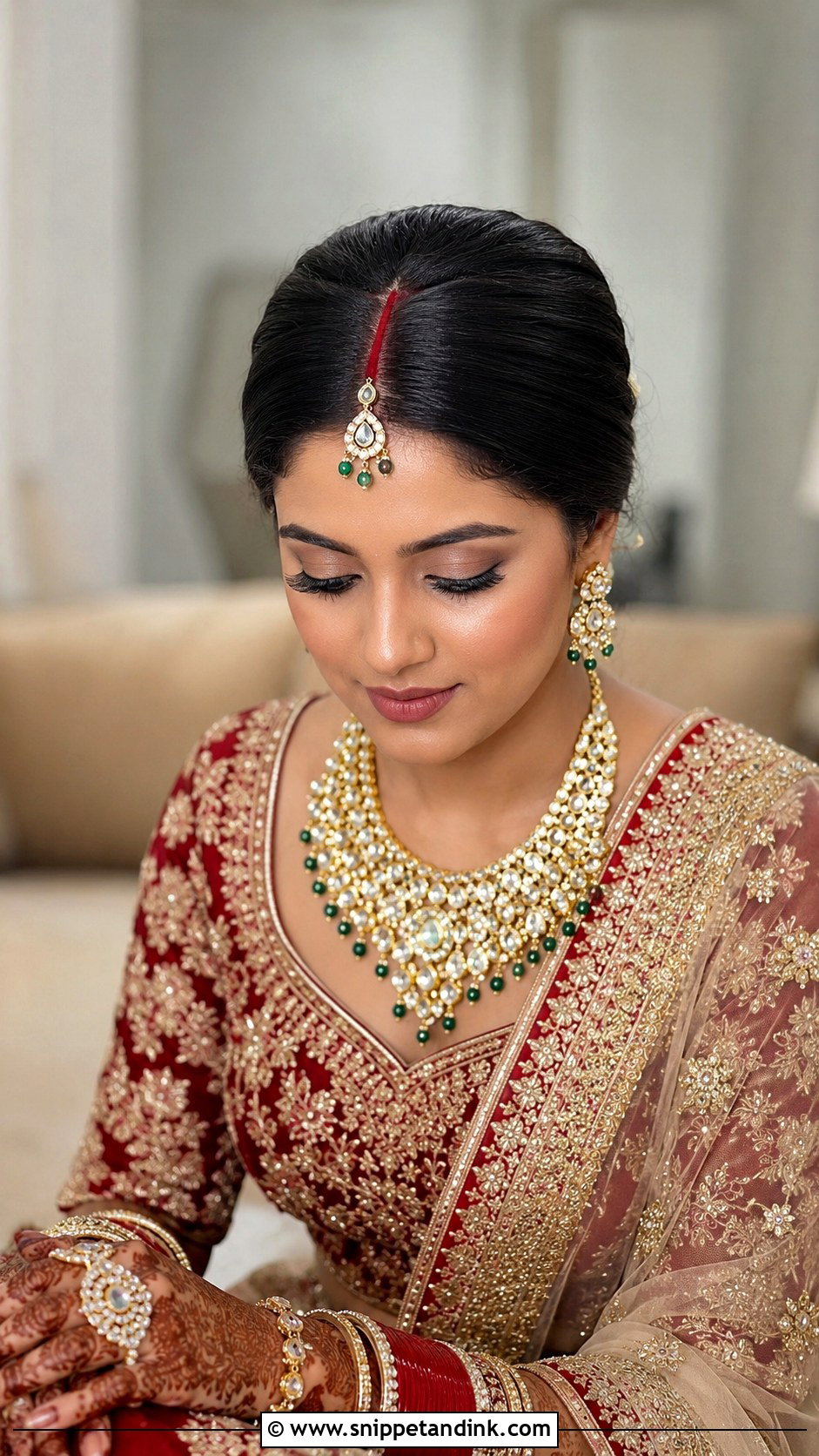
A passa sits on one side of the head, so the hairstyle has to leave a clear landing spot for it. That makes this look a natural match for shararas, ghararas, anarkalis and heavily embroidered lehengas. I usually build a side part, a low bun and smooth waves on the passa side, then keep the opposite side tight and neat so the head doesn’t look lopsided. When a bride wears both a passa and a tikka, I keep the front completely flat. Any lift there makes the two pieces look crowded together.
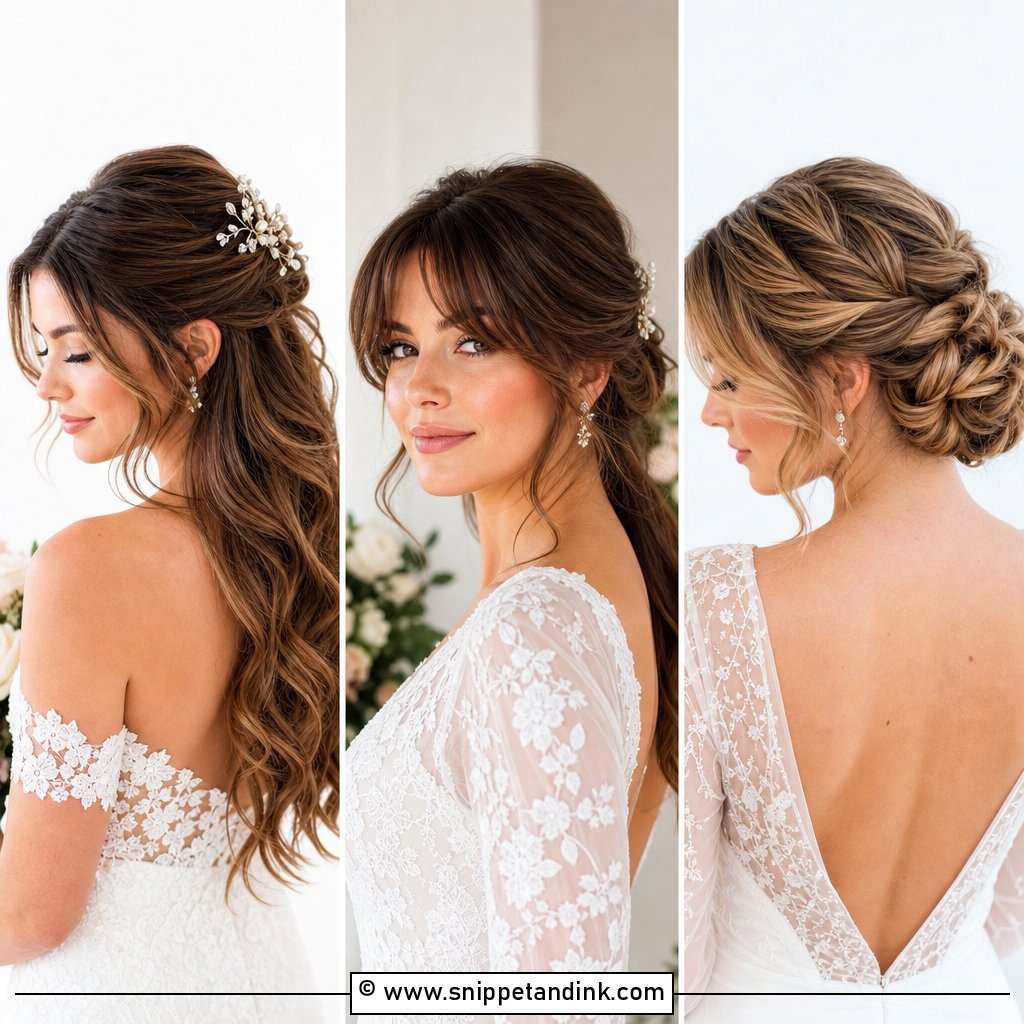
15. Reception Bridal Waves
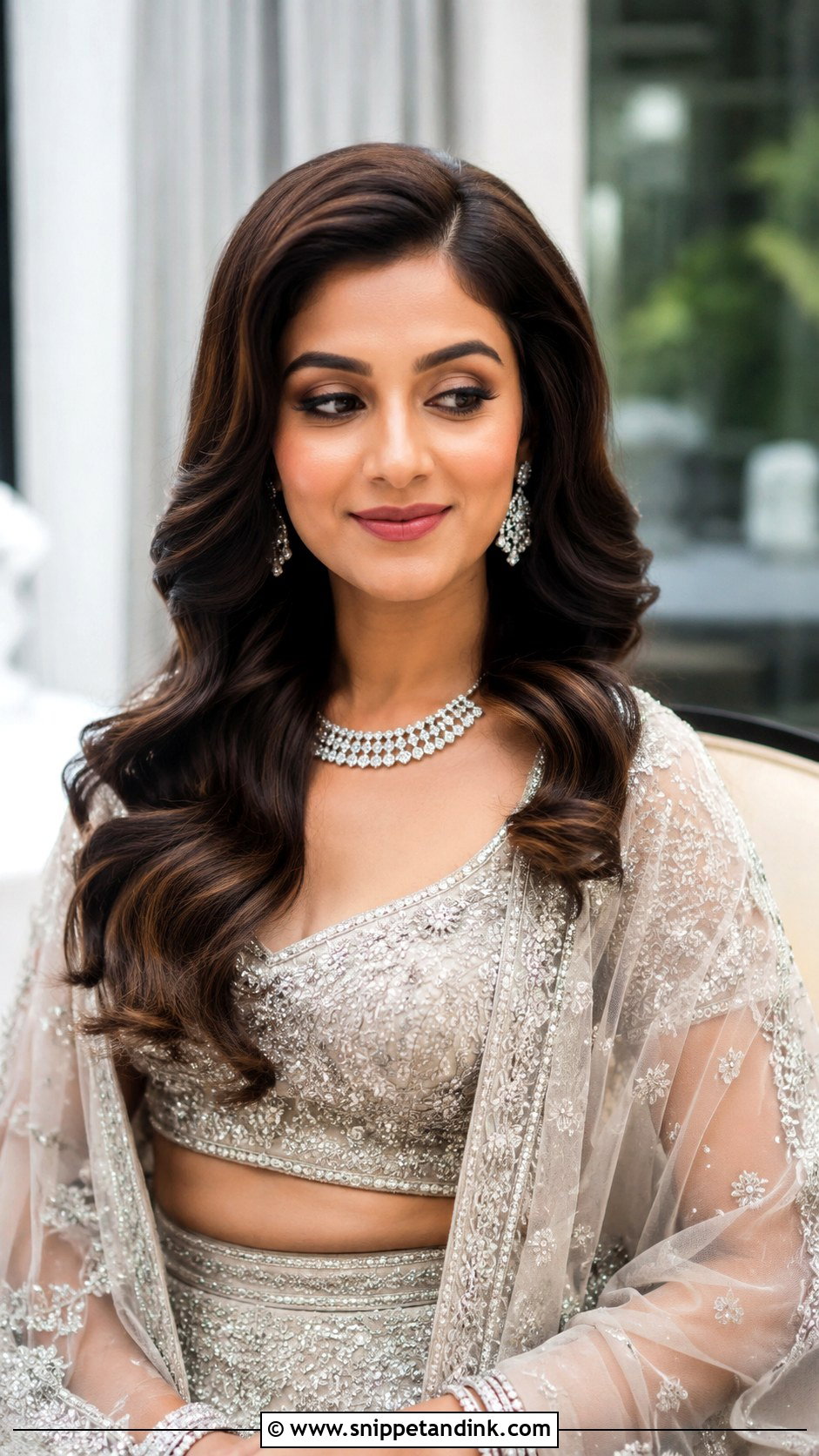
Reception waves are the modern change after a long ceremony day, worn open and polished so they reflect stage lighting. They go with gowns, lighter lehengas and sarees. A side part reads old-Hollywood; a center part keeps it closer to Indian bridal. Most brides change into this look in a short window between events, so I prepare by setting the curls under the ceremony bun with pins where possible. Brushed out later, they give a glossy wave in far less time than starting from straight hair.
One Head of Hair Across Four Wedding Functions
Many North Indian weddings run haldi, mehendi, sangeet, the wedding and the reception across a few days, and the hair has to be planned as a sequence. Haldi paste stains light hair and gets everywhere, so I suggest a simple braid or a low tied bun you don’t mind washing out afterwards.
Wash timing matters more than most brides expect. Hair washed the evening before holds pins and curls better than squeaky clean hair washed that morning. If the wedding falls the day after mehendi, plan the wash around drying time and keep the henna away from the hairline.
Changing looks between ceremony and reception
Taking down a bridal bun is slower than it looks. Each pin has to come out in the reverse order it went in, and lacquered hair needs brushing with a little serum to release. I tell brides to budget at least forty minutes for a full change, and to keep the pins in a small box, because the same pins often go back in for the reception look.
A Trial With Every Piece of Jewelry Pinned In
The right North Indian bridal style comes down to outfit, jewelry, dupatta weight, face shape and which event you are dressing for. A secure bun remains the safest base for pheras and a heavy dupatta, while curls, braids and half up looks shine at sangeet, mehendi, engagement and reception. Gajra, roses, parandi and passa make even a simple style feel bridal. Do one full trial wearing the real jewelry and the real dupatta, so you know exactly how it feels at hour six, not just in the mirror.
You'll Like These Ideas:


Leave a Reply