
Indo-Western gowns take the embroidery and drape of Indian occasionwear and set them on the cut of an evening gown, which is why I reach for them so often for receptions, sangeet nights and engagement parties. What separates a good one from a costume is construction: a bodice that actually supports, a drape stitched where it should sit, and fabric that survives hours of dancing. Below are 20 styles I’d happily put on a bride, a bridesmaid or a guest, with notes on what to check before you commit to each.
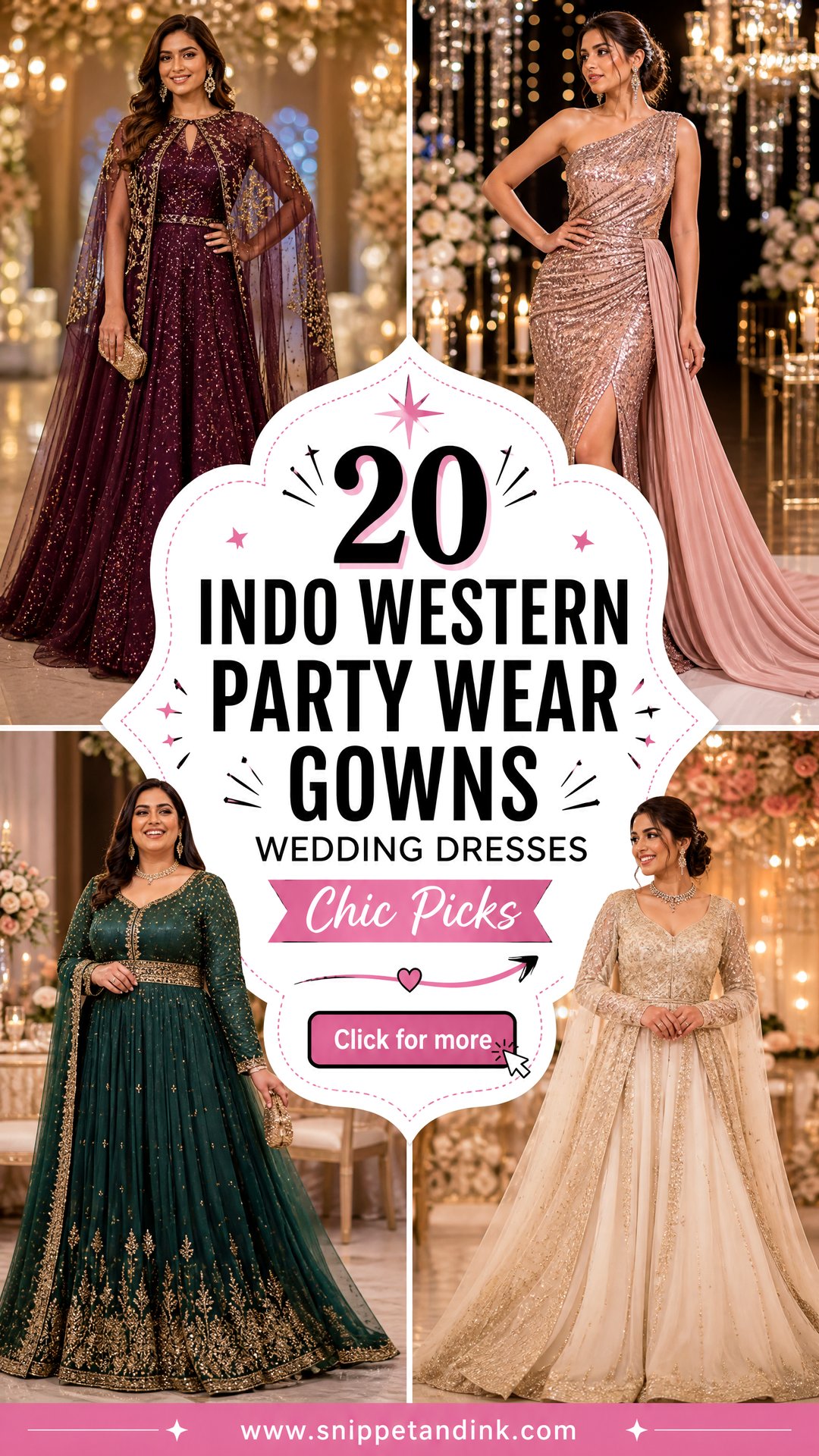
Ordering a Drape Gown From a Boutique or Online Without Fit Surprises
Most Indo-Western gowns are made to order or semi-stitched, and that changes how you should buy them. I always ask for the full measurement chart rather than a standard size, because a gown cut to a bust size alone will gape at the waist or pull at the hip. Measure over the foundation garment you’ll actually wear, and have someone else hold the tape.
- Order early. Embroidered pieces usually need several weeks to make, and shipping from India adds more. Then leave at least two weeks for local alterations on top of that.
- Ask where the drape is stitched. A pallu attached at the shoulder and at the waist stays put; one tacked at a single point slides.
- Check the seam allowance. Good makers leave extra fabric at the side seams so a local tailor can let the gown out if needed.
- Request a fabric swatch or a daylight video. Jewel tones and pastels both shift a lot between studio photos and real life.
When the gown arrives, try it on with your shoes and inner layers straight away. If something is wrong, you want that answer while there’s still time for a return or a rush fix.
1. Pre Draped Saree Gown For Wedding Reception
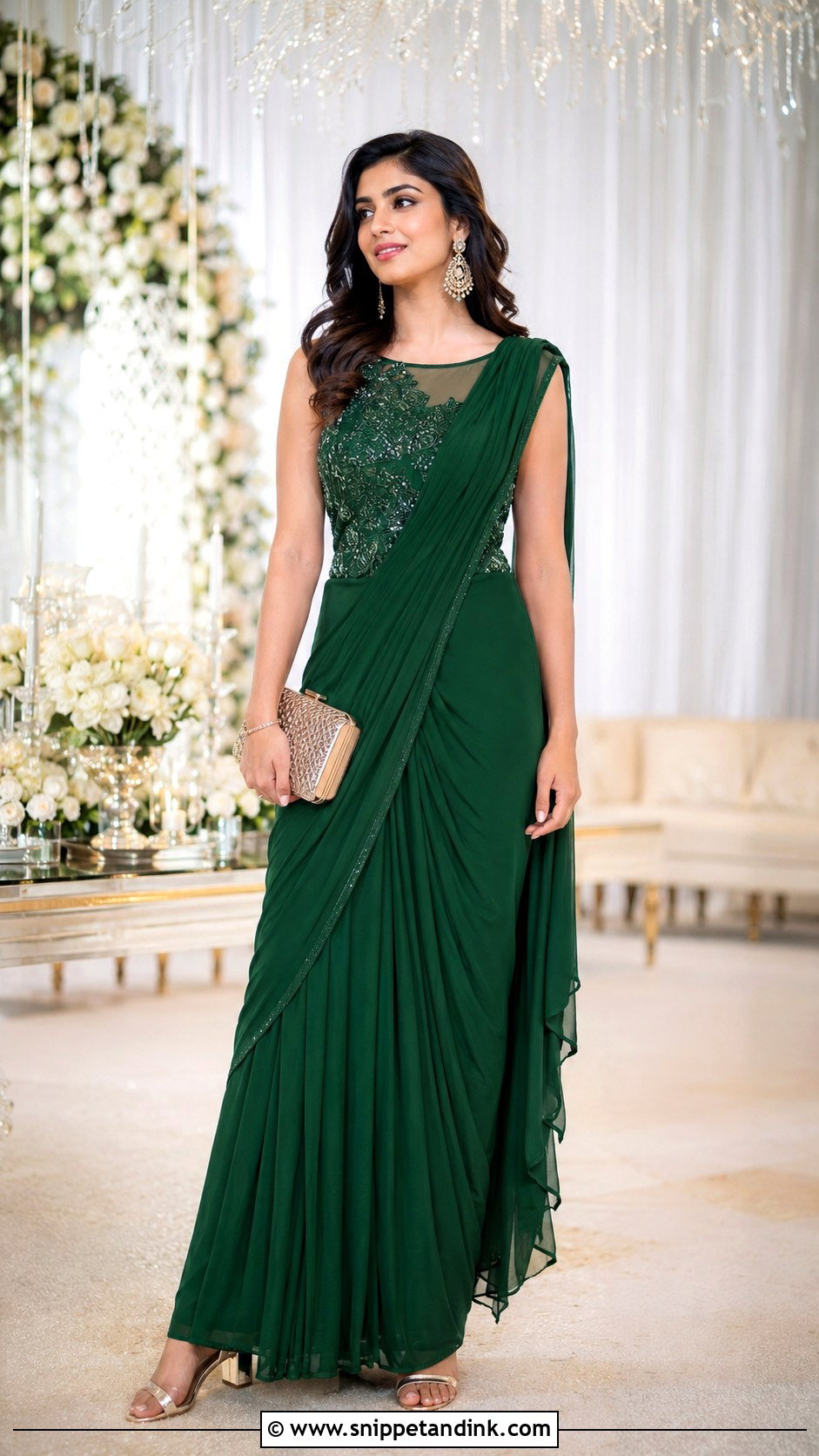
This is the gown I suggest to anyone who has never worn a saree and doesn’t want to spend the reception re-tucking pleats. The pleats and pallu are stitched in place, so the first thing I check is where the pallu is anchored at the shoulder: if it’s only tacked at one point, it will slide off every time you hug someone. Georgette or crepe falls best. Jewel tones like emerald or deep plum hold up under evening lighting, and a zari border gives enough shine without heavy beadwork. Keep the hair up in a sleek bun so the drape across the neckline stays visible. Guests should stay restrained on embroidery; a bride can go heavier and add a short train.
2. Cape Sleeve Indo Western Party Wear Gown
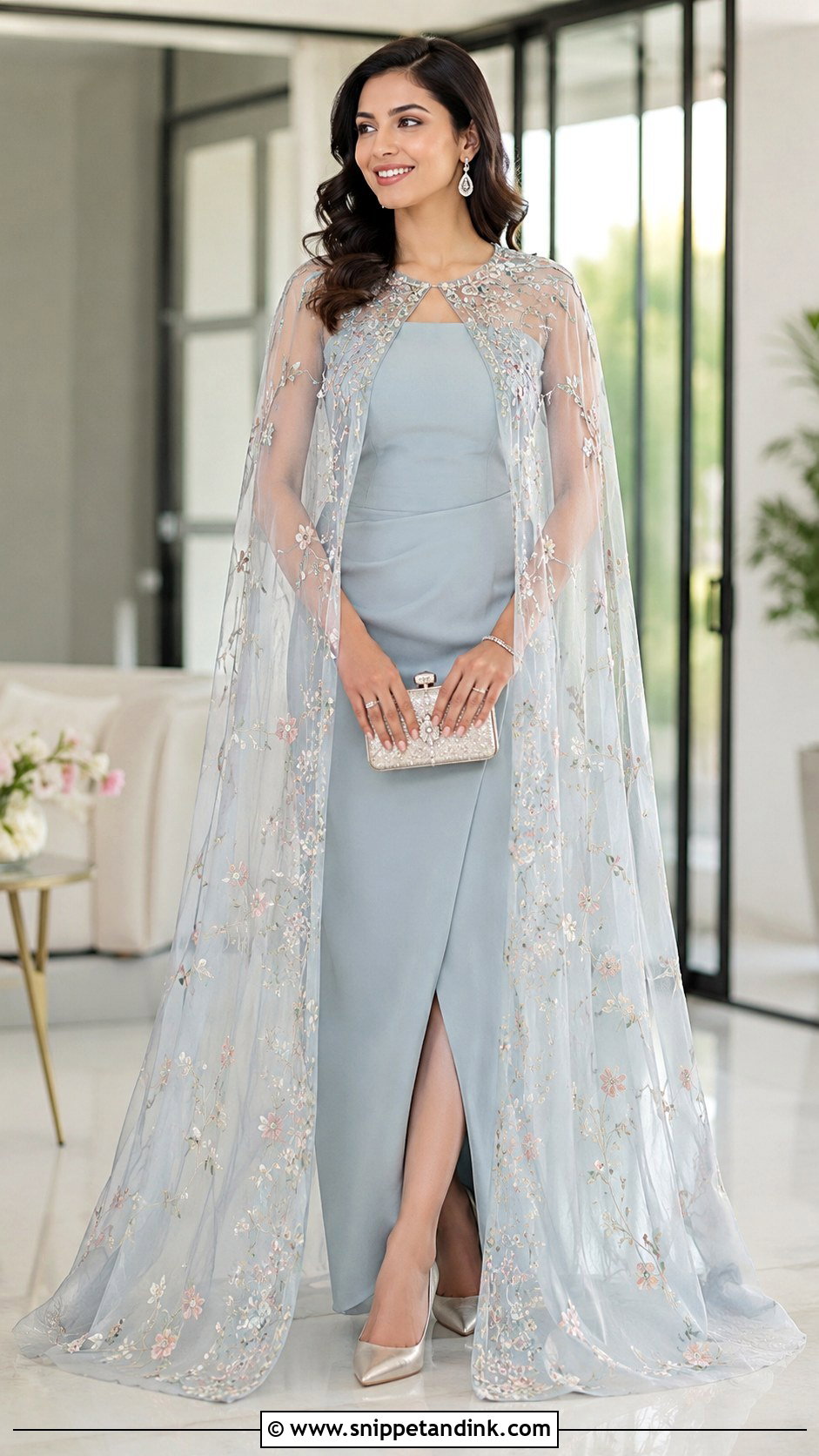
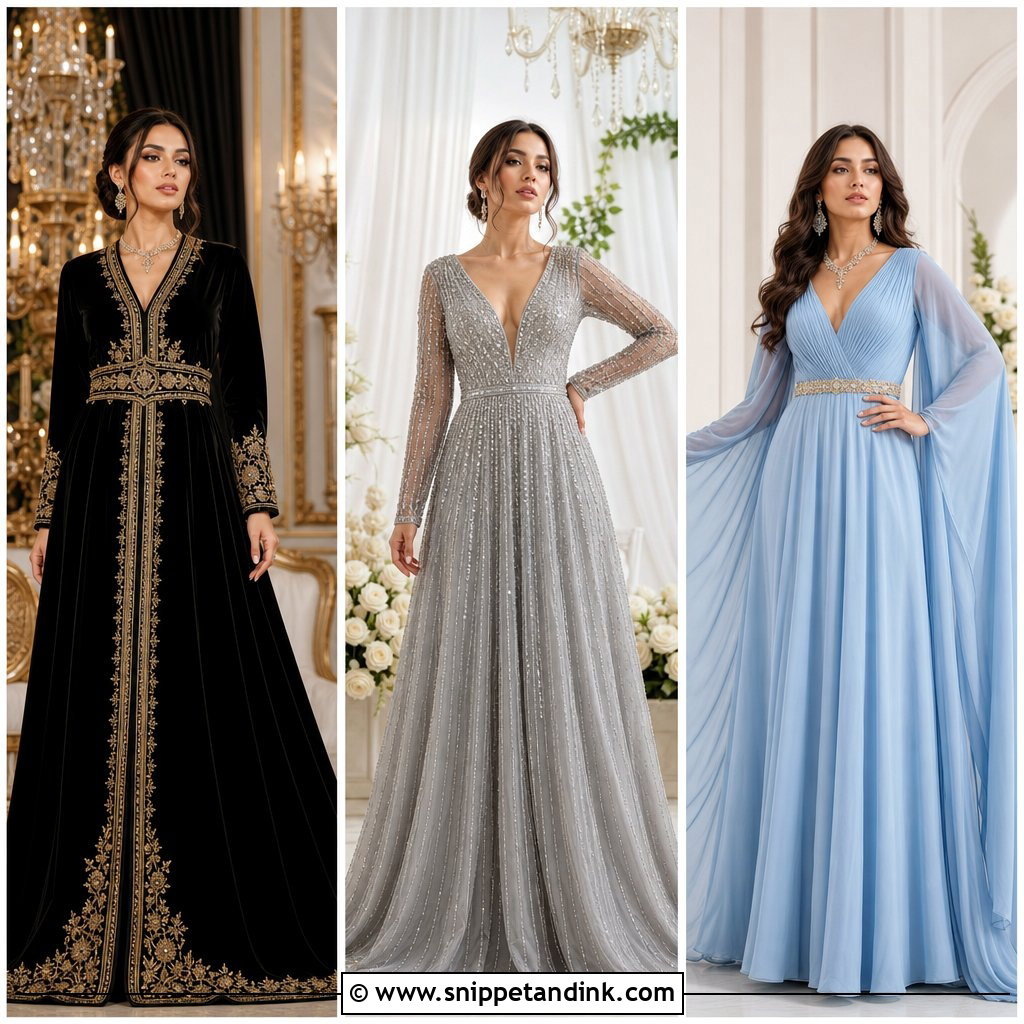
A cape replaces the dupatta, which means no fabric to manage while you eat or dance. The cape should be cut from something lighter than the gown underneath, usually organza, net or chiffon, and its embroidered edge needs to be narrow or it will drag the shoulders back. I tell clients to raise both arms in the fitting room: a badly attached cape pulls the bodice up with it. Pale lavender and sage read well in daylight; midnight blue or wine suits an evening event. Skip the necklace, since the cape already frames the collarbone, and pull the hair low so it doesn’t flatten the shoulder detail.
3. Embroidered Jacket Gown For Wedding Party
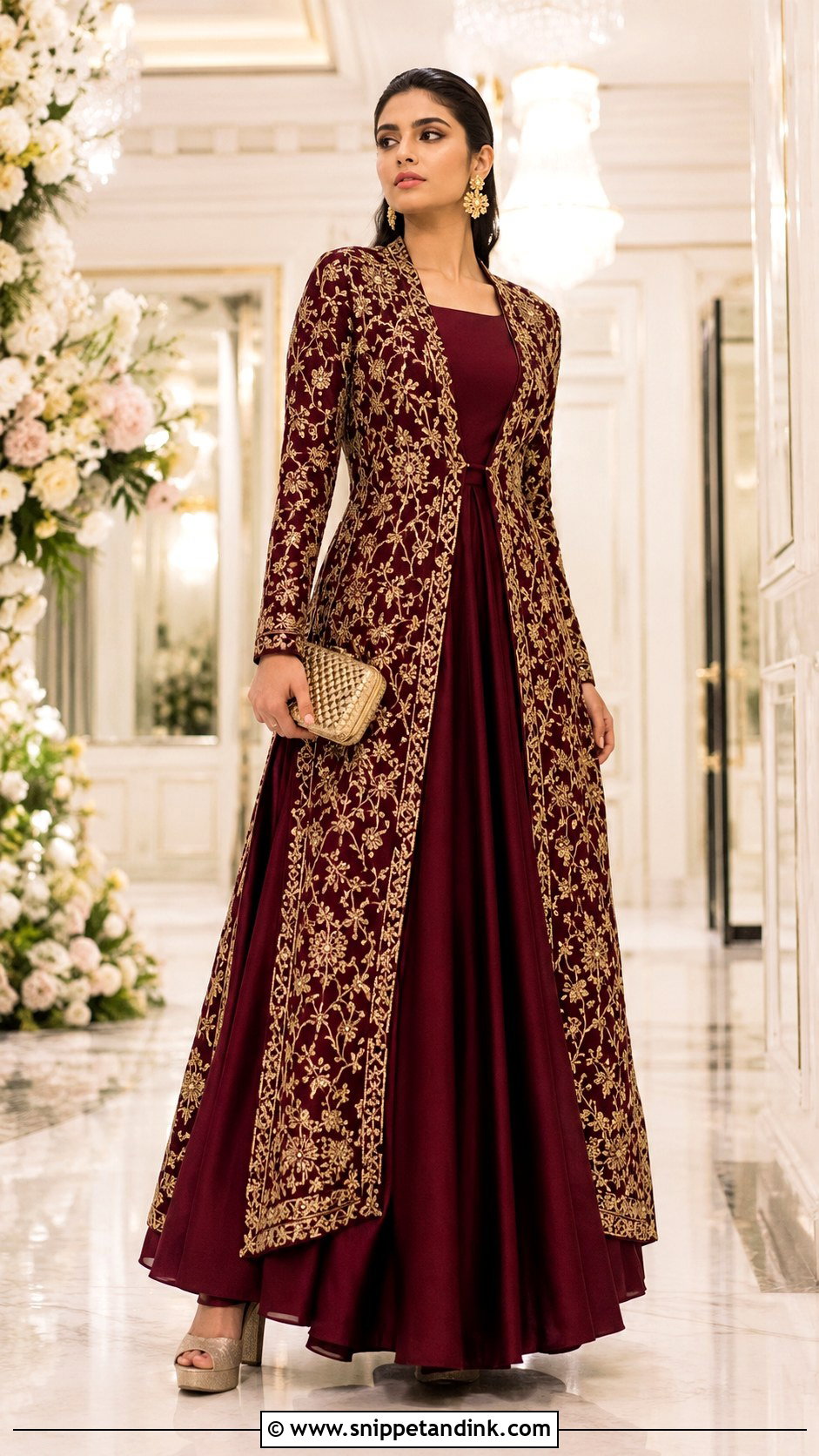
The jacket is where the craftsmanship lives here, so the gown under it should be plain and streamlined. A front-open, floor-length jacket with threadwork, mirror accents or zardozi-style detailing draws a long vertical line that makes most people look taller. Raw silk gives the most structure, georgette moves better, and velvet is the choice for a cold-weather reception. Heavy zardozi has real weight, though, and I’ve seen jackets drag a lightweight inner gown off the shoulder by the end of the night, so try them on together. The upside is resale value in your own wardrobe: the jacket can go over trousers or a plain dress at the next festive event.
4. Peplum Lehenga Gown For Engagement Party
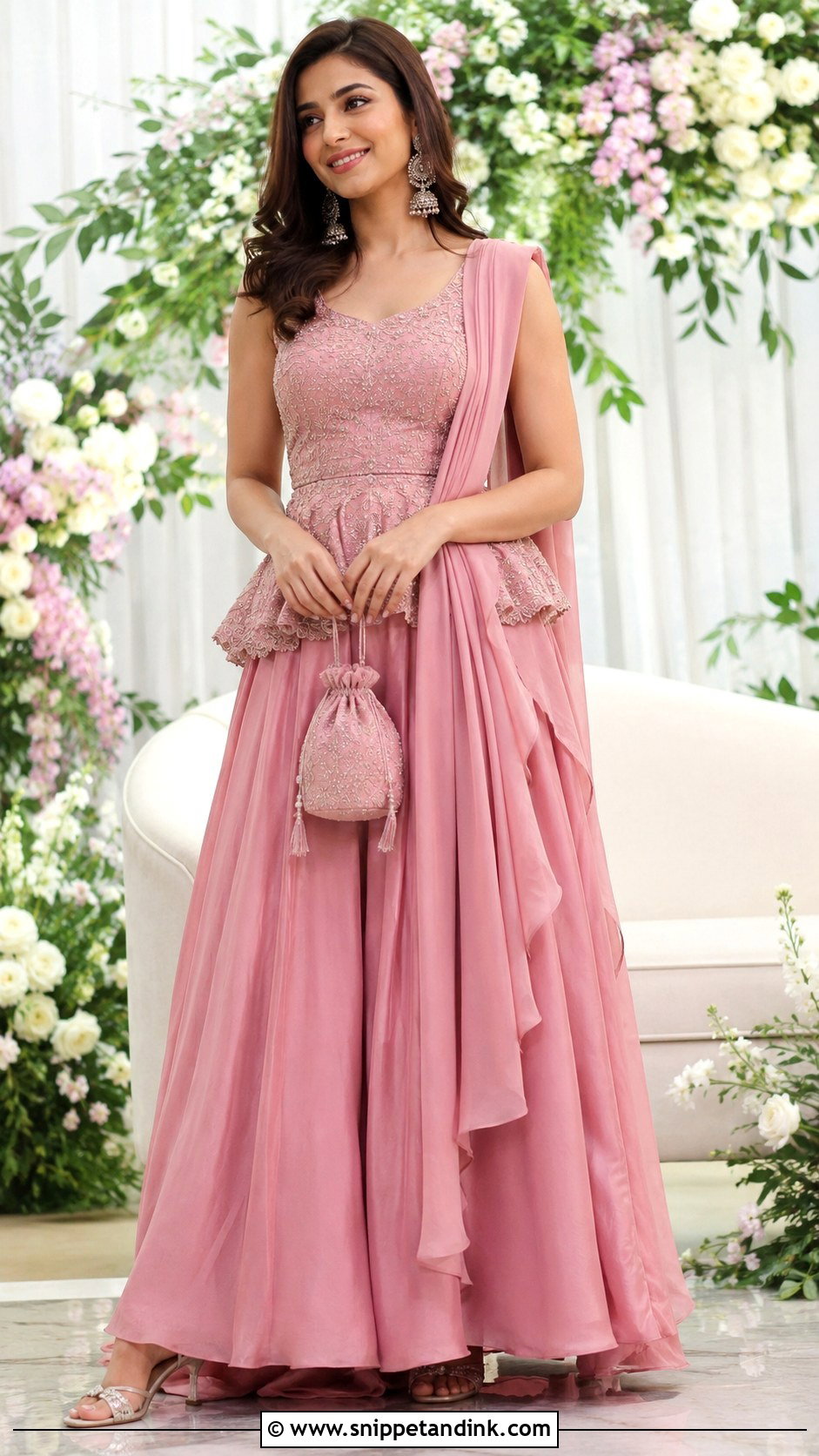
The peplum sits just over the hip and gives definition at the waist while covering the midsection, which is why it suits so many body types. Brocade or lightly embroidered silk keeps the peplum standing out; a soft fabric collapses and just looks like a loose top. Champagne, teal and royal blue are easy colors for engagement celebrations. If the peplum has a high neckline, go with jhumkas rather than a necklace. Where a client wears a draped dupatta over this, I add a slim belt at the waist; it’s the only thing that stops the drape slipping down the arm.
5. One Shoulder Indo Western Sequin Gown
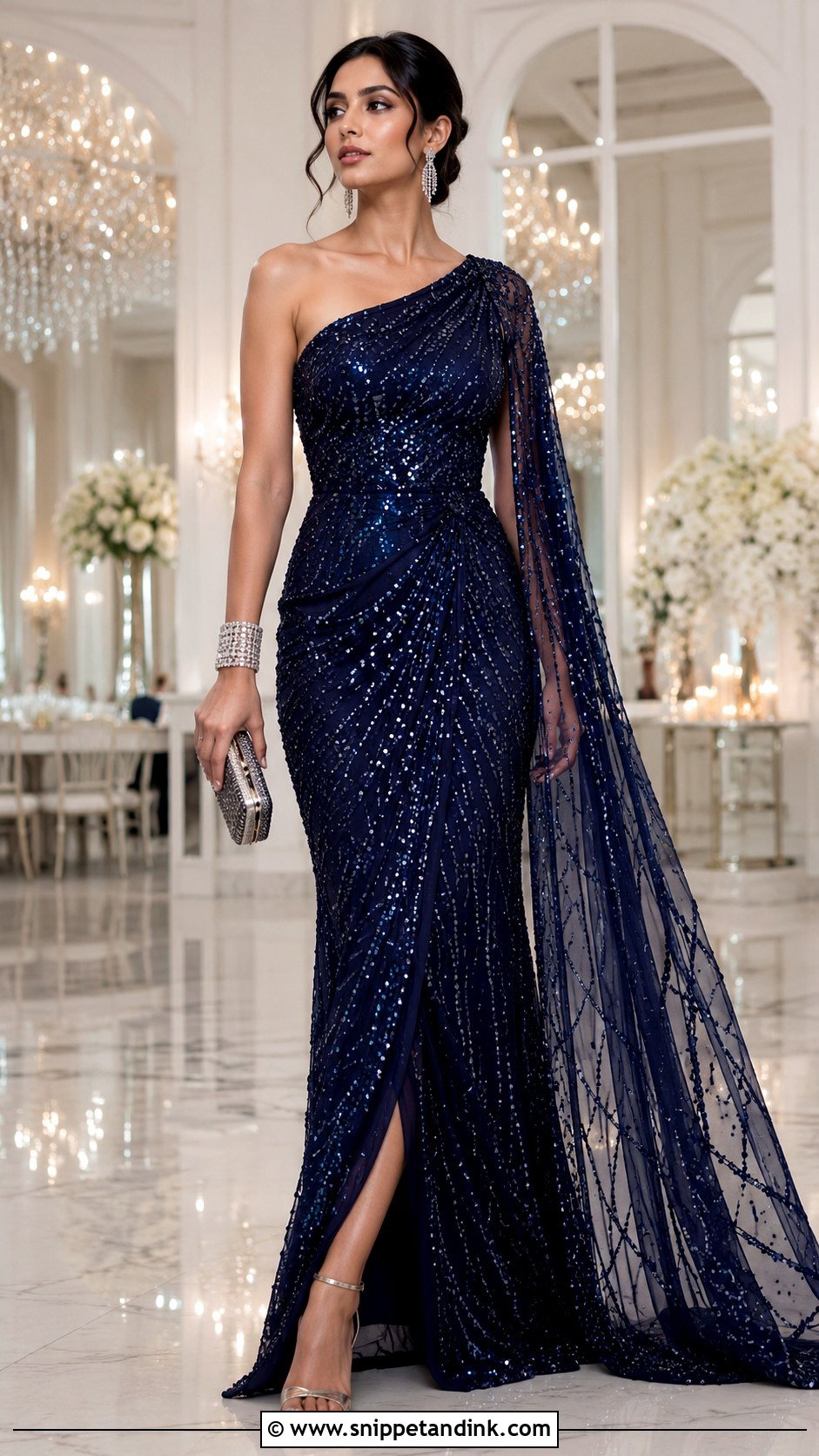
Sequins bounce light, so this gown photographs well from almost any angle under reception lighting. The one-shoulder cut is the Western half; the attached sari-style drape is the Indian half. I prefer scattered or tonal sequins over full coverage, because a fully sequinned bodice is stiff, hot and scratchy on the inner arm by the third song. Charcoal, deep green and antique gold look expensive rather than flashy. Leave the neck bare and put the bun on the side opposite the drape for balance. Above all, make sure the single strap is properly anchored; a one-shoulder bodice with no boning or internal elastic will migrate all evening.
6. Corset Indo Western Lehenga Gown
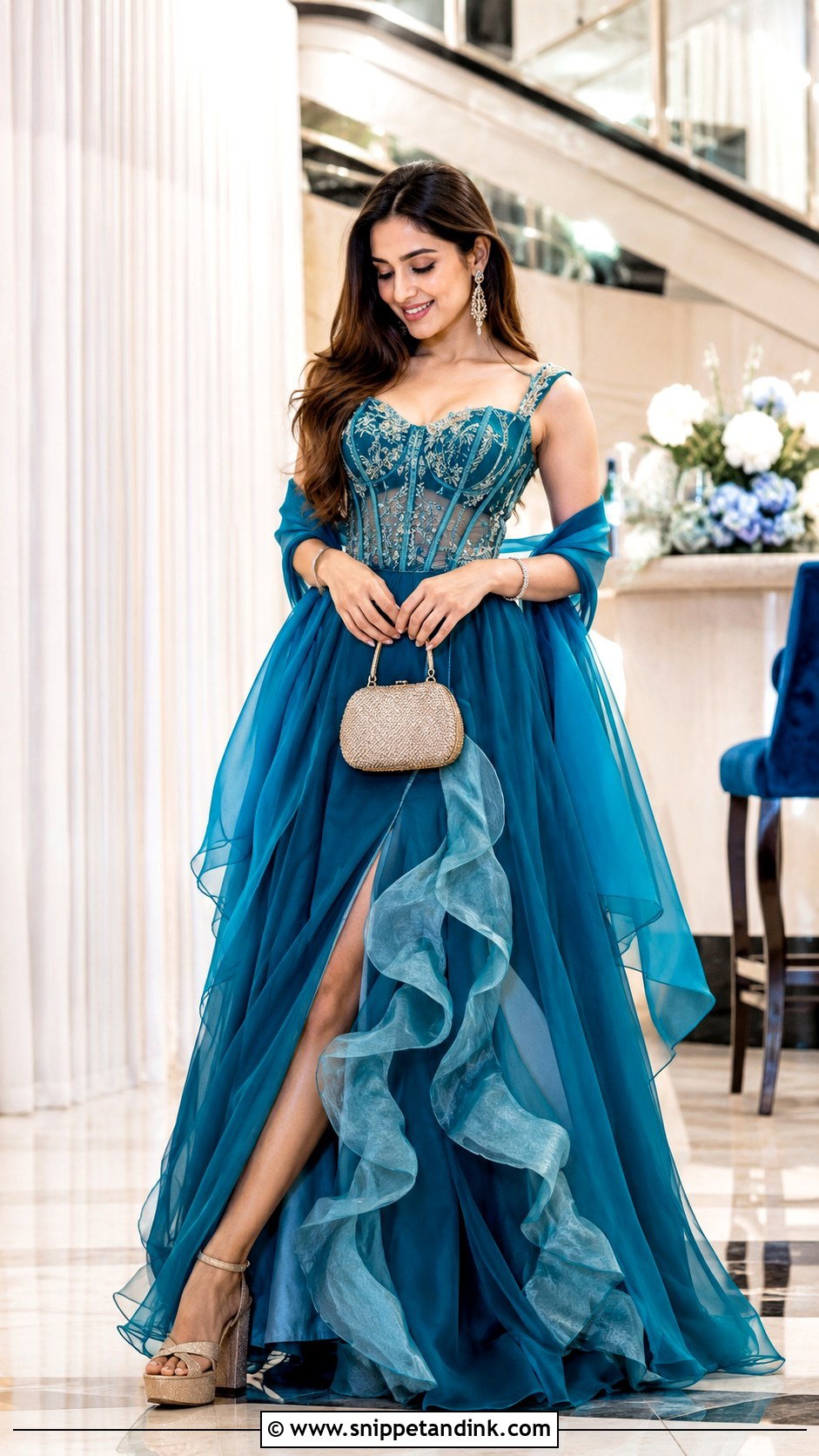
A corset bodice with a full skirt is the most dramatic shape on this list and the easiest to get wrong. A real corset is boned and fitted to your ribcage; a cheap one is just a stiff, tight top that digs in when you sit. Good ones work well for cocktail parties, sangeet nights and modern receptions. Pair the bodice with organza, tulle or georgette and keep embroidery to the hem. A shoulder drape softens the structured top. Sit down, eat a few bites and dance for a minute in the fitting room. If you can’t breathe comfortably doing all three, it needs letting out.
7. Belted Anarkali Gown For Wedding Function
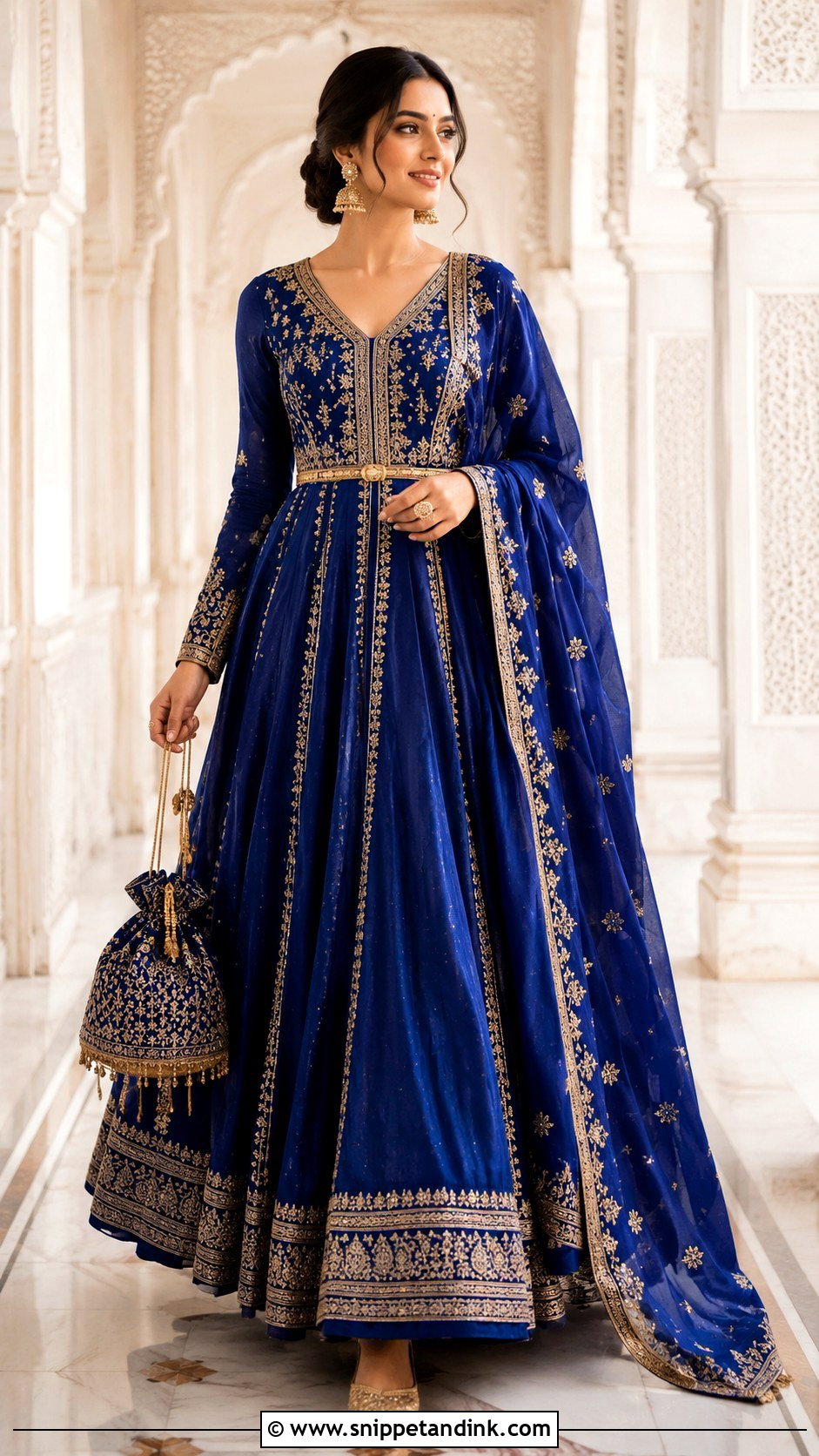
Most families are comfortable with an Anarkali, and the belt is what modernises it. The belt also does a practical job: it pins an attached dupatta to the waist so the panels don’t hang like a tent. Silk blends and georgette swing well when you turn; chiffon is lighter but wrinkles faster. I place embroidery at the neckline, cuffs and hem. On petite clients I keep the belt narrow and the flare moderate, because wide panels swallow a short frame. Taller women can carry a lot more volume. Hem it only after you’ve chosen your shoes, or it will either drag or show the ankle.
8. Ruffle Saree Gown For Sangeet Night
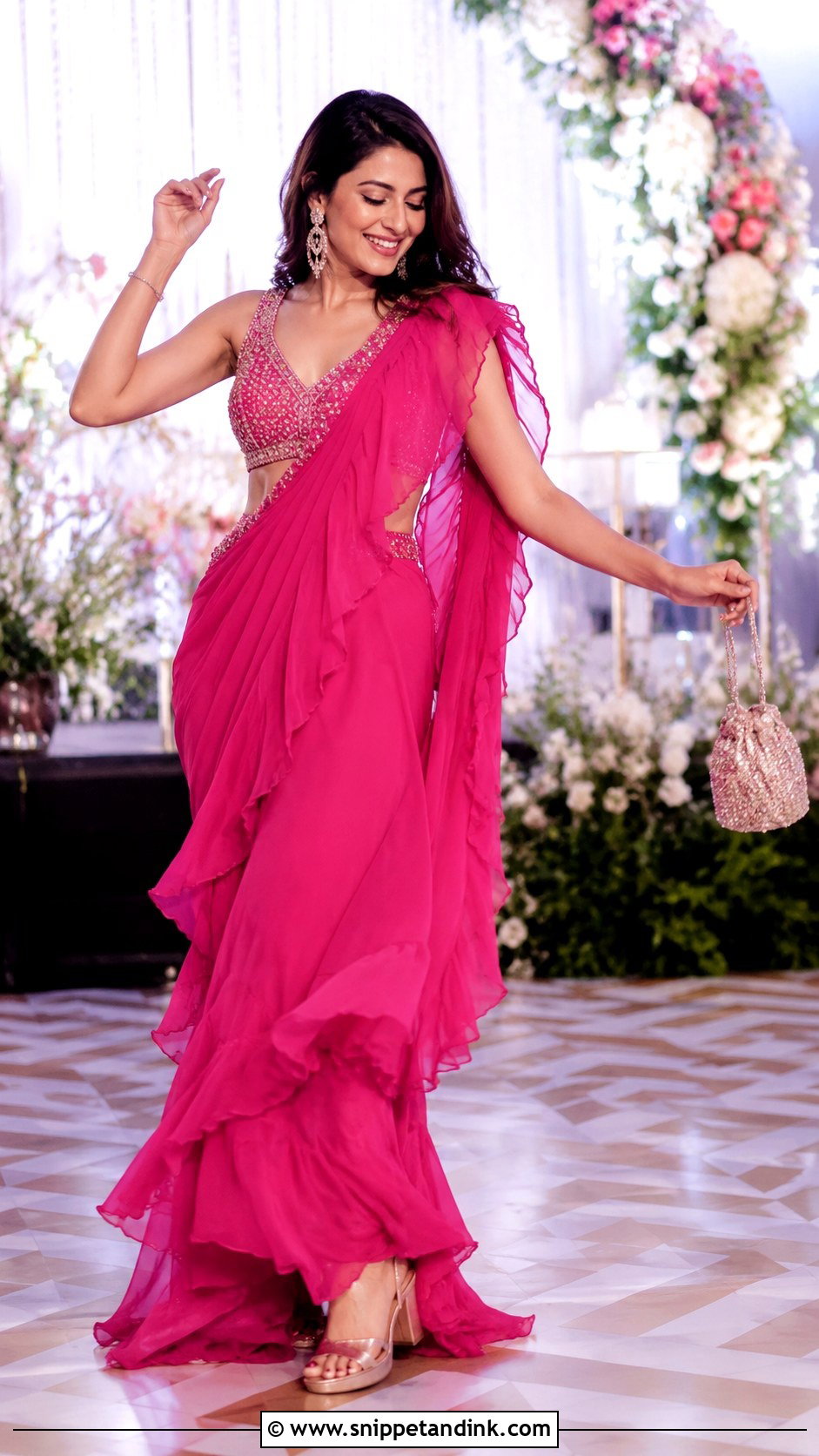
Ruffles move when you move, so this is my first pick for anyone planning to dance at the sangeet. The ruffles should be limited to the pallu or the skirt edge; ruffles everywhere make the silhouette lose its shape and add surprising bulk. Chiffon and georgette give the softest bounce, and a fitted, embellished blouse gives contrast. Fuchsia, turquoise and coral feel festive. Choose cushioned block heels and a crossbody mini bag so your hands are free. Turn the gown inside out before the event: ruffles are often finished with a rolled hem that unravels after one snag on a heel.
9. Dhoti Draped Indo Western Gown
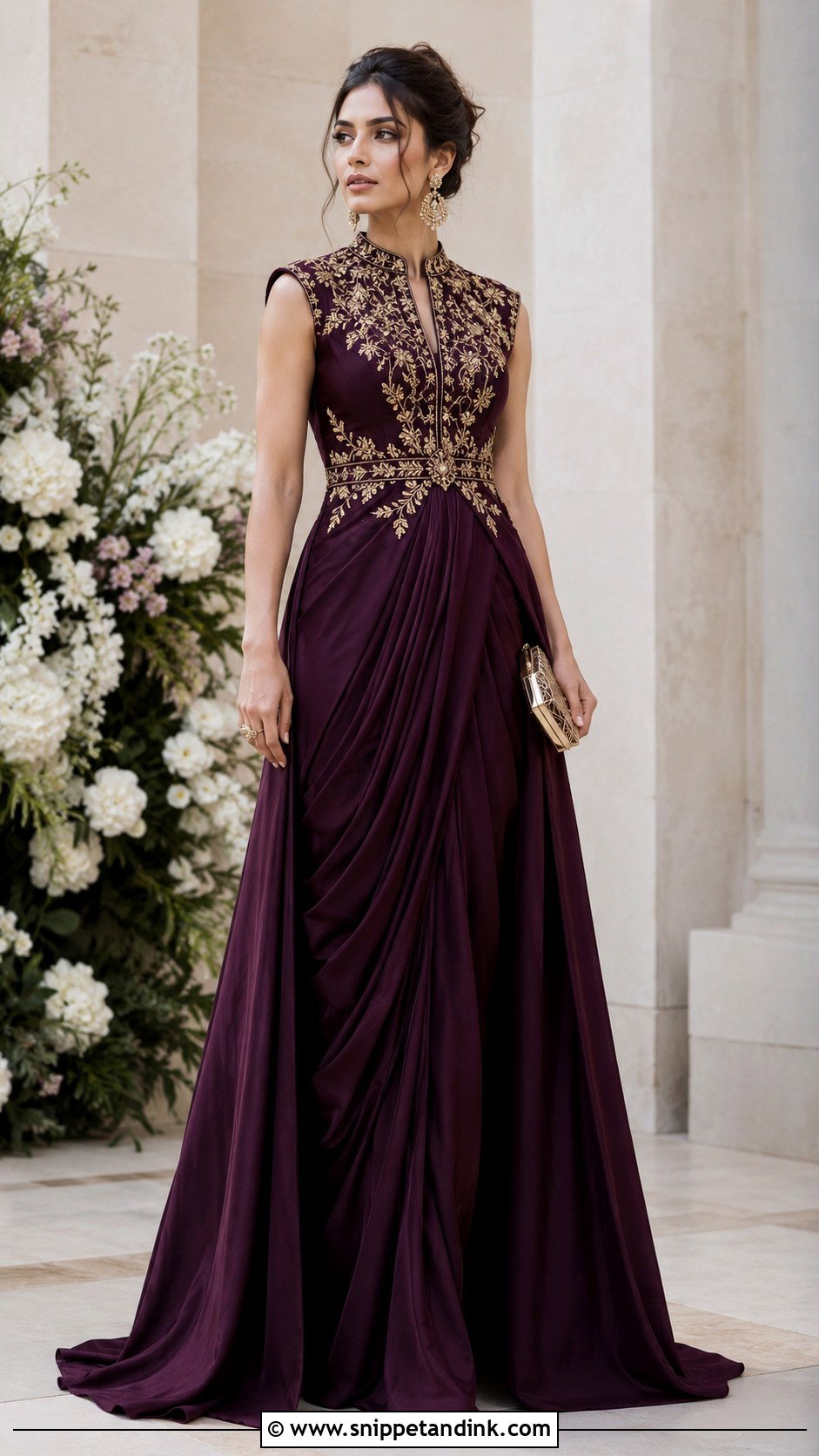
Dhoti pleating gathers fabric at the hips and lets the legs move far more freely than a narrow skirt, which is the reason I suggest it to brides who hate feeling restricted. The risk is bulk. Too many pleats at the hip and the gown adds visible width, so a good tailor will flatten and stitch the top of each pleat before releasing it lower down. A long overskirt, train or pallu adds the evening drama. Rust, olive and aubergine work indoors and at destination weddings. Since the pleats are already busy, keep bangles minimal and go for bold earrings and a smooth low bun.
10. High Low Indo Western Party Gown
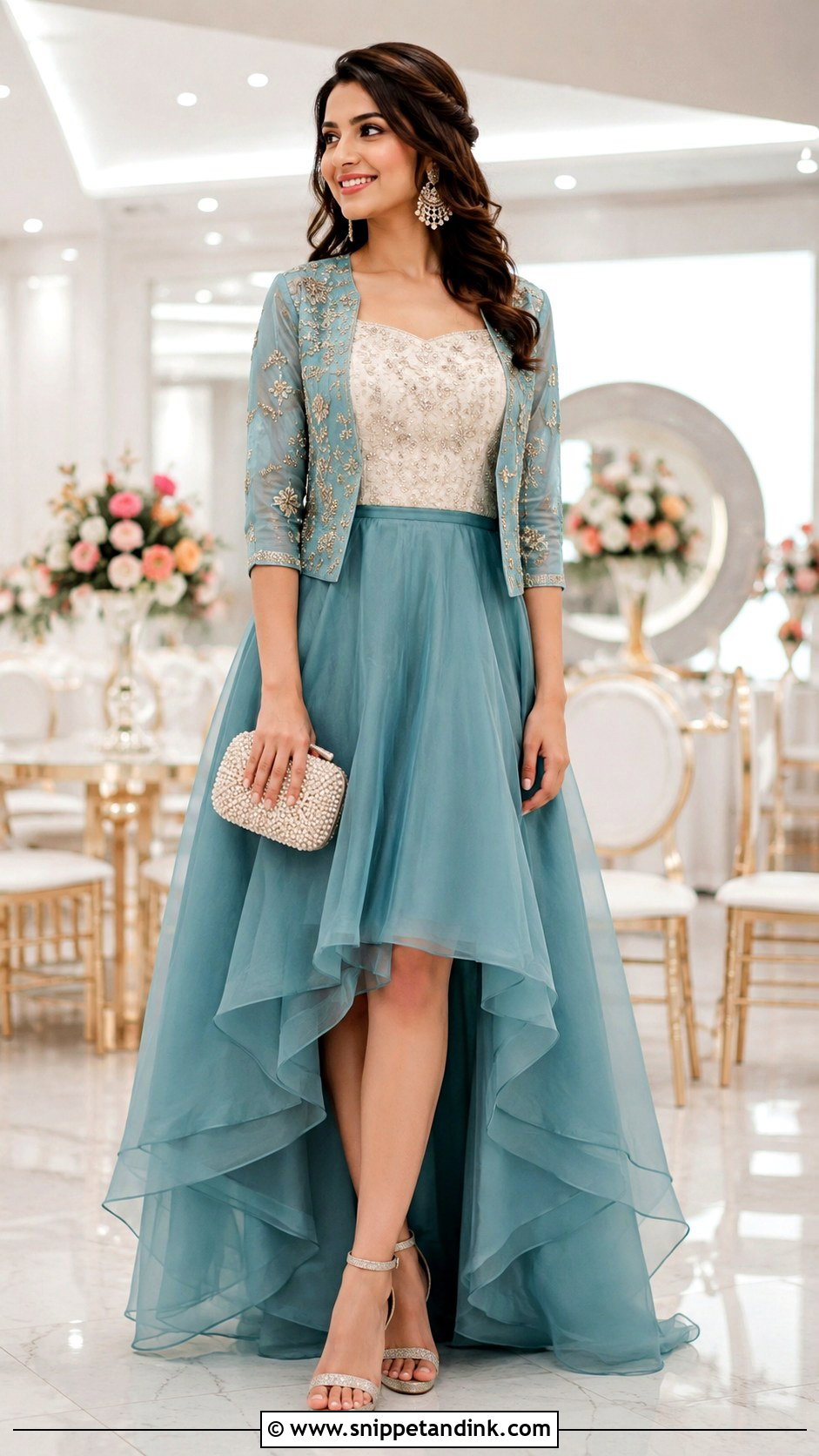
If you’re worried about tripping on a hem at an outdoor event, this is the gown I’d point you toward. The short front shows the shoes and keeps the feet clear; the long back still gives you a formal train when you walk. Silk, organza or brocade all hold the curve of the hem. A coordinating cropped jacket or attached drape pulls it back toward Indian occasionwear. Because the shoes are on display, they need to match the gown in tone and finish, not just in color. It reads a little less formal, so I steer it toward welcome parties and engagement nights rather than a traditional reception.
11. Floral Organza Indo Western Wedding Gown
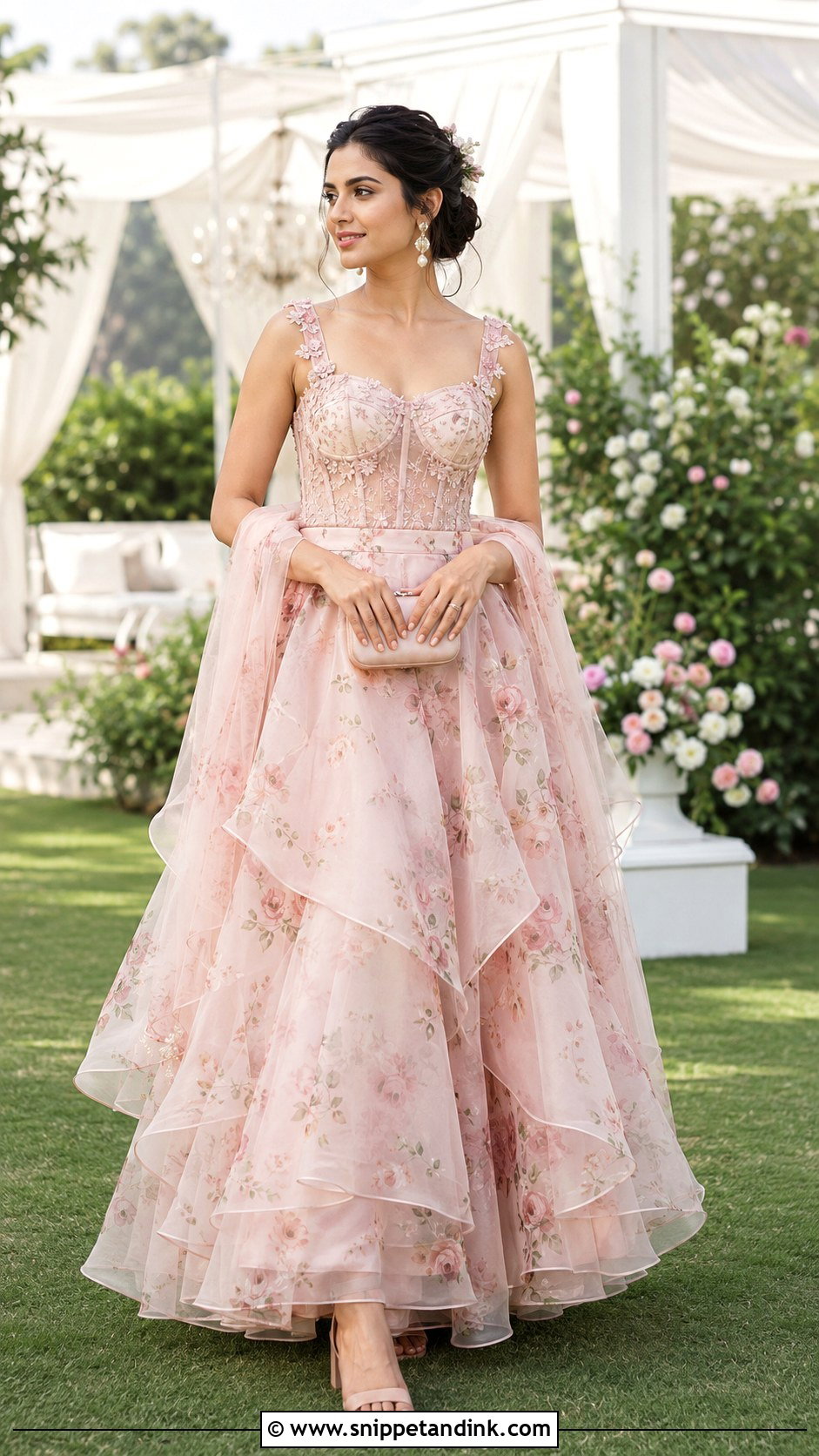
Organza is crisp and light, which makes it my go-to for daytime and garden weddings in warm weather. Florals can be printed, embroidered or appliquéd; appliqué gives the most dimension in photos but adds weight to the skirt. Mint, blush, peach and powder blue suit outdoor light. The practical warning with organza is transparency: stand by a sunlit window in the fitting room, and if you can see your legs, the lining needs to go down further. Pearl earrings and a small satin clutch are enough jewelry. Guests should avoid a full, layered skirt that could look bridal.
12. Velvet Indo Western Gown For Winter Wedding
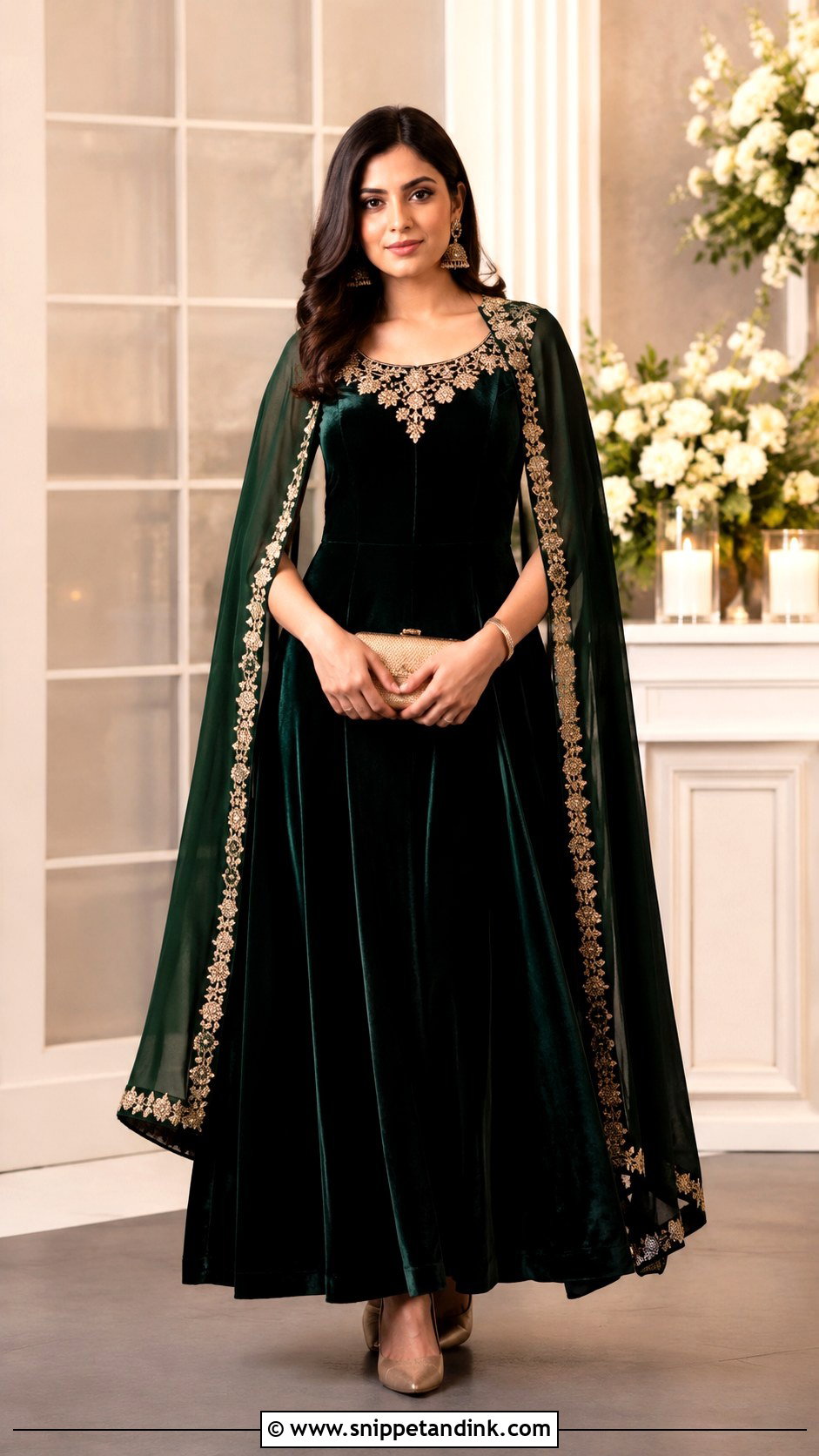
Velvet absorbs light and looks rich, so a winter reception is where it belongs. In summer it’s simply too warm. A paneled skirt and fitted waist stop the heavy fabric from looking shapeless, and metallic threadwork at the cuffs or neckline gives contrast. Maroon, forest green and ink blue are the classic shades. A sheer embroidered cape keeps the look from feeling heavy. Velvet marks easily where it’s pressed or crushed, so I tell clients never to iron it flat; steam it from the inside instead. Raise the hem slightly so the pile doesn’t wear on the floor.
13. Metallic Sequin Indo Western Cocktail Gown
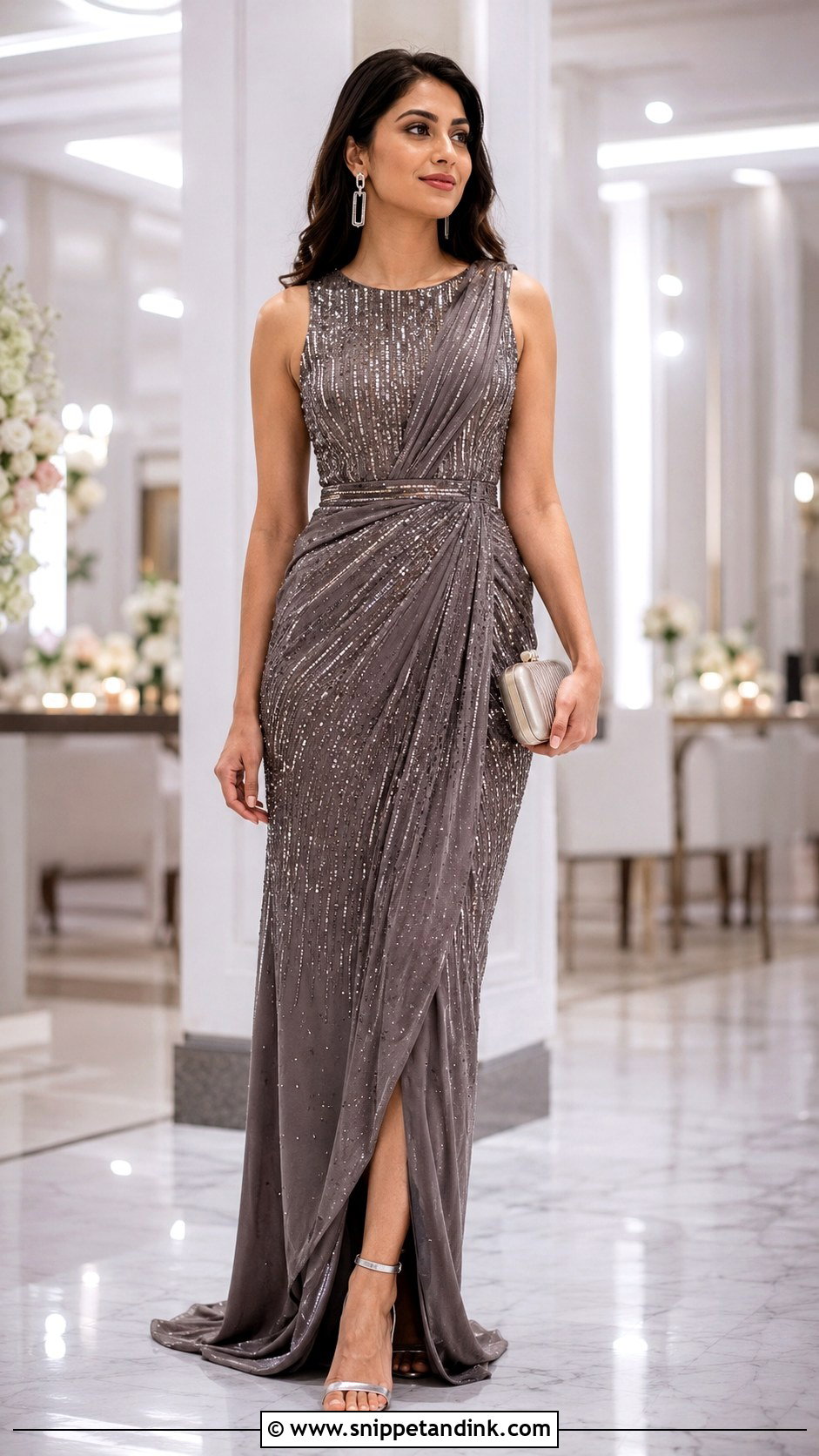
For a cocktail function, nothing has more impact than metallic sequins. I usually suggest graduated sequins, concentrated at the bodice and fading down the skirt, instead of one solid sheet of sparkle. It’s lighter, it moves better and it looks more expensive. Pewter, gunmetal, bronze and muted silver are more refined than bright gold. Run your hand along the inside seams before buying; sequins stitched over seam allowances scratch the underarm and leave red marks by the end of the night. Keep the accessories plain, so one hard-case clutch and geometric earrings. Brides can add a detachable train for a heavier version.
14. Brocade Indo Western Ball Gown
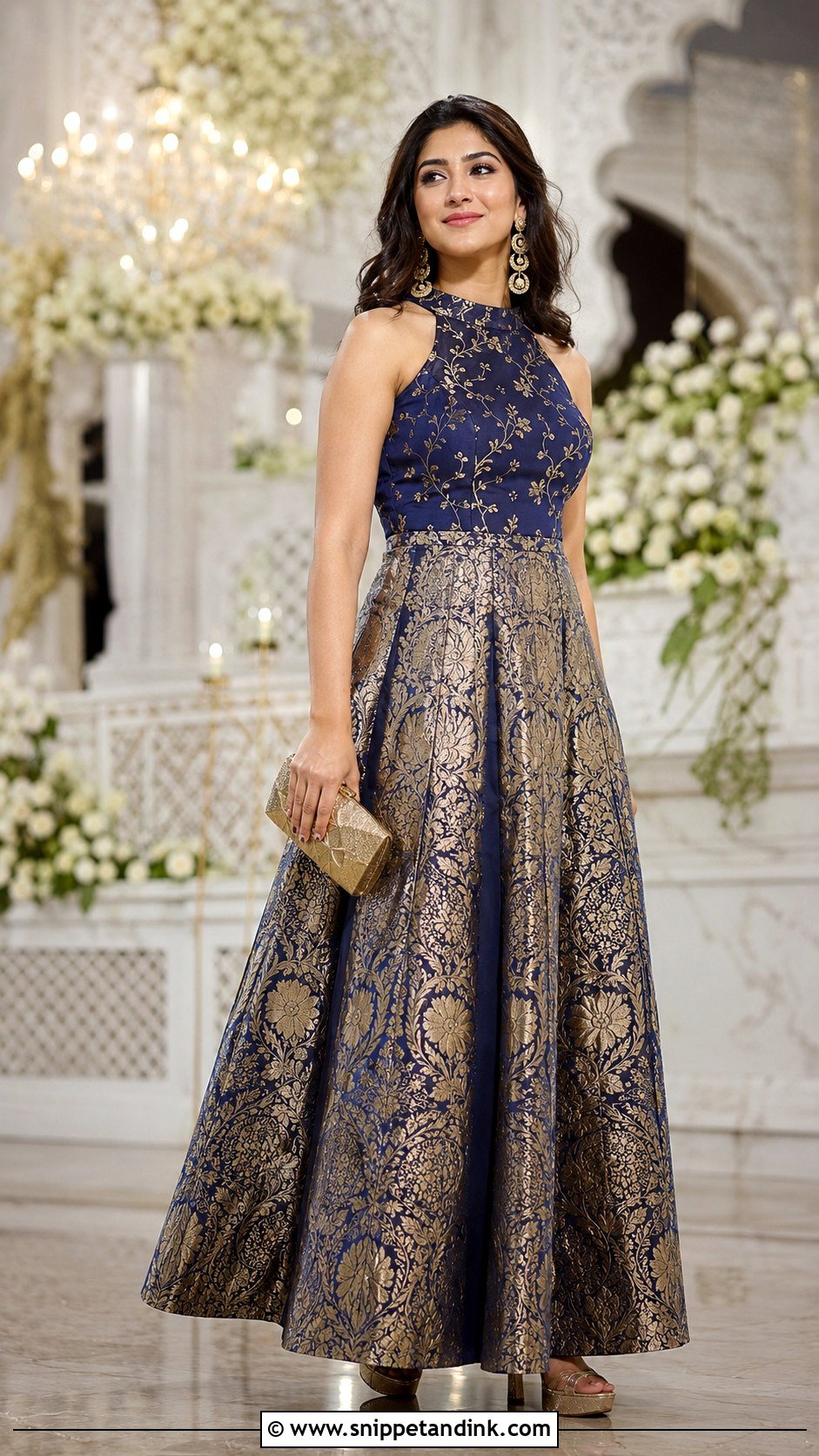
The pattern is woven into brocade, so a brocade Indo-Western ball gown looks rich without any added embellishment. Keep the cut simple: fitted bodice, natural waist and a controlled A-line or ball skirt. Banarasi-style florals and geometric motifs in jewel tones look festive. Brocade is stiff, though, and that’s my main hesitation with it. It doesn’t drape, it creases at the hip when you sit, and a full skirt in it is heavy. I ask for a lighter lining and less skirt volume than you might think, then a seated test before the final fitting. Choose one necklace for an open neckline and a sleek updo.
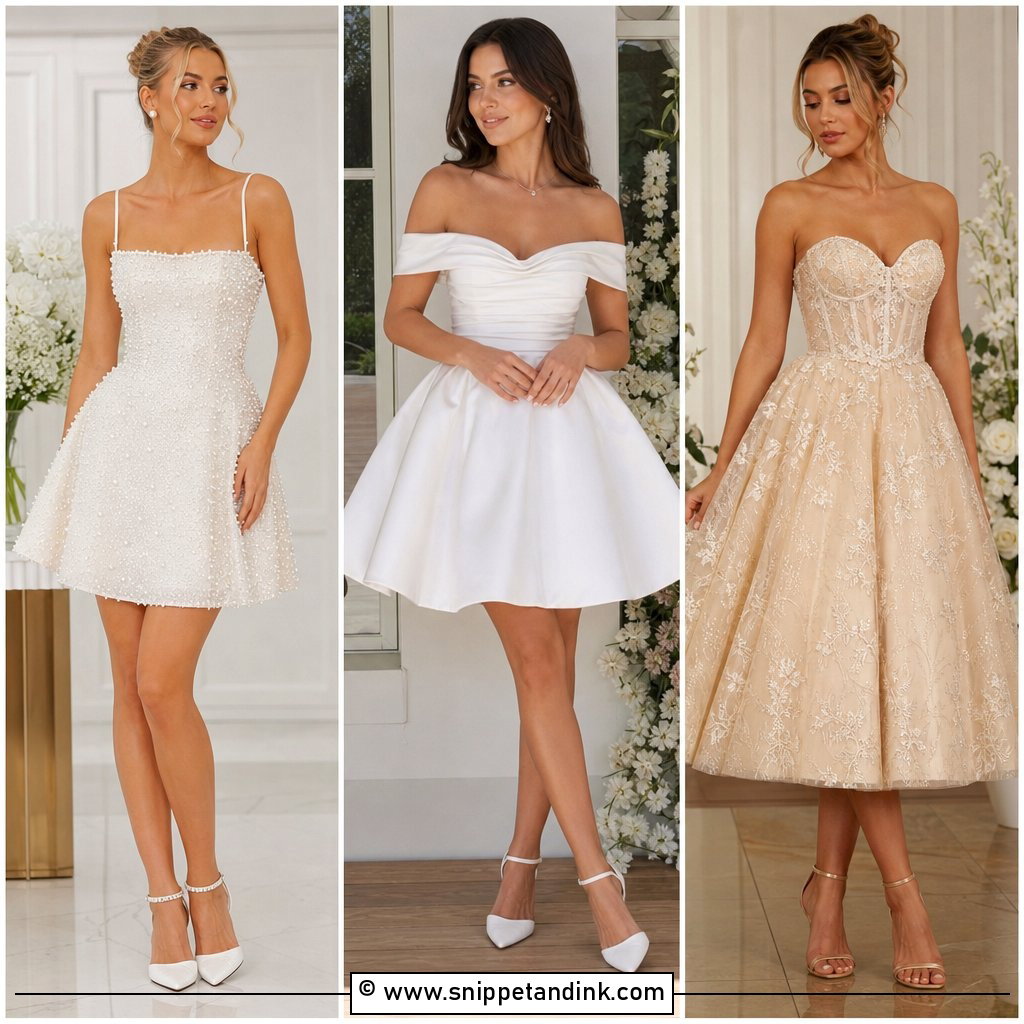
15. Pastel Embroidered Indo Western Gown
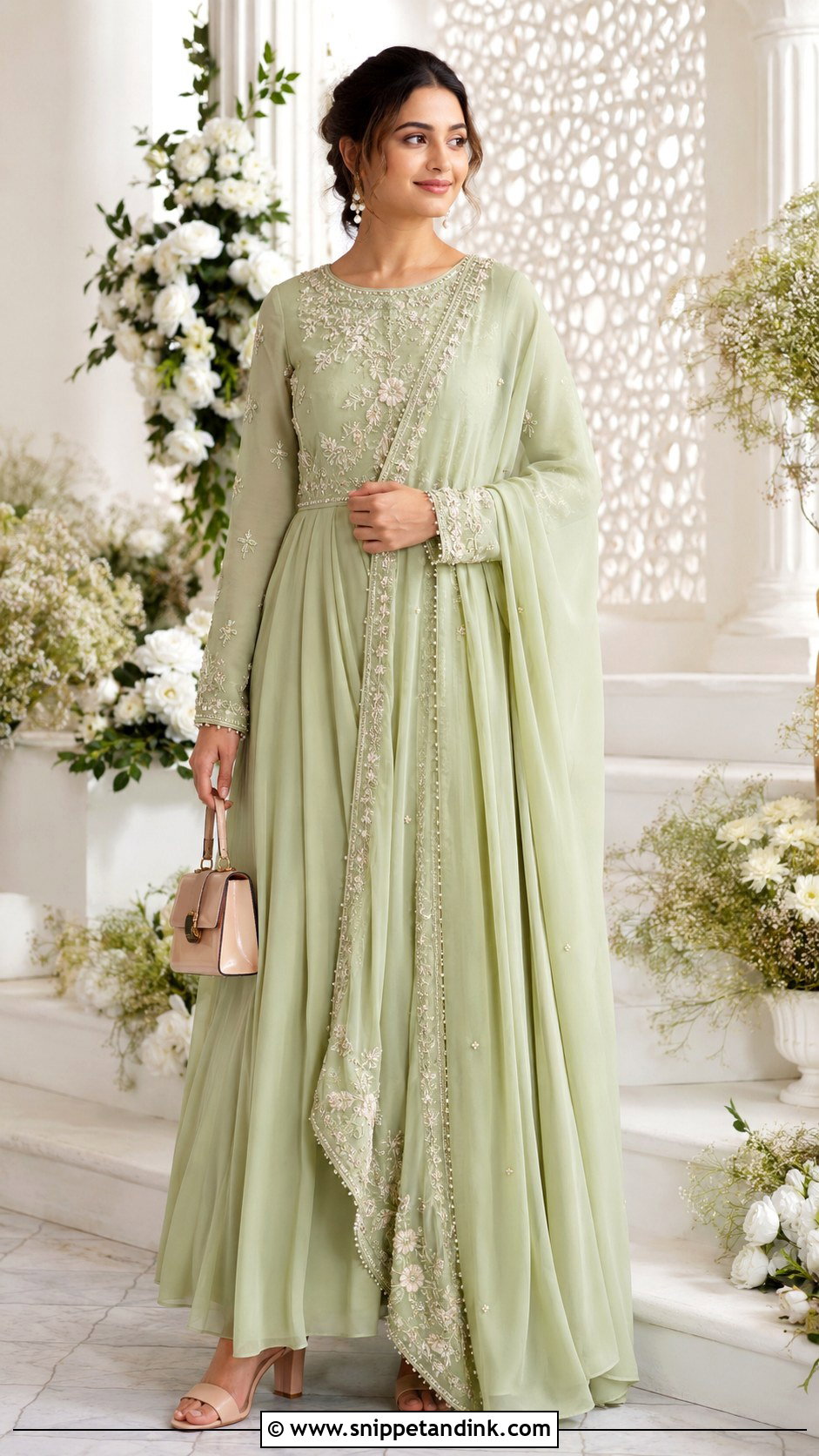
Morning ceremonies need lighter color and lighter fabric, and pastels deliver both. Pistachio, blush, lavender and pale yellow are the shades I see most often. Tonal threadwork, pearls and small floral motifs on a georgette or tulle skirt keep it delicate, and an attached dupatta panel keeps your hands free. Pastels can wash out some skin tones, so test the color in daylight near a window, not under the store’s warm bulbs. Check the lining in that same light. Bridesmaids can each take a different shade from one pastel palette.
16. Black Indo Western Draped Gown
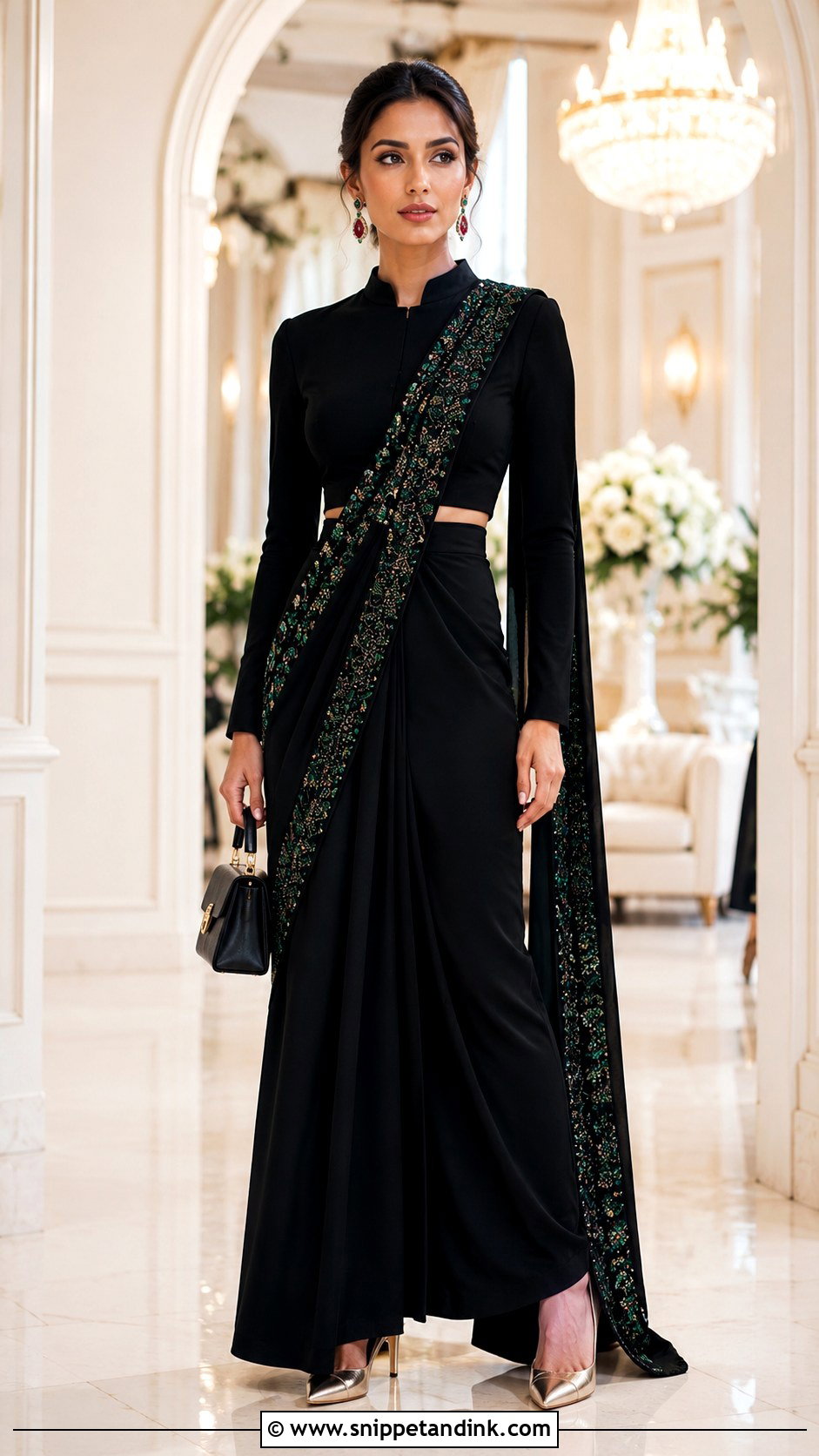
Black looks sharp at a formal evening party, but in many Indian families it’s still considered inauspicious at weddings, so ask before you buy. If the family is fine with it, choose a streamlined drape with a metallic border or embellished shoulder. Crepe and georgette fall cleanly; velvet panels work in winter. Gold, emerald or ruby jewelry brings in festive color. Avoid black-on-black embellishment, because it vanishes in photos and the gown reads as plain. A colorful embroidered pallu is my favorite way to keep the look celebratory.
17. Plus Size Empire Waist Indo Western Gown
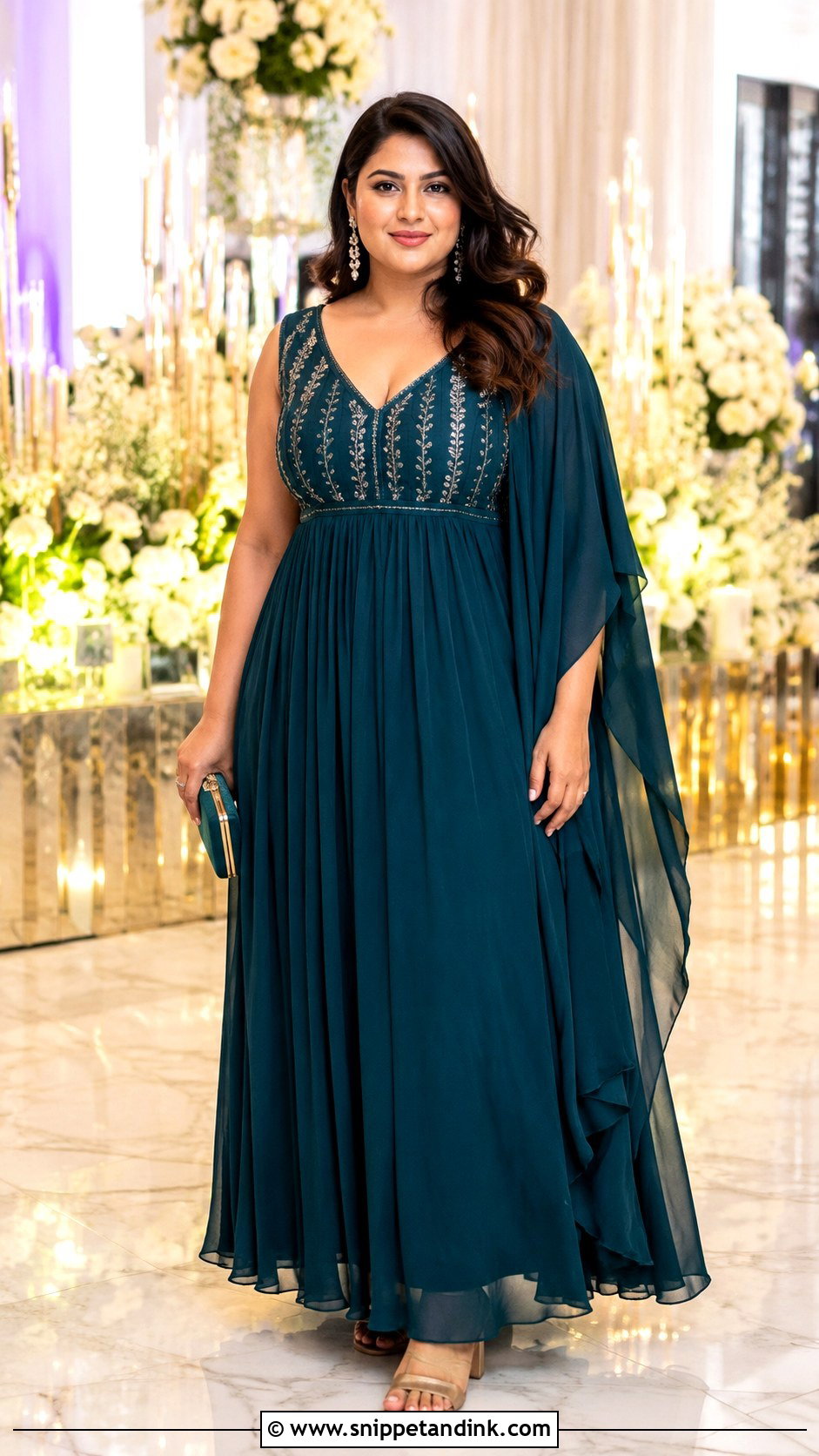
The empire waist sits just under the bust and lets the skirt fall freely, which gives a long, comfortable line on plus-size figures. Support is everything here: the bodice needs proper structure or a built-in bra, otherwise the seam sits on top of the bust instead of under it. Soft georgette or crepe with vertical embroidery and a V-neck keeps the line long. A side drape adds movement. Ask the tailor to remove any extra fabric under the arms. The gown should skim, never cling. Leave enough room across the shoulders to dance and lift a plate at the buffet.
18. Modest Long Sleeve Indo Western Gown
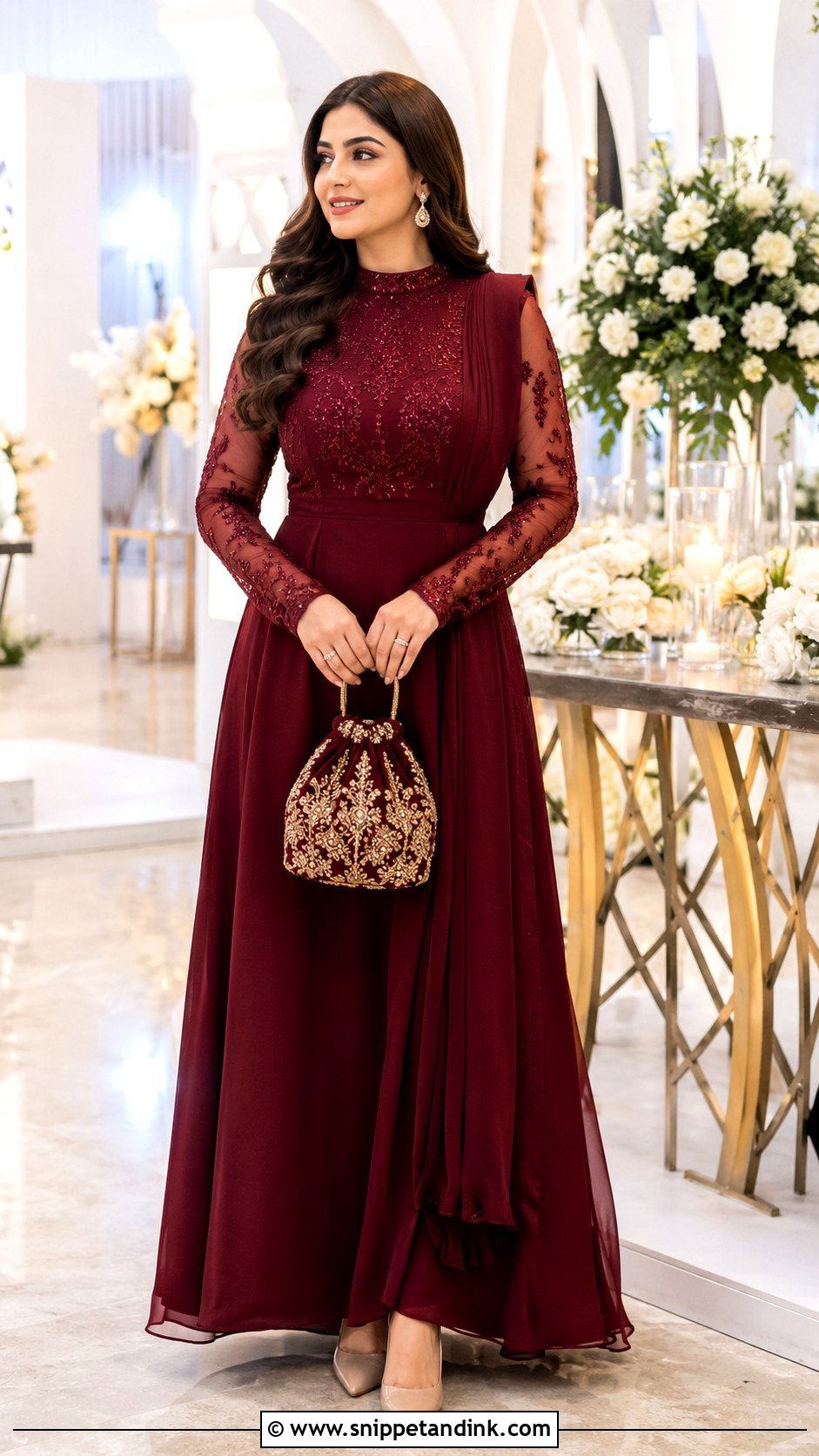
Full coverage doesn’t have to mean heavy. Sheer embroidered sleeves over an opaque bodice lining, or a high-neck design in crepe or georgette, give the coverage with much less bulk. A defined waist and paneled skirt keep the shape from looking boxy. Let one detail carry the decoration, usually the cuffs or the collar. Long sleeves are where I see the most fitting complaints, because a sleeve cut close to the arm locks you in when you reach up. Ask for a gusset or a slightly fuller armhole, and test it by reaching for a high shelf. A head covering can be coordinated with the embroidery if you wear one.
19. Ivory Bridal Indo Western Reception Gown
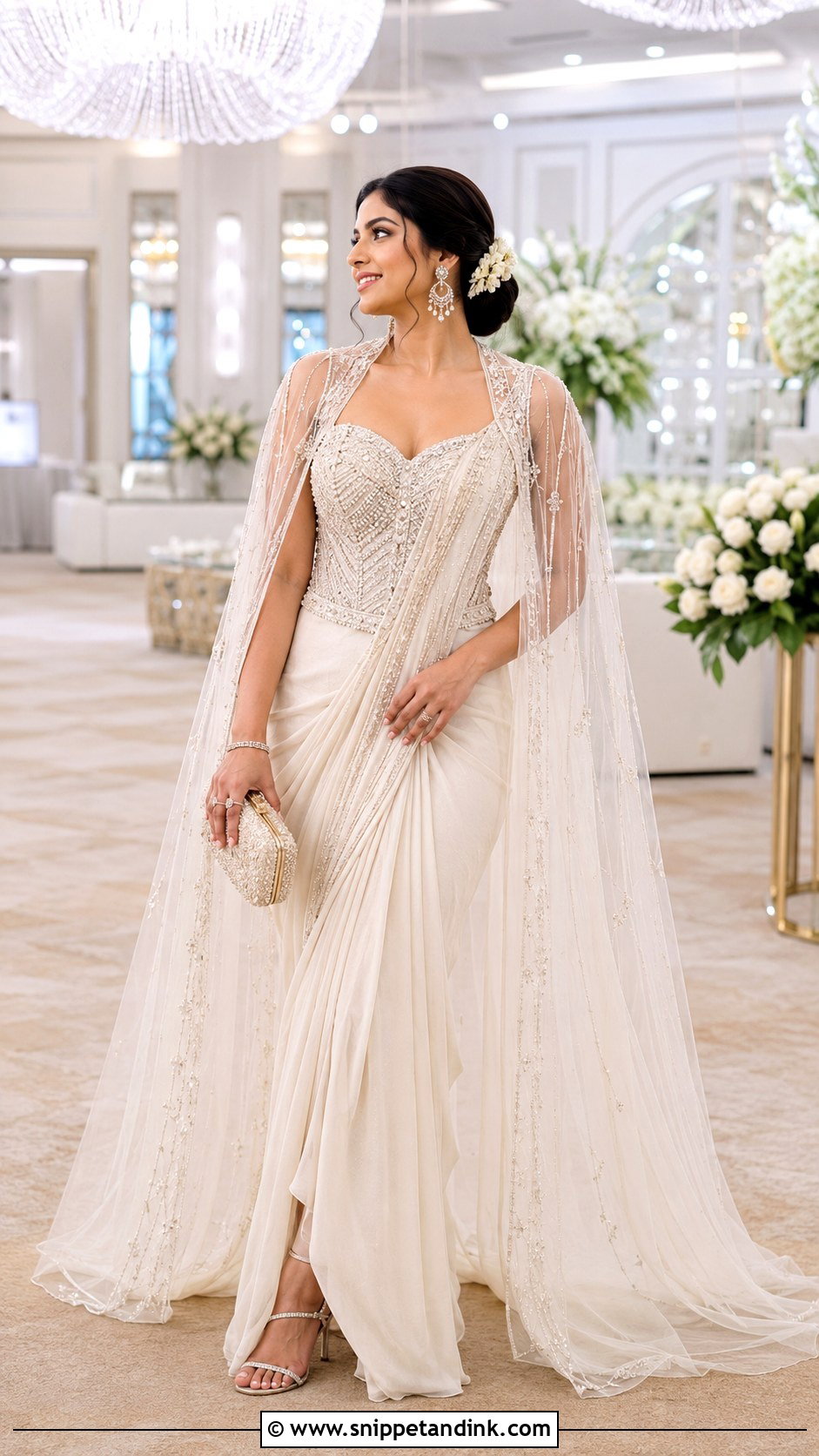
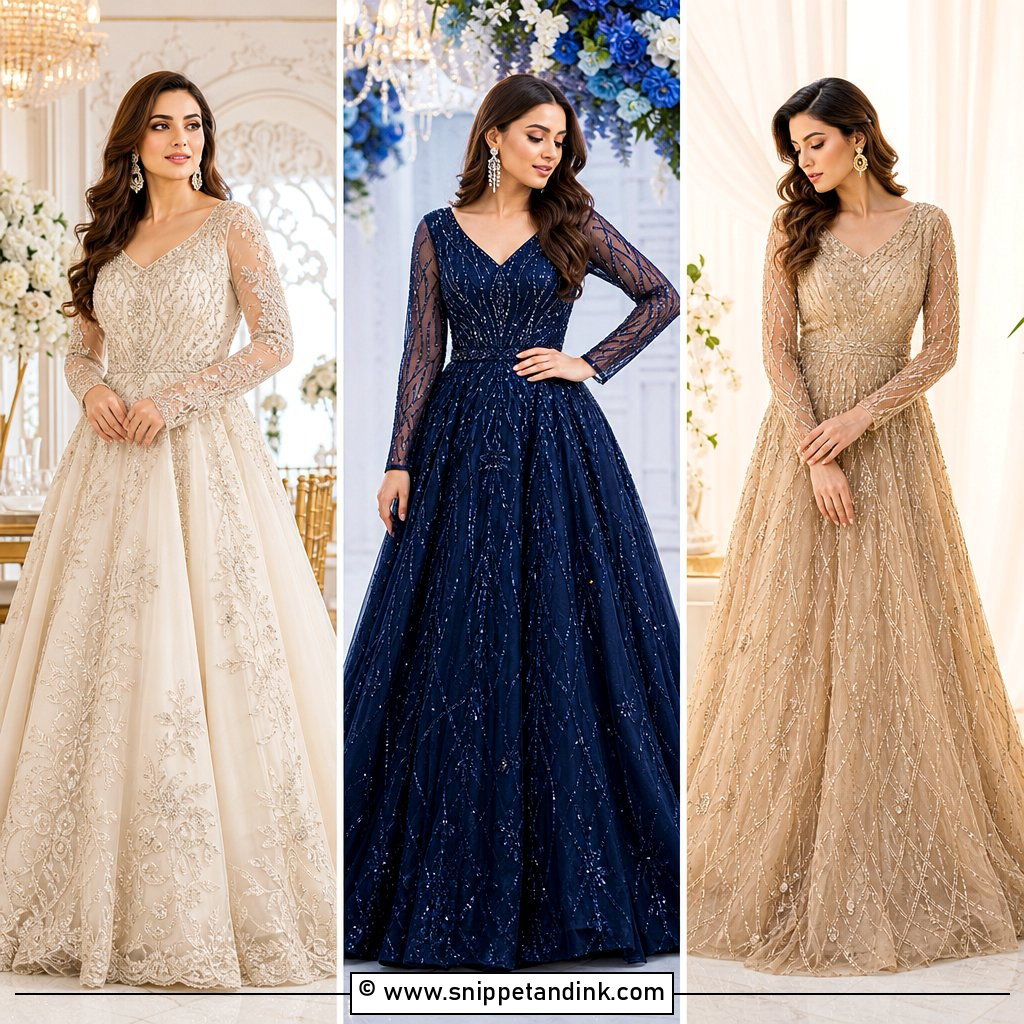
An ivory gown makes the bride stand out at the reception without repeating the red or deep tones of the ceremony. My favorite structure is a fitted bodice with a flowing skirt, an attached saree drape and tonal pearl or crystal work. Champagne, soft gold or blush accents add depth. A detachable cape or train gives you a grand entrance; take it off for the dancing. Ivory shows every mark, so keep a stain pen in your bag and avoid sitting on unfinished outdoor benches. Guests should not wear ivory unless the couple has specifically said it’s fine.
20. Jewel Tone Indo Western Bridesmaid Gown
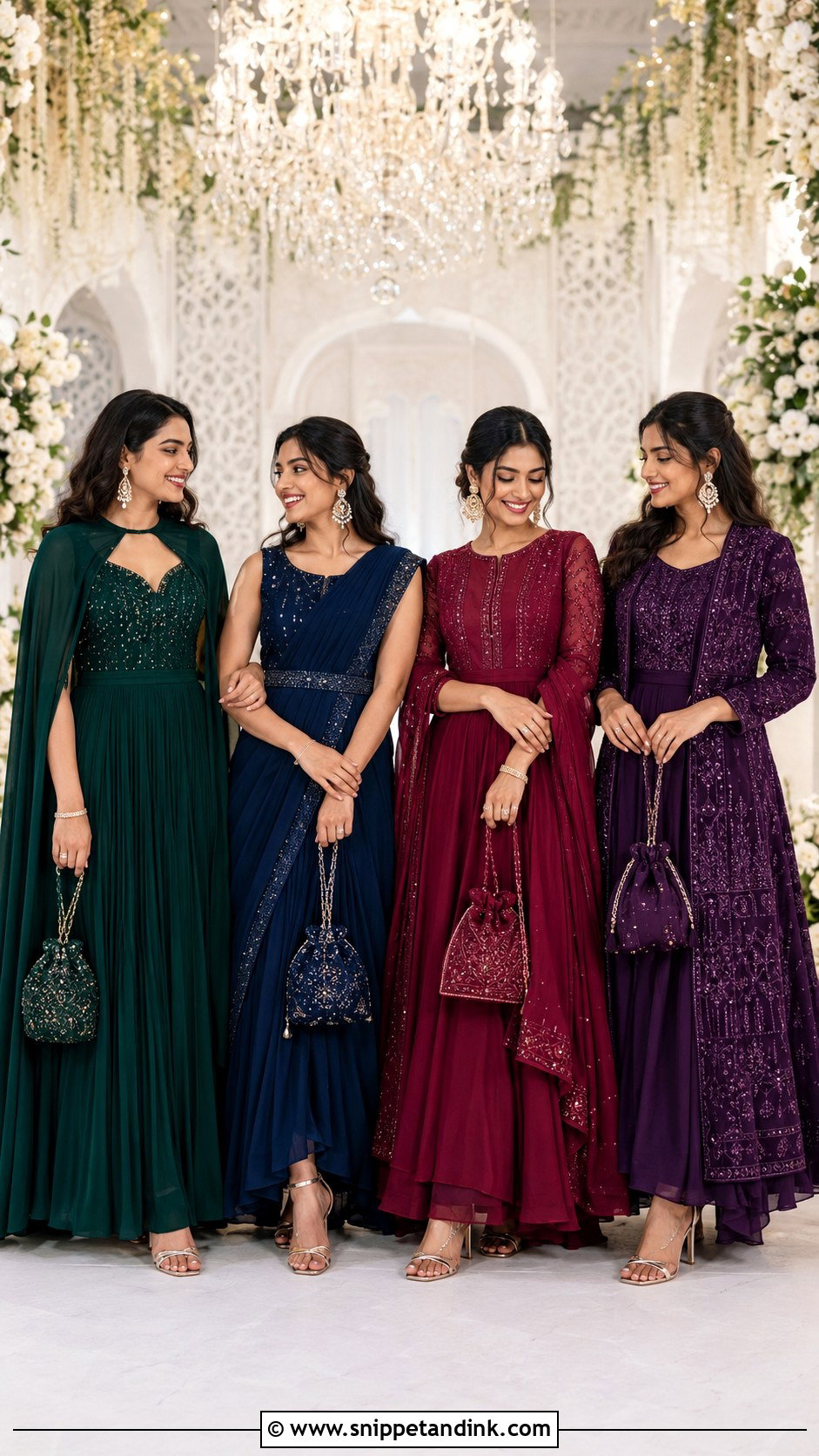
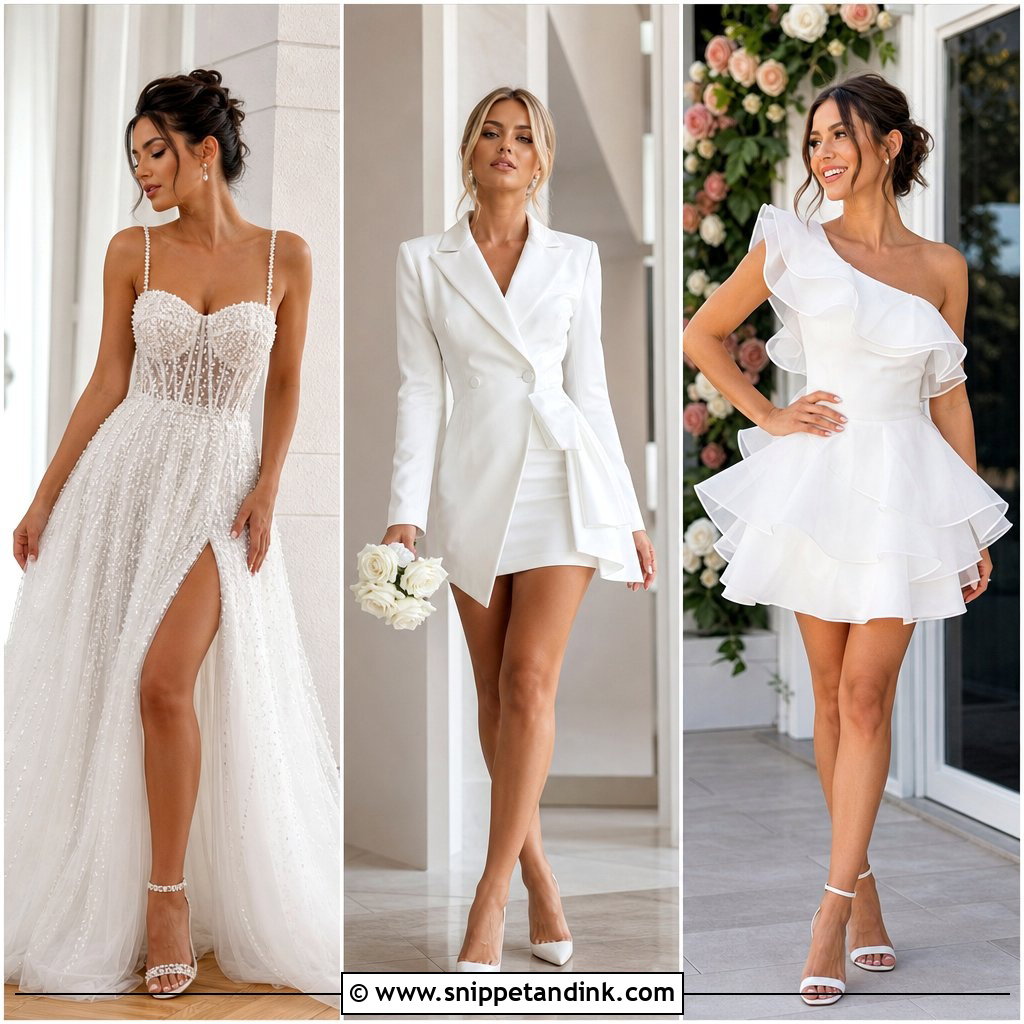
Bridesmaids don’t need to match their necklines. I usually start with one color family, maybe emerald or sapphire, and let each woman pick a cut that suits her: a cape sleeve, a pre-draped saree, a belted Anarkali or a jacket gown. What keeps the group cohesive is matching sheen and embellishment level. One satin gown next to four matte georgettes looks like a mistake in photos. Coordinate shoes and bags, and set a single hair direction like low buns. If possible, have everyone try their gowns on together to compare hem lengths and color shifts under the same light.
Carrying One Gown Through Three Wedding Functions
Indian weddings often run over several days, and a gown that looked perfect at the sangeet can arrive at the reception crushed and spotted. I pack every embroidered gown inside out, folded around tissue paper, with the heaviest section at the bottom of the bag. Never hang a heavily beaded or brocade gown for days on a thin hanger; the weight stretches the shoulders.
The small kit I put in every client’s bag
- Safety pins and a few dupatta pins to re-anchor a drape that loosens while dancing.
- A travel steamer, used from the inside of the gown so it doesn’t flatten sequins or crush velvet.
- Clear nail polish to stop a snag in organza or net from running.
- A small sewing kit with thread matched to the gown, for a loose hook or a dropped sequin.
After the wedding, have the gown dry cleaned by someone who handles embroidery, then store it flat in a cotton or muslin bag rather than plastic. Metallic zari tarnishes in sealed plastic, and folds left too long in brocade turn into permanent lines, so refold it along different lines every few months.
Spend on the Tailor Before the Embellishment
Every gown on this list works only if it fits properly and lets you move. Pick the silhouette that matches how you’ll spend the evening, whether that’s dancing at a sangeet or sitting through a long reception dinner. Then build the shoes, jewelry, bag and hair around it as one outfit. In my experience, careful tailoring changes how a gown looks far more than extra sequins do, so book your alteration slot early and bring your actual shoes to every fitting.
You'll Like These Ideas:


Leave a Reply