
An engagement outfit has an awkward brief. It needs to look bridal, yet it can’t steal the wedding’s thunder, and it has to survive one very specific moment: someone holding your hand up to the cameras while a ring goes on. Brides now choose anything from pastel lehengas and silk sarees to embroidered gowns, shararas, pre-draped sarees and cape sets. What should decide it is the setting, the family’s expectations, your comfort and the light. A daytime ring ceremony suits softer colors and lighter work, while an evening one can carry velvet, shimmer and deeper tones. Below are thirty engagement looks, each with the styling I’d pair with it and the catch I’d want you to know.
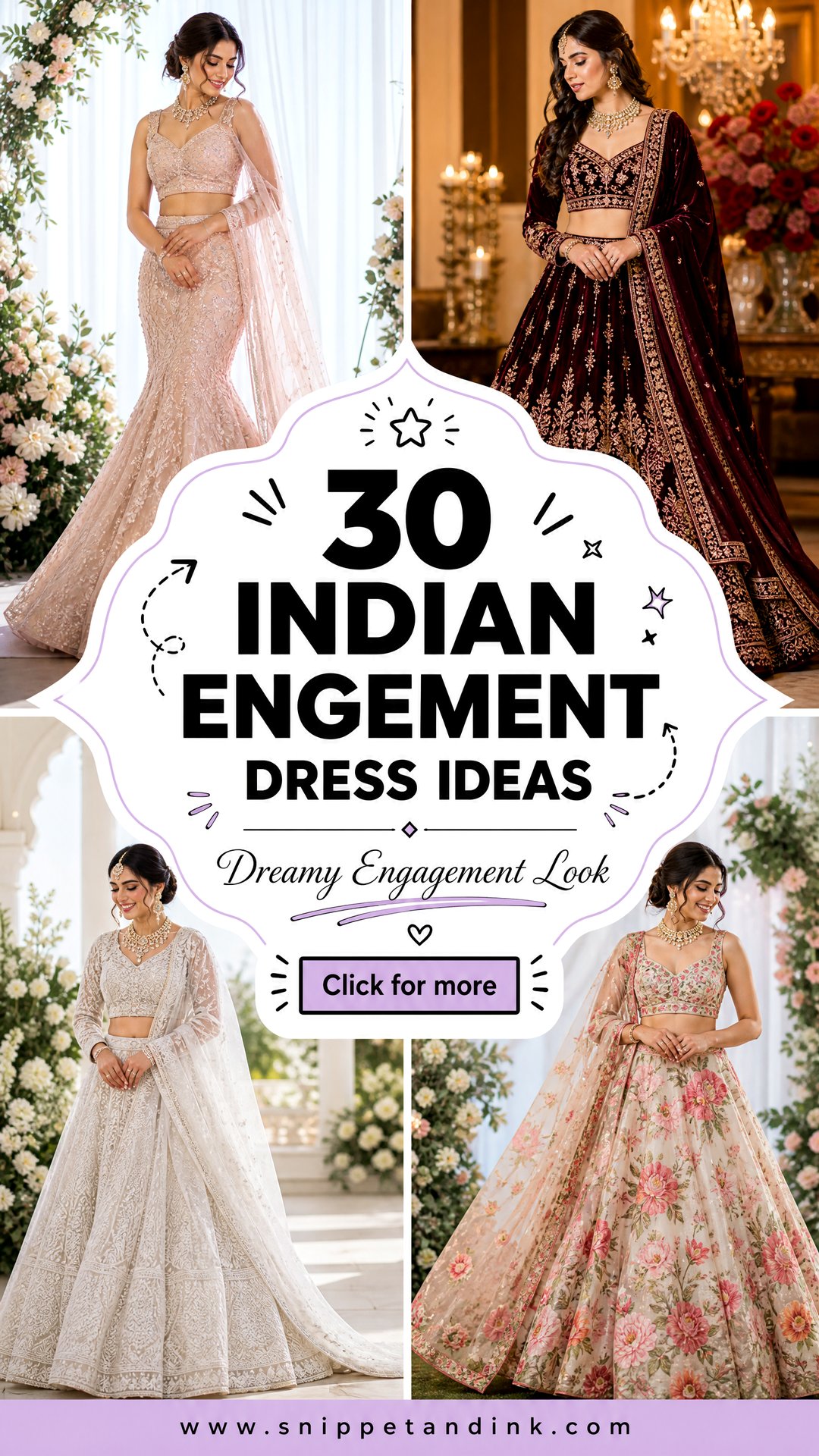
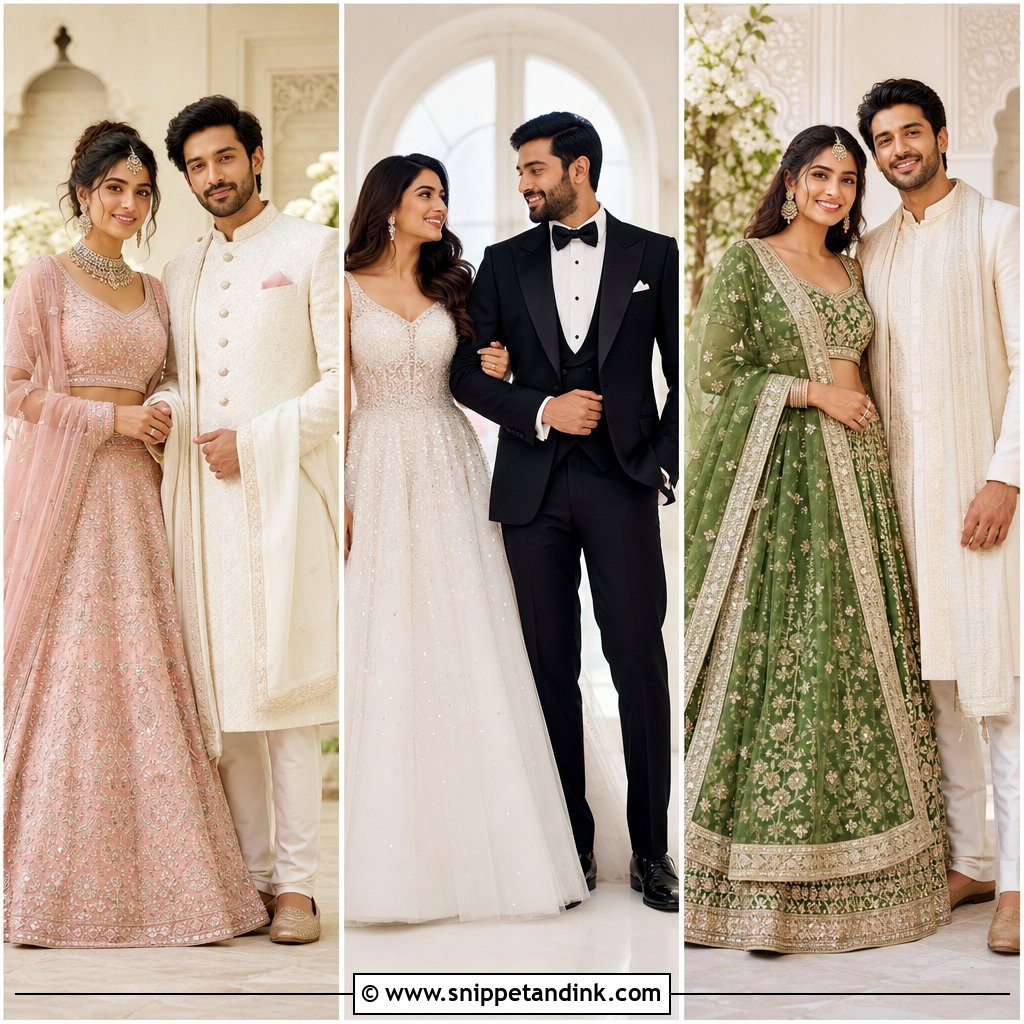
Two Bridal Looks a Few Months Apart
The engagement and the wedding usually share a photographer and a family album, so I plan them as a pair. If both outfits are heavy red lehengas with the same jewelry, the pictures blur into one event. I’d change at least two of these between them:
- Color family: a pastel or jewel tone at the engagement if the wedding is red.
- Weight of embroidery: lighter at the engagement, saving the densest work for the wedding.
- Silhouette: a saree, gown or sharara now, the full lehenga later.
- Hair: open curls or a half-up style at the engagement if the wedding look is a bun with a veil.
Should you coordinate with your fiancé?
Matching outfits tend to look dated quickly. I’d rather pick one shared element: his pocket square or safa in your blouse color, or his embroidery in the same metal as your jewelry. Send him a photo of the fabric in daylight, not a screen grab, because shades shift on phones.
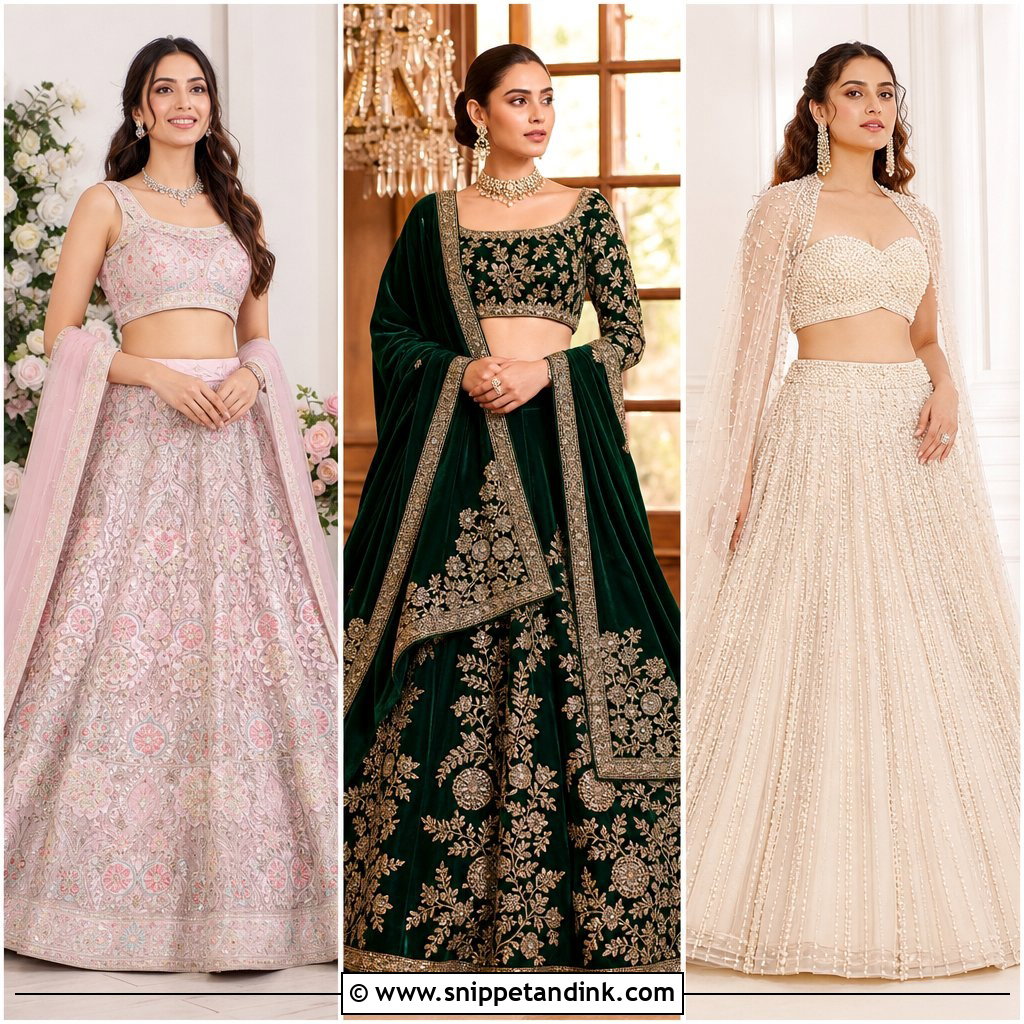
1. Pastel Lehenga For Engagement
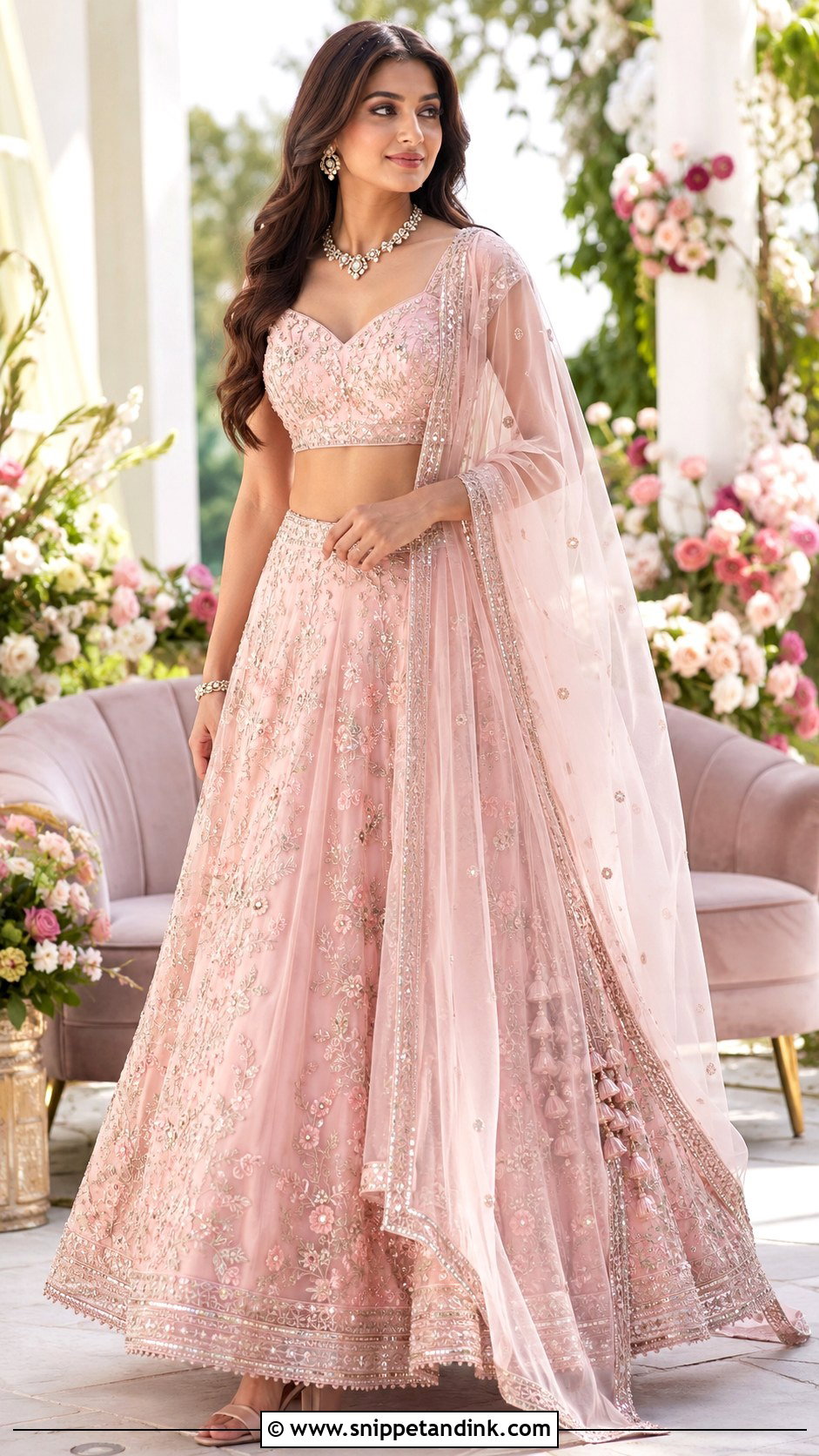
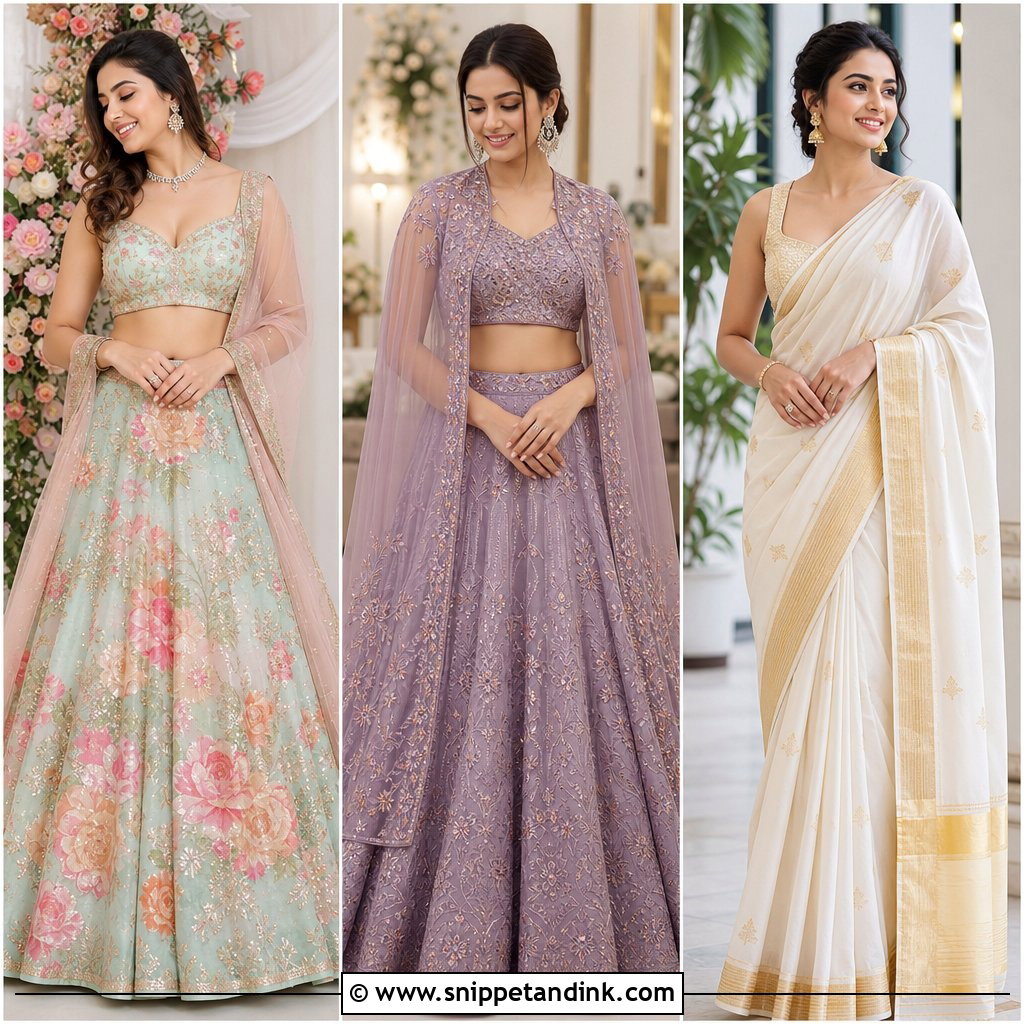
Pastels are the most requested engagement color I see, and they do photograph softly. Blush, powder blue, mint or champagne with sequin, pearl or thread embroidery suits a daytime ceremony or a garden. The trap is going too pale against fair skin and a white backdrop, where the outfit vanishes; a shade with a little more pigment, or embroidery in a slightly deeper tone, keeps definition. A fitted blouse, light dupatta and a choker or soft polki set complete it, with glowing skin and a rose lip.
2. Red Lehenga For Engagement
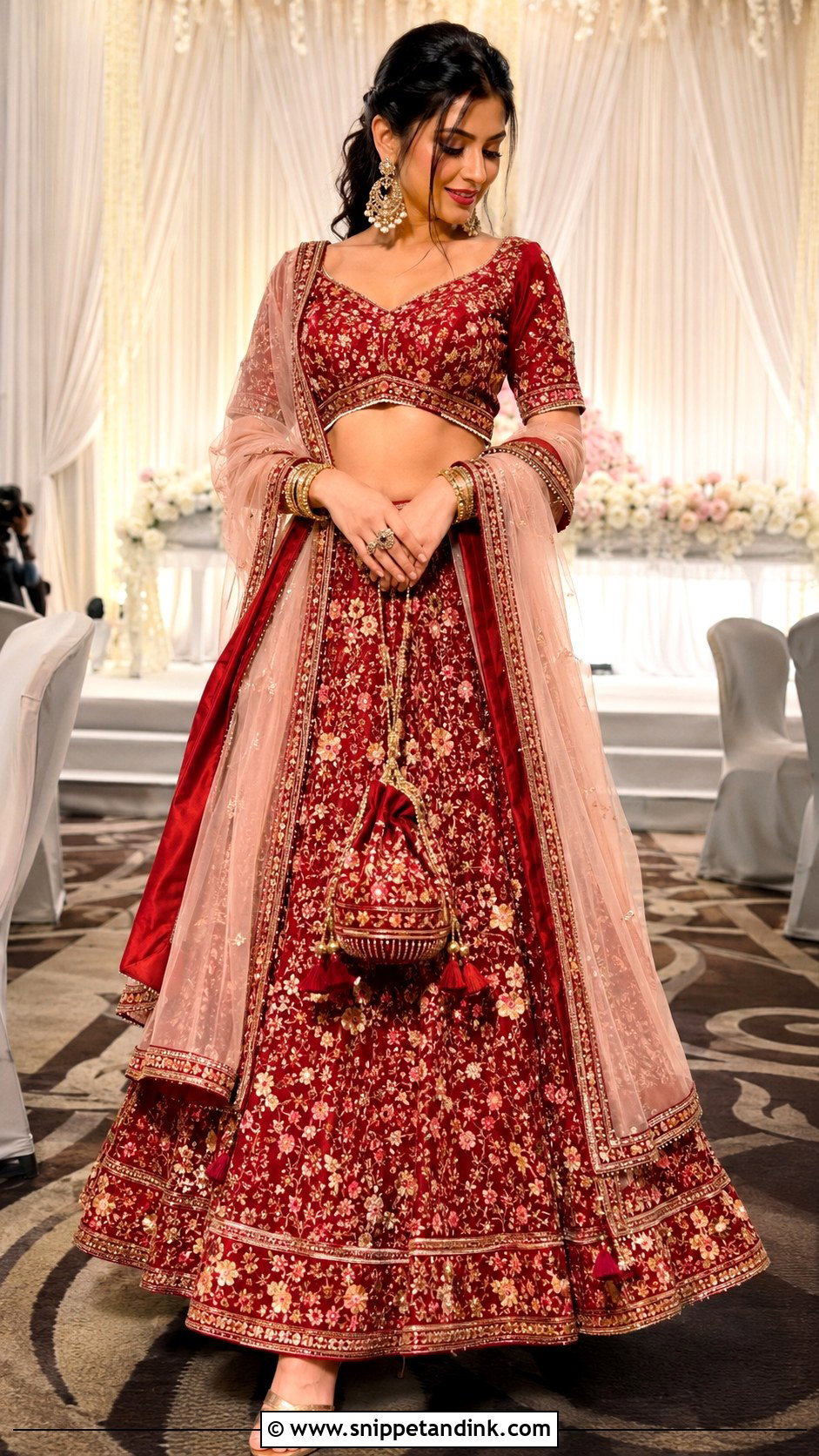
Red at an engagement works if it doesn’t look like a wedding lehenga worn early. I’d shift the shade toward ruby, tomato or wine and keep the embroidery refined rather than dense. A cropped blouse, a neat dupatta drape and gold or kundan jewelry keep it festive. For a modern version, try a sweetheart neckline, an organza dupatta or tone-on-tone work. If your wedding outfit is also red, I’d pick a different color for this one, otherwise the two albums will look like the same day.
3. Ivory Lehenga For Engagement
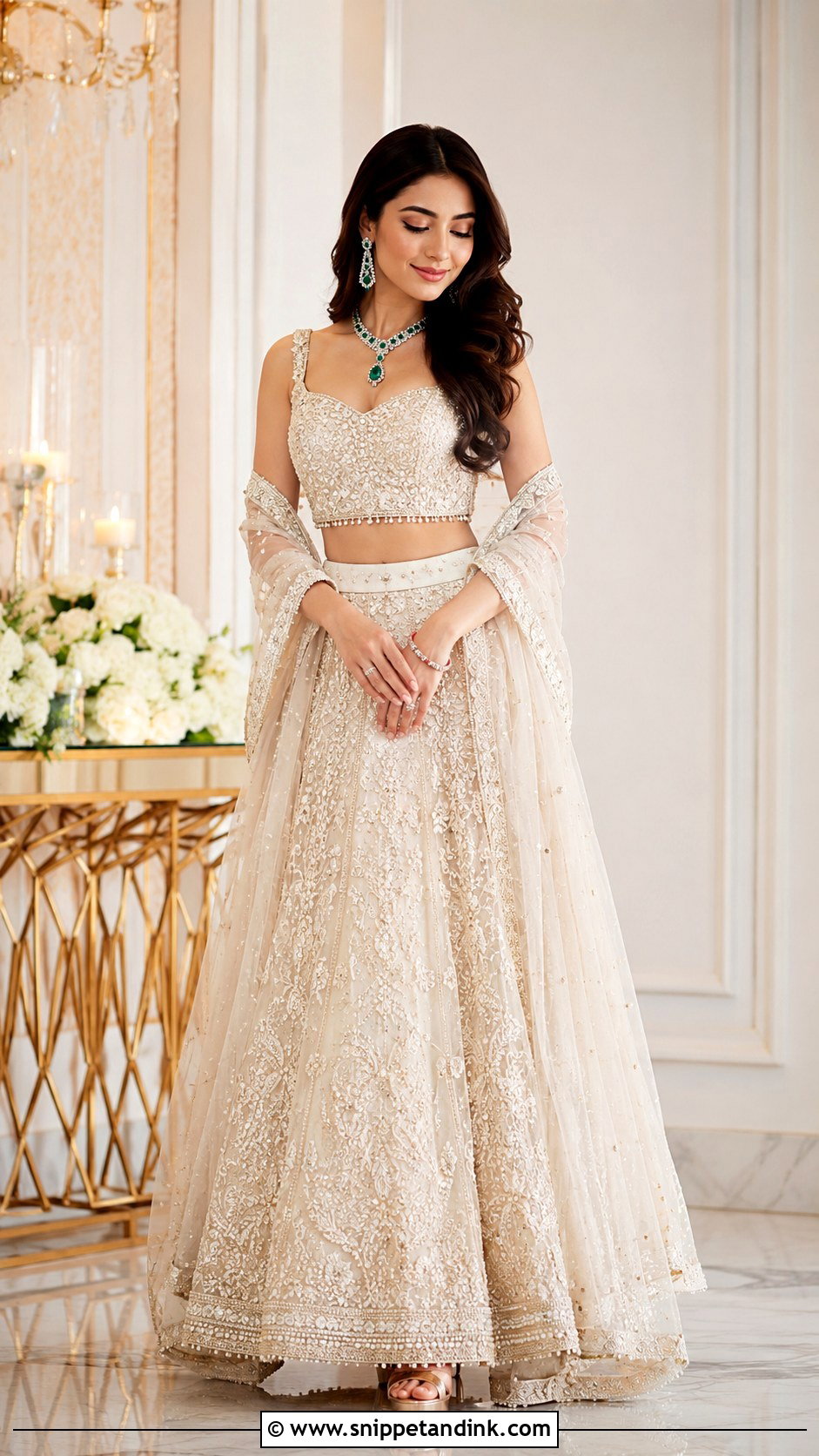
Ivory is calm, and against colorful decor it keeps the focus on you. But plain ivory reads unfinished at a celebration, so I’d only choose it with gold zari, mirror work, pearls or champagne sequins giving it life. Emerald, polki or antique gold jewelry adds contrast. Choose the hair to suit the neckline: a sleek bun for a high neck, curls or a half-up style for a deeper one. Do check with the family, since a few still avoid white tones for auspicious events.
4. Gold Saree For Engagement
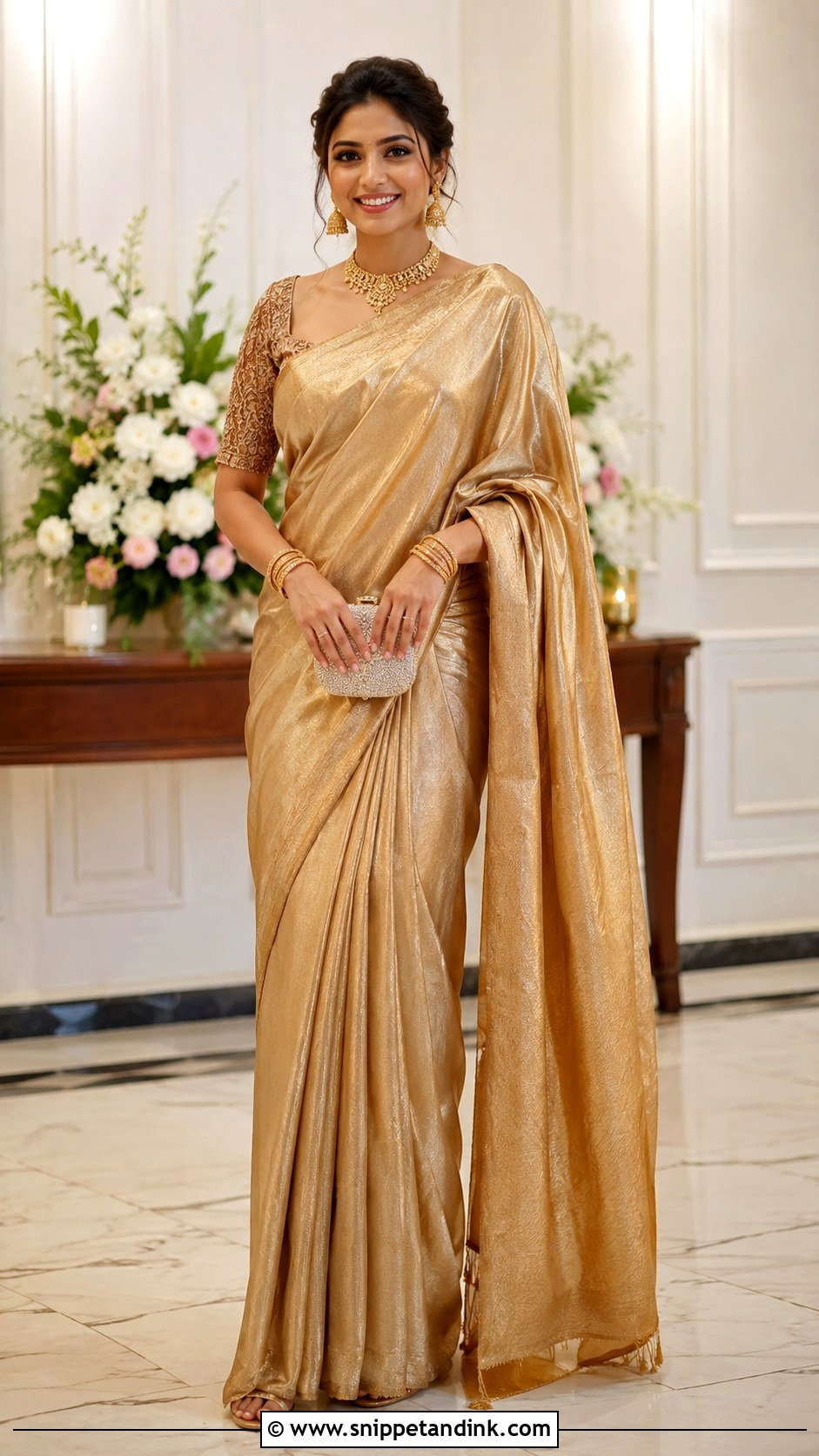
Gold catches every kind of light, which makes a gold saree a strong pick for an evening engagement. Tissue silk shimmers, Banarasi is richer and heavier, and organza or georgette are lightest. The blouse color changes the whole mood: ivory reads soft, maroon or emerald reads regal. Temple, kundan, pearl or antique gold jewelry suits it, though I’d pick one family rather than mixing them. Heeled sandals and a neat clutch finish it.
5. Banarasi Saree For Engagement
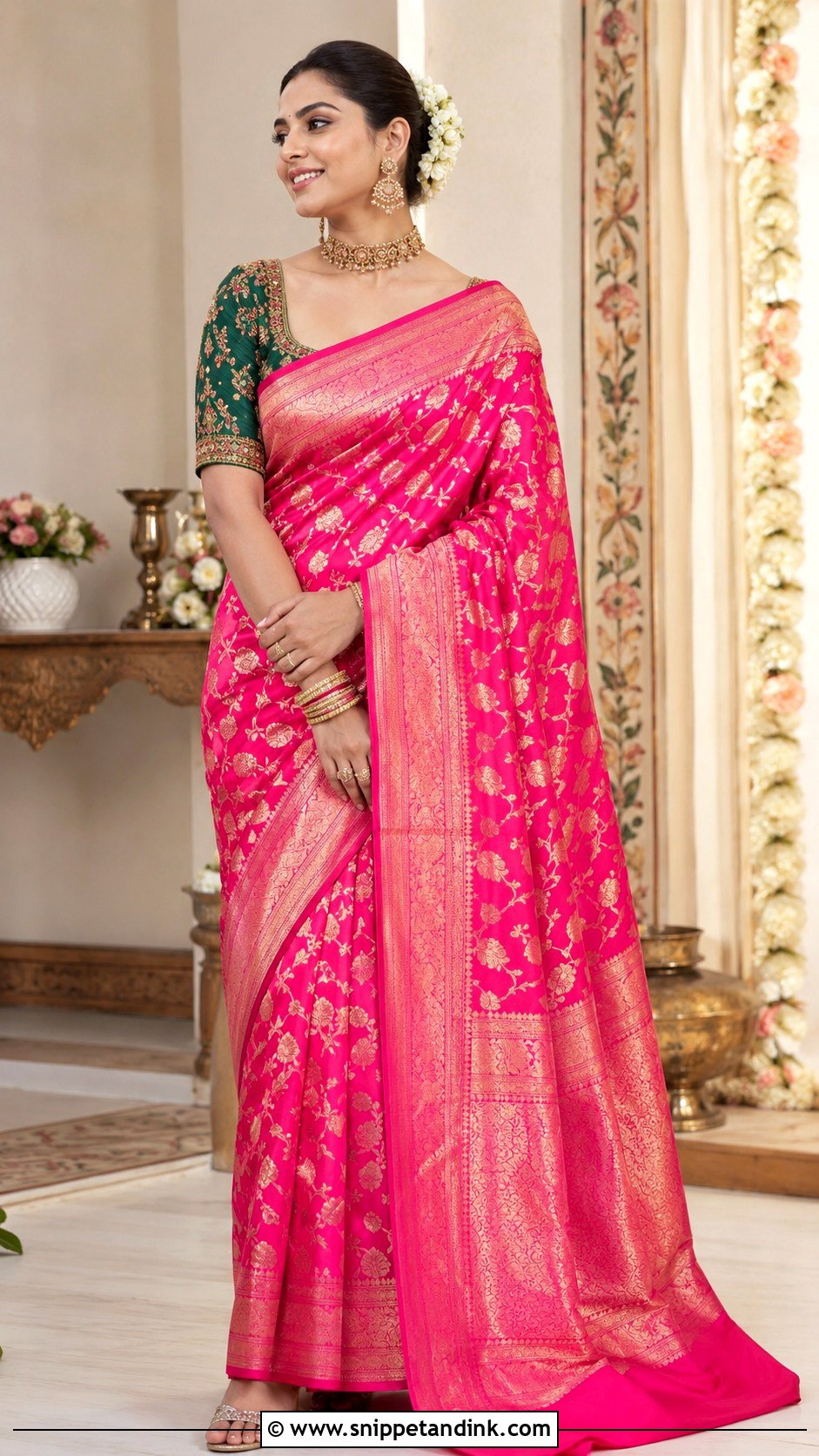
A Banarasi saree often becomes an heirloom, which is part of why I like it for an engagement: you’ll wear it again for years. The woven motifs and border carry the decoration, so jewelry can stay classic. Rani pink, royal blue, emerald and deep purple are proven shades. A contrast blouse or a sleeveless cut makes it feel younger. A sleek bun or a soft braid suits the formality.
6. Kanjivaram Saree For Engagement
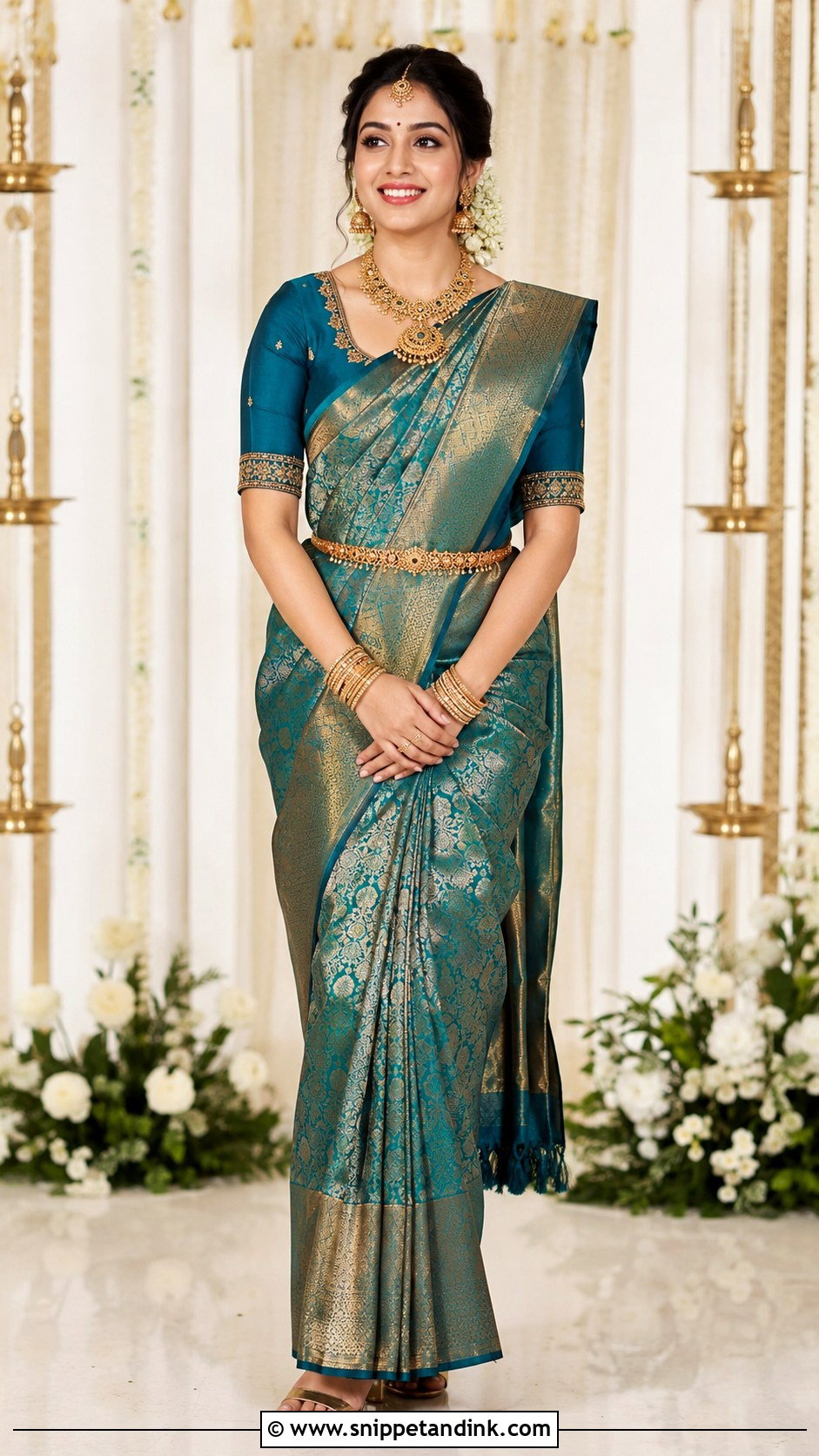
Kanjivaram silk is heavy, densely woven and edged in zari, so it holds a crisp drape through a long formal ring function. That weight is also why I’d pin the pleats firmly and choose low heels or wedges for balance. Magenta, teal, orange and emerald all suit it. Temple jewelry, jhumkas, bangles and fresh flowers in the hair, if that matches your tradition, complete a look that feels respectful and bridal. Elbow sleeves are classic; a boat neck makes it current.
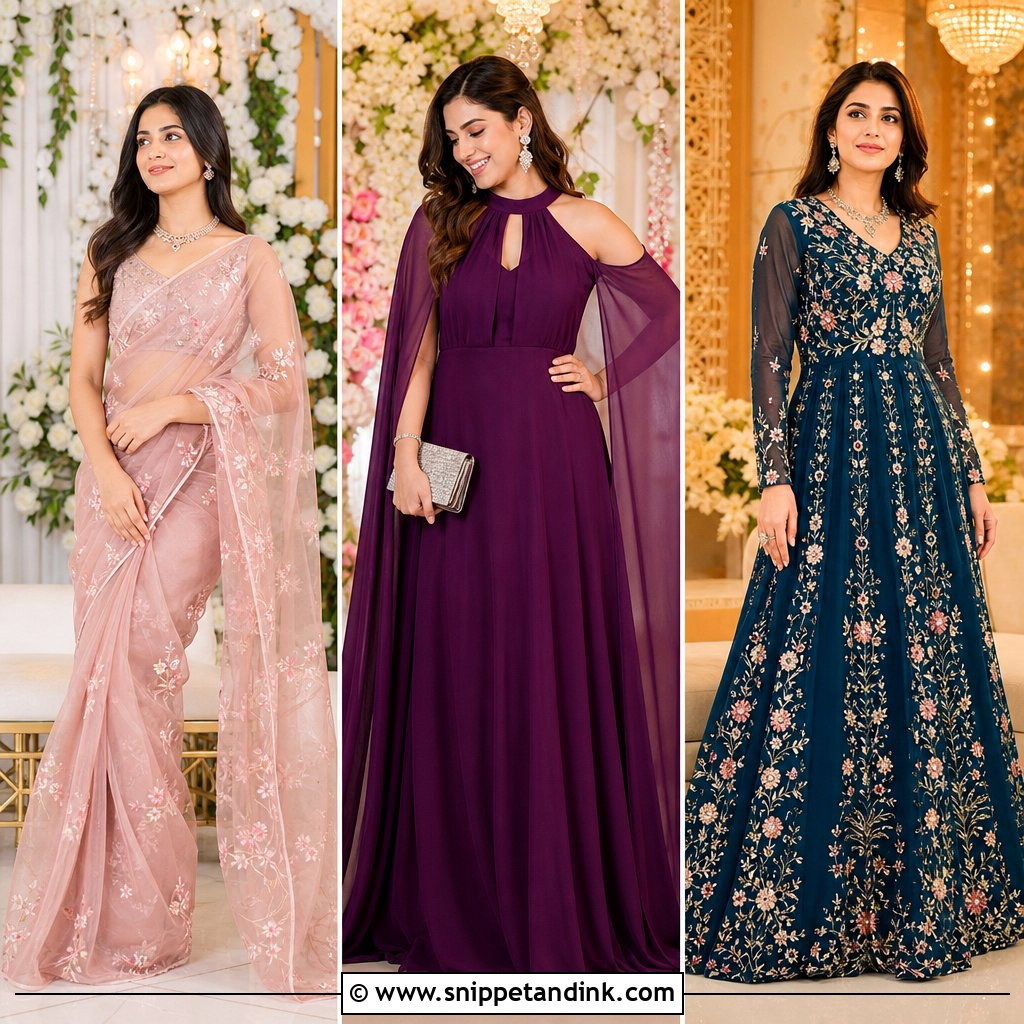
7. Saree Gown For Engagement
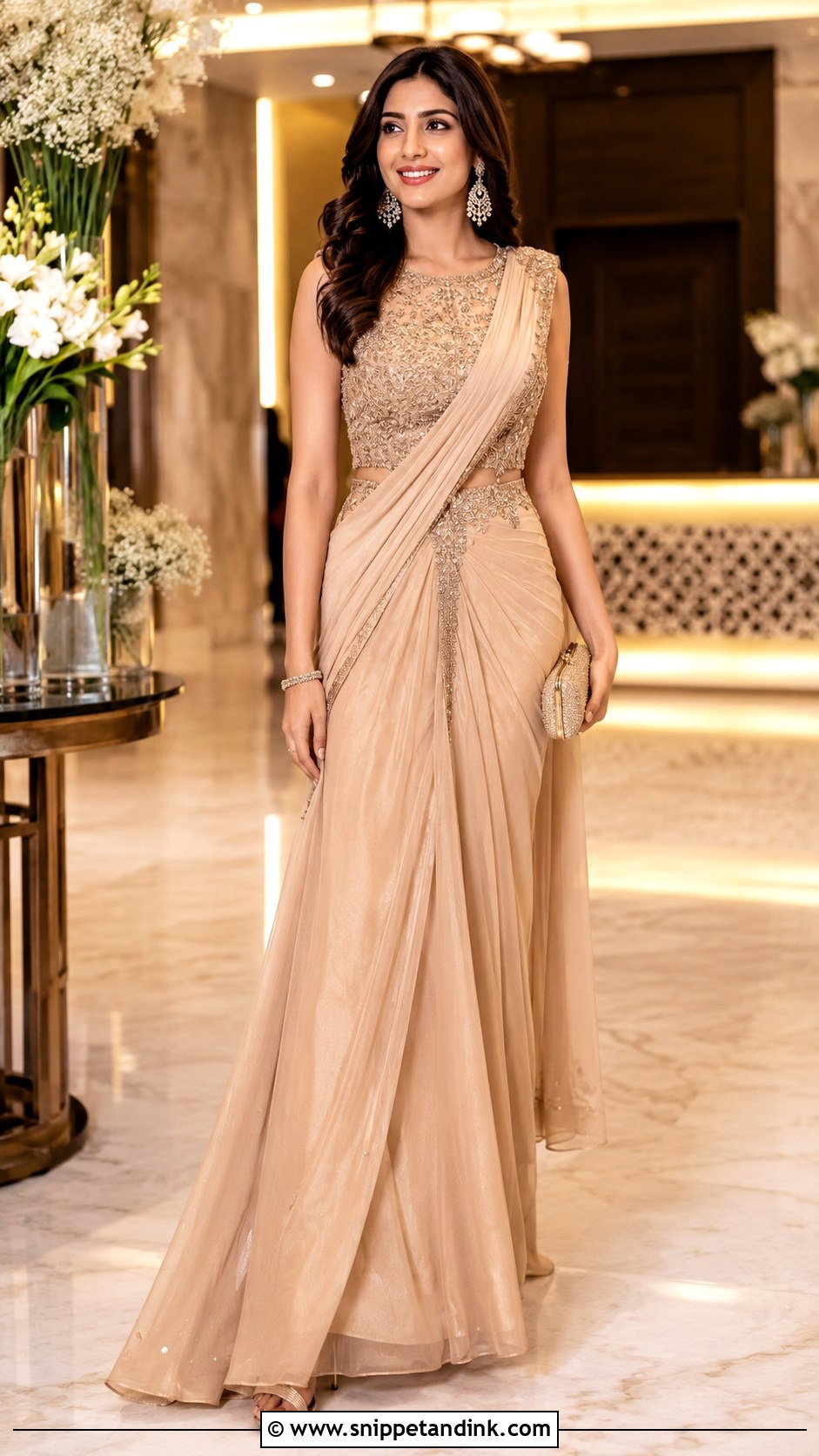
A saree gown gives you the drape without the risk. The pallu and pleats are stitched to a bodice, so nothing slips while you’re hugging relatives or turning for photos. Georgette, crepe, satin and chiffon fall well, with light embroidery at the waist or shoulder. I’d make sure the bodice is properly structured, since that is what makes it look intentional rather than costume. Statement earrings, heels and a clutch are enough.
8. Pre Draped Saree For Engagement
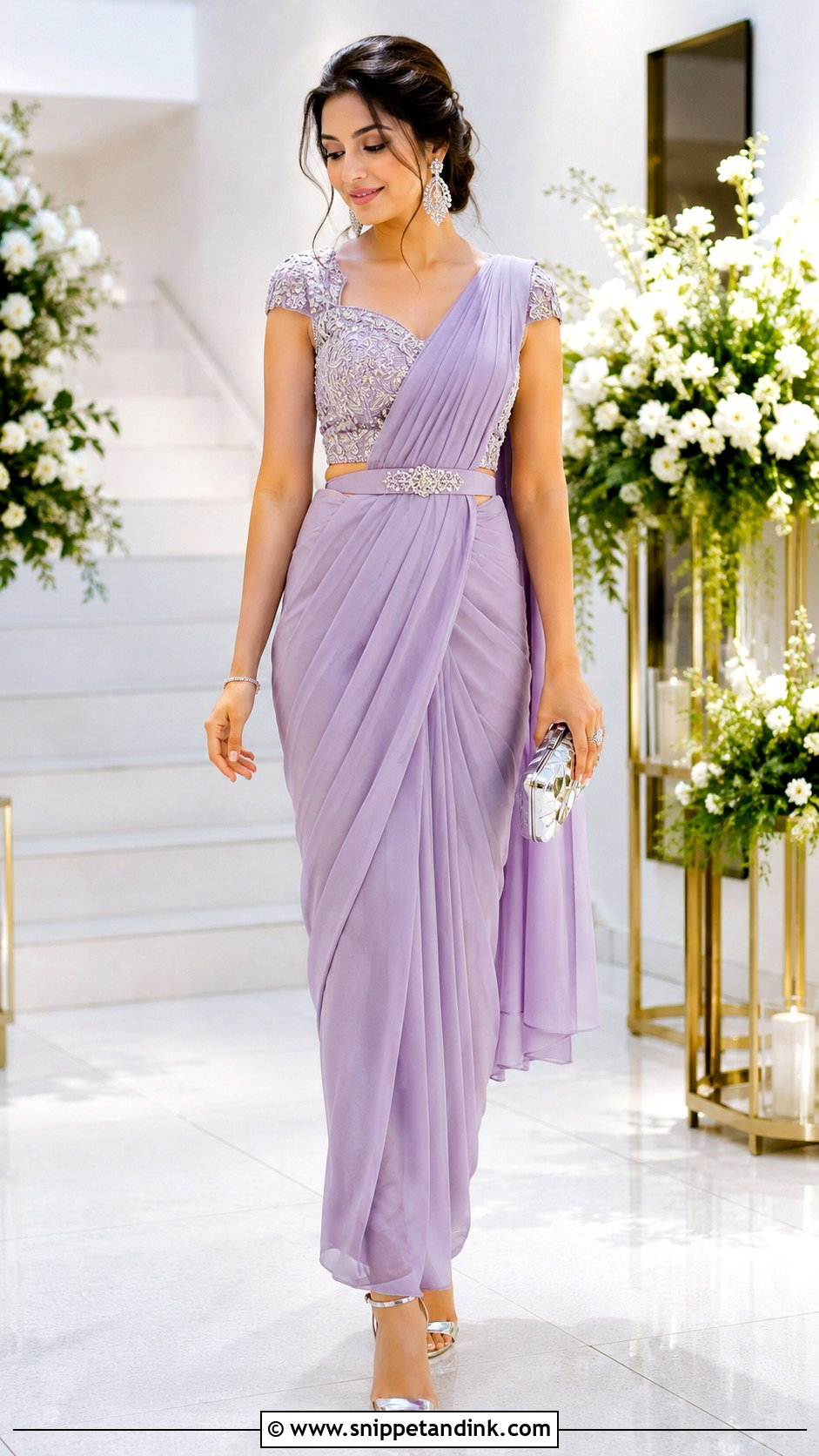
If you’ve never managed pleats and a pallu through hours of greetings, a pre-draped saree removes that worry entirely. It goes on in minutes. A corset blouse, cape sleeve or belt detail gives it a contemporary line. Soft metallics, pastels and ivory all work. If the outfit already shines, I’d swap a layered necklace for earrings and a bracelet. It suits cocktail-style engagements and hotel venues.
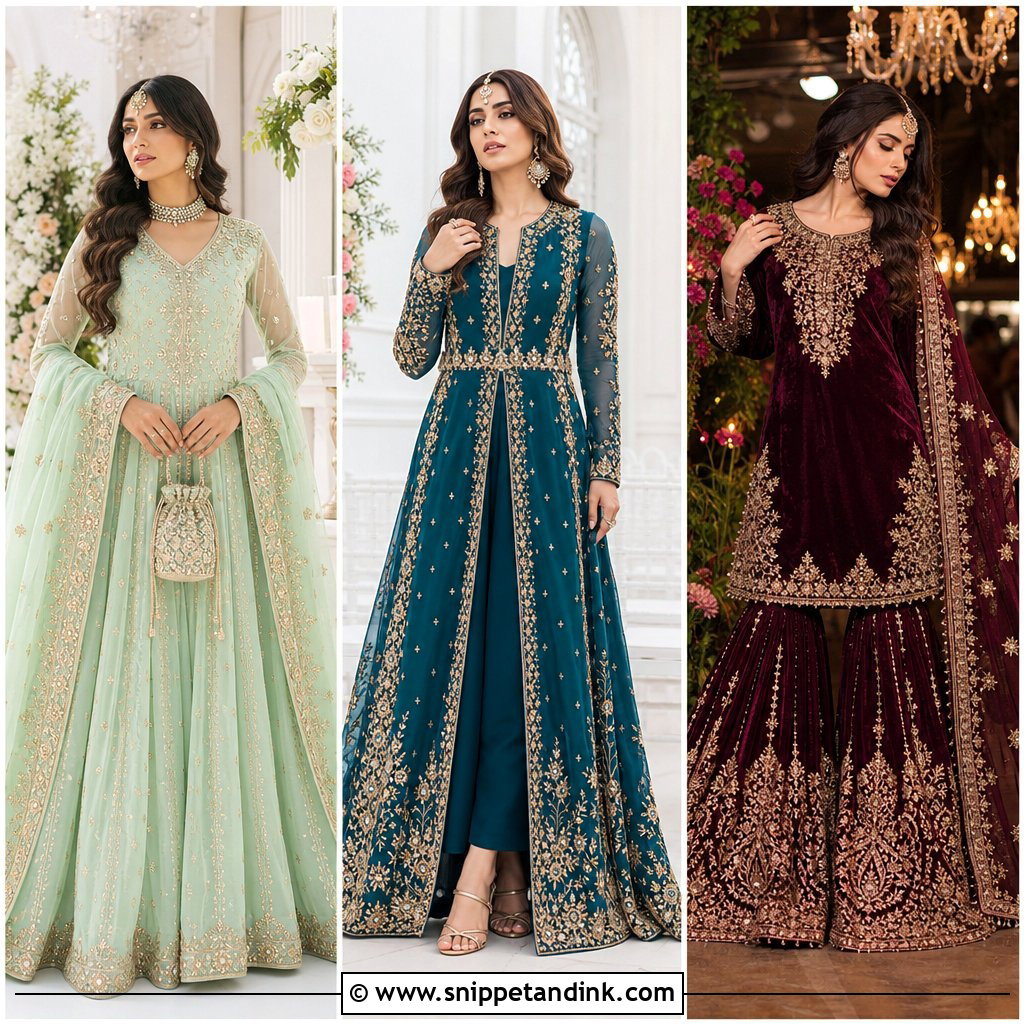
9. Anarkali Suit For Engagement
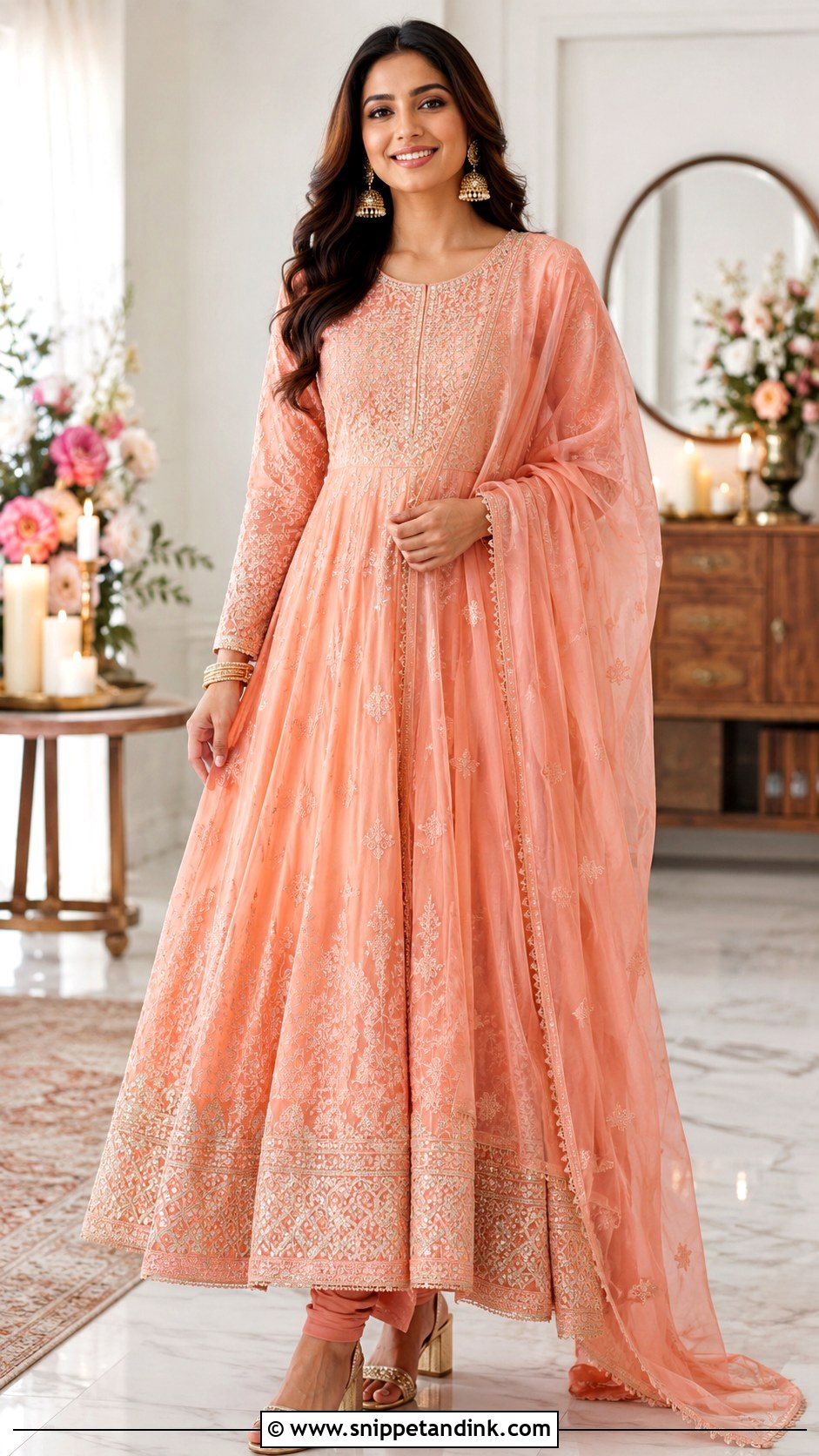
Anarkalis give coverage and movement, and a floor-length Anarkali with zari, gota or sequins can look as festive as a lehenga. Fabric should follow the season: velvet for winter, georgette, net or organza for warmer months. If you want more volume, a hidden can-can layer under the flare does it without extra weight from embroidery. Churidar or straight pants, a dupatta, jhumkas and embroidered heels finish it. It suits an intimate engagement at home.
10. Floor Length Anarkali For Engagement
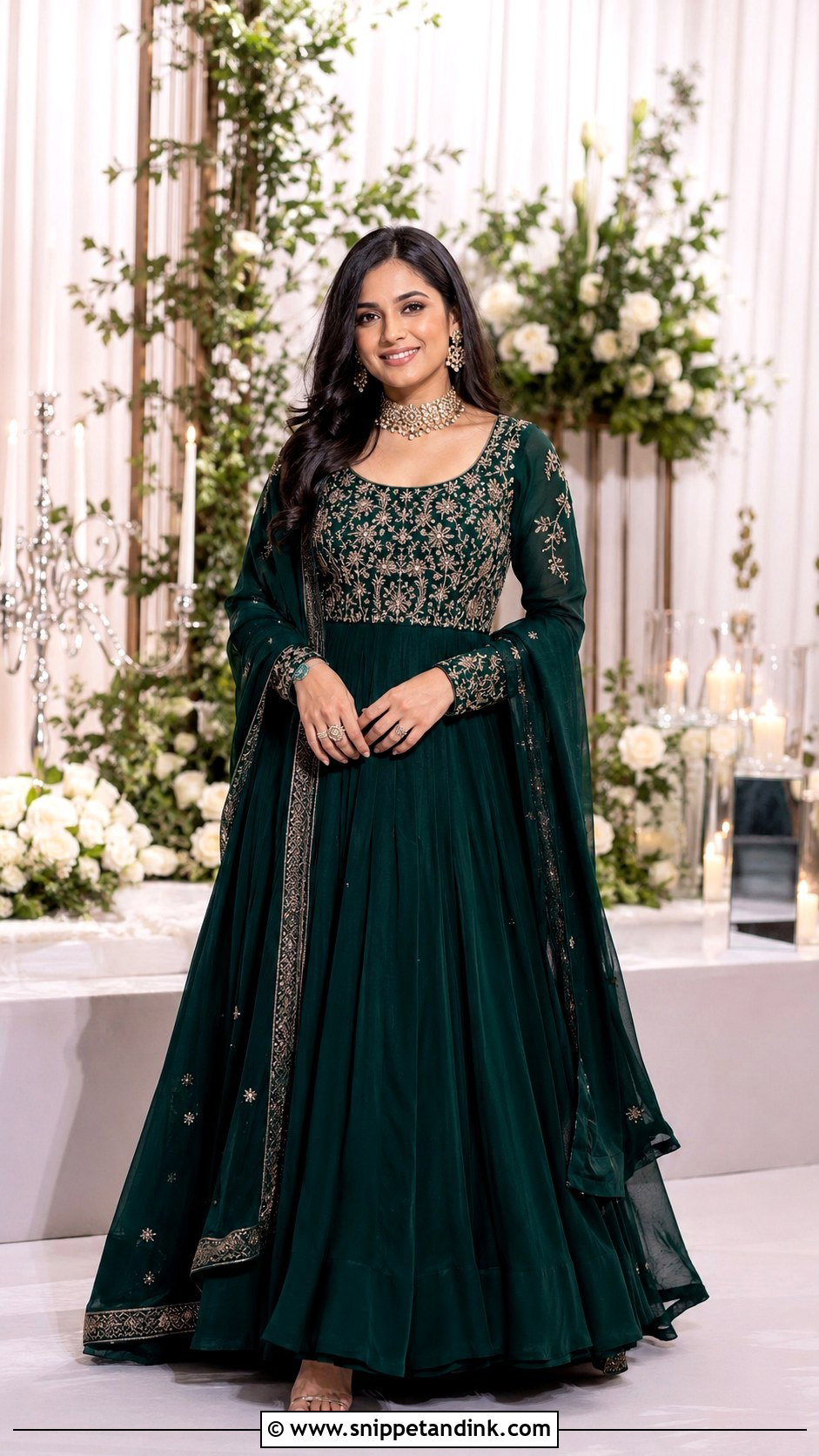
The floor-length version is about the flare. It is fitted through the bodice and flows from the waist, which flatters many figures and moves well when you walk to the stage. Pastels feel romantic; emerald, navy or wine look richer in the evening. Let the neckline pick the jewelry: a choker for a deep neck, long earrings for a high one. A center-part bun or soft curls both suit it.
11. Sharara Set For Engagement
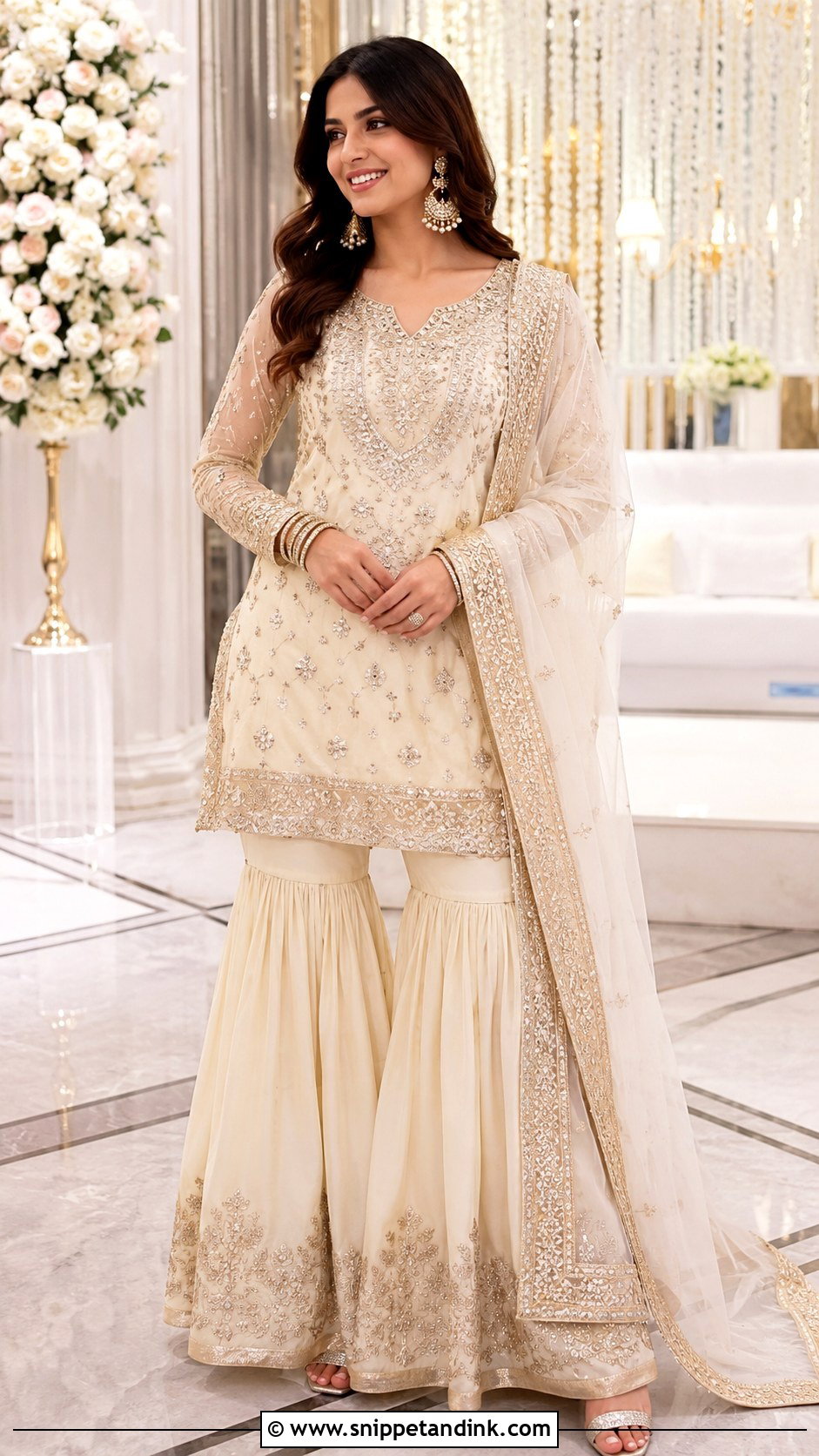
For a bride who’ll be sitting, walking and greeting for hours, a sharara is the comfortable answer. Wide flared pants move freely, and the kurta keeps the outline structured. Embroidery at the neckline, hem or dupatta gives it polish. A maang tikka and statement earrings add the bridal signal without weight. Juttis or block heels finish it.
12. Gharara Set For Engagement
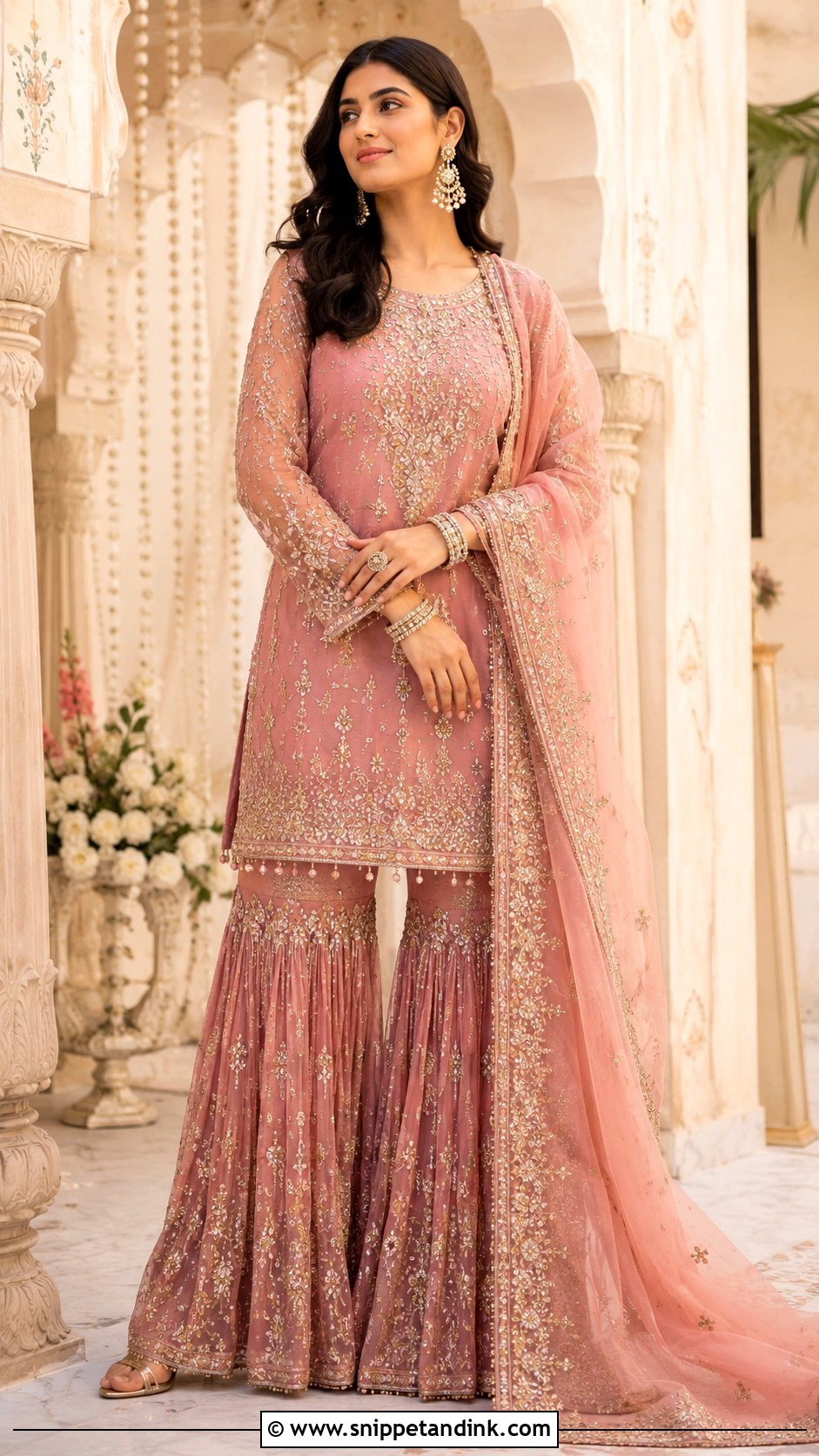
A gharara set is fitted down to the knee and flares from there, which gives a heritage feel and volume without a full skirt. Fine zari, gota or pearl embroidery suits it, and rose pink, ivory, mint or maroon all wear well. The dupatta tends to be large, so I pin it at the shoulder and the back of the head if it’s draped, which keeps it from sliding in photos. Jhumkas, bangles and embellished heels complete it.
13. Indo Western Gown For Engagement
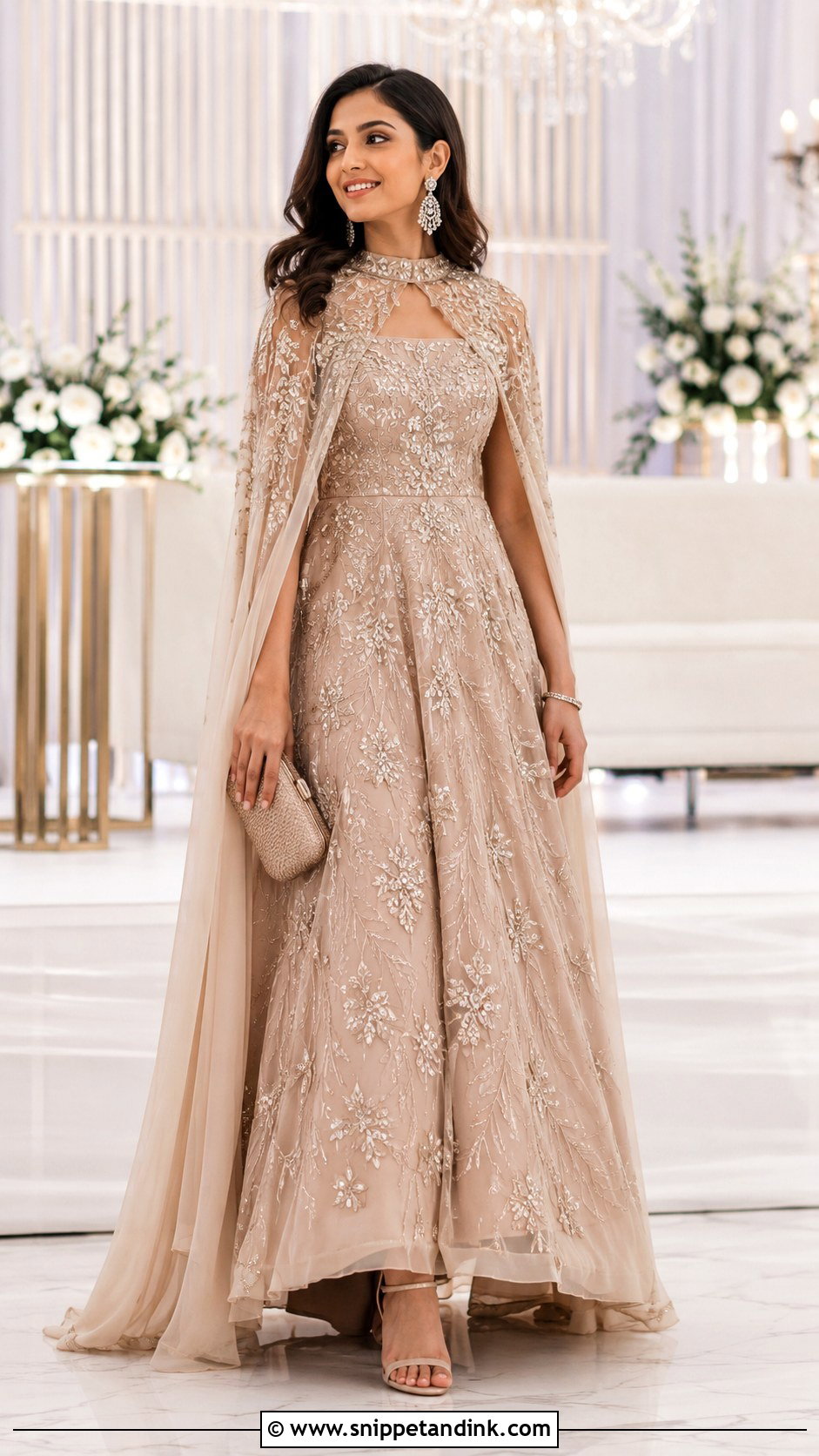
An Indo Western gown suits an engagement party in a banquet hall or a hotel ballroom. The Indian character comes from the details: beadwork, mirror accents, cape sleeves, draped panels or a dupatta-style shoulder. Soft net, satin, silk and crepe all hold the shape. Champagne, lavender, emerald or wine depending on the hour. Heels, statement earrings and a sleek clutch keep it clean.
14. Embroidered Gown For Engagement
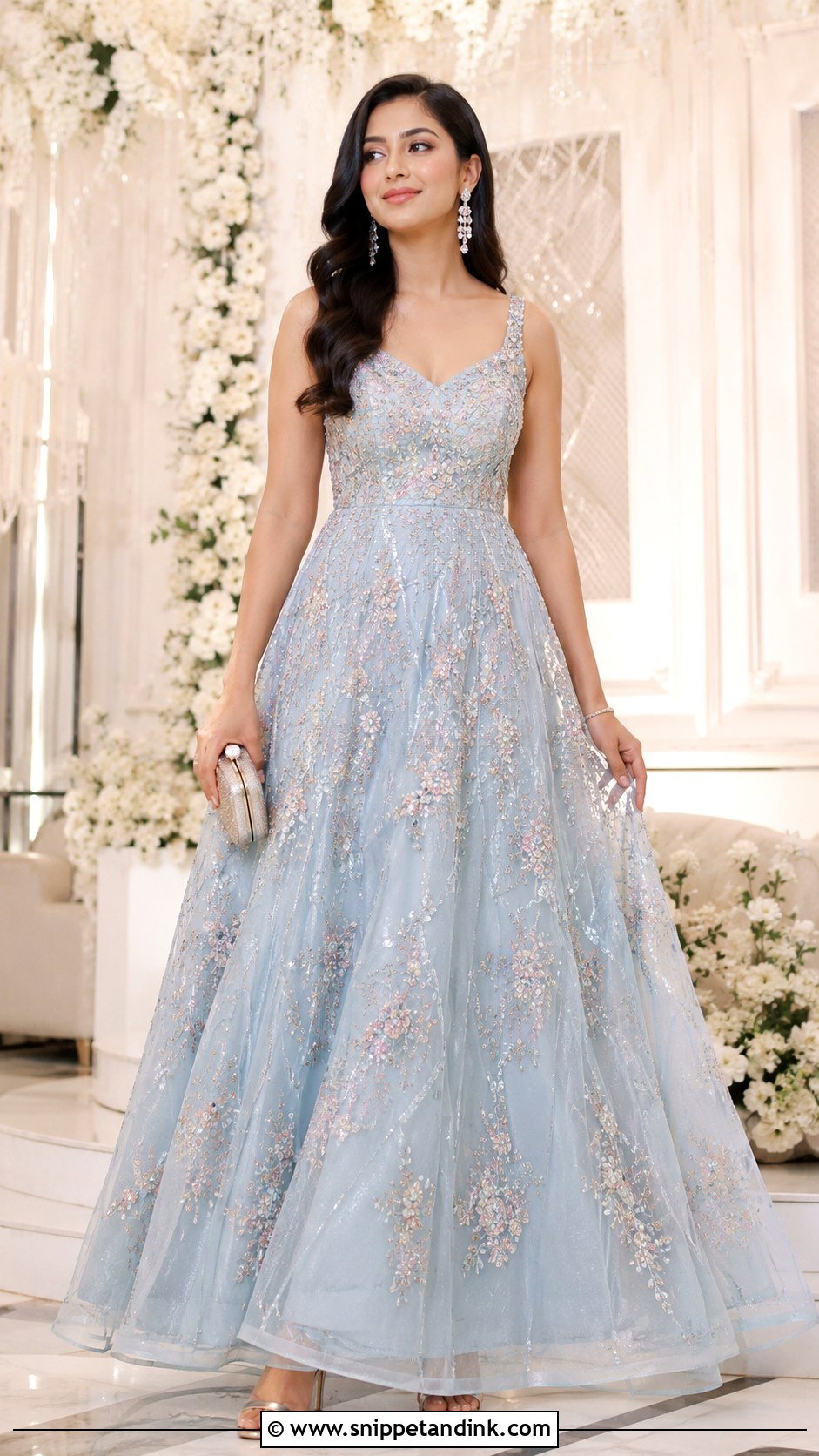
With an embroidered gown, the craft is the point, so I’d look closely at where the work sits: bodice, sleeves, waist or hem. Zardozi, threadwork, beads or crystals all show well. A-line and fit-and-flare shapes are easiest to wear for hours; a mermaid cut is more dramatic but limits how you sit. If the bodice is heavily worked, skip the necklace and let the neckline breathe. Earrings, a bracelet and heels finish it.
15. Cape Lehenga For Engagement
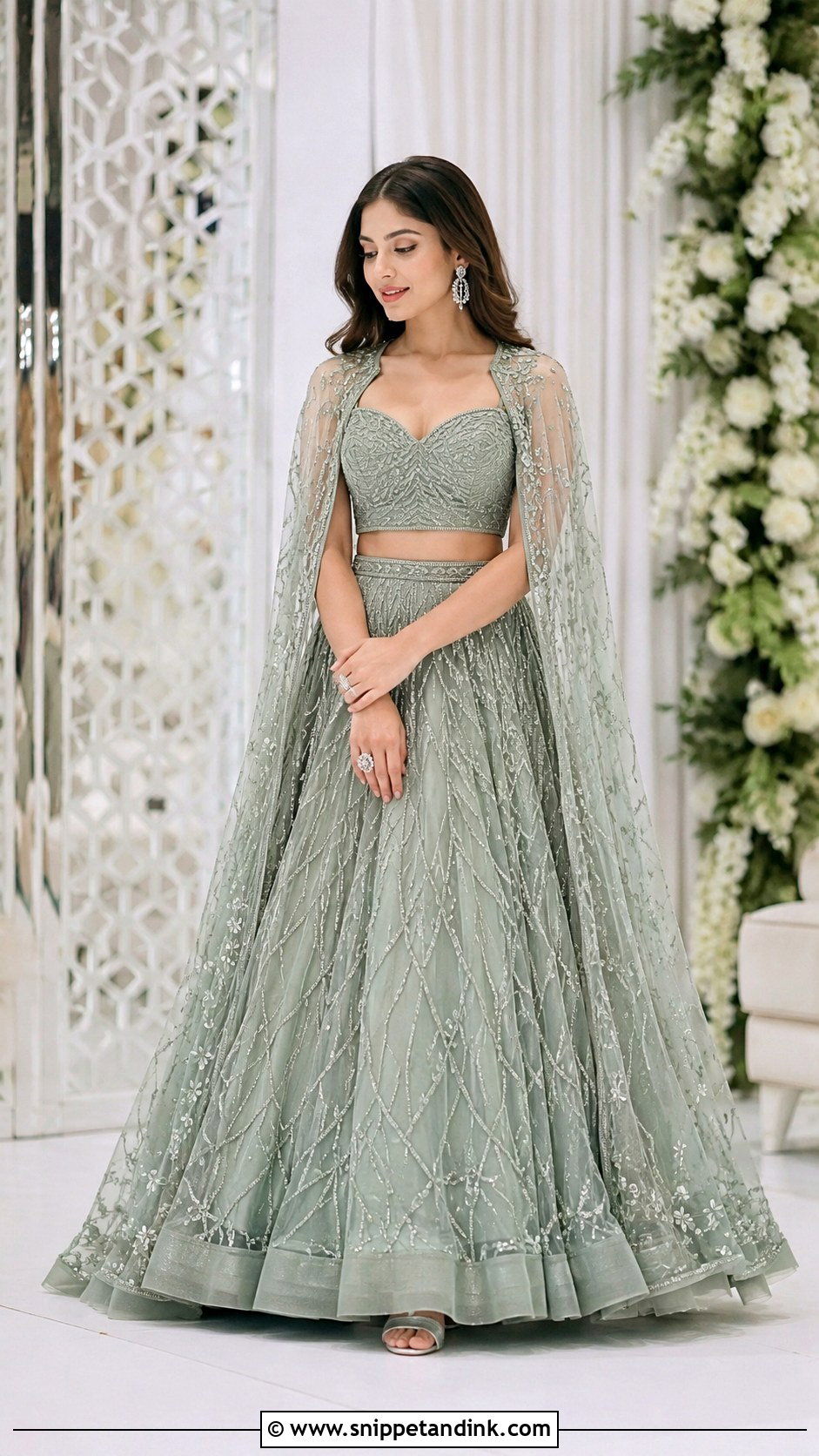
A cape replaces the dupatta, so there’s nothing to rearrange during photos or greetings, and it gives light arm coverage. Sheer embroidered, structured or pearl-edged capes all work over a lehenga with a fitted blouse. Pastels, metallics, ivory and jewel tones suit it. I’d keep the accessories to earrings and rings. A cape photographs well from the side and as you walk, which matters at a ring ceremony full of candid shots.
16. Jacket Lehenga For Engagement
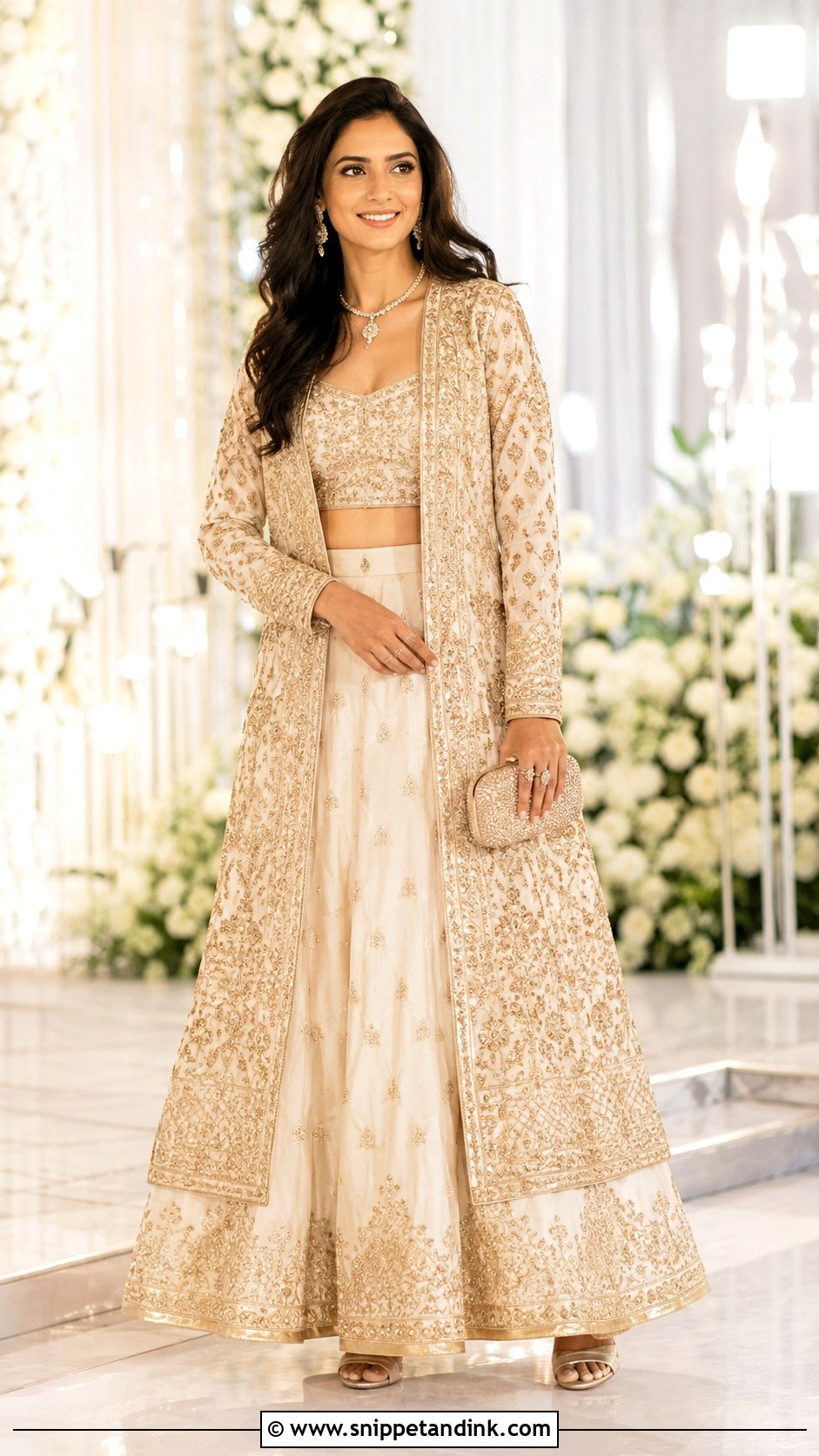
A long jacket over a lehenga skirt adds height and flow; a cropped one feels younger. Either replaces the dupatta. I recommend it for winter engagements and air-conditioned venues where a blouse alone feels cold. Ivory-gold, sage, blush or navy keep it polished. Clean jewelry and a neat hairstyle let the jacket details show.
17. Peplum Lehenga For Engagement
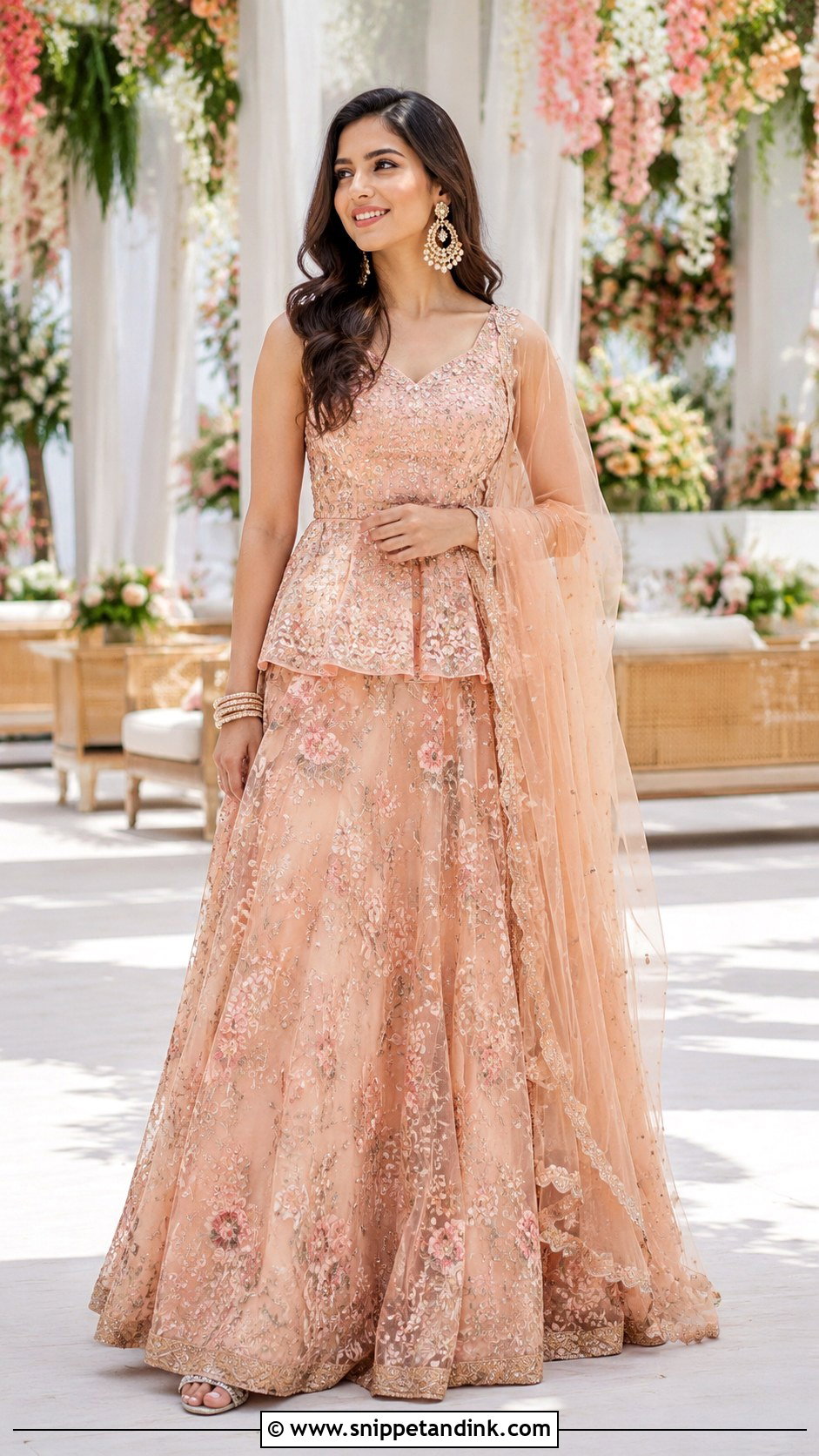
The peplum flares from the waist, giving definition while covering the midsection, which many brides prefer to a cropped blouse. A flowing skirt and light dupatta finish it; skip the dupatta if the peplum is heavily worked. Peach, rose or champagne suit daytime, teal or plum the evening. Statement earrings and heels complete it.
18. Mermaid Lehenga For Engagement
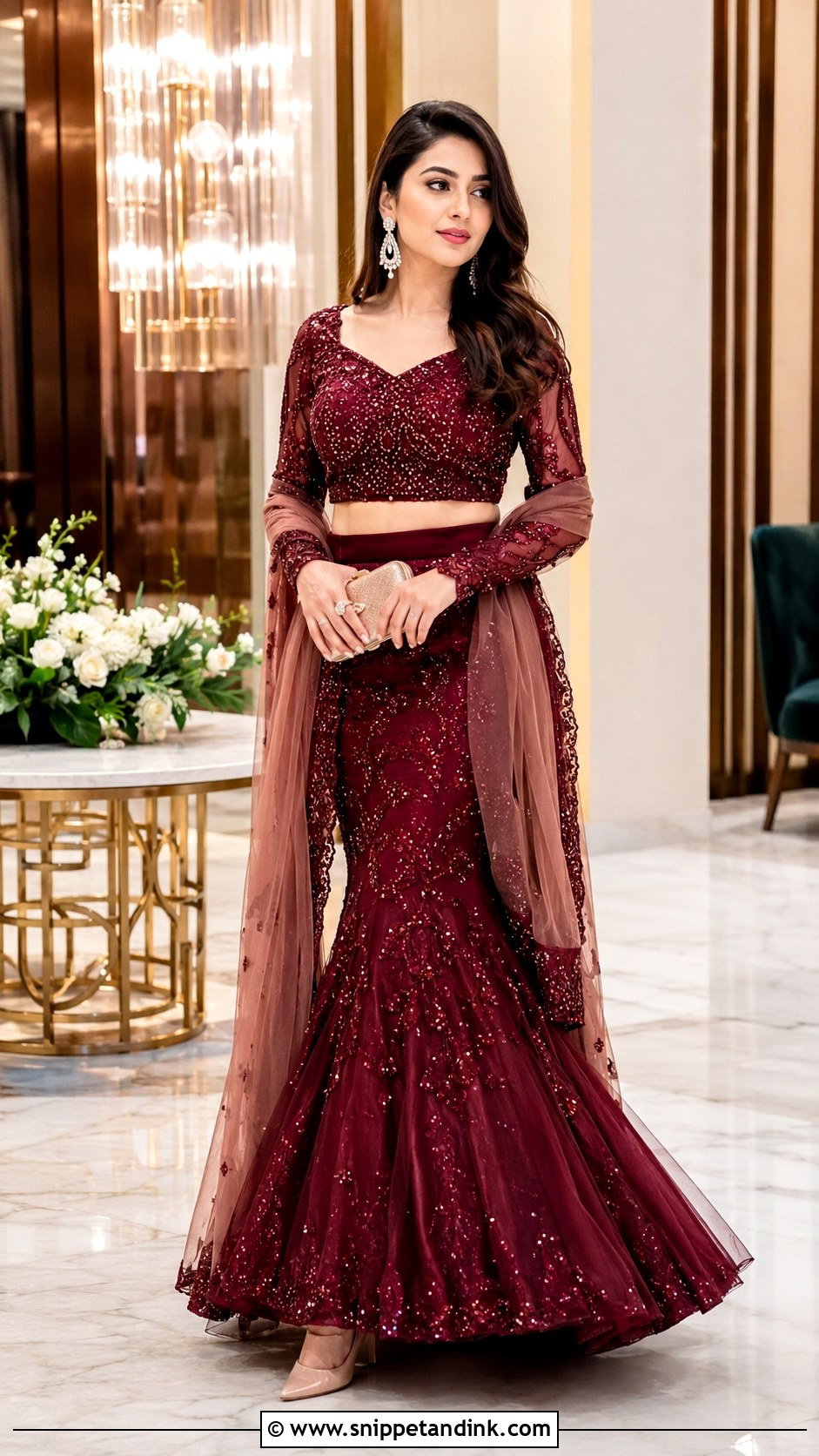
A mermaid lehenga hugs the hips and thighs before flaring near the hem, so the fitting is everything. Before finalizing, I have brides walk, climb a step and sit in it, because a skirt that’s too tight at the knee makes stage steps difficult. The blouse should balance the skirt: full sleeves or a square neckline work well. Sequins or crystals suit an evening hotel venue. Pointed heels and sleek jewelry finish it.
19. Organza Lehenga For Engagement
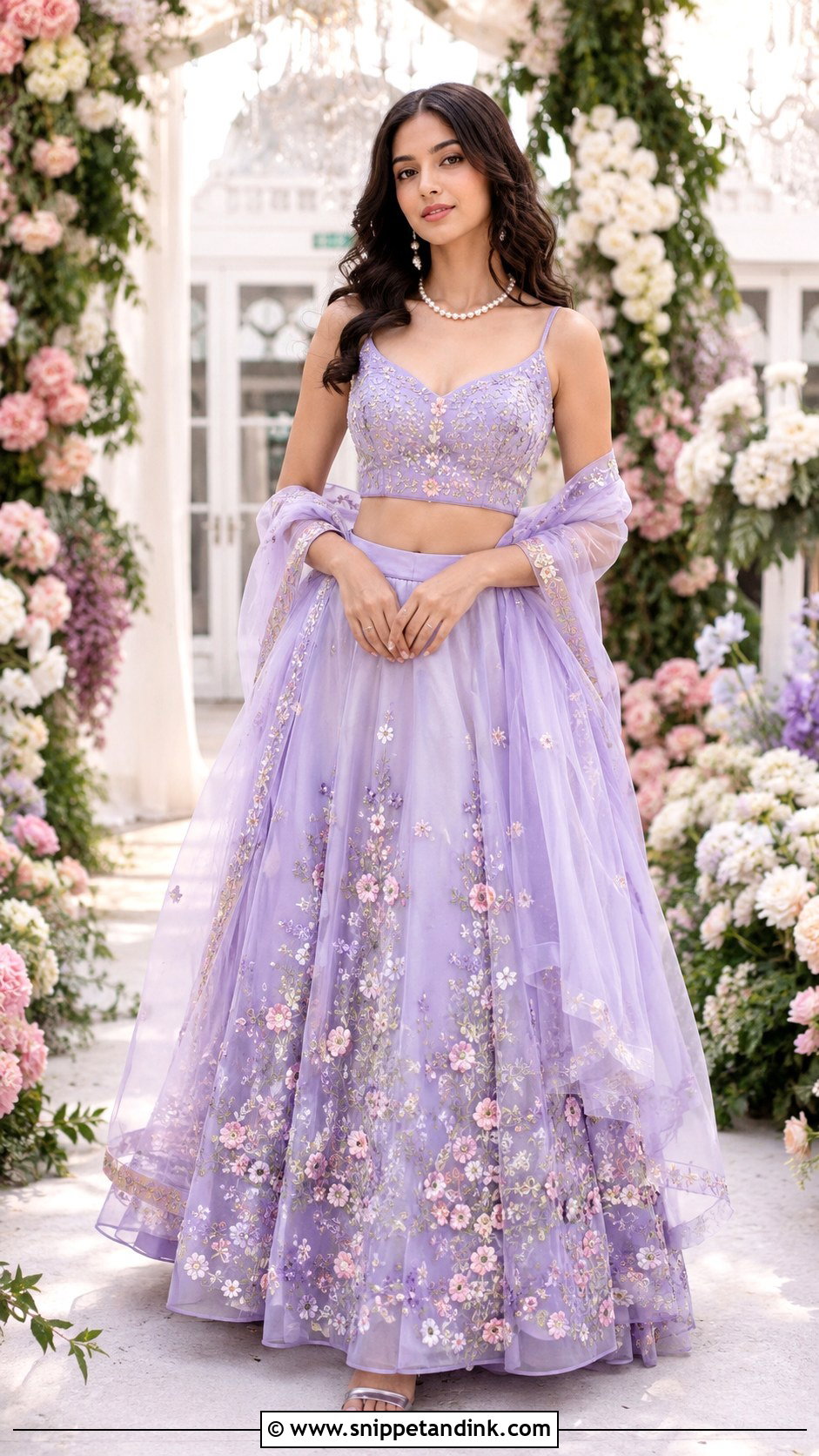
Organza has a crisp, light body, so it gives a lehenga volume without weight. It also creases where you sit and shows water spots, worth knowing for an outdoor daytime ceremony. Floral embroidery, pastel threadwork or pearls show well on it. Blush, lavender or sage with a fitted blouse and a sheer dupatta keep it airy. Delicate jewelry and soft curls complete it.
20. Velvet Lehenga For Engagement
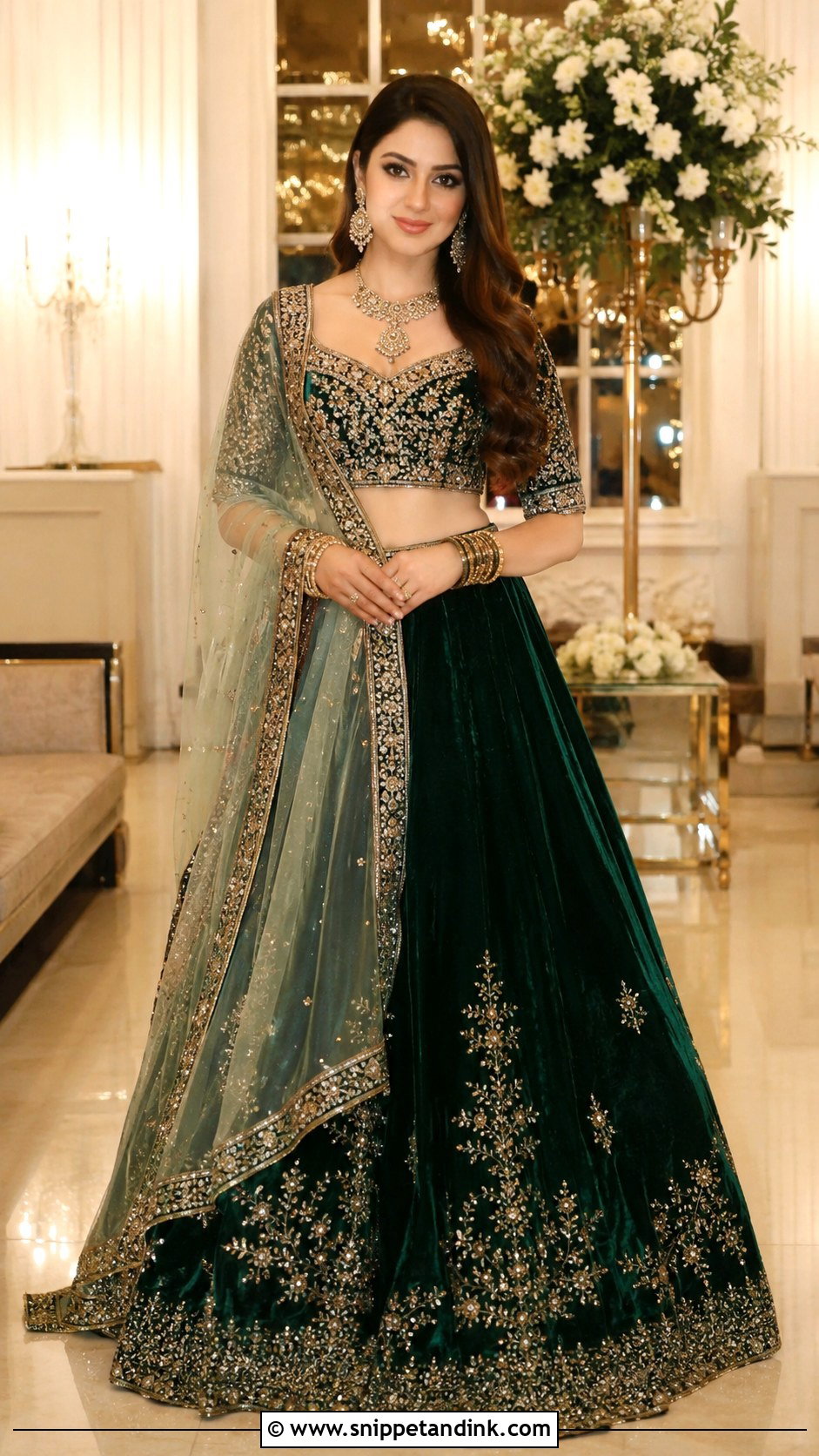
A velvet lehenga belongs to winter and to evening. The pile absorbs light and looks rich, so it needs less embroidery than other fabrics. Maroon, emerald, navy and royal blue suit it. Velvet is also heavy and warm, so I balance it with a dupatta in net, organza or tissue, and choose supportive heels. Kundan, polki or antique gold jewelry suits it best.
21. Mirror Work Lehenga For Engagement
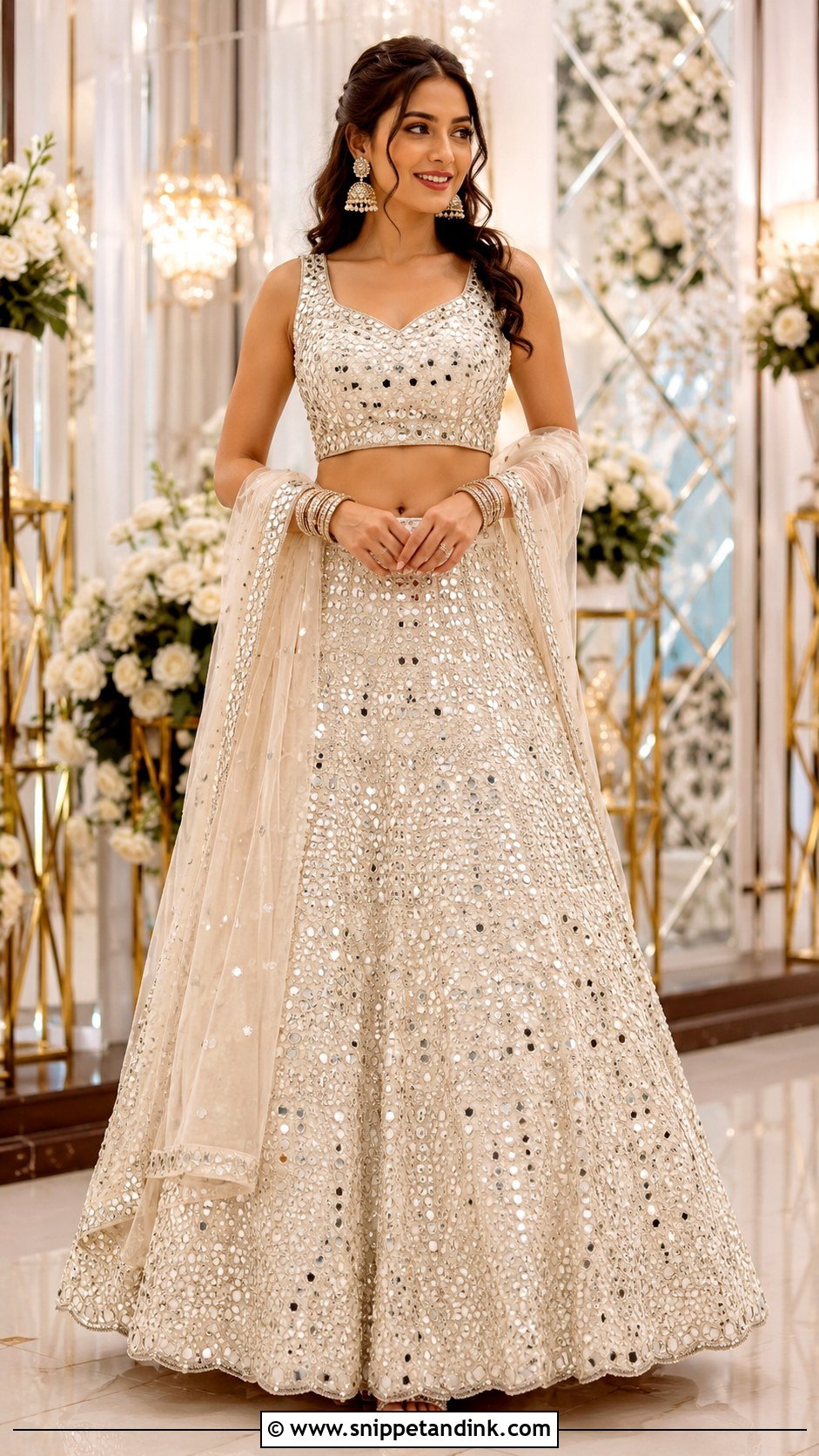
Mirror work suits an evening engagement because the mirrors catch every light in the room. The work is heavy and the edges can catch on sheer fabrics, so I keep the blouse well lined and the dupatta light. Ivory, pink, teal or emerald all work. With that much shine, the jewelry should stay quiet: jhumkas, bangles or a delicate choker.
22. Sequin Saree For Engagement
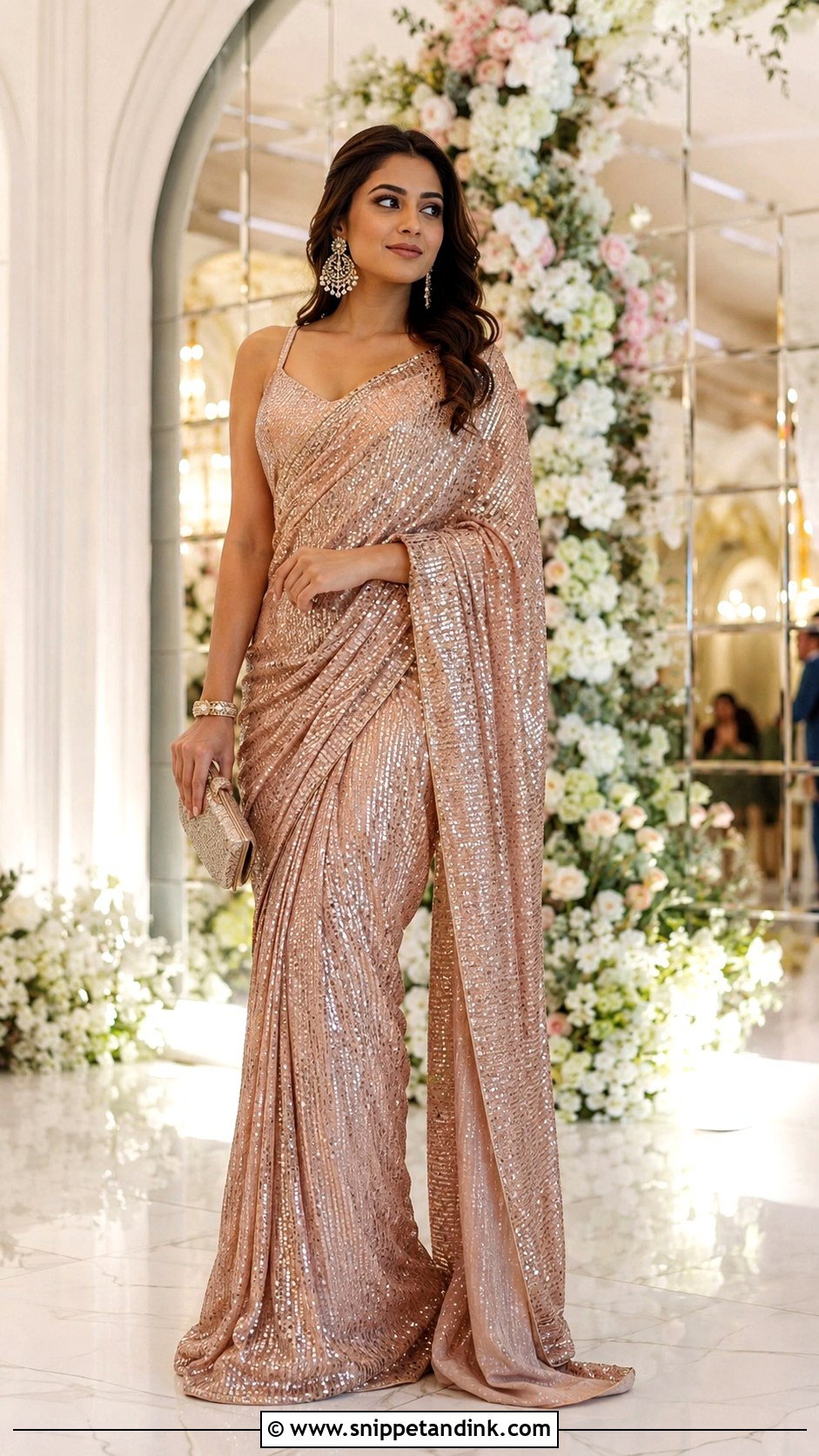
A sequin saree is for the evening. It shines without bulk, which makes it easier to wear than a heavily worked lehenga in a crowded banquet hall. Champagne, rose gold, silver or navy look polished. Plain blouse if the saree is heavy, embellished blouse if the saree is light. Heels genuinely improve the fall of a sequined drape, so this is not the outfit for flats.
23. Ruffle Saree For Engagement
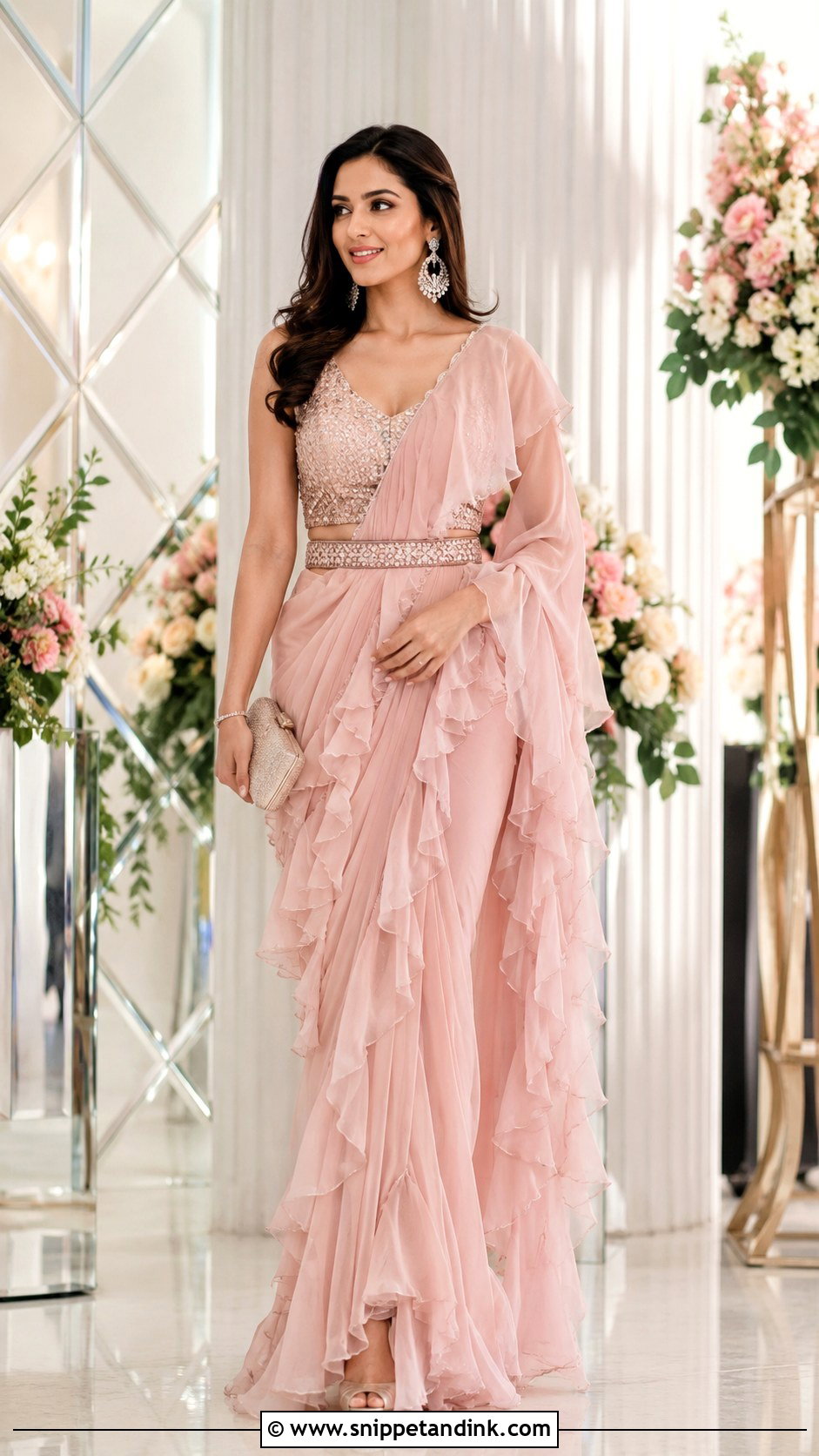
Ruffles give a saree movement and a fashion-forward mood. Chiffon and georgette ruffles fall softly; organza ruffles stand away from the body and add volume at the hip. A structured blouse and a belt keep it balanced and hold the drape. Blush, coral or metallic champagne suit it. If the blouse is detailed, I’d skip a heavy necklace.
24. Chikankari Lehenga For Engagement
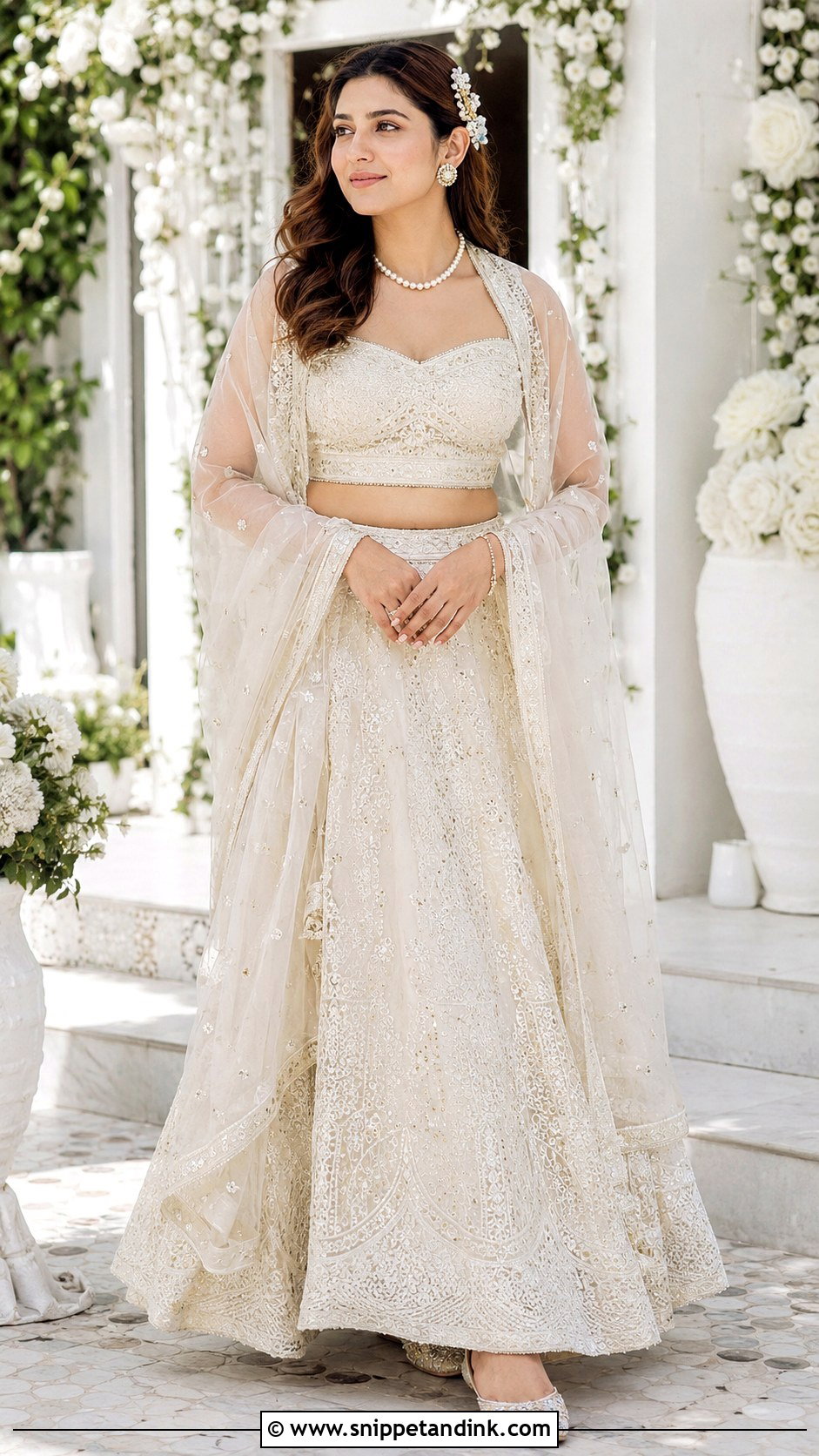
Chikankari is fine shadow and knot stitching on light fabric, so a lehenga in it stays breathable at a summer daytime engagement. It reads subtle from a distance. To make it festive, add mukaish, pearls or sequins, or a lightly embellished dupatta. Ivory, pastel pink and mint are lovely in it. Pearl or polki jewelry and comfortable heels or embellished flats suit the venue.
25. Floral Lehenga For Engagement
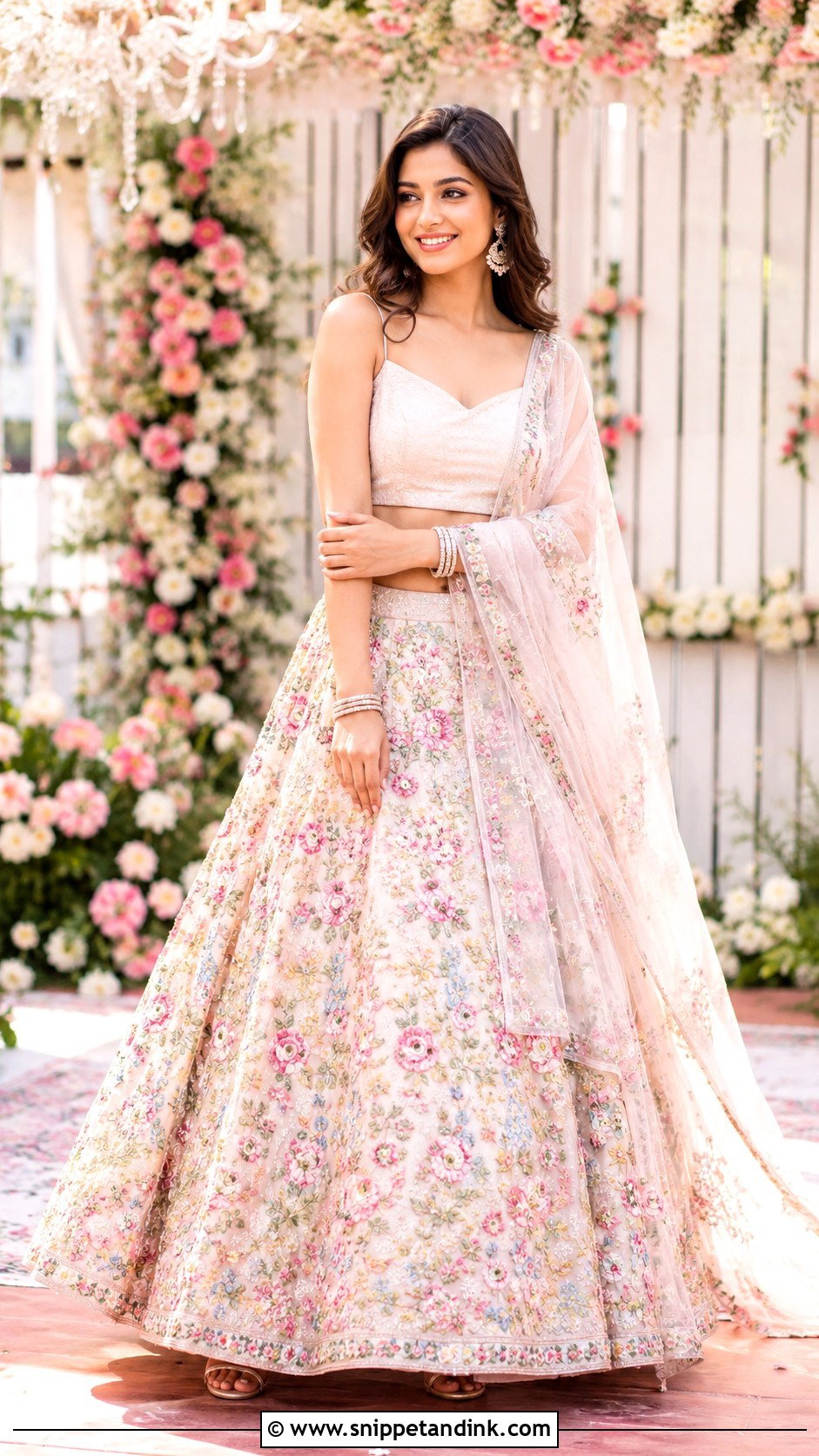
Florals can be printed, embroidered or worked in threadwork, and the method sets the formality. Printed is the most relaxed; embroidered reads more like an occasion. Soft organza, silk and georgette carry them well. If the skirt is busy, keep the blouse plain. Pastel florals belong to daytime and gardens; deeper tones suit evenings. Earrings, bangles and soft makeup finish it.
26. Printed Lehenga For Engagement
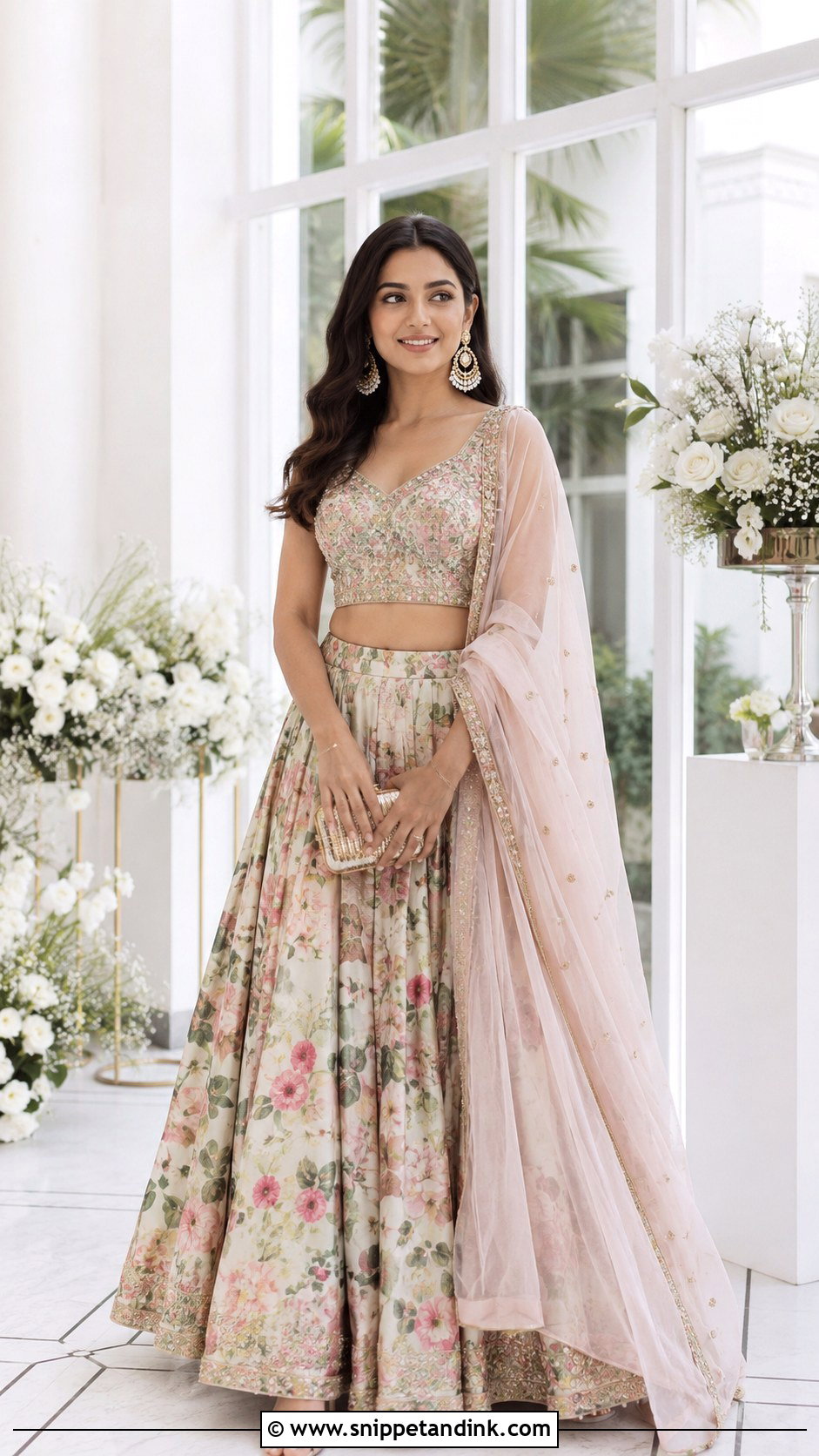
A printed lehenga weighs a fraction of an embroidered one and rewears easily. Digital, block or heritage prints look festive once a little sequin, gota, mirror or zari detailing goes on top. Silk, organza or cotton-silk blends all work. Pair it with a statement blouse and comfortable heels for a daytime engagement or relaxed venue where comfort matters as much as polish.
27. Co Ord Set For Engagement
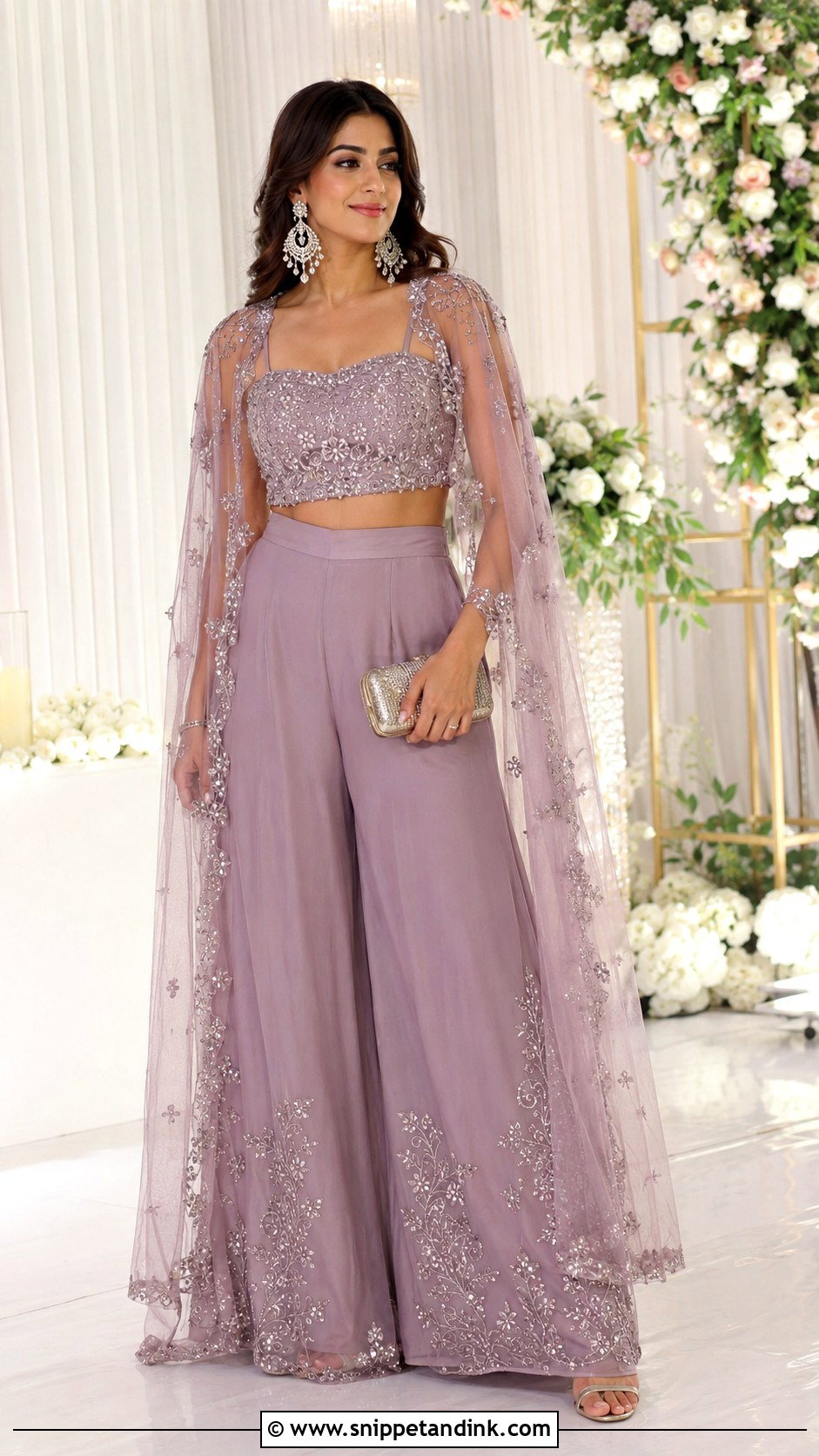
A co ord set can work for an engagement if the fabric and finish clearly say occasion. Choose silk, brocade, organza, satin or crepe rather than cotton, and add zari, sequins, mirror work or pearl embroidery. An embroidered crop top with palazzos, a cape co ord or a kurta-style top with wide-leg trousers moves more easily than a lehenga. Heels, statement earrings and a clutch finish it.
28. Palazzo Suit For Engagement
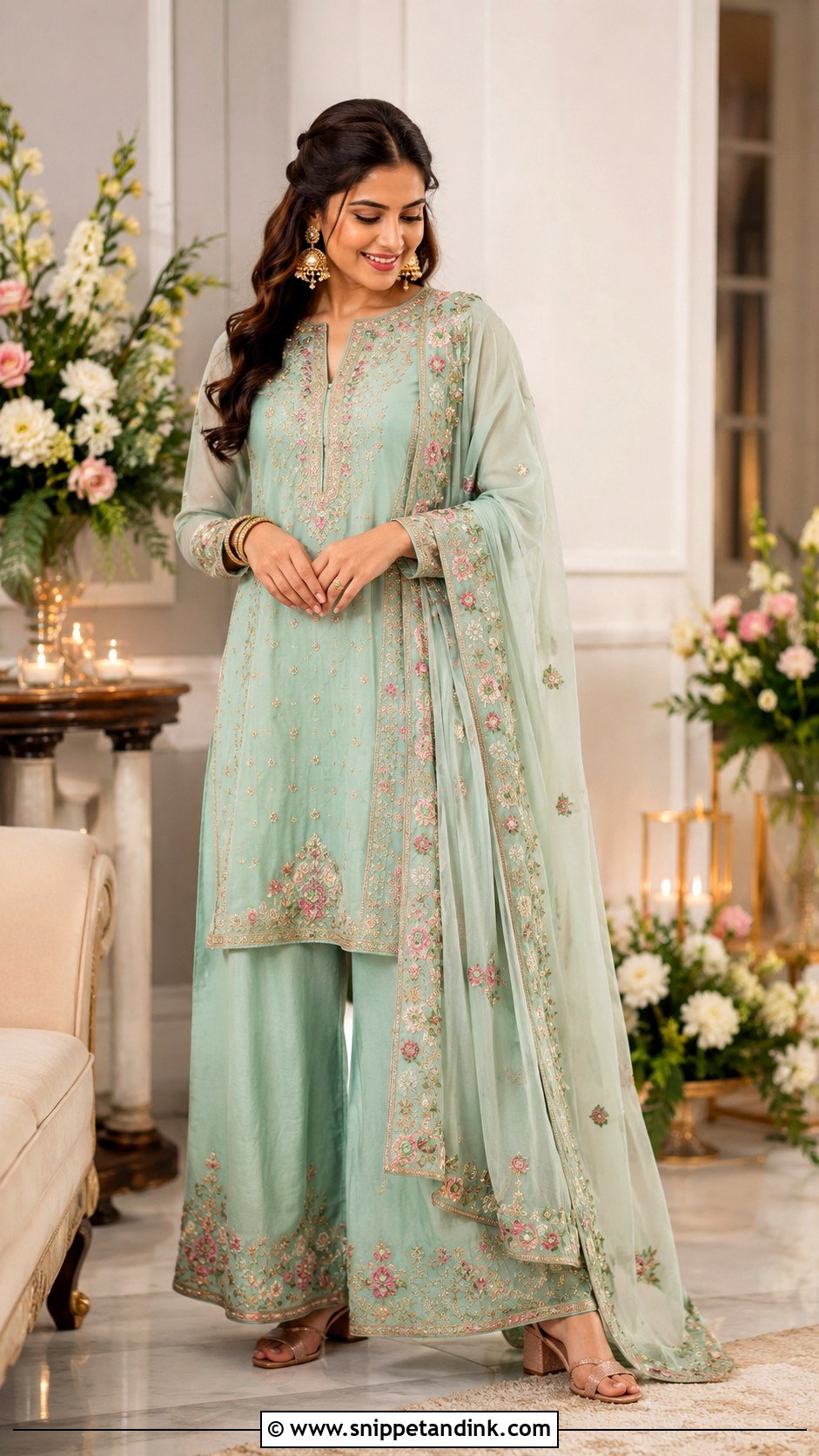
For a relaxed but festive ceremony, a palazzo suit gives full coverage and easy movement. A long kurta, short kurti or asymmetric top over wide palazzos, plus a detailed dupatta, does it. The embroidery should be at the neckline, sleeves and borders, where it shows in photographs. Pastels look soft; jewel tones richer. Juttis, block heels or embellished sandals suit the venue.
29. Silk Kurta Set For Engagement
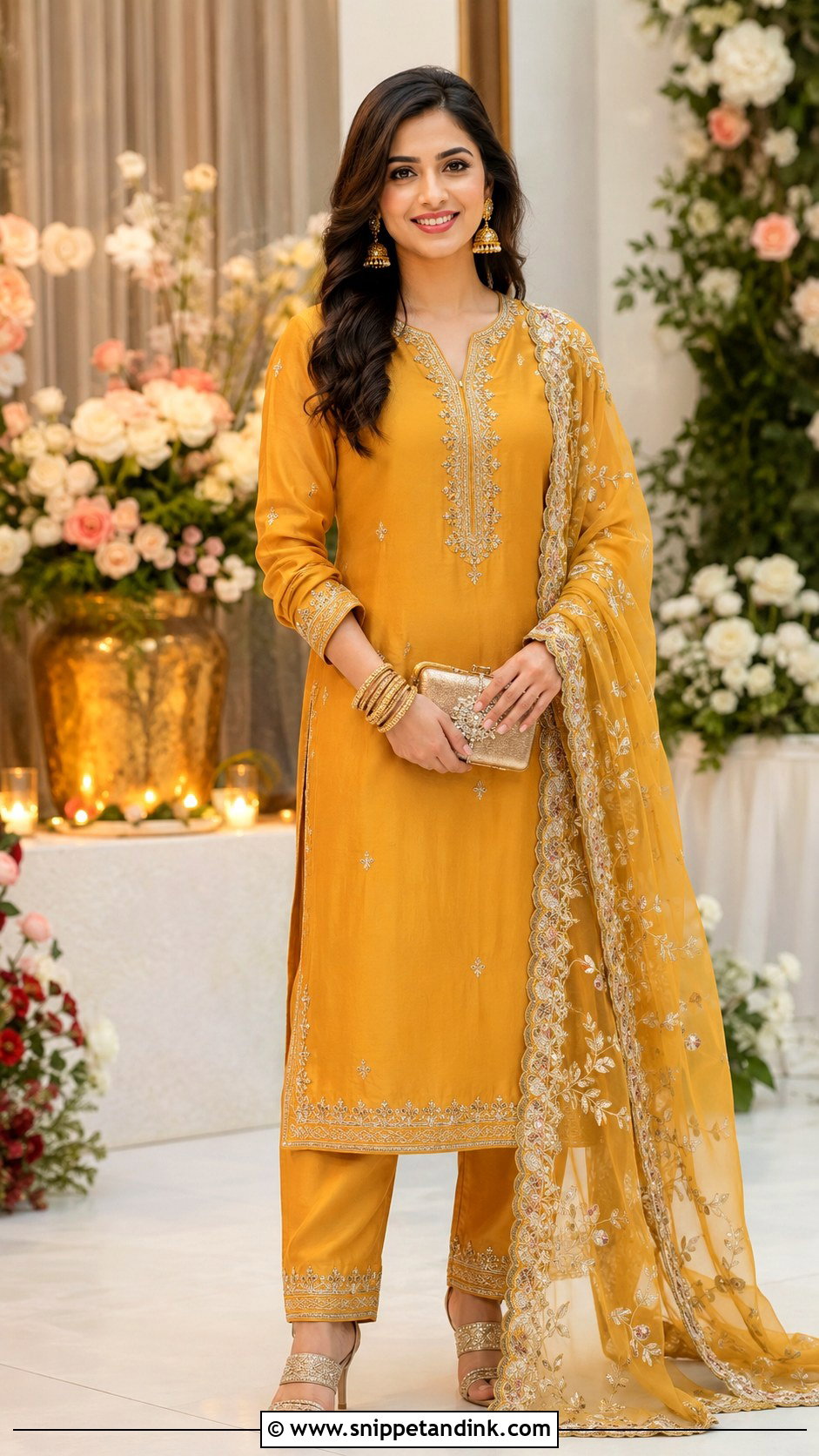
A small engagement at home with close family is where I’d suggest a silk kurta set. Pair it with straight or cigarette pants or a skirt, and let an embroidered dupatta make it bridal. Mustard, teal, rani pink and rust look festive in silk. Gold jewelry, jhumkas and bangles complete it, and a waist belt adds shape. You’ll wear it to festivals for years.
30. White Gown For Indian Engagement
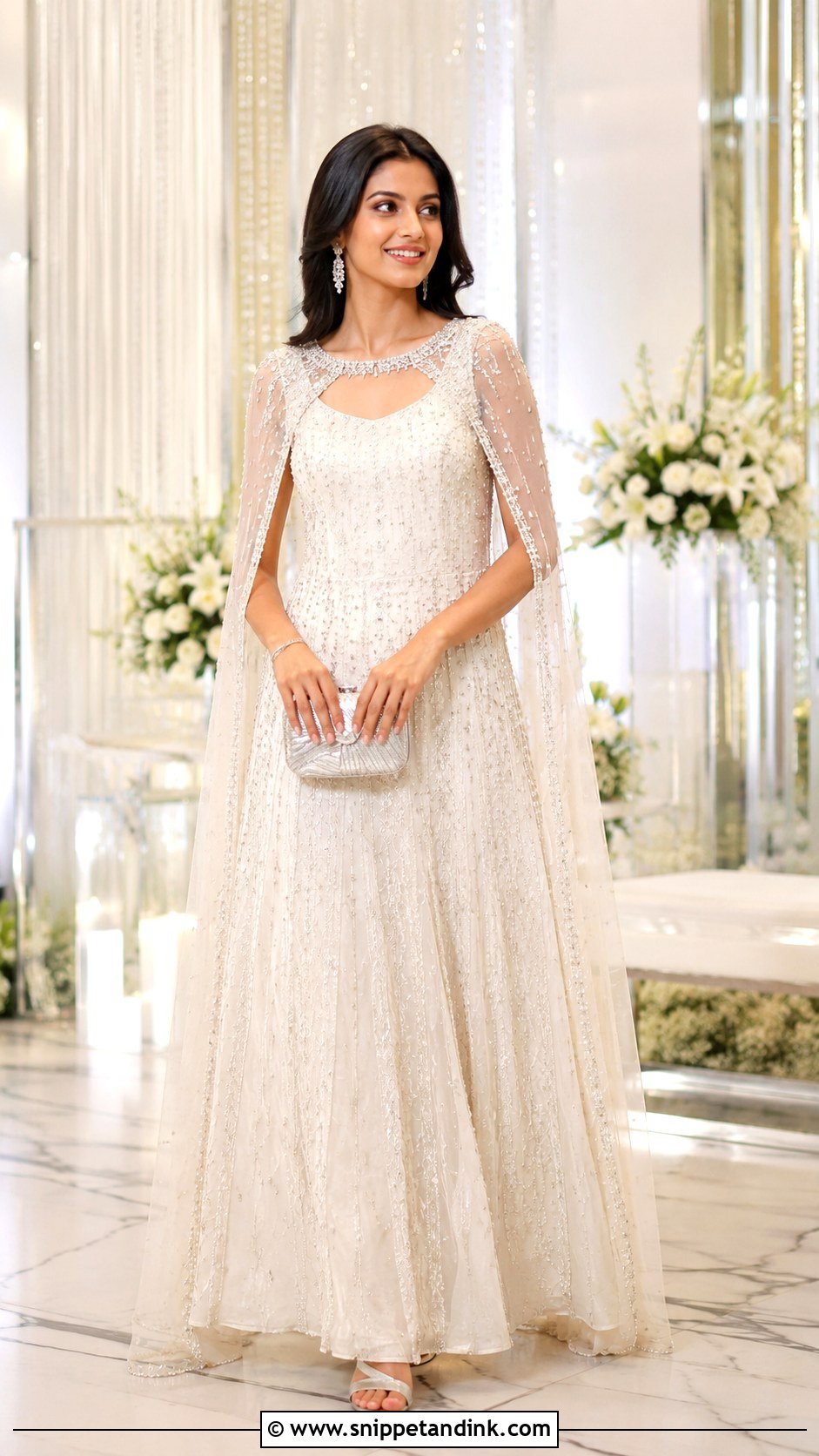
A white gown suits a modern, formal evening engagement, but I’d always confirm the family is comfortable with white first. It needs Indian detail to feel right for the occasion: zardozi, sequins, mirror accents or a dupatta-style overlay. A-line, fit-and-flare and cape gowns move gracefully. Emerald accents or pearls add contrast. Polished makeup and sleek or softly curled hair complete it.
Clearing the Way for the Ring
The ring exchange is the reason everyone is there, and the hand-held-up photo is the one people share. Yet I regularly see it spoiled by the outfit. Before the ceremony, I check the ring hand as carefully as the neckline.
- Sleeves: full or bell sleeves can drop over the knuckles when the hand is raised. Elbow or three-quarter sleeves keep the hand clear.
- Bangles: keep the ring hand lighter, so a stack doesn’t slide down over the fingers.
- Hathphool and rings: skip them on the ring finger and the hand that will be photographed.
- Nails: a clean, neutral or soft shade with no chips. The ring photograph is a close-up.
- Dupatta: pin it at the shoulder so it doesn’t fall across your arm as you extend it.
At the final fitting I ask the bride to raise her ring hand to shoulder height, as if someone were sliding a ring on, and hold it there. That one gesture shows whether the sleeve drops, whether the blouse lifts at the waist, and whether the dupatta pin holds. It takes ten seconds and saves the most important photograph of the evening.
If the ring is a surprise and you don’t know its metal, choose neutral nails and jewelry in a tone that sits happily beside yellow gold and platinum. Champagne gold and pearl usually manage both.
Comfort, Color and a Hand Ready for the Ring
An engagement outfit is a smaller version of a wedding decision: it should suit the ceremony, your comfort, the family, the season and the room’s light. Lehengas feel bridal, sarees feel composed, gowns feel modern, and suits or co ord sets keep you comfortable. Check the fabric weight, the balance of jewelry, the shoes and how the outfit moves. Then look at the colors next to your venue’s decor, because that’s what the photos will show for years.
You'll Like These Ideas:


Leave a Reply