
By the time the speeches end, most brides I dress are ready to step out of a gown that has been sat in, hugged in and bustled for hours. The second look has one job: let you move. A good after party wedding dress clears the floor, zips up without a team of helpers and survives a few hours of dancing without needing adjustment. Minis, satin slips, feather hems, sequins, pearls, bubble skirts and corset bodices are all around right now, and I’ve kept midi and jumpsuit options in the mix too, because the right pick depends on your venue, your shoes and how big a change you actually want the room to notice.

Timing the Change Between Dessert and the First Big Song
The change itself is where after-party plans fall apart, not the dress. Most brides slip away after dinner and before the dancing opens, while guests are getting drinks. If you leave it until the floor is already full, you miss the best part of the night and the photographer loses track of you.
I set the room up before the ceremony so the change takes minutes rather than half an hour:
- The second dress hanging unzipped, with any straps or hooks already undone.
- Your second pair of shoes, unbuckled, next to it. Swapping heels is half the relief.
- Earrings and any hair accessory for the new look in a small dish, so nothing gets lost in a bag.
- Blotting papers, deodorant and a few wipes. A ceremony gown is warm to wear.
- One helper only, someone calm with steady hands. A crowd in a small room slows everything down.
Tell the photographer and the DJ when you plan to go. A short reveal as you walk back in is worth having, and it only happens if the people running the room know it’s coming. If your hair still has veil pins in it, ask your stylist beforehand which ones can come out without the style dropping.
1. White Sequin Mini Wedding Dress
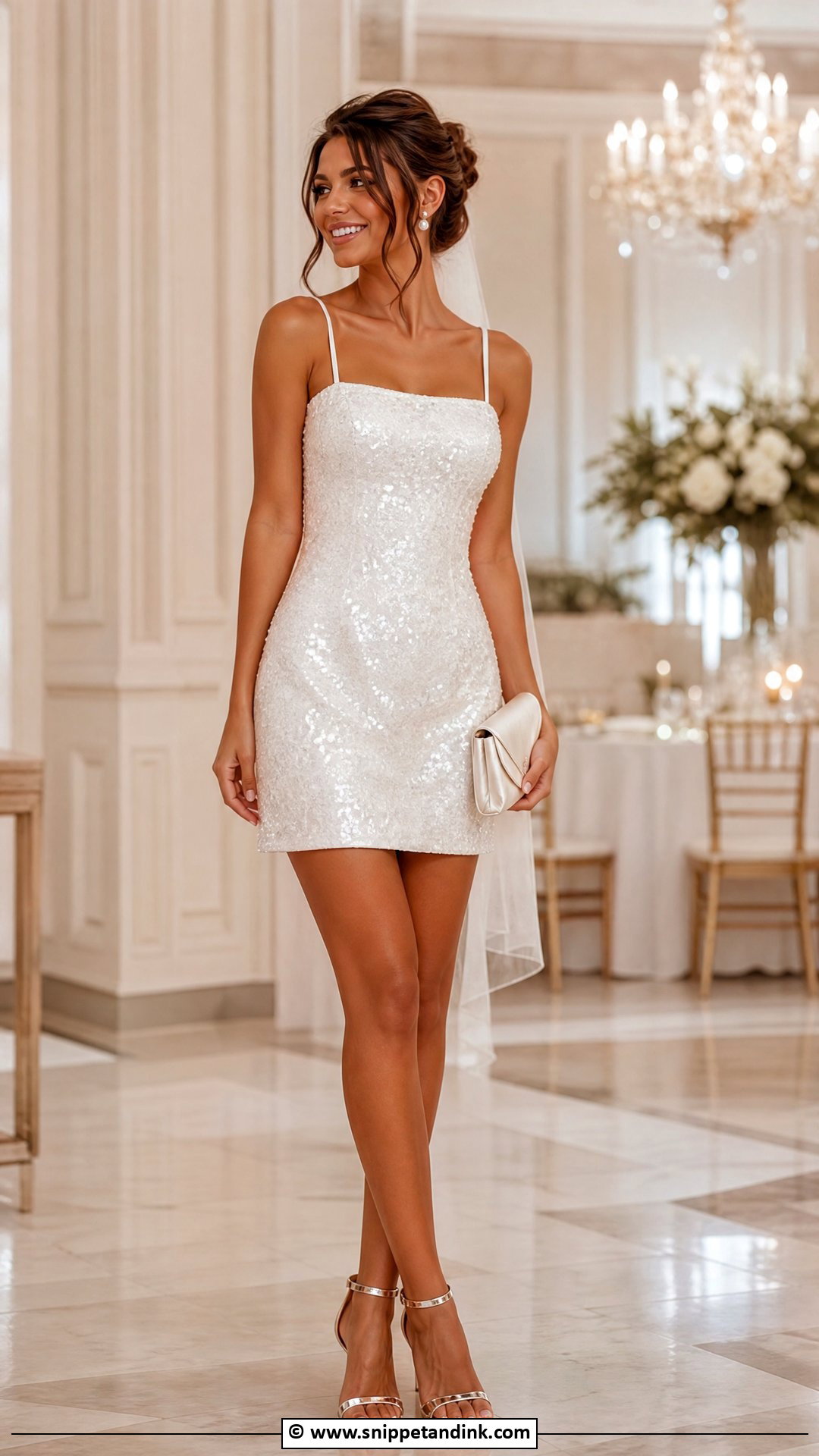
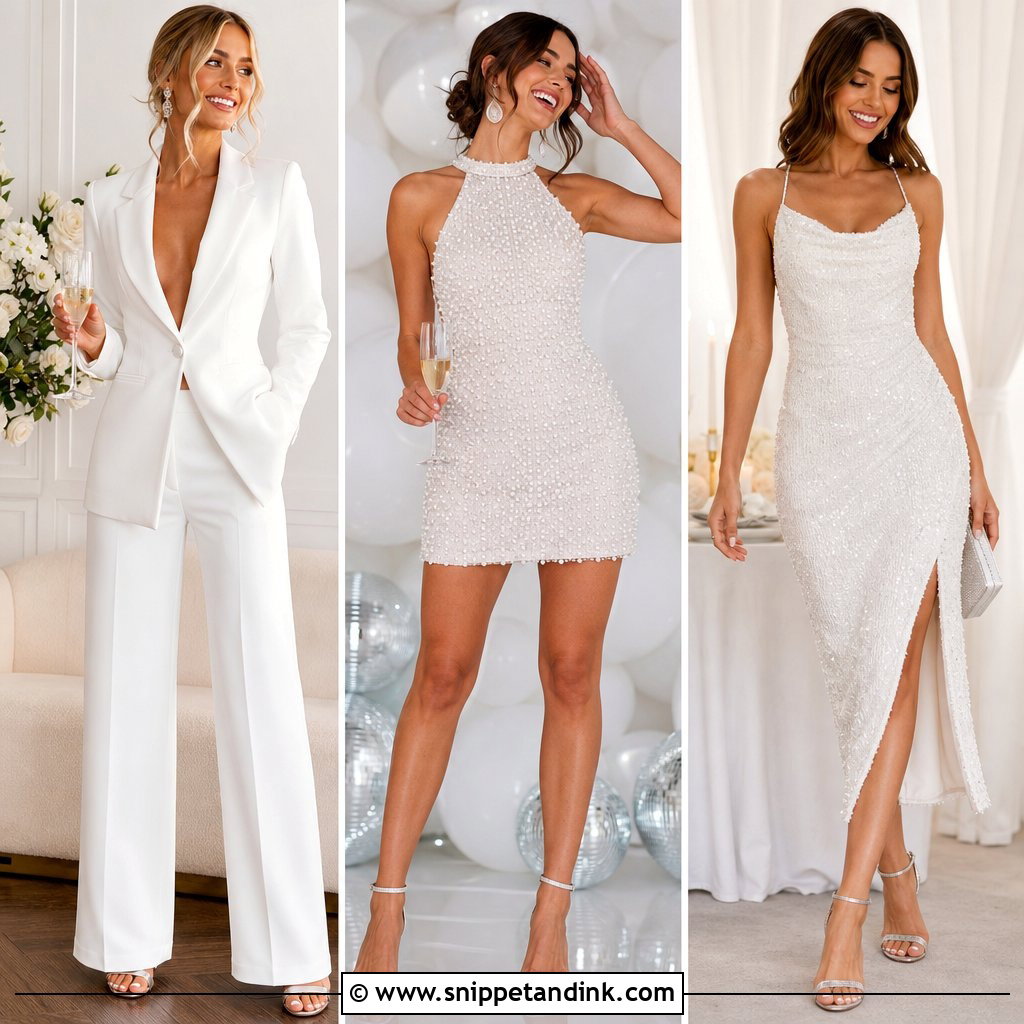
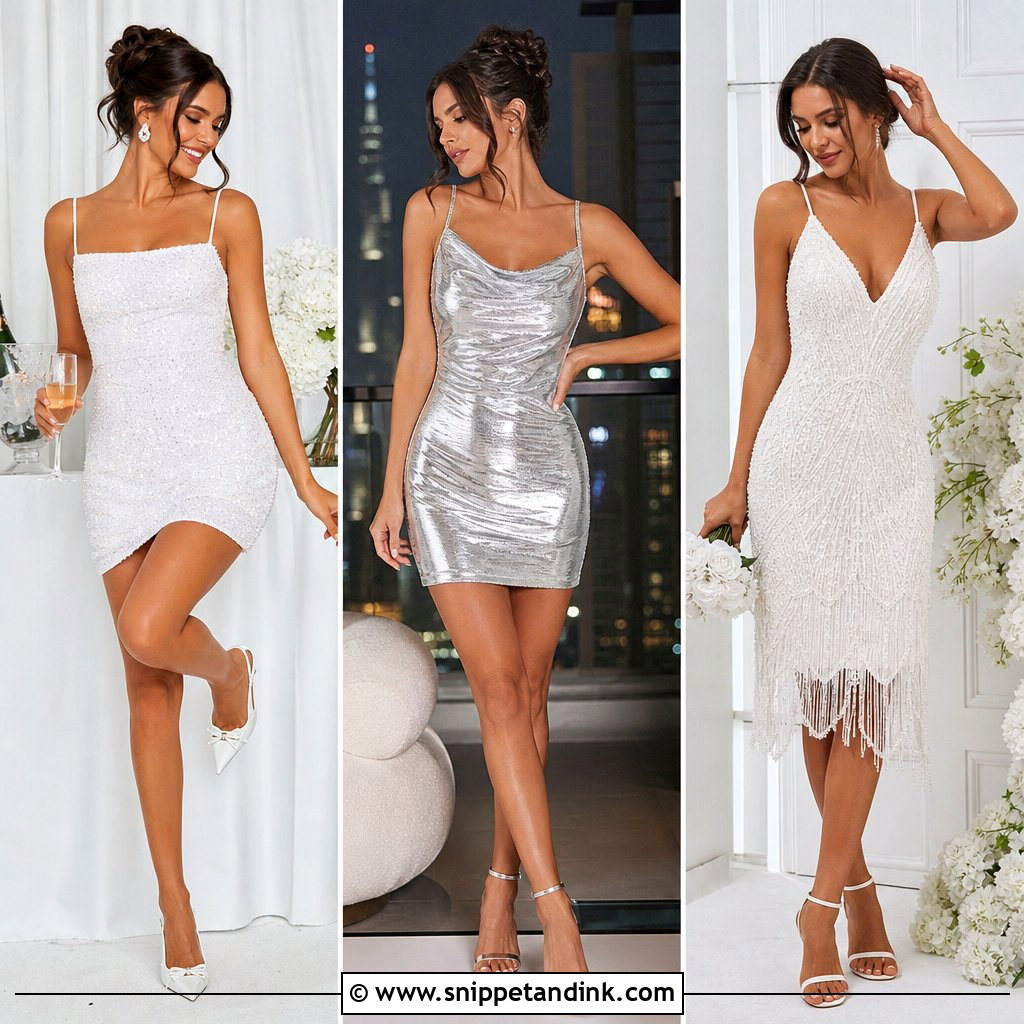
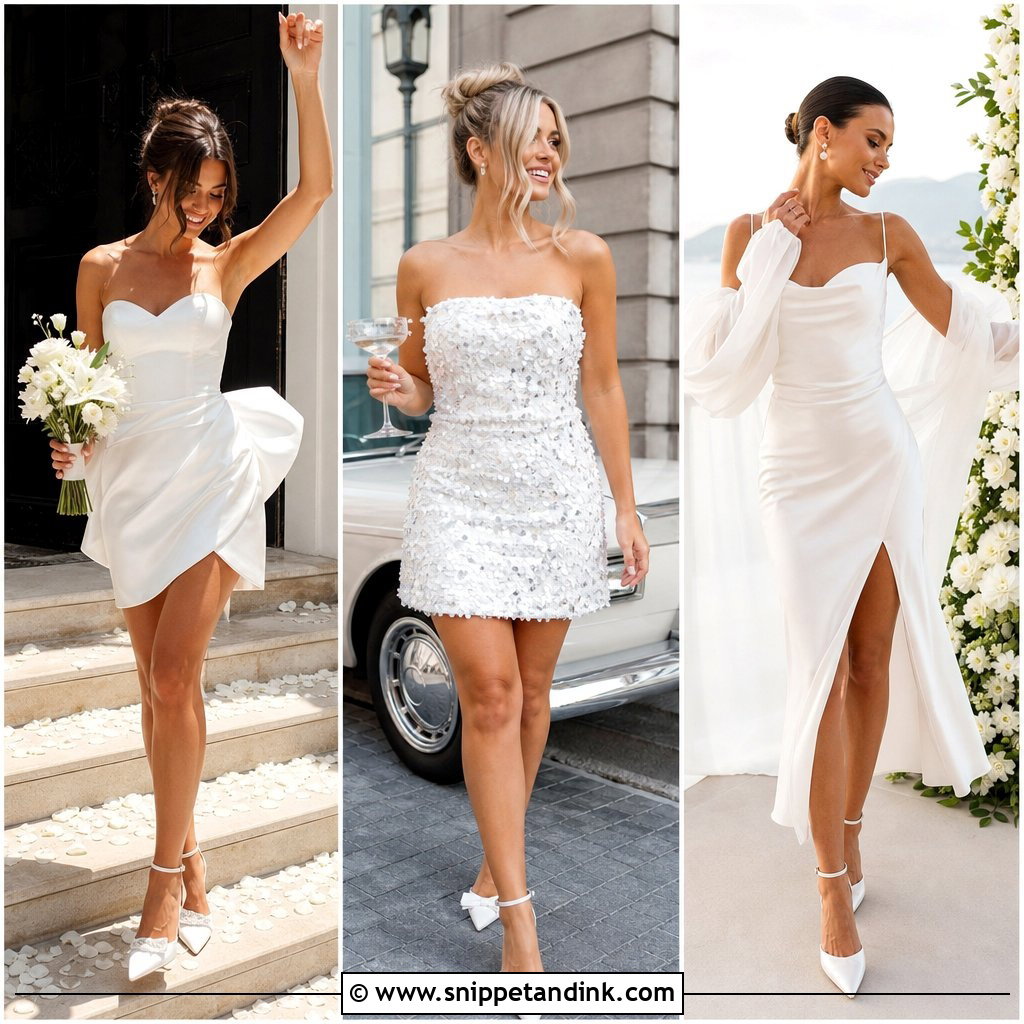
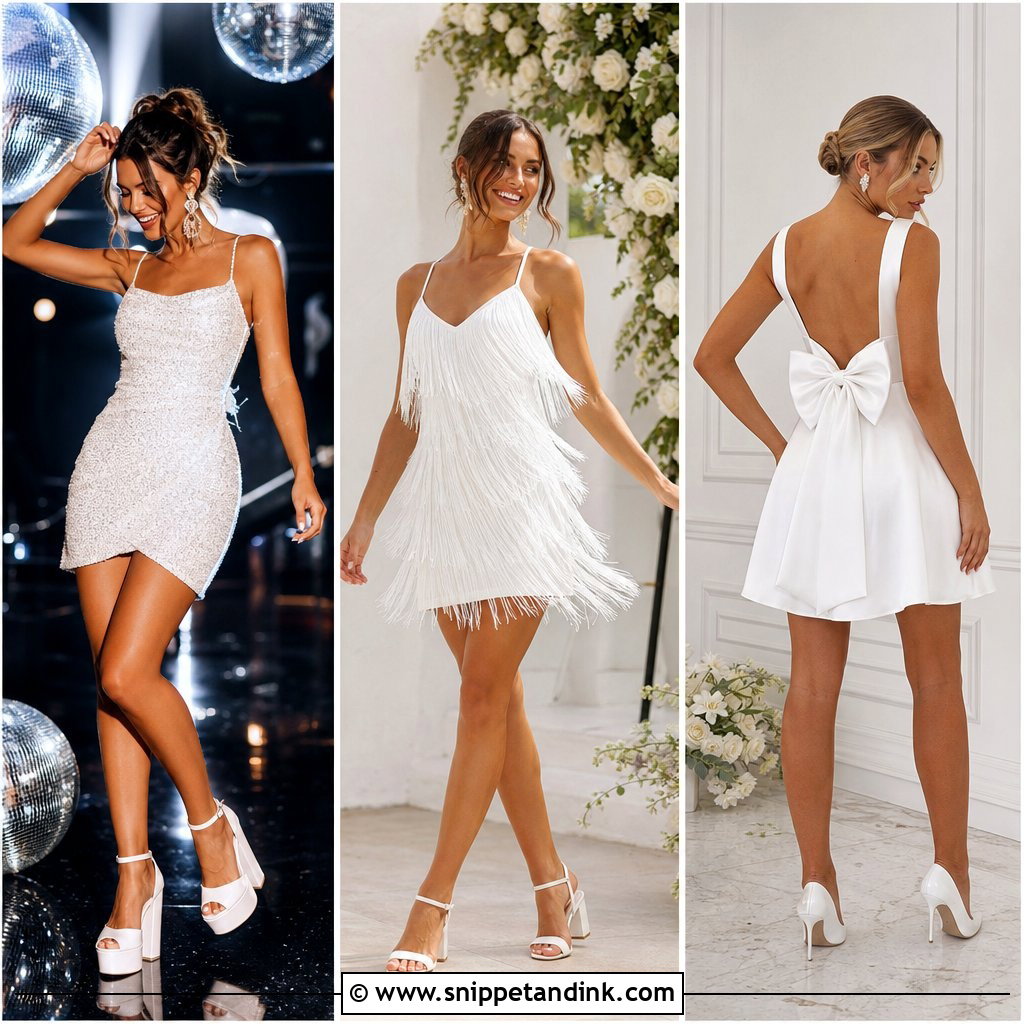
White sequins are the clearest signal that the dancing has started. My first check on any sequin mini is the inside of the sleeves and side seams: cheaper sequin fabric is stitched straight onto bare mesh, and after an hour of arm movement it scrapes the inner arm raw. A lined straight mini, or a long-sleeve cut with a soft backing, avoids that. Metallic heels, a small satin clutch and pearl studs are plenty, since the sequins already carry the outfit. Ballroom, rooftop and hotel lighting will pick up every step.
2. Satin Slip Wedding Dress
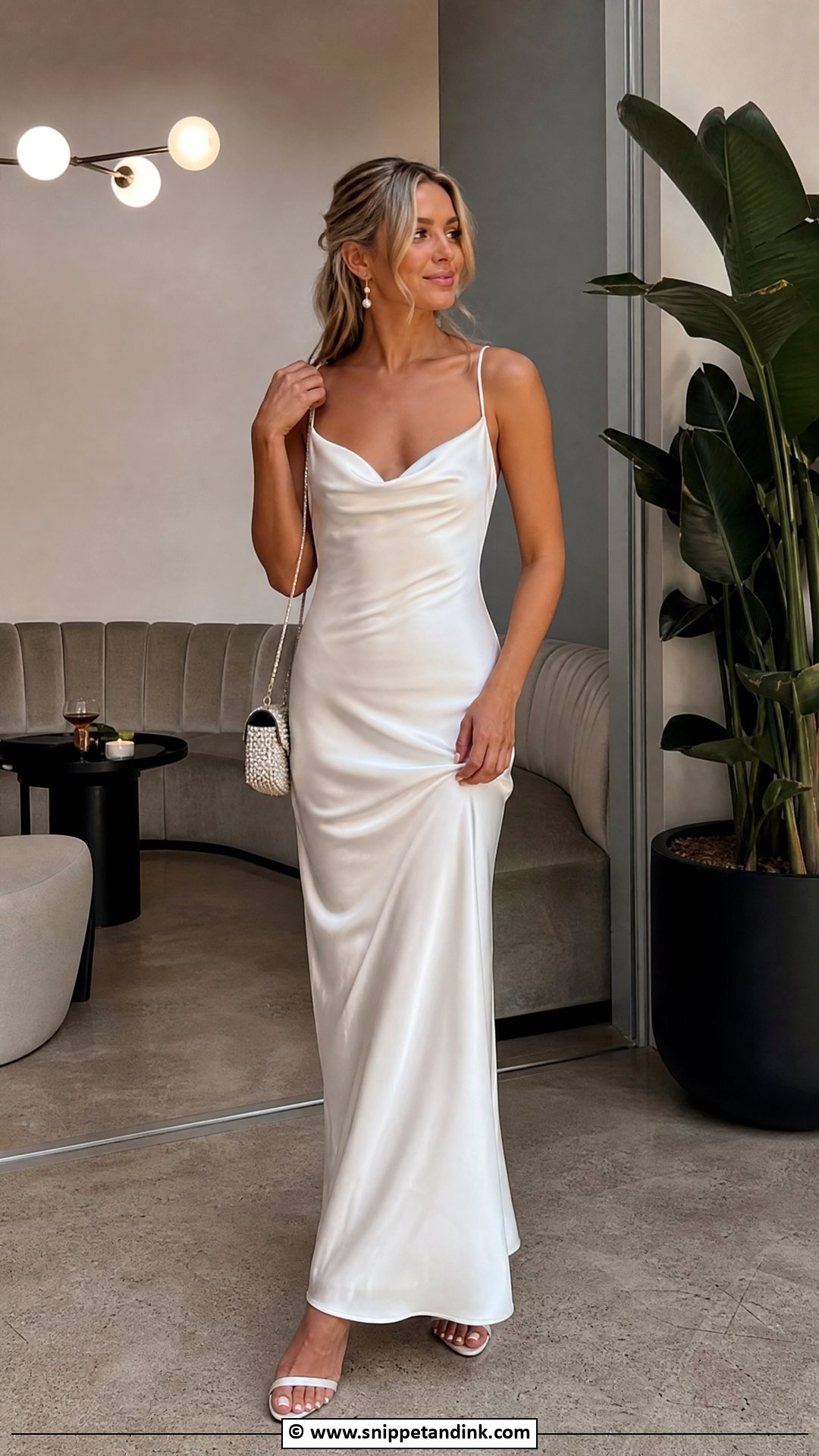
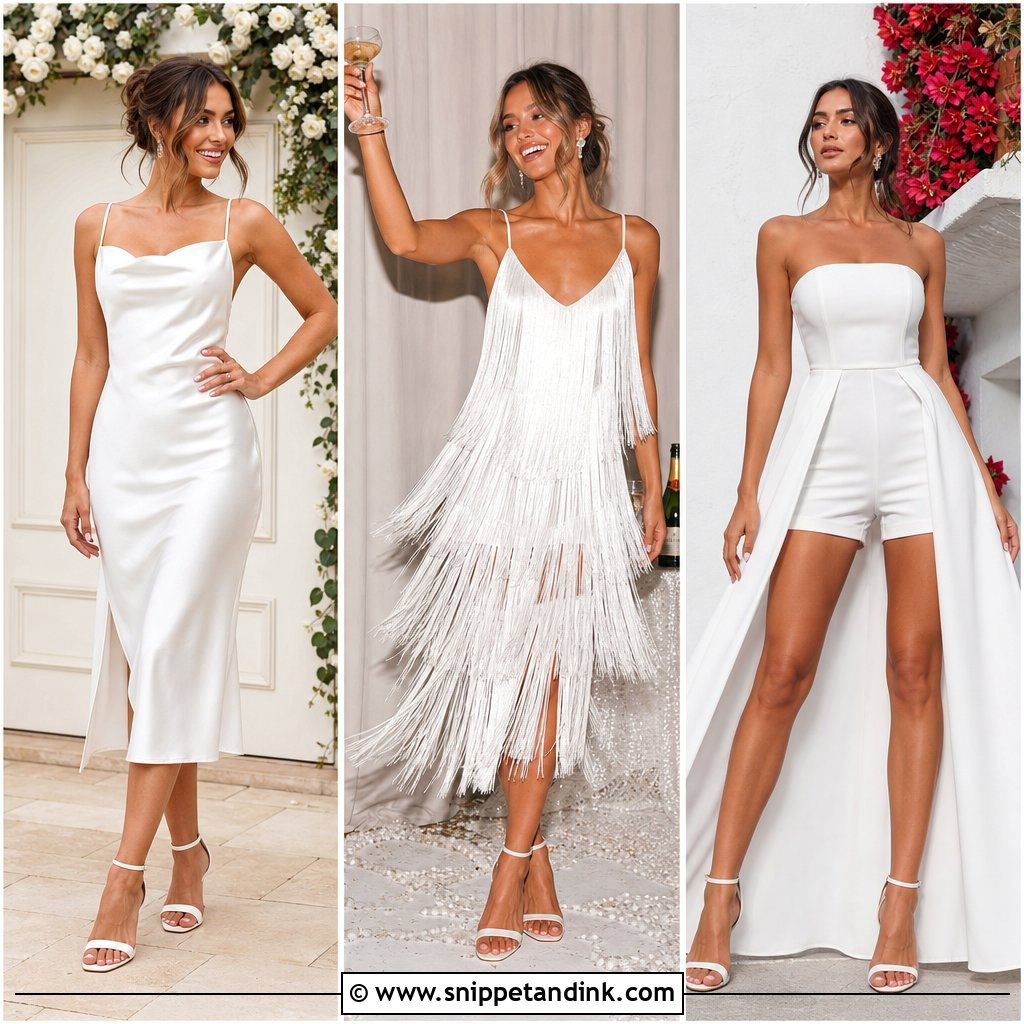
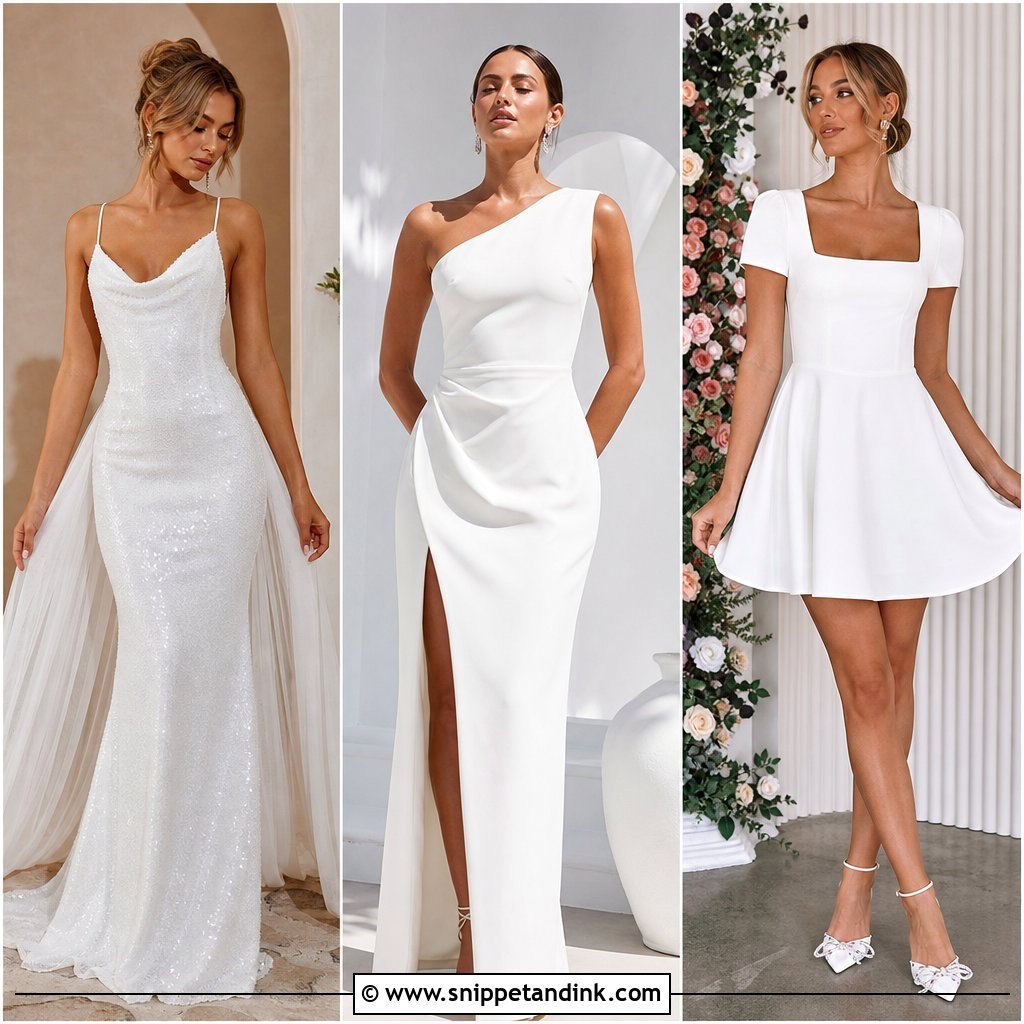
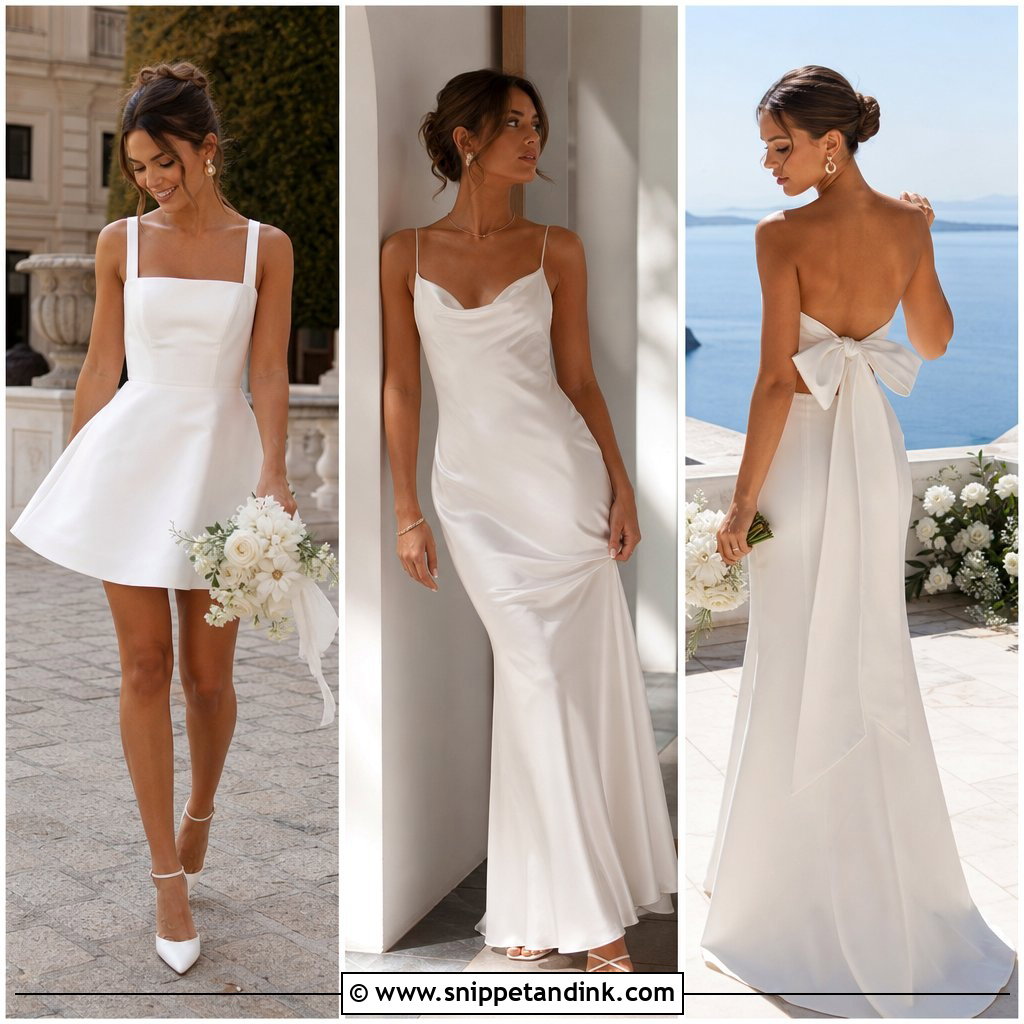
After a structured ceremony gown, a satin slip feels like breathing out. The bias cut is why it skims rather than clings, but it’s unforgiving fabric: thin charmeuse shows every water mark and sweat line, so for a dancing dress I steer brides toward a heavier crepe-back satin. A cowl neck softens the line. Strappy heels, a sleek low bun and a slim shoulder bag keep it minimal, and a cropped faux-fur wrap, sheer shawl or tailored blazer covers you for the walk outside.
3. Feather Trim Mini Wedding Dress
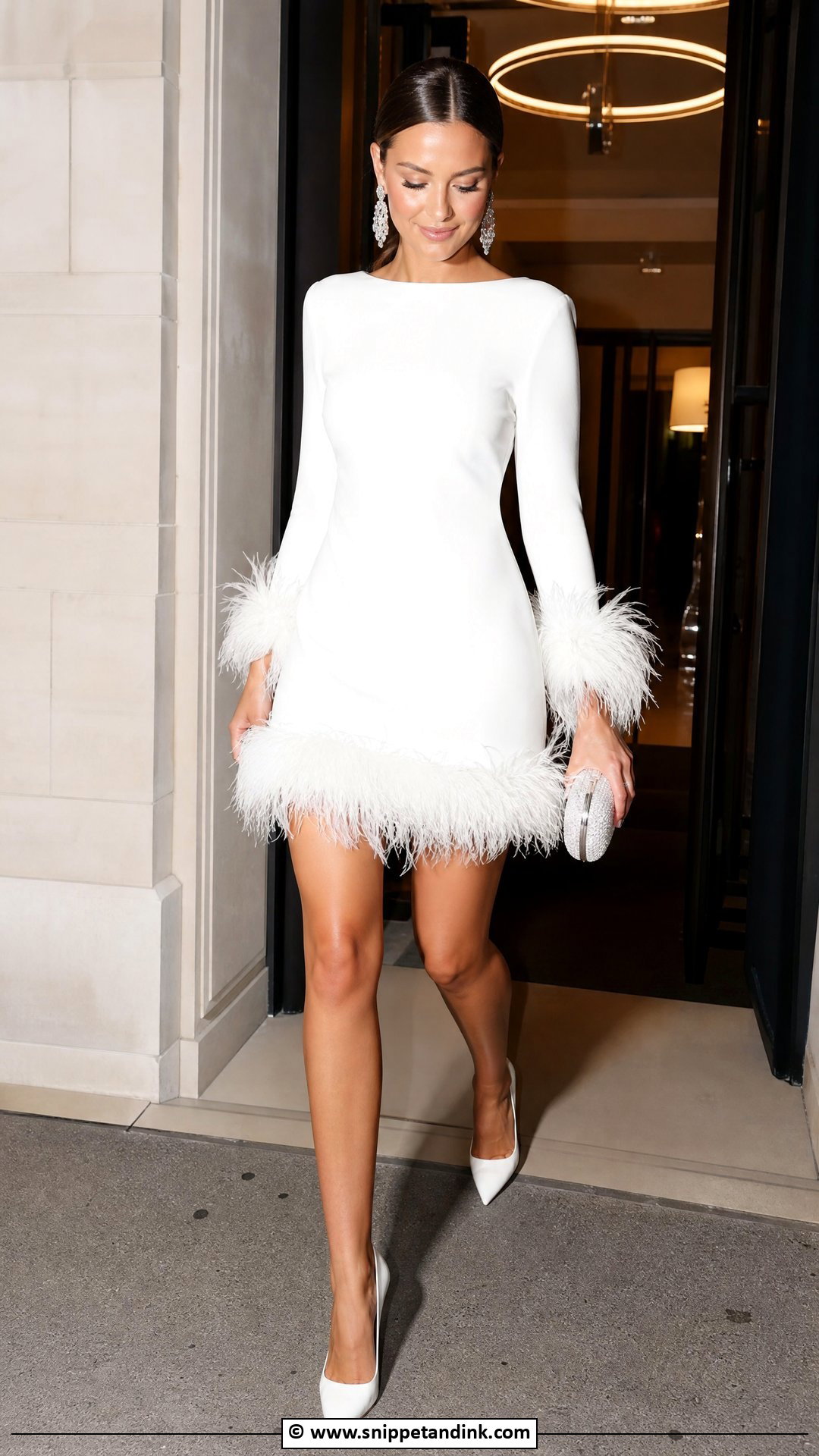
Feathers move every time you do, which is why a feather trim mini wedding dress reads so well on a dance floor. The catch is shedding. Ostrich trim drops a few strands through the night, so I give the dress a gentle shake outdoors before you step in and keep it clear of dark suits during slow dances. Put the feathers on a plain base of white crepe, satin or a firm stretch fabric, then keep everything else sleek: pointed heels, crystal earrings, a smooth clutch. Winter receptions and hotel parties suit the texture best.
4. Pearl Embellished Mini Wedding Dress
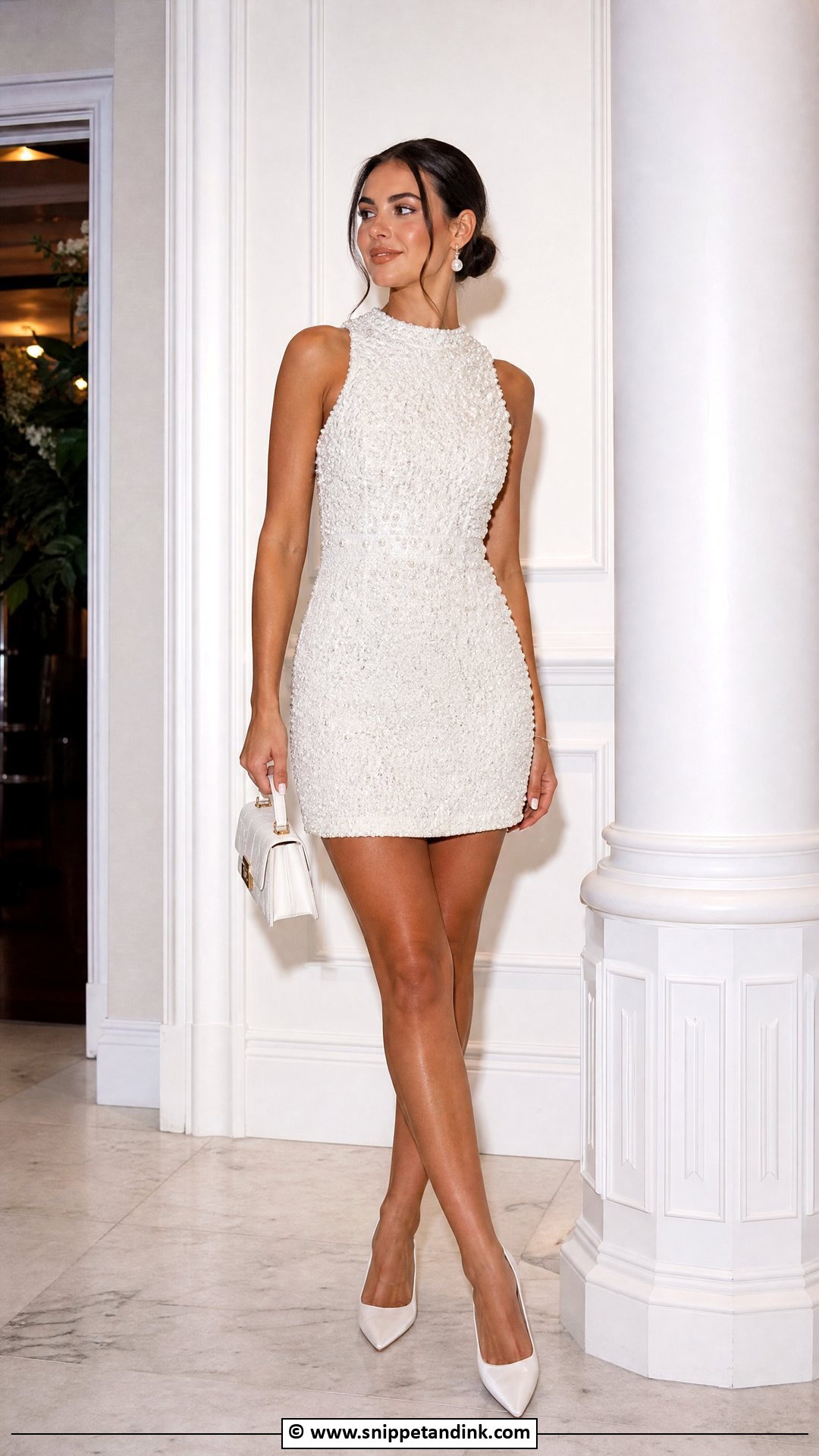
Pearls give you bridal detail without a train or layers. Placement matters more than quantity. Pearls along the straps or neckline sit near your face in photos, while pearls scattered across the skirt take the pressure every time you sit, and they pop loose if they’re glued rather than stitched. I always turn a pearl dress inside out before recommending it. Pearl heels or plain satin pumps, a mini top-handle bag, soft waves and luminous skin finish it, and it’s the one I reach for when the ceremony gown was very plain.
5. Bow Back Mini Wedding Dress
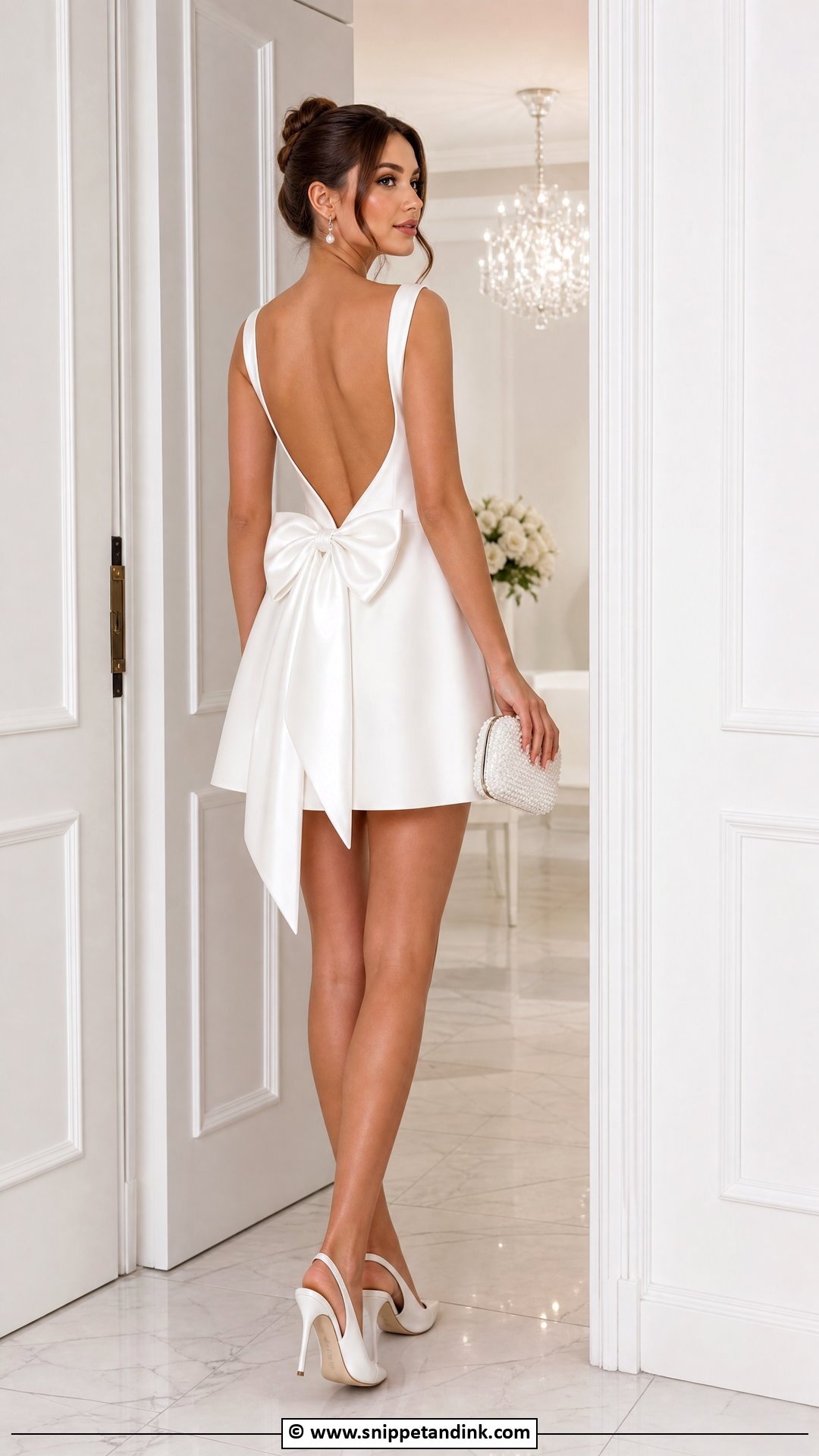
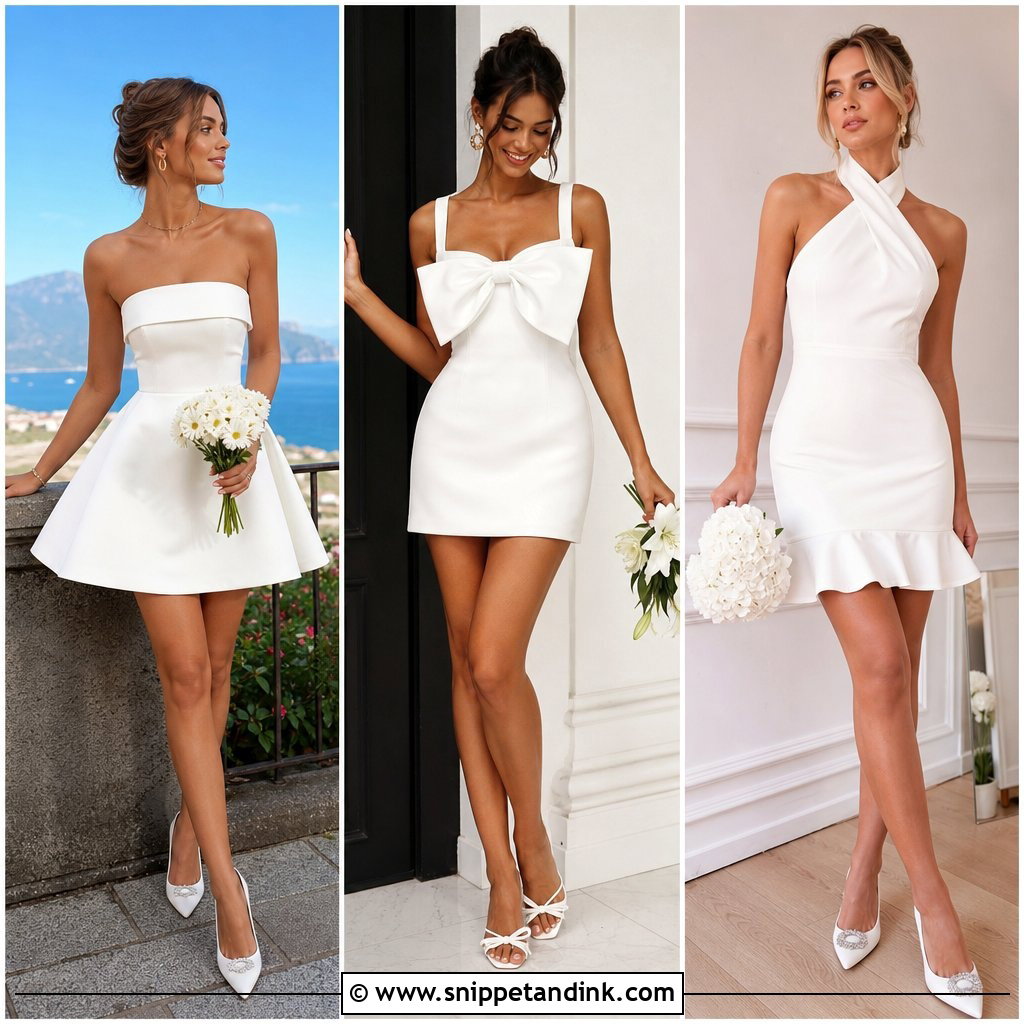
Most of the interest here sits behind you, so the front can stay completely clean. Size the bow to how you’ll spend the evening: a large satin bow looks dramatic walking out, but it gets crushed against a chair back through dessert. I ask brides to sit down in the fitting and see how the bow recovers when they stand. A small bow at the lower back flattens far less. Slingback heels and a small pearl bag keep it sweet, and it fits a garden, a ballroom or a modern restaurant equally well.
6. Lace Mini Wedding Dress
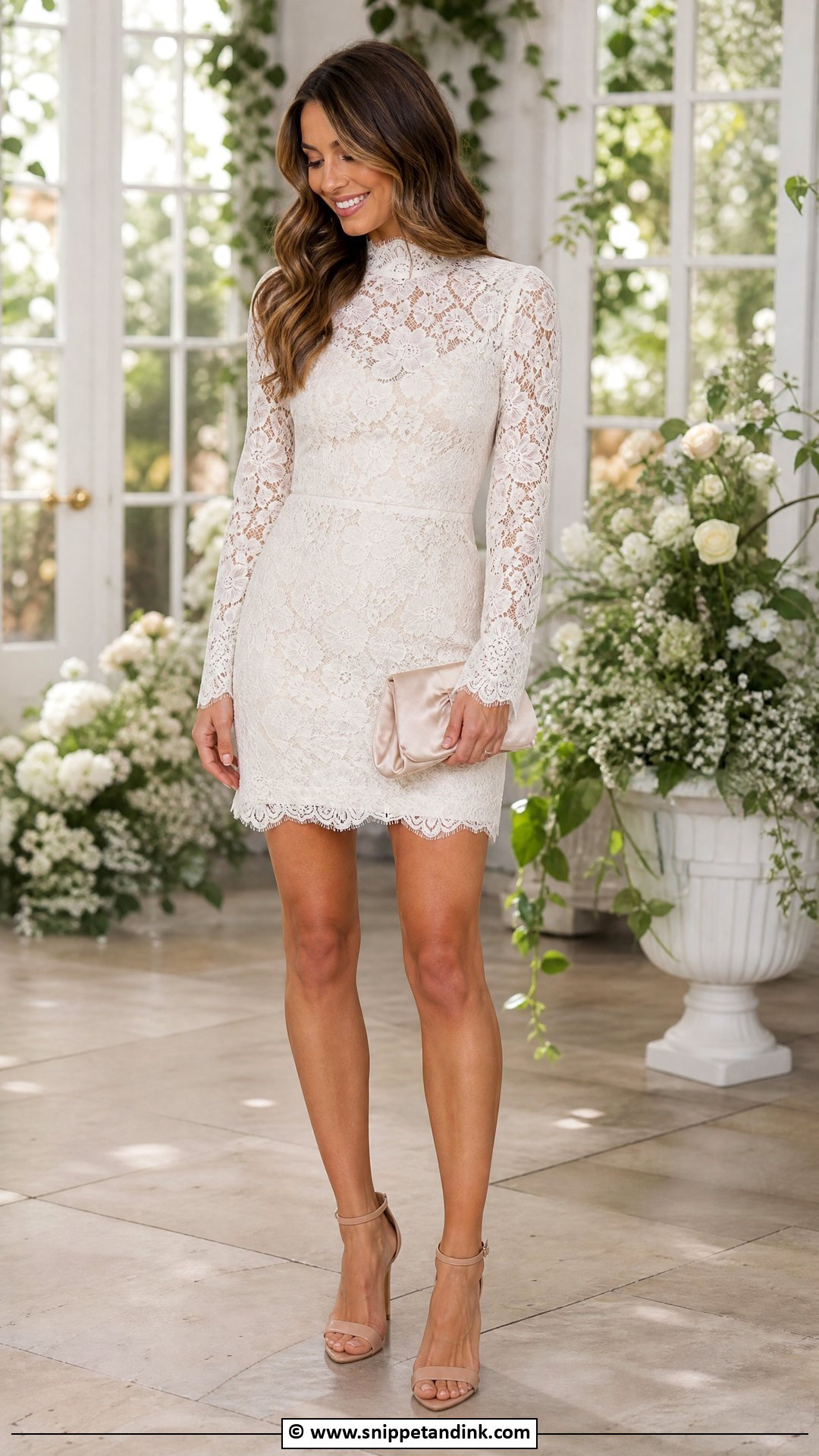
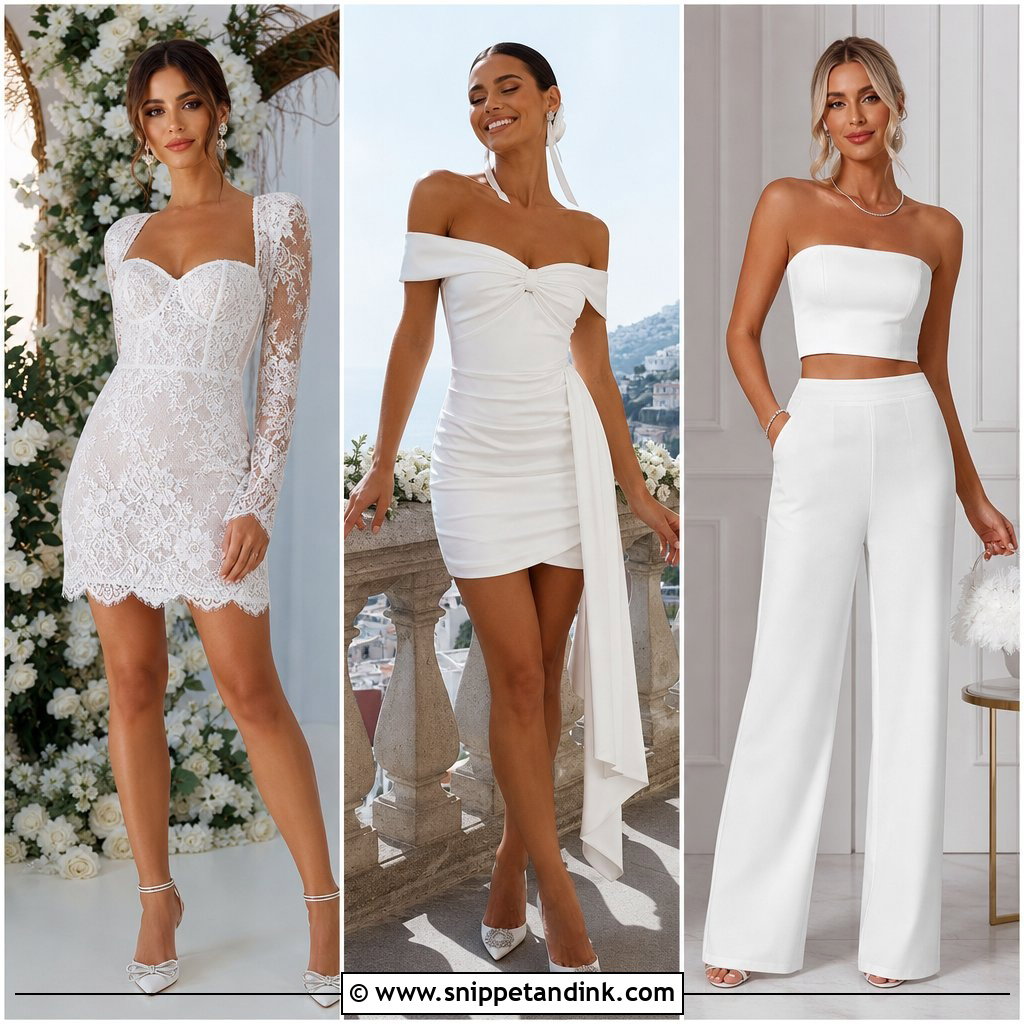
Lace keeps the romance of a bridal gown in something you can dance in. I check two things at the fitting: that the lining is smooth so the lace doesn’t snag on itself, and that the hem stays put when you raise your arms, because lace minis with a stiff lining tend to creep up. Long sleeves read classic; strapless or square-neck reads more current. Nude or ivory heels keep the leg line long. If your ceremony gown was sleek and minimal, lace makes the second look feel properly different.
7. Strapless Corset Wedding Dress
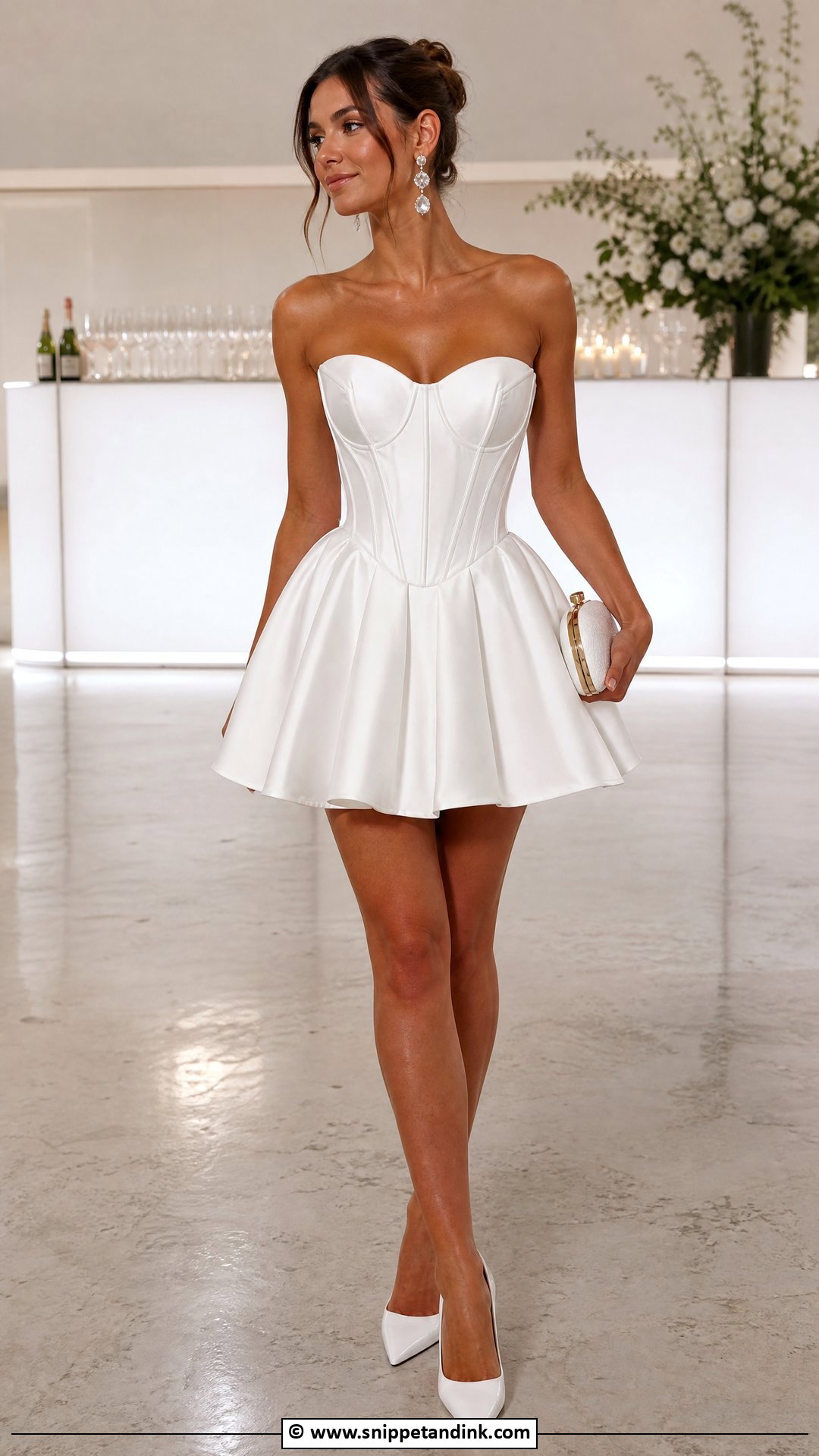
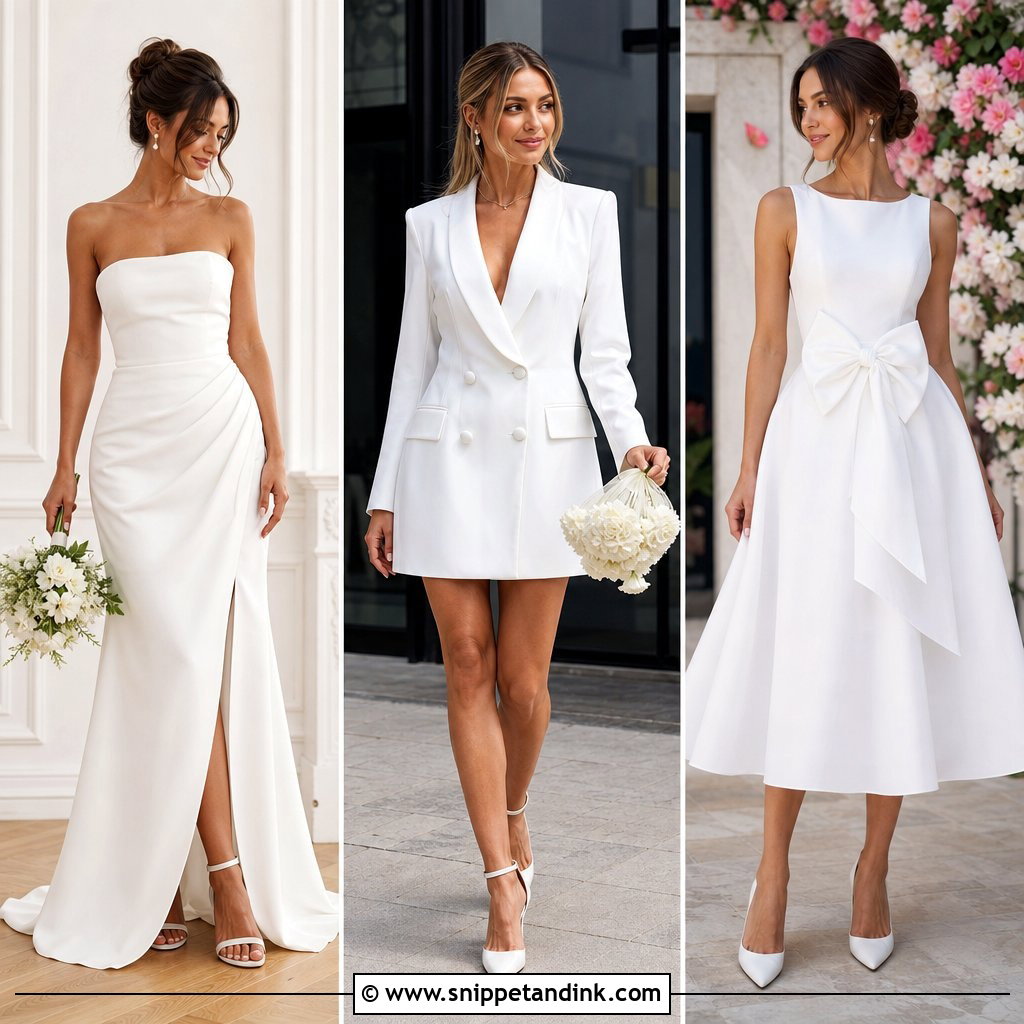
Structure is the appeal of a corset, and also the risk. One you’ll dance in for three hours after a full dinner should be fitted with that evening in mind, not at a morning appointment on an empty stomach, so I leave a little ease at the waist. Spiral steel boning bends with you; stiff plastic boning digs in when you sit. A corset mini with a slight flare, or a satin corset with a clean neckline, gives shape without the weight of a full gown. Pointed pumps, a soft updo and statement earrings suit it.
8. Tulle Mini Wedding Dress
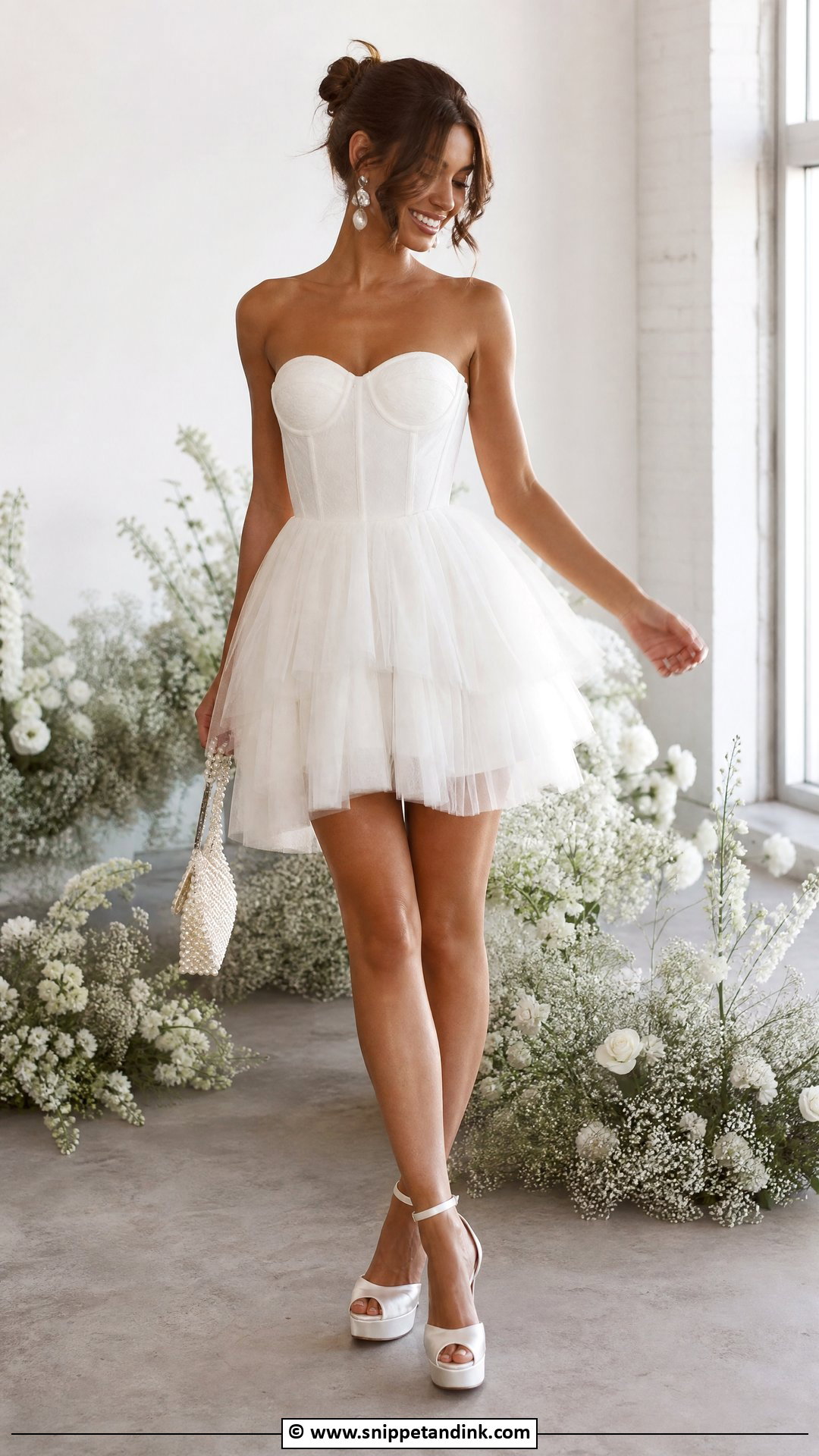
Short tulle layers give you the fairytale volume with nothing trailing on the floor. Tulle compresses when you sit, though, and a single layer goes limp by midnight, so I look for several layers over a stiffer net underskirt. A fitted bodice balances the skirt and keeps it from looking like a costume. Ivory tulle with fine straps is the softer version; a puff-sleeve or tiered mini is the louder one. After a sleek ceremony gown, it’s a joyful contrast.
9. Beaded Fringe Wedding Dress
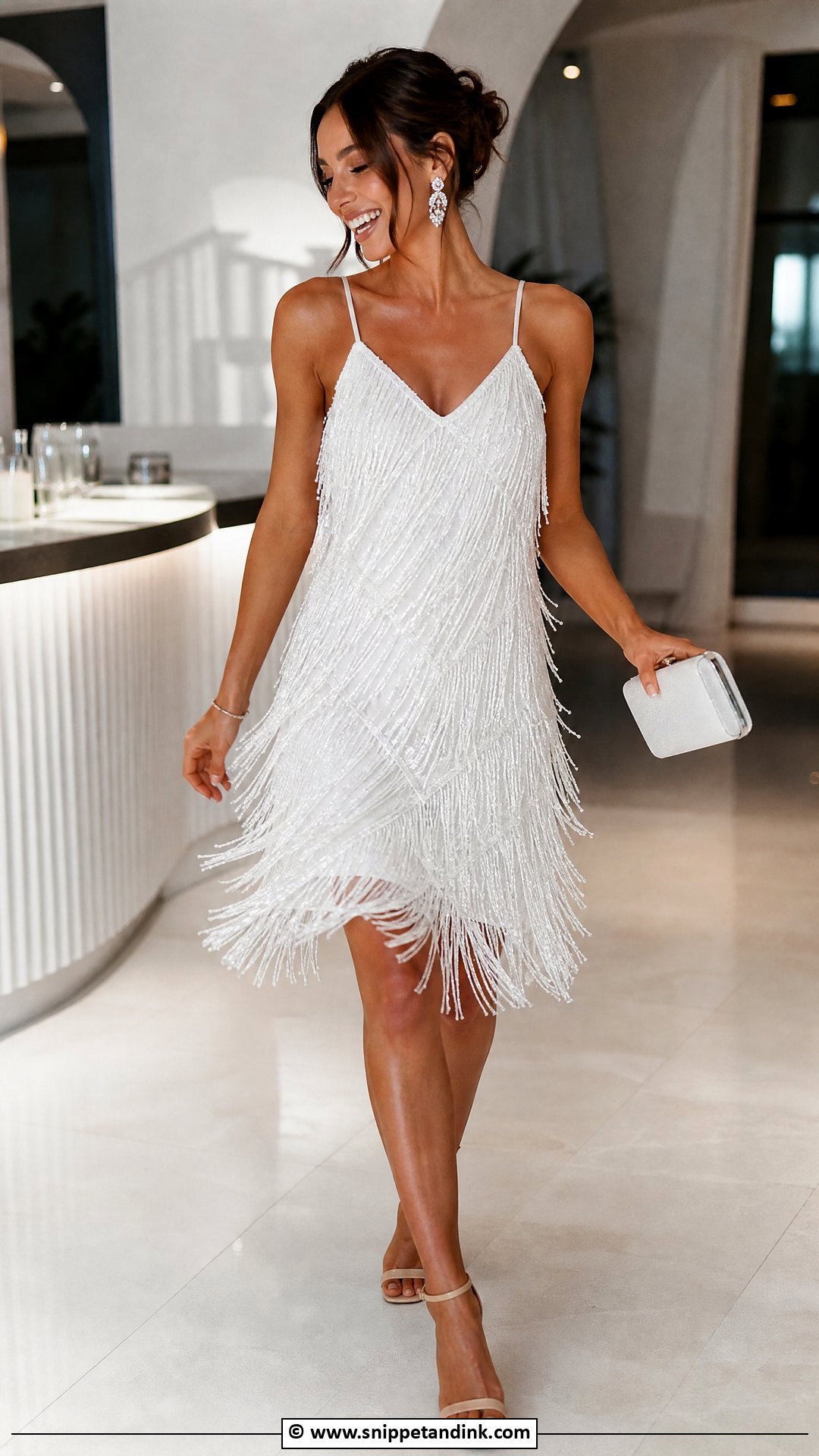
A beaded fringe wedding dress only really comes alive in motion, so it suits a reception built around dancing more than one built around a long dinner. Glass bead fringe is heavier than it looks, and that weight drags on thin straps. I’d choose lighter bead fringe on a sturdy base, keep the silhouette simple, and stay with white, ivory or champagne beading so it still reads bridal. A midi version gives more coverage. Minimal heels, a compact clutch and smooth hair stop the whole thing looking busy.
10. Off Shoulder Mini Wedding Dress
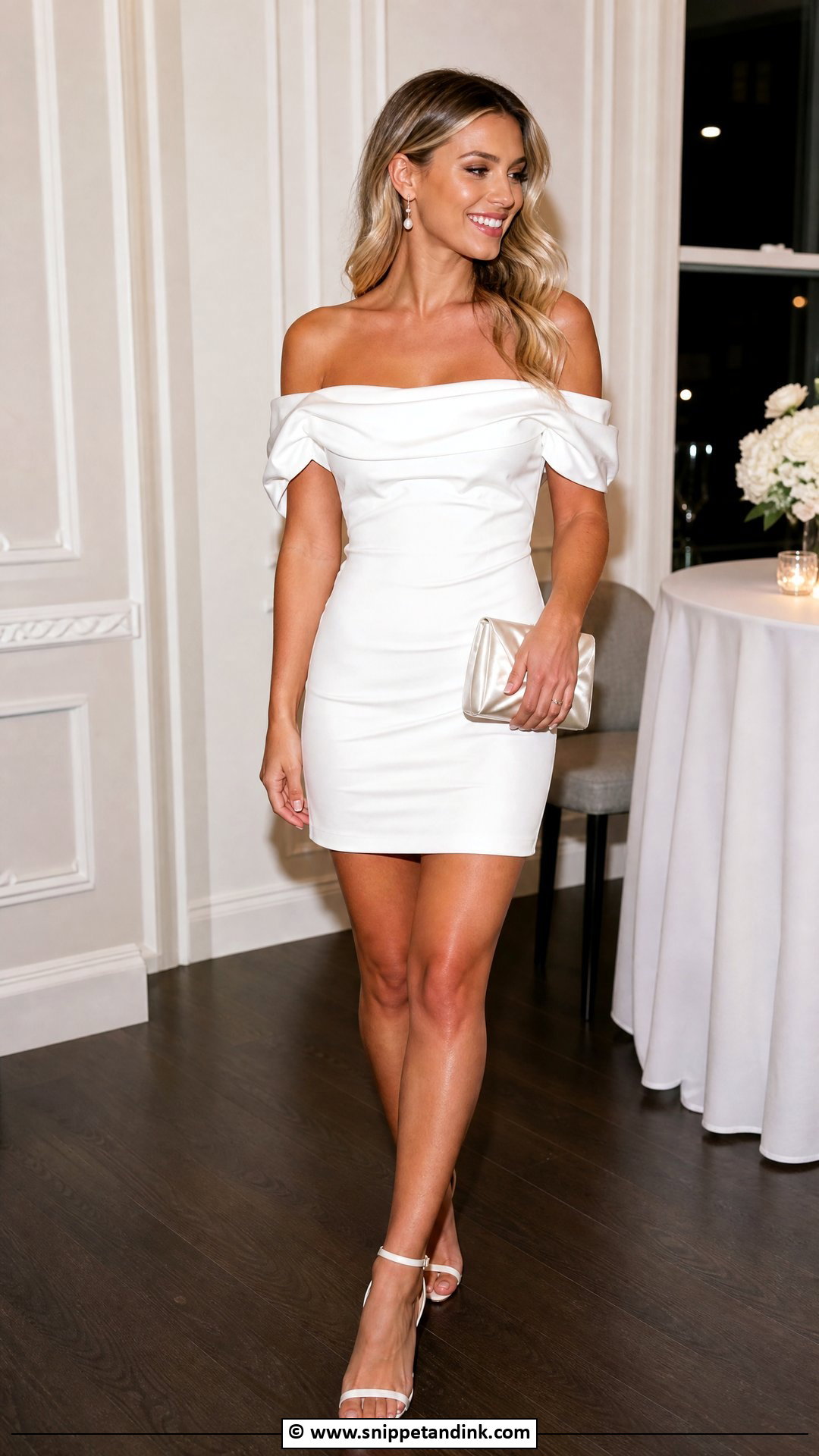
This neckline frames the collarbones and sits nicely with an updo. The practical problem is arm movement. An off-shoulder band without elastic or silicone grip slides up every time you lift your arms, so I make brides do a full arms-overhead test in the fitting room before we commit. A fitted version looks sleek, a skater mini more playful. Ankle-strap heels, pearl earrings and a small satin bag are enough, and ruching or a fold-over neckline adds interest without extra jewelry.
11. Long Sleeve Mini Wedding Dress
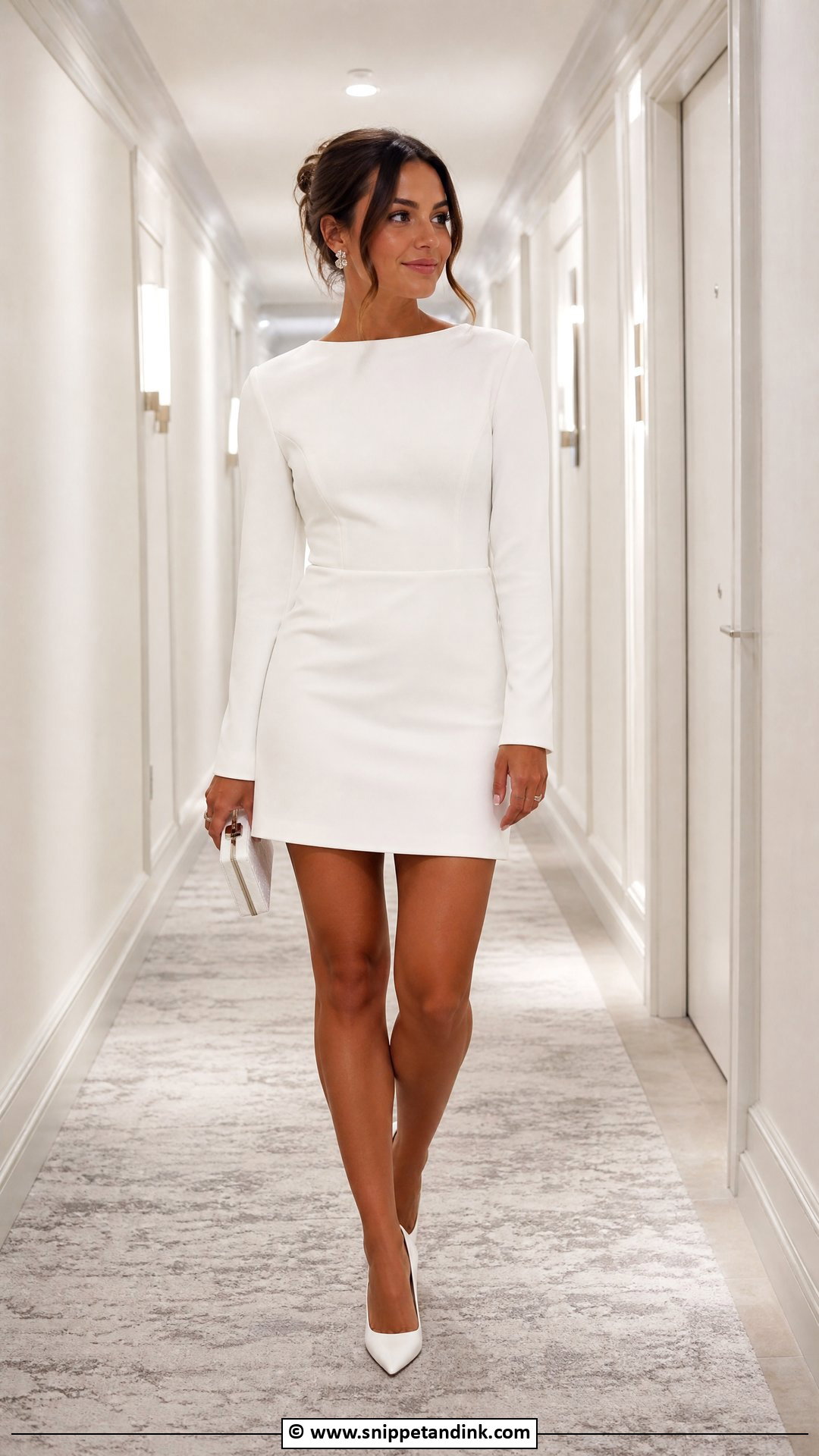
Covered arms balance a short hem, so the outfit feels considered rather than revealing. Check the sleeve with your arms raised: sleeves set low under the arm pull the whole dress up when you dance. Crepe reads modern, lace reads romantic, sequins read loud. With the arms covered, I keep earrings small and heels simple. It’s my default suggestion for autumn and winter receptions or any venue that gets cold once the doors start opening.
12. Halter Neck Wedding Dress
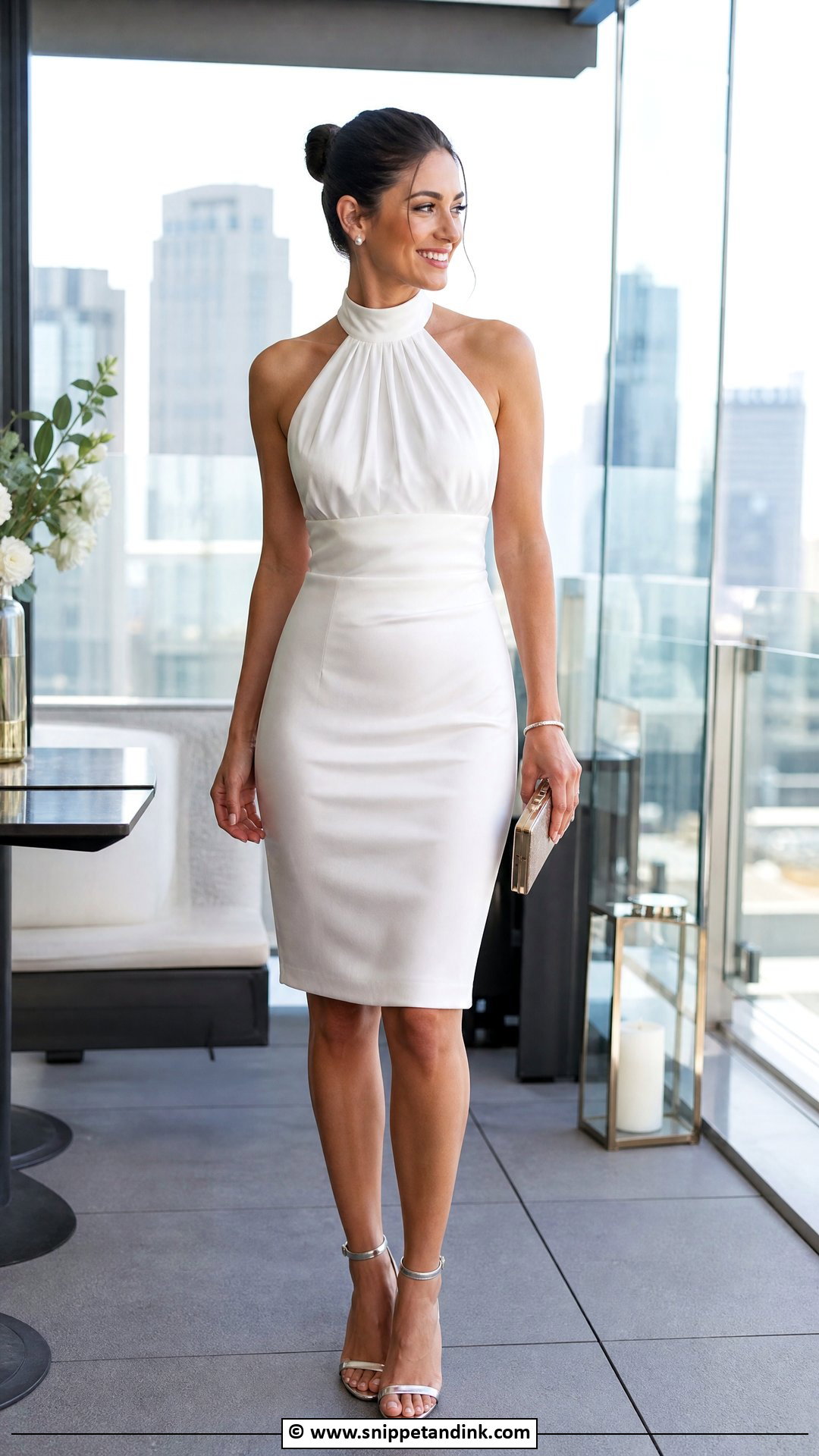
A halter carries its weight from the neck rather than the shoulders, so nothing slips down mid-song, which is why I like it for busy dance floors. That same strap can tire the neck in a heavily beaded version over a long night, so keep the beading light if you’re sensitive there. Clean halters look modern; draped ones lean glamorous. A high ponytail shows off the neckline, with metallic heels and a compact clutch. Summer and rooftop parties are its natural home.
13. Bubble Hem Wedding Dress
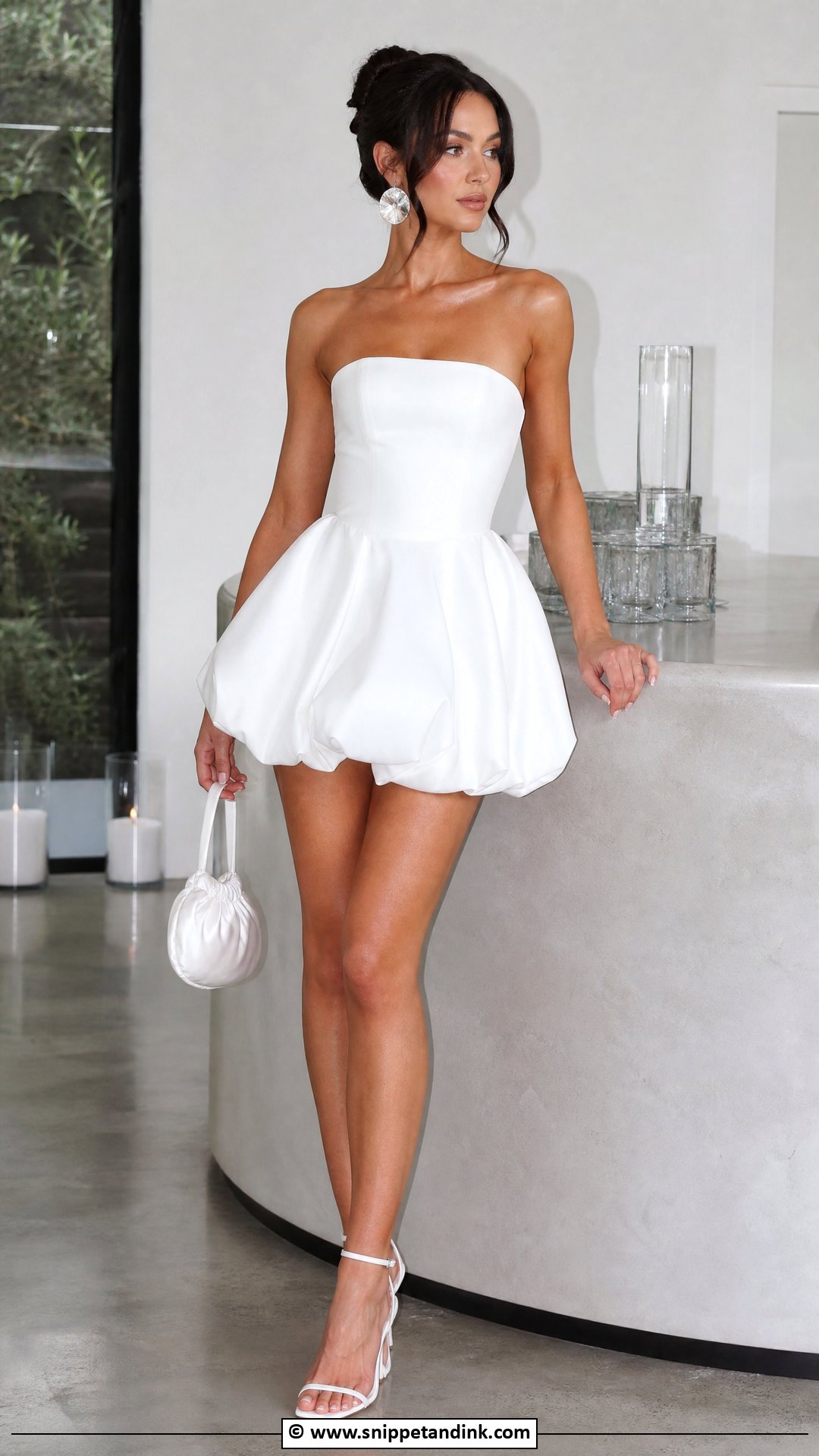
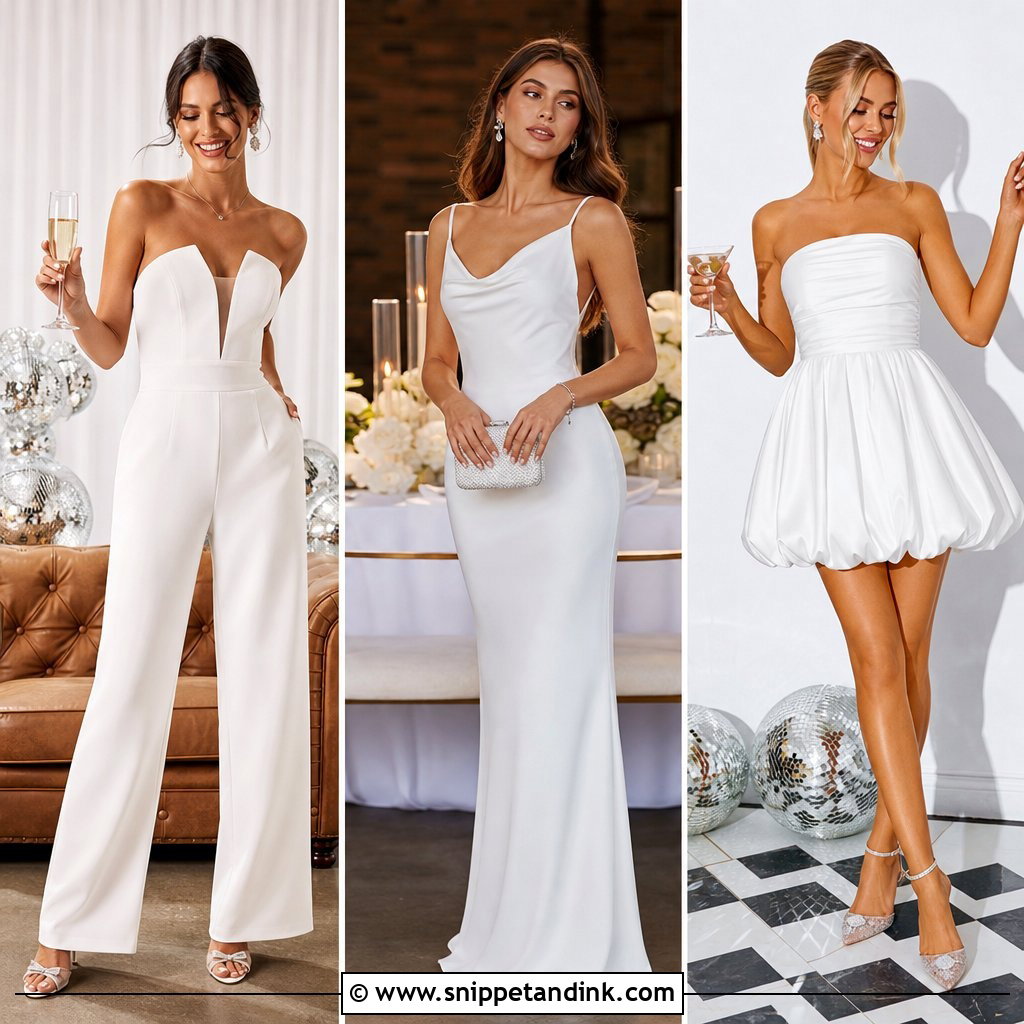
The rounded hem gives shape to an otherwise simple white mini, and it’s one of the more current silhouettes around. It’s also the least forgiving to sit in. A bubble hem flattens and creases under you, so I fit it standing and seated before deciding. Strapless reads young and bold; a sleeved version looks more polished. Slim heels, a small clutch and almost no jewelry let the hem do the talking at a contemporary venue.
14. Blazer Mini Wedding Dress
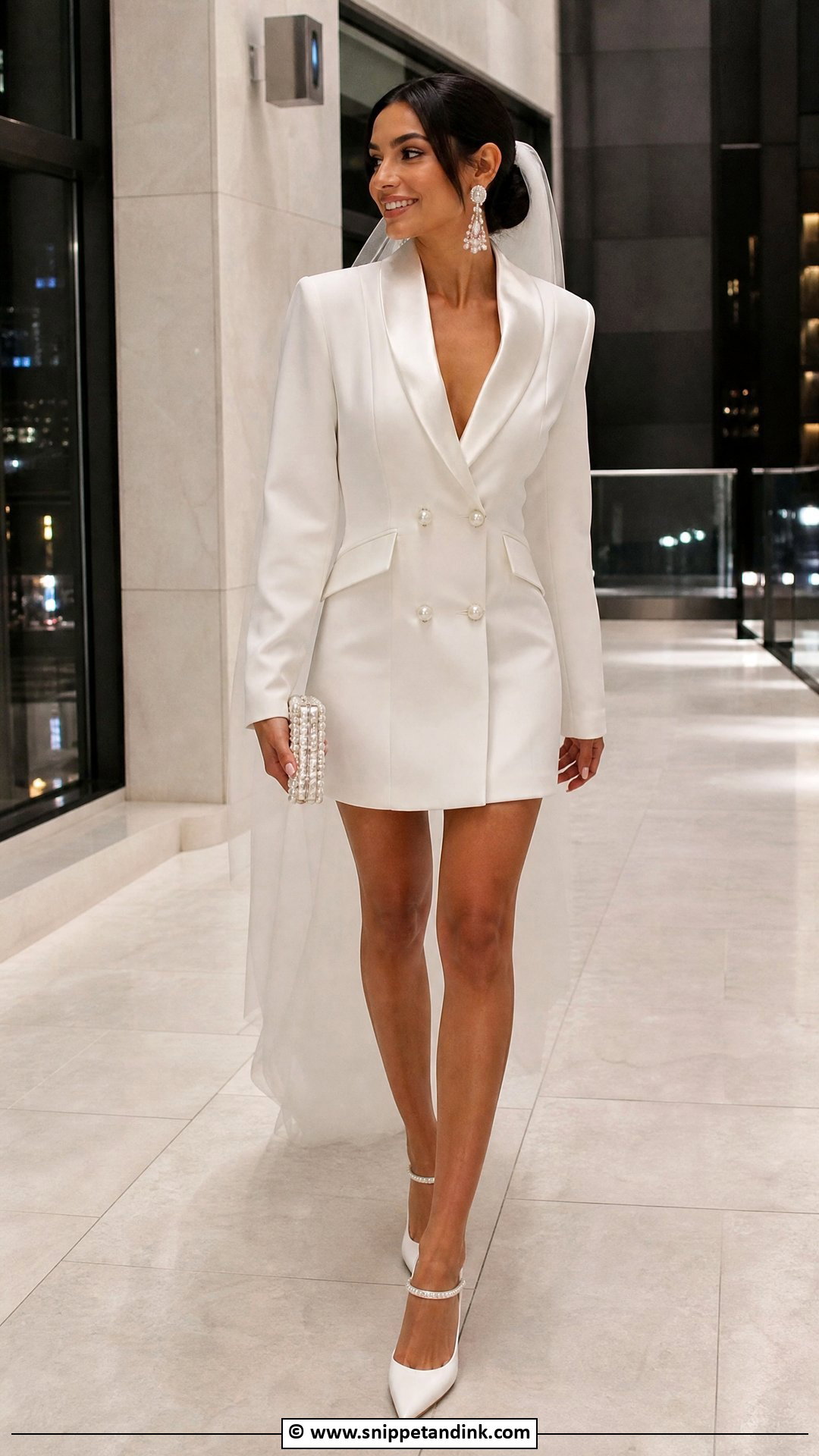
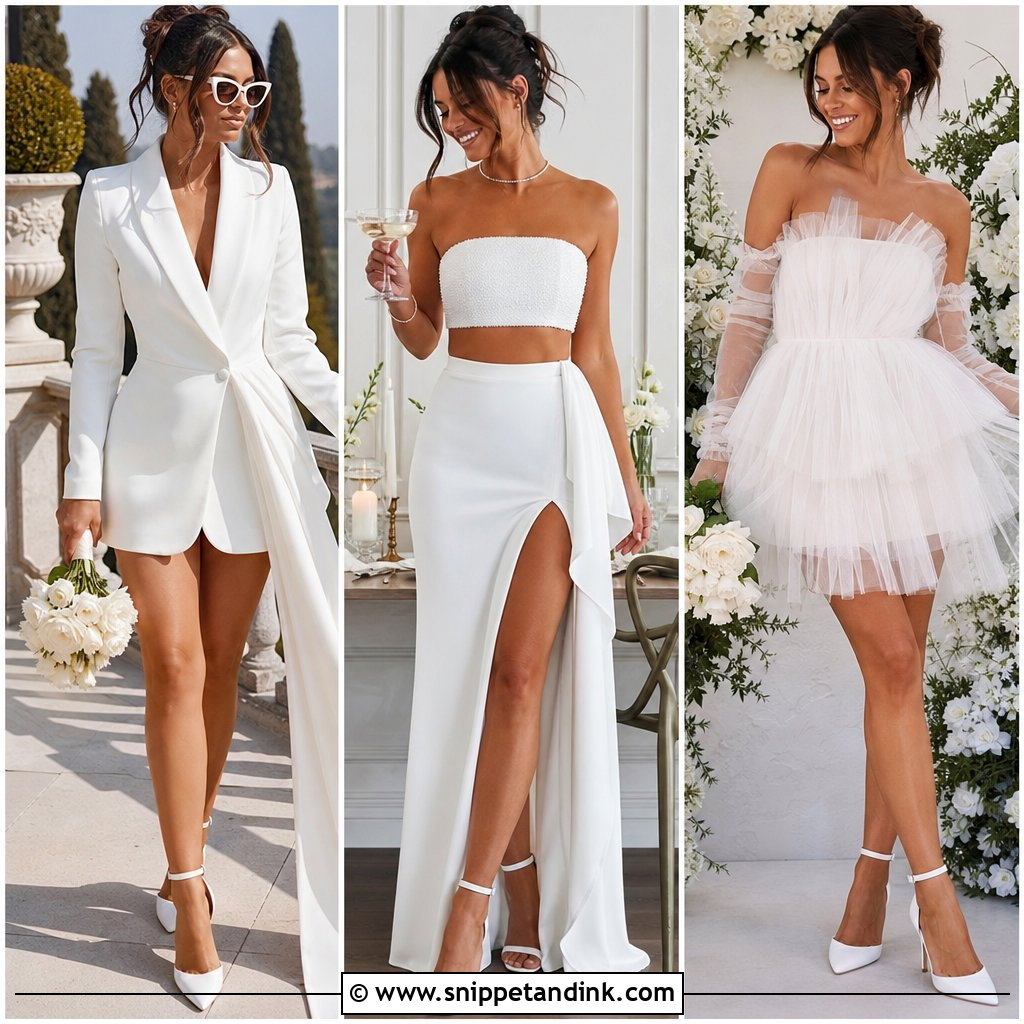
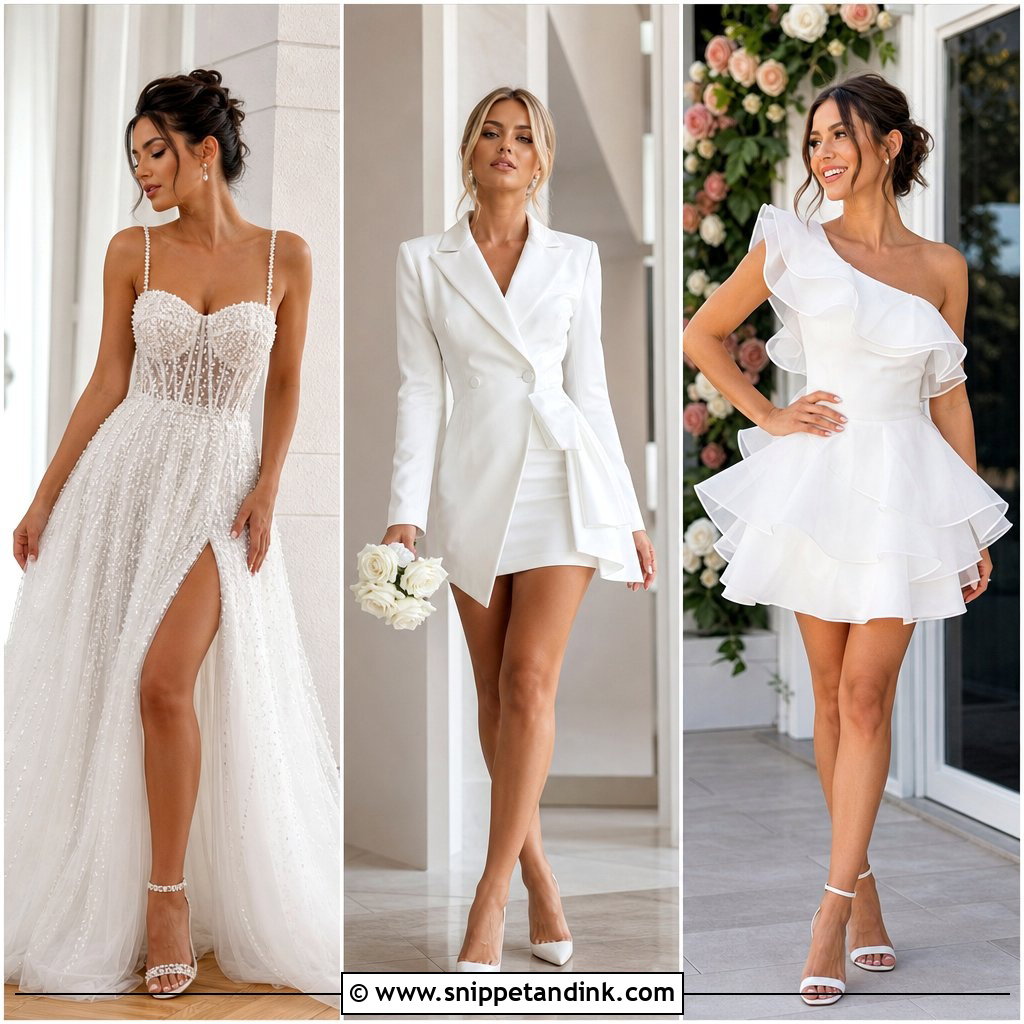
Sharp tailoring and an easy length. To keep a blazer dress bridal rather than office, look for satin lapels, pearl buttons or a cinched waist. The fitting point I always watch is the closure: a single button at the waist gapes the moment you start dancing, so I usually have a hidden snap or hook added just above it. Pointed pumps, a sleek clutch and statement earrings complete it, and sheer tights work in cold weather. City weddings and courthouse celebrations suit it best.
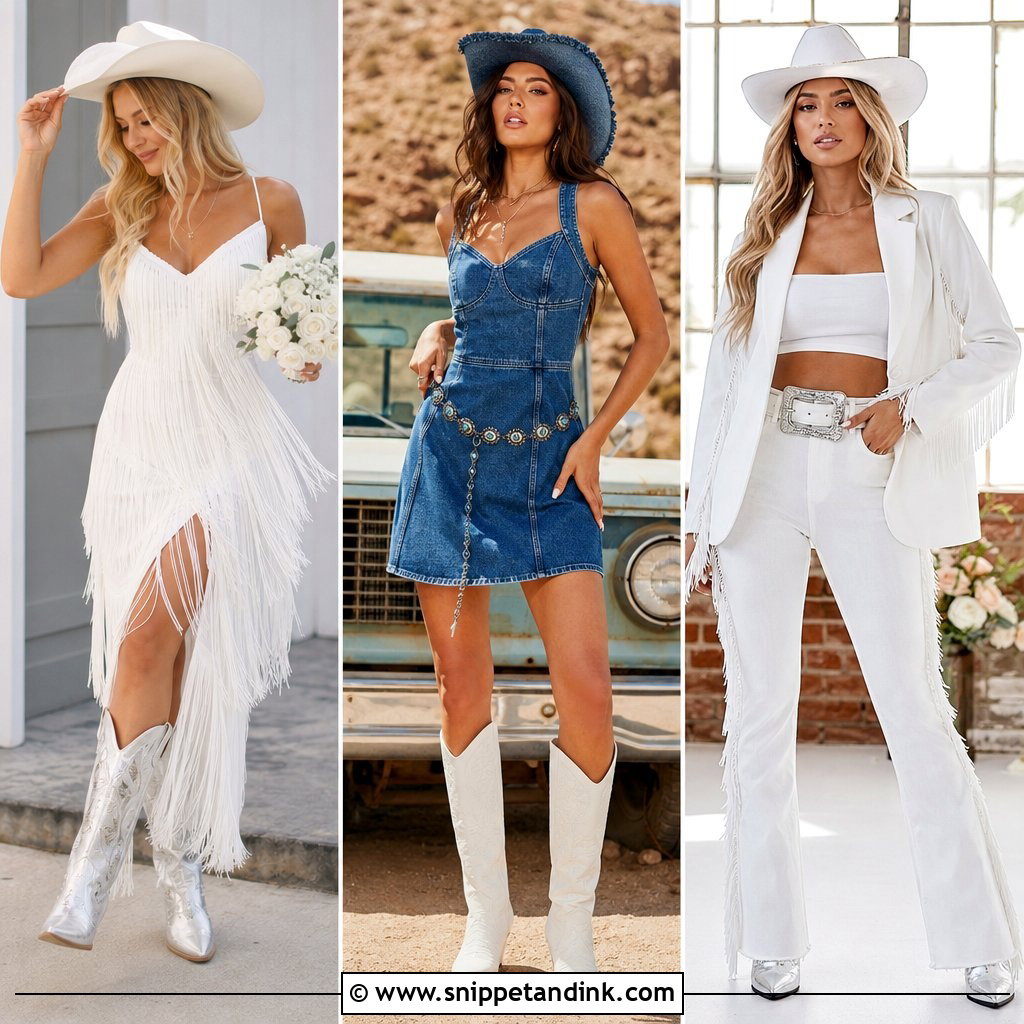
15. Floral Applique Wedding Dress
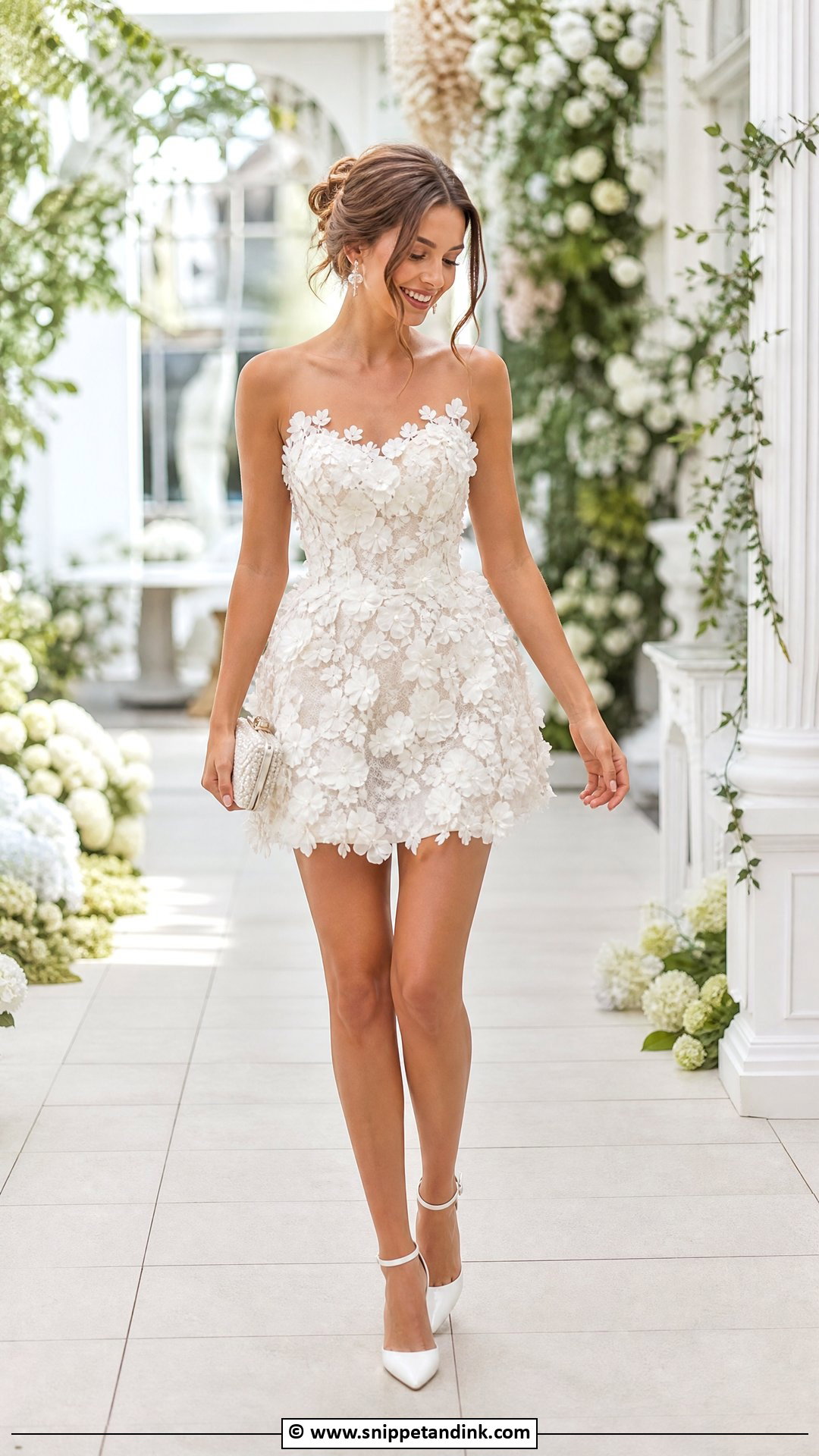
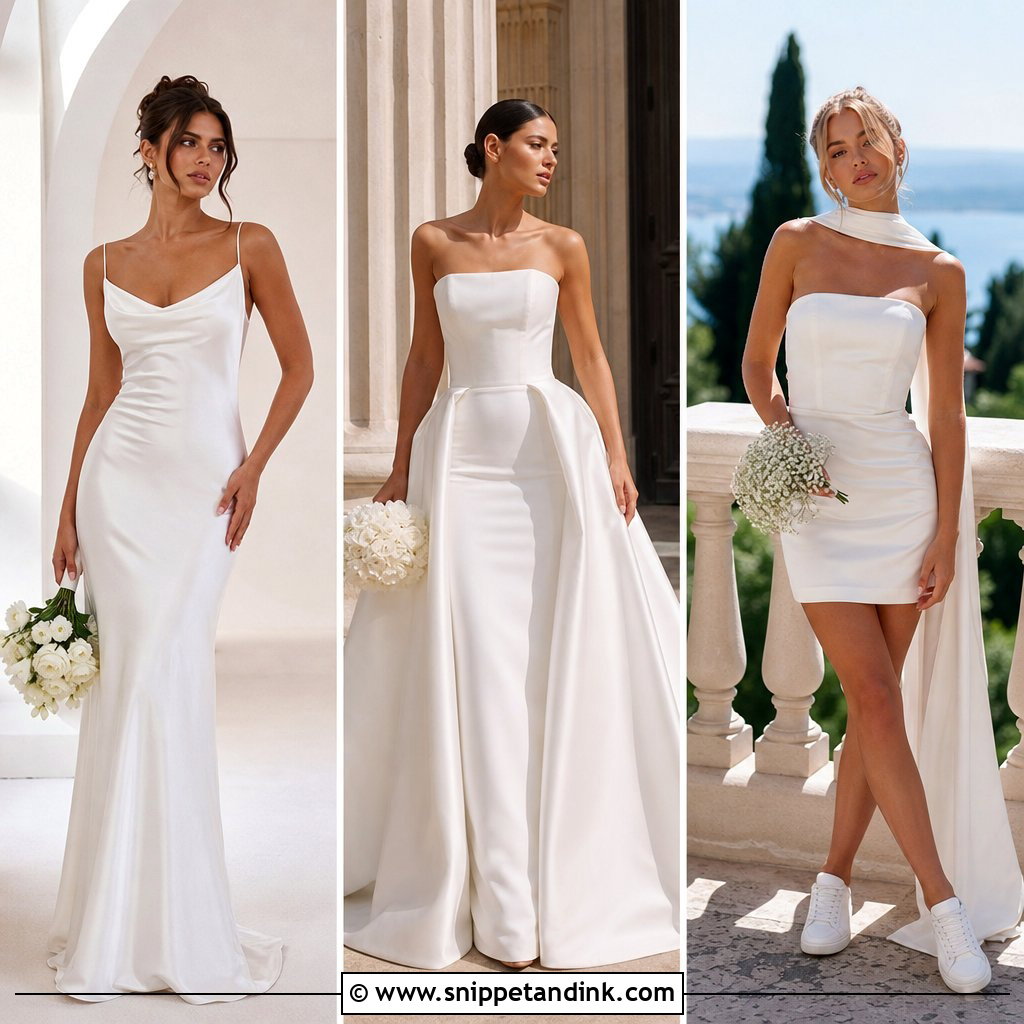
Three-dimensional flowers bring texture without relying on sparkle. They’re also delicate: appliqué petals flatten in a garment bag or a car, so once the dress is hung at the venue I fluff each flower by hand and give it a quick pass of steam from a distance. A mini is playful, a midi more grown-up. Simple white heels and fine earrings let the flowers stand out. If your ceremony gown was plain satin or crepe, this brings the detail you skipped earlier, and it suits spring and garden venues.
16. Sheer Sleeve Wedding Dress
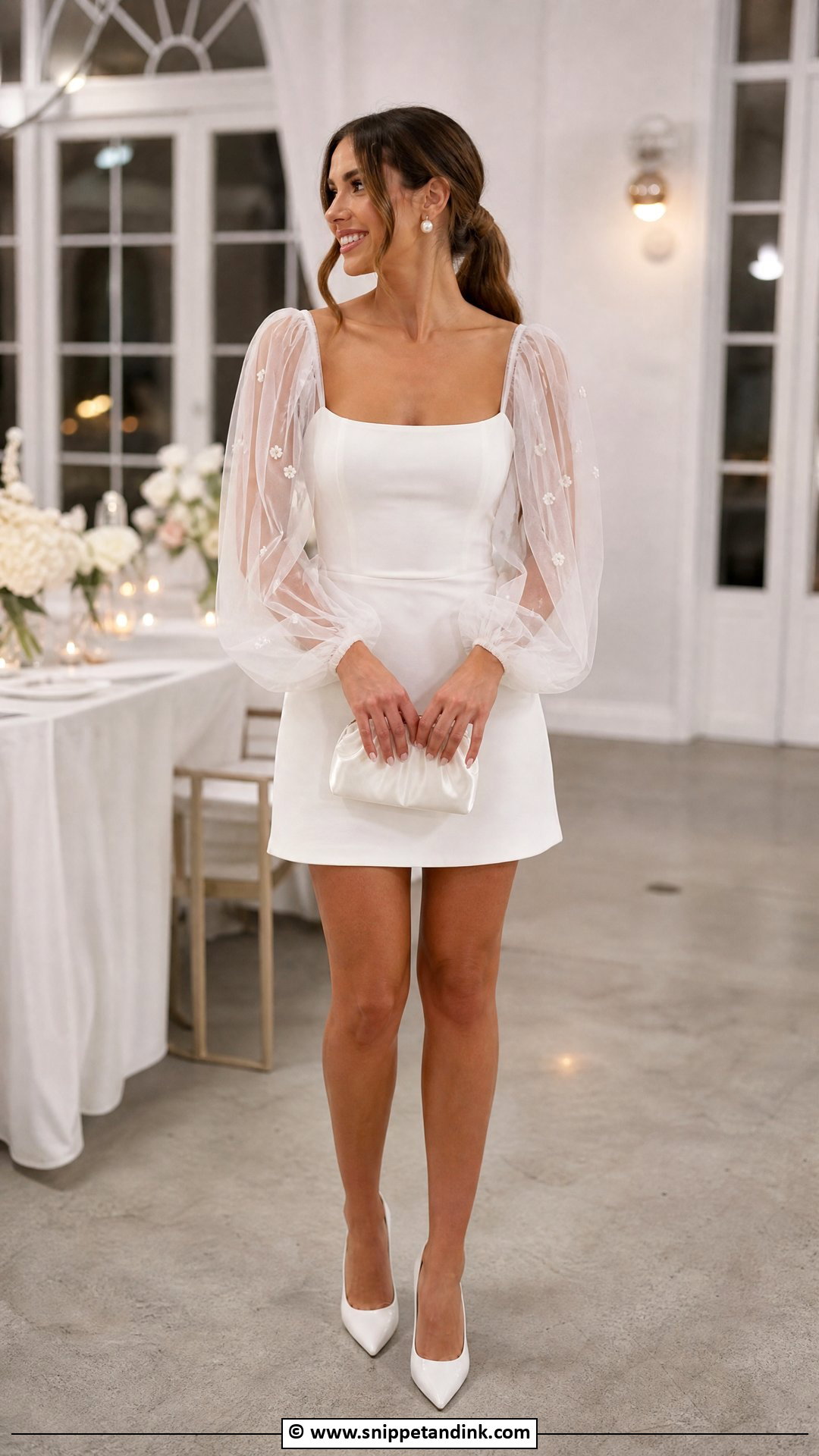
Sheer sleeves give coverage you barely feel, which matters in an air-conditioned room or on a cool evening when a jacket would hide the dress. Tulle and dotted mesh are soft against the skin. Organza is crisper and holds a puff shape, but it can feel scratchy inside the elbow after a few hours of dancing, so I have brides bend their arms repeatedly at the fitting. Long sheer sleeves on a mini look balanced; puffed ones add drama. Sleek heels and a small bag keep it light.
17. High Neck Mini Wedding Dress
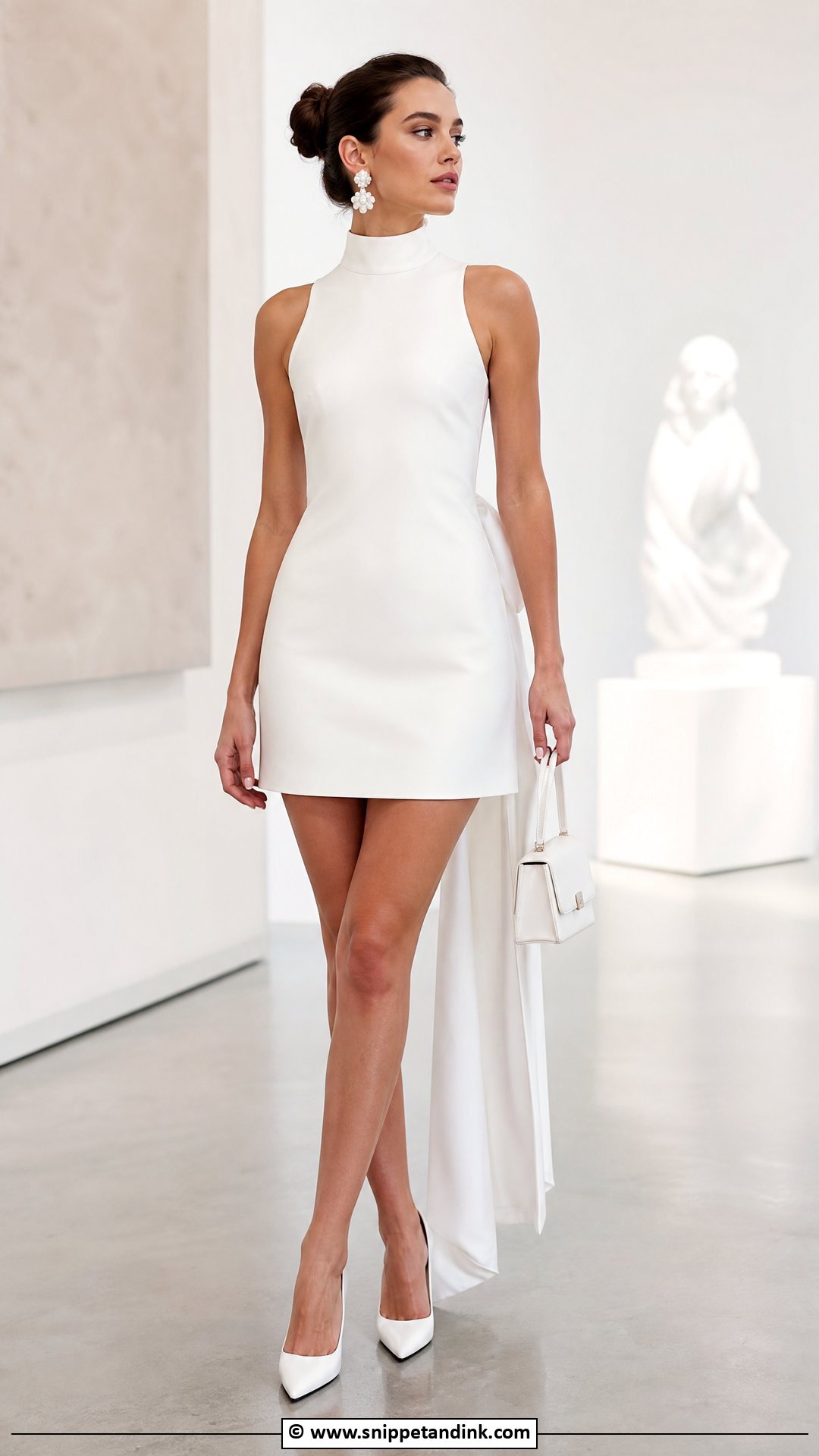
A high neck gives a clean frame and pairs well with a straight or slight A-line shape. On a warm dance floor, though, a high neck in a non-breathable fabric gets hot fast, so I prefer crepe or lined lace over heavy satin here. Pointed heels, sculptural earrings and a smooth bun show off the neckline. A keyhole back or a little beading adds fun if you prefer a modest front.
18. One Shoulder Wedding Dress
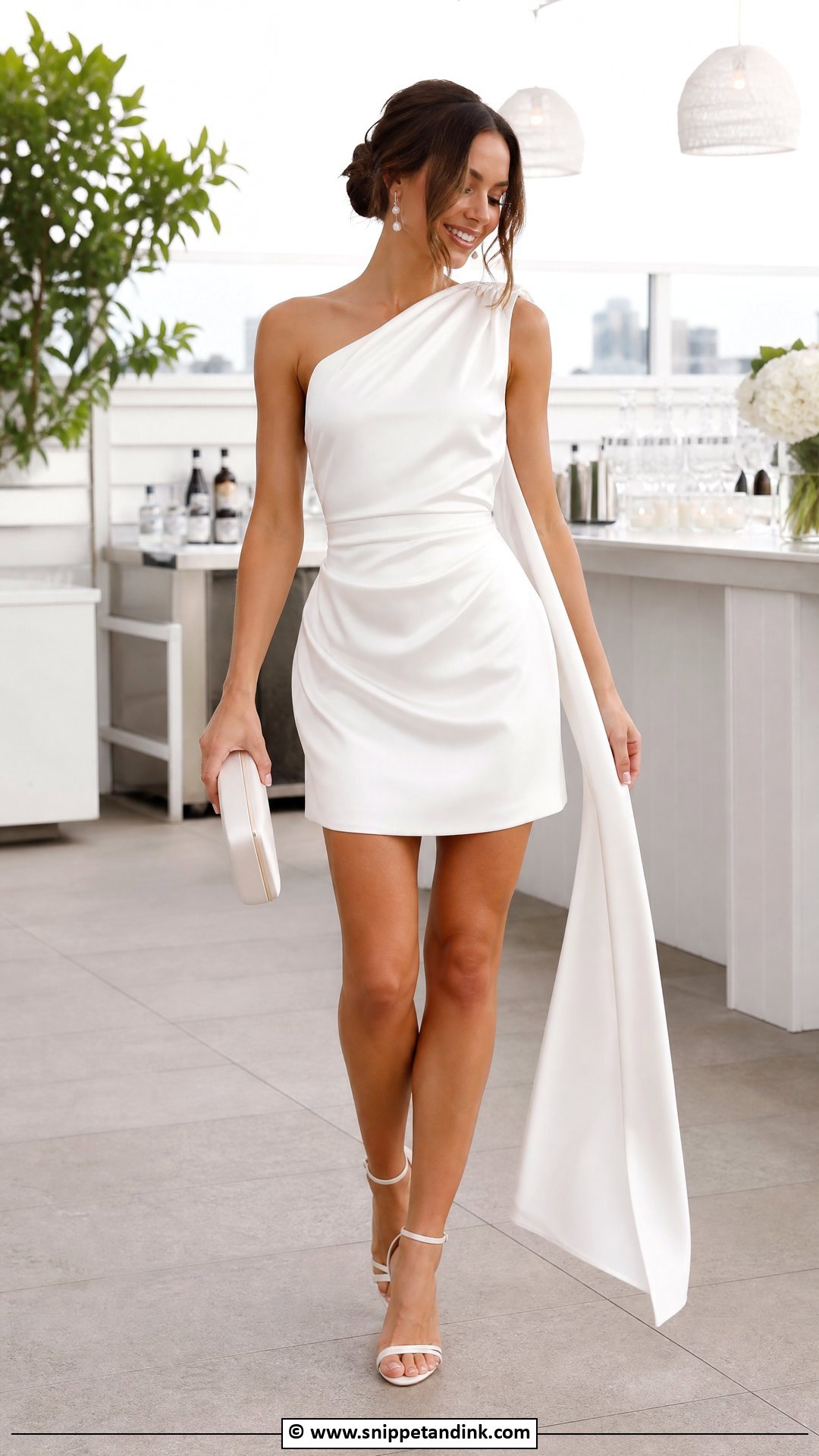
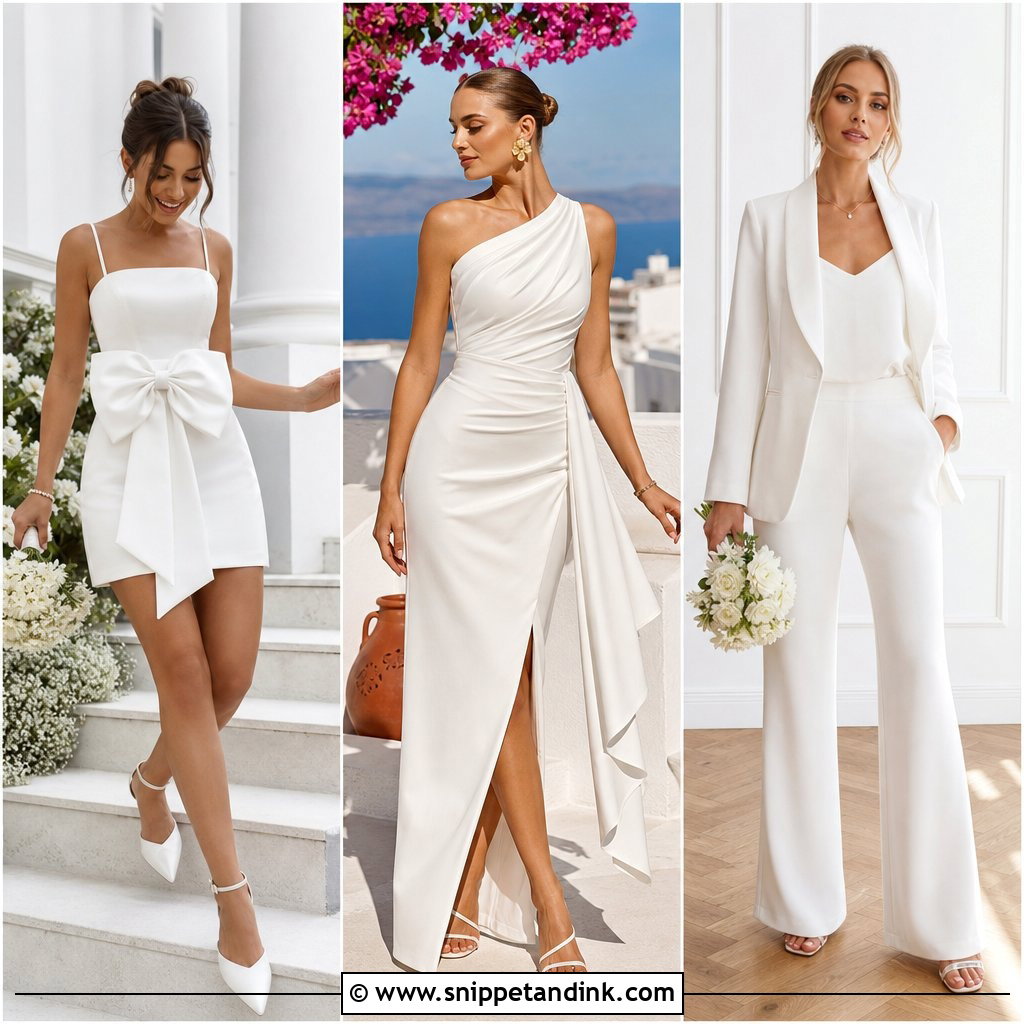
One asymmetric line is enough design, so I keep everything else quiet. The single strap carries the whole bodice, which means the inside matters: I look for silicone tape or light boning along the open side so it stays put when you lift that arm. A mini is playful, a satin midi more fluid. Slicked-back hair, fine earrings and heeled sandals keep the shoulder line clear. Warm-weather and city receptions suit it.
19. Ruffle Mini Wedding Dress
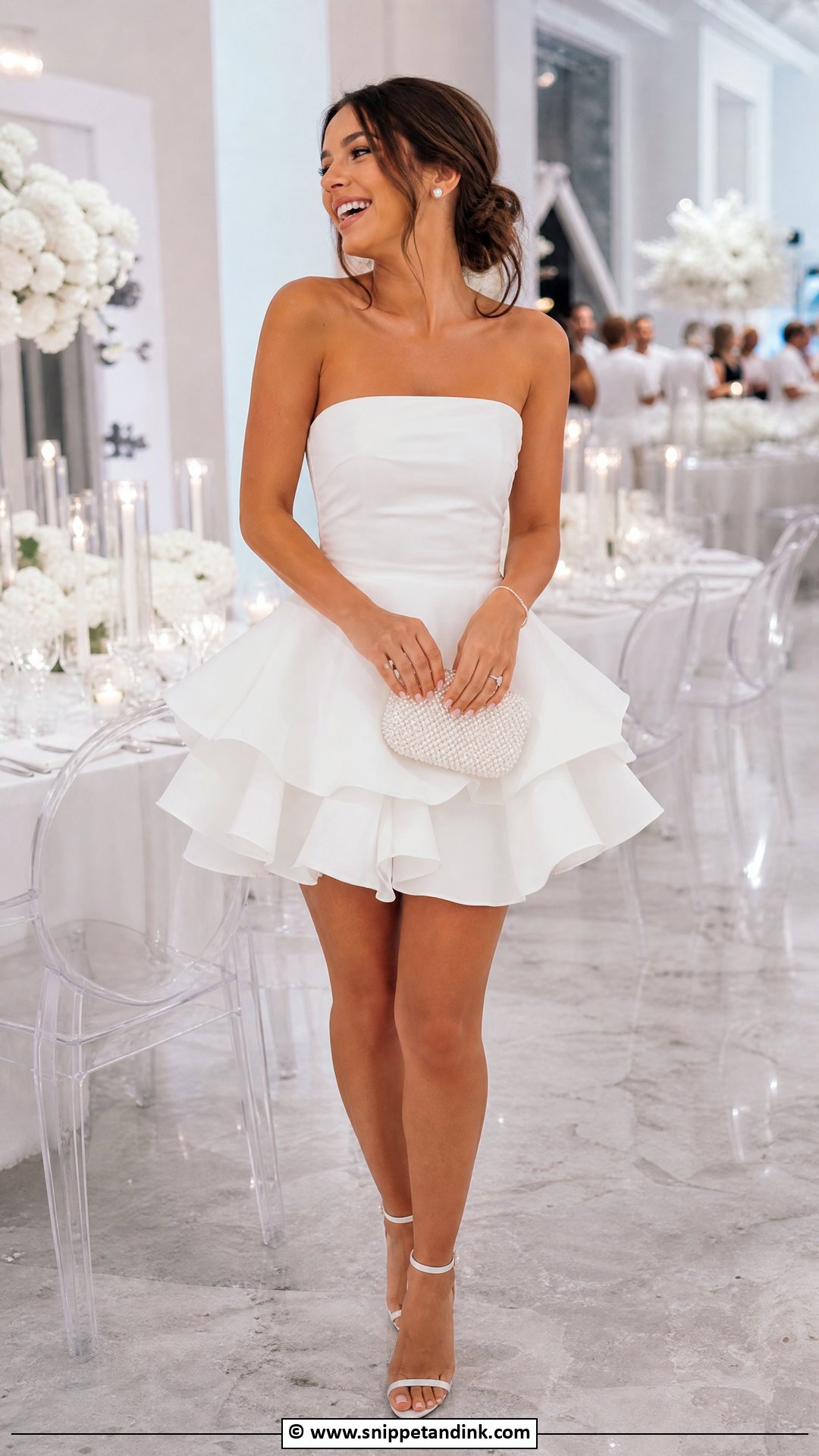
Ruffles move, add a bit of drama and suit anyone who doesn’t want a clingy dress. The fabric decides whether they work. Thin, soft fabric droops and looks limp in photos, while crisp cotton, taffeta or a firm crepe holds the shape all night. Keep accessories to simple heels, pearl studs and a small clutch. A tiered ruffle mini is playful, a one-shoulder ruffle dress more modern, and both come into their own outdoors or on a lively dance floor.
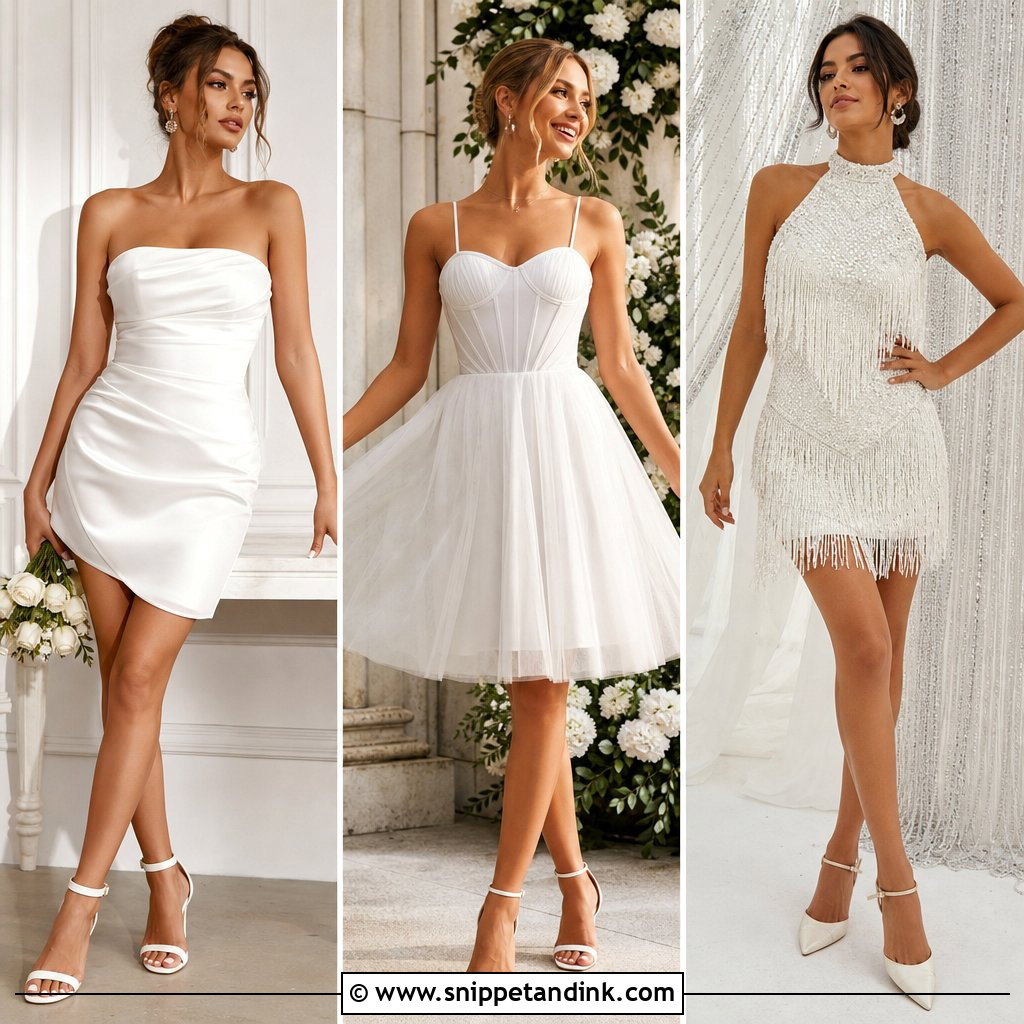
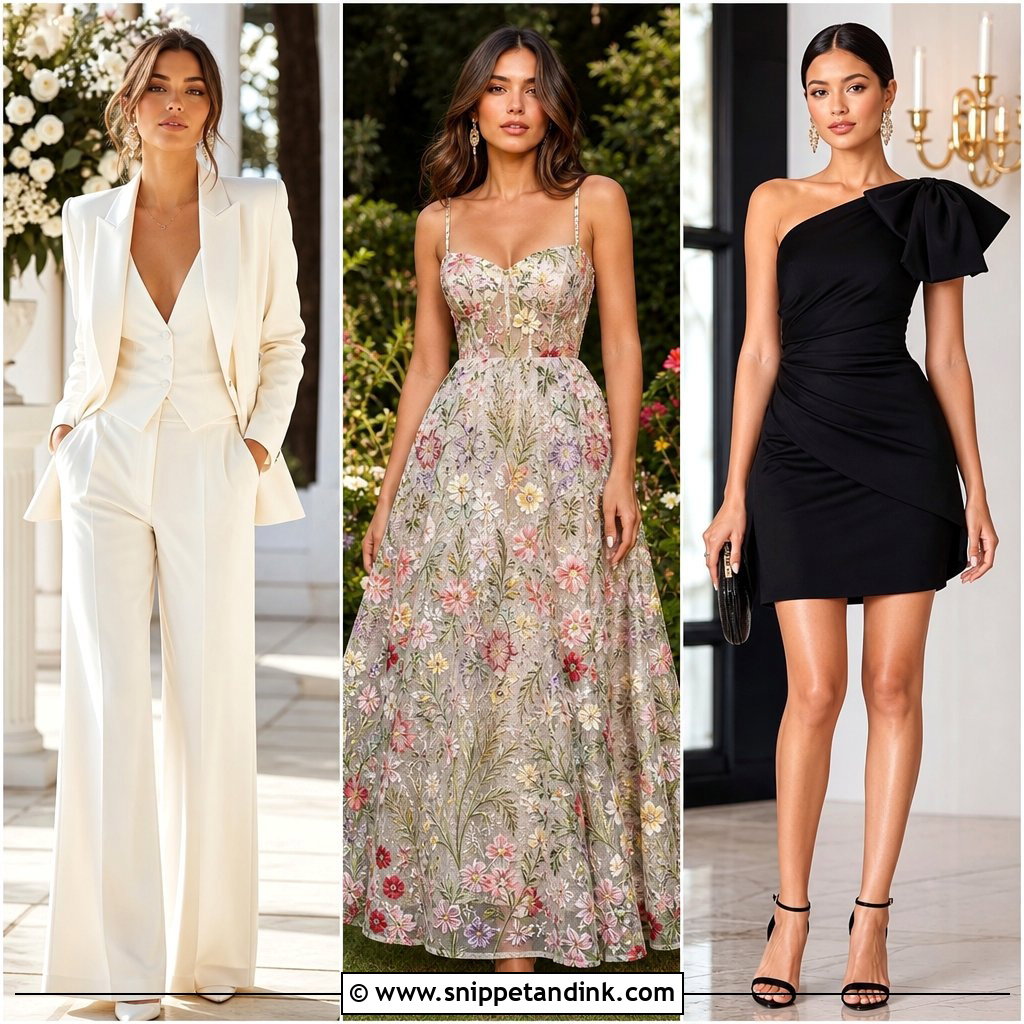
20. Satin Midi Wedding Dress
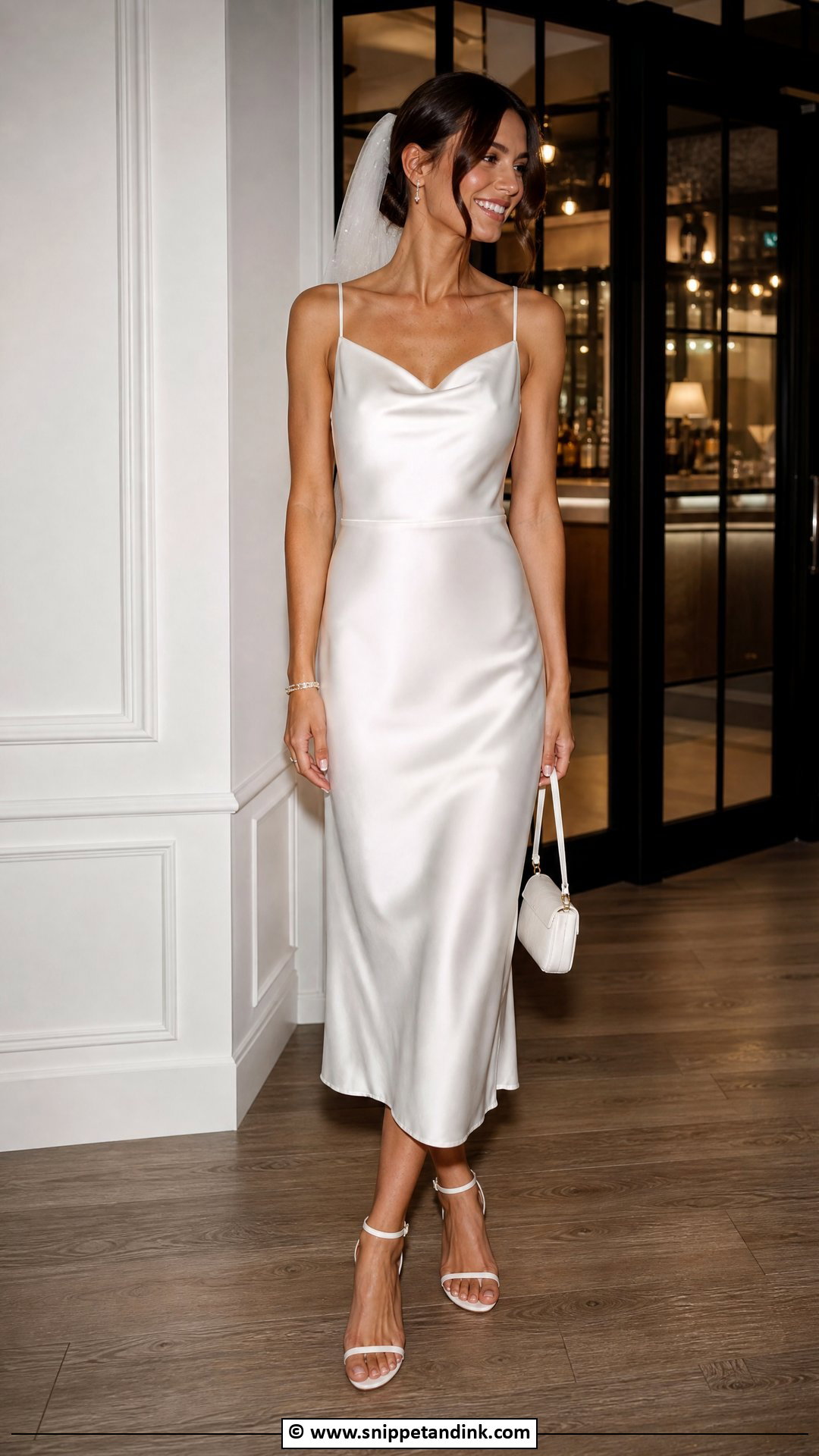
When a mini feels too casual for the room, a satin midi is the middle ground. Midi satin creases across the lap wherever you sit, so I tell brides to have a small travel steamer in the changing room; a few minutes before you walk back in makes a visible difference. A slip midi feels relaxed, a structured bodice more polished. Strappy heels, a mini bag and fine jewelry suit a restaurant, lounge or terrace party.
21. Square Neck Wedding Dress
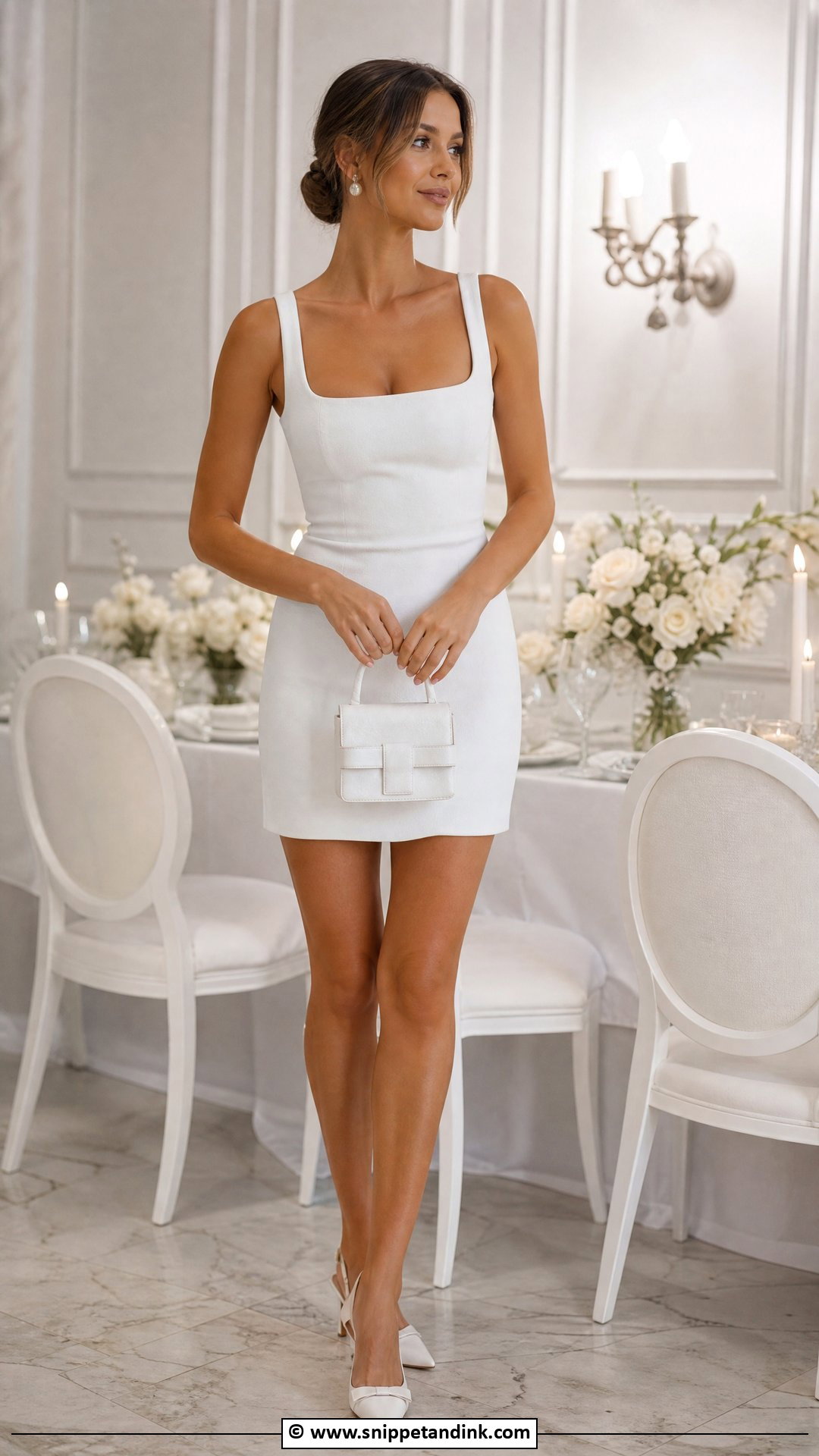
A square neckline opens up the chest without dipping low, and it suits most body types because it widens the shoulder line slightly. I check that the corners lie flat when you breathe in; a neckline cut too wide gapes at the corners, especially on a smaller bust. Satin or crepe looks modern, lace or pearls more romantic. Soft waves, slingbacks and a structured mini bag make it a dependable second look.
22. Champagne Wedding Dress
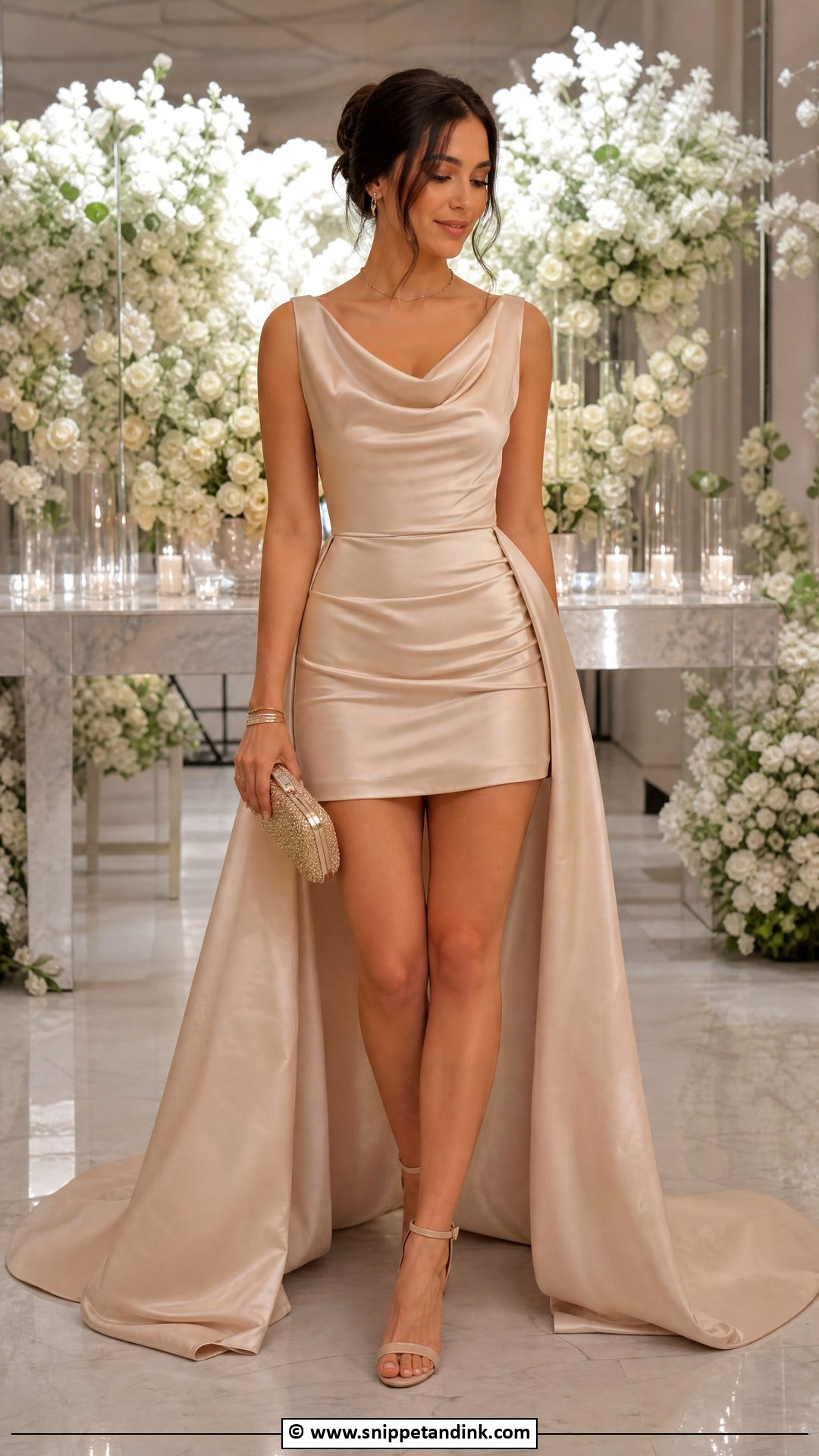
Champagne softens the jump away from bright white and warms up under evening lighting. Test the exact shade against your skin both in daylight and under warm bulbs, because some champagne fabrics turn greyish on cooler skin tones and golden on warmer ones. Sequins push it toward glamour, a satin slip keeps it understated, and beading adds detail. Nude or metallic heels and soft gold jewelry suit it, especially for autumn and winter evenings.
23. Silver Sparkle Wedding Dress
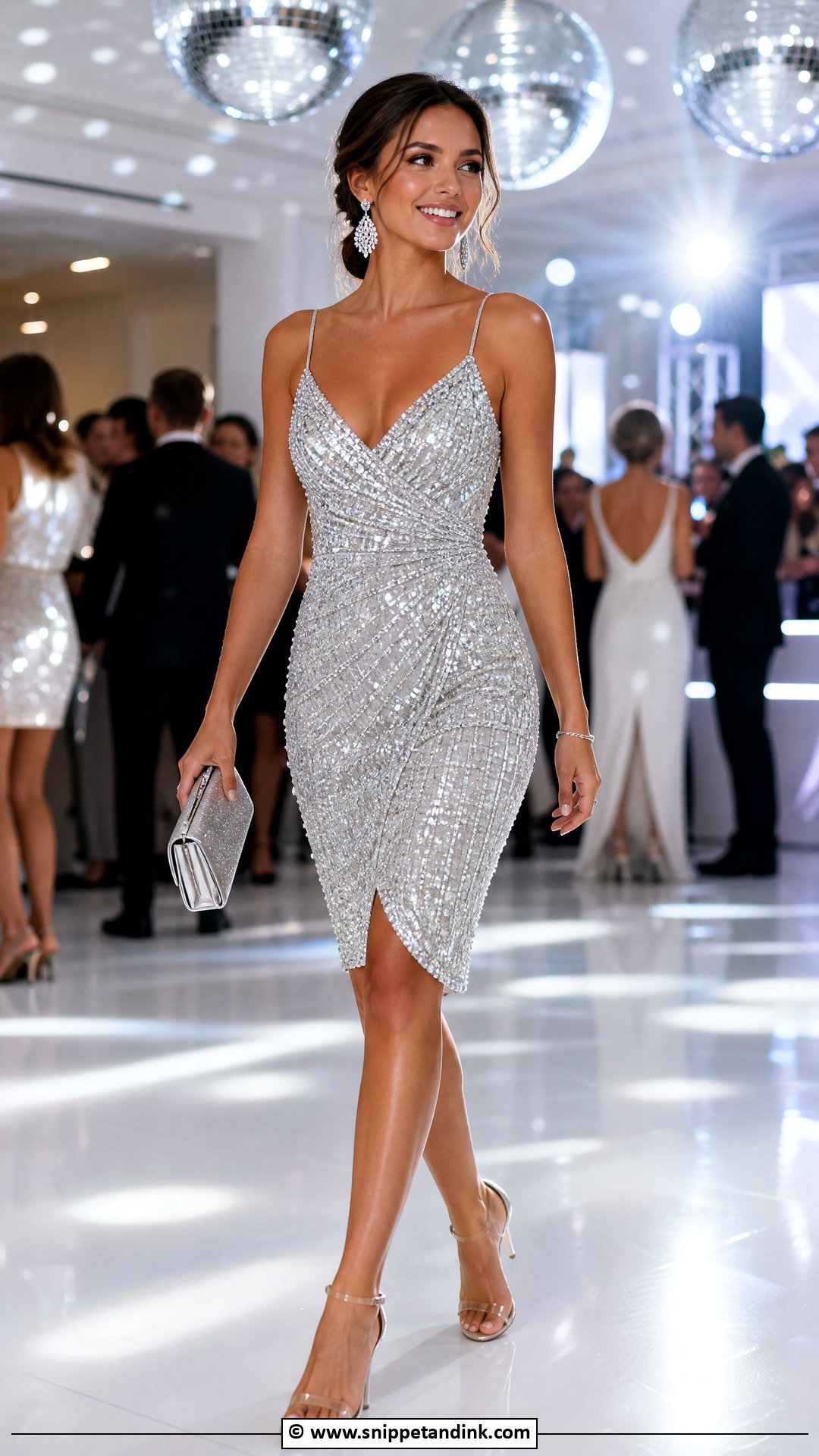
Silver sequins or crystal beading set a late-night party mood straight away. That shine bounces flash hard, so expect a lot of sparkle in photos and keep hair sleek and accessories simple; otherwise the eye gets pulled in every direction. A clean silhouette keeps it bridal. Clear heels, silver sandals or white pumps all work with a small clutch. Hotel parties and rooftop spaces suit it best.
24. Convertible Wedding Dress
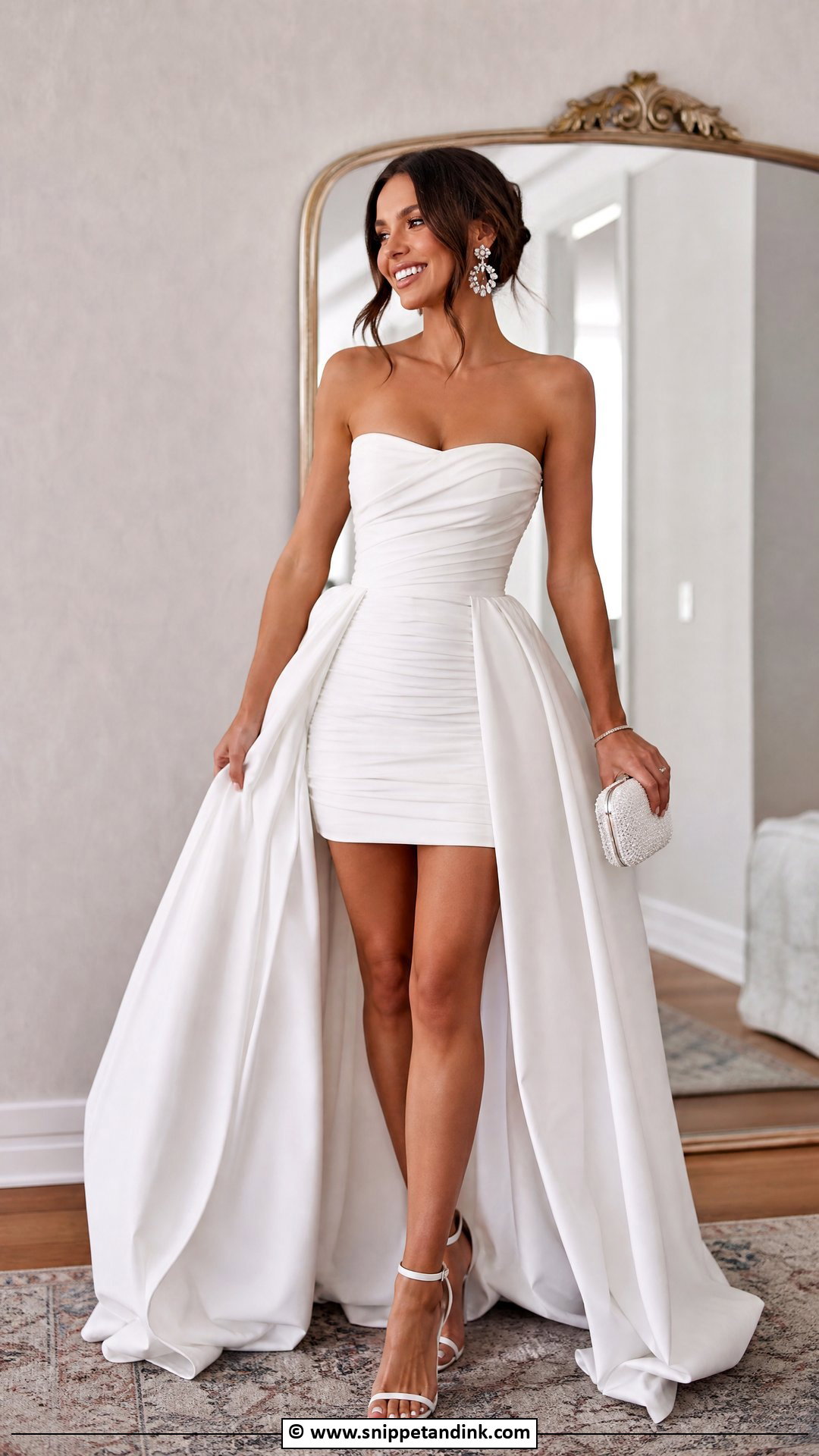
One dress, two moods: a removable overskirt, a detachable train or sleeves that come off after the ceremony. What I check first is how it detaches. Snaps and hooks are fast; an overskirt that buttons on can take a bridesmaid a good while with nervous hands. Practice the change at your final fitting so nobody is learning it on the night. Then switch to different heels, bolder earrings or a hair accessory so the converted version feels new. It saves budget, packing space and outfit-change stress.
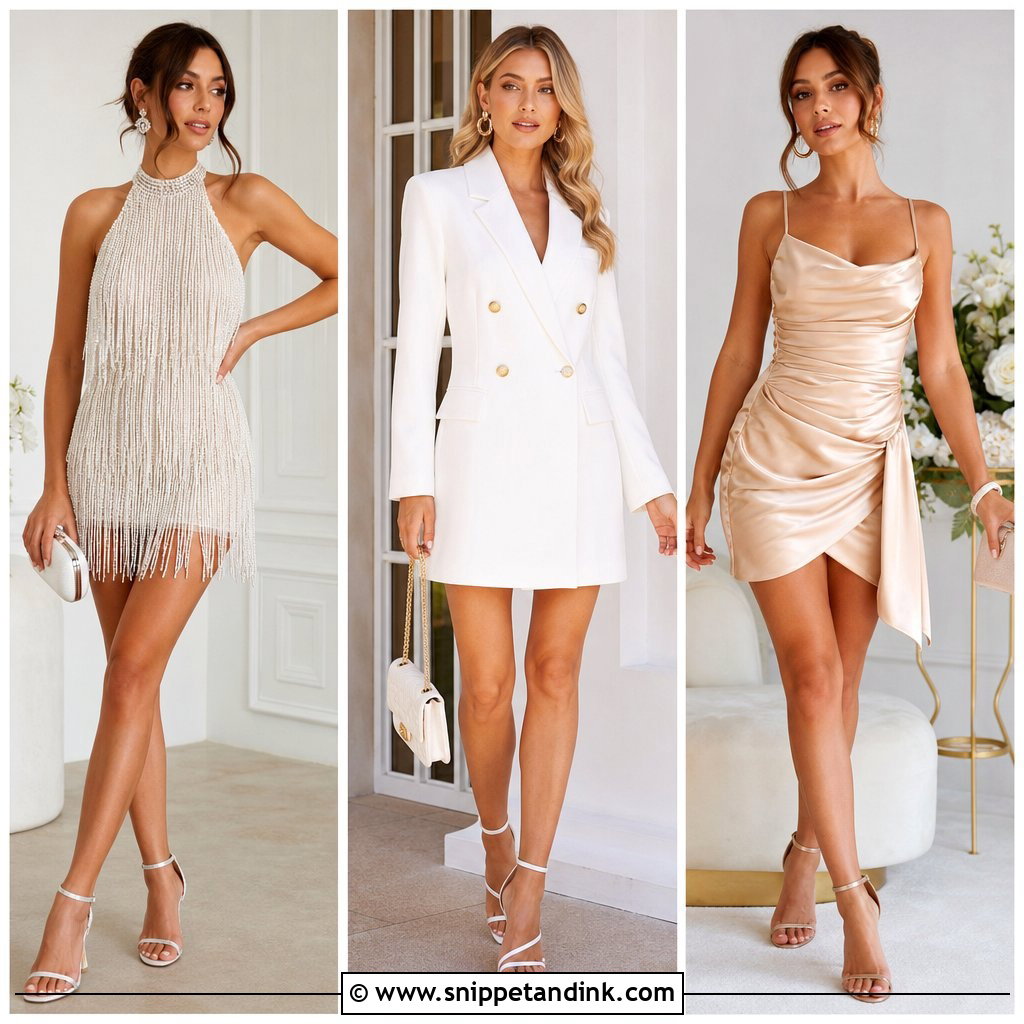
25. Beaded Midi Wedding Dress
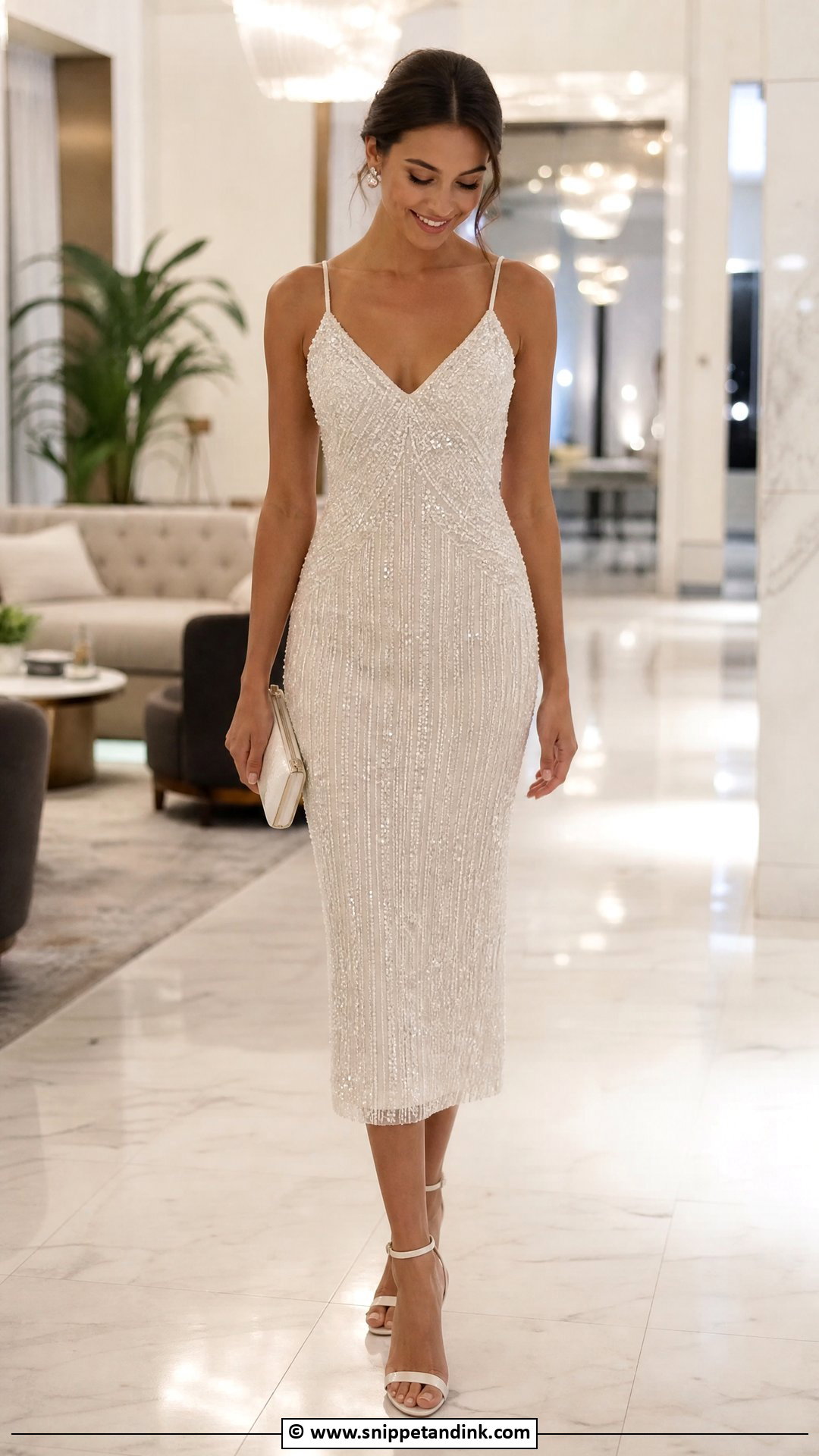
Beadwork brings sparkle and the midi length brings coverage. Weight is my first concern. Densely beaded fabric drags at the shoulders after a long day, so lighter beading on a fine base wears far better than heavy glass work. A straight or slip silhouette suits ankle-strap heels and a small clutch, and simple hair keeps the beads in charge. Upscale venues and evening receptions are where it feels right.
26. Short Sleeve Wedding Dress
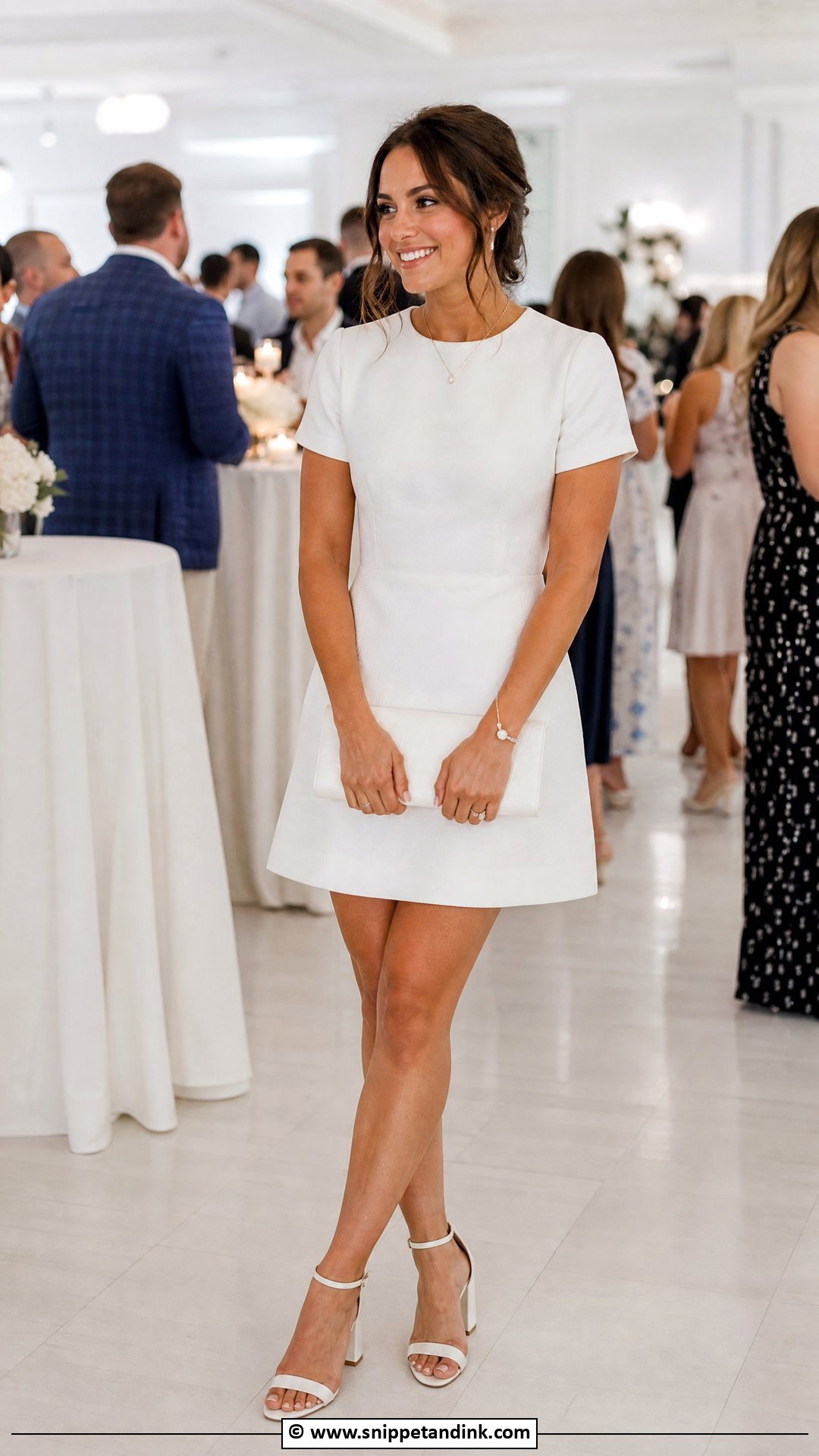
A short sleeve covers the shoulders without the heat of long sleeves. The armhole is where these go wrong: a tight sleeve limits how high you can raise your arms, and that’s the whole point of an after-party. When I alter one, I ask for the armhole cut slightly higher or a small gusset added. Crepe looks clean, lace or pearl details more bridal. Block heels, a sleek clutch and fine jewelry suit warm weddings and relaxed parties.
27. Drop Waist Wedding Dress
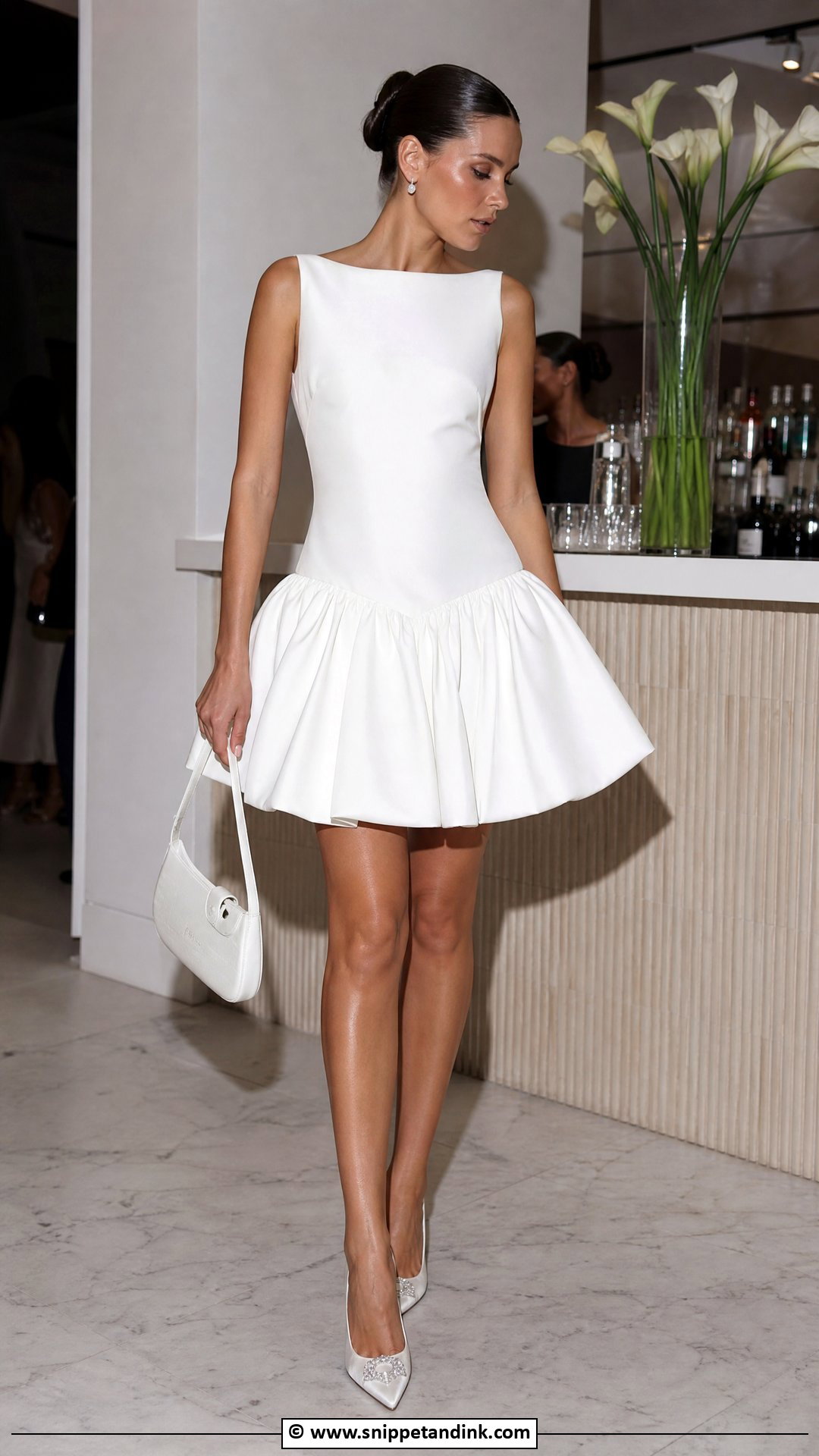
The lower waist lengthens the torso and gives a slightly vintage feel. It sits most easily on straighter figures. On curvier hips a drop waist can bunch, so I’d look for a seam that lands at the high hip rather than across the fullest part. A flared drop-waist mini is playful, a satin midi sleek. Pointed heels and a compact shoulder bag finish it, and it’s a nice twist after a very traditional ceremony gown.
28. Crystal Strap Wedding Dress
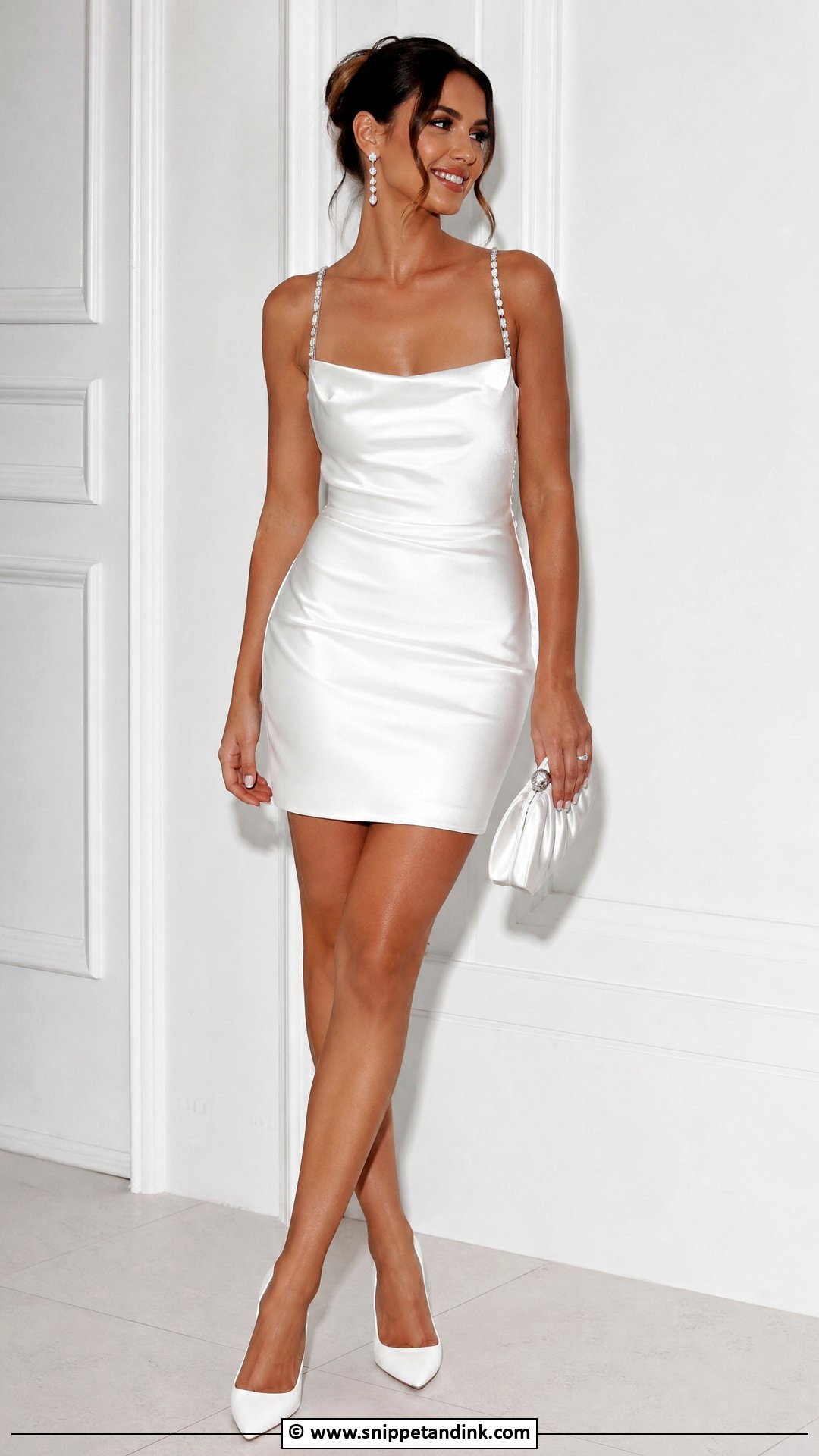
Putting all the sparkle on the straps keeps it near your face, where most photos focus, while the rest of the dress stays simple. I check that crystal straps are backed with soft fabric, because bare metal settings scratch the shoulders by the end of the night. A satin or crepe mini with crystal straps needs very little else: crystal earrings, clean heels, a small satin clutch.
29. A Line Mini Wedding Dress
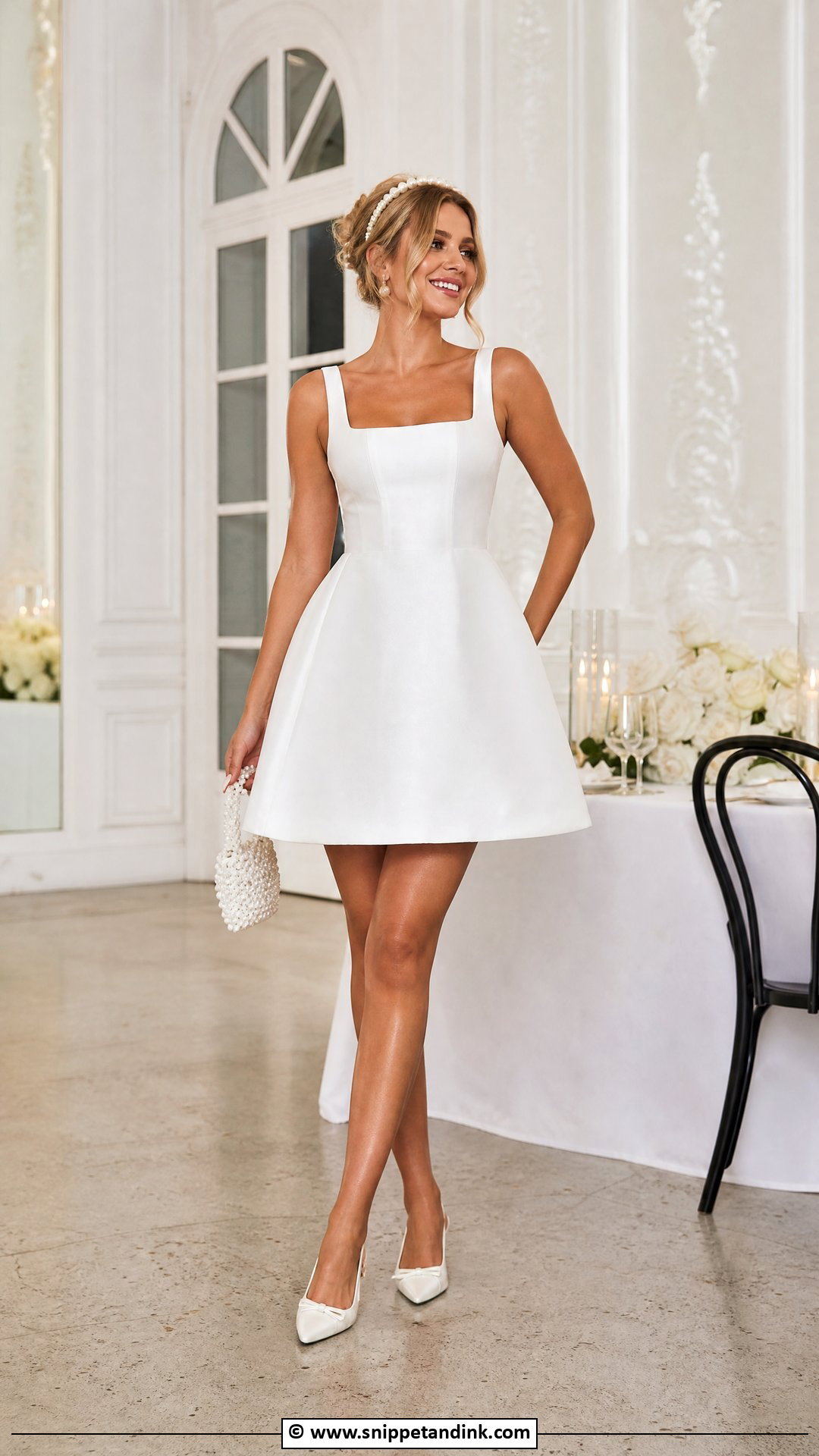
A fitted top and a gently flared skirt give you more room to move than any other short shape here. Satin looks polished, lace romantic, and mikado holds its structure through hours of wear. Slingback heels, a pearl headband and a small bridal bag give a sweet finish. If you’re unsure about short dresses at all, this is the shape I’d have you try on first; it doesn’t cling anywhere.
30. Pleated Wedding Dress
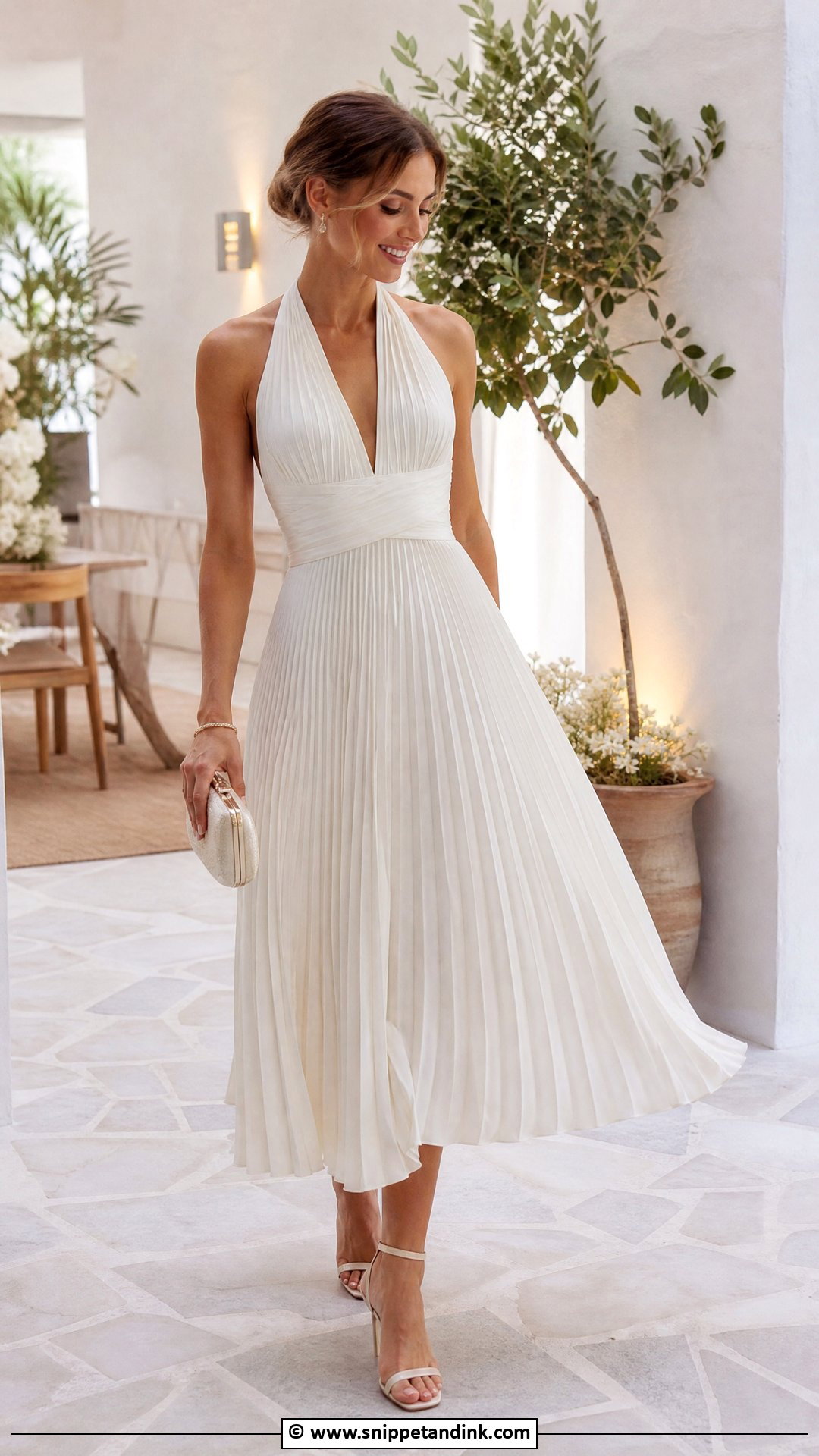
Fine pleats swing when you walk and add texture without any embellishment. Pleats are set with heat, so they relax in humidity or after a long sit; polyester pleating holds far better than silk. A halter or square-neck pleated dress looks modern, a long-sleeve version more refined. Simple heels, a small clutch and fine jewelry suit terraces and warm-weather receptions.
31. Satin Wrap Wedding Dress
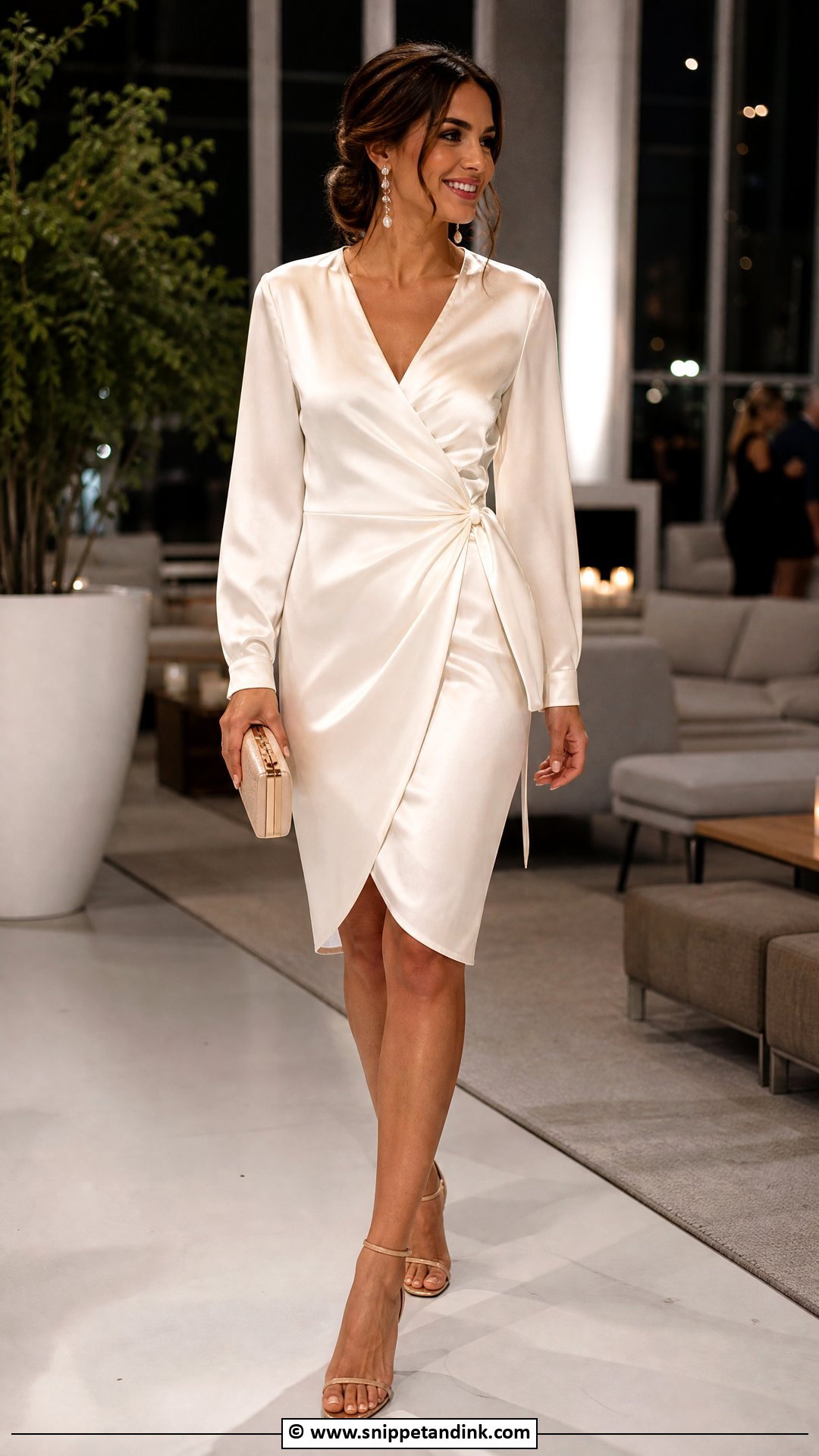
A wrap is the one dress you can adjust after dinner. It defines the waist and loosens when you need it to. Wraps do have a habit of opening on the dance floor, so I add a tiny hidden snap where the fabric crosses. A mini wrap is playful, a midi more polished. Ivory or white satin with strappy heels and a structured clutch is the classic version, with a fine necklace or drop earrings at the V.
32. Puff Sleeve Wedding Dress
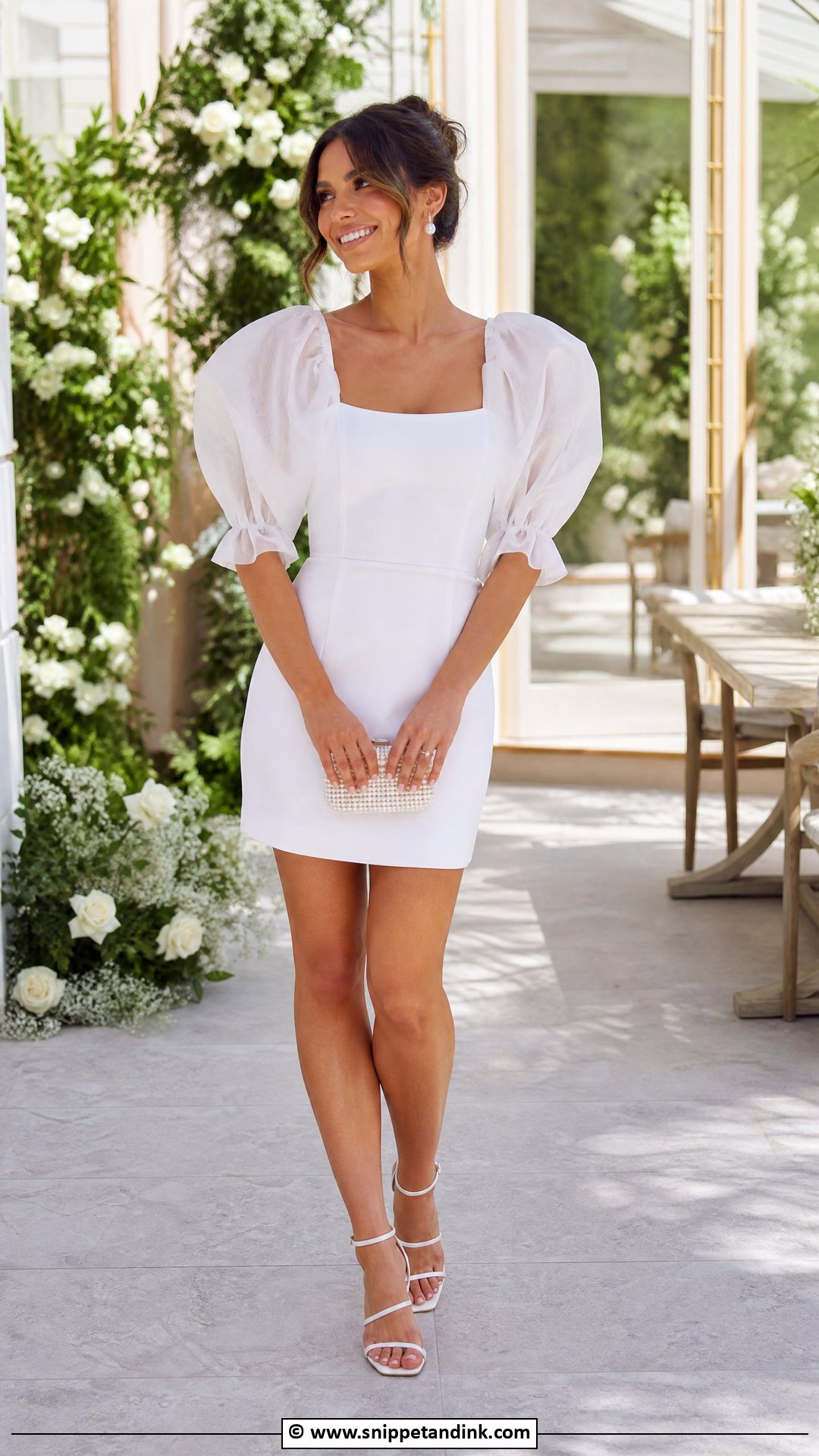
Volume at the shoulders makes a simple mini feel special. Organza sleeves are light and airy; satin sleeves are heavier and hold a firmer shape. Puffs crush in a garment bag, so hang the dress at the venue early and plump the sleeves by hand before you change. Simple heels and a small clutch keep the attention up top. Spring weddings and garden venues suit it.
33. Backless Wedding Dress
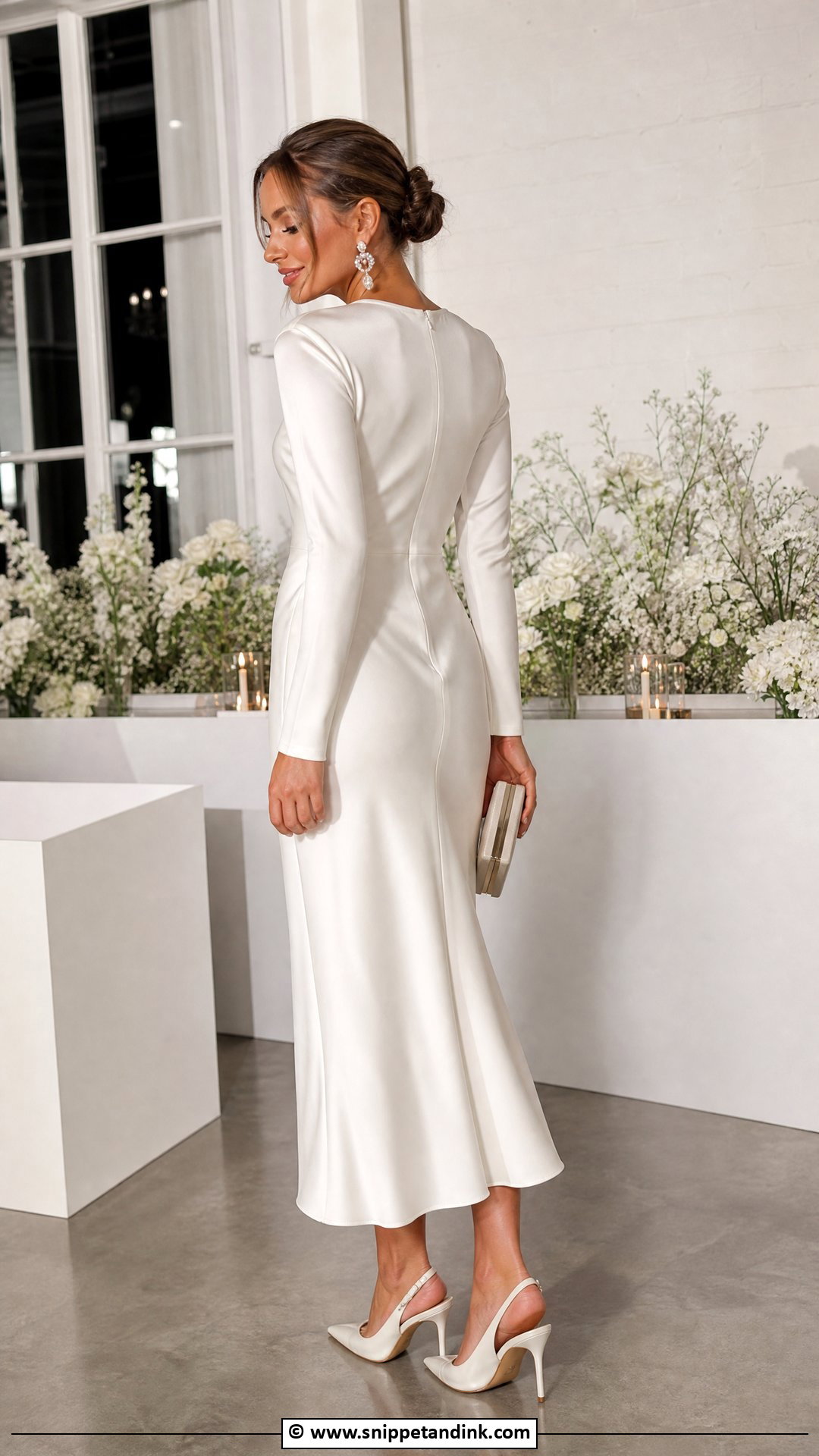
All the drama is behind you, which means the real work is in support. A backless dress needs built-in cups or a low-back solution that’s tested properly, and I fit these with the exact undergarment you’ll wear on the night, never a stand-in. A satin backless mini looks sleek, a backless midi slip more fluid. An updo, statement earrings and simple heels show the back off, and end-of-night portraits taken from behind are where it pays off.
34. Tea Length Wedding Dress
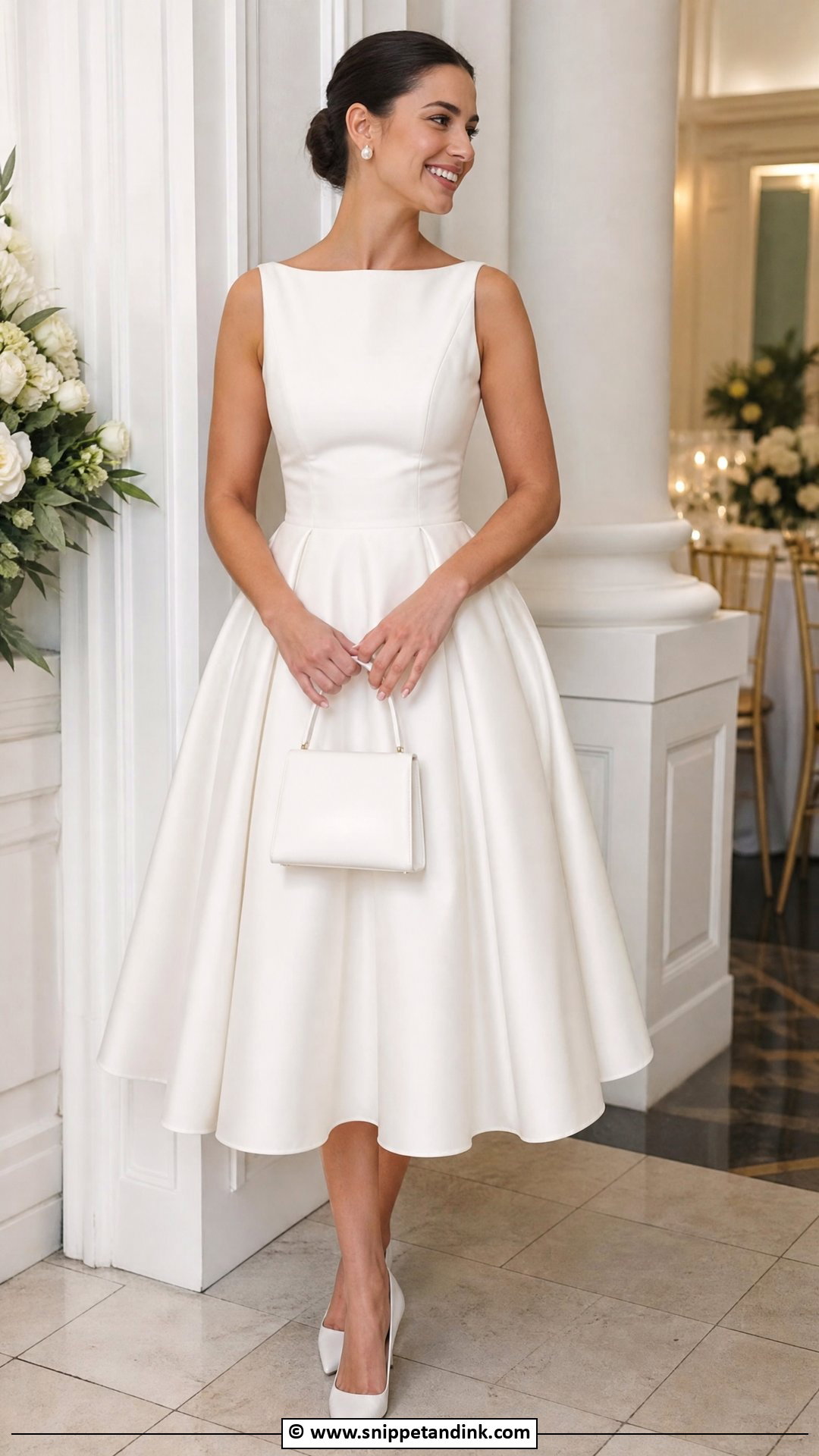
Falling between knee and ankle, a tea length gives more coverage than a mini and less formality than a gown, and it’s easy to walk and dance in. Where the hem lands on your leg matters. A hem cut at the widest point of the calf shortens you visually, so I usually move it a little above or below. A fitted bodice with a full skirt is the classic version; satin or crepe looks more modern. Pointed pumps, pearl earrings and a small structured bag suit restaurant parties and polished dress codes.
35. White Bridal Jumpsuit Dress
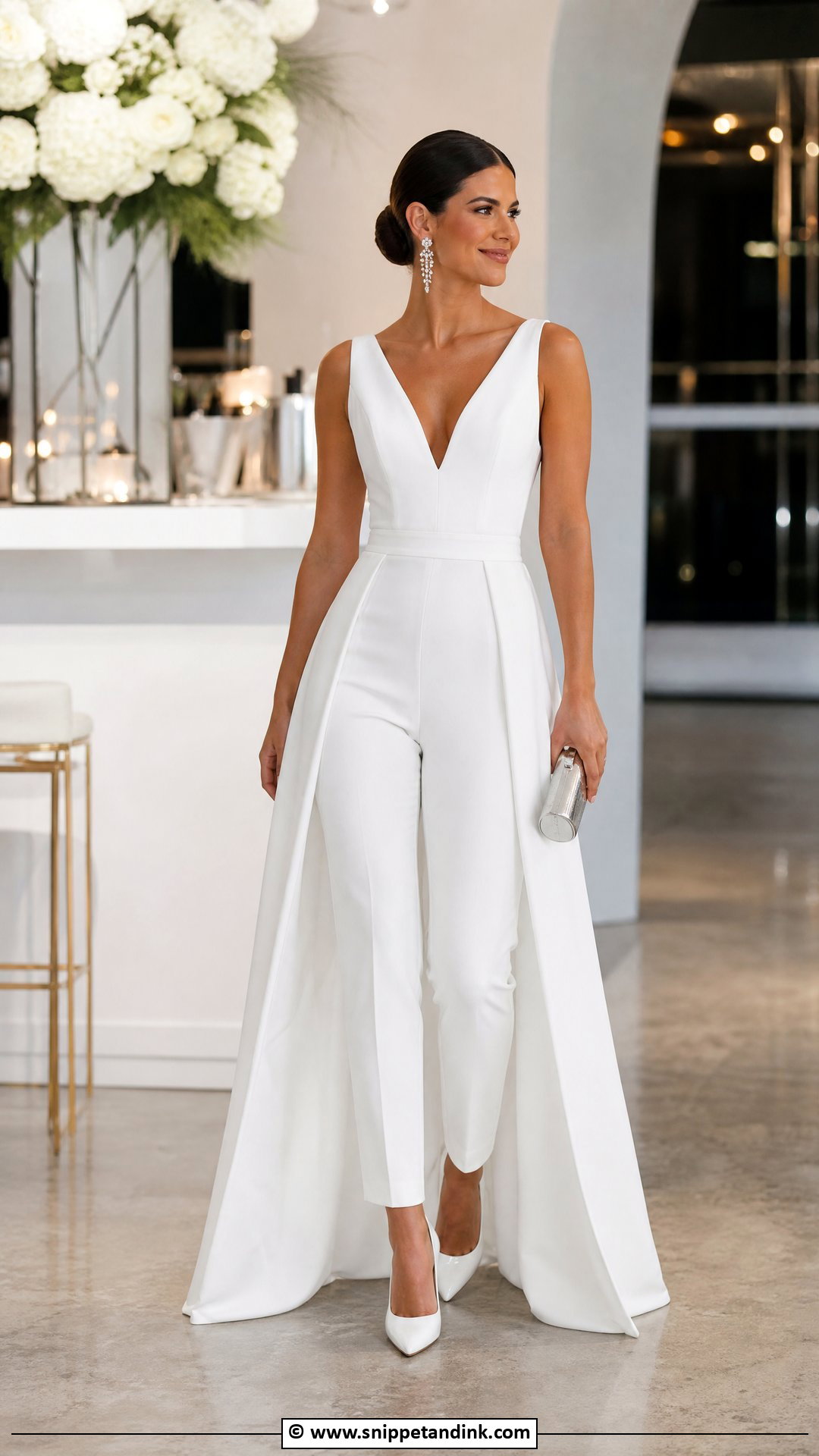
Trousers with real bridal impact, and some versions add an overskirt, cape panel or draped layer for a dress-like effect. The issue nobody mentions until the night itself is the bathroom. A one-piece jumpsuit with a back zip means asking for help every time, so I look for a side zip or a separate top and trouser that read as one outfit. Pointed heels, bold earrings and a sleek clutch finish it, and you won’t think about a hemline once.
The Dance Floor Test I Run in Every Fitting Room
A dress can look right in the mirror and still fail the minute the music starts. Before any second look goes home with a bride, I put her through a few minutes of very unglamorous movement, in the actual shoes she’ll wear.
- Arms straight overhead, then held there. Watch the hem and the neckline, not your face.
- Sit fully back on a hard chair, then stand. Look for creasing, a riding-up hem and anything digging in.
- Bend down as if picking up a dropped clutch. Short dresses and strapless bodices both get found out here.
- Turn quickly on the spot. Fringe, feathers and pleats should swing, not tangle or catch on heels.
- Run a hand along the inside seams and under the arms. Anything scratchy now will be painful after midnight.
If one move makes you reach to adjust something, that’s a fix for alterations or a reason to keep looking. I’d rather lose a favourite than have a bride holding up a strapless bodice in every dance photo.
Spills, Sweat and Getting Both Dresses Home
Late-night dresses meet drinks, so have a plan before anything gets spilled. Blot red wine and coloured cocktails with a clean white napkin and cold water, pressing rather than rubbing; rubbing pushes the stain into satin weave and breaks sequin threads. Clear, sugary spills are the sneaky ones. They seem to vanish, then turn yellow-brown weeks later as the sugar oxidises, so mention every spill to the cleaner, even ones you can’t see.
Decide in advance who takes the ceremony gown home, in its bag, while you’re still dancing. Left in a changing room overnight, it gets folded, sat on or forgotten. Both dresses should go to a specialist cleaner within a few weeks, before perspiration and makeup marks have time to set.
Which Second Look Earns Its Place at Midnight
The second look should be lighter, easier and more personal than the ceremony gown. Sequins, feathers, satin, lace, pearls or clean tailoring all work, as long as the dress passes the fitting-room tests above. A mini is the popular route, but midi dresses, tea lengths, convertible gowns and bridal jumpsuit dresses hold up just as well when the party runs late. Pick the one you’d happily wear until the lights come up.
You'll Like These Ideas:


Leave a Reply