
A gown is the easiest way into fusion dressing for a guest who doesn’t wear sarees often. You get Western construction, meaning a fitted bodice, a zip and a skirt that won’t unravel, with Indian surface work layered on top. I dress guests in them for receptions, sangeet nights, engagements and destination weddings. The ones that work have a clear Indian element, such as a draped pallu, a cape, zari borders or a long jacket, so the gown reads as wedding wear and not a prom dress. Each look below comes with the fit and fabric points I’d check before you buy.
Ready-Made, Rented or Stitched to Your Measurements?
Guests buying a fusion gown usually have three routes, and each suits a different budget and timeline. I’d decide this before falling for a particular design.
Ready-made
Fastest and often the cheapest. Indian ready-made sizing varies a lot between labels, so measure your bust, waist and hips and compare them to the brand’s chart rather than ordering your usual size. Check whether the seams have extra allowance for letting out, and read the return policy before you order online.
Rental
Sensible for a heavily embellished reception gown you’ll wear once. Rental pieces usually allow only small adjustments, so check the fit carefully at collection and ask what happens if a sequin or bead comes loose during the evening.
Made to measure
The best fit, especially for corsets, mermaid cuts and one-shoulder styles that rely on precise support. It also takes the longest, so allow time for at least two fittings and order well ahead of wedding season.
Whichever route you take, ask what the gown is actually made of. A listing that says “silk look” or “art silk” usually means polyester, which is fine for a single evening but holds heat. Lining matters even more: an unlined net or georgette gown will need a slip, and a gown lined in cotton or a breathable blend stays far more comfortable through a long night.
1. Cape Indo Western Gown For Indian Wedding
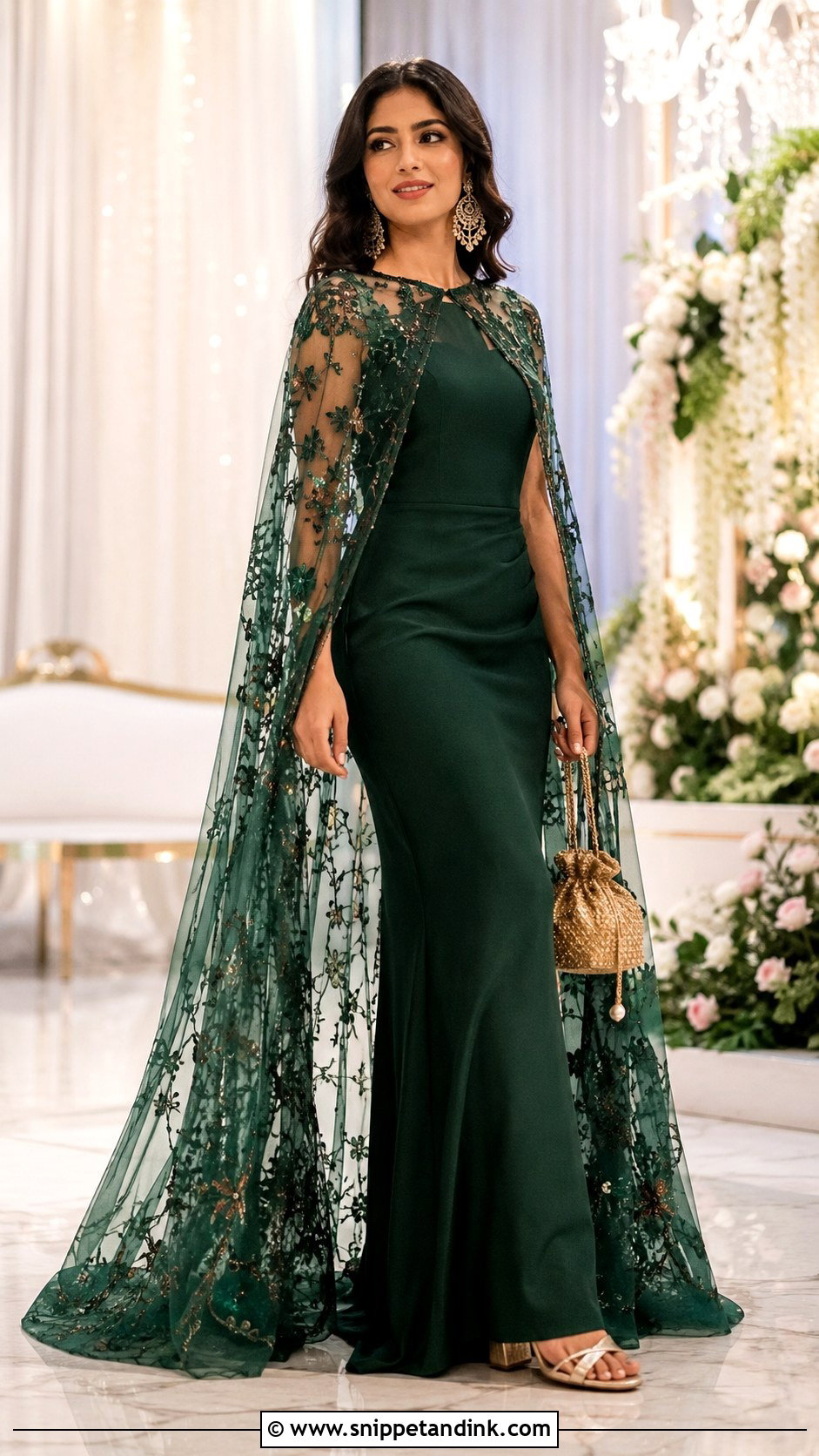
A sheer organza cape over a fitted gown gives movement without the bother of a dupatta. Emerald, navy and deep teal suit evening. The cape should be light; heavily embroidered capes pull the gown’s neckline backward and you’ll keep tugging it forward all night. Ask whether it’s attached at the shoulder seam or the neckline, since shoulder attachment sits more securely. Pointed block heels and chandelier earrings finish it for a sangeet or reception.
2. Saree Indo Western Gown For Indian Wedding
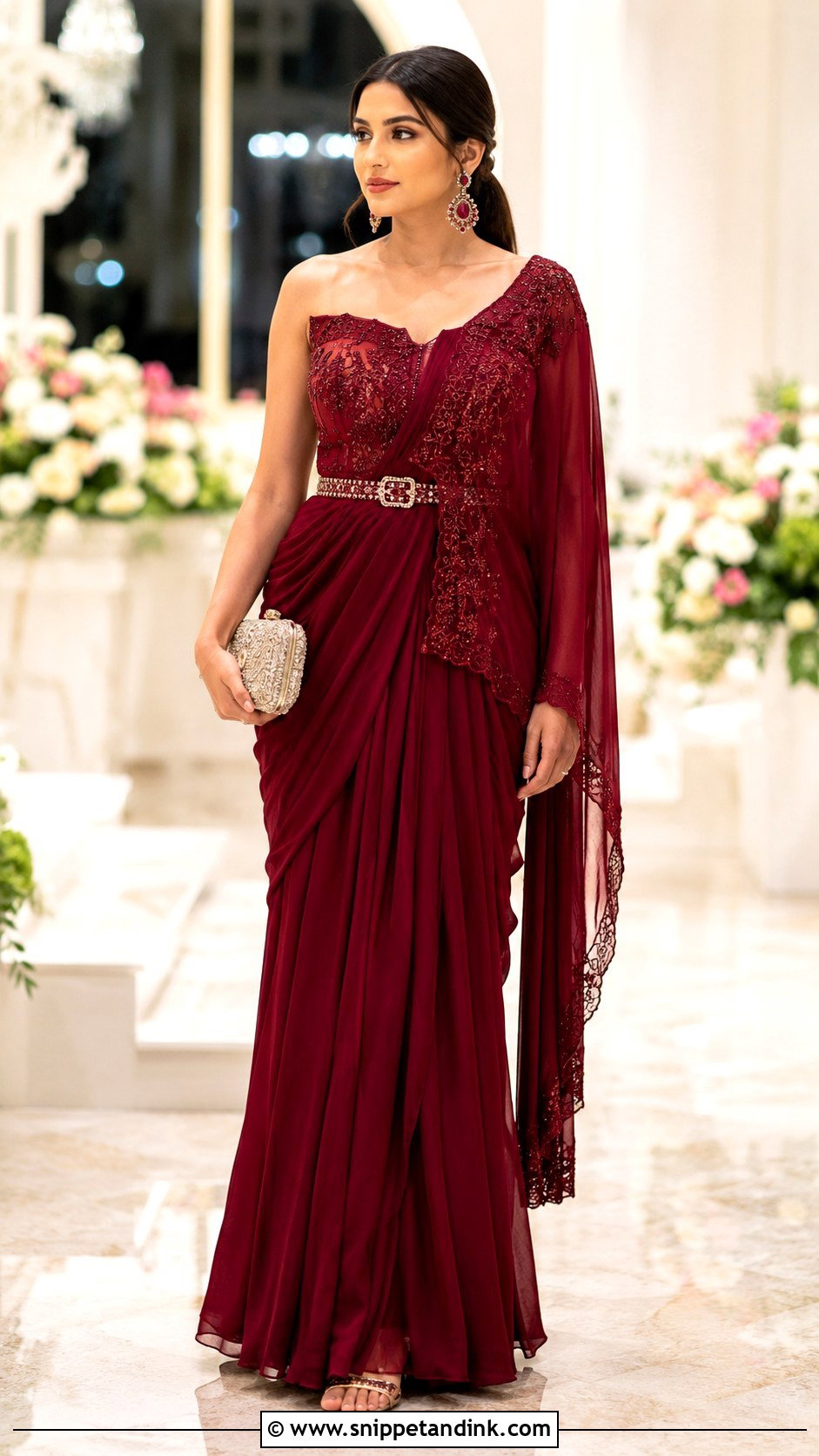
Do you love sarees but dread the pleating? A saree Indo Western gown stitches the drape and pallu into a floor-length dress with a defined waist. Soft crepe or georgette in ruby, cobalt or black falls cleanly. A structured bodice keeps the drape from slipping off the shoulder. Use a jewelled belt only if the gown is plain at the waist; on a heavily worked one it looks crowded. It’s an easy choice for a long reception evening.
3. Jacket Indo Western Gown For Indian Wedding
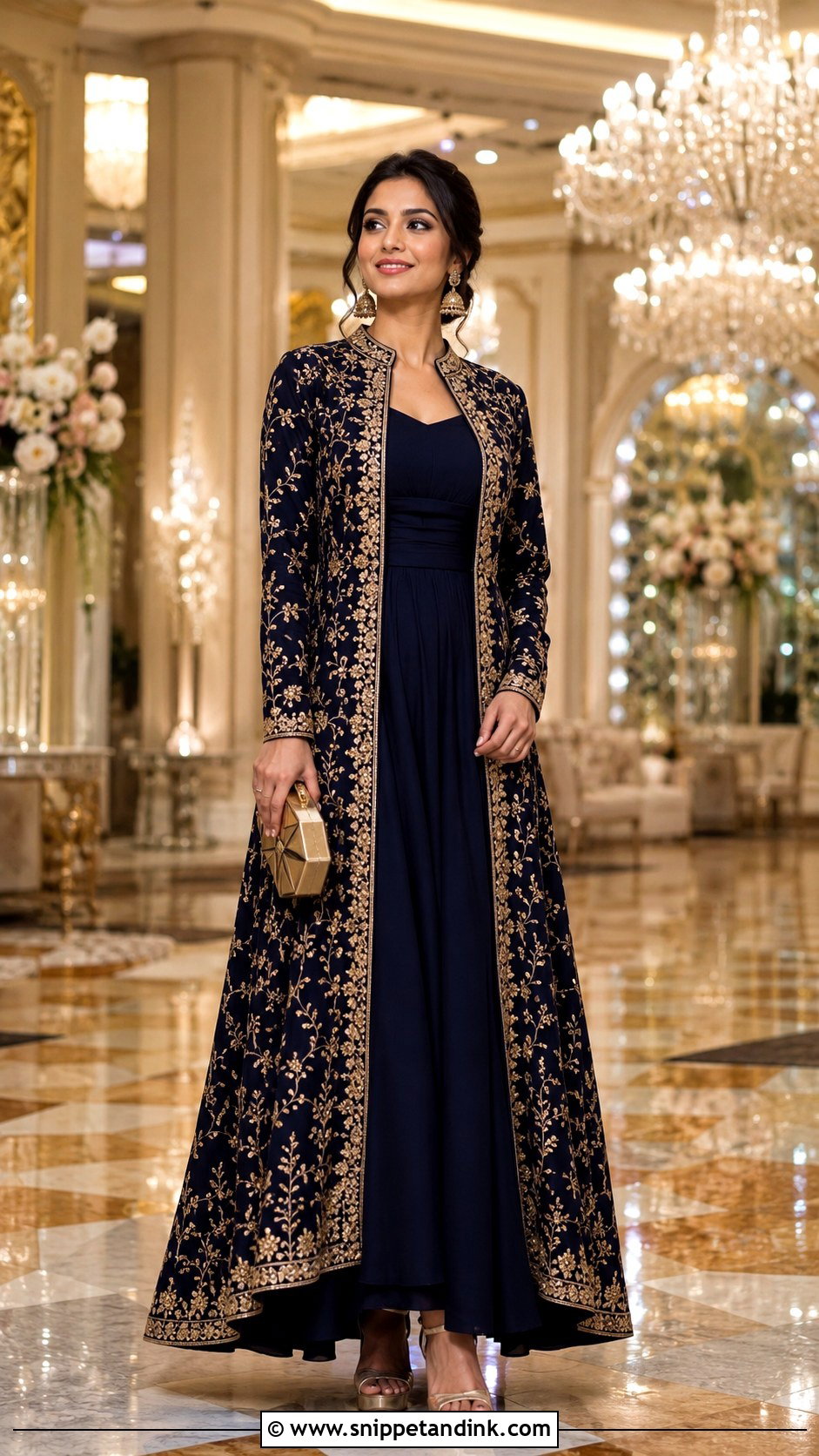
Long jackets have become one of the most common fusion layers because they solve two problems at once: coverage and structure. Start with a sleeveless silk or crepe gown and add an open-front jacket that reaches the ankle. Jewel tones suit evening; ivory and powder blue suit daytime. Keep the embroidery to the collar, cuffs and front edges. Check the jacket’s armholes with your arms raised, since a tight one makes the whole outfit feel stiff by the end of the night.
4. Corset Indo Western Gown For Indian Wedding
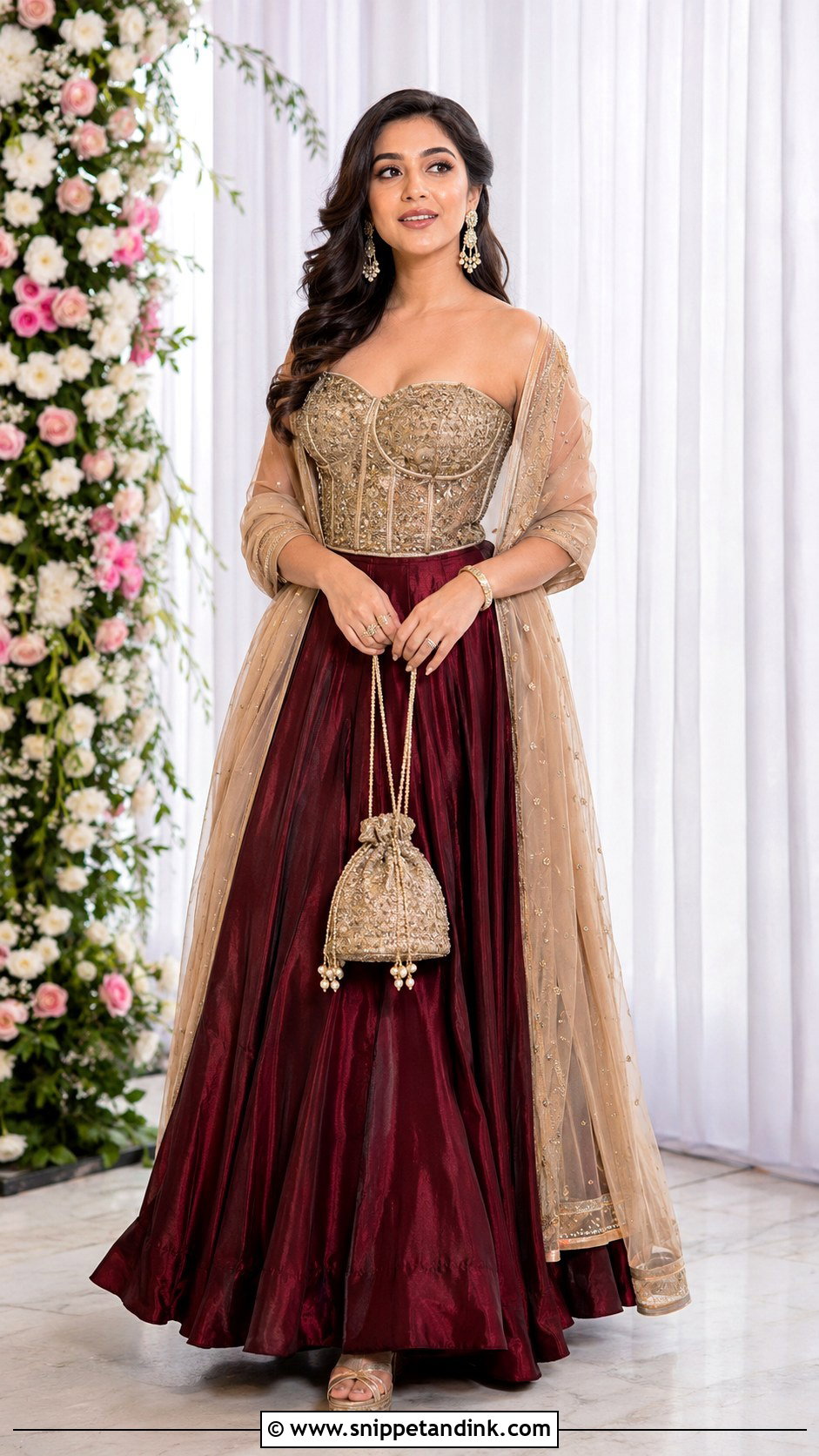
A corset bodice gives a gown its shape, and getting it fitted correctly matters more than any embroidery. It should sit flat at the top edge when you sit and breathe; if it gapes or digs in, have it altered. Raw silk, brocade and embroidered tulle feel festive. I’d decorate only one area: a worked bodice with a soft skirt, or a plain corset over a detailed skirt. Carry a light dupatta in case a ceremony calls for more coverage.
5. Draped Indo Western Gown For Indian Wedding
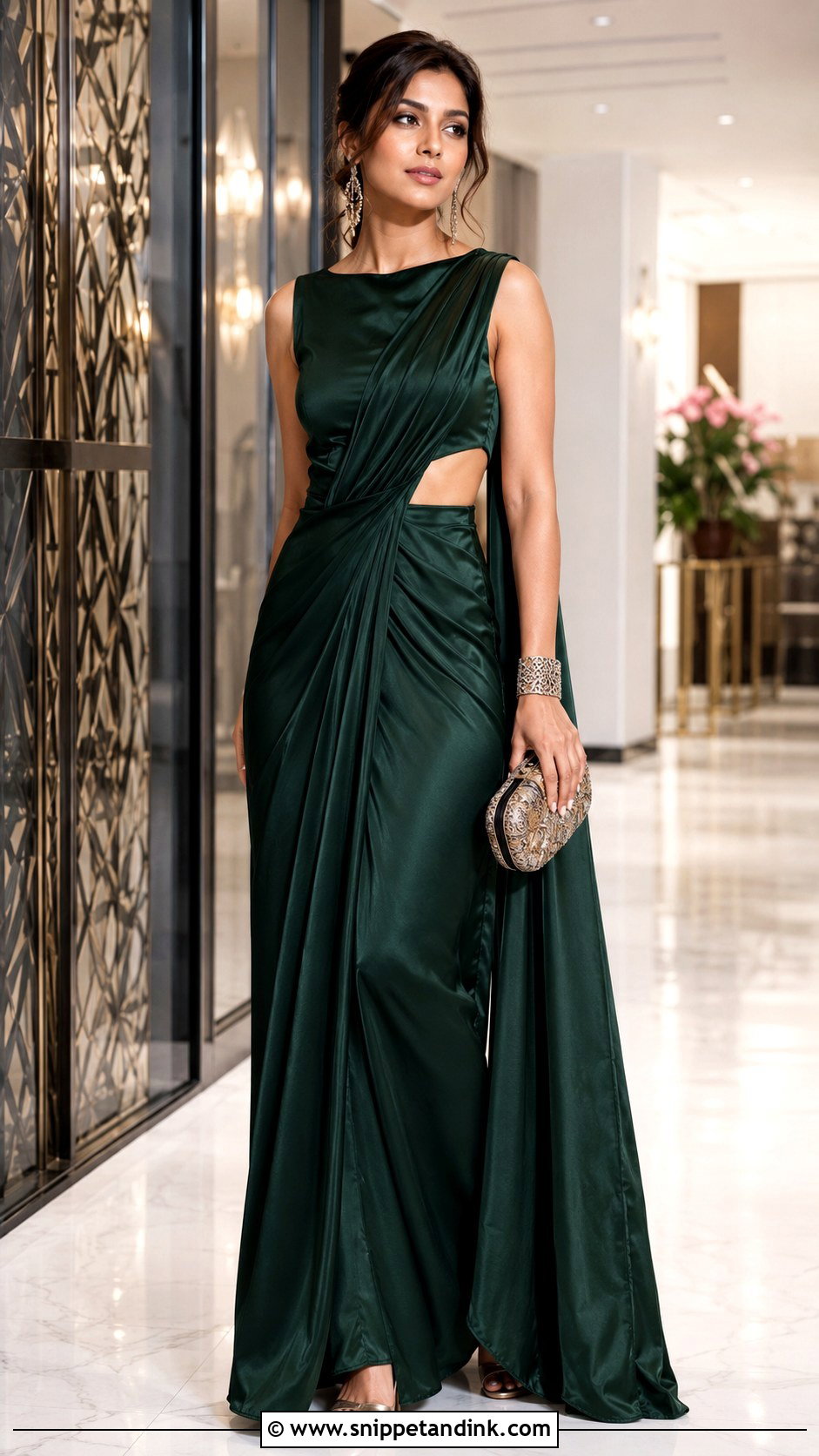
Draped gowns borrow the saree’s folds at the waist and hip, and they flatter because the diagonal pleats create vertical lines. Fluid georgette, satin crepe and chiffon fall without bulk; stiff fabrics make the drape look bunched. Burgundy, forest green and smoky grey are strong at night. One accessory is enough. Before the event, tack any loose folds in place with a few hand stitches, because drapes that shift by mid-evening are the most common complaint I hear.
6. Peplum Indo Western Gown For Indian Wedding
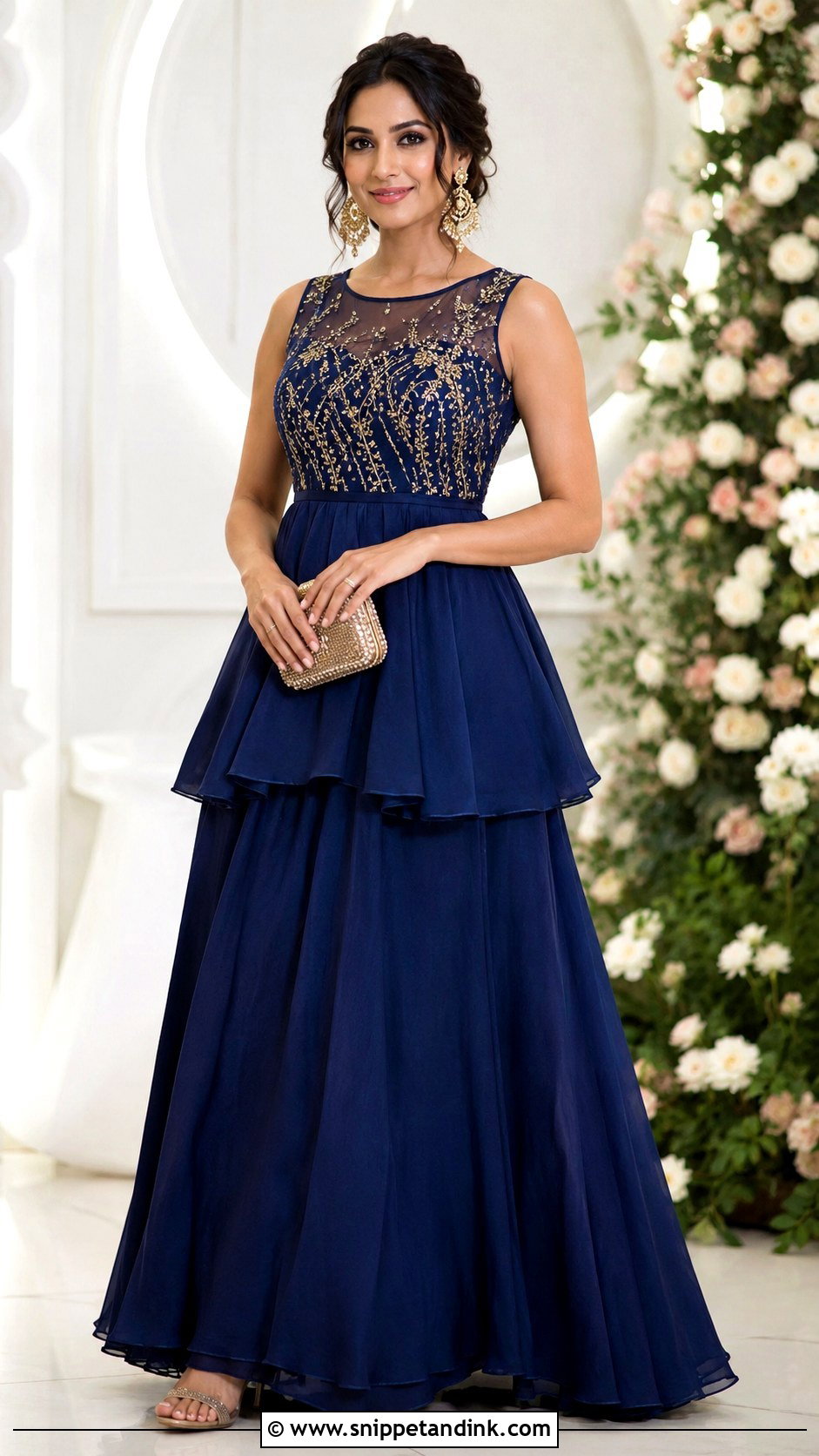
A short peplum overlay marks the waist and suits many figures when it’s fitted carefully. It must end above the widest part of the hips; any lower and it adds width rather than shape. Chanderi, silk, brocade and crepe hold the flare. Maroon, sapphire and antique gold suit an engagement or formal reception. Chandbalis and a hard-shell clutch finish it, and keep necklaces minimal so the bodice stays uncluttered.
7. Ruffle Indo Western Gown For Indian Wedding
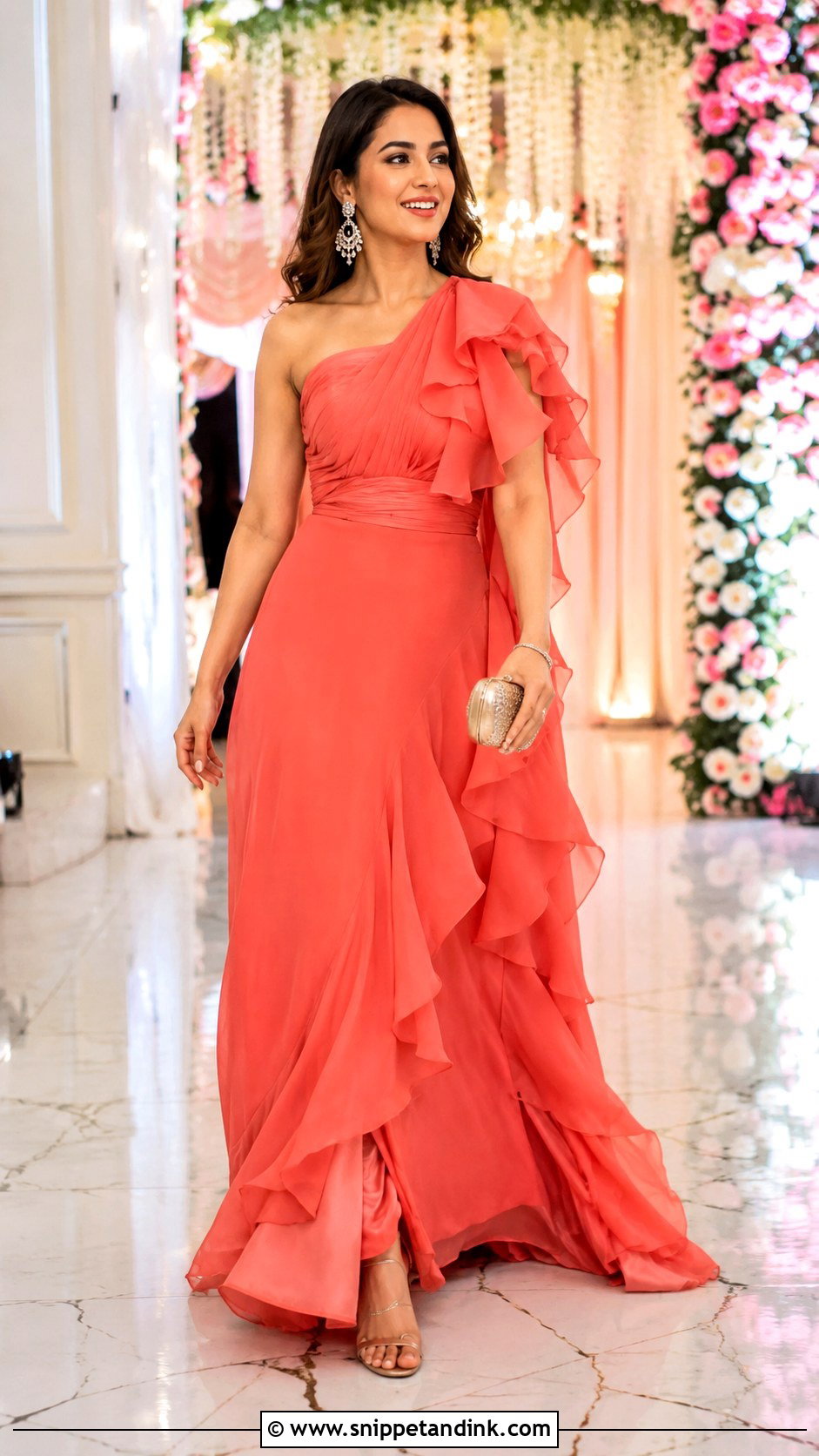
A ruffle Indo Western gown needs one focused ruffle, whether a shoulder, a tiered hem or a side cascade, not frills everywhere. A fitted bodice stops it looking shapeless. Organza, chiffon and net move well when you dance. Coral, fuchsia and turquoise suit a sangeet or destination party. With that much volume, skip oversized accessories and pull your hair back if the neckline carries the ruffle.
8. Mermaid Indo Western Gown For Indian Wedding
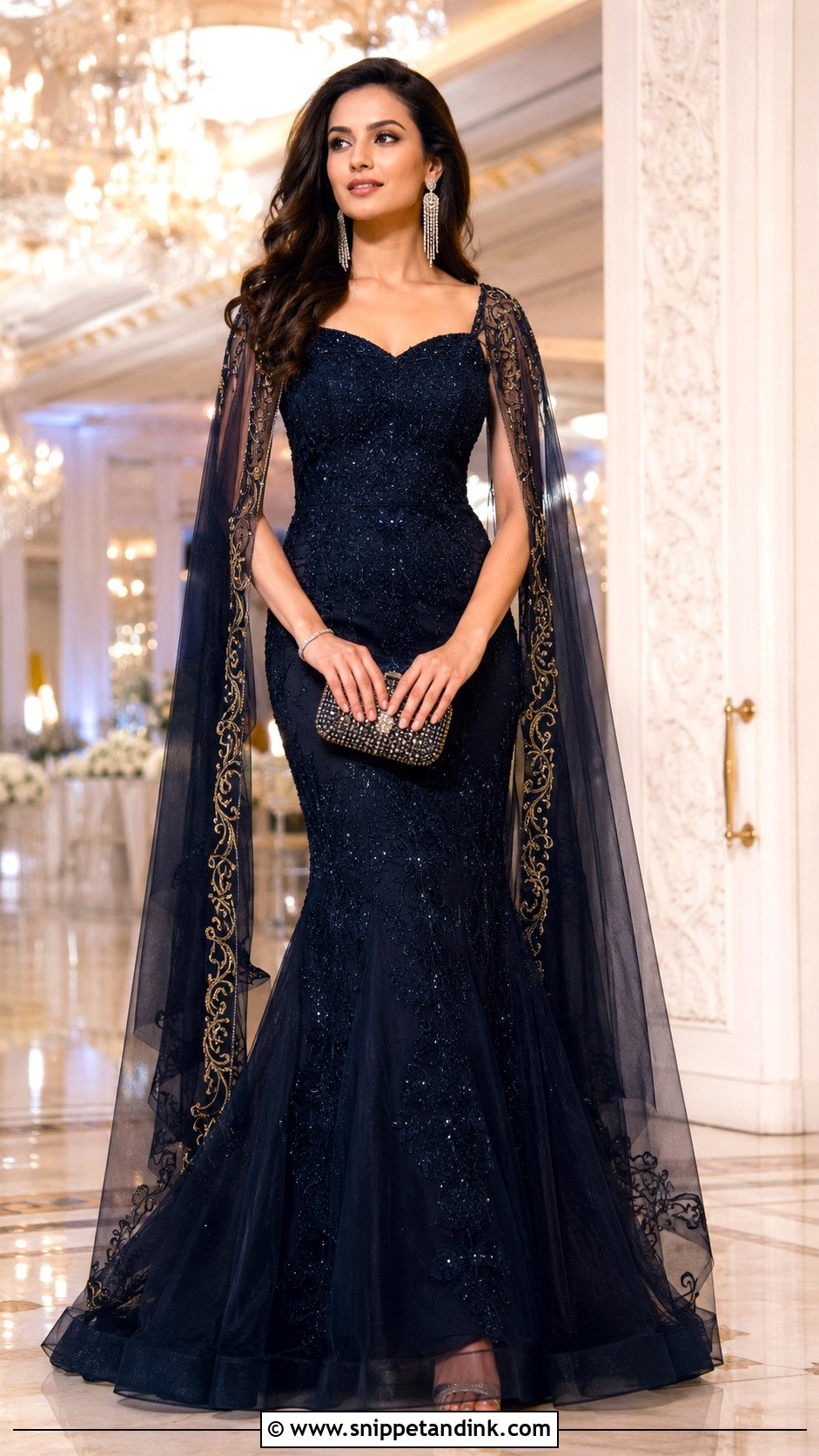
Mermaid gowns look sleek at a formal reception, and they are the hardest gown on this list to move in. The fit should skim the bodice, waist and hips before flaring at the knee. Embroidered tulle, stretch velvet and lined crepe give definition without trapping you. I always have guests walk up a few steps in the fitting room; if you can’t climb stairs without hitching the skirt, ask for the flare to start slightly higher. A detachable embellished shoulder drape adds the Indian touch.
9. One Shoulder Indo Western Gown For Indian Wedding
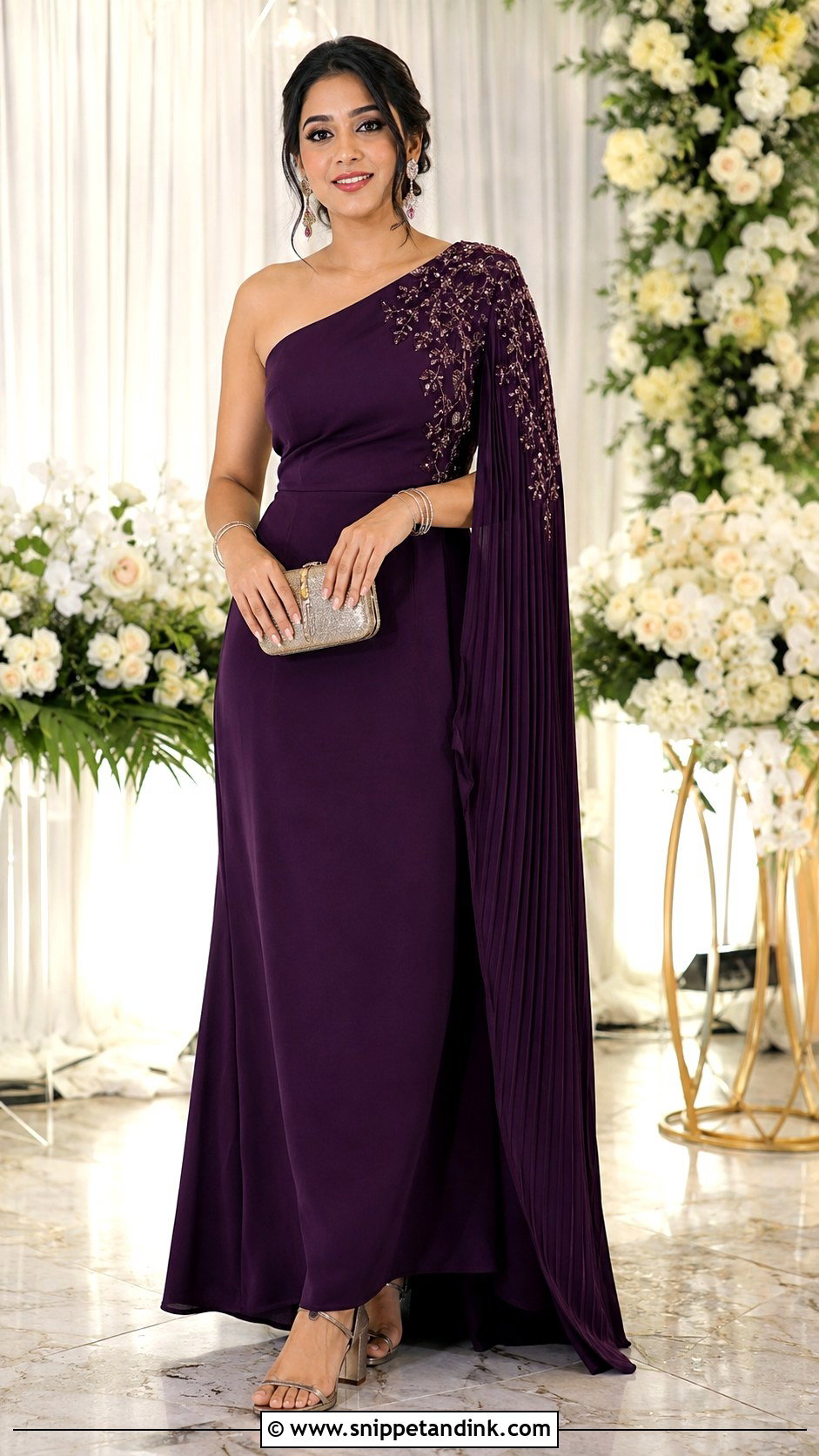
One-shoulder gowns need good internal support, so look for a built-in bra or boning on the open side. An embroidered shoulder panel that flows into a short cape or pleated pallu gives the Indian influence. Deep purple, bottle green and bronze suit evening; blush and mint suit daytime. Skip the necklace and carry your clutch on the bare side to balance the shape. Block heels and a low side bun complete it.
10. Asymmetrical Indo Western Gown For Indian Wedding
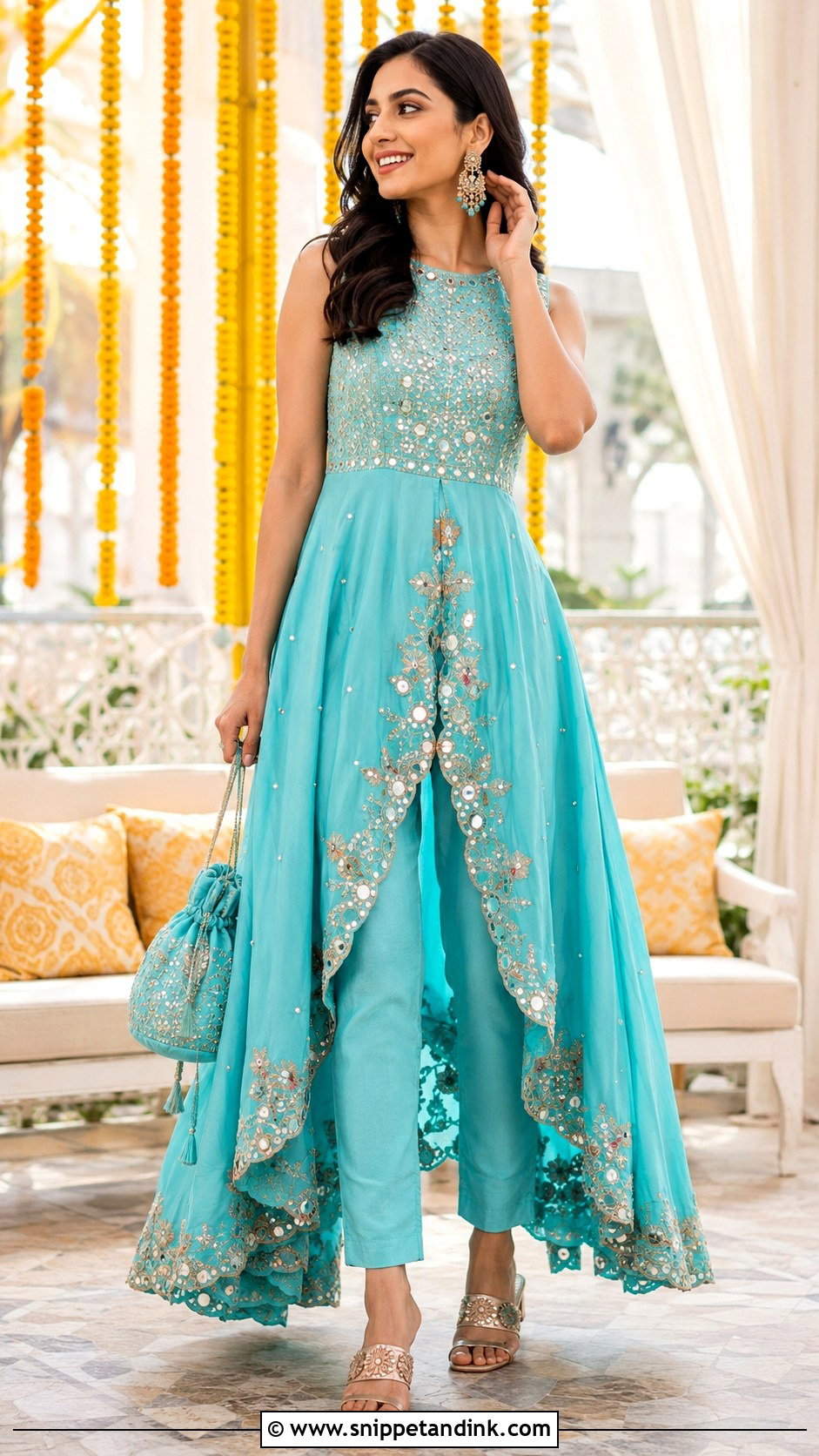
An asymmetrical Indo Western gown works when the asymmetry is one clear idea: an angled hem, a diagonal drape or a one-sided cape. A high-low skirt over embroidered cigarette pants is practical for a mehndi or sangeet. If the hem is busy, keep the bodice simple. Mirror work and brights suit daytime; metallic embroidery suits night. This is a cut that relies on tailoring, because asymmetry that isn’t precise just looks crooked.
11. Anarkali Indo Western Gown For Indian Wedding
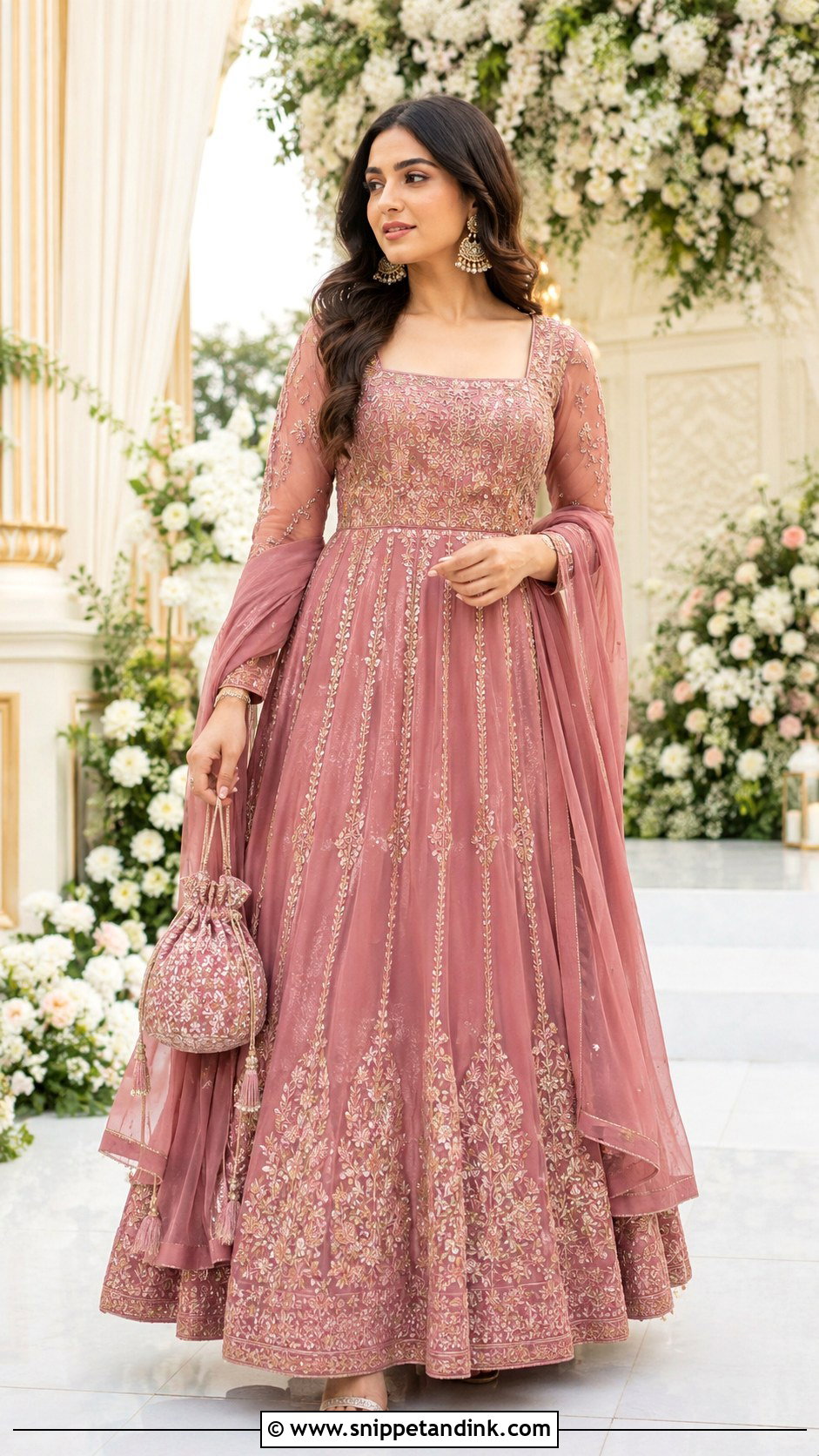
An Anarkali gown is the most traditional shape here, updated with a square neckline, sheer sleeves or a structured shoulder. Gota work, zari borders and brocade panels carry the Indian character. A pastel floral version suits a daytime ceremony; jewel-toned embroidery suits an evening wedding. Low heels or juttis and classic jhumkas keep it grounded, and fresh flowers in a soft bun bring a traditional finish.
12. Blazer Indo Western Gown For Indian Wedding
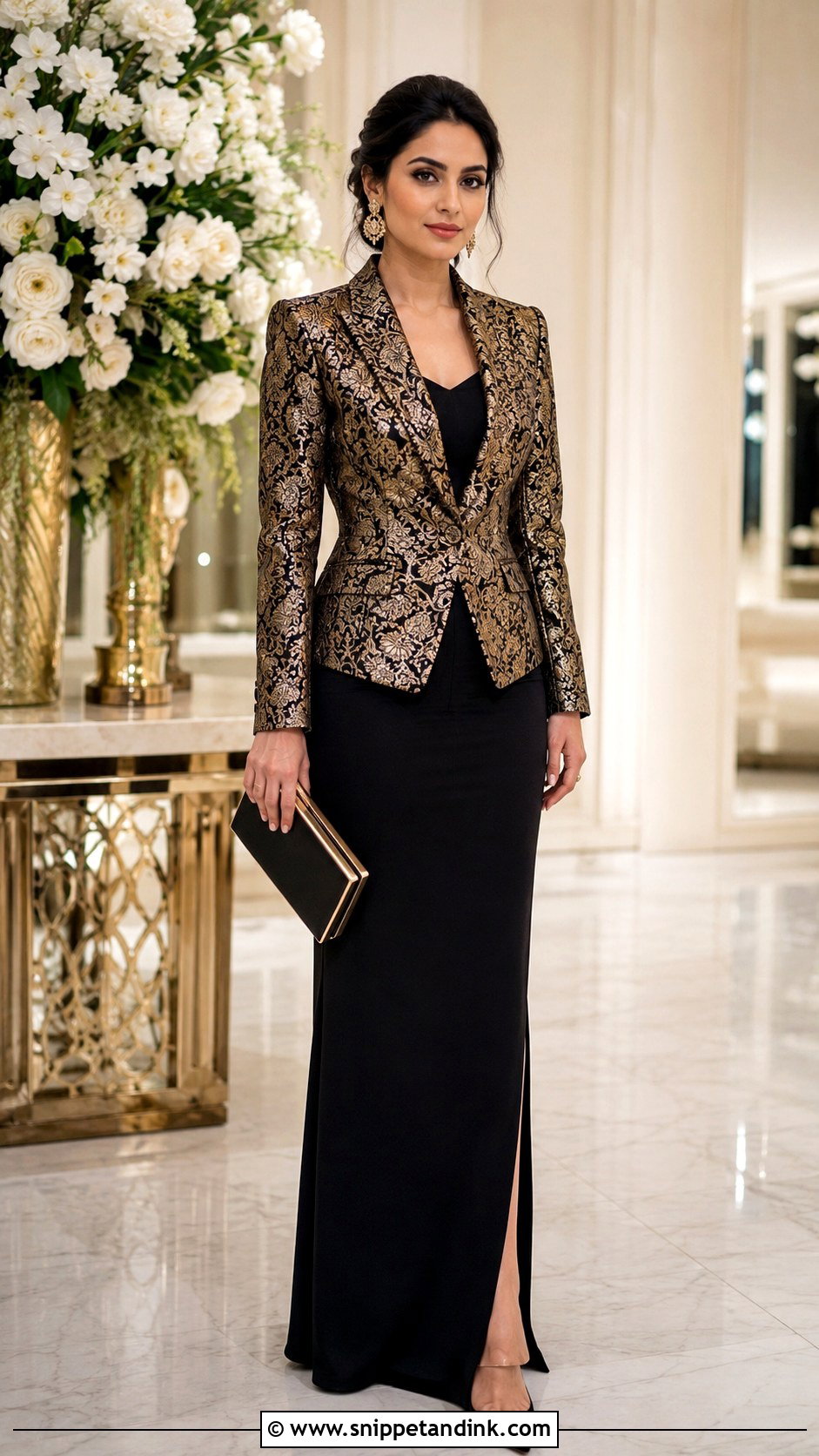
A blazer over a column gown is a sharp look for a reception or engagement party. A cropped blazer marks the waist; a longline one gives more coverage. Keep both layers in one colour family, such as black with antique gold or ivory with champagne. Tailoring is the feature, so the shoulders must fit exactly and the sleeves should end at the wrist bone. A blazer that fits the hips but not the shoulders always looks borrowed.
13. Dhoti Draped Indo Western Gown For Indian Wedding
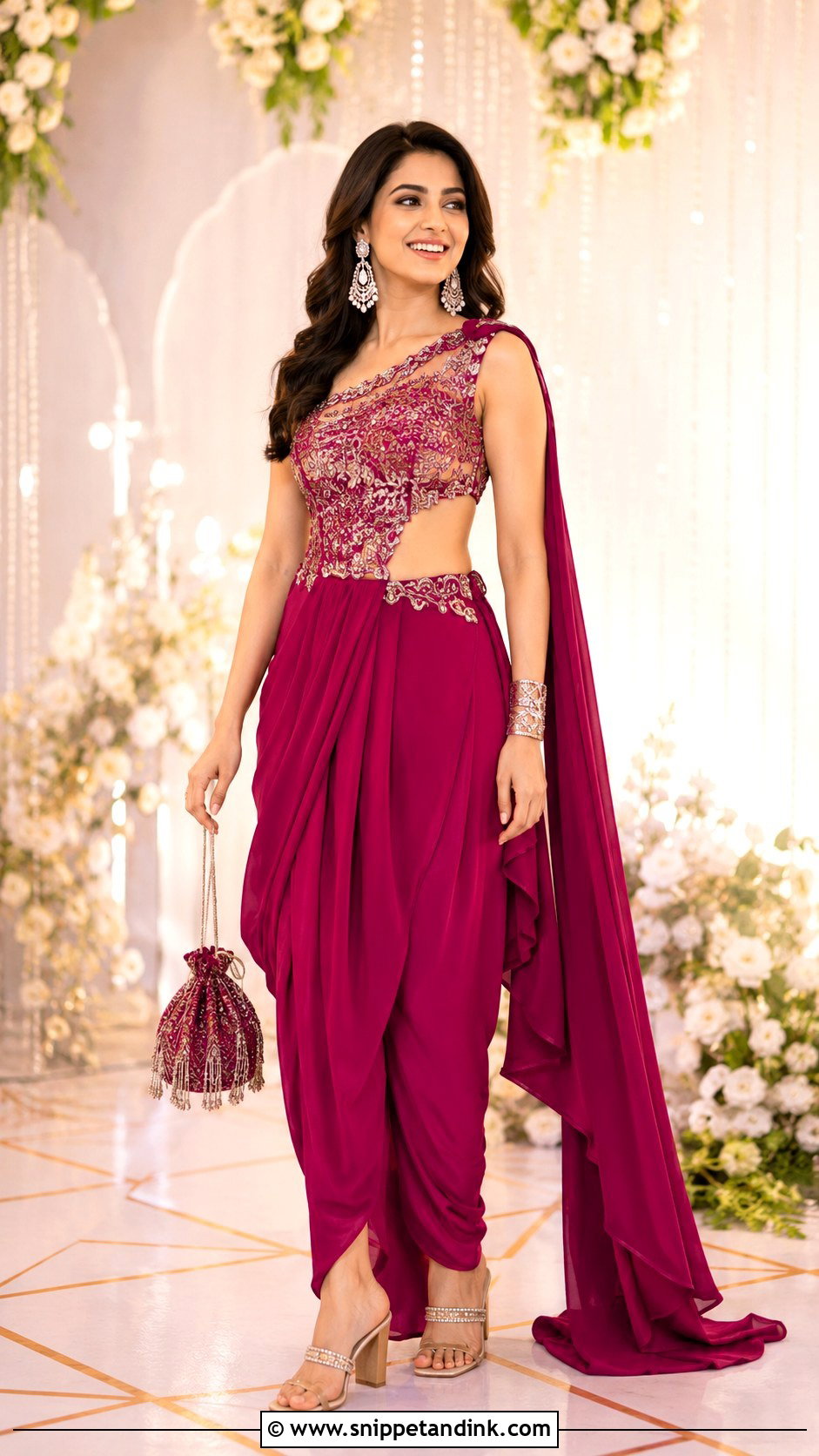
A dhoti-draped gown looks like a flowing dress from a distance but hides the comfort of pants underneath. The gathered folds are borrowed from traditional dhoti construction, paired with a corset or embroidered tunic above. Crepe and georgette let the pleats fall smoothly. A short side train or attached shoulder drape makes it more formal. It’s one of the most practical choices for a sangeet because you can stride, sit cross-legged and dance without managing a skirt.
14. Brocade Indo Western Gown For Indian Wedding
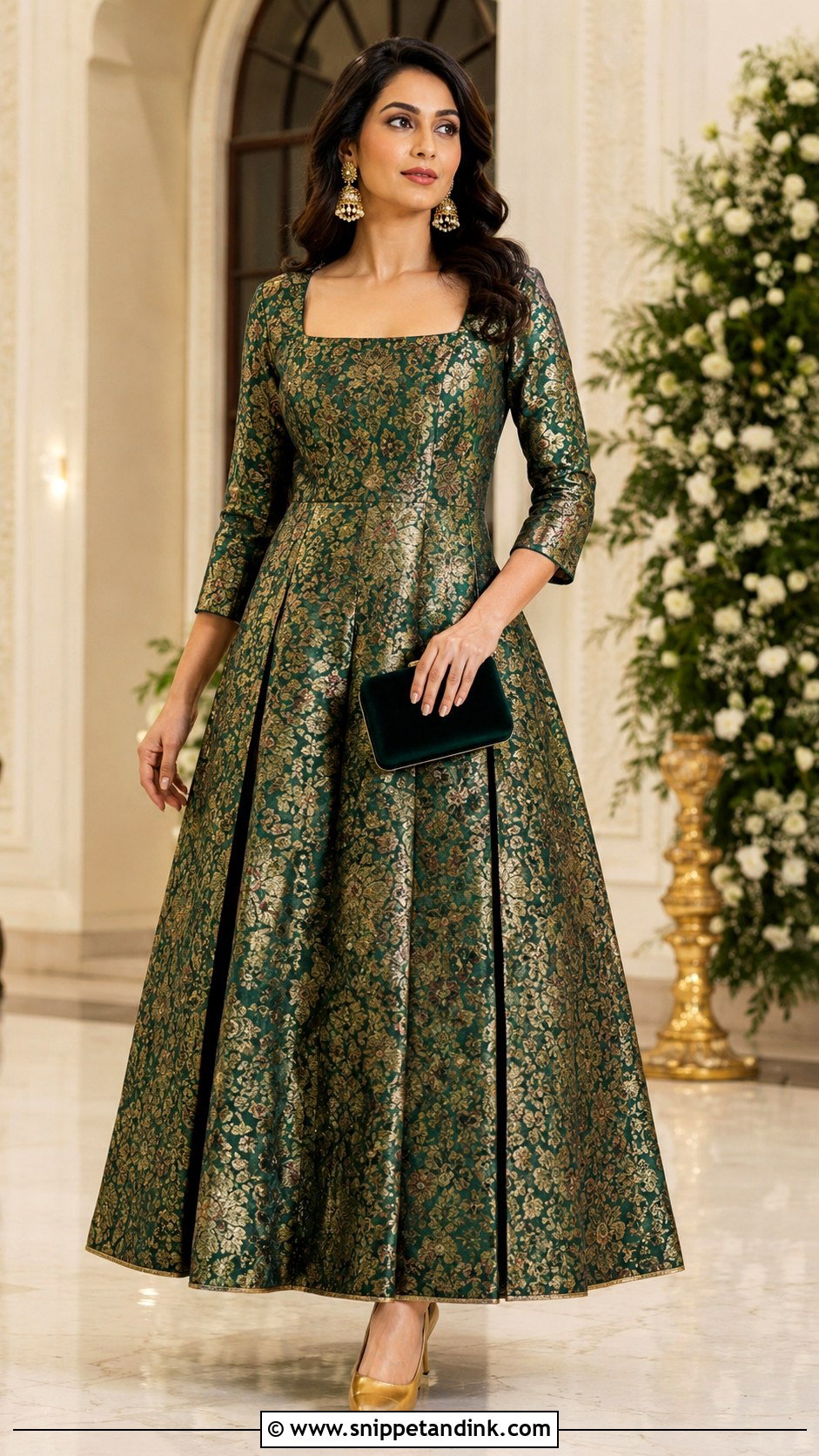
Brocade already carries woven pattern and shine, so the gown’s cut should stay simple: fitted bodice, A-line skirt, square neckline. Emerald with gold or navy with copper look sophisticated. Don’t add embroidery over the brocade; it overloads the surface. Brocade is stiff and warm, which suits cool-weather ceremonies and indoor evening receptions, and creases sharply where you sit, so steam it on the day.
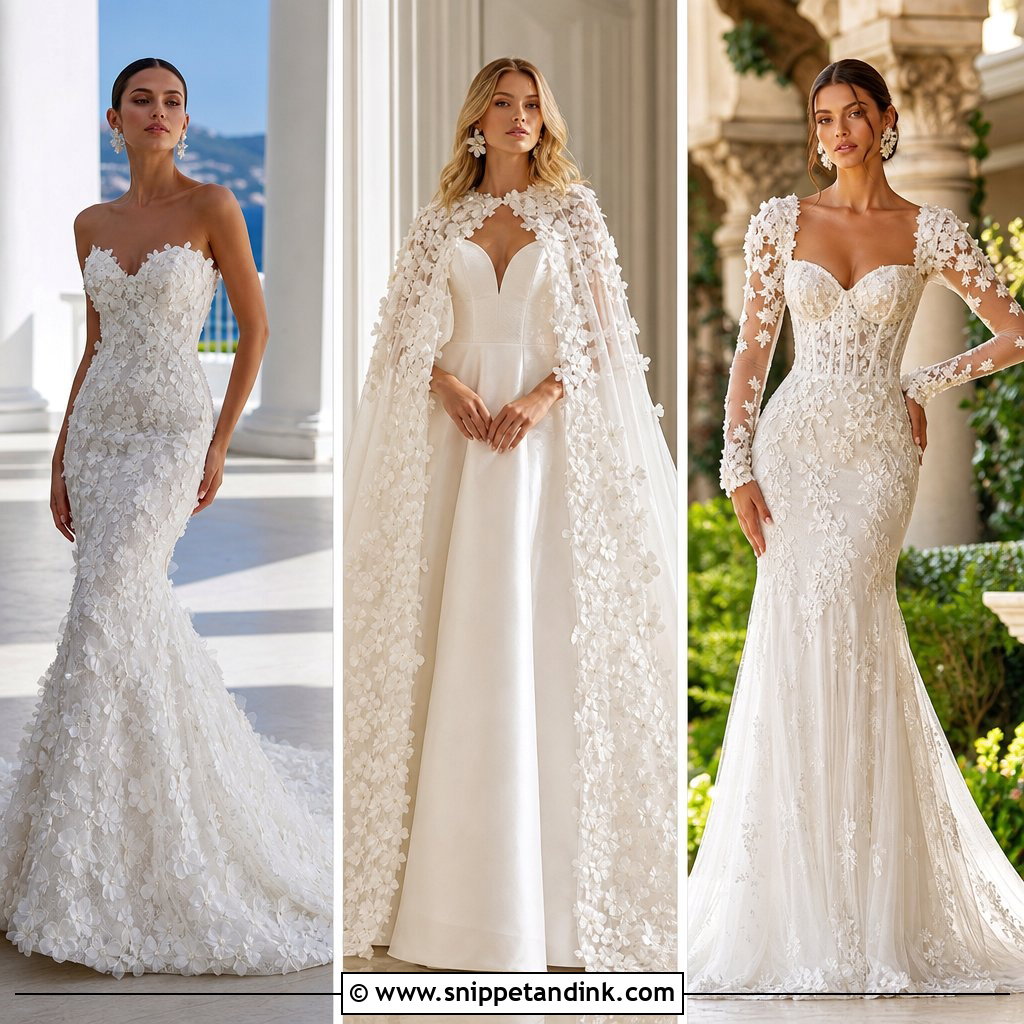
15. Floral Indo Western Gown For Indian Wedding
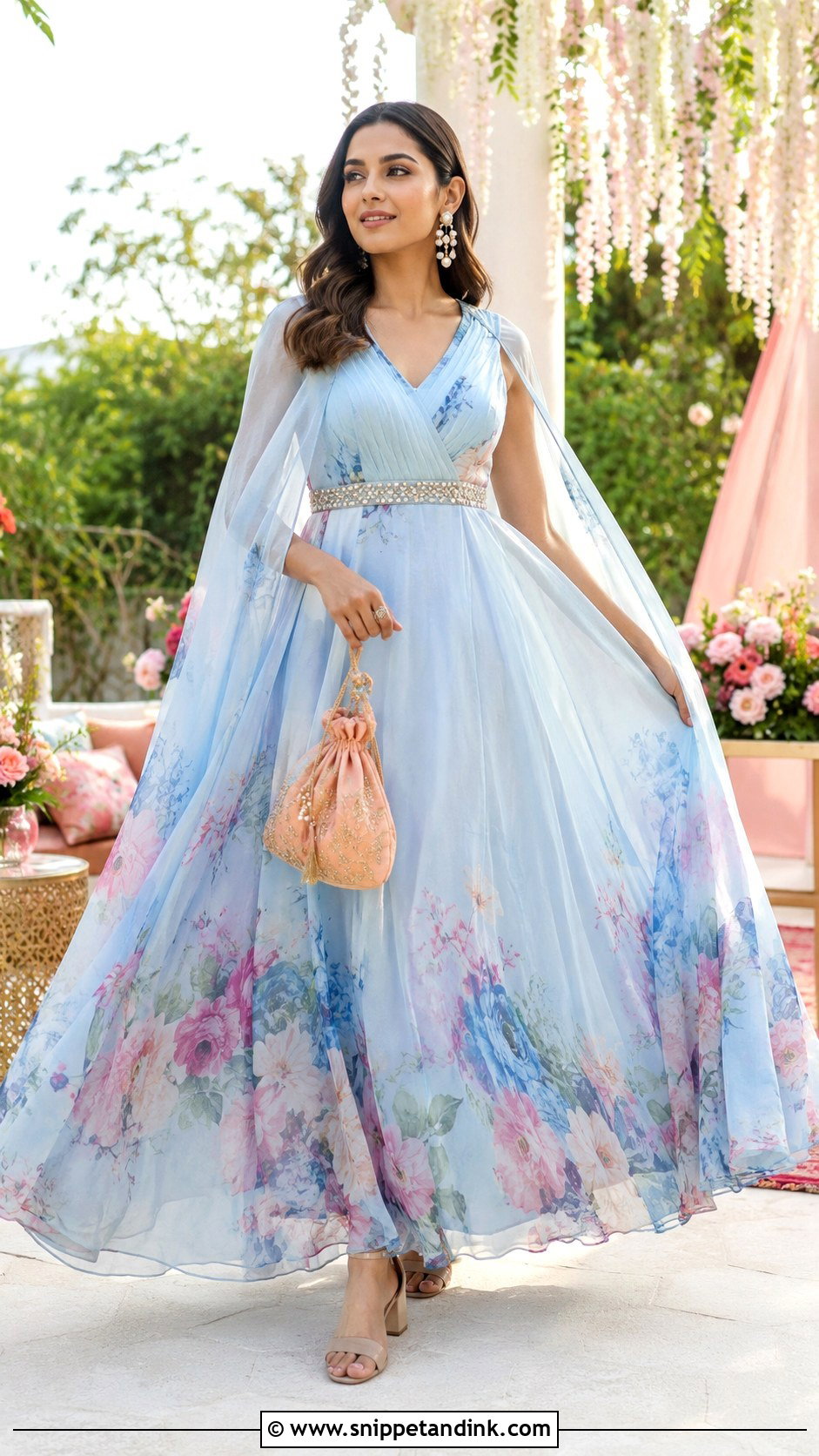
Florals suit a garden ceremony or daytime reception. Organza, chiffon or georgette with watercolour flowers or light thread embroidery keeps it airy. Add the Indian element through a beaded border, embroidered belt or blouse-style neckline. Nude block heels sink less on lawns than stilettos. Peach, sage and lilac look fresh in bright outdoor light, and fresh flowers in a low bun complete the daytime mood.
16. Metallic Indo Western Gown For Indian Wedding
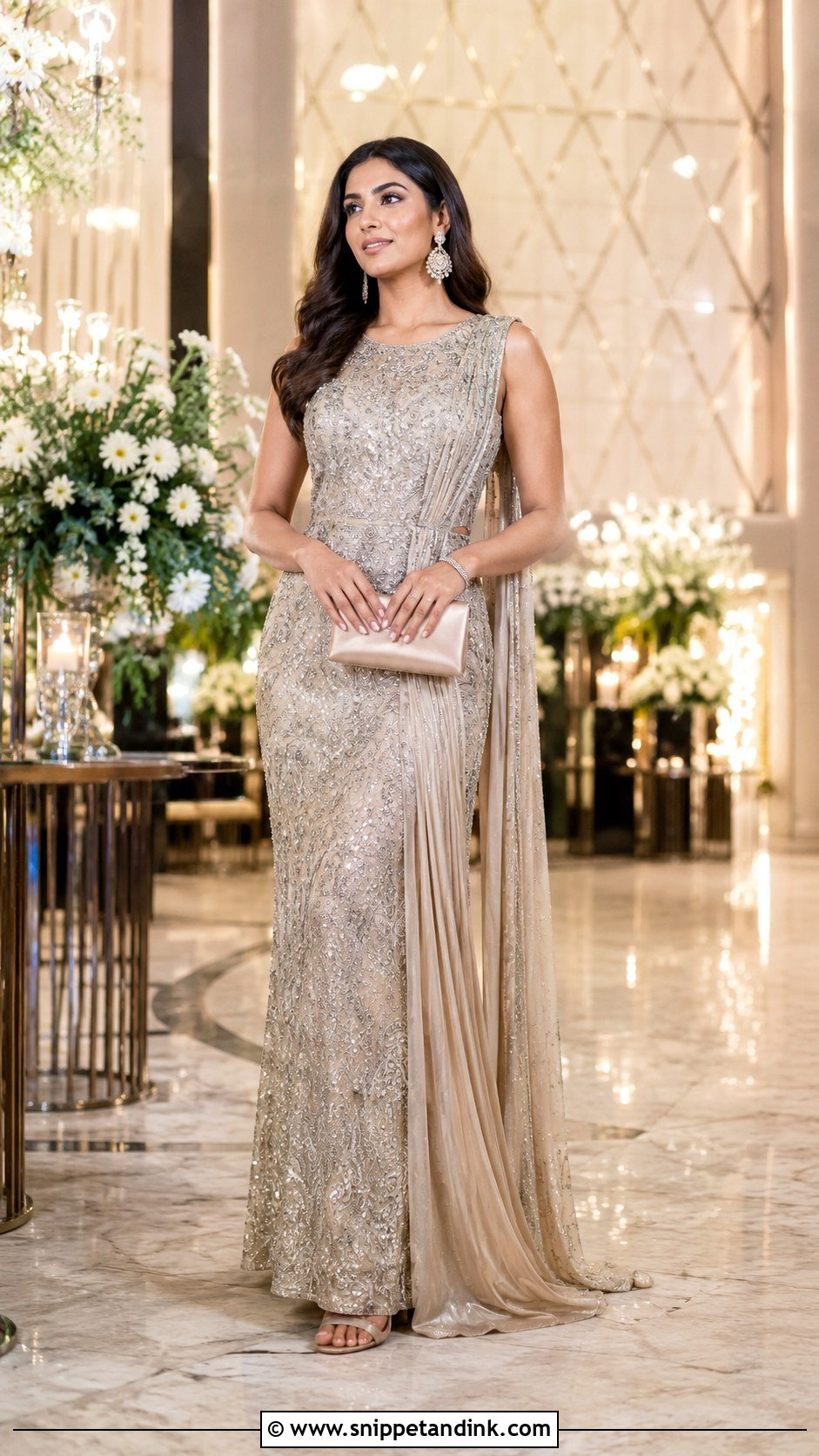
Metallic gowns can drift into costume quickly, so I choose muted finishes such as champagne, pewter or bronze over mirror-bright ones. A streamlined cut with sequinned Indian motifs or a draped pallu looks festive. Balance it with plain accessories: a satin clutch and minimal heels. Check the fabric under your phone’s flash before buying, because metallics can photograph much brighter or greyer than they look in a shop.
17. Pastel Embroidered Indo Western Gown For Indian Wedding
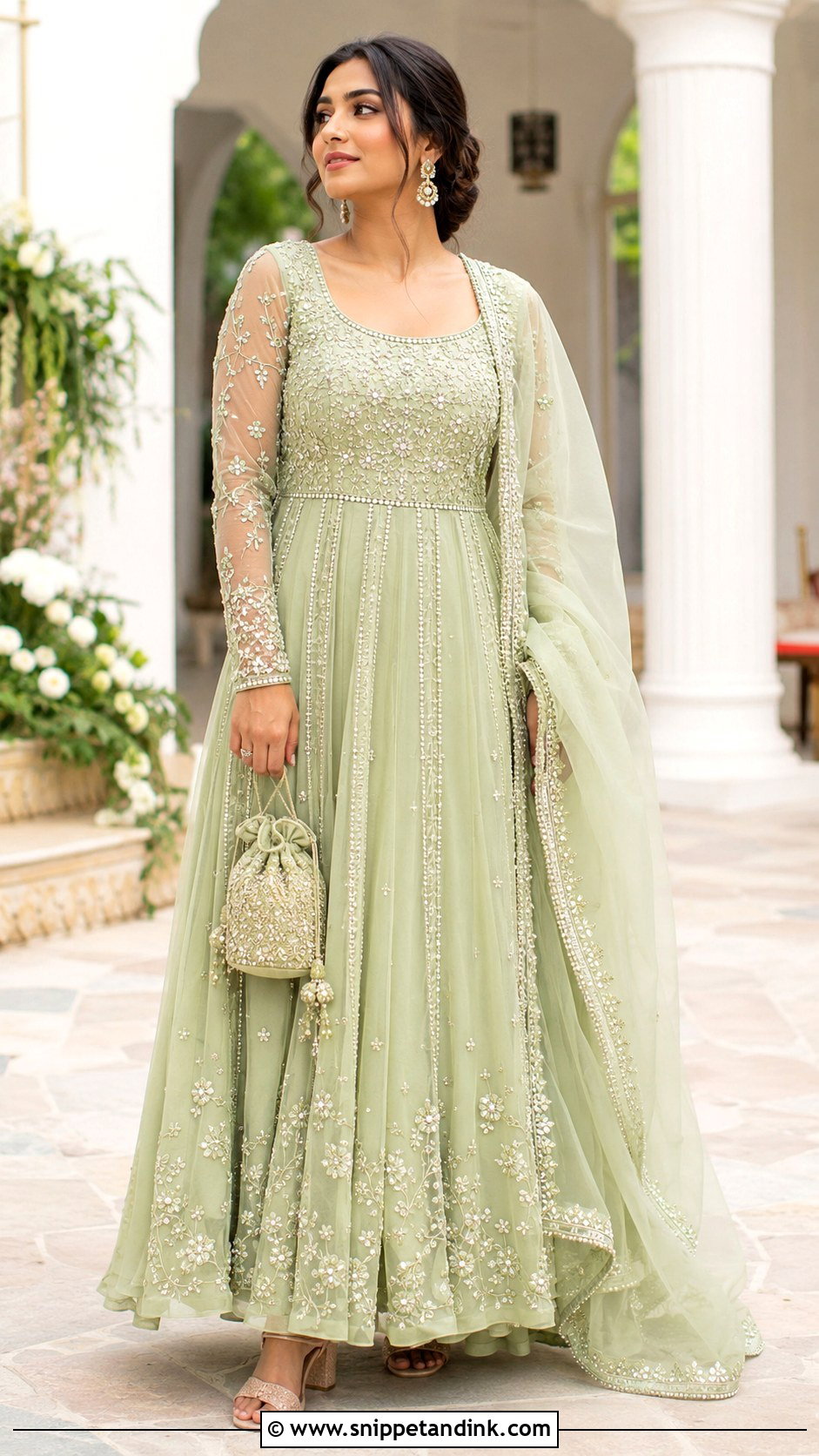
For a morning ceremony in warm weather, a pastel gown with tonal threadwork stays light. Powder blue, pistachio and blush with pearl beading or small appliqués give texture without weight. Sheer embroidered sleeves add coverage and keep you cool. At an outdoor venue, avoid a train that will drag through grass. Silver block heels and pearl earrings are all it needs.
18. High Neck Indo Western Gown For Indian Wedding
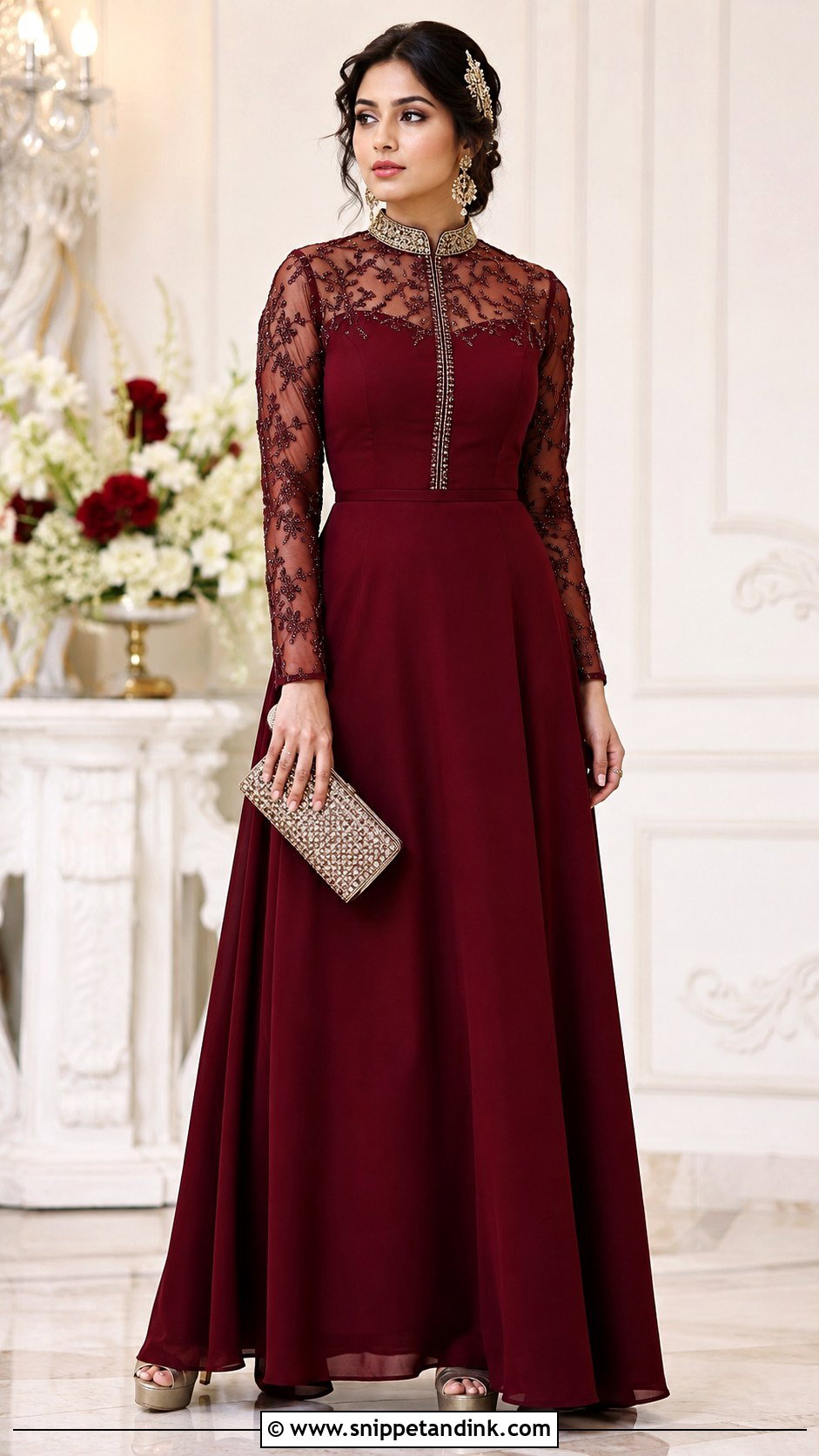
A high neck gives elegant coverage and frames the embroidery around your face. A band collar or sheer embroidered yoke inspired by traditional tailoring suits deep green, oxblood or royal blue with antique gold work. Skip the necklace and wear statement earrings or a hair jewel. Check that the collar doesn’t rub; the inside seam of an embroidered collar can be scratchy, so ask for it to be faced with soft fabric. A breathable lining matters if you’ll be dancing.
19. Belted Indo Western Gown For Indian Wedding
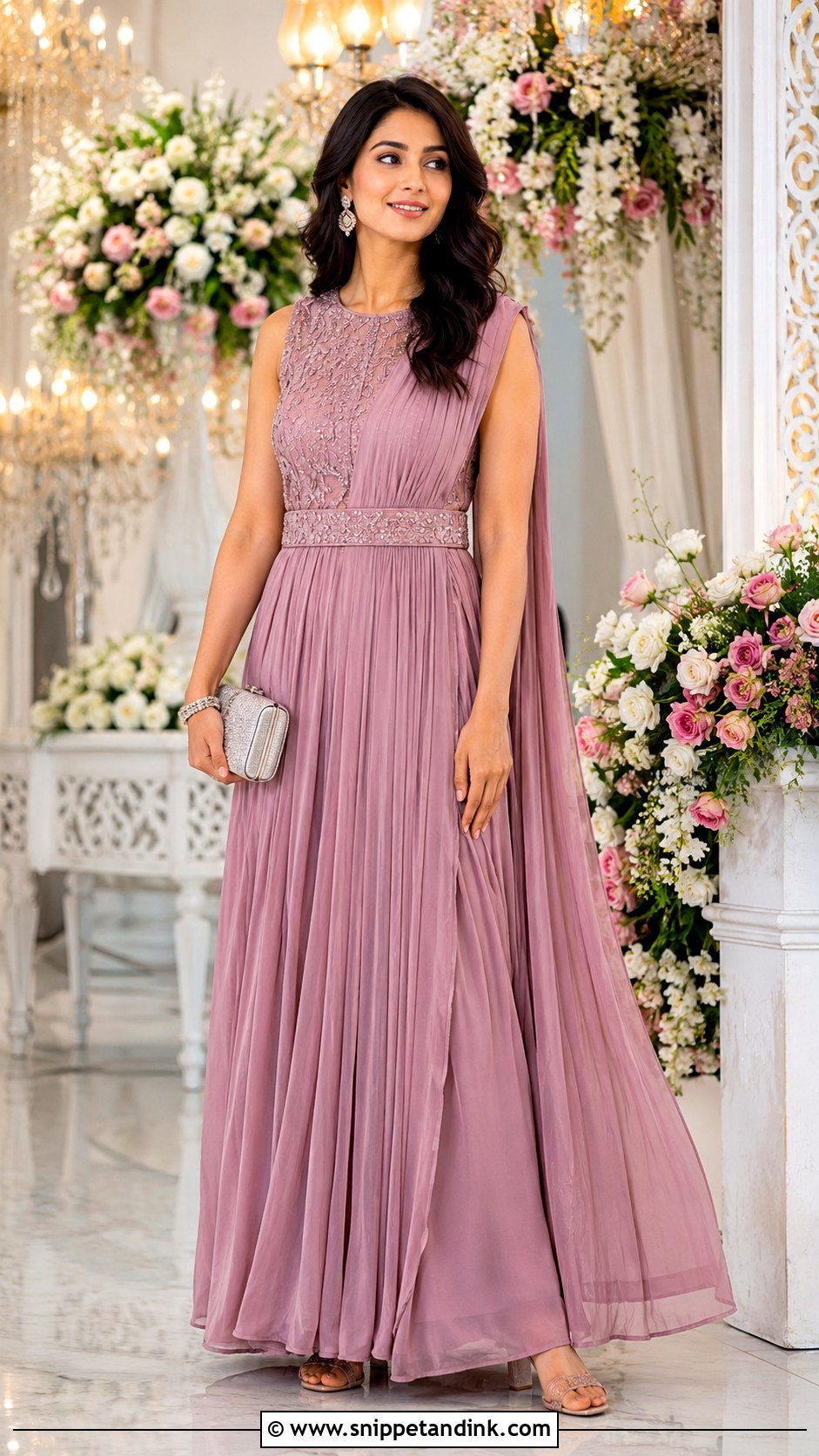
A belt holds a saree-style drape in place and marks the waist. Choose a belted Indo Western gown with an attached pallu or cape, and pick a tonal embroidered belt rather than a sharply contrasting one that cuts you in half visually. Satin crepe, georgette and light silk all work. Sit down in it before the event; belts that twist or ride up when you sit are a common annoyance.

20. Embroidered Net Indo Western Gown For Indian Wedding
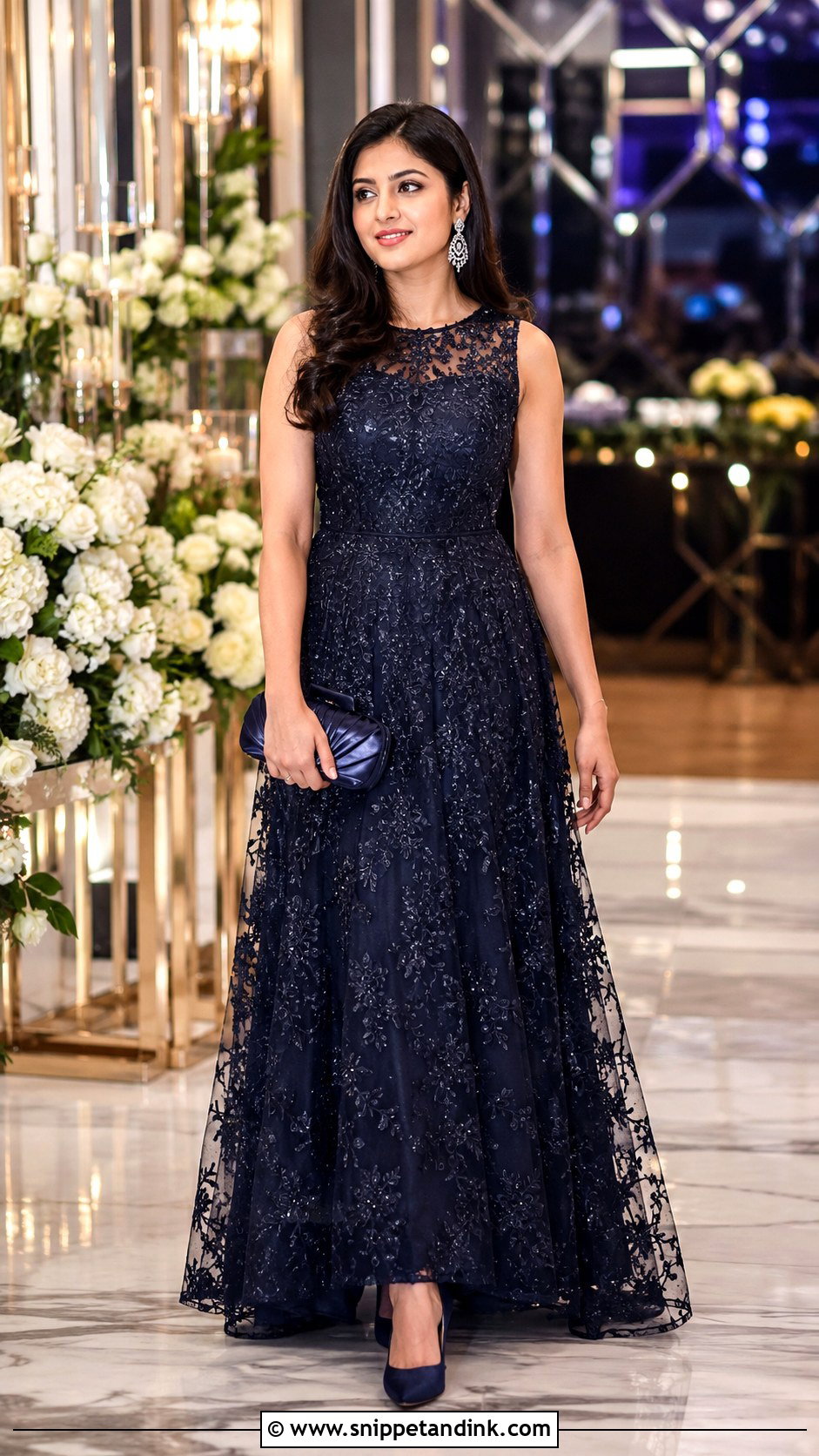
Net gowns look formal yet light, and they need a smooth, fully lined base. The overlay should carry spaced embroidery, heavier at the bodice and lighter at the hem. Midnight blue, dusty mauve and wine suit evening. Net snags easily, so avoid bracelets with prongs and wear closed-toe heels that can’t catch the hem. Feel every inner seam before buying, since rough net seams scratch through a long reception.
Bras, Slips and Shapewear Under Fusion Gowns
A gown is only as good as what’s underneath it. Most fitting problems I’m asked to fix on the day come from the wrong undergarments, not the gown itself.
- Corset and boned bodices: many have enough structure that a bra isn’t needed; try the bodice alone first, then add stick-on cups if you want more shaping.
- One-shoulder and off-shoulder gowns: a strapless or multiway bra with a silicone edge stops it slipping as you dance.
- Mermaid and close-fitting crepe: no-show briefs and light shapewear prevent lines showing at the hip.
- Net, organza and pale chiffon: a nude slip in your skin tone avoids the overlay going see-through under camera flash.
- High necks and sheer yokes: a nude or matching bralette with no visible straps.
Wear these exact pieces to every fitting. A different bra can shift a bodice’s fit by a surprising amount, and a tailor can only fit what you bring. On the day, pack fashion tape and a couple of safety pins in your clutch for any strap or neckline that misbehaves.
Matching the Gown to the Night You’re Wearing It
Fusion gowns work across most wedding functions once the cut suits the event. Capes and draped styles move easily at a sangeet; brocade, blazers and embroidered net give the formality a reception needs. Choose by event and venue, not by trend. Tailoring counts as much as colour, so plan time for alterations. Secure shoes, considered jewellery and a small bag finish the look, and wear the gown that lets you join every part of the celebration.
You'll Like These Ideas:









Leave a Reply