
Indo western wedding fashion earns its place in a wedding wardrobe for a practical reason: you get Indian embroidery, fabric and color on a cut you can actually move, sit and eat in. I style a lot of guests and family members across three or four functions, and the fusion pieces are usually the ones they wear longest without asking to change. Pre-draped sarees, cape lehengas, dhoti pants, sharara sets and embroidered jumpsuits all belong here. Below are 25 fusion looks, with what I’d check on each one before you buy or book a fitting.
Matching the Silhouette to Each Function on the Wedding Calendar
Most Indian weddings run over several events, and each one asks something different of your clothes. I plan a fusion wardrobe by asking three questions per function: will you sit on the floor, will you dance, and will you be outside? The answers rule out more outfits than any trend does.
- Haldi: you will get turmeric on you. Choose washable cotton silk, dhoti pants or a printed skirt you won’t mourn, and avoid pale silk.
- Mehndi: you will sit for long stretches while your henna dries. Dhoti pants, a gharara or a palazzo set let you sit cross-legged, and short sleeves keep fabric off wet henna.
- Sangeet: you will dance. Short capes, sharara sets and pants sarees move with you; floor-length jackets and trains get stepped on.
- Reception: you will mostly stand and photograph. This is the place for the saree gown, the drape dress, the blazer lehenga and velvet.
Then do the movement test at home before the event, in the actual shoes. Sit in a low chair, climb a few stairs, lift your arms over your head, and bend down as if touching an elder’s feet. Anything that gapes, rides up or traps your heel needs a fix now, not on the day.
1. Indo Western Saree Gown For Wedding
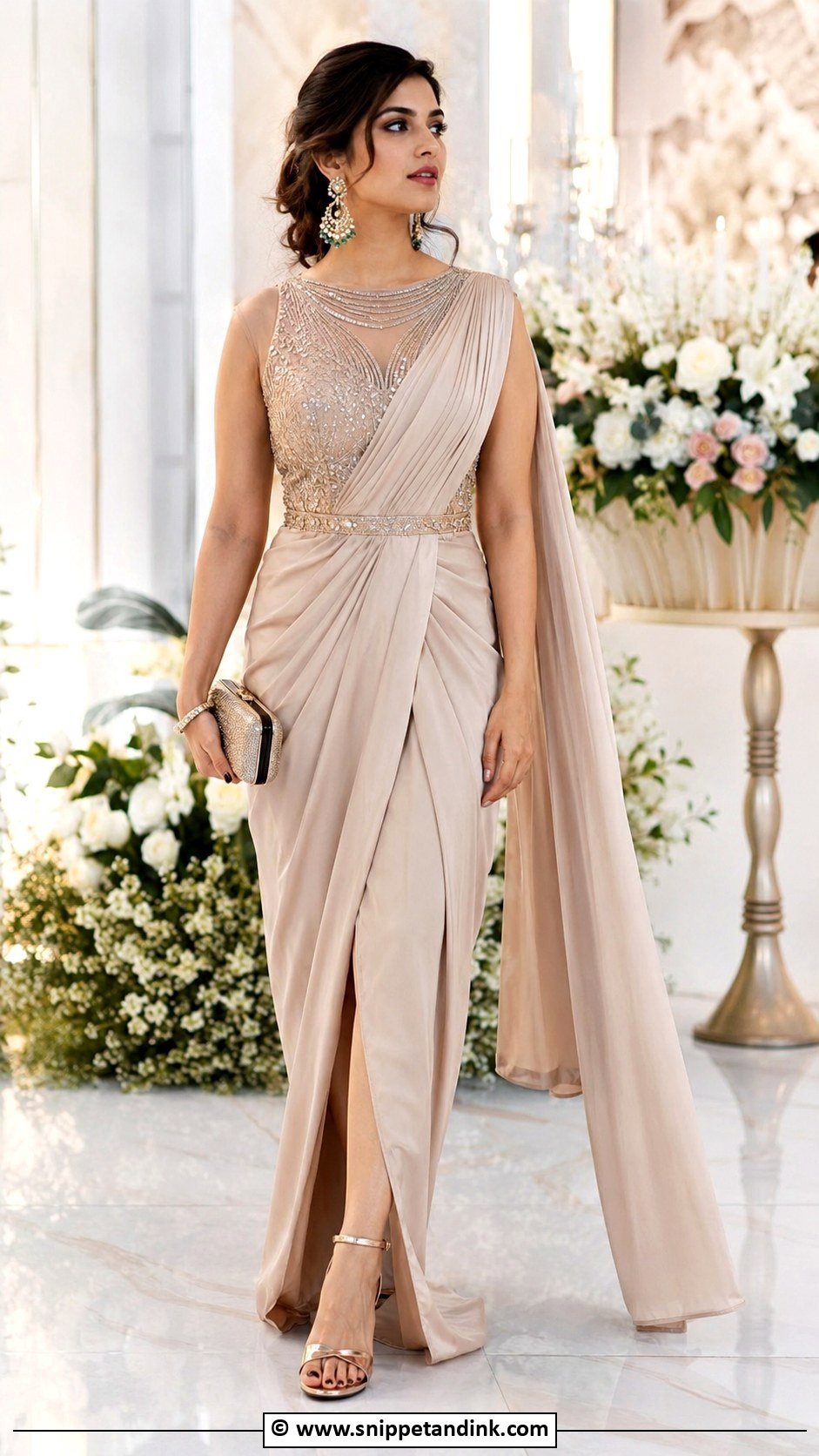
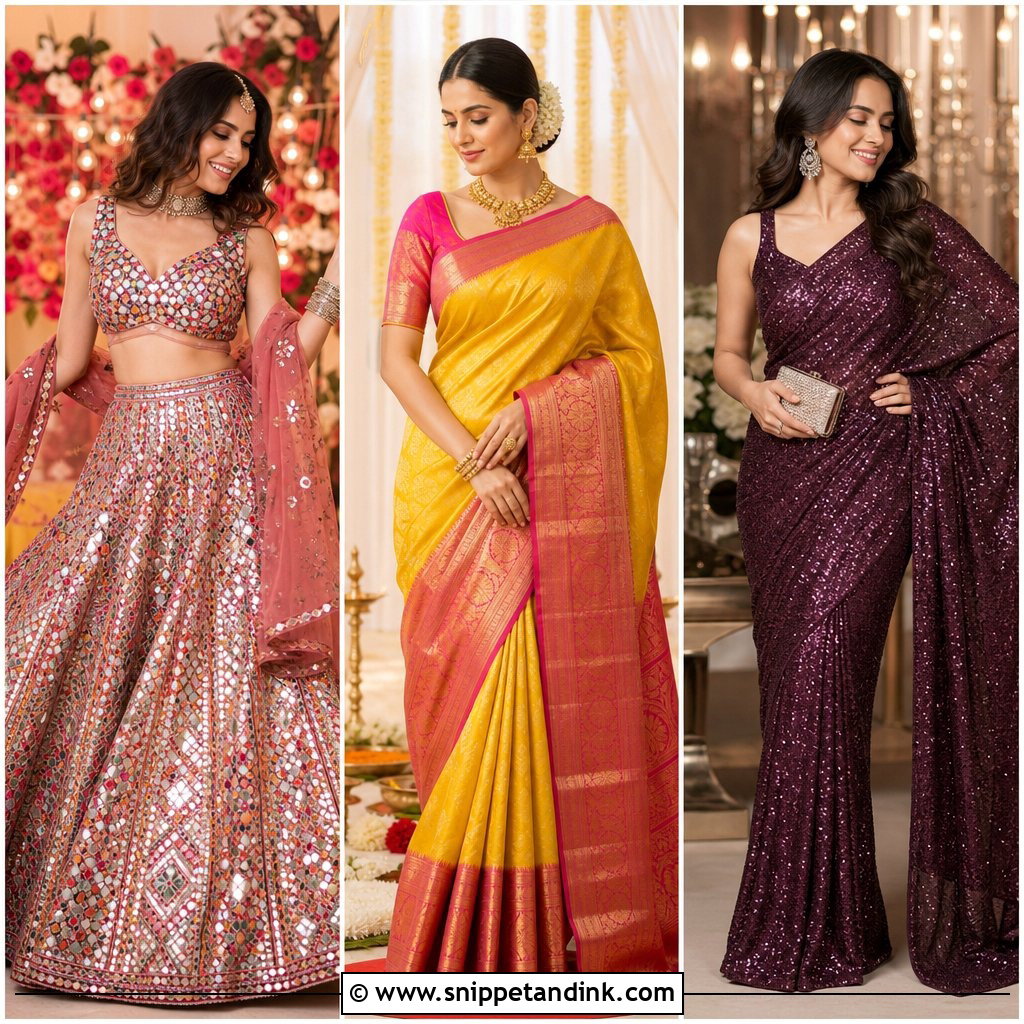
A saree gown gives you the fall of a pallu with none of the pleat management, because the drape is stitched into place over a fitted bodice. That stitching is also what I look at first: if the pallu is tacked only at the shoulder, it swings forward every time you bend to greet an elder, so ask for a second tack at the waist. Satin and crepe hang cleanly; shimmer georgette is lighter for a long sangeet. A one-shoulder or cape-sleeve neckline already does the modern work, so keep hair to loose waves or a low bun and let the earrings carry the jewelry.
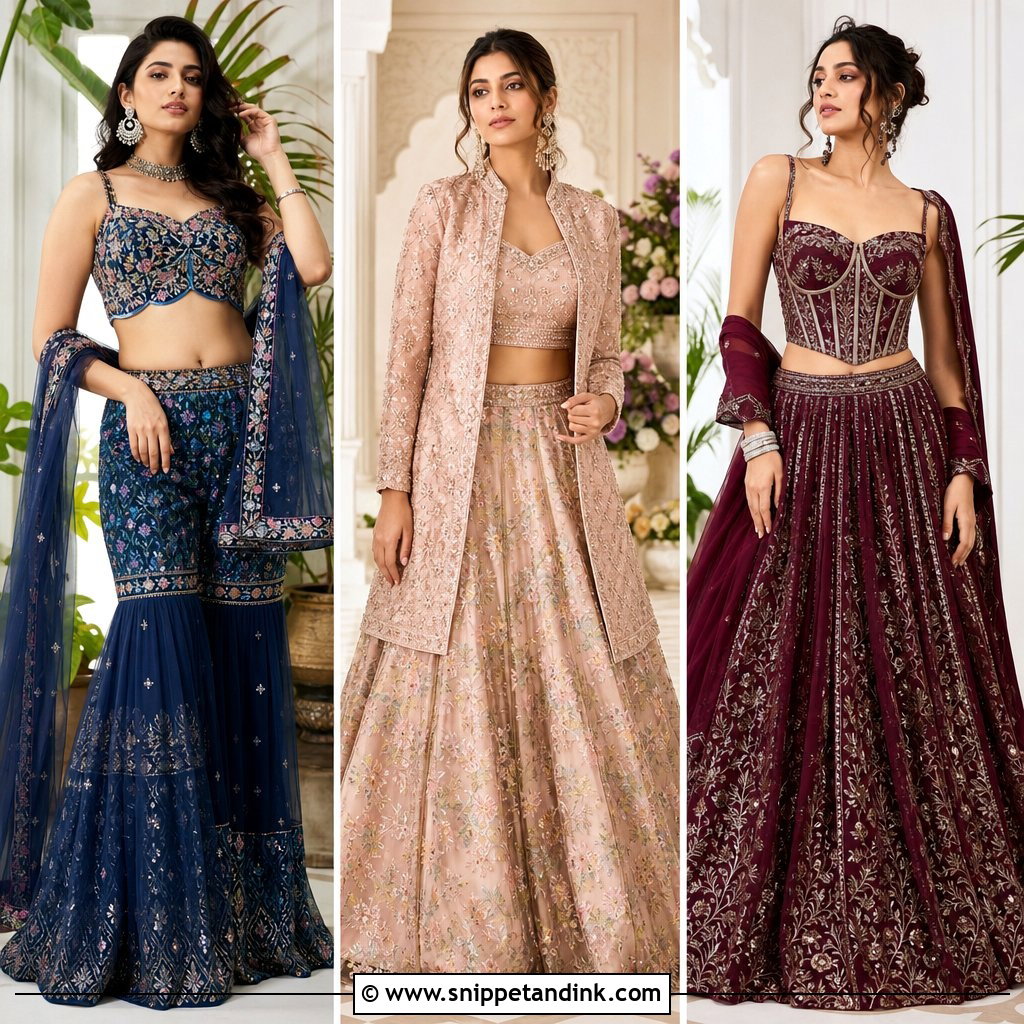
2. Indo Western Lehenga With Crop Top
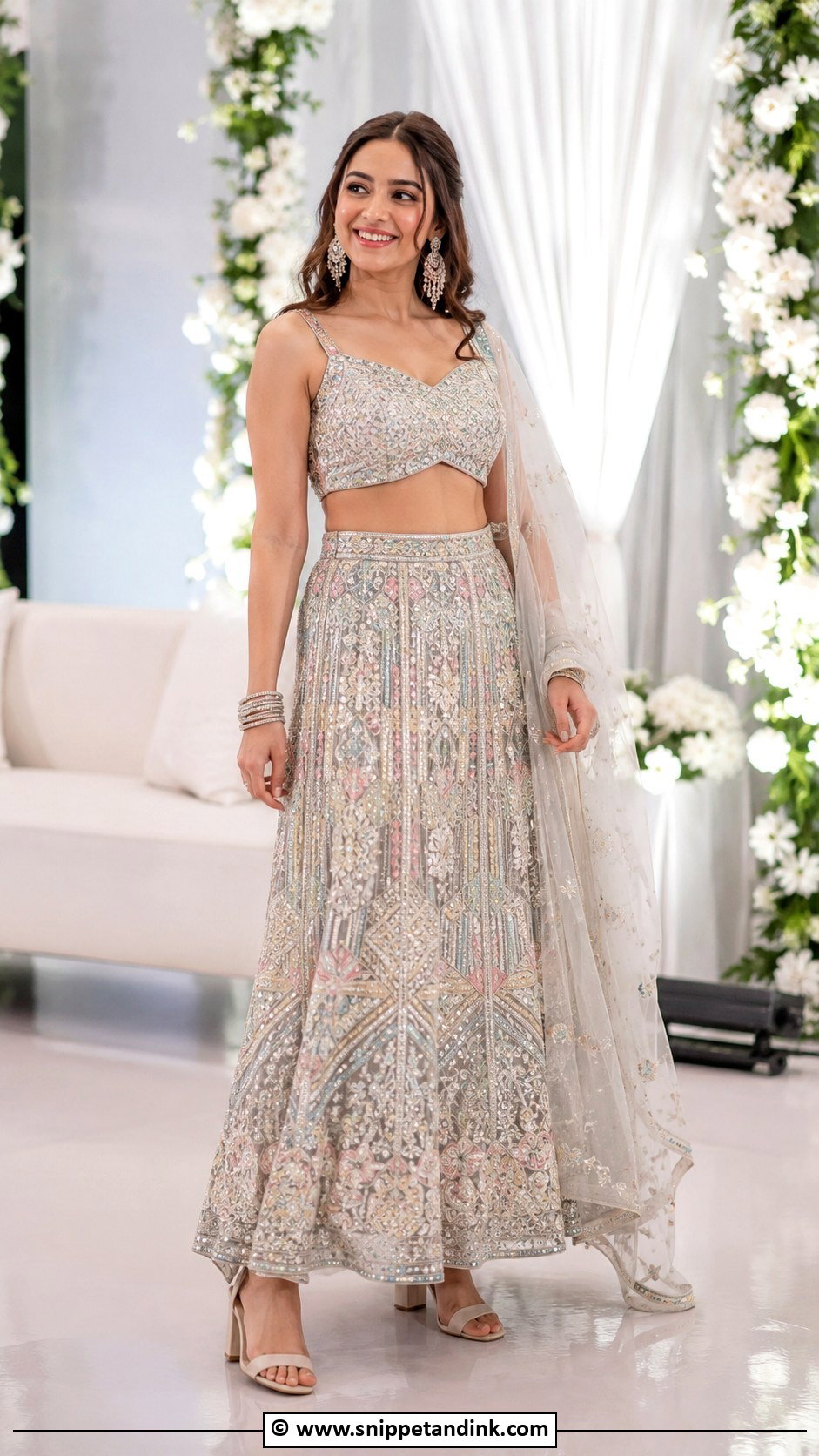
A crop top in place of a choli keeps the lehenga festive while giving the upper half a cleaner, newer line. Structured crop tops, corset blouses and halter tops all work, but the skirt has to sit high enough that the gap between top and waistband stays narrow when you lift your arms to dance. I check that at the fitting by having the wearer raise both hands; if more than a couple of inches of skin appear, the skirt waistband goes up. Add a light dupatta for a more traditional function, or drop it for the reception.
3. Indo Western Cape Lehenga For Wedding
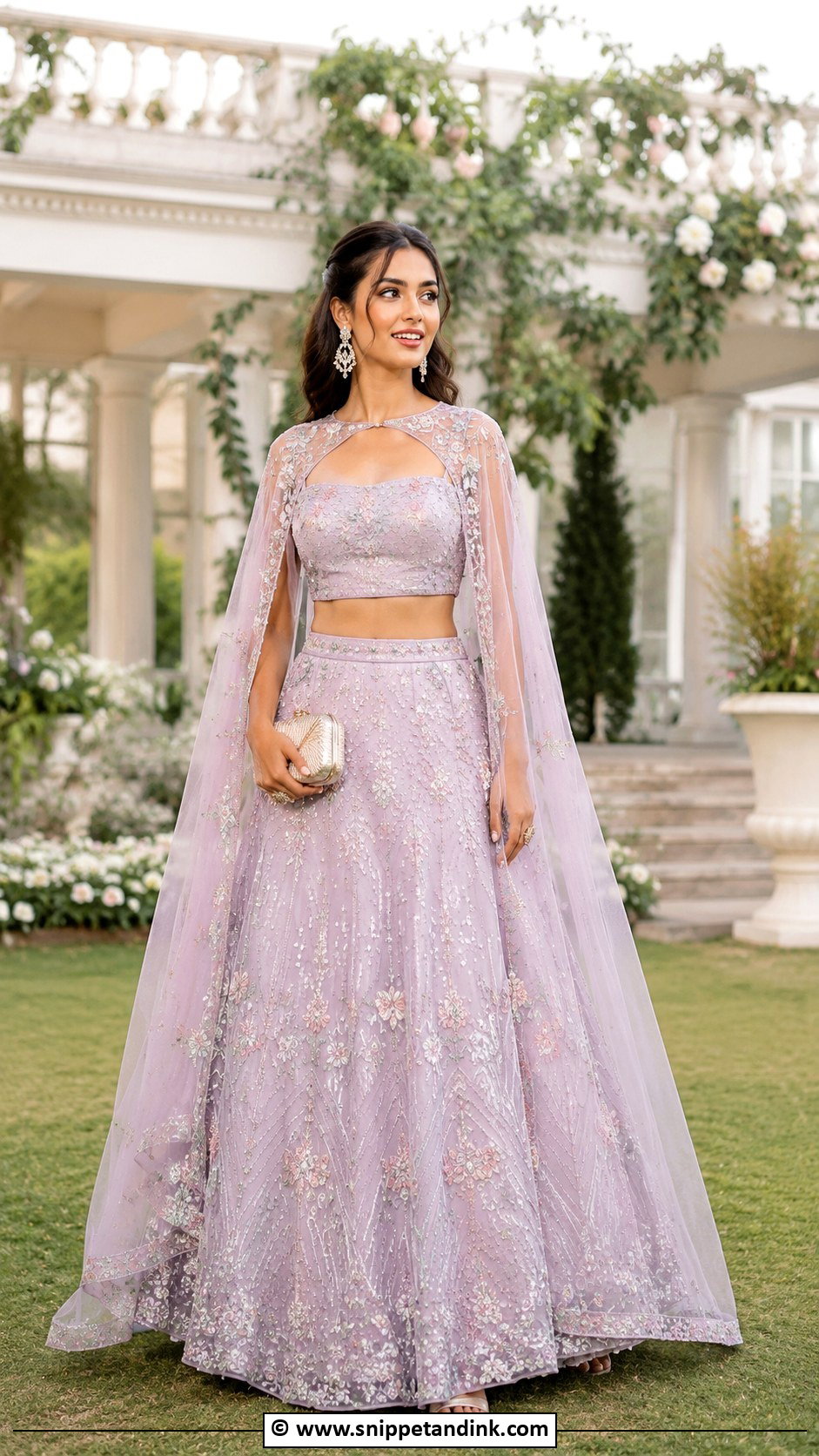
The cape replaces the dupatta, which means your hands stay free for the whole evening. Sheer embroidered capes, short shoulder capes and floor-length ones each read differently: the short version suits a dance-heavy sangeet, while a long cape needs heels and a little practice on stairs. Pastels sit well in daylight, and jewel tones with metallic work suit evening. Because the cape is already the statement, I’d choose earrings over a heavy necklace, since a necklace tends to catch on the cape’s neckline seam.
4. Indo Western Dhoti Pants With Peplum Top
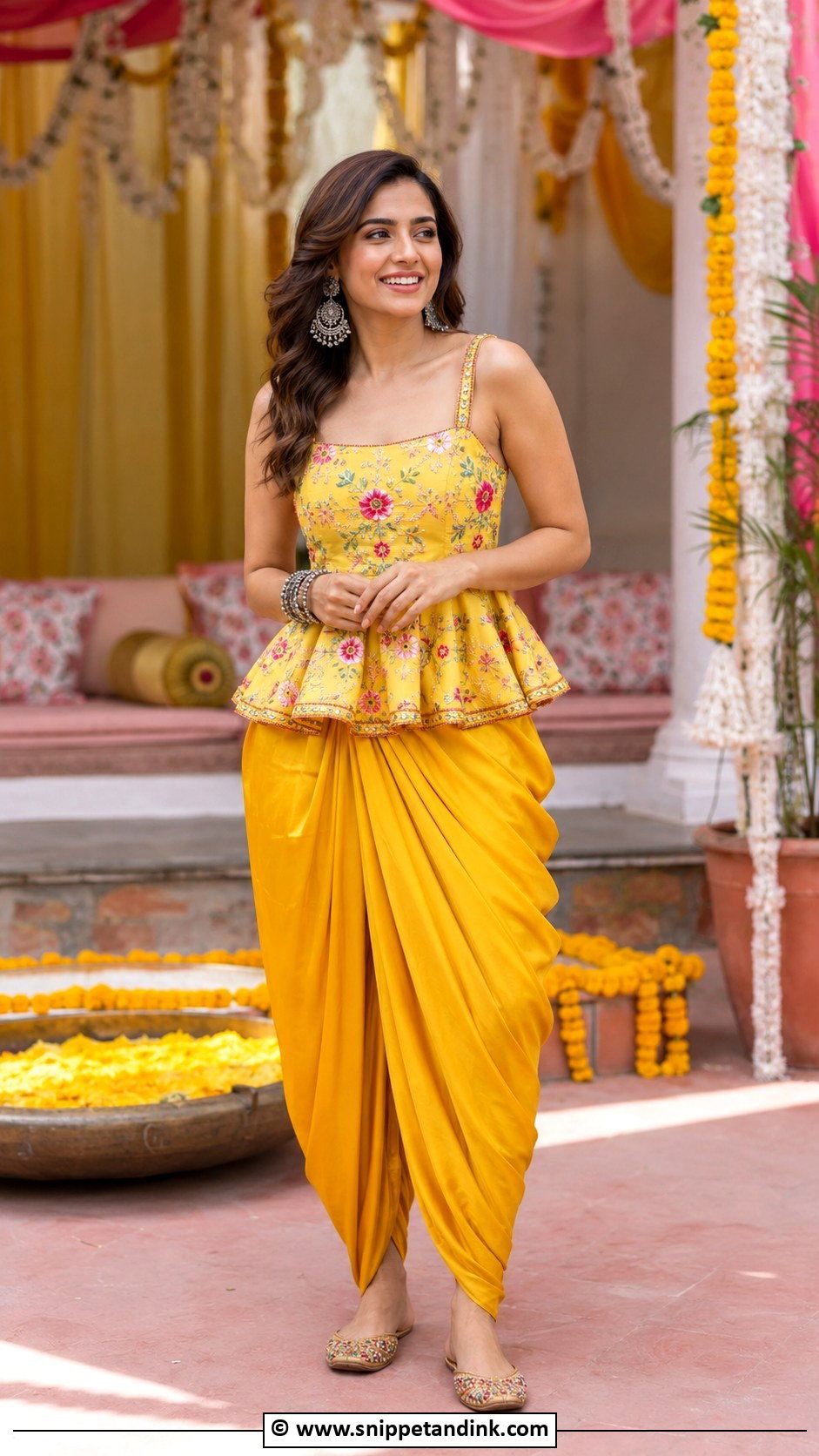
Dhoti pants are the easiest thing on this list to sit cross-legged in, which is why I reach for them for mehndi and haldi. The cowl drape needs a fabric with some body, so silk, brocade or a stable crepe holds the folds where a thin georgette collapses flat after an hour. A peplum top with mirror or thread work gives the waist definition the loose pants don’t. Juttis or wedges keep you steady on lawns. Oxidized silver earrings push it toward boho; pearls make it quieter.
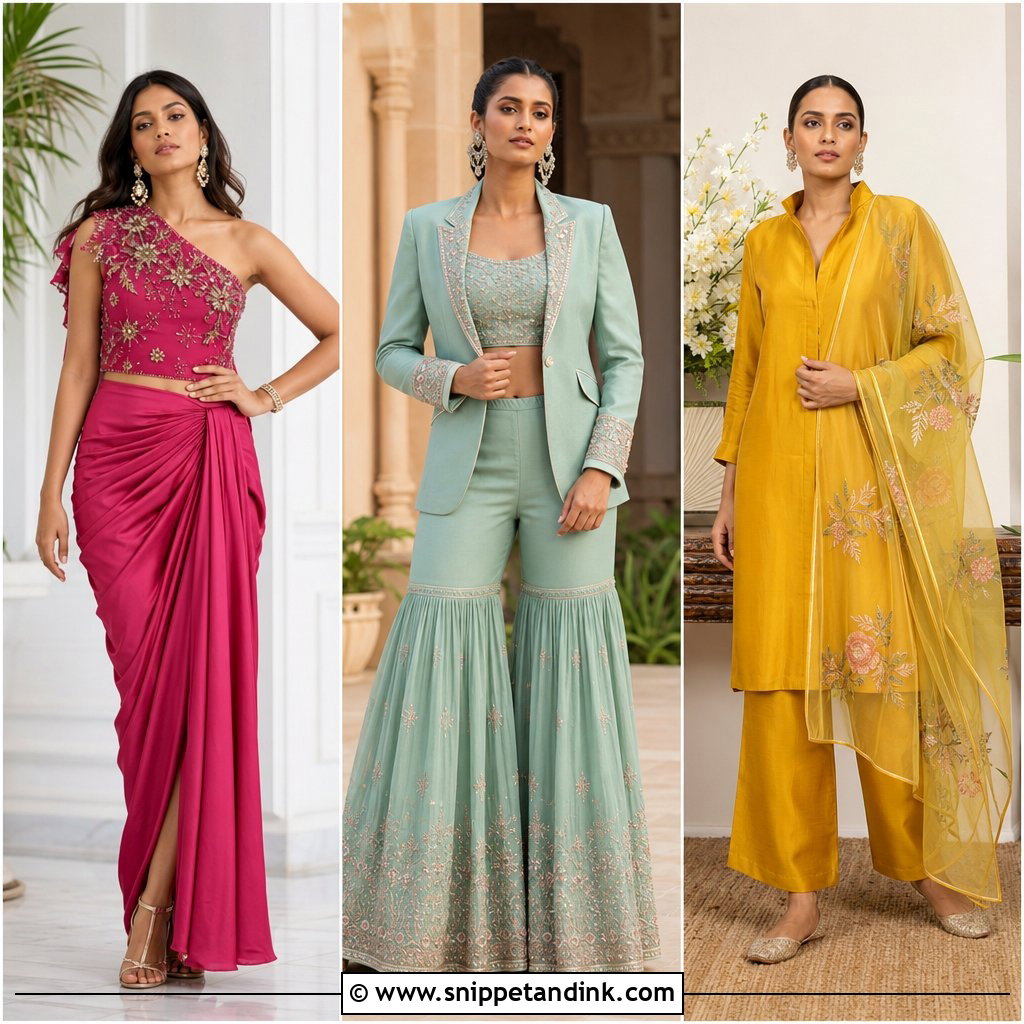
5. Indo Western Sharara With Jacket
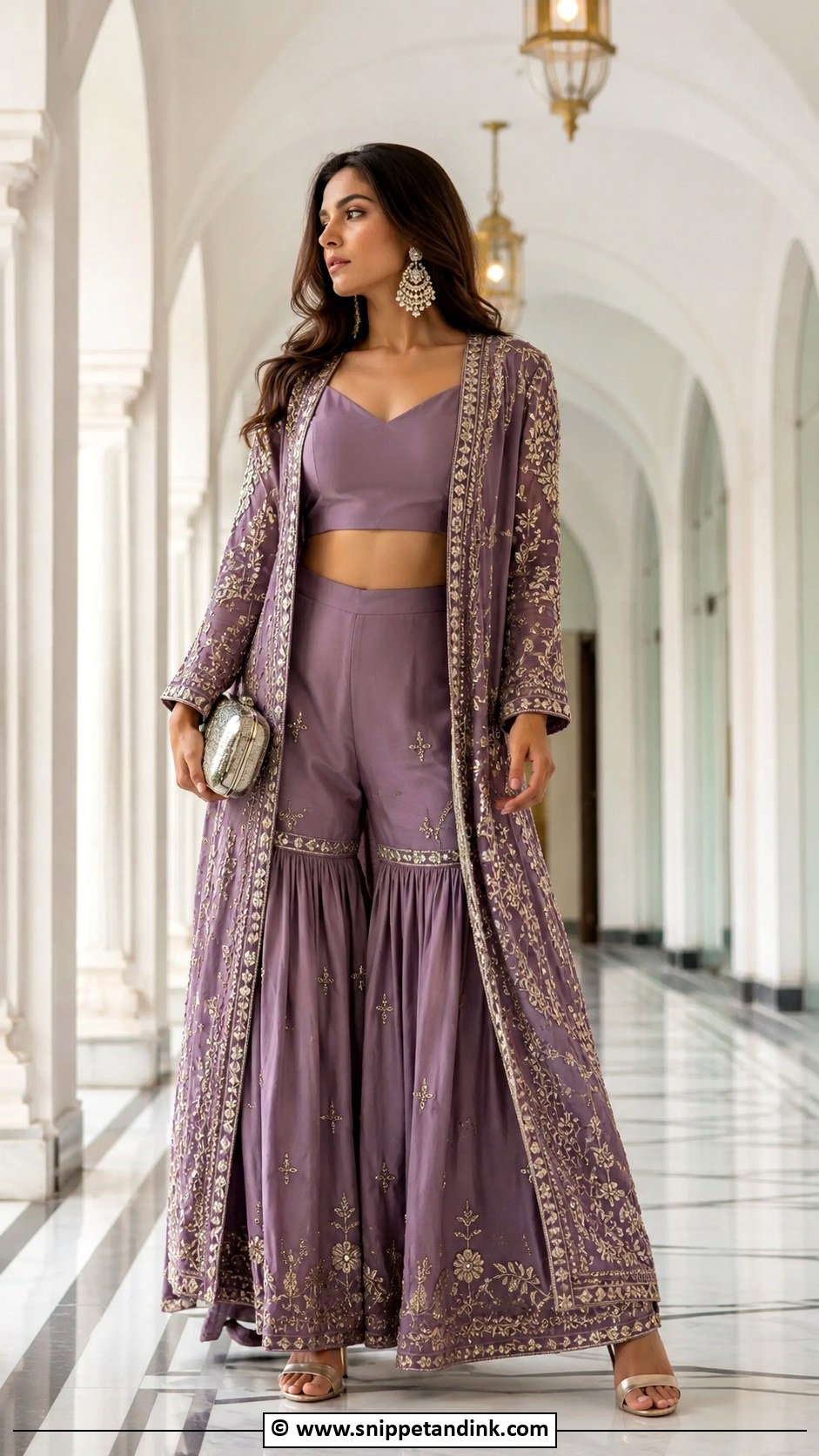
The long embroidered jacket is what turns a sharara set from festive into tailored. Under it you can wear a bralette, a crop top or a short kurti, depending on how much coverage the family expects at that function. Organza and silk jackets hold their shape best, while brocade adds weight that keeps the hem from flipping when you turn. My only caution is length: a jacket that stops at the same point the sharara starts to flare cuts you in half, so aim for it to end slightly above or below that flare.
6. Indo Western Palazzo Suit For Wedding
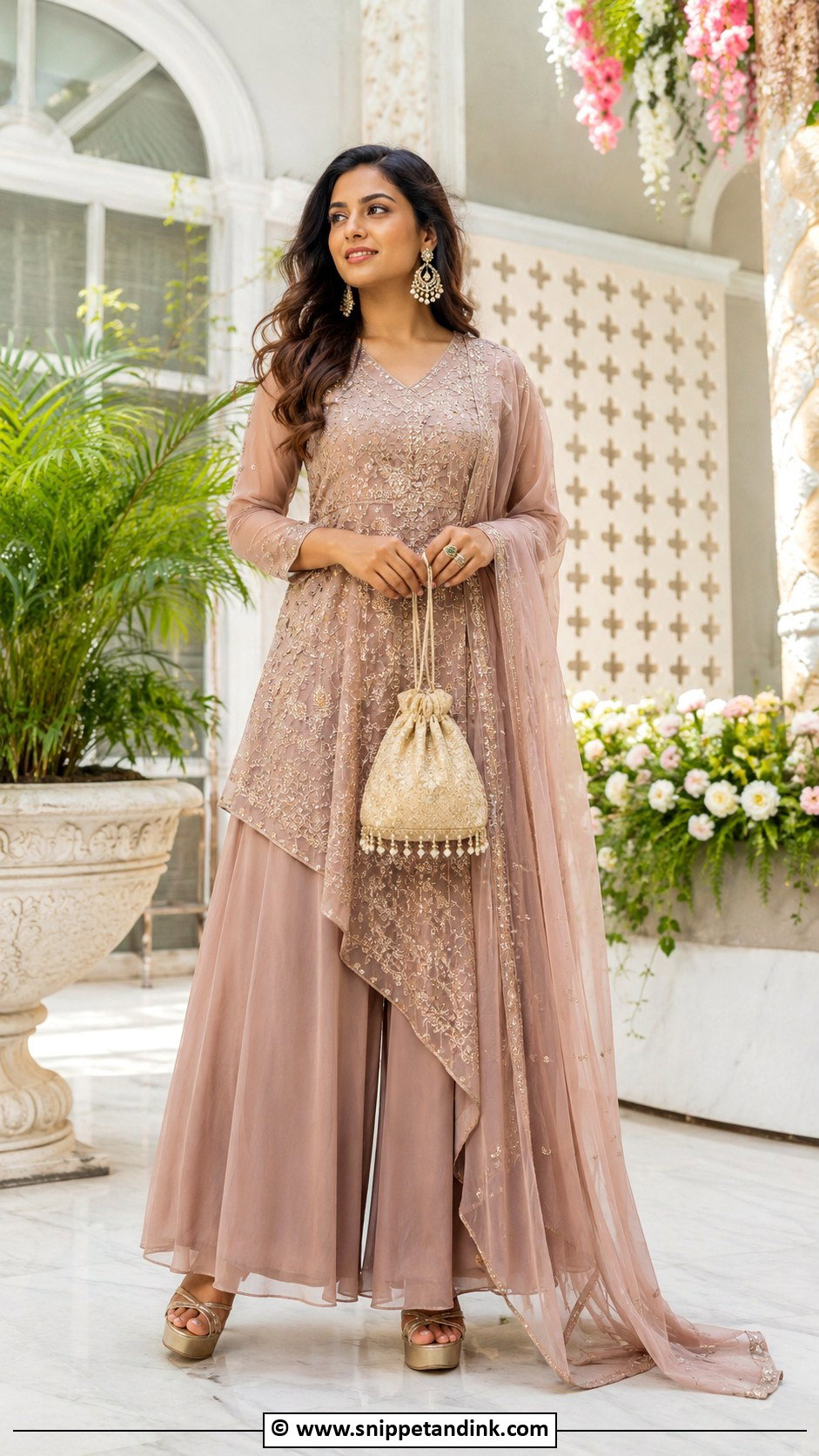
Palazzo suits are what I suggest when someone has a twelve-hour day ahead and dreads anything structured. Wide-leg palazzos move with you, and a modern kurta or asymmetrical tunic keeps the outfit dressy enough for a wedding. Put the embroidery at the neckline, sleeves or hem rather than all over, and the set stays light enough to wear from lunch to late dinner. Ivory, blush, mustard, wine and emerald all work. The palazzo length matters more than people expect: hem it to the shoe you will actually wear, or it drags on the floor and frays by evening.
7. Indo Western Jumpsuit For Wedding
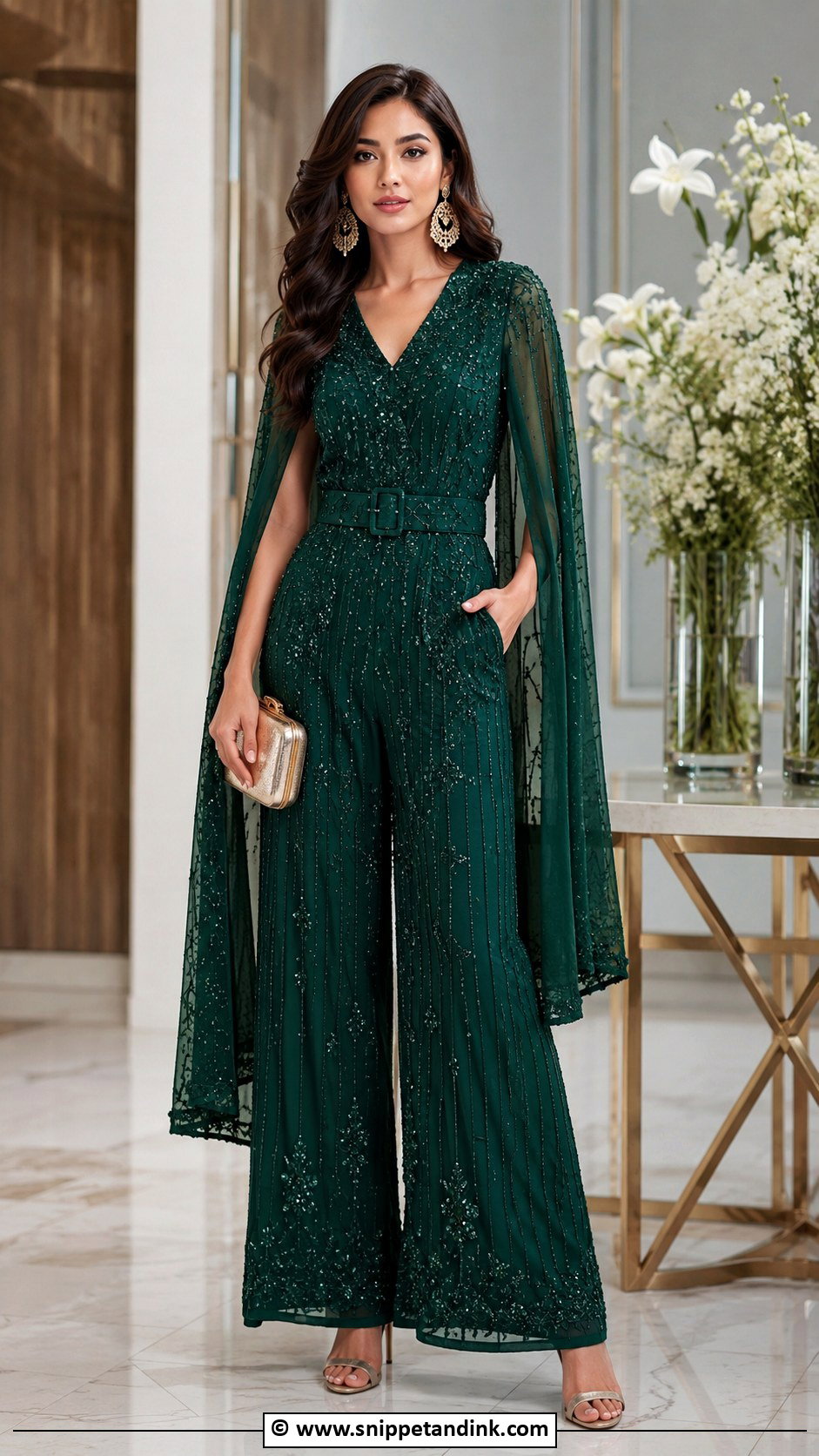
An embellished jumpsuit is the cleanest silhouette here and the one I’d suggest to anyone who never feels like herself in a lehenga. Look for Indian detail on a Western shape: zari embroidery, mirror work, sequin borders or a draped overlay. A wide-leg jumpsuit flows when you walk, and a belt keeps the waist defined. Check the torso length at the fitting by sitting down; a short rise pulls uncomfortably at the crotch and shoulders after an hour in a chair. A high neckline needs no necklace; a deep or strapless one can take a fine choker.
8. Indo Western Kurta With Trousers
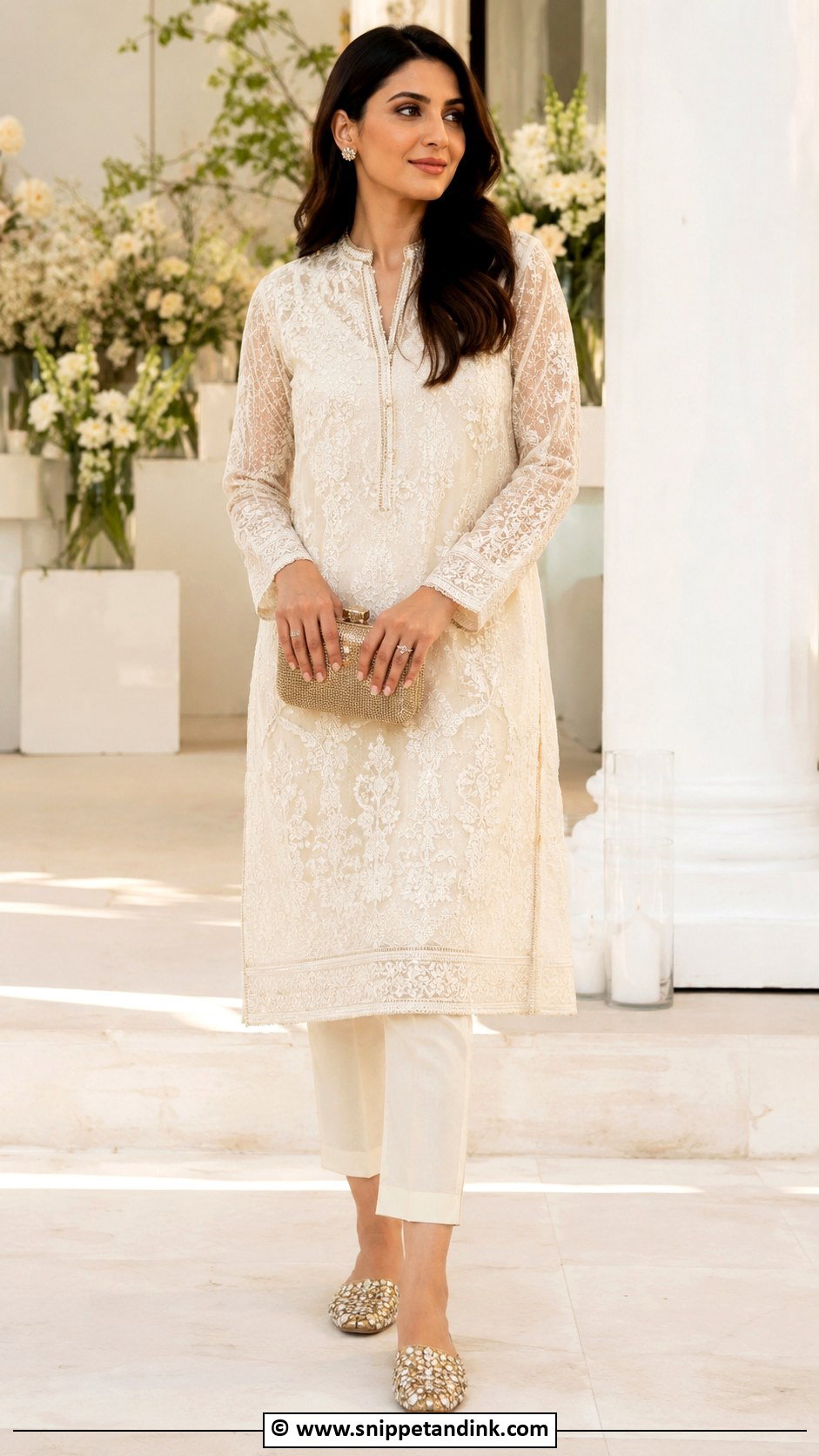
Swap churidar for cigarette trousers or straight ankle-length pants and a kurta instantly reads more current. A high-low or front-slit kurta shows the trouser line and suits daytime ceremonies and smaller family events. Silk and chanderi give richness without heat. I like this outfit for older relatives and for anyone attending several functions, since the kurta and trousers can be restyled separately later. Pointed flats or embellished mules, studs and a structured clutch finish it.
9. Indo Western Skirt With Shirt
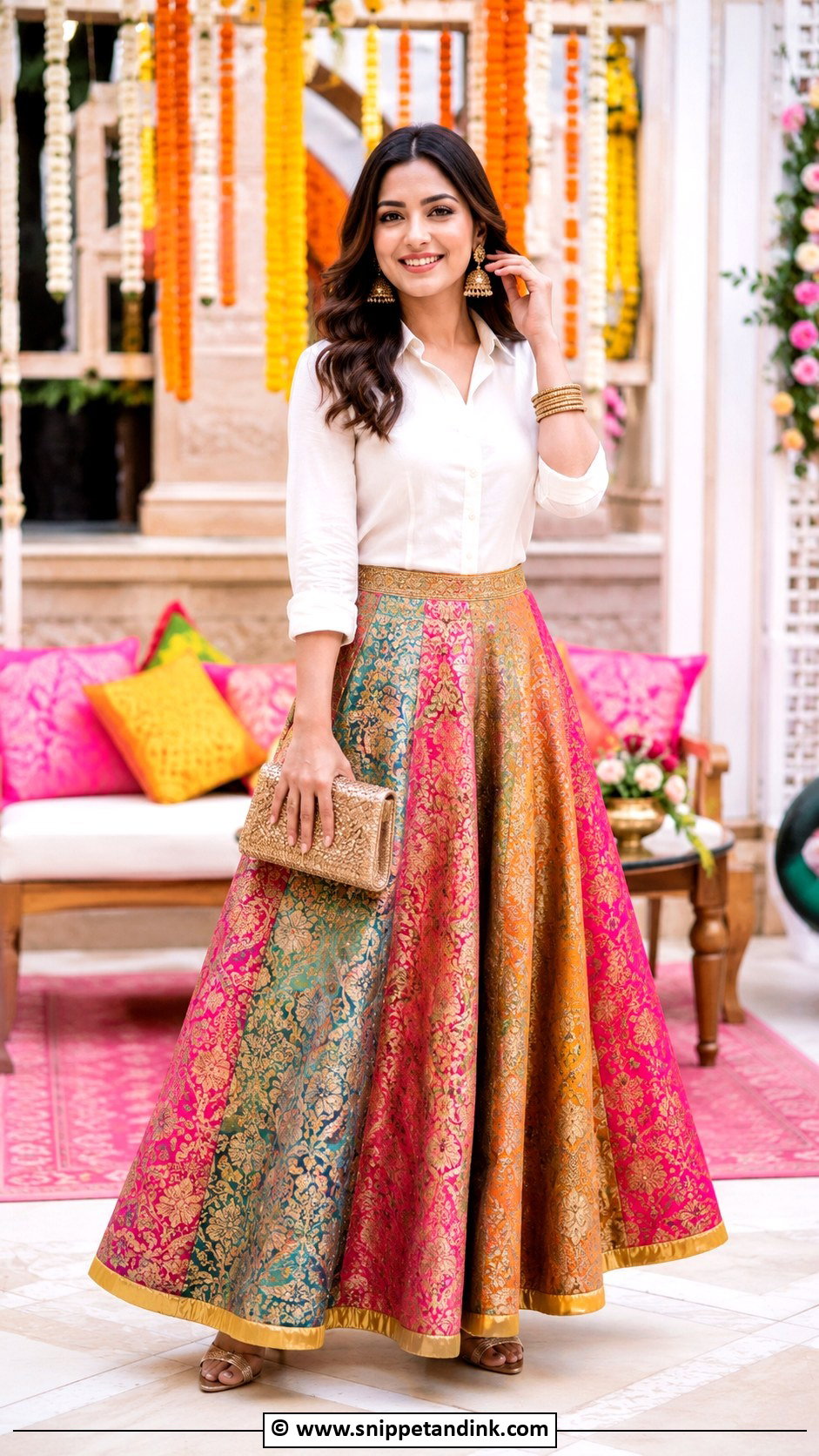
Pairing a crisp white shirt with an embroidered lehenga skirt is the fastest fusion look to put together, and it’s my favorite way to get a second outing from a skirt you already own. Brocade or printed skirts look fresh with white cotton for a mehndi or day event. You can knot the shirt, tuck it, or belt it at the waist. Choose a shirt in poplin rather than a soft rayon, which goes limp and untucks within the first hour. Jhumkas, bangles and a sleek ponytail make the casual shirt look deliberate.
10. Indo Western Anarkali Gown For Wedding
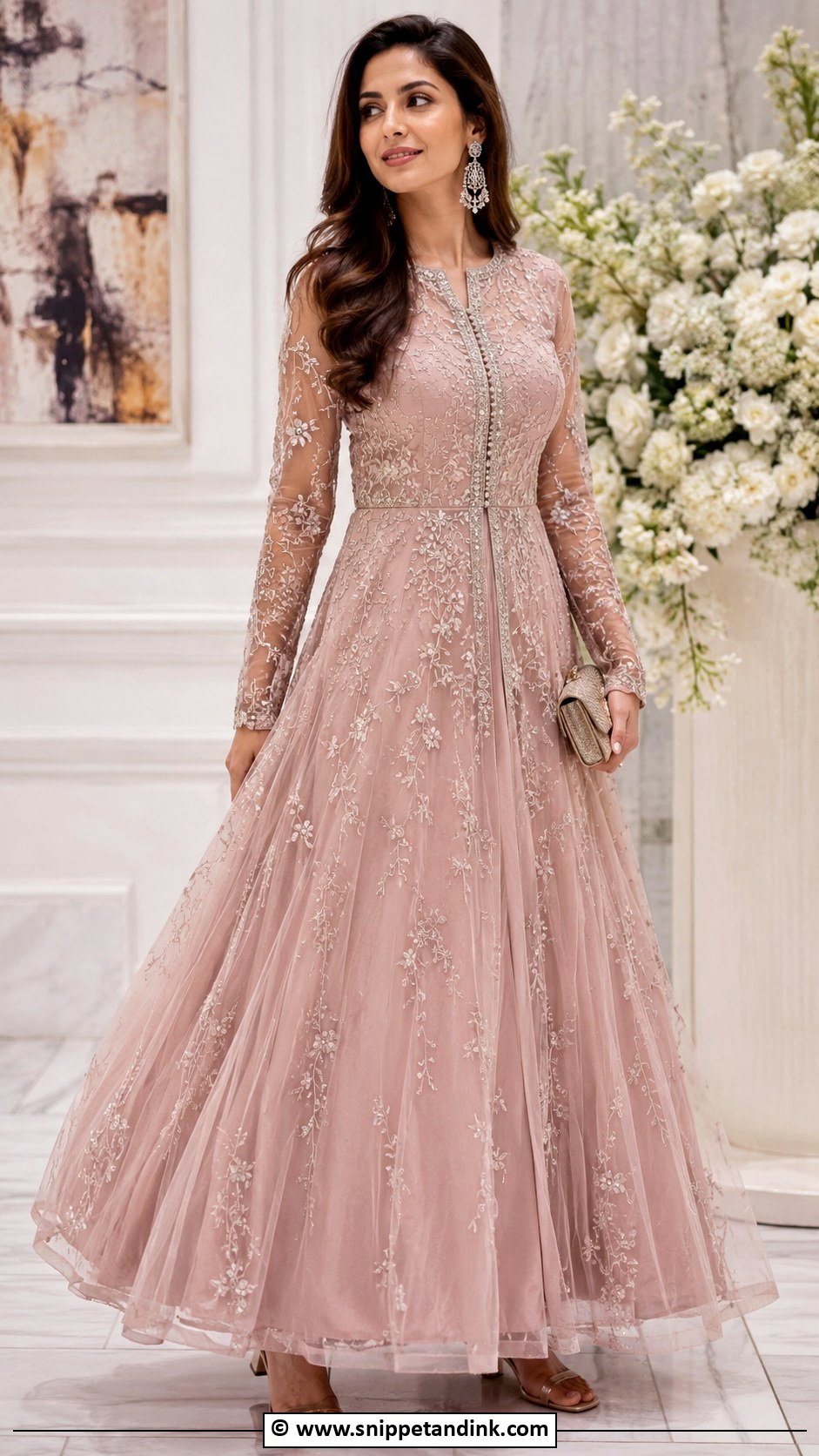
An Anarkali gown keeps the traditional flare but finishes it like eveningwear, with a cleaner neckline and lighter styling. Floor-length silk, georgette, net or organza cuts suit a wedding. Deeper colors with a little shine work for a reception, and pastels with floral embroidery for daytime. The thing I check is hem length against the heel: Anarkalis are cut long, so wear the exact shoes to your fitting or the hem catches under your toe on every step. The dupatta is optional when the gown carries enough embroidery or has an attached drape.
11. Indo Western Blazer Lehenga For Wedding
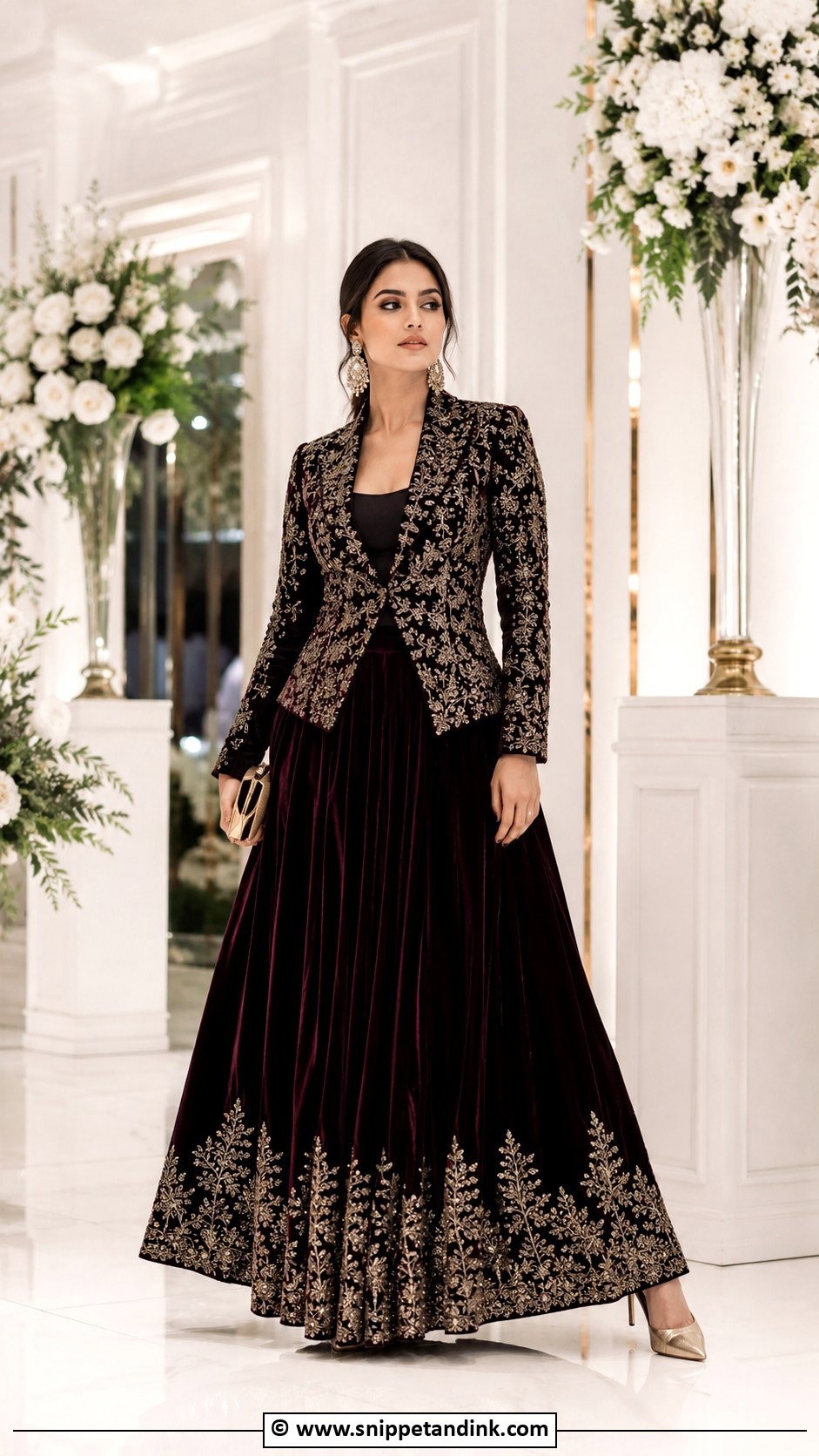
A blazer lehenga brings structure to an outfit that is usually all flow, and it suits women who prefer tailoring to dupattas. A fitted, cropped or longline blazer goes over a plain or embroidered skirt, with a bralette, camisole or bustier underneath depending on the event. The shoulder is the hard part: a blazer that fits at the shoulder but is tight across the back will pull open the moment you raise a glass. Velvet suits winter; silk blends work most of the year. Keep makeup clean and let the tailoring lead.
12. Indo Western Saree With Belt
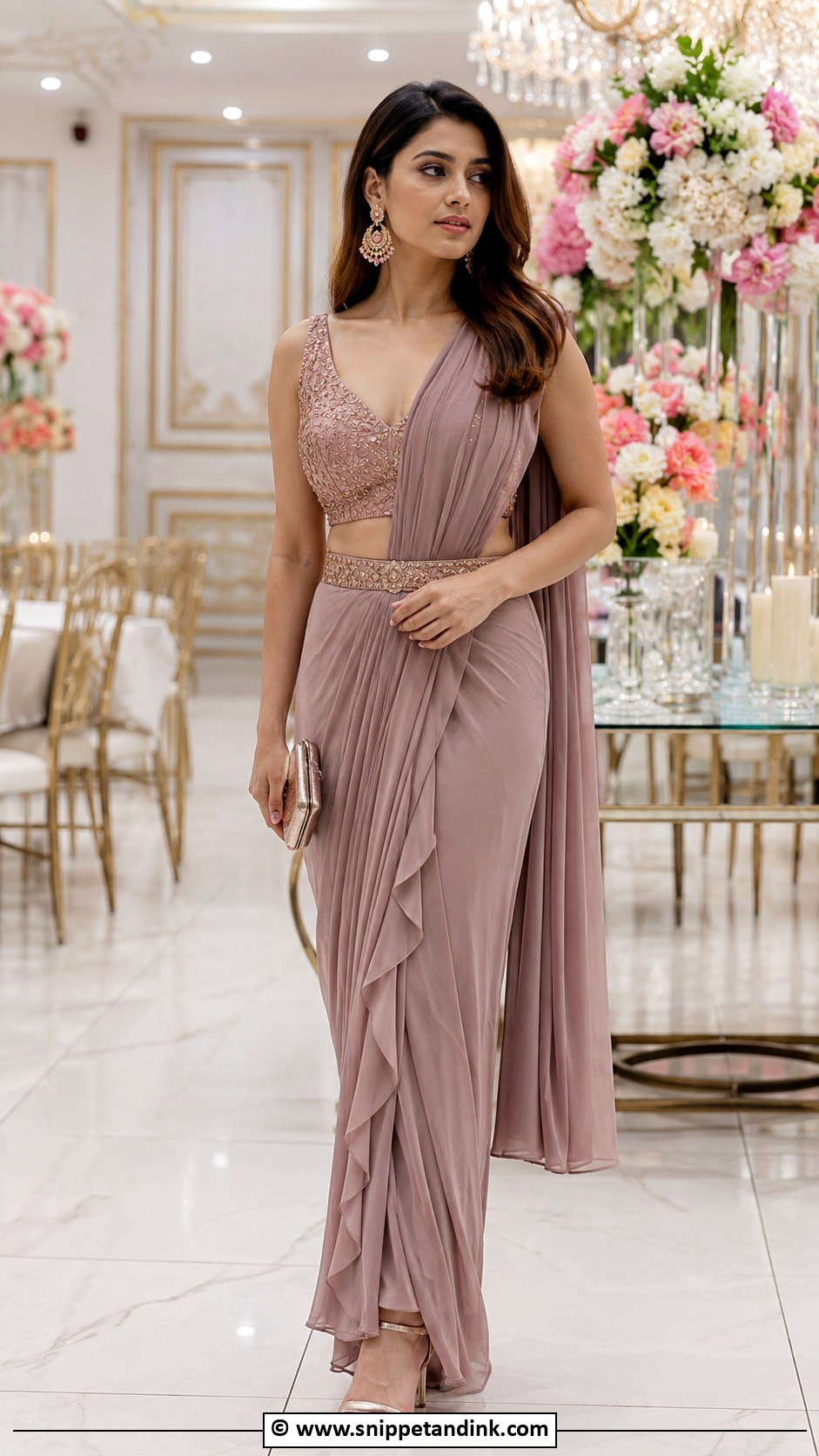
A belt does two jobs on a saree. It defines the waist, and it holds the pleats and pallu in place far better than pins alone through hours of hugging and sitting. An embroidered kamarbandh suits a formal function, while a slim metallic belt is enough for a cocktail night. Pair the saree with a crop, corset or full-sleeve blouse. I’d skip this one with very stiff silks like heavy Kanjeevaram, which bunch above and below the belt; georgette, chiffon, satin or a pre-stitched drape sits flat under it.
13. Indo Western Co Ord Set For Wedding
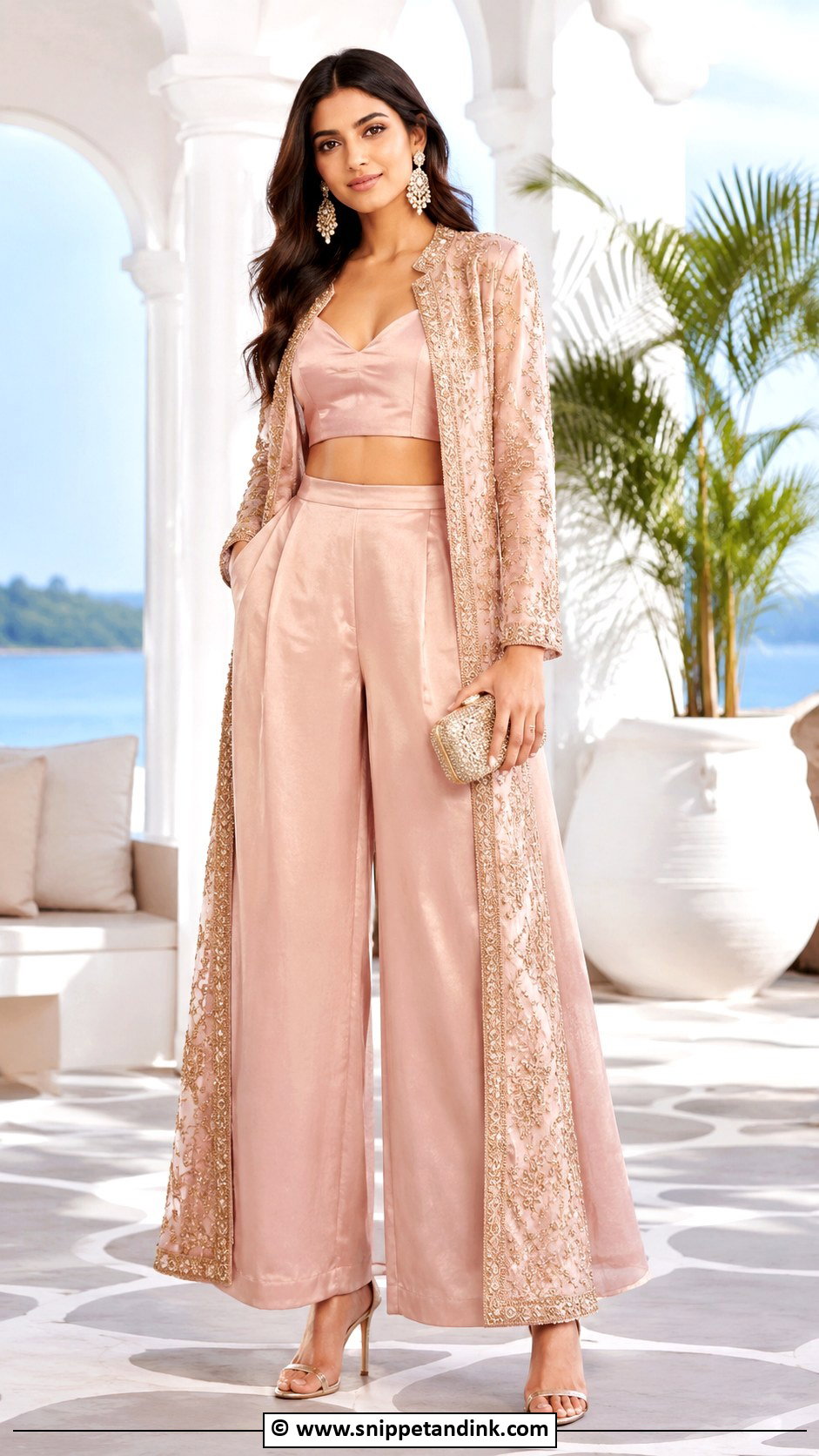
Co ord sets are my go-to for destination weddings, because one matching set packs flat, needs little ironing, and turns into two separates afterward. For a wedding, choose silk, brocade, organza, jacquard or embroidered crepe rather than the cotton you’d wear on an ordinary day. A crop top, wide-leg pants and a long jacket feel polished; a kurta-style top with palazzos is more modest. Heels, statement earrings and a small clutch are all it needs.
14. Indo Western Kaftan Dress For Wedding
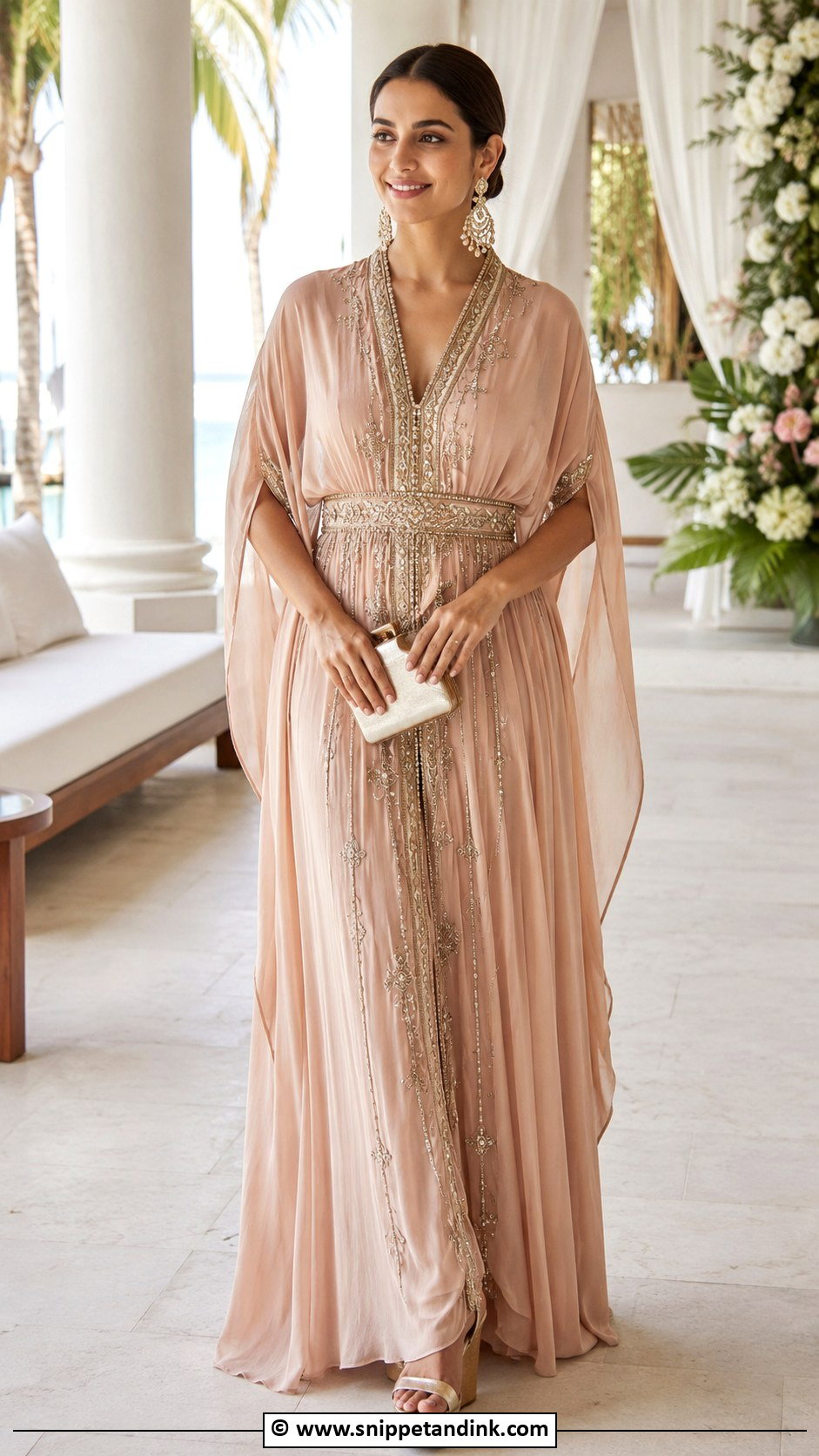
A kaftan only looks wedding-ready when the embroidery is placed with intent, so look for work on the neckline, sleeve edges or a center panel. Its biggest advantage is air flow, which makes it the outfit I steer people toward for beach and resort weddings in real heat. The risk is that it reads shapeless in photographs, so I’d always add something that marks the waist: an inner tie, a cinched belt or a structured lining. A side slit helps you walk on sand. Wedges or metallic sandals beat stilettos there.
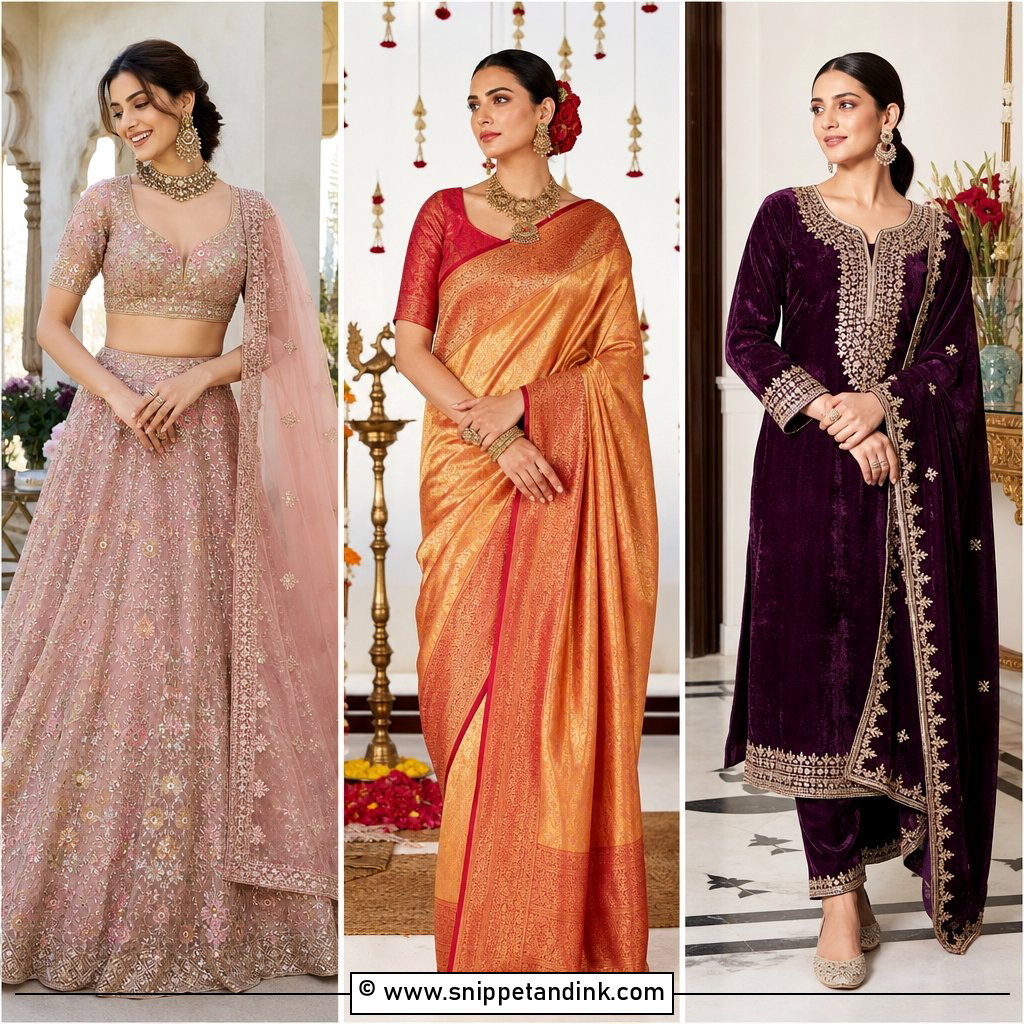

15. Indo Western Gharara With Short Top
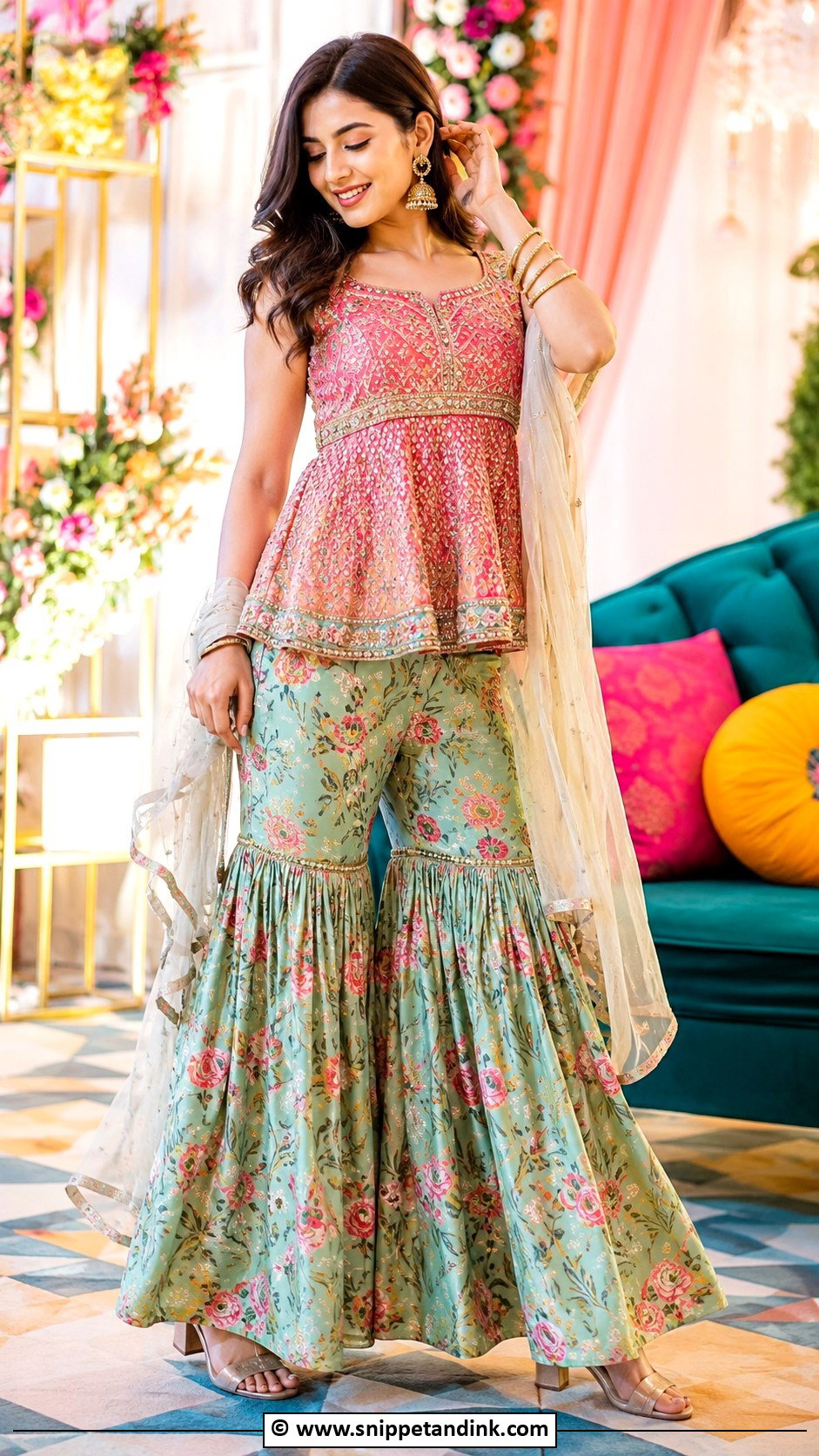
The gharara is fitted to the knee and then flares out, which gives you a dramatic shape when you move and a neat one when you stand still. With a crop top or a short embroidered kurti, it suits mehndi, sangeet and engagement events. Gota, mirror work or light zari keep it celebratory. Balance the weight: heavy work on the gharara wants a plain top, and an embellished top wants a cleaner bottom, or the outfit starts to look bulky at the knee joint. Juttis are kinder for dancing than heels.
16. Indo Western Drape Dress For Wedding
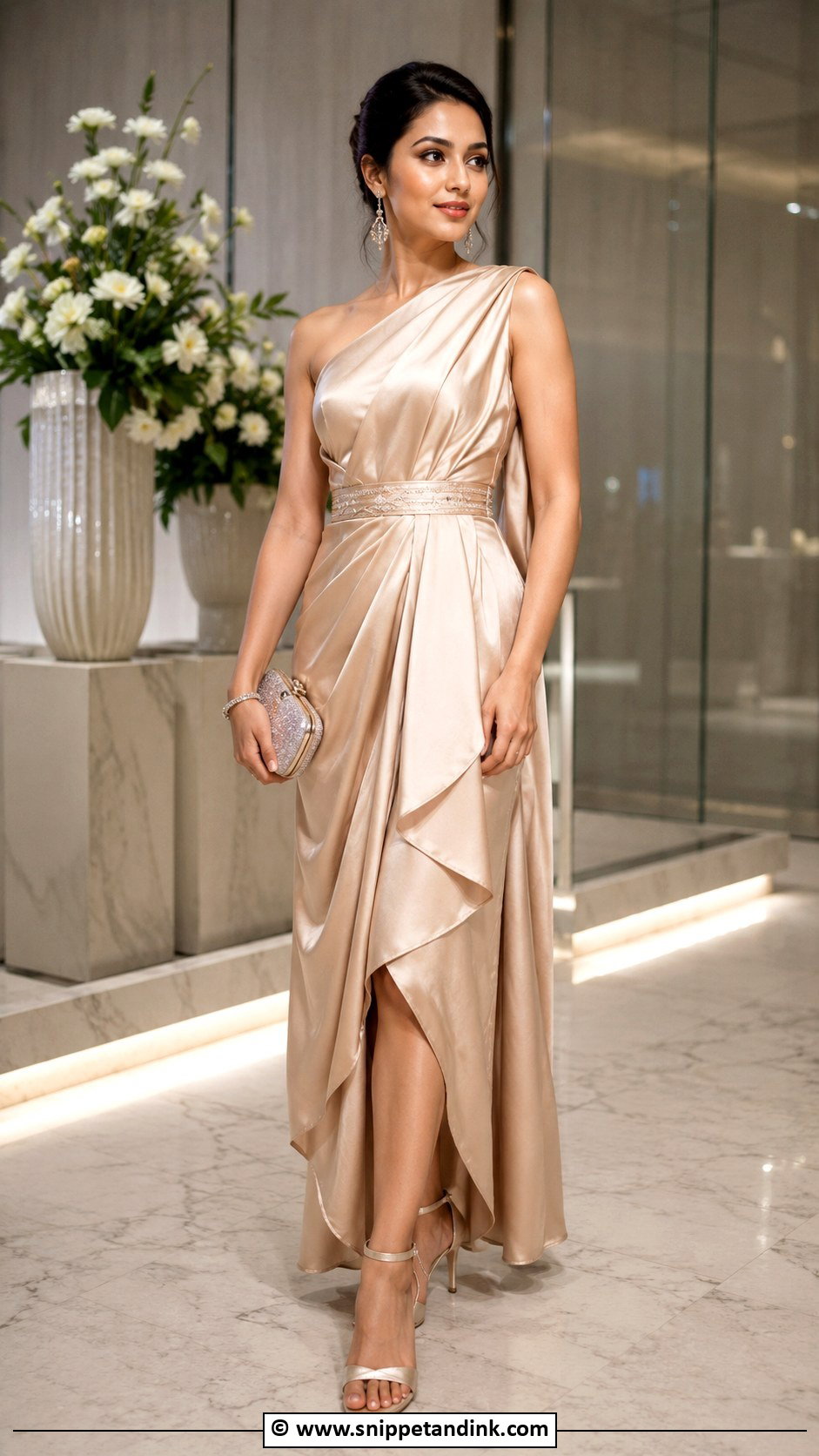
A drape dress borrows the saree’s pallu, wrap or one-shoulder drape and puts it on a Western dress shape. It sits best at receptions and evening functions. The fabric decides whether it works: satin, crepe, chiffon and georgette fall in soft folds, but anything stiff makes the drape stand away from the body. A fitted waist or a belt keeps the line defined. Drop earrings and a bracelet are plenty of jewelry, since the drape already crosses the neckline.
17. Indo Western Lehenga With Long Jacket
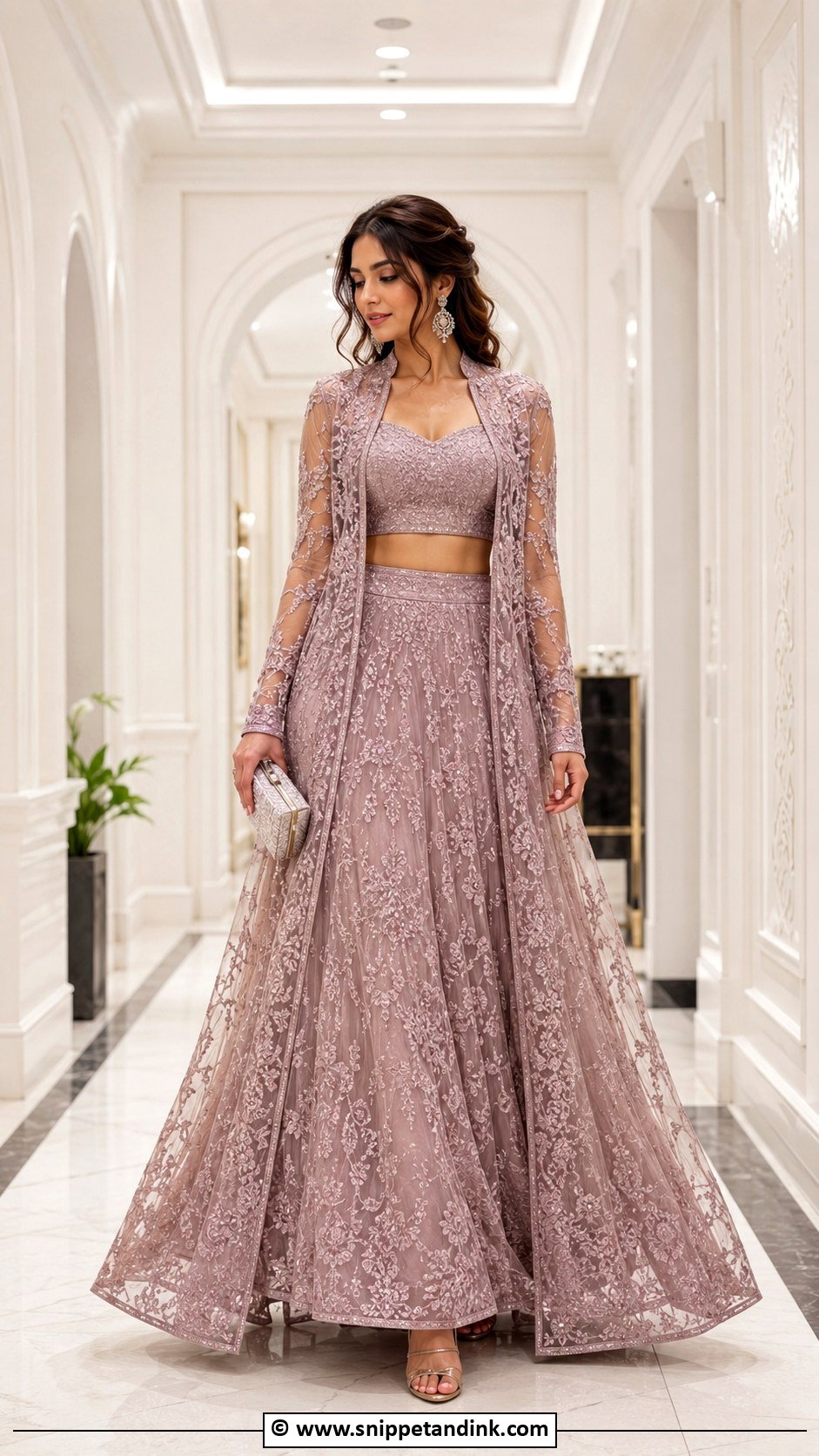
Layering a long jacket over a lehenga gives coverage and movement at once, and it’s the version I suggest for winter weddings where a bare midriff in a cold hall is miserable. The jacket can be sheer, embroidered or lightly printed. Wear it over a crop top and skirt. A floor-length jacket adds height; knee length is easier for dancing and stairs. Keep the inner top fitted so the layers don’t stack into bulk at the waist, and skip the dupatta entirely.
18. Indo Western Tunic With Skirt
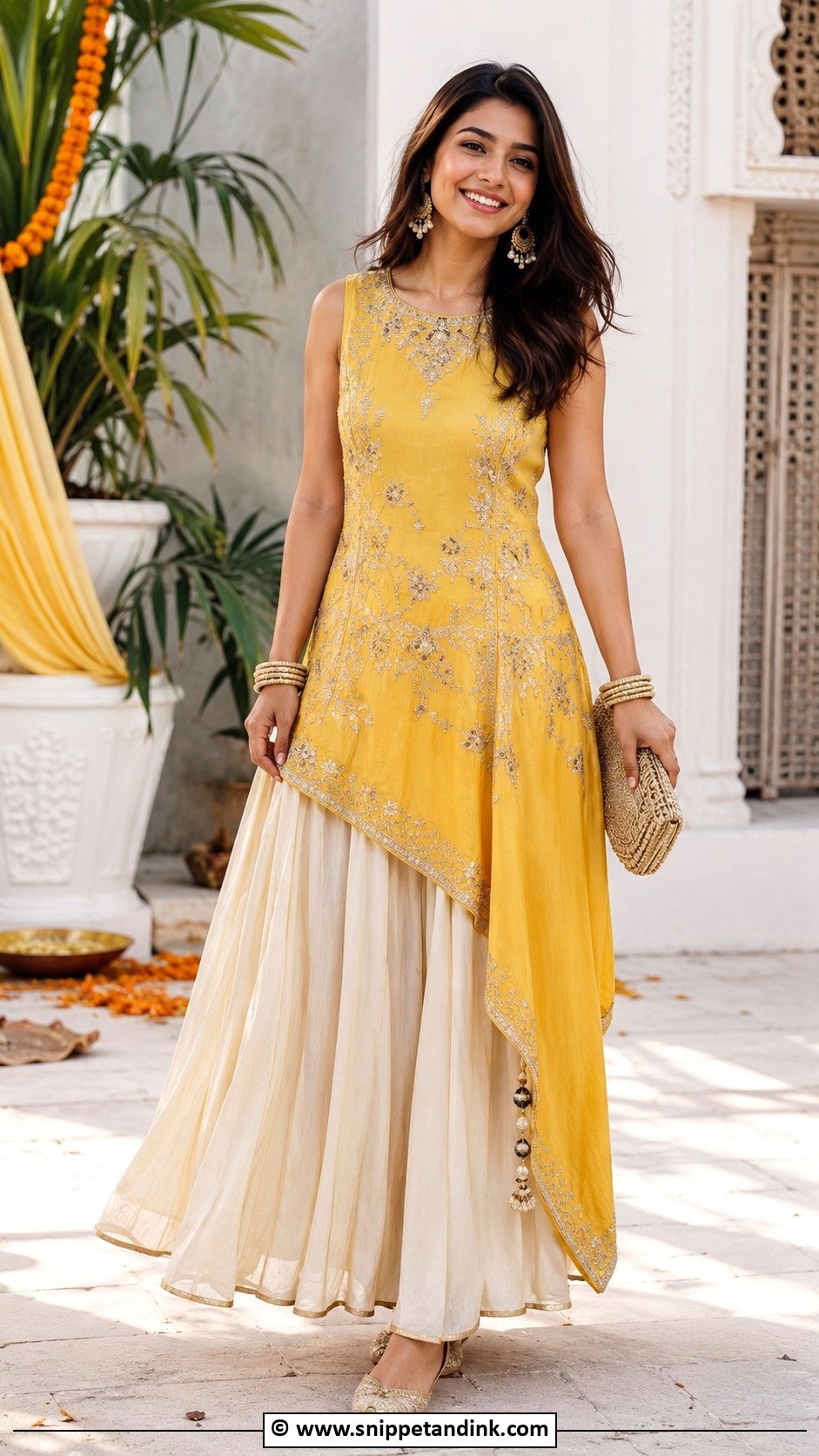
For haldi, mehndi or a long day ceremony, a tunic over a long skirt keeps you covered and cool at once. A high-low, asymmetrical or embroidered straight tunic pairs well with a flowy or paneled skirt. Cotton silk and chanderi breathe, and light brocade adds a festive touch without the weight. I’d watch the tunic length: if it ends at the widest point of the hip, it adds visual width, so a little shorter or longer usually flatters more. Keep the neck clear if the tunic already has embroidery.
19. Indo Western Pants Saree For Wedding
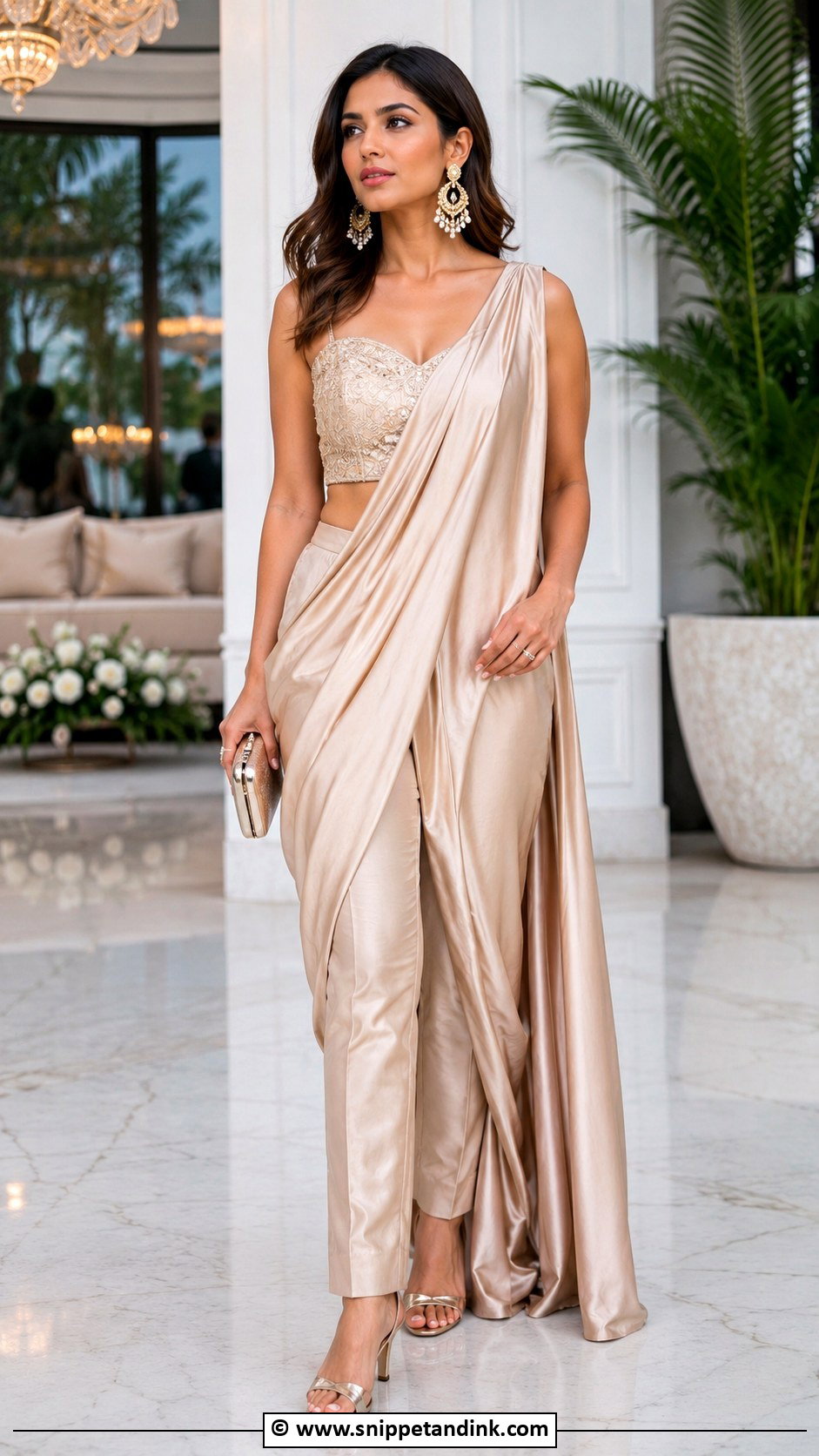
A pants saree drapes over trousers instead of a petticoat, so you can walk, sit and dance without guarding your pleats. Cigarette or flared pants both work; cigarette pants give the sharper line. A crop blouse, corset top or jacket blouse keeps it wedding-dressy. Because the pants show at the ankle, the shoe becomes part of the outfit, and metallic heels pick up the zari in most drapes. Ask the tailor to fix the pleats to the trouser waistband with hooks rather than pins, which leave holes in satin and crepe.
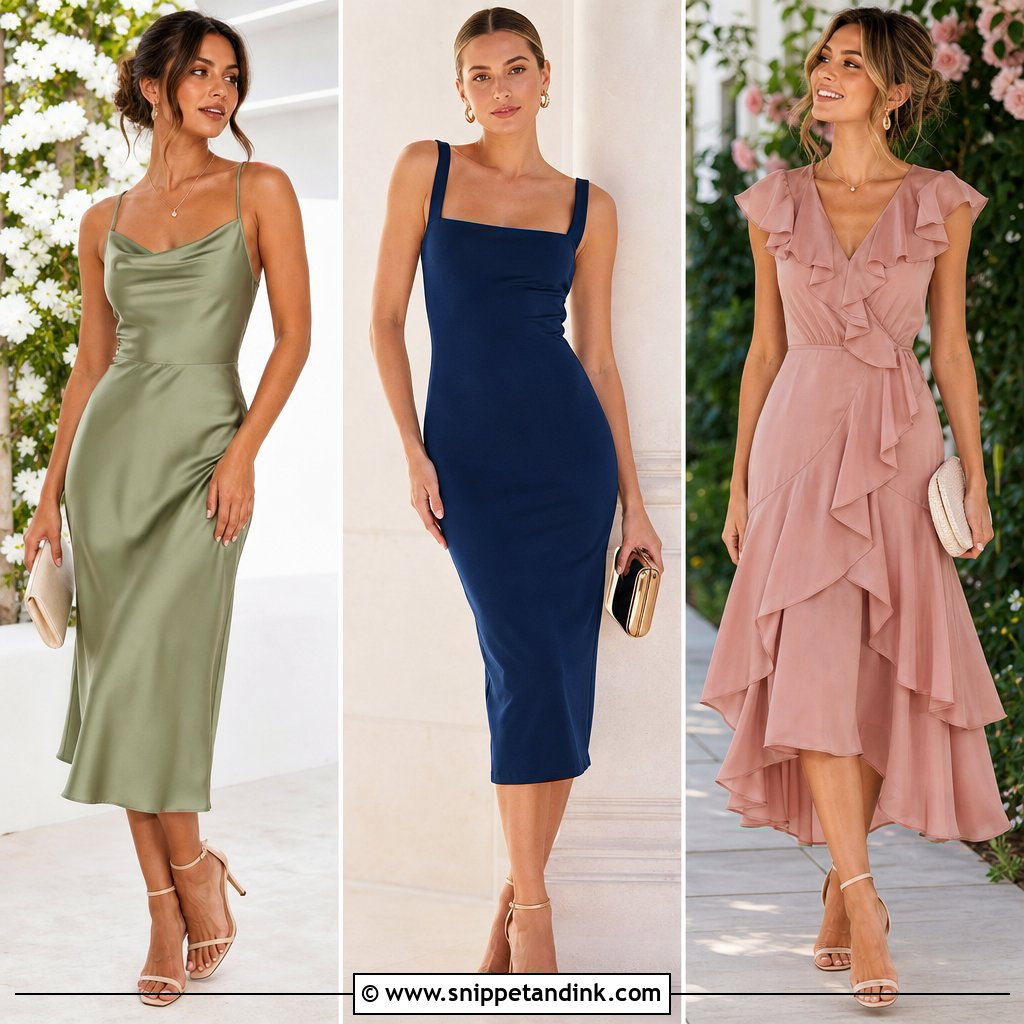
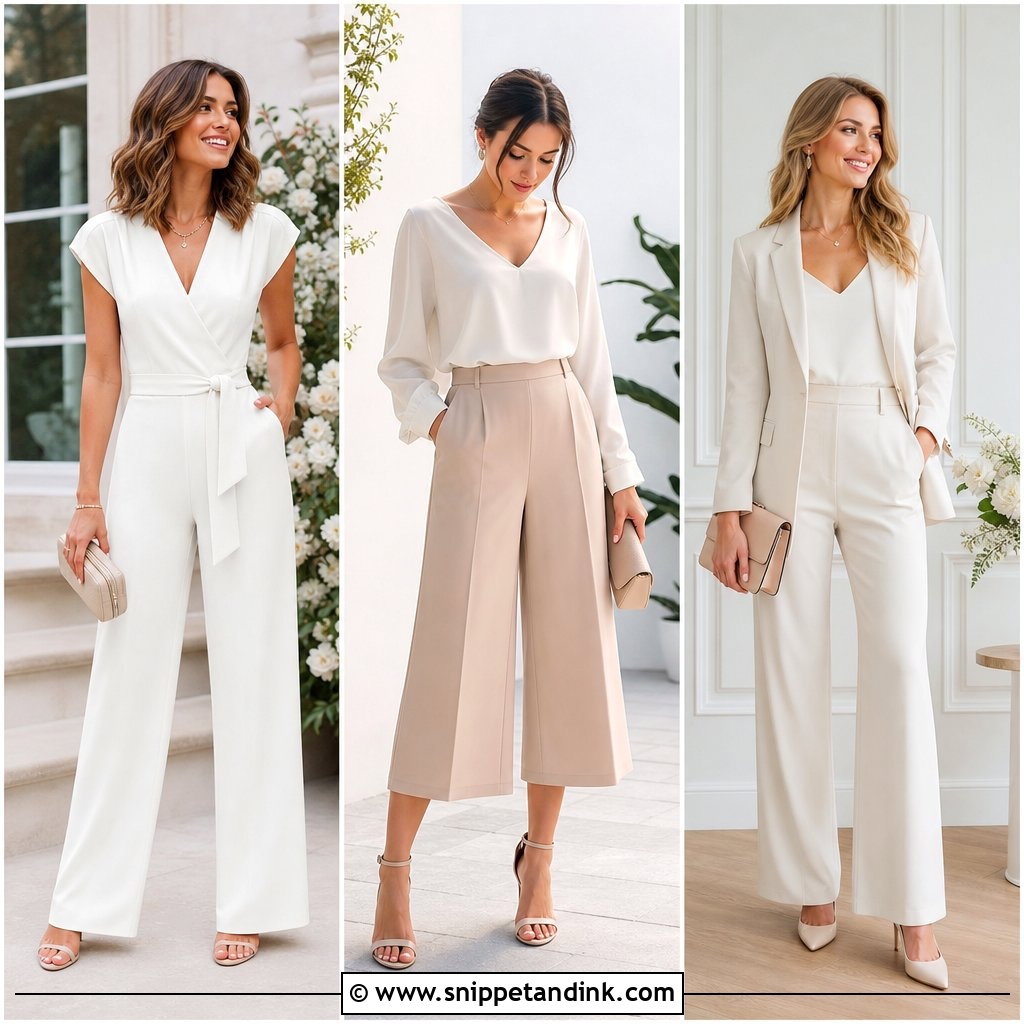
20. Indo Western Peplum Lehenga For Wedding
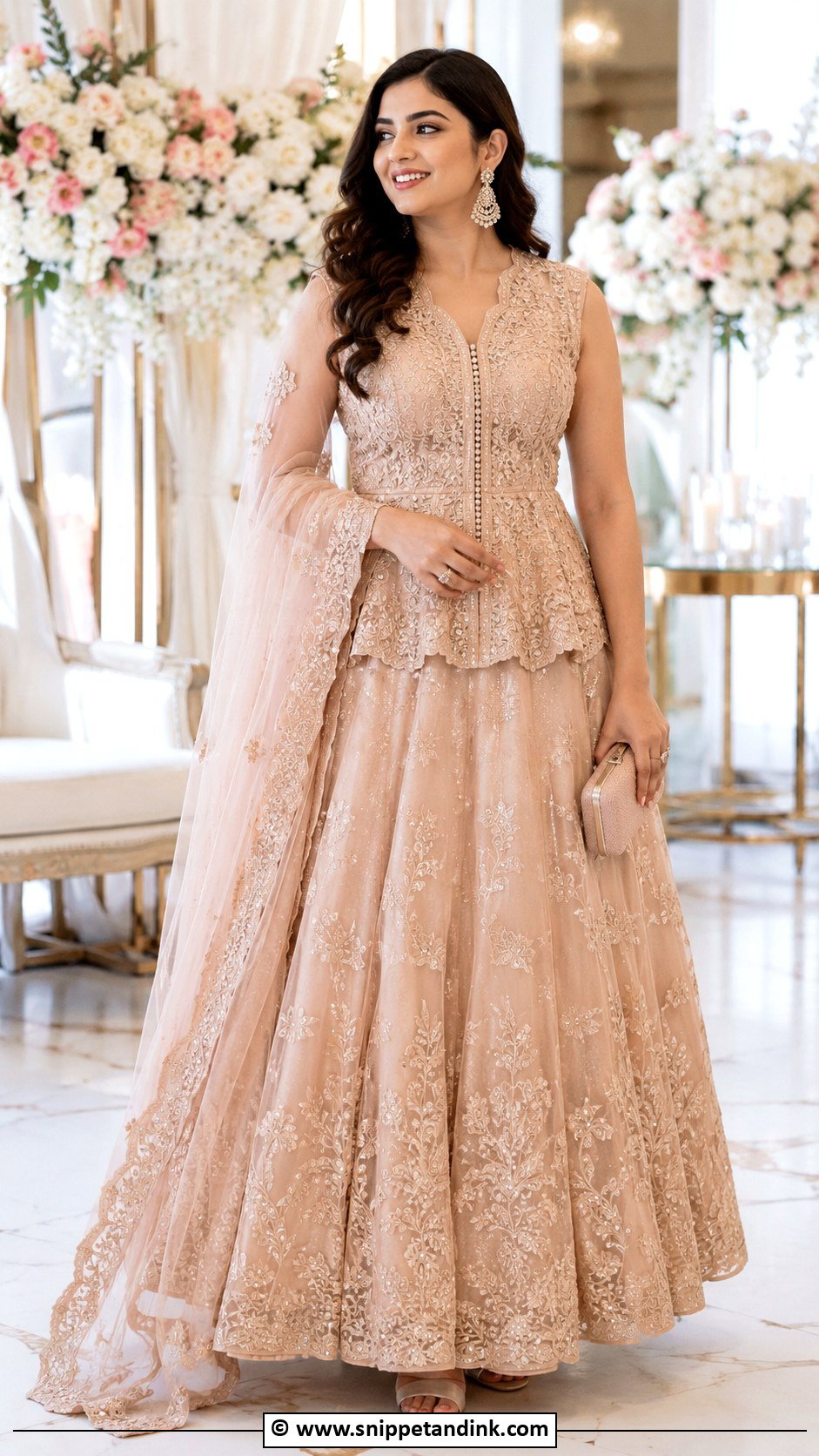
The peplum top defines the waist and covers the midsection, which is exactly why I suggest it to guests who don’t want a short blouse. It can be structured, flared, embroidered or asymmetrical. Over a flowy lehenga skirt, it balances well for bridesmaids, family members and guests. Pastels suit day functions; jewel tones suit evening. Since the peplum adds volume at the hip, a heavy dupatta on top tips the outfit into bulk, so keep the dupatta sheer or leave it off.
21. Indo Western Jacket Kurta With Pants
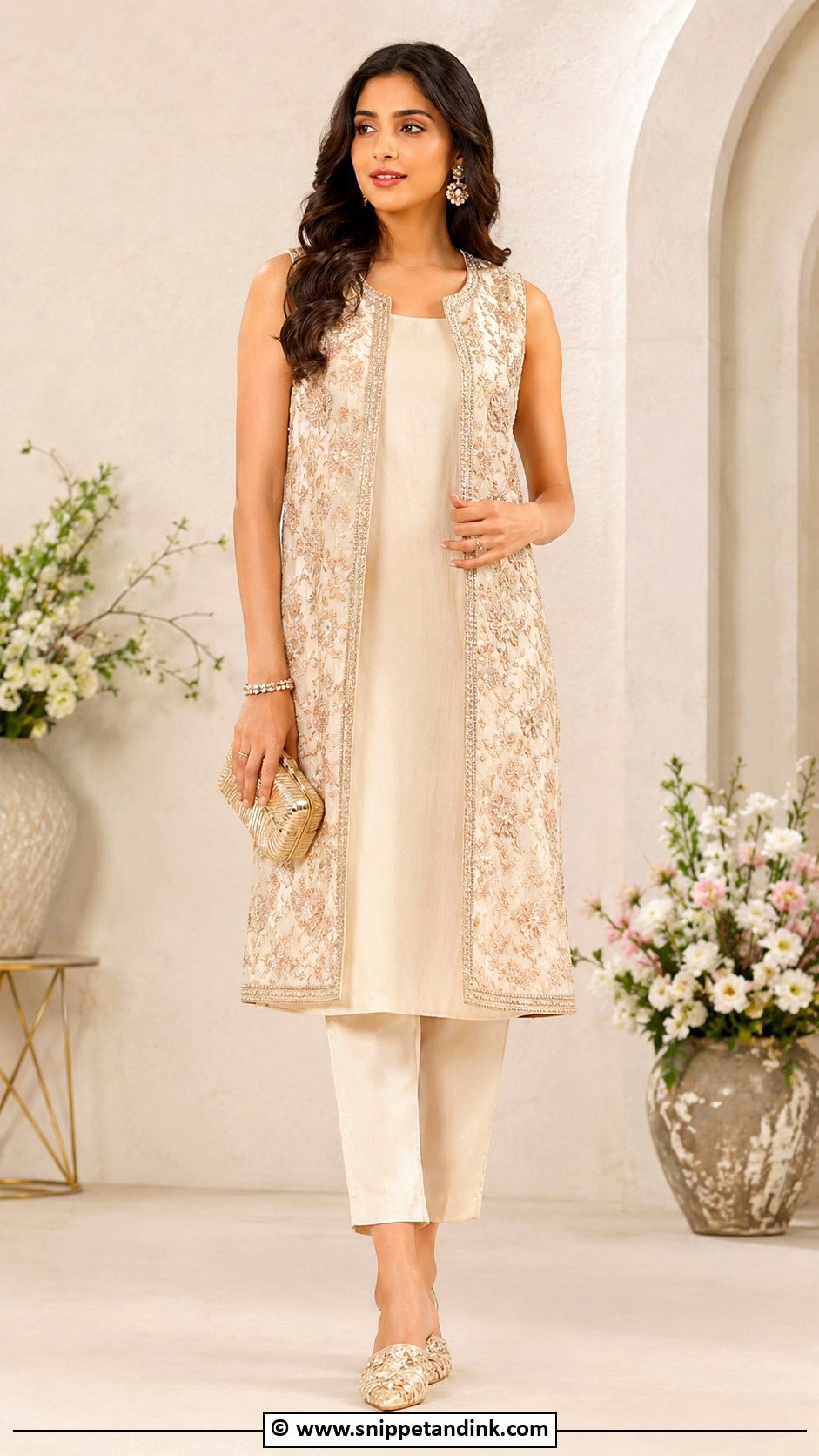
A jacket kurta with pants suits almost every age group I dress, which makes it useful when a family wants coordinated looks across generations. The base can be a straight kurta, a sleeveless kurta or a short top; the embroidered, printed or brocade jacket adds the festive layer. Straight pants or cigarette trousers keep it sharp. It sits well at engagements and family lunches, and it gives modest coverage without the usual heavy suit. Block heels, mules or juttis and delicate earrings are enough.
22. Indo Western One Shoulder Lehenga
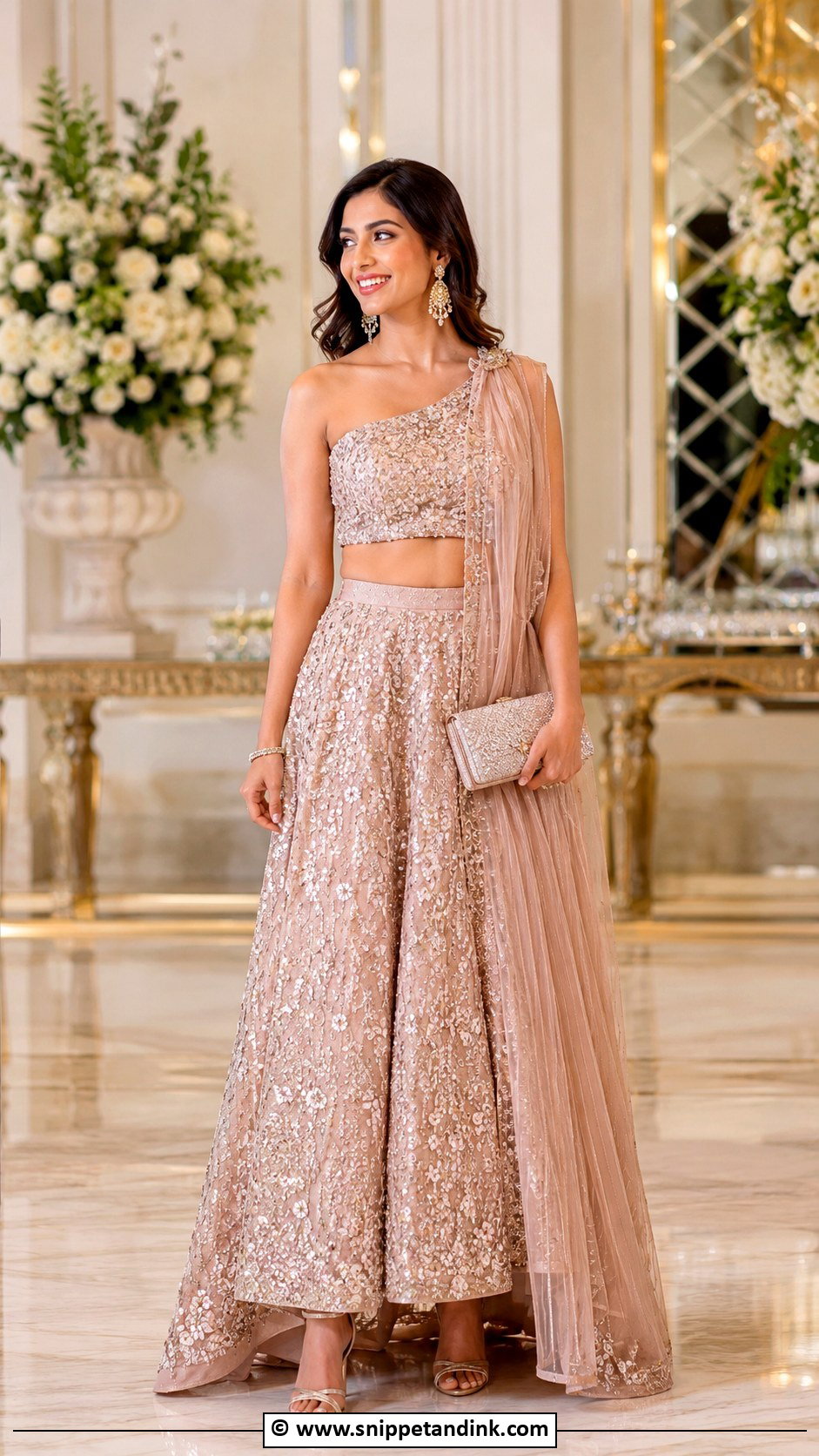
A one-shoulder lehenga gets its interest from the neckline, so it needs fewer accessories than almost anything else here. Reception, sangeet and cocktail functions suit it best. Pair the one-shoulder blouse with a high-waisted skirt so the asymmetry has a clean line to sit on. The practical worry is grip: a one-shoulder blouse needs silicone tape or a boned inner panel, or it slides down the bare side as you dance. Skip the necklace, wear statement earrings, and choose hair that leaves the bare shoulder visible, like a sleek bun or side-swept waves.
23. Indo Western Printed Lehenga With Top
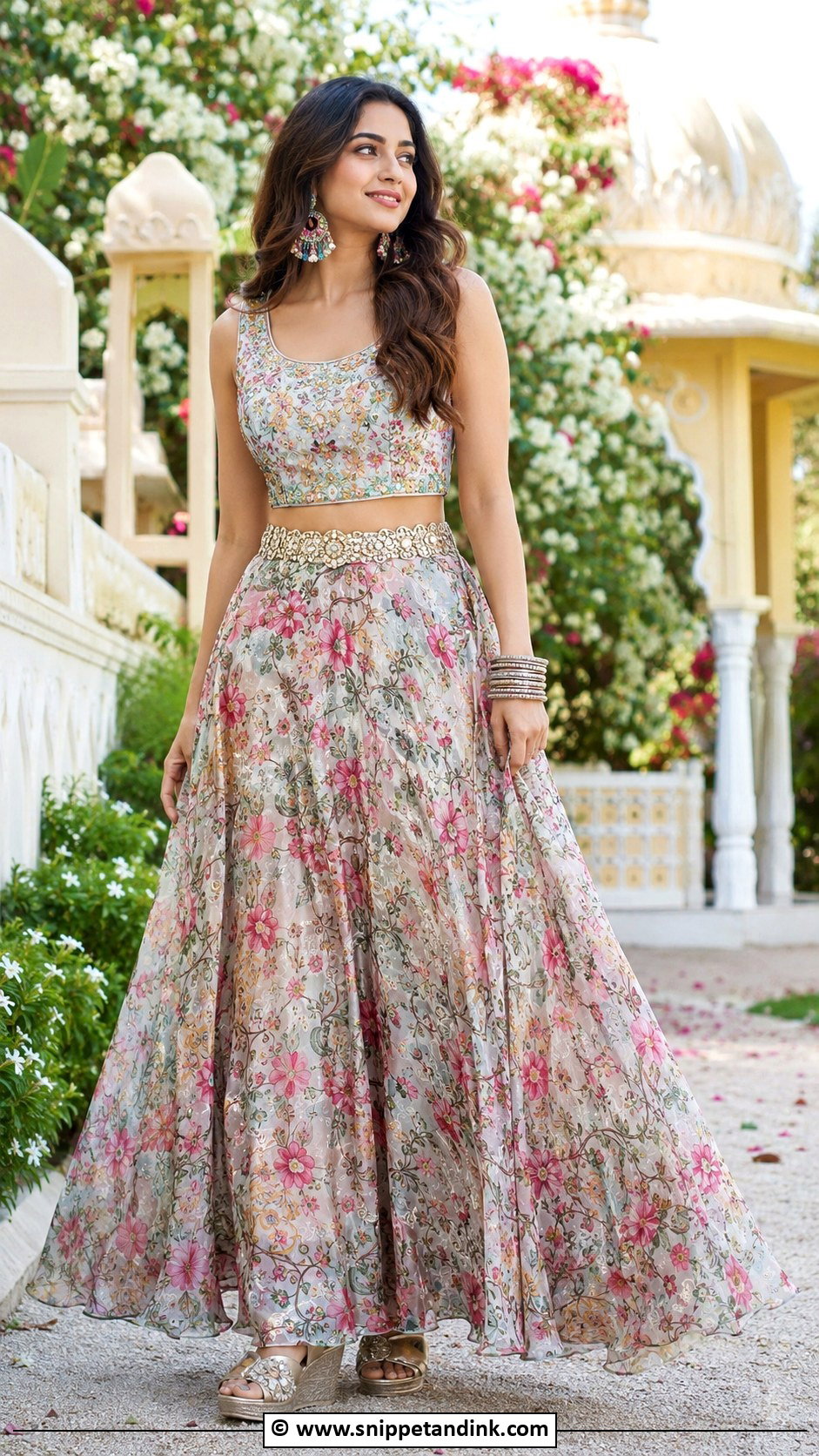
A printed lehenga with a modern top is lighter than embroidered work and suits daytime functions, especially outdoors. Floral, block, abstract and foil prints all have a place at mehndi, haldi and destination weddings. Pair the skirt with a crop top, shirt blouse or off-shoulder top, and add a belt for shape. My one warning concerns haldi: turmeric stains on pale prints rarely come out fully, so pick a print with enough yellow or ochre in it to hide splashes. Wedges or embellished flats handle grass better than heels.
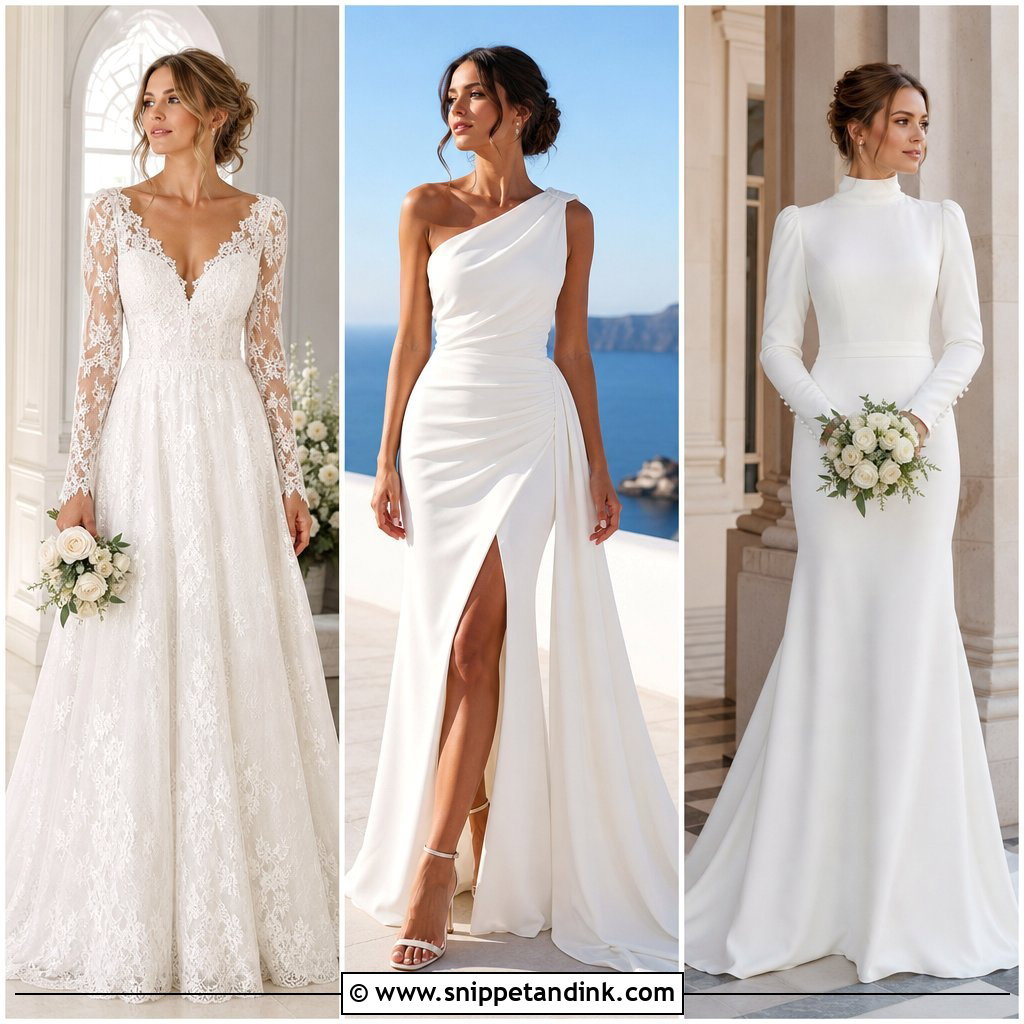
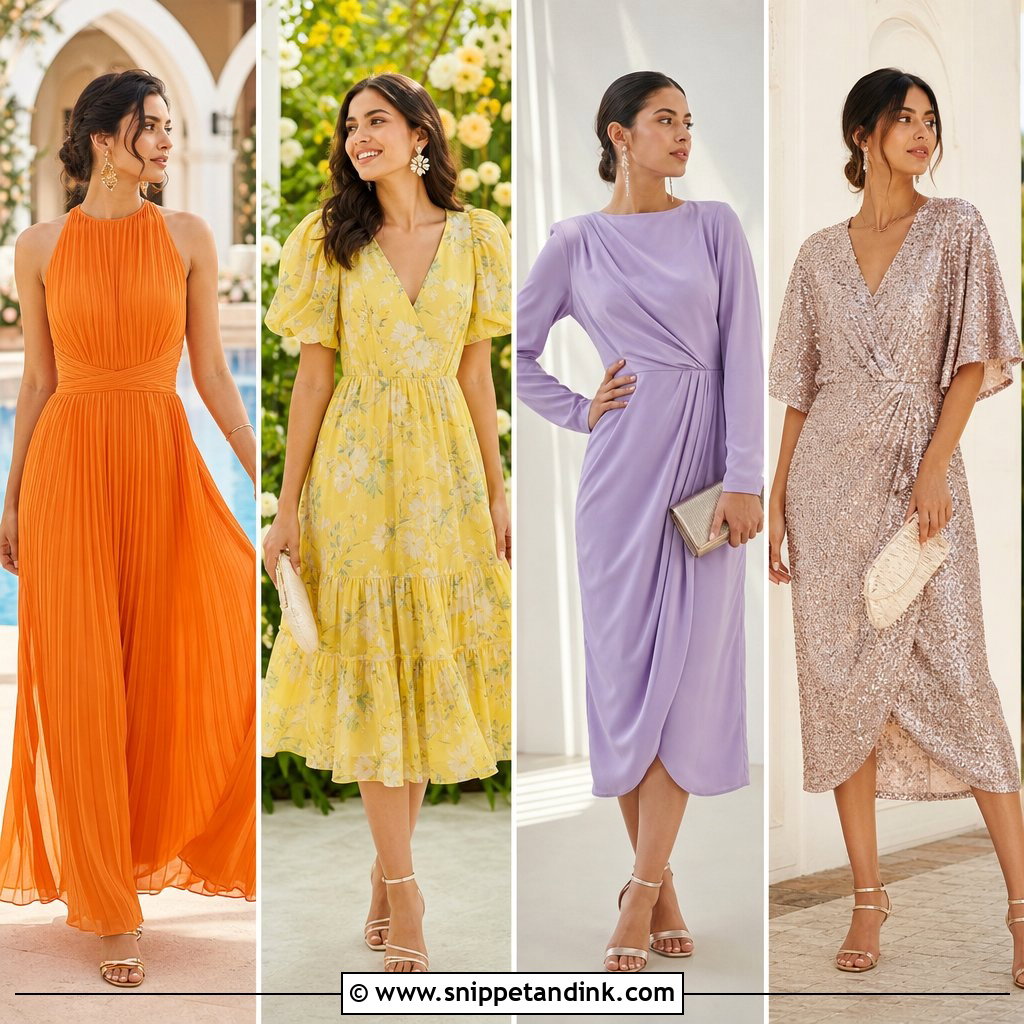
24. Indo Western Embroidered Jumpsuit With Cape
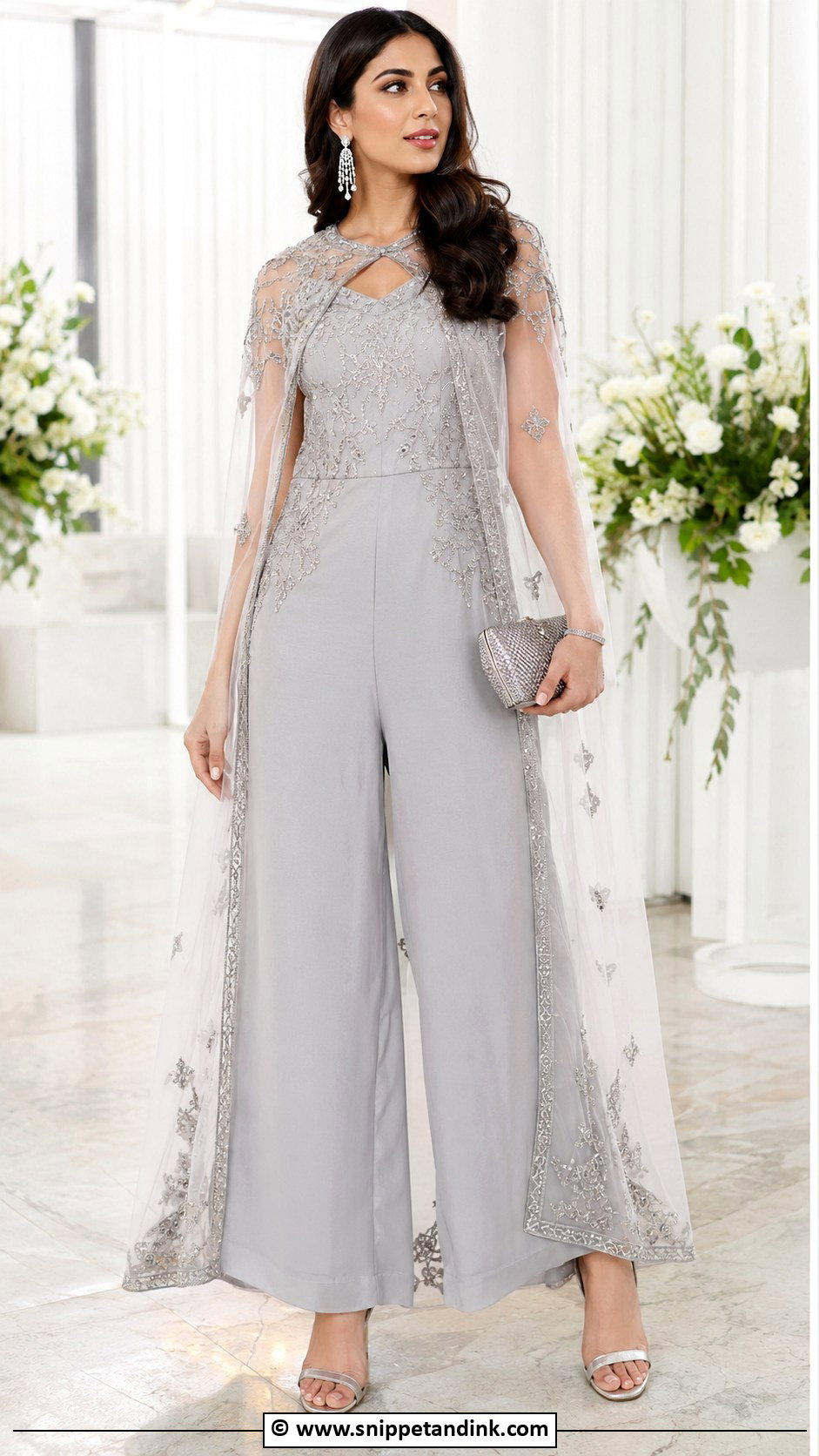
This is one-piece dressing with a festive layer on top. The jumpsuit gives a clean base, and the cape adds flow and coverage, which suits receptions, sangeet nights and modern wedding parties. Choose a wide-leg cut and a sheer or embroidered cape. If the cape reaches the floor, the heel height has to keep it off the ground, so try both together. Skip heavy necklaces; the cape and embroidery already hold attention.
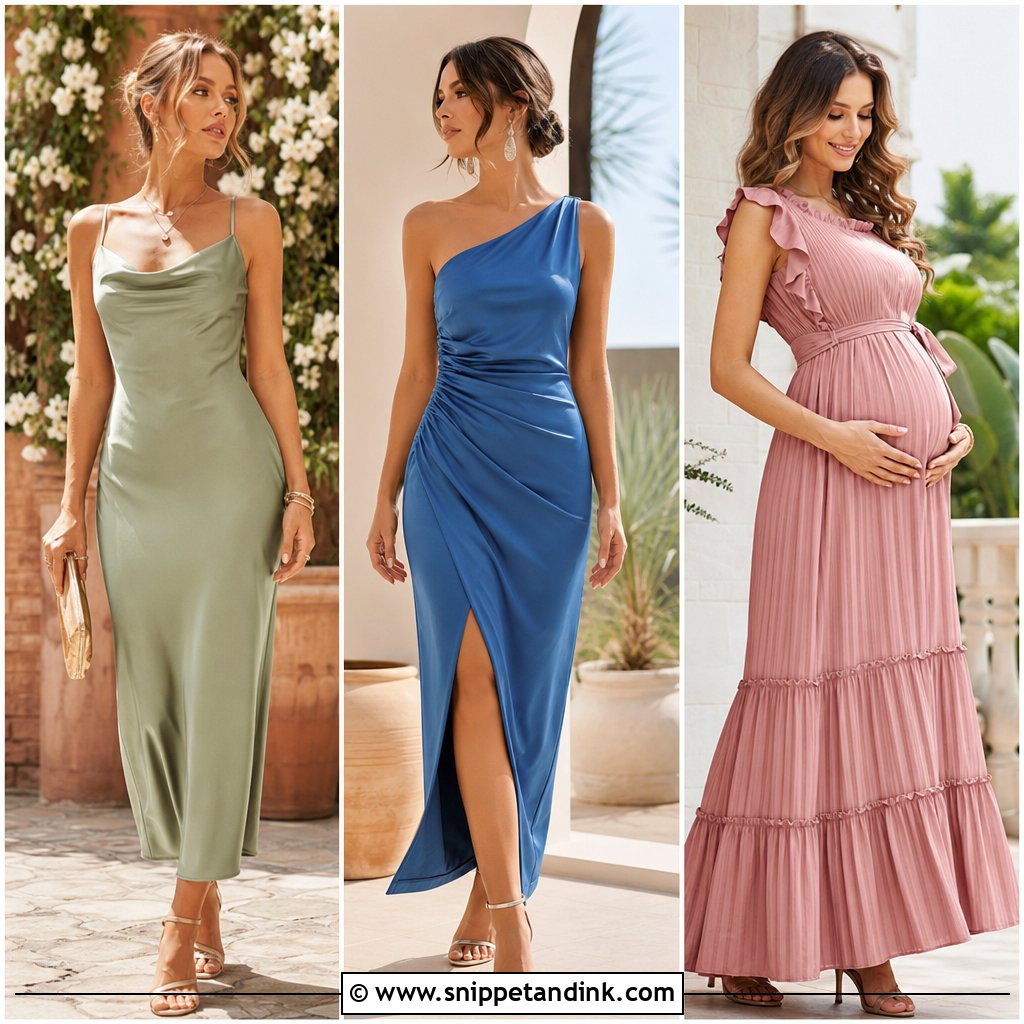
25. Indo Western Velvet Outfit For Wedding
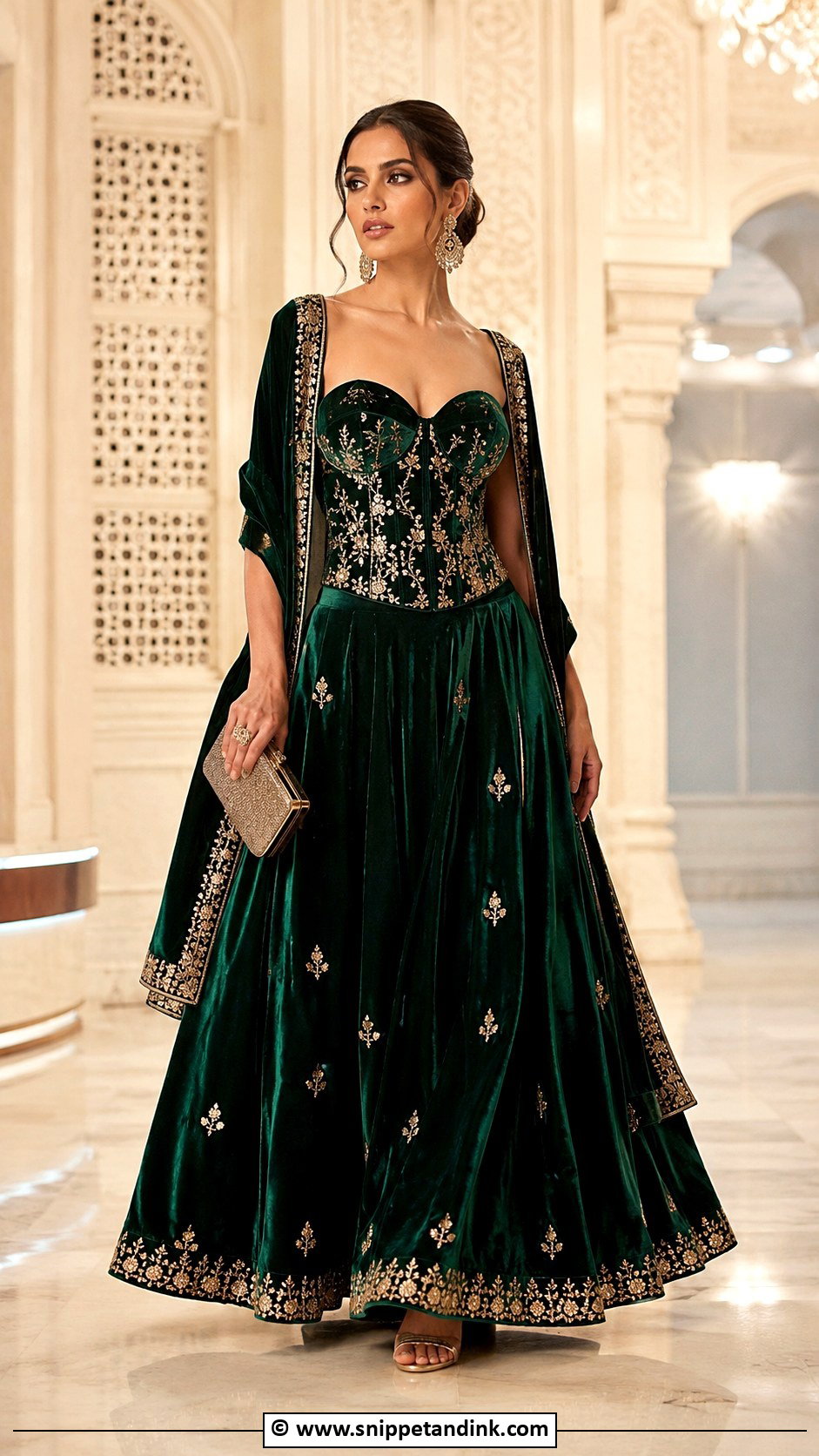
Velvet is the fabric I bring out for winter evening functions, because it holds warmth and color in low light like nothing else. A velvet lehenga with a corset top, a velvet jacket over trousers and a velvet drape gown all work. Emerald, maroon, navy and plum look rich in it. Velvet already has weight and sheen, so small zari borders or tonal threadwork are enough. Two cautions from fittings: velvet crushes where you sit, so steam it on the hanger rather than pressing it flat, and it gets warm fast in a crowded hall.
Fittings and Alterations Fusion Pieces Usually Need
Fusion clothes are often sold ready-made in standard sizes, and the construction details that make them work are the parts most likely to need a tailor. I allow at least three to four weeks before the first function for alterations, longer in peak wedding season, when good tailors book up.
What I ask the tailor to check
- Hems taken up to the exact shoe you’ll wear, especially on Anarkalis, palazzos and long capes.
- Pre-stitched drapes tacked at the shoulder and the waist so the pallu stays put when you bend.
- Blouse cups, boning or silicone grip added to strapless, corset and one-shoulder tops.
- Hooks and hidden snaps in place of safety pins on pants sarees and belted sarees.
- Blazer and jacket backs let out enough to raise your arms without the front pulling open.
Packing Embroidered and Velvet Outfits for Travel
For a destination wedding, I’d carry heavy pieces in hand luggage rather than checking them. Roll co ord sets and cotton outfits, but lay embroidered lehengas and capes flat, folded as few times as possible, with tissue between the layers so sequins and mirror work don’t snag the fabric beside them.
Velvet and organza crease differently. Velvet should travel face-in with tissue and be steamed from the back once it arrives; pressing it with an iron flattens the pile for good. Organza can take a quick, cool steam. Hang everything as soon as you arrive, and leave a day before the first function so the creases have time to drop.
A Fusion Outfit Should Survive the Whole Function
The fusion look that works is the one that fits the function and lets you move freely for the hours you’ll be there. Light fabrics, printed skirts, palazzo sets and kaftans suit daytime events. Saree gowns, cape lehengas, jumpsuits and drape dresses carry a reception or sangeet. For more coverage, jacket kurtas, long jackets, peplum tops and Anarkali gowns are dependable. Whichever you pick, get the fit right at the waist and hem first, then let one piece of jewelry do the talking.
You'll Like These Ideas:


Leave a Reply