
The reception is where many Indian brides finally get to wear the gown they have been saving on a mood board. After a heavy lehenga or saree at the ceremony, a gown changes the energy: shimmer, a sculpted bodice, perhaps a cape or a trail, and a silhouette that moves differently on stage. It also has a long job to do. You’ll stand for photos with hundreds of guests, sit on a stage sofa between greetings, eat a little and probably dance. When I style a reception look, I weigh how it photographs under stage lights against how it feels in hour four. These twenty-five gowns run from ball gowns and satin drapes to embroidered anarkali gowns, with notes on what each one needs from you.

The Quick Change From Pheras to Reception
Many brides hold the reception the same evening as the wedding, or a day later after very little sleep. Either way the change from lehenga to gown is tighter than people plan for, and it is where reception looks fall apart.
- Have the gown steamed and hung in the changing room before the ceremony starts. Nobody will have time later.
- Swap jewellery first, while hair and makeup are still in place. Heavy ceremony necklaces and maang tikkas come off gently with someone else’s hands.
- Hair usually needs restyling, since a bun built to hold a dupatta looks wrong with a strapless gown. Agree the second hairstyle with your stylist at the trial, not on the day.
- Makeup gets a refresh rather than a redo: blot, add depth to the eyes and change the lip to suit the gown’s colour.
- Corset and lace-up backs take time. Teach one person how to lace yours properly before the wedding week.
Allow at least an hour from the moment you enter the changing room. Brides who budget thirty minutes almost always make a late, flustered entrance.
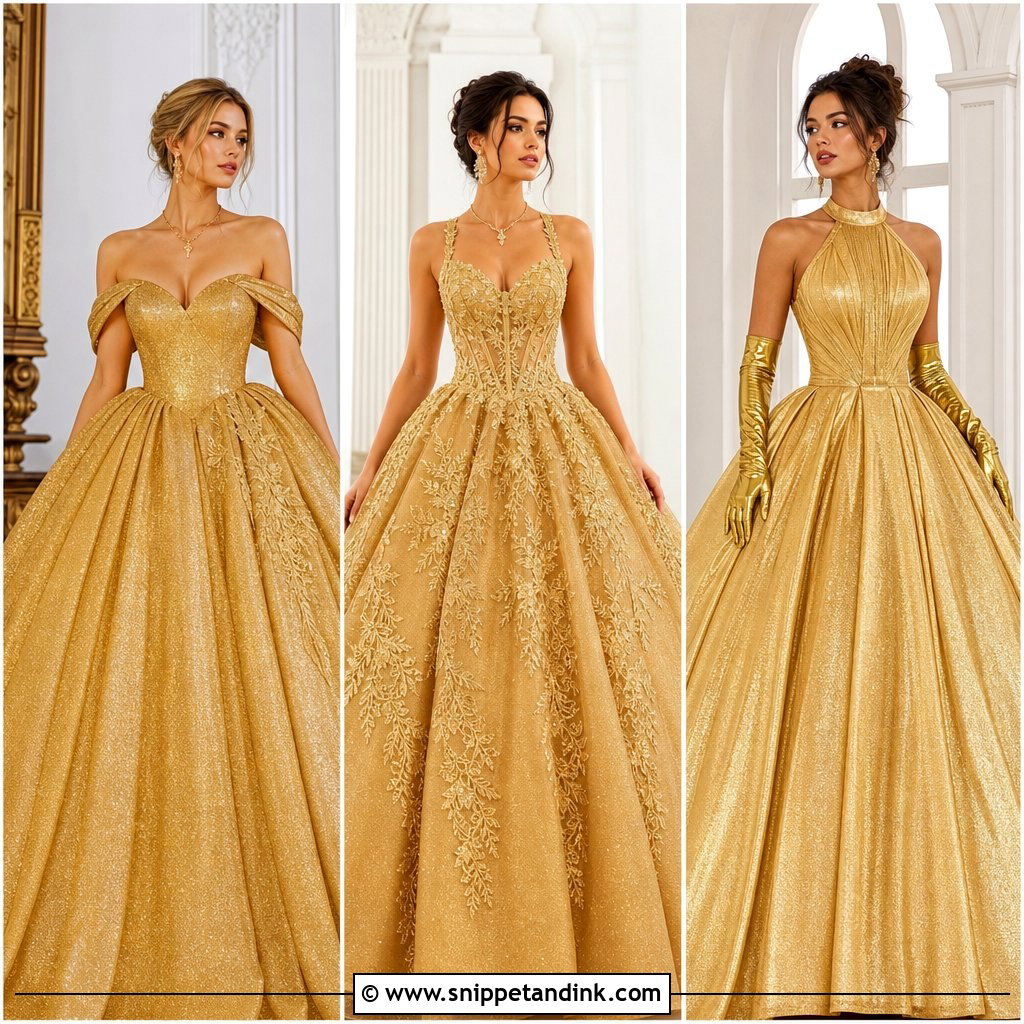
1. Gold Sequin Reception Gown
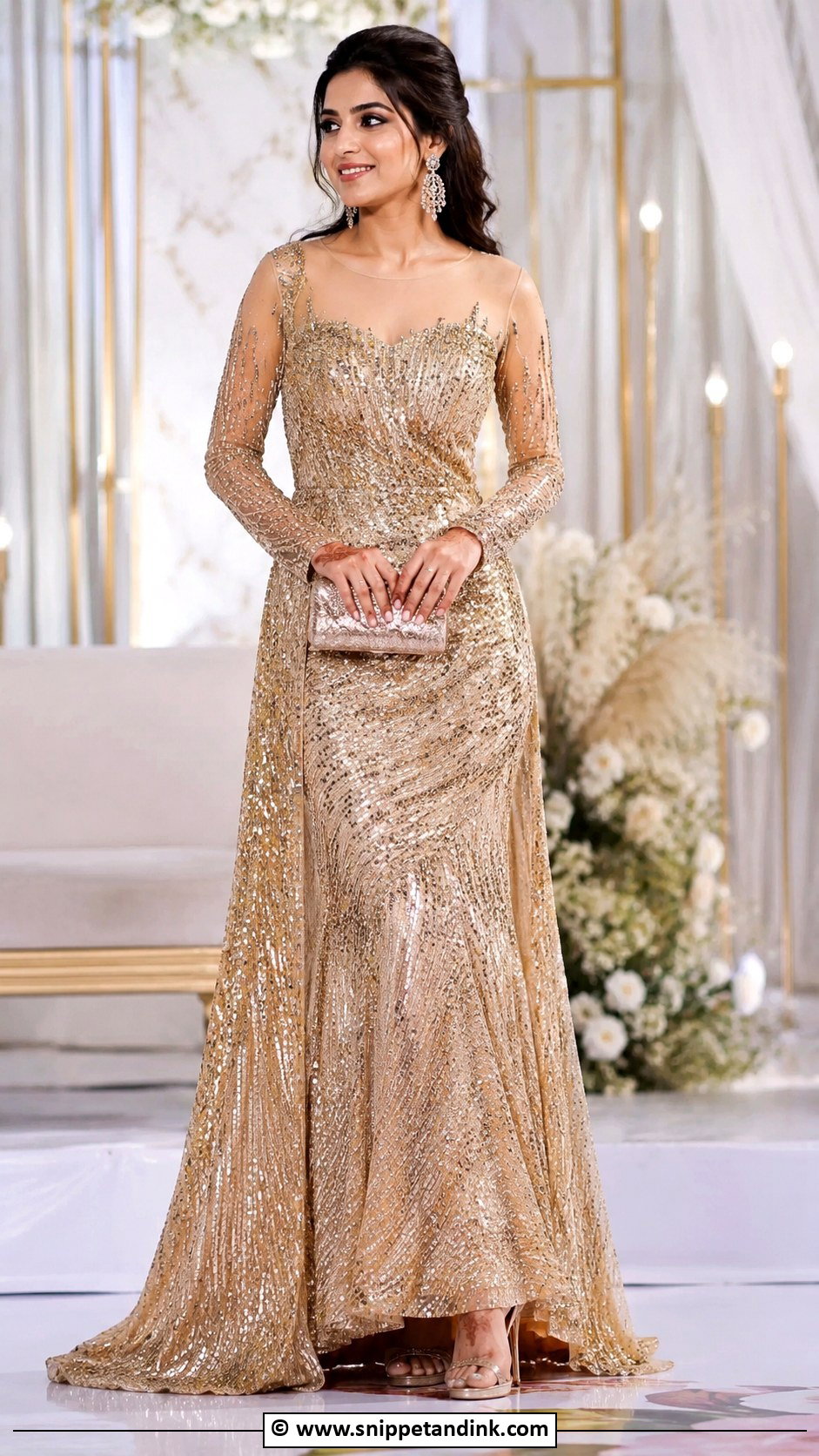
Gold sequins are made for stage lighting; every movement throws light back toward the cameras. A fitted bodice with a soft flare keeps the shimmer from overwhelming your shape. Polki or diamond earrings, a sleek bracelet and metallic heels finish it, with a clean neckline so the sparkle doesn’t compete with a necklace. The thing I check on every sequin gown is the inside of the arms and the underarm seam. Sequins rub skin raw over a long evening, so ask for a smooth lining or sequin-free panels where your arms rest.
2. Red Bridal Reception Gown
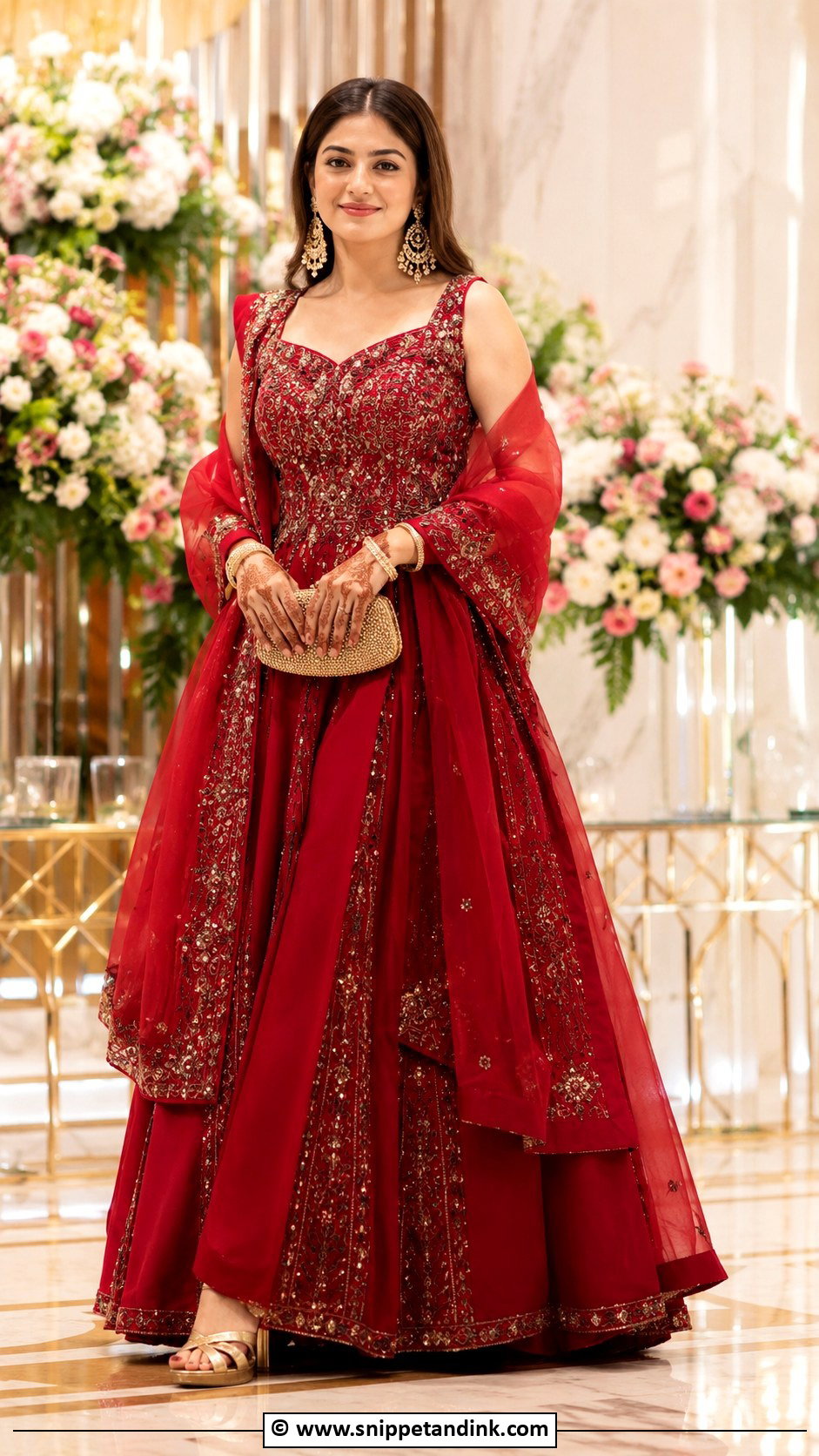
Red keeps the Indian bridal feeling while reading as eveningwear. It suits a bride who wore a pastel for the pheras and wants red somewhere in the albums. A structured corset-style bodice with an embroidered waist and a flowing skirt is the classic shape. Kundan jewellery, gold heels and a small embroidered clutch complete it, and a sheer dupatta or cape adds tradition without hiding the gown. Warm bronze eyes and a deep rose lip balance the colour. A strong pick for hotel ballrooms and big banquet halls.
3. Ivory Embroidered Reception Gown
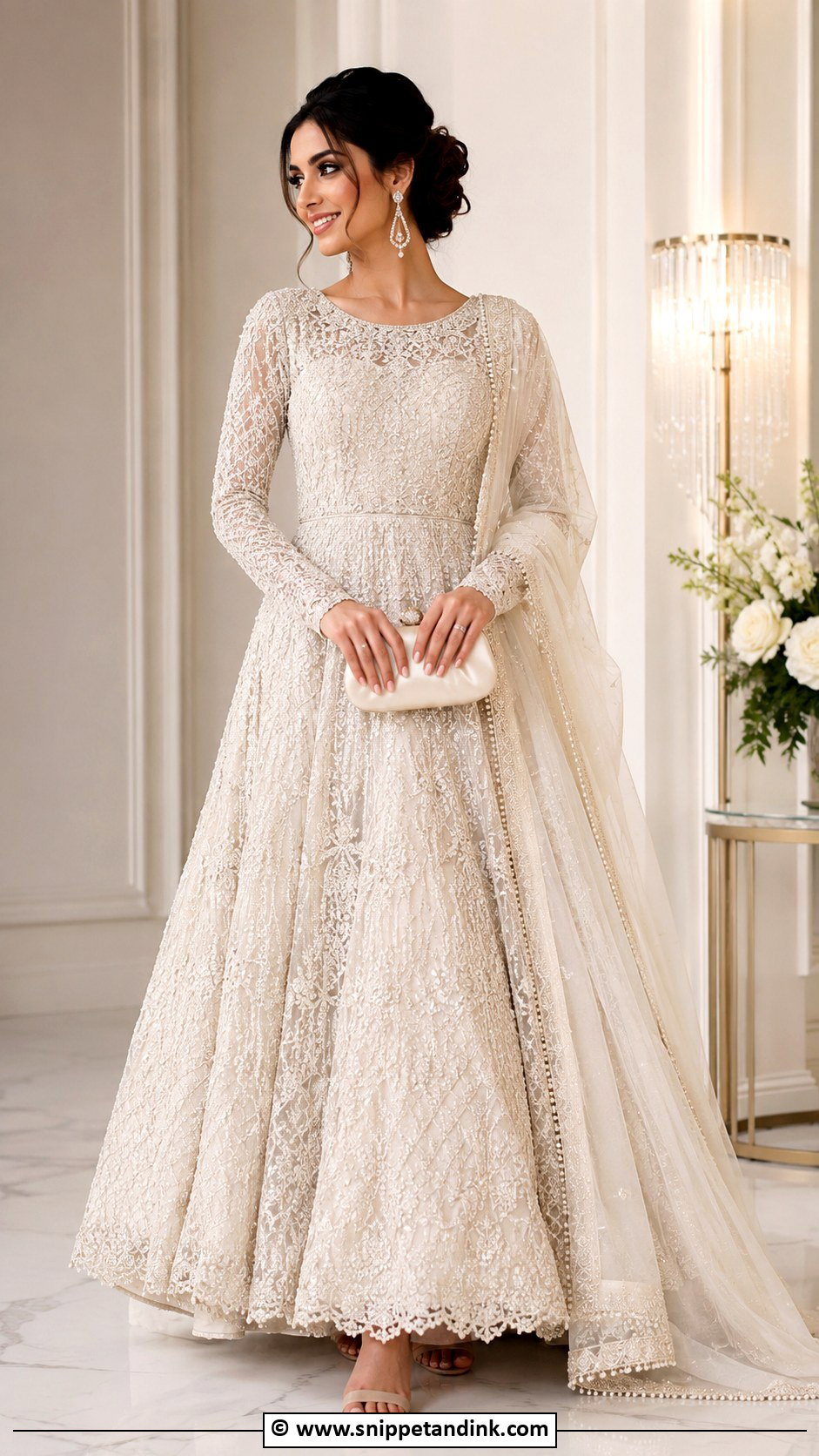
Ivory lets your jewellery and your skin do the talking, which is why I like it for brides with heirloom pieces to show off. Look for pearl, thread, crystal or zardozi work across the bodice and hem. A fitted waist and flared skirt suit most figures. Pearl drops, diamond bangles, nude heels and a smooth updo keep it clean; a sheer ivory dupatta with a fine border makes it more Indian. Ivory marks easily, so keep a stain pen with whoever holds your clutch.
4. Pastel Pink Reception Gown
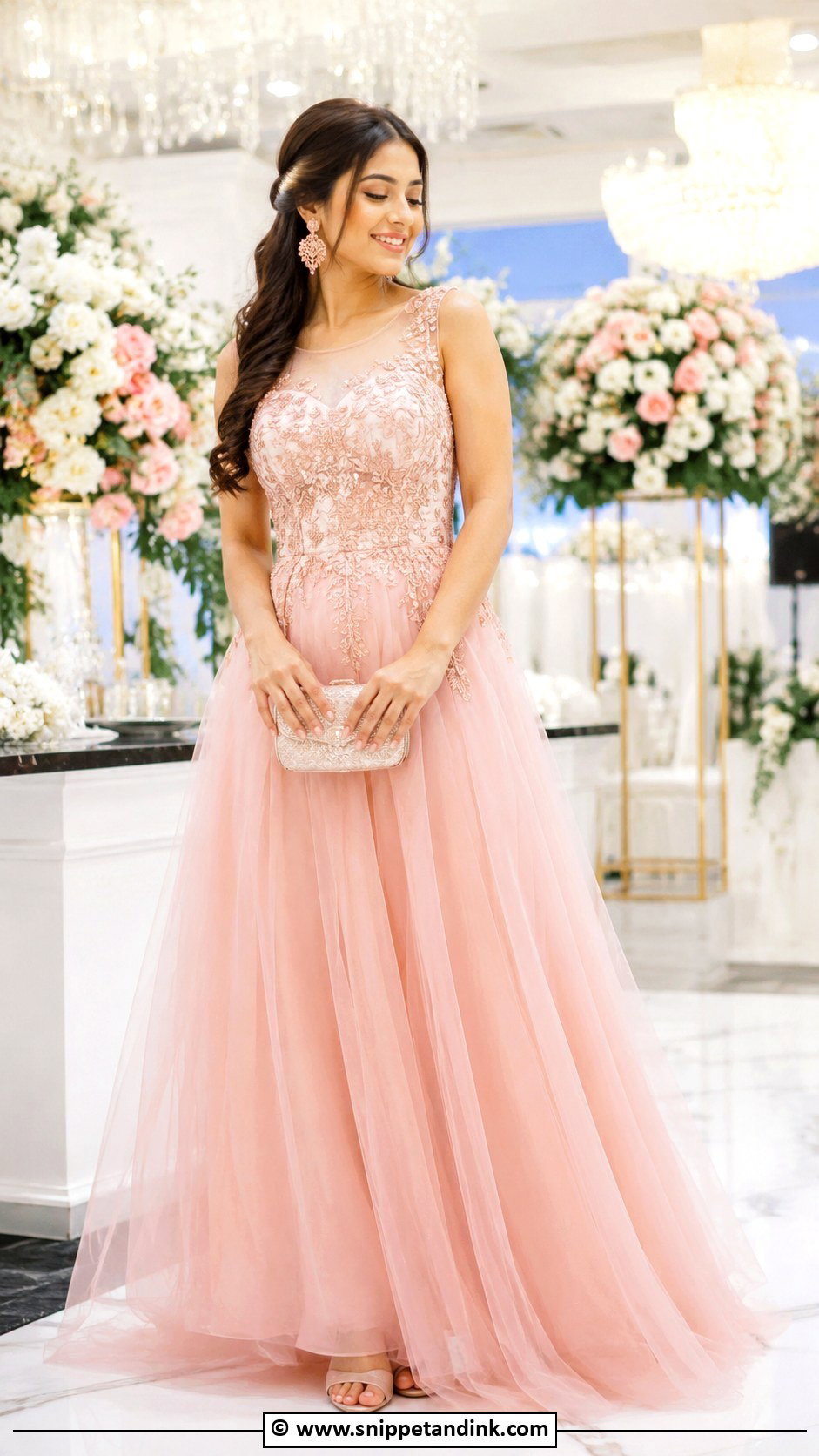
Pastel pink is soft and photographs freshly at an early evening reception while there’s still some daylight. Delicate embroidery, floral appliqué or fine beadwork suit it better than heavy metallic work, which can look harsh on a pale base. A sweetheart neckline, sheer sleeves or an off-shoulder cut keeps it current. Rose gold jewellery and blush heels, with pink cheeks and a muted lip. It makes a gentle contrast after a bold wedding outfit.
5. Emerald Green Reception Gown
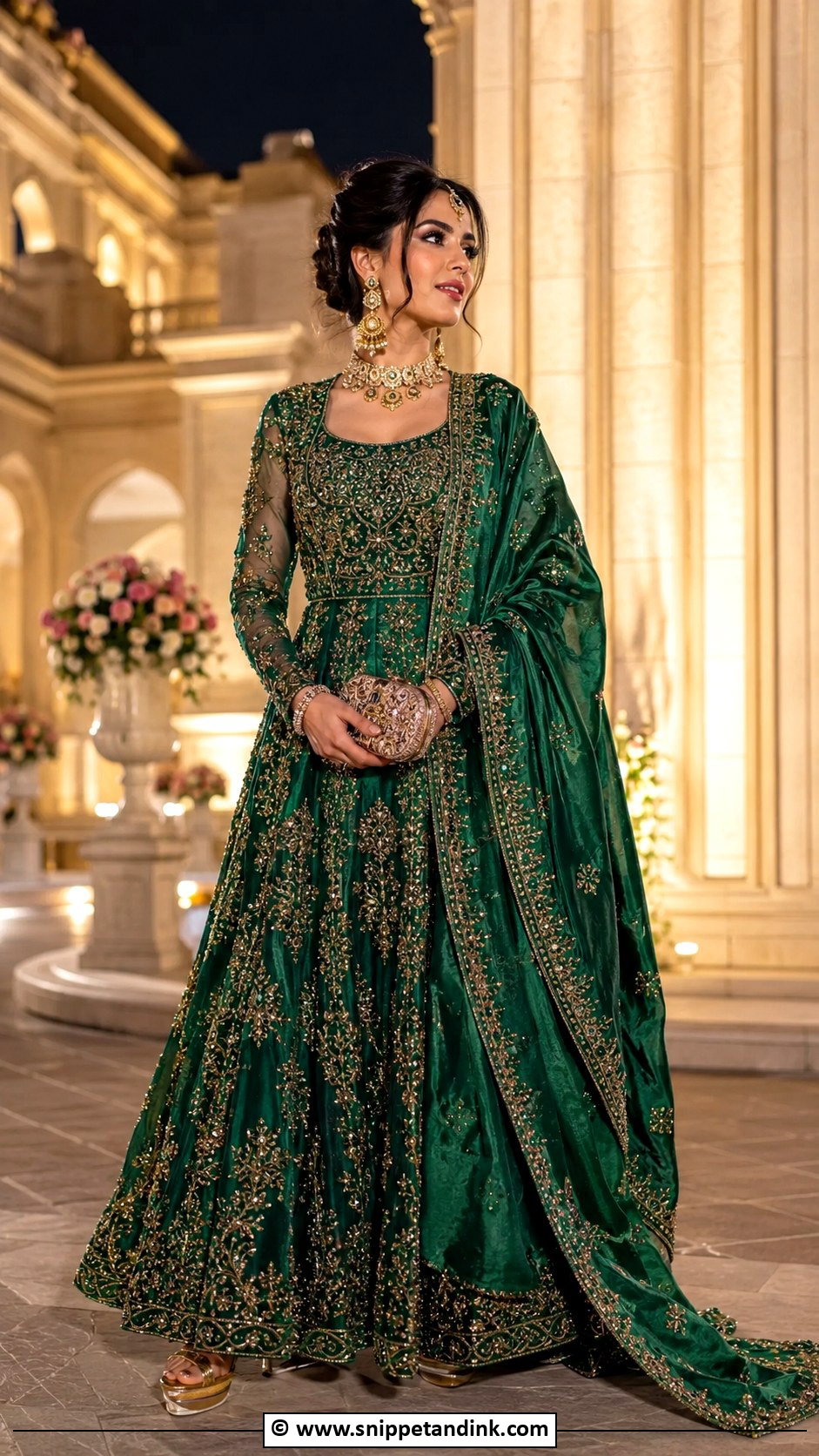
Emerald is one of the most flattering colours on Indian skin, and it makes antique gold and polki look even richer. A structured bodice, flowing skirt and embroidery at the neckline or sleeves give it a regal shape. Velvet, satin or silk blends deepen the colour. Gold stilettos, a statement ring and a sleek clutch complete it, with a centre-parted bun or soft Hollywood waves. In velvet it is a winter gown; a summer reception calls for silk or satin in the same shade.
6. Navy Blue Reception Gown
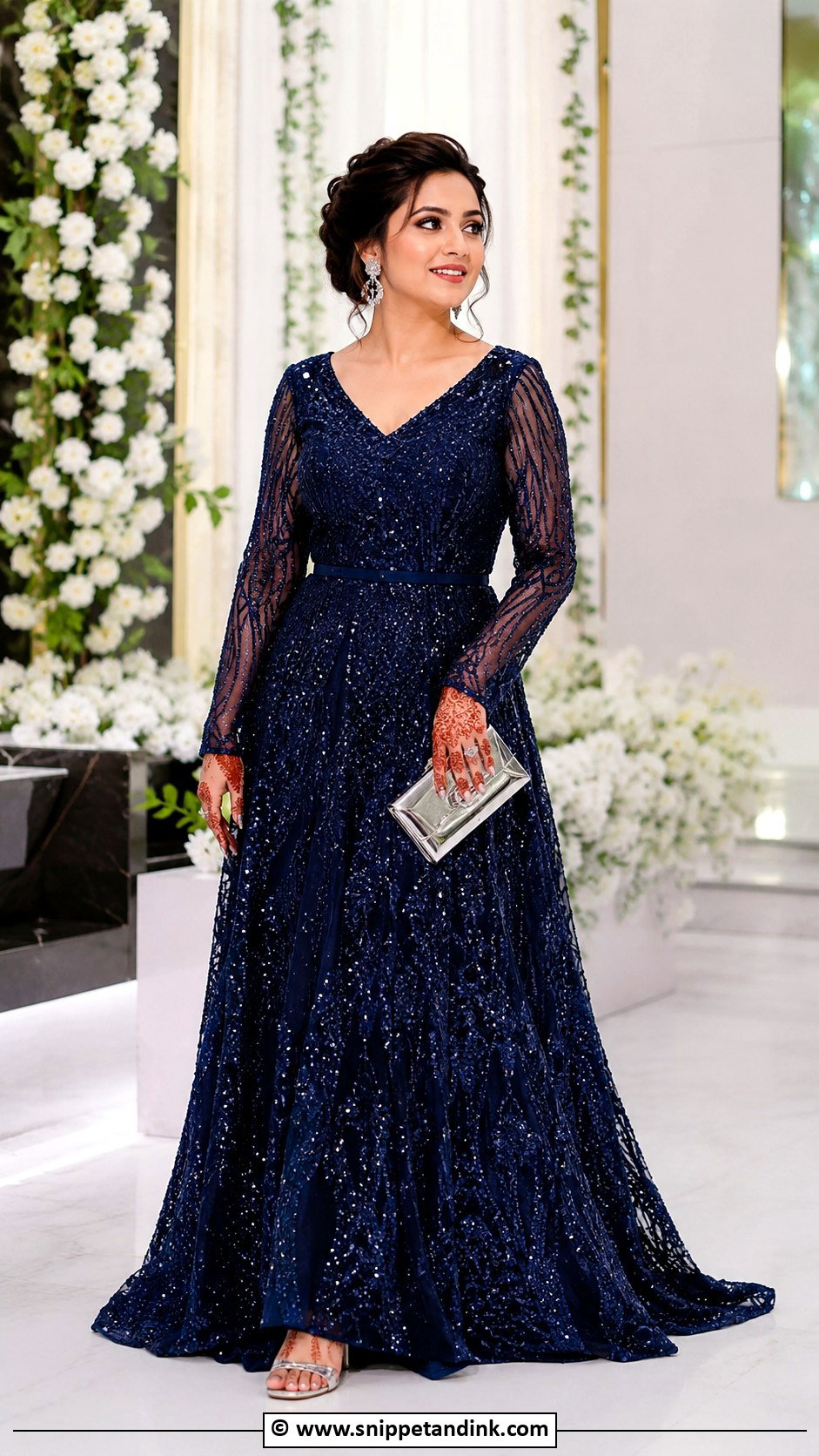
Navy gives you evening drama without the questions some families raise about black. Silver, diamond or crystal embellishment looks best on it, and a scattering of star-like sequins with a sculpted waist and a soft trail is my favourite version. Silver heels, chandelier earrings and a metallic clutch finish it. Navy can look almost black in dim halls, so the embellishment is what keeps it readable on camera. A side-parted wave or low bun shows off the neckline.
7. Champagne Reception Gown
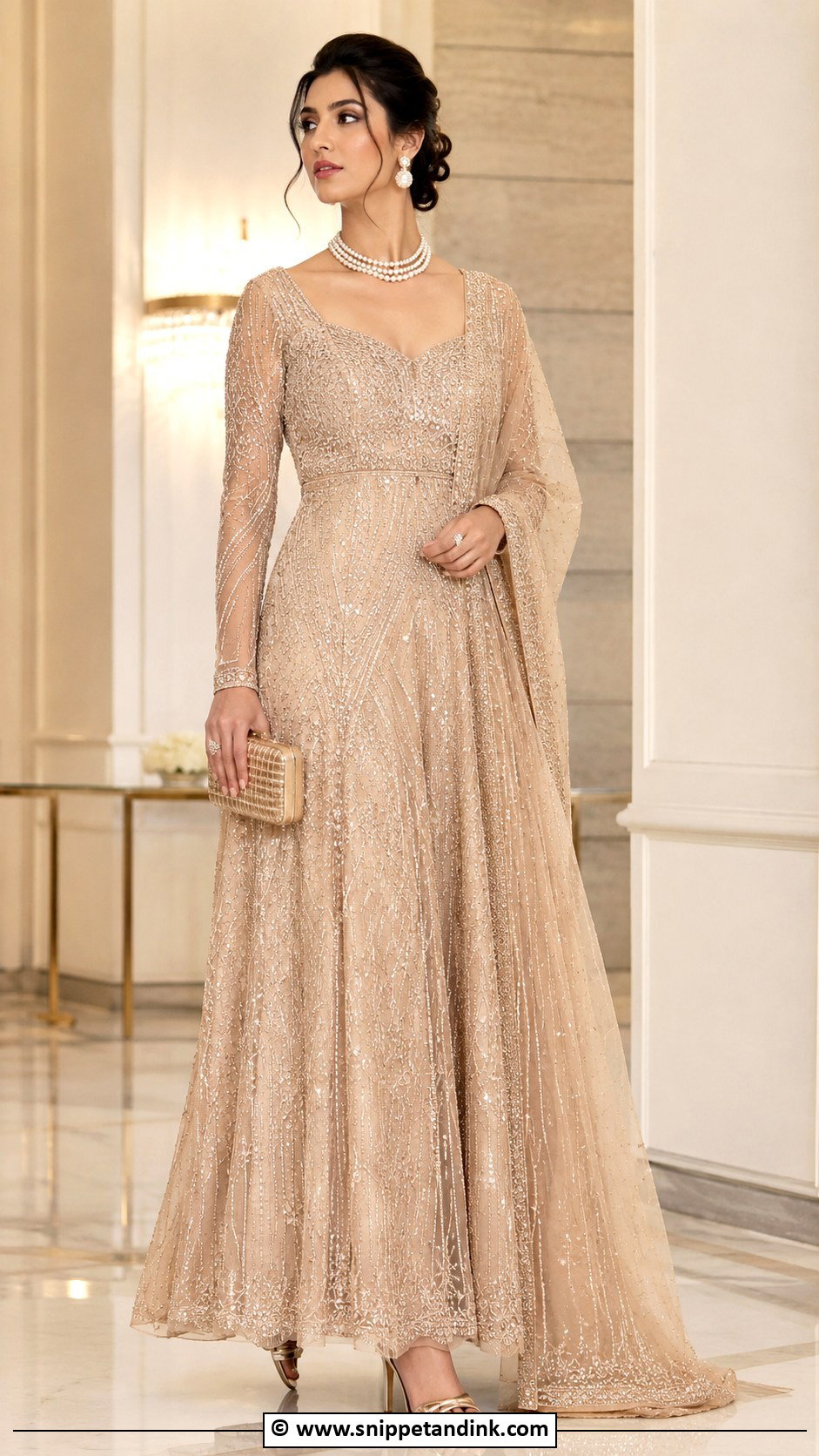
Champagne sits between gold, beige and blush, so it warms most skin tones without the brightness of full gold. Beadwork, a soft shimmer or lace gives it depth. Nude or gold heels, pearls and a structured mini clutch keep it refined. It pairs easily with a groom in ivory, beige or gold. My caution is skin match: on some complexions champagne can blend into the skin in photos, so hold the fabric against your face under warm light before ordering.
8. Silver Crystal Reception Gown
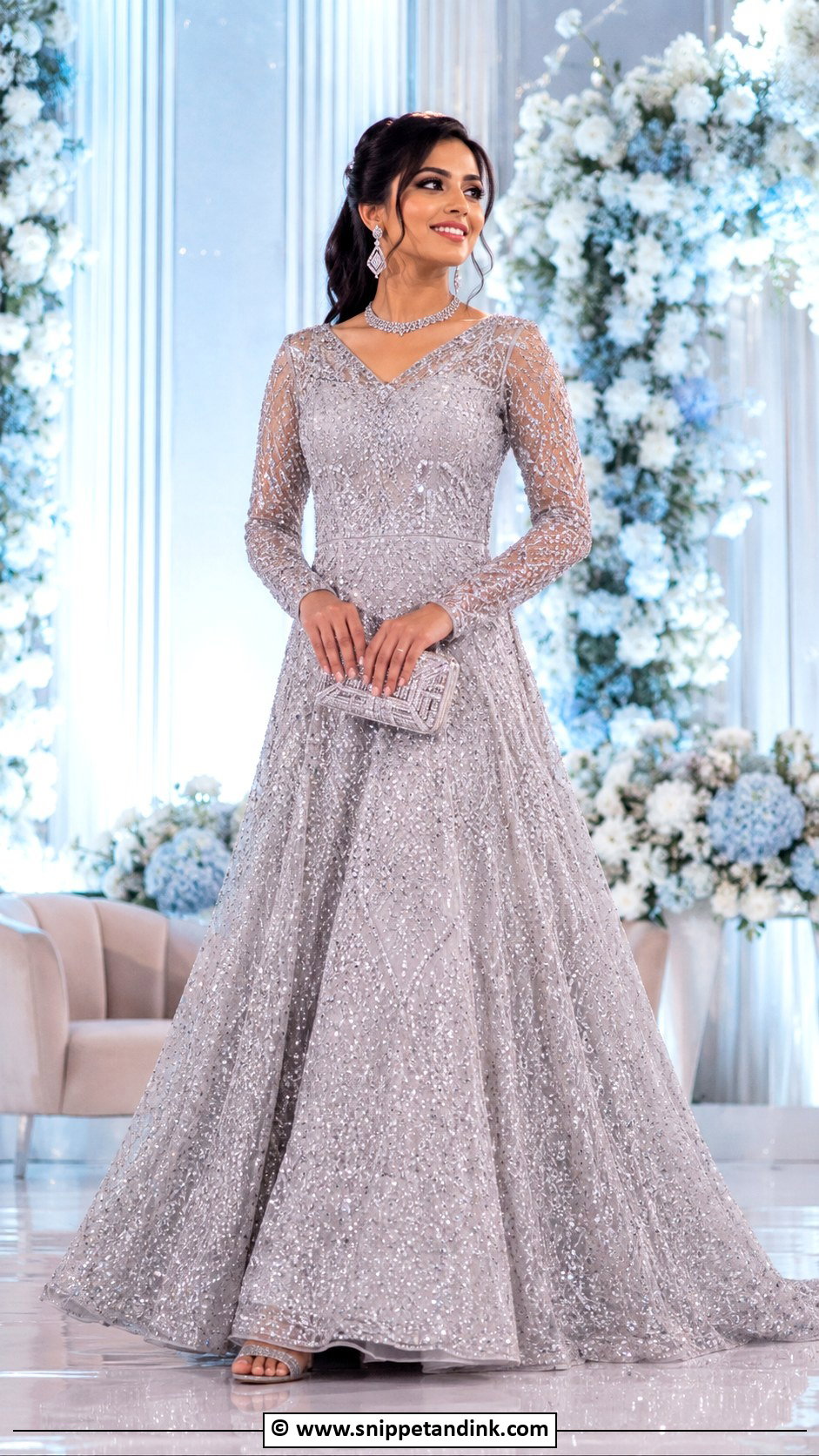
Silver crystal is made for a big entrance. Crystal embroidery, sequin panels or metallic thread over a soft net or tulle base, with a fitted bodice and flared or mermaid skirt. Diamond jewellery, silver heels and a sleek clutch; anything larger competes with the gown. Crystal-heavy gowns are surprisingly heavy, often more than a bride expects, so try the finished piece on and walk in it for ten minutes. It suits cool-toned decor and bright modern stages.
9. Maroon Velvet Reception Gown
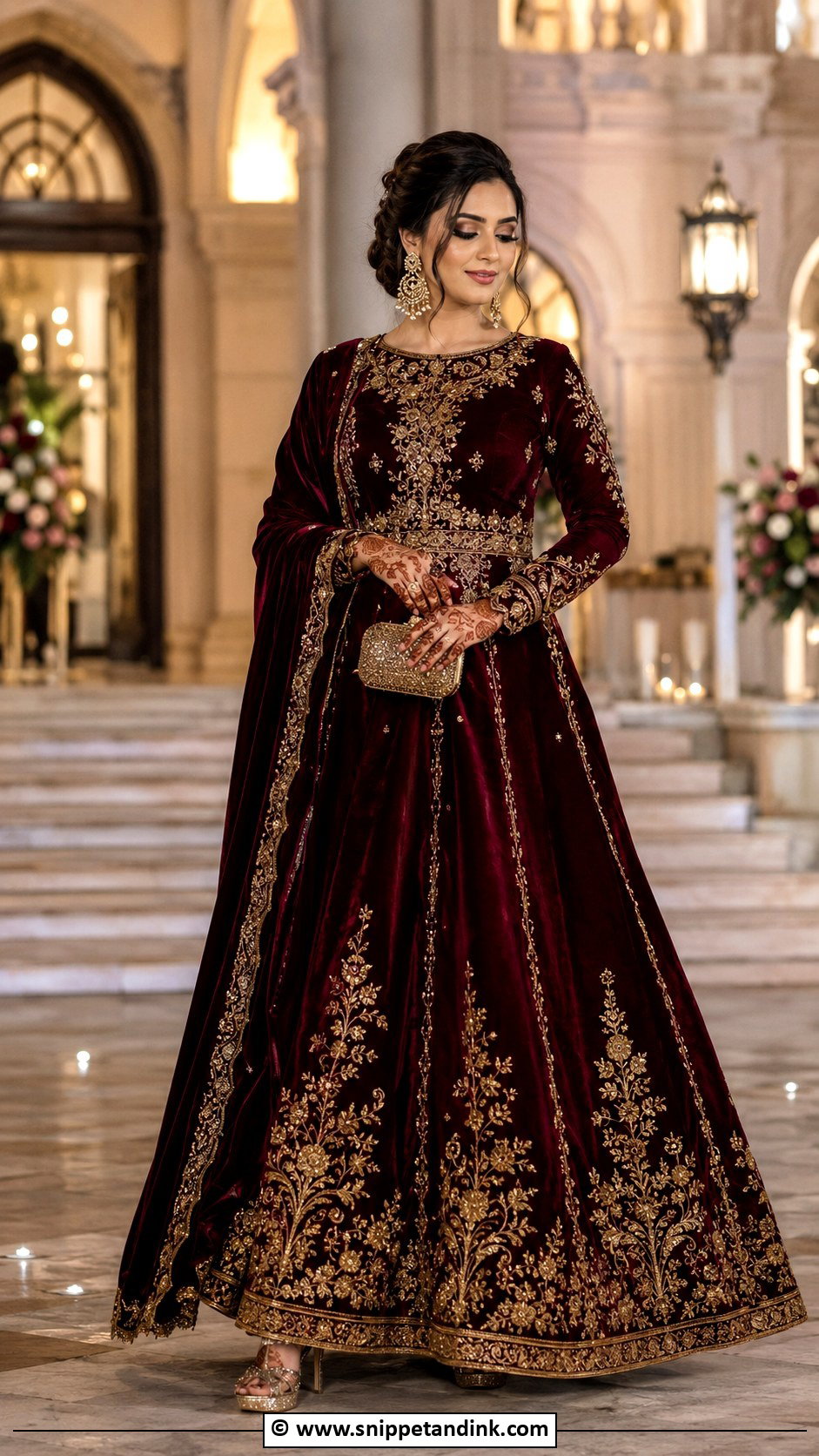
Maroon velvet is royal and warm, a winter gown through and through. Velvet deepens the colour, and gold embroidery with a defined waist and soft flare keeps it bridal. Antique gold jewellery, embellished heels and a deep-toned clutch, with a bold lip, softly smoked eyes and a sleek bun. Velvet is heavy and holds heat, so I insist on a breathable lining and good structure at the waist so the skirt’s weight isn’t all hanging from your shoulders.
10. Lavender Reception Gown
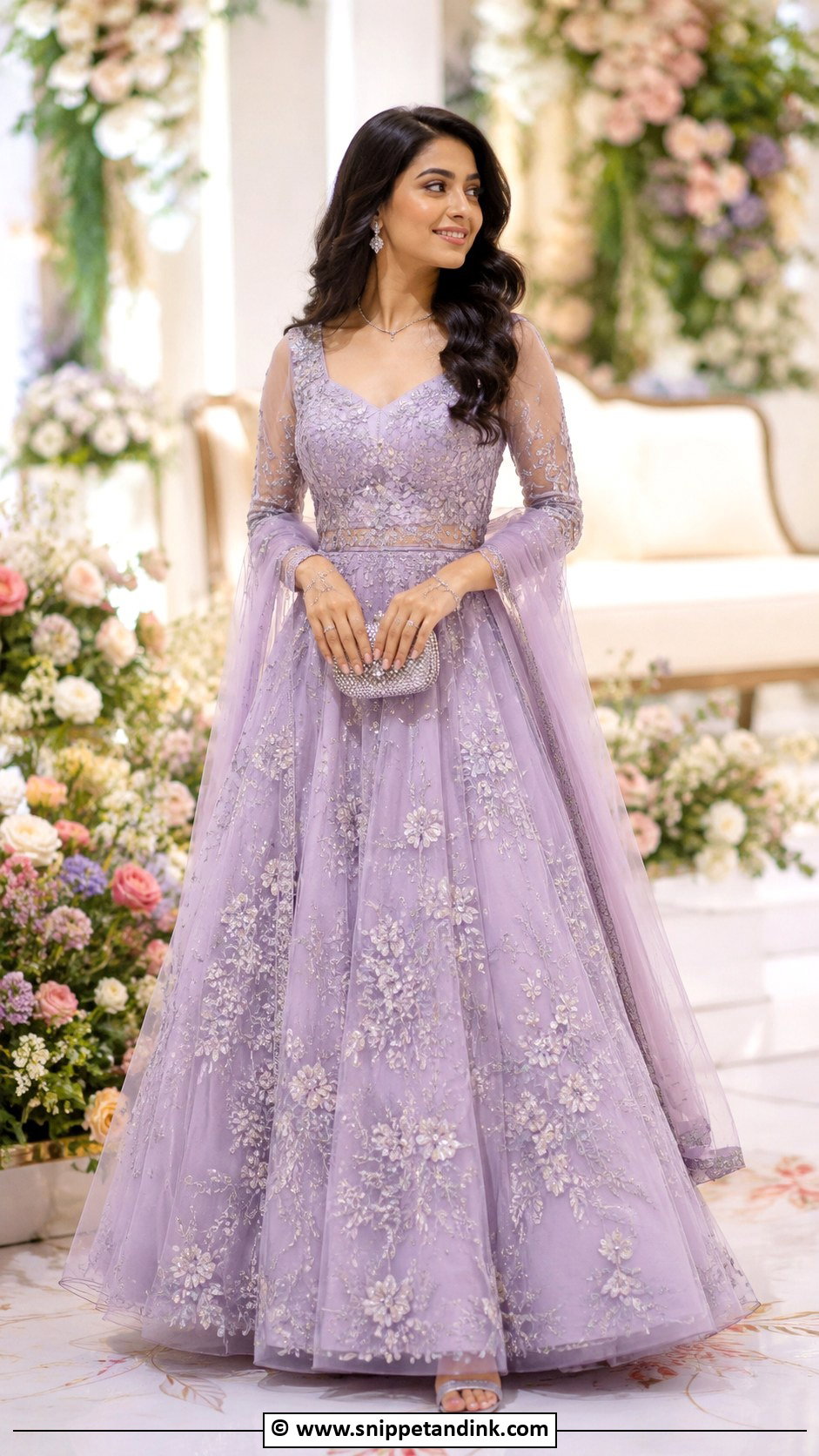
Lavender is a colour that sets a bride apart from the reds, golds and pinks the guests have seen all week. Silver embroidery, crystal details, floral appliqué or tulle layers suit it. Diamond earrings, silver heels and a delicate bracelet; a loose bun with face-framing strands. Lavender can look grey under some warm banquet lighting, so a shade with a little more pink in it holds up better at night. Mauve-toned makeup and a soft lip complete the look.
11. Black And Gold Reception Gown
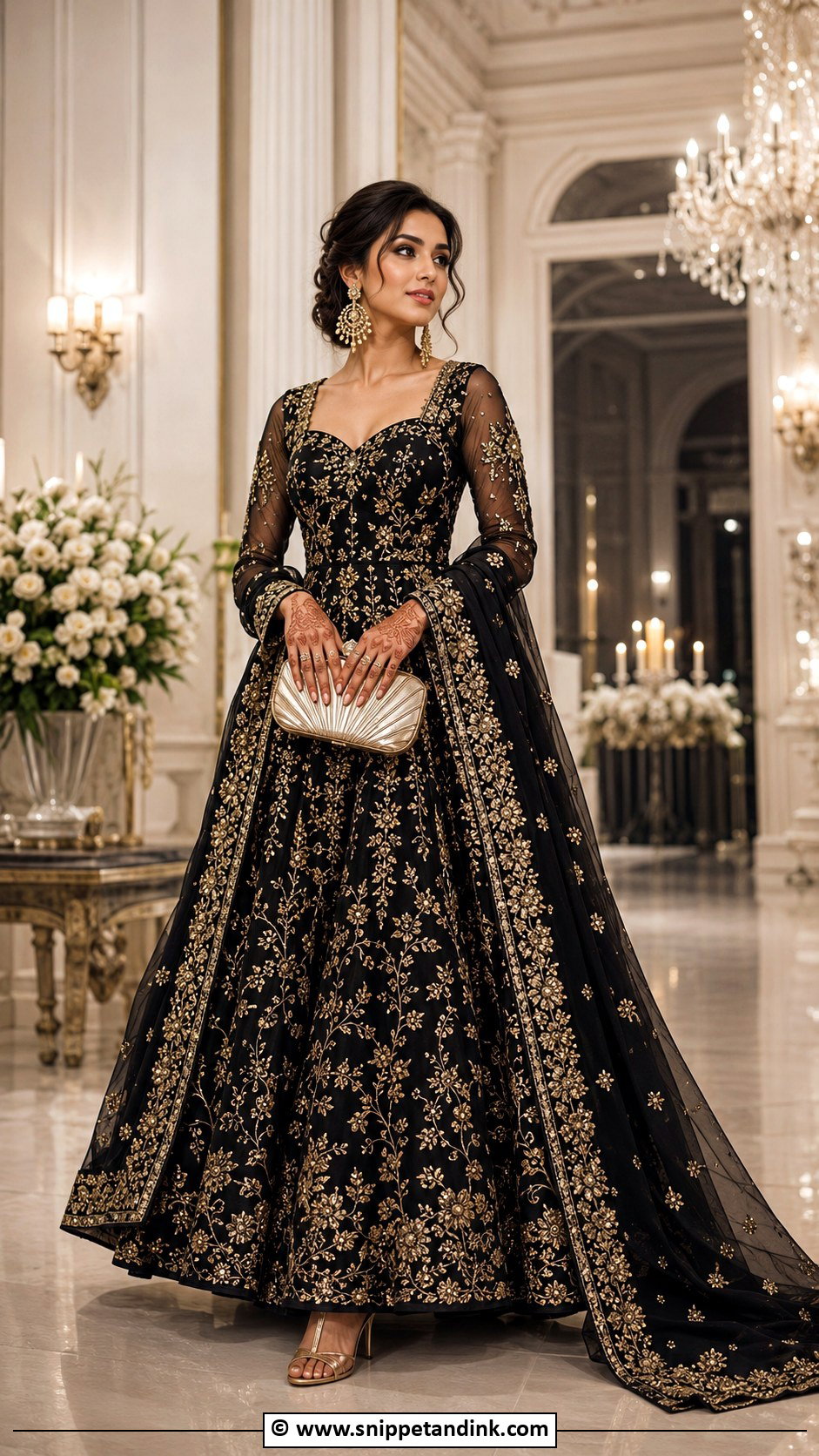
Black and gold is high fashion, and I’d only suggest it after the bride has checked with her family, because black at weddings is still avoided in some households. When it’s welcome, gold embroidery, sequin borders or brocade-style patterns make it bridal rather than party wear. Gold heels, statement earrings and a polished clutch, with a sleek low bun, winged liner and warm makeup. It looks strongest in formal indoor venues beside a groom in black, gold or ivory.
12. White Reception Gown With Dupatta
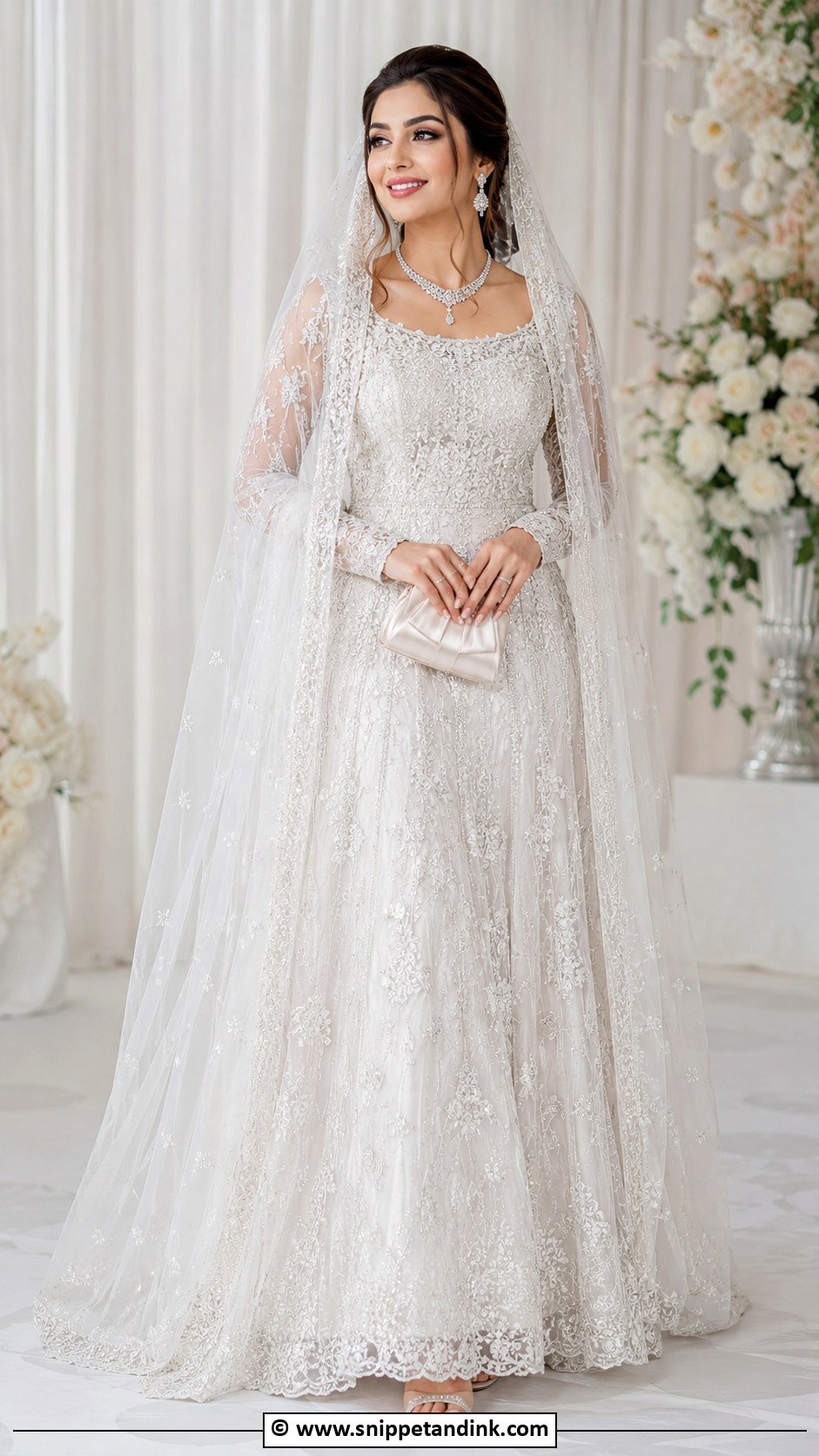
A white gown with a dupatta brings together a Western bridal shape and Indian styling. The gown can be plain, embroidered or crystal-detailed; the dupatta should be sheer, with a fine border, pearl work or light embroidery, so it doesn’t overpower the dress. I pin it at both shoulders, draped low across the back like a veil, which frames the portraits nicely. Diamond jewellery, white or nude heels and defined eye makeup complete a clean look with real cultural balance.
13. Peach Floral Reception Gown
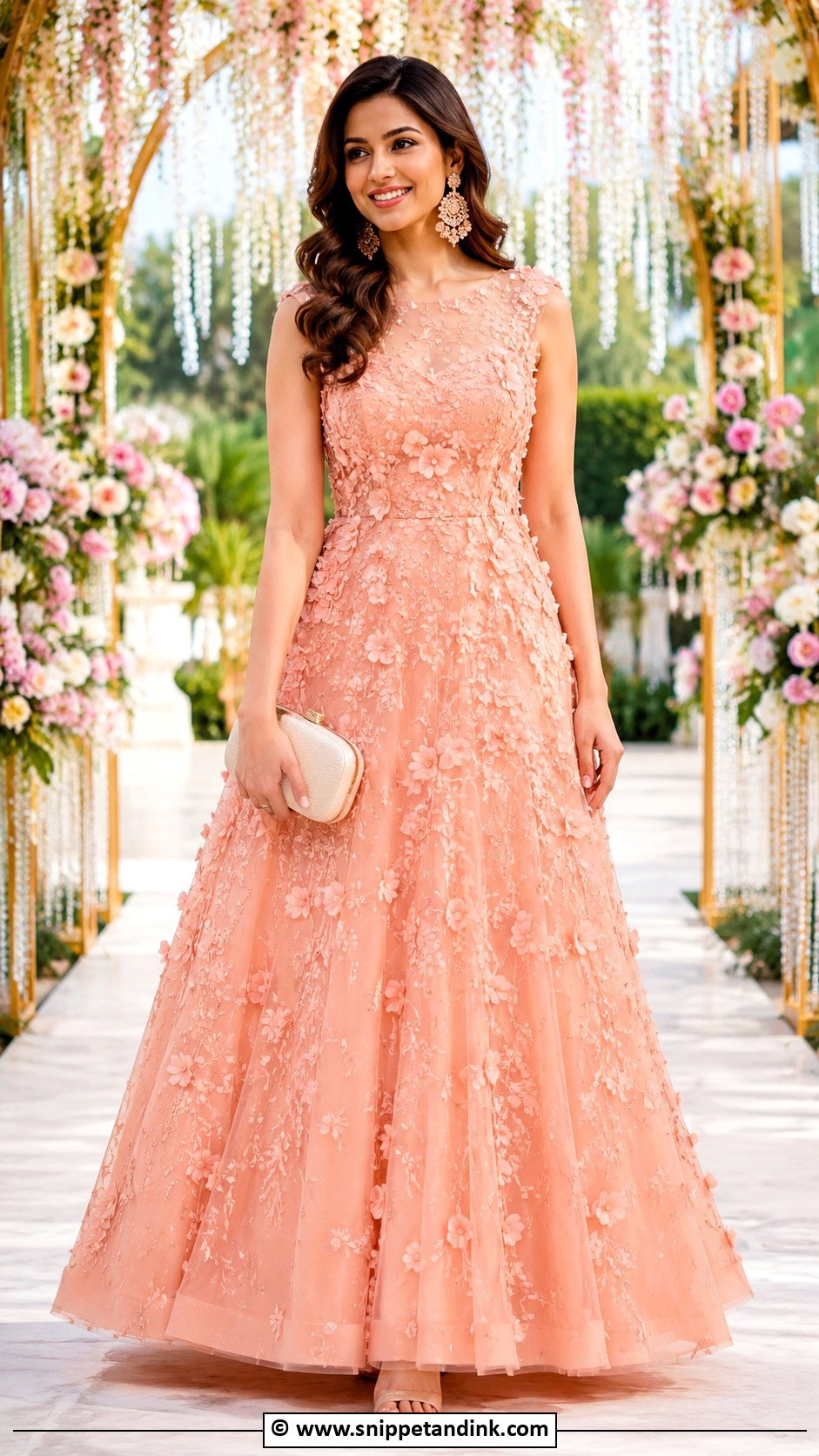
Peach florals feel warm and cheerful. Floral embroidery, 3D petals or soft printed details, over a fitted bodice and flowing skirt. Rose gold jewellery, nude heels and a peach or ivory clutch. It suits outdoor receptions, resorts and smaller family celebrations. Raised 3D petals crush when you sit or hug, so check how firmly they’re stitched and whether they spring back after you press one flat. With a textured gown, keep accessories plain.
14. Mint Green Reception Gown
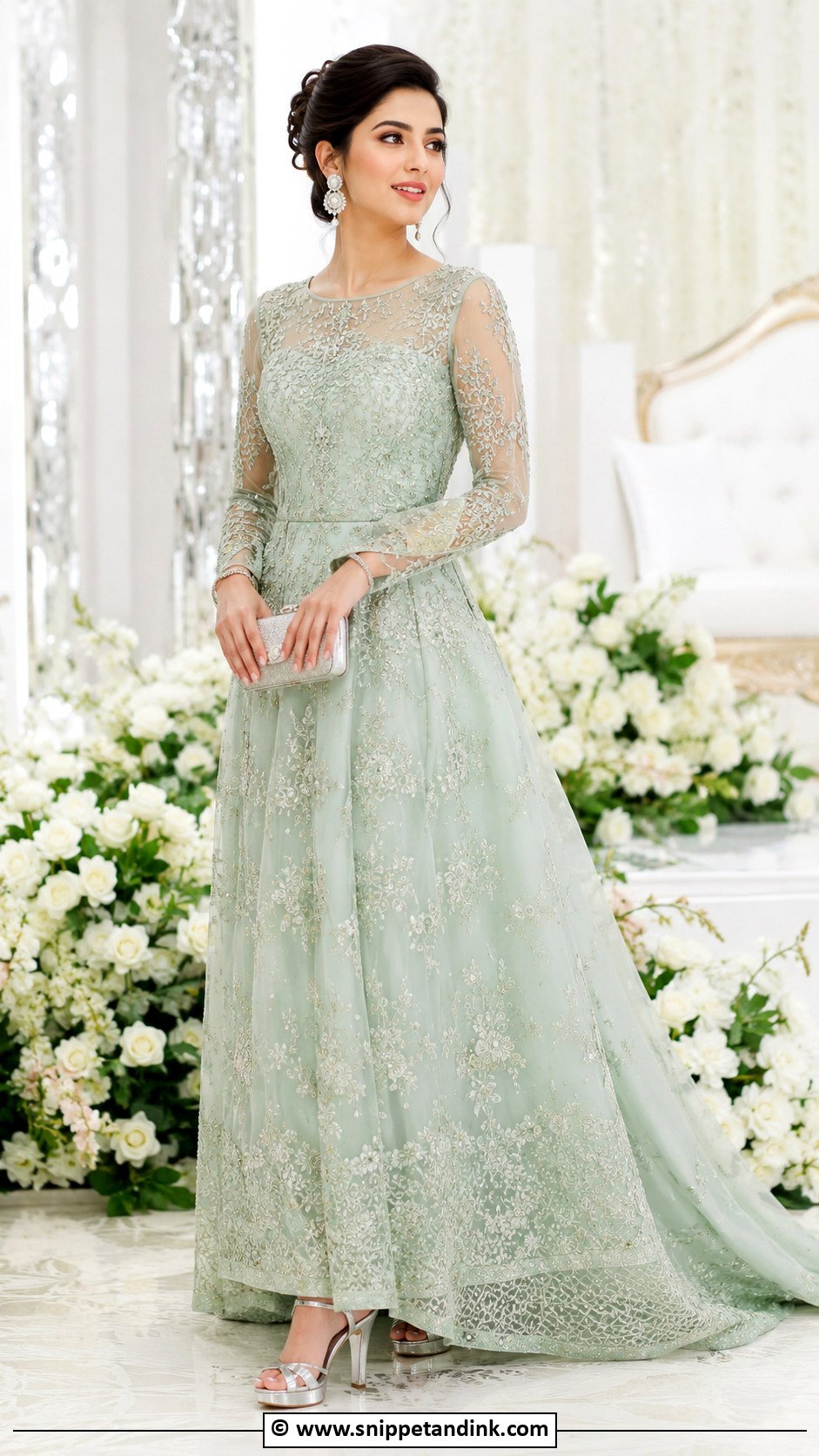
Mint is refreshing and pairs nicely with pearl, silver and light gold work. Fine threadwork, crystal borders or soft organza layers keep it refined. Pearl earrings, silver heels, a sleek clutch and a soft bun or loose curls. It is a daytime and summer colour, best among white or floral decor. Under very warm evening lighting mint can turn slightly yellow-green, so if your reception runs late, see the fabric under similar light first.
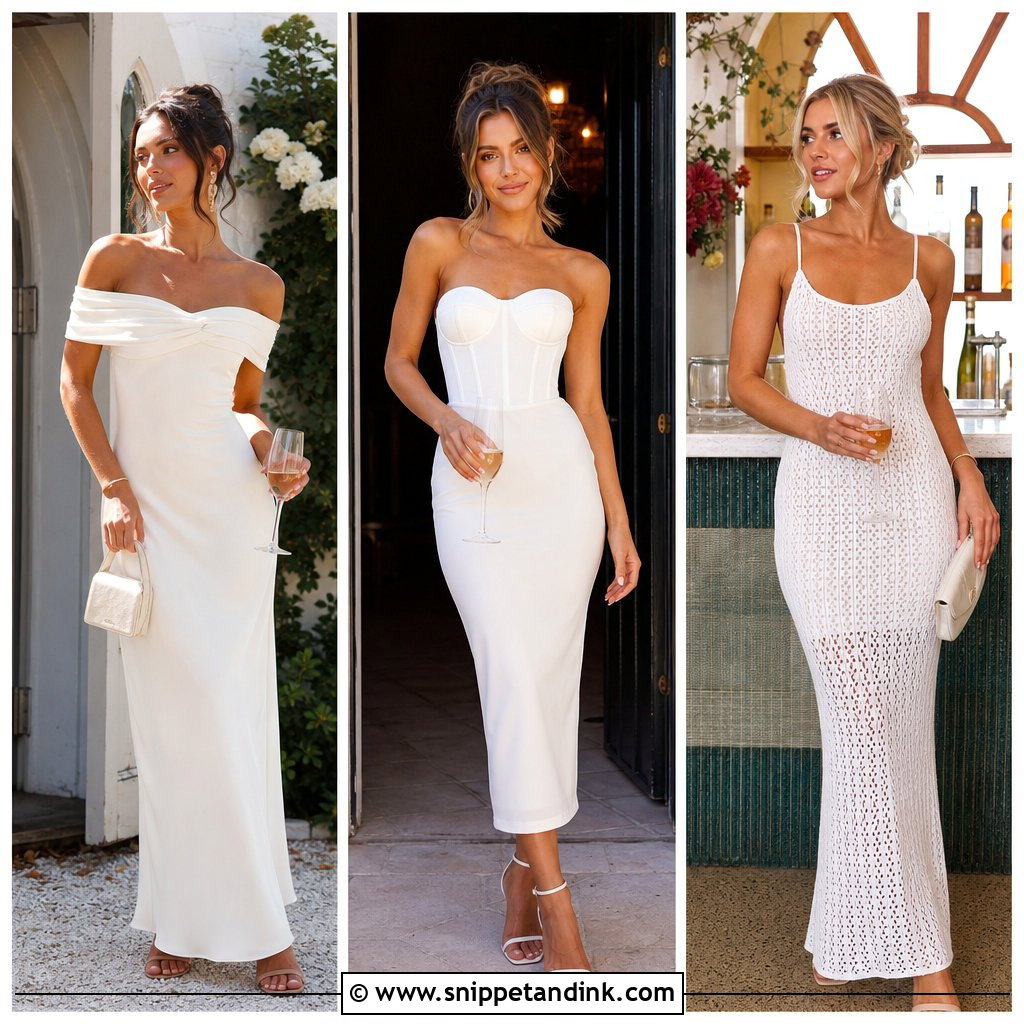
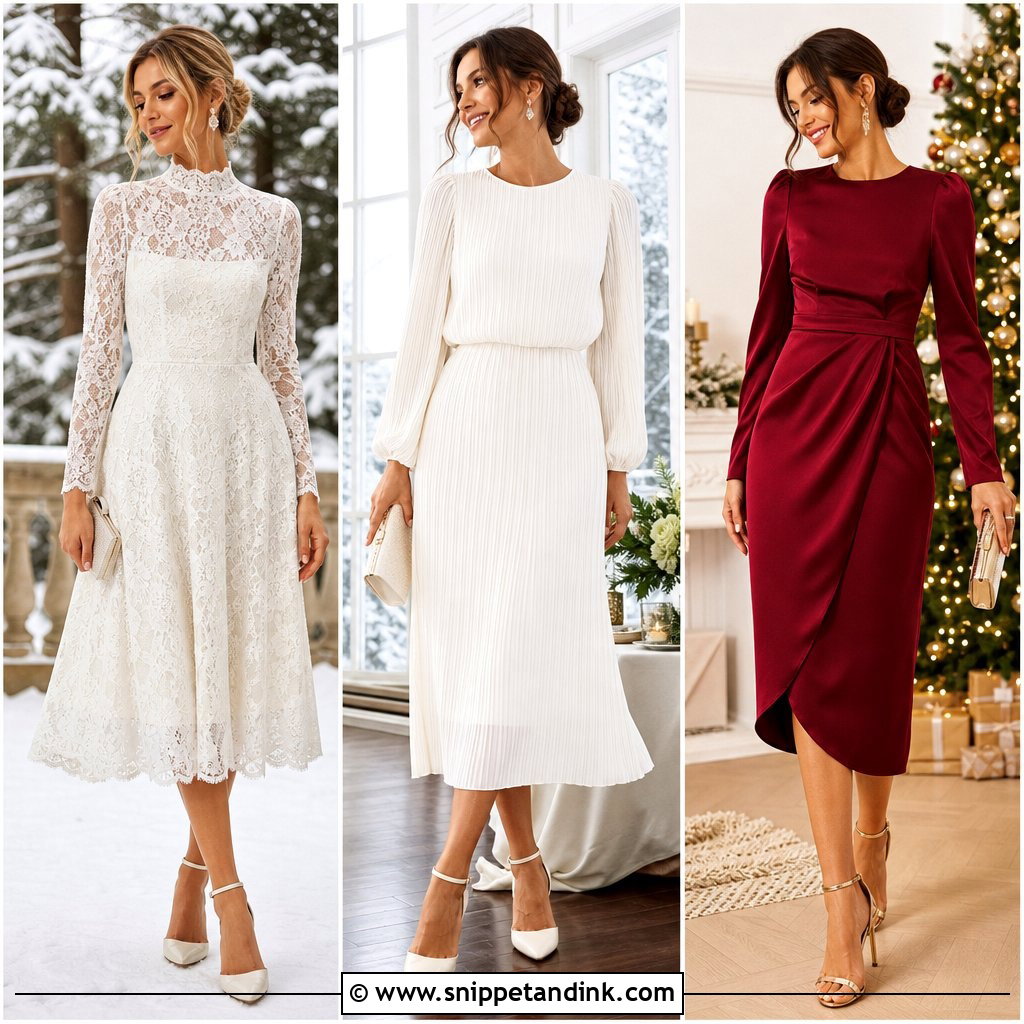
15. Wine Reception Gown
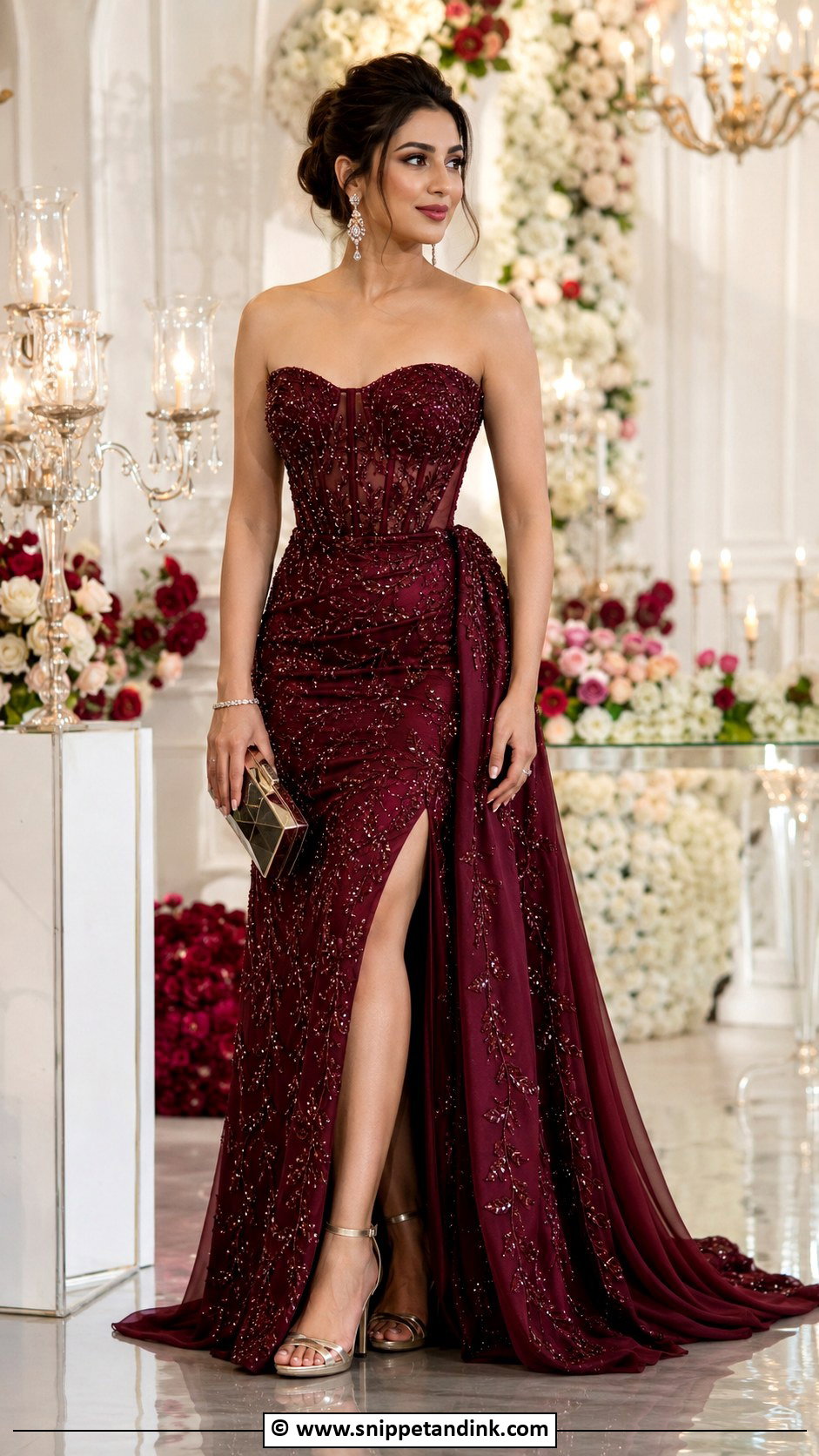
Wine is softer than bright red and very rich at night. Gold, rose gold or crystal embroidery suits the depth of the colour. A corset bodice, long sleeves or a sweeping skirt feel regal. Statement earrings, metallic heels and a structured clutch, with berry lips, defined eyes and glowing skin. If you want drama without much sparkle, choose velvet, satin or crepe with embroidery only at the bodice and hem. A good pick for winter and late-night receptions.
16. Ruffle Reception Gown
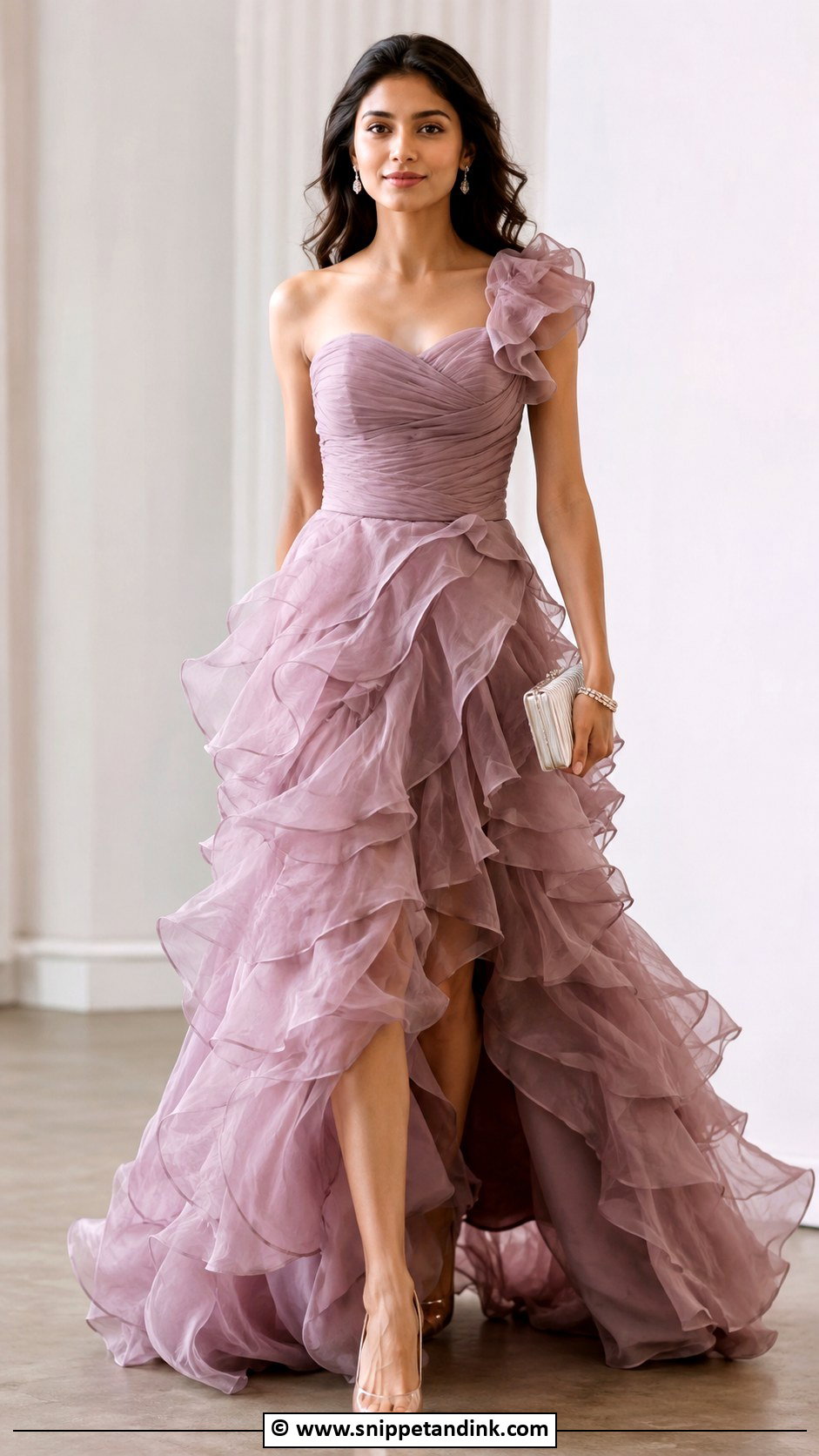
Ruffles give movement and volume without relying on embroidery. On the skirt, sleeves or neckline, they need light fabric like organza, tulle or georgette to float rather than flop. Minimal jewellery, pointed heels and a clean clutch, since the gown already has plenty of texture, plus a sleek hairstyle to balance the volume. Organza ruffles crease if you sit on them for long, so I’d lift and spread the skirt each time you sit. They look their best in walking shots and stage entries.
17. Cape Reception Gown
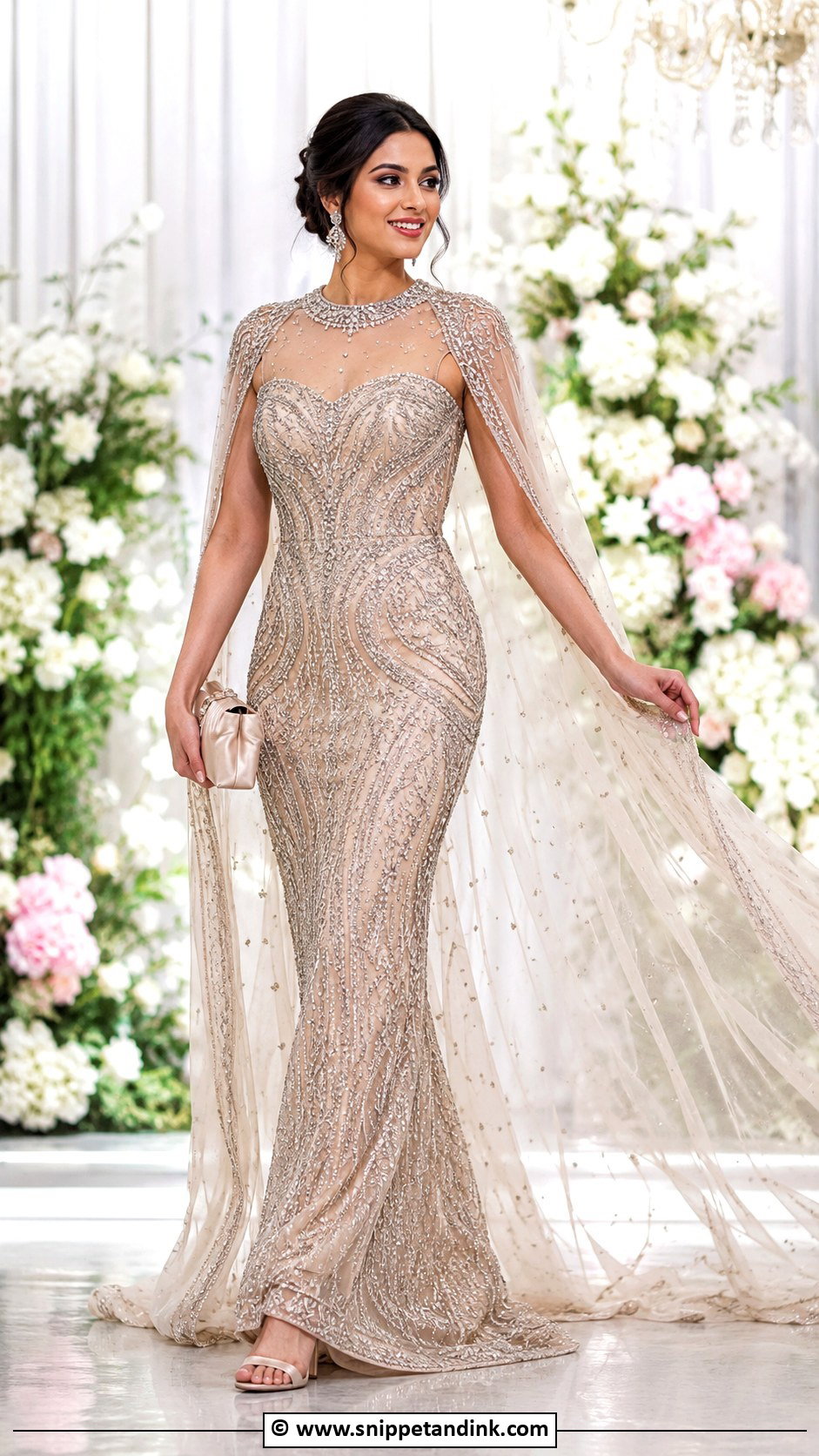
A cape can replace the dupatta while adding a modern Indo-Western feel. Sheer net, organza or embellished layers attached at the shoulders or neckline, over a fitted gown that keeps the shape clean. Drop earrings, slim heels and a neat clutch. Brides who don’t want to manage a heavy dupatta usually love this. A long cape will be stepped on in a busy greeting line, so I suggest a wrist loop at the hem that lets you lift it when you move through the crowd.
18. Off Shoulder Reception Gown
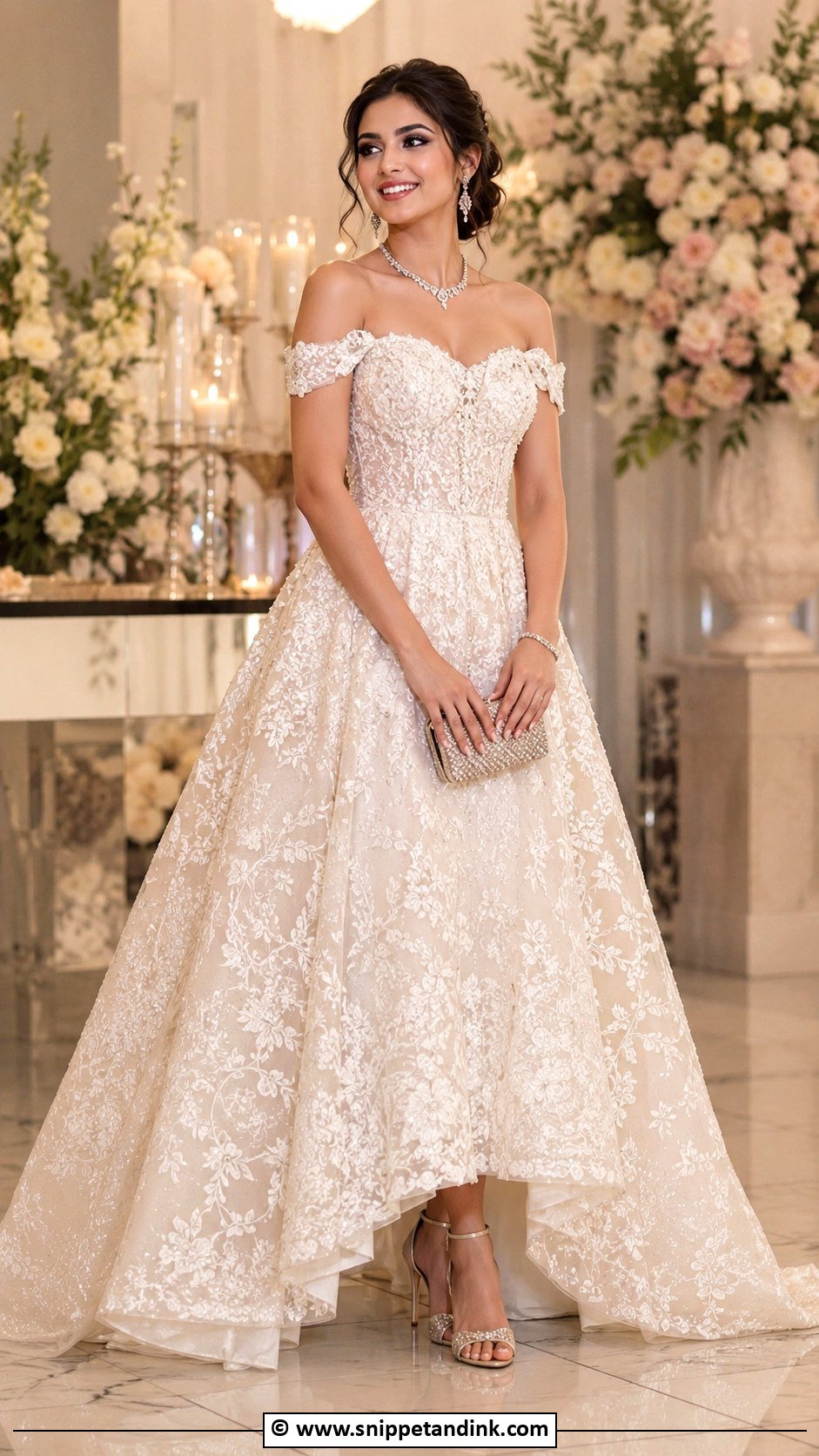
An off-shoulder neckline shows the collarbones and frames a choker or delicate diamond necklace well. It works with a structured bodice, embroidered sleeves and a flared skirt in pastel, ivory, gold or jewel tones. A swept-back style or low bun shows off the shoulders. The fit has to be right, with boning and silicone grip at the neckline, or you’ll spend the evening tugging it up, and guests notice. Raise your arms at the fitting as if hugging someone; if it slips, it needs adjusting.
19. High Neck Reception Gown
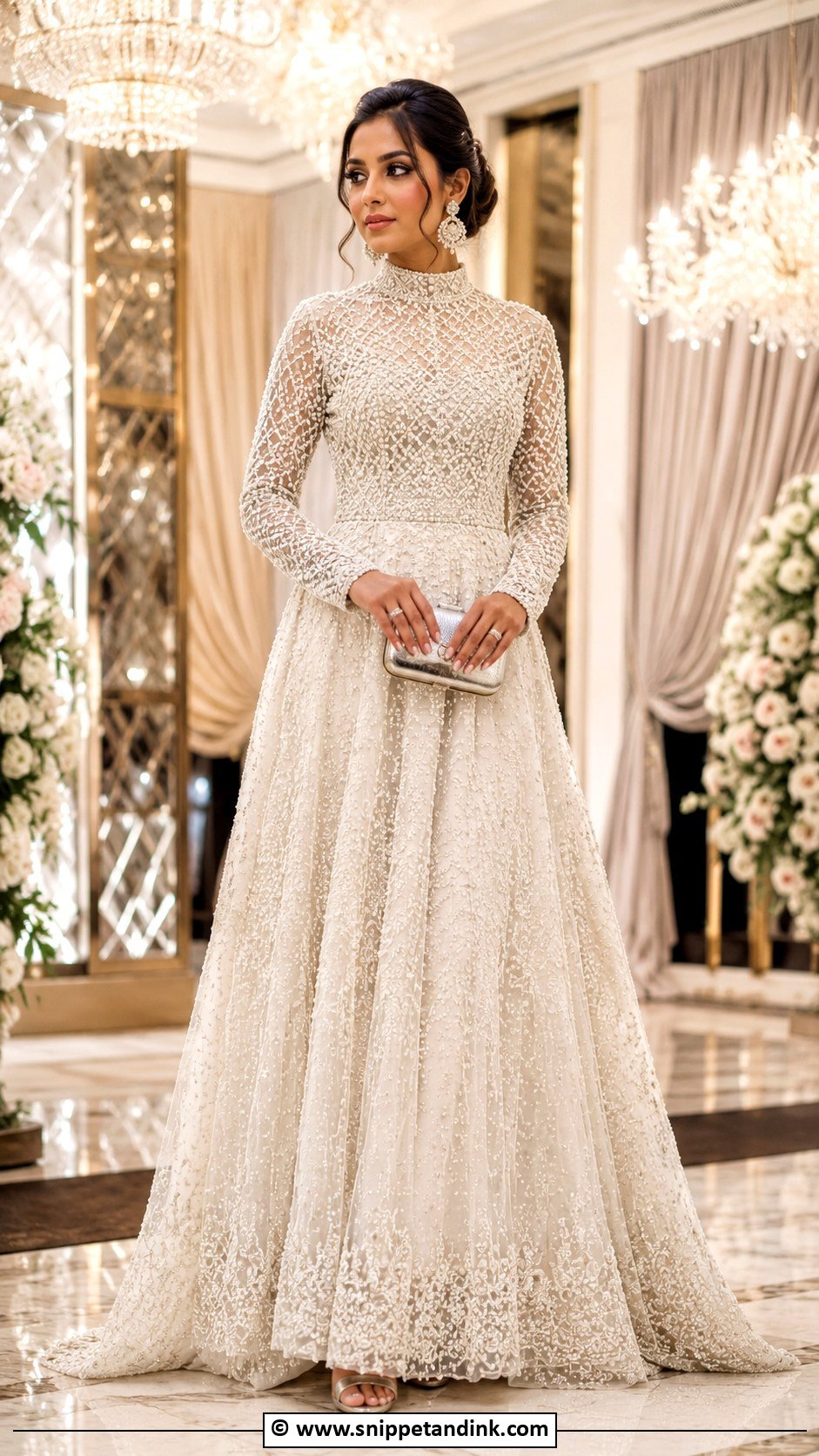
A high neck is modest and refined, and it draws attention upward to the face. Lace, pearls, crystals or fine embroidery at the neckline, with an A-line or mermaid skirt below. Statement earrings replace a necklace here. Metallic heels and a clutch, with a high bun or smooth ponytail so the neckline stays visible. High necks get warm in packed halls, so a breathable mesh base under the embroidery makes a real difference by the end of the night.
20. Mermaid Reception Gown
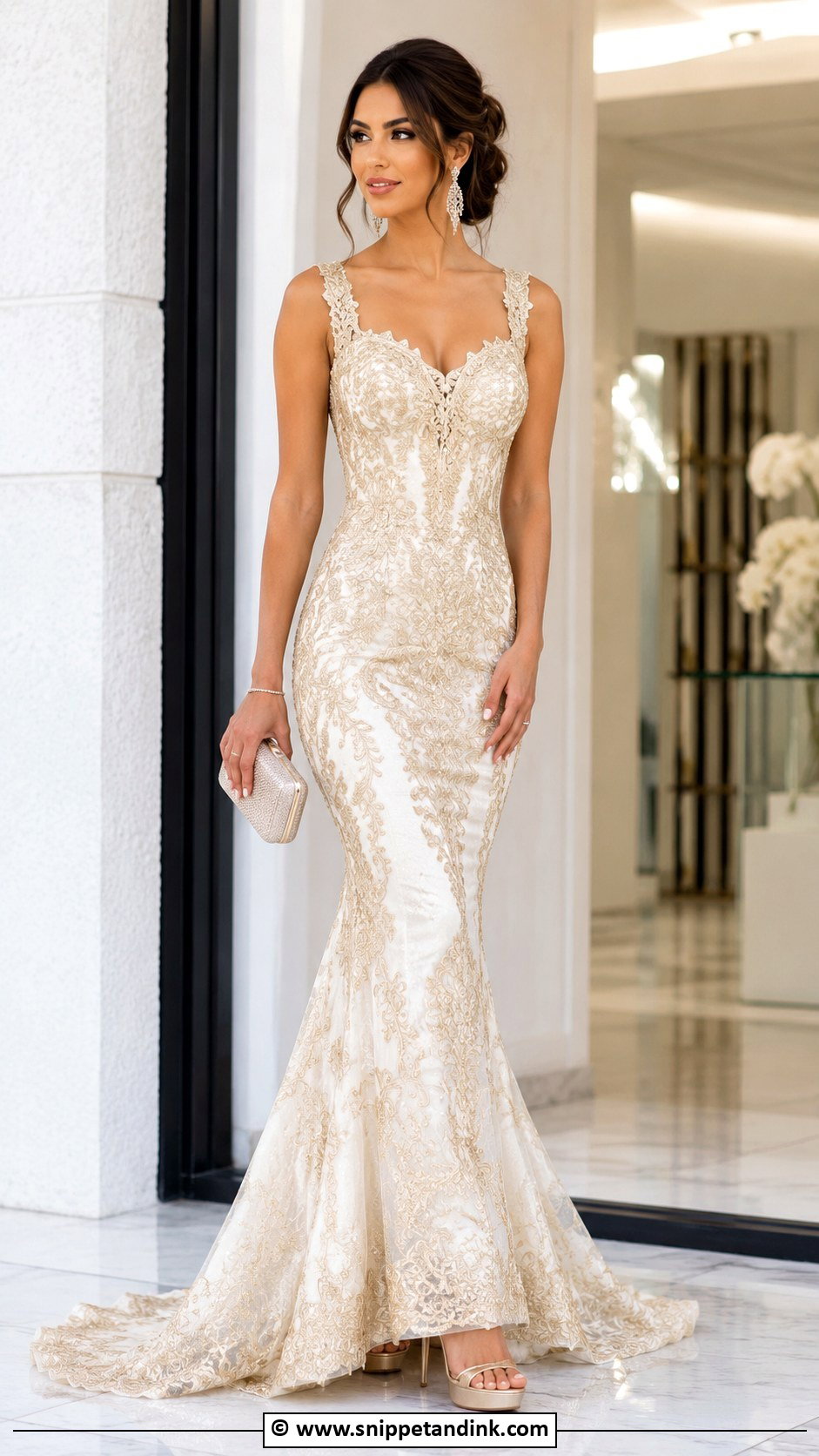
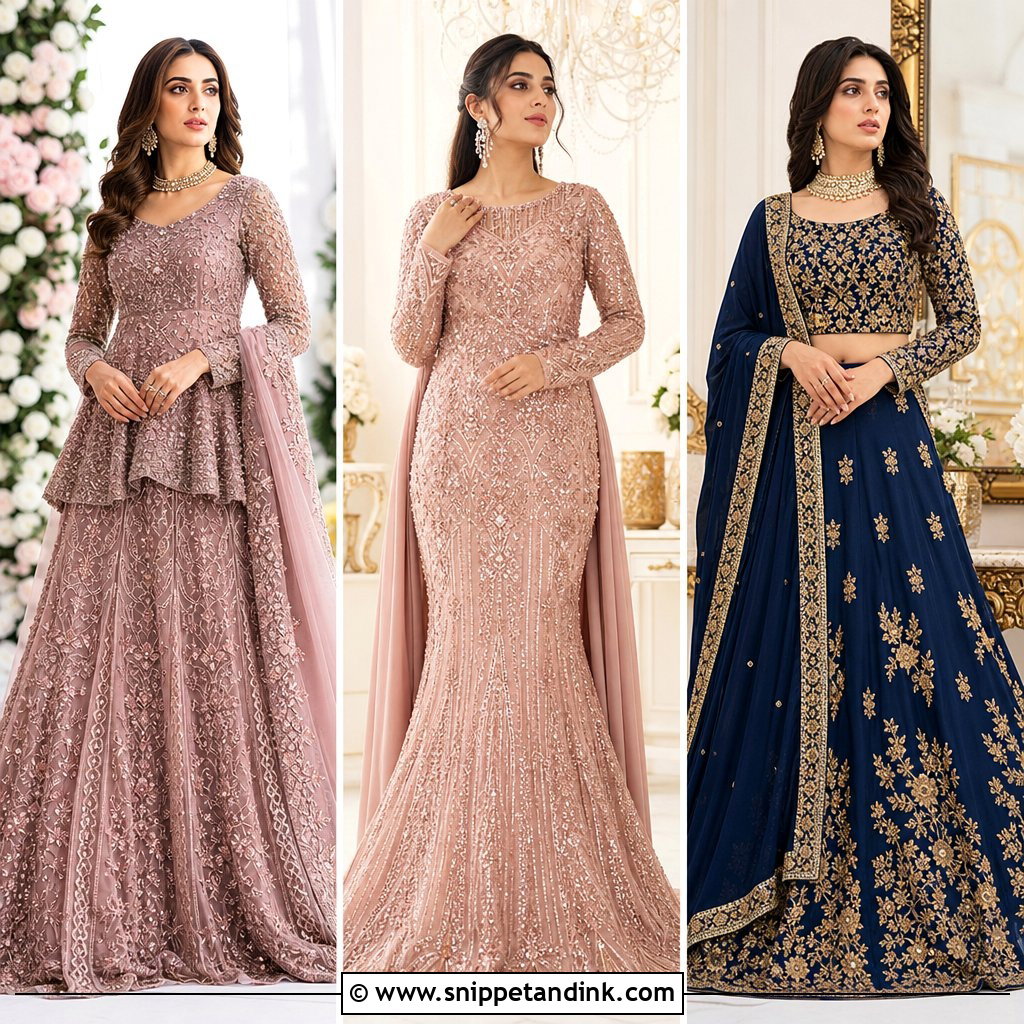
A mermaid gown hugs the body through the bodice and hips and flares near the knee. Embroidery that follows the gown’s lines lengthens the figure. High heels, a structured clutch and sparkling earrings. The fitted shape limits your stride and makes sitting on a low stage sofa awkward, so at every fitting I have the bride sit, climb a step and turn. If you can’t manage stage stairs in it, ask for the flare to start a little higher. It suits jewel tones, ivory, champagne, silver and gold.
21. Ball Gown Reception Dress
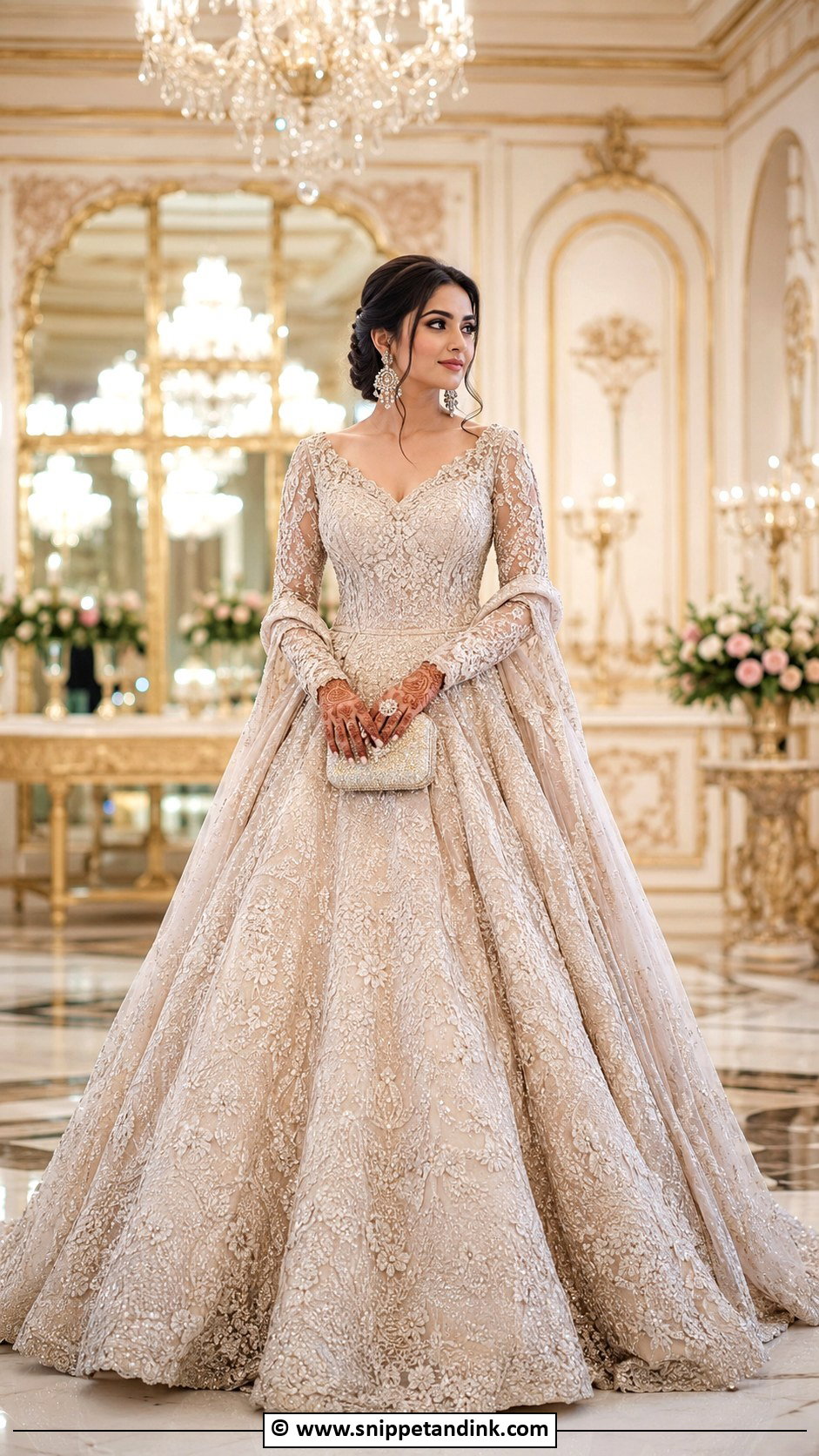
A ball gown reception dress gives you a princess entrance. The full skirt creates instant drama and the structured bodice keeps it balanced. Indian versions often carry zardozi, sequins, crystals, pearls or floral embroidery. A tiara-style hair accessory, statement earrings and comfortable heels hidden under the skirt complete it, with a dupatta optional and very light. Ball gowns need space: a wide stage, a large venue, and a seat with room for the skirt. In a small hall it crowds everyone.
22. Anarkali Reception Gown
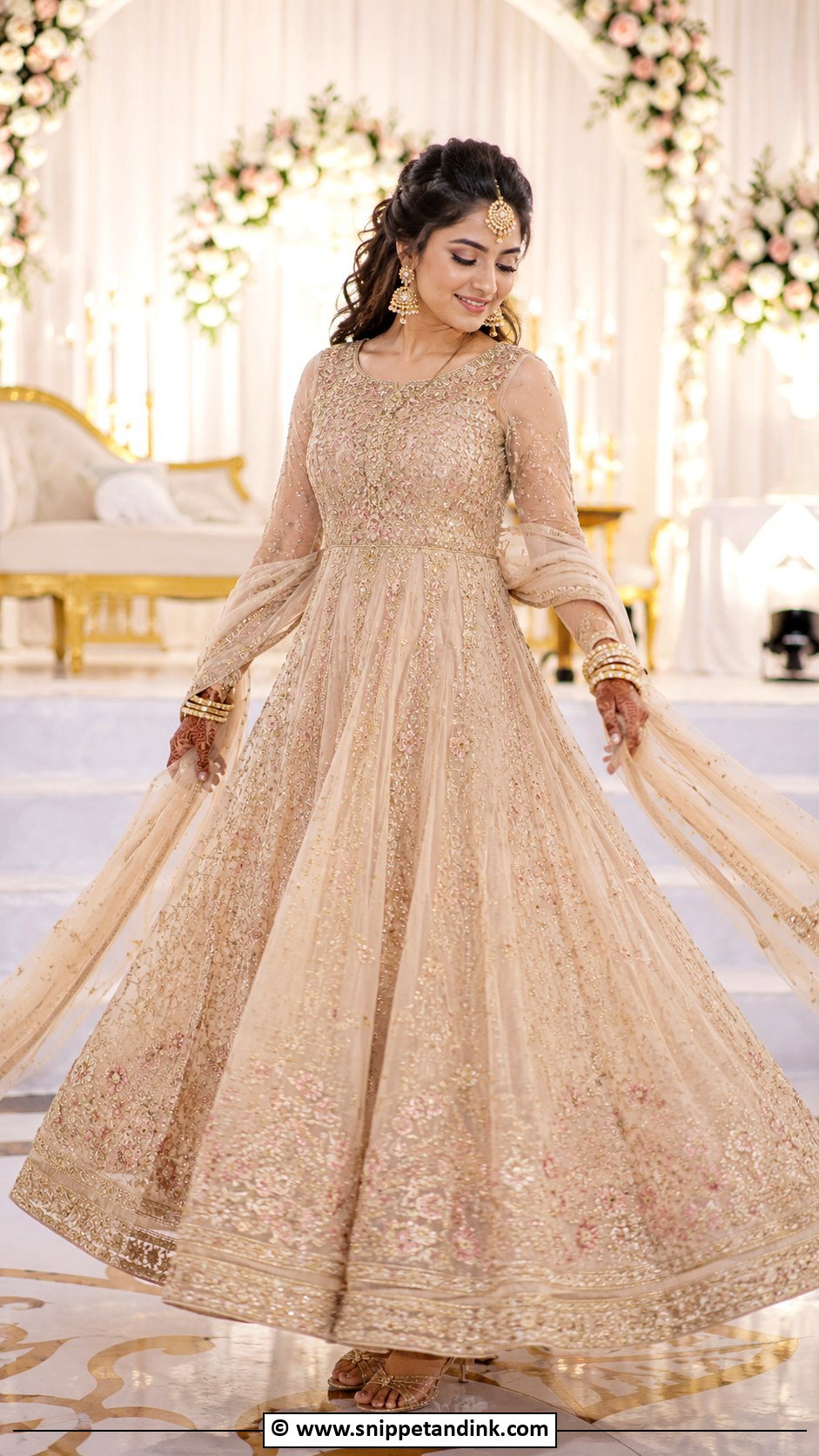
An Anarkali reception gown brings Indian tradition to a gown silhouette. The fitted bodice and flowing kalis move well and stay comfortable through a long evening. Silk, georgette, net or brocade with embroidery at the neckline, sleeves and hem. Jhumkas, embellished heels and a matching dupatta complete it. It skims the body rather than clinging, which many brides find more comfortable than a corset gown. A centre-parted bun, soft curls or a braid all suit it.
23. Lehenga Gown For Reception
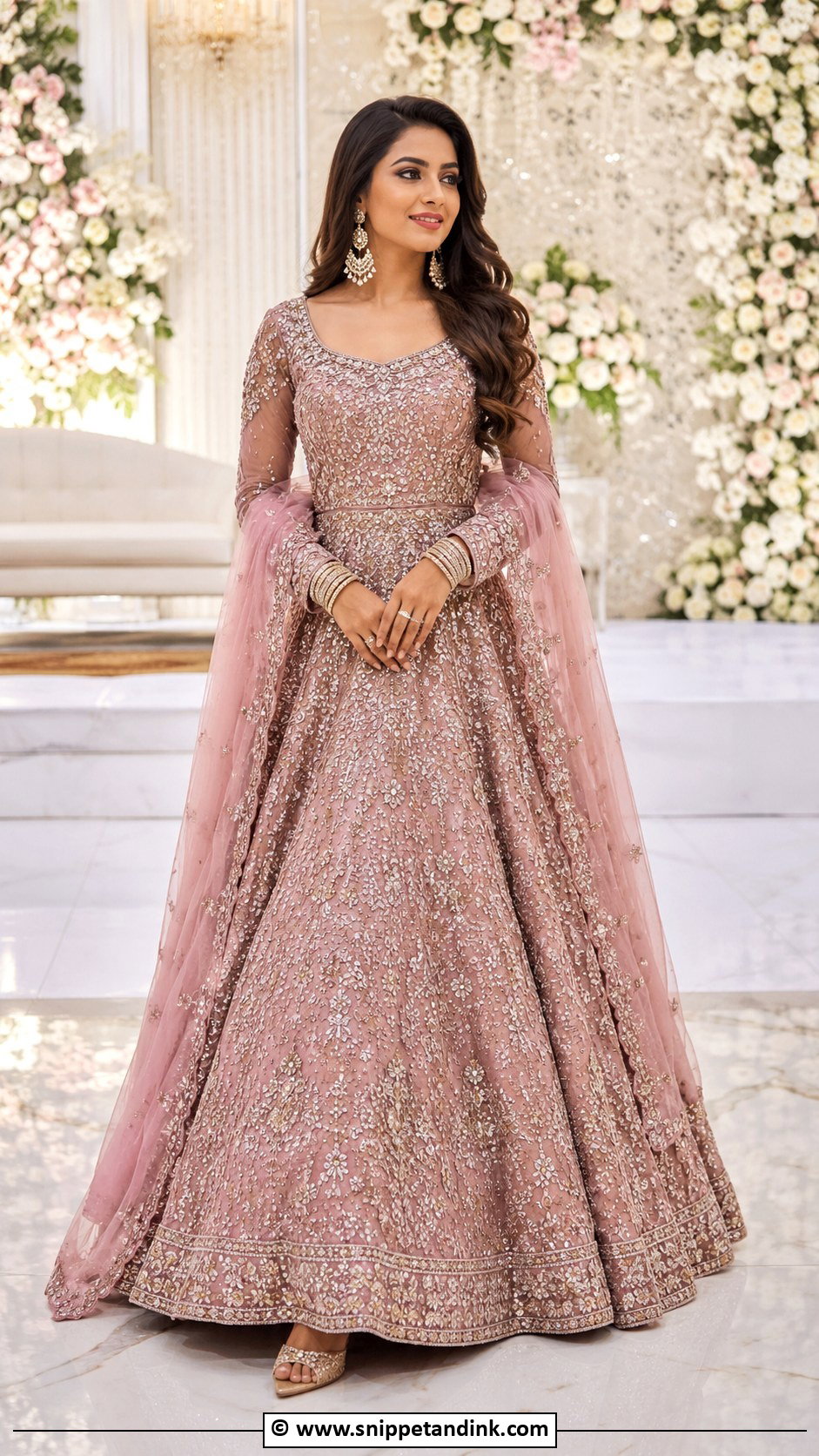
A lehenga gown for reception gives a lehenga’s impact in one piece, with a fitted top, defined waist and flowing skirt. Embroidery, sequins or mirror work make it festive. A light dupatta, statement earrings, bangles and embellished heels finish it. There’s no blouse to ride up and no waistband to adjust, which helps when you are on your feet greeting guests for hours. Choose a colour that contrasts with your ceremony outfit so the two albums don’t blur together.
24. Satin Draped Reception Gown
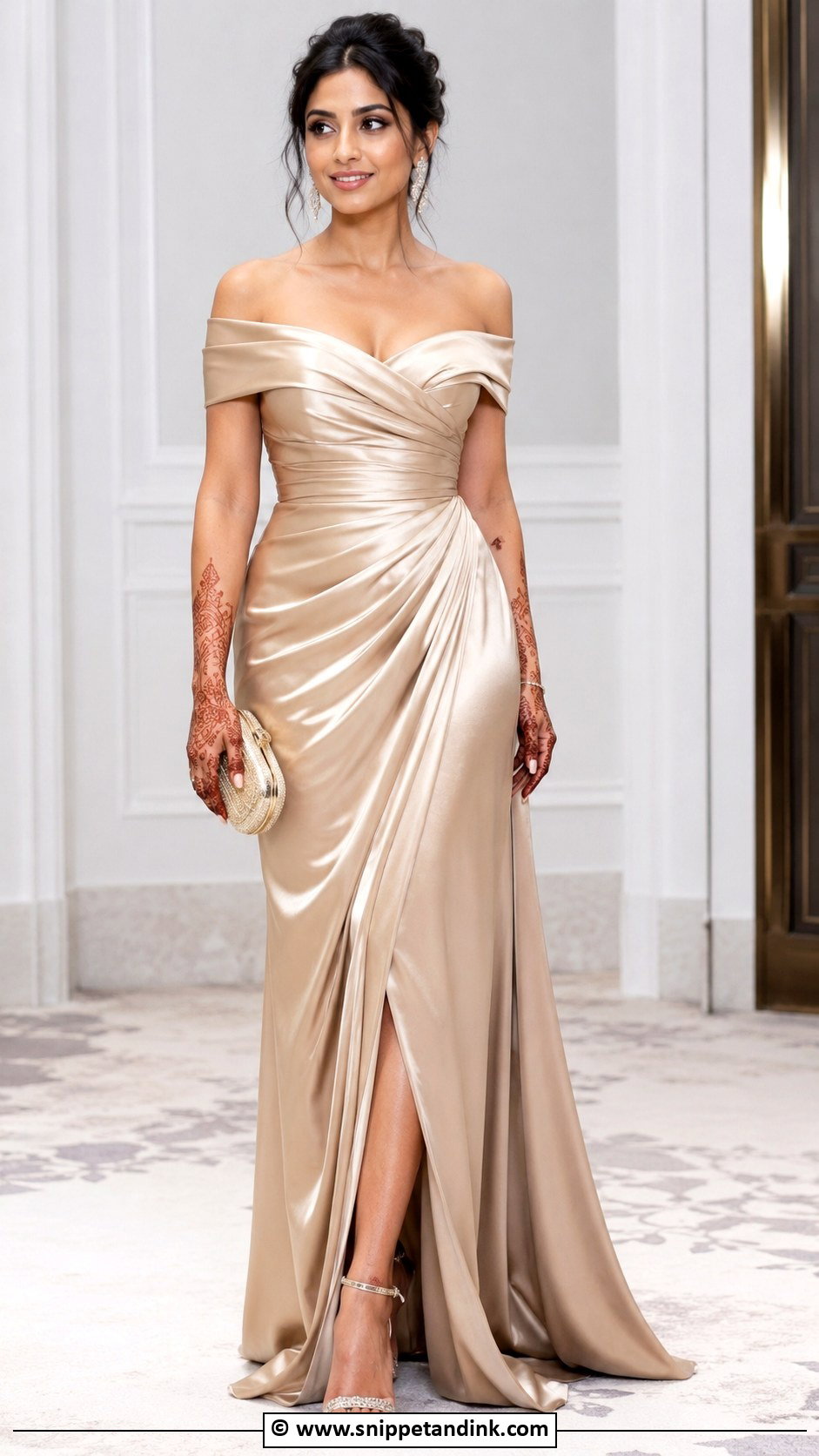
Satin draping is quiet luxury: no heavy embellishment, just fabric and cut. Draping at the waist, shoulder or neckline flatters and adds interest. Diamond jewellery, slim heels and a clean clutch, with polished makeup and smooth hair. Champagne, ivory, emerald, navy and blush all work. Satin shows every crease from sitting and every water mark, so I’d keep a steamer in the bridal room and avoid holding a sweating glass against it. It suits luxury hotel receptions with minimal styling.
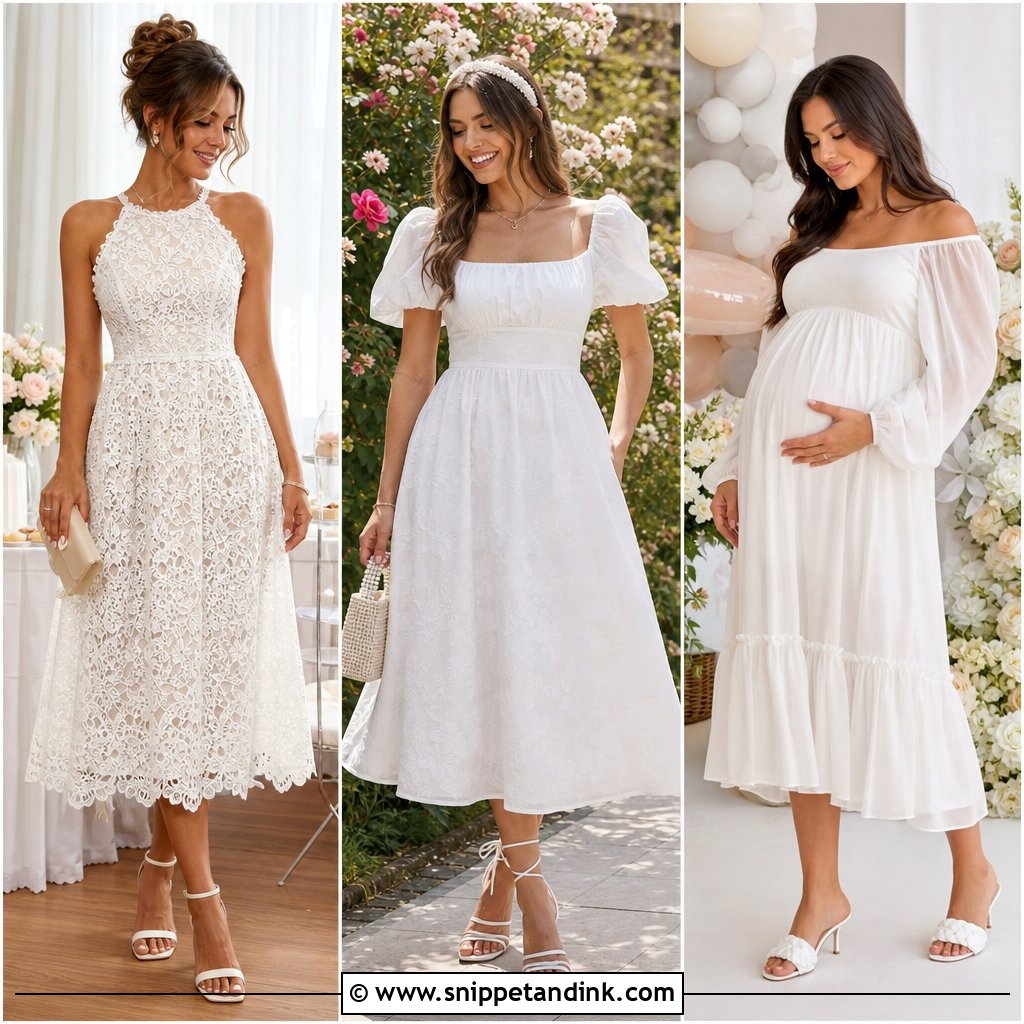
25. Trail Reception Gown
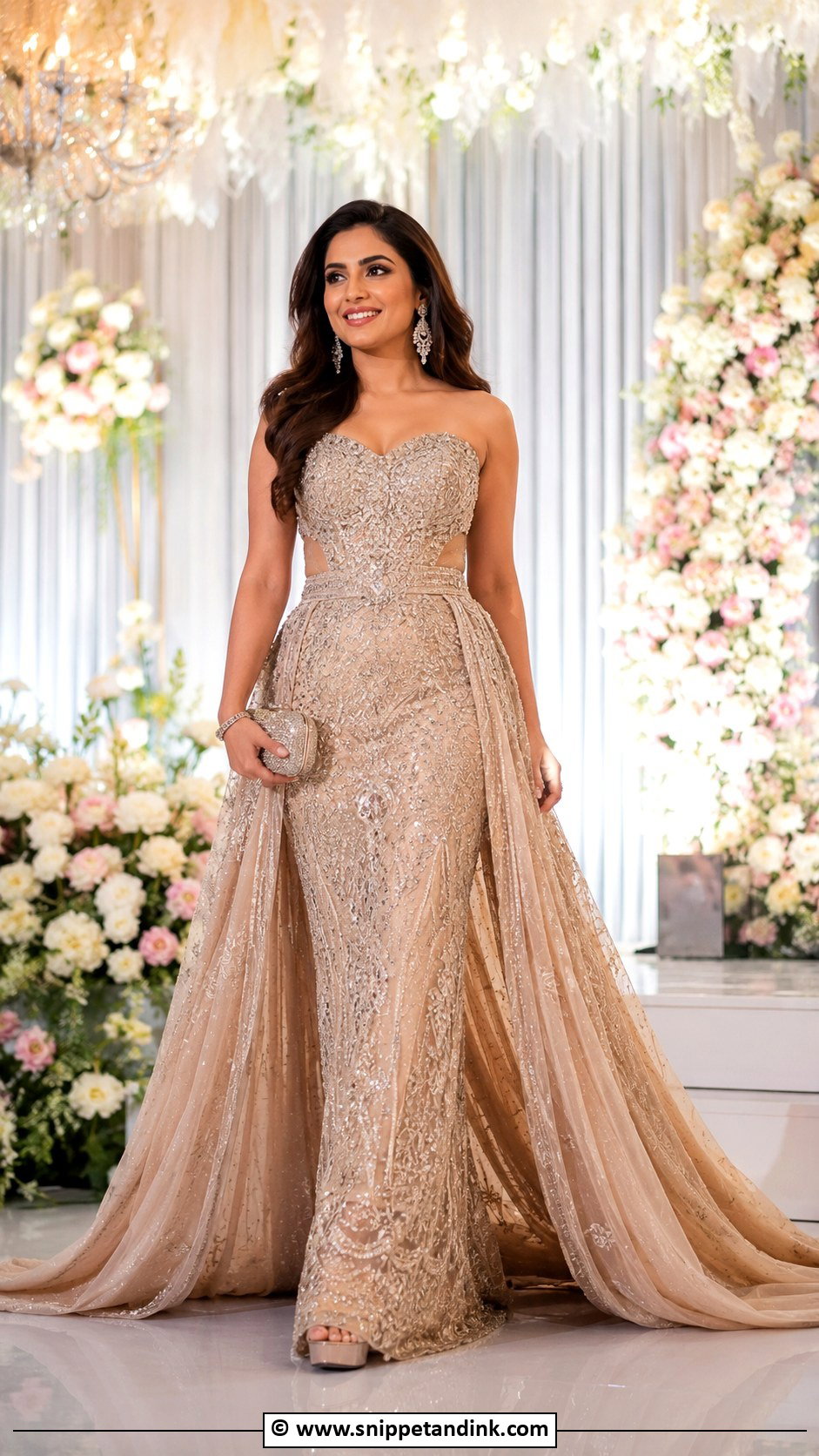
A trail looks grand from every angle, especially during the couple’s entrance and stage photographs. It can be attached to the skirt, the cape or a detachable overskirt. Lighter fabric moves more easily; heavier embroidery reads more formal. Strong heels, elegant earrings and a compact clutch. A detachable trail is the practical answer: wear it for the entrance and portraits, then remove it before dinner and dancing so nobody steps on it.
Three Hours on the Stage in a Structured Gown
Indian receptions often put the couple on a stage for a long greeting line, standing for photos with each family and sitting between groups. Gowns cut for a short walk down an aisle are not always built for that.
Sitting in boning
A corset bodice digs in at the hip when you sit. Sit on a low sofa at your final fitting and ask the tailor to shorten or soften any bone that presses. A stage chair with a firm, upright seat is easier than a deep sofa.
Volume in a greeting line
Guests step on trails and wide skirts as they come up for photos. Bustle the trail or detach it, and ask the photographer’s assistant to fluff the skirt between groups.
Bathroom breaks
With a ball gown or mermaid skirt you’ll need a helper. Choose that person before the night, and keep one hairpin and a safety pin with them for small fixes.
If you plan to dance properly, think about a second, lighter outfit for the last hour. Plenty of brides switch to a short cocktail dress or a light lehenga after the formal photos, and nobody minds. A heavy gown that kept its shape beautifully on stage is hard work on a crowded dance floor.
Matching the Gown to the Room, the Lights and Your Night
Start with the venue, how long you’ll be on your feet, how the gown photographs and what jewellery you plan to wear, then let personal style decide between the finalists. A reception gown should feel bridal, but it doesn’t have to repeat your ceremony look. Velvet reads royal, pastel tulle reads dreamy, satin reads sleek and sequins read bold. Whichever you pick, make sure you can move, smile, greet guests and dance in it, because that is what the night is for.
You'll Like These Ideas:


Leave a Reply