

What to Look For in a Rangwali Pichora Before It Goes On
The Pichora is the one piece that makes every outfit below Kumaoni, so I look at it before anything else. The traditional version is a yellow base, historically dyed with turmeric, dotted with red, and centered on a swastika motif for good fortune. The dots were once pressed on by hand with a cloth-wrapped coin dipped in dye.
Hand-dyed or printed
Many Pichoras sold today are machine-printed with motifs adapted from Aipan art. They drape well and cost less. A hand-dyed piece has slightly irregular dots and softer color, and if one has been passed down in your family, that’s the one to wear. Ask the seller plainly which you’re buying.
Fabric and color checks
- Georgette sits on the head without sliding and drapes softly at the shoulder.
- Chiffon is lighter and cooler but slips, so it needs more pins.
- Rub a damp white cloth on a hidden corner. If the yellow or red transfers, don’t layer it over an ivory or pastel outfit, and keep it away from rain.
- Lay it flat and find the central motif first, so your stylist can place it where it will be seen rather than folding it into the drape.
1. Traditional Kumaoni Bride Ghagra And Pichora
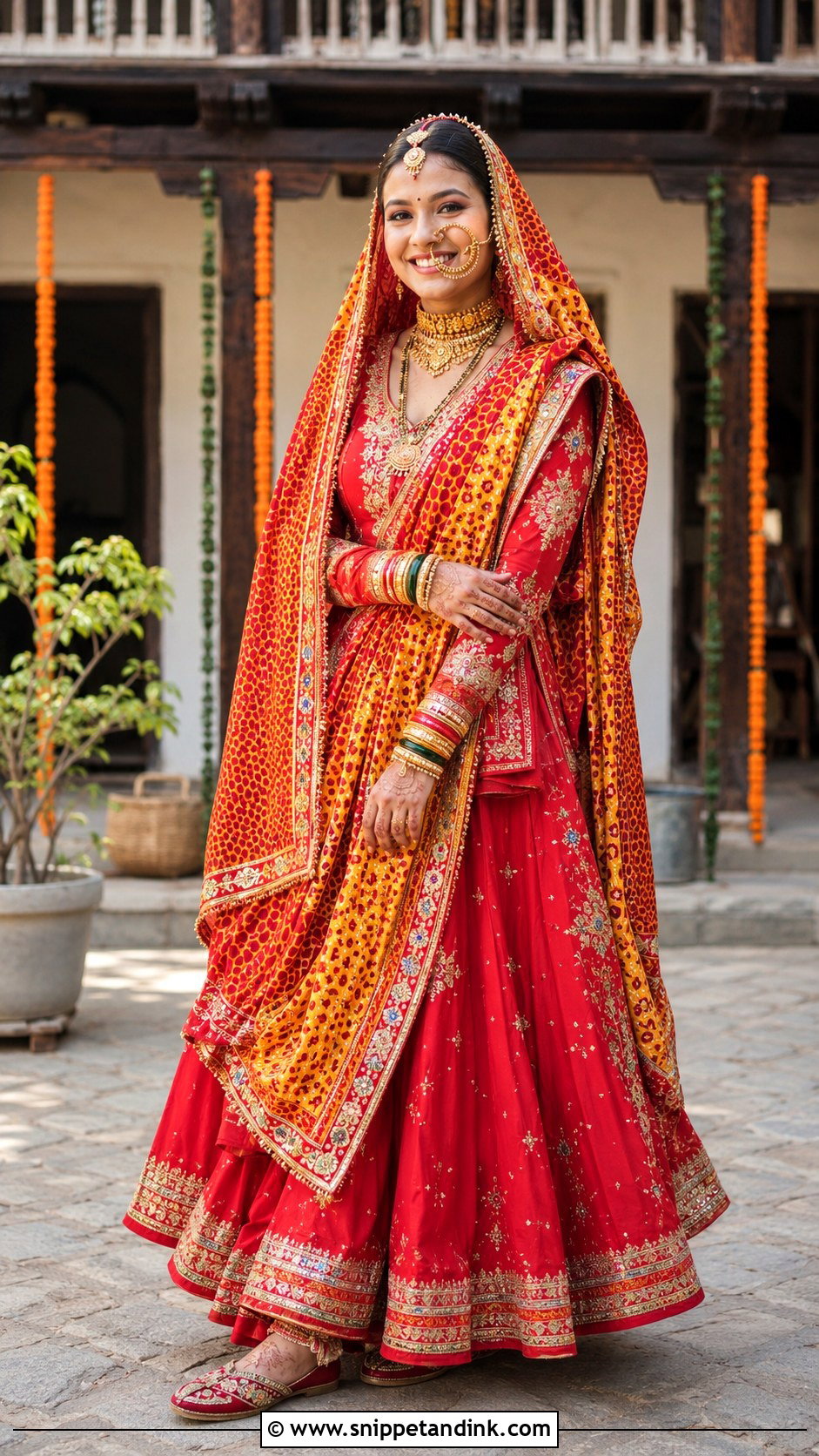
The full traditional set is still the one that makes grandmothers nod at a Kumaoni wedding. A rich red ghagra goes with a long-sleeved kameez or fitted blouse, and the yellow or saffron Rangwali Pichora sits over the head and shoulders with its red motifs and border on show. When I dress a bride in this, the Pichora is the last thing on and the first thing I check, because it has to sit right with a large gold nath, galoband, paunji, earrings, chareu, silver anklets and toe rings already in place. A center-parted bun gives the head covering something to pin into. Defined eyes, a red lip, a traditional bindi and comfortable embroidered flats complete it, with sindoor added after the relevant ritual.
2. Kumaoni Bride Red Saree With Pichora
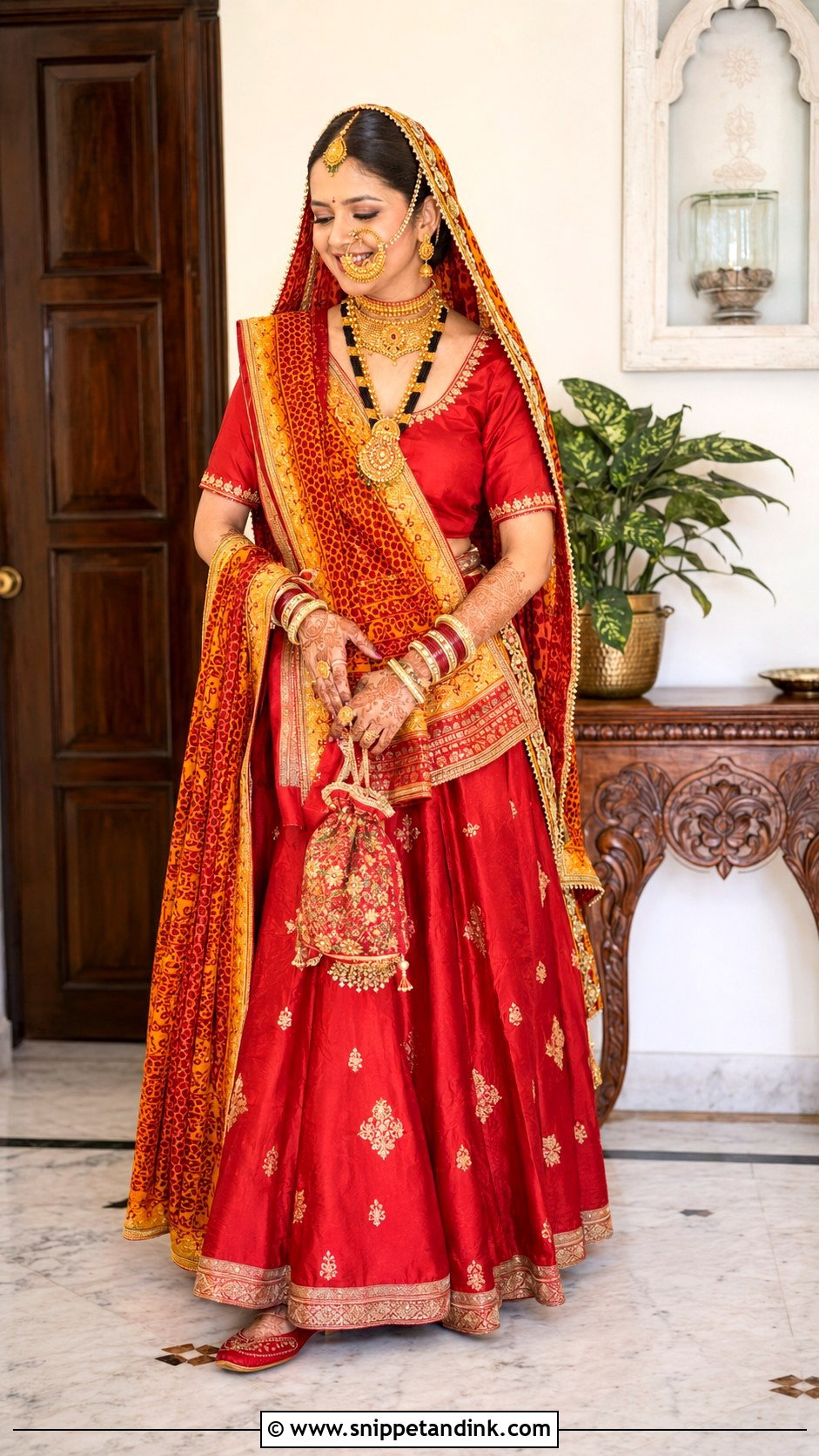
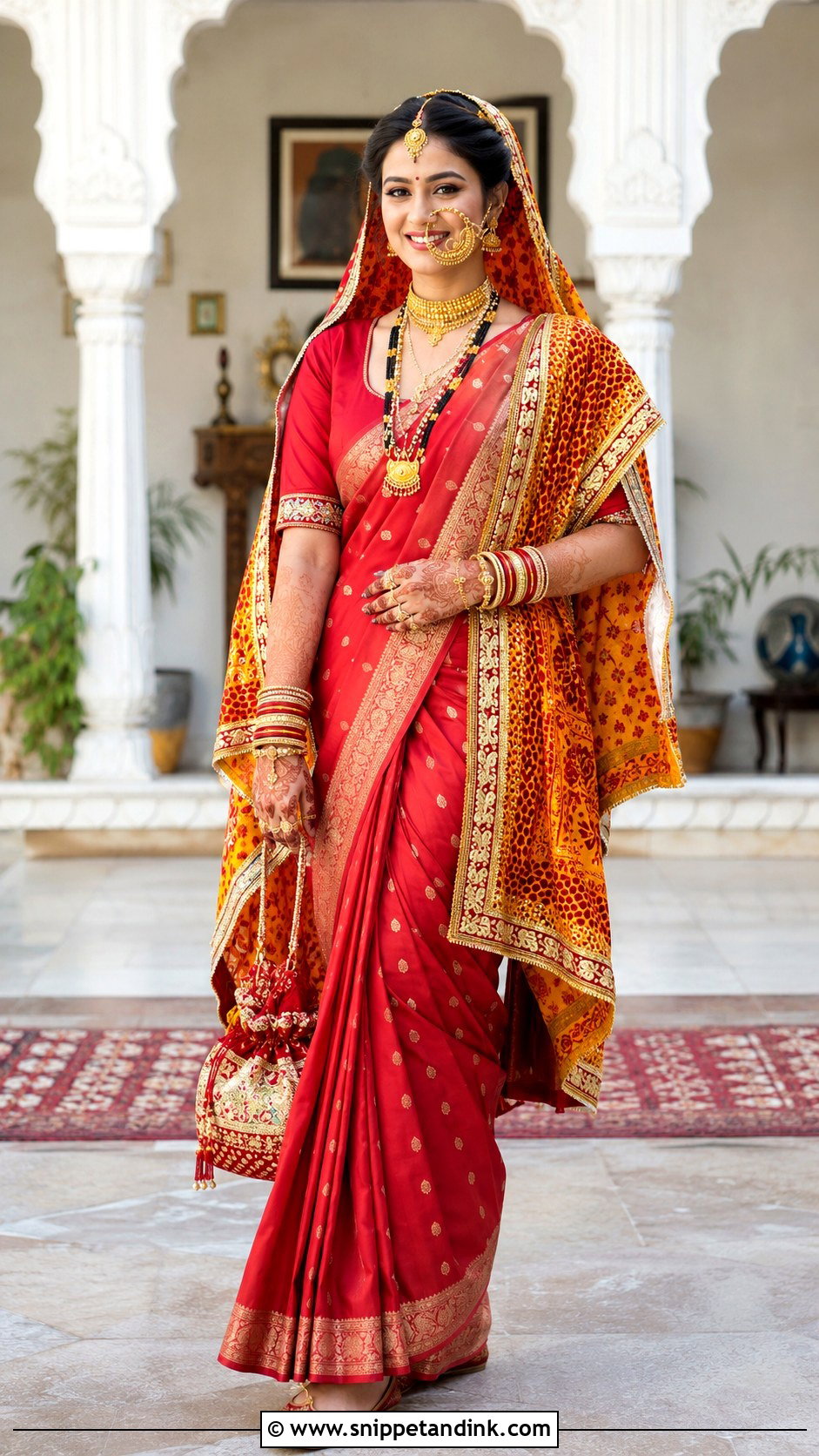
A red sari glows under a bright yellow Pichora, and it’s a good choice for brides more at ease in a drape than a skirt. Silk, brocade or a lightly embroidered sari with a gold border all work, with a well-fitted red blouse. Pleat the pallu neatly and pin it flat at the shoulder; a bulky pallu pushes the Pichora up and off the head. If you’re wearing a galoband, keep the blouse neckline plain, since a beaded neck and a broad choker fight for the same few inches. A medium-to-large nath, layered necklaces, paunji and toe rings carry the tradition. A low bun with white flowers, a classic red lip and cushioned juttis will see you through a long ceremony.
3. Kumaoni Bride Maroon Lehenga With Pichora
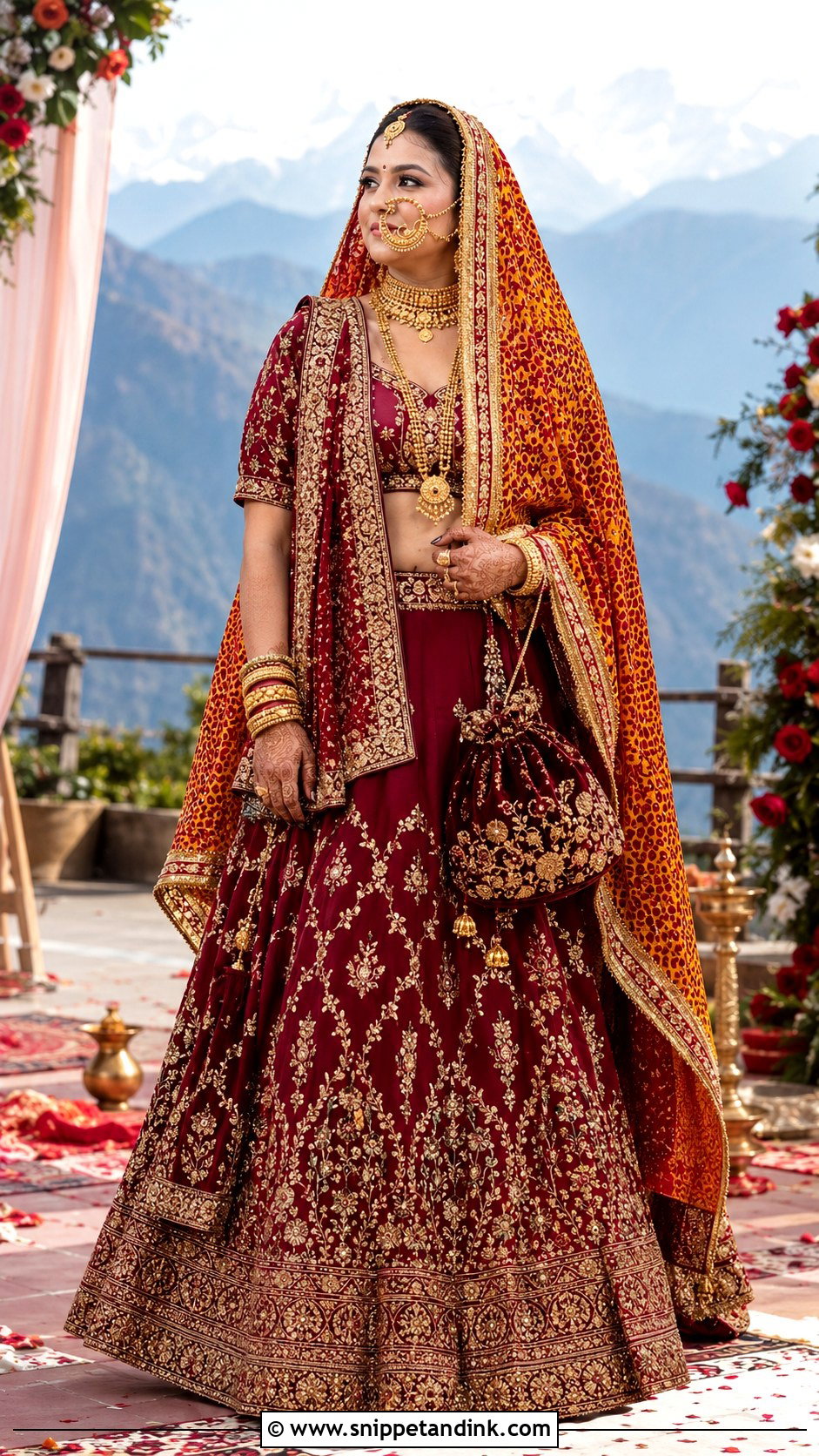
Maroon is a little quieter than bridal red, and it sits beautifully under the Pichora’s warm yellow. A maroon lehenga with antique-gold embroidery usually comes with its own dupatta, and that’s where brides get stuck. My answer is to move the lehenga’s dupatta to one shoulder or the waist and give the head to the Pichora alone. Two head coverings stacked together get hot, slide and hide the nath. A gold nath, galoband, a longer necklace, paunji and small drops suit the depth of the color. Brown kajal, muted gold lids and a berry-red lip, then maroon juttis, a small potli and veil pins hidden under the border.
4. Kumaoni Bride Red Silk Lehenga And Gold Jewelry
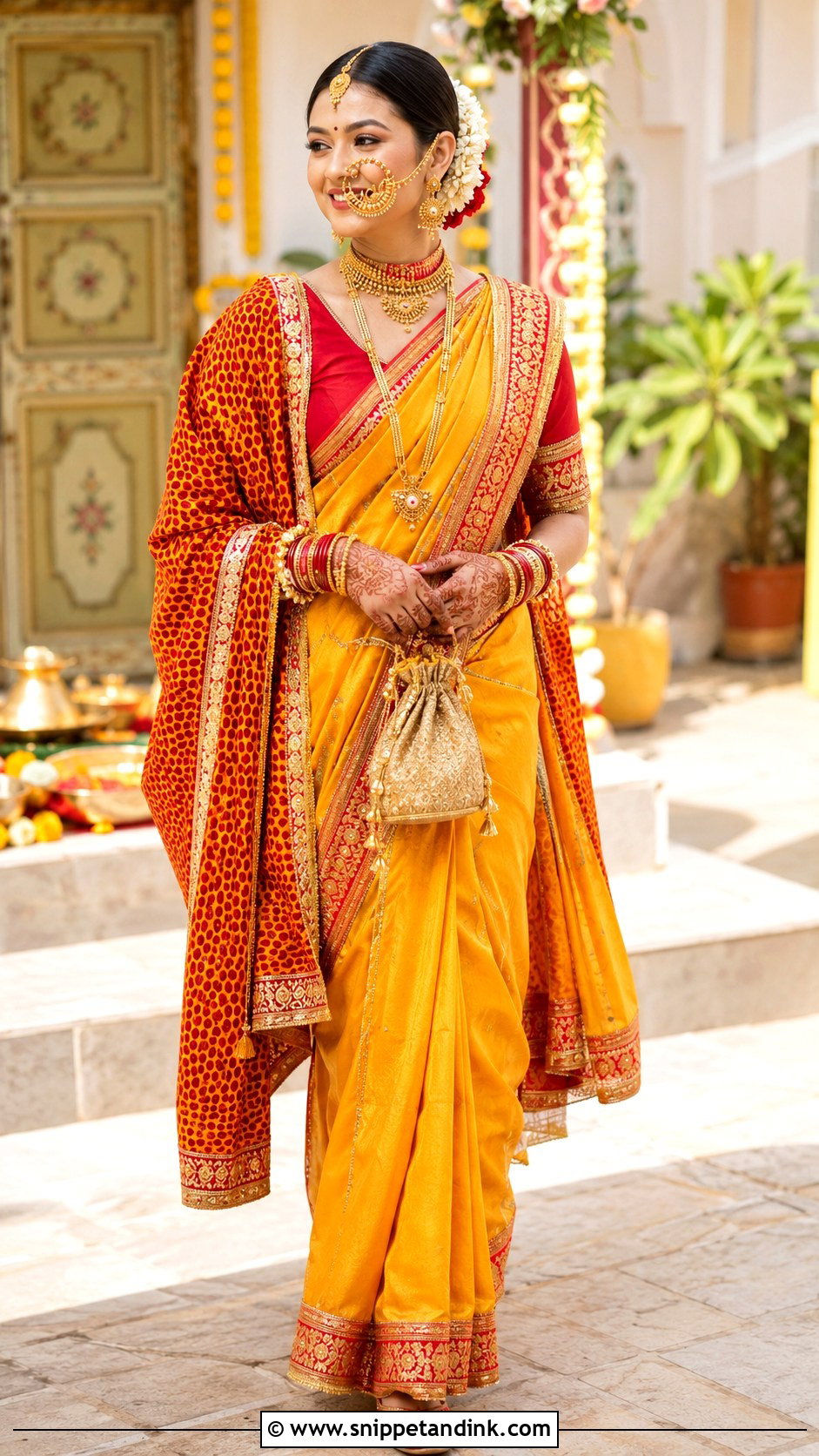
Plain red silk is the easiest base for traditional gold, because the fabric’s own sheen does what sequins would. Choose a paneled lehenga with a broad gold border, a structured elbow-sleeve blouse and a light yellow-and-red Pichora. Skip crystals; on shiny silk they compete with the jewelry under flash. A circular nath, galoband, paunji, earrings and a delicate longer necklace are plenty. I’d braid the bun with a center part, because a braided base takes pins far better than smooth hair and the head covering stays put through every ritual. A clean base, softly smoked eyes and red lipstick, cushioned gold juttis and a compact red potli finish it.
5. Kumaoni Bride Ivory Lehenga With Red Pichora
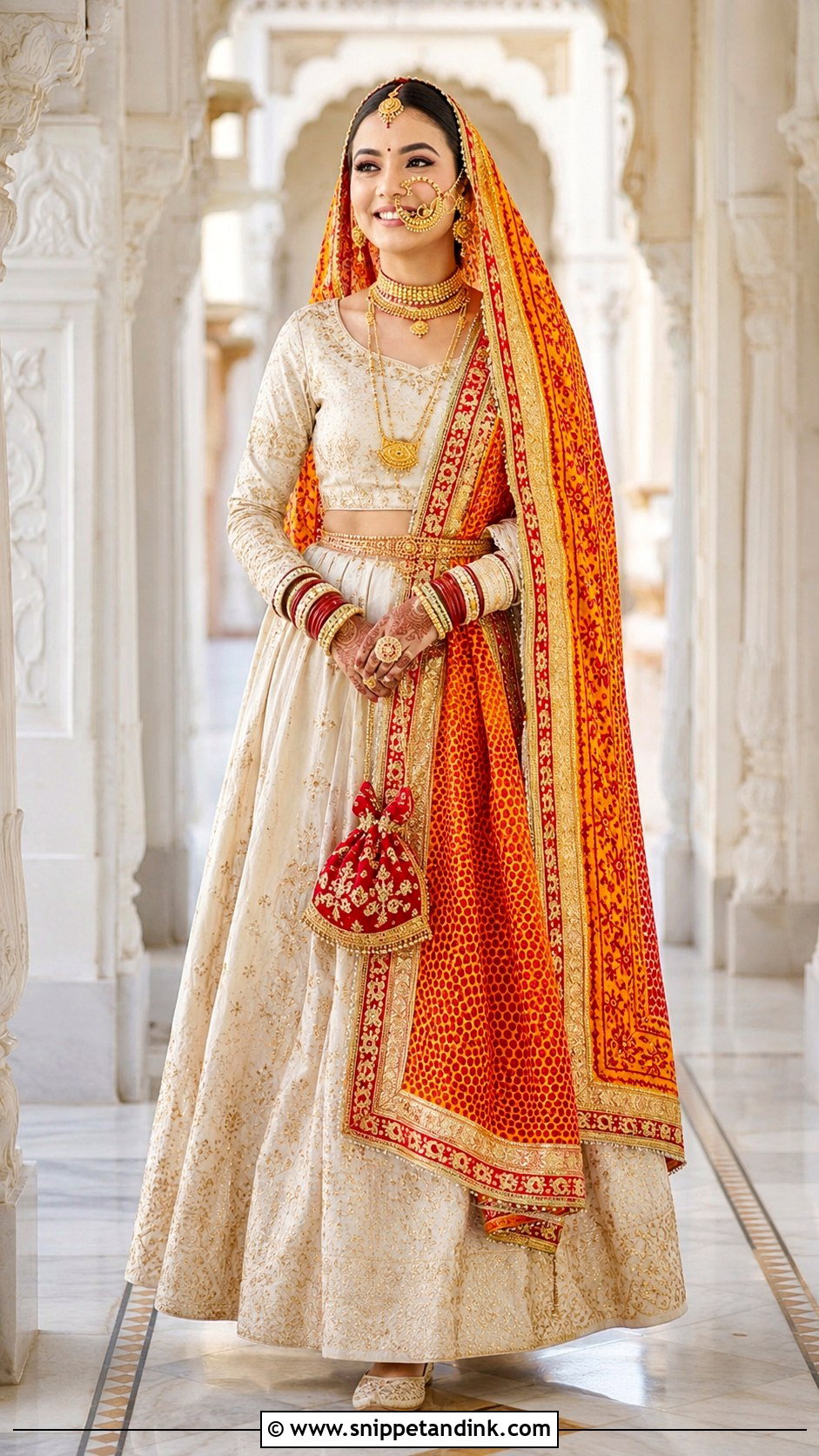
An ivory lehenga makes the traditional colors look brighter, not weaker. With restrained gold embroidery underneath, a red-and-yellow Pichora becomes the clear center of the outfit. Full or three-quarter sleeves give a ceremony-ready shape. Drape the Pichora over the head and across one shoulder, and keep its central swastika motif open on the back or shoulder rather than folded away. A thin waist belt can work if it doesn’t catch the drape. One practical warning: hand-dyed Pichoras can bleed onto pale fabric if they get damp, so test a corner before you layer it over ivory. A sleek low bun with flowers, kohl, a clear red lip, ivory juttis and a red potli complete the look.
6. Kumaoni Bride Yellow Saree And Red Blouse
A yellow sari echoes the Pichora’s own palette, which is both its charm and its problem. Mustard, turmeric or saffron silk with a red-and-gold border looks joyful, but two yellows layered together can merge into one block of color. Separate them with clear red borders, a red elbow-sleeve blouse and crisp pleating, and choose a sari shade a step deeper or paler than the Pichora. A lightweight Pichora over the head for the main rituals, then gold through the nath, galoband, earrings, paunji and a longer chain. A smooth bun with white flowers set low, a red bindi, brick-red lipstick, red flats and a gold potli finish it.
7. Kumaoni Bride Red Banarasi Saree Look
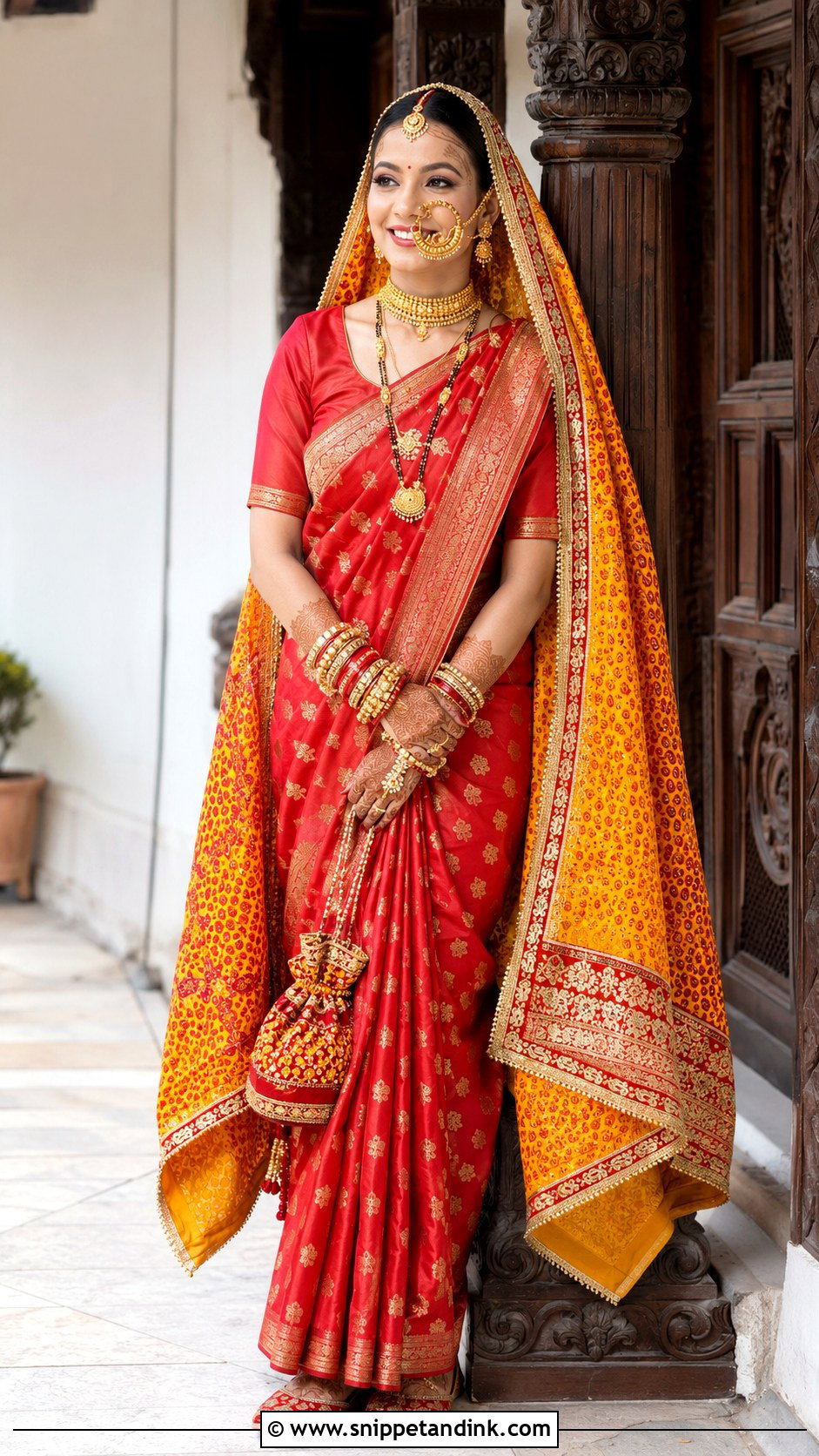
Banarasi brings richness through the weave rather than surface work, so the sari stays light to wear even when it looks grand. I’d choose small gold butis and a clearly defined border with a plain matching blouse. The Rangwali Pichora remains the main head covering. Arrange it loosely enough that the Banarasi pallu and border still show. Otherwise you’ve paid for a weave nobody sees. Add a Kumaoni nath, galoband, paunji, gold earrings, chareu and toe rings, with a center part and low bun. Kohl-rimmed eyes and red lipstick, red-and-gold juttis and a structured potli complete the look for a bride who wants familiar Indian bridal fabric alongside her regional details.
8. Kumaoni Bride Velvet Lehenga For Winter
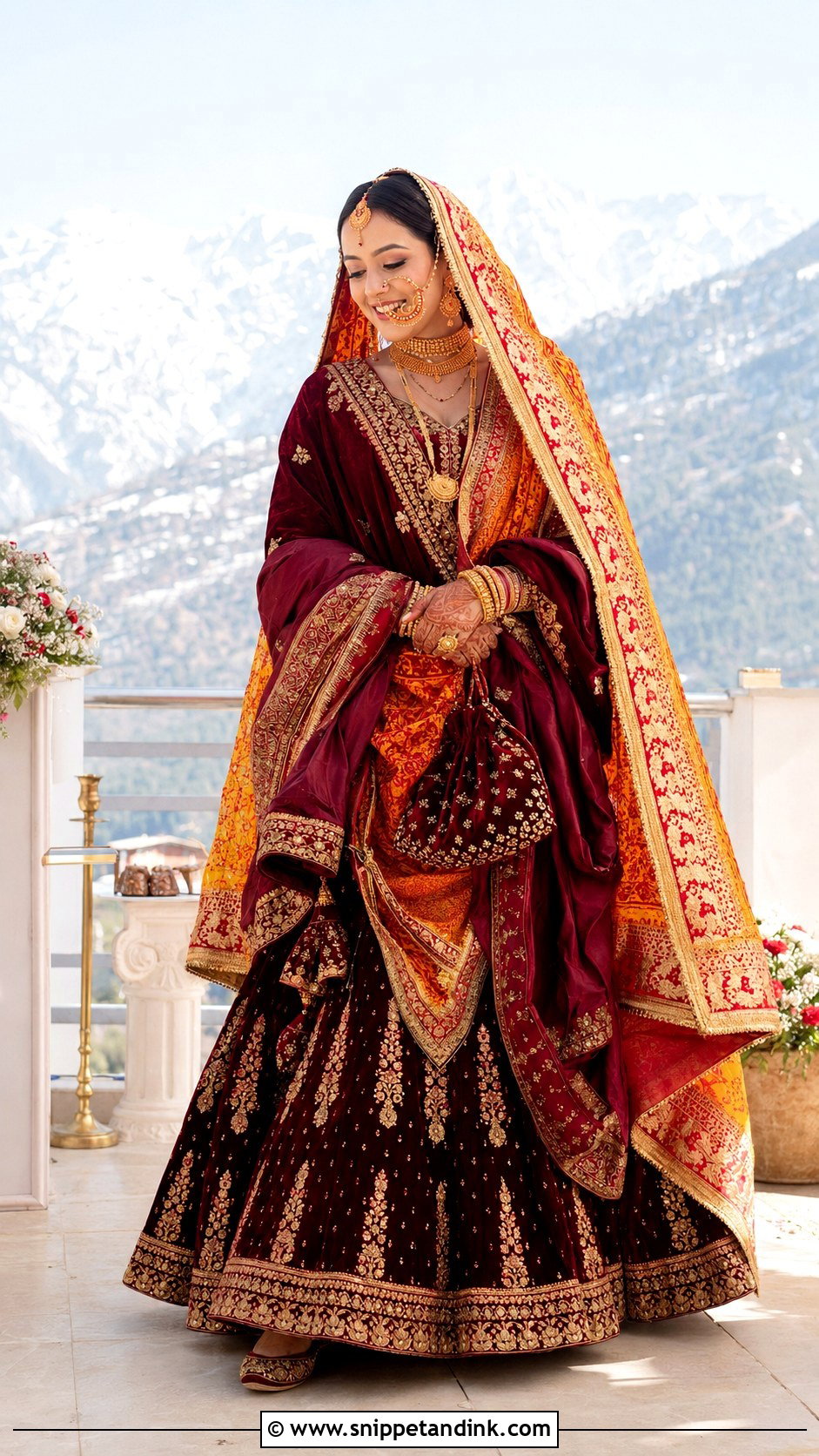
Mountain weddings in winter get properly cold after dark, and a bride shivering through the rituals is something I plan around. A deep red or maroon velvet lehenga with controlled gold embroidery and full sleeves holds warmth well. Ask for a breathable cotton lining, because velvet against skin gets clammy indoors near a fire. Thermal leggings fit invisibly under the skirt, and closed embroidered juttis keep the feet warm on stone floors. Keep a coordinated shawl nearby for outdoor photos while a lightweight Pichora covers the head and shoulders. One statement nath, galoband, earrings, paunji and a single longer necklace are better than several heavy layers over velvet. A secure low bun handles the wind; smoked eyes and a berry lip finish it.
9. Minimal Kumaoni Bride With Lightweight Pichora
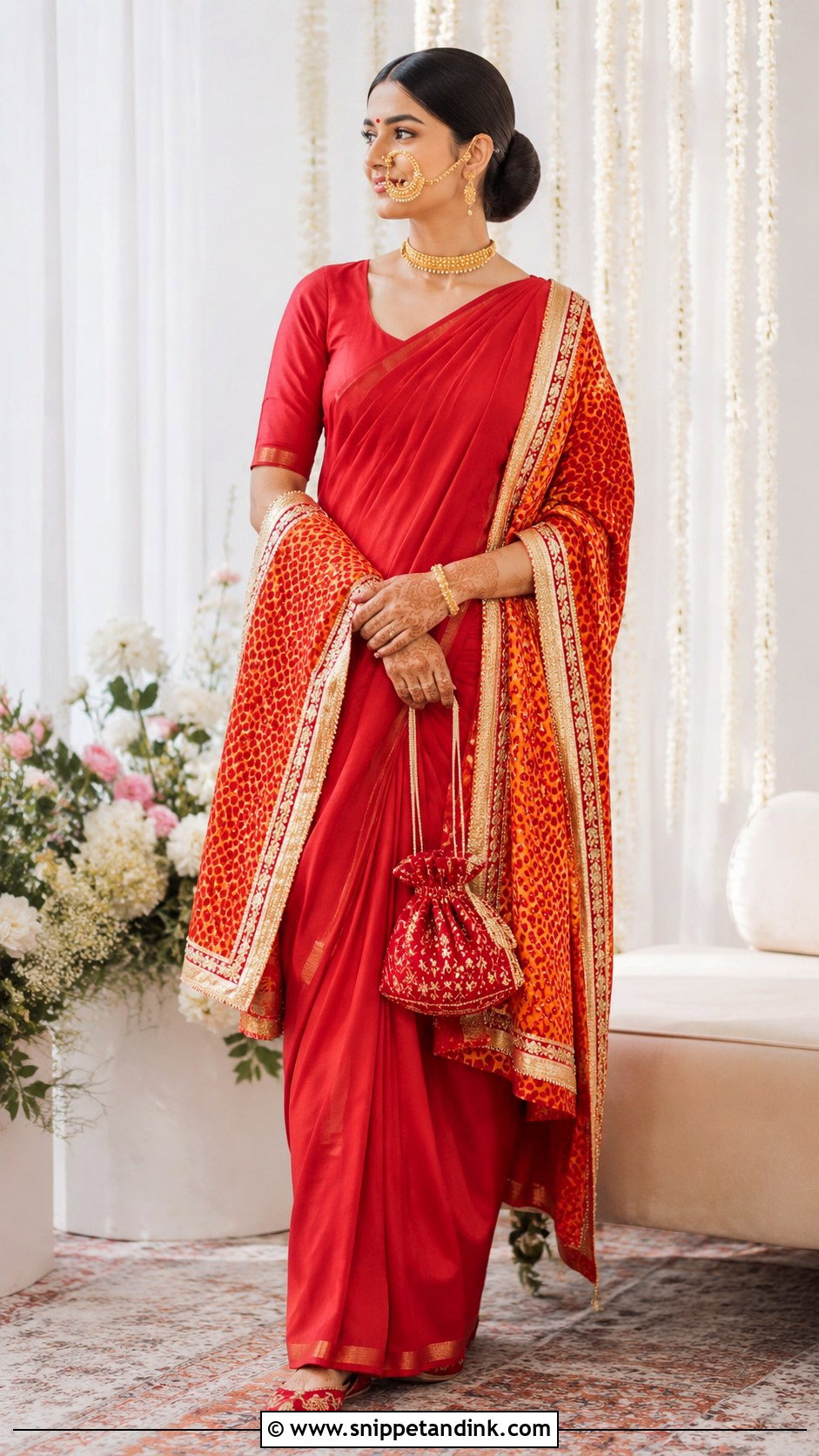
Not every bride wants a heavy lehenga and four necklaces, and the minimal version can feel more Kumaoni, not less. A plain red silk sari, an elbow-sleeve blouse and a hand-finished Pichora with a neat border let the textile and one statement nath carry the meaning. Add a slim galoband, small gold earrings, paunji and comfortable red flats, and resist filling every gap with an accessory. A smooth center-parted bun, a subtle bindi, natural skin and a classic red lip keep the mood quiet. I suggest this for intimate ceremonies and for brides who need to move freely through a long day.
10. Kumaoni Bride With Heirloom Jewelry
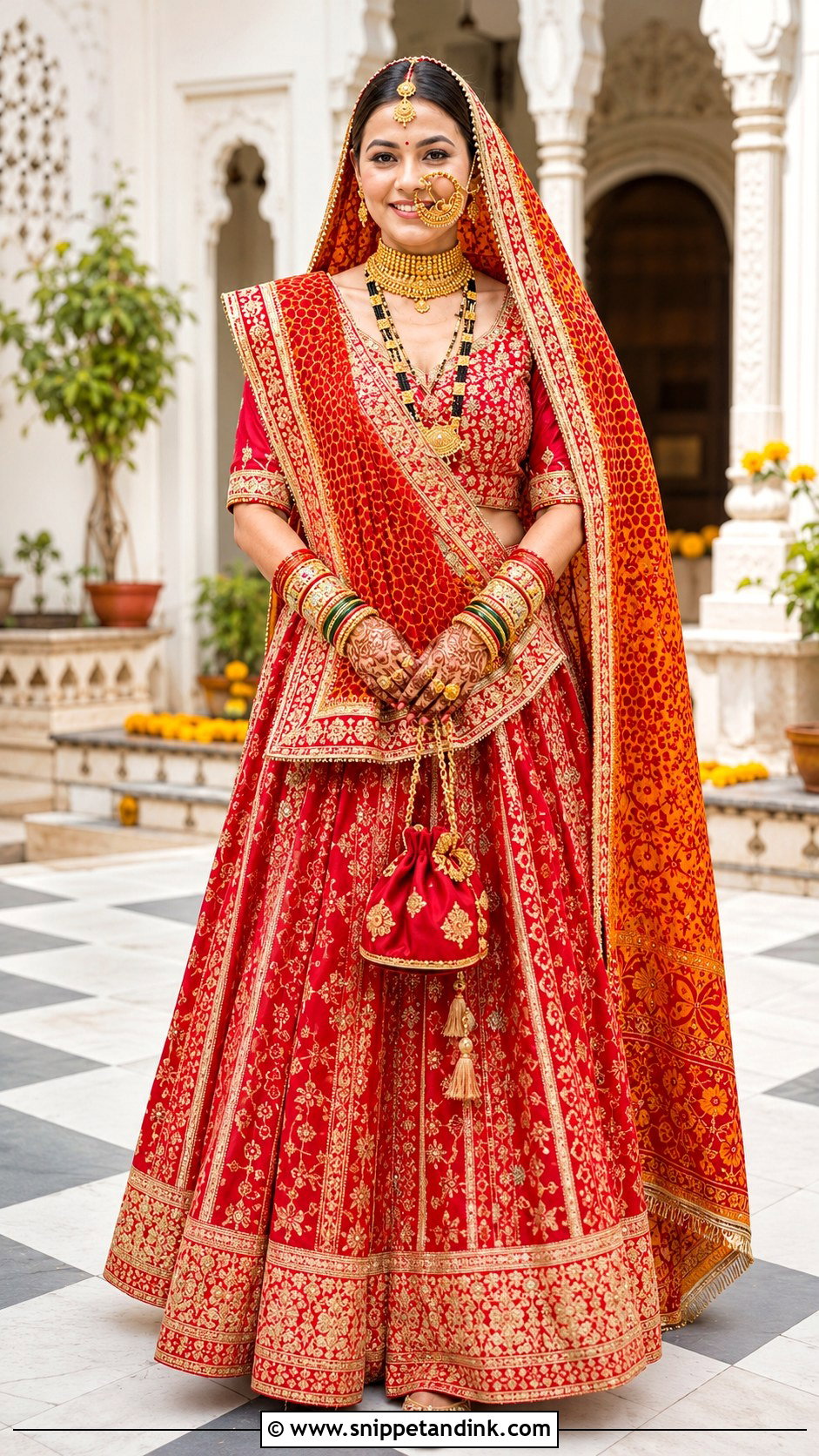
Heirloom pieces are where I slow down the most. An inherited nath, galoband, earrings, paunji or chareu deserves a plain red silk lehenga or sari that doesn’t compete with old craftsmanship. Position the Pichora’s border to frame the face and jewelry. Weeks before the wedding, have a jeweler check every clasp, thread and fastening; old cords on a galoband are often the first thing to give way. A large old nath needs a discreet support chain into the hair, and nothing heavy should hang directly from delicate fabric. A low bun, warm gold lids, red lipstick, simple juttis and a small potli keep the focus on the pieces. Photograph each one beforehand so the family’s record survives the day.
11. Kumaoni Bride Red Lehenga With Nath And Galoband
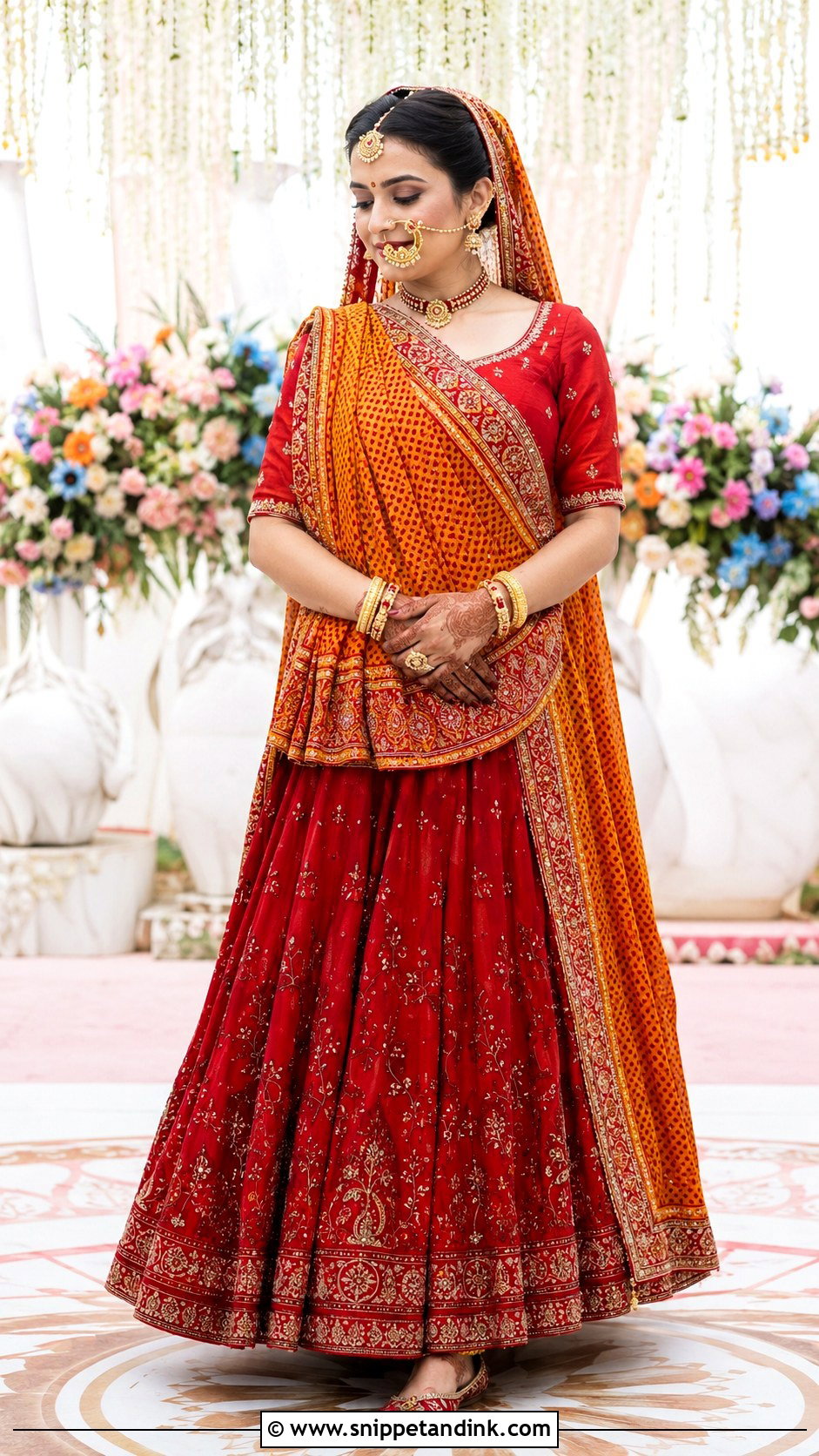
The nath and galoband can anchor the whole outfit, but only if everything else scales around them. Pick a red lehenga with medium-density gold work and a simple blouse neckline that leaves room for the close-fitting galoband. Check in the mirror that the Pichora’s border doesn’t sit over the nath chain or earrings. With a very large nose ring, I drop to smaller earrings and cut back the extra necklaces, otherwise the face gets crowded from every side. Paunji, toe rings and red juttis complete it. A sleek low bun takes strong pins beneath the veil. Defined eyes, softly flushed cheeks and red lipstick finish a grand but balanced look.
12. Kumaoni Bride Pastel Lehenga For Day Wedding
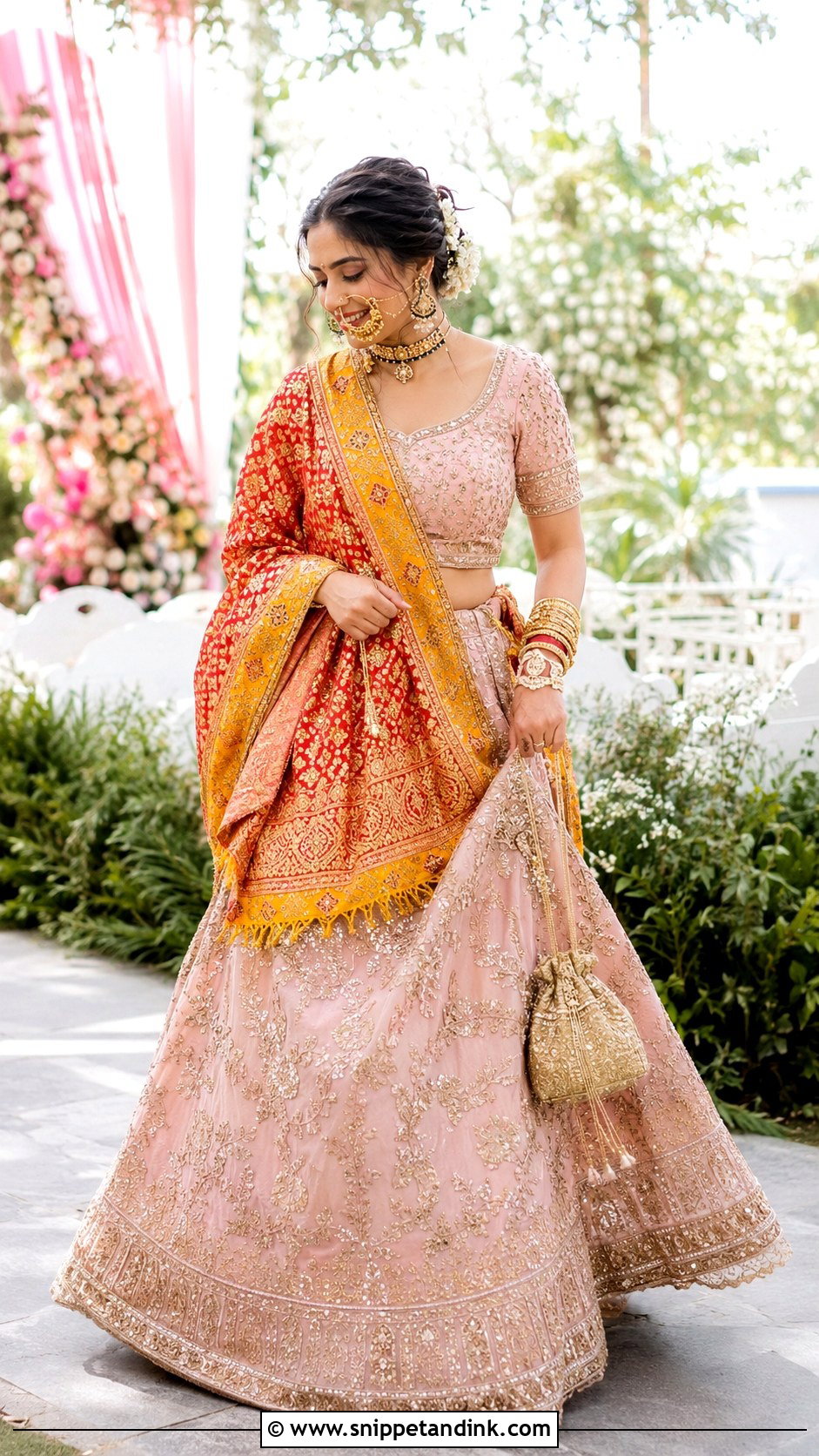
Daylight shows fine embroidery and soft color clearly, so a day wedding is the right setting for pastels. Blush, peach, sage or pale gold with subtle zari and a matching blouse all work. The Pichora brings it back to tradition, along with the nath, galoband, paunji, earrings and toe rings. Let the Pichora remain the strongest color in the outfit and don’t add a second heavily embroidered veil, which would muddle it. A loose low bun with small white flowers stays fresh and still supports the head covering. Peach-toned makeup, a rose-red lip, neutral juttis and a compact gold potli finish a lighter look that keeps its meaning.
13. Kumaoni Bride Temple Wedding Outfit
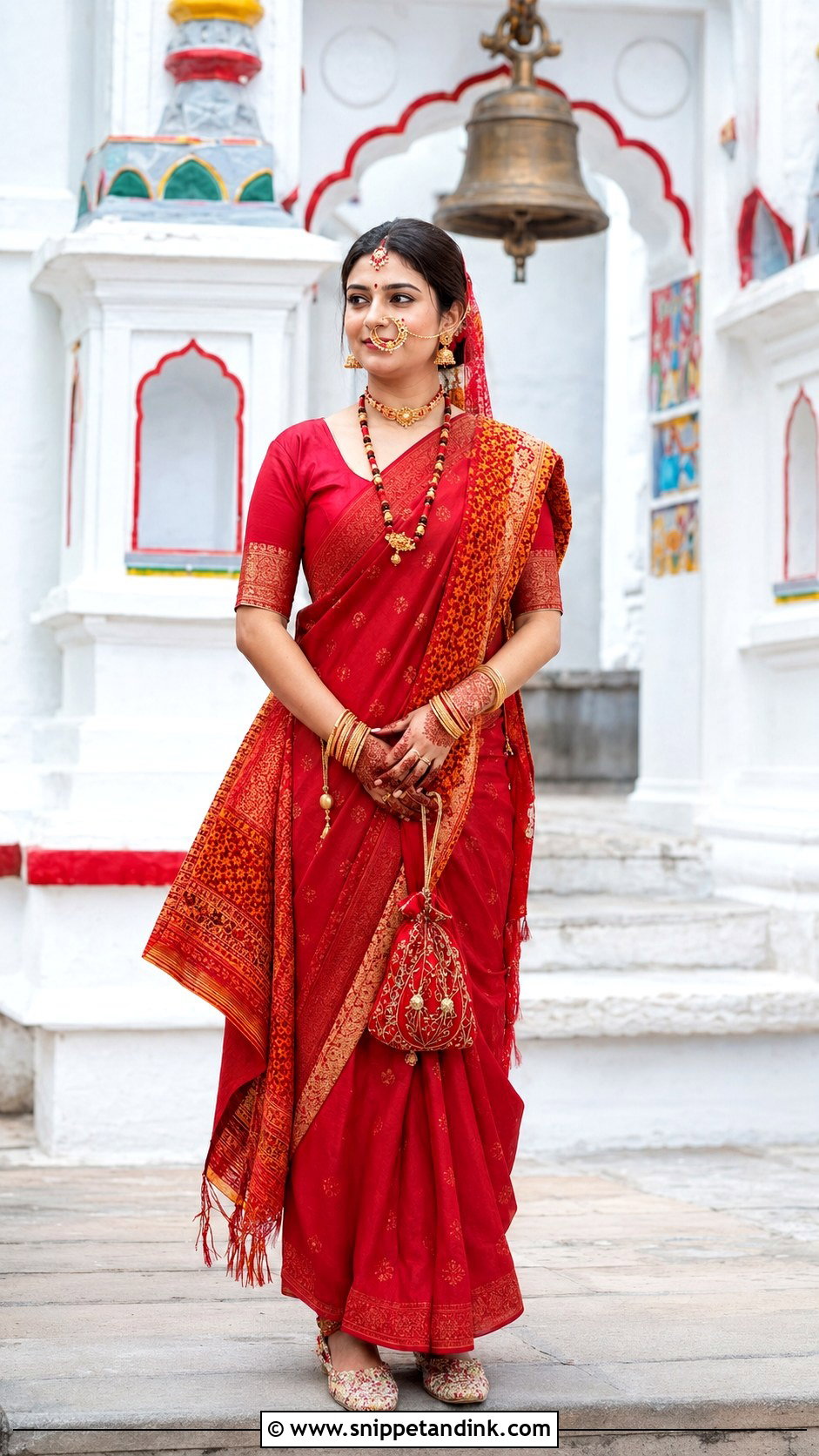
A temple wedding outfit has to let you sit cross-legged, stand, bow and walk barefoot without constant adjusting. A red or maroon silk sari over a secure petticoat, an elbow-sleeve blouse and a lightweight Pichora that stays neatly on the head are the basics. I pin the drape at both shoulders from underneath before we leave, because fussing with pins in front of a priest is no one’s idea of calm. A manageable nath, galoband, paunji, earrings, chareu and simple toe rings suit the space. A sleek braided bun stays tidy. Use waterproof kohl and long-wearing red lipstick, flat juttis you can slip off easily, and a small potli for essentials.
14. Kumaoni Bride Aipan Motif Lehenga
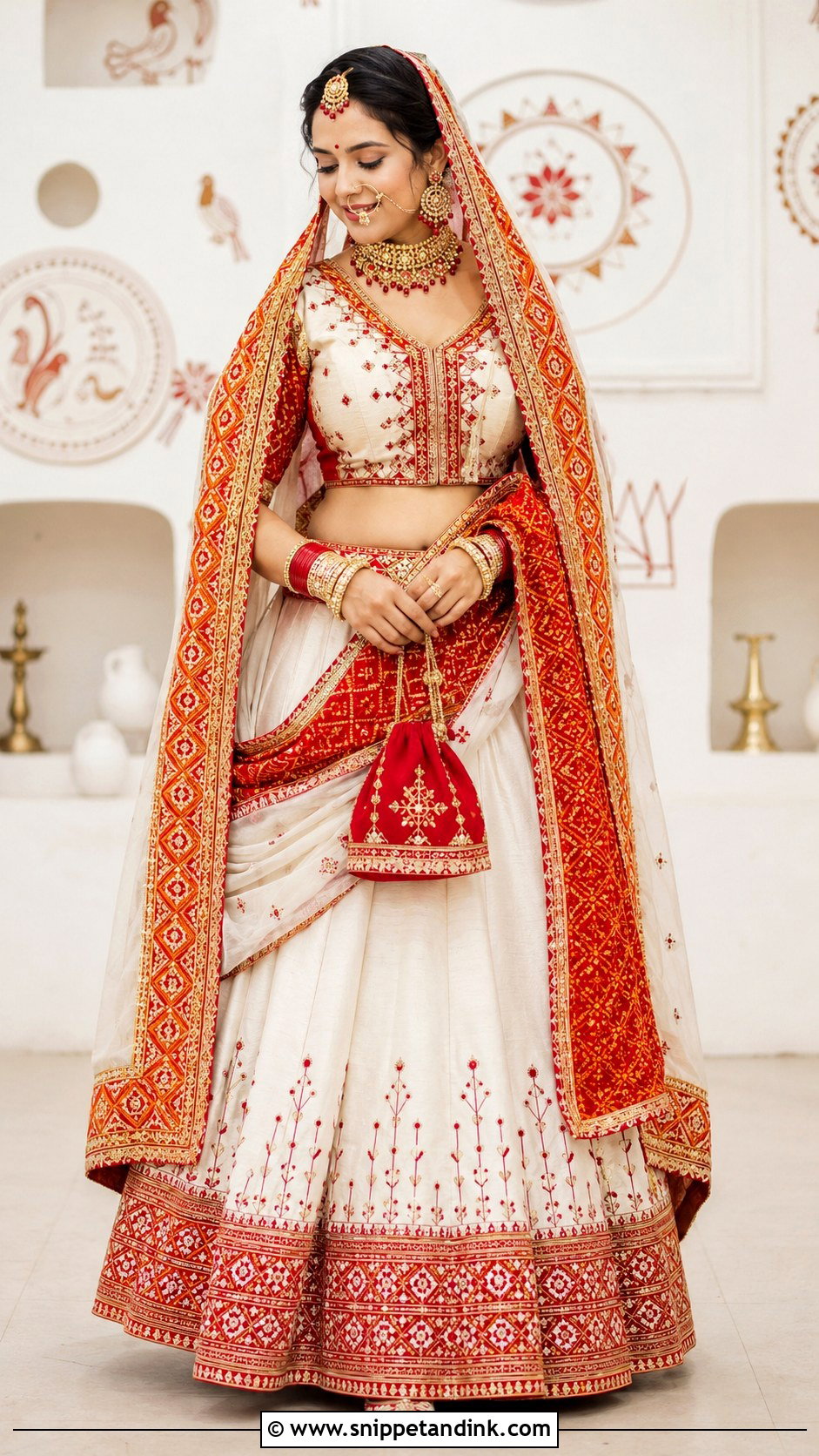
Aipan-inspired embroidery links a contemporary lehenga to Kumaon’s ritual floor art, and it needs restraint to work. Choose a red, ivory or saffron lehenga with white or gold geometric borders placed with care, and keep the blouse structured and simple so the motifs stay readable. The Rangwali Pichora goes on top, so avoid lehenga embroidery that competes with its central design. A gold nath, galoband, earrings, paunji and chareu suit it, with juttis carrying a small matching border rather than motifs from head to toe. Aipan patterns have ritual meaning. Work with a Kumaoni artisan or a designer who knows them, so sacred symbols aren’t reduced to filler.
15. Kumaoni Bride Gold Lehenga With Pichora
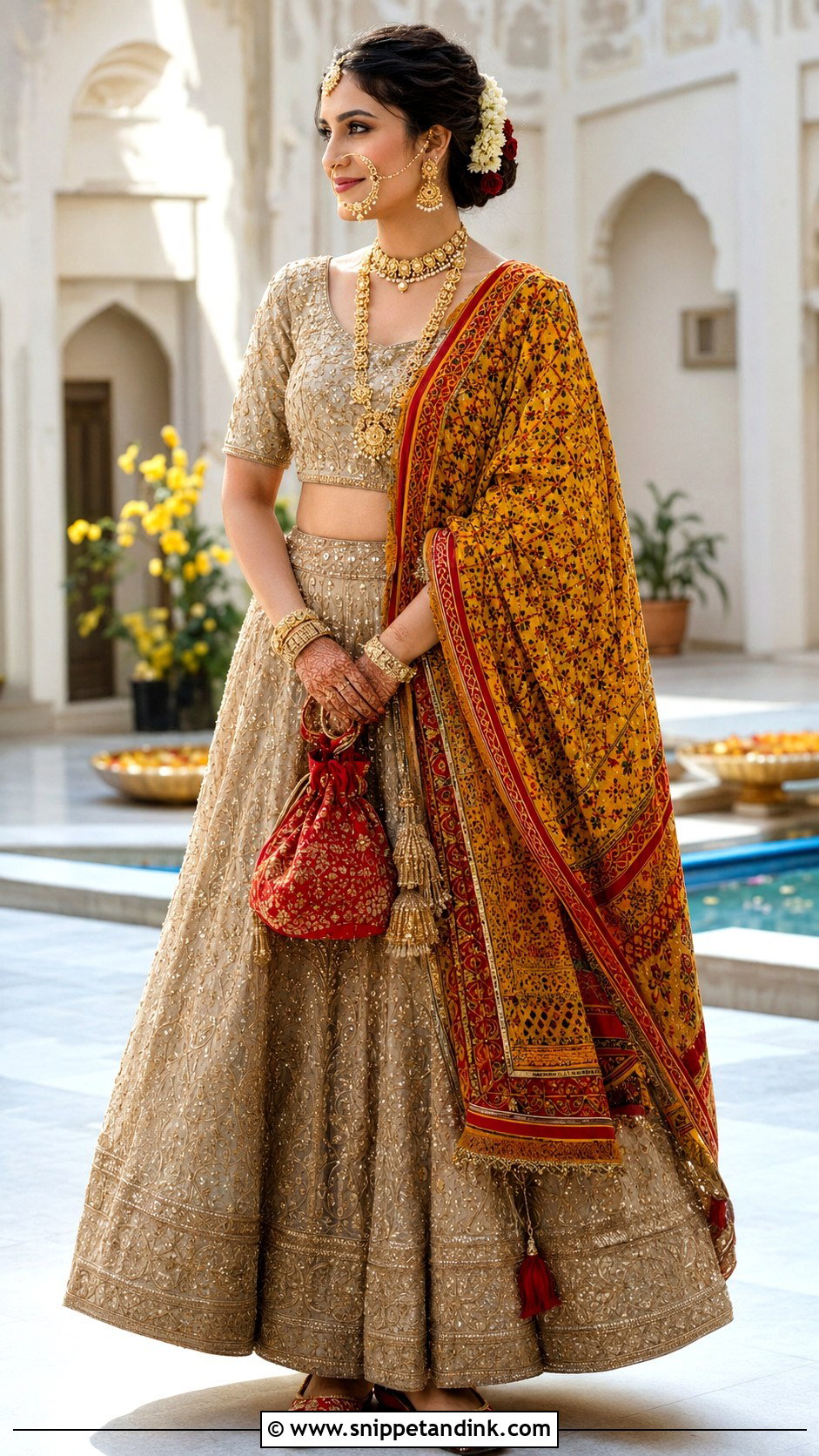
Muted gold gives the Pichora’s yellow and red a calm background. Ask for antique gold, champagne or beige-gold rather than a high-shine metallic; reflective lamé bounces flash and drowns out the textile you actually care about. A matching blouse lets the Pichora supply the contrast at the face and shoulders. Traditional gold ornaments blend into this palette, so bring red back through the lip, bindi, potli and embroidered juttis. A textured low bun with a few flowers at the back, soft bronze lids and luminous skin finish a luxurious outfit where the regional drape and jewelry still lead.
16. Plus Size Kumaoni Bride Lehenga Look
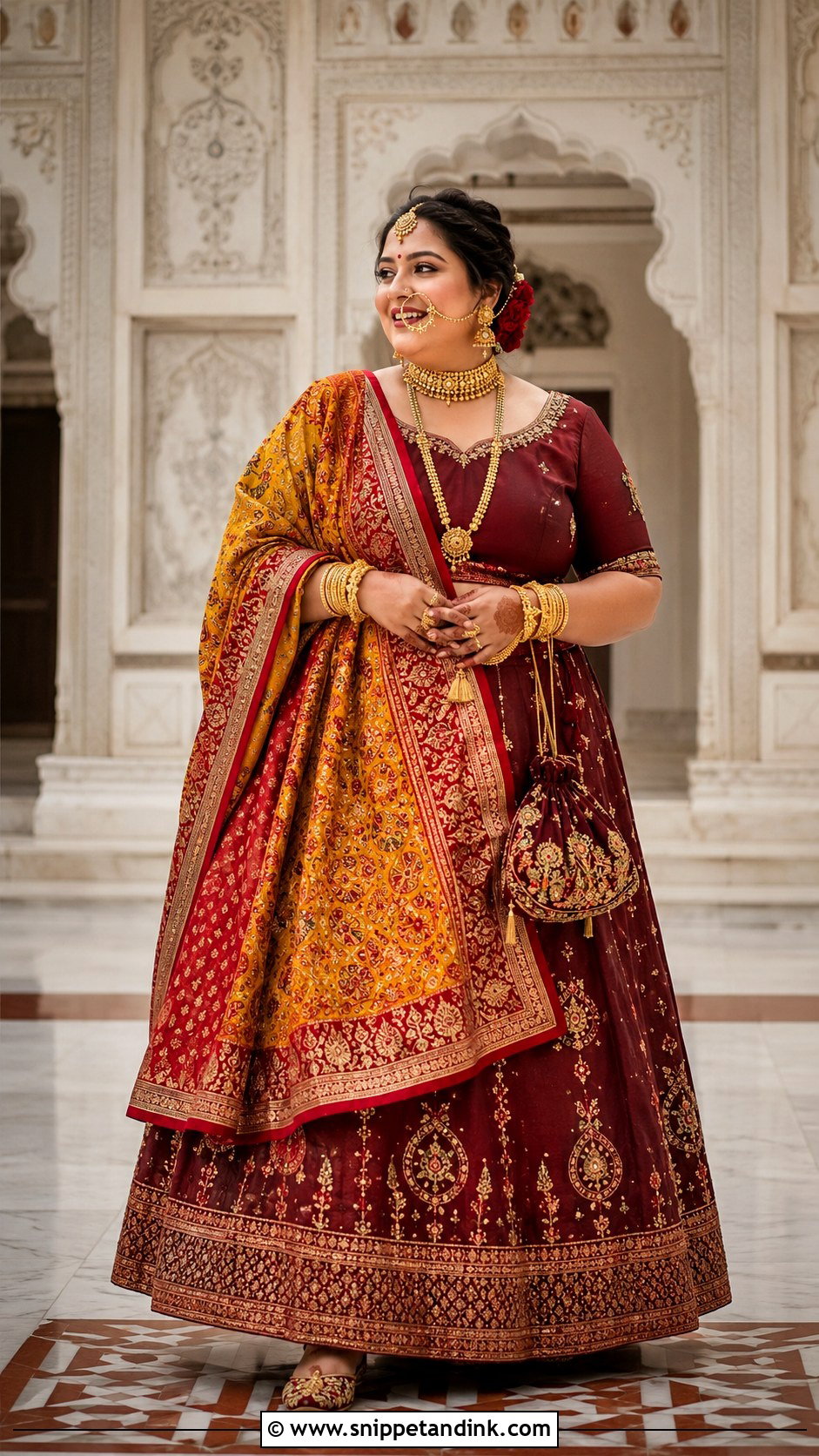
For a plus-size bride I plan the outfit around comfort and secure construction first, and around her own preferred shape rather than any rule about what’s flattering. A paneled red or maroon lehenga with a supportive high-waisted band and a blouse cut to exact shoulder, bust and sleeve measurements is the starting point. Vertical or evenly spread embroidery creates smooth flow. A soft Pichora draped from head to one shoulder avoids extra folds at the upper arm. Choose a proportionate nath, galoband, longer necklace, paunji and earrings, and a supportive low bun under the veil. Cushioned juttis and a potli with a wrist loop help on a long day. Book a full dress rehearsal: sit, walk, wear the veil and feel the jewelry weight before the wedding, not on it.
17. Petite Kumaoni Bride Saree Look
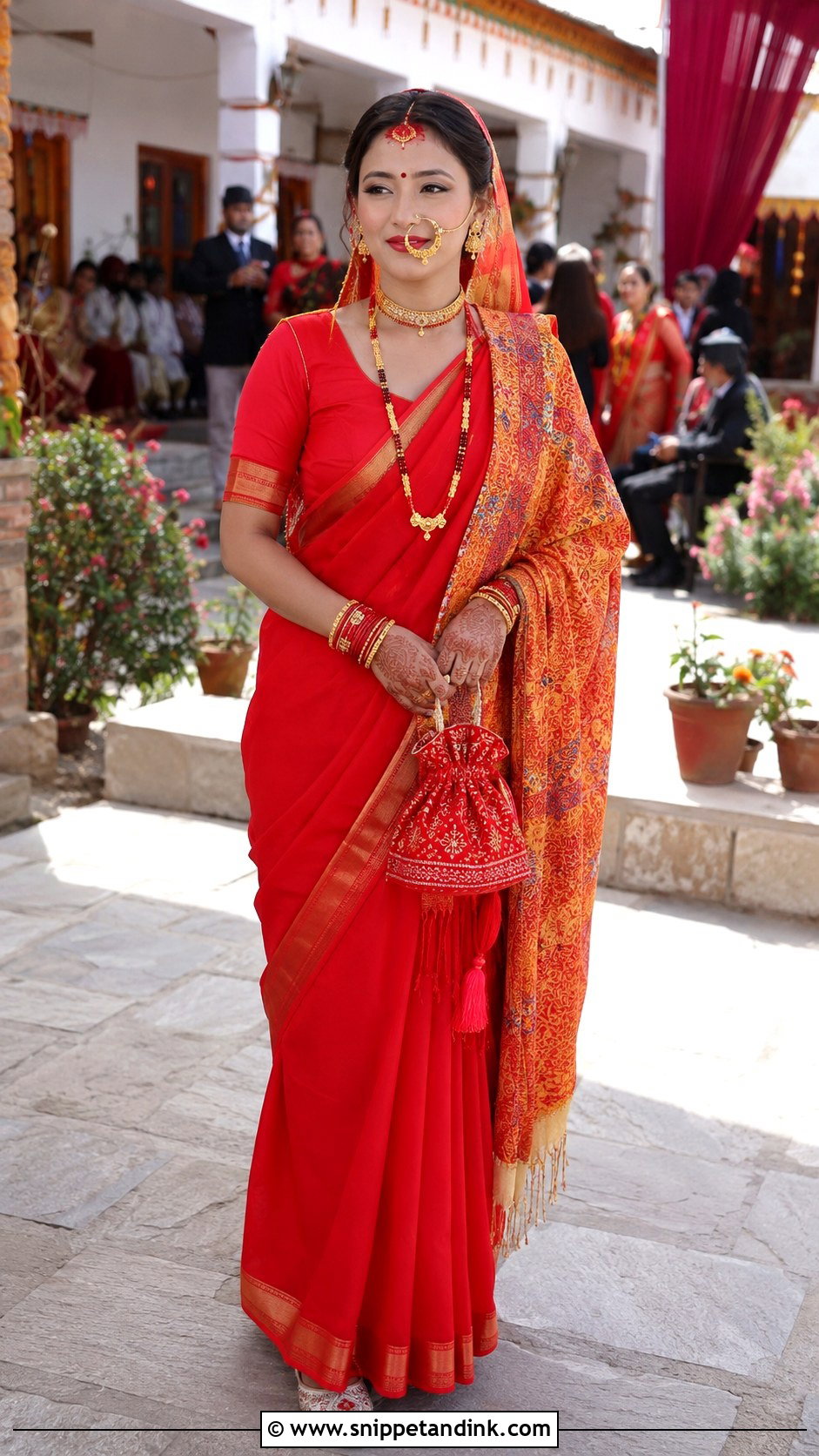
On a petite frame, too much fabric is the enemy, and the Pichora is where bulk usually builds up. Pick a lightweight red silk sari with a medium or narrow border and a fitted blouse in the same color family, then drape it neatly. Place a lightweight Pichora over the head in one smooth layer, with no thick folds stacking at the shoulders. A medium nath, slim galoband, compact earrings, paunji and one longer necklace keep the proportions right. Keep the bun low and neat, not wide. Defined eyes, a small red bindi and a rich red lip complete it. Juttis with a subtle hidden lift help if you want a little height without heels on uneven ground.
18. Mature Kumaoni Bride Silk Saree Look
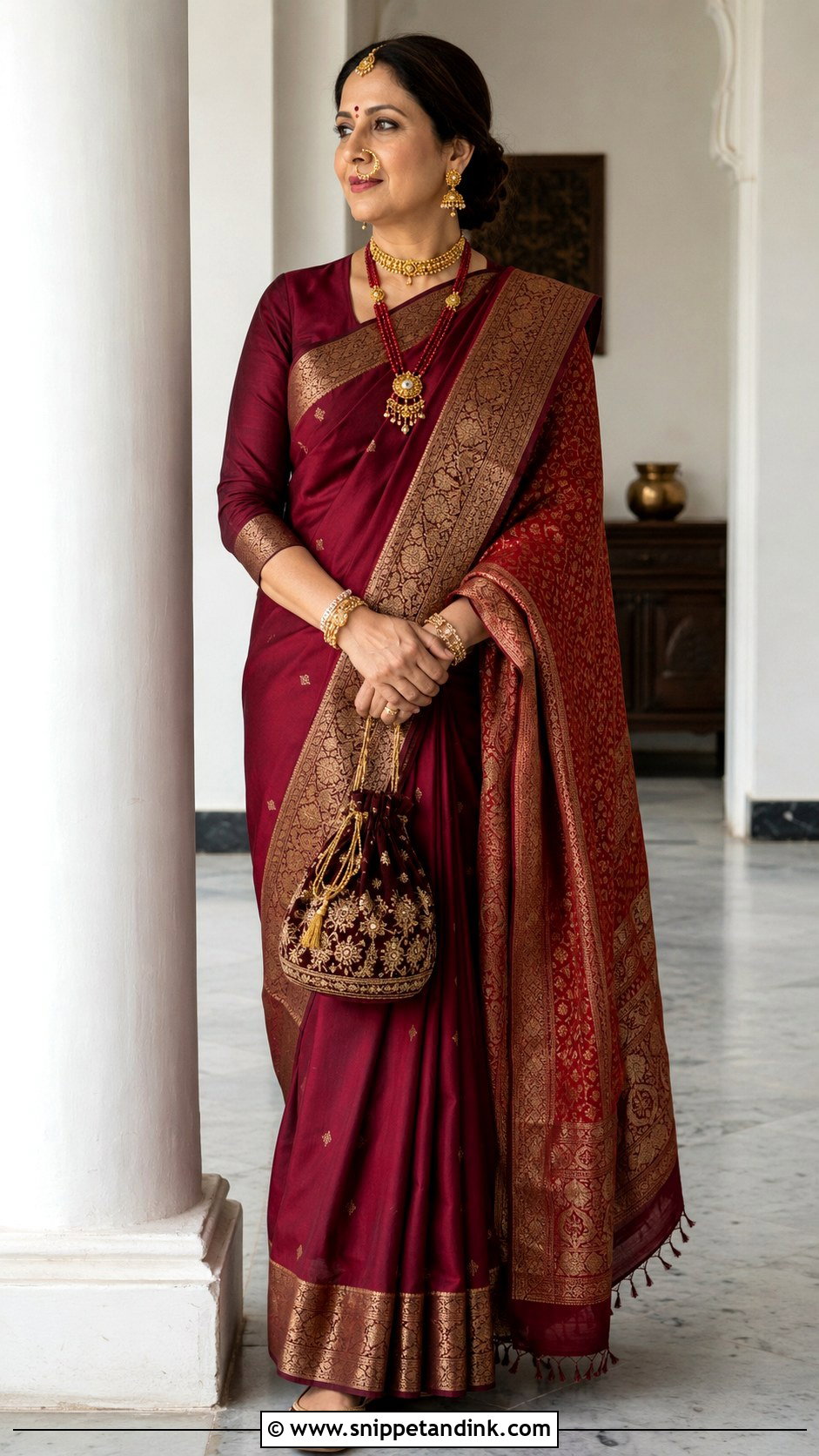
Age changes nothing about what a bride can wear, only what she wants to feel in it. Deep red, rust, maroon or burgundy silk with an antique-gold border looks rich at any age, and a three-quarter-sleeve blouse with real support makes a long day easier. A lightweight Pichora should rest comfortably over the head and shoulders. Choose jewelry by comfort too: a medium nath, galoband, earrings, paunji and chareu can replace several heavy necklaces. A smooth bun or soft low twist anchors the drape. I lean on hydrating makeup here, since powder settles into fine lines over a long ceremony. A red or berry lip, closed juttis and a light potli finish it.
19. Kumaoni Bride Reception Lehenga
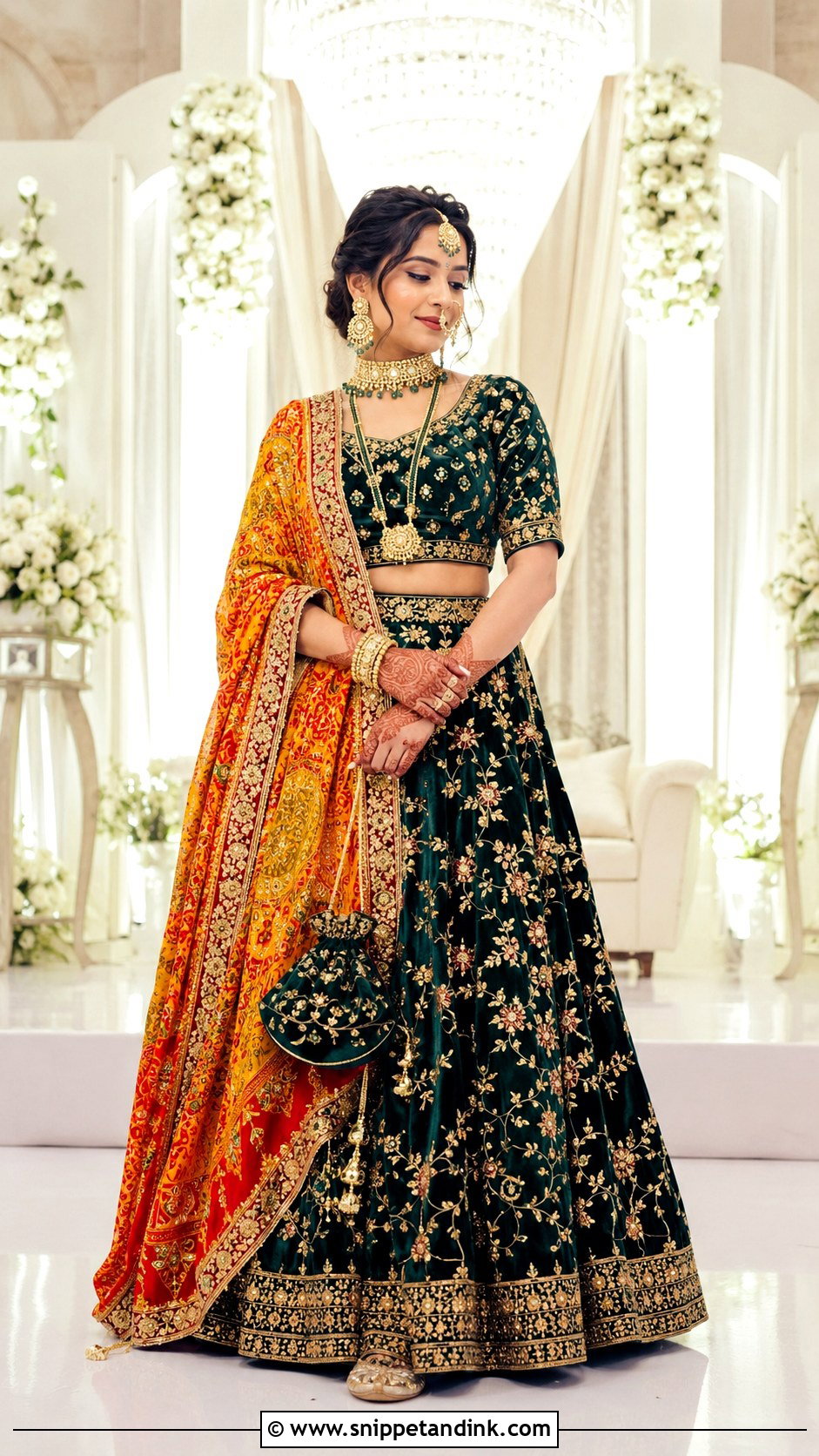
The reception is where a bride can move toward evening wear and keep her Kumaoni identity in the details. Emerald, navy, wine or a deep plum lehenga with fine gold embroidery and a structured blouse all suit artificial light. Rather than covering the head, the Pichora can sit across one shoulder or be worn like a stole. Talk this through with family first, because some households expect it on the head throughout. A smaller nath or delicate nose ring, a galoband, statement earrings, paunji and one long necklace keep it Pahadi. Soft waves, a braided bun or a polished ponytail, a berry lip, metallic juttis and a structured potli finish it.
20. Modern Kumaoni Bride Fusion Outfit
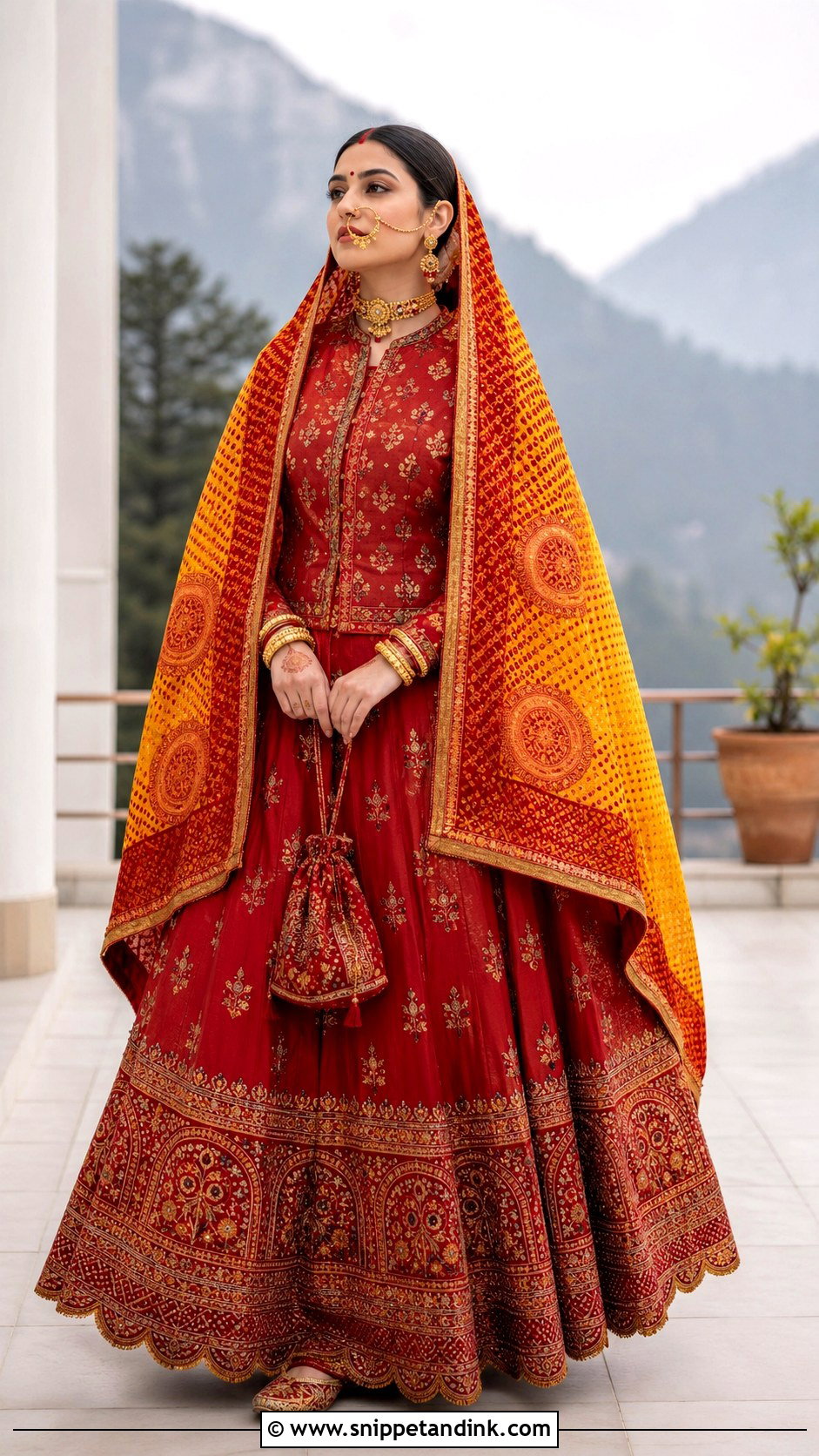
Fusion works when the traditional pieces are chosen on purpose, not added at the last minute to make an outfit feel regional. The base can be a red structured lehenga, a tailored long blouse or a skirt-and-jacket set. An authentic Pichora is the main heritage layer, over the head for rituals and across the shoulders for photographs. The nath, galoband, paunji and earrings may need resizing to sit well with cleaner lines; a huge traditional nath against a minimal jacket can look borrowed. Don’t mix accessories from several regions into one look. A center-parted low bun, smoked eyes, red lips, embroidered juttis and a compact potli finish it, and family and Kumaoni artisans can guide which motifs and draping customs to keep.
Wearing a Large Kumaoni Nath for Hours
The big gold nath is the piece brides worry about most, and for good reason. A large ring pulls at the piercing, swings when you turn your head and gets in the way when you eat or drink.
- Wear it at home for an hour in the week before the wedding. You’ll learn how far you can turn your head and how to sip through a straw with it on.
- Use the support chain. It should run from the ring to a pin in the hair above the ear, taking the weight off the nostril. Your hairstylist needs to know it’s coming so she builds a firm anchor point.
- If your piercing is new or has partly closed, see a professional piercer weeks ahead. Forcing a thick wire through on the morning is painful and can bleed.
- Put the nath on after the Pichora is set, so you aren’t dragging fabric over it.
- Agree in advance with your family when it can come off, usually once the main rituals and photographs are done.
A clip-on nath is a reasonable compromise for brides without a piercing, though it holds less weight, so choose a smaller design.
Let Family Custom Settle the Pichora, the Nath and the Drape
Every outfit above rests on the same few pieces. A traditional Pichora, a Kumaoni nath, galoband, paunji and chareu turn a sari, ghagra or lehenga into a heritage outfit. Around them you can wear classic red, maroon, muted gold, ivory or a daytime pastel and still look unmistakably Kumaoni. The practical side matters just as much on a long ceremony day: secure draping, supportive tailoring, comfortable footwear and jewelry fastenings tested in advance. Where motifs, ritual clothing and how the Pichora is worn are concerned, ask your elders before you ask anyone else. Their answer is usually the right one.



Leave a Reply