

Where the Pichora Pins, and Why It Slips
Almost every Kumauni bride I dress worries about the same thing: the Pichora sliding back off the head halfway through the ceremony. It usually happens because the drape is pinned to loose hair rather than to something solid. These are the steps I follow.
- Build a firm, low bun first, secured with U-pins pushed into a tight ponytail base. The bun is the anchor for everything that follows.
- Set the nath and earrings before the drape, so you’re not reaching under the fabric to fix them later.
- Place the Pichora so its central motif sits at the crown or upper back, then pin through the fabric into the bun at two points, left and right.
- Add one discreet pin at each shoulder, through the blouse seam, so the drape moves with you instead of dragging the head covering back.
Fabric matters as well. Pichoras come in georgette, chiffon, cotton and silk. Georgette and chiffon are light but slippery, and they need more pins; cotton grips the hair better and is easier to keep in place, though it creases. If you’re buying a new one, hold it up to the light and check that the red print is crisp at the edges, which is a sign of careful dyeing or printing.
1. Traditional Red Ghagra Choli Kumauni Bride
Start with the outfit most Kumauni grandmothers would recognise: a red ghagra choli under a yellow Rangwali Pichora. A flared silk or brocade ghagra with a fitted blouse and a firm waistband gives you the base; I keep the embroidery to gold borders, because the Pichora’s red motifs need a calm background to be seen. Drape the Pichora over the head and shoulders. It’s the single piece that tells everyone this is a Kumauni bride. Add a large gold nath, guloband, paunchi, delicate earrings and red-and-gold bangles, then a centre-parted bun, defined eyes, a red lip and embroidered juttis.
2. Red Banarasi Saree Kumauni Bride
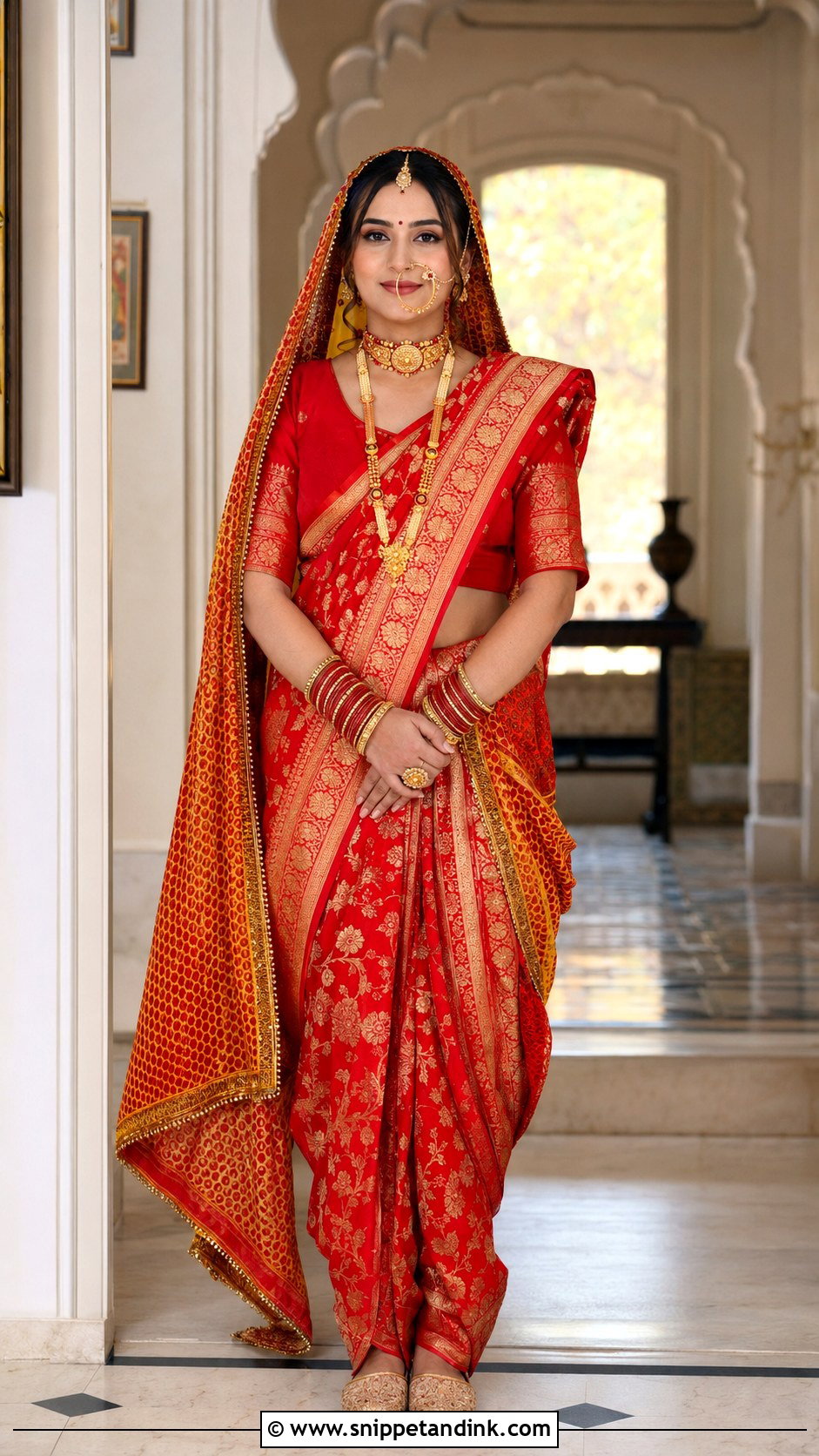
Banarasi silk catches lamp and daylight well, and a red one is a refined base for the Pichora. Choose a saree with traditional zari but some open ground between the motifs; two heavily patterned layers on top of each other turn into noise. A fitted red or antique-gold blouse with elbow sleeves suits it. The tricky part is layering: I pin the saree pallu first, flat and secure, and only then set the Pichora over it, so the two don’t slide against each other. Let a classic gold nath lead, with a guloband and one longer necklace, paunchi, bangles and embellished flats. A low bun, a clear centre part and sindoor as the ritual requires finish it.
3. Maroon Velvet Lehenga Kumauni Bride
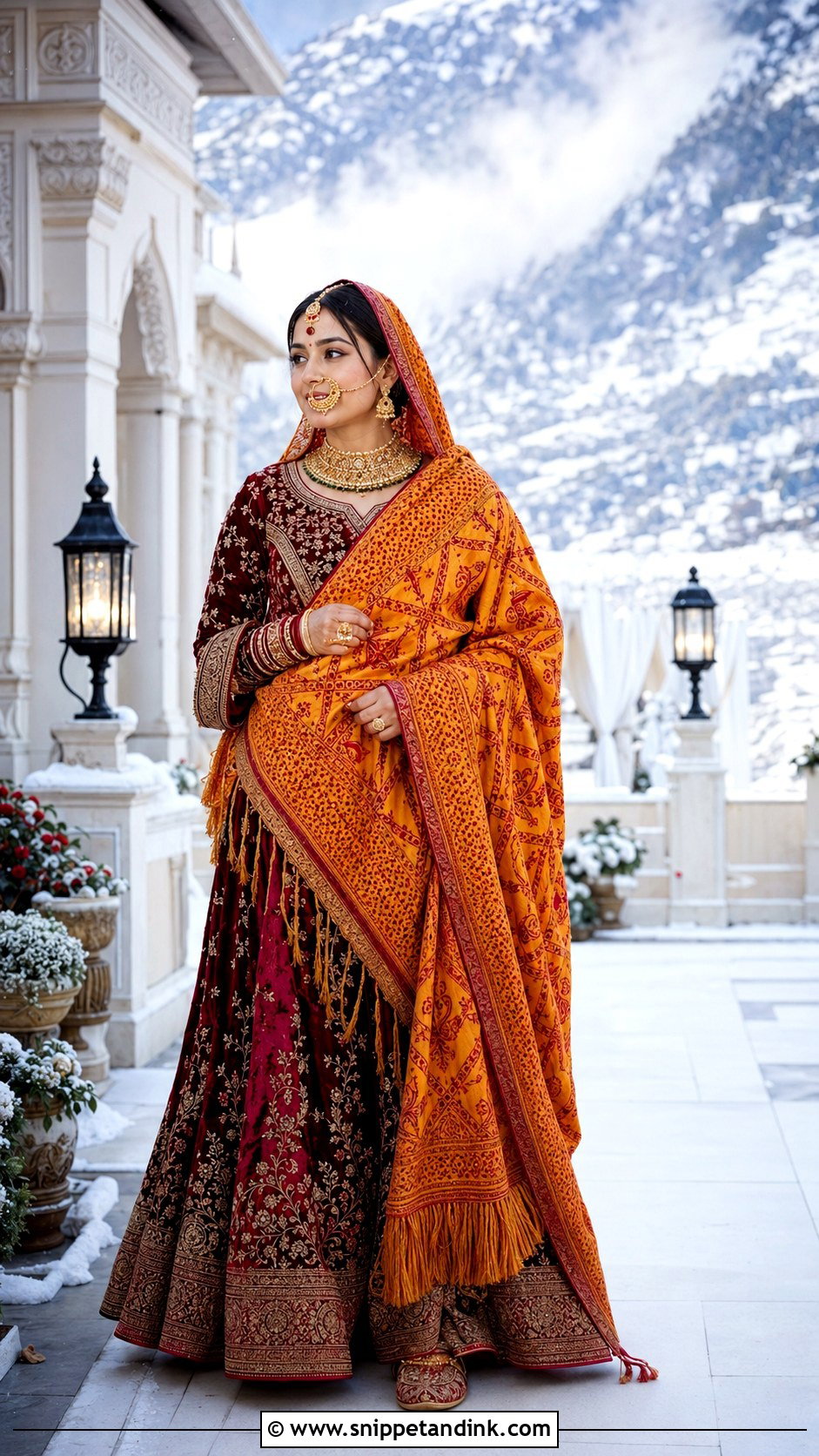
Winter weddings in the hills get properly cold after dark, and velvet earns its place here. A maroon velvet lehenga with antique-gold embroidery near the hem keeps the top half calm under the Pichora. Pair it with a full-sleeve velvet blouse, cut slim so the drape doesn’t bunch over thick fabric. Saffron-yellow against deep maroon is a strong, clear contrast. Choose a gold nath, compact guloband, drop earrings and stacked paunchi, with a braided low bun that stays put under the head covering. Closed juttis, a thin thermal layer under the blouse and a matching shawl between ceremonies keep you warm without changing how the outfit looks.
4. Ivory Gold Lehenga Kumauni Bride
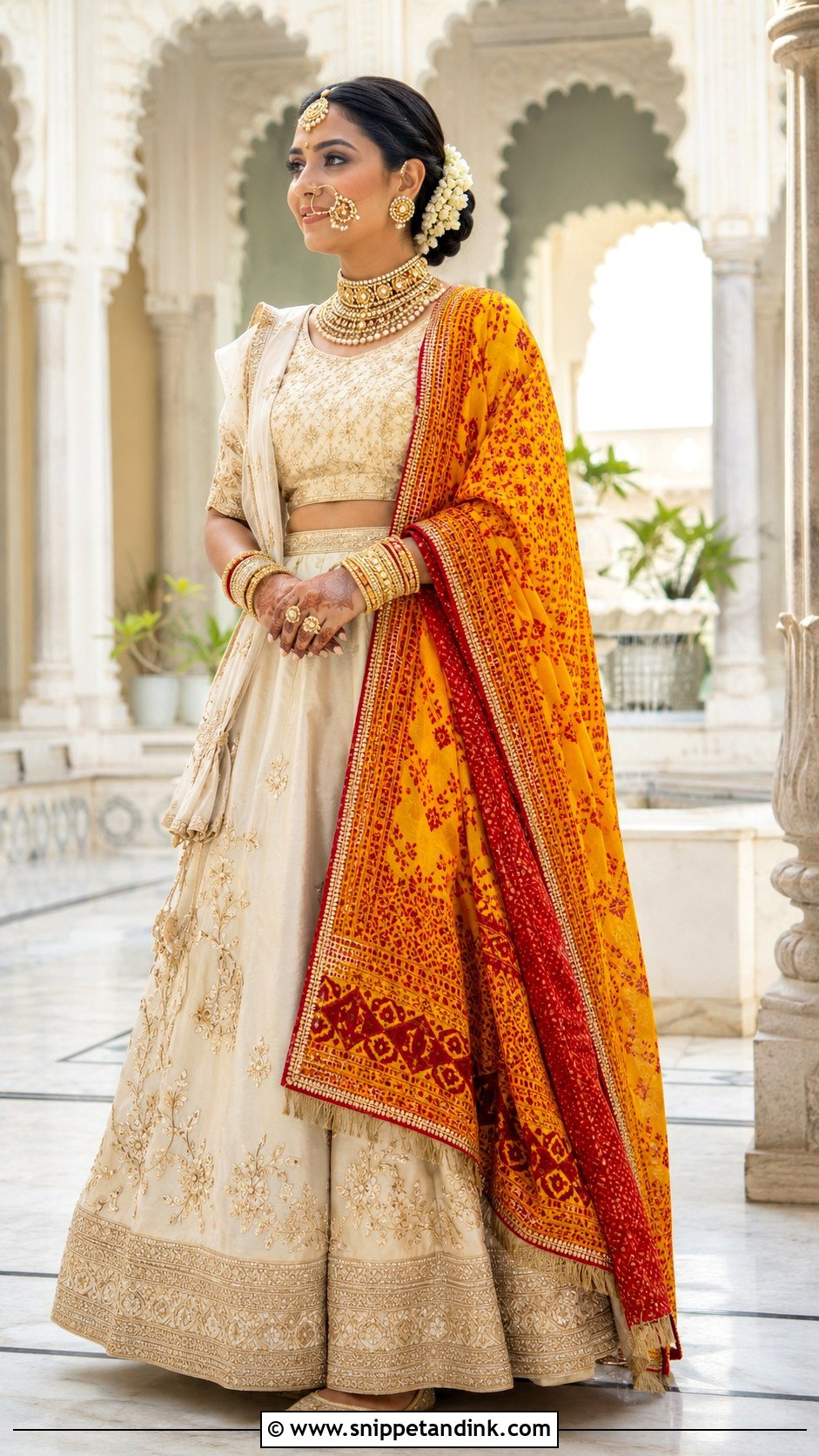
Ivory and gold step back so the Pichora becomes the brightest thing on you. Choose an ivory silk lehenga with fine gold embroidery, a structured blouse and a light matching dupatta. The risk is that a pale outfit can look under-dressed for a Kumauni wedding, so the gold has to make up the difference: a detailed nath, guloband, small maang tikka, paunchi and plenty of bangles. A clean bun with a few white flowers suits the palette. Gold juttis, soft eyes, peach blush and a rose-red lip finish it. Watch for turmeric and sindoor during the rituals; both mark ivory silk quickly.
5. Mustard Silk Lehenga Kumauni Bride
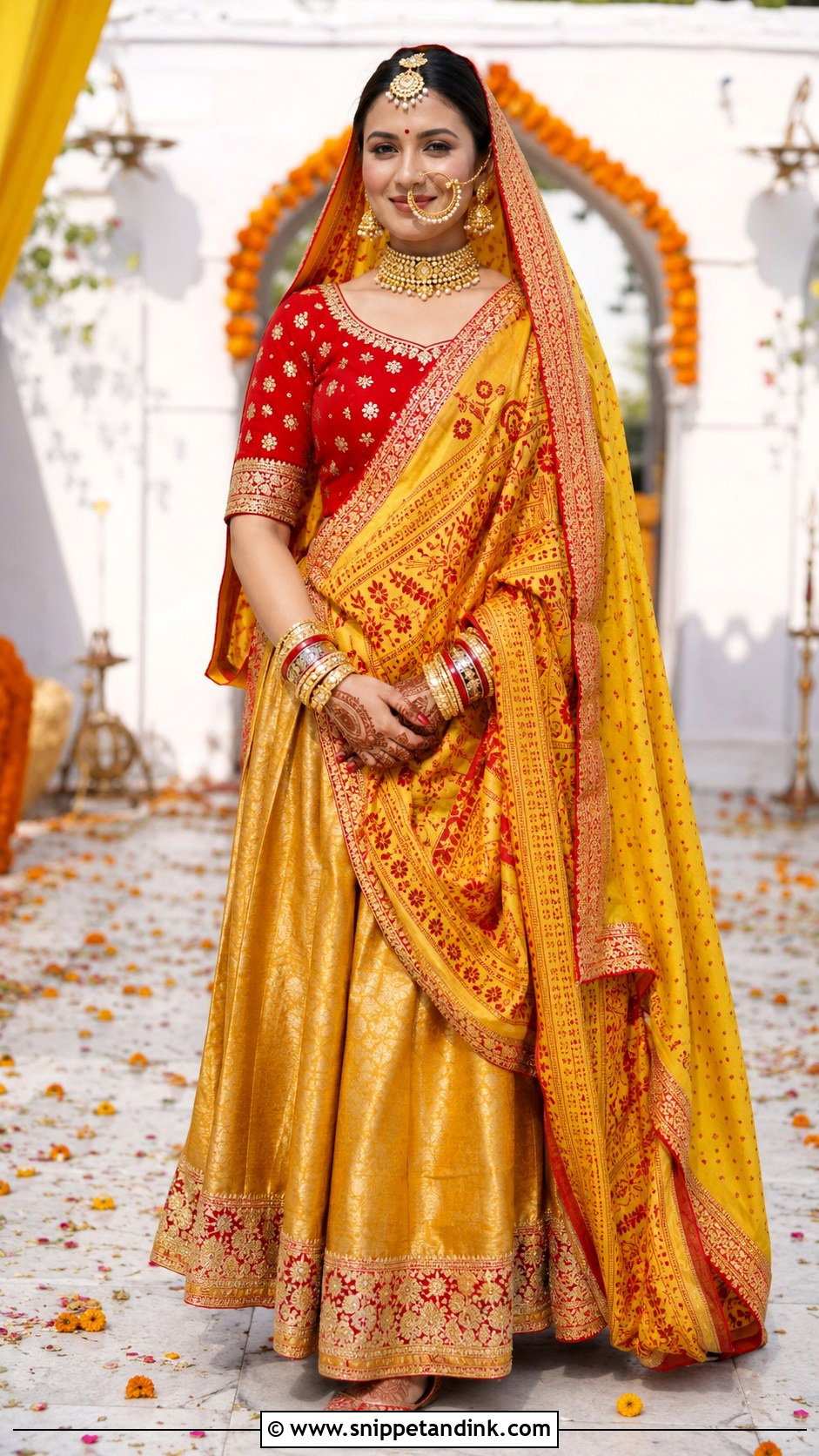
Mustard is a tonal match for the Pichora, which is both its appeal and its risk. If the skirt and drape are too close in shade, they merge into one yellow block in photos. Pick a deeper mustard lehenga and a brighter Pichora with crisp red motifs. A red silk blouse pulls the Pichora’s print into the outfit. Gold borders and small woven motifs on a moderate flare are enough decoration. Style it with a traditional nath, guloband, jhumkas, paunchi and red bangles, a neat centre-parted bun and red embroidered juttis. Warm neutral eyeshadow, black liner, natural skin and a classic red lip suit both day and evening.
6. Green Brocade Lehenga Kumauni Bride
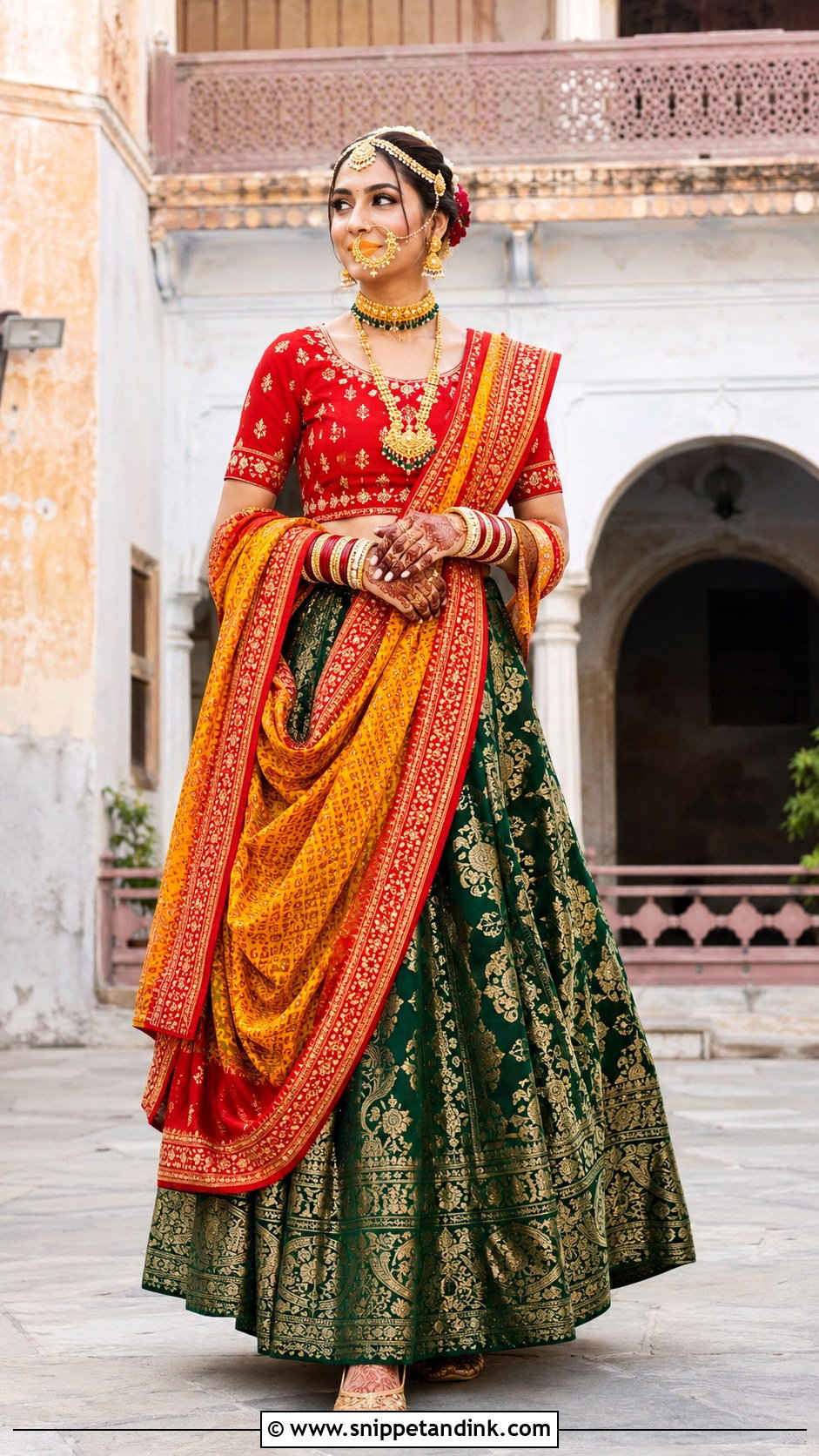
Green sits well beside the Pichora’s yellow and red without fighting either. Choose an emerald or forest-green brocade lehenga with fine gold motifs and a red blouse. I like to drape the Pichora over the head with one side falling diagonally across the body, so the green skirt, red blouse and printed drape all show at once. Gold looks rich against this palette: a big nath, guloband, one longer necklace, jhumkas and paunchi. Keep the hair in a secure low bun with very few flowers, since the drape covers most of it anyway. Red or antique-gold juttis, defined eyes, a small red bindi and a muted red lip complete it.
7. Blush Pink Lehenga Kumauni Bride
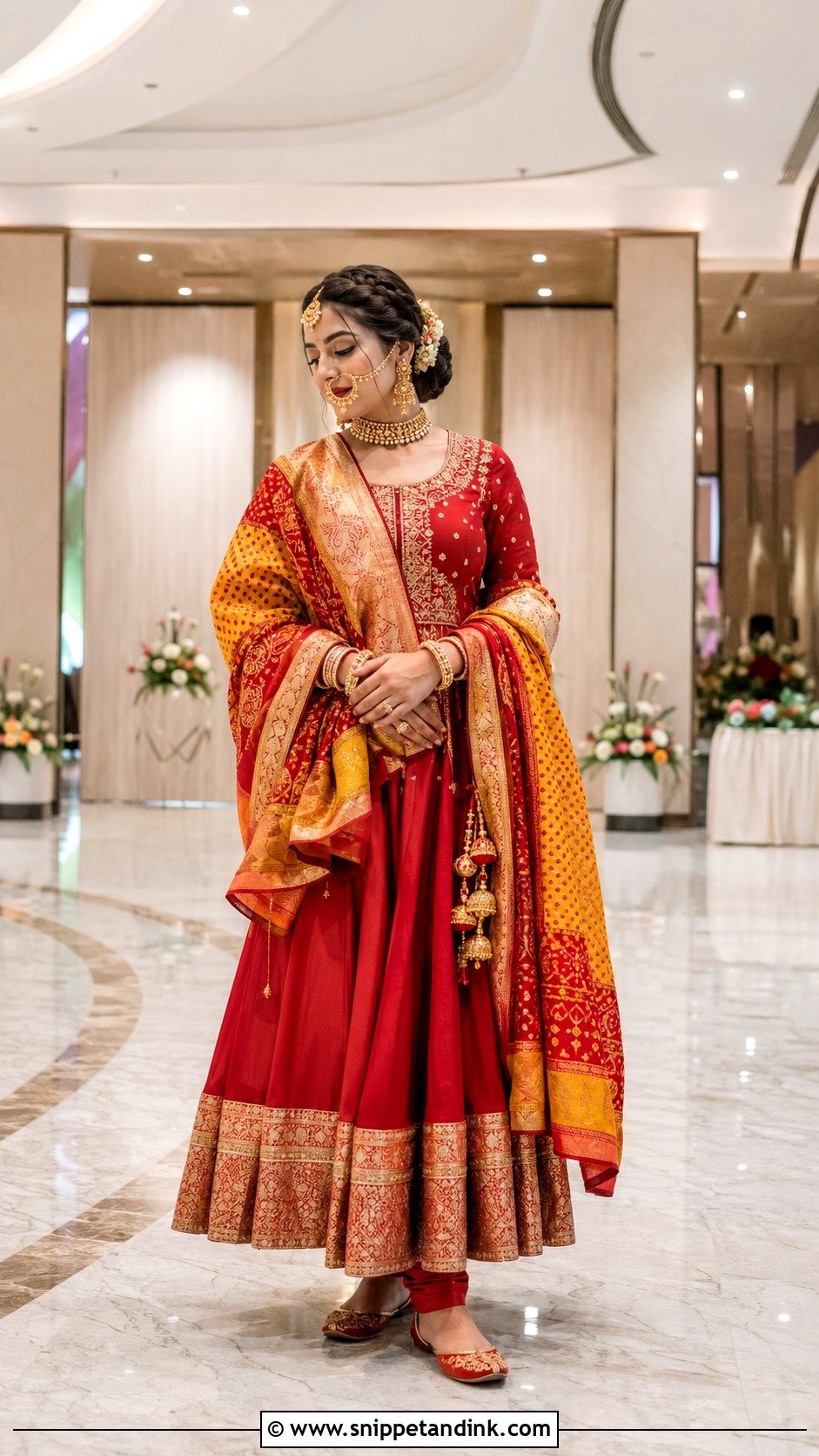
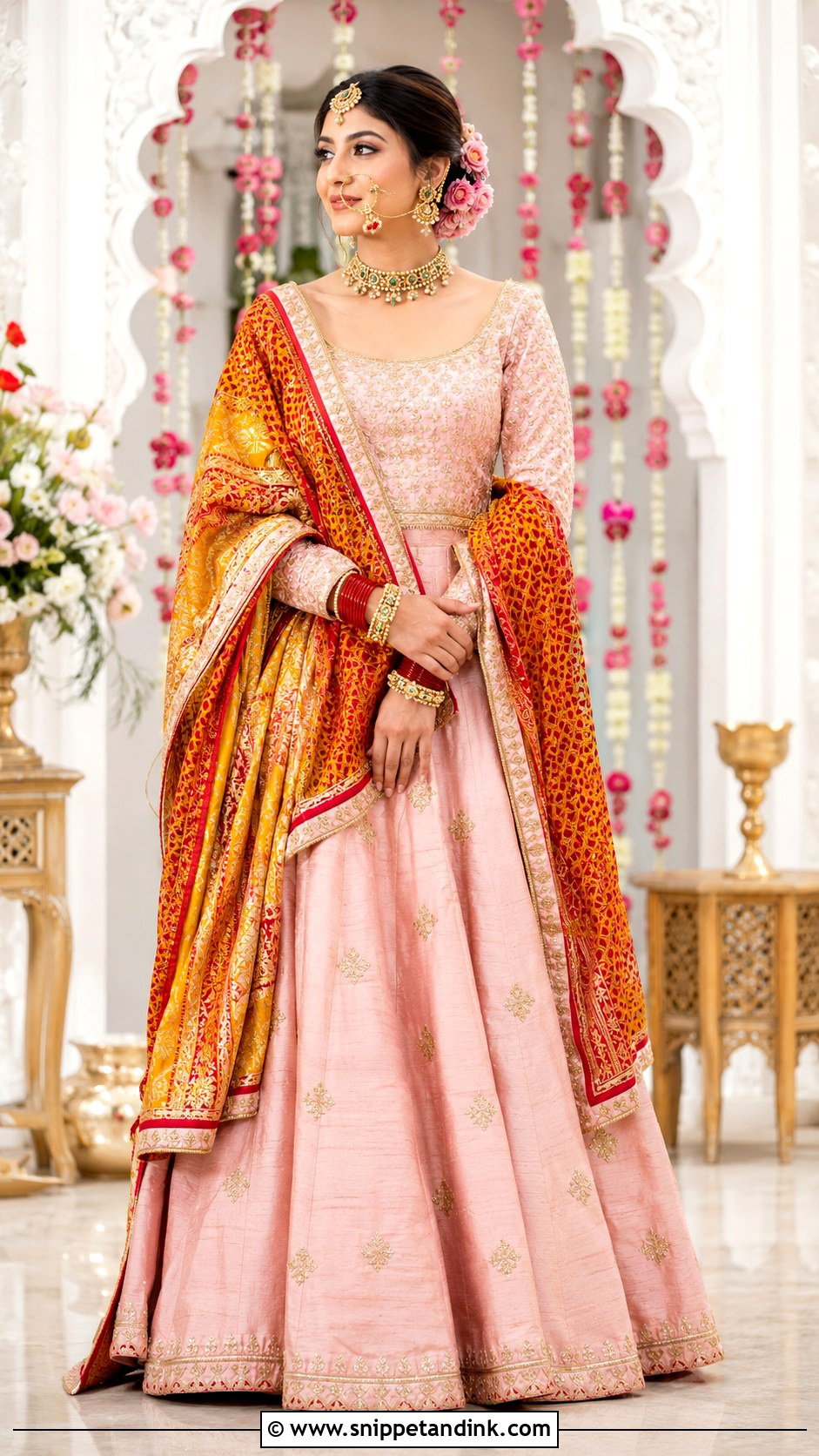
Blush pink keeps things romantic while the Pichora keeps it Kumauni. Choose a silk or raw-silk lehenga with fine gold threadwork and a blouse with enough coverage to sit comfortably under the drape. The yellow and red will stand out sharply against pale pink, so bring some deeper colour into the rest through a red border, red bangles or embroidered shoes. I’d consider a medium-sized nath here. A very heavy one looks out of scale with such a soft palette, and it’s a long ceremony. Add a guloband, small earrings, paunchi and a simple maang tikka, a smooth bun with a few flowers, rosy makeup and a berry-pink lip.
8. Red Anarkali Kumauni Bride
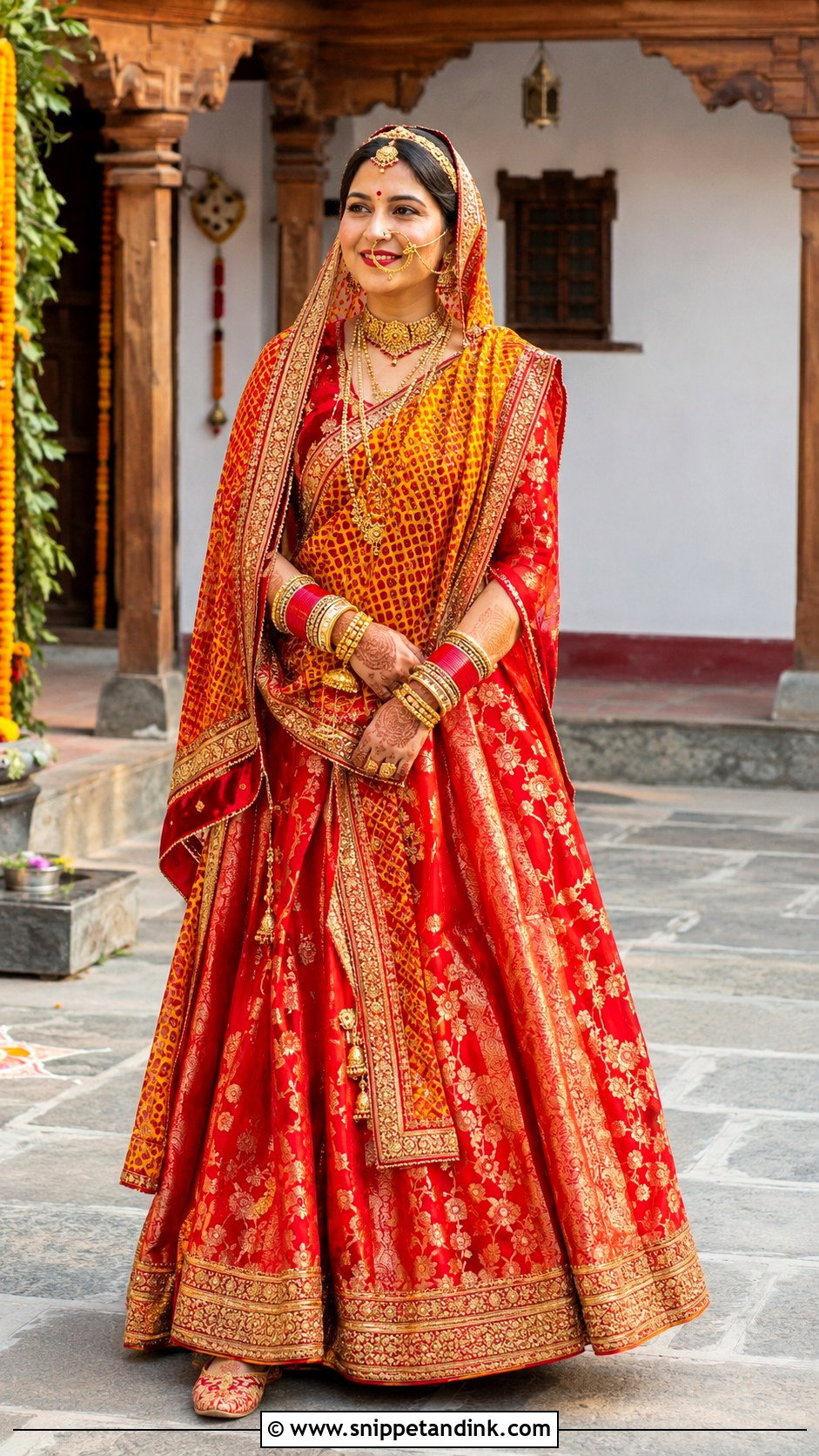
Anarkalis are the easiest bridal shape to move in, which matters when the rituals involve a lot of sitting and rising. Choose a floor-length red design with a defined waist, comfortable sleeves and a skirt that swings freely, with gold embroidery only at the neckline and hem to keep the weight down. Wear it with fitted churidar, supportive juttis and the Pichora over the head and one shoulder. The long line of the Anarkali needs very little jewellery: a compact guloband and a statement nath, plus paunchi, bangles and small earrings. A low or braided bun anchors the drape. Use waterproof eye products and a red lip a shade off the dress, not an exact match.
9. Hand-Painted Pichora Kumauni Bride
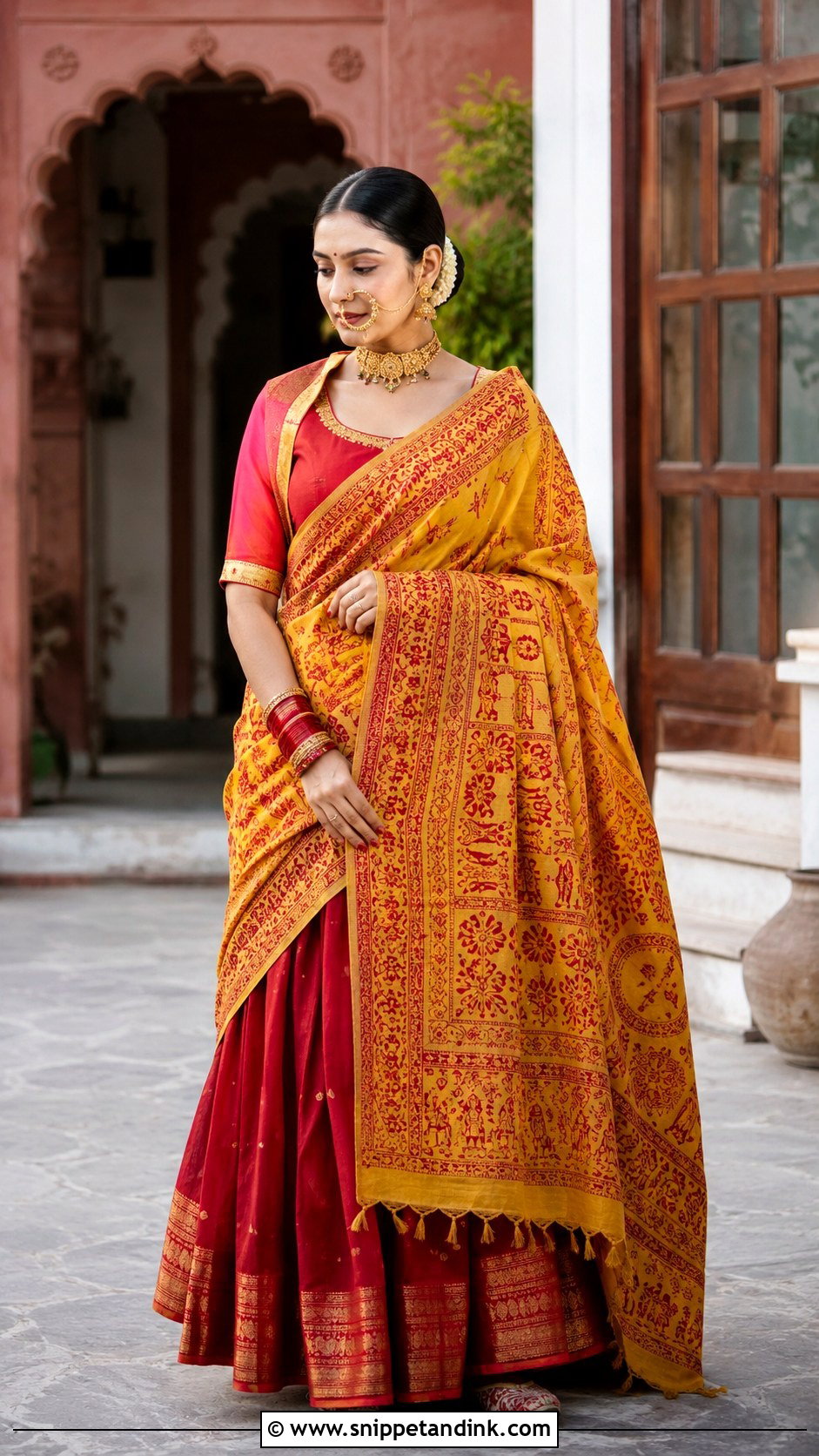
When the Pichora is the centrepiece, everything else should be chosen to frame it. Traditional Pichoras are yellow with red designs, usually an auspicious central motif surrounded by smaller ones. Pair a hand-painted or artisan-made piece with a simple red silk lehenga and a plain blouse finished with a narrow gold border. Keep embroidery away from the shoulders, where it would fight the print. When I drape one of these, I find the central motif first and place it high at the back of the head, so it isn’t lost in the folds. A gold nath, guloband, paunchi and quiet earrings, a sleek bun, a red bindi and a traditional red lip finish it, with red juttis and a small potli.
10. Heirloom Pichora Kumauni Bride
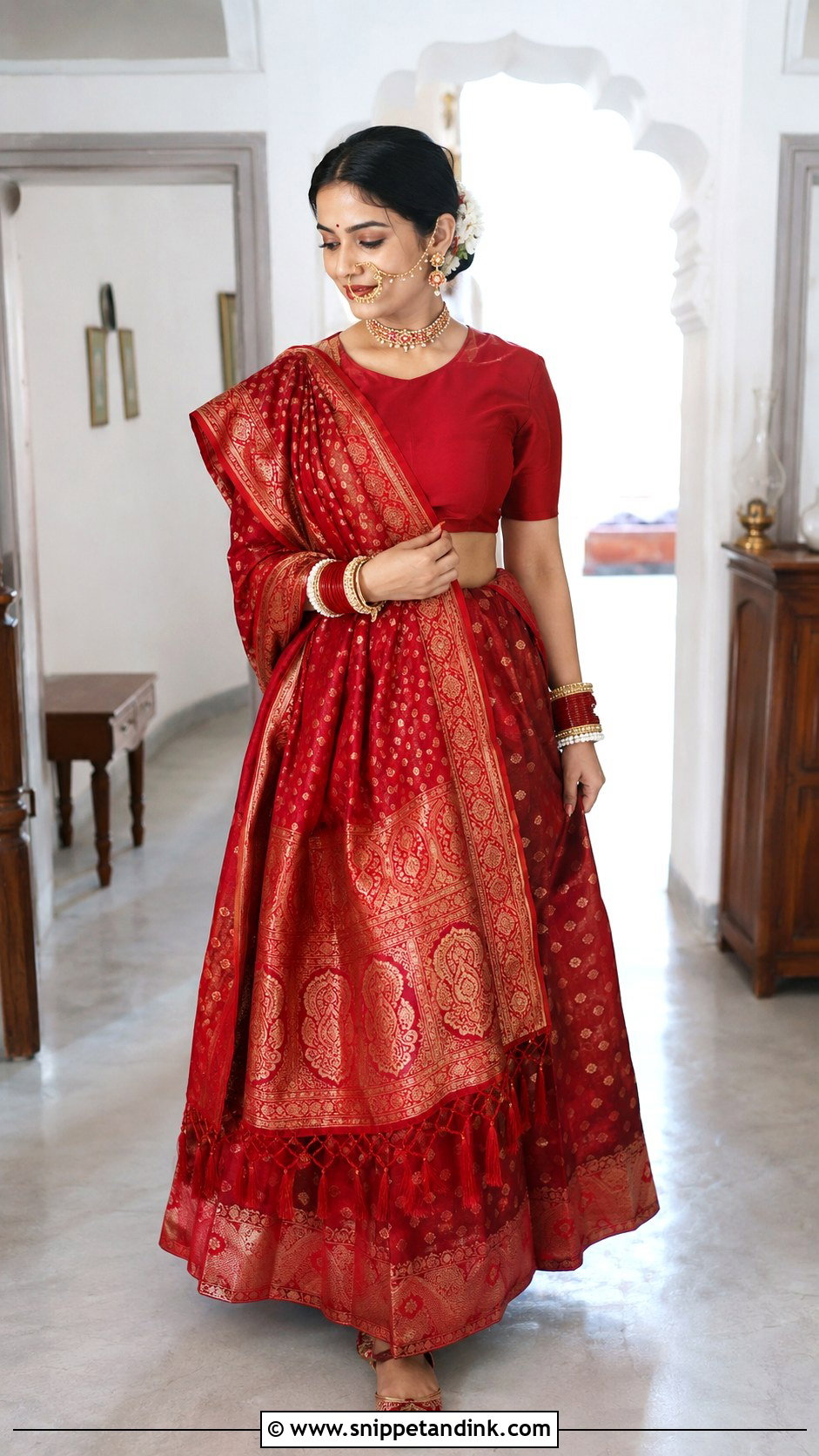
An heirloom Pichora carries a family story, and it needs checking well before anyone wears it. Open it out in daylight weeks ahead and look along the borders and any embellishment for weak threads or brittle patches. If it needs repair, ask a textile restorer to stabilise rather than refresh it; the faded colour is part of its value. Choose a simple red, maroon or ivory silk lehenga that sits well beside its current shades. Old natural dyes look better next to matte silk than shiny sequins. Pin it only through sound fabric, away from fragile areas. Family jewellery, a classic bun, quiet makeup and a plain blouse keep the attention on the heirloom.
11. Minimal Jewelry Kumauni Bride
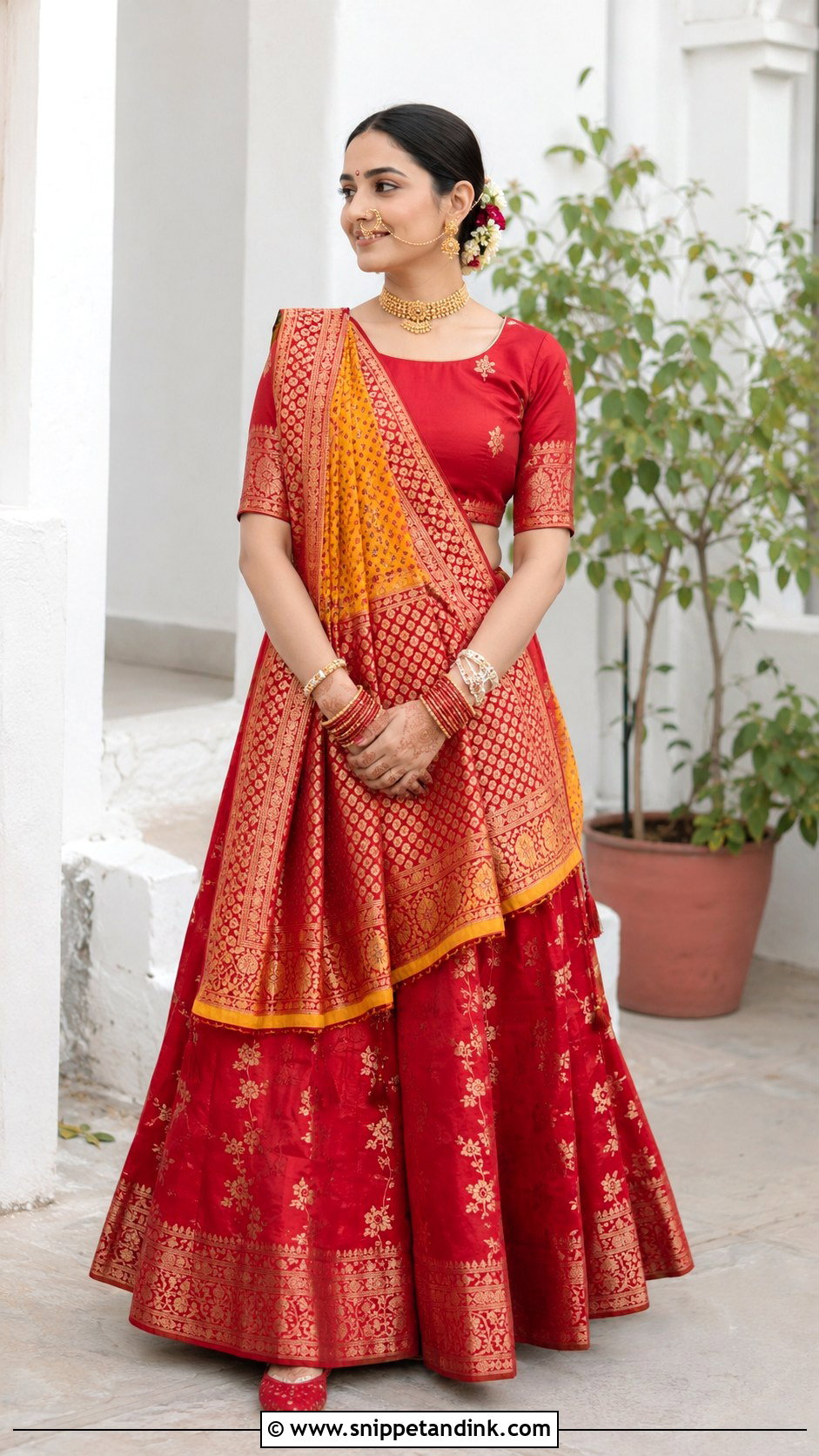
Not every bride wants to carry several heavy ornaments for hours, and a pared-back Kumauni look can still feel right when the key pieces are there. Start with a red silk lehenga or saree and a well-arranged Pichora. Let the nath be the statement and add a slim guloband or one traditional necklace, light earrings, a few bangles and paunchi-style bracelets if you like. Don’t pair an oversized headpiece with multiple necklaces and big earrings if simplicity is the goal. A sleek low bun, a clean neckline, red juttis, fresh skin, soft brown eyes, a small bindi and a deep rose lip complete it.
12. Traditional Gold Jewelry Kumauni Bride
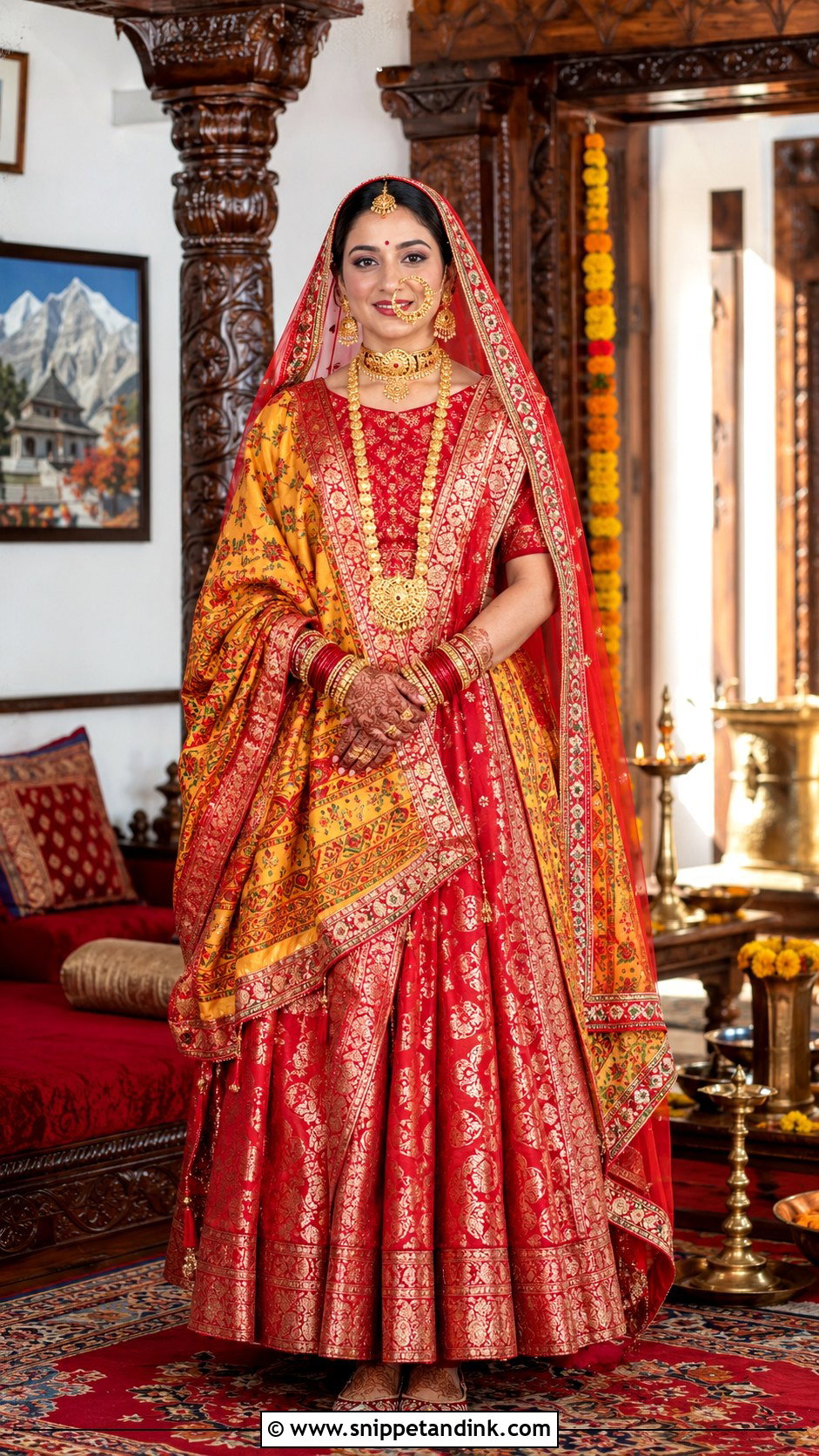
A fully adorned bride is a proud sight at a Kumauni wedding, and the trick is to layer the gold so each piece stays readable. Begin with a red brocade lehenga and the Pichora, keeping the embroidery modest. Then build up: a prominent nath, a close guloband, one longer necklace, matching earrings, paunchi and bangles. A maang tikka finishes the centre parting, and bichhuwe on the toes can be added as family custom and the stage of the ceremony require. At the final fitting I weigh up every clasp and check that nothing catches on the Pichora. Cushioned juttis and a small repair kit with spare hooks and safety pins are essential.
13. Full Sleeve Winter Kumauni Bride
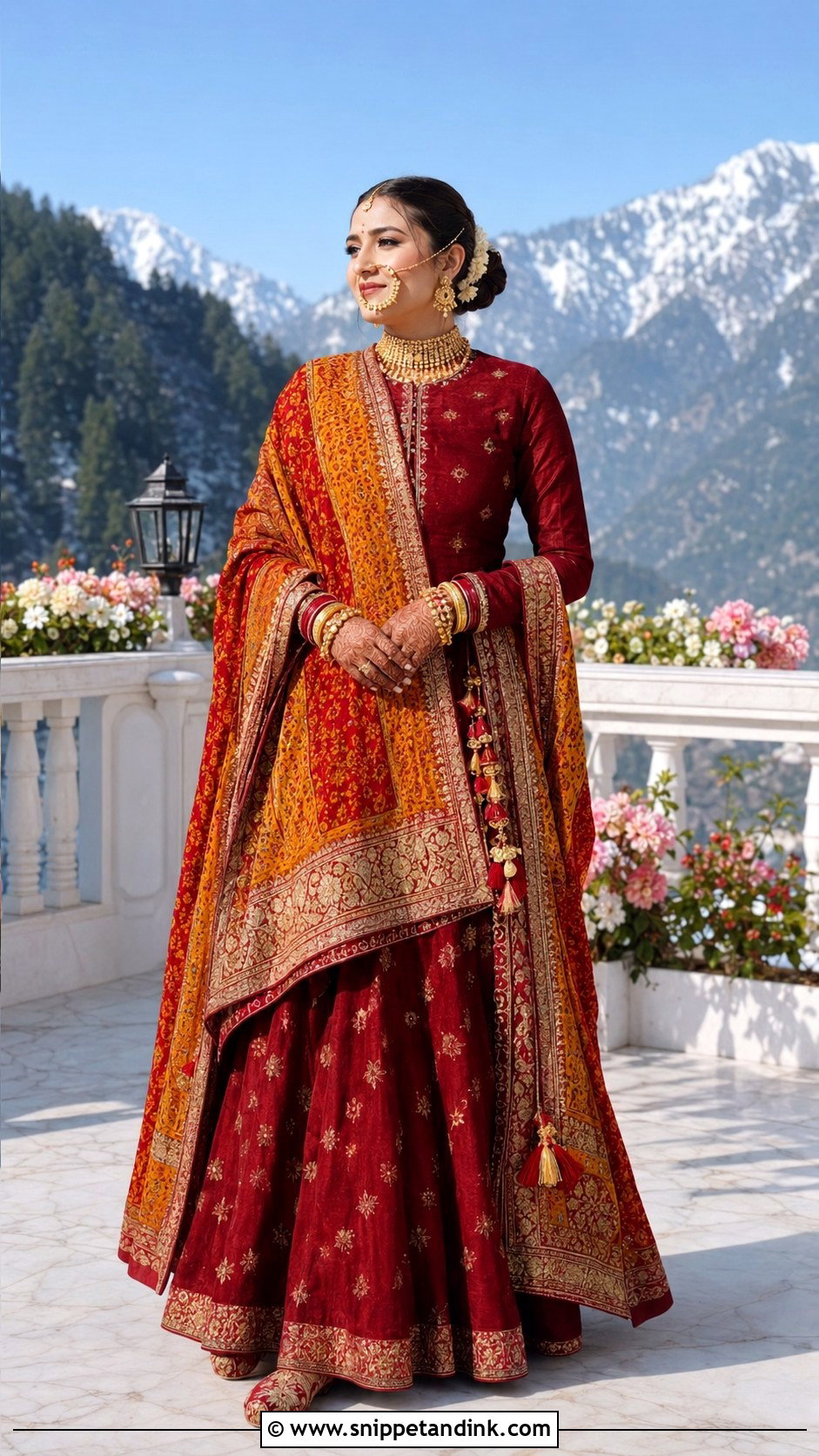
Picture an early winter morning in the hills, with breath showing in the air. A full-sleeve red or maroon lehenga in velvet, raw silk or lined brocade gives you warmth that still looks bridal. Avoid bulk at the shoulders, where the Pichora sits; padded blouses push the drape off. A fitted blouse with a longer back and secure neck holds heat in. Add the Pichora, nath, guloband, paunchi and controlled necklace layers. Warm socks under closed juttis are fine if the hem covers them. A firm low bun stands up to wind. Cold air dries skin fast, so prep with a rich moisturiser before long-wear makeup and a deep red lip, and keep a shawl nearby.
14. Daytime Courtyard Kumauni Bride
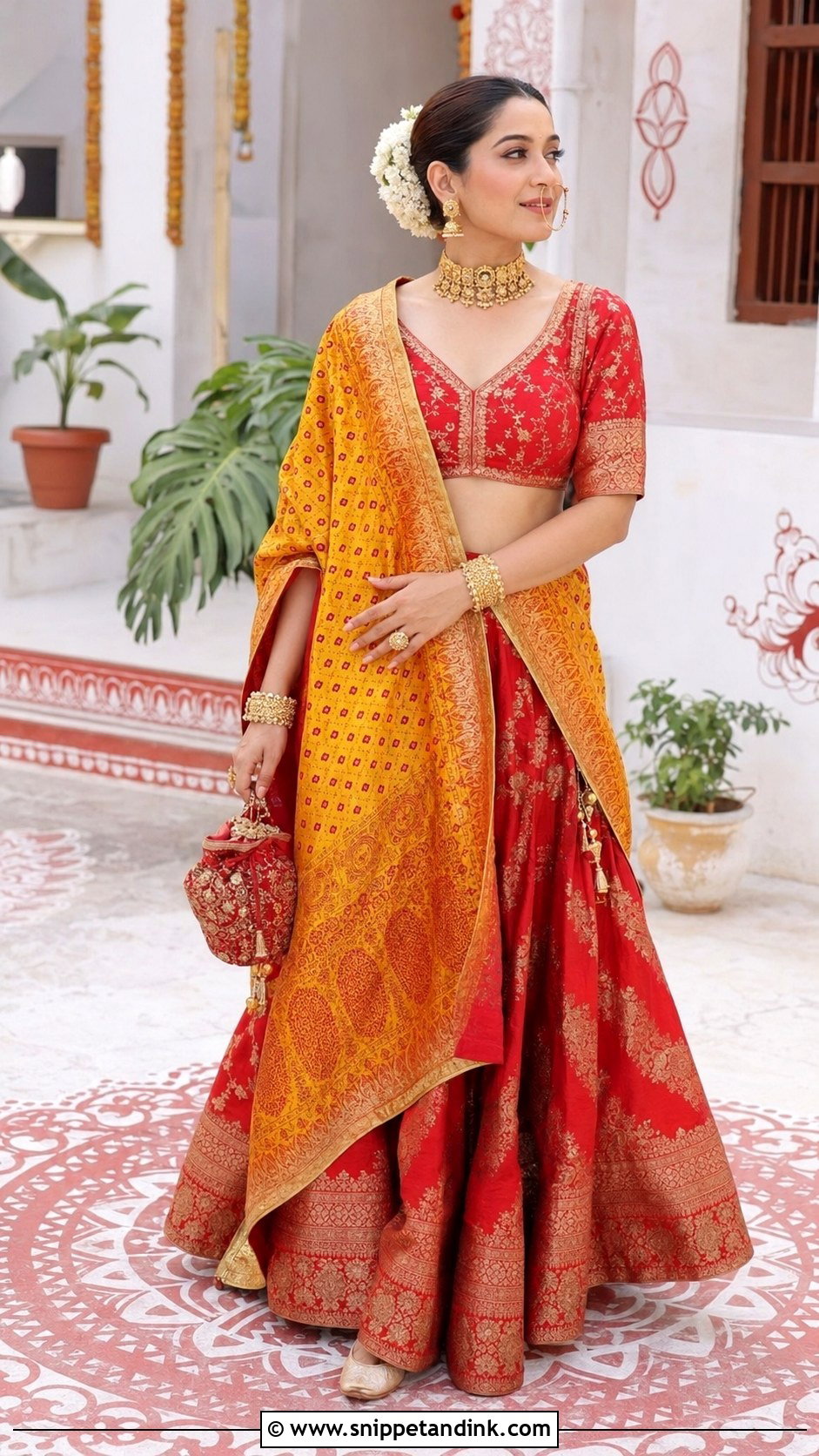
Courtyard ceremonies in daylight call for something lighter. Choose a red silk lehenga with fine gold borders instead of velvet or heavy sequins, and a comfortable elbow-sleeve blouse. Yellow Rangwali fabric glows in direct sun. Give the skirt enough flare to walk, but check it on stairs and uneven stone, which courtyards always have. A traditional nath, guloband, paunchi and small gold earrings, plus a simple bun with a few white flowers, are enough. Padded flat juttis and a light potli suit the day. Wear sunscreen under makeup, waterproof liner, soft blush and a red-rose lip. Red-and-white Aipan floor art makes a natural backdrop for photos.
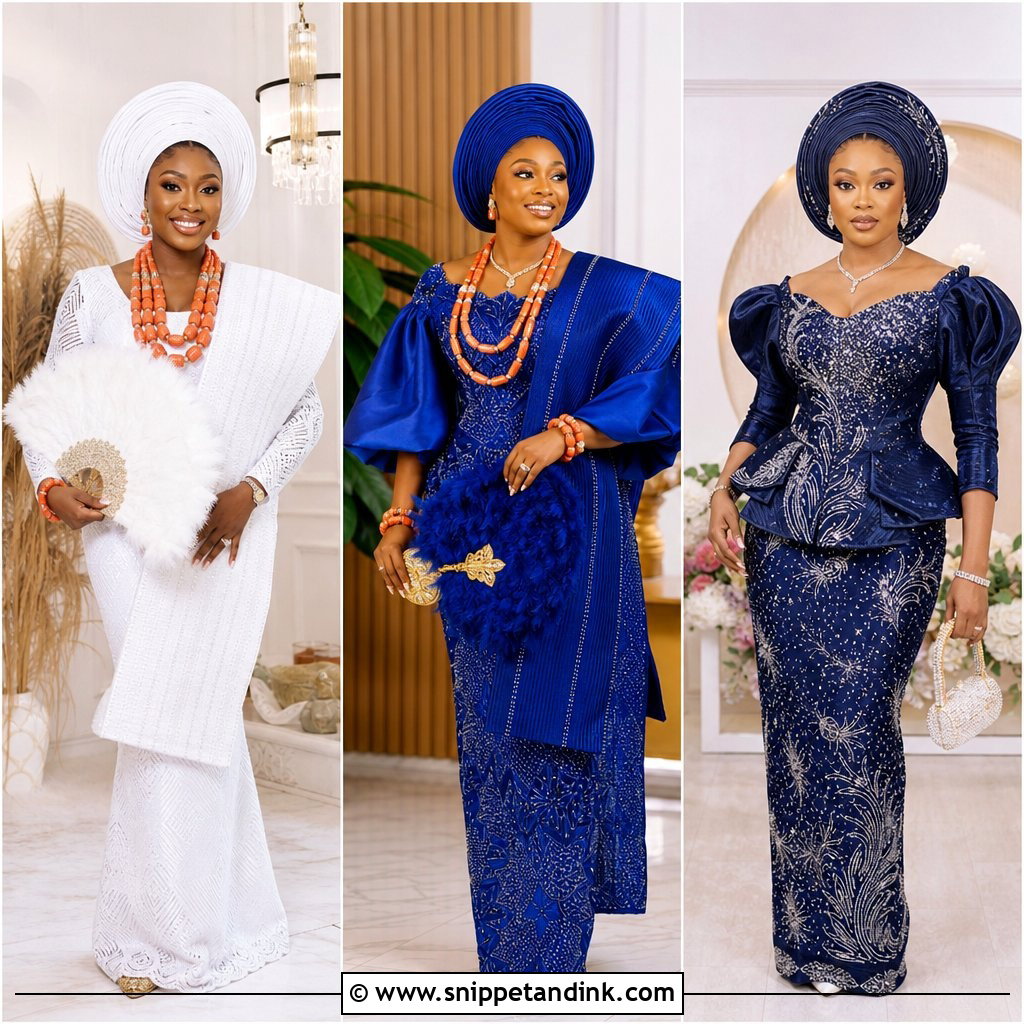
15. Temple Wedding Kumauni Bride
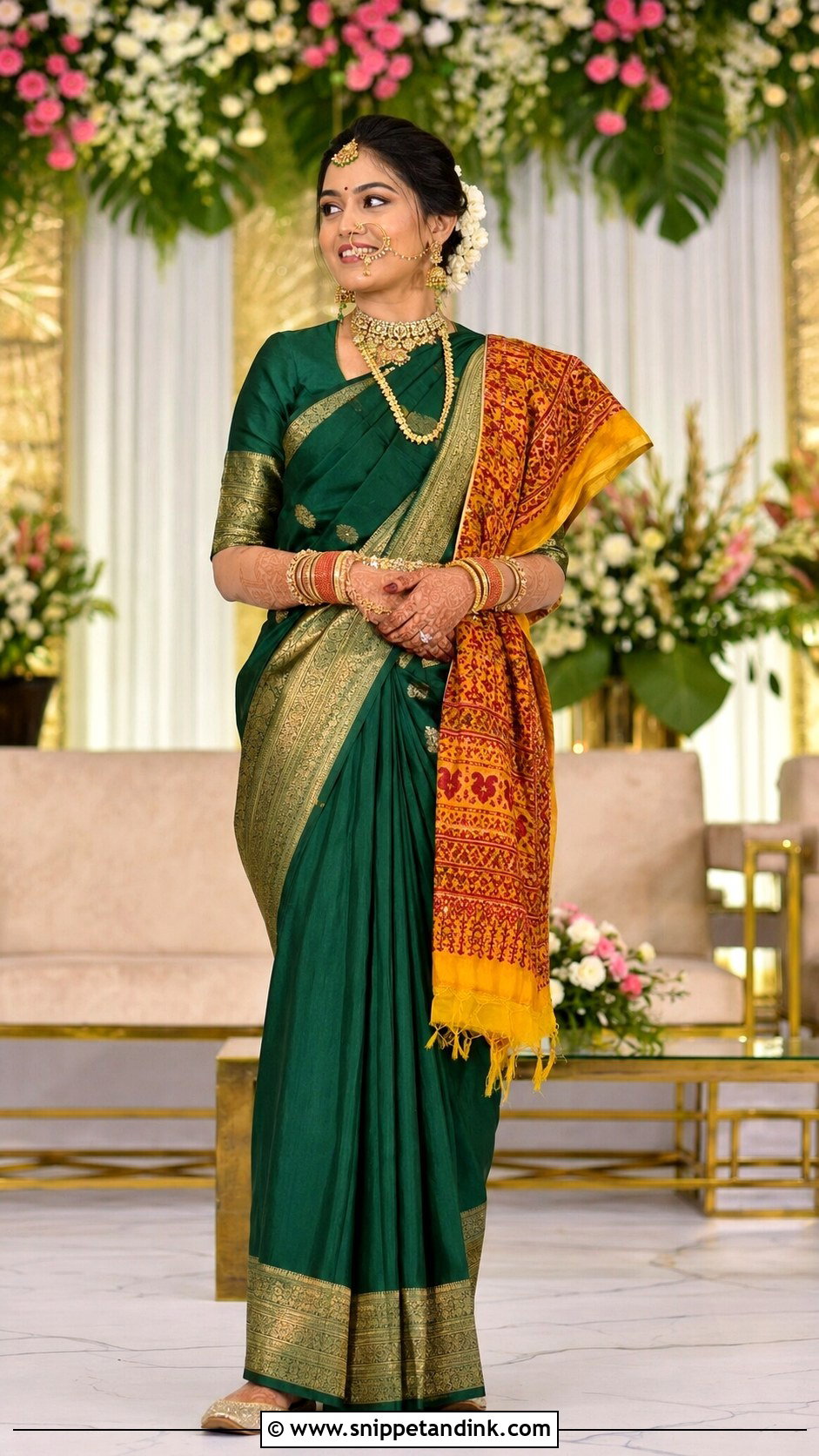
A temple ceremony asks for clothes that stay secure through repeated bending and bowing. A red silk saree with a fitted elbow-sleeve blouse is a good base. Pin the pleats before anything goes on top, then place the Pichora over the head and shoulders without letting it drag on the hair or jewellery. A classic nath, compact guloband, earrings, paunchi and red bangles are enough; long necklace layers swing forward every time you bend. A firm low bun and flat shoes you can slip off at the threshold are practical. Natural skin, defined eyes, a red bindi and a traditional lip finish it. Check the temple’s rules with the family beforehand.
16. Mountain Wedding Kumauni Bride
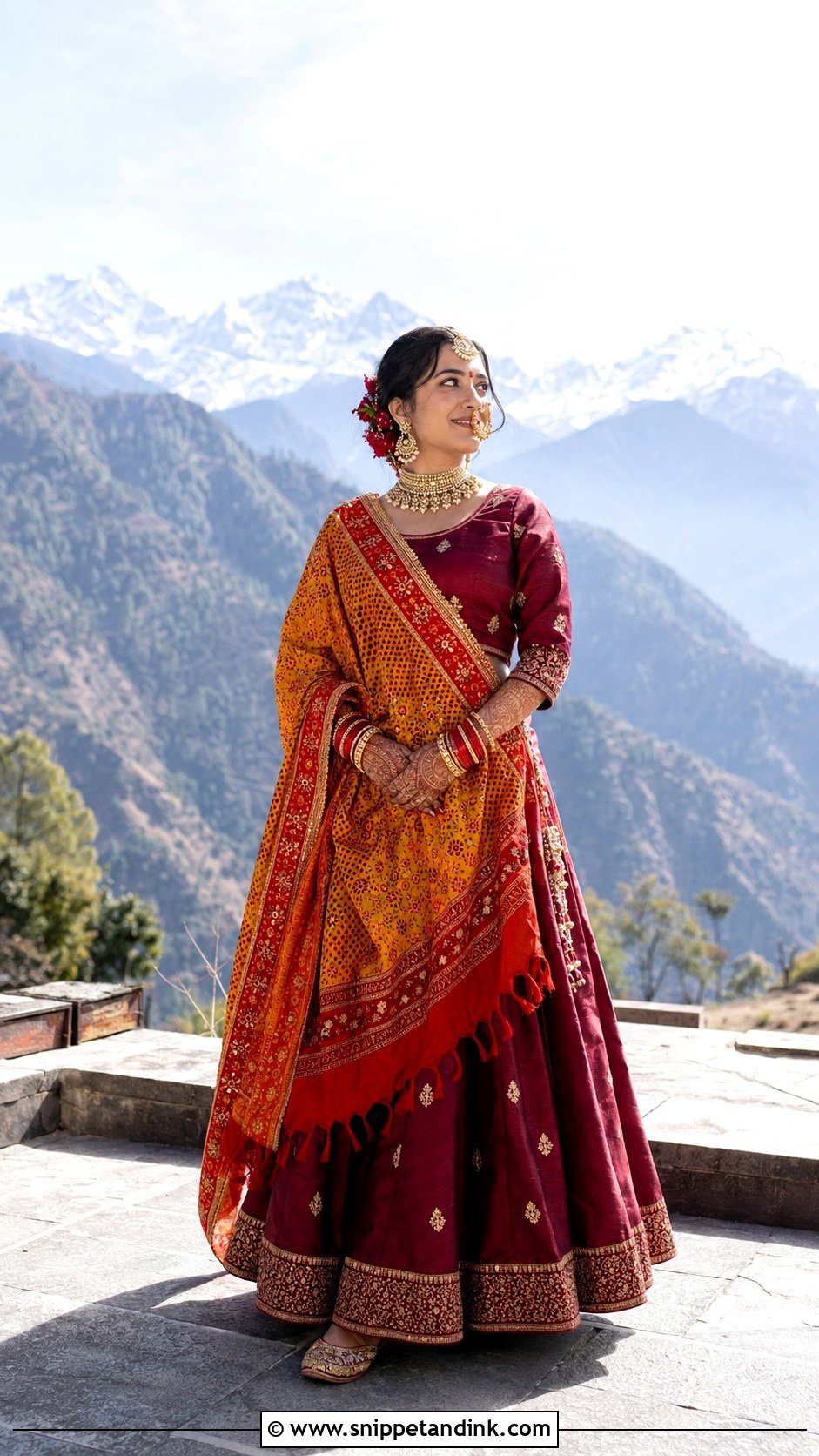
Mountain venues are lovely but unforgiving: cool air, slopes and loose stone underfoot. Choose a maroon raw-silk lehenga with a moderate flare and a full or three-quarter sleeve blouse. The Pichora adds the signature contrast and a little warmth across the shoulders. I have the hem taken up a couple of centimetres above the floor so it doesn’t drag over gravel and wet paths. Stable closed juttis with non-slip soles beat narrow heels. A secure nath chain, guloband, paunchi and medium earrings won’t swing in the wind. Anchor the bun tightly, use hidden pins for the drape, and finish with matte makeup, waterproof liner and a deep rose lip.
17. Petite Kumauni Bride
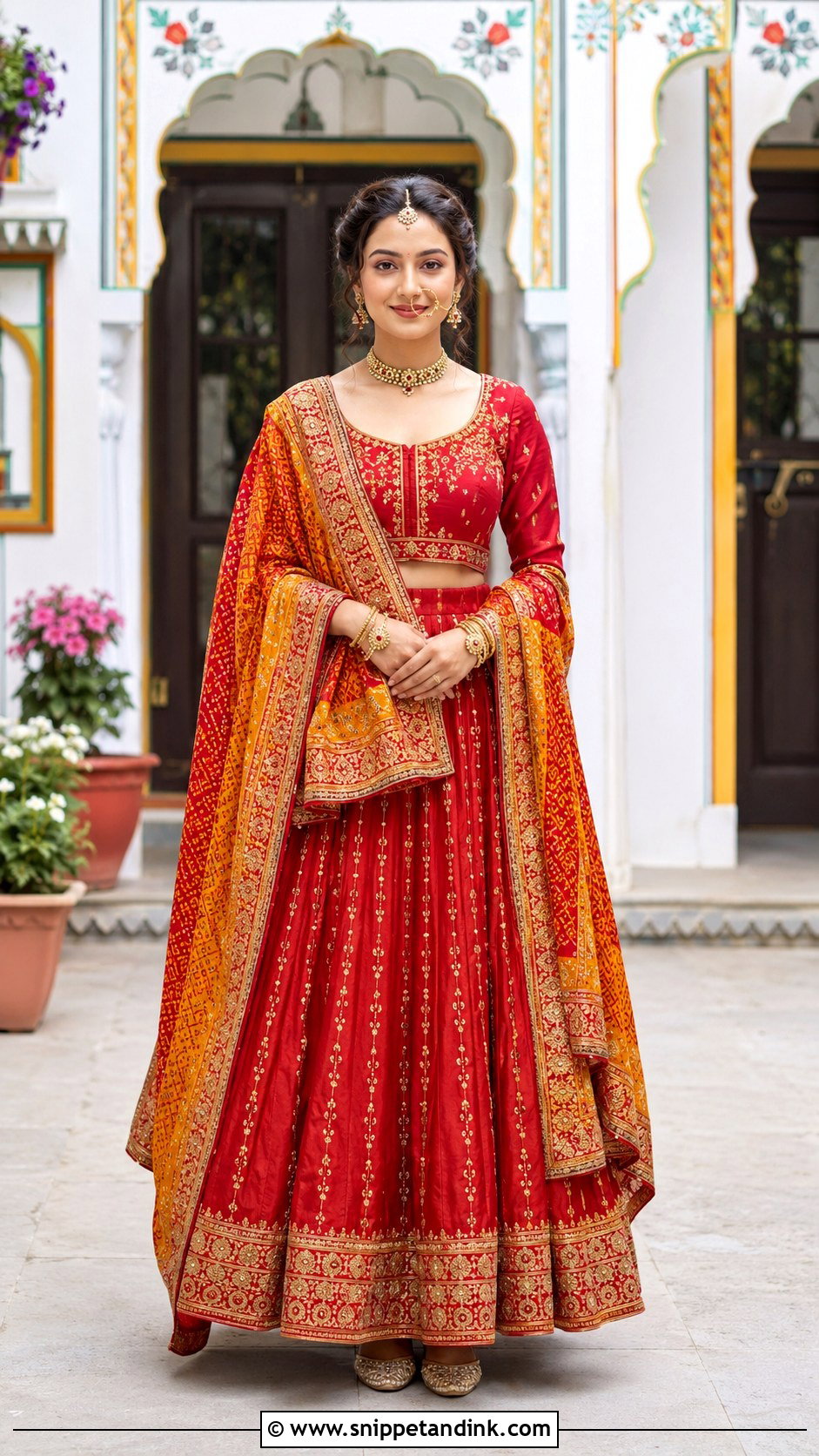
On a petite bride, the Pichora and a big skirt can swallow the frame, so volume and jewellery scale both need controlling. Choose a high-waisted red lehenga with narrow vertical motifs and a medium flare, and a blouse in the same red to keep the line long. Fold the Pichora so the print shows without piling on the shoulders. A medium nath, a close guloband and one slim necklace leave the neck visible. Smaller earrings, fine paunchi and a compact maang tikka keep the scale right. A neat bun with a little height adds length, as do pointed juttis. Lifted liner, natural blush and a clear red lip finish it.
18. Plus Size Kumauni Bride
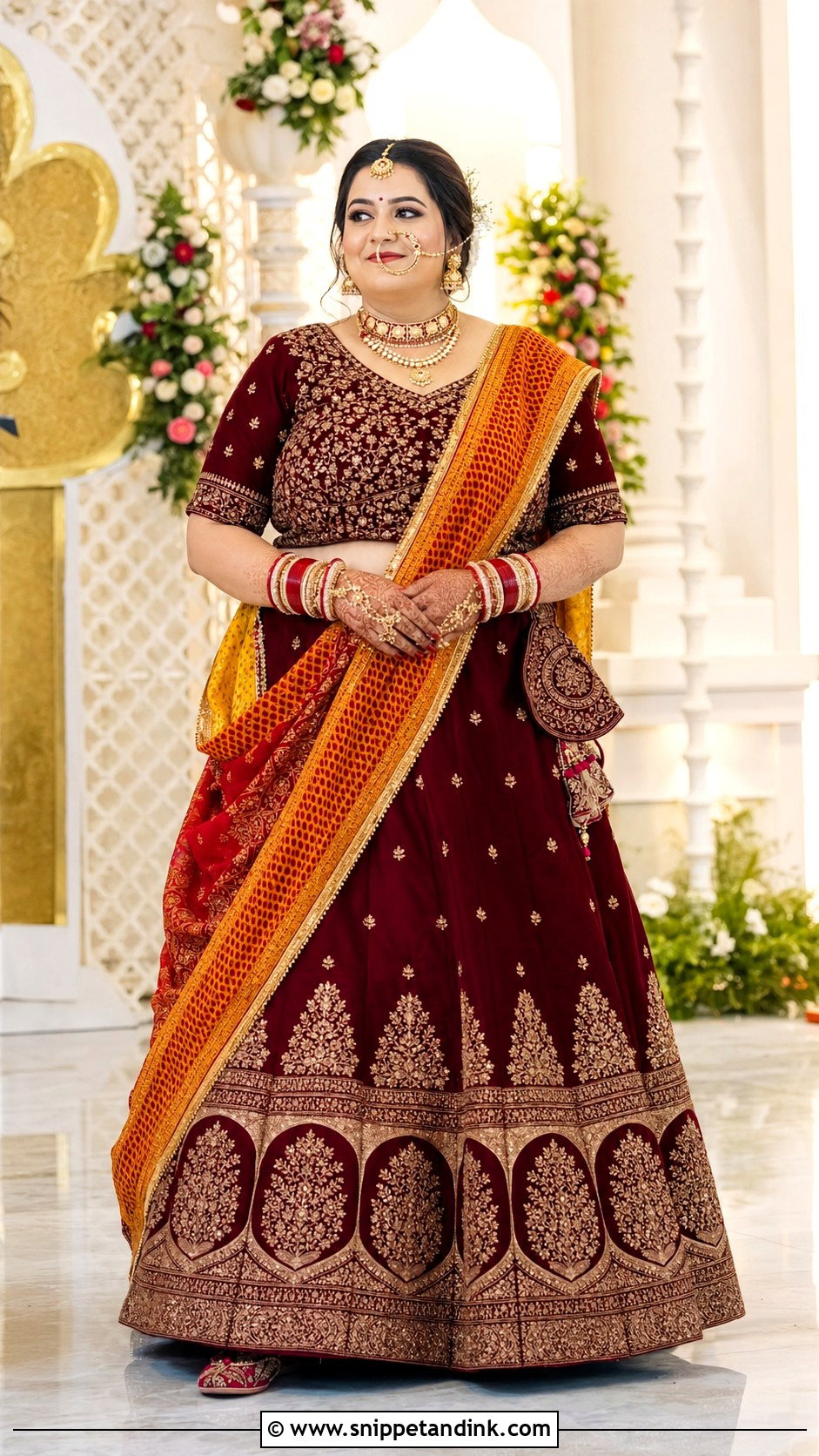
For a plus-size bride, structure is what makes the outfit comfortable for a full day of rituals. Choose a red or deep maroon lehenga with a supportive high waistband, smooth lining and flare spread evenly from the waist. A made-to-measure blouse with wider straps or proper sleeves sits better under the Pichora than a strappy one, which digs in once the drape’s weight is on it. Vertical motifs and a defined border balance the skirt better than embroidery everywhere. Drape the Pichora diagonally and leave the front open enough to show the blouse and jewellery. A statement nath, guloband, medium necklace, paunchi and bangles, supportive flat juttis, a low bun and long-wear makeup complete it.
19. Modern Red Lehenga Kumauni Bride
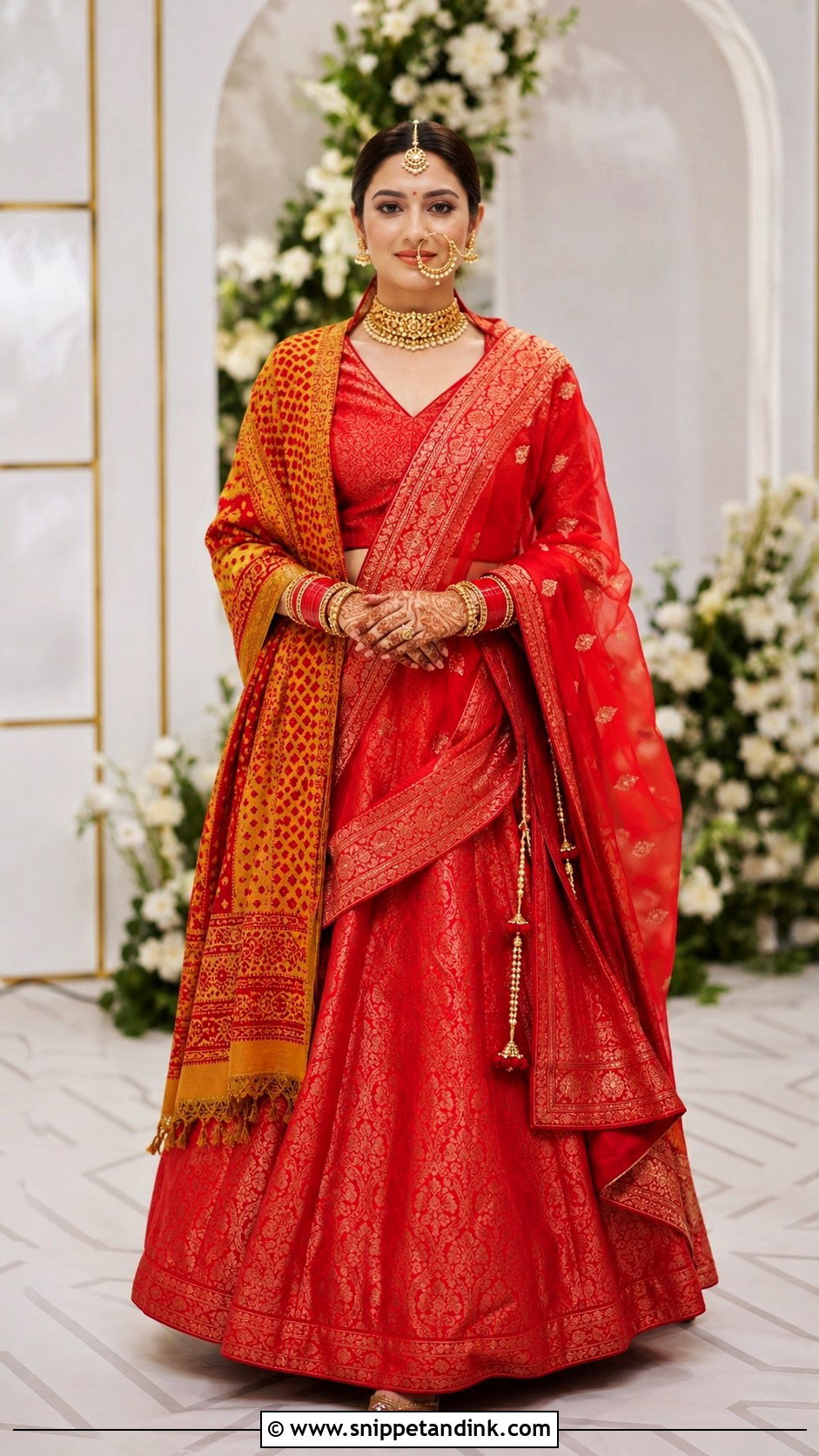
A modern lehenga still reads as Kumauni as long as the Pichora and nath are treated with care. Choose a clean red silk skirt with tonal embroidery, a structured blouse and a light matching dupatta. Wear the Pichora over the head for the main ceremony, then move it to one shoulder for portraits and later events, so the modern blouse shows without the tradition disappearing. Add a traditional nath and paunchi, and pick either a guloband or a sleek gold choker, never both. A smooth center-parted bun and a small maang tikka keep it polished. Metallic juttis, luminous skin, softly smoked eyes and a deep red lip complete it.
20. Reception Saree Kumauni Bride
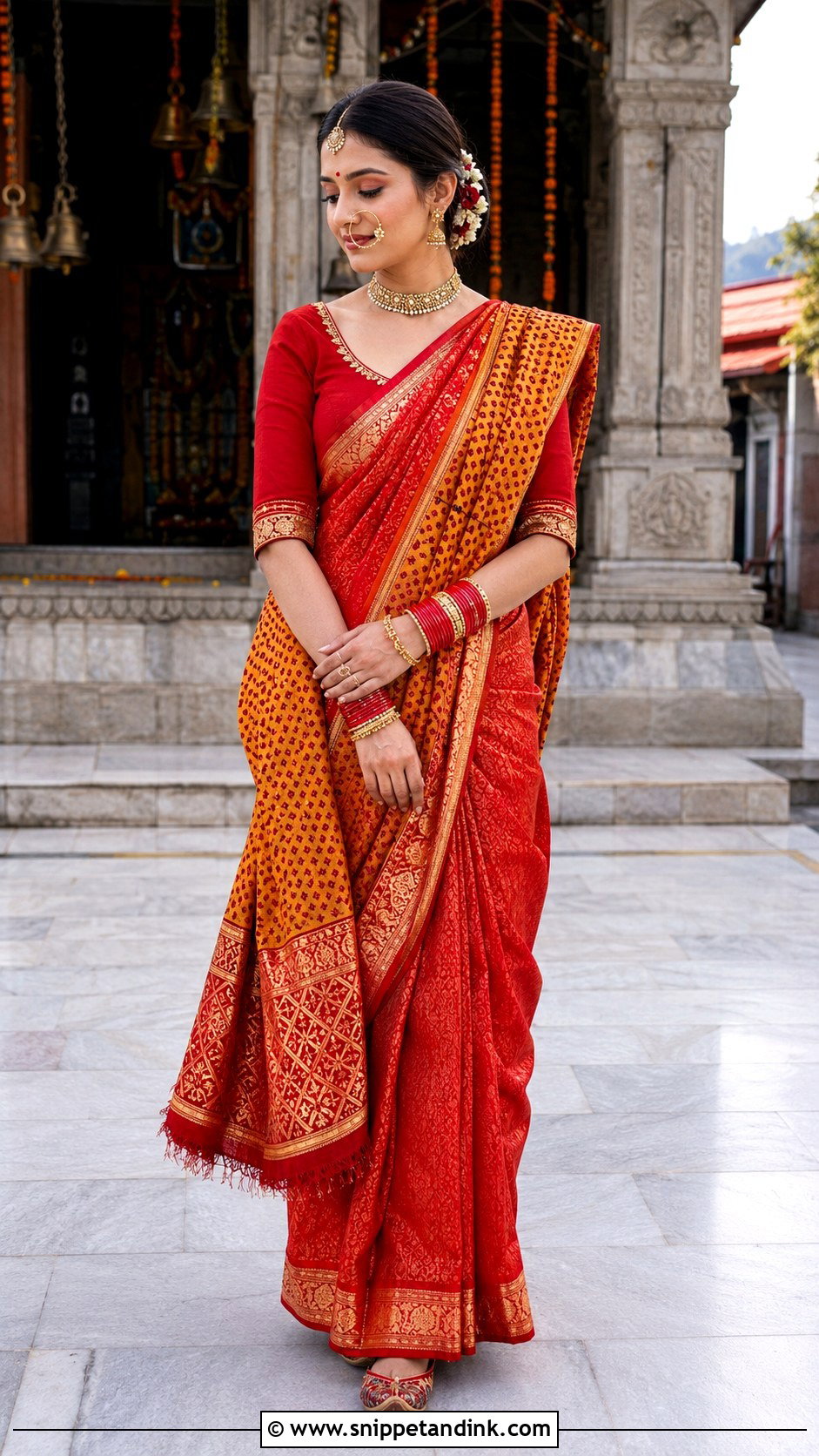
The reception saree lets you relax the head covering while keeping the regional look. Choose deep red, maroon or emerald silk with an antique-gold border and a well-fitted blouse, and drape the Pichora over one shoulder instead of the head. If the saree is heavily worked, keep the jewellery focused: a nath if it’s still comfortable, a guloband or long necklace, paunchi and earrings. By evening, many brides are ready to swap the large nath for a smaller nose ring, which still reads as traditional. A low bun or long braid with a few flowers, cushioned juttis, defined eyes and a berry-red lip suit evening light.
A Heavy Nath, Long Rituals and What Happens After
The large Kumauni nath is beautiful and heavy, and nothing on this list causes more discomfort if it isn’t supported. A traditional nath hangs from the nostril and has a chain that hooks into the hair above the ear; that chain takes much of the weight off the nose, so make sure it’s pinned firmly into the bun or a hidden braid. If your nose isn’t pierced, ask your jeweller for a clip-on or press-fit version and wear it for an hour at home before the wedding.
Eating and drinking with a large nath is awkward. Decide with your family beforehand whether it can be lifted aside or removed between rituals, and have someone you trust hold it, wrapped in a soft cloth.
Caring for the Pichora afterwards
The Pichora is worn again at festivals and family occasions, so it deserves care. Don’t machine wash it: red dye on yellow fabric can bleed, especially in older or naturally dyed pieces. Air it in shade after the wedding, spot clean gently if needed, or take it to a dry cleaner who handles printed textiles. Fold it in plain cotton or muslin, and refold it along different lines every few months so the creases don’t wear through.
The Pichora Stays, Everything Else Can Bend
Across these 20 Kumauni Bride Ideas, the constant is the Pichora and the regional gold; the clothes underneath can be a red ghagra, a silk saree, a modern lehenga or winter velvet. Think about ceremony length, venue, climate, your proportions and the weight of the fabric before deciding. Do one full fitting with the nath, hair, shoes and Pichora drape all together. And ask your parents and older relatives about the customs in your own family, because practice varies from village to village and they’ll know what matters most to them.
You'll Like These Ideas:



Leave a Reply