
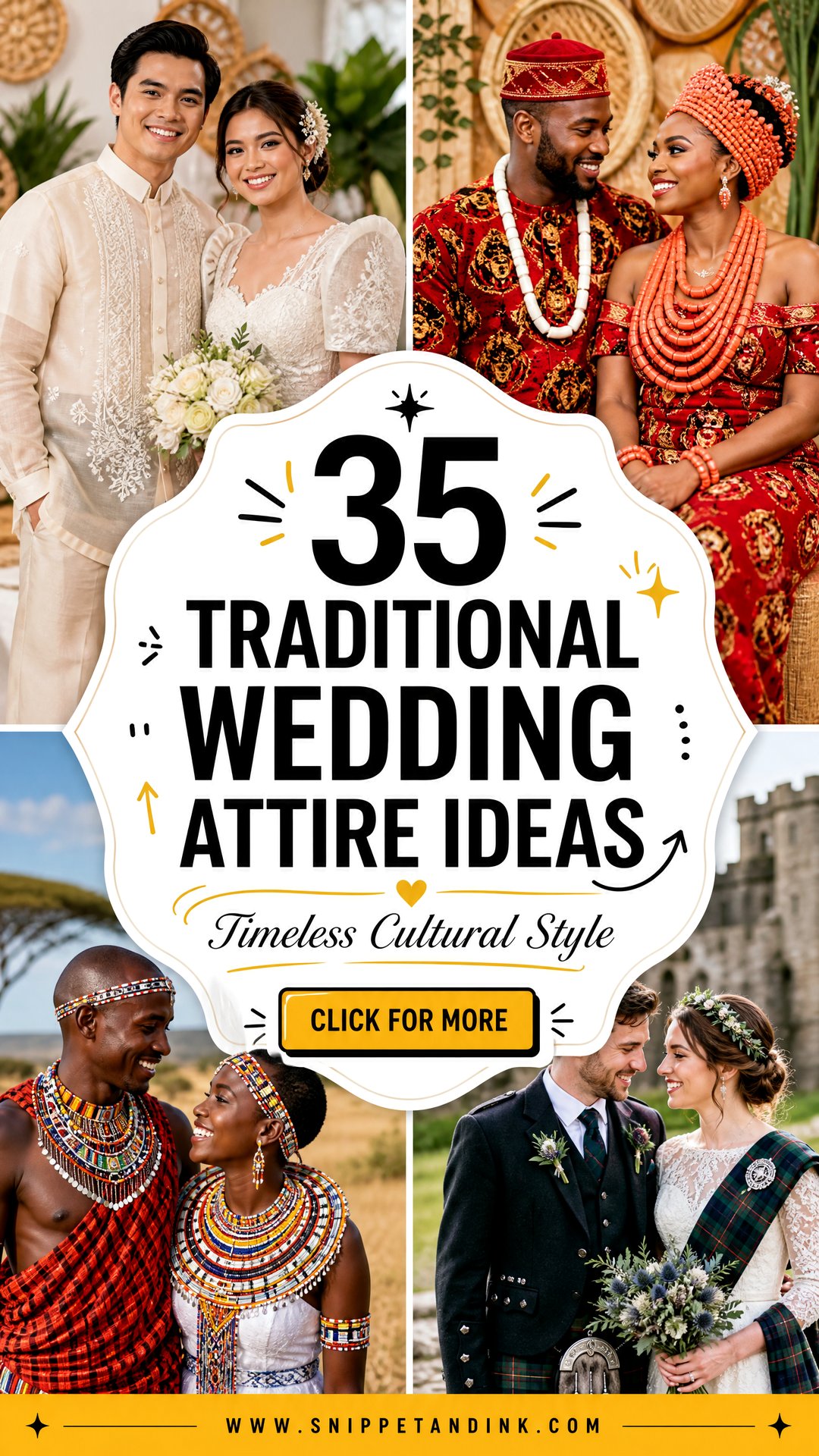
Traditional wedding clothes carry more than style. They carry family memory, regional craft and, often, rules about who wears what and when. Embroidered saris and lehengas, hanbok, kimono, agbada, qipao and tartan each come with their own way of being worn. As a stylist, my job with these outfits is mostly practical: getting the drape, weight, fastenings and accessories to work for a long ceremony while the family’s customs lead. Below are the traditions I see most often, with the details that make each one comfortable and correct. If the culture isn’t your own, ask the couple or family before you wear its dress.
Drapers, Dressers and Several Outfit Changes
Many of the outfits below aren’t put on alone. A Kanjivaram saree, a gele, a shiromuku or a Moroccan caftan sequence usually needs a specialist to dress the bride, and that person books up early in wedding season. I’d confirm them at the same time as the outfit itself.
Weddings in many of these traditions run over several events, with a different outfit for each. When I plan a timeline with a bride, I work backward from the photographs:
- List every event and the outfit for each, including jewellery and shoes.
- Ask the dresser how long each look takes. Draping and headwraps take far longer than a zip.
- Add time for hair and makeup touch-ups between changes, since a headpiece or dupatta often flattens hair.
- Pack each outfit in its own labelled bag with every pin, fastener and accessory it needs.
Weight is the other thing to plan for. Heavily embroidered skirts, layered beadwork and gold jewellery are tiring to wear for hours. A trial wearing the complete look for an hour at home, including sitting on the floor if the ceremony needs it, tells you where it will pinch.
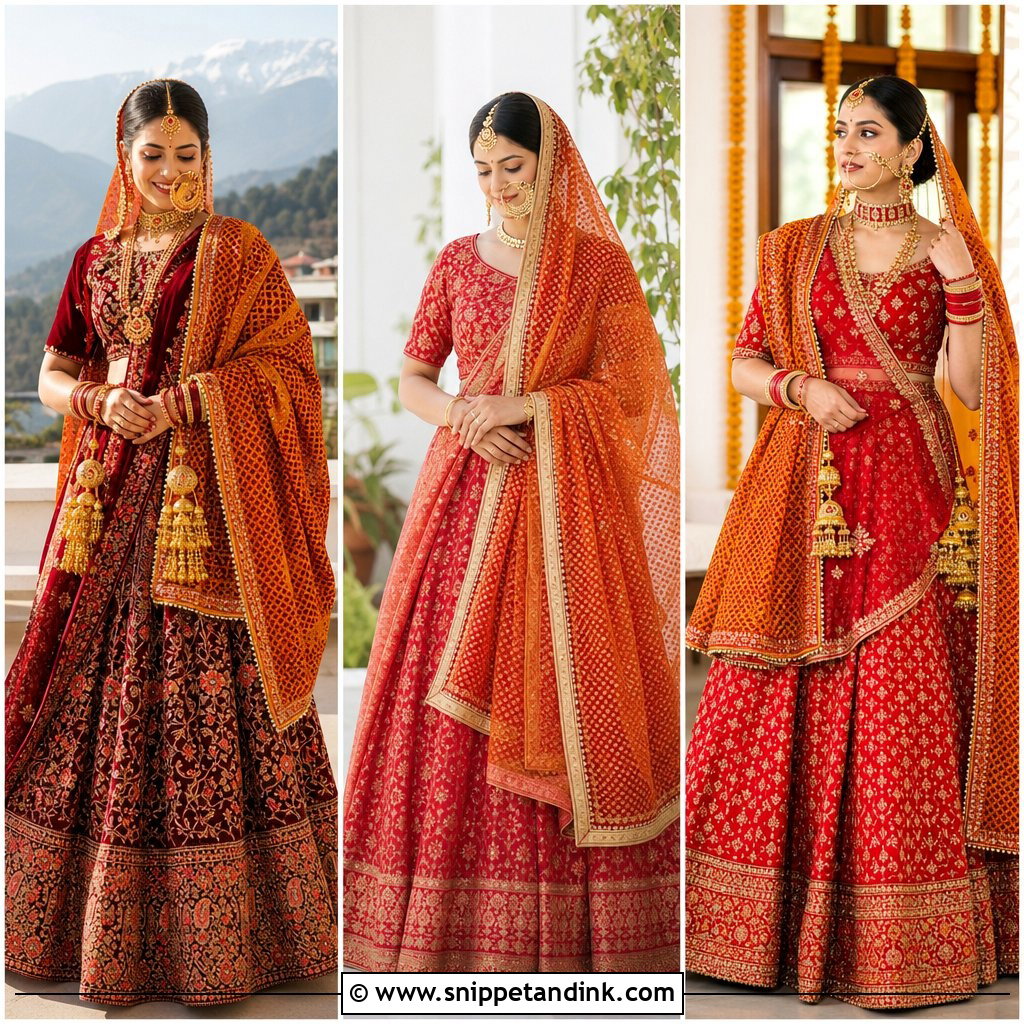
1. Indian Red Lehenga Wedding Attire
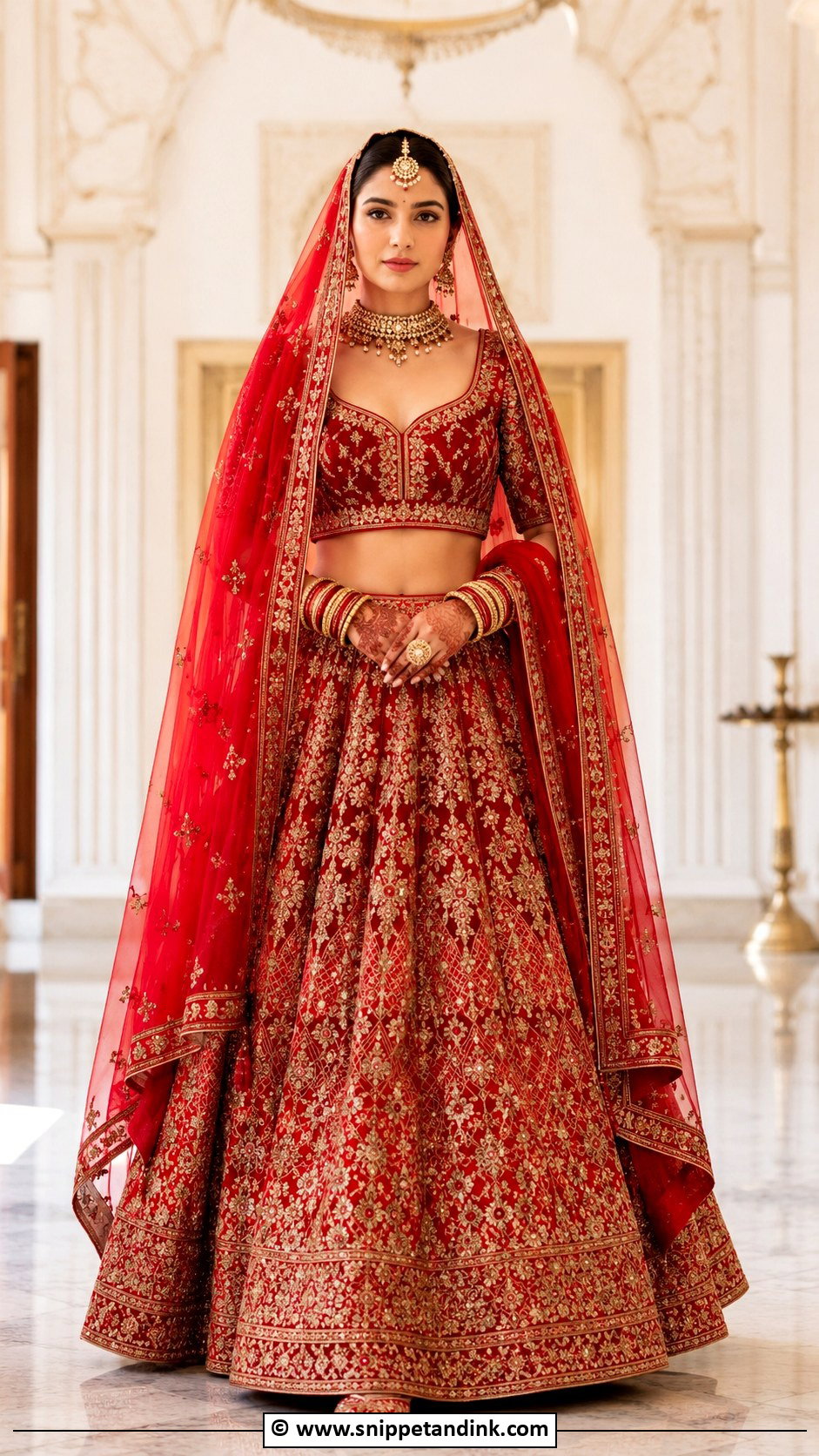
The red lehenga is the outfit many people picture first for an Indian bride: a full embroidered skirt, a fitted blouse and a dupatta over the shoulder or head. Heavy zardozi embroidery can make the skirt weigh several kilos, so I always ask for a padded waistband and check the blouse at a fitting with the full jewellery on, because a heavy necklace pulls the neckline forward. Gold jewellery, bangles and anklets finish it. Embellished flats or low heels suit ceremonies that involve long standing and sitting. The groom often wears an ivory sherwani with red accents. Pin the dupatta in more places than you think you need.
2. South Indian Silk Saree Wedding Attire
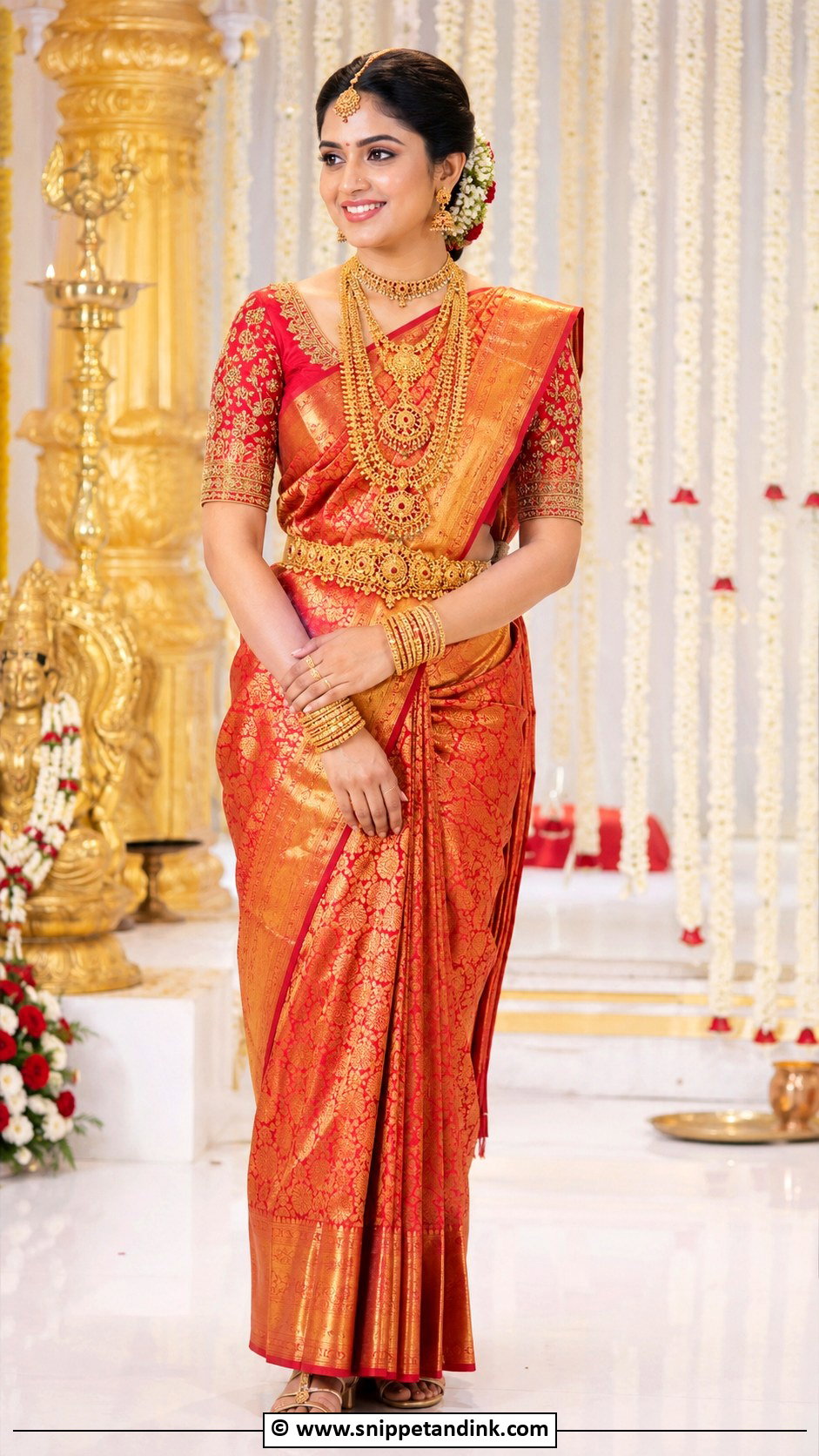
Kanjivaram silk is heavy, lustrous and woven with temple borders, which is exactly why it drapes so well and also why the pleats need an expert hand. Red, gold, green and maroon are common bridal colours, worn with a fitted blouse, layered gold jewellery, a waist belt, bangles, anklets and fresh flowers in the hair. Book the person who’ll drape it in advance and do a practice drape; a heavy silk saree tied by someone unfamiliar with it tends to loosen at the waist by the end of the rituals. The groom often wears a silk veshti and angavastram.
3. Pakistani Sharara Wedding Attire
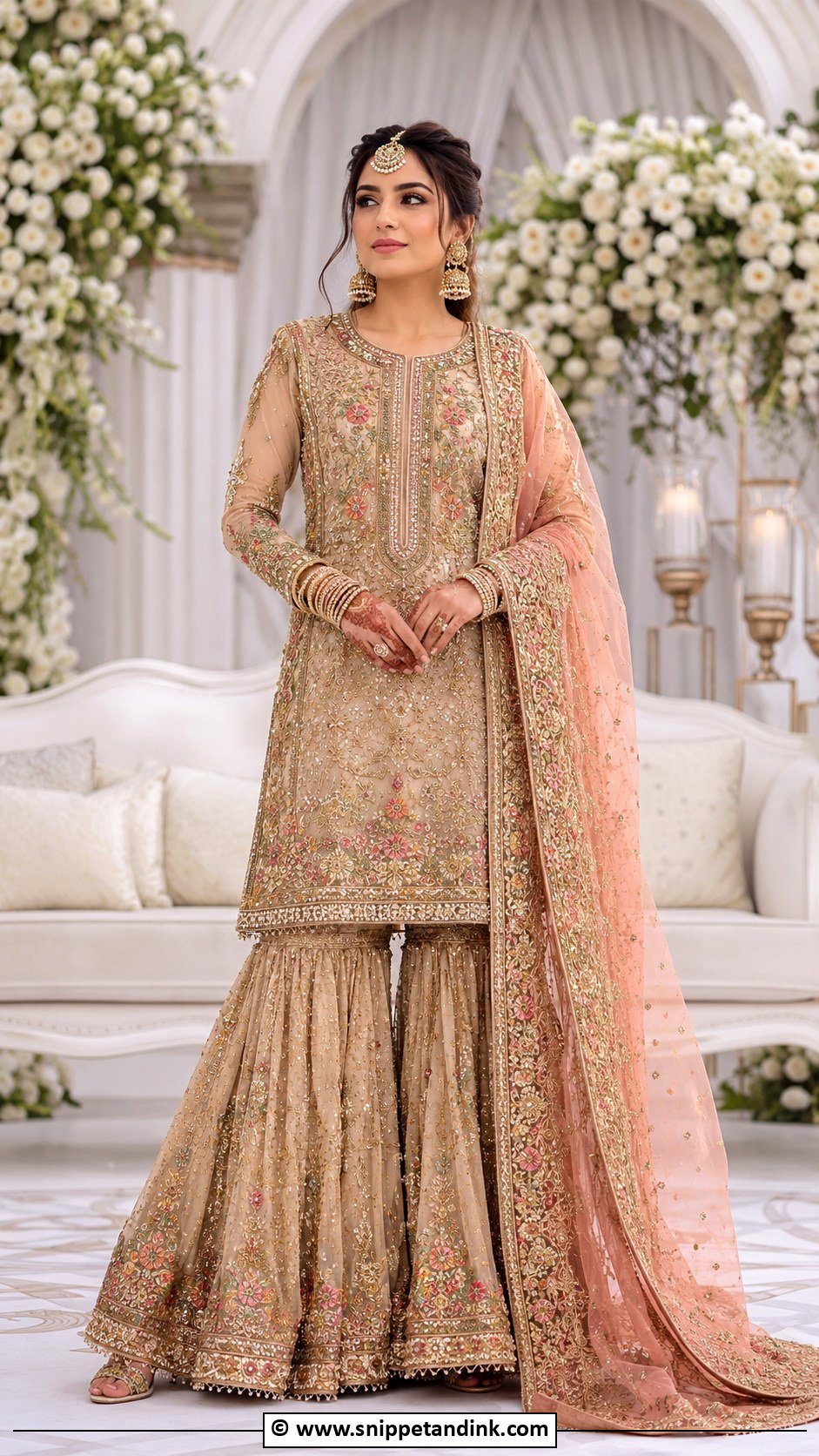
A sharara pairs a long embroidered kameez with wide, flared trousers and a dupatta with heavy borders. It moves beautifully and is more comfortable for long events than a stiff skirt. Proportion is the fitting point: the kameez length has to balance the flare, and I set it with the bride standing in her shoes. Soft gold, blush, red, emerald or ivory depend on family custom and the event. Jhumkas, a tikka, stacked bangles and embellished sandals complete it, and the groom can match in a sherwani and khussa.
4. Bangladeshi Red Saree Wedding Attire
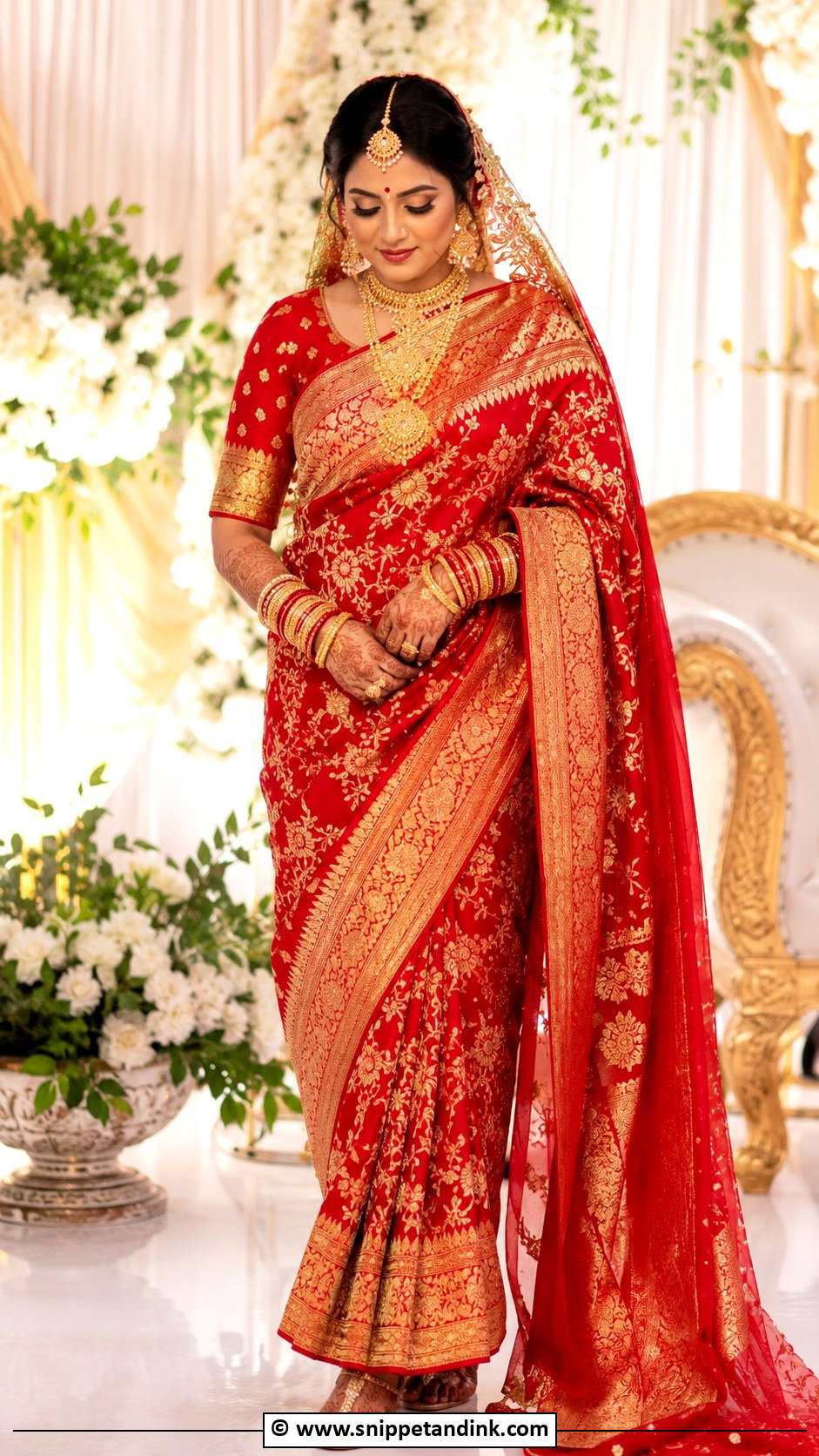
Red signals joy and celebration in Bangladeshi weddings, and the bridal saree is often richly embroidered with zari borders or jamdani-style weaving. Gold jewellery, red bangles, alta on the feet and a veil or dupatta drape complete it. With so much richness in the saree, I’d pick one focal piece, a heavy necklace or a dramatic headpiece, rather than layering both at full volume. Comfortable sandals help. The groom can wear a sherwani or panjabi.
5. Sri Lankan Kandyan Wedding Attire
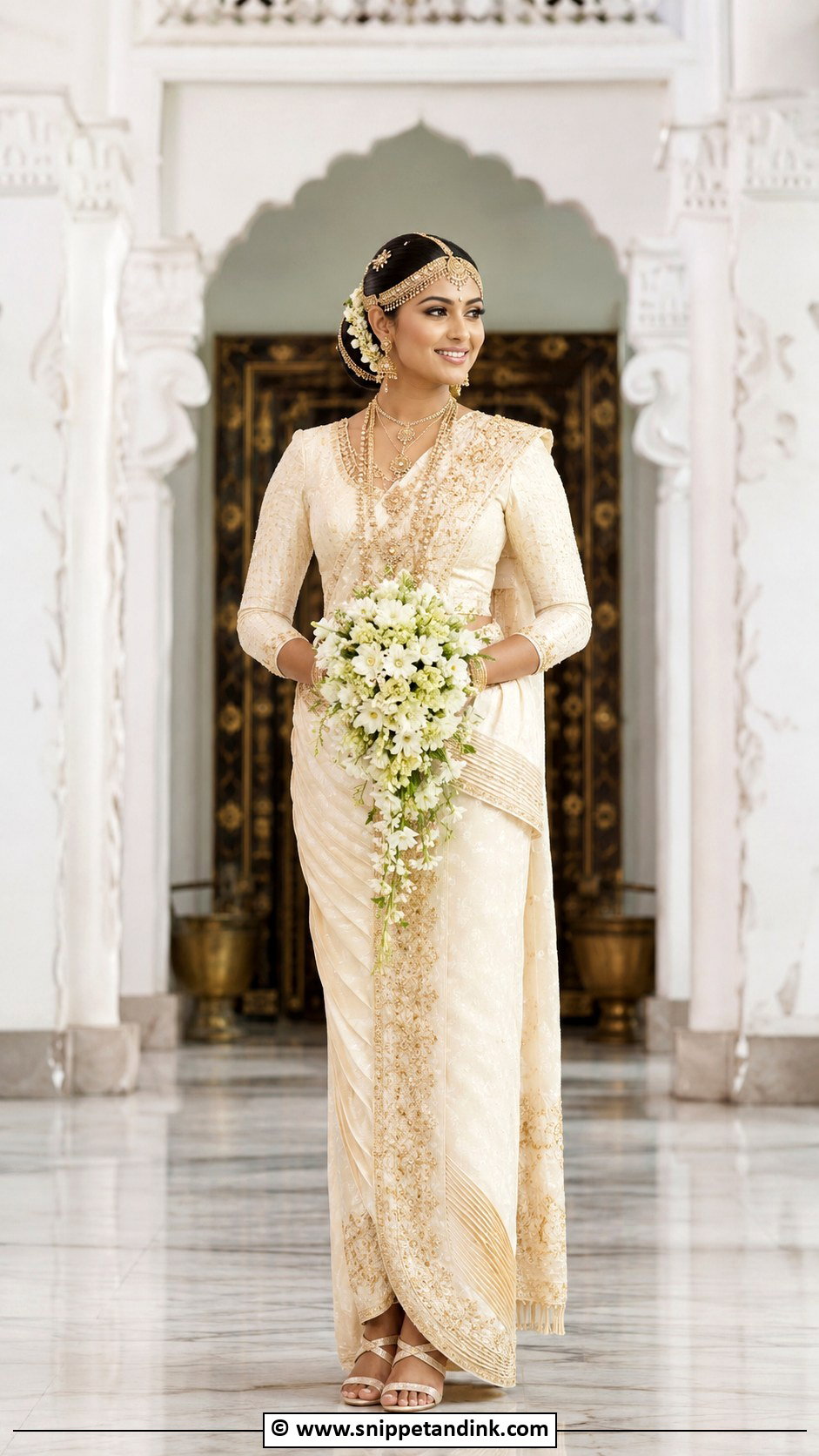
The Kandyan bride’s osariya is a distinctive saree drape with a structured, frilled waist, worn with intricate jewellery and a formal hair arrangement. Ivory, gold, red or pastel shades with embroidery are common. The silhouette depends on precise draping and a well-fitted jacket, so book someone experienced with the osariya style. Grooms traditionally wear the Nilame outfit with layered fabric and a jacket. Balance and posture carry the look; I’d keep accessories to what the tradition calls for.
6. Chinese Red Qipao Wedding Attire
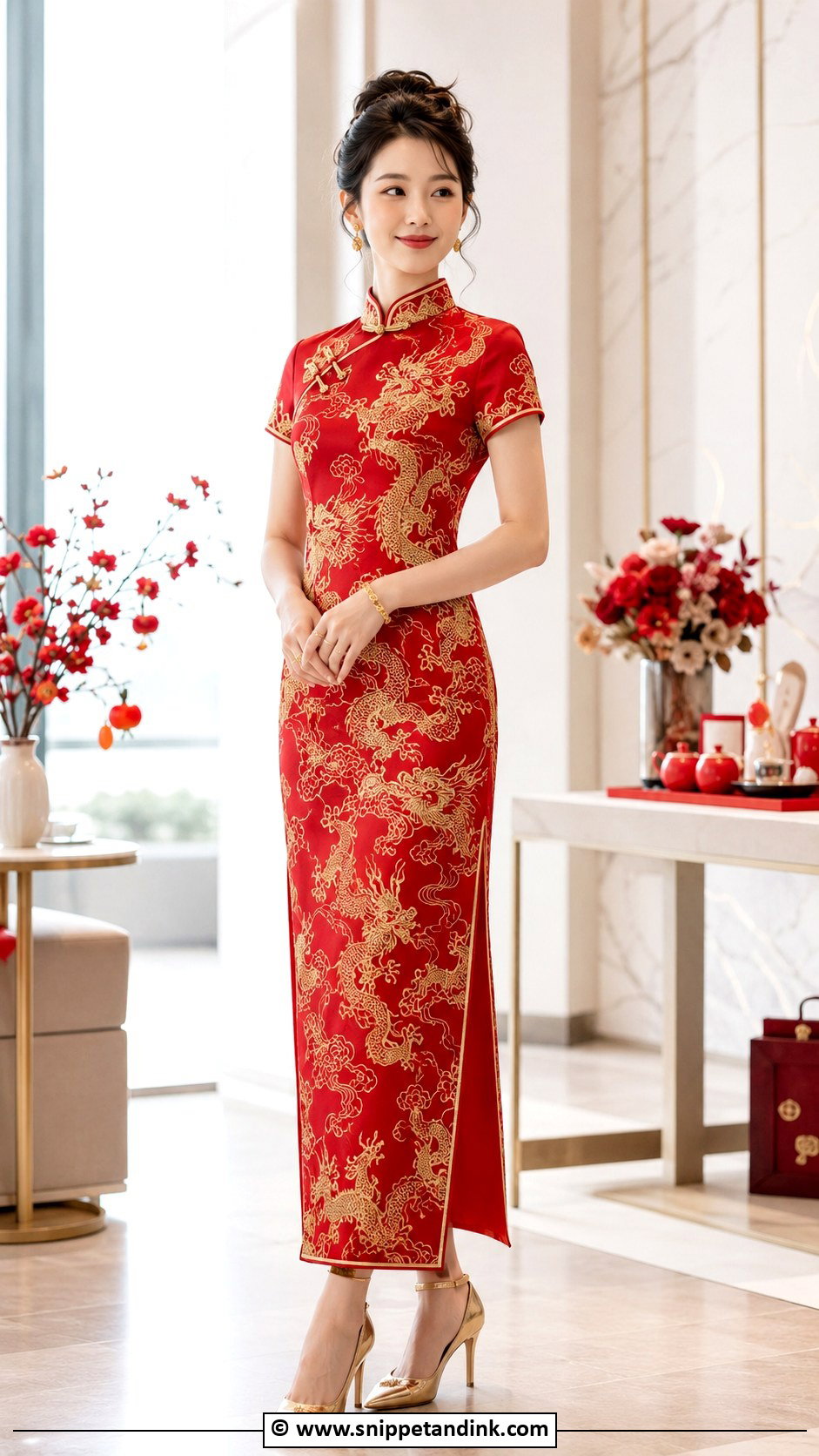
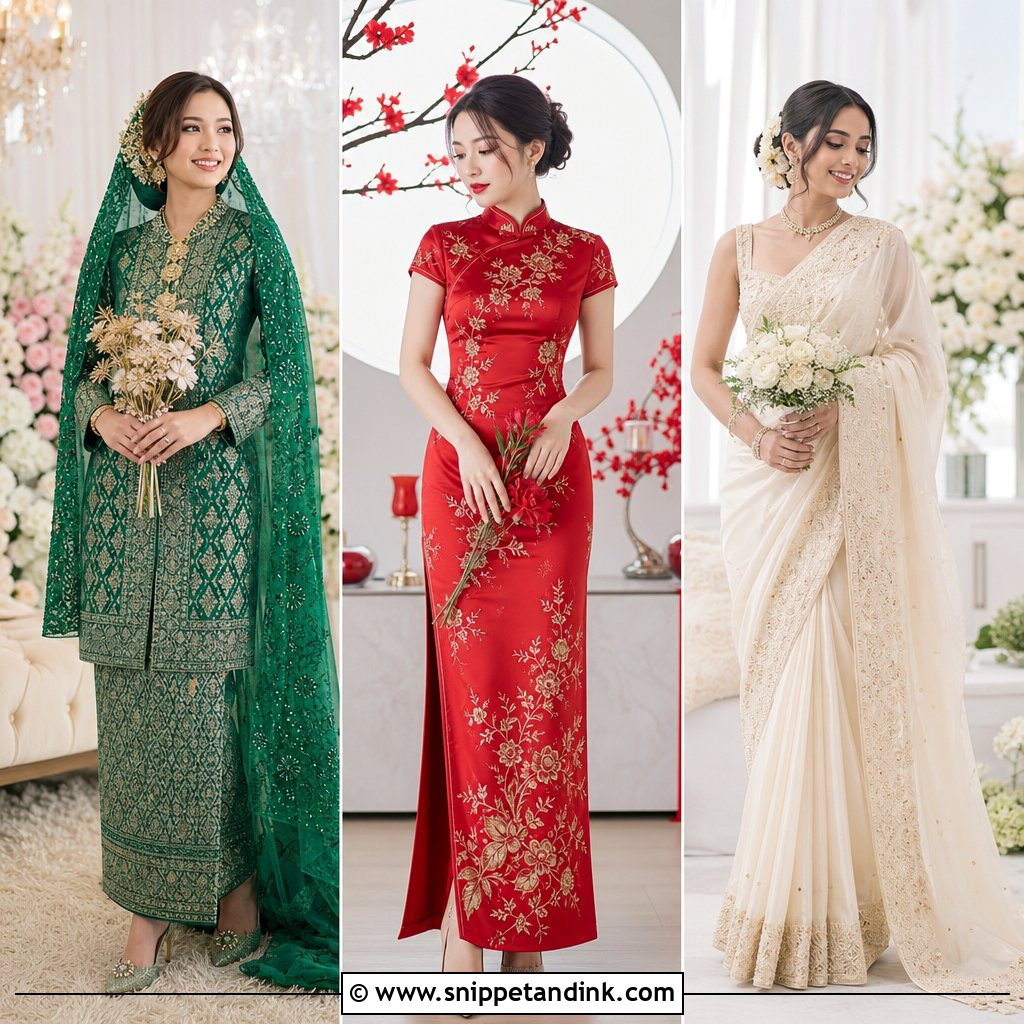
A red qipao wedding outfit is fitted, with a mandarin collar, a side slit and gold embroidery of flowers, dragons or phoenixes. The fit has no ease at all, so I’d have a qipao altered rather than bought off the rail, and set the slit height with the bride walking and sitting. A smooth updo, gold heels and delicate earrings suit it; the groom can wear a black or red tang suit. It’s well suited to tea ceremonies and outfit changes. Red belongs to the bride, so guests should avoid it unless invited.
7. Chinese Kua Wedding Attire
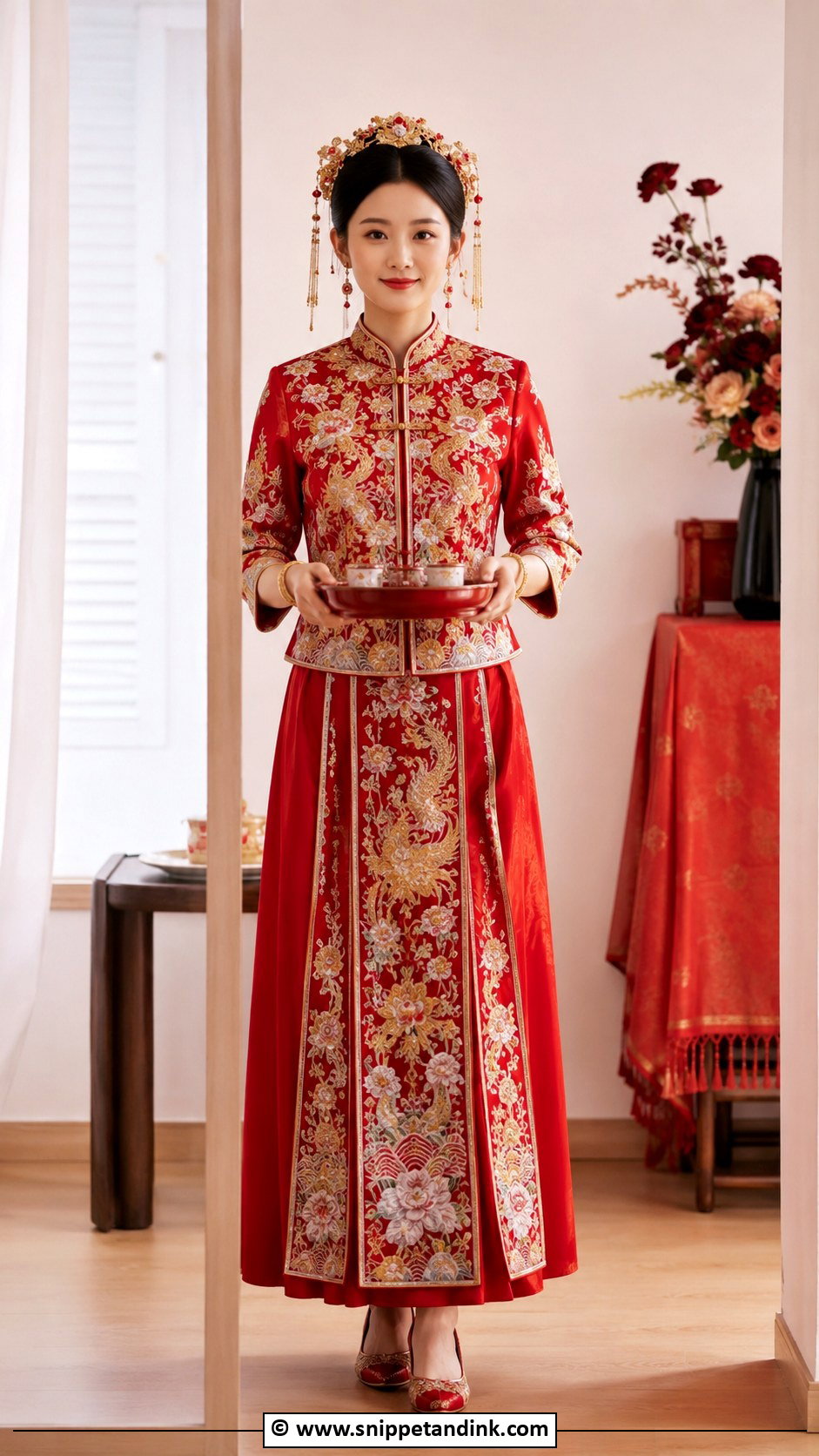
The kua is a two-piece jacket and skirt, heavily embroidered in gold on red with dragons and phoenixes for harmony and good fortune. Because gold embroidery is stiff, the jacket can feel restrictive under the arms; I check that she can pour tea and bow comfortably before signing off on the fit. Gold jewellery, red heels and a neat hairstyle complete it, and the groom may wear a tang suit or changshan. Keep accessories modest against all that embroidery.
8. Korean Hanbok Wedding Attire
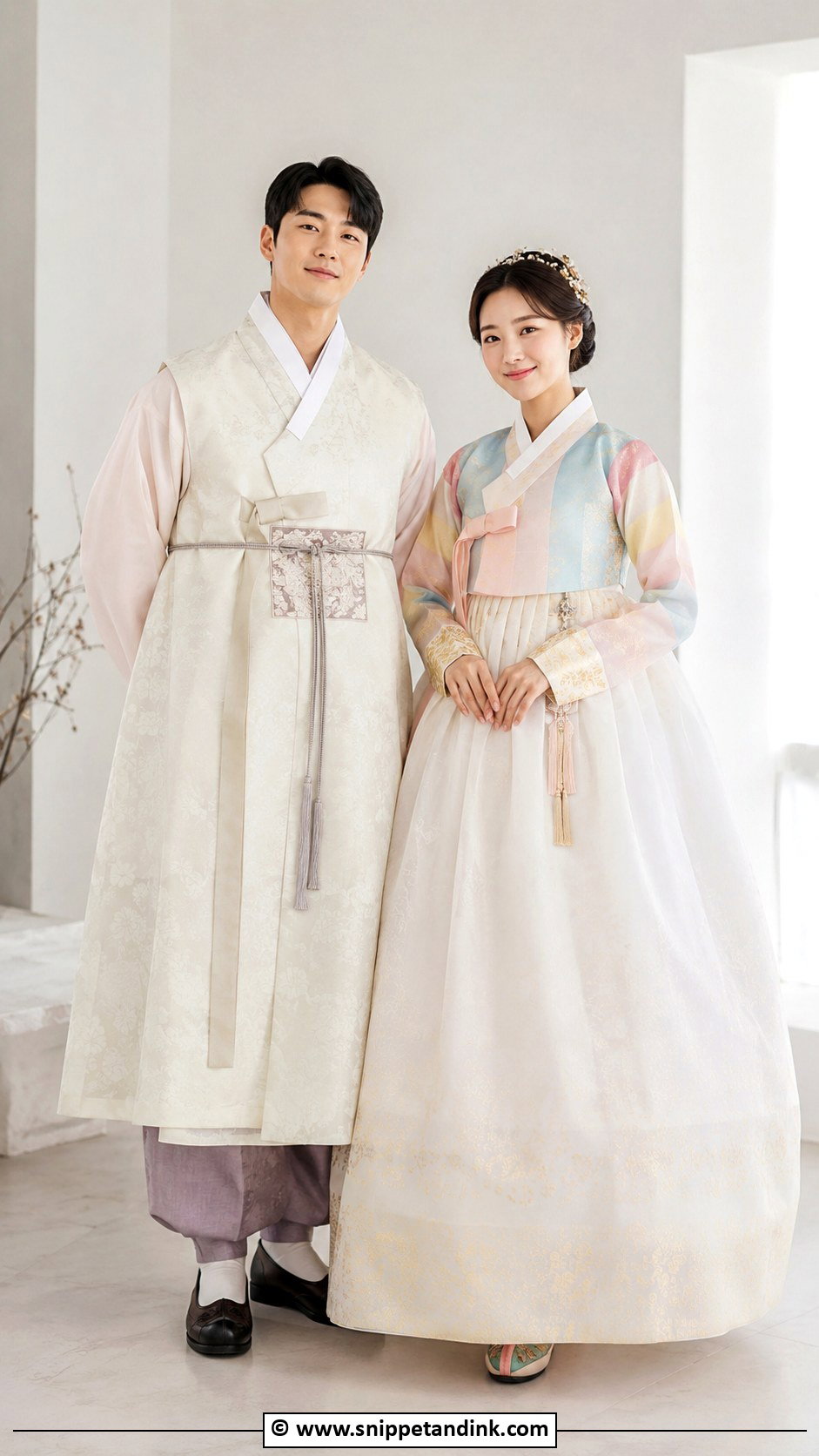
Hanbok pairs a short jeogori jacket with a full, high-waisted chima skirt, in red, pink, green, blue or ivory. The groom wears baji trousers, a jacket and an outer robe. The skirt ties above the bust, so it hides the waist entirely and is comfortable for long family ceremonies. The ribbon tie, the goreum, has a correct knot; ask someone familiar with hanbok to tie it if you’re unsure. Hair is neat with subtle accessories, and shoes should be simple and supportive.
9. Japanese Shiromuku Wedding Attire
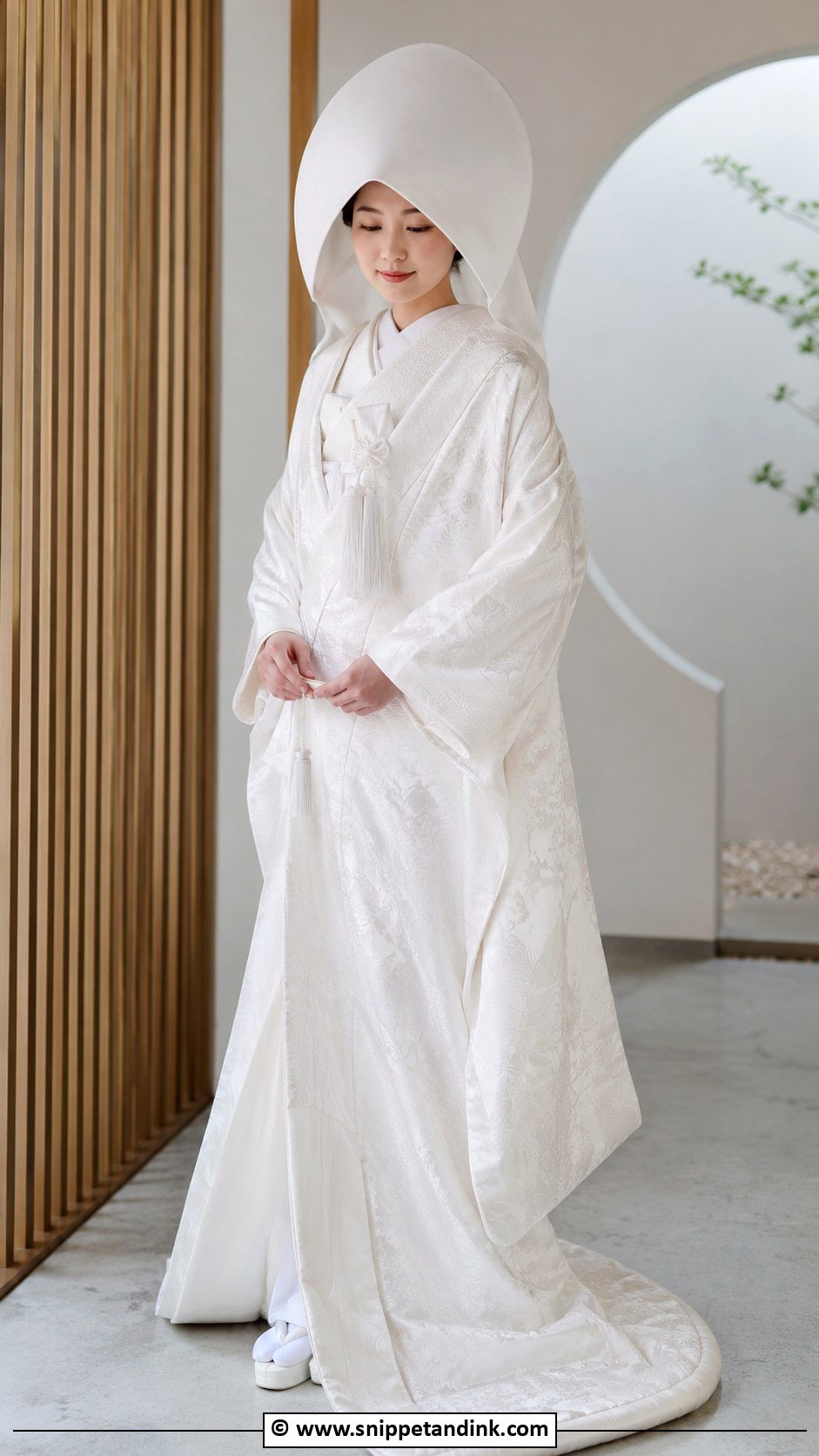
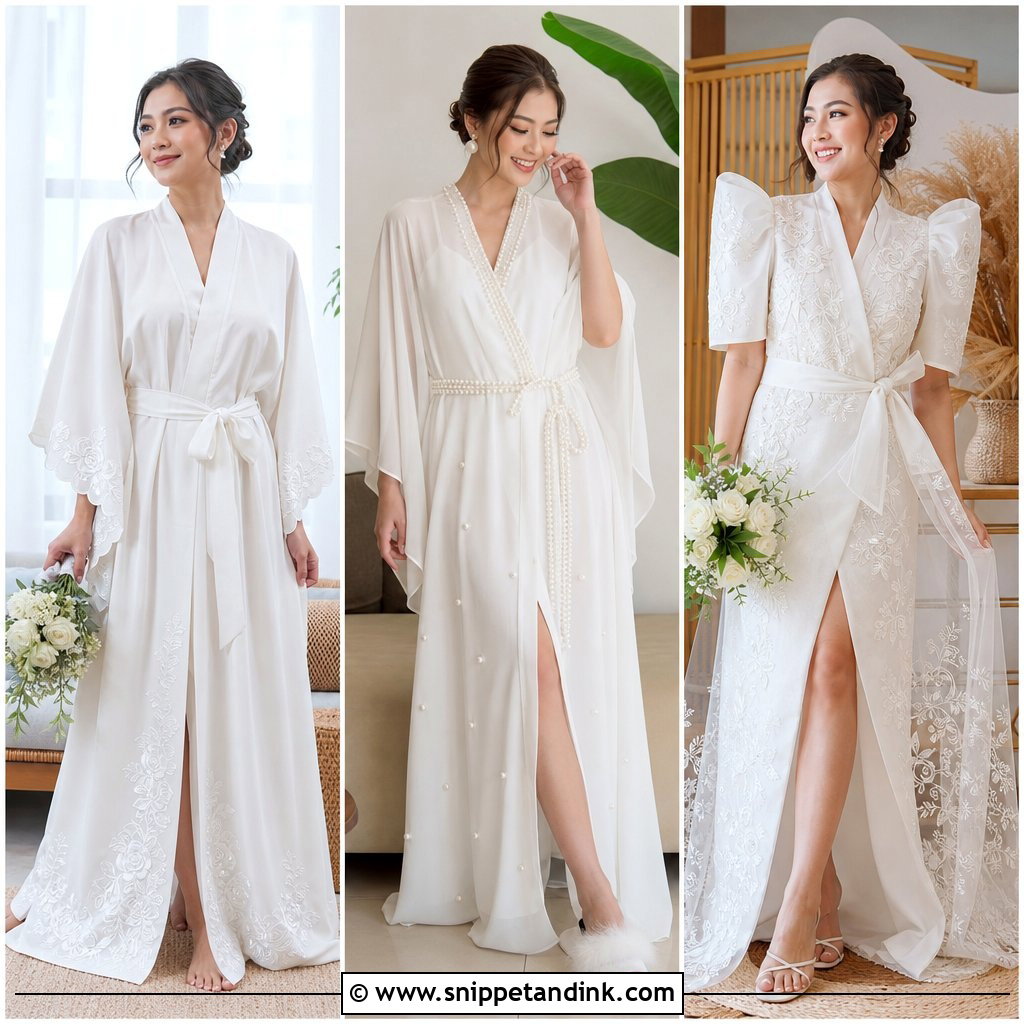
A Japanese shiromuku wedding outfit is all white: layered kimono, a formal obi and a wataboshi hood or tsunokakushi headpiece. The groom typically wears a black montsuki with hakama. Dressing in a shiromuku is a skilled job done by a professional dresser, and it takes time, so build that into the morning schedule. Movement is restricted, so plan short walks and a seat close by. Minimal accessories; the garment is the statement.
10. Japanese Iro-Uchikake Wedding Attire
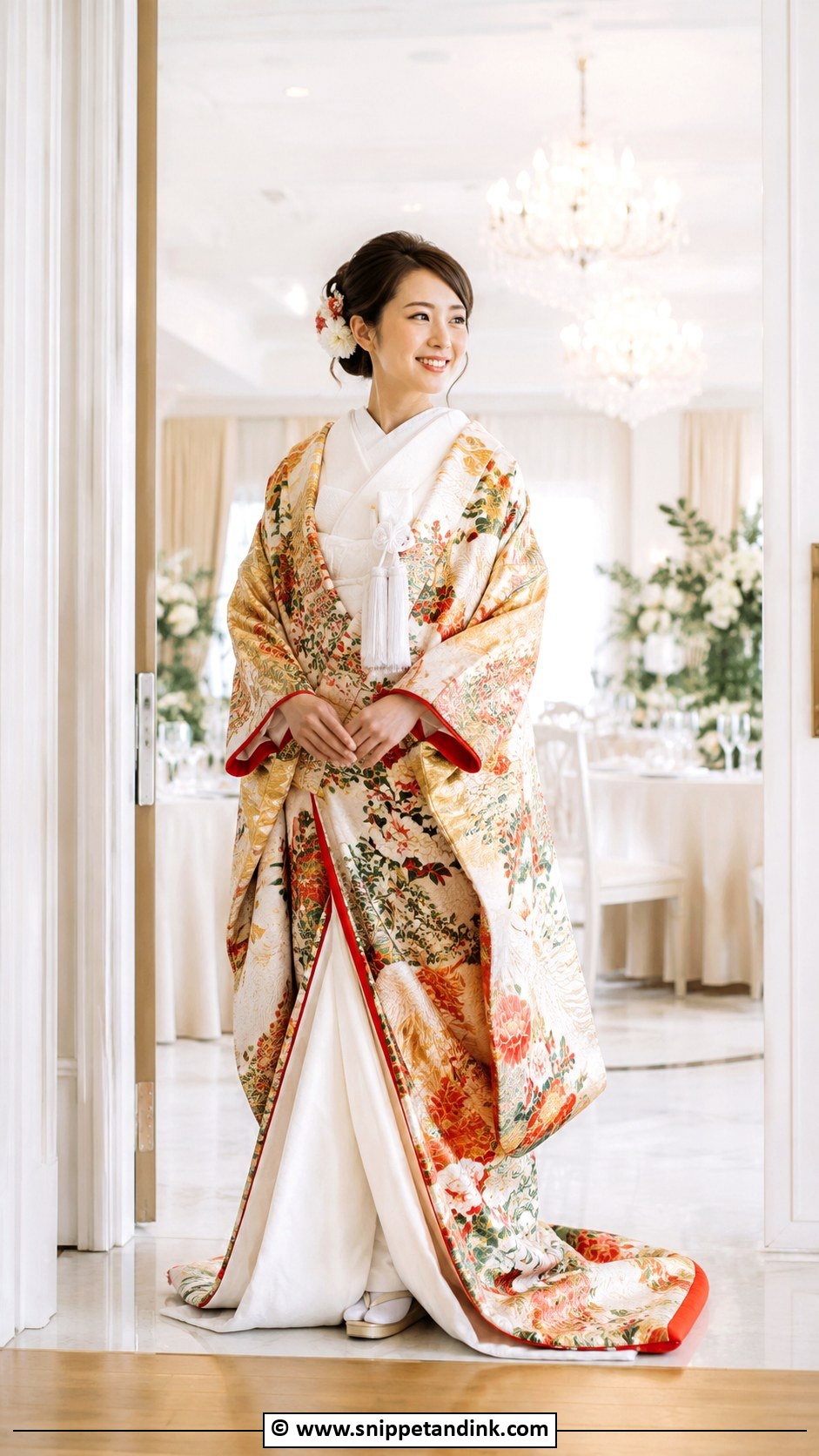
The iro-uchikake is a colourful outer robe, often embroidered with cranes, flowers or waves, worn over a white inner kimono. Red, gold, green and orange are common, with softer modern tones too. It’s heavy and long, so many brides wear it for a portrait or a reception entrance rather than all day, and a helper manages the hem as she walks. The groom in black montsuki and hakama lets the robe stand out. Hair and accessories should be simple and placed with care.
11. Vietnamese Ao Dai Wedding Attire
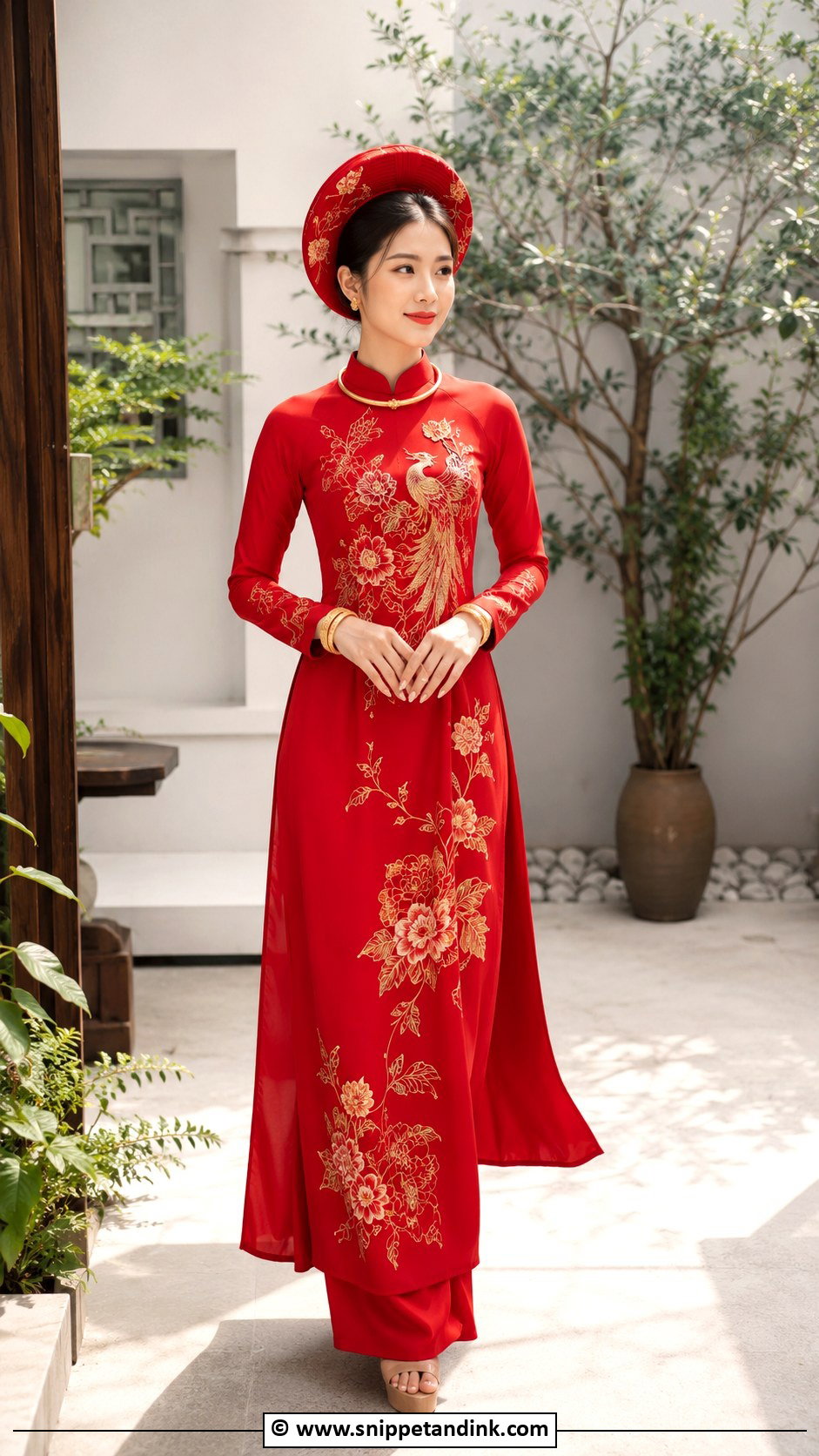
The ao dai is a long fitted tunic over flowing trousers, with embroidery, beading or brocade, in red, white, gold, pink or pastels. A khăn đóng headpiece gives the traditional finish, and the groom may wear a matching ao dai. Precise tailoring through the shoulders, waist and length is everything, since the tunic follows the body closely. Get the hem length right in your shoes, as the trousers should just brush the floor. It’s comfortable for greeting guests.
12. Thai Traditional Wedding Attire
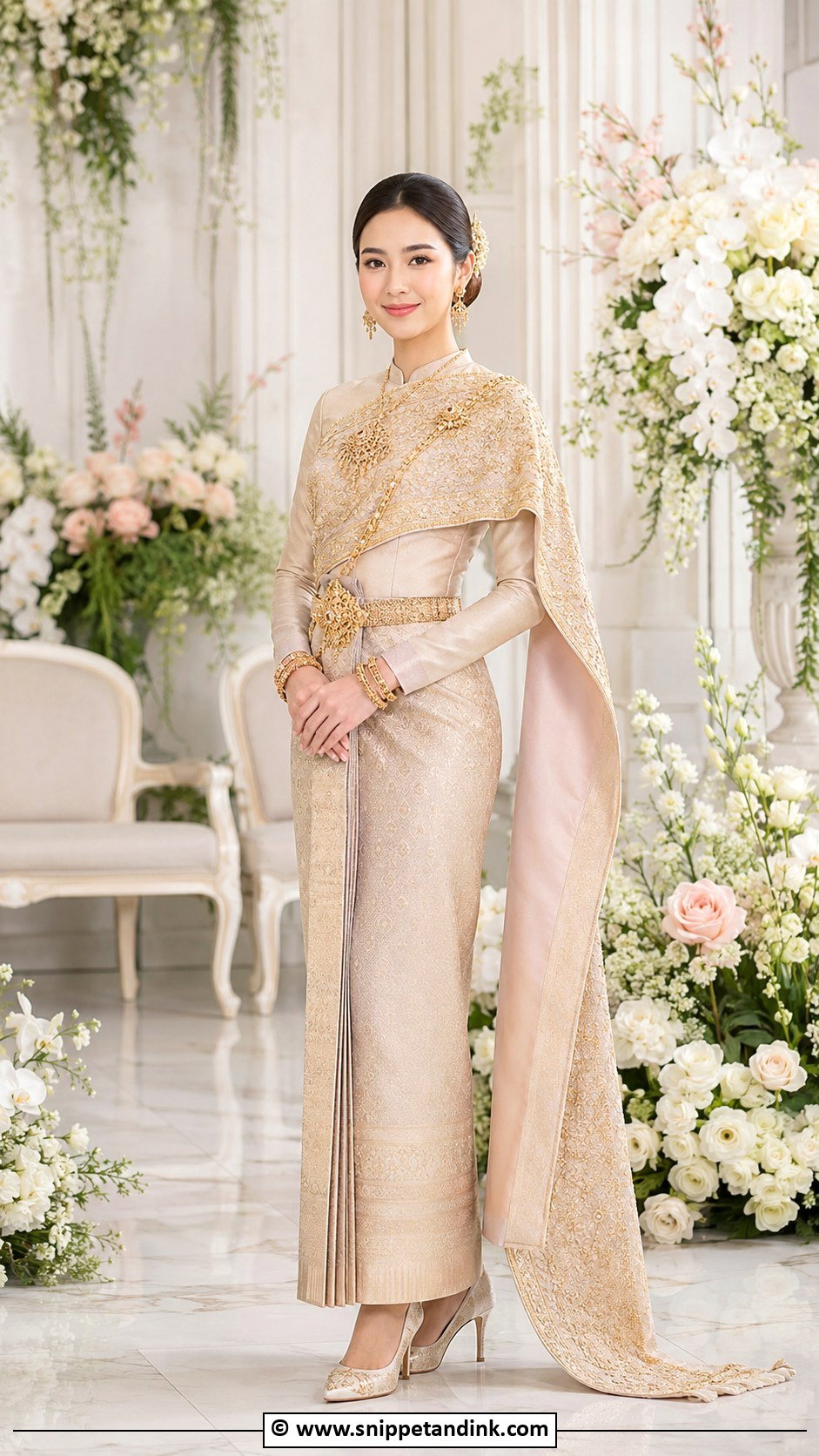
Thai bridal dress is usually silk: a fitted blouse, a wrapped skirt and a shoulder sash in gold, cream, pink or jewel tones. Silk has to drape without pulling, so I check the wrap at the hip while seated, where it tends to strain. Gold jewellery, a polished hairstyle and delicate heels finish it, and symmetrical jewellery shows off the sash. The groom wears a silk jacket or formal set in a matching colour.
13. Filipino Barong Tagalog Wedding Attire
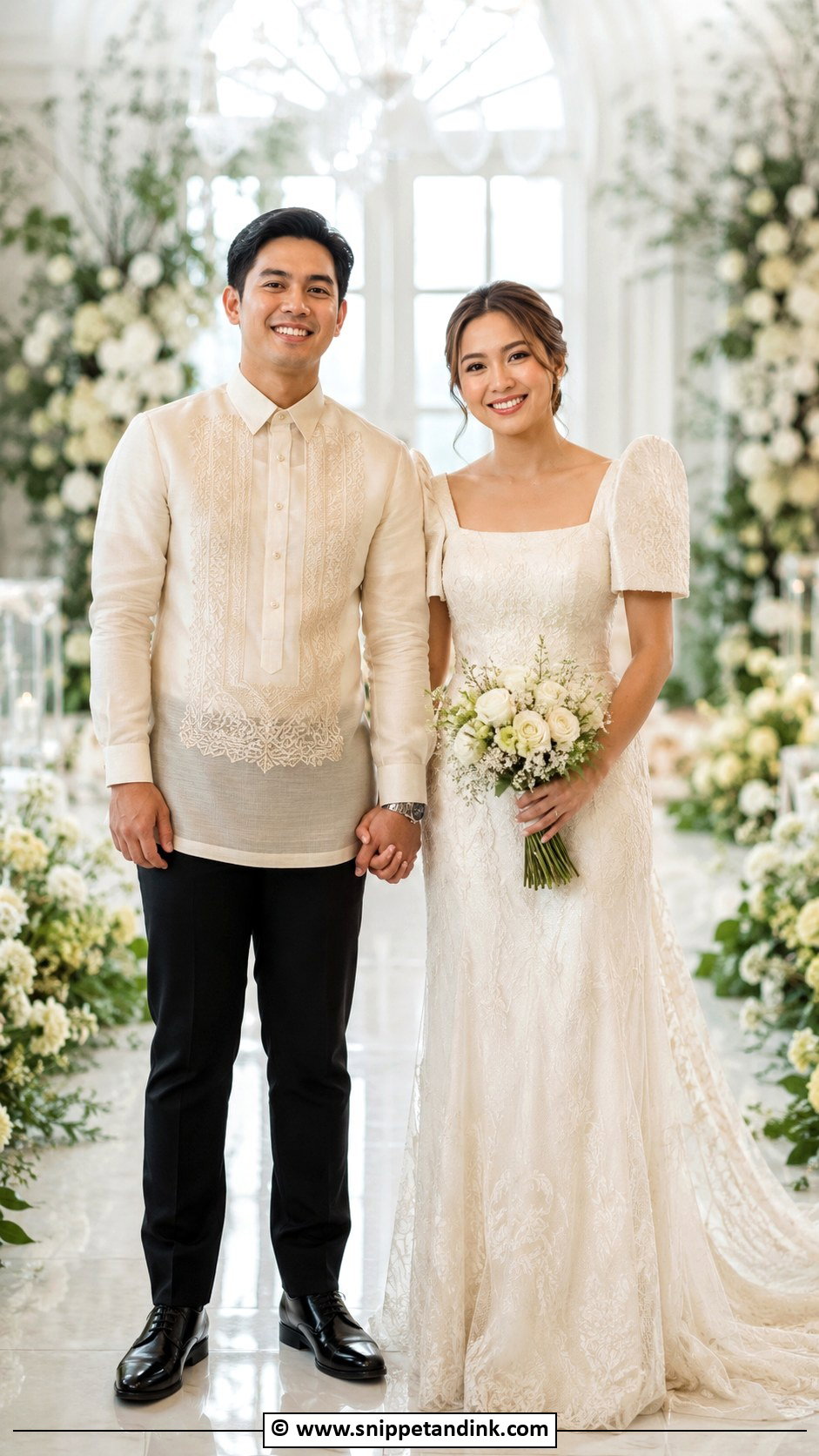
The barong Tagalog is sheer and embroidered, traditionally of piña or similar fine fibres, worn over an undershirt with black trousers and polished shoes. The bride may coordinate in a Filipiniana dress with butterfly sleeves. It’s breathable and practical in warm climates. The sheer fabric shows what’s underneath, so a well-fitted plain undershirt matters. Keep accessories refined, such as pearl earrings and a neat clutch.
14. Indonesian Kebaya Wedding Attire
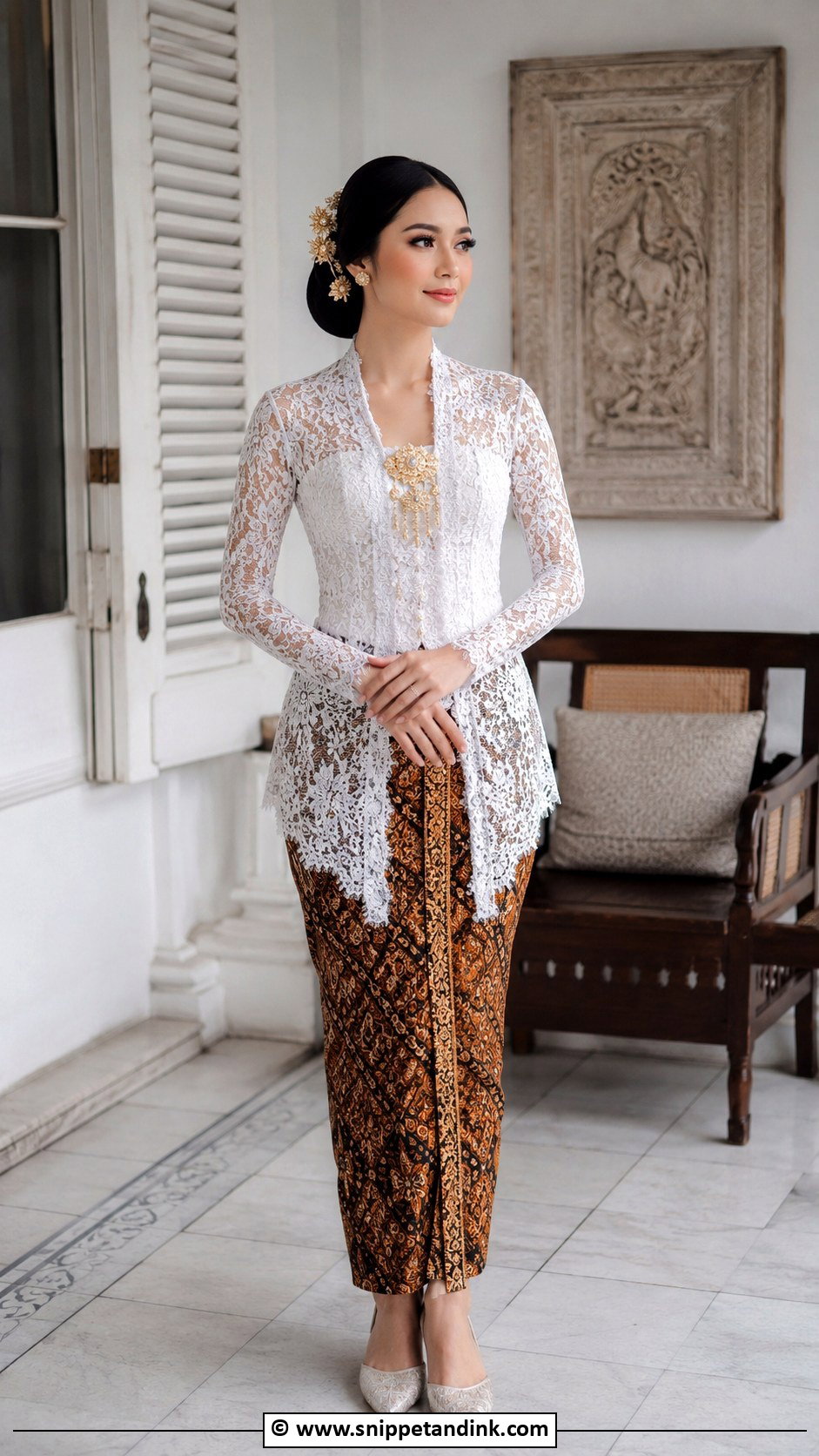
The kebaya is a fitted lace or embroidered blouse worn with a batik or songket skirt, a sleek bun and ornate jewellery. Regional styles vary, so the groom’s outfit, from a batik shirt to formal regional attire, follows the family’s custom. The blouse should fit smoothly at the waist without straining at the buttons, and the skirt must allow you to walk; a tightly wrapped kain can restrict stride. Gold accessories and soft heels complete it.
15. Malaysian Baju Kurung Wedding Attire
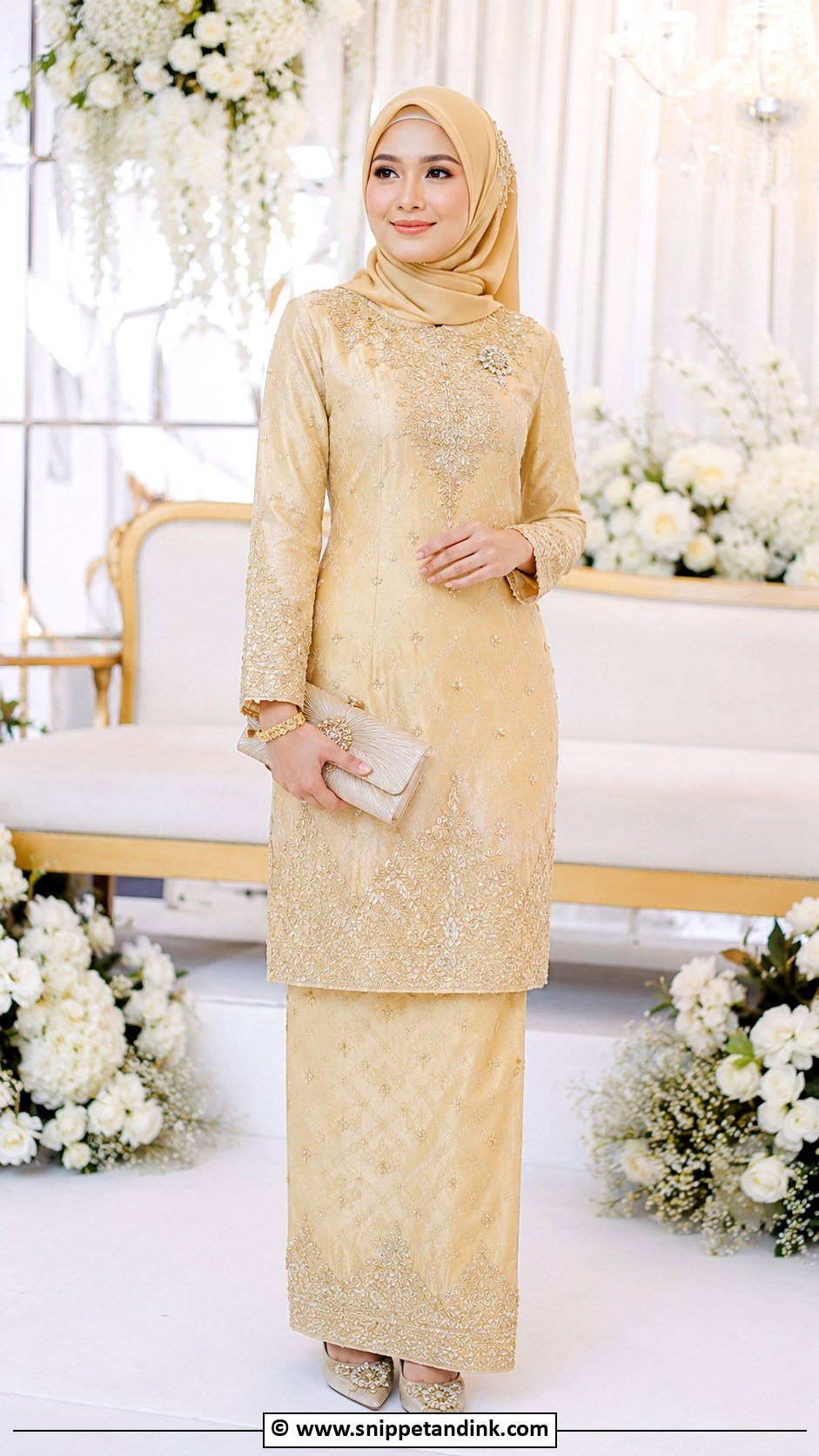
A Malaysian baju kurung wedding outfit is a long tunic with a matching skirt, in silk, songket, lace or beaded fabric, with a headscarf or veil if desired. The groom wears baju Melayu with a sampin. The loose cut is comfortable for long celebrations. Songket is woven with metallic thread and is fairly stiff, so I’d have it pressed by someone who knows the fabric. Coordinate a brooch, bracelet and small bag in one metal tone.
16. Nigerian Yoruba Aso Oke Wedding Attire
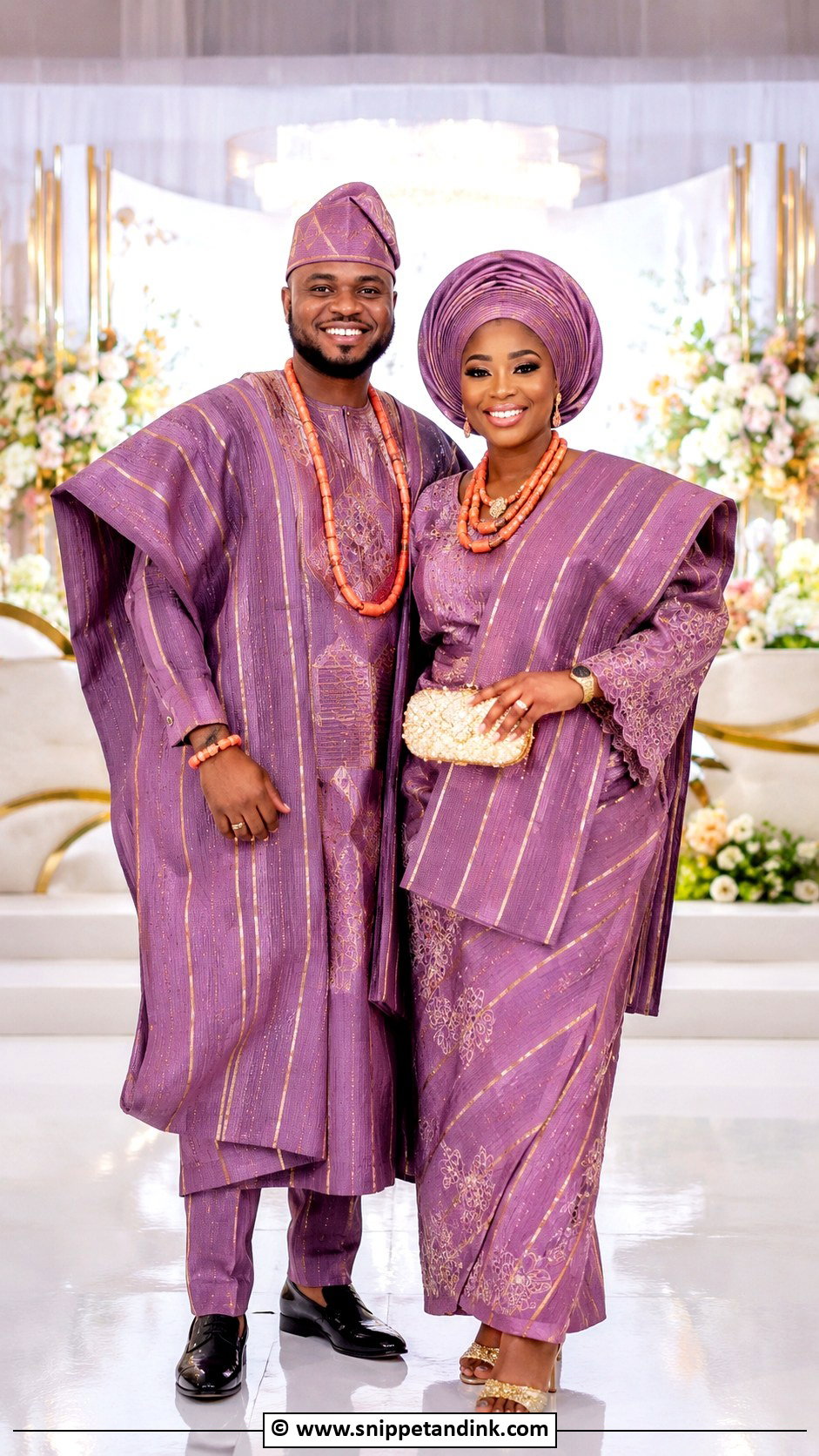
Yoruba aso oke wedding attire is woven, structured and bold: an iro and buba or a modern gown in aso oke, with a gele and statement beads. The groom wears agbada, fila and trousers, and couples often match colours, from champagne and gold to coral and teal. The gele is tied by a specialist and needs to be secure for hours; ask for it to sit snugly without pressing at the temples. Jewellery can be dramatic to match the cloth’s presence.
17. Nigerian Igbo Traditional Wedding Attire
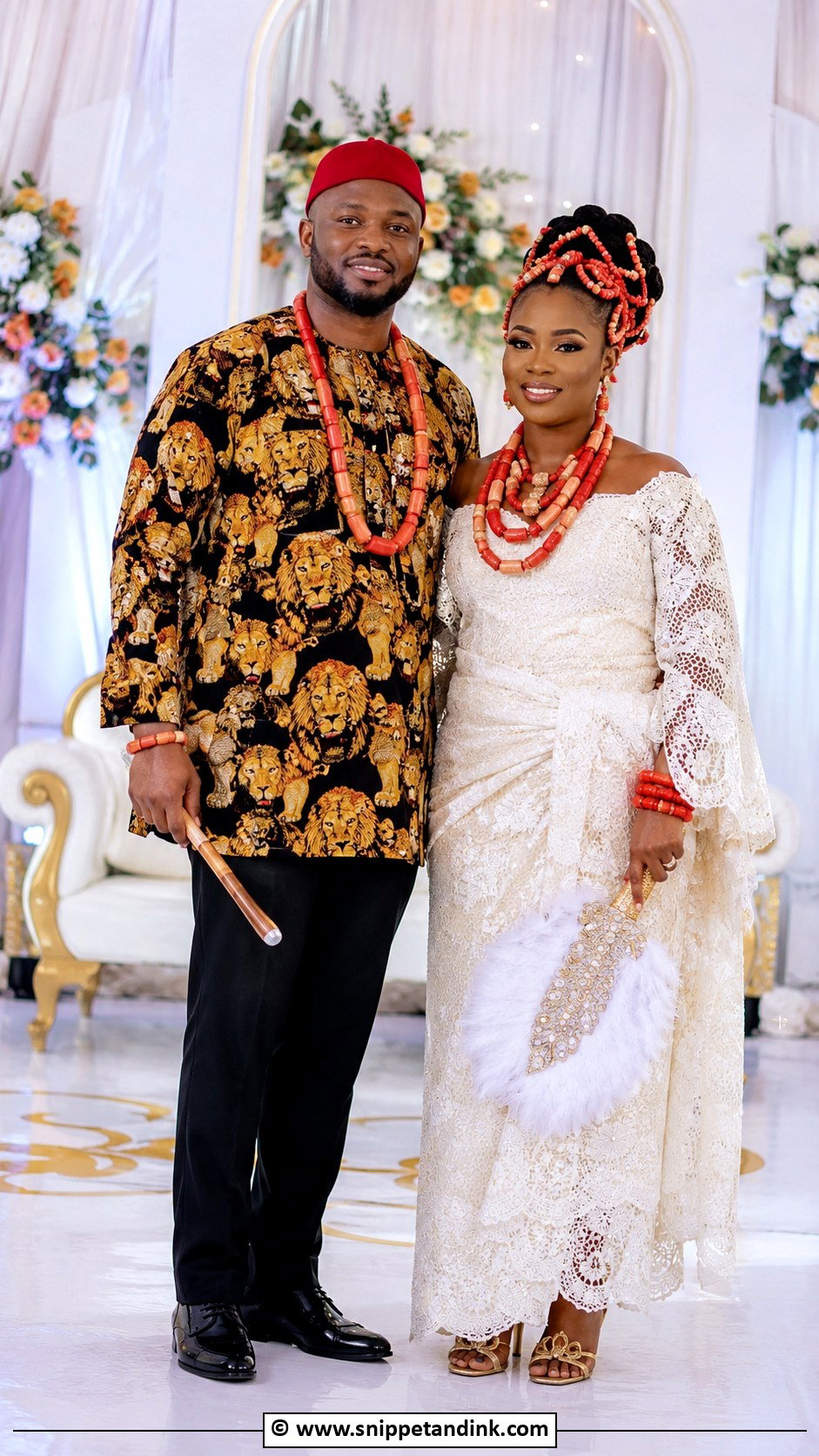
Igbo traditional wedding attire is colourful and symbolic: a wrapper and blouse, lace gown or beaded outfit, with coral beads at the neck, wrists and hair, and often a hand fan. The groom wears isi agu with coral beads and a red cap. Coral beads are heavy and sometimes family heirlooms, so I check the stringing and clasps before the day. Red, gold, white, royal blue and green are common, but the family usually guides colour. Comfortable shoes matter for the dancing.
18. Nigerian Hausa Wedding Attire
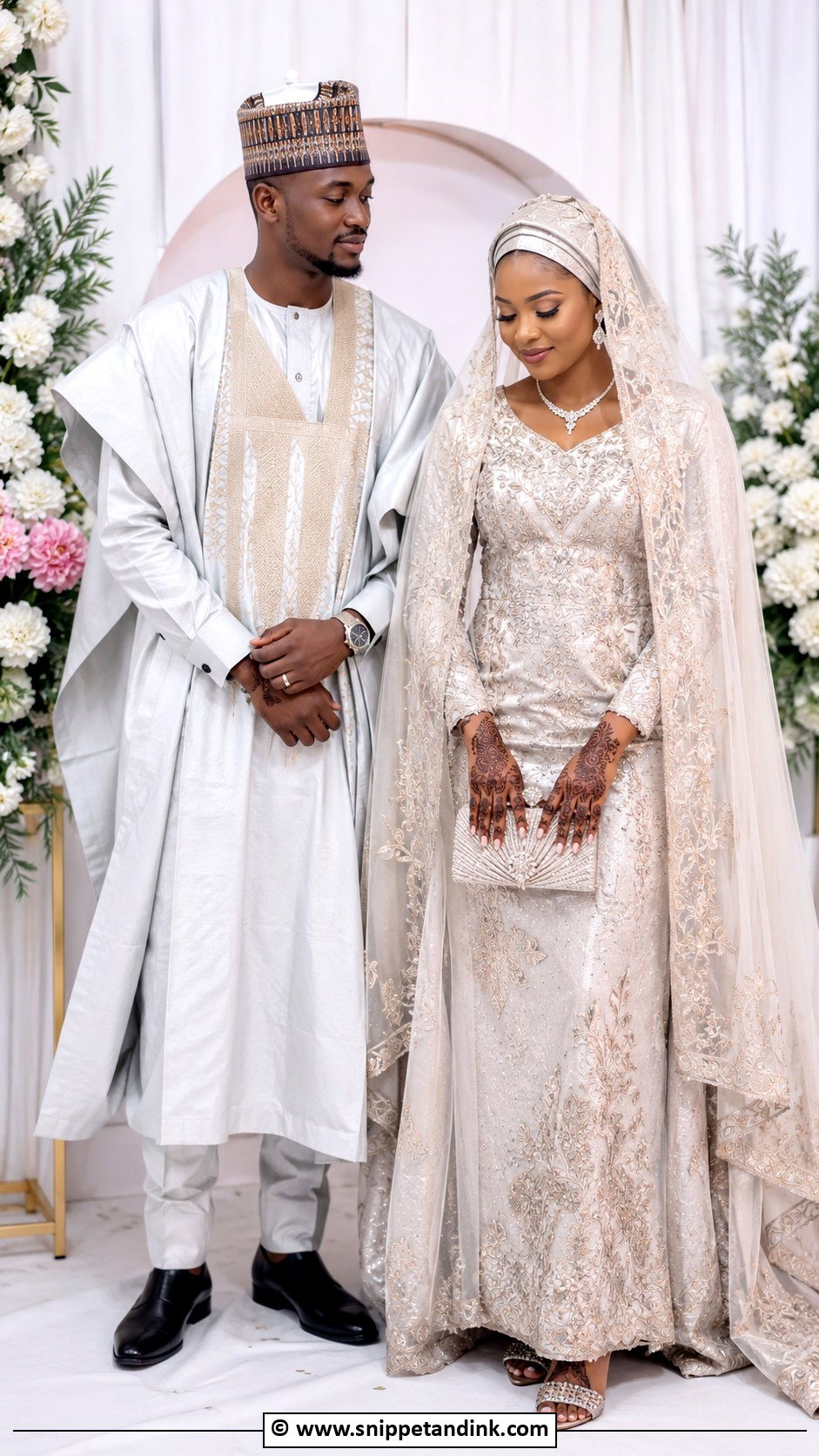
Hausa bridal dress is modest and elegant: an embroidered gown, wrapper or flowing dress with a matching veil, in lace, silk or brocade. The groom wears a baban riga with trousers and a hula cap. Flowing garments depend on fabric quality, because cheap fabric collapses or clings. Choose cloth that holds shape without stiffness. Tasteful jewellery, decorated sandals and a coordinated clutch finish it.
19. Ghanaian Kente Wedding Attire
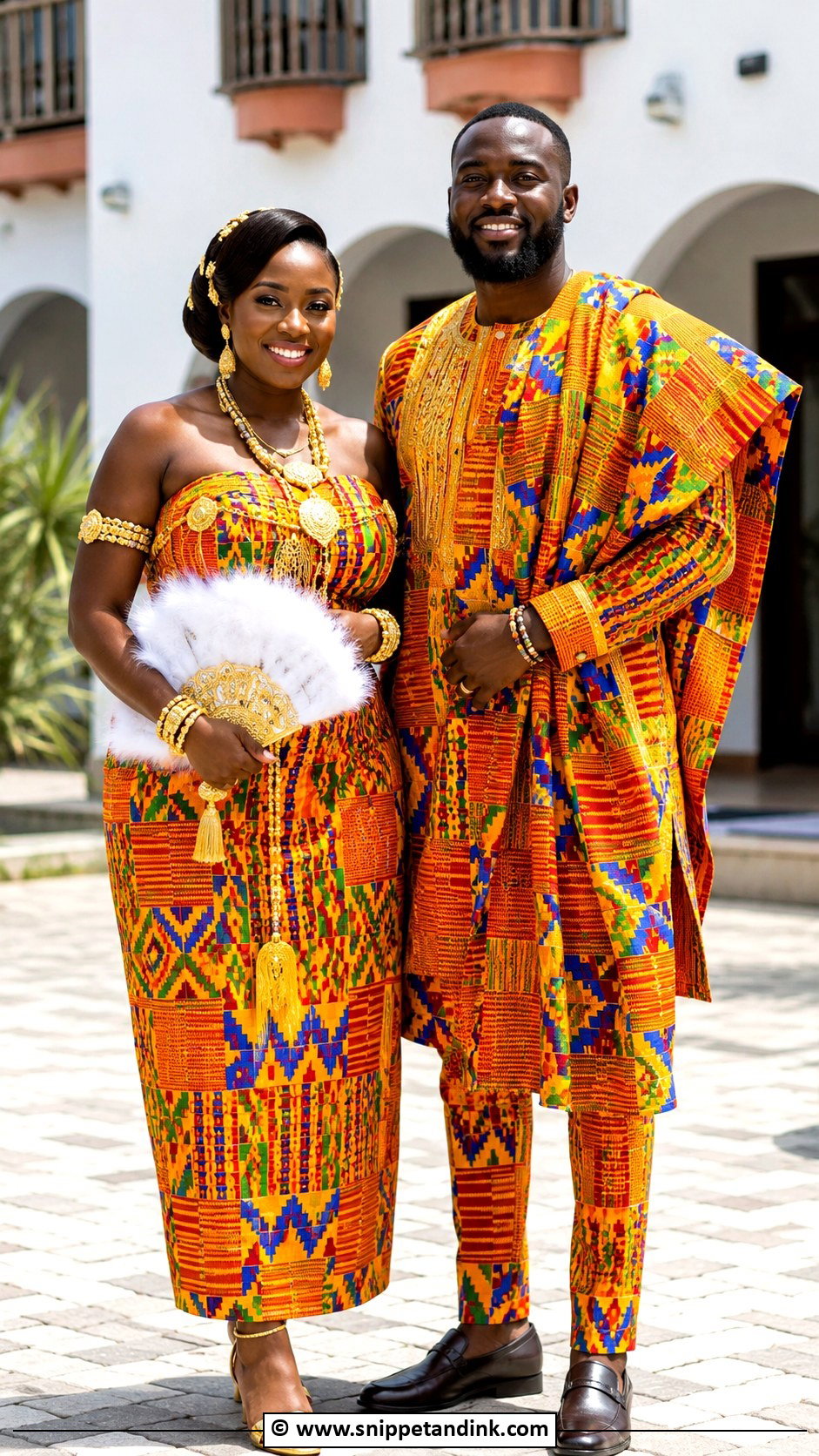
Kente is a handwoven cloth with patterns that carry meaning, so it can be worn as a gown, a wrapped skirt and top or a modern silhouette. The groom drapes kente or wears a matching tunic. Because the pattern is strong, I’d keep the tailoring simple and cut the cloth so the motifs line up at the seams. Pick a deliberate colour story, such as gold and green or blue with metallic accents. Gold jewellery and polished sandals complete it.
20. Ethiopian Habesha Wedding Attire
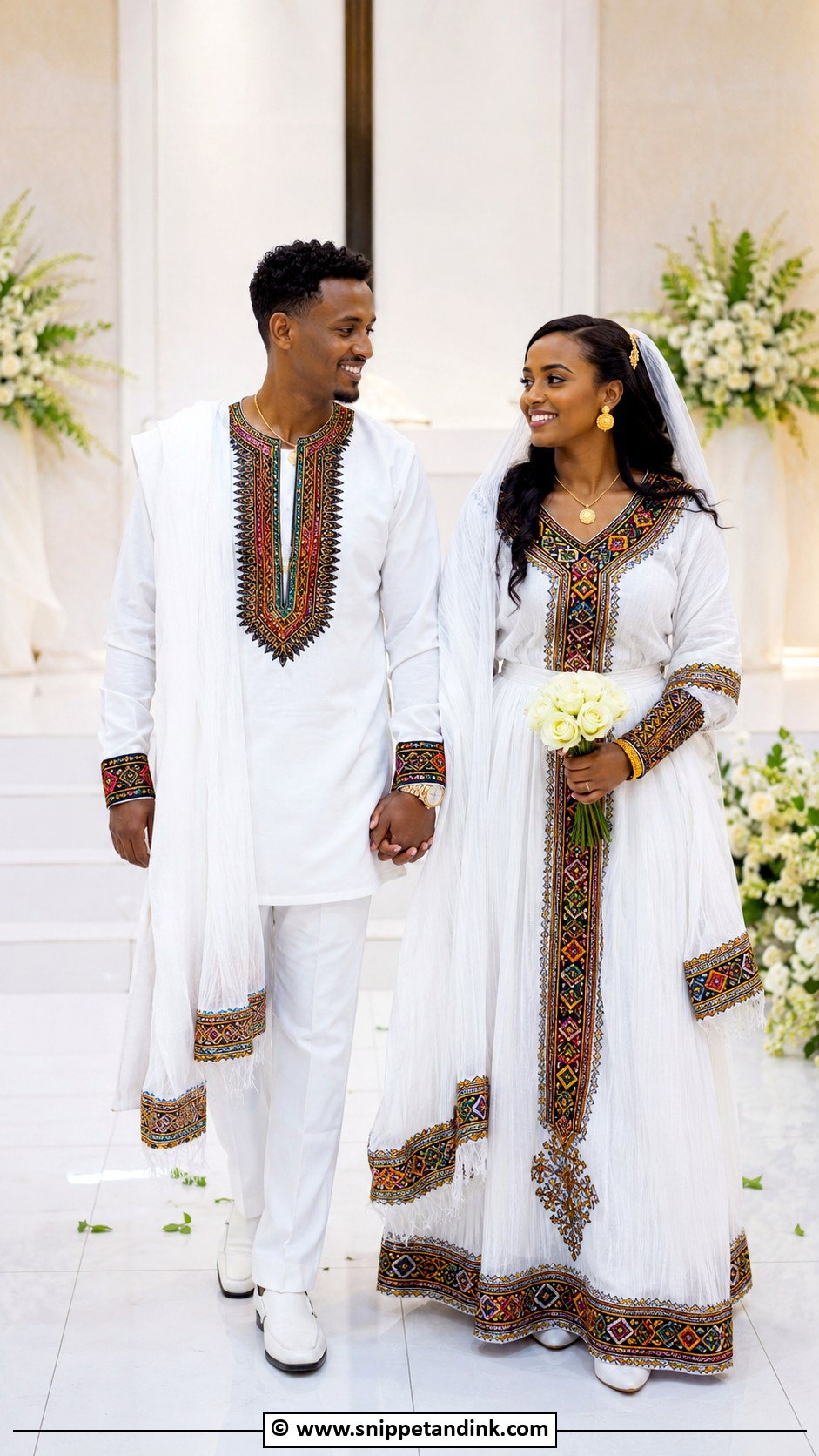
The habesha kemis is white cotton with colourful woven borders, the tibeb, at the hem, neckline and sleeves, worn with a sheer netela over the shoulders or head. The groom wears a matching shirt and shawl. Handwoven cotton creases, so I’d press it on the morning rather than days before. Gold jewellery, simple shoes and neat hair keep it light. The border colour can reflect family taste or region.
21. Moroccan Caftan Wedding Attire
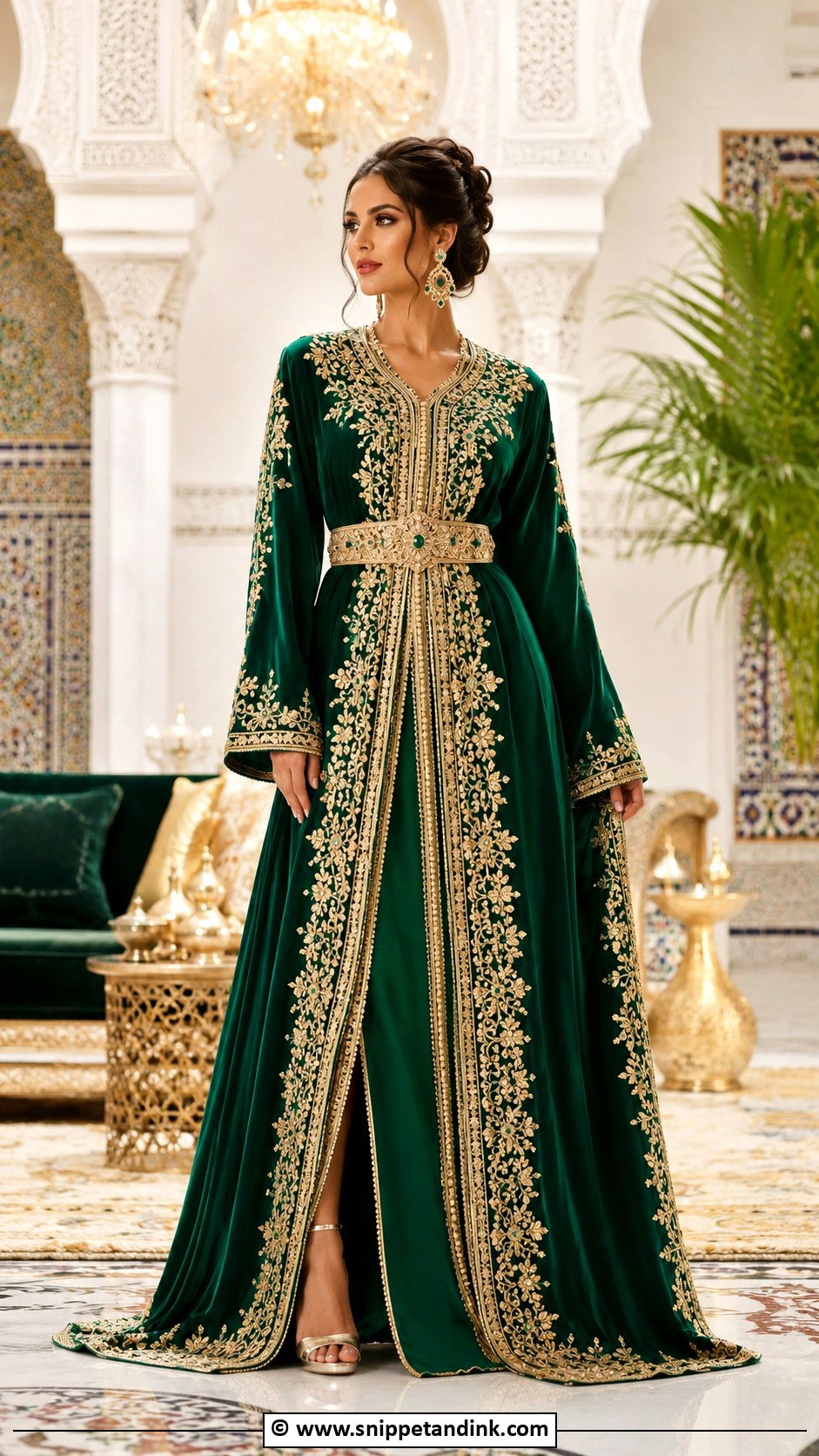
The caftan is long and embroidered, belted at the waist, with detailed sleeves in silk, velvet or brocade. Gold, emerald, ivory, blush and royal blue are common. The belt gives the shape, so the fit at the waist matters. Moroccan weddings often include several outfit changes through the night, and a dresser or negafa usually manages them; plan the schedule with that in mind. The groom may wear a jabador. Avoid accessories that fight the neckline.
22. Somali Dirac Wedding Attire
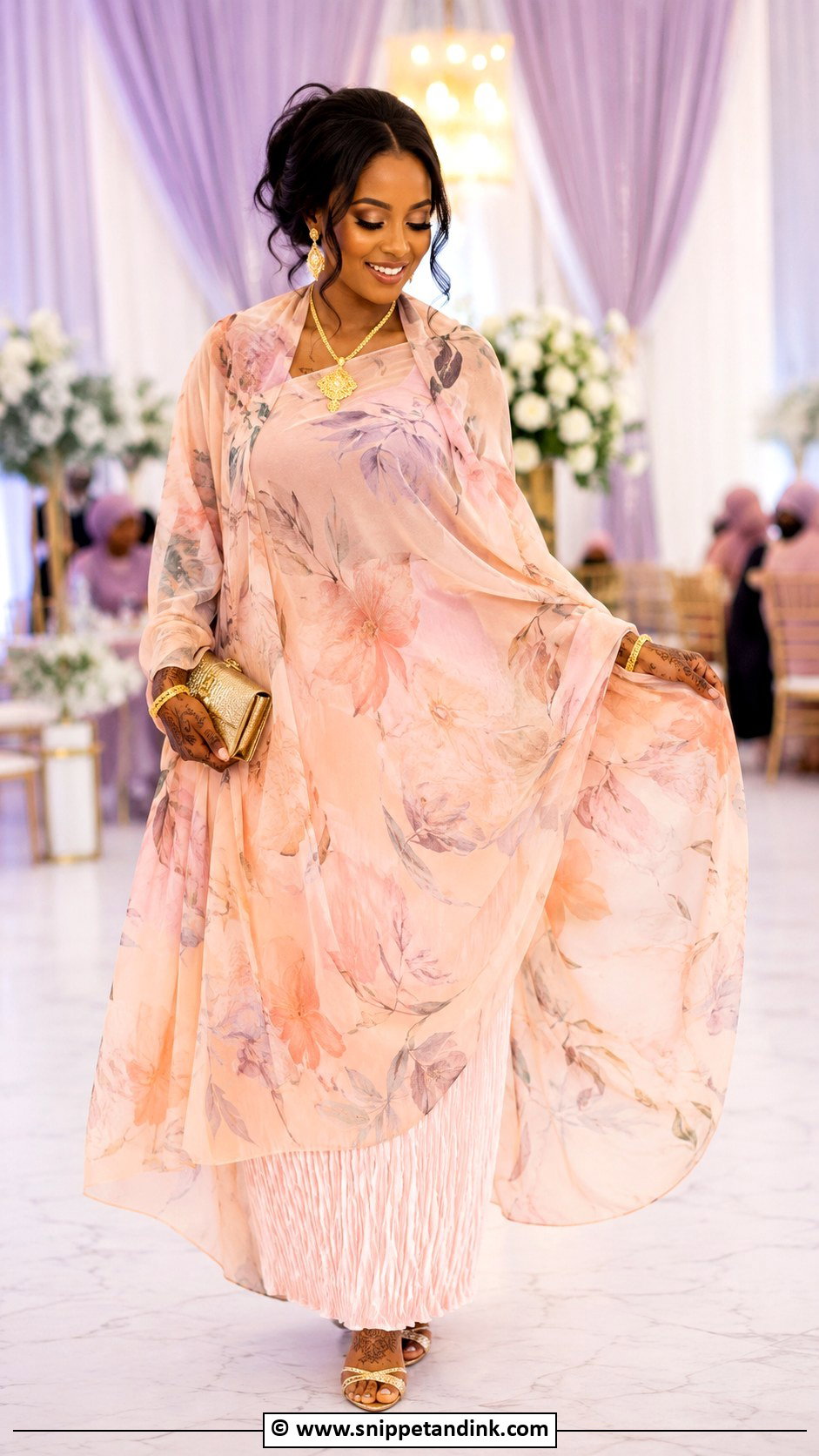
The dirac is a light, flowing sheer dress over a slip and a gorgorad underskirt, with a matching shawl. It suits warm celebrations. The underlayer is what keeps it looking smooth, so make sure it is secure and opaque enough in sunlight. Gold jewellery, decorated sandals and henna on the hands complement it. Shimmer or embroidery adds festivity. The groom may wear a suit or traditional clothing, depending on family custom.
23. Zulu Traditional Wedding Attire
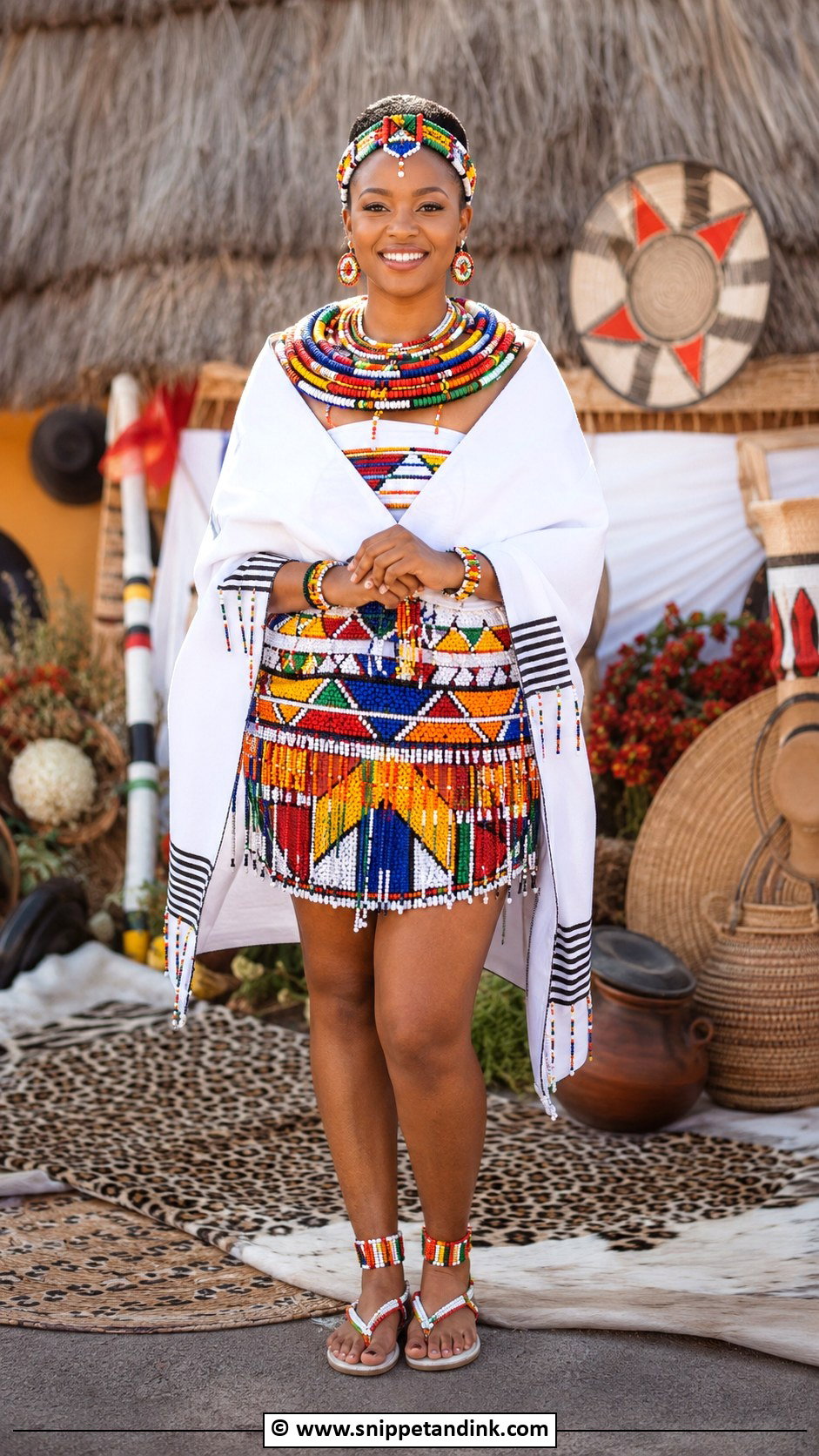
Zulu ceremonial dress centres on beadwork, with skirts, shawls, headpieces and layered beading in meaningful colours. The groom may wear beadwork, animal-skin-style details and carry a ceremonial shield, depending on the event. Beadwork is heavy and fragile, so I’d put it on last and keep a helper nearby. Modern couples sometimes blend traditional pieces with tailored garments. Simple sandals keep it practical, and the family’s guidance should decide what’s worn.
24. Maasai Beaded Wedding Attire
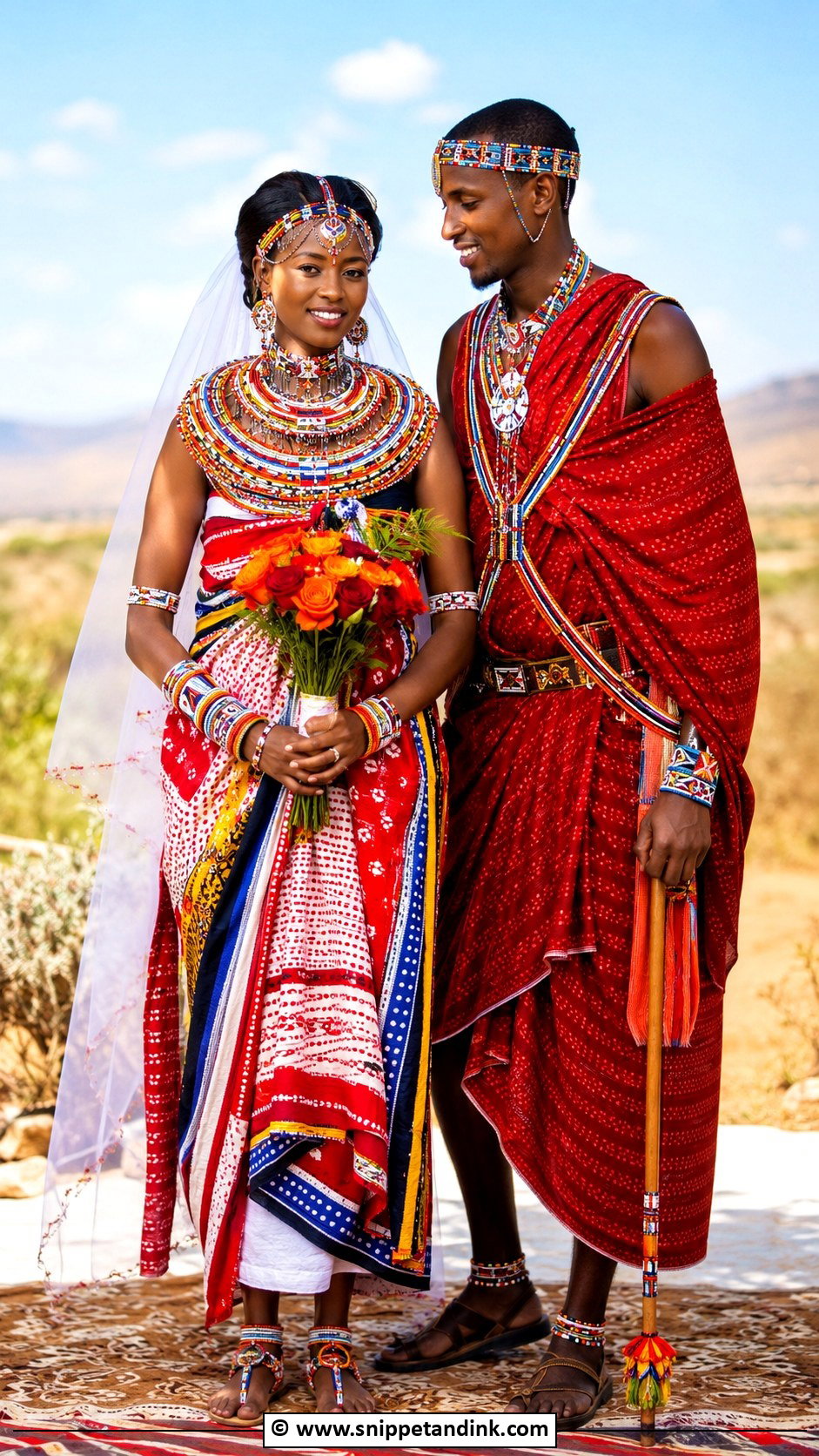
Maasai bridal dress is known for layered bead collars, bracelets, earrings and headpieces, worn with a wrap. The groom may wear a red or patterned shuka with beaded accessories. Red, blue, white and black appear often, but meanings vary, so follow family or community guidance. With beadwork as the focus, keep the base garment clean. Large collars move when you dance, so check how they sit at the shoulders before the day.
25. Scottish Tartan Wedding Attire
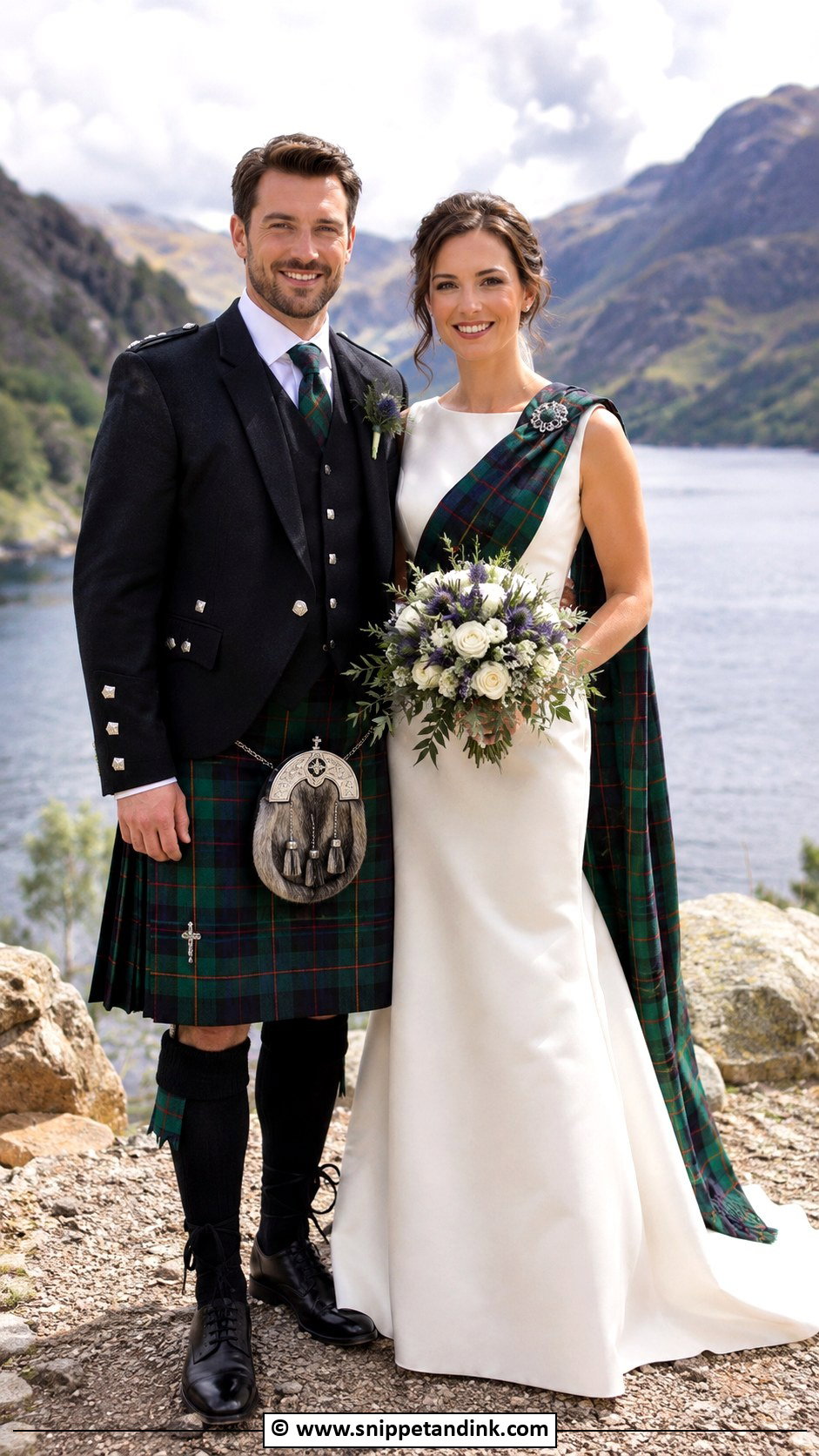
The groom’s kilt in a family or chosen tartan, with jacket, waistcoat, sporran, kilt hose, flashes and dress shoes, is the heart of a Scottish wedding outfit. The bride can add tartan through a sash, shawl or ribbon. Kilt length is the detail I check: it should finish around the middle of the kneecap. Keep shirts and accessories plain so the tartan leads. It suits formal ceremonies and outdoor portraits.
26. Irish Claddagh Wedding Attire
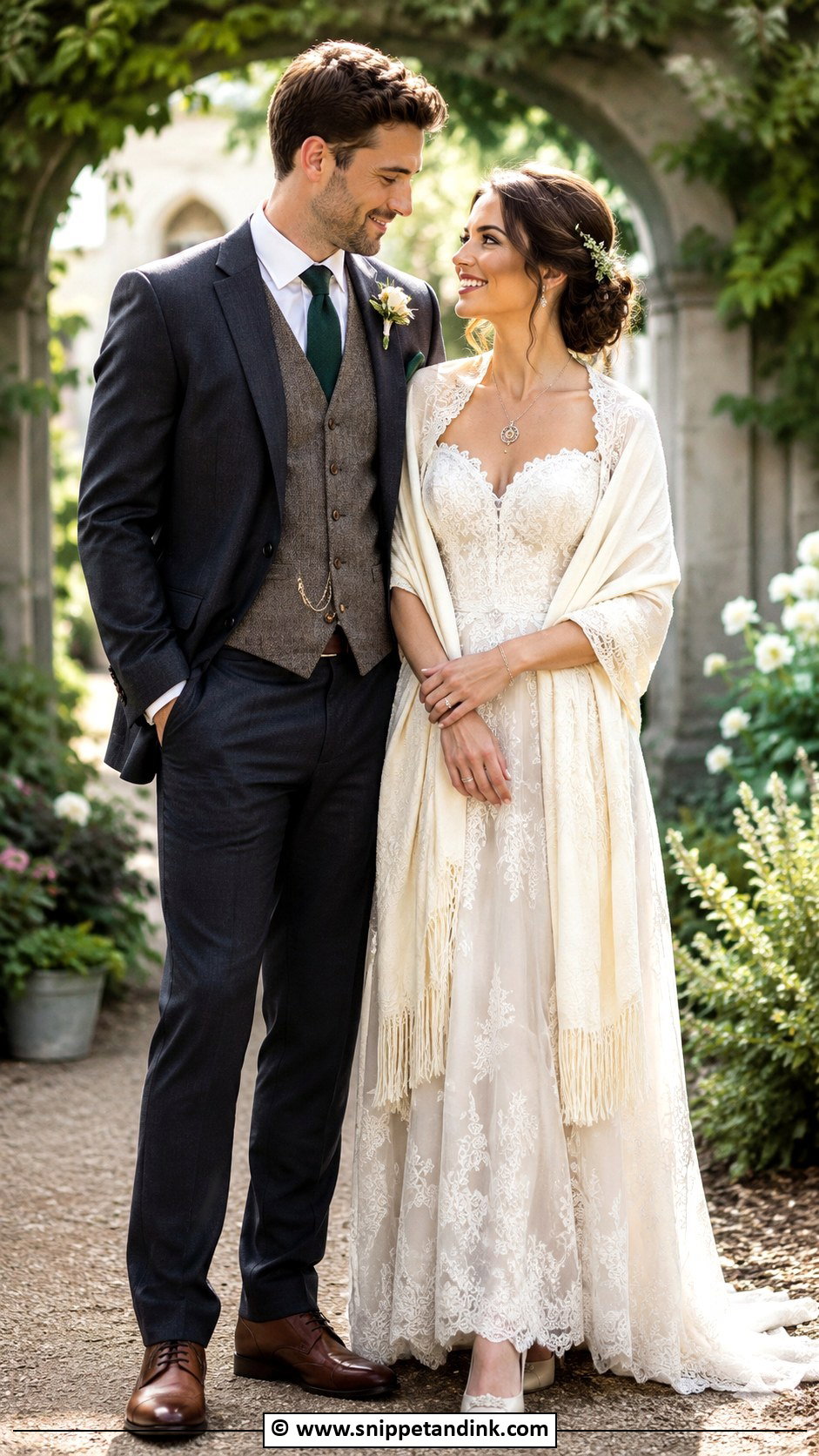
Irish-inspired dress works best through quiet details rather than a theme. A lace gown with a soft shawl, Celtic knot jewellery and a Claddagh ring is enough for the bride. The groom can wear a tweed waistcoat or green tie. Tartan belongs only where there is a family link. I’d keep it to one or two symbols, so it reads as heritage rather than costume. Soft fabrics and polished shoes.
27. Greek Wedding Crown Attire
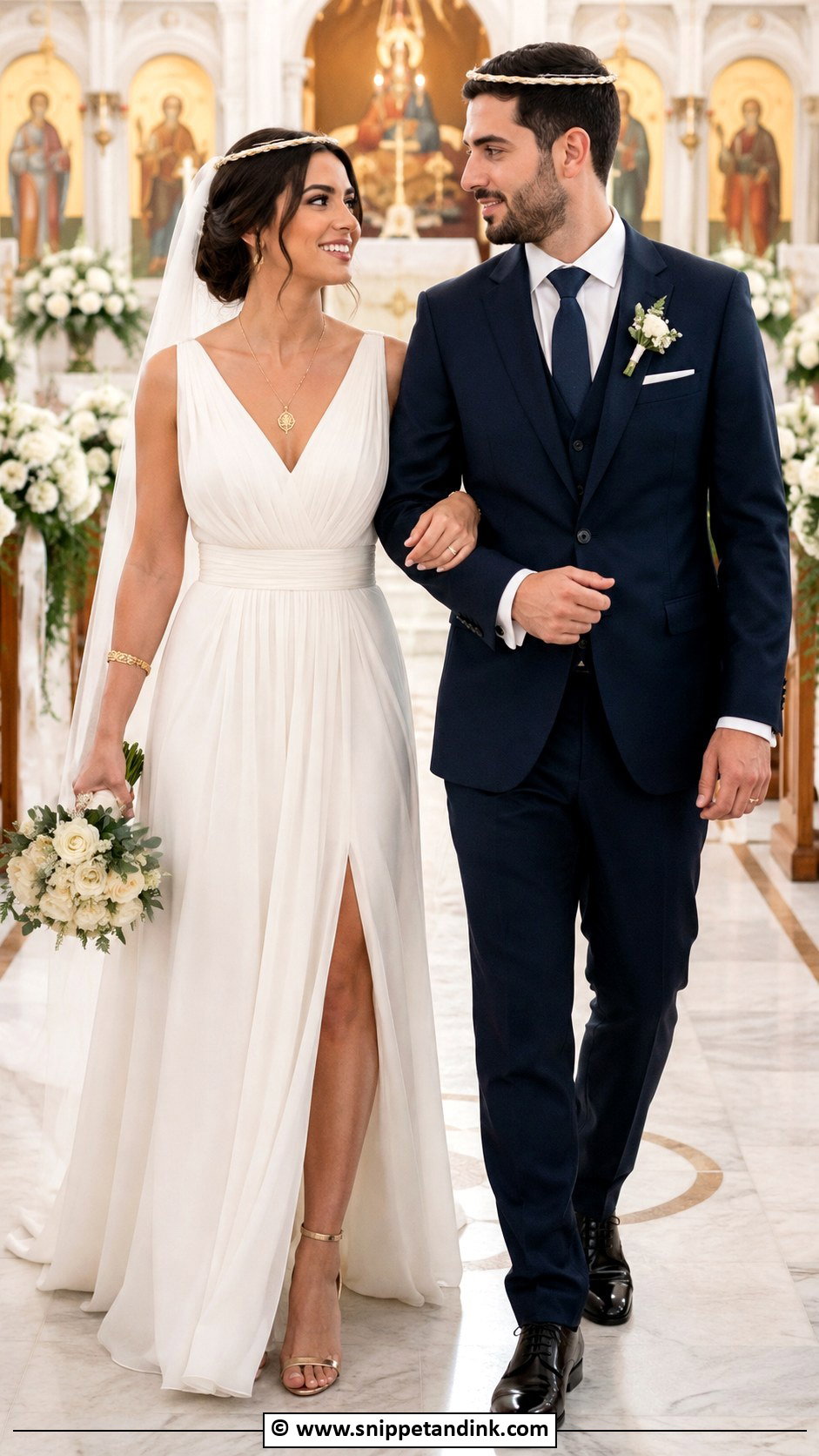
In a Greek Orthodox ceremony, the stefana, joined crowns placed on the couple’s heads, are the centrepiece. A flowing white or ivory gown, gold jewellery and soft waves or an updo suit the bride, and the groom wears navy, charcoal or black. The crowns sit on the head, so plan the hairstyle and veil around them; a bulky high bun or a heavy veil comb can push the crown off balance. Choose a veil that leaves the crown visible.
28. Mexican Charro Wedding Attire
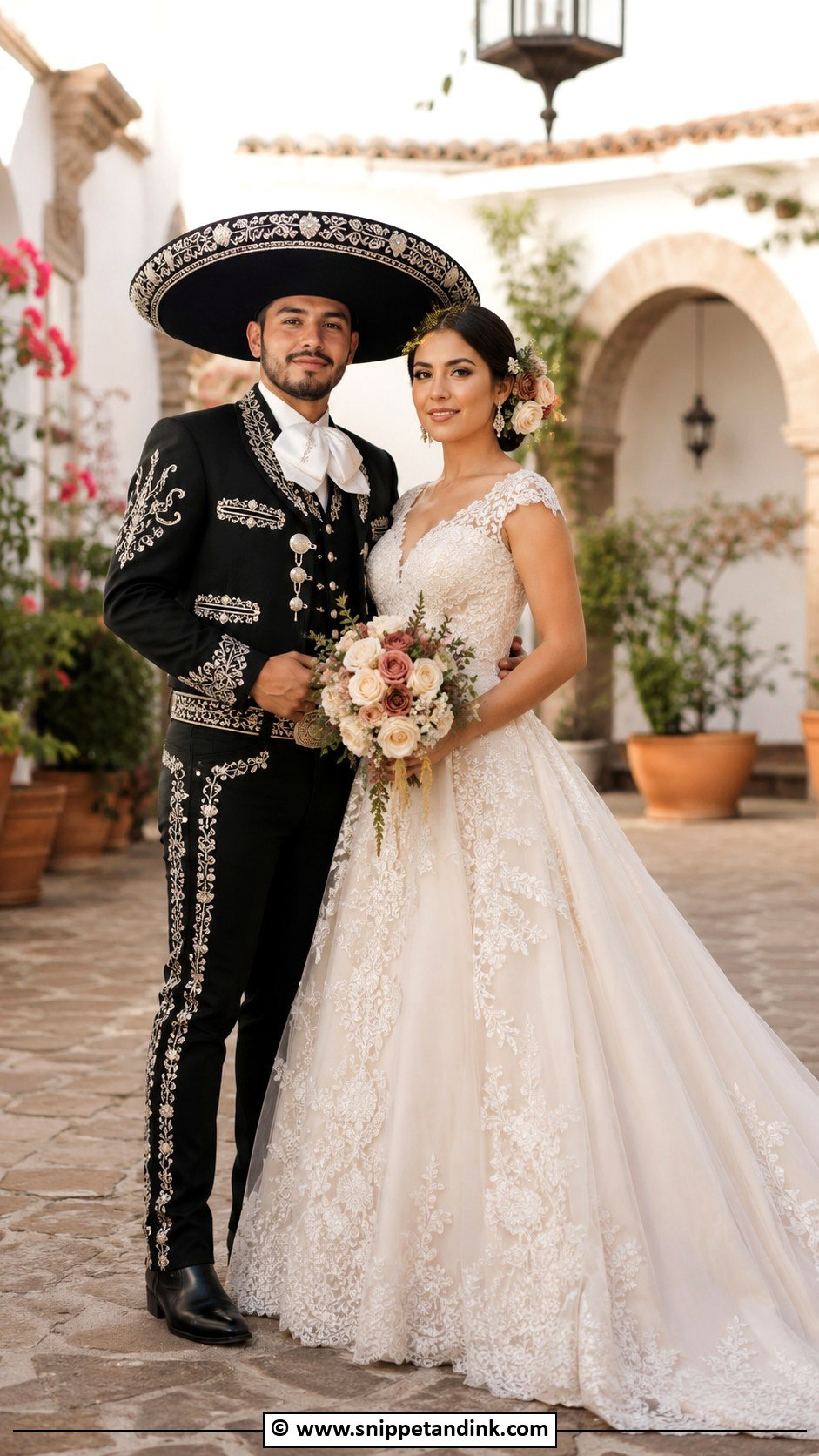
The traje de charro is a tailored, embroidered suit with a fitted jacket, matching trousers, boots and, where appropriate, a wide-brim sombrero. The bride can match with an embroidered gown or traditional-style skirt and blouse with floral hair pieces. The suit is cut close, so fit matters more than accessories; I’d allow for alterations well ahead. Black, ivory, silver and jewel tones suit it, with polished boots.
29. Guatemalan Huipil Wedding Attire
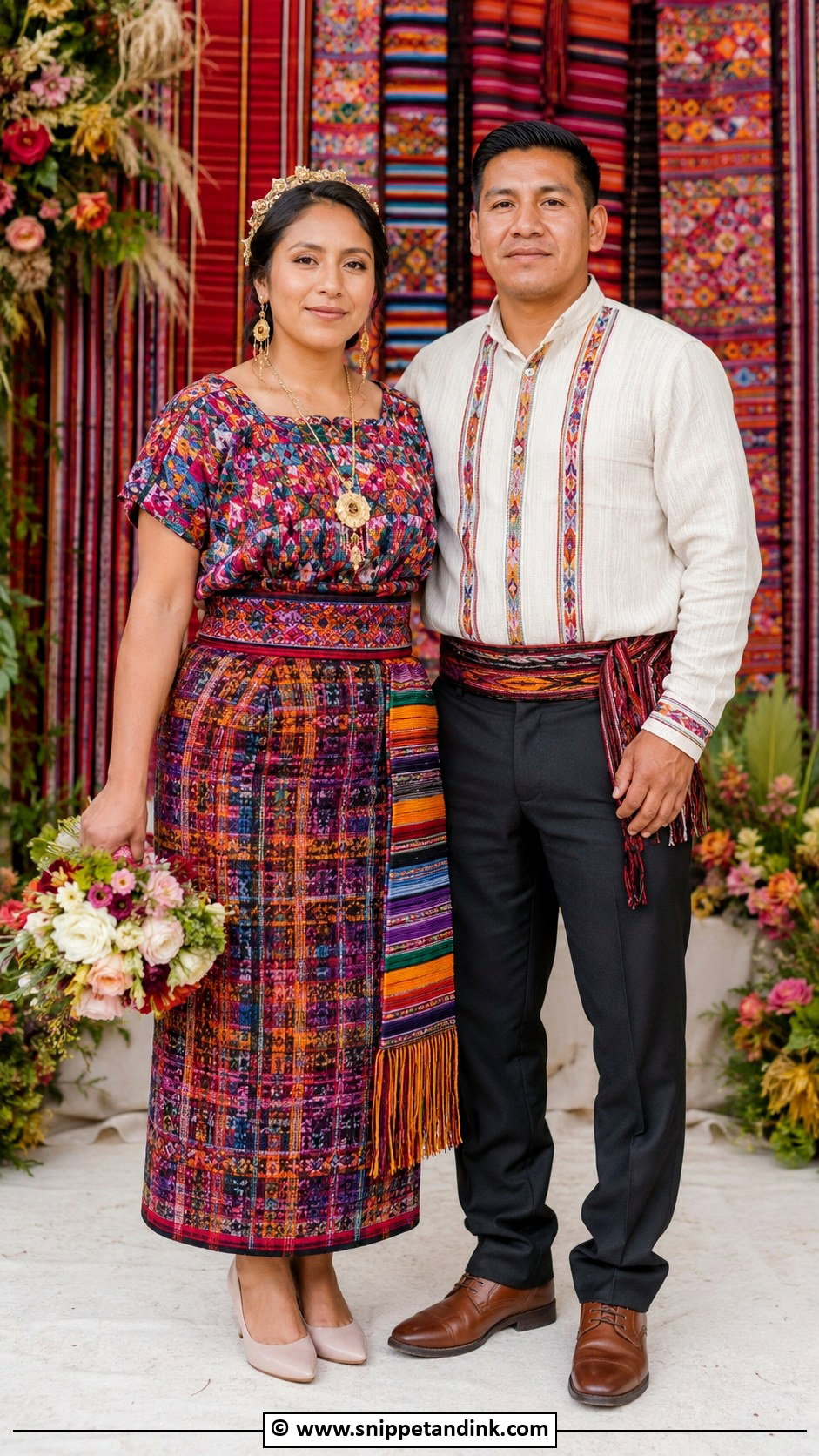
A huipil is a handwoven blouse whose patterns often identify a specific community, worn with a woven corte skirt and a sash. Some brides add a huipil panel to a white or modern dress. Because the weaving carries identity, choose it respectfully and, ideally, buy from the weavers themselves. Treat the textile as the centrepiece rather than decoration. The groom can coordinate with a woven shirt or sash. Simple shoes and neat hair.
30. Peruvian Andean Wedding Attire
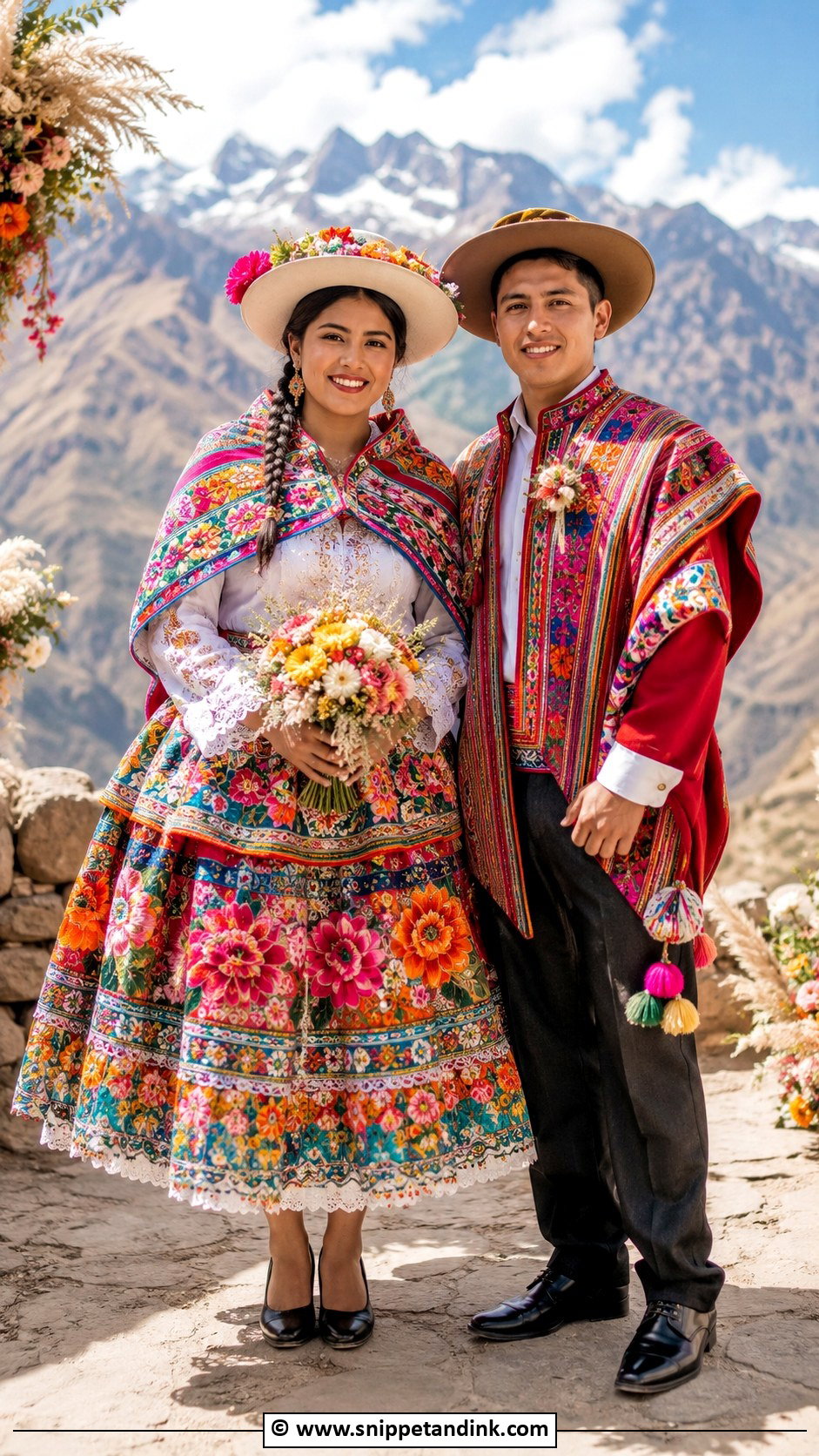
Andean bridal dress layers a full pollera skirt, embroidered blouse, manta shawl and hat, depending on the region. The groom can add woven poncho details and a hat. The skirts are layered and can be warm, so check comfort for dancing and secure every fastening. Rich reds, pinks, blues and greens with embroidered trims suit mountain, courtyard and outdoor settings.
31. Native American Ribbon Wedding Attire
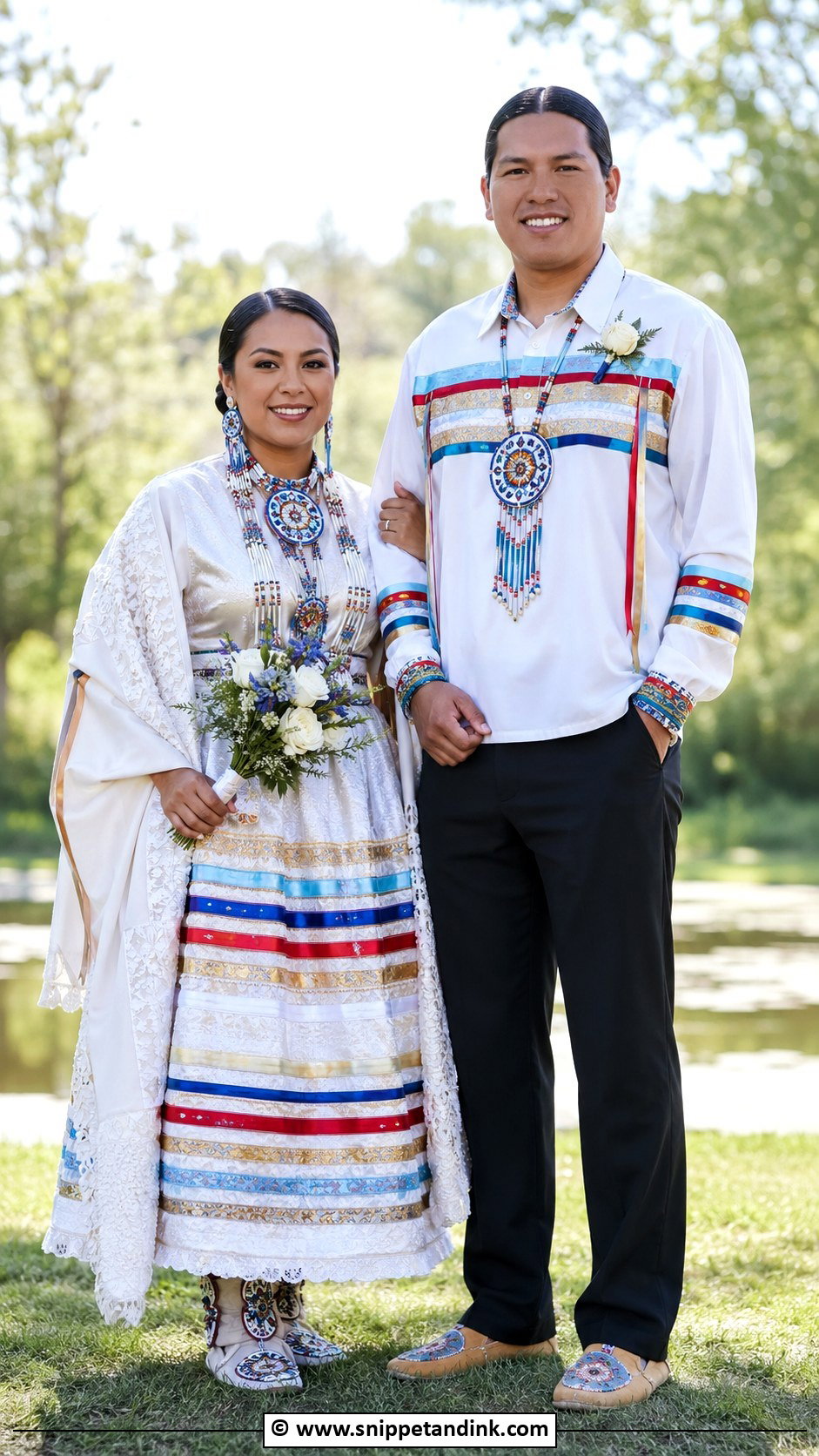
Ribbon skirts, ribbon shirts, beadwork, moccasins and shawls can be meaningful wedding dress when they come from the wearer’s own nation and family. Traditions vary widely between Native nations, so there’s no single outfit. Follow family guidance, and don’t mix sacred or specific items without permission. The fit of a ribbon skirt depends on the waistband; ask the maker to set it where you want the skirt to sit. Quality beadwork and deliberate colour choices finish it.
32. Hawaiian Holoku Wedding Attire
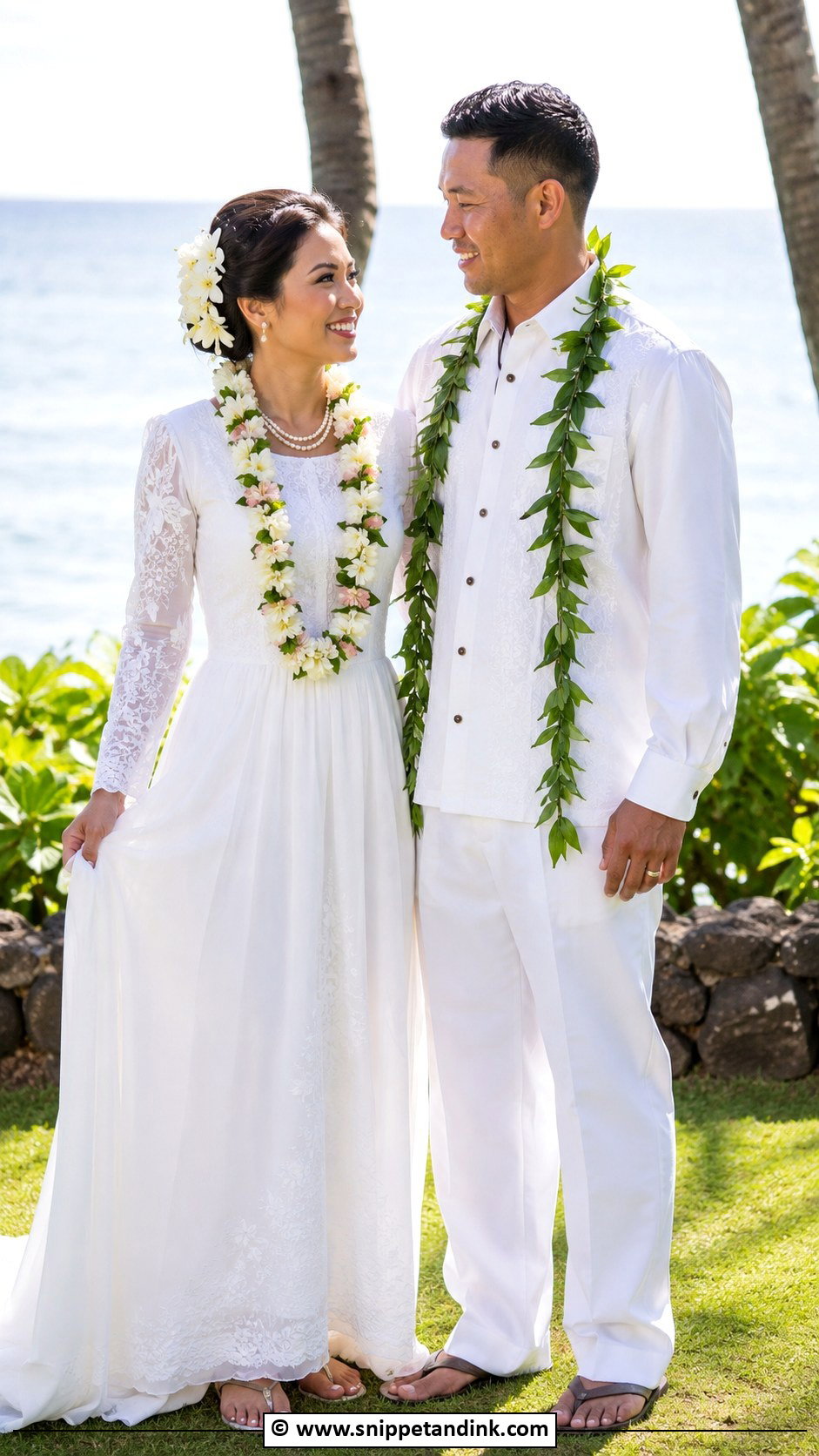
The holoku is a long, flowing gown with sleeves and often a train, decorated with embroidery or lace. Fresh flower lei, a flower hairpiece, sandals and pearl jewellery complete it, and the groom may wear a formal aloha shirt with white trousers and a lei. Fresh lei wilt in heat, so I’d have them delivered close to the ceremony and kept cool. Choose breathable fabric that holds its shape in the breeze.
33. Armenian Taraz Wedding Attire
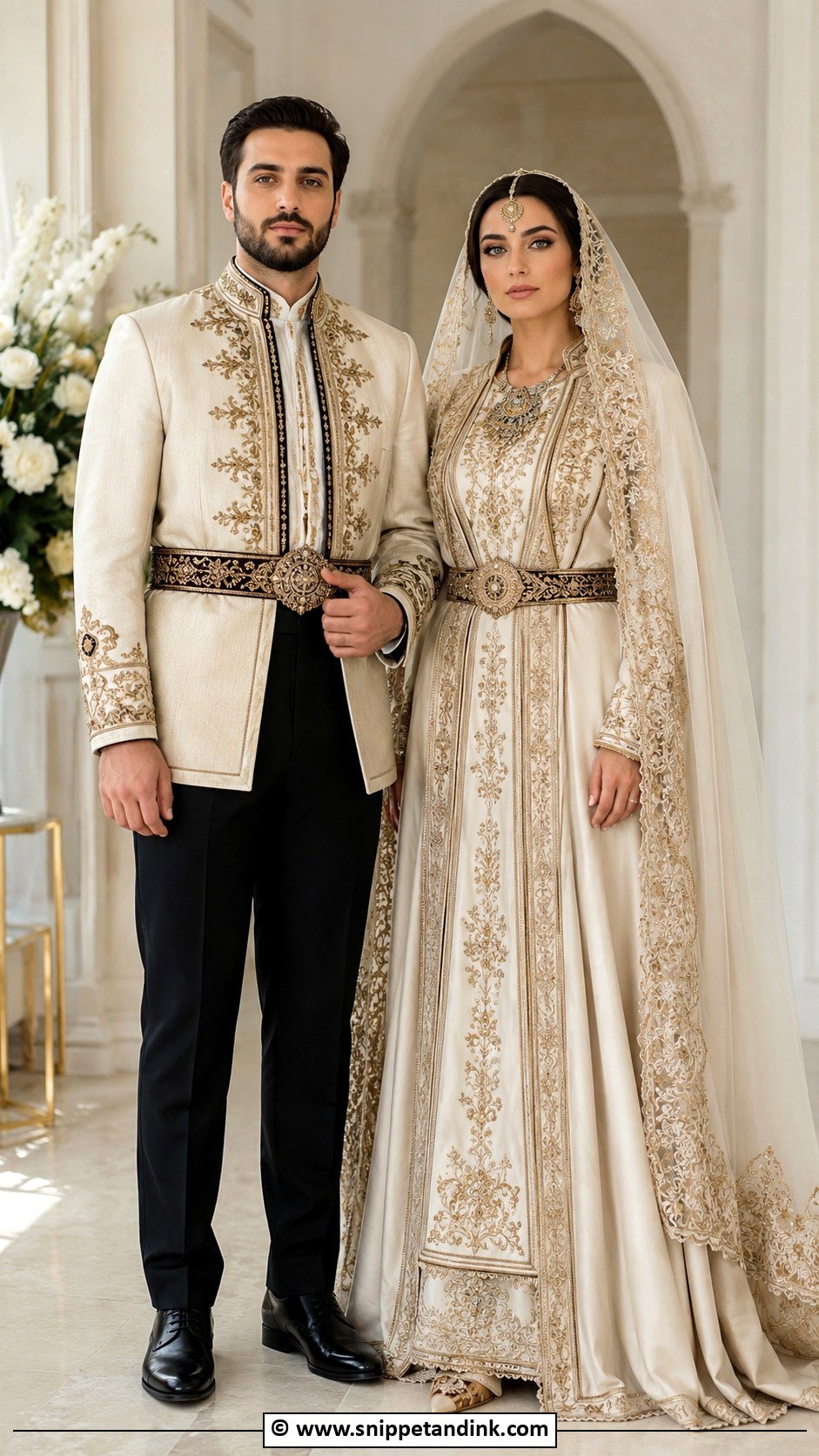
Taraz brings rich embroidery and structure, with a gown trimmed in ornate bands, a decorated belt, a veil and metallic jewellery. Deep red, gold, ivory and jewel tones are common. The groom may wear an embroidered jacket. Heavy trim adds weight at the hem and cuffs, so the silhouette should stay clean and tailored. Keep makeup and jewellery coordinated in one metal tone.
34. Turkish Bindalli Wedding Attire
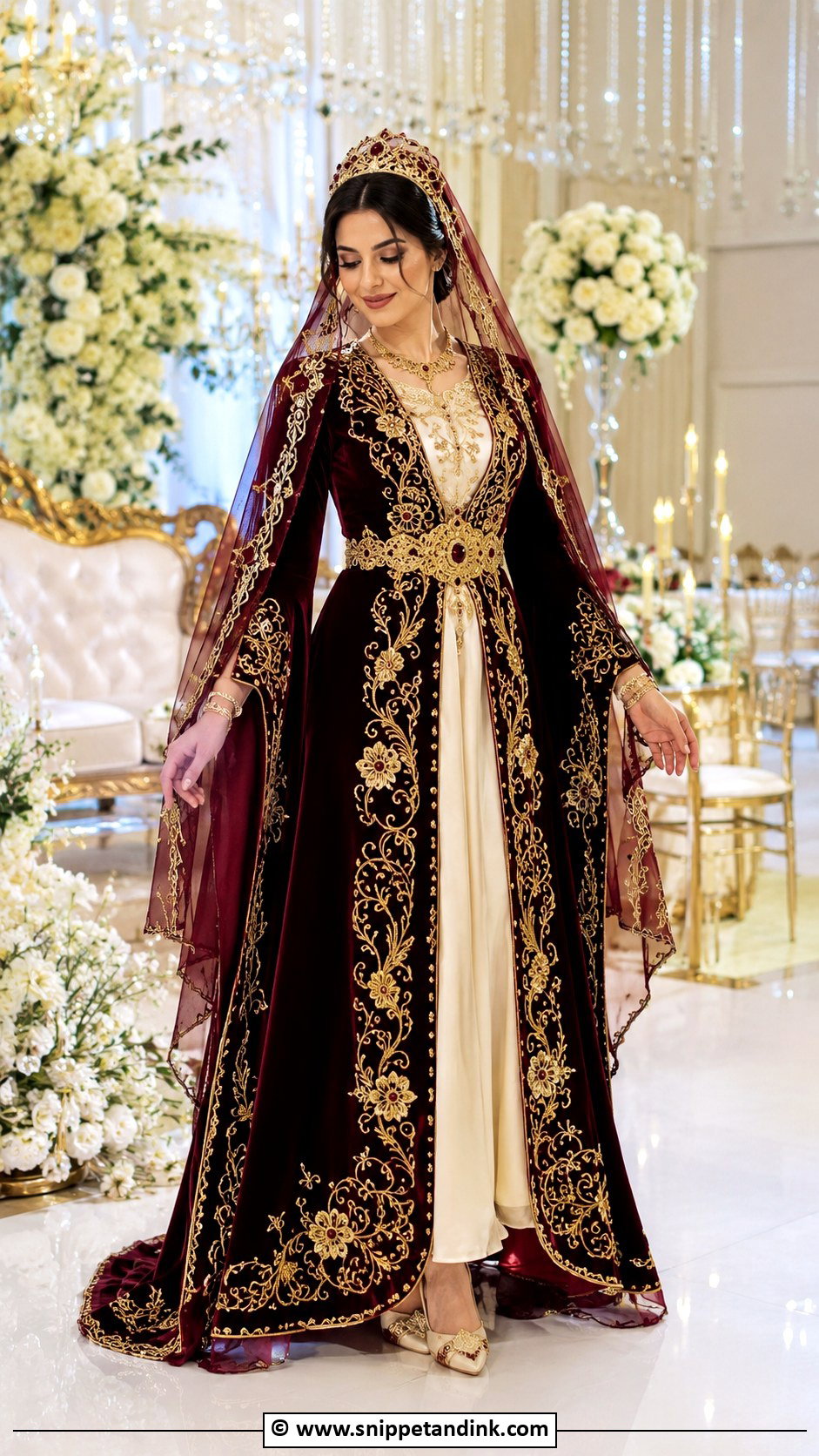
The bindalli is a velvet robe or gown embroidered in gold, often worn at the henna night in red, burgundy, green or navy. A veil, ornate belt, gold jewellery and embellished shoes complete it. Velvet is warm and heavy, so I’d make sure the venue isn’t overheated and the fit through the shoulders and sleeves allows movement. Velvet also shows crush marks, so hang it, never fold it, before the event. The groom may wear a suit or traditional outfit.
35. Afghan Green Dress Wedding Attire
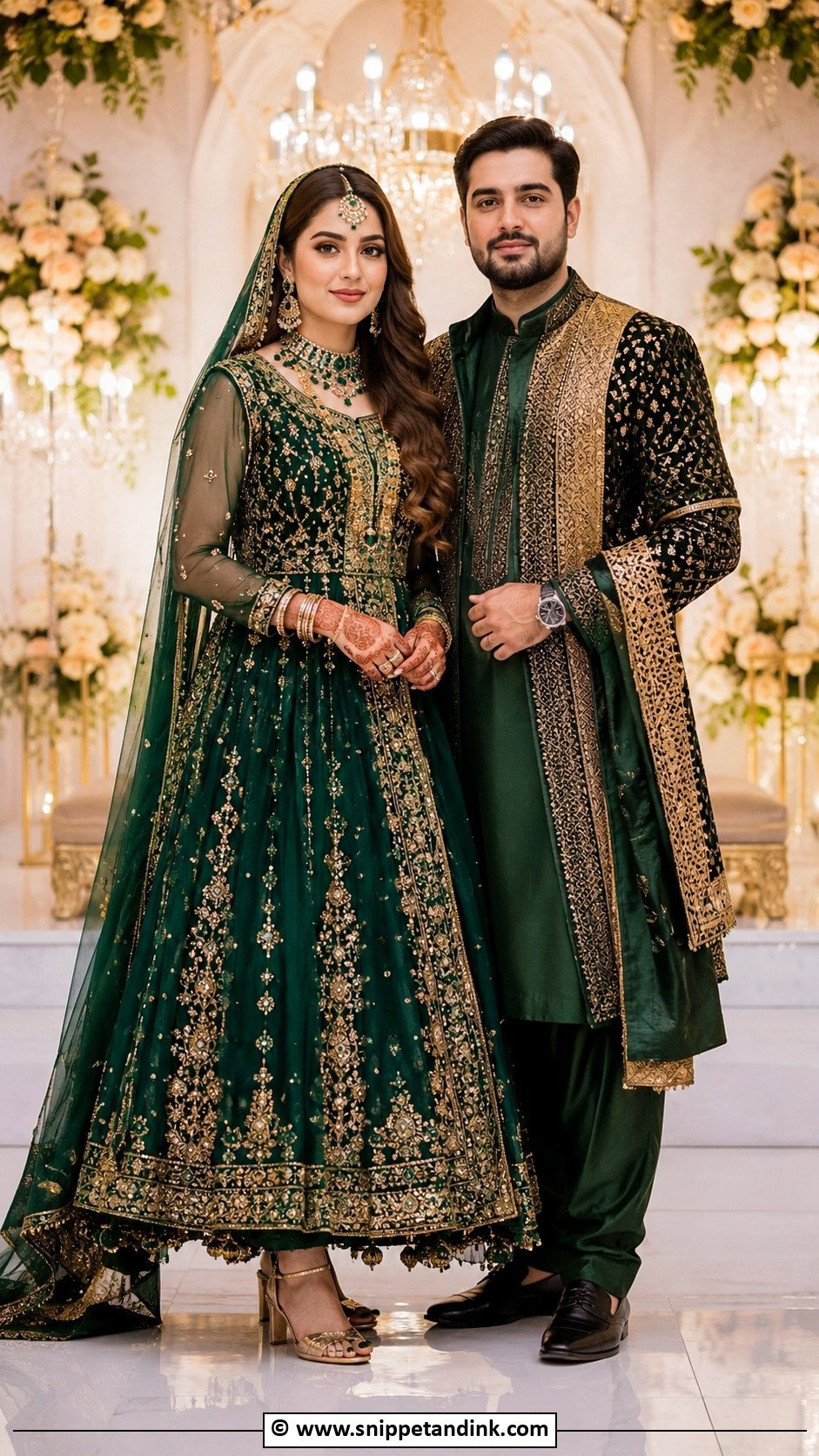
Green is traditionally worn by Afghan brides at specific wedding events, often the nikah or henna night, in an embroidered gown with a full skirt, fitted bodice, sheer sleeves or metallic threadwork. A statement necklace, earrings, bangles and a decorative headpiece complete it. Heavy embroidery stiffens the skirt, so the fit must allow sitting comfortably for long periods. Gold or embellished shoes suit it. The groom coordinates in a suit or traditional Afghan outfit.
Invited to a Wedding Outside Your Own Culture?
Guests often ask me whether they should wear traditional dress to a friend’s wedding. Usually the couple is delighted, but ask first, and ask what’s appropriate rather than assuming. Some colours belong to the bride: red in many South Asian and Chinese weddings, for example. In some traditions white or all black are linked with mourning. The couple’s dress code beats any general rule.
Borrowing or renting from the couple’s family or a local shop is often welcome, and someone can show you how to wear it properly. Avoid sacred items, such as specific beadwork, headdresses or regalia, unless you’re explicitly invited to wear them.
Looking after silk, zari and heirloom pieces
Many of these garments are kept for generations. Silk sarees and zari-embroidered pieces are best wrapped in soft muslin or cotton rather than plastic, which traps moisture and can tarnish metallic thread. Refold them along different lines every few months so the creases don’t wear through, and use a dry cleaner who handles traditional textiles. Store velvet and heavy embroidery flat or well supported, away from damp and direct sun.
Let the Tradition Lead and the Tailoring Follow
Traditional wedding clothes connect a couple to their family and history, and getting them right is mostly about respect and preparation. Whether the look is a red lehenga, silk saree, hanbok, qipao, agbada, kente, kimono, caftan or tartan, let the tradition lead and the fitting serve it. Book the experts who know the drape, plan for the weight and the outfit changes, and if you’re a guest, follow the couple’s dress code and ask before wearing another culture’s clothing.


Leave a Reply