
Dressing for a temple sealing has a clear brief, and I find that clarity makes the shopping easier, not harder. The dress worn inside needs to be white, modest in cut and fabric, lined wherever the fabric is sheer, with long or three-quarter sleeves and without elaborate decoration. A train has to come off or be pinned up for the sealing. Within those lines there’s plenty of room: crepe, lace, satin, mikado, velvet, columns and full skirts. Below are twenty complete looks with the shoes, earrings, veil and hair I’d pair with each, plus the fitting checks that matter for a modest gown. Whatever you fall for, confirm the details with your own temple before you buy or alter anything.
Testing a Gown Against Temple Standards Before You Pay
Most of the problems I see with temple dresses are caught too late, after the dress is bought and the alterations are booked. A few checks in the fitting room save that stress.
- Hold the fabric next to a plain sheet of white printer paper in daylight. Plenty of fabrics sold as white turn out to be ivory or champagne beside it.
- Try the dress on over your temple garment. Necklines, sleeves and backs that look modest on a hanger can still show the garment once you move.
- Lift your arms, bend down and sit. Sleeves ride up and necklines shift, and coverage needs to hold in every position.
- Stand in front of a bright window. Any panel that shows skin or undergarments needs lining.
- Ask how the train comes off or pins up, and practise it with the person who’ll help you.
When a dress you love doesn’t qualify
Short or cap sleeves can often be extended with matching sleeves sewn in by a seamstress, and a lined jacket or bolero can cover an open neckline. Temples can also provide a suitable dress or sleeve extensions if needed. Another route many brides take is wearing a simple white dress for the sealing and changing into a different gown for photographs outside.
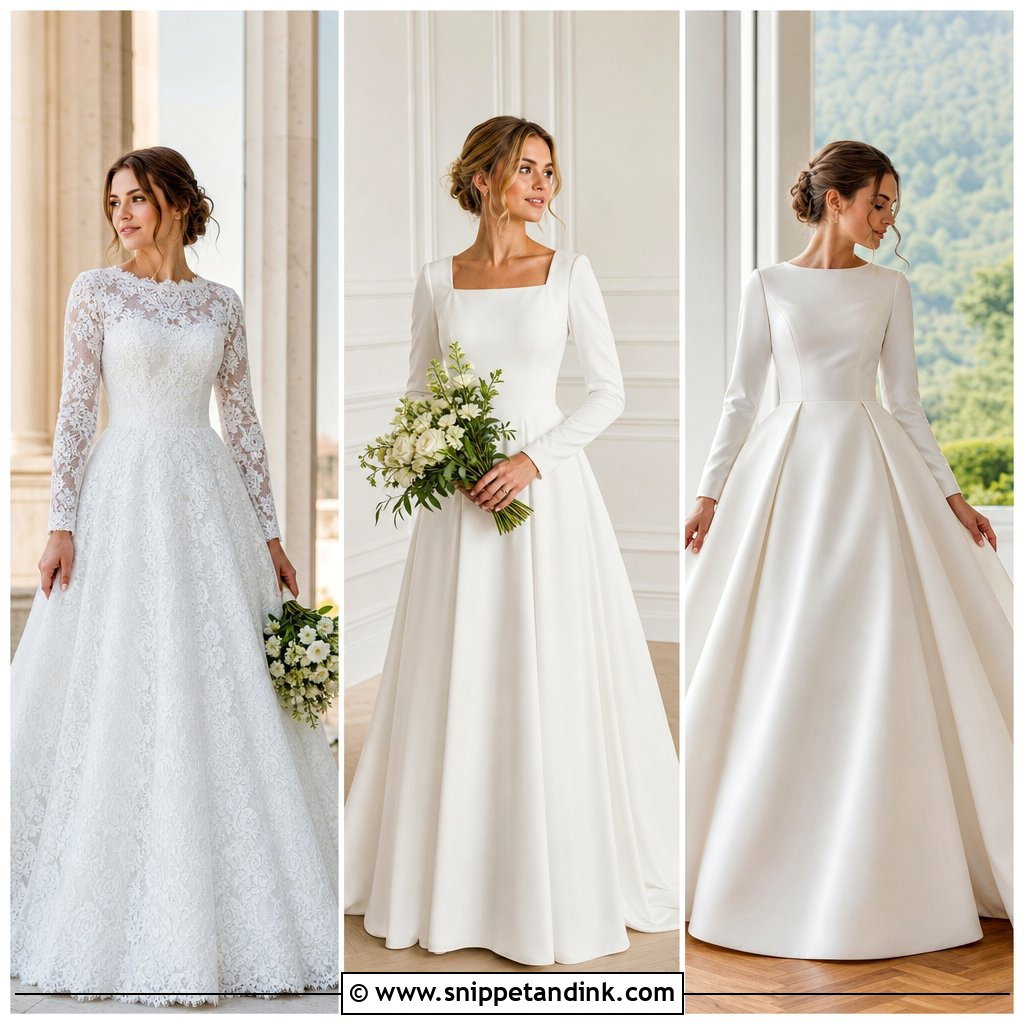
1. Satin A-Line Temple Wedding Dress
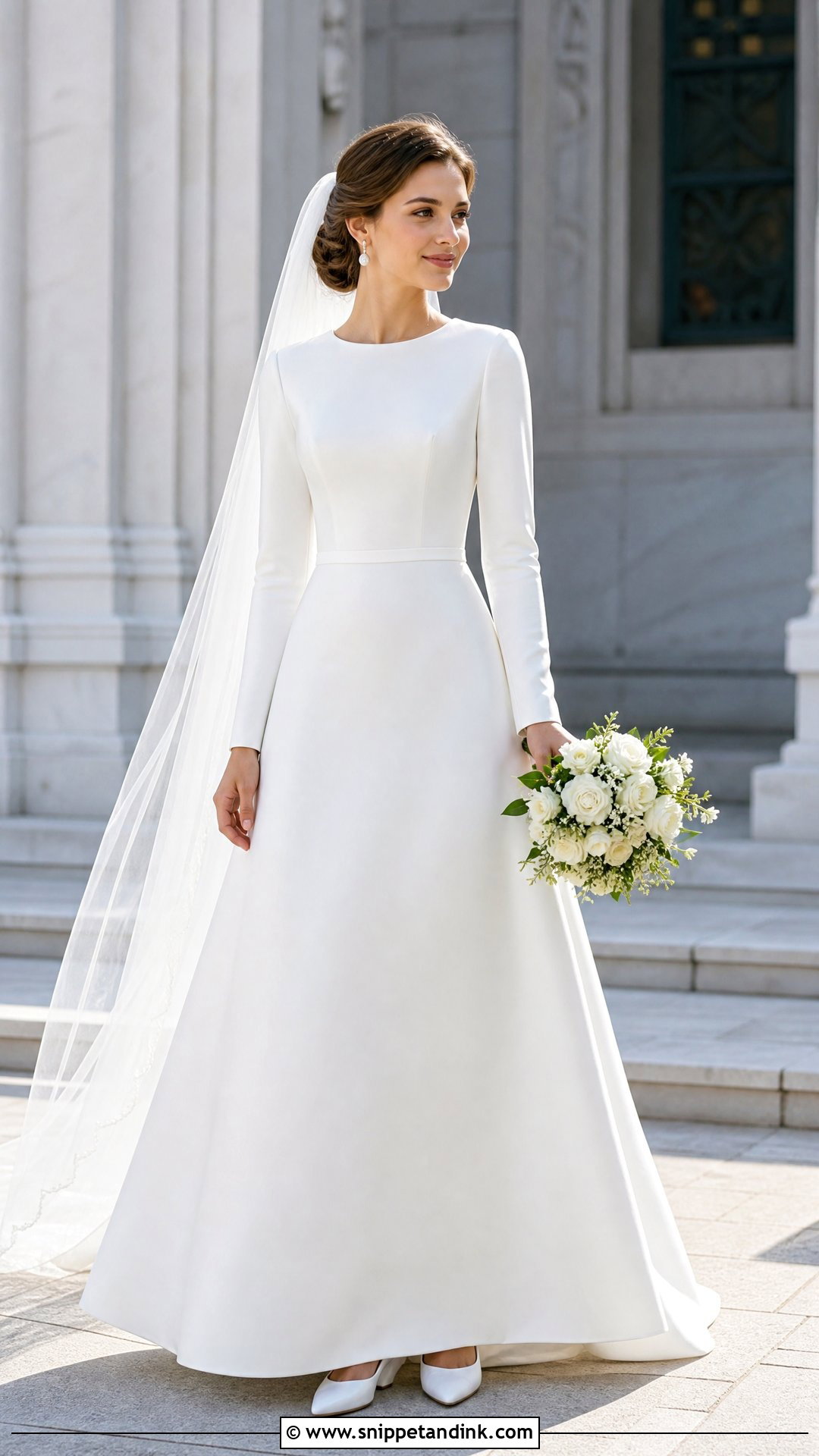
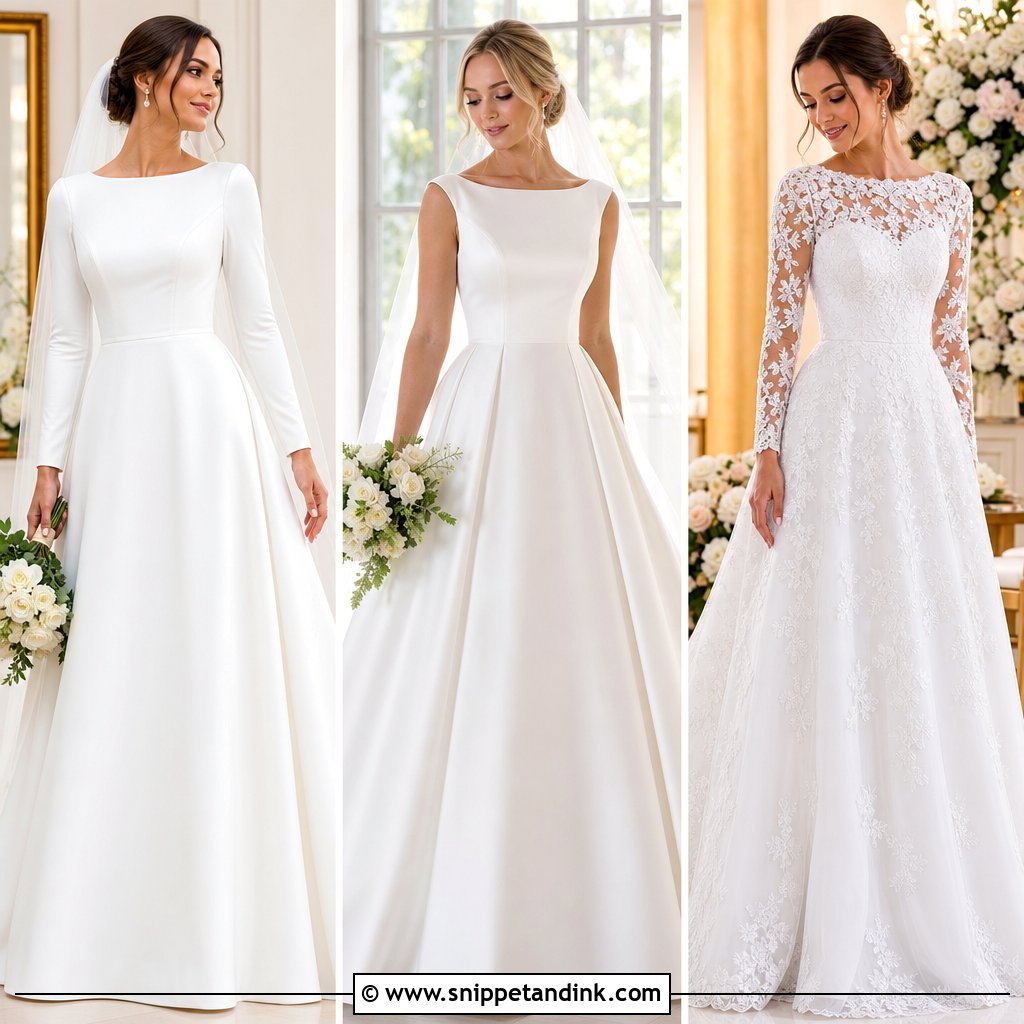
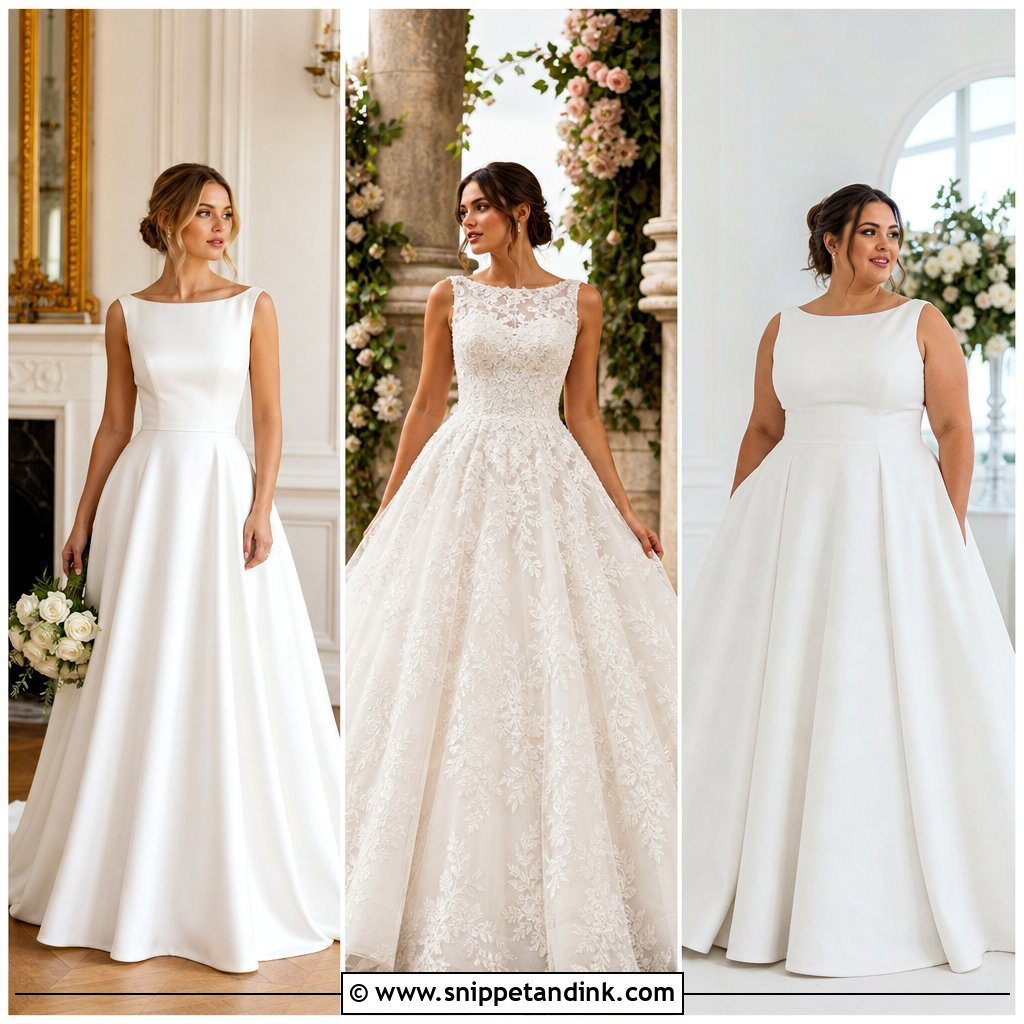
Matte satin is where I start most temple brides, because it holds an A-line shape cleanly and doesn’t glare under a camera flash the way shiny satin does. A fitted bodice, long sleeves, a jewel neckline and a smooth skirt from the natural waist suit almost every figure. A covered-button back adds tradition, and side pockets earn their place on a long day. Keep the hem floor-length without a train, or order a detachable one for outdoor portraits. Pearl studs, a narrow satin headband, low white pumps and a plain fingertip veil for the photos afterward finish it.
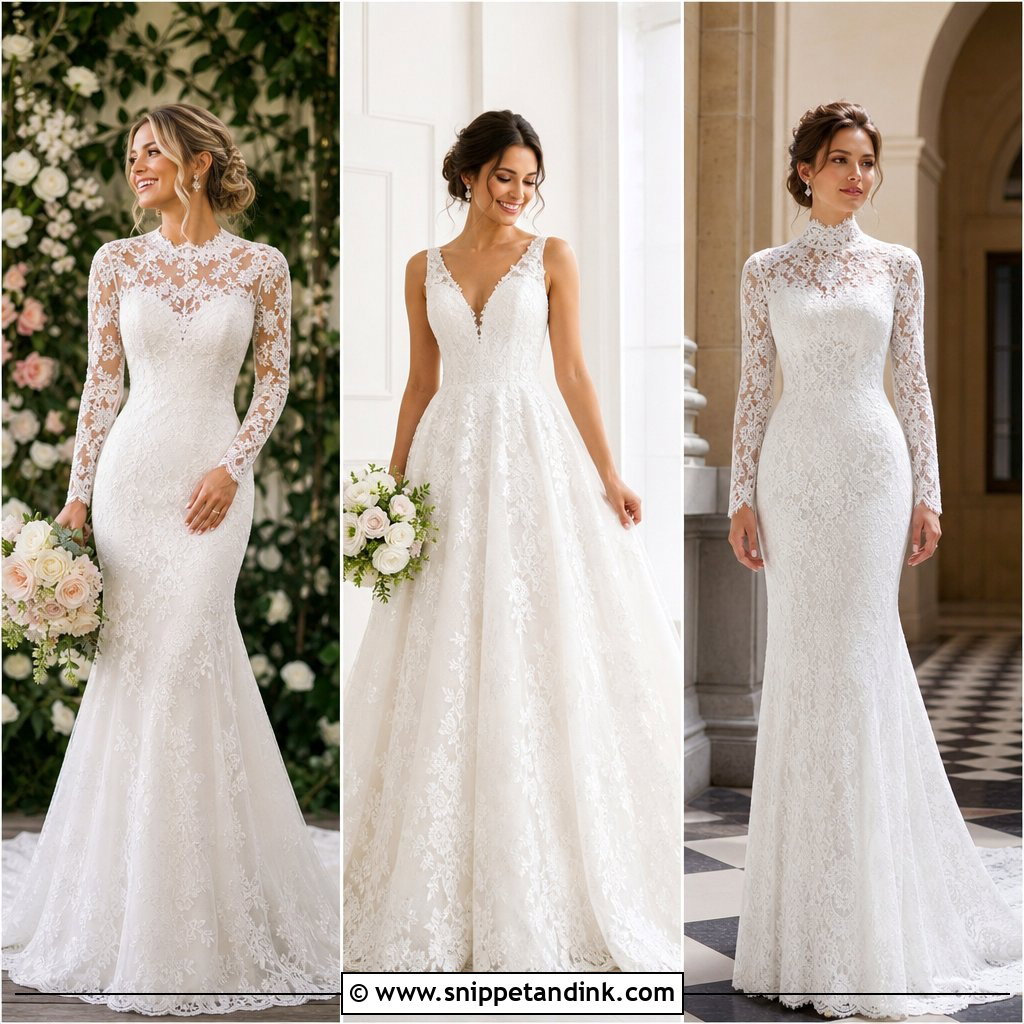
2. Long Sleeve Lace Temple Wedding Dress
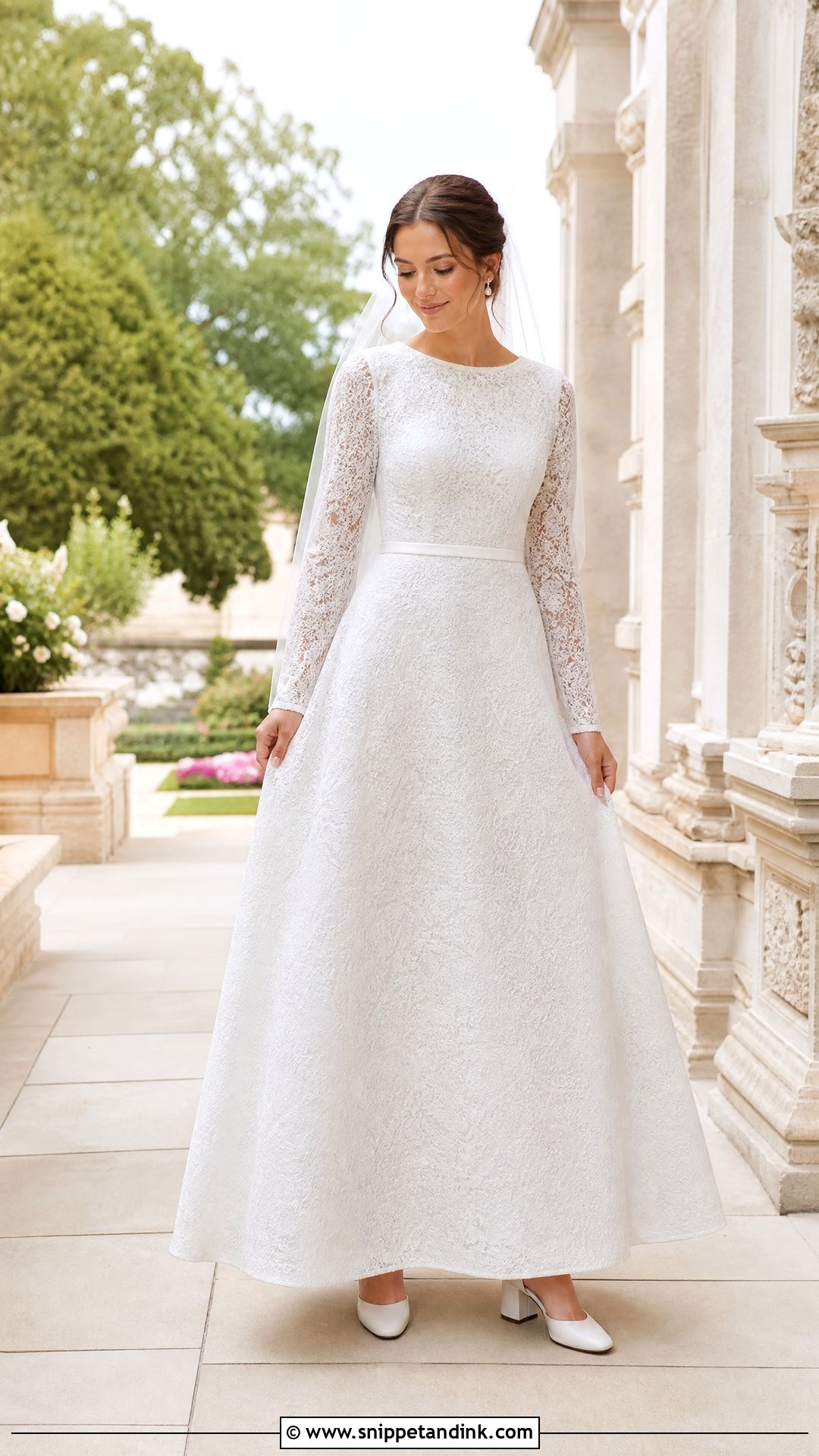
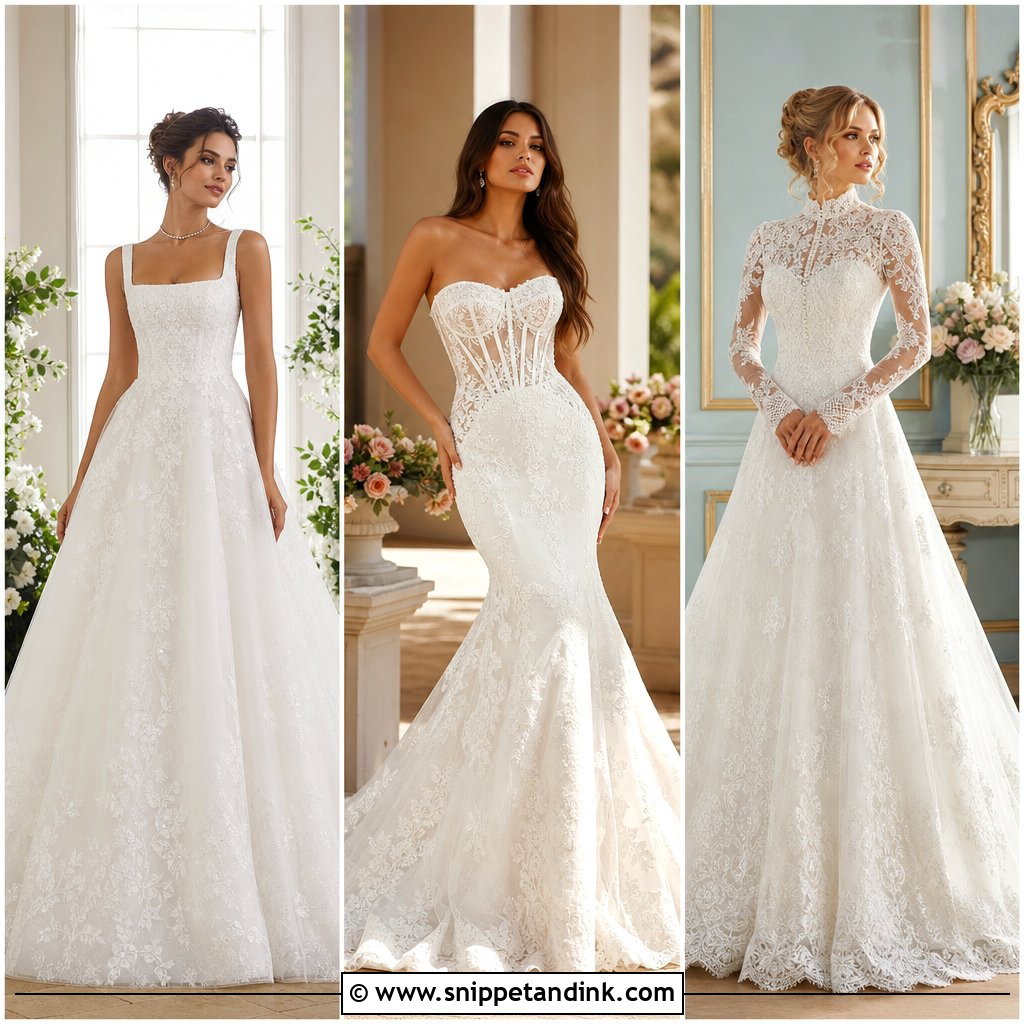
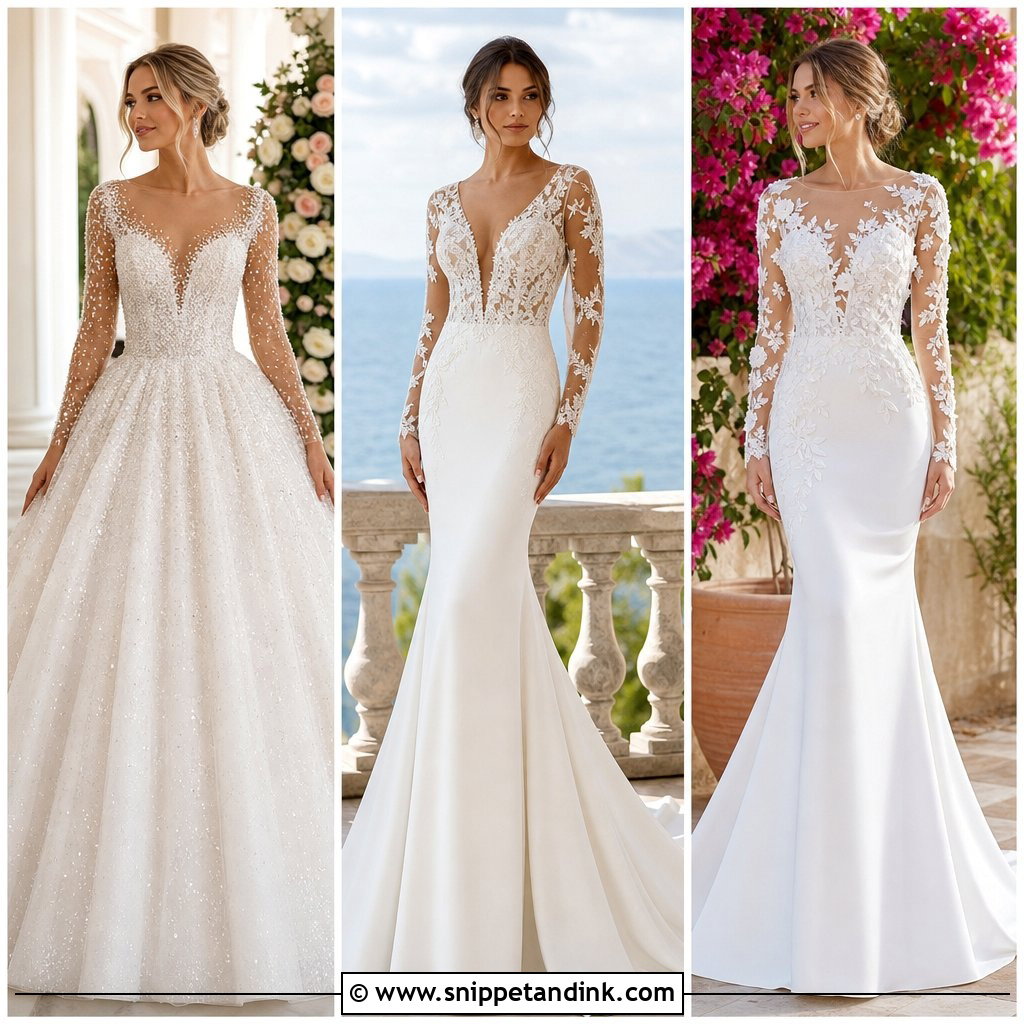
Lace works for a temple gown as long as there’s solid lining behind it. Look for a fully lined bodice, long lace sleeves backed in white, a high scoop neckline and an A-line skirt. Soft, evenly spread floral lace is better here than heavily beaded lace, which can tip into the elaborate. A slim waist seam or understated satin belt shapes the figure without breaking up the pattern. Closed-toe block heels, small pearl drops, a plain-edged veil and a low chignon keep the area around the face calm. Hold the sleeve lining against your arm in daylight; a lining that’s too thin still lets skin tone show through.
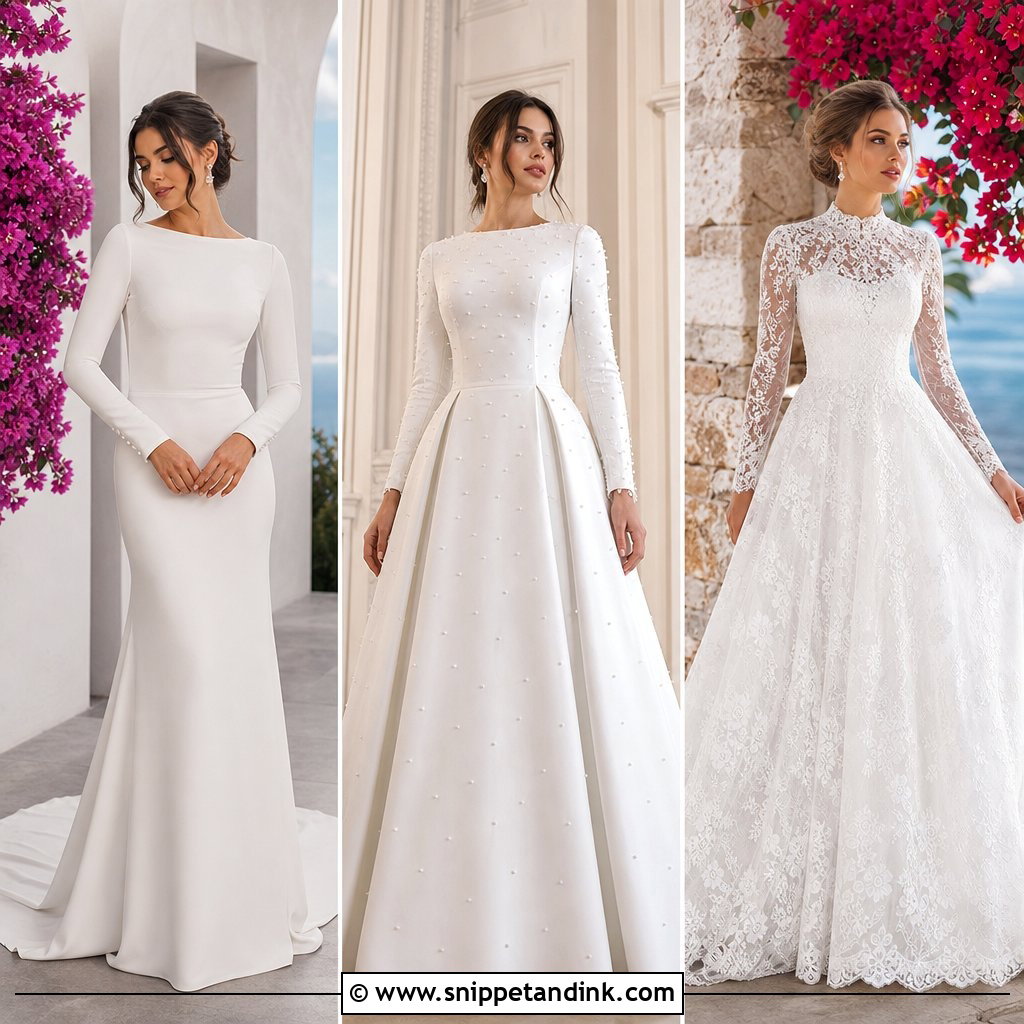
3. Crepe Column Temple Wedding Dress
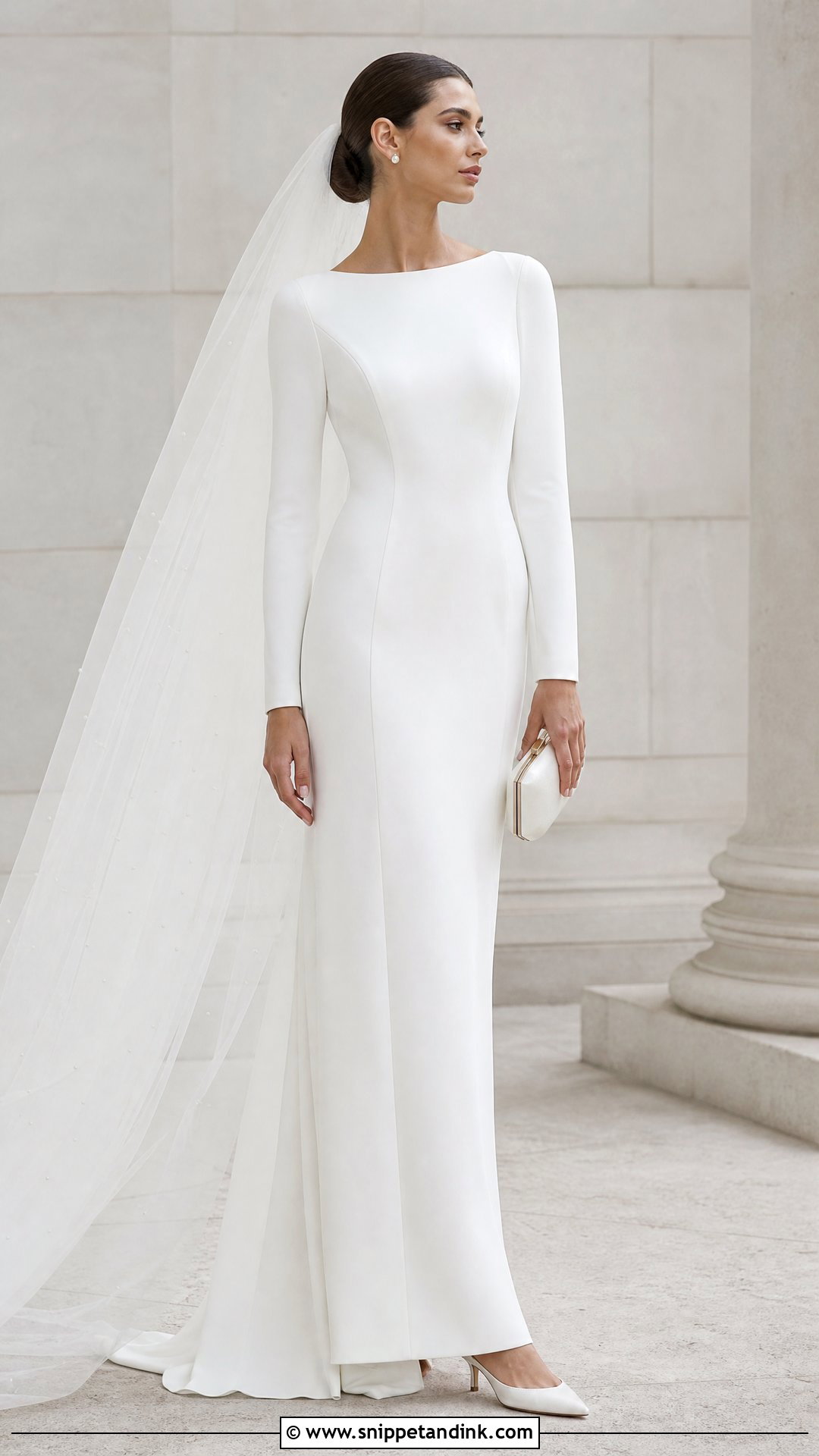
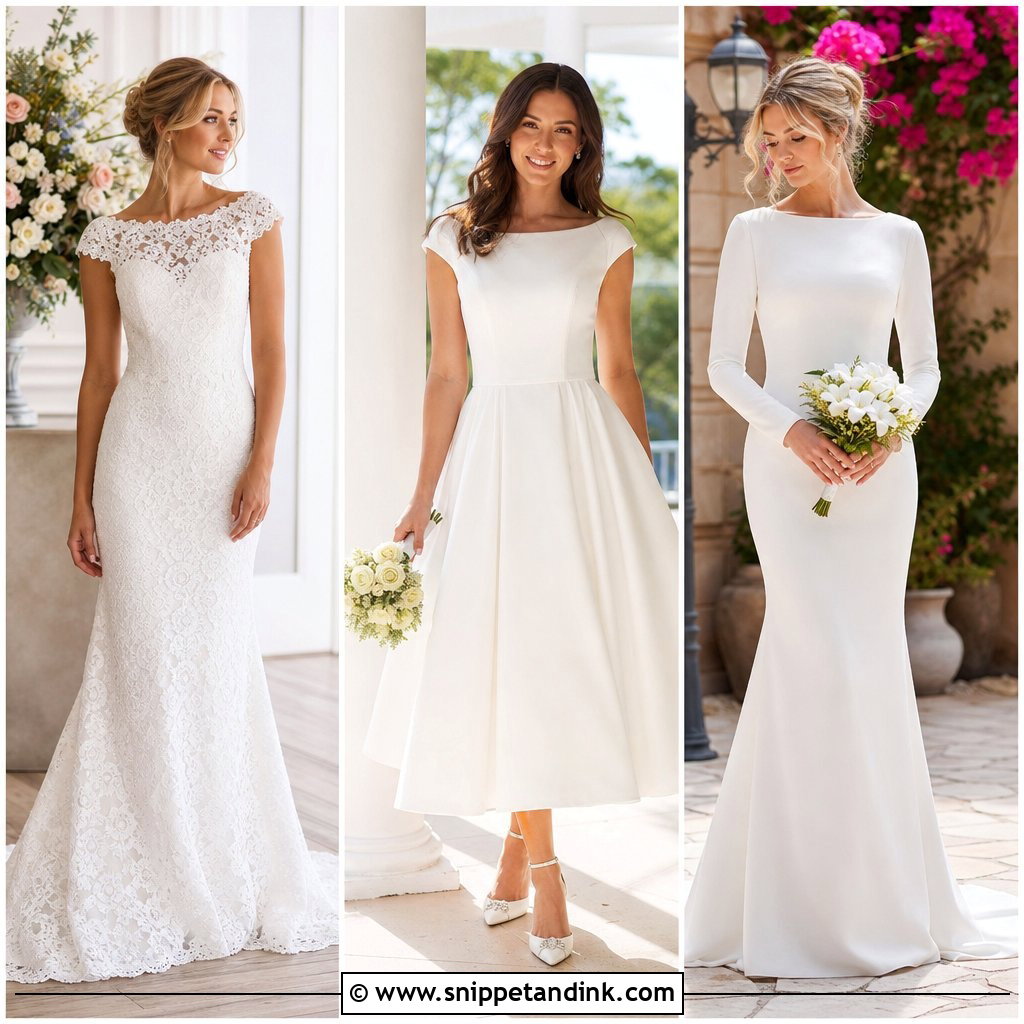
A crepe column is the modern option, all clean line and no layers. The crepe needs real weight, otherwise it clings and shows every seam underneath. A high bateau or jewel neckline, fitted long sleeves and a straight skirt with princess seams for shape keep it simple. Ask for a short back vent, closed with a modesty panel, so you can walk without a revealing slit. Pointed white flats or kitten heels, polished pearl earrings, a sleek fingertip veil and a small structured clutch for the photos are all it needs.
4. High Neck Ball Gown Temple Wedding Dress
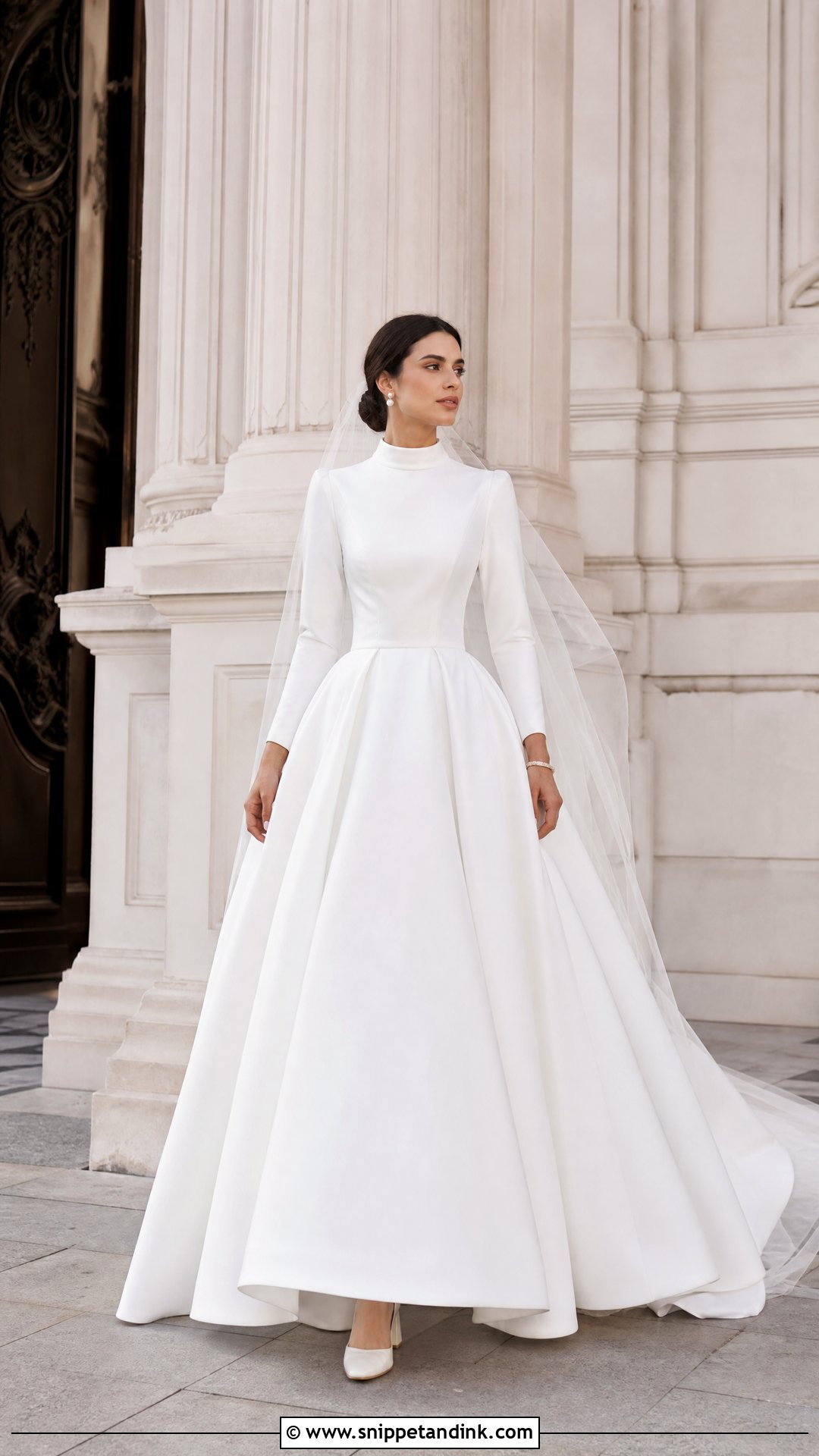
A high-neck ball gown gives a traditional moment with full coverage. A structured bodice, long sleeves and a full satin or mikado skirt from the natural waist hold their shape well. The high neckline must sit flat without rubbing when you turn your head, so check it at the first fitting rather than the last. Soft pleats give fullness without decoration. If there’s a train, have a bustle or removable section made before the day. Pearl studs, a narrow bracelet, low block heels under the hem, a neat bun and a light veil keep the large skirt balanced. For fuller busts, ask for internal support built into the bodice rather than relying on a separate bra.
5. Three-Quarter Sleeve Temple Wedding Dress
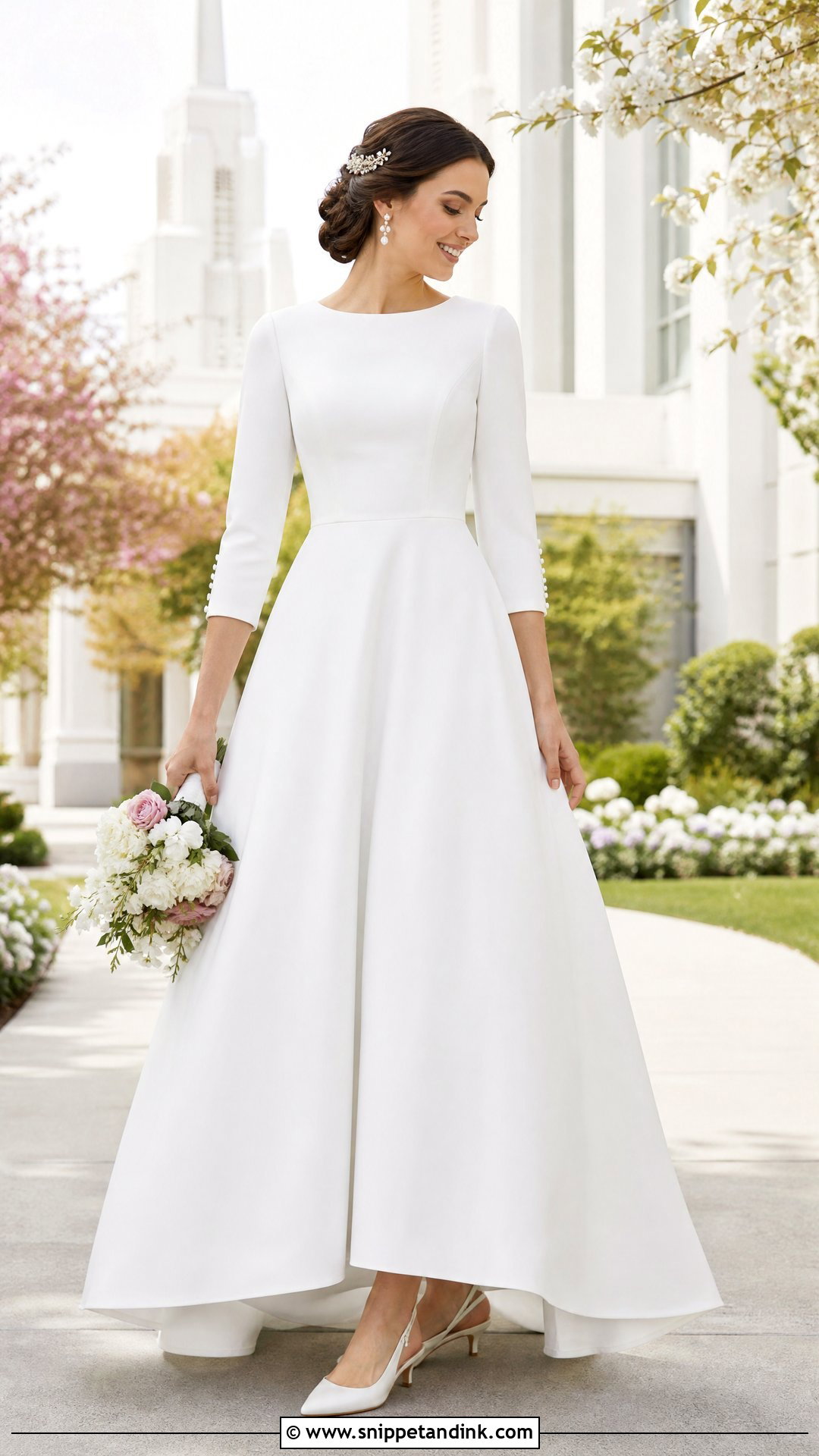
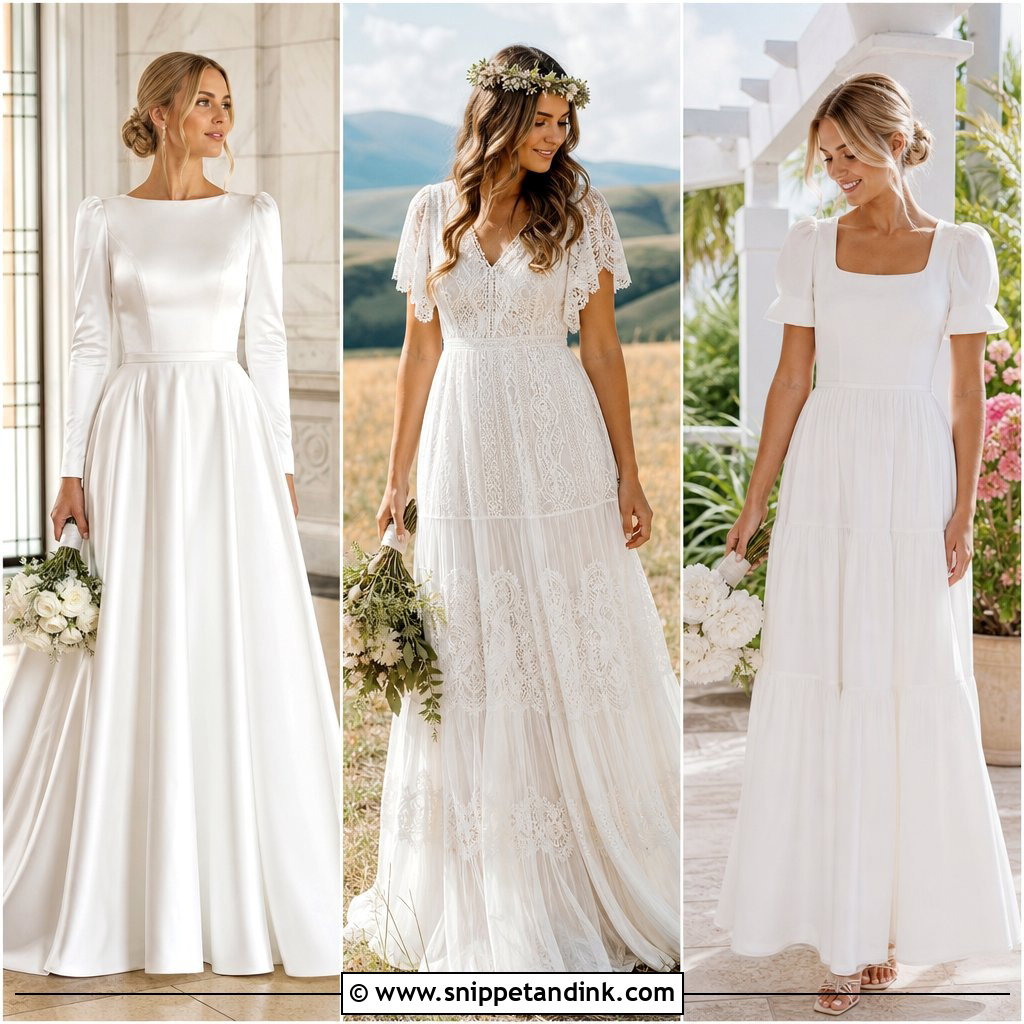
Three-quarter sleeves end below the elbow, which suits warm weather and brides who hate fabric at the wrist. Pair them with a modest round neckline, a defined waist and a flowing floor-length skirt in crepe, matte satin or lined chiffon. Small covered buttons at the cuffs add interest. Slingbacks, pearl-and-silver earrings and a comb above a low bun finish it. Check the sleeve length while your arms are bent, since a three-quarter sleeve rides up when you hold the bouquet. A plain chapel veil for outdoor photos is fine as long as it lifts off easily.
6. Chiffon A-Line Temple Wedding Dress
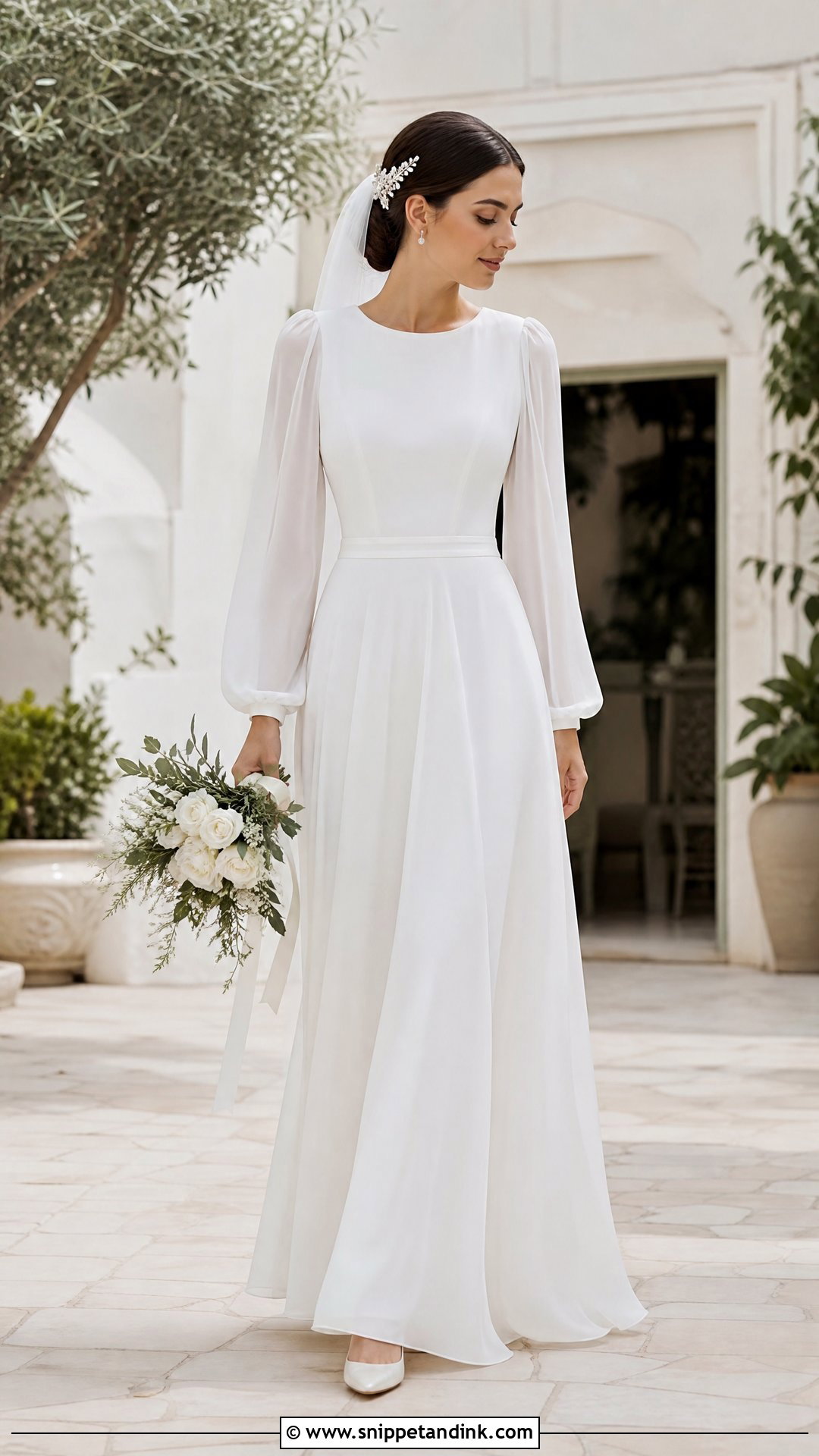
Chiffon moves softly and stays comfortable through a long day. Start with an opaque white lining, then lay chiffon over the bodice and the A-line skirt. Long fitted or gently gathered sleeves keep it modest without bulk, and a high scoop neckline with a narrow waistband gives the fabric shape. Chiffon turns see-through in bright light more than any fabric here, so stand near a window in the full gown before final alterations. Low white pumps, crystal studs, a fine hair comb and a cut-edge fingertip veil match its lightness. Spring and summer sealings suit it best.
7. Mikado Princess Temple Wedding Dress
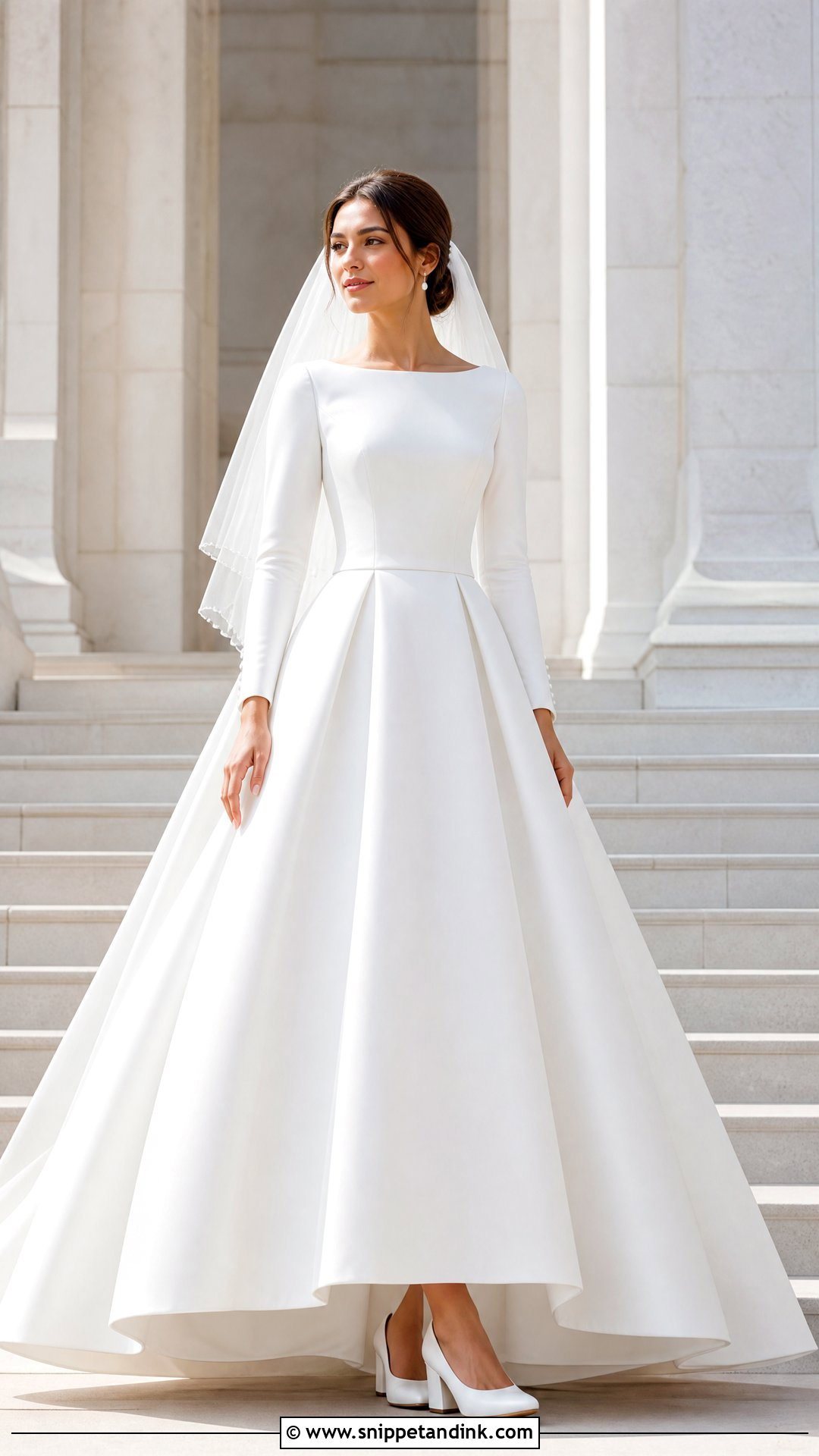
Mikado has a crisp, slightly ribbed surface that gives a princess gown structure without decoration. A modest bateau neckline, long fitted sleeves and well-placed seams shape the bodice with no visible corsetry. A box-pleated skirt gives classic volume and sharpens the waist. Keep the hem floor-length, and only add a train if it detaches or pins up. Mikado is a statement on its own, so pearl buttons, simple earrings, white block heels, a plain mid-length veil and a low bun are plenty. It’s heavier than it looks, so sit in it for a few minutes at the fitting before deciding.
8. Floral Appliqué Temple Wedding Dress
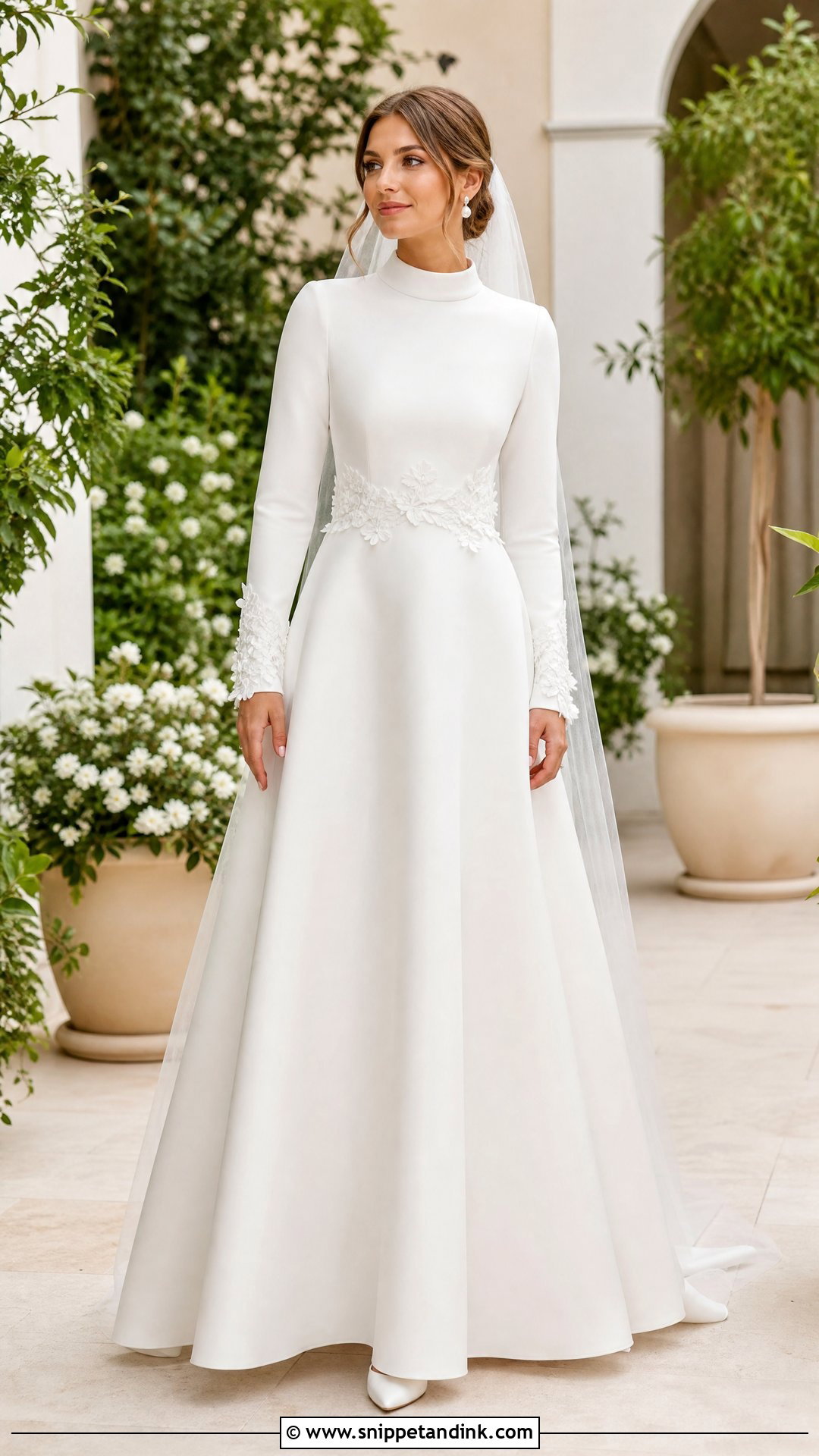
A few tonal appliqués give a modest gown texture without overwhelming it. Start with a lined A-line dress with a high neckline, long sleeves and an opaque bodice, then place white appliqués at the cuffs, the waist or the lower skirt rather than all over. Keep them white on white; colored or metallic thread isn’t suitable for a temple dress. A removable plain overskirt can add volume for portraits while the ceremony silhouette stays manageable. Pearl drops, white closed-toe heels, an untrimmed veil and smooth hair let the flowers do the decorating. If you’re unsure about the amount, show the temple a photo before the wedding.
9. Pearl Button Temple Wedding Dress
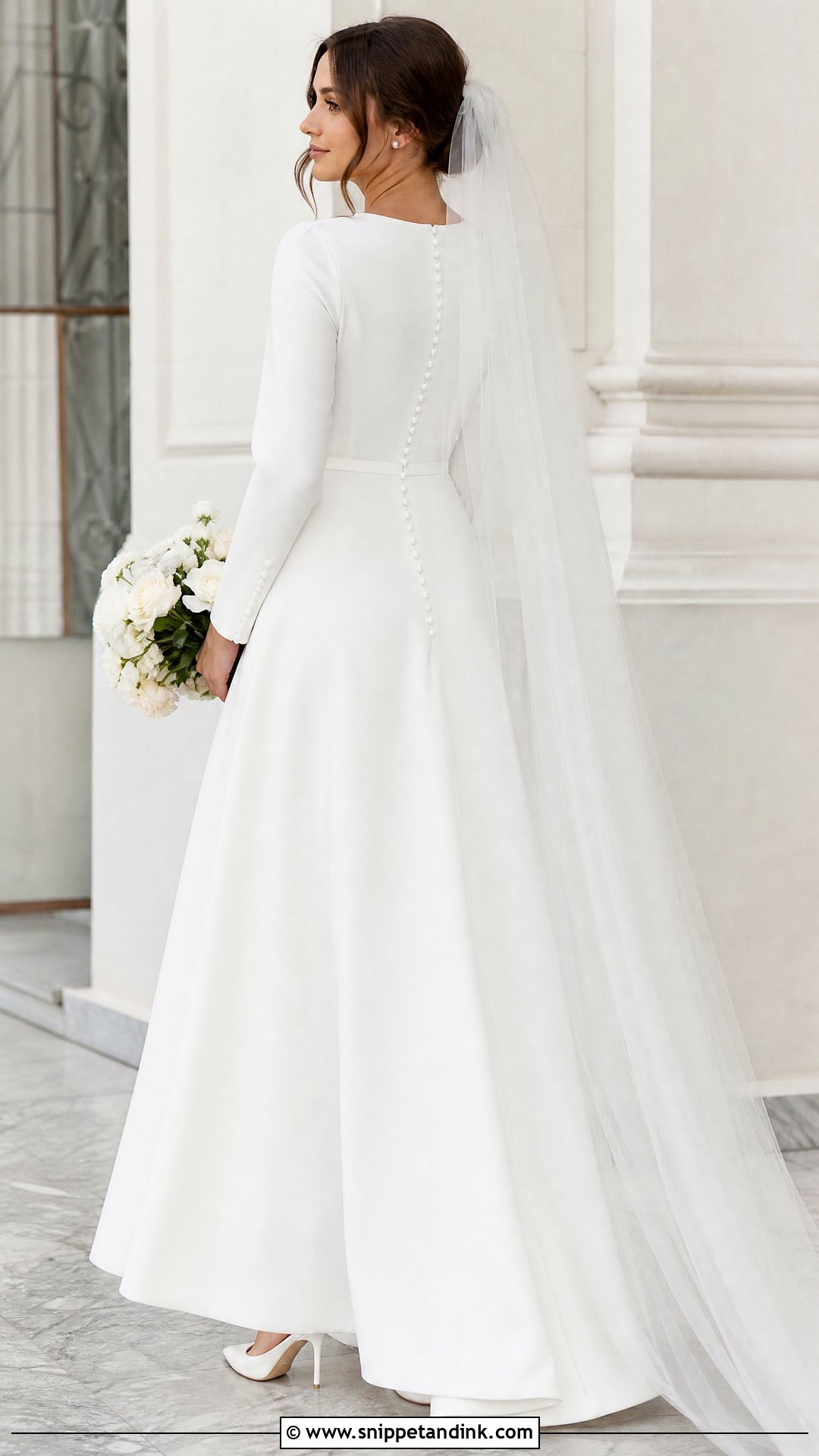
A row of pearl buttons gives a plain gown a quiet traditional finish. On a matte crepe or satin A-line with long sleeves and a modest round neckline, run the buttons from the upper back to the waist. I always ask for a hidden zipper behind them; dressing a bride through thirty loops takes far longer than anyone expects. Slightly puffed shoulders add structure, and fitted cuffs keep the sleeves neat. Pearl studs, white almond-toe pumps and a plain veil under a low chignon finish it. Skip the necklace and let an heirloom bracelet or ring be the one piece that stands out.
10. Plus Size A-Line Temple Wedding Dress
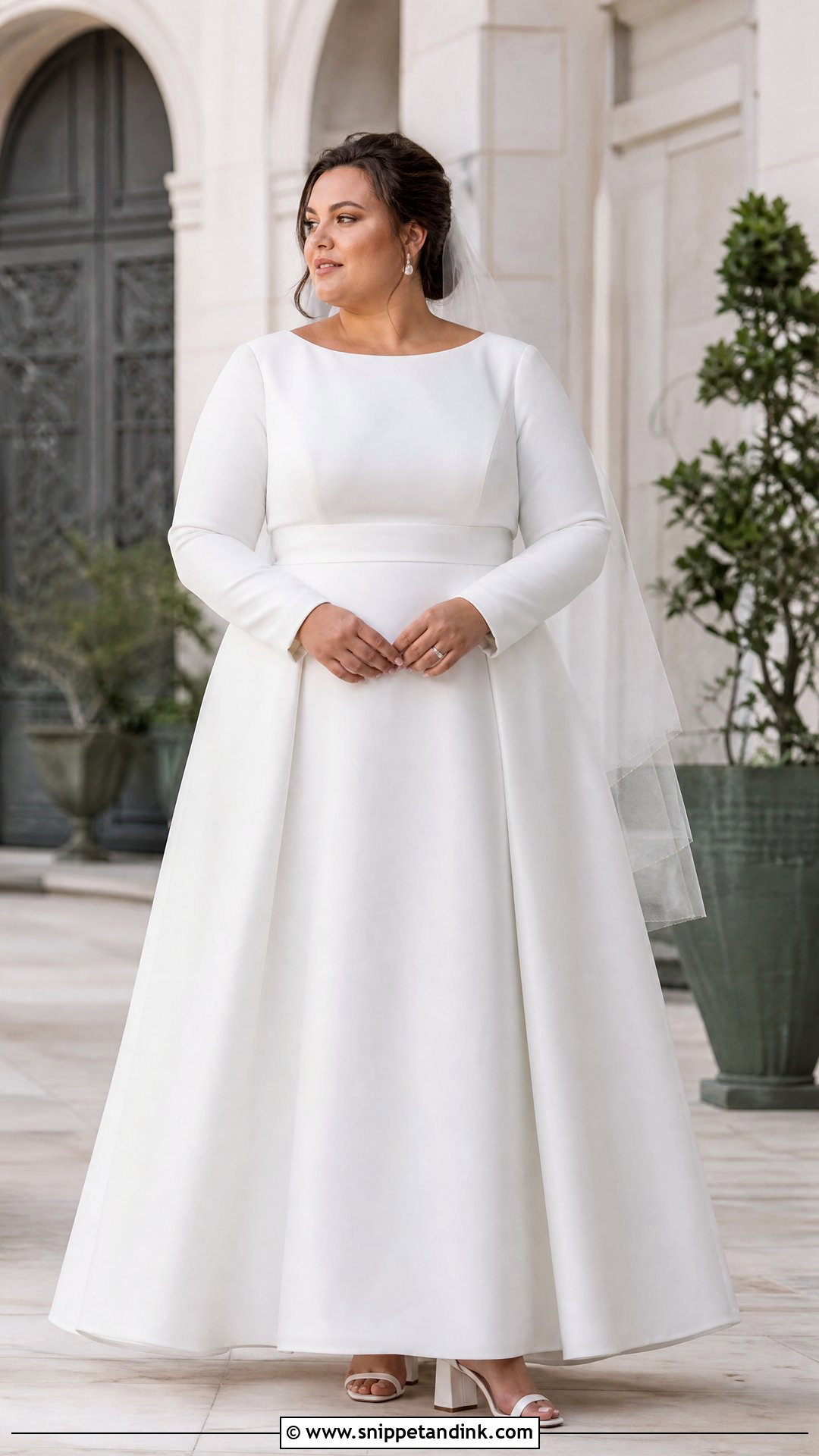
A structured A-line gives a plus-size bride support and comfort over a long day. Look for an opaque bodice with internal boning, long sleeves, a modest neckline and seams that follow your curves without squeezing. A wide waistband or a softly pointed waist defines the middle while the skirt glides over the hips. Matte crepe and mikado hold their shape and don’t cling. Fit the shoulders and sleeves first, since those are hard to change, then adjust the waist. Supportive block heels, medium pearl earrings and a light veil finish it. Wear the undergarments you’ll actually use on the day to every fitting.
11. Petite Empire Waist Temple Wedding Dress
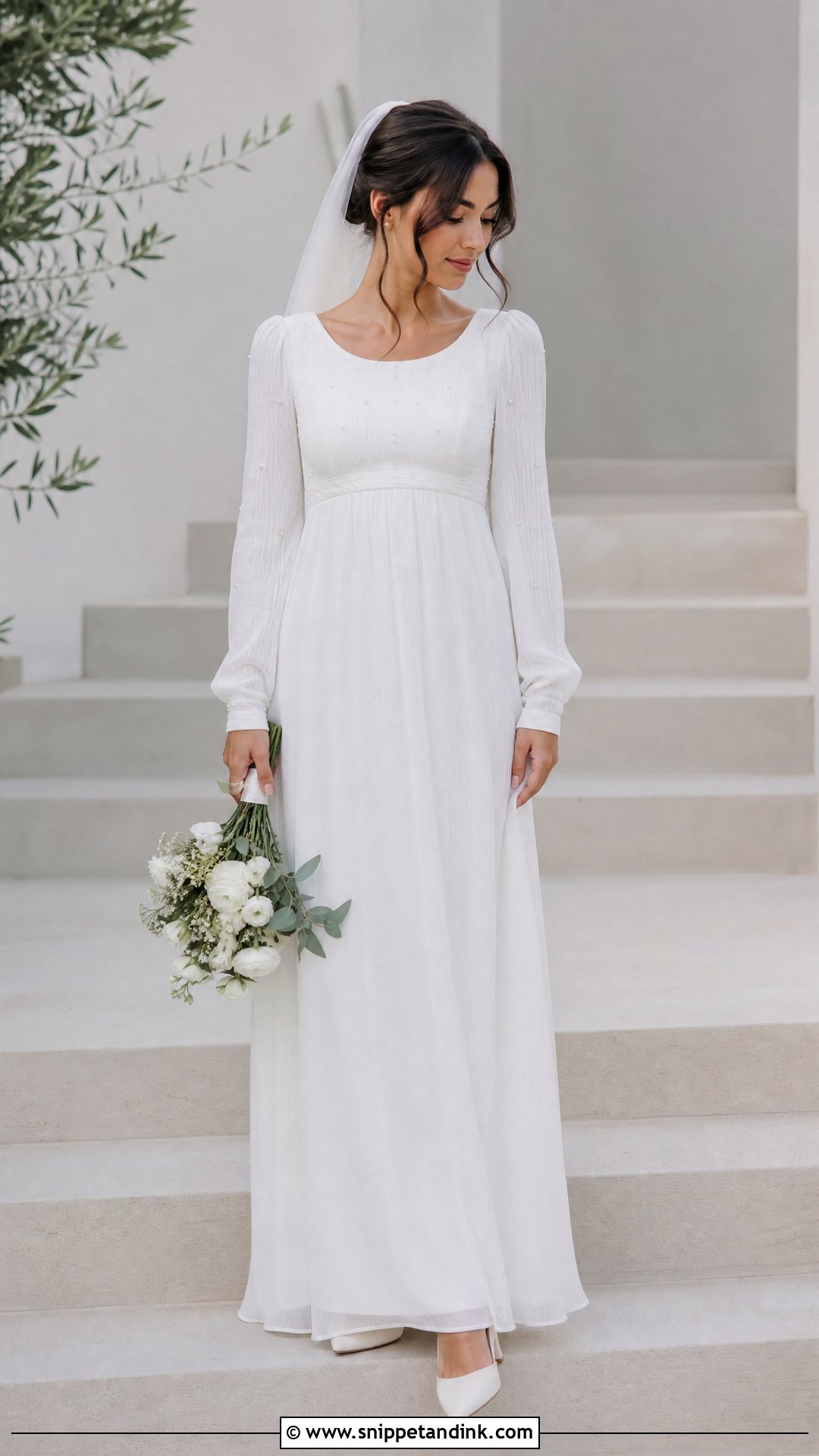
An empire waist can lengthen a petite bride because the seam sits just under the bust and the skirt falls in one long line. Lightweight crepe or fully lined chiffon won’t swamp a small frame. Long slim sleeves, a modest scoop neckline and minimal gathering keep it in proportion. Avoid an extra-full skirt, big lace motifs or a wide waistband, which all chop up the line. Pointed kitten heels, tiny pearl studs, a narrow veil that falls straight and a lifted hairstyle add height. Have the final hem done in your actual shoes so it just skims the floor.
12. Drop Waist Temple Wedding Dress
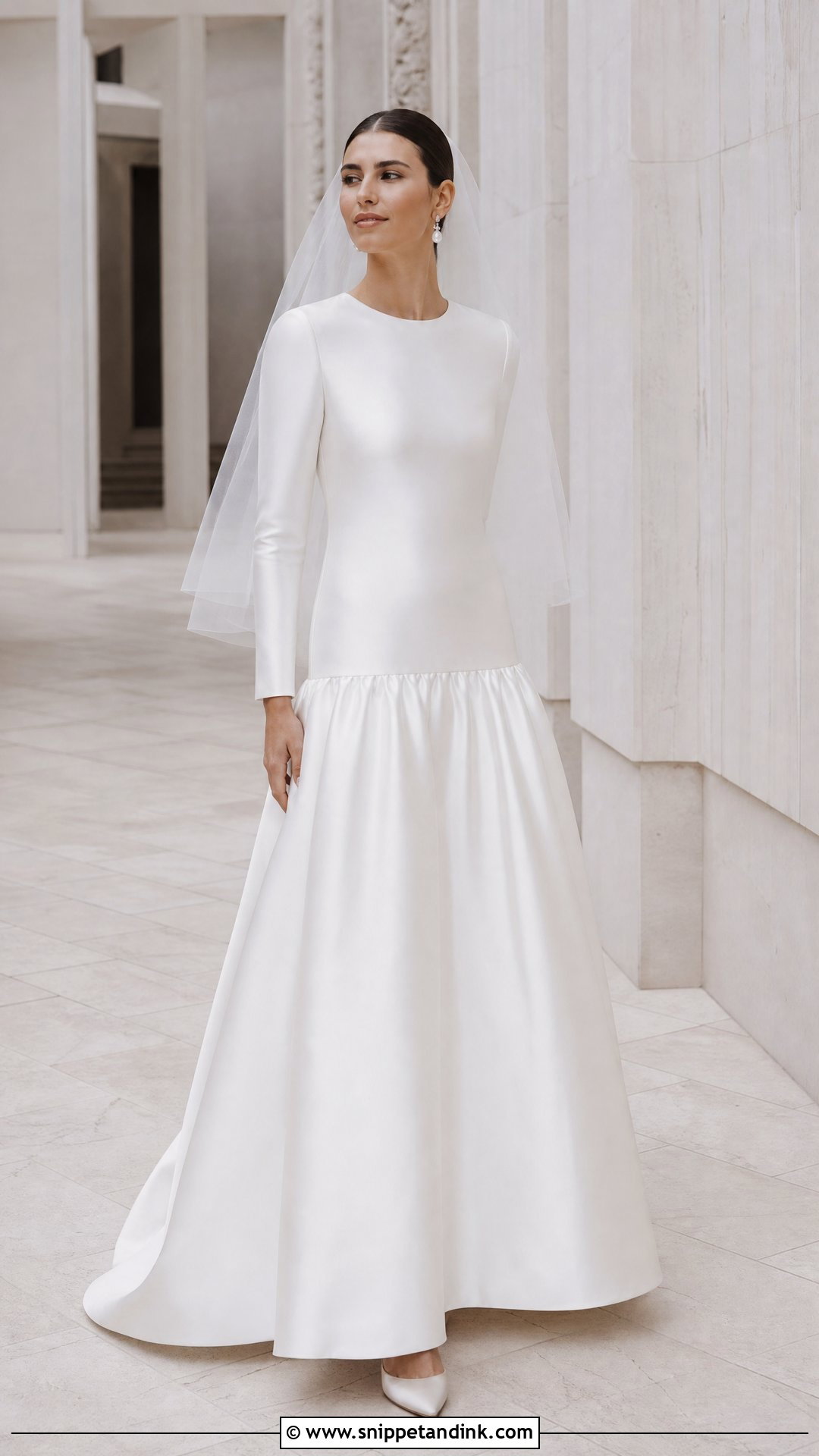
A drop waist extends the bodice a little below the natural waist before the skirt flares, which gives a slightly vintage, elongated look. Brides with long torsos tend to suit it naturally; on a shorter torso, it can work with careful tailoring. Choose opaque fabric, long sleeves and a high round neckline, with princess seams for shaping instead of visible boning. White low heels, pearl-and-crystal earrings, a plain elbow-length veil and sleek hair or waves behind the ears show off the long bodice. Sit down at every fitting. A drop waist that’s snug standing can dig into the hips when you’re seated.
13. White Velvet Temple Wedding Dress
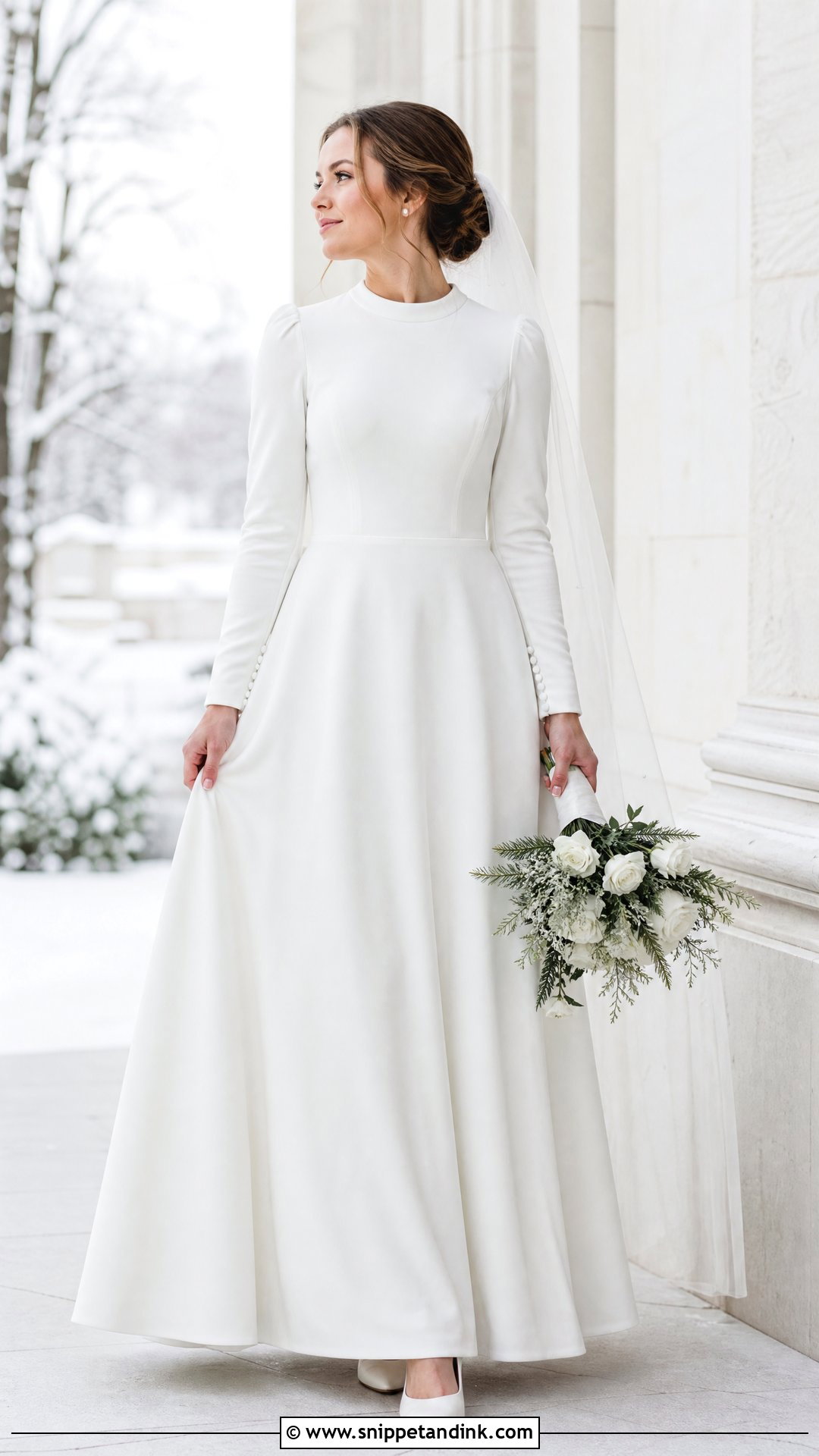
Velvet is warm and generous in coverage, which makes it a strong winter choice. Ask for lightweight bridal velvet; heavy upholstery-weight velvet is bulky and hot indoors. A gently fitted bodice, high neckline, long sleeves and a simple A-line skirt let the texture lead, and velvet already catches light, so beading isn’t needed. Covered buttons at the wrists and back add vintage character. White closed-toe pumps, pearl studs and a light tulle veil finish it. Wear your hair up, since loose hair catches and flattens the pile at the shoulders. Before buying, sit and walk in it to check the fabric doesn’t bunch at the waist.
14. Lightweight Crepe Temple Wedding Dress
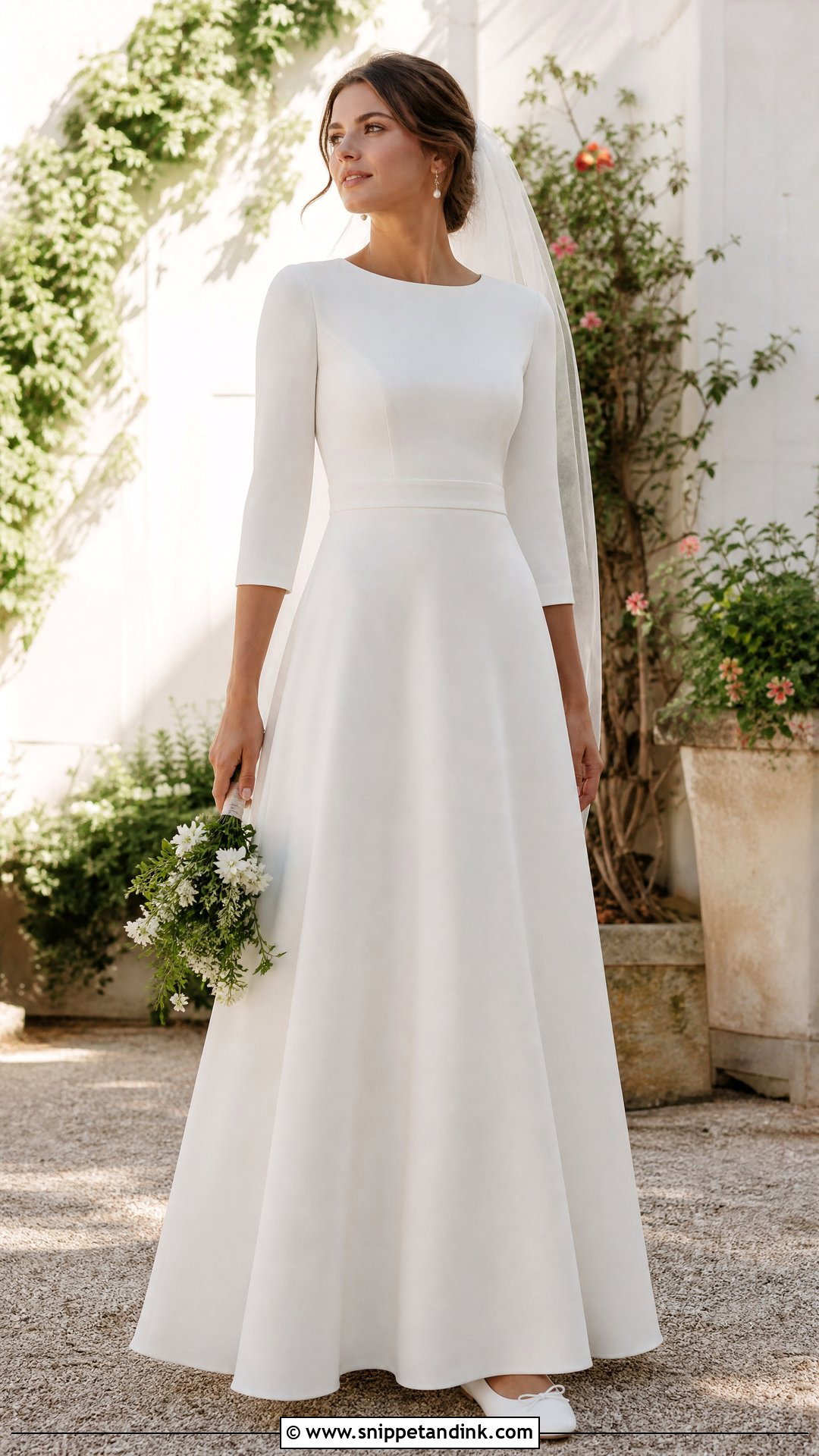
For a summer sealing, lightweight crepe is cooler and easier to wear than heavy satin or layers of tulle. Choose a breathable but opaque crepe with three-quarter sleeves, a modest jewel neckline and a softly flared skirt. A slightly raised waist lets air move and keeps the fabric off your body. The skirt needs enough width to walk freely but no extra weight. White leather flats or low block heels, small pearl earrings, a simple removable veil and a neat low bun or pinned twist complete it. Thin crepe is the fabric most likely to show what’s underneath, so check it in bright daylight before alterations.
15. Vintage Lace Temple Wedding Dress
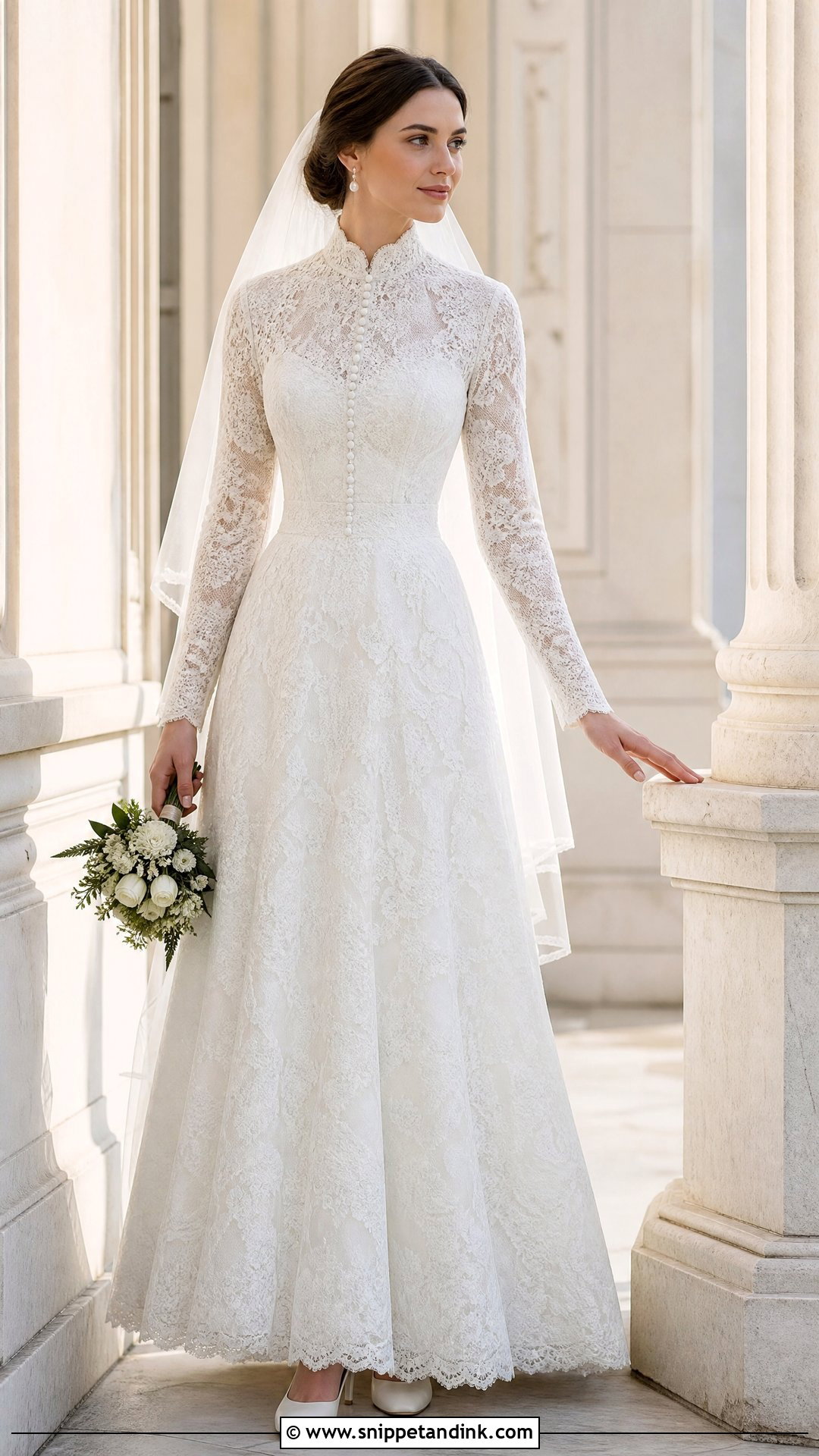
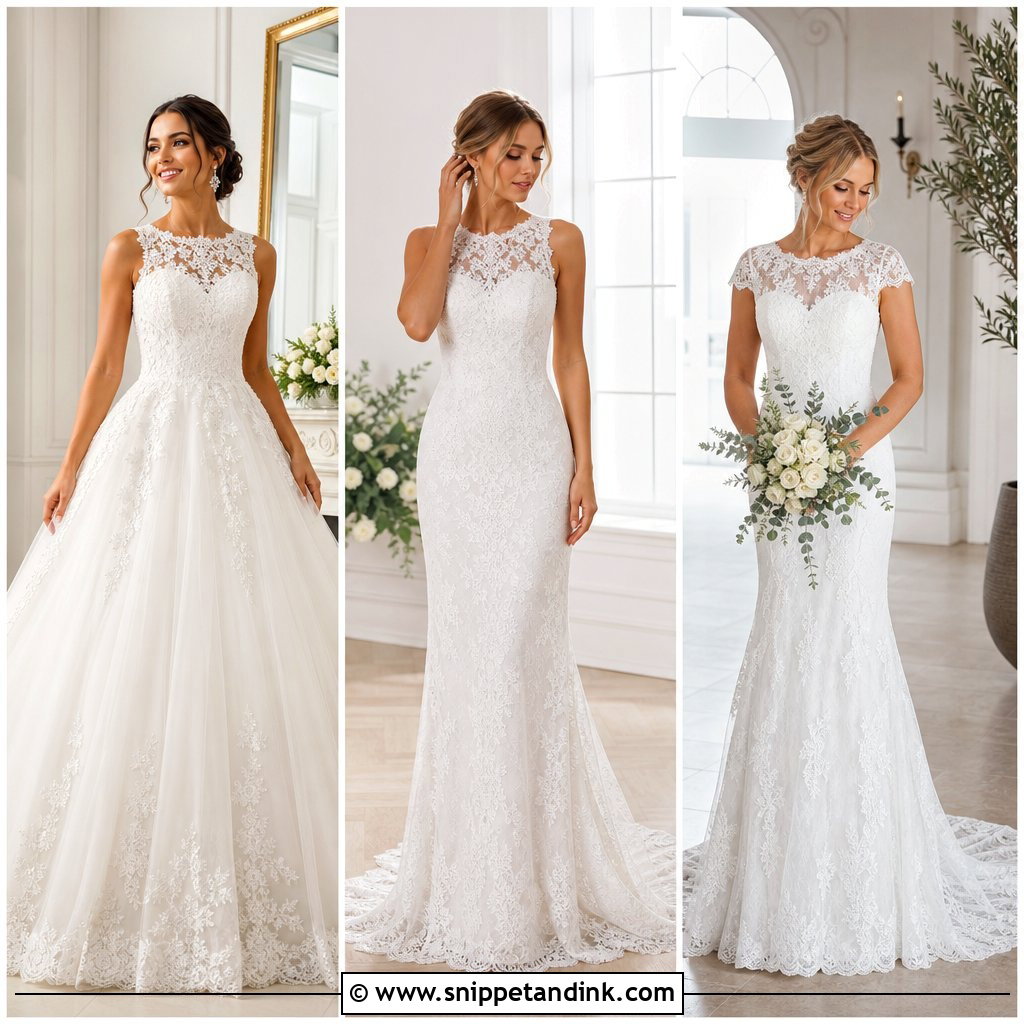
Vintage lace looks romantic when the period details stay restrained. A fully lined gown with a high Edwardian neckline, long fitted sleeves and an A-line skirt is the base. Small-scale lace looks finer than big motifs and is easier to tailor across seams. Covered buttons at the cuffs and back add period feel, and a smooth waist is better than a beaded sash. Watch the color carefully: many vintage-style laces are ivory or cream, and the temple dress needs to be white. Lay the lace, lining, shoes and veil together beside a sheet of plain white paper in daylight; anything that looks yellow next to it is not white.
16. Minimalist Sheath Temple Wedding Dress
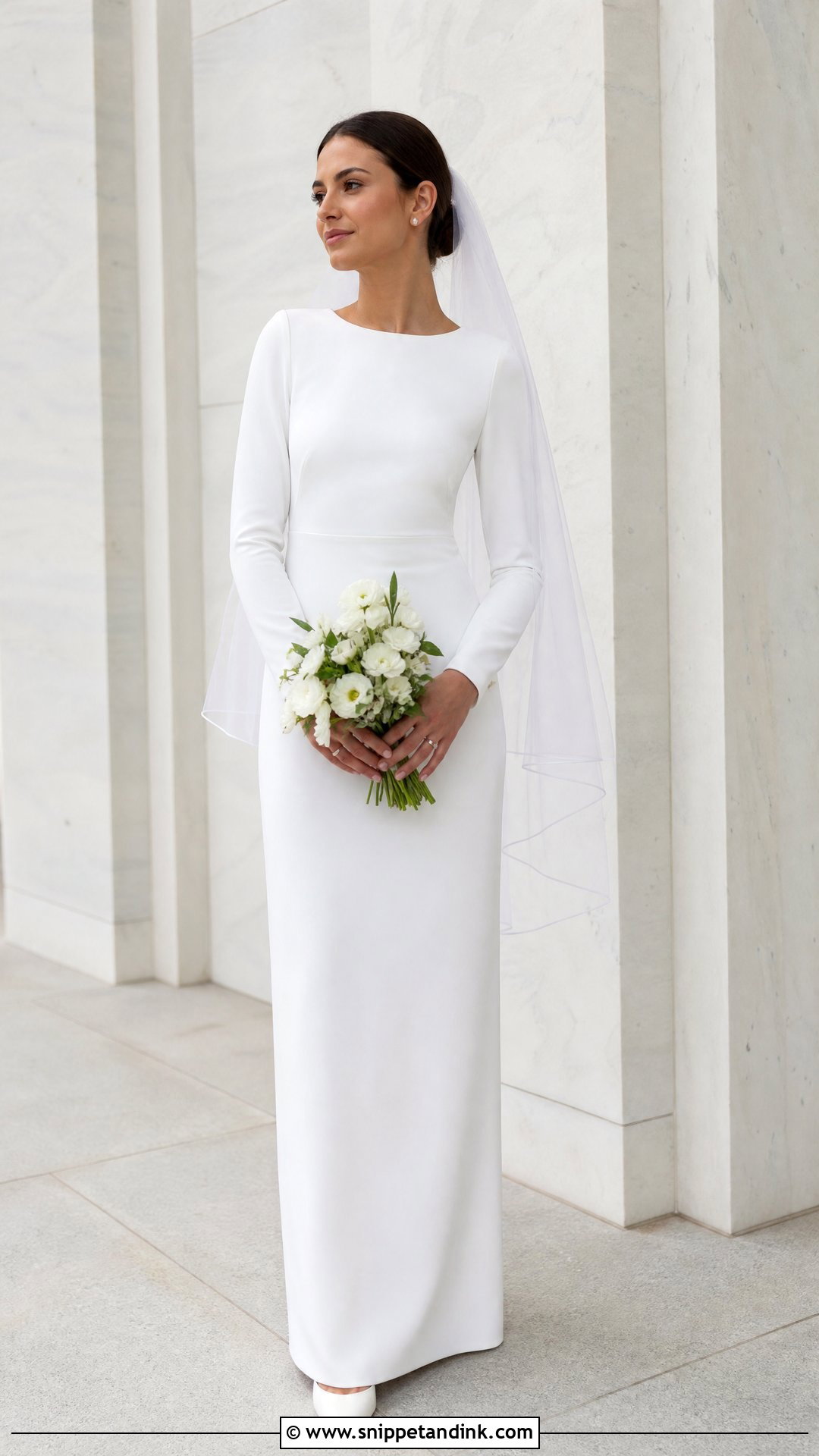
A minimalist sheath dress needs medium-weight crepe with enough body to skim rather than cling. Long sleeves, a modest round neckline, full lining and a straight floor-length skirt with room through the hips and knees are the essentials. A concealed zipper and small waist darts keep it clean. Pearl studs, pointed white flats, a plain fingertip veil and a sleek ponytail or bun suit it. Because there’s no skirt volume to hide anything, the tailoring has to be precise. Sit, bend and walk before approving the fit, and point out any pulling at the hips or shoulders.
17. Modest Mermaid Temple Wedding Dress
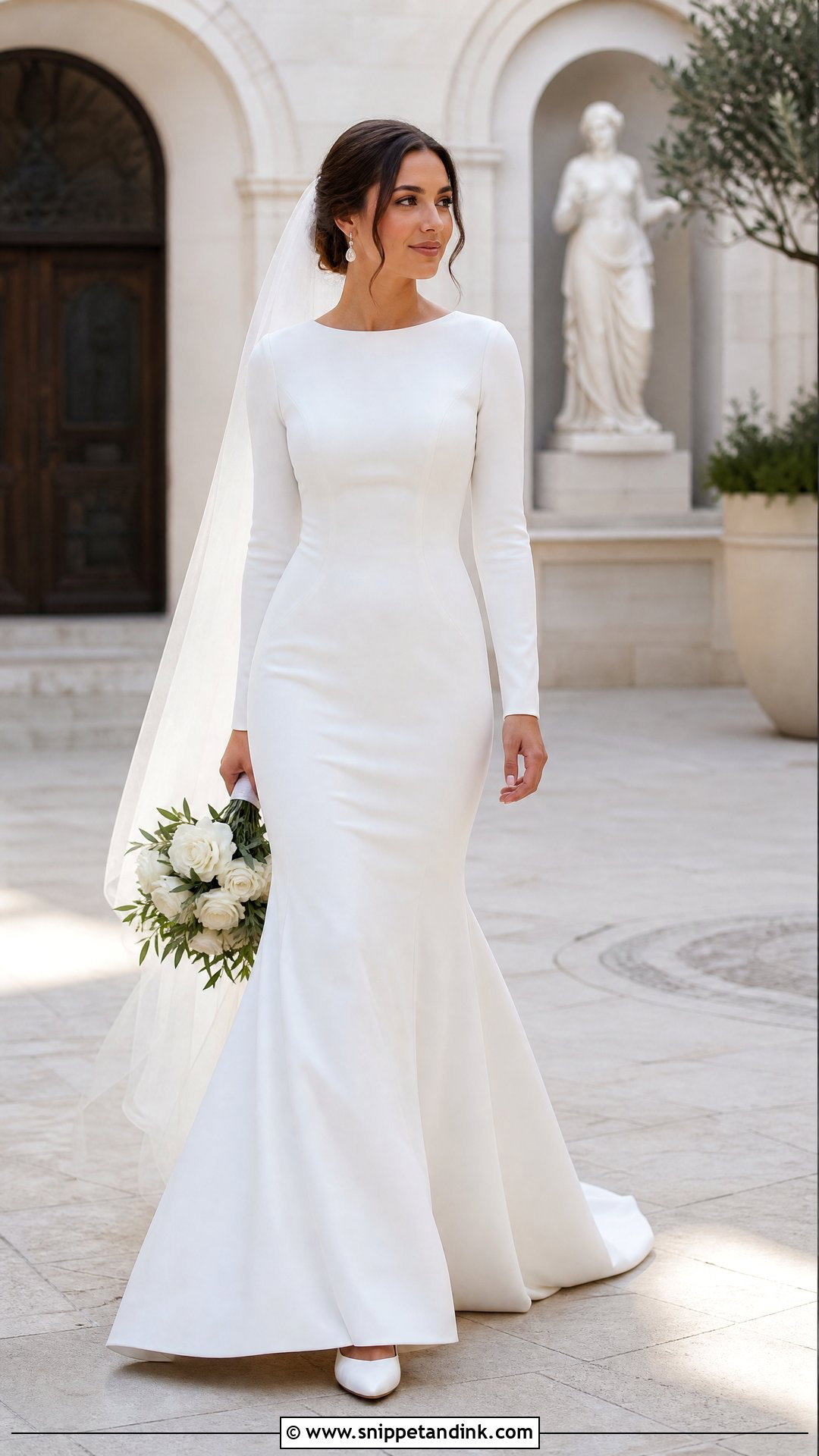
Can a mermaid gown be modest? Yes, if it’s softened. Choose one that follows the body gently and flares at the lower thigh or knee rather than hugging tightly all the way down. Opaque crepe, long sleeves and a high scoop neckline give the coverage. The flare must allow you to walk, sit and turn normally, which I test by having brides kneel and stand again. Avoid a fixed train, or make sure any extended hem detaches or secures. Low block heels, small drop earrings and a light veil for after the sealing finish it, with a close hairstyle to balance the skirt.
18. Bishop Sleeve Temple Wedding Dress
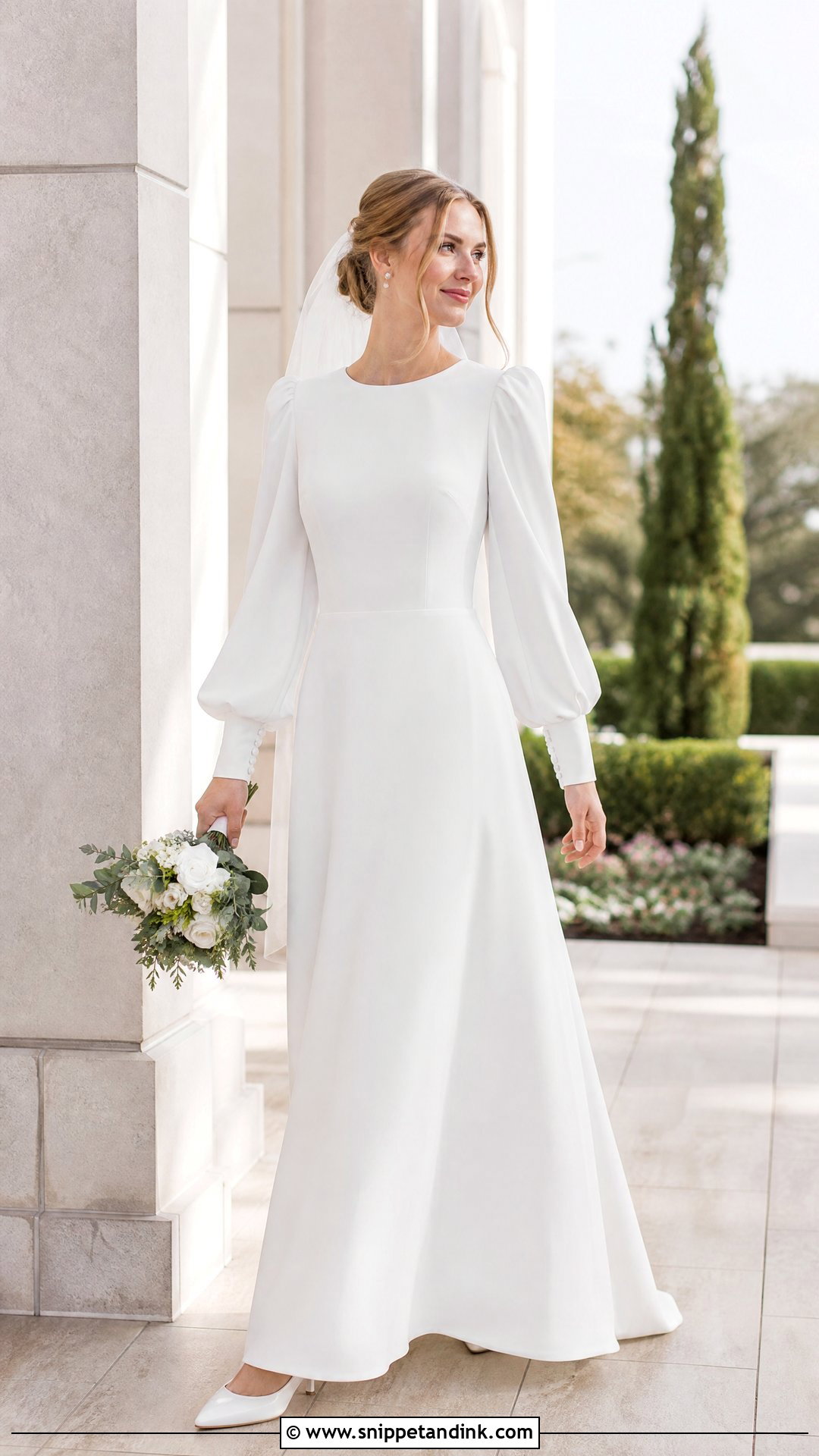
Bishop sleeves are full through the arm and gathered into a fitted cuff, so they cover without clinging. Pair them with an opaque crepe bodice, a modest jewel neckline and a floor-length A-line skirt. Keep the volume controlled; oversized bishop sleeves catch on doorframes and swamp a small frame. Small covered cuff buttons finish them. White kitten heels, pearl studs, a minimal veil and a smooth bun or half-up style keep the sleeves visible in photos. Narrow shoulders gain balance from the fullness, while broad shoulders do better with less gathering at the sleeve head.
19. Basque Waist Temple Wedding Dress
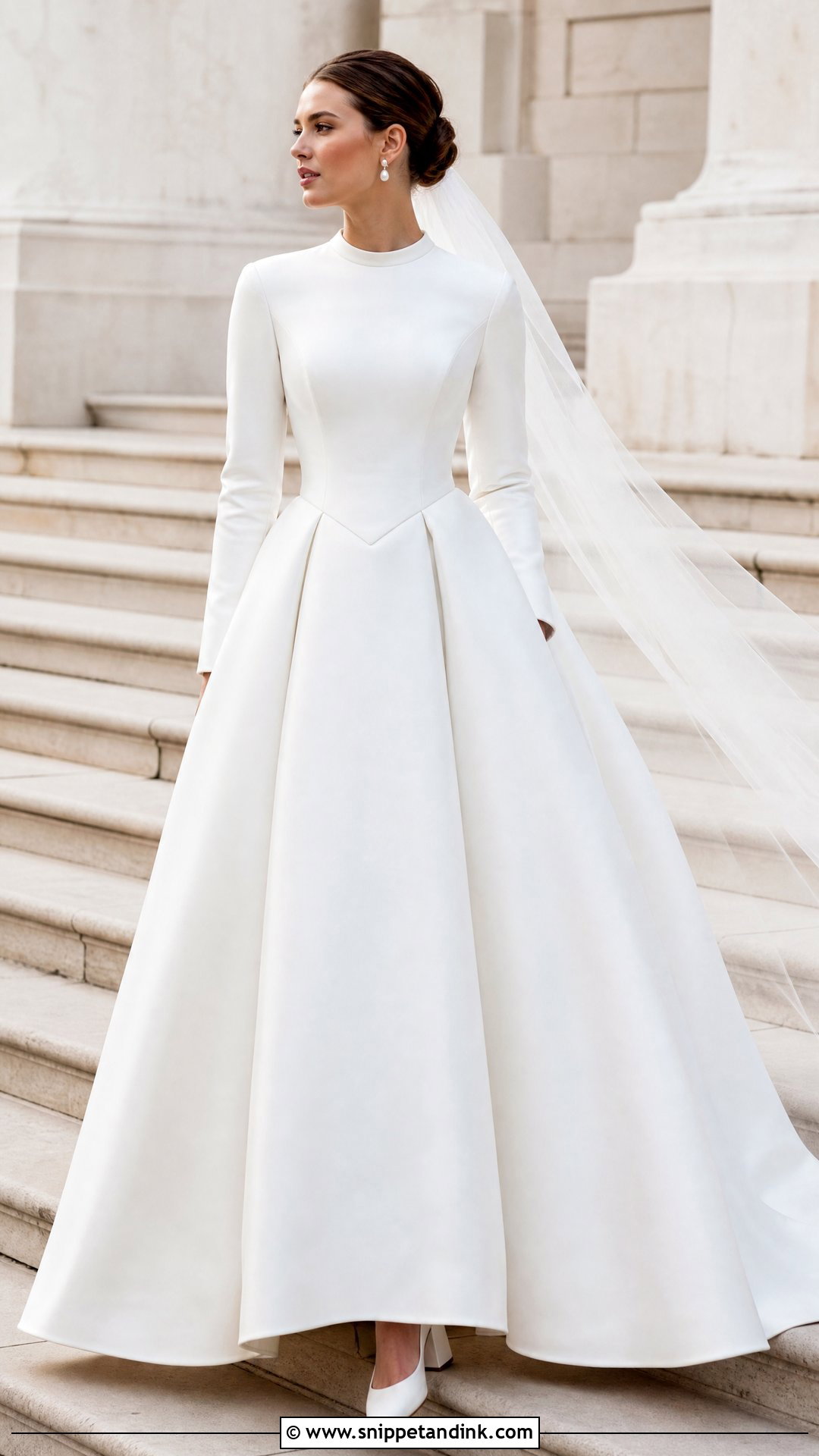
A basque-waist gown has a bodice that dips into a gentle point at the front, which defines the waist without decoration. With a structured satin or mikado skirt it looks formal and clean. Long fitted sleeves, an opaque high neckline and a supportive bodice that doesn’t look corseted complete the top. Pleats released from the point give the skirt balanced fullness. White block heels, pearl earrings, a plain veil and a polished updo finish it. At fittings, watch the point of the waist when you sit: if it lifts or presses into your stomach, the seam needs adjusting.
20. Simple Empire Line Temple Wedding Dress
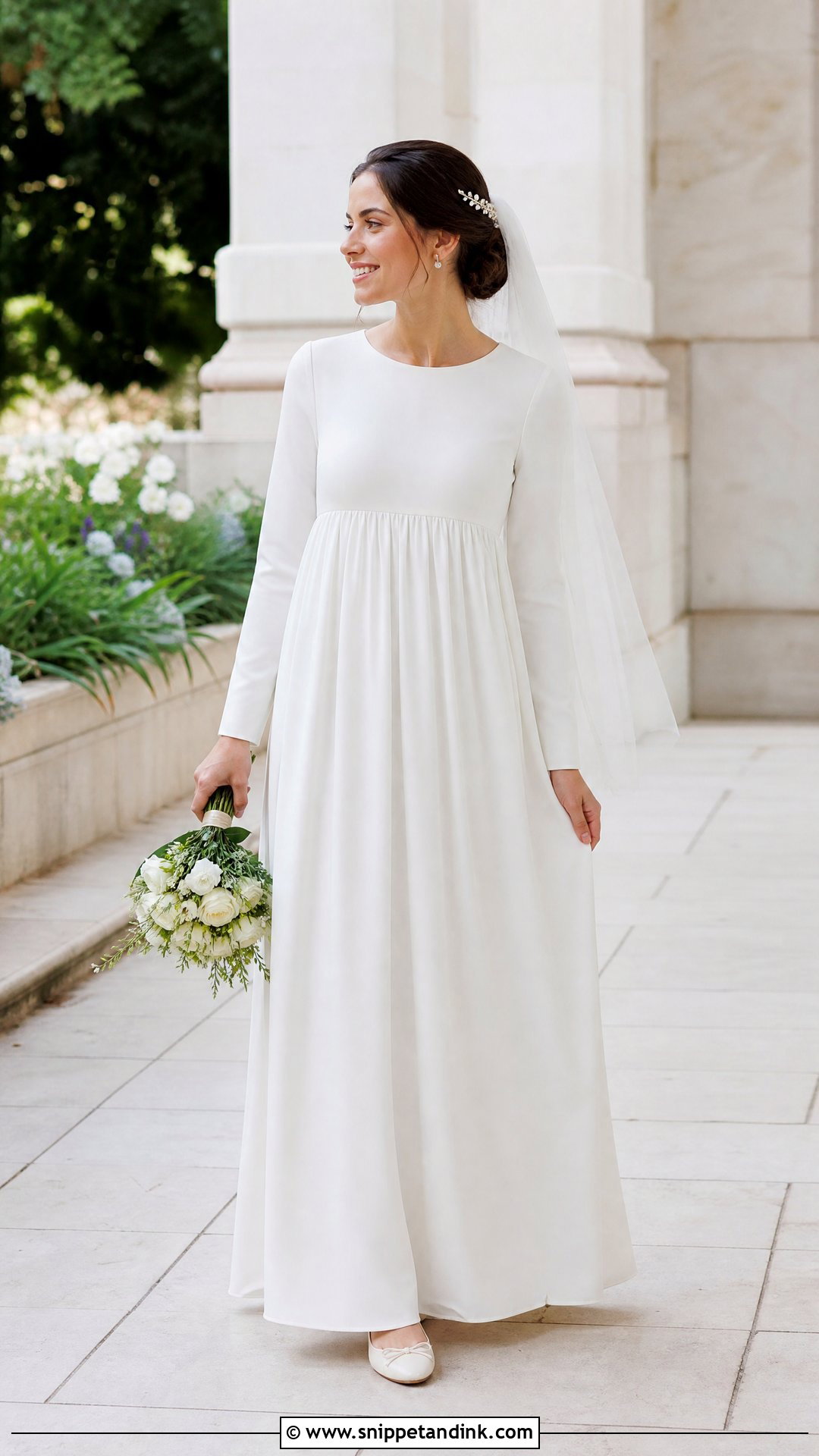
A simple empire line is the most comfortable dress in this list. The seam sits just under the bust, so there’s no pressure at the natural waist, which suits brides whose shape may change between ordering and the wedding. Choose opaque matte fabric, three-quarter or long sleeves, a modest rounded neckline and a skirt with only light gathering. White ballet flats, small pearl earrings and a fine comb are enough, with a plain veil for portraits outside. Focus alterations on the shoulders, bust, sleeve length and hem. Get those right and the dress looks deliberate rather than plain.
Inside the Sealing Room, Then Out on the Temple Grounds
A temple wedding splits into two quite different stretches. Inside, veils and hats aren’t worn, and part of your dress will be covered while you sit and kneel, so comfort and coverage matter more than visible detail. Heavy beading on the shoulders or back is uncomfortable under an extra layer and gets crushed anyway. Outside, the dress becomes the photograph, and that’s when the veil, the detachable train and the bouquet come out.
Plan for the changeover. I’d pack a small bag with the veil wrapped in tissue, the bustle or train pieces, safety pins, blotting papers, and comfortable shoes for walking across the grounds if your photo shoes pinch. Give it to a bridesmaid or your mother, not the groom, who’ll be busy too. Temple grounds are often big and photos can run long, so in hot months bring water and a parasol, and in winter keep a white wrap or coat close by for the minutes between shots.
Is It White Enough, Covered Enough, Comfortable Enough?
Coverage, your own taste and a full day of comfort have to meet in one dress. Satin A-lines give structure, crepe sheaths and columns feel modern, and lace, pearl buttons, bishop sleeves or a shaped waist add personality without excess. Whichever shape you prefer, look at the lining in strong light, move through your whole range of motion, and finish alterations in your wedding shoes. Take a photo of the final gown to your temple well before the date, especially if it has decoration or a train. A modest dress can still feel completely like you.
You'll Like These Ideas:



Leave a Reply