
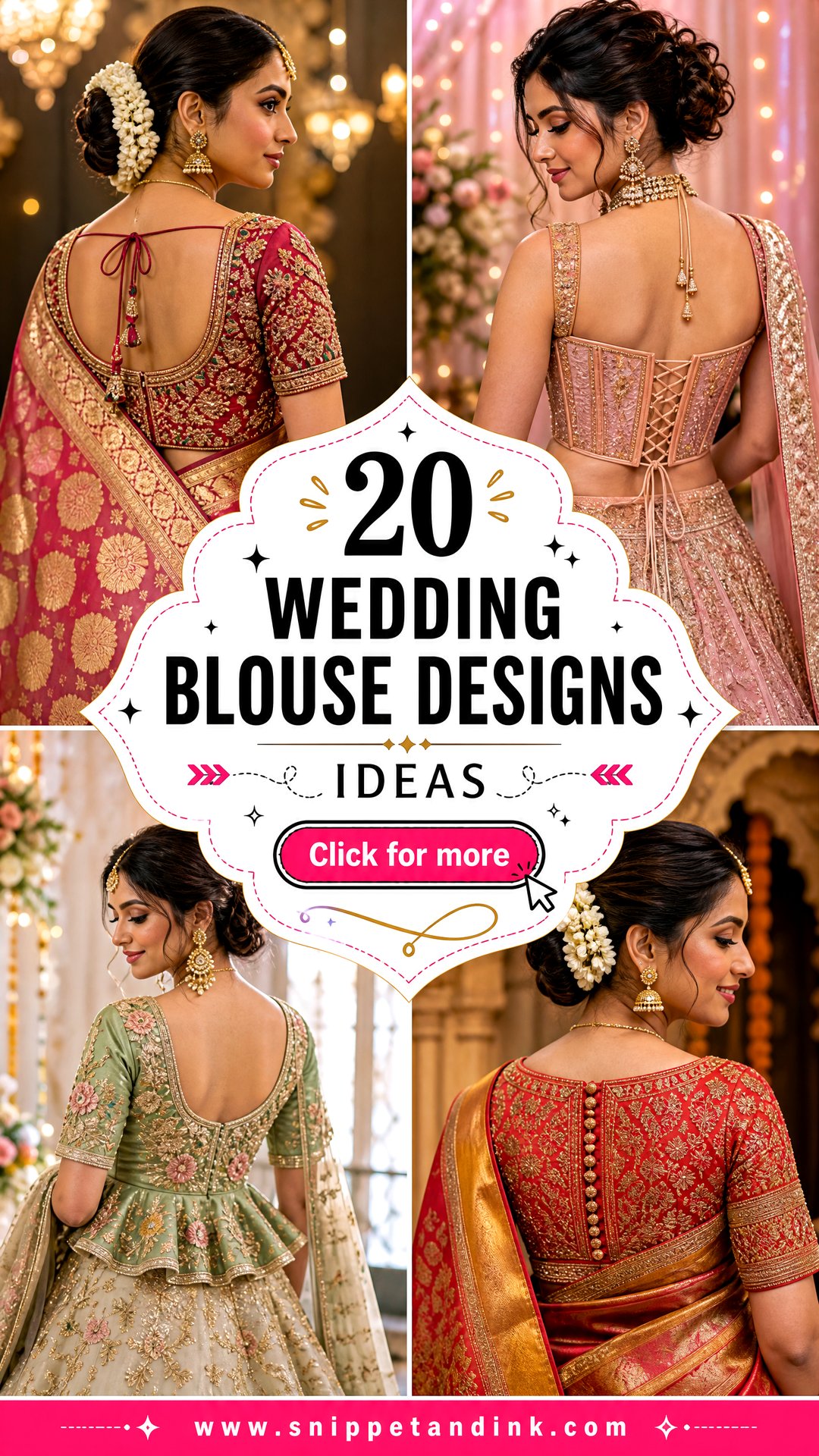
The blouse is the piece of a bridal saree or lehenga that sits closest to the camera and closest to your skin, so it gets more of my fitting time than anything else. A heavy border looks wonderful on a hanger; on a bride it has to survive a three-hour ceremony, raised arms during rituals and a lot of hugging. The designs below range from zardozi, zari, Aari and mirror work to corset structures, illusion backs, pearl work and custom embroidery. Each comes as a full outfit, from richly embroidered silk blouses to lighter pearl pieces, with notes on what I’d check at the tailor. Let the saree’s fabric and border lead, then choose the neckline your jewelry needs.
What I Hand a Tailor Along With the Blouse Fabric
Most bridal blouse problems start with an incomplete brief. A tailor can only cut what they’re told, and a heavily embroidered piece can’t be let out much once the work is on. This is the order I follow.
- A blouse that already fits you well. It gives the tailor your real shoulder width, armhole depth and bust point, which are hard to get right from a tape measure alone.
- A decision on support. Built-in cups, a padded lining or your own bra all change the cut, so settle this before measuring, not at the final fitting.
- The exact jewelry. Lay the necklace on the neckline sketch. A choker needs a different neck depth from a long rani haar, and the tailor should cut for the piece you’ll actually wear.
- The closure. Front hooks are easiest to get into alone; back hooks or a zip give a cleaner front for heavy embroidery. Decide who will be dressing you.
- Seam allowances. Ask for at least a little extra at side seams and sleeves. Bodies change in the weeks before a wedding, and a heavy blouse with no allowance can’t be fixed.
Embroidered blouses usually need two or three fittings, and handwork takes weeks, so I start the conversation with the tailor well before the outfit is due. A plain silk blouse can be turned around much faster than zardozi or Maggam.
1. Zardozi Wedding Blouse With Red Silk Saree
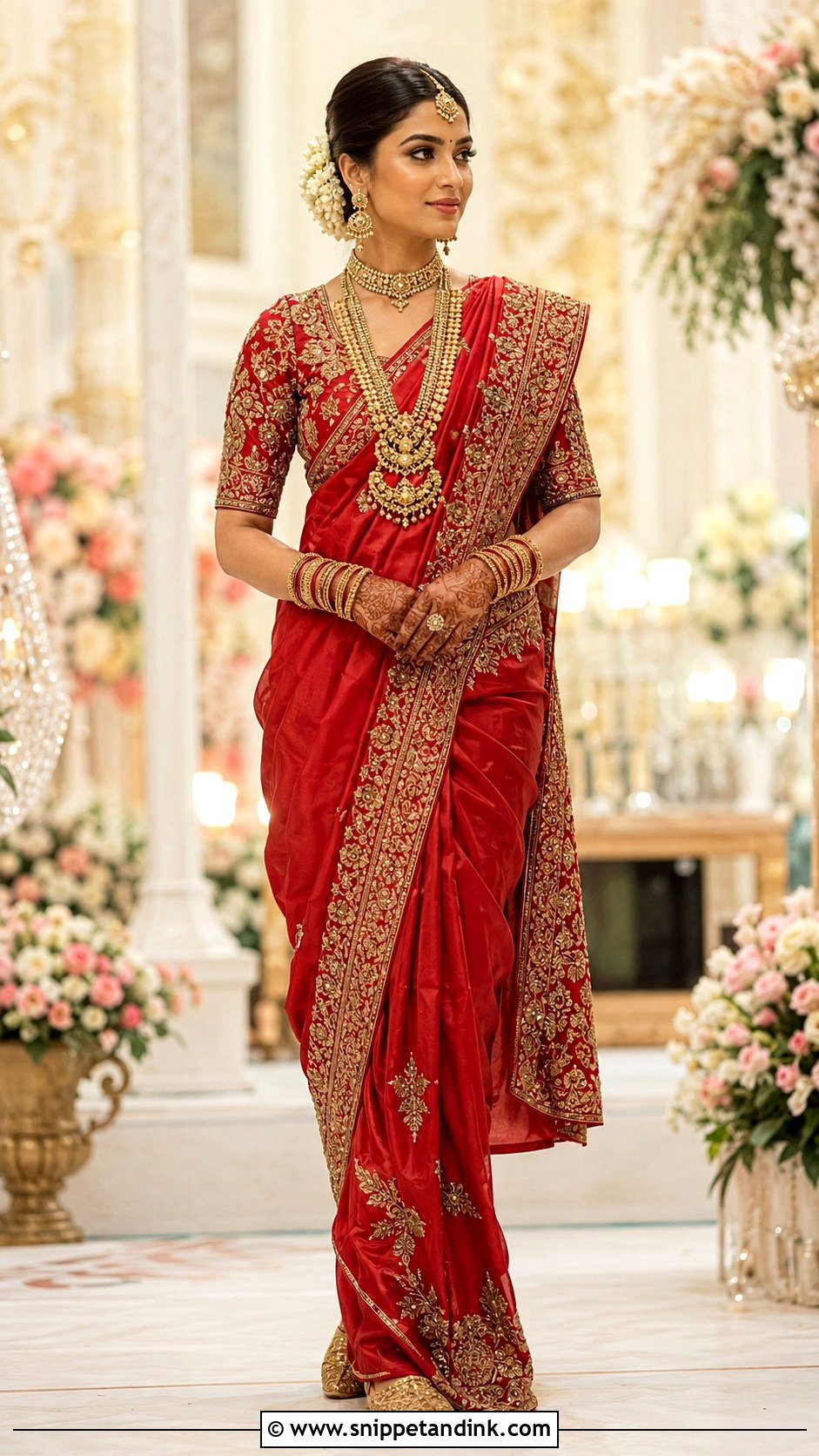
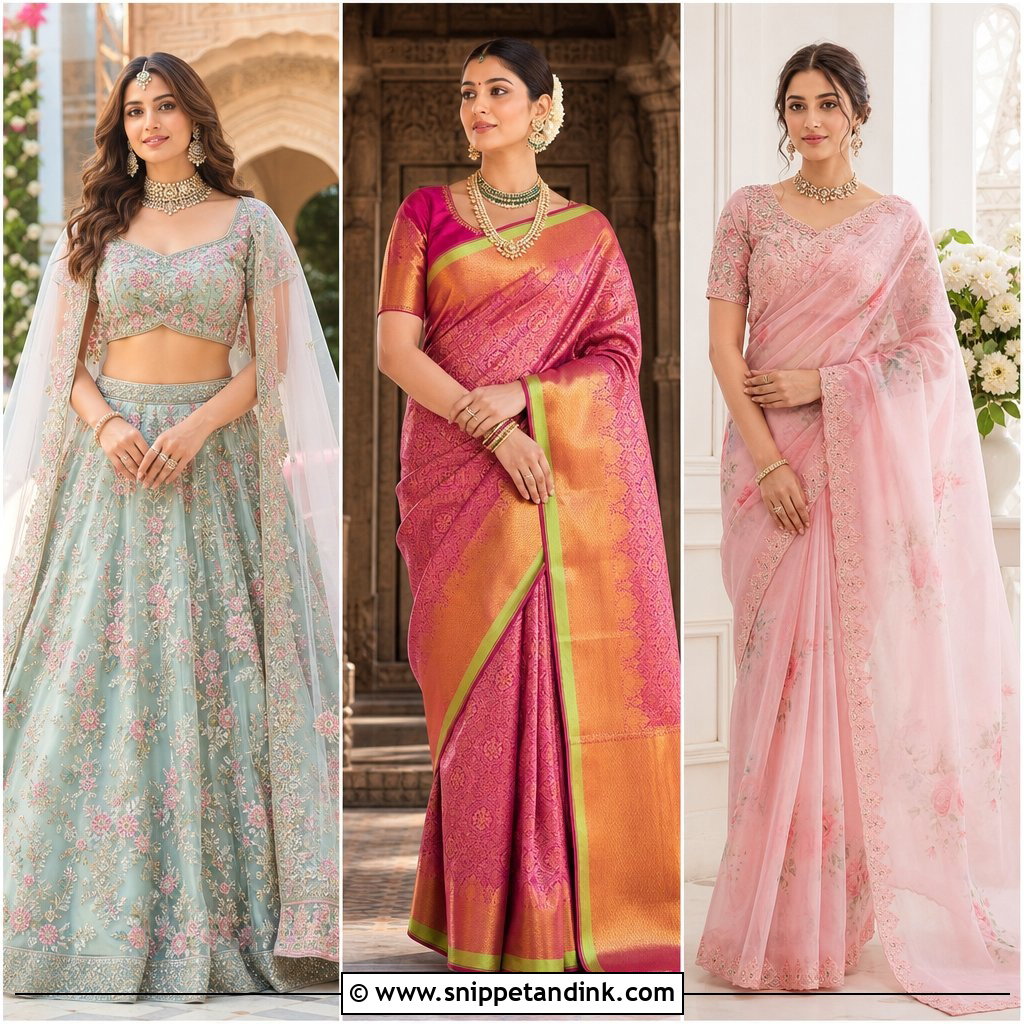
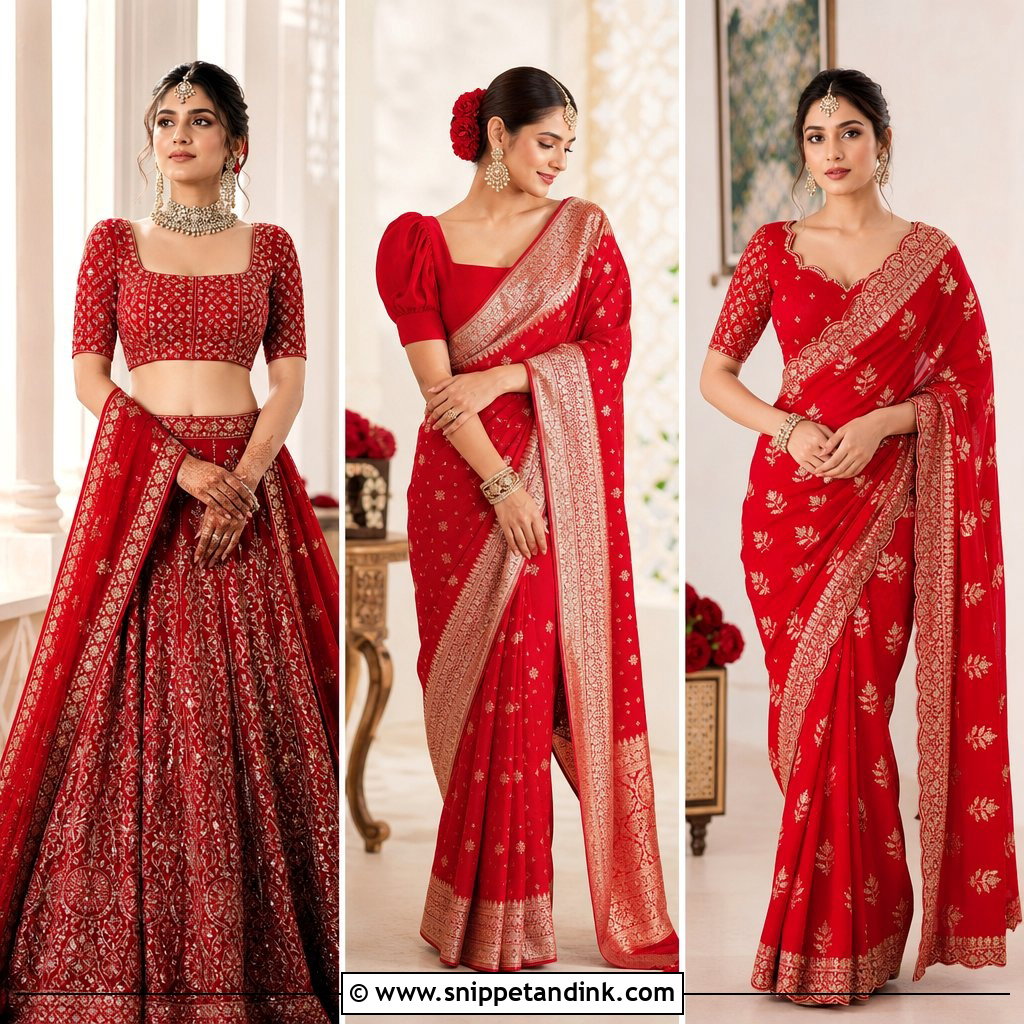
Zardozi is metal wire and thread couched onto silk, and it is genuinely heavy. With a red silk saree I place the dense gold work on the borders and sleeve hems and keep the bodice motifs lighter, otherwise the front sags and pulls at the shoulder seam by mid-ceremony. An elbow sleeve and a gently curved neckline suit most brides. Drape the saree so the sleeves and front stay visible, then add a layered gold necklace, earrings, bangles and a small bindi. A sleek bun with fresh flowers and gold juttis or low block heels finish it. The part nobody sees matters most: reinforced seams, soft cotton lining and properly set cups keep zardozi wearable.
2. Temple Work Wedding Blouse With Kanjeevaram Saree
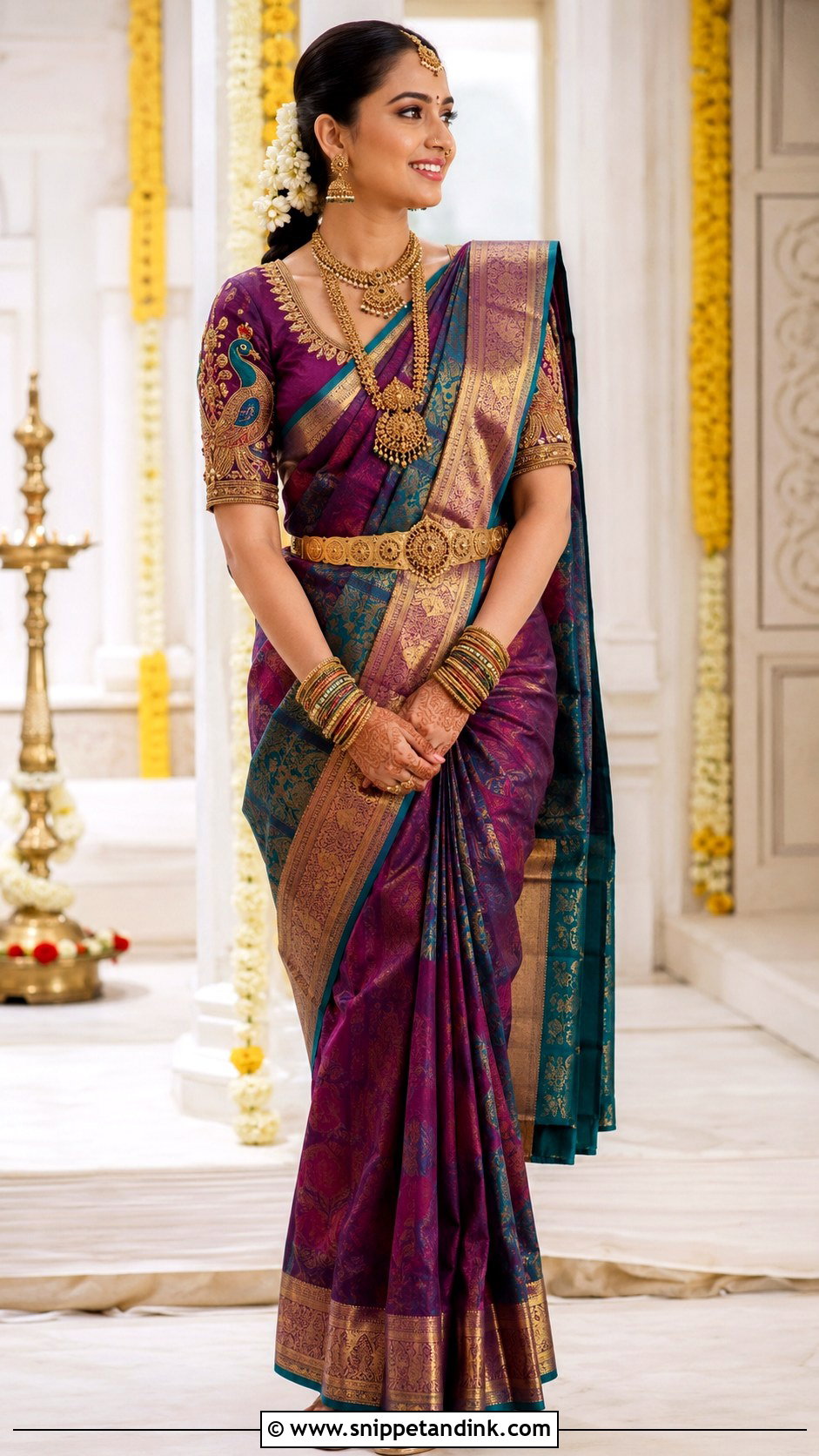
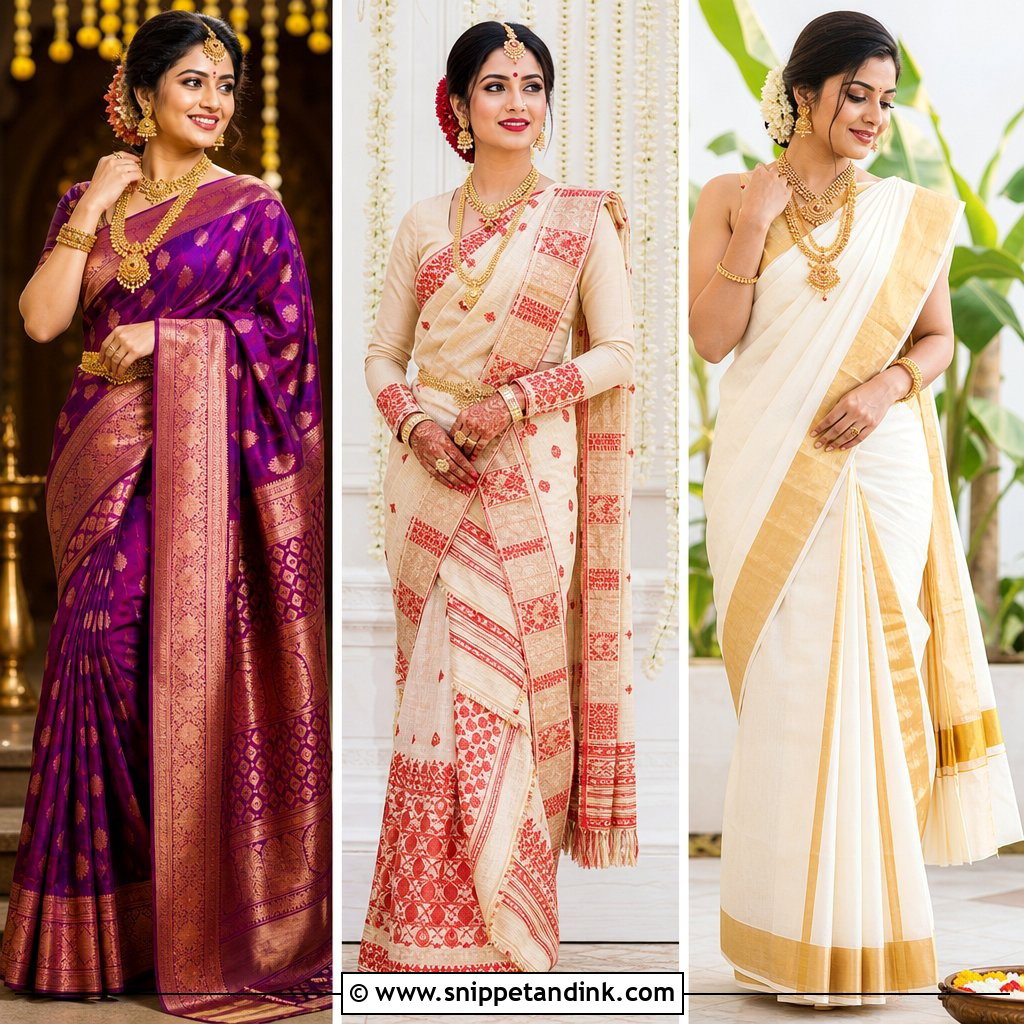
Temple borders, peacocks, lotuses and coin motifs belong with a jewel-toned Kanjeevaram, and the blouse is where they repeat the saree’s own language. I’d go with elbow sleeves here because temple necklaces and stacked bangles are wide, and a short sleeve leaves an awkward gap of skin between the two. Maroon, green or deep purple contrast well against gold, mustard or red silk. Temple jewelry, a waist belt, jhumkas and a long braid or low bun with white flowers complete it, with gold sandals underneath. Metallic thread is scratchy on the inside, so ask the tailor to back every embroidered section with a smooth lining layer, especially at the underarm.
3. Aari Work Wedding Blouse With Banarasi Saree
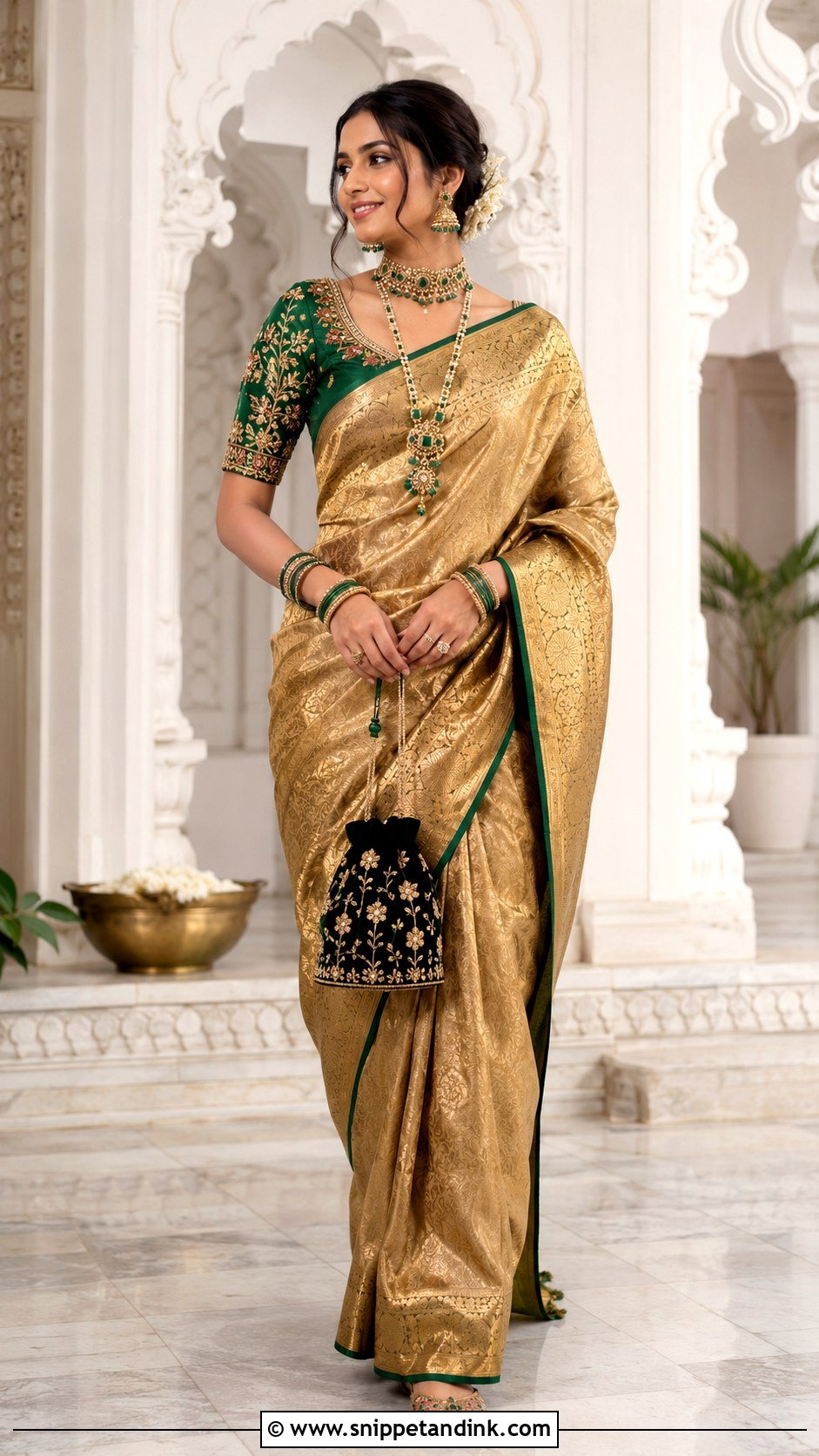
Banarasi already has a woven pattern, which is why I’d choose embroidery that adds texture rather than a second competing design. Delicate Aari embroidery is done with a hooked needle in fine chain stitch, so it sits flat and reads as detail from a distance. Emerald, wine, navy or rust blouses all hold their own against a gold Banarasi. Keep the vines or small paisleys to neckline, sleeves and back. A medium scoop neck and elbow sleeves leave space for a choker and a long necklace together. Center-parted bun, embroidered juttis, a velvet potli. One small trick: contrast piping in the saree border color ties the two pieces together better than matching the blouse outright.
4. Maggam Work Wedding Blouse With Bridal Saree
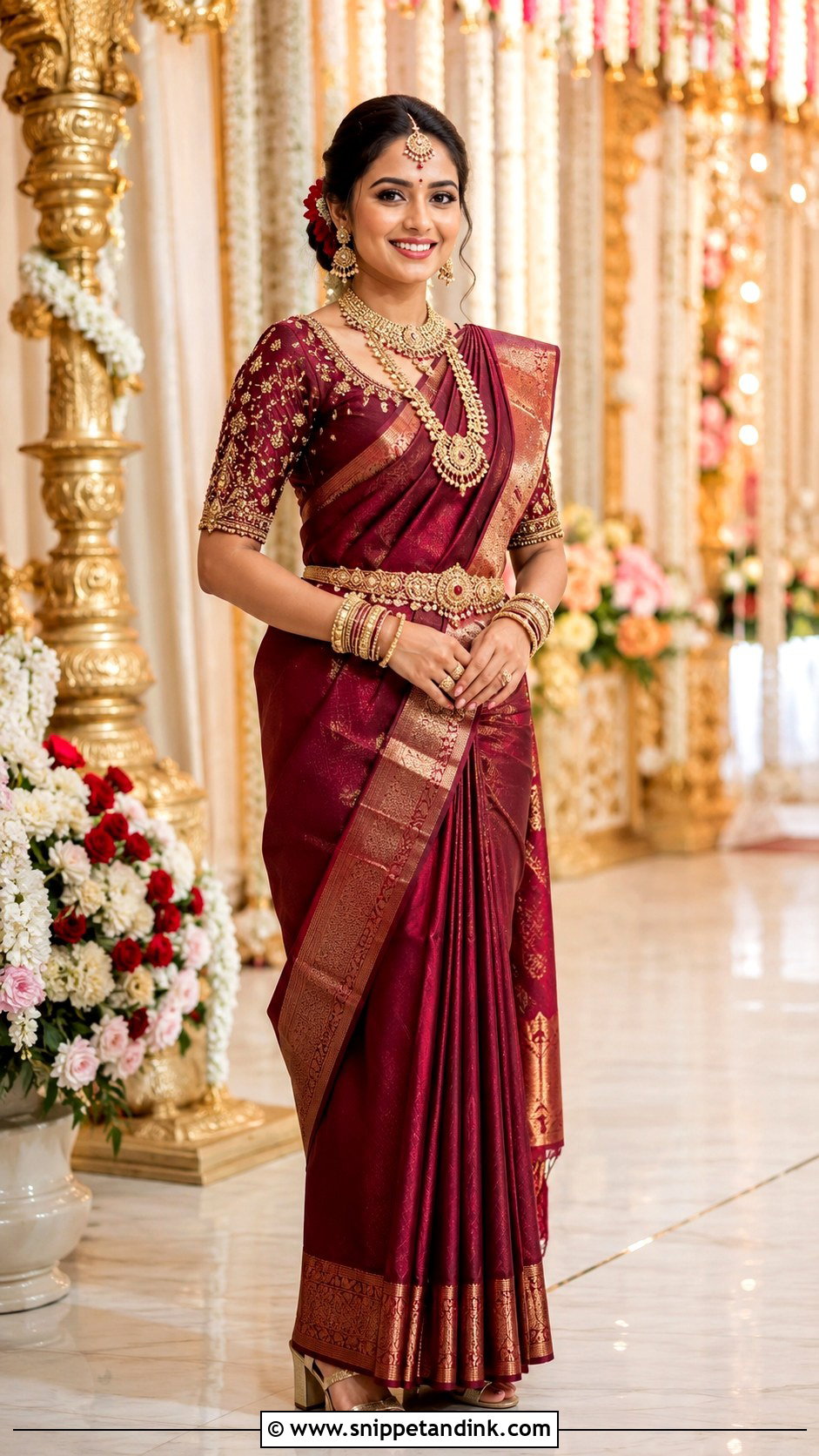
Raised Maggam work is the choice when the bride wants the blouse itself to be the artwork. A Maggam work wedding blouse uses beads, stones and metallic thread built up in layers, and it pairs best with a red, burgundy or bottle-green bridal silk. Drape the saree tightly so the pallu doesn’t hide the bodice. A modest front with a worked back gives coverage and still shows off the craft. Antique gold jewelry, a waist belt, bangles, low gold heels and a floral bun balance it. The one thing I insist on: no embellishment under the arms. Stones in that zone rub the inner arm raw within a few hours, and breathable lining with smooth armholes prevents it.
5. Pearl Wedding Blouse With Ivory Lehenga
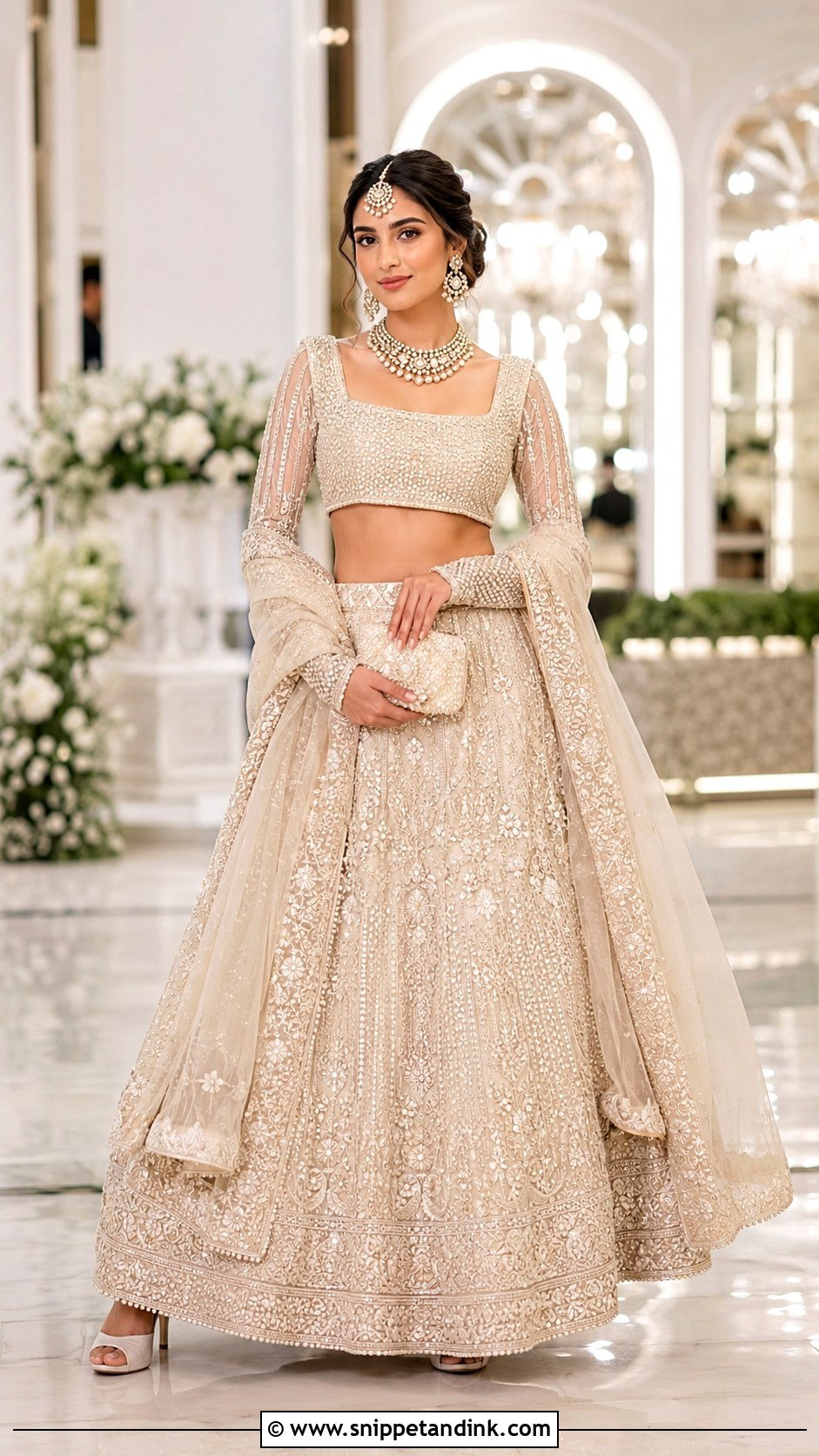
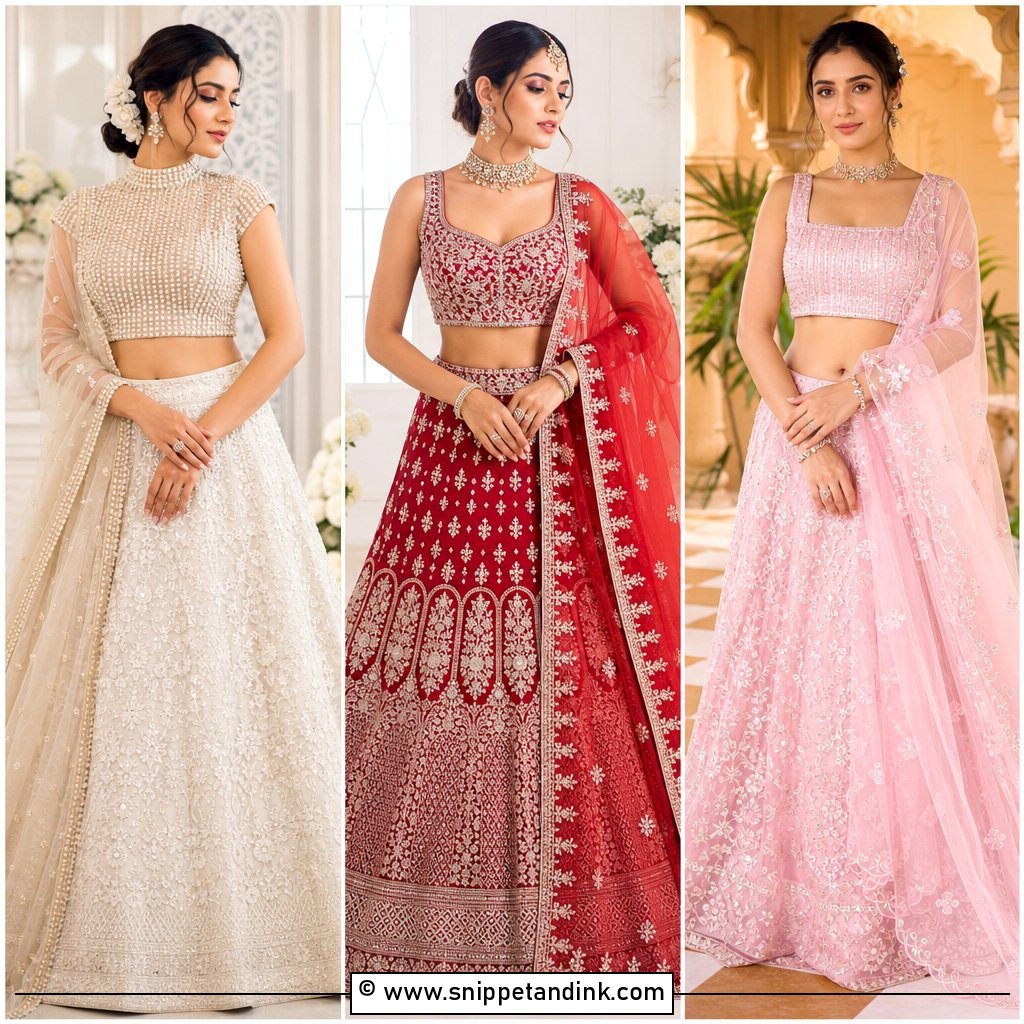
Pearls look refined on ivory or champagne, but real weight adds up quickly. I suggest a square or softly rounded neck with pearls set in floral patterns, since random scatter looks unfinished up close. Use lightweight faux pearls around the sleeves and back, and keep the heavier ones at the neckline where the bodice structure can carry them. A matching lehenga with subtle sequins or tonal applique keeps the outfit glowing without adding more shine. Drape a sheer dupatta over one shoulder, then pearl-and-kundan earrings, a delicate necklace, a small clutch and ivory heels. A low bun or soft waves fit the mood. Pearls are hand-sewn on loops, so check each one is stitched twice; a single thread snaps on a bangle.
6. Mirror Work Wedding Blouse With Colorful Lehenga
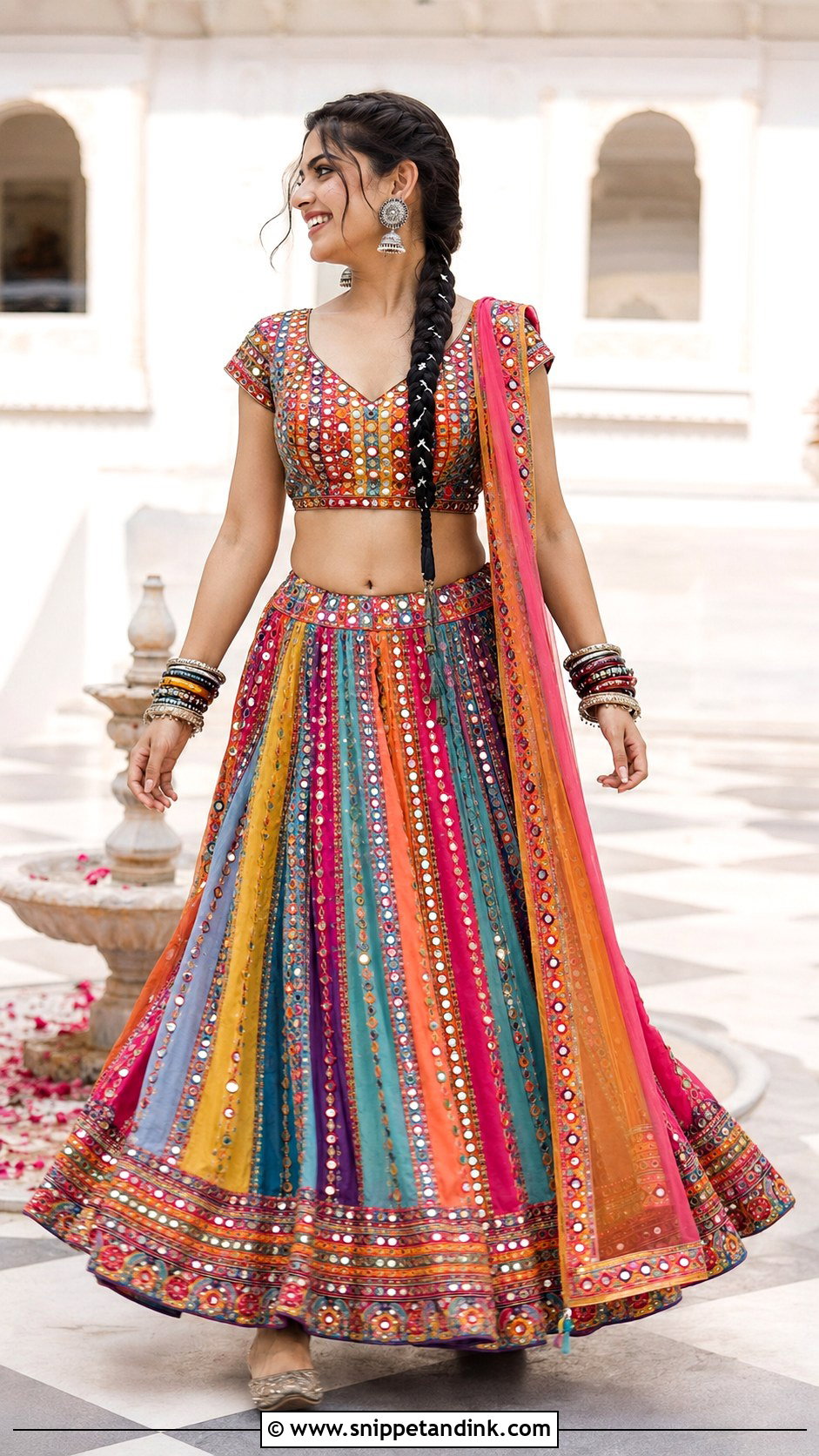
Mirror work is for the mehndi or sangeet, where everyone is moving. Pair a pink, turquoise, yellow or orange blouse with a multicolored lehenga that repeats the mirrors. A round neck, short sleeves and a fitted waist let you dance without adjusting anything, and a light dupatta with a narrow border avoids doubling up the sparkle. Silver jhumkas, stacked bangles and metallic juttis are enough jewelry. Hair goes in a braid or ponytail. The inspection I always do before the event: run a fine chiffon scarf over every mirror. Any mirror whose stitched frame has a rough edge will snag the dupatta all night, and it’s a five-minute fix for a tailor beforehand.
7. Floral Wedding Blouse With Pastel Saree
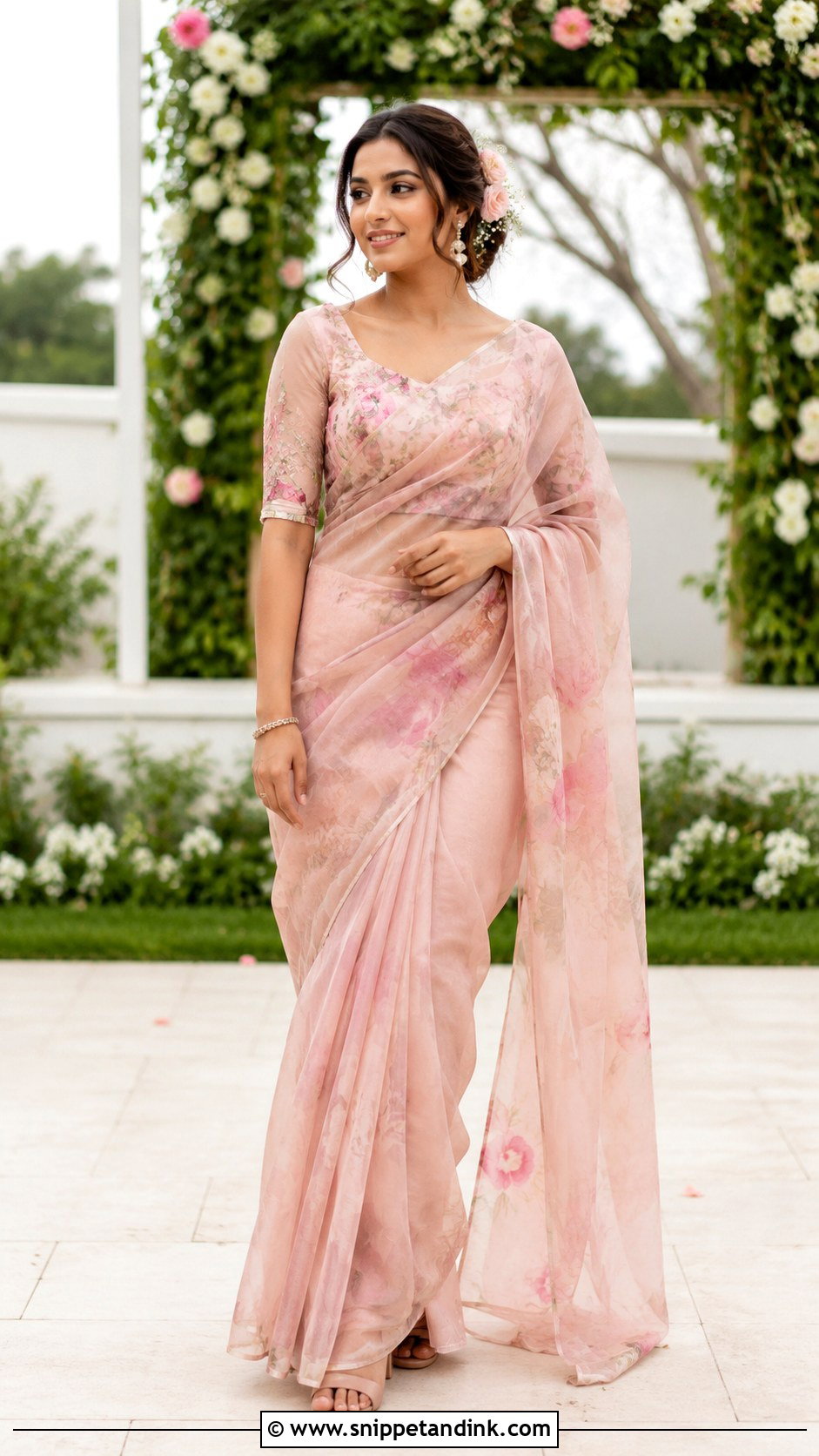
For daytime, picture a soft pastel saree paired with a floral wedding blouse in fine threadwork. It feels fresh in sunlight and still formal enough for the ceremony. Blush, mint, lilac or powder blue all work, with flowers that echo the saree border. A sweetheart neck and sheer elbow sleeves keep it light, and an organza or chiffon saree with the pallu pinned neatly shows off the bodice. Pearl earrings, a slim bracelet, floral hair accessories and neutral block heels finish it. Scale is my main note: larger blooms near the neckline and smaller ones toward the waist and sleeve hem draw the eye up to the face rather than spreading it evenly.
8. Sweetheart Neck Wedding Blouse With Lehenga
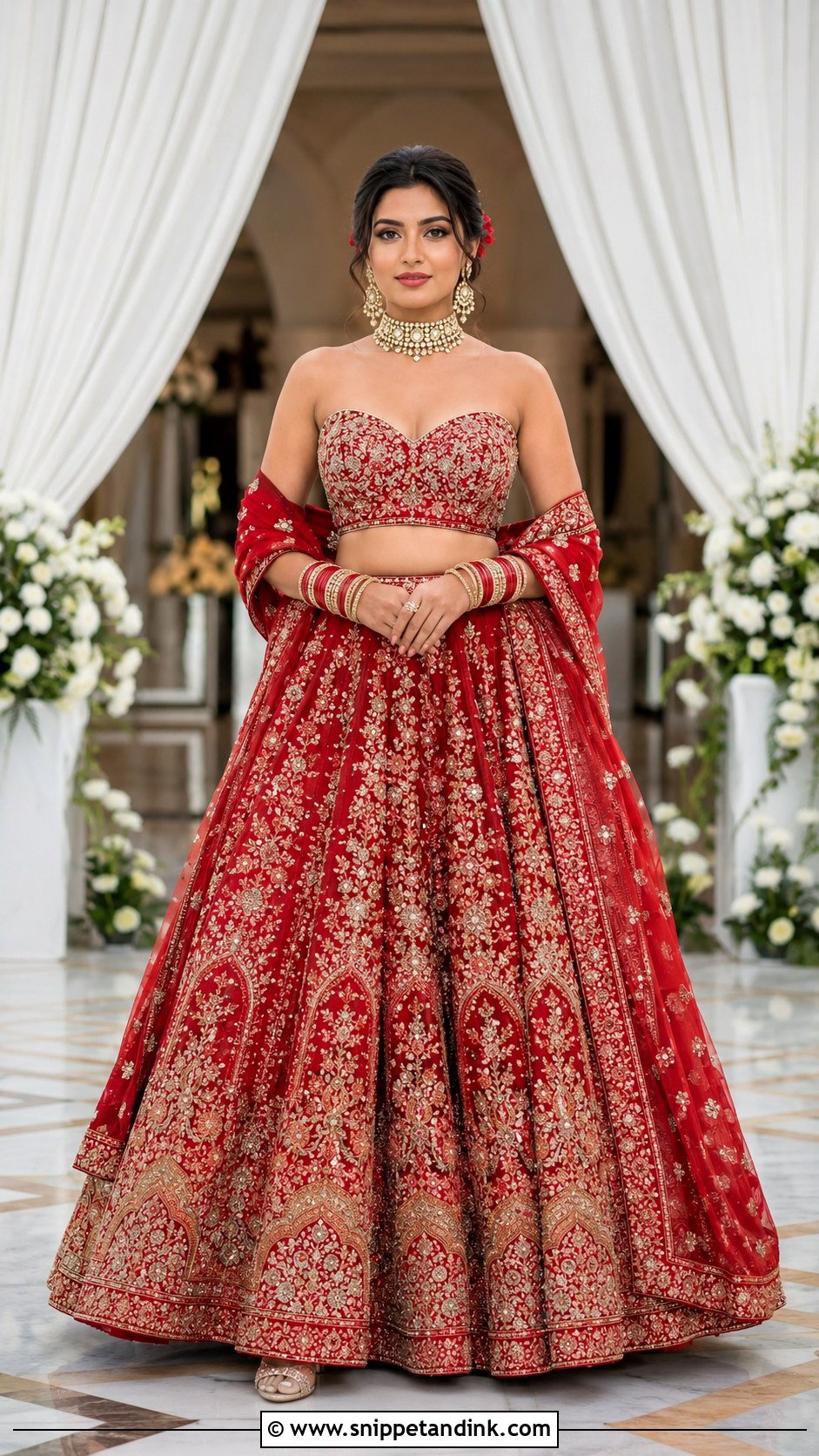
Sweetheart necklines frame the collarbones and give a choker a clean place to sit. Pair one with a high-waisted lehenga in velvet, silk or embroidered raw silk. The structure is the hard part: wide straps and a firmly built bodice support far better than thin straps, which dig in and slip. A dupatta over one shoulder, or over the head with part of the neckline left showing, then a choker, drop earrings, bangles and embroidered heels. For a fuller bust I raise the sweetheart curve slightly and widen the shoulder coverage. Sheer sleeves soften the shape on anyone who wants it. Book the final fitting wearing the exact inner support you’ll wear on the day, or the neckline will gap.
9. Boat Neck Wedding Blouse With Silk Saree
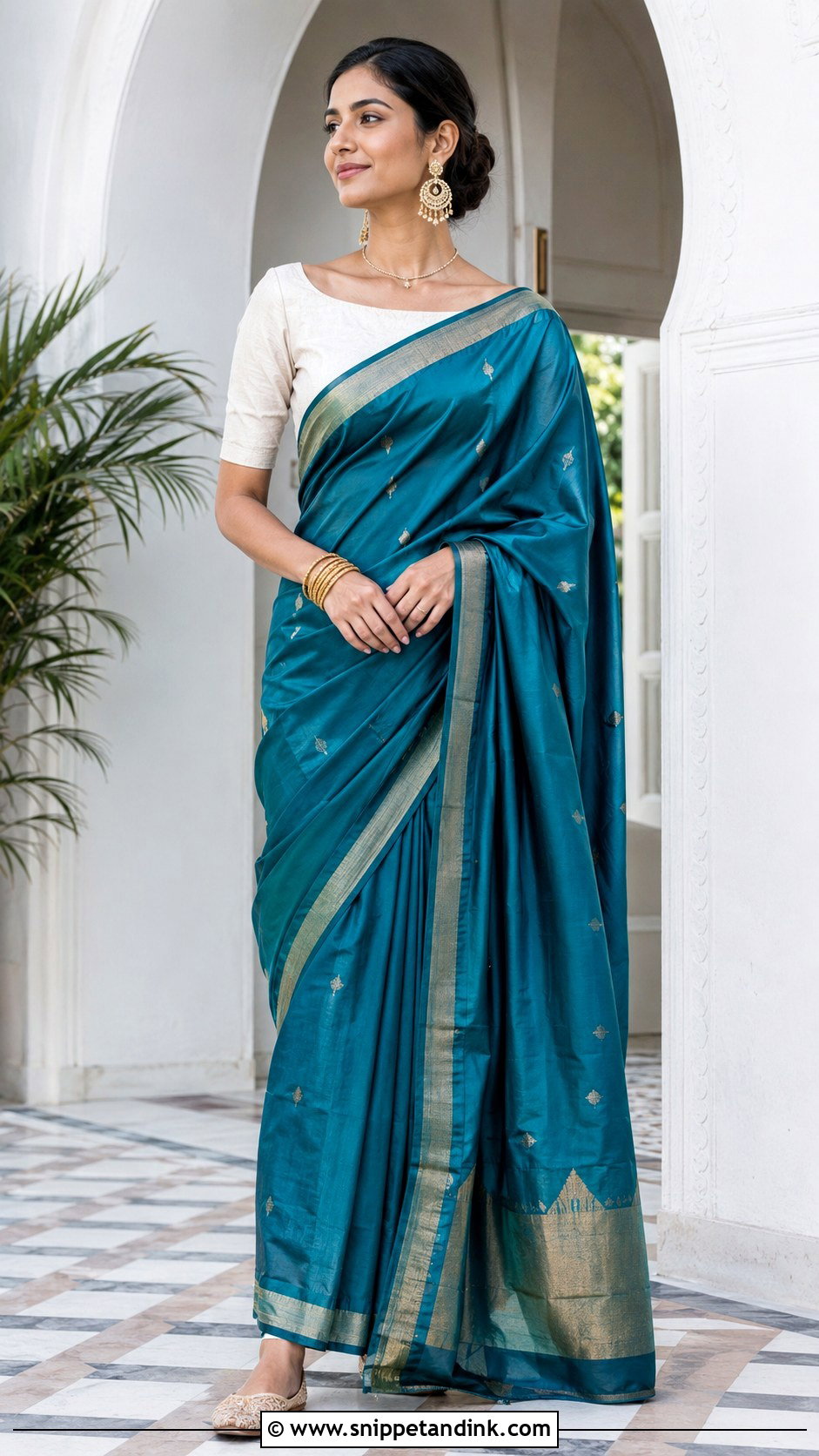
A boat neck is quiet, which is exactly why it suits a richly woven silk saree. The wide line shows the shoulders and covers more than a deep front. Keep embroidery on the elbow sleeve edges and leave the neckline clean. A contrasting blouse refreshes a classic saree; a matching one lengthens the body. Because the neckline sits high, I swap the big necklace for large earrings, or one slim collar necklace that sits above the edge. Low bun, a decorative hairpin, bangles and closed-toe juttis complete it. Boat necks are unforgiving to measure. If the shoulder width is a centimeter off, the neckline either creeps up to the throat or slides off the shoulder under the pallu.
10. High Neck Wedding Blouse With Embroidered Lehenga
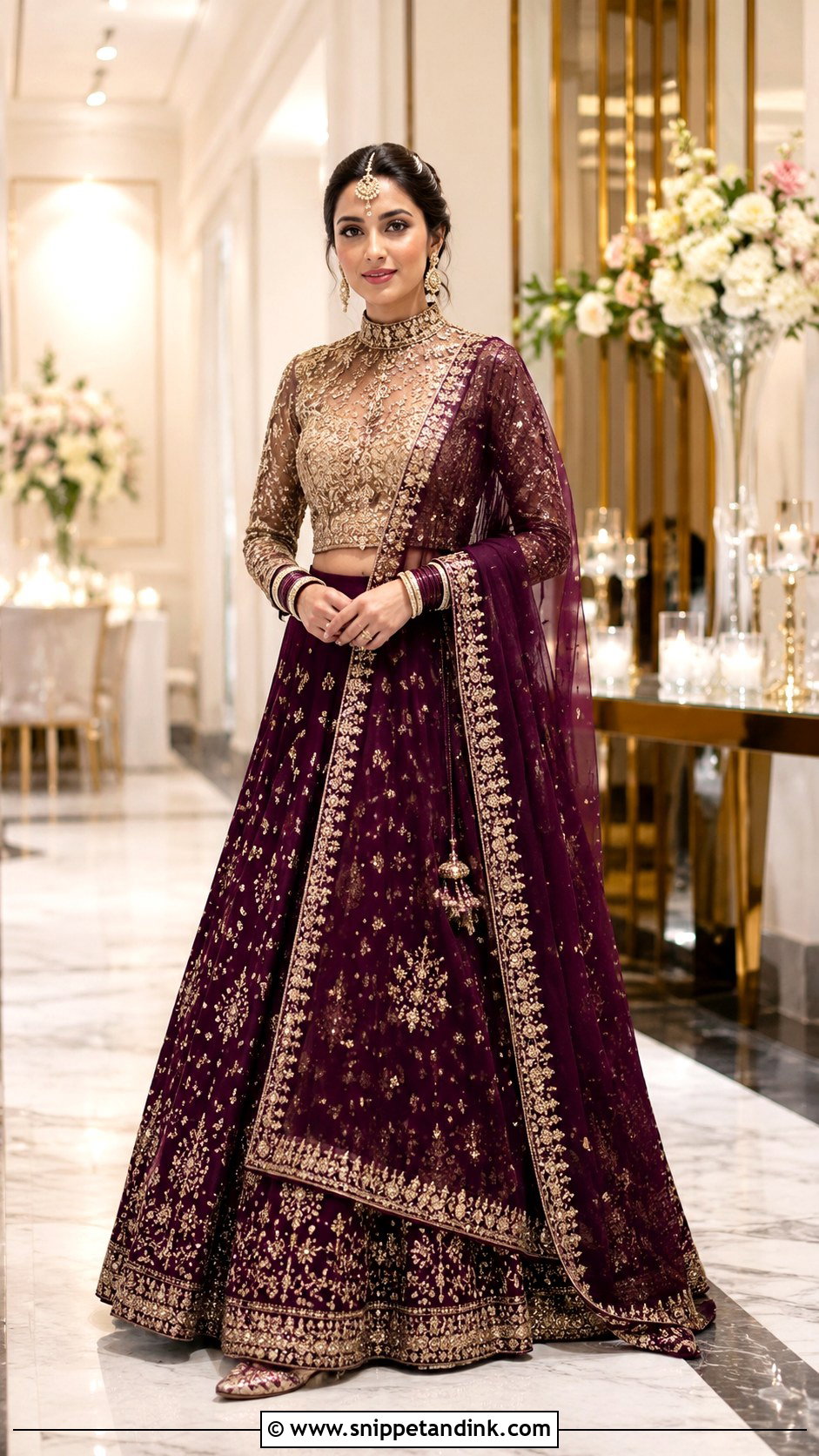
High necks turn the collar into jewelry. With an embroidered lehenga, metallic thread, pearls or small stones worked around the neck can stand in for a necklace altogether. Three-quarter or full sleeves give it a regal finish for cooler weather. Add statement earrings, stacked bangles, a maang tikka and pointed embroidered flats, and drape a light dupatta from one shoulder so it doesn’t hide the collar. Hair goes up in a bun or high braid. I’d skip this one for a summer daytime ceremony, since a closed collar traps heat. Ask for a soft inner facing: stiff embroidery at the throat rubs every time you turn your head, and by hour three you’ll notice nothing else.
11. Deep V Neck Wedding Blouse With Plain Saree
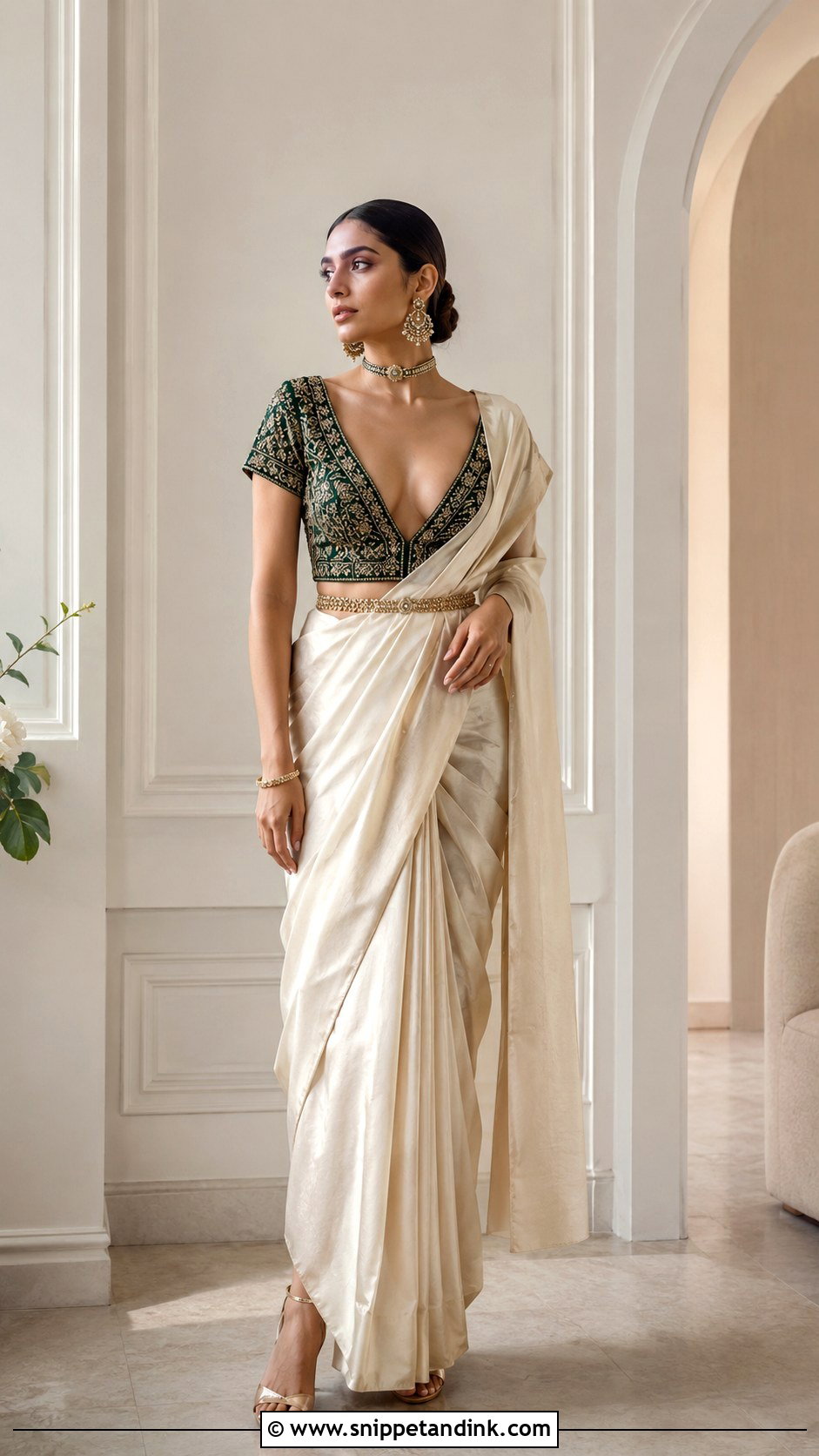
A deep V on a plain silk, satin or crepe saree is modern, and it depends entirely on construction. Built-in cups, a firm bodice and wide straps hold the V in place; fashion tape helps but shouldn’t be doing the main work. Concentrate the embroidery around the V and keep everything else light so the eye goes up and the plain saree looks deliberate. A short choker or collar necklace that stops above the point of the V, bold earrings, a waist belt, a sleek bun and metallic heels finish it. If the cut feels too exposed in the mirror, I have the tailor set a sheer panel in skin-tone net inside the V. You keep the long line and lose the worry.
12. Full Sleeve Wedding Blouse With Velvet Lehenga
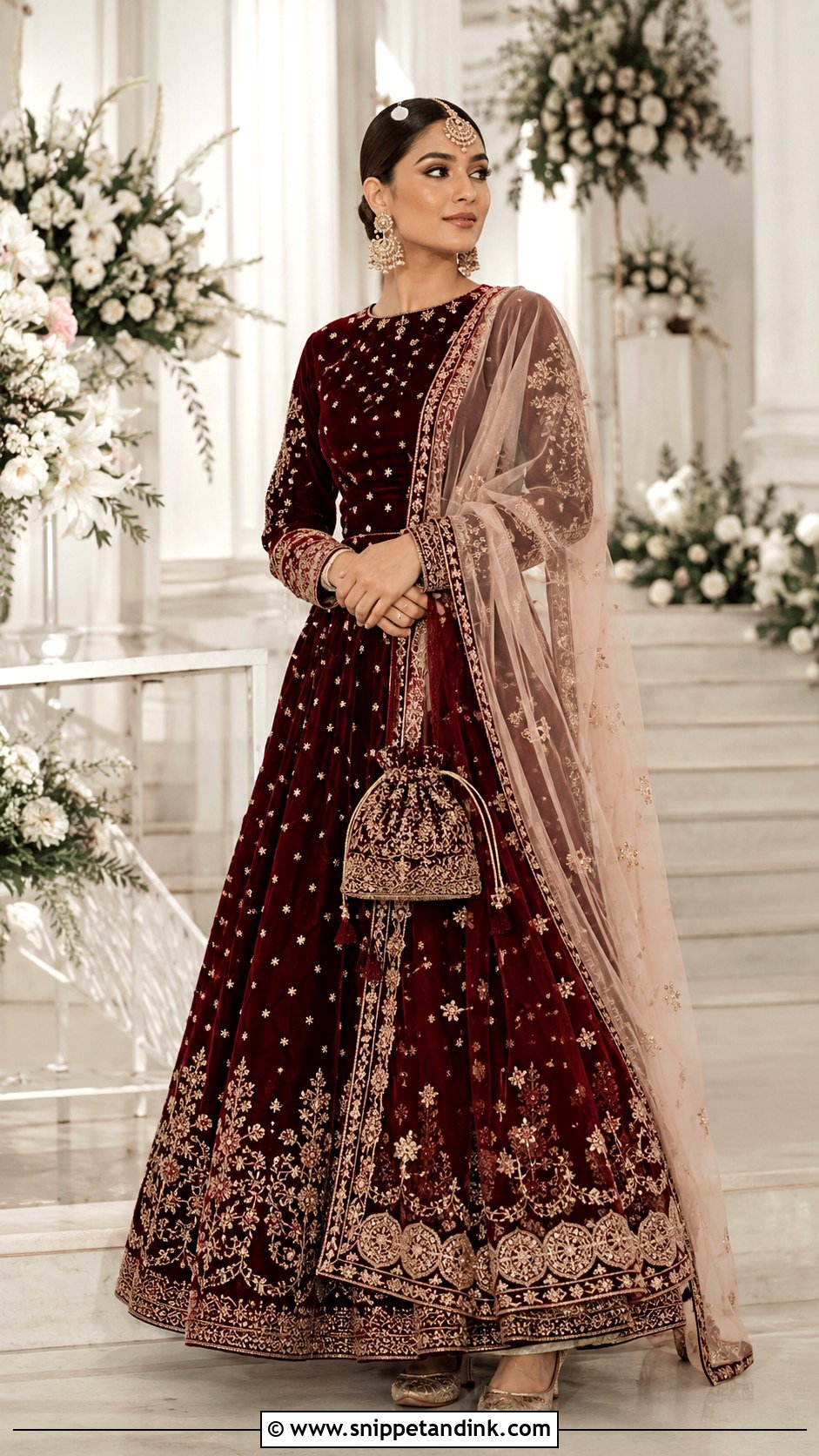
Velvet and full sleeves belong together in winter. Choose a fitted blouse whose embroidery builds toward the cuffs and neckline, so the sleeves look defined without bulking up the upper arm. Ruby, emerald, navy or plum velvet carries antique gold well. A coordinated lehenga, a light net dupatta, a structured potli and block-heel juttis keep it balanced. If the neckline is heavily worked, statement earrings and a forehead ornament may be all the jewelry you need. Keep the hair lifted. Velvet has no stretch, so I ask for a stretch lining at the elbows and a smooth underarm gusset; without them, you can’t raise a glass or bend your arm comfortably.
13. Elbow Sleeve Wedding Blouse With Pattu Saree
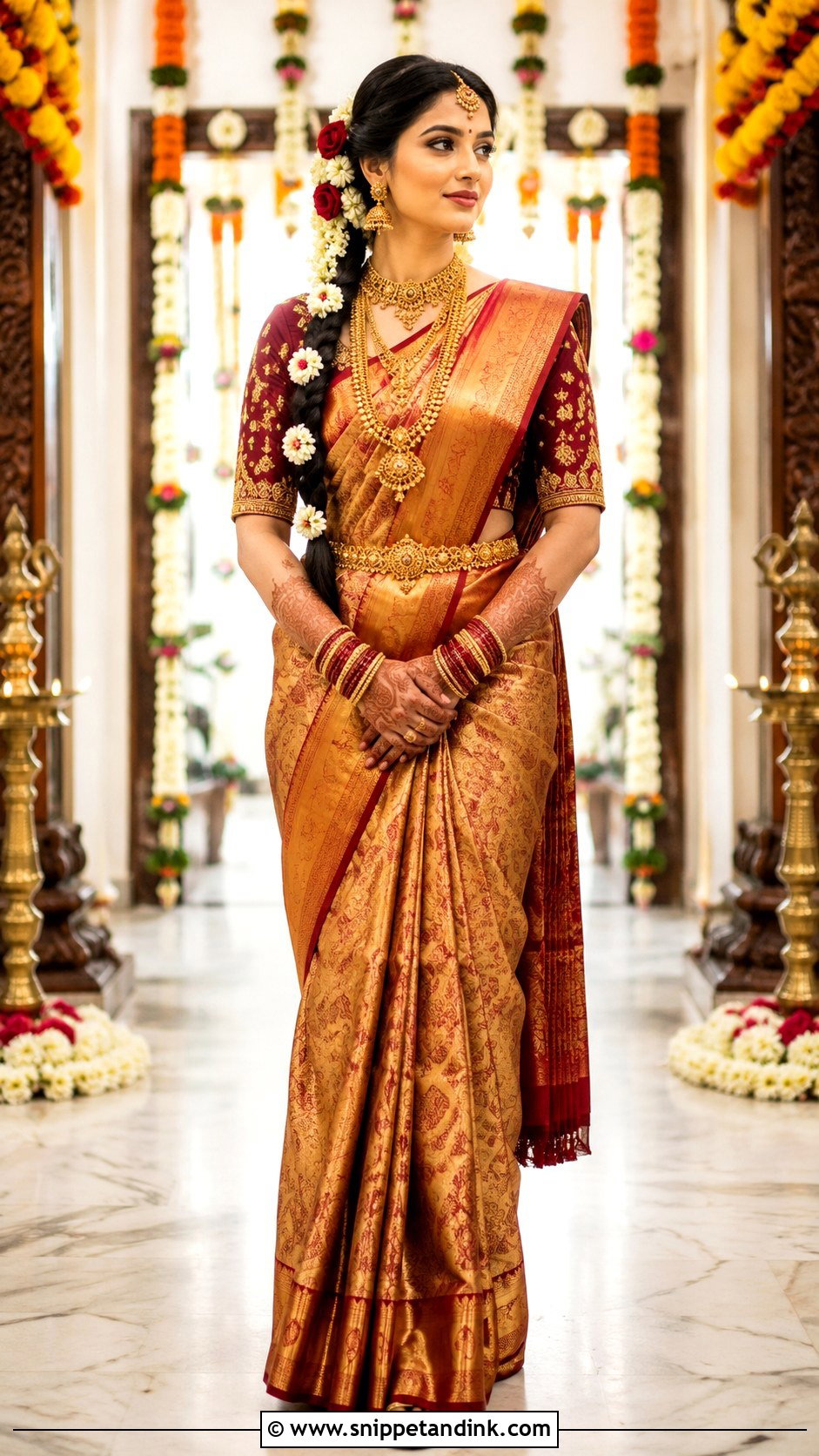
Pattu sarees almost always come with a blouse piece, and an elbow sleeve is the traditional way to use it. The length gives room for zari borders, temple motifs or fine Aari work and still lets you move. I pull one color from the saree’s woven border into the blouse; that single link makes even a strong contrast look coordinated. Layered gold necklaces, jhumkas, glass bangles, a waist belt and gold sandals complete it, with a center-parted bun or long braid in flowers. Ask for ease at the elbow. A sleeve cut tight to the arm pulls when you bend, and the hem shouldn’t squeeze where bangles and vanki armlets will sit.
14. Puff Sleeve Wedding Blouse With Organza Saree
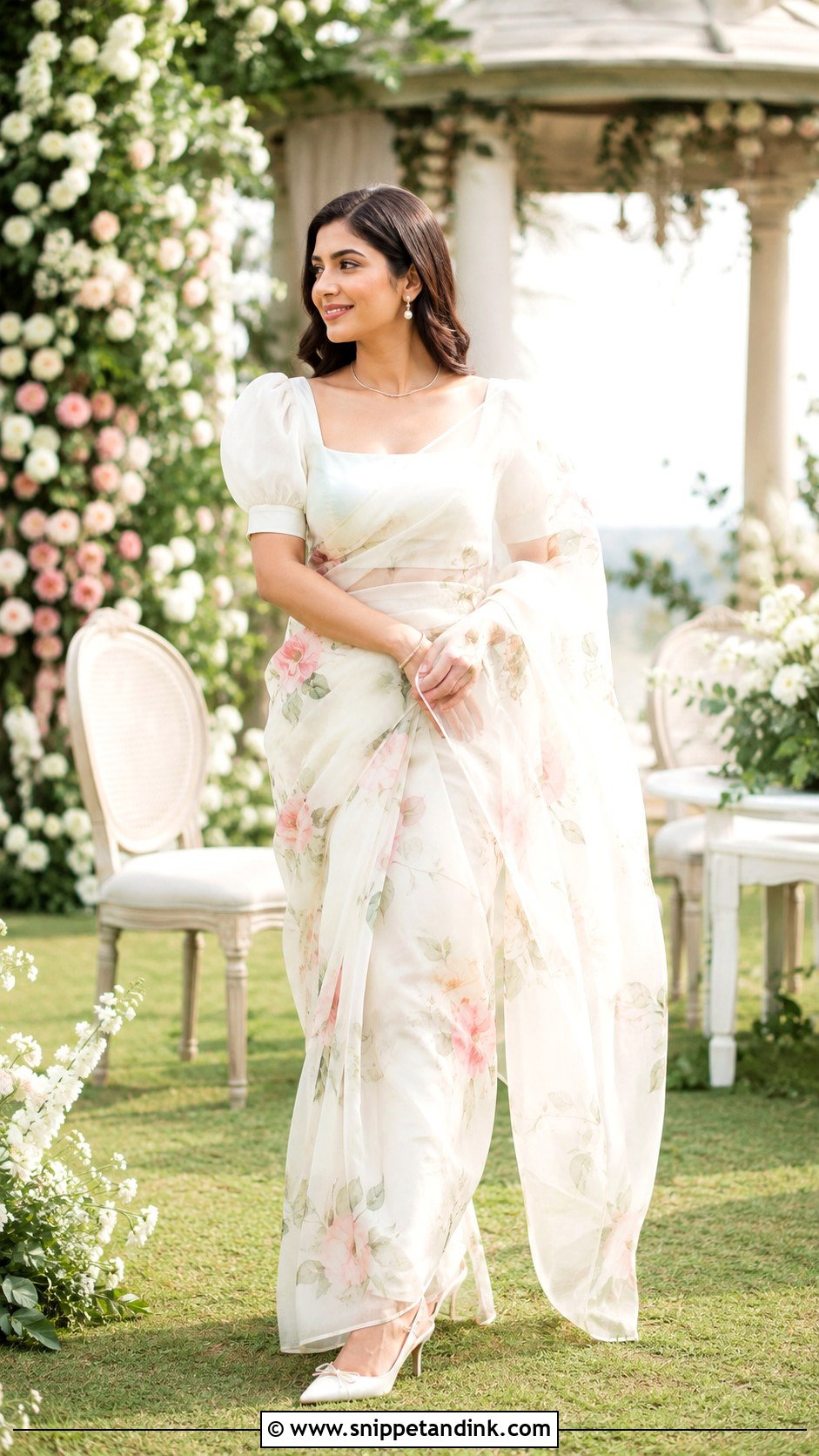
Puff sleeves can tip into costume very quickly. With a light organza saree I keep the gathers small and controlled, set high on the shoulder so they lift rather than widen. A square or round neck lets the sleeves be the feature. You can pair a floral organza saree with a solid silk blouse, or reverse it: embroidered puffs with a plain saree. Pearl earrings, a slim necklace, a delicate bracelet and low slingbacks finish it, with soft curls or a relaxed bun. The structure comes from a lightweight sleeve fabric and a narrow inner band at the arm. Gathers placed too low make the arm look wider and restrict lifting.
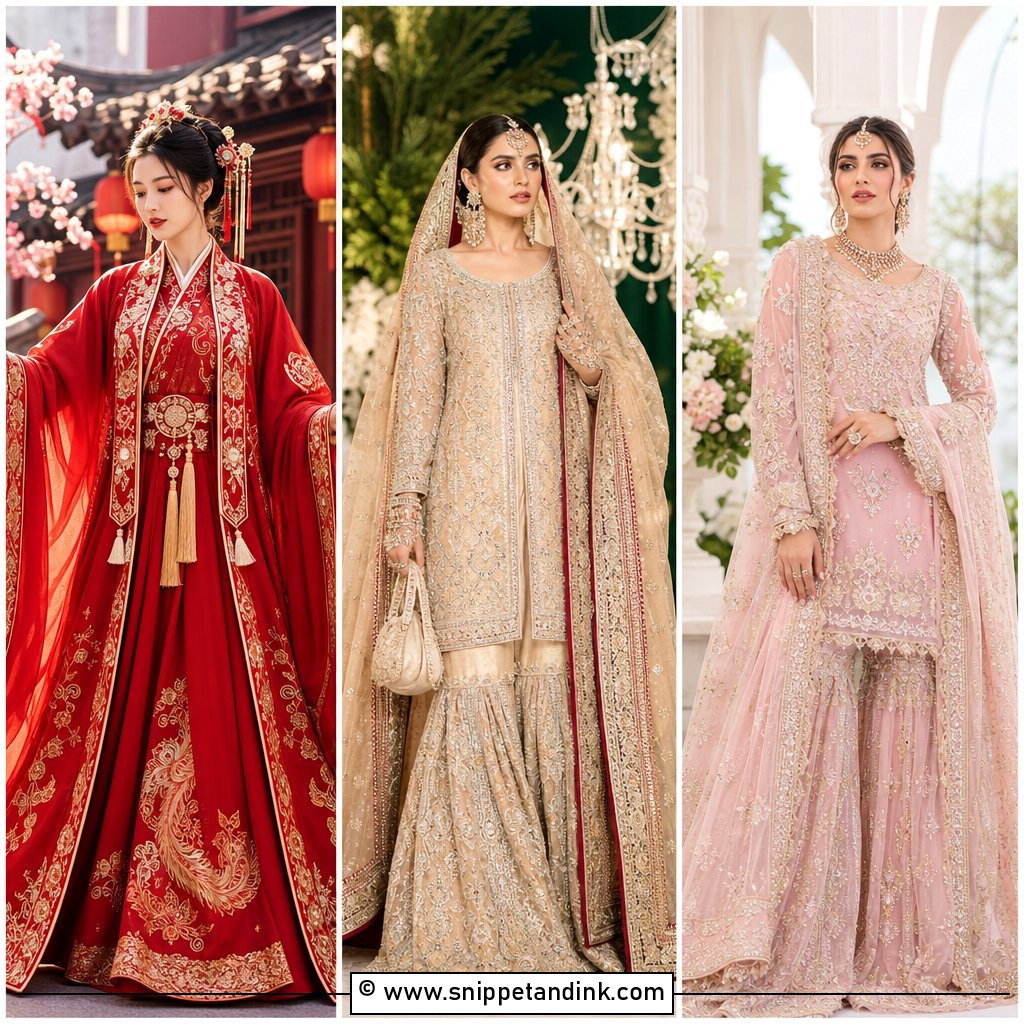
15. Corset Wedding Blouse With Bridal Lehenga
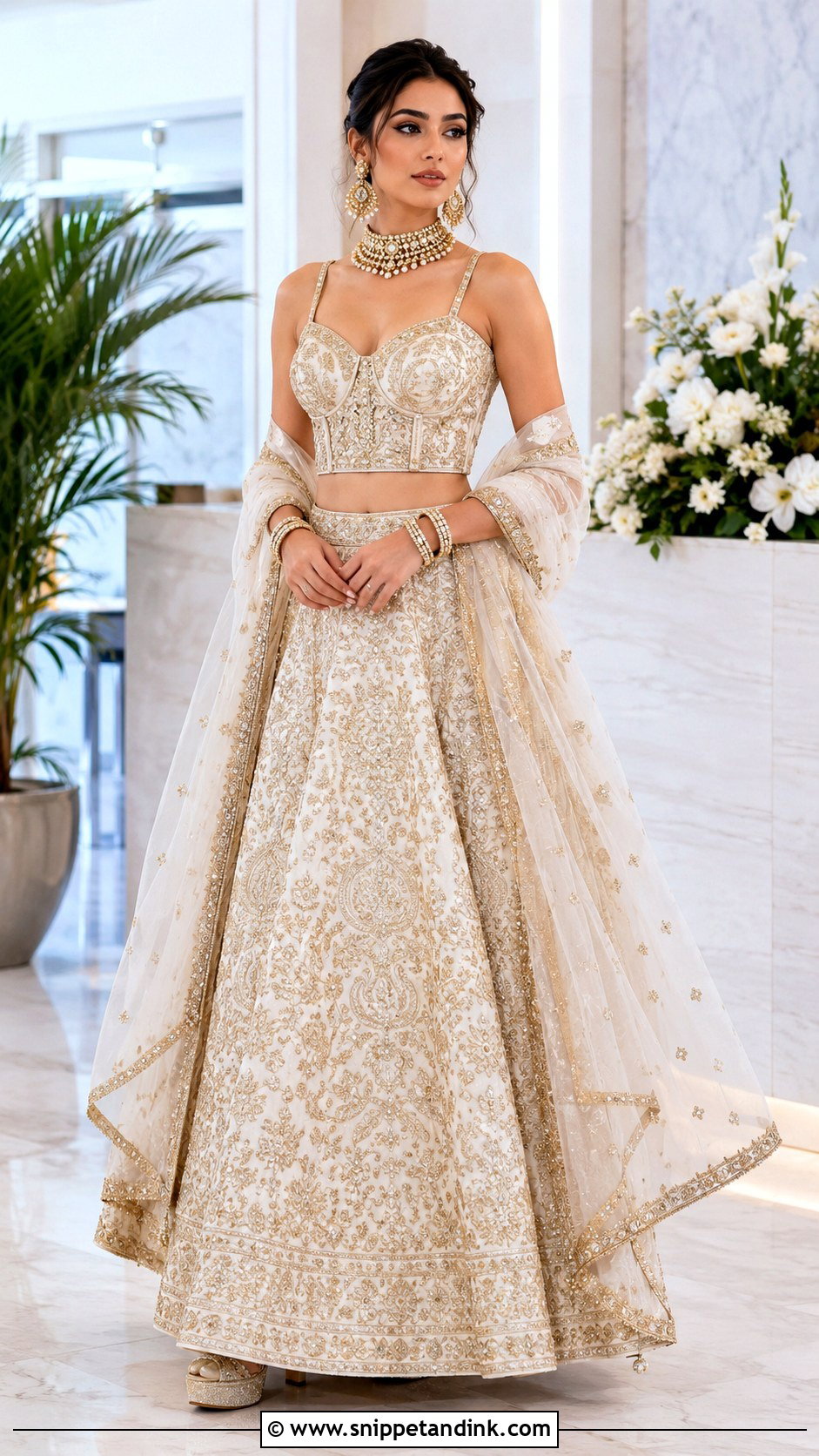
A corset blouse shapes the lehenga look into something sharper and more fashion-led. What makes or breaks it: curved panel seams, proper boning, wider straps and a back closure with some adjustment built in, such as laces or a row of hooks with two settings. Let the embroidery follow the panels so the tailoring shows. A high-waisted lehenga, a sheer dupatta draped loosely from the arms, a choker, statement earrings and platform heels or cushioned juttis complete it. A sleek ponytail or polished bun keeps it modern. You should be able to take a full breath. At the fitting I have brides sit, raise both arms and walk the room before I sign off on a corset.
16. Peplum Wedding Blouse With Flared Lehenga
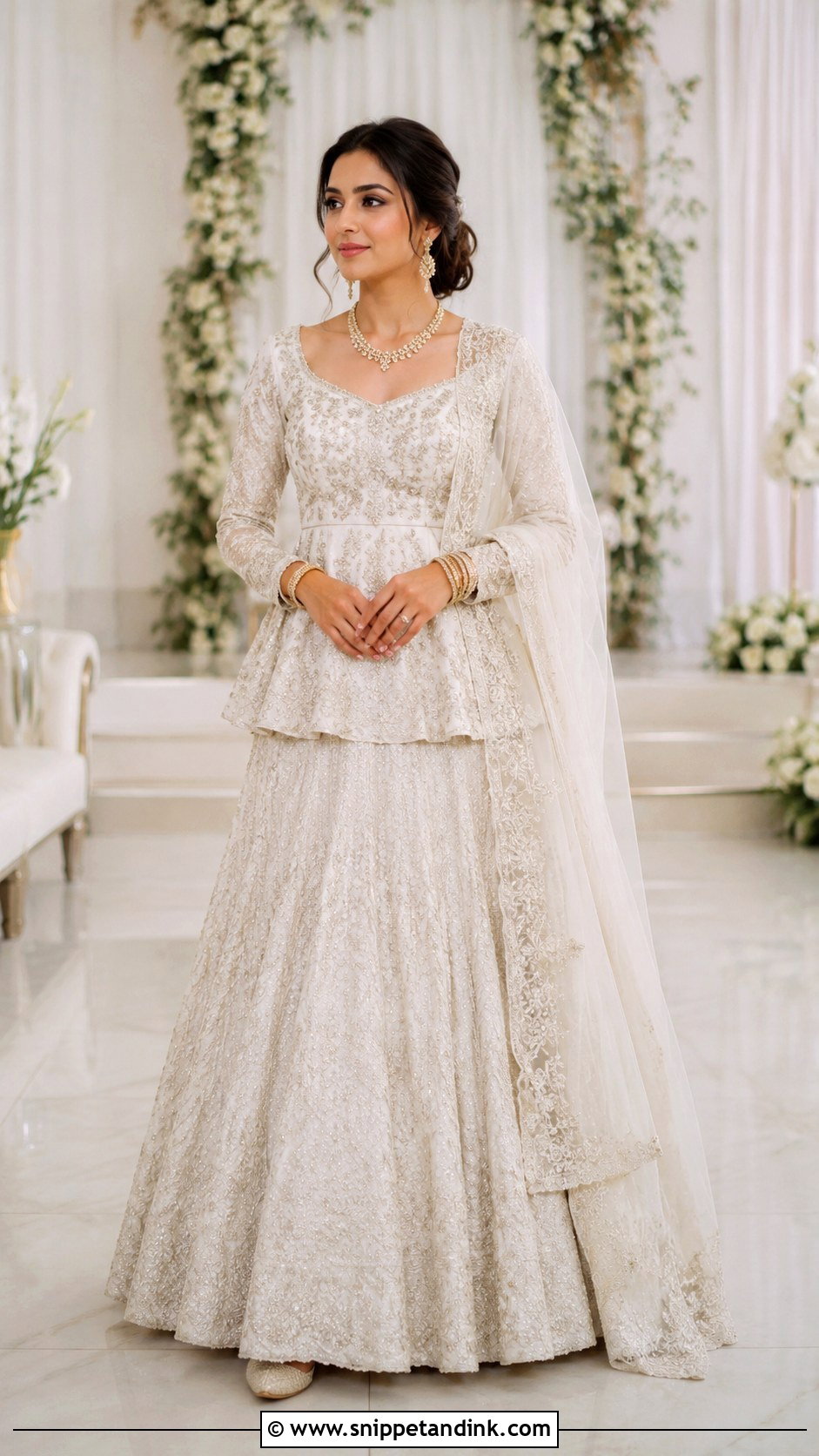
Peplums give some coverage at the midsection while keeping a fitted outfit. Start the flare near the natural waist and keep it skimming the hips rather than standing away from them, which only adds width. A plain streamlined lehenga lets the peplum stay the focus. Tonal embroidery or a worked waist seam defines the shape. Add a light dupatta, drop earrings, bangles and pointed juttis, and a medium-length necklace if the neckline is a modest V or round. I keep the dupatta narrow and pinned high so it doesn’t fall over the peplum and hide it. One honest note: a peplum shortens the torso, so on petite brides I make it shallower.
17. Illusion Back Wedding Blouse With Net Saree
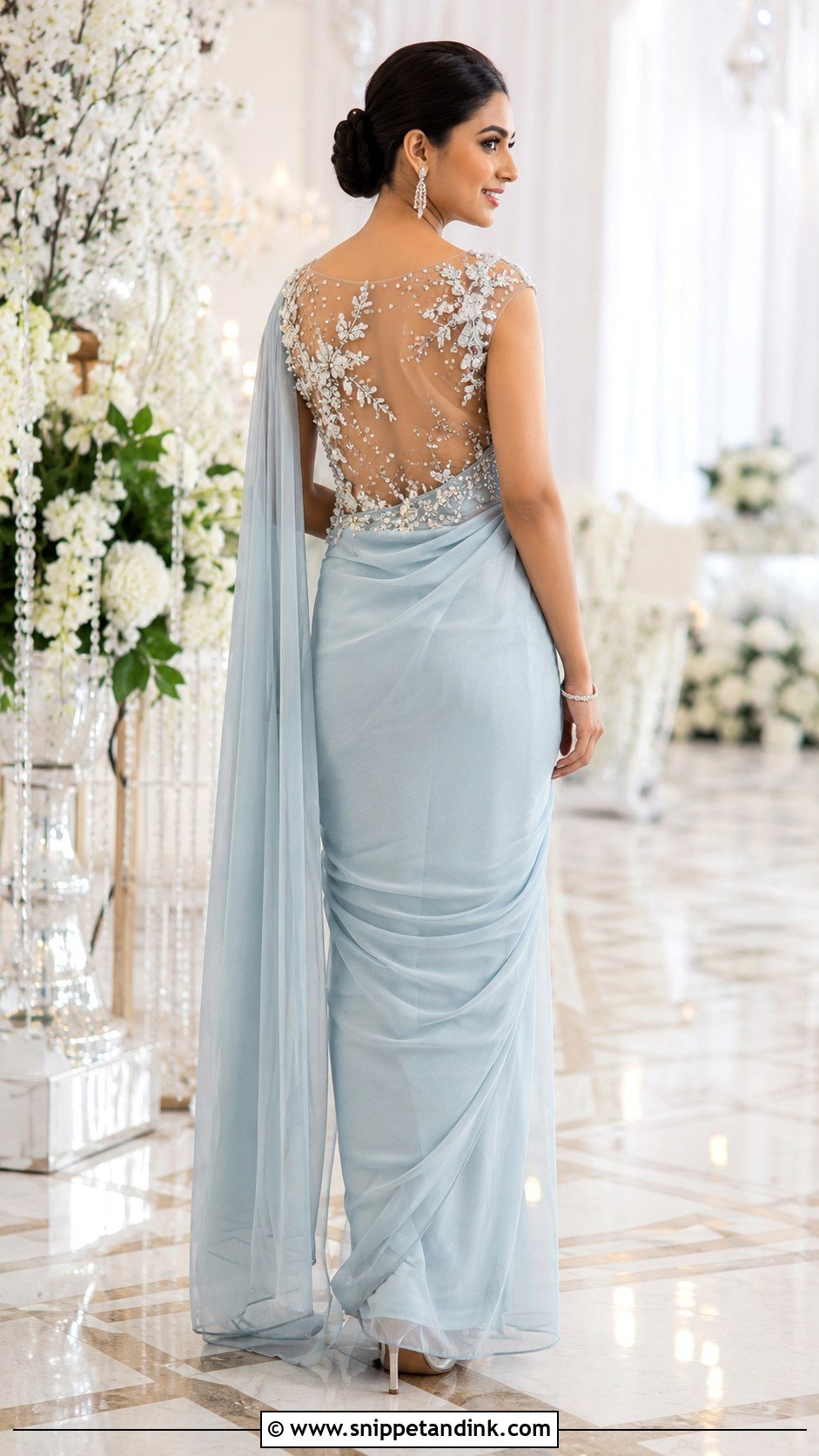
The open back on an illusion blouse is actually covered in fine net, with applique, pearls or crystals across the shoulder blades. Everything rests on the net color. It must match your skin tone closely, and I always test swatches against the bride’s back in daylight, because net that looks right indoors can turn grey or pink outdoors. Pair it with a light net, chiffon or georgette saree. Wear the pallu over one arm in photos to show the back, with a low bun, long earrings, a slim bracelet and metallic heels. Skip the necklace. Secure seams and an invisible zip keep the net taut; when it wrinkles, the illusion is gone.
18. Cutwork Back Wedding Blouse With Silk Lehenga
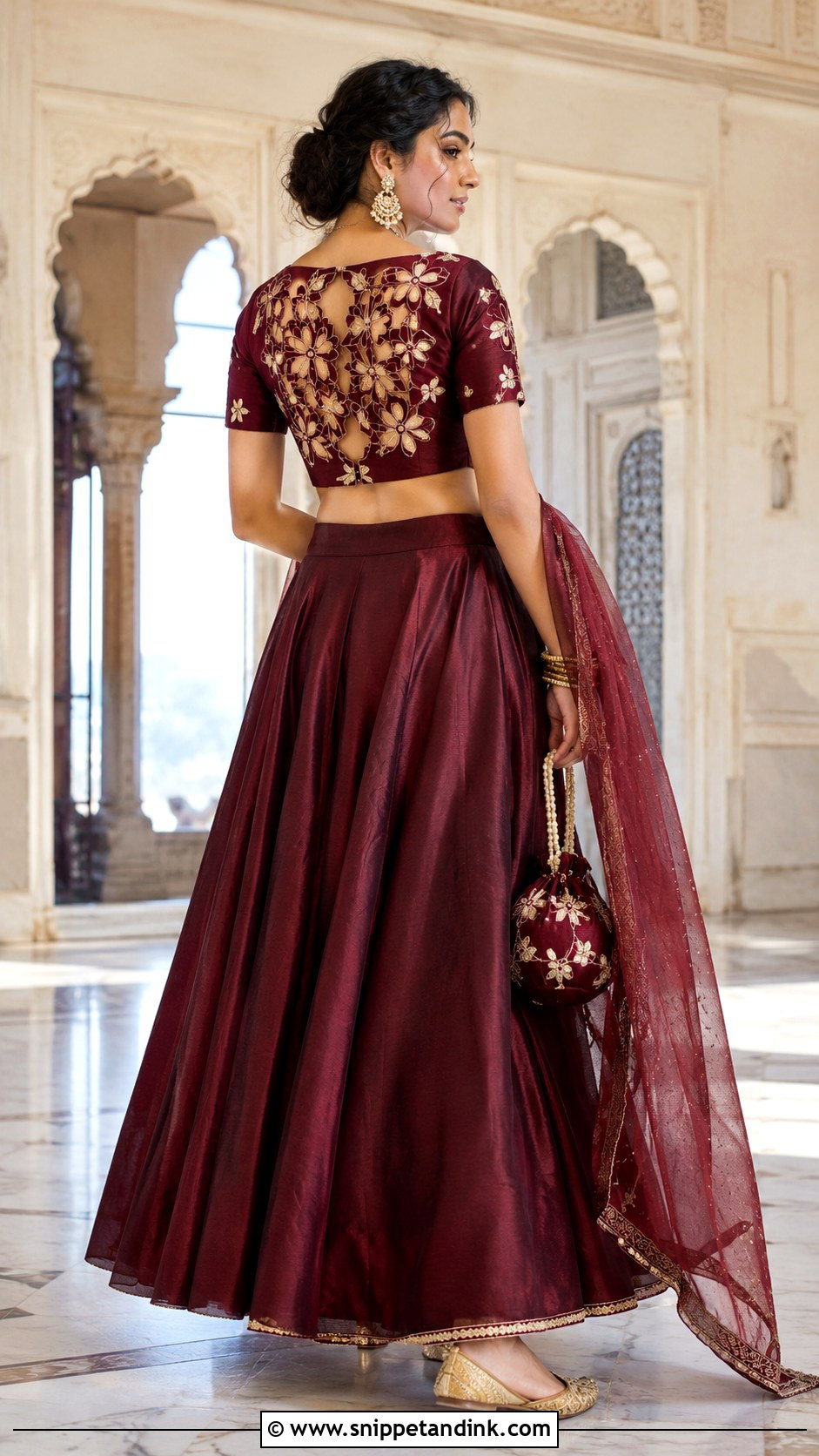
With a cutwork back wedding blouse, the embroidery frames shaped openings, and the back becomes the main event. Floral, leaf or scalloped cutwork shows best against a simple silk lehenga. The front needs broad shoulders and firm fastenings to balance the open back. Throw a light dupatta over one arm instead of across the back. A high bun, chandelier earrings, bangles, an embroidered potli and gold juttis, with necklaces kept minimal. Cutwork lives or dies on edge finishing. Every cut edge needs dense satin stitch, and I test it by having the bride sit and lean forward; loose edges stretch open and lose their shape.
19. Potli Button Wedding Blouse With Traditional Saree
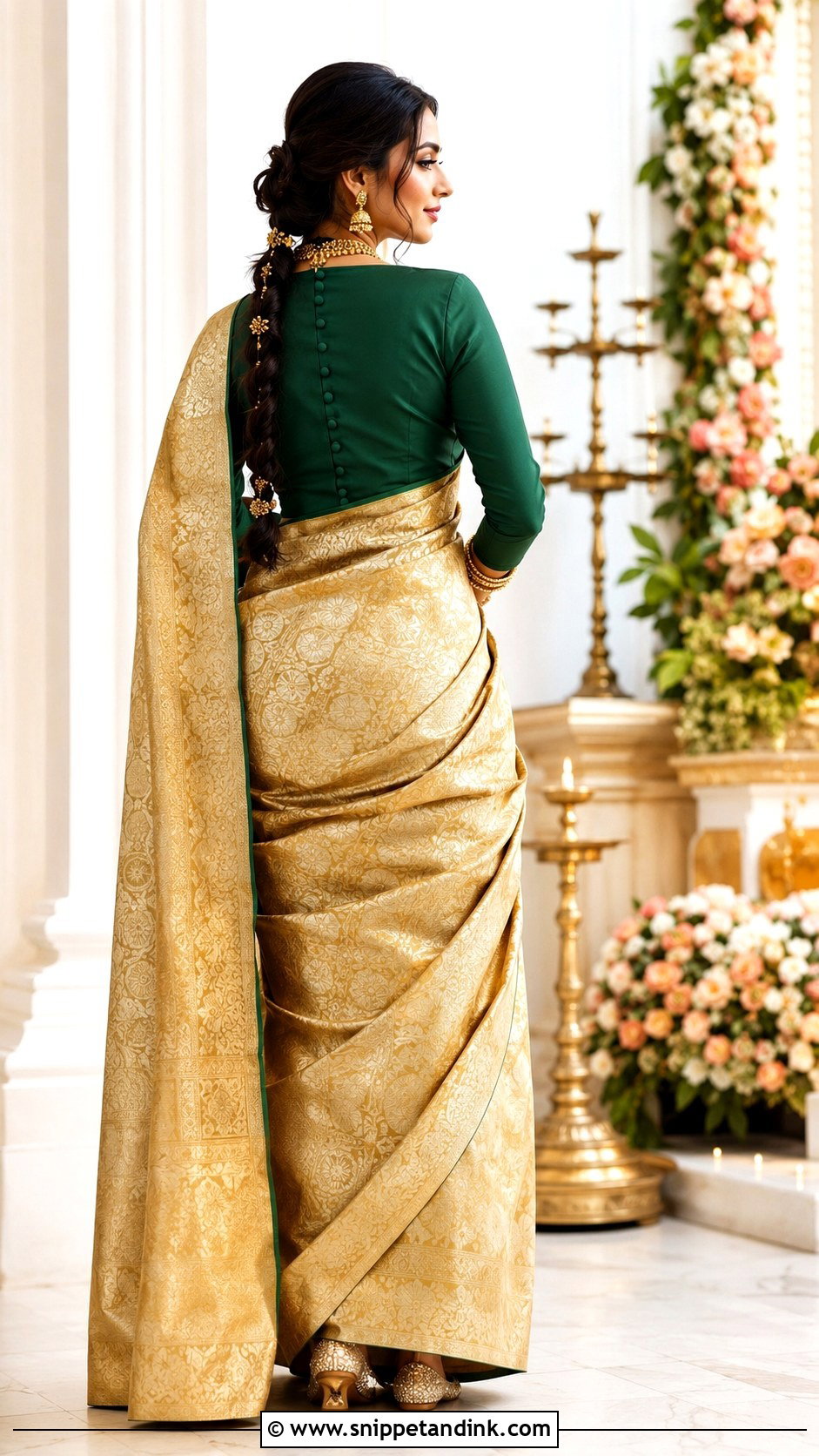
Fabric-covered potli buttons add handmade charm down a high back, around a keyhole or along fitted cuffs. Pair the blouse with a traditional silk or Banarasi saree that carries similar colors in its border; a contrast blouse with coordinated piping makes the buttons stand out more. A classic necklace, jhumkas, bangles, a small bindi and low embroidered heels finish it, with a side braid or bun so the back stays visible. Here’s what I tell every bride who loves these: the buttons should be decorative only. Have hooks or an invisible zip do the actual closing underneath, because twenty loops are slow to fasten and they strain open when you sit.


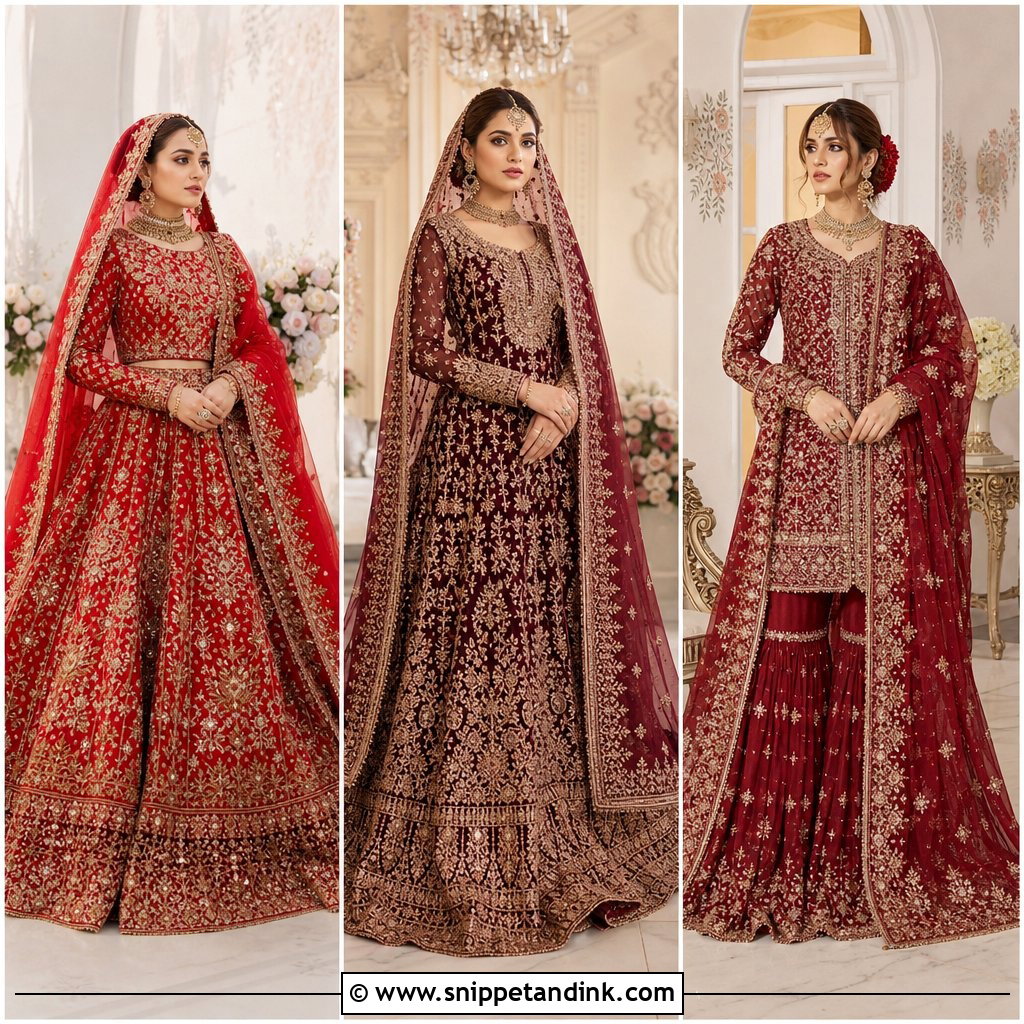
20. Personalized Wedding Blouse With Bridal Saree
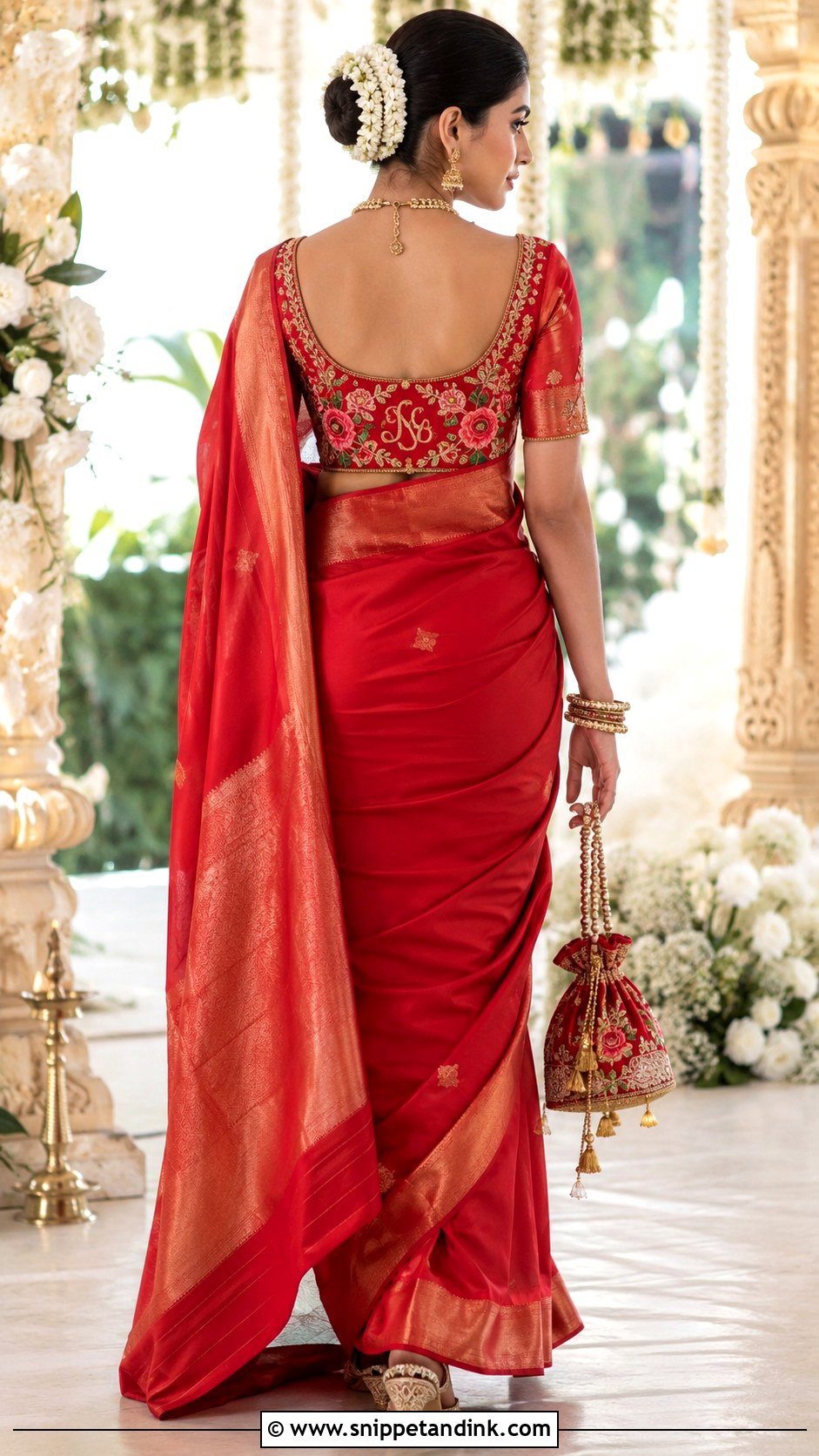
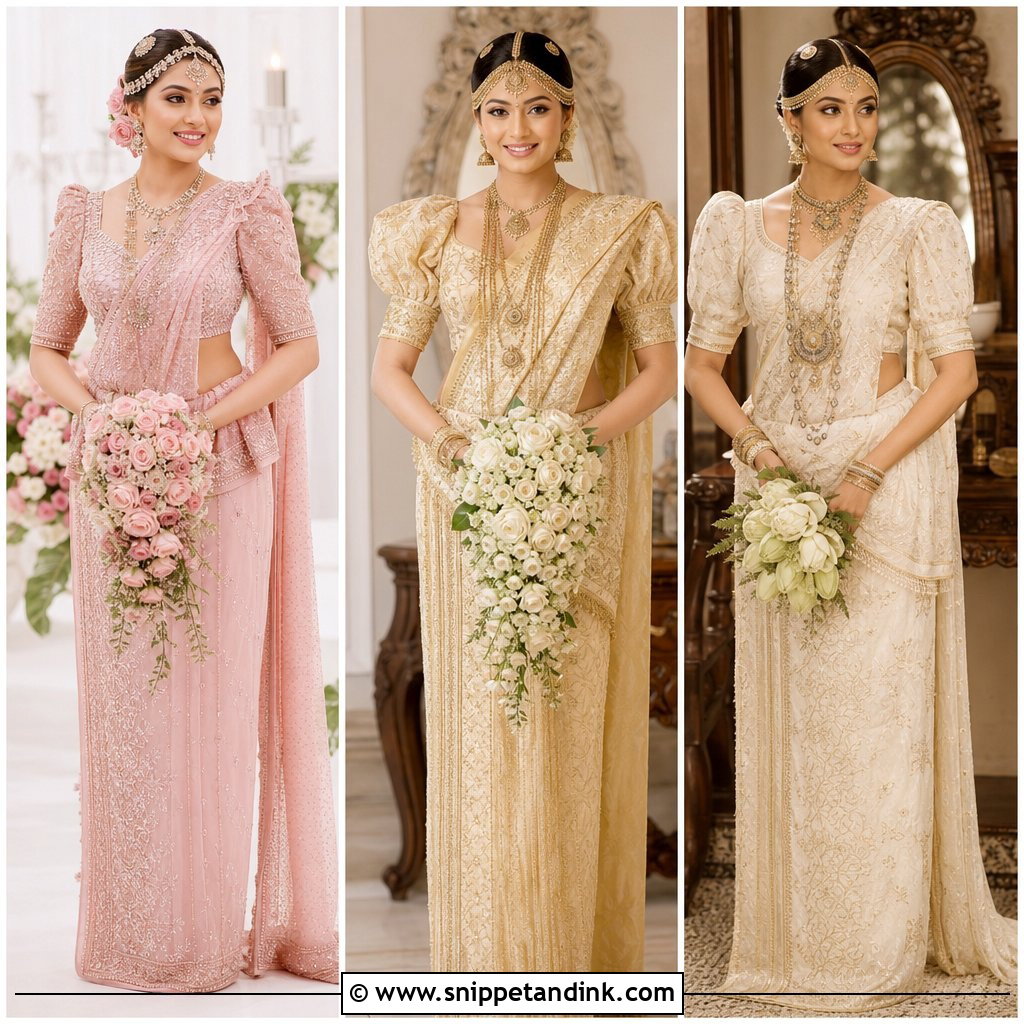
A personalized wedding blouse can carry initials, a wedding date, family symbols or a building that matters to you, worked into the sleeves or back panel. Keep the saree fairly simple so the custom work can be seen, and repeat one motif on the border, veil or potli. Heirloom jewelry, bangles, embroidered footwear and a hairstyle that leaves the panel visible complete it. Pick one theme. Too many symbols blur together from a few feet away. Before any stitching starts, I ask for a full-size sketch and a small embroidered sample to check thread colors, since a shade that looks right on paper often reads differently in metallic thread.
Wearing the Bridal Blouse Again After the Wedding
A bridal blouse is often the most expensive piece of tailoring a bride owns, and it shouldn’t go straight into a trunk. The trick is to separate it from the bridal saree in your head. A heavily worked red or maroon blouse looks fresh with a plain black, ivory or mustard saree, because the contrast lets the embroidery stand alone.
Elbow and three-quarter sleeves are the easiest to restyle. Corsets and deep Vs read more evening, so I’d save them for receptions or festive dinners. Pearl and illusion pieces pair well with organza or a solid chiffon. Before you wear it again, have the tailor check the hooks, the underarm lining and any loose beads, since a day of ceremonies loosens more stitches than you’d expect.
Store it flat in cotton muslin with tissue folded through the sleeves. Never hang a heavily embroidered blouse; the weight drags the shoulders out of shape within a few months.
Sit, Walk, Raise Your Arms: The Last Fitting Test
A wedding blouse earns its place by working with the saree or lehenga, holding up comfortably for hours and leaving room for the jewelry. Zardozi, Aari, Maggam and temple work keep tradition close; corsets, illusion backs, pearls, cutwork and personal motifs bring something newer. Before approving any pattern, think about fabric weight, how the sleeves move, how secure the neckline is and what the lining feels like. Then book your fittings early, and at each one, sit, walk and raise your arms. A blouse that passes those three tests will look right in photos and still feel fine at the last function.
You'll Like These Ideas:




Leave a Reply