
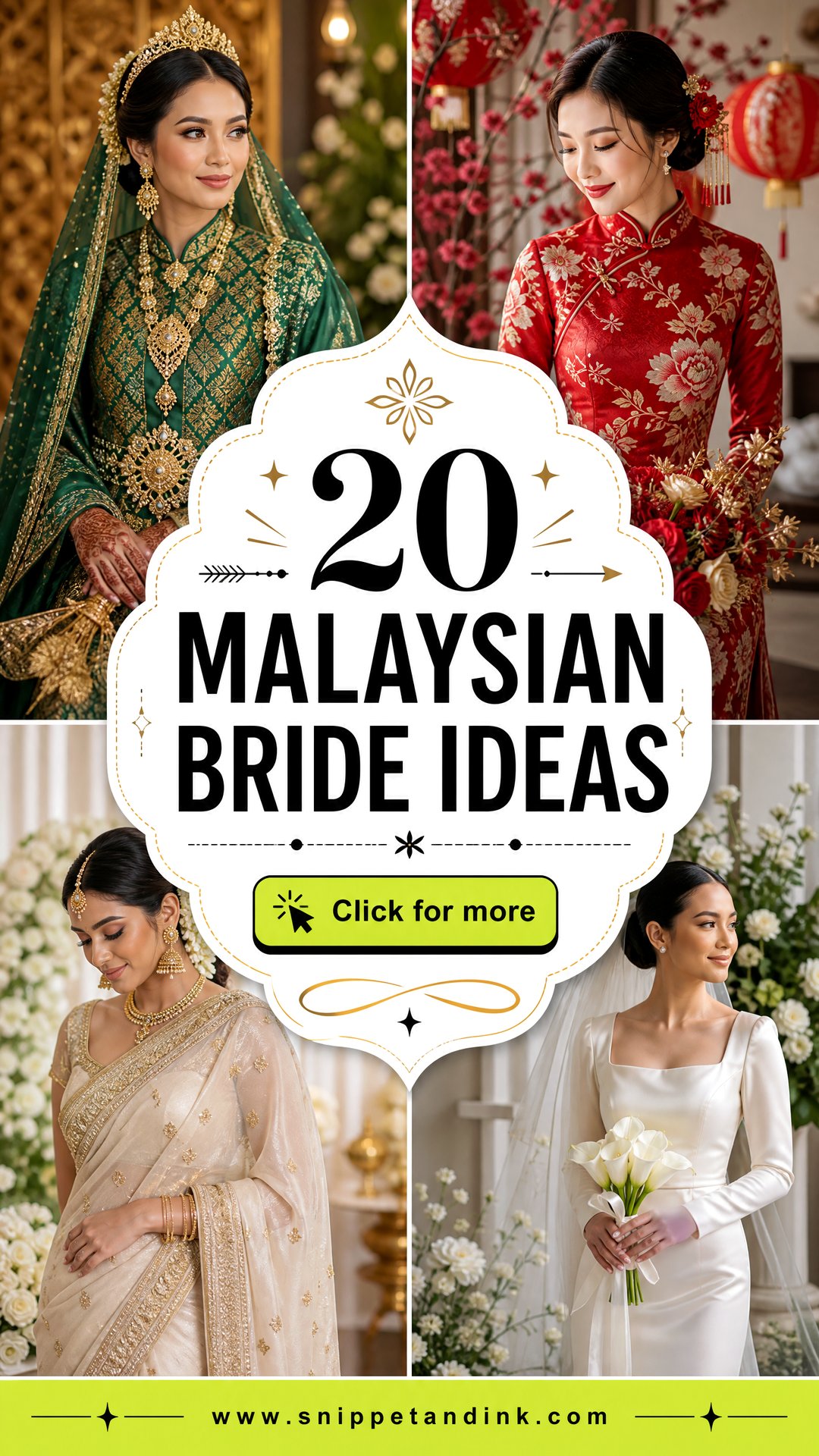
Dressing a Malaysian bride rarely means one outfit. A Malay bride might wear a classic baju kurung for the akad nikah, gold songket for the bersanding and a gown for a hotel dinner. A Chinese Malaysian bride may change into a cheongsam or qun kwa for the tea ceremony, an Indian Malaysian bride into a saree or lehenga, and Peranakan and Indigenous brides bring kebaya, batik, pua kumbu and other heritage textiles. When I plan these wardrobes, the heat is always part of the brief, so lighter fabrics, removable layers and careful lining matter as much as handwork. Below are twenty complete looks with the shoes, jewelry and fitting notes I’d give each one.
Mapping One Outfit to Each Malaysian Wedding Event
Before I look at a single fabric swatch, I write out the bride’s events in order. A Malaysian wedding often runs across several days and several ceremonies, and each one asks for something different from the clothes.
- Akad nikah: the solemnization is usually the most modest moment, often held in a mosque or at home. White, cream or soft pastels are common, and you will be seated on the floor or a low cushion, so the skirt needs room.
- Bersanding or majlis: sitting in state on the pelamin is where songket, heavy embroidery and gold come out. You sit still for long stretches, so pay attention to how the outfit feels seated.
- Tea ceremony: red is traditional for Chinese Malaysian families. You’ll bow and kneel to serve tea, so the cheongsam or qun kwa must allow it.
- Indian ceremonies: sarees and lehengas carry a lot of weight in silk and embroidery, and the rituals can be long. Pin pleats securely and choose comfortable shoes.
- Hotel reception: a gown, a lighter lehenga or a detachable cape works here, especially if you want to dance.
Once the list is written, I mark where a change happens and how long the bride has. A full change with a hijab, veil and jewelry takes longer than most families expect, often half an hour or more, so build that time into the program. Where the gap is short, a detachable cape or overskirt does the job of a second outfit.
1. Malaysian Bride White Baju Kurung
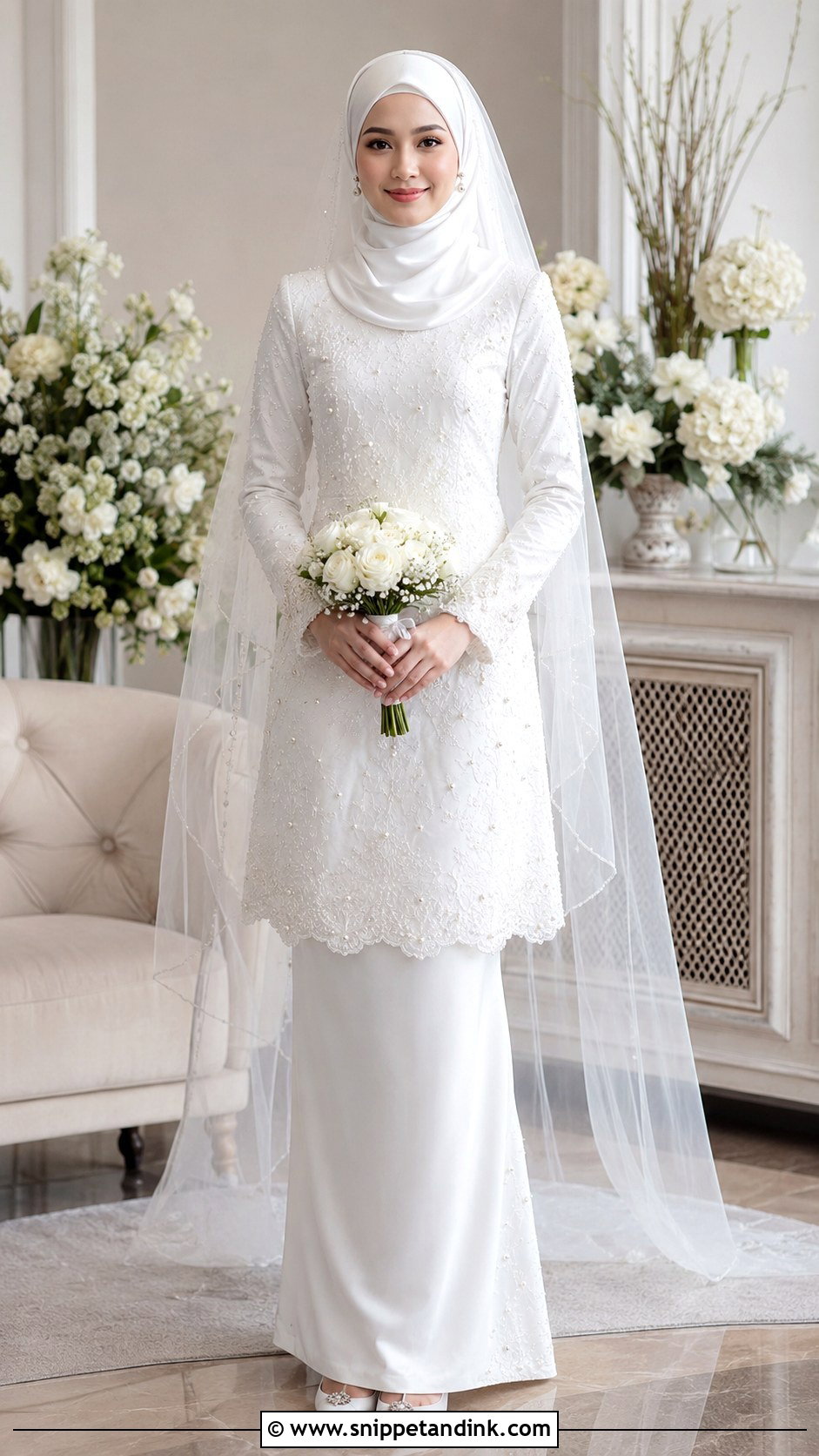
For an akad nikah ceremony, a white baju kurung is the look I return to most because it photographs cleanly against almost any backdrop. Ask for a softly structured tunic, a neat neckline and shoulders fitted to your own, with a skirt that lets you kneel and rise easily. Lace, pearl beading or tonal embroidery should stay light. Add a white satin hijab, a soft veil, pointed low heels and a small pearl bag, or a low bun with jasmine if you don’t wear a hijab. The detail people miss is the lining: white fabric turns see-through under a camera flash, so an ivory lining is not optional. Breathable cloth makes the humid morning bearable.
2. Malaysian Bride Ivory Lace Kebaya
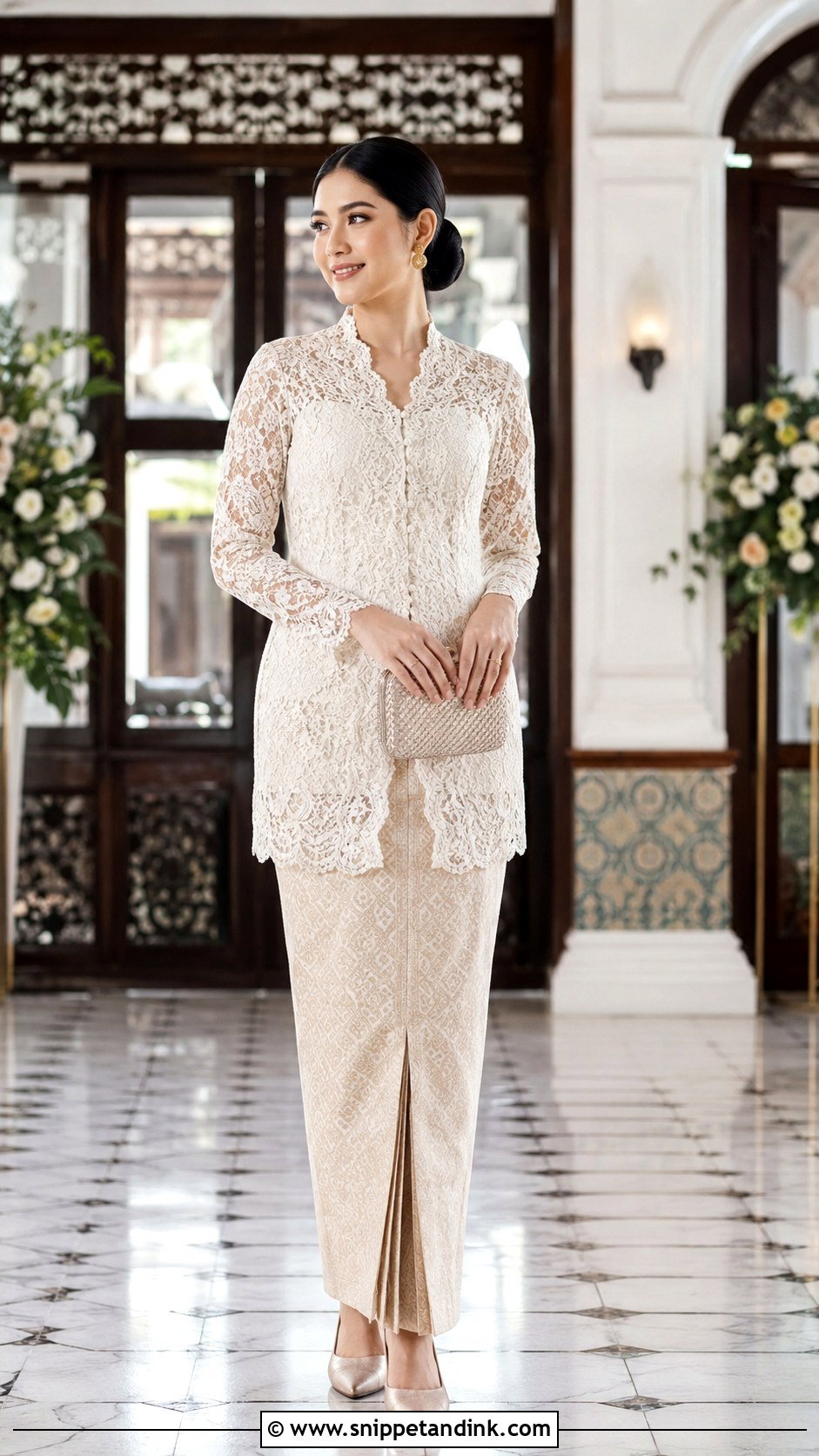
A lined ivory lace kebaya with long sleeves and scalloped edges is fitted and feminine, and it reads instantly as Malaysian. Match it with an ivory, champagne or muted gold songket or satin sarong. The sarong has to be close enough to look sharp yet still let you walk; I ask the tailor for a back slit or pleat every time. Metallic low heels, a structured clutch and understated gold jewelry keep it light. A sleek bun or a draped ivory hijab both work. Pick one focal point. Dense lace, bold jewelry and a busy sarong together turn into noise in photos.
3. Malaysian Bride Gold Songket Outfit
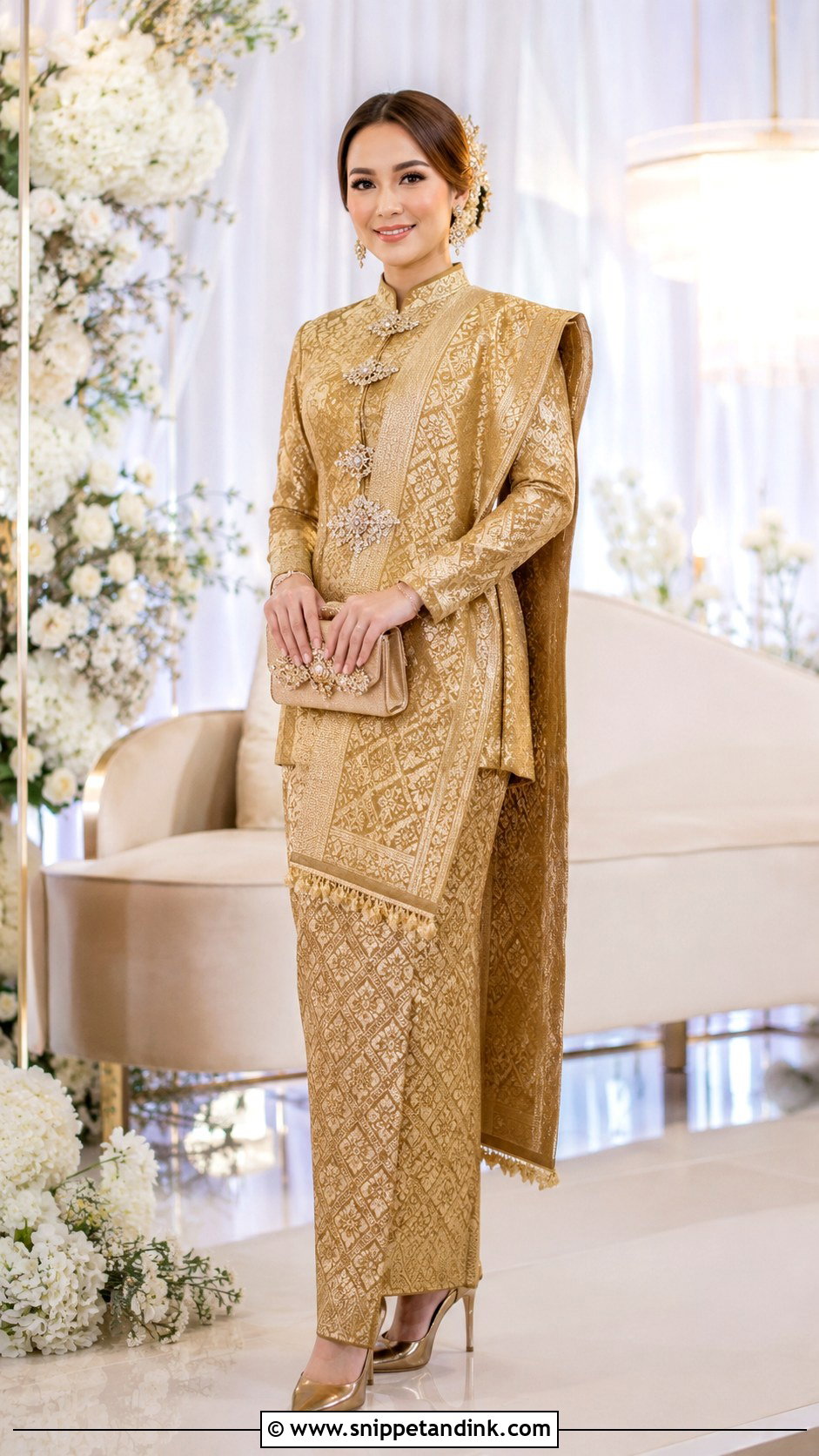
Gold songket is the fabric of the bersanding for good reason: the metallic thread woven through the cloth catches light on the pelamin from across a hall. Build it around a fitted long-sleeve top and a structured songket skirt that carries Malaysian bridal attire at its most ceremonial. I often steer brides toward antique gold over bright yellow, since it is kinder to skin tones under hall lighting. Add a matching shoulder cloth, crystal hair pieces, metallic heels and a small embroidered bag. If the songket is very elaborate, cut part of the top in plain satin to reduce weight. Line up the motifs at the center front, and ask the groom to pick one color from your songket for his sampin.
4. Malaysian Bride Modern Kebarung
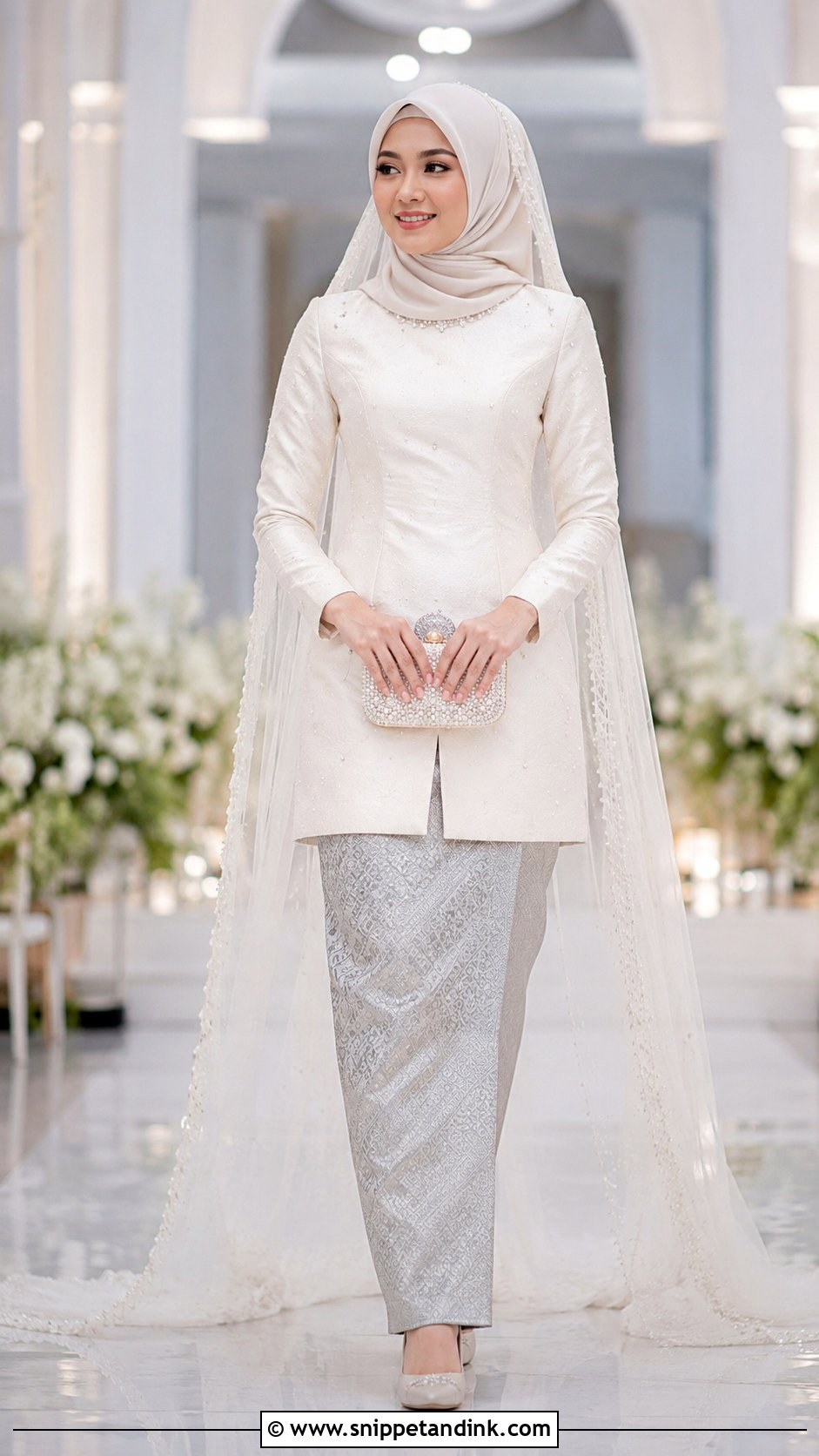
The kebarung sits between the baju kurung and the kebaya: long coverage with a little more shape at the waist. That makes it my suggestion when a bride asks for modesty without a boxy line. A lightly fitted long top in pearl white, dusty rose or sage over a straight songket skirt works well, and vertical embroidery down the front lengthens the body. Add a tonal hijab, chapel veil, closed-toe heels and beaded clutch. A belt can sharpen the waist, but it should rest at your natural waist, never cinch it. Fewer layers and a light lining keep you comfortable during the long greeting line.
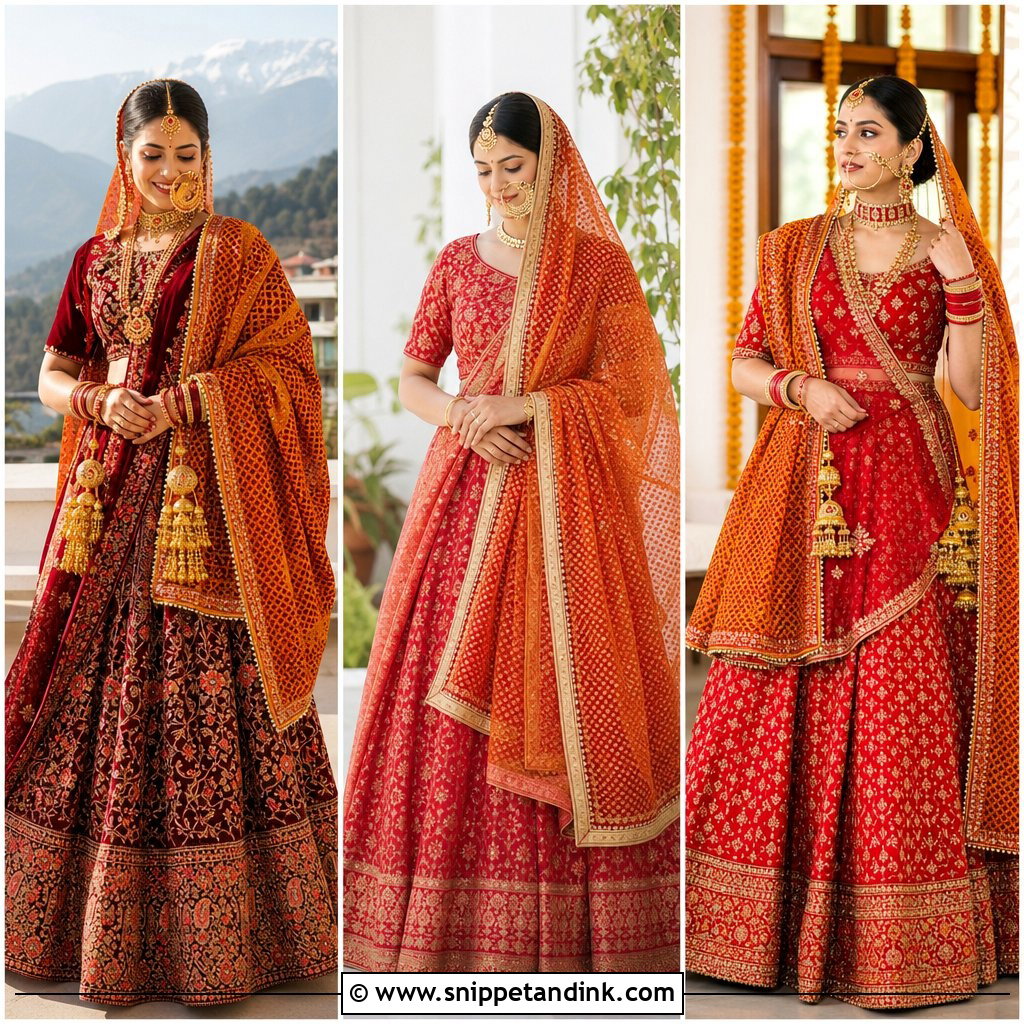
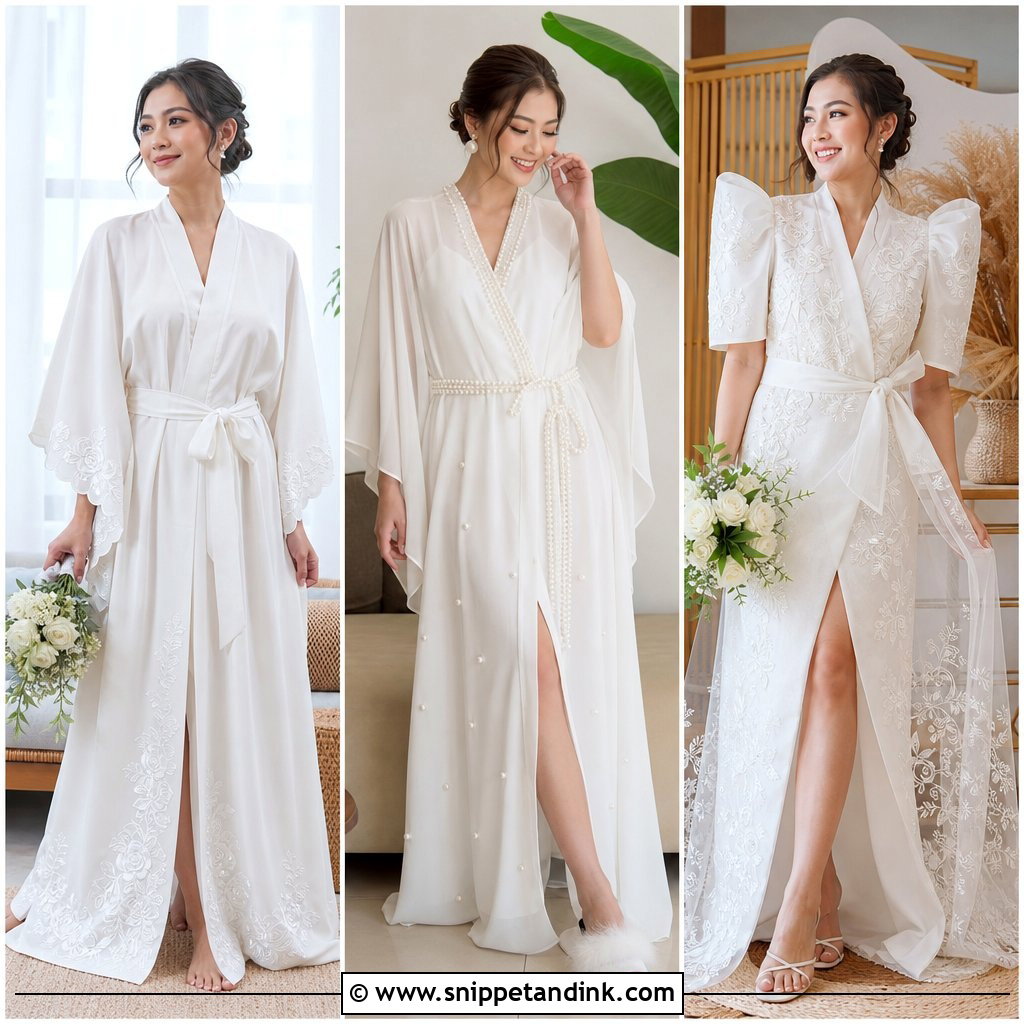
5. Malaysian Bride Baju Kurung Pahang
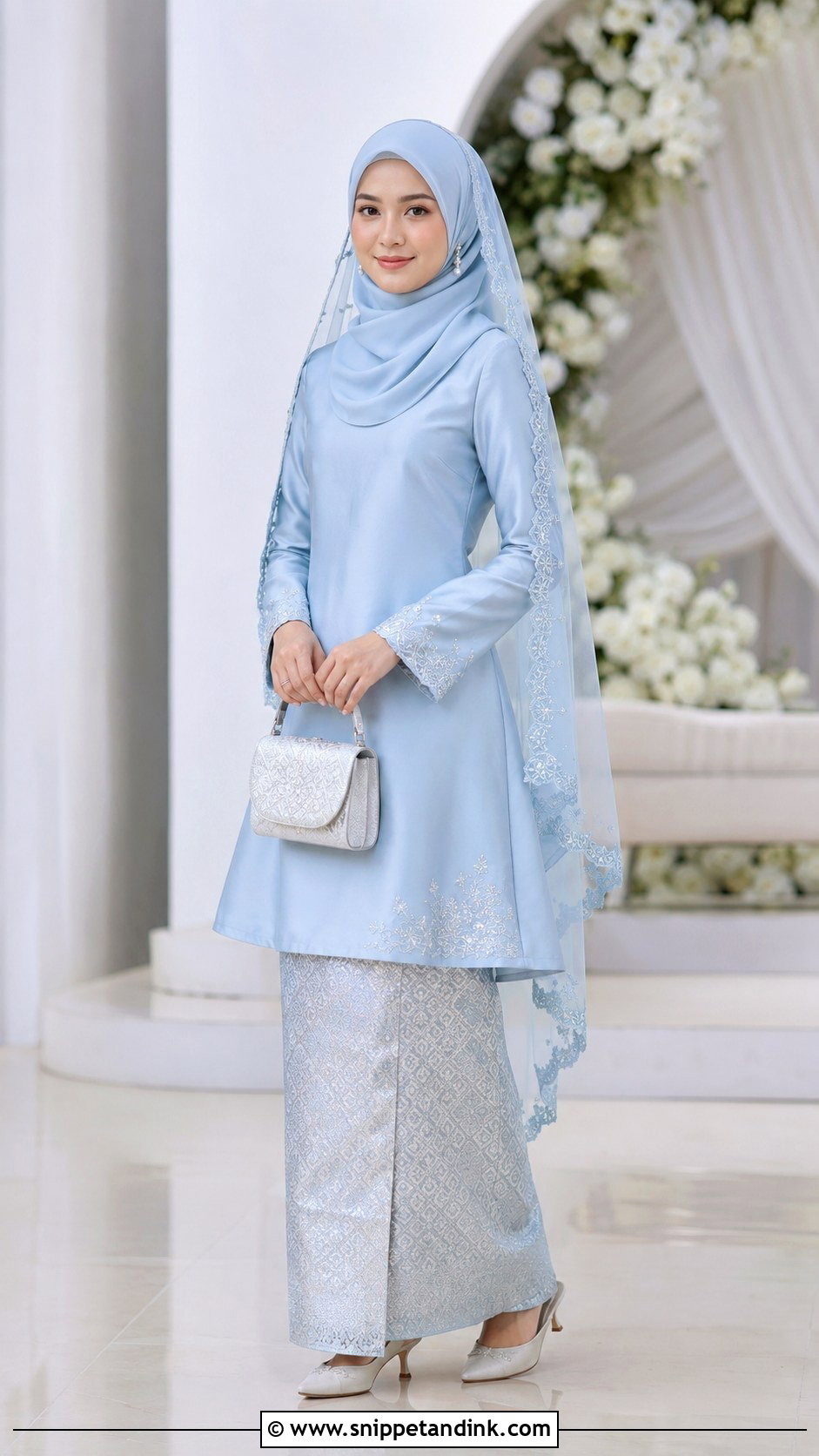
The longer tunic of the baju kurung Pahang suits daytime ceremonies and family events, and its gentle flare is easy to wear all day. Silk crepe, jacquard or lightweight brocade in cream, pale blue, blush or soft gold all drape well. Pair it with a complementary songket skirt and pointed kitten heels. A neatly draped hijab, a fine veil, pearl earrings and a small top-handle bag finish it, or a smooth chignon with tiny white flowers. Keep embellishment at cuffs, neckline and hem. The fit at the shoulder seam decides everything here; if it drops past your shoulder, the whole outfit looks borrowed in photos.
6. Malaysian Bride Pastel Baju Kurung
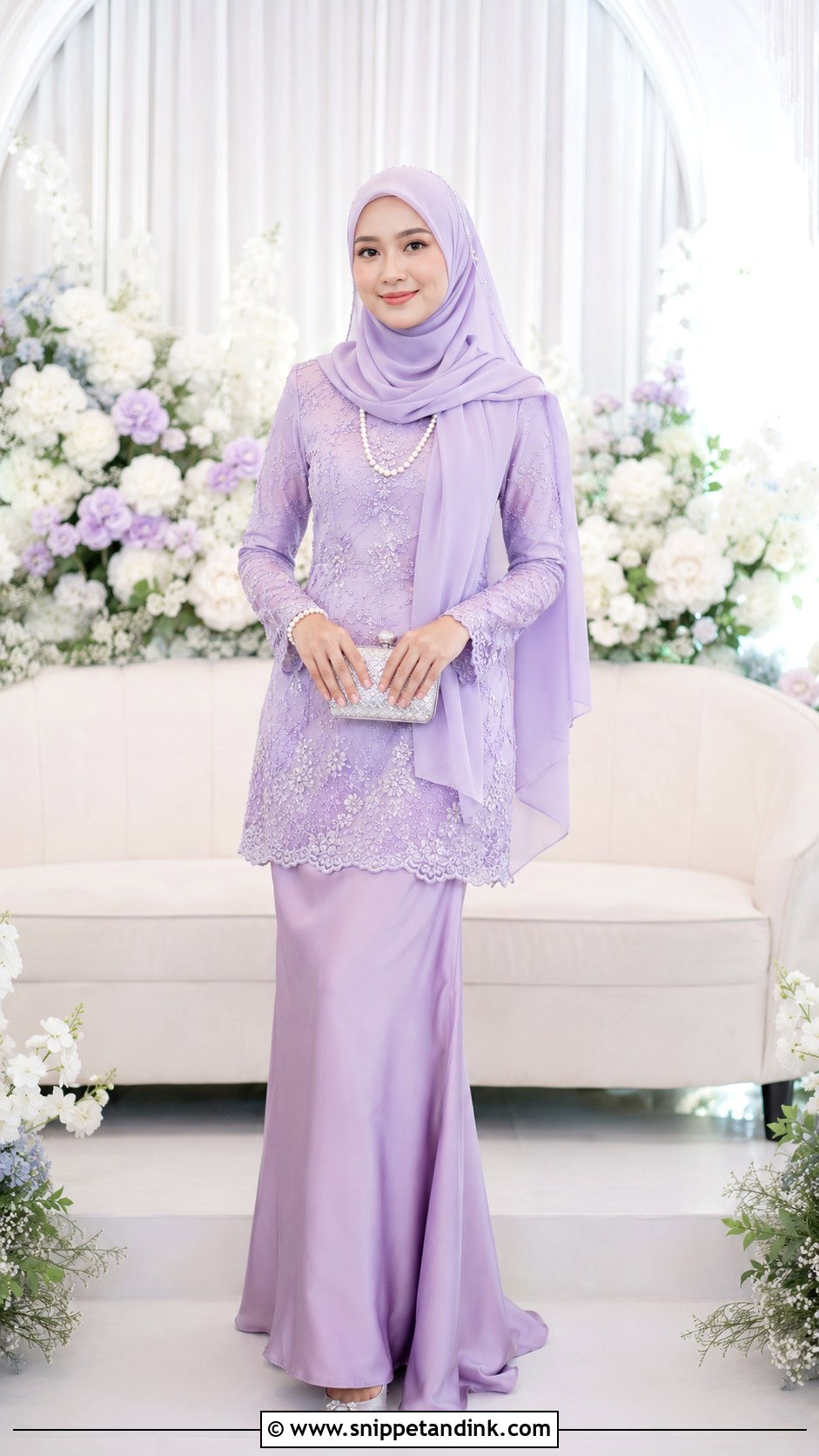
Pastels give a fresh alternative to white, and I like them for engagements and intimate receptions. Powder blue, lavender, peach and sage all work as a monochrome baju kurung set, with a lightly embellished top and a flowing satin crepe or chiffon skirt over an opaque lining. A hijab or veil one shade lighter adds depth. Silver heels, pearls and a crystal clutch keep the palette cool. Keep embroidery to the neckline and waist. Here is the warning I give every pastel bride: strong photography lights can bleach these shades, so hold the swatch beside your face under a bright lamp before you commit.
7. Malaysian Bride White Muslimah Gown
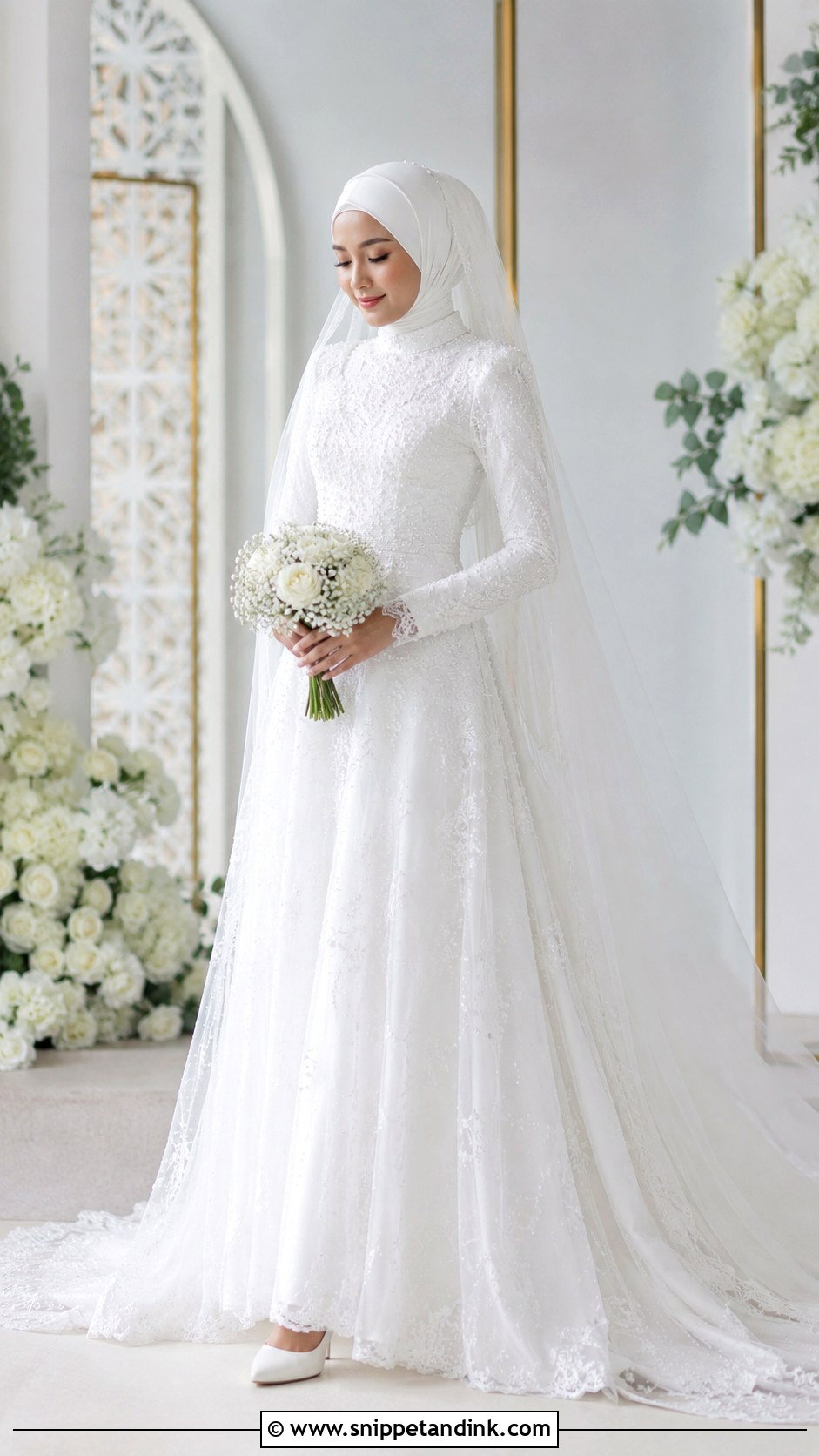
A white Muslimah wedding gown gives the sweep of a Western dress with full coverage. The opaque bodice, high neckline, long sleeves and moving A-line skirt are the essentials; lace at the shoulders and cuffs and a scattering of pearls add depth. Anchor the long veil firmly behind the crown, over a smooth white hijab, so it doesn’t drag the scarf back as you walk. Closed-toe heels, crystal earrings, a slim ring and a small bouquet are enough. Avoid thick fabric at the neck, which grows uncomfortable in a warm hall. A removable train or cape adds presence for portraits.
8. Malaysian Bride Emerald Songket Outfit
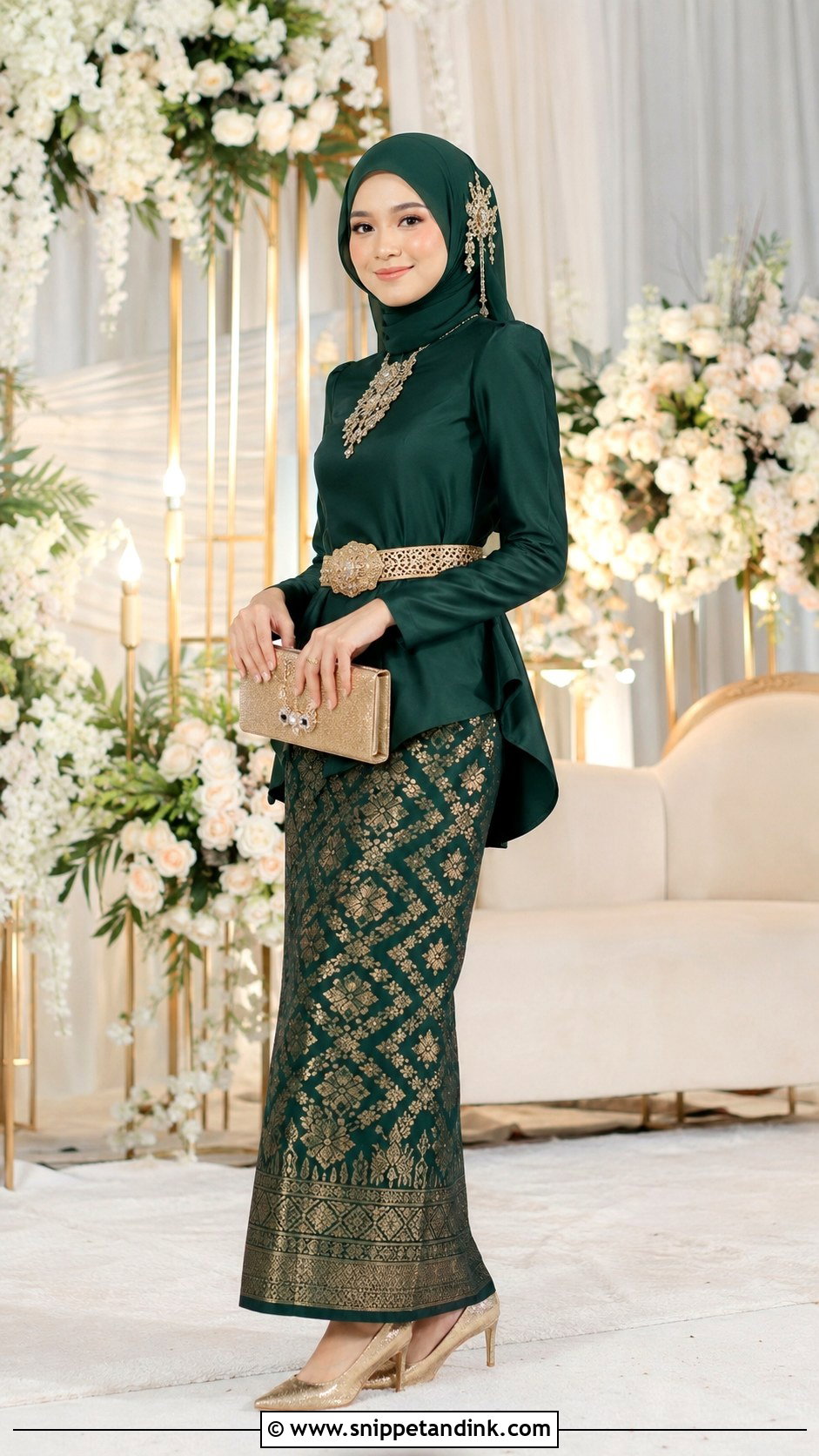
Emerald next to gold décor is one of the richest combinations I style for a reception. Start with a fitted satin or velvet-touch top with long sleeves, then let an emerald-and-gold songket skirt carry the pattern. An antique-gold belt, metallic heels and a plain structured clutch support it. A hijab pinned with a small jeweled brooch, or a center-parted bun with gold pins, finishes the head. Keep the bouquet cream or white so emerald appears only once. Songket is a substantial cloth, so I skip any extra underskirt and use a breathable lining. Fit at the waist and hips keeps the line smooth.
9. Malaysian Bride Red Cheongsam
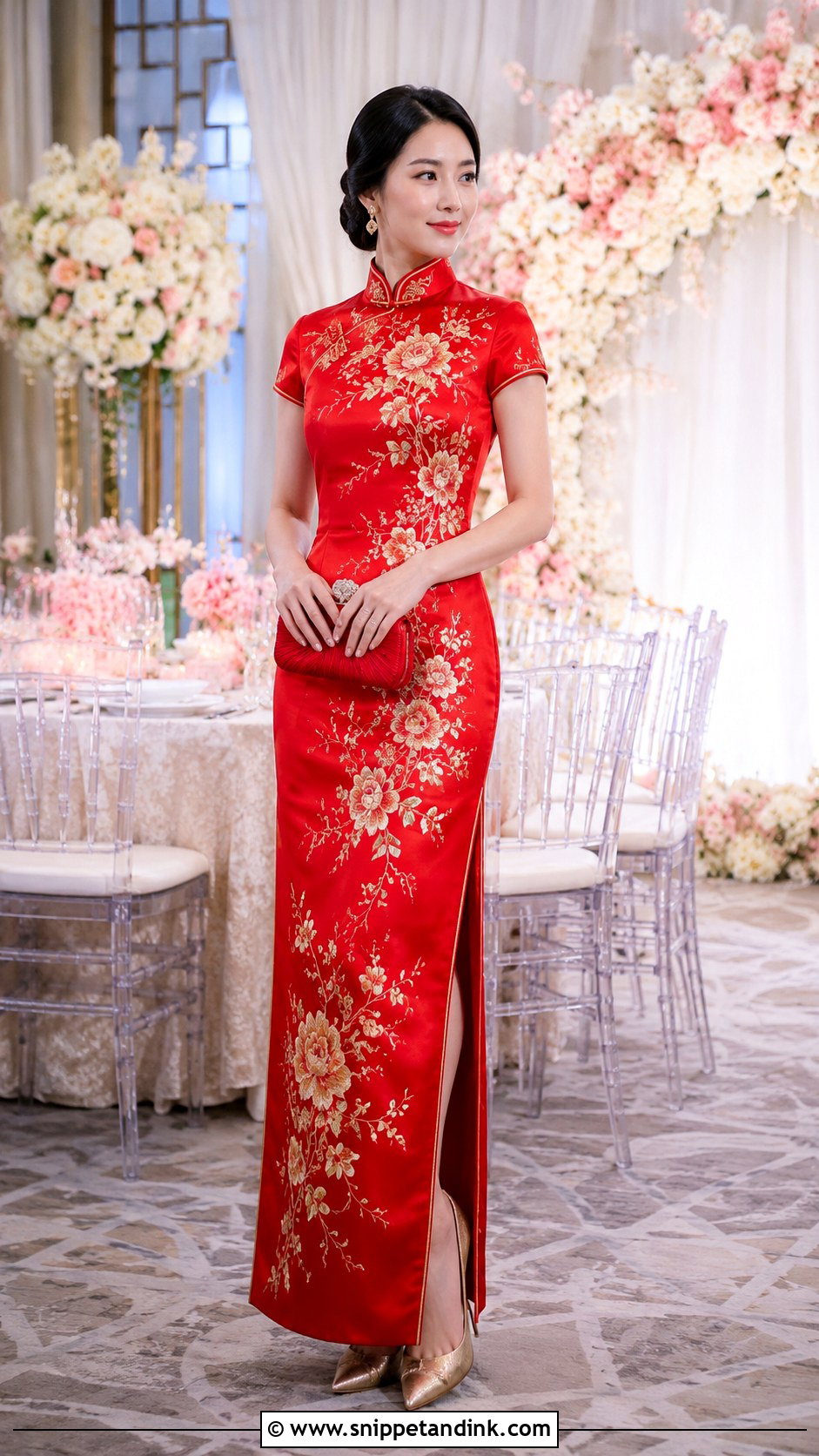
Red is the color of the tea ceremony, and a full-length cheongsam with a mandarin collar, fitted bodice and side slit is the classic choice for it, as well as for a banquet entrance or reception change. Red silk, jacquard or brocade with gold florals feels festive. A cheongsam should skim the body, not squeeze it; you will be bowing, kneeling and pouring tea, so test those movements at the fitting. If a high collar feels tight, ask for it lowered slightly. Red or metallic pumps, a small gold clutch and drop earrings suit it, with a sleek bun and gold pins or soft waves. One gold motif repeated on the groom’s jacket or tie ties the portraits together.
10. Malaysian Bride Red Qun Kwa
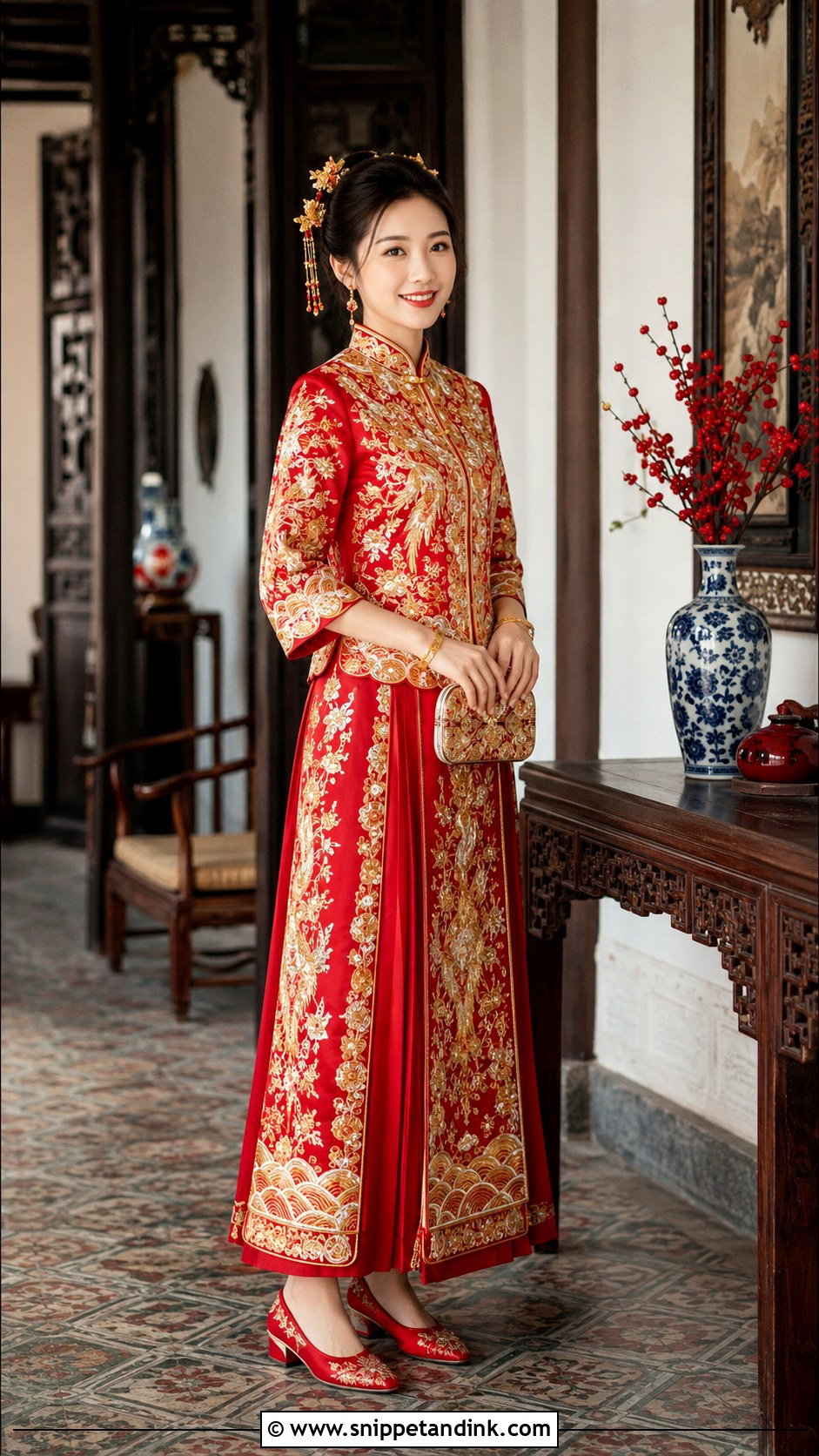
The qun kwa, a structured embroidered jacket and skirt, is the most traditional Chinese bridal statement there is. Dense gold embroidery adds real weight, so look for a set with balanced motifs and enough room across the shoulders to raise a teacup. Embroidered red flats or low heels, gold earrings and a neat red clutch suit it, along with a smooth bun and traditional hair ornaments. When the embroidery is very heavy, I strip back the hair accessories. Never add a modern belt to the boxy jacket. Have the sleeve and skirt lengths adjusted so the embroidered hem doesn’t scrape the floor.
11. Malaysian Bride Nyonya Kebaya
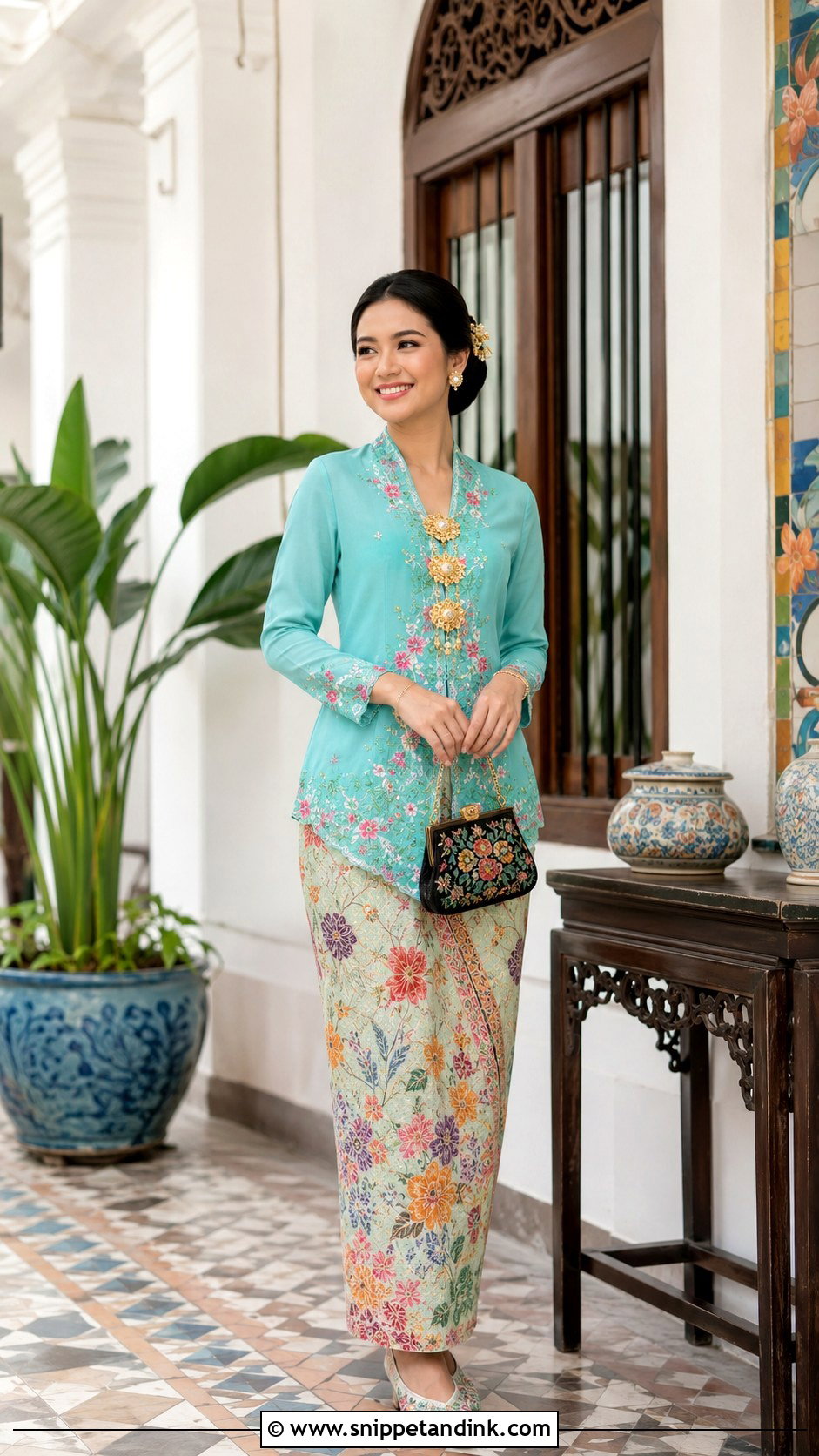
A Nyonya kebaya carries Peranakan craft in its fine embroidery, and I treat it with care. White, blush, turquoise or lilac tops pair with a batik sarong. A smooth camisole underneath keeps the sheer work modest. Traditional kerosang brooches fasten the front and act as the main jewelry, with beaded kasut manik shoes, a small vintage-style bag, pearl earrings and a bun with understated floral pins. The sarong must be wrapped firmly and cut for your height. Both kebaya and batik carry pattern, so I limit the whole outfit to two or three repeating shades.
12. Malaysian Bride Ivory Saree
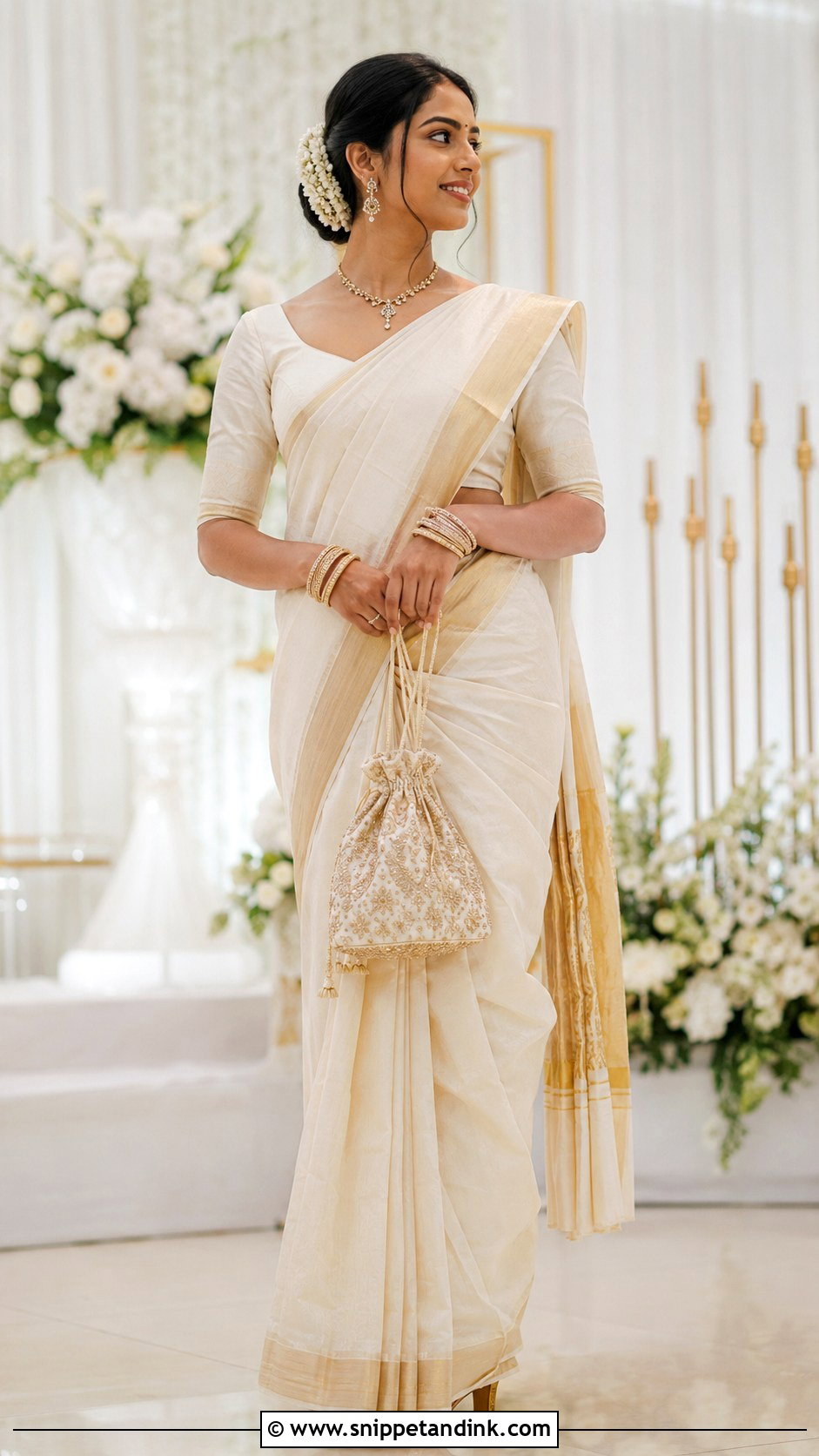
Ivory with gold borders looks luminous on Indian Malaysian brides without the starkness of pure white. Silk gives structure, organza gives crispness and georgette gives the softest fall, so choose by how much movement you want. A fitted, fully lined blouse with elbow or long sleeves anchors it. Gold heels, a small potli bag, drop earrings, bangles and a fine necklace complete it, with jasmine in a low bun and a sheer veil pinned over the head for the ceremony. I pin the pleats at several points so you can sit and walk without adjusting. Heavy embroidery on the saree means a simpler blouse.
13. Malaysian Bride Red Silk Saree
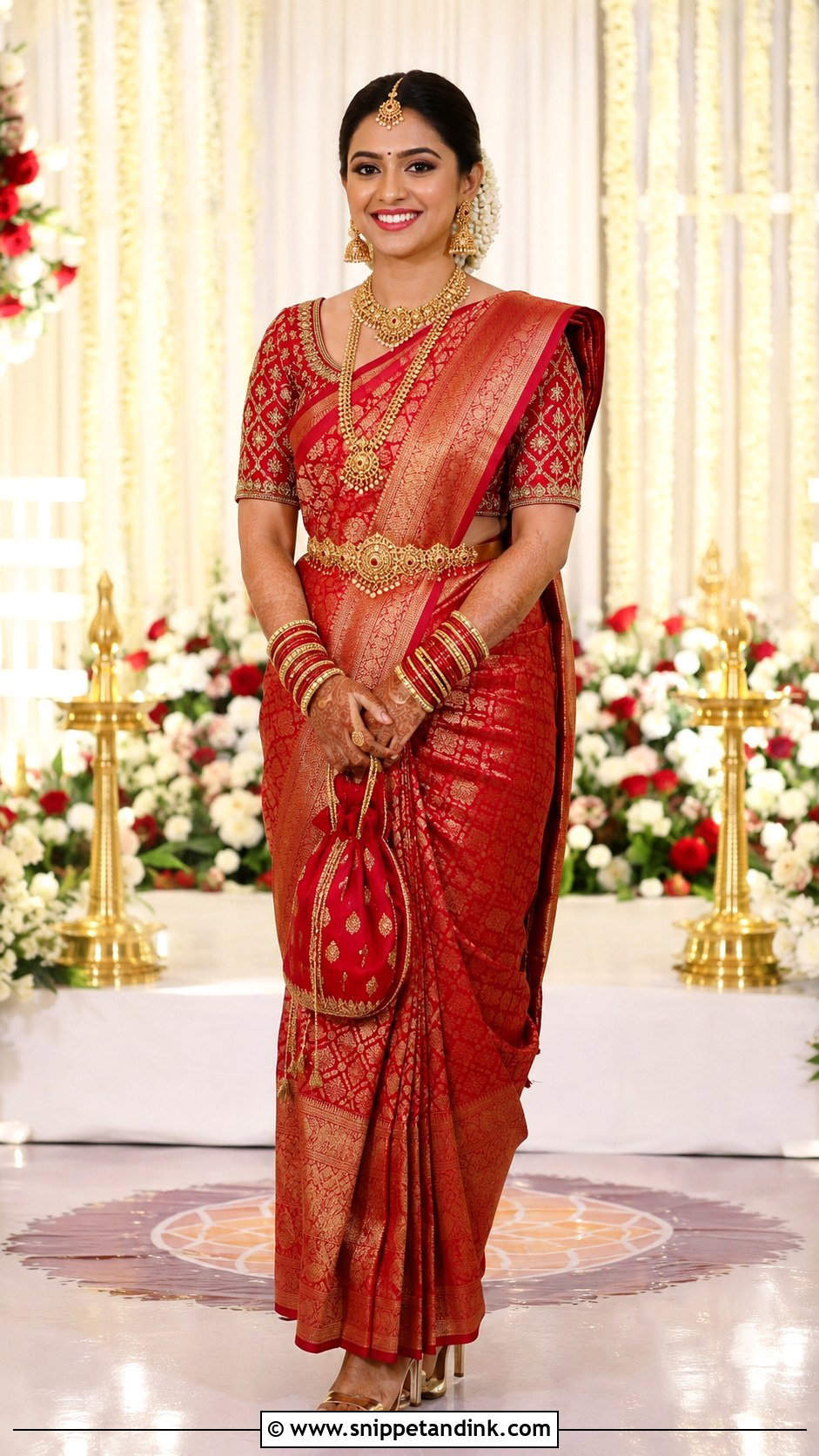
Deep red silk with gold zari borders gives a formal Indian Malaysian ceremony its warmth. The blouse must be tailored firmly through the shoulders and bust, since it carries the weight of the pallu. Gold heels, stacked bangles, a waist belt, statement earrings and an embroidered potli bag complete it. A center-parted bun with jasmine or gold accessories adds tradition. Scale the necklace to the neckline so it doesn’t cover the blouse work. Silk sarees are heavy over a long day, which is why I pin pleats in several places. Choose the footwear first; the saree is draped to the heel height.
14. Malaysian Bride Pastel Lehenga
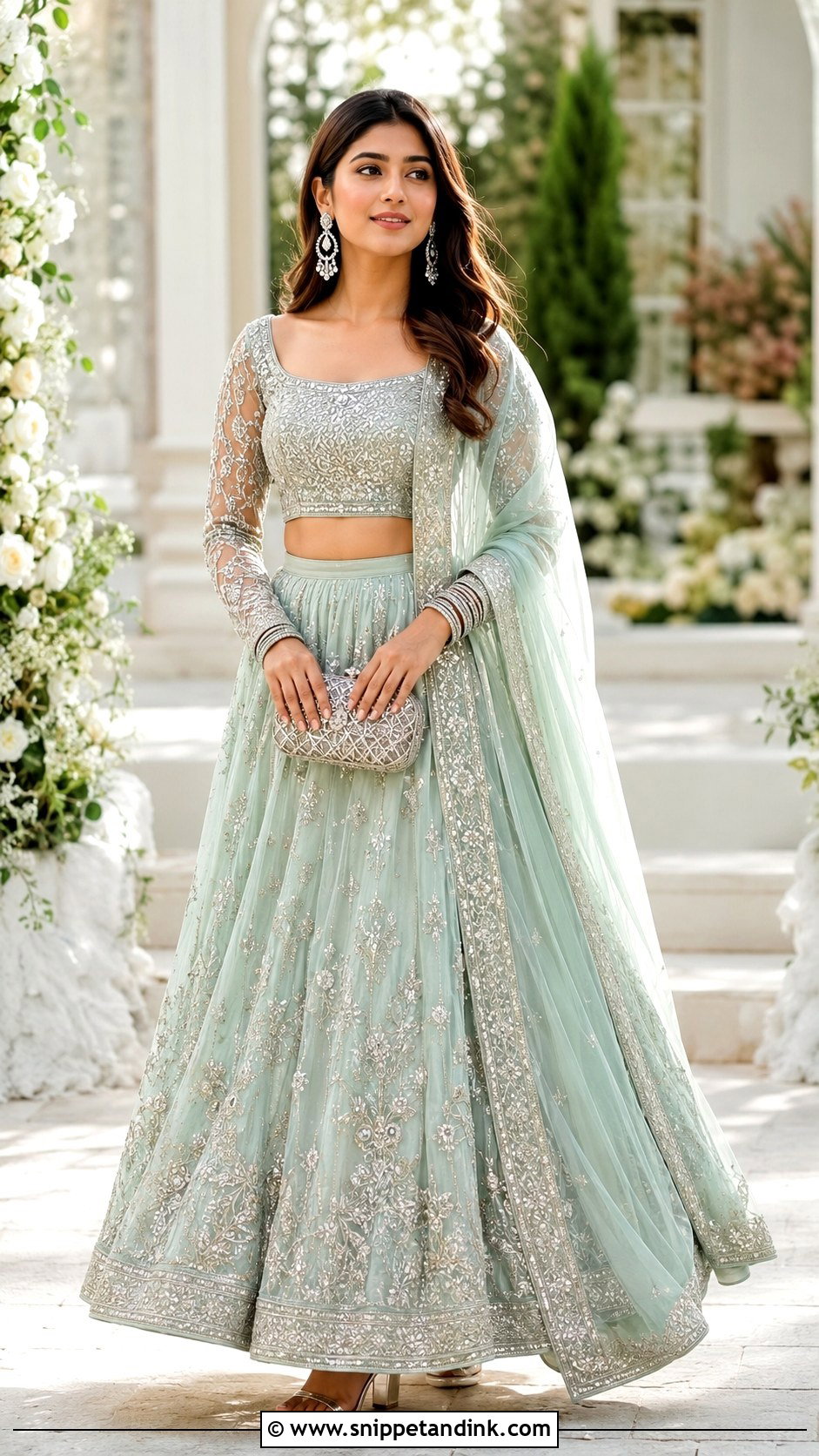
A pastel lehenga in blush, mint, powder blue or lavender with silver embroidery is my favorite for a daytime reception or engagement. The set is a fitted blouse, a high-waisted flowing skirt and a sheer dupatta pinned over one shoulder or over the head. Metallic block heels, crystal earrings, matching bangles and a small embellished bag suit it, with a braided bun or soft waves. For more coverage, choose a longer blouse, sheer fitted sleeves and a wider dupatta. A very heavy skirt is hard work outdoors in heat, so I pick net, organza or silk blends that give volume without the weight.
15. Malaysian Bride Batik Kebaya
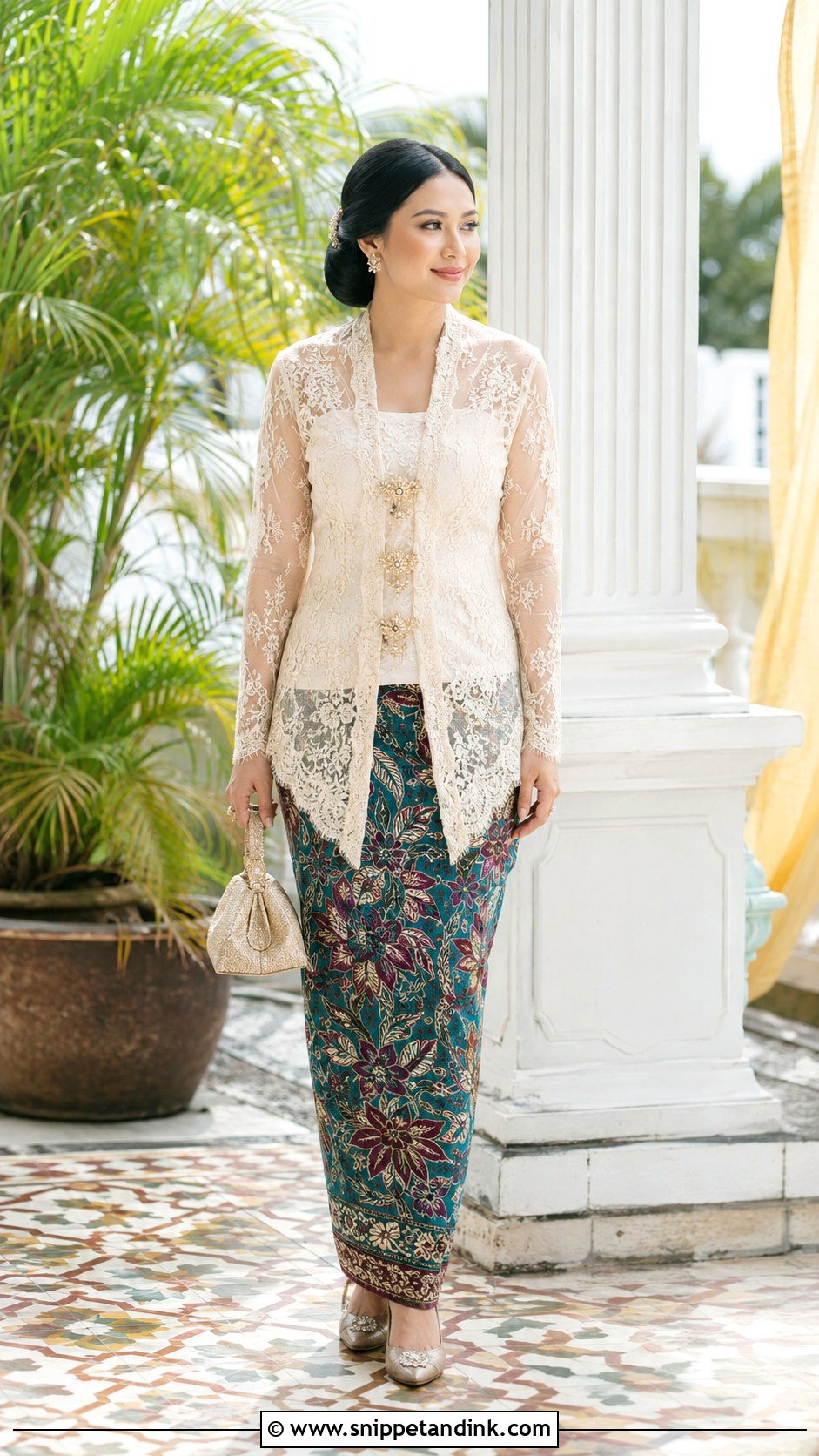
Batik gives a kebaya outfit its Malaysian character, and the coordination starts with one color pulled from the sarong into a solid lace or silk top. Cream, navy, burgundy and teal are the easiest to match. A fitted camisole, low heels, a structured bag, simple earrings and a slim brooch set to close the kebaya are enough. A low bun or a plain hijab in the sarong’s background color finishes the head. Where the pattern falls matters: I place the boldest motif below the waist for a quieter portrait and center it at the front of the skirt. A tailor who aligns motifs is worth paying for.
16. Malaysian Bride Iban Pua Kumbu Outfit
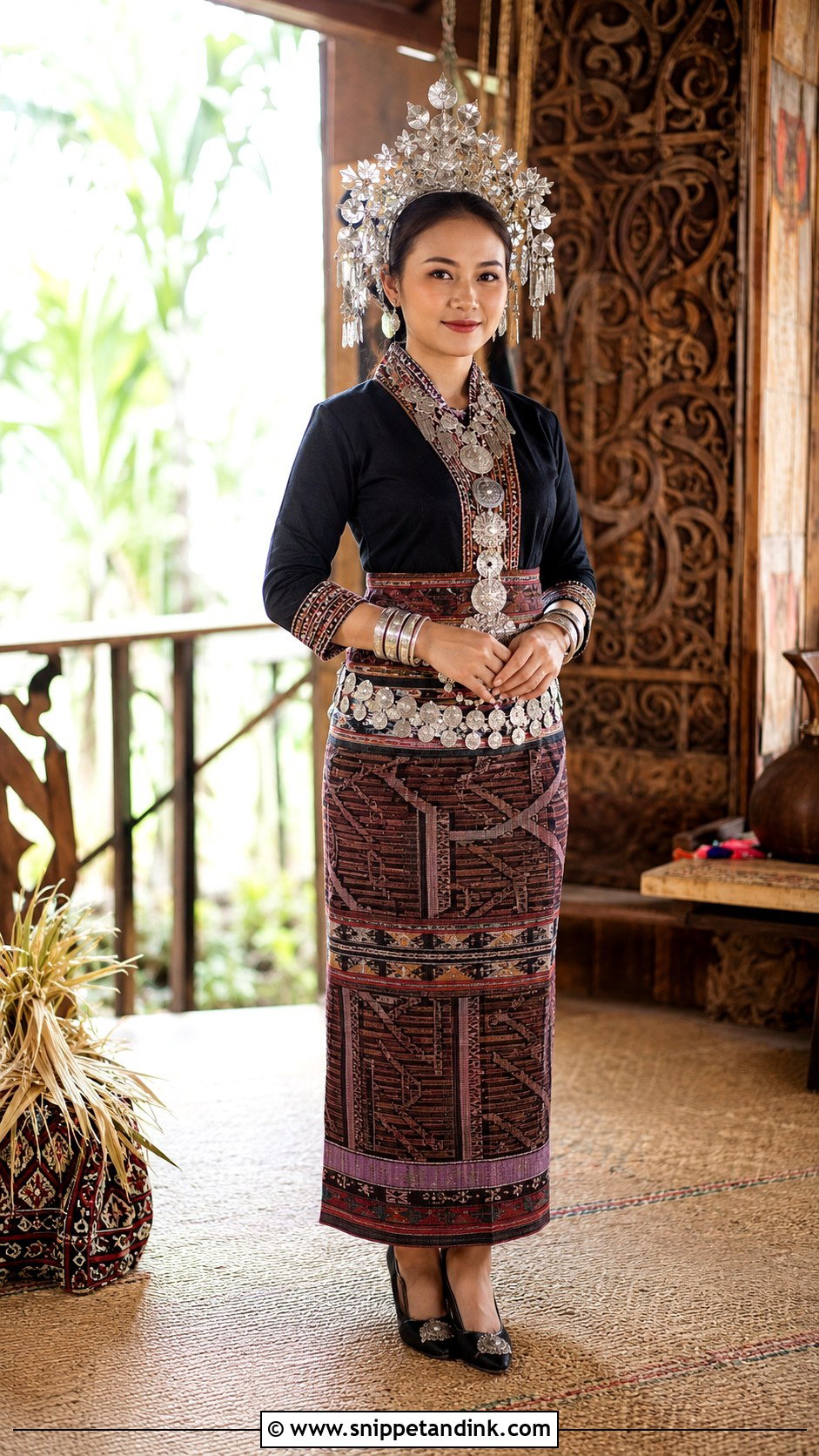
Pua kumbu, the woven textile of the Iban, carries meaning in its motifs, so an Iban bridal look is not something I’d assemble from a mood board. Work with a knowledgeable weaver, designer or family elder on the textile and accessories. A typical ensemble pairs a fitted dark top with a carefully wrapped woven skirt, silver-toned ornaments, decorative belts and a fitting headdress. Simple, secure shoes keep attention on the weaving. Many brides wear the heritage set for the customary ceremony and change for a modern reception. Never cut an heirloom piece or treat it as a print without guidance.
17. Malaysian Bride Kadazan-Dusun Outfit
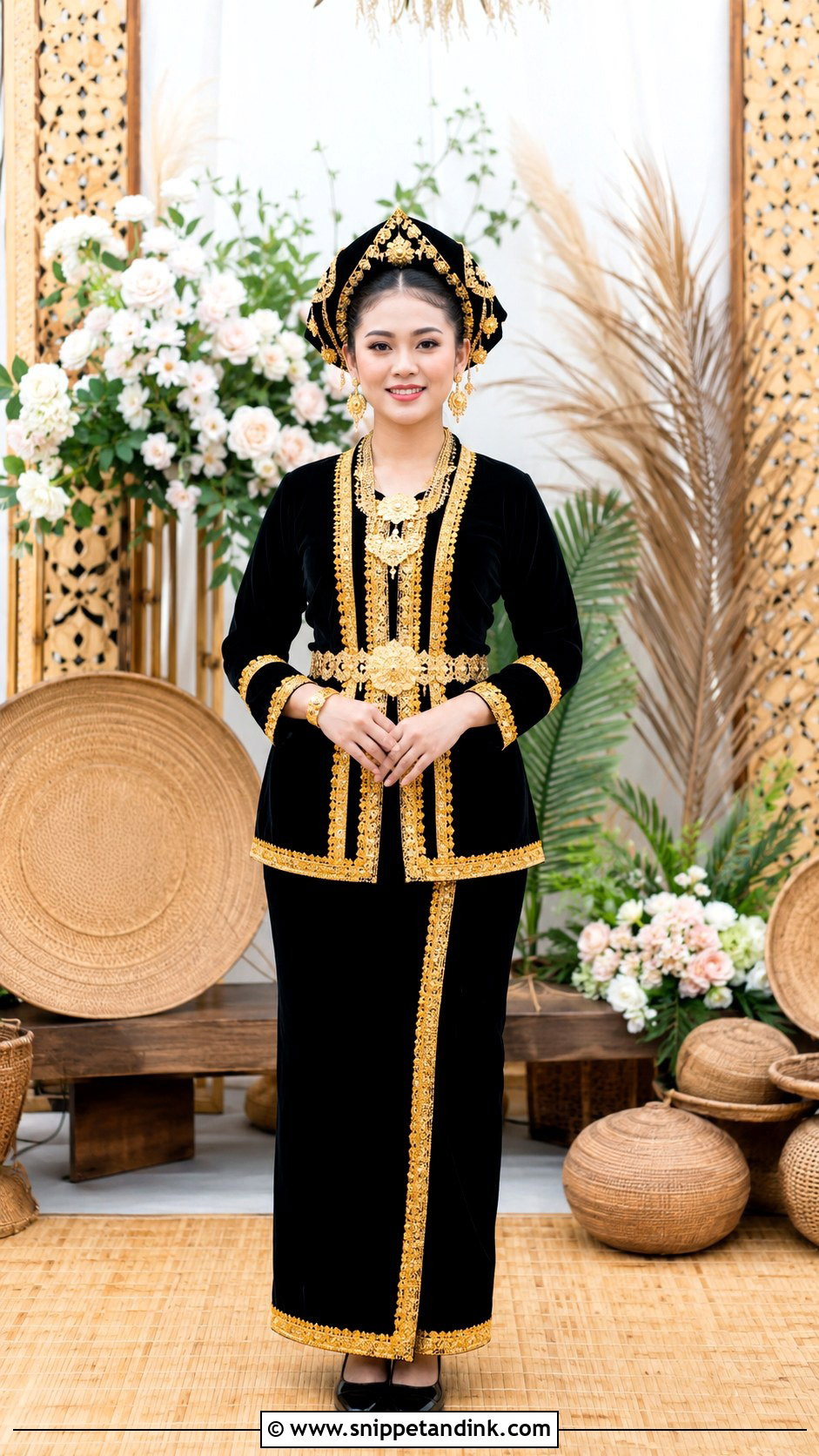
Kadazan-Dusun bridal dress varies between communities, which is why I always defer to family members or local makers on the exact pieces. A typical look features a fitted black velvet top and skirt with gold-toned trim, a decorative belt, coordinated jewelry and the proper headpiece. Velvet is unforgiving: pulling and bunching across the fabric show clearly in photos, so precise fit matters more than anything I could add. Plain black shoes stay discreet. Keep makeup polished but balanced so the textile leads. Use a complete, correctly assembled set rather than mixing unrelated pieces, and source it from the artisans who keep the craft alive.
18. Malaysian Bride Minimalist Satin Gown
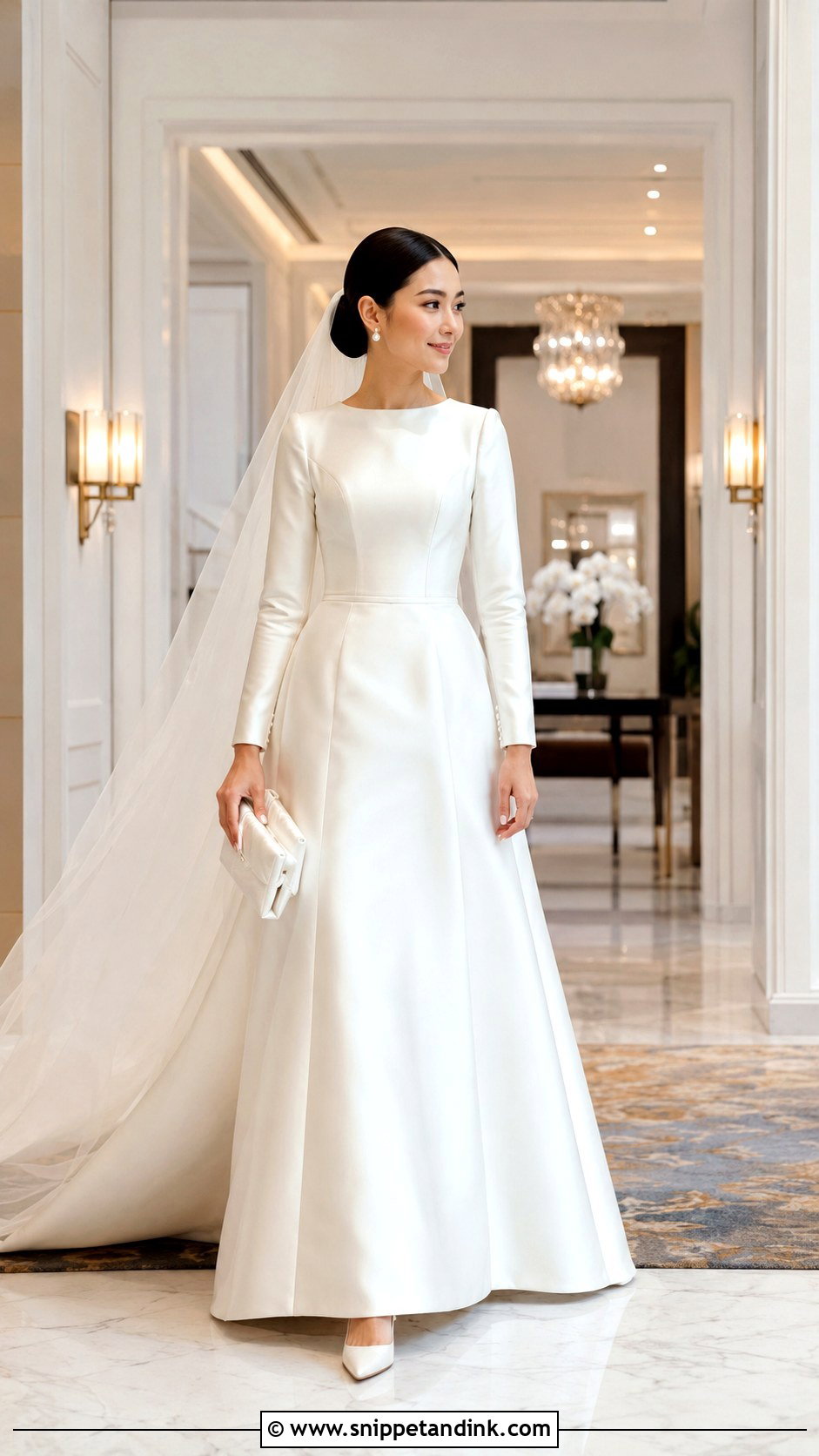
Clean satin suits a modern hotel wedding. An A-line or column gown with a structured bodice, a modest neckline and a smooth floor-length skirt is enough on its own; long sleeves add coverage, while short or sleeveless cuts suit an indoor reception with a contemporary dress code. Pointed pumps, pearl earrings and a satin clutch keep it sleek, with a low bun and long plain veil. For hijab brides I choose a matte satin scarf, because shiny satin right beside the face bounces light into the camera. Satin shows every seam, so tailoring outranks embellishment. Concealed pockets and a detachable train are practical additions.
19. Malaysian Bride Floral Reception Gown
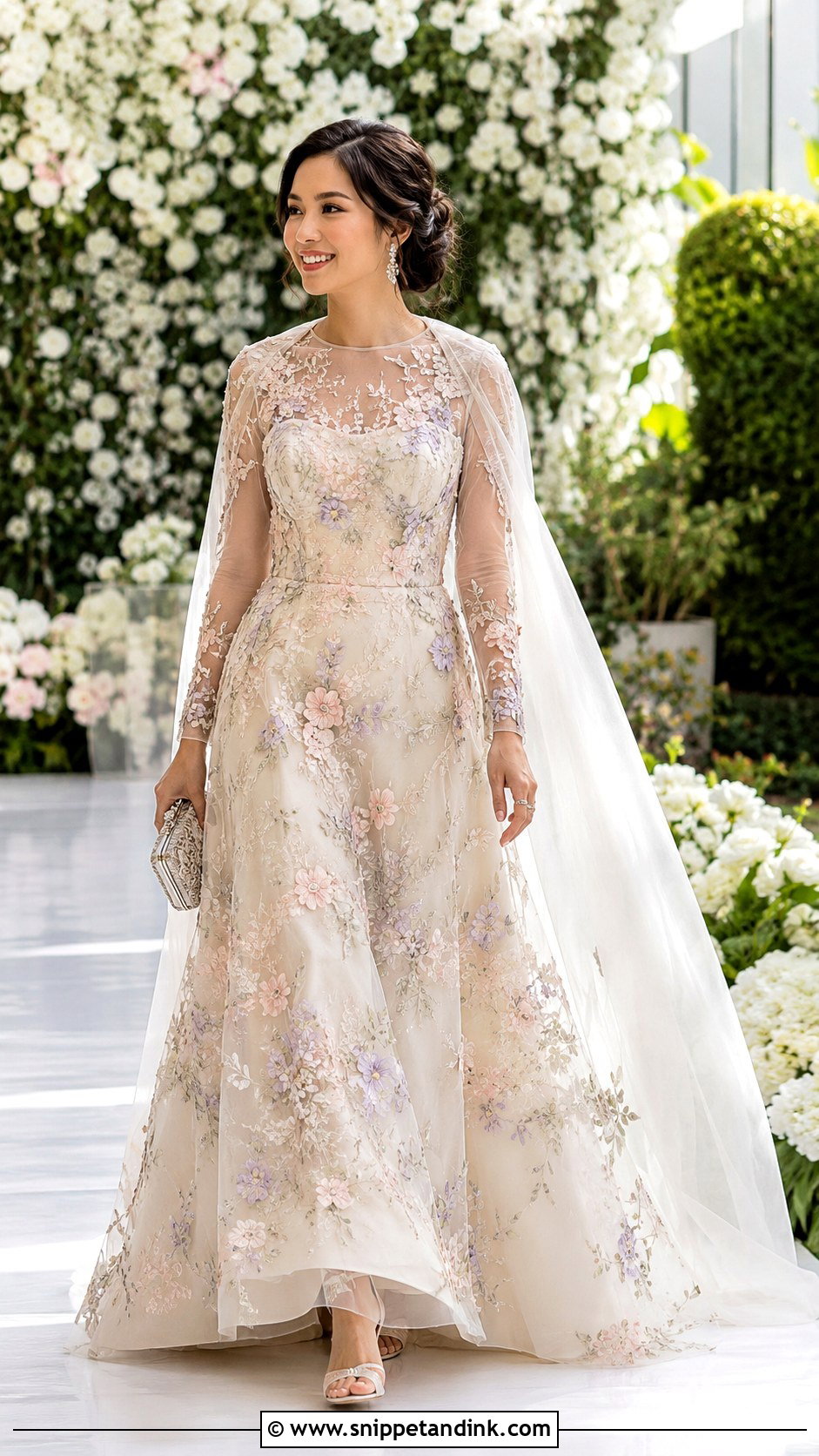
Dimensional flowers across the bodice that scatter down the skirt make a floral reception gown suit a garden, glasshouse or bright daytime party. Blush, ivory, lilac and soft blue keep the palette romantic. Delicate heels, crystal earrings, a small clutch and a loose low bun are plenty, and a sheer cape or light veil adds movement for the entrance. If the gown already holds several flower colors, keep the bouquet plain. Illusion sleeves lined in a matching tone add coverage. I check that appliqués near the waist are flexible, since stiff ones jab when you sit.
20. Malaysian Bride Detachable Cape Gown
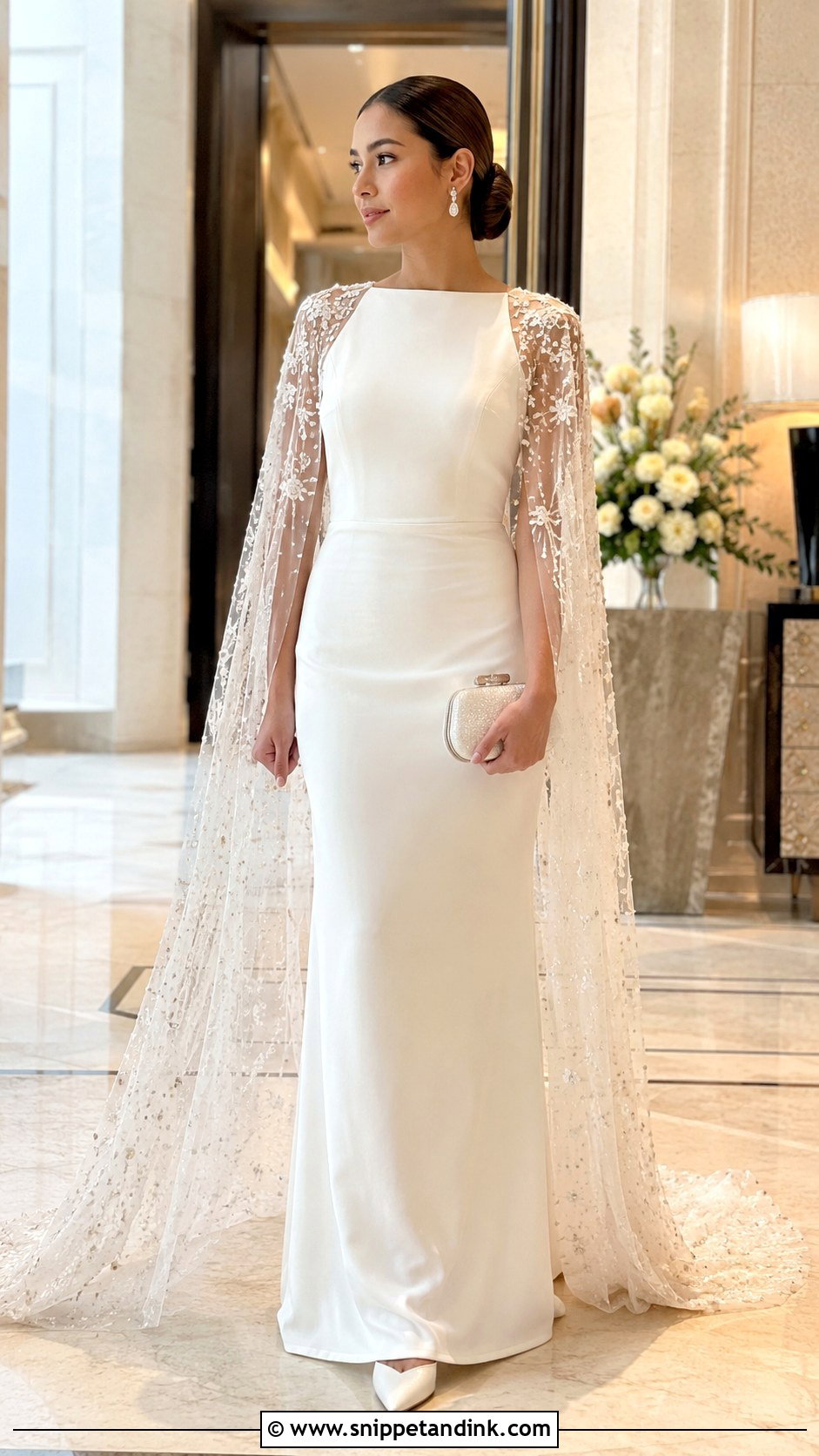
Two looks, no full change: that is why I suggest a detachable cape to brides with a tight timeline between events. Start with a fitted crepe or satin gown with a clean neckline and gently flared skirt, and add a floor-length cape in sheer tulle, lace or light organza for the ceremony and formal portraits. Take it off for a streamlined reception look. Pointed heels, drop earrings, a sleek clutch and a polished bun or wrapped hijab finish it. The cape should fasten securely at the shoulders without pulling the gown backward. Pair a plain base with a detailed cape, never a heavily beaded gown with a heavy cape.
Dressing for Tropical Heat and Monsoon Rain
Malaysia is hot and humid all year, and an outfit that feels light in an air-conditioned boutique can be heavy in a garden or a kampung courtyard by noon. These are the adjustments I make for almost every Malaysian bride.
- Line with breathable fabric. Cotton or silk linings cope with sweat far better than polyester.
- Ask for underarm shields stitched into fitted tops. Satin and silk show sweat marks clearly in photos.
- Choose a breathable inner cap under the hijab, and keep spare pins in a small pouch.
- Keep heavy songket and embroidered silk for air-conditioned venues or the shorter parts of the day.
- If your wedding falls in monsoon season, have a plan for covered walkways and closed-toe shoes that can handle a wet floor.
Give hand-woven pieces time
Hand-woven songket, custom embroidery and tailored kebaya all take time, and the best makers are often booked well ahead. I’d start conversations with weavers and tailors many months before the wedding, then plan at least two fittings for each outfit. Bring the shoes, the hijab or veil and the jewelry to the final fitting so the hem, neckline and pin placement are set with everything in place.
Heritage Pieces, Modern Cuts and One Long Wedding Weekend
The right outfit for each event is the one that feels like yours and lets you sit, kneel, greet and pose without fuss. Traditional baju kurung, kebaya, songket, cheongsam, saree and heritage ensembles can be worn exactly as they have always been, or adjusted with modern tailoring. Gowns, floral dresses and detachable layers add options for receptions. Before you settle any look, see the fabric in daylight and in your venue’s lighting, and wear your shoes to every fitting. For culturally significant textiles, speak with the makers or elders who know them. A wedding wardrobe built this way honors your family and still looks like you.


Leave a Reply