
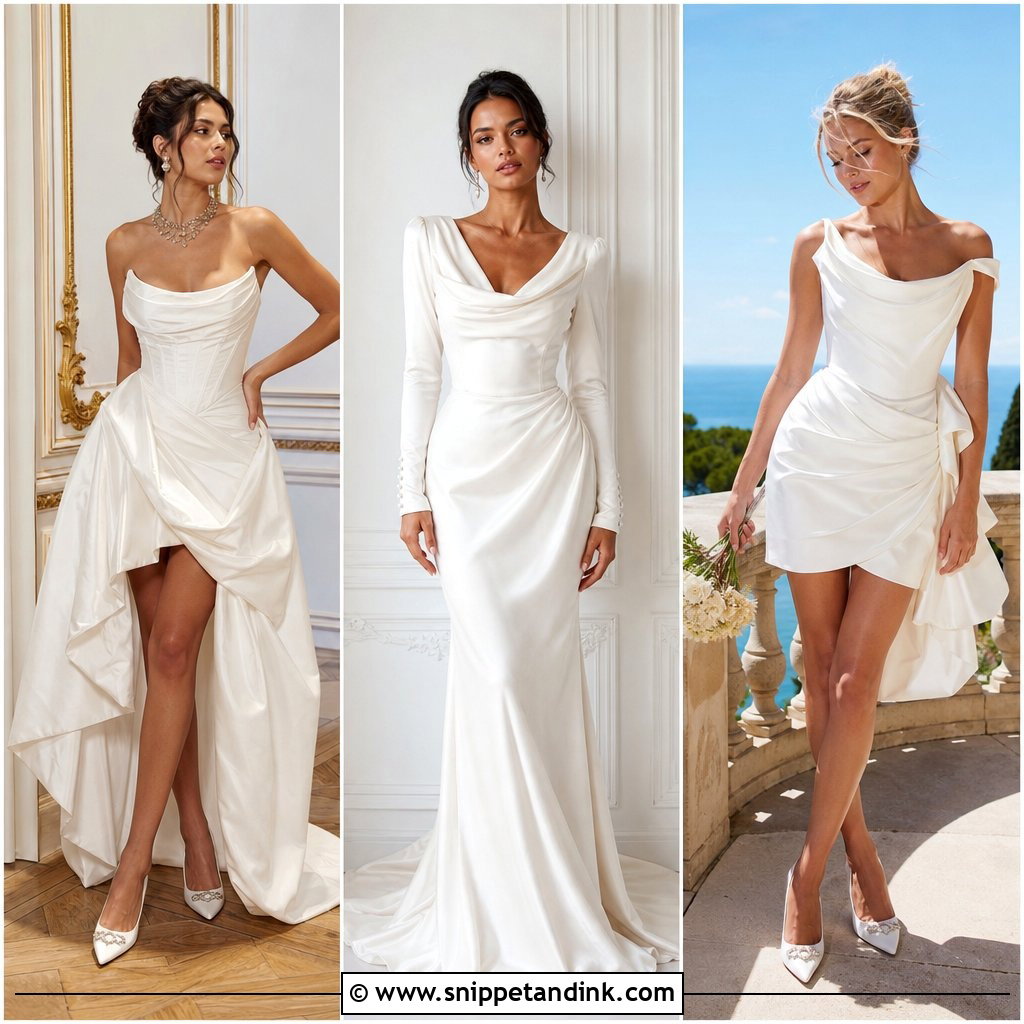
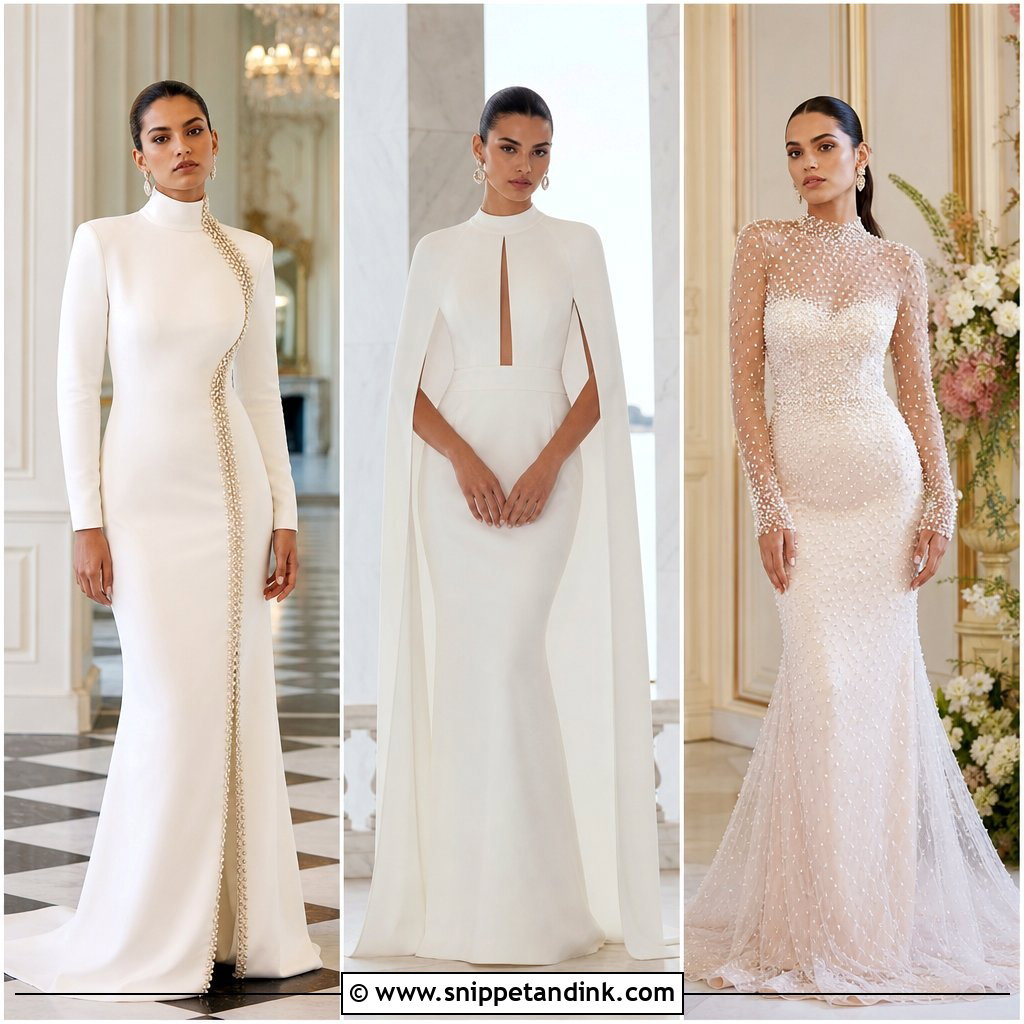
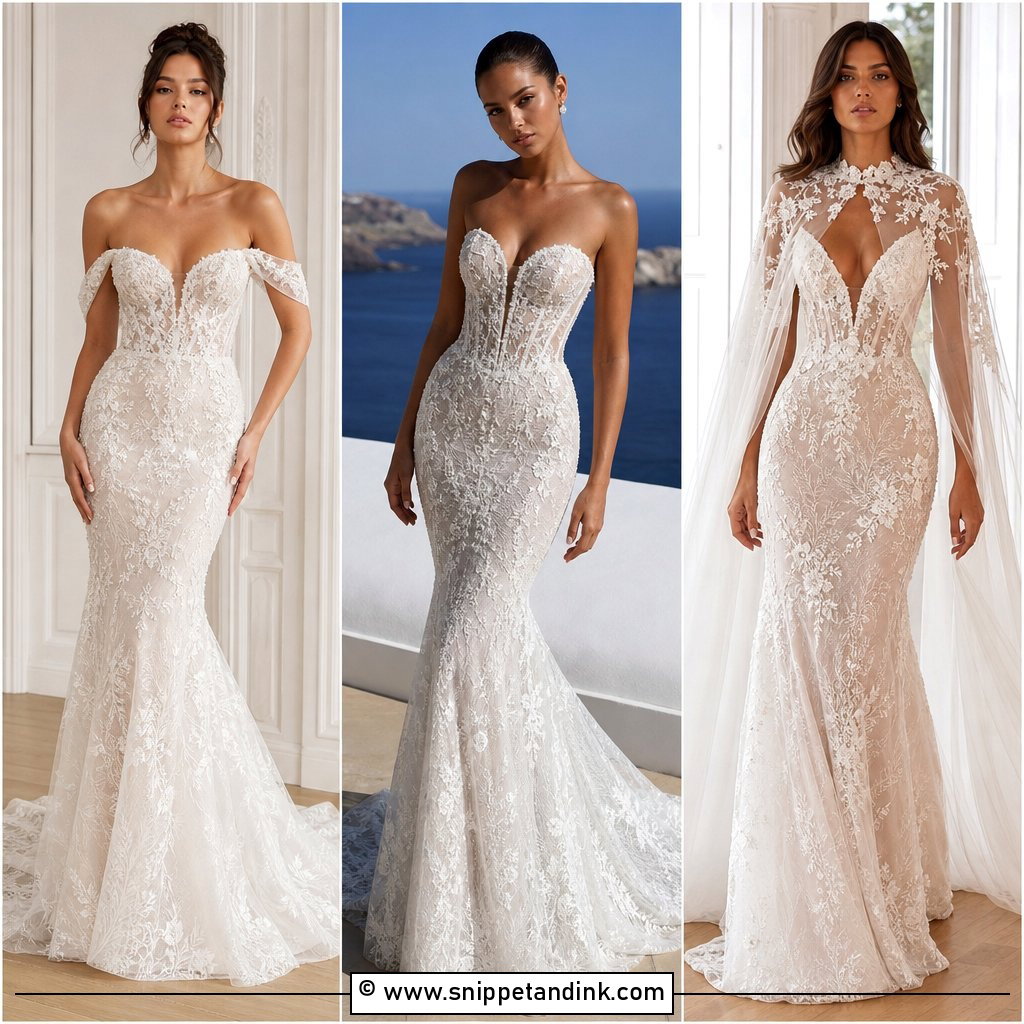
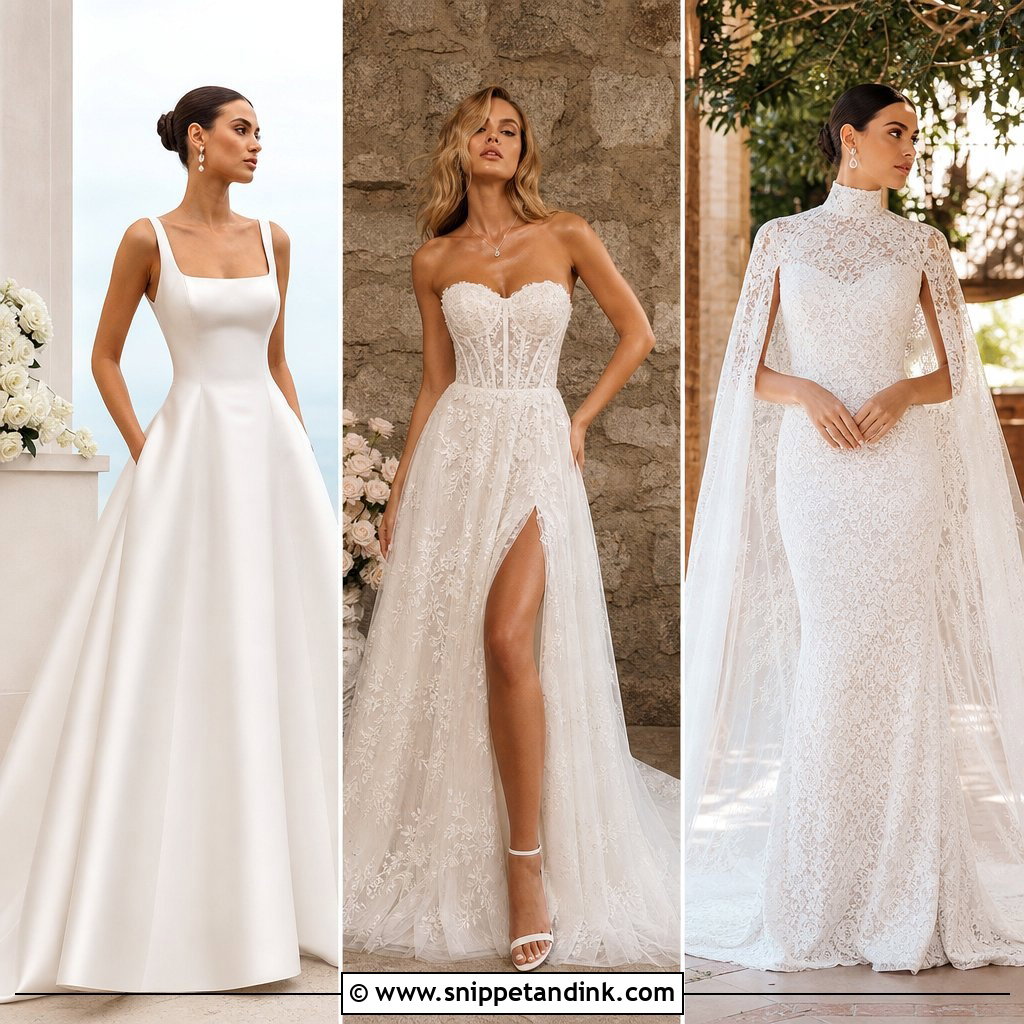
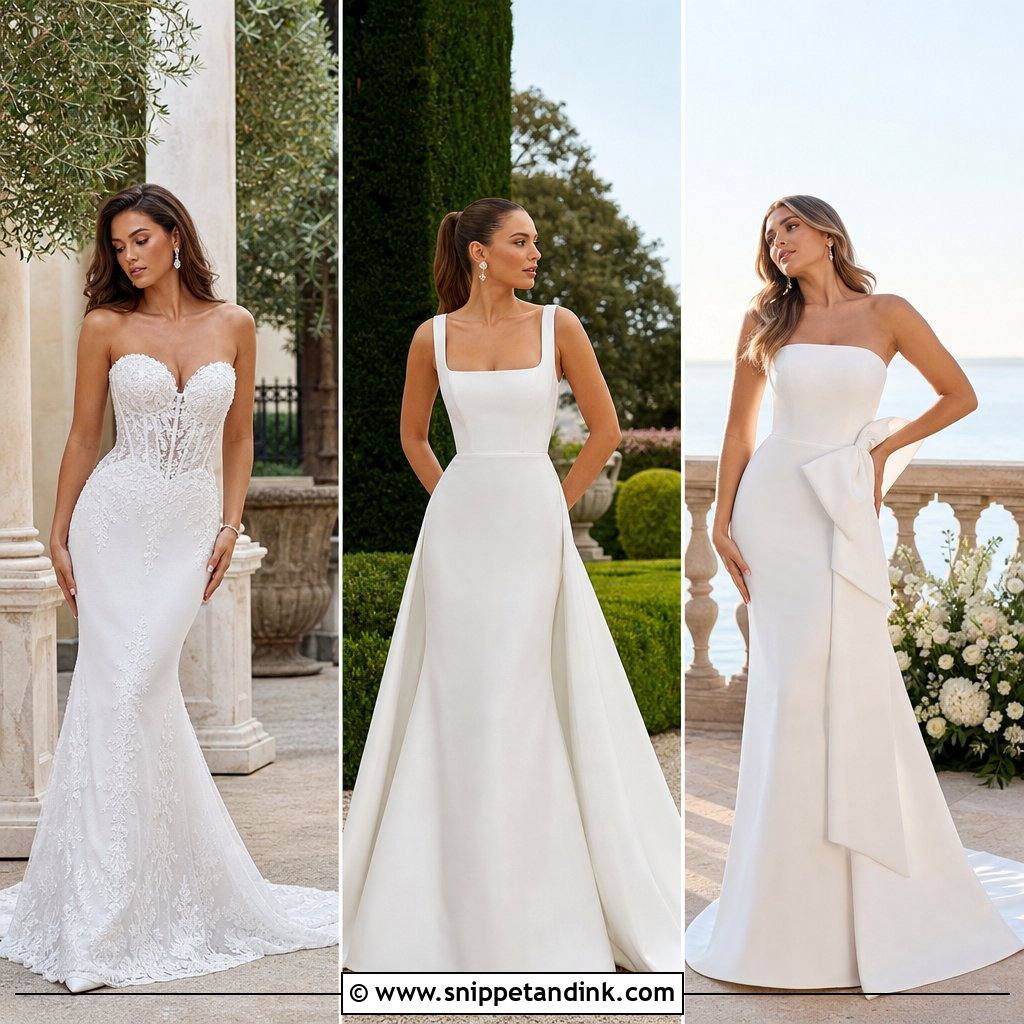
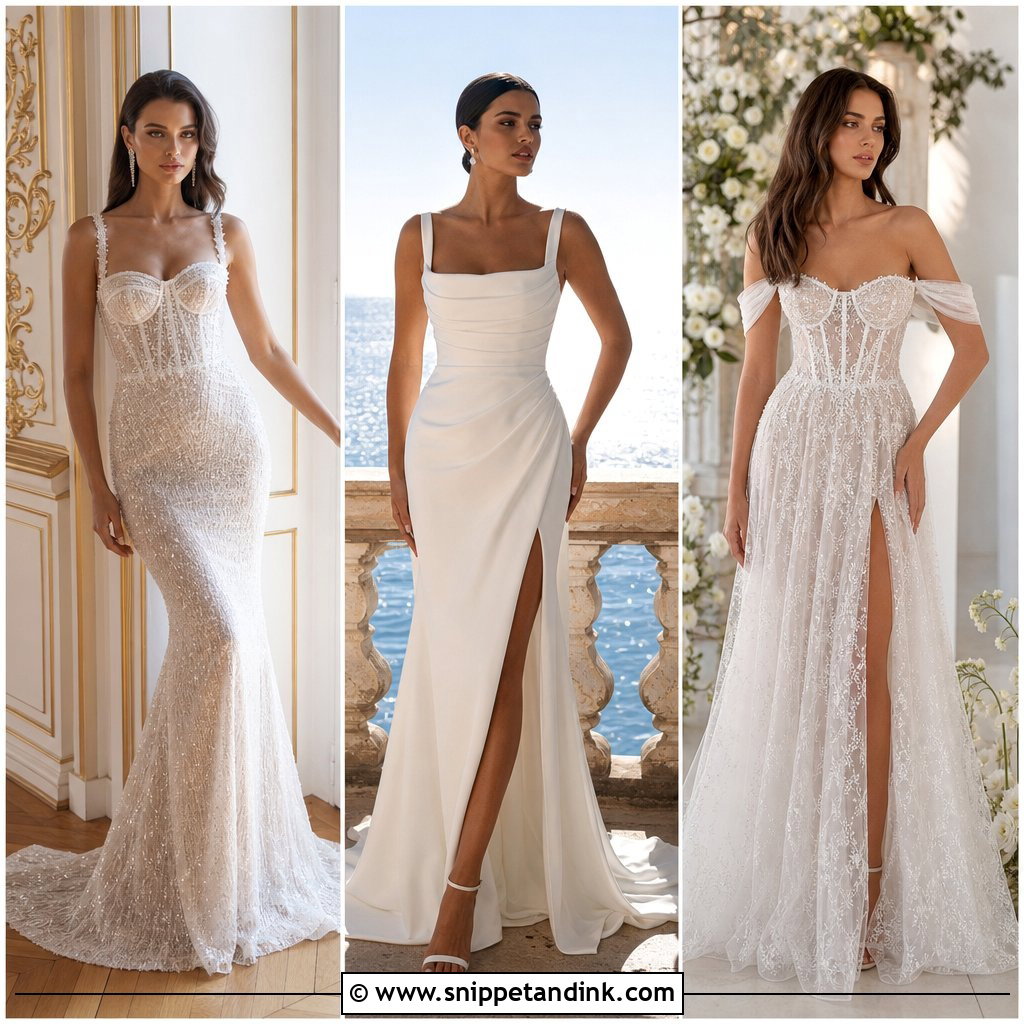
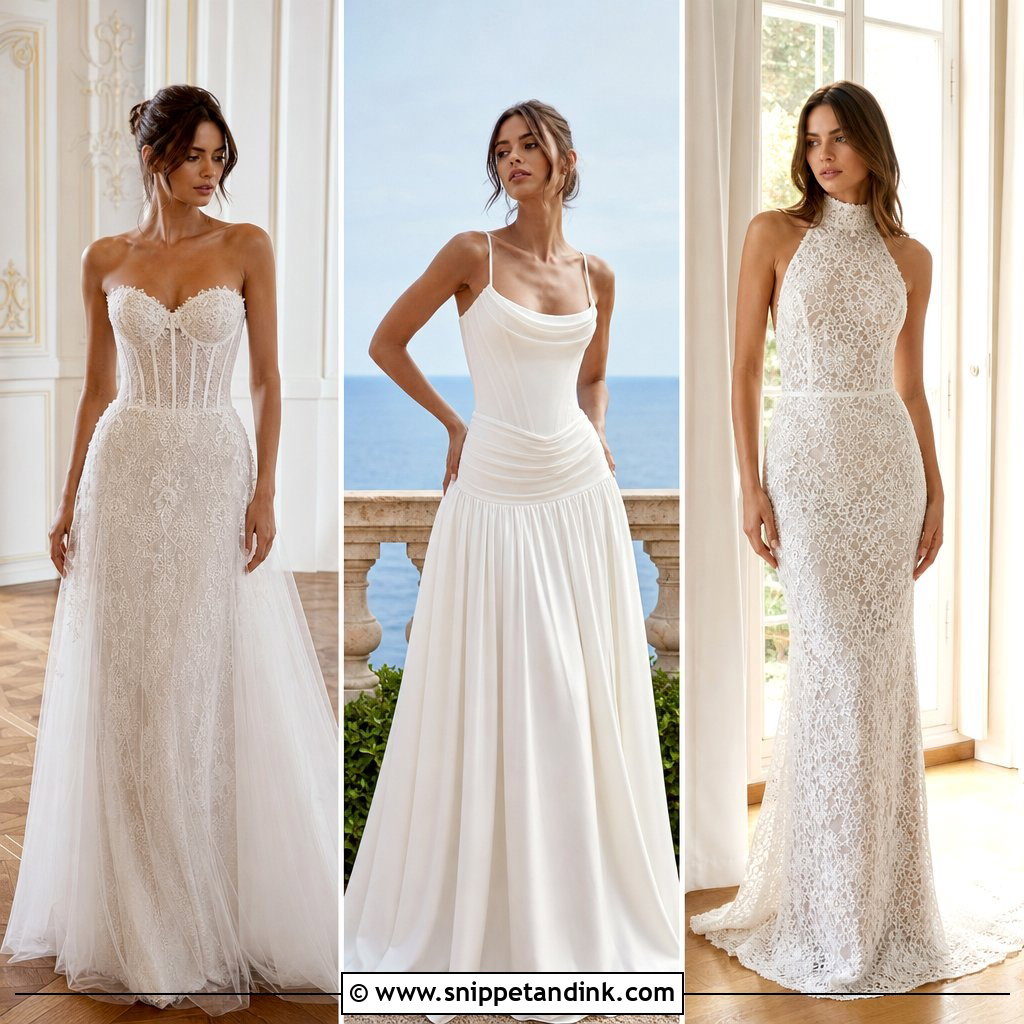
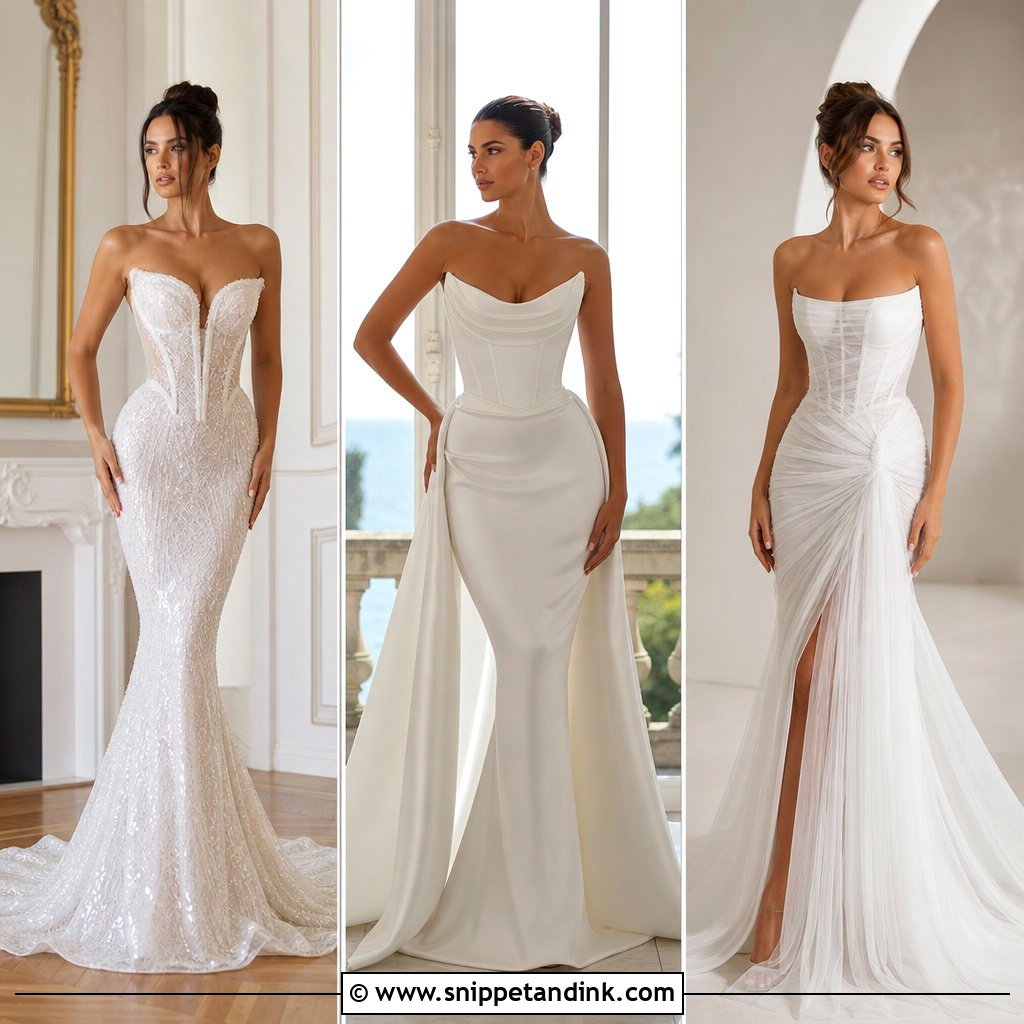
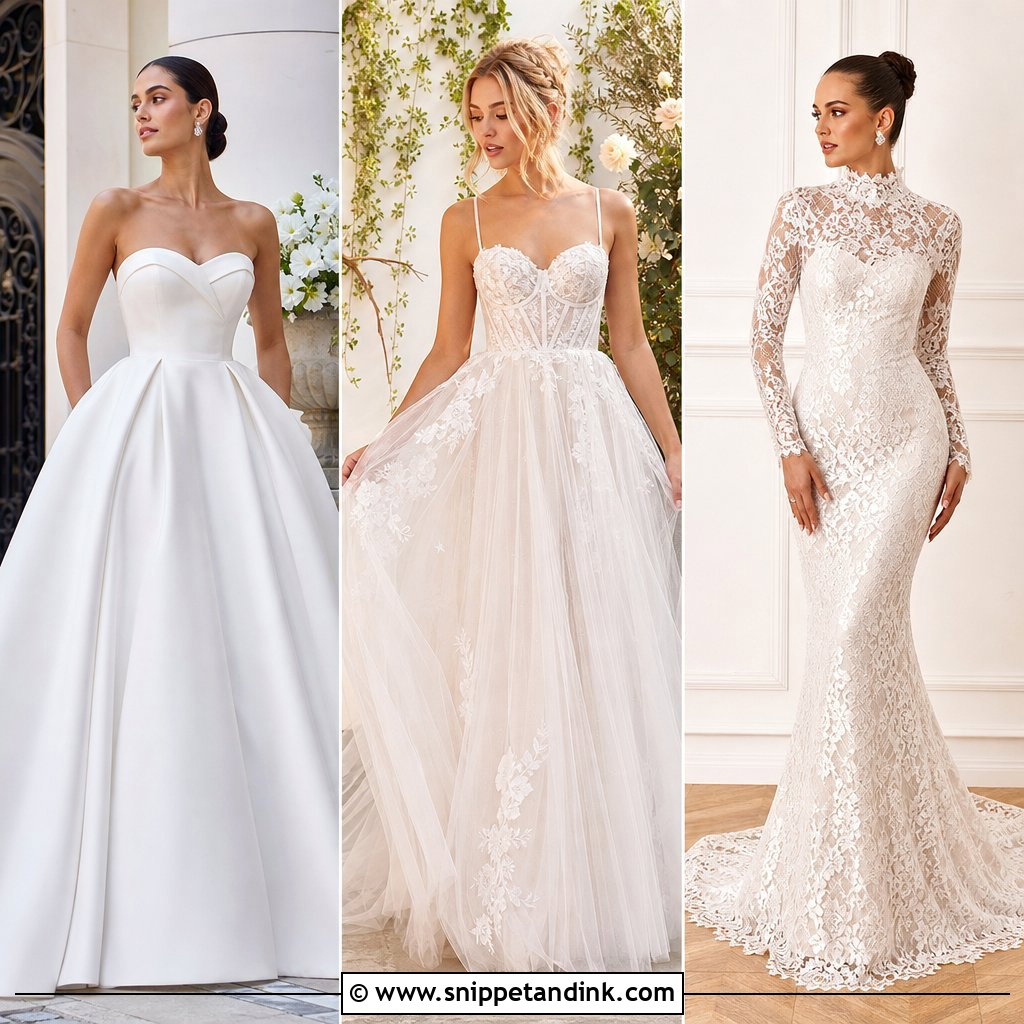
Kyha Studios is the Australian label I think of when a bride tells me she wants structure rather than sparkle. The gowns lean on sculpted corsetry, dropped waists, asymmetric draping and heavy satins, and a lot of them come apart: trains detach, sleeves unclip, skirts shorten. That makes styling them a different job from styling a traditional lace ball gown, because the accessories have to work with two versions of the same dress. Below are twenty Kyha designs, from slinky bias-cut satin to a taffeta ball gown and a set of lace separates, with the shoes, hair, veil and venue I’d pair with each and the fitting questions worth asking.
How a Corset Bodice Should Feel at Your First Fitting
Almost every gown on this list relies on internal corsetry, and brides are often unsure how tight is right. A properly fitted corset bodice should hold you without help from your hands: you can lift your arms, lean forward to sign the register and sit without the top edge digging in or gaping. If you can slide a flat hand easily between the bodice and your ribs, it needs taking in. If you can’t take a full breath while seated, it’s too tight, and it will feel far worse after a meal.
- Bring the exact shoes and undergarments to every fitting. A different bra or a lower heel changes where the waist and hem sit.
- Sit, lift your arms, hug someone and pretend to dance. Structured bodices that look perfect standing often shift when you move.
- Satin and Mikado show stitching holes, so alterations on these fabrics have less room for second attempts. Ask the seamstress how much she can let out if needed.
- Many designer gowns are made to order and can take several months to arrive, before alterations even begin. Ask the stockist for current production times at your first appointment.
1. Kyha Eaton Wedding Dress
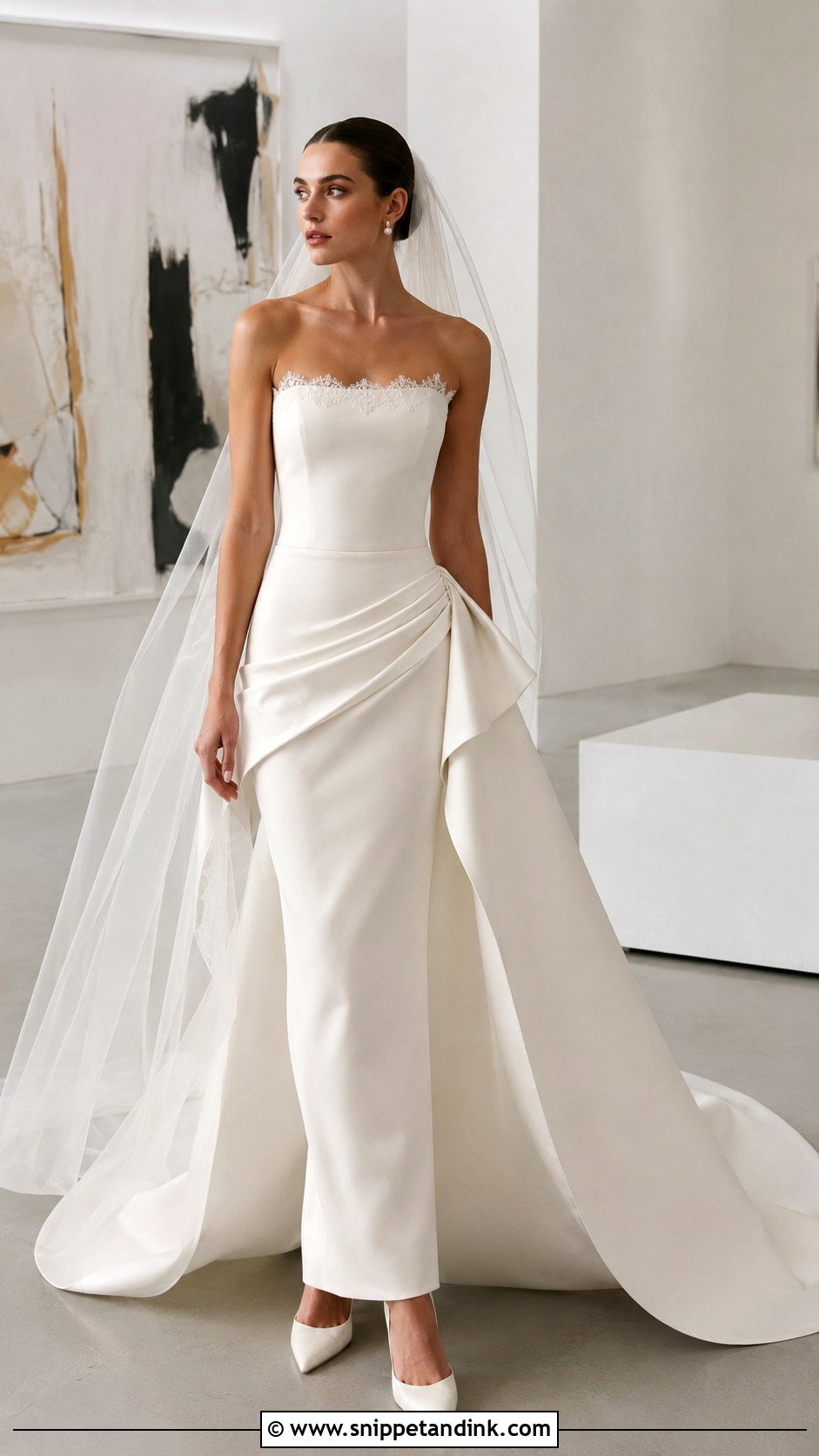
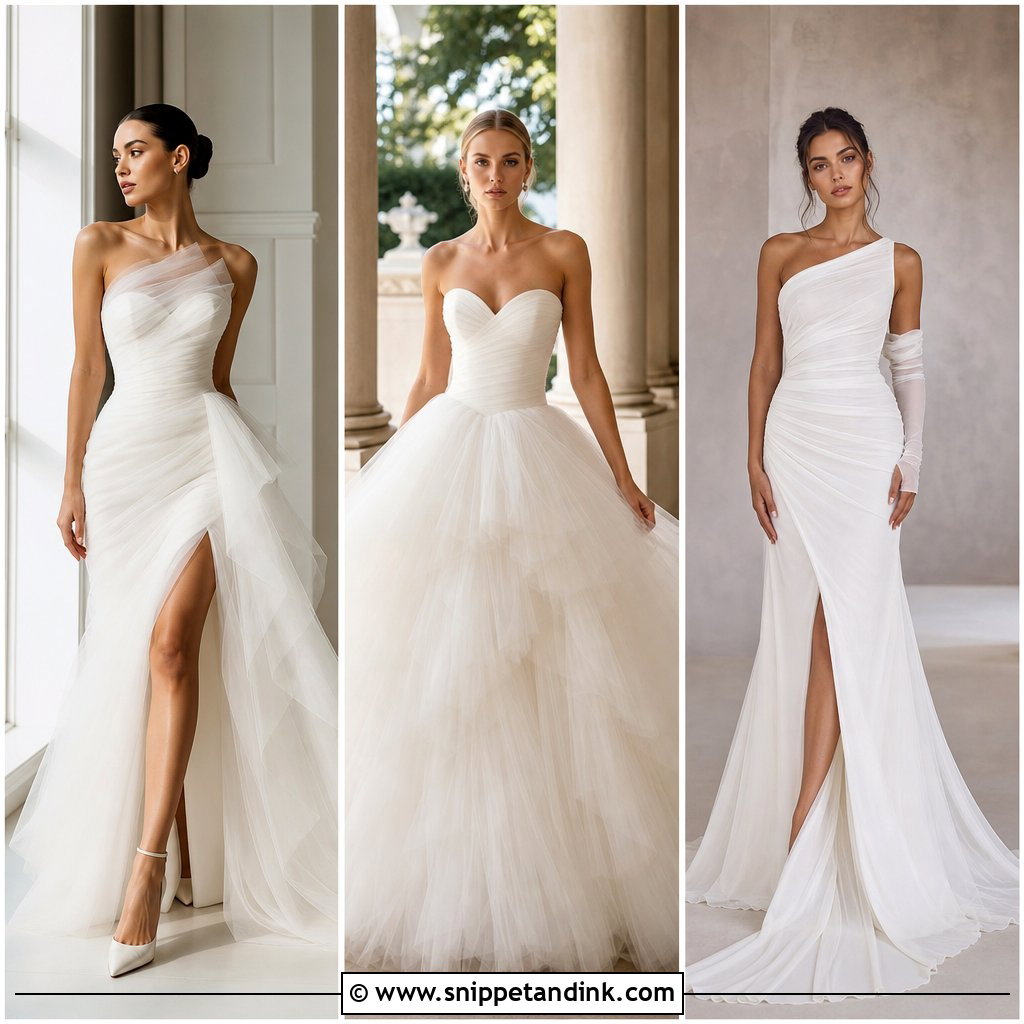
Eaton is built around a dropped waist with visible boning and an asymmetric drape at the hip that runs into a narrow column skirt. You can have the neckline lace-trimmed or clean; I’d pick the clean version if your venue is very modern, the lace one if you want the bodice to feel softer in close-up photos. The detachable train gives you the aisle moment, then comes off with the cathedral veil before dancing. Pointed ivory pumps, a low bun and small pearl or diamond studs are all it needs. A gallery or city venue suits that precise construction.
2. Kyha Sen Wedding Dress
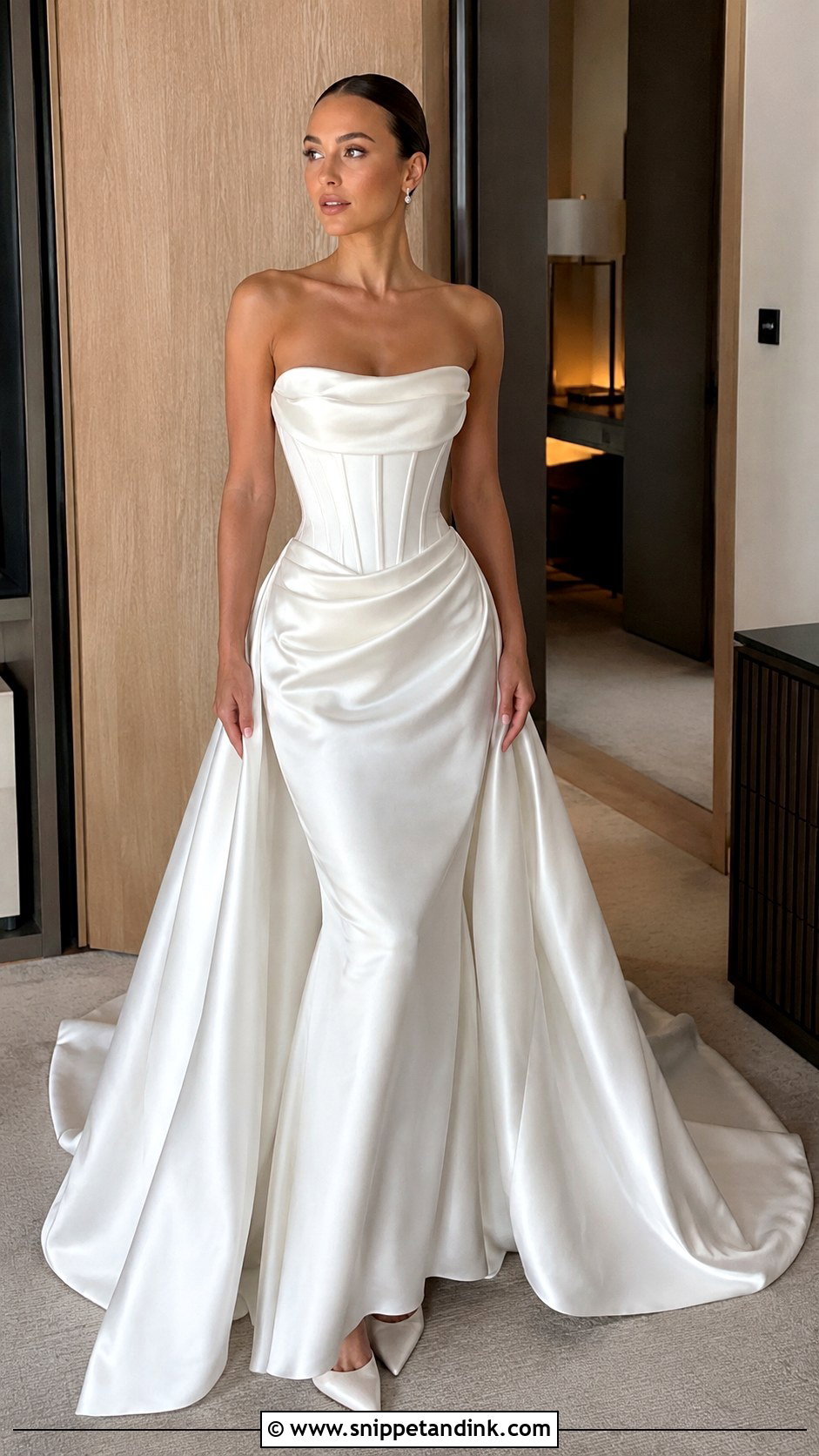
The Kyha Sen wedding dress gives you two looks in one gown: a strapless structured bodice, dropped waist and low hip drape, with a removable train. With the train and a long sheer veil, it’s an aisle dress. Take both off and it becomes a much sleeker fit-and-flare for the reception, where I’d add sculptural earrings and satin slingbacks. The waist detail already pulls the eye, so I keep jewelry smooth and simple. Practise detaching the train at your last fitting; whoever helps you on the day should do it once with you there.
3. Kyha Blyth Wedding Dress
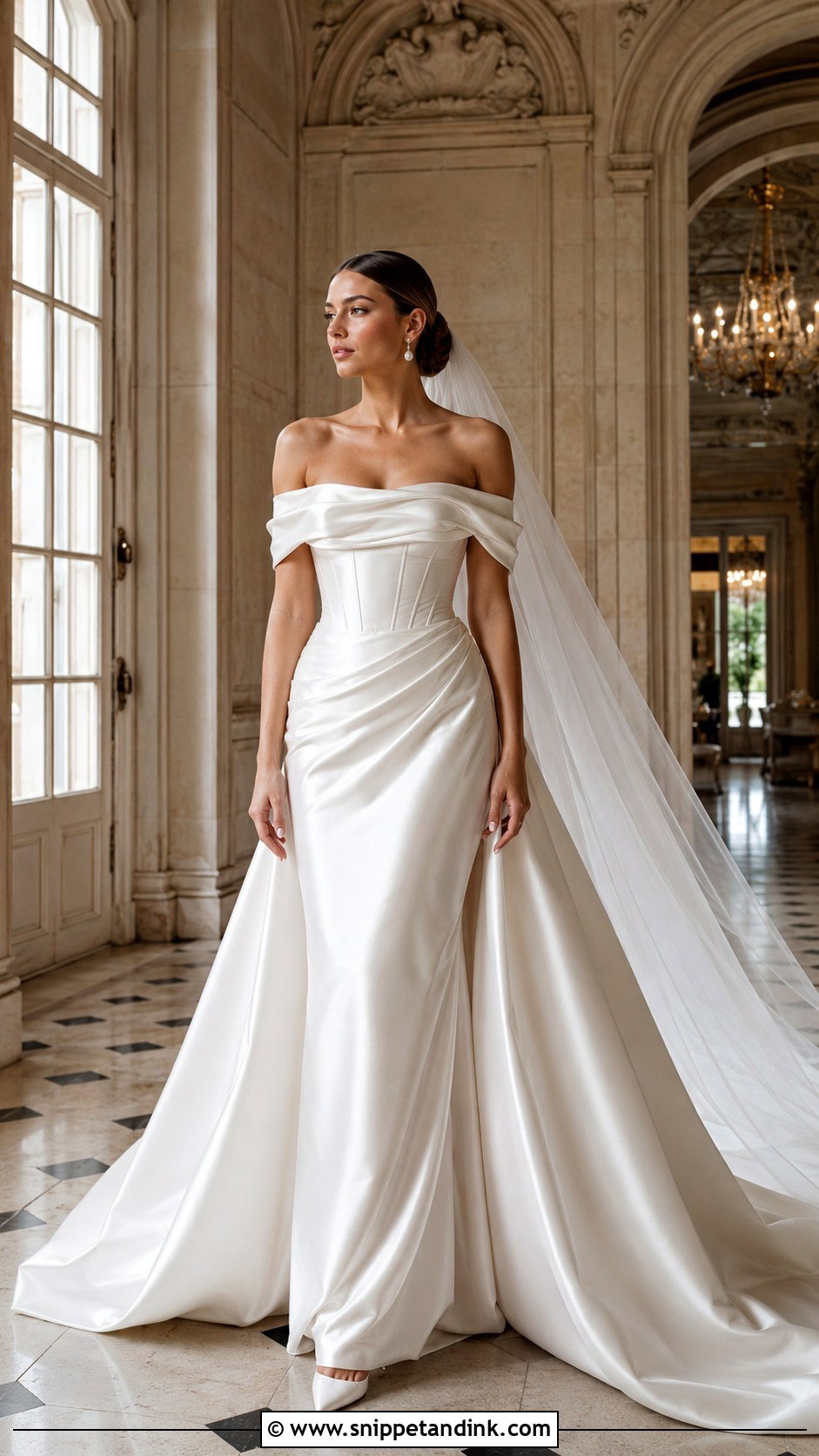
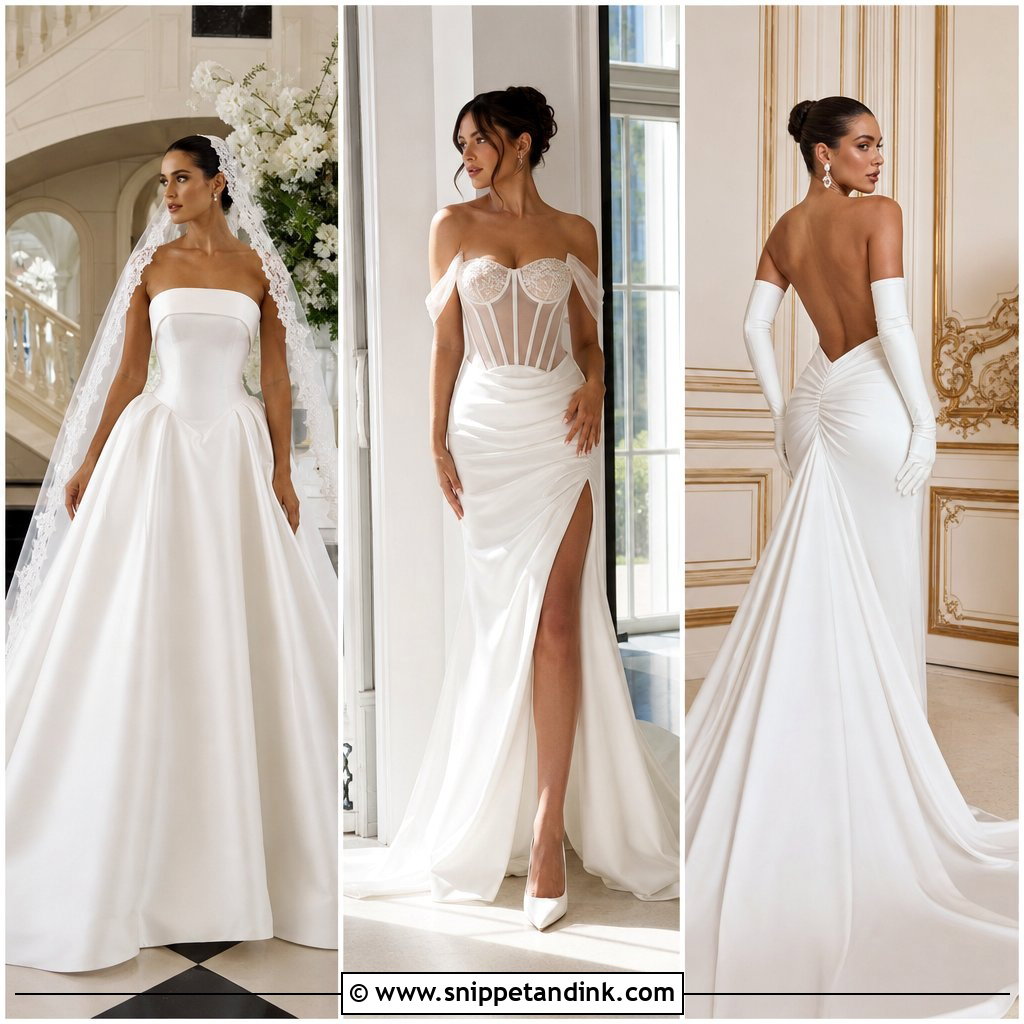
Silk satin like Blyth’s catches natural light with a soft, creamy glow, which is why I’d want this one outdoors or near big windows. The off-the-shoulder corset is highly structured, the draped neckline is softer, and the skirt stays narrow at the front before opening into a fuller back and train. Skip the necklace; that neckline is the jewelry. Pearl drops, satin pumps and a cathedral veil anchored beneath a chignon suit a ballroom or historic estate. At alterations, ask how the front can be shaped, because small changes push it toward a column or a softer A-line.
4. Kyha Wilton Wedding Dress
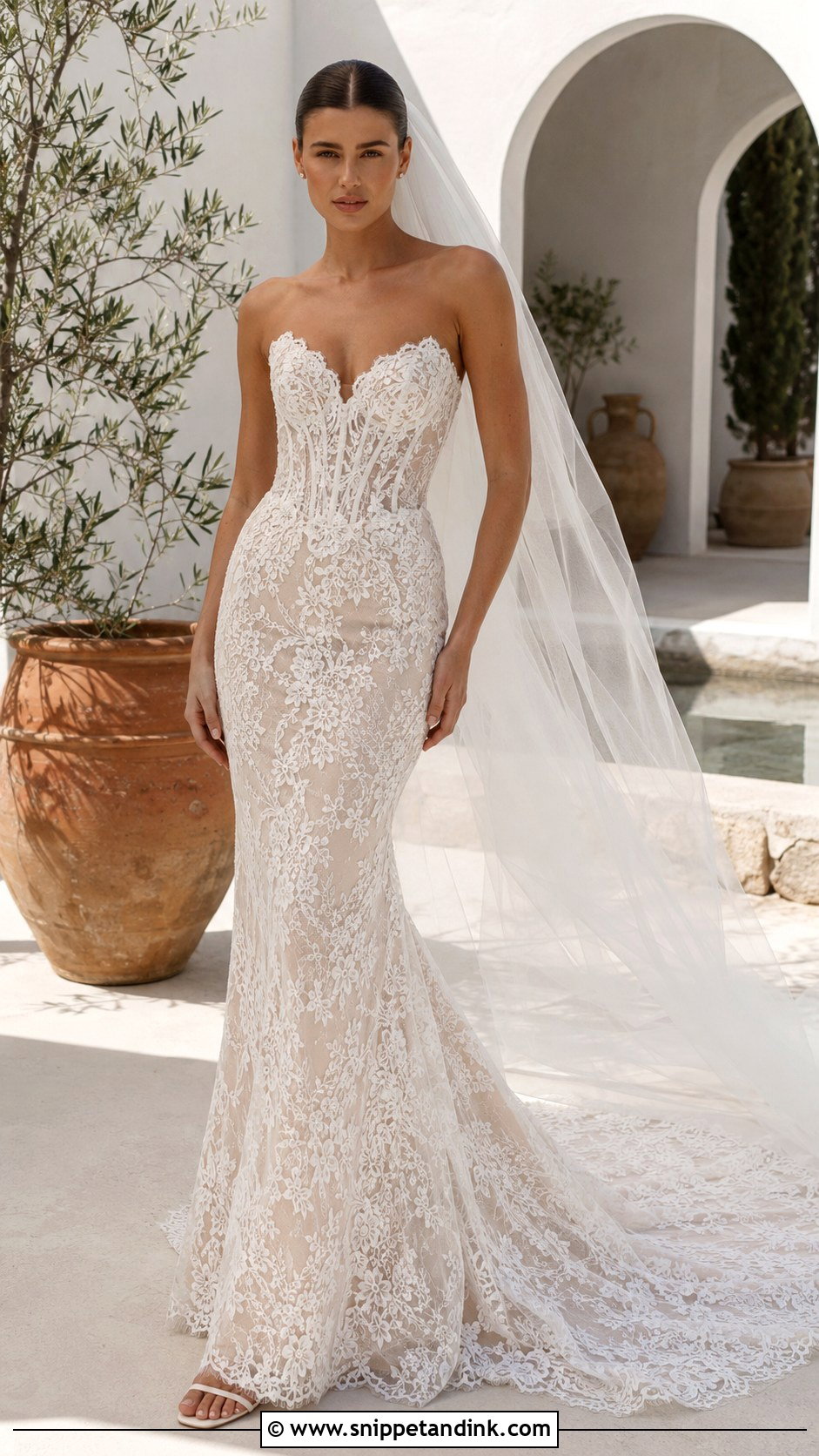
Wilton is lace handled in a modern way: a corseted bodice with a scalloped neckline, draped lace forming a slim front skirt and a much fuller train behind. The choice that matters most is the lining. Ivory over nude shows the lace pattern clearly but reads very differently against fair and deep skin tones, while ivory-lined is more covered and traditional. I always ask a bride to see both in daylight and under a phone flash before deciding. Barely-there sandals, a sleek middle-part bun and a plain tulle veil keep the corded lace from looking busy.
5. Kyha Germain Wedding Dress
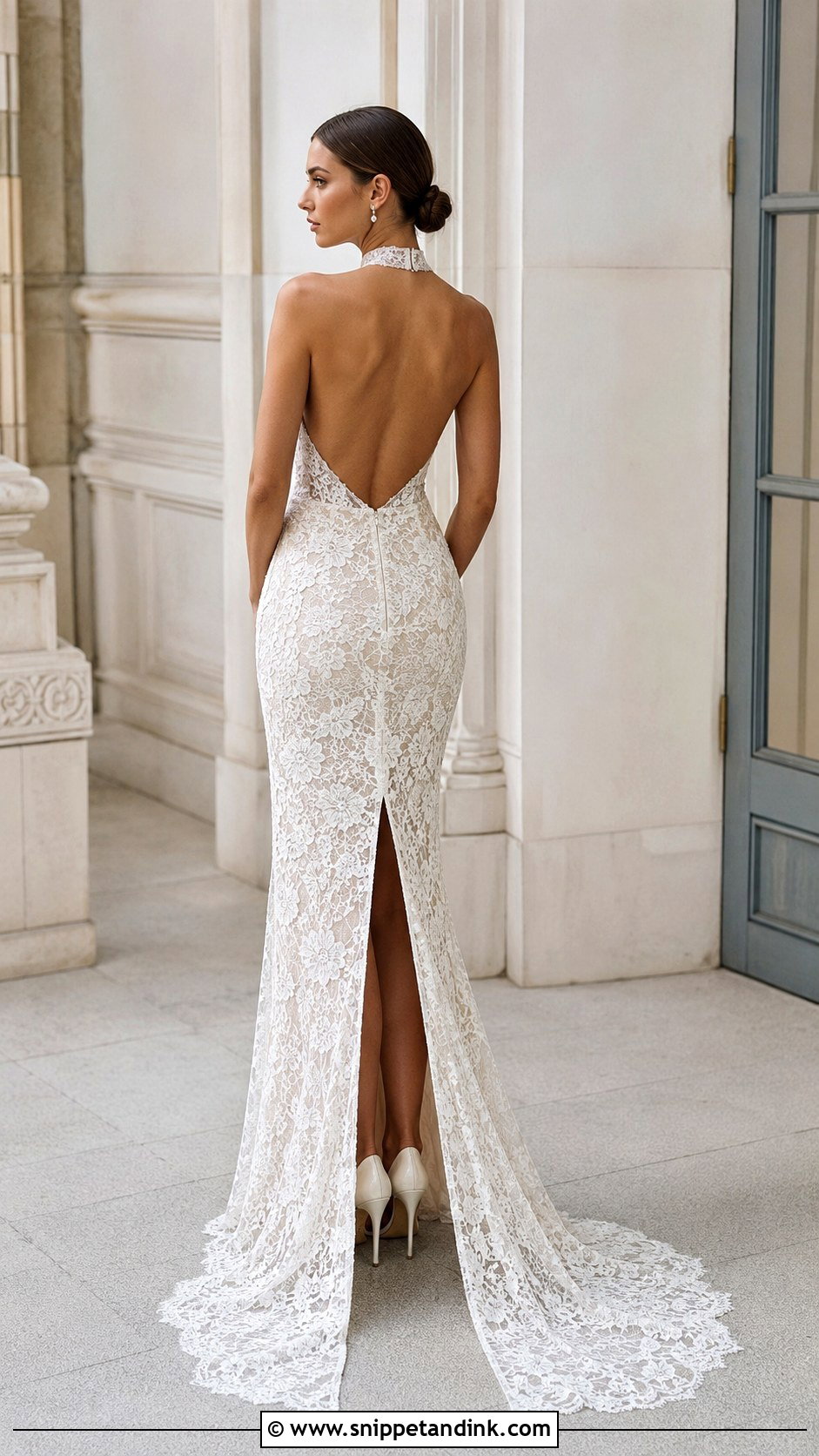
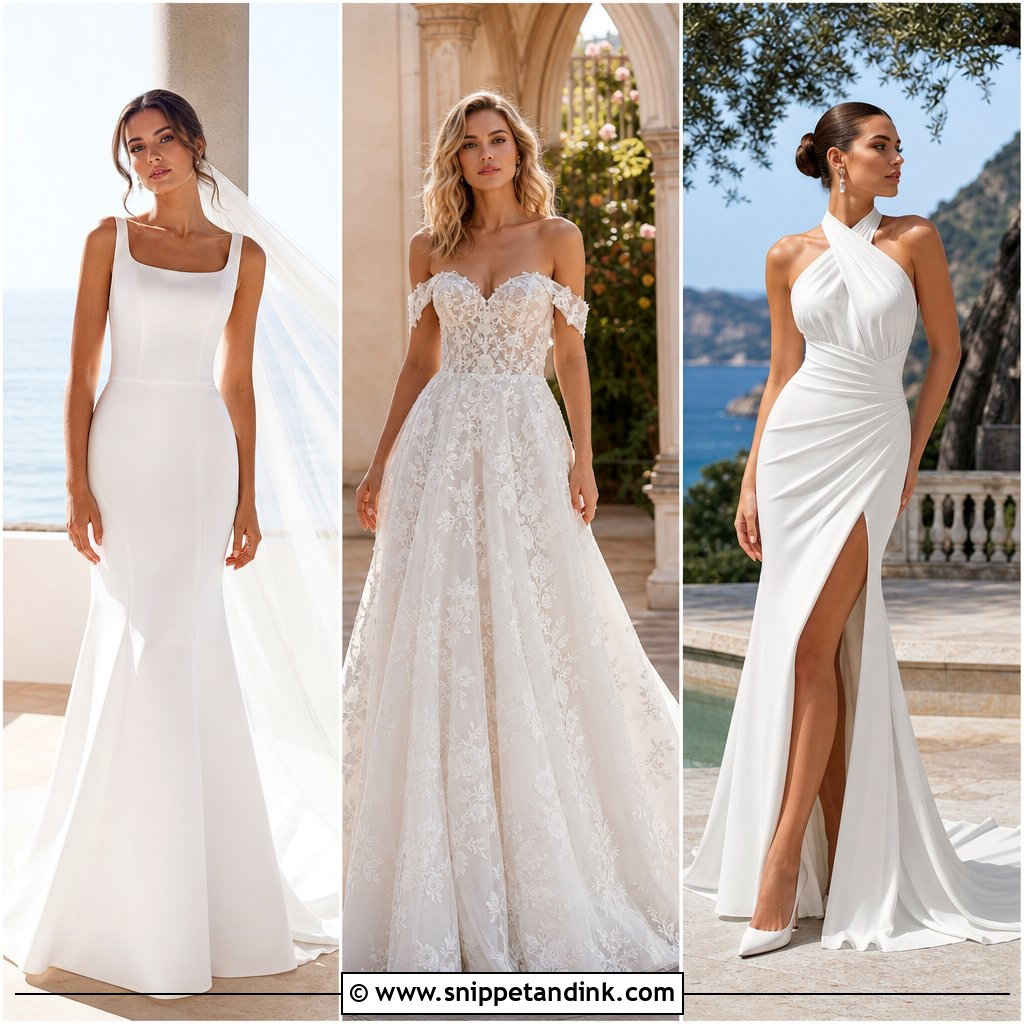
A high halter neckline draws one long line from chin to waist, and Germain pairs it with a low back and a lace skirt that skims rather than clings. It’s a good answer for a bride who doesn’t want strapless. Choose the column version for a destination or courthouse ceremony and the train for something more formal. Keep hair in a low knot so both neck and back show, and skip chunky bracelets, which catch on lace. A narrow fingertip veil or a sheer neck scarf adds movement without covering the back.
6. Kyha Azolla Wedding Dress
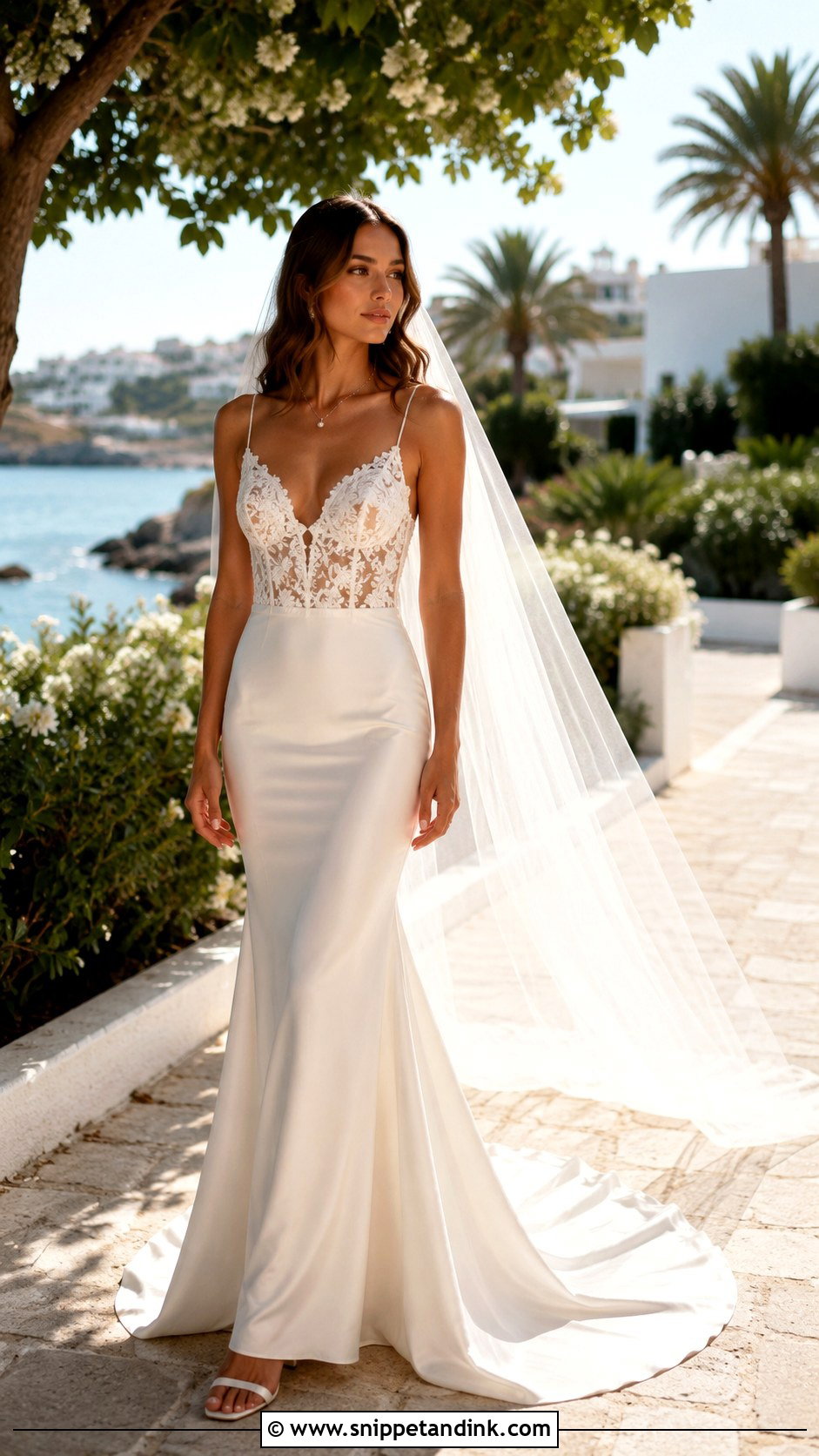
Azolla pairs a lace bodice with a bias-cut satin skirt on slim straps and a deep V. Bias cut means the fabric runs diagonally, so it drapes and moves with the body, and it also shows what’s underneath; I’d plan undergarments before the first fitting. If you want more coverage, the chiffon-lined bodice is the safer choice over illusion tulle. Slim ivory sandals, a fine pendant and soft waves behind the shoulders keep the slip-dress feel. It belongs at a beach resort, garden or warm-weather destination.
7. Kyha Raina Wedding Dress
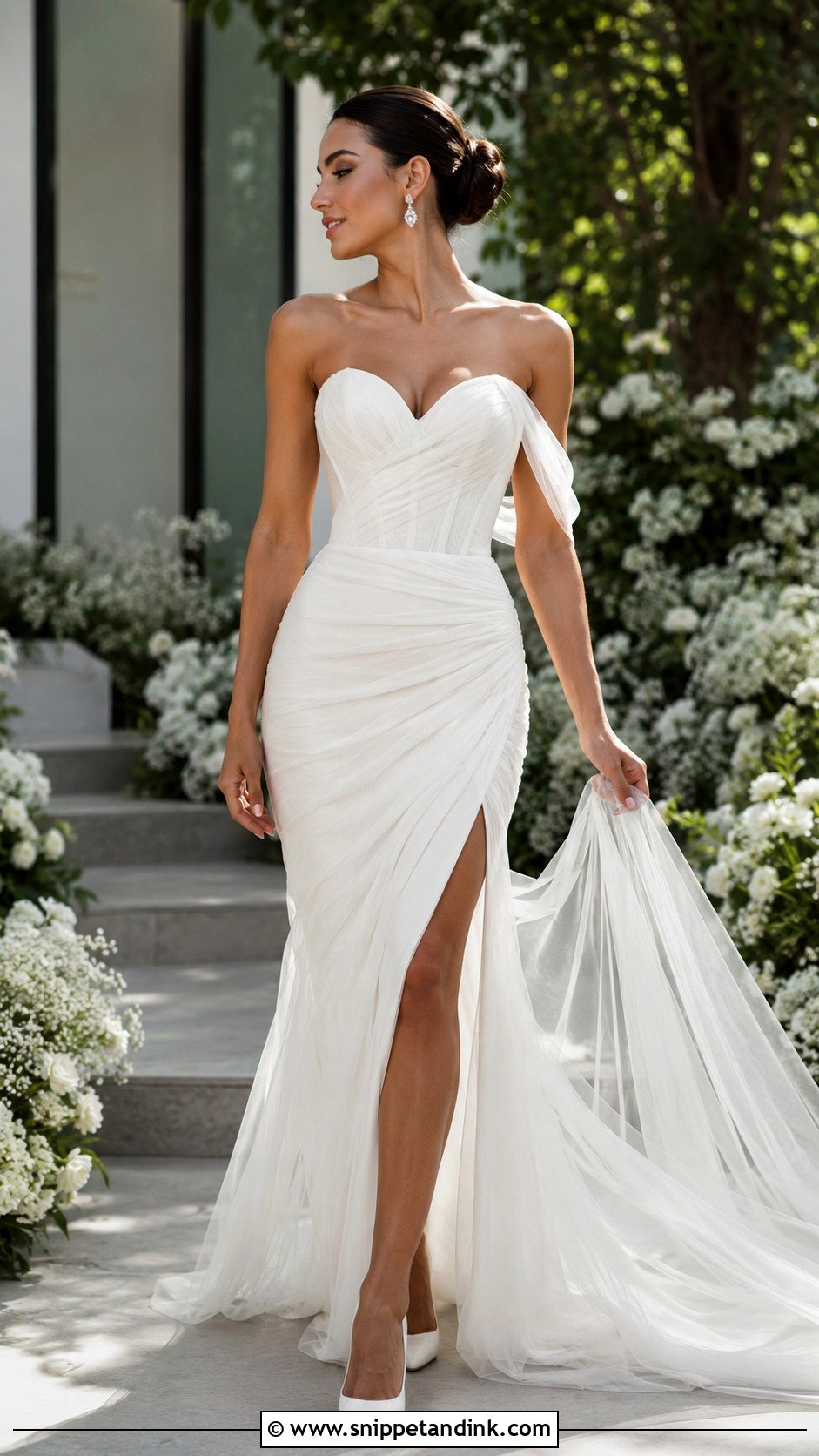
Raina wraps a structured sweetheart bodice in asymmetric tulle layers, then runs into a column skirt with a side split and a draped train. Tulle this soft moves in any breeze, which is lovely on a coast and tricky with a long veil, so I’d choose a short raw-edge veil that won’t tangle with the drape. Ankle-strap sandals are more secure than pumps on grass or uneven paving. Crystal studs and a smooth low bun keep the neckline clear.
8. Kyha Mica Wedding Dress
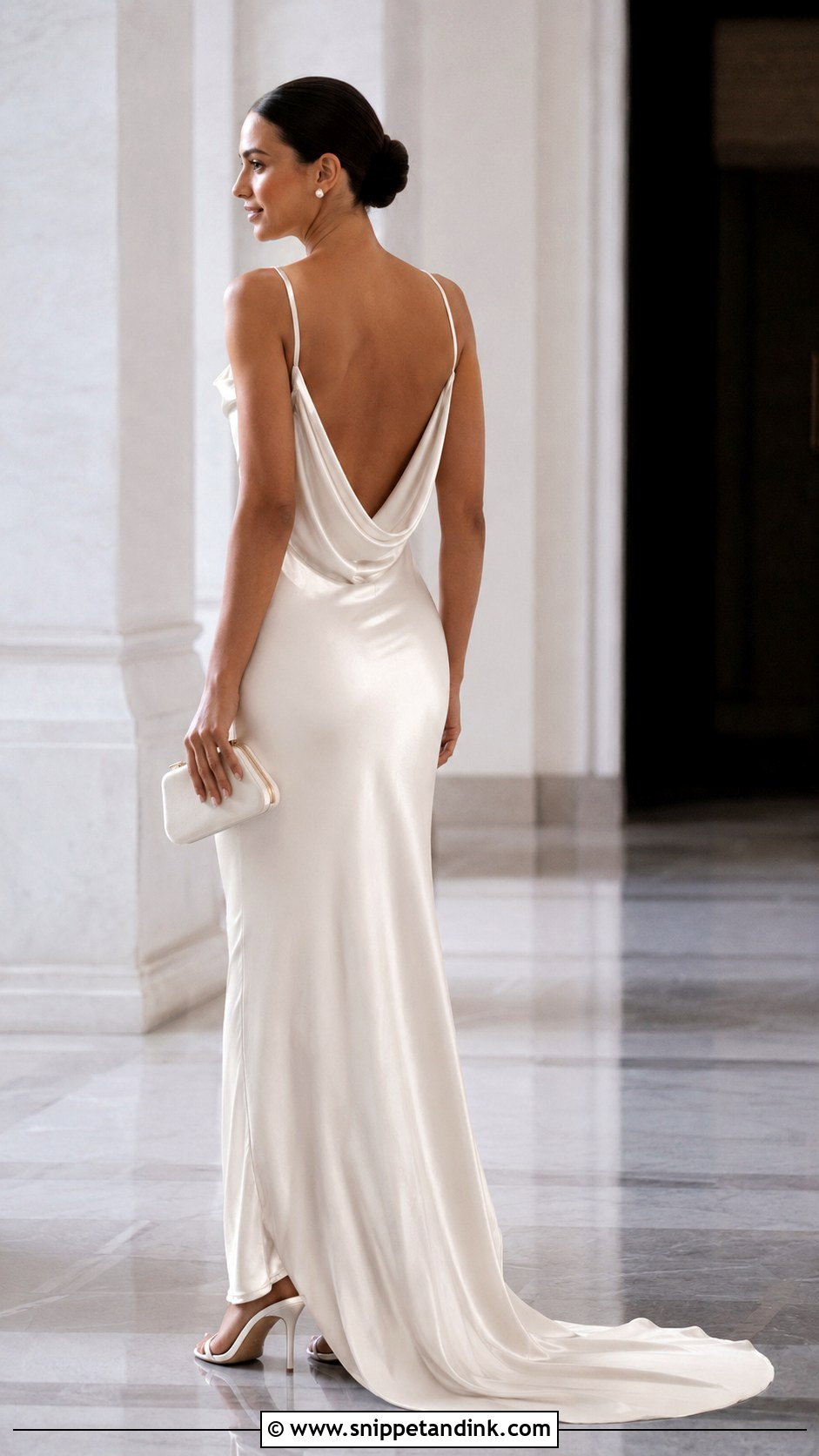
Mica is the closest thing here to a 1990s-inspired satin gown: bias-cut, a draped cowl at the front and a deeper cowl at the back. Fluid double satin like this shows every line beneath it, so tailoring and smooth, edge-free shapewear come first, before shoes. I’d skip a long veil that hides the back and use a sheer shoulder-length one for the ceremony only. Pearl studs, a neat bun and slim satin heels keep it clean. City hall, a restaurant or a loft all suit it.
9. Kyha Gibson Wedding Dress
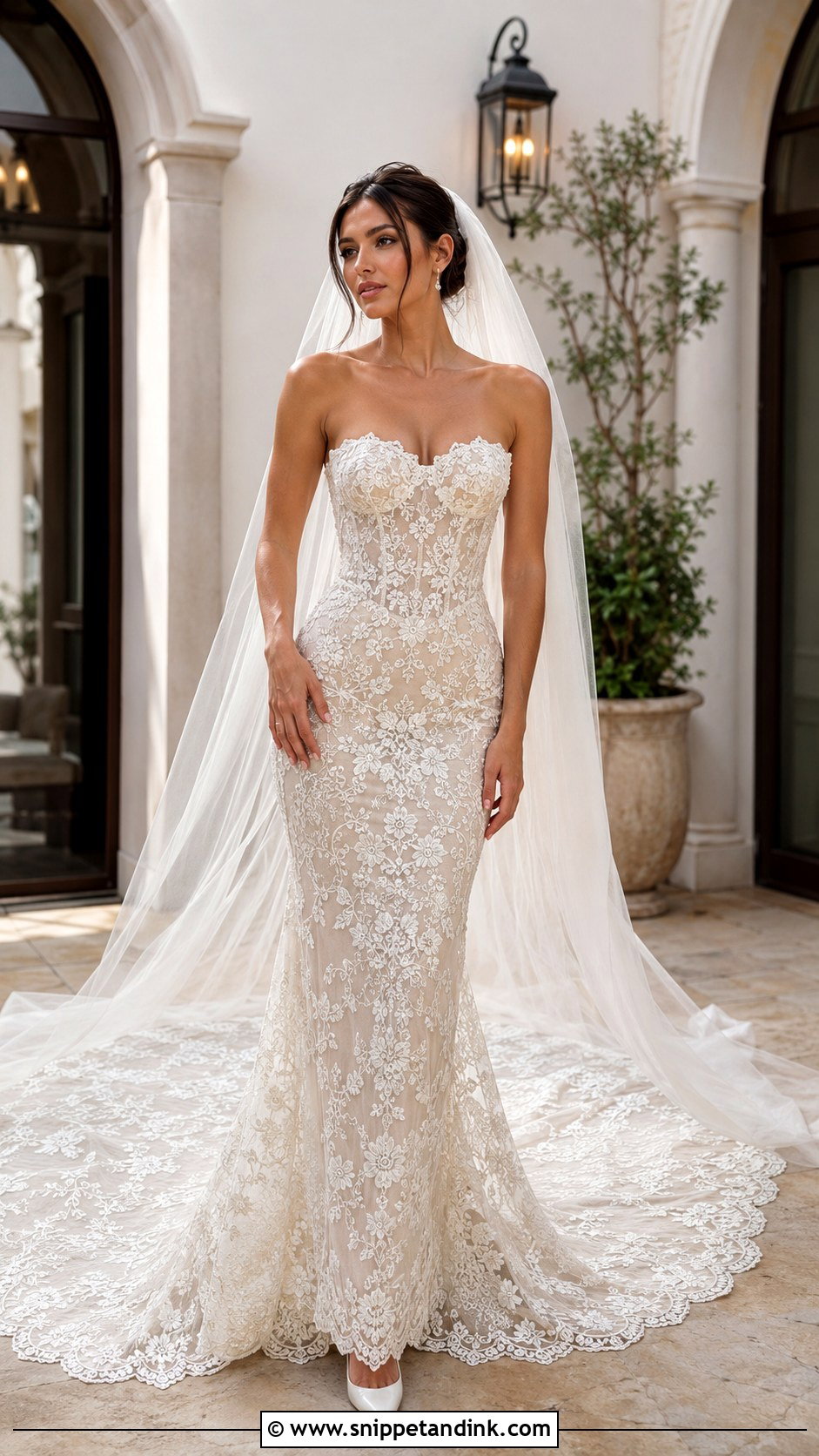
Gibson cleans lace up with structure: a strapless corset, a narrow fit-and-flare with scalloped edges and a fuller godet at the back forming the train. Nude chiffon under ivory lace makes the pattern stand out; ivory on ivory is softer. With scallops at both neckline and hem, I’d avoid lace gloves, ornate shoes or an embroidered veil, which make the whole look fussy. A plain cathedral veil and a polished bun keep the neckline visible in a courtyard or contemporary chapel.
10. Kyha Arlo Wedding Dress
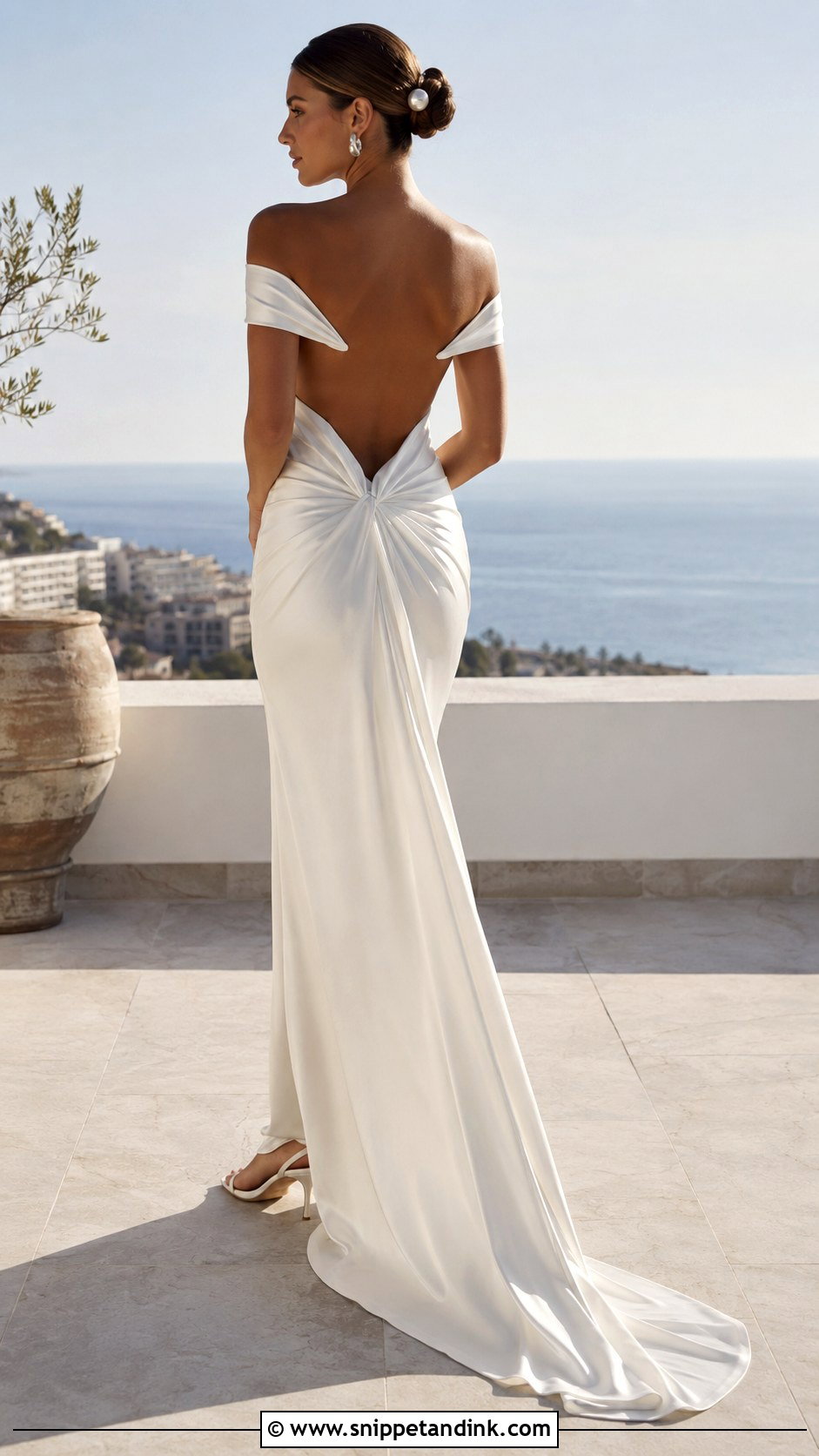
Liquid double satin cut on the bias gives Arlo its movement. The off-the-shoulder front frames the collarbones, and the real interest is behind you: open back, asymmetric drape and a knotted train. An opaque long veil would hide all of that, so I’d go sheer tulle or short. A loose low knot, a pearl hairpin and small sculptural earrings suit it. One caution with this much satin: it marks with water and makeup, so keep a clean cloth away from the bodice when touching up.
11. Kyha Elm Wedding Dress
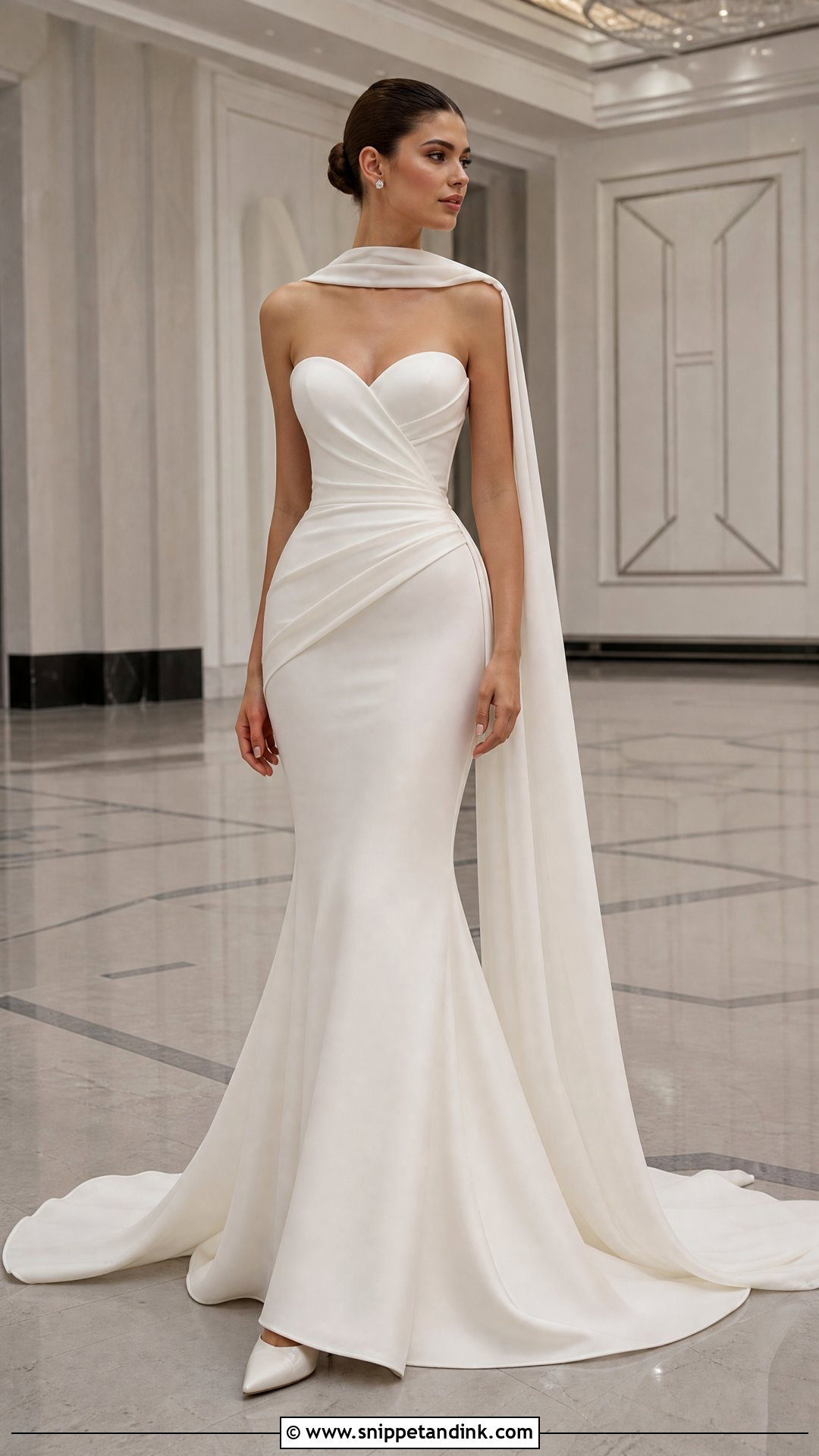
Elm’s signature is the long chiffon scarf sweeping from the bodice, over a structured sweetheart top and a fitted crepe skirt that flares at the knee. Crepe has a matte surface and reads softer in photos than reflective satin, which suits brides who don’t love shine. The scarf can replace a veil at the reception; for the ceremony, add a plain cathedral veil and take it off after. Pointed pumps and a smooth low bun keep it minimal. It needs a long aisle for the train to stretch out fully.
12. Kyha Iver Wedding Dress
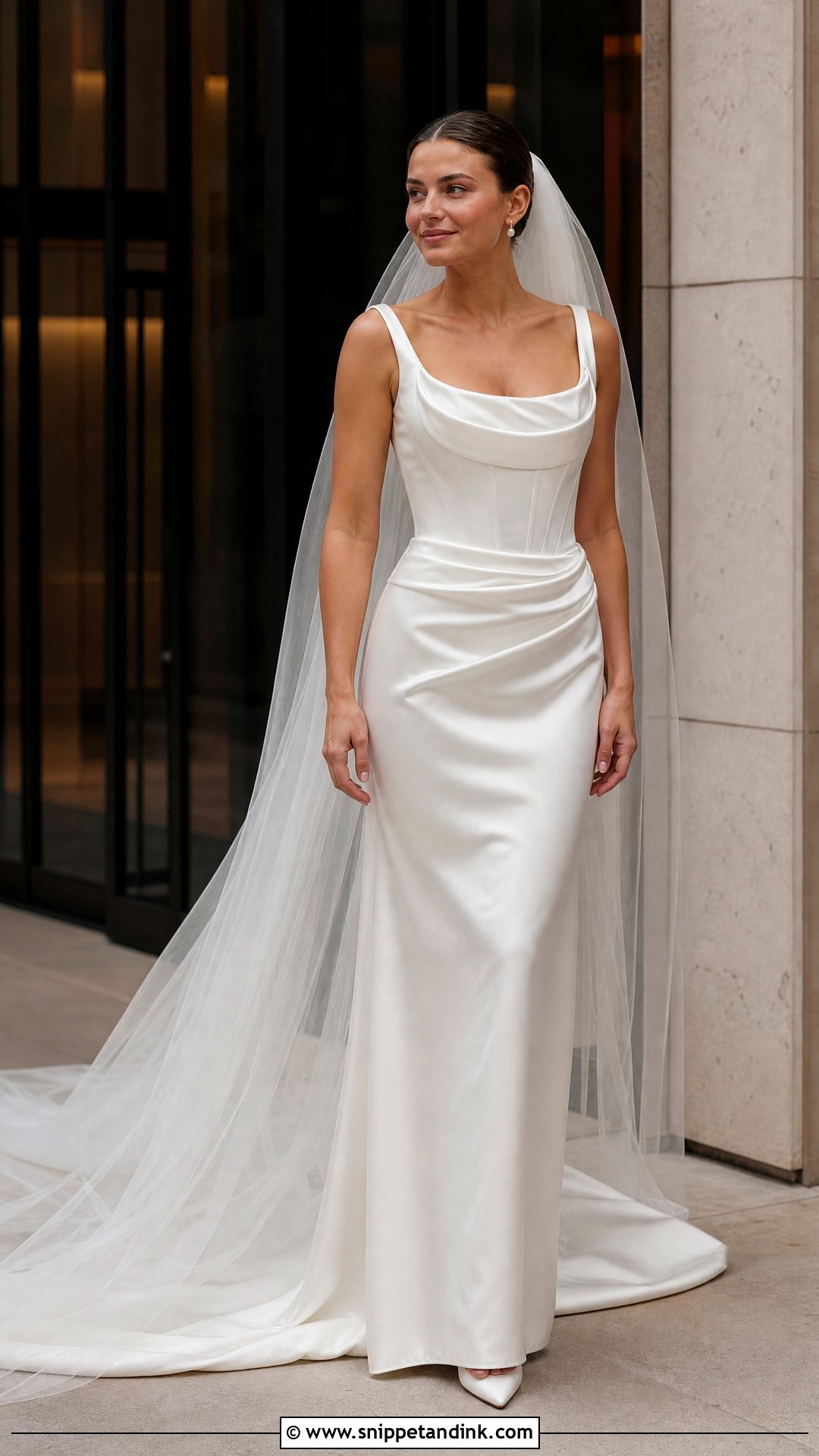
Iver combines a longline corseted bodice with a gentle scoop and soft folds that run across the waist into a column skirt. Double satin has enough weight to hold that sculpted shape. Because the draping already pulls focus to the waist, I keep everything else symmetrical: pearl earrings, closed-toe pumps, a chignon or brushed waves. A sheer chapel veil adds ceremony movement without covering the bodice. I’d put it in a black-tie hotel or formal city venue.
13. Kyha Miles Wedding Dress
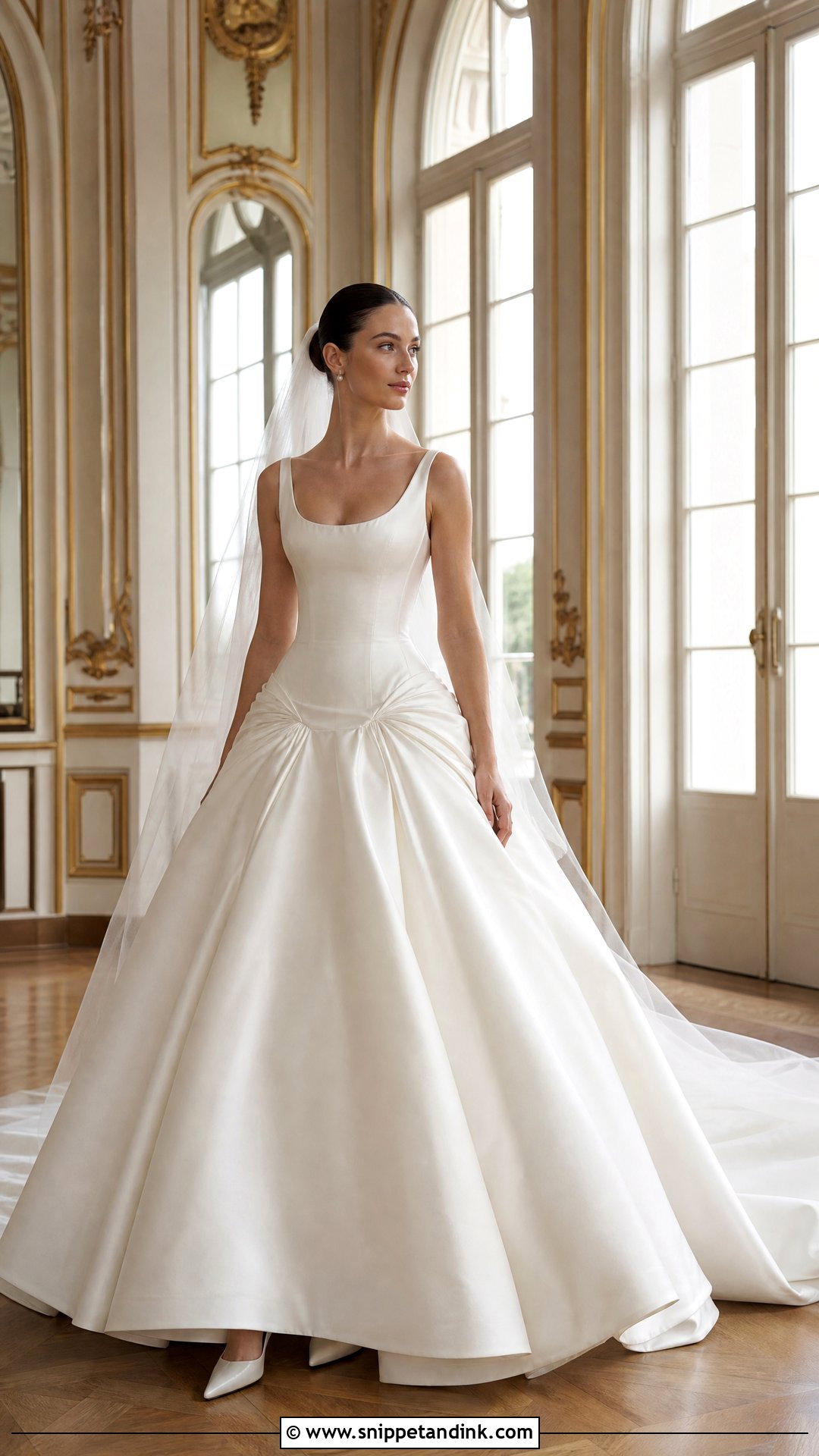
Miles is the ball gown of the collection, in crisp taffeta that holds its fullness without layers of petticoat. The gathered Basque waist dips into a point below the natural waist, which lengthens the bodice. A skirt this size needs space, so a grand ballroom or open estate is the right setting. Practise sitting, turning and climbing a step in it, and learn the bustle at your final fitting. Taffeta can crush where you sit, so keep it on a hanger until the last possible moment. A long but lightweight plain veil suits the scale.
14. Kyha Winton Wedding Dress
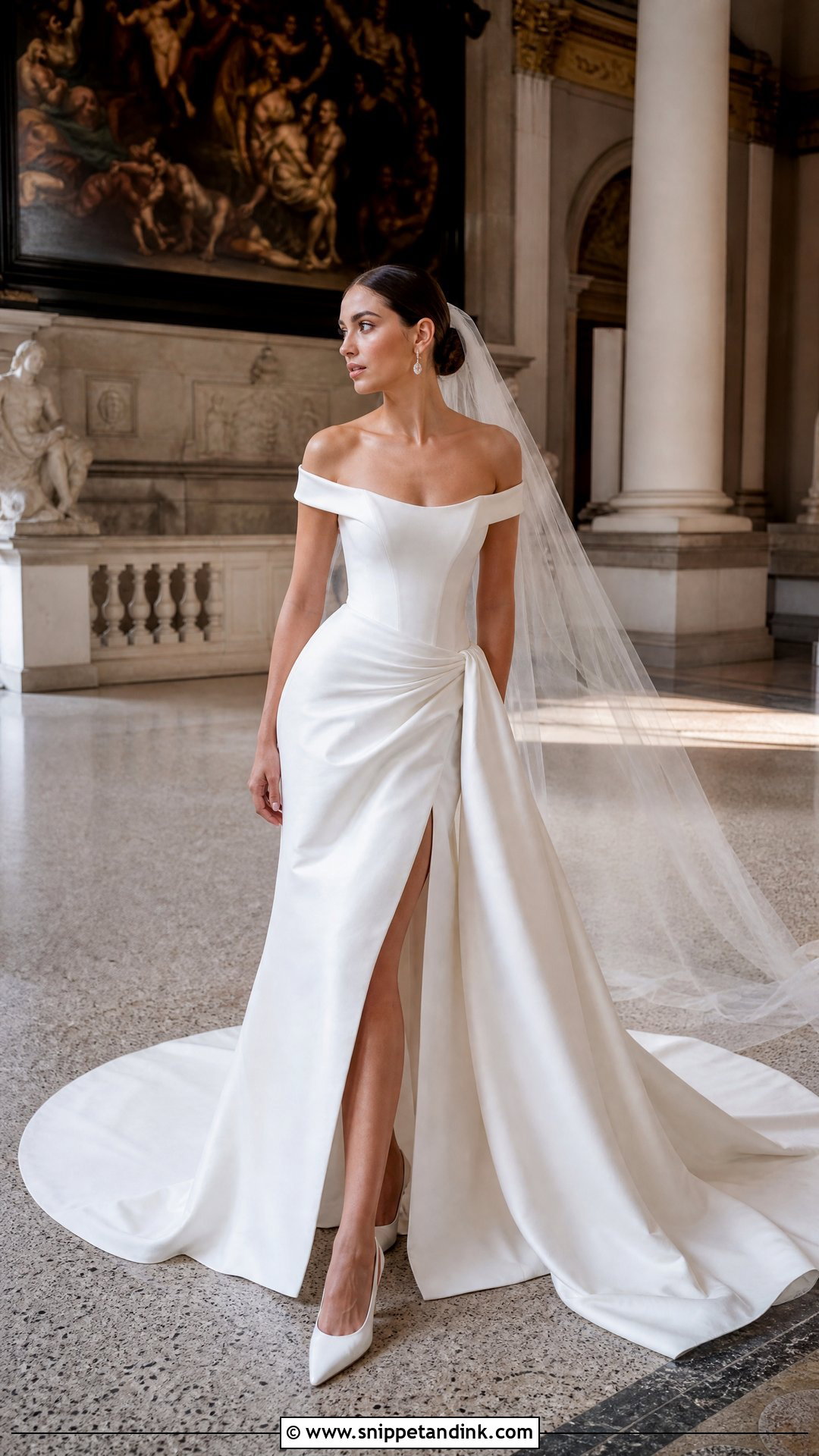
Duchess satin is thick and lustrous, so Winton holds its shape from every angle: an off-the-shoulder corset with a scoop, then an asymmetric dropped-waist skirt with drape, side split and long train. There’s a version without the split if you want more coverage. The lace-up back helps fine-tune the fit, but the asymmetric hem needs a careful tailor to fall correctly. A raw-edge cathedral veil keeps the formality modern, with satin slingbacks and antique-style diamond earrings.
15. Kyha Ellery Wedding Dress
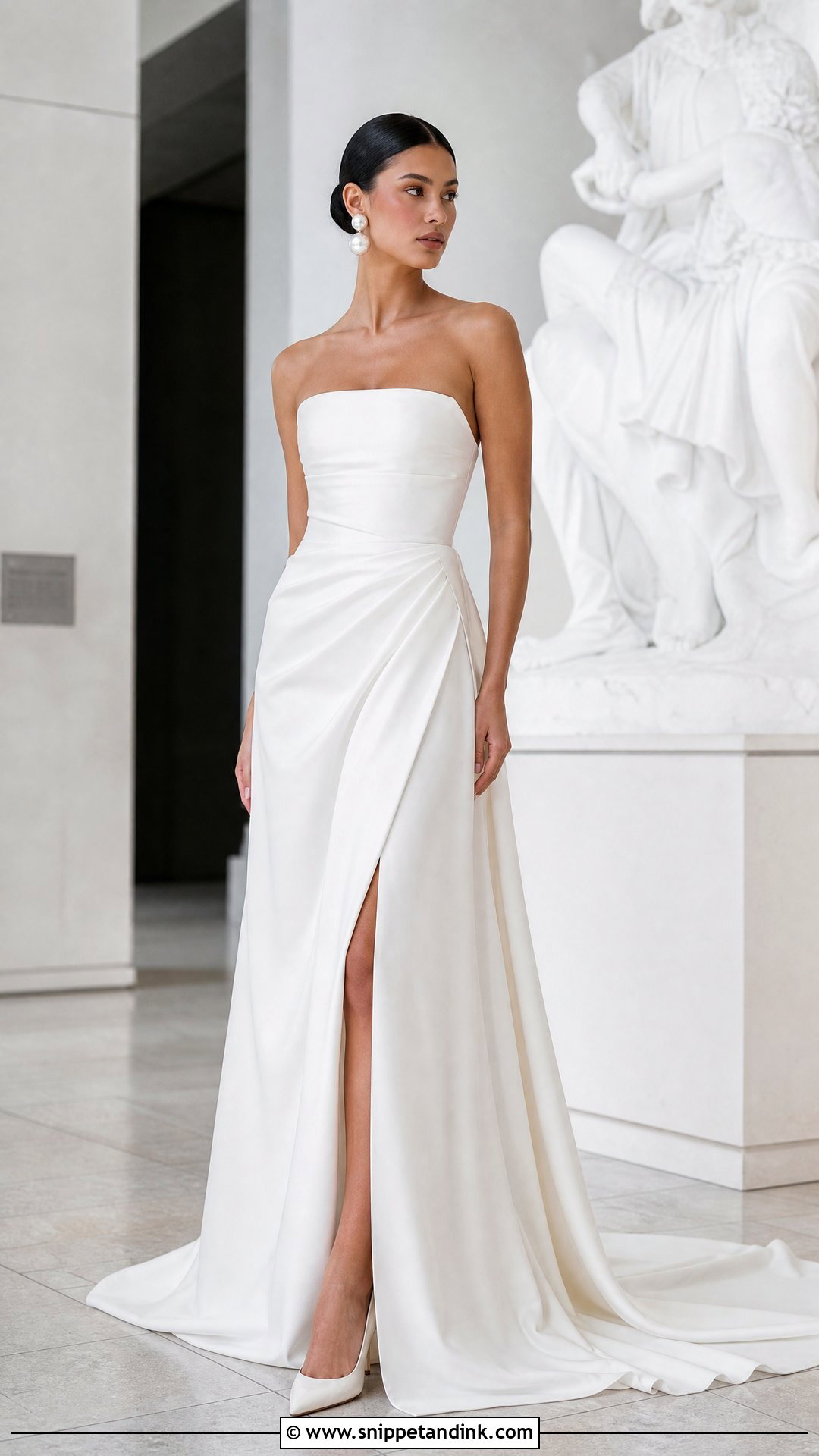
Mikado is a stiff, heavy silk-style fabric that holds folds, which is how Ellery keeps its hand-pleated ruching crisp through the waist. The straight strapless neckline stays simple, and the column skirt opens into a side split. Your shoes will show through that split every step, so I’d pick clean ivory or metallic pumps over anything decorated, and check heel height in the split during a fitting. Bold pearl earrings and a sleek bun suit a museum or minimalist space.
16. Kyha Lucia Wedding Dress
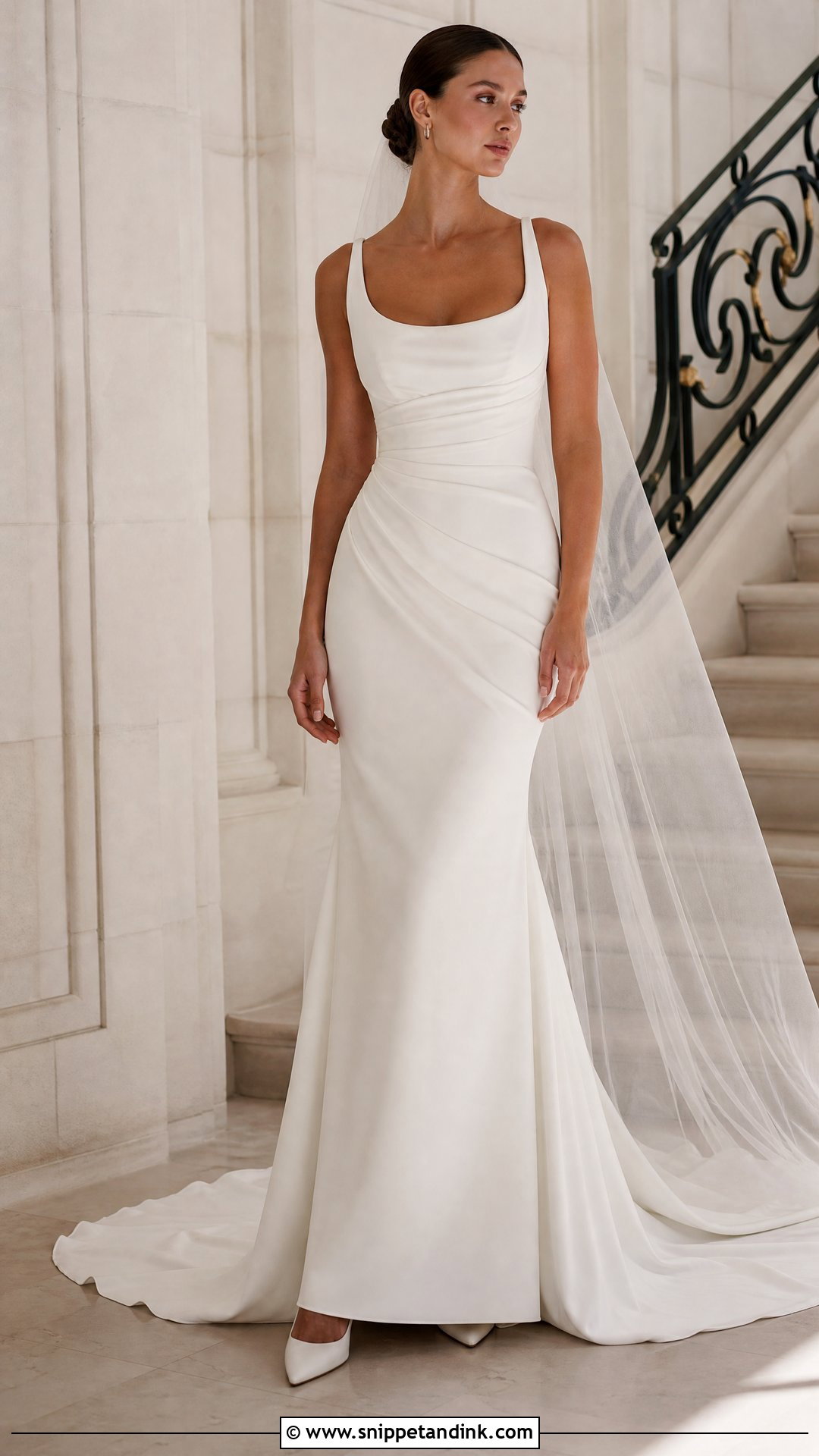
Lucia uses matte bright ivory, so the folds of its directional draping and the fit-and-flare shape read clearly instead of disappearing in shine. The bodice is fully corseted and meant to fit firmly. That’s where I’d be most careful: if your bust, waist and hips fall across different sizes, order for the largest measurement and leave proper time to take the rest in. Minimal pumps, small diamond hoops and a centre-parted low bun suit an urban ballroom or restaurant wedding.
17. Kyha Salacea Wedding Dress
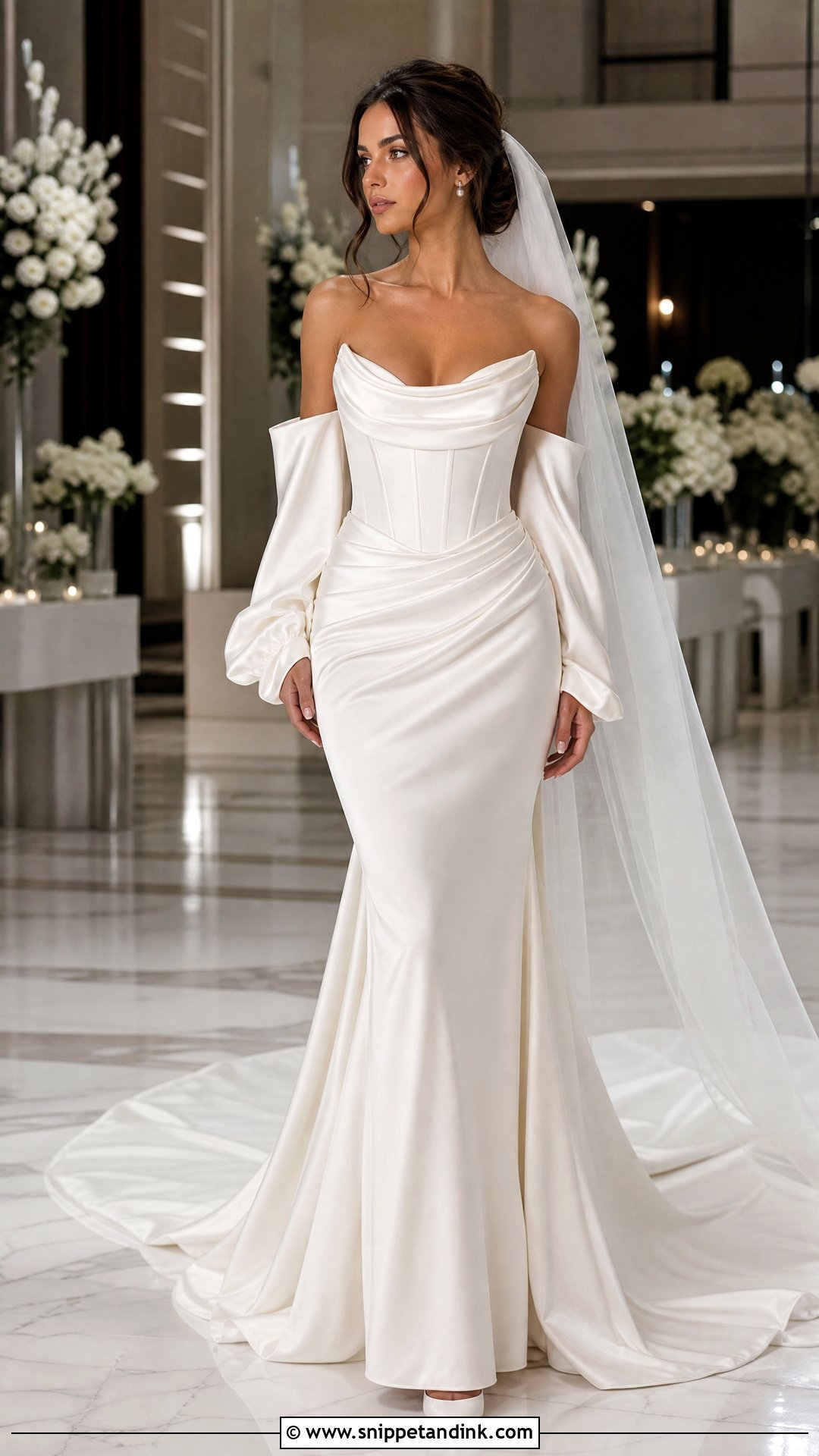
Salacea gives you two looks without a second dress: detachable off-the-shoulder sleeves over a structured corset with a draped scoop neckline. Wear the sleeves with a chapel veil for the ceremony, then remove both and add a cuff or bolder earrings for the evening. It comes in a satin-like and a matte finish; matte is more forgiving under flash. Before you plan a mid-event change, check at the final fitting that the sleeve attachments are secure and quick for someone else to undo.
18. Kyha Arta Wedding Dress
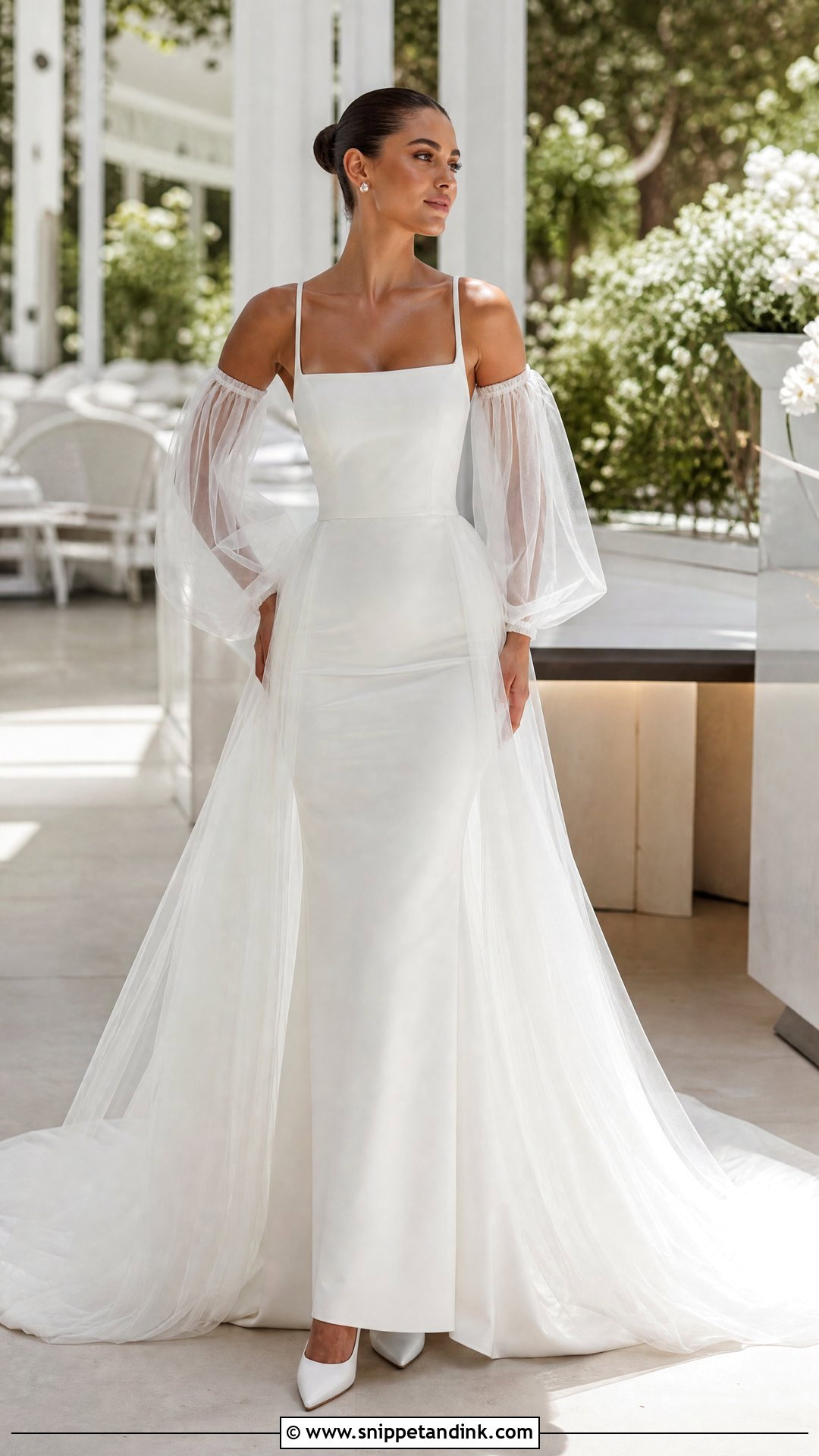
Arta is a fitted duchess satin dress with a square neckline and fine straps, plus a detachable tulle overskirt and airy sleeves. The tulle softens the ceremony look; take it off and you have a sleek fit-and-flare with a 1960s feel. Duchess satin has no stretch at all, so getting the base size right matters more than with most gowns, and bodice and hip alterations need time. Satin pumps and pearl studs, with a smooth bun or shoulder-length waves, suit a garden venue or stylish hotel.
19. Kyha Emery Wedding Dress
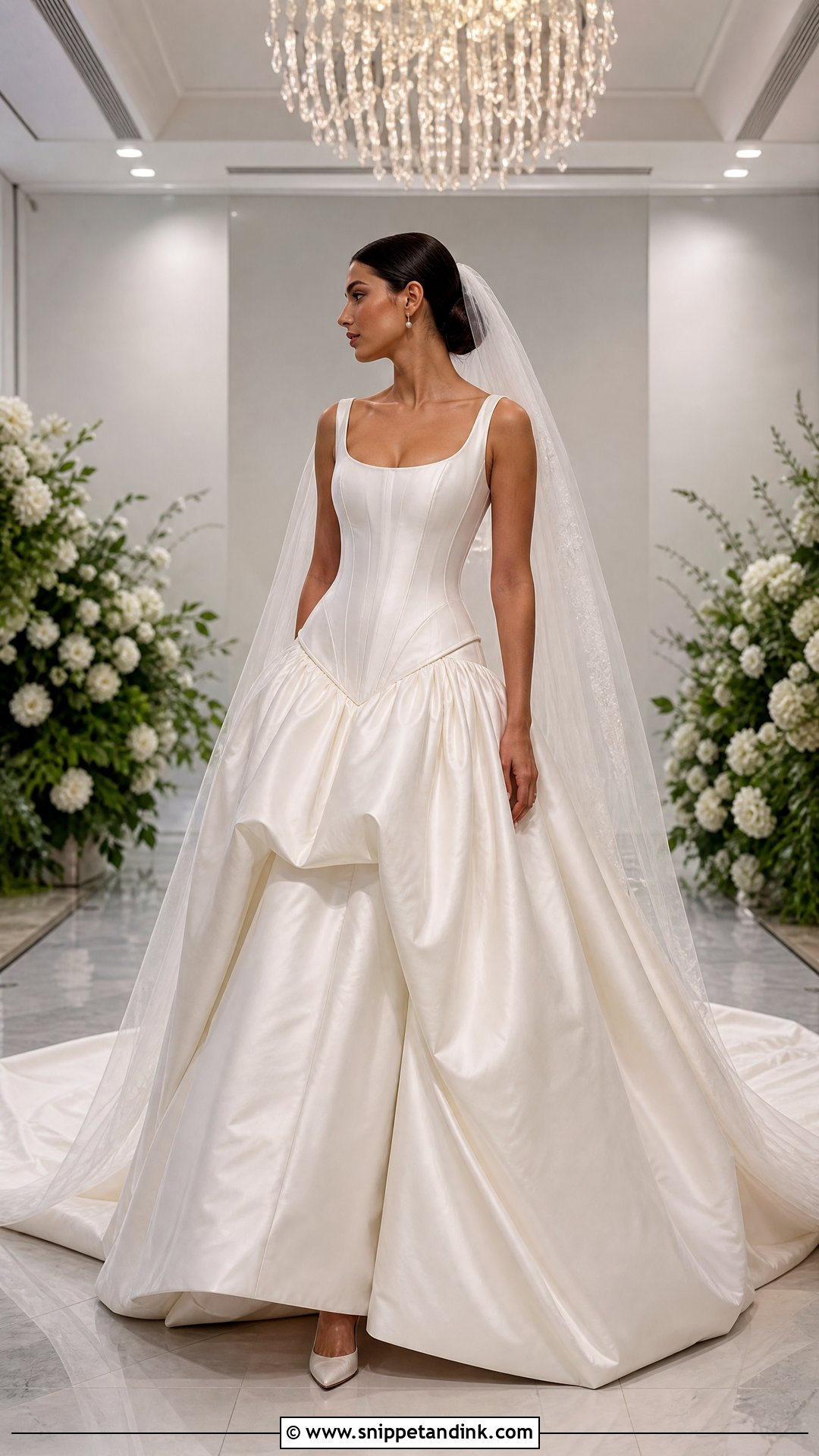
Emery’s scoop-neck corset drops into a gathered balloon skirt in lustrous duchess satin, and internal ties pull the skirt from floor length to a short party shape. It’s the most playful transformation in this collection. Wear it long with a cathedral veil and classic pumps, then shorten it and switch to slingbacks or embellished flats for dancing. Have whoever helps you practise the ties at a fitting; balloon skirts can sit unevenly if one tie is pulled tighter than the other.
20. Kyha Baia Corset And Amur Skirt
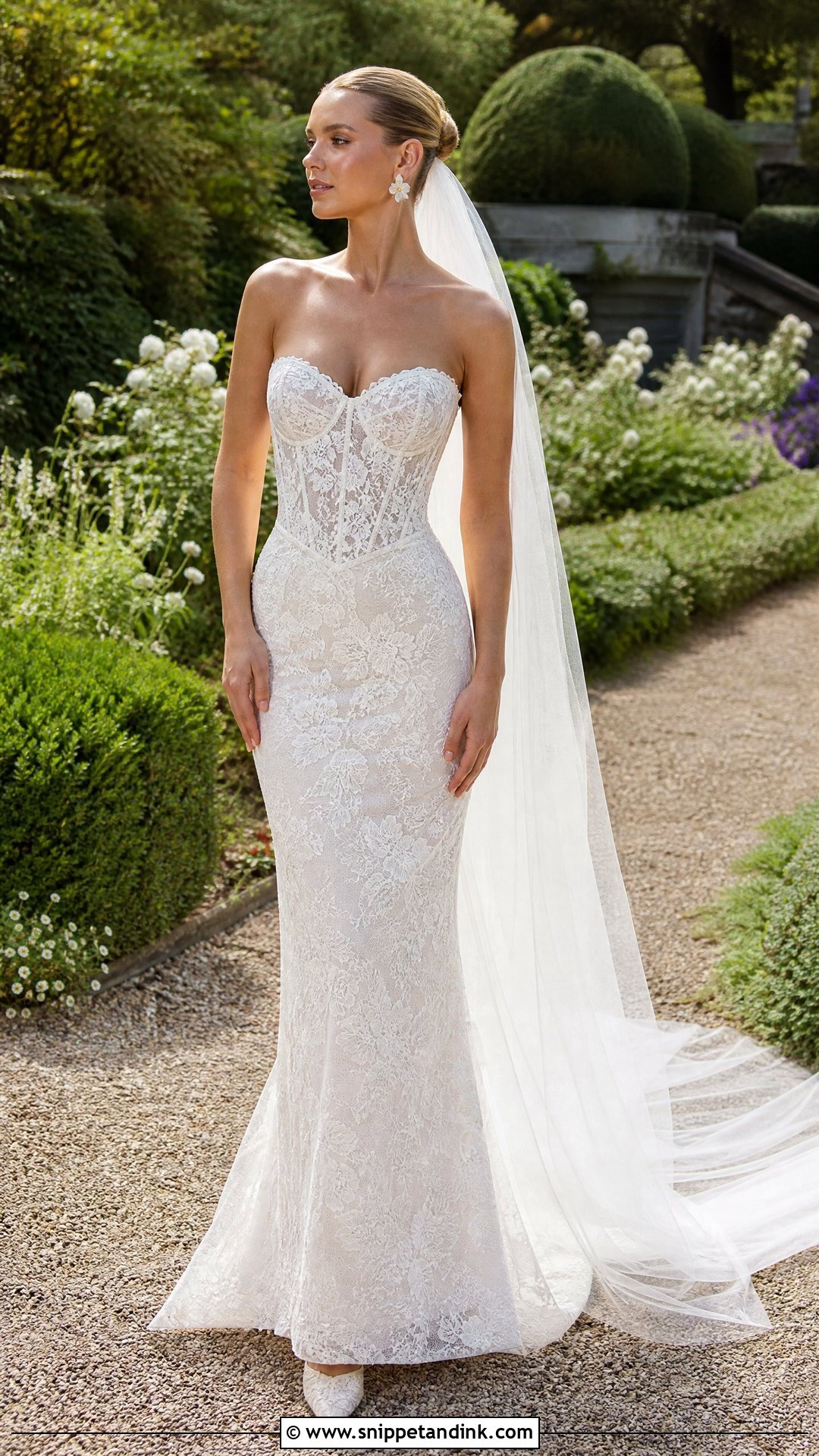
The Baia corset and Amur skirt are separates, which gives you a little more freedom with fit. The strapless corset has hand-moulded floral lace, defined cups and a dipped waist; the coordinating skirt keeps the line long, and layering the Basu skirt over it adds ceremony volume. I’d always fit the two together, because a gap or bunching between corset and skirt shows up the moment you raise your arms. Pointed ivory heels, small floral earrings and a plain tulle veil let the corded lace lead.
Detachable Trains, Sleeves and Ties: Who Does What, and When
Convertible pieces only feel quick if someone has rehearsed them. When I dress a bride in a gown with removable parts, the plan is settled at the final fitting, not on the day.
- Pick one person, usually a bridesmaid or your planner, and have her remove and refit the train or sleeves twice in front of the seamstress.
- Agree the moment. The usual window is after formal portraits and before the first dance, so the full look is captured first.
- Choose the place. A quiet room with a hanger and a clean sheet on the floor, never the bathroom.
- Bring a garment bag for the detached piece and assign someone to take it home, because trains and sleeves are the parts most often left behind.
If the gown keeps its train all night, learn the bustle instead. Ask how many points it uses and practise in the shoes you’ll wear, since a bustle set while you’re in flats can trail once you’re back in heels. Satin and taffeta trains mark easily on outdoor ground, so for a garden or courtyard ceremony I’d keep the train down only for the aisle and the photos that need it.
Two Looks in One Gown: Plan the Change Before the Day
Modern bridal minimalism still has plenty of range, from sculpted corsets and dropped waists to fluid satin, structured lace and gowns that change halfway through the night. Start with the silhouette you feel at ease in, then let the venue, season, veil and reception plan shape the rest. At appointments, photograph yourself from the front, side and back, and sit and walk in every gown you shortlist. Leave real time for ordering and alterations, especially with a firm corset or an asymmetric hem, so the dress fits on the day instead of almost fitting.
You'll Like These Ideas:


Leave a Reply