
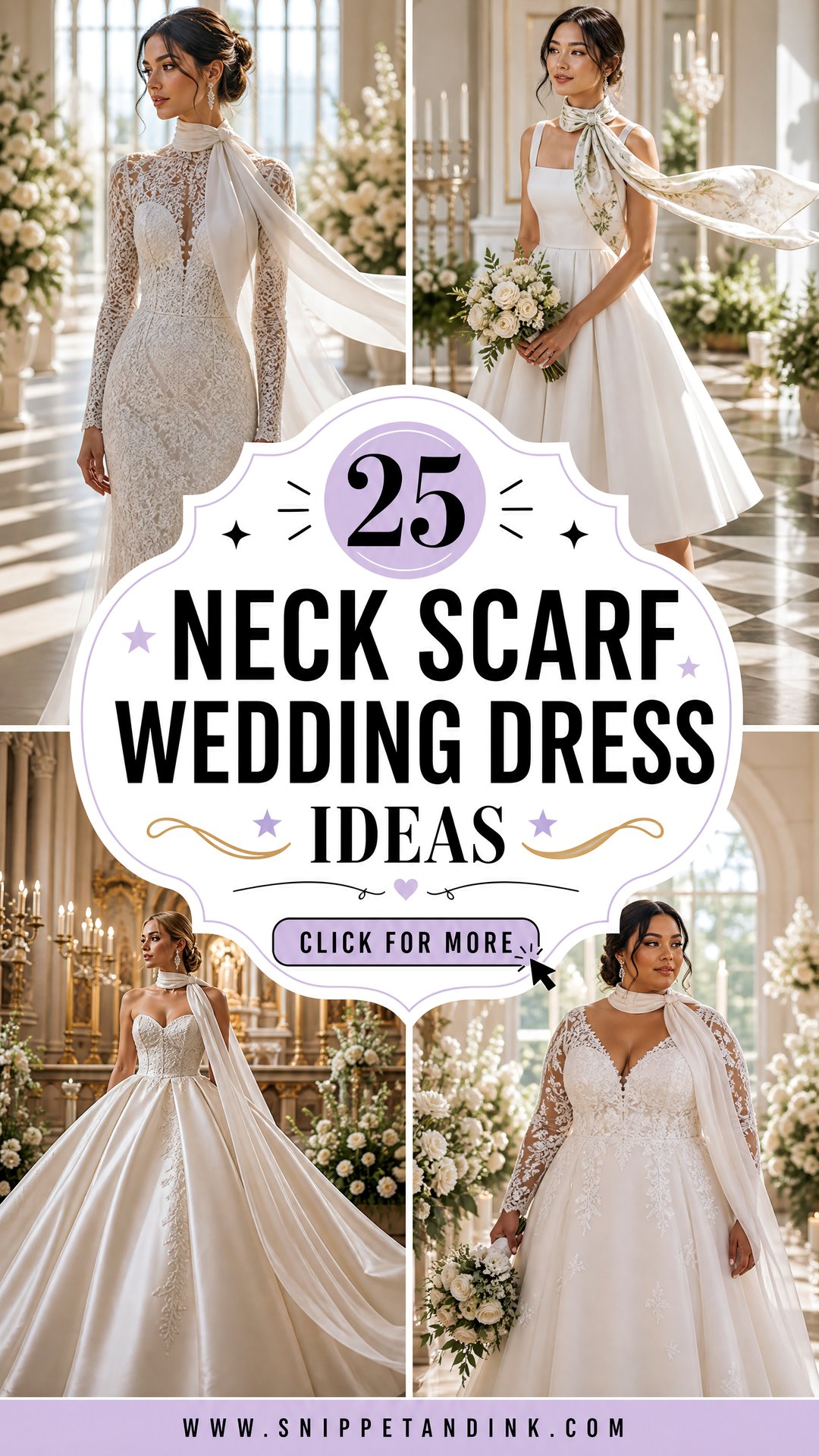
A scarf gives a bride the movement of a veil without anything pinned into her hair, and it comes off in seconds for the reception. I’ve come to suggest one most often to brides with a clean, simple gown who want one dramatic detail. Bridal neck scarves come in silk, chiffon, tulle, lace and organza, and each behaves differently around the throat. Draped fabric at the neck and shoulders also has deep roots in South Asian bridal dress, so if your look draws on that tradition, wear it knowingly. Below are 25 gown and scarf pairings, each with the shoes, jewelry and hair I’d put with it.
Ways to Tie a Bridal Scarf and Stop It Sliding
Most scarf problems on a wedding day are about movement, not style. Silk and chiffon are slippery, and the scarf shifts every time you hug someone or turn your head. These are the drapes I use most, and how I hold each one in place.
- Single wrap, ends down the back: the most versatile. A small thread loop sewn inside the gown’s back seam keeps both ends centered.
- Loose drape, ends in front: good for portraits, but they swing into the bouquet. Use for photos, then move them behind.
- Side knot: neat for short scarves on high necklines. Tie it slightly off-center so it doesn’t press on the throat.
- Back bow: needs a fabric with some body, such as silk twill or satin. Chiffon won’t hold it.
Double-sided fashion tape works on most fabrics where the scarf touches skin or the bodice. I’d test it on an offcut first, though, because some tapes leave a mark on silk. For heavier scarves, a tiny snap sewn by your alterations tailor is the most reliable fix.
Length is the other decision. I measure from the nape of the neck down the back with the bride standing in her shoes: ending at the waist reads modern and stays out of the way, ending at the hem gives drama, and anything that reaches the train needs someone to arrange it every time you stop walking.
1. Strapless Satin Wedding Dress With Neck Scarf
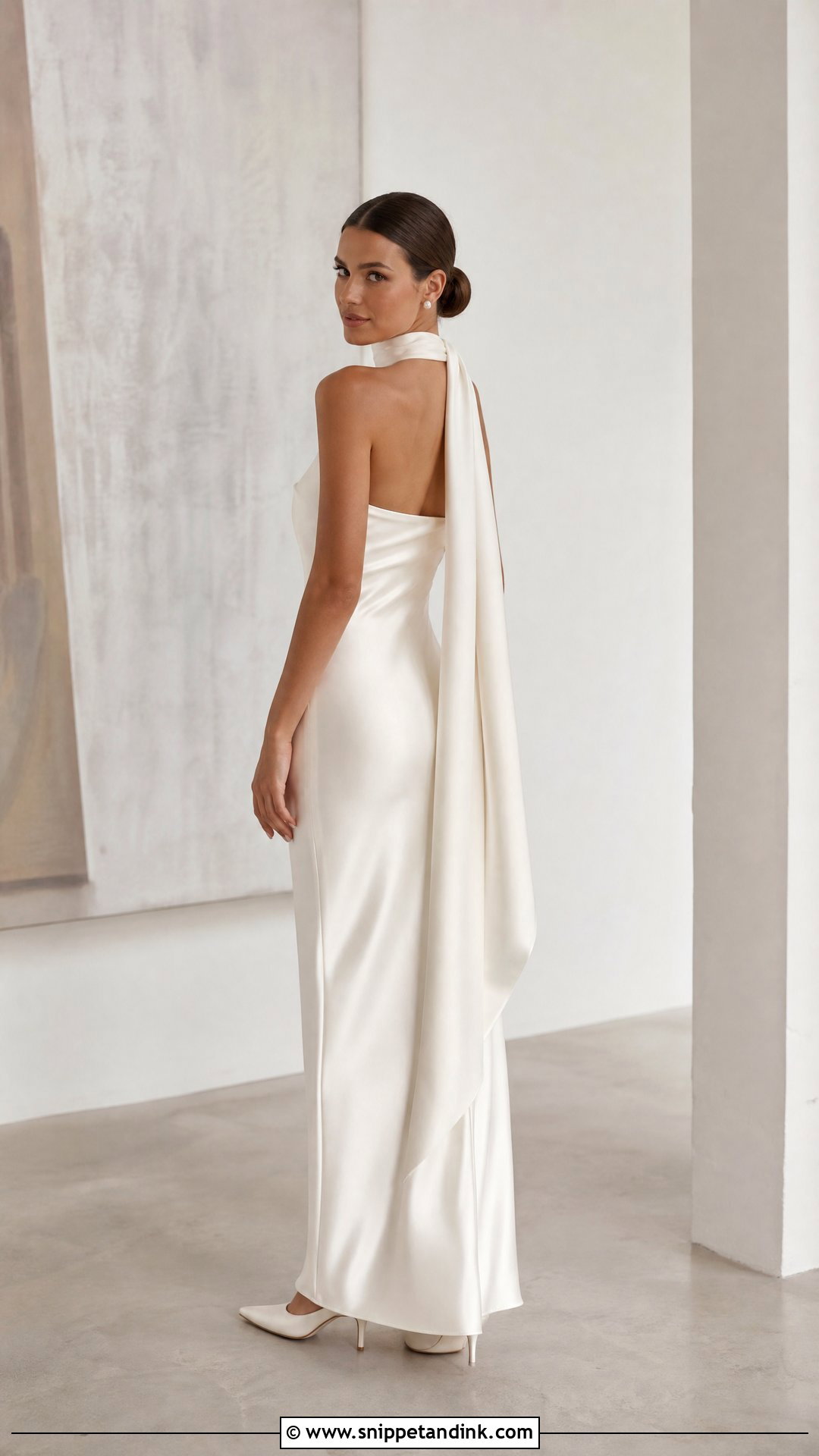
This is the cleanest pairing of all: a strapless satin column and a long scarf cut from the same satin. Same fabric matters, because two satins from different mills rarely share the same sheen. Drape it once round the neck and let both ends fall evenly down the back. Pearl or crystal studs, pointed ivory pumps, a sleek low bun. Outdoors, I have a tailor sew a small thread loop inside the gown’s back so the scarf can be tucked through it if the wind picks up.
2. Off The Shoulder Wedding Dress With Chiffon Scarf
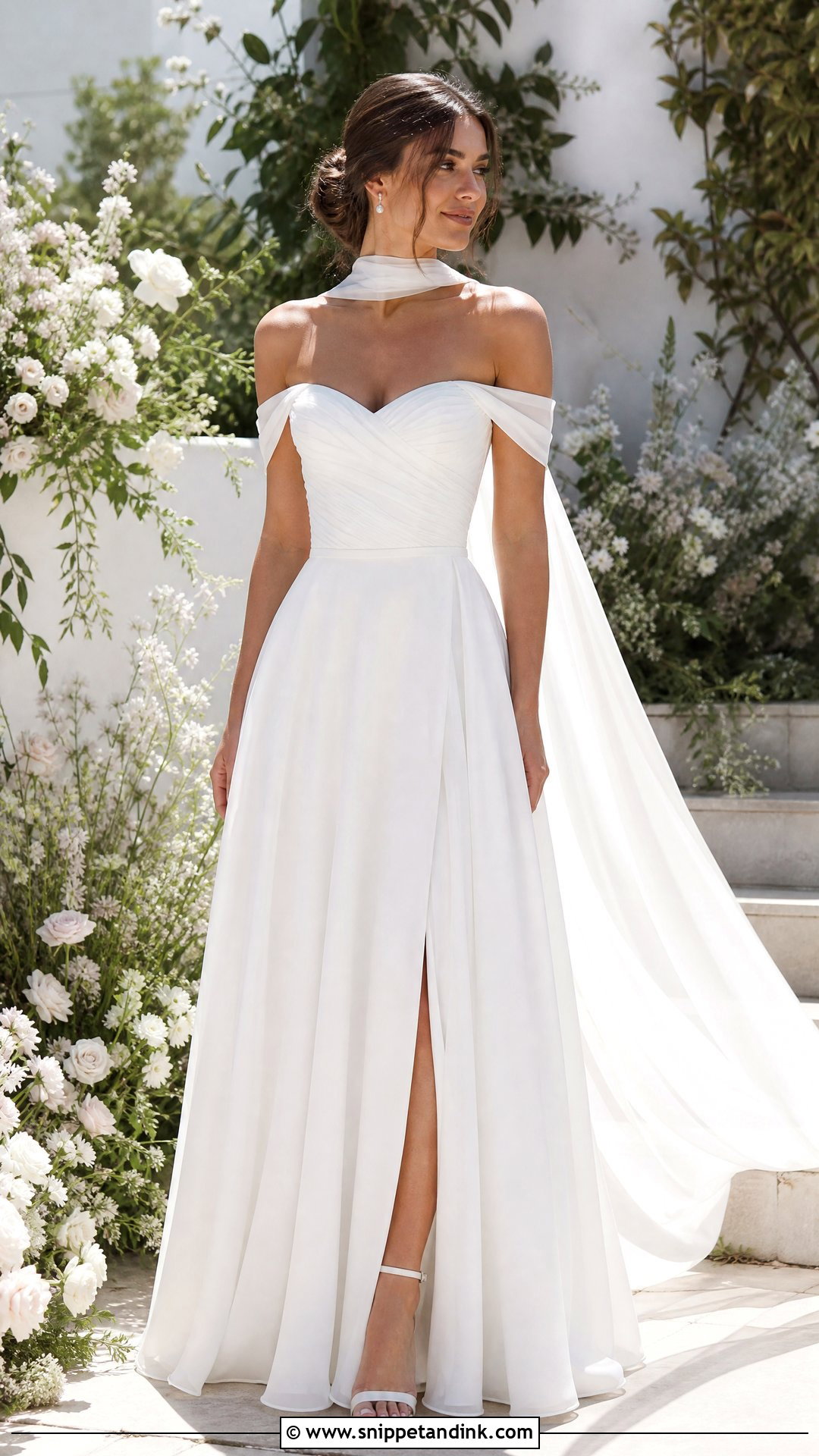
Chiffon over an off-the-shoulder neckline needs a light hand. I keep a narrow scarf sitting loosely above the neckline, so the collarbones still show; a wide one hides the very thing the neckline is meant to reveal. One end can trail a little longer for an easy, unposed feel. Pearl drops, barely-there sandals and a loose chignon. Match the shade exactly. Bright white beside soft ivory looks dingy in photos, and you only notice it once the pictures come back.
3. Sweetheart Corset Wedding Dress With Silk Scarf
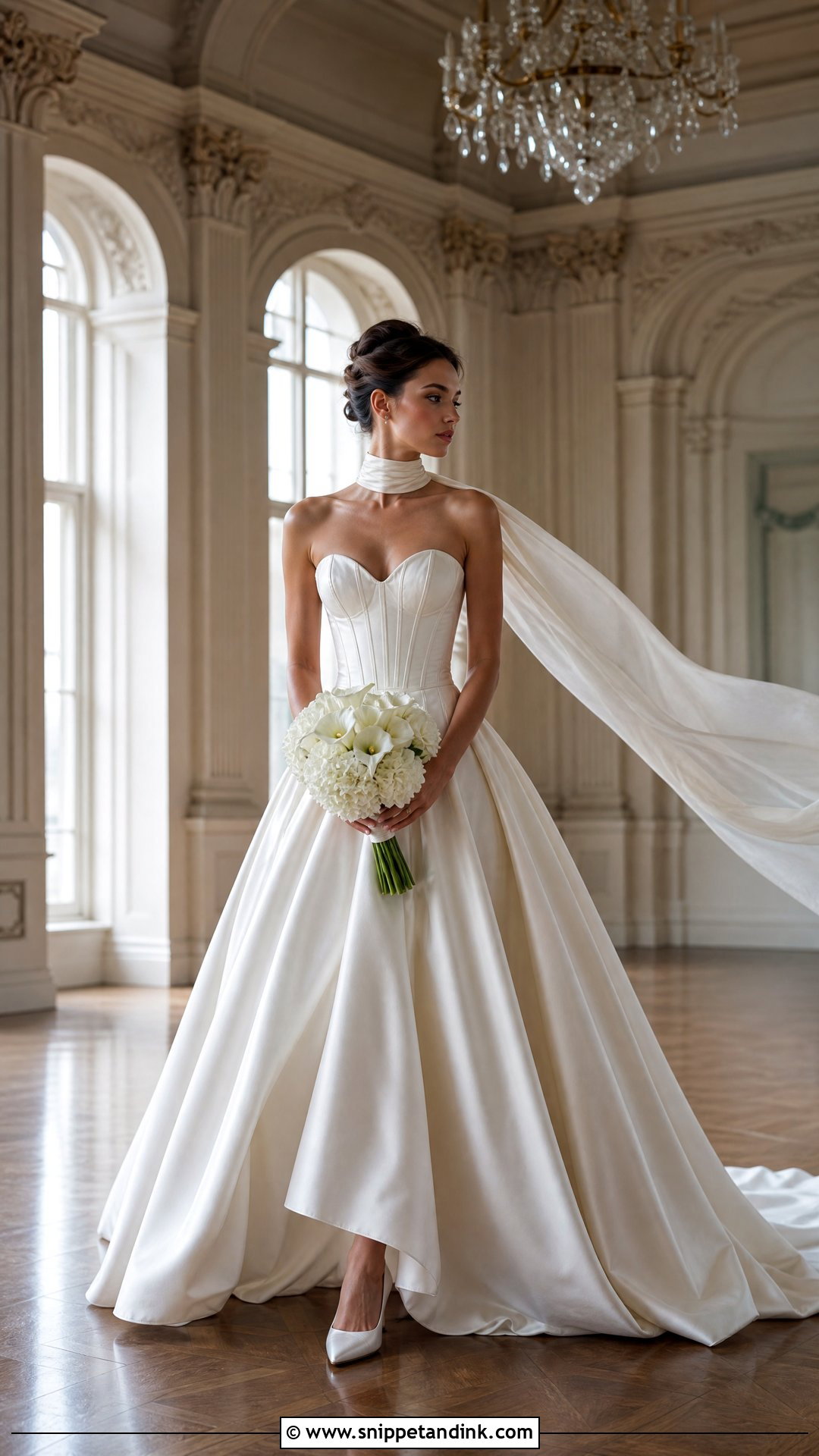
A corset and a silk scarf are a contrast I like a lot: rigid structure against something that moves. The sweetheart neckline leaves room for the scarf to frame the shoulders without covering the boning detail. Wrap once and send both ends down the back over the skirt. No necklace; the scarf fills that space. Small diamond studs, pointed satin heels and a smooth French twist. I’d do a full sit-and-stand at the fitting, because a corset that’s laced firmly changes how the scarf falls once you’re seated.
4. Silk Slip Wedding Dress With Skinny Neck Scarf
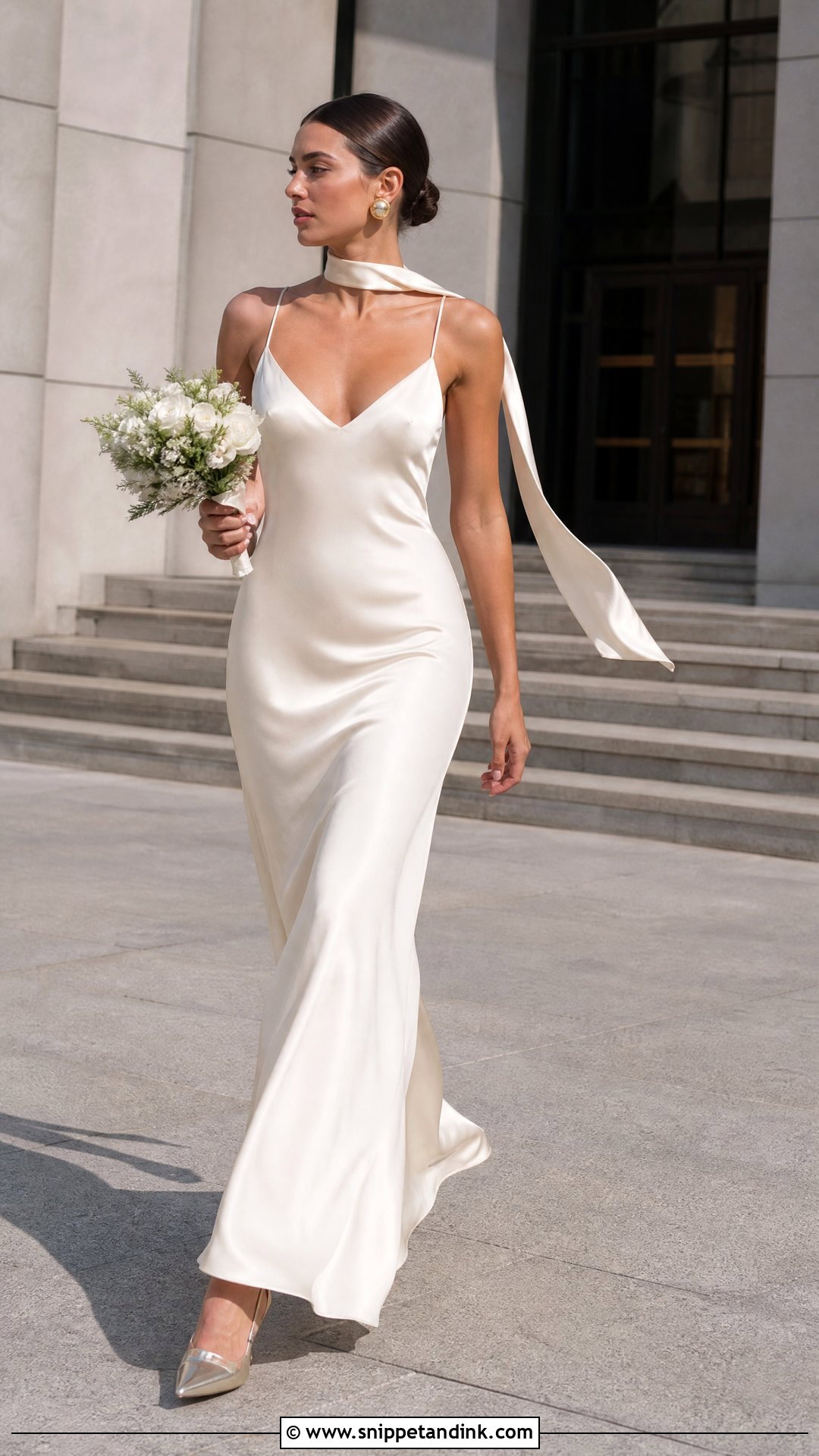
Slip dresses are minimal by design, so the scarf should be too. A skinny silk scarf tied loosely and trailing behind the shoulders adds movement without breaking the bias-cut line. Bias silk is unforgiving, though, and a knot sitting at the front can drag the neckline down. Keep the knot to the back or side. Metallic slingbacks, sculptural earrings, a satin clutch. Fashion tape or a hidden snap holds it steady through photos and dancing.
5. Long Sleeve Lace Wedding Dress With Neck Scarf
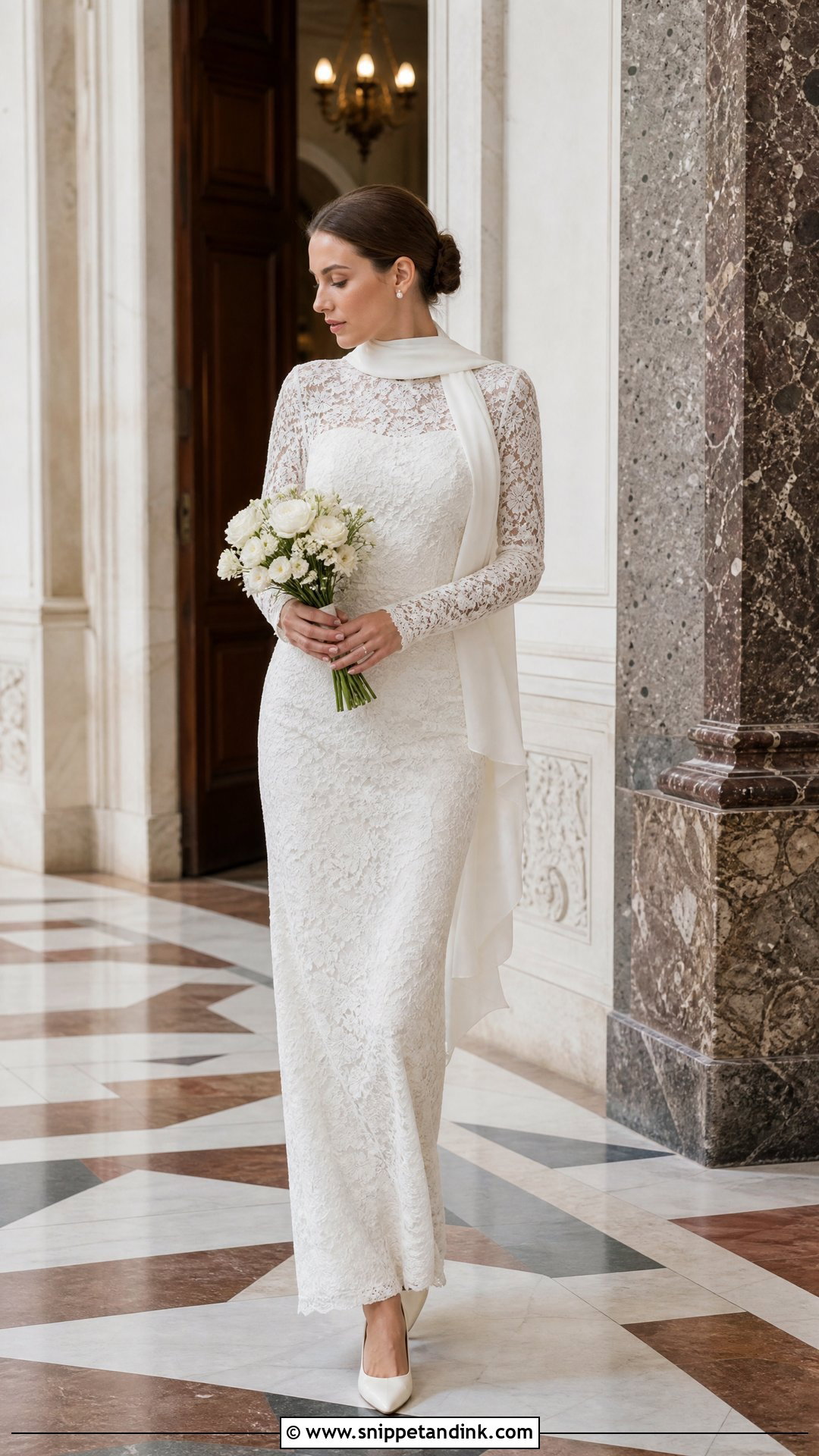
Lace and a scarf can look busy, and the fix is simple: one has to be plain. With a fitted long-sleeve gown in fine lace, I’d use a smooth chiffon or silk scarf in exactly the gown’s shade. Big appliqué lace plus a scarf is too much. End the scarf around the waist or upper skirt so it doesn’t lie over an elaborate train. Closed-toe pumps, pearl studs, a low bun, and a small single-flower bouquet. It suits historic venues and cooler months.
6. Square Neck Crepe Wedding Dress With Scarf
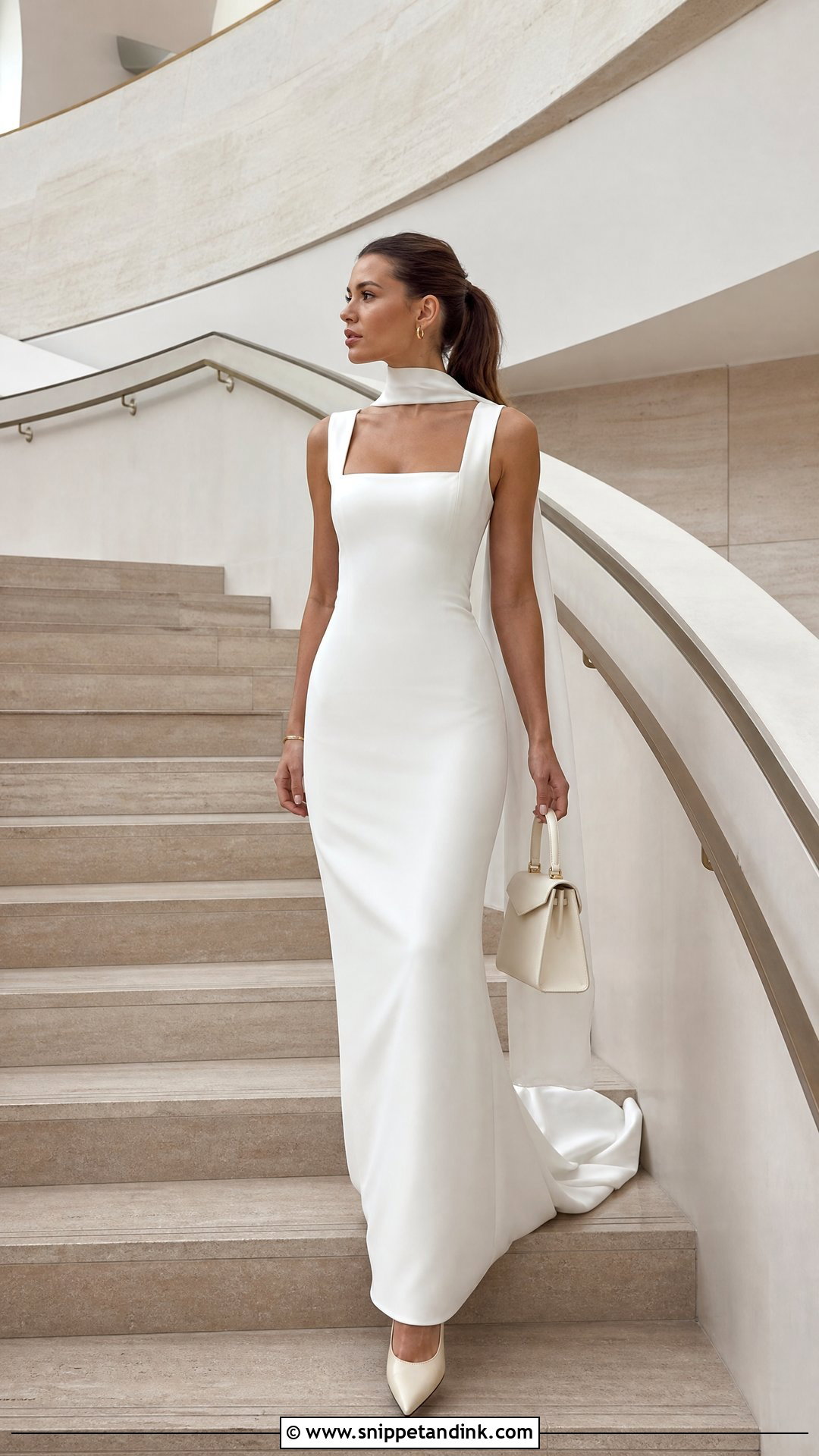
Square necklines are architectural, and a scarf should soften that without hiding it. I sit a narrow chiffon or silk scarf slightly below the throat, so the straight neckline edge still reads clearly. Crepe holds the square shape best, especially with wide straps and princess seams. Pointed pumps, small hoops, a structured ivory bag for portraits after the ceremony. Ponytail or low knot. No big necklace and no heavily decorated scarf; one clean line is the point.
7. Halter Wedding Dress With Attached Scarf
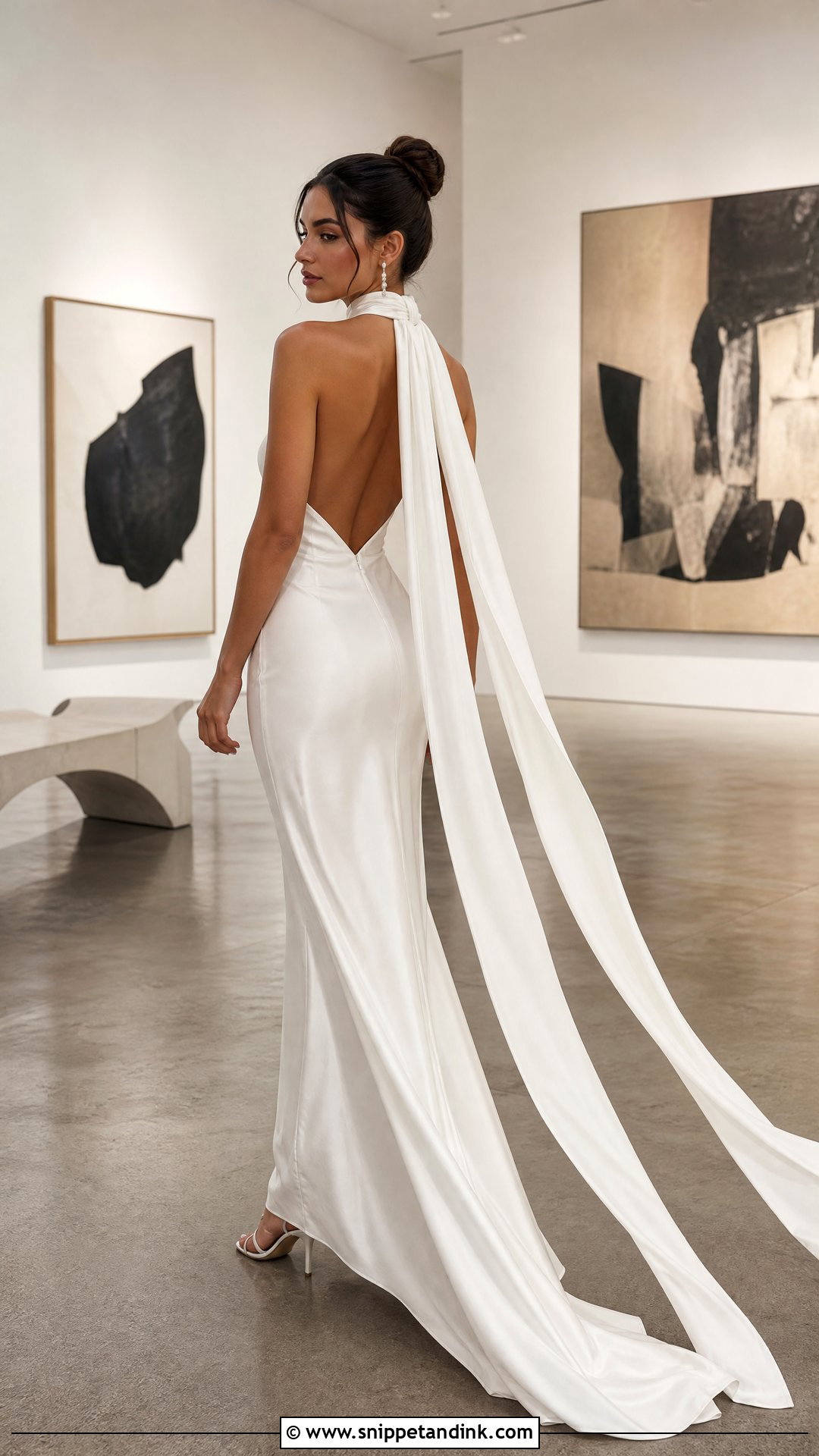
An attached scarf is the least work of anything here, because it can’t slide off. On a halter wedding gown, look for one that extends from the neckline or fastens neatly at the back, and let the ends hang down the open back rather than coming over the shoulders. A sleeveless satin column balances the extra fabric. Drop earrings, strappy heels, a high bun so the halter and trailing ends both show. Bracelets and rings stay minimal.
8. Bateau Neck Wedding Dress With Short Scarf
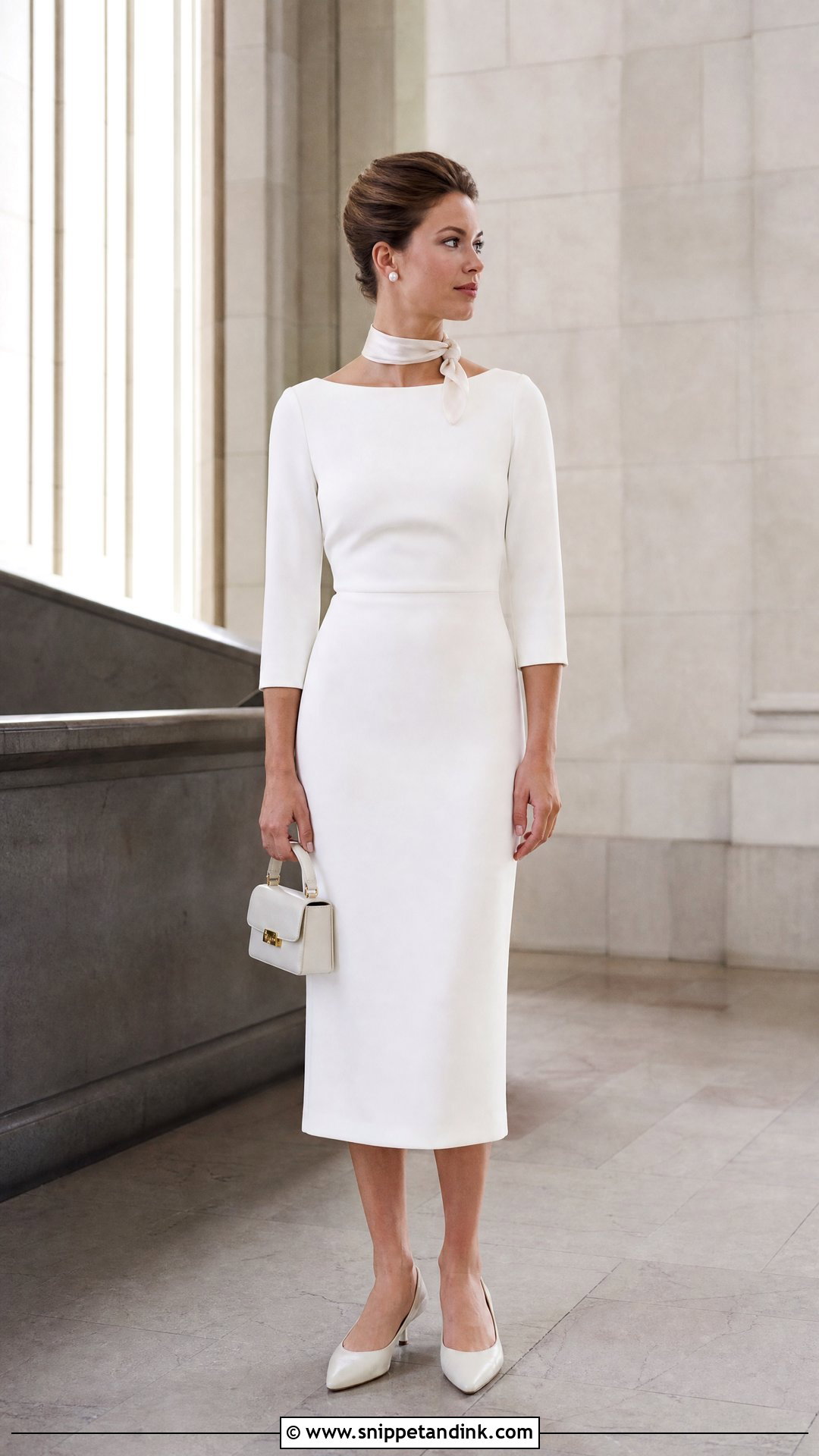
A bateau neckline already gives graceful coverage, so I keep the scarf short. A small side knot near one shoulder works well, since tying at the front over a boat neck piles up fabric at the throat. Use a fitted crepe or satin gown with a clean boat neckline and three-quarter sleeves, or go sleeveless. Pick a scarf with finished narrow edges, because raw or thick hems make the knot bulky. Kitten heels, pearl button earrings, a low French twist. Courthouse and brunch weddings.
9. One Shoulder Wedding Dress With Draped Scarf
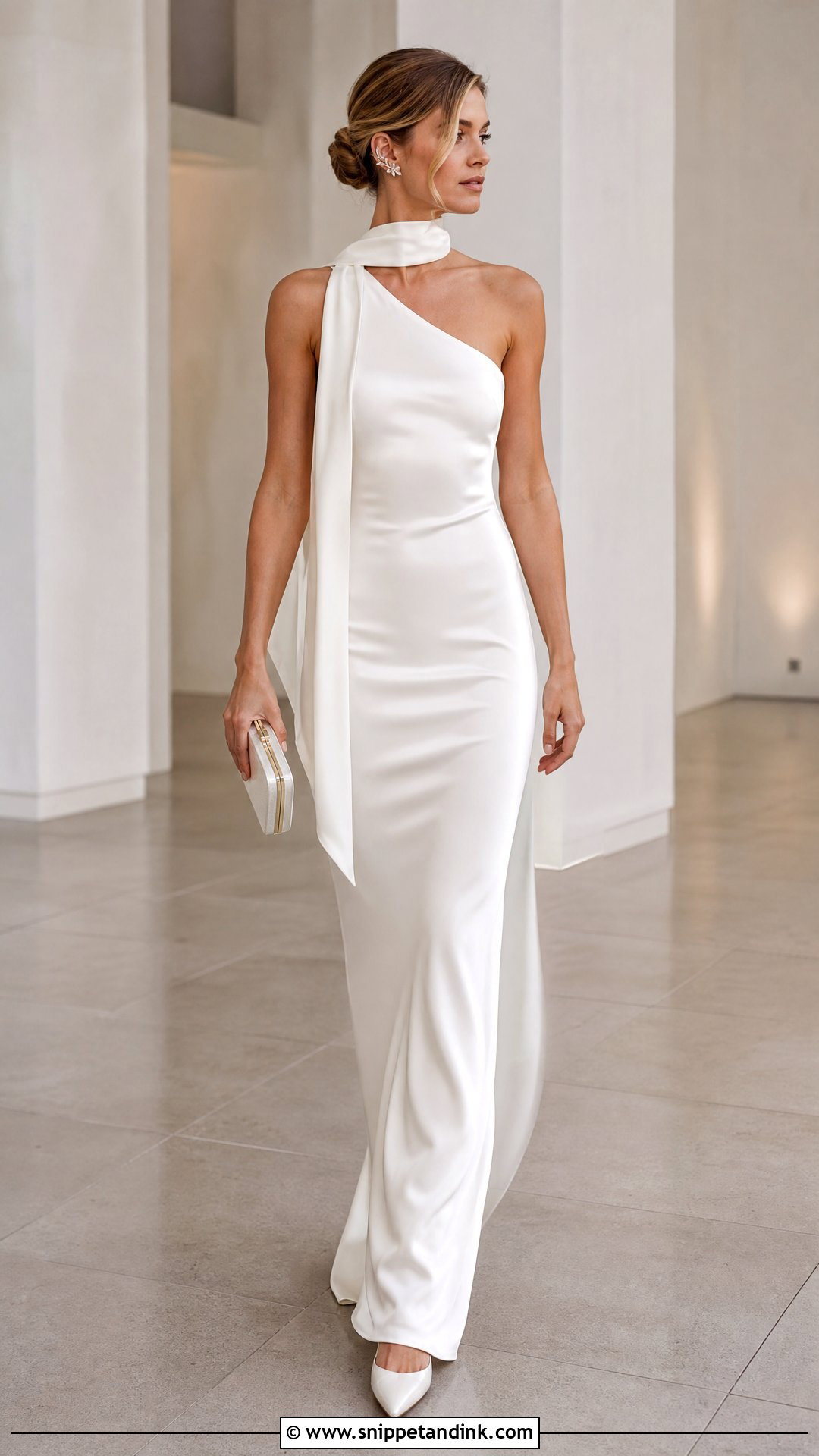
The rule I follow with a one-shoulder gown is to make the scarf move in the same direction as the neckline. Sweep both ends toward the bare shoulder, or behind it, so you get one continuous diagonal instead of two shapes crossing. Smooth satin or crepe, fitted column skirt. One statement ear cuff or asymmetric earrings, pointed heels, a box clutch. Pin the bun on the side opposite the covered shoulder. Skip lace trims and beading.
10. Mini Wedding Dress With Neck Scarf
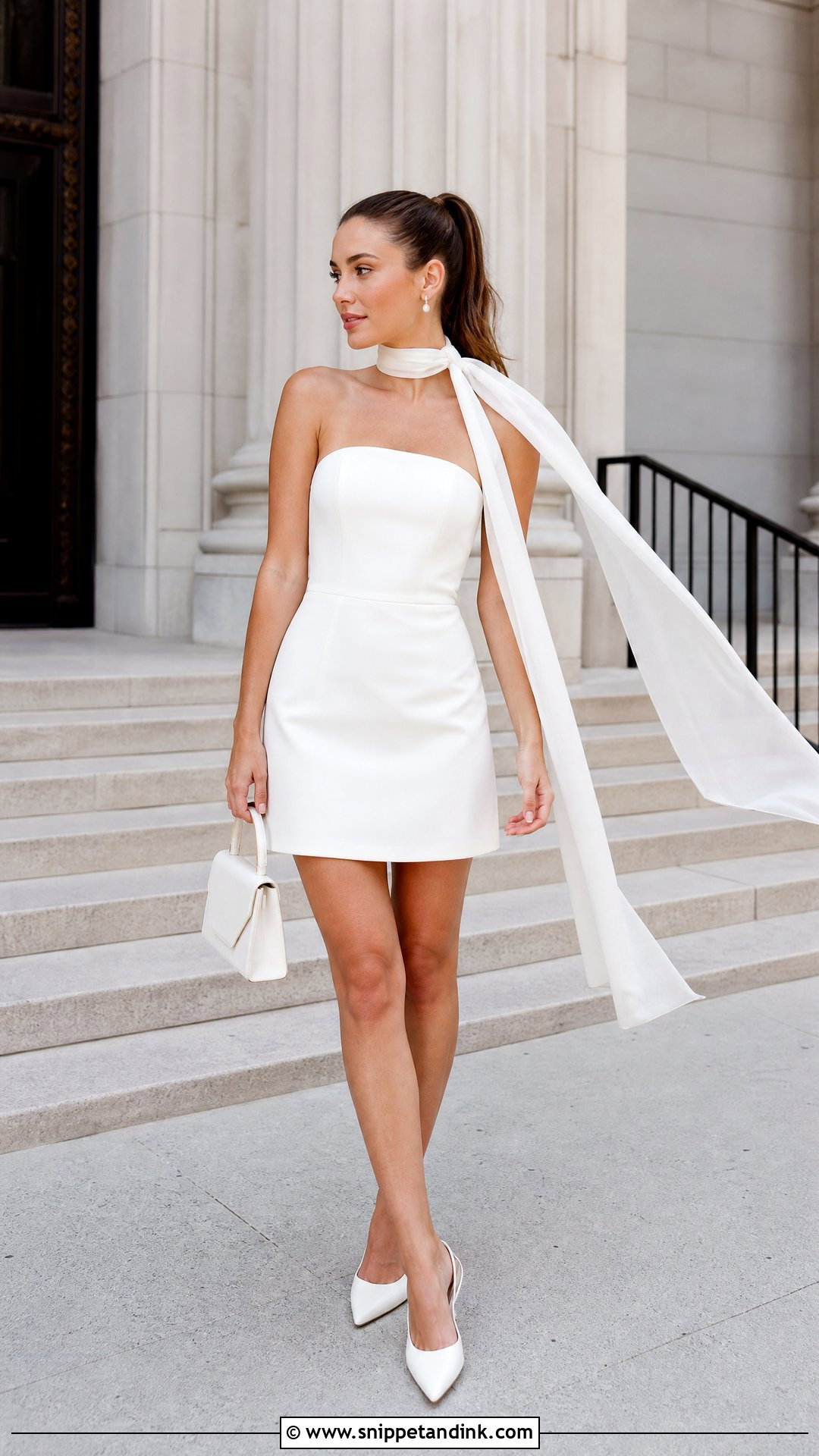
A mini dress for a courthouse wedding or reception change looks properly bridal once you add a long scarf. It needs to reach at least the knees, otherwise it just looks like a fashion accessory. The contrast of short hem and long trailing fabric is the whole effect. Strapless, square or off-the-shoulder, with a softly fitted waist. Slingback pumps, pearl earrings and a top-handle bag. Sheer tights in cool months, pointed flats in summer. Keep the scarf light so it floats.
11. Tea Length Wedding Dress With Silk Scarf
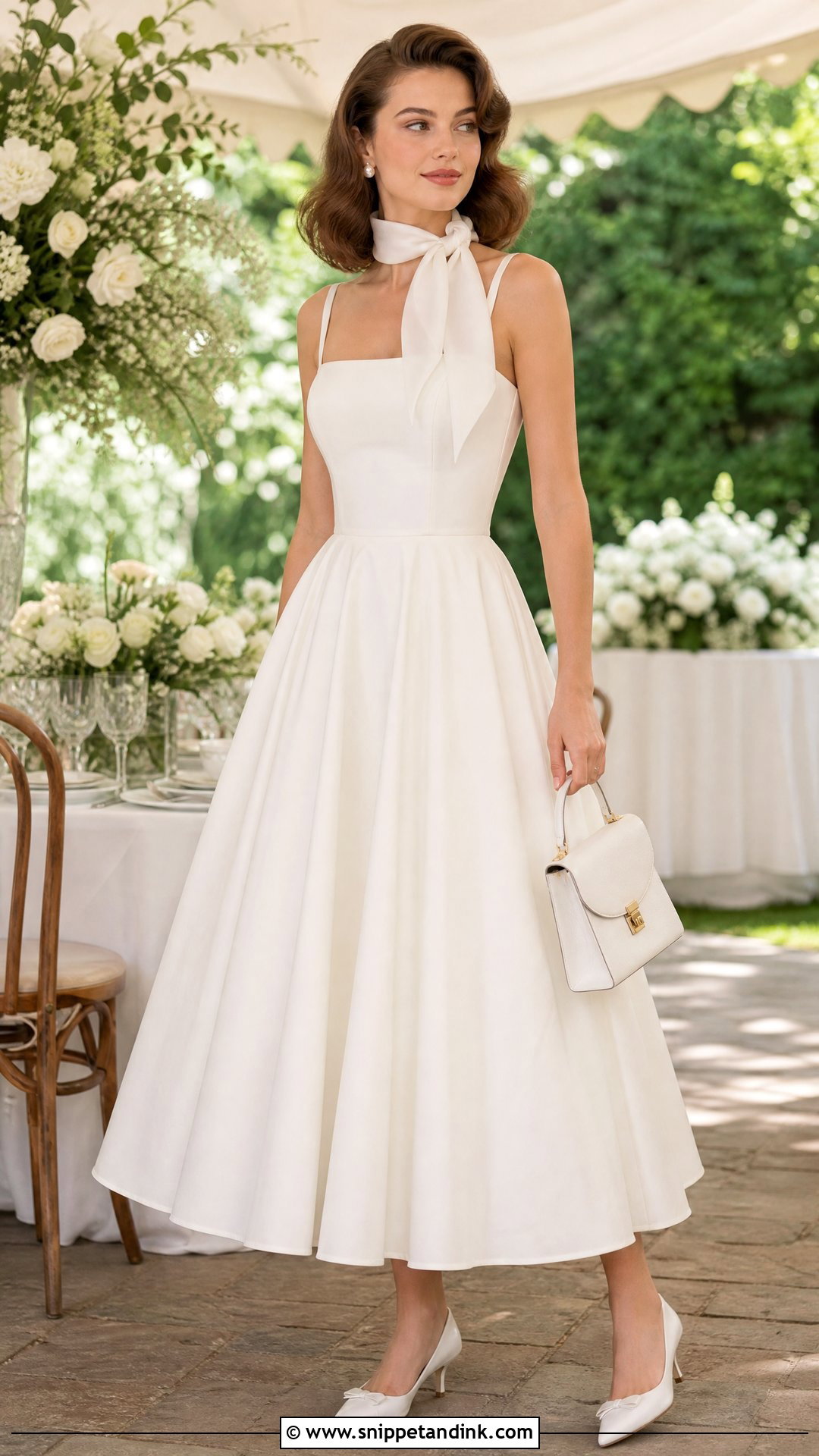
Tea length shows your shoes and ends between mid-calf and ankle, so I keep the scarf short to medium. A long scarf extending past a short hem looks off-balance. Tie it loosely to one side or let the ends fall behind. Fitted bodice, defined waist, and pockets if you can get them, because brides with pockets always end up grateful. Pointed kitten heels, pearl studs, a structured mini bag. Daytime, restaurant and garden weddings.
12. Ball Gown Wedding Dress With Long Neck Scarf
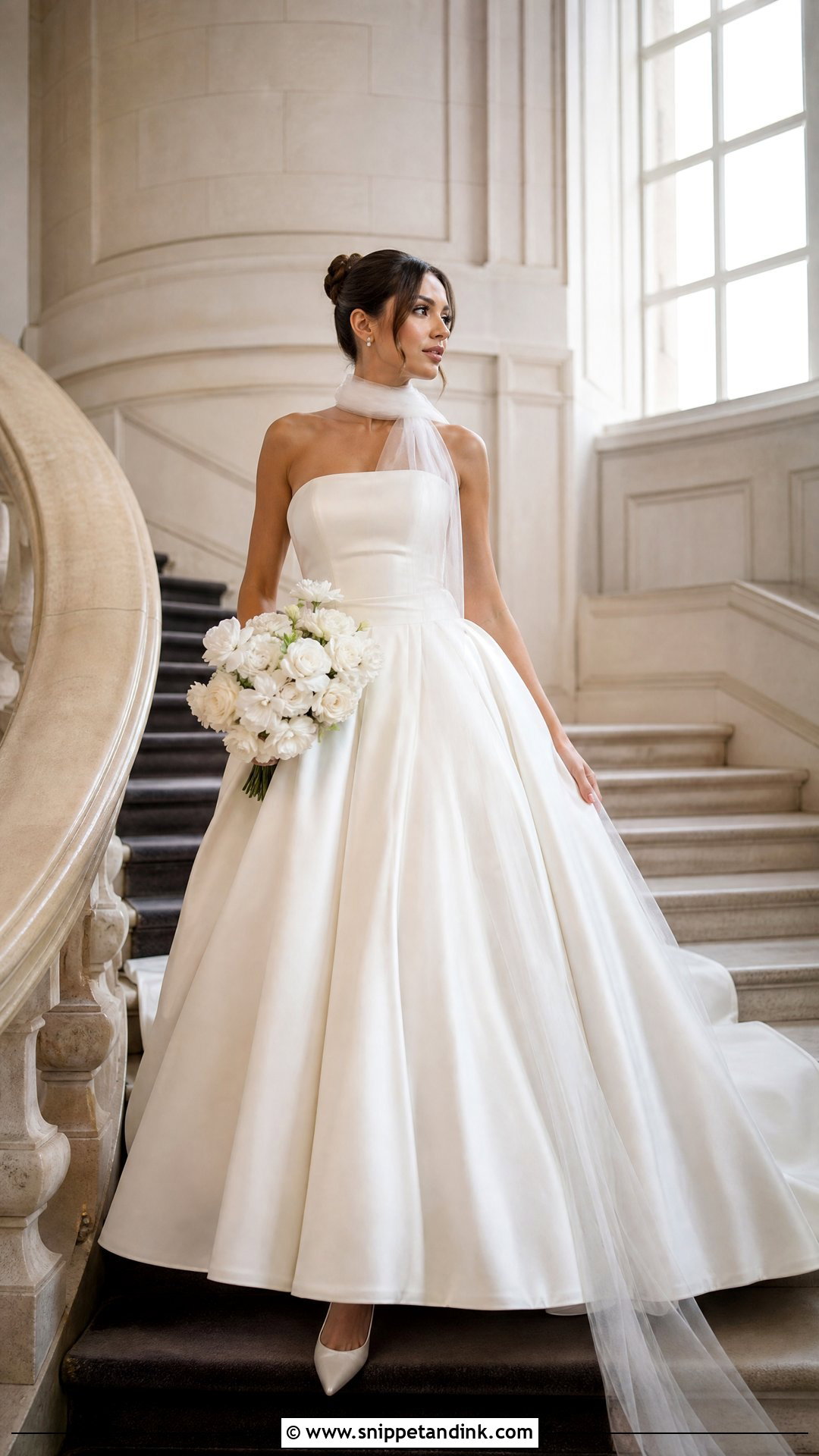
A full ball gown can carry an extra-long scarf, and it can even take the place of a veil. Chiffon or tulle keeps it light against all that skirt. I keep the width narrow enough that the back of the bodice still shows, since that’s often where the best construction detail is. Let the ends fall over the skirt. Classic satin pumps, sparkling studs, a formal updo and a medium bouquet; a tiny posy looks lost against a ball gown.
13. Mermaid Wedding Dress With Chiffon Scarf
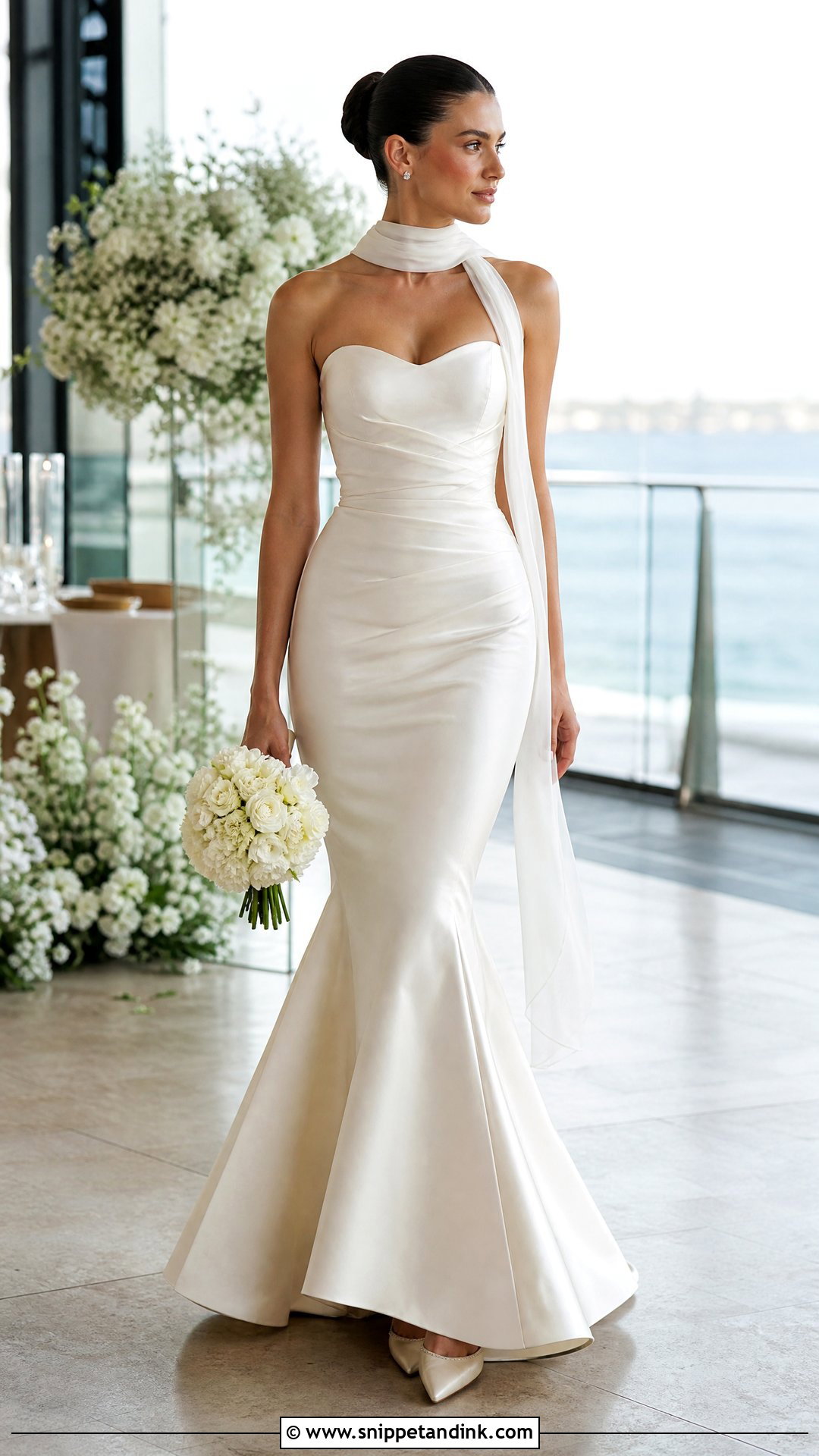
A mermaid gown is sculpted, and a narrow chiffon scarf softens it by adding one long vertical line. Finish the ends above the train. If they reach it, they tangle when you turn, and you’ll be fixing them in every photo. Simple strapless bodice, fitted hips, a flare from the knee. Avoid wide, shawl-like scarves and thick knots; they add weight to the upper body and fight the silhouette. Crystal studs, a sleek updo, a compact bouquet.
14. Drop Waist Wedding Dress With Neck Scarf
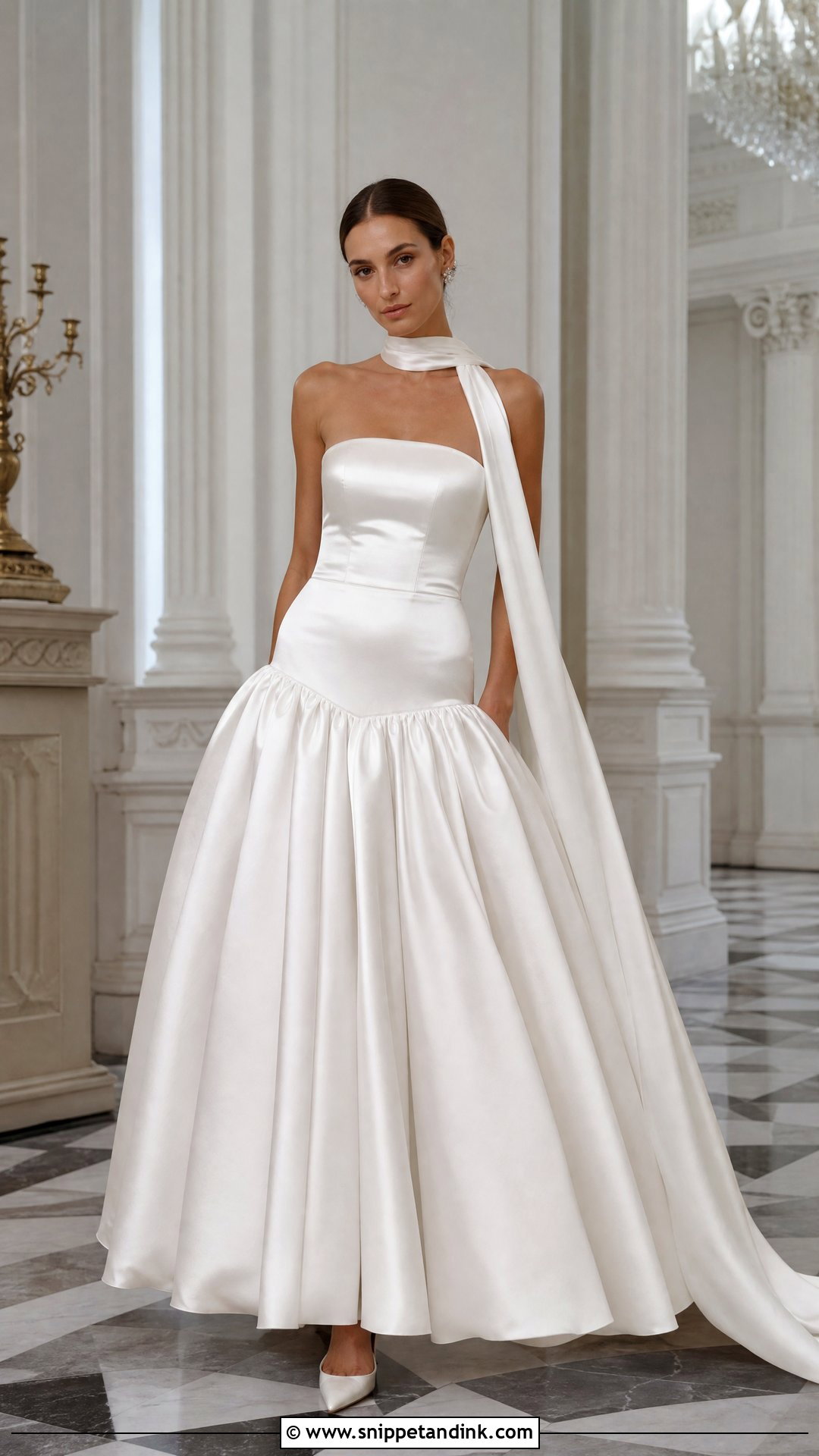
A drop waist lengthens the torso, and a slim scarf hanging straight down the back carries that line further. Drape it loosely and let it echo the vertical seams. Strapless satin with a fitted bodice to the hips, then a full skirt. If the skirt is pleated or gathered, the scarf must be plain, otherwise the textures compete. Pointed heels, small crystal earrings, a smooth clutch and a sleek center-parted bun.
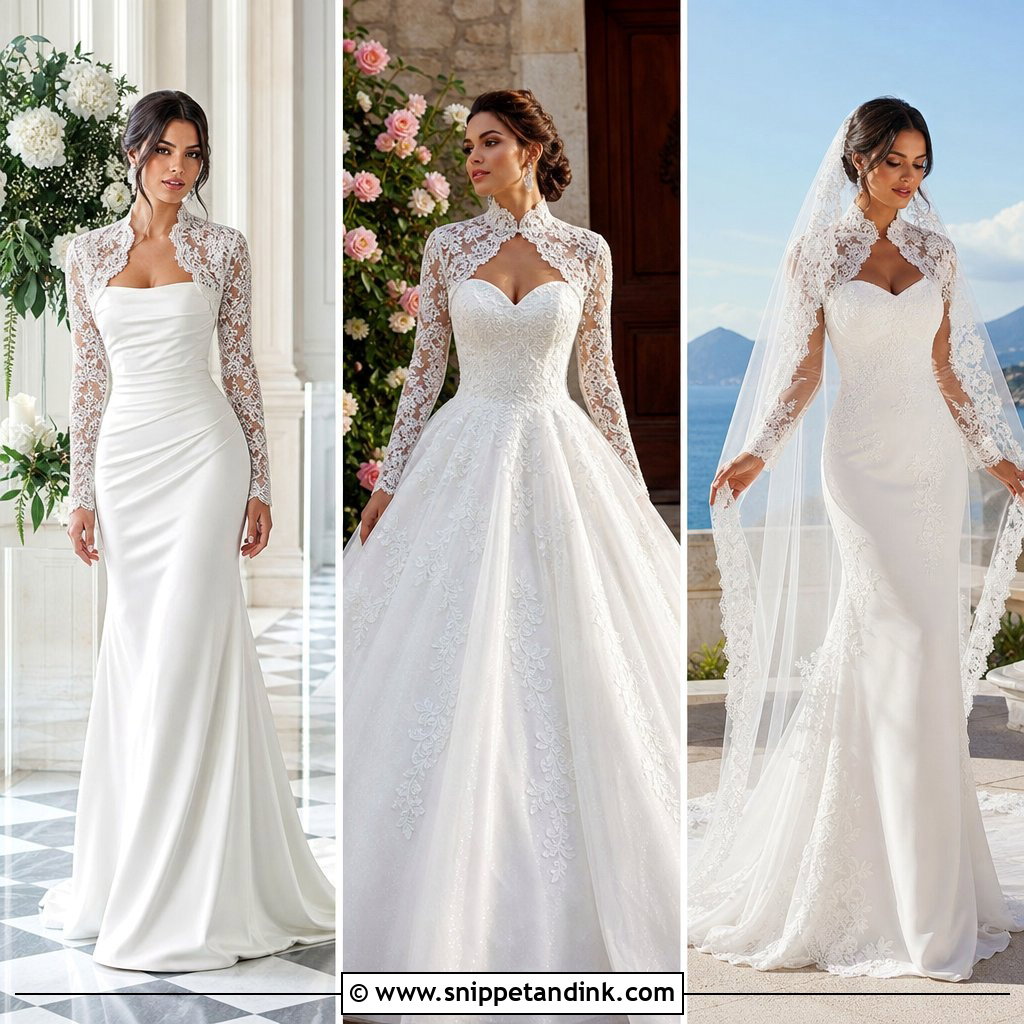
15. Backless Wedding Dress With Trailing Scarf
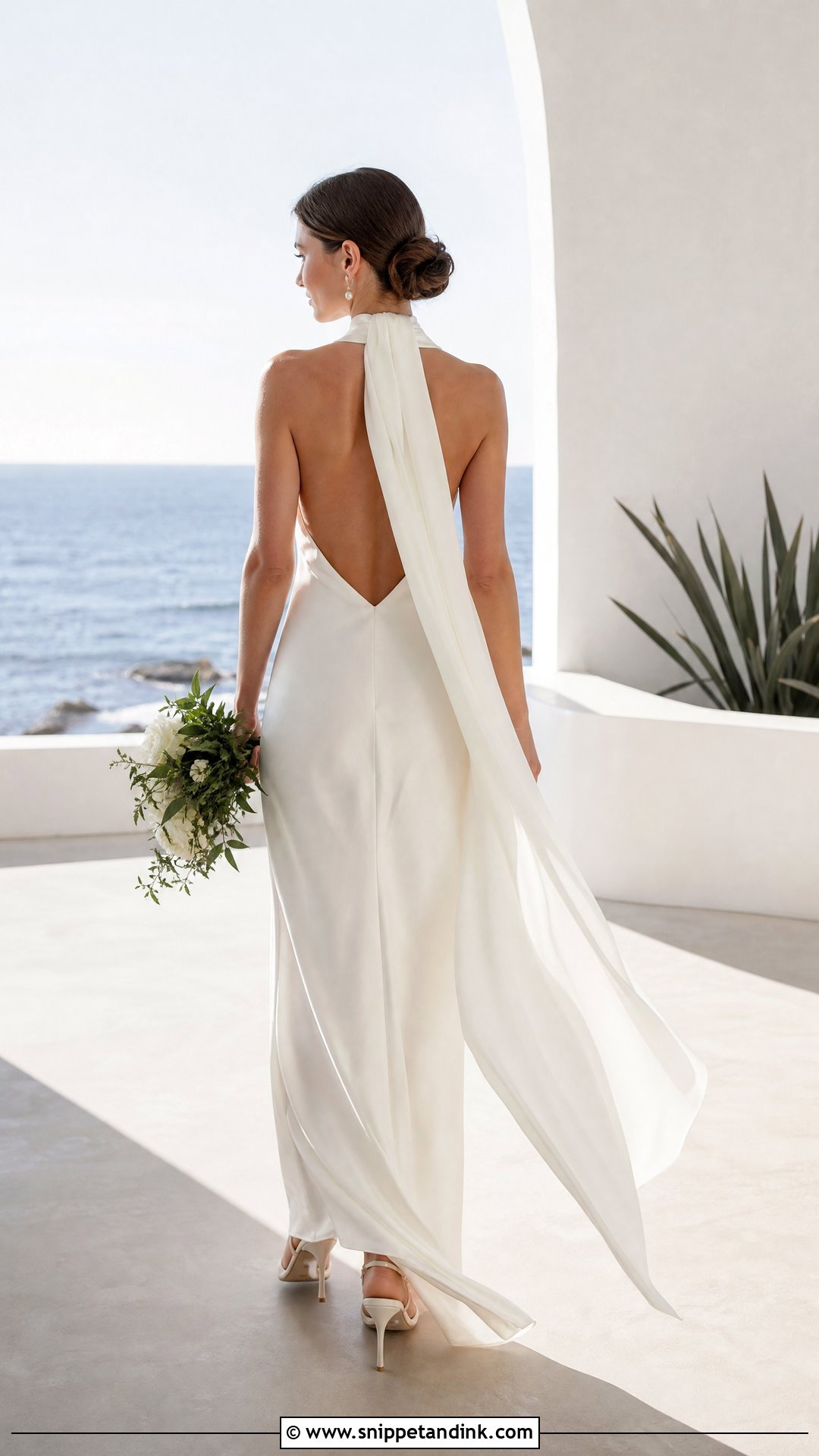
On a backless gown, the scarf should frame the opening rather than cover it. Wrap once around the neck and let the ends fall along the edges of the open back, finishing just above the train. Silk or crepe, minimal seams. A low bun placed above the scarf, and no long loose hair hiding the back. Support is the practical piece: sewn-in cups or a professionally fitted internal structure keep the front smooth when there’s nothing behind it.
16. Cape Sleeve Wedding Dress With Narrow Scarf
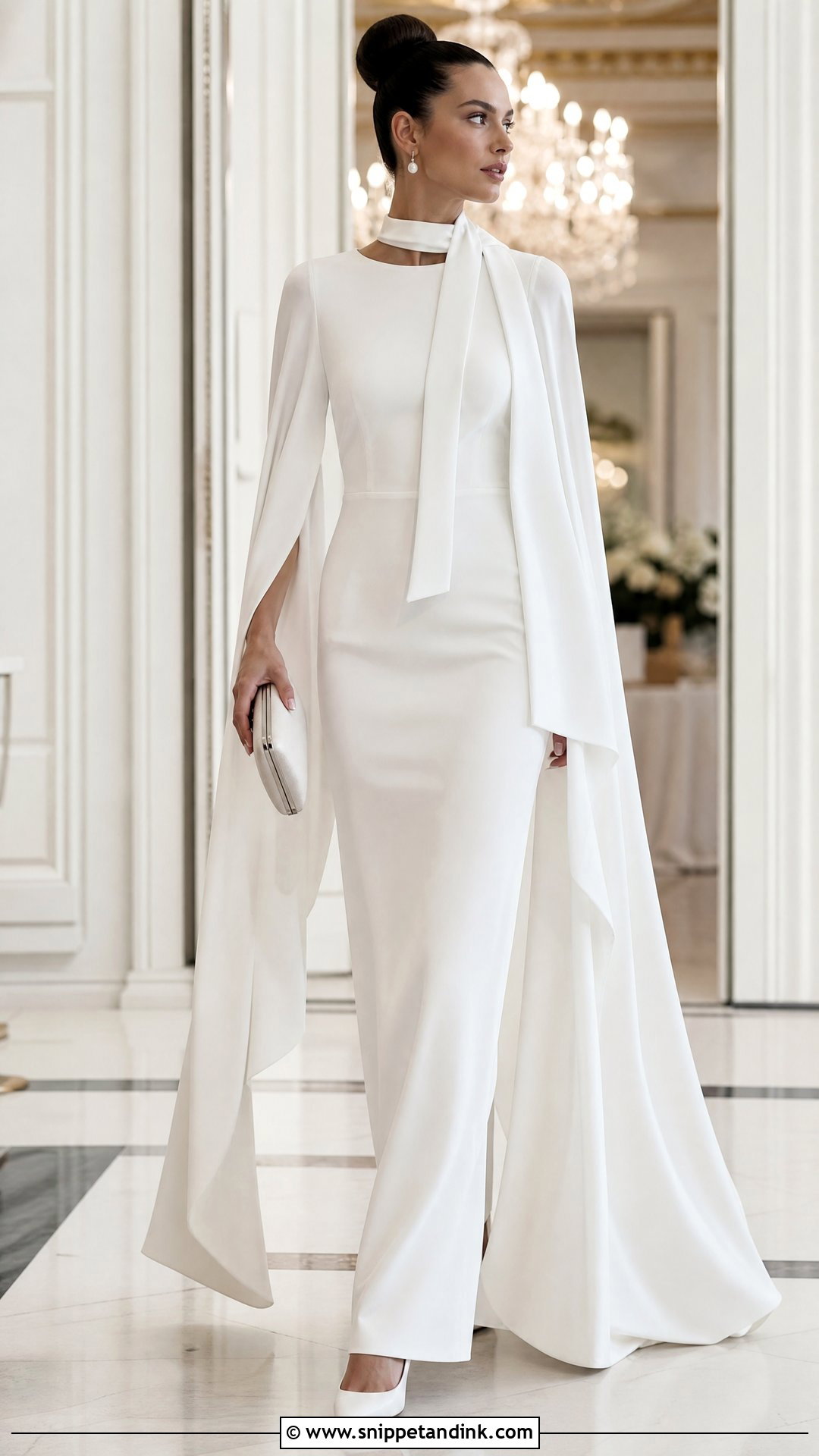
Cape sleeves already move, so any scarf has to stay out of their way. I put a slim satin scarf in the same color straight down the center of the back, which separates it from the sleeves that fall from the shoulders. Crepe column, light split sleeves. Pointed pumps, pearl earrings, a high bun and a small structured bouquet. This gives coverage without bulk, and it’s a strong option for a fall ceremony instead of a traditional veil.
17. Pearl Tulle Scarf With Minimal Wedding Dress
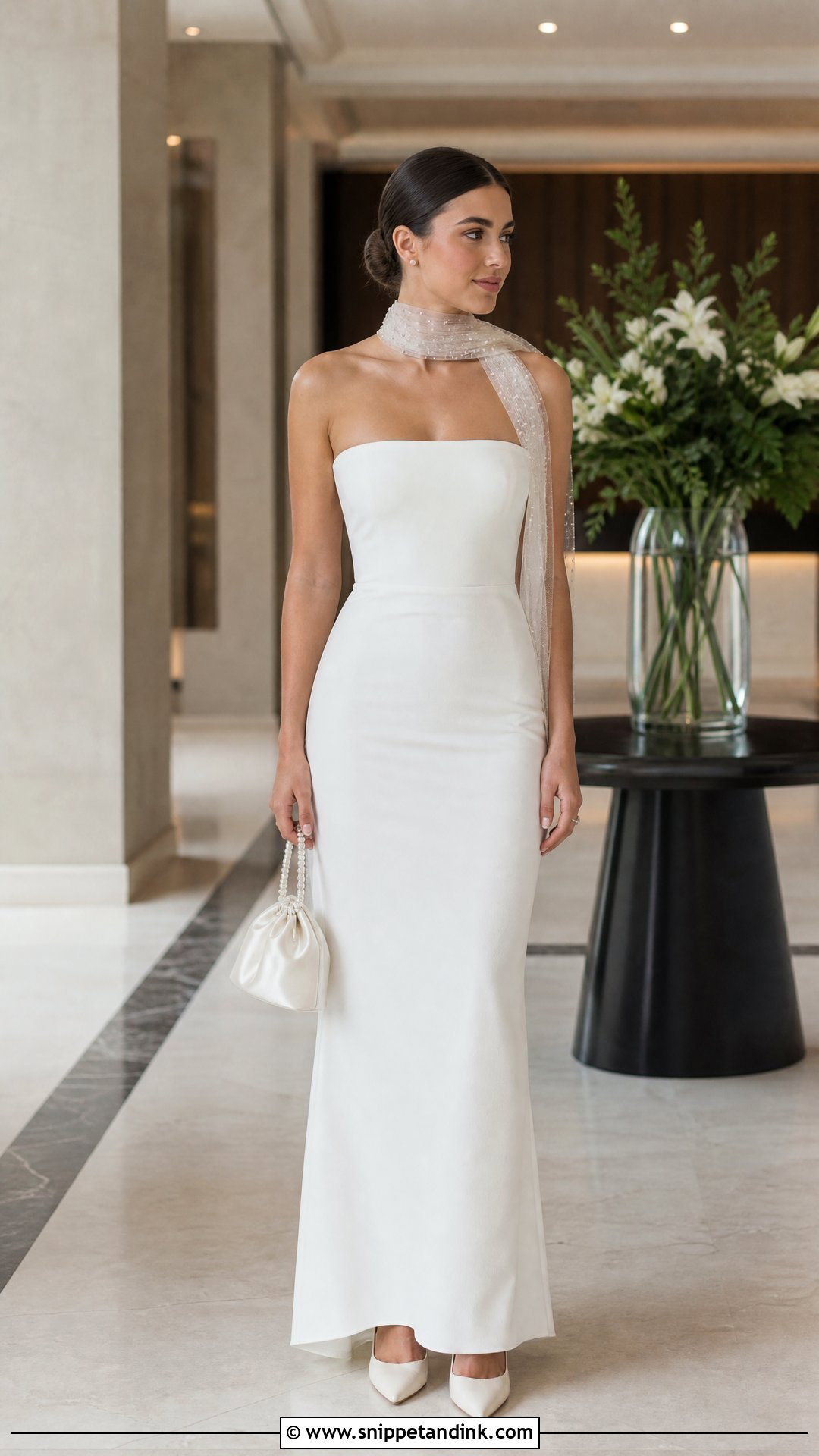
Pearl-scattered tulle adds texture to a plain column without adding sparkle everywhere. Keep the wrap loose, since tulle can scratch at the neck when it’s tight, and the pearls can catch on earrings. Strapless crepe or satin with clean seams. Pearl studs only; no pearl necklace, hair vine or beaded shoes, because the scarf is the decoration. A polished bun or soft ponytail so the tulle shows round the shoulders. It sparkles quietly under bright indoor light.
18. Lace Scarf With Simple Wedding Dress
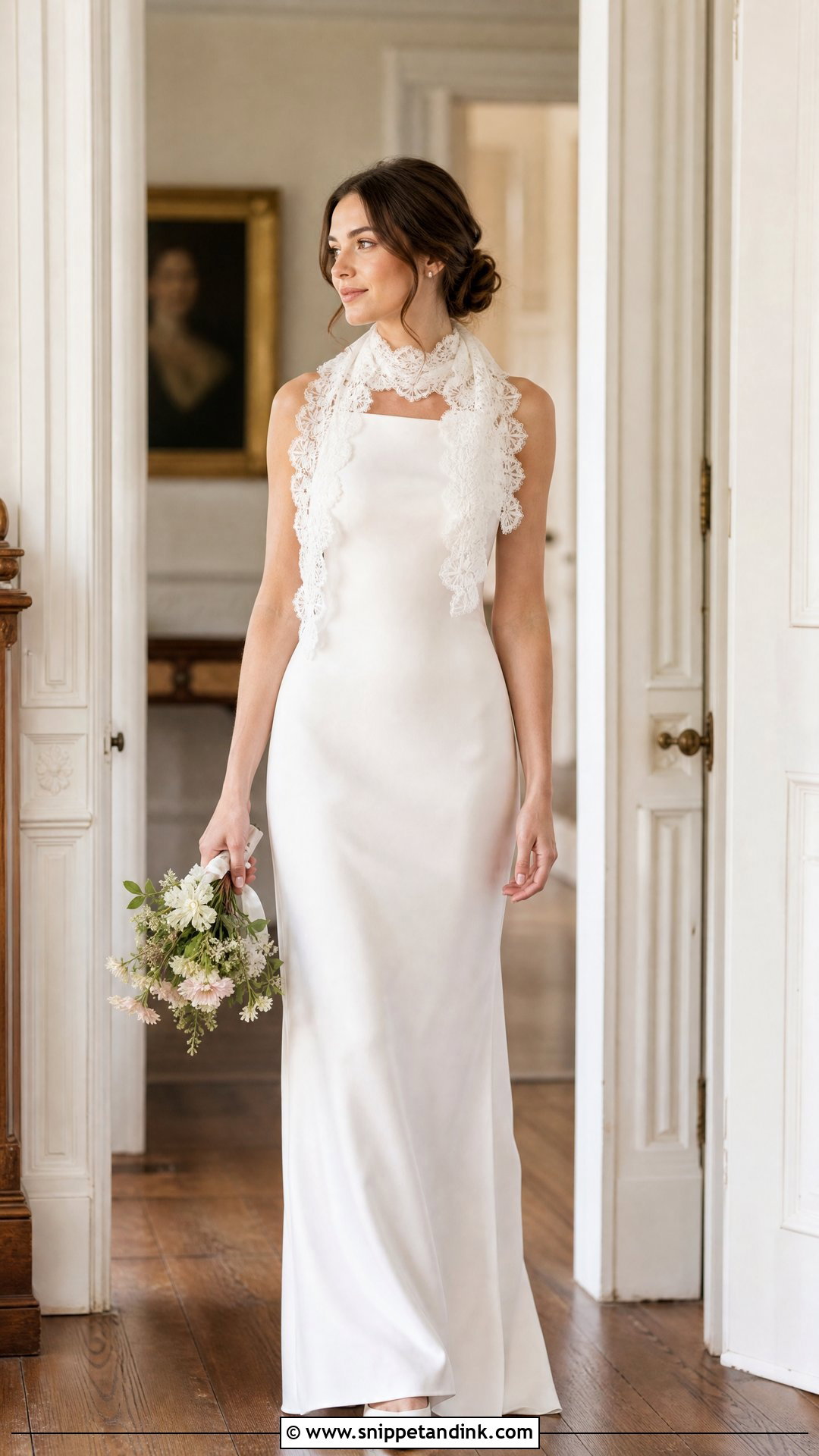
A lace scarf turns a plain gown romantic, but I always do a skin test first. Some lace is scratchy on a bare neck after an hour, and you’ll be wearing it for many. Choose fine floral lace in a narrow width so it doesn’t become a shawl; scalloped edges finish it softly. A smooth silk or crepe gown with a strapless or off-the-shoulder neckline. Satin pumps, simple studs, a loose low bun and a light, greenery-led bouquet.
19. Embroidered Neck Scarf Wedding Dress
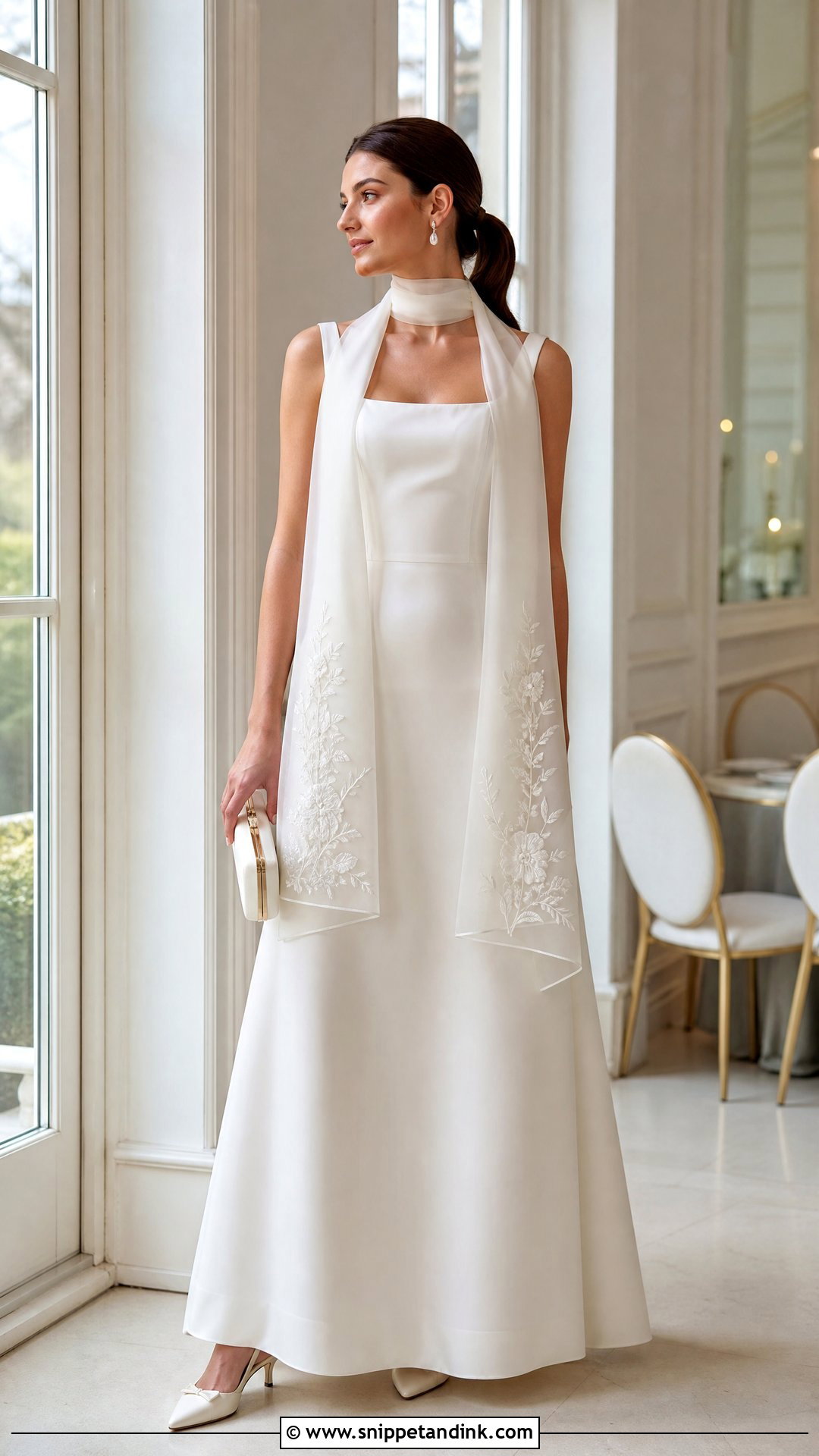
Embroidery makes a scarf a keepsake. Initials, the date or a small floral motif along the ends, in tonal thread for subtlety or pale blue for a hint of color. Embroiderers need time, so I’d order it well before the final dress fitting. Strapless or square-neck gown in satin, crepe or silk. Bring the embroidered ends to the front for portraits, then move them behind the shoulders for the ceremony. Ivory slingbacks, delicate earrings, a structured clutch.
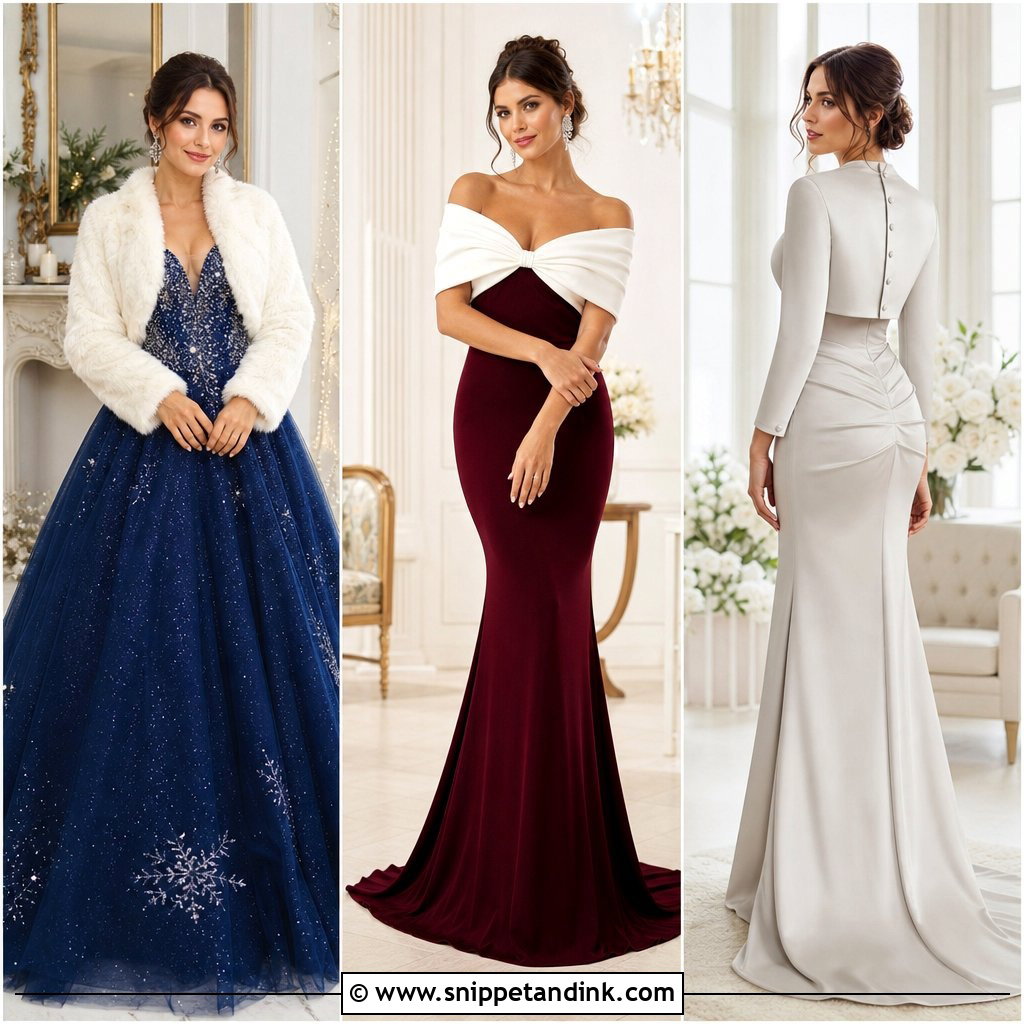
20. Something Blue Scarf Wedding Dress
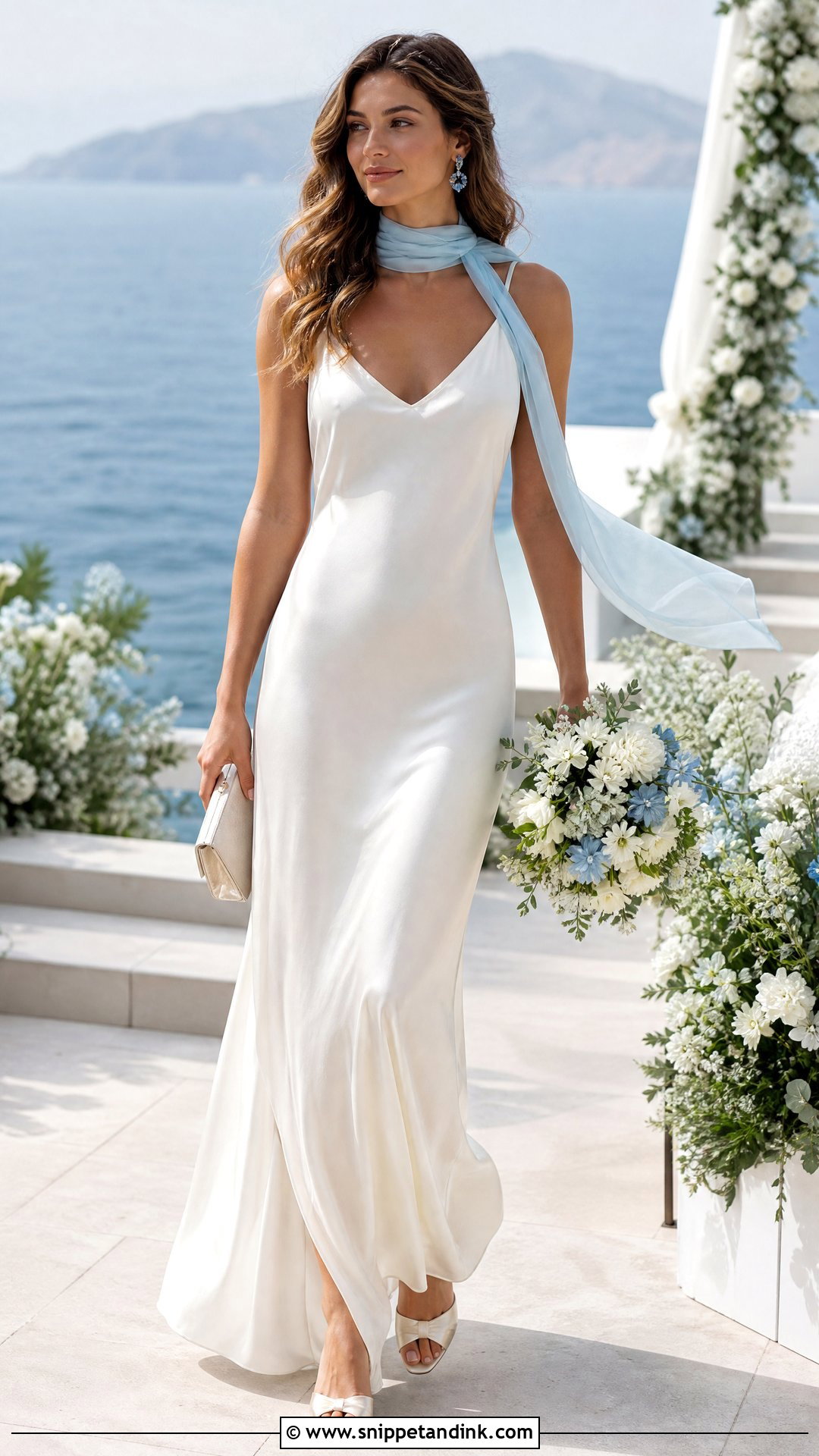
A powder-blue scarf is a fresh way to wear your something blue where people can actually see it. The shade has to be pale; a strong blue beside ivory looks like a separate outfit. I always hold the scarf against the gown in daylight, because blue can lean gray or lilac next to certain whites. Pair it with an ivory slip, strapless column or minimal A-line. Ivory heels, blue crystal or sapphire studs, a white-and-blue bouquet. Coastal and summer weddings.
21. Bow Neck Scarf Wedding Dress
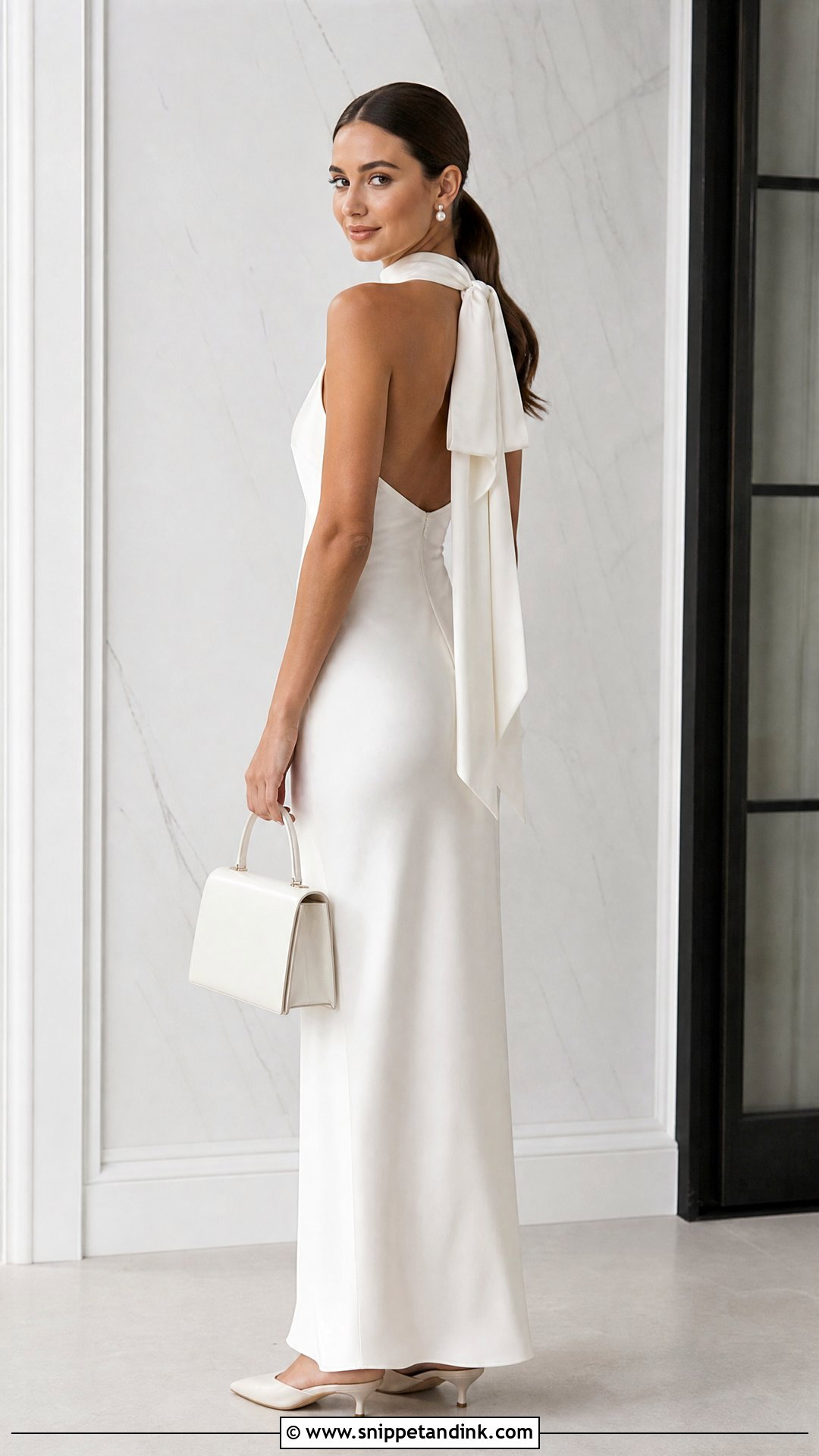
A bow is charming on a streamlined gown, and the scarf fabric decides whether it holds. Lightweight silk ties a bow that keeps its shape; slippery chiffon collapses within the hour. Tie it at the back for a trailing detail or slightly to one side for a vintage feel. Sleeveless satin, high or square neckline, column skirt. Kitten heels, pearl buttons, a top-handle bag. Wear the hair up so the bow isn’t lost beneath it.
22. Cathedral Length Scarf Wedding Dress
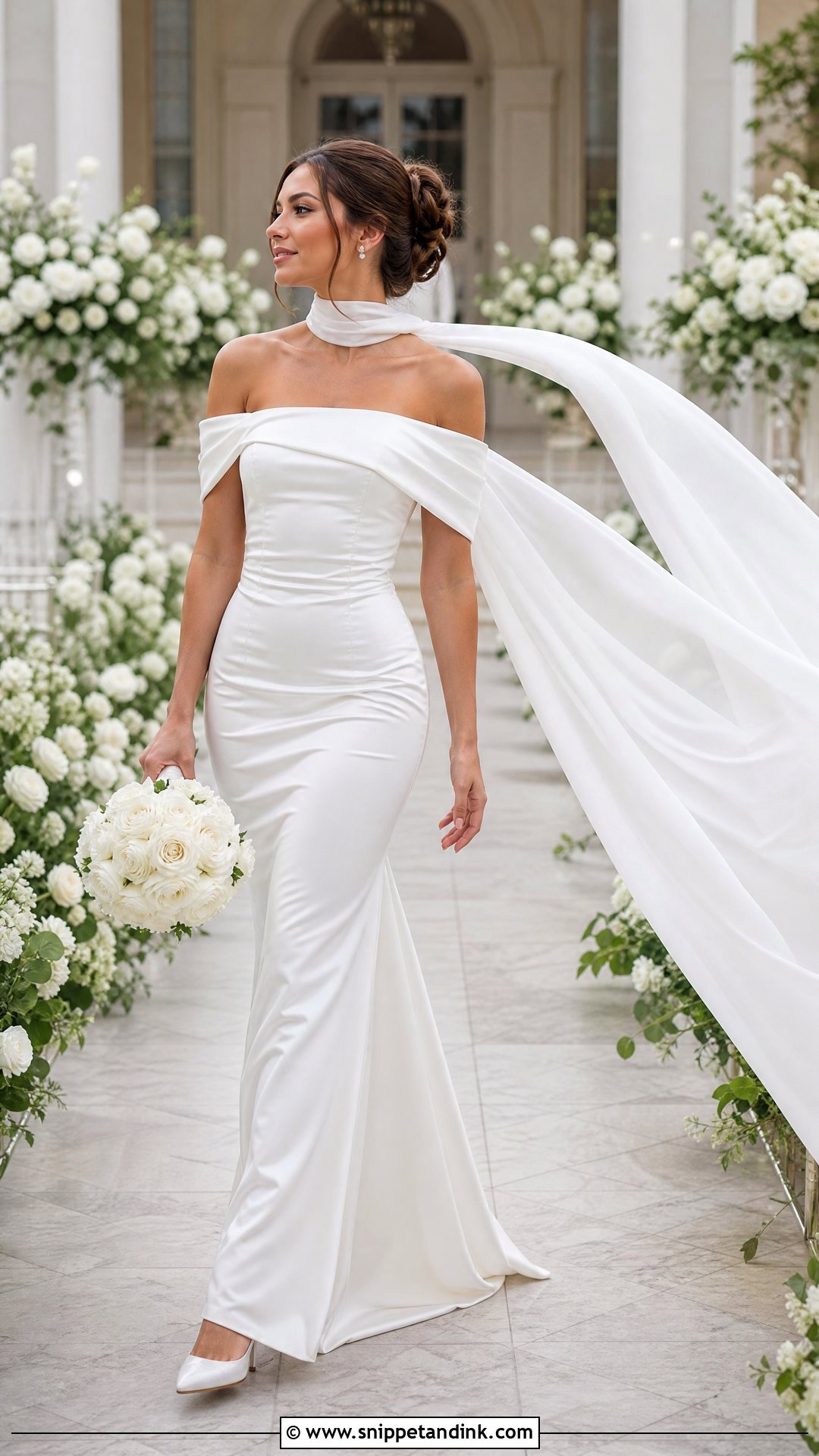
A cathedral-length scarf is a long veil in a different shape: narrow at the neck, widening into long panels behind. The gown’s own train should be moderate, or two trailing layers tangle and become impossible to manage. Fitted strapless or off-the-shoulder, in satin, crepe or silk. Classic pumps, diamond studs, a formal updo. Brief an attendant to straighten the panels before the processional and before group photos, and add a wrist loop to carry it while dancing.
23. Winter Wedding Dress With Satin Neck Scarf
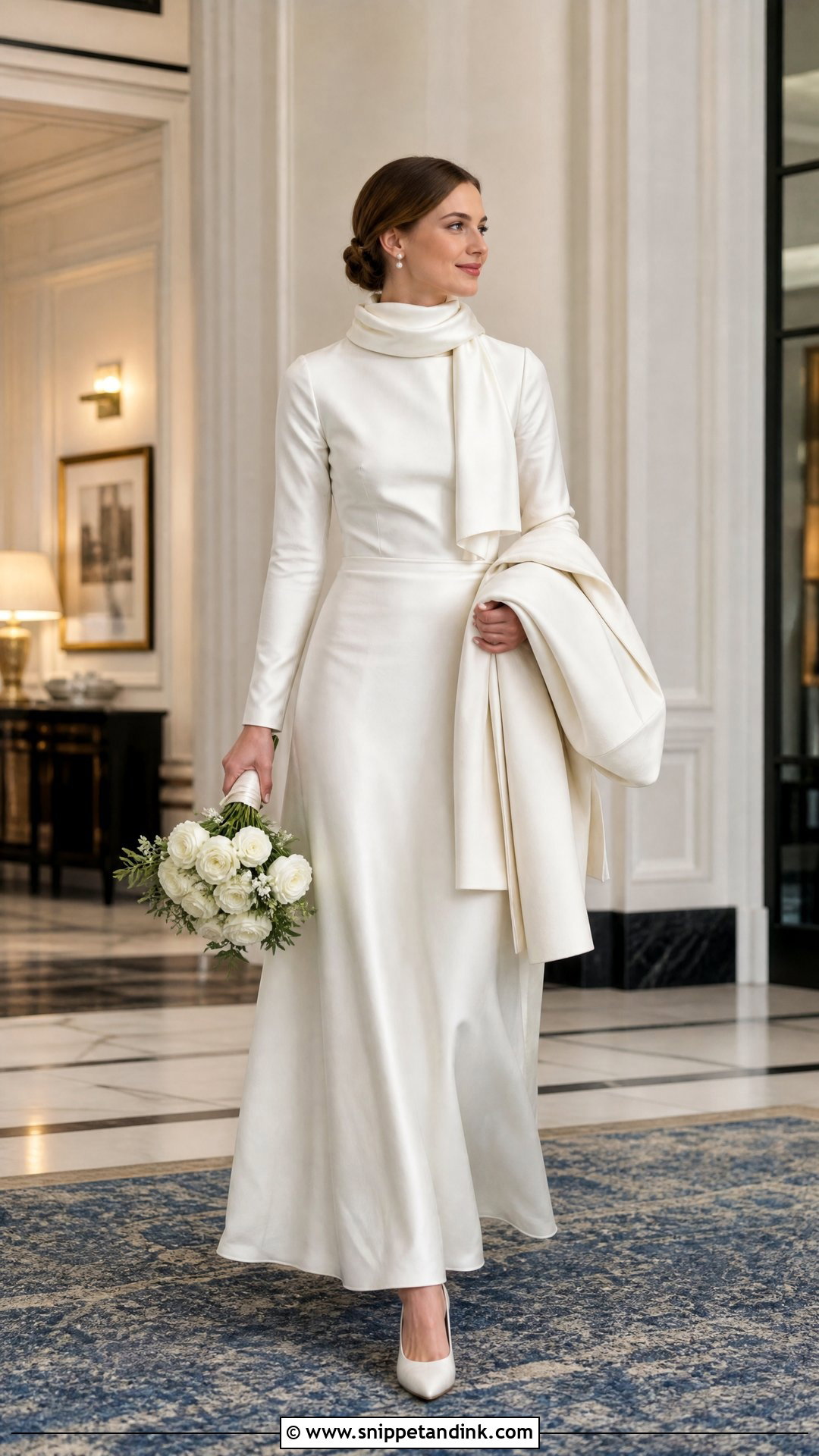
Winter is when a scarf earns its place, since it can sit around the shoulders for outdoor photos and loosen round the neck indoors. A medium-width satin scarf matched to a long-sleeve satin gown keeps the layers cohesive. It won’t keep you warm in real cold, though; I always plan a proper ivory coat for anything below a mild chill. Closed-toe pumps, pearl earrings and a low bun with a side part. Hotels and historic indoor venues.
24. Beach Wedding Dress With Chiffon Neck Scarf
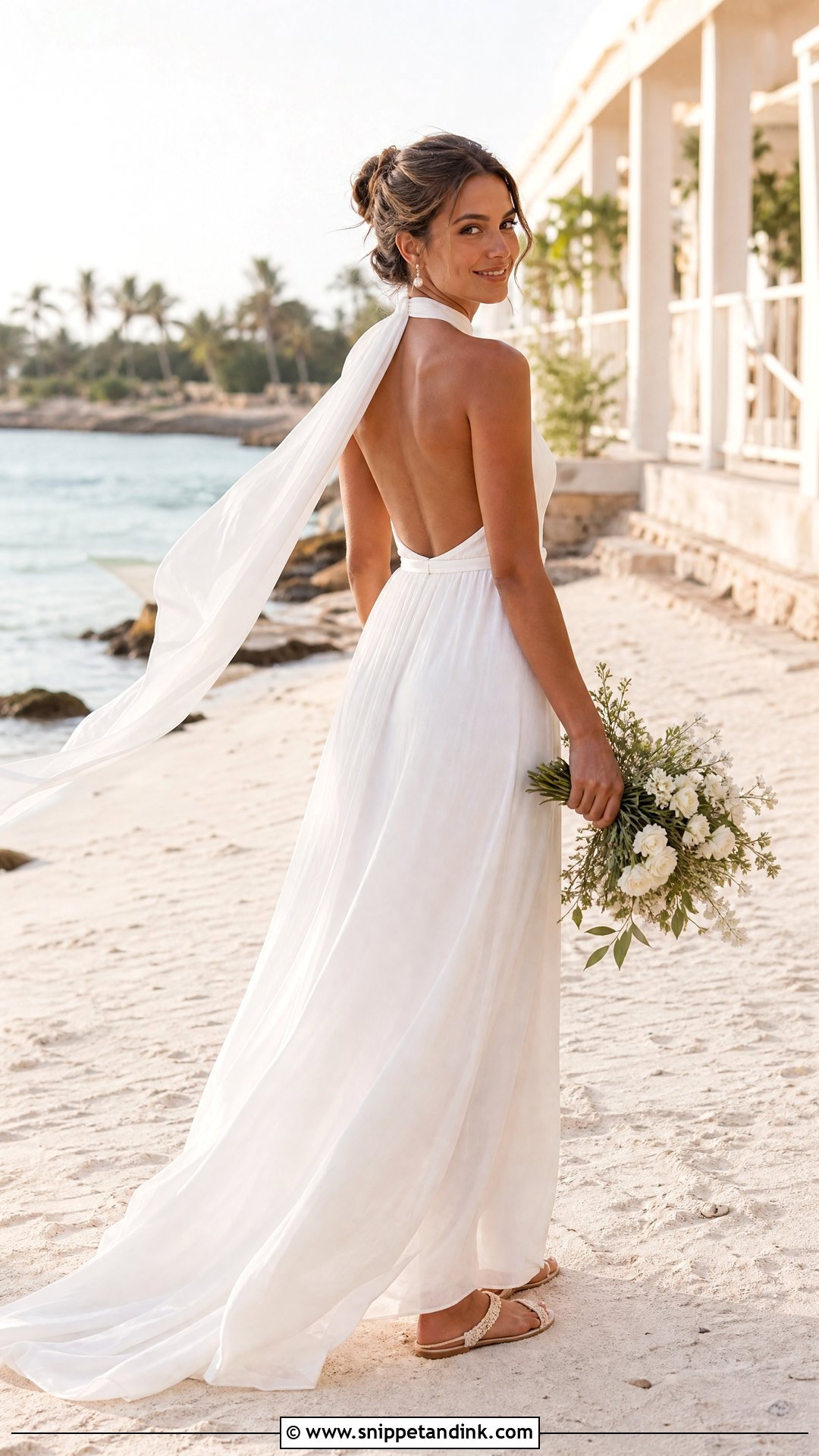
Wind and sand are what a beach scarf has to survive. Keep chiffon narrow and well off the ground; floor-pooling ends pick up sand and wet hems drag. Wrap once and let the ends fall behind. An A-line or bias-cut gown with slim straps and a short sweep train. Flat embellished sandals or low block heels, small pearl earrings, a loose bun. A hidden snap at the back of the gown stops the scarf from blowing over your face during the vows.
25. Plus Size A Line Wedding Dress With Neck Scarf
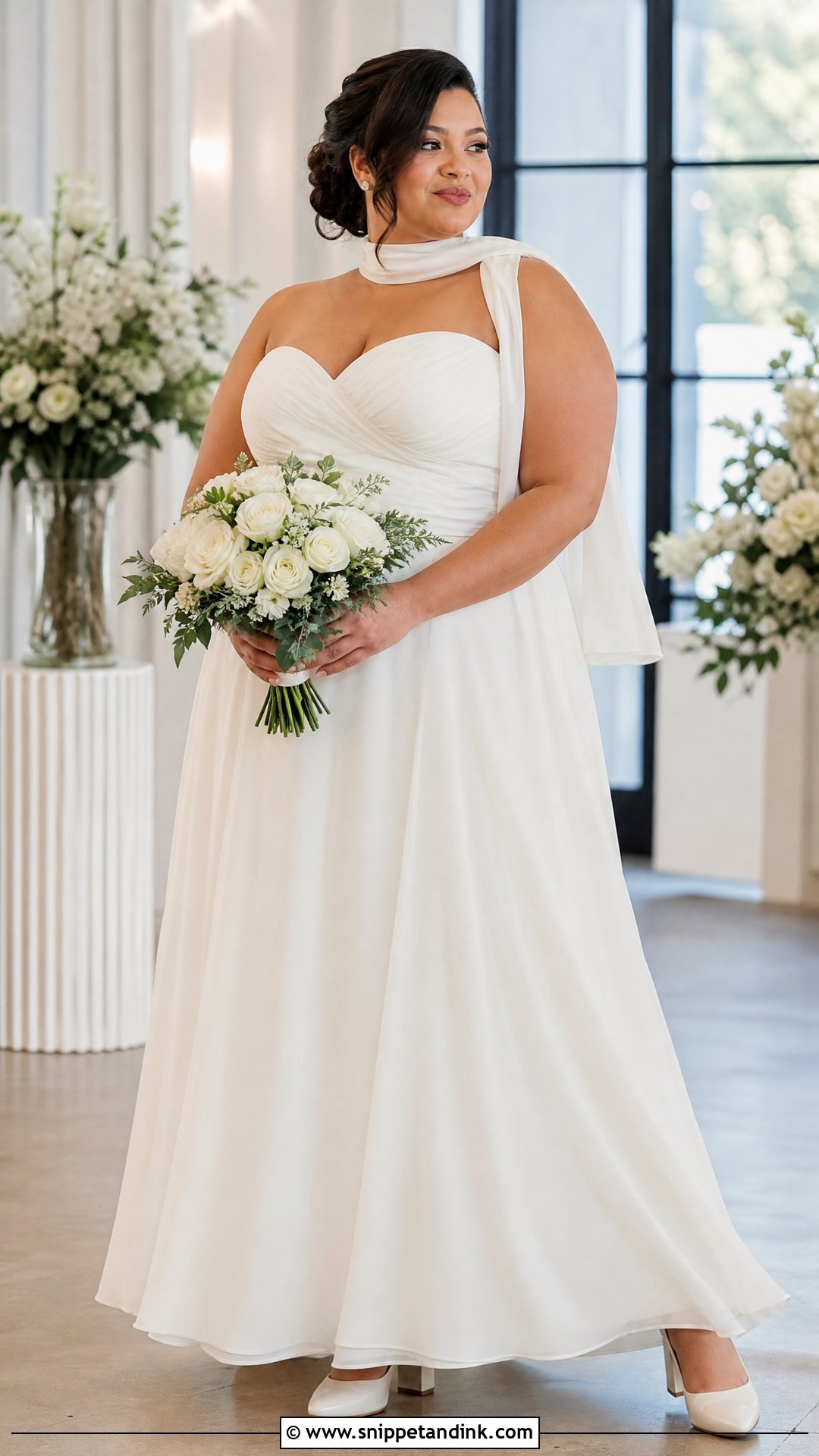
Scale is the thing I adjust for a plus-size bride with a scarf. A very skinny scarf can look like a ribbon against a full A-line, so I go medium-width in chiffon or silk. Let the ends fall vertically behind the shoulders for a long, unbroken line. A supportive strapless, sweetheart or off-the-shoulder bodice with secure internal structure, and a skirt that skims the hips. Block-heel pumps for comfort, sparkling studs, an updo. Fit the scarf with the actual dress so the length and neckline placement are judged together.
Taking the Scarf Off for Dancing, and Where It Goes Next
A scarf is easier to remove than a veil, but plan who takes it and where it goes. I give it to one bridesmaid with a clean garment bag, because a scarf left on a chair ends up under someone’s drink. If you’d like to keep it on for the first dance, loop the trailing ends over one wrist so they don’t wrap round your partner’s legs.
Pressing and Storing It Afterward
- Steam silk and chiffon on low heat from the inside; a hot iron can mark or melt fine edges.
- Spot-clean makeup marks gently or take it to a cleaner who handles bridal silk. Foundation along the neckline is the usual stain.
- Store it rolled around acid-free tissue, not folded, so there are no permanent creases.
- Keep it out of plastic long-term, which traps moisture and can yellow ivory fabric.
Neckline First, Then Scarf Width
One scarf can change the mood of a whole gown. A narrow silk one sharpens a minimal column; chiffon, lace, pearls or embroidery soften it and make it personal. I start every scarf decision with the neckline, then the width and weight of the fabric, then the venue’s weather and the length of the train. Compare scarf and gown in daylight before buying, and practice tying it and walking in the full outfit at least once. That rehearsal shows you exactly where it slides.
You'll Like These Ideas:


Leave a Reply