
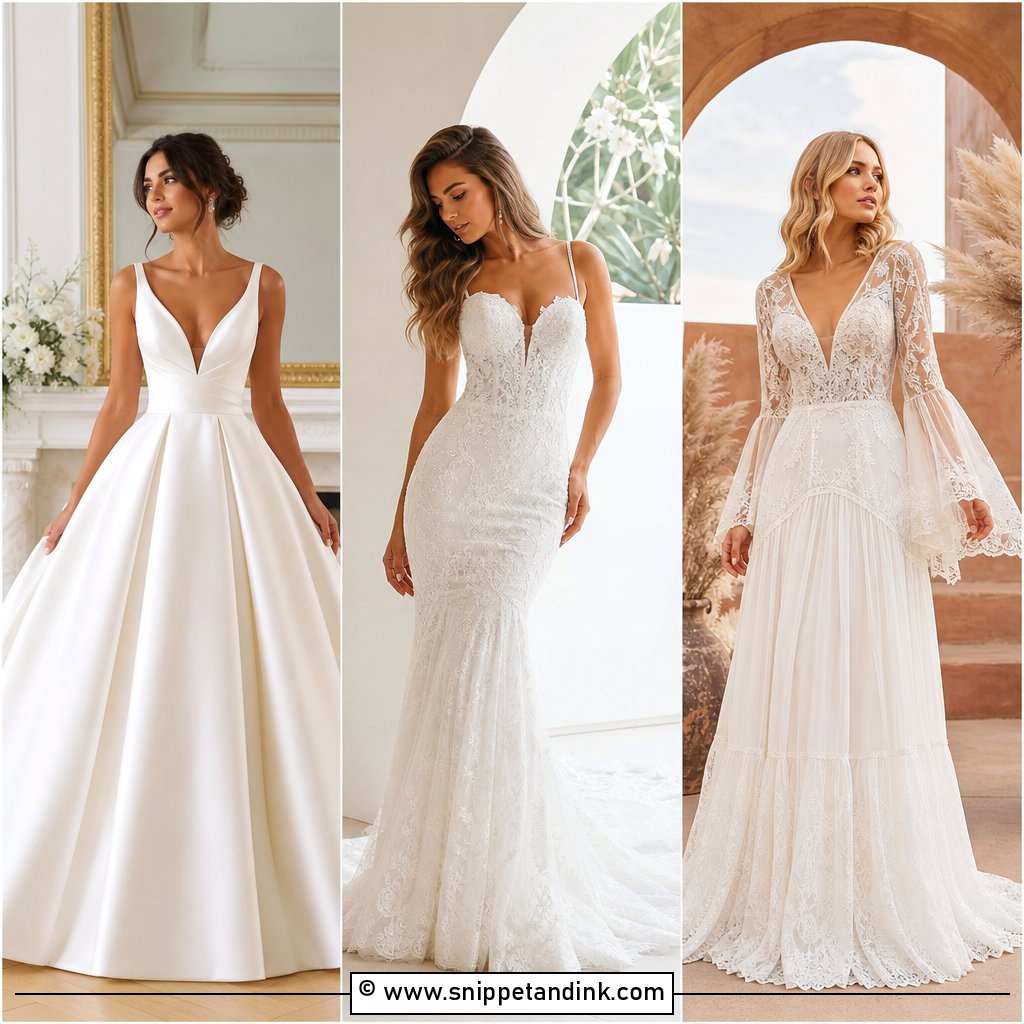
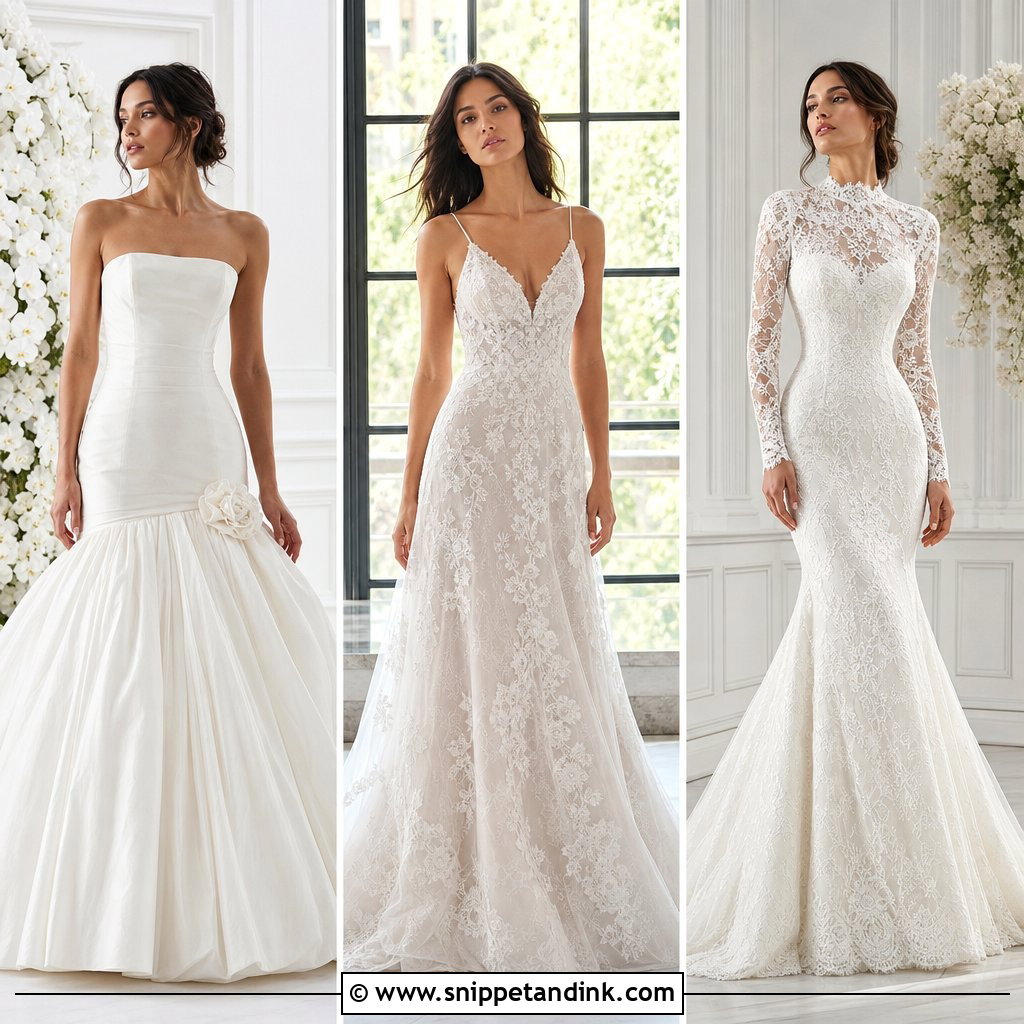
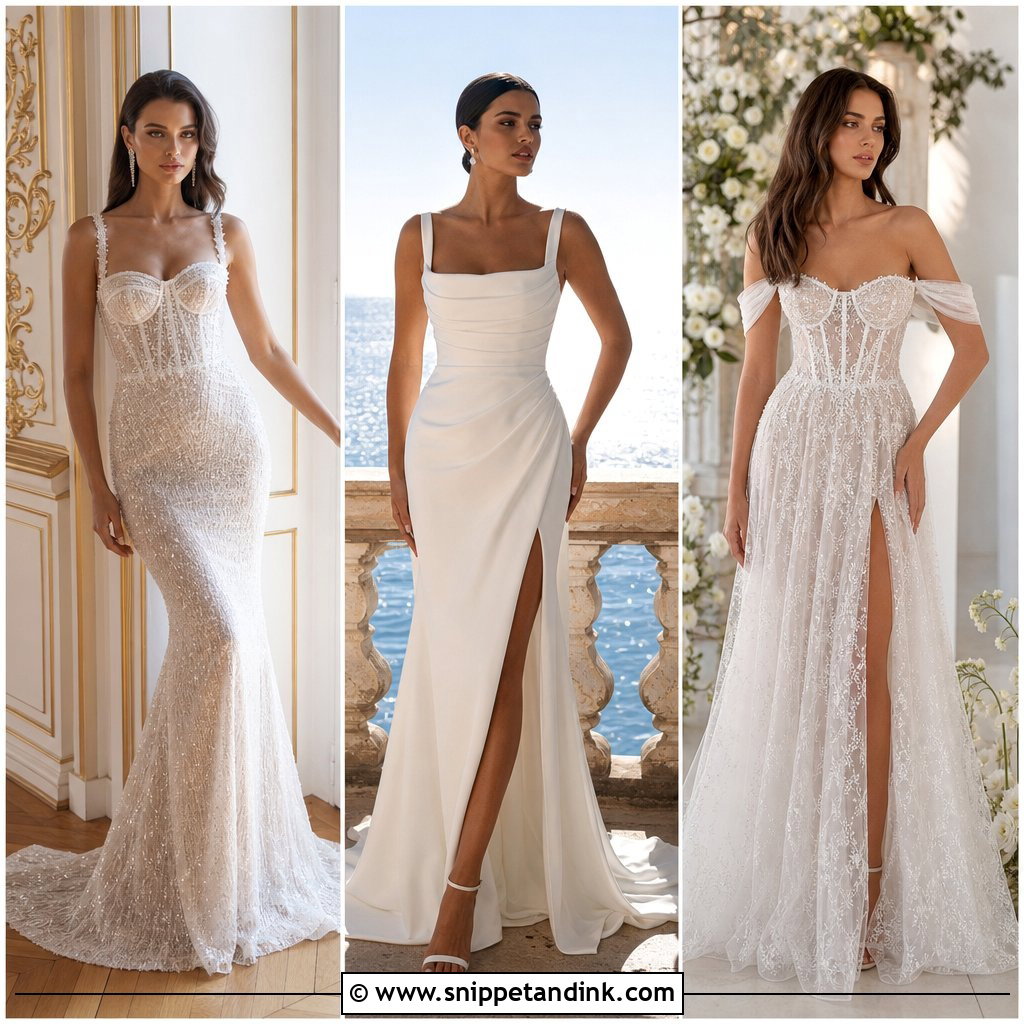
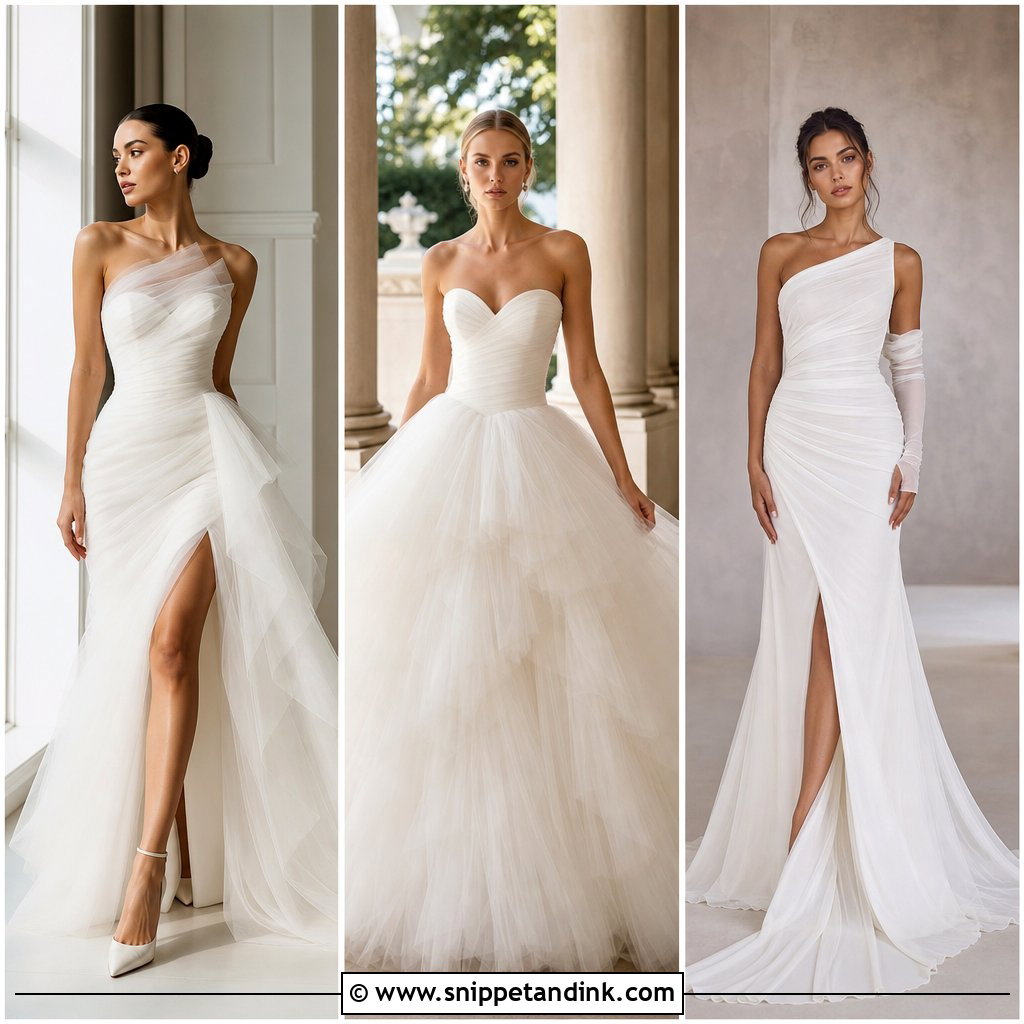
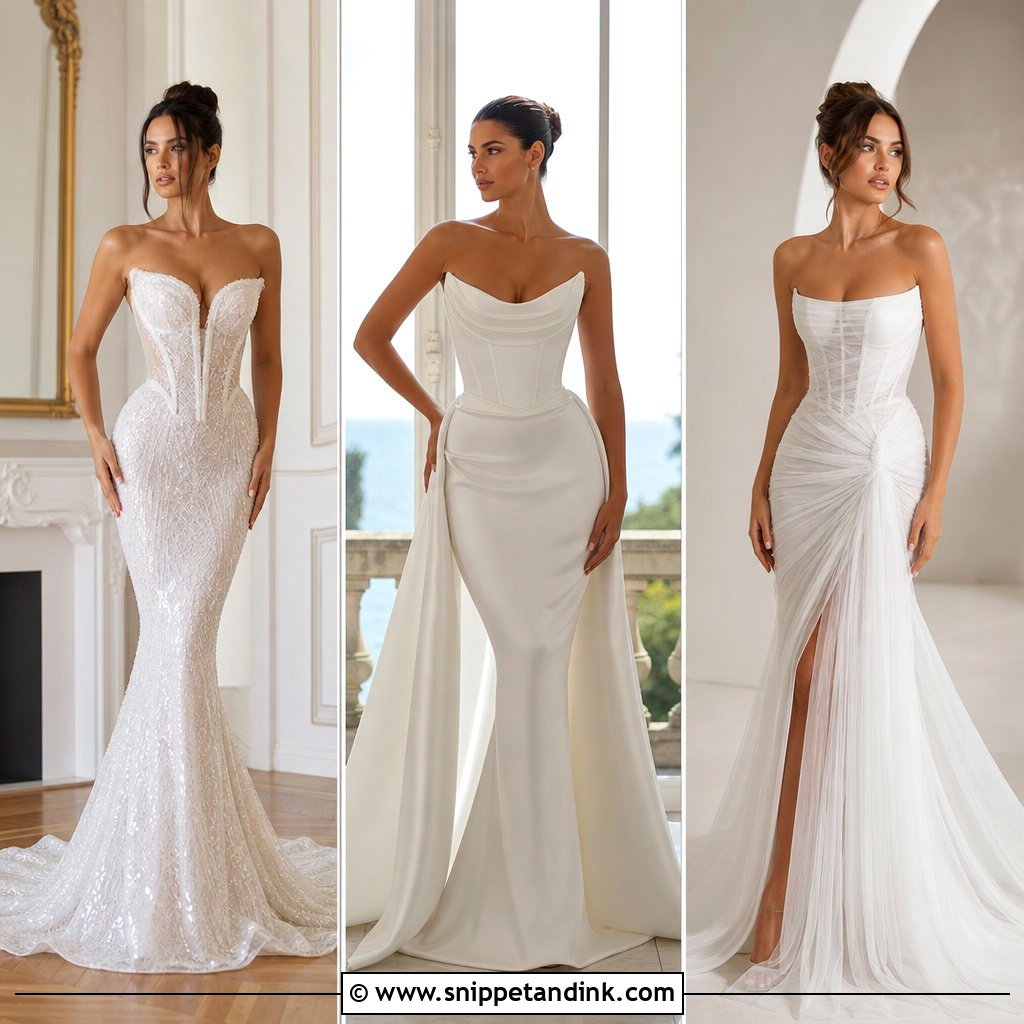
Lihi Hod gowns sit in an interesting spot: the construction is couture-minded, with real corsetry, sculpted satin and hand-placed lace, but the finished dresses rarely feel stiff. When I style a bride in one, I treat the gown as the anchor and build everything else around what the bodice and skirt are already doing. Below are twenty complete looks, from strapless satin and dropped waists to pearl work, appliqué and bridal separates, each with the shoes, veil, hair and flowers I’d put with it. I’ve also added notes on fit and how each fabric behaves over a long day, because a dress that photographs well at noon still has to sit through dinner.
Ordering a Lihi Hod Gown and Planning Its Fittings
Most designer gowns at this level are made to order once you’ve placed a deposit with a stockist, not pulled off a rack. That means your timeline starts with production, not alterations. I tell brides to plan on many months, and to ask the boutique for their current delivery estimate in writing, since it varies by style, season and how busy the atelier is. Rush options sometimes exist, but they usually cost extra and limit your choices.
Sizing is done from your measurements against the designer’s chart, and with structured bodices you’ll often fall between sizes at bust, waist and hip. The usual rule is to order to your largest measurement, because taking a corset in is straightforward and letting one out often isn’t possible.
A realistic fitting rhythm
- First fitting about two to three months before the date, in your actual shoes and shapewear.
- A second fitting a few weeks later to check the bodice, hem and bustle.
- A final fitting close to the wedding, with whoever will bustle you watching and practicing.
- Bring your veil and any removable pieces to every appointment so lengths are set together.
If your weight tends to change with stress or training, mention it early. A seamstress would much rather leave room in a seam than rebuild one in the final week.
1. Lihi Hod Strapless Satin Wedding Dress
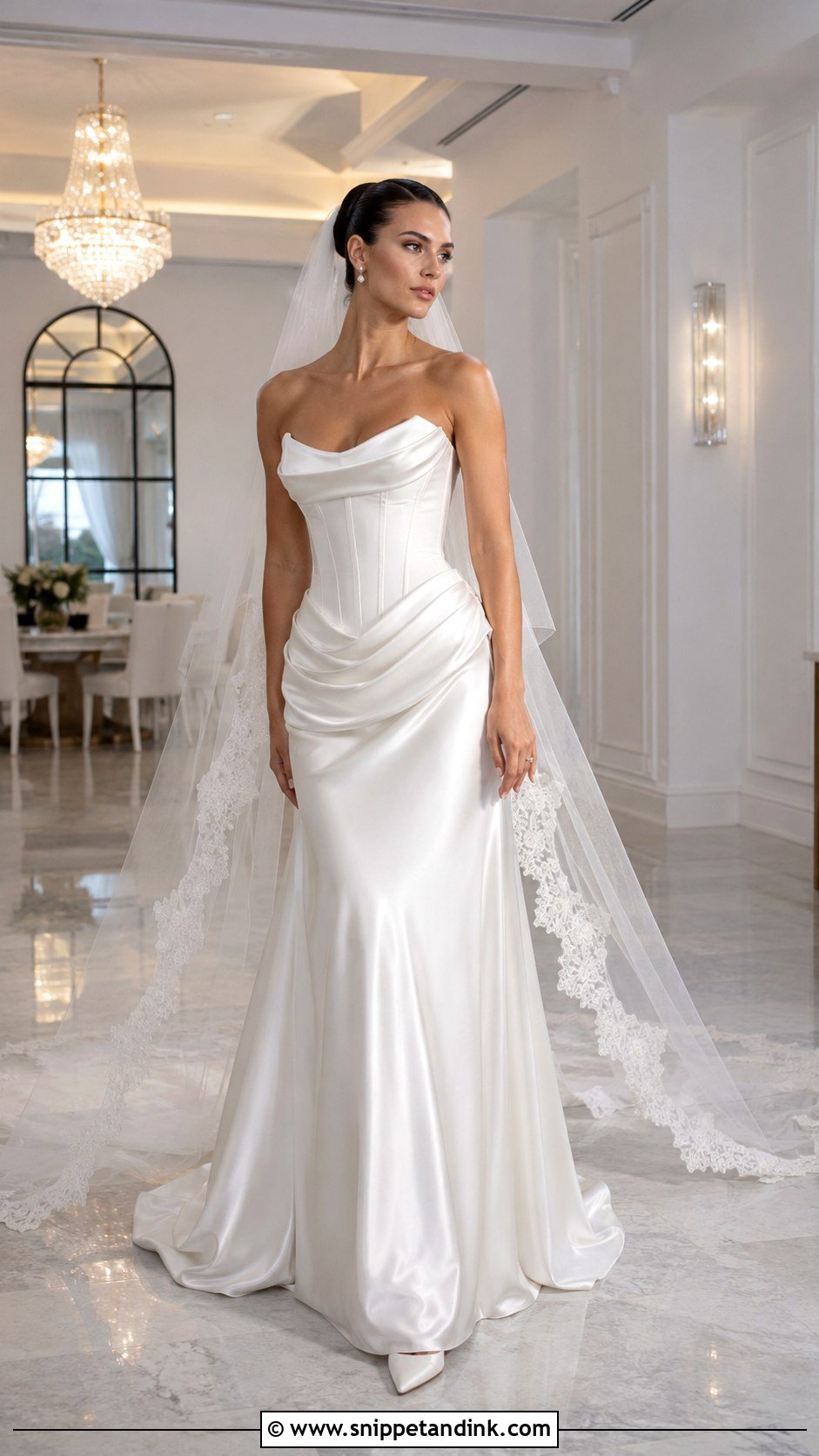
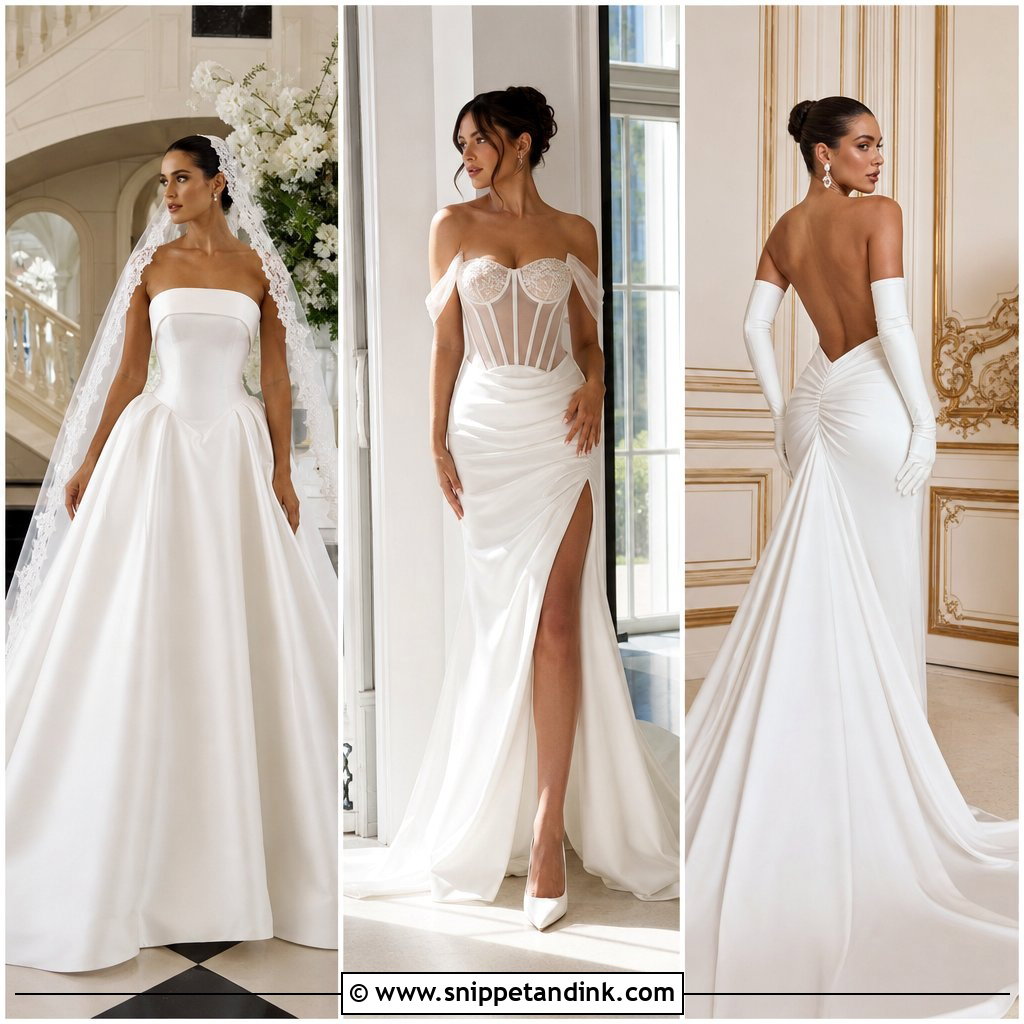
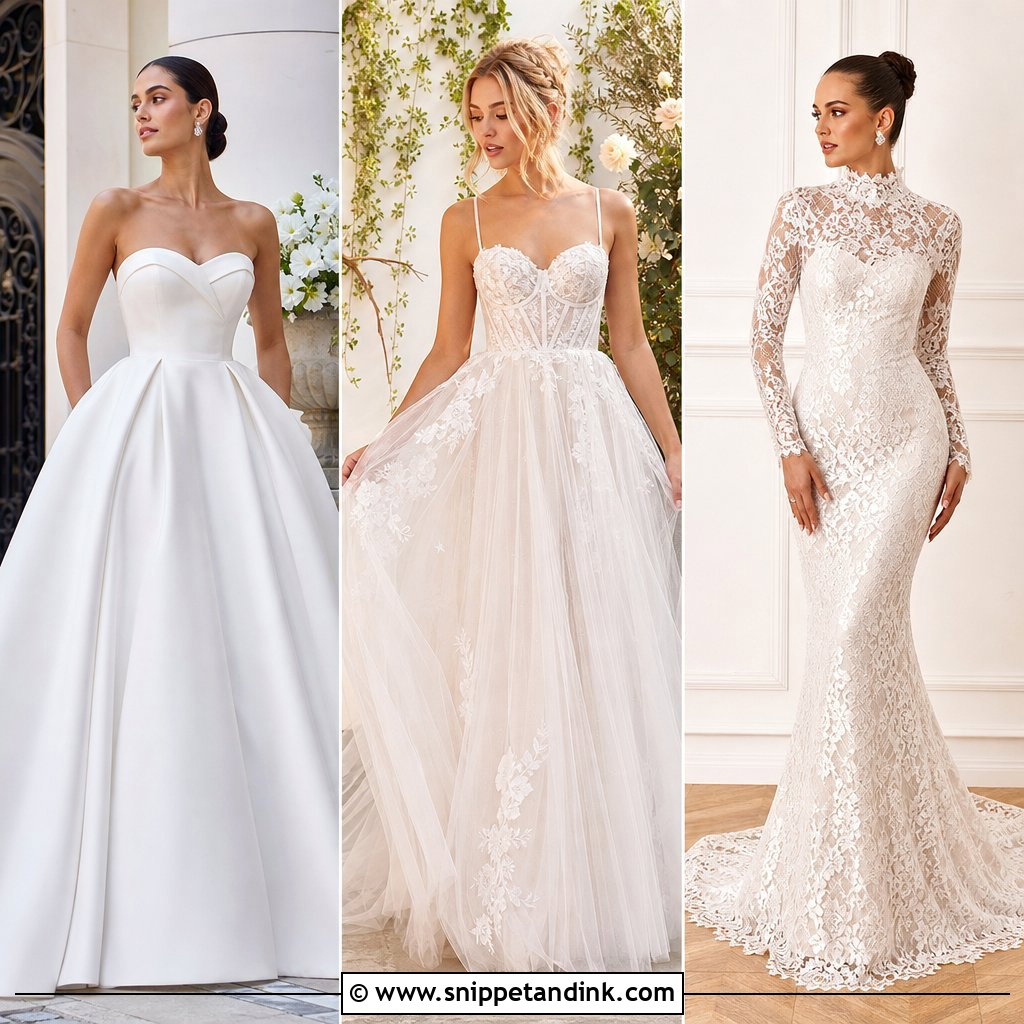
Strapless satin depends entirely on the bodice. A sculpted corset with a gently curved neckline holds the dress up on its own, so the skirt can stay clean and softly gathered without any decoration. The thing I check first at a fitting is the top edge: if it gaps when you breathe in or lean forward, it needs taking in before anything else is discussed. Pointed ivory pumps, pearl drops and a cathedral veil keep the surface smooth and visible, and a low bun with a center part shows off the shoulders. Satin does reflect light, so luminous makeup with a rose lip reads better than heavy shimmer. I’d place this in a hotel ballroom or a museum, somewhere the plainness looks deliberate.
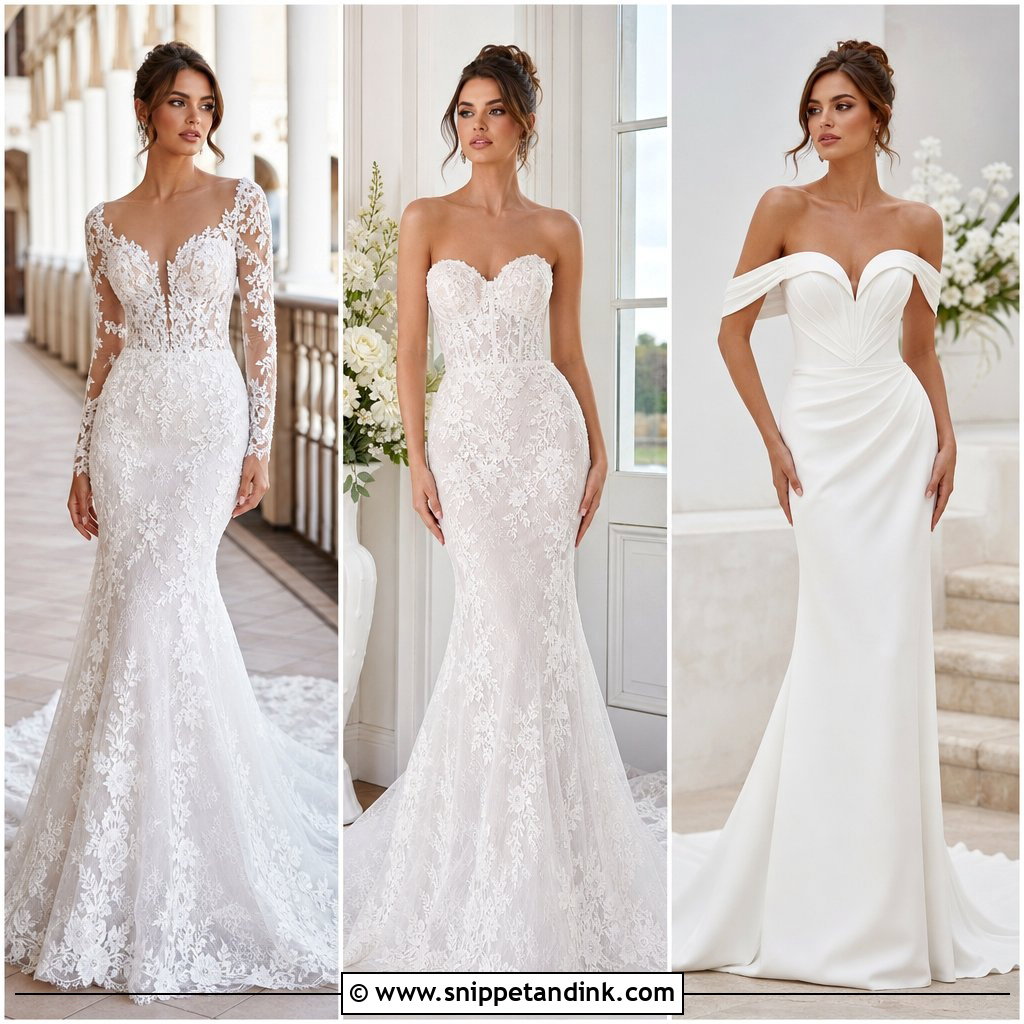
2. Lihi Hod Off Shoulder Lace Wedding Dress
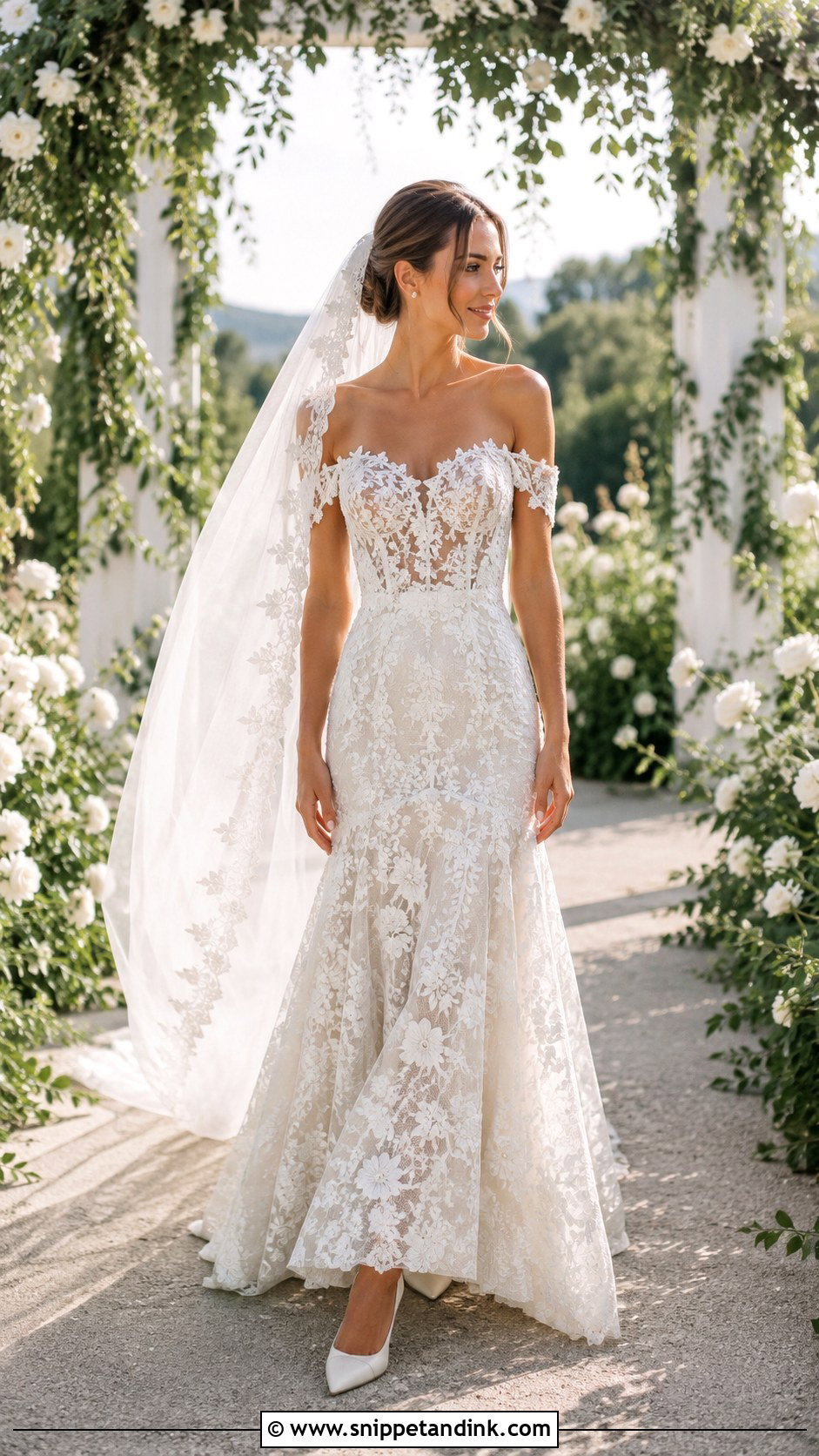
Off-the-shoulder lace needs more internal structure than it appears to, because the sleeves sit below the shoulder and want to slide down every time you lift your arms. Ask whether the bodice has boning and a grip band at the top. A light nude lining under floral lace makes the pattern read more clearly from a distance. I’d pair it with ivory slingbacks, small diamond studs and a narrow lace-edged veil, plus a loose chignon with a few face-framing strands so the neckline stays open. Garden roses and seasonal greenery suit a spring ceremony at an estate or country house, where the lace has something to echo.
3. Lihi Hod Corset Wedding Dress
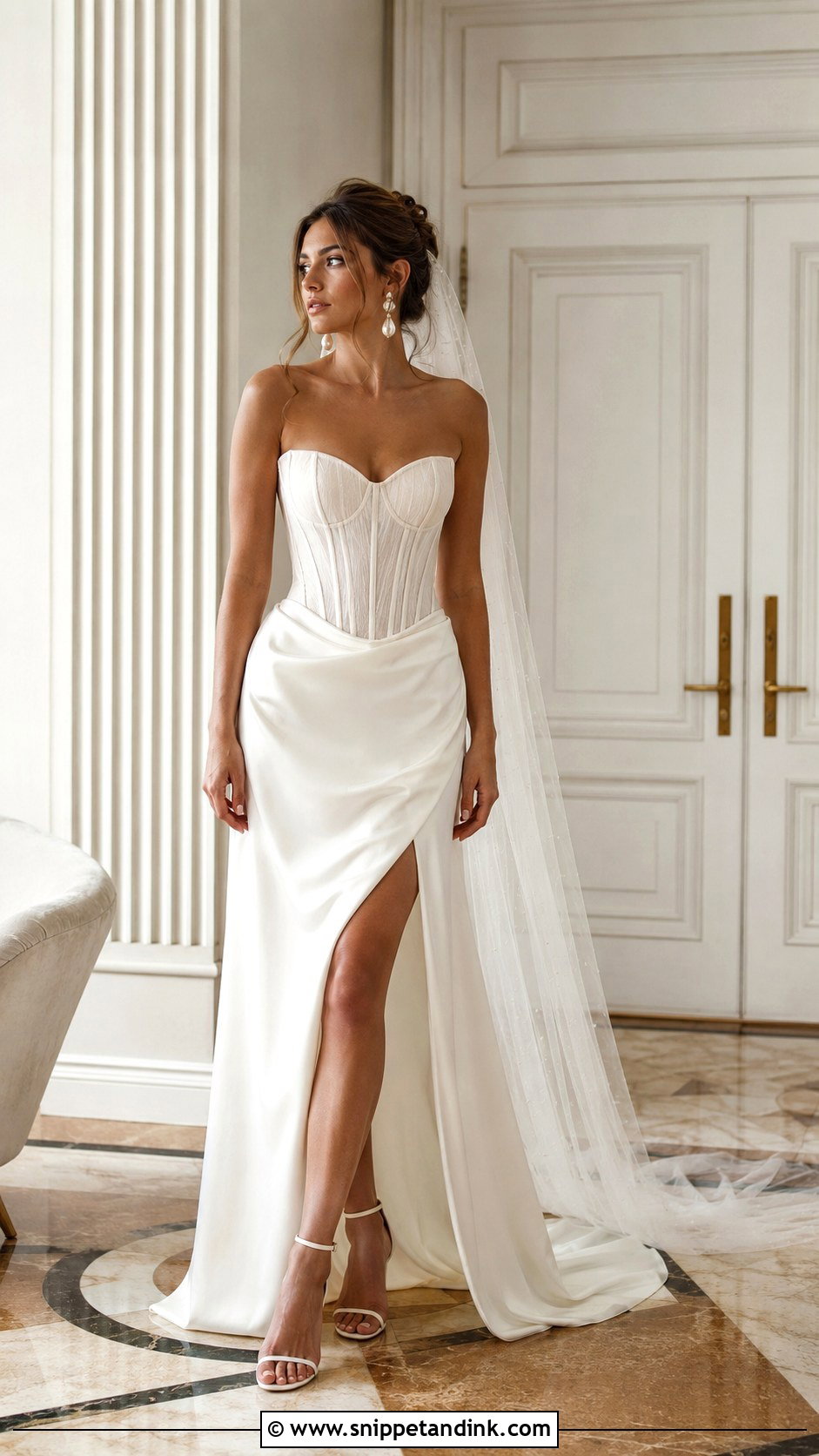
Visible boning gives a corset gown its shape, and a scoop or sweetheart neckline keeps that structure from looking severe. The cups matter more than anything here. If they’re even slightly off, the boning pushes in the wrong places and you’ll feel it by the second hour, so I always have brides sit, raise their arms and hug someone during the fitting. A fluid silk skirt balances the firm top. Satin ankle-strap heels, sculptural pearl earrings and a sheer fingertip veil finish it, with a smooth bun so the construction is what people notice. Because a good seamstress can adjust a corset at bust, waist and hip separately, this silhouette adapts to more figures than brides expect.
4. Lihi Hod Long Sleeve Lace Wedding Dress
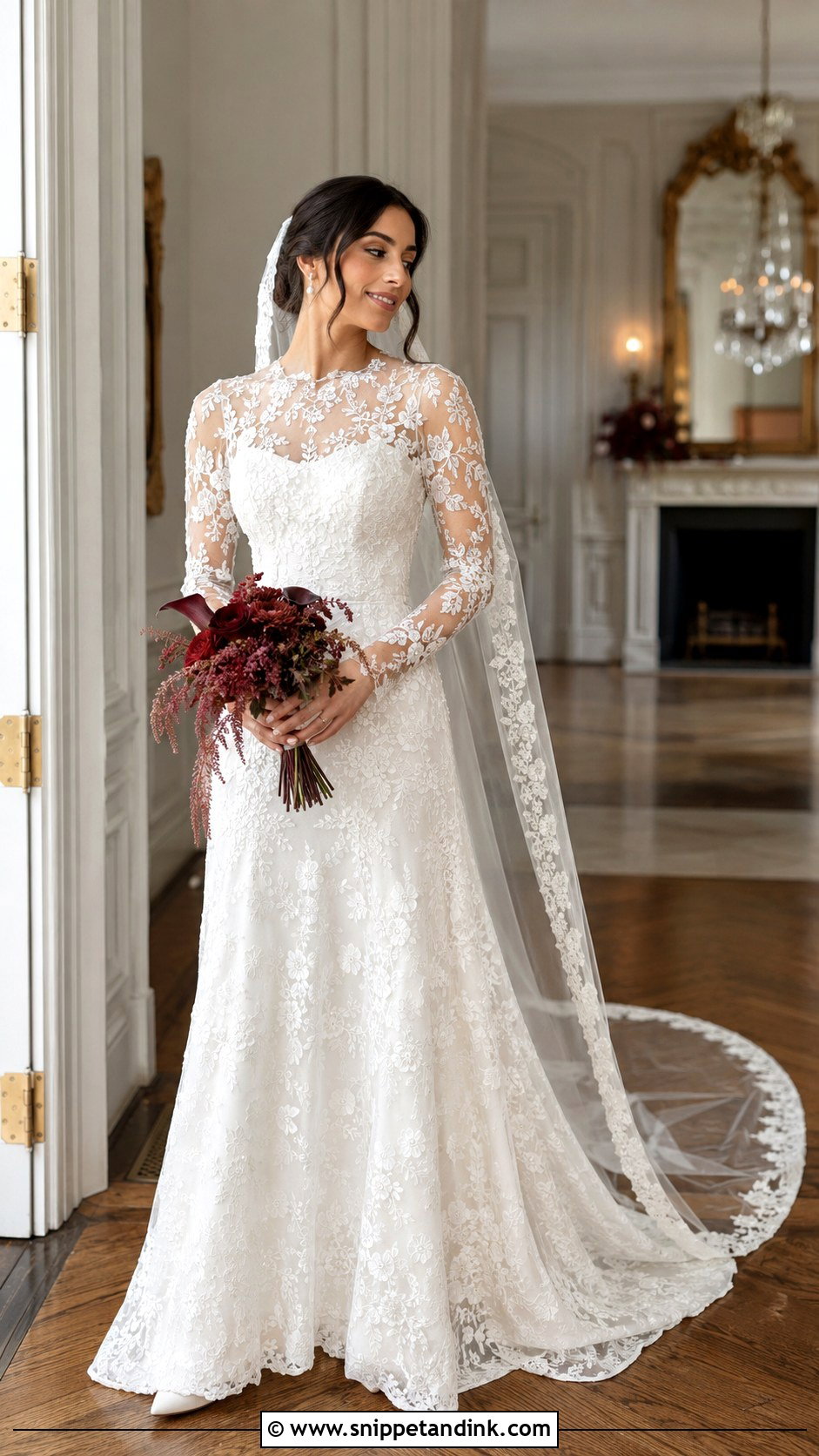
Long lace sleeves give coverage without weight, provided the lace is fine and the sleeve is cut with some ease at the elbow. Too tight and you can’t lift a glass comfortably. I like a fitted bodice with a defined waist and either a flowing skirt or a subtle trumpet shape, kept simple with minimal sparkle. Closed-toe ivory heels, pearl studs and a chapel veil with a narrow lace edge carry the same delicacy, and a low twisted bun keeps sleeves and neckline in view. For a fall or winter wedding, a clean wool coat for travel between car and venue is worth the space in your bag; take it off before the ceremony.
5. Lihi Hod Square Neck Wedding Dress
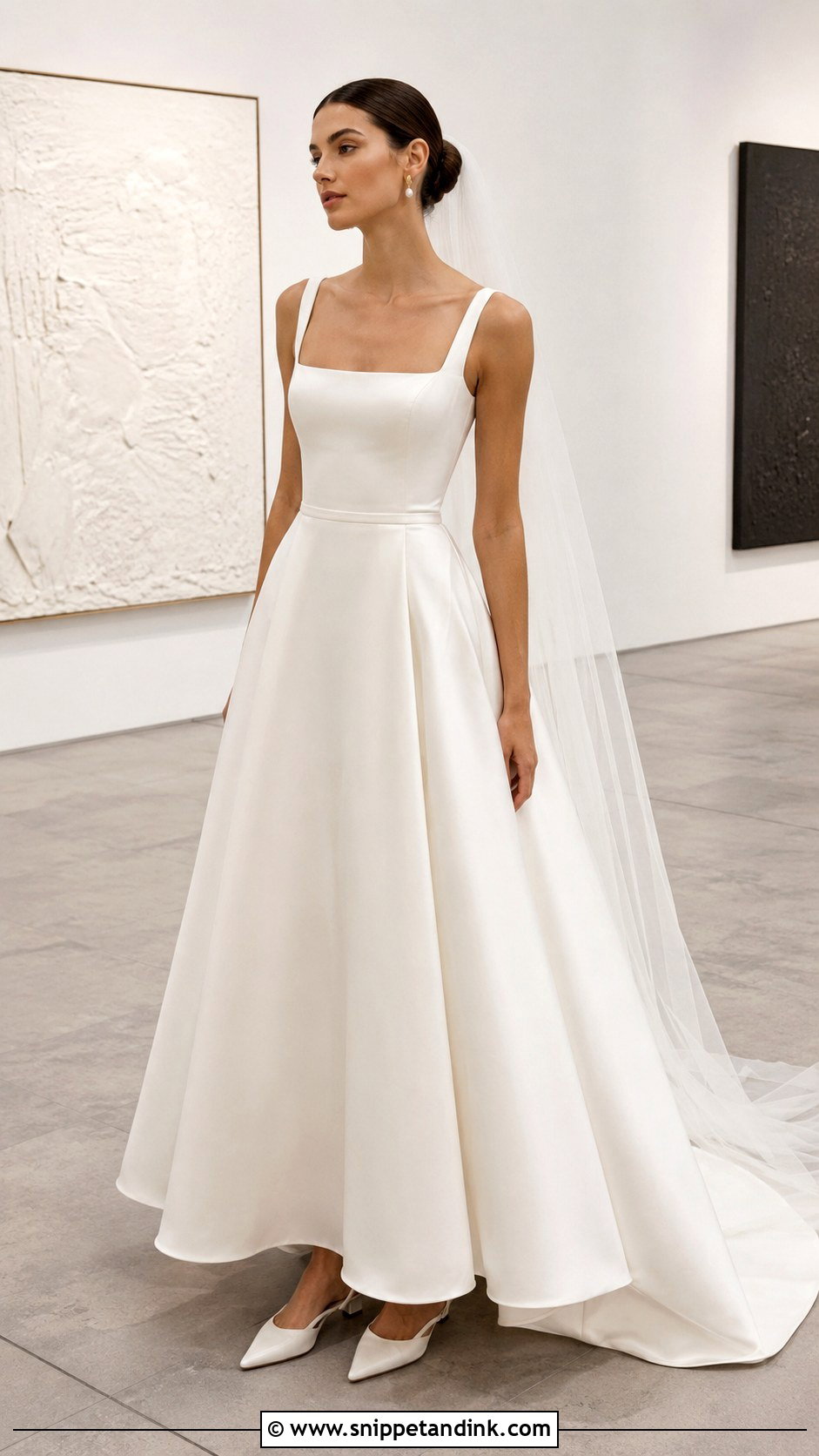
Wide straps and a squared neckline give this dress clean geometry with a hint of vintage. The neckline is a strong horizontal line, so I balance it with a softly structured A-line skirt rather than something narrow. Matte silk, crepe or a lightly textured satin keeps the shape sharp; very shiny fabric can make the square look boxy in photos. Pearl-and-gold earrings, pointed slingbacks and a simple tulle veil under a polished bun are all it needs. Skip the necklace. The neckline already frames the face, and a pendant tends to sit awkwardly inside the square. White tulips or calla lilies keep the lines tidy for a city or gallery wedding.
6. Lihi Hod Plunging V Neck Wedding Dress
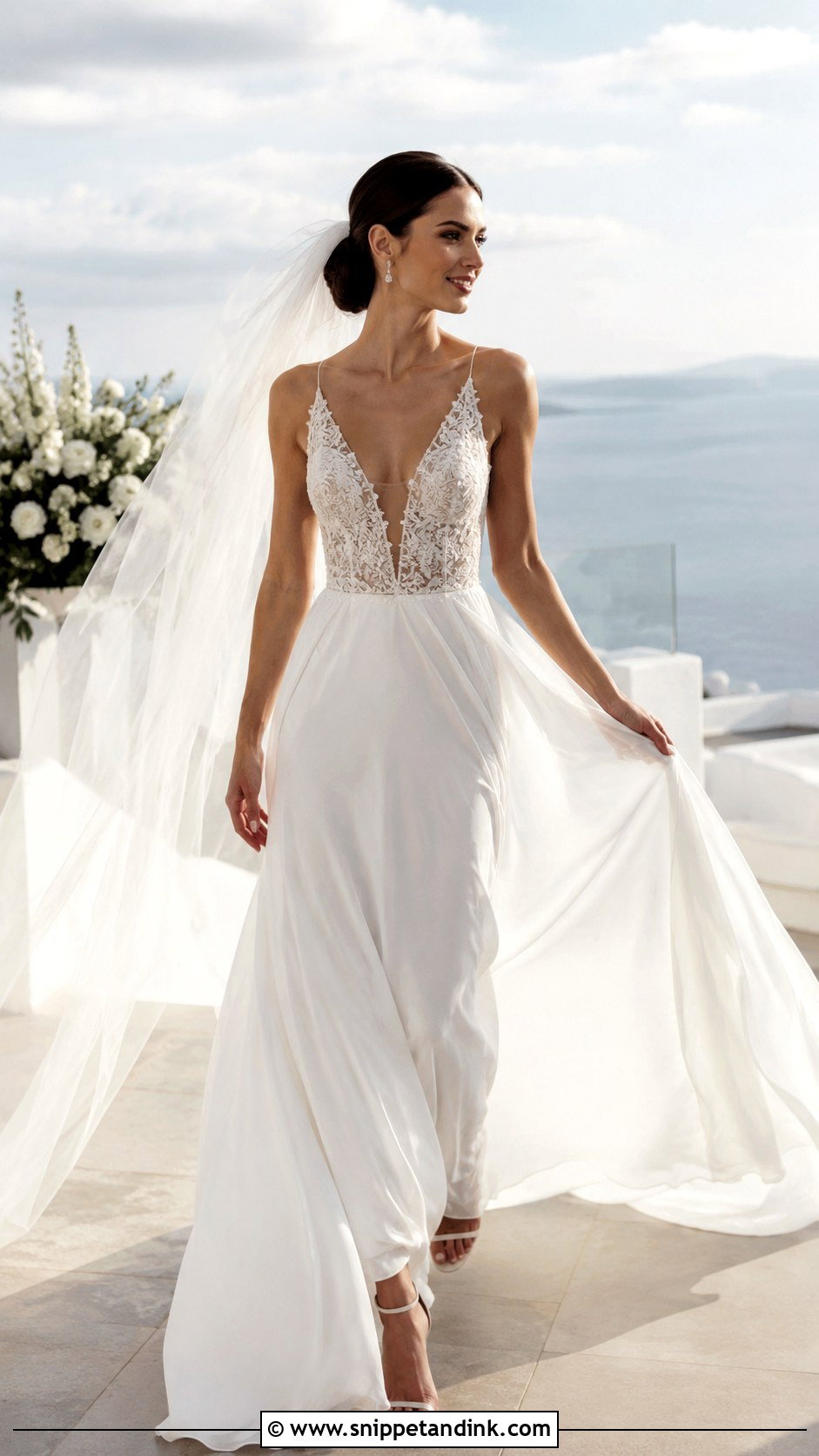
A deep V needs two things to stay refined: discreet illusion mesh down the center and fabric that won’t shift when you move. That’s how I’d judge a plunging V-neck gown at a fitting, by having the bride bend to pick something up and watching what the neckline does. A fitted lace bodice, thin straps and a low V-back give interest from both sides, with a lightweight skirt falling from the waist. Keep the jewelry to minimal drops and the veil sheer with no heavy border. Loose waves or soft pinning suit it, and so do slim ivory sandals. This is a warm-weather dress, for a destination or outdoor estate where breathable layers really count.
7. Lihi Hod Pearl Wedding Dress
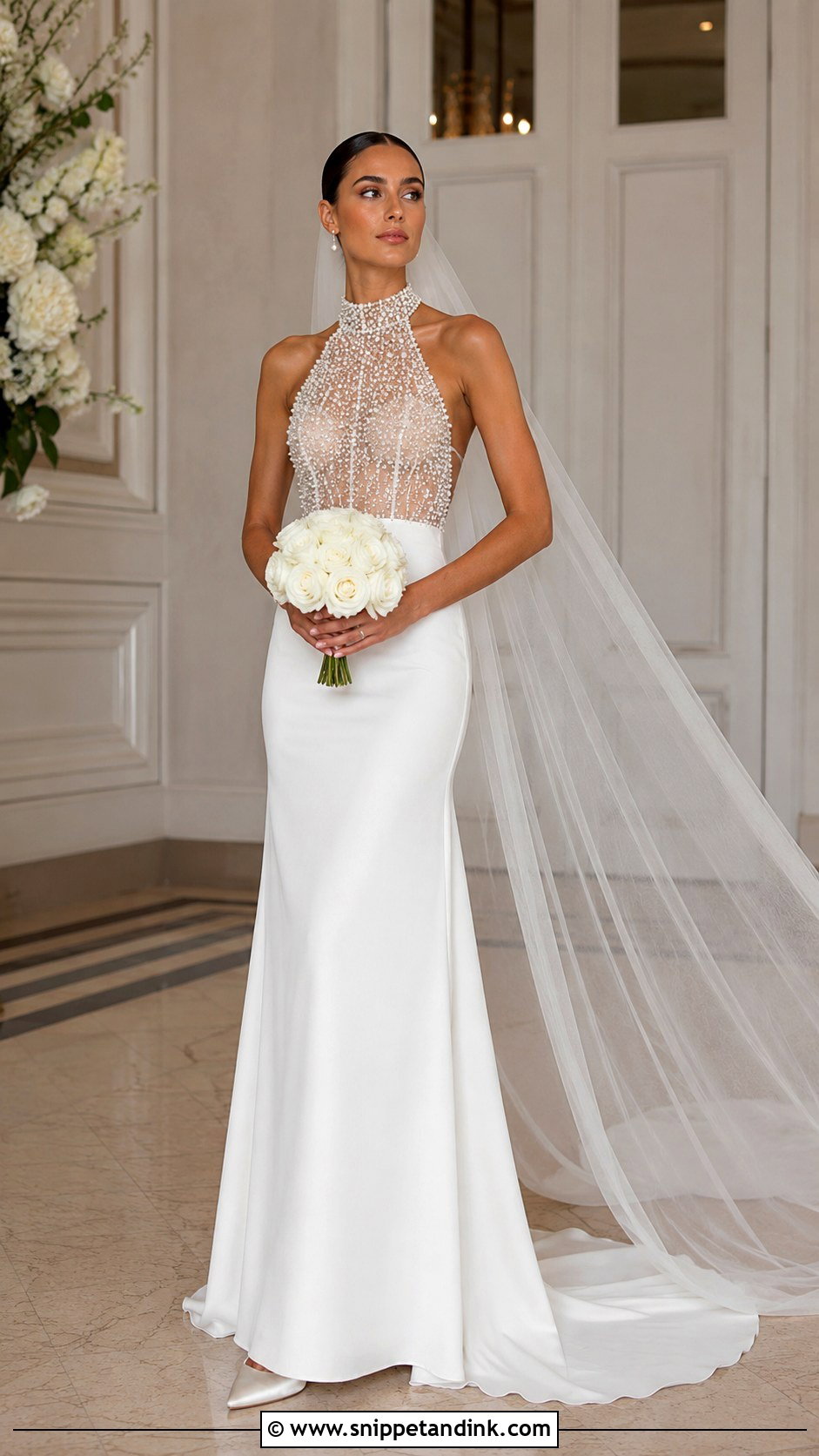
Pearls give shine without the sharp sparkle of crystals, which is why they read so well under evening light. I’d look for them scattered across the bodice, straps or a sheer overlay, then let a smooth column or A-line skirt carry the rest. Resist the urge to match everything. Small pearl earrings and one pearl hairpin are enough; pearl necklace, pearl bag and pearl shoes on top of a pearl gown turns into costume. Pointed satin pumps, a plain cathedral veil and a sleek bun leave room for the bodice. Ask how the pearls are attached, too: hand-sewn ones survive a hug line far better than glued ones.
8. Lihi Hod Floral Appliqué Wedding Dress
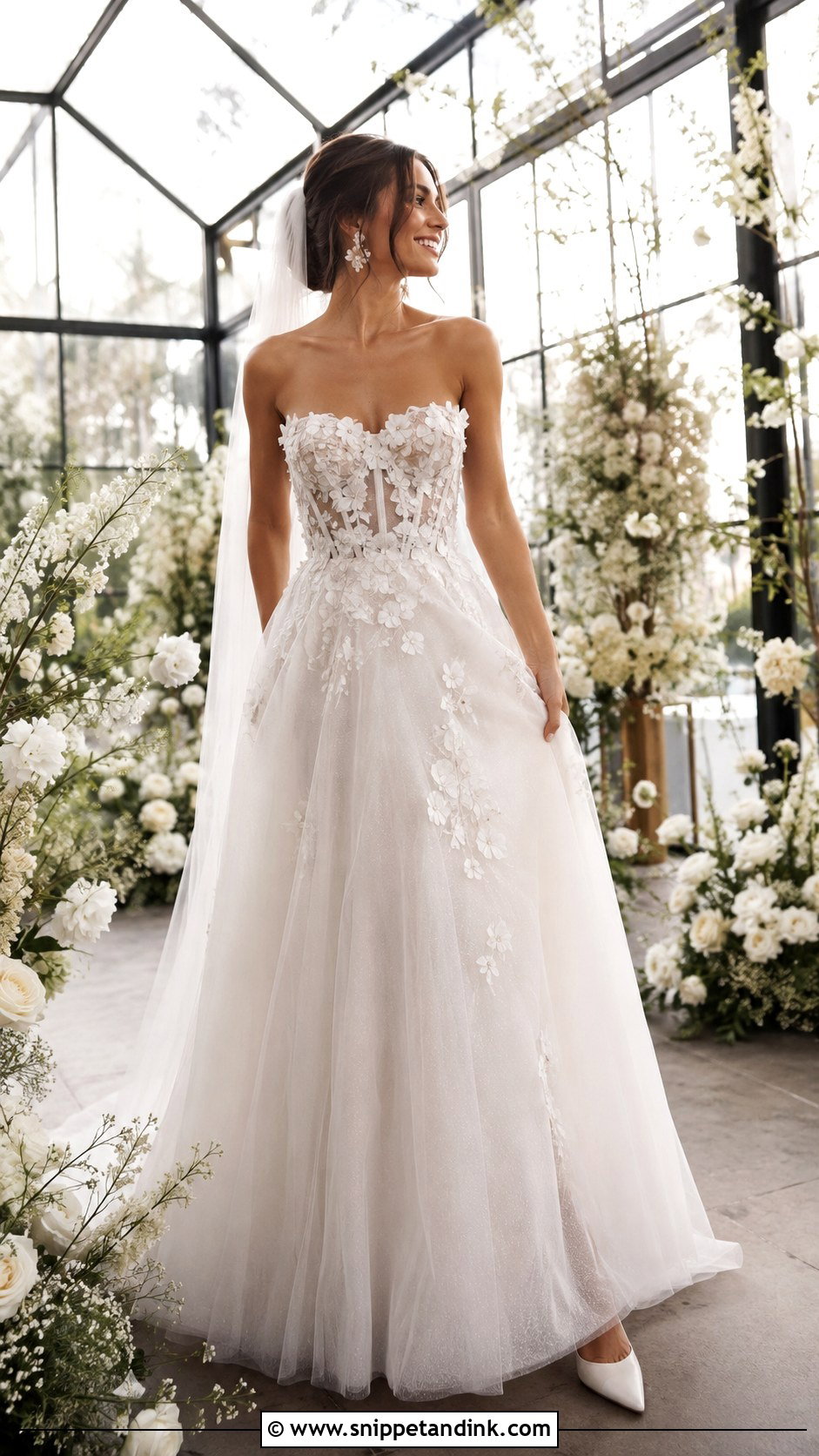
Three-dimensional appliqués only work when there’s space between them. Crowd the blossoms and the silhouette disappears; space them across the neckline and waist and the corset shape still reads underneath. A light tulle skirt keeps the volume in proportion. I’d keep shoes simple with slim straps, choose floral earrings, and use a plain veil, since a lace-edged one would fight the appliqué. A softly textured updo and natural pink makeup suit the mood. One detail florists and I always agree on: match the bouquet’s flower size to the appliqués so the two look related rather than competing. Spring gardens and conservatories are its natural setting.
9. Lihi Hod Dropped Waist Wedding Dress
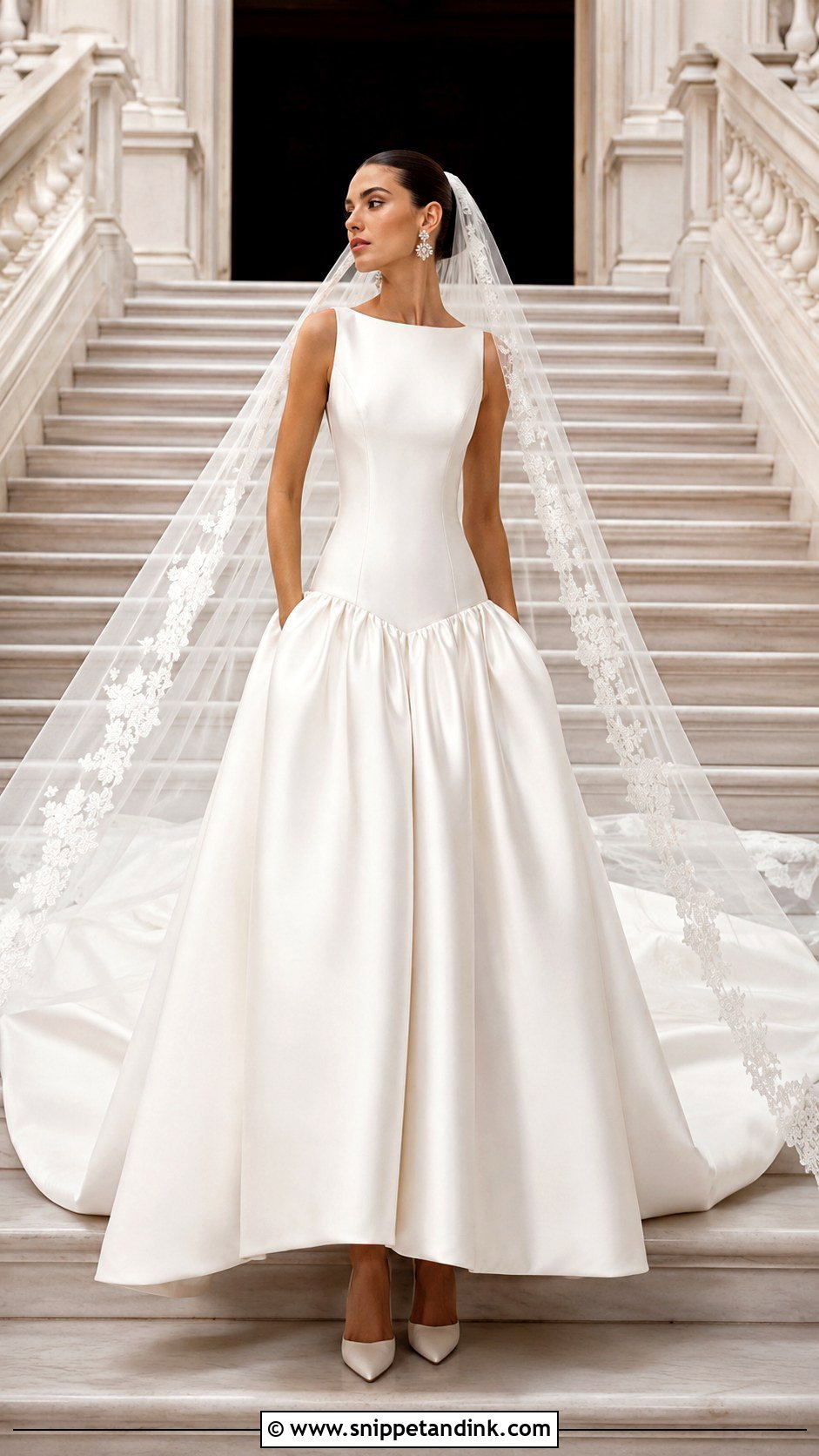
The dropped waist is the whole point of this dress, so its seam has to sit exactly right on your body. Too high and it looks like a regular basque; too low and the torso looks shortened when you sit. I’d pin it standing and check it seated. Crisp satin or mikado holds the long sculpted line and the fuller skirt below it. Pointed pumps, small statement earrings and a veil extending beyond the train add drama, while everything else stays streamlined, including a neat bun. Grand ballrooms and formal estates give the skirt room to move, and guests can see the architectural construction from every angle.
10. Lihi Hod Lace Sheath Wedding Dress
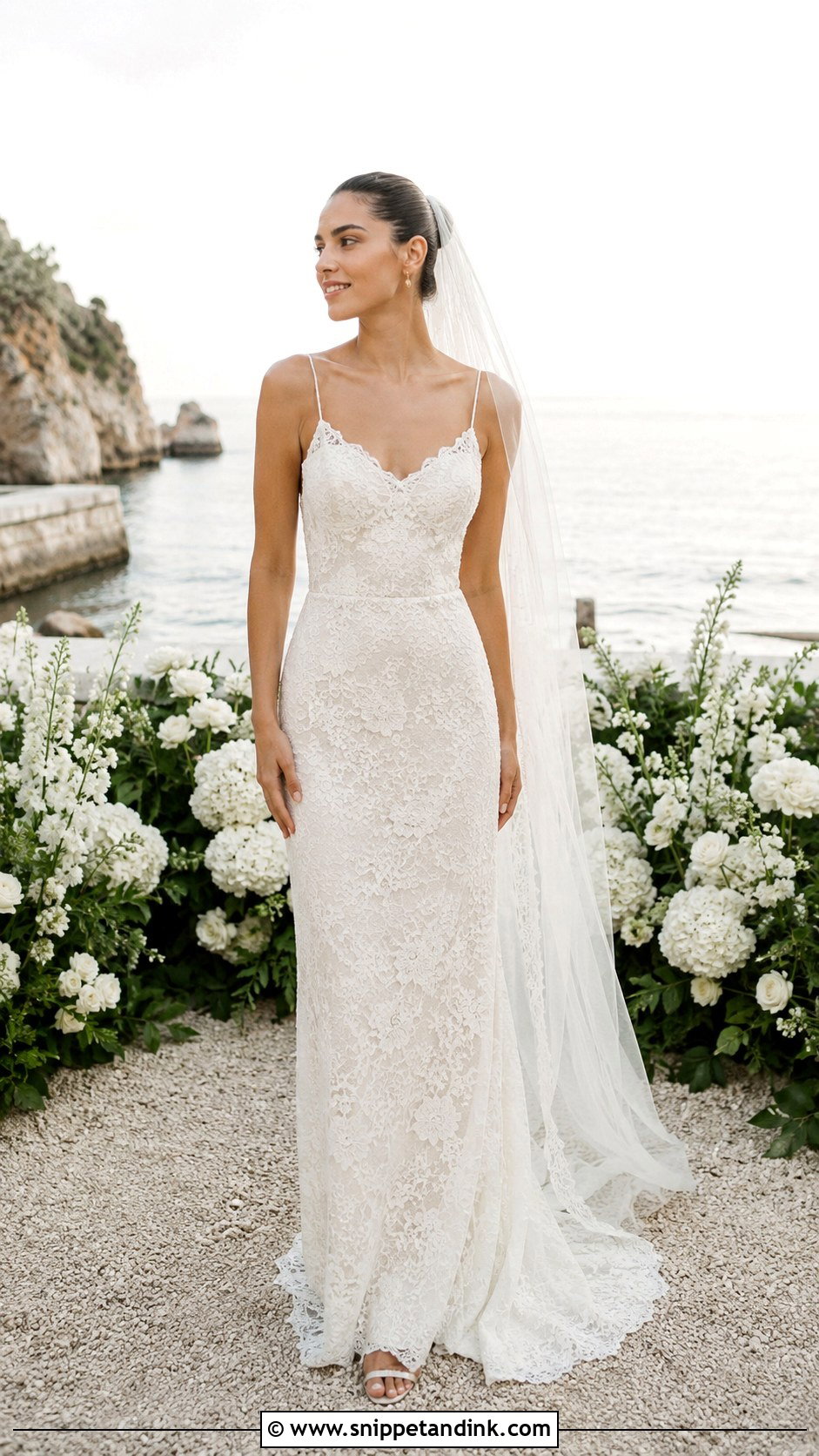
A lace sheath follows the body without the flare of a mermaid, which makes it one of the easiest dresses to move in, provided the skirt has a back slit or a little stretch. Without one, stairs become a problem. Fine lace, narrow straps and a soft lining keep it light. I’d style it with block-heel sandals (stilettos sink on grass and sand), a fingertip veil and small gold or pearl earrings. Soft waves pinned behind one ear show the neckline. Natural white flowers and greenery suit the easy shape. Coastal ceremonies and small outdoor weddings are where this one shines.
11. Lihi Hod Mikado Ball Gown Wedding Dress
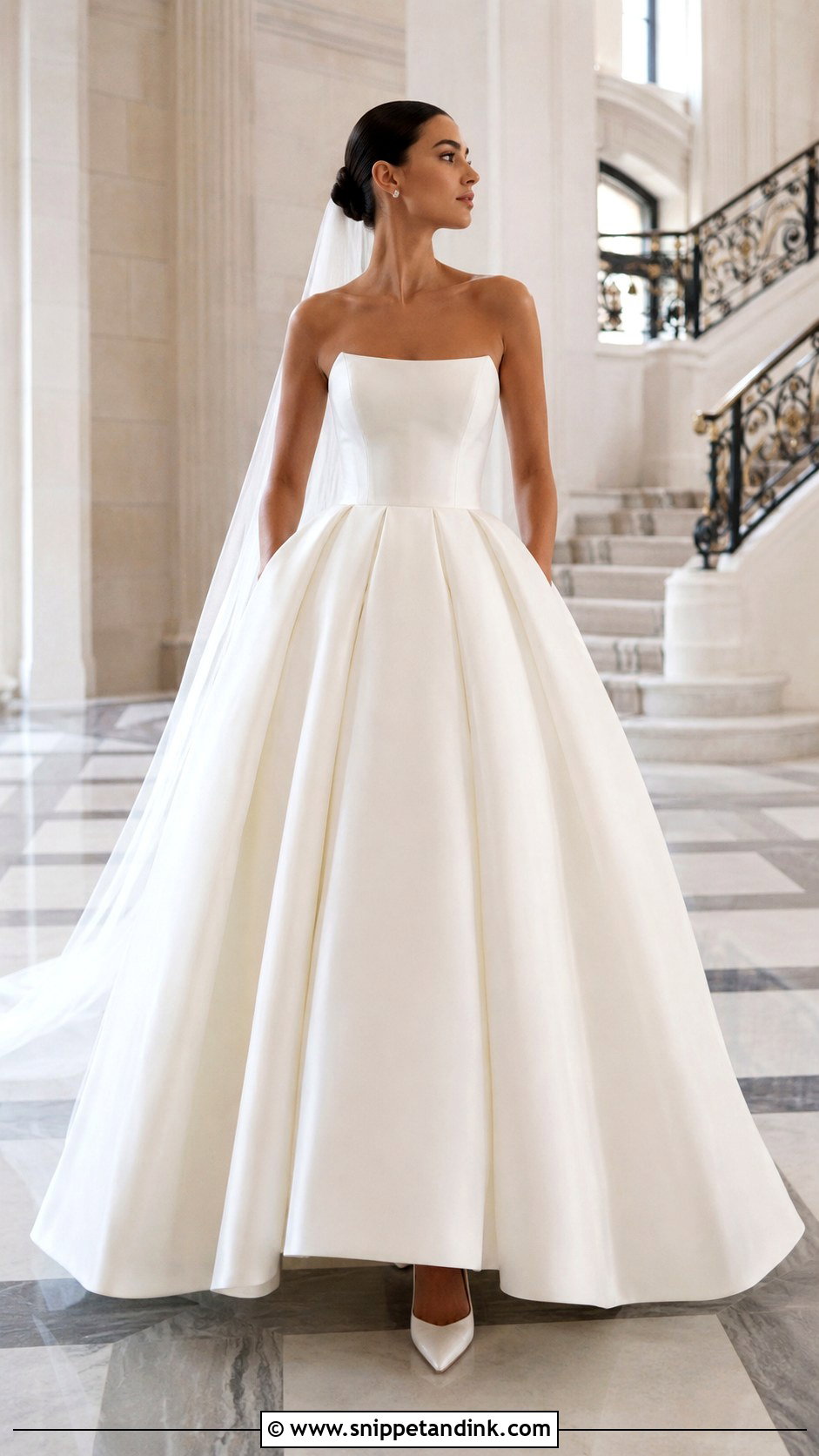
Mikado is a heavy, slightly crisp silk blend, and it holds pleats and sculptural folds in a way soft satin never will. That’s why a strapless bodice with a full, controlled skirt looks architectural in it without any embellishment. The trade-off is weight. A mikado ball gown is noticeably heavier than tulle, so I’d budget for a solid bustle and comfortable shoes under classic pumps for the ceremony. Crystal or diamond studs, a long plain veil above a sleek chignon and a small bouquet let the proportions lead. Ask about pockets; mikado hides them well. Put it in a grand ballroom or historic hotel with a staircase for photos.
12. Lihi Hod Halter Wedding Dress
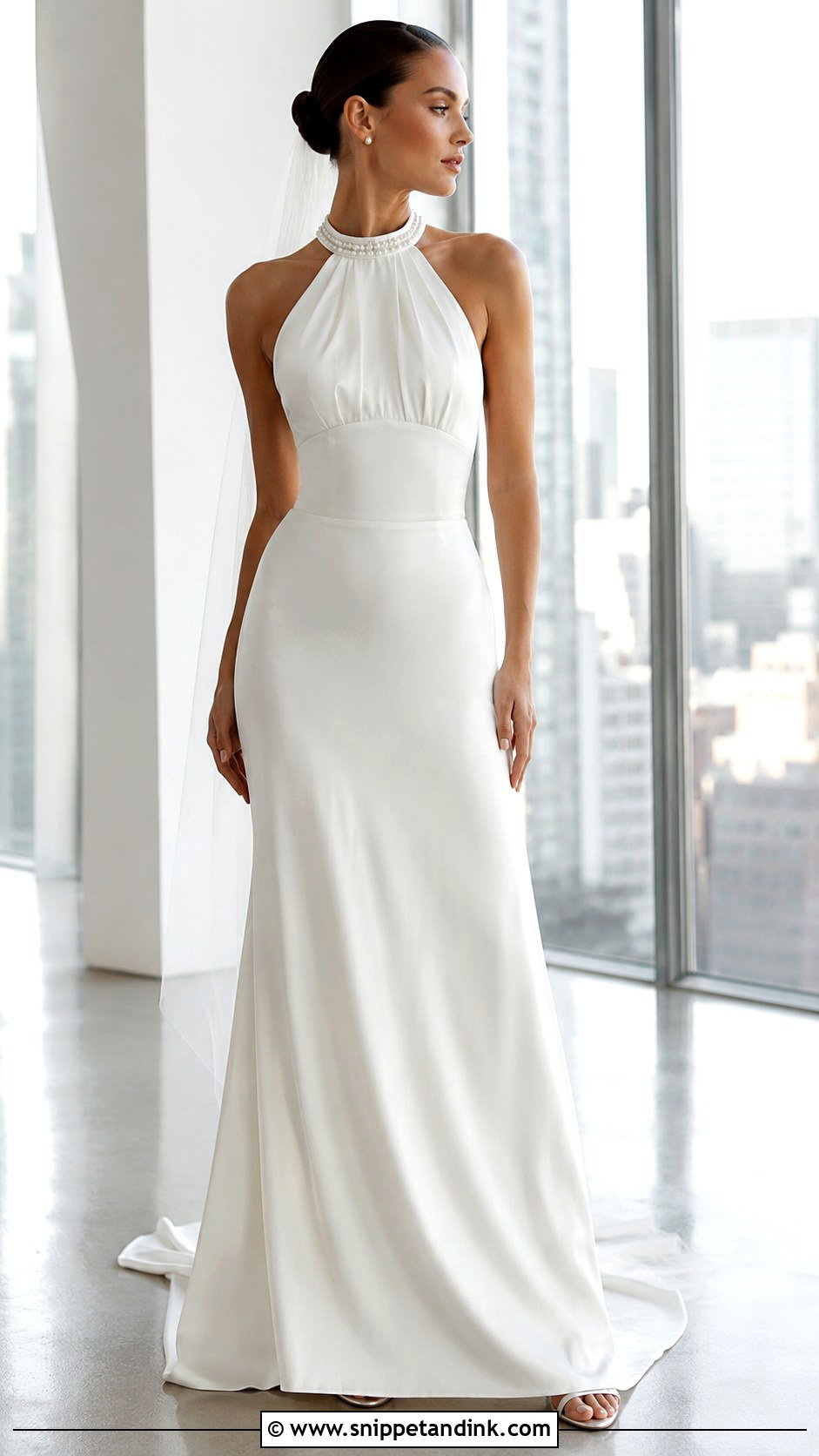
Halters pull the eye upward and frame the shoulders, so they’re a good choice for brides who like their arms and collarbones. A halter wedding dress with a pearl-trimmed neckline already works as jewelry, so skip the necklace and stick to pearl studs. An open back gives contrast to the higher front. The fit issue I see most is the neck strap carrying too much weight, which leaves a red mark and a sore neck by evening. A good seamstress will shift that load into the bodice. Metallic ivory sandals, a veil under a smooth bun, defined eyes and neutral lips keep it modern for a city venue or warm-weather party.
13. Lihi Hod Bow Wedding Dress
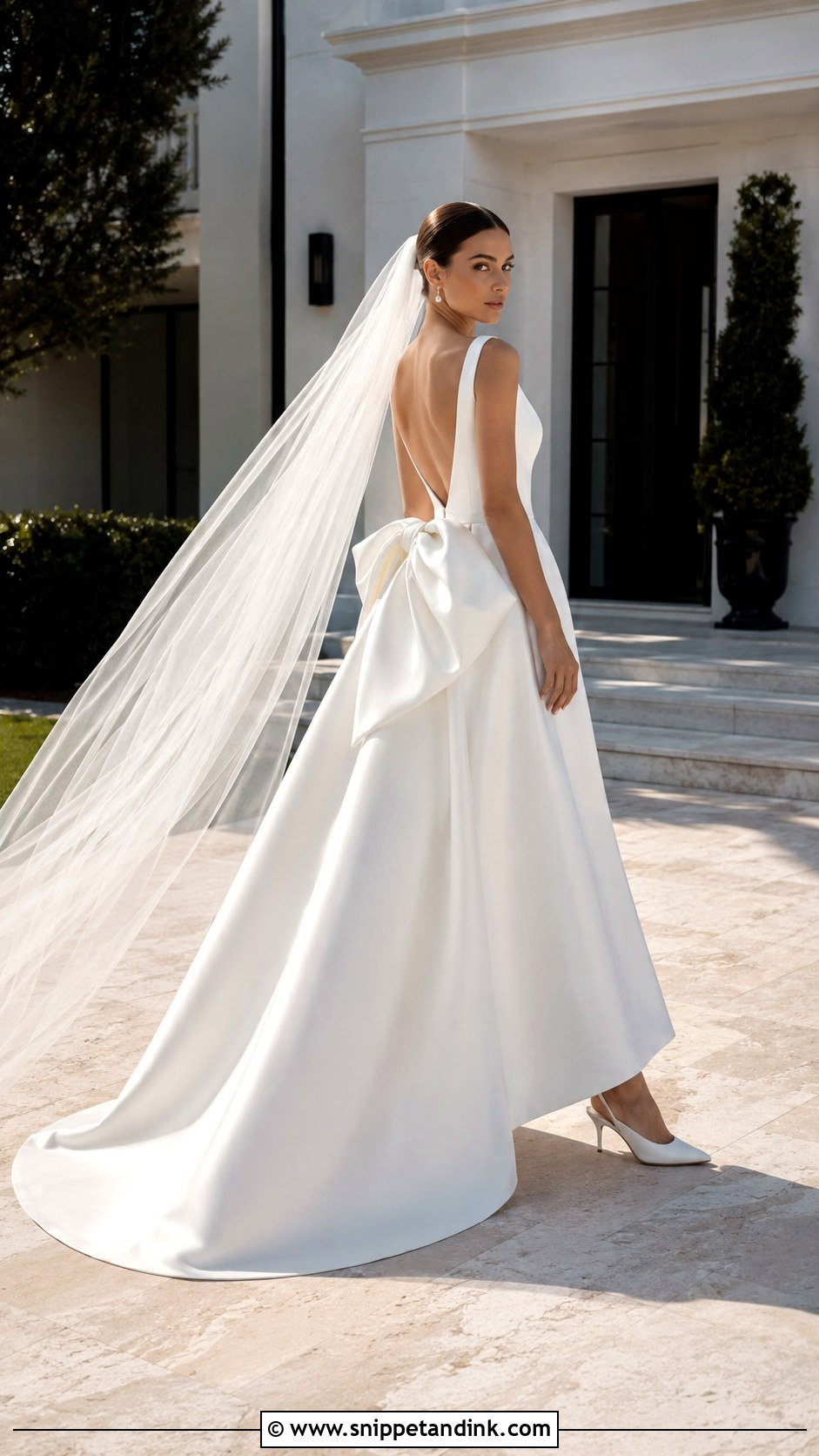
One bow, placed well, gives a gown personality. Two or three and it starts to look like packaging. I’d choose a smooth column or A-line and decide where the bow sits based on where you’ll be photographed most: a large back bow carries the ceremony shots, since guests see your back at the altar, while a small front bow reads more fashion-led. Make sure the veil doesn’t flatten a back bow. Pointed slingbacks, pearl earrings, a polished low bun and clean makeup keep the tailoring crisp. Tie the bouquet with a narrow ribbon rather than repeating the bow. A modern estate or formal restaurant suits the playful note.
14. Lihi Hod Sweetheart Neck Wedding Dress
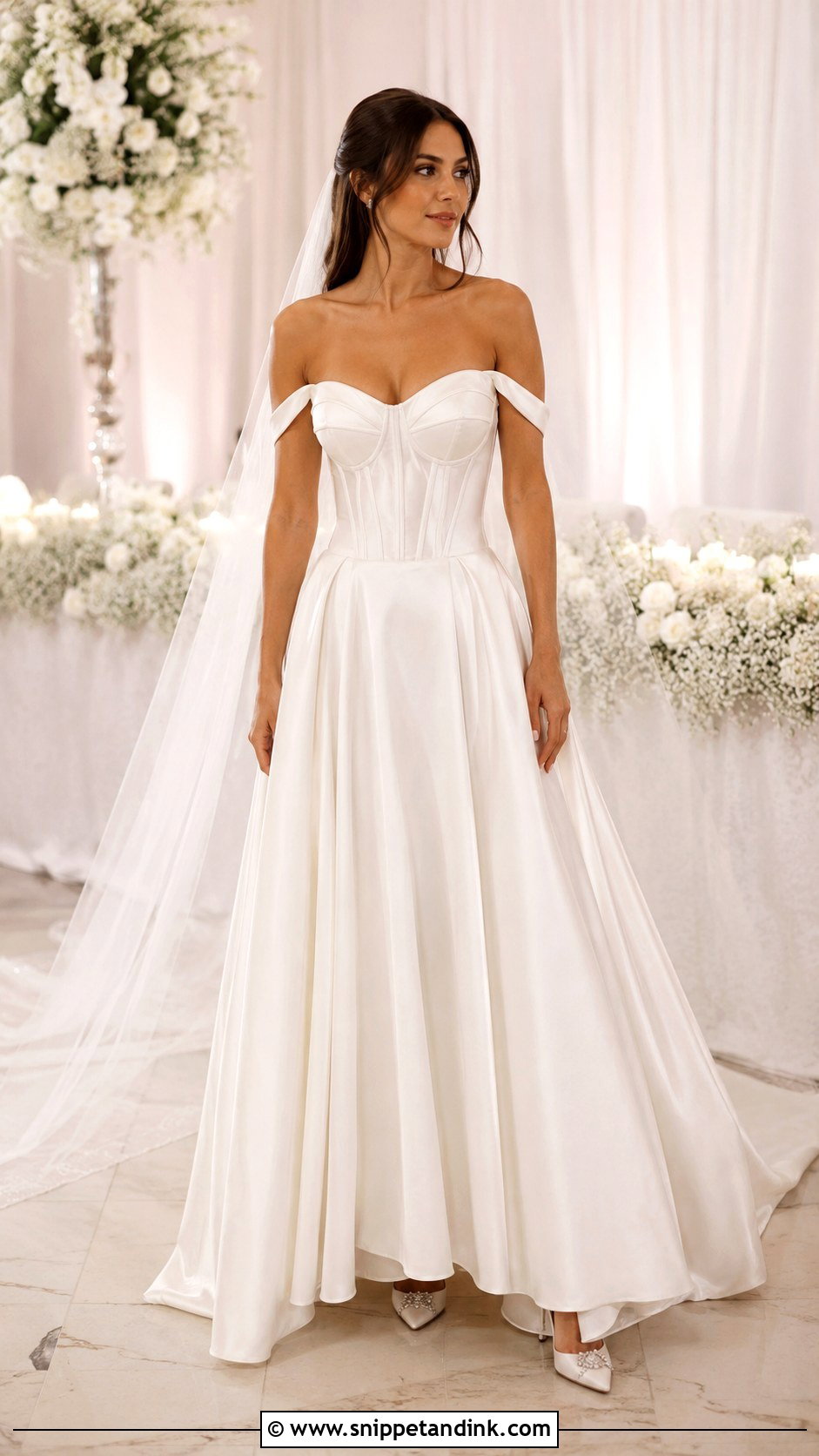
Sweetheart necklines curve around the upper body and sit naturally on a fitted corset, but they need precise fitting at the bust and waist to stay put. That fitting is where I spend the most time with this style. A smooth satin bodice pairs with either a lace skirt or a clean A-line. Detachable off-the-shoulder straps are useful: wear them for the ceremony, then remove them for a strapless reception. Crystal studs, pointed ivory heels and a veil falling from a half-up style all fit. Keep jewelry delicate so the curve stays visible. Few necklines adapt as easily across seasons and venues.
15. Lihi Hod High Neck Lace Wedding Dress
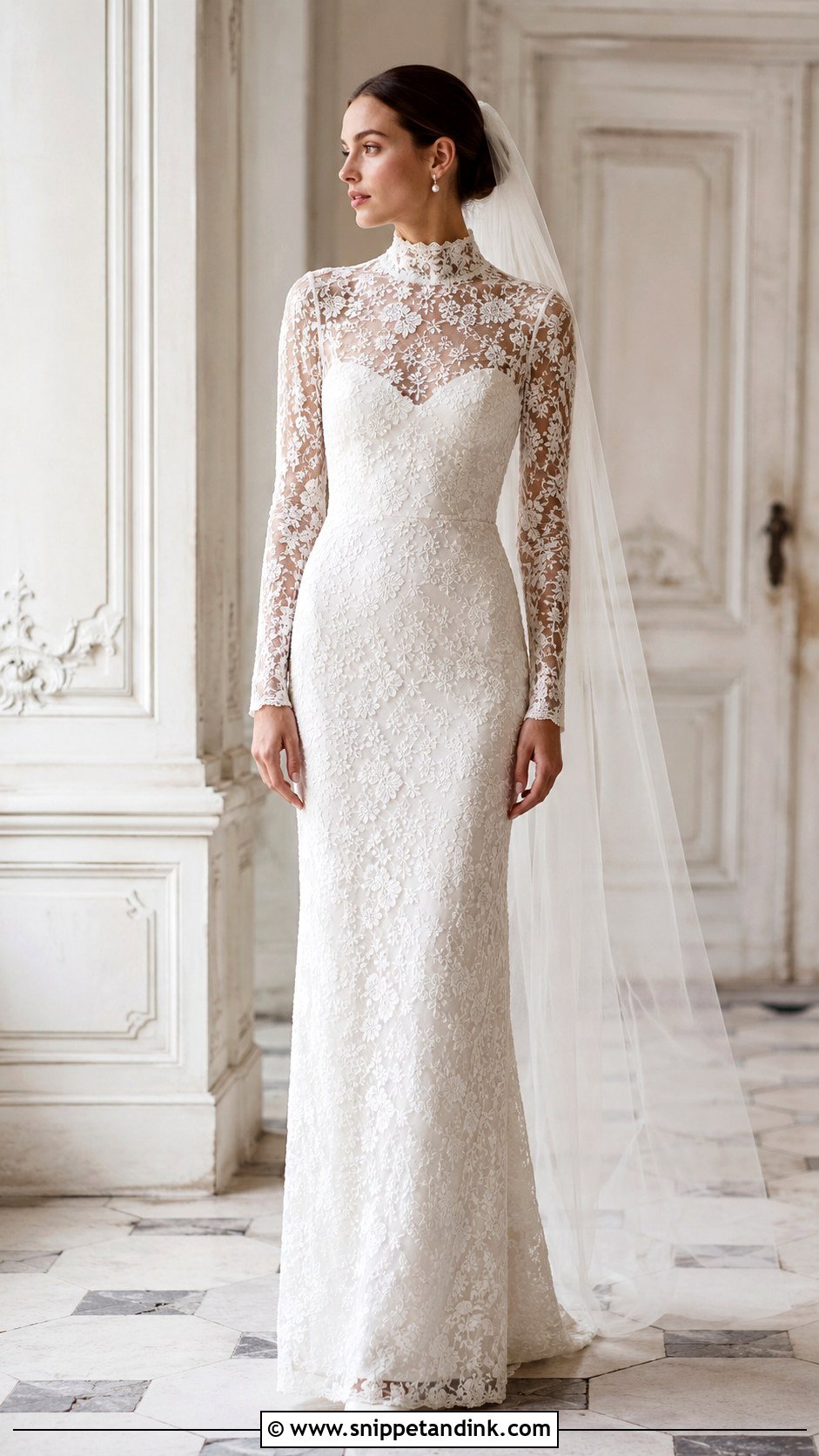
High-neck lace gives coverage and texture at once. The usual construction is sheer lace over a lined sweetheart or camisole bodice, carried into fitted sleeves or a sleeveless top. A slim skirt keeps the detailed upper half from feeling heavy. The veil choice matters more than usual here: a veil attached on top of the head drapes over the collar and hides the lace, so I place a sheer tulle veil under a low bun instead. Pearl earrings and closed-toe pumps finish it, with a white orchid bouquet for a precise edge. It reads best in an indoor or historic setting, a vintage reference cut in cleaner, more current proportions.
16. Lihi Hod Crepe Mermaid Wedding Dress
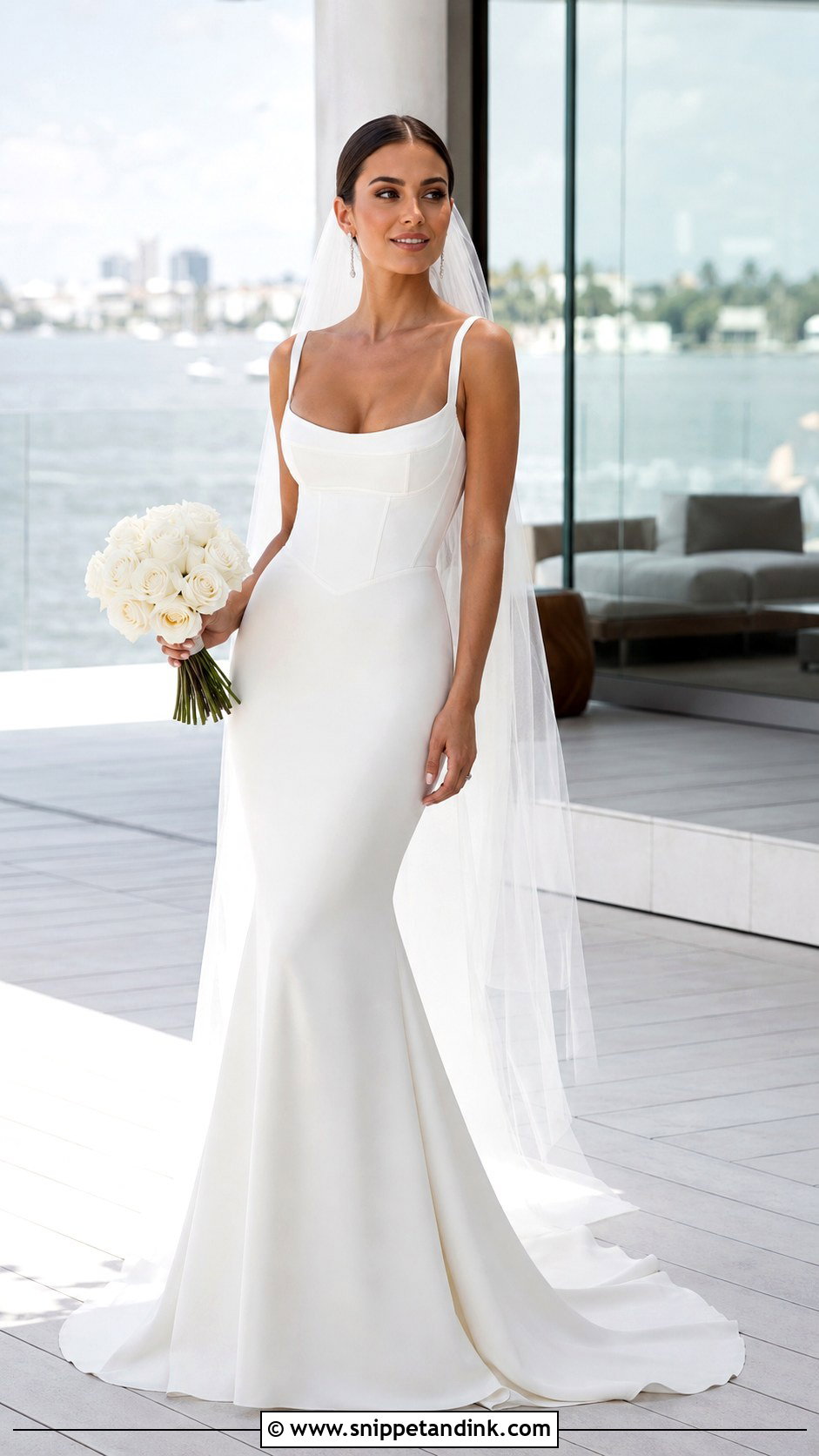
Crepe is unforgiving in one specific way: it shows every seam and every wrinkle in the fit, because there’s no texture to hide behind. So alterations on a crepe mermaid aren’t optional, they’re the dress. Choose a supportive bodice and a skirt that flares from the lower thigh or knee, depending on how much you want to walk freely. The fabric should skim, with enough stretch to sit. Pointed pumps, linear earrings, a clean-edged chapel veil and a side-parted bun keep it minimal. Plan for a bustle and remove the veil before dancing. Formal city weddings and waterfront venues suit it well.
17. Lihi Hod Tulle A Line Wedding Dress
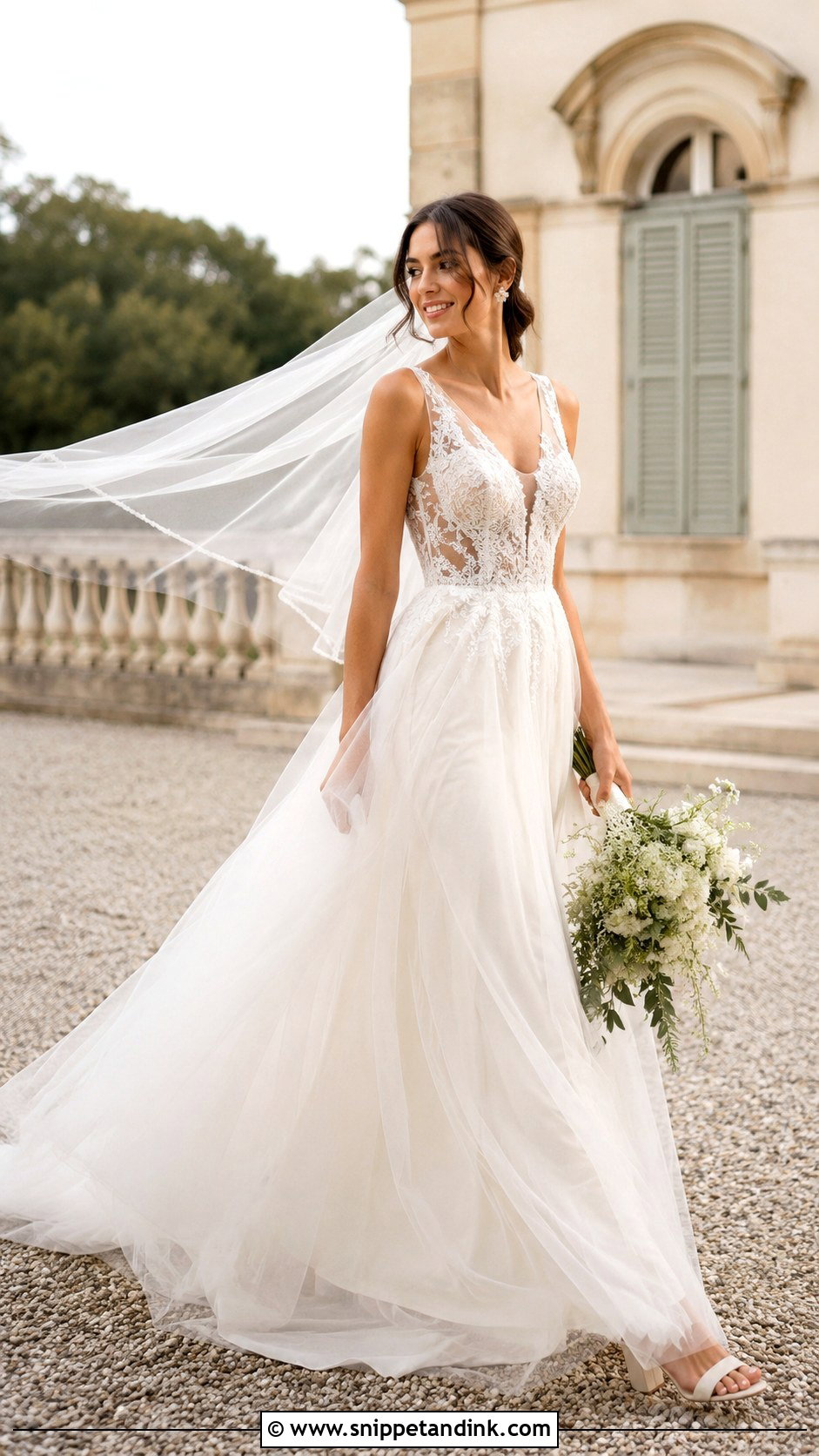
Tulle gives an A-line volume without weight, but the softness of the layers decides how it looks. Stiff netting stands out; soft layers float. I’d always choose the soft version and pair it with a fitted lace or lightly embellished bodice. Ivory block heels, small floral earrings and a chapel veil that trails behind the skirt keep it light, along with a loose low bun and blush makeup. Tulle does catch on rough surfaces, so I warn brides heading to woodland or gravel paths that the hem will pick things up. A garden-style bouquet completes the outfit. It moves easily between an outdoor estate, conservatory and traditional ballroom.
18. Lihi Hod Lace Wedding Dress With Overskirt
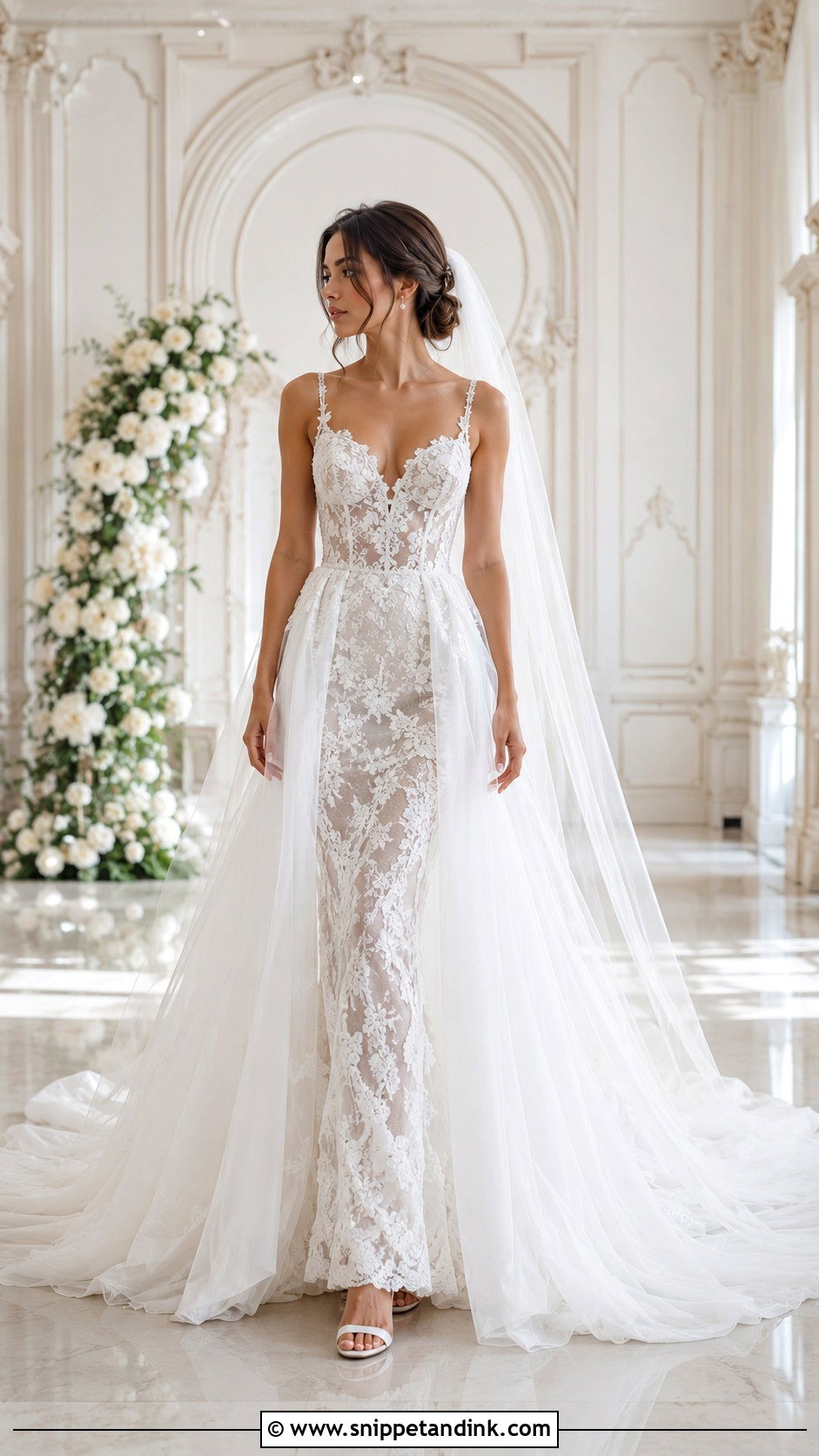
A detachable overskirt turns one lace gown into two silhouettes, and it’s my favorite answer to brides who can’t choose between a dramatic entrance and an easy reception. The fitted lace sheath goes on first, with a full tulle or organza overskirt fastened at the waist for the ceremony. After photos, it comes off. Practice that removal with whoever will help you on the day, because hooks and hidden snaps are fiddly under pressure. The overskirt’s waistband should lie flat at your natural waist with no ridge. Satin heels, understated drops, a sheer cathedral veil and a secure low bun keep both versions coherent.
19. Lihi Hod Wedding Dress With Lace Gloves
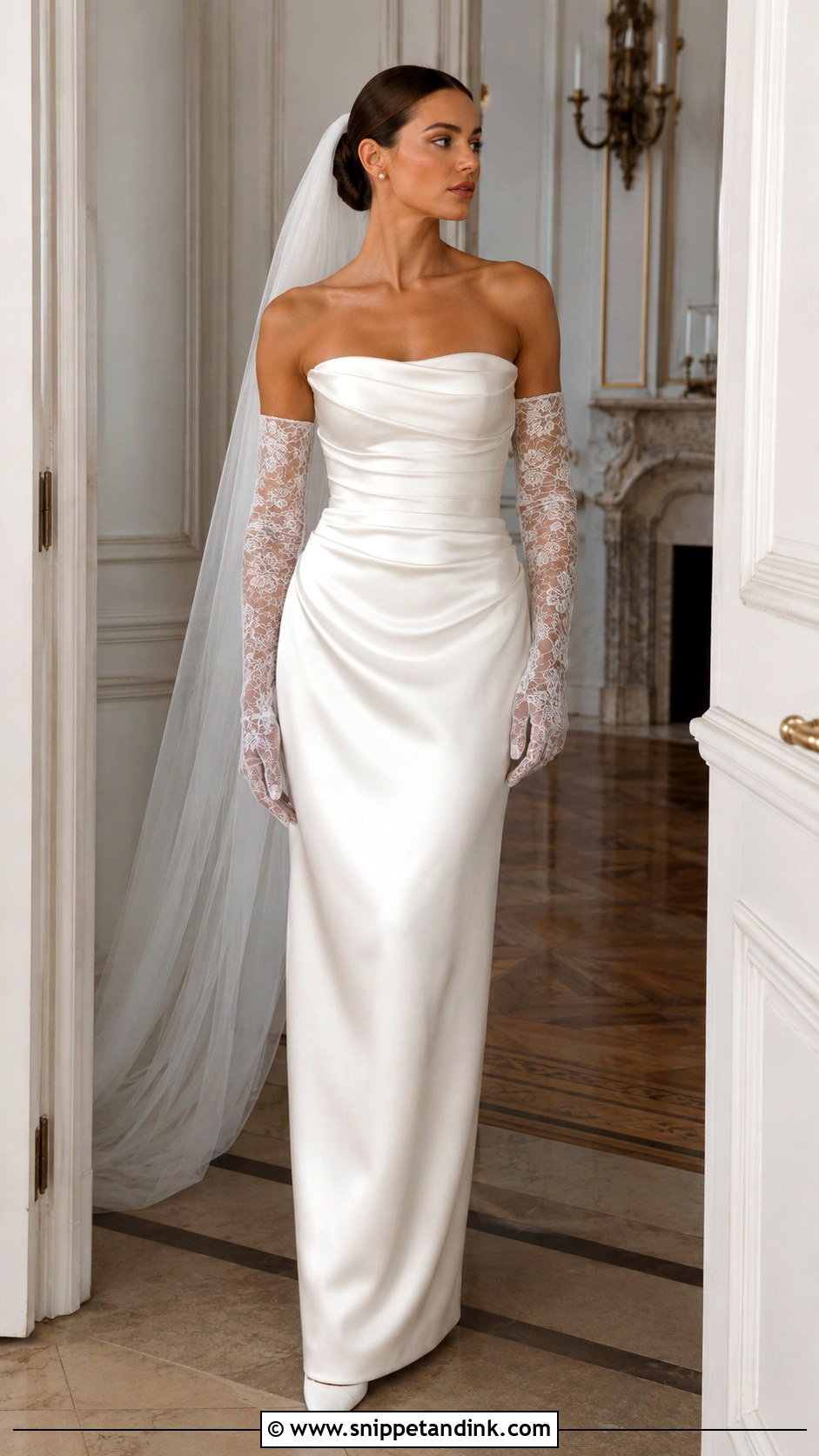
Lace gloves add texture and a vintage note to a plain gown, so I’d start with a strapless satin column or corset dress and let the sheer lace gloves provide contrast. Wrist length is easiest; elbow length looks more formal but needs a precise fit to avoid bunching. Think about the ring exchange before you buy. Gloves with finished fingertips have to come off at the altar, which is why many brides choose fingerless styles or slip the left glove off beforehand. Keep rings and bracelets minimal so they don’t snag the lace. Pointed pumps, pearl studs and a plain veil behind a neat chignon suit a formal indoor ceremony.
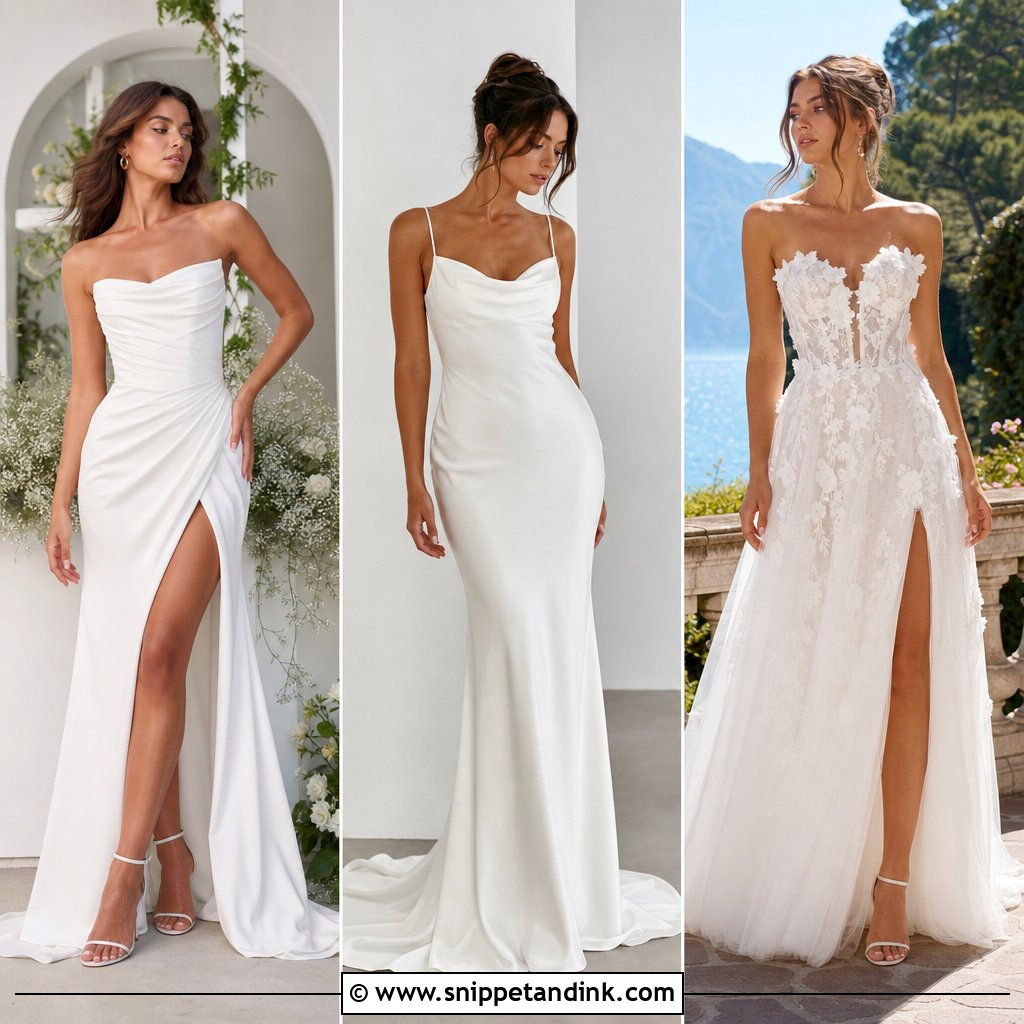
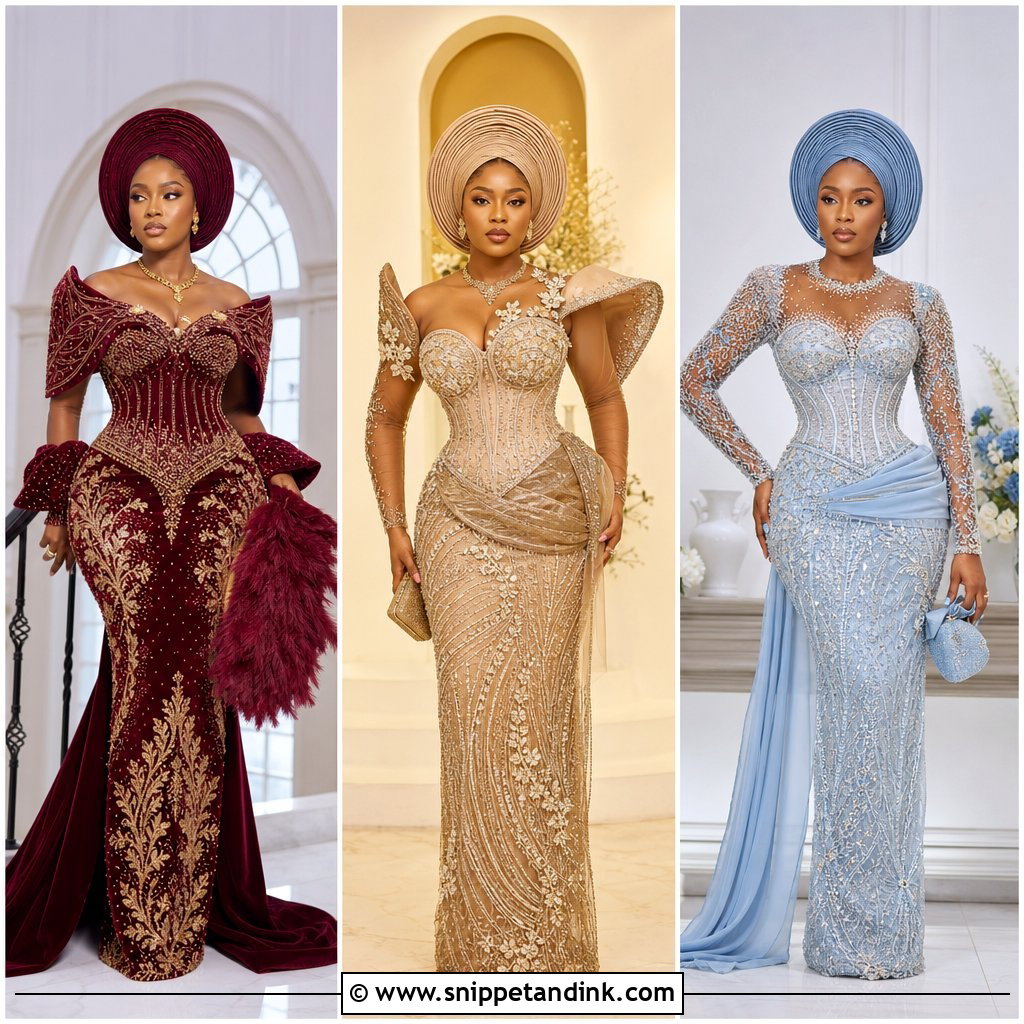
20. Lihi Hod Bridal Pantsuit With Overskirt
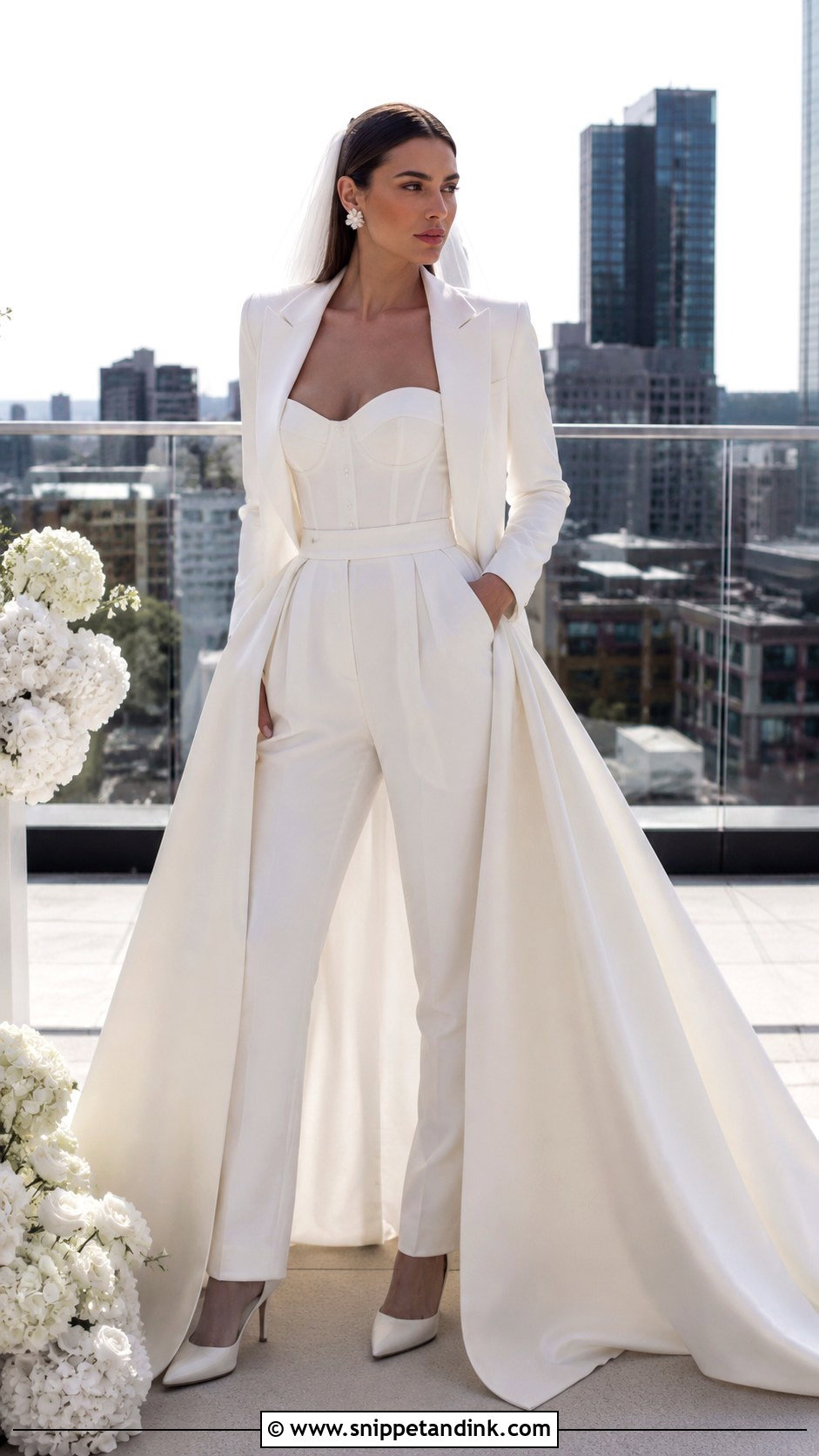
Bridal separates suit brides who want to move freely and still look ceremonial. High-waisted tailored trousers pair with a structured corset, a fitted blazer or a pearl-detailed halter top. Add a detachable satin overskirt or train for the ceremony, then remove it to reveal the suit for dancing. The trouser hem is the fitting detail most people forget: hem them to the exact shoes you’ll wear, with a slight break, or they’ll either drag or look cropped. Pointed ivory pumps, sculptural earrings and a sleek mini bag keep it sharp, with a smooth ponytail or low bun and an optional short veil. Courthouses, galleries, rooftops and second looks all suit it.
How Satin, Mikado, Crepe and Lace Behave After Ten Hours
Every fabric in this collection ages differently over a wedding day, and knowing that in advance changes how you plan the morning. Satin creases where you sit, mostly across the lap and the back of the skirt. A steamer at the venue, used by someone who knows not to hold it too close, fixes most of it before the ceremony.
Mikado resists creasing far better, but its weight pulls on the bustle points, so I ask for extra loops on a full skirt. Crepe hides little and stretches slightly as it warms, which is why a crepe bodice fitted very snug at noon can feel just right by evening. Lace and tulle survive almost anything except catching. Watch for bracelets, rough chair backs and the pins on boutonnieres during hugs.
What goes in the dress emergency kit
- White chalk to cover small marks on ivory satin before photos.
- Ivory thread, a needle and clear safety pins for a loose hook or bustle loop.
- Fashion tape for a strapless or plunging neckline that starts to shift.
- A clean white cloth, since wiping with a colored napkin can transfer dye.
After the wedding, get the gown to a specialist cleaner within a few weeks. Sugary drinks spilled on satin dry invisibly and then turn yellow over months, long after you’ve forgotten the toast.
The Gown You Can Move In Is Usually the Right One
Across these looks, the dress that suits you is usually obvious once you’ve moved in it, not just stood in it. Corsets, lace, sculpted satin, pearls and removable layers each set a different mood, but they all depend on fit. At appointments, have someone photograph you from the front, side and back, then walk, sit and lift your arms before deciding. Talk through every alteration before ordering, including the bustle. Keep accessories in service of the gown’s main detail. Get those steps right and the Lihi Hod you choose will feel like your own from the first fitting to the last dance.
You'll Like These Ideas:


Leave a Reply