
White duchess gowns combine polished elegance with real architecture, and that comes down to the fabric. Duchess satin is heavy and tightly woven, so it holds a pleat, a sharp waist seam or a full skirt on its own, where lighter satins would collapse. Its low, pearly sheen also reads well in both daylight and flash. Below are twenty silhouettes, from plain strapless shapes to sleeves, lace, beading and a removable overskirt, each with my styling notes. Before you fall for one, think about the weight you’ll carry, the season and how much dancing you plan, because this fabric is warmer and heavier than it looks in a photo.
How Duchess Satin Behaves Once You’re Wearing It
Duchess satin is a dense satin weave with a lot of body and a soft, pearly shine rather than a mirror gloss. It’s made in silk, in polyester, and in blends of the two. Silk has a warmer lustre and breathes better, but it costs more and water can leave marks on it. Polyester is brighter, cheaper and tougher, though it holds heat against the body.
Three things surprise brides when they first try one on:
- The weight. A full skirt with a train can feel noticeably heavy, so the bodice and waist need to carry it properly.
- The warmth. It’s a winter-friendly fabric, and in high summer an outdoor ceremony in heavy satin is hard work.
- The creasing. It resists small wrinkles, but sitting on the skirt in a car leaves defined folds across the lap.
None of that rules it out. I’d simply say duchess satin suits structured silhouettes, cooler months and venues with shade, and it’s worth asking at the shop which fibre you’re looking at.
1. Strapless White Duchess Gown
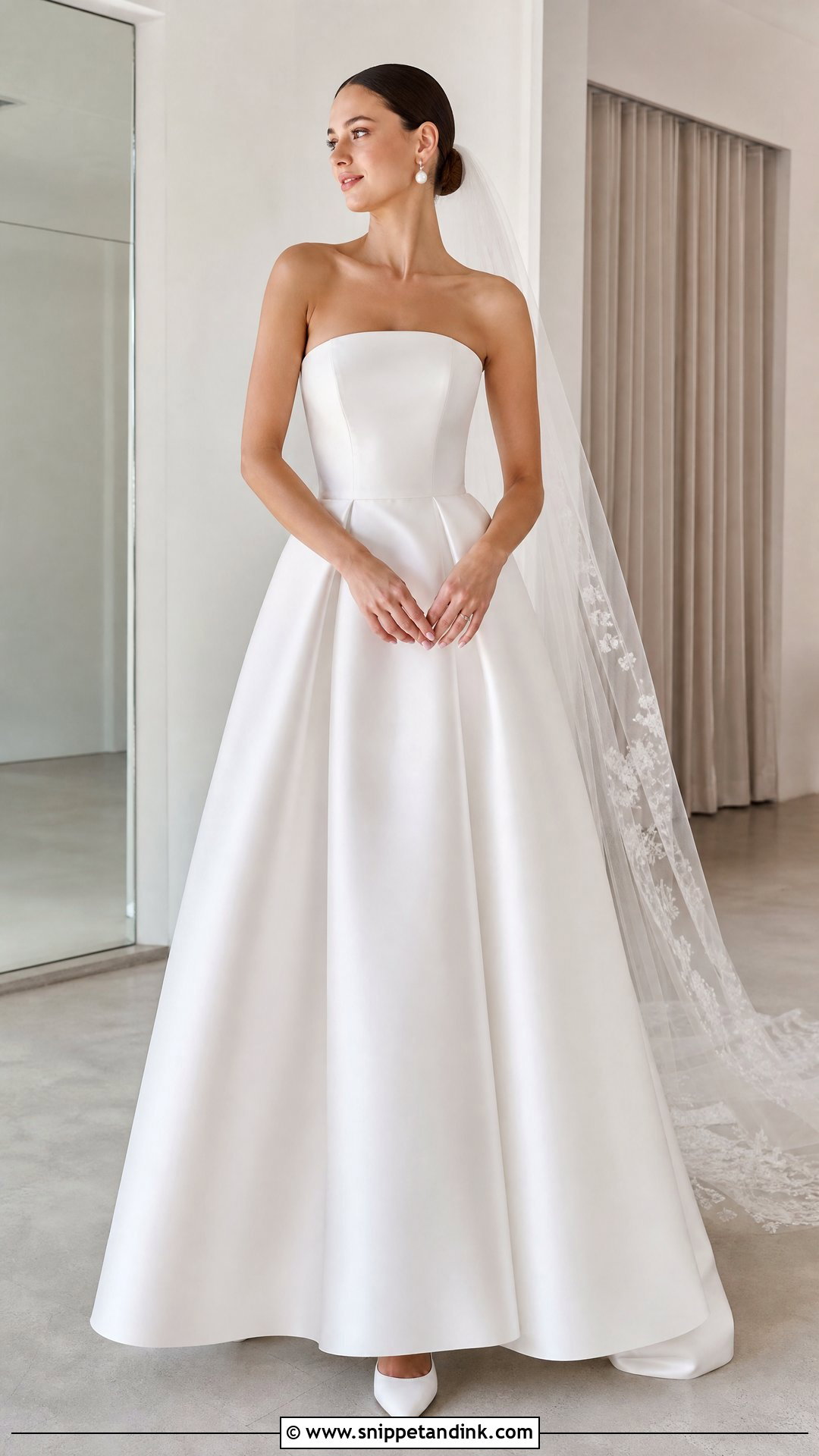
Strapless is the purest way to show off duchess satin, and the hardest to fit. Everything depends on internal boning and precise tailoring at the bust and waist, because a heavy skirt pulls the bodice down with every step. A straight or gently curved neckline keeps it minimal over a full A-line skirt. Pointed white pumps, pearl drops and a structured satin clutch are plenty. A cathedral veil adds ceremony drama without hiding the bodice; for something quieter, wear a sleek low bun and a simple comb instead. If you find yourself hitching it up in the mirror, it isn’t fitted yet.
2. Sweetheart Neckline White Duchess Gown
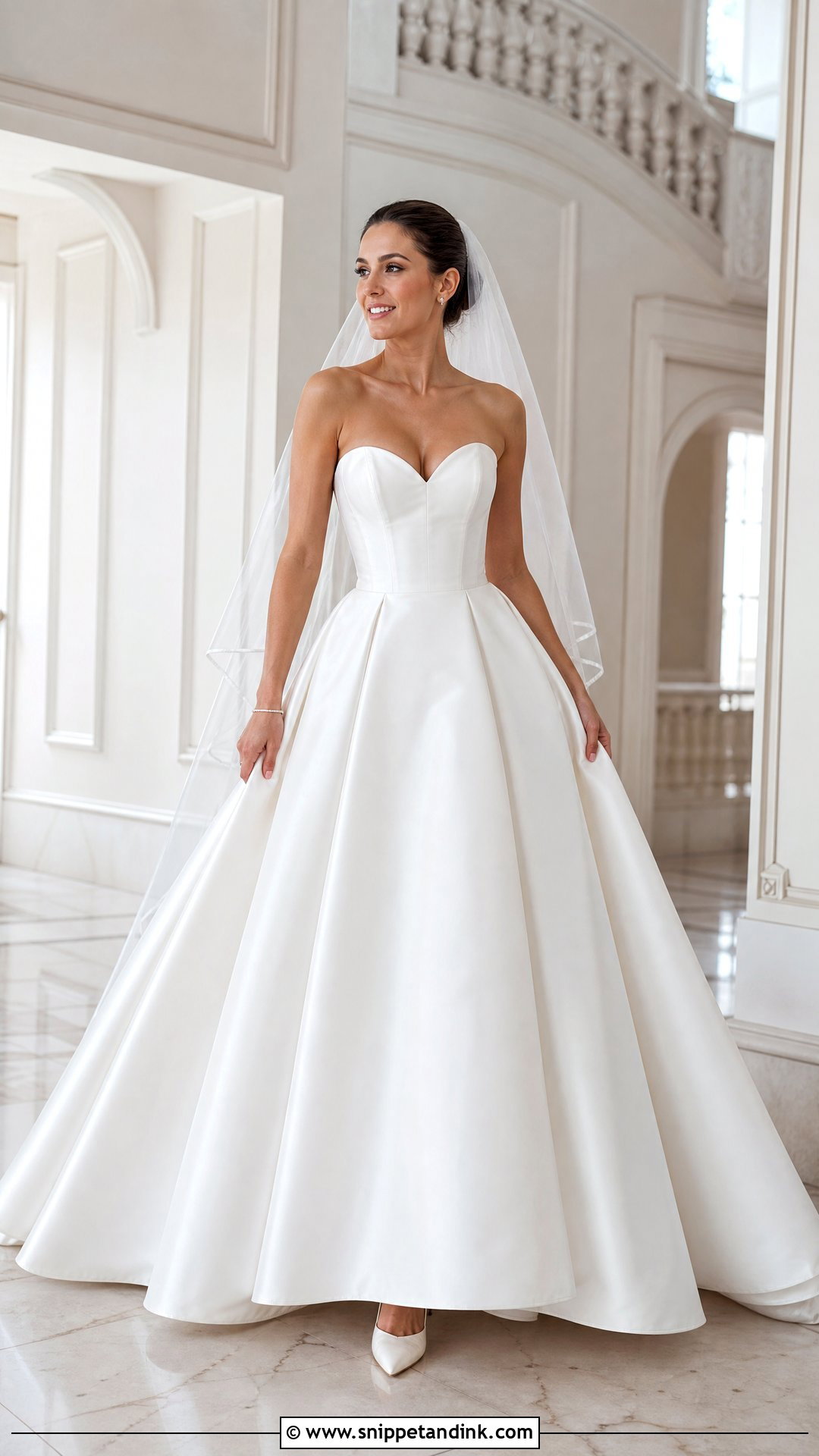
A sweetheart neckline softens a structured satin bodice, and the curve lifts the eye to the collarbones. Pair sweetheart neckline white duchess gown designs with a defined natural waist and a sweeping ball skirt. Crystal studs, a fine tennis bracelet and closed-toe ivory heels suit it, with a sheer fingertip veil. Bustier sweethearts need firm support, so ask about wider side panels, extra boning or detachable straps for the reception. Skip the necklace. A rounded bouquet and a soft curled updo echo the neckline’s shape.
3. Off Shoulder White Duchess Gown
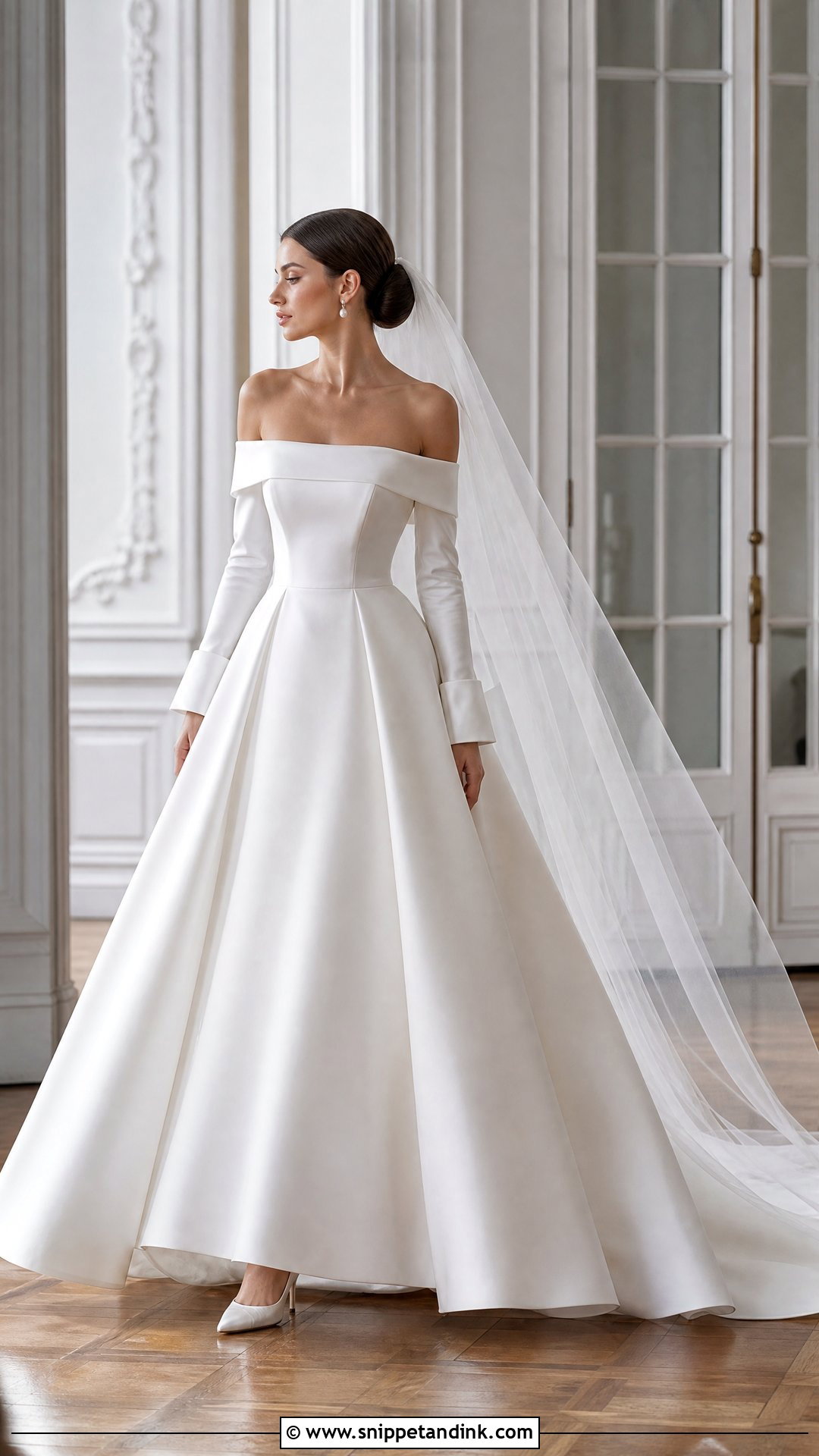
Off-shoulder bands in duchess satin don’t stretch, which is good for structure and bad if they’re cut even slightly tight around the arms. Raise your arms at fittings and check you can hug without the bodice lifting. A folded satin neckline or structured cuff sleeves frame the face, and a fitted waist over a full skirt with a modest train gives the formal line. Pearl earrings, a slim bracelet and low satin pumps keep you comfortable. A low chignon shows the neckline, and a veil pinned beneath it adds length without hiding the shoulders.
4. Square Neck White Duchess Gown
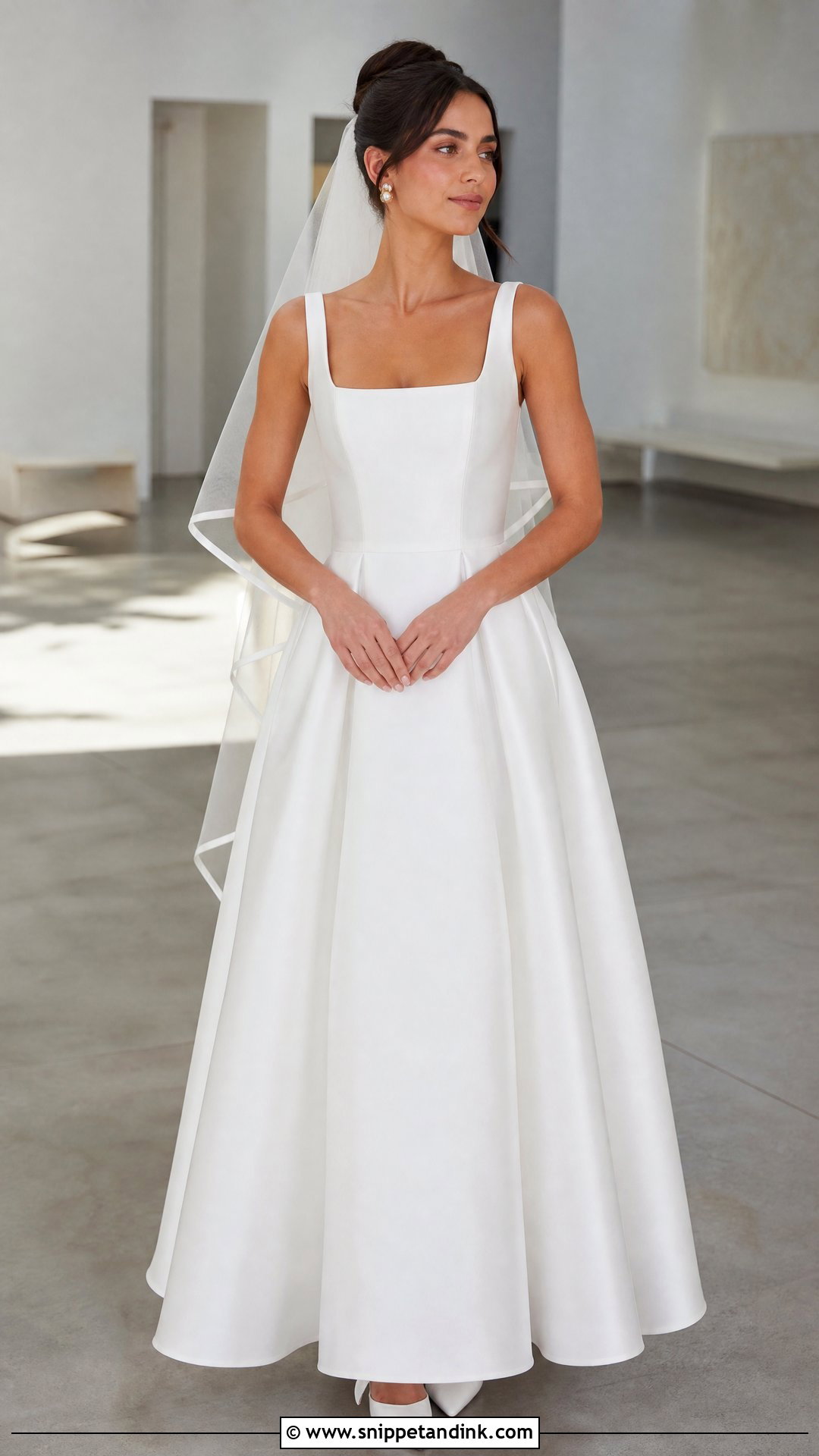
Square necks suit duchess satin because the fabric holds a crisp corner instead of rolling. Wide straps carry the weight, which makes this one of the more comfortable structured gowns. Over an A-line or softly pleated skirt, it keeps the structured look throughout. Small pearl hoops, a sleek bun, pointed satin shoes and a medium veil edged in narrow ribbon suit it, and a matching satin belt fits the geometry. Put the interest in earrings or a hairpiece, not a big necklace. The thing to watch is gaping: straps and bust need precise alterations so the neckline lies flat when you lean forward.
5. Long Sleeve White Duchess Gown
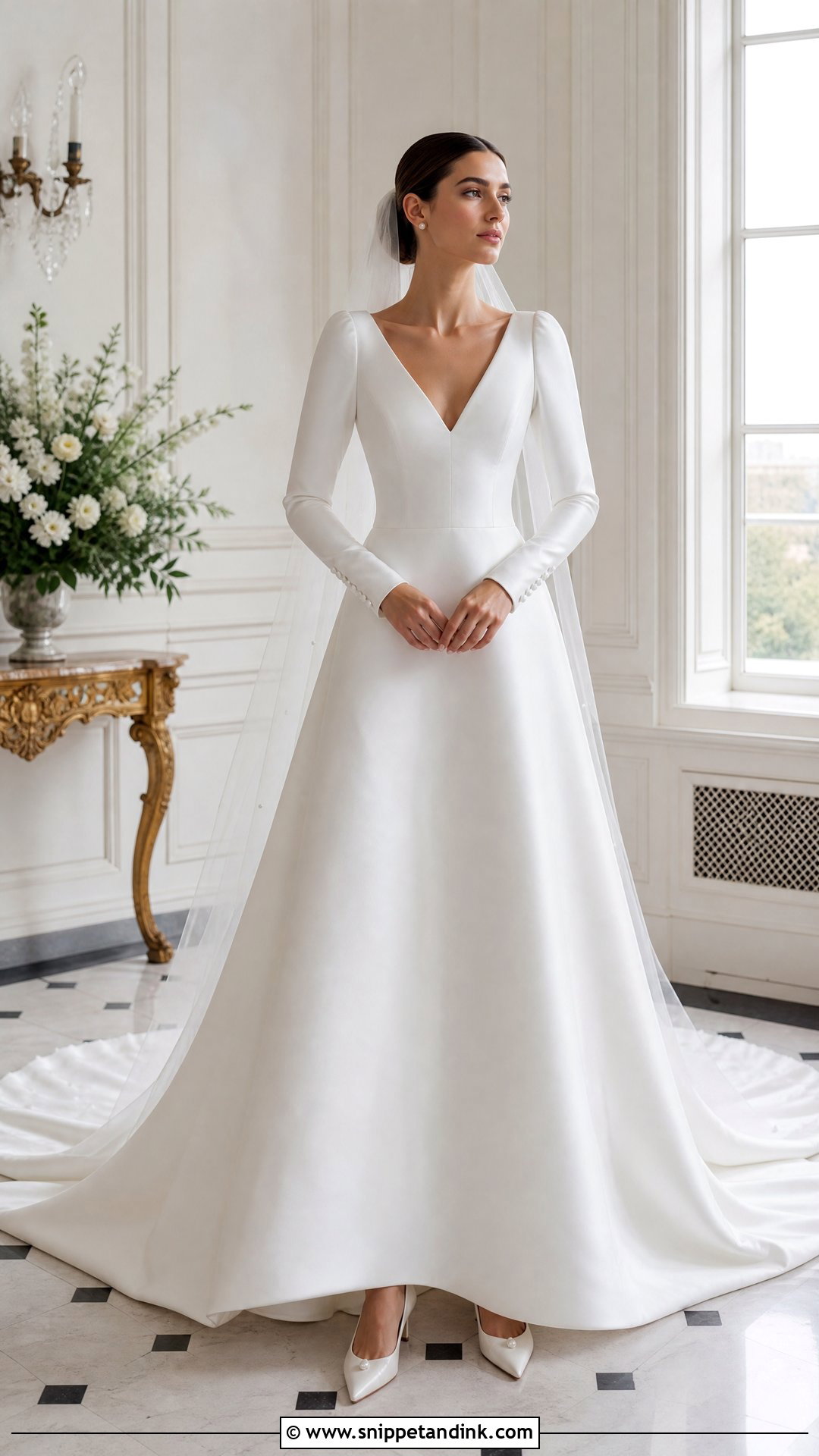
Satin sleeves look clean and strong; lace sleeves are lighter and more forgiving at the elbow. Heavy satin sleeves cut too slim will stop you bending your arms, so ask for a smooth lining and a little ease at the elbow before the final fitting. Balance the coverage with a V-neck, bateau neck or open back, and keep the bodice fitted over a full A-line skirt so the gown doesn’t look weighty. Pearl studs, low block heels and a simple veil that falls past the train complete it. Covered buttons at the cuffs are a quiet traditional detail.
6. One Shoulder White Duchess Gown
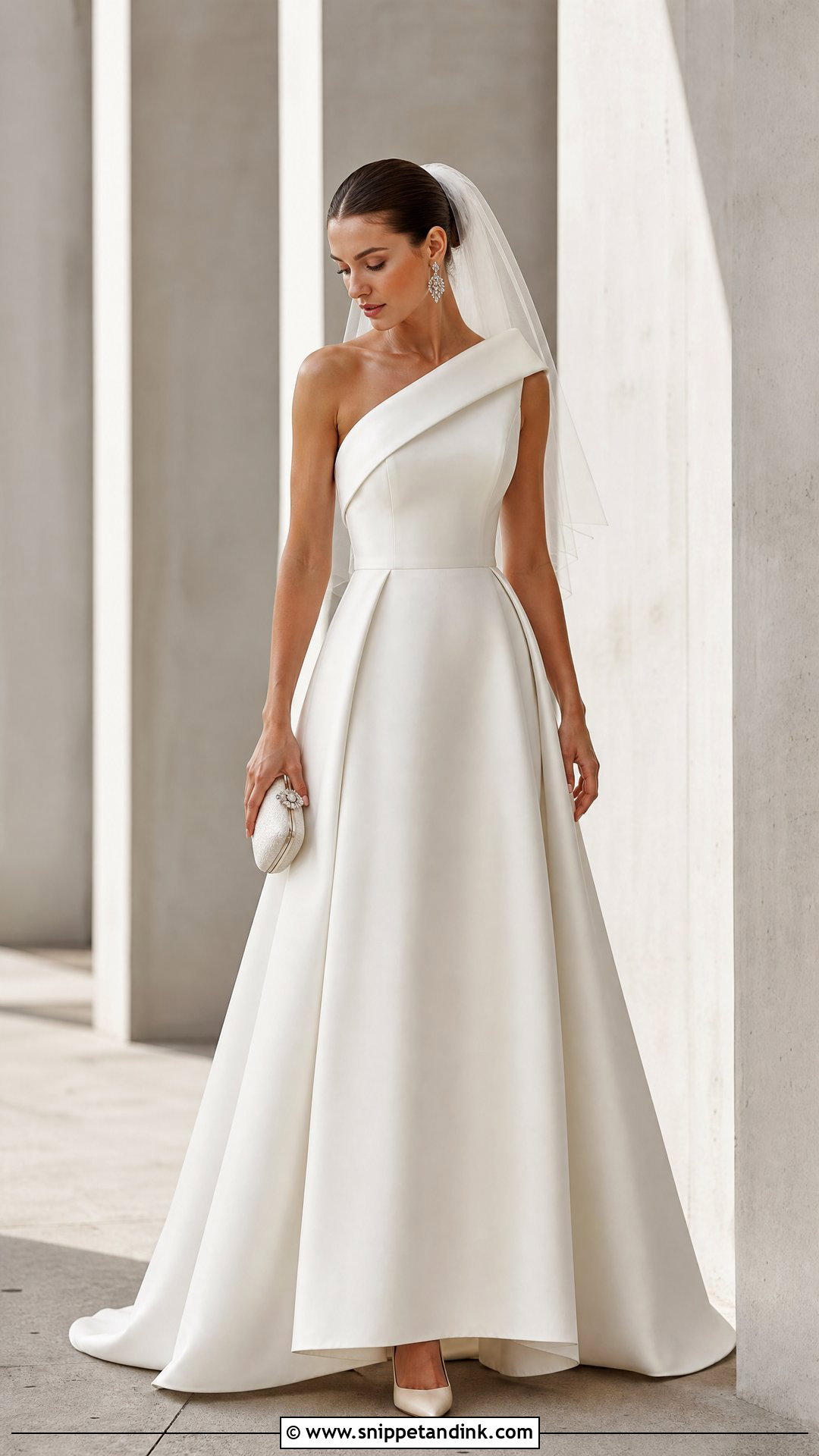
Asymmetry and heavy fabric need strong internal construction, because the weight of the skirt will try to drag the bodice toward the bare side. Ask how the gown is anchored before you fall for it. The single shoulder might be clean draping, a sculpted fold or a gathered panel running across the bodice. A fitted waist and sweeping A-line skirt balance it. One statement earring or small crystal drops, pointed pumps and a compact silver clutch are enough. Wear a side-parted low bun, and a short tulle veil at the back rather than a long one.
7. Halter Neck White Duchess Gown
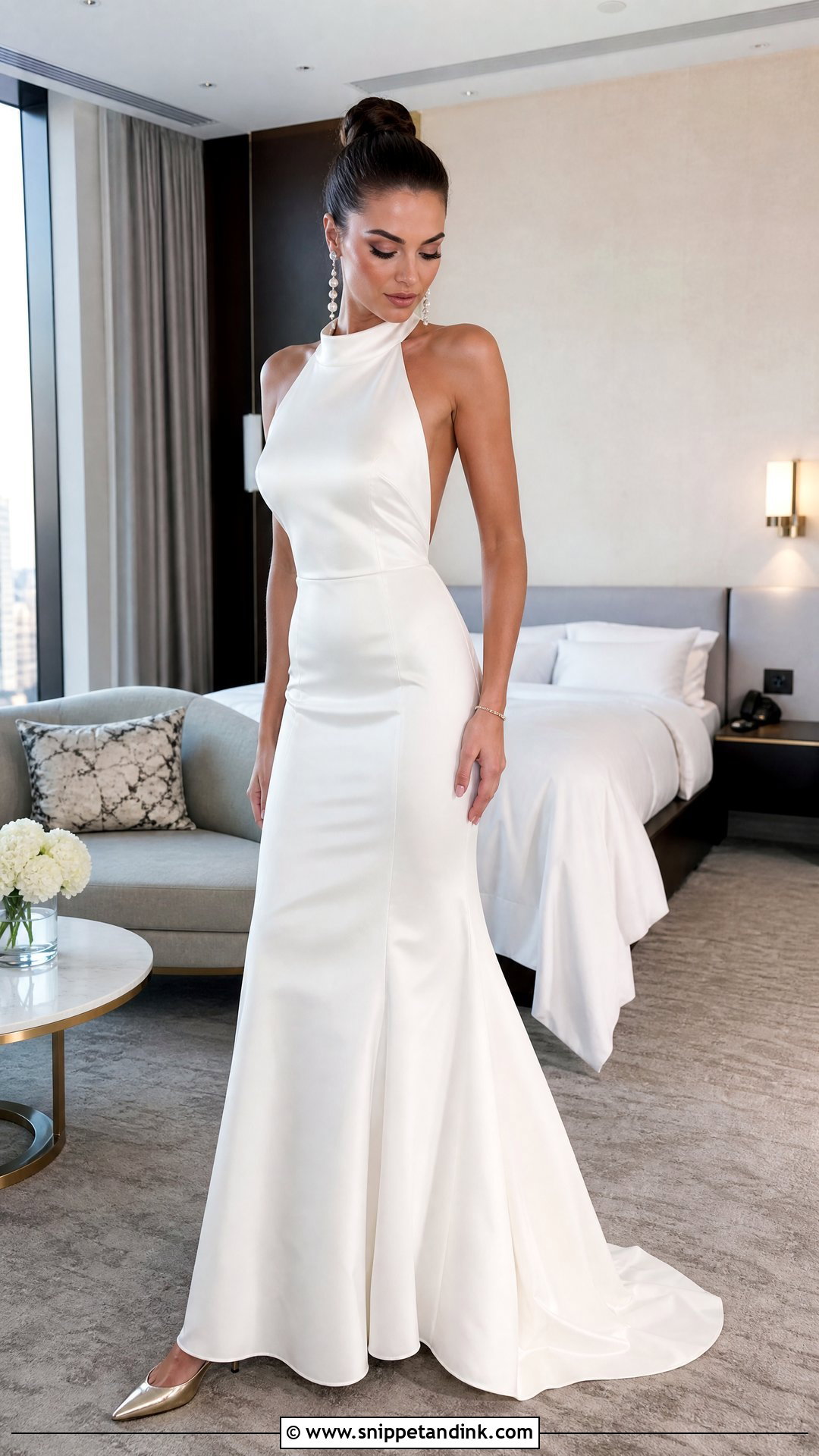
A broad satin halter looks structured; a narrower one is lighter and more modern. Either way, a heavy duchess bodice hanging from the neck can ache after a few hours, so I check pressure at every fitting and look for back support that takes some of the load. The bodice can flow into a column, A-line or fit-and-flare skirt. Drop earrings, a smooth high bun and metallic or ivory pointed heels suit it, with a bracelet instead of a necklace. An open back contrasts nicely with the covered front, and covered buttons keep it bridal.
8. High Neck White Duchess Gown
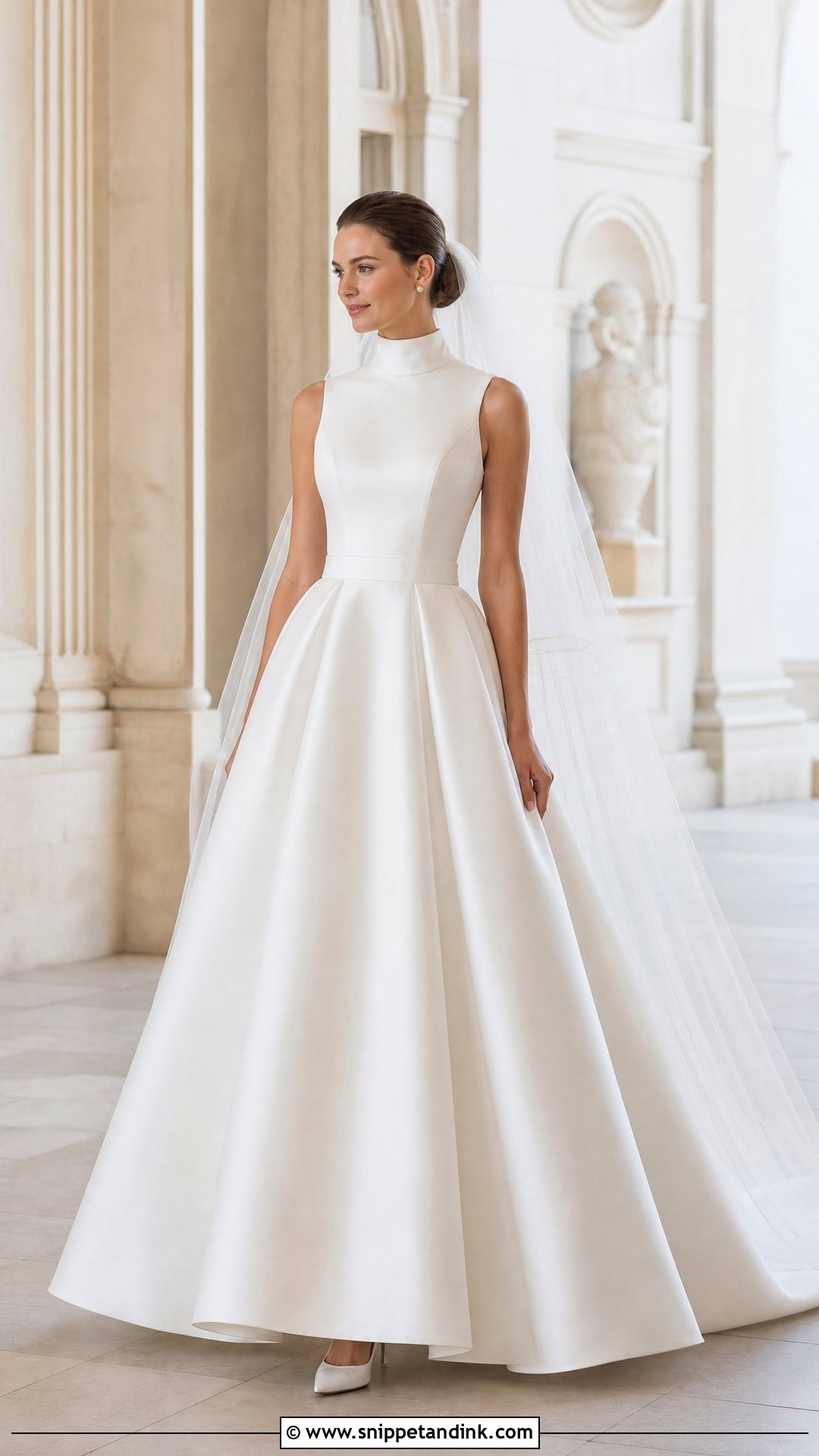
Duchess satin at the throat has a regal, almost formal-portrait feel. A bateau-style collar, short standing neckline or satin-and-lace mix keeps it refined. Pair it with a defined waist and a full skirt. Tiny pearl earrings, a sleek updo, white pumps and a long veil pinned below the bun suit it; necklaces compete and can scratch the fabric. A buttoned or open back balances the closed front. Turn your head fully at fittings. A stiff collar that’s even slightly snug will remind you of itself all day.
9. Corset Bodice White Duchess Gown
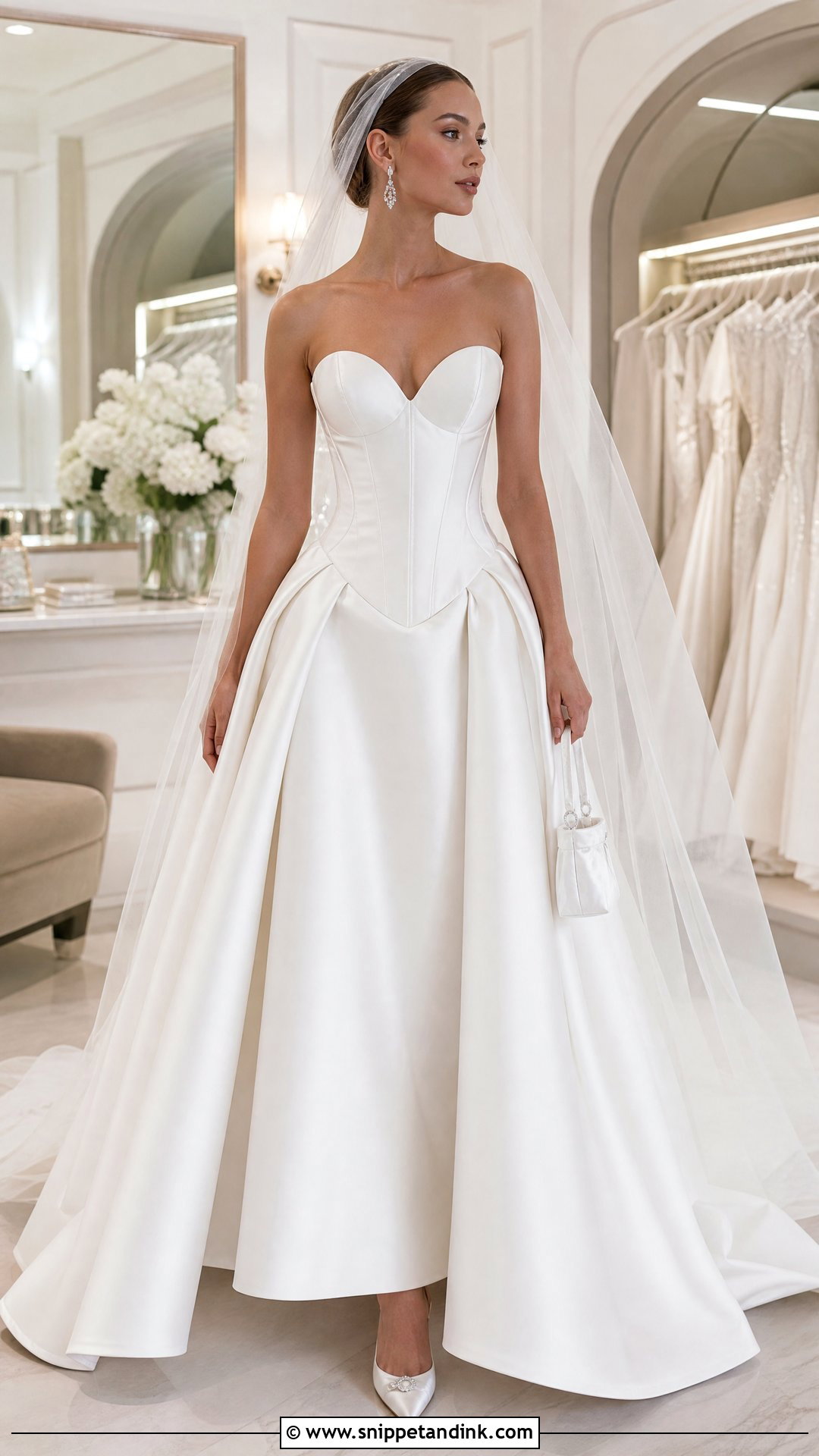
Corsetry in duchess satin shows every flaw, since the smooth surface reveals seams and boning that a lace overlay would hide. Look for supportive boning, carefully placed seams, and a lace-up or concealed zip. A basque waist drops the bodice into a gentle point, which lengthens the torso before the skirt starts. A full pleated skirt makes it grand; a fitted one makes it modern. Crystal earrings, a sheer veil, pointed pumps and a small satin bag finish it, with a necklace only on a straight neckline. You should be able to take a deep breath, sit and eat.
10. Drop Waist White Duchess Gown
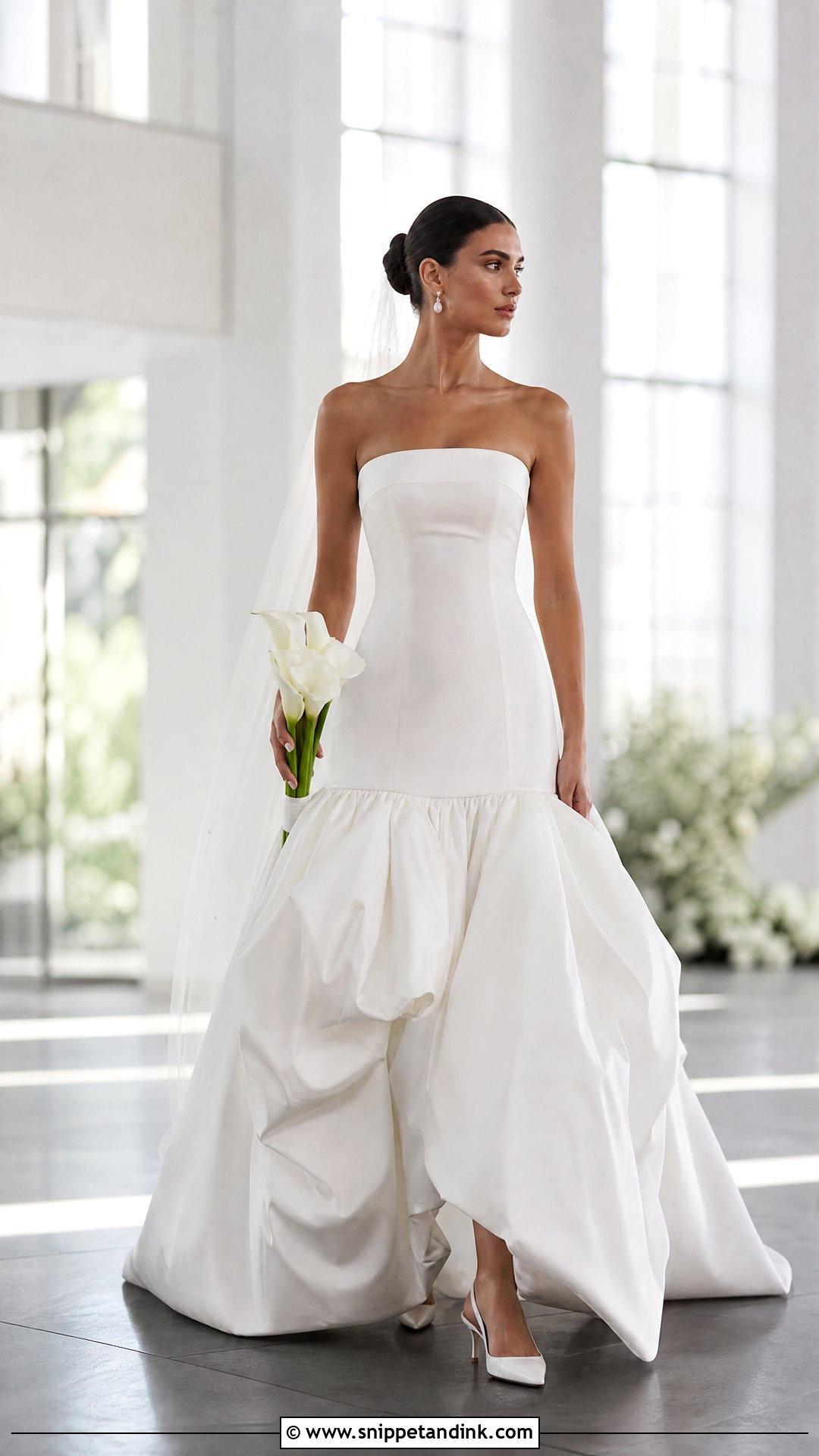
The drop waist moves the seam below your natural waist, so the long bodice becomes the focus and the satin holds a gathered or full skirt below it. It flatters long torsos and can shorten short ones, so try several seam heights and skirt volumes at fittings before committing. The seam should sit smoothly over the hips without gripping. Strapless or square necklines keep the top clean. Pearl drops, a smooth bun, slim heels and a simple tulle veil suit it, with a narrow bouquet to protect the vertical line. Keep embellishment to almost nothing.
11. A-Line White Duchess Gown
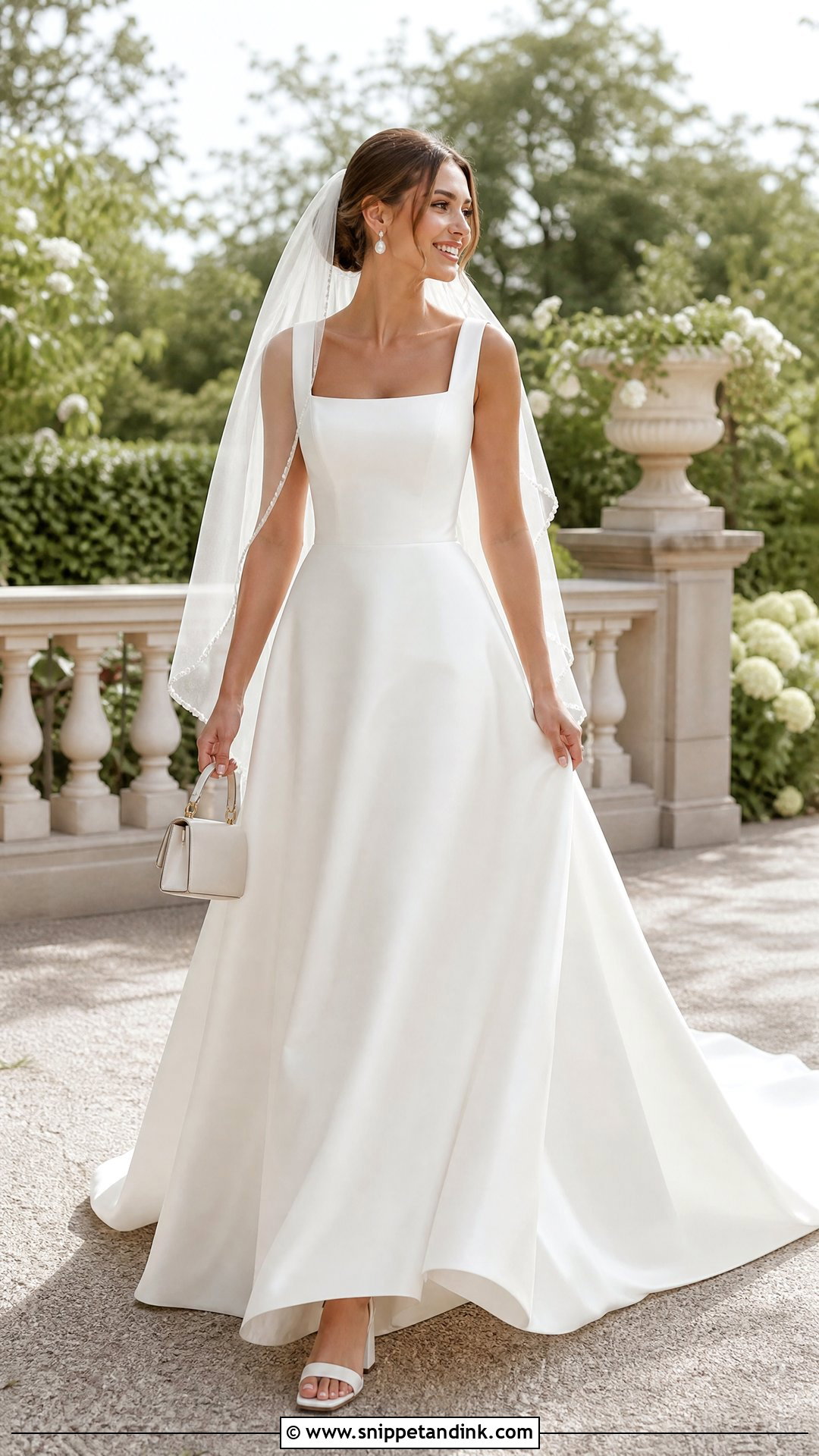
The A-line is where I start most duchess satin brides, because the fabric gives the skirt a clean shape without needing extreme volume or layers of petticoat. Fitted at the bodice, it widens gradually and skims the hips without clinging. Choose a V-neck, square neck or strapless bodice depending on the support you need. Pearl earrings, a fingertip veil, block heels and a compact top-handle bag finish it, with a matching satin band or narrow crystal belt for definition. A chapel train is long enough to feel bridal and short enough to manage.
12. Ball Gown White Duchess Gown
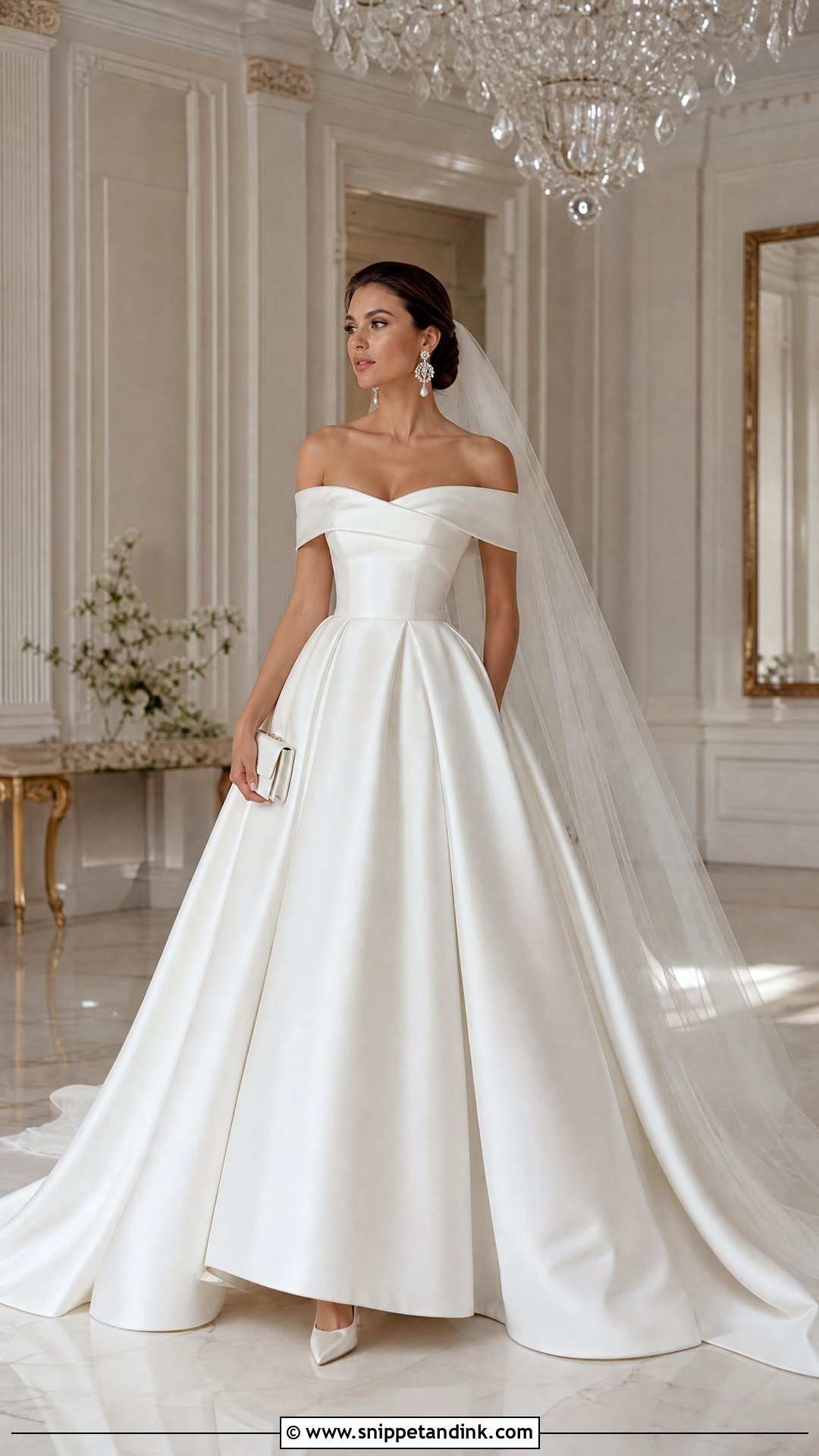
A full duchess ball gown is heavy. Box pleats, layered underskirts and a sweeping train all add weight, and you’ll be carrying it for hours, so check the bodice support and the comfort of the underlayers as seriously as the look. A strapless, off-shoulder or square neckline balances the volume. A cathedral veil, pearl-and-crystal earrings, satin pumps and a small structured clutch fit the scale. Keep the bouquet narrow enough that the waist still shows. Pockets are worth asking for. The hem should clear the front of your shoes, and the bustle should be quick for someone else to fasten.
13. Mermaid White Duchess Gown
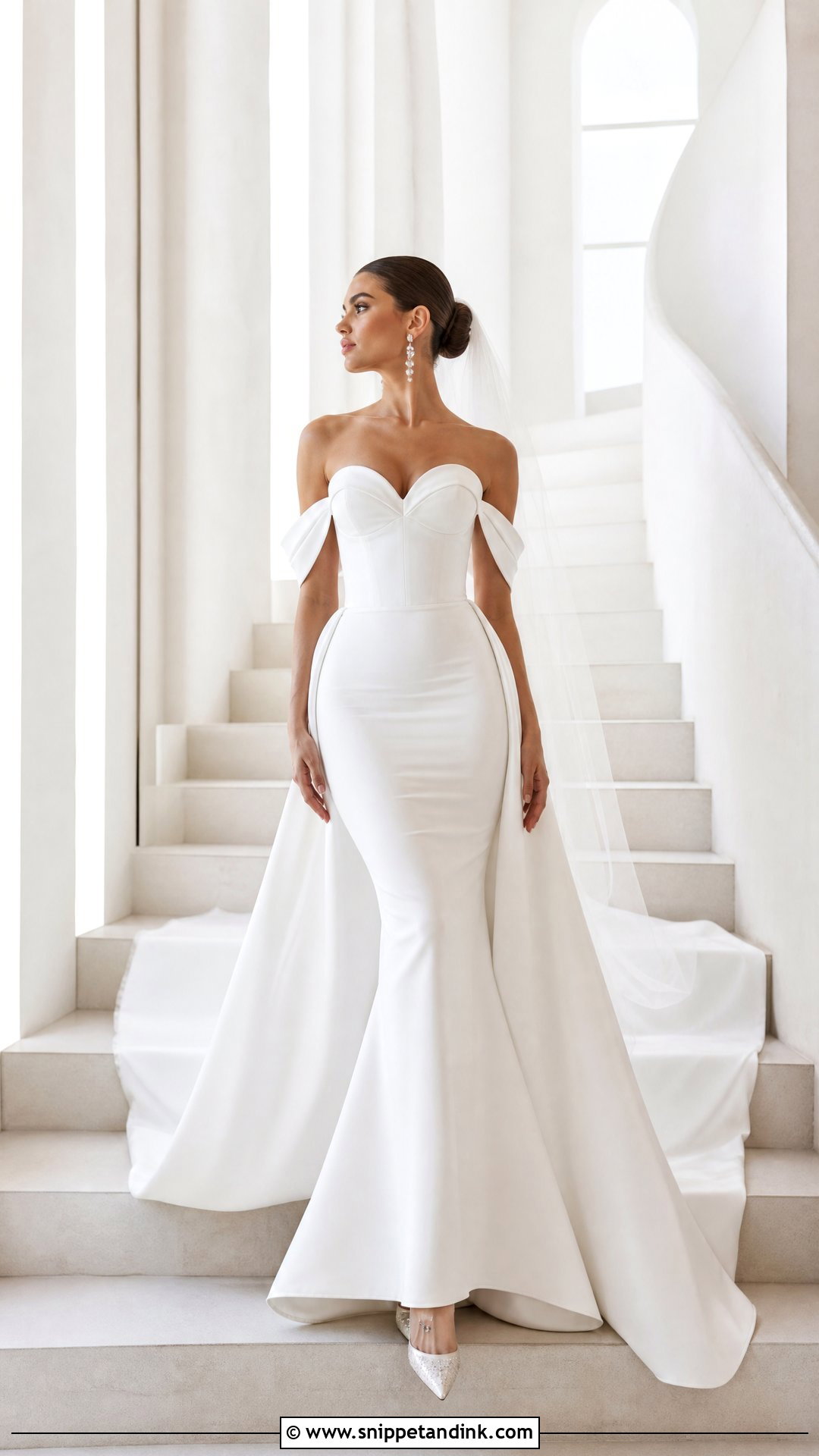
Duchess satin has very little give, so a mermaid in this fabric needs careful seaming or a touch of stretch to let you move. Walk, sit and climb a few steps at every fitting. The flare should start at a point that suits your height and still allows a normal stride; too low and you’ll shuffle. A sweetheart or off-shoulder neckline balances the fitted skirt. Long drop earrings, a sleek bun, pointed heels and a narrow veil that follows the train keep the shape uncluttered. A detachable train gives you drama for the ceremony and freedom later.
14. Fit And Flare White Duchess Gown
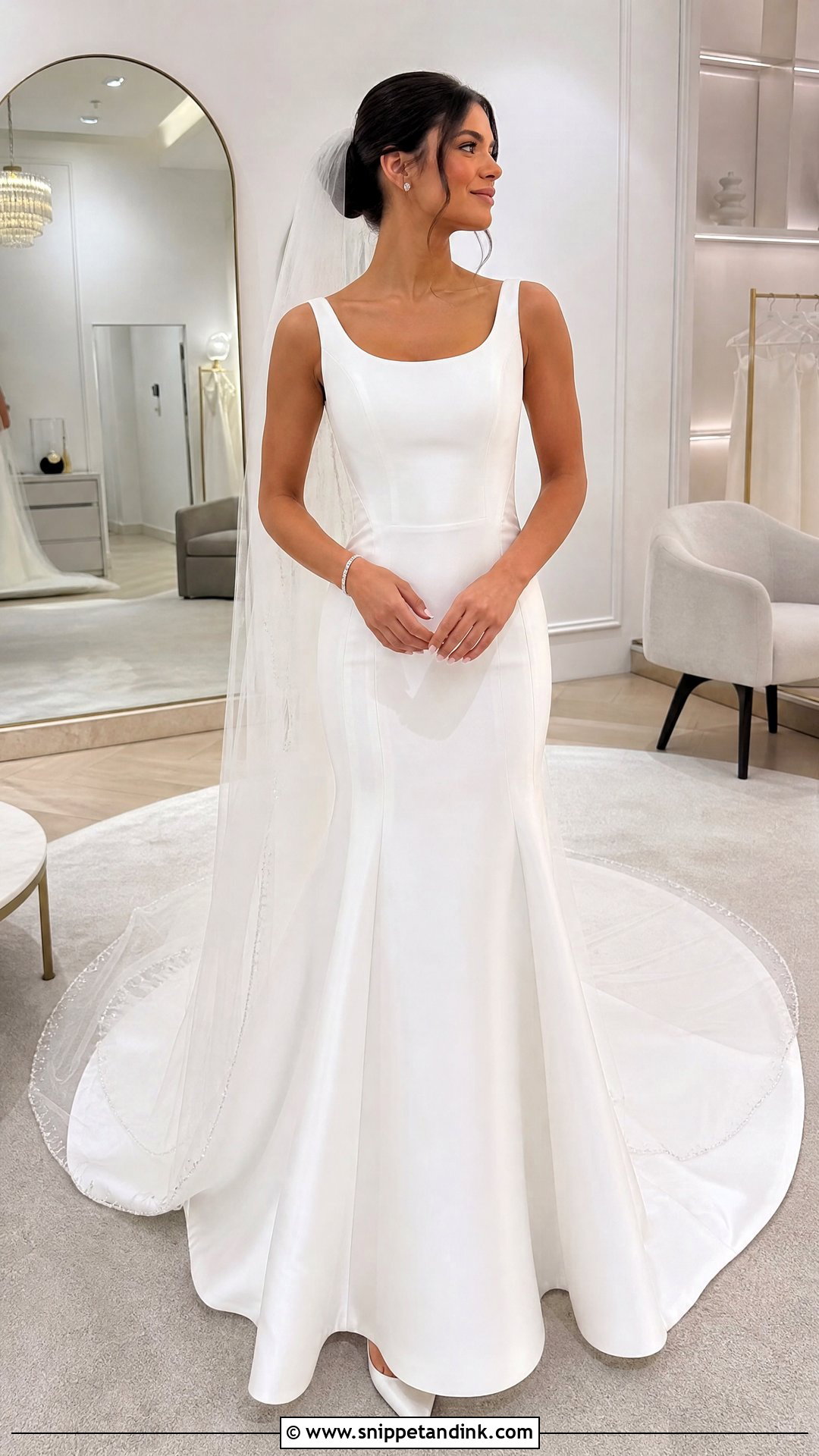
Fit and flare is the gentler cousin of the mermaid, with the flare starting higher so walking is easy. Princess seams let the satin follow the body cleanly. Choose a V-neck, scoop or structured strapless bodice. Crystal studs, a fine bracelet, pointed satin pumps and a chapel veil suit it, with a low bun or smooth ponytail. Covered buttons down the back or a removable bow at the waist add interest. Watch for pulling lines across the hips, thighs and lower back; on a smooth satin they show in every photo.

15. Column White Duchess Gown
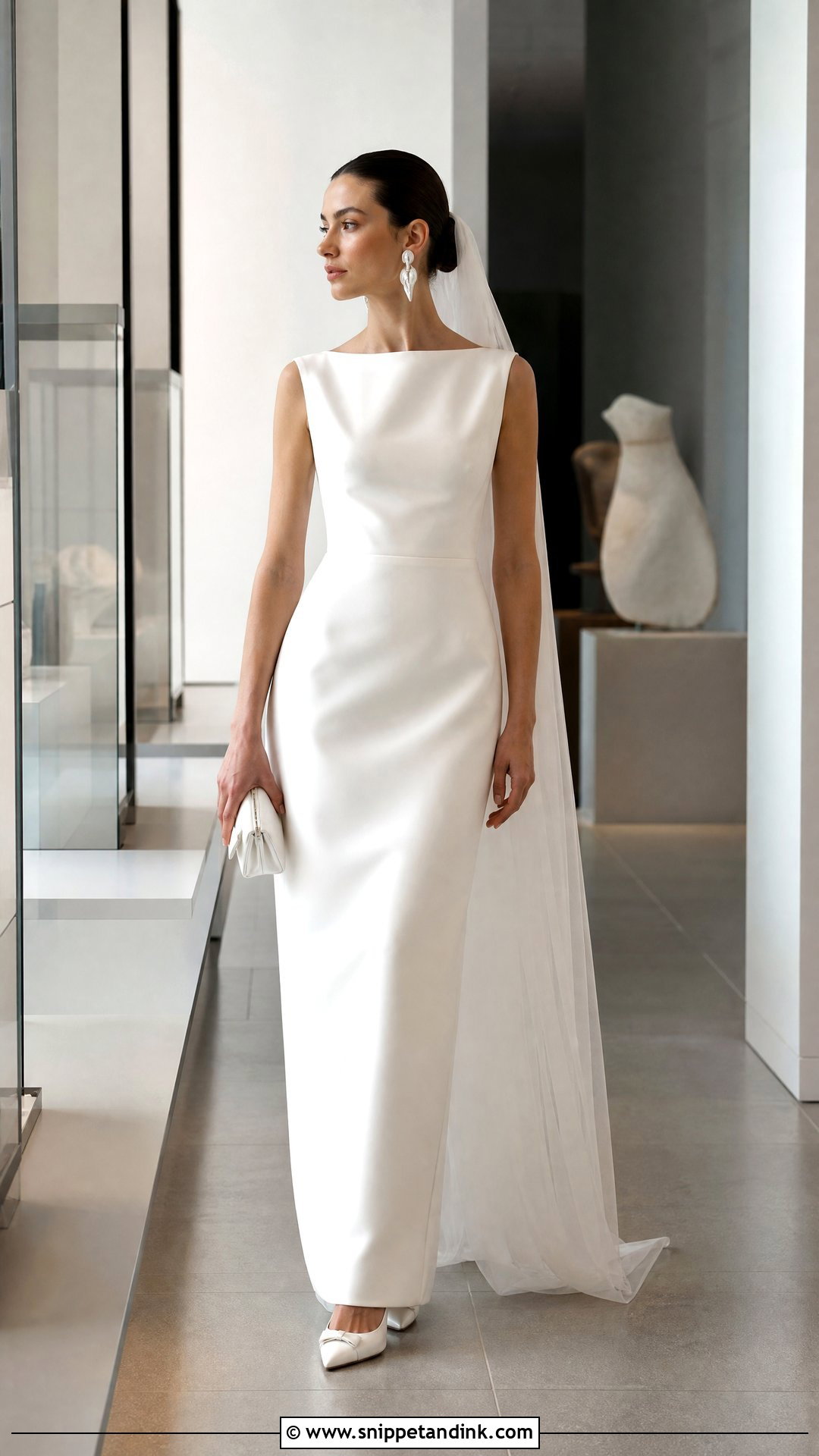
A column is the most honest test of a duchess gown, because with no volume to hide behind, fit is everything. The skirt drops almost straight from the hips, which lengthens you. Square, bateau or one-shoulder bodices suit its modern lines. Sculptural earrings, slim pointed heels, a simple clutch and a long narrow veil are enough, with a low chignon. Ask for a back slit or a discreet vent, since heavy satin won’t stretch with your stride. The fabric should skim without pulling, and the hem should break cleanly over your shoes.
16. Pleated Skirt White Duchess Gown
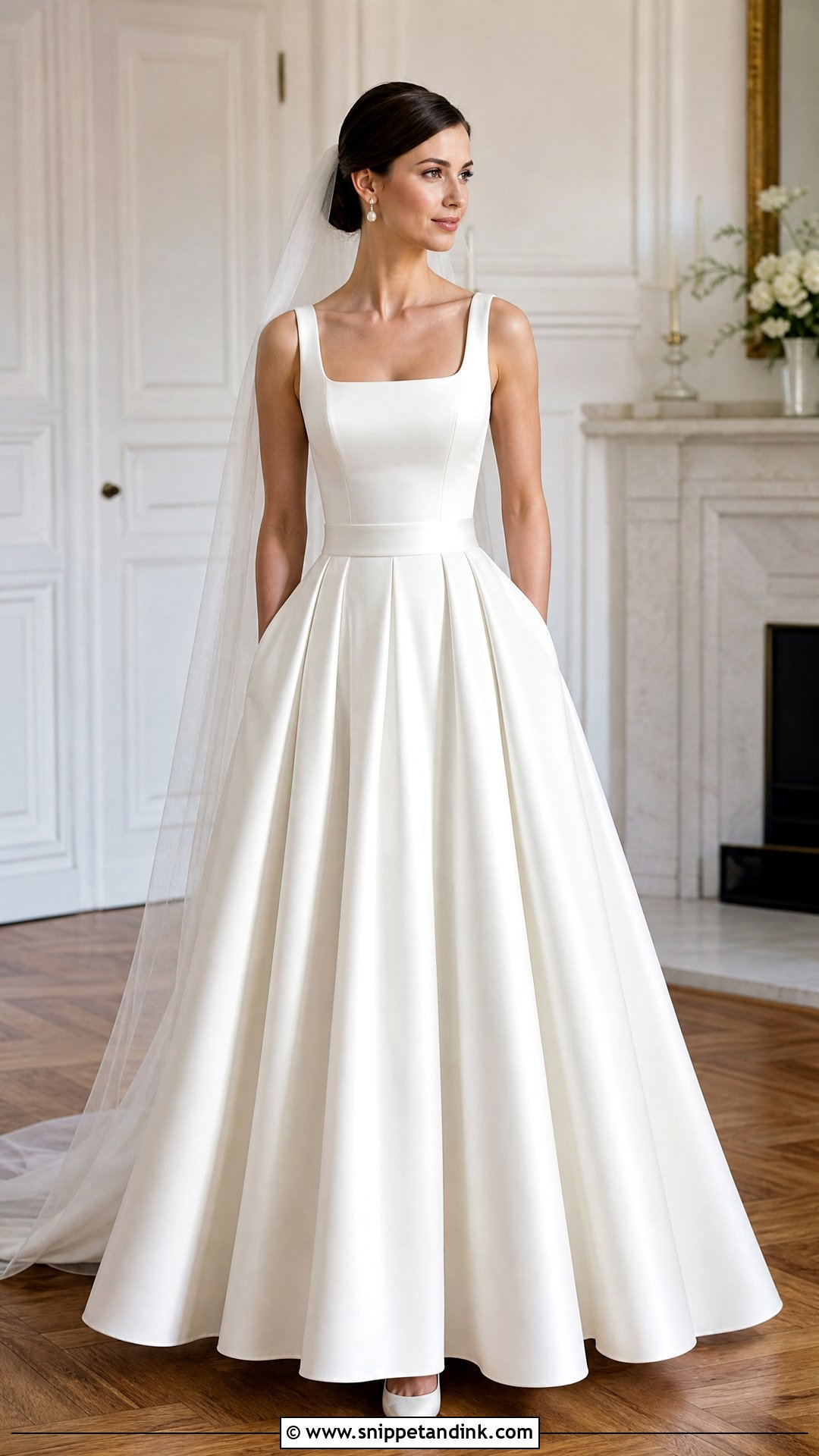
Duchess satin holds a pleat like few other fabrics, which is why pleated skirts look so sharp in it. Box pleats give bold volume; inverted pleats sit flatter at the waist and suit brides who don’t want extra width at the hips. A fitted strapless or wide-strap bodice keeps the waist defined. Pearl drops, satin pumps, a neat low bun and a veil a little longer than the train finish it. Use a narrow waistband in the same fabric rather than a bulky belt. At alterations, check that each pleat falls evenly and doesn’t spring open over the hips; pockets fit neatly inside the folds.
17. Bow Back White Duchess Gown
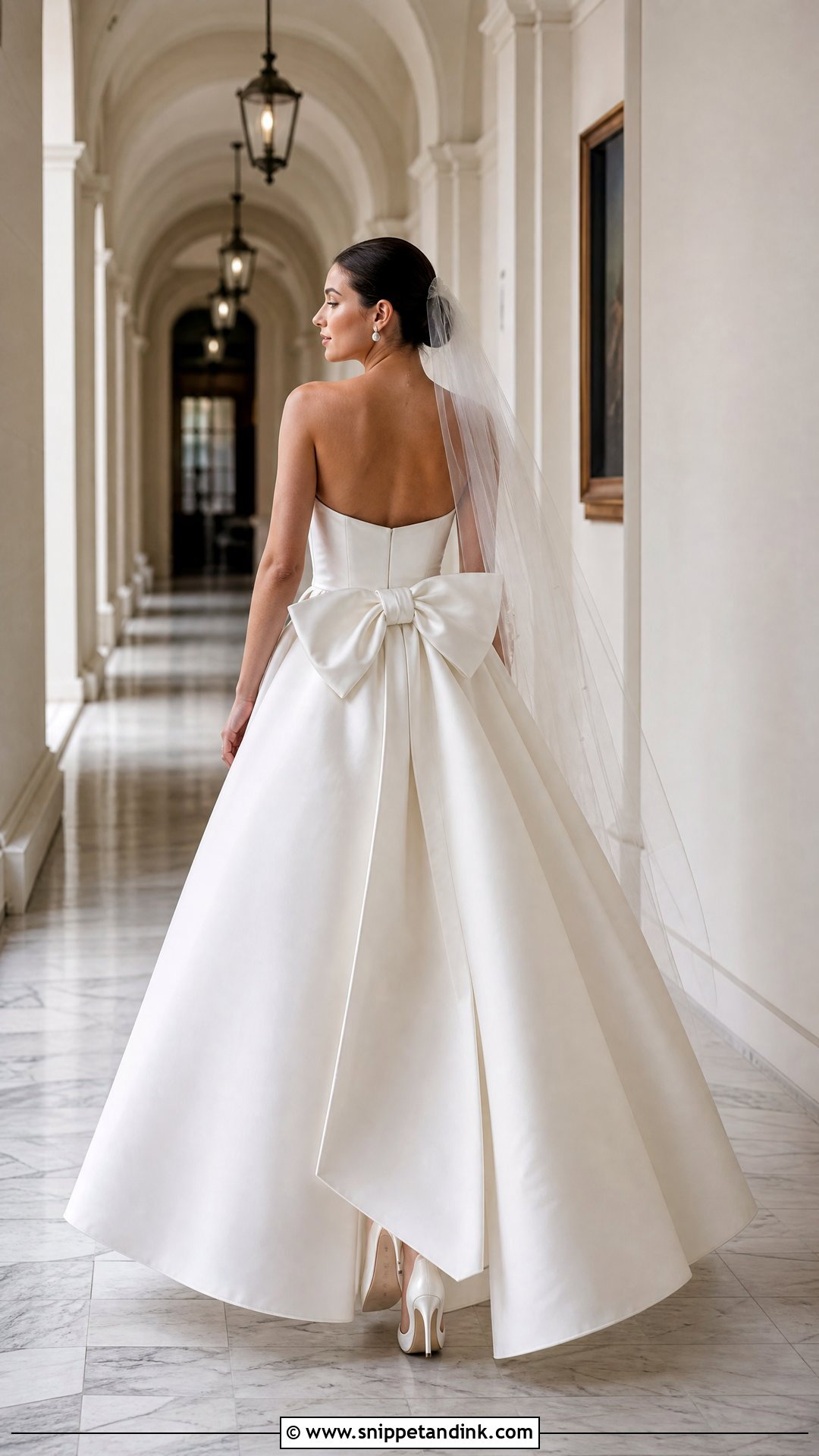
The bow is a back-of-the-room detail, so think about how it looks while you stand at the altar facing away from guests. A flat structured bow is understated; long satin tails add movement. It suits a strapless A-line, a square-neck ball gown or a column. Pearl studs, white pointed pumps and a sheer veil set above or below the bow work, with the front kept minimal. A smooth bun keeps it all visible. Ask for the bow to be securely attached but removable, since a large one can get in the way of sitting and bustling. Have the loops pressed the morning of.
18. Lace Applique White Duchess Gown
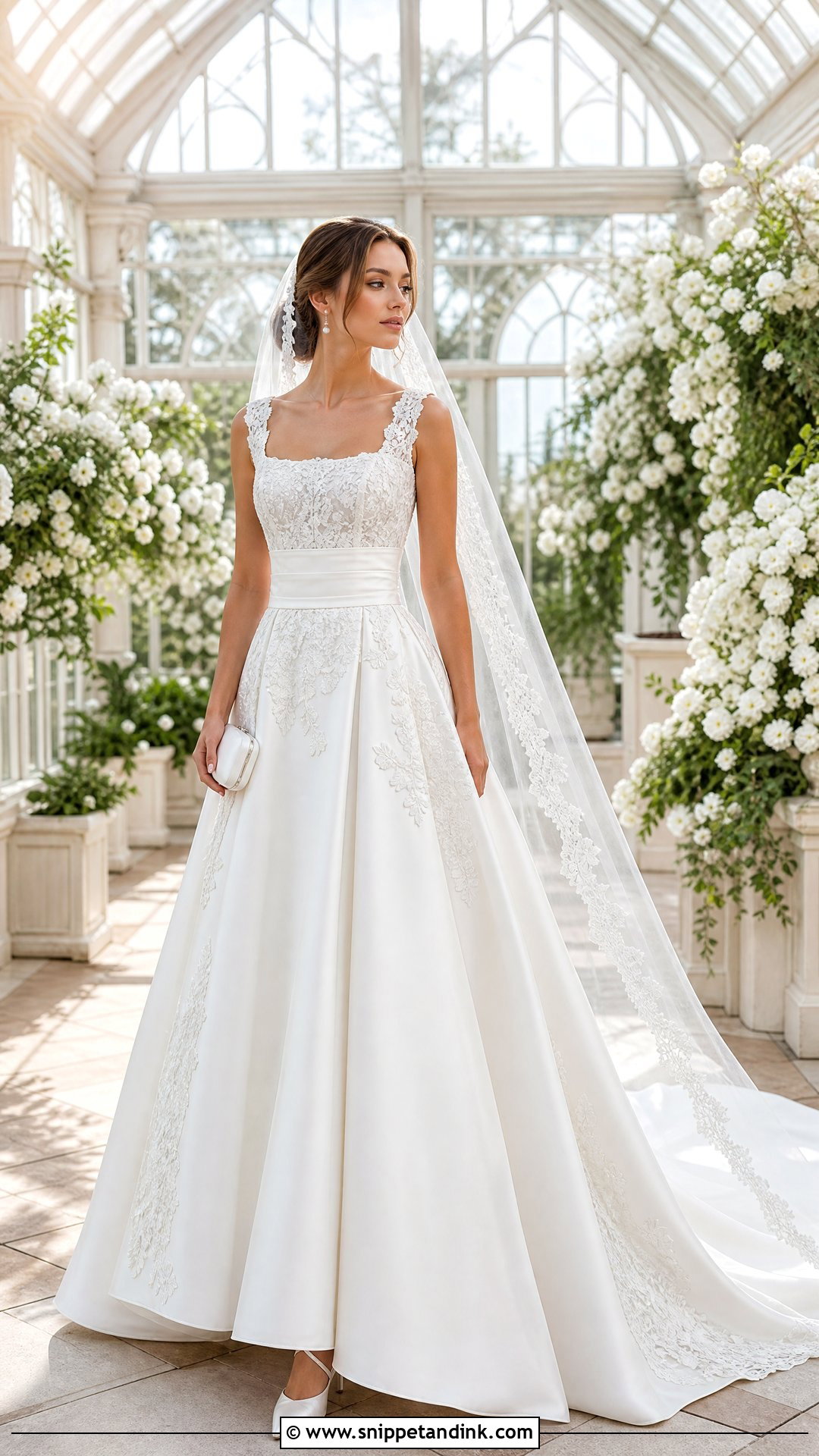
Applique on duchess satin is about placement. Pieces that frame the neckline or trail from the bodice into the skirt shape the eye; a gown covered edge to edge loses the satin that makes it special. With lace applique white duchess gown designs, a square-neck A-line with lace at the waist feels refined, and a lace corset over a satin ball skirt gives bolder contrast. Pearl earrings, a lace-edged veil, satin heels and a small white clutch complete it. Check that applique edges lie flat; raised edges catch the veil all day.
19. Beaded White Duchess Gown
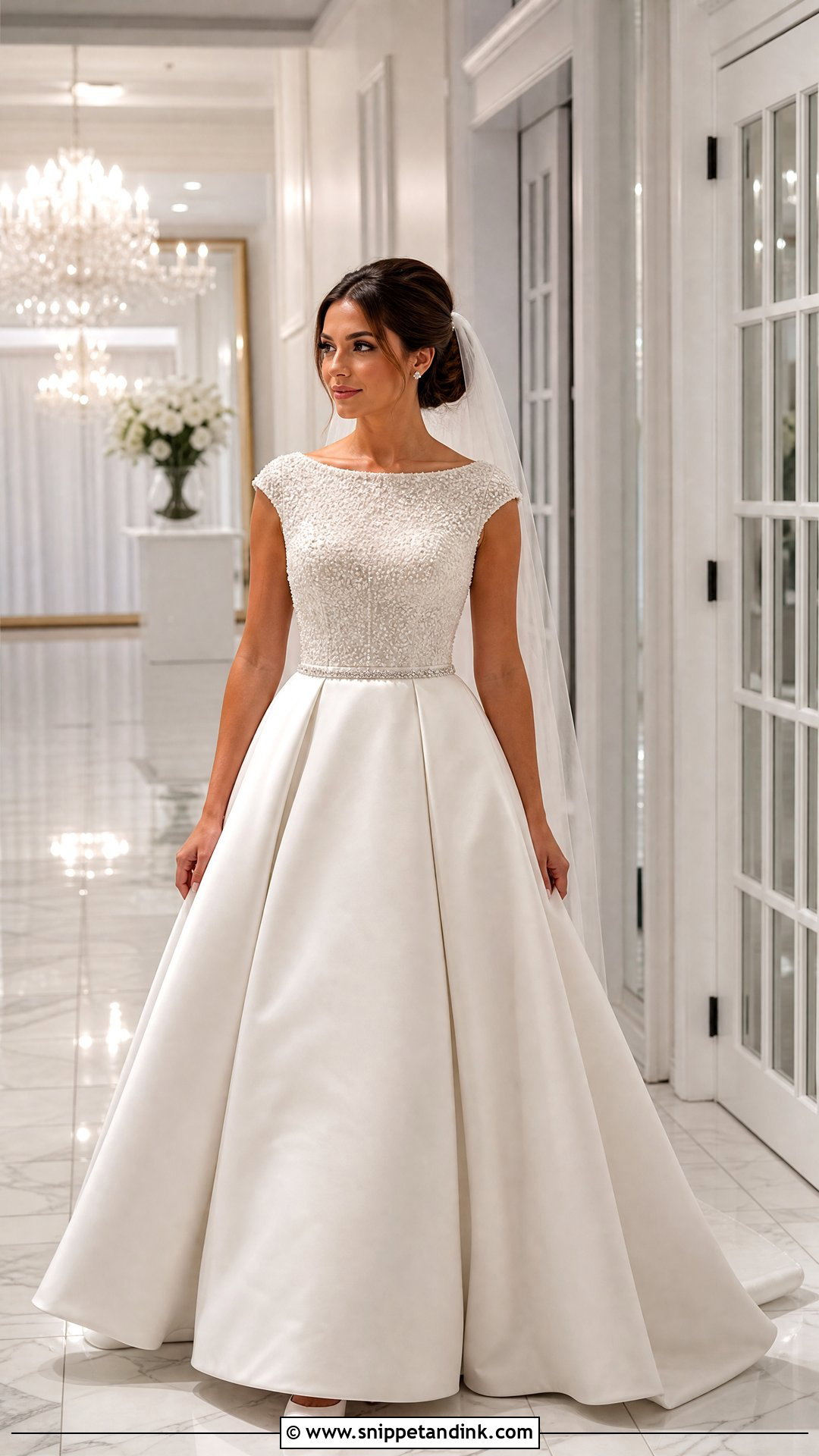
Beading adds weight as well as sparkle, and on an already heavy fabric that matters. Heavy embellishment on the bodice can pull the satin down and pucker the seams, so check how it’s distributed and stitched. Delicate pearl beading, scattered crystals or a beaded waistband all suit different levels of formality. A beaded bodice over a plain A-line skirt balances well, and beaded sleeves add coverage. Simple studs, white satin heels and an unadorned veil let the work show, with a smooth updo. A soft lining under the beadwork stops it scratching your skin.

20. Detachable Overskirt White Duchess Gown
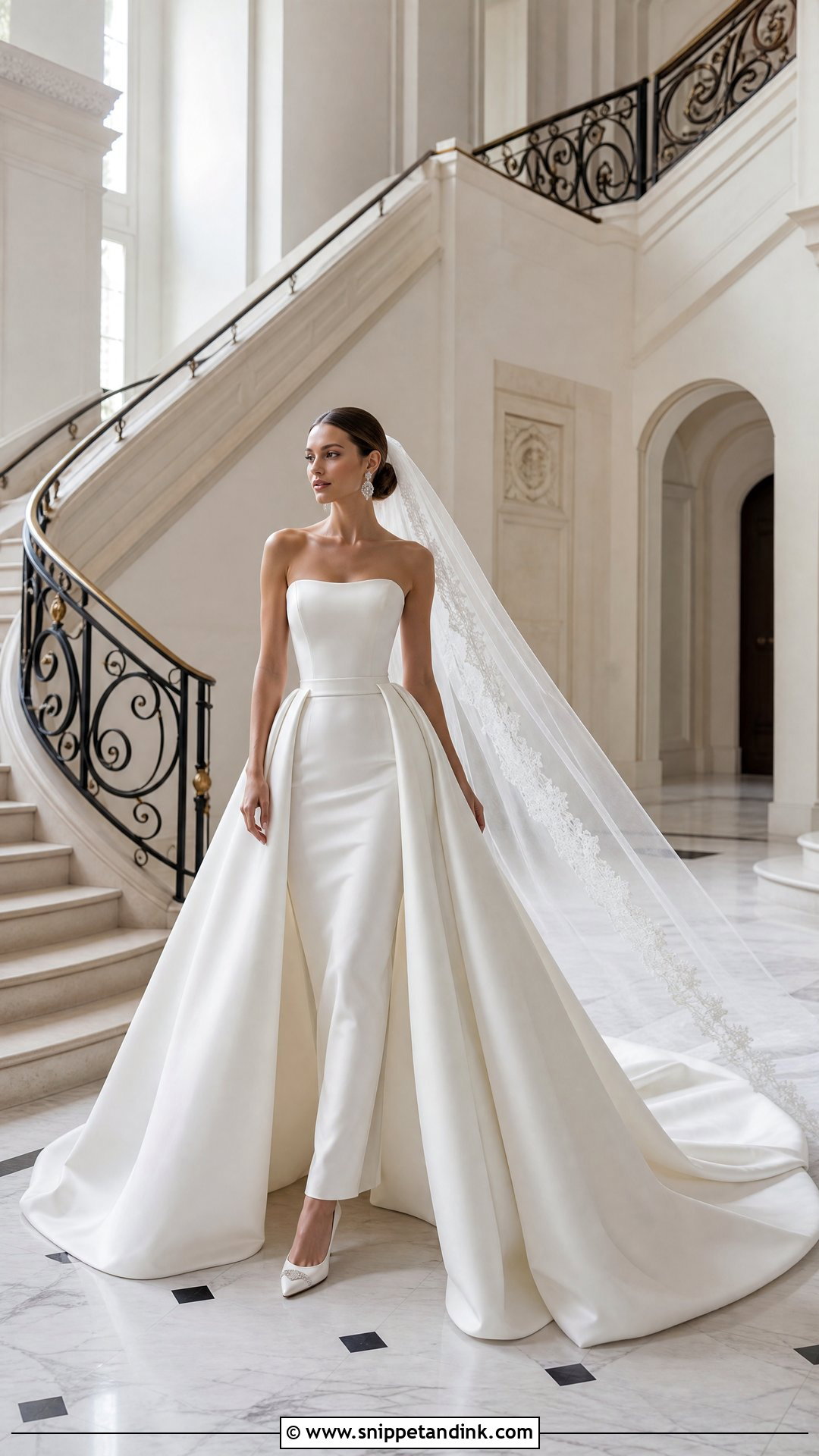
Two silhouettes in one gown is the most practical idea on this list for a long day. Start with a fitted column, mermaid or slim A-line base, add a full satin overskirt for the ceremony, and take it off for the reception. Crystal earrings, pointed heels, a sleek low bun and a simple cathedral veil suit both stages. The overskirt should attach without visible hooks or bulk at the waist, and both pieces must match exactly in tone and finish; duchess satin from different dye lots can look slightly different in daylight. Ask for fastenings someone can undo in a minute without dragging the base gown.
Steam, Rain and the Car Ride: Caring for Heavy Satin on the Day
In my experience most of the trouble with duchess satin happens between getting dressed and arriving, so I plan that stretch as carefully as the fitting.
Steaming without water spots
I steam from the inside of the skirt where I can, keeping the head moving and a short distance from the fabric. Never put a hot iron directly on satin; it can leave a shine mark that won’t come out. On silk, test the steamer on a hidden seam first, because a spit of water can dry as a ring.
Getting into the car
Sit down first, then have someone gather the skirt and train in after you, spreading it behind rather than bunching it under you; I always do this for my brides rather than letting them climb in skirt-first. Lift the back of the skirt slightly as you sit so you’re on the lining instead of the satin face. That one habit saves most lap creases.
If it rains
Have a large clear umbrella and a clean towel in the car, and bustle the train before walking across wet ground. If a drop lands on silk satin, blot it gently rather than rubbing, which roughens the surface.
Let the Satin Carry the Look
With duchess satin, the decision comes down to silhouette, support and how you want to move. The same fabric can look minimalist, grand, fitted or romantic, so try necklines and waist heights on your body instead of judging them on a hanger. Walk, sit, turn and raise your arms at every fitting. Then let the accessories step back: pearl earrings, good heels, the right veil and tidy hair are usually enough. The gown should feel secure from the first hour to the last.
You'll Like These Ideas:










Leave a Reply