
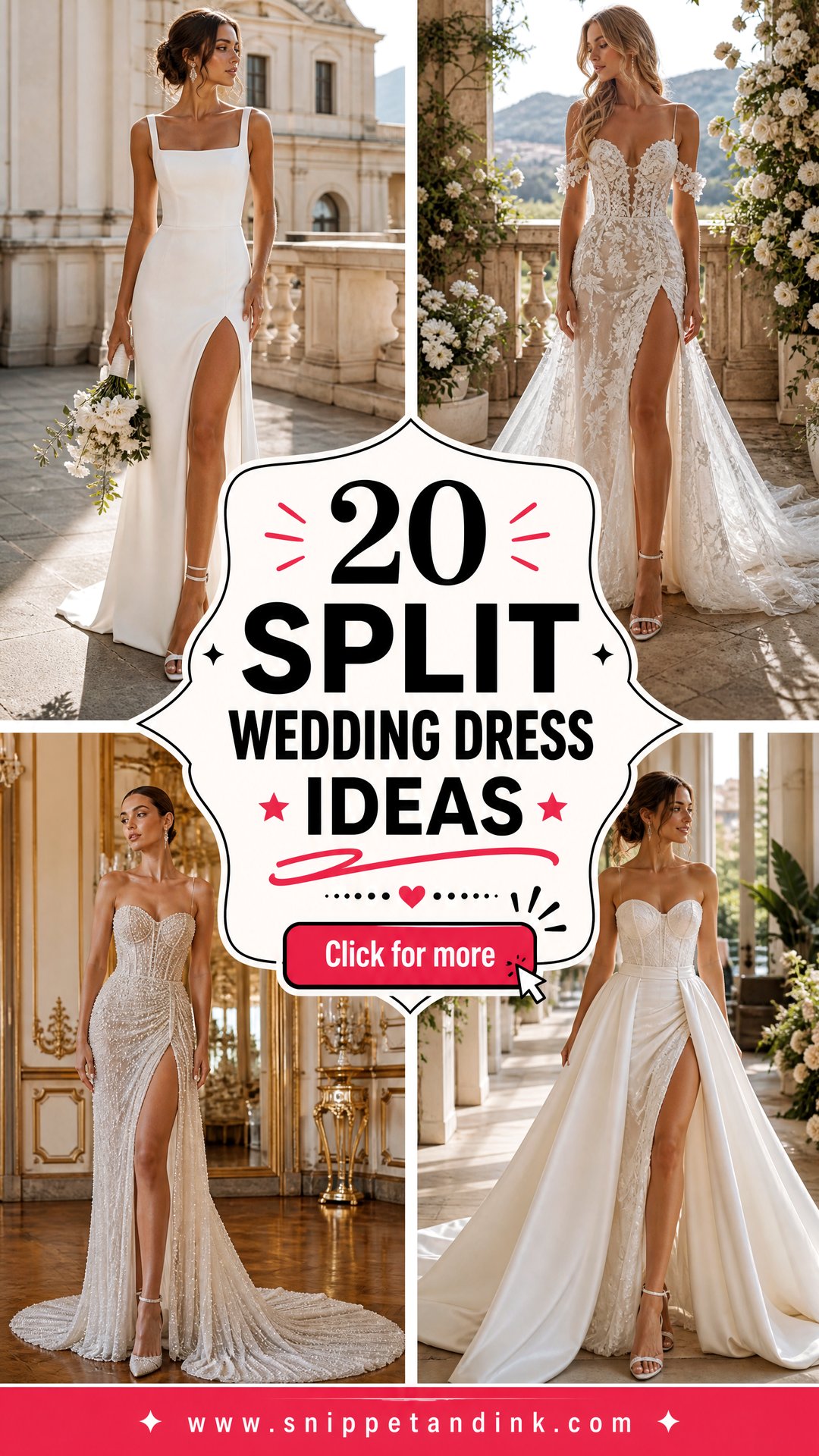
A split wedding dress changes how a gown moves more than how it looks standing still. Most of the time the opening stays closed, and it only shows itself when you take a stride, climb a step or turn on the dance floor. That is why I judge a split by watching a bride walk, not by the photo on the hanger. A knee split reads quietly, a thigh split reads as fashion, and a split hidden under an overskirt reads as a surprise. Below are the gowns I’d actually put on a fitting room rail, with notes on what each one needs from your tailor, your shoes and your venue.
Setting the Split Height Against Your Own Leg
On a sample gown, the split height was set for a model of one height wearing one pair of shoes. It almost never lands in the same place on you. When I’m fitting a split, I measure it while the bride sits in a chair, not while she stands, because sitting is where a split opens widest and where most brides suddenly feel exposed.
Here is the order I work in at a first fitting:
- Put on the real wedding shoes. Heel height changes where the split falls on the leg by a surprising amount.
- Sit in a chair with your legs crossed at the ankle, the way you’ll sit at dinner. Note where the split edge lands.
- Stand, then take three long strides and one step up, as if climbing onto a stage or into a car.
- Decide the height from those three checks, not from a mirror while standing still.
As a rough guide, a split ending just above the knee suits nearly everyone and every venue. Mid-thigh suits most brides once it’s lined and reinforced. Upper-thigh splits need a confident wearer and usually a modesty snap, especially at religious ceremonies or anywhere guests sit below you, such as a raised altar.
Which Leg the Split Shows Toward the Camera
Most splits sit on the bride’s left or right, and that choice decides what your photographer sees during the processional and the first look. If the split faces the guests as you walk the aisle, it reads in nearly every walking frame. If it faces the officiant side, it mostly vanishes until the reception.
Talk it through with your photographer before the alterations are finished. Seamstresses can move a split or close one side when there’s time, but not the week before. I’d also tell the bride to practice a pose with the split knee slightly bent and forward, which gives a cleaner leg line than standing square with the opening gaping flat.
1. Strapless Satin Split Wedding Dress
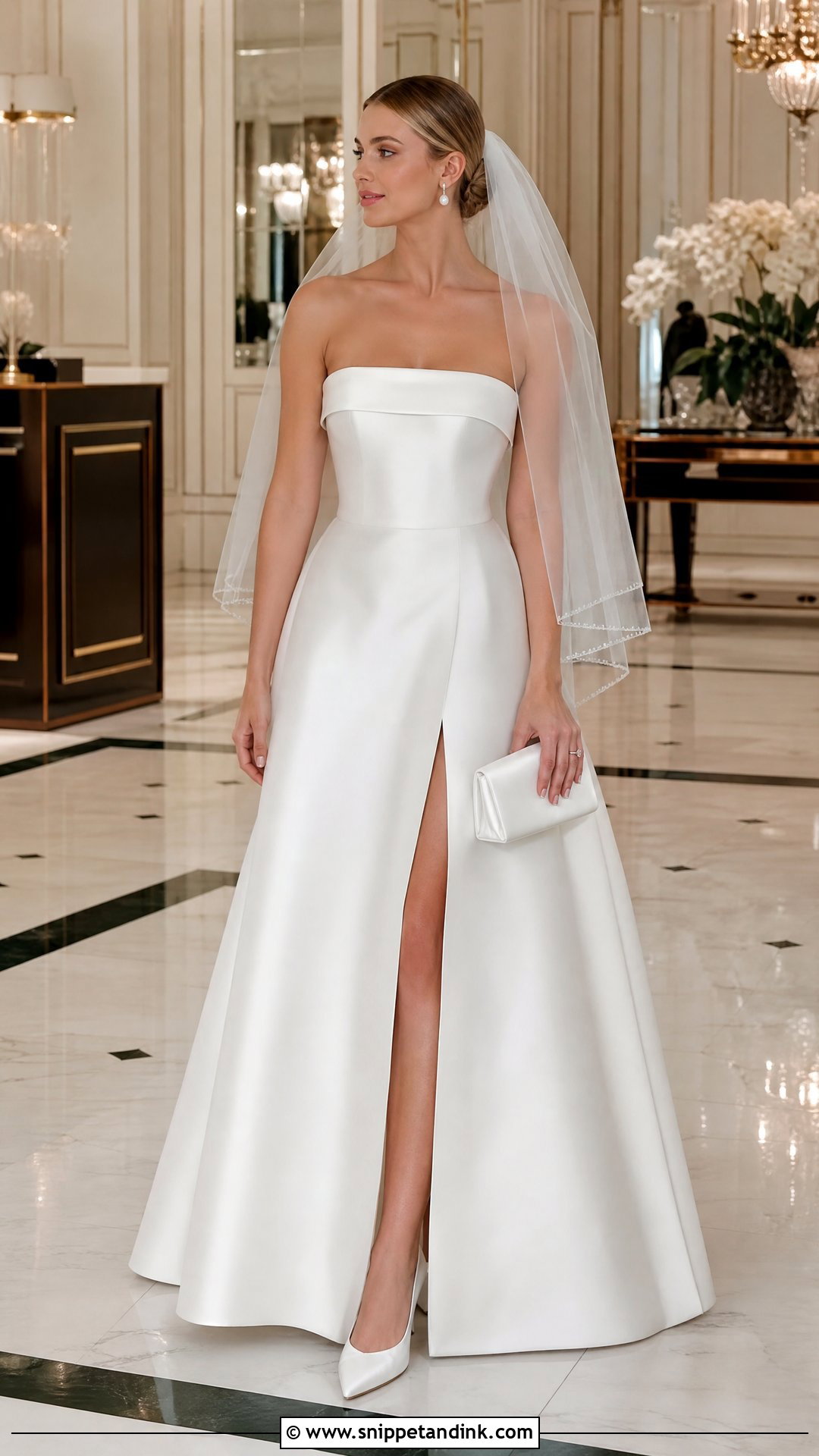
Satin is unforgiving with wrinkles but brilliant at holding a clean fold, so the split on a strapless satin A-line opens in one crisp line instead of fluttering. I look for a structured bodice with real boning and a softly folded neckline, because a strapless top that relies on grip alone will slide by the first dance. The fuller skirt hides more leg than a fitted gown does, which surprises brides who think a split must be daring. Pointed ivory pumps, pearl drops and a small satin clutch are enough. Ask for a discreet lining inside the split edge so the satin doesn’t flip outward and show its reverse side when you sit. A fingertip veil, a sleek bun and a ballroom or formal estate finish it properly.
2. Long Sleeve Lace Split Wedding Dress
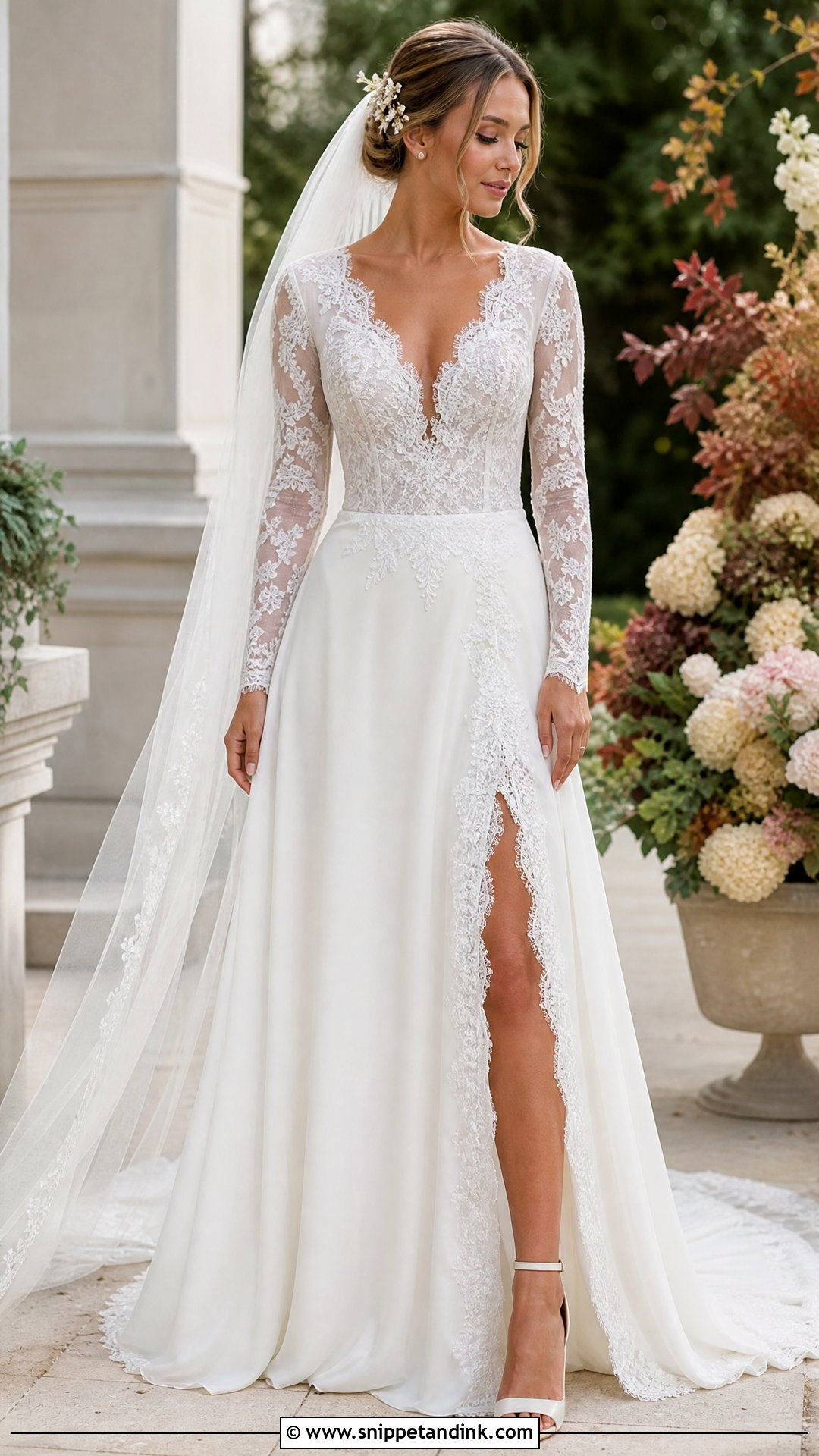
Lace and a leg split pull in opposite directions, one covering and one revealing, and that tension is the appeal. Choose a lined bodice with long illusion sleeves and an A-line skirt with a controlled front or side opening. I always ask whether the split edge is finished with scalloped lace or simply cut, because a raw-looking edge on lace frays and catches on heels within an evening. Block-heel sandals suit outdoor paths. Pearl studs, a plain cathedral veil and a low textured bun with small floral pins leave the neckline alone. At alterations, sit down and take three long strides in the dress before anyone pins the split height.
3. Off Shoulder Ball Gown With Split
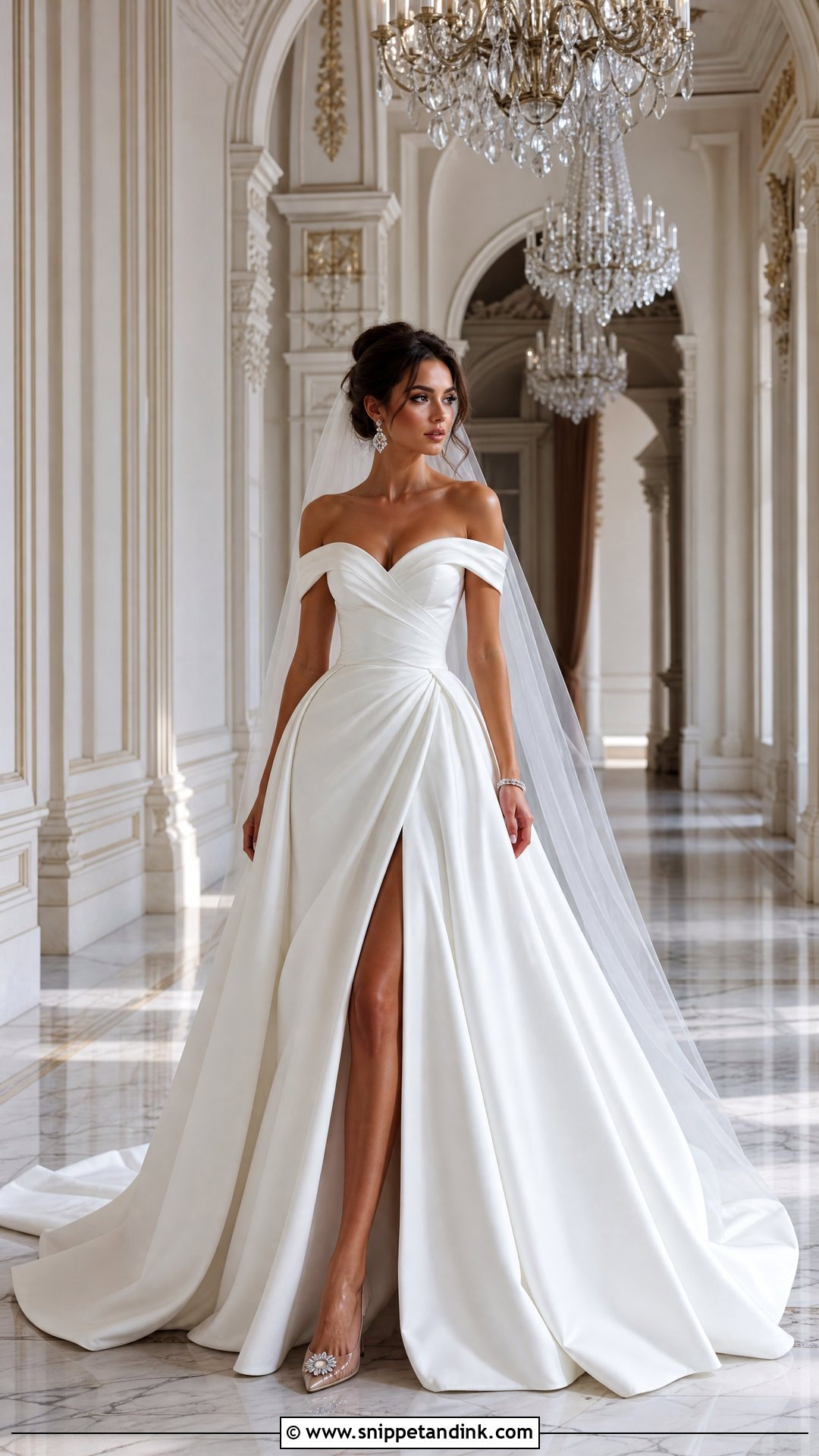
Pairing an off-the-shoulder ball gown with a split sounds contradictory until you see it move. The volume of the skirt keeps the opening mostly hidden while you stand; soft pleating at the waist folds over it. Then you walk and the shoes appear, which gives a huge skirt some rhythm instead of a solid wall of fabric. The structure matters here: soft fabric collapses into the split and looks accidental. Embellished pointed heels, a tennis bracelet and medium drop earrings carry the scale. Skip the big necklace, since the bare shoulders already take that space. A long veil and a neat updo belong in a ballroom or historic estate with room for the skirt.
4. Minimalist Crepe Split Wedding Dress
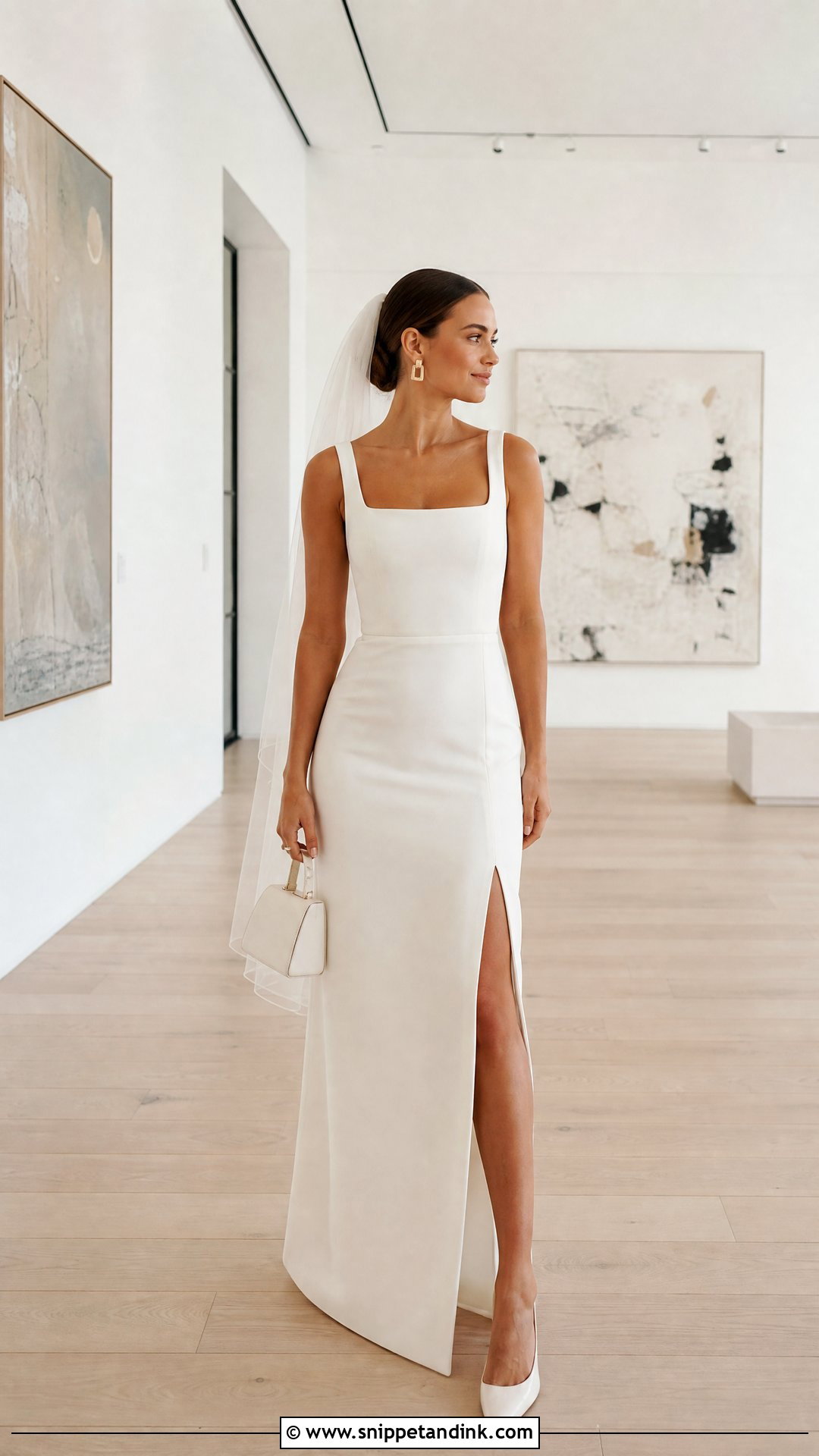
Crepe shows everything, which is exactly why I love it and why I warn brides about it. A fitted column or sheath with wide straps, a square neckline and a neatly finished side split has nowhere to hide a puckered seam or a hem that dips. Medium-weight crepe skims the figure without clinging, but only after careful tailoring through the waist, hips and hem. Slingback heels, geometric earrings and a structured mini bag keep it modern. If a high split worries you, ask for a knee-high opening or a matching panel set behind it. A gallery, rooftop or courthouse suits this gown far better than a barn.
5. Chiffon Beach Split Wedding Dress
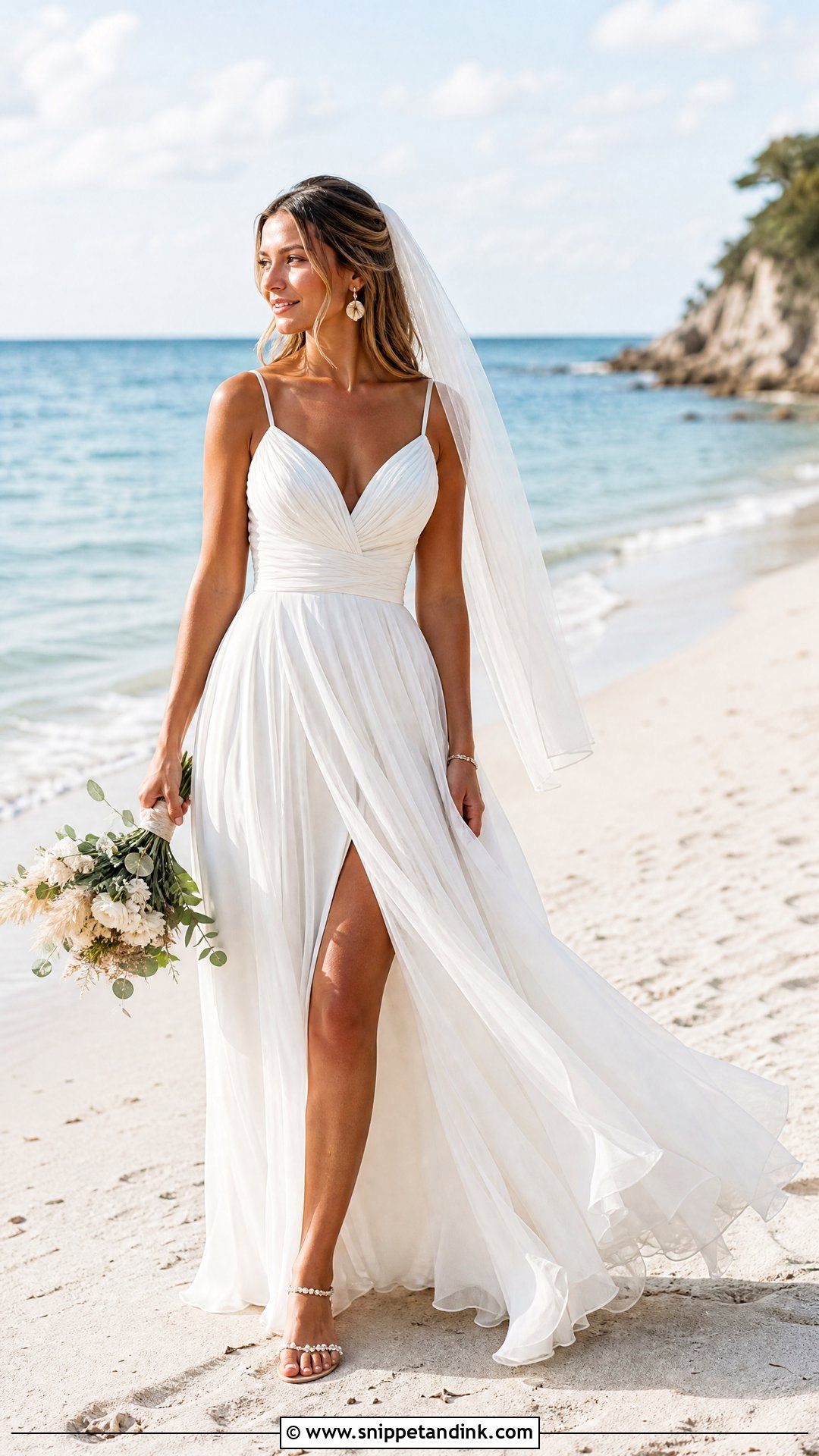
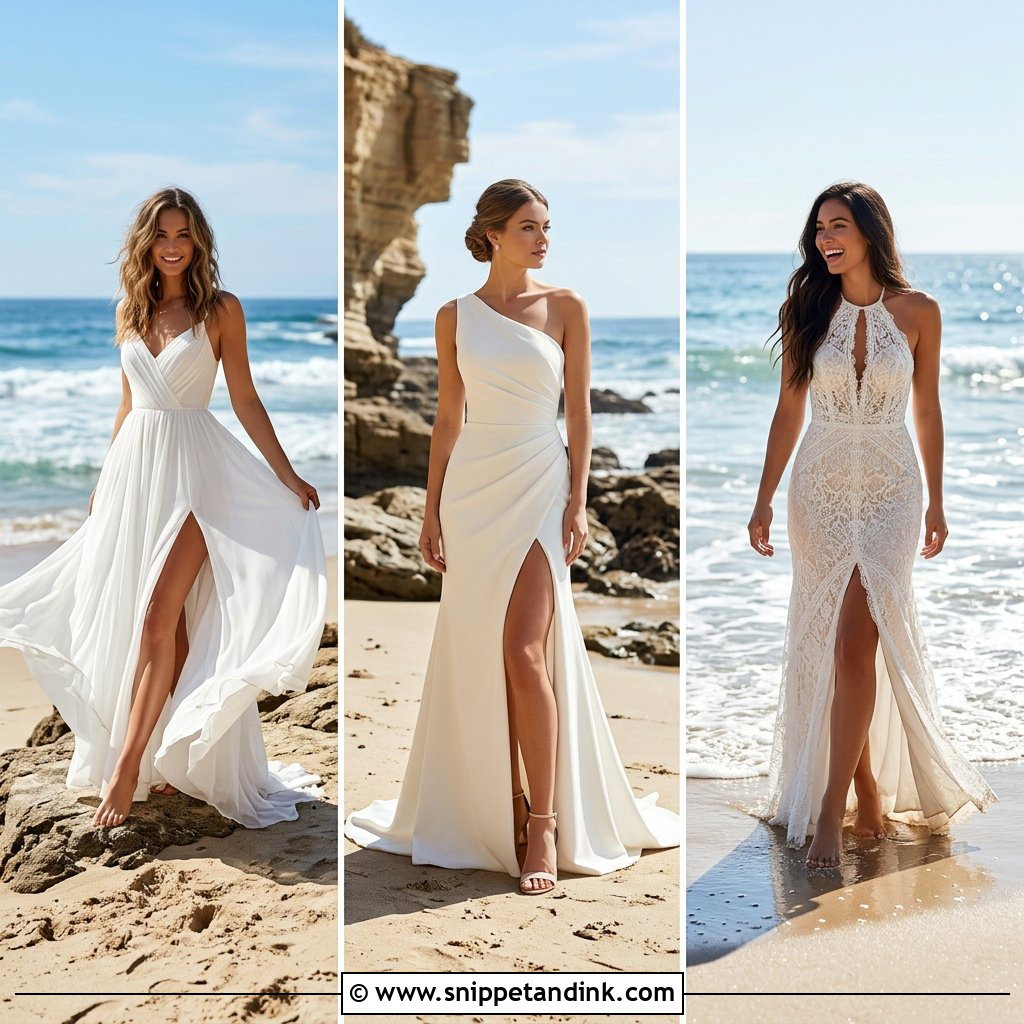
Chiffon on a beach does half the styling for you, because the wind moves it. Pick a light A-line with a gathered bodice and narrow straps, and set the split slightly off-center so it doesn’t open straight down the front every time the breeze hits. The real advantage on sand is practical: a split lets you take a full stride without the hem dragging and filling with grit. Flat pearl sandals or low wedges stop you sinking. A shoulder-length sheer veil should be removable, because coastal wind is rarely polite. Loose waves or a pinned braid, and ask your tailor to hem a touch shorter than you would for a ballroom.
6. Corset Tulle Split Wedding Dress
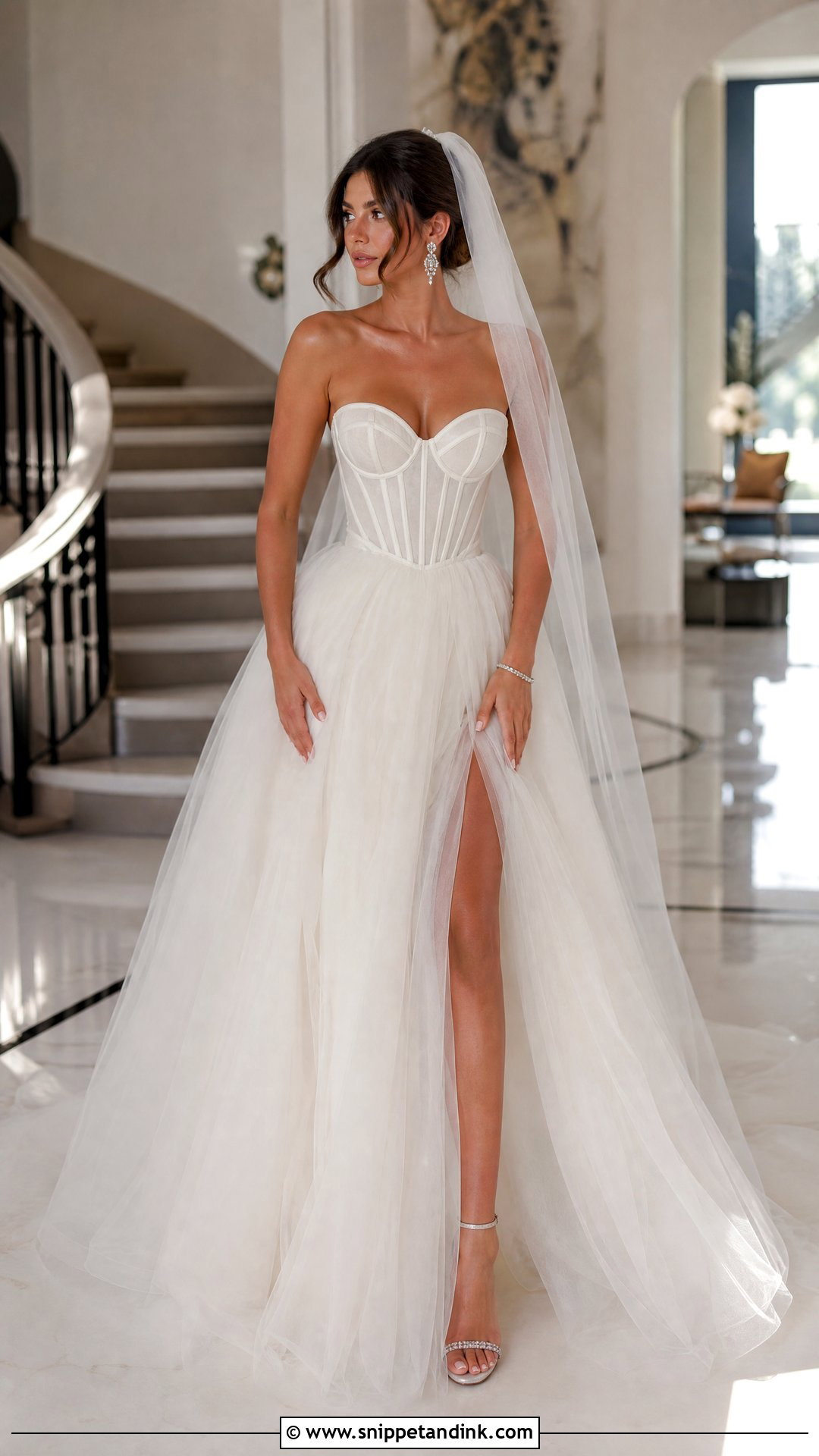
Under layered tulle a thigh split almost disappears, then shows itself only when the skirt swings. Look for a corset with supportive cups and boning placed for your torso, with lined or semi-sheer panels depending on how much coverage you want. Crystal ankle-strap heels, small chandelier earrings and a fine bracelet suit the sparkle of tulle. A chapel veil and a polished ponytail or soft updo keep focus on the bodice. The fitting check I never skip: sit down. A corset that is comfortable standing can dig in seated, and tulle layers tend to drift inward so the split ends up off its intended line.
7. One Shoulder Split Wedding Dress
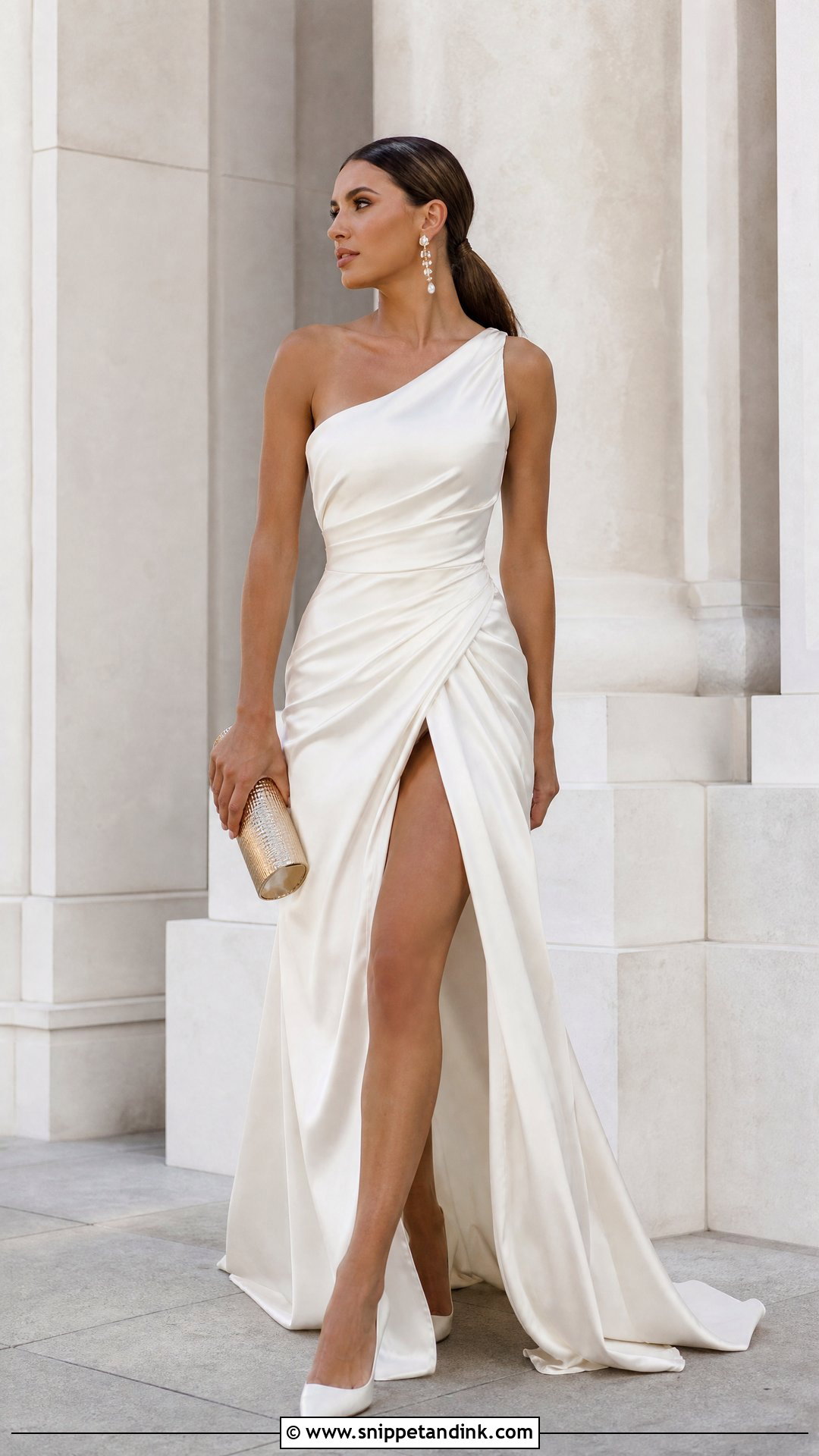
Asymmetry works best when the split sits on the side opposite the bare shoulder, so the eye travels diagonally across the gown. Soft draping at the waist ties the two points together. Satin, crepe and stretch mikado all hold this shape cleanly. I’d skip a necklace entirely and wear one statement earring on the exposed side, with sleek pointed heels and a metallic or pearl-trimmed clutch. A side-parted bun or smooth low ponytail follows the line of the neckline. Choose a short veil or none at all. Architectural venues and city weddings suit the sharpness, though a bride who loves lace and softness won’t feel like herself in it.
8. Sweetheart Mermaid Split Wedding Dress
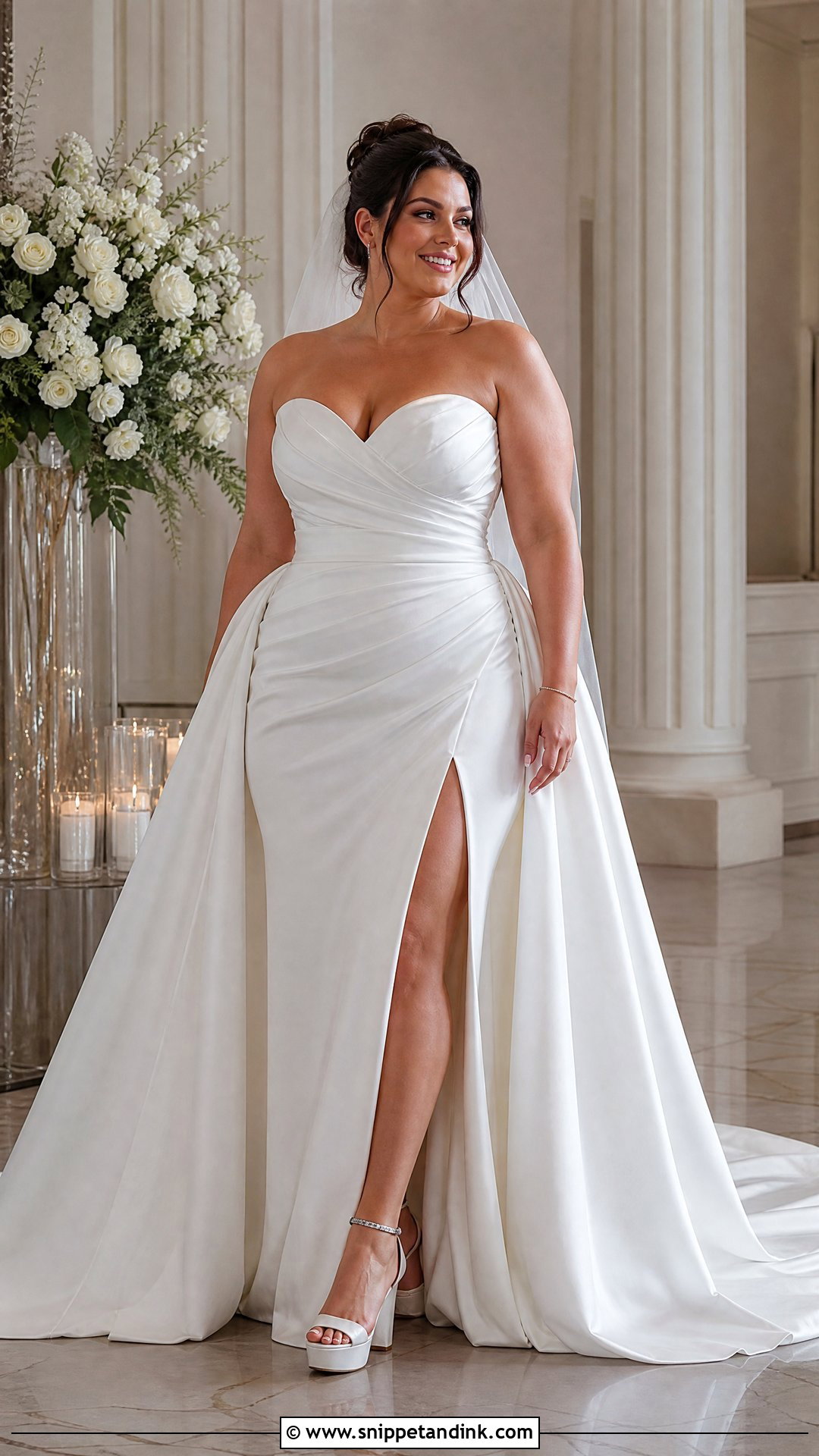
A mermaid gown is already dramatic, and the sweetheart neckline softens it at the top. The split solves the mermaid’s biggest problem: walking. A gown fitted through the hips and flaring below the knee restricts your stride, and a split starting around mid-thigh gives that movement back without breaking the curve. Platform sandals or supportive pumps, crystal studs and a narrow bracelet are plenty. A removable overskirt can add ceremony volume, then come off for dancing. Keep the veil simple. Every body can wear this shape, but only when the seams and internal support are adjusted to you rather than to a sample size.
9. Halter Satin Split Wedding Dress
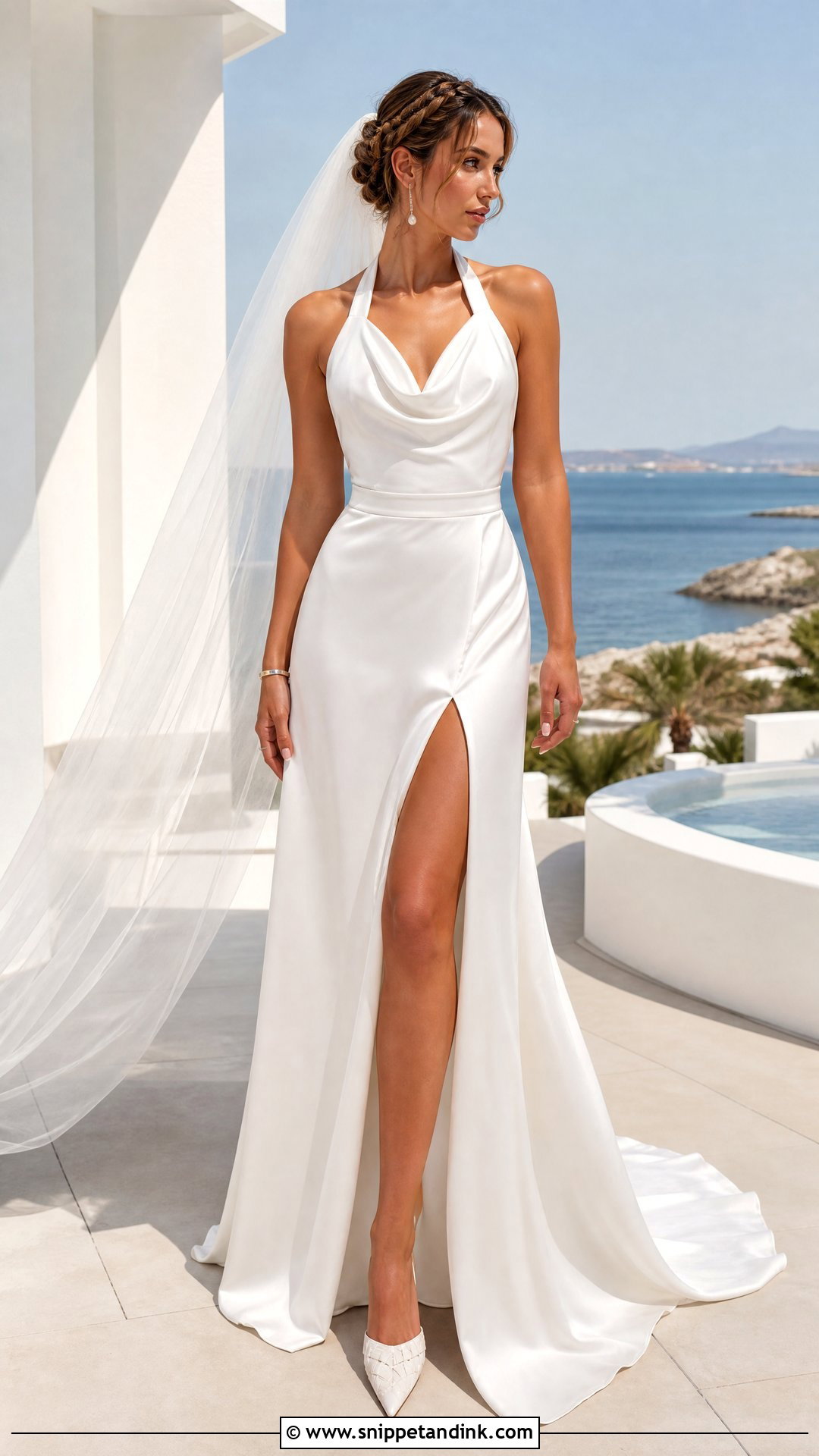
Halter necklines put the shoulders and back on show, so the support has to come from inside the bodice rather than from straps. I check for that first, especially on an open back, because satin will pull and gape if the structure is thin. A draped bodice, defined waist and fluid side-split skirt suit resorts and summer weddings. Minimal drop earrings, a slim cuff and pointed mules or ankle-strap heels are all you need; a necklace fights the halter line. A polished bun or braided updo keeps the shoulders clear. A detachable veil lets you go simpler after the ceremony.
10. Square Neck Column Split Wedding Dress
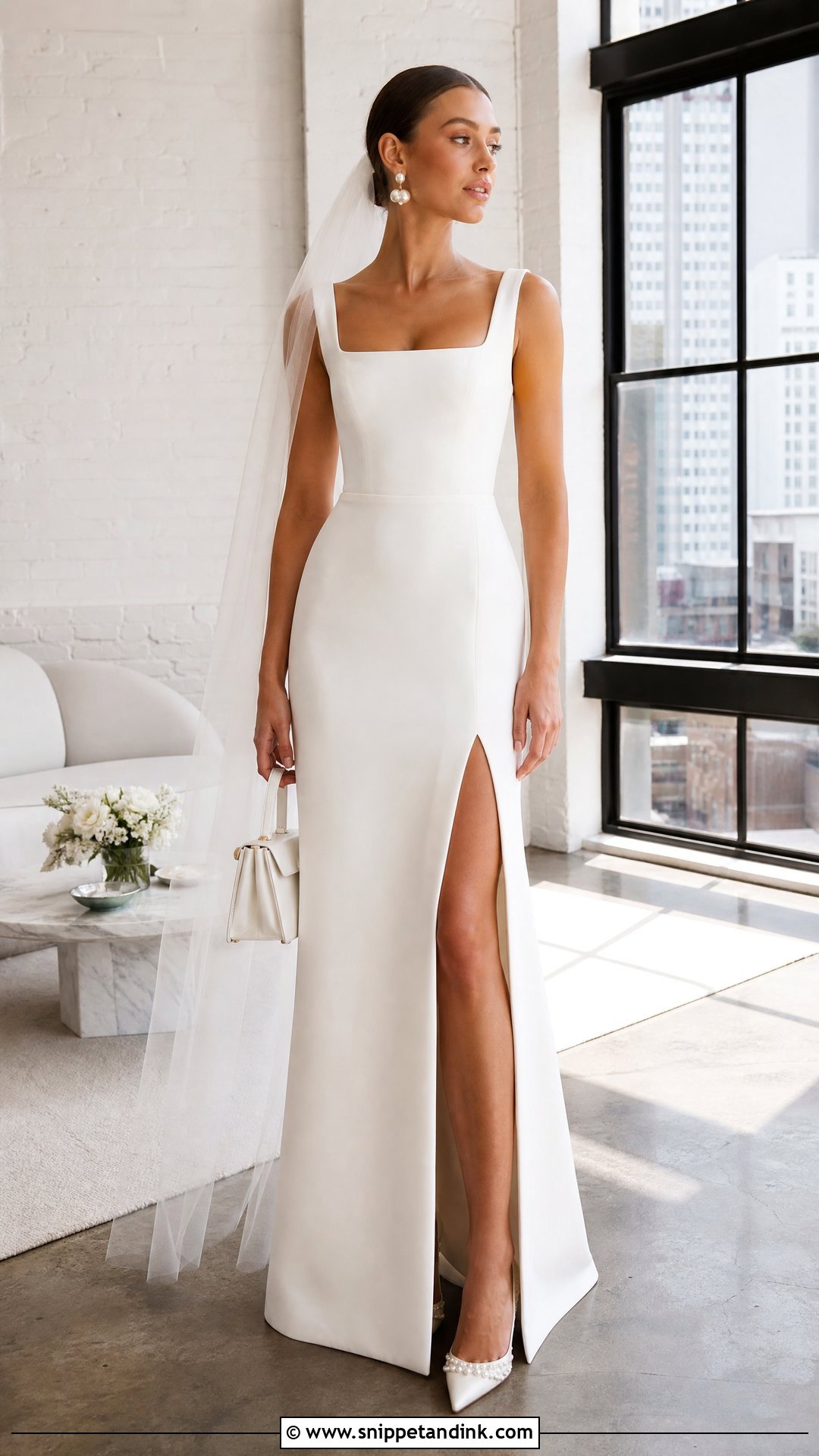
Square necklines and column skirts share the same geometry, so they look made for each other. Structured crepe or smooth satin with wide straps and a defined waist seam keeps the shape crisp. A front split set slightly to one side lets you walk while preserving that long vertical line. Pointed pumps in ivory or soft metallic extend it further. Add a compact top-handle bag, sculptural earrings, a single-layer veil and a center-parted low bun. The trouble spot is the hips: a close-fitting column with a high split can pull the opening wider when you sit, so ask your tailor to check split height and hip ease together, not separately.
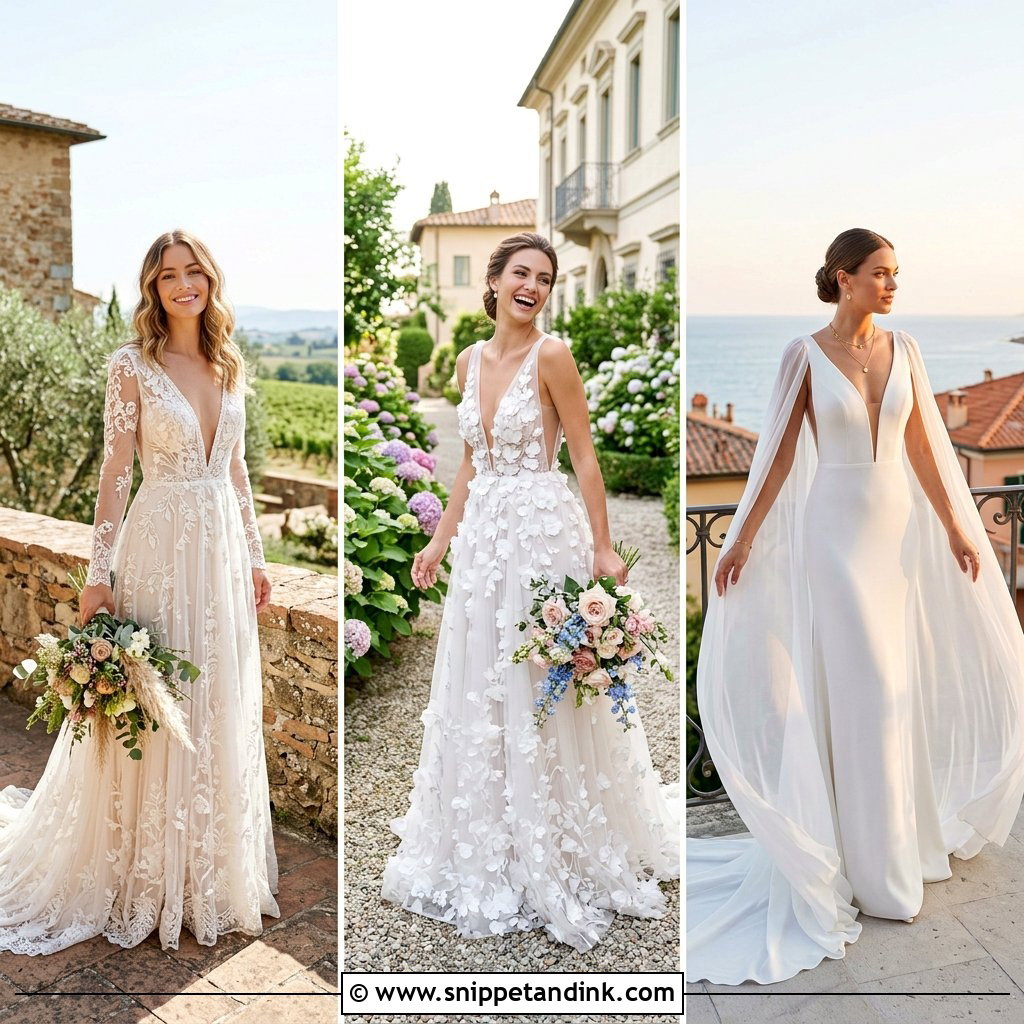
11. Boho Lace Split Wedding Dress
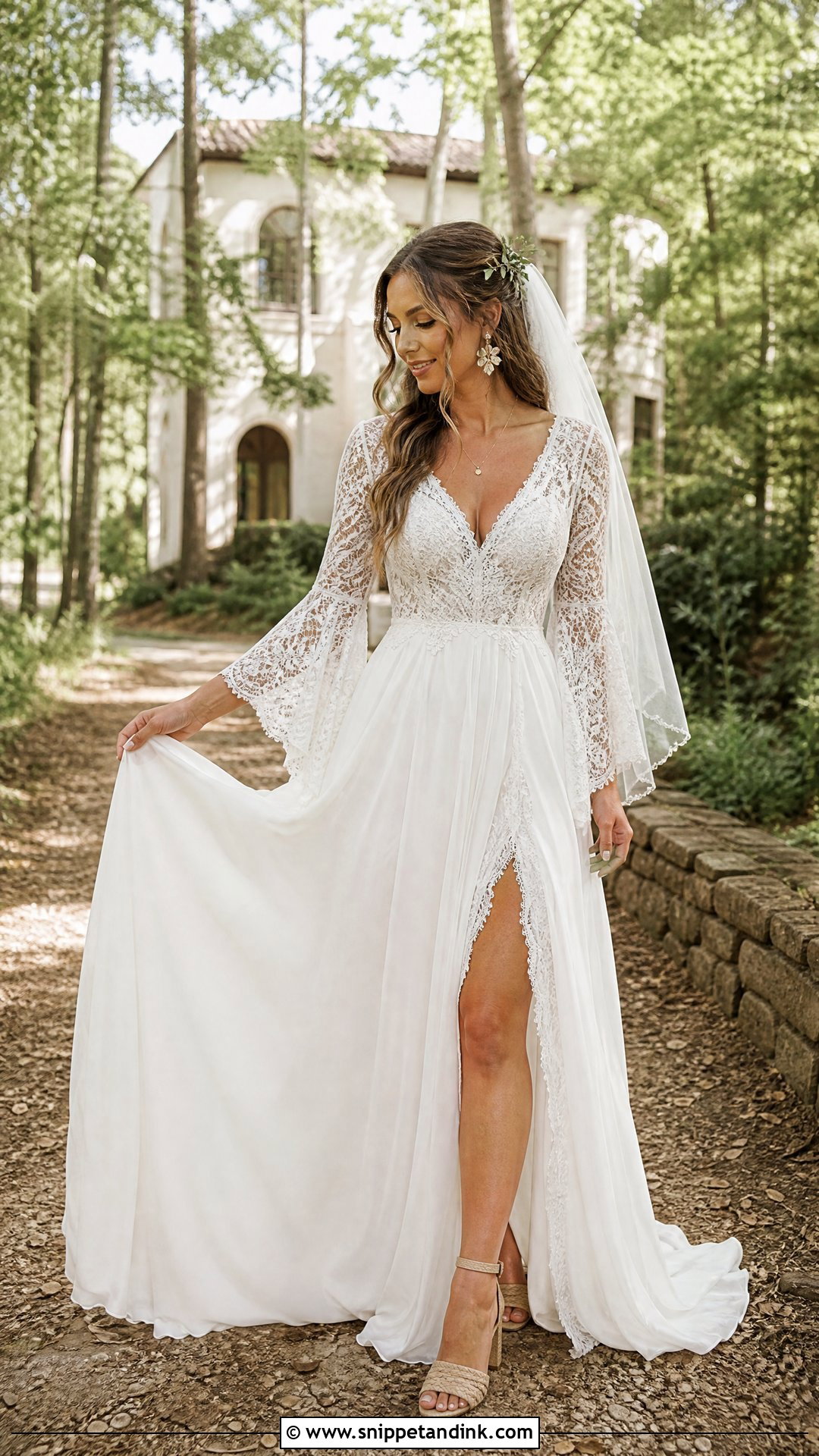
Boho gowns go wrong when the split is too structured, because a stiff, faced opening fights the relaxed fabric around it. On a free-spirited bridal look the split should fall open easily in chiffon or lace-trimmed skirting. Pair a fitted lace bodice with flutter or bell sleeves. Woven block-heel sandals handle grass and dirt paths. Small floral earrings, a fine layered necklace if the neckline allows, and a flower comb in a loose braid finish it. Swap a heavy veil for a light fingertip one that catches the air. Woodland, desert and garden settings suit it best.
12. Beaded Split Wedding Dress
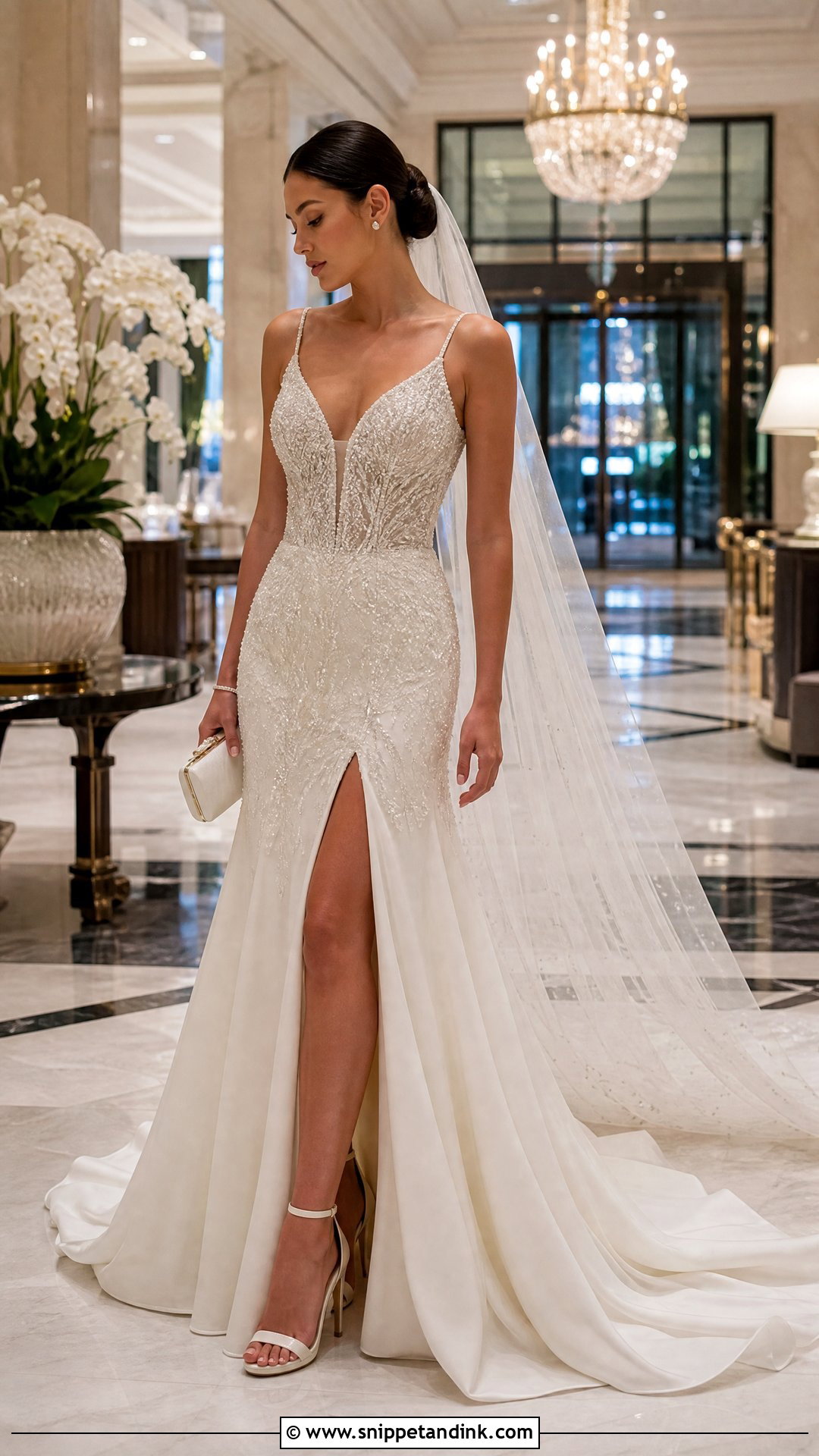
Beading changes how a split hangs. A skirt heavy with beads pulls the opening down and flattens it, so I prefer gowns with dense work on the bodice and much lighter beading through the skirt. The split then stays defined and the dress doesn’t feel like armour by evening. Wear plain satin heels so the shoes don’t compete with the sparkle. Crystal studs, one slim bracelet and a small satin clutch are enough, with a smooth low bun and sheer cathedral veil. Before the day, run your hand along the split edge: loose beads there snag tights and scratch the leg with every step. Black-tie evenings and bright hotel ballrooms show this one off.
13. Floral Applique Split Wedding Dress
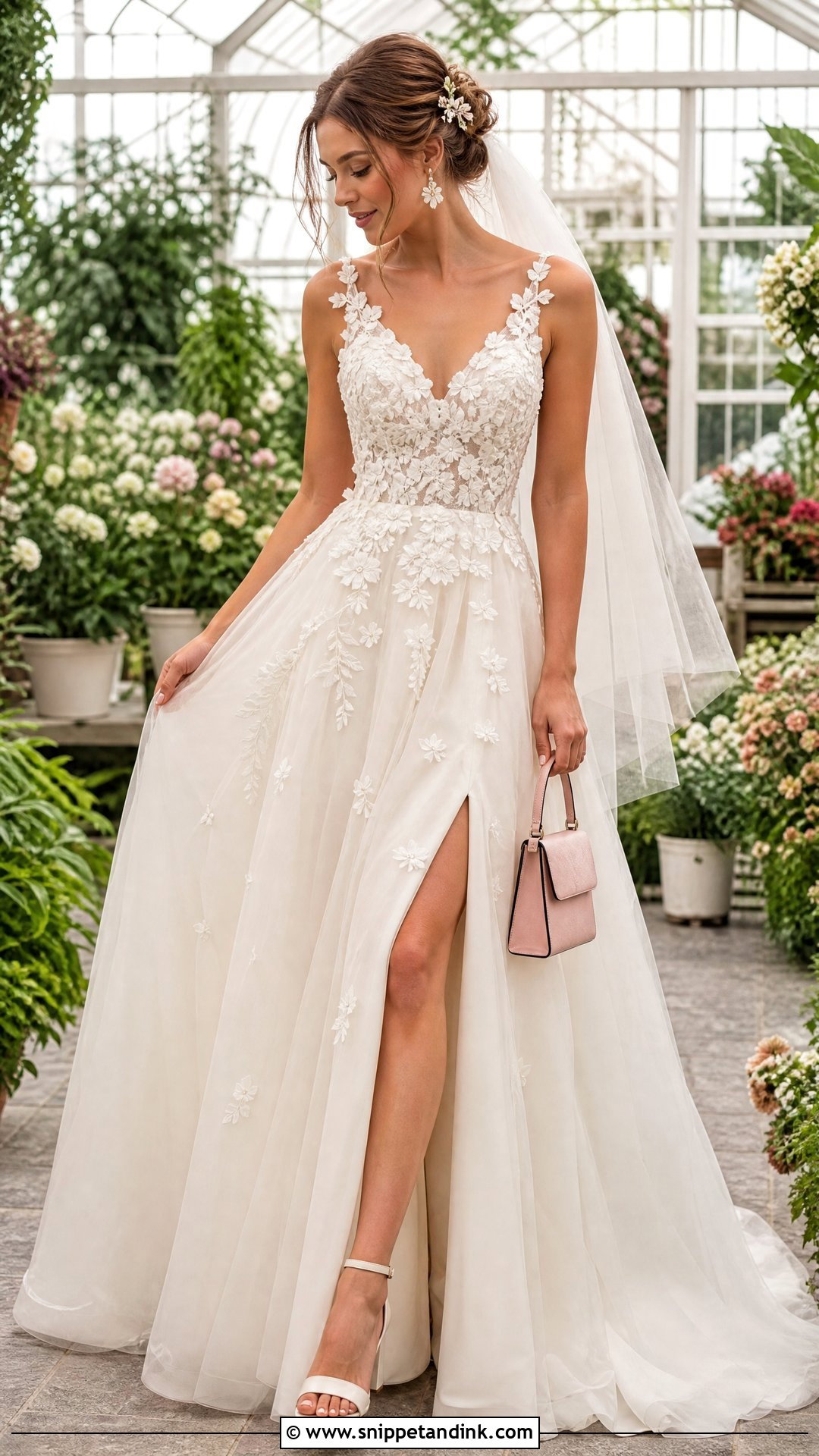
Three-dimensional appliqués look richest on the bodice, scattered more sparsely as they reach the skirt. Keep the area around the split nearly bare; stiff appliqués along the edge stop the fabric from opening and falling naturally, and they tend to lift and catch. An A-line shape with comfortable block heels, floral pearl earrings and a small ivory or pale blush bag works well. A curled ponytail or low bun with matching floral pins ties it together. If the dress is very detailed, choose a plain-edged veil; if it’s lighter, a veil with a few repeated appliqués coordinates nicely. Spring gardens and greenhouse venues are its natural home.
14. Cape Sleeve Split Wedding Dress
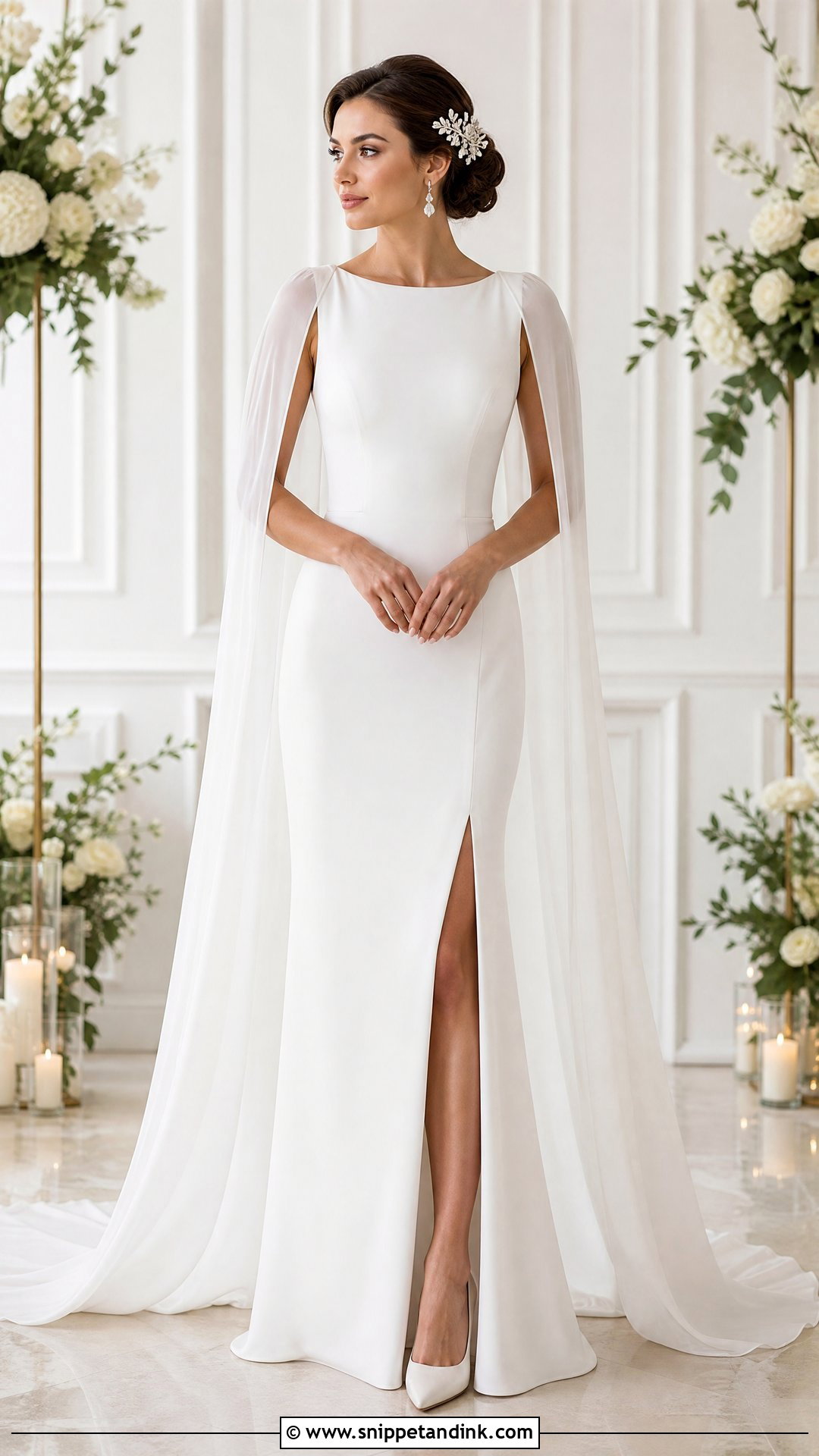
A cape gives the back of a gown the drama that a split gives the front, which keeps the whole look balanced. Start with a sleeveless crepe or satin gown, fitted at the waist with a straight skirt, then add a detachable chiffon, tulle or light crepe cape. It can replace the veil, which means less fabric piling up at the shoulders. Closed-toe heels, slim drop earrings and a metallic hair comb finish it. Measure the cape against the train and think about the floor: a long chiffon cape on a gravel path or stone stairs picks up dirt and catches fast. Cooler seasons and formal indoor ceremonies suit it.


15. Asymmetrical Draped Split Wedding Dress
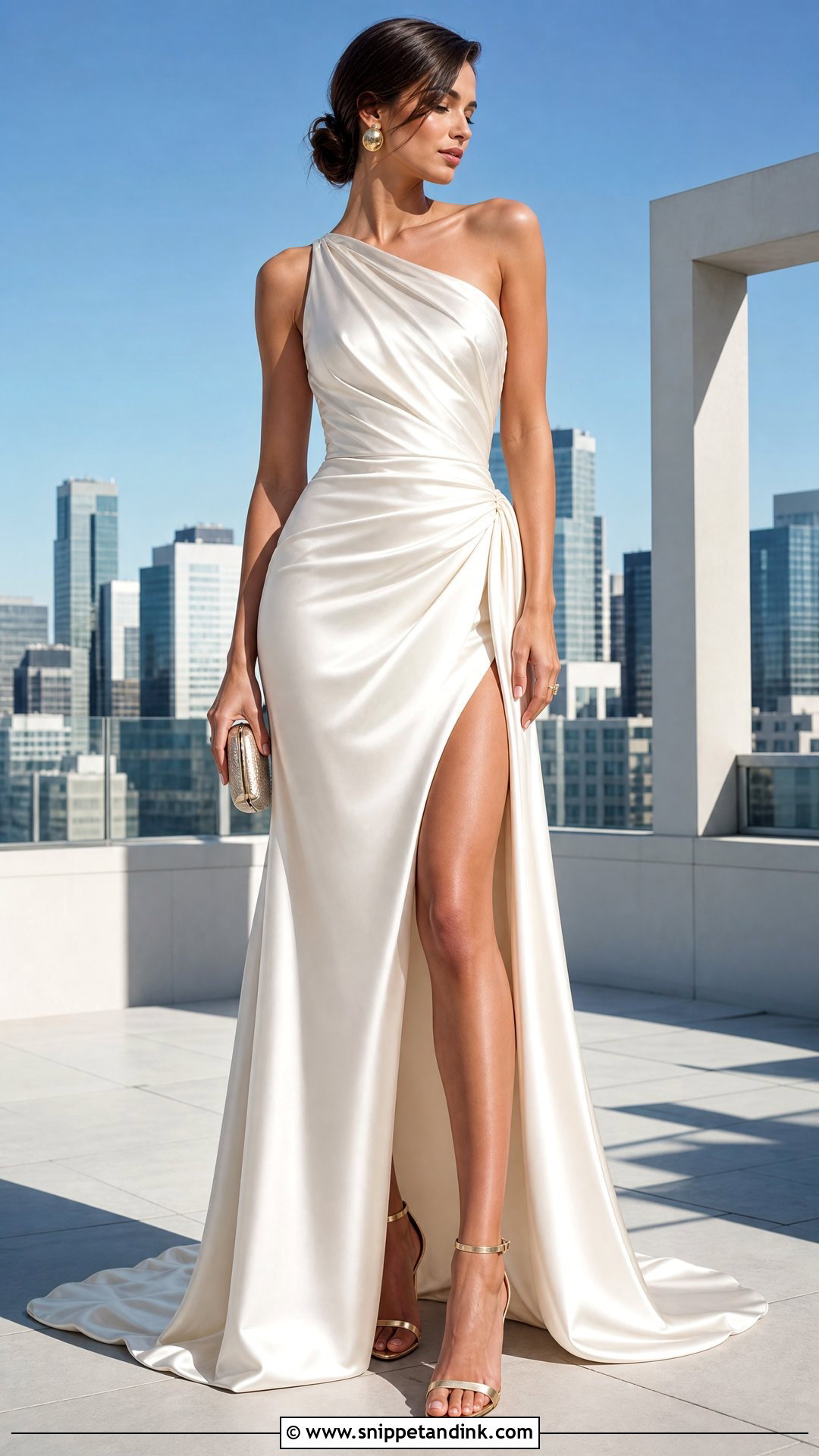
Draping can make a high split feel graceful rather than sharply revealing, because the opening grows out of the folds instead of looking cut. On a satin or crepe gown with diagonal folds gathering at one hip, the split should start inside that drape. Slim metallic sandals, rounded statement earrings and a compact ivory clutch suit it, with a side-parted updo following the diagonal. A tailor can tack part of the opening closed without losing the wrapped effect. Walk the length of a room in it at the fitting. Draped panels sometimes swing open and fail to settle back, and you need to find that out before the aisle.
16. Plus Size Ruched Split Wedding Dress
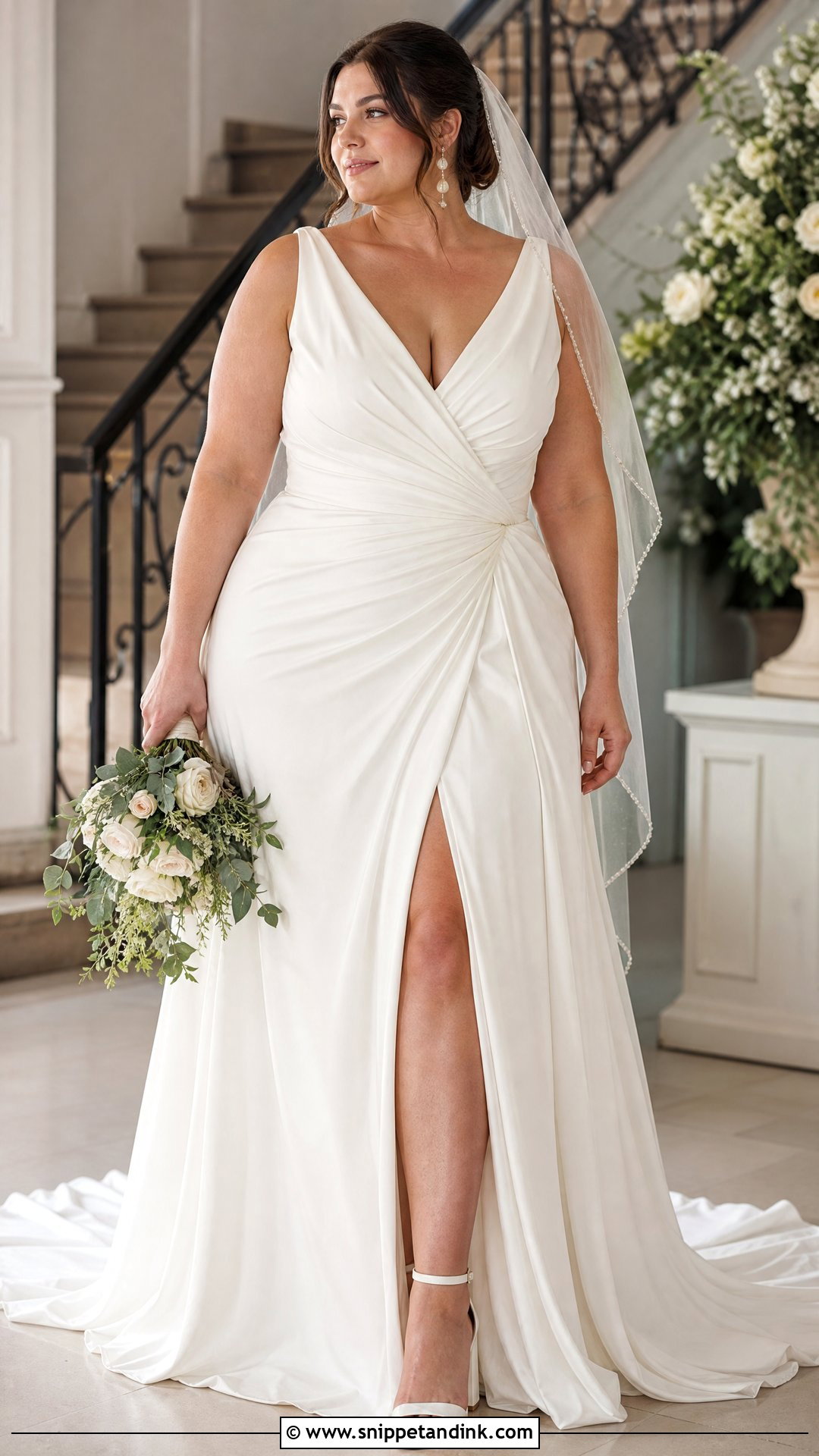
Ruching earns its place by doing quiet shaping work, and diagonal gathering across the waist moves with the body instead of fighting it. I’d pair that with an A-line or fit-and-flare skirt, a supportive V-neck and wide straps. A side split draws a long line down the leg without cutting the skirt in half at the center. Bring your actual foundation garments to every fitting; ruched fabric is tailored around what’s underneath, and changing shapewear later shifts the gathers. Have the seamstress reinforce the top of the split, where seated strain lands. Block heels, pearl drops and a fingertip veil keep it comfortable all day, and sleeves or a cape can add coverage.
17. Modest Mid Thigh Split Wedding Dress
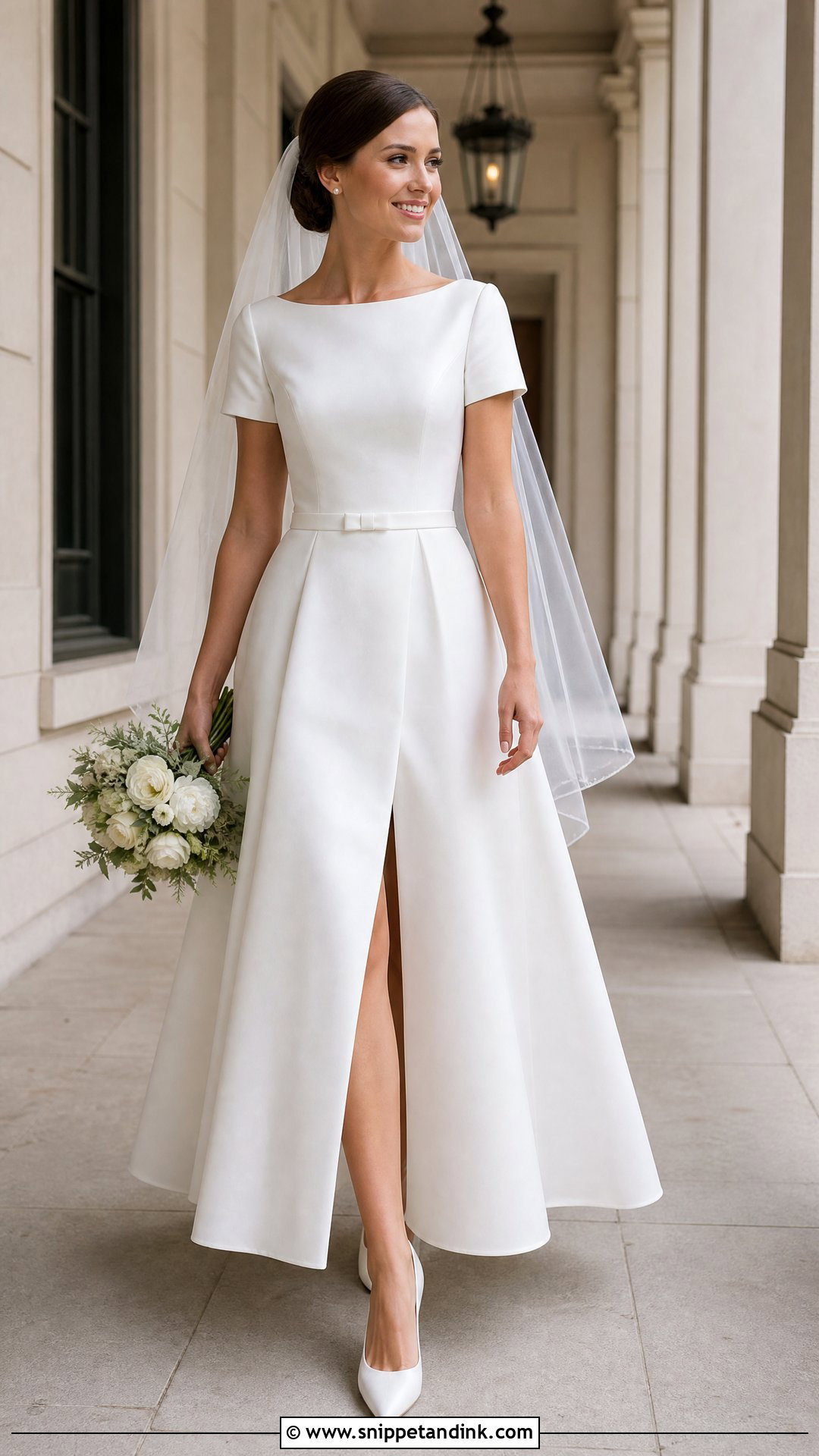
A split doesn’t have to reach the upper thigh to matter. A knee-high or mid-thigh opening on a classic A-line shows the shoe mainly when you walk, which is often all a modest bride wants. A bateau neckline, short sleeves or wide straps add coverage up top. Pointed pumps, pearl studs and a slim satin belt if the waist needs definition keep it traditional, along with a fingertip veil and low chignon. Ask about hidden buttons or snaps inside the split, so you can close it partly for the ceremony and open it for dancing. Family-centered celebrations and formal daytime weddings suit this restraint.
18. Pearl Embellished Split Wedding Dress
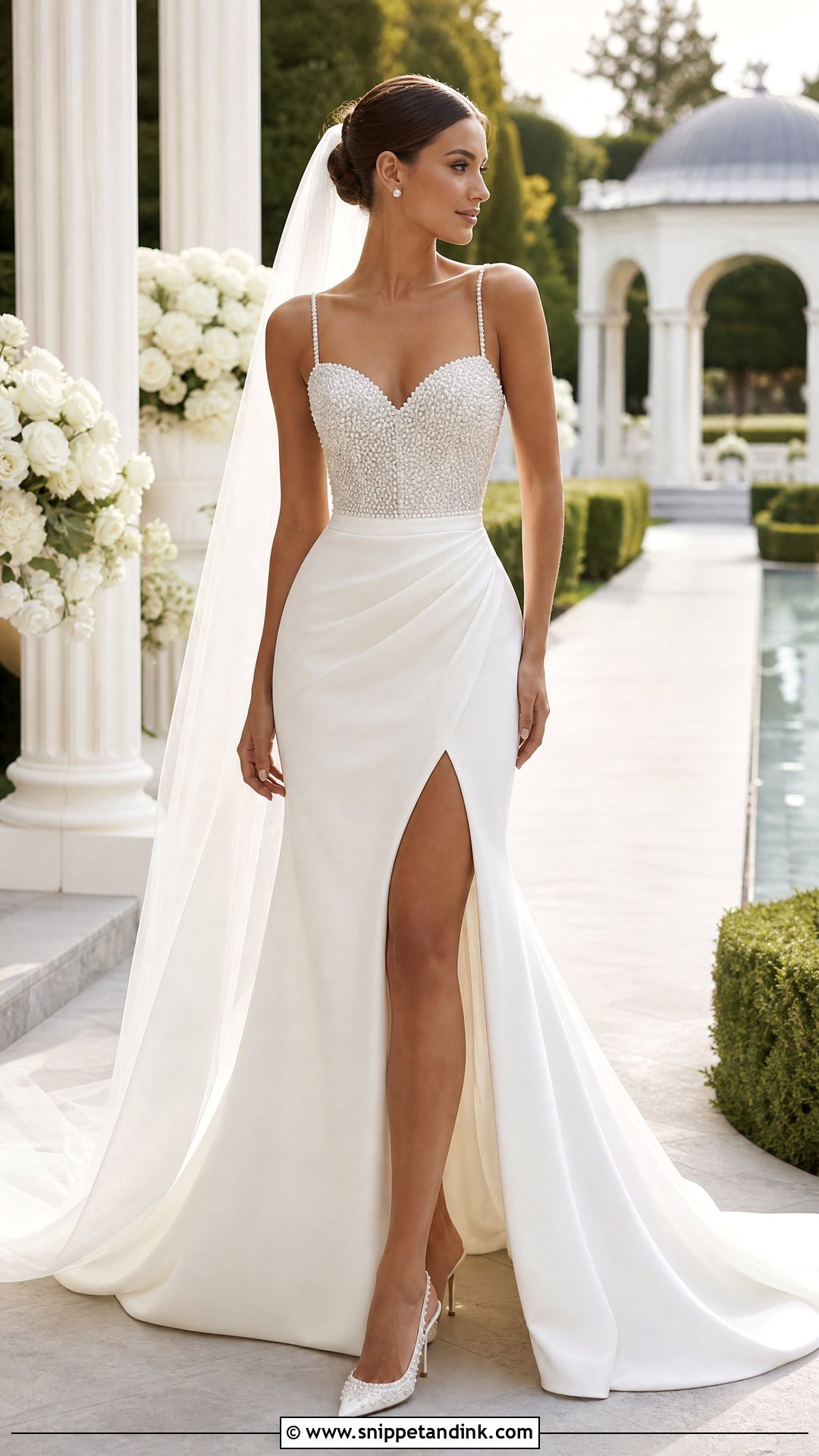
Pearls give a gown dimension with a soft glow rather than the hard flash of crystals or sequins. Put the pearl accents along the neckline, waist or bodice and leave most of the skirt clean so it still flows. A fitted top over a flared satin or crepe skirt balances the detail. Pearl slingbacks, simple studs and a smooth-edged veil coordinate without piling on; several large pearl accessories at once start to look costume. A neat bun or brushed waves suits it. At fittings, check pearls near the arms and split, because sewn pearls catch on lace sleeves and fine tights more often than flat beads do.
19. Detachable Overskirt Split Wedding Dress
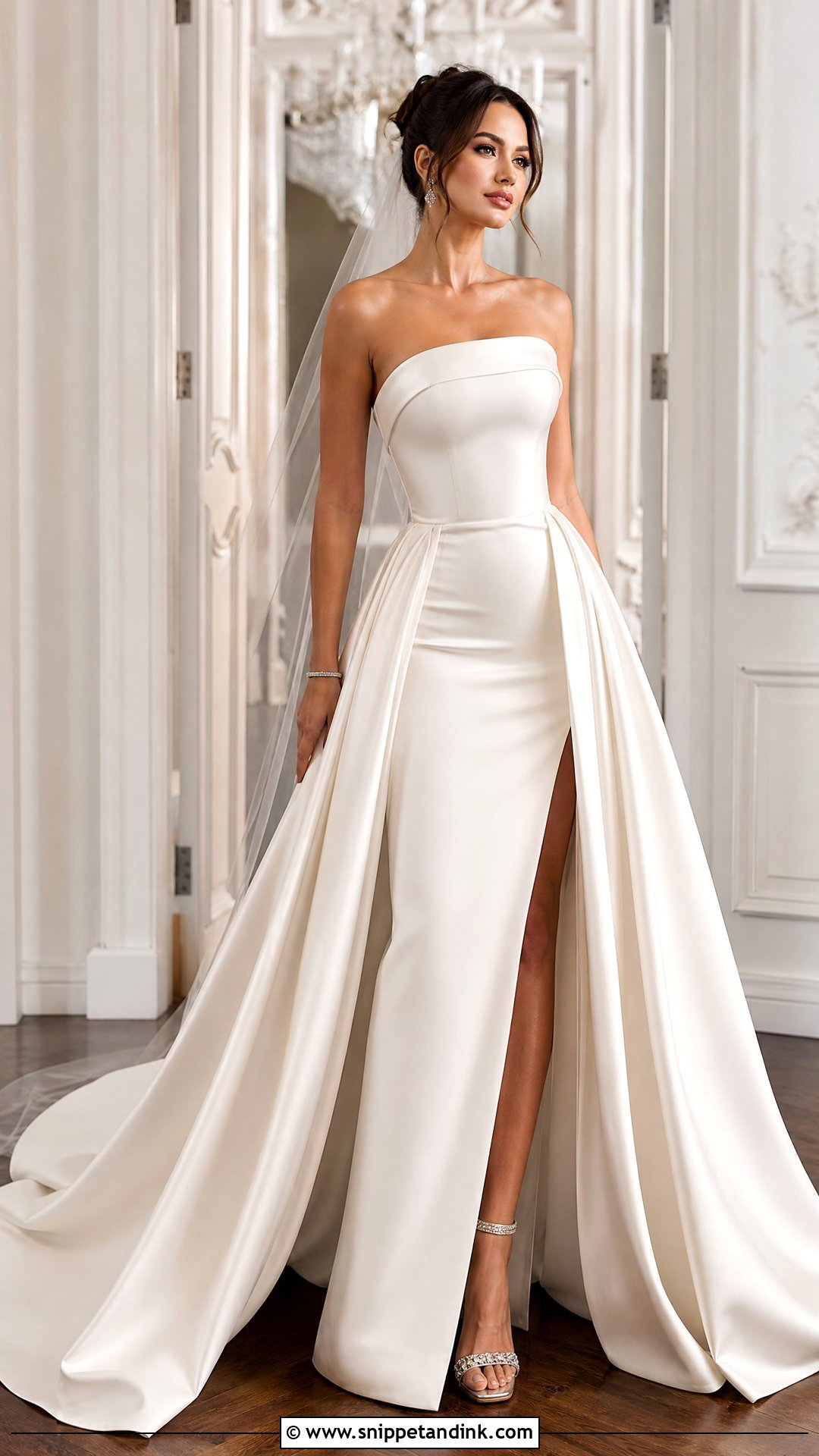
With a detachable overskirt, one gown gives you two complete looks. The base is a fitted column, sheath or mermaid with a secure side split; the ceremony layer is a full satin or tulle overskirt that fastens at the waist and sweeps into a train. Take it off after dinner and the streamlined dress and your shoes take over. Choose heels, drop earrings and a bracelet that suit both versions. A long veil can come off with the overskirt. My usual fitting note: make sure the attachment points lie flat and nothing hooks into the split edge when the overskirt opens and closes around it.
20. Convertible Split Wedding Dress
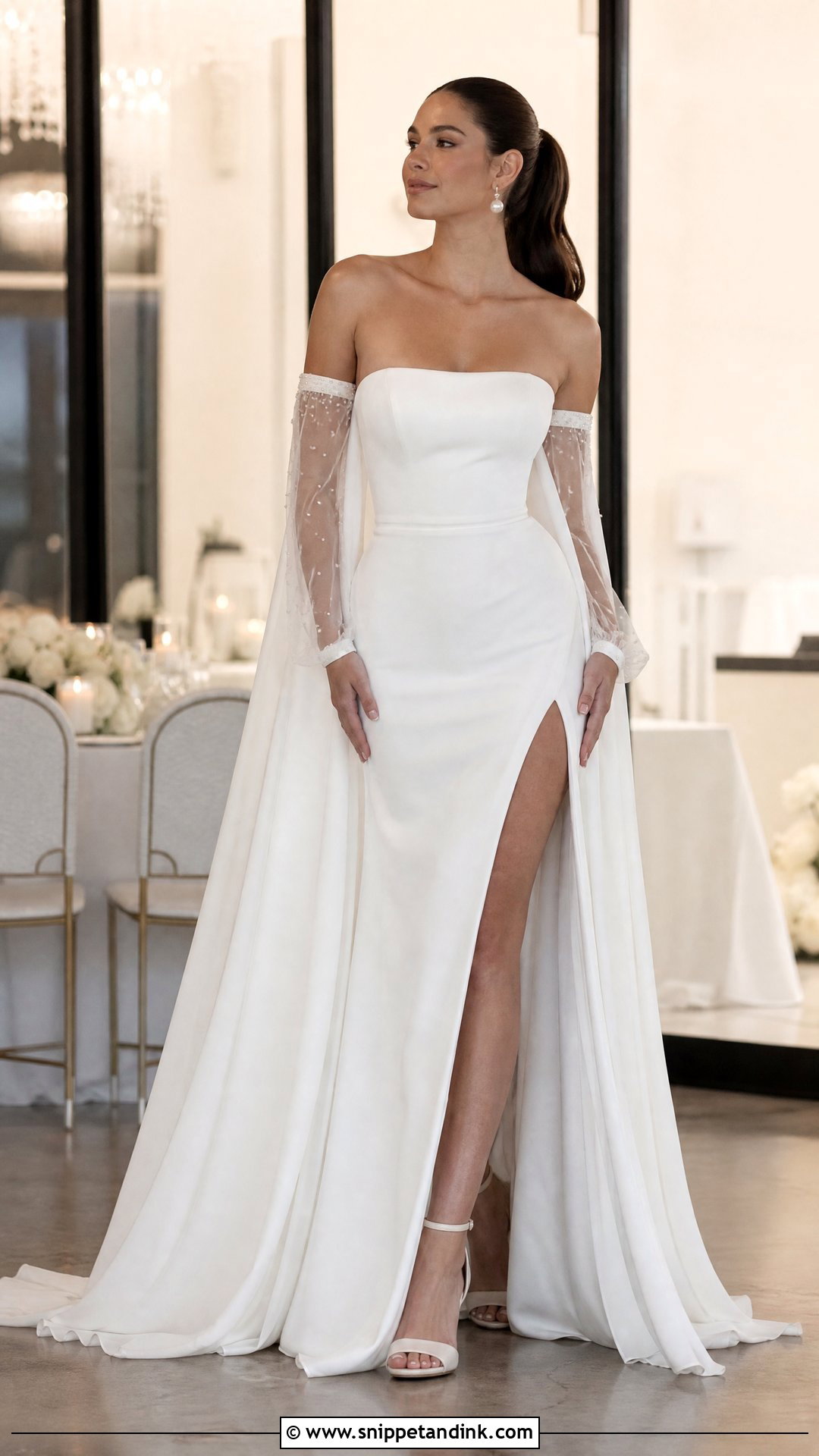
Removable pieces only work if someone has tested every fastening before the day. With thoughtfully designed removable pieces, a clean split gown can start the ceremony with long illusion sleeves and a back layer, then lose both for a lighter sleeveless reception. Keep the base consistent: supportive low heels, pearl earrings and a sleek bun or ponytail. The side split makes the second version feel freer for dancing. Hand the removed sleeves and train to a bridesmaid with labeled garment bags, because loose tulle left on a chair gets crushed or stepped on within the hour.
Stitches, Snaps and Linings That Keep a Split Behaving
The top of the split takes all the strain. Every time you sit, stride or kneel, the fabric there pulls apart, and on a busy day a weak point can rip an inch or more upward. I ask for a bar tack or a small reinforcement stitch at the very top on every split gown, even an expensive one.
- A modesty snap or hidden hook a few inches below the top lets you close part of the opening for the ceremony and release it later.
- Lining the split edge with a facing in the same color stops the reverse side flashing when the fabric flips open.
- Double-sided fashion tape is fine for a quick fix on the morning, but it fails in heat and on textured lace, so treat it as a backup only.
- Keep a small kit in the clutch: safety pins, a needle threaded in ivory, and tape.
Hosiery matters too. Sheer tights tend to run where a beaded or appliquéd edge rubs, so I’d go bare-legged with a gown that has detailing near the opening, or choose a smoother split edge if tights are a must.
Walk, Sit and Dance in It Before You Say Yes
A split is a movement detail, so judge it in motion. Bring the shoes you’ll actually wear, then walk, sit, climb a step and turn in the gown before you commit to anything. Fabric, silhouette, split height and venue all affect how it behaves, and a good tailor can lower the opening, add hidden snaps, improve the lining or reinforce the seams around it. Let your accessories support the split rather than compete with it. Satin, lace, crepe or chiffon, the right gown is the one you forget you’re wearing by the last song.
You'll Like These Ideas:








Leave a Reply