
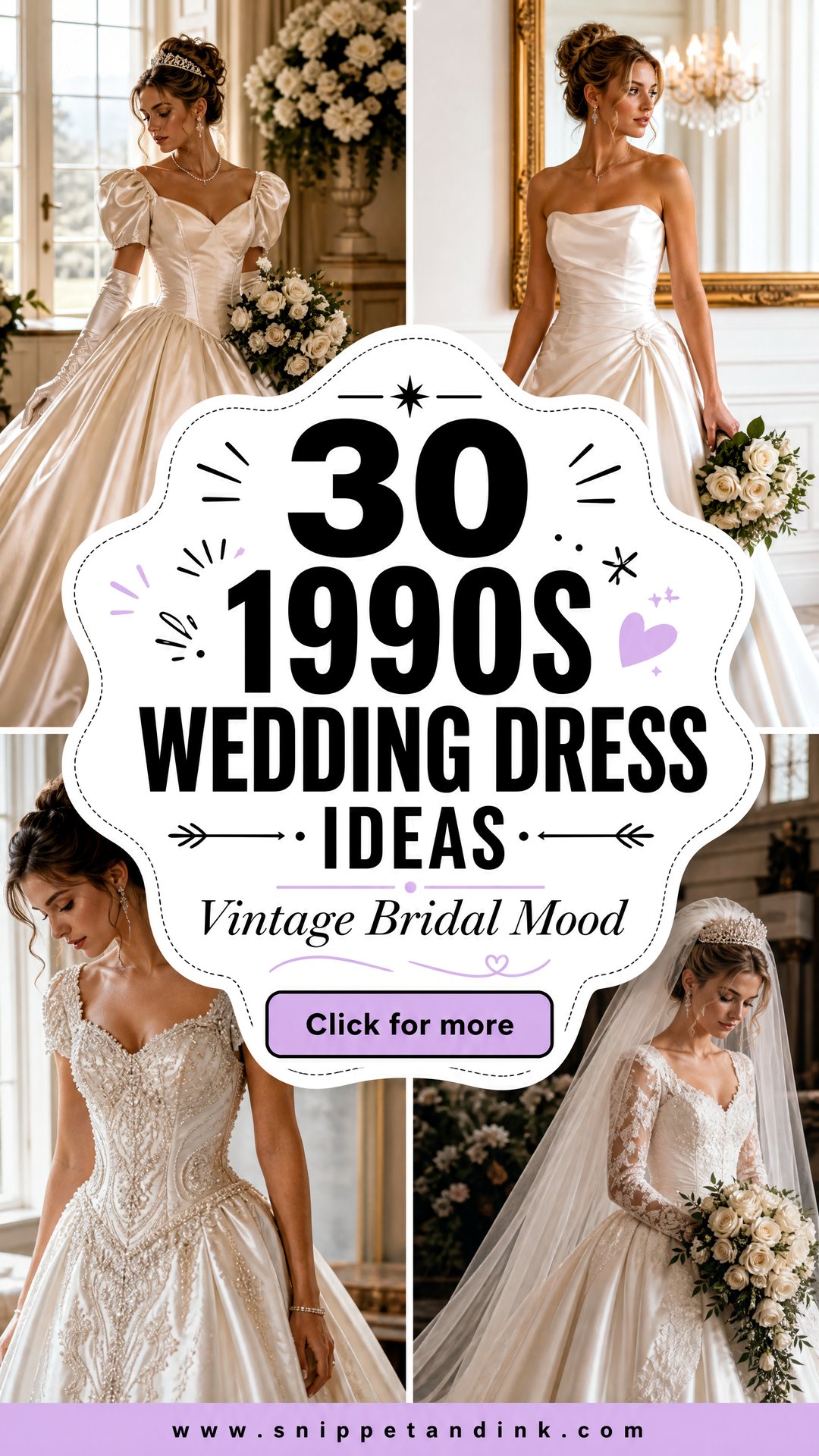
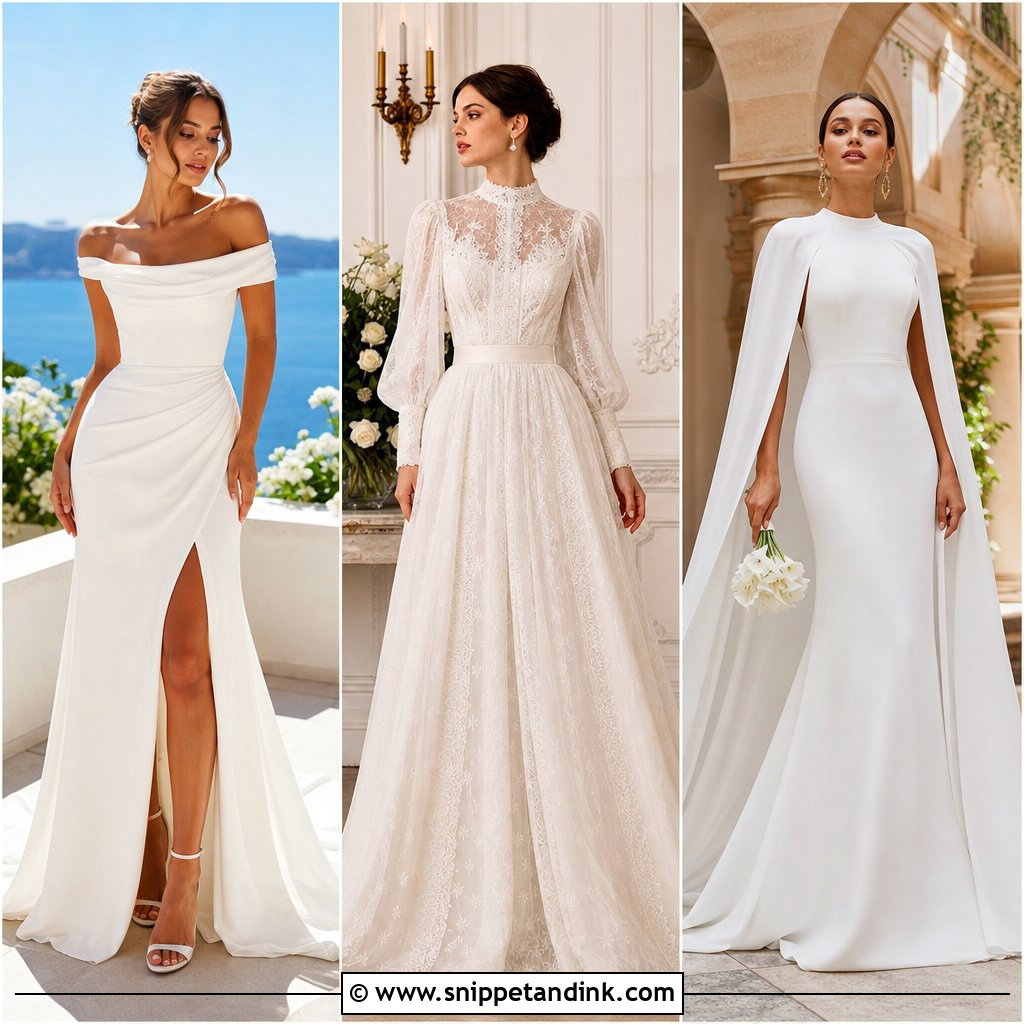
Nineties bridal style is back because it sits so comfortably between nostalgia and what brides actually want to wear now. The decade had two moods: the sleek minimalism people still connect with Carolyn Bessette-Kennedy, and the romantic princess shapes carried over from the late eighties. That split makes it easy to personalize. A satin slip with barely-there straps, a square-neck ball gown, a high-neck lace dress or a plain column with long gloves all belong here. What keeps any of them current is the styling around the dress: clean hair, soft makeup, very little jewelry and good shoes. Here are thirty ways to wear the decade.
Bias-Cut Satin Shows Everything, So Plan What Goes Under It
Many of the dresses below are slips, columns or sheaths cut on the bias, and they’re the gowns I see go wrong most often. Usually the dress is fine; the problem is underneath. Bias-cut satin follows every curve and every edge, so underwear lines, a bra band or shapewear seams all show, especially under flash.
Under the dress
- Laser-cut, no-show underwear in a shade close to your skin, not white. White shows through ivory satin far more than a skin tone does.
- Bust support decided before the first fitting. Cups sewn into the lining are the cleanest answer; adhesive or silicone bras suit some brides but need a full-day test.
- No firm shapewear under liquid satin unless it has bonded, edge-free finishes all the way round, since a hard edge at the thigh or waist shows as a ridge.
Fabric weight and the hem
Heavier fabric forgives more. A thick silk crepe or heavyweight satin skims the body, while a thin, shiny charmeuse highlights everything. If you love the slip shape but feel exposed in it, ask to try the same cut in a heavier weight before you give up on it.
Bias-cut hems also drop as the fabric relaxes, so a careful seamstress hangs the dress for a day or two before marking the length. If yours wants to pin it on the spot, it’s fair to ask about that first.
1. 1990s Slip Wedding Dress
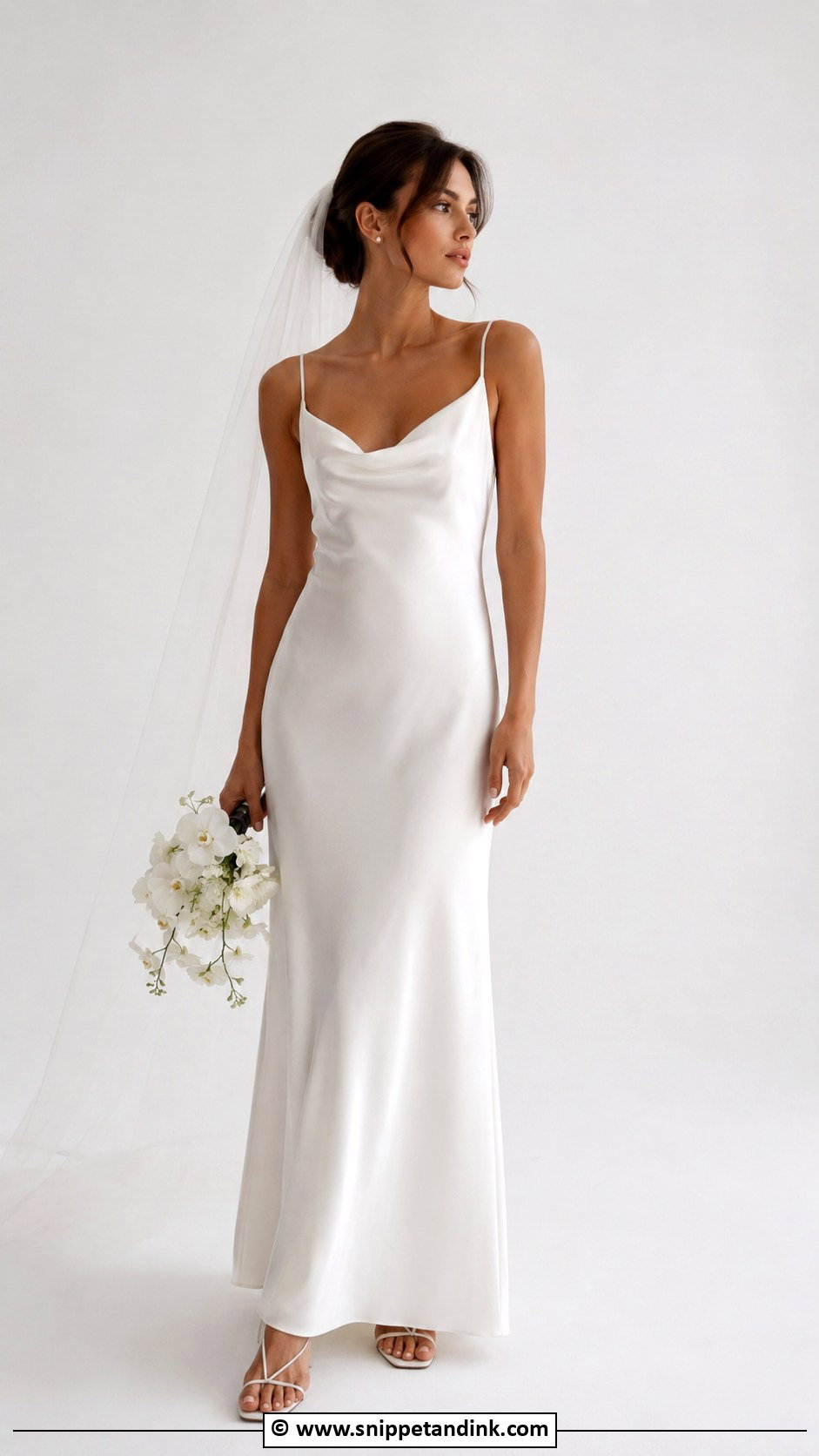
The slip is the decade’s signature, and the least forgiving dress on this list. Liquid satin or silk crepe, thin straps, a soft cowl neckline and a bias cut that skims rather than grips. I only send a bride down this road after she’s tried one on under bright light, because it shows every line underneath; the section just above covers what to wear under it. Strappy white heels, a small clutch, pearl studs and a low bun are all the styling it needs. In cooler weather, a sheer tulle veil or a cropped faux-fur wrap adds coverage without breaking the line.
2. 1990s Satin Ball Gown Wedding Dress
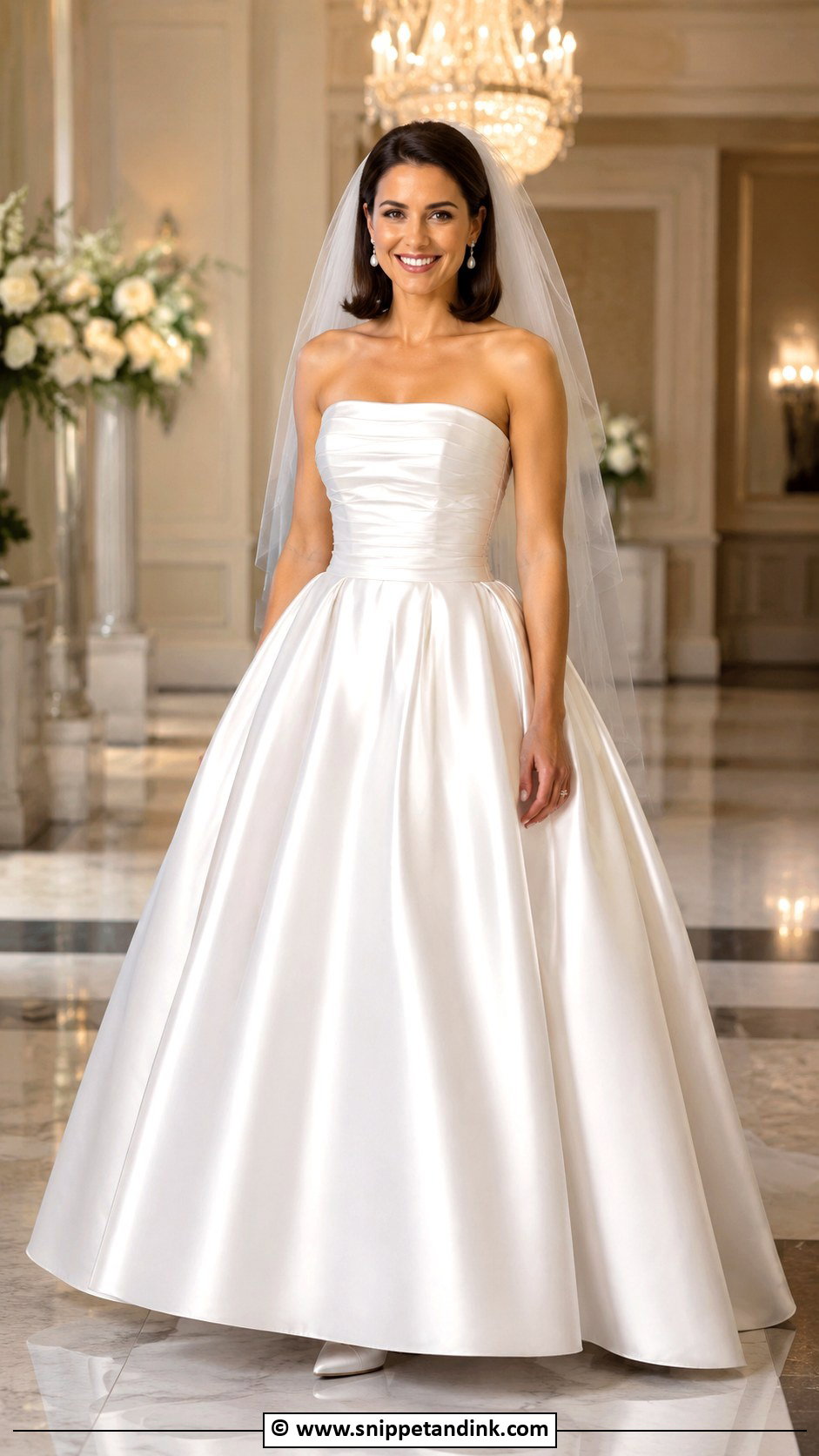
The nineties ball gown is cleaner than its eighties cousin: fitted bodice, full skirt, smooth satin and almost no decoration. That restraint is what keeps it from looking like a costume, so I’d stay with a strapless, scoop or square neckline. Satin pumps, pearl drop earrings and a plain veil falling behind the shoulders finish it. Hotel ballrooms, estates and traditional receptions suit the scale. A full satin skirt is warm to wear, so for summer ask whether the inner layers can be swapped for a softer, lighter net.
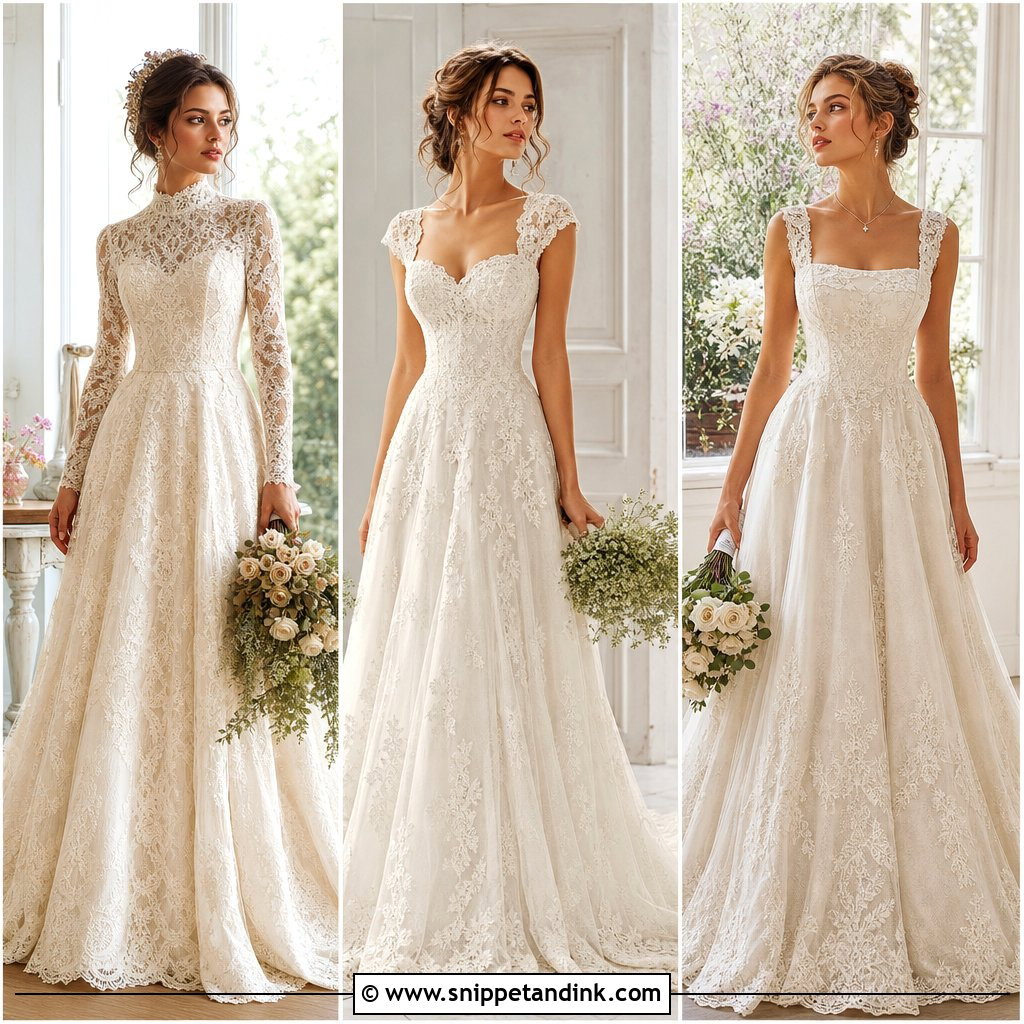
3. 1990s Long Sleeve Lace Wedding Dress
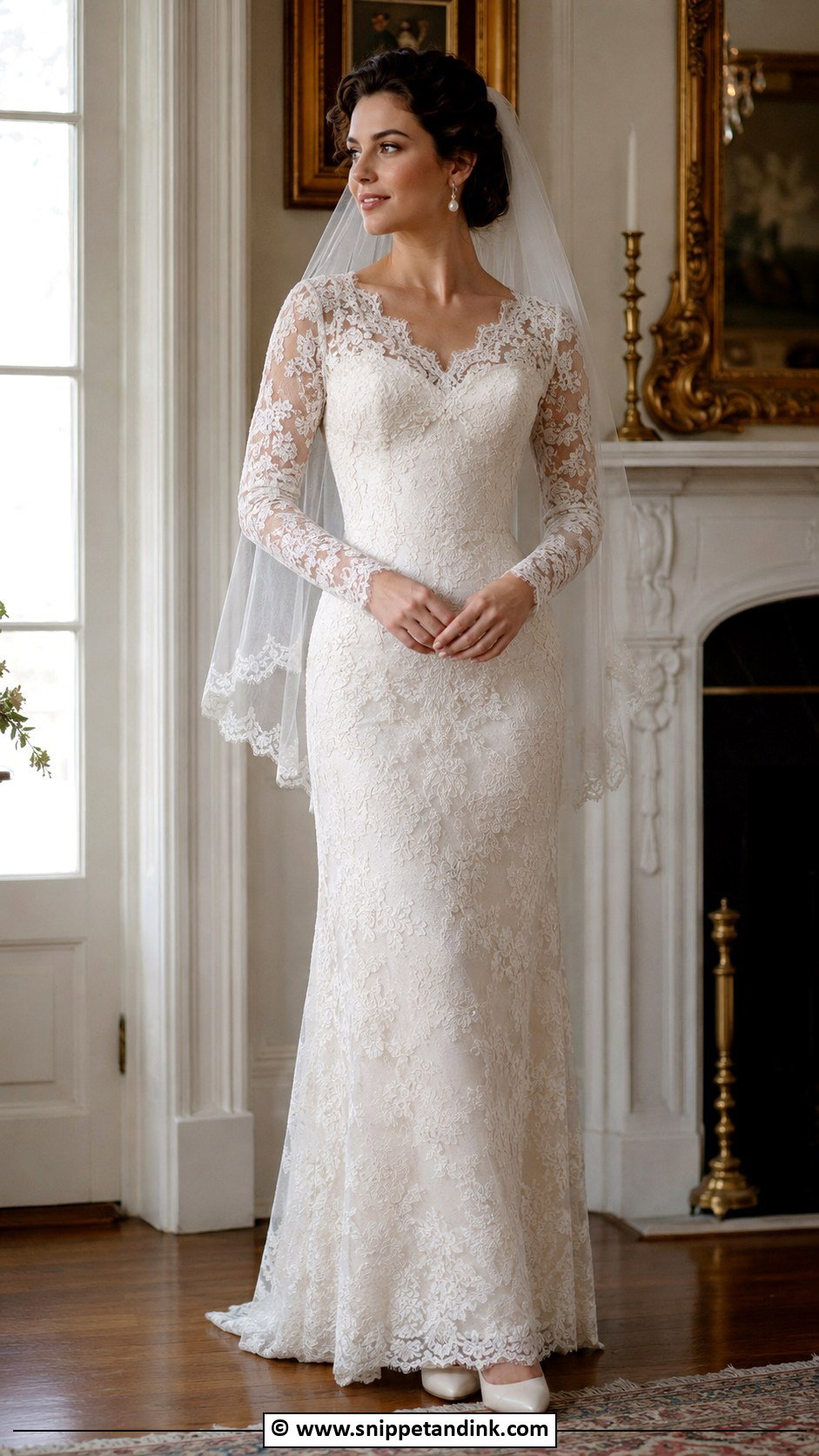
Long lace sleeves over a fitted bodice show the romantic side of the decade. A gentle sweetheart lining under the lace or a bateau neckline keeps it balanced, and floral lace reads softer than geometric. Ivory heels, a fingertip veil and delicate pearl or crystal earrings are enough, with a low chignon so the neckline stays visible. I always check the lining at the armhole. Scratchy lace against a bare underarm is something brides only notice once the reception starts, and by then it’s too late to fix.
4. 1990s Square Neck Wedding Dress
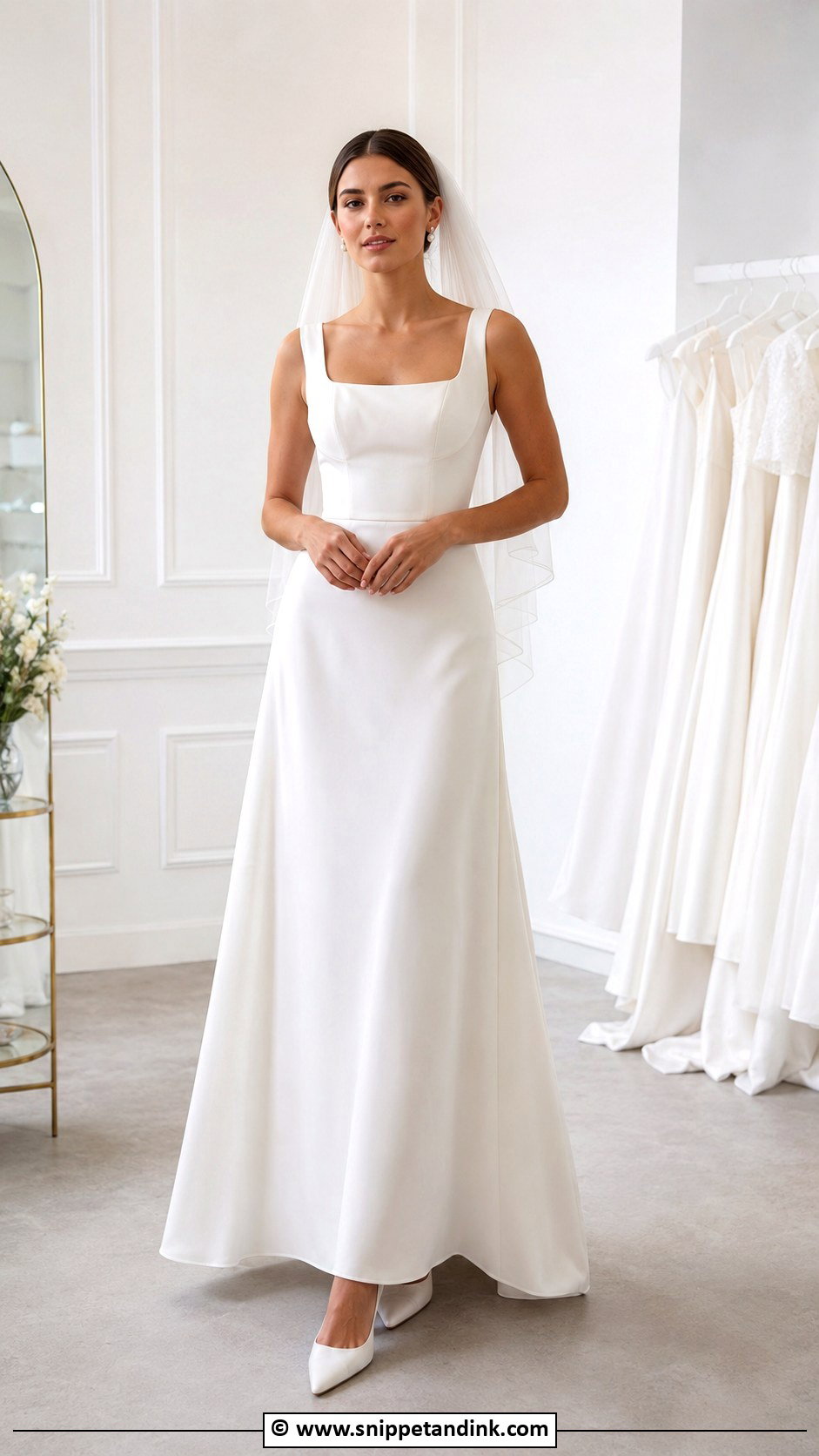
The square neckline frames the collarbones with a straight, architectural edge, and it’s one of the most decade-specific details you can choose. It works on everything from a fitted column to a full A-line. Fabric changes the mood: crepe for a city wedding, satin for a classic one, soft taffeta for something formal. A neat veil, pointed pumps and small pearl studs keep it refined. The corners need to sit flat on the chest; if they gape when you lift your arms, the bodice wants taking in at the side seams, not at the neckline itself.
5. 1990s Off Shoulder Wedding Dress
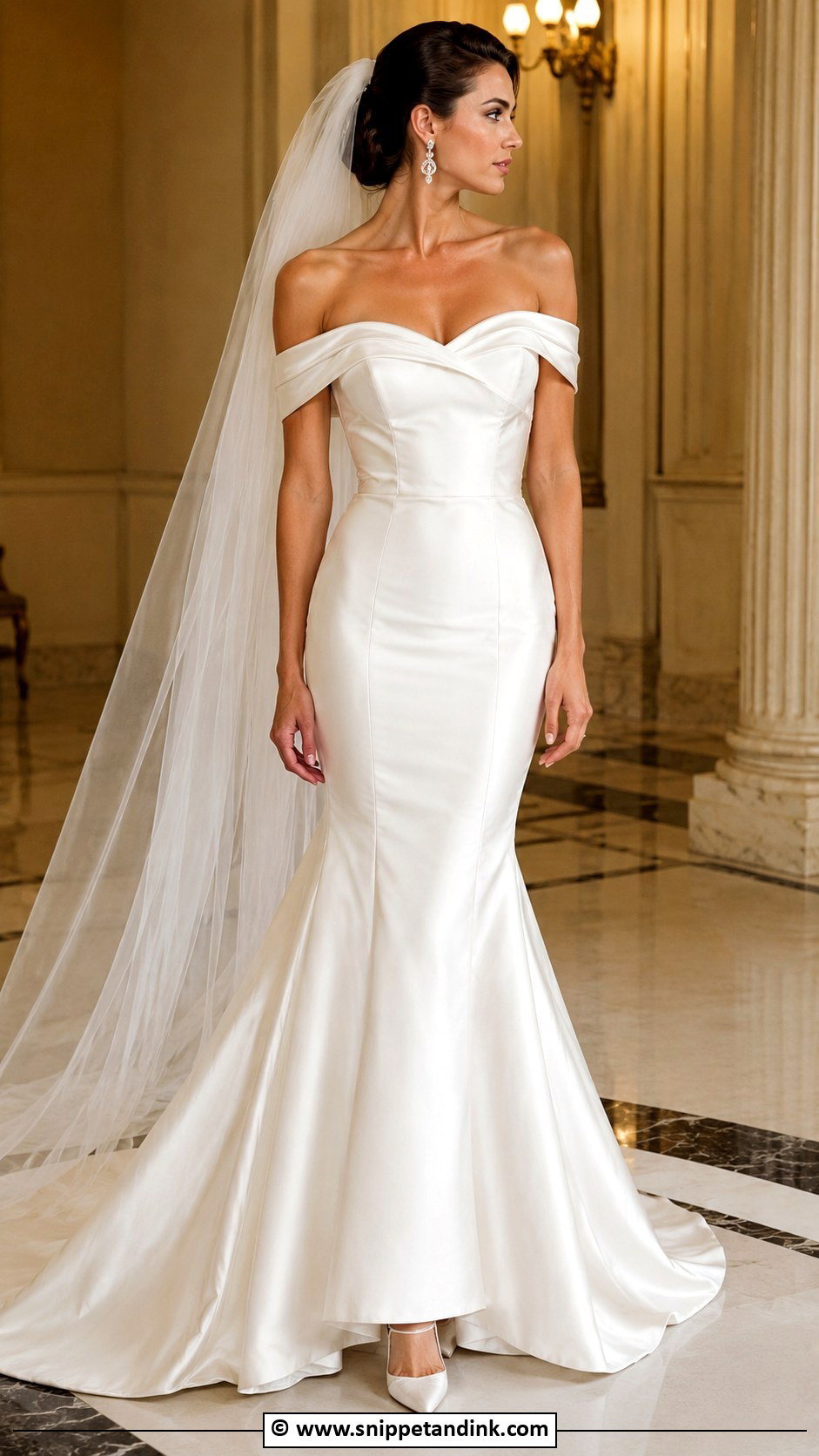
Off-the-shoulder gives a minimal decade a softer edge. The neckline pulls attention to the face and collarbones and pairs with either a full skirt or a smooth mermaid shape, in satin, lace or mikado. I’d lift or tuck the hair back so the neckline stays clear, then add drop earrings, one simple bracelet and a mid-length veil. Check that you can raise your arms to shoulder height comfortably. Otherwise every first-dance photo shows you shrugging the band back into place.
6. 1990s High Neck Wedding Dress
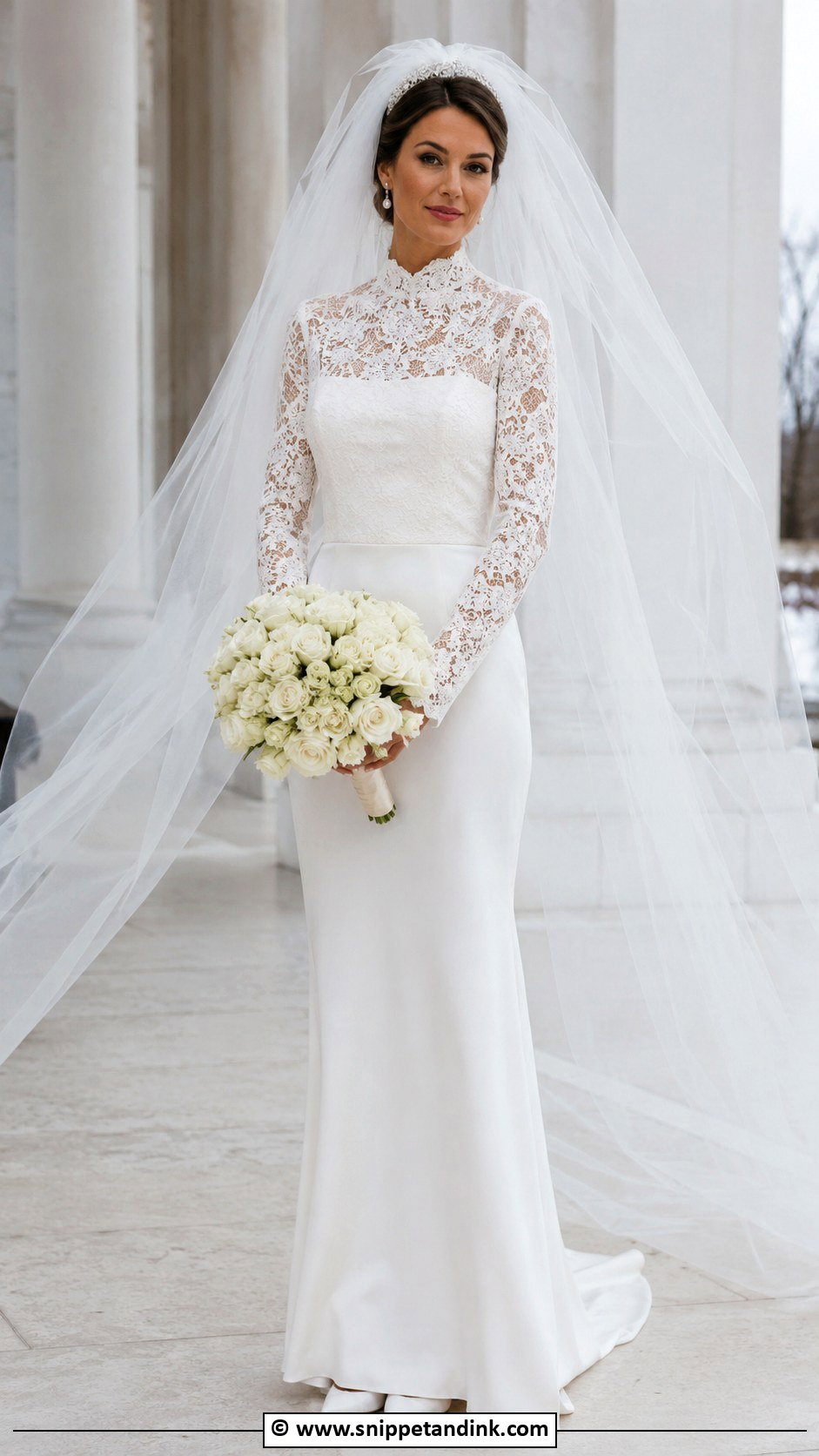
A high neckline in lace, satin, crepe or sheer illusion has an almost editorial feel in its nineties form. It sits best with long sleeves and a slim or soft A-line skirt. Since the neckline is the detail, everything else stays plain: pearl earrings, a sleek bun and closed-toe heels. A cathedral veil adds ceremony; a short one keeps things understated. On a solid crepe high neck, I make sure the back opening is long enough to step into the dress after your hair is done, without dragging fabric over the style.
7. 1990s Spaghetti Strap Wedding Dress
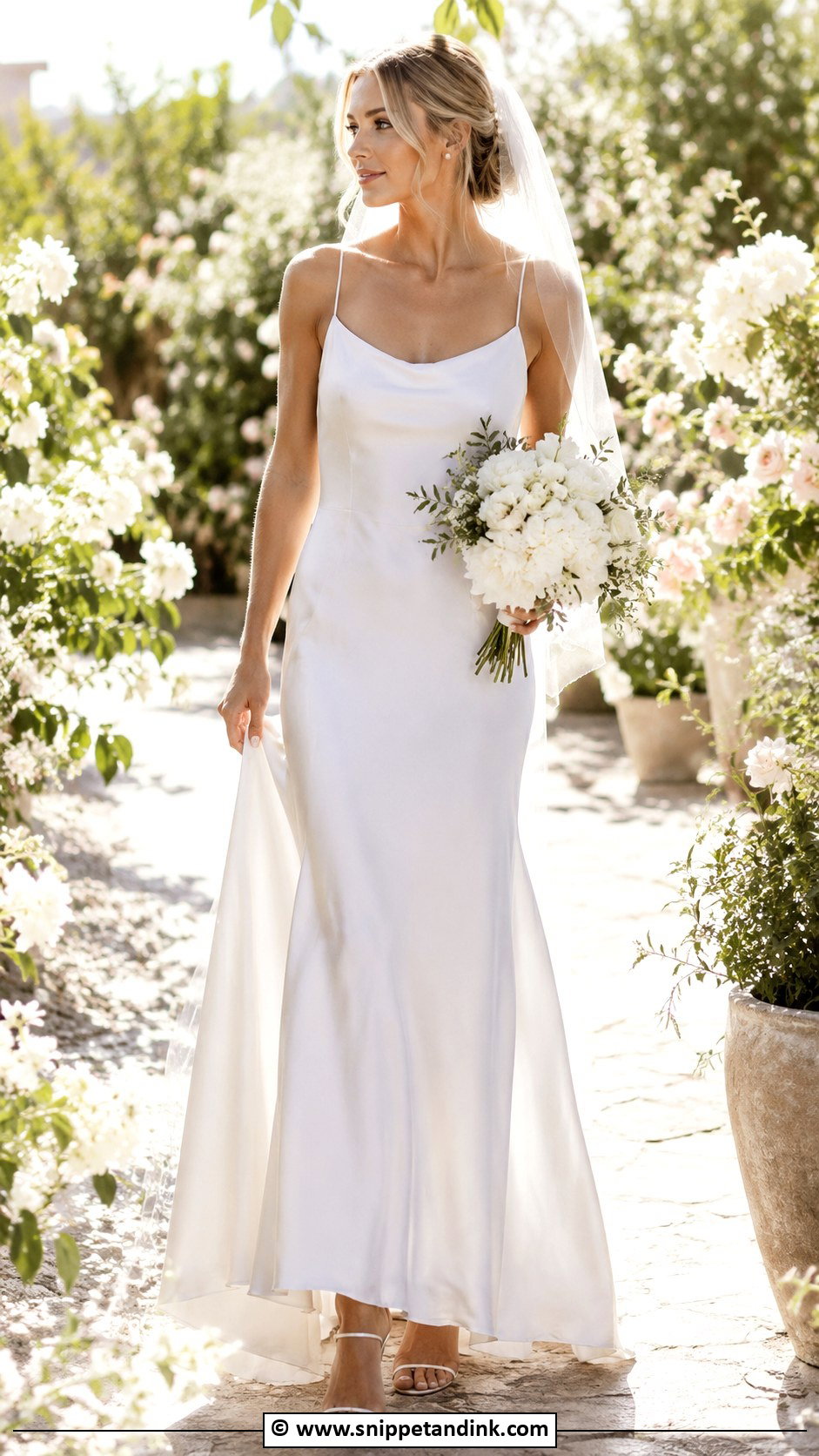
Spaghetti straps bring the light, pared-back mood of the decade. The bodice is usually clean and the skirt can be straight, A-line or softly flared, so one dress dresses up or down. On a beach, wear it with barely-there sandals and loose waves; in a city, add satin heels, a sleek bun and a minimal veil. Thin straps carry no real support, so I look for a built-in bustier or corset-style structure inside rather than trusting the straps. Adjustable ones are worth asking for too, since they let the bodice be set exactly at the last fitting.
8. 1990s Strapless Wedding Dress
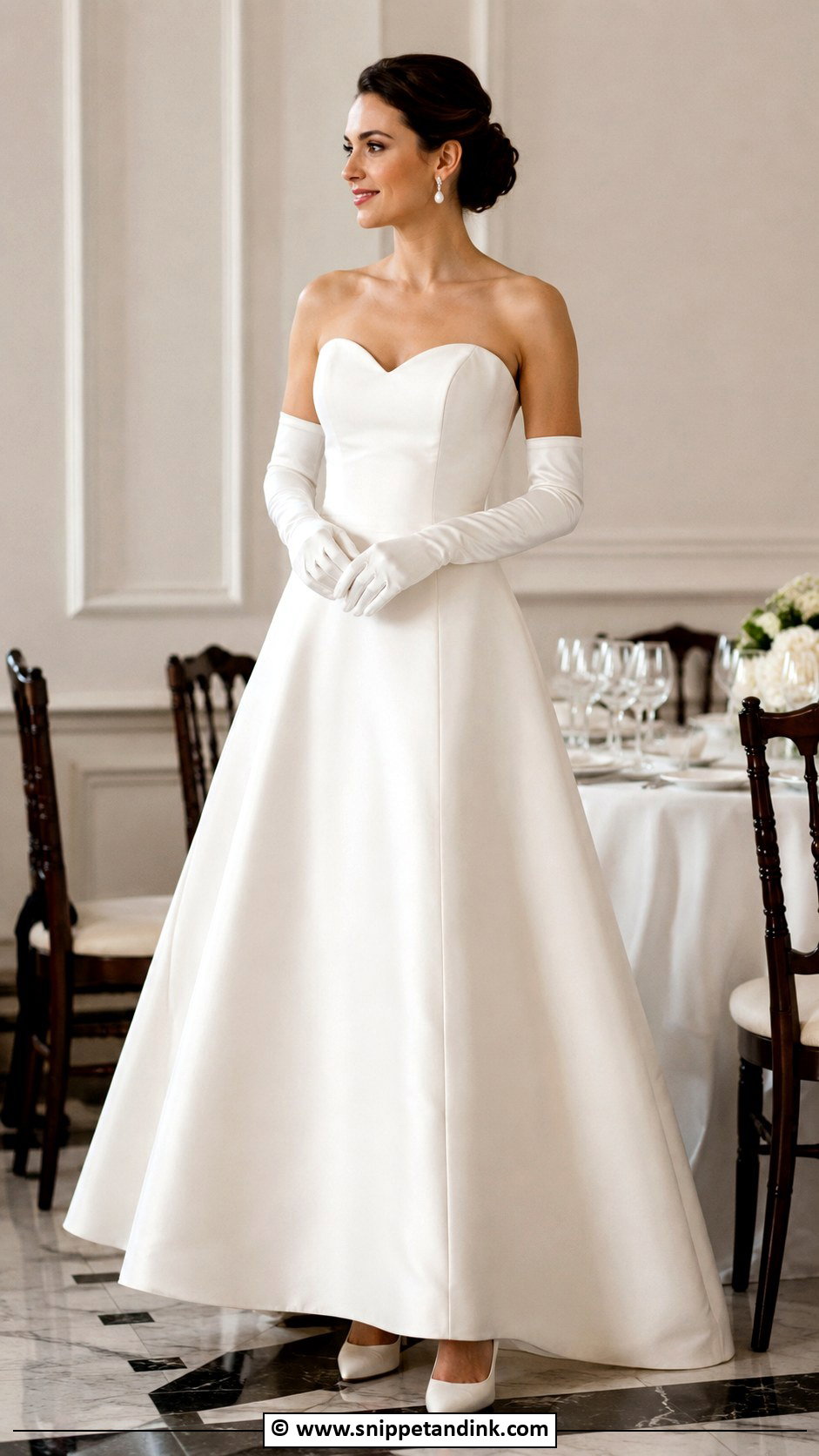
The nineties paired strapless bodices with fuller skirts, smooth satin and very little jewelry. The neckline can be straight, sweetheart or softly curved. Elbow-length gloves give a stronger retro note, while pearl earrings and a sleek veil keep it modern. A strapless bodice has to stay up on its boning and a grip strip along the top edge, so I test it by having the bride raise both arms and twist at the waist. If she tugs it up afterward, it needs more work before the wedding.
9. 1990s Cowl Neck Wedding Dress
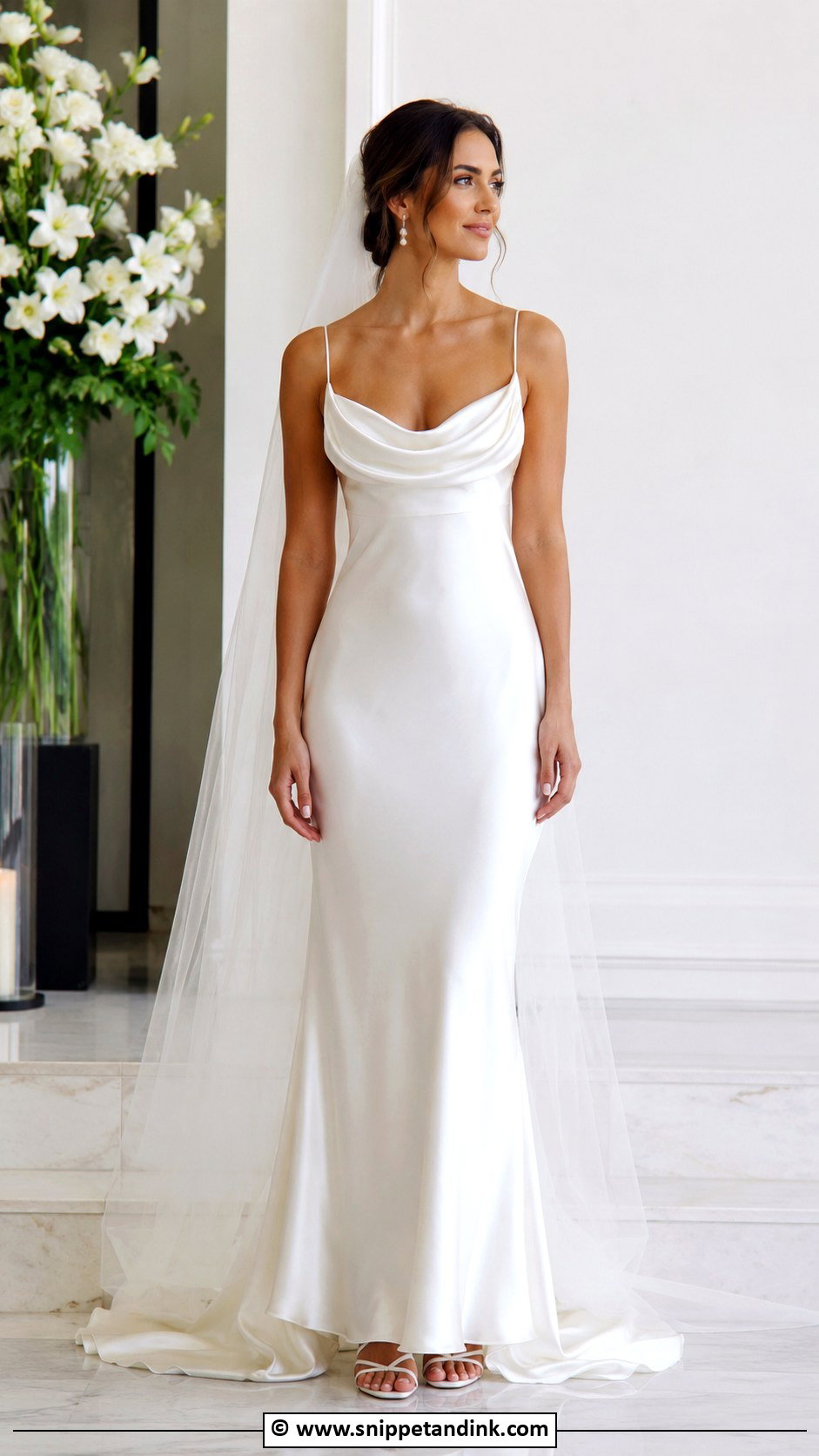
The cowl is pure nineties, a soft drape across the chest that shifts as you move. It only works in fluid fabrics such as silk, satin or charmeuse, because a stiff fabric won’t fold. Slim heels, a low bun and barely-there jewelry are enough. With a long veil it feels ceremonial; without one, it’s ready for the reception. A deep cowl can reveal more than you expect when you lean forward to hug someone, so I ask for a small hidden tack or weight inside to hold the fold in place.
10. 1990s Bias Cut Wedding Dress
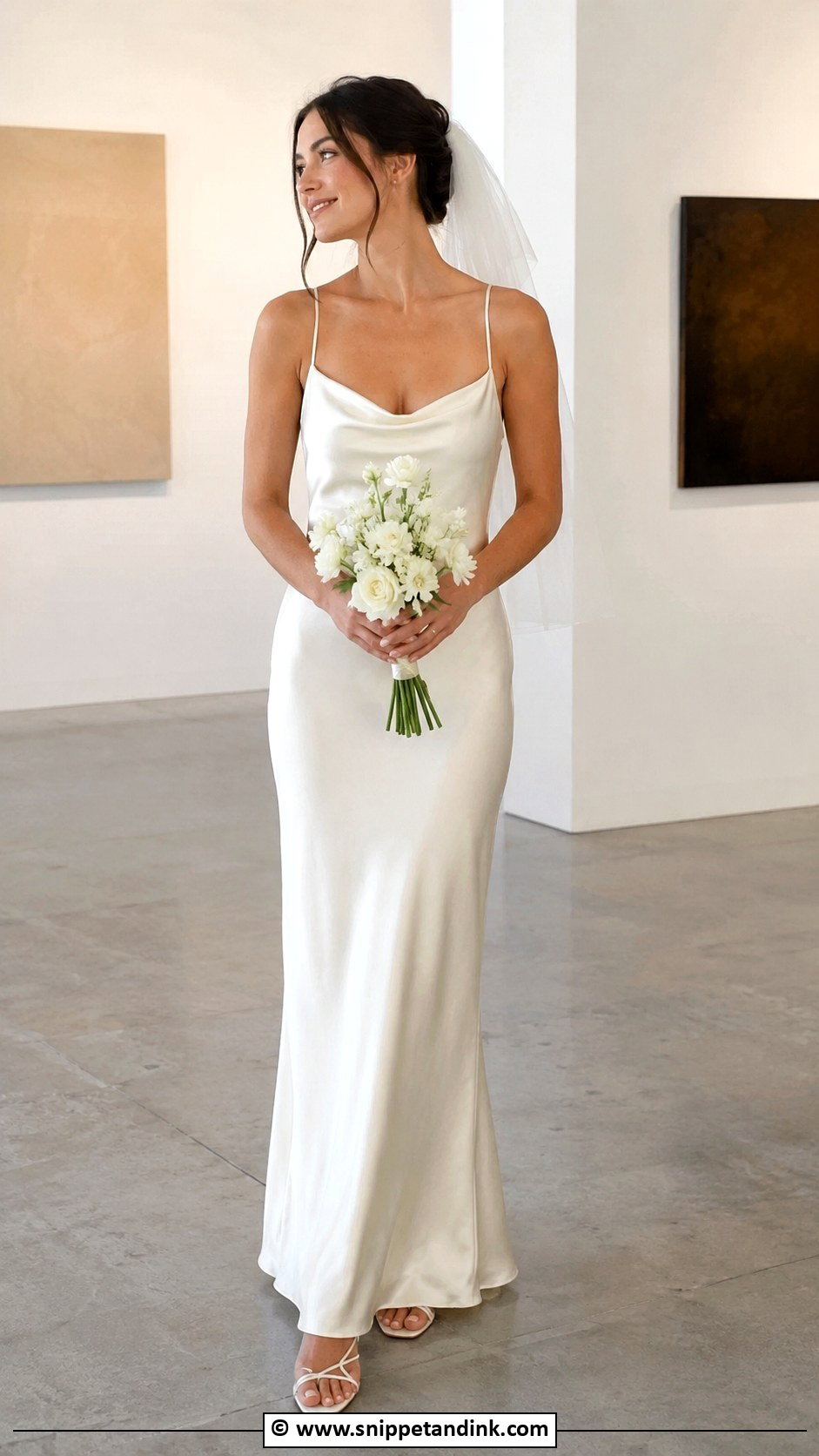
Bias cutting runs the fabric diagonally, so it drapes and gives with your body instead of sitting stiffly on it. That technique sits behind most of the decade’s slips and columns. Silk crepe, satin or matte charmeuse give the authentic result. Fit matters more than decoration here, and bias dresses have little room for alteration once cut, so get the size right before anything else happens. Delicate heels, a sheer veil and a small bouquet finish it for intimate weddings, restaurants, galleries and beaches.
11. 1990s Column Wedding Dress
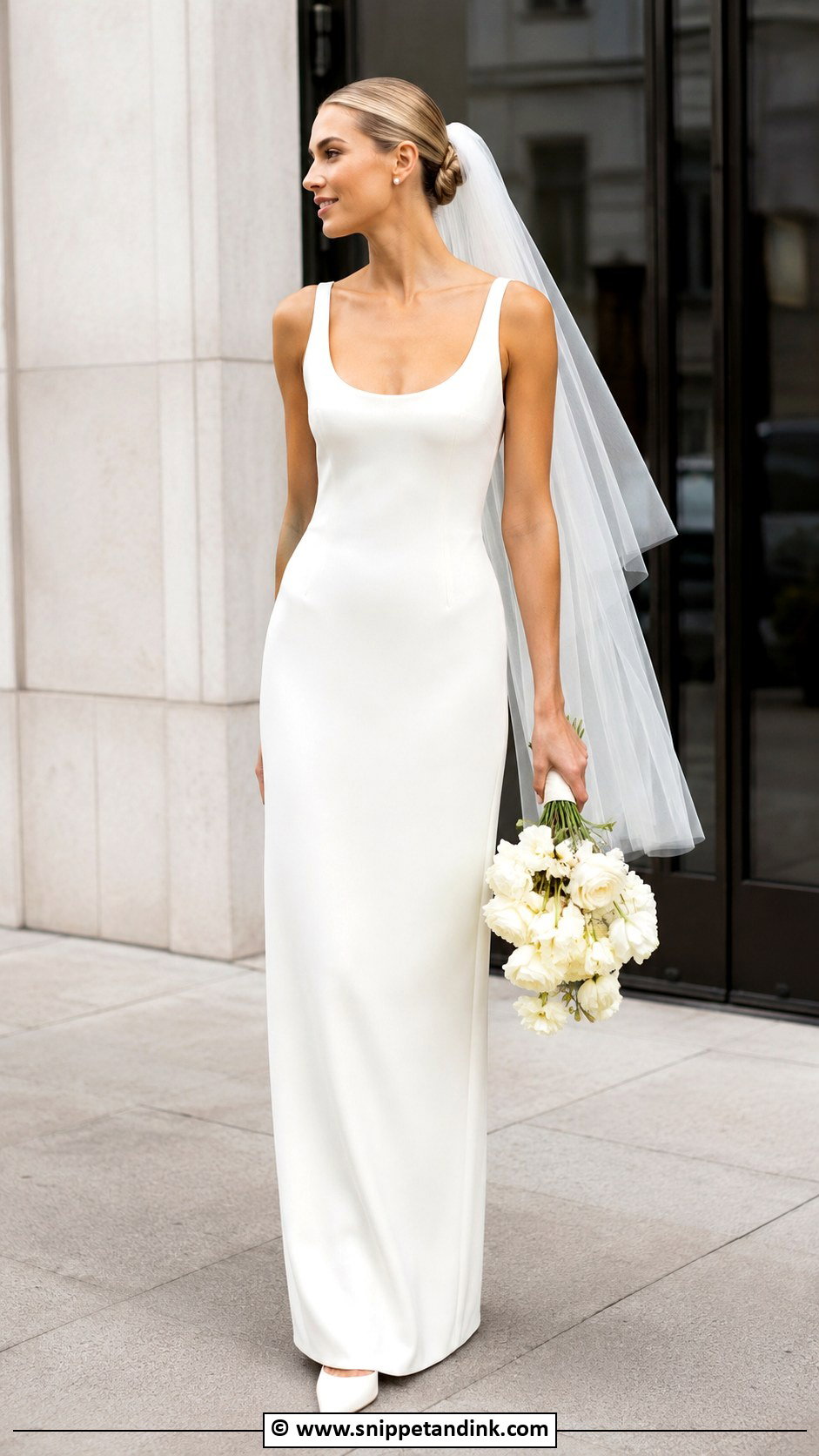
A column runs straight and narrow, close to the body without clinging, and holds a clean line from every side. Square necklines, scoop necklines, thin straps or a bateau cut all suit it, in crepe, satin or lightweight silk. Pointed heels, pearl studs and a smooth veil polish it, and short gloves or a small satin bag add a vintage cue. Try sitting and climbing a step in the fitting room. A true column needs a slit or a back pleat before you can walk at a normal stride.
12. 1990s A Line Wedding Dress
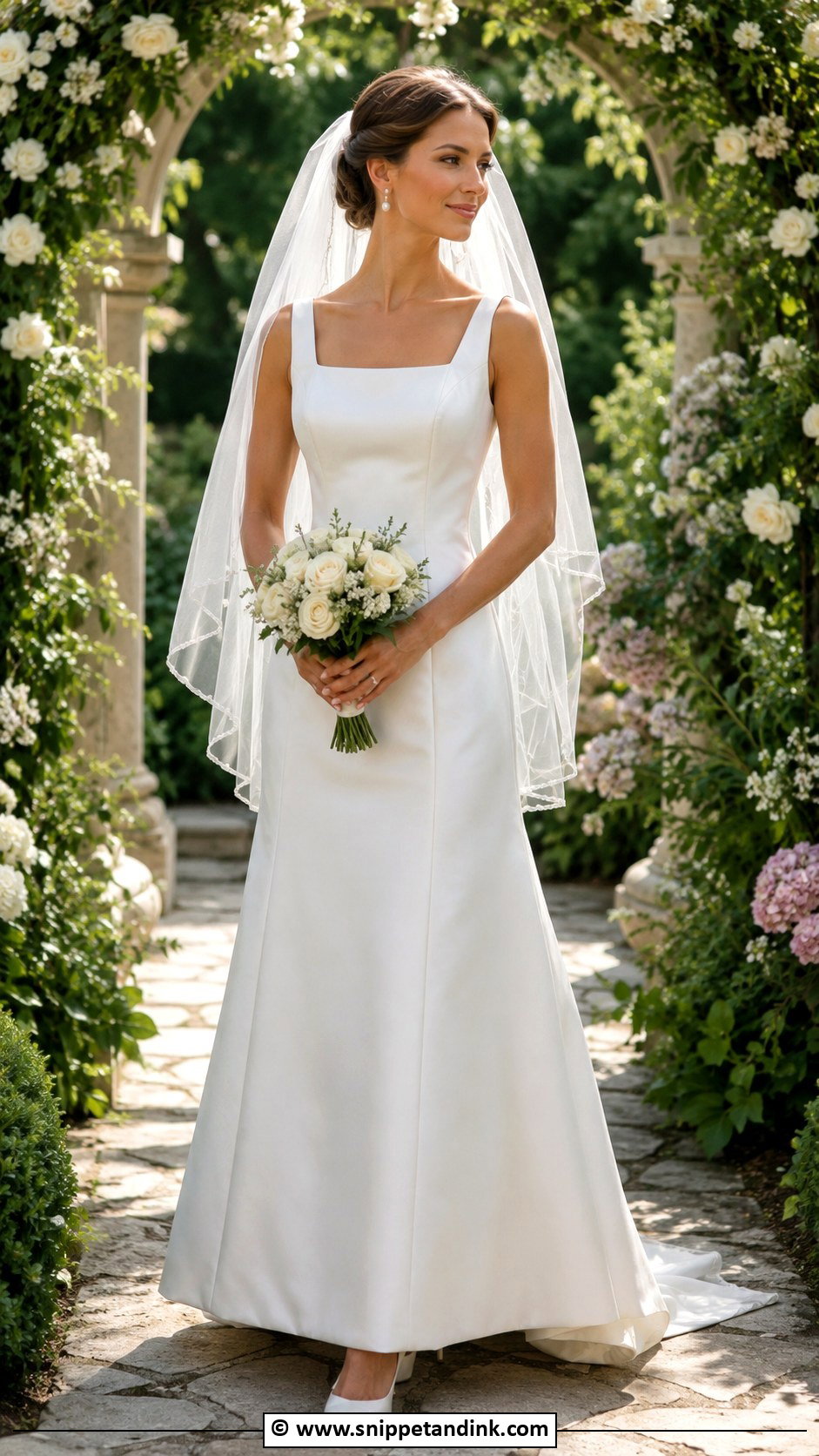
A-line is the most forgiving shape the decade offers. It fits through the bodice and widens gently from the waist, so it suits most figures and still lets you walk, dance and sit without thinking about it. Plain satin makes it minimal; lace and tulle turn it romantic. For a true nineties look, keep the bodice simple, the train modest and the veil soft, with classic pumps and delicate jewelry. If you’re unsure where to begin trying on, this is the shape I’d put you in first.
13. 1990s Princess Wedding Dress
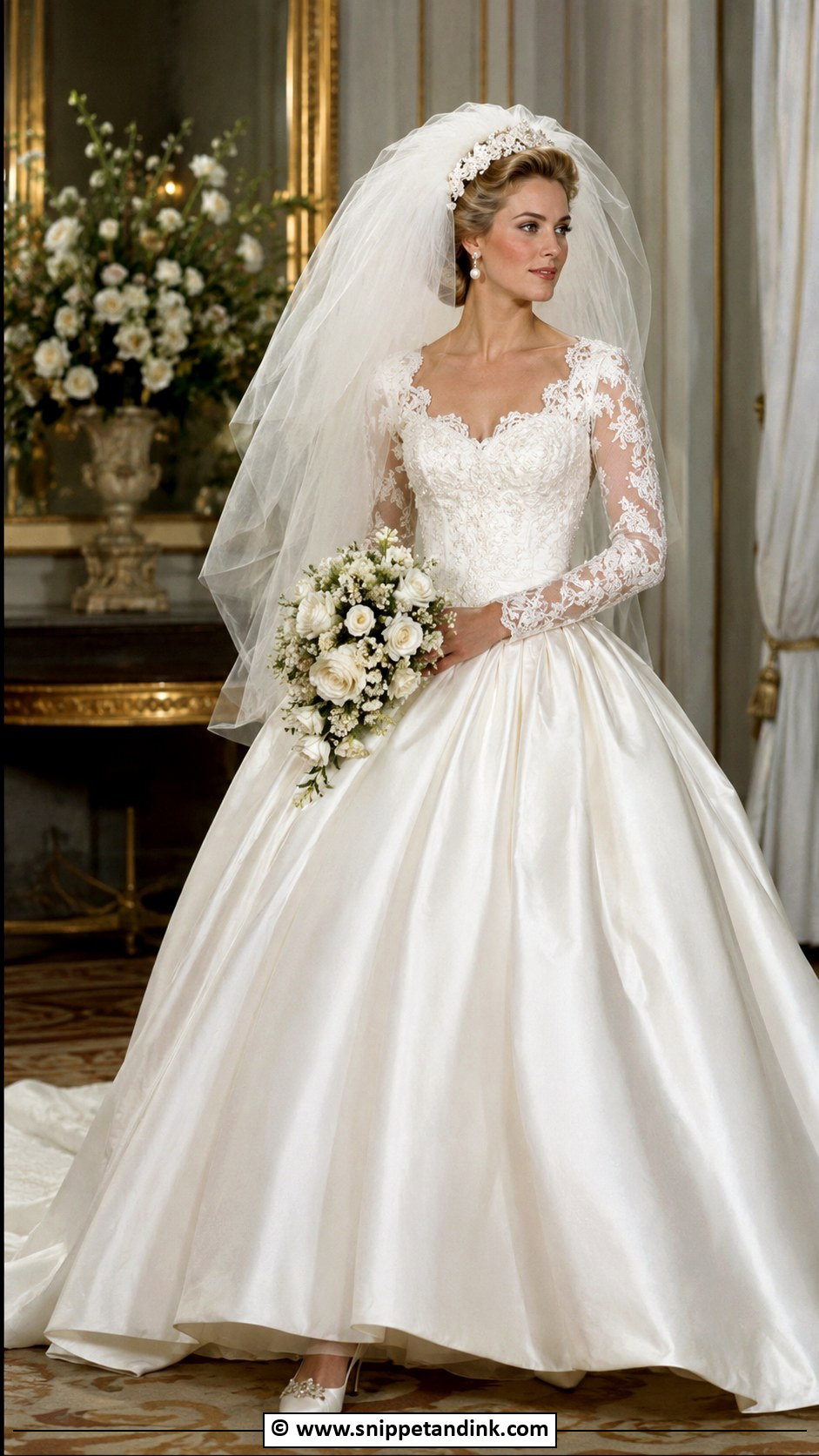
Early-nineties bridal fashion still loved big skirts, fitted bodices, lace trim and romantic veils. To wear it now, keep one or two statement details and drop the rest. A full satin skirt under a plain bodice looks polished; a lace bodice over a plain skirt feels balanced. Pearl earrings, soft curls and classic heels complete it. Grand venues and fairytale entrances are what it’s for. A skirt that size also needs a bathroom plan, so choose a bridesmaid to help and practice once at the fitting.
14. 1990s Tea Length Wedding Dress
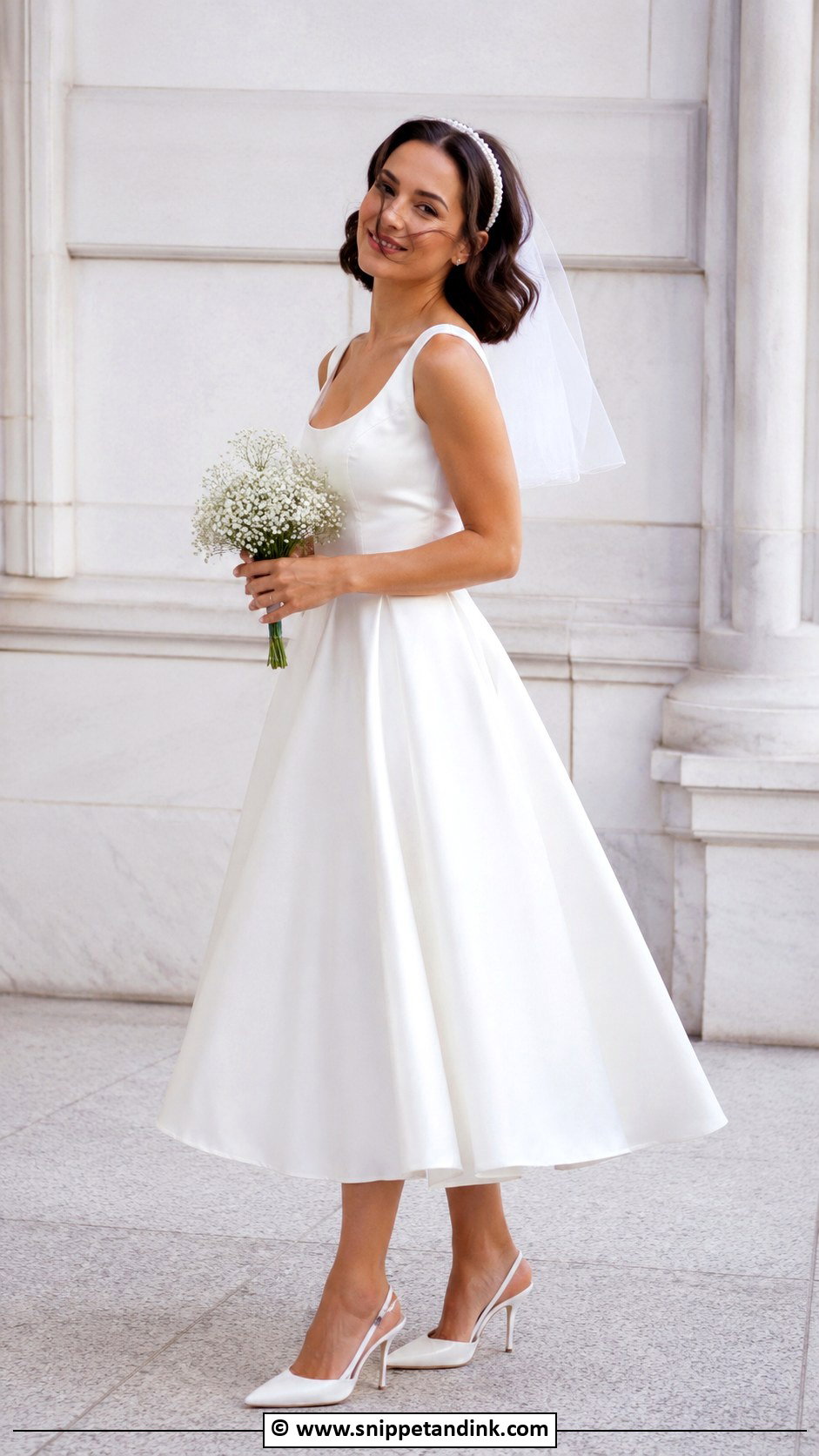
Tea length lands between knee and ankle, which turns the shoes into a real part of the outfit. Satin pumps, pointed kitten heels or delicate slingbacks all suit it. A fitted bodice and flared skirt give a sweet shape, while a square neckline or spaghetti straps tie it to the decade. Add a short veil or a pearl headband. Courthouse weddings, garden ceremonies and second looks suit it. With legs and shoes on view all day, I’d break the shoes in at home for a week beforehand.
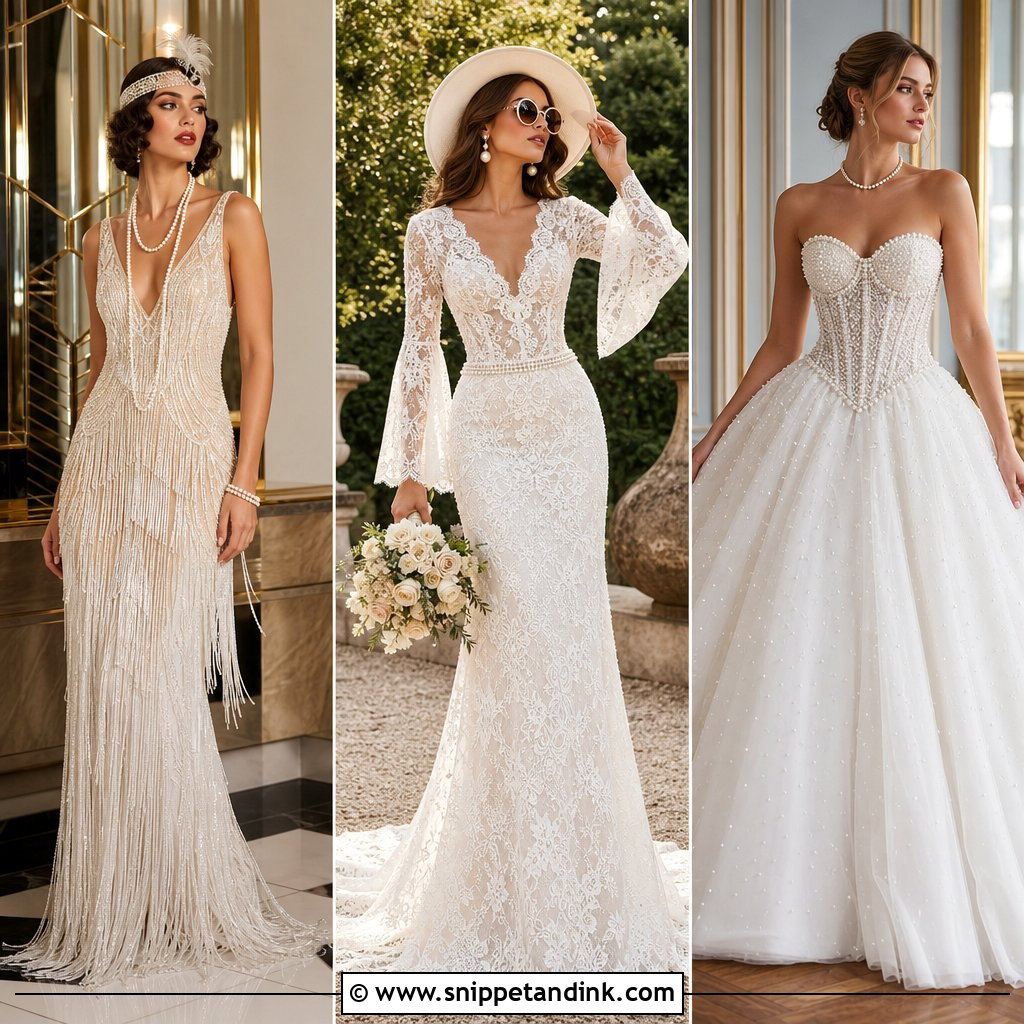

15. 1990s Halter Wedding Dress
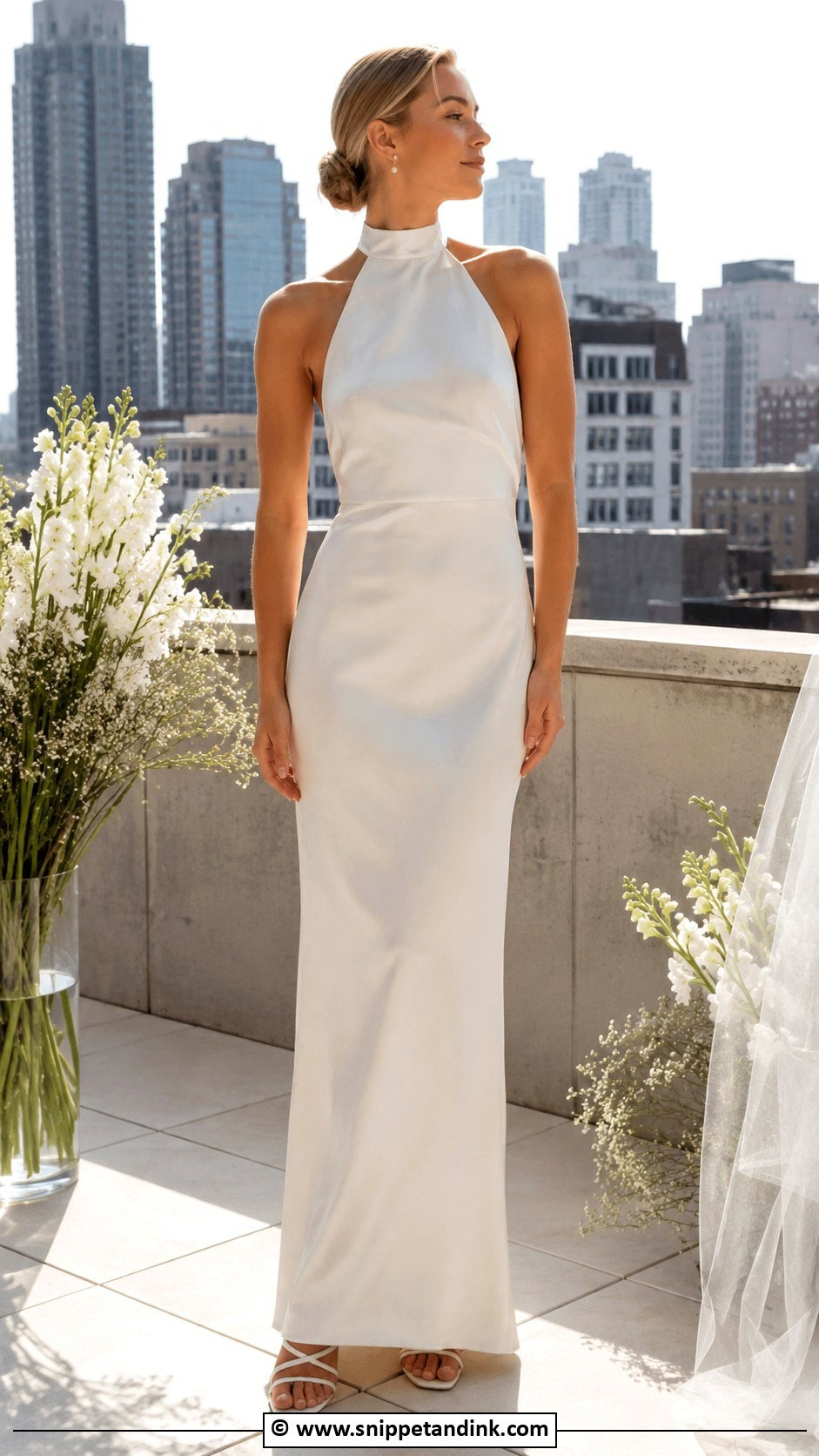
A halter pulls the eye up to the shoulders and pairs with a fitted column skirt, a bias-cut slip or a soft A-line. Satin or crepe gives a clean finish. Keep jewelry tiny: small earrings, a smooth updo and strappy heels, with a simple veil or long gloves as a nod to the decade. A halter carries the weight of the bodice from your neck, so I ask for a wide band or a hidden hook at the nape. A thin tie starts to ache after a few hours.
16. 1990s Mermaid Wedding Dress
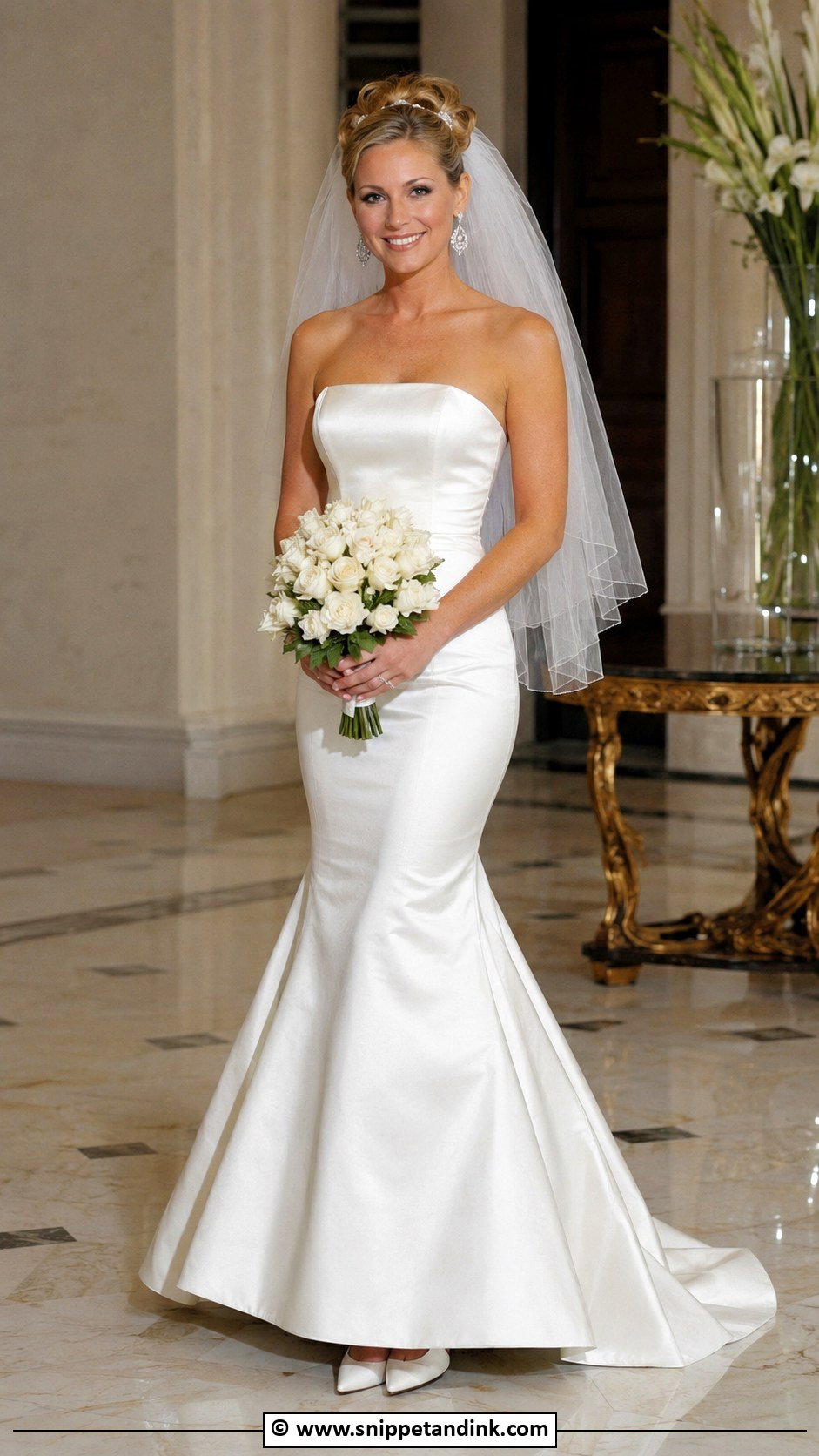
A mermaid fits through the bodice and hips, then flares near the knee or lower thigh. In the nineties it came in satin, lace or plain crepe. Balance decides whether it works, so avoid stacking embellishments: a strapless, off-shoulder or long-sleeve lace version with one main detail is plenty. Classic heels, a fitted veil and simple earrings complete it. Where the flare starts decides how you’ll move. A low flare looks dramatic but shortens your stride, so I have brides walk the length of the shop and try a few stairs before choosing.
17. 1990s Empire Waist Wedding Dress
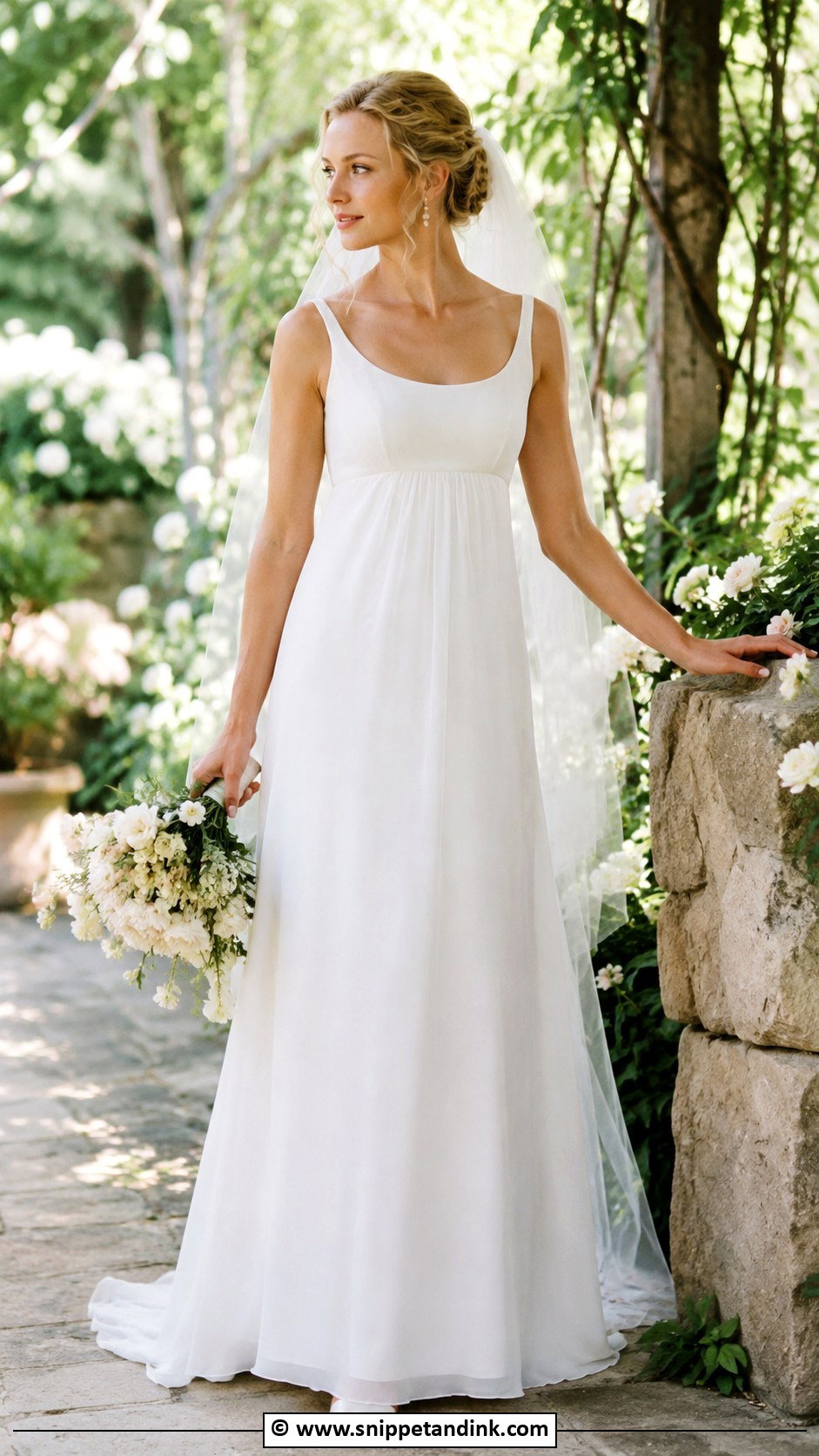
An empire waist sits just under the bust and then falls softly, so nothing is tight at the natural waist. Chiffon, satin or soft crepe keep it moving. It’s the most comfortable dress here for destination weddings and garden ceremonies, and kind to brides who are pregnant or simply don’t want structure. Low heels, a delicate veil and simple pearl jewelry are enough; a square or scoop neckline gives it a more decade-specific finish. If you’re full-busted, make sure the seam lands under the bust and not across it.
18. 1990s Sheath Wedding Dress
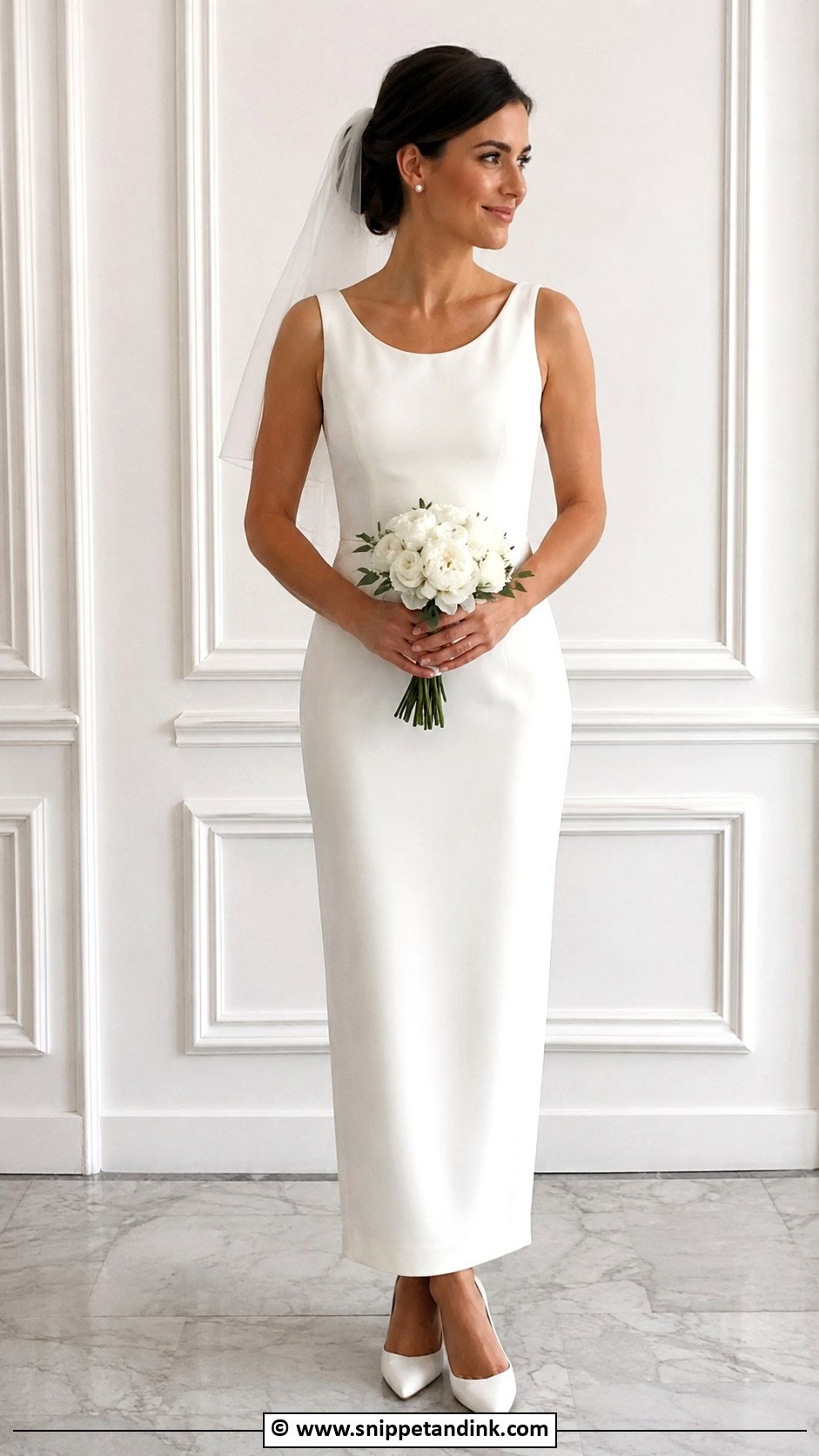
A sheath follows the natural line of the body with no full skirt and no flare. It’s sleek and comes alive in crepe, satin or silk, with a scoop neckline, thin straps, long sleeves or a modest square neck. Elegant heels, a short veil and a small bouquet finish it. It layers well under a tailored coat or wrap, which makes it a strong choice for courthouse and city weddings in colder months. Sit down in it at the fitting, because sheaths tend to ride up and pull across the lap.
19. 1990s Lace Bodice Wedding Dress
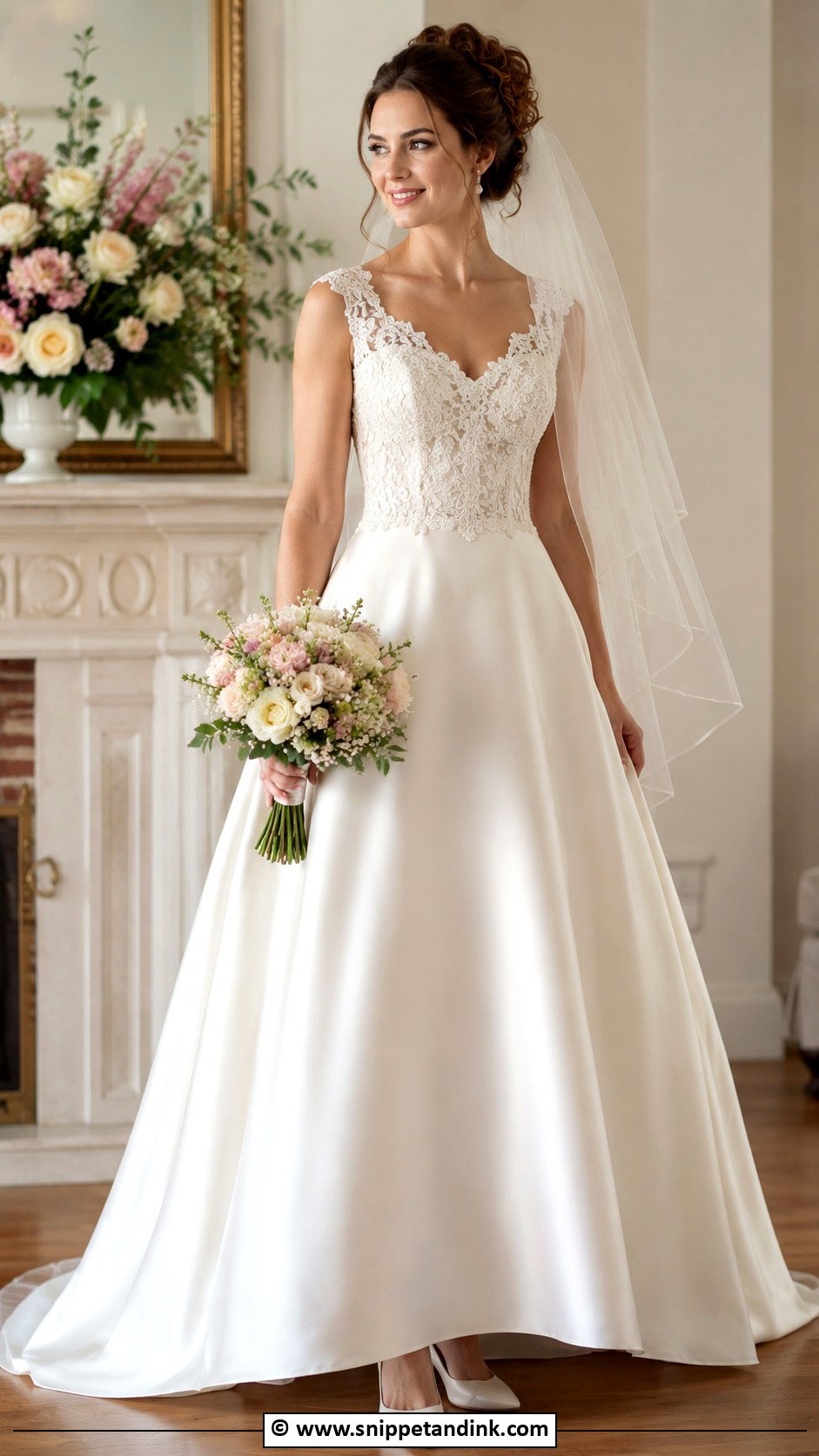
A lace bodice keeps the romance up top while the skirt stays plain in satin, crepe or tulle. Floral lace, scalloped edges or sheer sleeves carry the detail. An A-line or ball gown skirt makes it traditional; a slim skirt feels softer and more modern. Pearl earrings, satin heels and a veil with a clean edge are enough. Ask where the lace ends at the waist. A scalloped edge laid over the skirt looks deliberate, while a hard seam line can make it look like two dresses joined together.


20. 1990s Beaded Wedding Dress
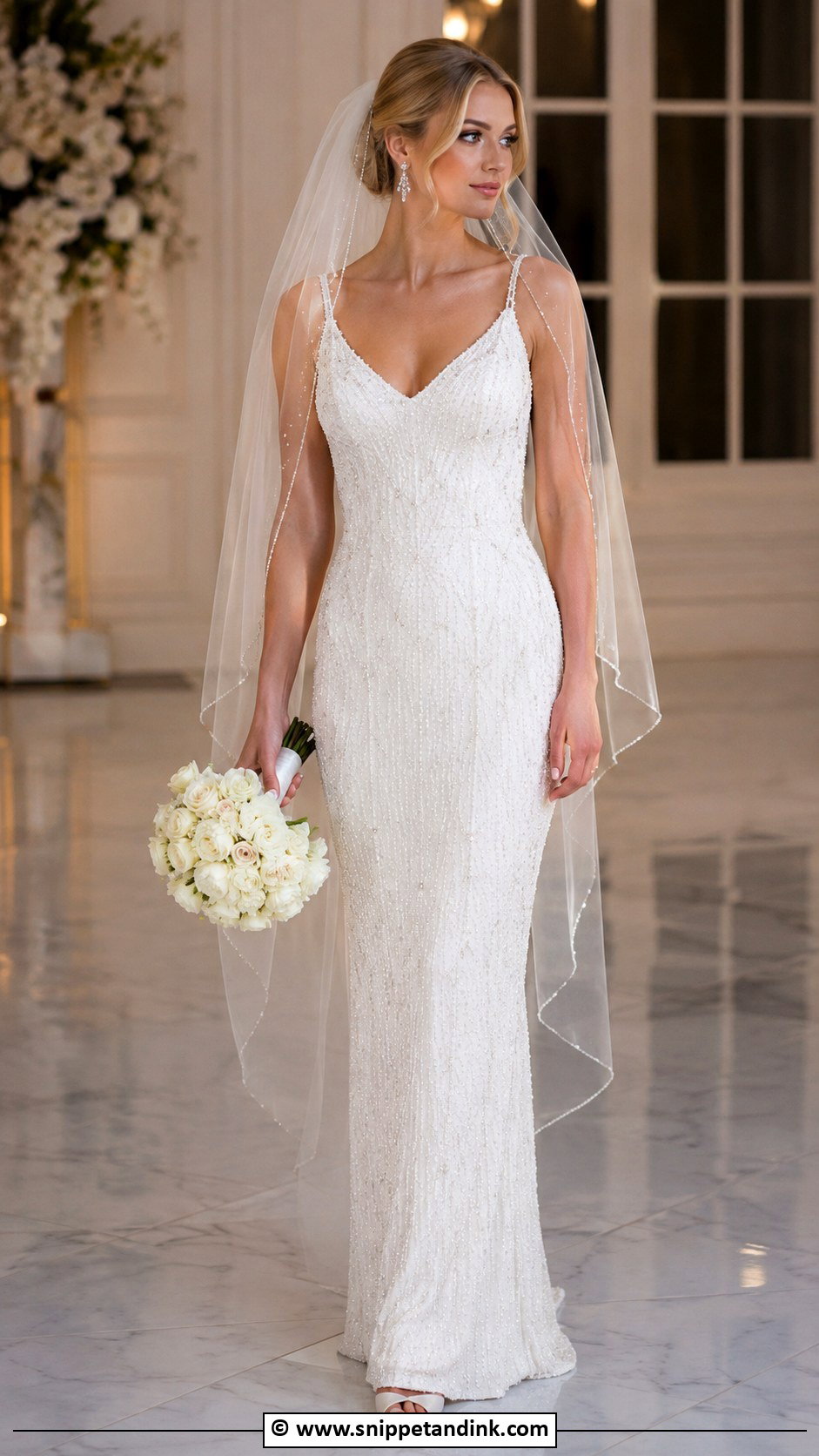
Nineties beading was quieter than today’s heavily jeweled gowns: tiny pearls, seed beads, subtle sequins and fine embroidery over satin or tulle. Choose beading that catches the light without swamping the shape, on a slim sheath, column or simple A-line. Satin heels, crystal earrings and a sheer veil complete it, with smooth hair and makeup so the texture stays the focus. Beads add real weight to a slim dress, so check that the straps and bodice can carry it without the neckline dragging down by evening.
21. 1990s Taffeta Wedding Dress
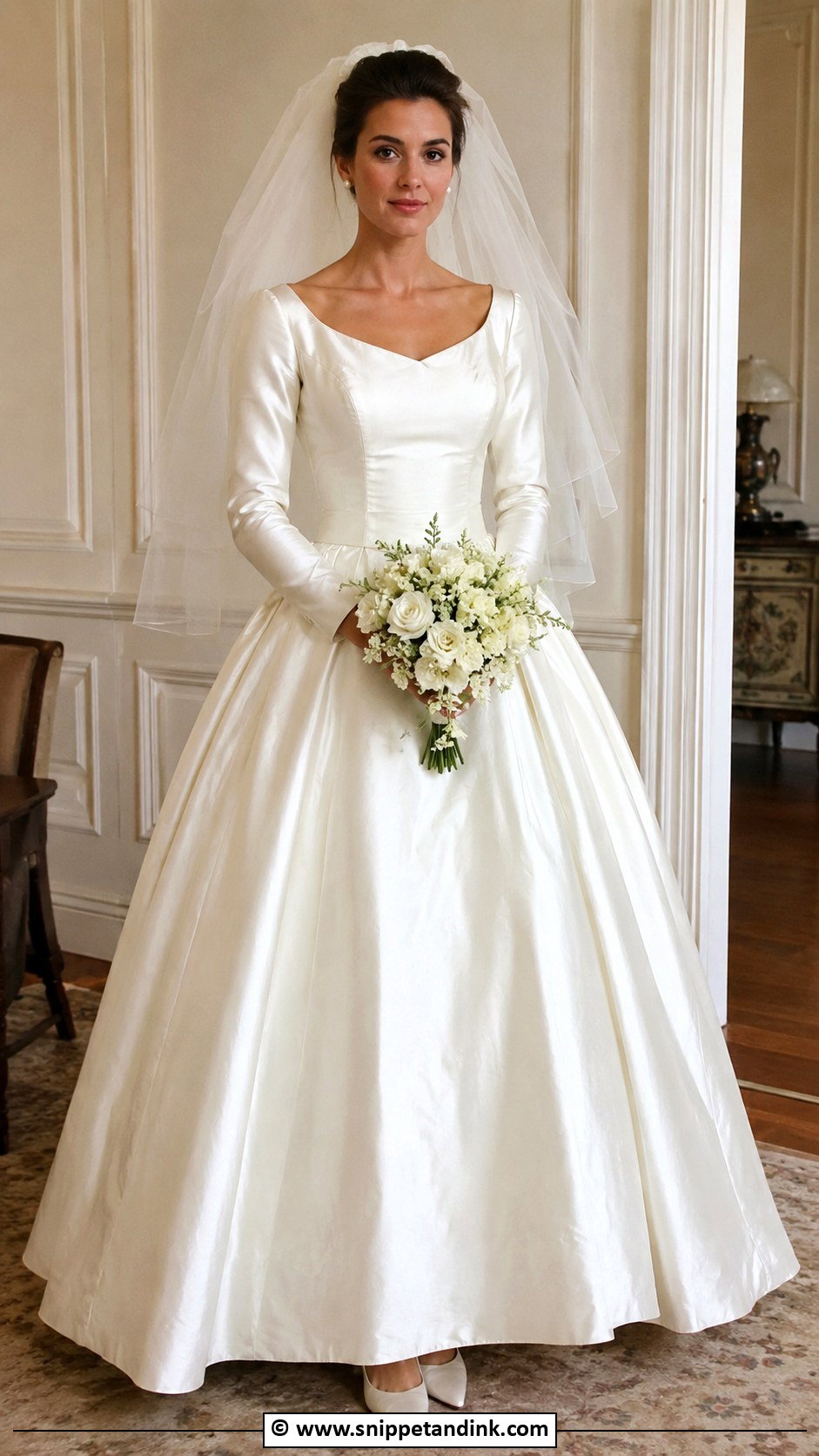
Taffeta is crisp and holds volume, so it suits ball gowns, A-lines and dramatic skirts, and it rustles softly as you move. Keep it current with a simple bodice, a clean neckline and minimal embellishment, then add satin pumps, pearl earrings and a medium-length veil. It belongs at formal indoor weddings. Taffeta creases sharply and holds the crease, so I ask brides to have the dress delivered on a padded hanger and steamed at the venue, never folded into a suitcase.
22. 1990s Crepe Wedding Dress
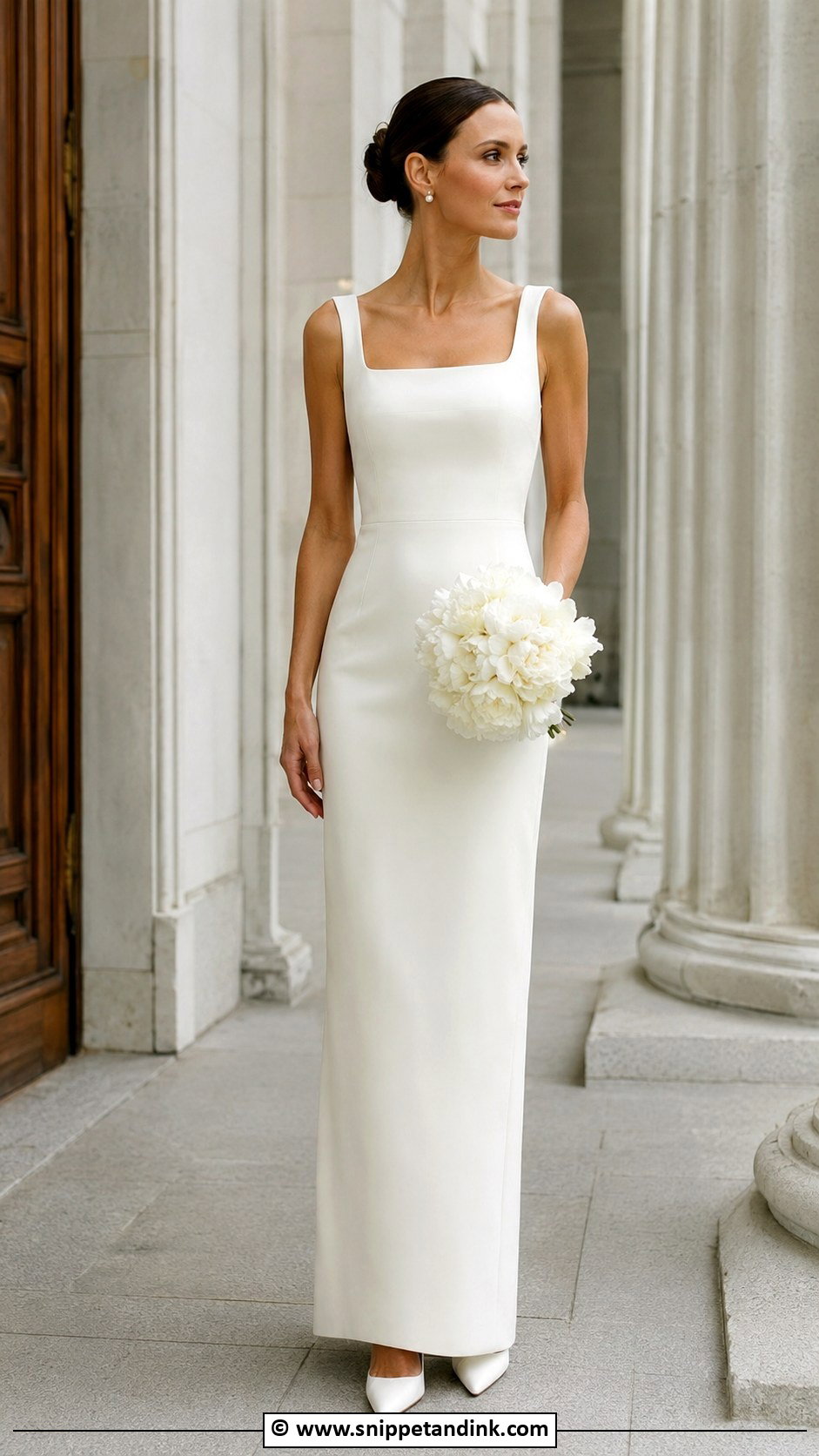
A 1990s crepe wedding dress has a matte finish that looks modern yet soft enough for bridal wear. It suits slips, columns, sheaths and long-sleeve styles. Because crepe is so plain, fit and proportion carry the whole dress; a square neckline, cowl or open back adds interest without decoration. Pointed heels, a low bun and small pearl earrings finish it. Heavy crepe hides underwear lines far better than satin, which is why I often steer slip-dress lovers toward a crepe version.
23. 1990s Short Sleeve Wedding Dress
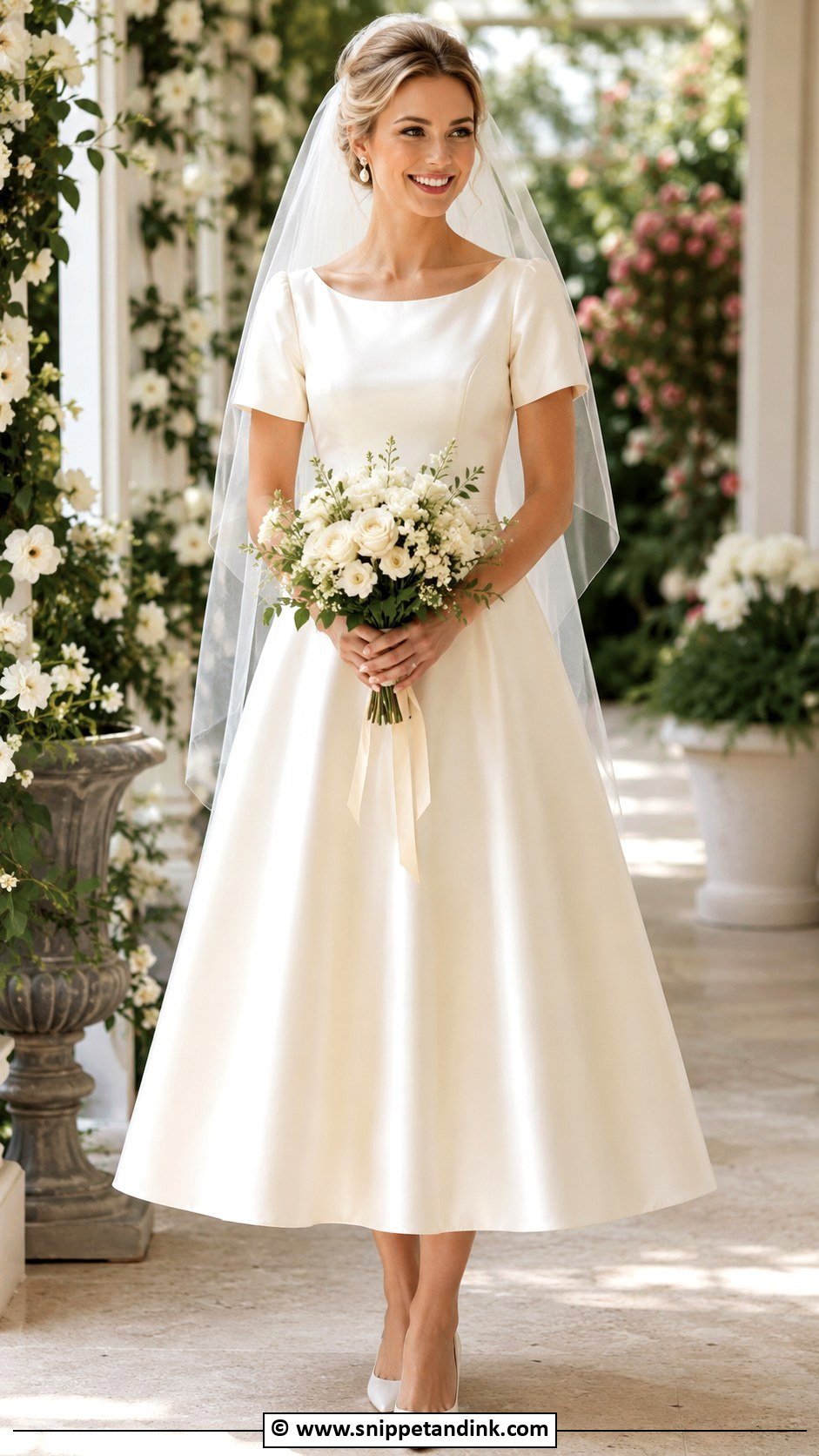
Short sleeves give the decade a sweet, approachable side. They can be fitted, softly puffed, capped or lace, over an A-line skirt, a tea-length hem or a simple satin gown. Classic pumps, pearl earrings and a soft veil complete it. If the sleeves have volume, keep the skirt plain. Bend your arm at the fitting: a short sleeve cut too tight digs in at the bicep and creeps up through the day.
24. 1990s Puff Sleeve Wedding Dress
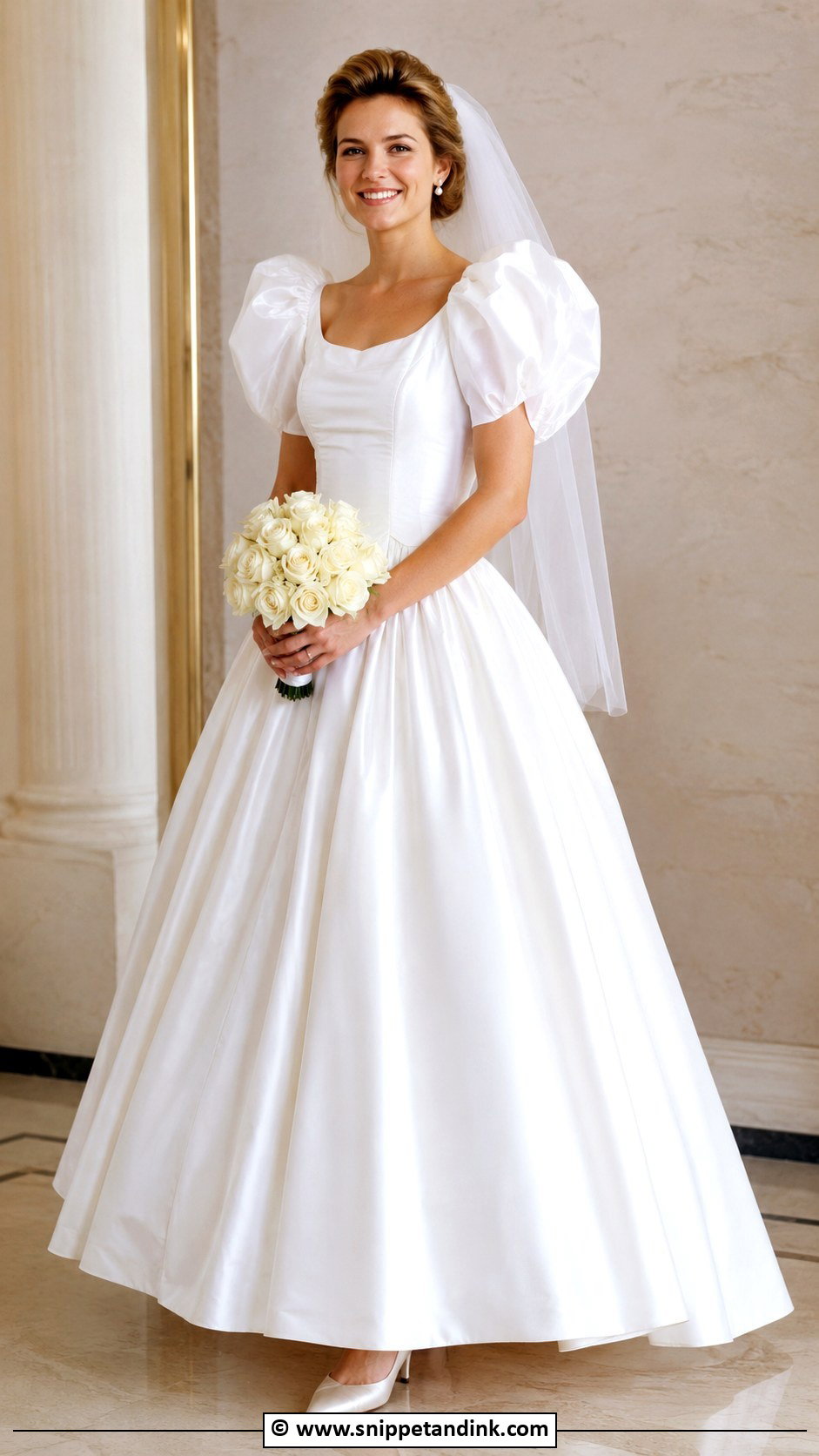
Puff sleeves are the most nostalgic early-nineties detail, small and soft or full and dramatic. To make them modern, pair them with a plain skirt and clean accessories. Satin, organza and taffeta all hold the shape. Classic heels, pearl studs and a veil that doesn’t compete with the shoulders finish it. A big puff widens the shoulders, which balances wider hips nicely; on broad shoulders I’d keep the puff small and soft.




25. 1990s Open Back Wedding Dress
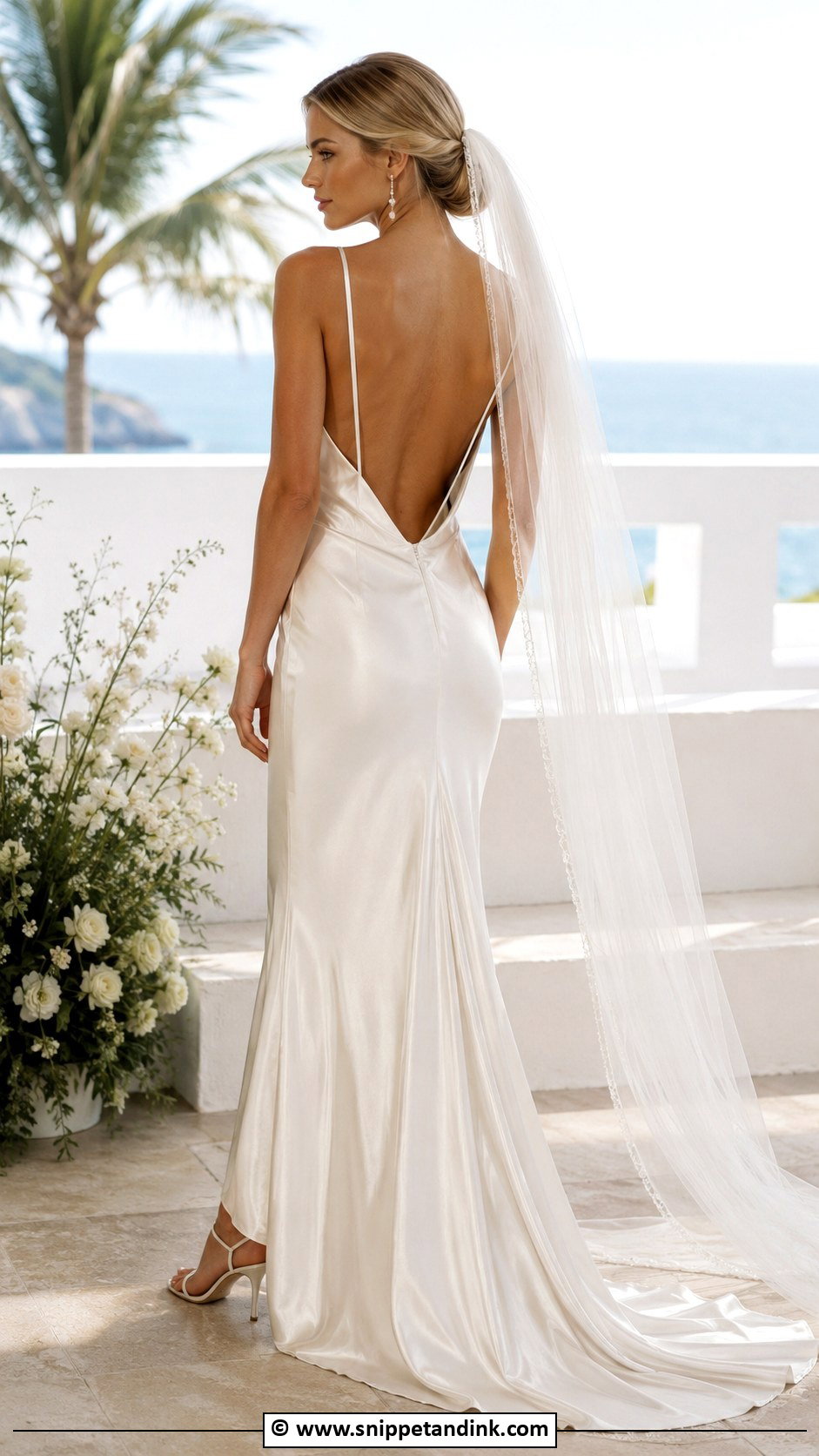
From the front, the dress can be minimal: a scoop neck, cowl or thin straps. From the back, a low cut or soft drape provides the drama. Satin, silk and crepe fall smoothly enough to carry it. Wear an updo, delicate earrings and a veil attached lower on the head so the back stays visible. A low back rules out most bras, so plan support early, whether that’s built-in cups, a low-back bra or an adhesive option, and wear it for a full day before the wedding to be sure.
26. 1990s Scoop Neck Wedding Dress
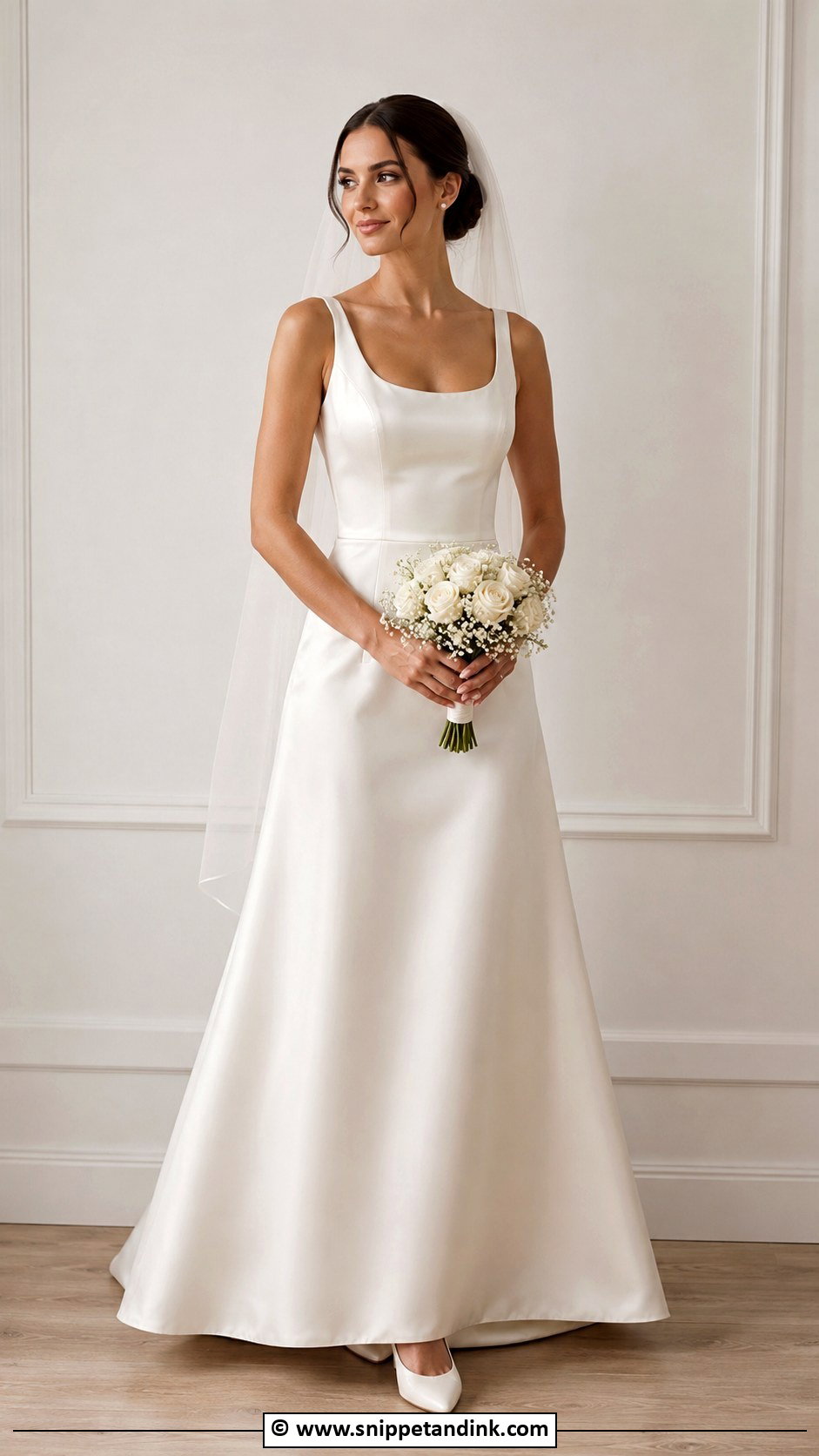
A scoop neckline is rounded, softer than a square and less dramatic than a plunge. With thin straps, short sleeves or a sleeveless bodice it fits the decade, and a column skirt makes it minimal while an A-line keeps it classic. Satin heels, a sheer veil and pearl jewelry finish it. It suits nearly any venue and figure, so I treat it as a safe starting point. Just make sure the scoop isn’t so low that you’re adjusting it every time you lean in to hug a guest.
27. 1990s Two Piece Wedding Dress
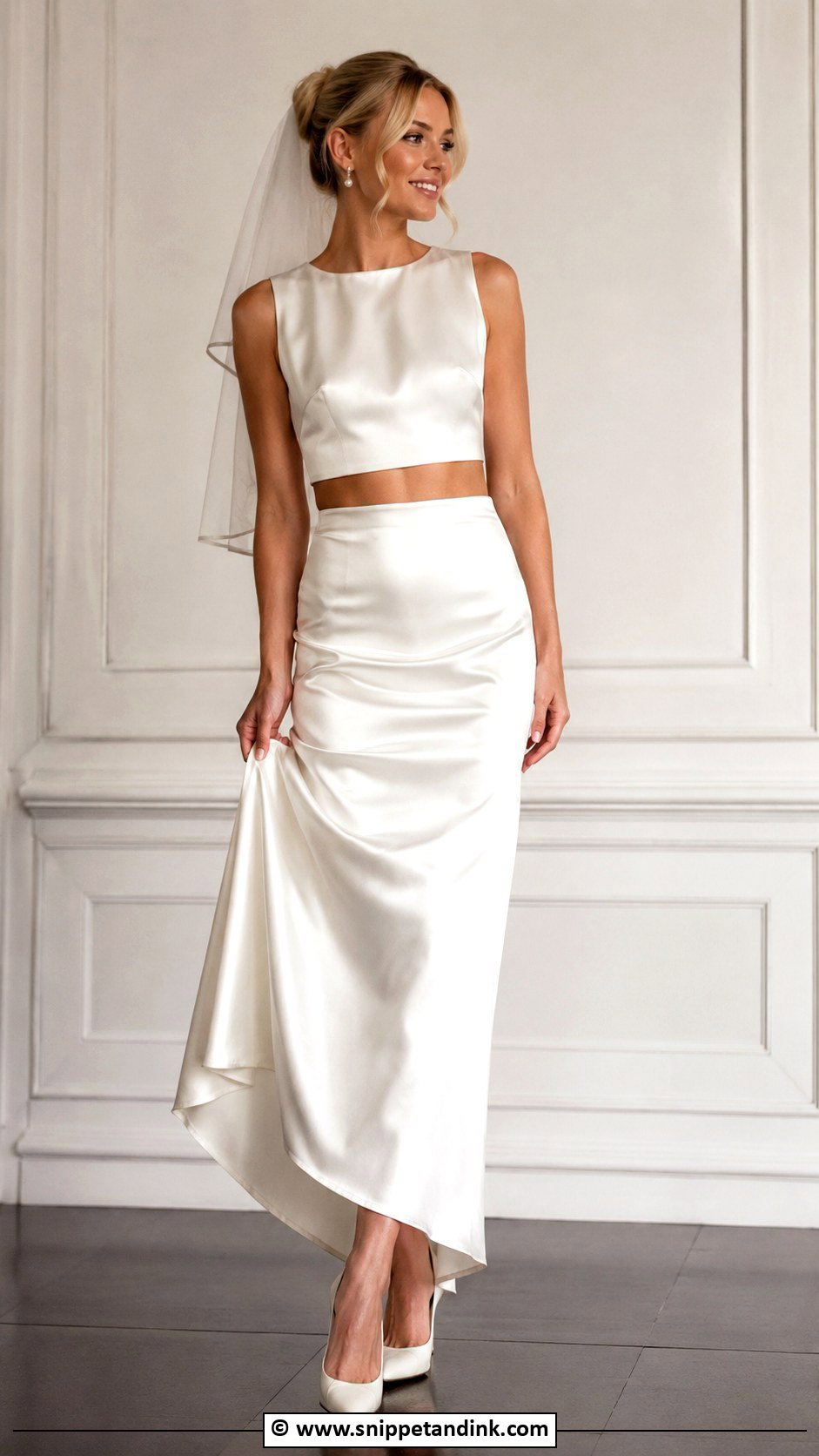
Separates are the fashion-forward way to wear the decade: a fitted crop top with a high-waisted satin skirt, a lace top over a smooth A-line, or a structured bodice with a simple column skirt. Keep the gap at the waist small for a bridal look. Sleek heels, a small veil and simple earrings are enough. The top needs to stay anchored when you raise your arms, so I add a hidden hook or fabric loop that joins it to the skirt waistband.
28. 1990s Wedding Dress With Gloves
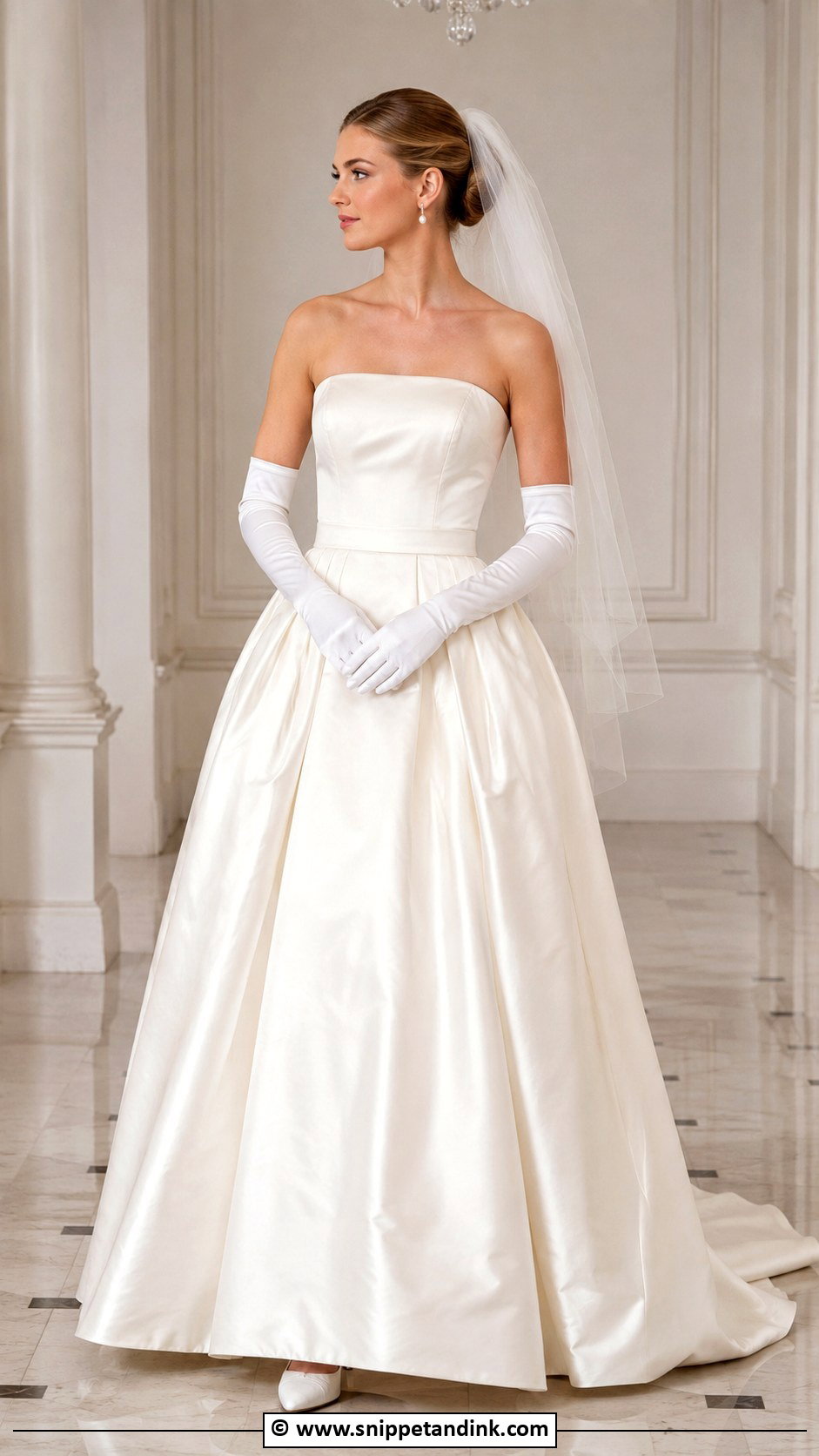
Gloves can change the mood of a simple gown, particularly with satin, crepe or a strapless neckline. Short ones feel playful, elbow length reads classic, and opera length adds drama. Keep the dress clean so the gloves look deliberate, then add pearl earrings, a smooth bun and classic pumps. Satin gloves pick up marks from bouquet stems and handshakes, so I keep a spare pair in the getting-ready kit.
29. 1990s Wedding Dress With Veil
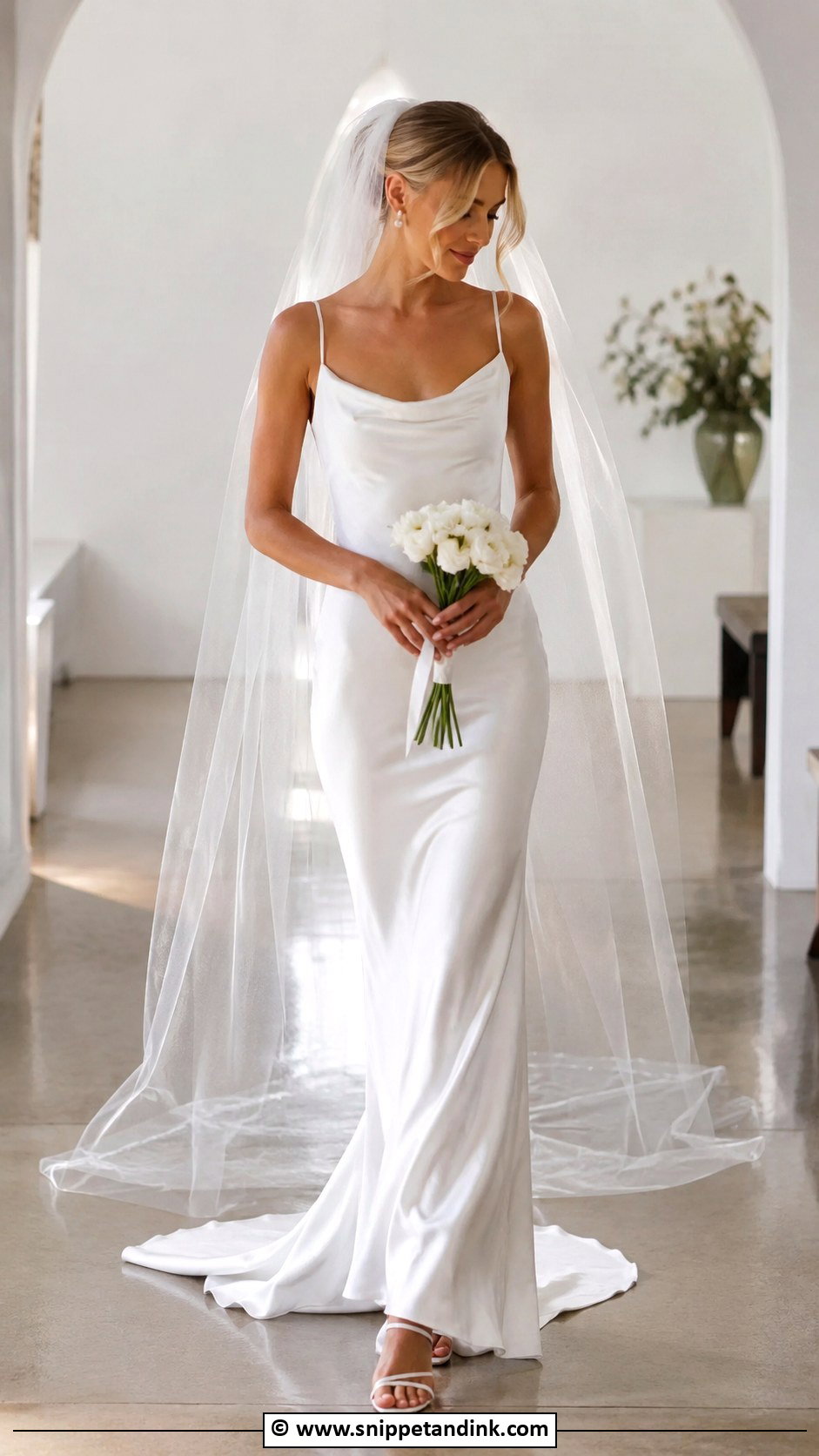
The veil decides whether a nineties dress reads minimal, romantic or dramatic. A slip dress with a long sheer veil gains ceremony from the contrast; a princess gown suits a fuller veil; a lace dress looks softer under a plain-edged one. Match the veil’s mood to the dress rather than piling on detail, and keep shoes, earrings and bouquet quiet. I always try veils with the actual hairstyle at the trial, because the same veil looks completely different on a low bun than on loose hair.
30. 1990s Courthouse Wedding Dress
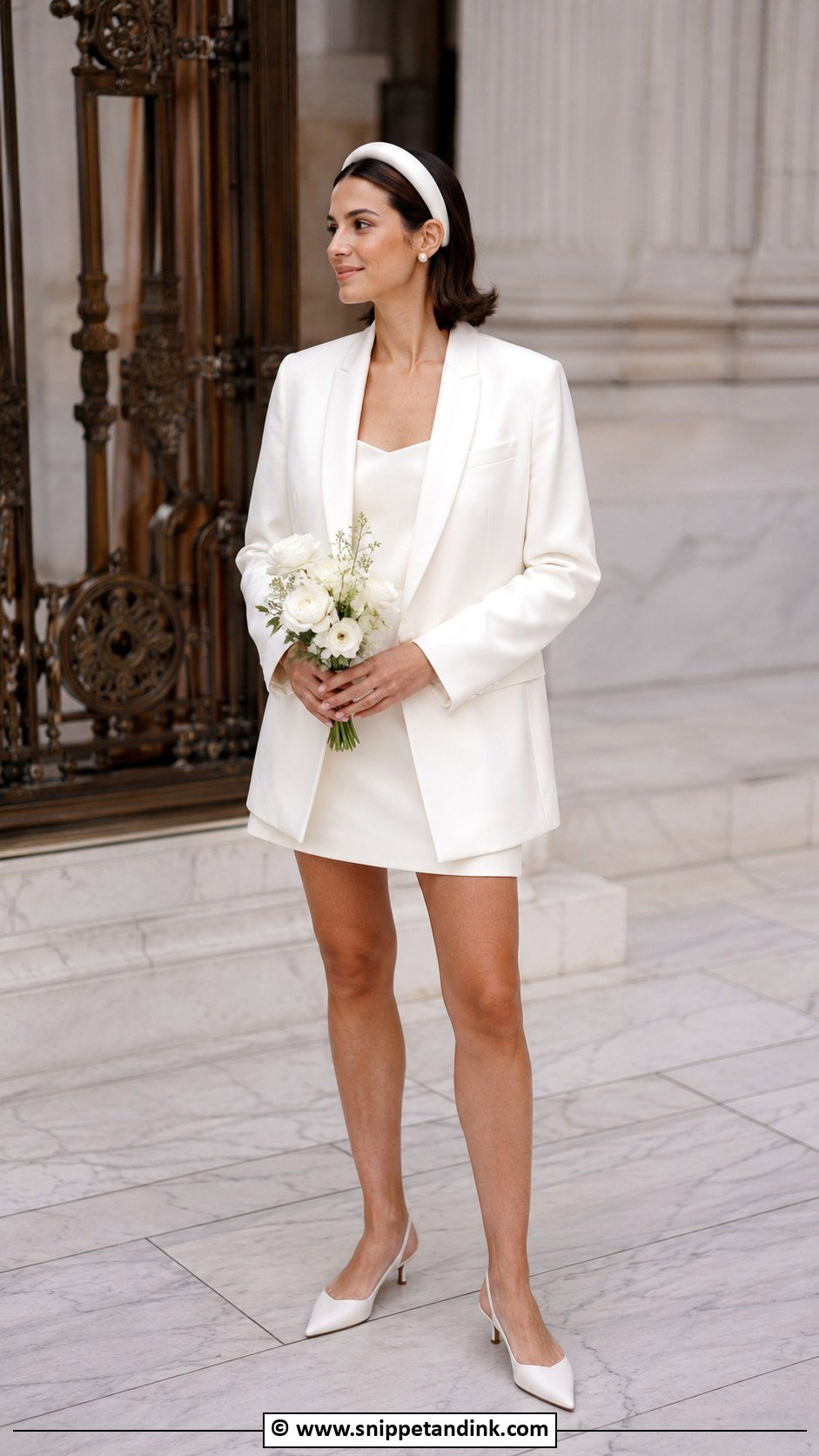
A 1990s courthouse wedding dress should be simple, sharp and easy to move in. A short slip, tea-length satin, a sleek column or a clean crepe sheath all qualify. Pointed kitten heels, a small bouquet, pearl studs and a short veil or satin headband complete it, and a tailored blazer or long coat looks very polished over the top. Pick a fabric that copes with a waiting room and city pavements; if there’s any doubt, I’d choose crepe over pale satin.
A Minimal Dress Needs Finished Edges Around It
With so little happening in the dress, everything around it becomes visible. That’s what people really mean when they say a nineties bride looked put together. These are the edges I check before the day.
Hair
Sleek is the decade’s signature, either a low bun or a smooth, straight blowout. Sleek also shows frizz, so in humid weather ask your hairstylist about a smoothing product and a backup clip. A deliberately messy updo next to a minimal slip tends to look unfinished rather than relaxed.
Shoes and hem
Strappy sandals or a pointed pump were the original pairing. With a floor-length slip, the toe of the shoe should just show when you stand still; any longer and you’ll step on the hem with every stride.
Something warm
A slip dress offers no protection from cold. For an evening or autumn wedding, plan a cover you’d happily be photographed in: a cropped cardigan in fine knit, a tailored long coat or a faux-fur stole. Avoid chunky textures, which fight the satin.
Bouquet
Small and tight looks right, a handful of calla lilies or a compact cluster of white roses. A large, loose bouquet hides the very line the dress is built around.
Stop at One Strong Feature
The decade proves a wedding dress doesn’t need to be complicated to feel special. Slip dresses, romantic lace, crisp taffeta, strapless shapes, gloves, veils and clean satin all still look right. Whether you lean toward Carolyn Bessette-Kennedy minimalism or a fuller princess gown, the method is the same: choose one strong feature and keep everything else polished and easy. Simple jewelry, comfortable shoes, soft hair and a veil that matches the dress’s mood will make the outfit feel considered, nostalgic and modern at once.
You'll Like These Ideas:





Leave a Reply