
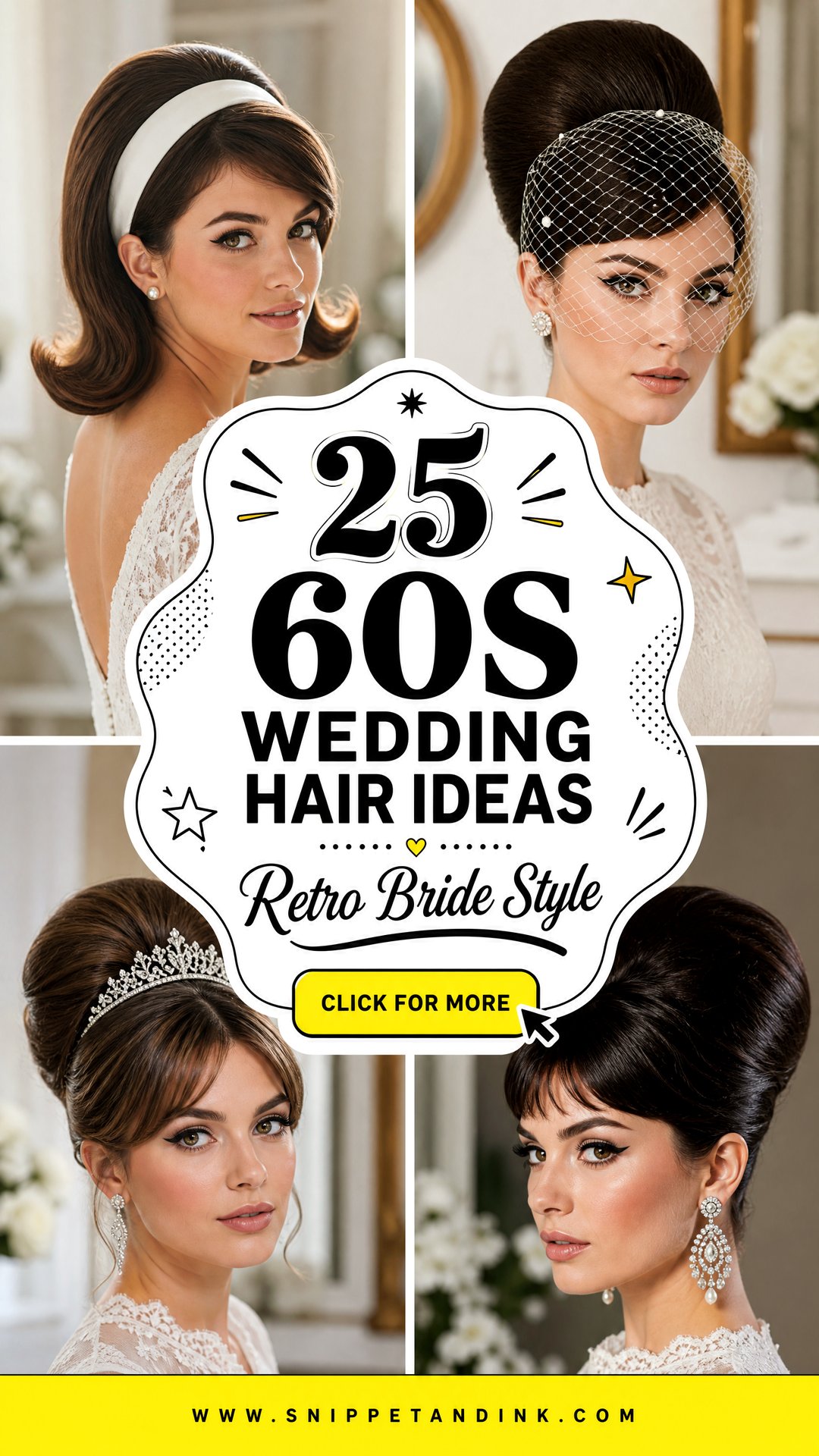
The 1960s built bridal hair around one idea: volume at the crown. Beehives, bouffants and flipped ends all depend on the same foundation, a well-placed cushion of backcombing that holds its shape for hours. That is the part I spend most of a sixties trial on, because the shape on top is only as good as the structure underneath it. Below are 25 retro looks I’d happily build for a bride, with notes on how each one behaves on real hair, what it pairs with, and who should think twice before booking it.
How Backcombing Gives Sixties Hair Its Height
Nearly every look below starts with the same step: teasing the hair close to the root so it can hold height. Done well, the teasing is invisible, hidden under a smooth top layer. Done badly, it shows as a fuzzy crown and flattens within hours.
I work in thin horizontal sections, holding each one straight up and pushing a fine comb down toward the scalp three or four times. The cushion should sit in the first few centimetres of the root, not halfway up the strand. That’s what lets me smooth the outside over it cleanly.
What your hair type changes
- Fine hair holds height poorly when it’s freshly washed. I ask brides to wash the day before and I add root powder or texture spray before teasing.
- Thick hair holds volume easily but gets heavy. I tease less and use a small padded insert for very tall shapes so the pins aren’t carrying all the weight.
- Curly and coily hair already has natural lift. I often skip teasing and shape the volume with a brush and pins instead.
- Very silky, straight hair slides. A light texture spray and crossed bobby pins under the lift make the difference.
Bring photos to your trial showing the height you want from the side, not only the front. A beehive that looks perfect head-on can look surprisingly tall in profile.
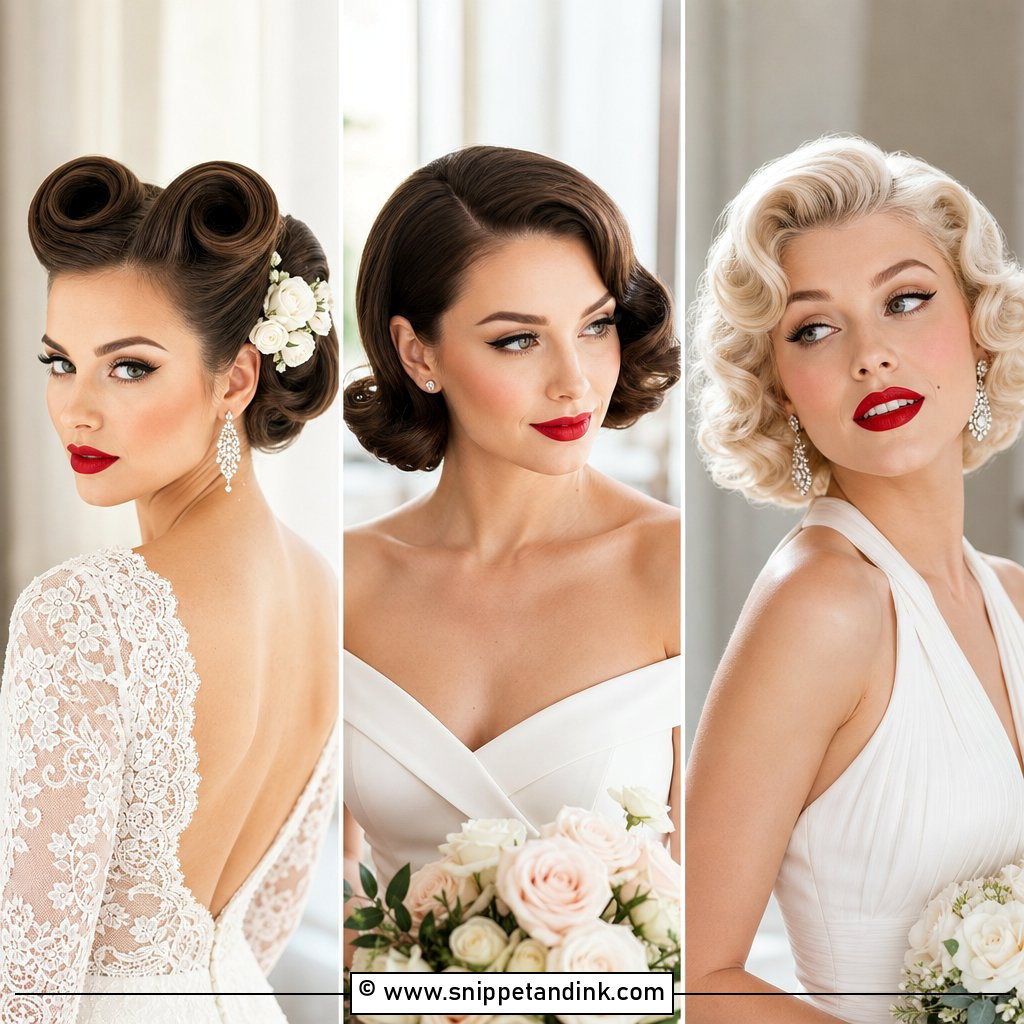
1. 60s Beehive Wedding Updo
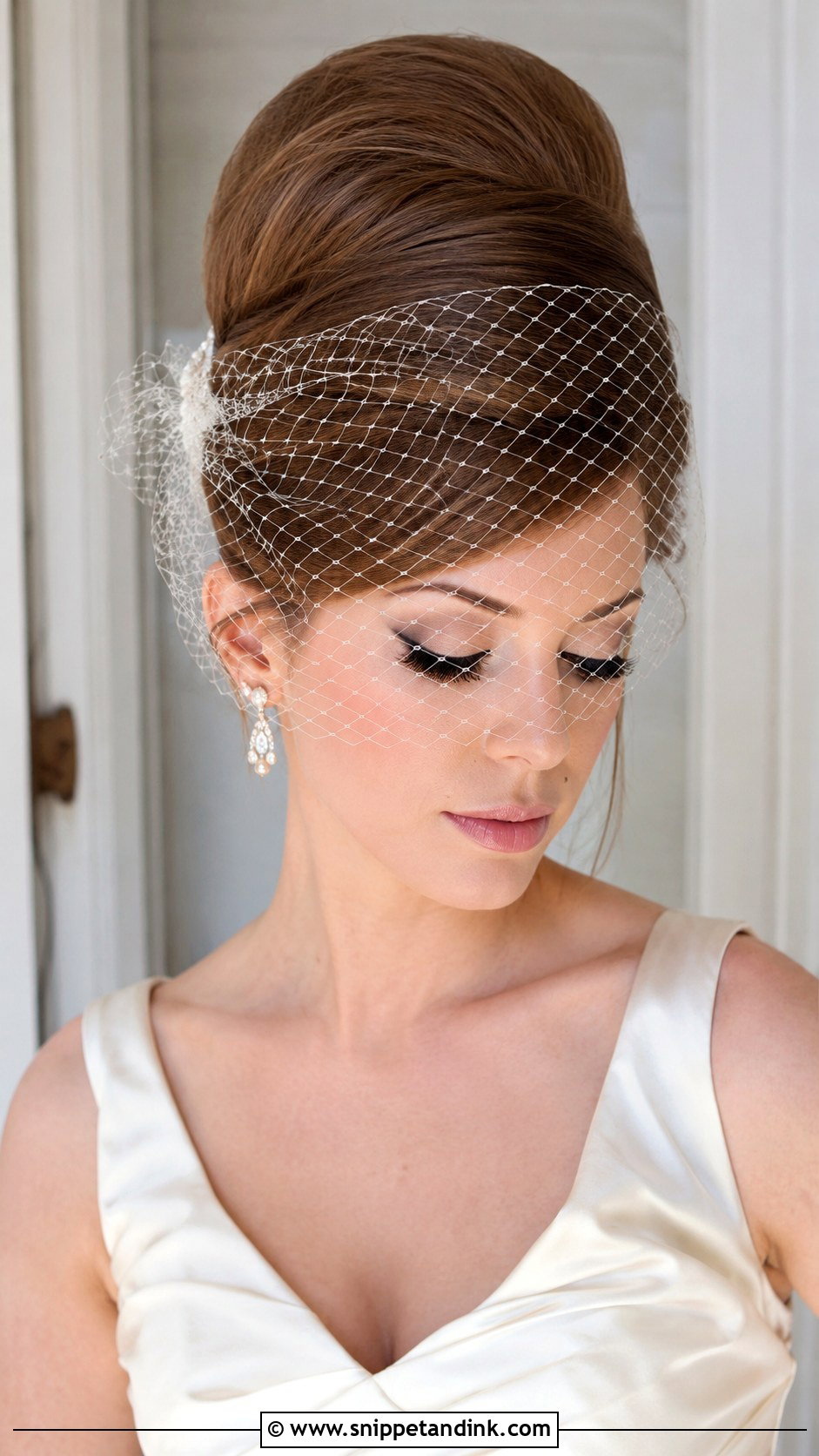
The beehive is the most demanding shape on this list. I build it in horizontal sections from the crown forward, backcombing each one close to the root, then smooth a clean top layer over the cushion so no teasing shows through. On very fine or freshly washed hair it collapses within a couple of hours, so I ask brides to wash the day before. Leave a couple of soft pieces by the face or it can read severe. A birdcage veil anchored just below the height finishes the movie-star feel, and it suits a formal venue far better than a barn.
2. Soft Bouffant Half-Up Bridal Hair
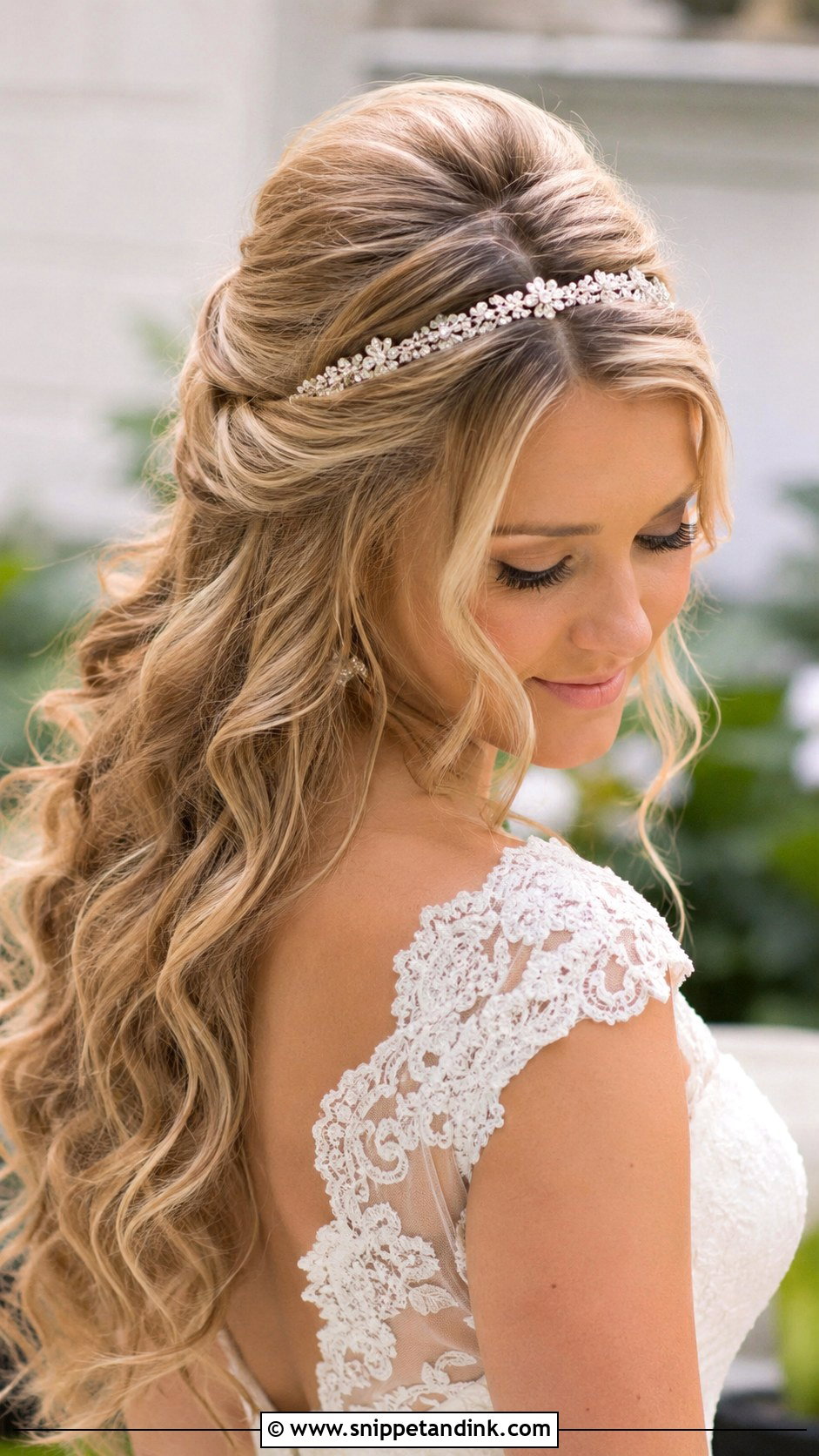
A half-up bouffant gives you the sixties lift while your length stays down, which makes it the easiest entry into the decade. I tease only the top third of the head, smooth it back and secure it with crossed bobby pins under the lift so the height can’t slide. The weak point is the pin line: on slippery hair it shows by the speeches unless I add a small padded insert. Loose curls at the ends keep it moving, and a simple veil tucks in right below the bouffant.
3. 60s Flip Hairstyle With Headband
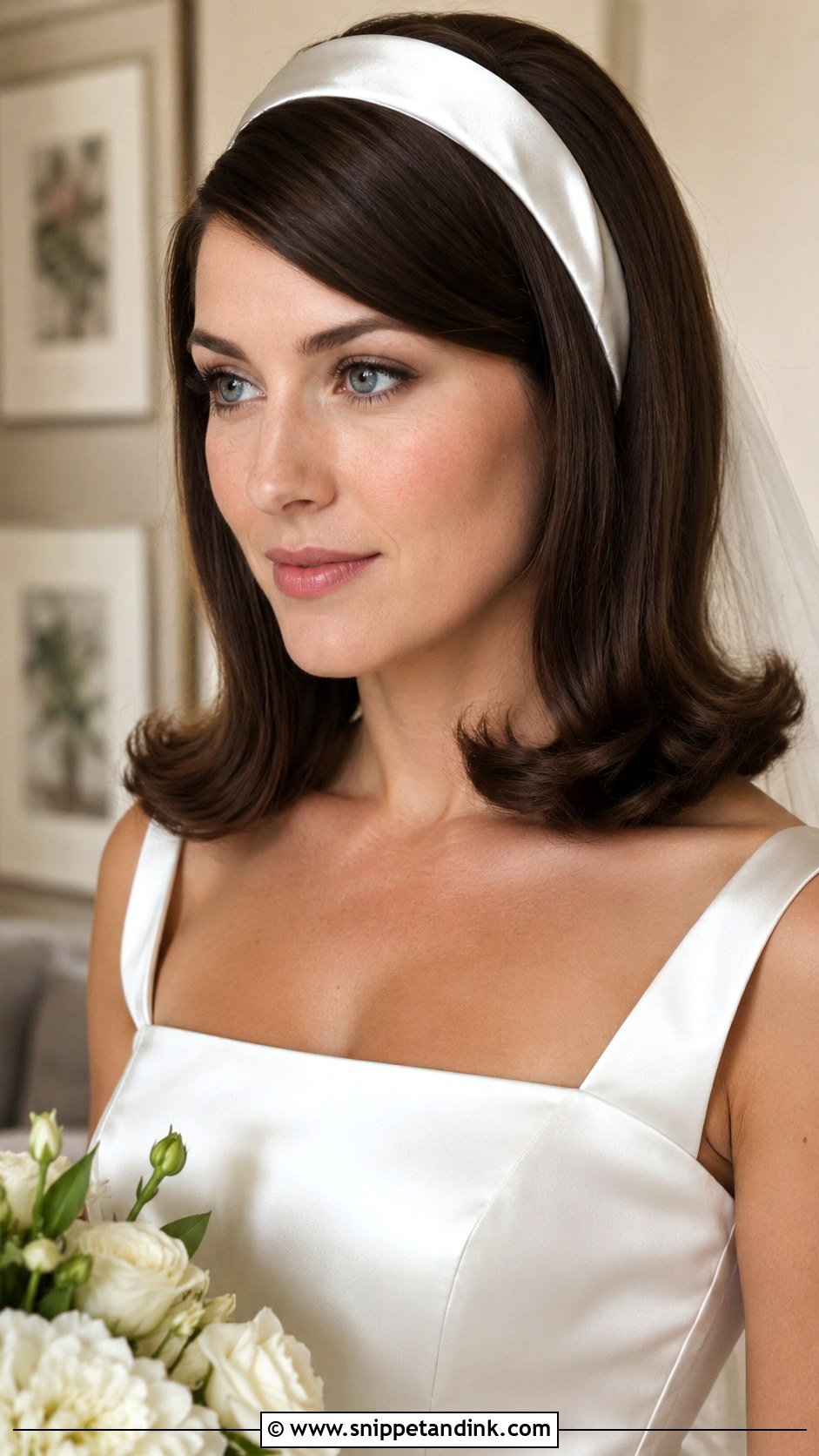
The flip is mostly a cutting question. It needs hair that ends somewhere between chin and shoulder, because longer lengths pull the outward curl straight within an hour. I set it with a large round brush or hot rollers wound backwards, then pin the rollers to cool completely before brushing out. A wide satin headband across the crown covers the parting and gives the bounce somewhere to start. On a hot outdoor day I’d add a stronger setting spray, or the ends will relax by the first dance.
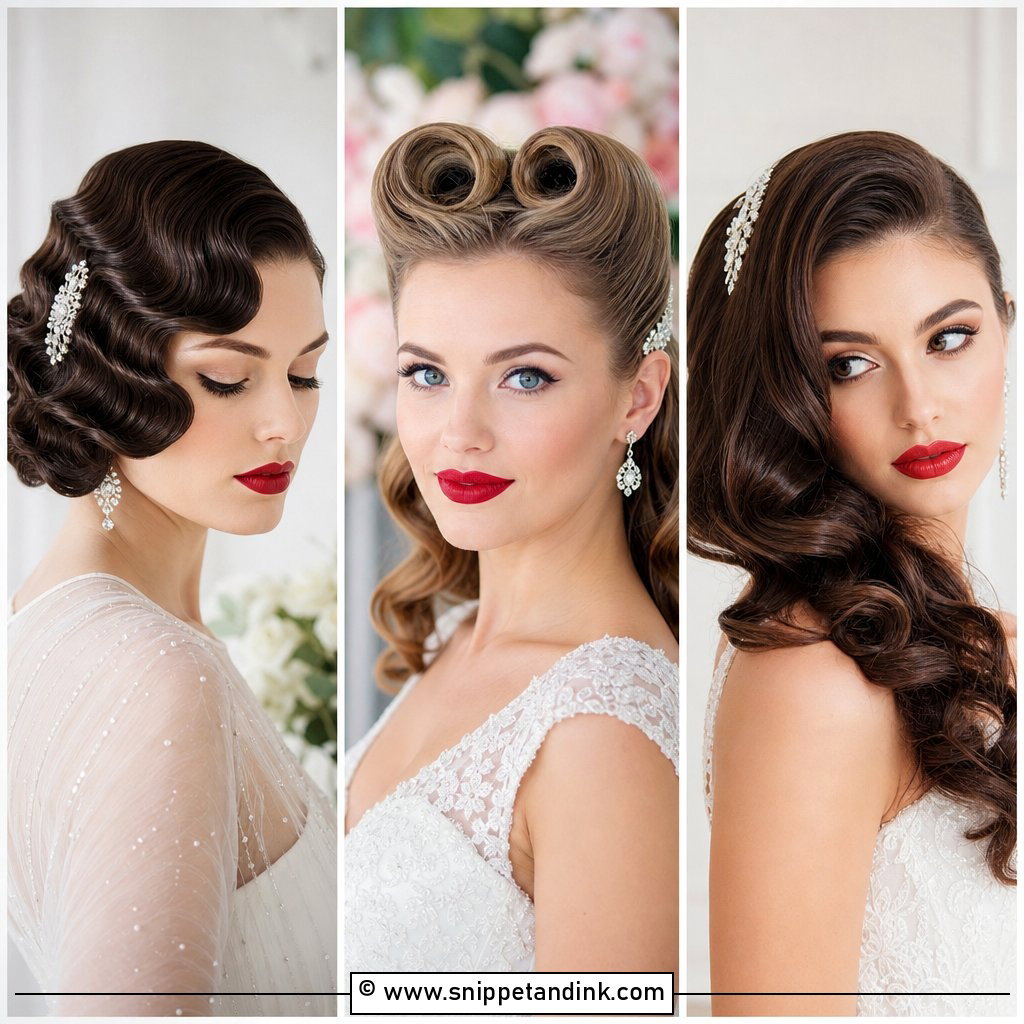
4. Hollywood Waves Wedding Hair
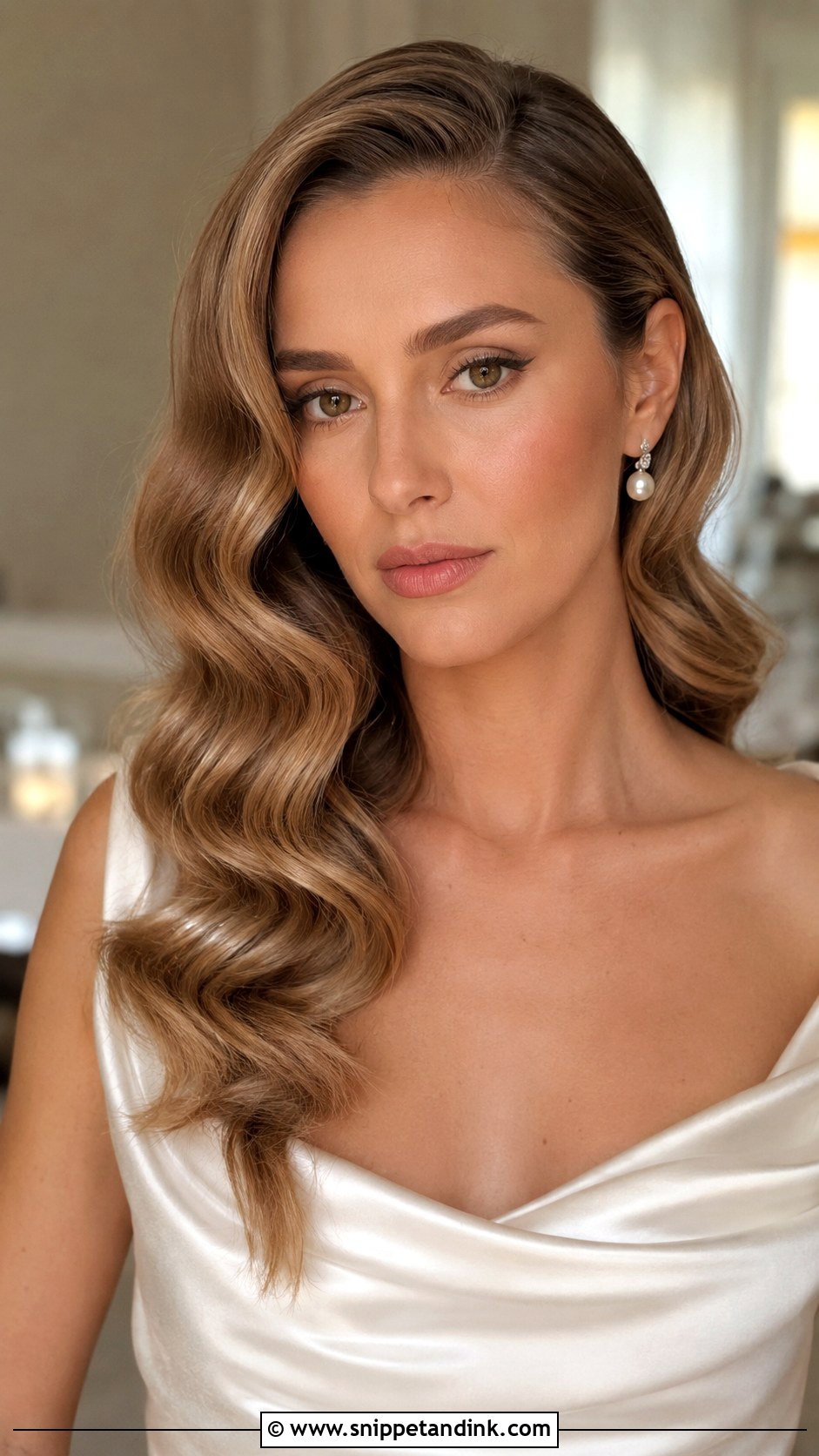
Strictly speaking, these sculpted waves belong more to the forties than the sixties, but plenty of retro brides want them. I set them in pin curls or a large-barrel iron, all curled in the same direction, then brush them out with a boar bristle brush until the curls merge into one ripple. The brushing is where most home attempts fail; skipping it leaves separate curls rather than waves. They need medium to long hair and a deep side part, and they look richest under low evening light.
5. Beehive With Birdcage Veil
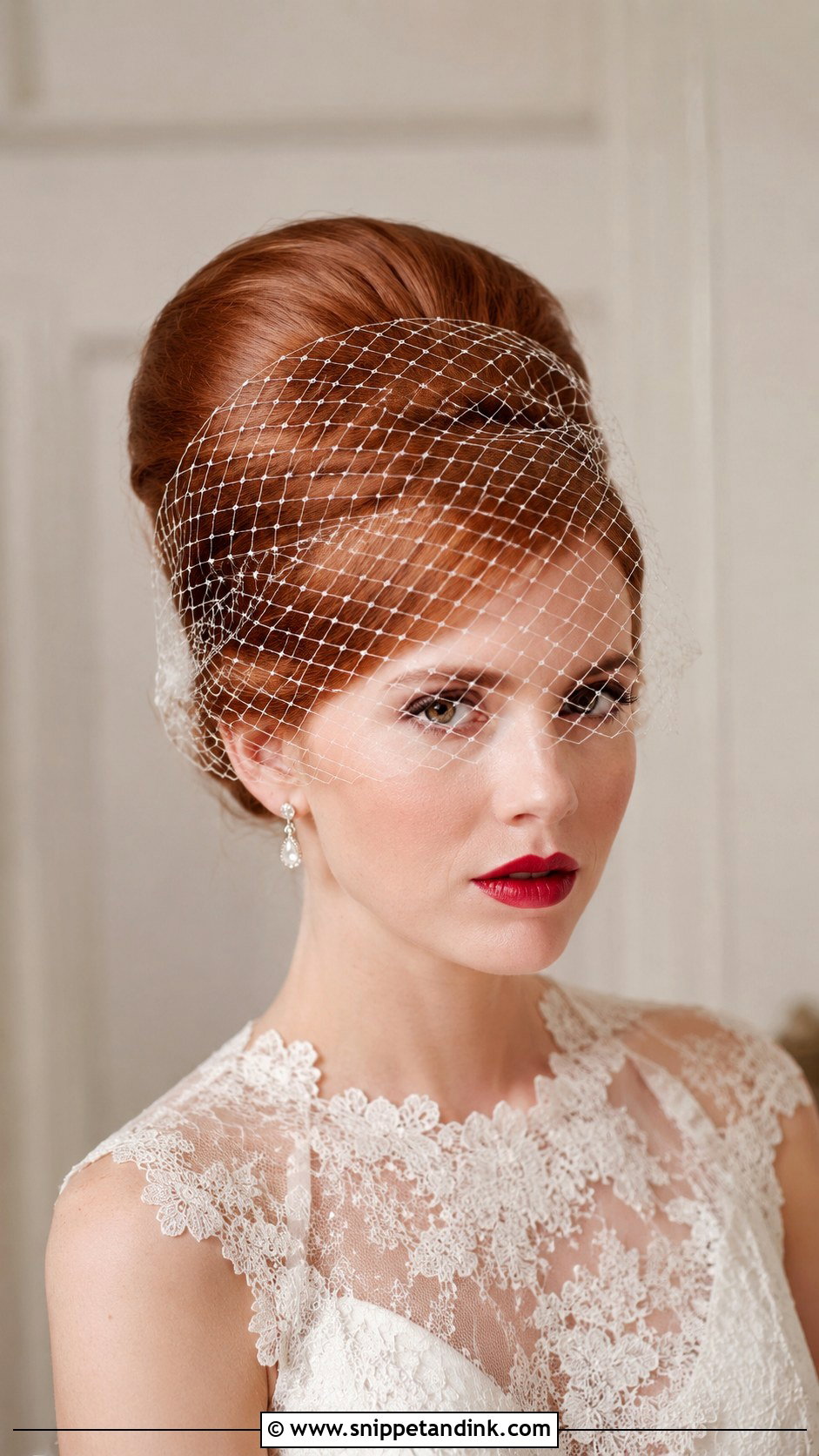
Pairing a beehive with a birdcage veil is the most recognisable sixties bridal look there is. The veil’s comb needs something firm to grip, so I place it into the backcombed base rather than the smooth top layer, usually angled slightly to one side. The netting should land at the eyebrow or just below the cheekbone; too low and it hides your eyes in photos. Keep your makeup crisp, because the veil softens everything behind it, and a defined lip reads best through net.
6. Low Bun With Bump Wedding Style
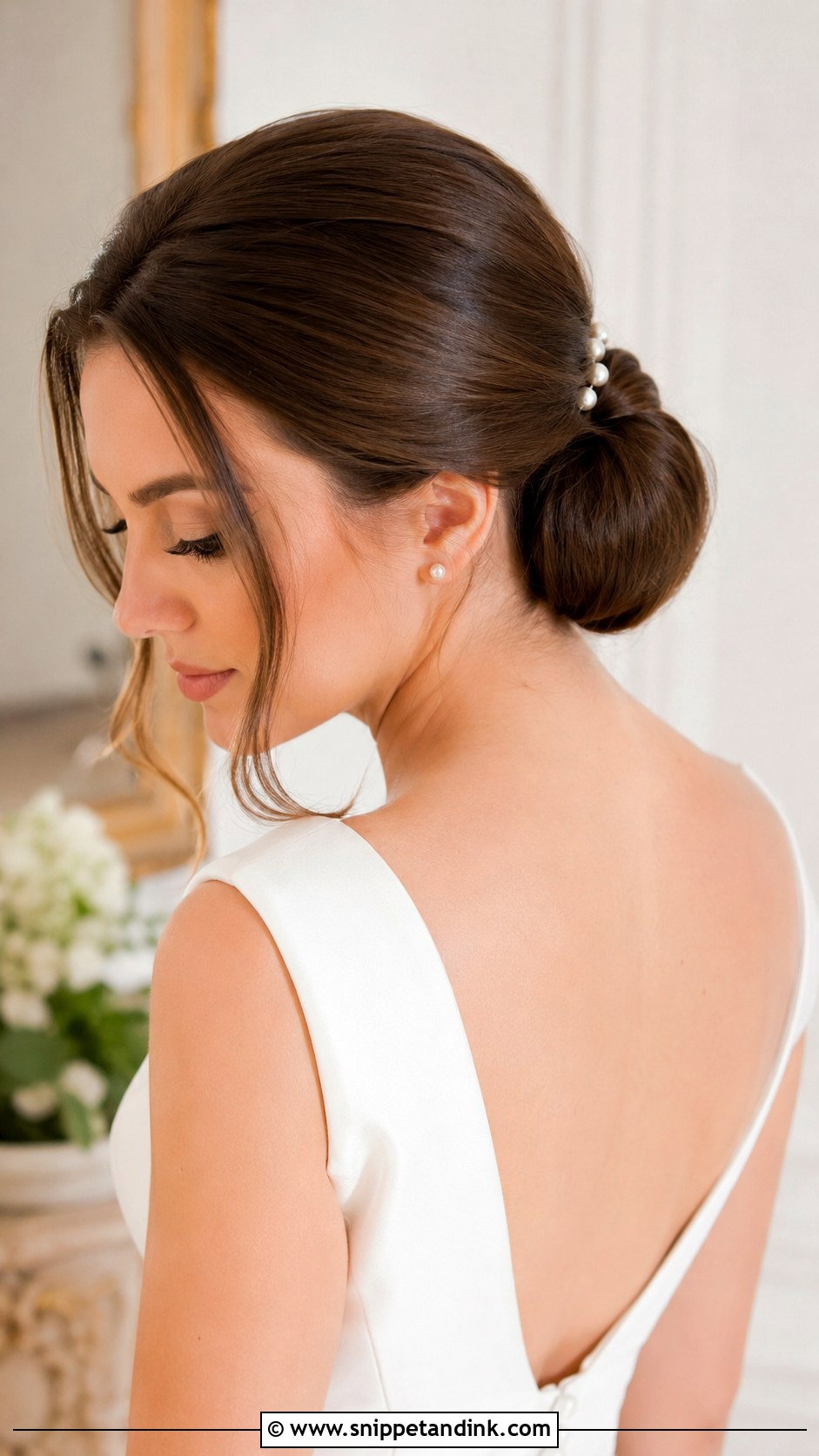
This is the sixties look I recommend most to brides who are nervous about height. The bump at the crown is modest, maybe two or three centimetres, and the rest sits in a smooth bun at the nape. Because the weight is low, it survives a long day well and stays comfortable under a cathedral veil. Pearl pins or a single jewelled clip beside the bun add shine without fighting the shape. In summer it keeps your neck clear, and that matters more than people expect by mid-afternoon.
7. Bouffant Ponytail Bridal Look
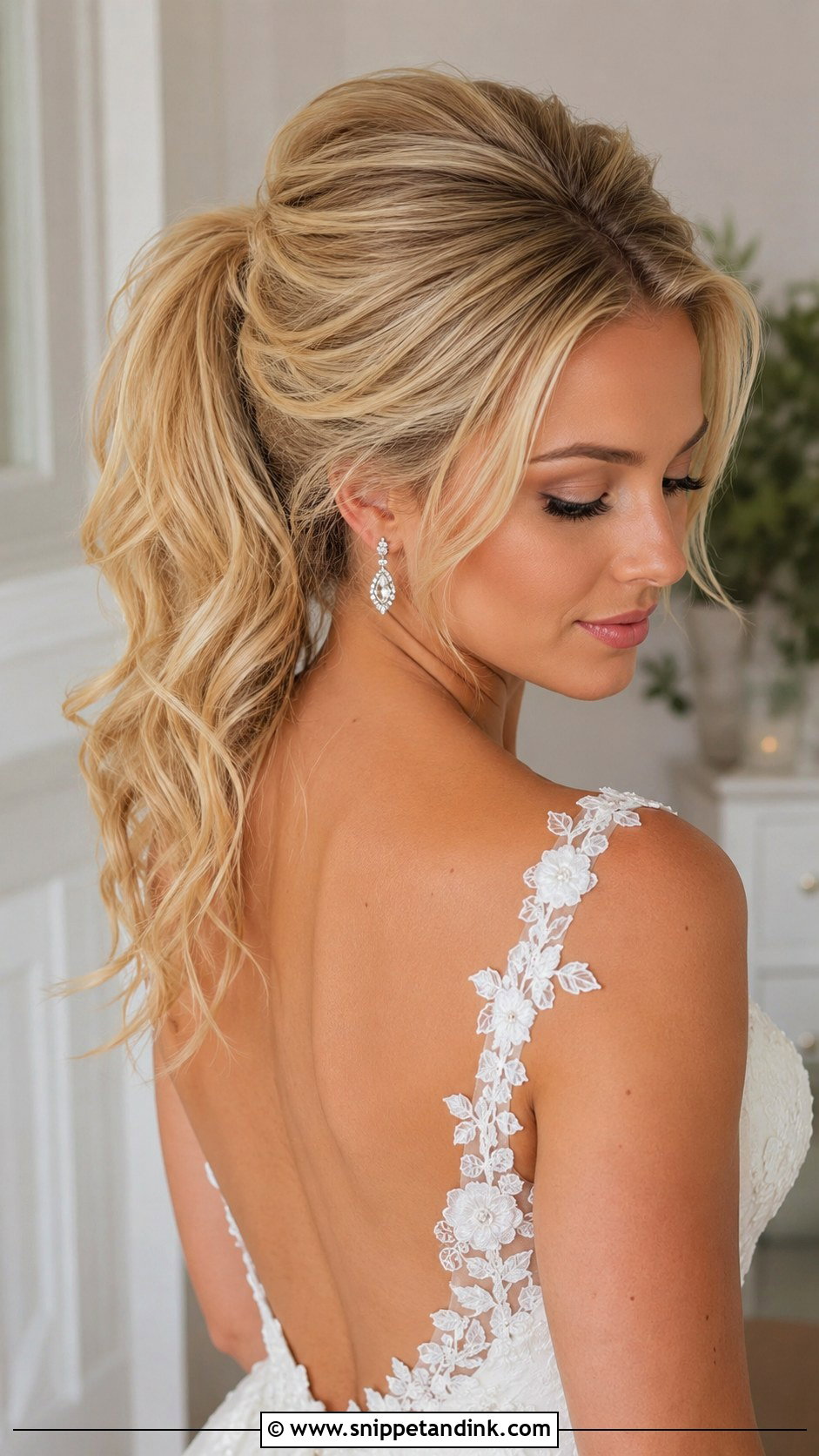
The trick with a bouffant ponytail is securing the lift and the ponytail separately. I tease the crown first, smooth it, and pin it in place before gathering the pony, otherwise the elastic drags the volume flat. A strand wrapped around the base hides the band. It needs decent length and density to look full; on thin hair the tail can look sparse next to a big crown, and clip-in extensions solve that quickly.
8. Half-Up Beehive With Curls
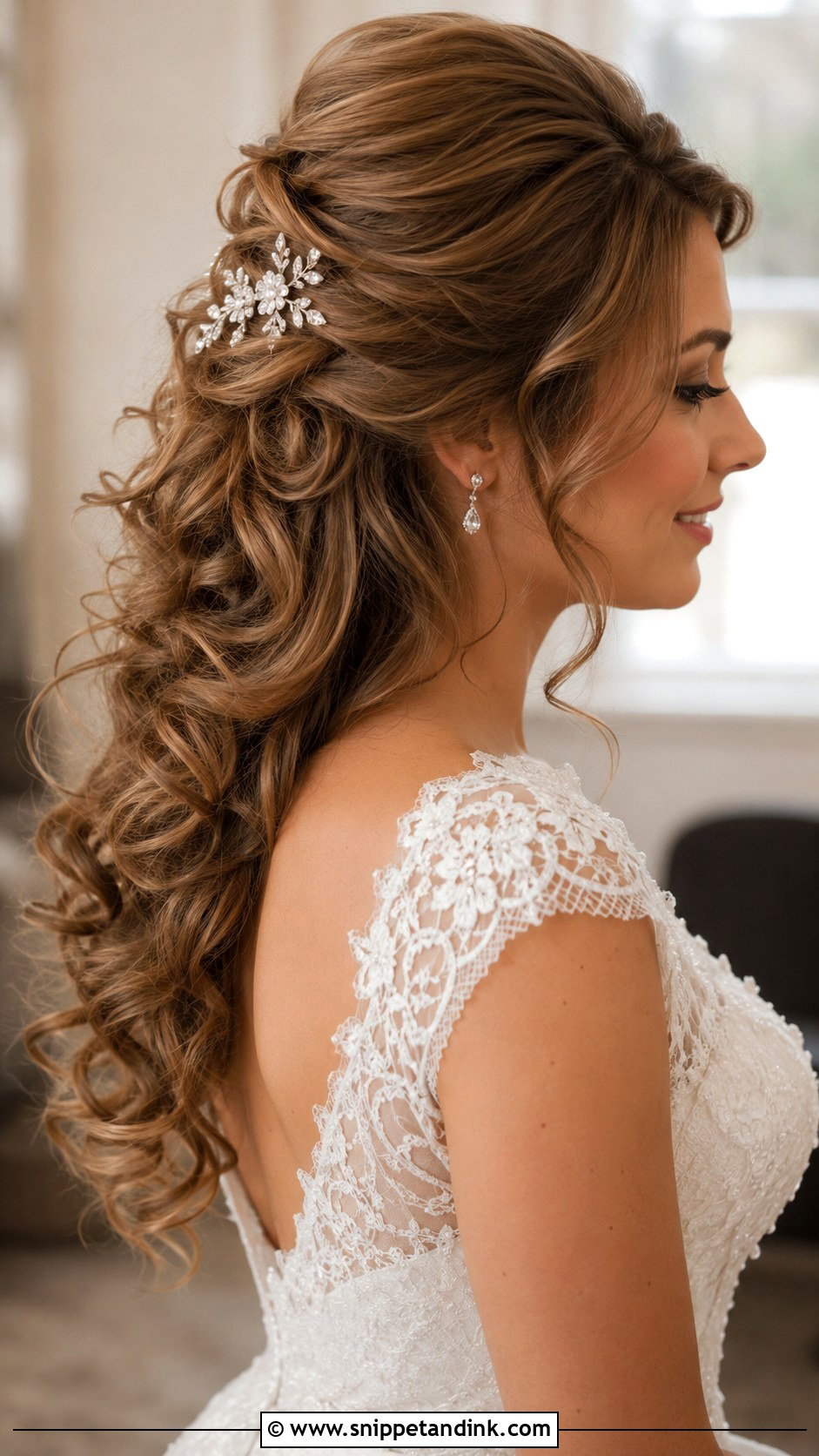
A half-up beehive gives you serious height with your curls still down, which is a fair compromise if you can’t decide between up and down. The risk is proportion: if the beehive is too tall and the curls too loose, the head looks top-heavy in full-length shots. I keep the crown slightly lower than a full beehive and give the curls a firmer set. A comb or jewelled pin at the base of the lift hides the anchoring pins neatly. Long hair carries it best.
9. 60s Bridal Updo With Bow
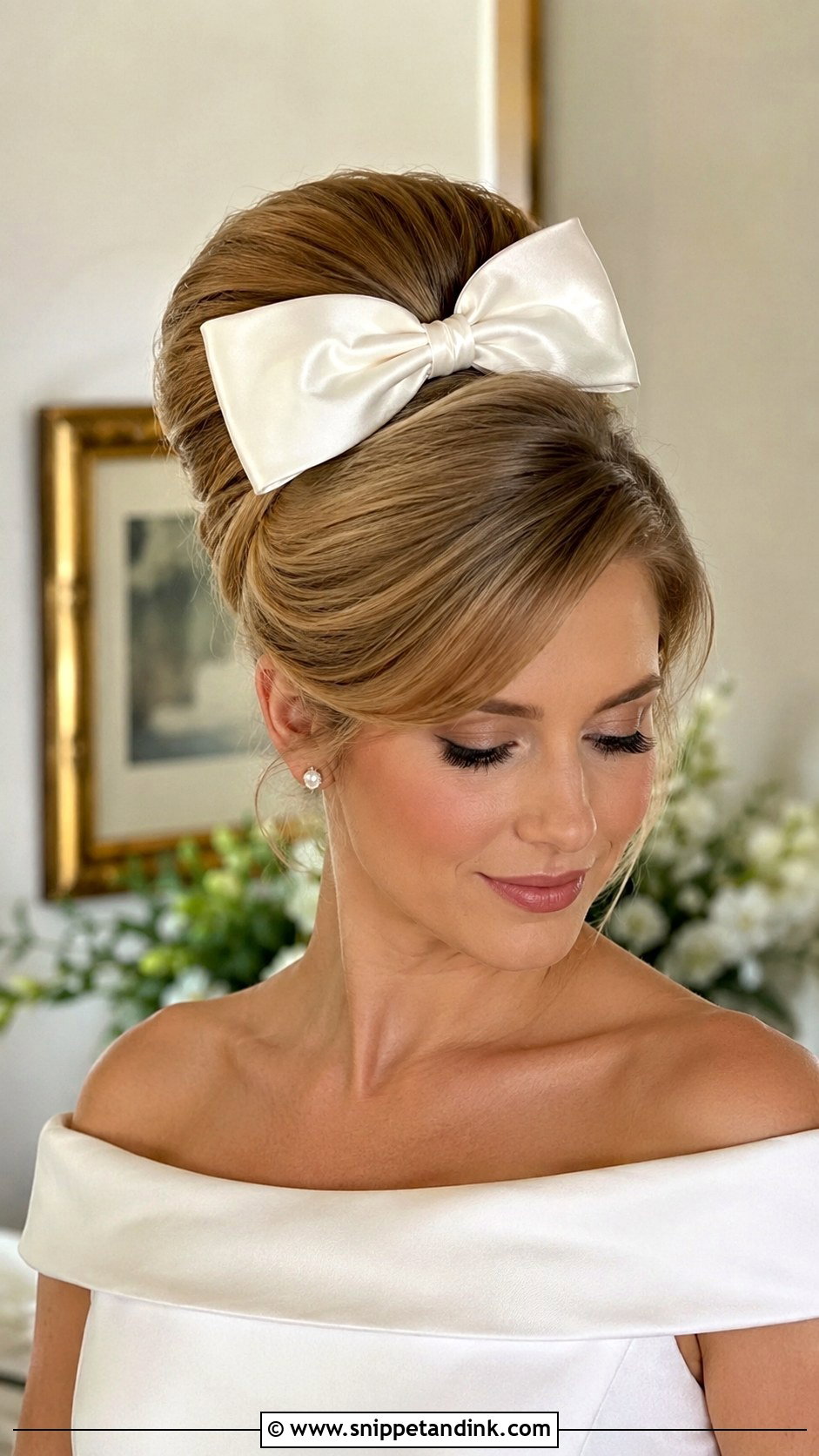
A bow is a very sixties finish, but its size has to match the updo underneath. An oversized bow on a small bun looks like a gift tag, so I usually go for a fuller, rounded updo to give it a base. Satin or velvet in the same shade as your gown keeps it bridal rather than costume. Attach the bow on a clip or comb and pin it through the bun, not the surface hair, so it doesn’t twist sideways during hugs.
10. Teased Half-Up With Veil
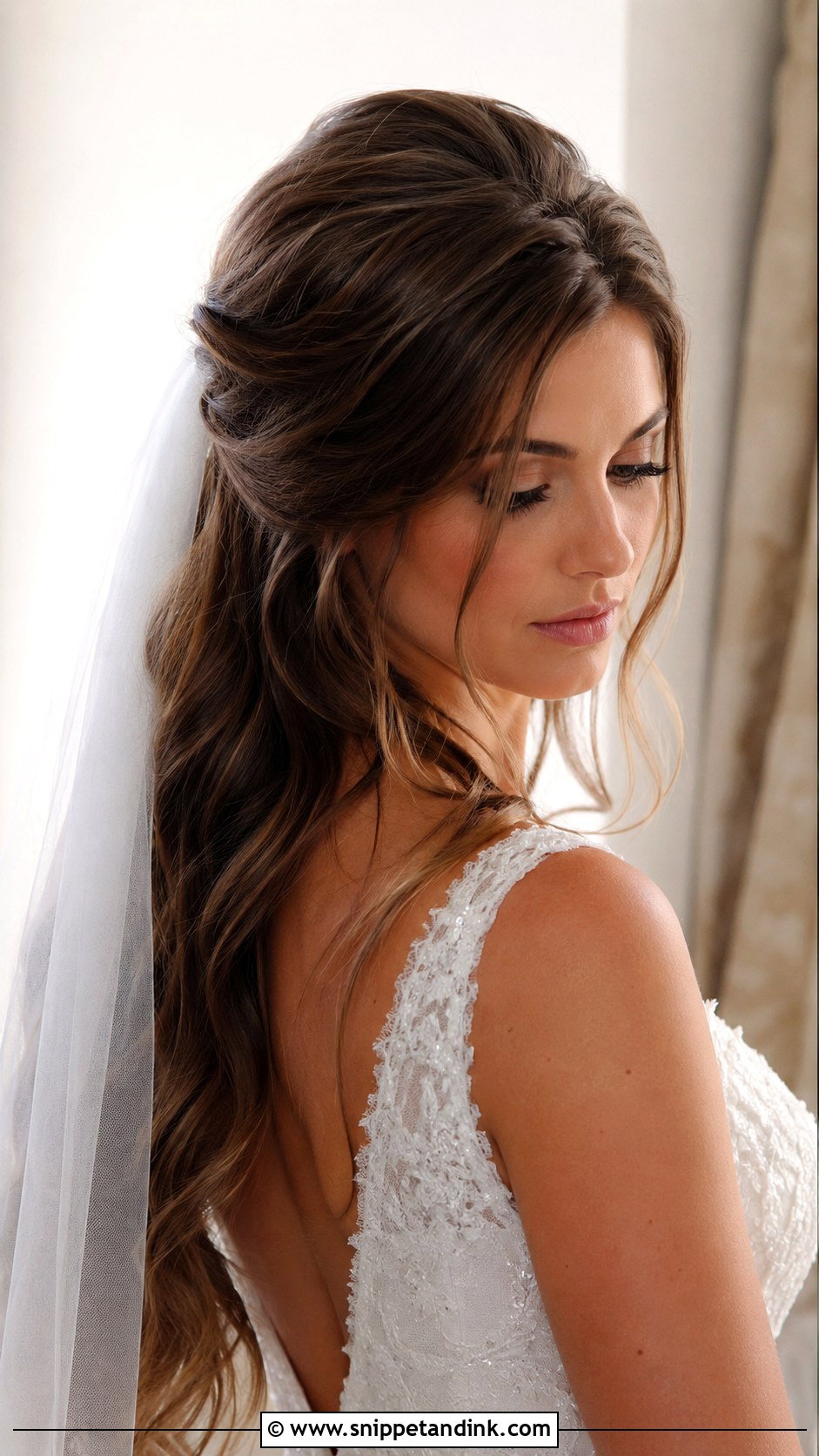
Teased half-up with a veil is the most practical retro style here for a traditional ceremony. I lift the crown gently, then slide the veil comb in directly under the bouffant so the volume sits on top of it. That position hides the comb and stops the veil pulling the lift backwards. When you remove the veil for the reception, the shape stays intact. It suits brides who want their length on show and a recognisable nod to the era without a full set.
11. Beehive Bun Wedding Hair
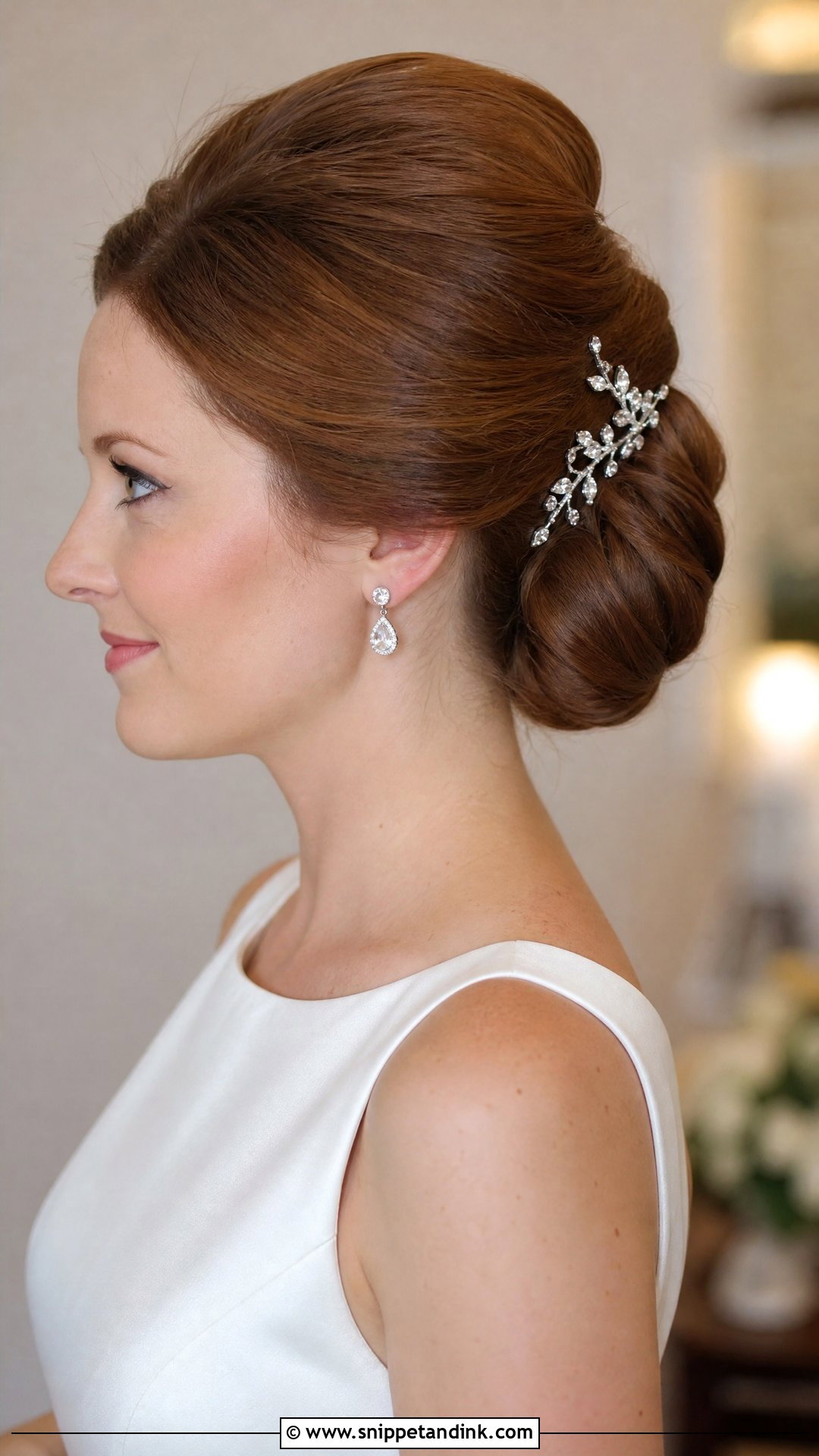
The beehive bun is sturdier than a classic beehive because the twist at the back locks the teased section in place. I backcomb the crown, smooth it into height, then wrap the lengths into a bun pinned close to the head. Once it’s set, it holds through hours of dancing better than almost any loose style. A small tiara or a sparkling pin works at the front edge. On very thick hair it can get heavy, so I’ll thin out the bun section with fewer pins rather than more.
12. 60s Inspired Pixie Wedding Look
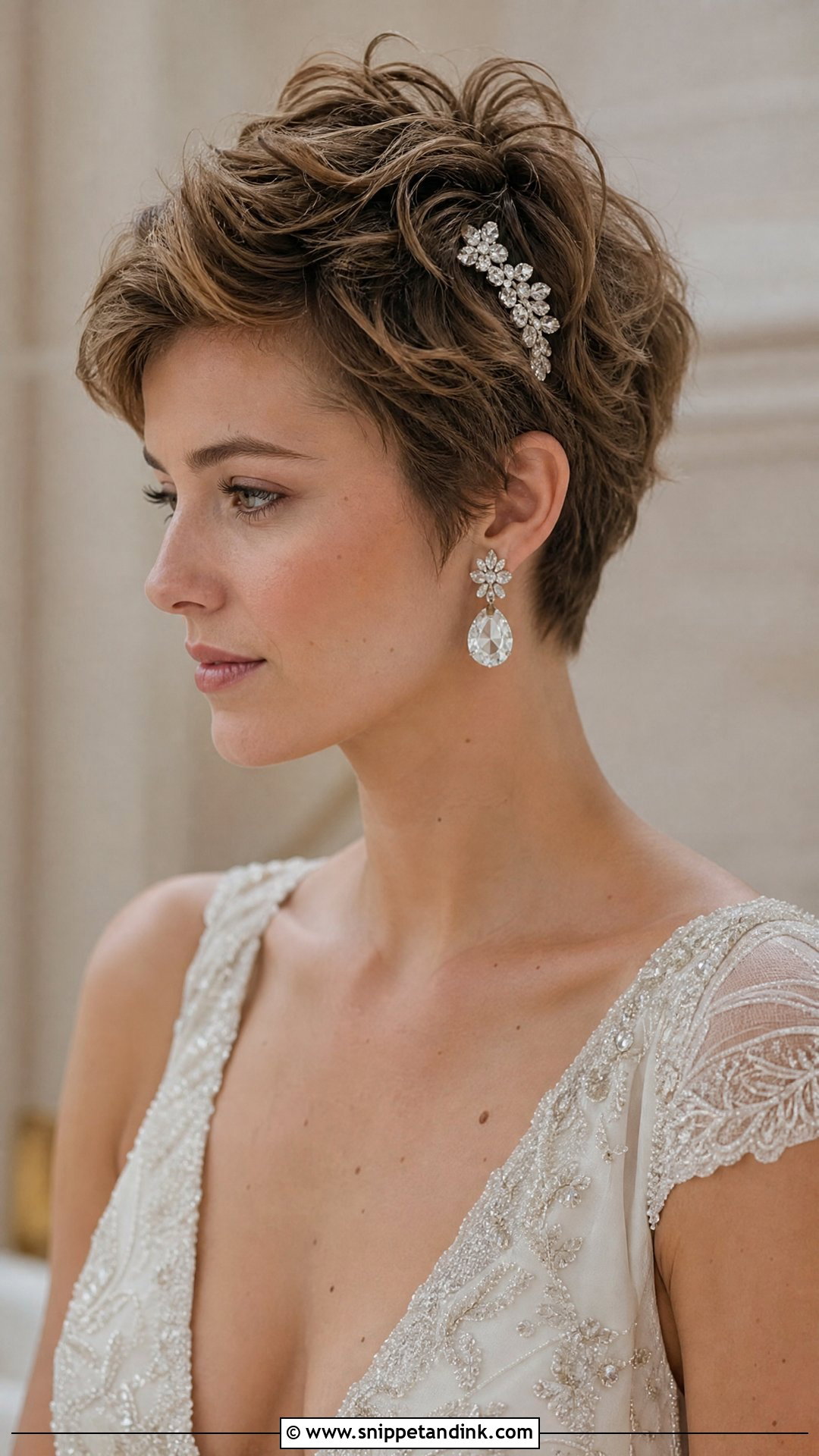
Short hair can carry sixties glamour, and a pixie is closer to the era’s mod side than people assume. I add lift at the crown with a little root powder and a round brush, then press a soft wave into the fringe. A delicate headband or a jewelled clip above one ear is all the accessory it needs. Get your cut about one to two weeks before the wedding so it has settled but not grown out. Statement earrings matter more here than with any long style, since nothing hides them.
13. Bouffant With Side Swept Bangs
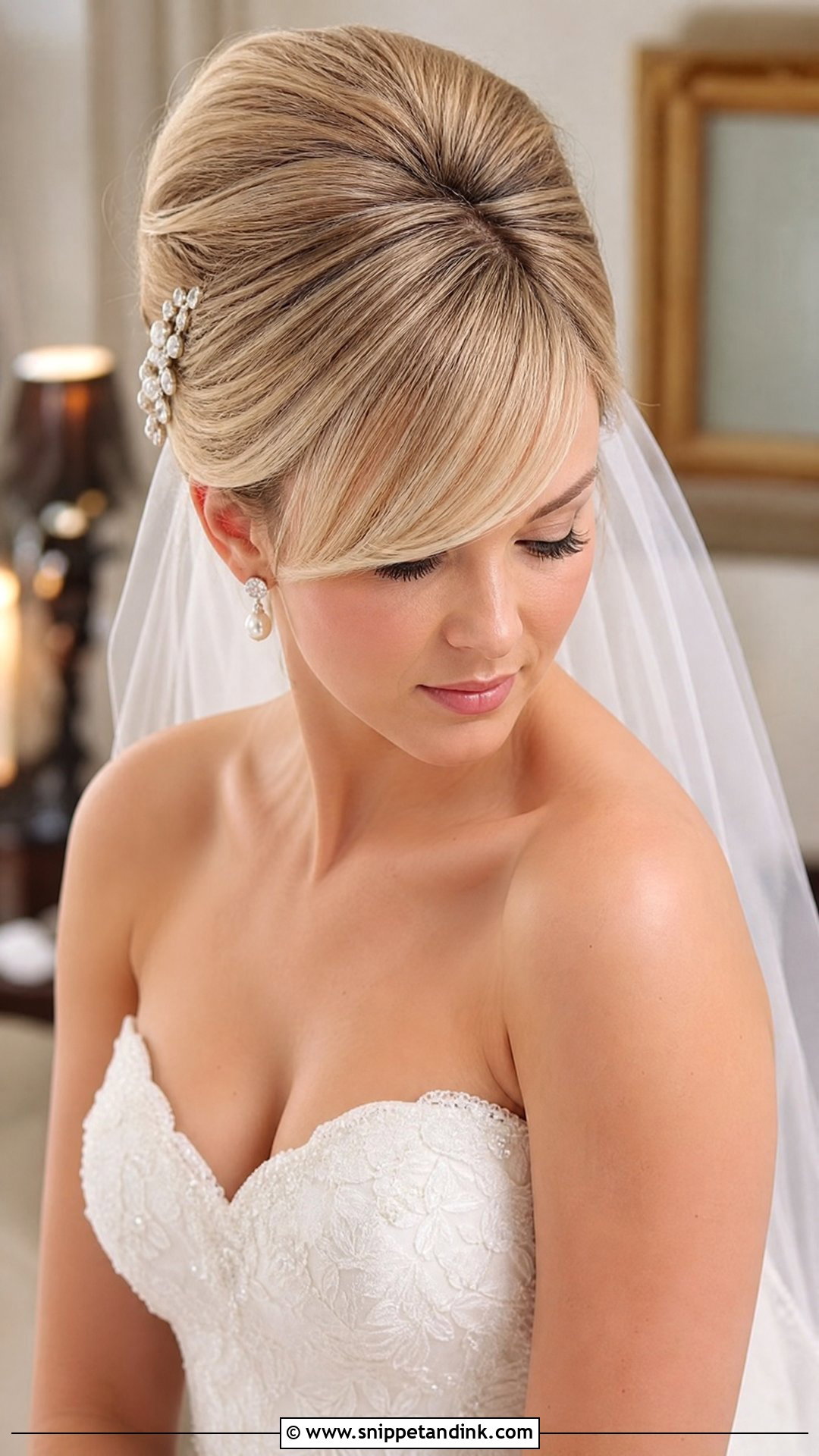
Side-swept bangs soften a big bouffant and help on a high forehead. The main caution is timing: trim your fringe a week or so before the wedding, not the day before, because fresh bangs sit too short and stiff. I blow-dry them across with a round brush and set them with a light spray so they move rather than sit as a solid block. A small clip near the bangs adds a little shine. It works up or half-up, and it’s kind to rounder faces because the diagonal line breaks the width.
14. Retro Curls With Flower Crown
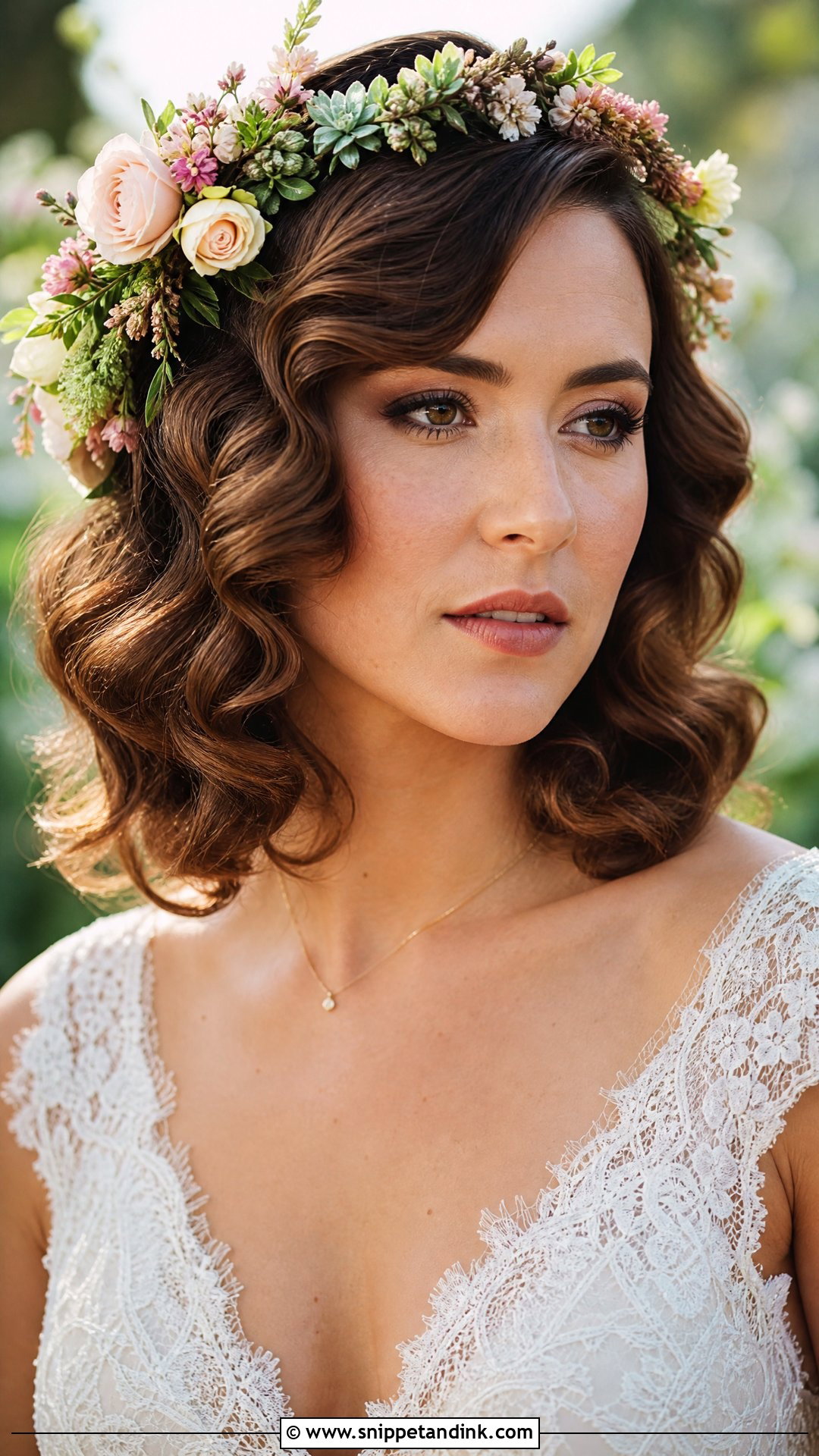
Retro curls under a flower crown is a softer, garden version of the decade. I set the curls first and add the crown last, wiring it to two or three anchor pins on each side so it doesn’t slide forward. Fresh flowers wilt in heat, so for an outdoor summer ceremony I’d suggest sturdy blooms or good silk ones. Matching your bouquet ties it together. Worn down or half-up, it suits relaxed outdoor weddings more than a formal ballroom.
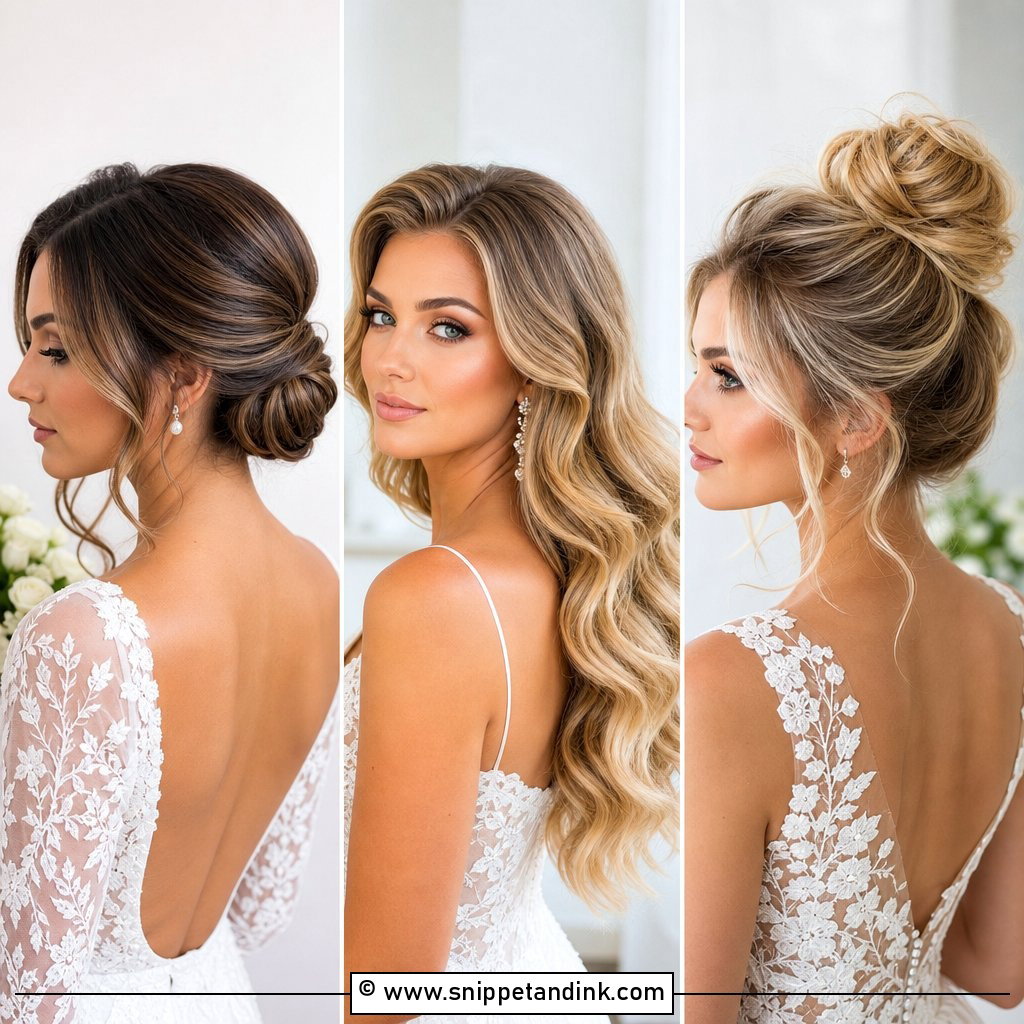
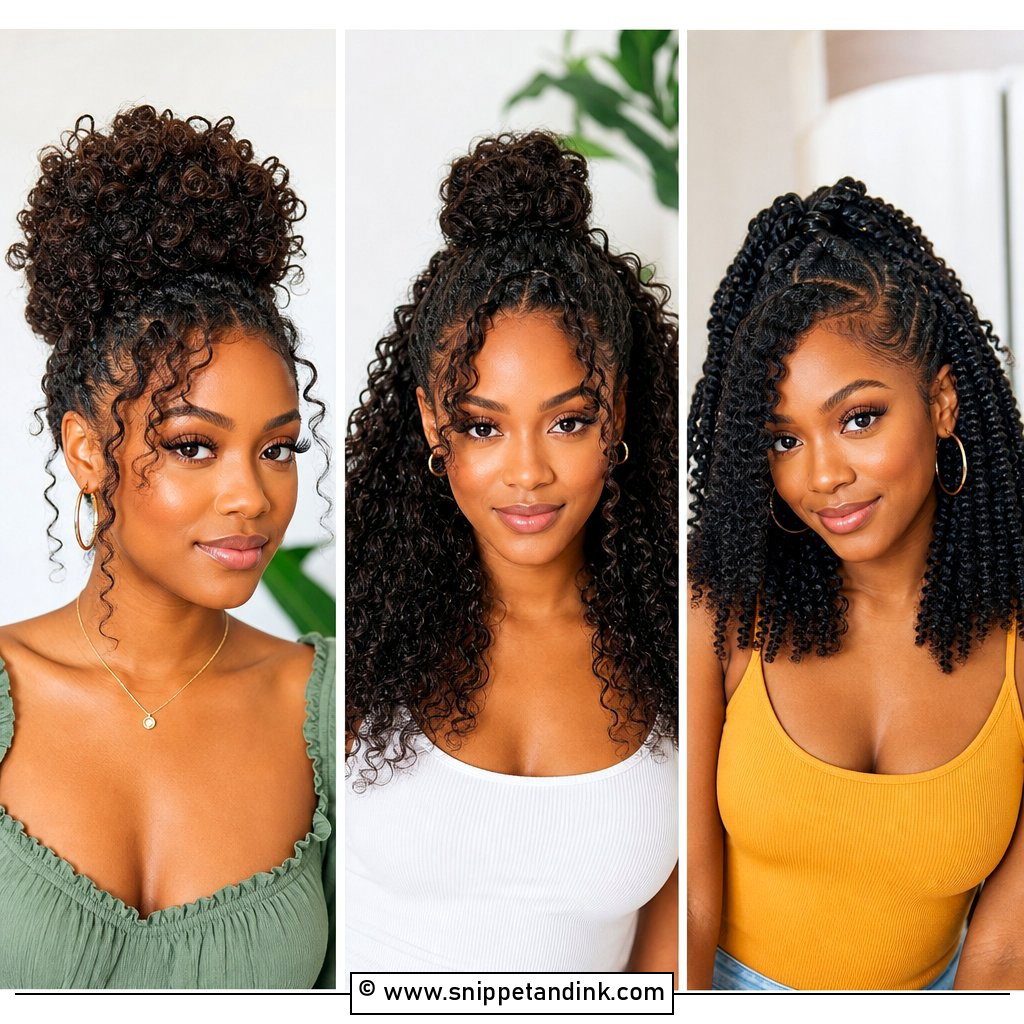
15. Sleek Bouffant Updo
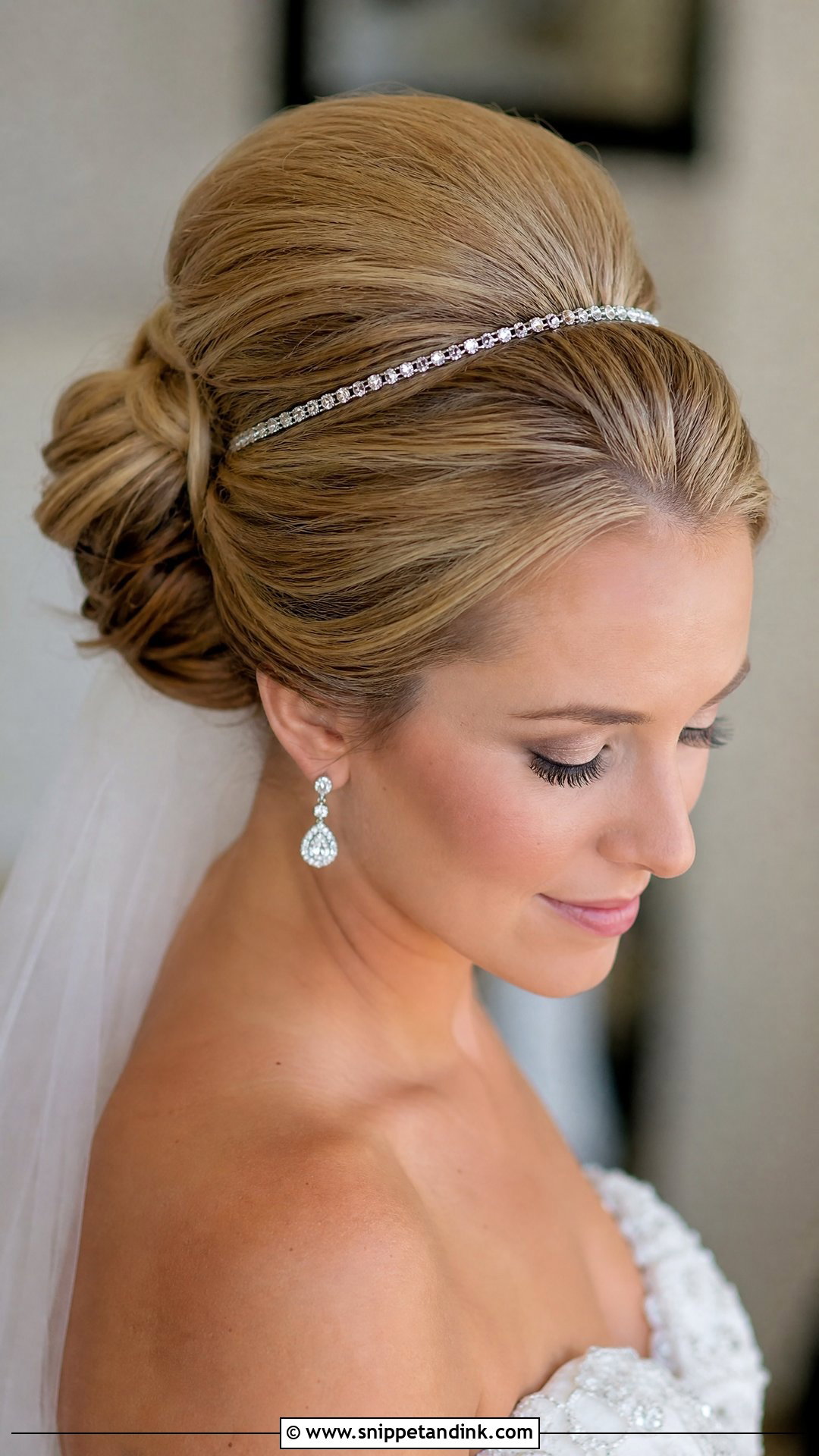
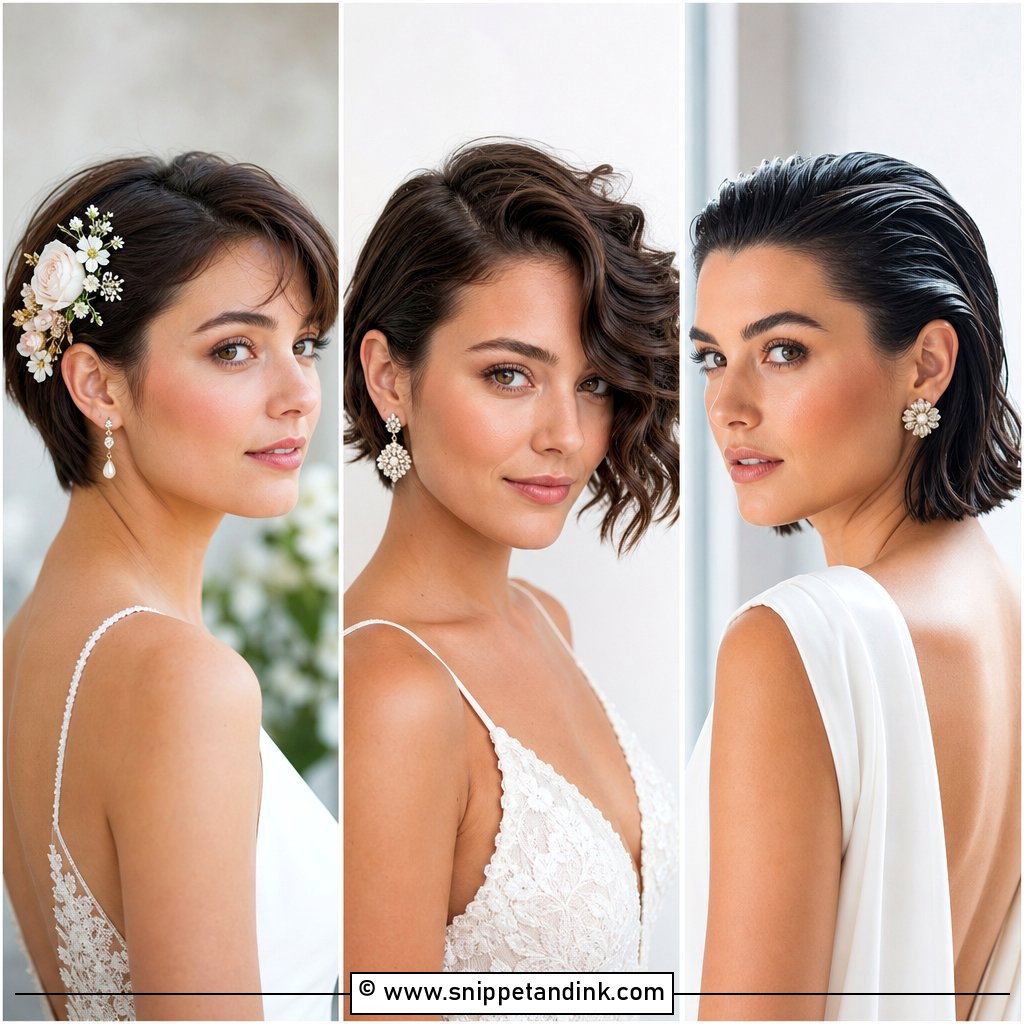
A sleek bouffant updo relies on a flawless surface. I use a fine-tooth comb and a smoothing brush over the teased base, then mist with a light hold spray to trap stray hairs. Any lumps in the backcombing show through on camera, so I tease in thin sections and keep it close to the root. The lengths finish in a twist or chignon at the back. It suits oval and longer faces and holds neatly through a busy schedule; a thin sparkling headband sits nicely just in front of the height.
16. Half-Up Bouffant With Headband
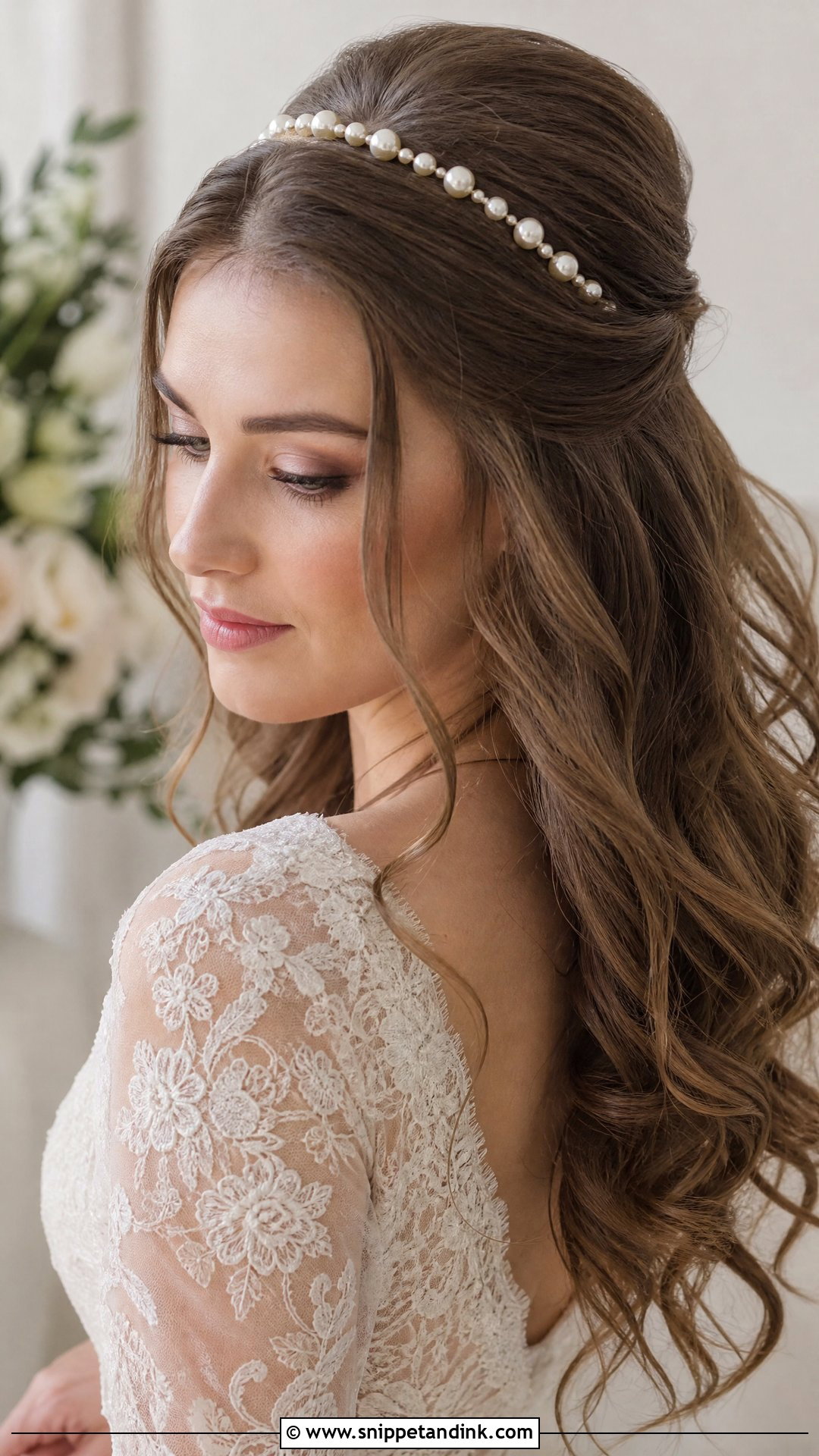
This combination does a practical job: the headband sits just behind the bouffant and stops the lift from flattening as the day goes on. I tease, smooth, then press the band into place before pinning underneath. Pearl or crystal bands look bridal; plain satin looks more authentically sixties. It suits medium and long hair. If headbands give you a headache after a few hours, a flexible band is far kinder than a rigid metal one.
17. Voluminous Updo With Tiara
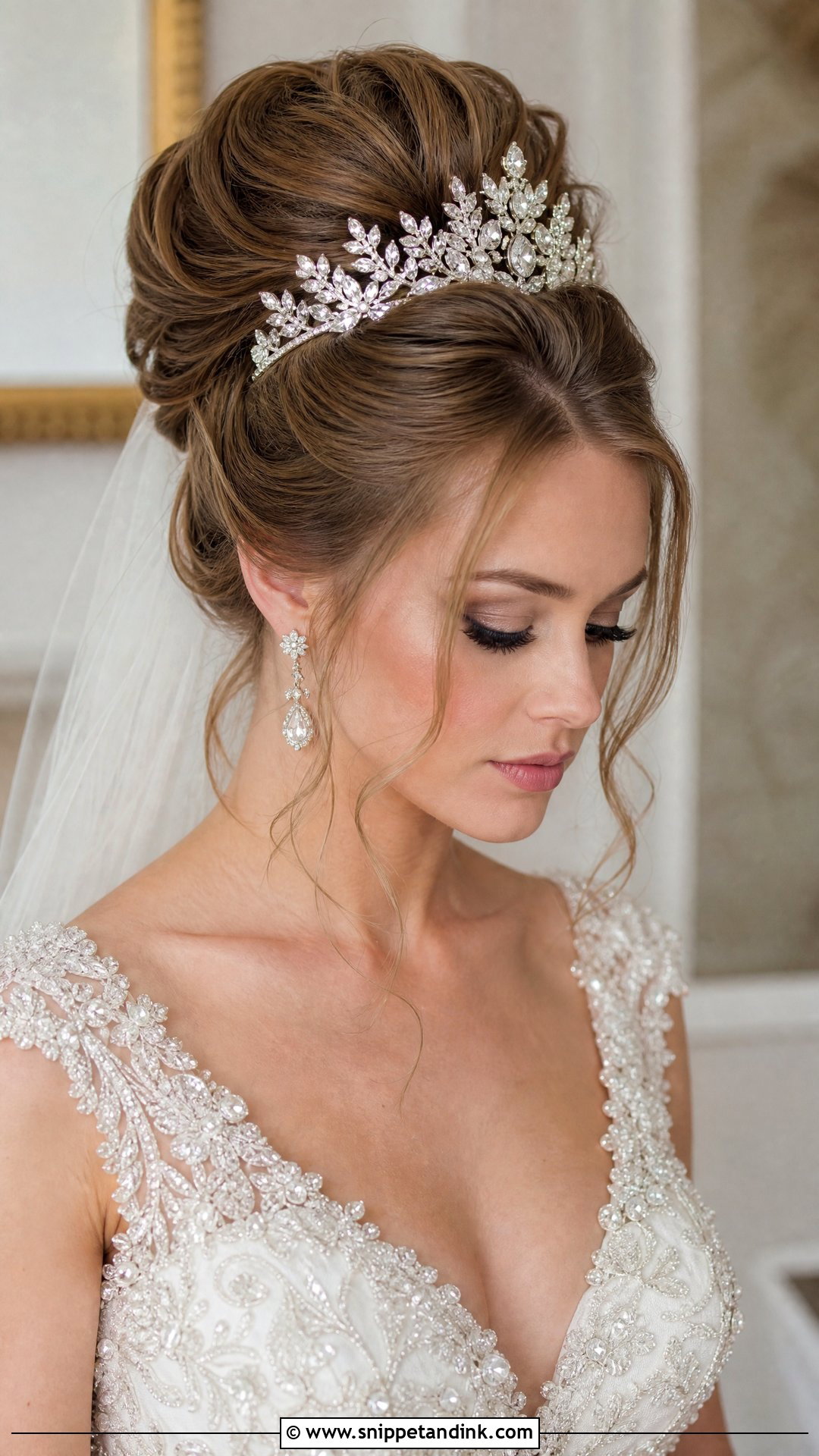
For a formal look, a voluminous updo with a sparkling tiara gives the tiara a solid base to sit on. I place the tiara before the final smoothing so I can hide its combs inside the backcombing, then pin through the loops at each end. Heavy tiaras slide on smooth hair, so this volume actually helps. A few soft tendrils at the temples stop it looking stiff. It belongs at a formal, traditional ceremony; at a casual barn wedding it can feel out of place.
18. 60s Bubble Ponytail Wedding Style
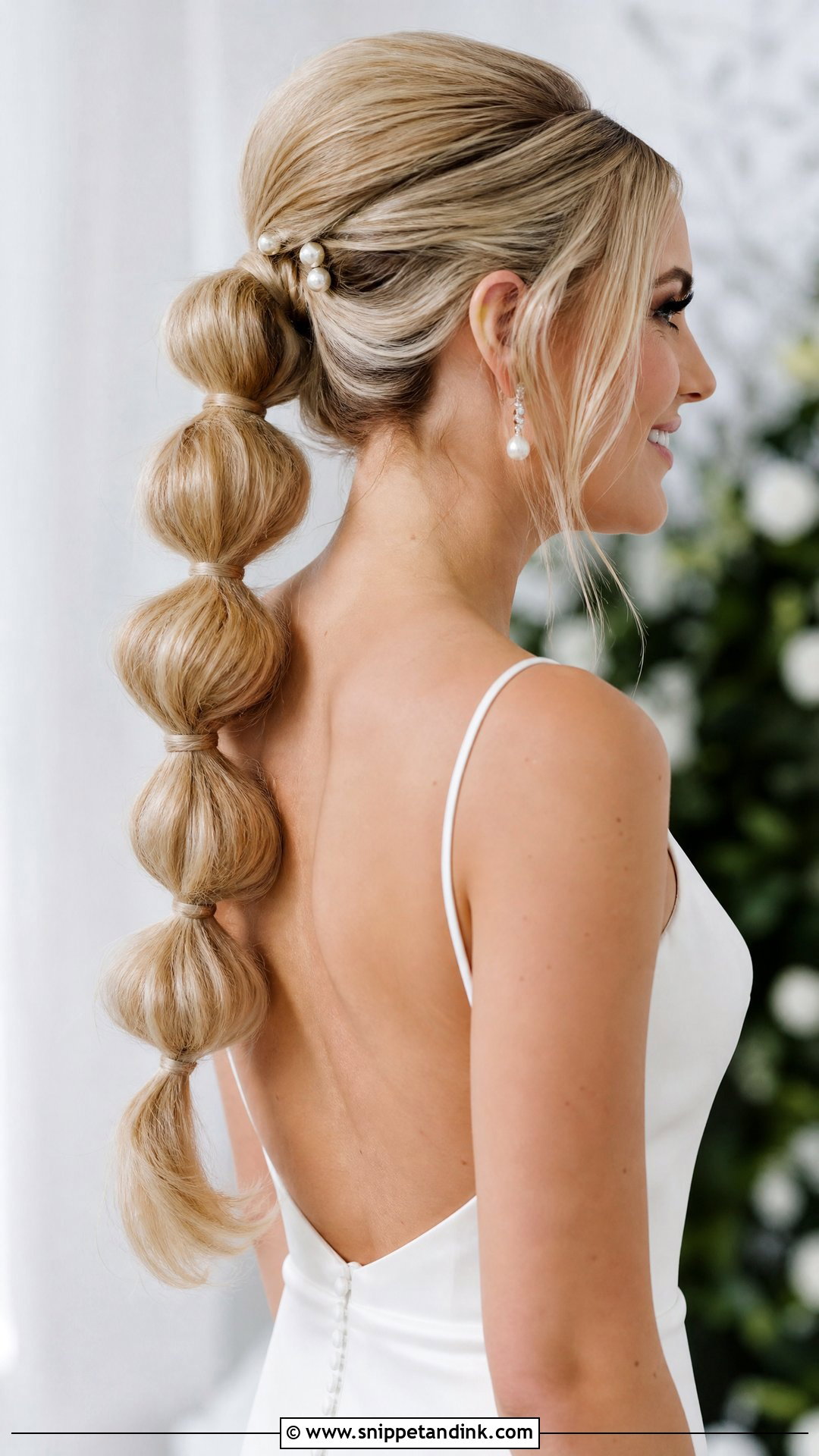
The bubble ponytail is playful and quick to build. I tease the crown, gather a high pony, then add small clear elastics every few centimetres and gently pull each section out into a rounded bubble. Wrapping a sliver of hair over each elastic hides it. Pearl pins between the bubbles add a bit of shine. It needs long hair to have enough sections, and it’s best suited to a relaxed or modern-retro wedding rather than a traditional one.
19. Soft Flip With Veil
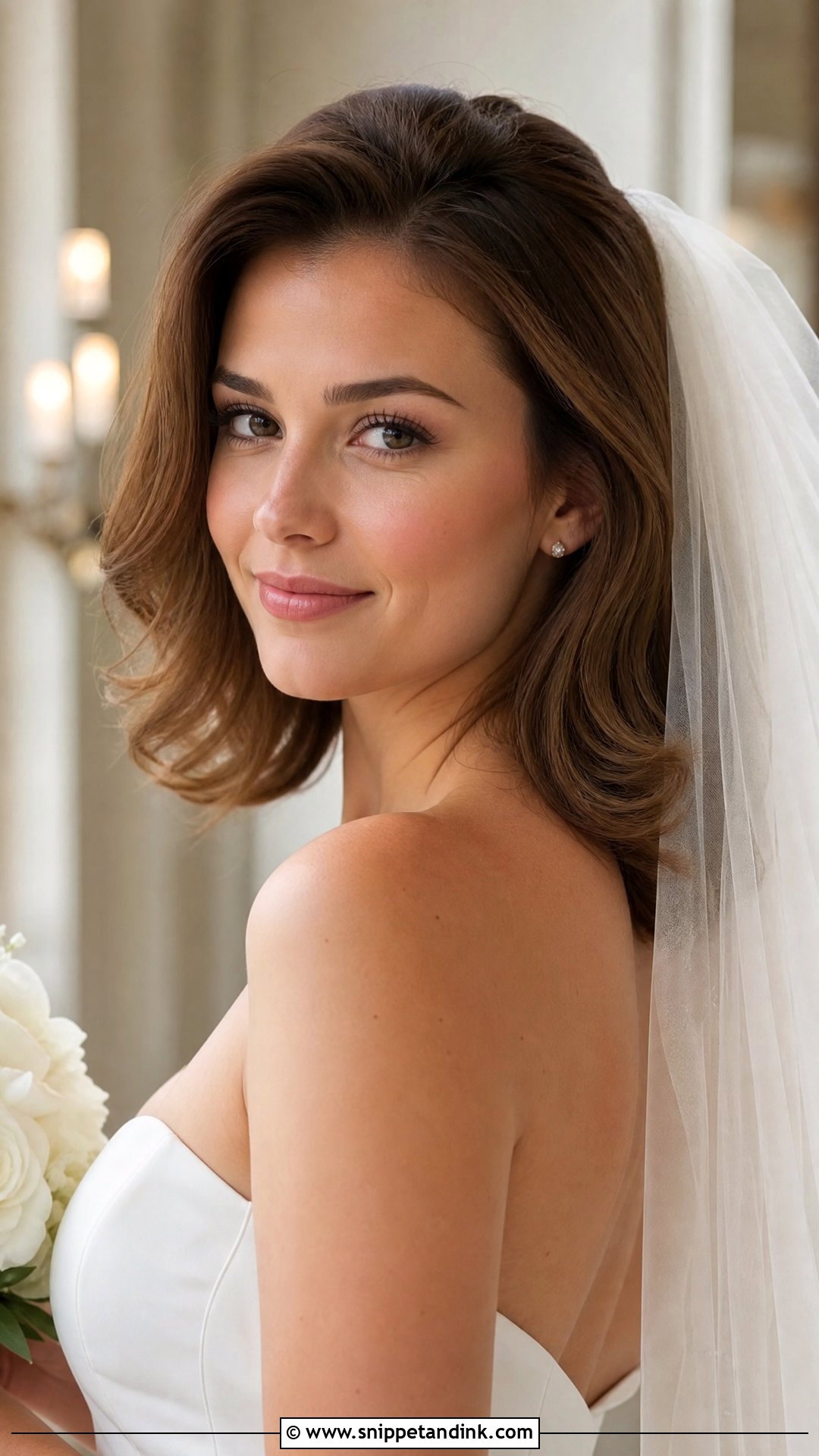
A soft flip with a veil is the gentlest sixties reference on this list. The flip itself works best on shoulder-length hair, and I add a little root lift at the crown before placing the veil. The veil comb goes in at the crown, just above the lifted section, so the veil falls behind the outward ends rather than flattening them. In humid weather flips relax quickly, so a strong-hold spray at the ends is essential.
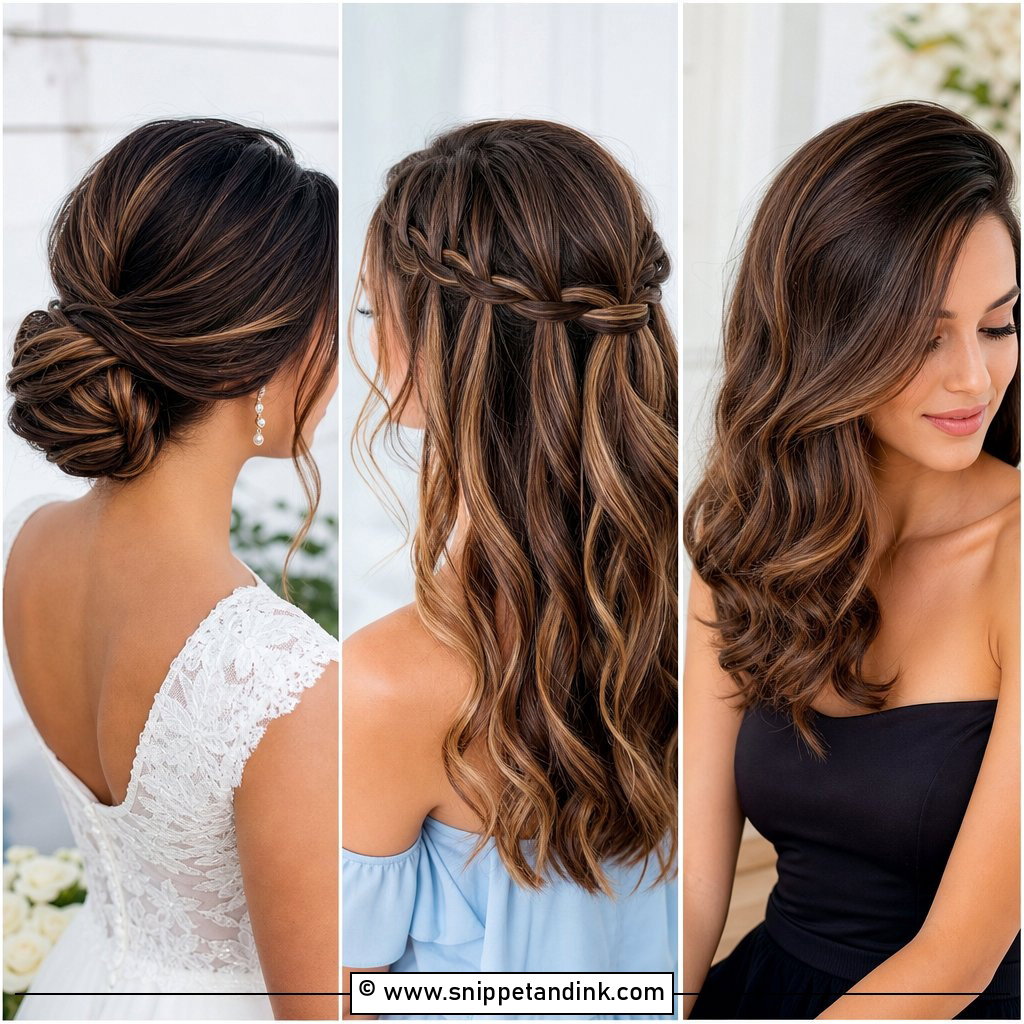
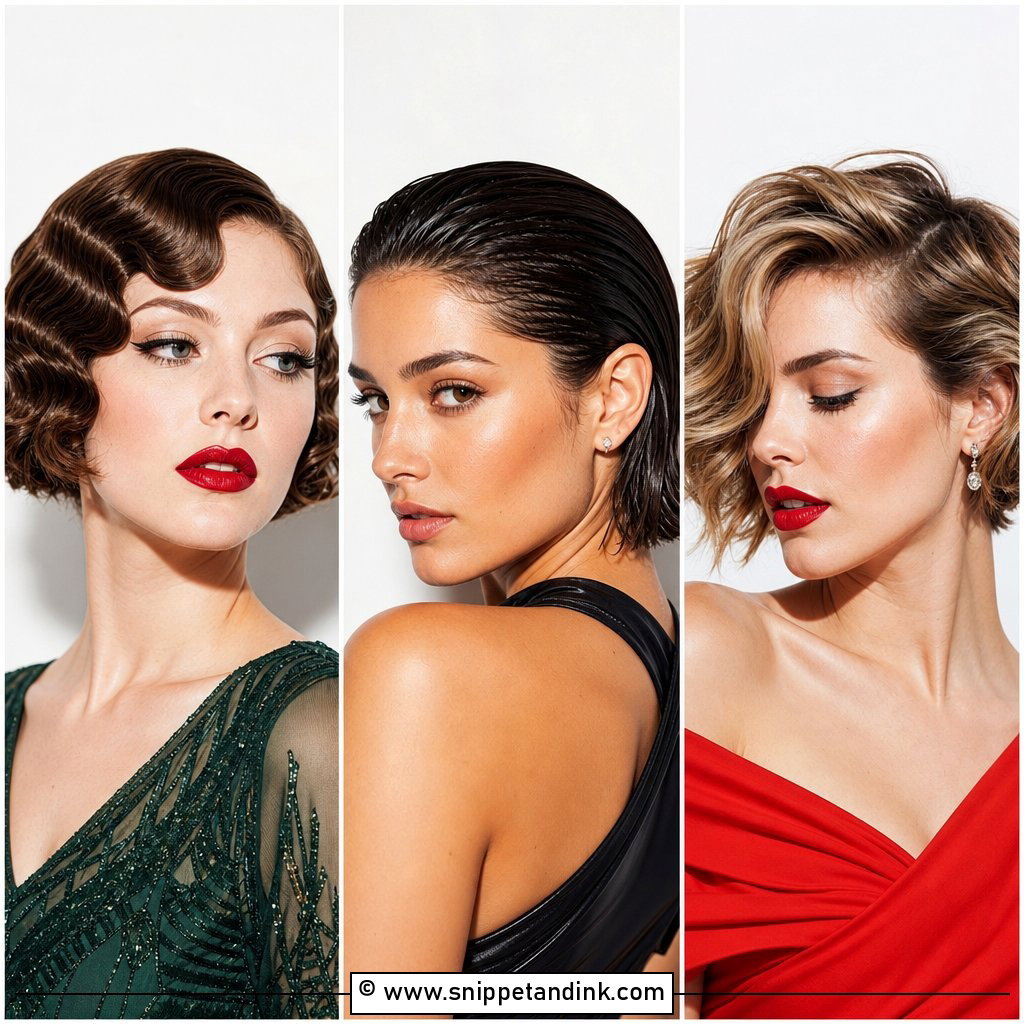
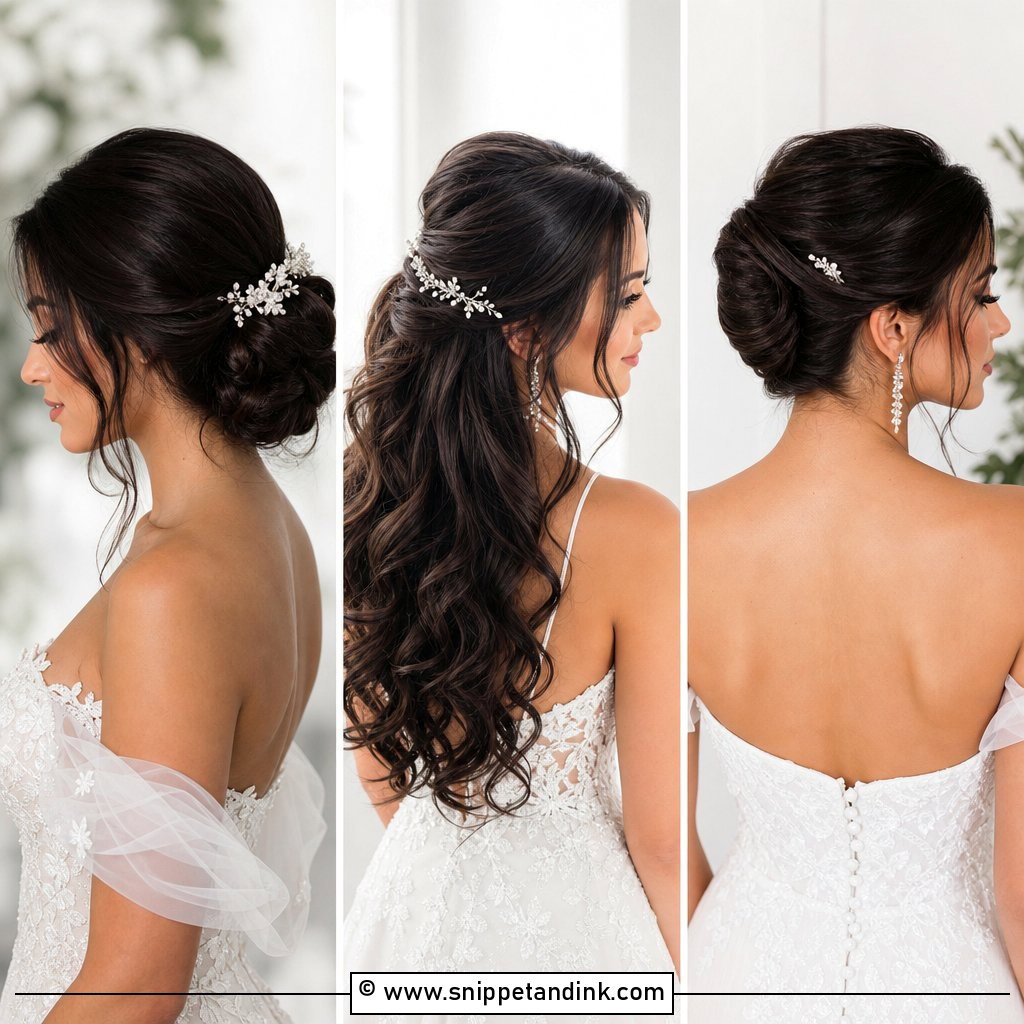
20. Beehive With Statement Earrings
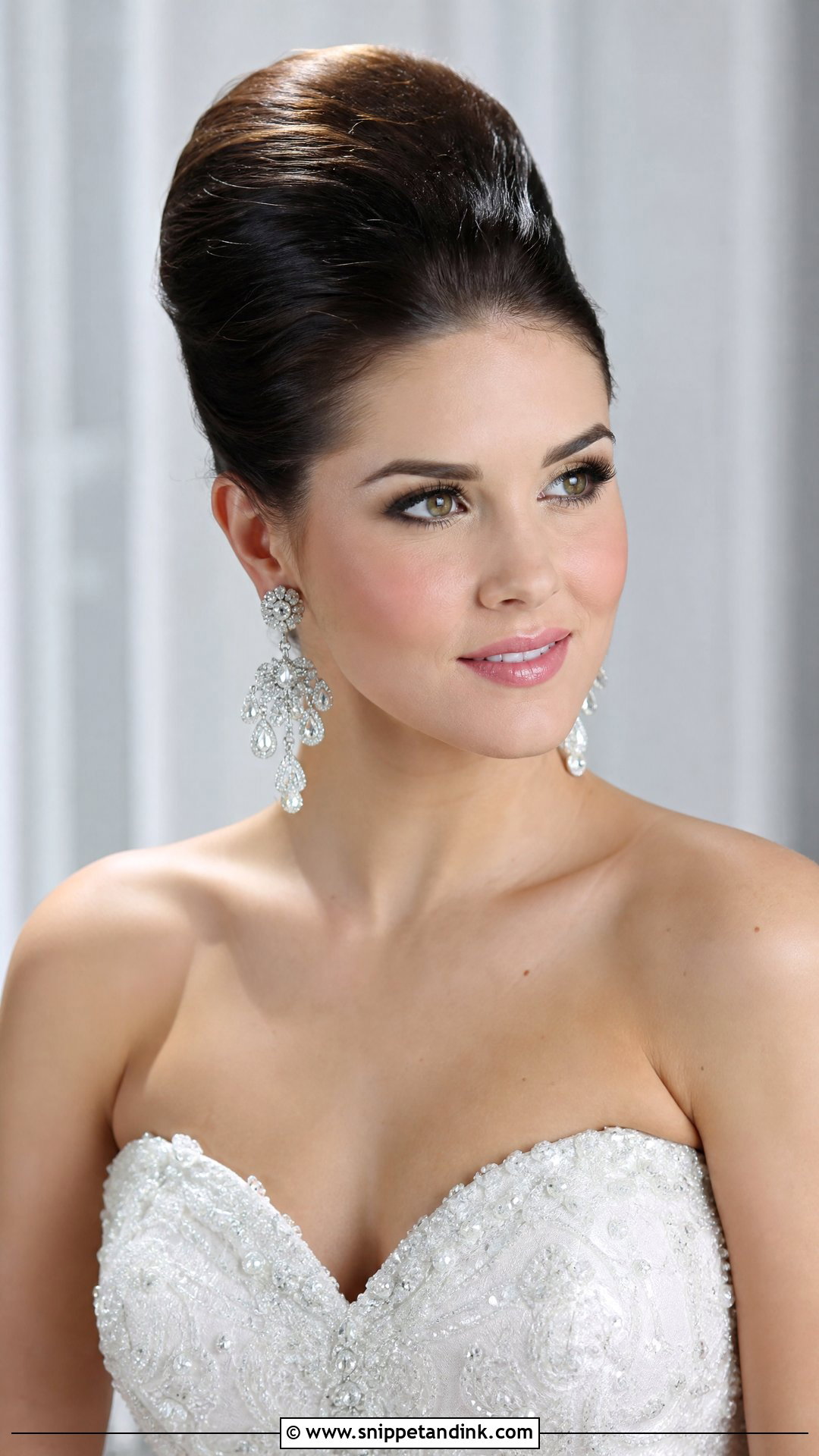
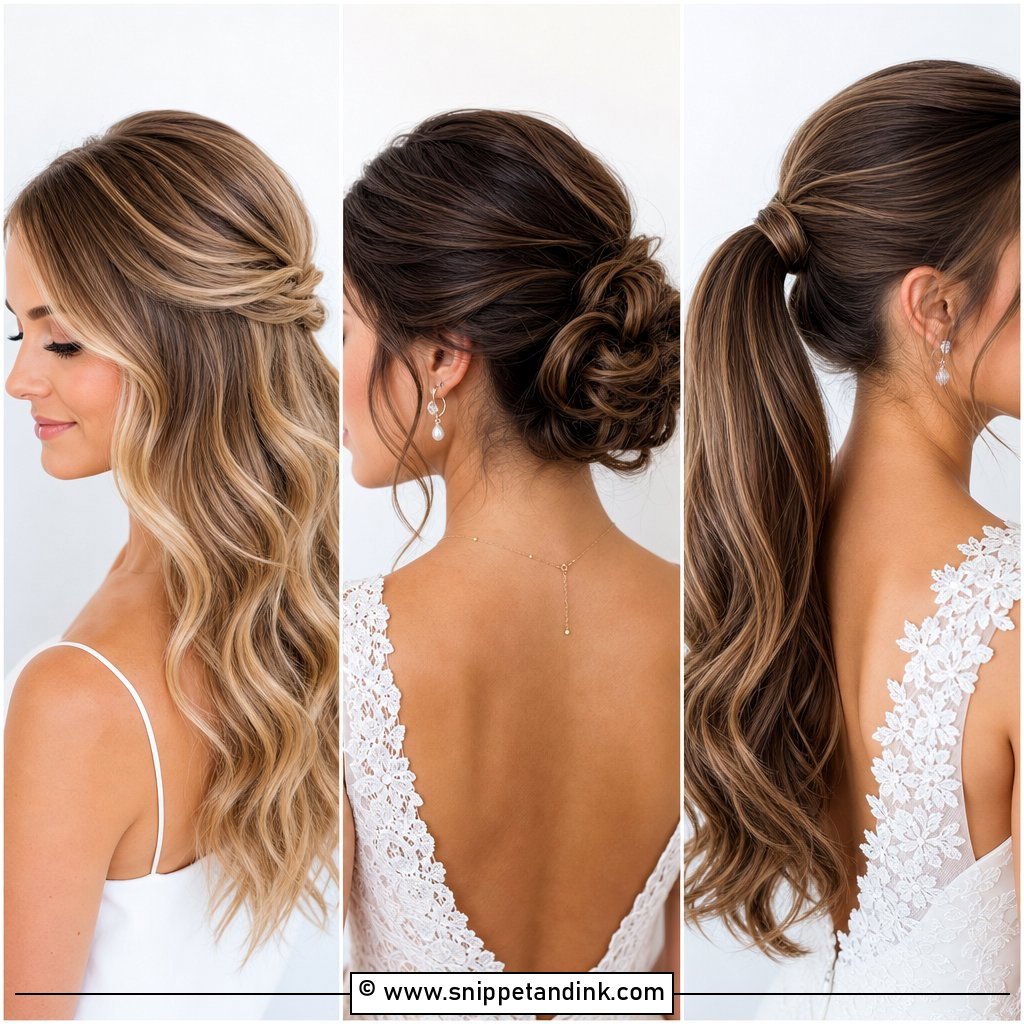
A clean beehive leaves the ears and neck fully exposed, so earrings become the main accessory. Chandelier or pearl drops balance the height without competing with it. I keep the sides especially tight in this version and avoid loose tendrils that would tangle in long drops. Skip a necklace or keep it very fine; three focal points at once crowd the frame. It suits evening and formal venues best.
21. Half-Up Curls With Pearl Pins
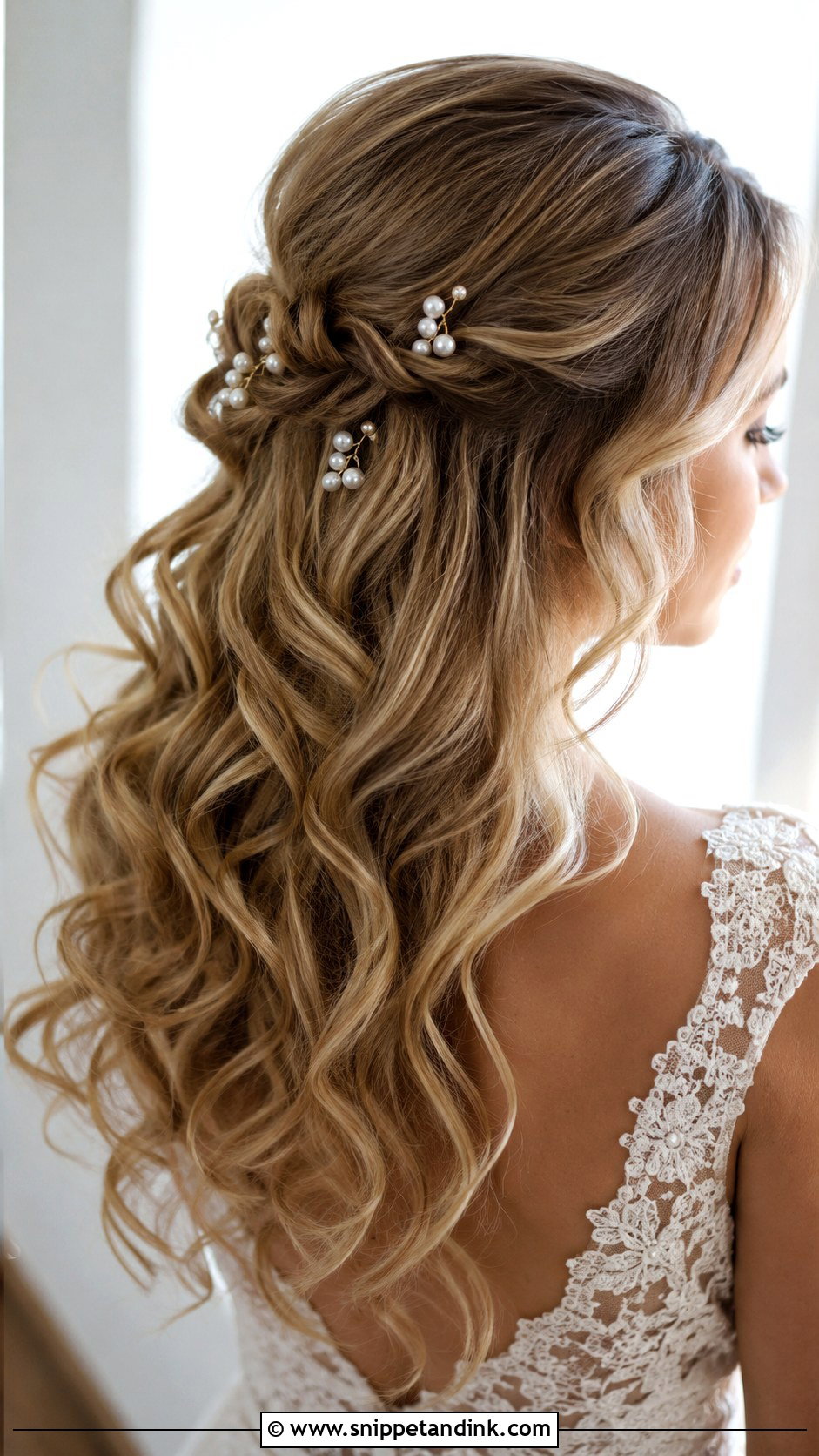
Half-up curls with pearl pins is the softest look here and one of the easiest to wear for a long day. I tease the crown slightly, pin the top section back, then scatter the pearl pins through the curls in a loose, uneven pattern, never in neat rows. Spring-loaded pearl pins hold far better than straight ones. It suits long and medium hair and works for almost any venue. The curls will relax over the evening, which suits this look.
22. Classic Chignon With Bouffant
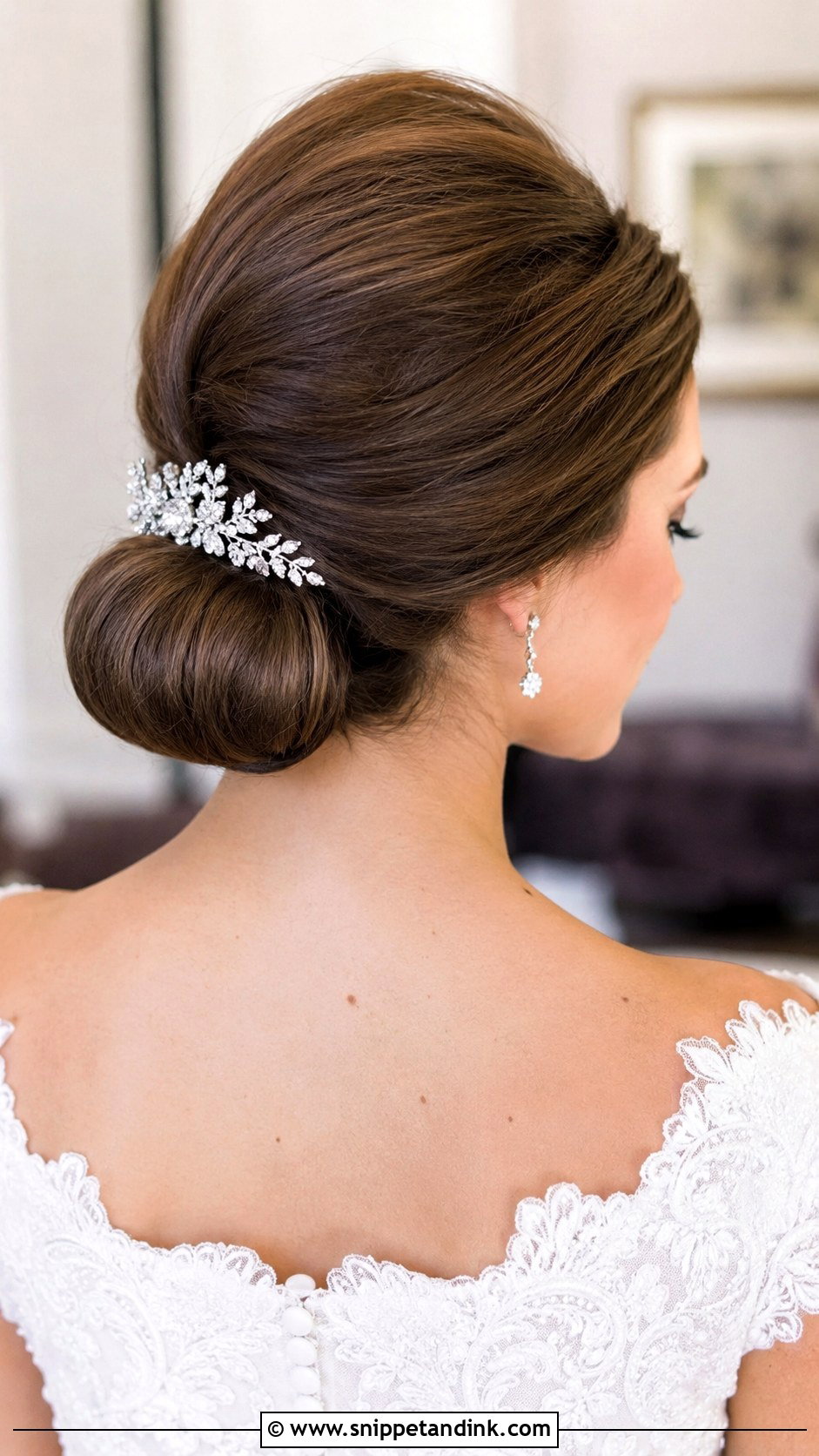
A chignon with a bouffant crown is the structured, polished end of sixties bridal hair. I tease the top section, smooth it, then roll the lengths into a low chignon pinned close to the nape. The two shapes balance each other, and the low weight means it stays secure. A jewelled comb beside the chignon adds shine. Long hair gives the fullest chignon; with shoulder-length hair I’d add a small padded insert inside the roll.
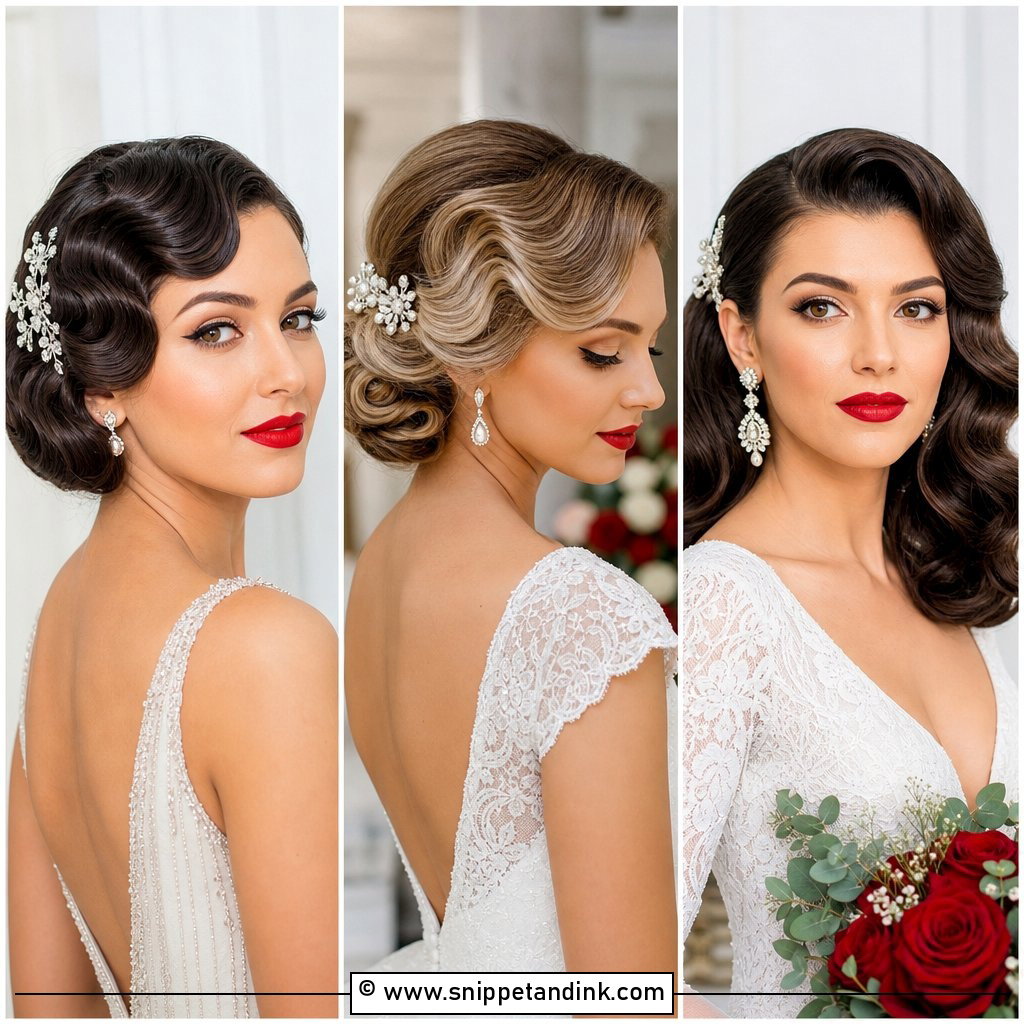
23. Retro Waves With Side Part
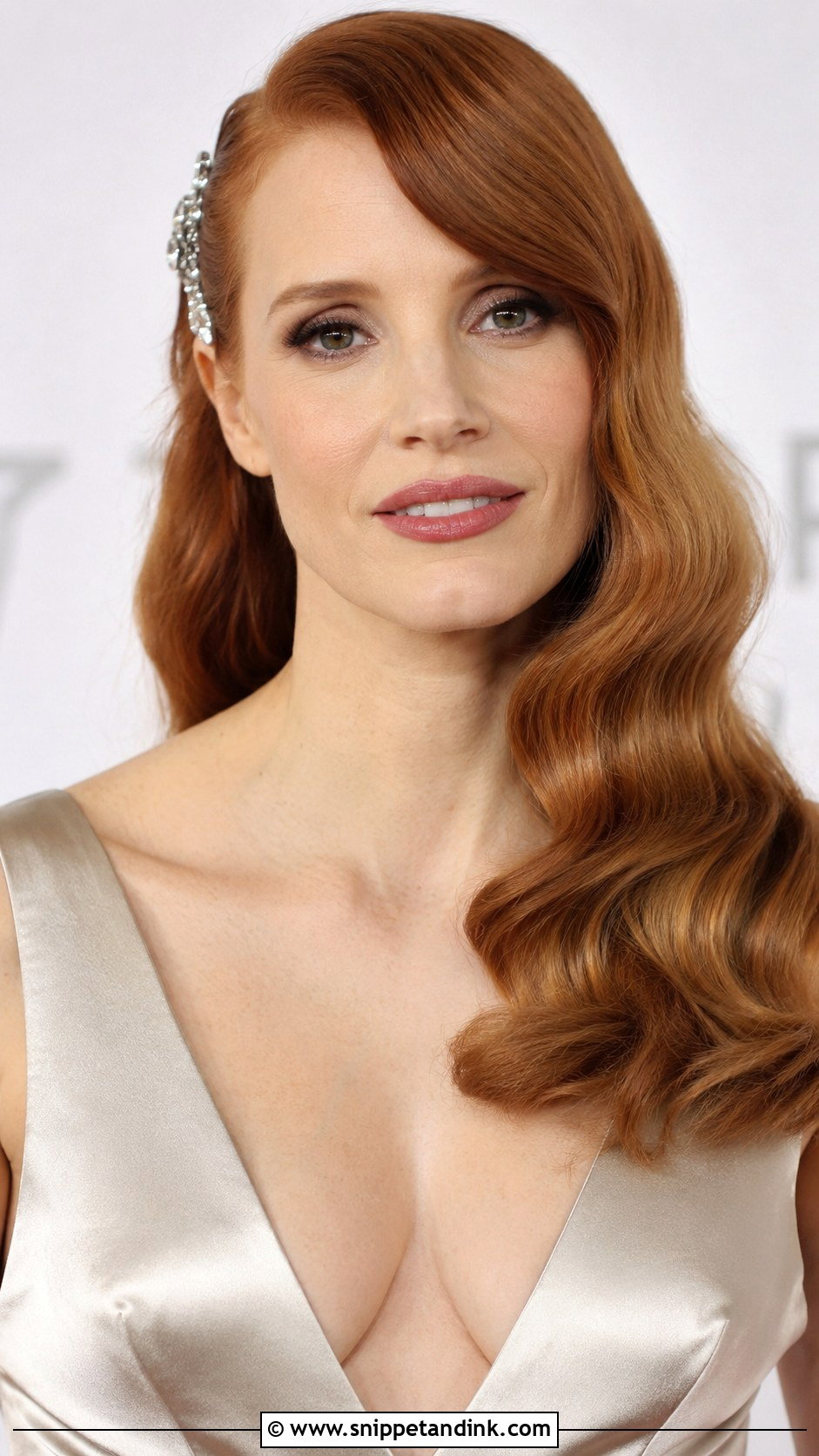
Retro waves with a deep side part sit over one shoulder and suit long to medium hair. The deeper the part, the more dramatic the result, but a very deep part can expose a thin patch at the crown, so I check that at the trial. I set the waves in one direction and brush them into a single ripple, then finish with shine spray. A sparkling clip at the part adds a small glint without hiding the shape.
24. Bouffant Updo With Floral Pins
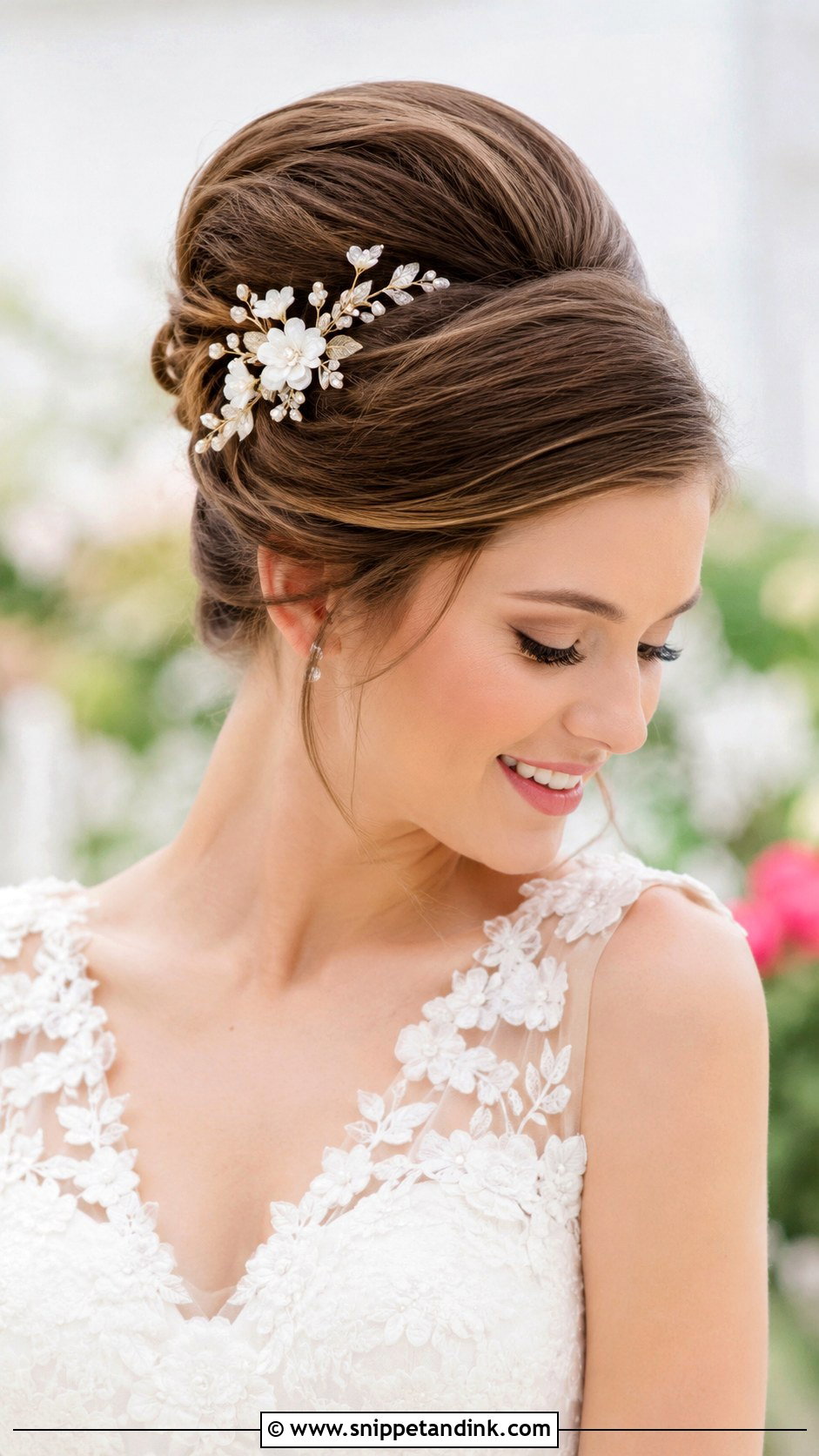
Floral pins work well on a bouffant because the volume gives the stems something to grip. I place them in a small cluster on one side rather than spread evenly, which looks more natural. Fresh florals wilt within a few hours in warm weather, so I prefer preserved or silk pins for summer. Matching them to your bouquet ties the look together, and it sits best at spring and garden weddings.
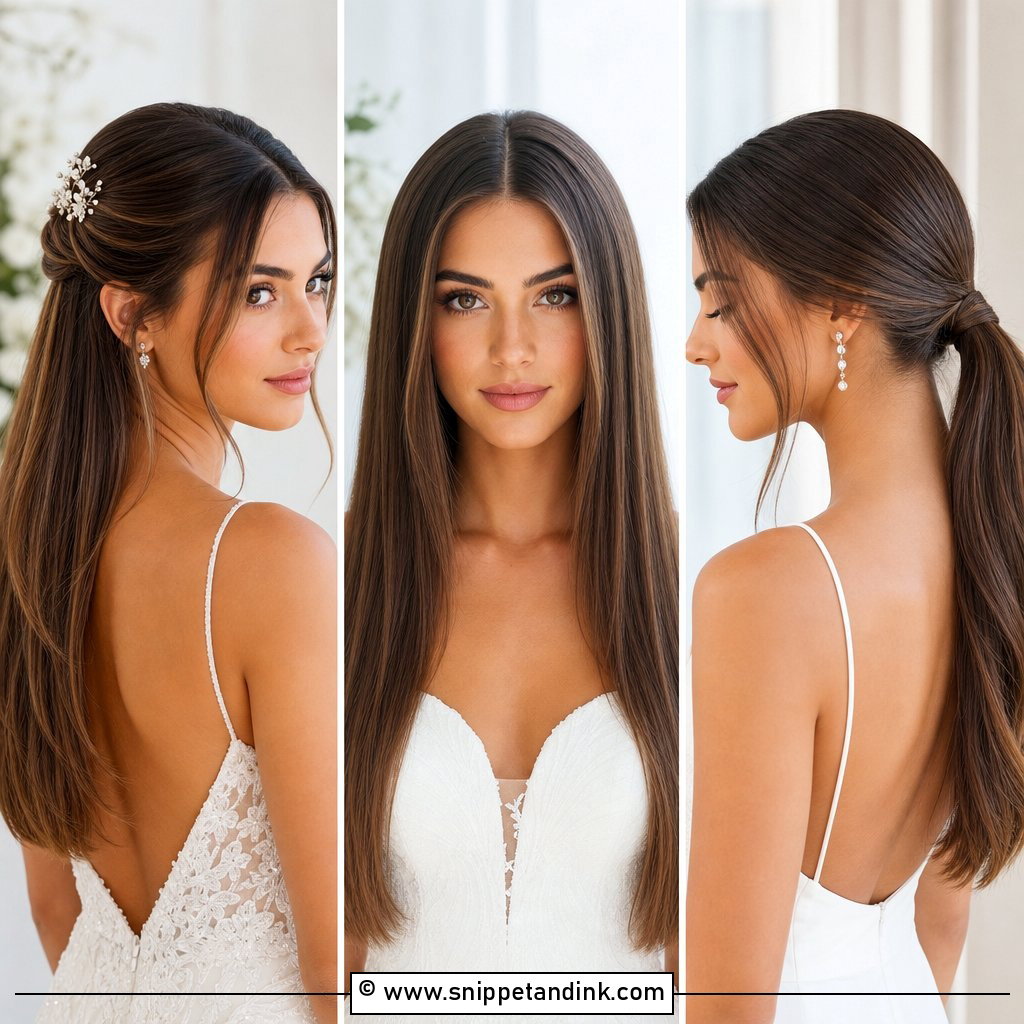
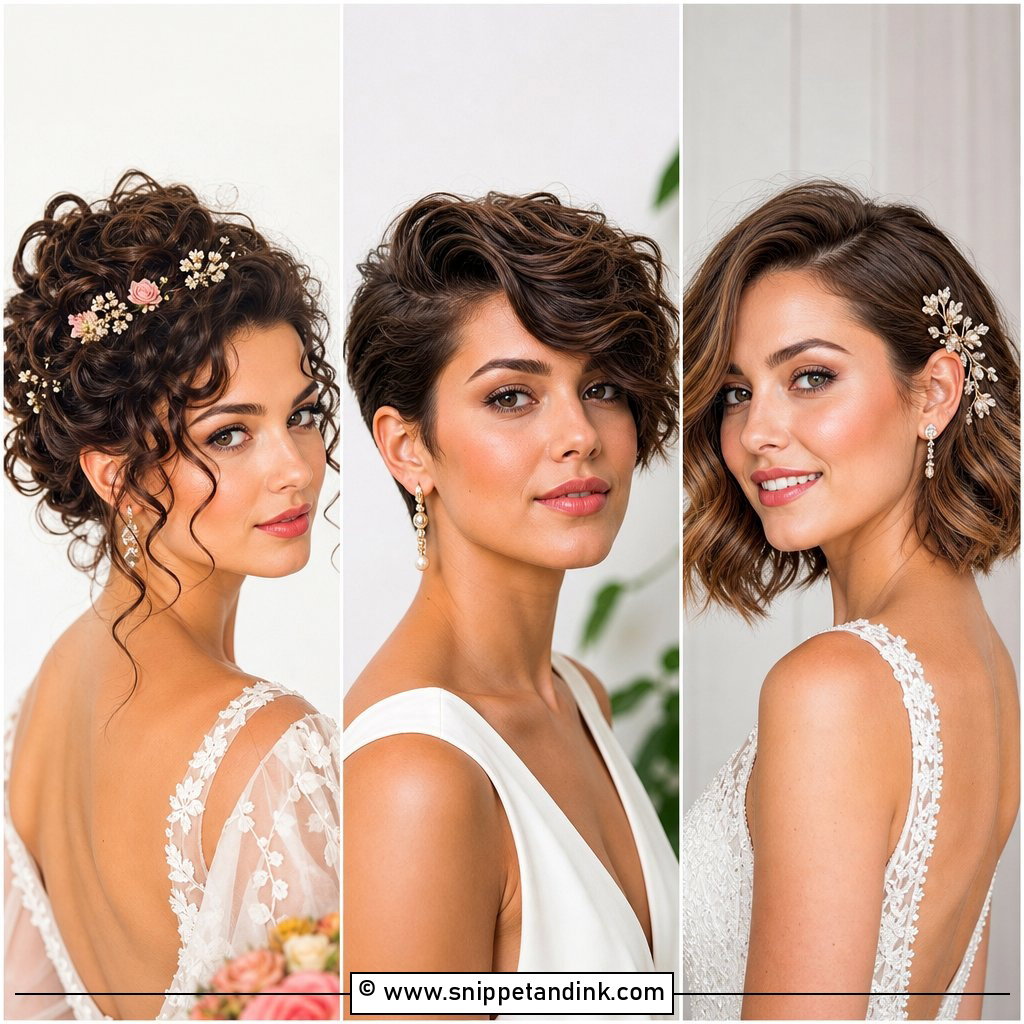
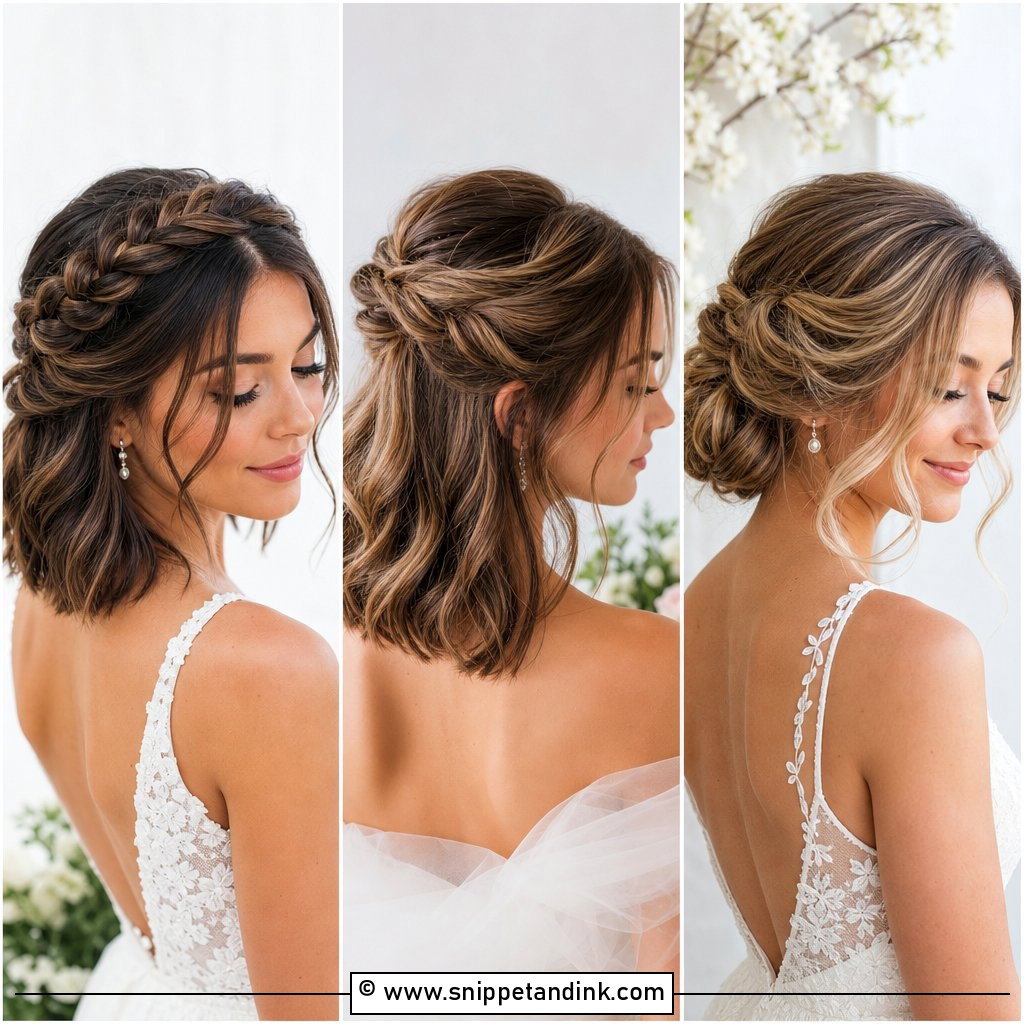

25. Modern Beehive With Loose Tendrils
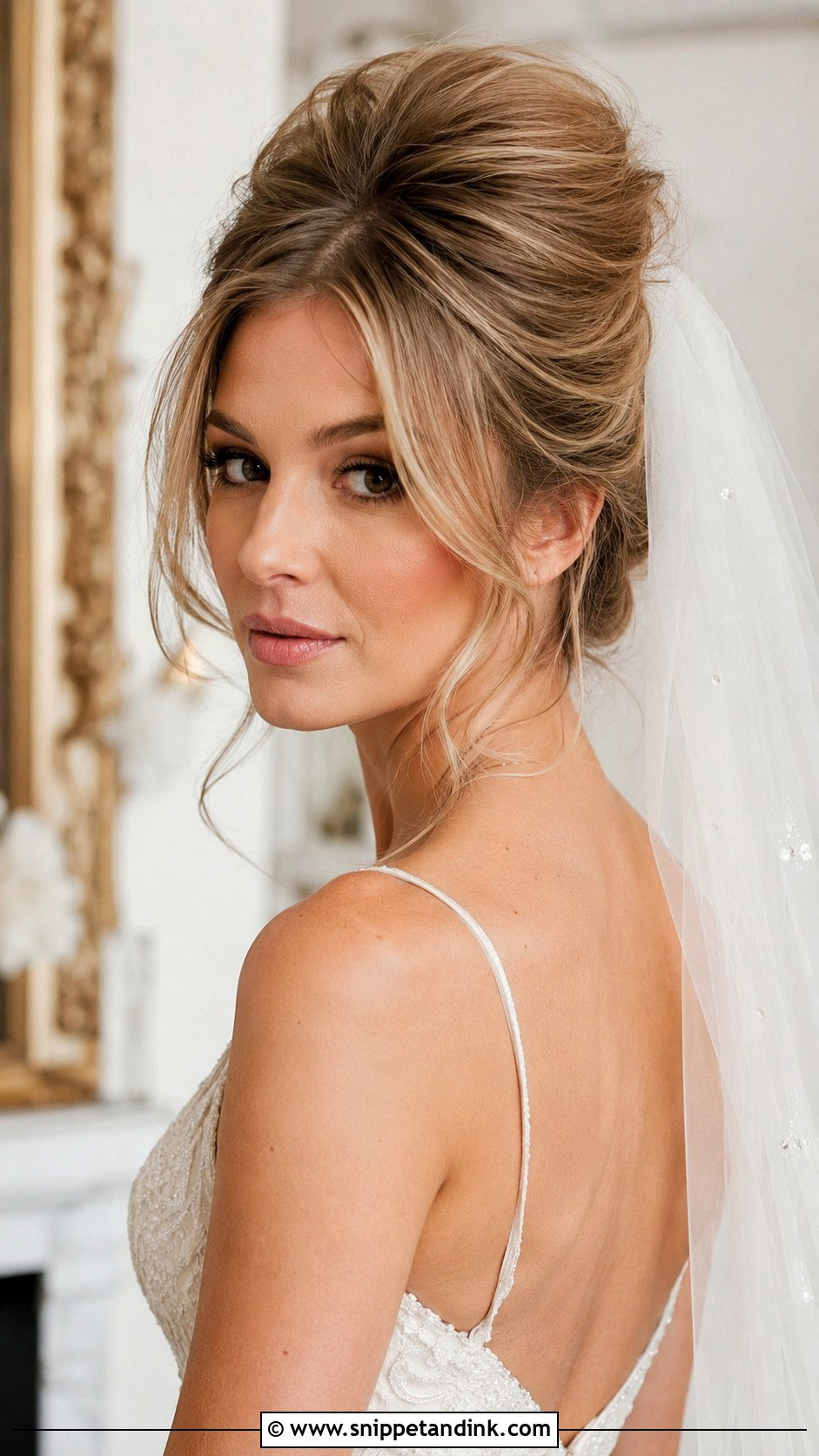
A modern beehive with loose tendrils softens the height so it reads current rather than costume. I pull out a few pieces at the temples and nape after the shape is set, then curl them loosely so they don’t hang straight. It’s a good choice if a full beehive feels like too much. Pair it with a light veil or a few sparkling pins, and it suits most face shapes because the tendrils break up the vertical line.
Brushing Out All That Backcombing the Morning After
Taking down a sixties style is where many brides lose hair they didn’t need to. Backcombing knots the hair on purpose, so ripping a brush through it the next morning snaps strands.
- Remove every pin first. Count them if you can, because one stray pin will catch a brush.
- Work in a conditioner or detangling oil while the hair is dry, focusing on the teased section.
- Start at the ends with a wide-tooth comb and work up toward the root in small sections.
- Wash only once the knots are out. Water tightens tangled backcombing.
If you’re leaving for a honeymoon early, ask your stylist to show you which pins anchor the shape so you can take it down quickly at the end of the night.
How Long Each Look Holds Through a Long Day
Sculpted updos like the beehive bun, the chignon and the low bun are the most reliable for a long day because their weight is anchored. Flips and loose waves soften fastest, especially in humidity, so they’re better for shorter or indoor celebrations. Half-up bouffants sit in between: the crown holds, the lengths relax. A small touch-up kit with pins, a fine comb and a travel spray covers most fixes before the evening photos.
Which Sixties Shape Matches Your Hair and Venue
If your hair is fine and you want height, the beehive bun or the low bun with a bump will hold better than a free-standing beehive. Shoulder-length hair is made for the flip, while long, thick hair can carry a full beehive or Hollywood waves with ease. Then let the venue decide the scale: tall shapes and tiaras belong in a ballroom, and the softer half-up versions sit happily in a garden. Book a trial, wear the style for a few hours afterwards, and check it in side-on photos before you commit.
You'll Like These Ideas:


Leave a Reply