
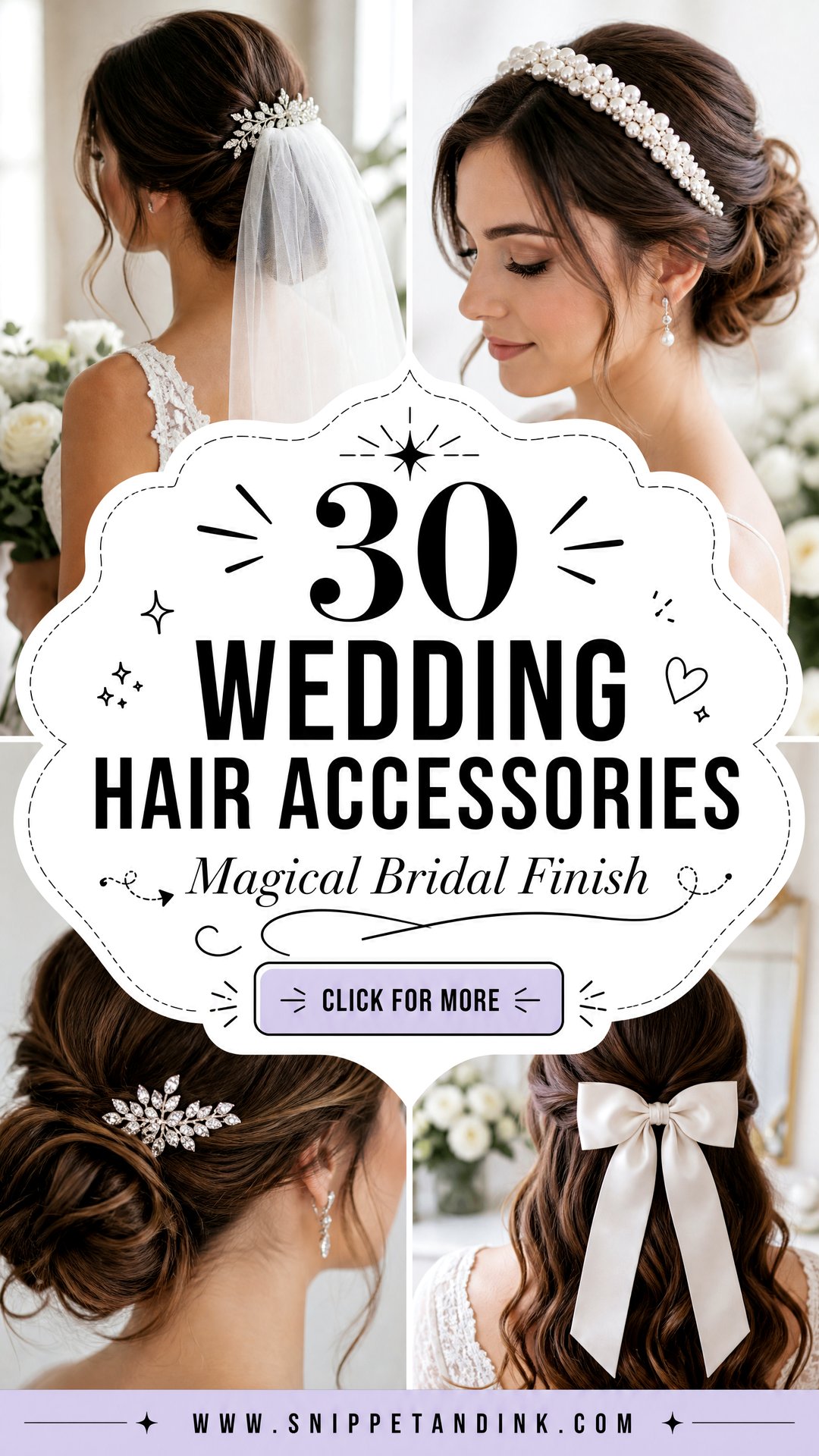
The accessory is the last thing I put in on a wedding morning, and it is the piece that decides whether the whole hairstyle reads as finished. A fairytale tiara asks for a very different base than a scatter of pearl pins or a few fresh stems, so I always want to know the accessory before I plan the style. Below are thirty pieces I see brides bring to trials, from veils and combs to the sculptural clips that have caught on this year, with notes on how each one actually sits in the hair and who it suits.
Weight, Grip and Metal Tone Come Before Style
The first thing I ask at a trial is what the accessory weighs and how it attaches. A comb needs a base to grip, a tiara needs loops to pin through, and a vine needs space to weave. Those three facts decide which hairstyles can carry it, long before I think about whether it looks romantic or modern.
- Fine or slippery hair: lighter pieces, or a hidden crossed-pin base under every comb and clip.
- Very thick or curly hair: longer vines and combs with long teeth, since short teeth sit on top of the hair instead of in it.
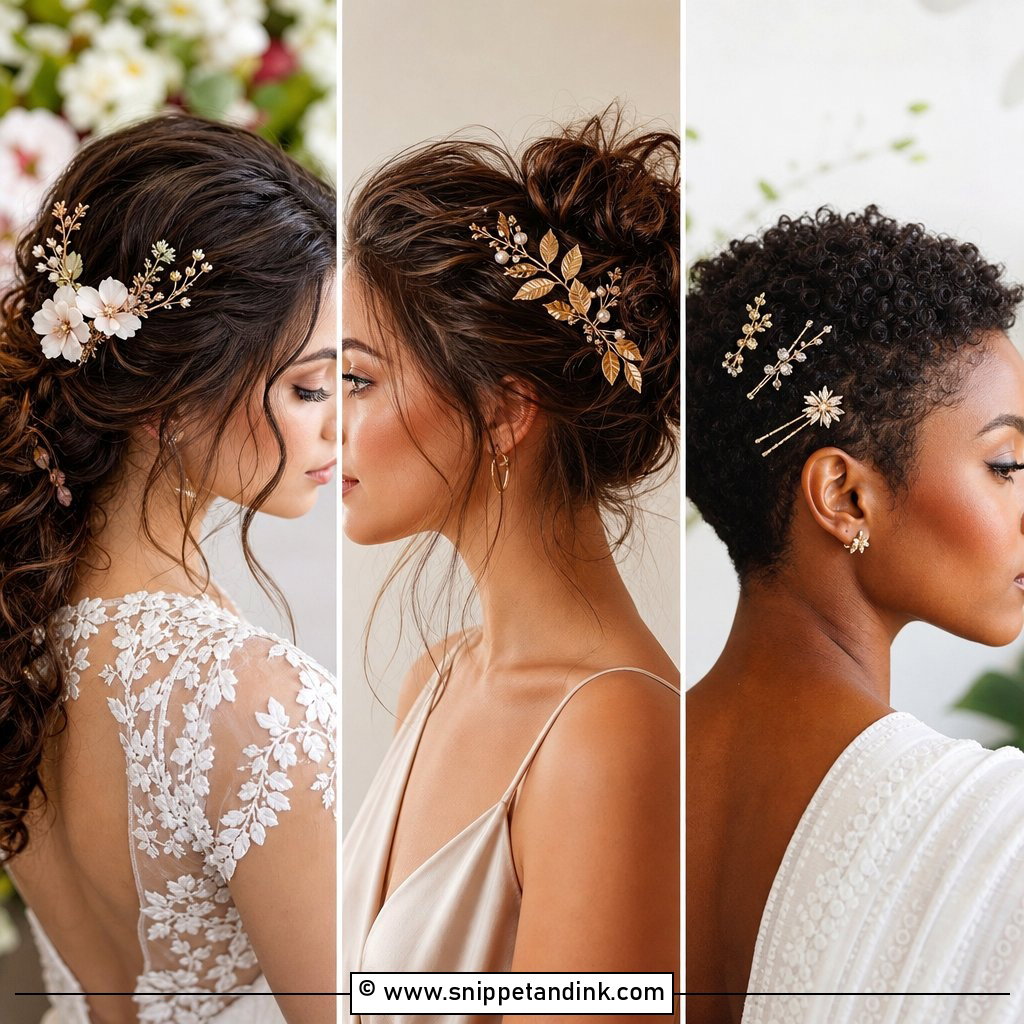
- Short cuts: combs, barrettes and headbands, which need only a few inches to hold.
- Metal tone: match it to your earrings and ring, not to the bouquet.
Bring the actual piece to your hair trial. A photo tells me nothing about how stiff a wire is or how far a veil pulls back, and those details change where I place the pins.
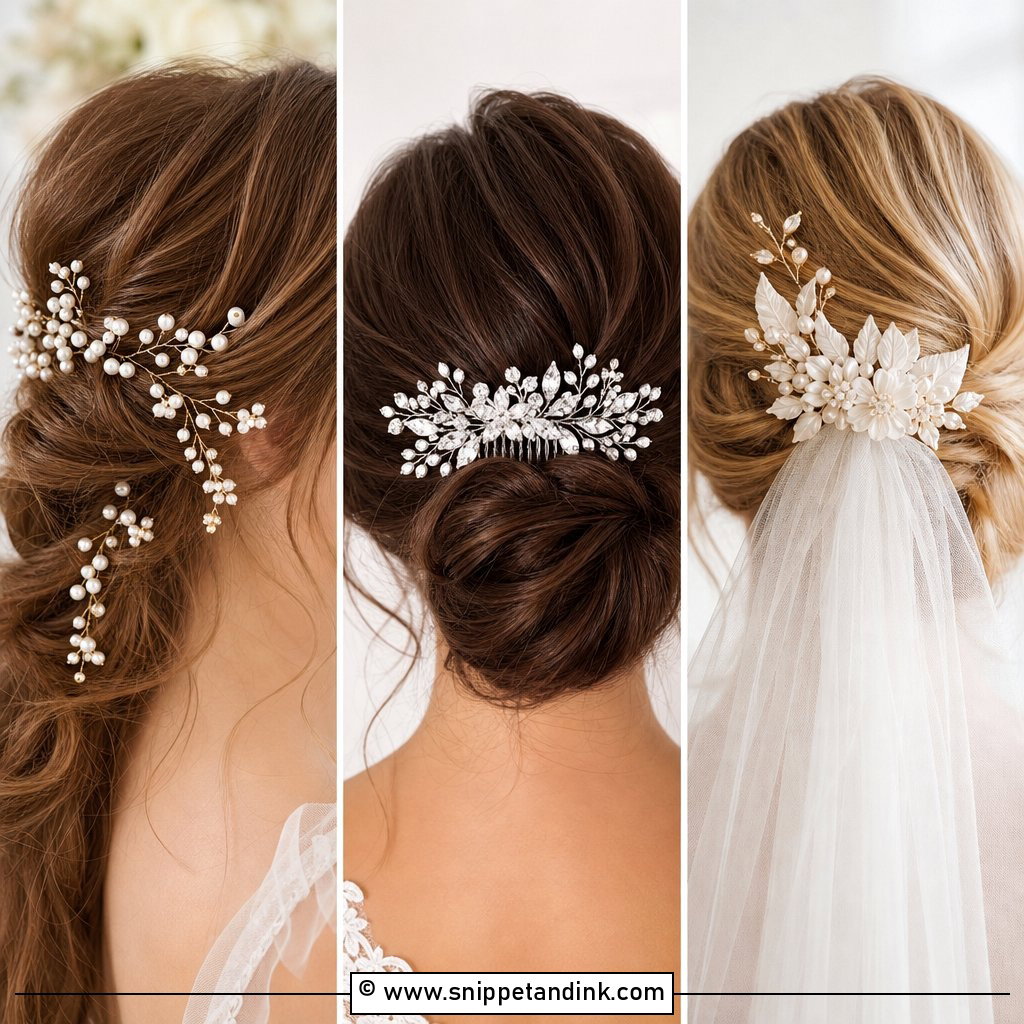
1. Pearl Hair Pins for Brides
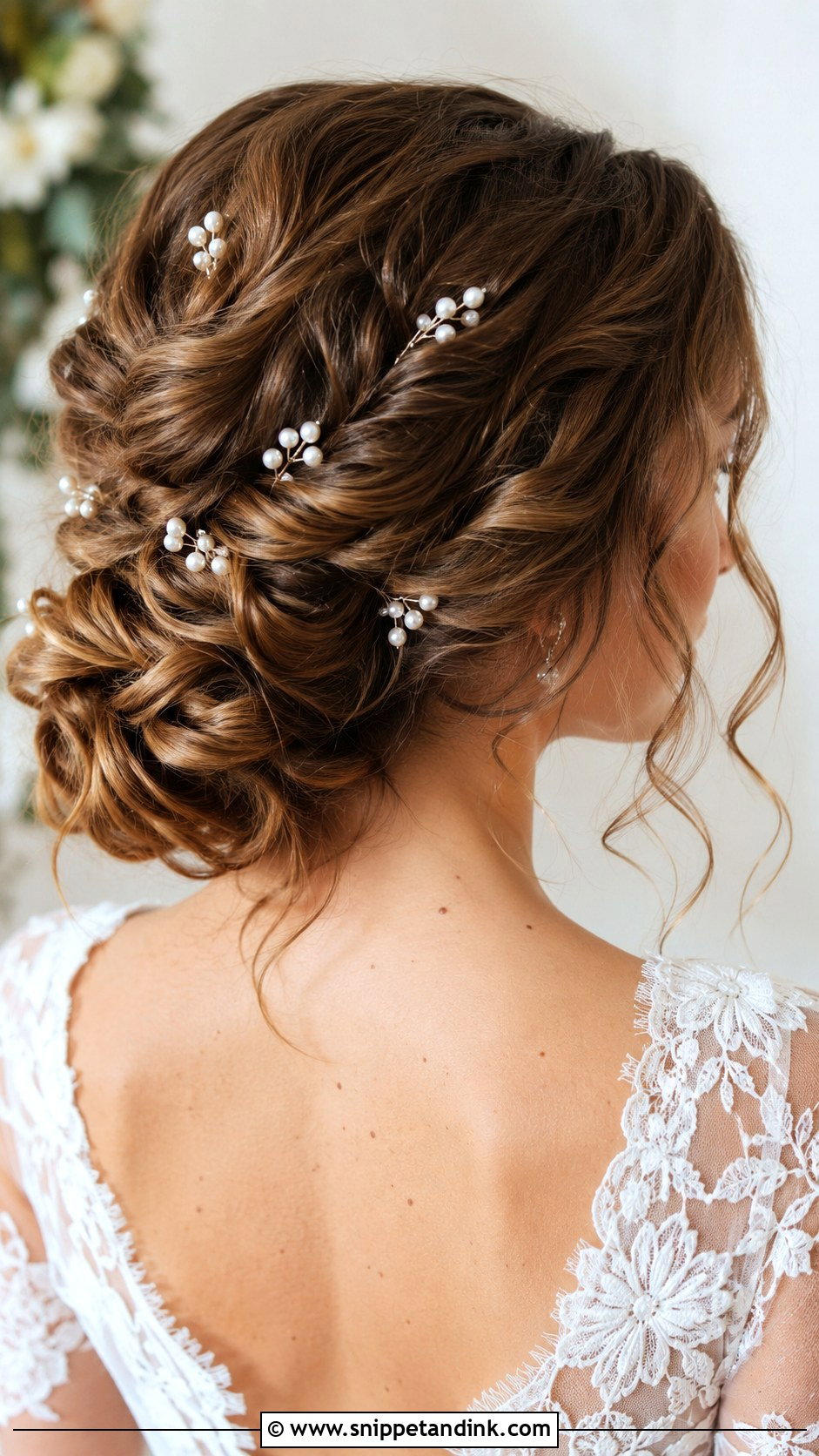
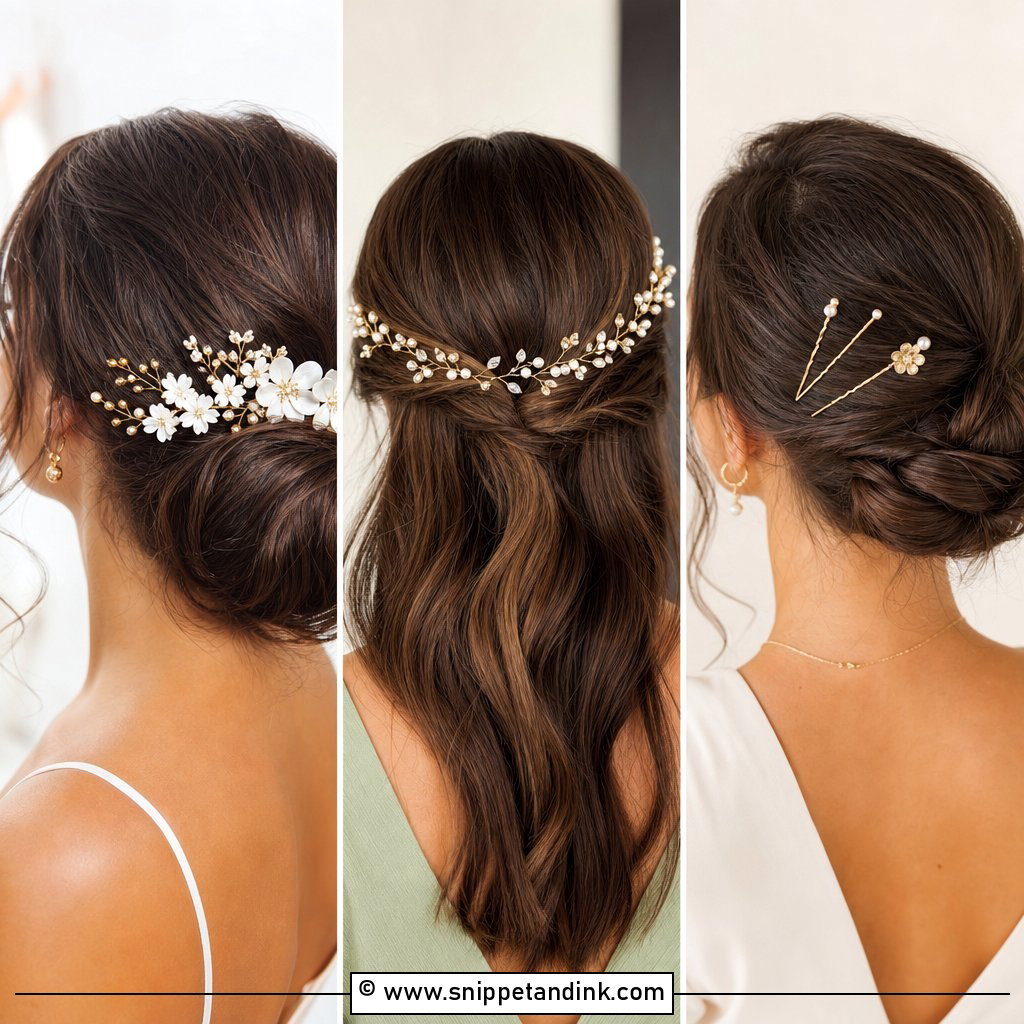
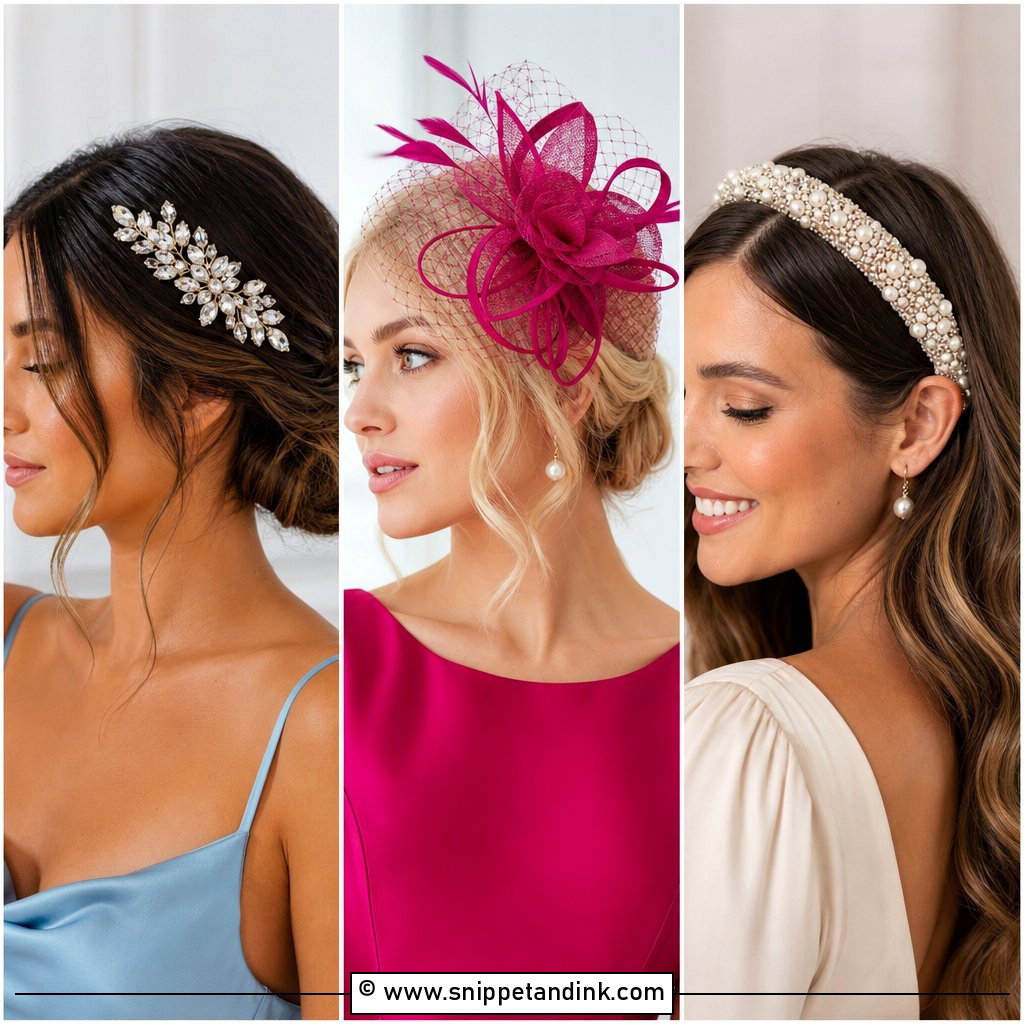
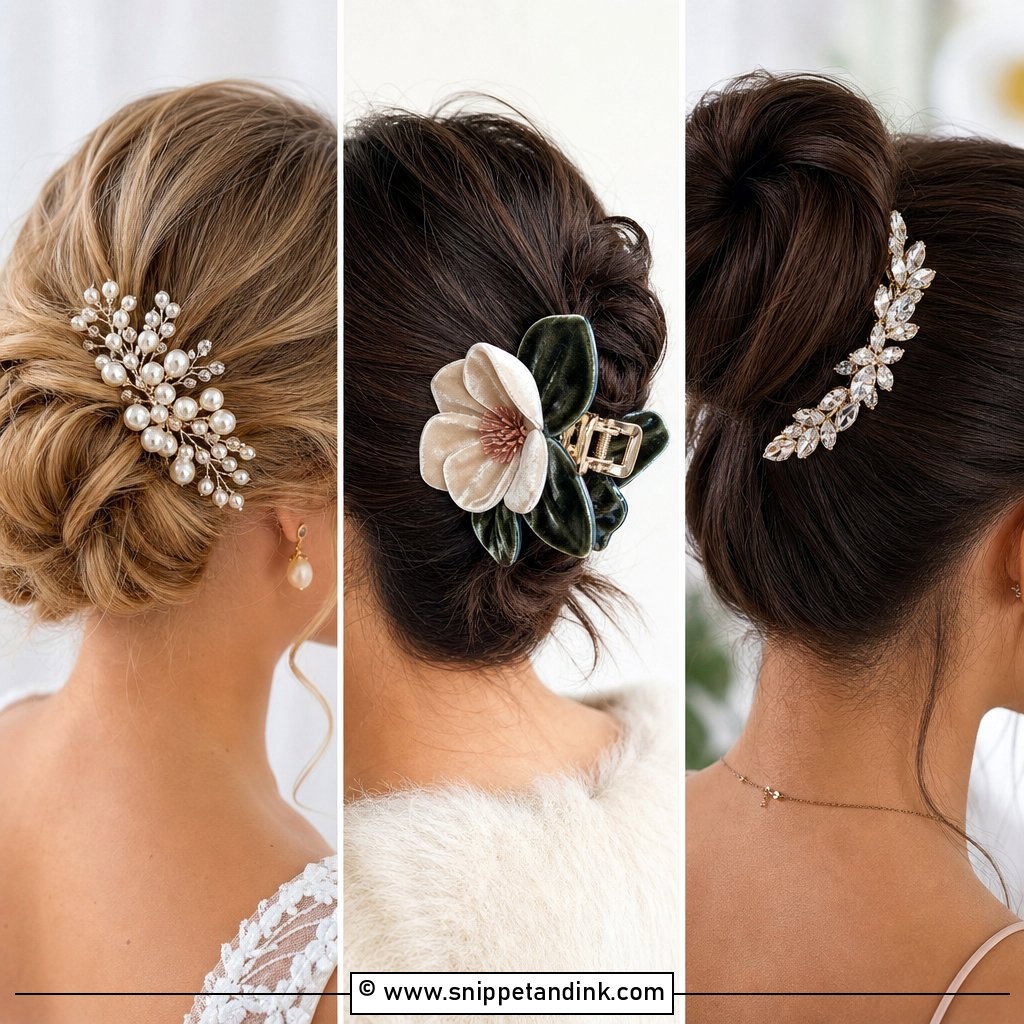
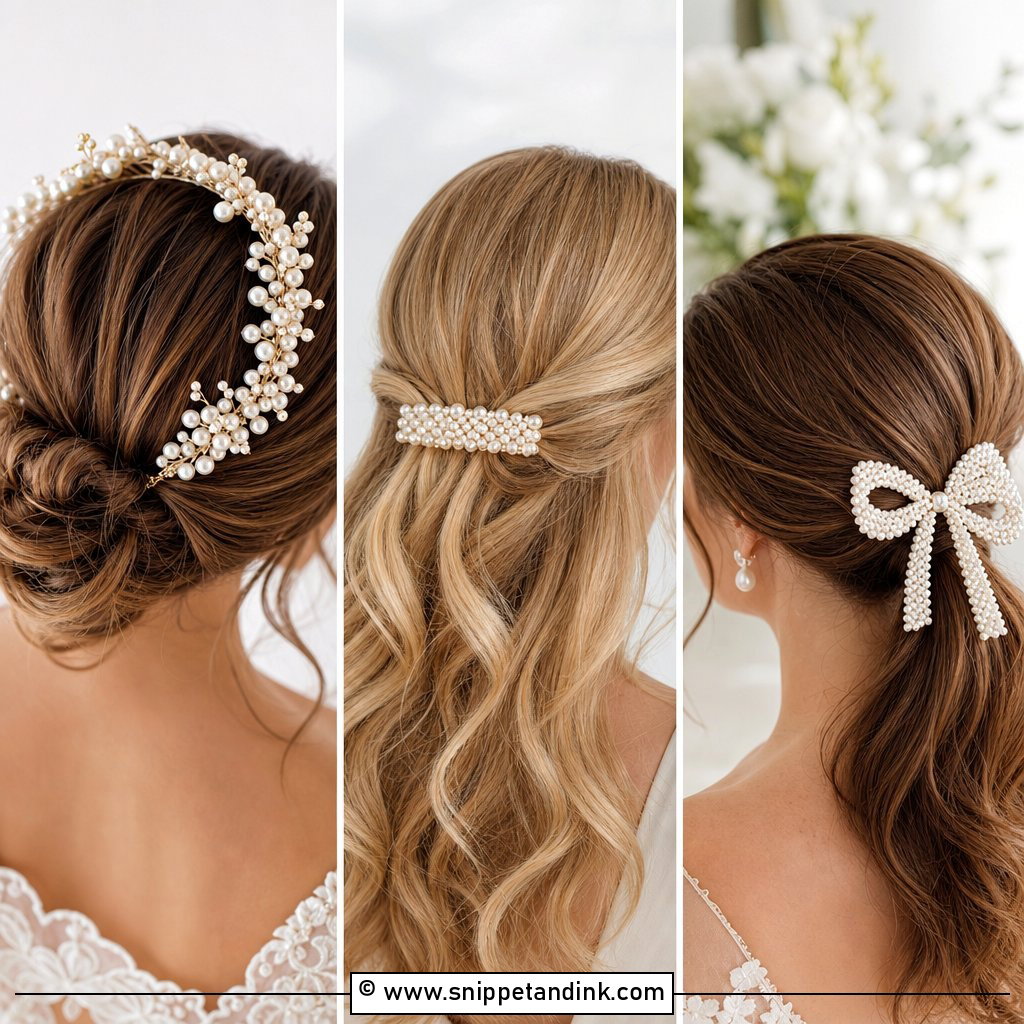
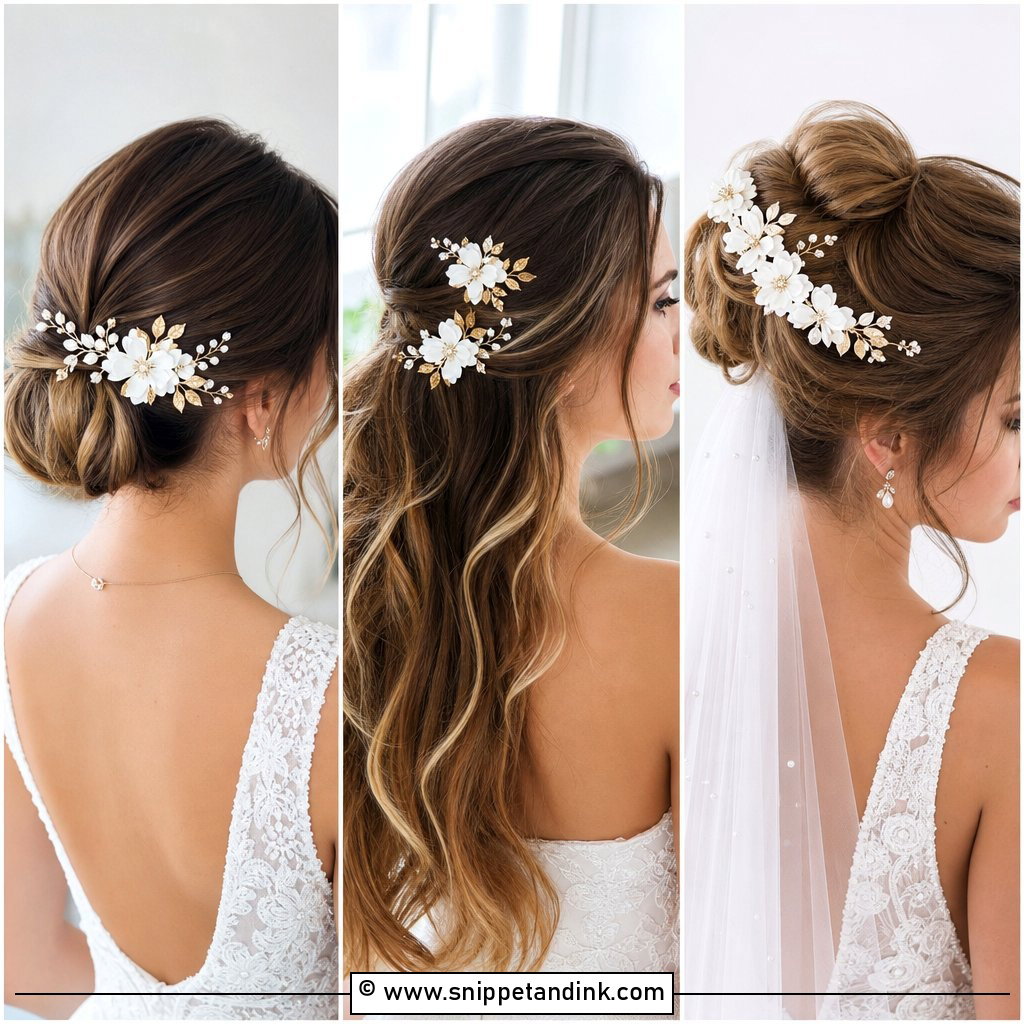
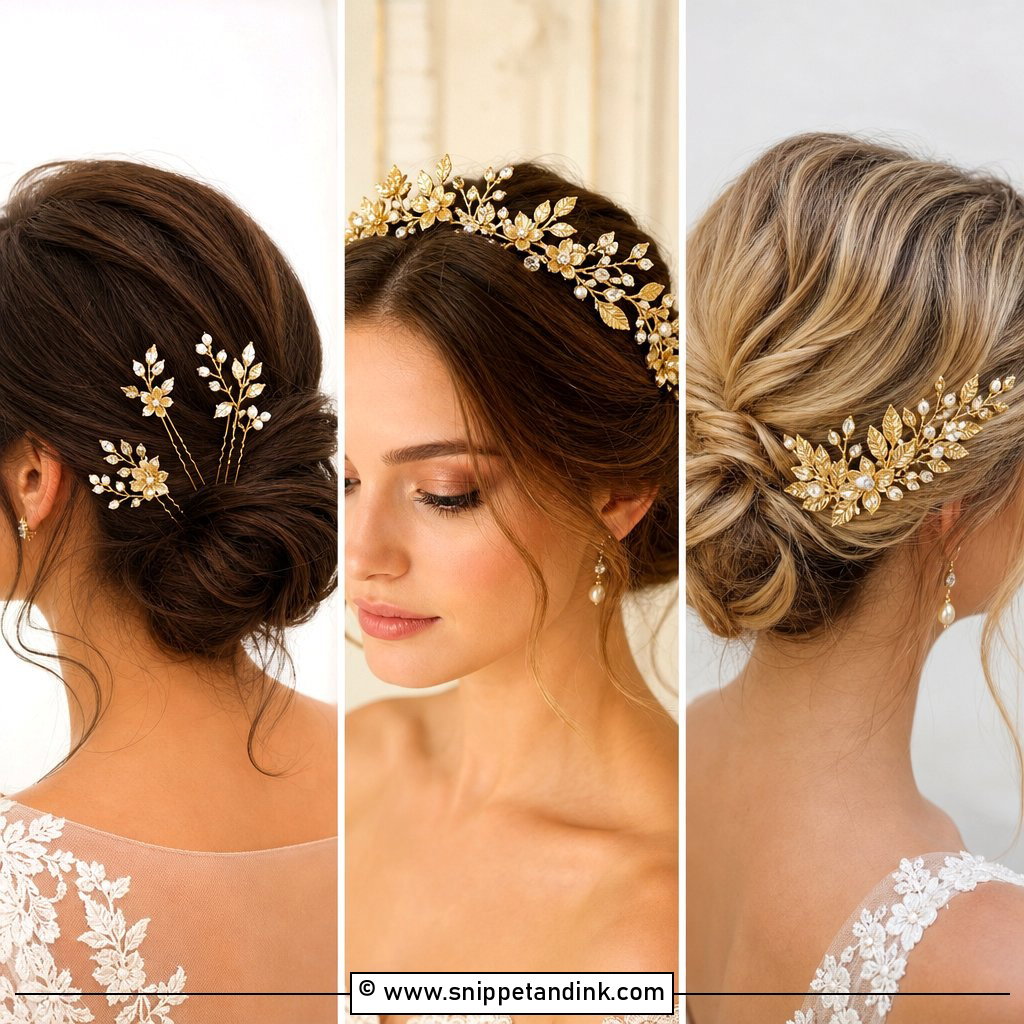
Pearl pins are the easiest accessory to get right, because you decide the placement one pin at a time. I slide each one in at an angle against the direction of the twist so the pearl sits flush and the prong disappears. On very fine or silky hair they can creep out by the evening, so I lock each one behind a hidden bobby pin first. Five to nine pins usually looks deliberate; more than that starts to look like a pattern.
2. Crystal Bridal Tiara
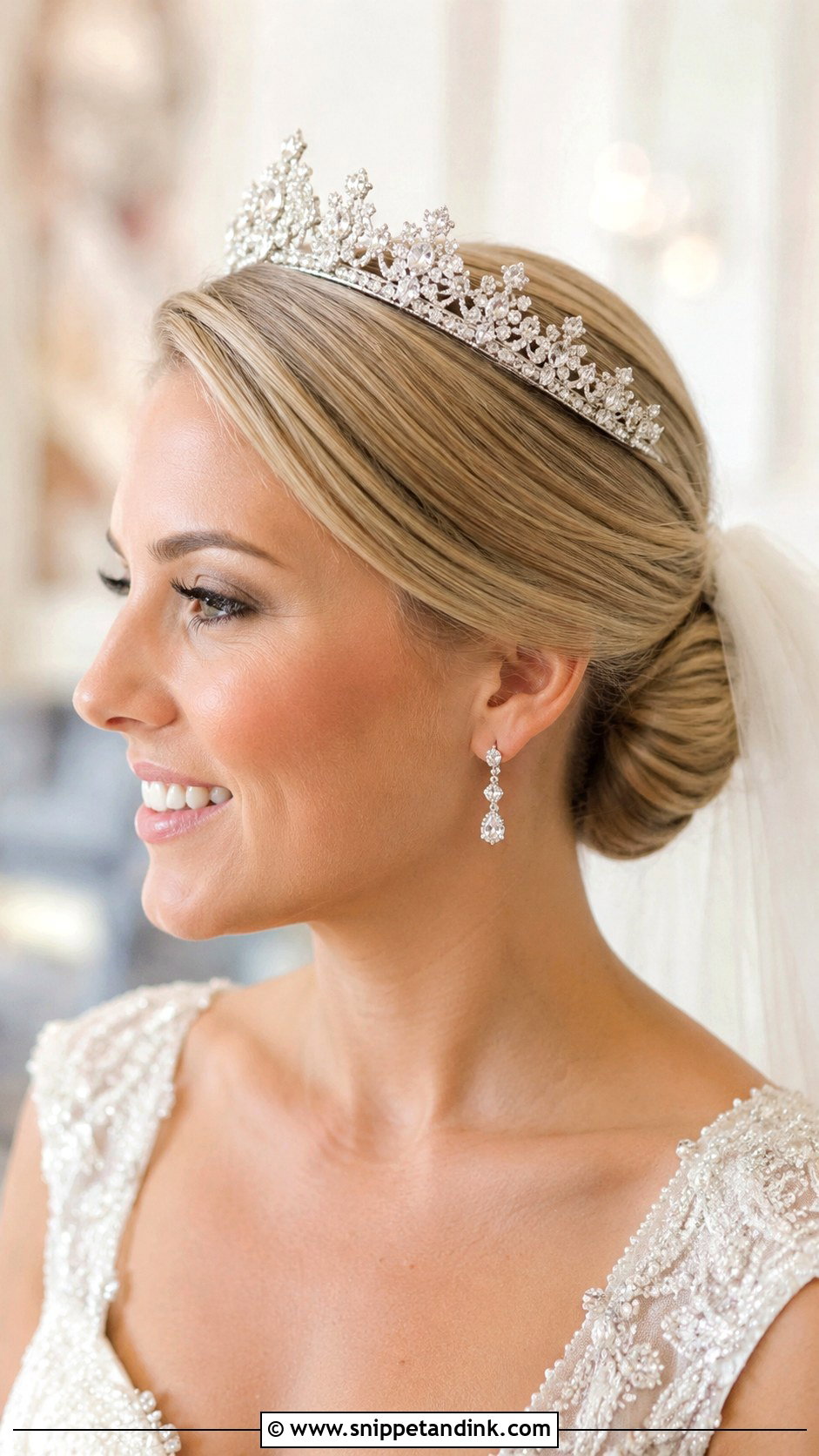
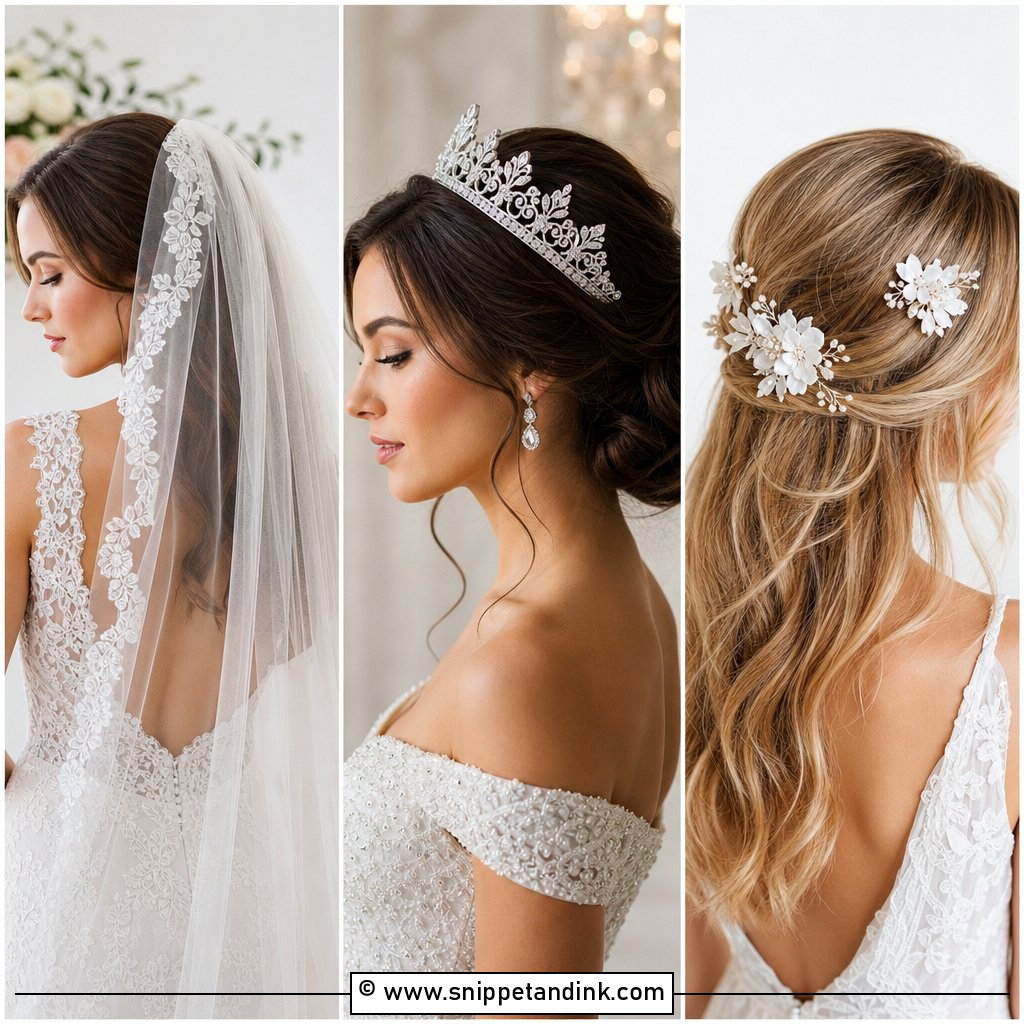
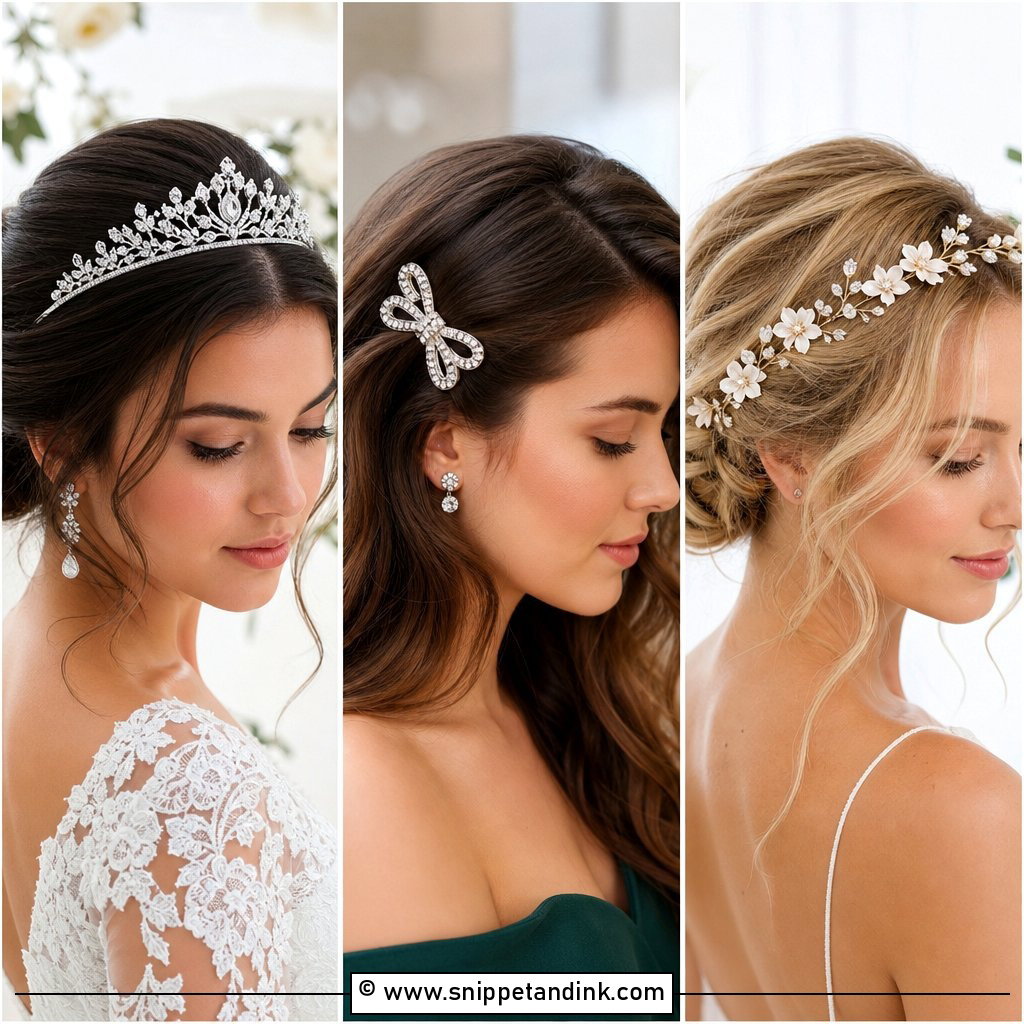
A crystal tiara changes the proportions of the head, so I plan the height of the style around it rather than adding it at the end. It needs a little volume behind the band to sit on, otherwise it slides forward onto the forehead. Most tiaras have small loops at each end; I thread bobby pins through those and crisscross them into a teased base. A slim band suits a soft updo, while a tall ornate one needs a formal gown and a fairly simple dress neckline to avoid competing.
3. Floral Hair Vine
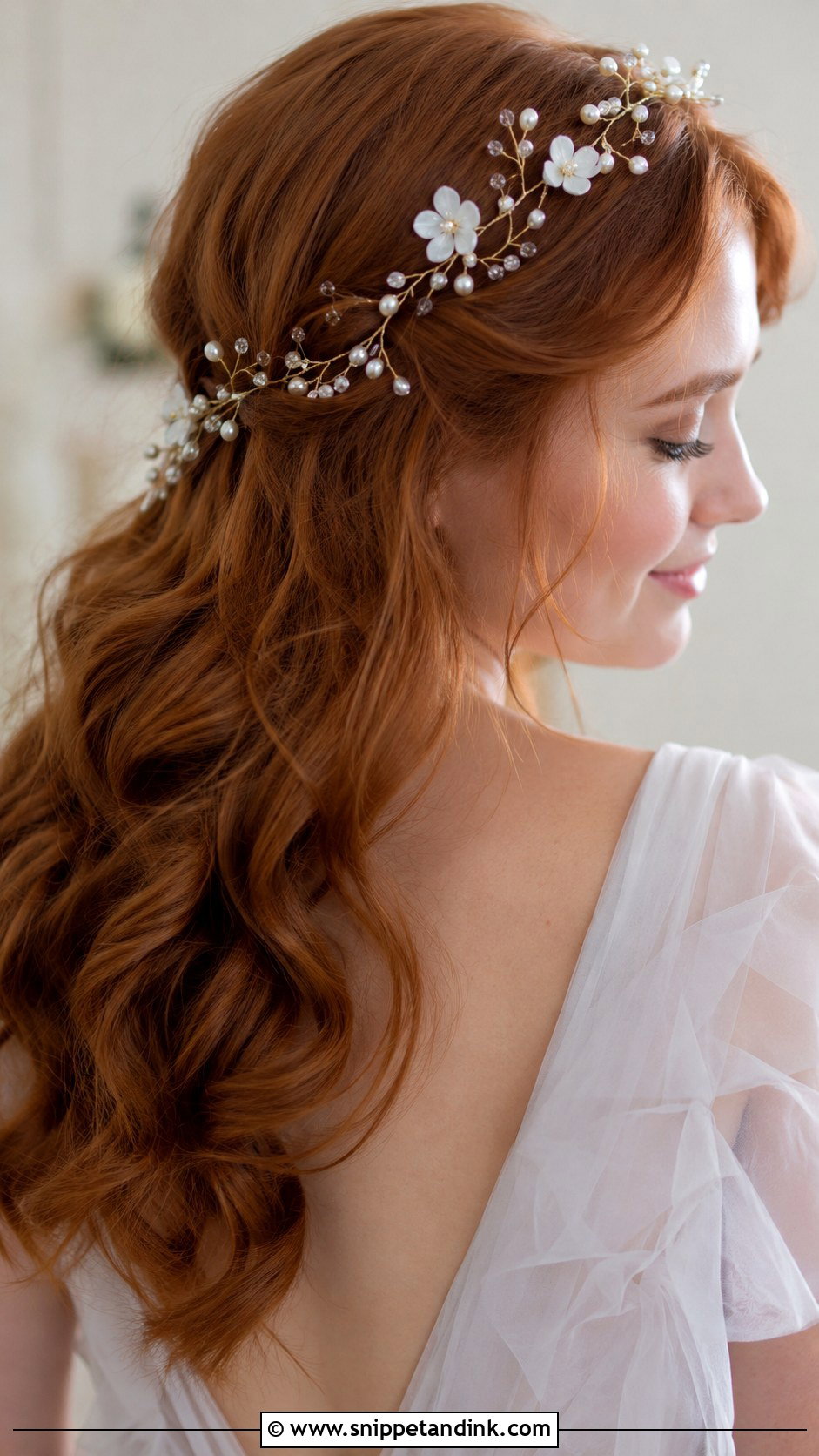
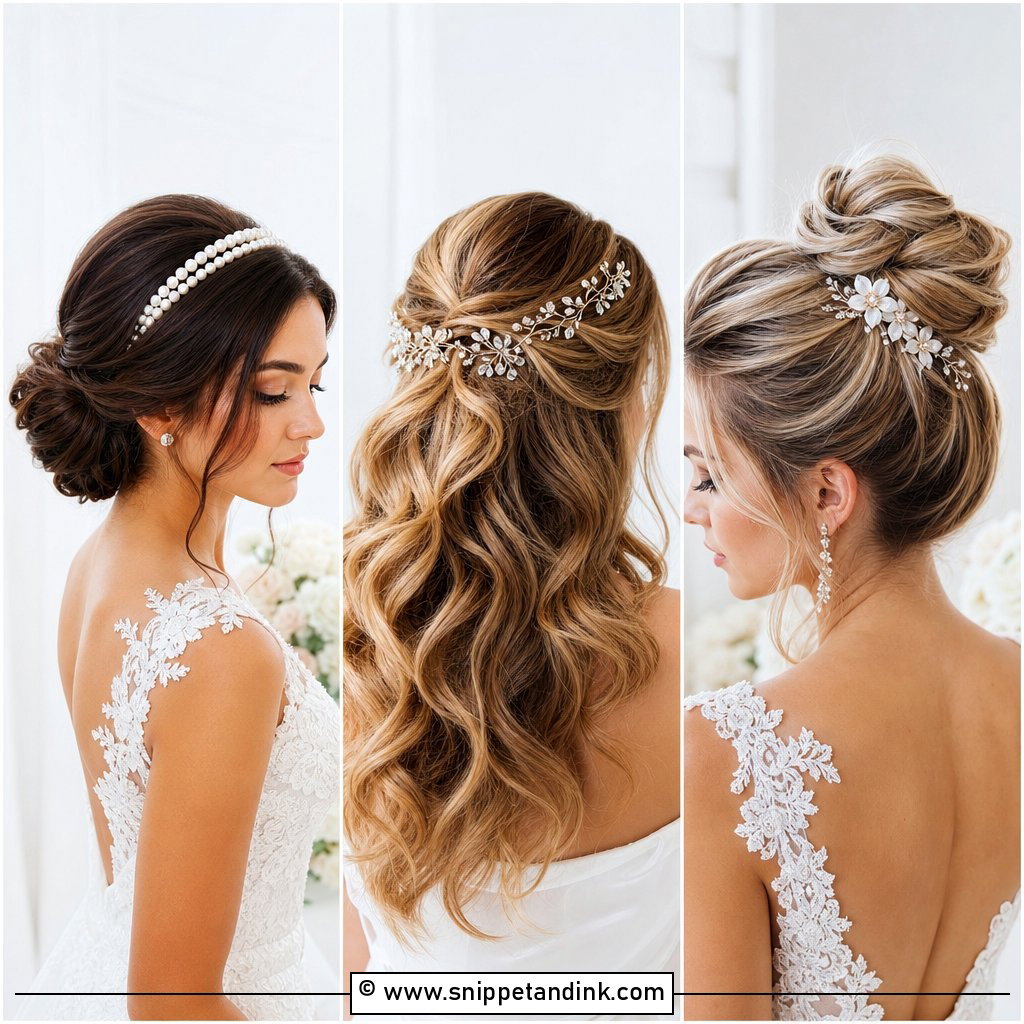
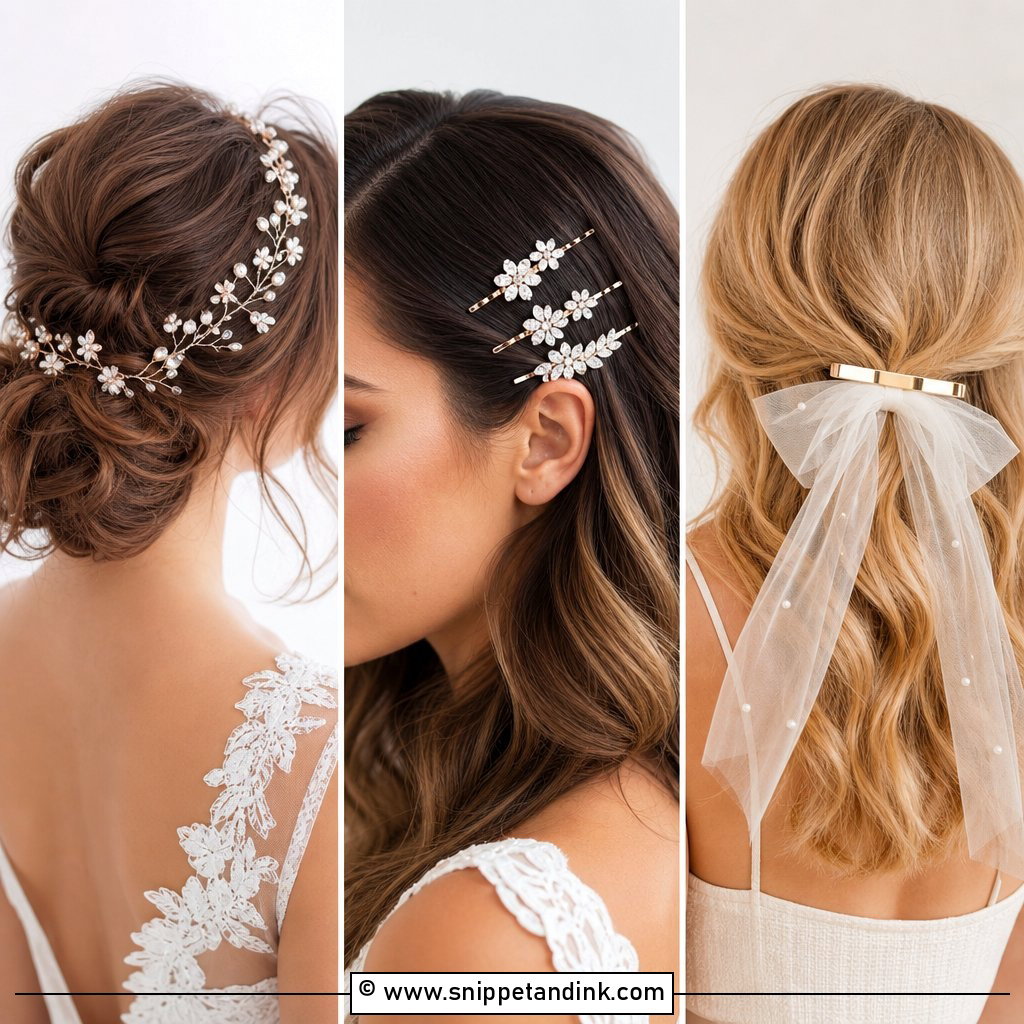
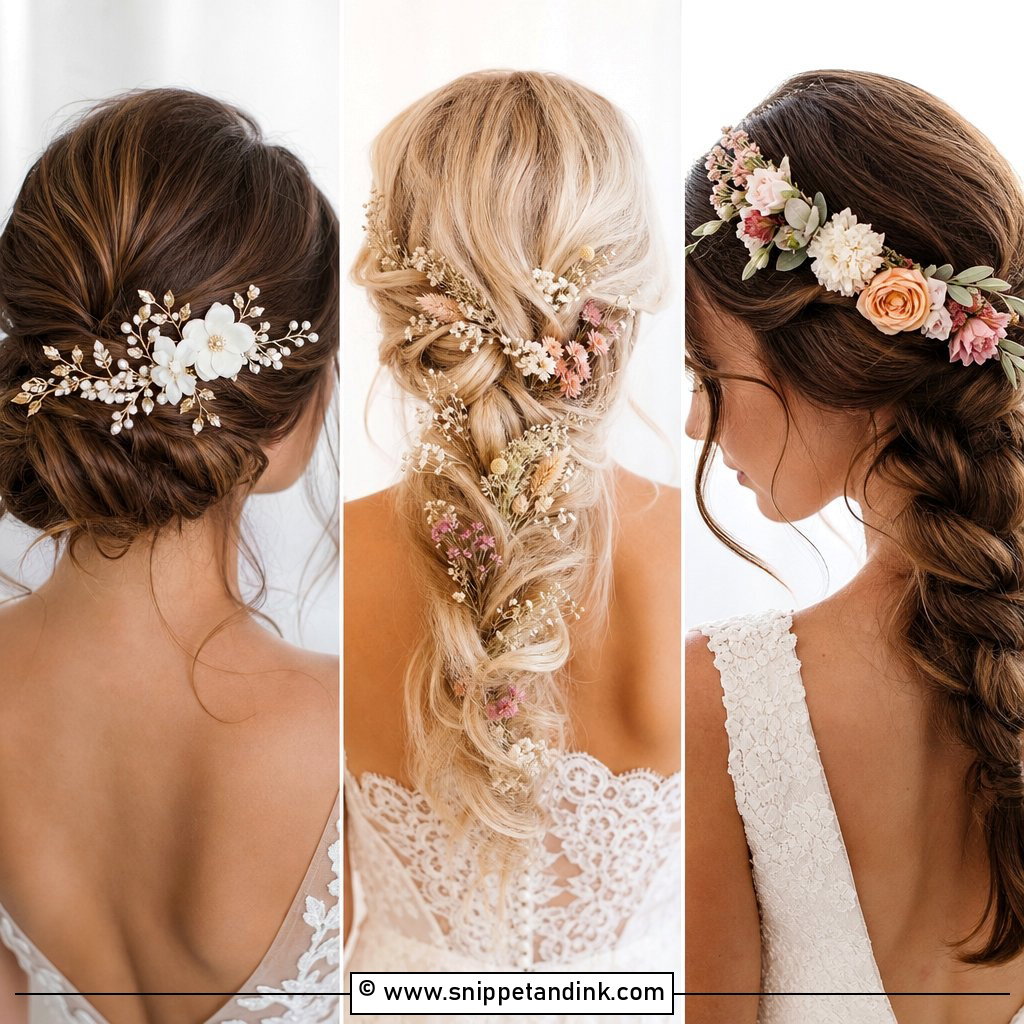
A floral vine is just wire, which is why it bends into braids and around buns so easily. That same wire is what I check first: cheap vines have stiff ends that poke the scalp after a few hours. I weave the vine in sections and pin through the gaps between the flowers every two or three inches. On a half-up style I prefer it draped across the back crown, where it stays visible from the aisle and in profile shots.
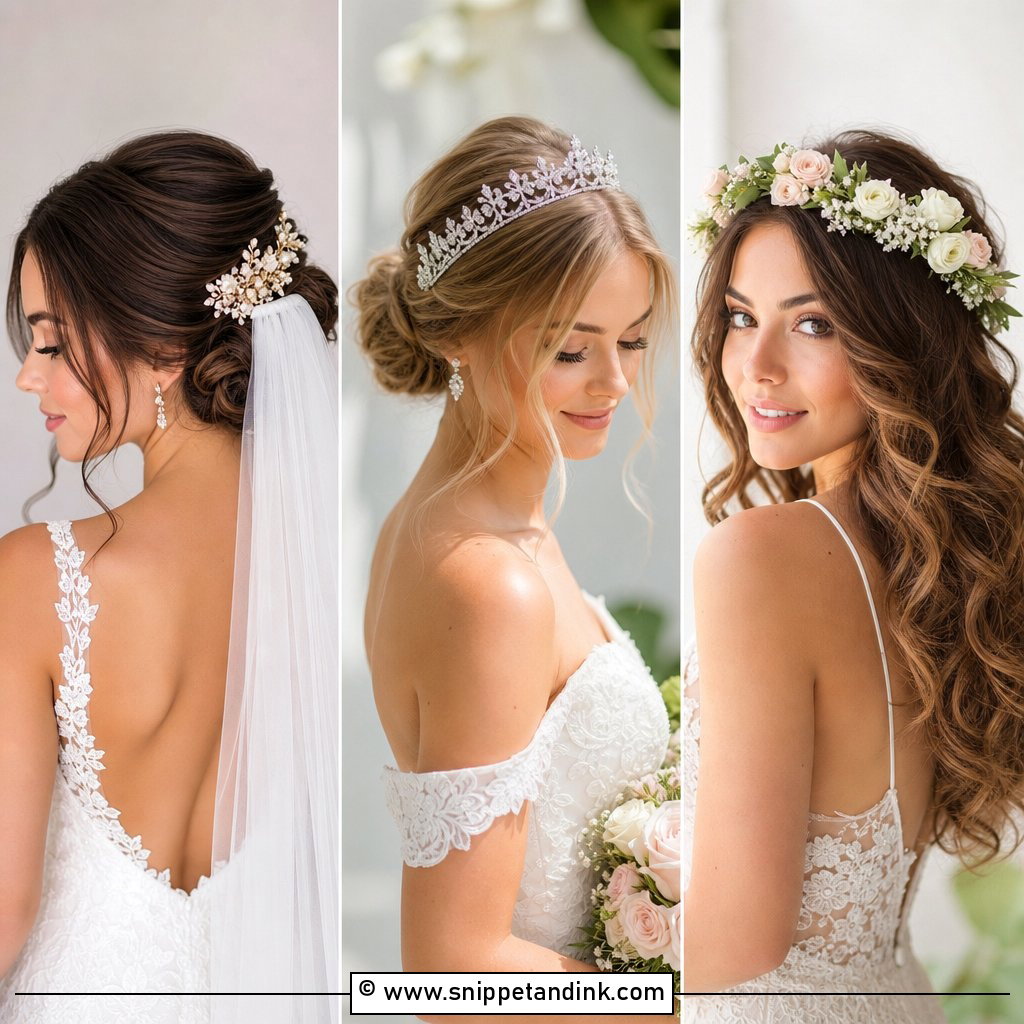
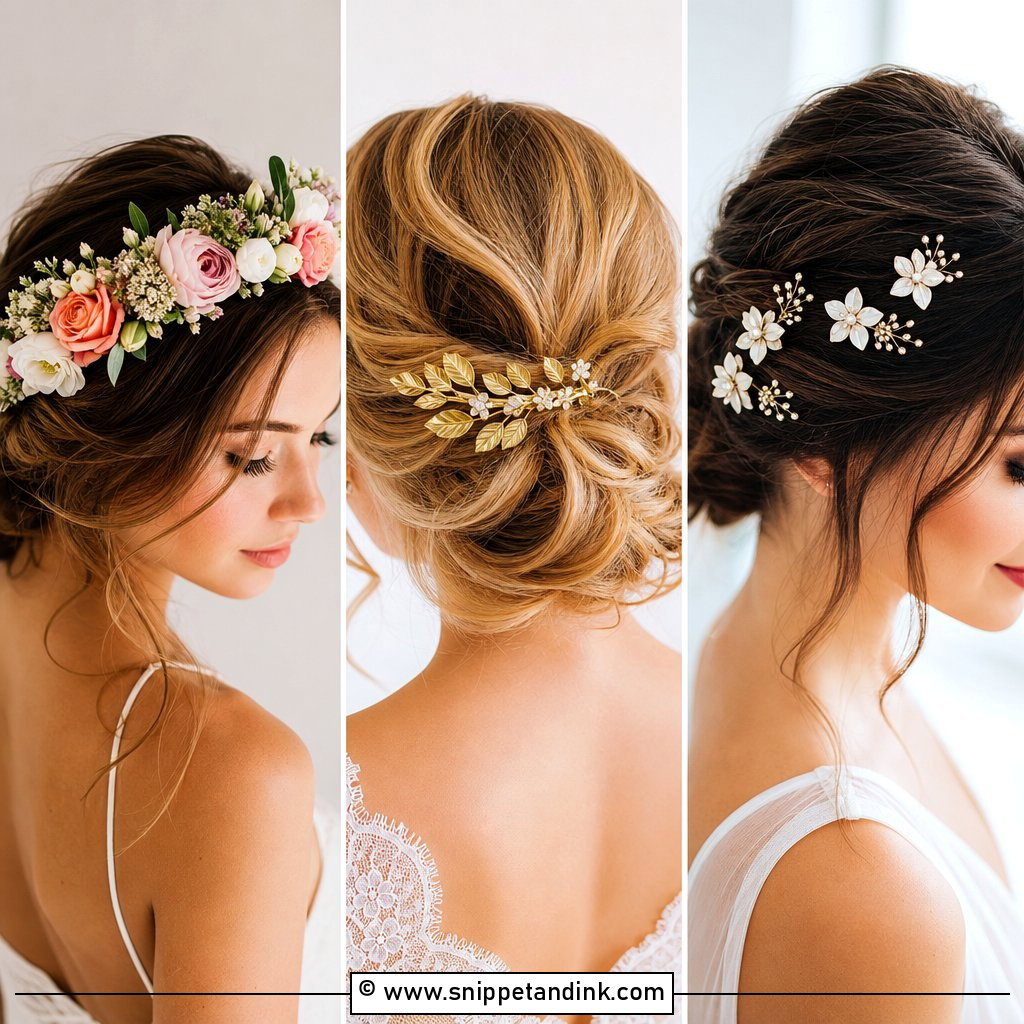
4. Fresh Flower Crown
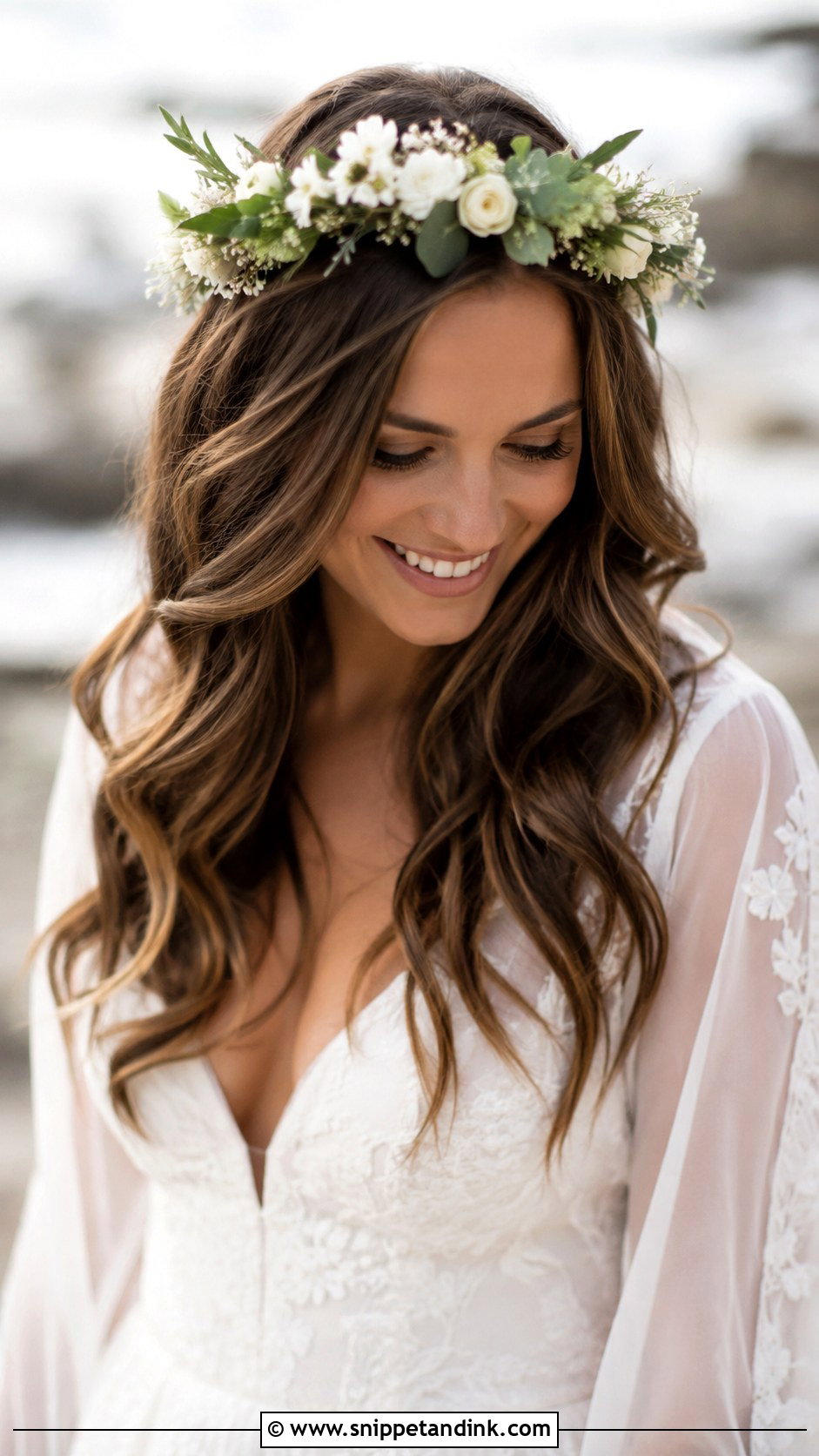
Real flowers are alive, and that matters on a hot day. A fresh crown should be built by the florist the morning of, on wire with each stem taped, and kept cool until I place it. Spray roses, wax flower and small hardy greenery outlast soft petals like garden roses in heat. I set the crown over loose waves or a soft braid and pin it at four points, behind each ear and at either side of the back, so it doesn’t tip when you hug people.
5. Classic Wedding Veil
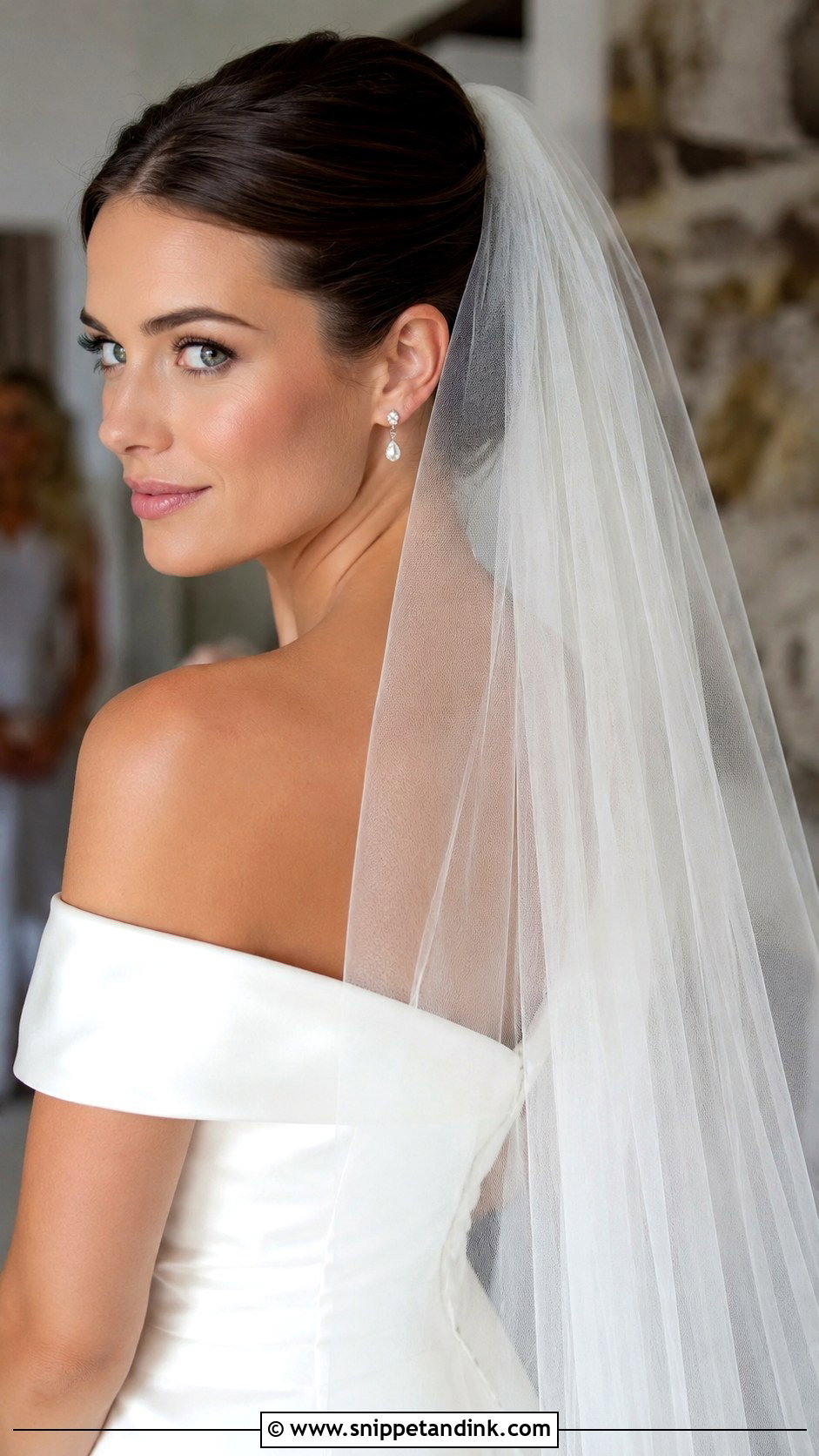
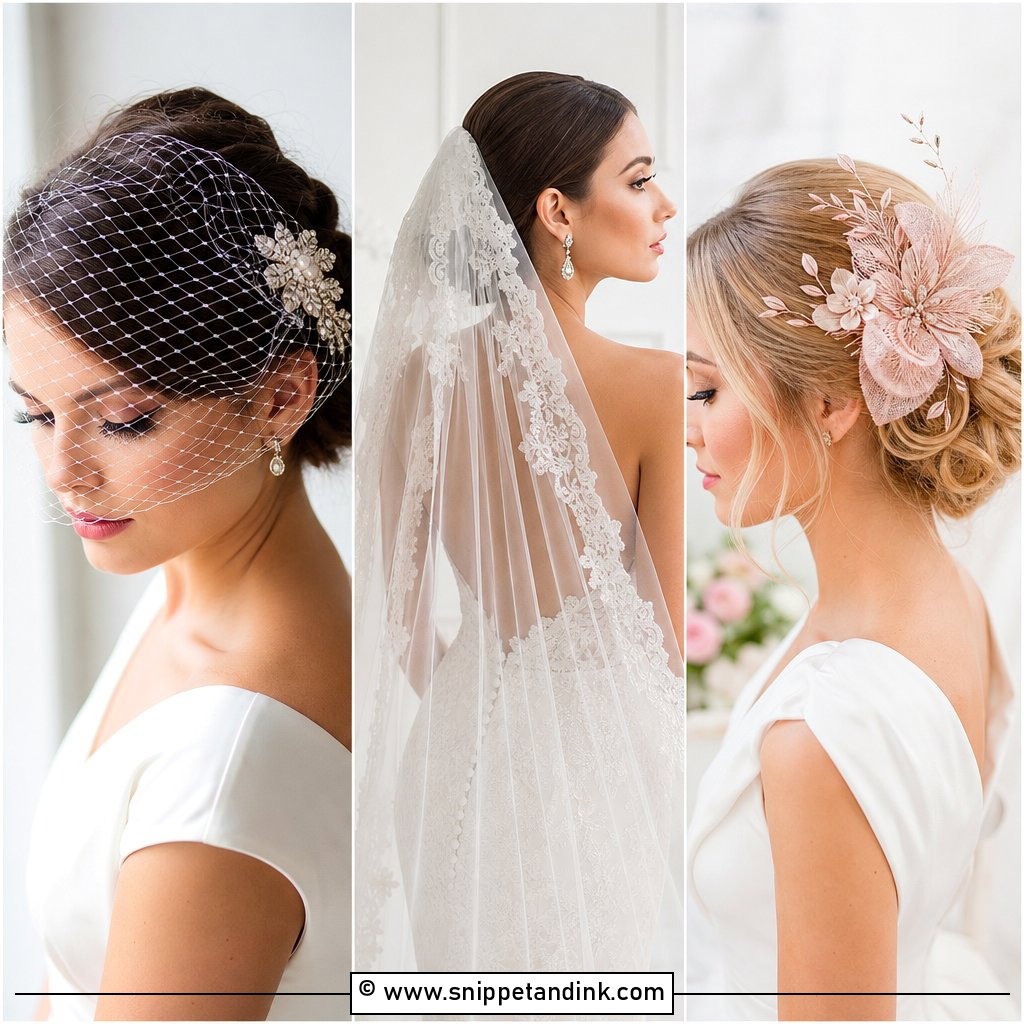
The veil is the heaviest accessory most brides wear, and it pulls backward the whole time it is in. Lengths run from a short birdcage to dramatic cathedral trains, and the longer the tulle, the stronger the anchor I need. I build a small teased pad or a bun as a base and push the comb in against it. Lace or beaded edges add real weight, so try the actual veil at your hair trial, not a sample.
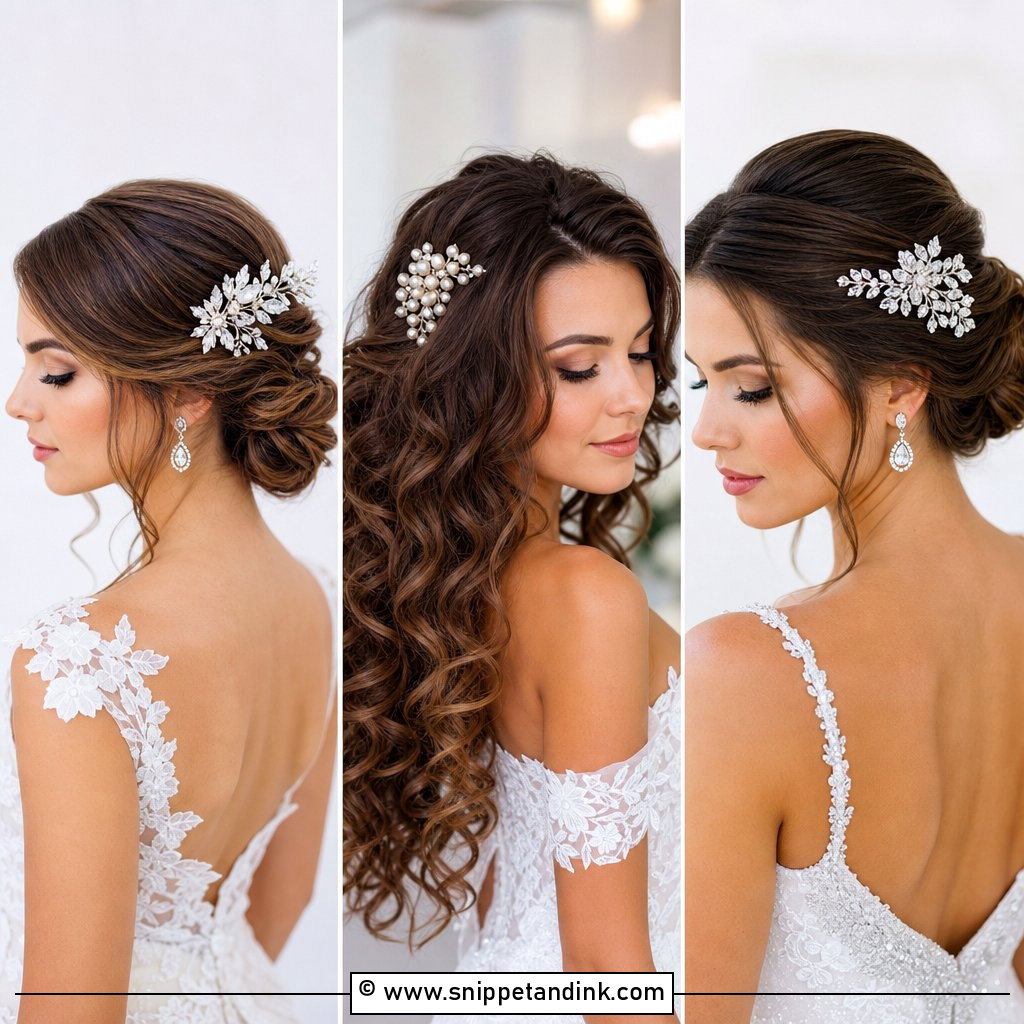
6. Jeweled Hair Comb
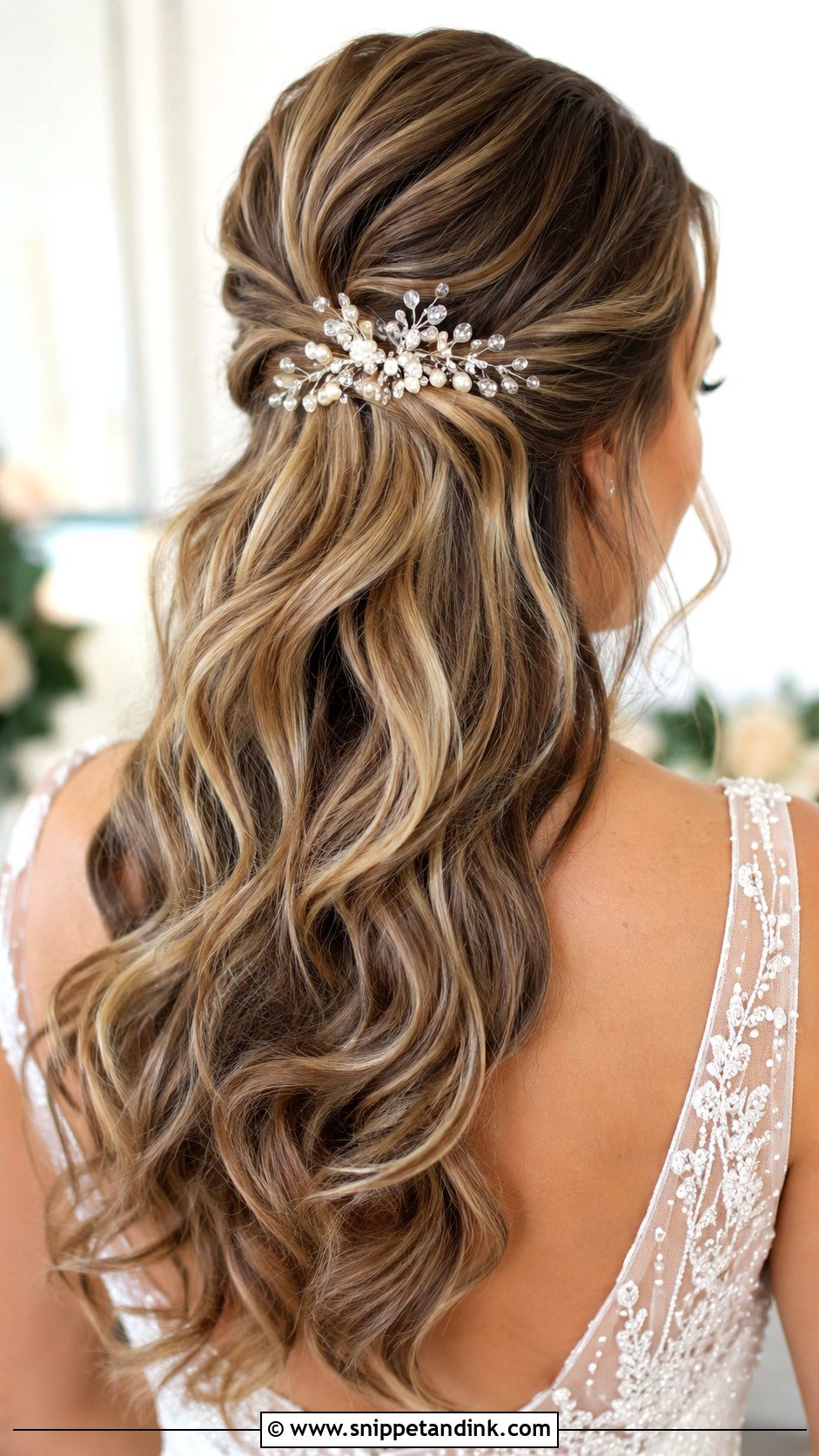
A jeweled comb is a workhorse. The teeth need something to grip, so on clean, slippery hair I backcomb a small section or set two crossed bobby pins first and slide the comb over them. That is also why combs are my usual answer for shorter cuts: a comb only needs a few inches of hair. Tucked behind one ear or set against the side of a low bun, it can stay in place for ten hours if the base is right.
7. Pearl Bridal Headband
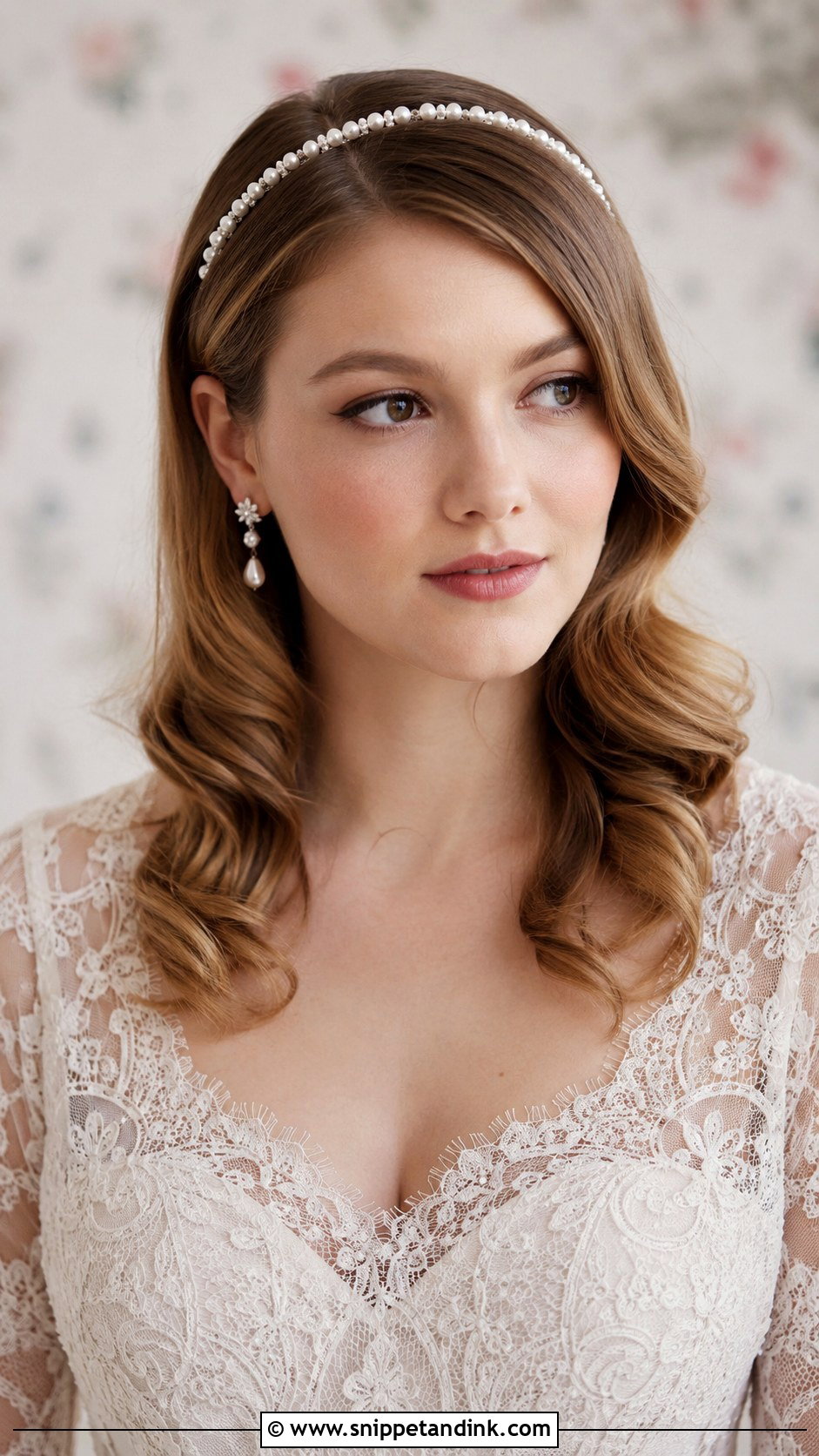
Headbands are the friendliest option for brides who do their own hair, since they need no pinning skill at all. The catch is pressure: a rigid metal band can give some people a headache behind the ears by the reception. I bend the arms slightly wider before placing it and pin the tips under the hair. Pearls on a band read softly on camera, so they suit hair worn down or in loose waves better than a very sleek finish.
8. Sculptural Hair Pins
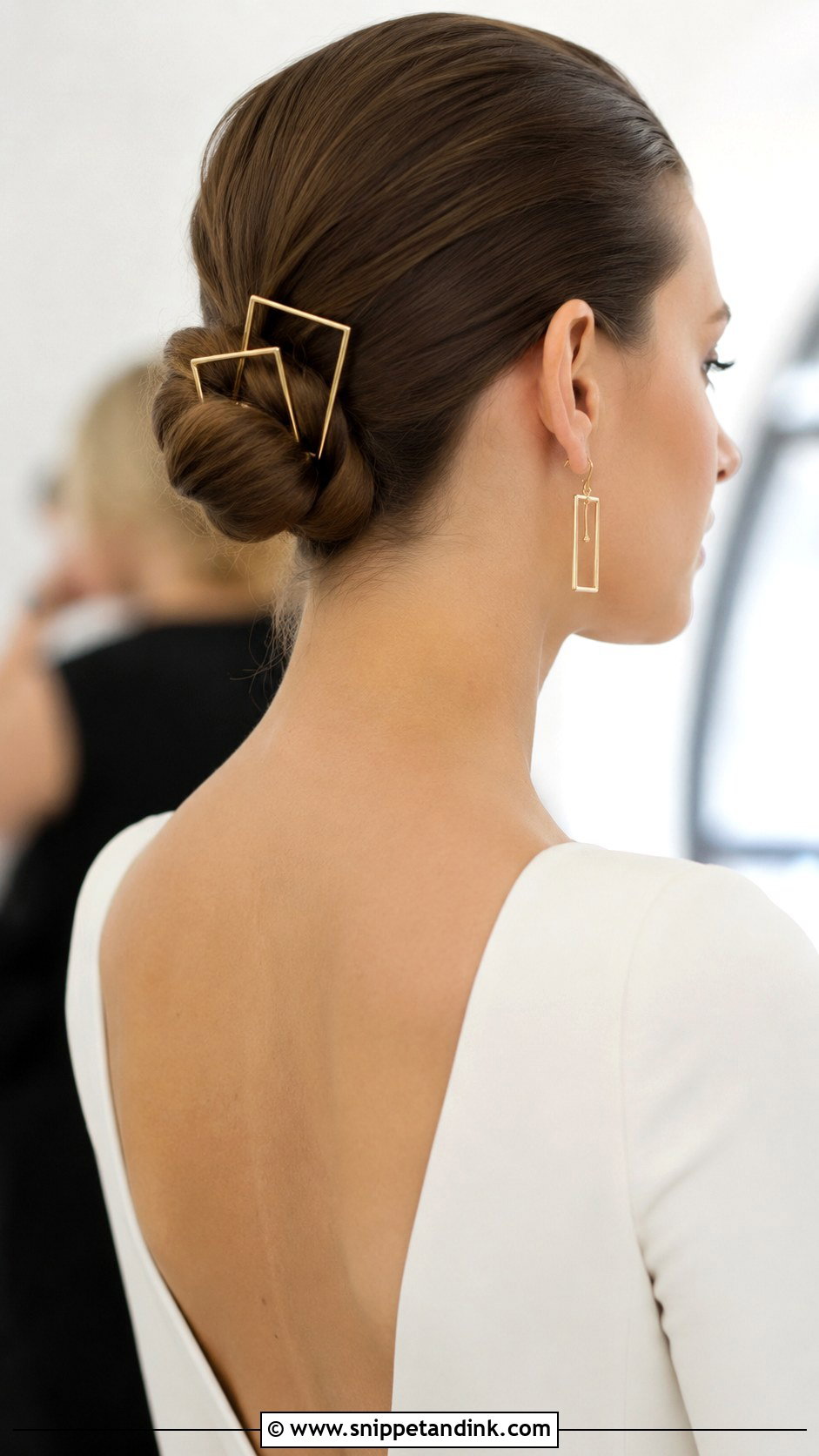
Sculptural pins in brushed metal and geometric shapes are the more fashion-led direction this year, and they reward restraint. One bold pin set into the side of a sleek bun does more than six scattered through waves. These pieces are often heavier than they look, so I check the clasp or prong and back each one with a bobby pin. I’d keep the gown plain if you pick one; they compete with heavy lace.
9. Bridal Hair Clip
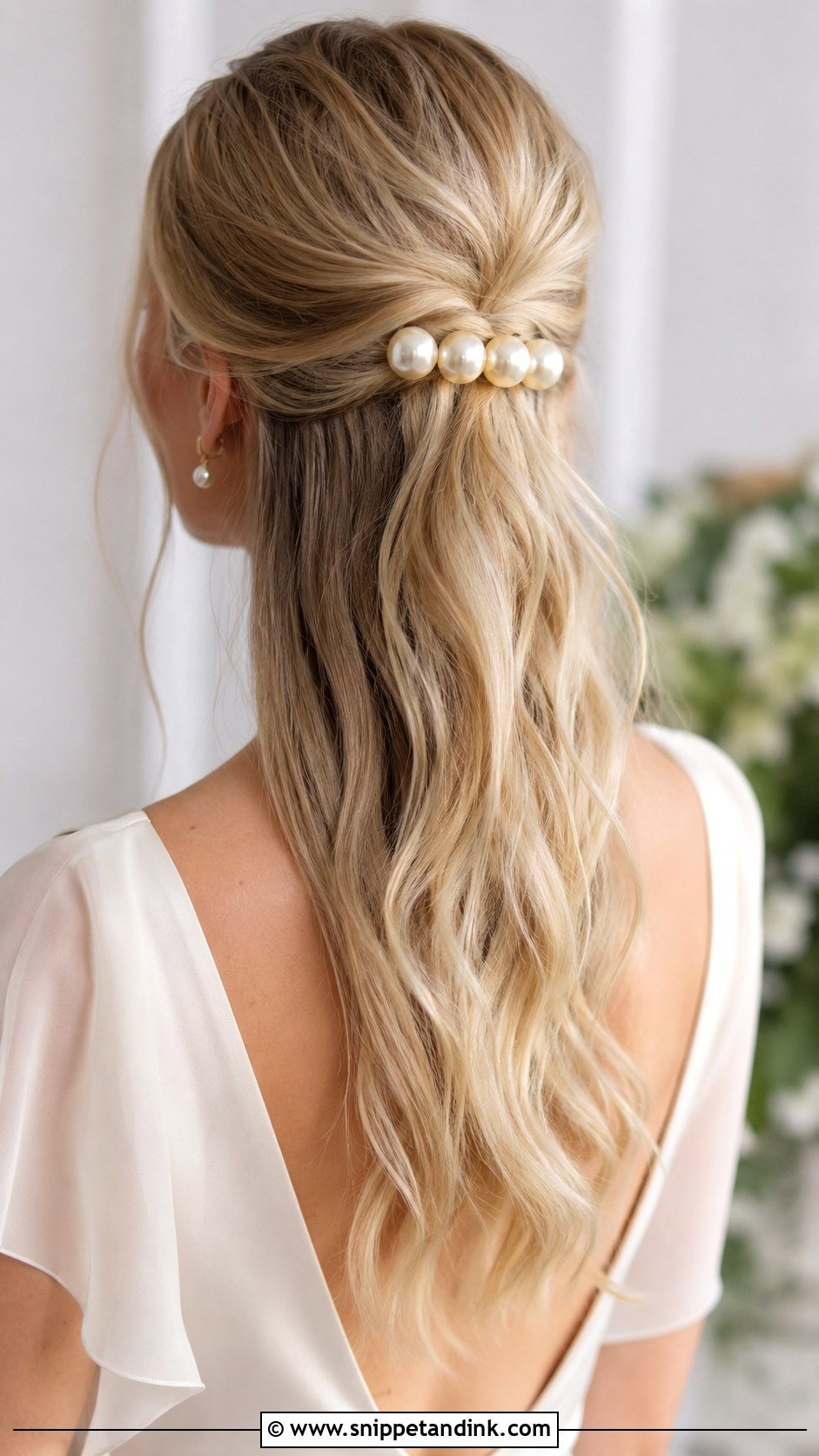
Oversized clips and barrettes have moved from everyday hair into bridal looks, and I like them for half-up styles because the clip does the holding. The spring has to be strong enough for the hair you have. On thick hair a weak clip snaps open; on very fine hair a heavy clip slides down. I always test the clip at the trial while you turn your head quickly a few times, which tells me more than a mirror check.
10. Rhinestone Barrette
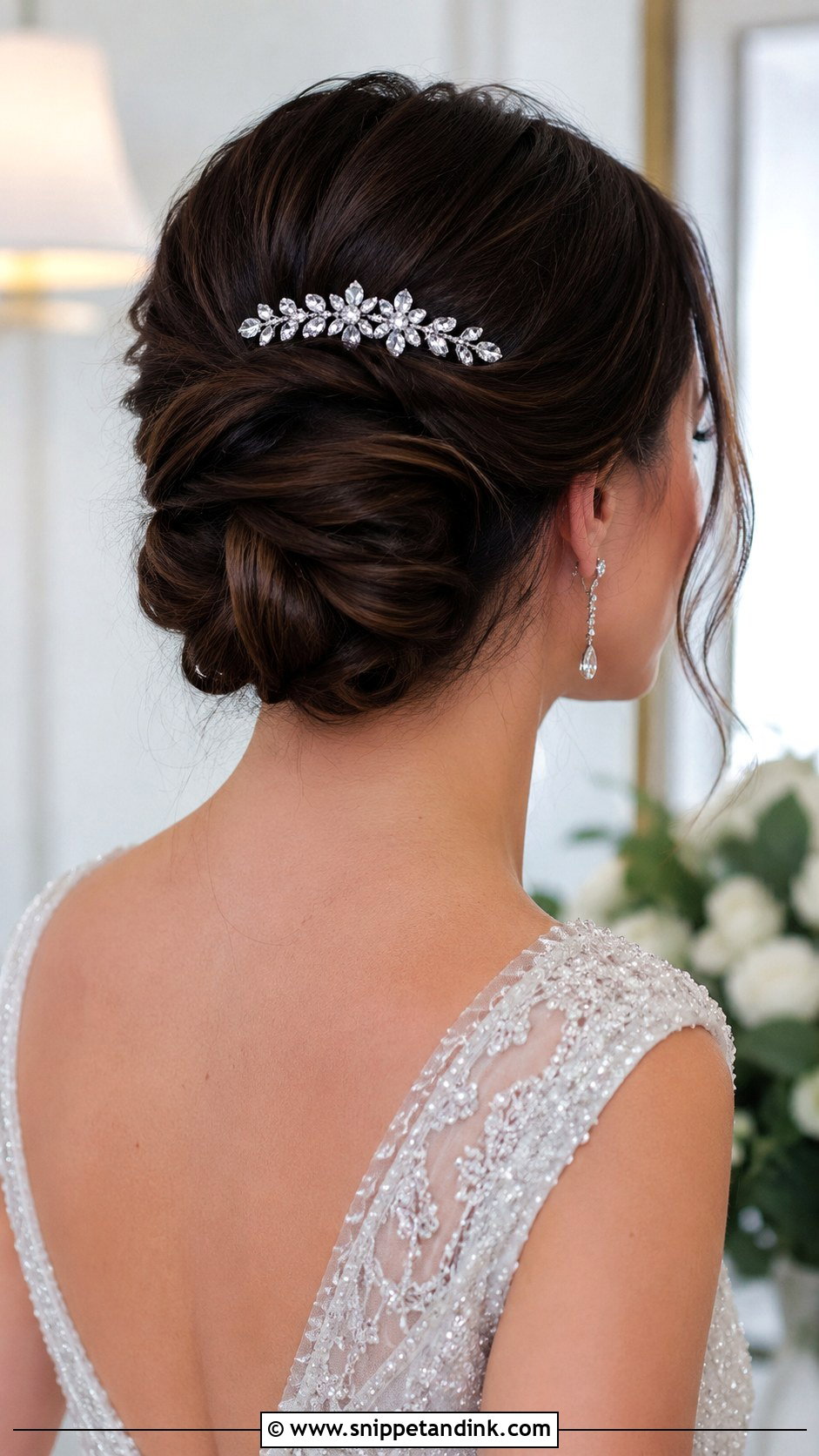
A rhinestone barrette is one of the most practical sparkles in this list. It closes flat, so it sits well under a veil and doesn’t create a lump in the back of photos. I place it just above a twist or the top of a braid, where it covers the pins underneath. Layering two works on long hair; on a bob I stick to one so it doesn’t crowd the shape.
11. Lace Bridal Headband
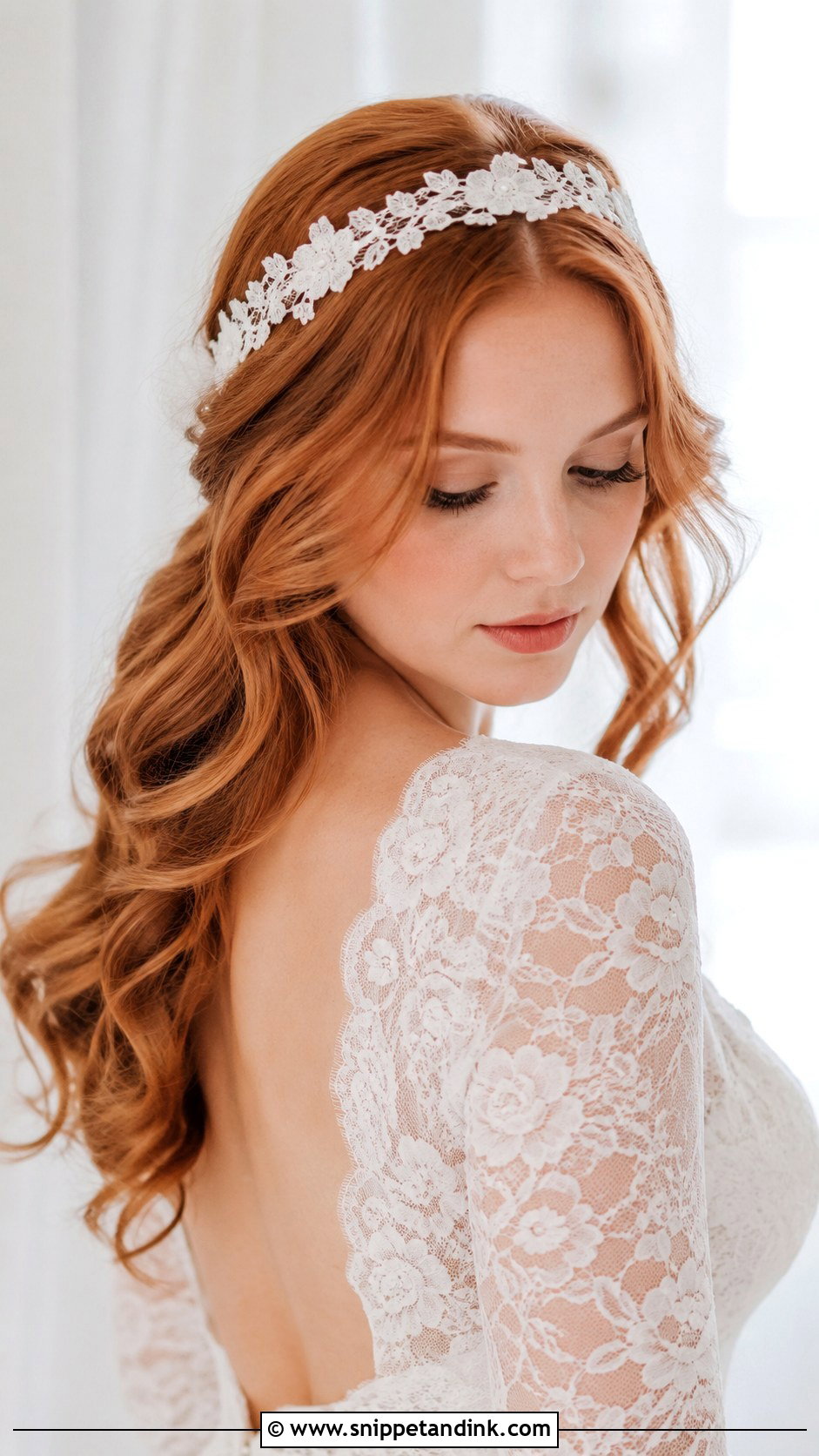
Lace headbands have become a real alternative to the veil, especially at a vintage-leaning wedding. I like matching the lace to the gown, but not exactly: a close cousin of the dress lace looks more natural than a perfect copy. Lace has no stiffness of its own, so most bands are built on a thin metal or satin base. I pin under each end and check that it sits at the same height on both sides from the front.
12. Birdcage Veil
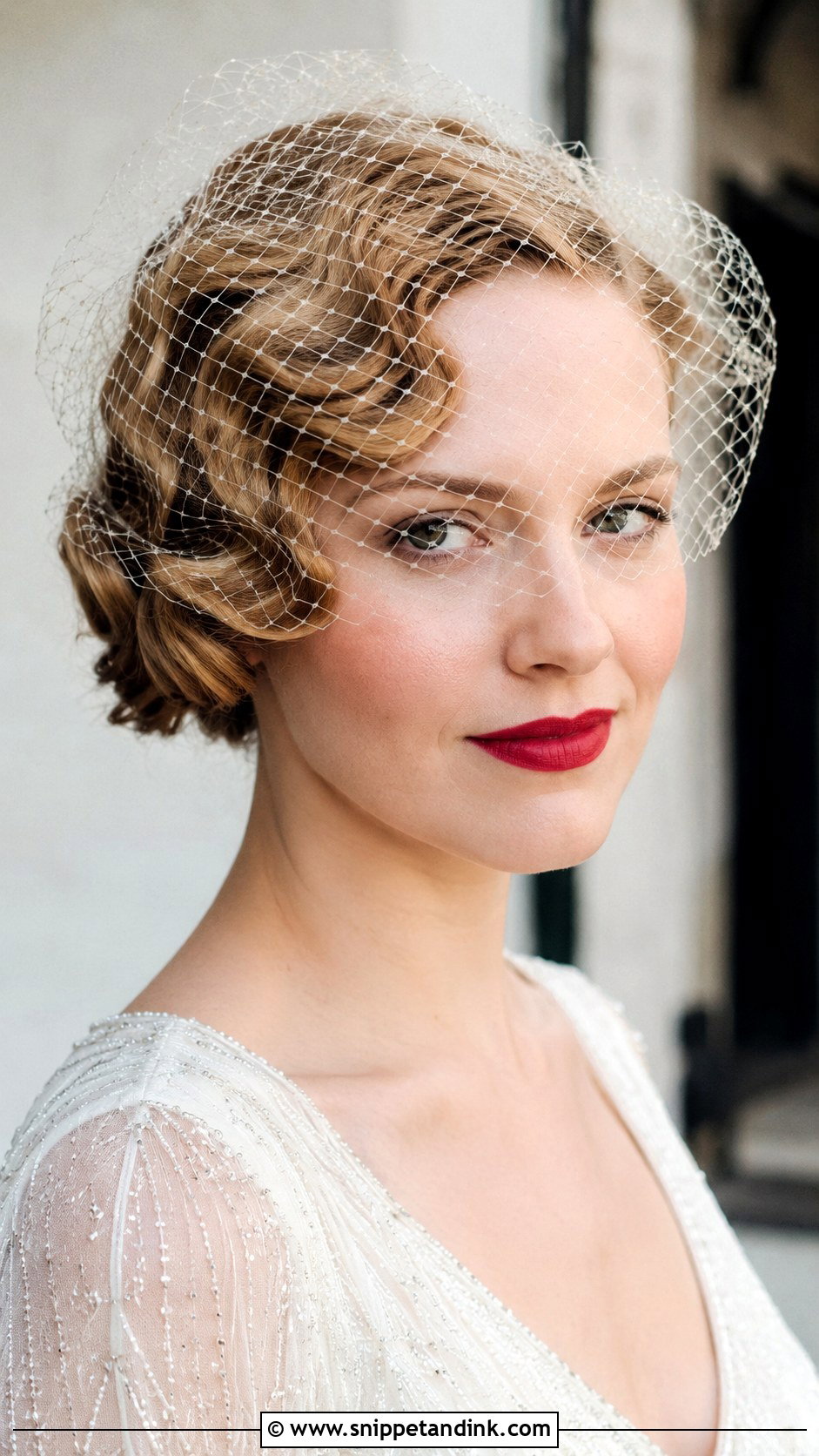
The birdcage veil sits at eye level, which changes how a whole face reads, so I try it on before we finalize makeup. Netting catches mascara and lashes if it sits too close, so I angle the comb slightly back. It pairs naturally with sleek buns and finger waves; with big loose curls the short netting tends to look unfinished. It fits small ceremonies and city halls well, where the short length won’t drag.
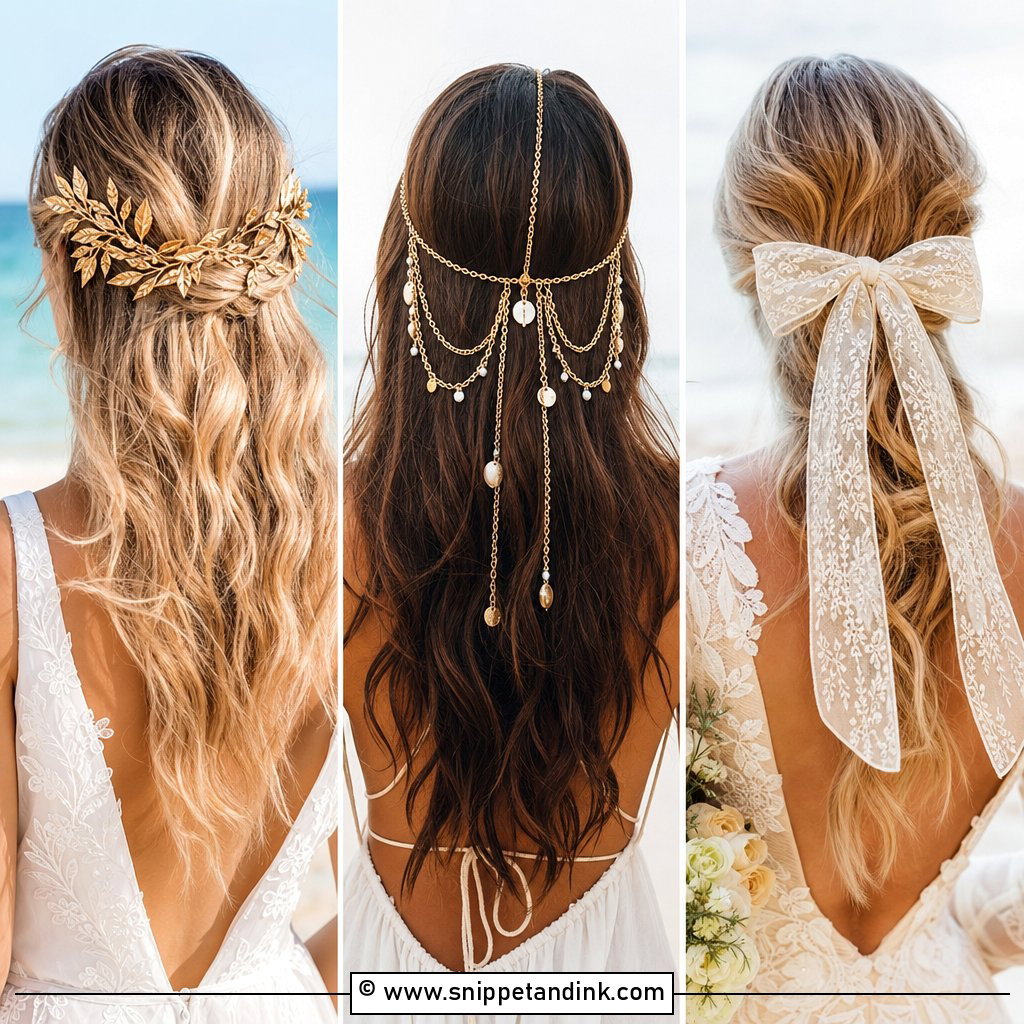
13. Gold Leaf Headpiece
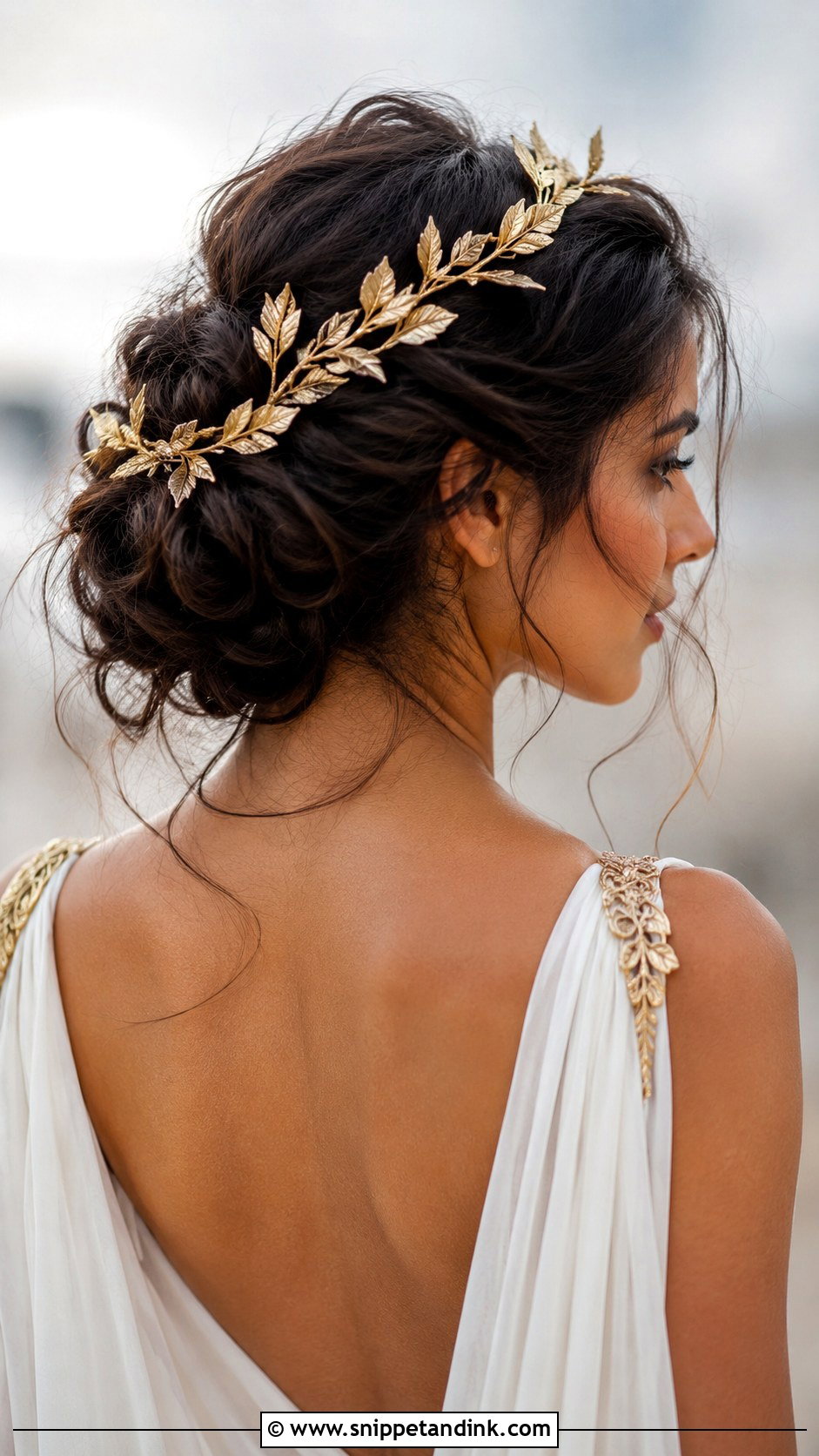
Gold leaf headpieces are usually made of fine wire with stamped or cast leaves, and they flex more than people expect. That flexibility lets me curve one across the forehead for a Grecian look or along the side of an updo. Warm gold reads best against warm undertones and blonde or brown hair. Worn across the brow, I pin it into the hairline at the temples so it doesn’t lift when you smile.
14. Flower Hair Clips
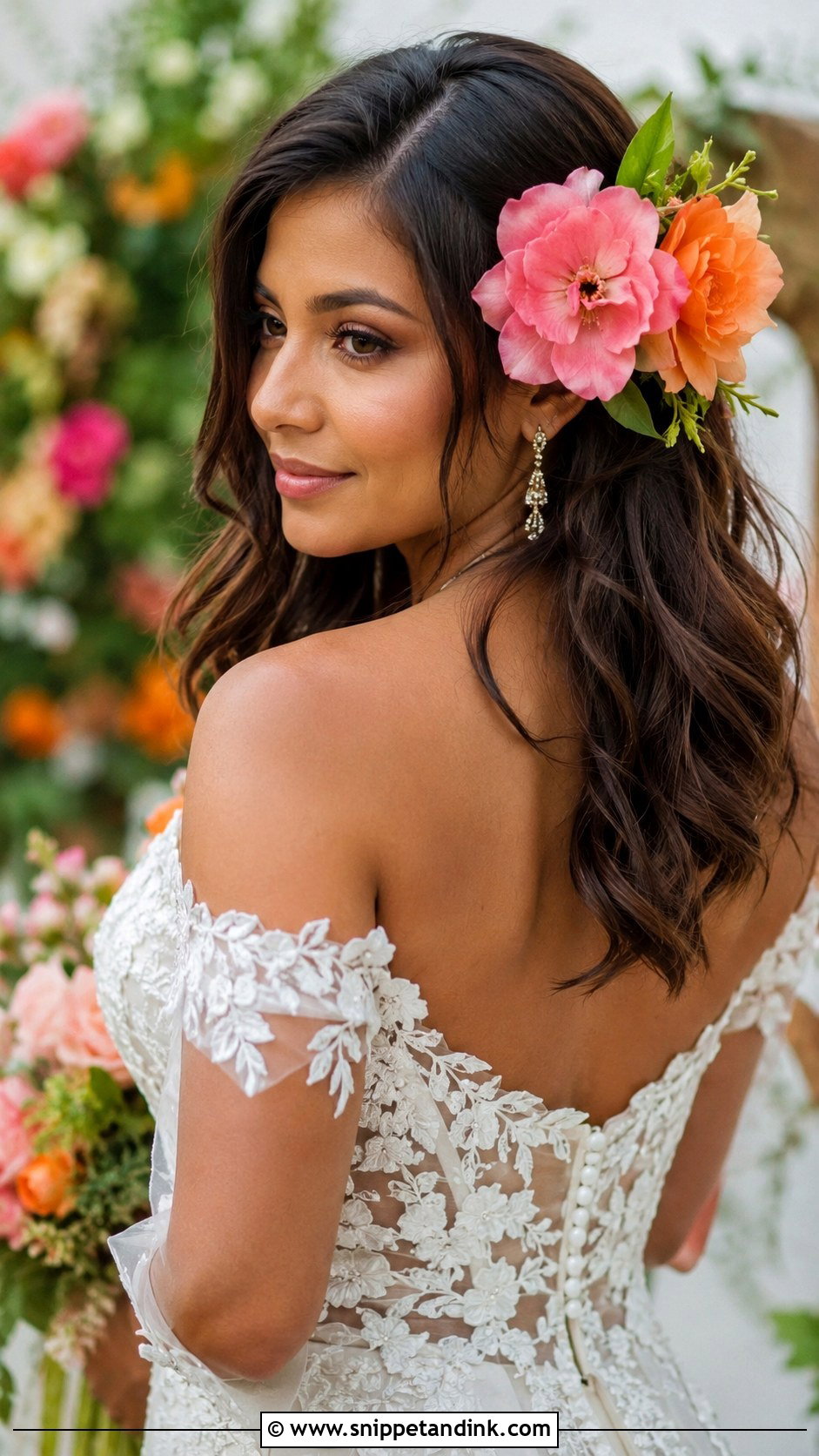
Oversized flower clips are the quickest way to add color to the hair. Silk holds its shape all day; fresh blooms look softer but bruise and droop within hours unless they are hardy varieties. One large clip behind the ear reads as a choice, while three medium ones clustered at the side of a low bun read as a corsage. I’d keep the rest of the accessories off the head with this one.
15. Crystal Hair Comb
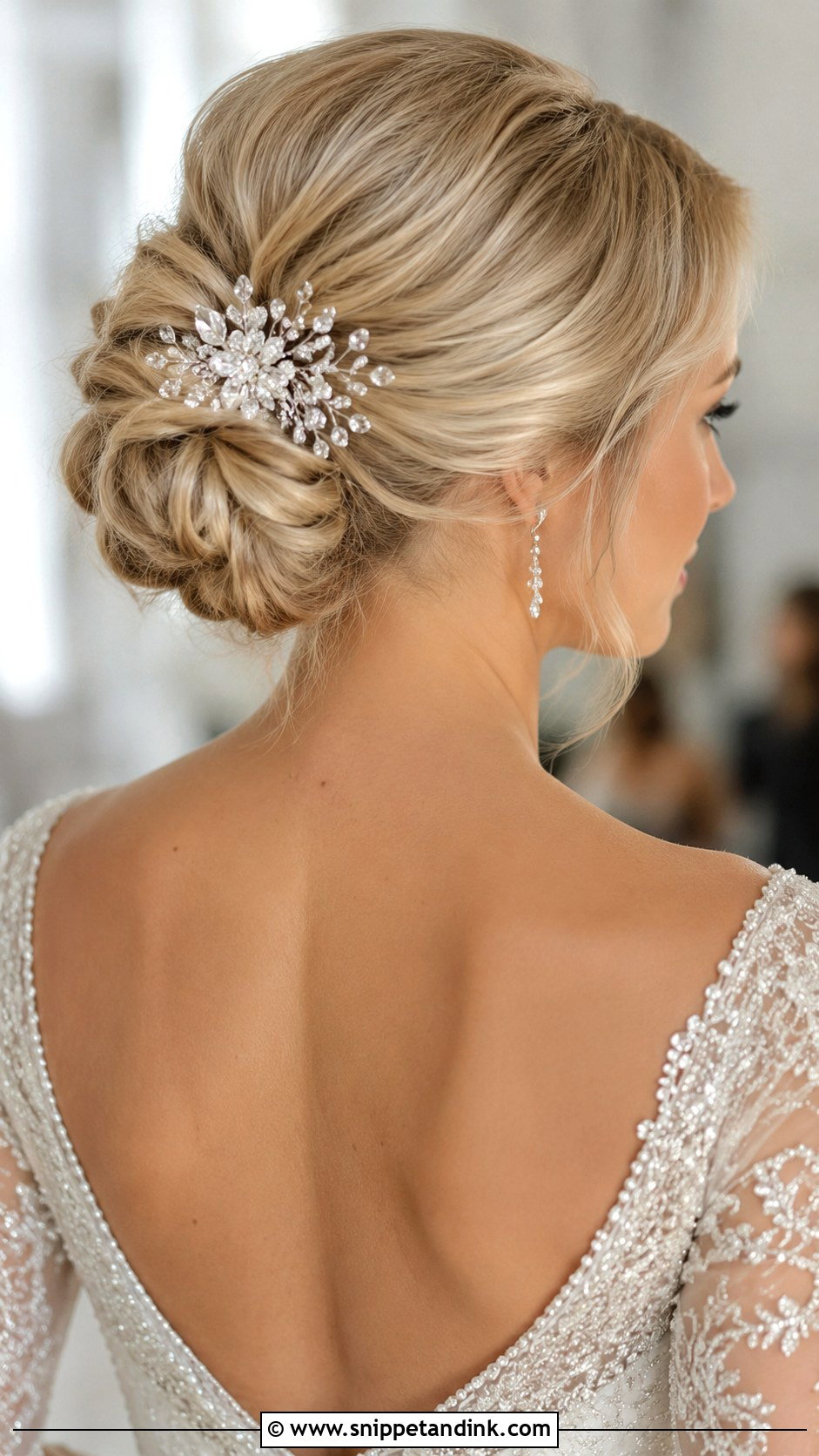
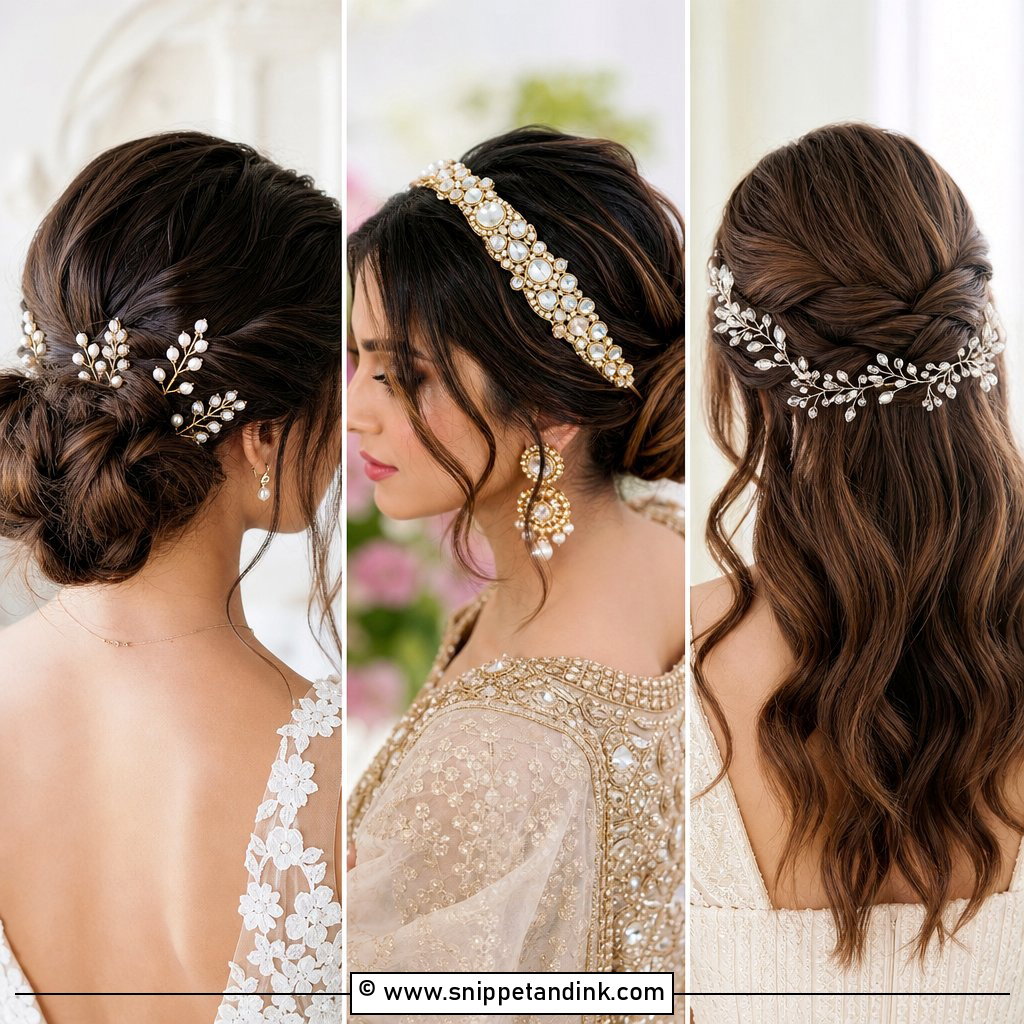
A crystal comb is built for formal settings, and it has a functional bonus: it is a natural veil anchor. Stones on a comb add weight to the top edge, so I sink it at a slight angle into a firm base and add a crossed pin underneath. Set beside a bun it reflects light at every turn. I’d avoid pairing it with chandelier earrings and a heavily beaded gown at once, because the sparkle starts to blur together in photos.
16. Pearl Hair Bow
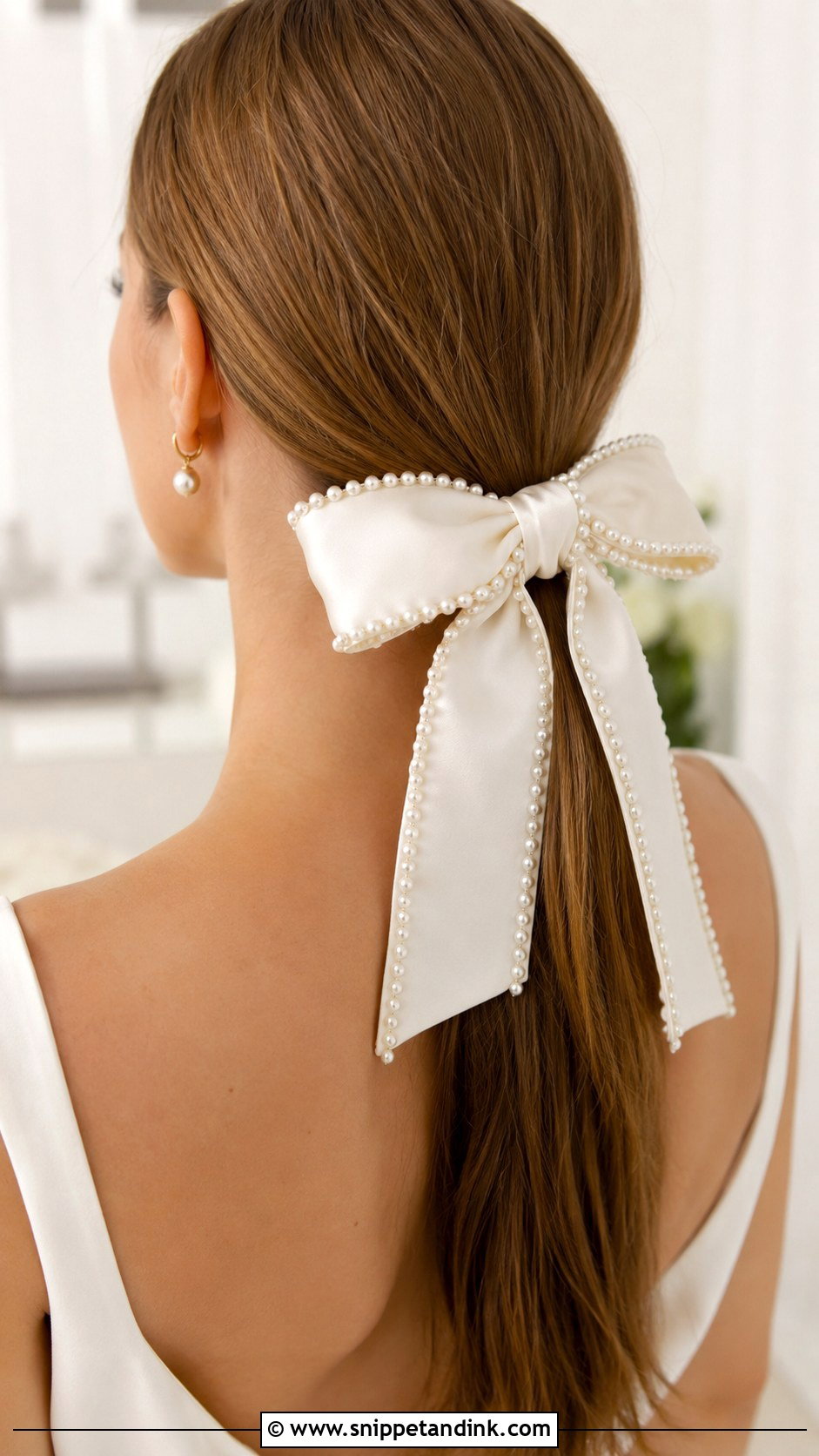
A pearl-trimmed bow is playful, and the material decides how it behaves. Satin holds a crisp shape, while tulle softens and can collapse in humidity. At the nape of a low ponytail it looks polished; above an updo it reads younger and more whimsical. I attach bows with a clip or a sewn comb and pin through the knot so it doesn’t rotate sideways during the day.
17. Beaded Hair Vine
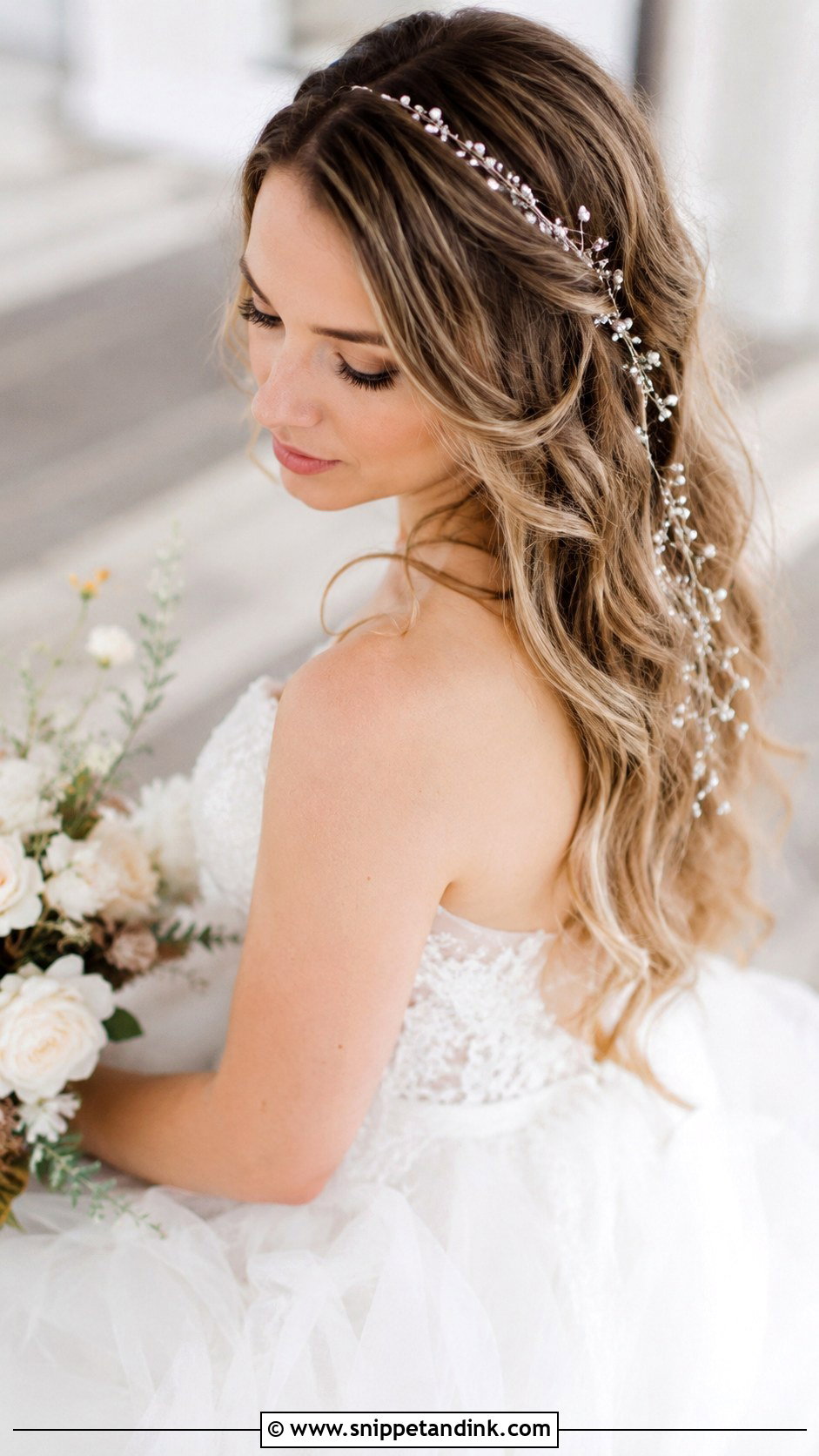
A beaded hair vine behaves like the floral version but is heavier, because beads and crystals add weight along the whole wire. I support it more often, pinning every two inches rather than three. Wrapped around a bun, it hides the pins holding the bun itself. If you have very thick hair, I usually suggest a longer vine than you think you need, because each wrap uses more length than it looks.
18. Silk Flower Crown
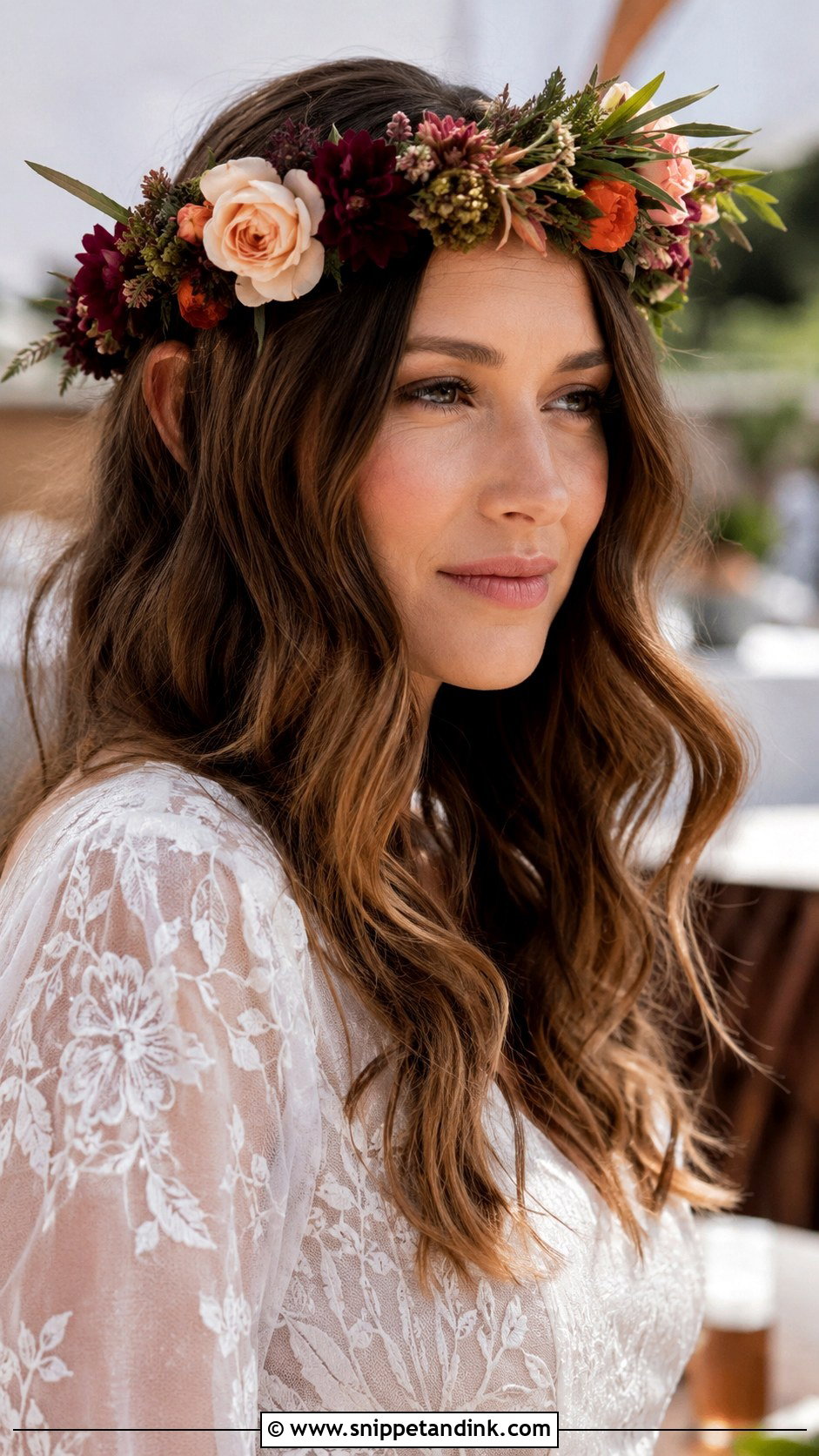
Silk flower crowns give the look of fresh blooms with none of the wilting, and they become a keepsake afterward. Good silk flowers have visible veining and slightly uneven petals; very shiny ones look plastic in close-ups. I size the crown to sit just behind the hairline and anchor it at four points. With loose waves or relaxed braids it suits outdoor and festival-style weddings, and it survives heat that would collapse real petals.
19. Vintage Hair Comb
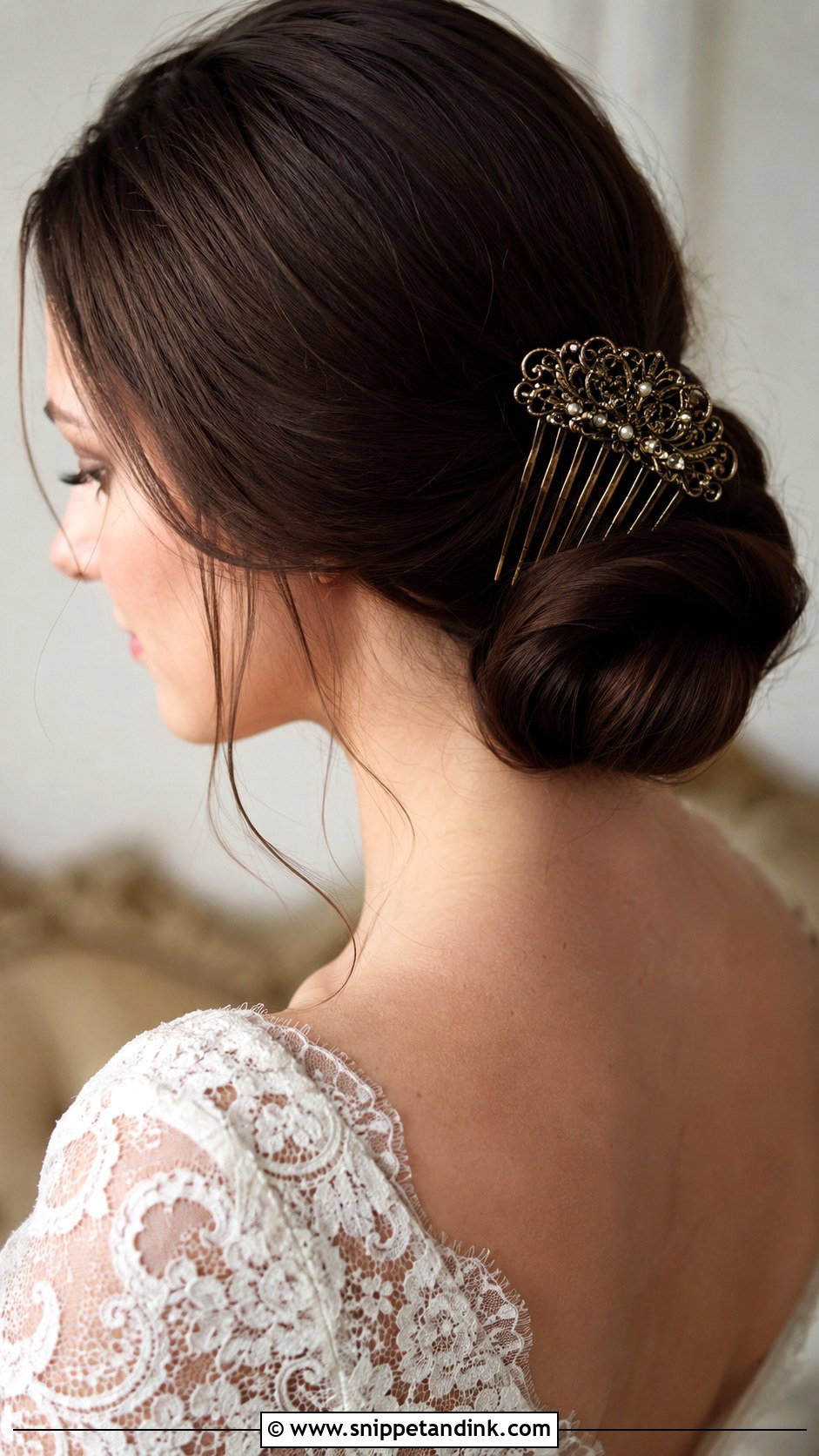
Vintage combs often come with history, and I treat them carefully. Many older combs are celluloid or soft metal with thin teeth that bend or snap, so I check them before the day. If you’re wearing a family heirloom, I sometimes stitch a hidden modern comb to its back for extra grip. These pieces suit finger waves and low buns, and they double as a veil anchor if the teeth are sound.
20. Star Hair Pins
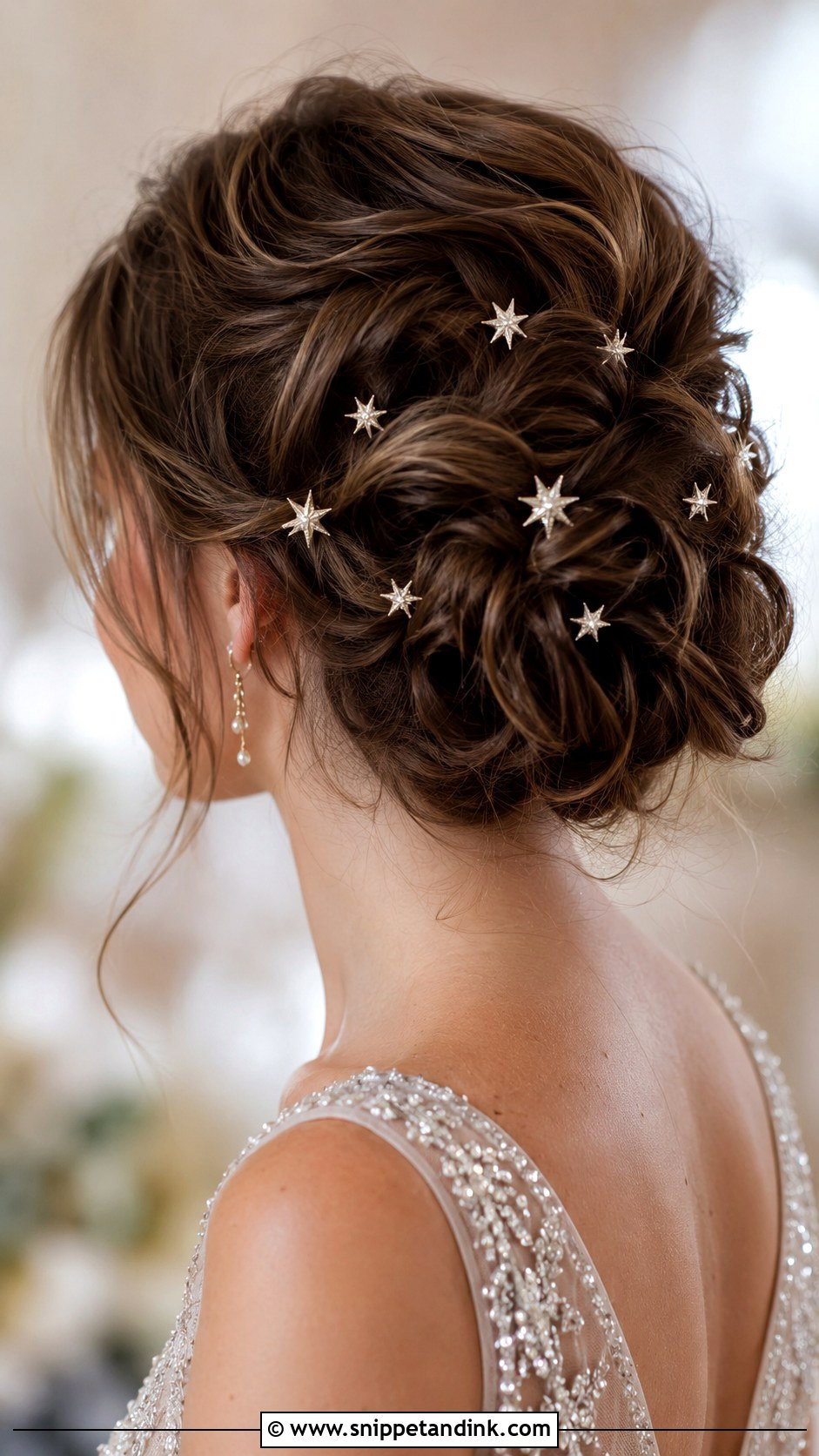
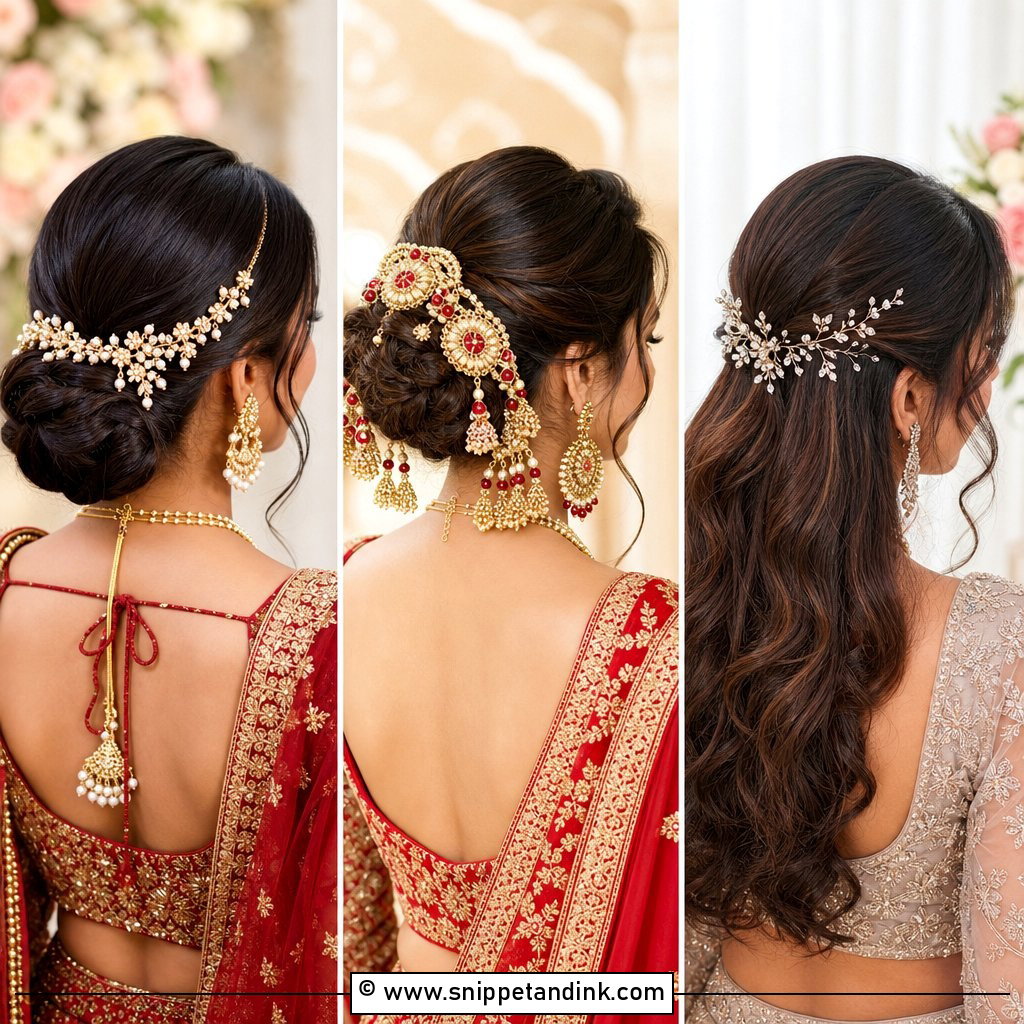
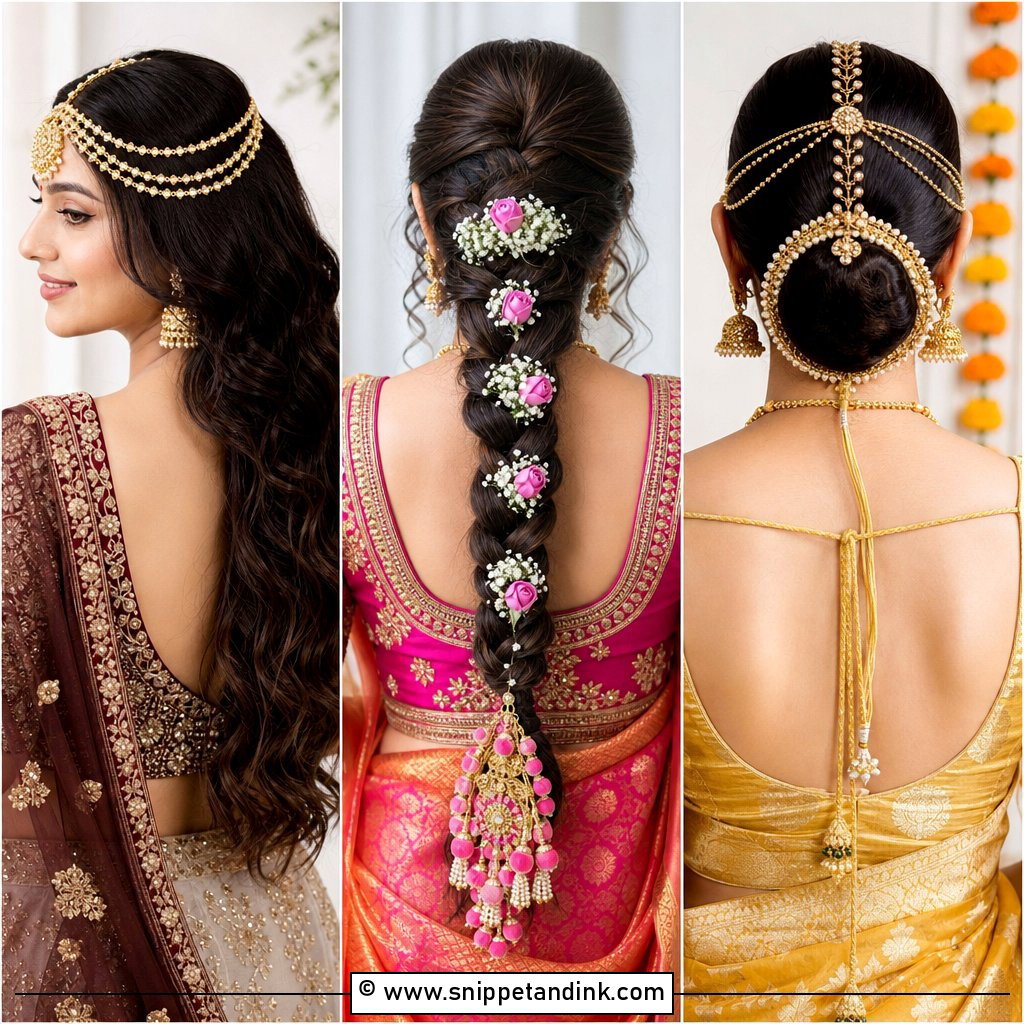
Celestial-inspired star hair pins work best in small numbers, placed as if they landed there. I scatter them in an uneven line along one side of an updo rather than spacing them evenly. Under string lights or candles in the evening the metal picks up the glow nicely. On very curly hair they can disappear into texture, so I place them closer to the surface of each curl.
21. Satin Hair Bow
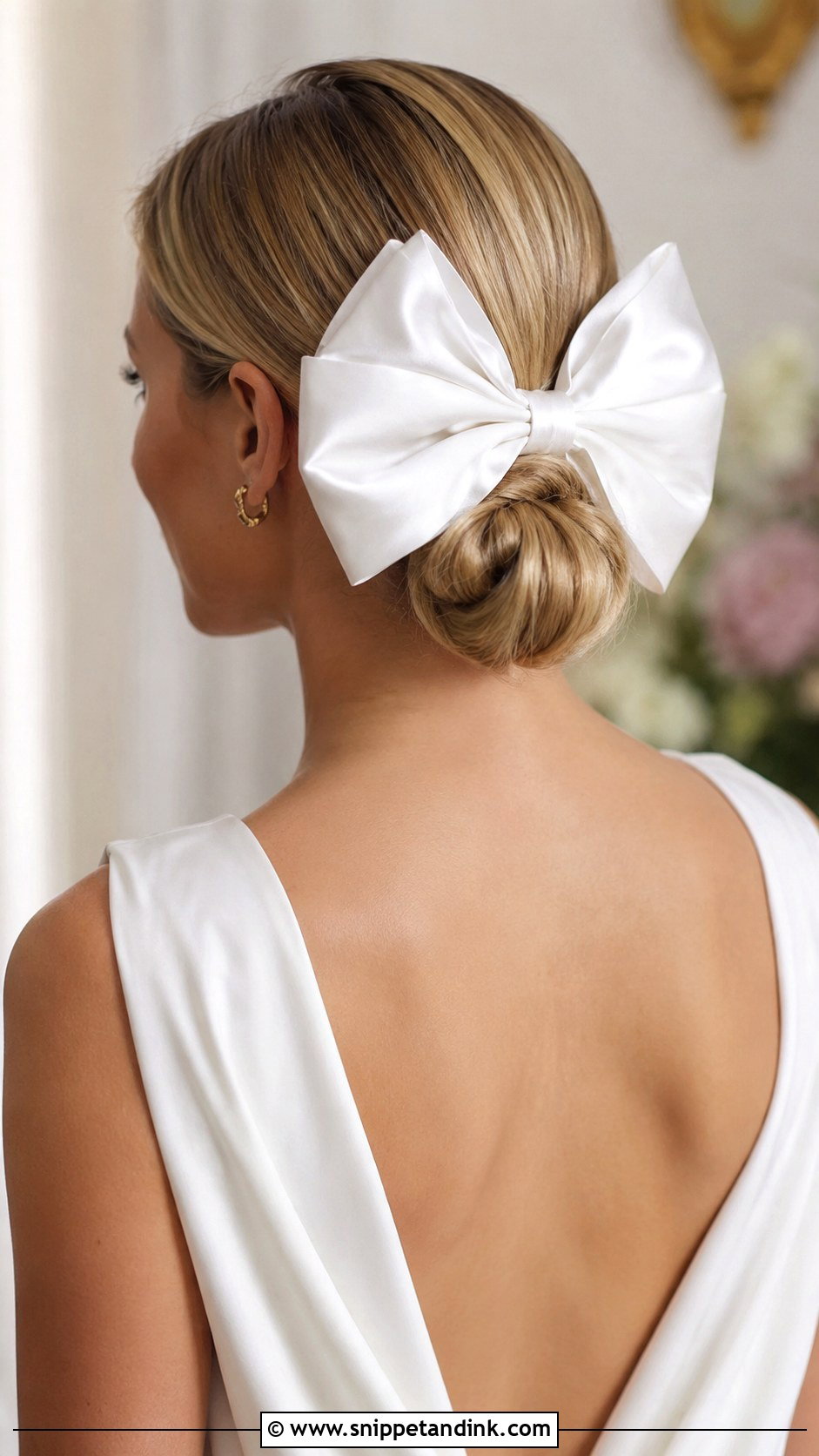
Large satin bows are one of this year’s fashion-led accessories, and they work because of their clean shape. A bow at the back of a sleek low ponytail or bun reads modern and confident. The issue I see is creasing: satin marks when it is packed or sat on, so keep it boxed and steam it lightly on the morning. It needs a plain backdrop, so I skip it with heavily textured or braided styles.
22. Crystal Headband
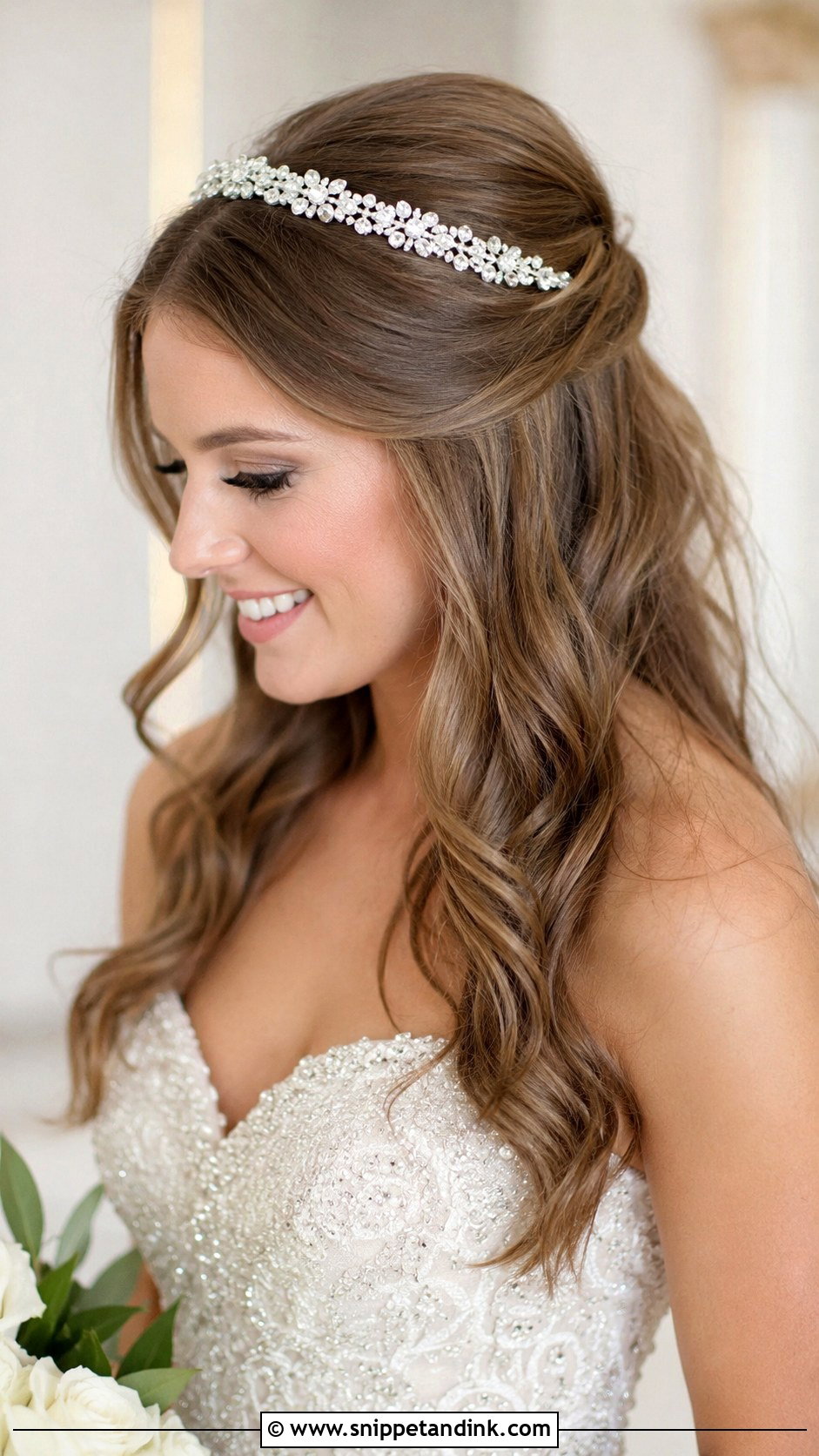
Crystal headbands hold hair back as well as they sparkle, which makes them a practical pick for long hair worn down. They are often heavier than pearl bands, so I check the fit behind the ears for pressure before the day. With sleek hair the look is sharp and glamorous; with soft waves it softens a little. Stones near the forehead will reflect flash, so place the band a little further back if you dislike shine in photos.
23. Floral Hair Comb
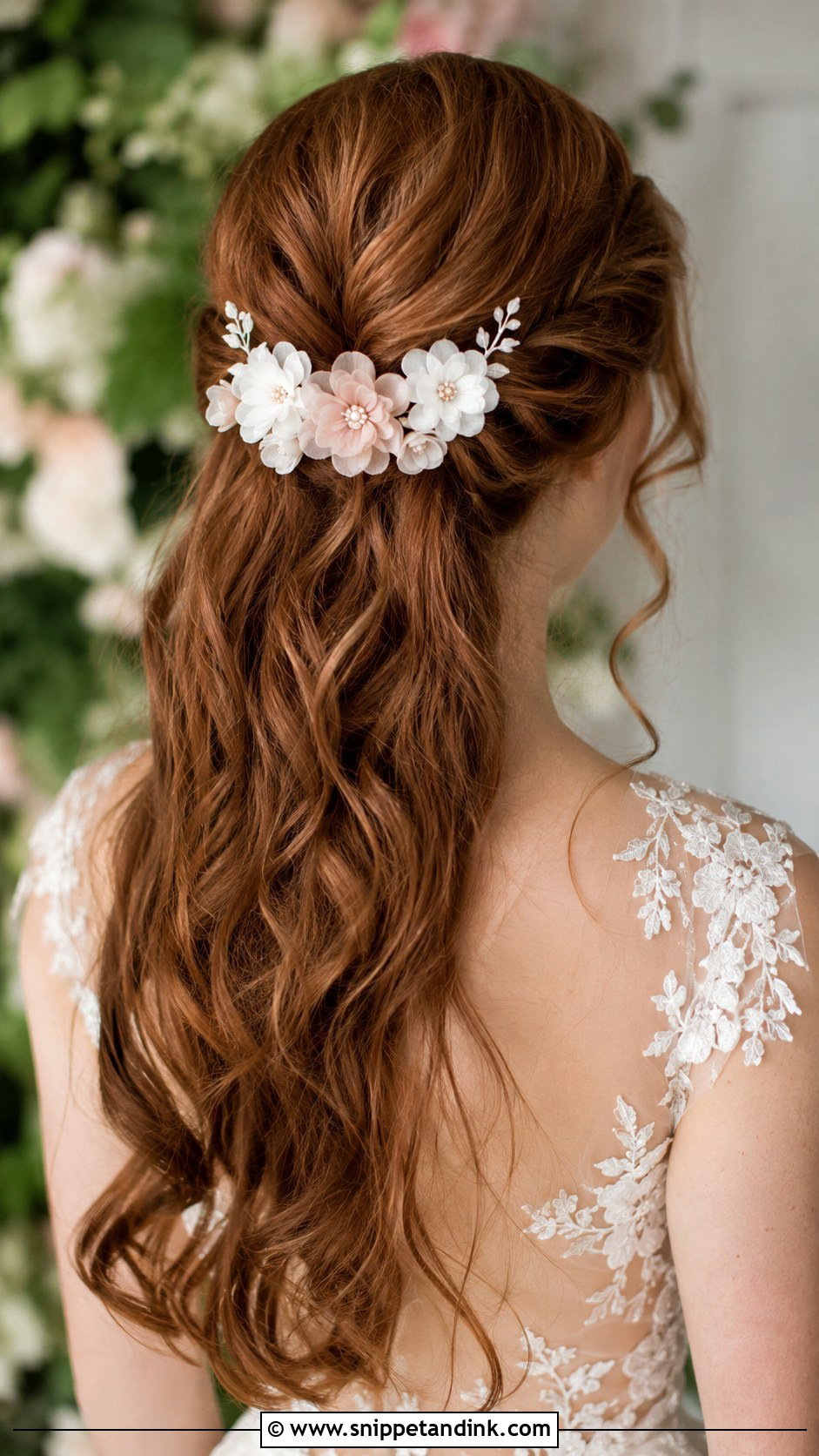
A floral comb gives you flowers that will not wilt, built on a base that actually grips. Fabric petals give a softer finish than crystal flowers, which suits garden and spring weddings. I set the comb beside a bun or at the end of a side braid, angled so the flowers face forward toward the guests. Because the comb carries the weight, it stays steady even if the flowers are fairly full.
24. Hair Scarf for Brides
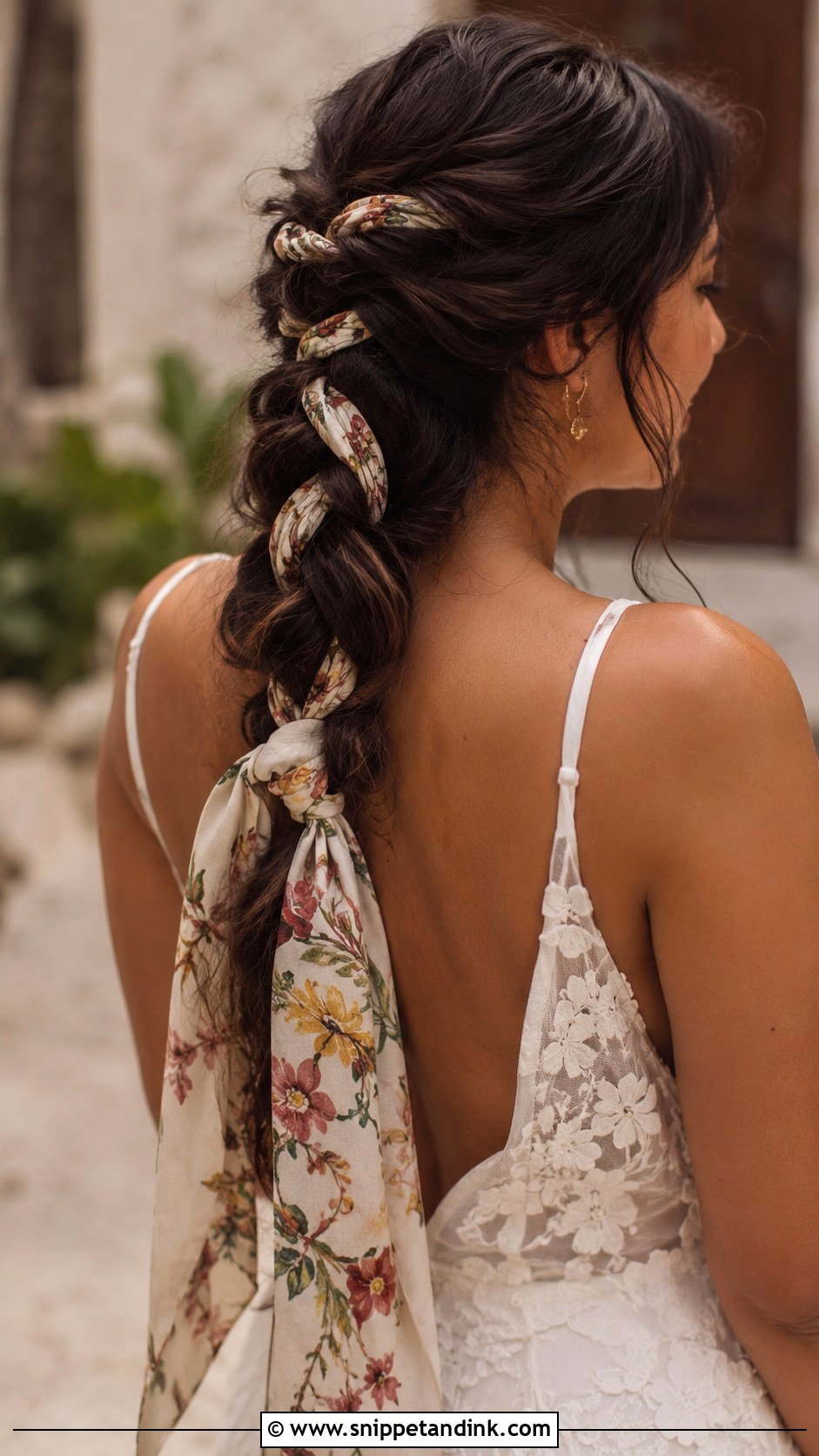
Hair scarves are the most open-ended item here, and they ask for a little planning. Silk slides, so I tie it around a bun and then pin through the knot itself, not just the ends. Woven through a braid it adds color and movement; worn as a headband it gives a retro feel that suits destination and relaxed weddings. Patterned scarves can clash with busy gowns, so I would lean toward one solid shade if the dress has a lot of detail.
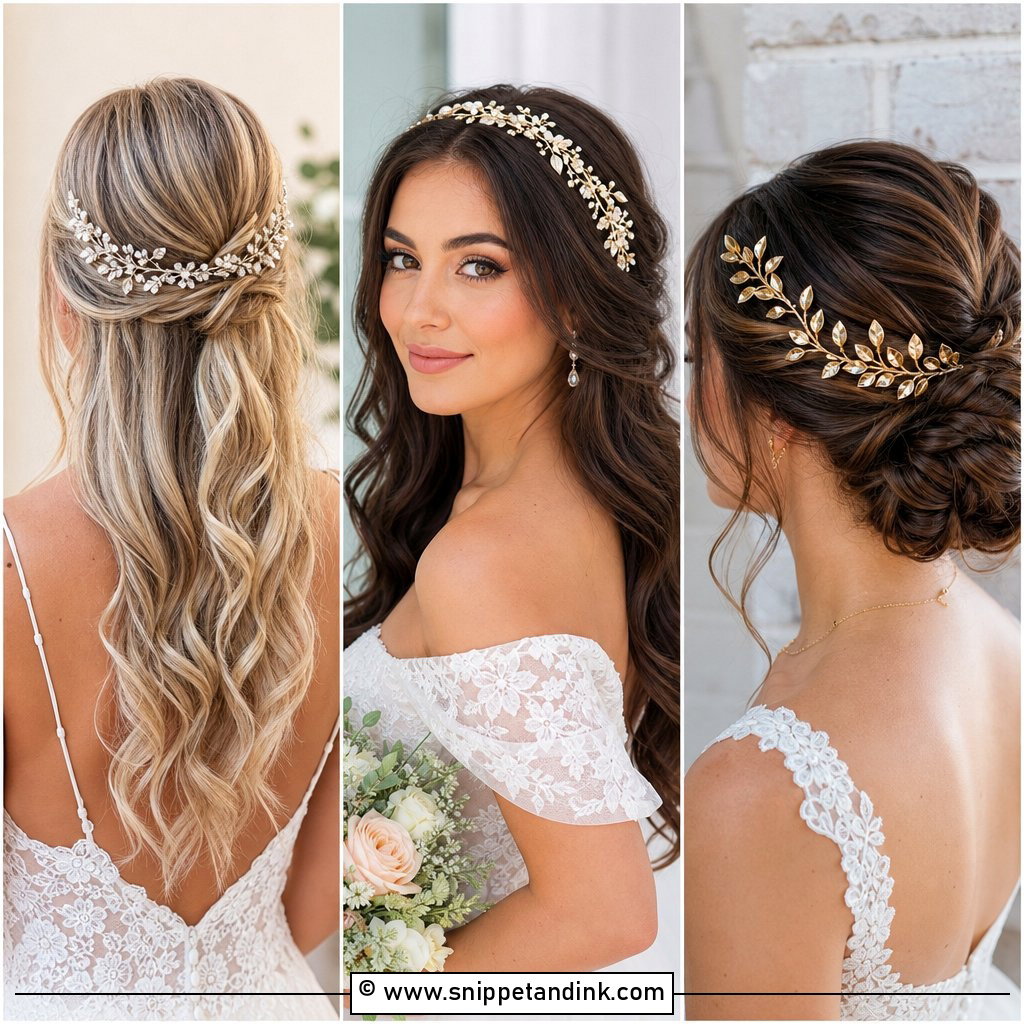
25. Pearl Tiara
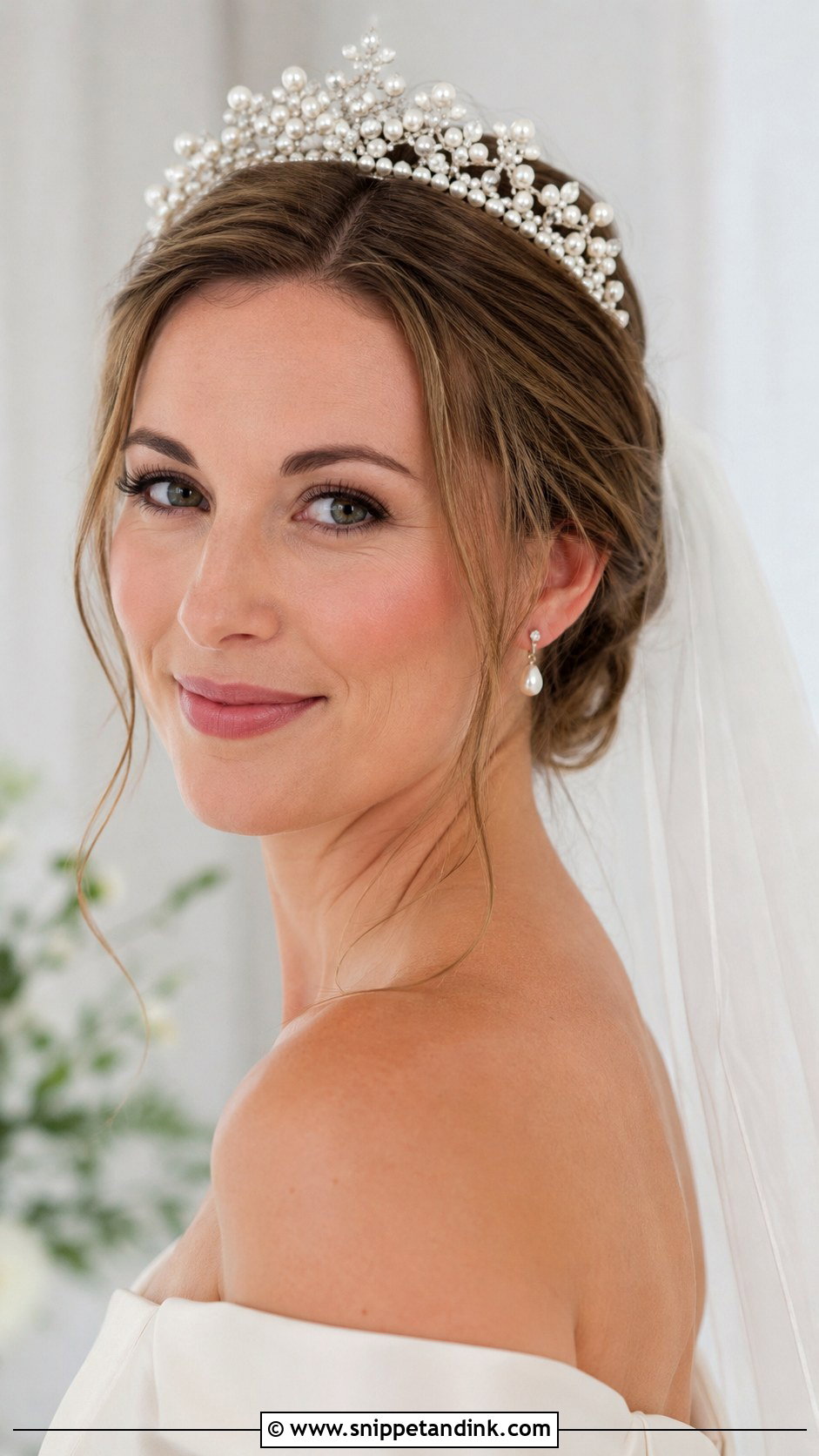
A pearl tiara gives the shape of a crown with a quieter surface than crystal. Pearls catch light softly, which keeps a formal look from feeling too sharp. I place it on a slightly lifted crown so the band rests on hair, not the scalp. With an updo it reads very classic; with loose waves it softens. Pearls flatter almost any skin tone, though cream pearls look warmer than bright white ones against ivory gowns.
26. Gold Hair Pins
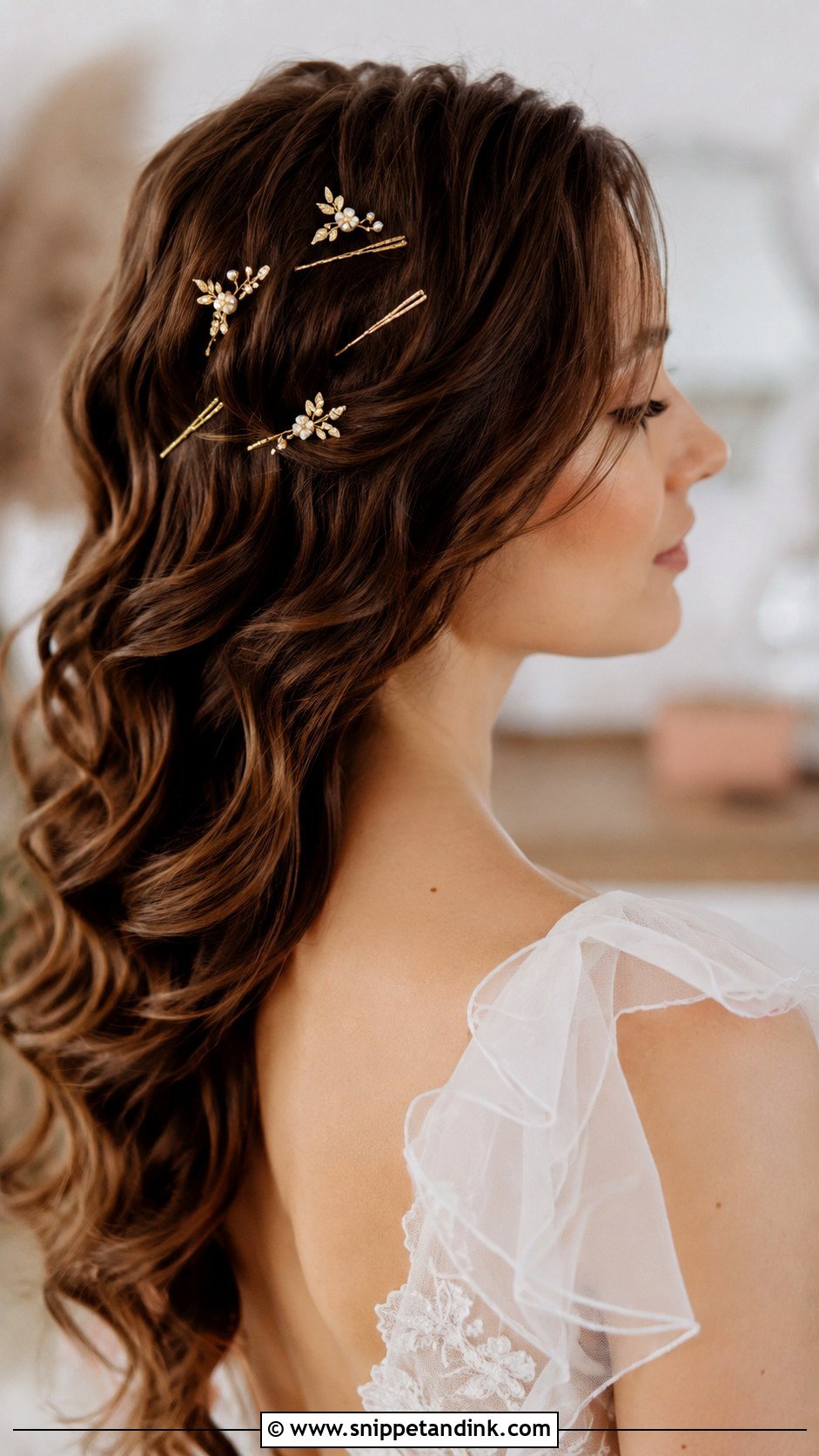
Decorative gold pins are a simple way to bring warmth to the hair, and they are easy to coordinate with gold jewelry. I tuck them where twists cross or along the line of a braid, so they read as part of the structure. Plain pins suit minimalist styling, and ornate ones can stand alone as a focal point. I avoid mixing gold pins with silver jewelry unless the mix is clearly on purpose.
27. Rhinestone Hair Vine
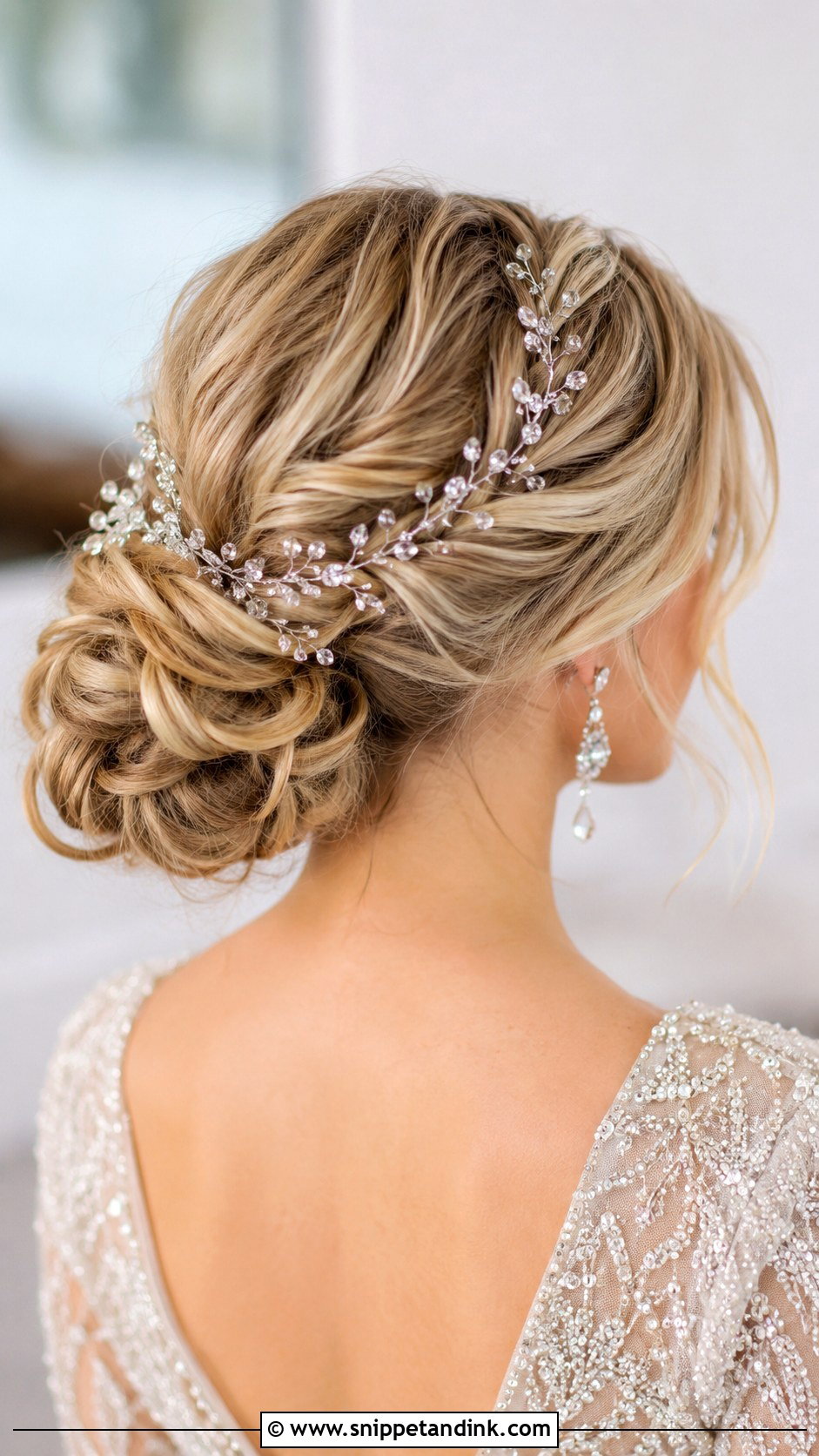
A rhinestone vine gives the most sparkle per inch of anything here. It bends around a bun or drapes over a half-up style, but rhinestones are heavy, so I pin it often and keep the ends hidden. Placed to frame the face, it catches light from the front; around the back of an updo, it shows in the aisle shots. On fine hair I usually suggest a shorter vine so the weight doesn’t drag the style down.
28. Beaded Headband
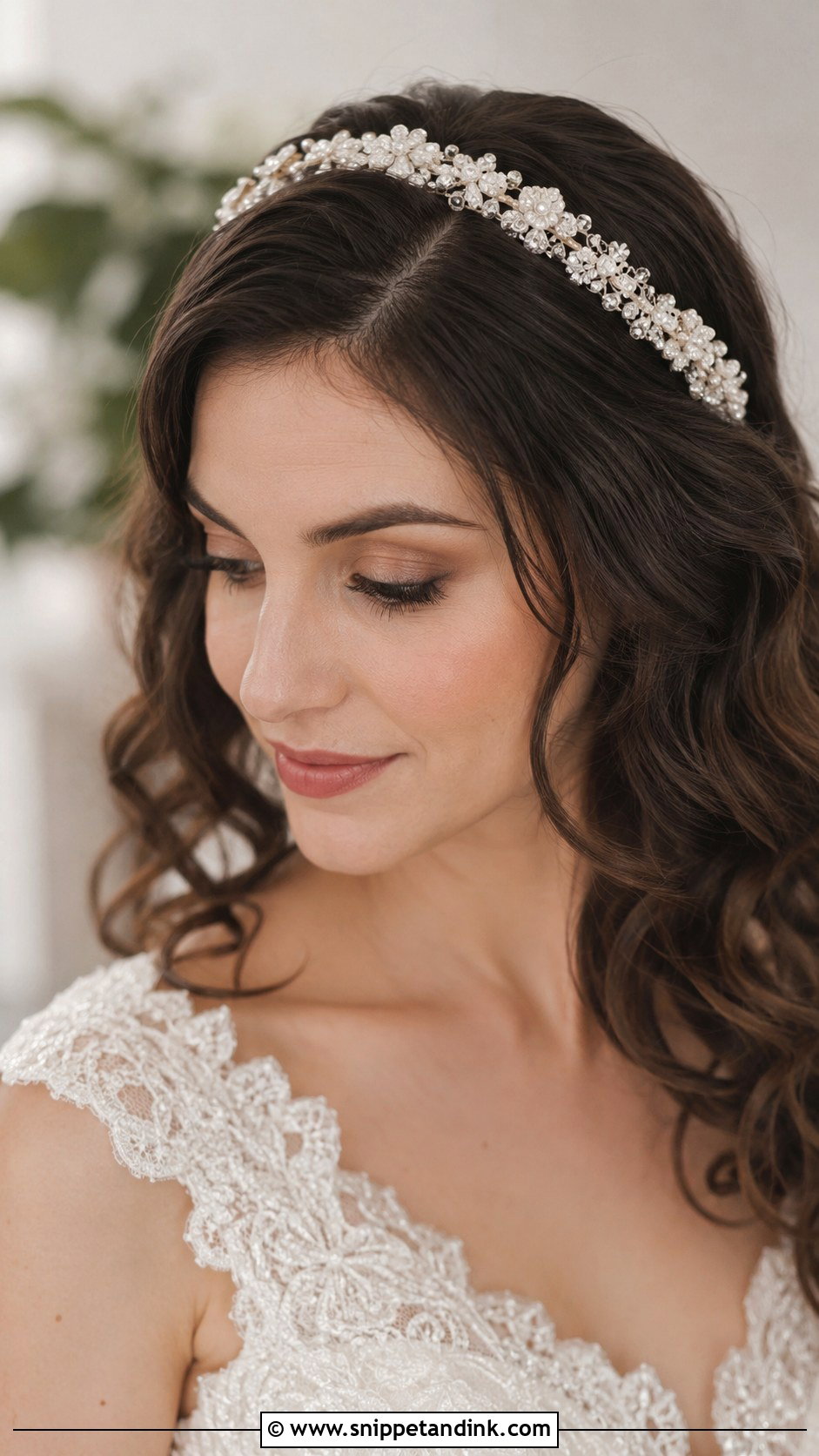
Beaded headbands add texture as well as shine, which is why they look rich on camera without sharp reflections. They pair well with beaded gowns when the bead colors match, but they can look busy against heavy lace. The band slides on in seconds and needs no styling skill, though I still pin each end under the hair. Beading near the ears can catch on earrings, so try them together.
29. Flower and Pearl Comb
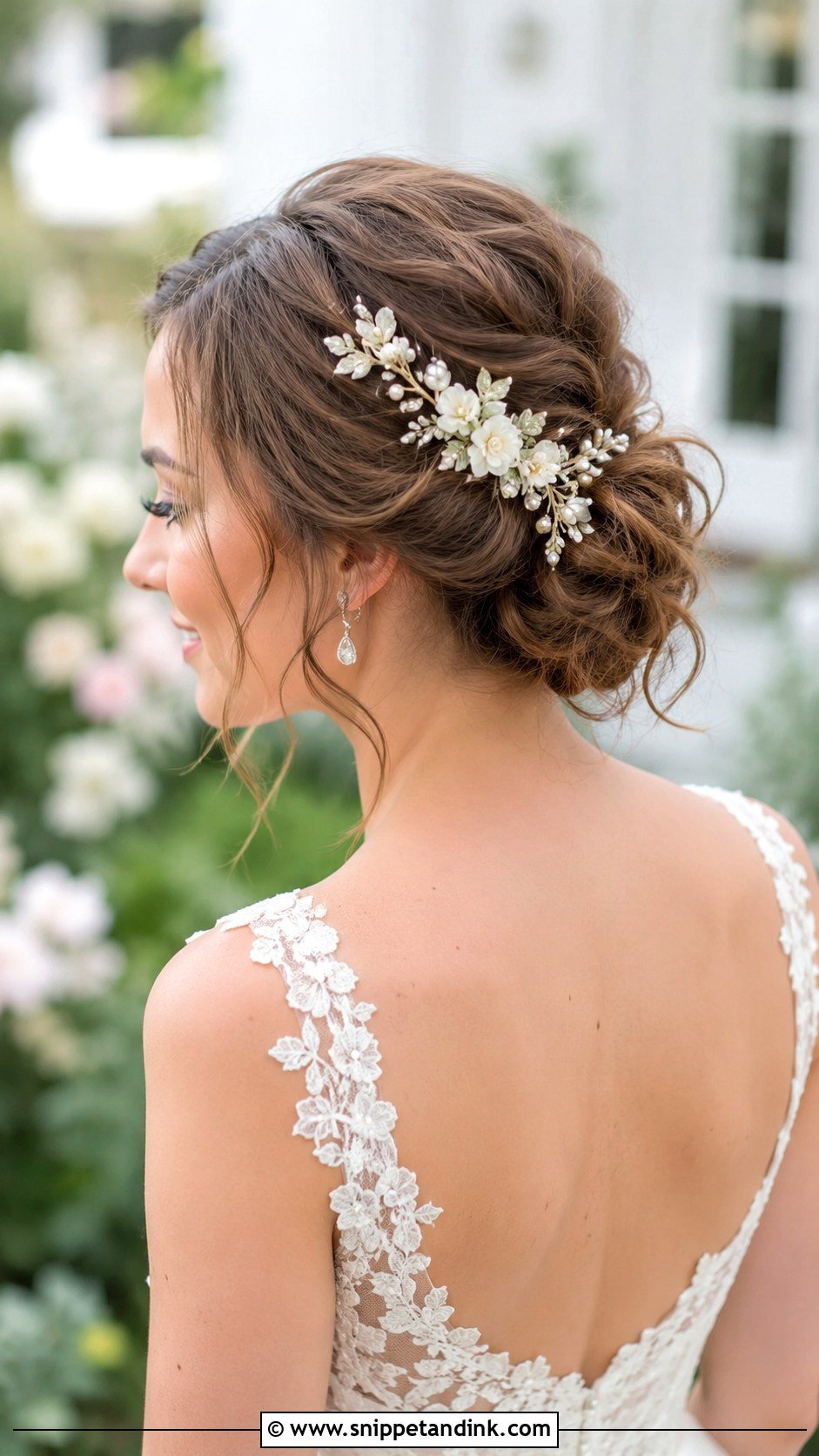
This comb mixes flowers and pearls, so it works as a bridge between a romantic gown and classic jewelry. I set it at the side of an updo or above the ear on loose waves. The comb base carries the flowers well, so it holds even through a long day. If you are also wearing a veil, I place this comb slightly lower so the two don’t fight for the same space.
30. Statement Crown
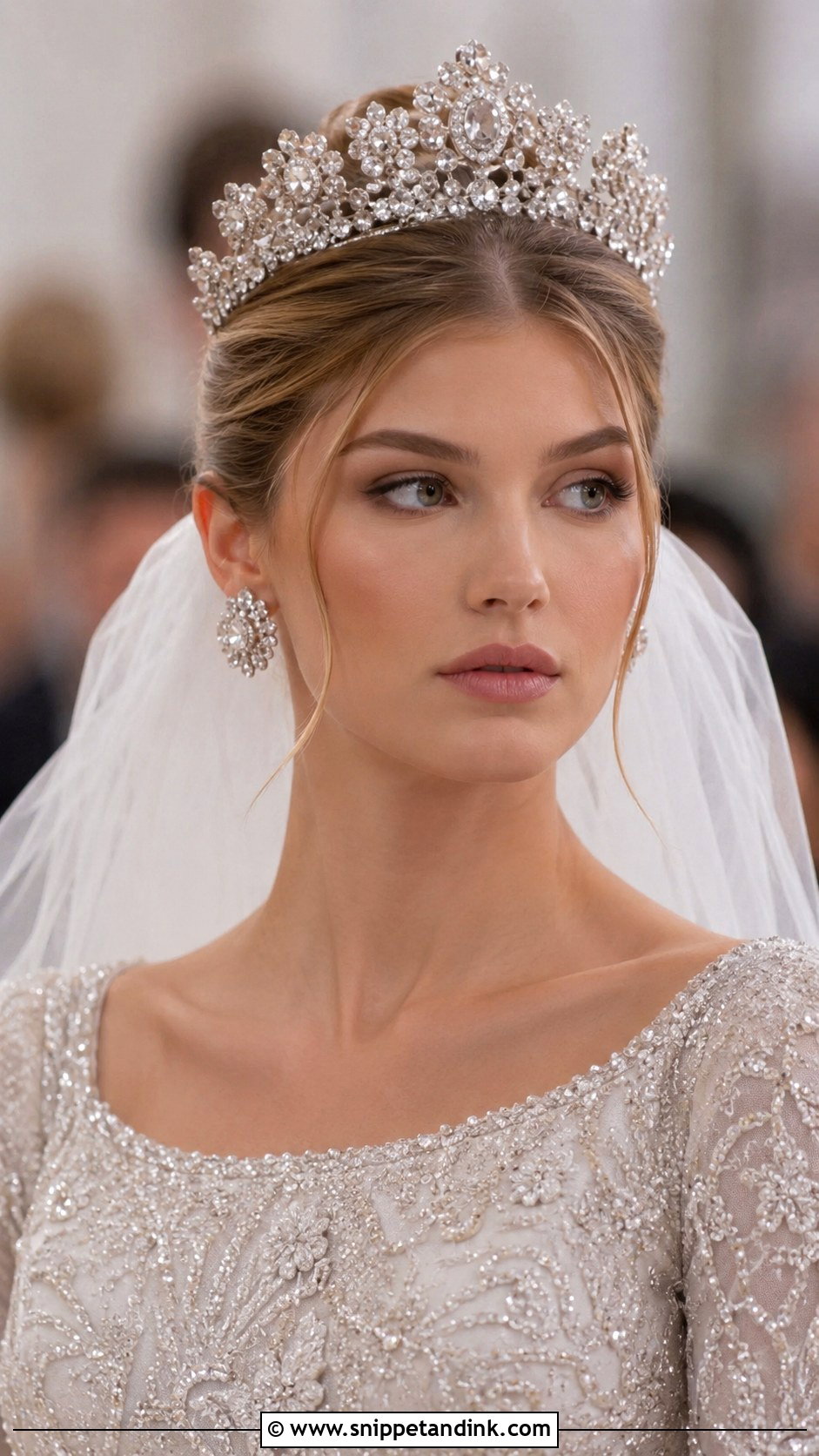
A statement crown is the boldest piece in this roundup and the hardest to wear casually. It needs a strong foundation: a teased crown, a stable updo, and pins through every loop or gap in the frame. Ornate metalwork can weigh enough to tip forward, so I test it while you bend down as if picking up a dropped item. Choose it if your gown is equally grand; in a simple slip dress it can look like costume.
Pins Under the Pretty: How Each Type Stays Put
Almost every accessory that slips does so because it was set on clean, smooth hair with nothing underneath. My fix is the same in nearly every case: give the piece something to hold onto.
Combs and veils
I tease a small pad of hair or set two bobby pins in an X, then push the comb in against the direction it will be pulled. A long veil drags backward, so the comb goes in facing forward.
Tiaras, crowns and headbands
Pins go through the end loops and cross into teased hair. With a heavy crown I test by having you nod and bend; if it shifts, I add pins before the ceremony, not after.
Fresh flowers
Stems should be wired and taped by the florist, kept cool, and placed last. I keep spare pins and a backup bloom in the kit for the reception.
Getting It All Out at Midnight Without Snapping Hair
Removal is where hair breaks. Take the veil out first, then the main piece, and only then hunt for pins, working from the bottom of the style up. Pull each pin out along the path it went in. If a comb is tangled, loosen the hair around it with a drop of conditioner rather than tugging. Put the accessory straight into its box so stones don’t scratch and silk petals don’t crush.
One Piece First, a Second Only If the Mirror Asks
Most brides arrive at a trial with three accessories in mind and leave wearing one. Start with the piece you feel most drawn to, try it on the actual hairstyle, and only add a second if the look feels incomplete. Bring the gown neckline and your earrings into the decision, because metal tone and scale matter more than trend. If it still feels like you at the end of the trial, that is the right accessory.
You'll Like These Ideas:


Leave a Reply