
From my stool at a mehendi, I see outfits differently from everyone else in the room. I see which sleeves have to be pushed up three times, which dupattas slide into wet paste, and which skirts make it impossible to rest a foot on a cushion. Bride, sister, cousin or guest, you’ll sit for henna, get up to dance and sit again, often for hours. That’s why lightweight lehengas, shararas, mirror work, floral prints and fusion sets are so popular for this event. Below are twenty-five looks, with what each one is like to wear while someone is drawing on your hands.
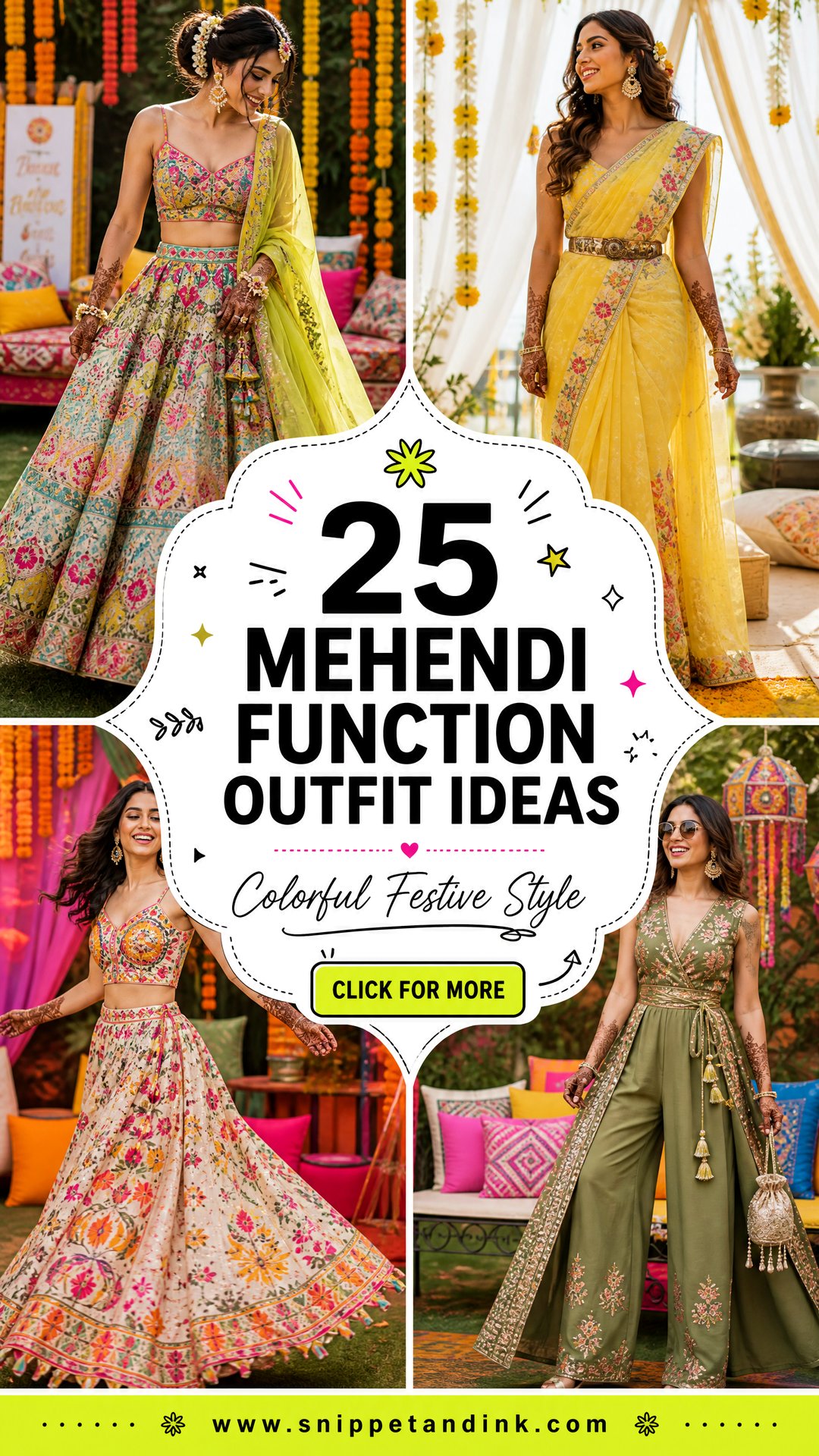
Dressing for the Hours You’ll Spend With Wet Paste
A bridal design on hands, forearms and feet can take a few hours, and the paste then needs to stay on for several more. Guests usually get something smaller, but even a palm design means sitting still while it sets. Your outfit has to work around that, so here is what I wish everyone knew before they got dressed.
- Choose sleeves that stop above where the henna will end. Short or elbow sleeves for the bride, anything above the wrist for a guest’s palm design.
- Pin the dupatta before you sit down. Once your hands are wet, you can’t fix it, and it will slide.
- Wear a skirt or pants that can be lifted to mid-calf if your feet are being done. A pooling hem gets paste on it within minutes.
- Put on jewellery for your hands, like rings and bangles, after the paste comes off, or leave them off entirely.
- Use the bathroom right before your turn. Nobody wants to undo a drawstring with fresh henna.
Brides need a second outfit for the night
Many brides leave the paste on overnight for a deeper stain, and the lemon and sugar seal I dab on is sticky. Sleeping in a heavy lehenga with sealed hands ruins both. Plan a soft old cotton set to change into once the event ends, preferably with front buttons so you don’t have to pull it over your head.
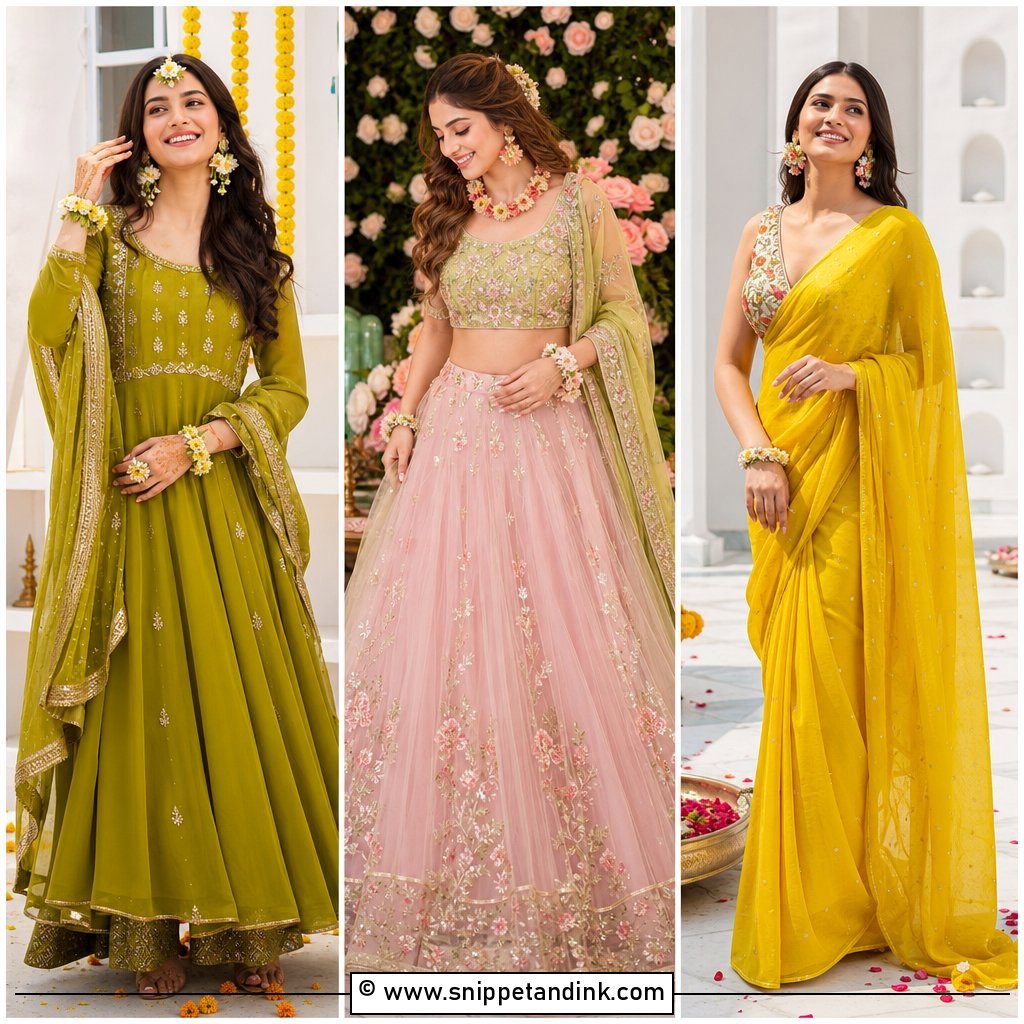
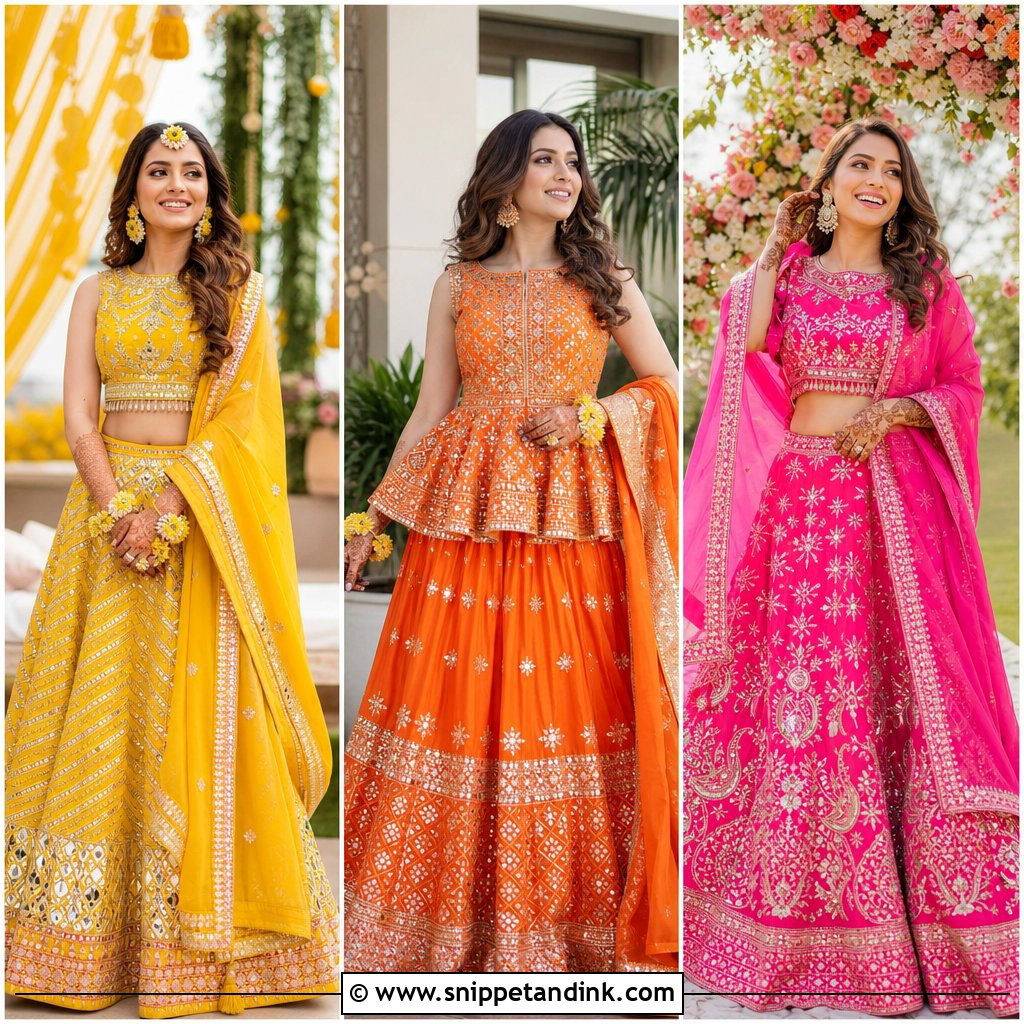
1. Yellow Lehenga For Mehendi Function
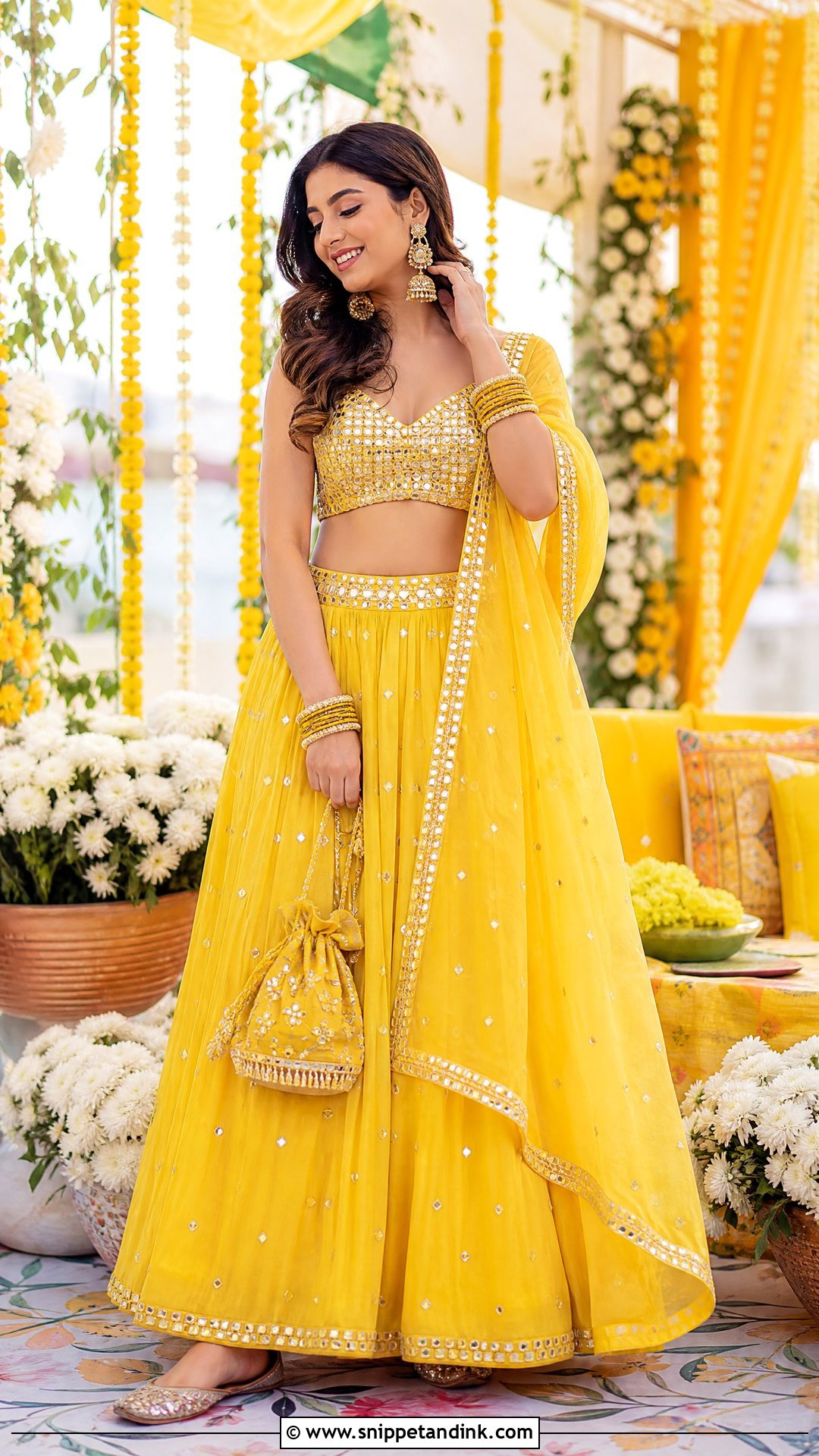
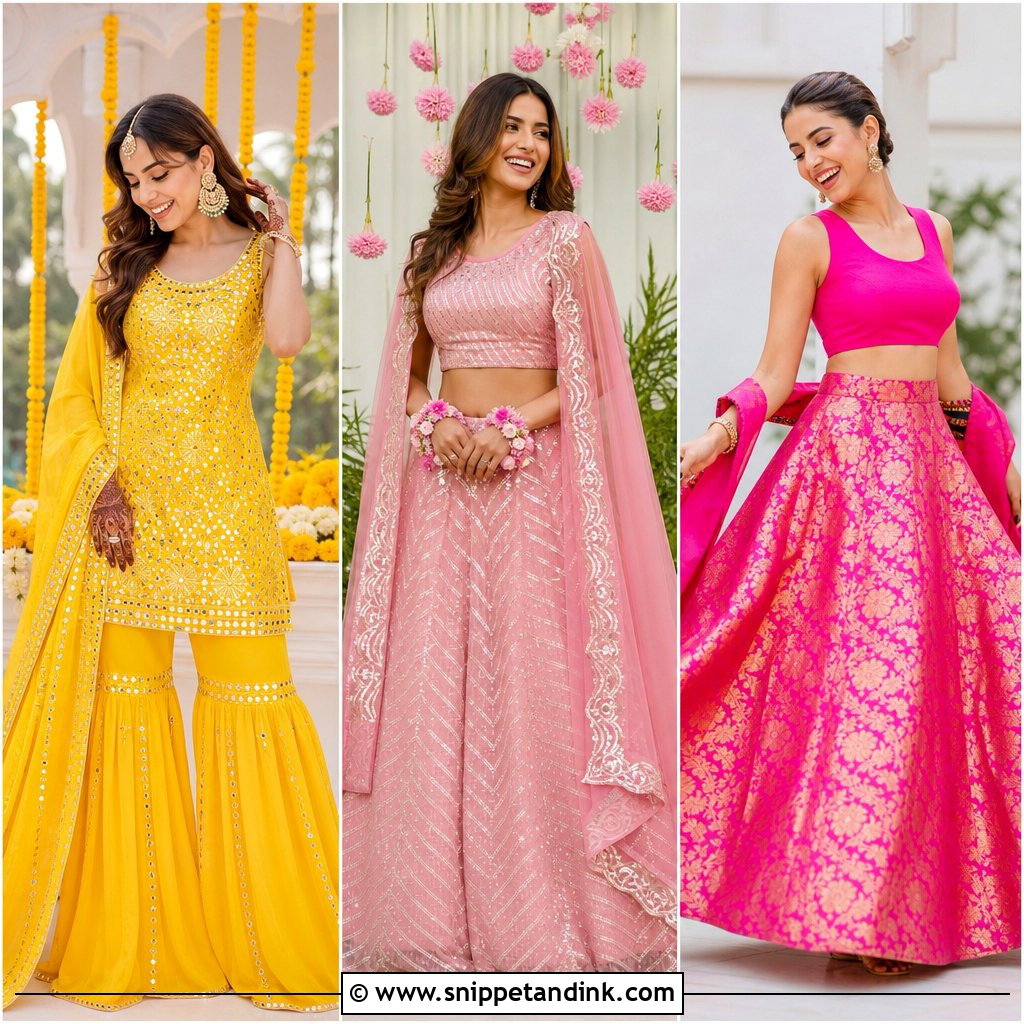
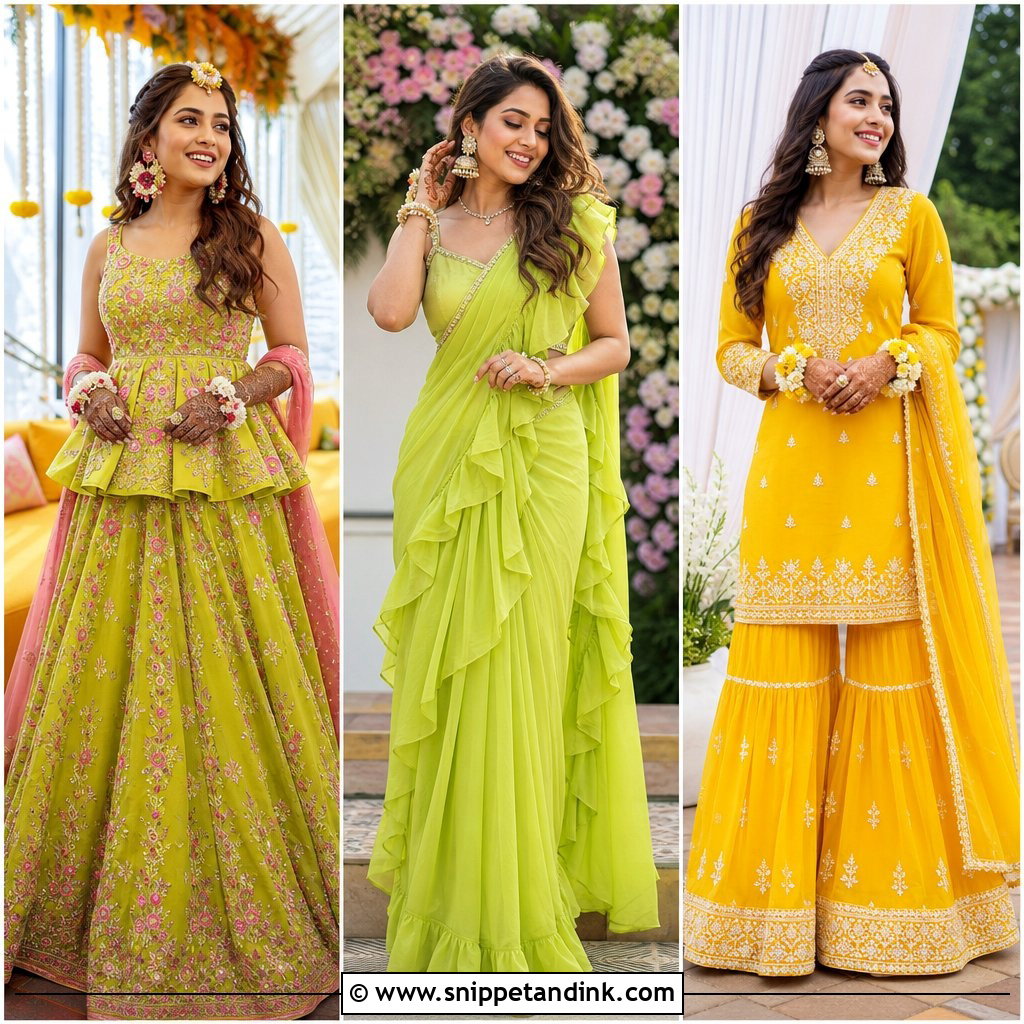
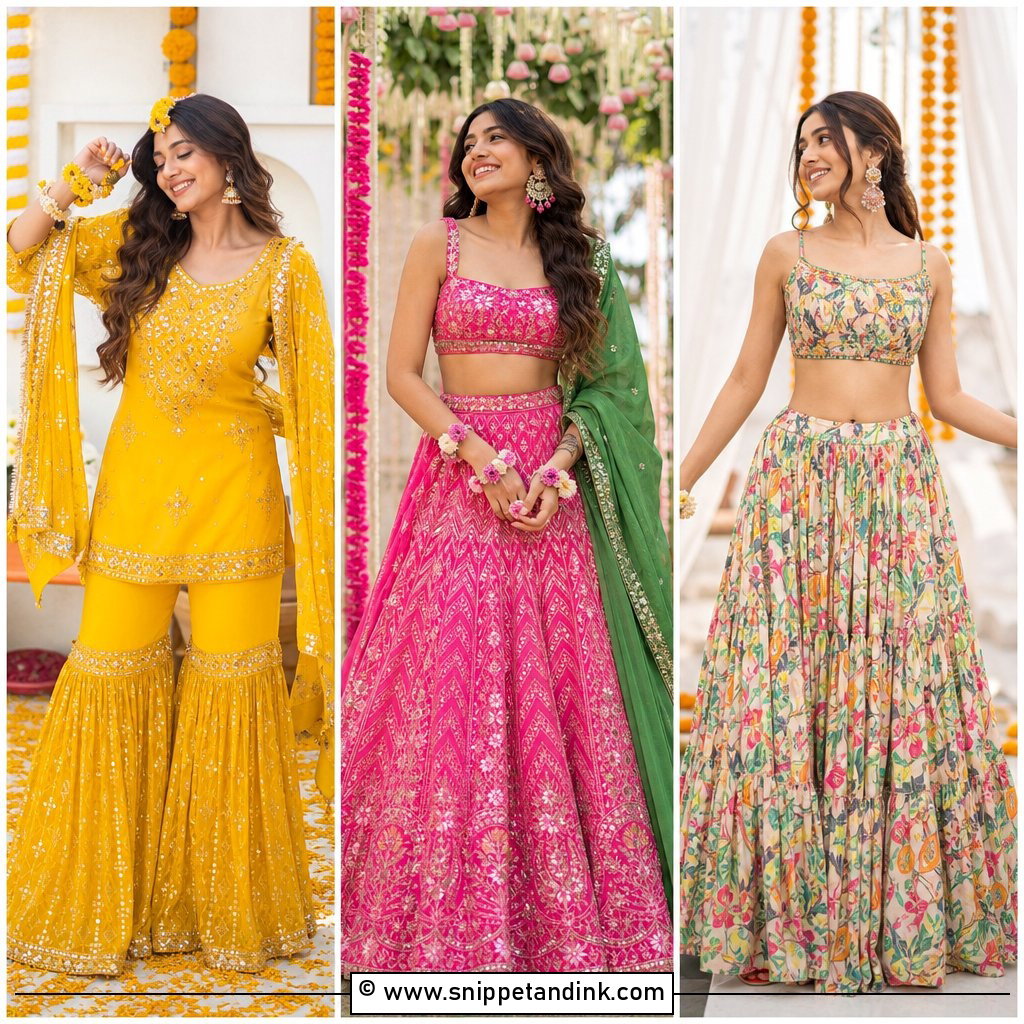
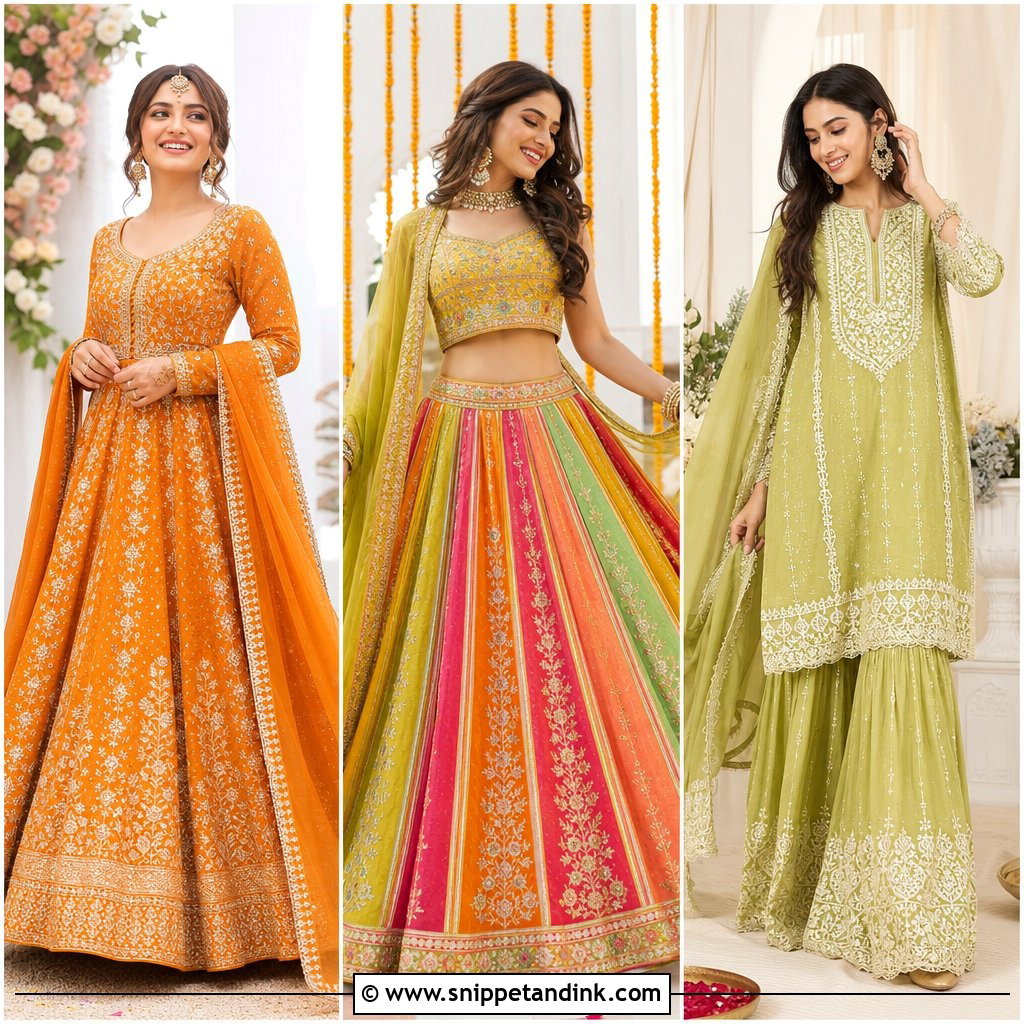
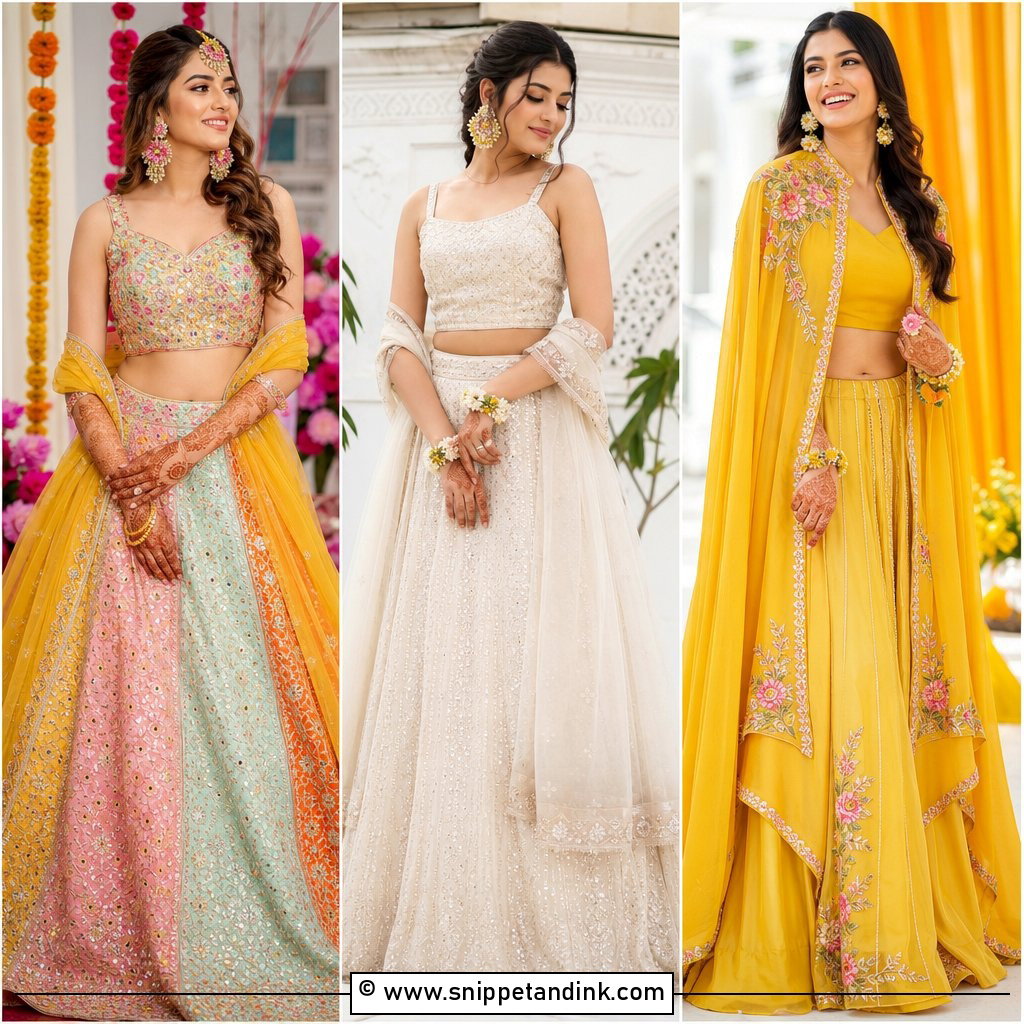
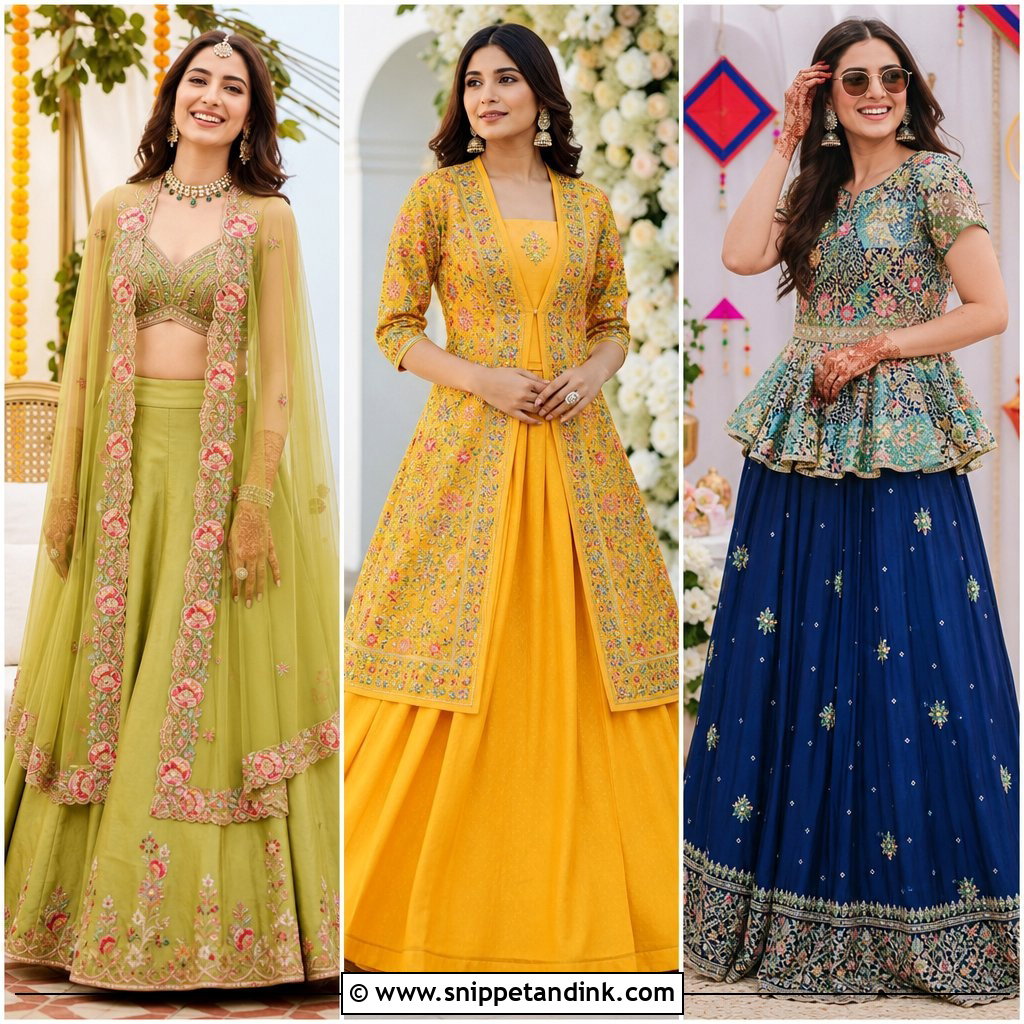
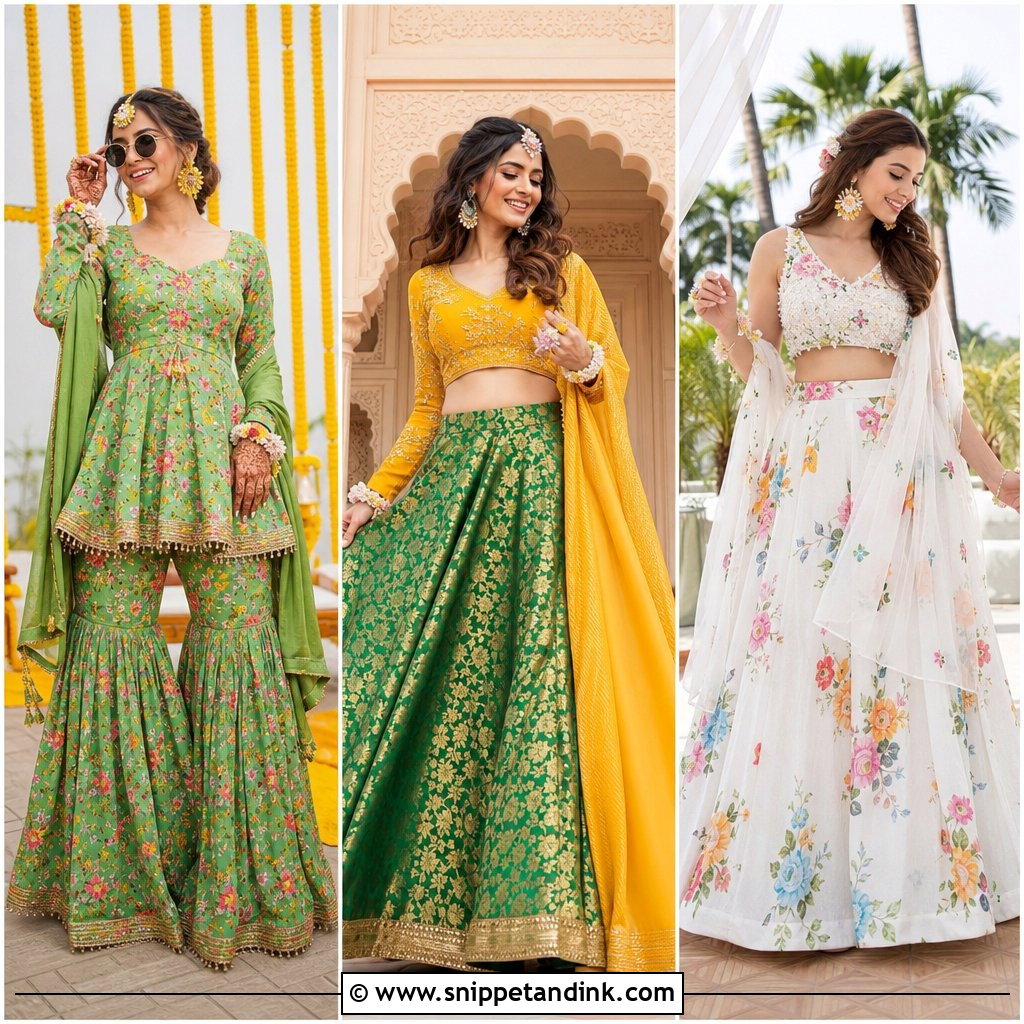
A yellow lehenga is the classic mehendi colour, and it hides a stray smudge of paste better than almost any other shade. Lightweight georgette, organza or cotton-silk with mirror work, gota patti or floral embroidery keeps it festive without weight in your lap. I always hope for a short-sleeve or elbow blouse, because I can work right up the forearm without anyone rolling fabric back. Drape the dupatta on one shoulder and pin it. Jhumkas, a potli bag and flat embellished shoes finish it; brides can add fresh flower jewellery.
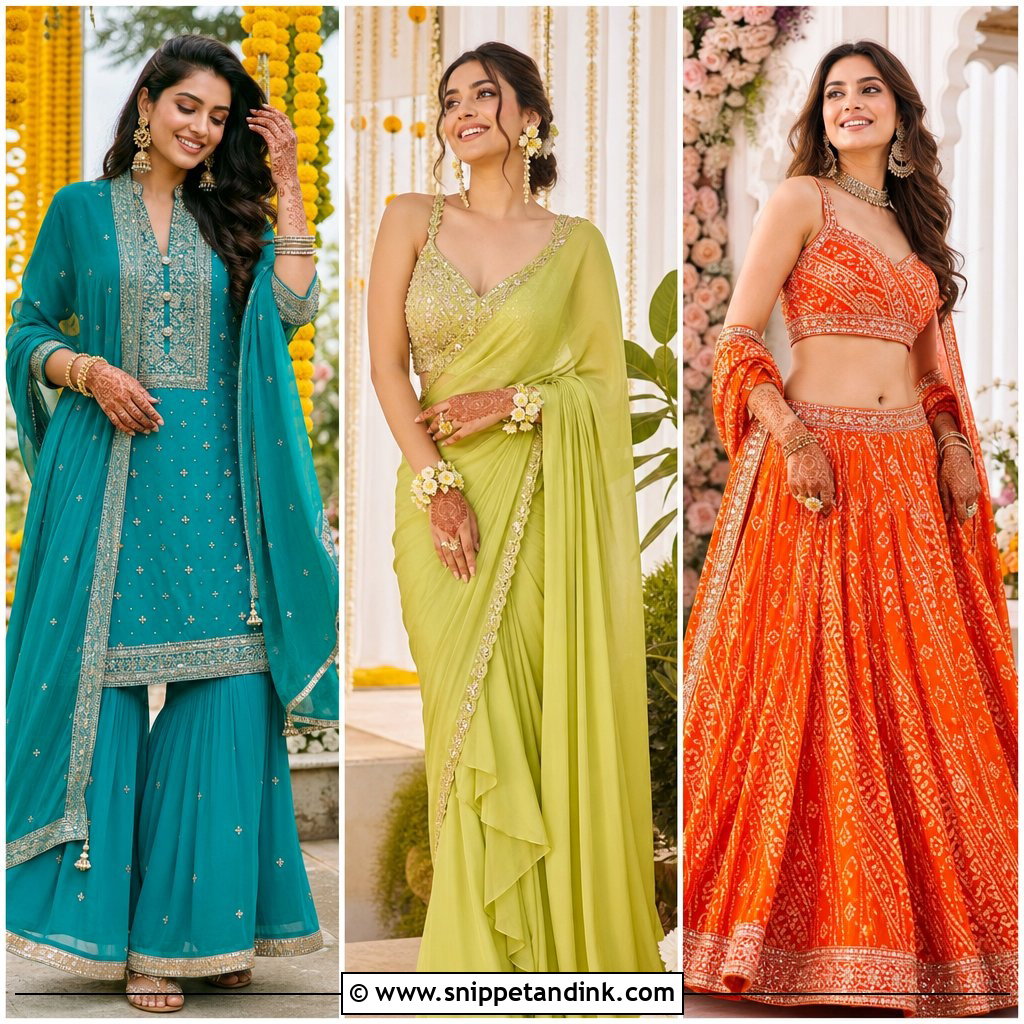
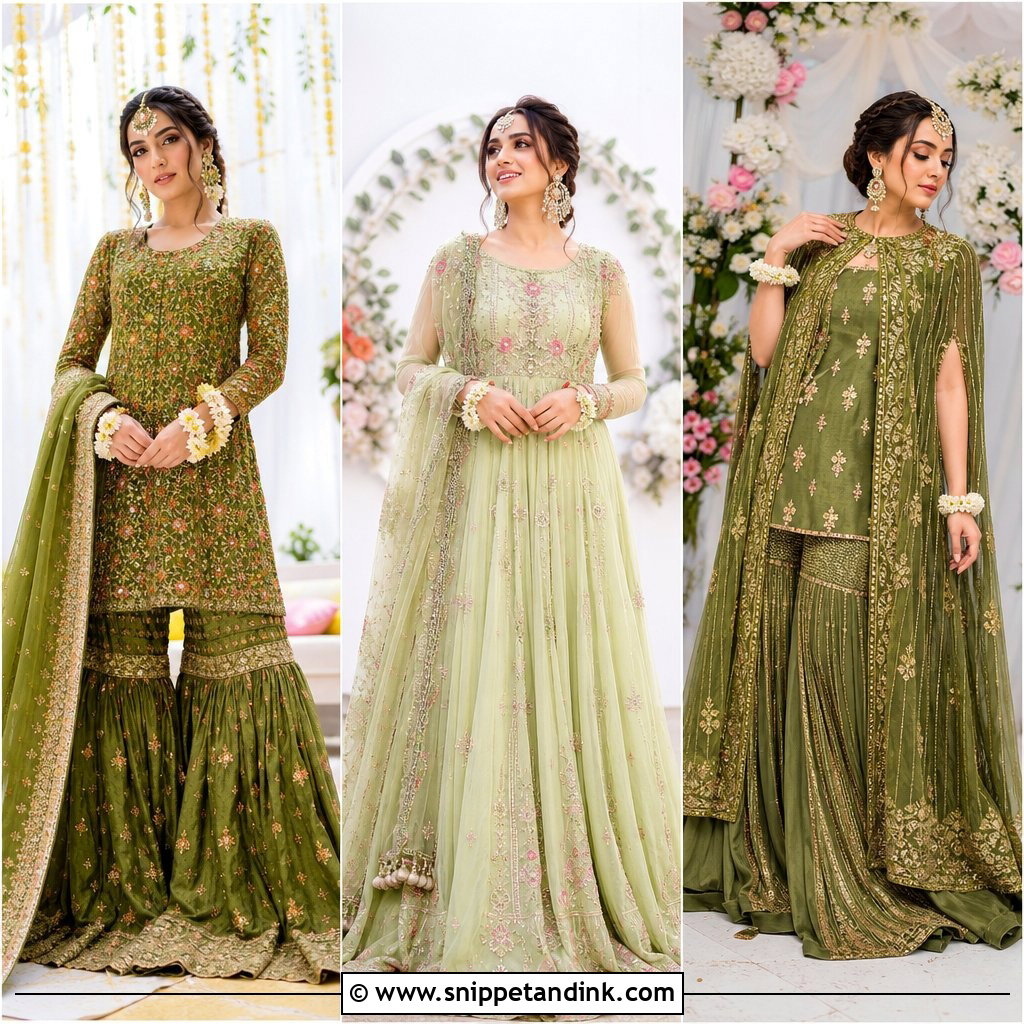
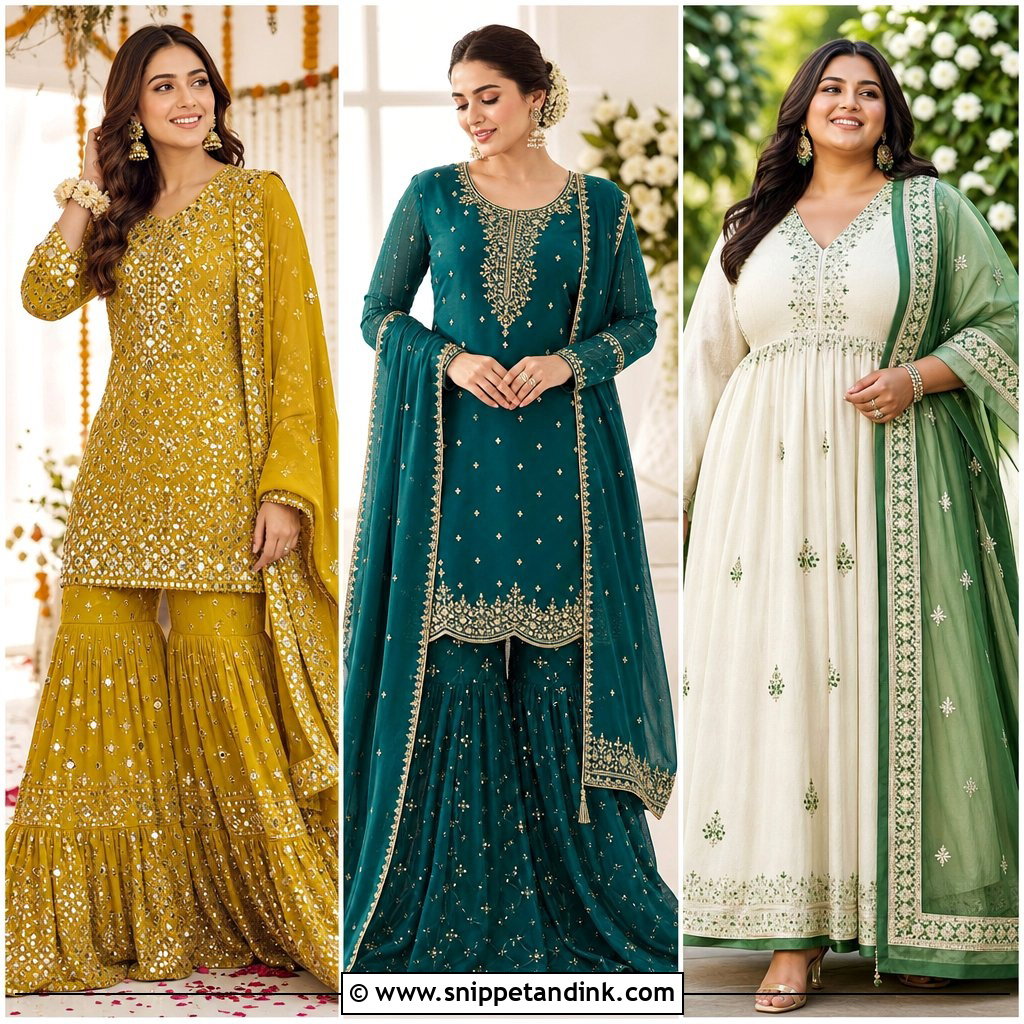
2. Green Sharara Set For Mehendi Function
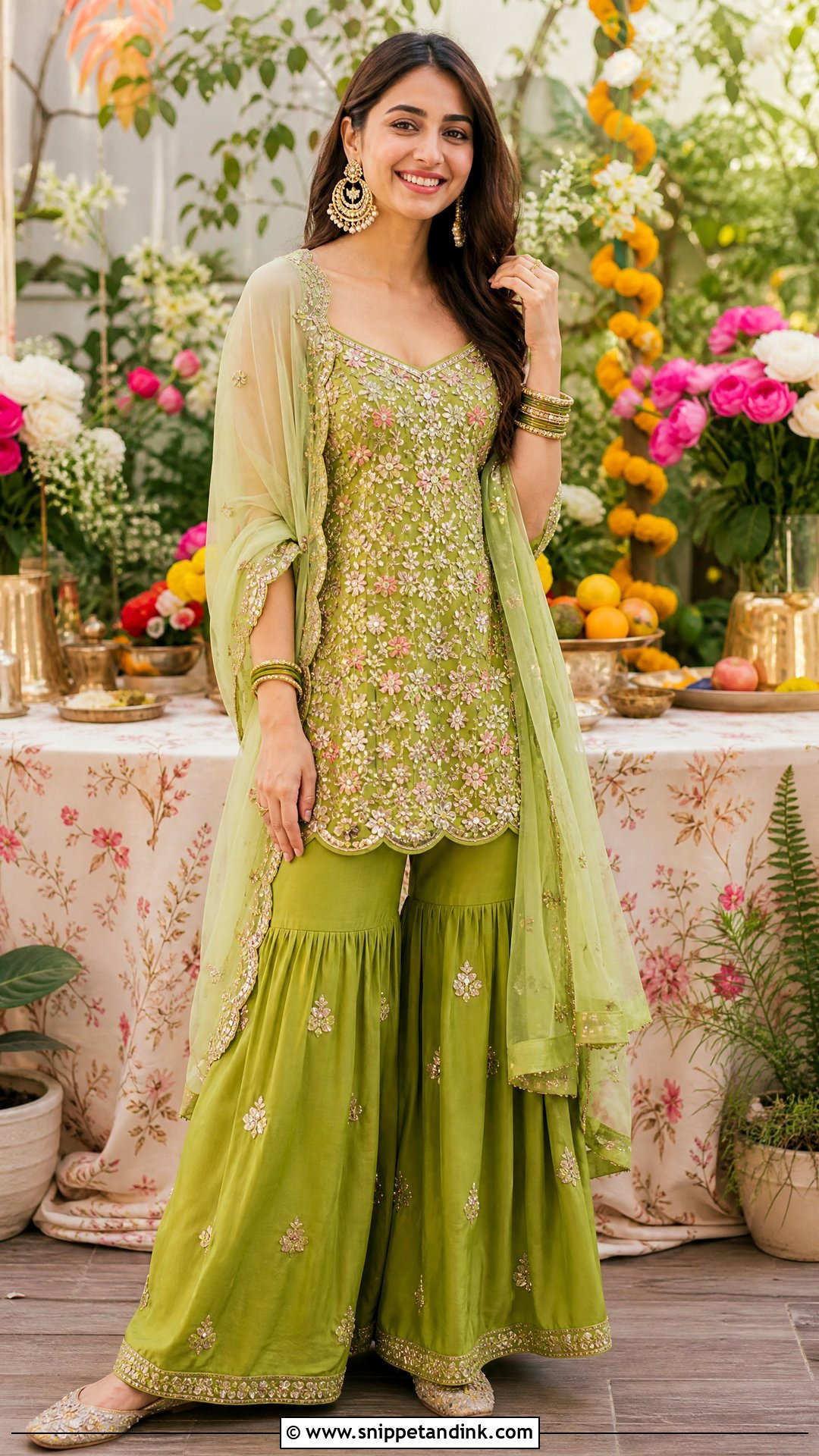
Green ties straight into the henna itself and the garden setups many families choose. A short kurti, wide sharara pants and a light dupatta look dressed up but let you sit cross-legged on a floor cushion, which is how many brides sit for their feet. Mirror work or threadwork adds sparkle without stiffness. Chandbalis, stacked bangles and juttis complete it. One small note from the henna side: put bangles on after your hands are done, or ask me to work around them, because sliding a bangle over drying paste smears it.
3. Floral Anarkali For Mehendi Function
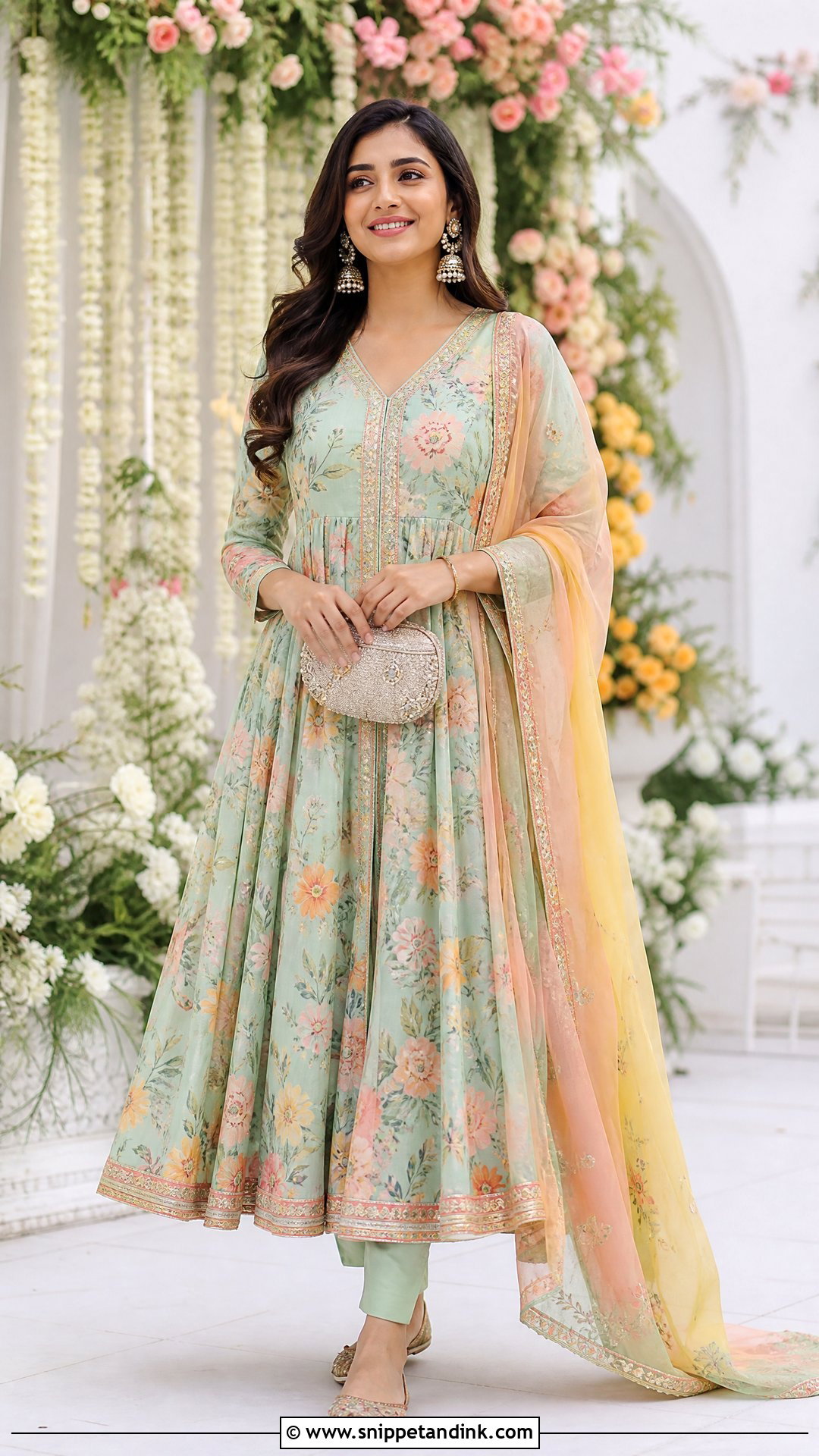
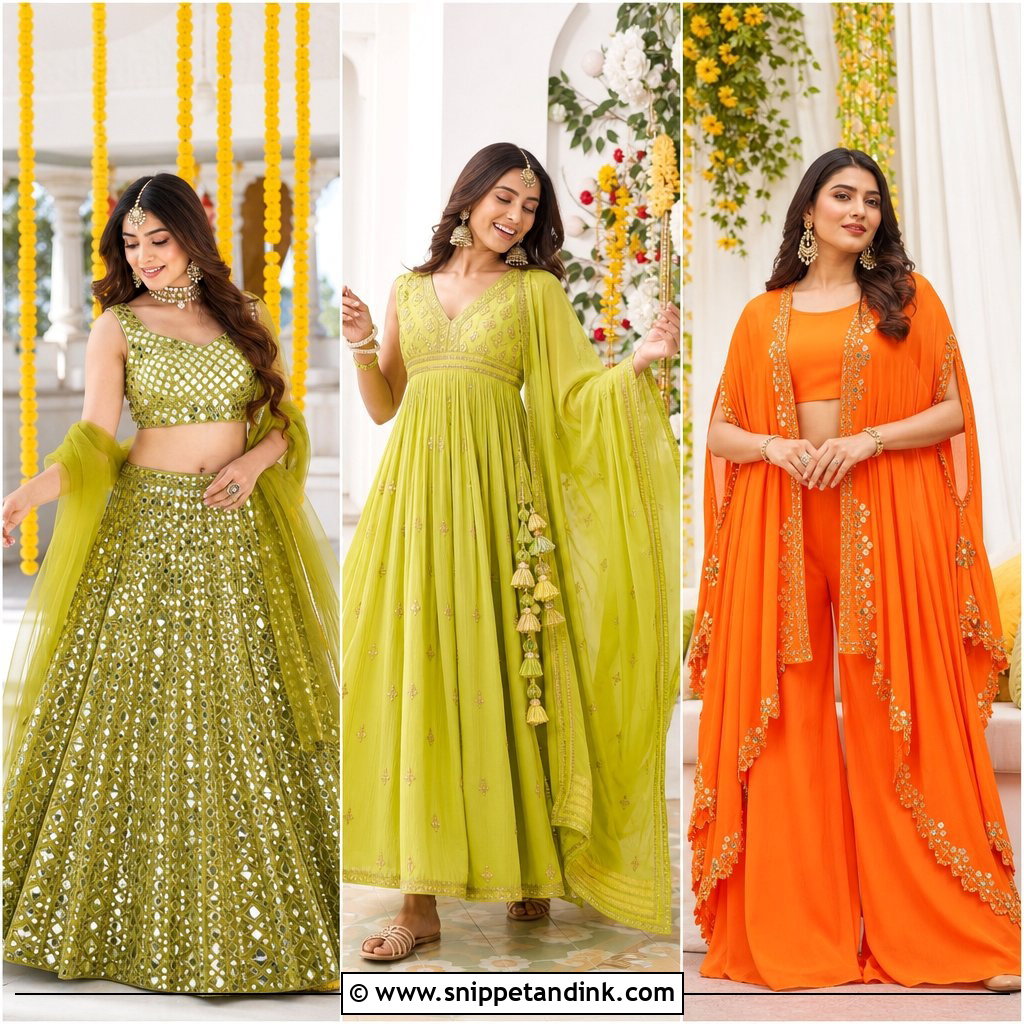
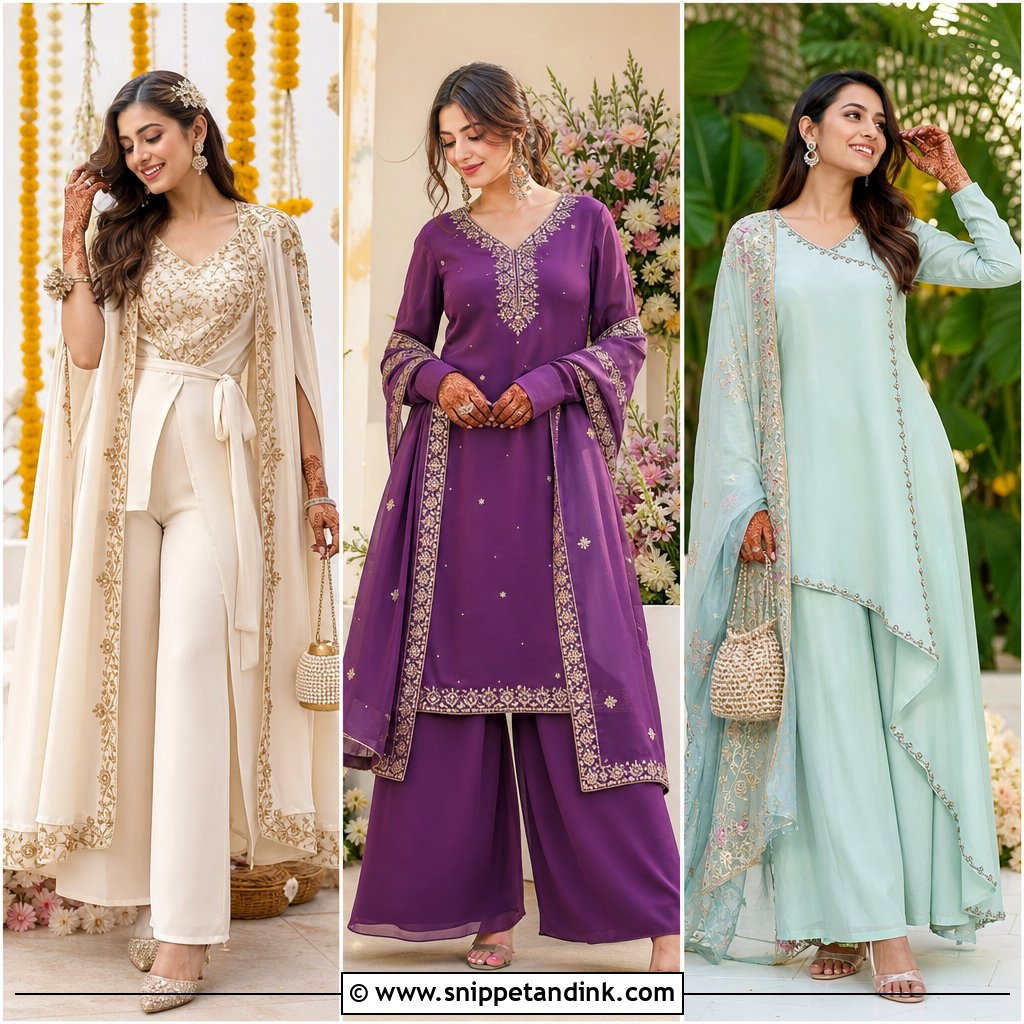
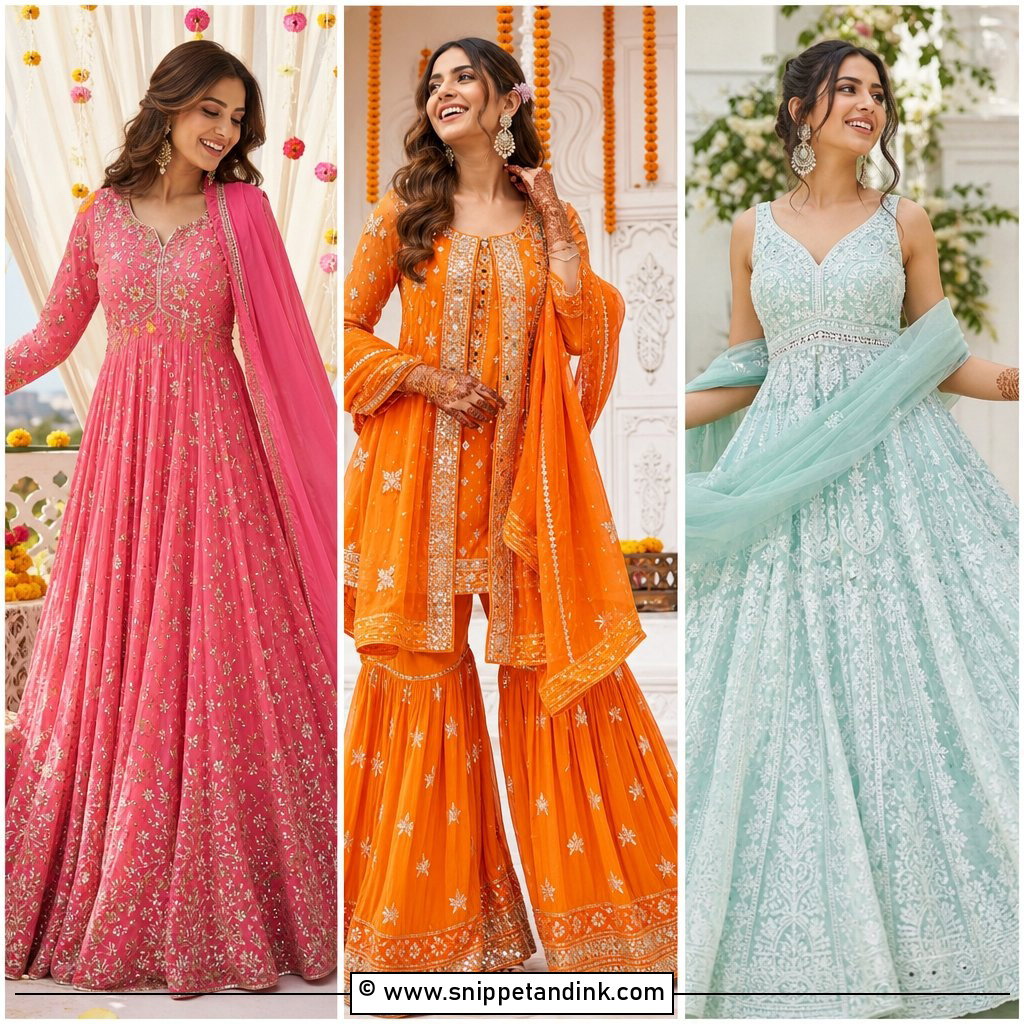
An anarkali is flowing and easy, and the floor-length version gives a traditional outline that suits many body types. Pick yellow, lime, mint, peach or ivory with prints or light embroidery. The thing I watch with full anarkalis is the skirt pooling on the floor around a seated guest; it ends up under my tray of cones. A shorter anarkali over pants is easier if you’re having your feet done. Pearl jhumkas and embroidered juttis suit it.
4. Mirror Work Lehenga For Mehendi Function
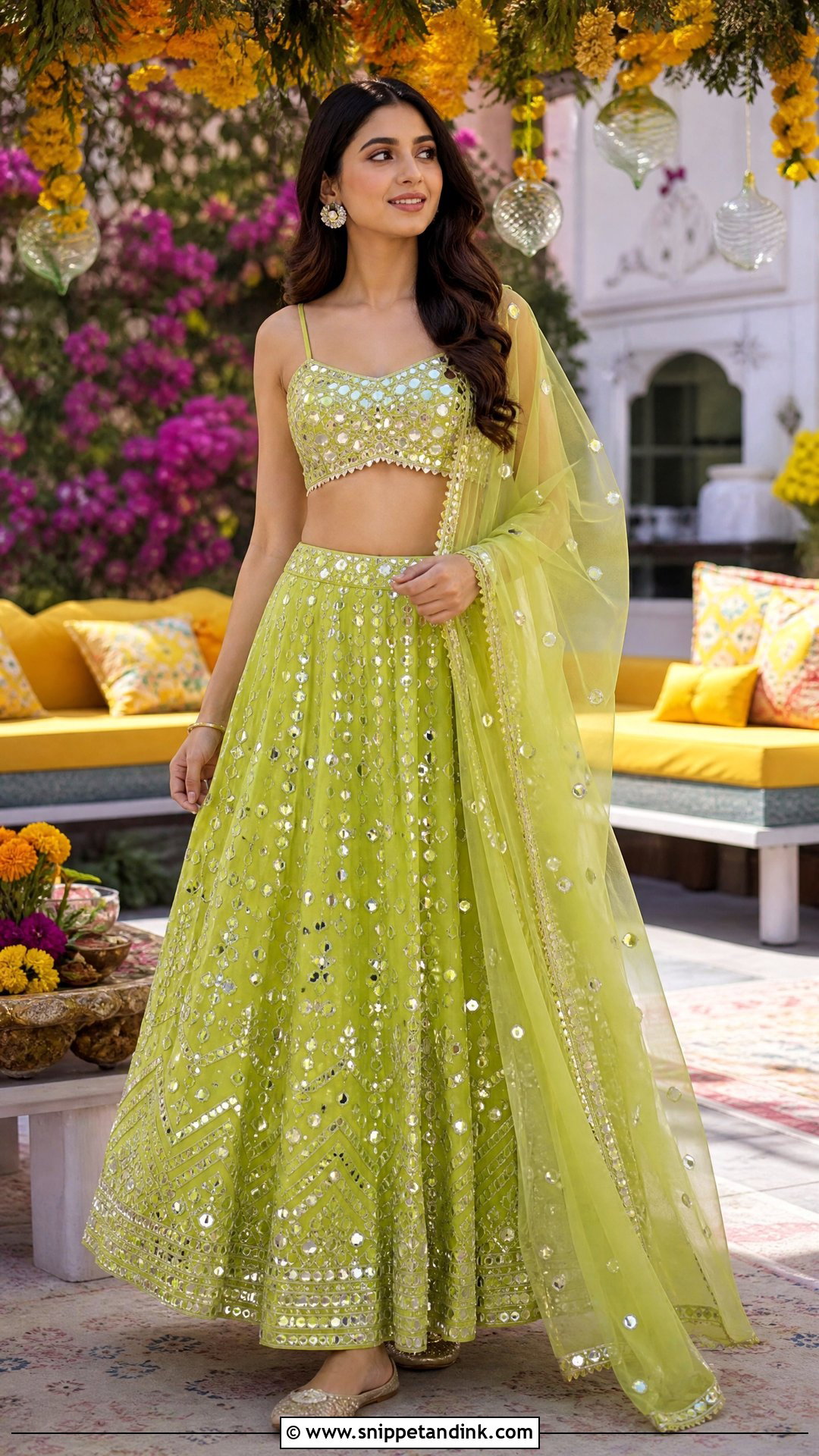
Mirror work catches every bit of light, so it photographs well outdoors in daylight and needs little else. Lime green, mustard, turquoise, coral or pink with one statement piece, earrings or a maang tikka, is enough. Mirrors are heavy and stiff on a dupatta, though, and a heavy dupatta sliding off your shoulder is the most common way paste gets smudged on a lap. Keep the mirrors on the skirt and blouse and the dupatta light. Metallic flats or wedges finish it.
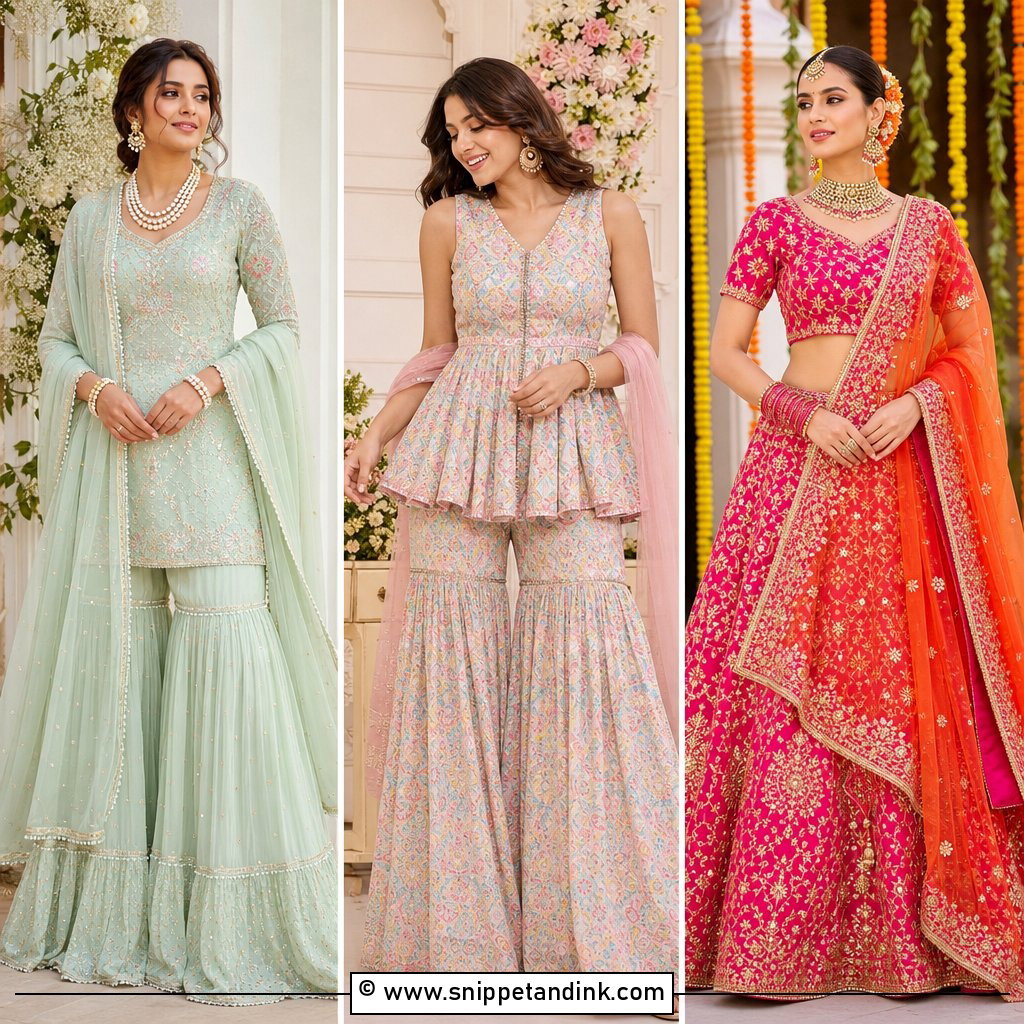
5. Gharara Set For Mehendi Function
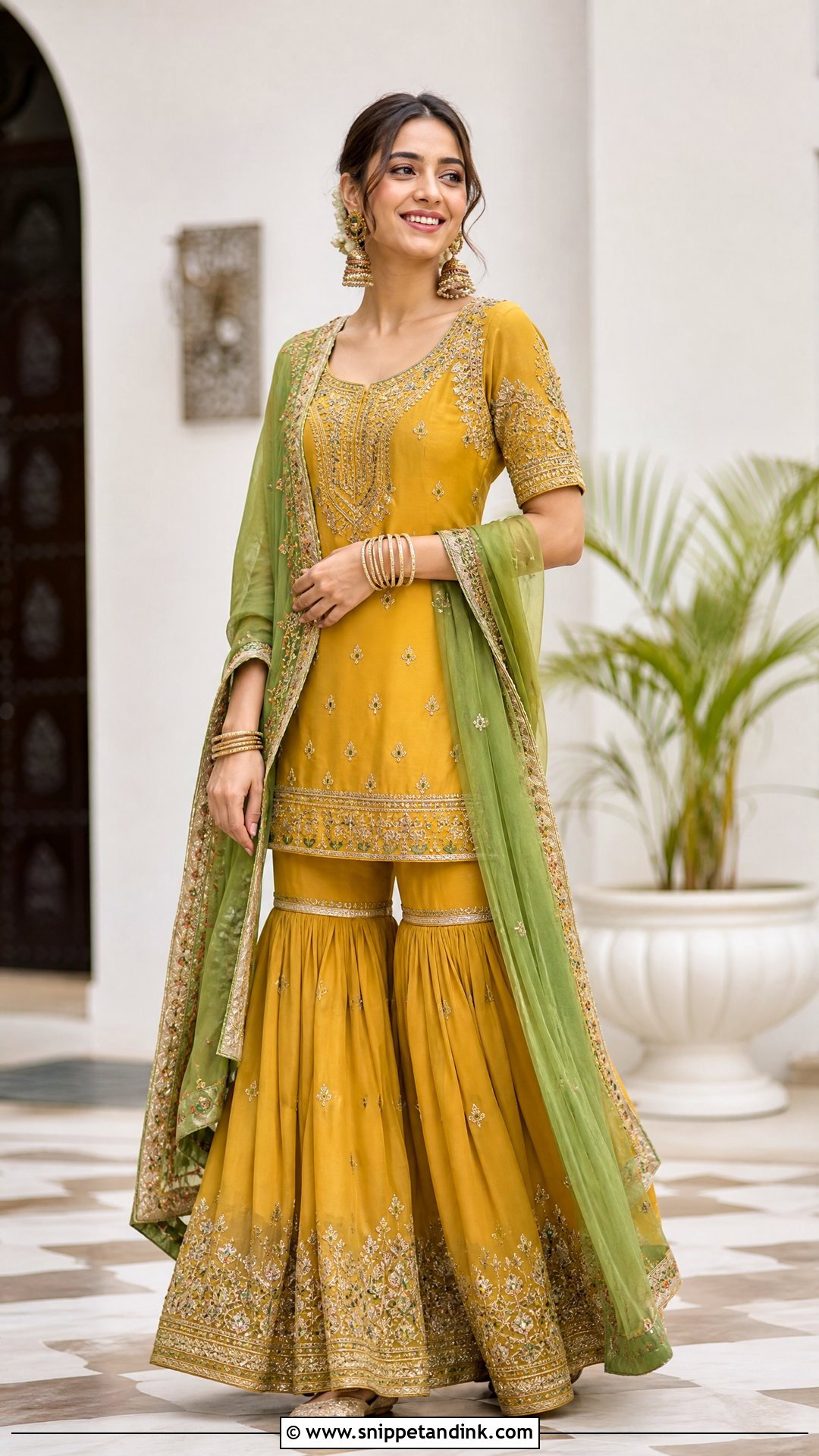
A gharara set has extra flare at the knee, which gives movement on the dance floor. Mehendi green, mustard, rani pink, orange or teal all suit it, with embroidered borders or gota patti. A short kurti balances the volume of the pants, and a light dupatta pinned to one side stays out of the way. I like ghararas on sisters of the bride, who are up and down all day, because the pants don’t drag the way a lehenga hem can. Statement earrings and juttis finish it.
6. Printed Lehenga For Mehendi Function
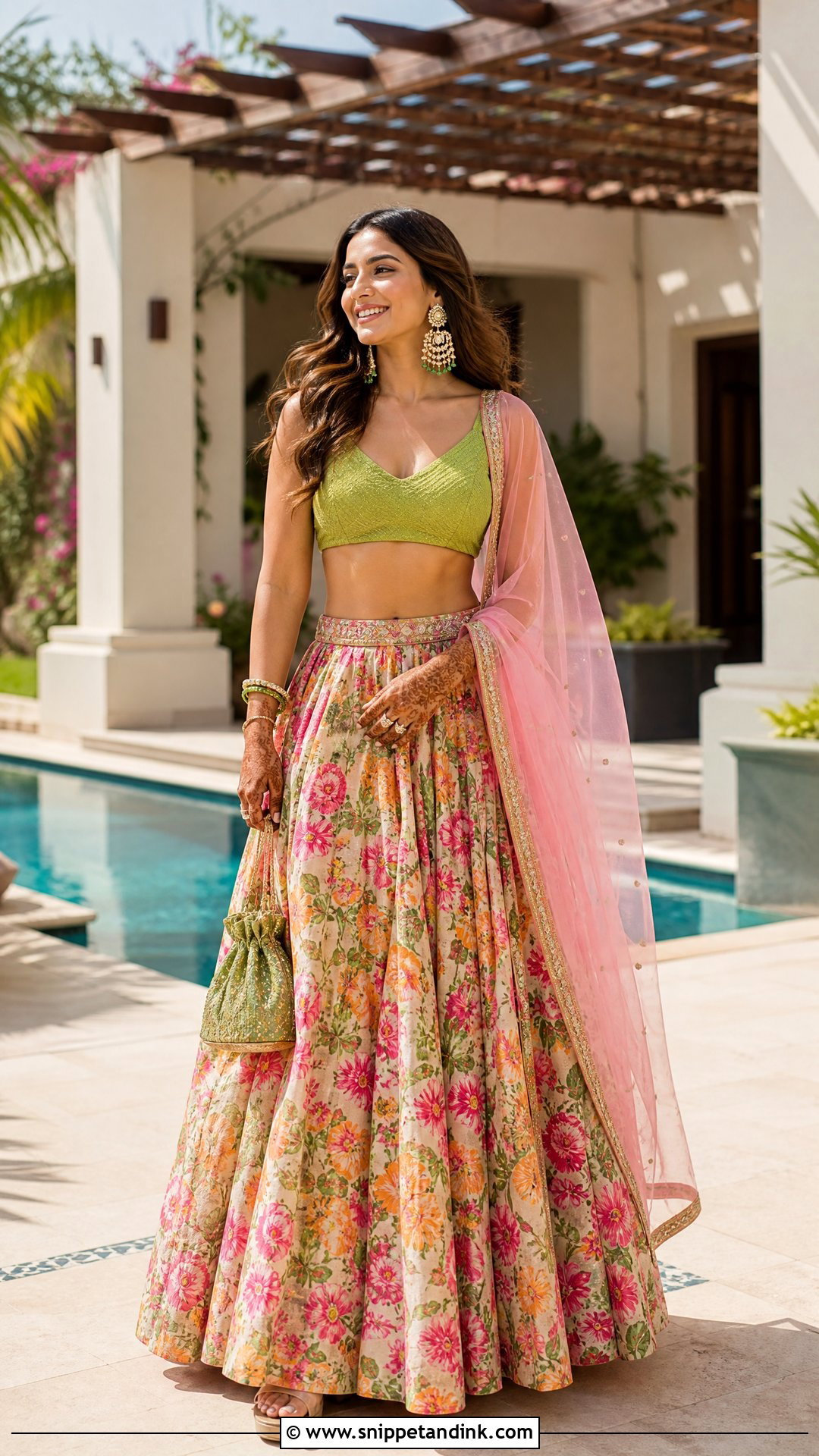
Printed lehengas are the lightest way to look festive. Floral, paisley, block print or tropical motifs suit daytime events, and chiffon, georgette or cotton silk keeps the skirt moving. A printed skirt with a plain blouse looks modern; a matching blouse feels coordinated. They pack well, so they’re practical for destination weddings. If you’re getting henna yourself, a busy print also hides the odd brown fleck if paste flicks off a cone.
7. Indo Western Dhoti Set For Mehendi Function
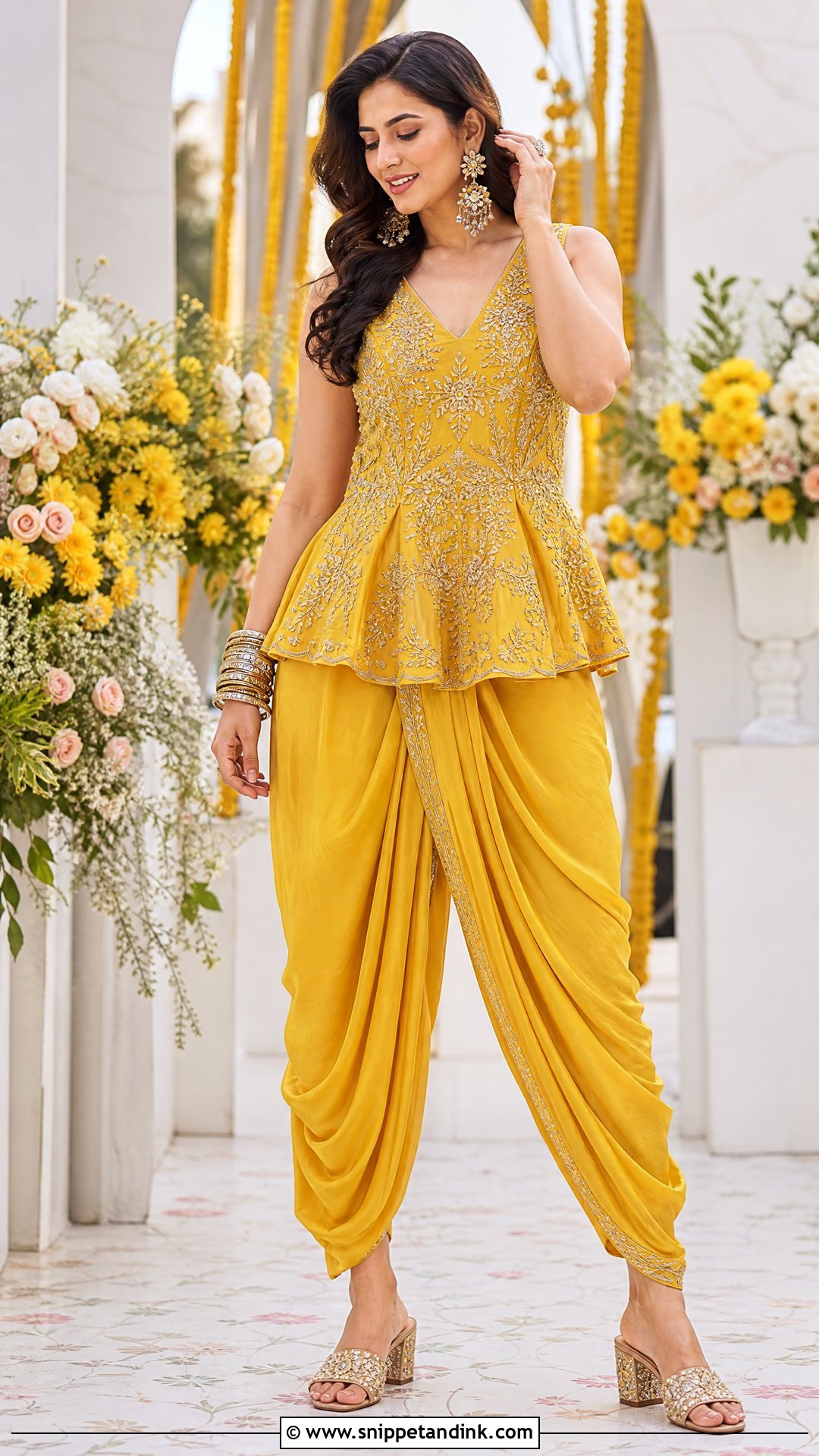
An Indo western dhoti set is the most practical outfit here for anyone having henna on their feet. The draped bottom can be lifted to the shin without fuss, and a peplum top, crop top or embroidered jacket adds shape on top. Yellow, green, fuchsia and orange are bright and festive; pastels suit a modern setup. Skip the dupatta if the top is detailed. Statement earrings and embellished flats suit bridesmaids and younger guests who want a fashion-forward look.
8. Kurta Palazzo Set For Mehendi Function
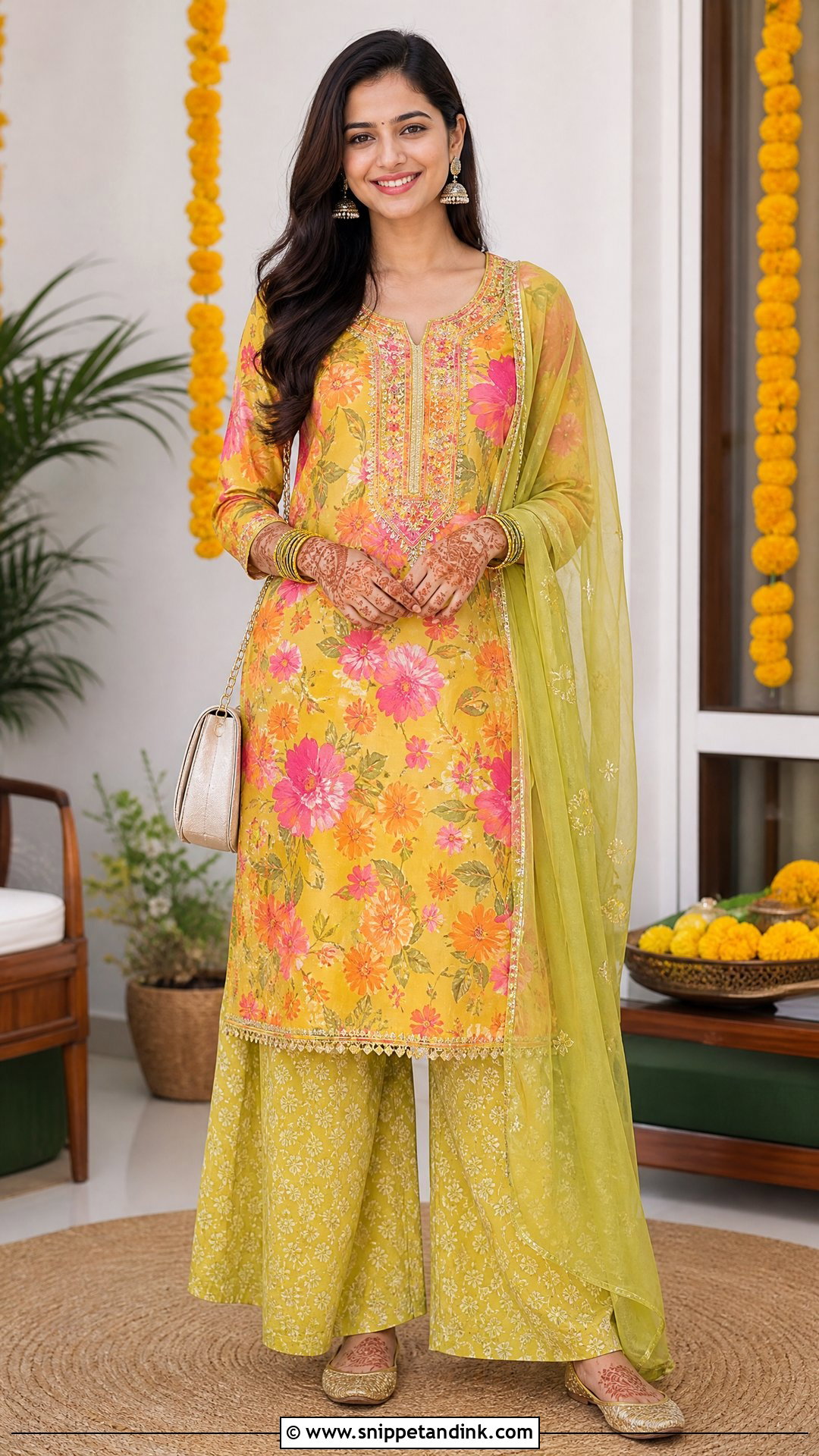
A kurta palazzo set is the easiest choice for a casual or at-home mehendi. A bright printed kurta, wide palazzos and a light dupatta look polished but relaxed, with embroidery at the neck, sleeves or hem for occasion. The straight kurta and wide legs are comfortable for many body types, plus-size included. I do check sleeve length on these: a three-quarter sleeve sits right where I’d want to finish a forearm design, so pick short or elbow sleeves if you want more than palms done. Juttis and a low bun finish it.
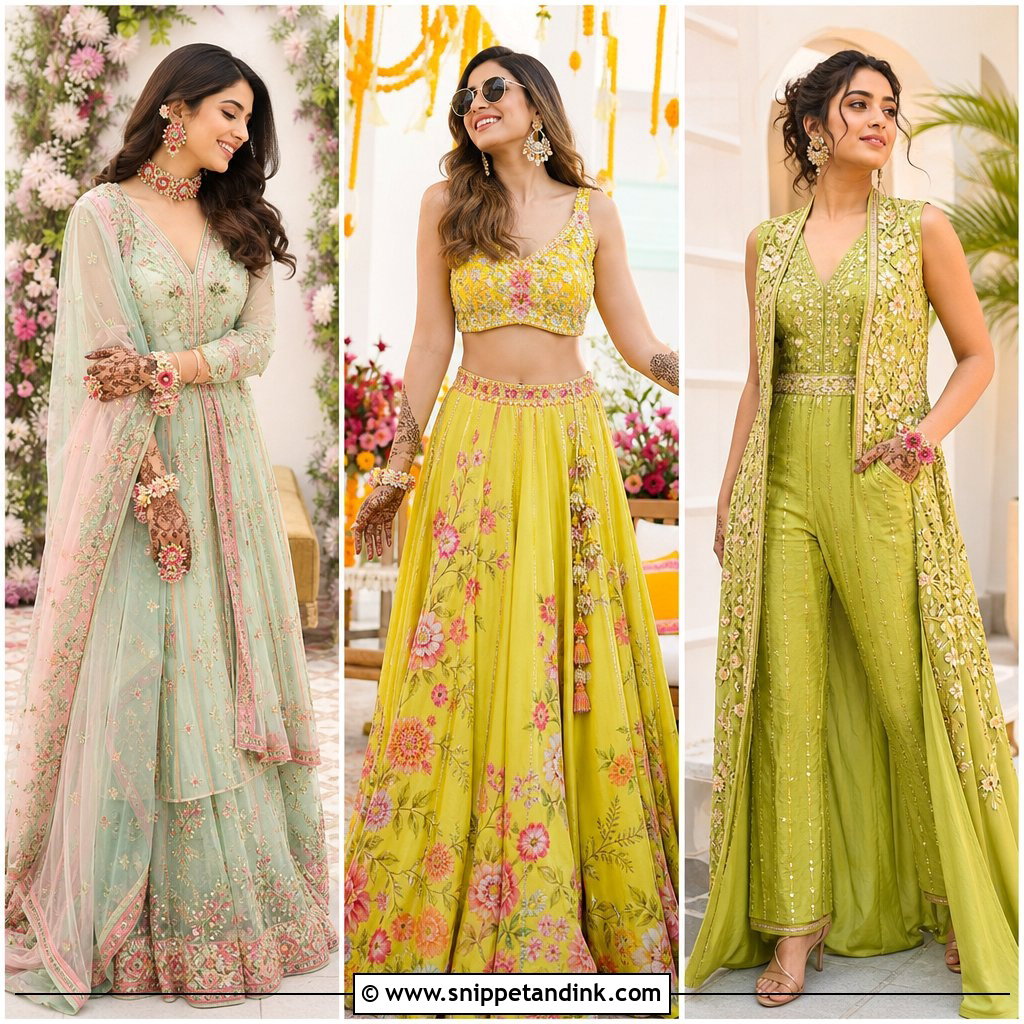
9. Cape Lehenga For Mehendi Function
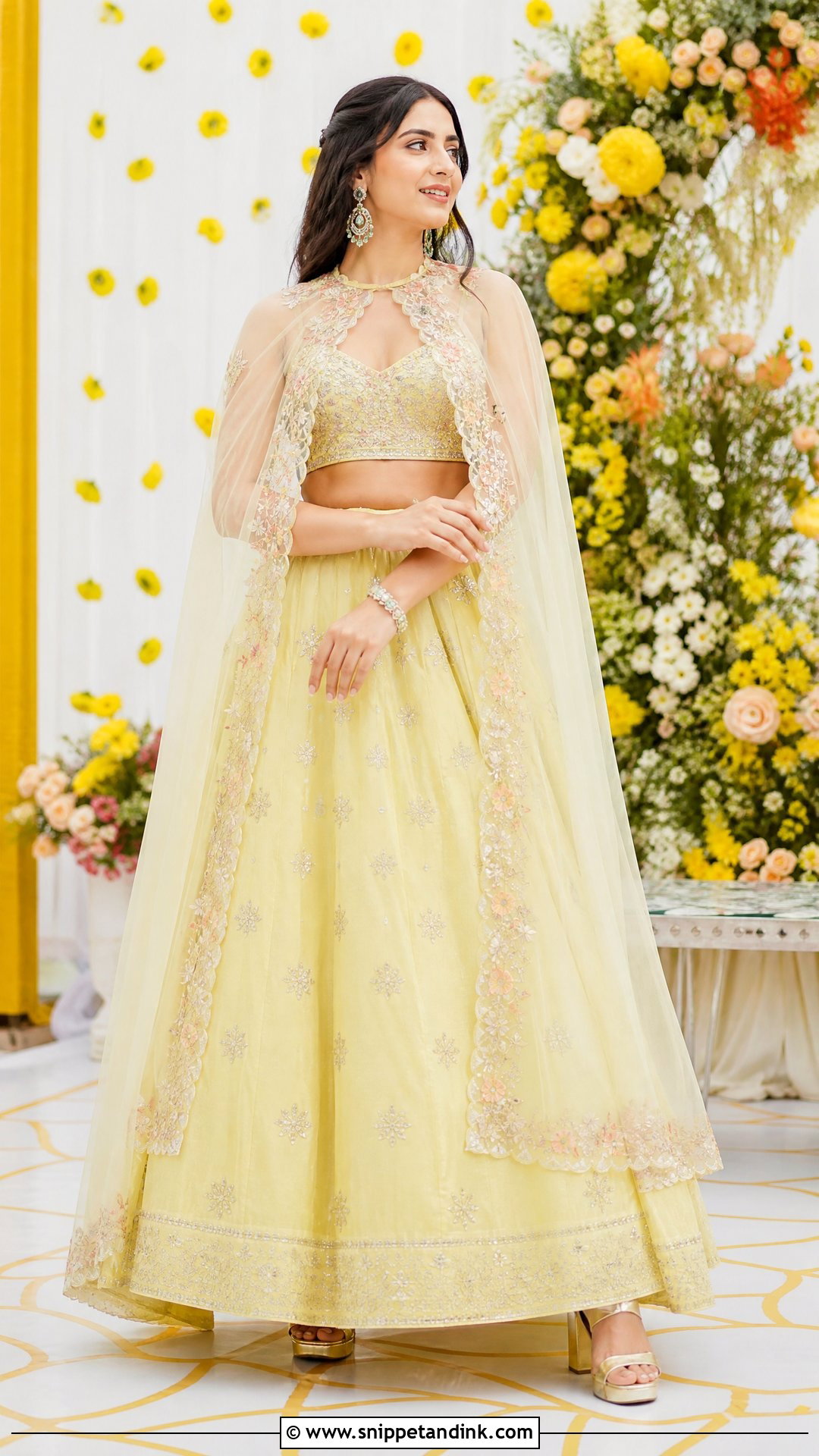
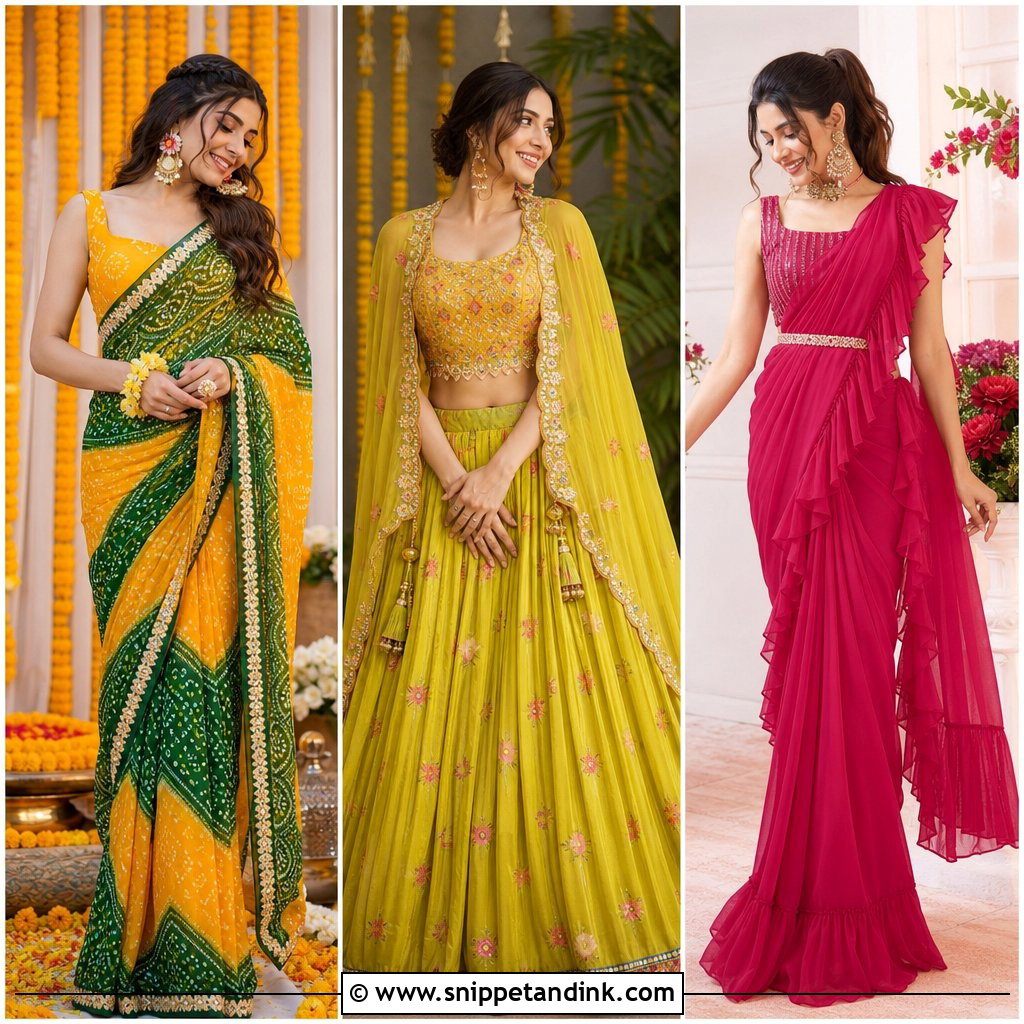
A cape lehenga solves the dupatta problem entirely, which is why I’m fond of it. Loose fabric is hard to manage when your hands are covered in wet henna, and a cape stays put on the shoulders without adjustment. Choose a light lehenga with a sheer embroidered, mirror work or printed cape. Lime green, sunshine yellow, blush and aqua look bright and young. The cape is already the feature, so keep jewellery simple. It suits bridesmaids and modern brides.
10. Saree With Belt For Mehendi Function
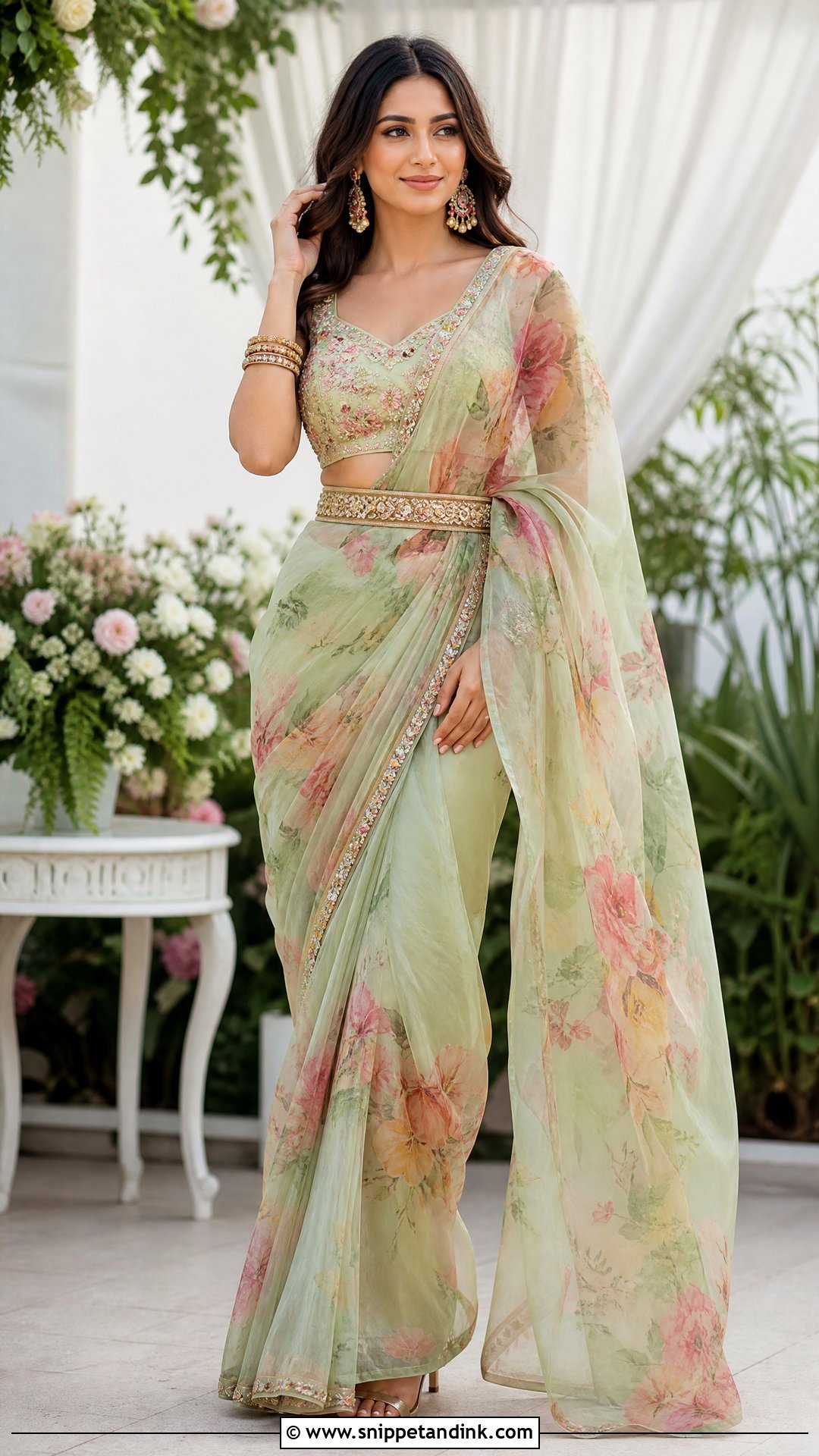
A saree with a belt works when the mehendi is more of a party than a long seated ceremony. The belt holds the drape in place, so it doesn’t unravel when you dance or pose. Organza, chiffon, georgette or a pre-stitched saree are easier than stiff heavy silks. Floral, mirror work or ruffle sarees all work, with a crop or embroidered blouse. I’d avoid a saree if you’re getting long henna yourself: you can’t re-tuck a pleat with paste on your hands, and it will need re-tucking.
11. Pastel Lehenga For Mehendi Function
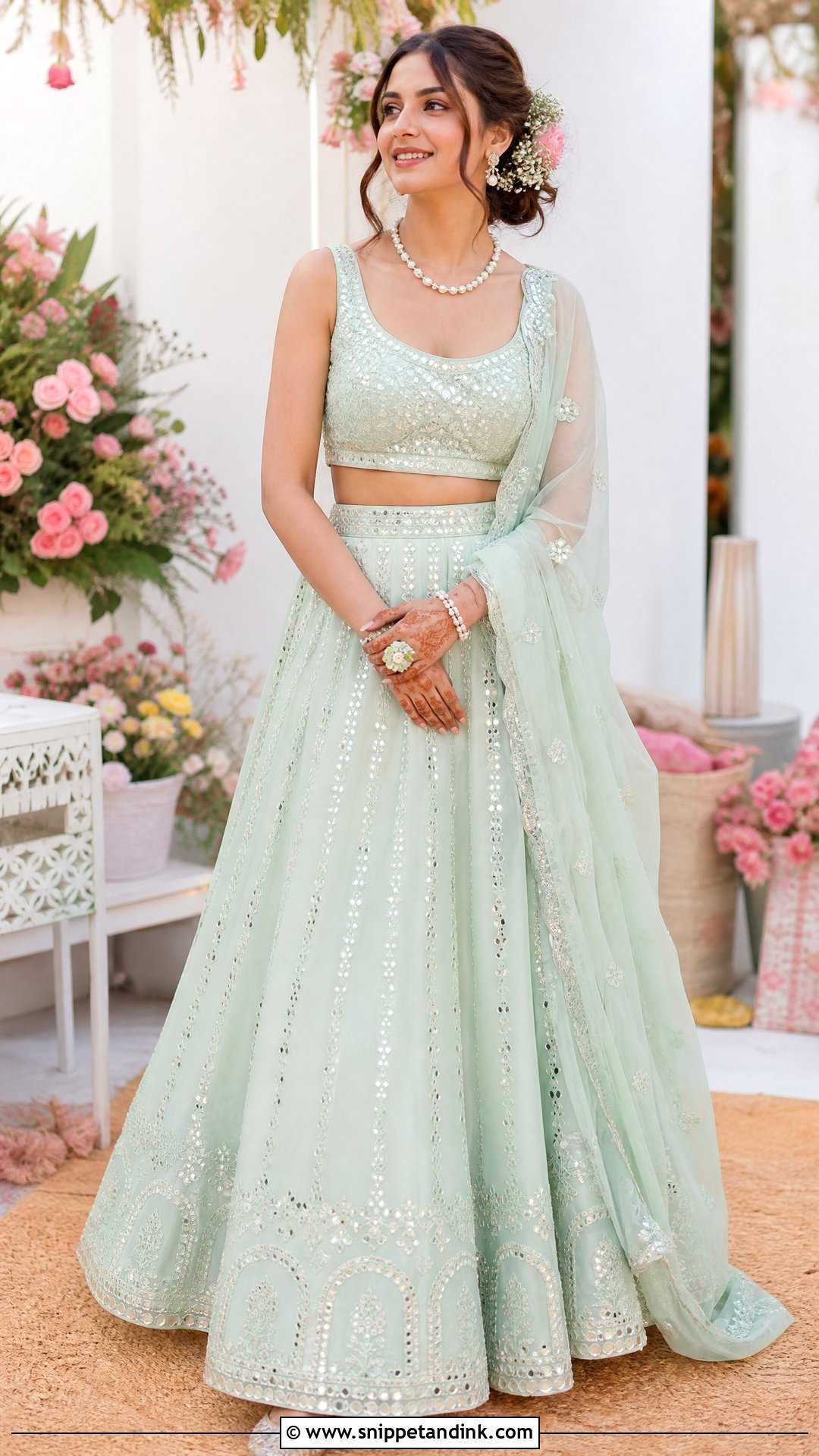
Pastels feel soft and modern, especially with floral decor and daytime gardens. Mint, lavender, peach, powder blue and blush are fresh alternatives to yellow and green. Mirror work, sequins or coloured borders keep them festive. The honest downside is that pale fabric shows henna marks instantly, and fresh paste can leave a stain on pastels that is very hard to remove. Brides in pastels should have someone hold their dupatta and skirt clear while the paste dries. Pearl jewellery and nude block heels finish it.
12. Orange Anarkali For Mehendi Function
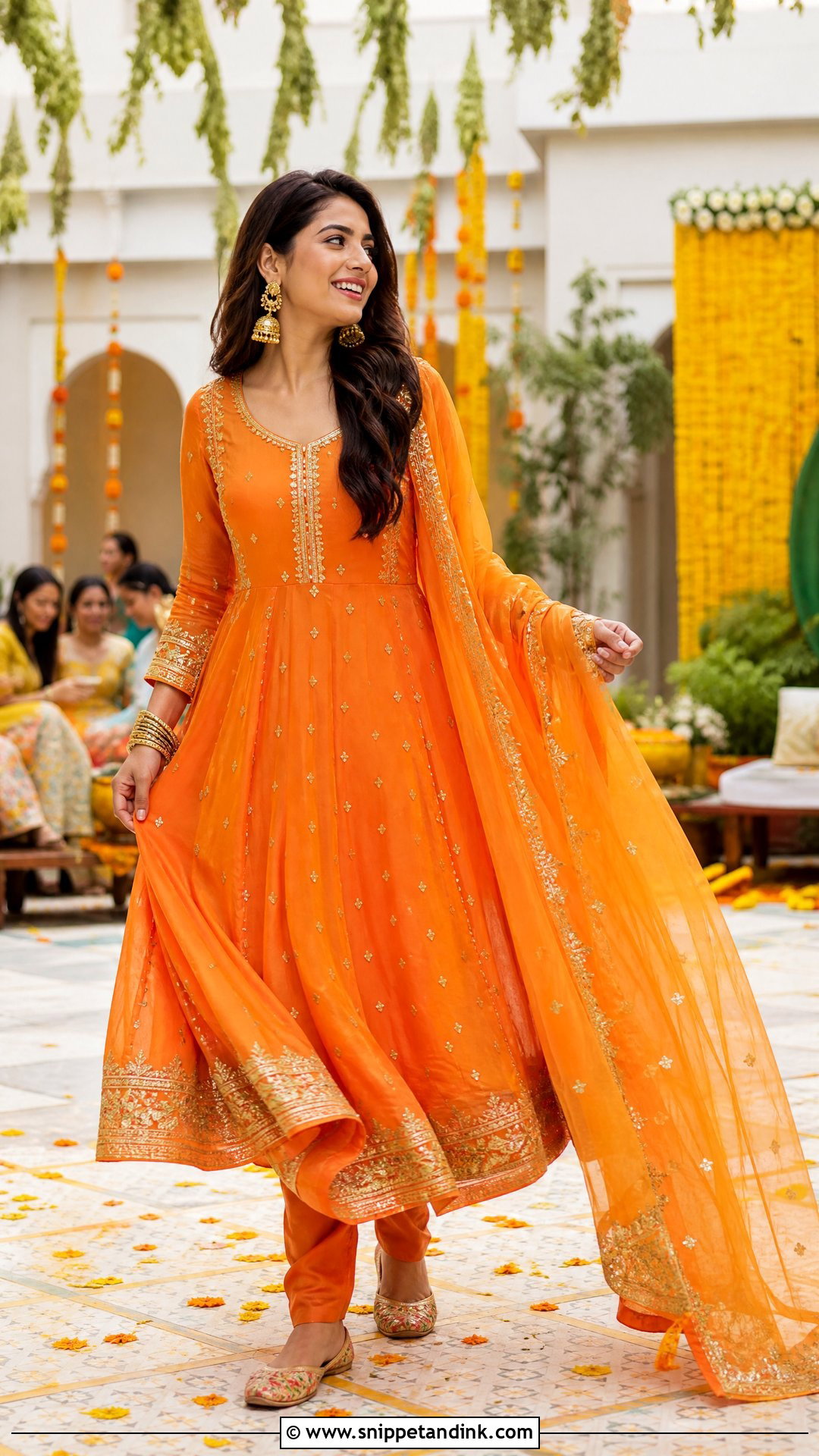
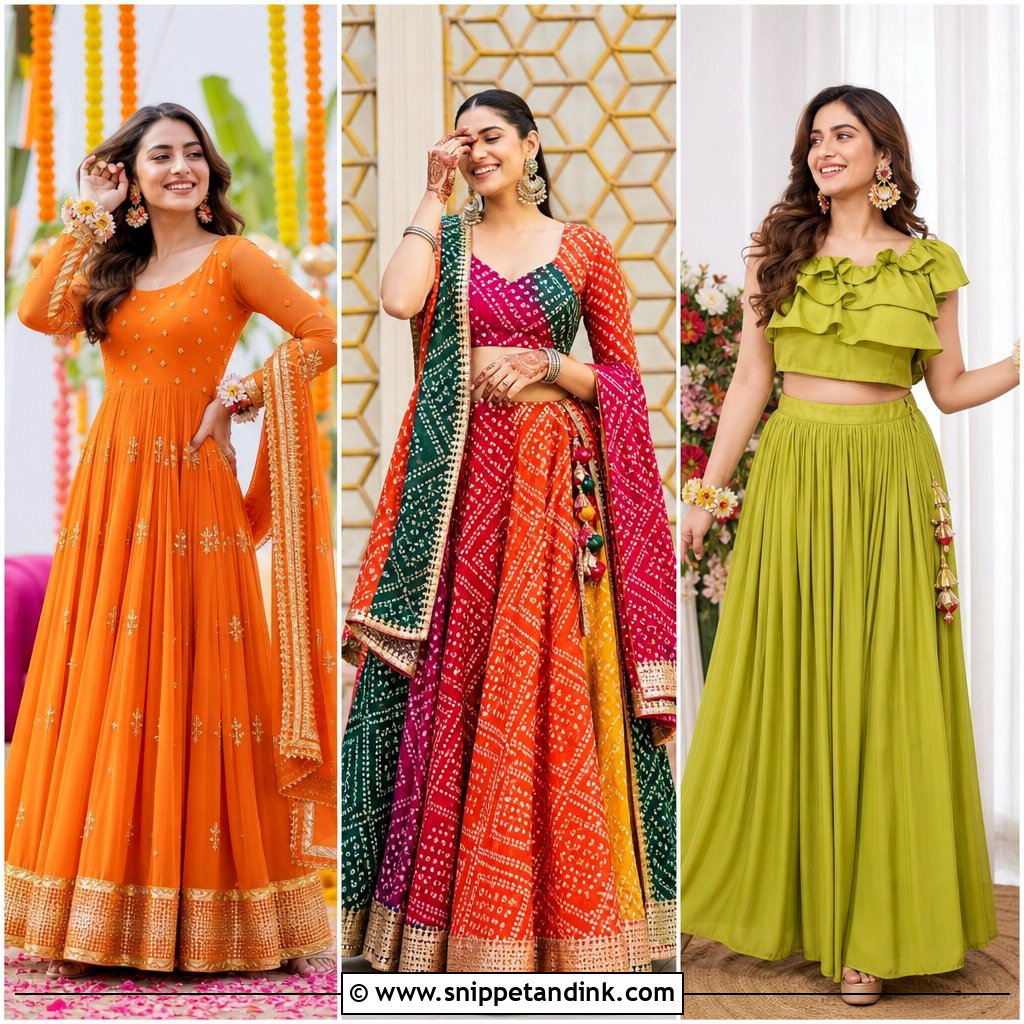
Orange brings warmth to festive photos and suits a lot of skin tones in one of its versions: rust, tangerine, marigold or coral. A flowing anarkali with gold accents or mirror work feels traditional and easy. Drape the dupatta lightly over one shoulder or pin it. Gold jhumkas and embroidered juttis complete it. Henna on the hands and orange fabric sit in the same warm family, which makes hand portraits look cohesive.
13. Co Ord Set For Mehendi Function
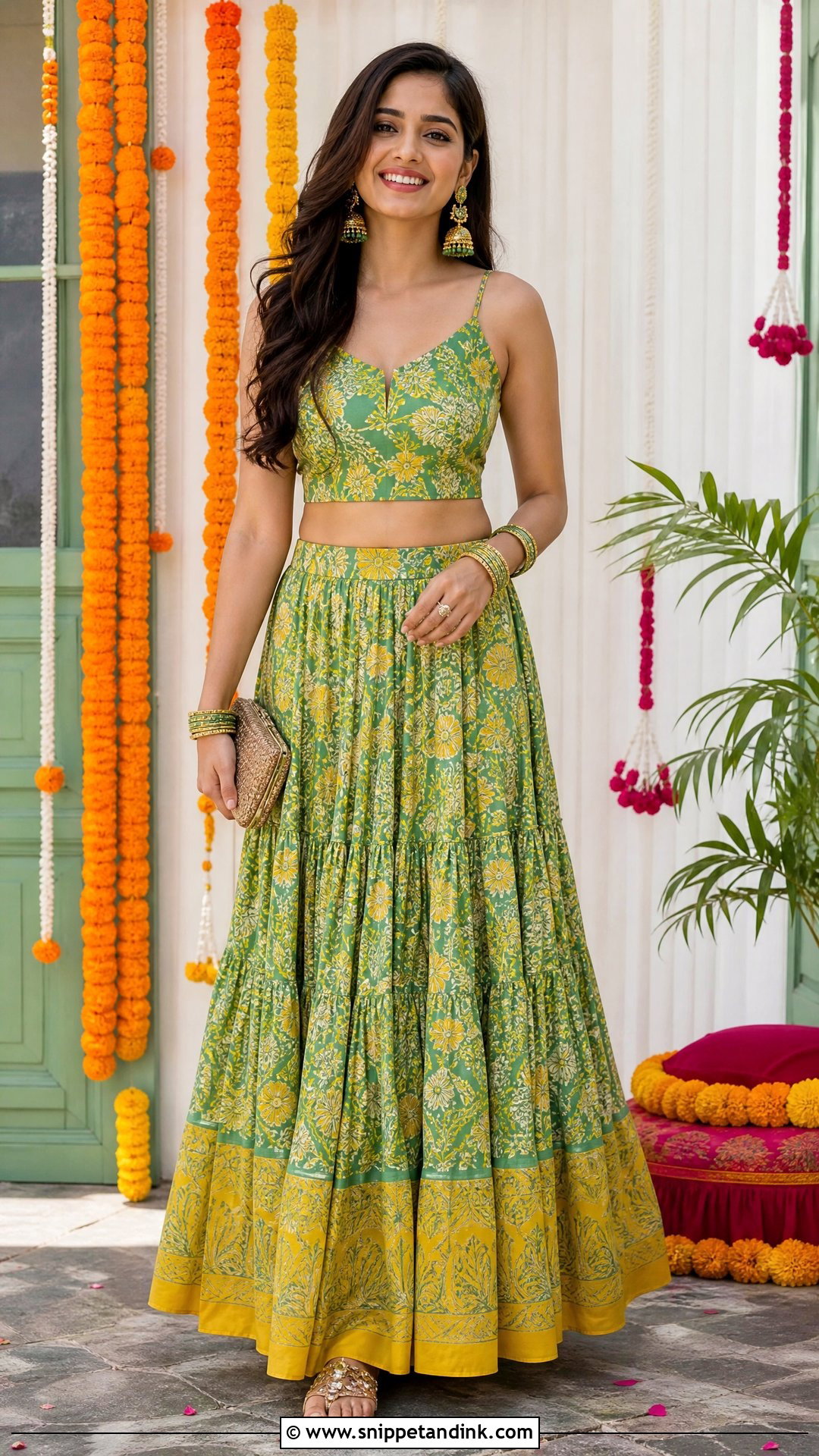
Co-ords look put-together with almost no effort, and they’re comfortable. Matching crop tops and skirts, kurta and pant sets or embroidered tunic sets all count. Prints feel fresh for daytime; mirror work or sequins make them dressier for evening. Choose earrings by the neckline: hoops or jhumkas for a high neck, a choker for a scoop. Juttis or embellished sandals suit friends, cousins and casual guests.
14. Rani Pink Lehenga For Mehendi Function
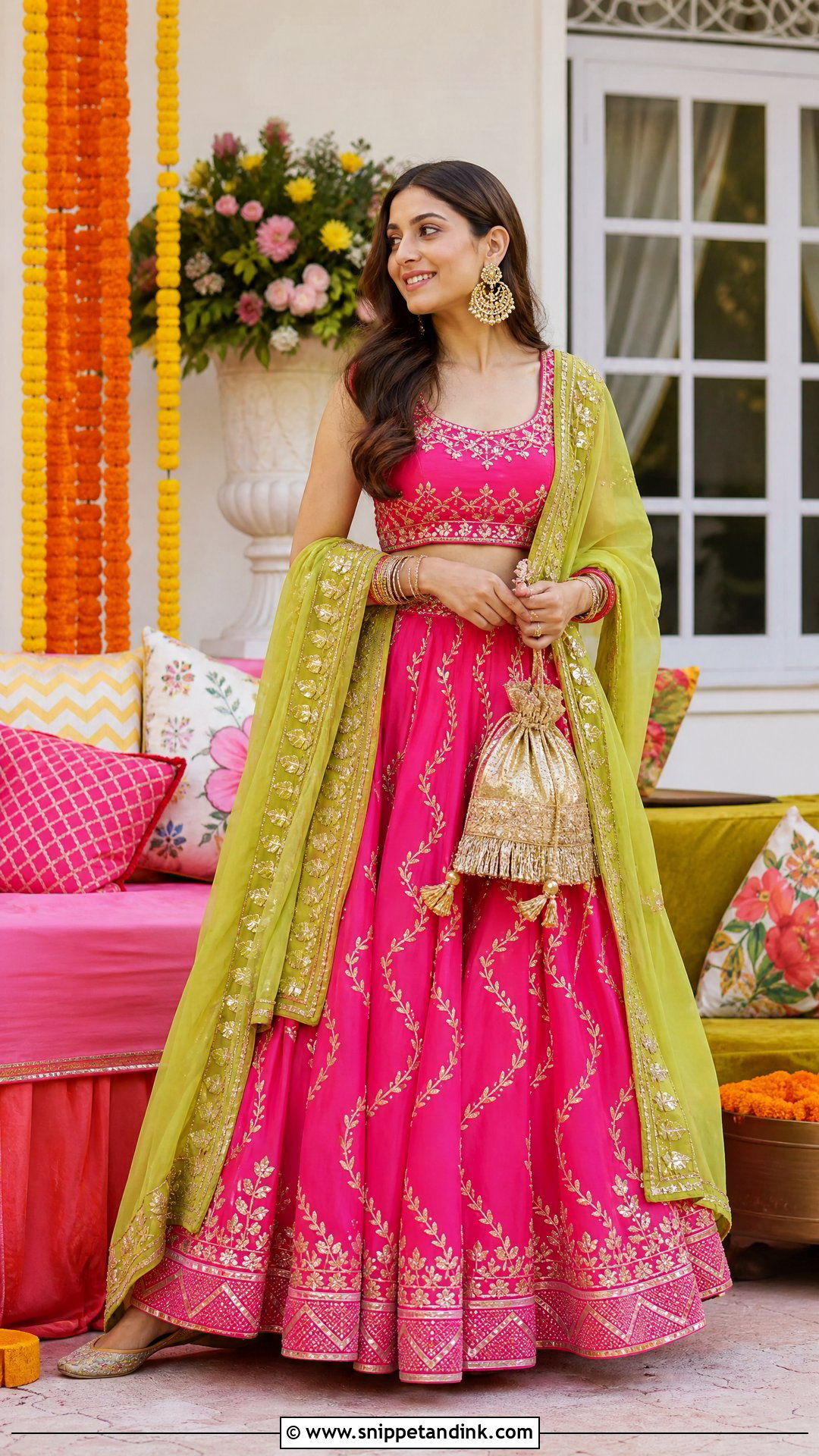
Rani pink stands out in a room full of yellow and green. A lightweight lehenga with gota patti, mirror work or floral embroidery stays festive, and a contrasting dupatta in orange, lime or yellow makes it playful. If the skirt is heavily embellished, keep the blouse and jewellery quieter. Chandbalis, bangles and a potli finish it. Bright pink also makes freshly stained orange henna look deeper in photos, which brides tend to like.
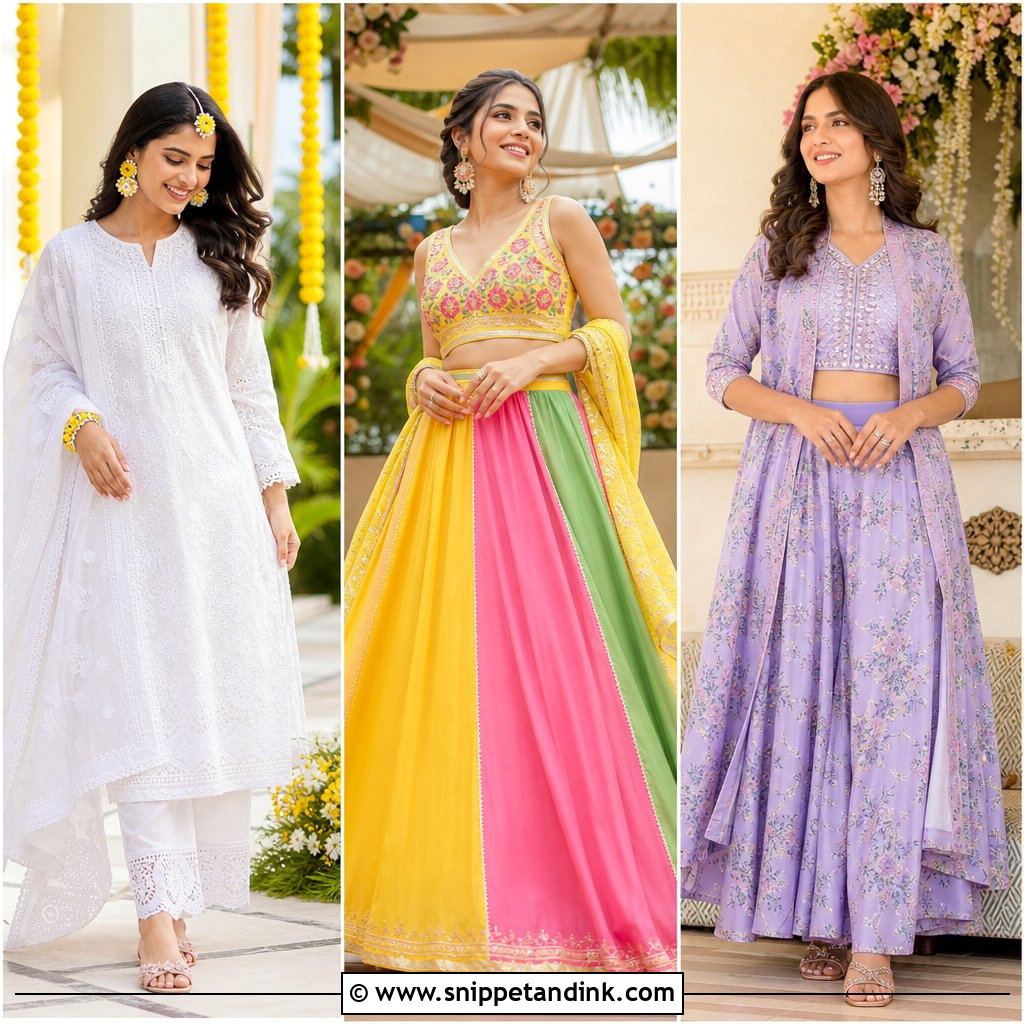
15. White And Yellow Suit For Mehendi Function
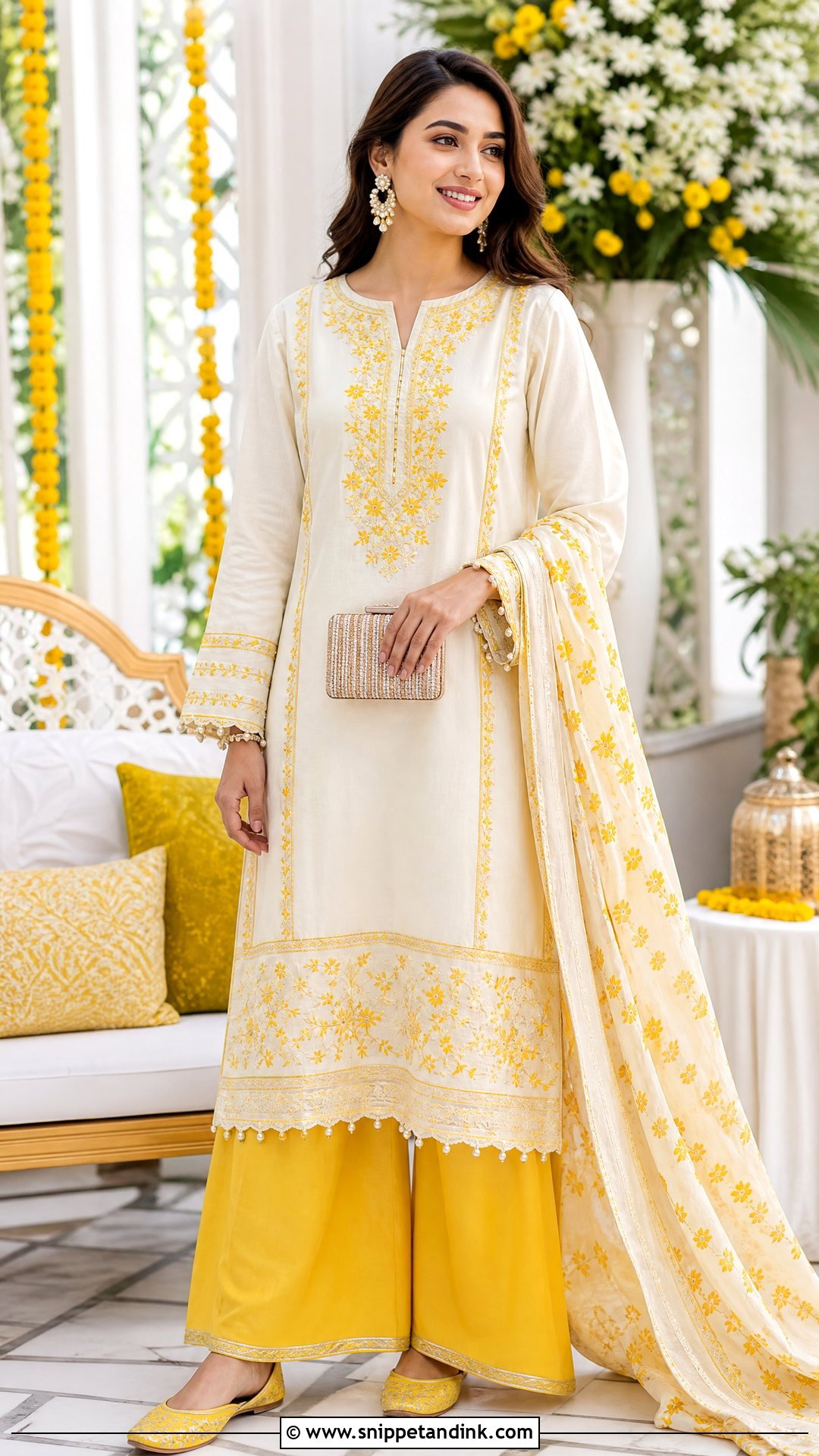
White with yellow looks clean and cheerful at a daytime event. A kurta with yellow embroidery, a printed dupatta or yellow palazzos keeps the balance. I’d steer anyone getting long henna away from pure white, though. Paste and the stain it leaves transfer readily to light cotton, and a white sleeve with an orange smear is hard to rescue. Off-white or ivory is more forgiving. Yellow juttis and pearl earrings finish it for a guest who wants something simple.
16. Peplum Sharara For Mehendi Function
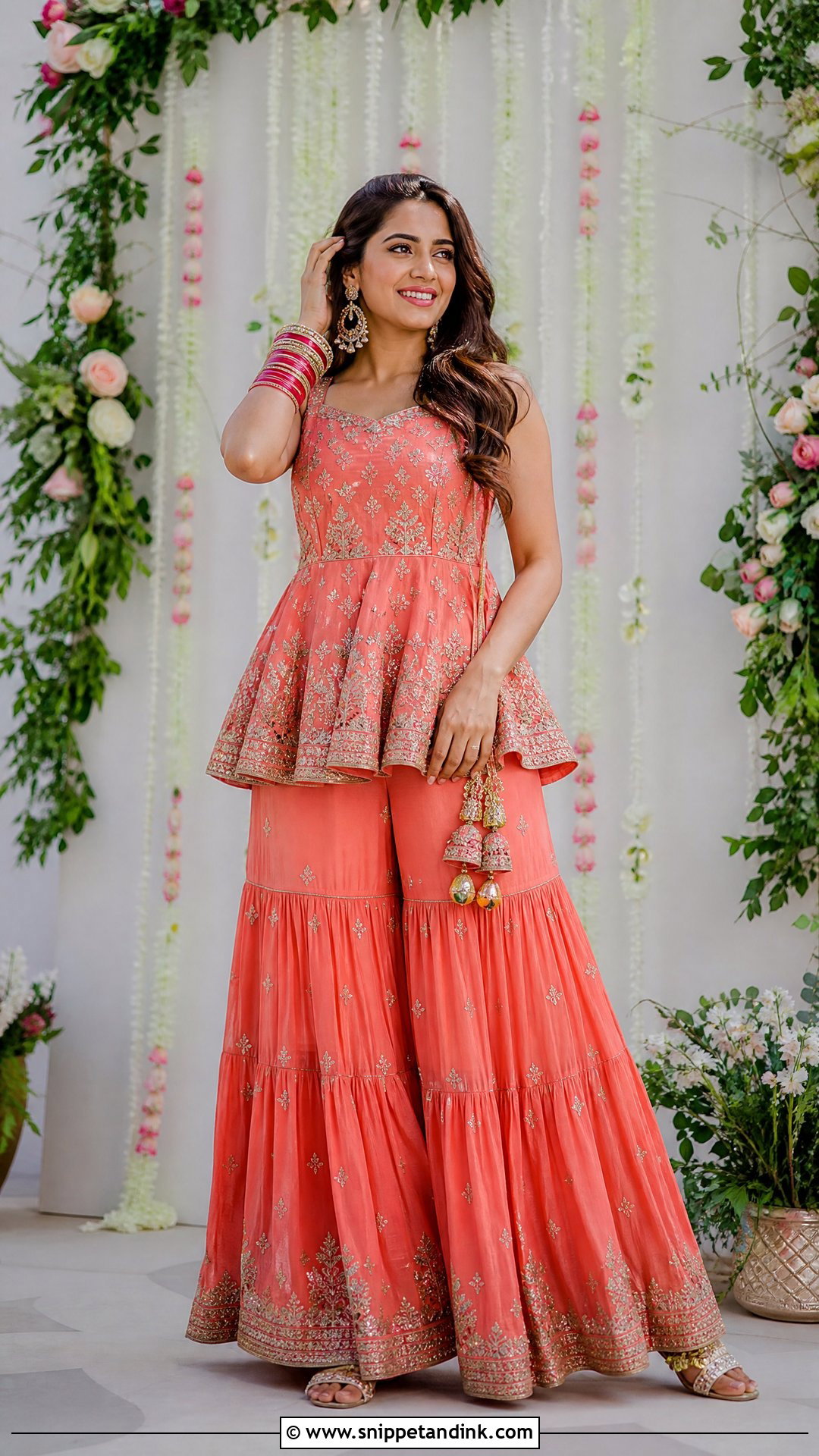
A peplum flares from a fitted waist, which balances wide sharara pants and gives shape without anything tight. It moves well for dancing. Mirror work, embroidery or tassels on the peplum add play. Green, yellow, coral or turquoise suit a bright event; pastels make it softer. The dupatta is optional when the peplum is detailed, and one less layer helps when you’re sitting for henna. Statement earrings, bangles and embellished sandals complete it.
17. Jacket Lehenga For Mehendi Function
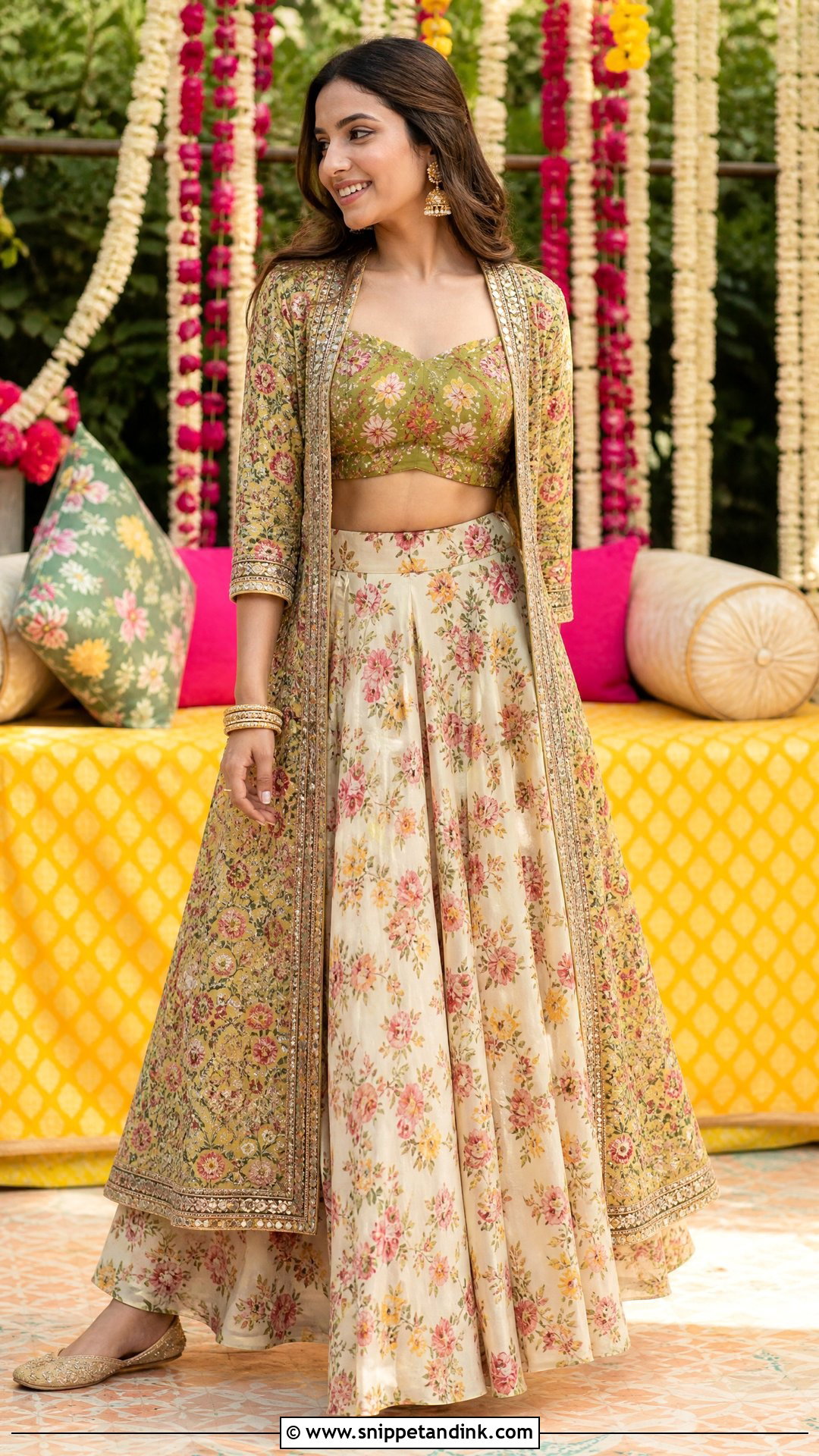
A jacket lehenga layers without a dupatta to manage. The jacket can be short, long, sheer, embroidered or printed. For mehendi, I’d keep the skirt and blouse light and let a mirror work or gota patti jacket carry the detail. One practical tip: sleeveless or short-sleeve jackets let me work up the arm. A long-sleeved jacket has to come off for application, so choose one that’s easy to slip off and back on with dry hands. Add a maang tikka for a bridal feel.
18. Bandhani Lehenga For Mehendi Function
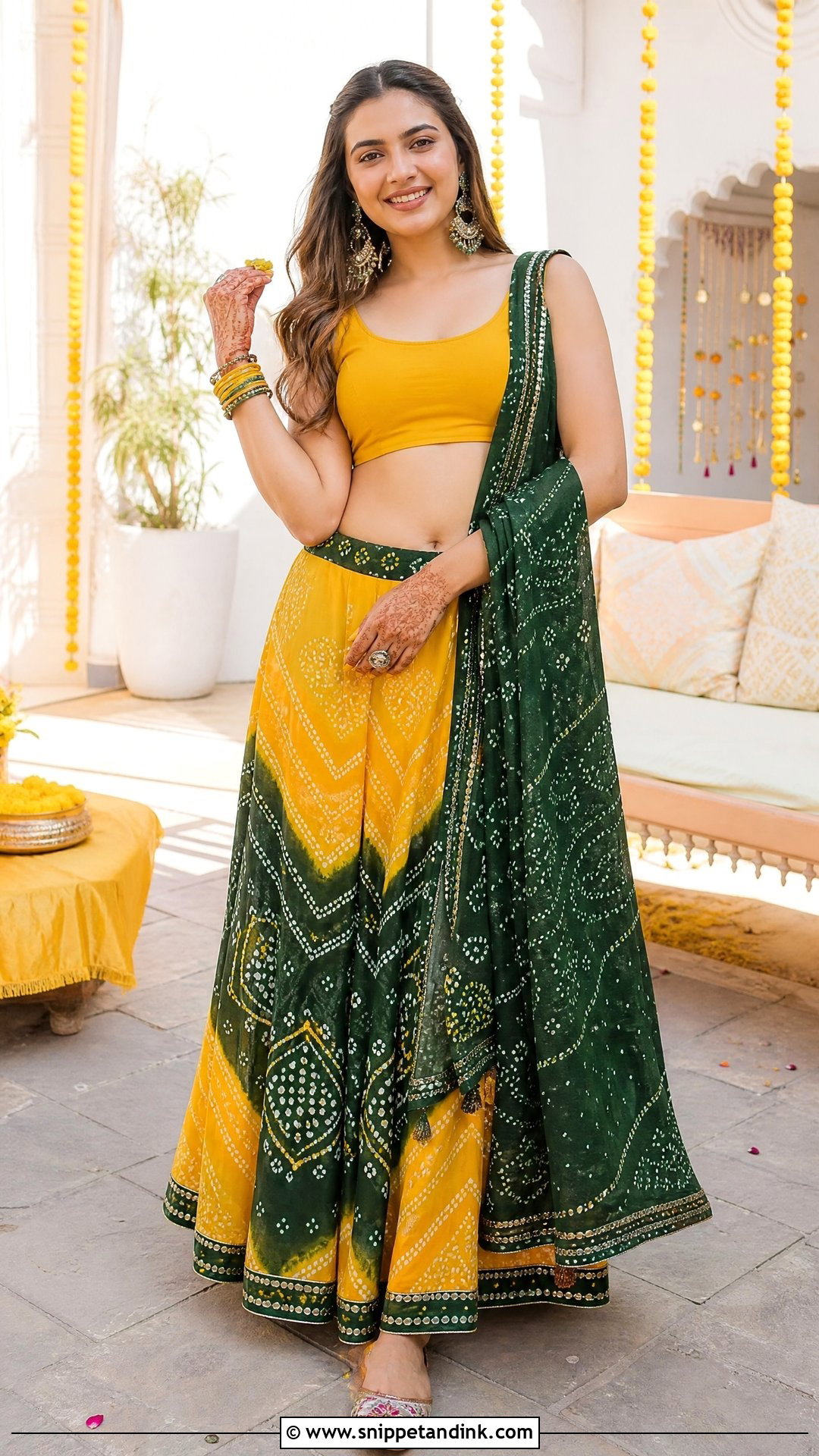
A bandhani lehenga is tie-dyed rather than embroidered, so it’s colourful and light enough for a long event. Yellow, red, green, orange or pink are classic; pastel bandhani is softer. A plain blouse balances a busy skirt. Oxidized jewellery, jhumkas and juttis suit it, especially for outdoor functions and destination weddings. Bandhani cotton does absorb henna stains readily, so the same care applies as with any light cotton.
19. Crop Top Skirt For Mehendi Function
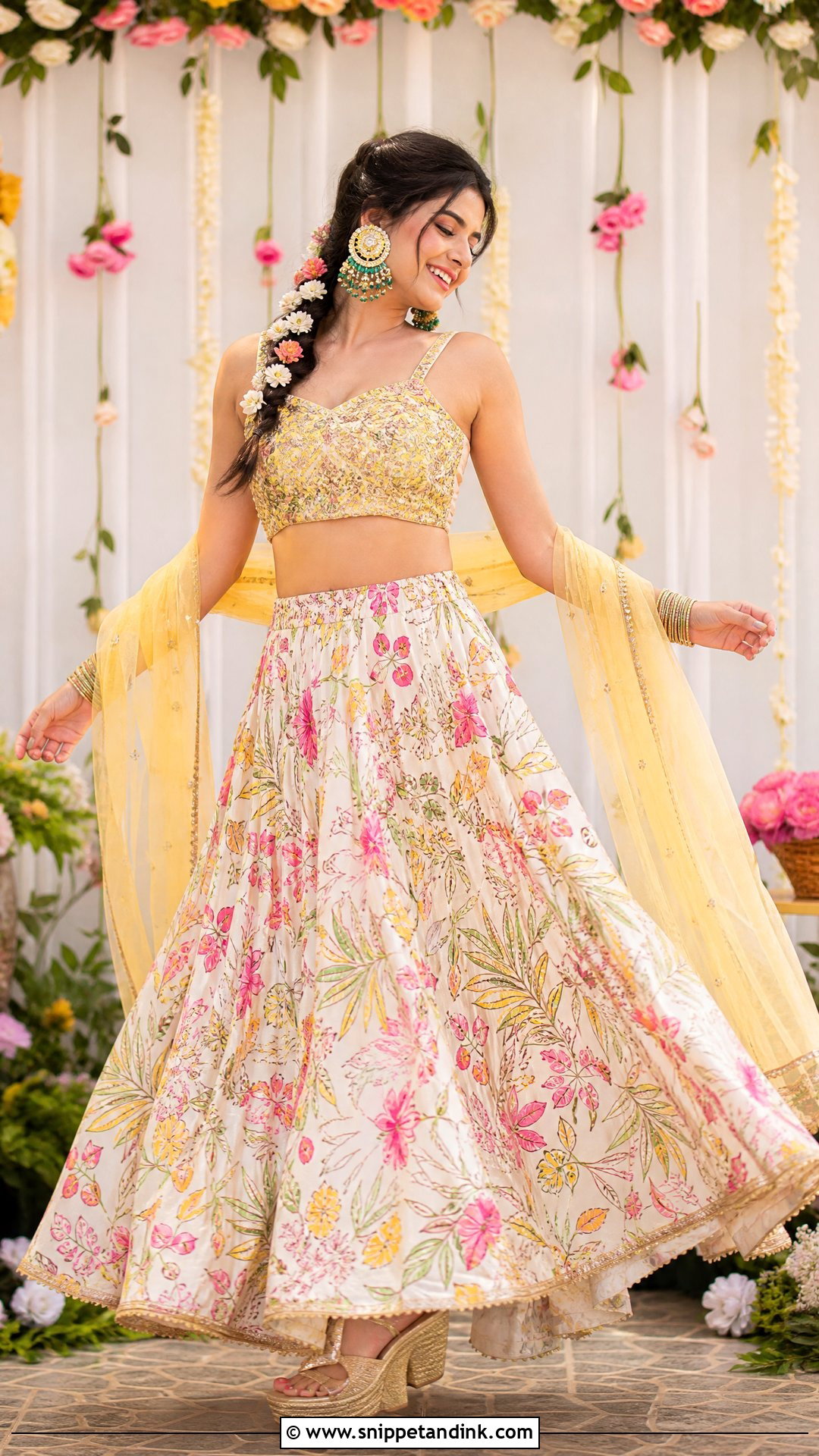
A crop top and skirt can look traditional, modern or fusion depending on how you style it. A flowy printed or embroidered skirt with a fitted crop top is easy to dance in. Add a dupatta for a more ethnic look or skip it for a party feel. A braid with flowers ties it to the ceremony. Short sleeves on the top mean the arms are free for henna, which matters if you’re having a design past the wrist.
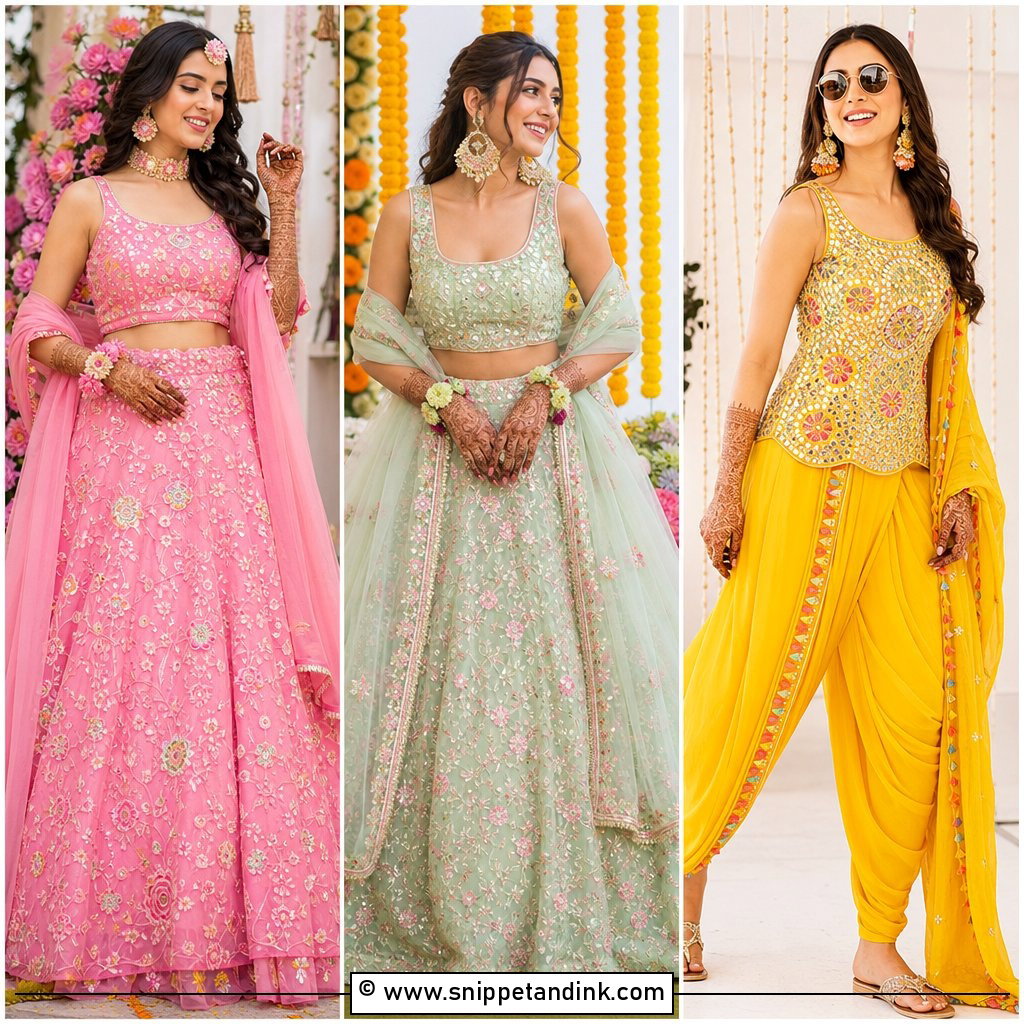
20. Lavender Lehenga For Mehendi Function
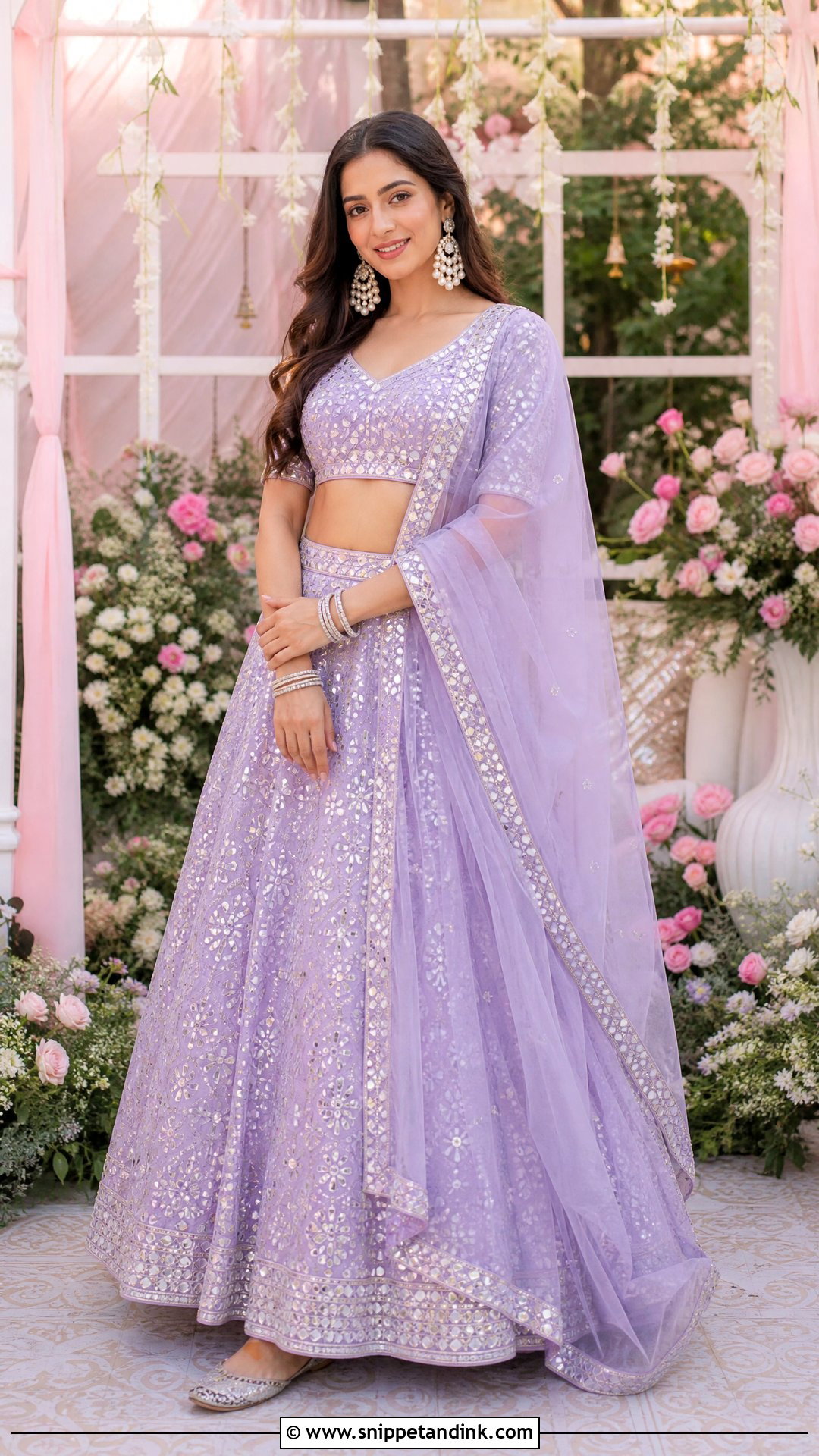
Lavender feels modern next to traditional yellow and green, and it looks fresh with floral decor. Silver mirror work, pastel embroidery or sequins keep it festive, with pearl or silver jewellery. A soft net or organza dupatta suits it, but keep it light; anything that falls forward over your hands while I’m working will need holding back. It’s a softer pick for bridesmaids, sisters or brides who prefer muted colour.
21. Palazzo Saree For Mehendi Function
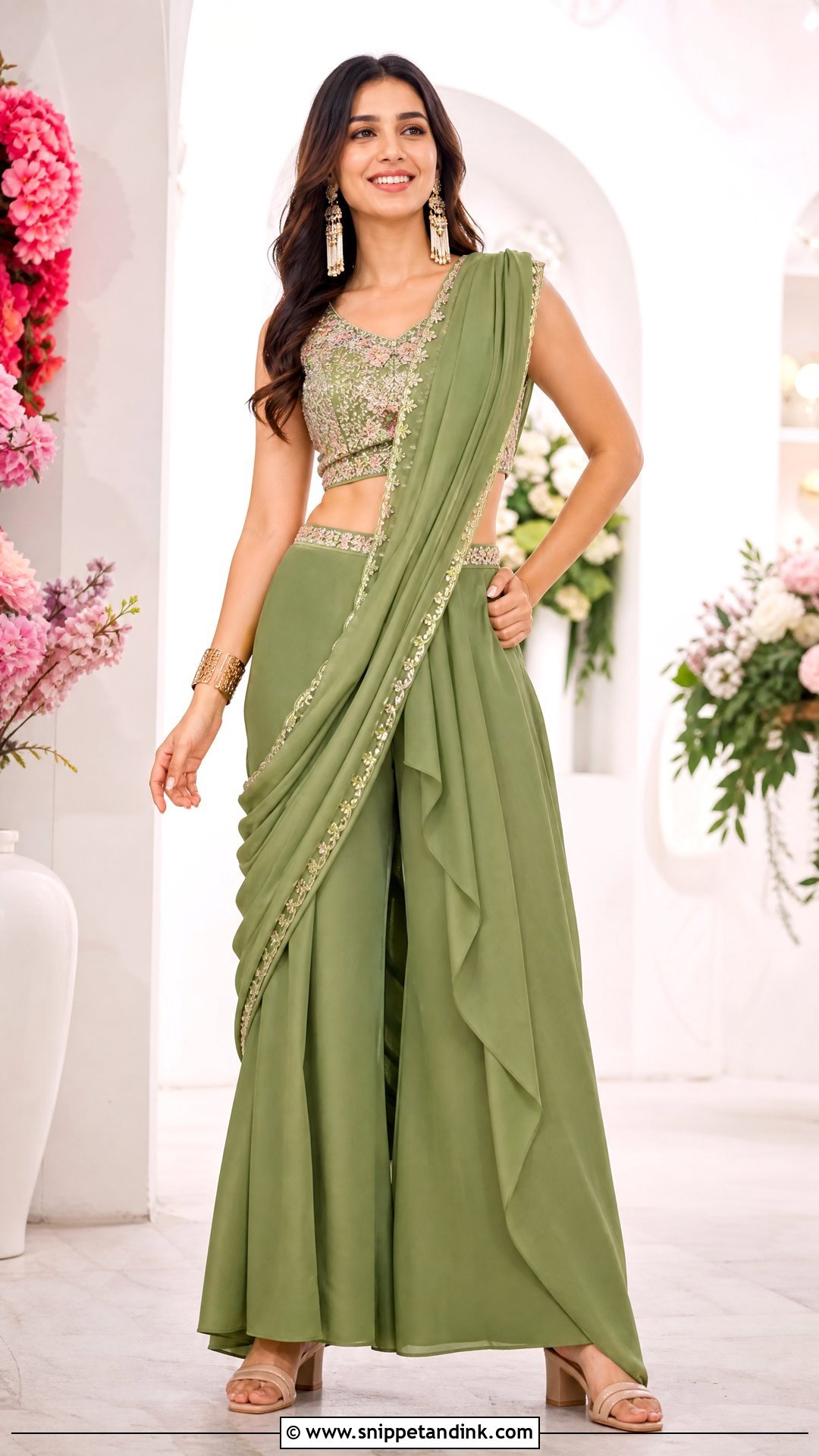
A palazzo saree gives the look of a saree with the comfort of pants. It’s pre-draped, so it stays secure while you sit and dance. Bright colours, floral prints or mirror work keep it festive. A sleeveless blouse, embroidered crop top or structured jacket blouse looks modern. For guests who love sarees but don’t want to fix pleats all afternoon, this is the answer, and it frees your hands for henna.
22. Mustard Kurta Set For Mehendi Function
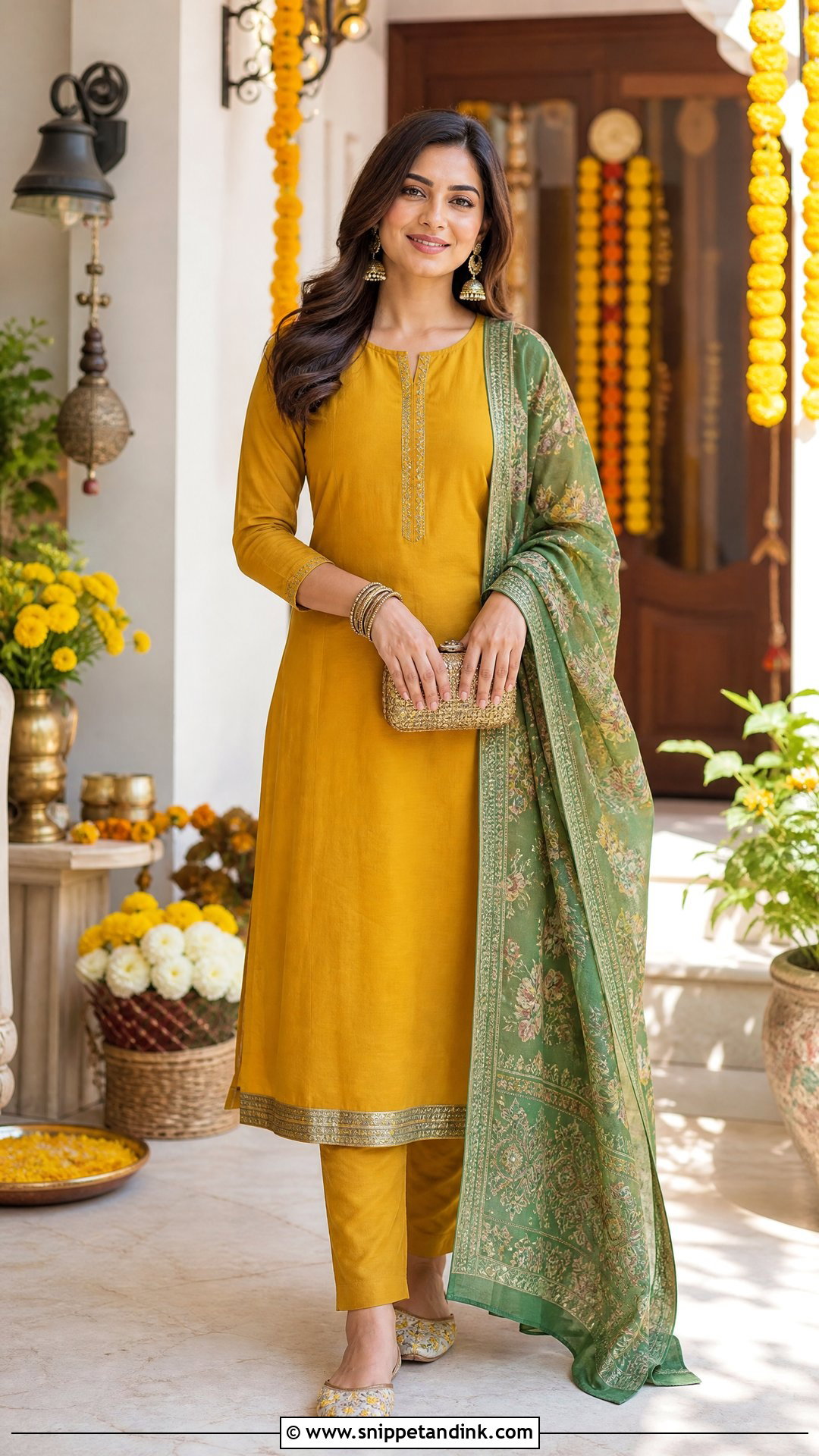
Mustard is festive without being loud and pairs with green, pink, orange and gold. A straight kurta with pants, palazzos or a sharara bottom adjusts to the dress code. Embroidered sleeves, mirror details or a printed dupatta add occasion. Gold jhumkas and juttis complete it. It suits home functions and daytime gatherings, and you’ll wear it again at other festivals.
23. Fusion Jumpsuit For Mehendi Function
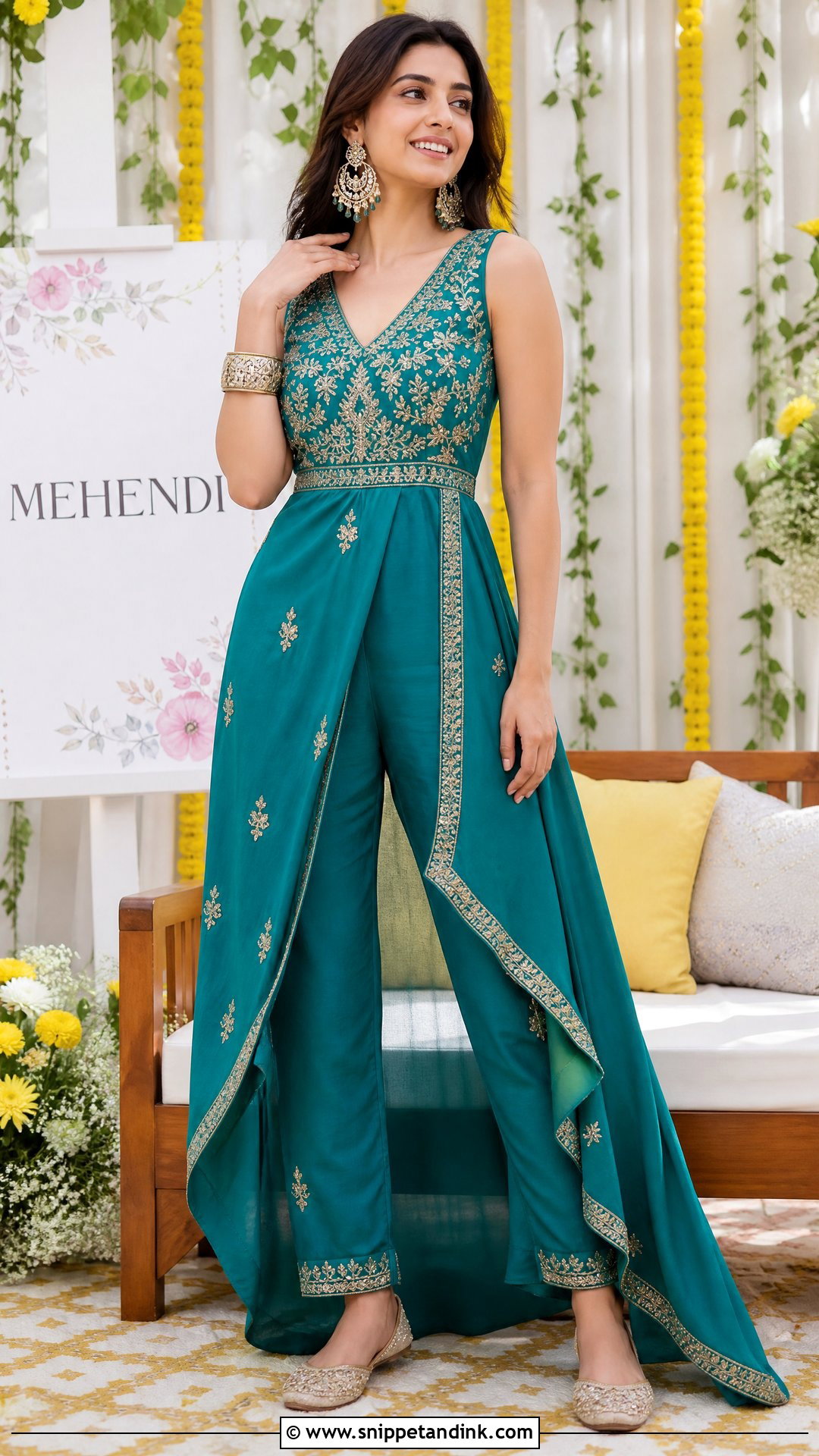
A fusion jumpsuit looks sleek and gives western comfort while still reading as wedding wear. Look for an Indian print, an embroidered bodice, cape sleeves or an attached drape. Green, yellow, coral, fuchsia or teal keep it festive. The catch for a henna guest is the bathroom: getting out of a jumpsuit with wet paste on both hands is genuinely difficult, so I’d only wear one if you’re getting a small design or none at all.
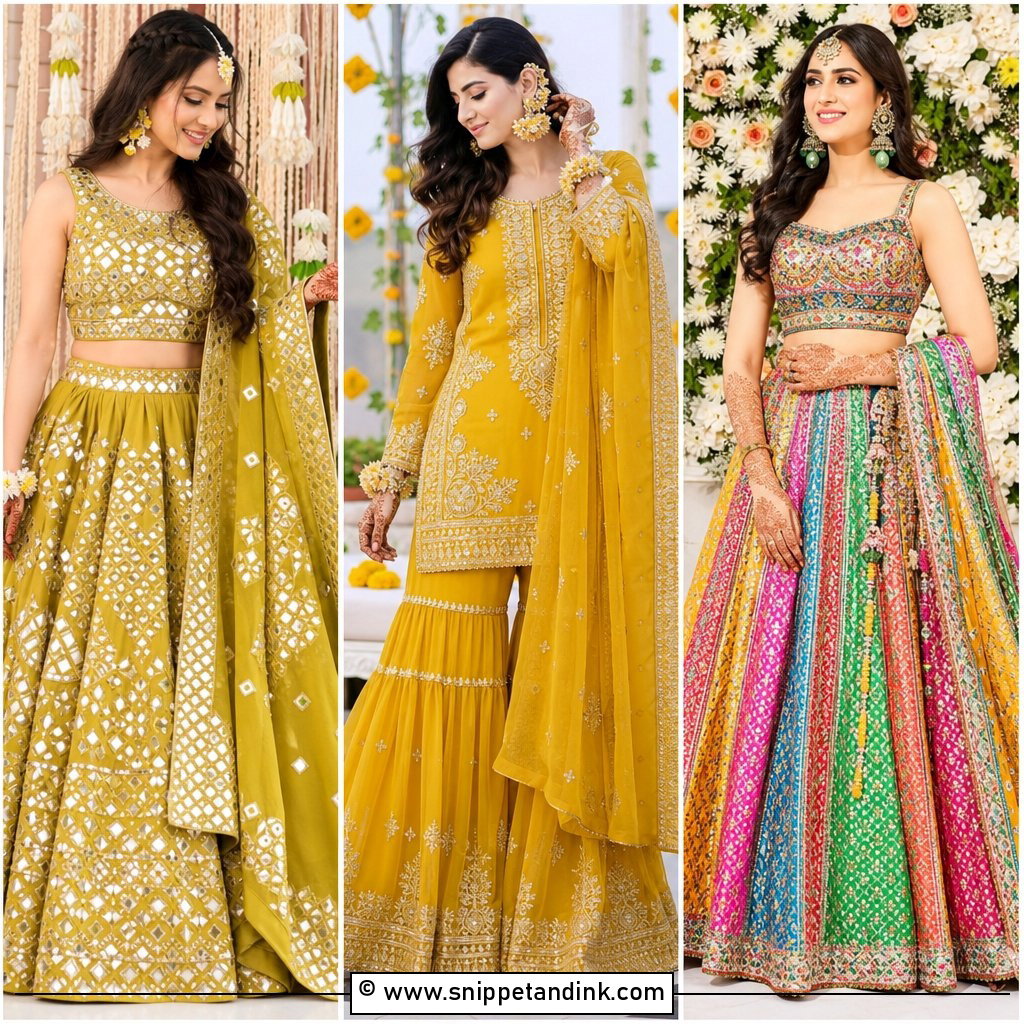
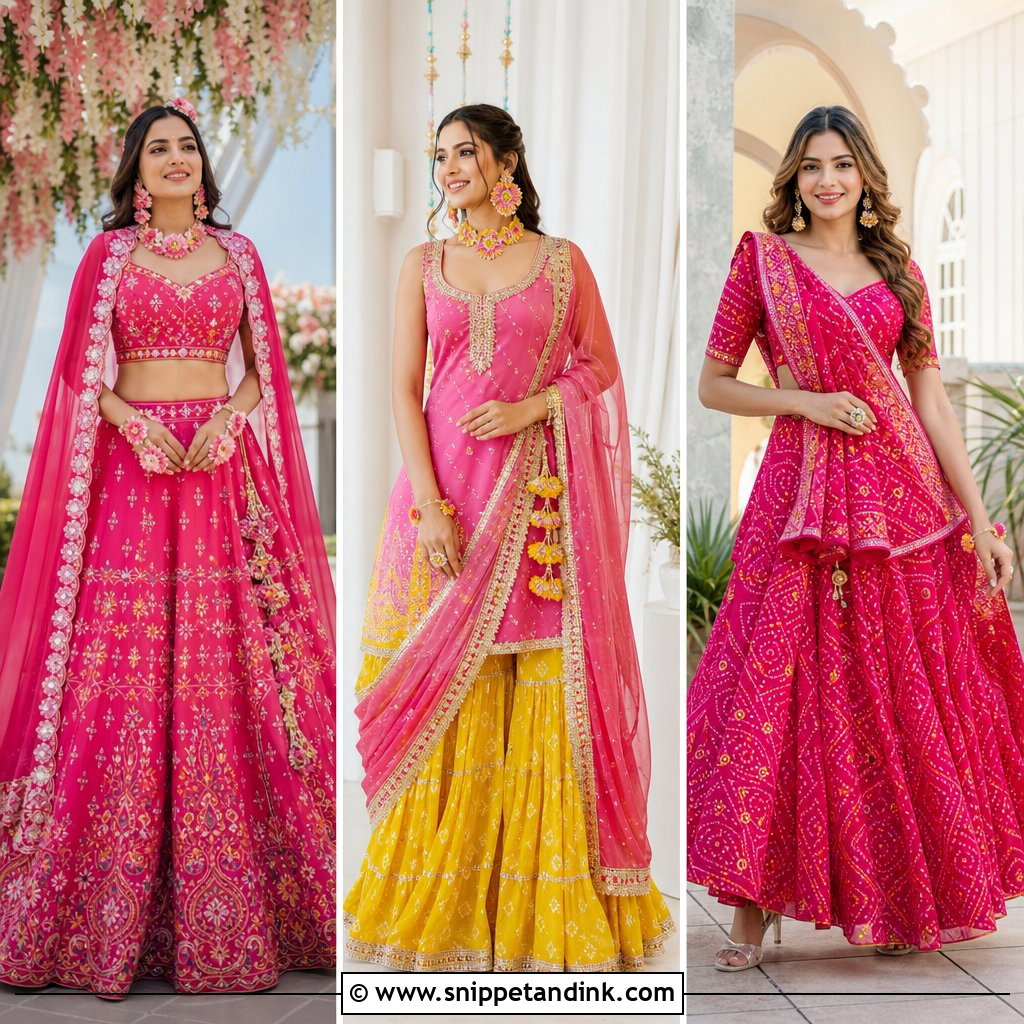
24. Fuchsia Sharara For Mehendi Function
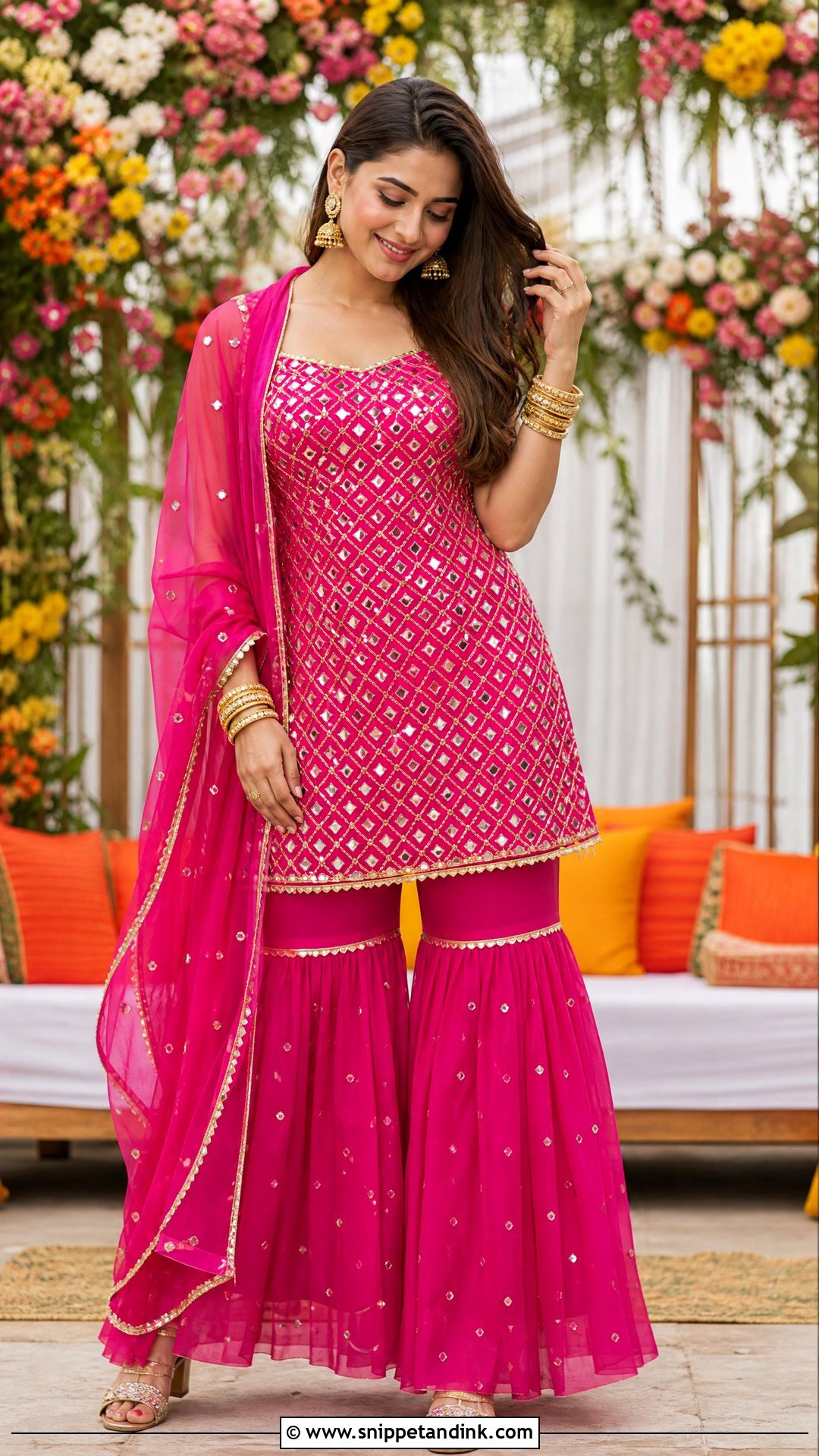
Fuchsia is bright and fun, and it stands out against floral backdrops and coloured cushions. A short kurti with mirror work or gota borders, flared sharara pants and a light dupatta is the classic build. Gold or pearl jewellery balances the colour. Comfortable footwear matters because shararas are often worn for dancing. A low bun or a braid with flowers keeps hair clear of your hands while the henna dries.
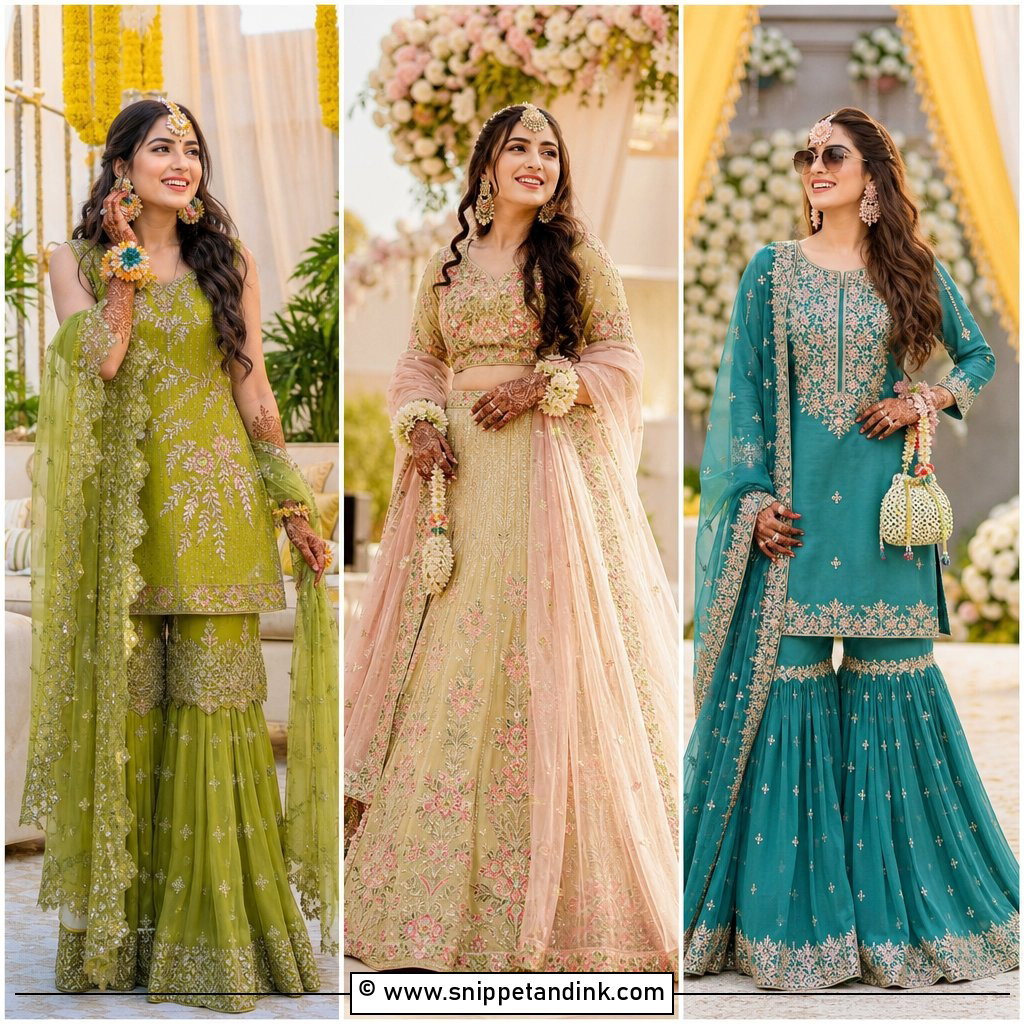
25. Boho Lehenga For Mehendi Function
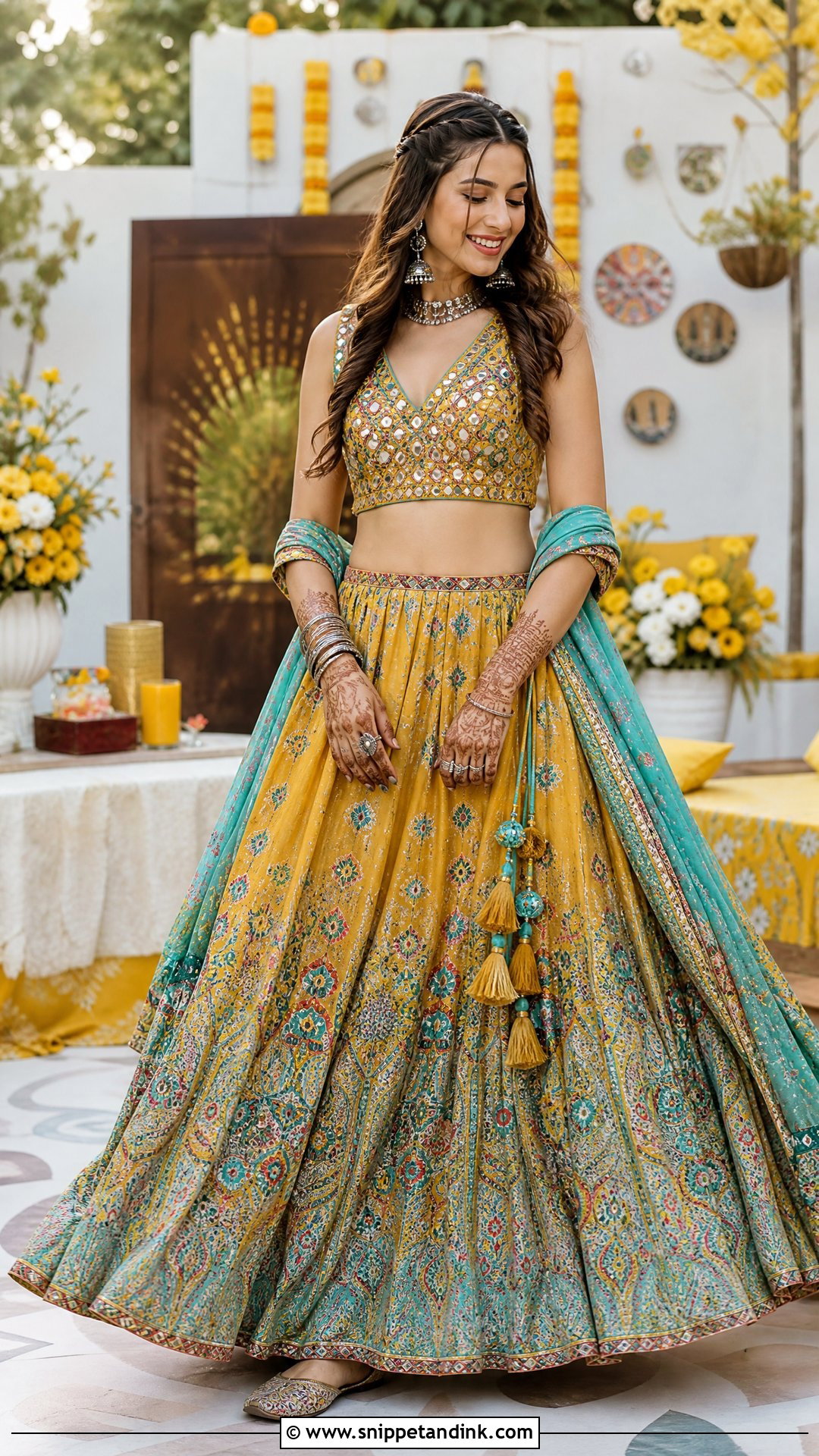
A boho lehenga suits a relaxed mehendi with floor seating, tassels and music. Printed or embroidered skirts with mirror work, shells, pom-poms or thread tassels fit the mood. Earthy tones, mustard, green, coral and turquoise all suit it. A sleeveless or off-shoulder blouse looks modern. Tassels and pom-poms on the skirt do catch in wet paste if they hang near your feet, so ask for the tassel line to stop above the ankle. Oxidized jewellery and juttis finish it.
When Henna Lands on Your Outfit
It happens at almost every function. A dupatta brushes a palm, a child grabs a sleeve. What you do in the next few minutes decides whether it washes out.
- Don’t rub it. Rubbing presses the paste deeper into the weave and spreads the stain.
- Let it dry if it’s wet, then lift or gently scrape the dried paste off with a blunt edge.
- Rinse the back of the fabric with cold water, so you push colour out rather than through.
- Work a little mild dish soap in with your fingertips and rinse again. Warm water sets the dye, so keep it cold.
- For silk, embroidery or anything marked dry clean, skip the home treatment after step two and take it to a cleaner quickly, telling them it’s henna.
Be honest with yourself about light fabrics. On white cotton or pale pastels, a henna stain that has had time to develop may never fully lift, which is why I keep recommending deeper colours and busy prints for anyone sitting close to the cones.
Sleeves Up, Dupatta Pinned, Hands Out
A good mehendi outfit is festive, comfortable and yours. A yellow lehenga, a green sharara, a floral anarkali, a fusion jumpsuit or a pastel look can all work, depending on the venue and your role in the wedding. Light fabrics, secure drapes, easy shoes and sleeves that stop above where your henna will go make the afternoon easier. Brides can go bolder and more detailed; guests do best with comfort and balance. Pick the outfit you can sit still in for an hour, because the stain needs that time.
You'll Like These Ideas:


Leave a Reply