
A mehndi outfit has a harder brief than the wedding lehnga. You’ll sit for hours with your arms out, then get up and dance, then pose in harsh afternoon light and again under fairy lights at night. When I style a bride for her mehndi, I think about the henna chair first and the photos second. Colour still matters, and yellow, lime, orange, pink, sage, mirror work, florals and printed skirts all have their place, but sleeve length, fabric weight and how the skirt behaves when you sit decide whether you enjoy the day. Below are 25 lehnga designs I’d put on brides, sisters and guests, with notes on how each one actually wears.
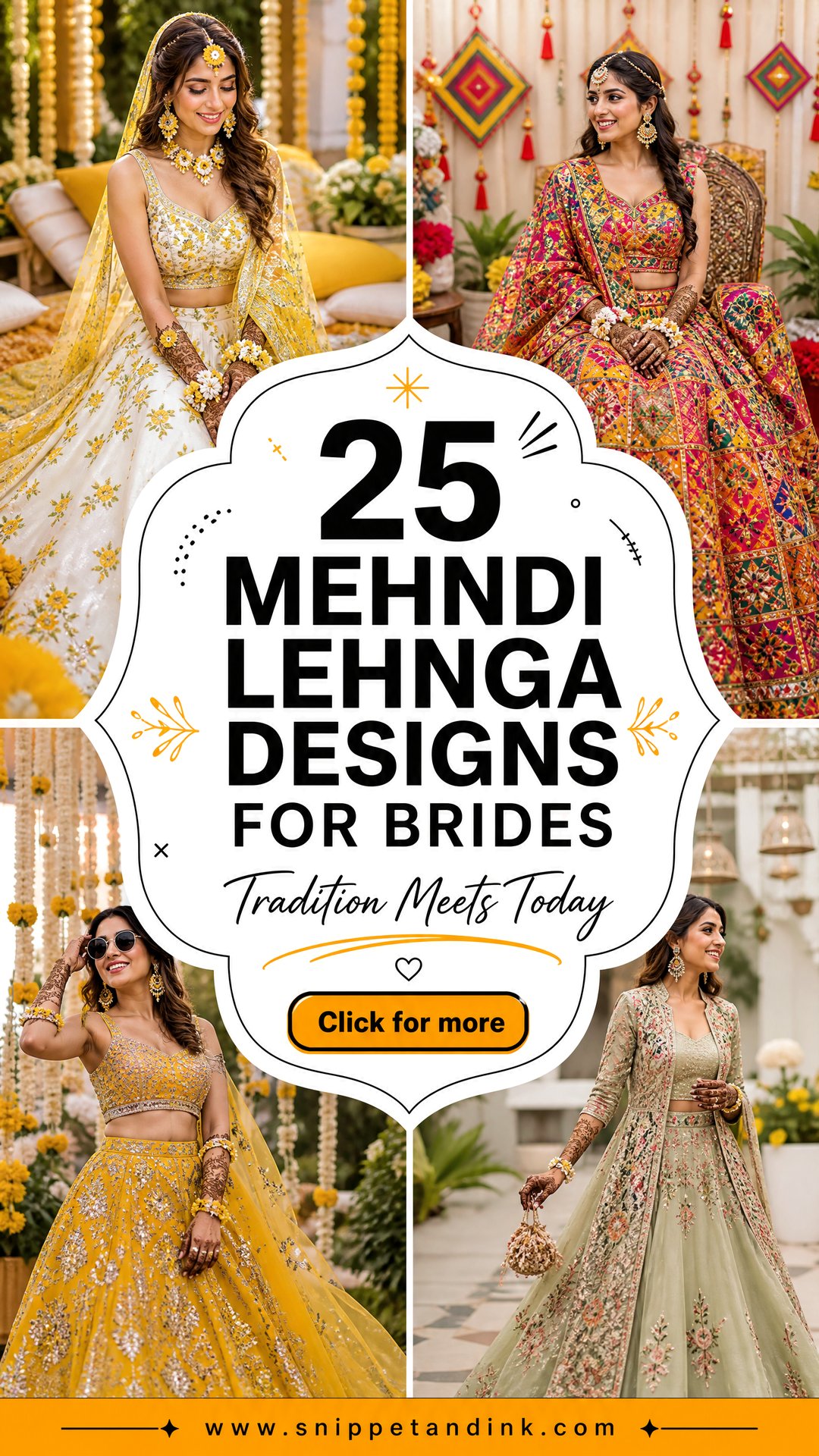
Sitting Cross-Legged for Hours in a Lehnga
Bridal henna takes a long time, and most of it is spent sitting low, often on a floor cushion or a stage seat, with your arms held out. At fittings I have brides sit down in the outfit before anything else. It tells me more than standing in front of a mirror ever does.
- Can-can and stiff linings push up into your lap when you sit. One soft layer is enough for a mehndi skirt.
- Organza and tissue hold creases from sitting; georgette, chiffon and crepe shake out.
- A drawstring or hook waist is easier to loosen after a big meal than a zip.
- Check the hem at seated length. A long skirt bunched under your feet gets henna on it when the artist moves to your soles.
Plan who will help you. With wet hands you can’t lift a skirt, fix a dupatta or go to the bathroom alone, so keep a sister or friend nearby while the paste dries.
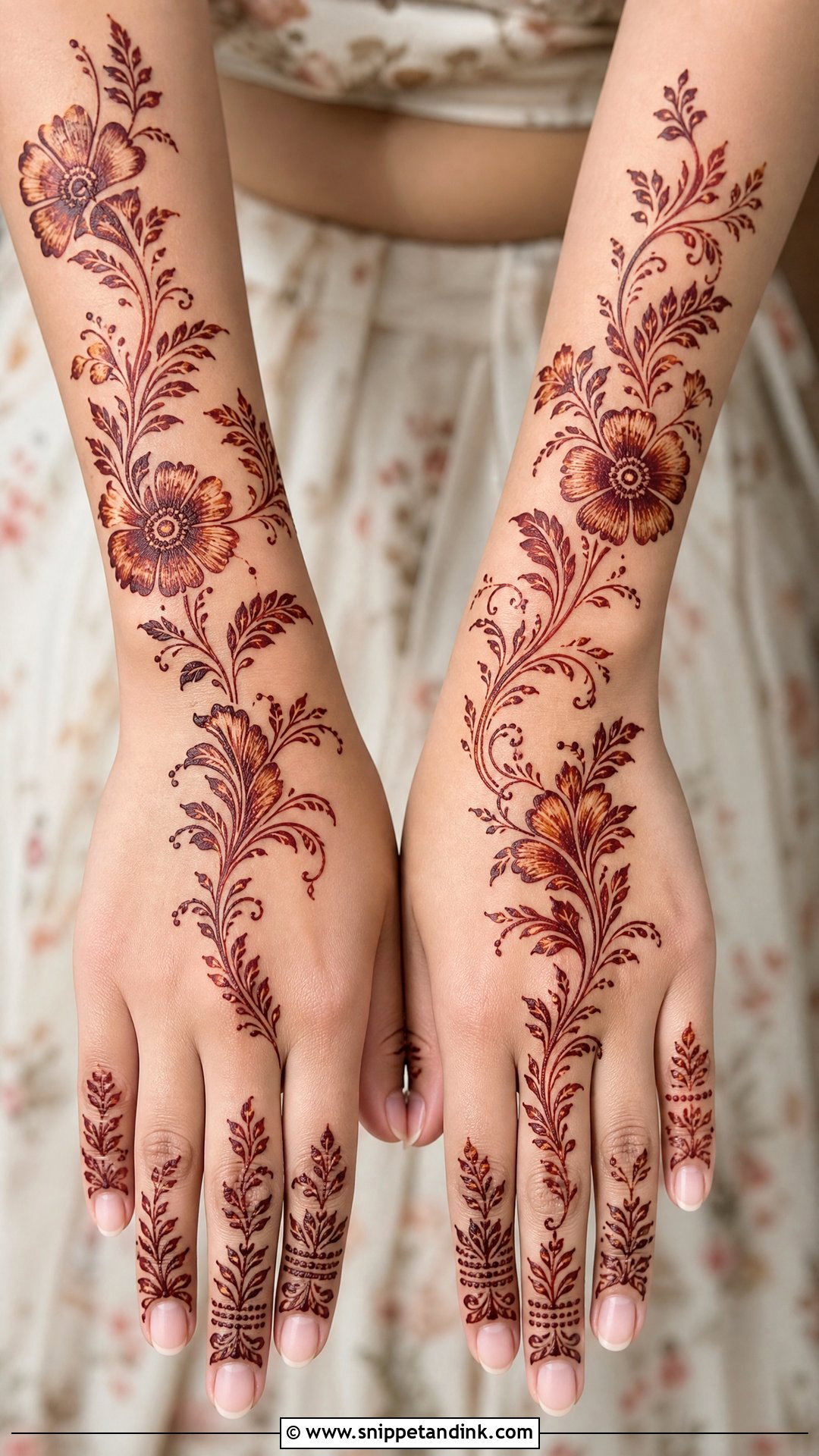
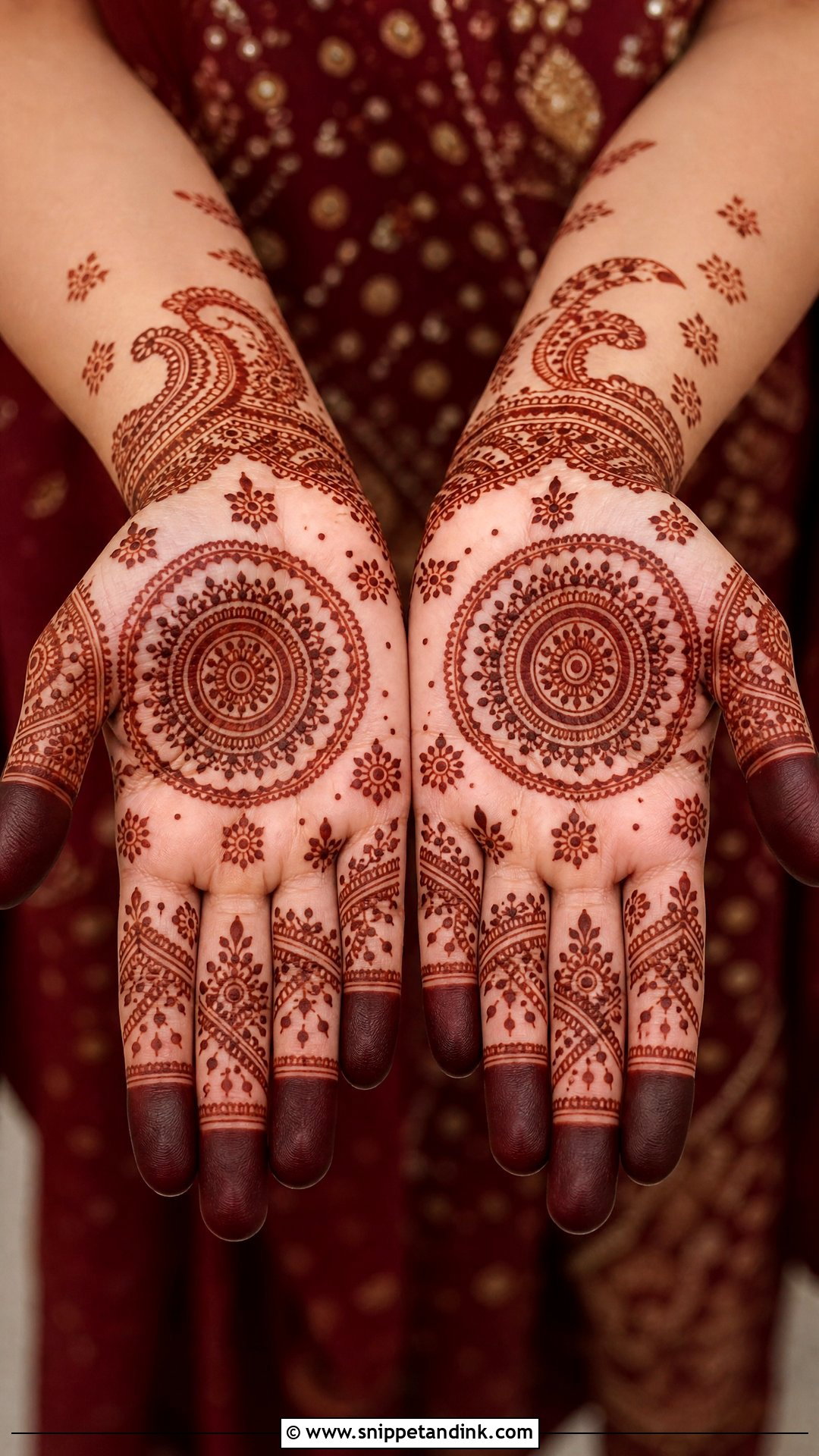
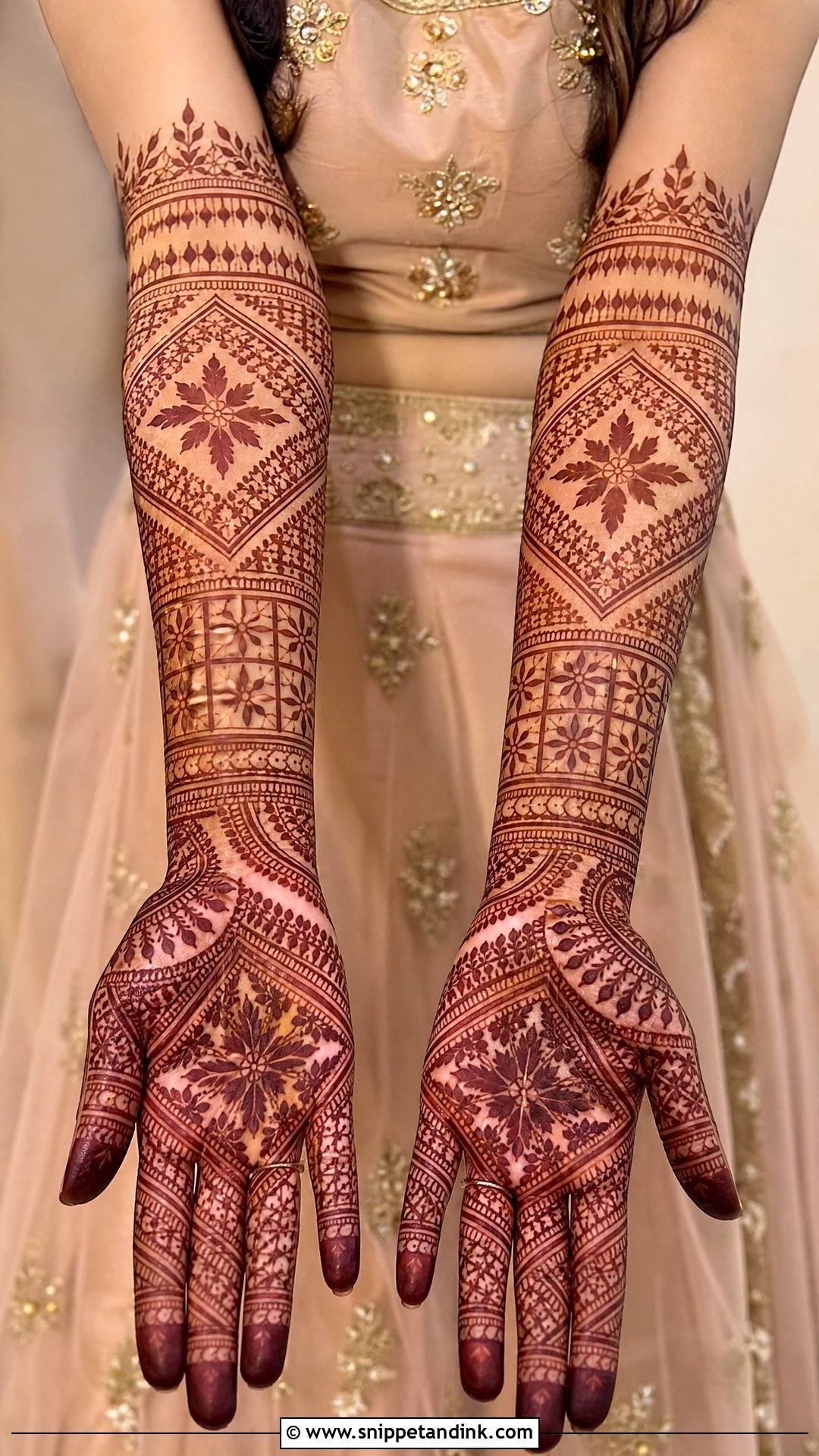
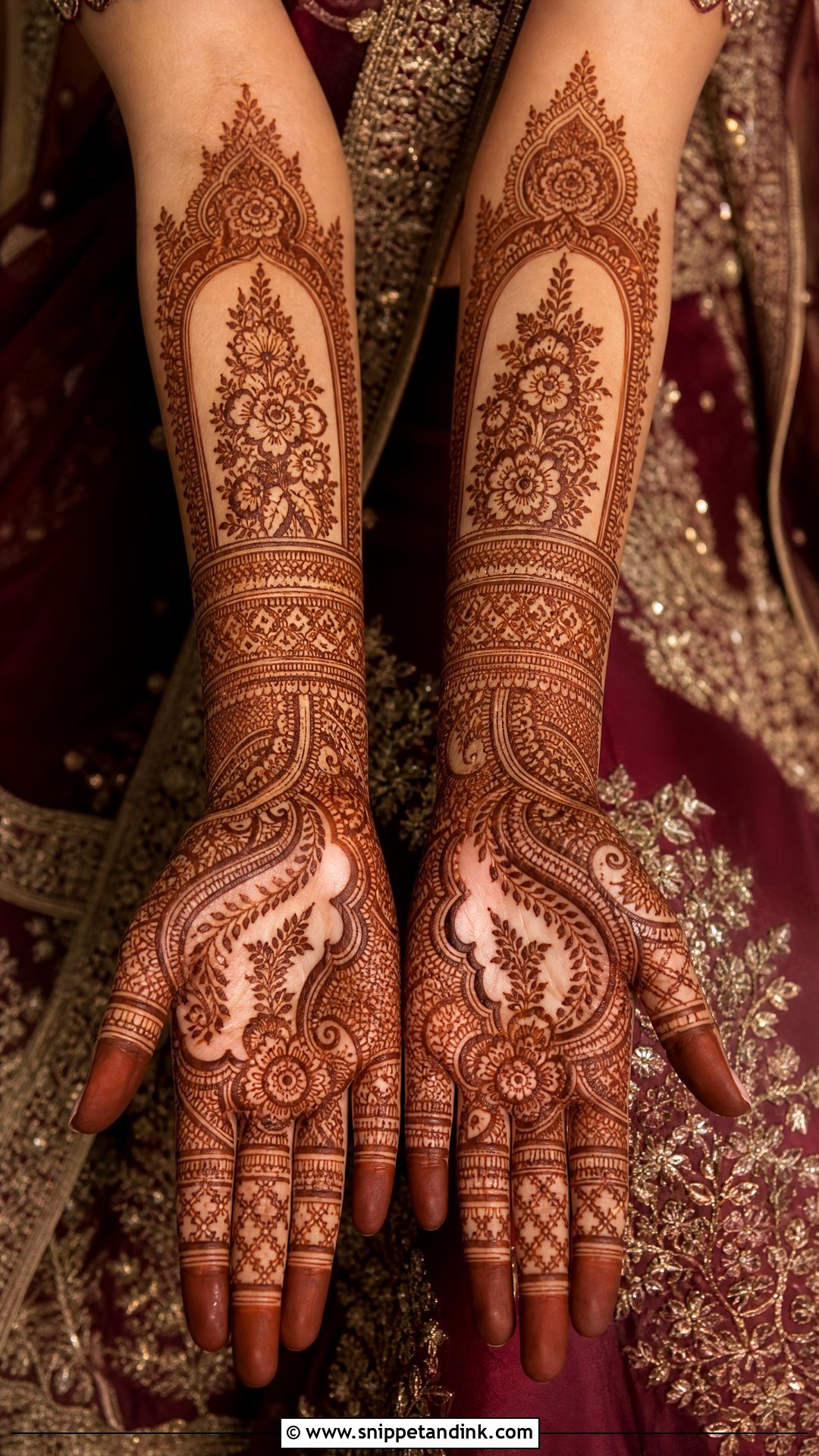
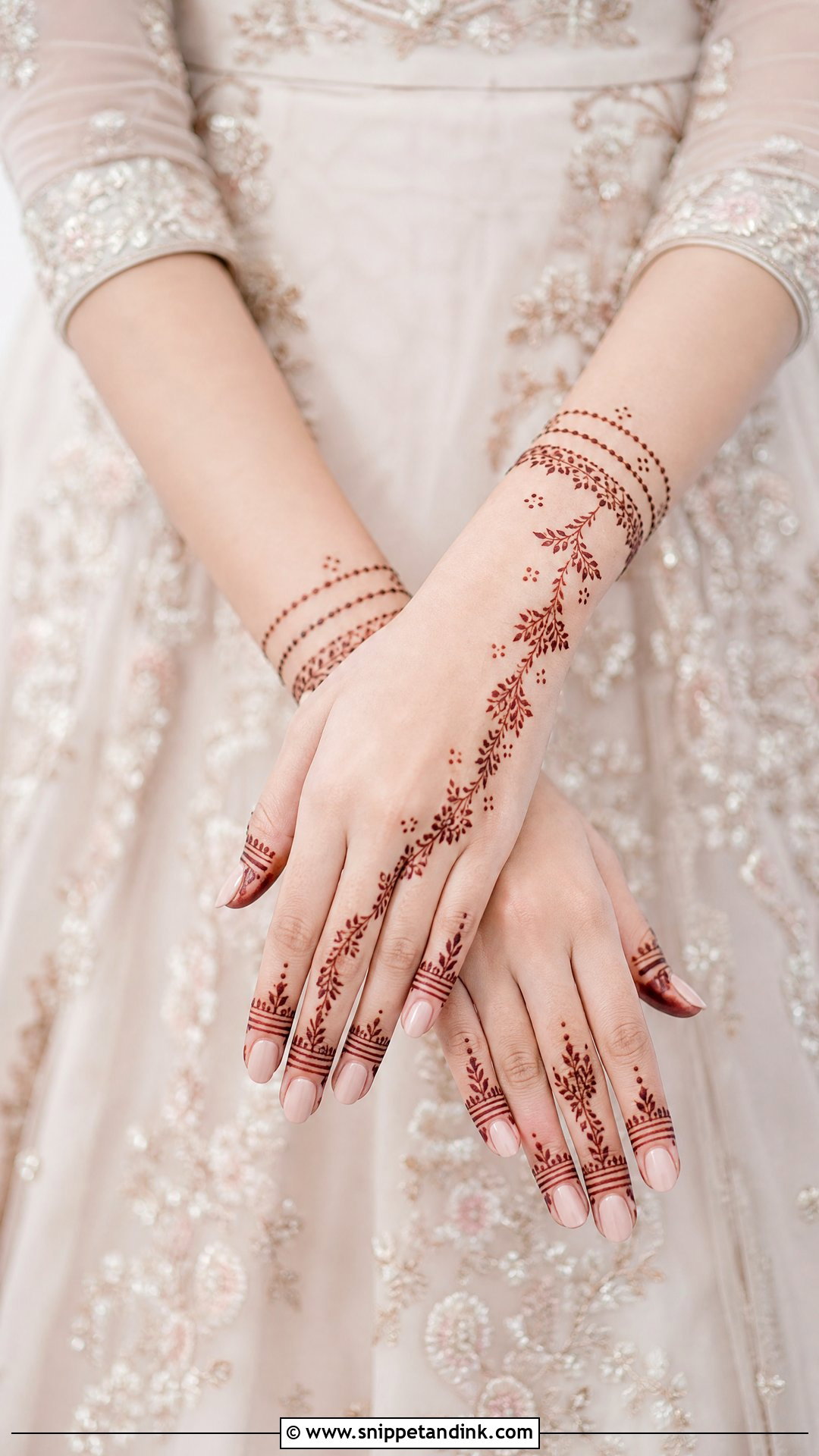
Jewellery needs the same thought. Put your earrings, tikka and necklace on before the artist starts, and leave bangles and rings off until the paste is scraped away. Sliding a bangle over a fresh design drags it, and you won’t get a second chance at that hand.
1. Yellow Mehndi Lehnga Design
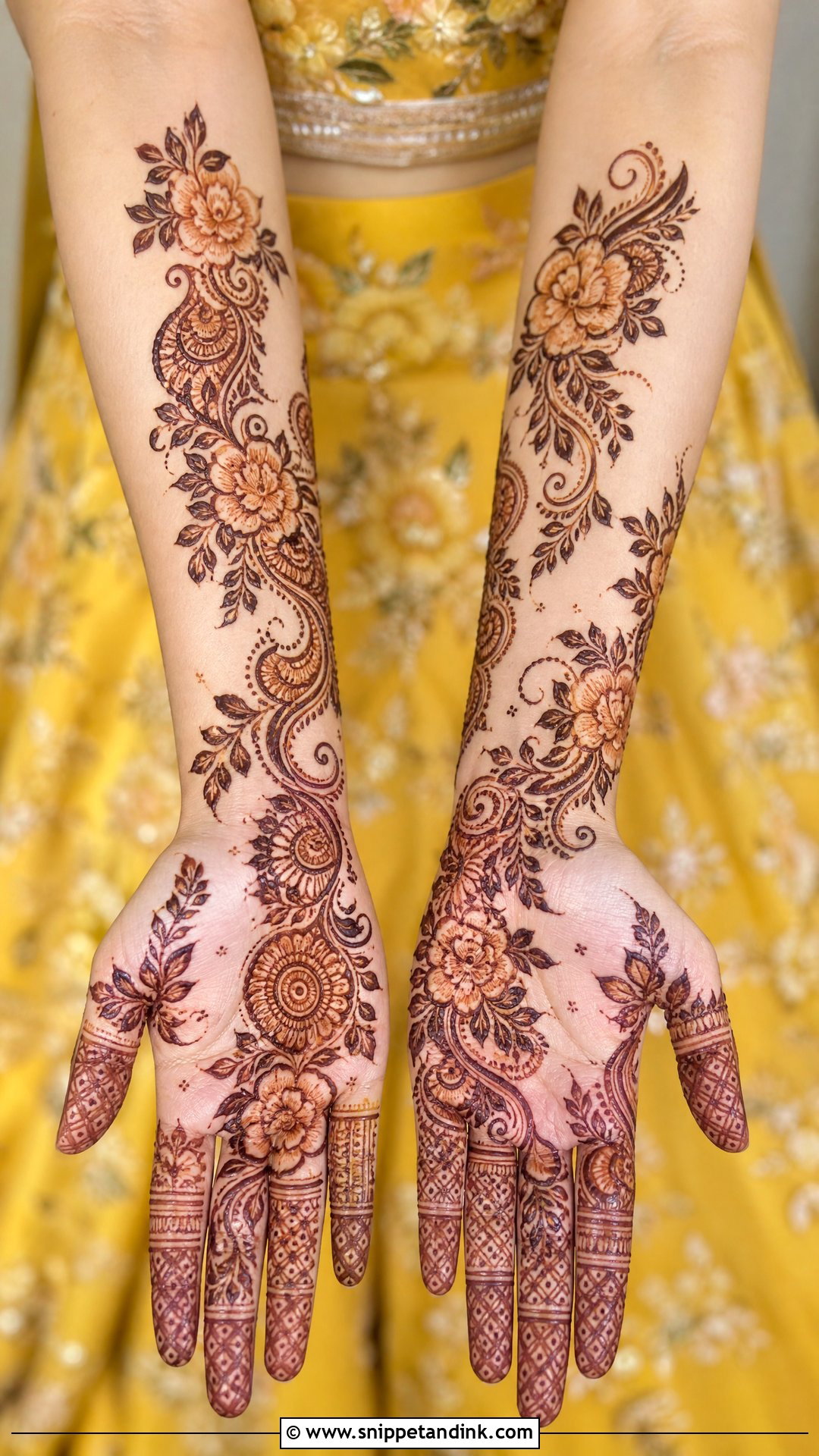
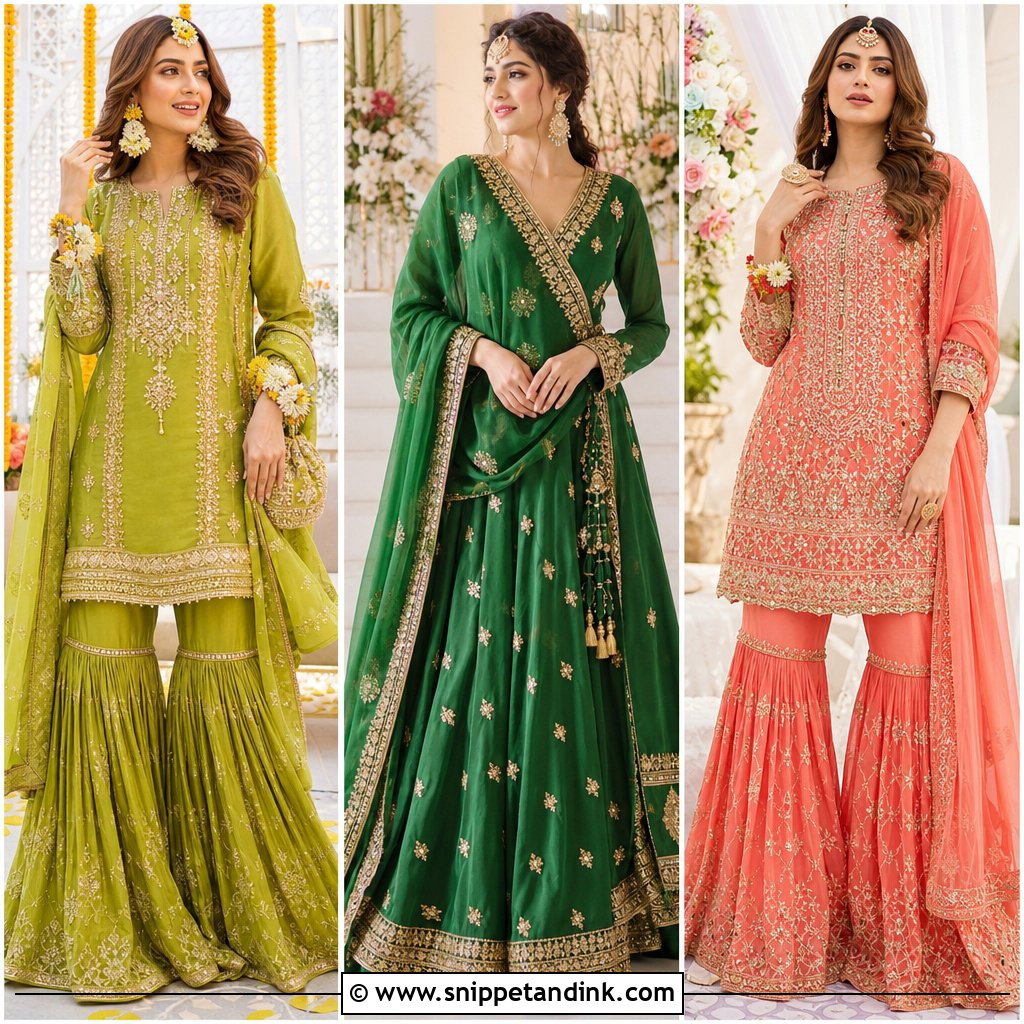
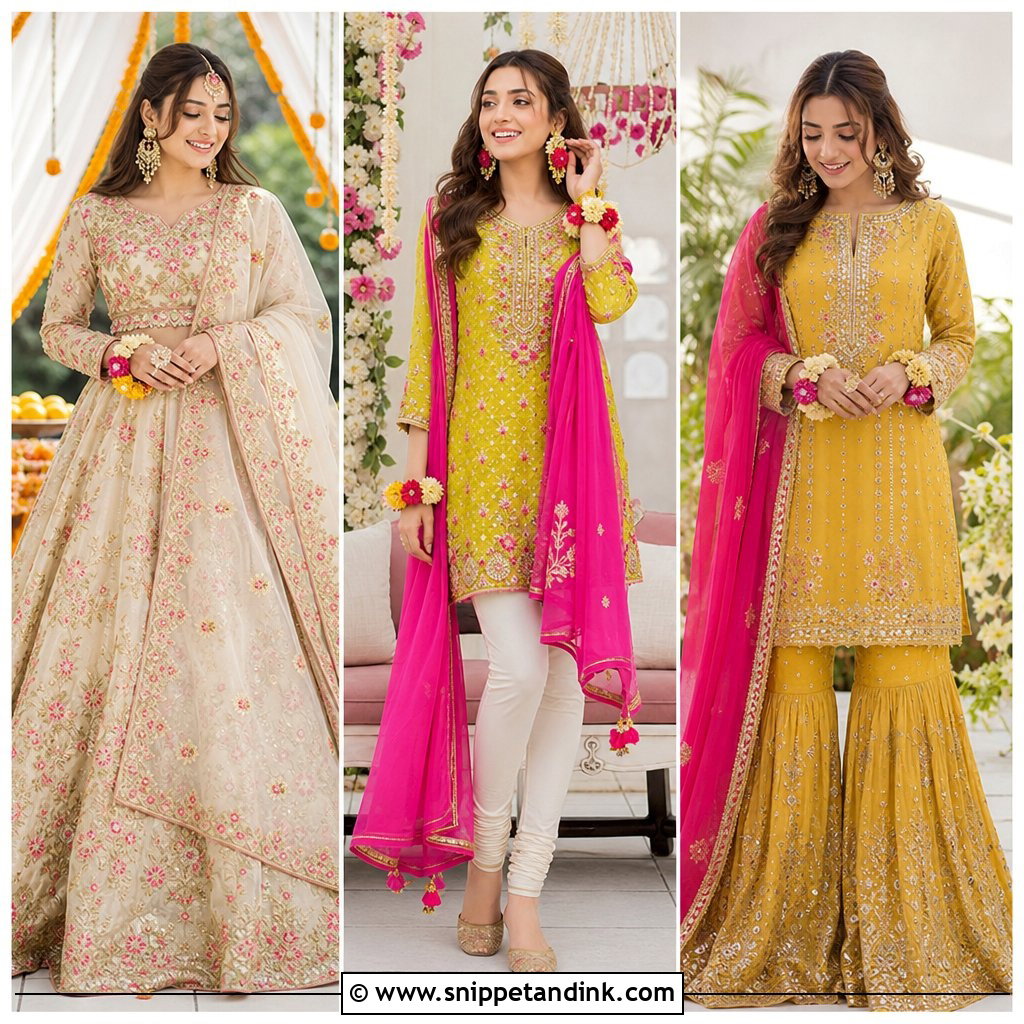
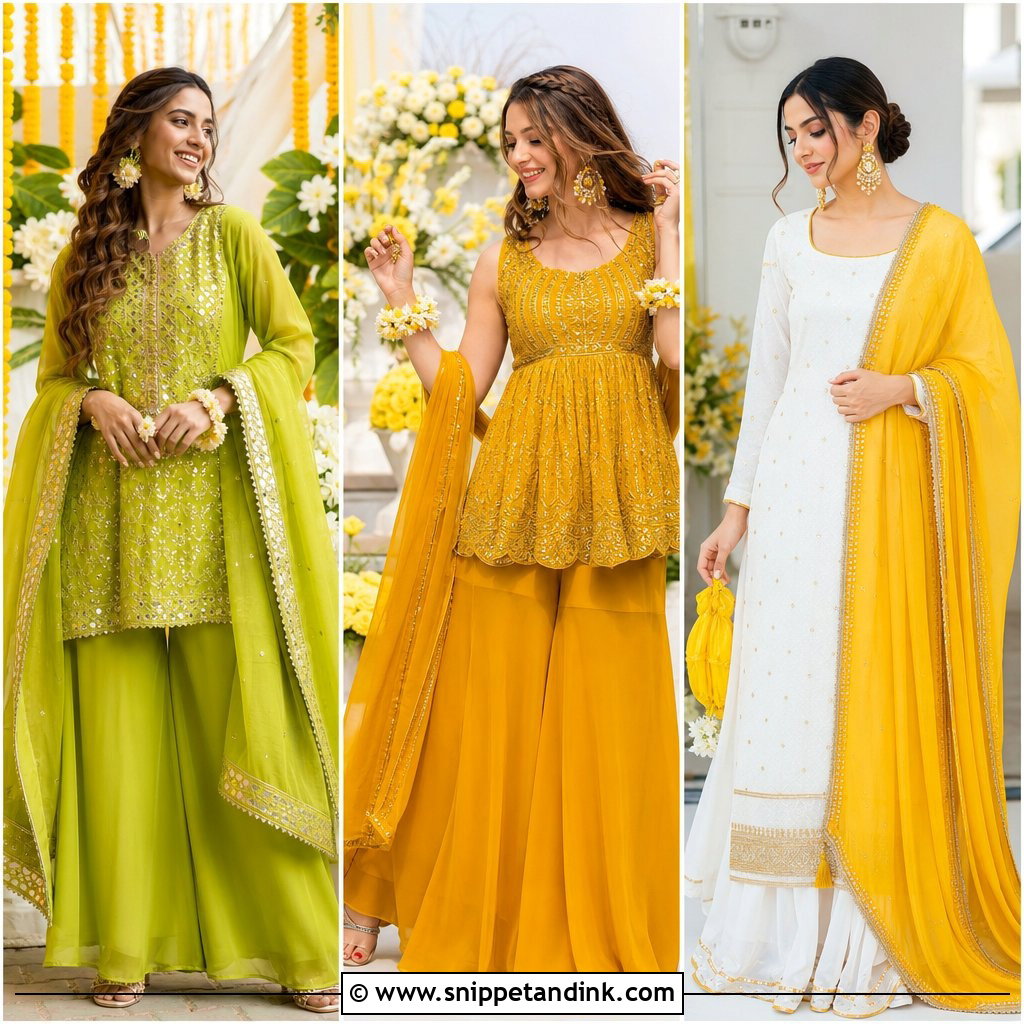
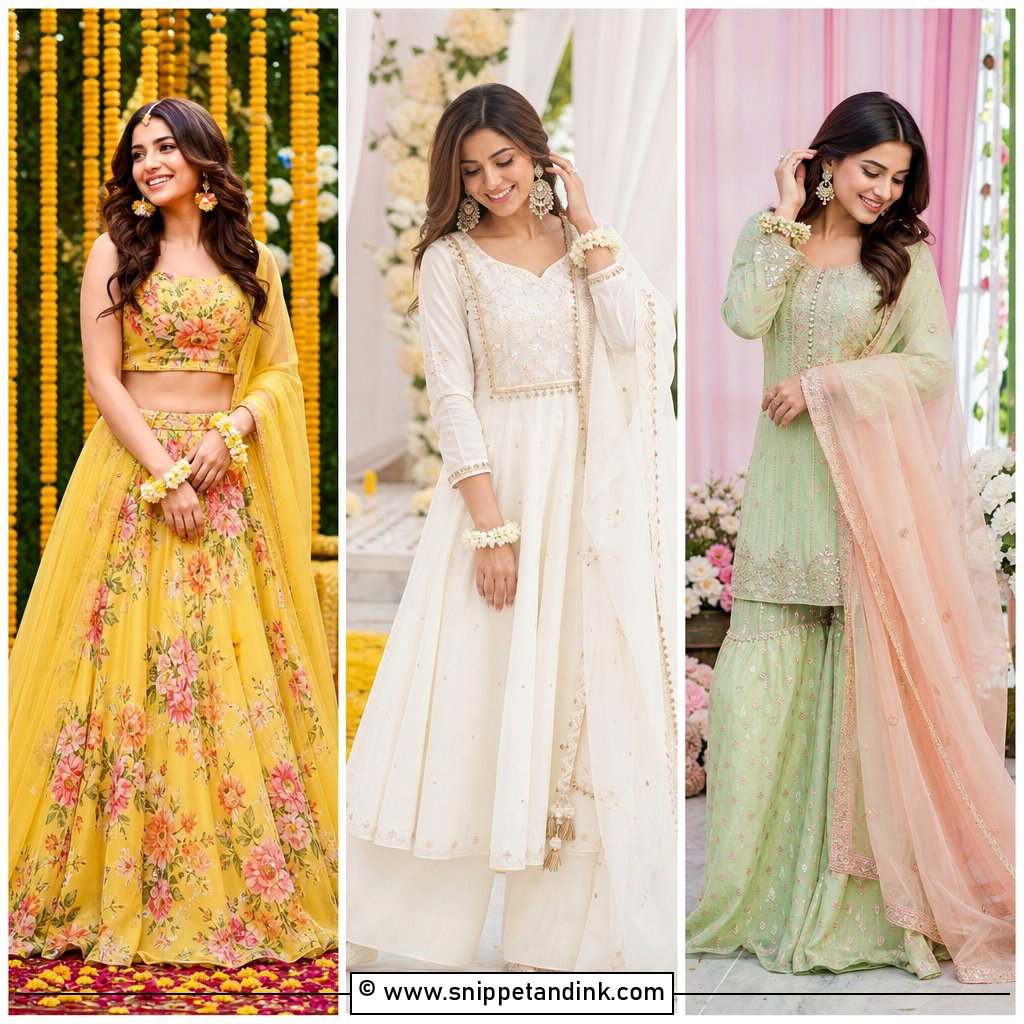
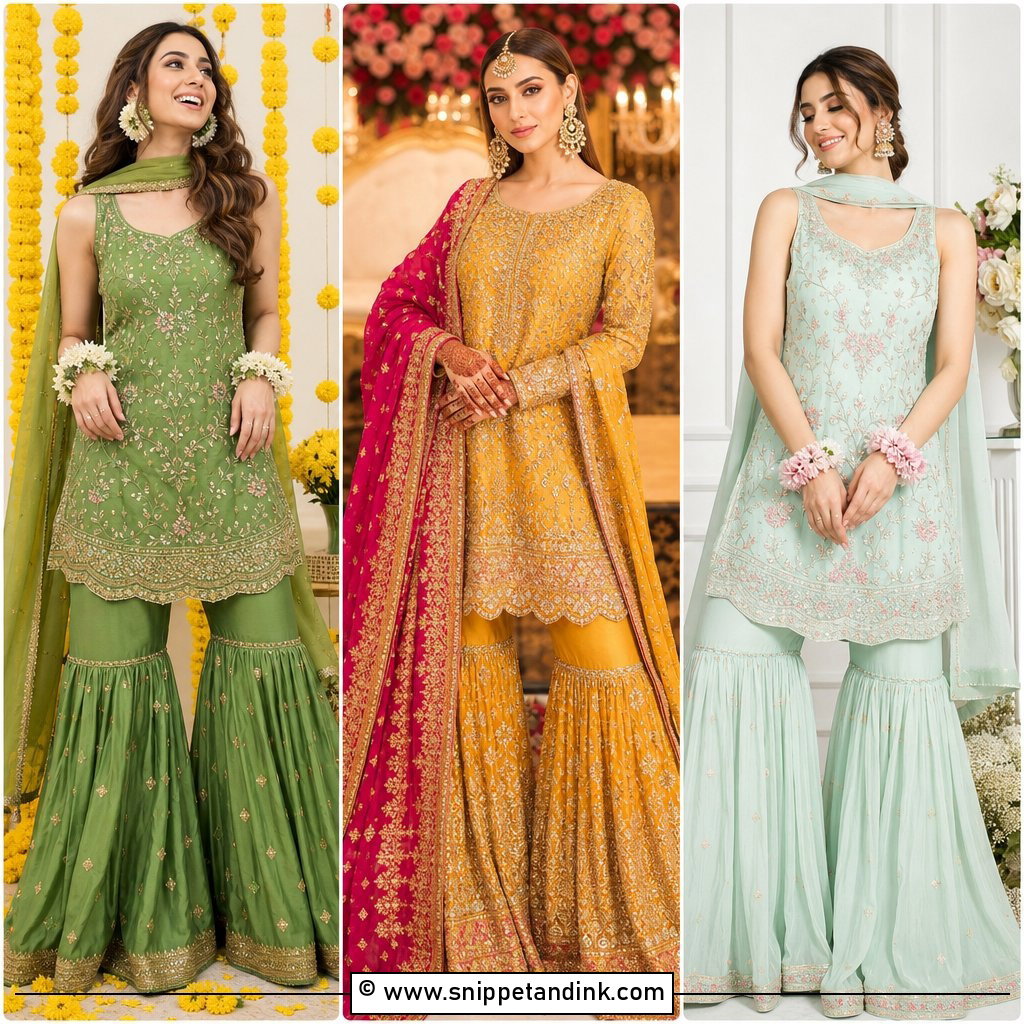
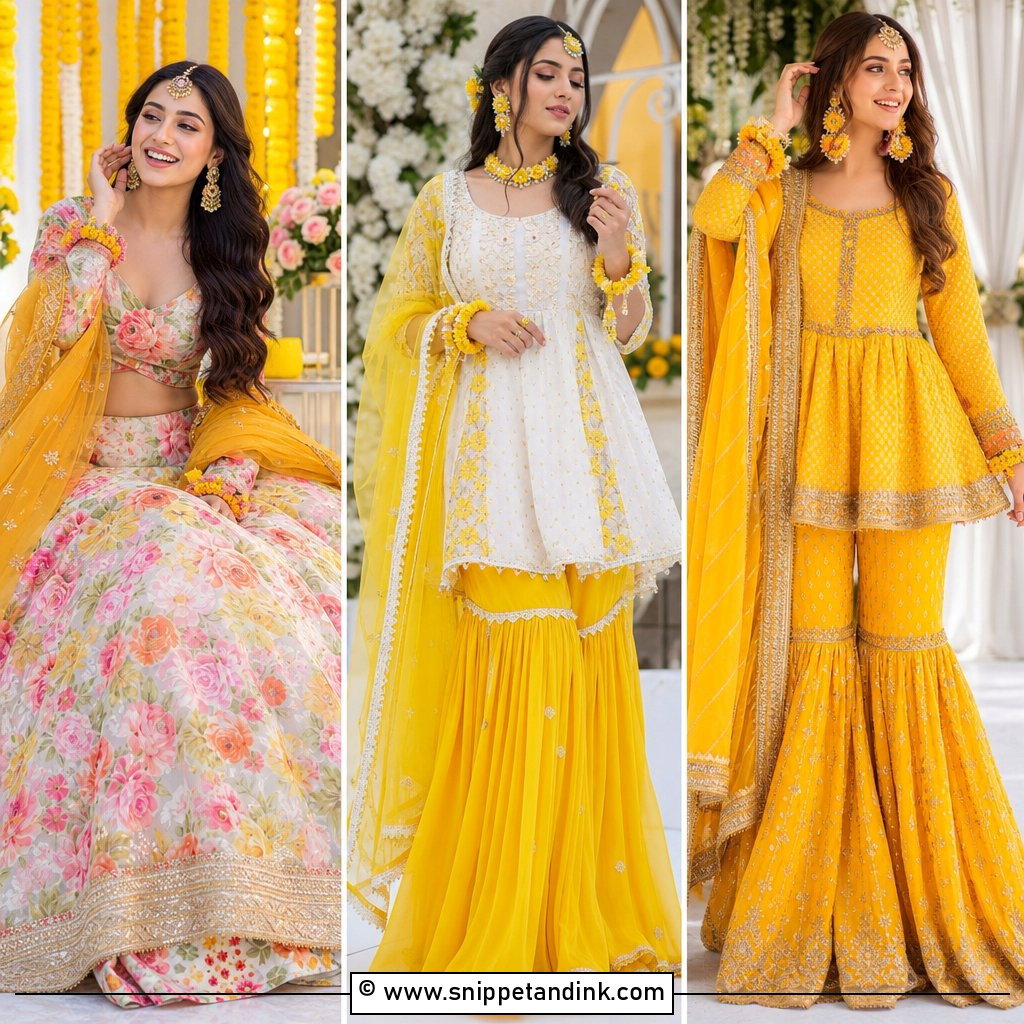
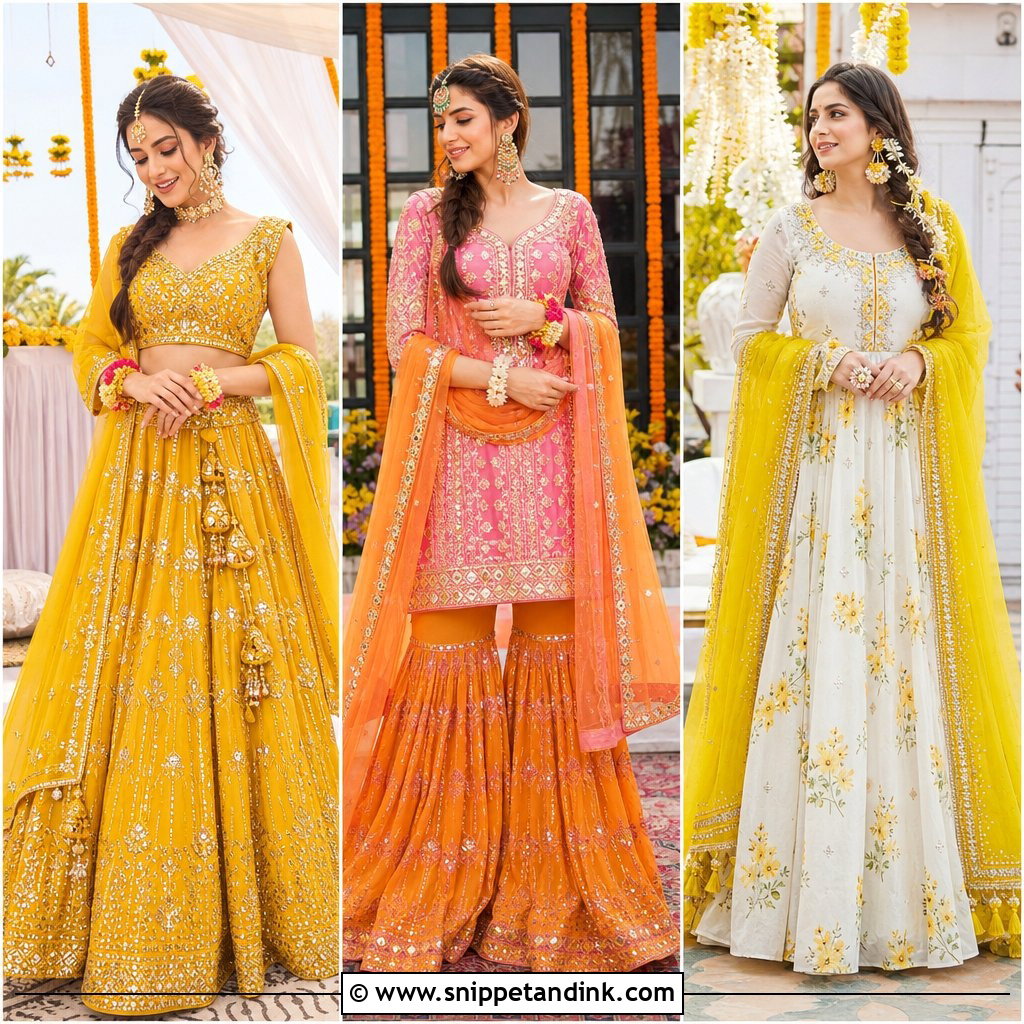
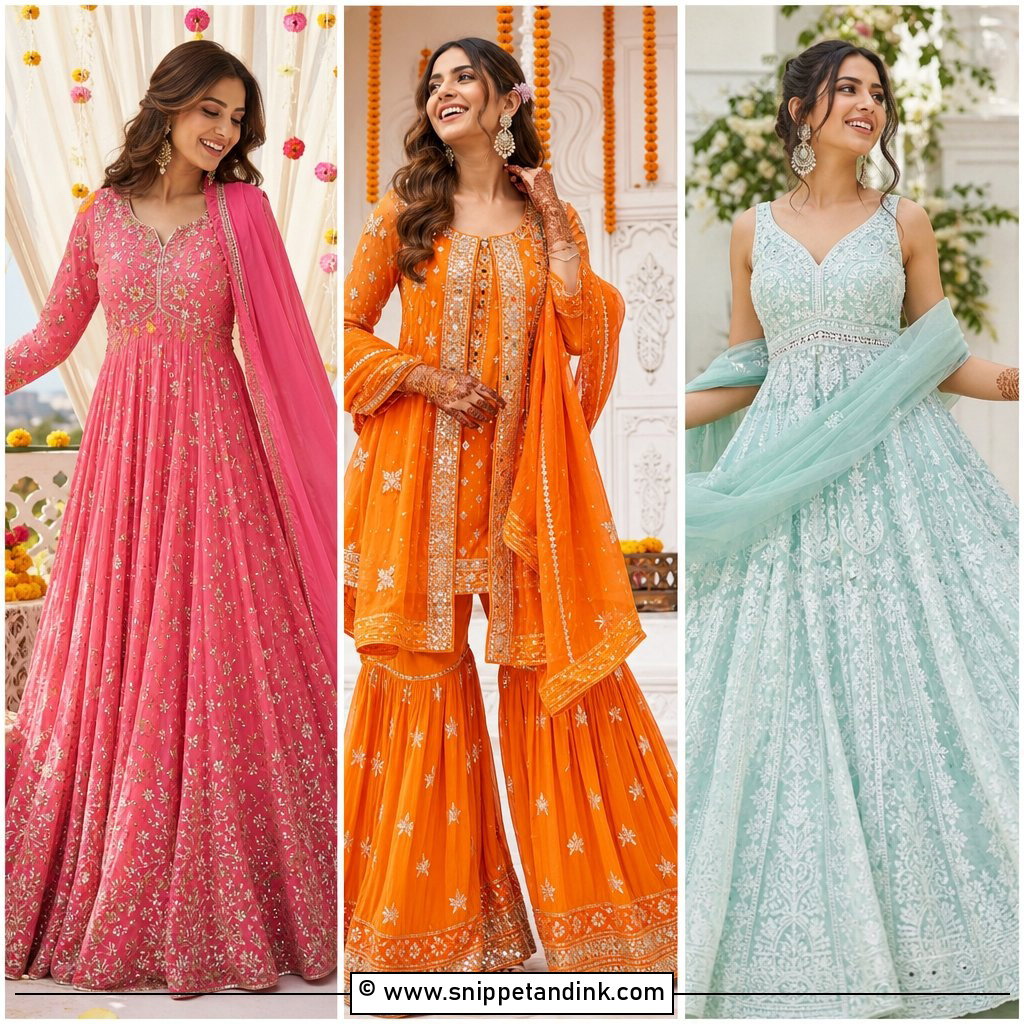
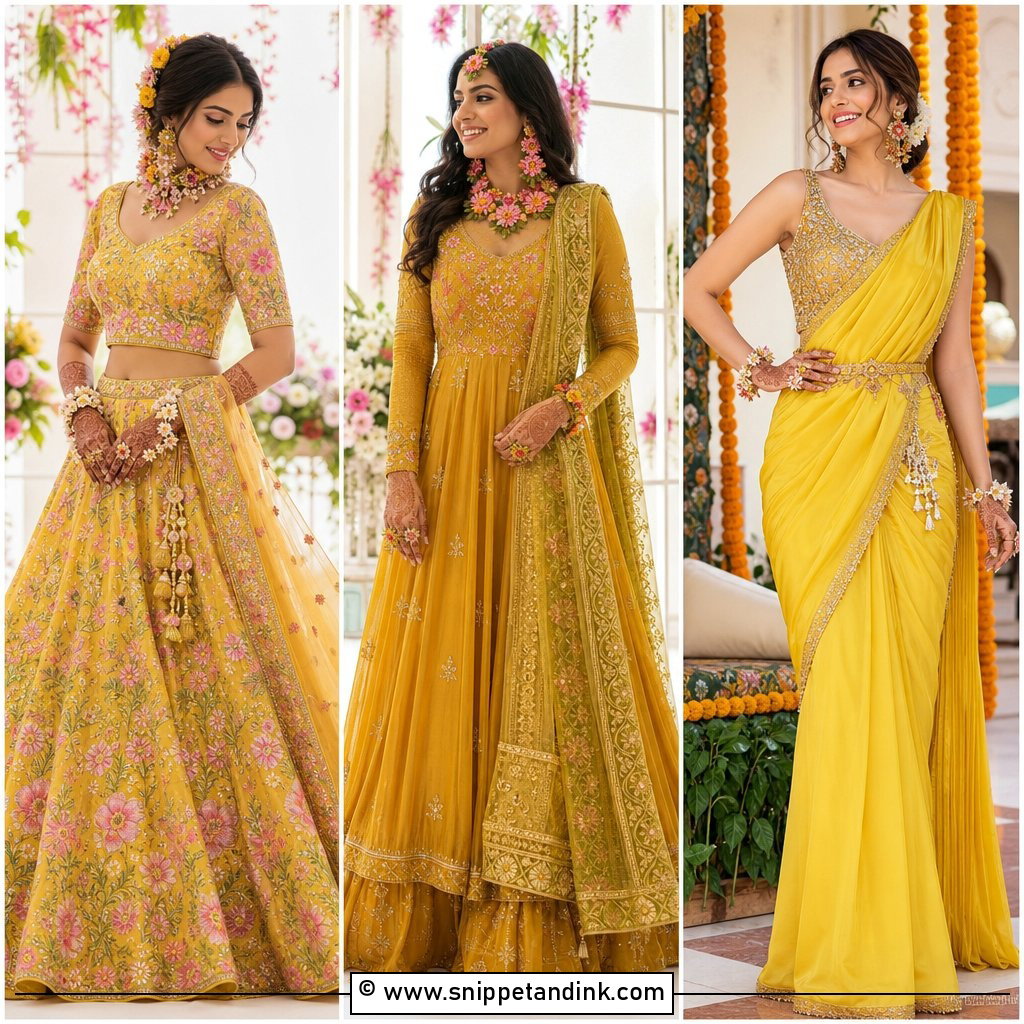
A yellow mehndi lehnga is the classic for good reason; it reads as celebration from across a garden. I’d choose georgette, organza or a light silk with floral embroidery, mirror borders or gota patti, a cropped short-sleeve blouse and a sheer dupatta. The shade does the work, so pick it carefully. Brides look richer in mustard or marigold, which hold their colour in photos, while pale lemon can wash out under strong sun and suits guests better. Pair it with floral jewellery and flat juttis you can dance in.
2. Green Mehndi Lehnga Design
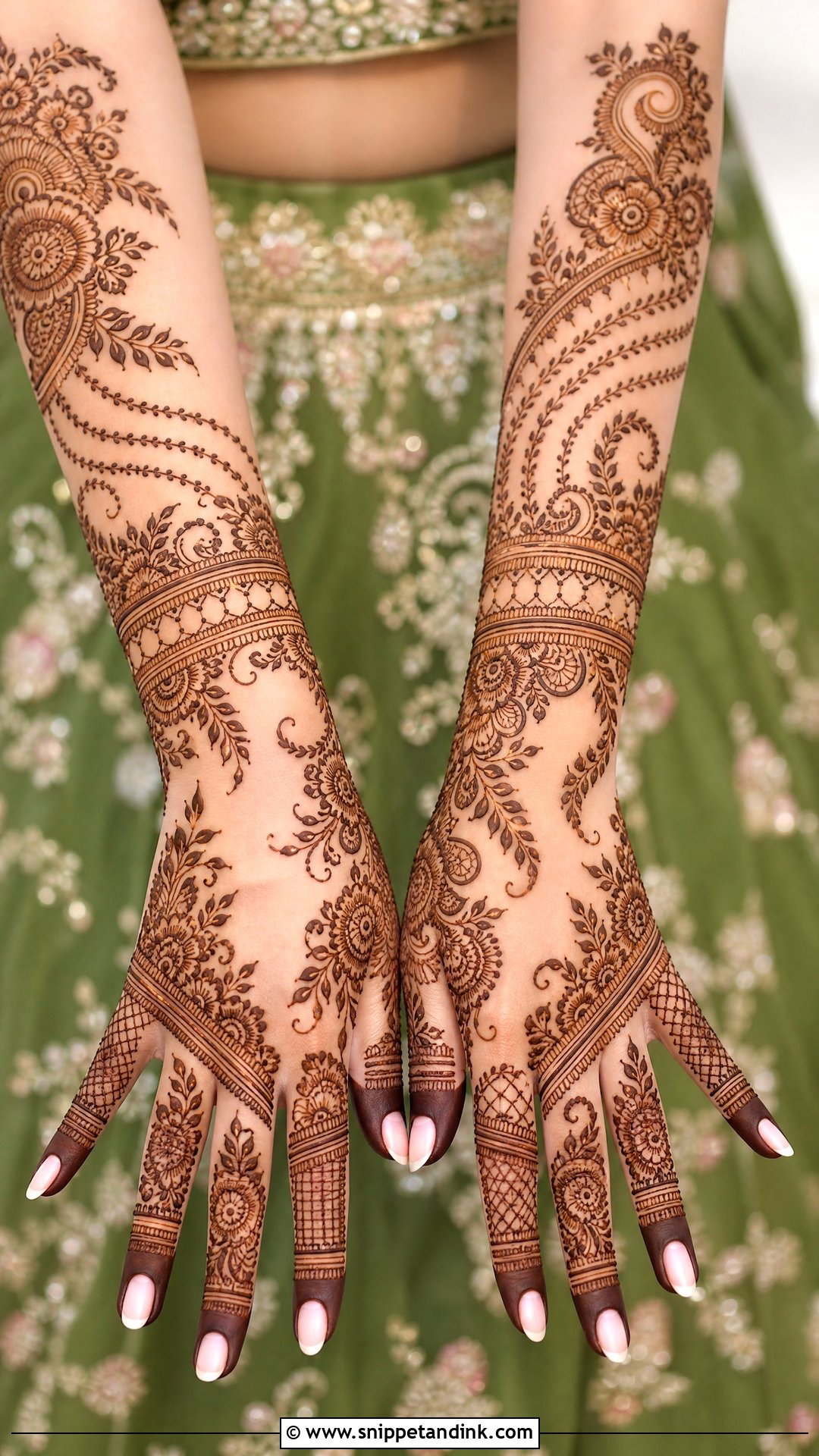
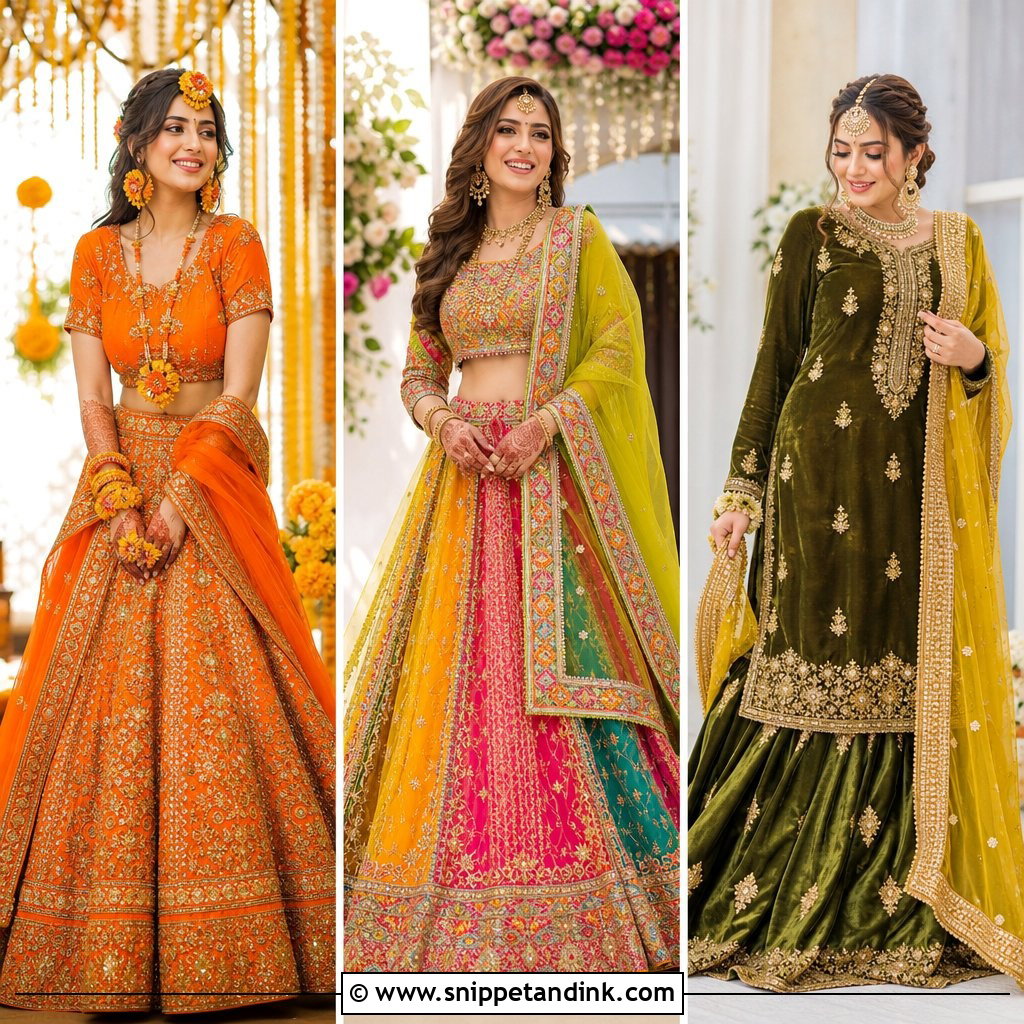
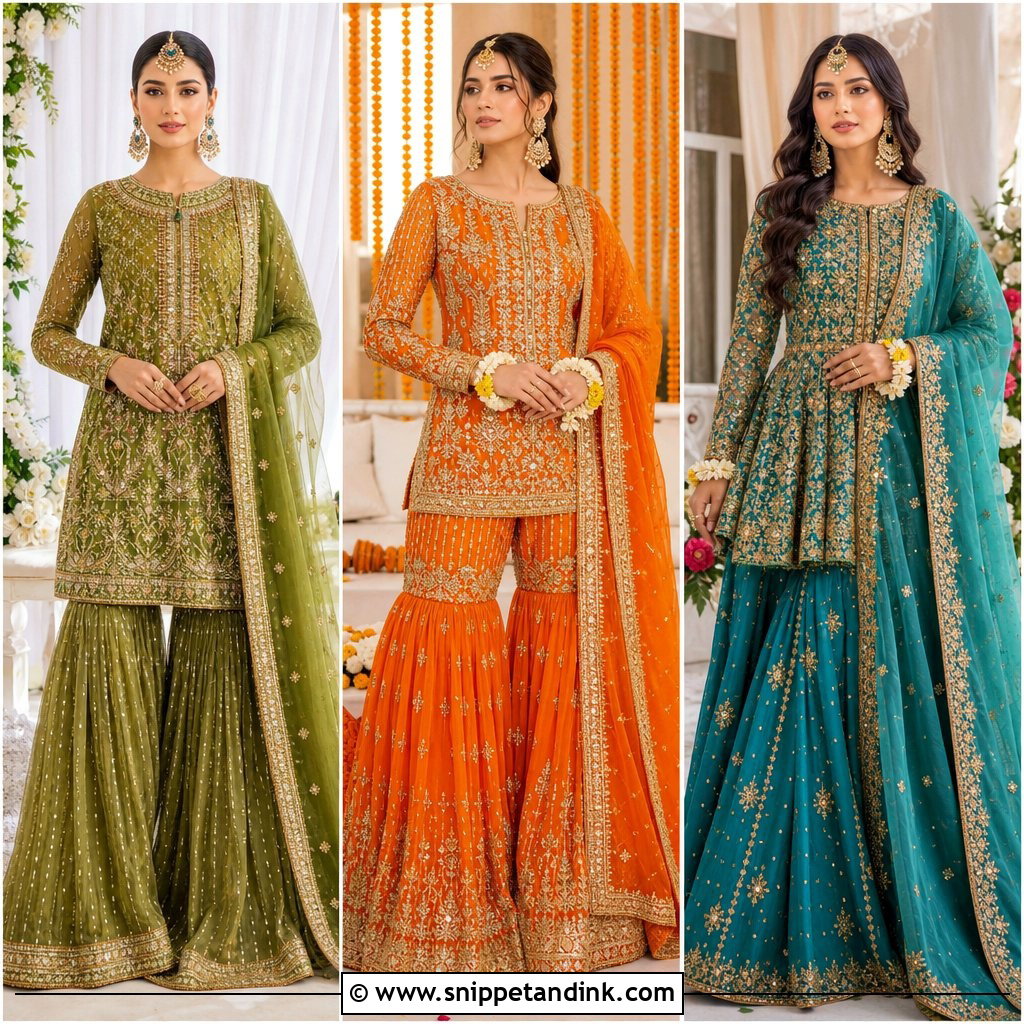
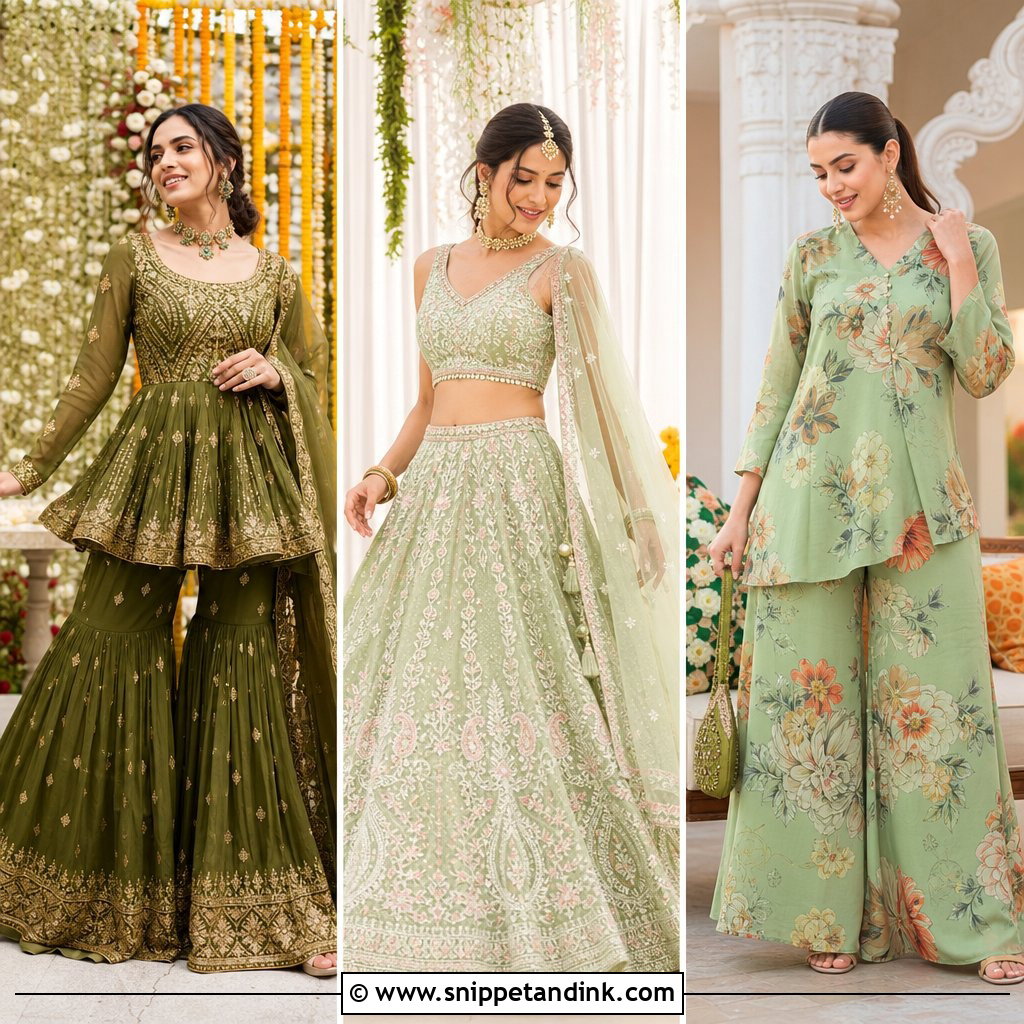
Green ties straight into the henna and the leaves and garlands around you. Emerald is bold, sage is soft, parrot green is playful. A bridal version usually has a full skirt with mirror work and zari borders; for a lighter function, printed florals or thread embroidery keep it easy. A sleeveless or elbow-length blouse is the practical choice, because the artist needs your forearms bare for full-hand designs. Kundan earrings, floral bangles or a small maang tikka finish it.
3. Orange Mehndi Lehnga Design
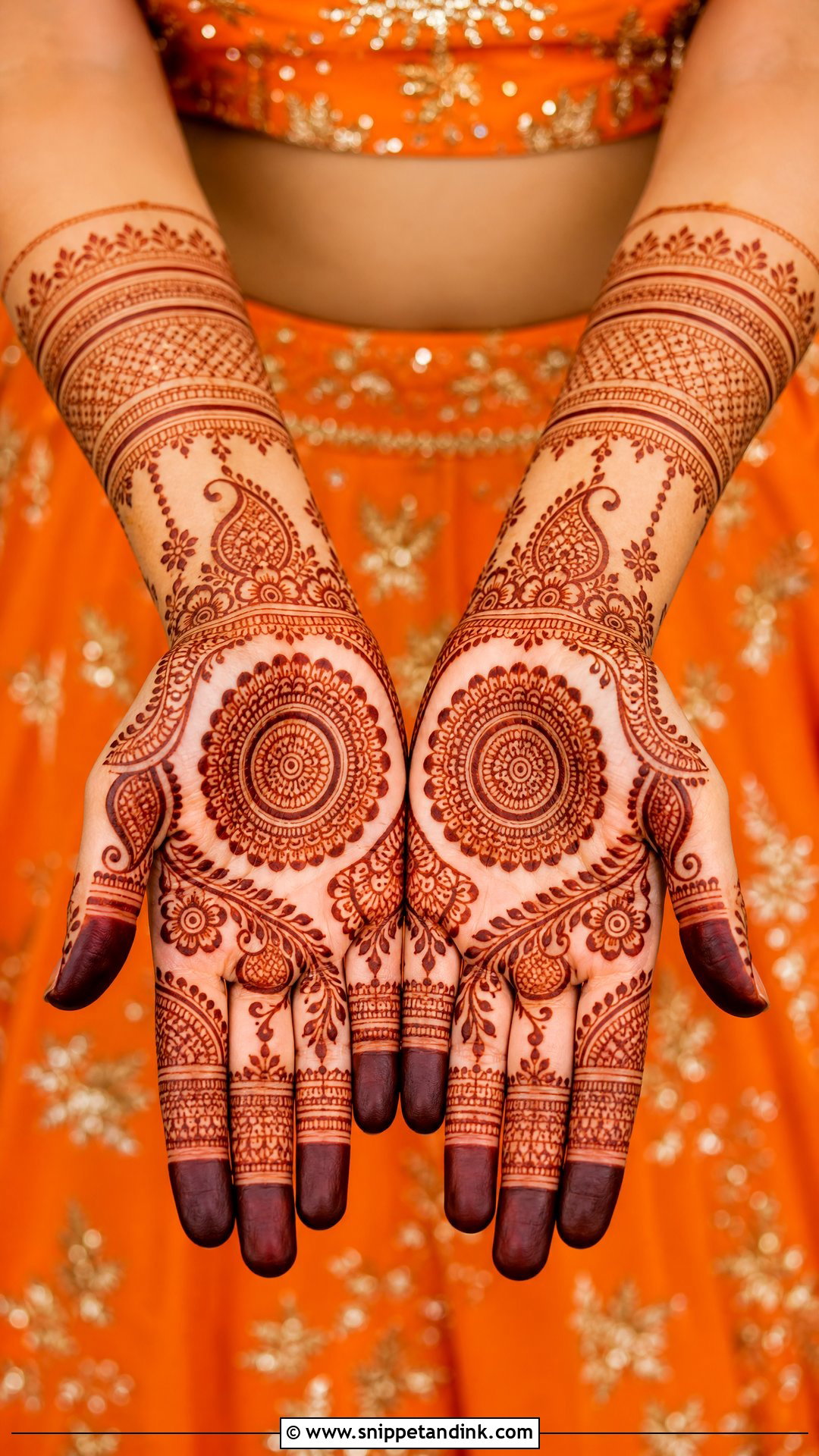
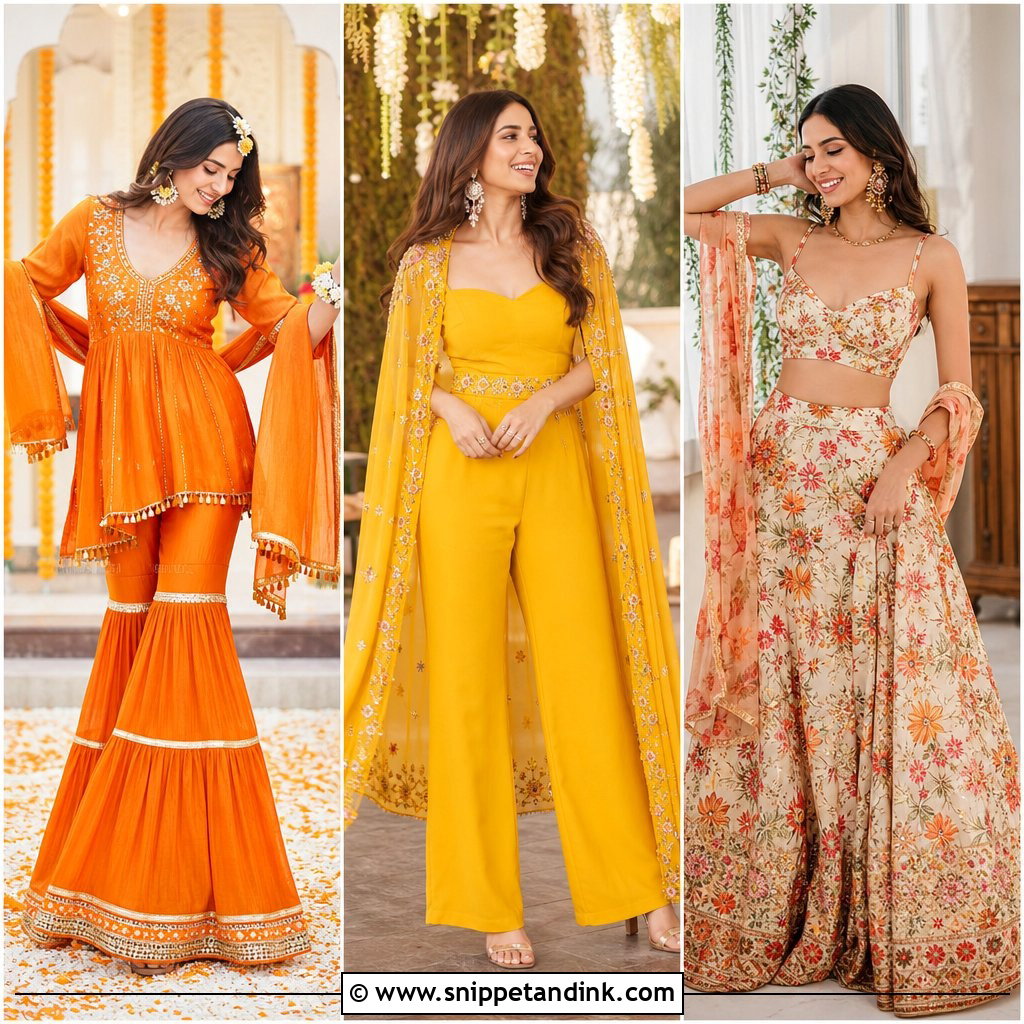
Orange is the warmer, less expected cousin of yellow. Tangerine, burnt orange, coral and saffron all work, with gota patti, mirror work or small floral butis on a flared skirt. Brides can add a pink, green or gold dupatta for contrast; guests are better with lighter embroidery and a simple blouse. I steer brides with very warm, golden skin toward burnt orange rather than bright tangerine, which can sit too close to their skin tone in photos. Outdoors, orange glows, and it flatters a fresh henna stain.
4. Pink Mehndi Lehnga Design
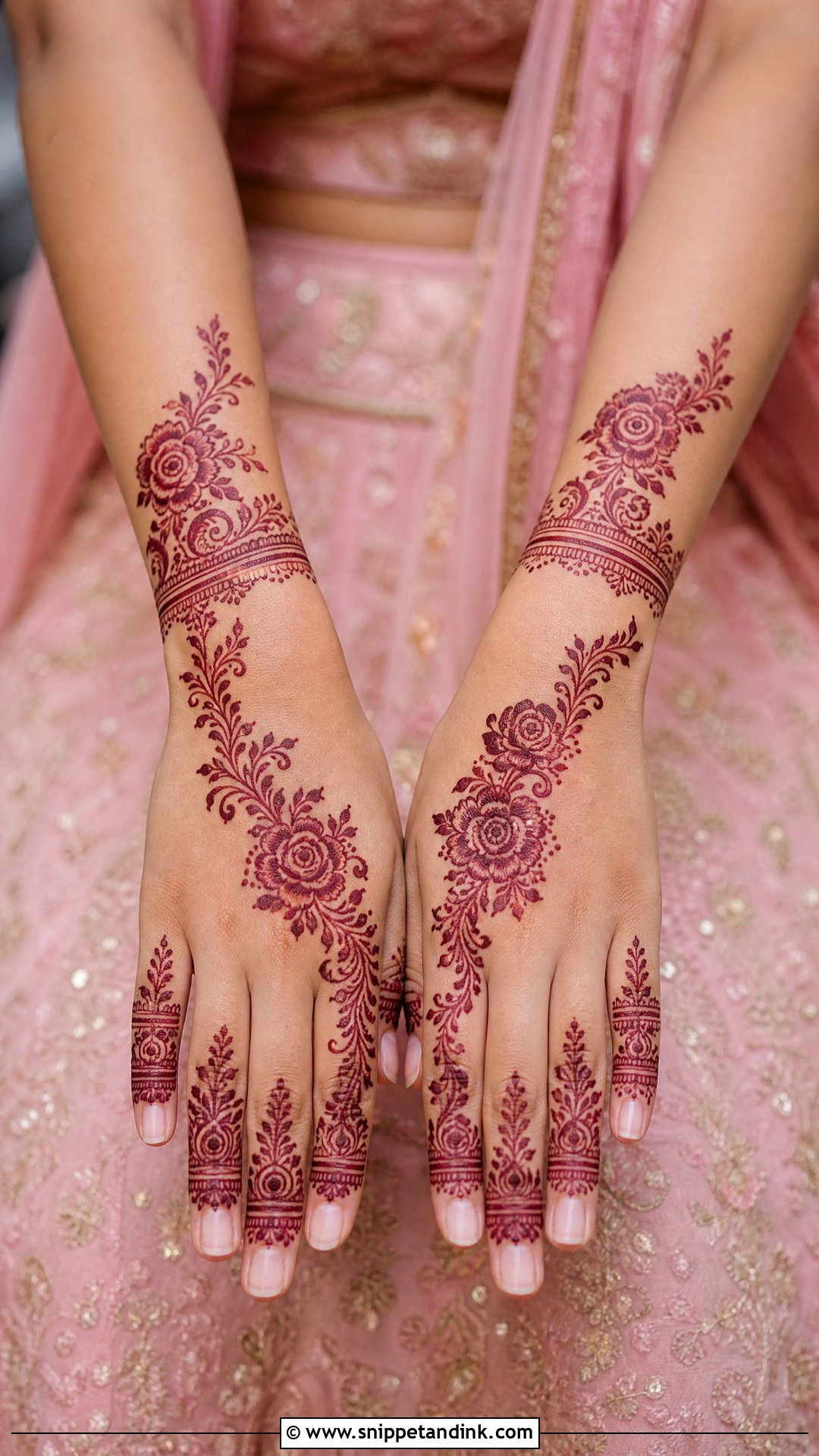
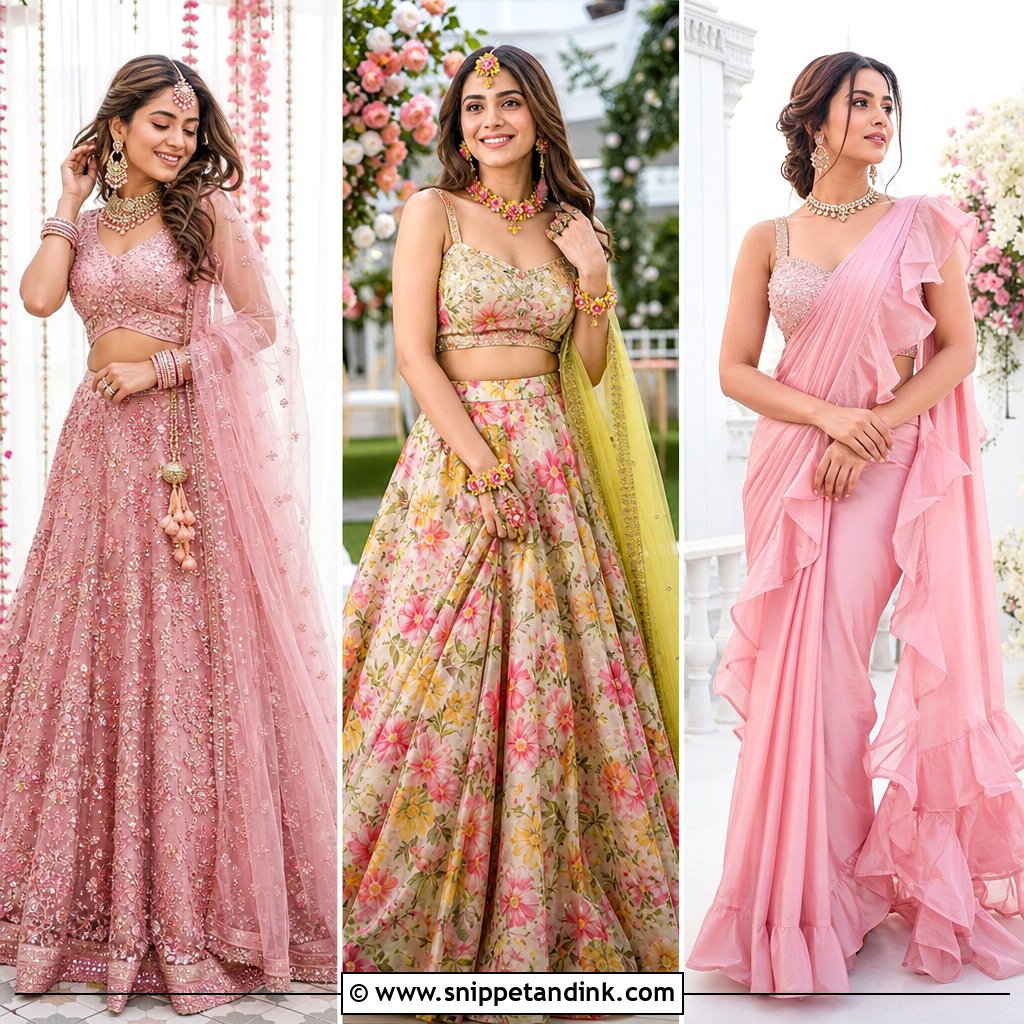
Pink changes mood with its shade. Hot pink is bold and playful, blush is soft, rose is romantic, and rani pink with mirror work and gold embroidery is what I’d dress a bride in for a dance entrance. Sisters and bridesmaids do well in a floral pink skirt with a lighter blouse. Pink pairs with green, yellow, ivory or orange dupattas. Keep the sleeves short or skip them if you’re having henna on your arms; nothing ruins a pink blouse faster than wet paste on the cuff.
5. Multicolor Mehndi Lehnga Design
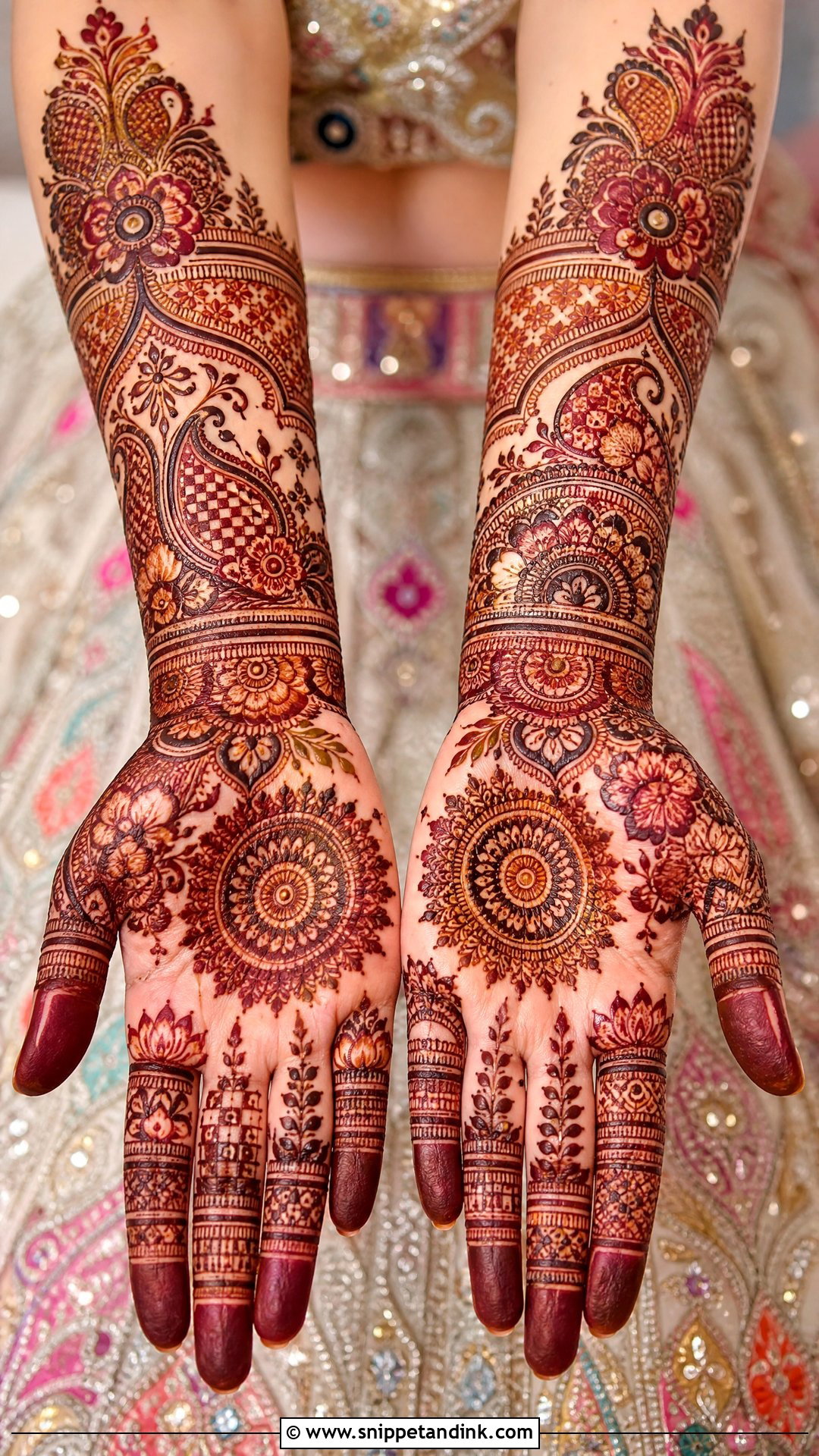
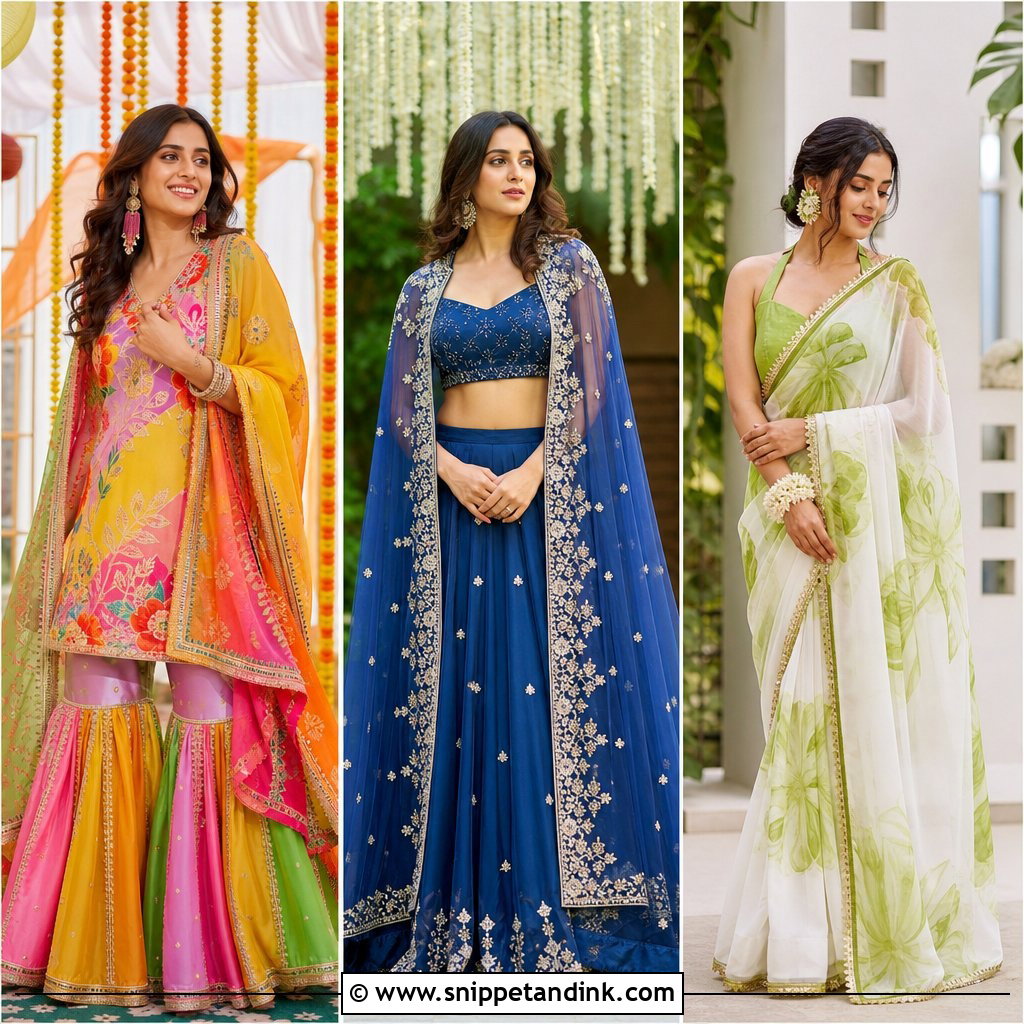
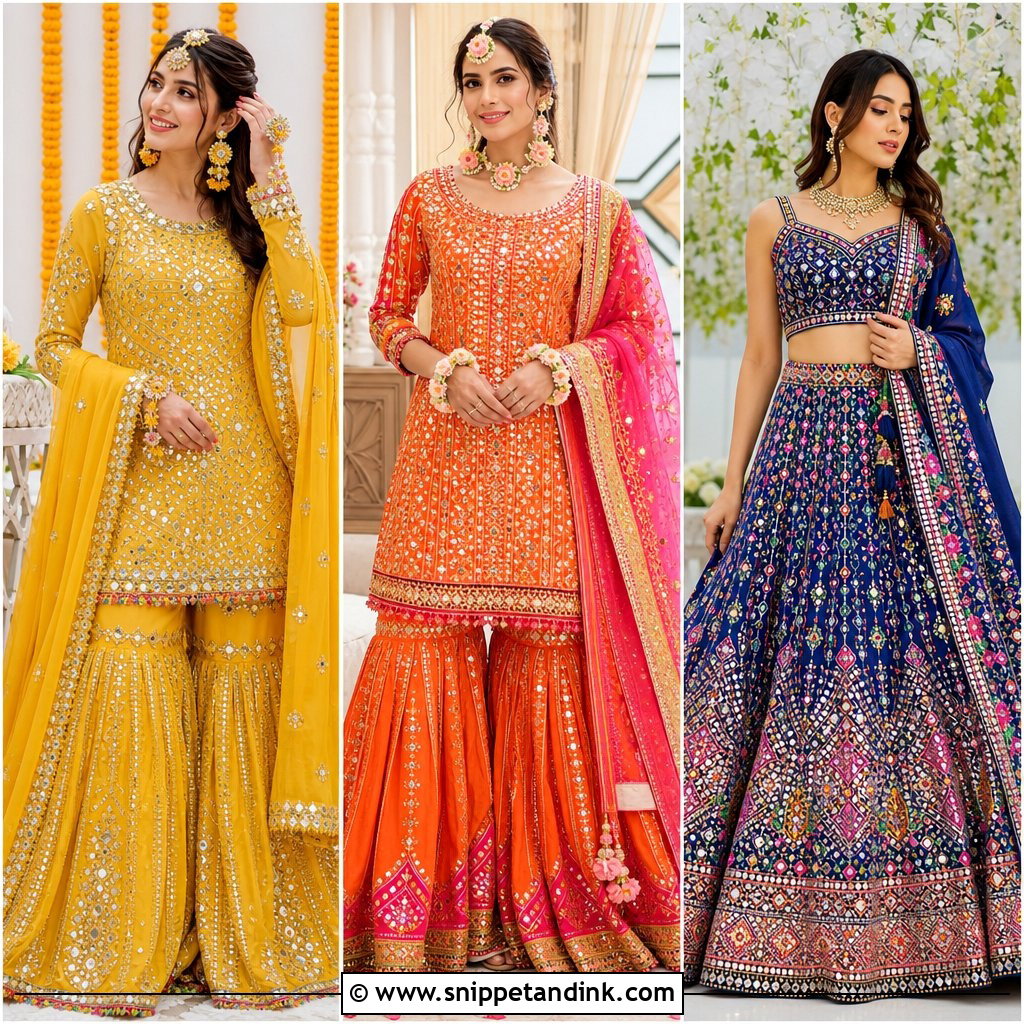
Multicolour lehngas combine yellow, pink, green, orange, blue and purple in panels, embroidery or prints, and they suit dance-heavy nights and outdoor daytime functions. The risk is chaos. I look for a skirt where the colours repeat in a pattern rather than scattering at random, then calm it with a plain blouse in one strong shade. A light dupatta keeps it manageable. The upside is freedom: your bangles, jewellery and makeup can pick up any colour in the skirt.
6. Mirror Work Mehndi Lehnga Design
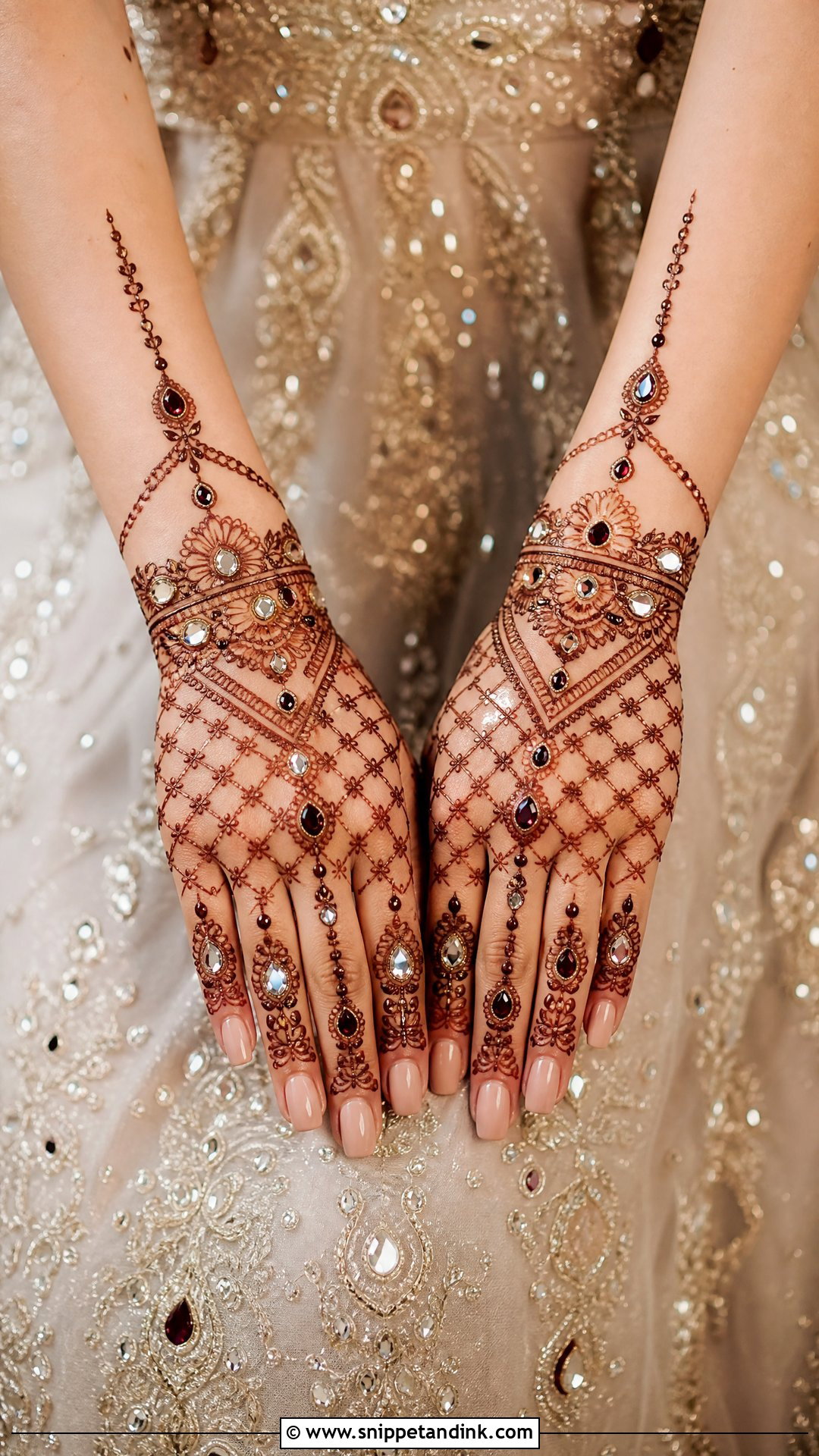
Mirror work catches both daylight and evening lights, so it gives sparkle without heavy jewellery. It looks good on green, yellow, orange, ivory and pink. A bride might wear a full skirt with mirror borders and an embroidered blouse; guests are better with small mirror accents on the hem, sleeves or dupatta. One thing to know before the henna: mirror edges catch on wet paste and drag the design, so keep mirrored sleeves well away from your wrists. Balance it with fresh makeup and lighter jewellery.
7. Floral Mehndi Lehnga Design
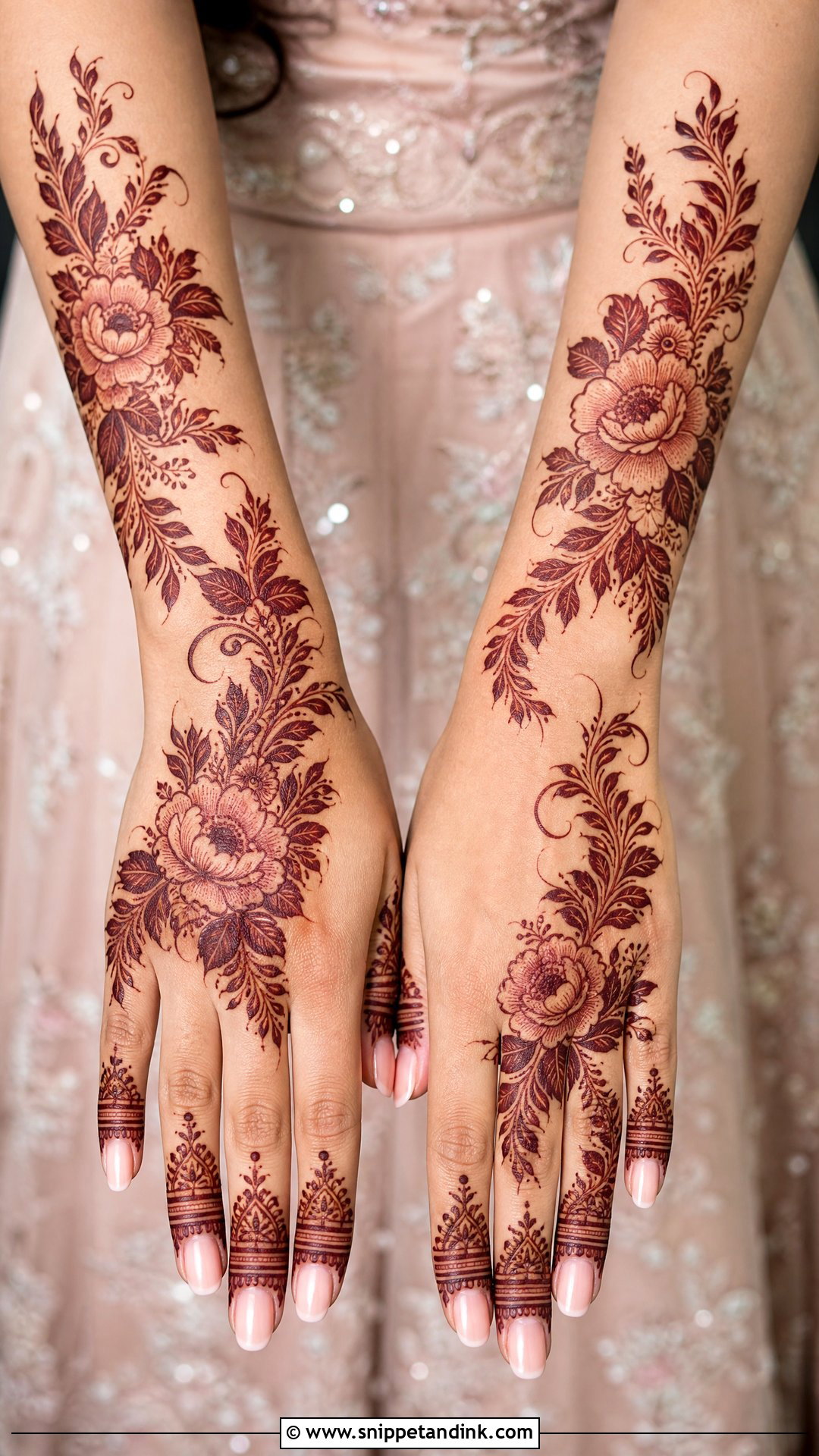
Florals in print, embroidery, hand-painting or thread and sequin work suit a daytime mehndi. Pastel yellow, mint, blush and peach feel soft outdoors; hot pink, orange and green read more festive for a bride. Choose organza, chiffon or georgette if the ceremony runs long, because they breathe. The difference I notice is in how the fabric recovers after sitting: chiffon and georgette shake out, while stiff organza can hold creases from the henna chair. Floral jewellery and loose waves complete it.
8. Gota Patti Mehndi Lehnga Design
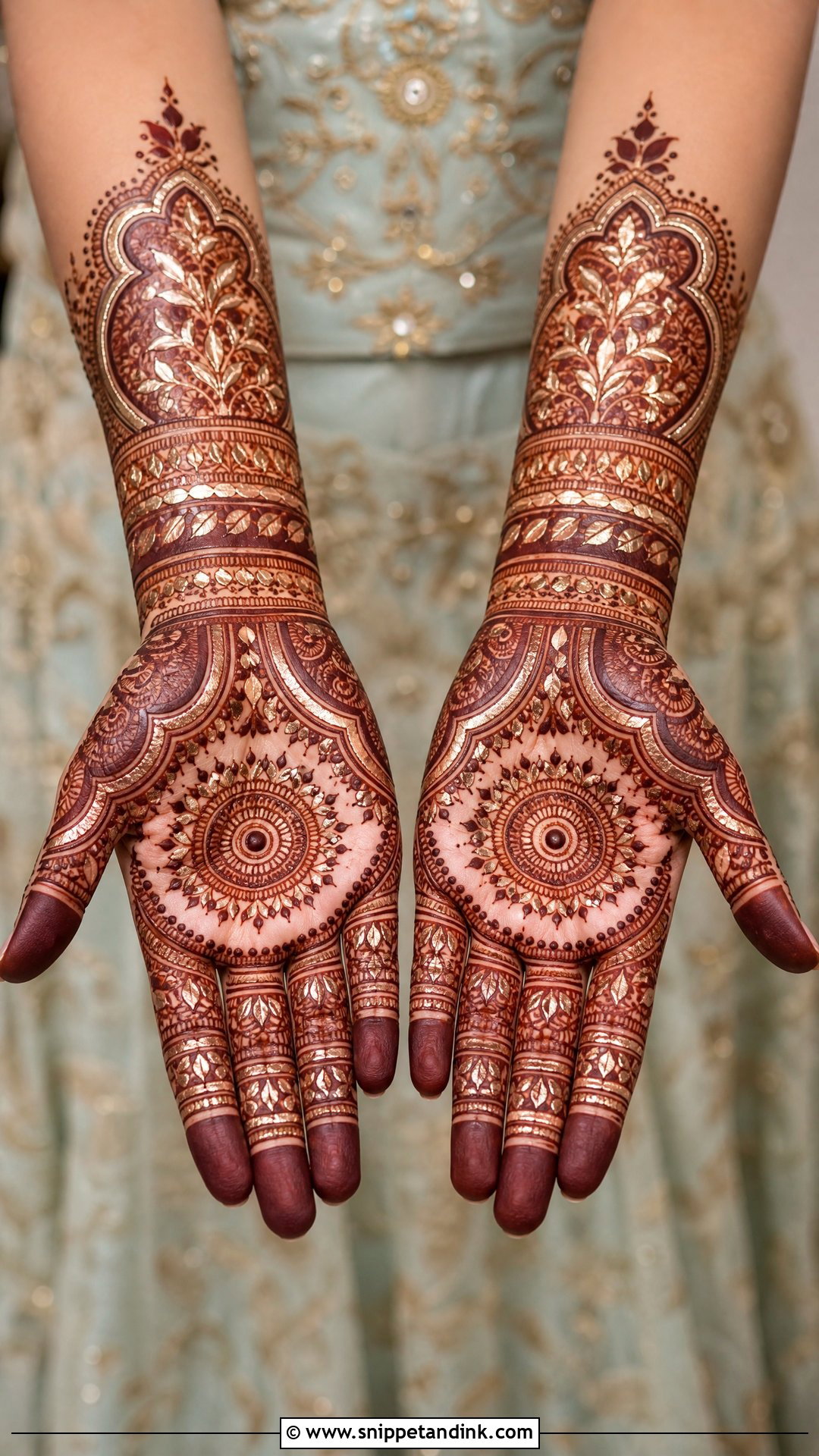
Gota patti brings a Rajasthani tradition to the ceremony with its metallic ribbon work. It can stay light if the gota is scattered rather than packed. Yellow, orange, green and pink bases are most common. A skirt with scattered motifs and a detailed border swirls nicely as you move; a blouse with modest gota keeps the balance. Check the back of the work before you buy, because cheap gota is stitched with stiff backing that scratches the skin. Add a light dupatta, jhumkas and bangles.
9. Pastel Mehndi Lehnga Design
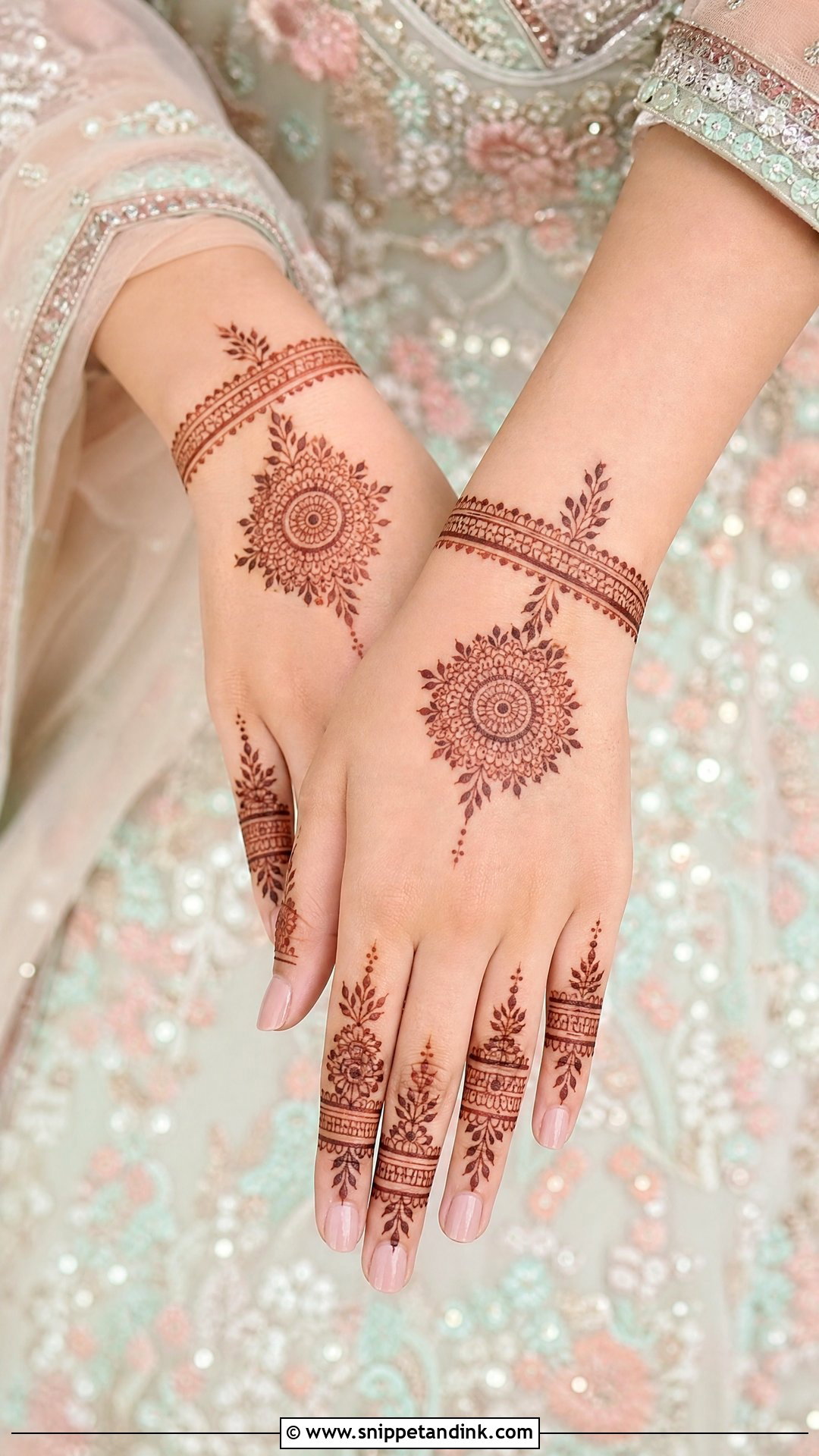
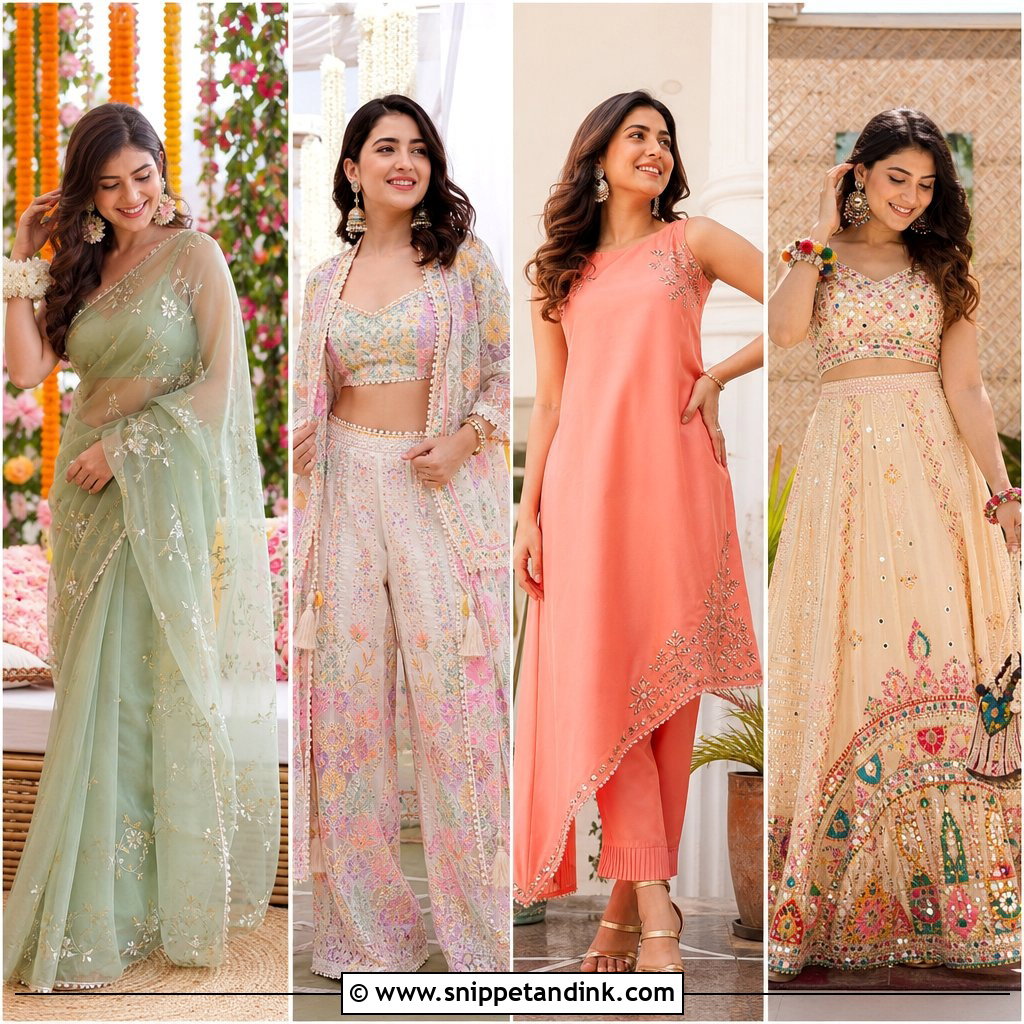
Pastels like sage, powder blue, lavender, peach, blush and mint suit spring weddings, resorts and outdoor functions. To stop them looking plain, look for delicate embroidery, mirror accents, pearl work or floral thread details. Pastels also show off a dark henna stain, since the hands stand out against a light outfit. I’d pick them for a bride who doesn’t want the usual brights, but I’d warn her that pale fabric is the least forgiving if wet henna touches it. Pearls, soft gold or fresh flowers suit the jewellery.
10. Lime Green Mehndi Lehnga Design
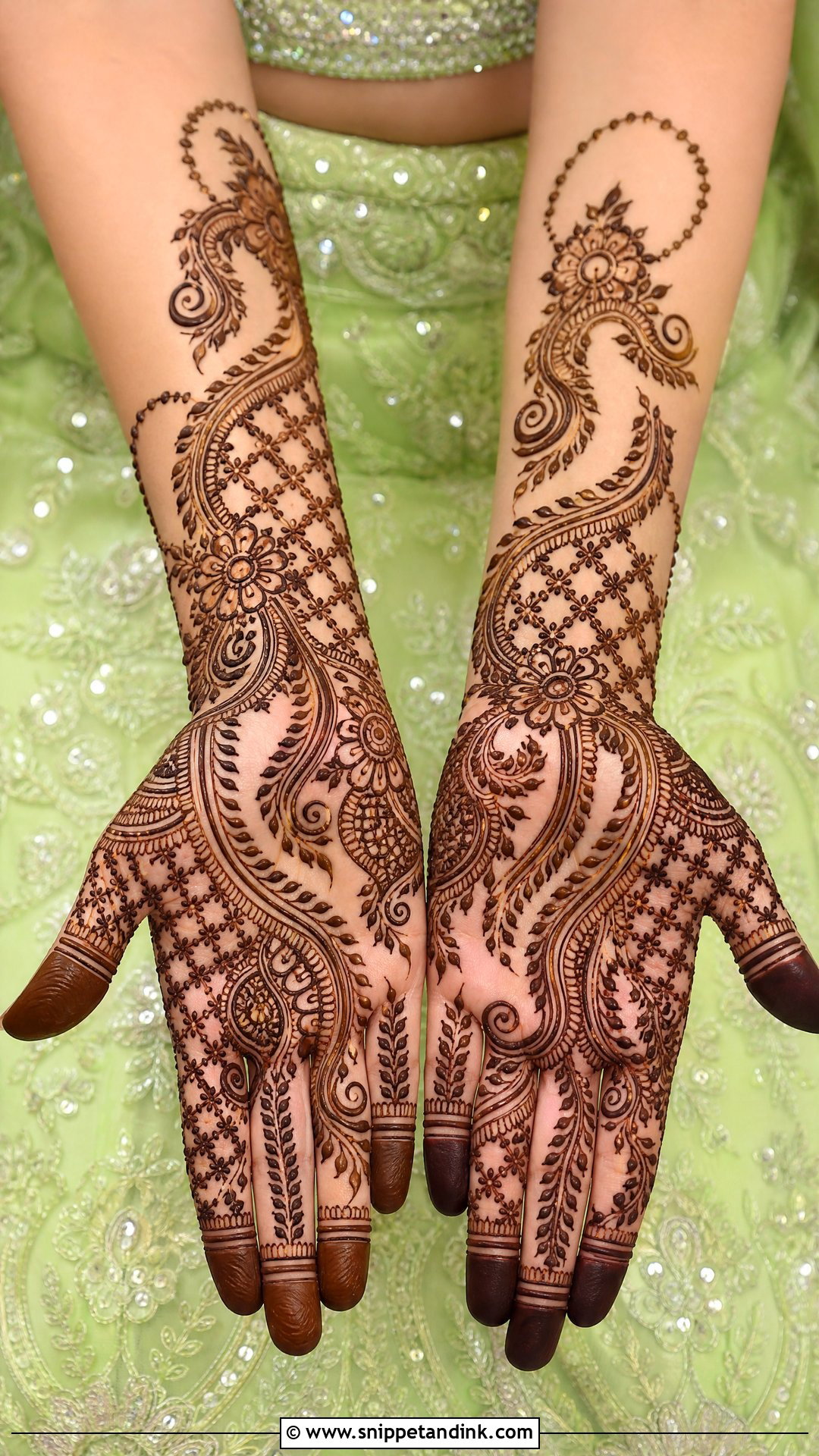
Lime green is bold and young. It looks good with mirror work, thread embroidery, sequins or pink and orange accents, and a flared skirt gives it drama when you dance. To keep it from getting loud, pair it with a softer dupatta or a blouse with cleaner detailing. It flatters many skin tones in natural light, but under some yellow indoor lighting it can turn slightly acidic, so I’d take a photo of the fabric in the venue’s light if you can. Keep accessories playful.
11. Sage Green Mehndi Lehnga Design
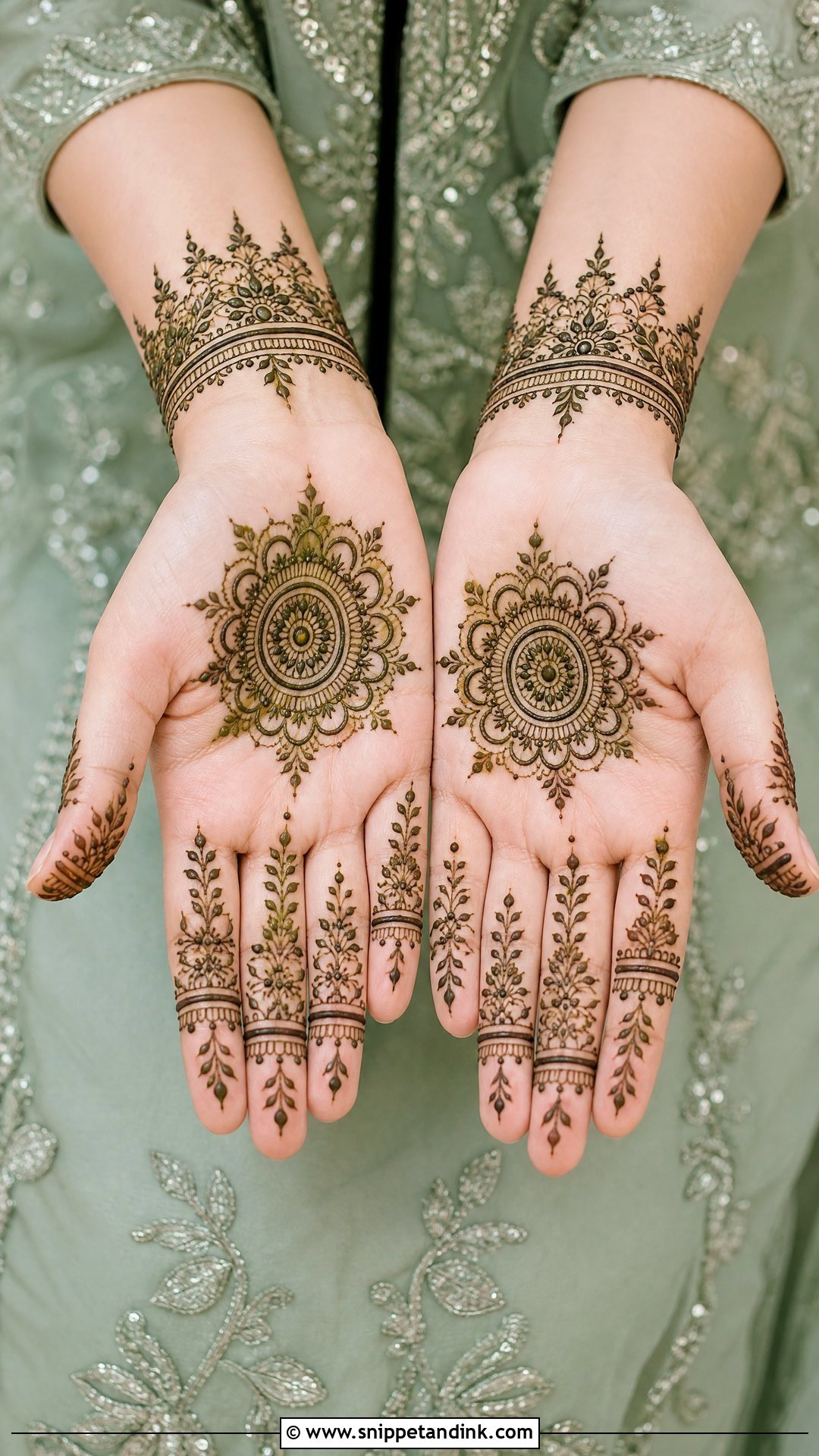
Sage is softer than emerald and quieter than lime, and it suits a bride who wants calm and modern. Silver embroidery, pearl detailing, pastel florals or muted gold all sit well on it. It works for daytime ceremonies, destination weddings and home events. A structured blouse makes it feel contemporary while a flowing skirt keeps it comfortable. Ivory, blush, lavender and champagne dupattas pair nicely. Sage also makes a deep maroon henna stain stand out clearly in hand close-ups.
12. Emerald Green Mehndi Lehnga Design
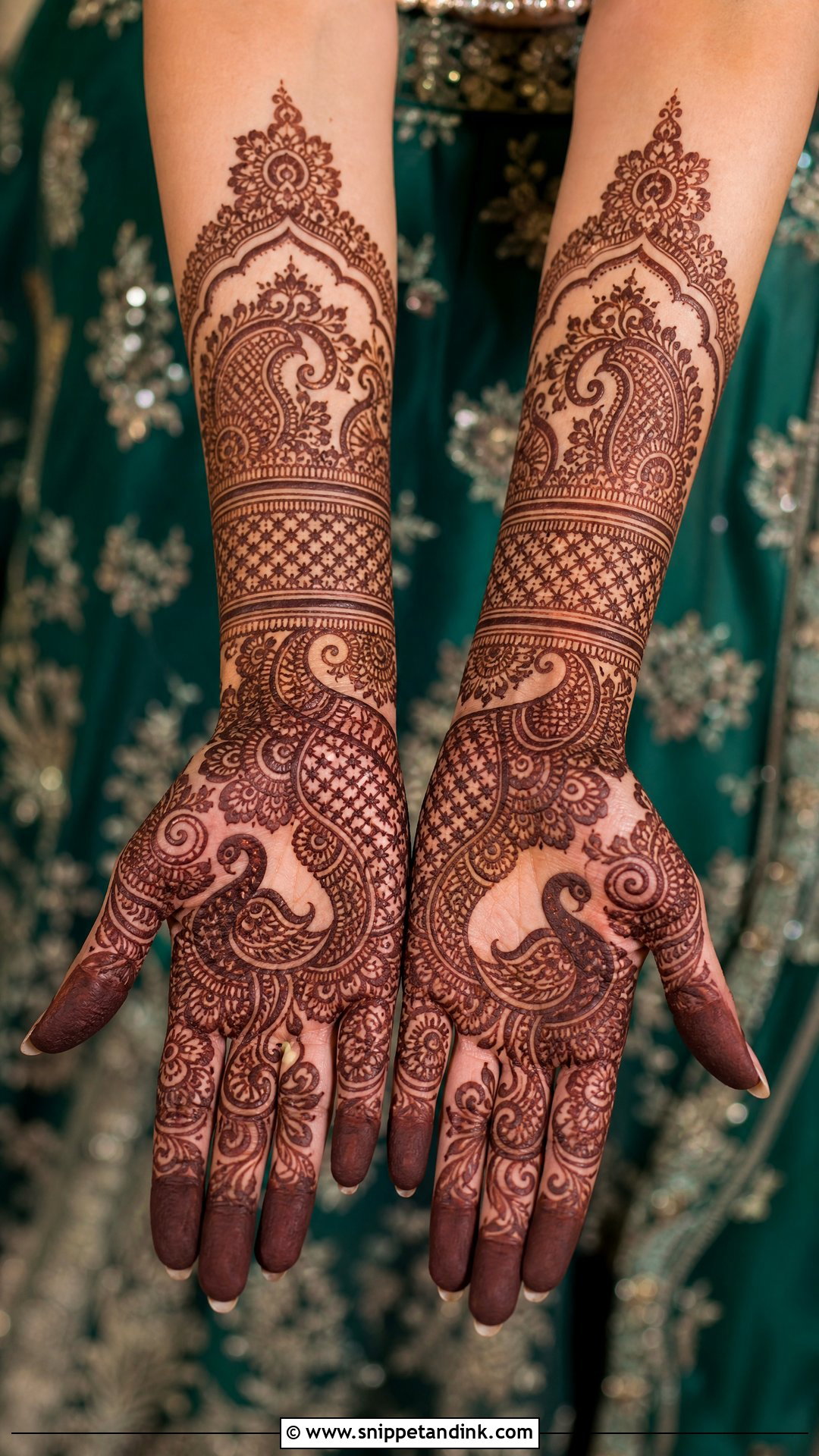
An emerald green mehndi lehnga gives a rich, regal look that still suits a mehndi. It’s my pick for evening functions and sangeet-mehndi combinations. Gold embroidery, mirror work, sequins or velvet accents make it luxurious; if the skirt is heavy, keep the blouse simple. A contrast dupatta in yellow, pink, peach or ivory lifts it. Emerald works with kundan, polki and antique gold. Velvet trims get hot in a packed tent, so I’d keep velvet to the dupatta border rather than the blouse.
13. White And Yellow Mehndi Lehnga Design
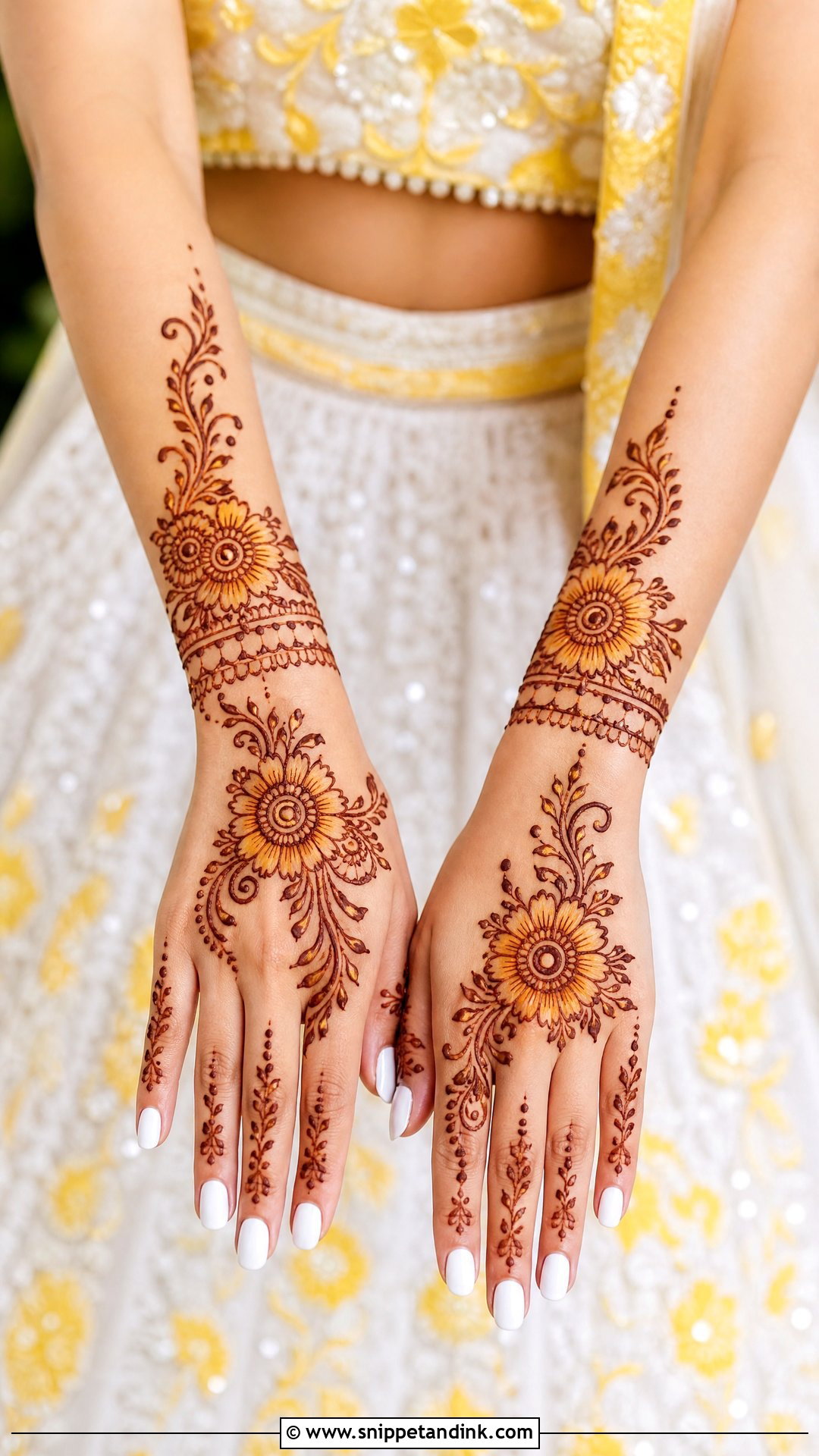
White and yellow is clean and bright for daytime photos: an ivory or off-white skirt with yellow floral embroidery, gota borders, mirror work or prints. It suits bridesmaids, sisters and guests, and brides can wear it with heavier jewellery and a statement dupatta. Plain white can look flat, so add texture through embroidery or layered fabric. This is the outfit where henna spills are the most dangerous; ask your artist to work with a towel across your lap.
14. Pink And Green Mehndi Lehnga Design
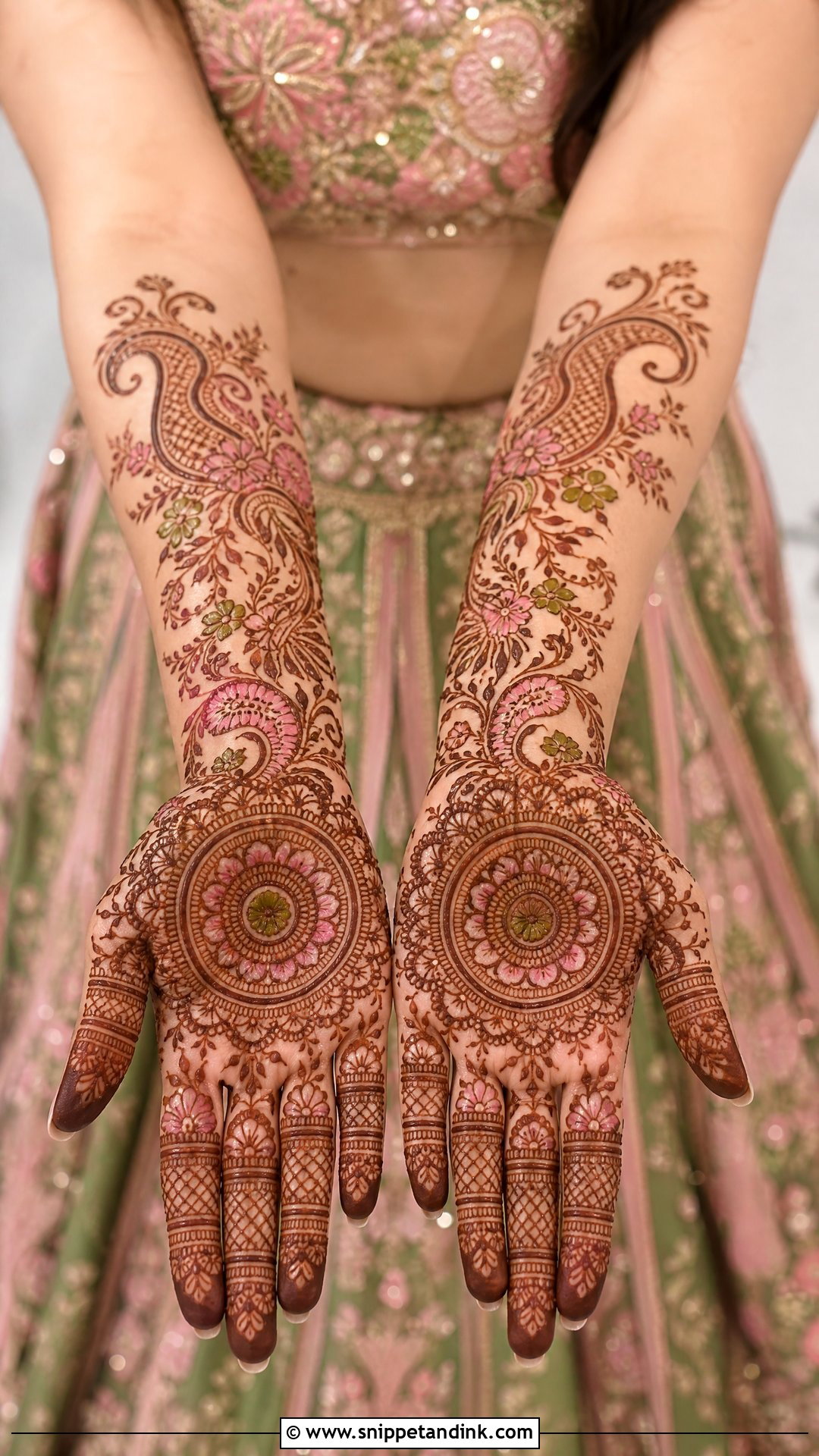
Pink and green is the classic mehndi pairing. A green skirt with a pink blouse looks traditional; a pink lehnga with a green dupatta feels more playful. Brides can choose heavy embroidery, mirror work or gota patti; guests can wear printed versions with simple jewellery. The shades matter: a hot pink with a parrot green is lively, while blush with sage reads soft. I’d match the intensity of the two colours rather than pairing a bright with a pastel. Bangles in both colours tie it together.
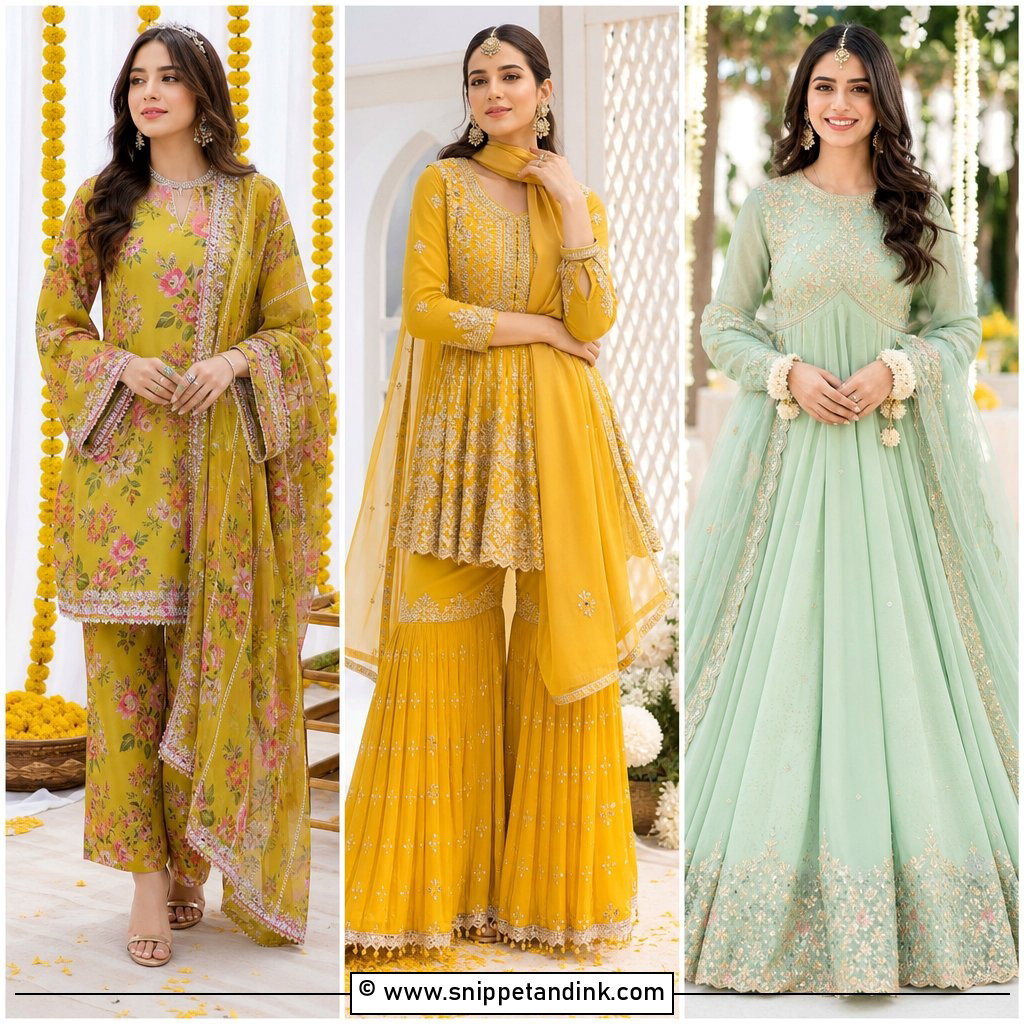
15. Floral Print Mehndi Lehnga Design
A floral print lehnga is the most comfortable option for a long function, festive without heavy embroidery. Prints work in cotton silk, organza, georgette and chiffon. Big tropical florals suit a destination mehndi; smaller traditional florals suit a family event. A plain blouse balances a busy skirt, and a matching printed dupatta coordinates it. It moves easily on the dance floor, and it’s the kind of outfit you can wear again, which is worth weighing when the budget is tight.
16. Bandhani Mehndi Lehnga Design
Bandhani’s dotted tie-dye is festive and regional. Bright yellow, red, green, orange and pink bandhani lehngas suit mehndi perfectly; a skirt with gota borders makes it bridal, while a printed bandhani with a simple blouse and sheer dupatta keeps it light. Real hand-tied bandhani has slightly irregular dots and a crinkled texture; printed versions are flatter and cheaper. Both look good on camera. Oxidised jewellery, kundan or floral accessories all suit it.
17. Phulkari Mehndi Lehnga Design
Phulkari is bright Punjabi threadwork in floral and geometric patterns, and it brings strong personality to a mehndi. A yellow, orange or green base with multicolour embroidery is lively. If a full phulkari lehnga feels heavy, wear a simpler skirt with a phulkari dupatta. It pairs naturally with parandas, jhumkas, bangles and braided hair. Because the embroidery is already so colourful, I keep makeup fresh and let the dupatta be the loudest thing on you.
18. Banarasi Mehndi Lehnga Design
Banarasi brocade is woven rather than embroidered, so it has depth without surface weight. Green, mustard, rani pink, orange and purple Banarasi lehngas look festive. The fabric gives the skirt a graceful structure, and brides can wear a heavier one with a contrast dupatta while guests go lighter. Brocade is warmer than georgette, so I’d keep it for an evening or air-conditioned function. A short-sleeve blouse keeps it henna-friendly; temple jewellery or kundan suits it.
19. Lightweight Mehndi Lehnga Design
If your mehndi includes dancing, games and hours in the henna chair, a lightweight lehnga is the smartest choice. Georgette, chiffon, organza, cotton silk or crepe all move easily, and you can still dress it up with printed florals, small mirrors, thread embroidery or a statement dupatta. I tell brides to skip long sleeves, stiff can-can and heavy dupattas when comfort comes first. Outdoors in warm weather, light fabric is the difference between enjoying the evening and counting the minutes. Secure jewellery and comfortable footwear mean you won’t be adjusting all night.
20. Short Blouse Mehndi Lehnga Design
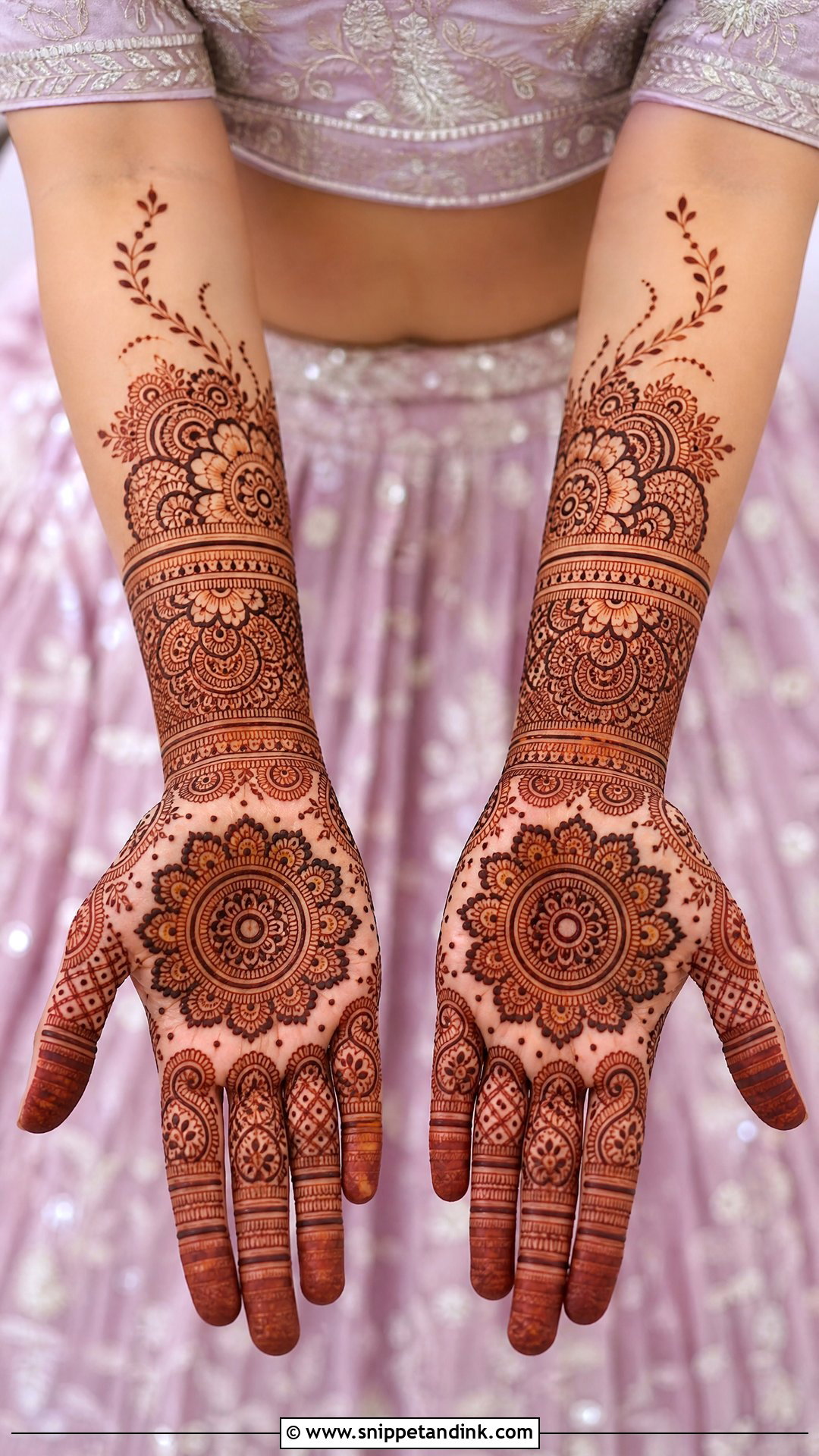
Henna usually goes on the palms, wrists and forearms, so shorter sleeves make the work cleaner and faster. Sleeveless, cap or elbow-length blouses all work depending on how much coverage you want. Pair one with a flared skirt in yellow, green, pink or orange. If you want more coverage, a light dupatta can be moved aside during application. Fit matters here: a blouse that’s tight across the upper arm restricts how you can hold your hand out, so I always have brides stretch both arms forward at the final fitting.
21. Cape Mehndi Lehnga Design
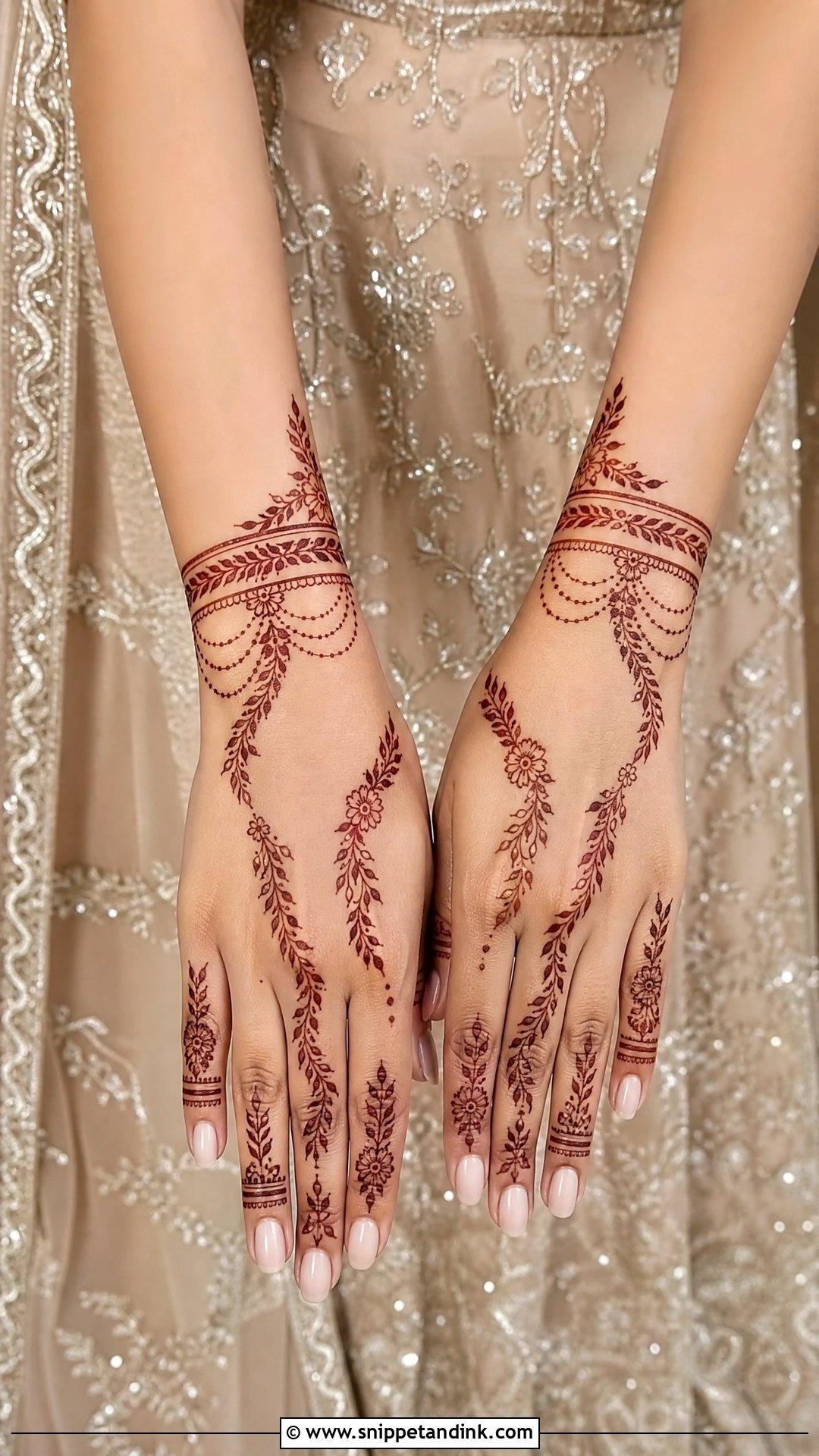
A cape replaces the dupatta, giving flow and coverage without constant adjusting. That’s genuinely helpful at a mehndi, because a loose dupatta slipping off your shoulder is the most common way wet henna gets smudged. A sheer embroidered cape with a matching blouse and skirt looks polished. Pastels, lime, yellow and blush suit it. Brides can choose mirror work or florals; guests can keep it simple. The cape also moves nicely in dance videos.
22. Jacket Mehndi Lehnga Design
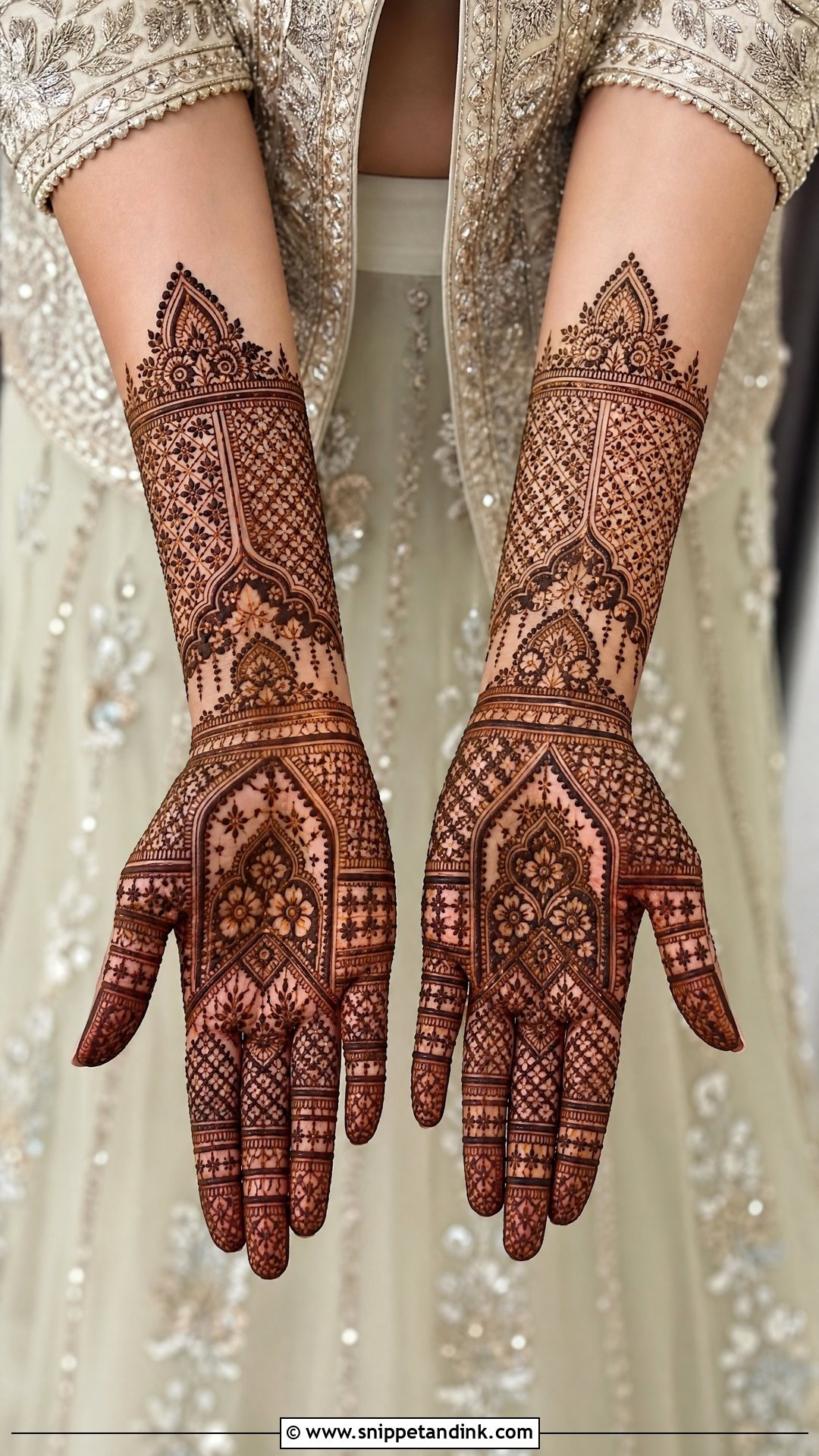
A jacket mehndi lehnga gives a statement look without heavy jewellery. The jacket can be short, long, sheer, embroidered or printed. For a mehndi, I’d go sleeveless or open-front, so your arms stay free for henna. A plain lehnga with a heavily embroidered jacket creates drama with balance. Bright yellow, green, pink and orange work, and pastels look elegant. A long jacket can trap heat, so for an outdoor afternoon I’d choose a sheer one.
23. Crop Top Mehndi Lehnga Design
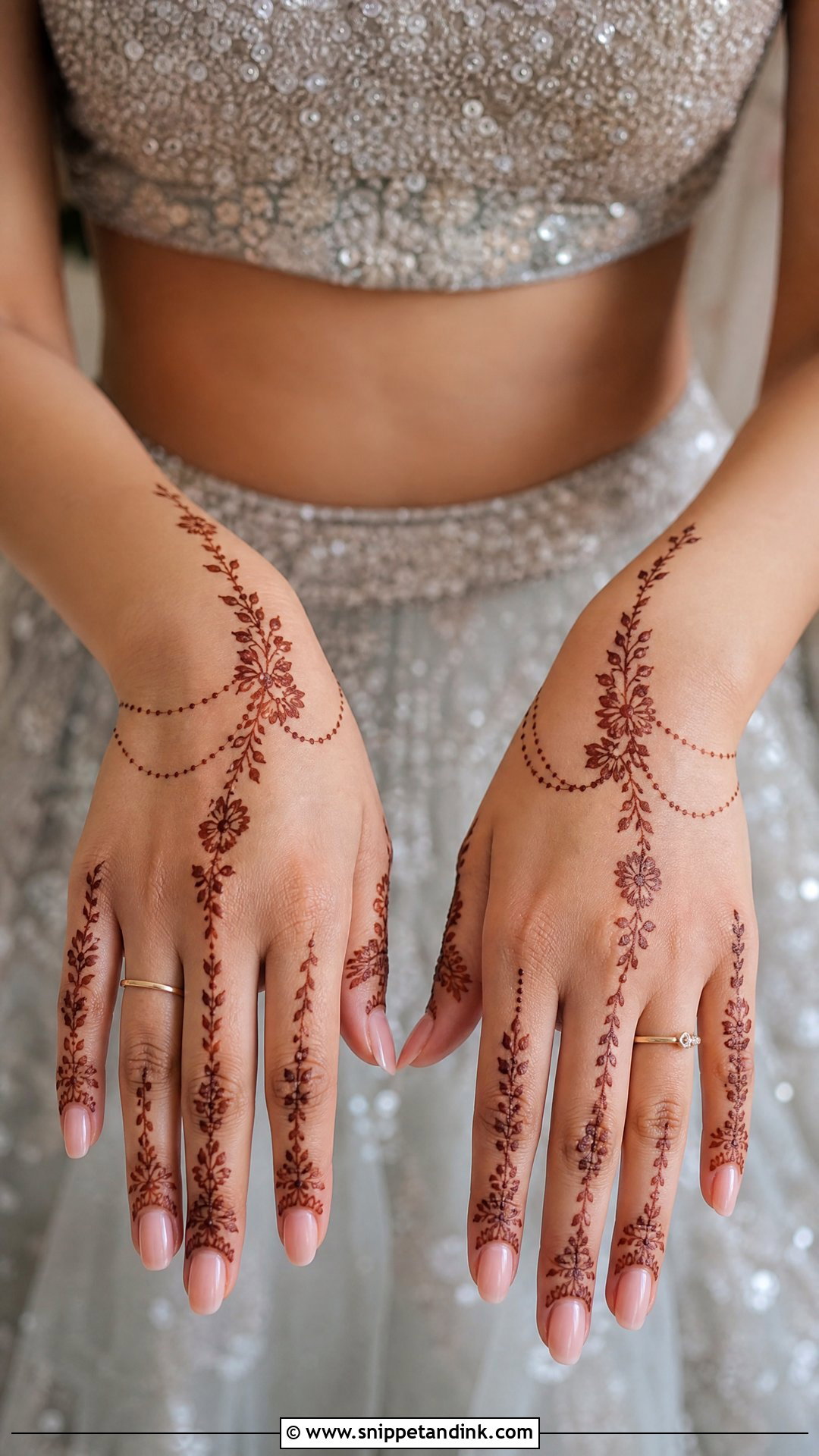
A crop top lehnga is a fresh pick for bridesmaids, sisters and modern brides, and it’s easy to dance in. Pair a bright printed skirt with a solid top for something relaxed, or a mirror-work top with a simple skirt for a dressier look. It usually avoids heavy dupatta handling. For a bridal version, add a light dupatta, statement earrings and stacked bangles. Make sure the top sits securely when you raise your arms, because you’ll be doing that a lot on the dance floor.
24. Indo Western Mehndi Lehnga Design
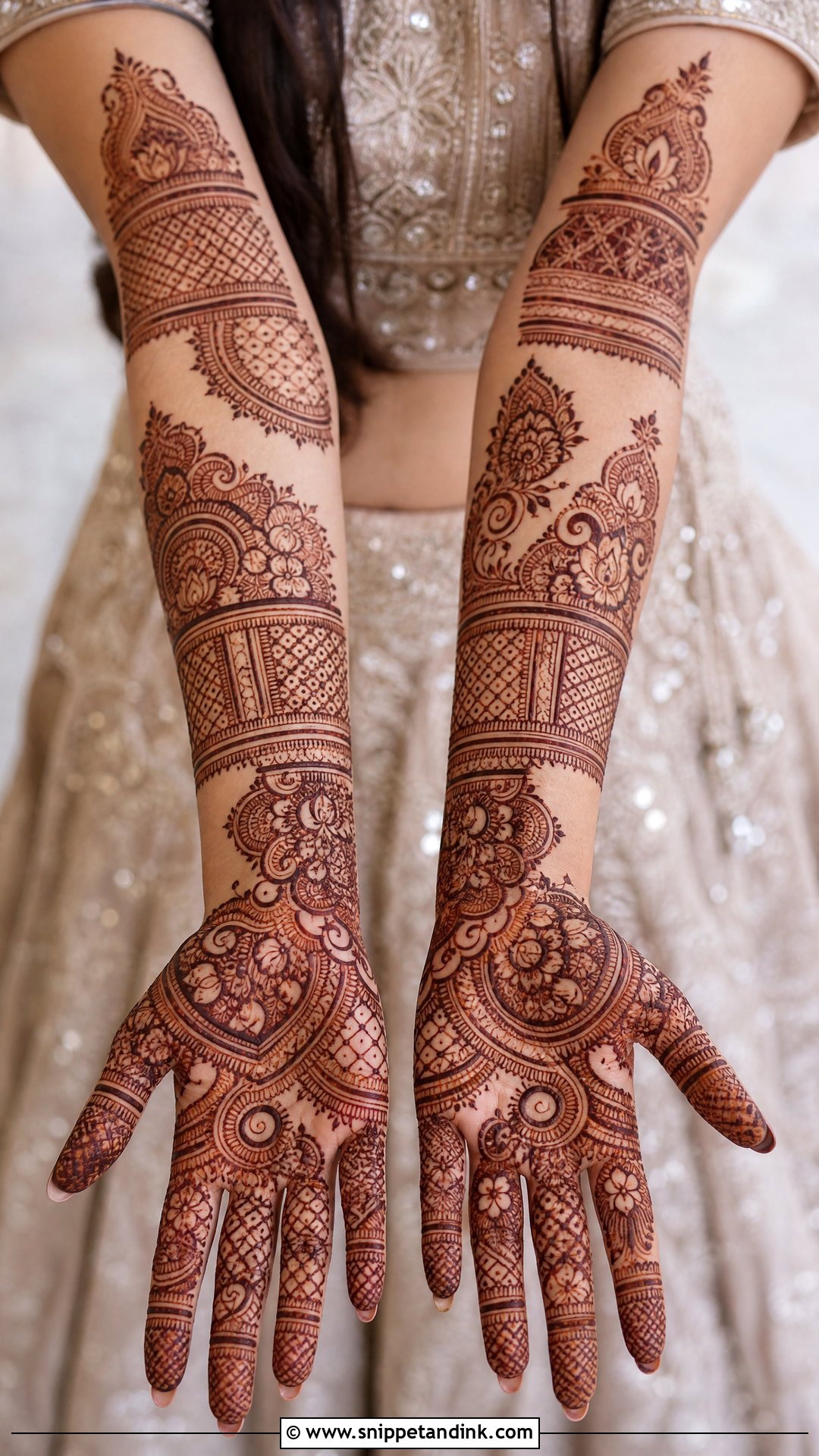
An Indo western mehndi lehnga keeps the tradition in the colour, embroidery or mirror work while changing the shape: structured blouses, asymmetric hems, ruffled or pre-draped dupattas, peplum tops or belted skirts. Lime, mustard, coral, sage and hot pink are good choices. It suits destination weddings, where lighter, more experimental pieces travel well. Avoid tight full sleeves for henna. Pre-draped dupattas are a real help here, since there’s nothing to slide off while your hands are wet.
25. Bridal Mehndi Lehnga Design
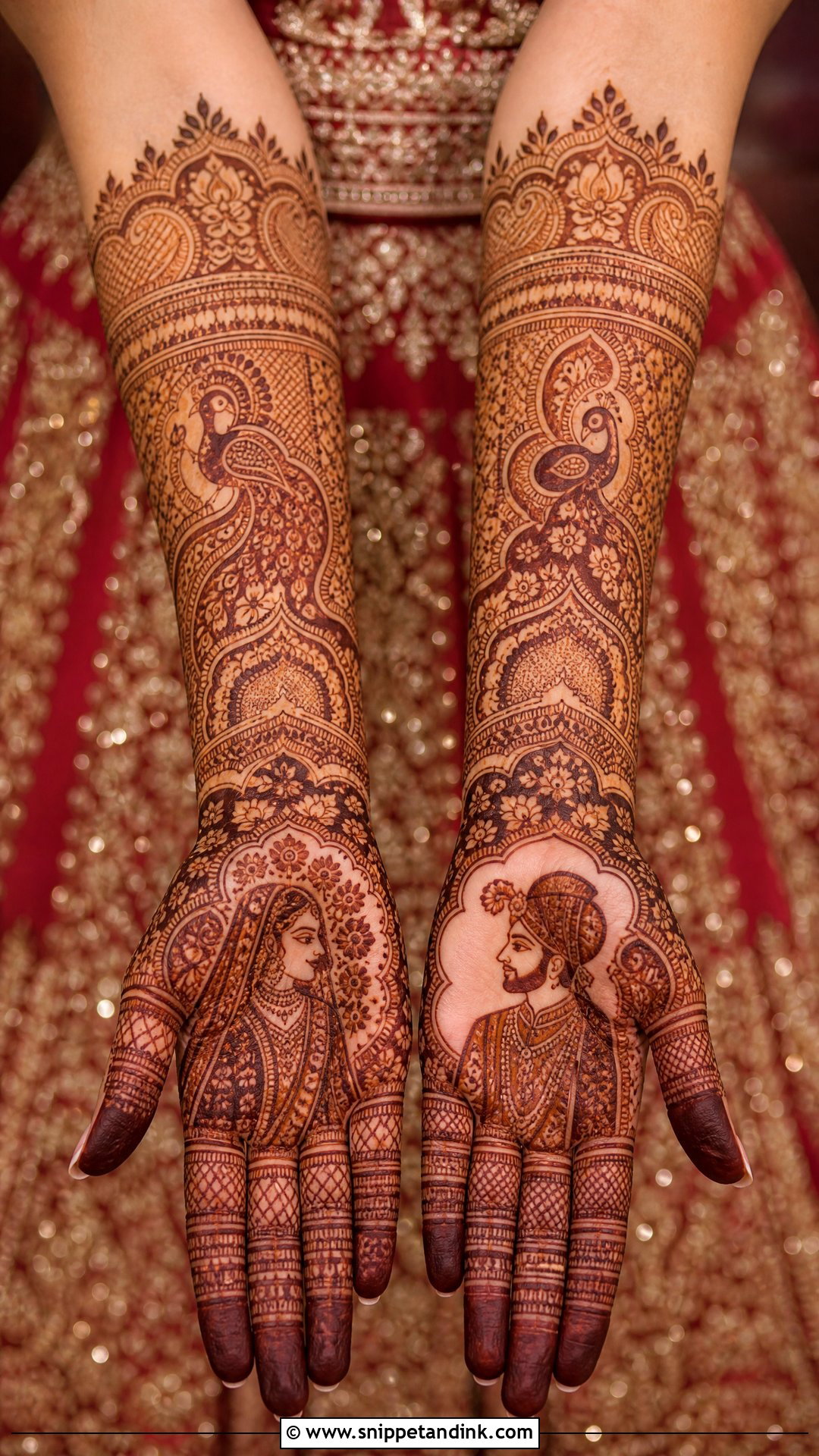
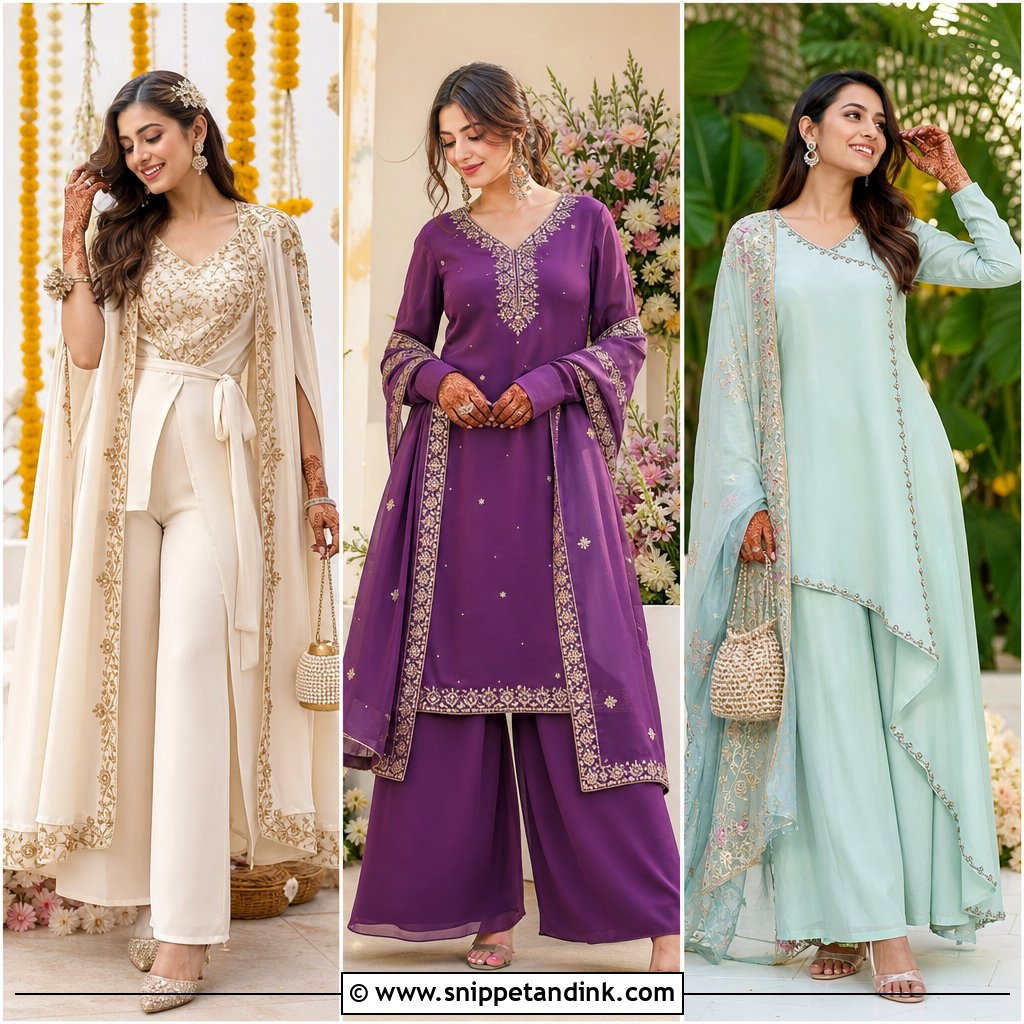
A bridal mehndi lehnga should feel distinct from your wedding outfit and comfortable enough to sit in for hours. Yellow, green, orange, pink and multicolour palettes are typical, with mirror work, gota patti, florals, phulkari or personalised embroidery. I’d choose a skirt that looks grand but isn’t stiff, because a heavily structured skirt pushes up awkwardly when you sit on a low stage. A short-sleeve or sleeveless blouse makes full-hand henna easy. A light dupatta, secure jewellery and flat shoes do the rest, and the henna stays the focus.
Henna on Silk, Tarnished Gota and Other Morning-After Problems
A mehndi outfit gets more wear and tear than most bridal pieces, and its problems show up the next day. Henna on fabric is the big one. If paste lands on your lehnga, let it dry, then lift it off gently rather than rubbing, which pushes the dye deeper. Take it to a dry cleaner quickly and tell them it’s henna; on pale silk, the stain may not come out fully, which is another reason I favour deeper colours for brides.
Storing it between events
- Air the outfit overnight before packing it away; sweat and perfume tarnish gota and zari.
- Wrap it in a cotton or muslin cloth, not plastic, which traps moisture.
- Fold mirror work inward so the mirrors don’t scratch other fabric.
- Refold heavy skirts every few months so the creases don’t set permanently.
If you plan to wear it again for another family wedding, these small steps keep it looking new.
Dress for the Henna Chair as Much as the Dance Floor
The right mehndi lehnga comes down to comfort, colour, venue and how much henna you’re having. Bright yellow, green, orange, pink and multicolour feel traditional; sage, pastels, capes, jackets and Indo western cuts feel more modern. For brides, a beautiful outfit still has to let the artist reach your arms. For sisters and guests, lighter embroidery and printed skirts are usually the easiest. Wherever your function is held, choose something you can sit, dance and laugh in for the whole evening.
You'll Like These Ideas:


Leave a Reply