
Mehendi is the one wedding event where your clothes have to work around wet paste. You’ll sit on low cushions for an hour or more while an artist works up your forearms, then stand up and dance, and the outfit has to manage both. When I dress a bride or her family for this function, I sort out sleeves, waist and fabric weight before I even look at color. Greens, yellows and pinks belong here, and so do mirror work, gota and printed cottons. Below are twenty complete looks, from lehengas and shararas to capes and jumpsuits, with notes on who each one suits and where it tends to cause trouble.

A Mehendi Fitting Test for Sleeves, Seats and Dupattas
Most Mehendi outfit trouble only shows up once you sit down with your arms held out for the artist. At a fitting I put clients through the positions they’ll actually spend the afternoon in, because a blouse that looks right in a standing mirror can be miserable on a floor cushion.
- Sit cross-legged for a couple of minutes. A sharara, salwar or lehenga skirt should pool around you without pulling at the waistband or the knee.
- Hold both arms straight out, palms up, as if for henna. For a bride the sleeve should end above the elbow, and the armhole shouldn’t cut in.
- Lean forward over your knees. If the back neckline gapes or the dupatta slides off, it needs a hook, a pin loop or a shorter drape.
- Look at every fastening. Once your hands are covered in paste, someone else is doing up each hook, so side or front openings are far easier than tiny back buttons.
Bring the shoes you’ll wear and any heavy earrings. Heel height changes where a lehenga or sharara hem should fall, and a tailor can only mark it properly with the right pair on. Alterations on embroidered pieces also take longer than on plain ones, since mirror and gota work near a seam has to be unpicked and sewn back on, so leave a few weeks between that fitting and the event.
1. Green Mirror Work Lehenga Mehendi Outfit
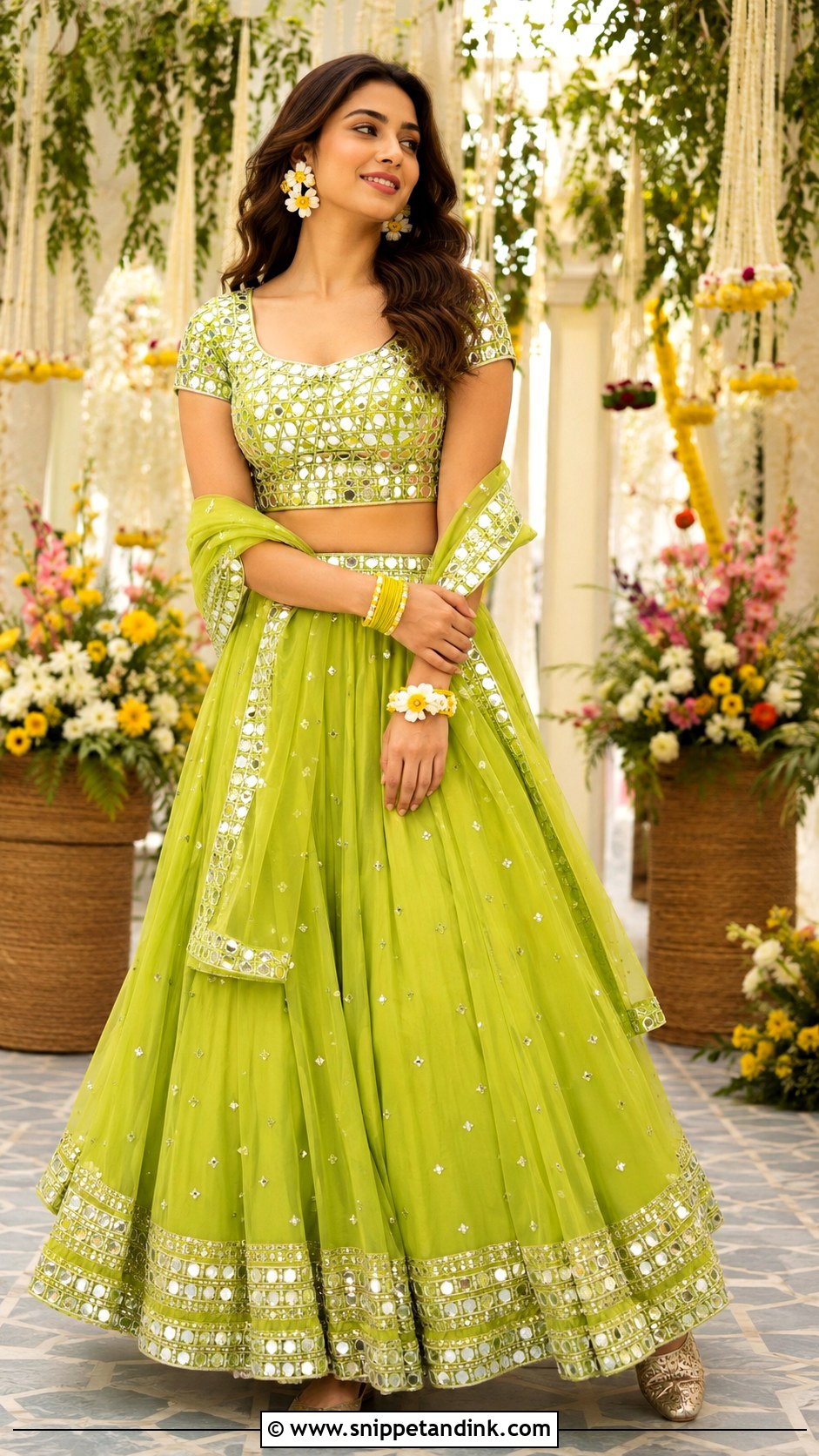
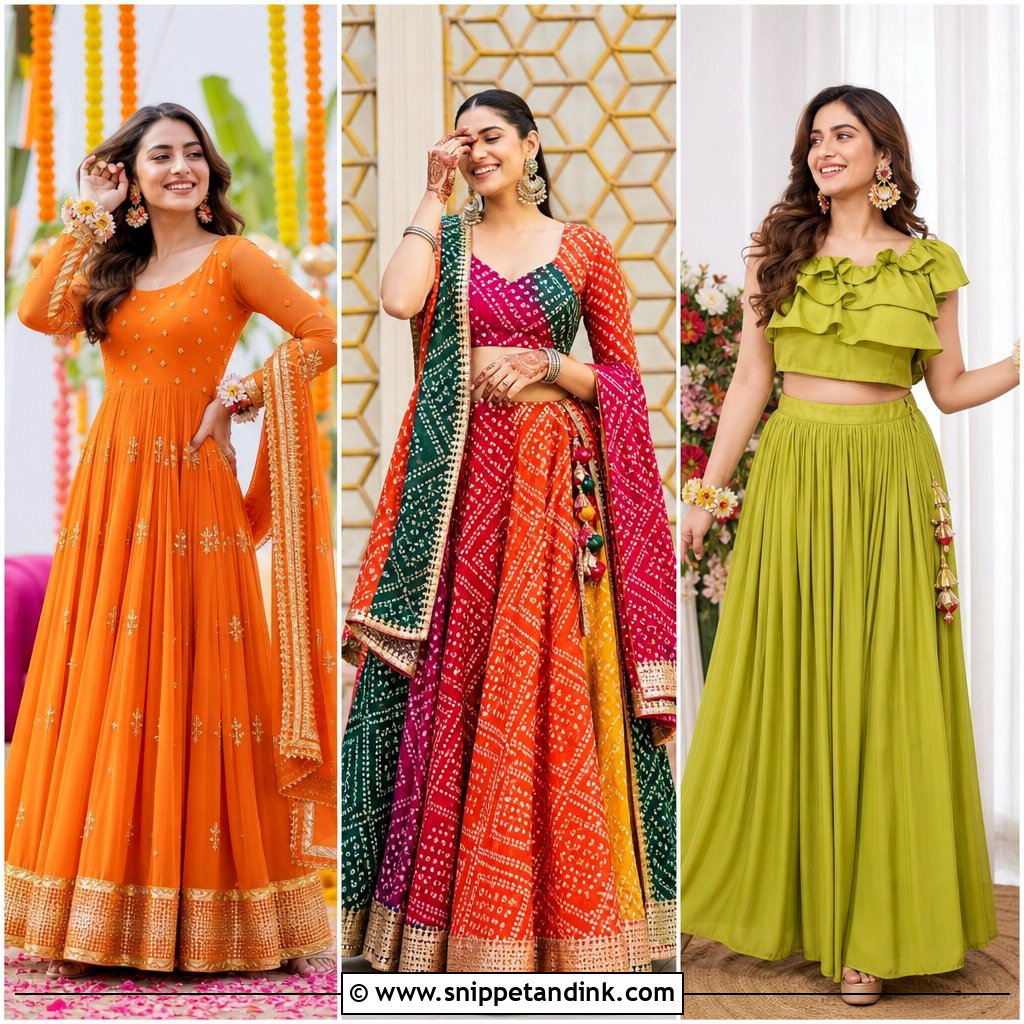
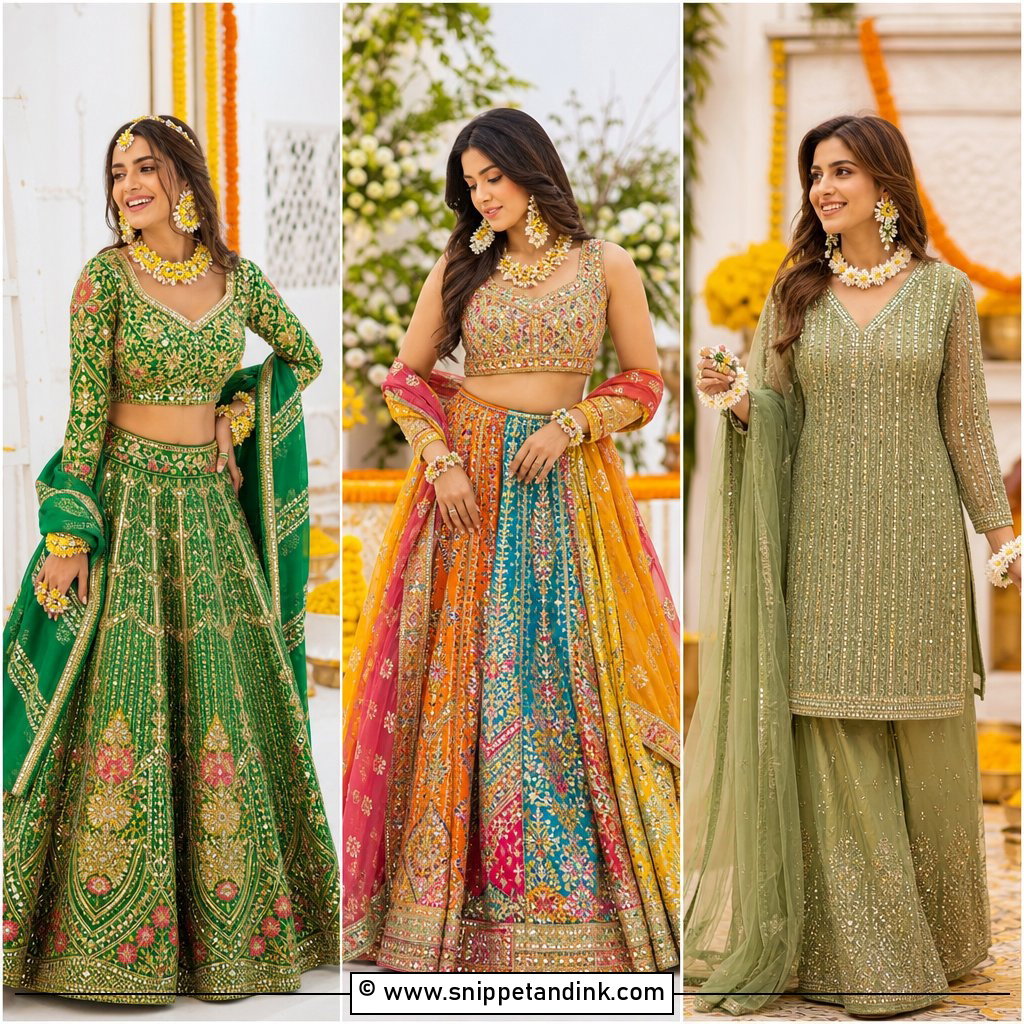
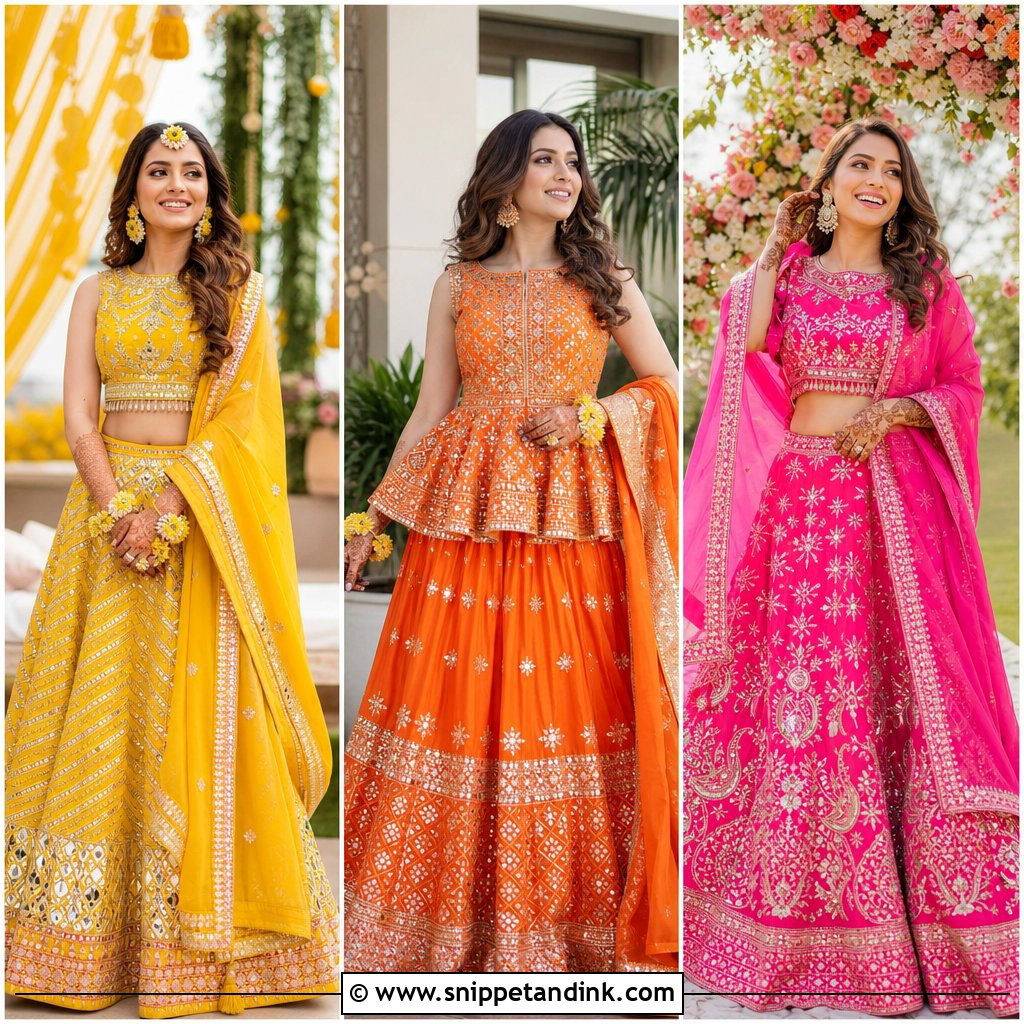
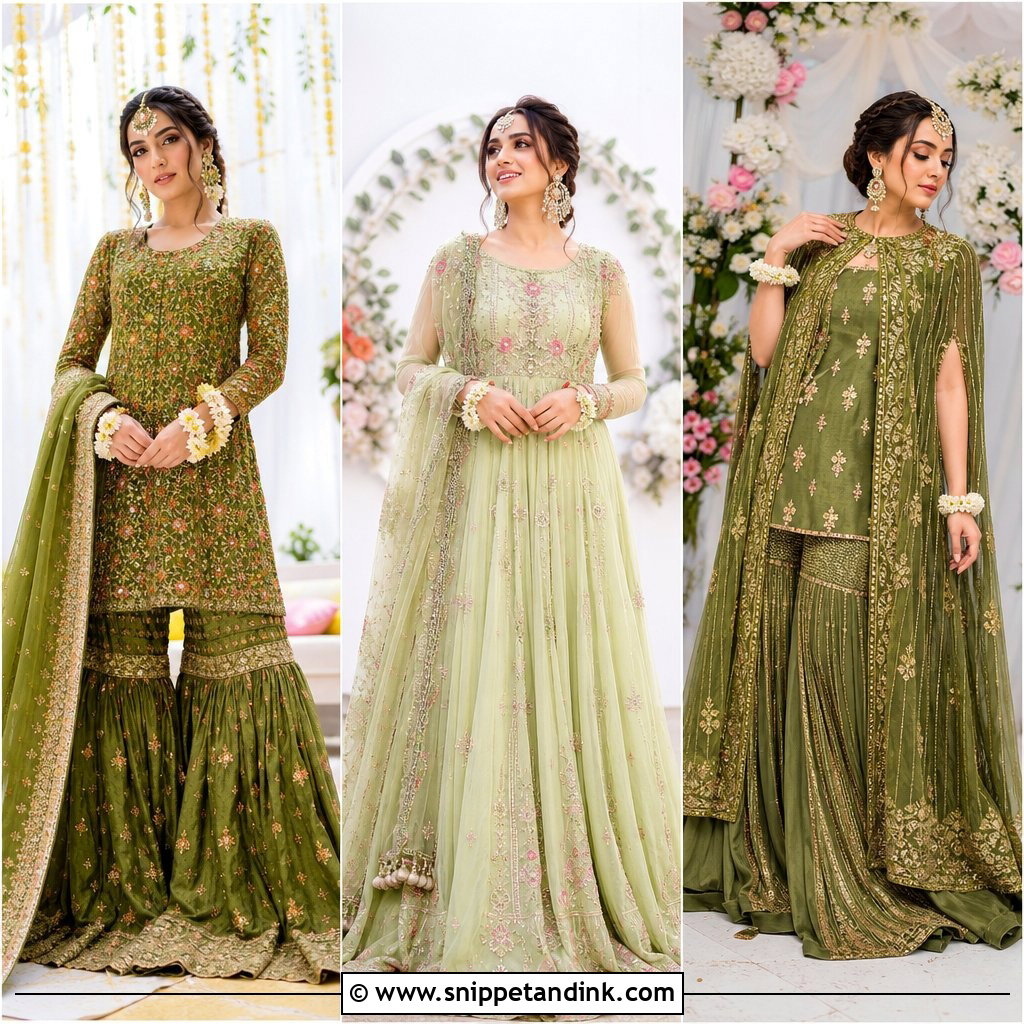
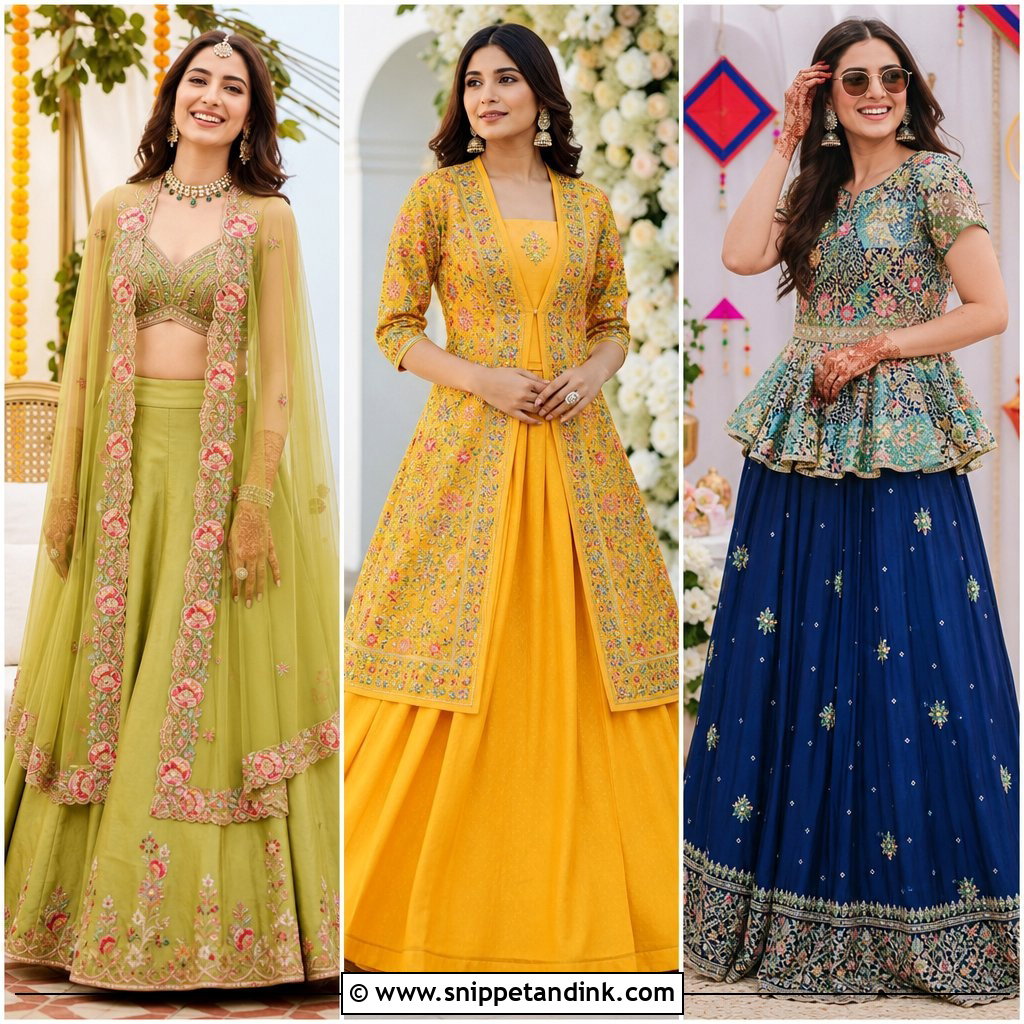
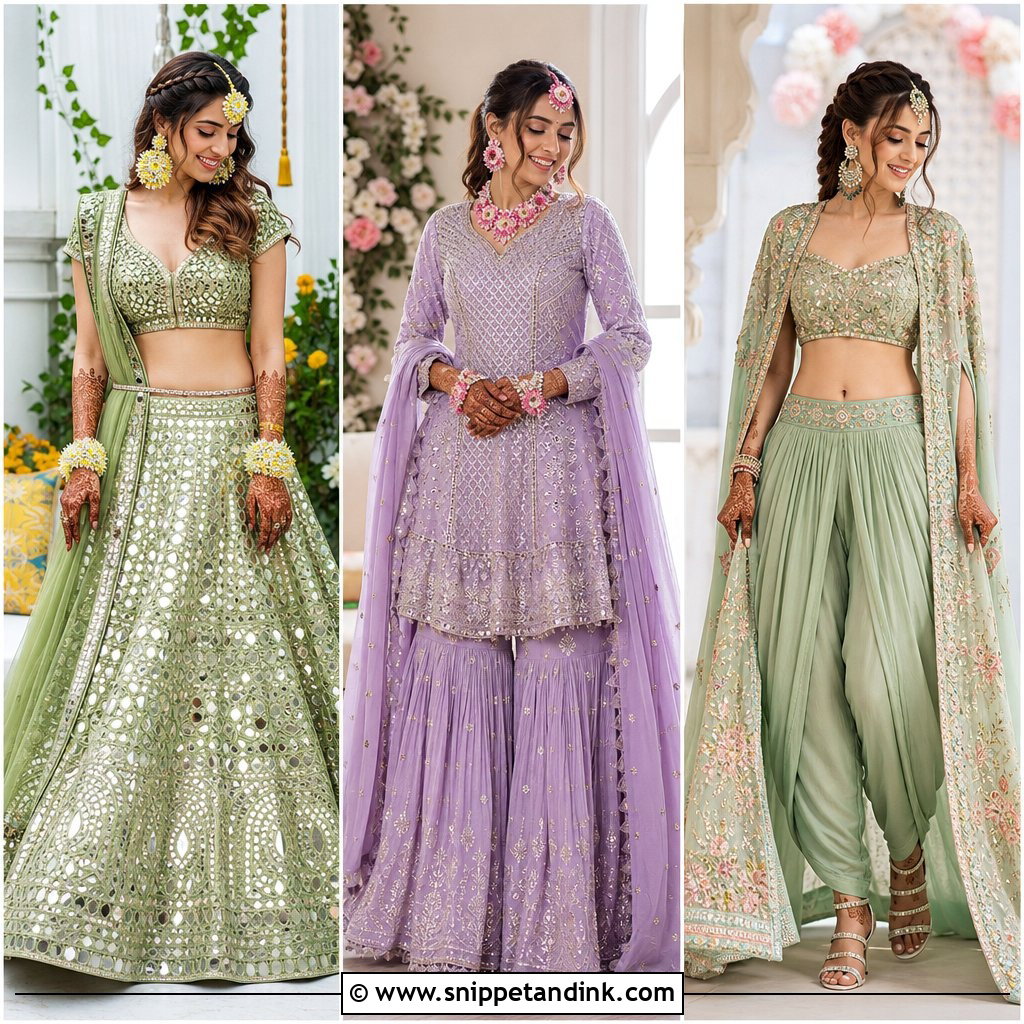
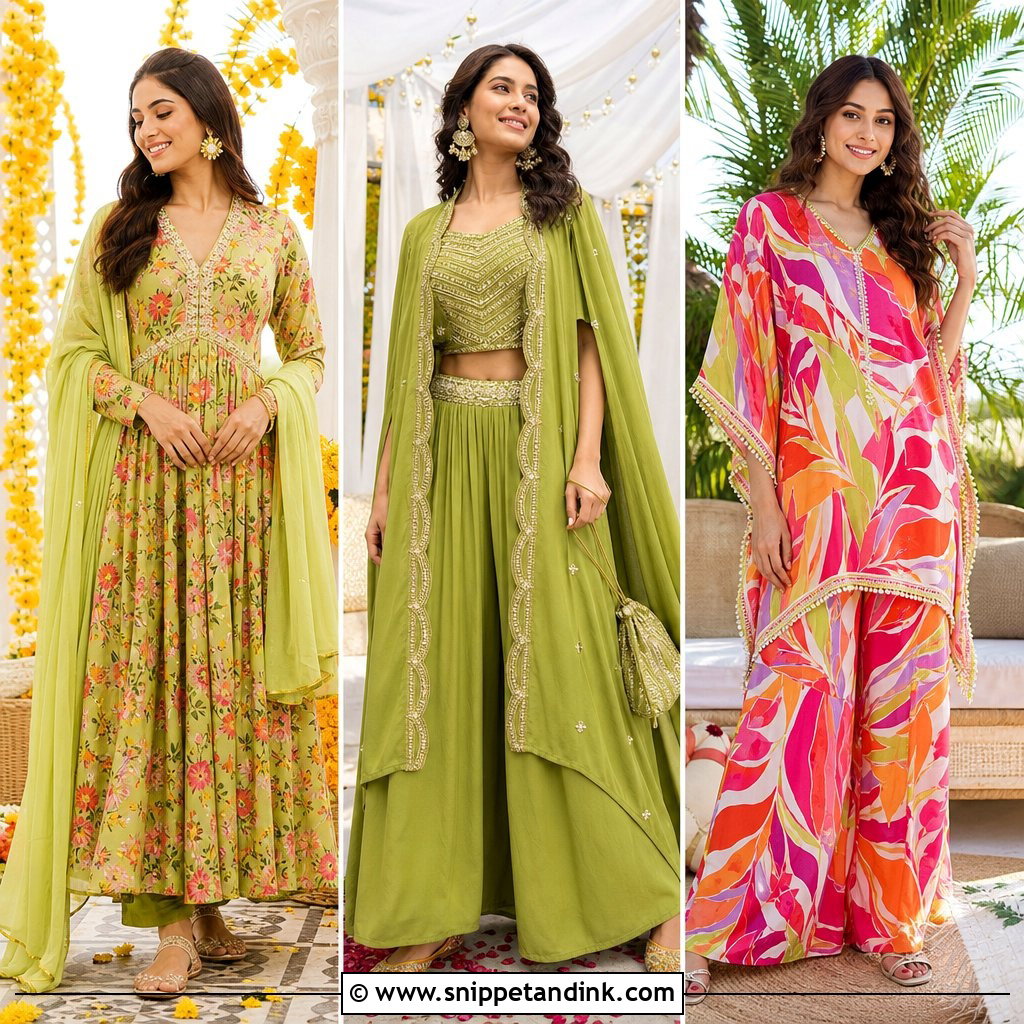
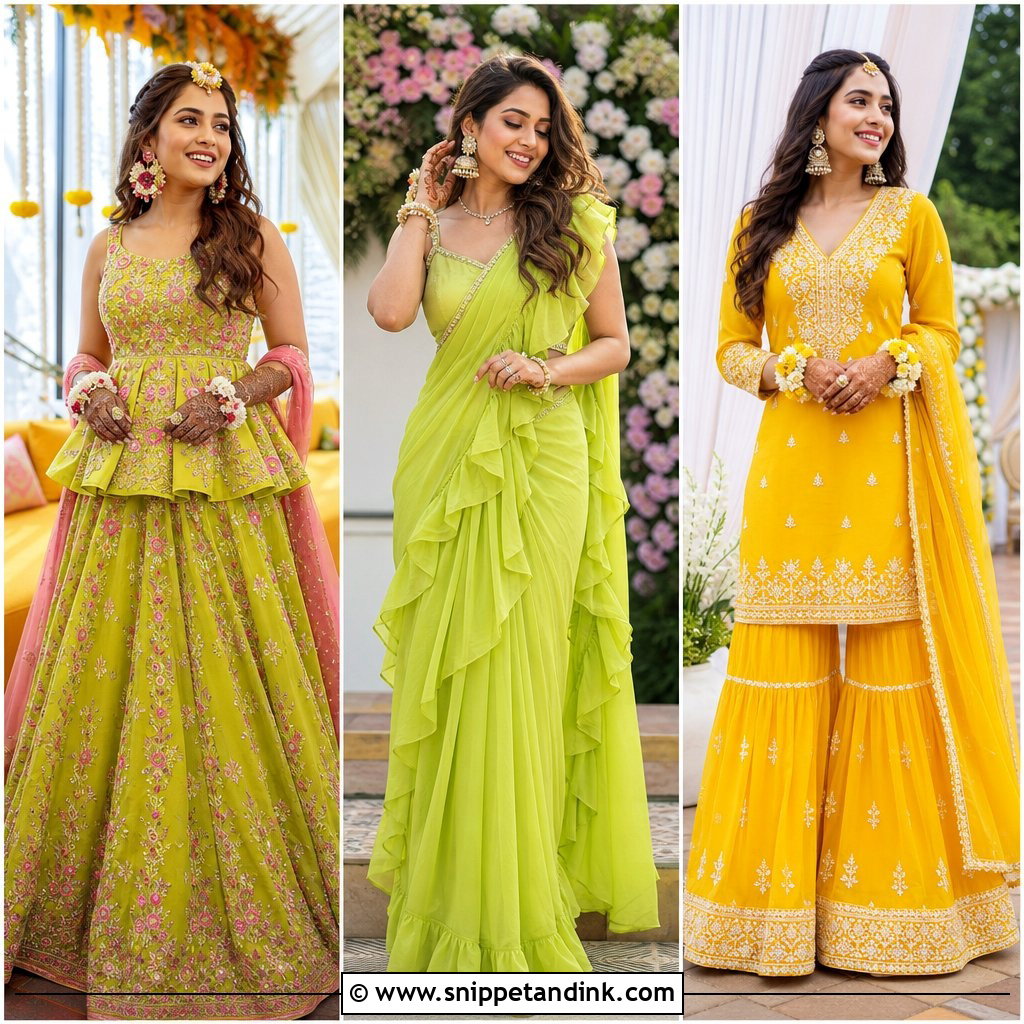
Green with mirror work is the classic Mehendi palette, and the risk is weight. Real glass mirrors stitched densely over a full can-can skirt get heavy fast, and you feel it by the third hour on the floor. I ask for georgette with scattered mirrors instead, plus a short-sleeve blouse so the artist can reach above the elbow. Keep the dupatta border slim; a heavy border drags the drape off your shoulder every time you lean forward. Floral earrings, a fine maang tikka and metallic juttis finish it, with bangles going on once the henna has dried. Brides can go brighter in lime or emerald with denser work, while guests look right in sage. A loose braid or low ponytail with small flowers suits a garden or daytime setting.
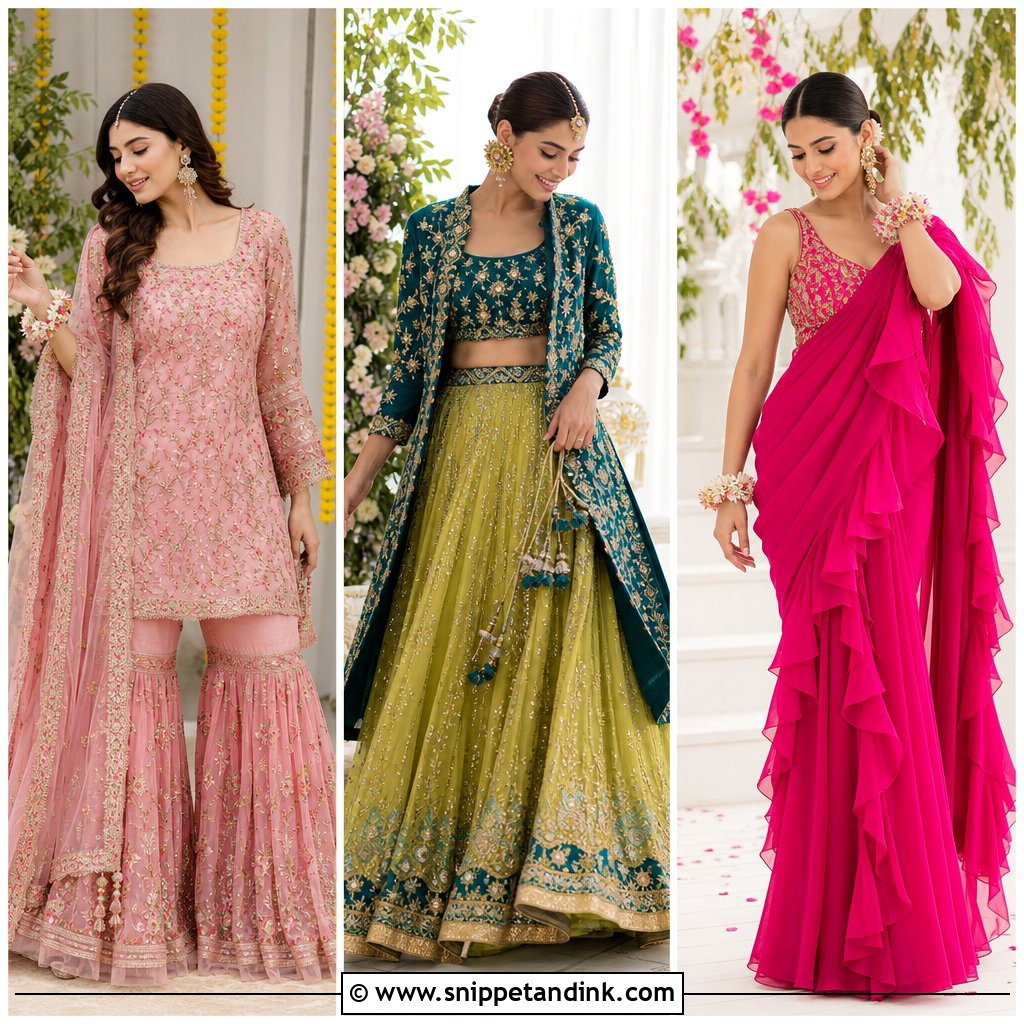
2. Yellow Sharara Set Mehendi Outfit
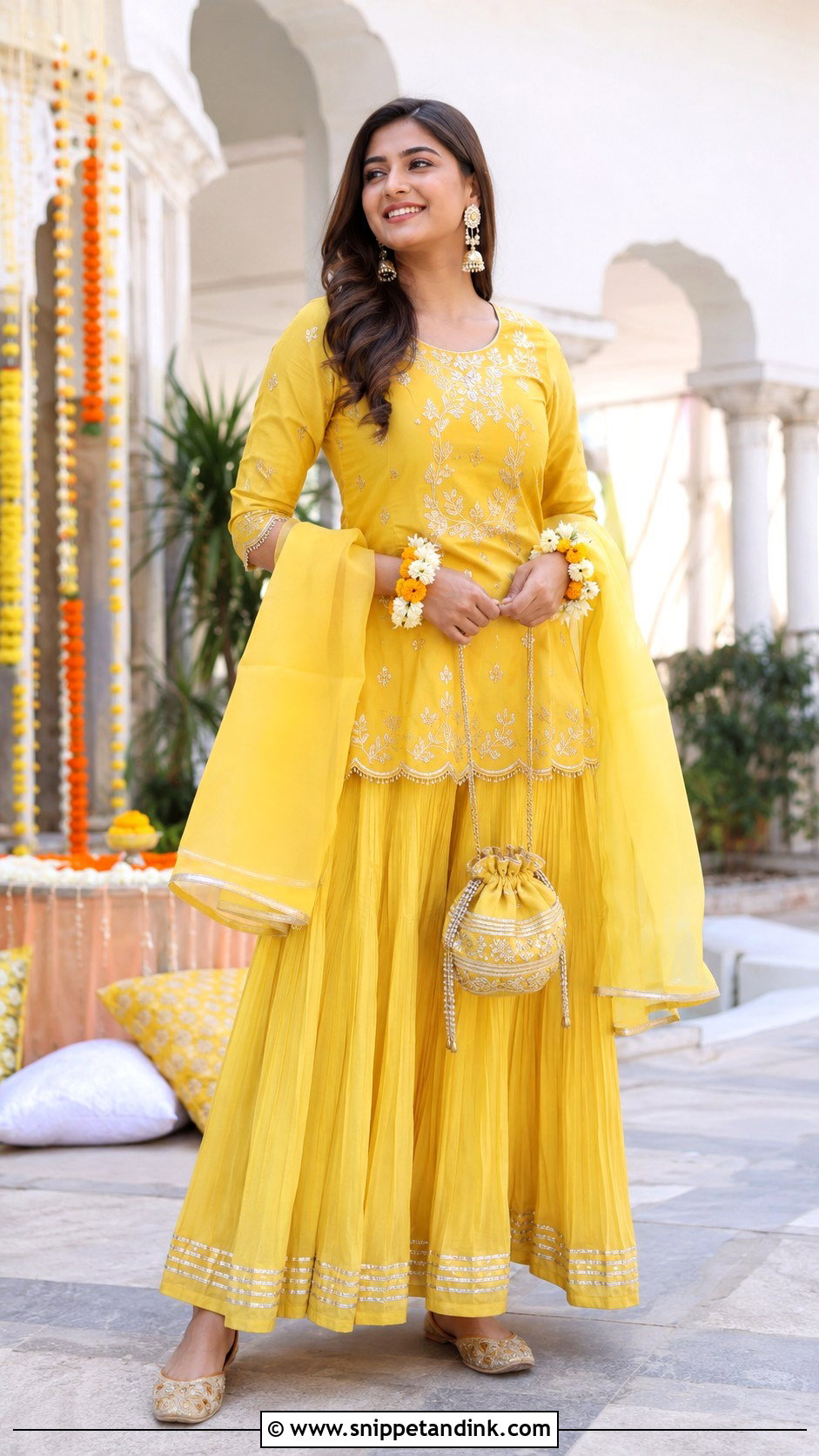
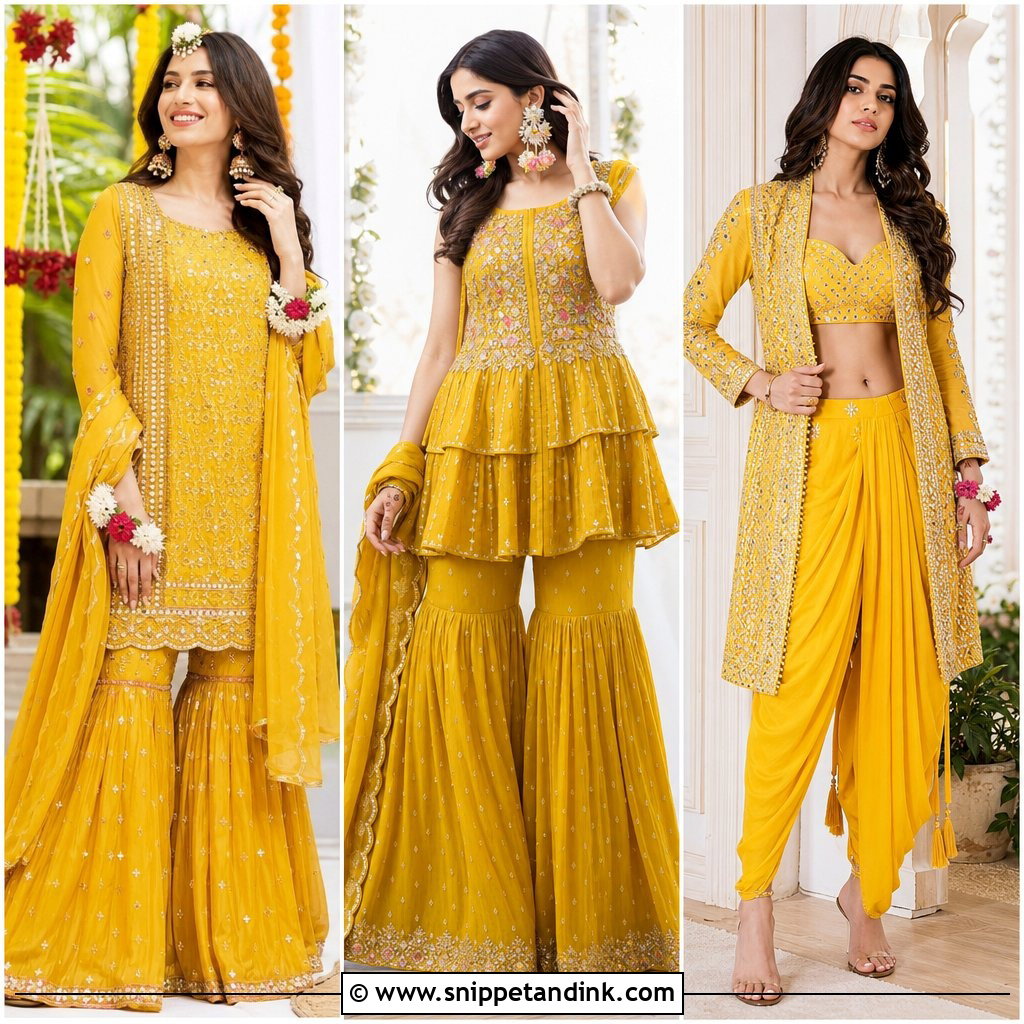
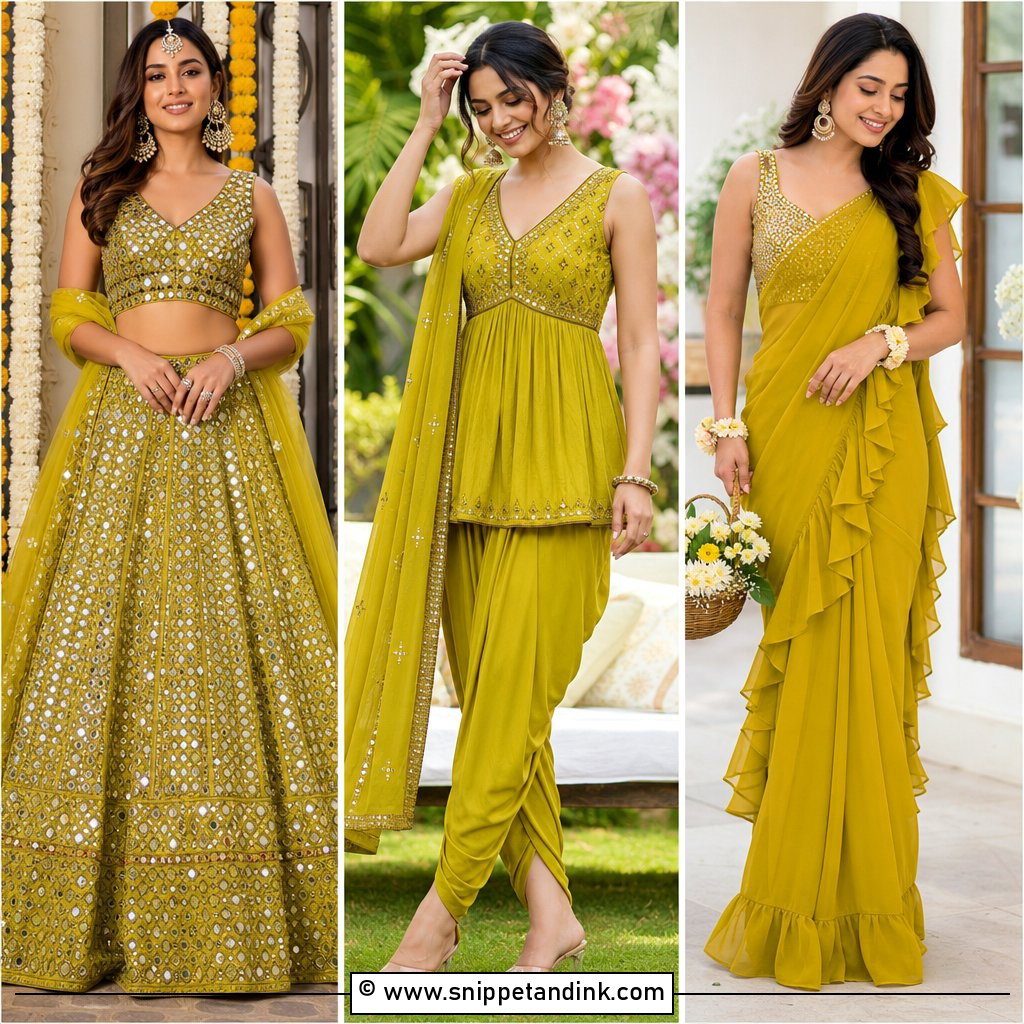
Yellow flatters almost every skin tone in daylight, which is why I reach for it so often for sisters and bridesmaids. Pair a short embroidered kurta with elbow-length sleeves and a sharara; the split legs make sitting on the floor far easier than a lehenga skirt. Check that the flare starts around the knee rather than the hip, or it bunches when you sit. Organza or chiffon for the dupatta, gota trim or small mirrors on the kurta, then pearl jhumkas, a potli and cushioned gold juttis. For stronger contrast, bring in hot pink, turquoise, or green through the dupatta and accessories.
3. Floral Printed Lehenga Mehendi Outfit
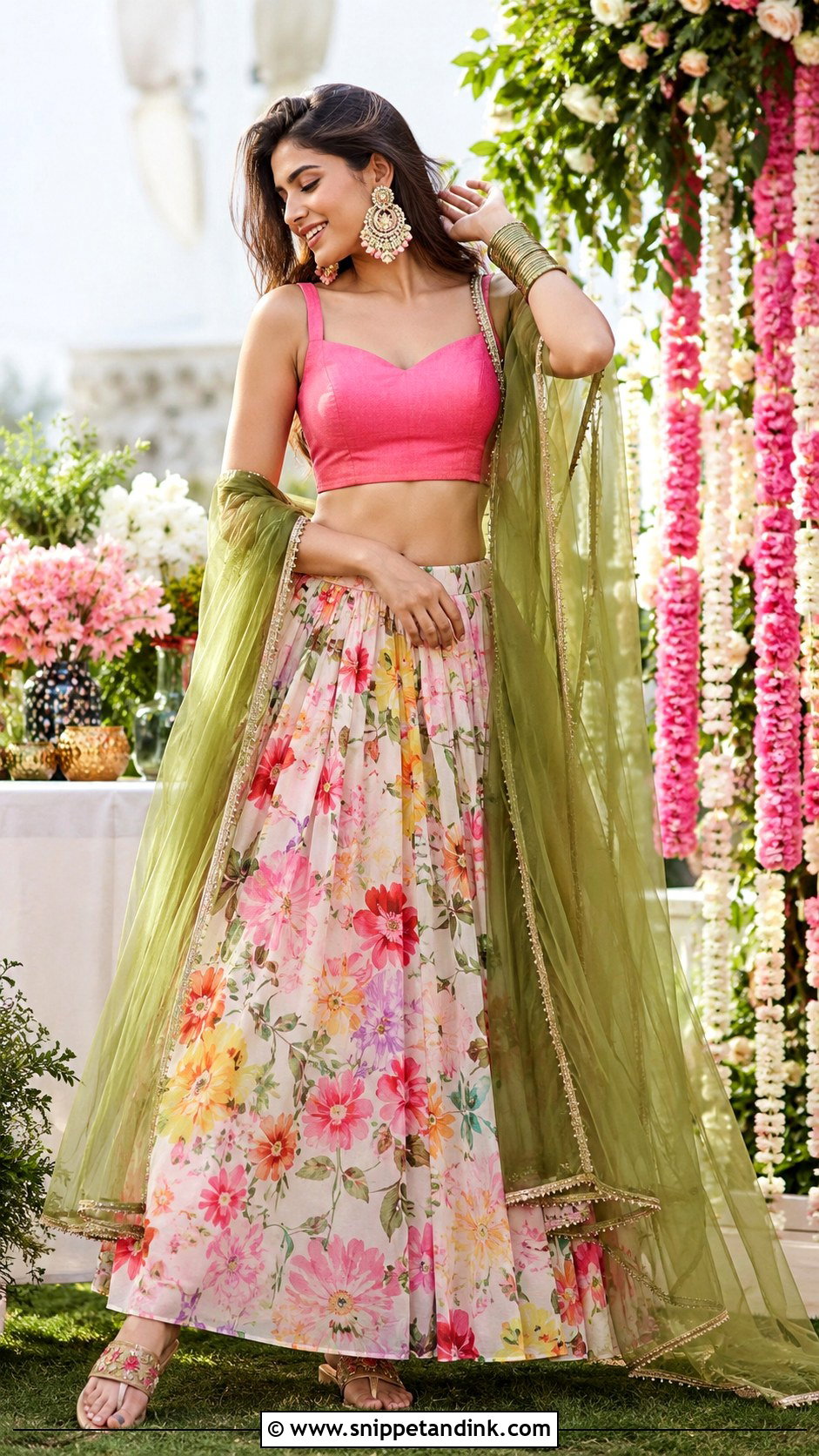
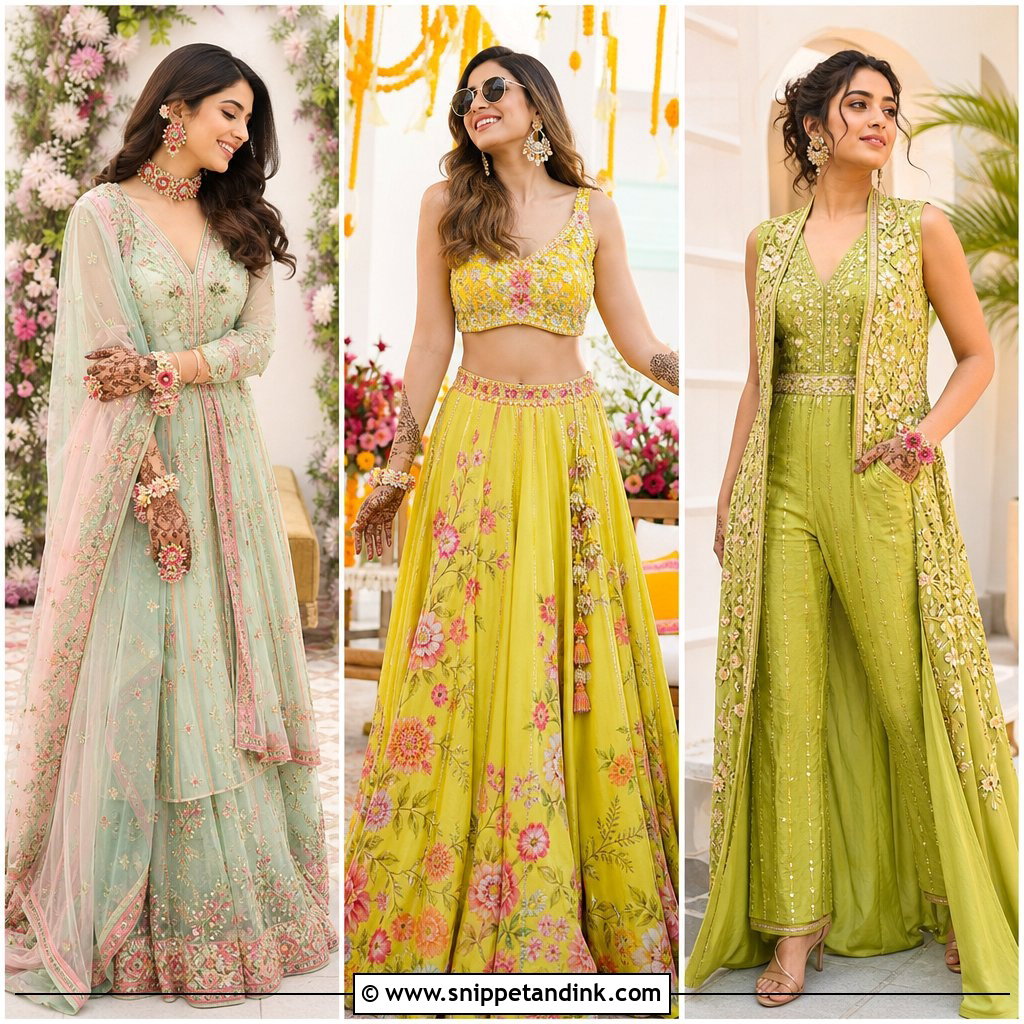
Print is the forgiving choice. A lightweight printed lehenga in pink, yellow, coral or turquoise hides an odd henna smudge far better than a solid pastel, and that matters at an event where paste is everywhere. I match the solid crop blouse to one color pulled from the flowers, never to the background, so the outfit looks planned. A sheer dupatta goes over one shoulder. Brides can choose a skirt with light sequins or mirrors; guests can keep it matte. Add statement earrings, block heels or embroidered flats and a flower-trimmed braid. Printed lehengas also rewear much more easily than heavily worked pieces, which I always mention to anyone buying rather than renting.
4. Lime Green Anarkali Mehendi Outfit
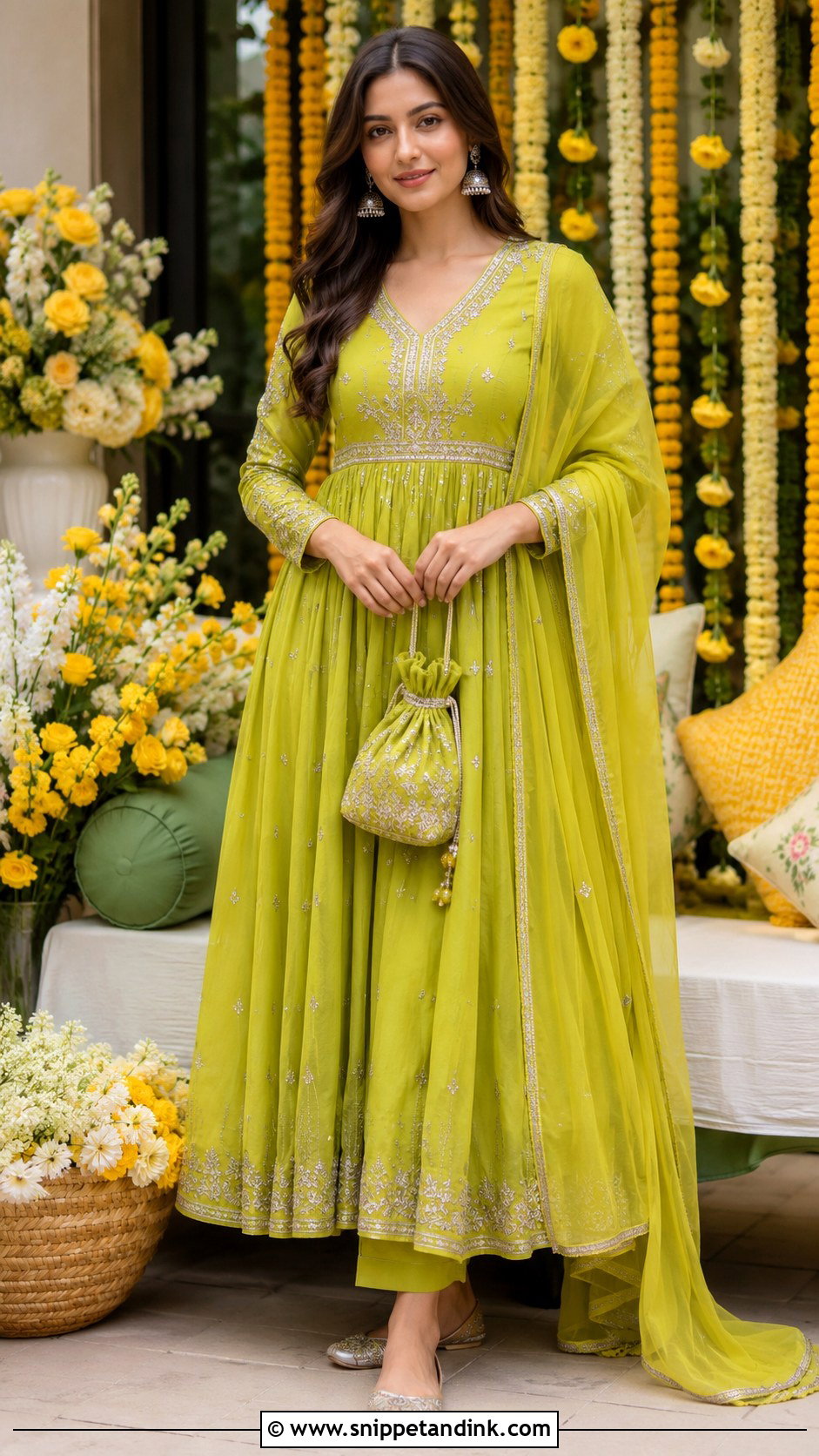
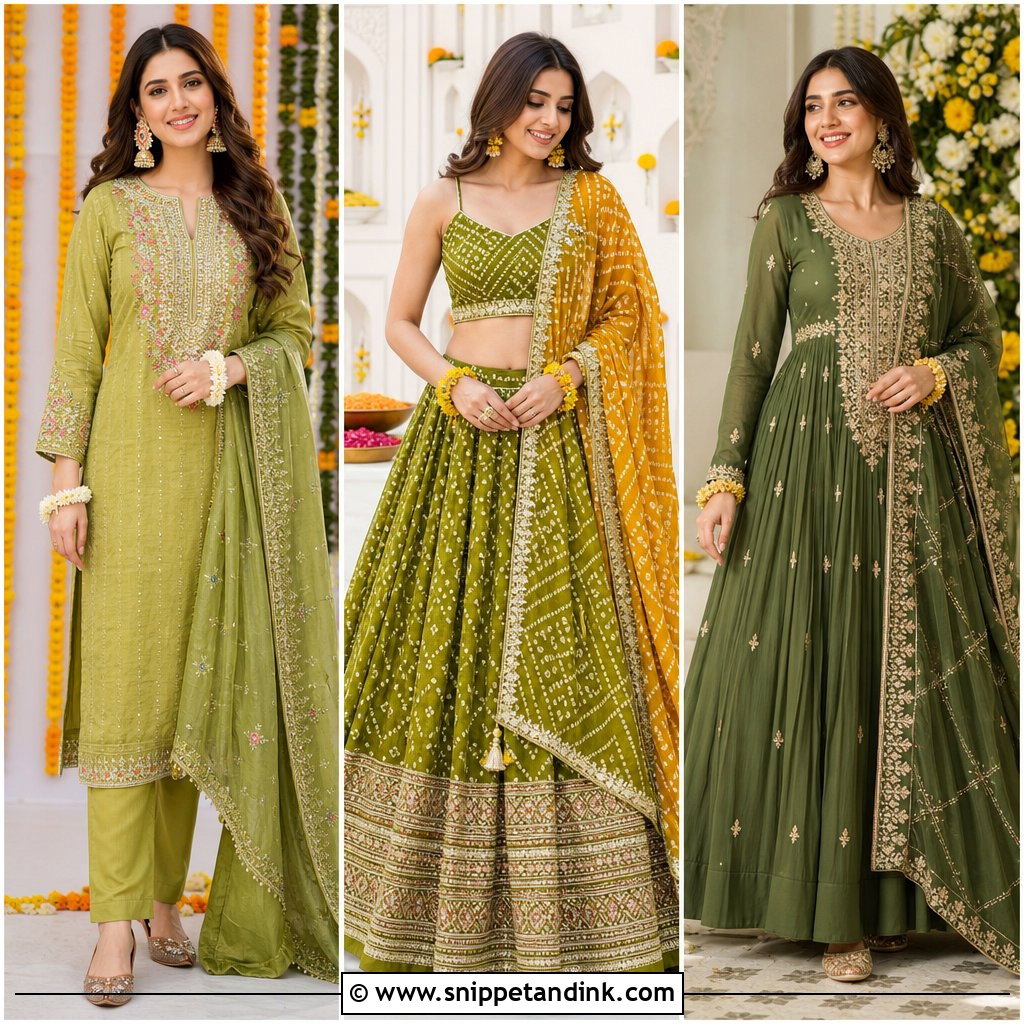
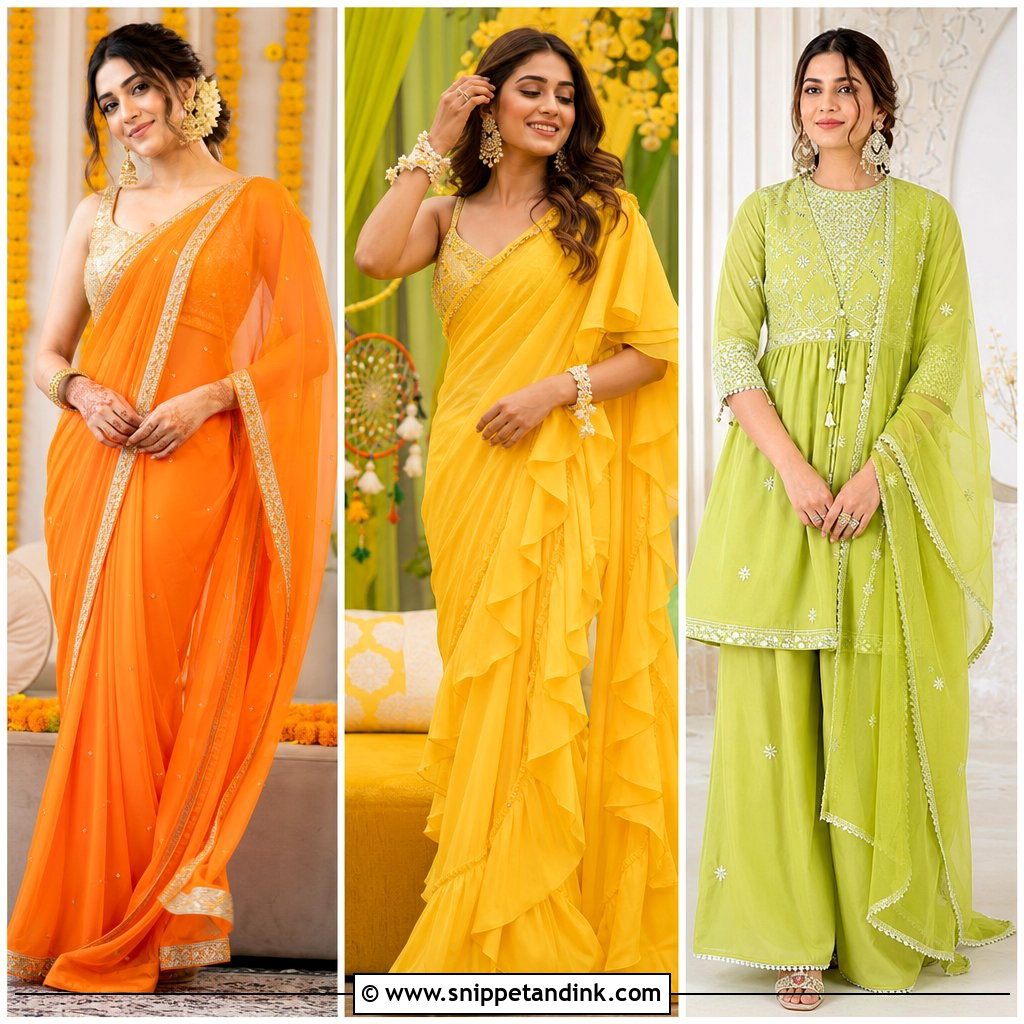
The thing I check on any Anarkali is where the flare begins. A fitted bodice that opens gradually below the waist moves well; one that kicks out right under the bust swallows a petite frame, especially in a bright lime that already draws the eye. Three-quarter sleeves are fine for guests, but a bride getting full arm henna needs short sleeves or sleeveless tailoring, because you cannot push a fitted sleeve up over wet paste. Wear it with a narrow churidar or straight pants and keep the dupatta away from the hands. Oxidized silver jhumkas, silver juttis and a statement ring once the henna is dry. In warm weather, threadwork, gota or small mirrors are kinder than heavy beadwork.
5. Pink Gharara Mehendi Outfit
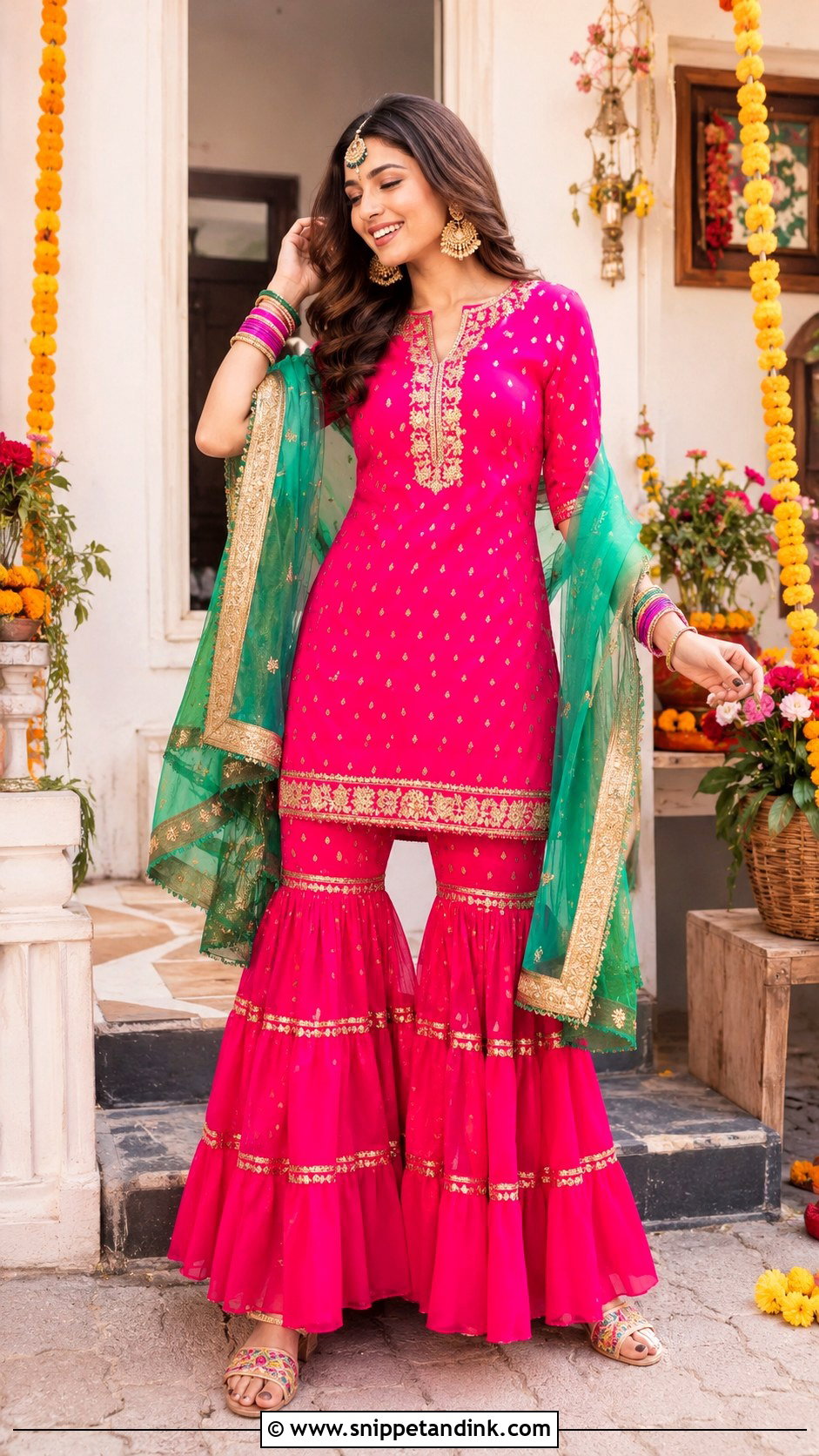
A gharara is cut differently from a sharara: it fits closely down to the knee, then flares out from a seam usually covered with a gota band. That seam has to sit at your actual knee. Too low, and you’ll be taking small, careful steps all evening, so I have the tailor check it with you sitting as well as standing. A fuchsia, rani or magenta kurti with a contrasting green or yellow dupatta ties the look back to Mehendi colors. Gold jhumkas, a hair accessory and embroidered flats complete it. Brides can add multicolor threadwork, while guests usually look better in a simple kurti over the decorative bottom. Pin the dupatta neatly; the gharara shape doesn’t need extra fabric competing with it.
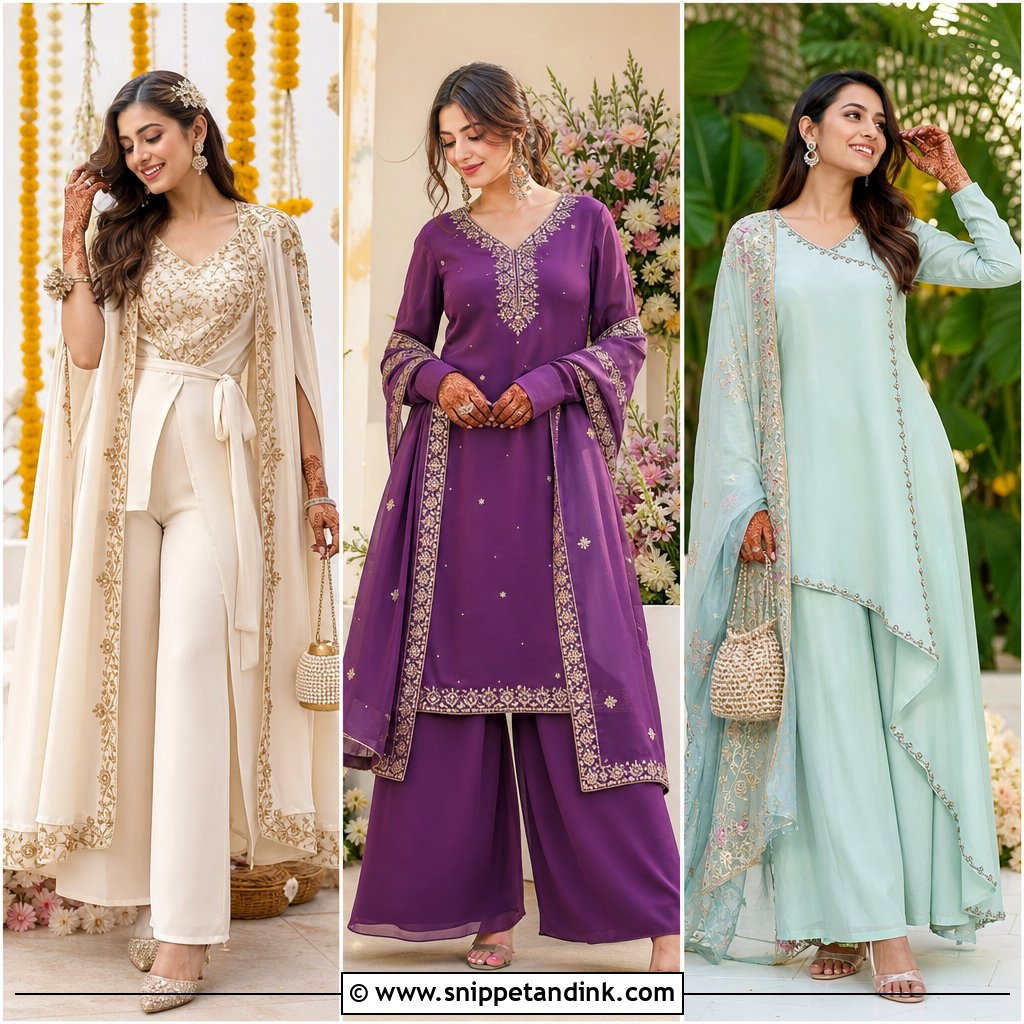
6. Mint Palazzo Suit Mehendi Outfit
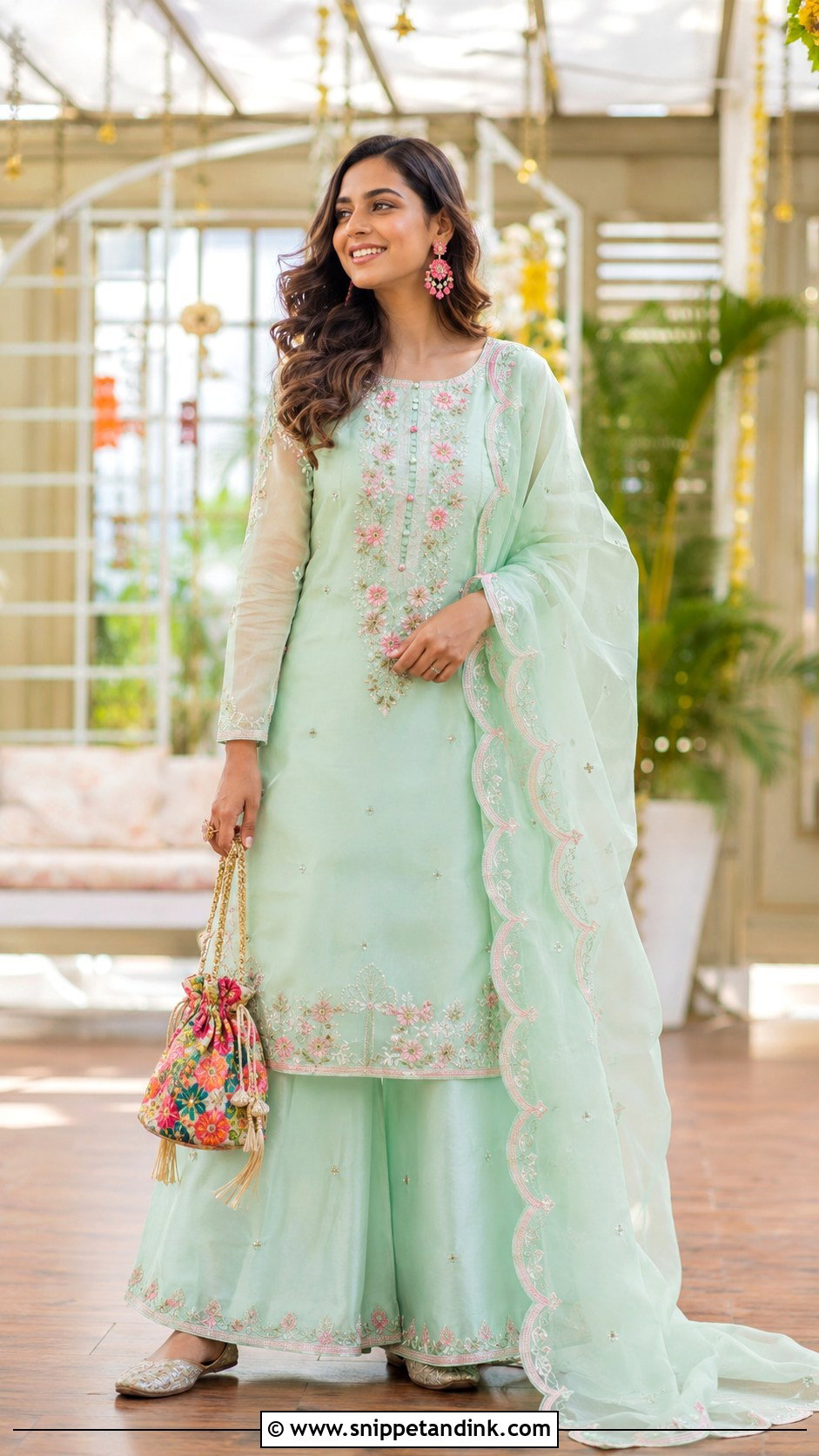
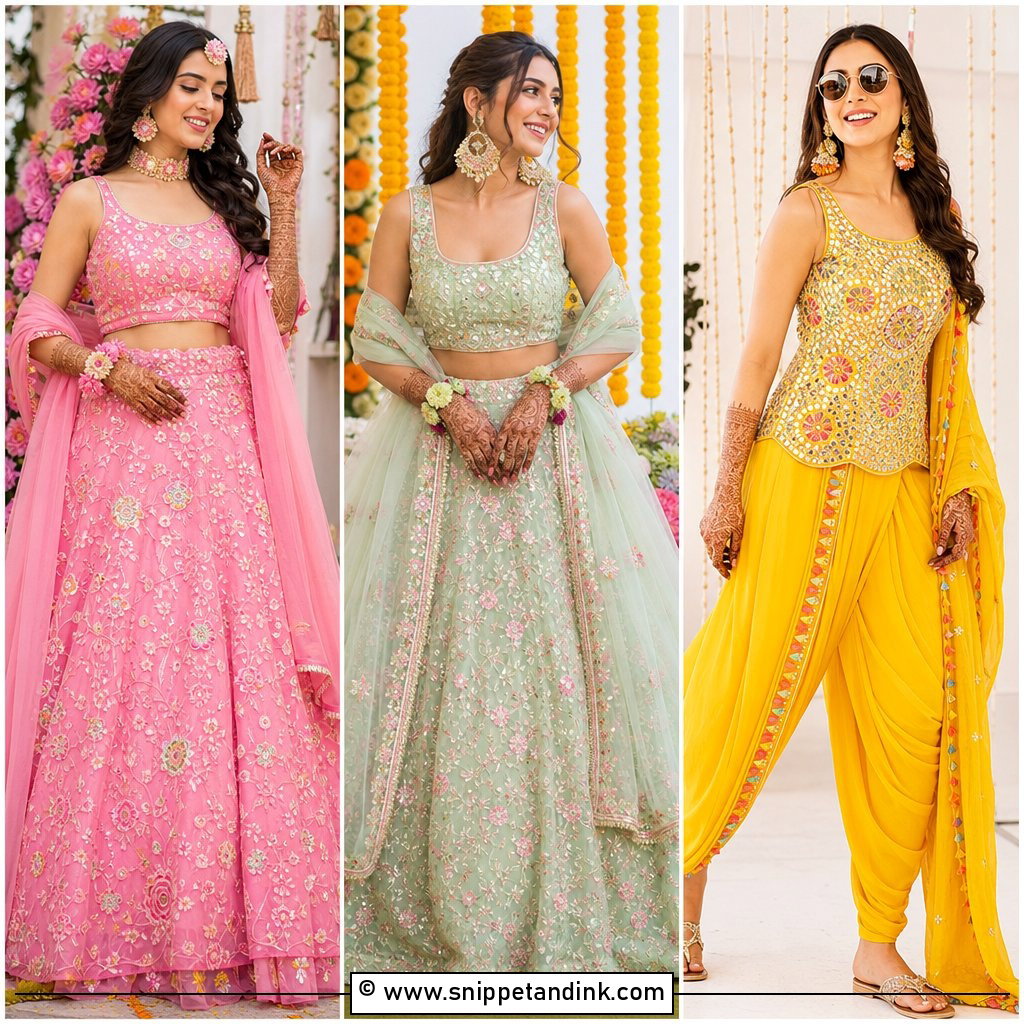
Mint is my answer for the woman who finds Mehendi green too loud. A straight or slightly flared kurta with fine floral embroidery over wide palazzos in the same shade keeps the line long and unbroken. I like side slits on this set because they let the palazzos swing when you walk. A scalloped organza dupatta adds a little structure, and pink floral earrings, a colorful potli and pearl-trimmed flats bring contrast. Bridesmaids can each wear a different pastel in the same cut, which looks coordinated without looking uniformed. Of everything here, a wide-leg set is the easiest to sit cross-legged in.
7. Multicolor Bandhani Lehenga Mehendi Outfit
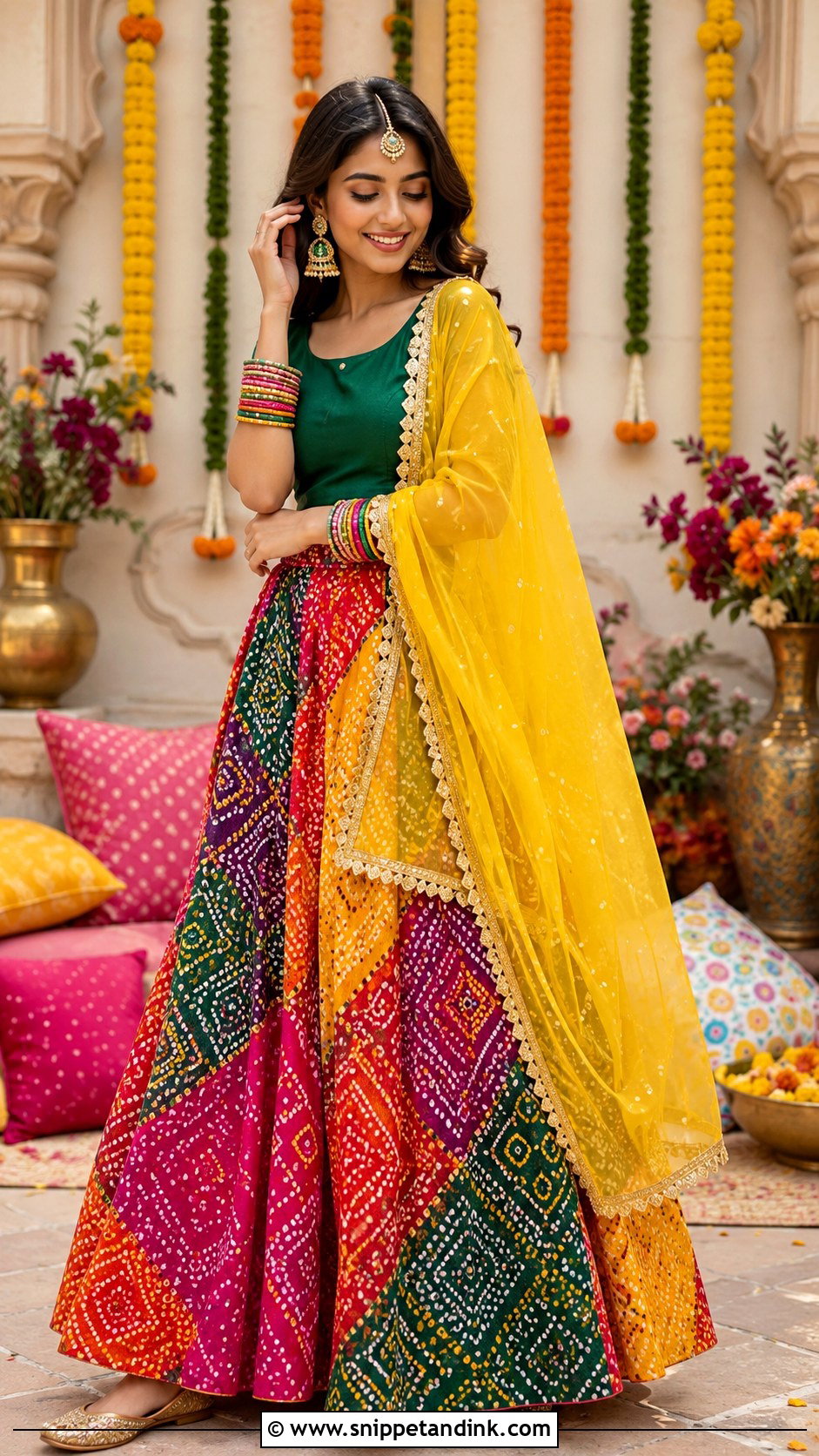
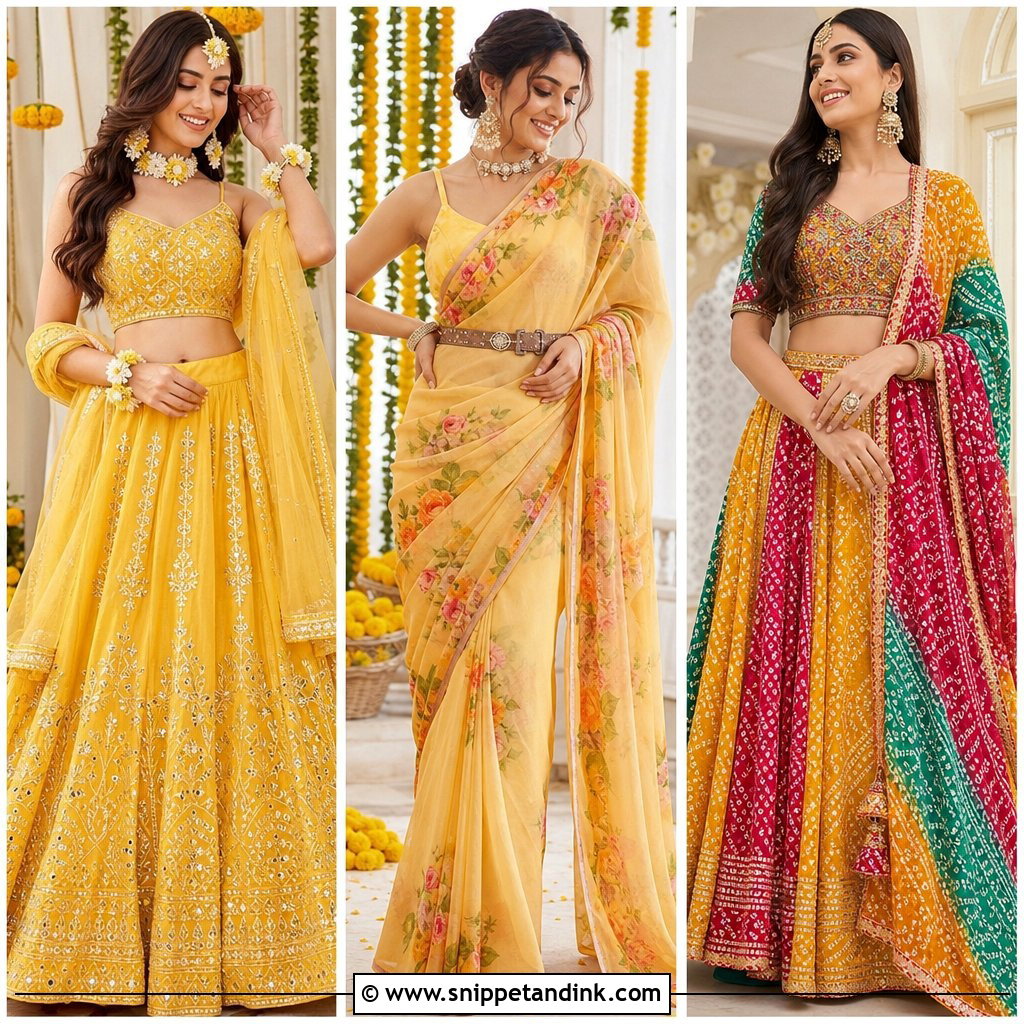
Bandhani is tied and dyed by hand, so the dots are never perfectly even, and that slight irregularity is part of its character. Choose a light lehenga mixing green, yellow, orange and pink, then calm the print with a solid short-sleeve blouse in green or fuchsia. I only add a bandhani dupatta when the skirt is fairly plain; otherwise a plain chiffon one with a gota border. One caution: bandhani dyes, especially on silk, can bleed when wet, so keep damp henna and spilled drinks well away from the skirt. Jhumkas, a small maang tikka and gold juttis are plenty, since the textile already does the talking.
8. Peach Embroidered Co-Ord Mehendi Outfit
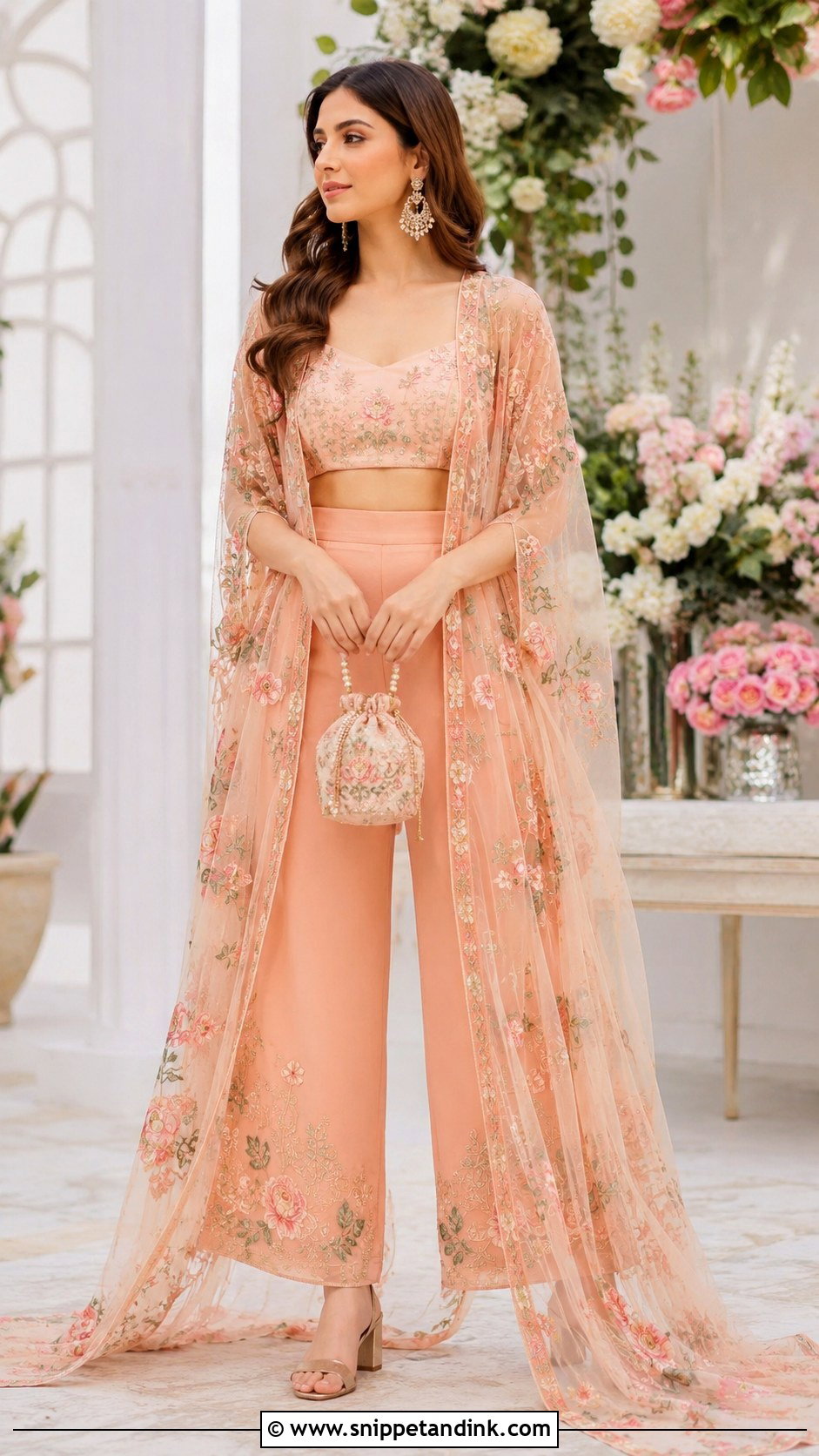
Not everyone wants a lehenga or a suit. A peach embroidered co-ord gives you a festive outfit with the ease of separates: a cropped or waist-length top with short sleeves and matching wide-leg pants, with a sheer cape or light dupatta over the shoulders for some traditional movement. Green, yellow and pink threadwork ties the soft peach to the Mehendi palette. At the fitting, sit down in the pants. Co-ords are often cut slim through the hip and knee, and you’ll be on a cushion for a long while. A defined waist keeps the two pieces reading as one outfit.
9. Turquoise Dhoti Pant Mehendi Outfit
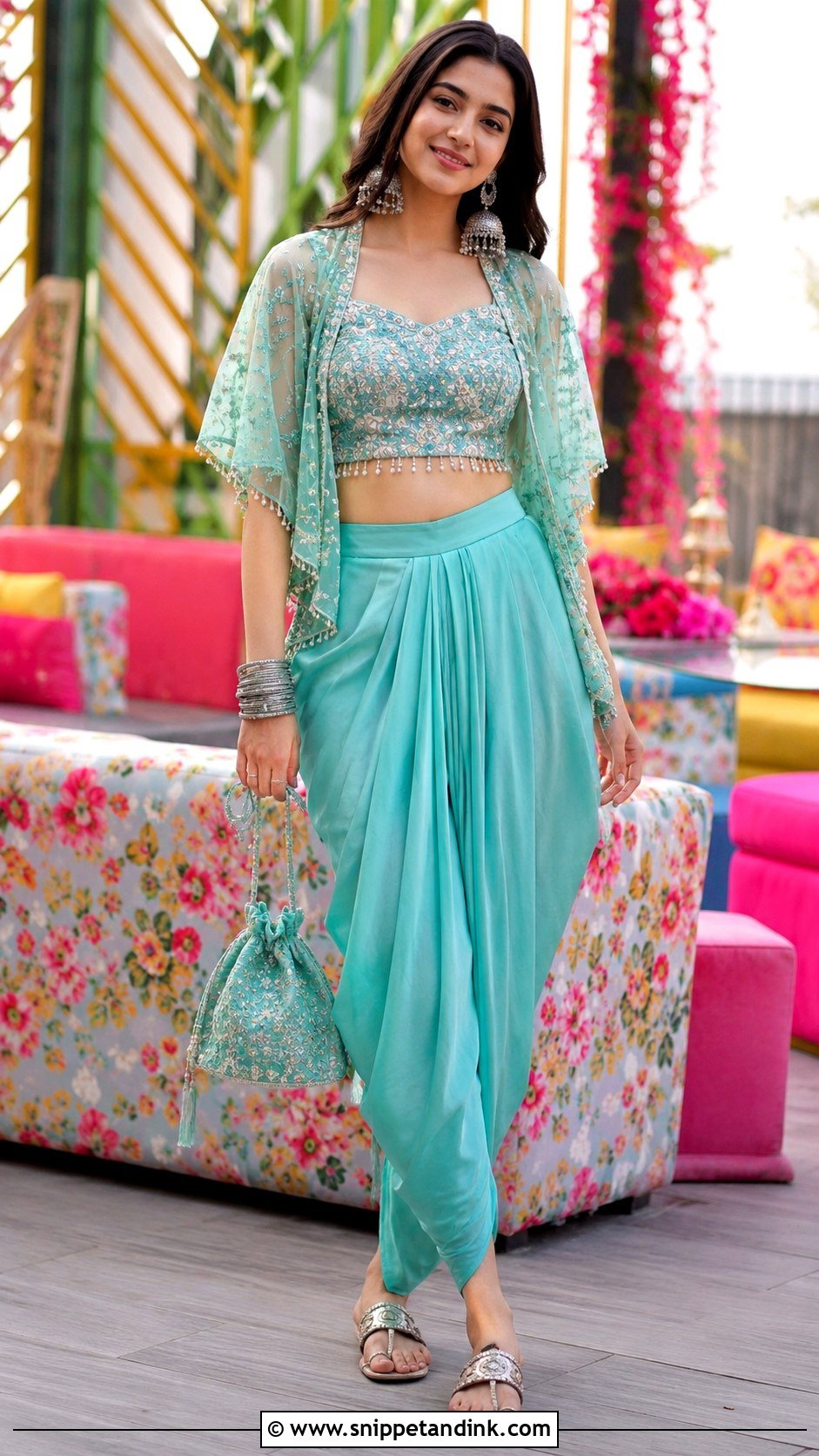
Dhoti pants are made for dancing, though a very deep drape gets awkward when you sit on the floor, so I keep it moderate for this event. Turquoise is bright and distinctive here. Pair the pants with a fitted embroidered crop top and a short open jacket or cape. I steer clients toward crepe or georgette, since heavier fabric piles up at the waist where the drape is gathered. If the top is heavily worked, keep the jacket sheer. Oxidized earrings, silver bangles, a compact potli and flat embellished sandals. Bridesmaids can play turquoise against lime or coral accessories, and a high ponytail keeps the neckline clear.
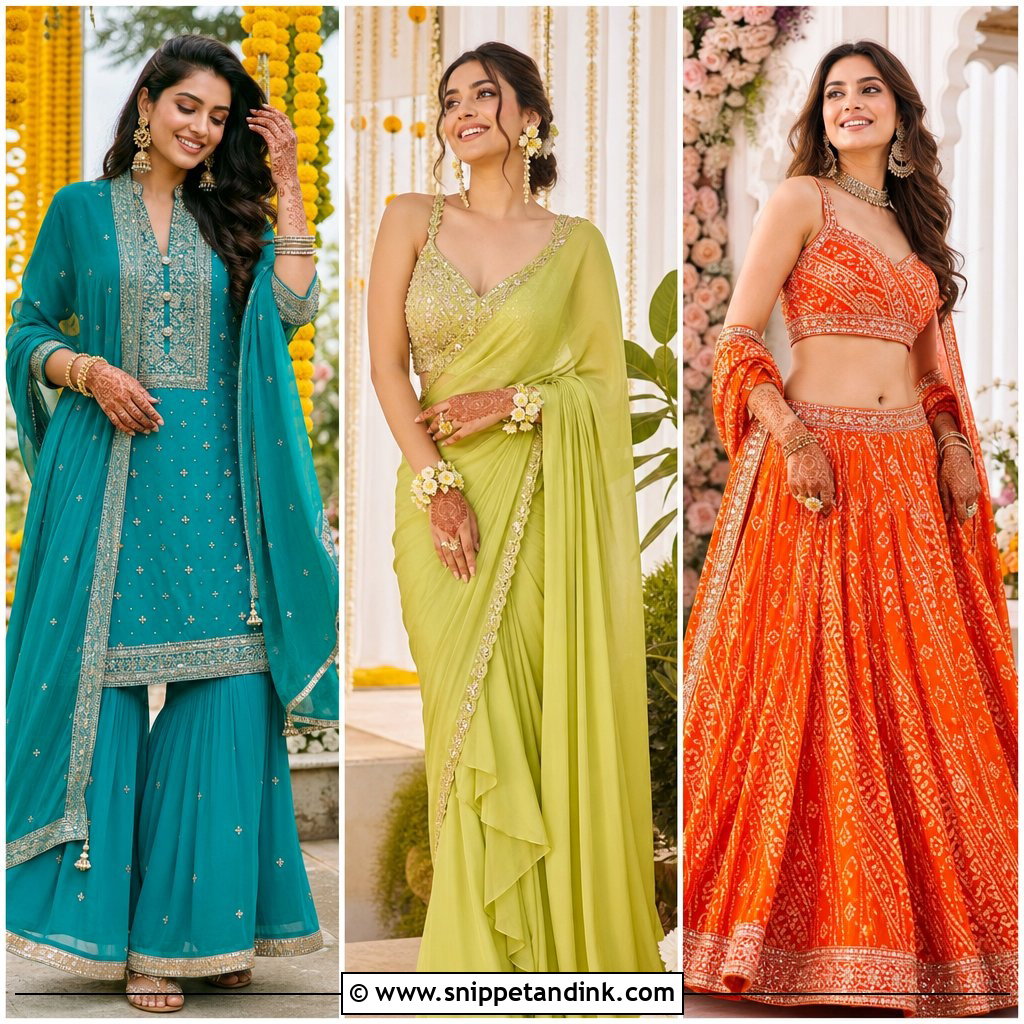
10. Mustard Yellow Saree Mehendi Outfit
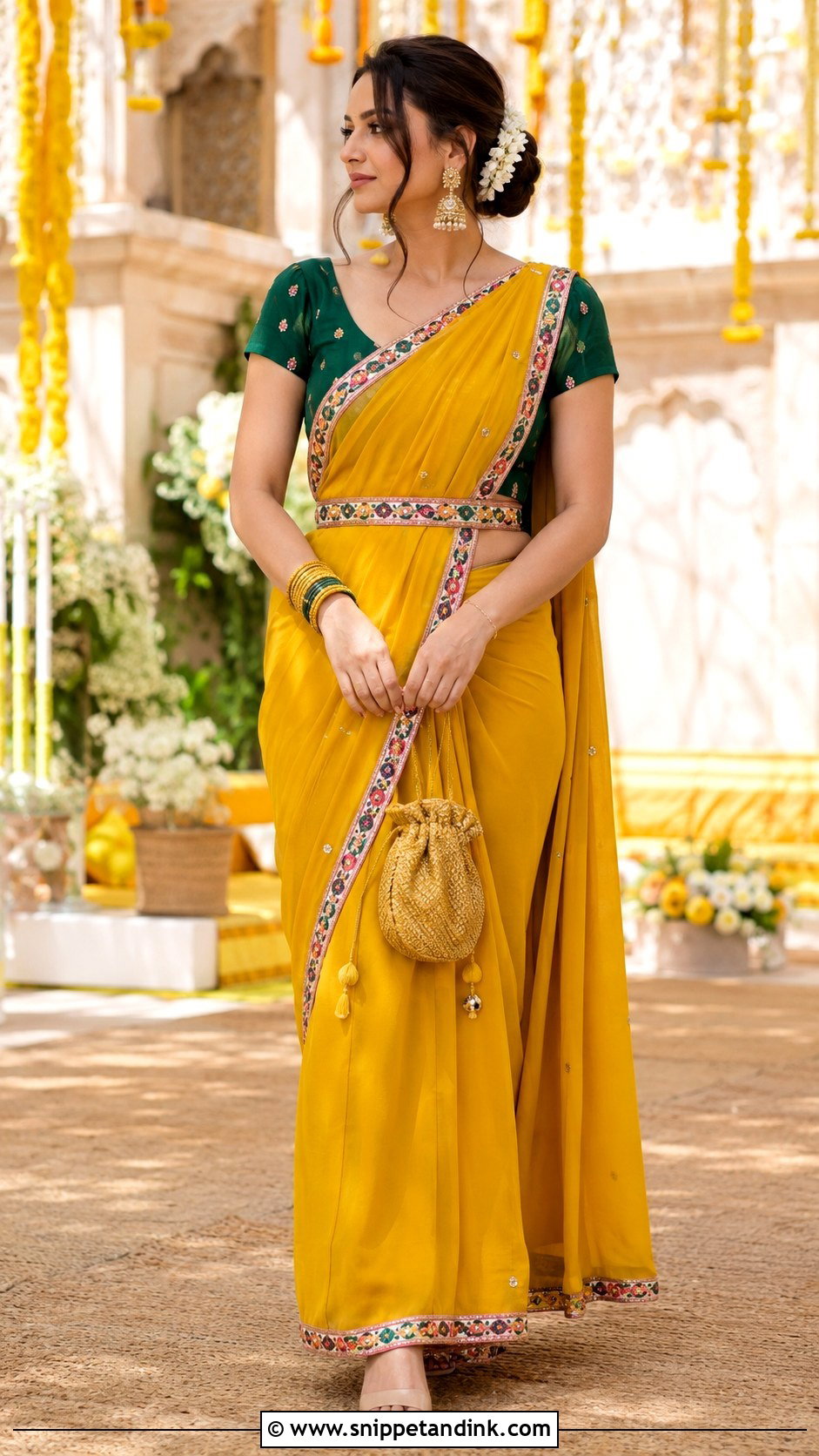
A saree at a Mehendi needs one adjustment that people forget: the pallu. Left loose, it slides off the shoulder and straight into fresh paste. I pin it at the shoulder in two places, and for brides and close family I add a waist belt to hold the pleats. Mustard yellow in cotton silk, chiffon or light georgette, with a colorful border or small mirrors, looks festive without feeling formal. Pair it with a contrasting short-sleeve blouse with a secure neckline. If you rarely wear a saree, cotton silk holds its pleats better than chiffon and is more forgiving to drape. A low bun with small flowers suits it.
11. Orange Cape Set Mehendi Outfit
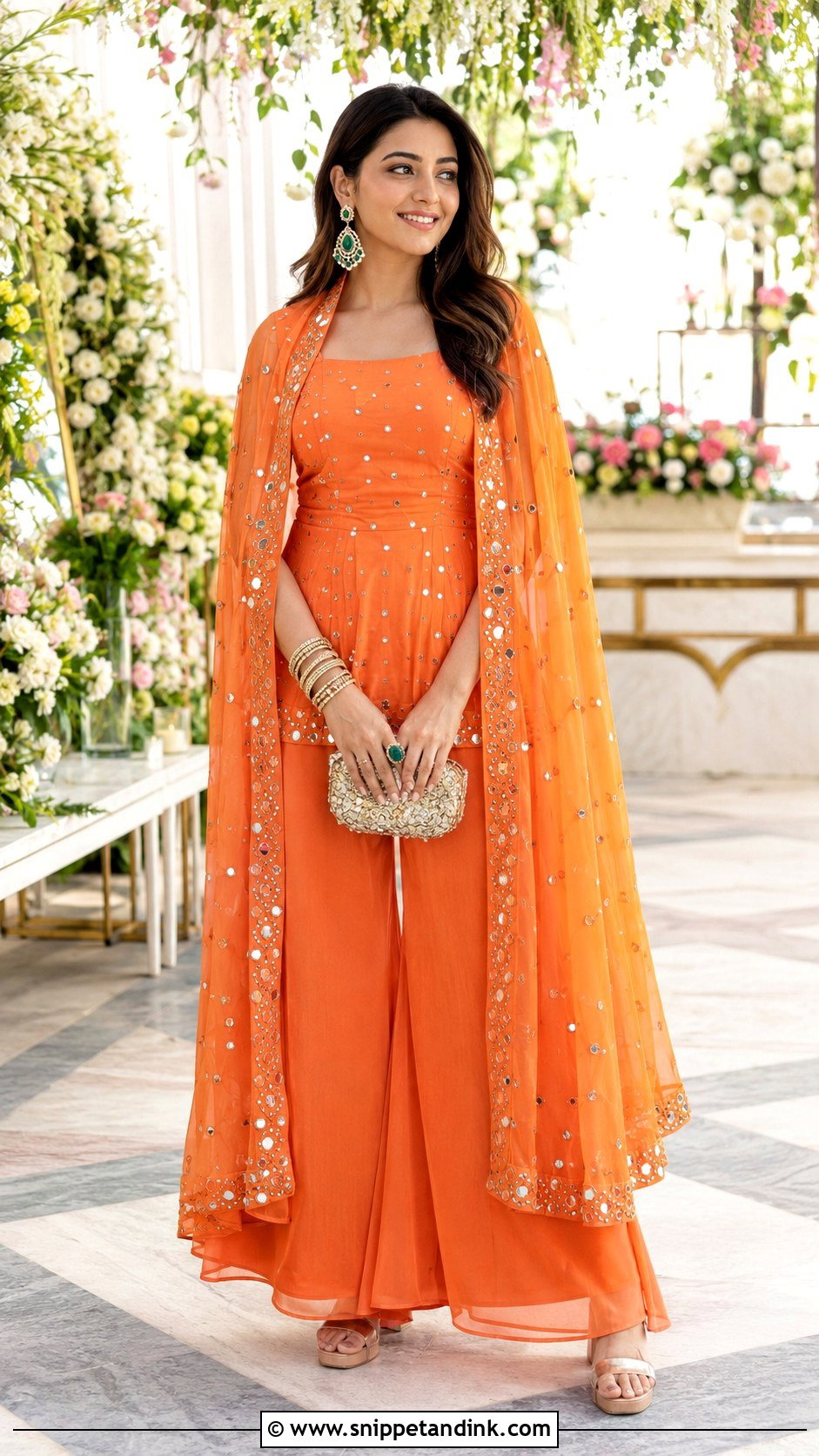
A cape solves the dupatta problem outright. Start with a fitted sleeveless top and matching palazzo pants or a gently flared skirt, then add a sheer embroidered cape that falls below the knee. Because a cape hangs from the shoulders, there’s nothing loose to trail through wet henna. Check the front opening before you commit; some capes are cut so narrow that they pull when you raise your arms for the artist. Vivid orange with green stone earrings, a few gold bangles and neutral block heels feels warm and lively. Brides can wear a longer decorative cape, guests a simpler hip-length one.
12. Emerald Kurta Skirt Mehendi Outfit
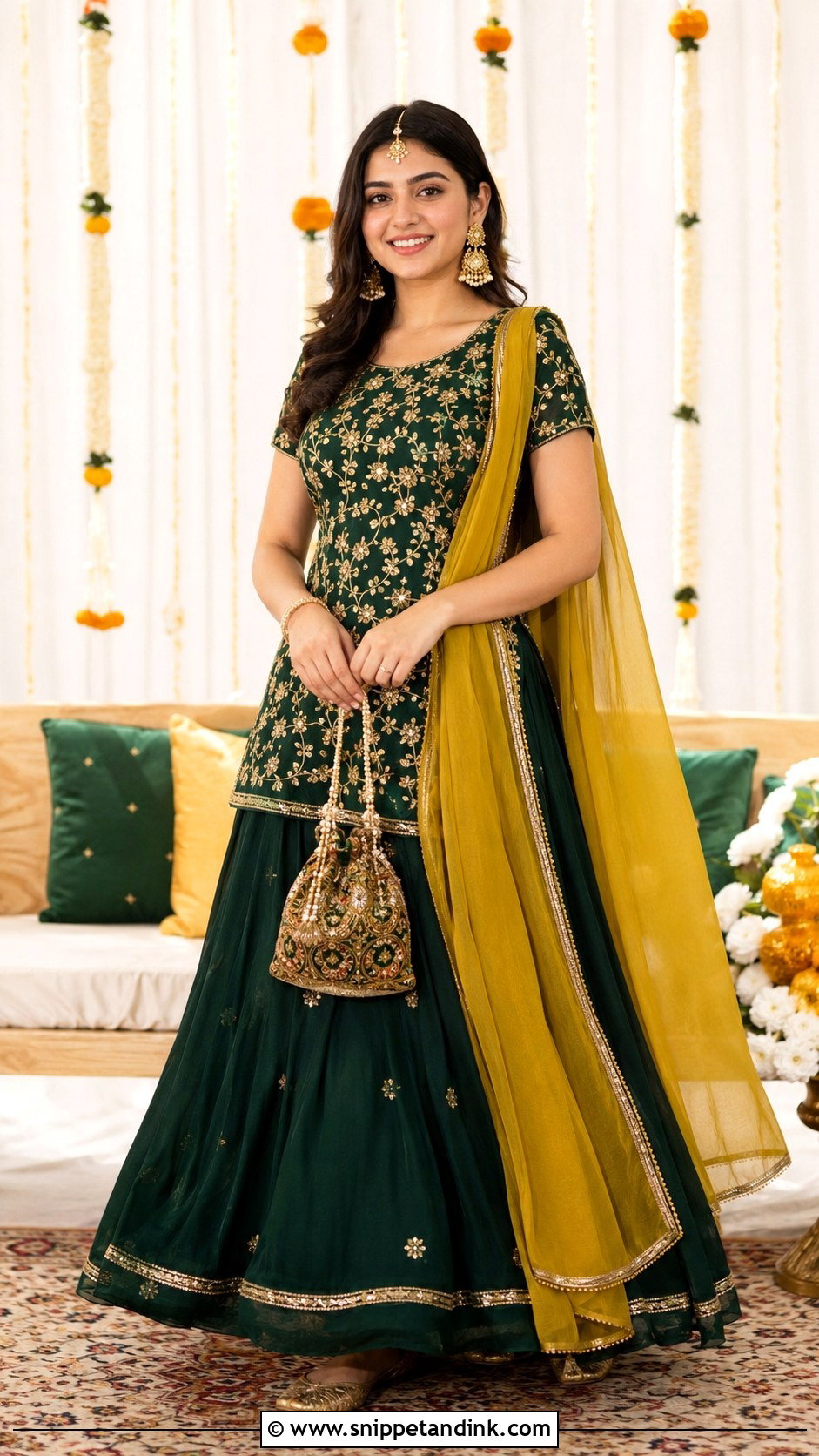
Deep emerald looks richest under warm evening light and can feel heavy in midday heat, so I save it for an evening or indoor Mehendi. Pair a fitted short kurta with a light flared skirt carrying gold motifs or mirror accents. The kurta hem matters more than people expect. At the natural waist or upper hip it shows off the skirt, but any longer and the flare disappears and you look shorter. A yellow or pink dupatta over one shoulder, secured with a pin, brightens the green. Antique gold earrings, a fine maang tikka and cushioned gold flats. Brides can add a statement necklace; guests are better with earrings alone.
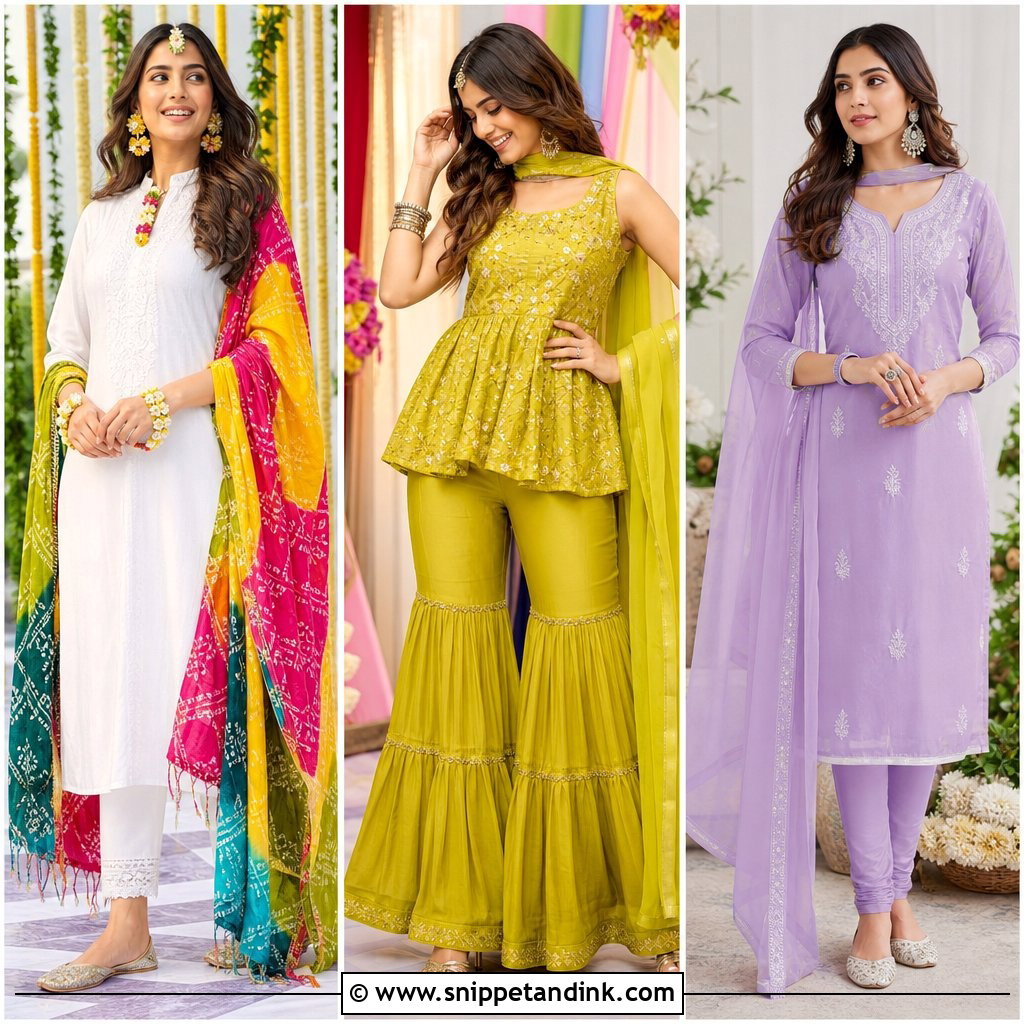
13. Lavender Peplum Sharara Mehendi Outfit
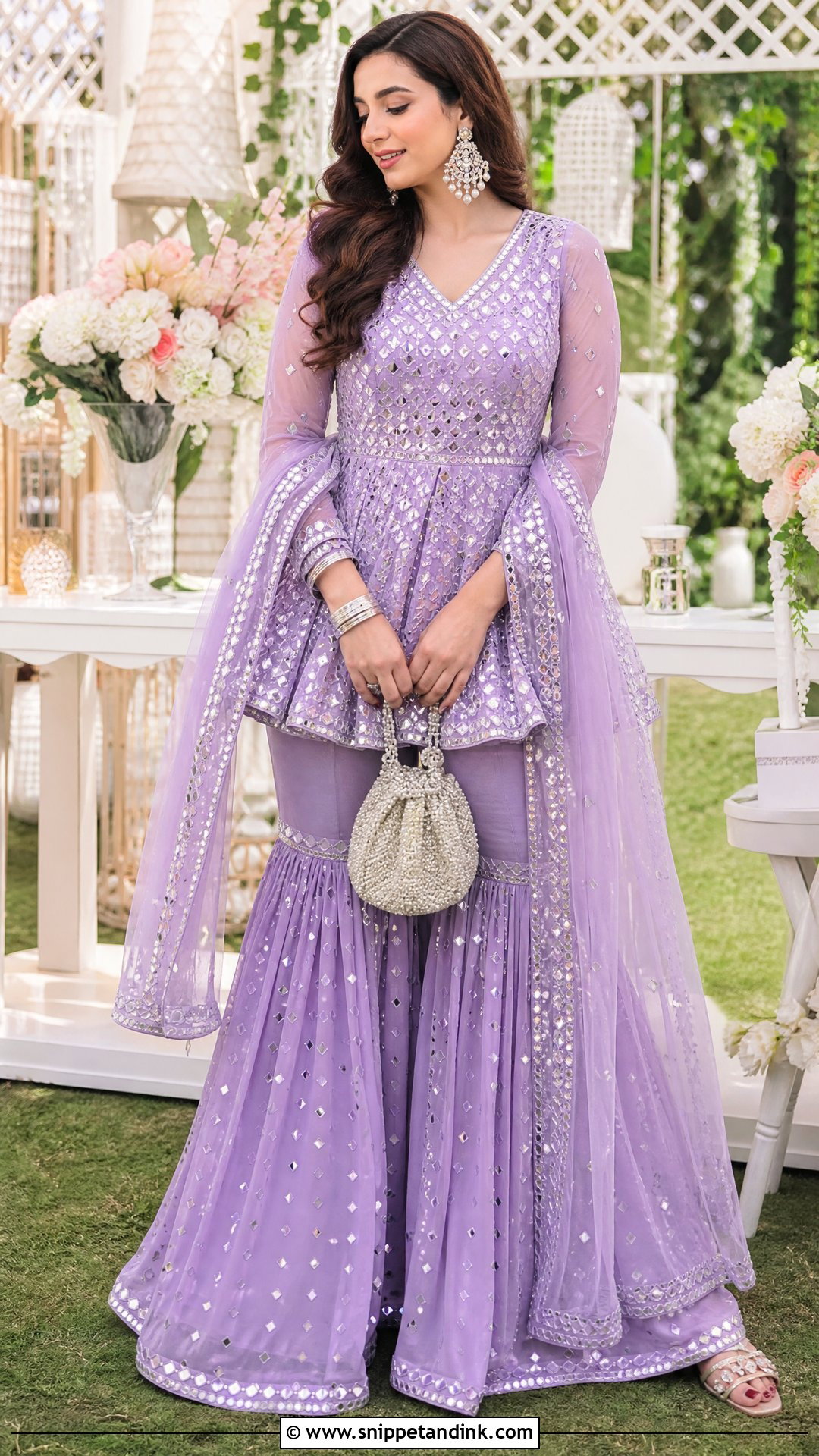
Lavender suits women who would rather skip yellow and green altogether. The peplum is the piece to fit carefully: its seam should sit right at your natural waist, because a peplum that lands low makes the sharara look as if it starts at the knees. Look for short sleeves, light mirror or thread embroidery and a matching sharara that flares from the thigh. A sheer dupatta in lavender, mint or pale pink keeps the palette soft. Pearl chandbalis, silver bangles and embellished flat sandals. Bridesmaids in coordinated pastel peplum sets look like a group without matching exactly.
14. Coral Jacket Lehenga Mehendi Outfit
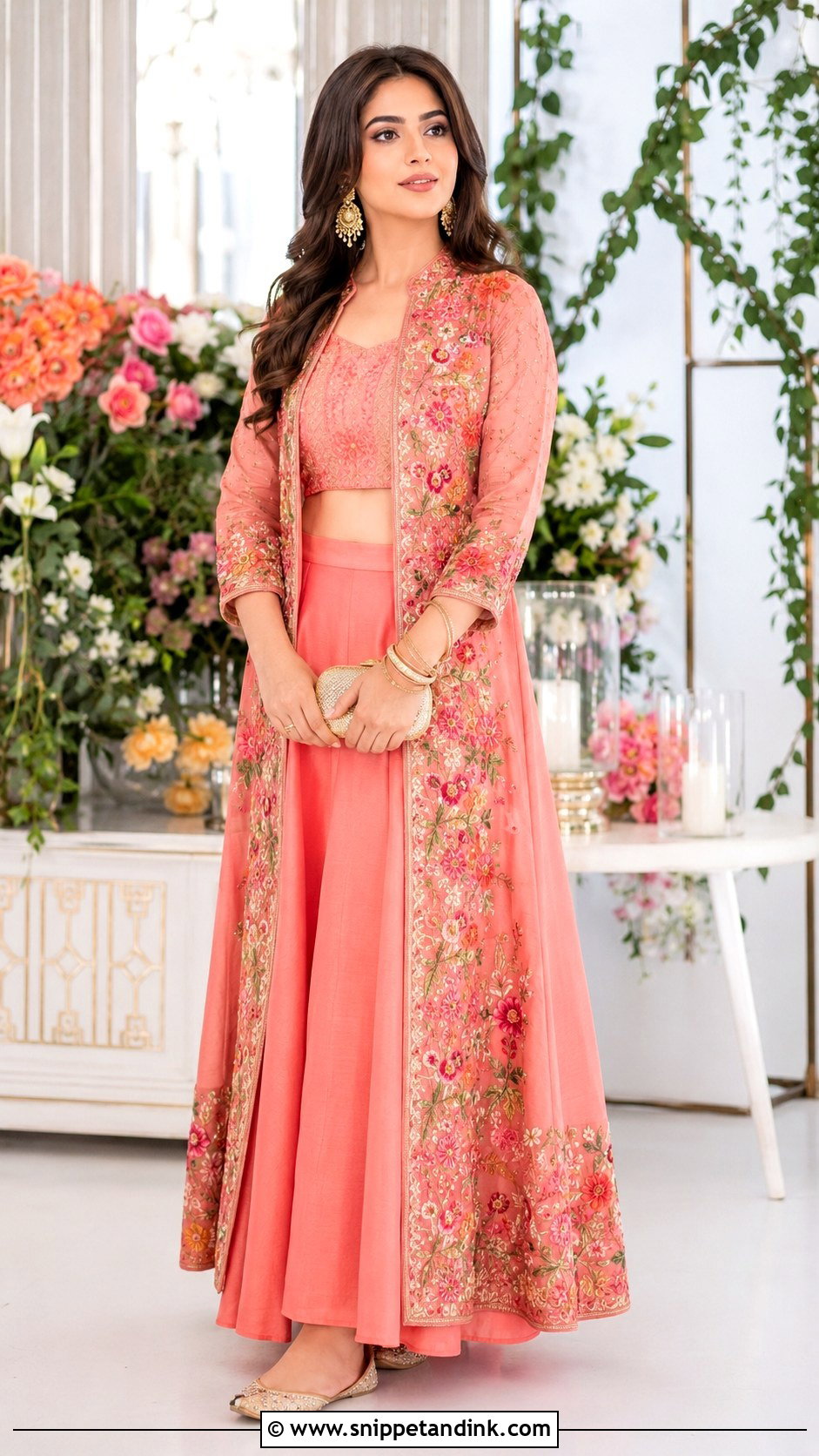
Layering in warm weather only works if every layer is light. I start with a plain flared skirt and fitted blouse in coral or peach, then add a long open-front jacket with floral embroidery or scattered mirrors. The jacket replaces the dupatta, so hands and shoulders stay free during henna. Ask for it to be lined in cotton or another breathable lining; synthetic linings trap heat badly under embroidery. If the jacket is dense, keep the blouse and skirt understated. Gold statement earrings, a small clutch and nude or metallic juttis. Brides can go floor-length, while guests often prefer calf length, which is easier on stairs.
15. Sage Green Salwar Suit Mehendi Outfit
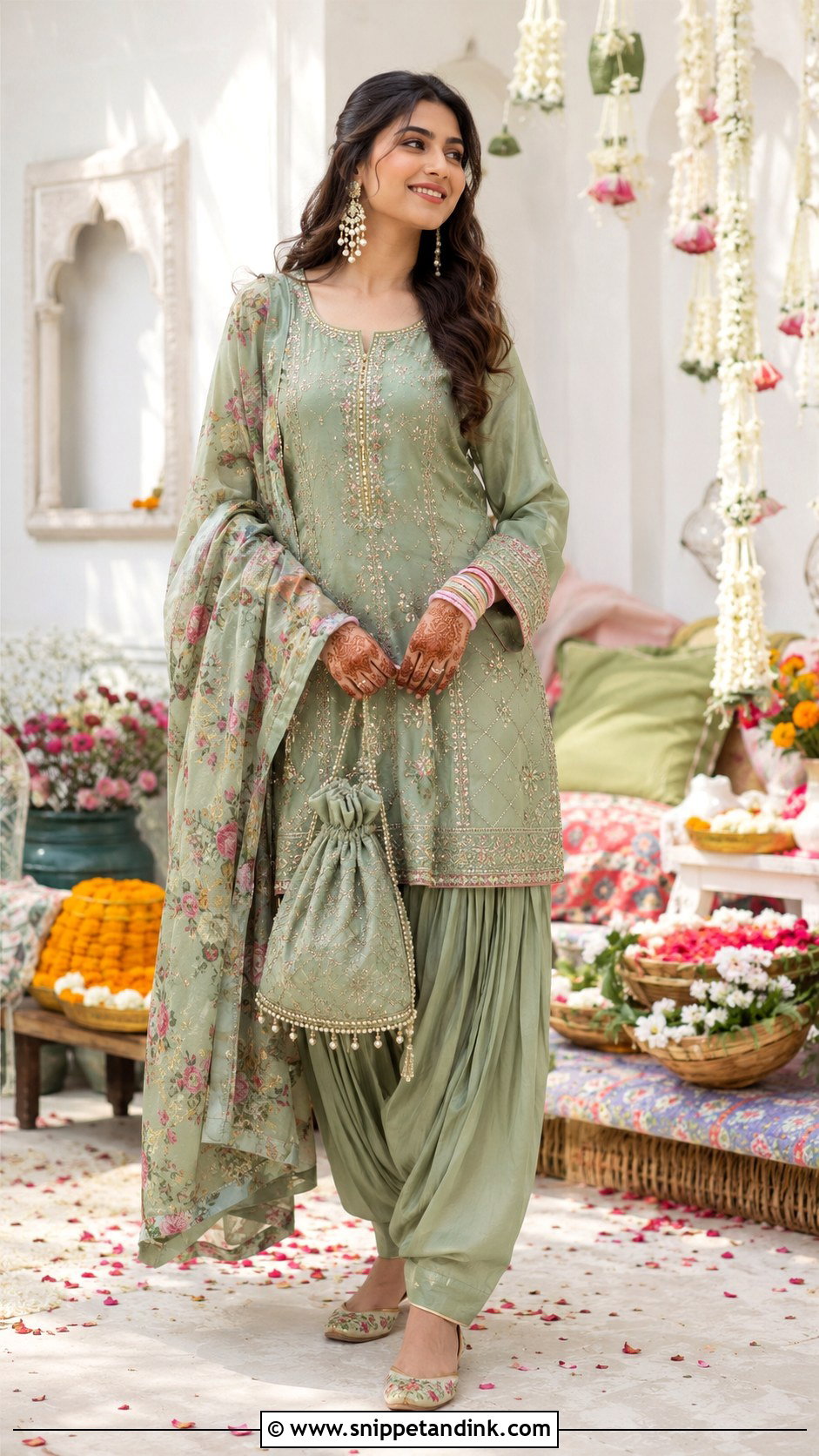
For a small Mehendi at home, a sage green salwar suit is about as comfortable as festive dressing gets. Choose a short or knee-length kameez with white, gold or pink embroidery and a softly pleated salwar with room to sit cross-legged. I’d avoid an ankle-grazing kameez for this event; on the floor it bunches around the legs and creases hard at the hips. A narrow, light dupatta keeps things under control. Pearl earrings, pastel bangles and comfortable juttis. Guests can stay minimal, while the bride’s relatives might add a statement necklace or a floral hair accessory.
16. Fuchsia Draped Skirt Mehendi Outfit
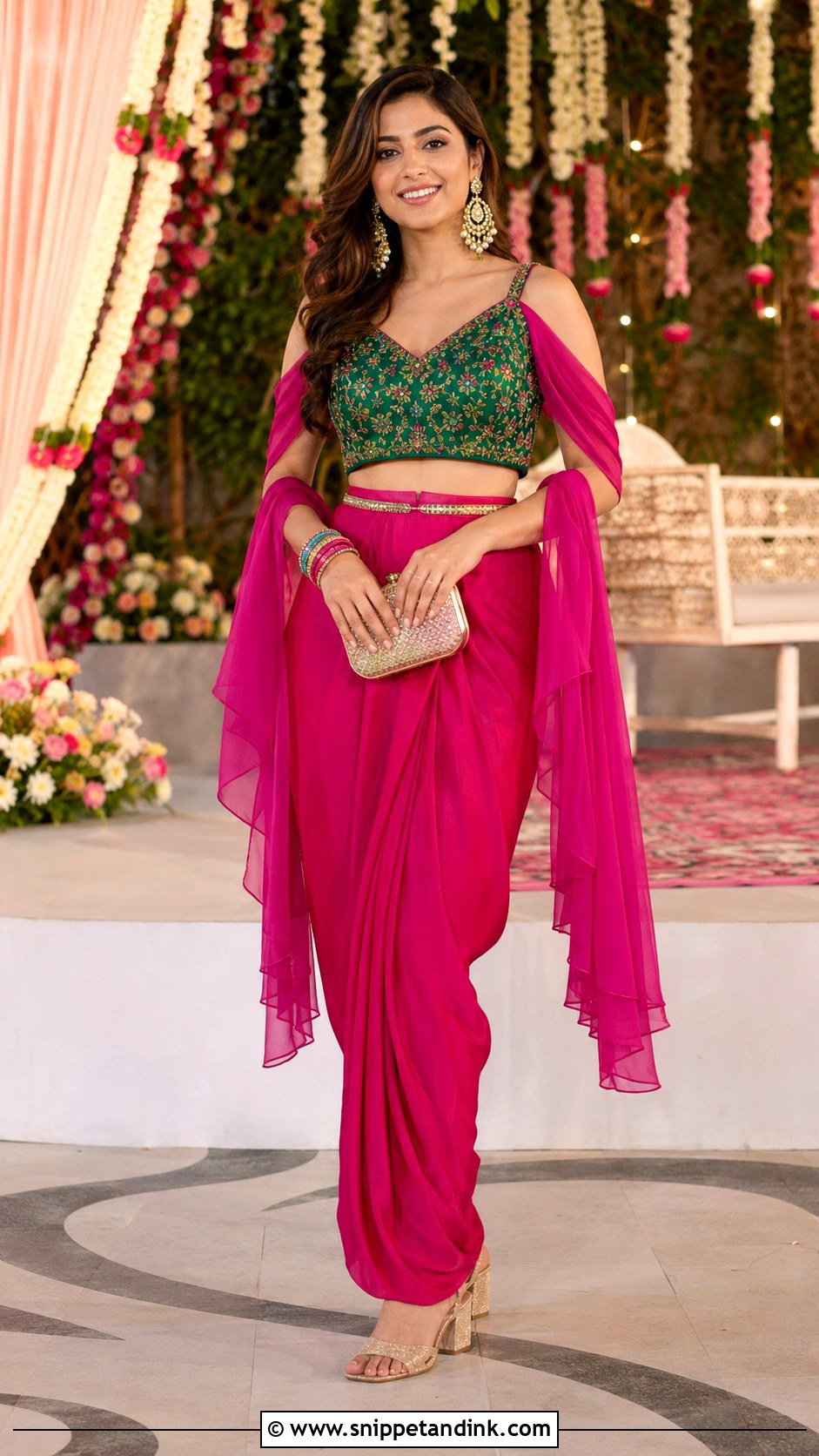
Pre-draped skirts have their pleats stitched in place, so you get the look of a wrapped drape without anyone redoing it after every dance. Pair a fuchsia draped skirt with an embroidered short-sleeve crop top and a slim belt at the waist. A detachable shoulder drape gives coverage you can take off when the room warms up. Make sure the zip sits at the side seam and not inside the drape, where it shows every time you move. Chandelier earrings, stacked bangles and metallic block heels; skip a big necklace so it doesn’t fight the blouse. Saturated fuchsia holds up well at an evening function.
17. Blue Printed Anarkali Mehendi Outfit
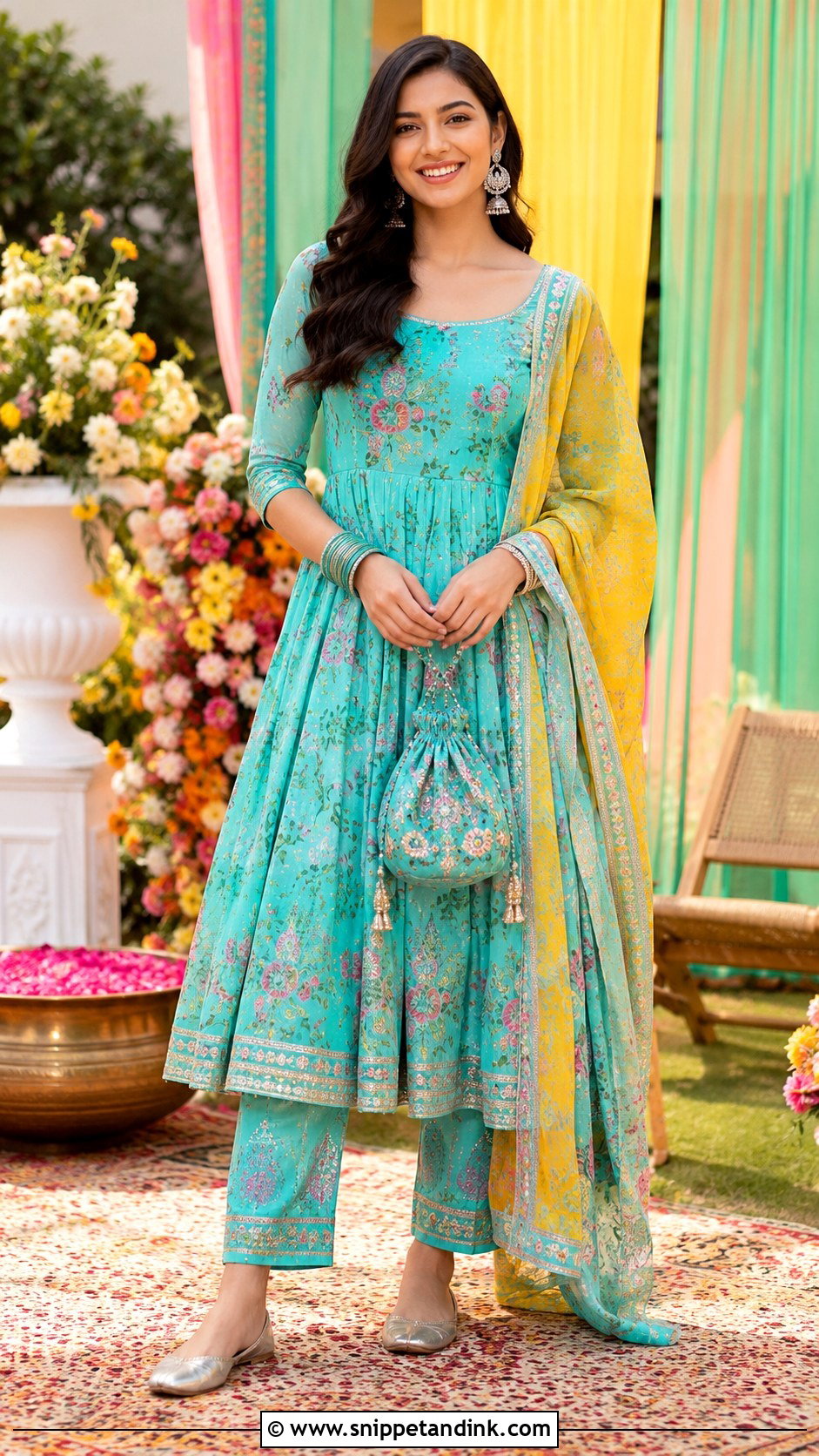
Blue stands apart in a room full of green and yellow, and I like it for guests who want to look festive without blending in. Turquoise for daytime, cobalt for the evening, powder blue for something softer. A floral, block or geometric print carries the festive feel, so heavy embroidery isn’t needed. Hand block-printed cotton can fade in a hot wash, so treat it gently afterward. Straight pants, a light dupatta with a slim border, silver jhumkas, glass bangles and silver flats complete it. Keep the skirt volume modest so sitting and walking stay easy.
18. Green Jumpsuit With Dupatta Mehendi Outfit
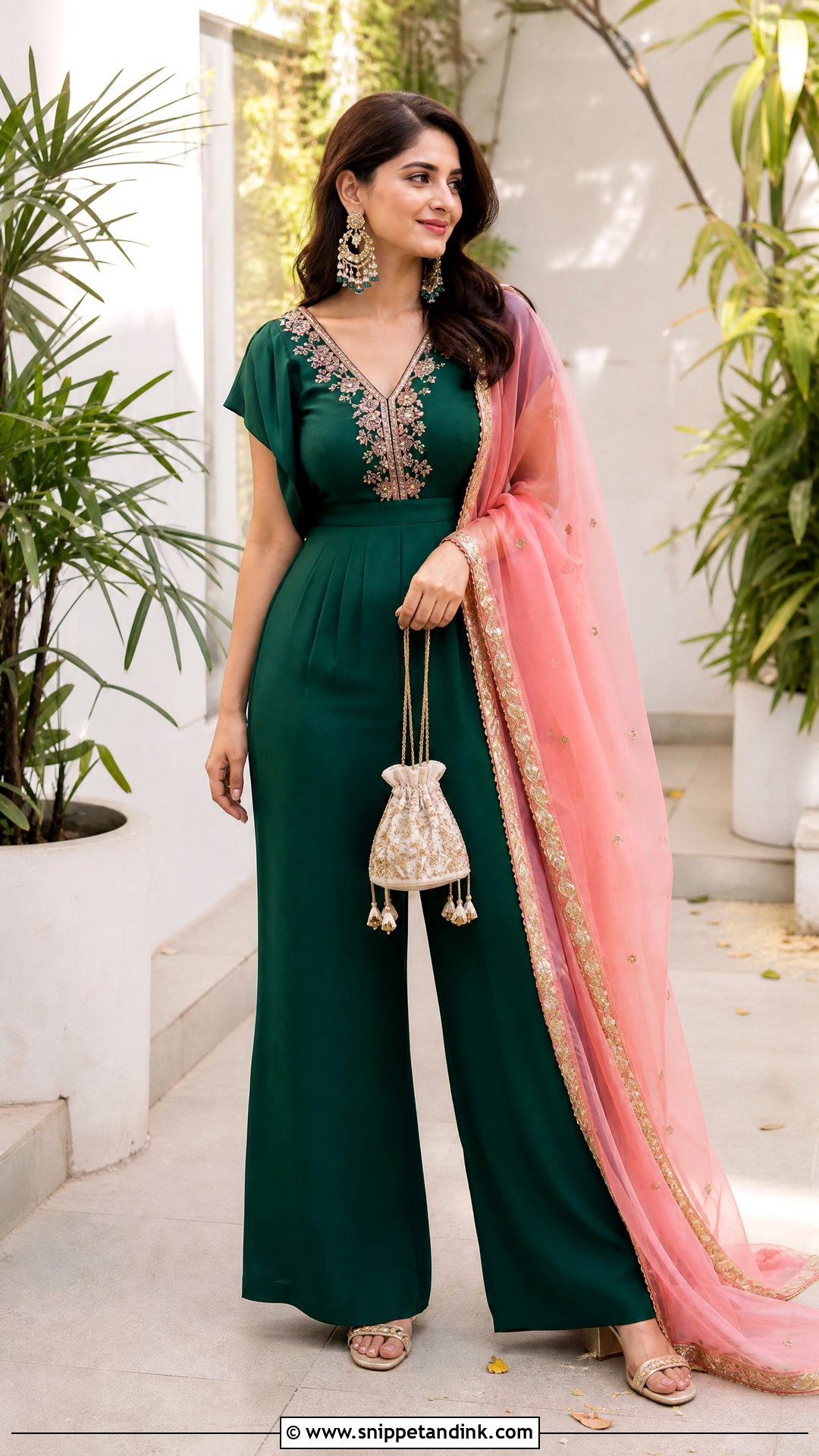
Jumpsuits have one practical catch at a wedding: the restroom. I always ask about the closure first. A back zip you can’t reach on your own is a real nuisance over a long function, and impossible once your hands are hennaed, so look for a side zip or a wrap front. Beyond that, a wide-leg green jumpsuit with a defined waist and short sleeves is easy to wear, and embroidery at the neckline or waist brings in traditional detail. Pick a fabric that resists creasing. Pin a contrasting organza dupatta to one shoulder so the arms stay free, and add a cuff only after the henna is dry.
19. Yellow Chikankari Palazzo Mehendi Outfit
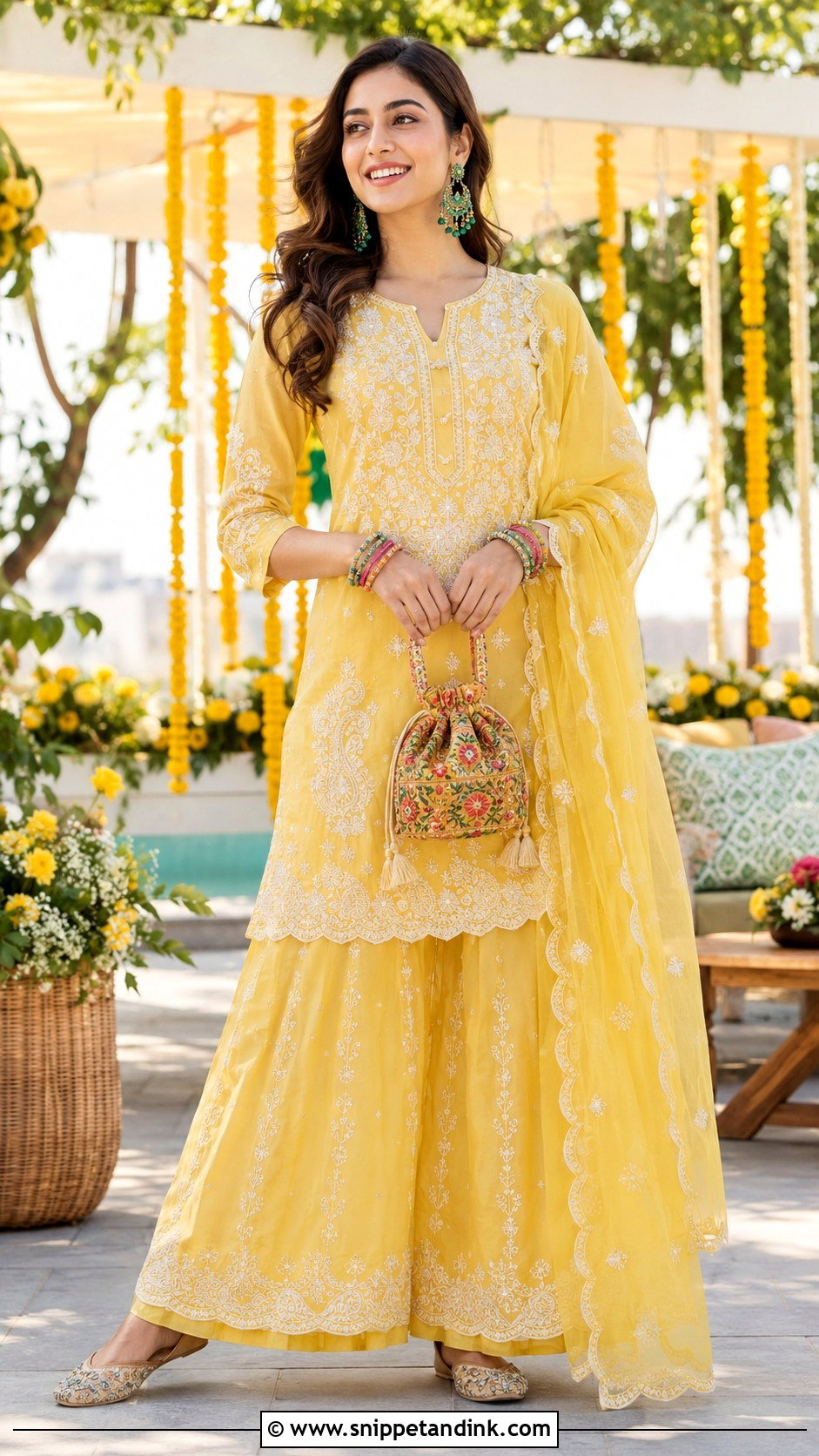
Chikankari is fine hand embroidery, traditionally worked on light cotton, and it gives a yellow outfit texture without any weight. Wear a short or mid-length kurta over wide palazzos in the same or a slightly paler shade, with a soft dupatta edged in scallops or a small gota border. Cotton or a light blend breathes well at an outdoor summer ceremony. The base fabric is often sheer, so hold it up to daylight before the day and check the lining. Green earrings, colorful bangles and an embroidered potli add stronger color, and cushioned juttis keep you comfortable.
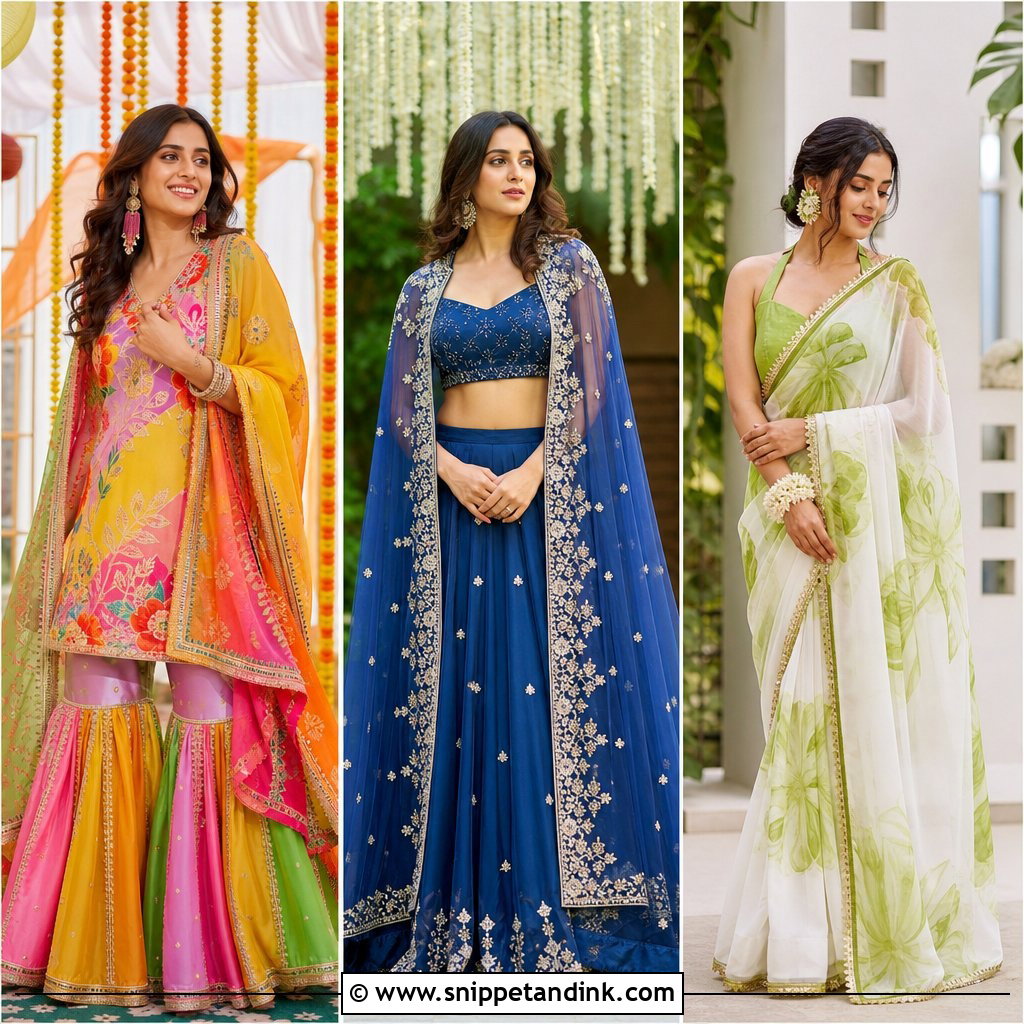
20. Rainbow Patchwork Lehenga Mehendi Outfit
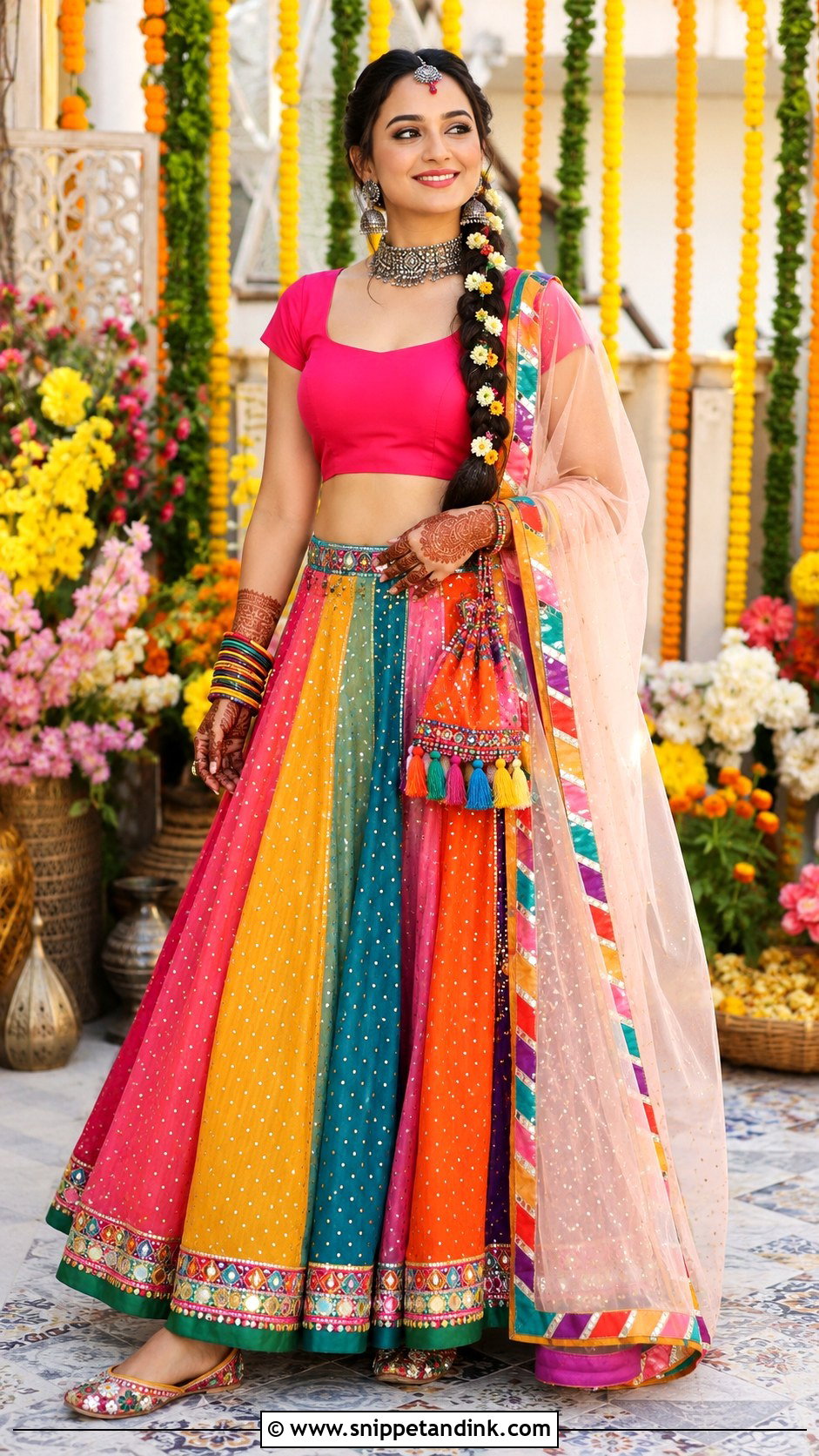
A rainbow patchwork lehenga is the most playful option in this list, and it needs the most discipline. I look for coordinated panels of green, yellow, pink, blue and orange that repeat in a rhythm, not random scraps fighting each other. Then everything else gets quieter: a solid short-sleeve blouse in one shade from the skirt, a plain chiffon dupatta with a multicolor border, oxidized silver jewelry and embroidered juttis. Brides can choose larger mirrors and denser patchwork. Guests should keep the blouse and accessories restrained, and a long braid with bright tassels suits it.
Getting Dressed Around the Henna Timeline
Order matters more at a Mehendi than at any other function. Once the artist starts, your hands are out of action for hours, so I have the bride fully dressed, hair done and earrings in before the first cone touches skin. Bangles and rings wait until the paste is dry and scraped off, or they smear the design and pick up stain.
In my kit for this event I carry safety pins in two sizes, double-sided fabric tape, a cotton handkerchief and a pair of flat sandals. A thin cotton slip under a lehenga keeps heavy embroidery off sweaty skin in warm weather. And a quiet word for the bride: visit the restroom just before application starts, because getting in and out of a lehenga with wet hands is close to impossible.
When Henna Paste Lands on the Fabric
It will happen to someone. Don’t rub fresh paste and don’t dab it with water, which spreads the dye into the weave. Let it dry, then lift the flakes off gently with a blunt edge. Plain cotton can usually be treated at home with cold water and mild detergent. Silk, zari and anything with mirrors should go to a dry cleaner, and tell them it’s henna so they treat it properly.
Before packing the outfit away, hang it in a shaded, airy spot for a day so sweat and the oils in henna paste can air out. Wrap embroidered pieces in clean muslin or cotton, never plastic, and put tissue between folds so mirrors and metallic thread don’t press into the fabric. I store heavy lehenga skirts flat or loosely rolled; hung by the waistband, the weight stretches the seams over months.
Dressed for the Floor Cushion and the Dance Floor
Every outfit above has two jobs: look festive, and let you sit still for henna before getting up to dance. Settle the silhouette first, then check sleeves, waist and footwear, and only then decide on color. Lehengas, shararas, Anarkalis, sarees and salwar suits all belong at a Mehendi, and capes, jackets, co-ords and jumpsuits give you modern routes to the same place. Brides can carry the heavier embellishment; guests can wear lighter versions of the same ideas. Green and yellow will always fit the occasion, but pink, blue, coral and lavender are just as welcome.
You'll Like These Ideas:


Leave a Reply