
White is the colour I’m asked for most at bridal appointments, and it’s also the one that goes wrong most often. A bright, opaque white can look like correction fluid next to an ivory gown, while a sheer milky white can vanish on very fair skin. The sets below run from plain gloss to chrome, lace, pearls and sculpted petals, but almost all of them rest on a softened white rather than a stark one. Short natural nails, almond extensions and full acrylic sets are all covered, with notes on where each design is fussy and where it’s forgiving.
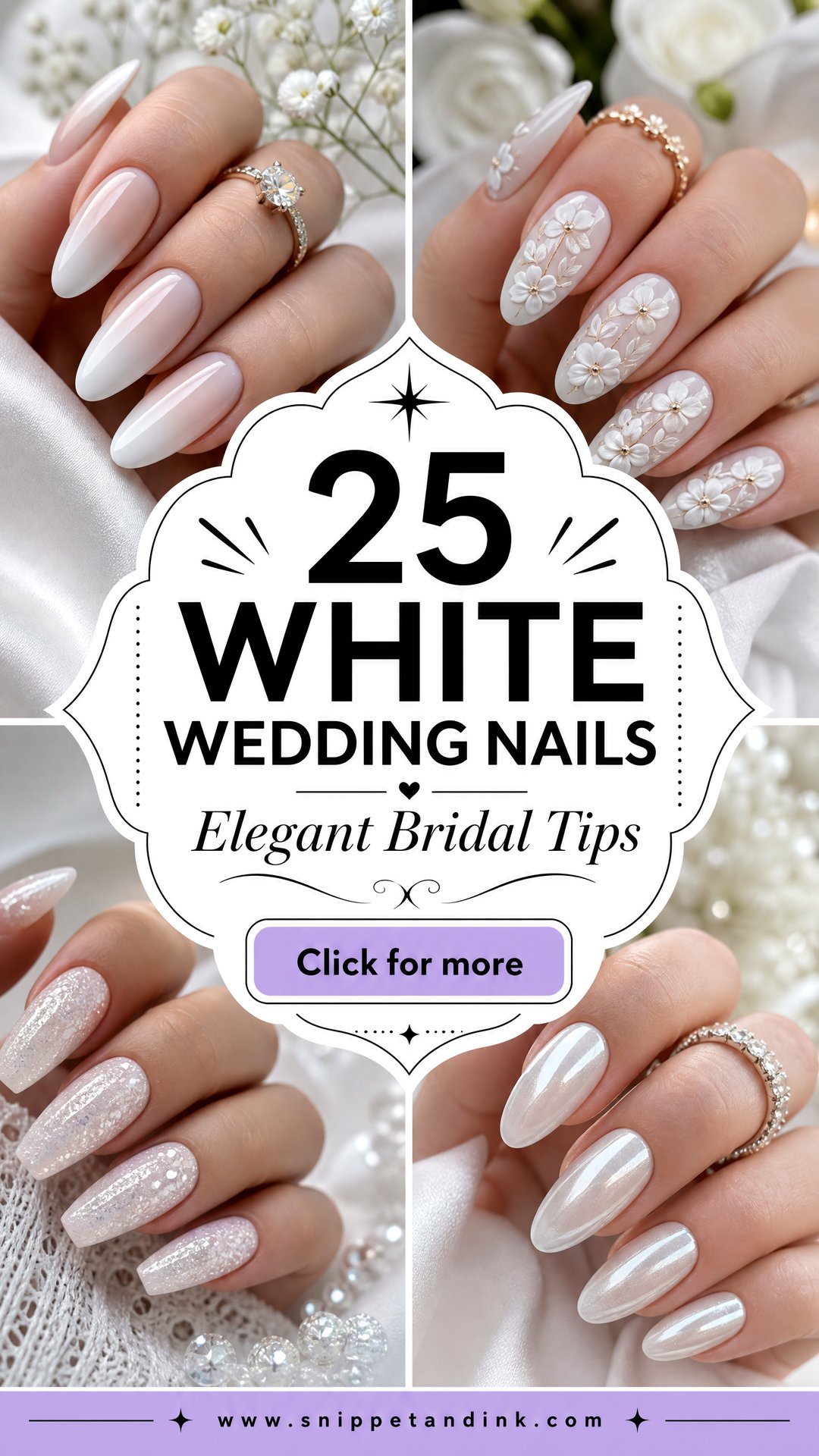
Holding a White Swatch Against Your Gown in Daylight
Bridal whites aren’t one colour. Most gowns are ivory, soft white, champagne or a bright optic white, and a nail shade that’s perfect next to one can look wrong next to another. I always ask brides to bring a fabric swatch, or at least a daylight photo of the dress, to the consultation.
Here’s how I match the shade before we commit to a design:
- Paint a few swatch sticks with milky, ivory and bright white, then hold them against the fabric by a window, not under salon lights. Warm indoor bulbs make every white look cream.
- Check against your skin as well as the dress. Very fair skin can make sheer milky white disappear, while deeper skin tones often suit a slightly more opaque white so the colour reads clearly.
- Look at your ring. A yellow gold band pulls ivory forward, and platinum or white gold sits more easily with cooler, cleaner whites.
- Decide on finish last. Chrome, matte and glitter all shift the shade a little, so pick the base white first and add texture once it’s right.
If you’re torn between two, choose the softer one. A white that’s slightly too sheer still looks intentional, but one that’s too bright looks like a mistake in every close-up.
1. Milky White Wedding Nails
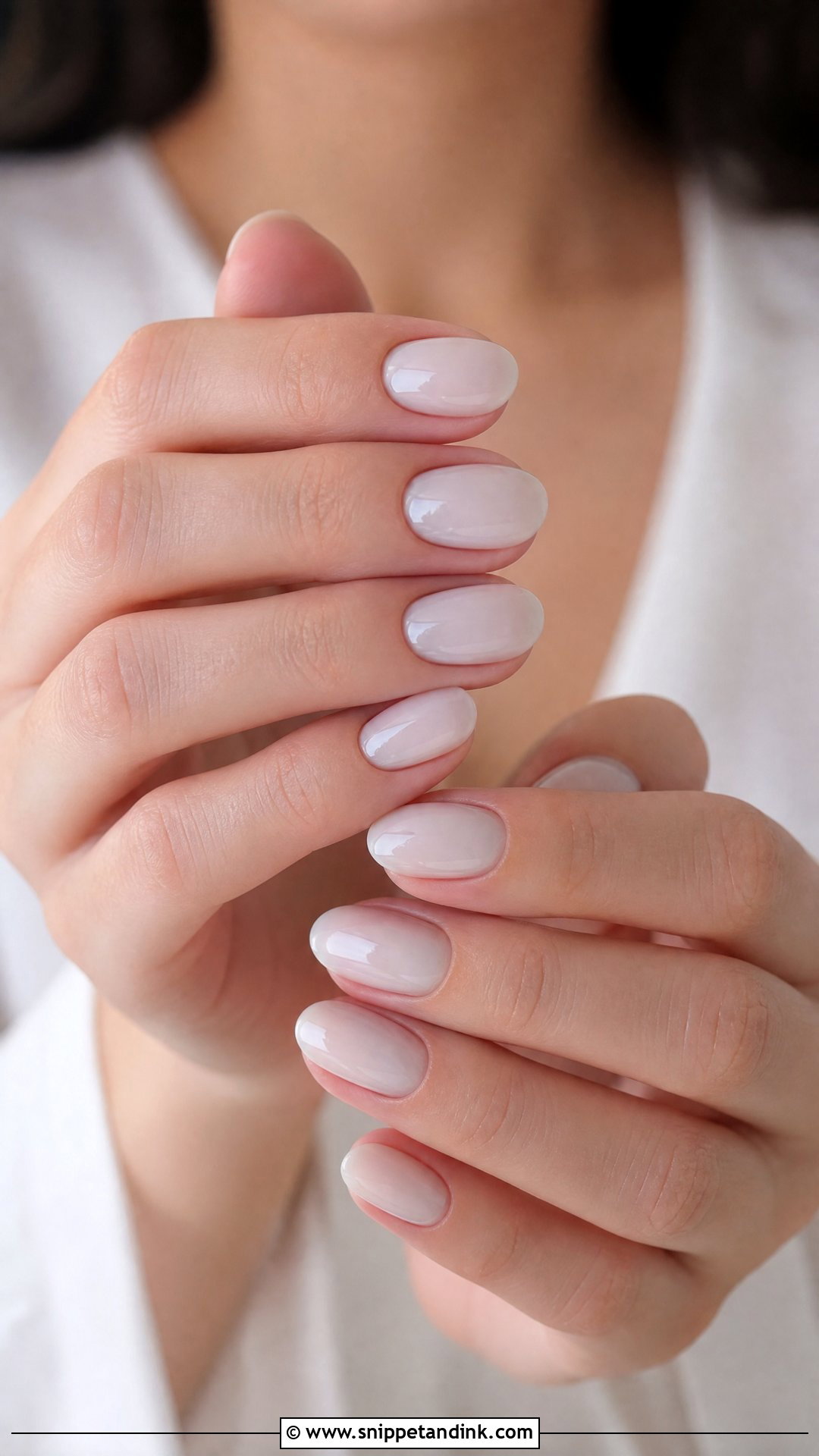
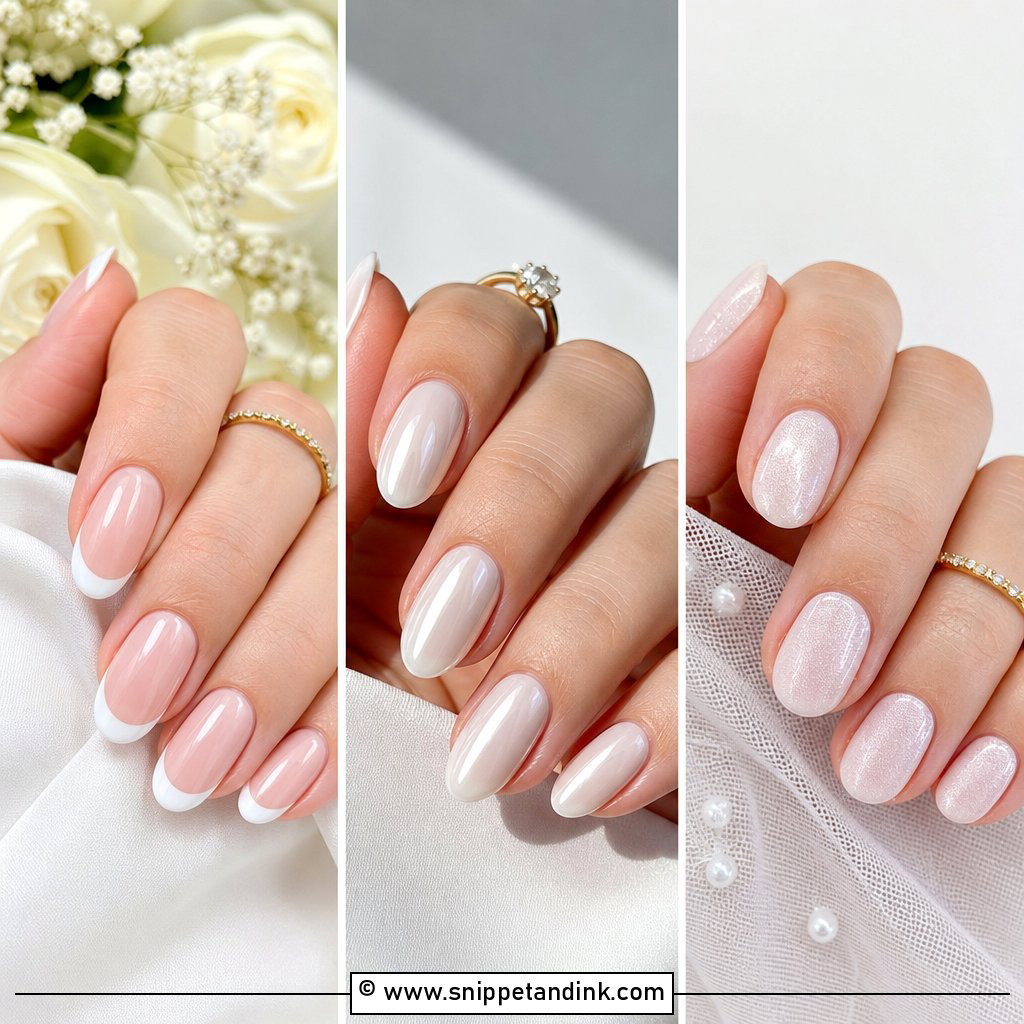
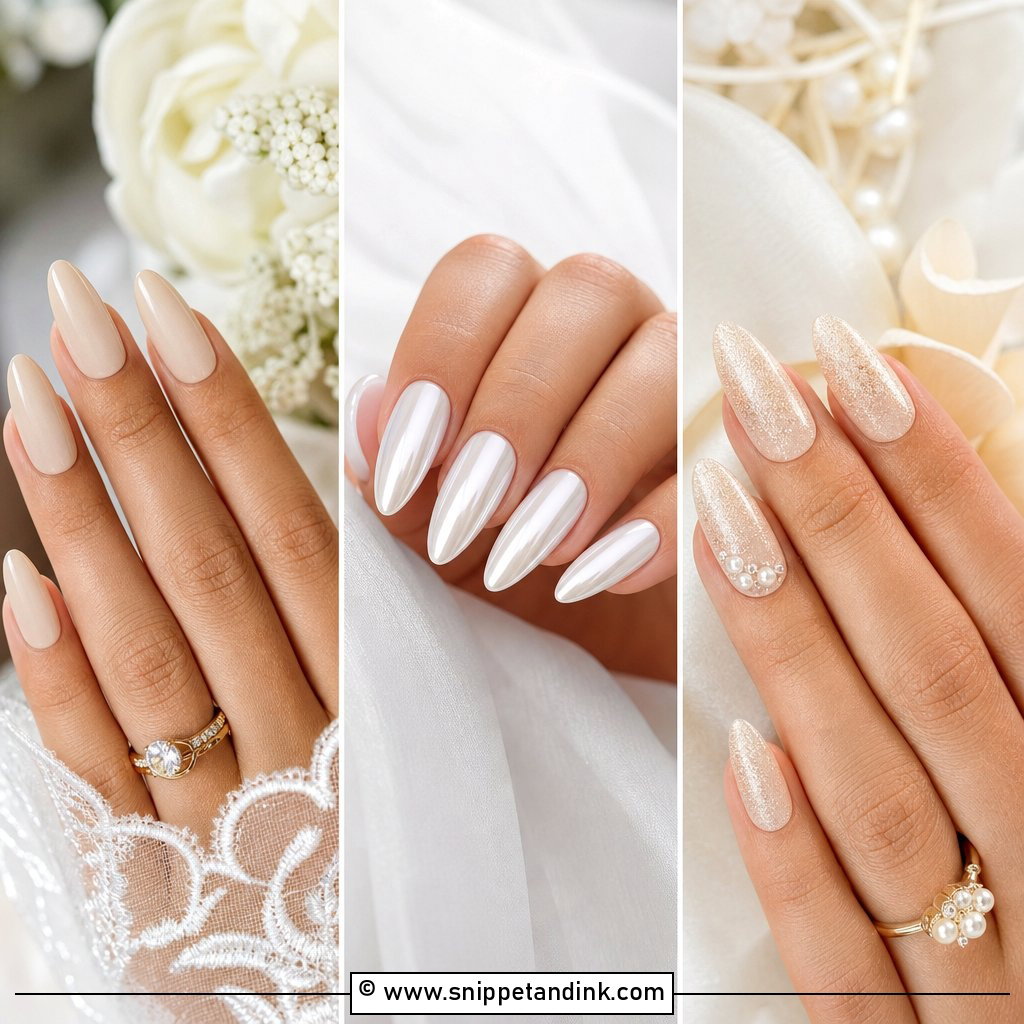
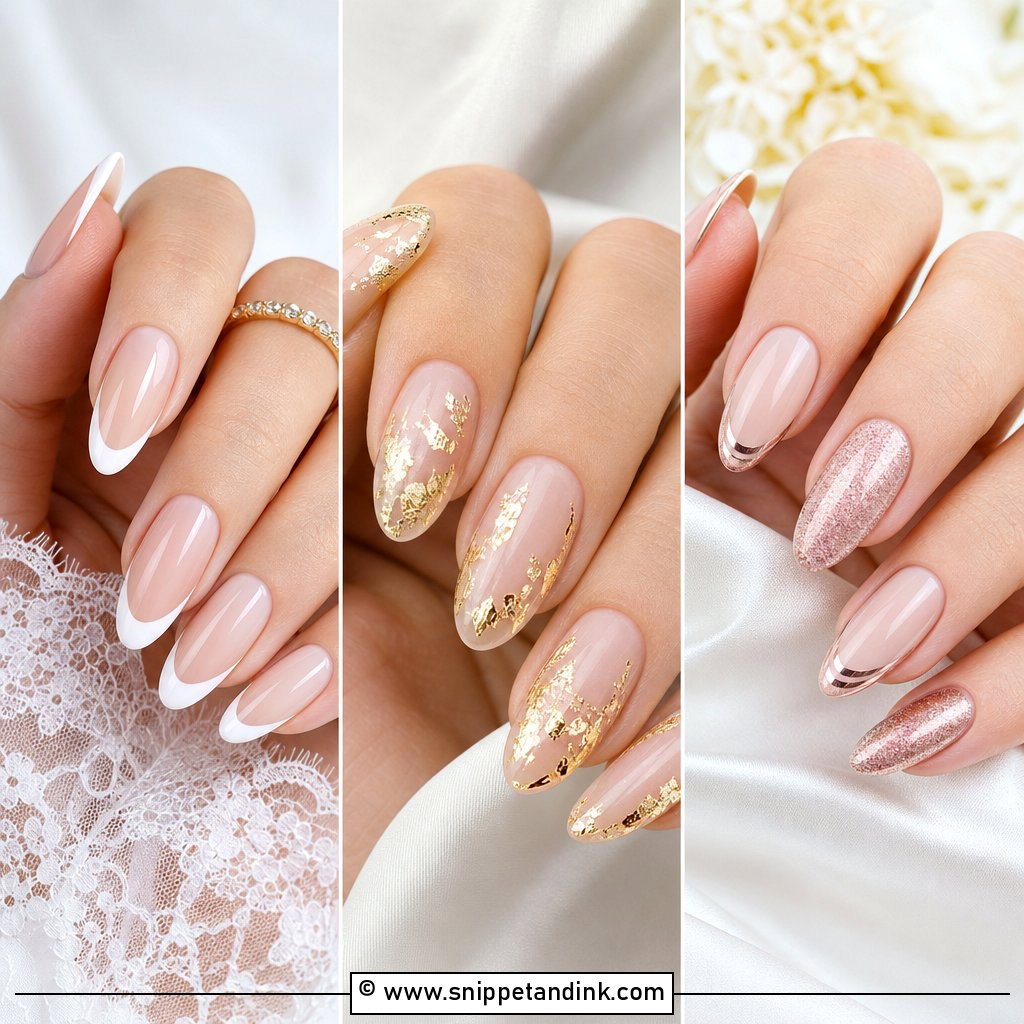
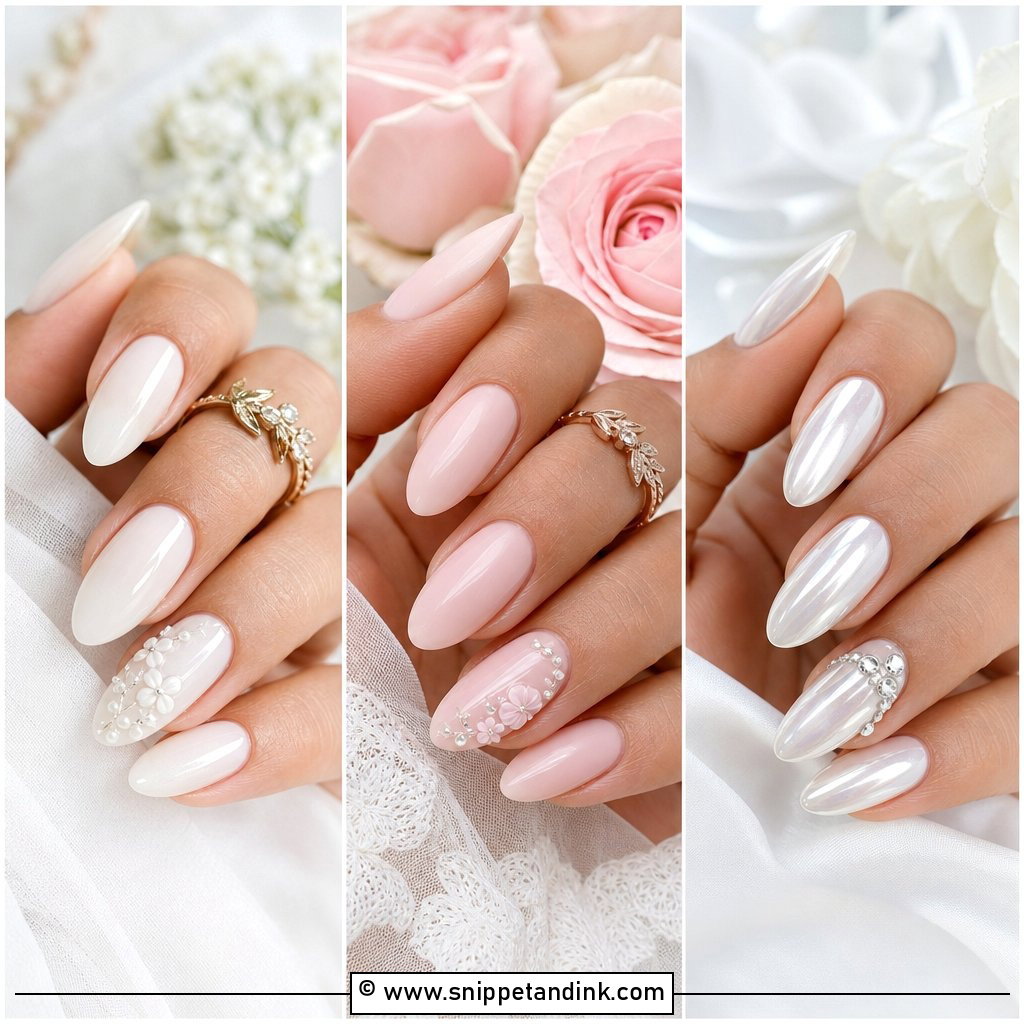
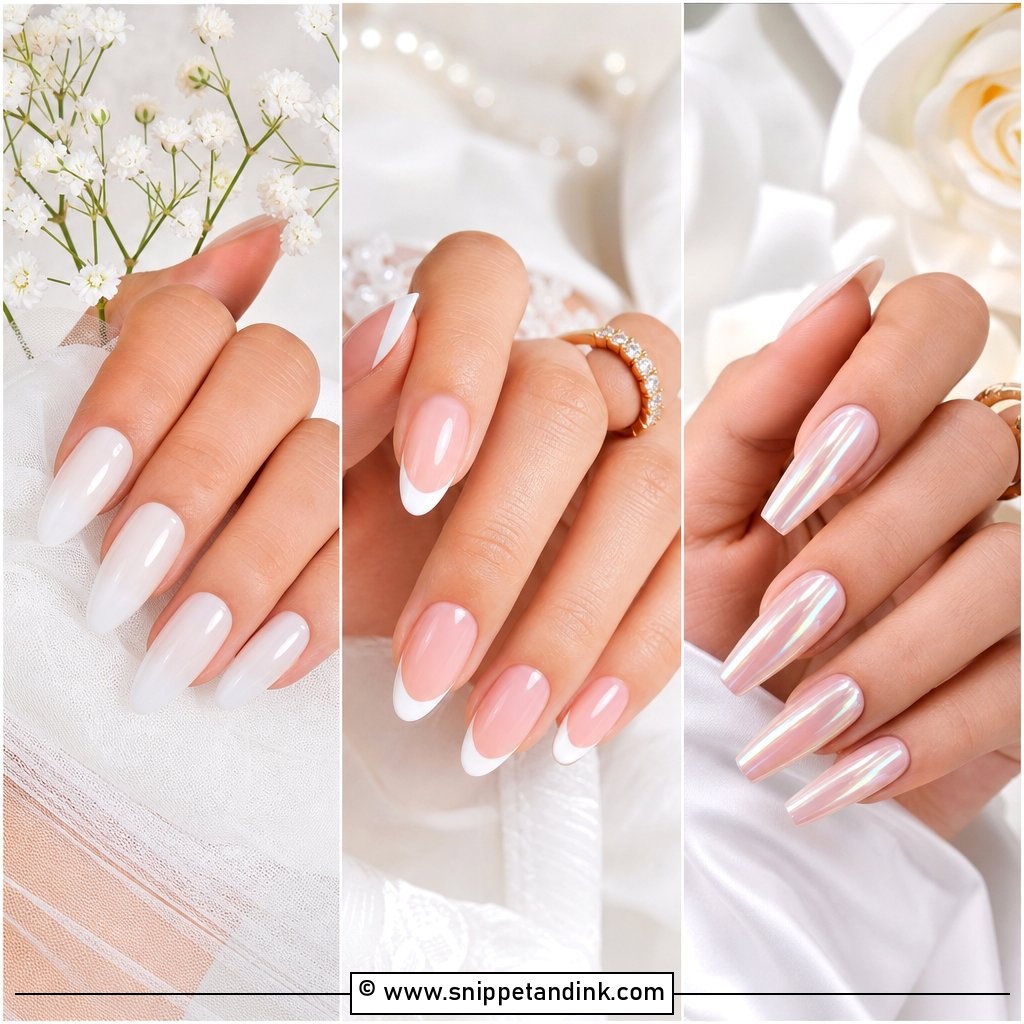
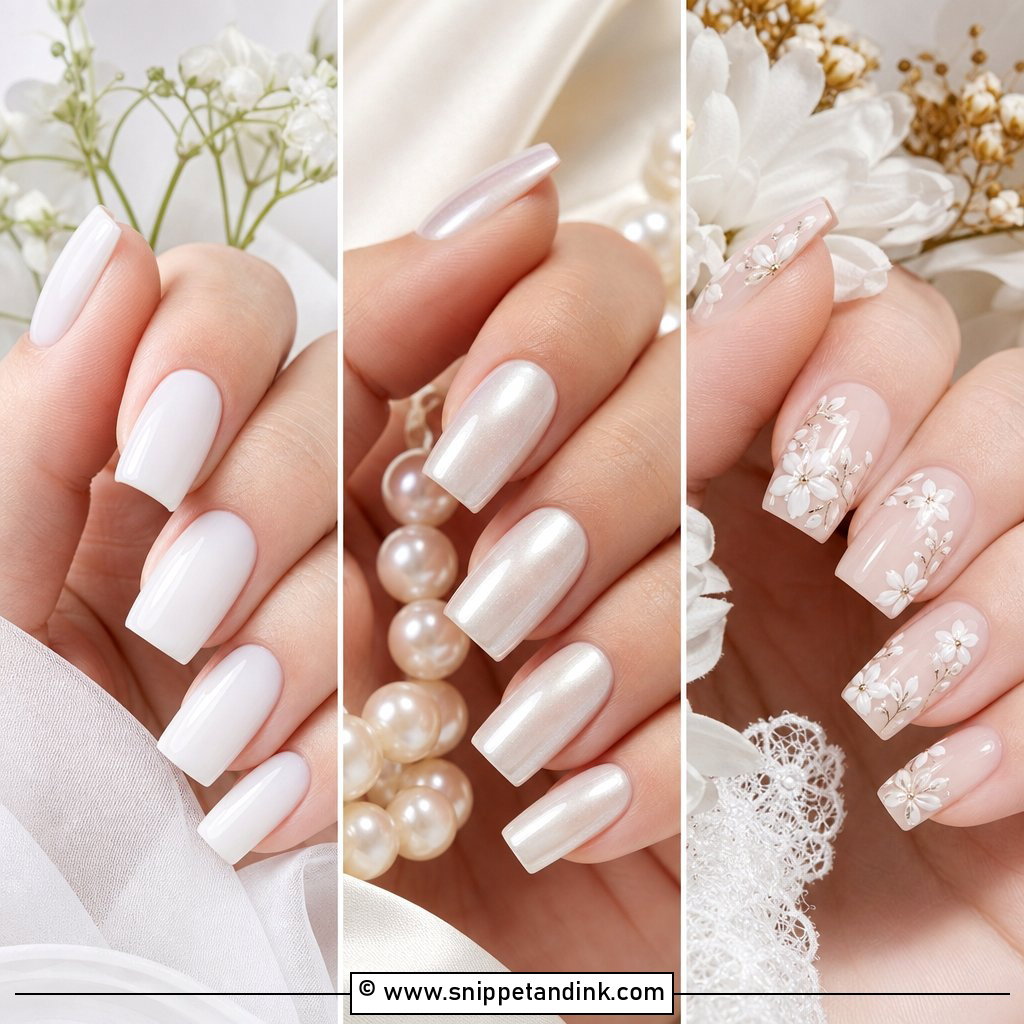
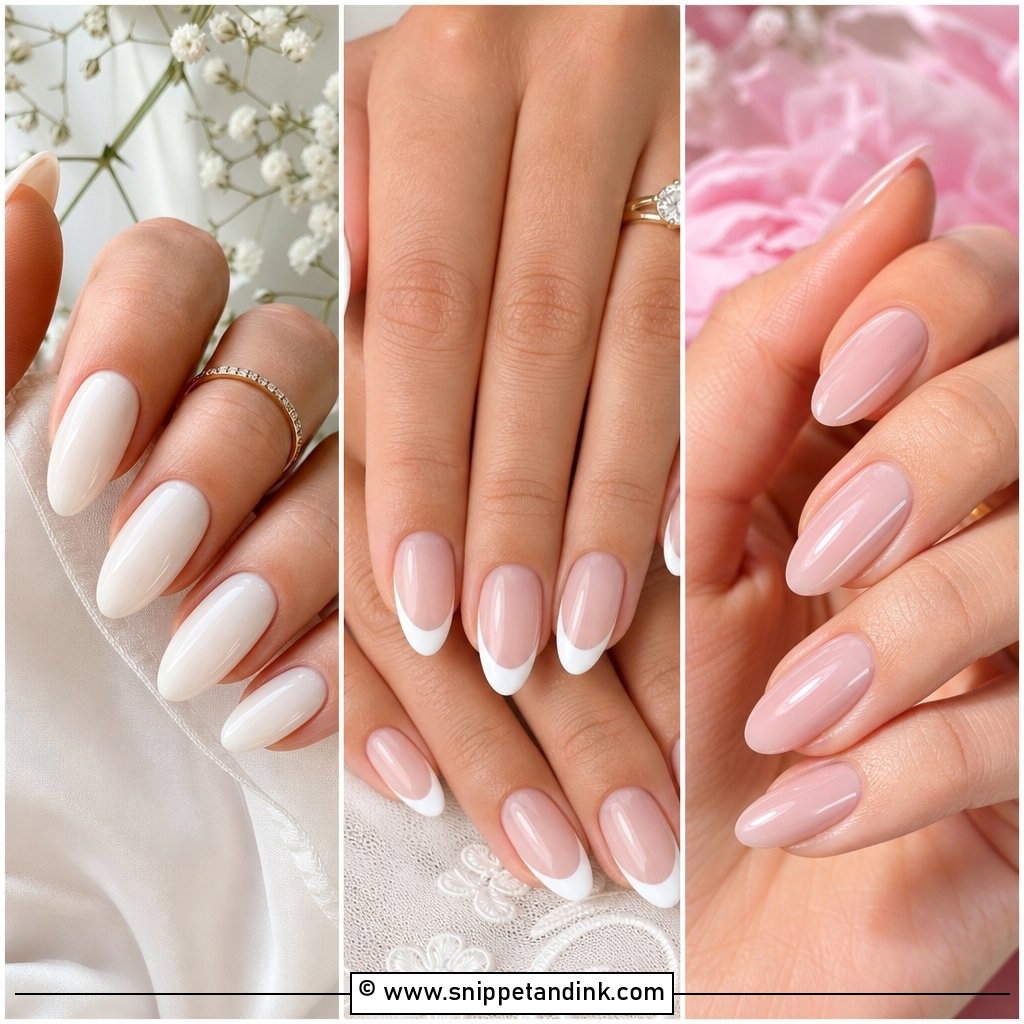
This is the set I’d put on most brides if they asked me to decide for them. I build it with a milky builder gel in two thin layers, because one thick coat traps tiny bubbles and the translucency turns patchy. The natural nail shows through slightly, so any ridges or a pink free-edge line will be visible; I buff the plate smooth before I start. It sits quietly beside silver, gold or pearl and doesn’t fight the gown in any light.
2. White French Tip Wedding Nails
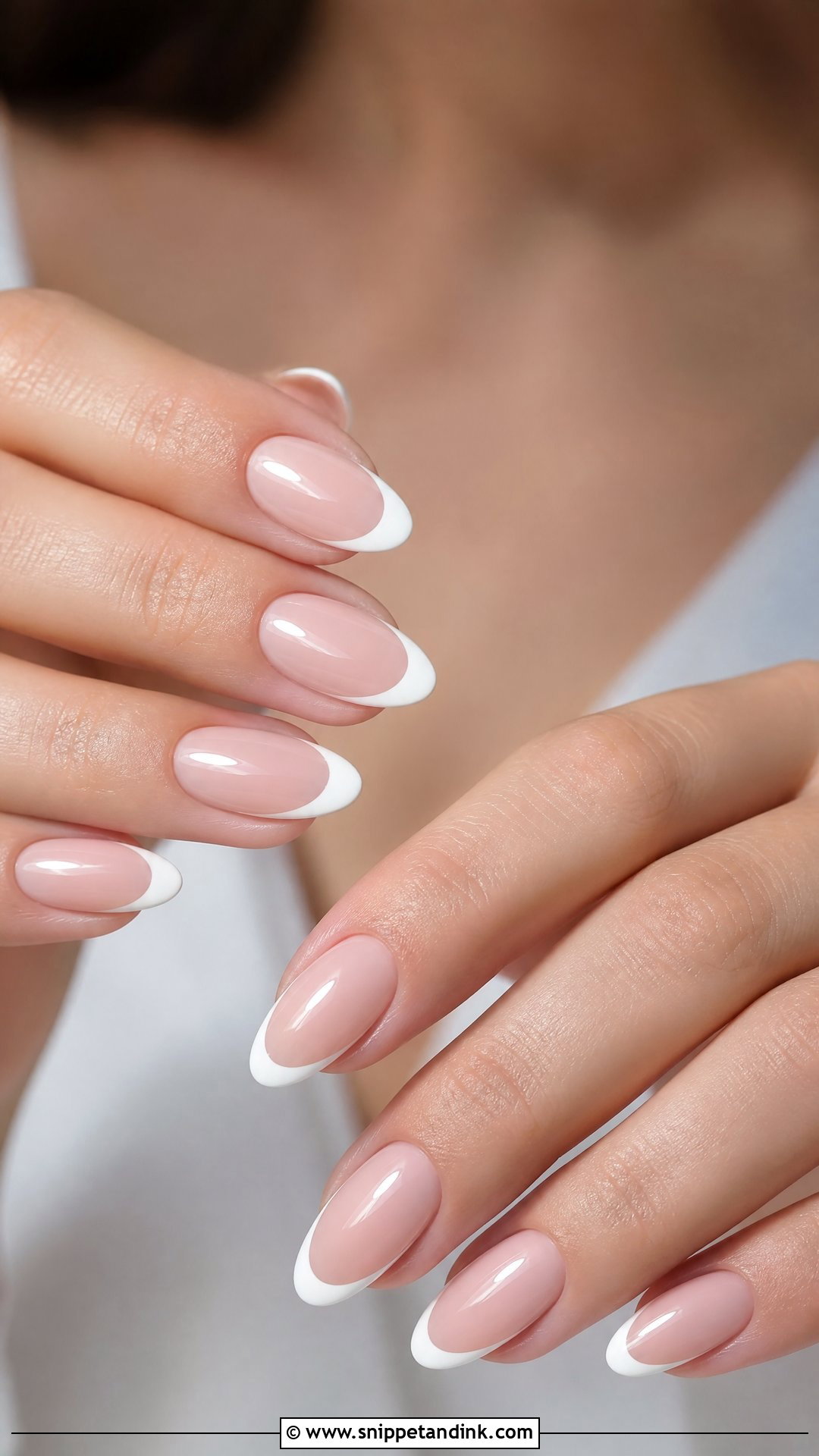
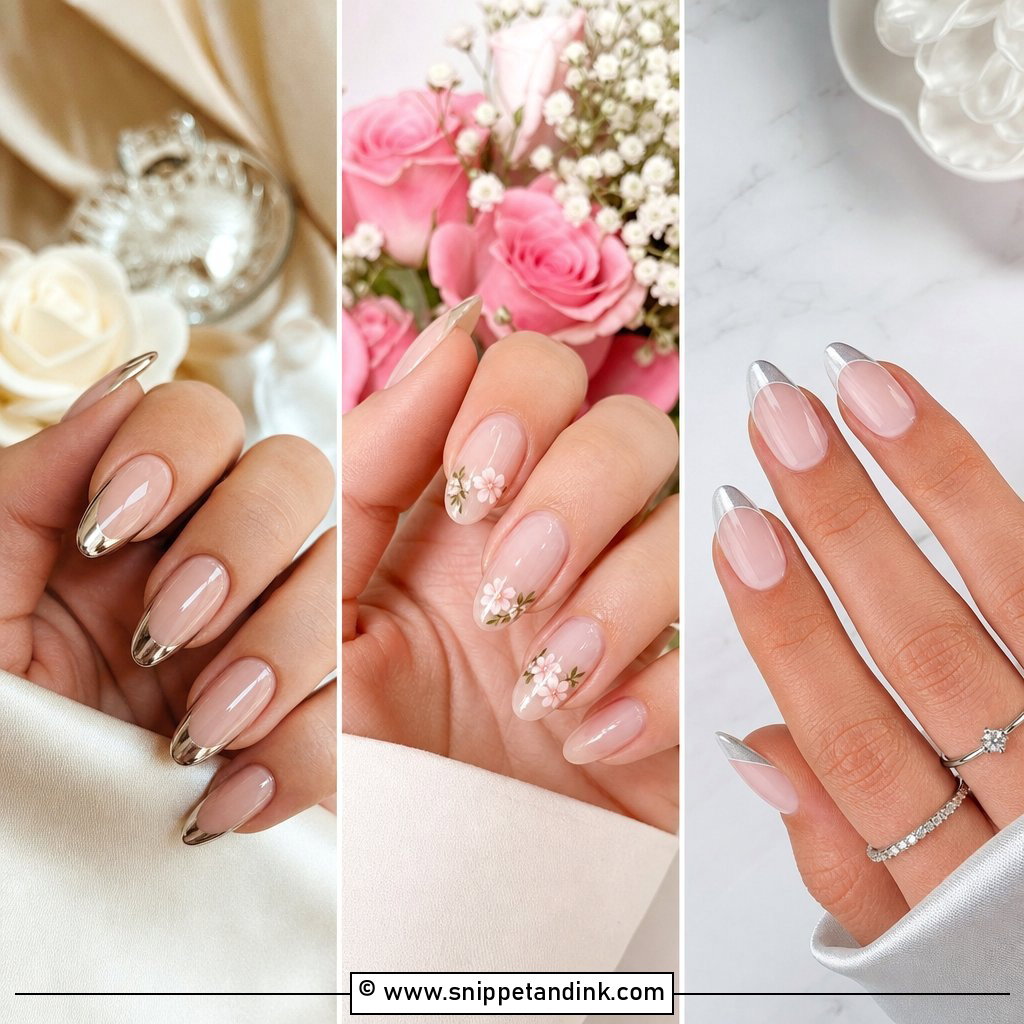
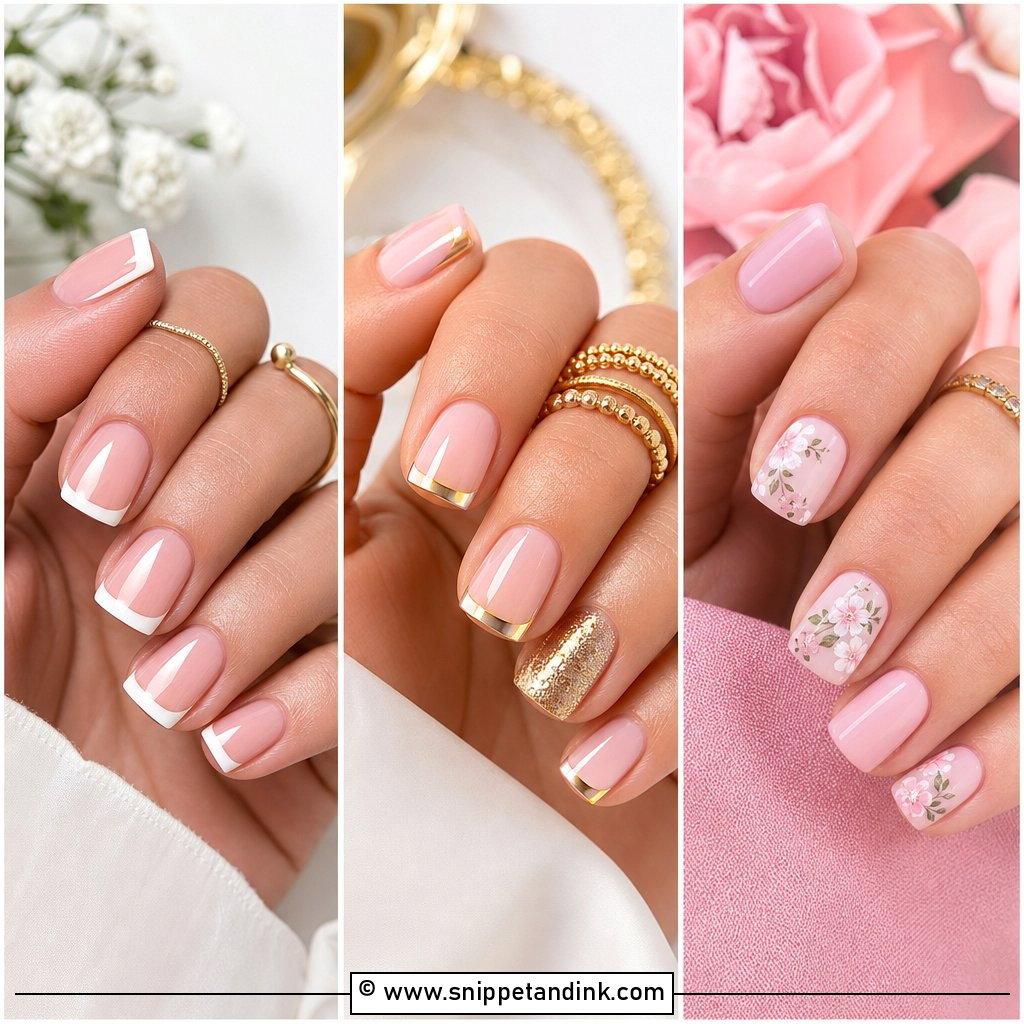
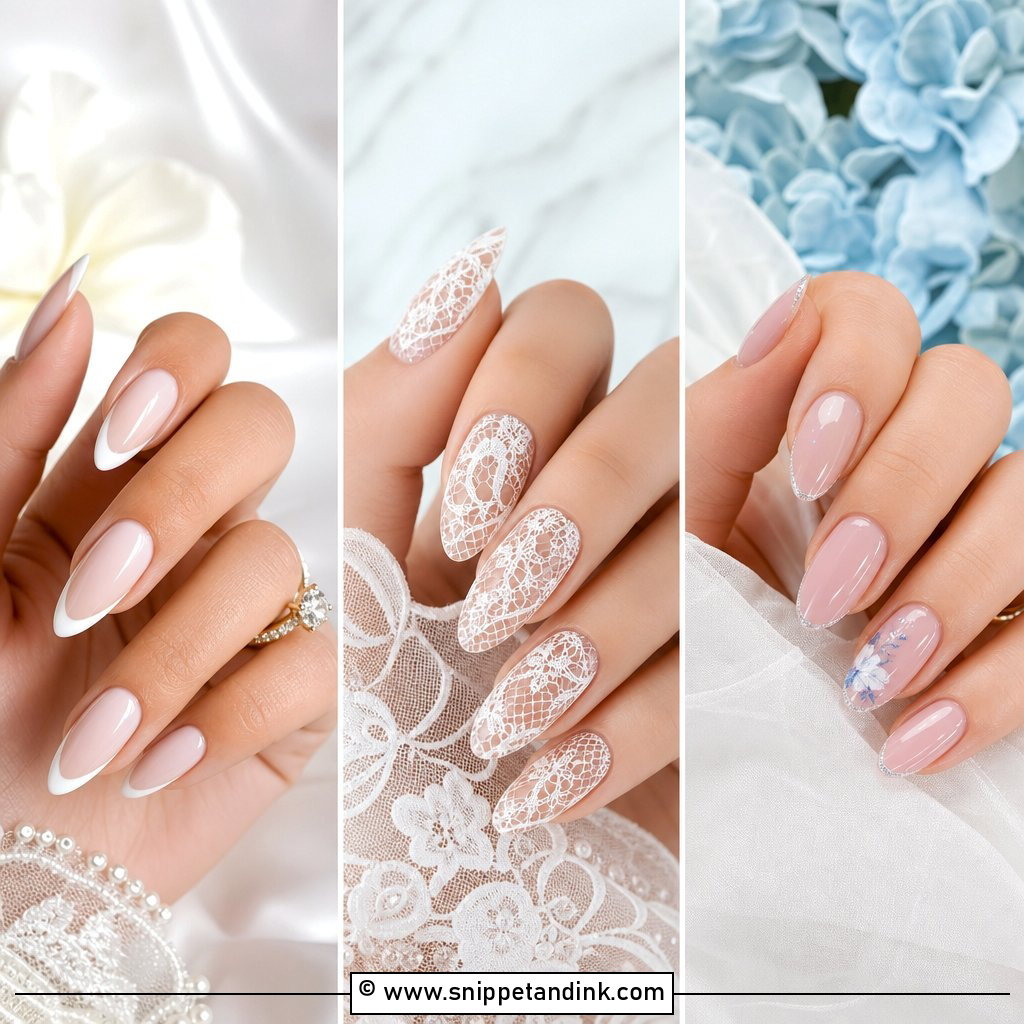
The French tip has never gone away, but the line has got thinner. I paint a narrow, gently curved smile line now rather than the thick, square stripe of older sets, and I match its curve to the shape of each finger, which is why a hand-painted French takes longer than you’d expect. A sheer pink or milky base keeps it soft. Almond, oval and medium square shapes carry it best. If you want it slightly more modern, a pass of pearl chrome over the finished tips adds a glow without changing the design.
3. White Chrome Wedding Nails
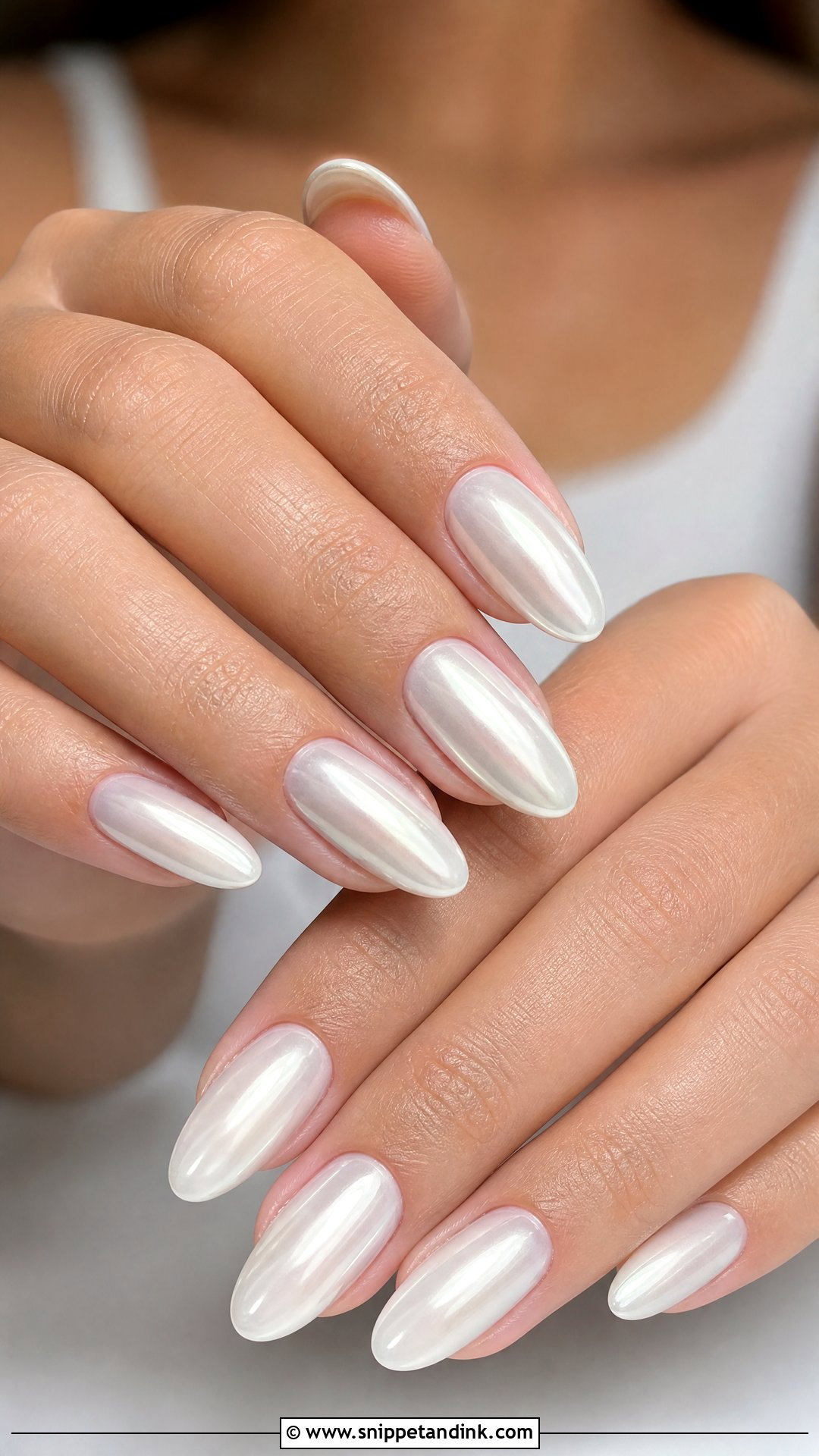
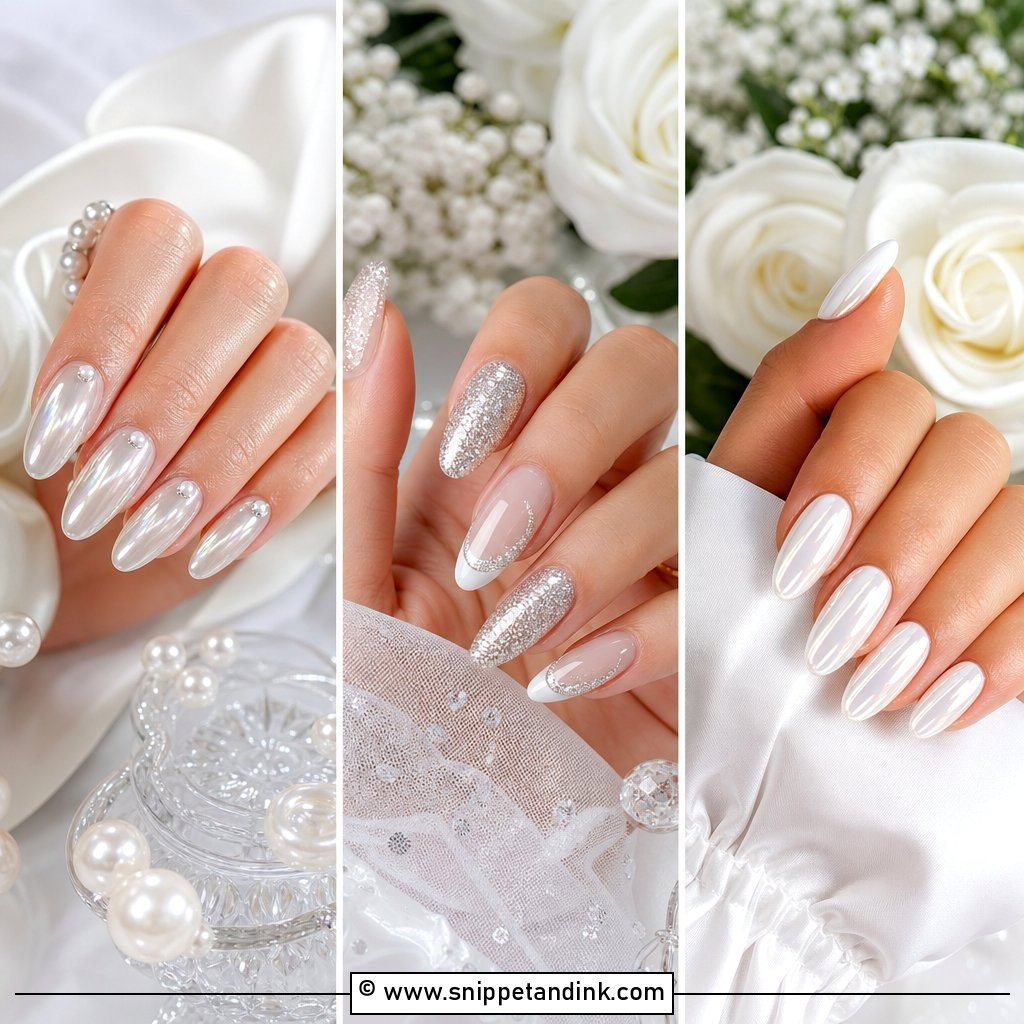
Chrome is powder buffed onto a cured, no-wipe top coat, so the base underneath decides the final colour. Over white or ivory, pearl powder reads warm and glassy; over a sheer milky base it looks almost like the inside of a shell. The shine follows the curve of the nail, which is why almond and coffin shapes show it off in close-up ring photos. If you’re worried about it looking icy, ask for a warm pearl powder instead of silver. One honest warning: chrome highlights every lump in the gel underneath, so it needs a well-levelled base.
4. White Ombre Wedding Nails
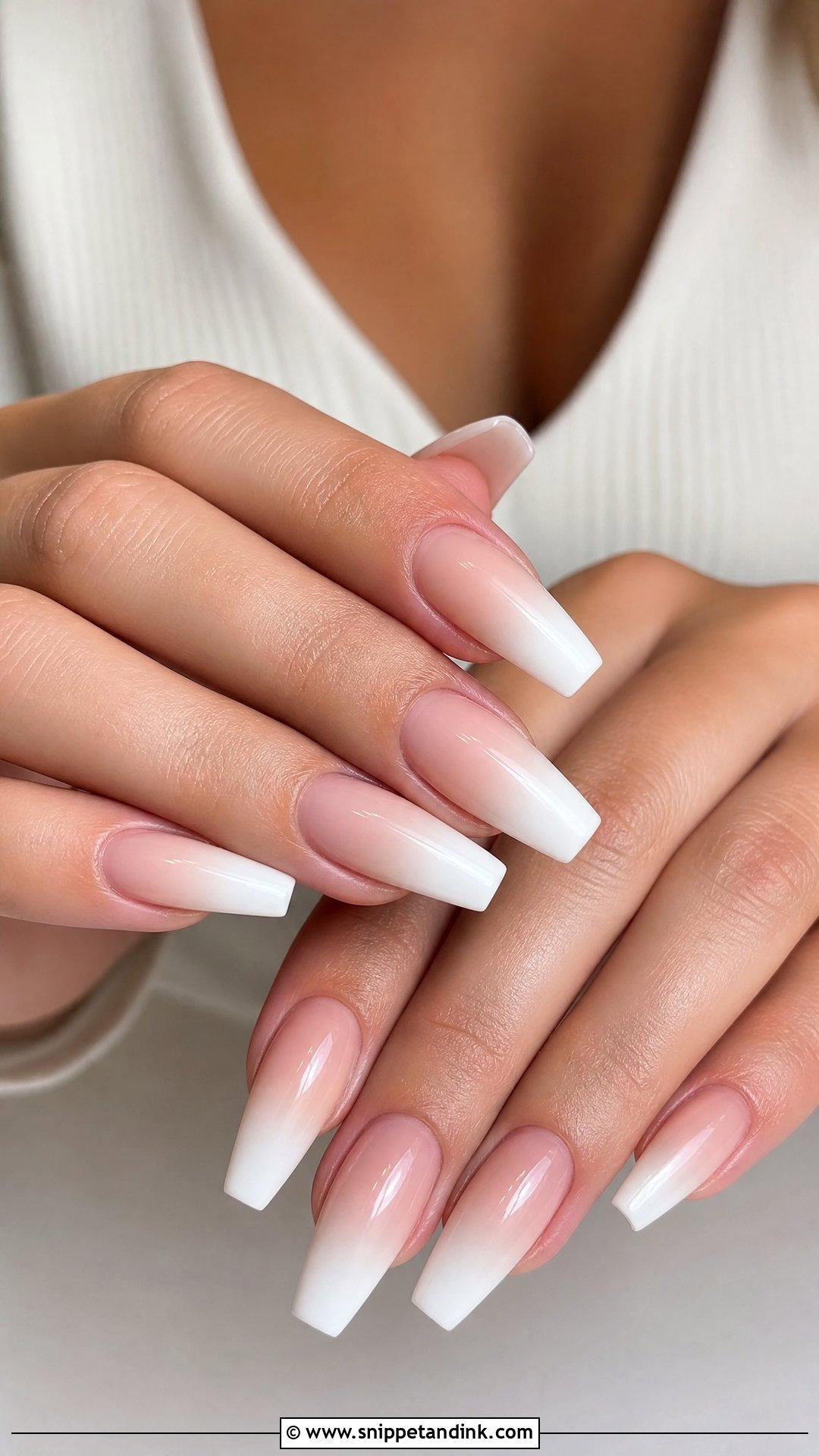
An ombre fade gives you the same bridal effect as a French tip without a hard line to judge. I sponge or brush a cloudy white down from the free edge into a nude, pink or sheer beige base, building it in thin passes so the blend doesn’t look streaky. Brides who dislike crisp tip lines usually love it. On medium to long almond, coffin and ballerina shapes the fade draws the eye along the finger, so hands look longer. Finish it glossy, or with a very fine shimmer top coat if you want a hint of light.
5. White Pearl Wedding Nails
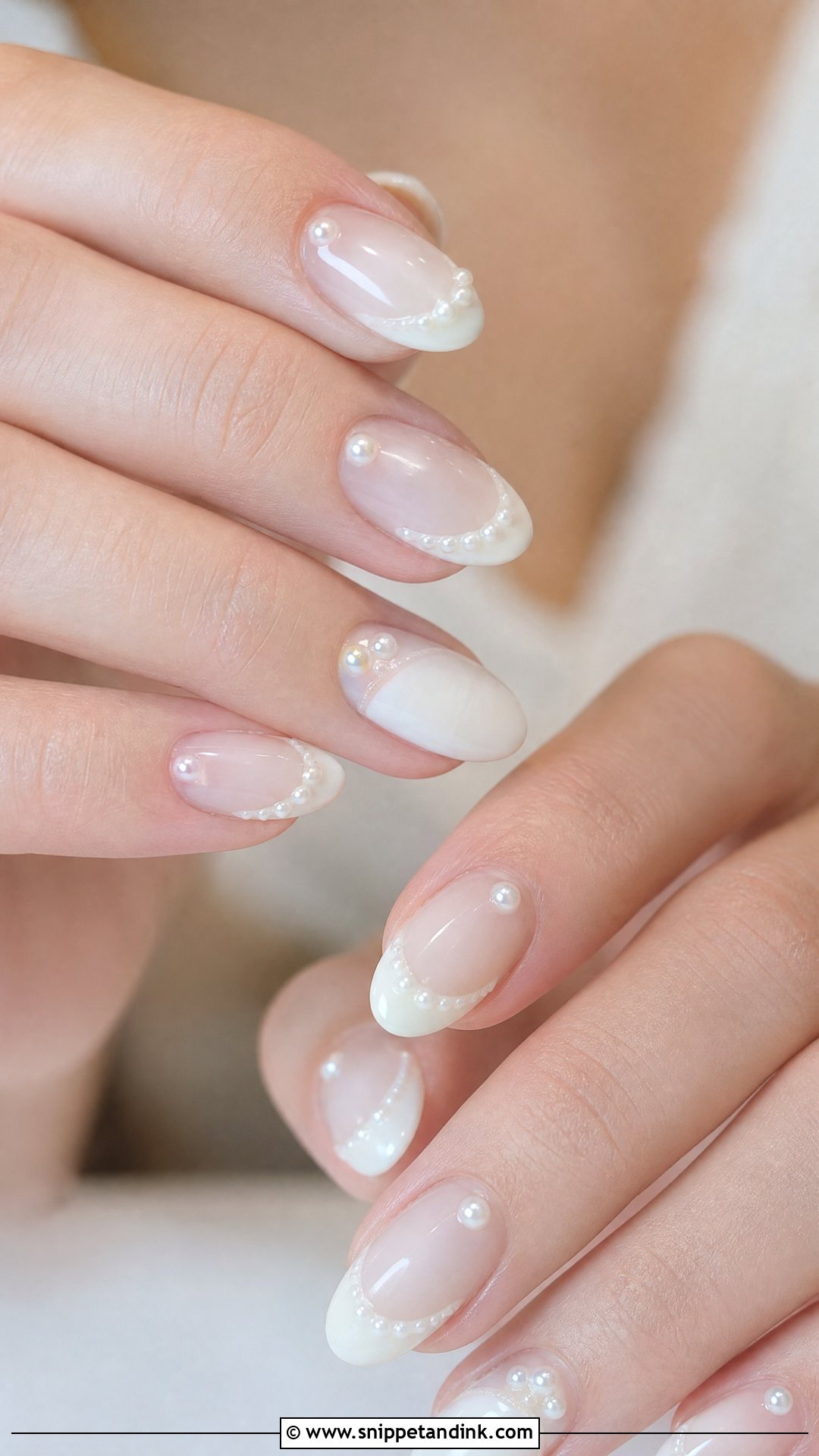
Pearls work best when they repeat something you’re already wearing, like pearl buttons down the back of the dress, a pearl-edged veil or your earrings. I place them along the cuticle, along a French line or on one or two accent nails, and I seat each one in a small bead of gel so it can’t snag on lace or hair. Keep them tiny. A cluster of large pearls on every finger looks heavy and catches on everything. Oval, almond and short square nails all suit this, since the round pearls soften the shape.
6. White Lace Wedding Nails
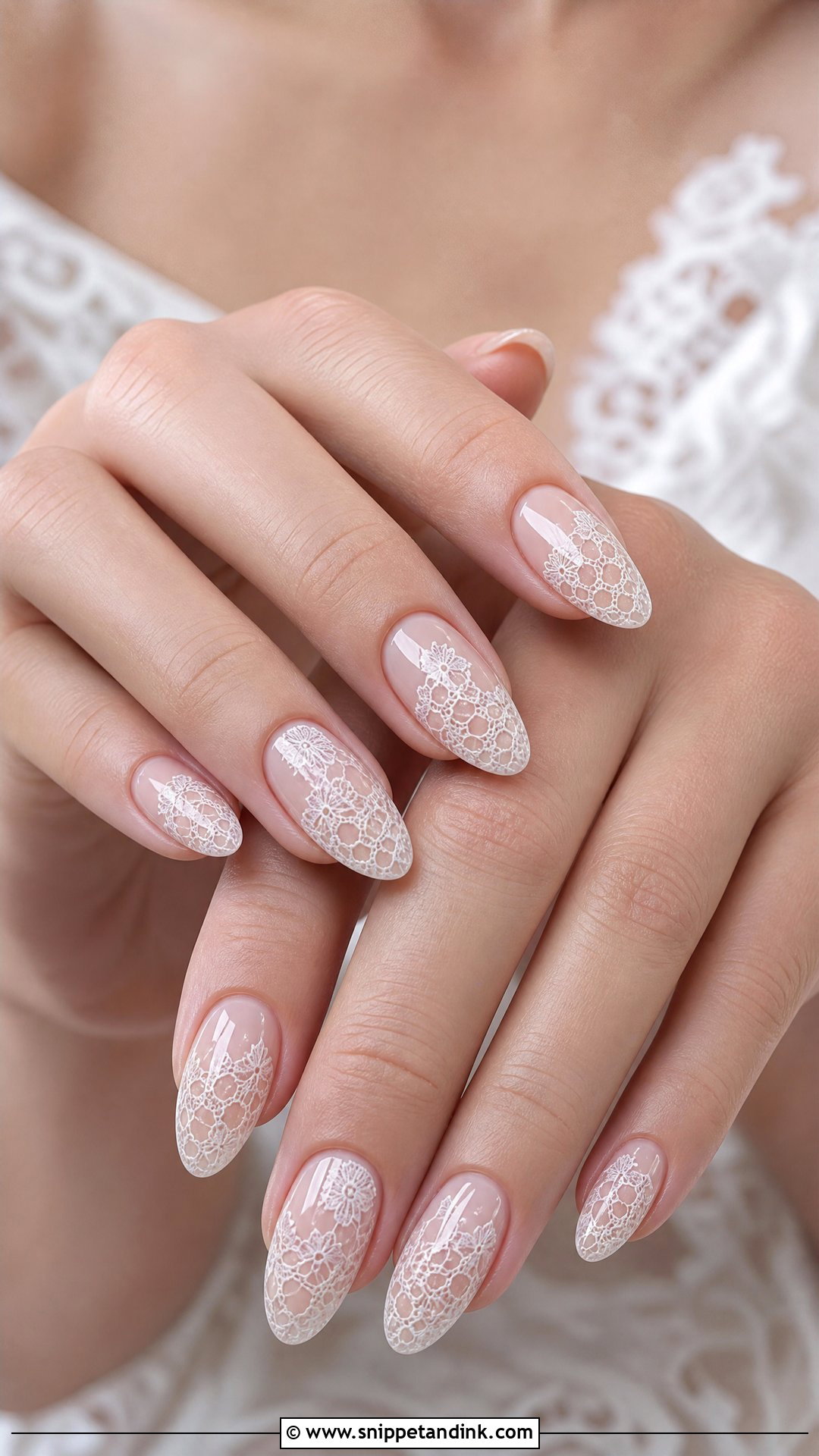
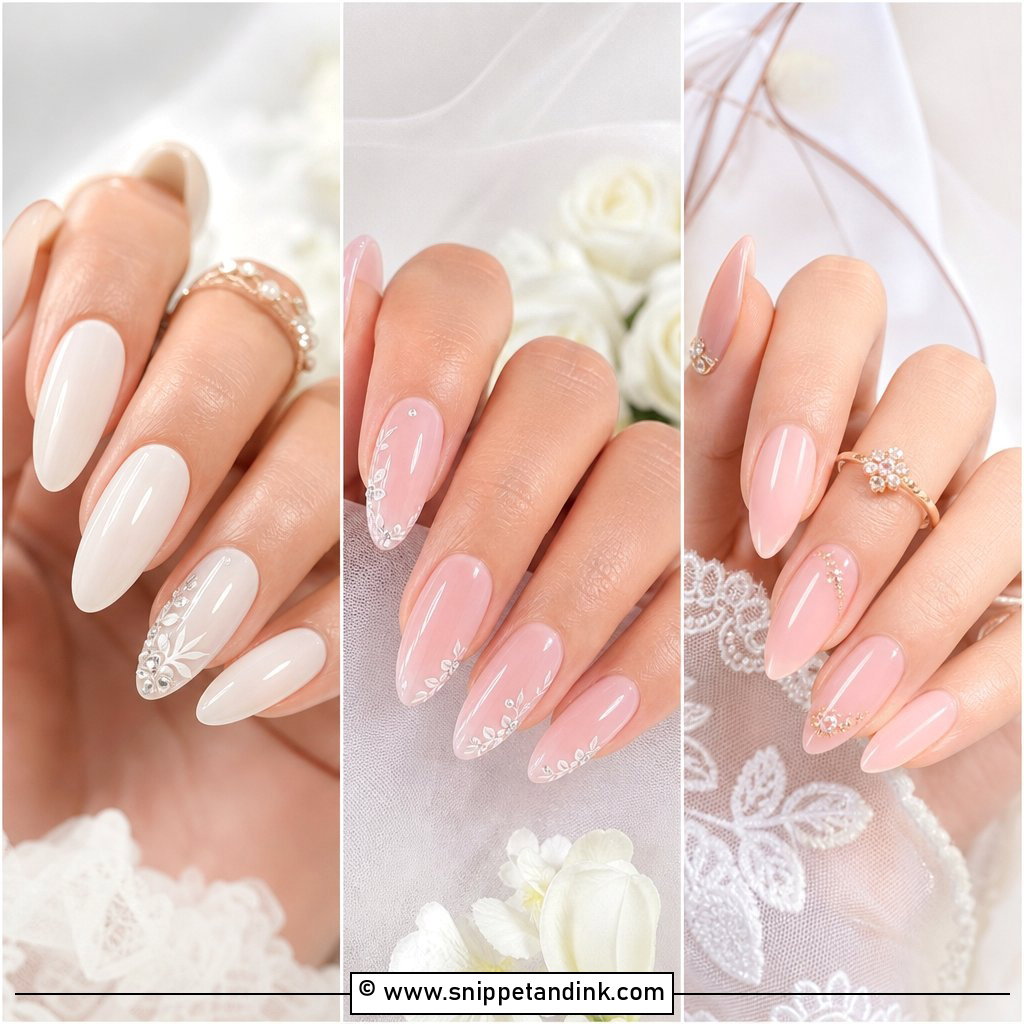
Painted lace is slow, careful work: I use a long, thin liner brush and very pigmented white gel, curing every few strokes so the lines stay crisp instead of bleeding. If your gown has a distinctive lace motif, bring a photo of it and I can echo the scallops or flower shapes. I’d limit the lace to two or three nails and keep the rest milky or French; ten fully laced nails start to look like a pattern rather than a detail. Almond, oval and coffin nails give the brush enough room to work.
7. White Floral Wedding Nails
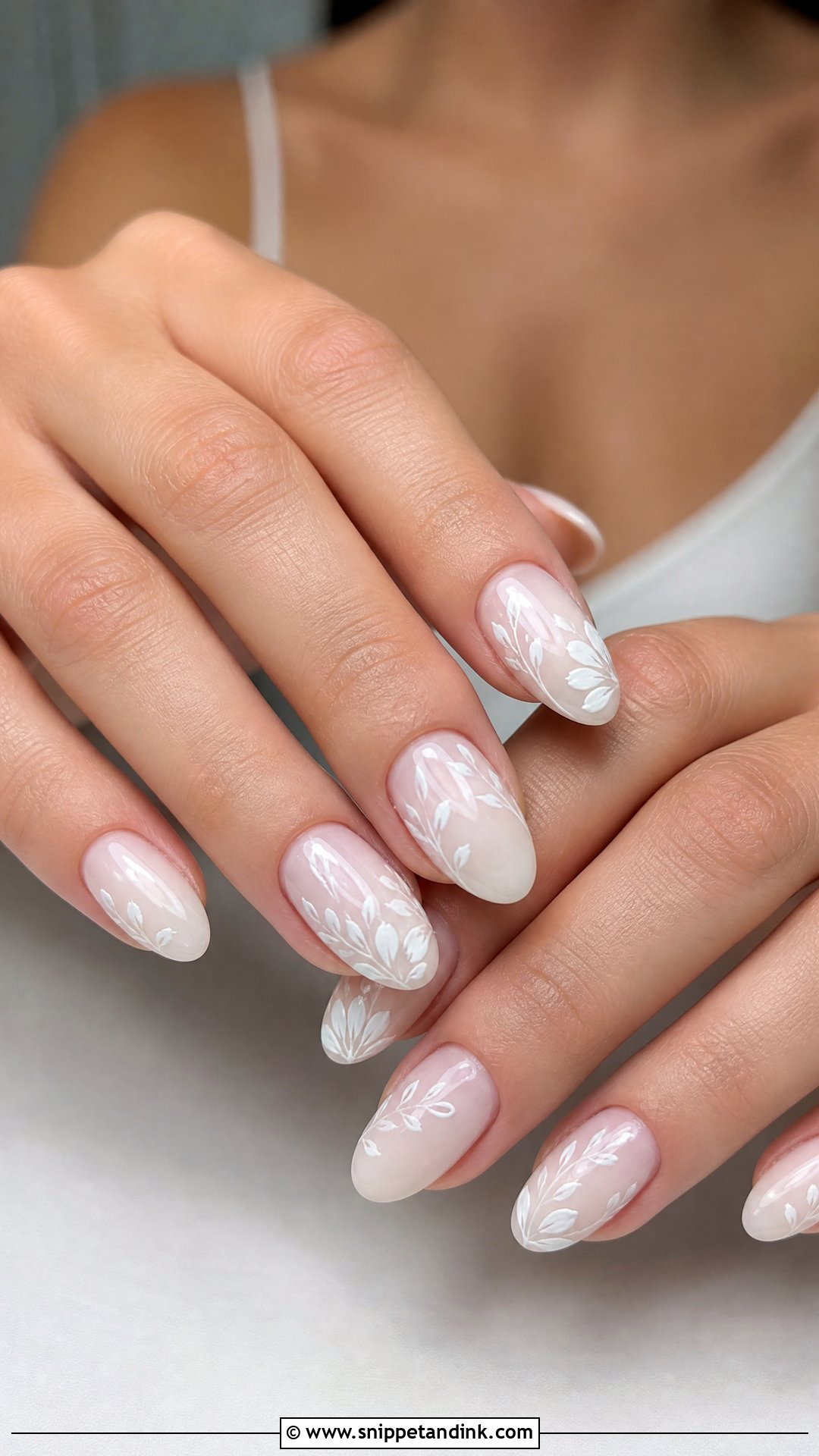
White florals keep a garden feel without bringing colour into your hands. They can be flat painted flowers, raised 3D petals or fine line drawings over a sheer base, and the flat versions wear much better if you’ll be shaking hands all evening. I tuck small flowers into the tip or one corner of the nail rather than covering the whole plate, so the set still breathes. Spring and summer weddings suit it most naturally, but kept minimal it works in any season.
8. White Glitter Wedding Nails
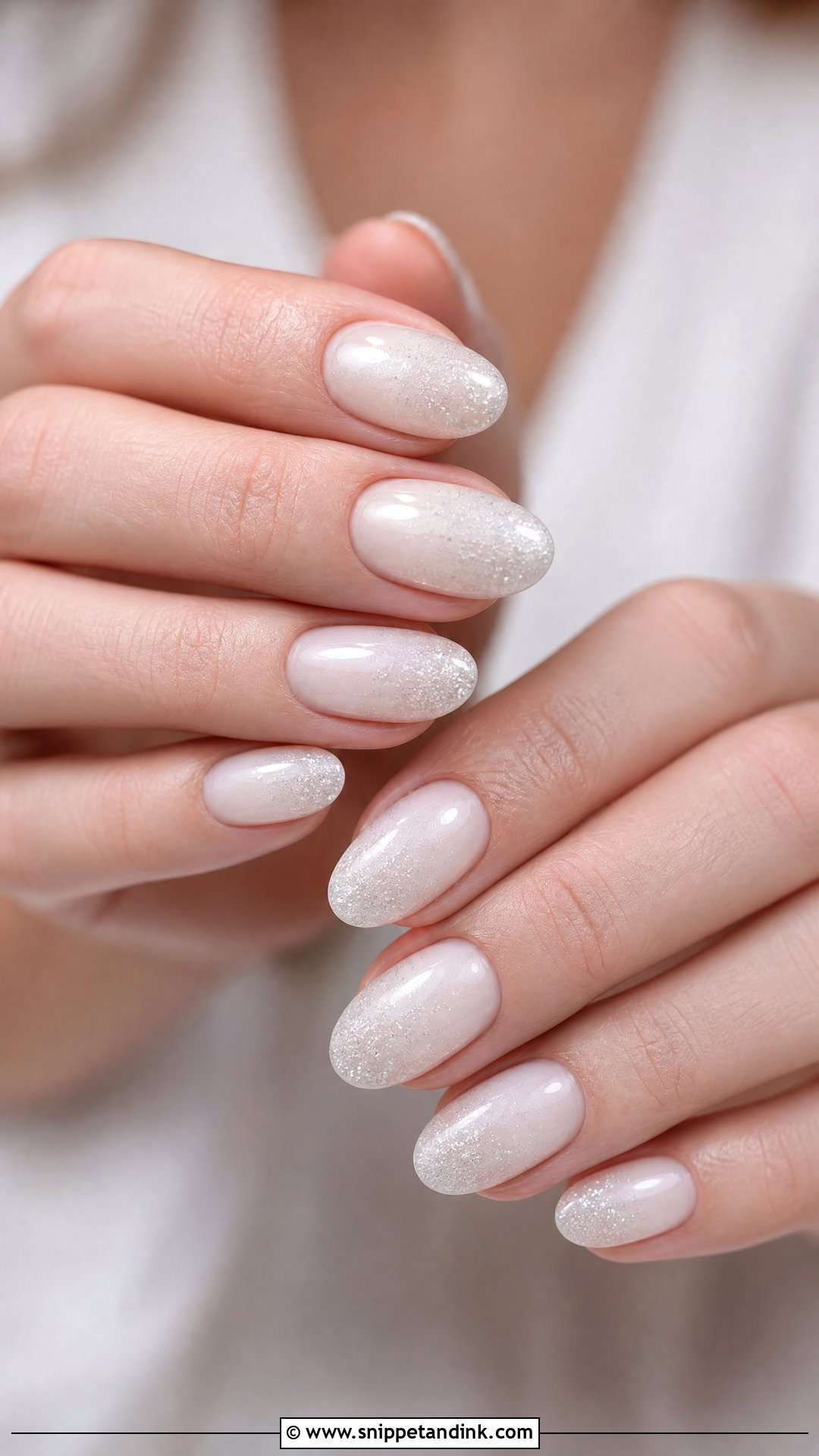
White glitter wedding nails add sparkle without leaving the bridal palette. I stick to fine shimmer or soft crystal glitter; chunky hexagons look craft-like in close-ups and make the surface lumpy under top coat. You can wear it over milky white, fade it in from the tips or dust it near the cuticle. It’s a strong match for gowns with beading or sequins, because the nails catch the same light the dress does. Removal is the trade-off: glitter gel takes longer to soak off, so plan for that after the honeymoon.
9. White Coffin Wedding Nails
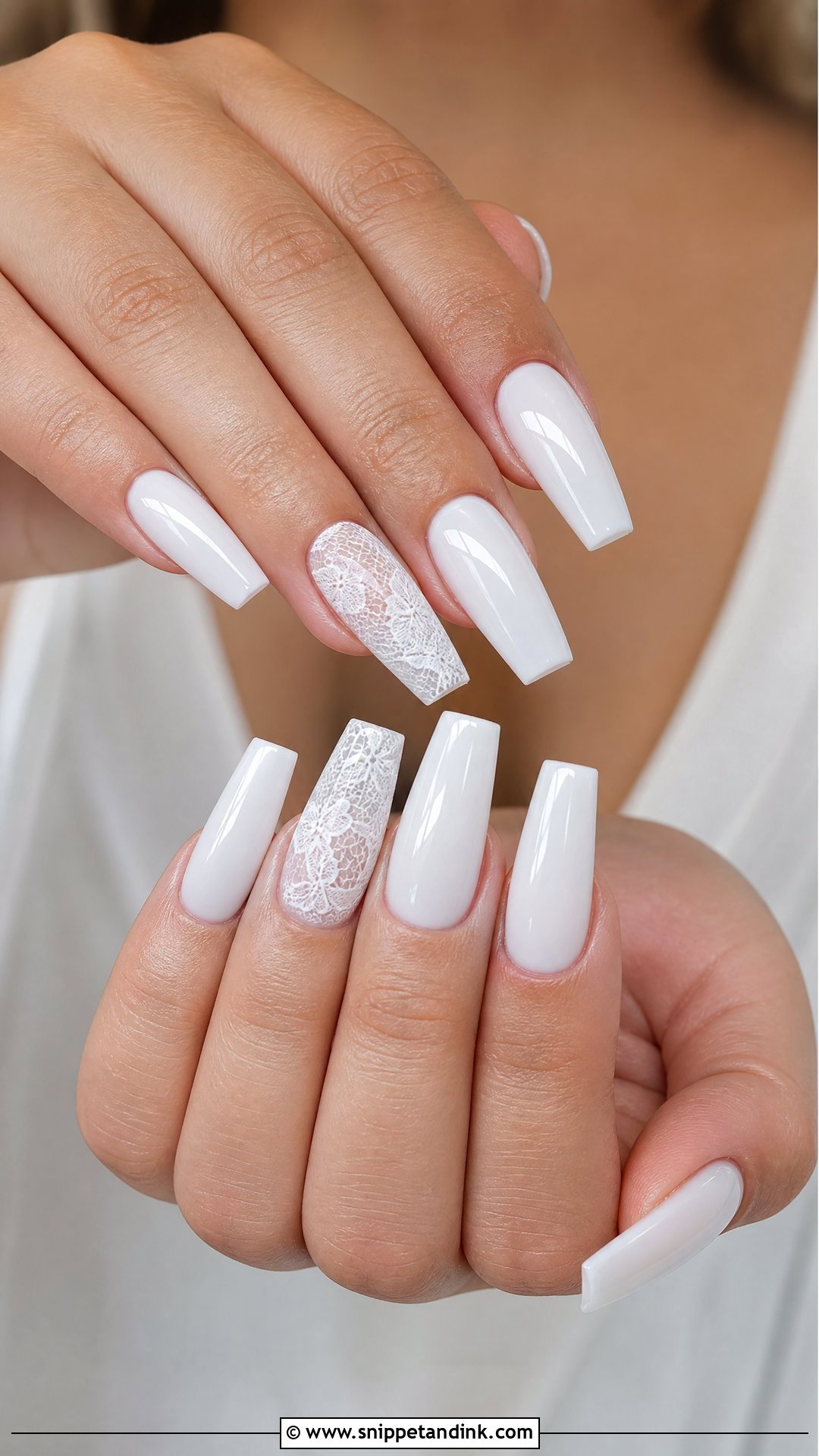
Coffin nails give a long, structured canvas with room for French tips, fades, chrome or a pearl accent. For a wedding I soften the corners slightly, because sharp coffin edges catch on lace, tulle and veil netting. A milky base with a high-gloss top coat looks clean; white chrome adds more shine for photos. This shape suits fitted or sleek gowns and a more glamorous overall look. If you’ve never worn this length, have a set done a few weeks ahead so you can get used to fastening jewellery and buttons with it.
10. White Almond Wedding Nails
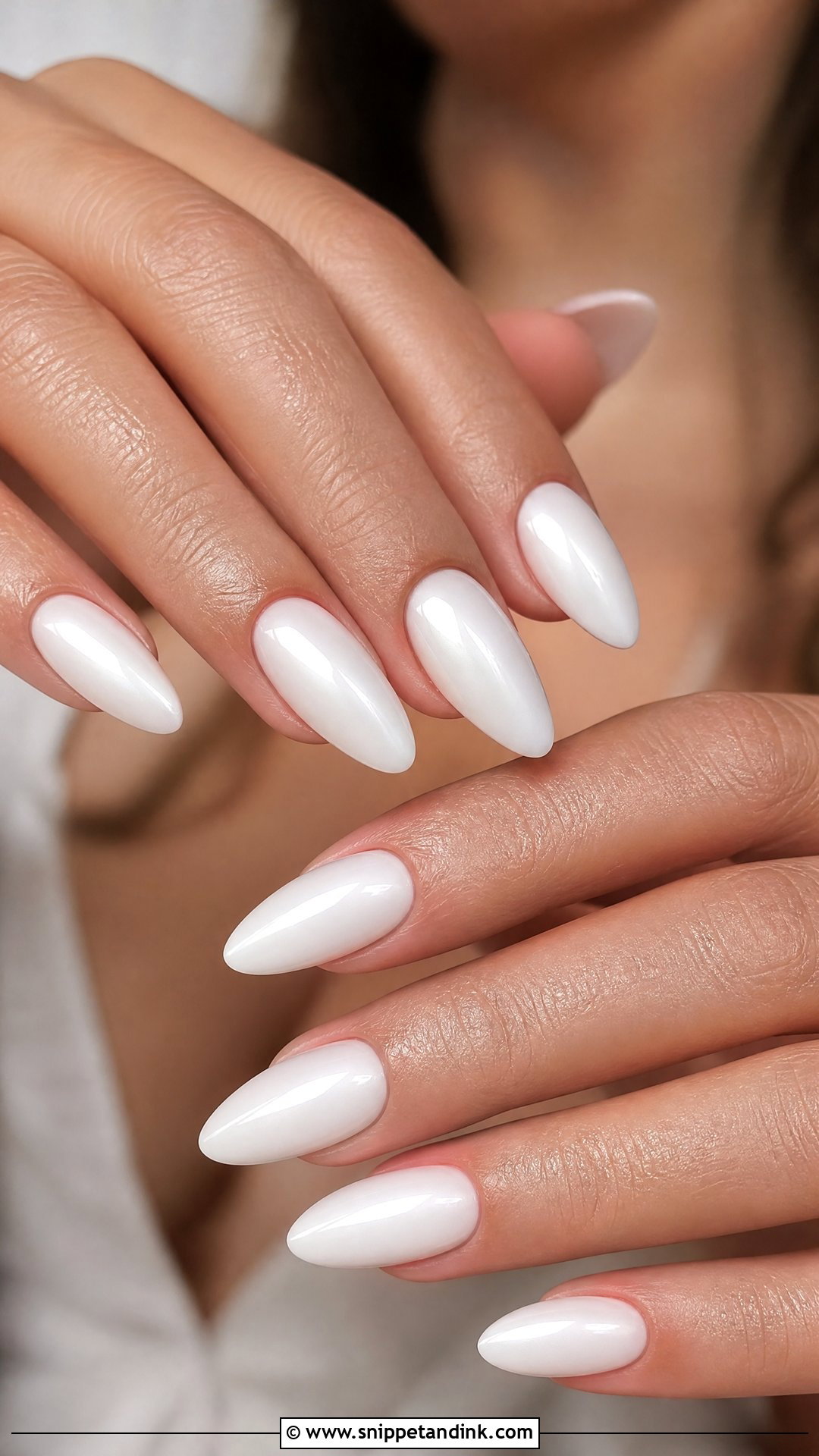
Almond is the shape I recommend most for brides, because the tapered tip lengthens the fingers without the drama of a stiletto point. It handles plain gloss, milky white, a French line or pearl chrome equally well, and the curve gives small details like florals, swirls or tiny crystals a natural flow. Short to medium almond looks natural. Go a little longer with a sheer white base if you want a dressier set with a single accent. The point is where almond nails break, so I keep the apex strong if you have thin natural nails.
11. Short White Wedding Nails
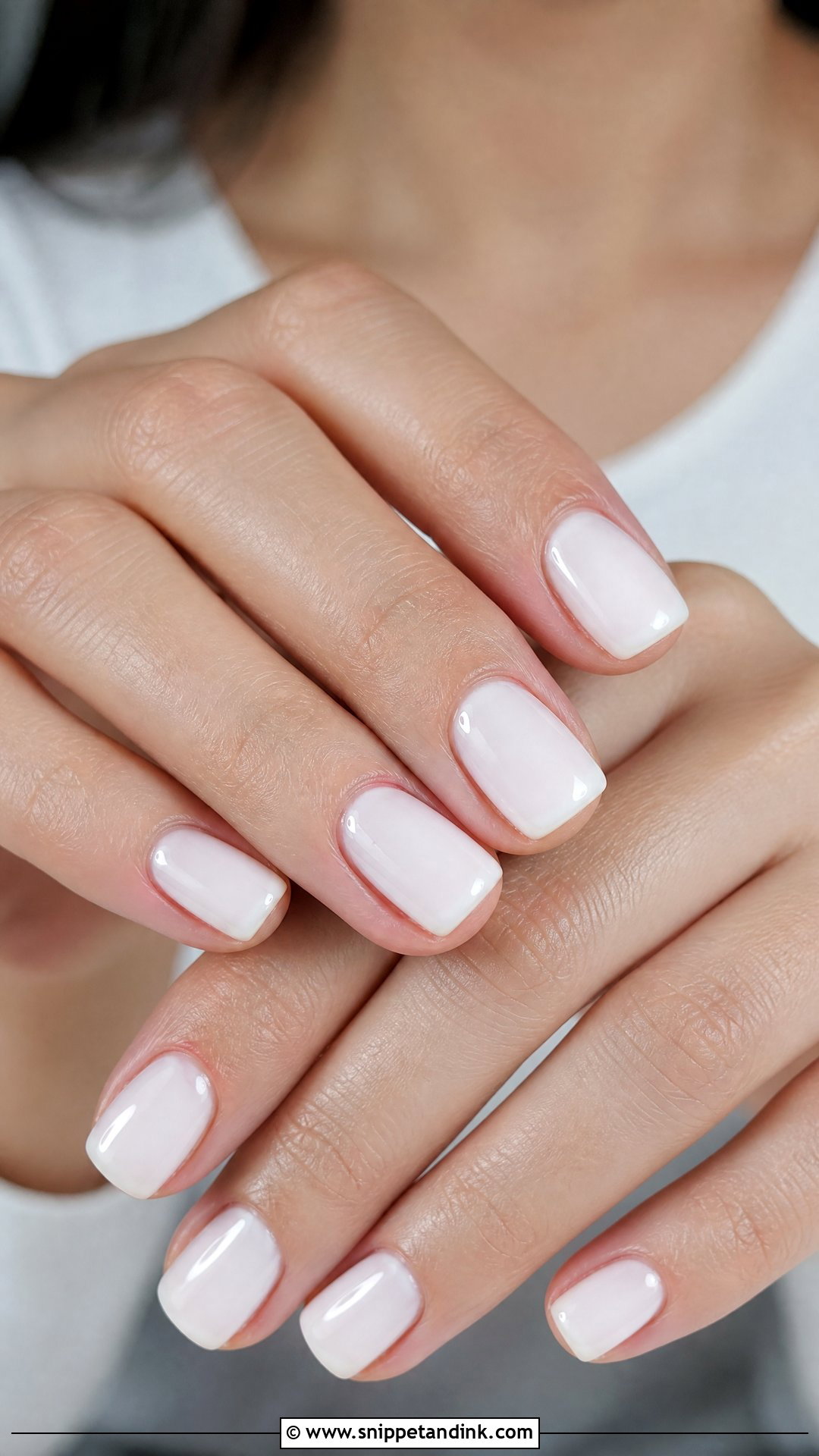
You don’t need extensions to have bridal nails. Short nails often look the neatest in ring photos because the band and stone stay the focus. I shape them soft square, rounded or short oval so the edges don’t snag, then use milky white, sheer ivory or a slim French tip; a heavy opaque white on a short nail tends to look painted on. A glossy finish keeps them fresh. This is my usual advice for brides who work with their hands, type all day or simply don’t want to think about their nails.
12. White Acrylic Wedding Nails
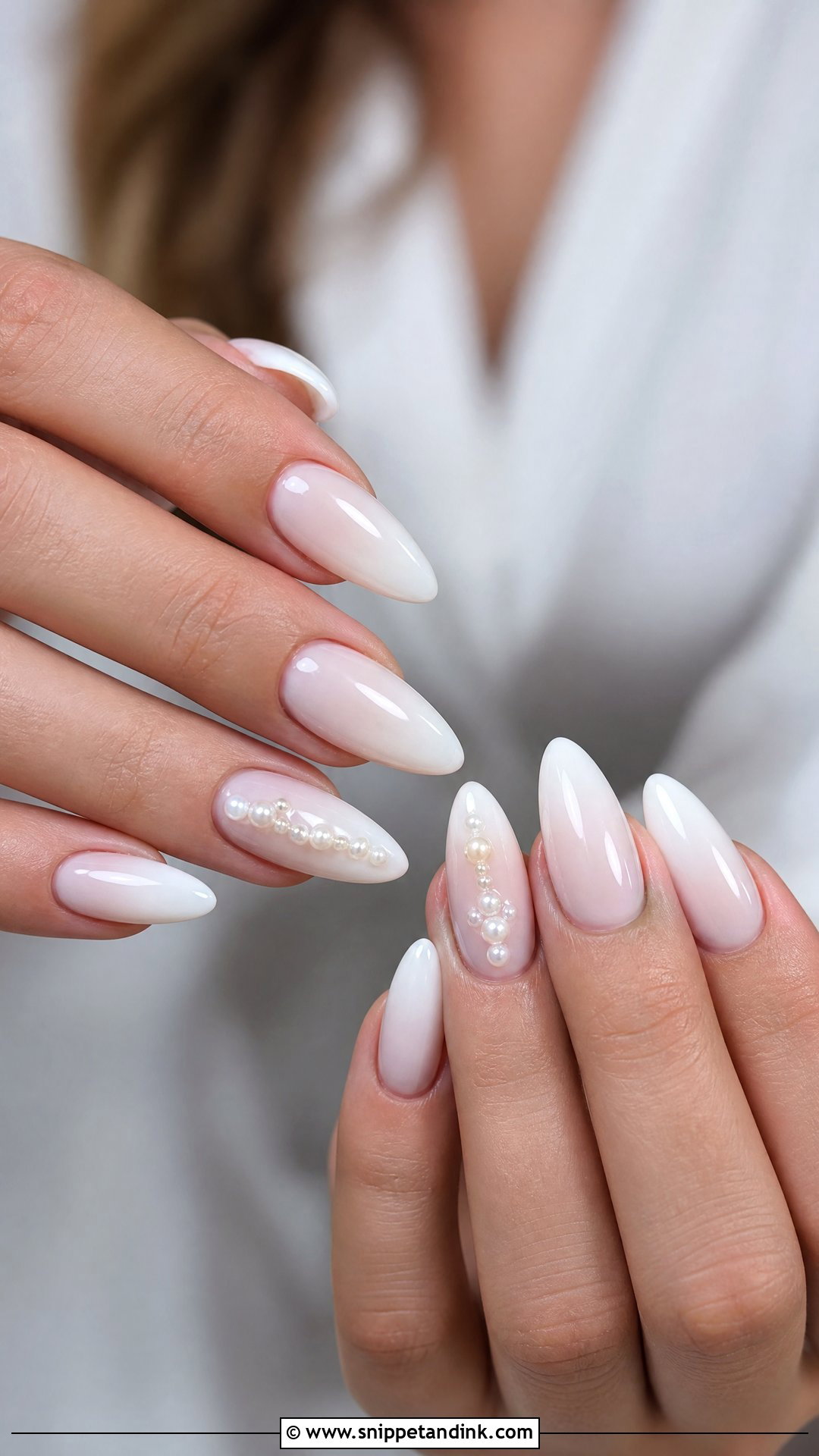
White acrylic wedding nails give you length, a strong structure and a very smooth surface for nail art. Acrylic can build almond, coffin, square or ballerina shapes that last from the rehearsal dinner through honeymoon travel. For a bridal finish I’d use a soft white or milky powder, or a white French, instead of a stark solid white. The thing I watch most is thickness: a set that’s too bulky at the free edge looks clumsy from the side, which is the angle most ring photos are taken from.
13. White Gel Wedding Nails
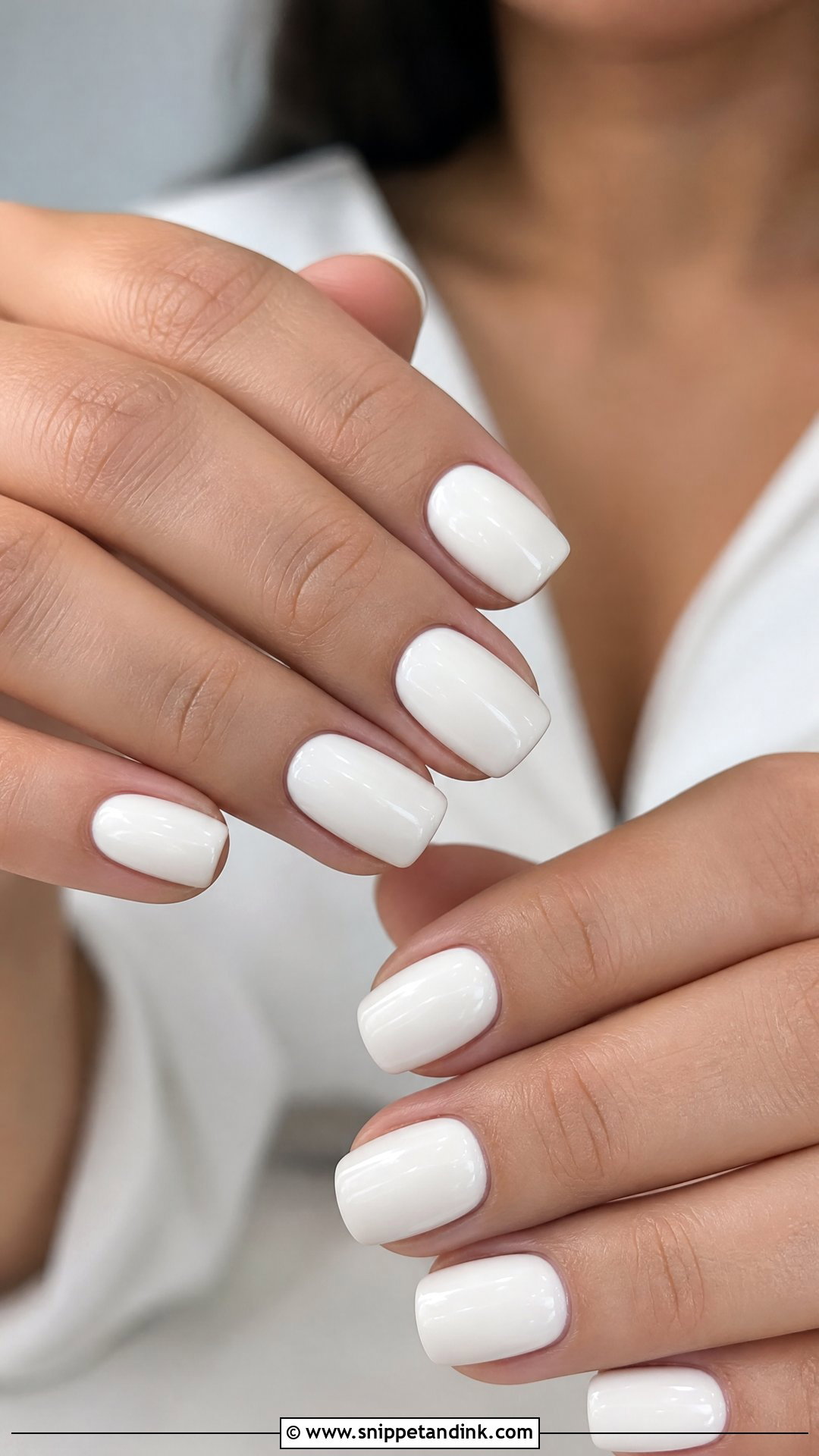
Gel polish is what I use for most brides on natural nails, since a cured white doesn’t chip the way regular polish does during wedding week. White is one of the hardest gel colours to apply evenly, so I go for milky, ivory or soft cream shades rather than bright white, which streaks and shows every thin spot. You can keep it plain, add a glazed top coat or a thin French tip. Book it two to three days before the wedding: fresh enough to look new, with time to fix a lifted corner.
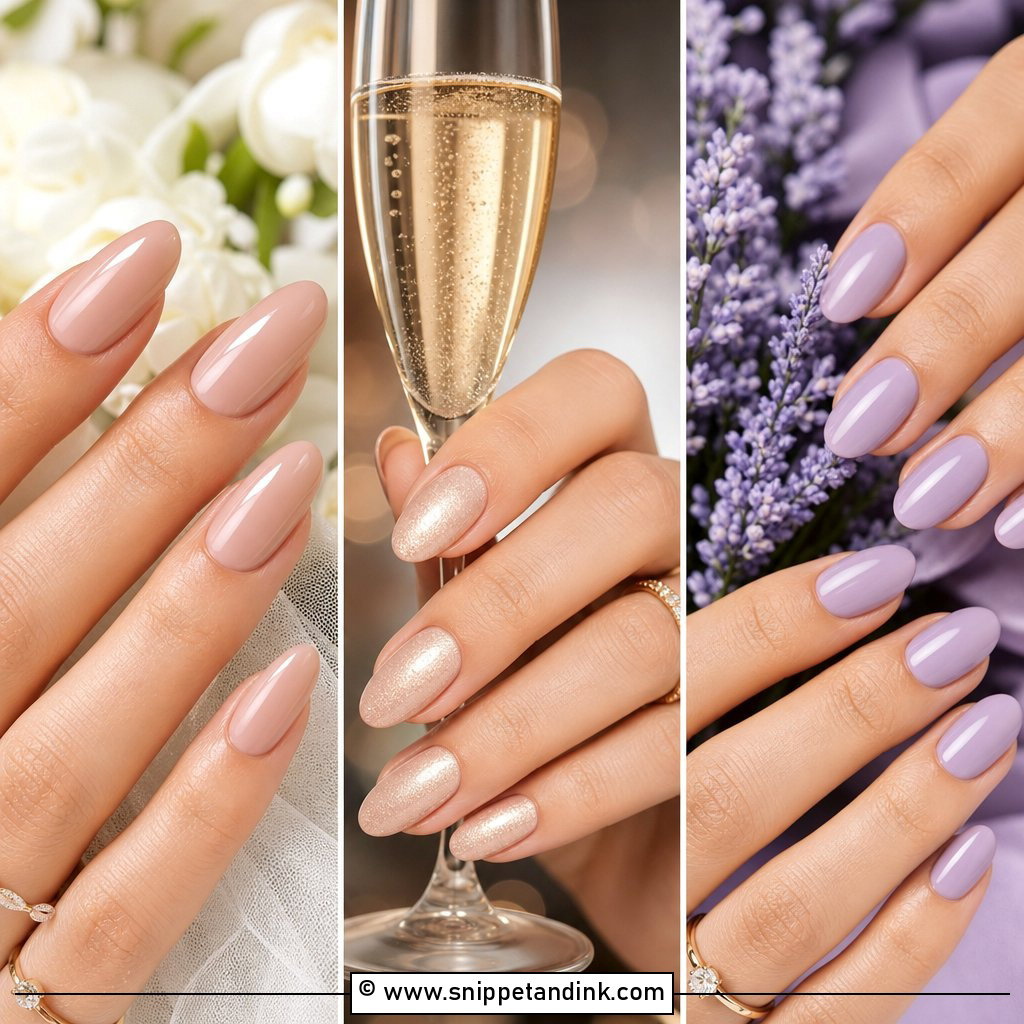
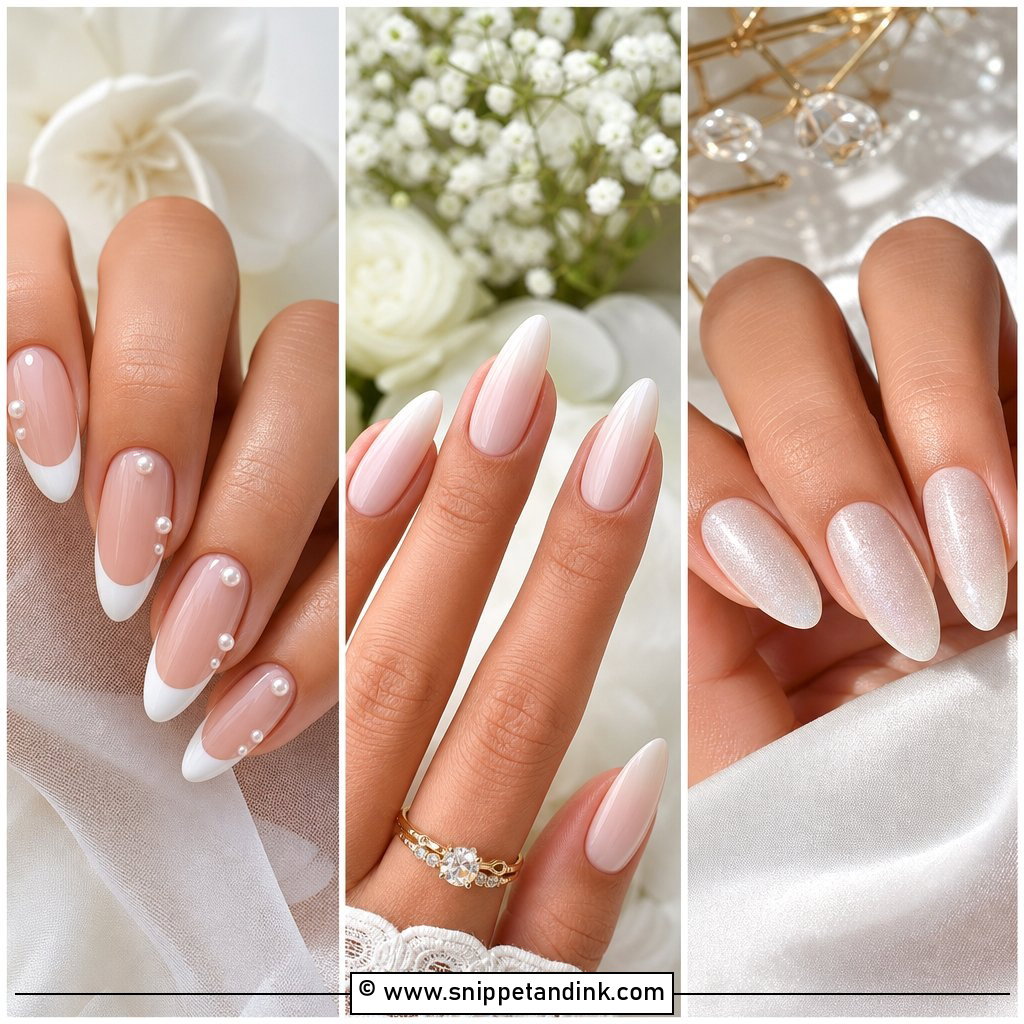
14. White Matte Wedding Nails
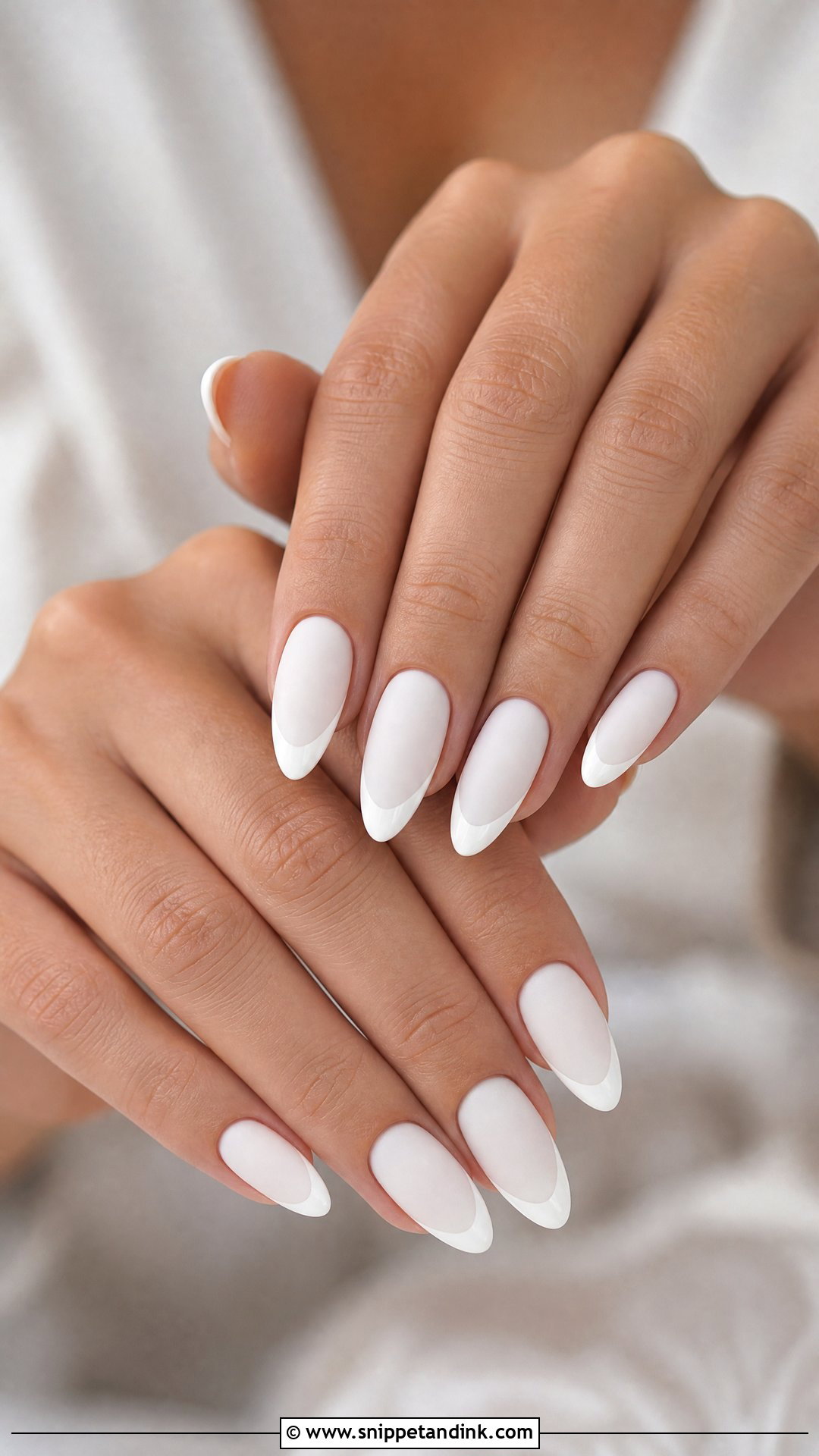
A matte top coat turns white into something closer to velvet. It’s a quieter, more fashion-led choice, and it shows off the shape itself, so almond, oval and coffin nails suit it. I often pair it with a glossy detail, such as a shiny French tip, a few pearls or raised lace, because the contrast between matte and gloss gives the set depth. Be aware that matte white picks up marks from makeup, fake tan and dark fabrics faster than gloss, and it can look slightly dull by the end of a long day.
15. White Marble Wedding Nails
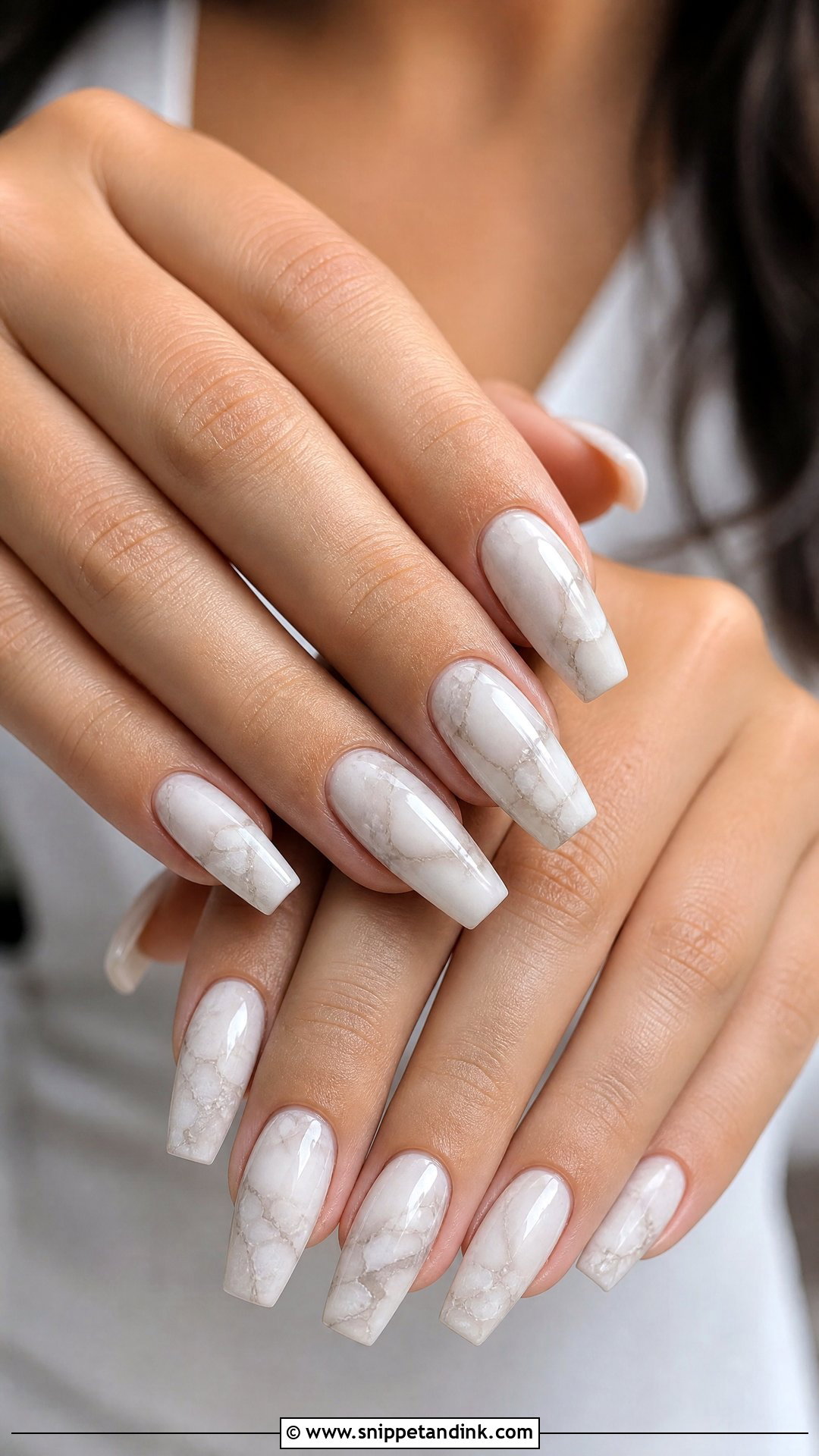
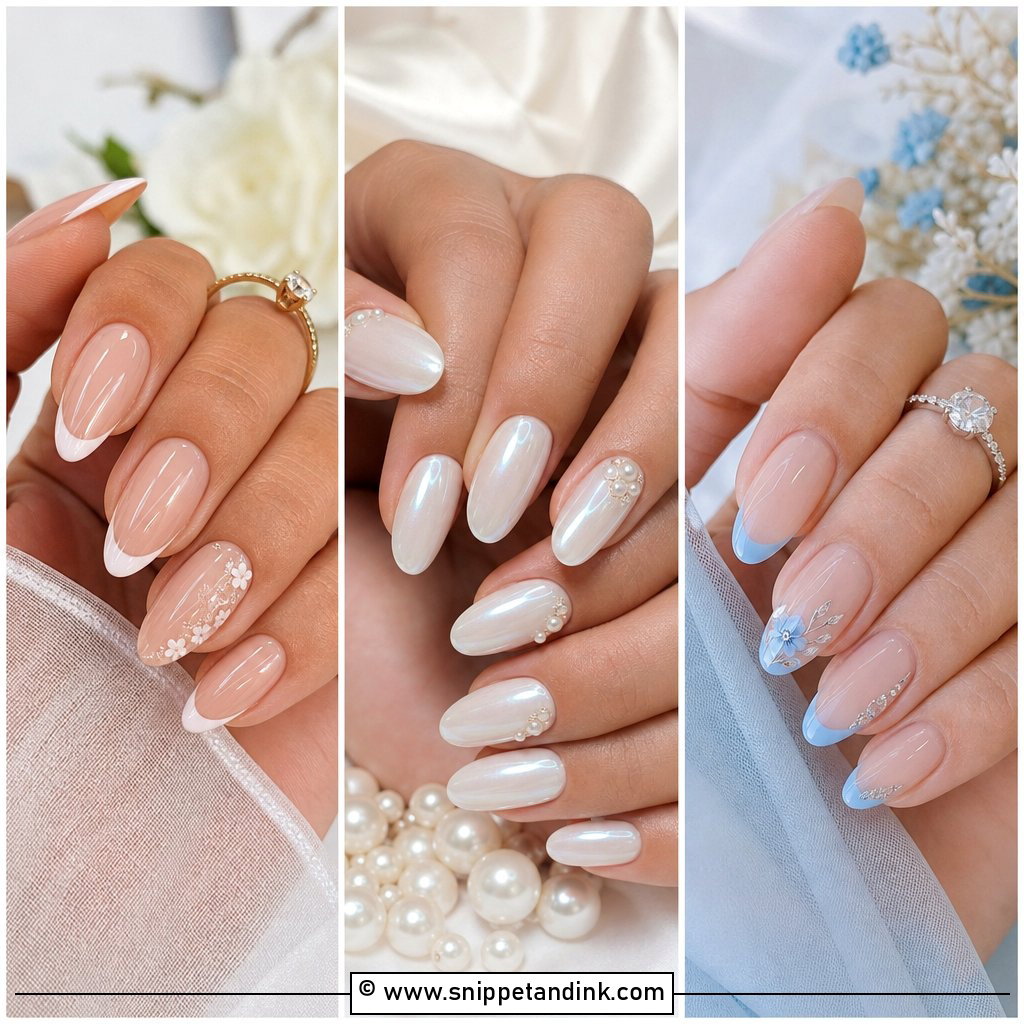
Marble on a bridal set should look like a faint vein in pale stone, not a dramatic slab. I lay a sheer white or milky base, then drag thin grey, beige or pearl lines through wet gel and soften them before curing, so they fade in and out. Medium almond, oval and coffin nails give the pattern space to flow. You can marble every nail or just two accents next to solid white. A glossy top coat finishes it and gives the stone effect depth.
16. White Swirl Wedding Nails
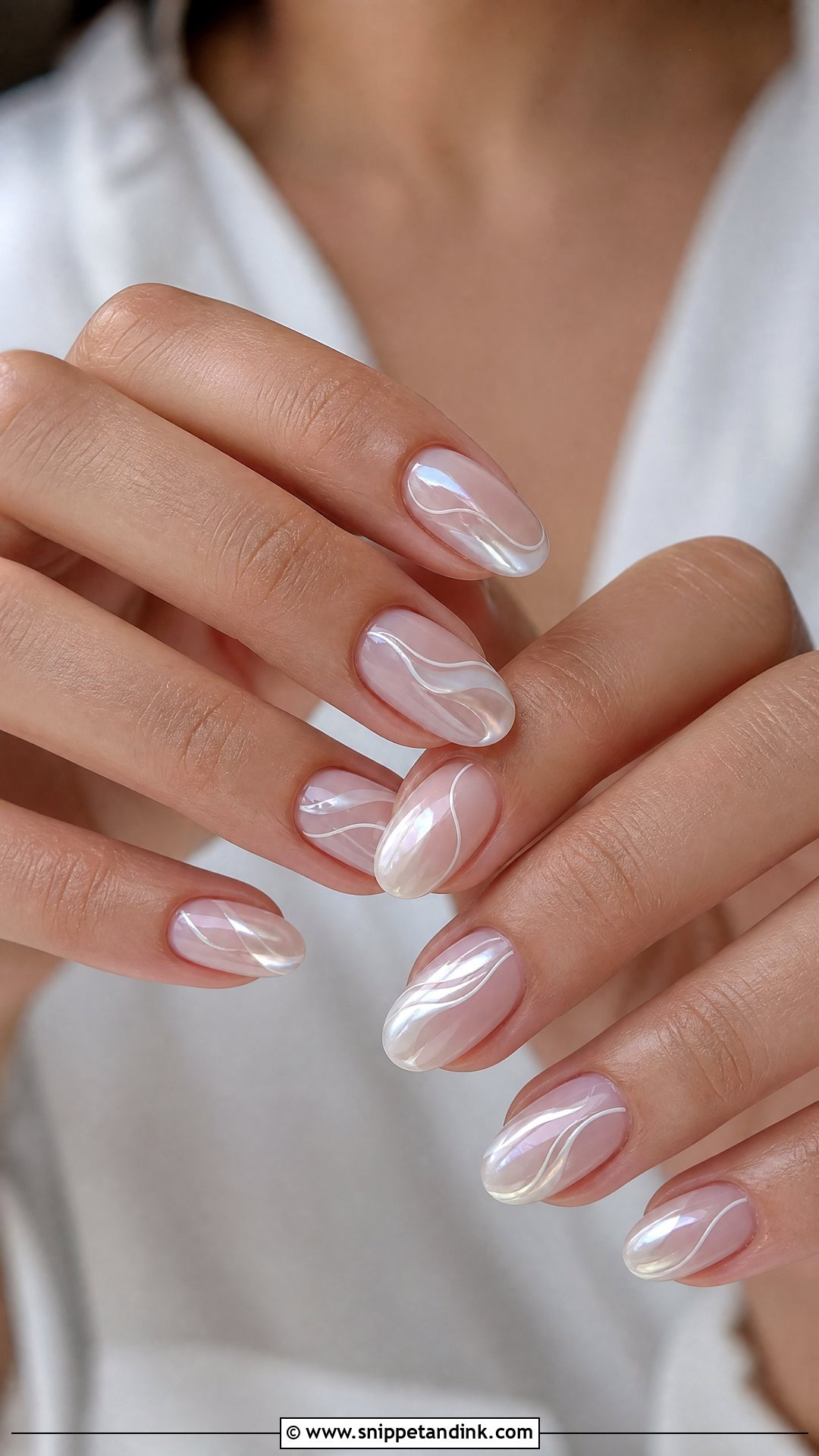
White swirl wedding nails bring movement without bringing colour. Over a sheer nude or milky base I pull thin white curves across each nail; they can be abstract, follow a French curve, or be dusted with pearl chrome for more light. The secret is line weight. Thin, even lines look delicate, while thick or wobbly ones look busy very quickly. Almond and oval nails suit swirls best, since the curves echo the shape of the fingertip.
17. White 3D Flower Wedding Nails
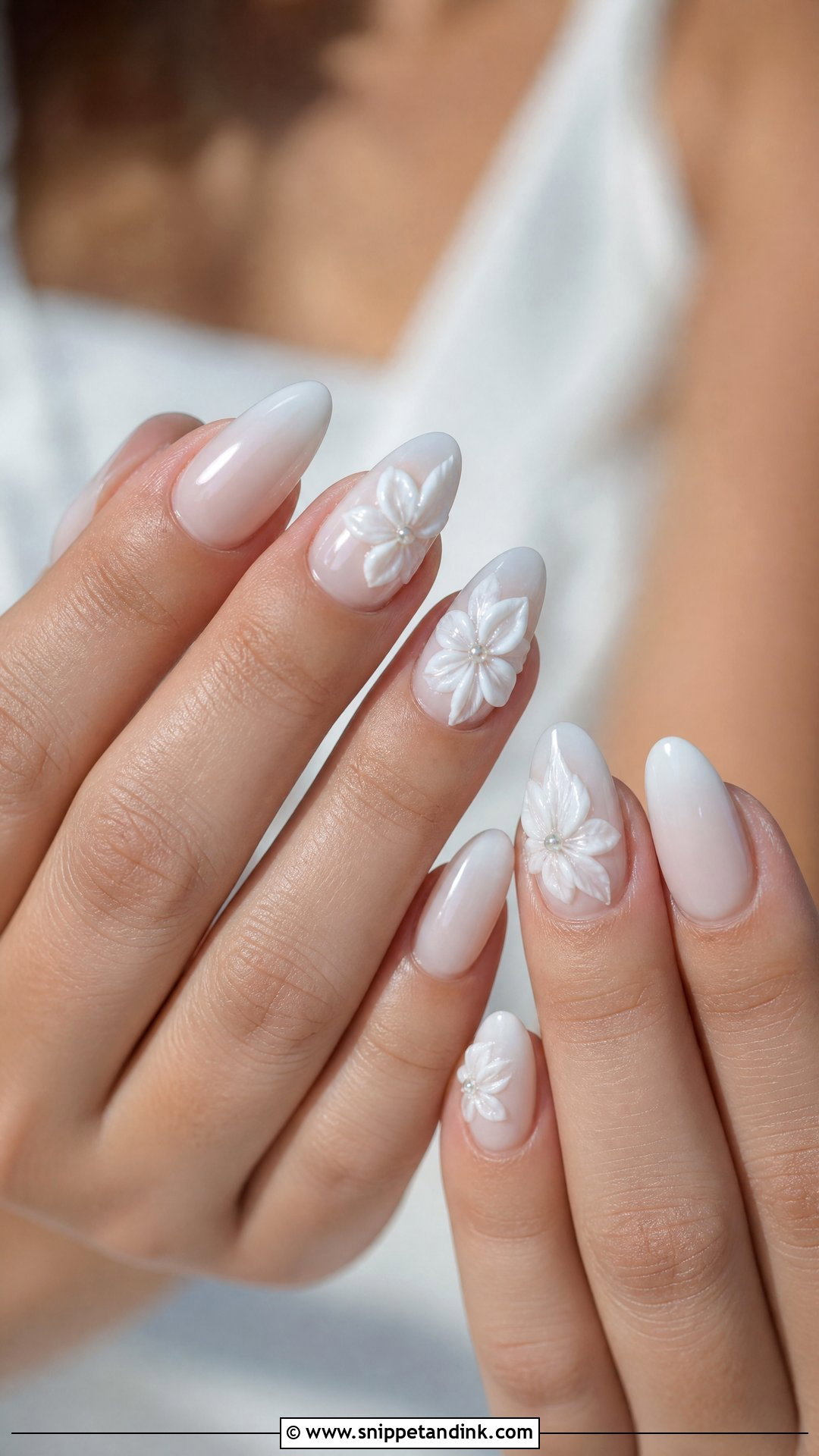
Raised petals are sculpted from builder gel or acrylic and set over a sheer nude, milky or French base. I keep them to accent nails and make them small, tucked into a corner or near the cuticle, because large 3D flowers catch on hair, veil and gloves and are the first thing to pop off. They pair naturally with floral lace gowns, garden ceremonies and loose, romantic bouquets. Almond and coffin shapes give enough surface for the petals to sit flat.
18. White Crystal Wedding Nails
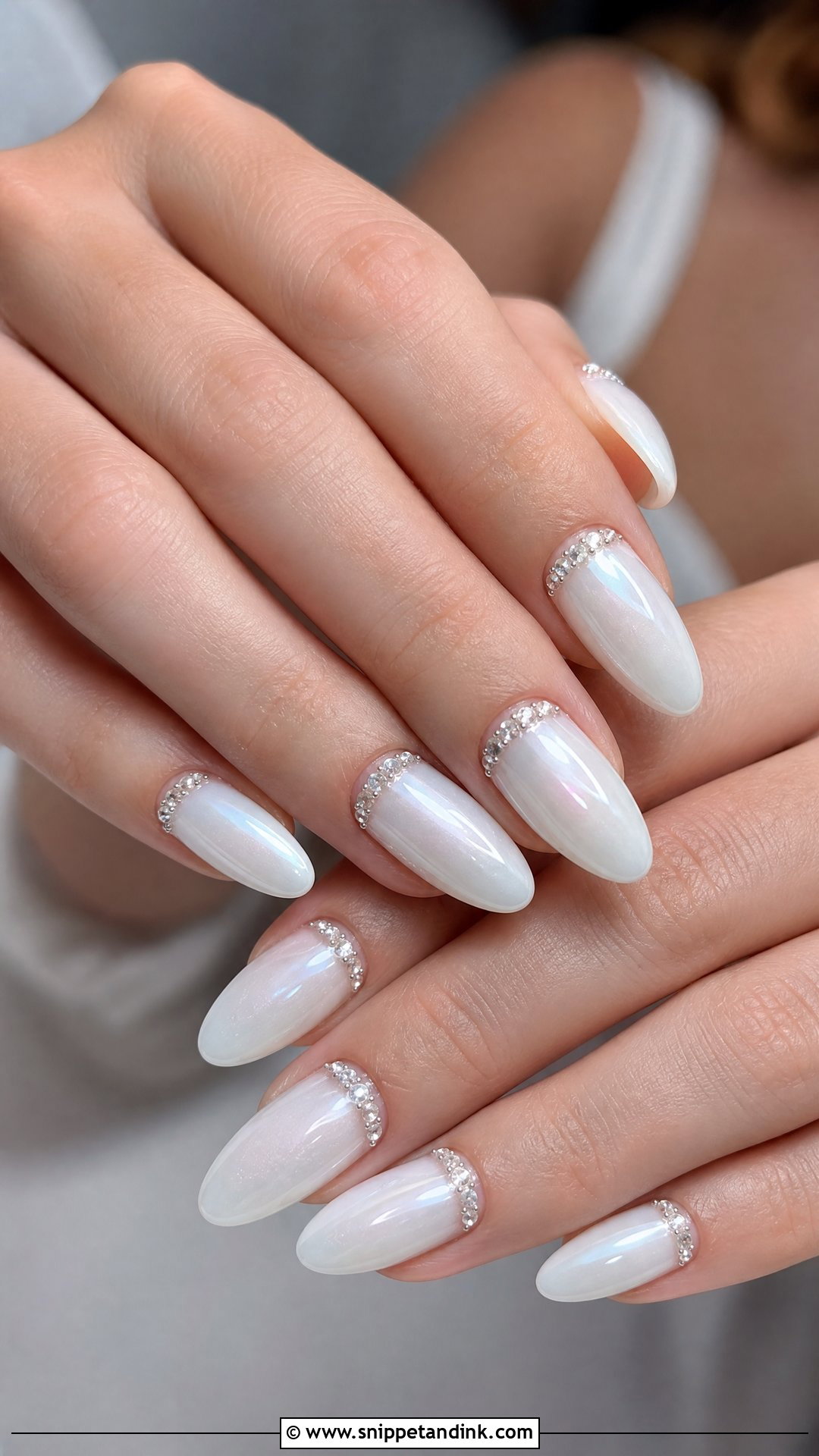
Crystals work the way jewellery does: placement matters more than quantity. Over a milky white, sheer ivory or French base, I set a few small stones near the cuticle, along the tip or on one accent nail, and I sink each one into gel so the edges don’t snag. Clear crystals or pearl-like gems keep it bridal. They catch light right next to your engagement ring in close-ups. If your ring is already a big sparkler, I’d go lighter on stones so the two don’t compete.
19. White Square Wedding Nails
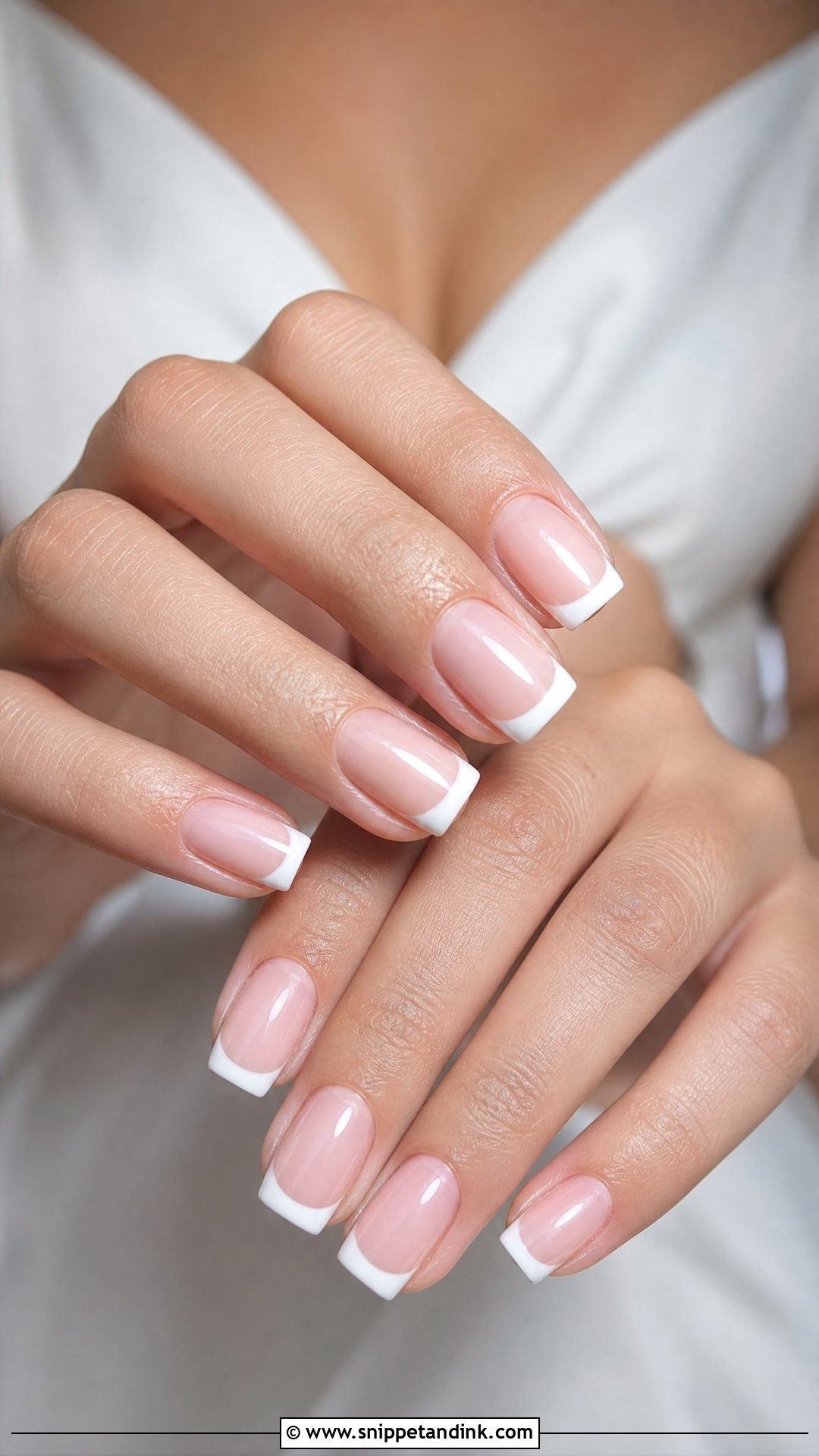
Square nails look neat and orderly, and they take French tips, solid milky white and soft chrome well. For a wedding I’d keep them short to medium, since long sharp squares tend to look dated in photos and the corners snag. Rounding the corners slightly (a squoval) makes them more comfortable and more flattering on shorter fingers. Use a sheer pink base with crisp white tips for a classic set, or wear all-over milky white for something simpler.
20. White Ballerina Wedding Nails
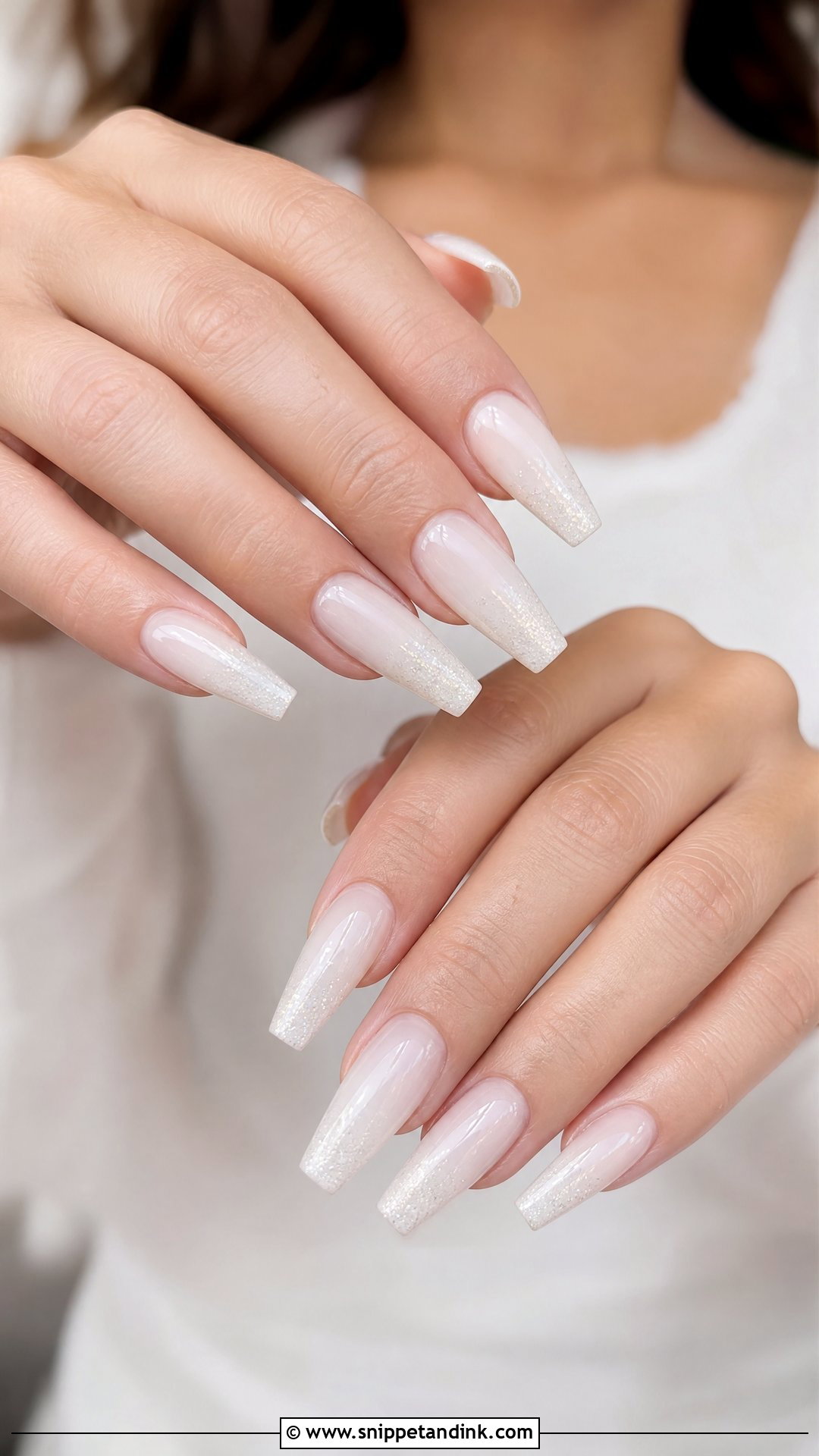
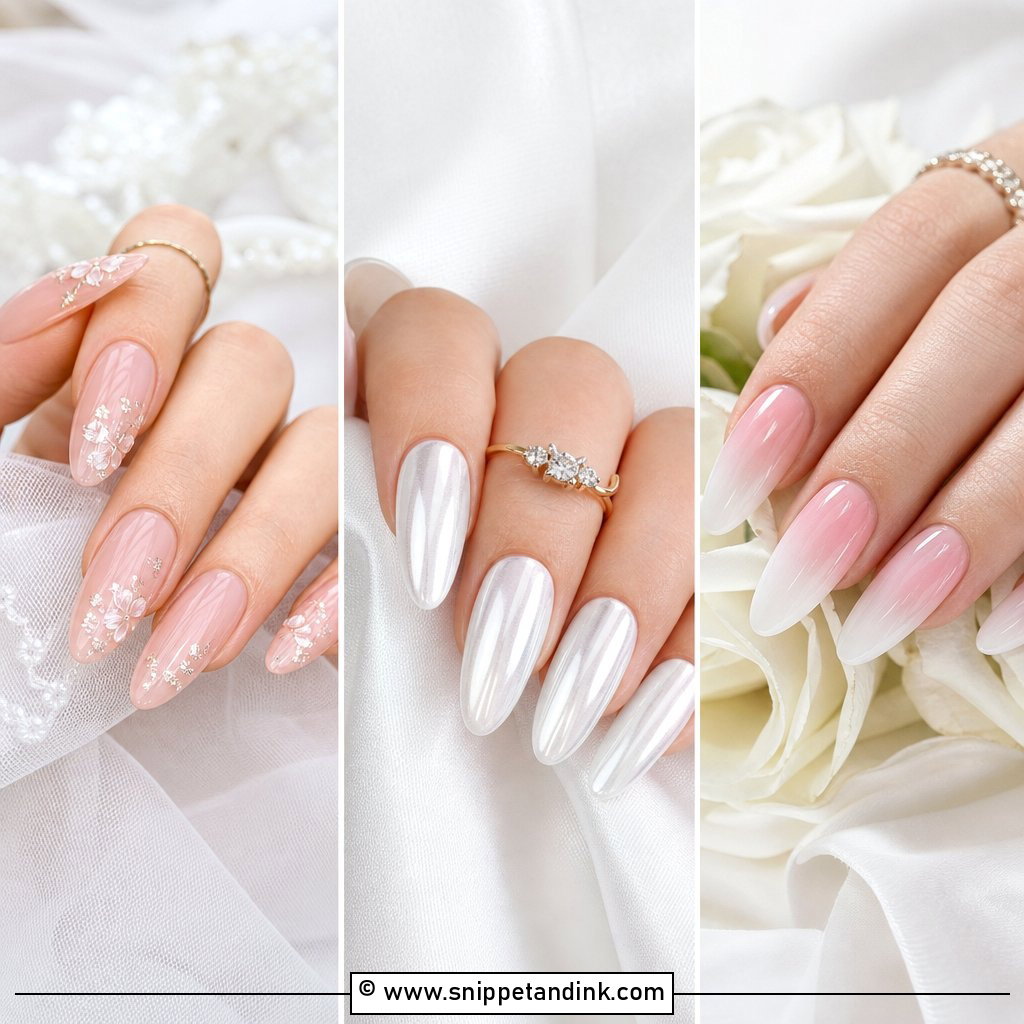
Ballerina nails taper and finish in a flat tip, which makes the hands look long. The shape is close to coffin nails, but the taper is usually softer. It carries ombre, chrome, pearls and French designs, and since it tends to be long, I keep the colour gentle so it still reads as bridal. A milky white base with a thin glitter fade works well. Add lace or tiny crystals to one or two nails at most, and give yourself a week or two to adjust to the length.
21. White Ivory Wedding Nails
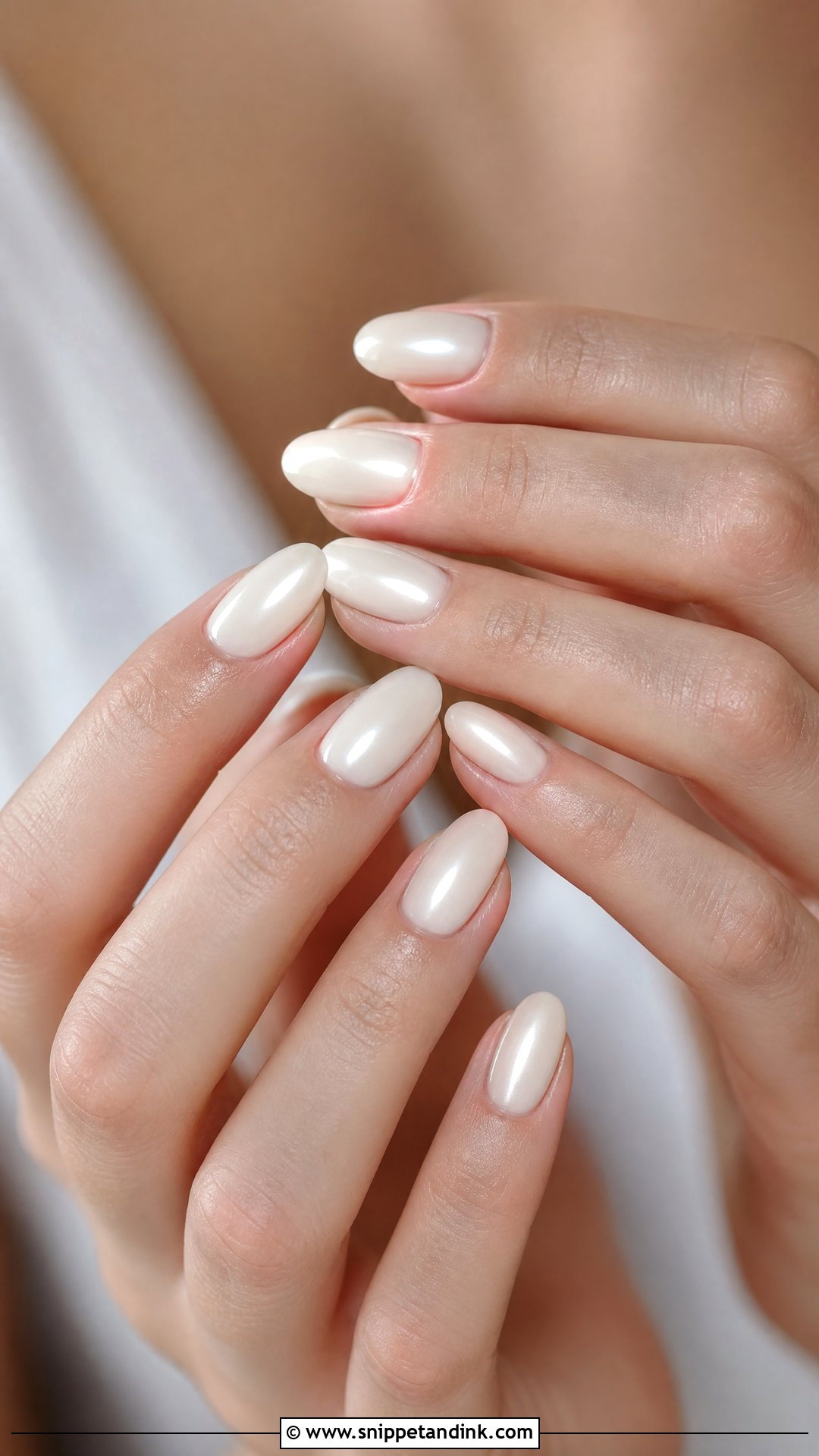
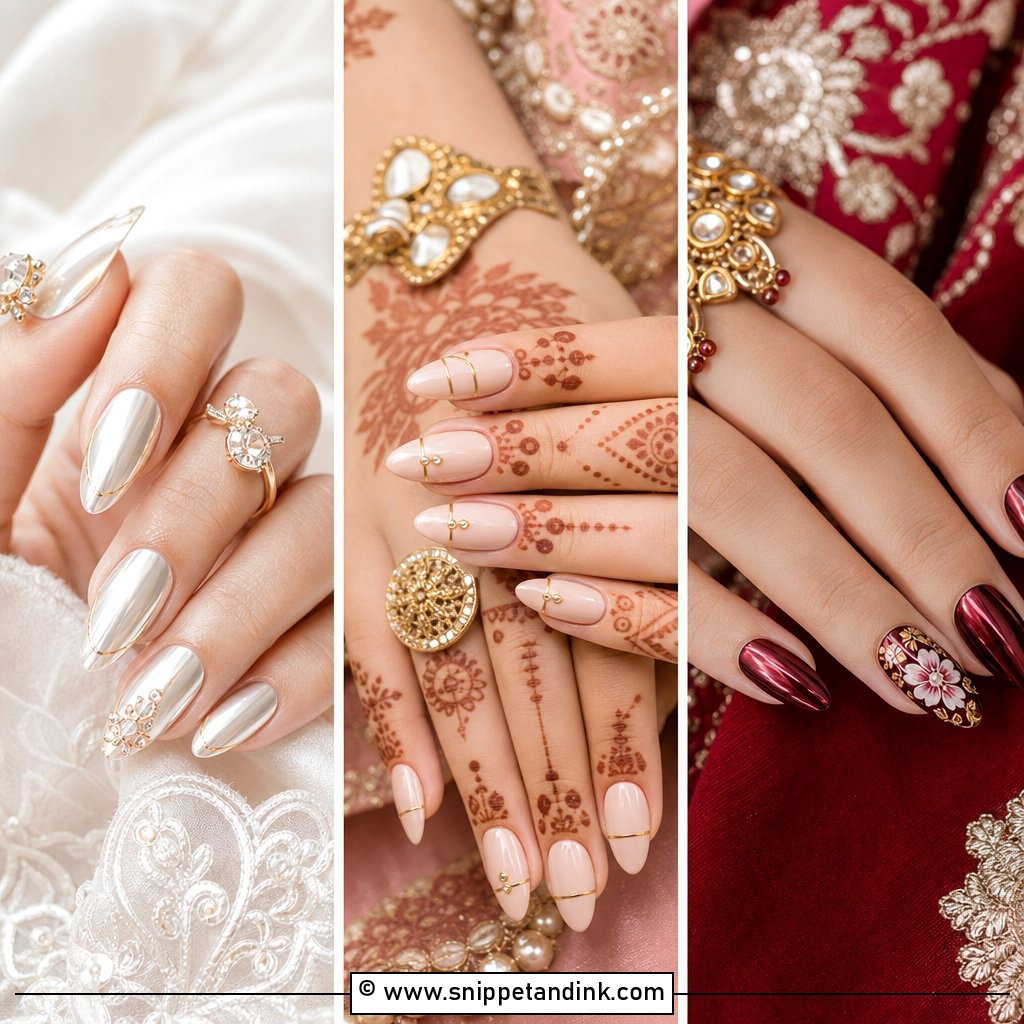
If your dress is ivory, champagne or cream, this is the white to wear. Bright white polish beside a warm gown makes the dress look slightly yellow, which is the opposite of what you want. Ivory has a creamy undertone that sits more naturally on most skin tones too. Wear it as a glossy solid colour, a French tip or a milky overlay. It pairs particularly well with gold jewellery and warm makeup. I always suggest bringing a fabric swatch to the appointment so we can hold the shade against it.
22. White Cat Eye Wedding Nails
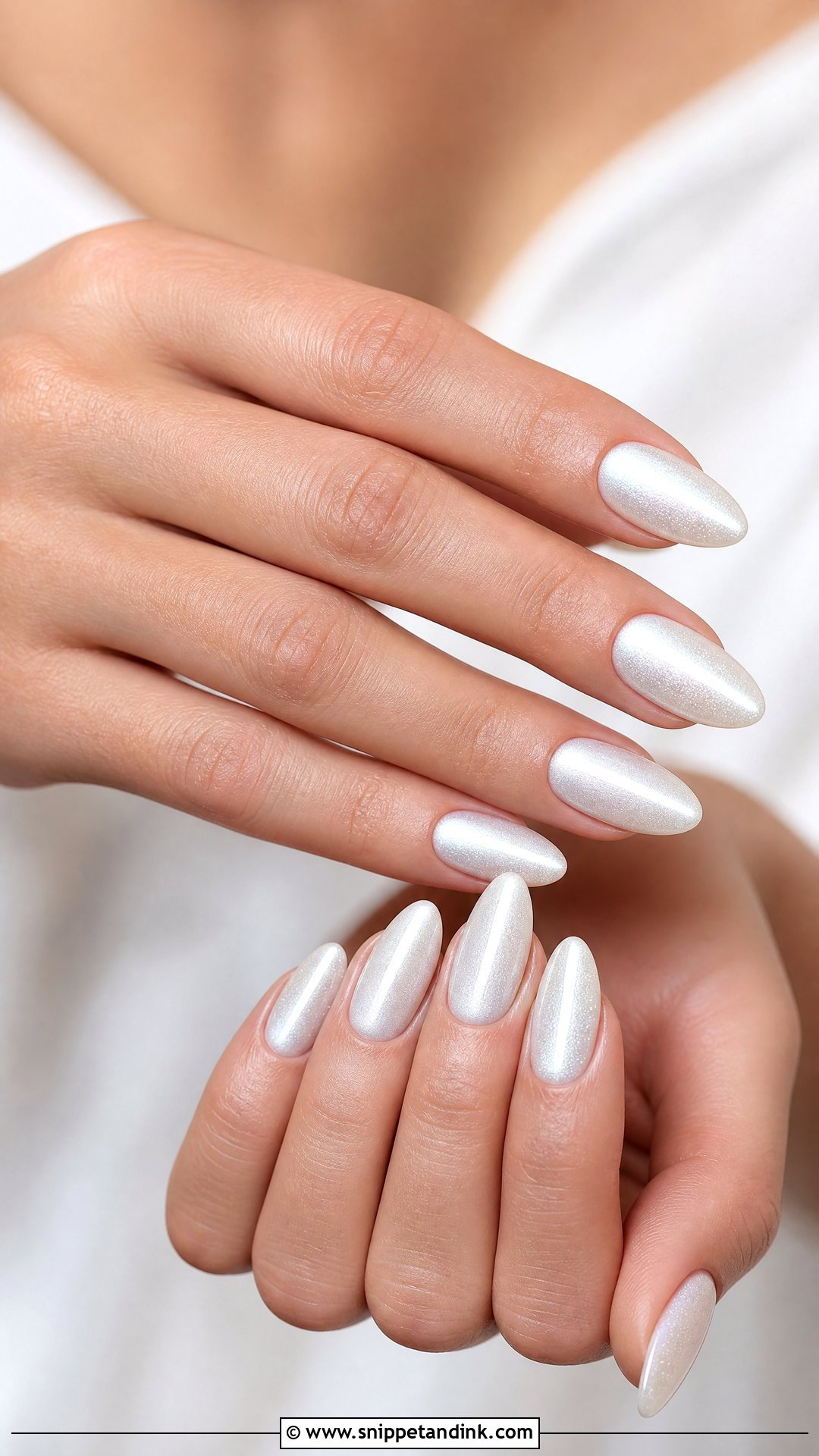
Cat eye gel contains tiny metallic particles, and I hold a magnet over each nail before curing to pull them into a soft line of light. In white, pearl or ivory the effect is subtle: you see the line move when your hands move, which comes across well in video. An almond or oval shape keeps it soft. You can wear it on every nail or pair it with a sheer French base. One practical note: the effect shifts with angle, so in still photos taken from the side it can look like plain white.
23. White Negative Space Wedding Nails
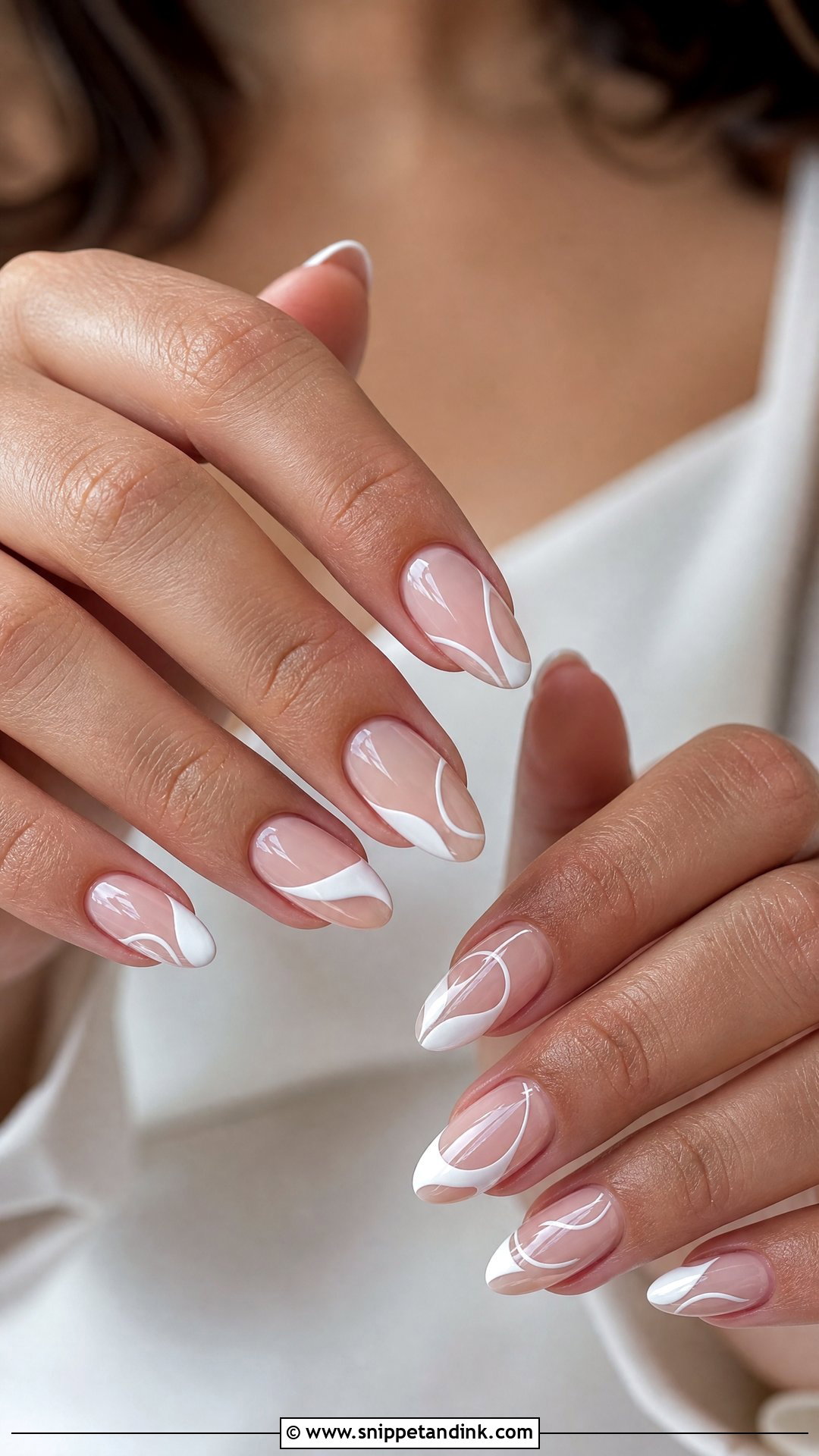
Negative space leaves some of the natural nail on show, with white tips, curves, half-moons or abstract lines painted around it. Because the bare area is visible, the base has to be clean and even, so I use a sheer nude to tidy any discolouration. Keep the white details thin. This works on short, medium, oval, almond and square nails, and it grows out more gracefully than full coverage because a gap at the cuticle looks deliberate. It suits simple, modern gowns very well.
24. White Pearl Chrome French Nails
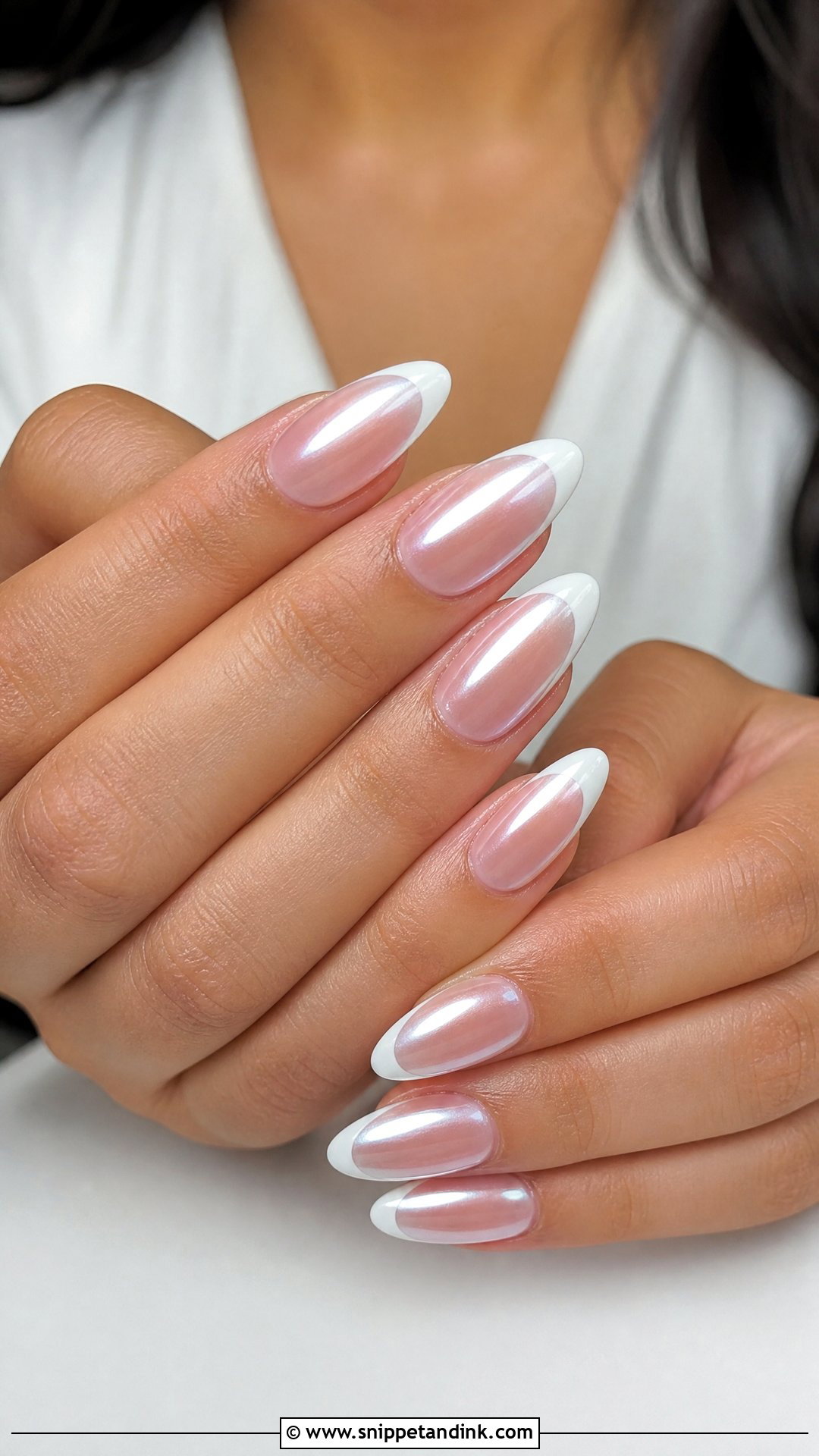
This set layers French tips, soft white and pearl chrome. I paint white tips over a sheer nude or pink base, cure them, then buff pearl powder over the whole nail, so the tip and the base both glow slightly. It’s cleaner than glitter and brighter than a plain French. Almond, oval and medium square shapes suit it. Because the chrome sits on top, the tips look softer than an ordinary French, which helps if you find a crisp white line too stark.
25. White Bow Wedding Nails
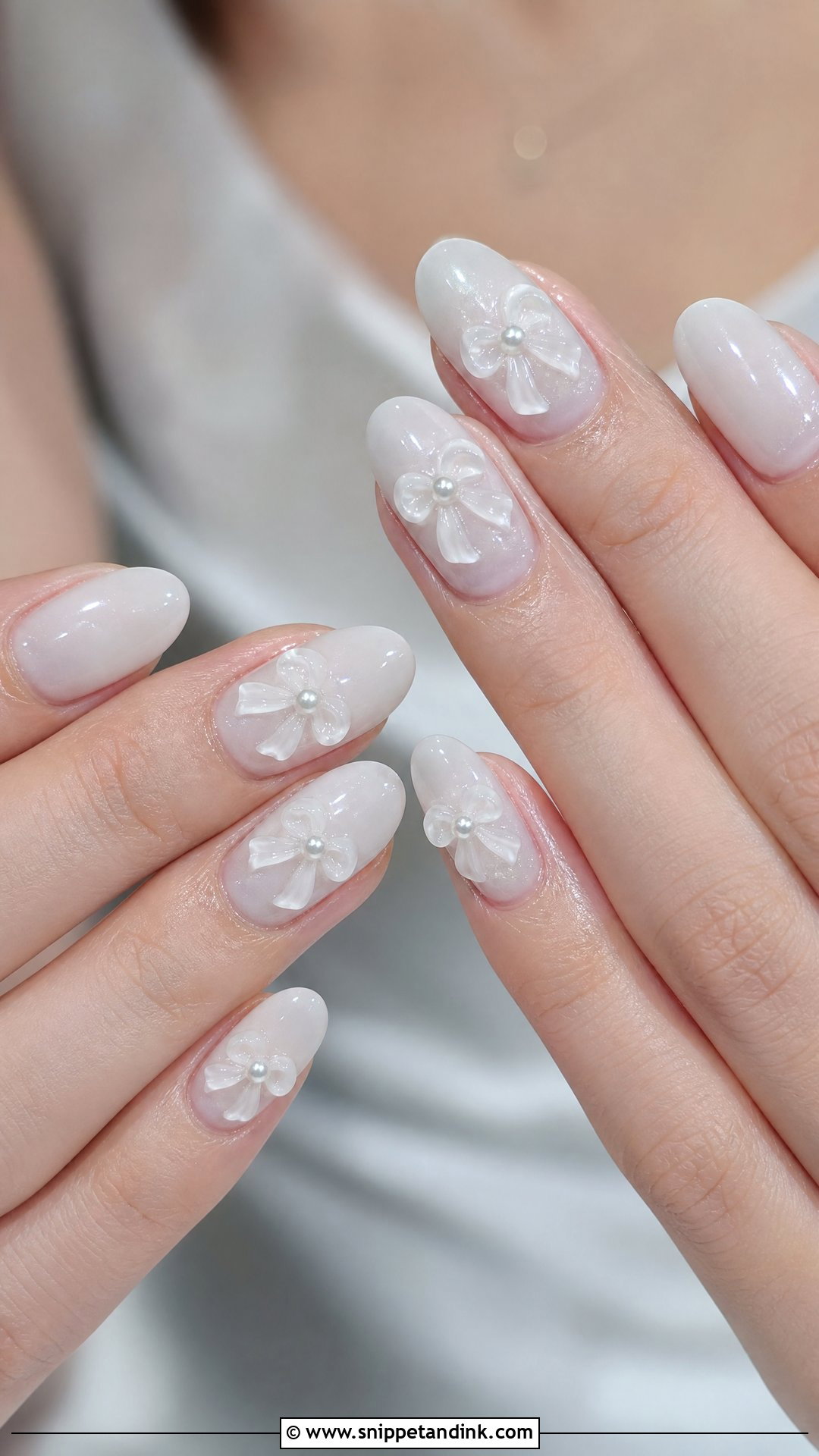
White bow wedding nails are sweet, so the challenge is keeping them grown-up. I paint tiny flat bows or build small raised gel bows over a milky base, on one or two accent nails only, and leave the rest plain or French. A pearl centre or a micro crystal in the knot makes them look finished rather than playful. They make the most sense with a satin gown, a ribbon sash or bow details elsewhere in your outfit, where the nails are clearly echoing something.
Why White Stains, Yellows and Chips Faster Than Nude
White shows everything. In the days between your appointment and the ceremony, it can pick up colour from fake tan, hair dye, turmeric, new denim and even dark nail-polish remover pads. Sheer milky gels show this the most, because the stain sits under or on a translucent layer.
A few habits keep it clean:
- Book gel or builder sets two to three days before the wedding, and acrylic up to five, so you have a margin for a repair without days of wear piling up.
- Do any spray tan first, then the nails. If tan has to come after, wear gloves while it’s applied and wipe the nails with alcohol afterwards.
- Wear gloves for cleaning, cooking with spices and handling new dark fabrics that week.
- Keep a small bottle of cuticle oil and a lint-free wipe in your bag. A quick wipe with oil brings back shine on a gloss top coat before the ring photos.
If a nail lifts or chips on the morning
Don’t pick at it or glue it. Ask your nail artist whether she can fit in a ten-minute fix that morning; if not, a dab of matching regular polish over the chip, sealed with clear top coat, will hold for the day. A lifted corner that’s left alone can snag on lace, so file it smooth rather than tearing it.
Test the White on Your Own Hands First
Most of the decisions here come down to four things: the exact shade of your dress, your natural nail length, how much your ring sparkles and how much you use your hands. Milky white, ivory, a slim French, pearl chrome and small accents of lace or flowers are the easiest to wear and age the best in photos. Do a trial set a month or so before the wedding, wear it for a few days, and adjust the shade or shape before the real appointment.
You'll Like These Ideas:


Leave a Reply