
Your hands are in more wedding photos than you’d guess: the ring exchange, the bouquet, a hand on your partner’s arm, the close-up of rings on the invitation. So the bridal manicure has to look good at arm’s length and under a macro lens, and it still has to feel like you. Right now most brides I see lean toward soft whites, sheer pinks, milky finishes, chrome glazes, fine French tips and polished neutrals, with pastels and deeper tones for those who want something more personal. My approach is color first, texture second: get the shade right for your skin and dress, then decide whether it needs pearl, shimmer or a whisper of art. Here are twenty shades I’d put on a bride, for classic, modern, courthouse, beach, garden and formal weddings.
Testing a Shade Against Your Dress Fabric, Not a Swatch Wheel
A color that looks perfect on a salon swatch can look completely different on your hand next to your gown. Before I commit to a bridal shade, I ask for three things.
- A scrap of your dress fabric, or a photo of it taken in daylight. Whites and ivories only make sense side by side.
- Your engagement ring on your finger. Yellow gold, white gold and rose gold each pull a nail shade warmer or cooler.
- Two minutes by a window. Indoor salon lighting is usually warm, and it hides the grey or green cast some pale shades take on outdoors.
I paint the two front-runners on neighboring nails, take a phone photo with flash and one without, and let you choose from the photos. Cameras exaggerate sheer and chrome finishes, so what reads subtle in person can look brighter in pictures.
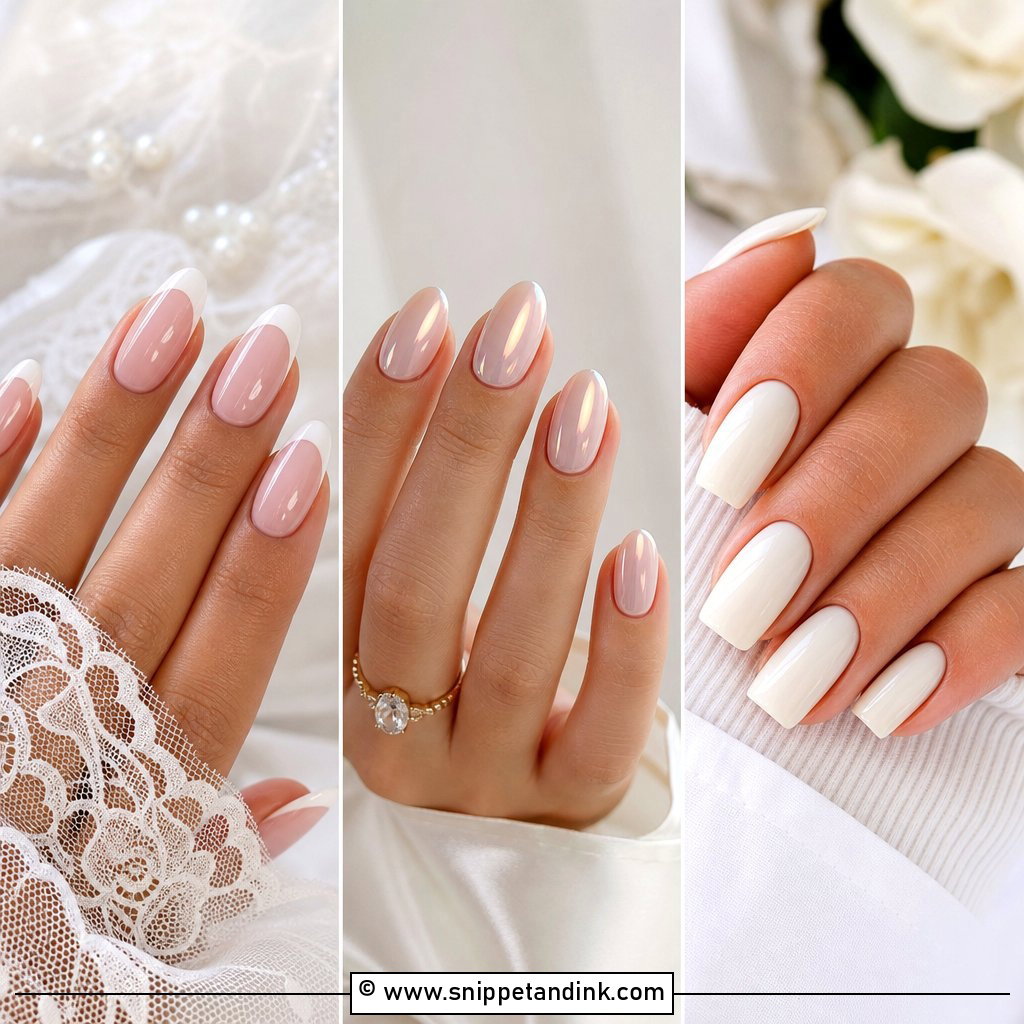
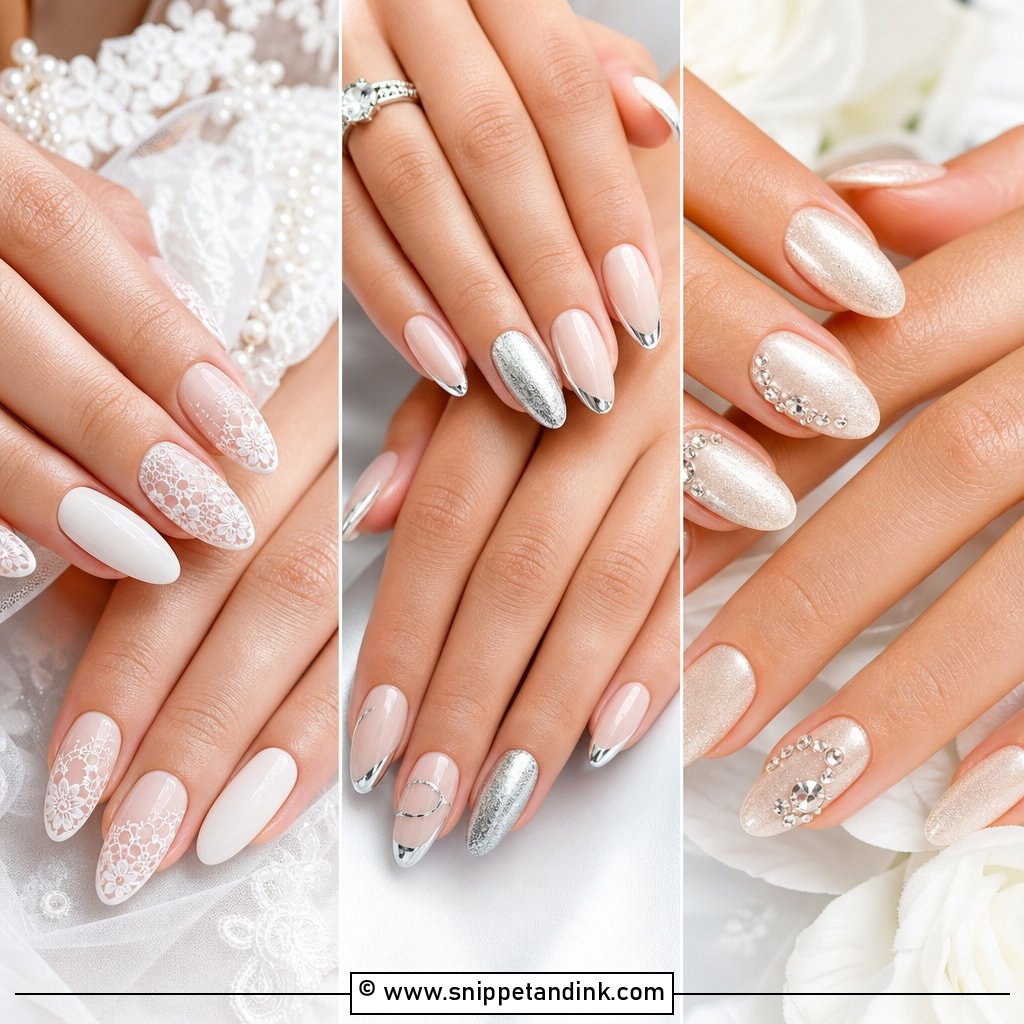
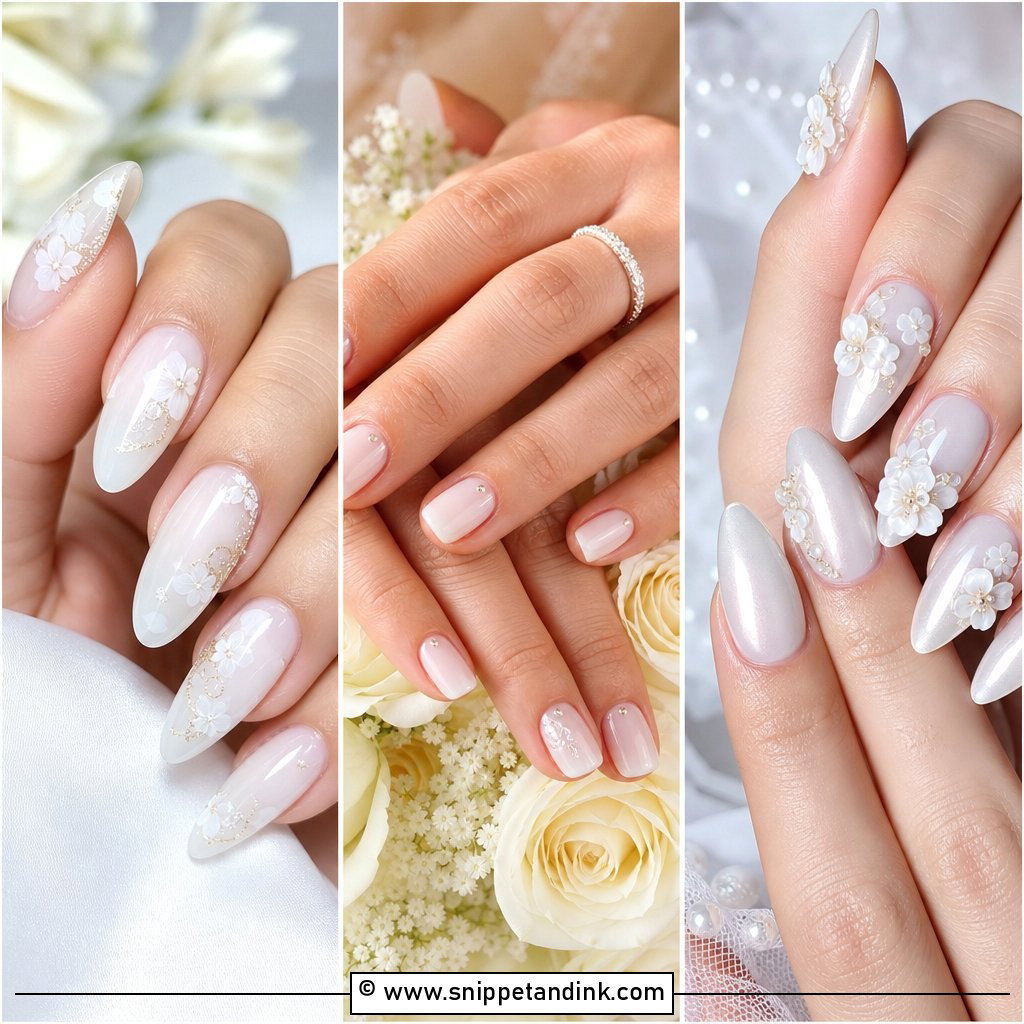
1. Milky White Bridal Nails
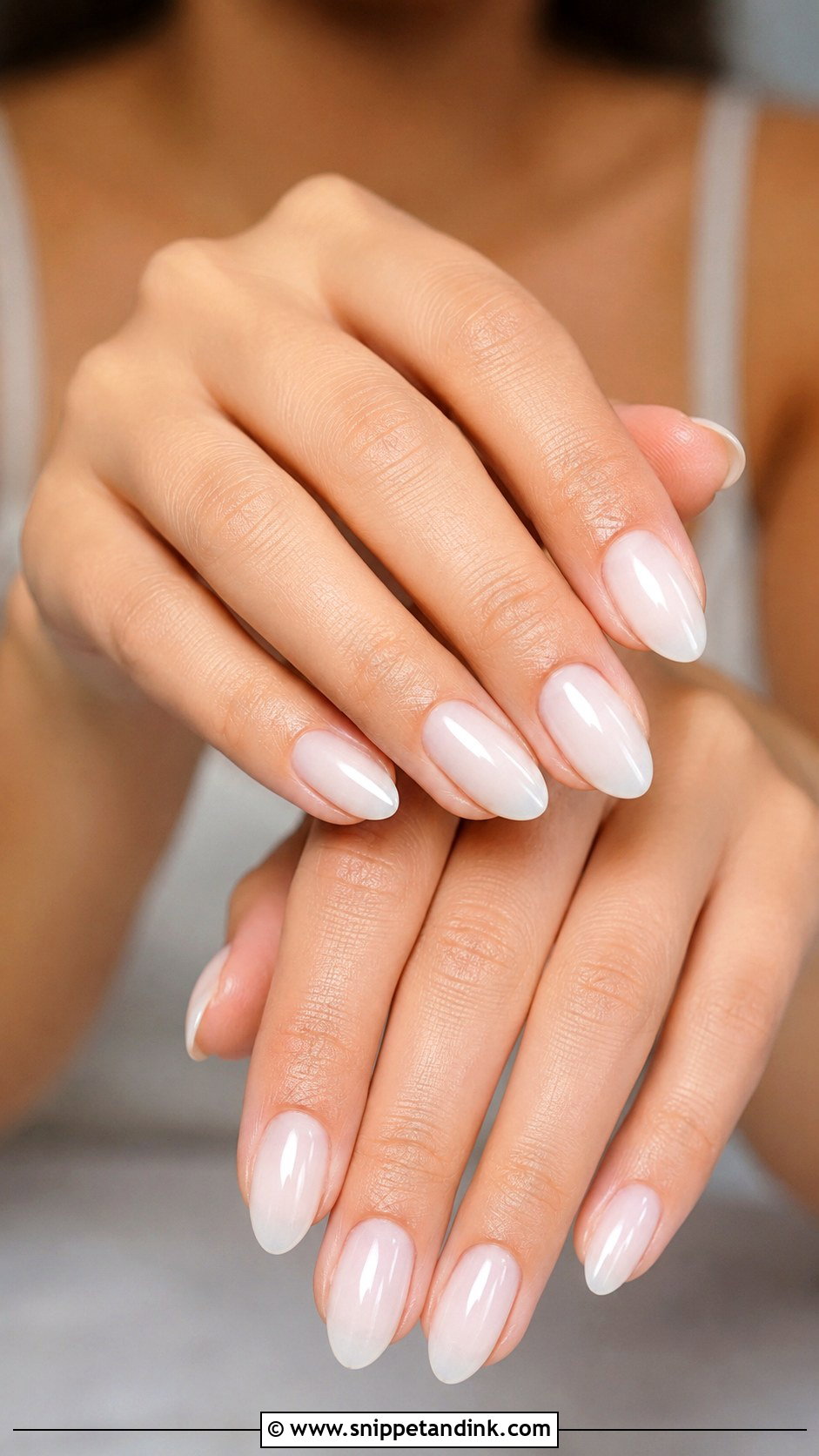
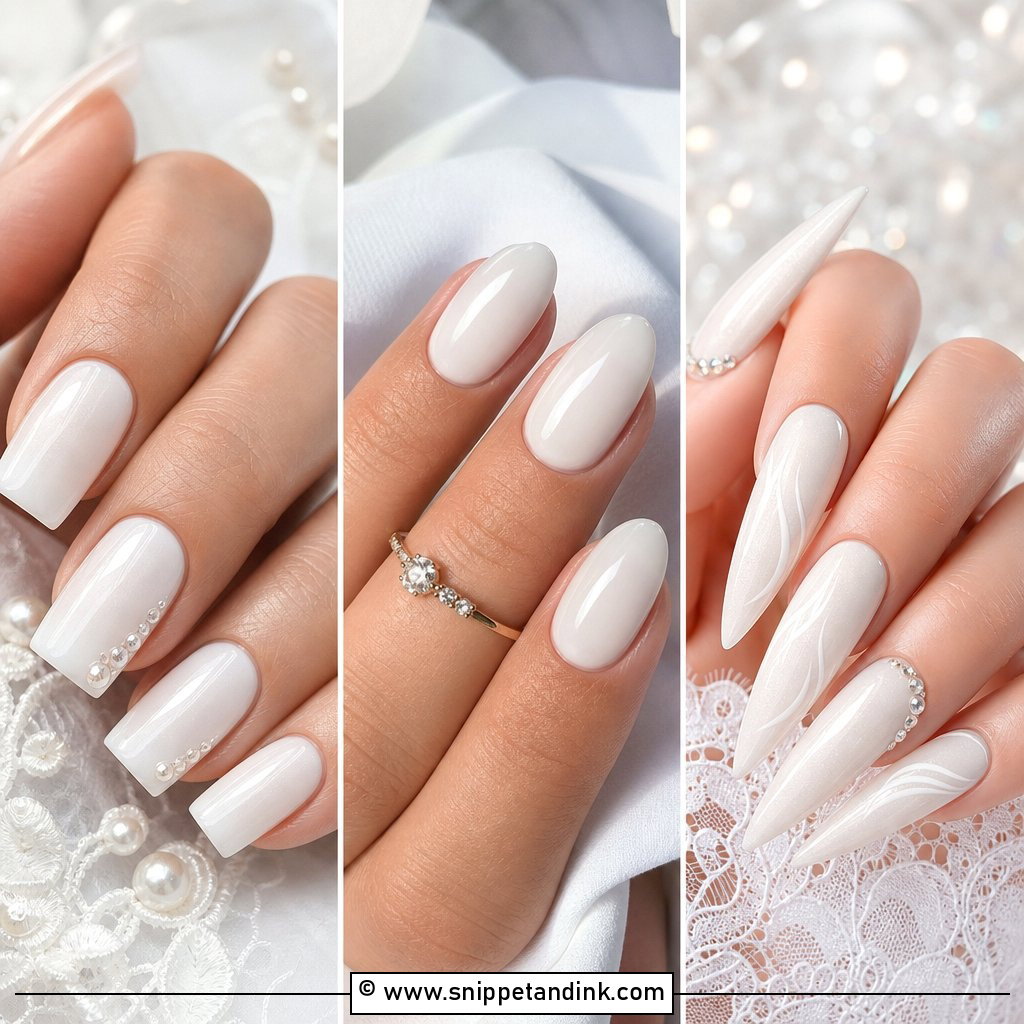
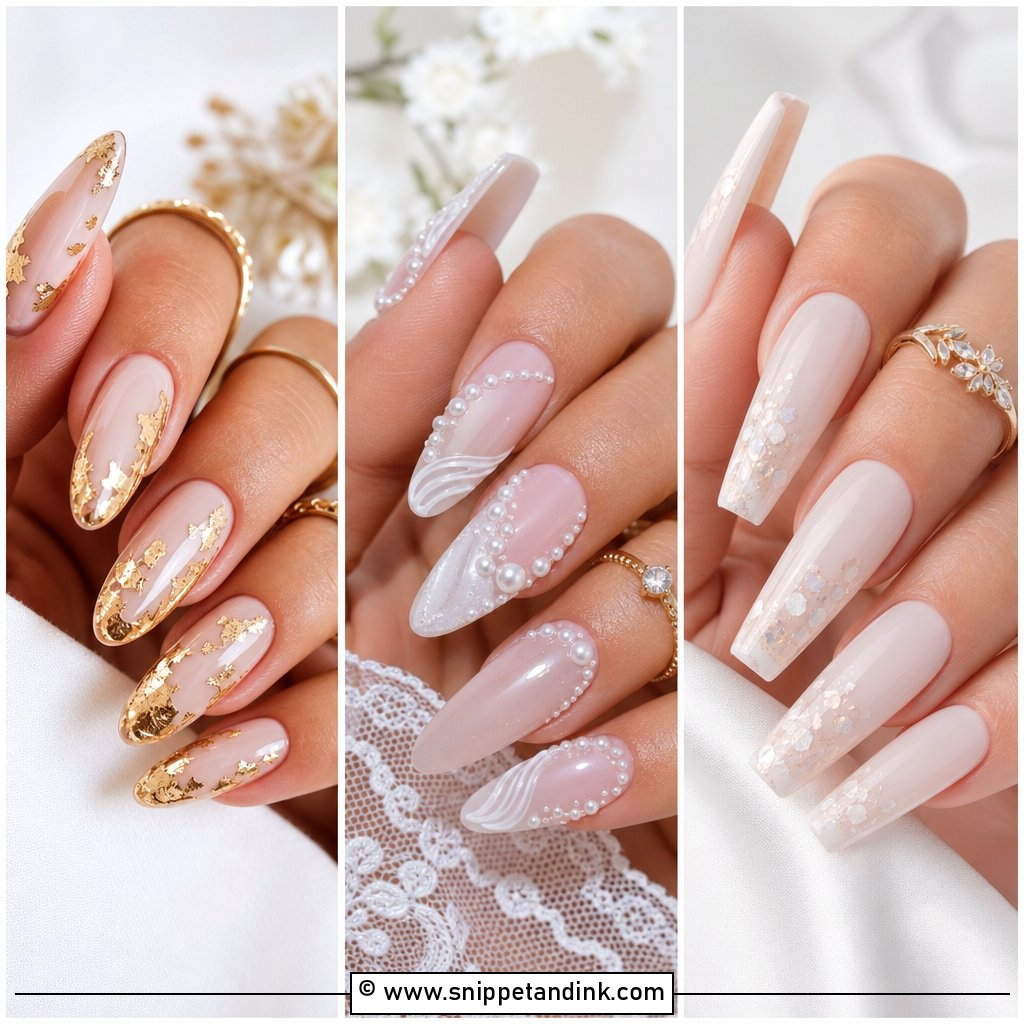
Milky white is the shade I reach for most when a bride says she wants white but not paint. It sits between sheer white and creamy ivory, so the nail looks clean without the stark, correction-fluid effect of opaque white. It suits white, off-white, champagne and blush dresses. I build a translucent milky base in two or three thin coats; a single thick coat can look streaky at the free edge. A glossy top coat keeps it natural, or a light pearl chrome makes it more modern. Almond, oval, squoval and short rounded shapes all wear it well, and it quietly supports lace, pearls or a minimal dress.
2. Sheer Pink Bridal Nails
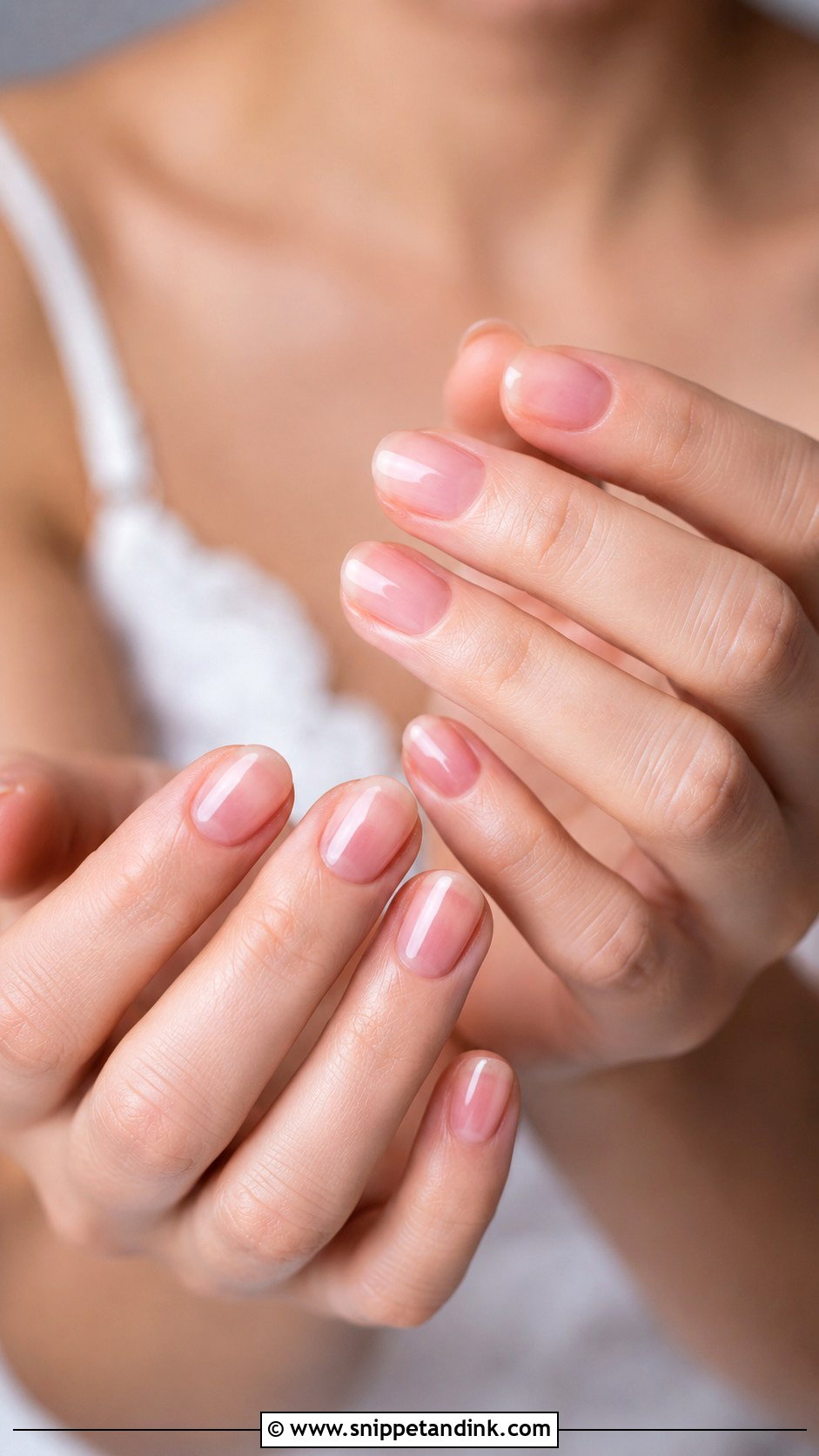
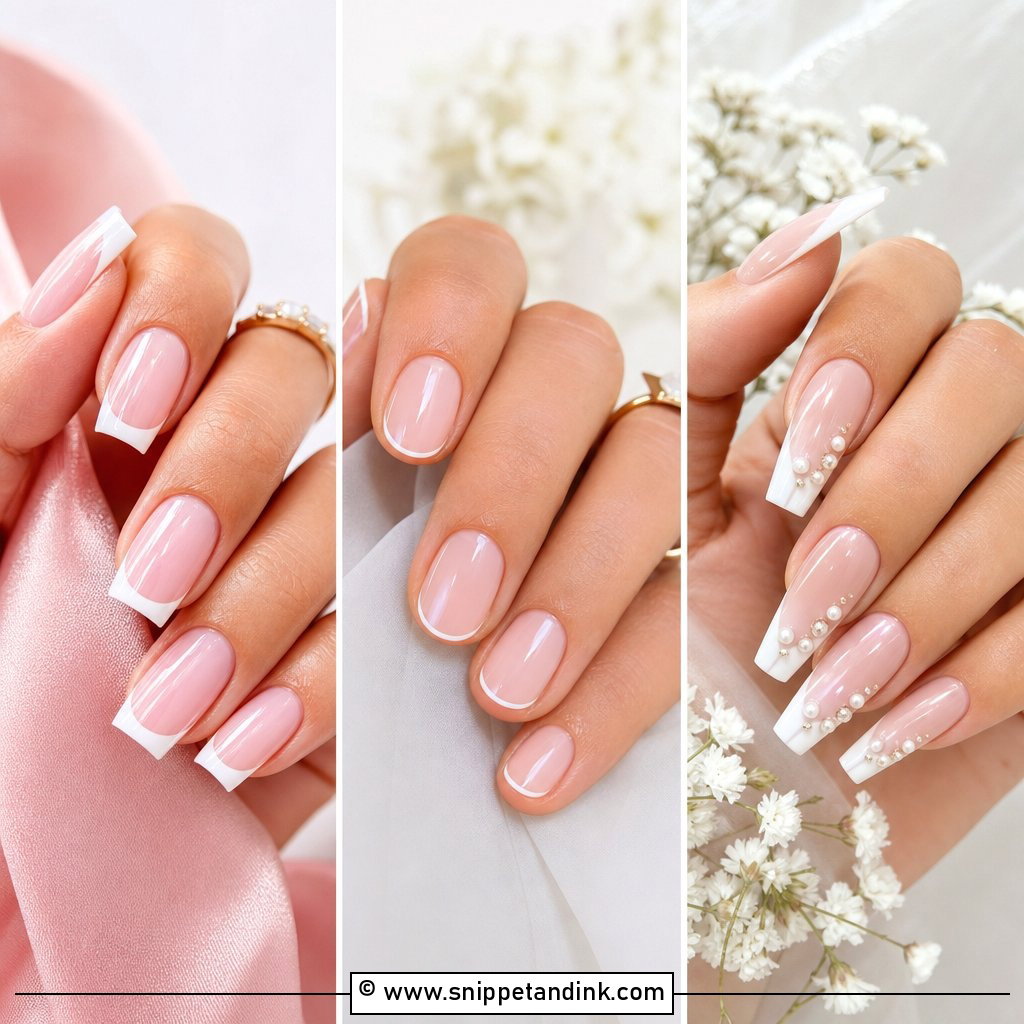
Sheer pink is the healthy-nail look. It brightens the nail bed and blurs small ridges or uneven color, which is why I suggest it to brides with short nails who worry about close-up ring photos. It’s softer than the white tip of a traditional bridal manicure. Because your natural nail shows through slightly, it adapts to almost any skin tone. Keep the shape simple and the top coat glossy; oval, squoval and almond suit it best. Soft, rosy makeup pairs naturally with it.
3. Nude Pink Bridal Nails
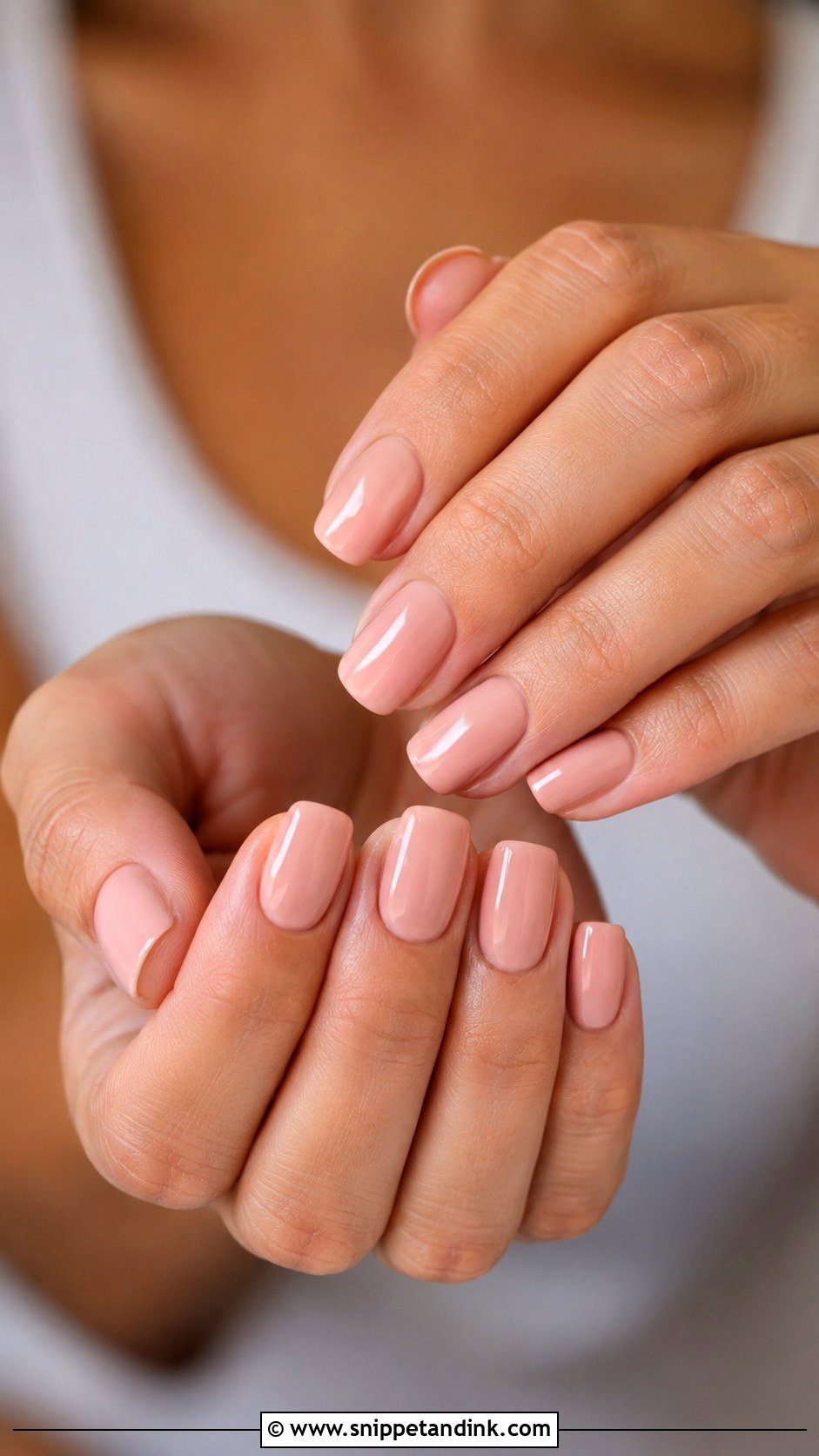
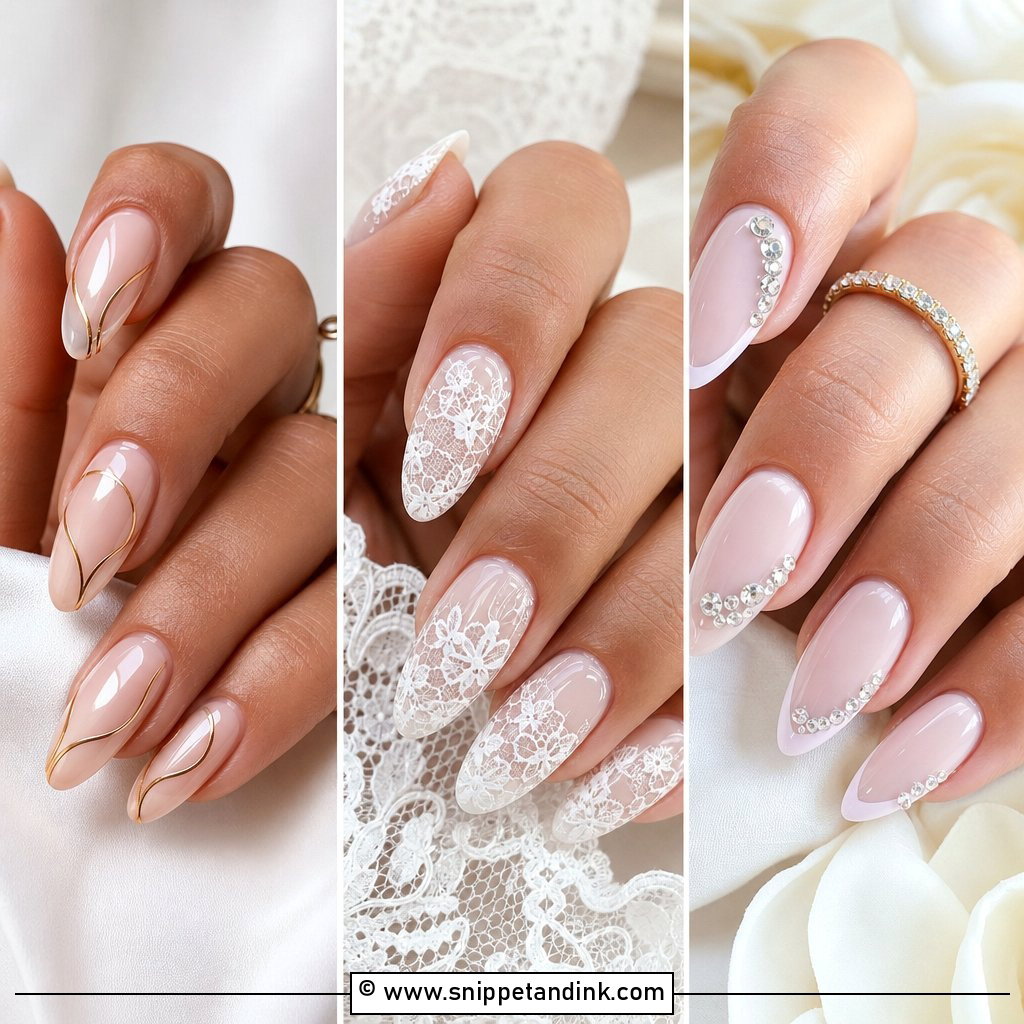
A nude pink is warmer and more opaque than sheer pink, and the whole look depends on matching the undertone. On fair skin, I usually try pale rose or ballet pink first. Medium and olive skin tends to look better in peachy or beige pink, and deep skin glows in caramel pink, mauve nude or warm rose. Wrong undertone is the most common nude mistake I fix; a pink that’s too cool can make hands look grey. Glossy gel, soft shimmer or a subtle French tip all work, and nude pink coordinates easily with bridesmaids and bouquets without stealing attention.
4. Ivory Bridal Nails
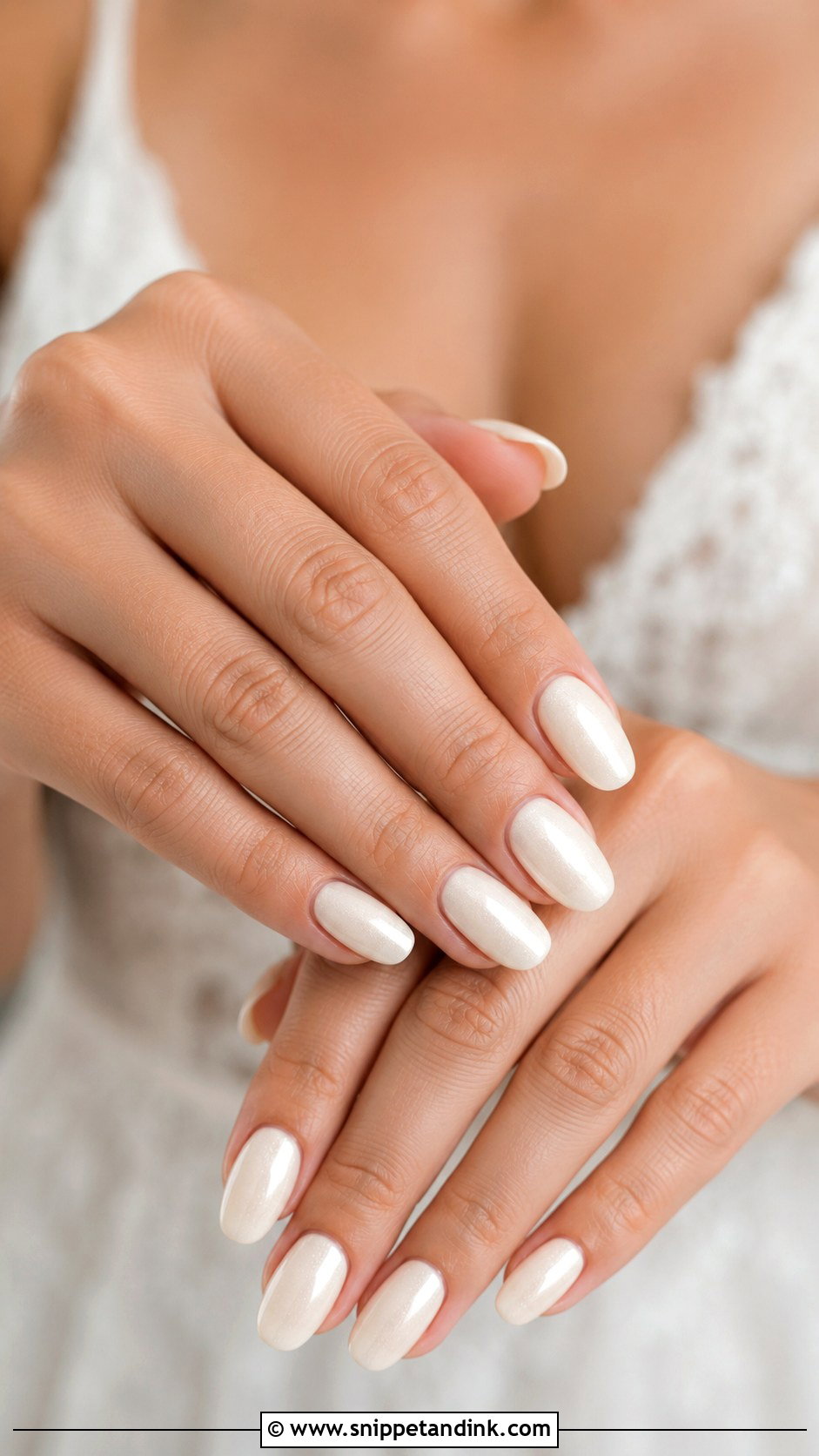
If bright white looks harsh against your dress or skin, ivory is usually the answer. It’s creamier and warmer, and it sits naturally against silk, satin, lace, tulle and vintage gowns. Creamy shades show every bump, so I take extra care with the base layer and ask for full-coverage ivory gel applied in thin, even coats. A very fine shimmer or soft pearl top coat adds depth. Medium almond nails are its best shape, though short squoval looks refined too. If your dress is ivory, hold the bottle against the fabric before deciding; a white nail next to an ivory gown can make the dress look yellow.
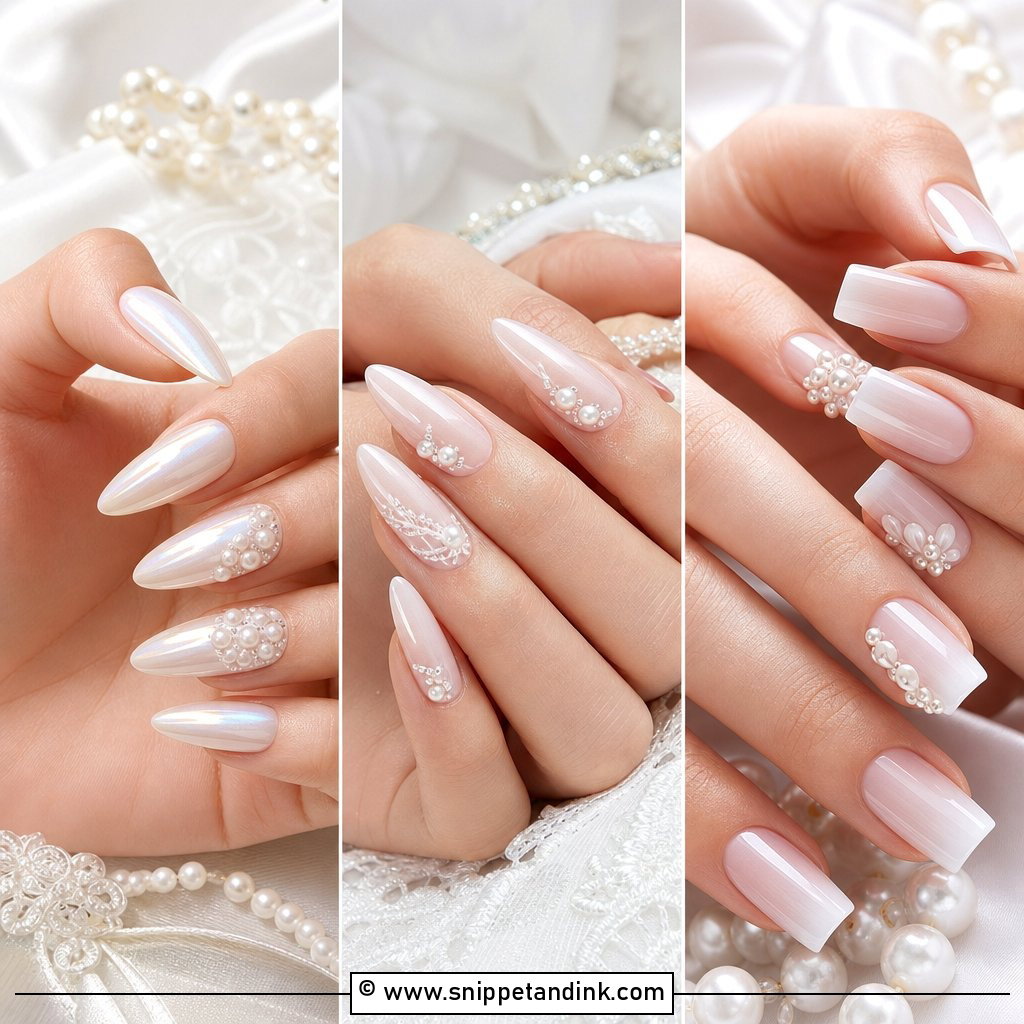
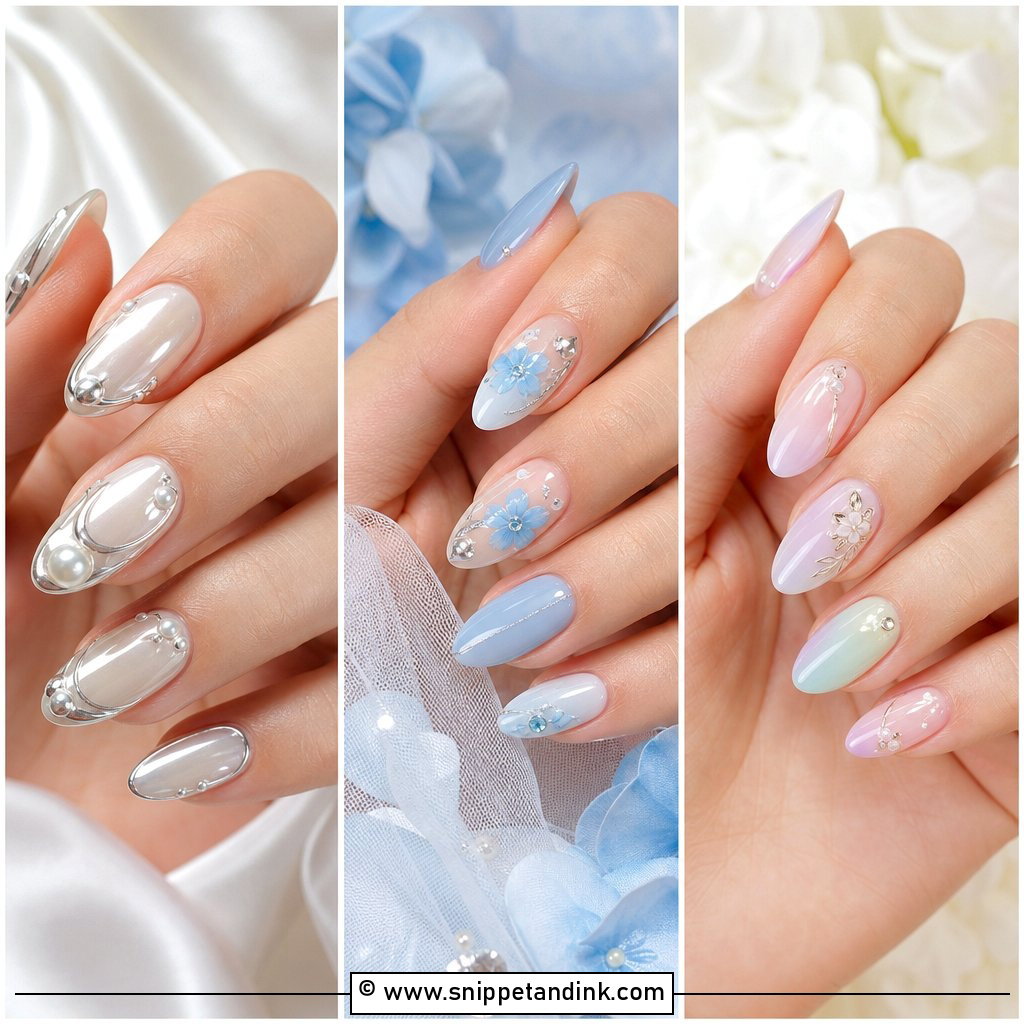
5. Pearl Chrome Bridal Nails
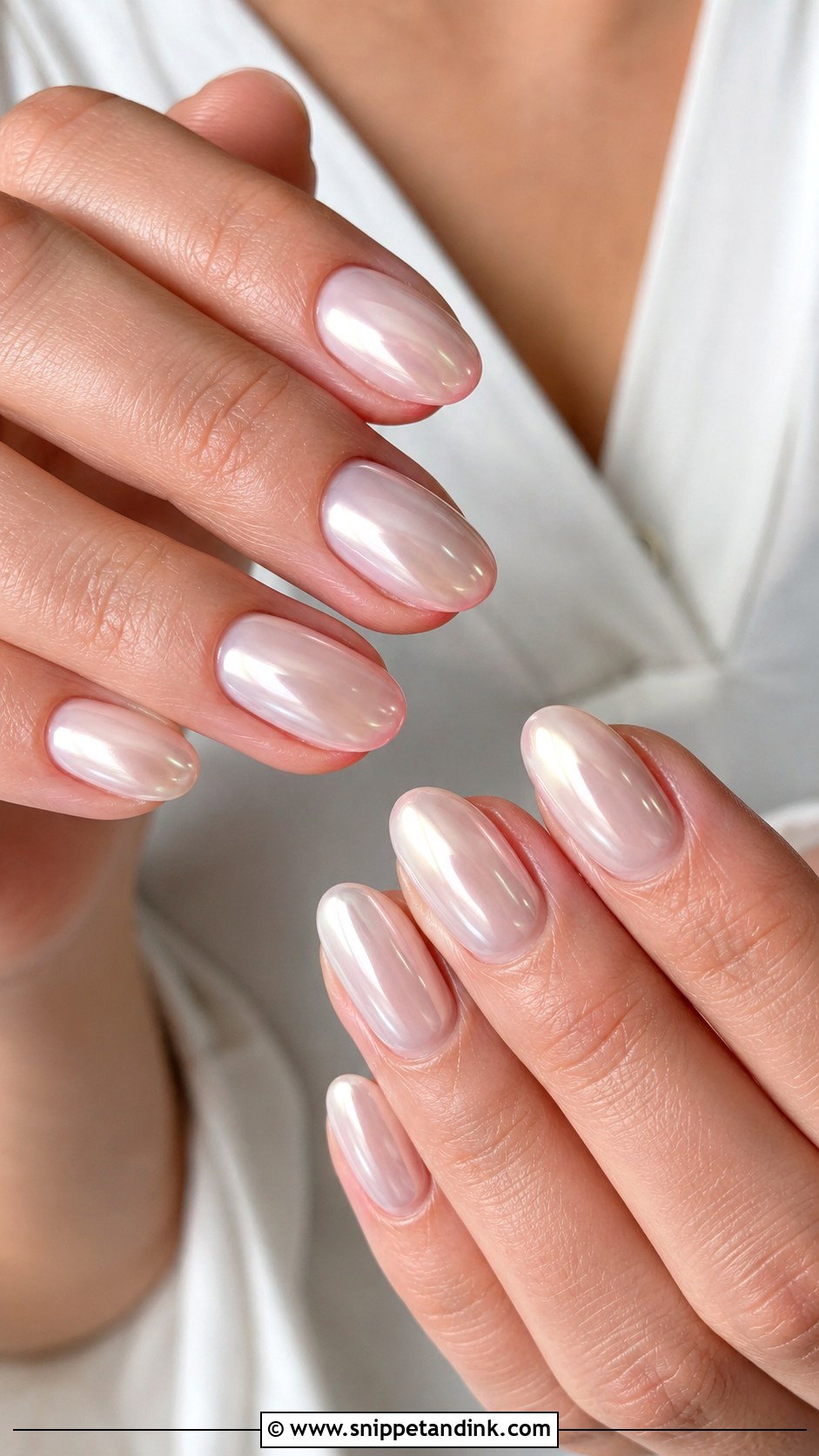
Pearl chrome is a fine powder rubbed over a cured base, and it gives that soft, wet-looking glow that catches light in photos. The base changes everything: over sheer pink it reads delicate, over creamy white or blush it reads much brighter. I’d pair it with pearl earrings, a satin gown or a dress with a subtle shimmer. It works on short, long almond and soft square nails. One thing to know: chrome highlights every ridge on the nail, so I smooth the surface carefully first.
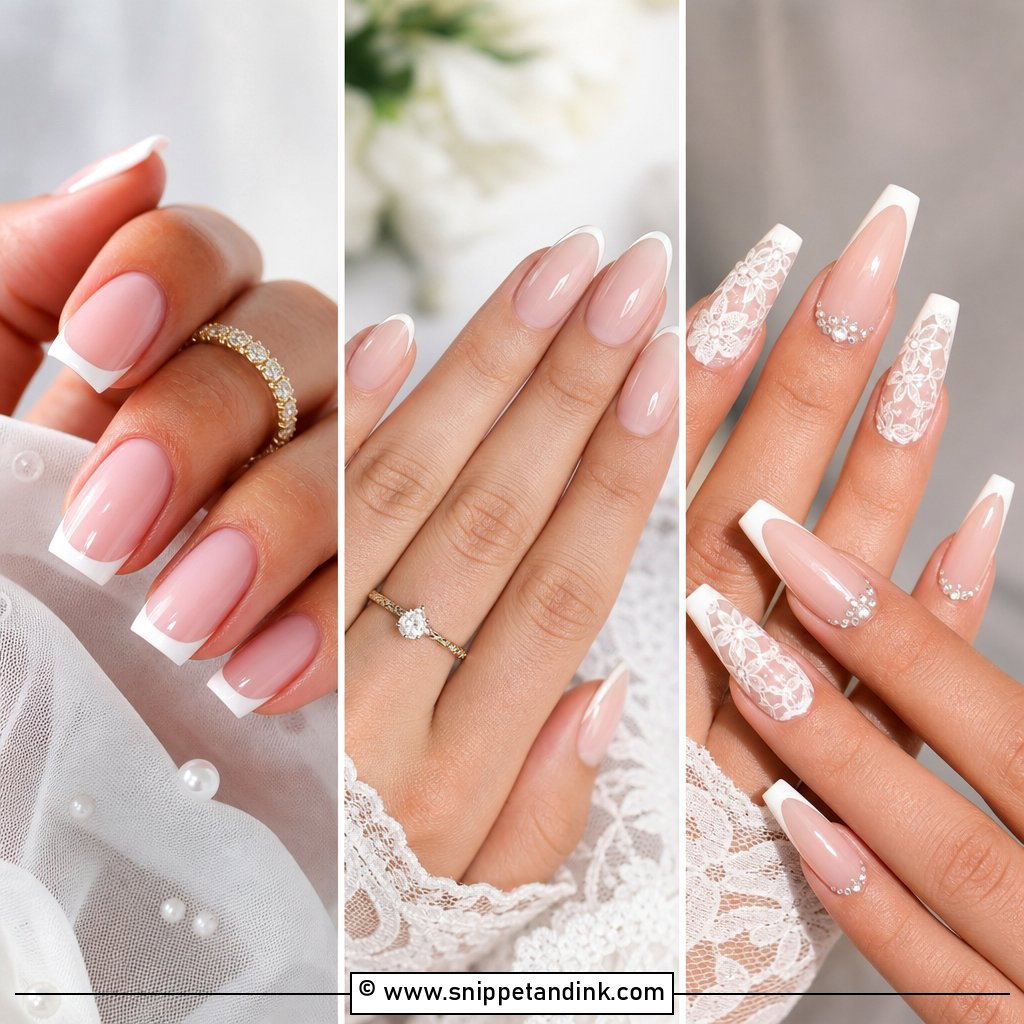
6. Classic French Bridal Nails
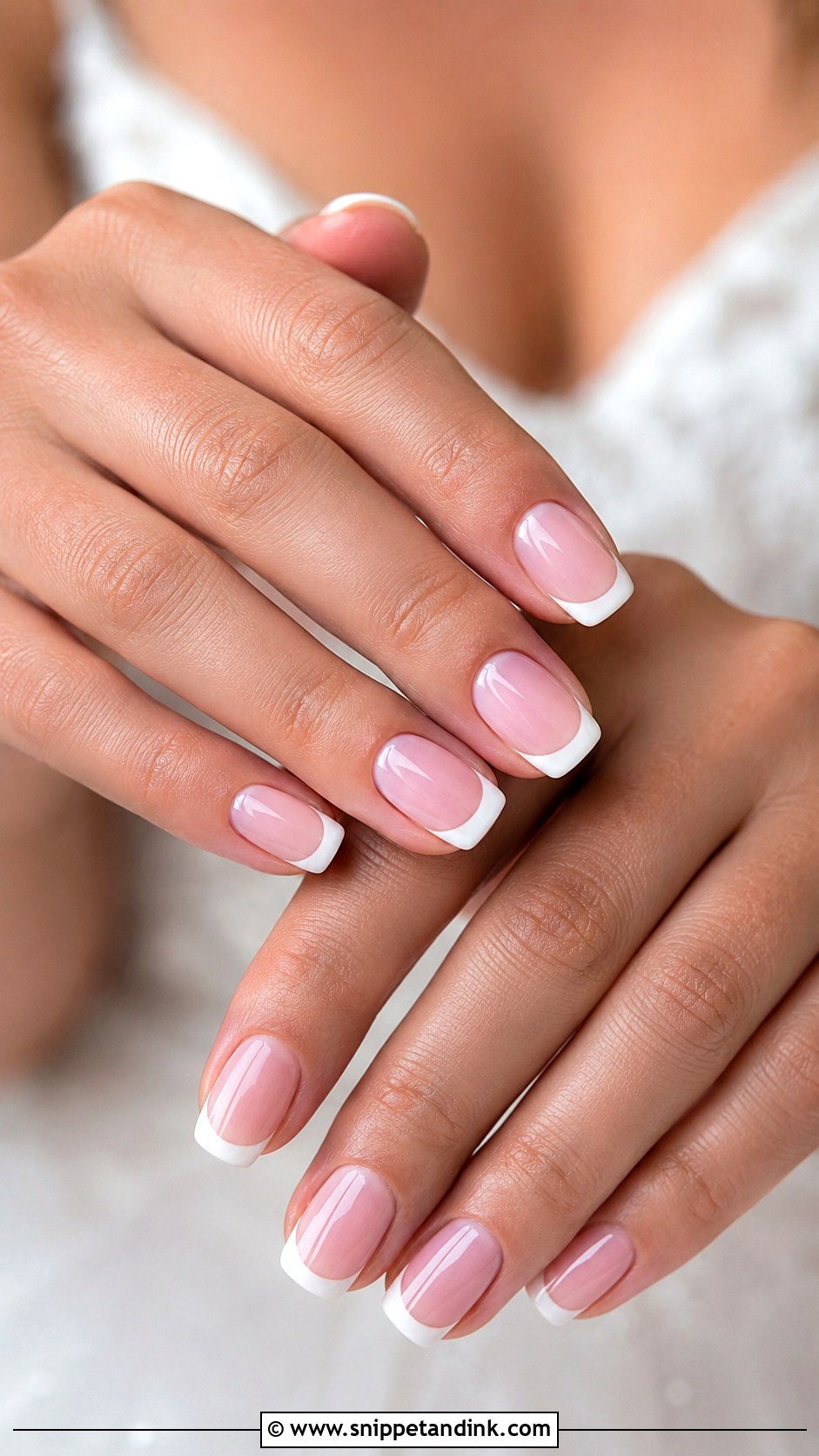
The modern French is thinner and softer than the bright white tips of years past. I use a soft pink or nude base and a crisp, slim smile line, which makes the nail bed look longer. A thick tip shortens the fingers, especially on short nails. It works at every length, from short squoval to long almond nails, and a milky pink base gives a softer version than clear. Getting both hands to match is the real skill here, so ask to see your tech’s French work before booking.
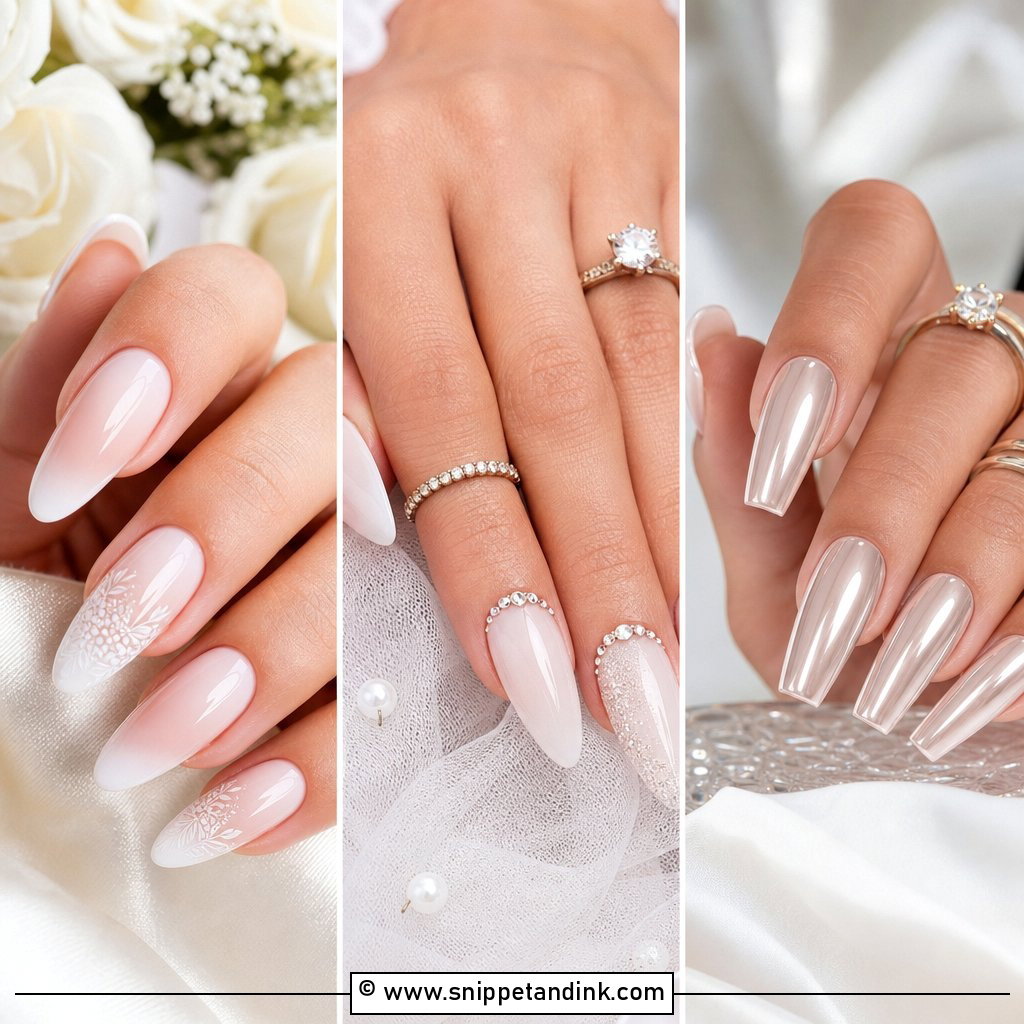
7. Baby Boomer Bridal Nails
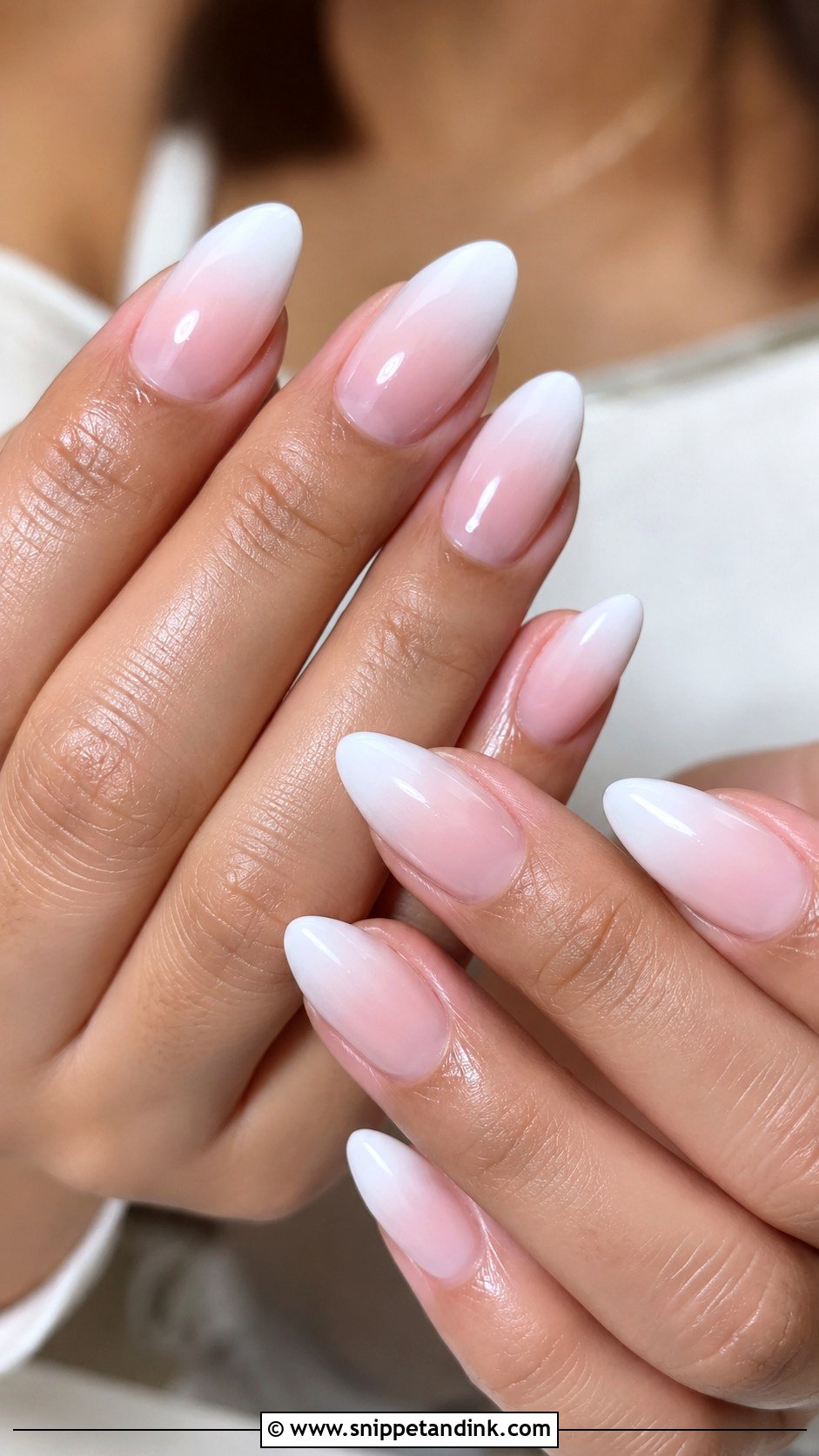
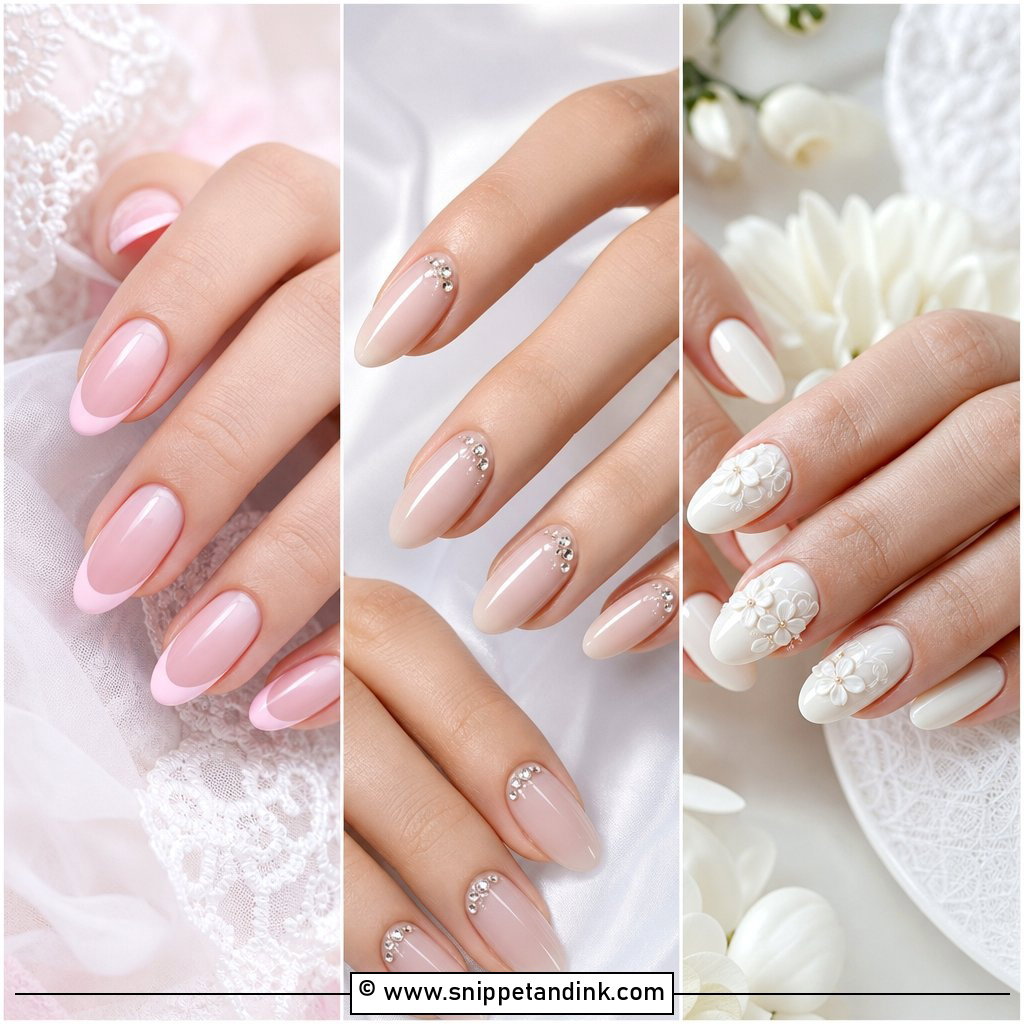
Baby boomer bridal nails fade a nude or pink base into a milky white tip instead of drawing a line. That blur gives an airbrushed effect that suits romantic dresses and soft makeup, and it flatters almond, coffin and oval shapes because the gradient draws the eye down the finger. I’d steer you to a subtle blend; a high-contrast fade can look like a mistake in close-ups. I usually sponge the white on in several light layers. A glossy top coat keeps it fresh, or a pearl glaze adds glow.
8. Blush Pink Bridal Nails
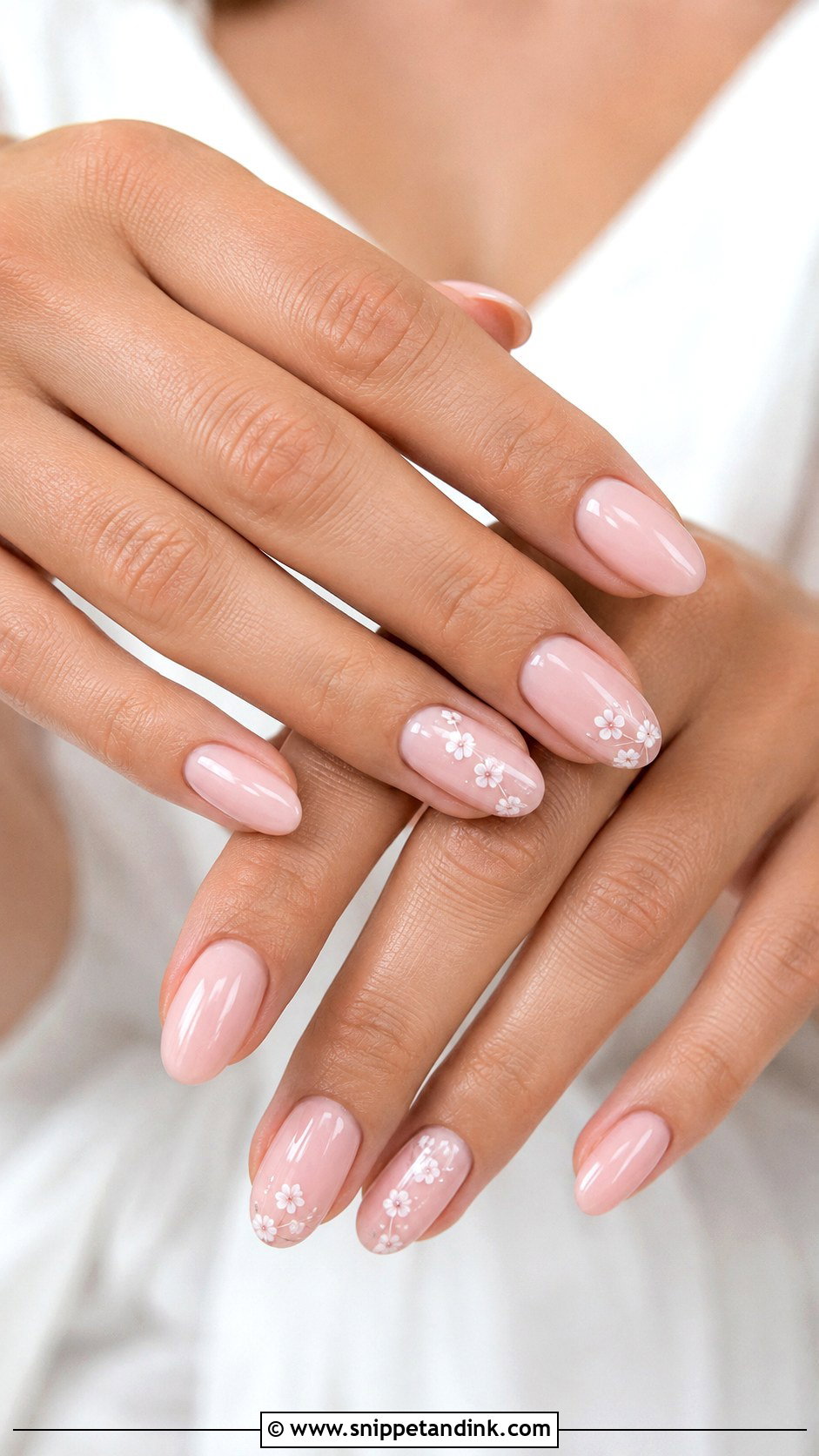
Blush pink has more color than sheer pink yet stays within a classic bridal palette. It sits naturally next to blush bouquets, rosy makeup, champagne dresses and garden details. A creamy blush on short nails looks tidy; on almond nails it reads more romantic. Small white florals on one accent nail can add detail. It’s especially good for spring and summer weddings, since it looks fresh in daylight. Blush shows chips less than white does, which matters if you’re doing your own nails.
9. Champagne Bridal Nails
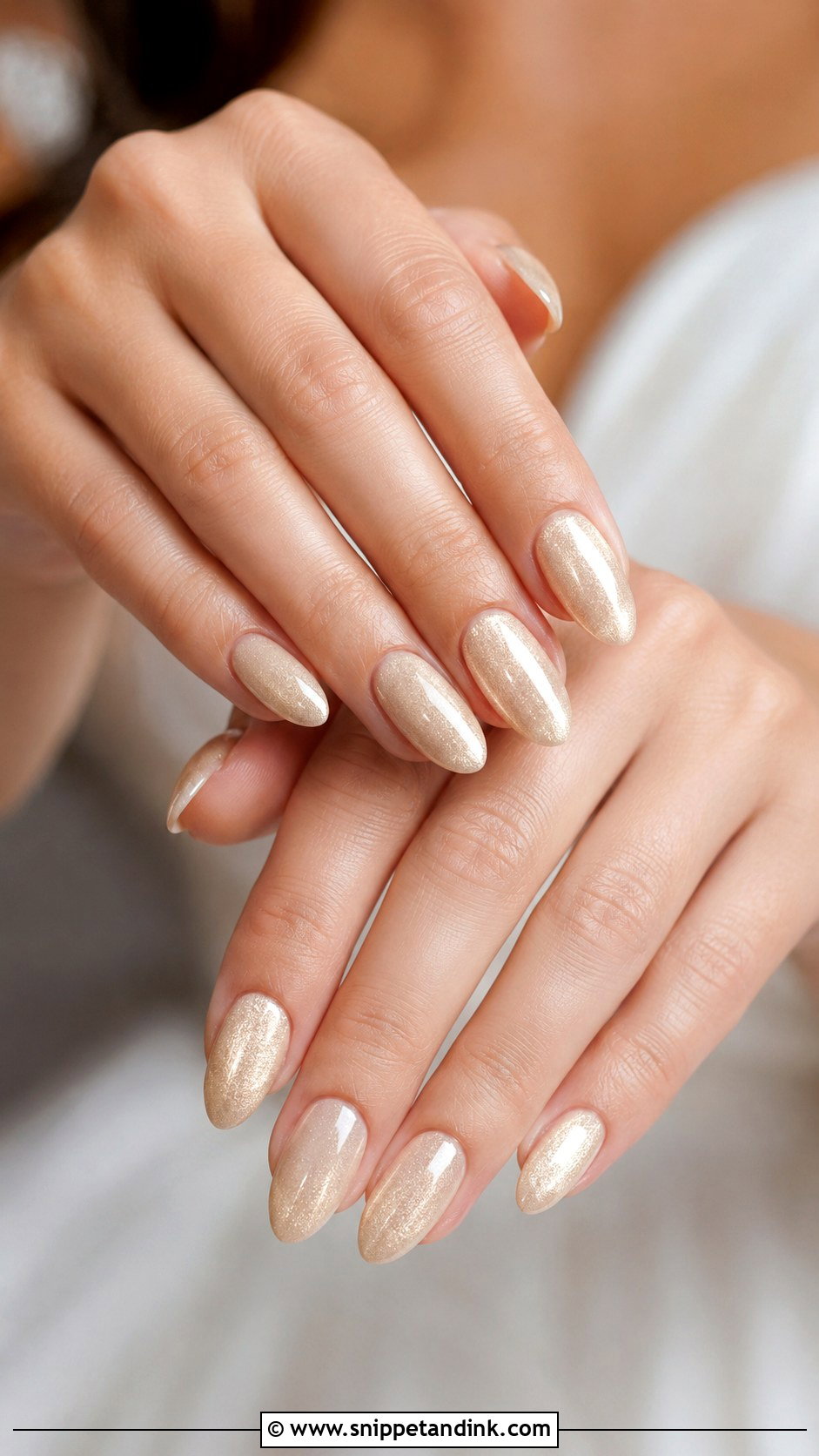
Champagne blends beige, gold and fine shimmer, which gives a neutral with warmth. It’s a natural match for champagne gowns, gold jewelry and warm palettes. Keep it subtle. A full metallic champagne can look like costume foil in flash photos, so I prefer a soft champagne shimmer or a nude base with a fine gold pearl on top. Almond and oval nails show it off because light runs along the curve. It suits evening receptions and formal venues particularly well.
10. Soft Beige Bridal Nails
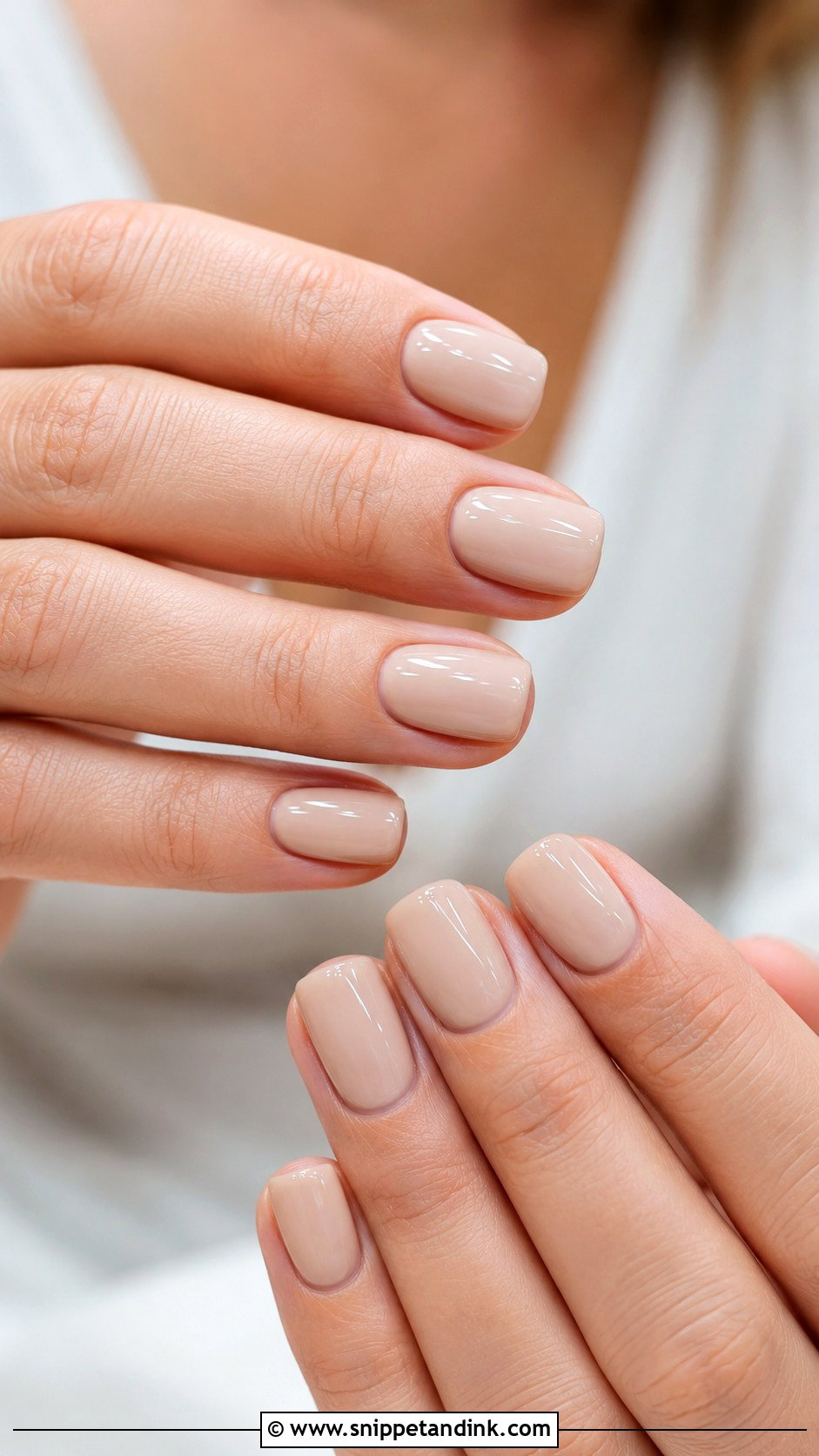
Beige is the minimalist’s choice: warmer than white or pink, and with a high-gloss gel finish it makes nails look smooth and expensive. The risk is a beige that sits flat against your skin and makes your hands look washed out. Fair skin often suits light sand beige. Medium skin can try creamy tan, and deep skin looks rich in warm caramel beige or cocoa nude. I always swatch two or three on the actual nail before committing. Beige suits simple dresses, sleek gowns, city weddings and modern styling.
11. Almond Nude Bridal Nails
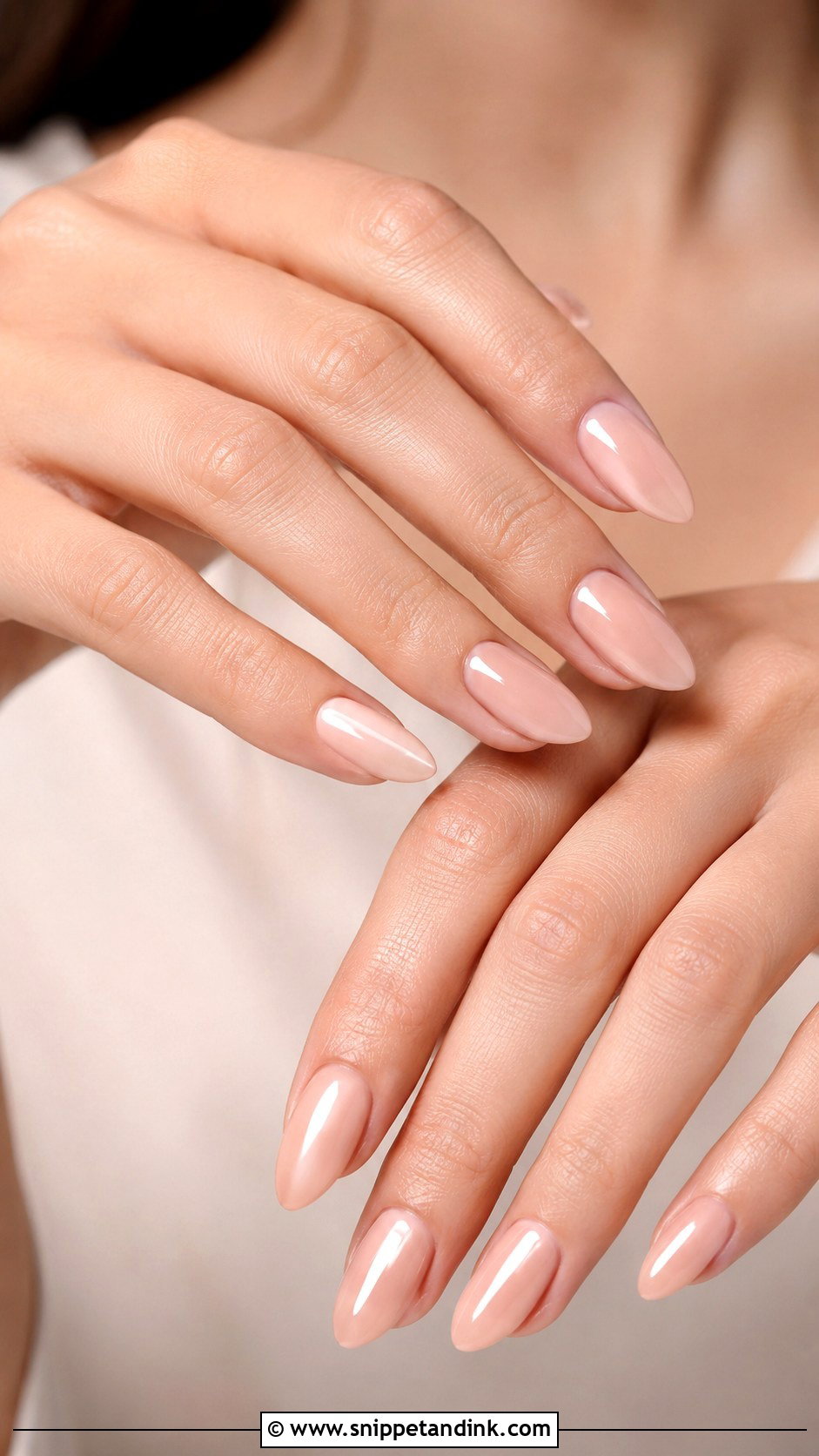
Almond shape lengthens the fingers, and nude keeps attention on the ring rather than the nails. Match the nude to your undertone instead of your exact skin color; a nude identical to your skin can make fingertips disappear in photos. Pink nude, peach nude, beige nude and warm brown nude all read bridal with a glossy, clean finish. I file almonds slightly softer at the tip for brides, because a sharp point can catch on lace and veil tulle. A sheer chrome top coat is an easy modern touch.
12. Rose Gold Bridal Nails
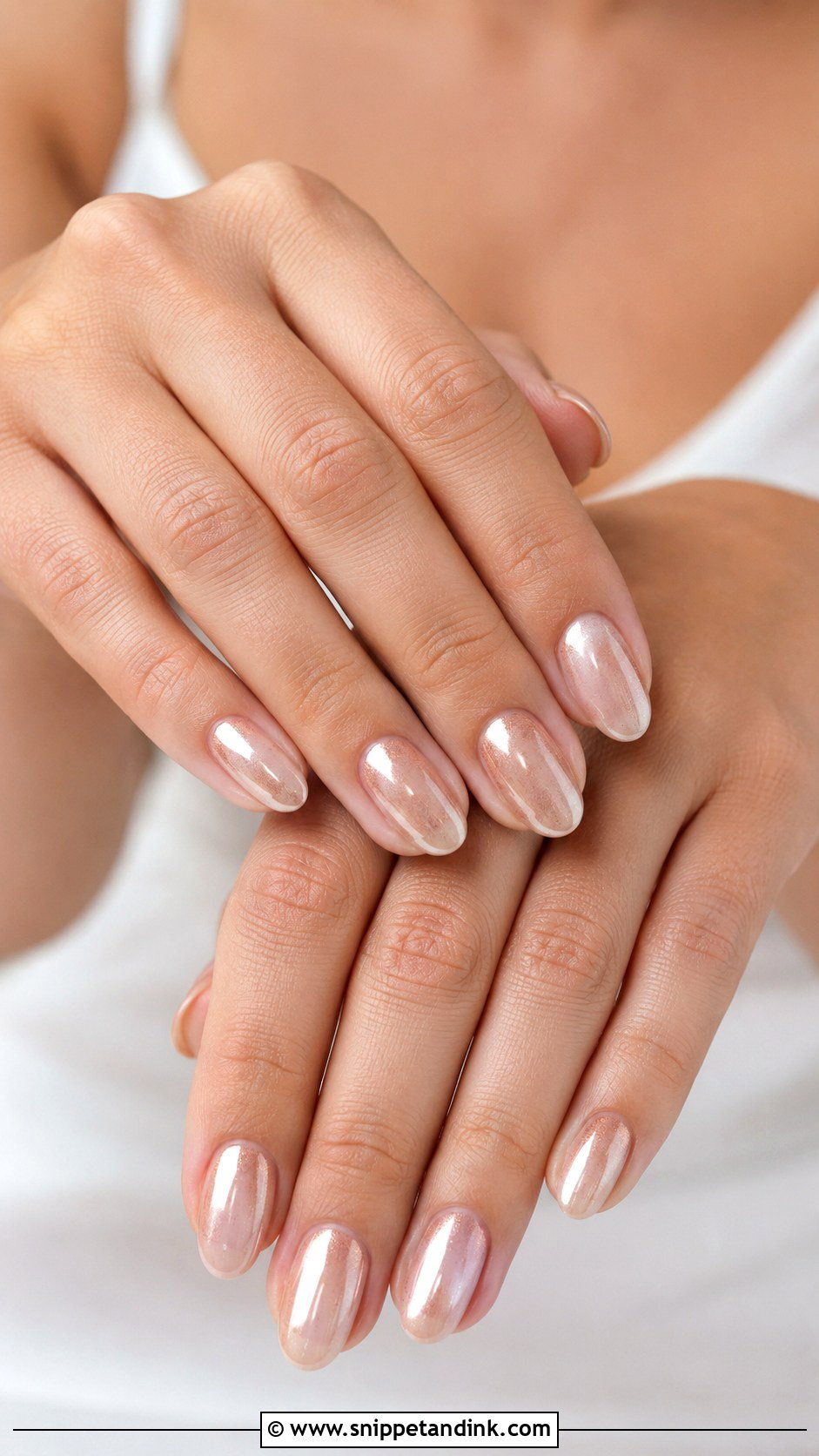
Rose gold adds warmth and a little glamour while staying soft enough for a wedding. It suits rose gold jewelry, blush flowers, warm makeup and champagne dresses. Choose a fine shimmer or metallic glaze rather than chunky glitter; glitter is also far harder to remove after the honeymoon. You can wear it on every nail or as a delicate French tip over nude. Oval, almond and short square shapes all suit it, and it’s a good alternative for brides who don’t want silver or white chrome.
13. Pale Blue Bridal Nails
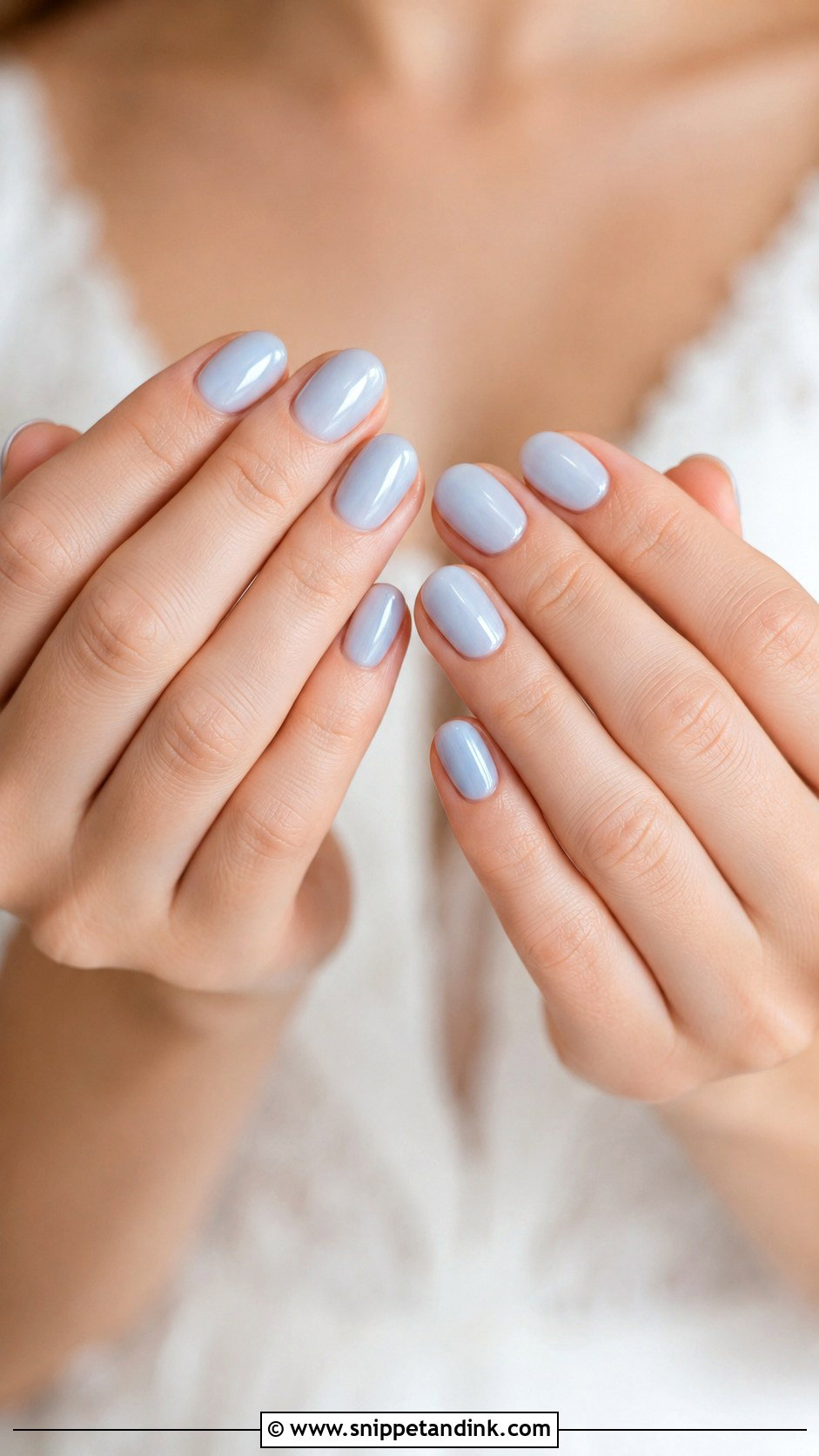
Pale blue is a quiet way to wear your “something blue.” A sheer pastel or powder blue suits white dresses, silver jewelry, pearl accessories and coastal or garden settings. Keep it soft. Bright blue jumps out in every hand shot. Pale blues can look slightly green on very warm skin, so I check the shade next to your skin in daylight. A glossy finish keeps it clean; a pearl top coat makes it softer. It works on short oval, almond and soft square shapes.
14. Lavender Bridal Nails
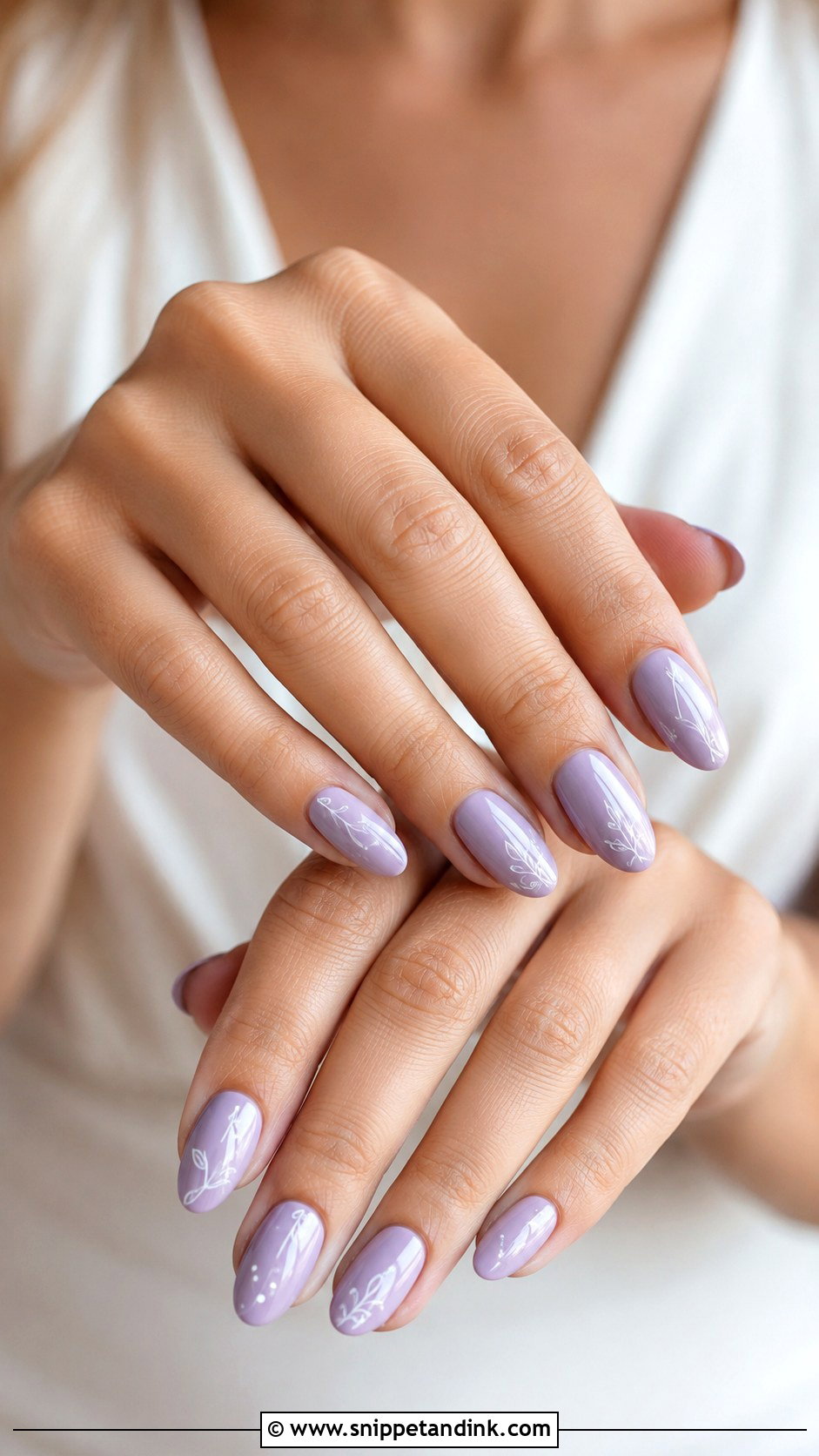
Lavender brings color without boldness. Pale, muted lavender suits spring weddings, garden venues and purple flowers; neon or heavily saturated versions don’t read bridal. You can wear it as a full glossy manicure, a lavender French tip, or a sheer lavender wash with tiny white details. Silver jewelry and cool-toned makeup suit it. Light purples are tricky to apply evenly, so I use thin coats and let each one settle before curing. It’s a personal choice that still looks polished.
15. Peach Bridal Nails
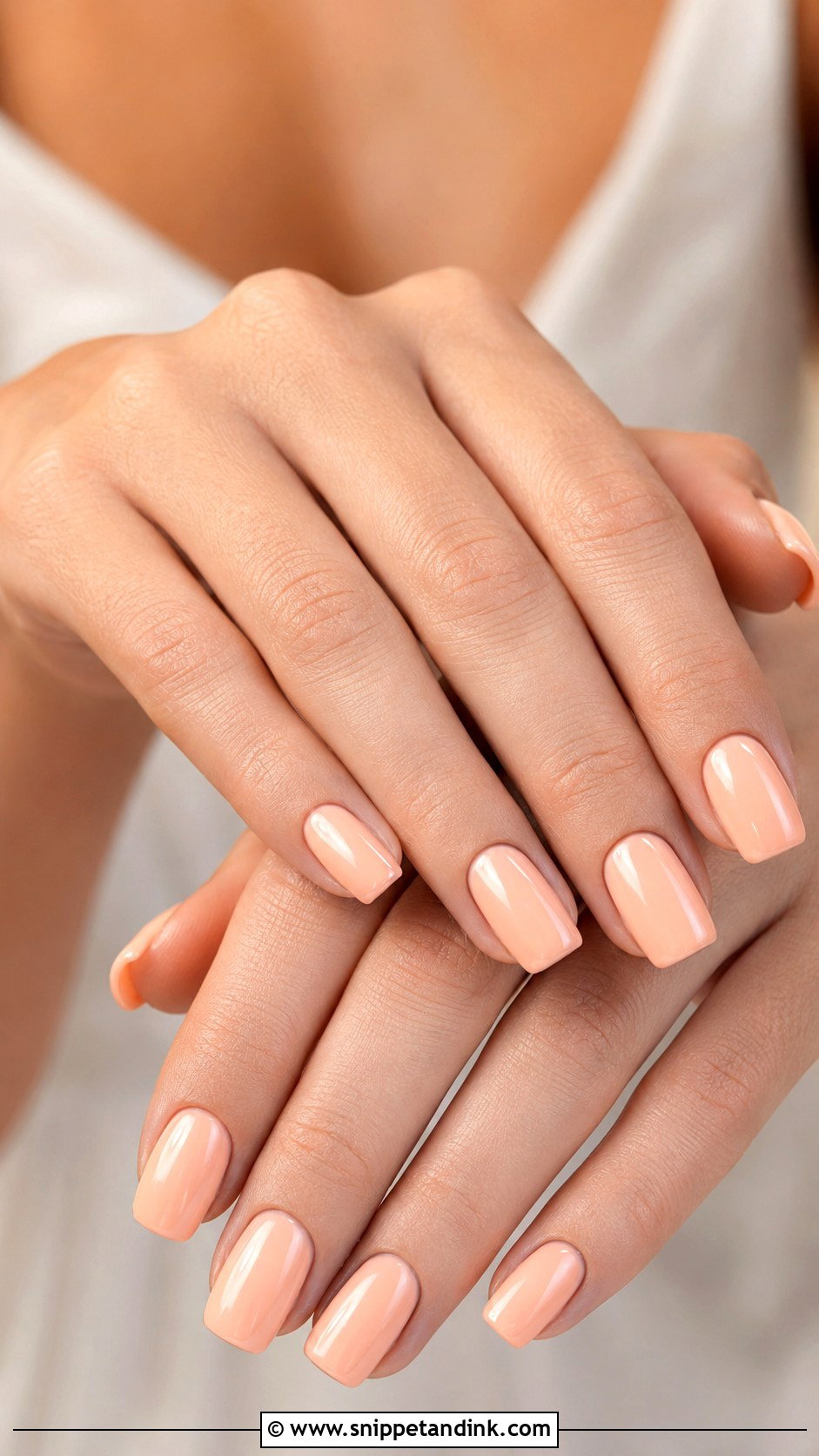
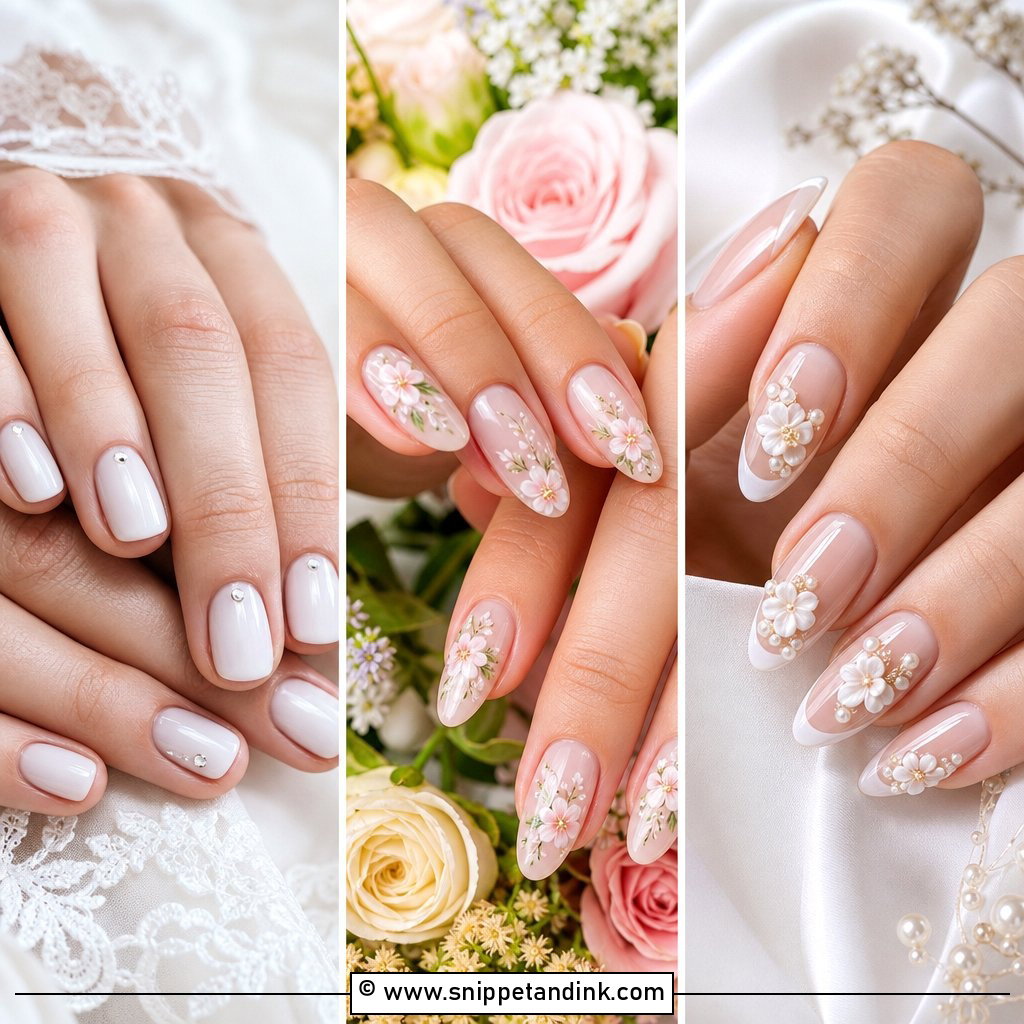
Peach warms the hands and glows in outdoor light, which makes it good for summer ceremonies and brides wearing warm makeup. A sheer peach looks natural; a creamy pastel peach is brighter and more playful. Stay away from coral or orange shades, which read vacation rather than wedding. It suits short rounded, almond and squoval nails, and pairs with ivory dresses, gold jewelry and peach bouquets. A fine pearl top coat or slim white French tip adds a little extra.
16. Mauve Bridal Nails
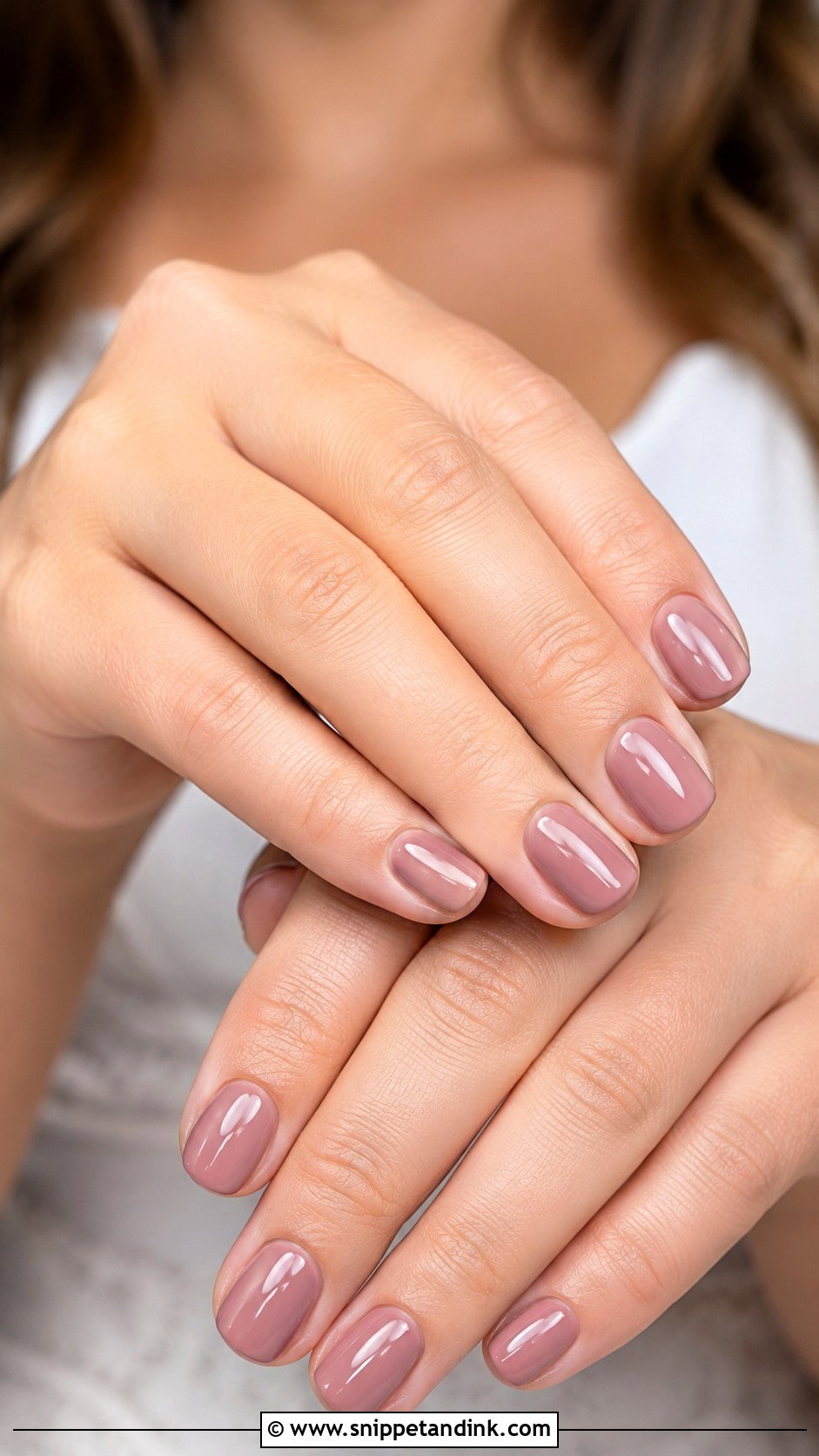
Mauve sits between pink, purple and taupe, which gives you a neutral with depth. Dusty mauve feels vintage; pink-mauve stays softer. It’s particularly good for fall weddings, formal receptions and brides wearing rose-toned or muted makeup. On short nails it gives definition with no art needed. Almond and oval shapes with a glossy top coat suit it too. Mauve feels mature and romantic, and it’s one of the shades I find brides keep wearing long after the wedding.
17. Taupe Bridal Nails
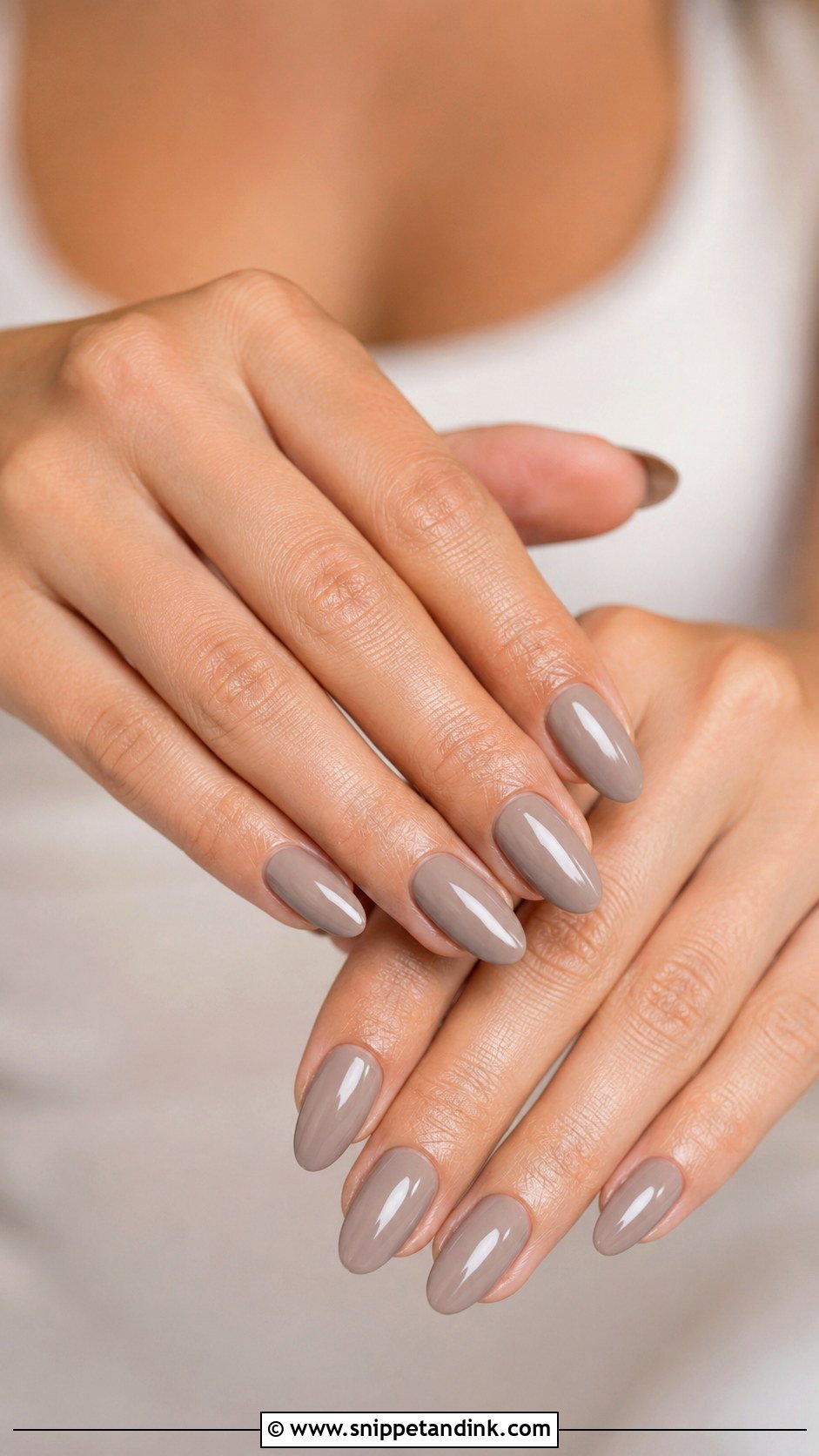
Taupe blends gray, beige and brown into a soft earthy color. It suits minimalist gowns, sleek silhouettes, ivory dresses, silver jewelry and natural makeup. Choose a creamy, muted taupe; dark or muddy versions can look dull in photos. Taupe also looks right the week after the wedding, back at work, which brides appreciate. A glossy finish keeps it crisp, while a sheer shimmer top coat softens it.
18. Soft Gray Bridal Nails
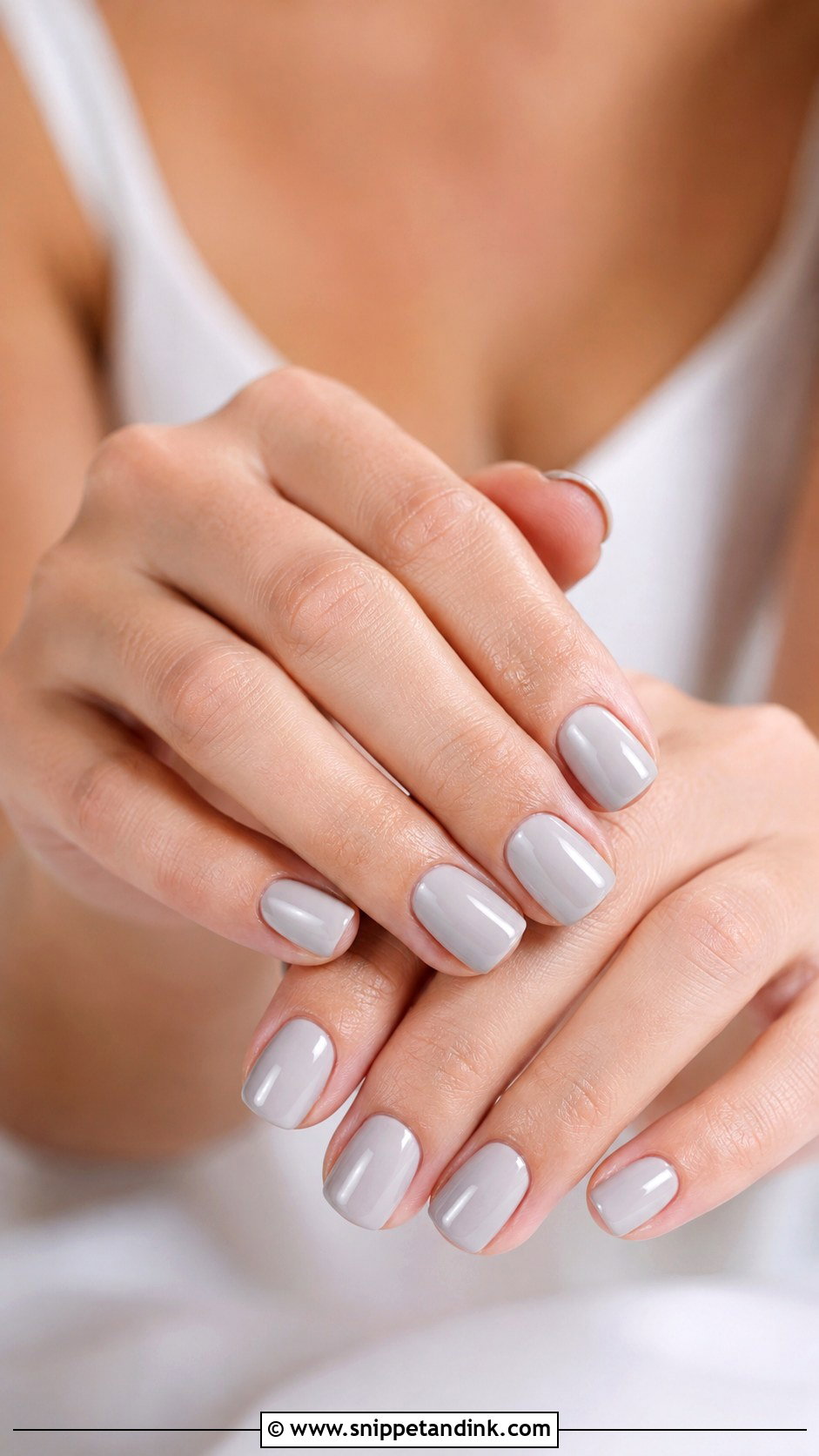
A pale dove gray is surprisingly delicate, especially against silver jewelry, pearls and a clean white dress. It’s cool-toned and different from the usual pink or white. Keep it light and creamy. Charcoal and flat mid-gray only suit intentionally dramatic weddings, and they can make hands look cold in winter light. Short squoval and medium almond nails suit it, and a pearl chrome layer adds glow. It’s a natural fit for winter palettes, city weddings and minimalist brides.
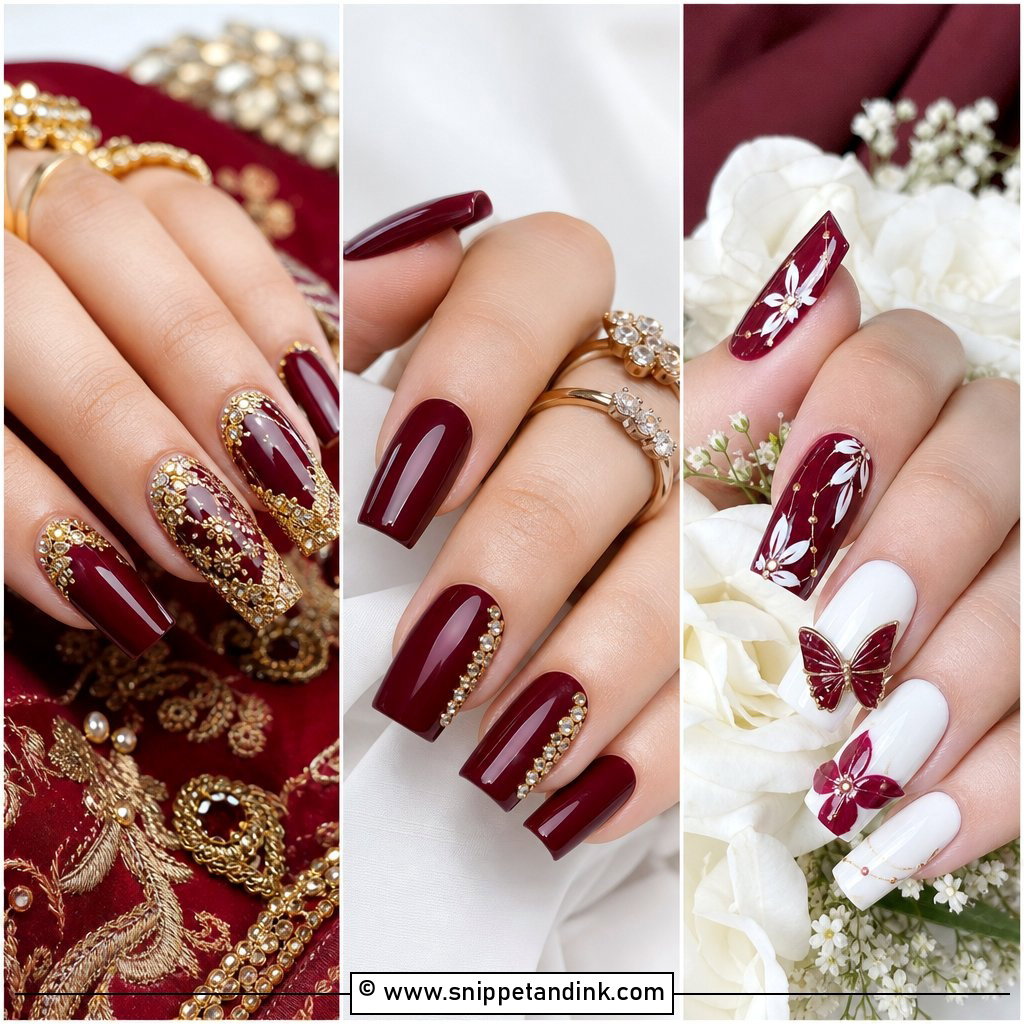
19. Deep Red Bridal Nails
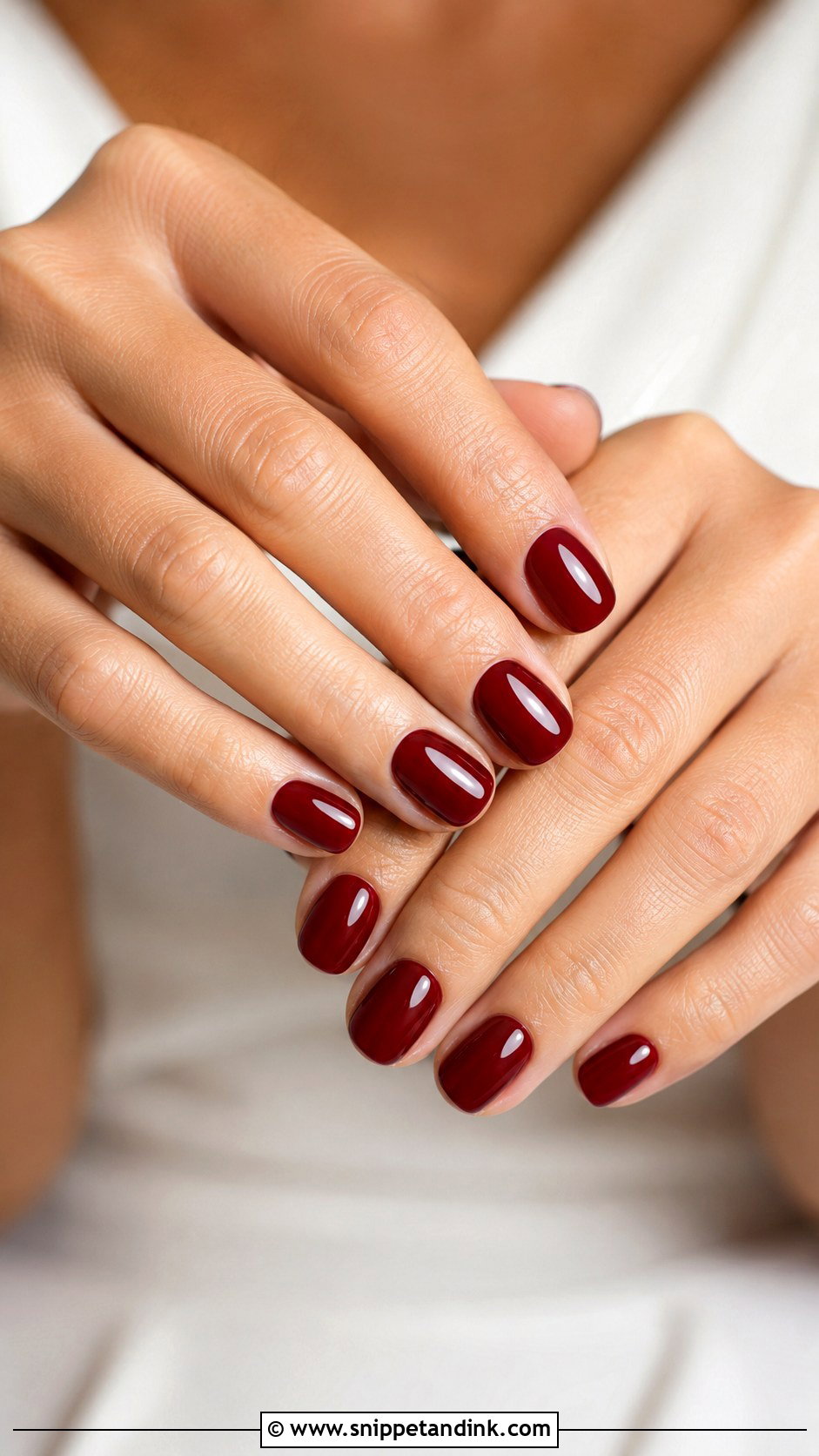
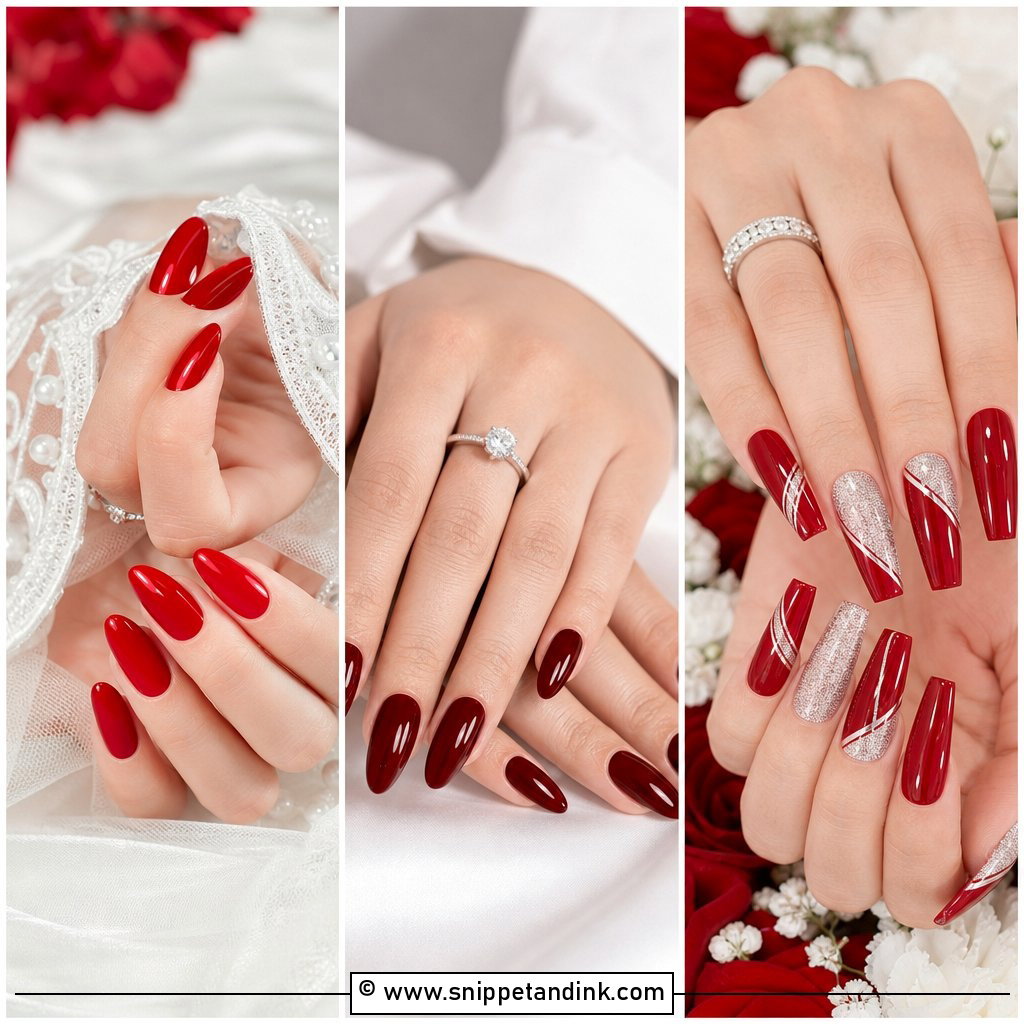
Deep red is classic glamour. I’d choose cherry, cranberry or soft burgundy over bright red for a more elegant finish. It looks right with simple gowns, a red lip, vintage accessories or formal evening receptions. Short rounded nails carry it best, because dark color on long nails can look heavy in ring photos. A jelly red, which has depth but lets a little light through, softens it. Dark shades show chips and regrowth fastest, so get these done as close to the day as you can. Deep red isn’t for every bride, but on the right one it’s memorable.
20. Soft Brown Bridal Nails
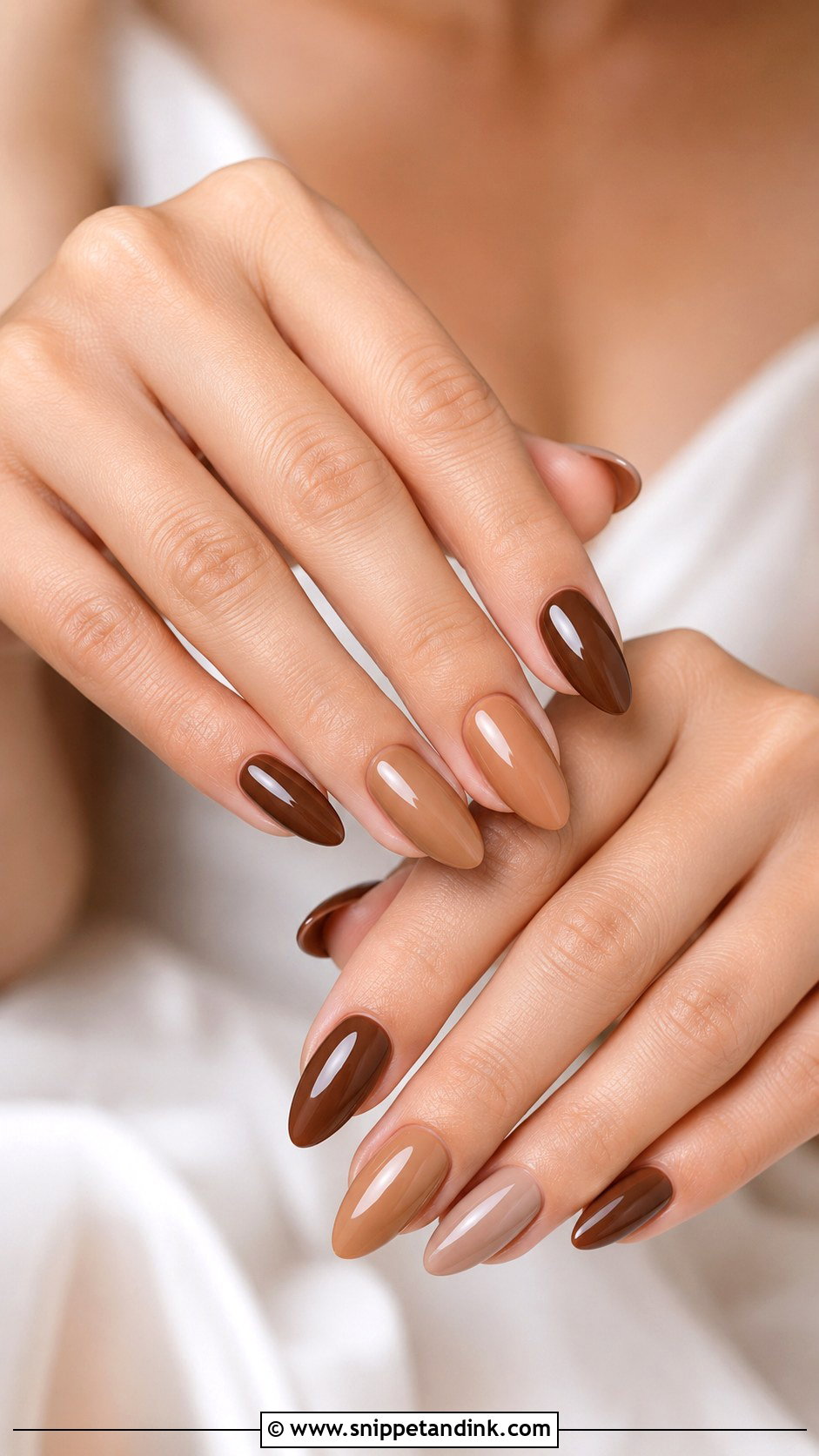
Soft brown is warm and modern, and especially flattering on medium to deep skin, though the right shade works for anyone. Think cocoa, latte, caramel or milk chocolate rather than a harsh dark brown. It suits neutral palettes, satin dresses and gold jewelry, and a glossy finish looks expensive with no decoration. For a bridal twist, I’ll do a sheer nude base with brown French tips, or a soft brown chrome glaze. It’s a fresh alternative to traditional bridal colors.
How Many Days Out the Manicure Should Be
For gel, I like one to three days before the wedding. That’s close enough that there’s no visible regrowth at the cuticle, but leaves a buffer if a nail chips or a shade looks wrong. Regular polish should be done the day before, since it rarely survives a full week of wedding preparation without a chip.
Do cuticle work and shaping a week or so earlier if your nails need real attention. Freshly pushed or trimmed cuticles can look red and sore in close-ups, and that settles down within a few days. If you’re going on a honeymoon, sheer shades like milky white or sheer pink hide regrowth much better than opaque reds or browns.
Pale Polish and the Stains Nobody Warns You About
Milky whites, ivory and sheer pinks pick up color. Self-tanner, a haldi ceremony, dark denim and some hair dyes can all leave a yellow or blue tinge on a pale manicure. If any of those are on your schedule, put them before your nail appointment or wear gloves. A tinted manicure usually can’t be cleaned; it has to be redone. If you love a white shade but have a pre-wedding ceremony with turmeric, a soft nude or blush is a safer pick for that week.
Which Shade Holds Up Next to Your Ring
The right color is the one that sits well with your dress, jewelry, bouquet and personal style. Milky white, sheer pink, nude, ivory, French and pearl chrome are the classics. Champagne, blush, peach, lavender and pale blue add soft personality, and mauve, taupe, gray, deep red and soft brown give a more modern or dramatic finish. Narrow it to two shades, test both in daylight and indoor light, and take a few ring photos on your phone. You’ll know which one looks like you.
You'll Like These Ideas:


Leave a Reply