
Winter weddings are the season I enjoy dressing guests for most, because the fabrics finally get to be heavy. Velvet, Banarasi silk, brocade, Kanjivaram and properly lined georgette all hold colour and warmth in a way summer chiffon never can. The challenge is that a winter wedding is rarely one event. A morning pheras in an open courtyard, a sangeet in a heated banquet hall and a late reception on a lawn each ask something different of your outfit. So I plan around coverage first: full sleeves, a jacket or cape, or a shawl that belongs to the look rather than hiding it. Jewel tones, metallic embroidery, structured blouses, sharara sets and pre-draped sarees all appear below. Match the colour and shine to the function and the family’s wishes, and make sure your drape is pinned well enough to stand, sit cross-legged and dance in.
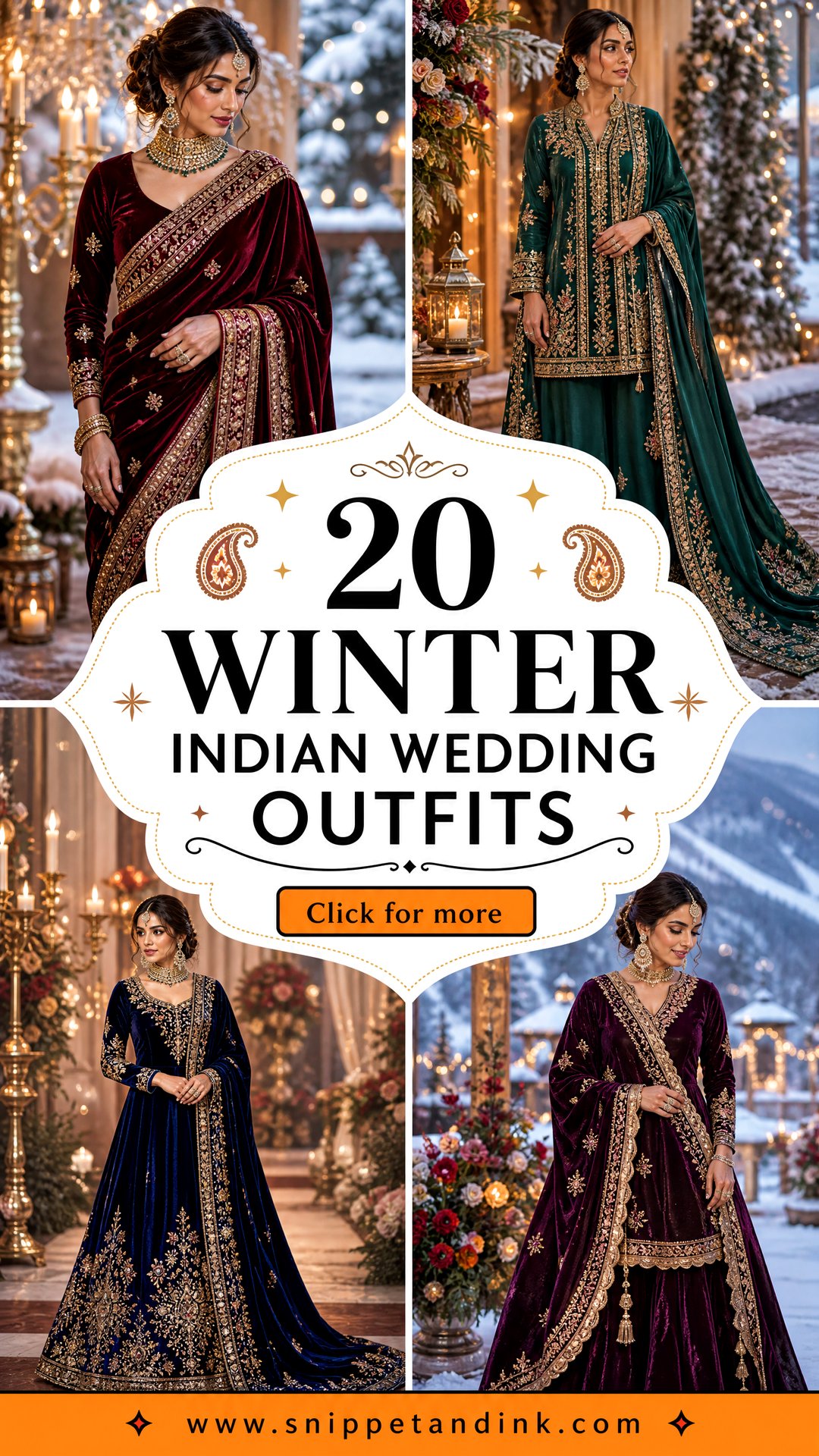
Matching Fabric Weight to Each Function on the Calendar
Most winter Indian weddings run over two to four days, and I plan a guest’s wardrobe function by function rather than outfit by outfit. The heaviest piece should go to the event where you’ll sit still in a heated hall. The lightest goes to the event where you’ll dance.
- Haldi and daytime mehendi: lined cotton silk, chanderi or light georgette, with a shawl for the morning chill. Turmeric stains, so nothing precious.
- Sangeet: sharara, gharara or a jacket lehenga in brocade or silk. You need to move, so avoid a skirt so heavy it drags.
- Pheras or nikah: Banarasi, Kanjivaram or a silk Anarkali. Ceremonies can run long and many are partly outdoors, so full sleeves matter most here.
- Reception: velvet, sequins or tissue silk. This is usually indoors and late, so it’s the place for the richest fabric.
I’d also ask the family two questions early: are any colours reserved for the bride or for a particular ritual, and which events are outside? Those answers rule out more outfits than anything else.
1. Winter Indian Wedding Velvet Lehenga Outfit
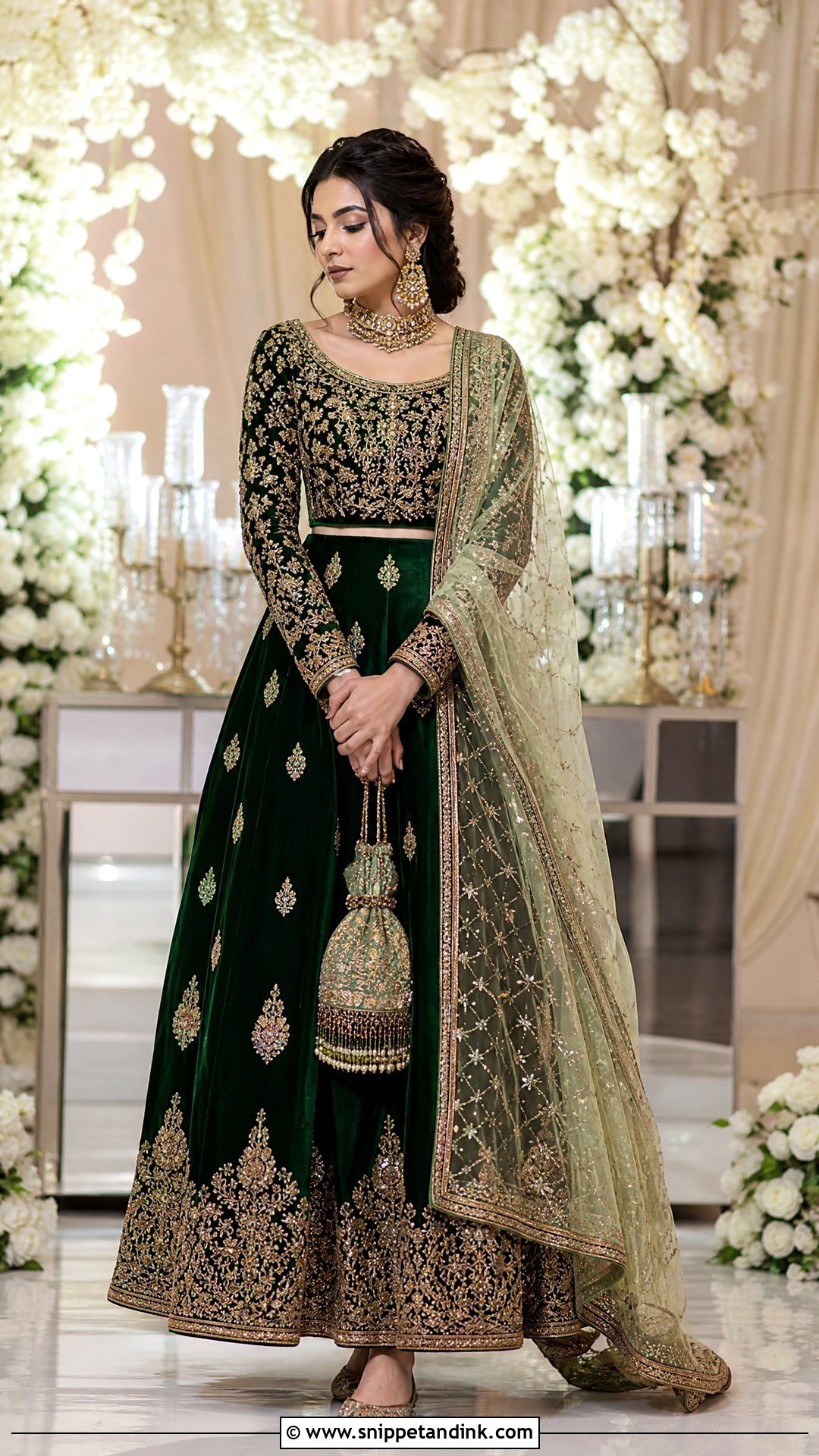
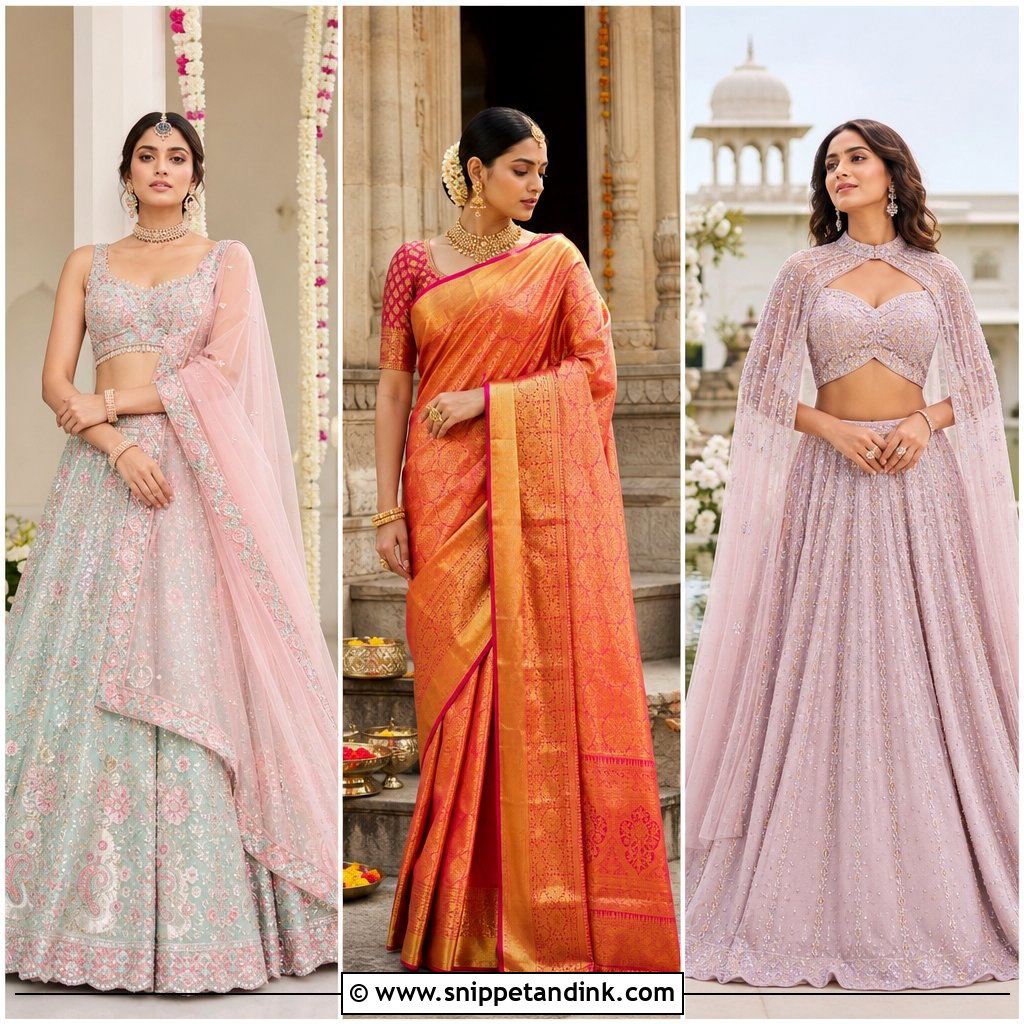
Velvet lehengas are warm, but they’re also heavy, and that weight sits on your waist for hours. I’d steer guests toward emerald, navy, plum or deep teal with fine zari work rather than dense embroidery all over, which can push a skirt past what’s comfortable to carry. A fitted full-sleeve blouse covers the arms and balances the volume. Skip the matching velvet dupatta; it doubles the bulk and slides off the shoulder. An embroidered net or organza dupatta draped over one shoulder sits much better. Kundan earrings, a compact potli and closed-toe block heels or embroidered juttis finish it. Thin thermal shorts underneath are invisible under a velvet skirt. This one is for an evening ceremony or a formal reception indoors.
2. Winter Indian Wedding Banarasi Silk Saree Outfit
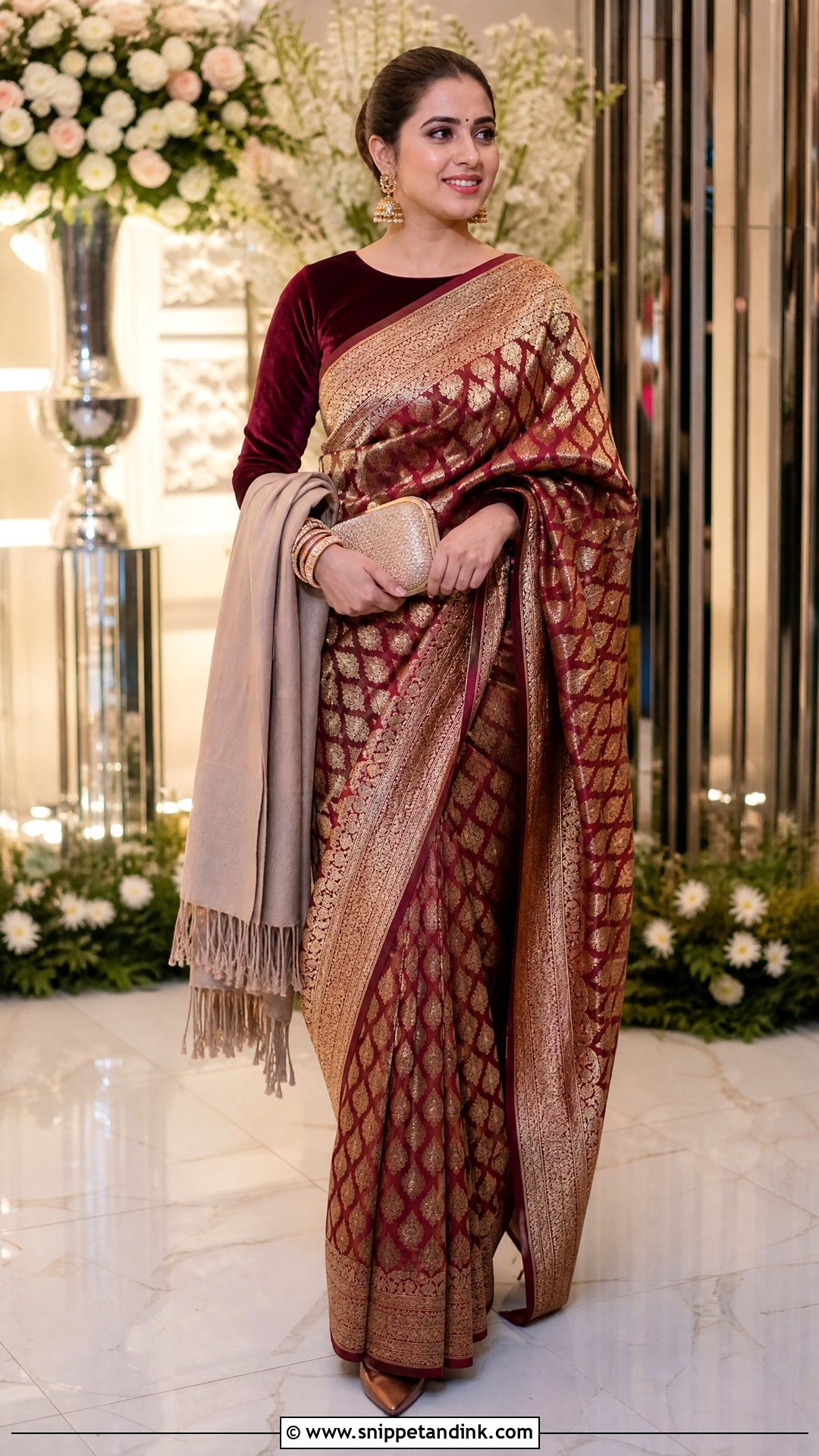
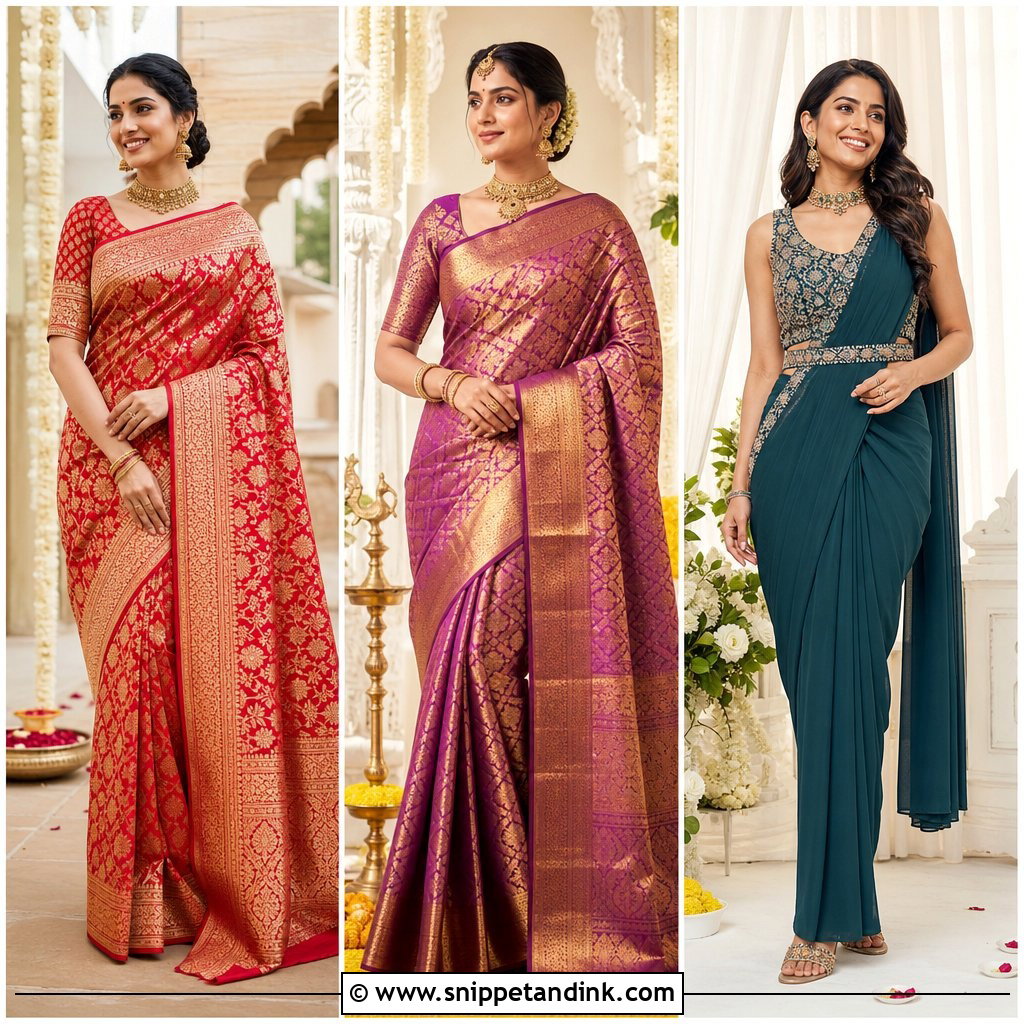
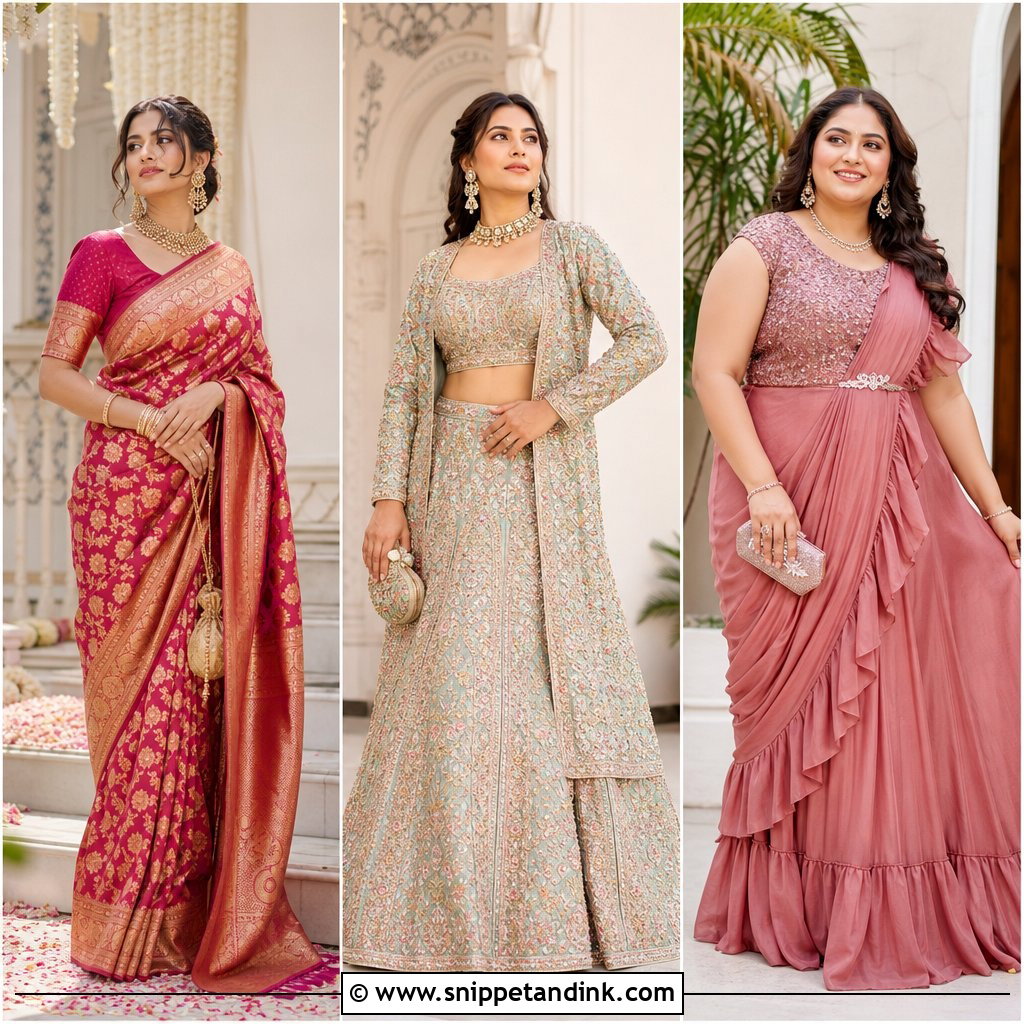
Banarasi silk glows under warm wedding lights, which is why it never goes out of rotation. Wine, royal blue, forest green and magenta with a gold border are the shades I see work best on most skin tones. Pair it with a fitted velvet blouse with full sleeves and a slightly longer hem, so there’s less midriff exposed to cold air. Banarasi is stiffer than chiffon, so the pleats need firm pinning at the waist and a second pin at the shoulder or the pallu will slip by the second hour. Gold jhumkas, stacked bangles, a structured clutch and closed-toe pumps let the weave do the talking. For outdoor moments, carry a plain pashmina in a shade lifted from the border. It suits the main ceremony, a family reception or a formal daytime function.
3. Winter Indian Wedding Floor-Length Anarkali Outfit
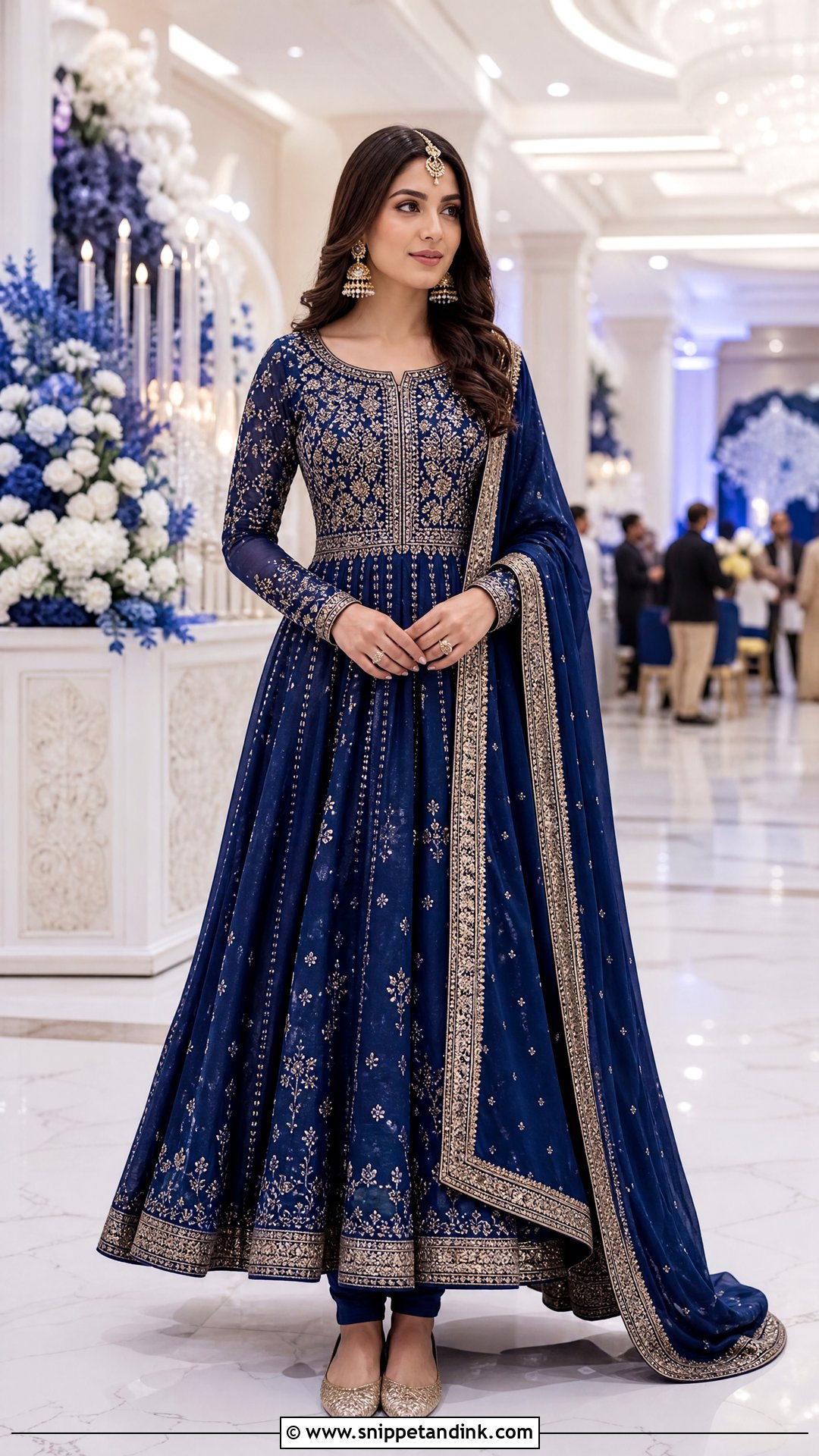
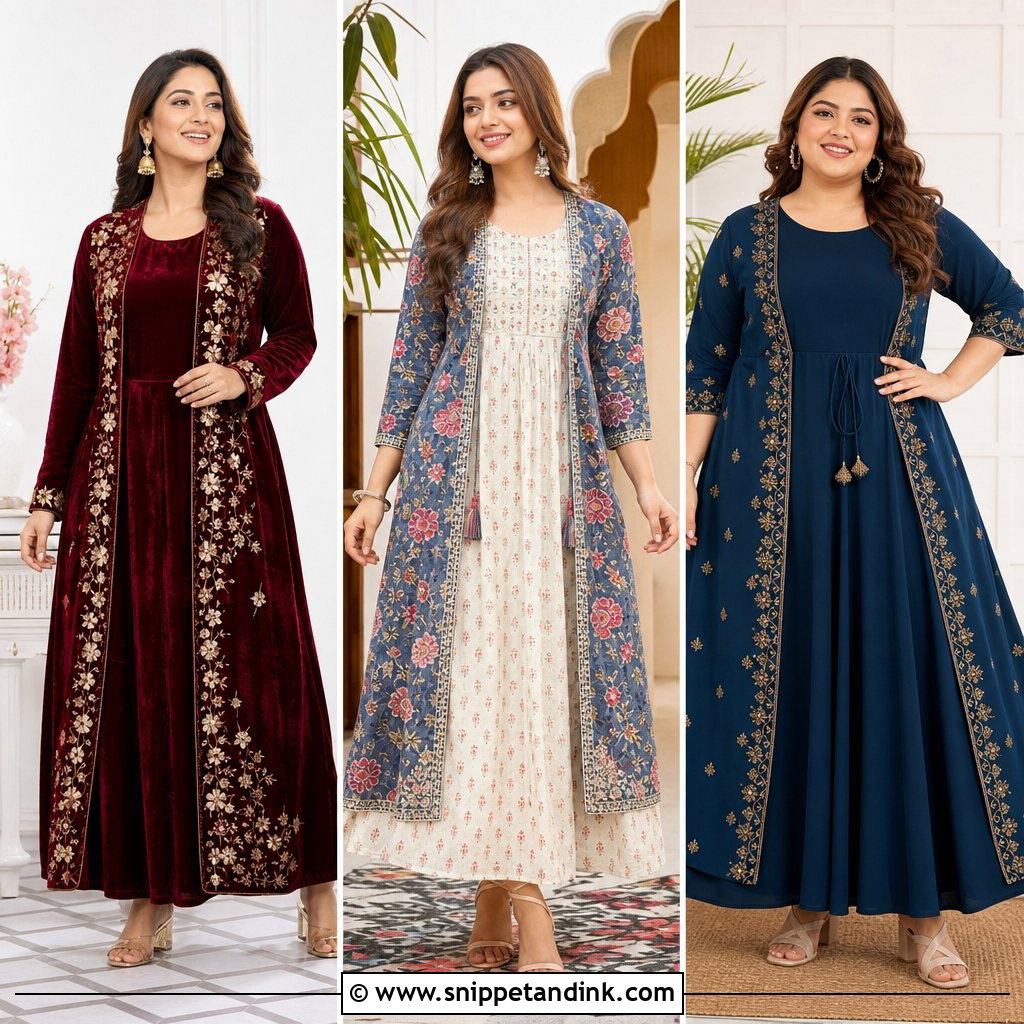
Floor-length Anarkalis are kind to almost every body shape and every age, which is why I suggest them so often for guests who aren’t sure what to wear. A silk or lined georgette version in ruby, sapphire or deep purple gives coverage and still swings when you walk. Look for full sleeves, a fitted bodice and a flare wide enough to move in without being so full you trip on stairs. Churidar pants go underneath, and the long skirt hides thin thermal leggings completely. Drape the embroidered dupatta over both shoulders or pin it at one side. Statement jhumkas, a small maang tikka and pointed juttis complete it. If the neckline is embroidered, leave the necklace off. It works for ceremonies, sangeet nights and receptions.
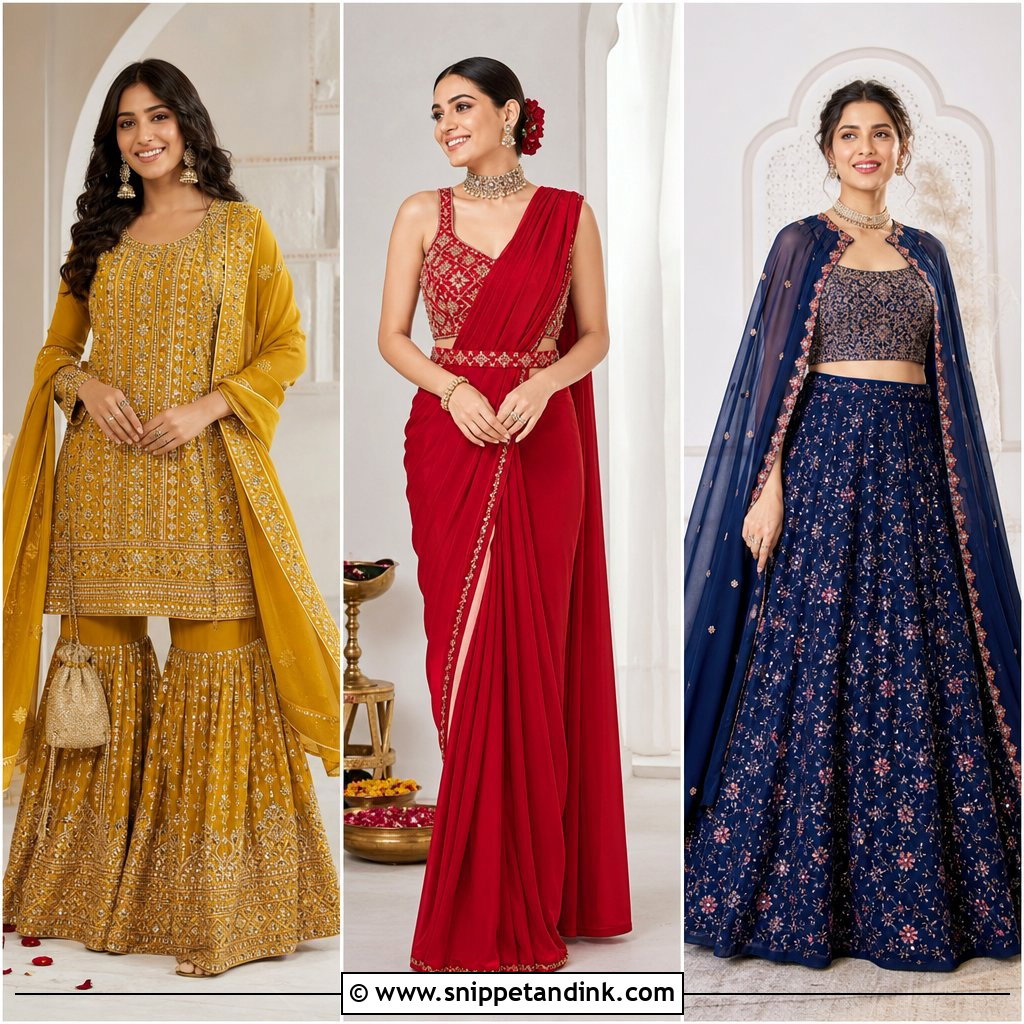
4. Winter Indian Wedding Brocade Sharara Outfit
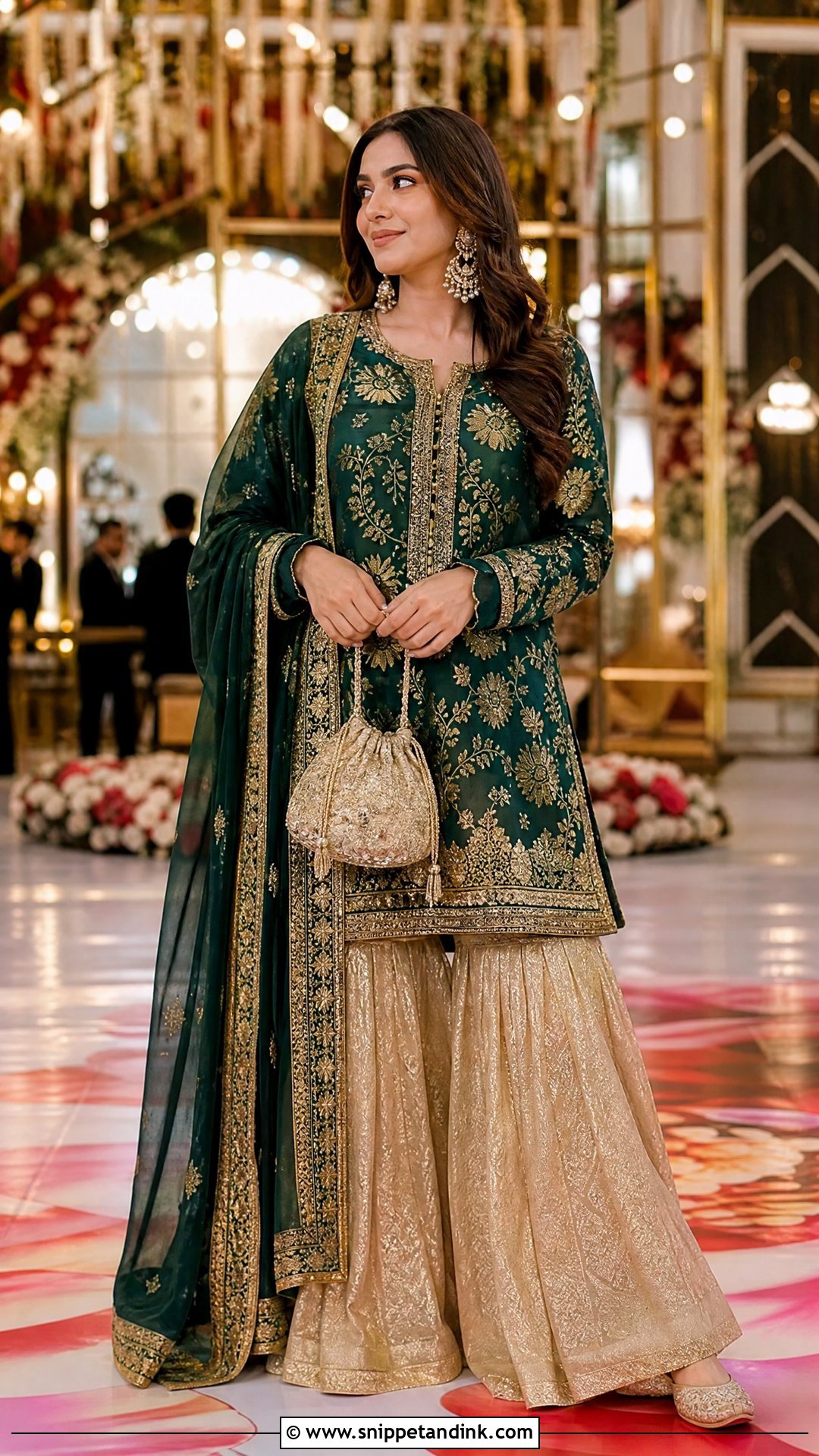
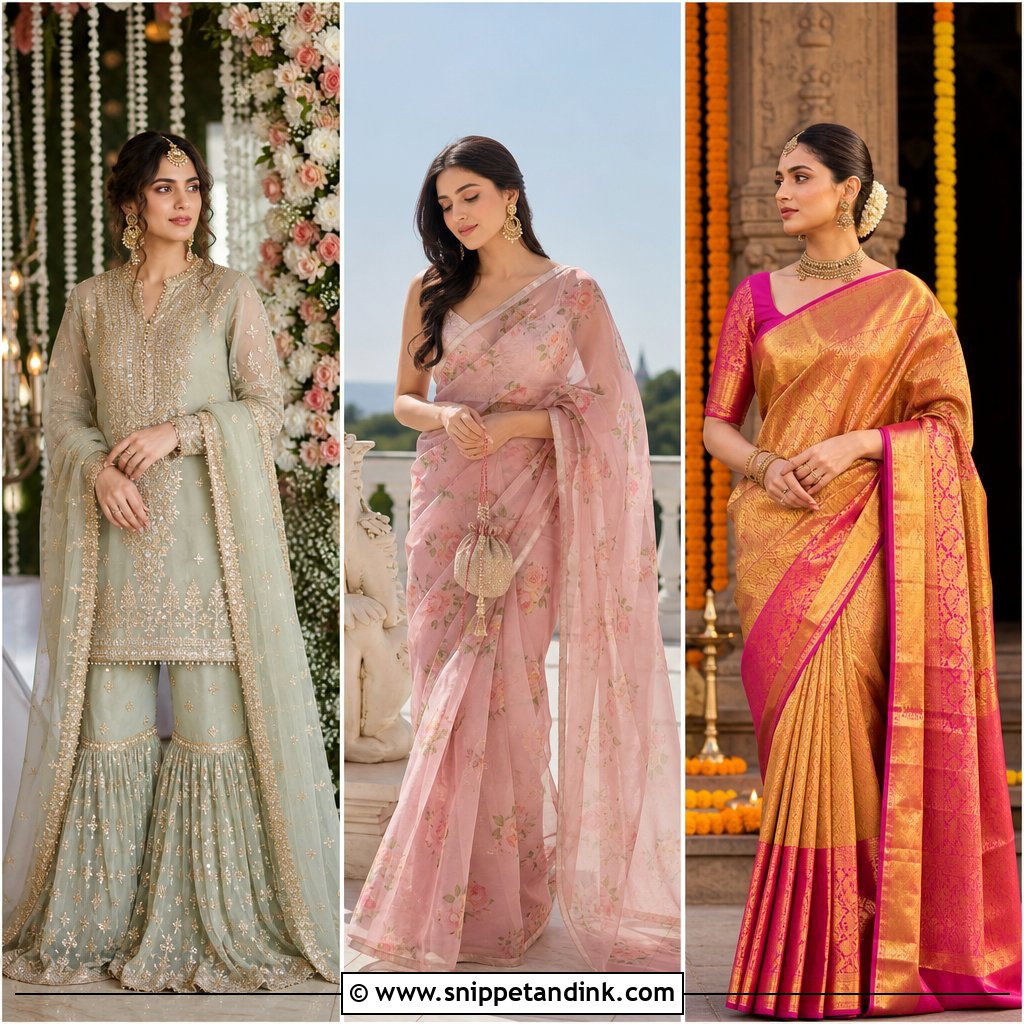
Dancing is the test. A brocade sharara set passes it easily, because the wide legs move with you and there’s no skirt hem to step on. Choose sharara pants in antique gold, deep green or navy with a knee-length kurta in full or three-quarter sleeves. Brocade is stiff, so I balance it with a light chiffon dupatta with a brocade border; a heavy one makes the whole outfit look boxy. Chandelier earrings, a metallic potli and cushioned juttis keep it comfortable for a long night. The volume in the pants leaves room for thermal leggings. A longer kurta is warmer and more modest than the short cuts you’ll see in shops. It’s festive without competing with the bride, which makes it right for the mehendi or sangeet.
5. Winter Indian Wedding Kanjivaram Silk Saree Outfit
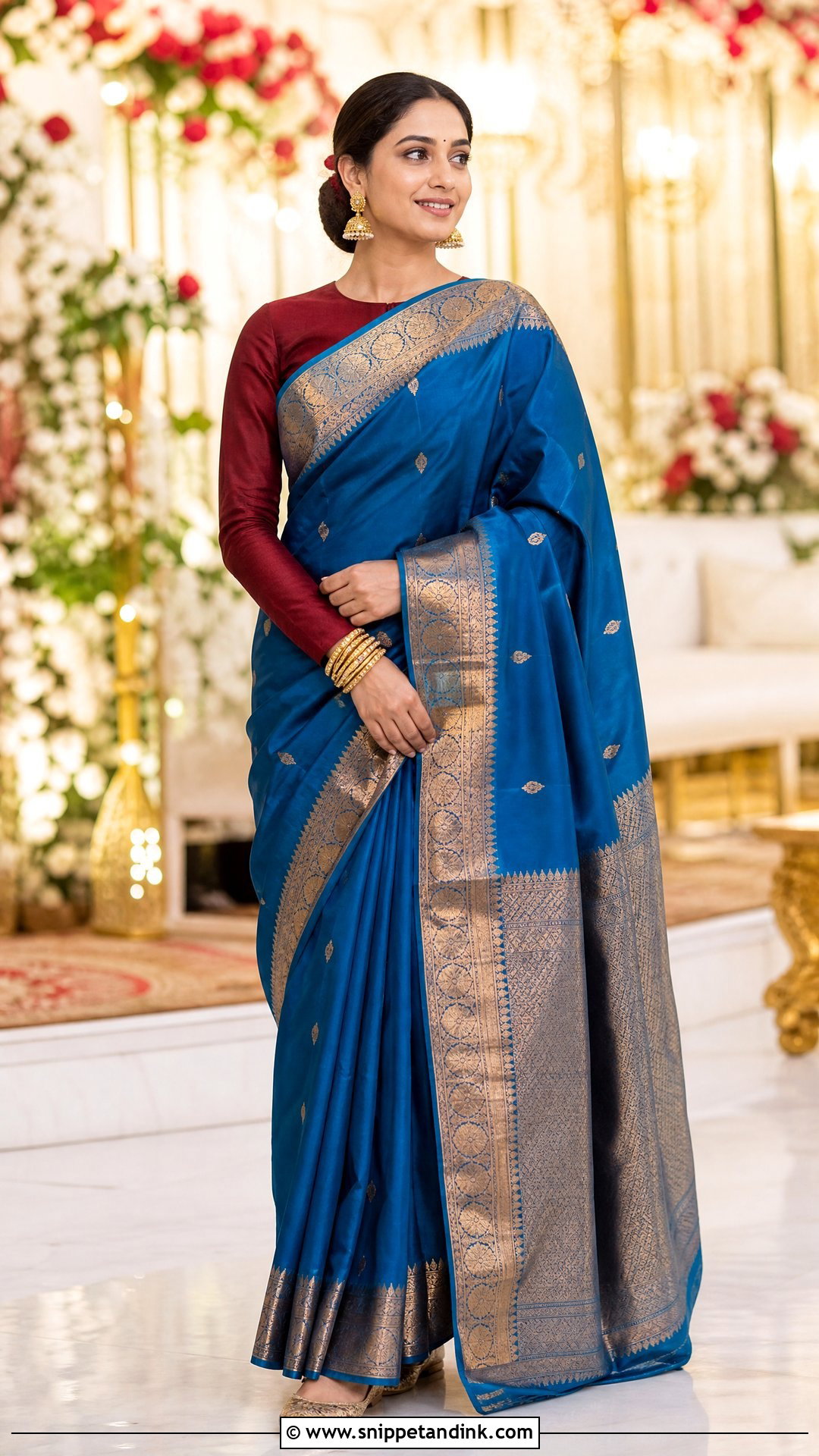
Kanjivaram silk is heavy and structured, and it photographs with real depth of colour. Peacock blue, maroon, mustard or emerald with a contrasting zari border look rich in winter light. A full-sleeve raw silk blouse matches the weight of the saree; a flimsy blouse under a heavy Kanjivaram looks mismatched. Temple earrings, gold bangles and a neat low bun complete the traditional look. One thing I always warn about: real zari borders are stiff and can scratch at the ankle, so wear the saree slightly higher with block-heel sandals indoors, or closed embroidered shoes if part of the event is outside. A fitted thermal camisole under the blouse adds warmth without bulk. Carry a plain silk shawl that picks up the border colour for cold corridors and courtyards.
6. Winter Indian Wedding Jacket Lehenga Outfit
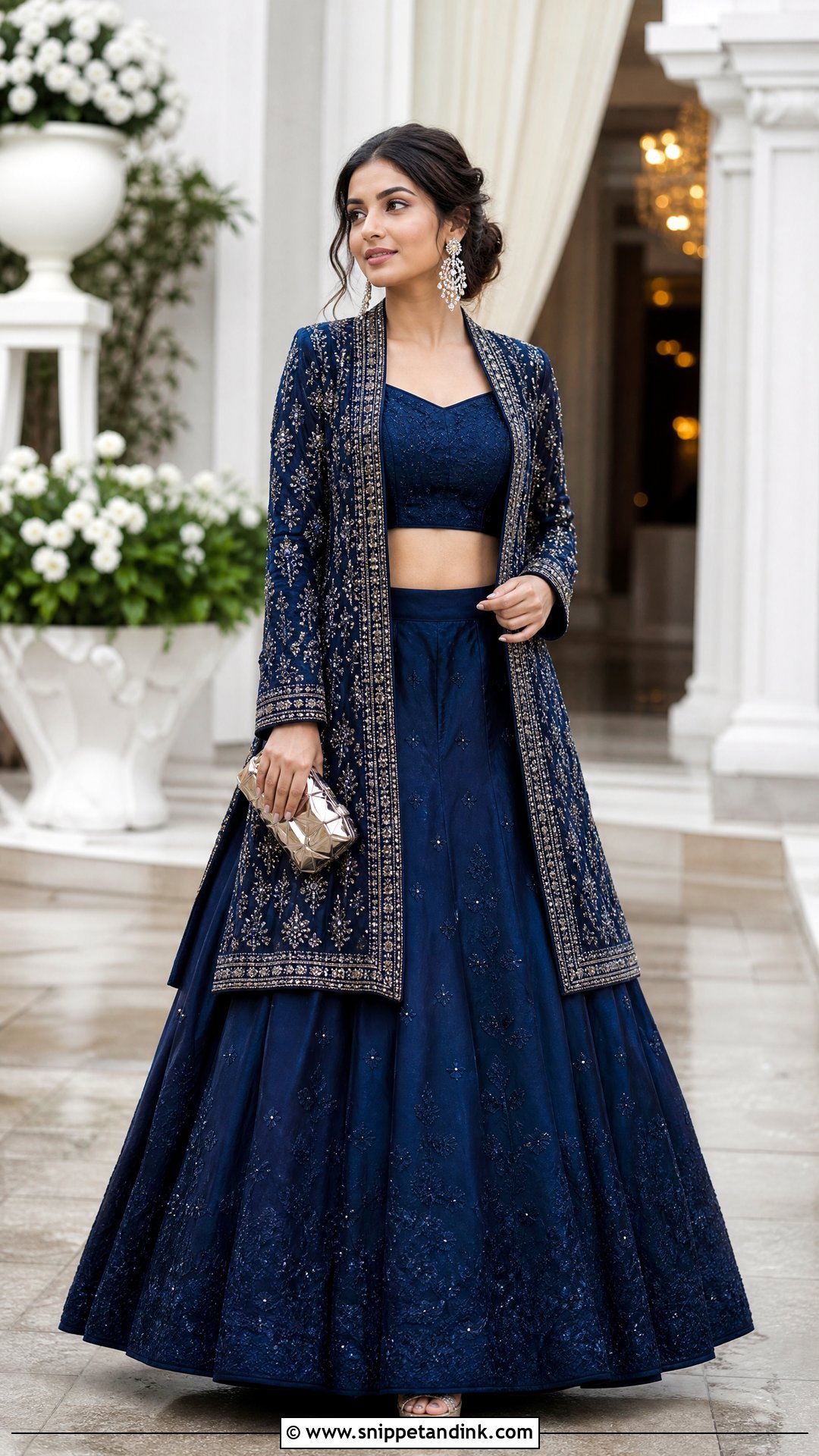
Covering a gorgeous outfit with an unrelated winter coat is the problem a jacket lehenga solves. Start with a solid silk or brocade lehenga and a fitted sleeveless or short-sleeve choli, then layer a long embroidered jacket that reaches the knees or ankles. Wear it open, so the blouse and waistband still show. Burgundy, midnight blue, bottle green and charcoal silver all look rich in winter. Drop earrings, a structured clutch and platform heels or embellished juttis finish it. I’d usually skip the dupatta here, as the jacket already does its job, unless the ceremony calls for a covered head. Check the jacket armholes at your fitting; if they’re cut tight, you won’t be able to lift your arms on the dance floor.
7. Winter Indian Wedding Velvet Saree Outfit
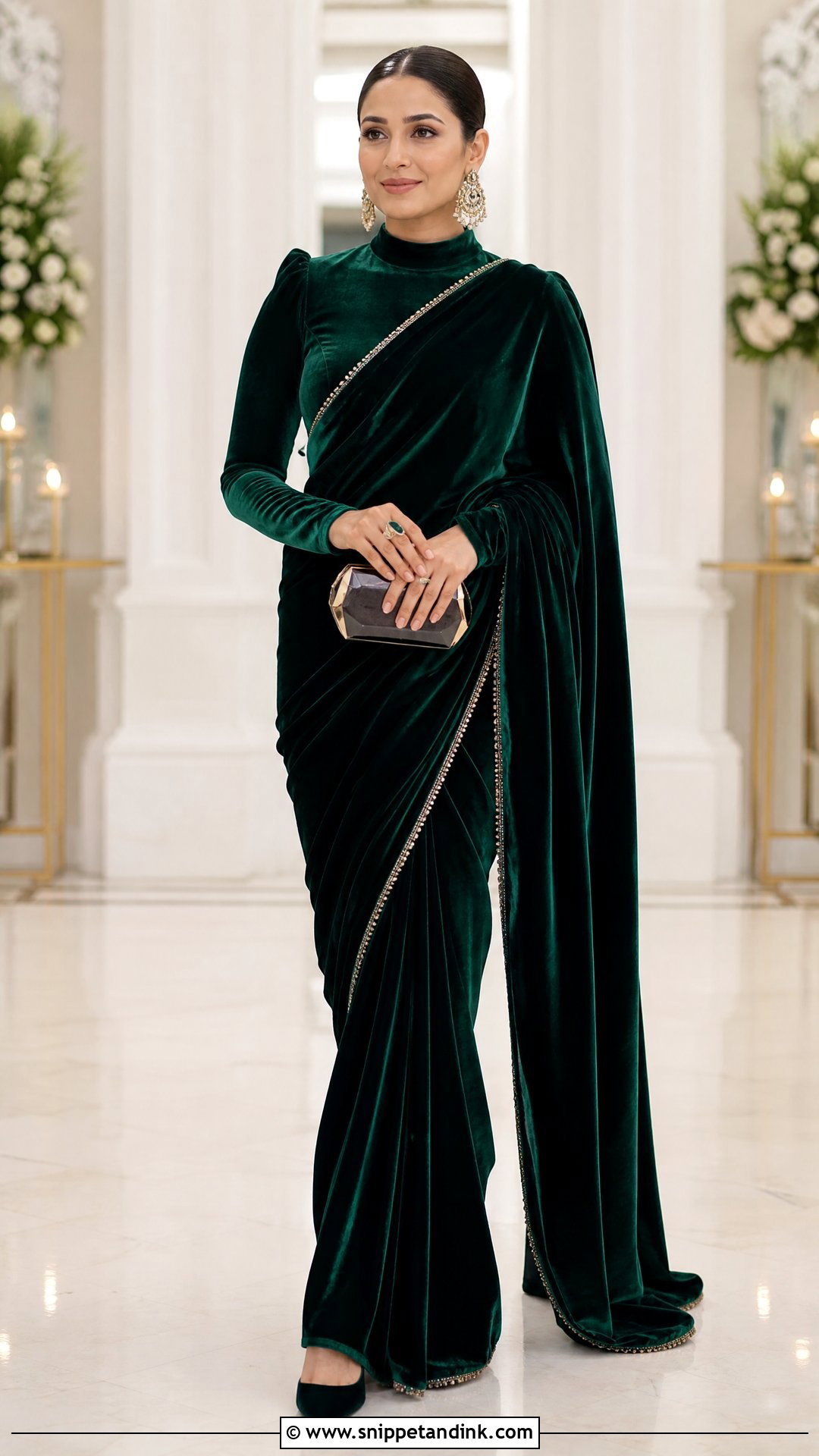
Velvet sarees can look heavy if they’re styled like a silk one. Choose a lightweight velvet or a saree with only a velvet border in black cherry, navy or dark green. Before wearing black or bridal red, quietly check with the family; some households are relaxed about it, some aren’t. A structured full-sleeve blouse in matching velvet or contrasting silk works with it. Keep pleats narrow and pin them firmly, because velvet’s thickness makes wide pleats stand out from the body like a fan. Polki earrings, a single ring, a hard-case clutch and sleek closed-toe heels are enough. If the blouse is embroidered, drop the big necklace. It belongs at an indoor evening reception, and it’s far warmer than chiffon or net.
8. Winter Indian Wedding Silk Gharara Outfit
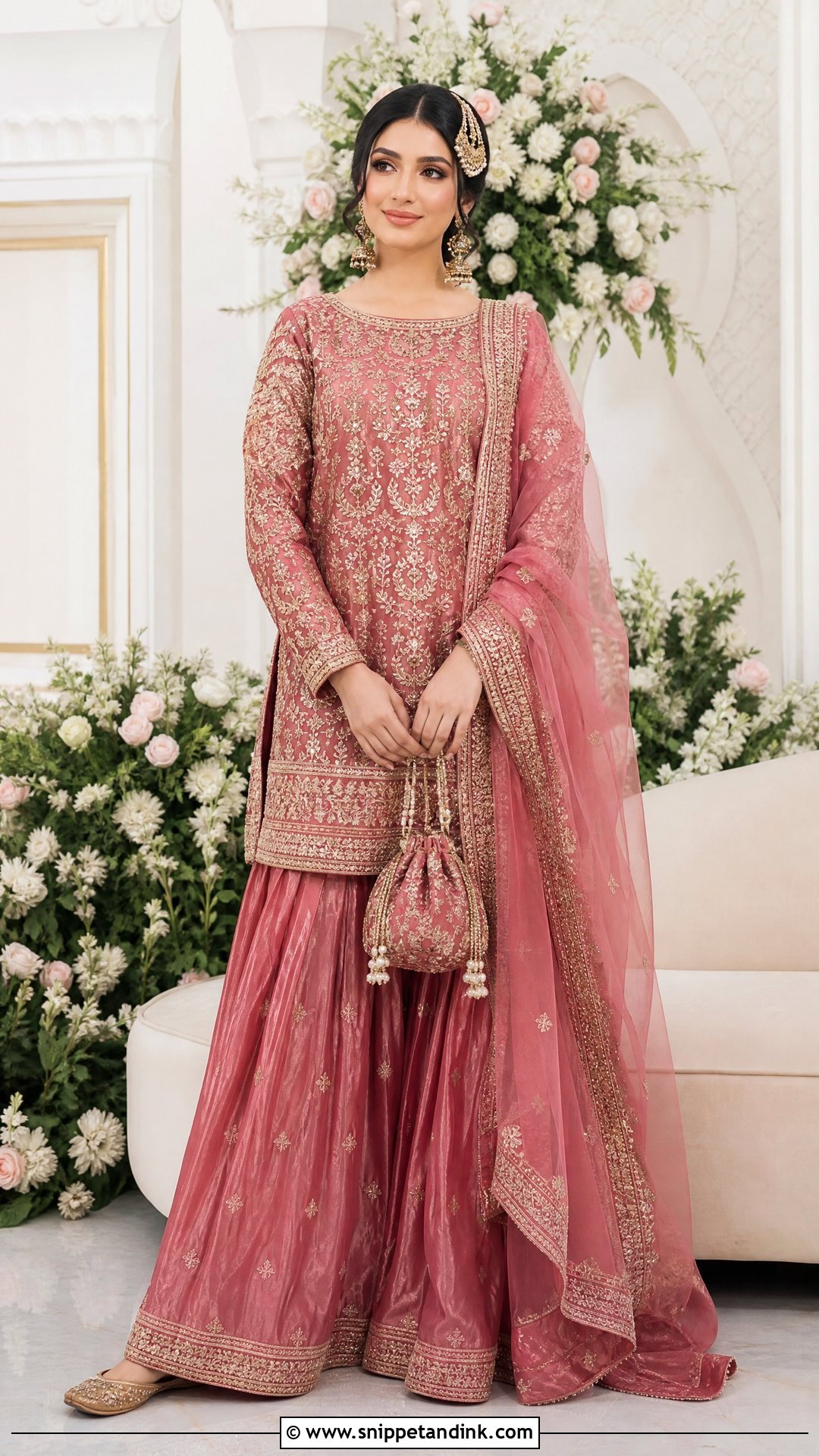
A silk gharara set gives you a dramatic flare without the weight of a full lehenga. The difference from a sharara is the knee: gharara pants are fitted to the knee and then flare out, often with a gathered band at the joint. Pair them with a short or mid-thigh kurti with full sleeves. Deep rose, turquoise, aubergine and antique gold feel festive in the cold months. Pin an organza dupatta edged in embroidery at one shoulder so your hands stay free for greeting family. Jhumkas, a delicate passa, a beaded potli and comfortable juttis complete it. Fully lined pants keep cold air off your legs far better than unlined ones. Lengthen the kurti if you prefer a more modest fit. It suits a nikah, mehendi or sangeet.
9. Winter Indian Wedding Cape Lehenga Outfit
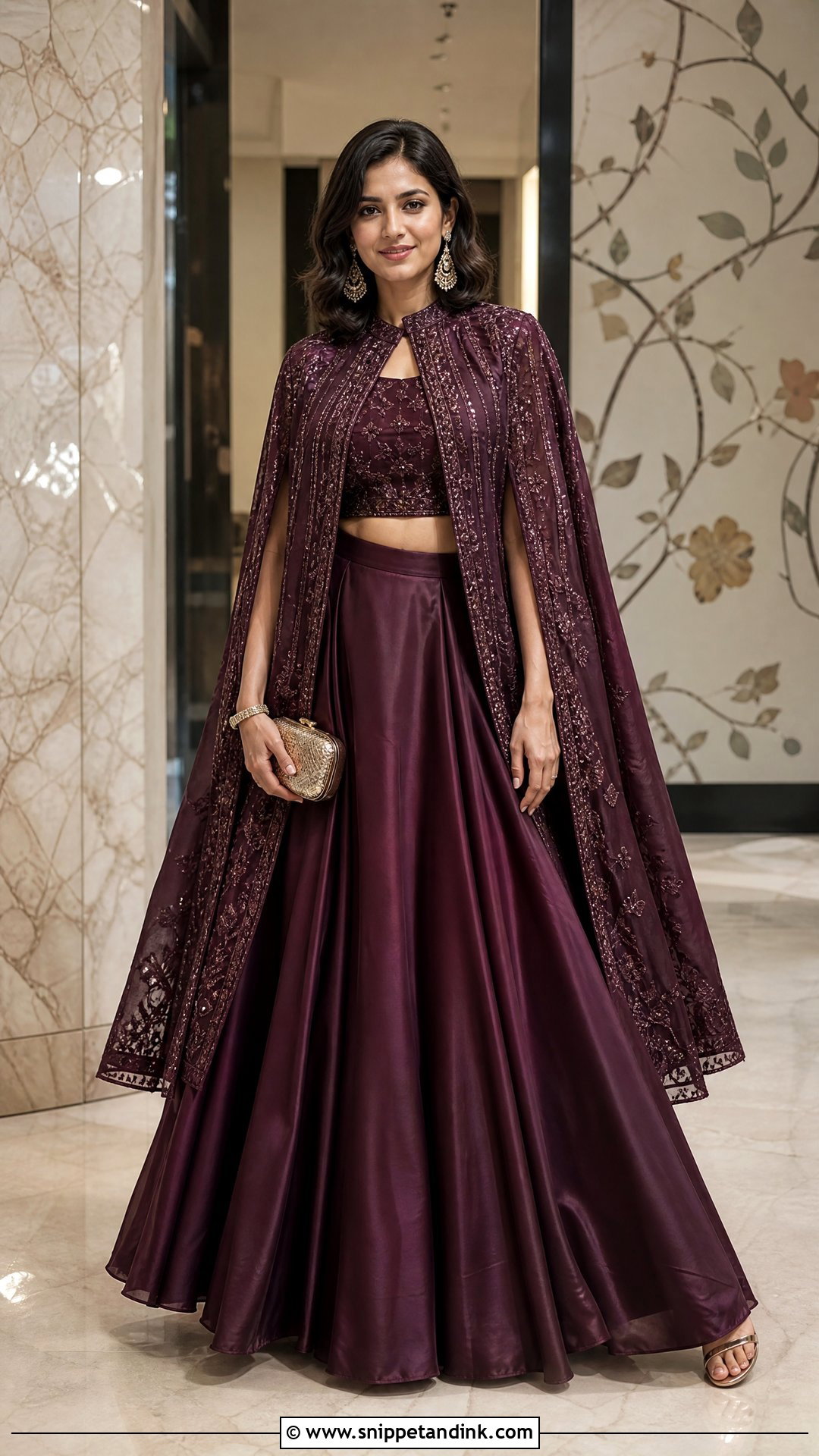
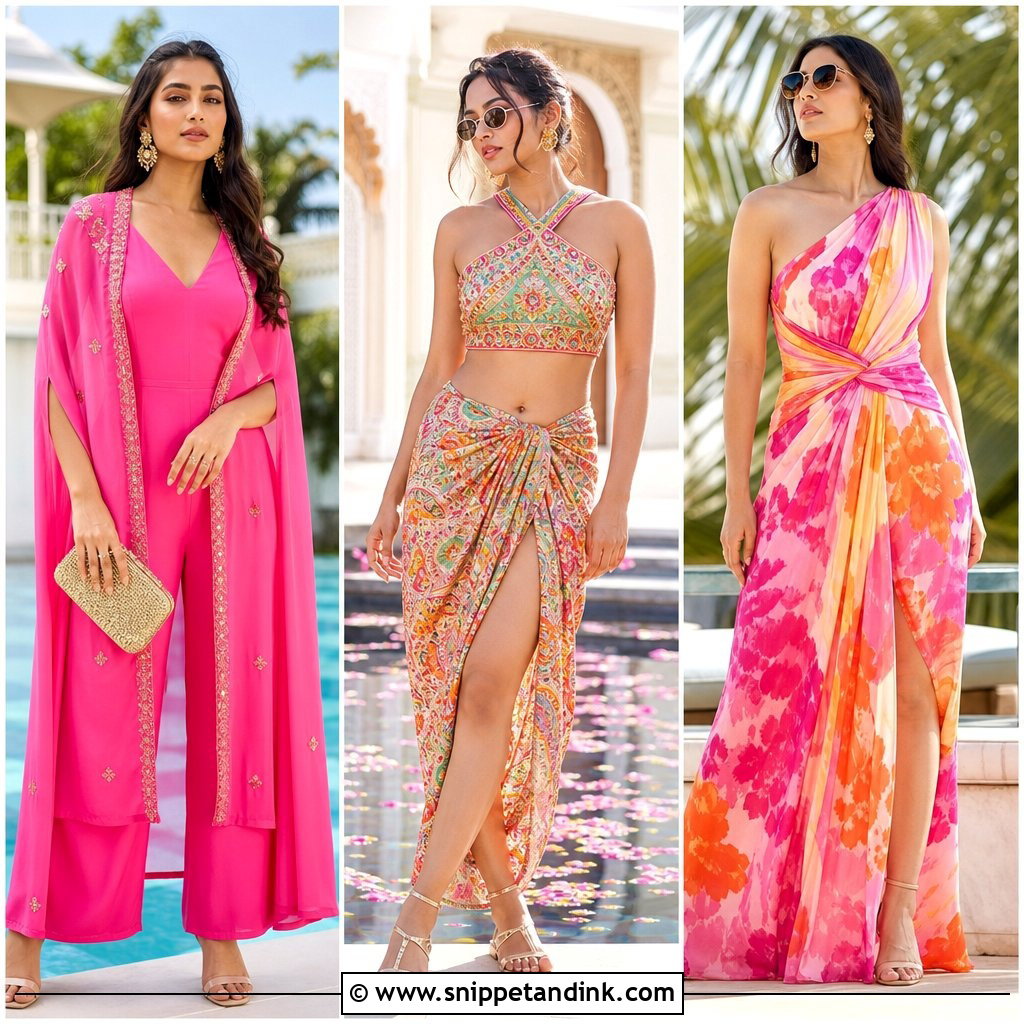
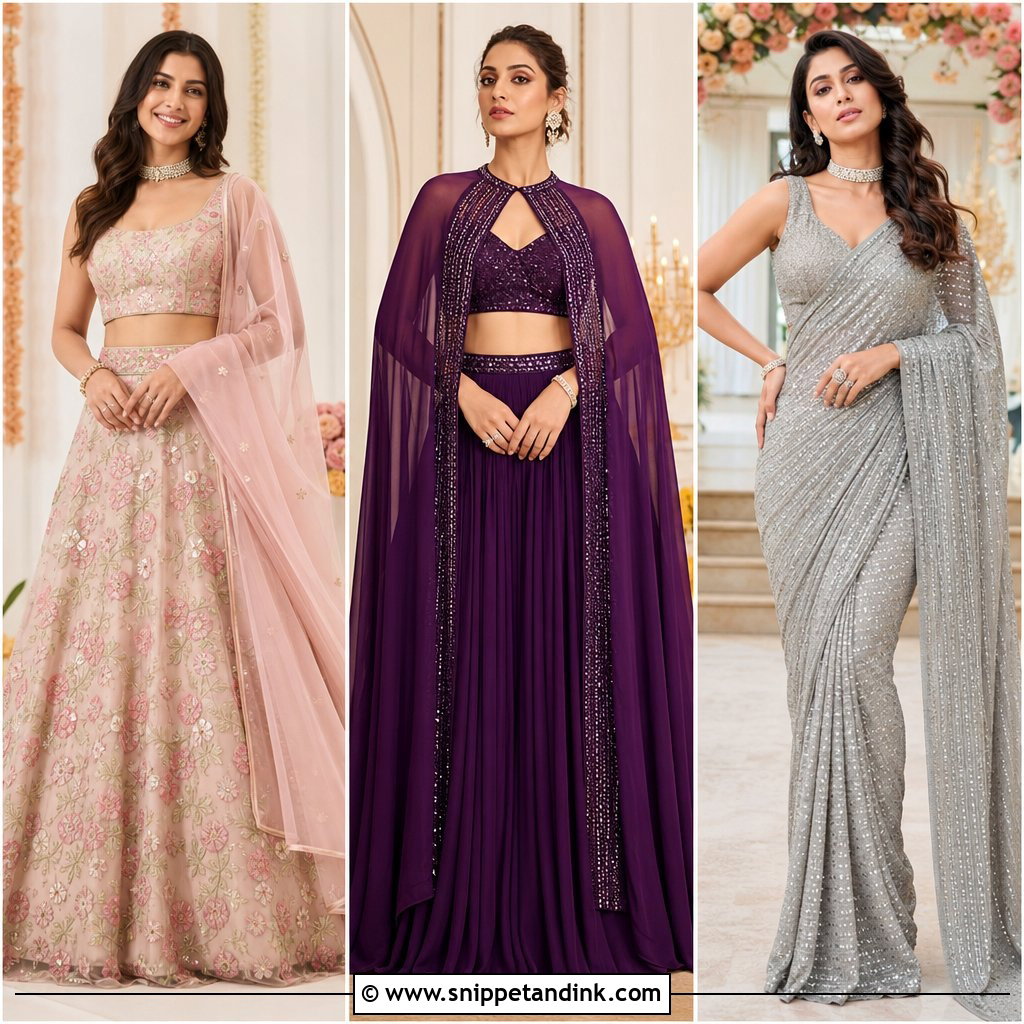
Capes give you shoulder coverage without the constant re-adjusting a dupatta needs, which is why I suggest them to guests who find dupattas frustrating. A flowing silk or lined georgette skirt in a jewel tone or muted metallic, a fitted blouse and an embroidered cape that falls between the waist and the knees is the shape. Length decides warmth: longer capes are genuinely warm, while sheer embellished versions belong in a heated hall. Shoulder-grazing earrings, a metallic clutch and stable block heels finish it. Leave out the necklace; the cape neckline needs space. Thin thermal shorts under the lehenga won’t change how it moves. Do sit down in the cape at your fitting, as some capes ride up awkwardly at the back of the neck.
10. Winter Indian Wedding Saree With Pashmina Shawl Outfit
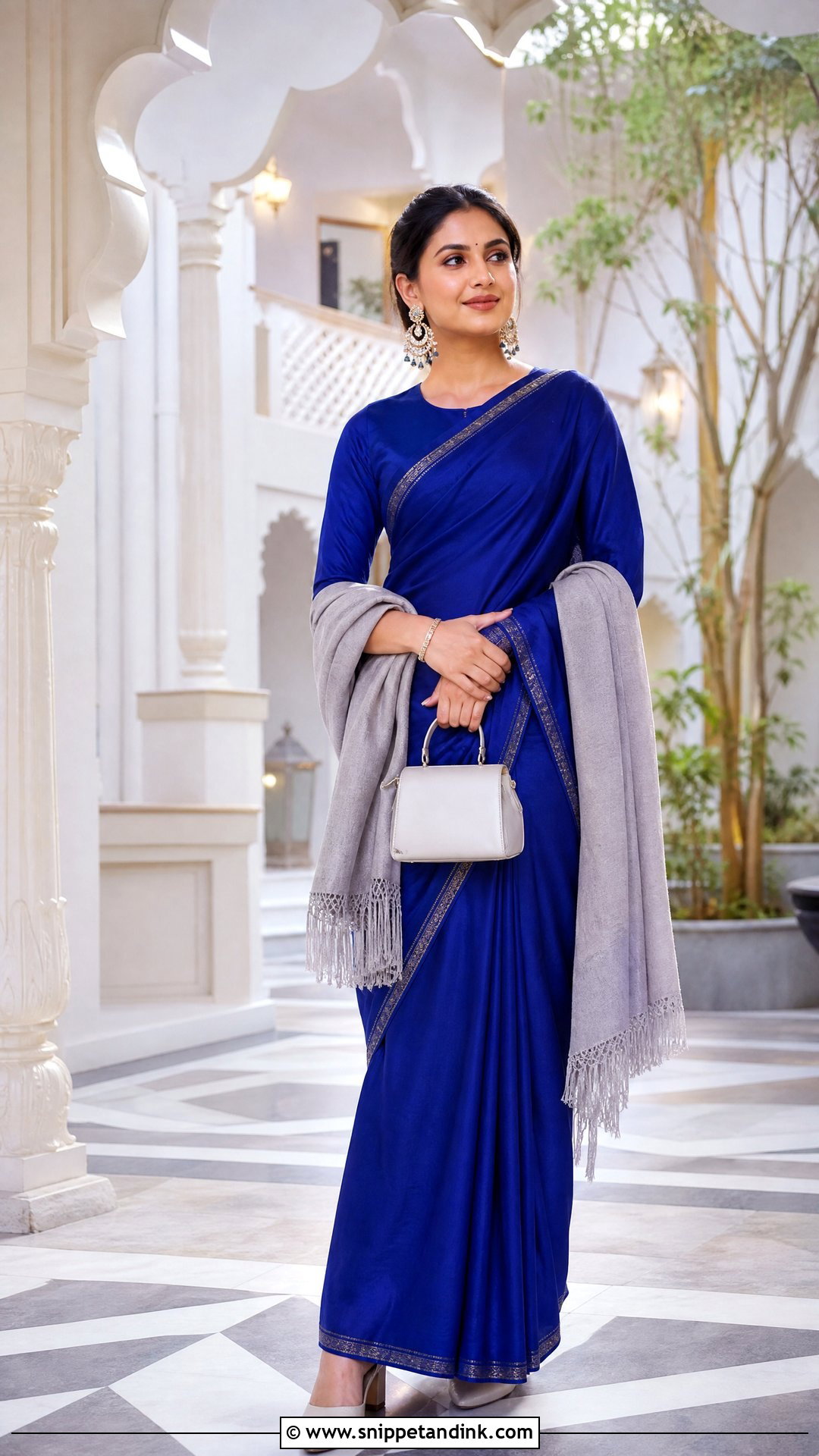
Sometimes the answer is the saree already in your wardrobe and a really good pashmina. Silk, crepe or lined georgette in plum, teal, rust or royal blue all work, with a full-sleeve blouse. Drape the saree securely first, then place the shawl around your elbows or over one shoulder so it frames the saree rather than burying it. The rule I follow is contrast in texture: a plain shawl with an embellished saree, and a woven or embroidered shawl to lift a simpler drape. Statement earrings, a compact handbag and closed-toe block heels complete it. This combination handles venues where you’re moving between indoor and outdoor spaces all evening, and it’s the easiest way to make a favourite saree work for winter.
11. Winter Indian Wedding Embroidered Palazzo Suit Outfit
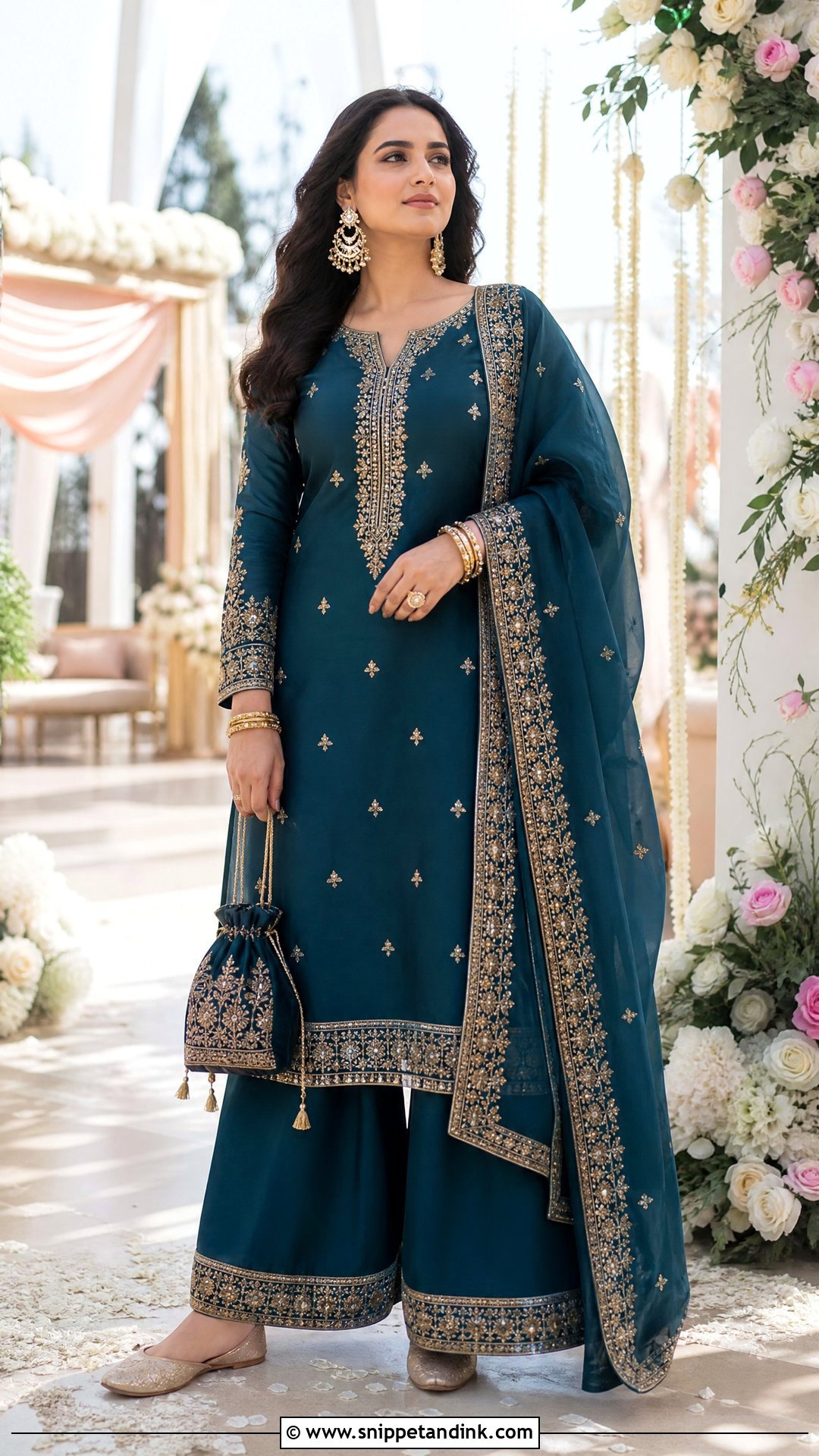
Palazzo suits are the outfit I’d pick for a long day with older relatives, lots of sitting and plenty of standing about. A knee-length silk kurta with full sleeves over wide palazzo pants in the same colour family looks polished and stays comfortable. Jewel tones read formal, while dusty rose, sage and muted blue suit daytime functions. A heavier dupatta with zari, sequins or a brocade border gives it enough ceremony. Chandbali earrings, coordinating bangles, a small potli and pointed juttis finish it. Watch the shape: a straight kurta over wide pants can look like a column with no waist, so look for a kurta with a defined waist or side slits. Thermal leggings hide easily under palazzos.
12. Winter Indian Wedding Dhoti Pant And Jacket Outfit
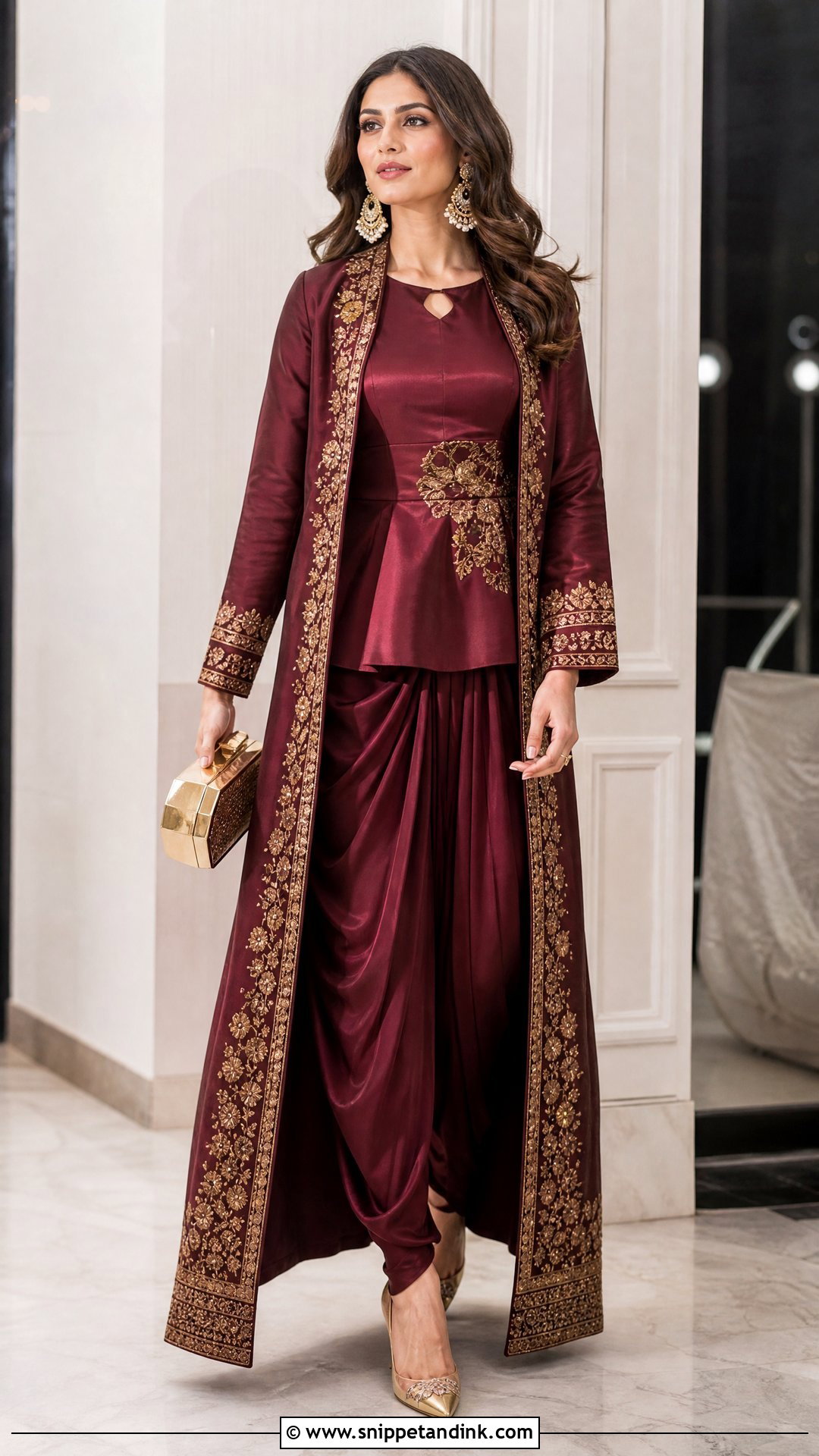
Dhoti pants with an embroidered top and a long jacket are for guests who want a modern silhouette with real warmth. The draped pants move well, and the jacket adds structure and coverage. Silk or crepe dhoti pants in navy, deep olive, burgundy or bronze pair with a fitted peplum top or a modest bustier-style blouse, plus an open-front full-sleeve jacket. Statement earrings, a sleek box clutch and pointed heels sharpen it. I keep the embroidery on the jacket only; when the pants and top are embellished too, the outfit looks busy. Since the pants taper at the ankle, fitted thermal leggings slip underneath. This Indo-Western outfit suits a cocktail reception, engagement party or sangeet.
13. Winter Indian Wedding Sequin Saree Outfit
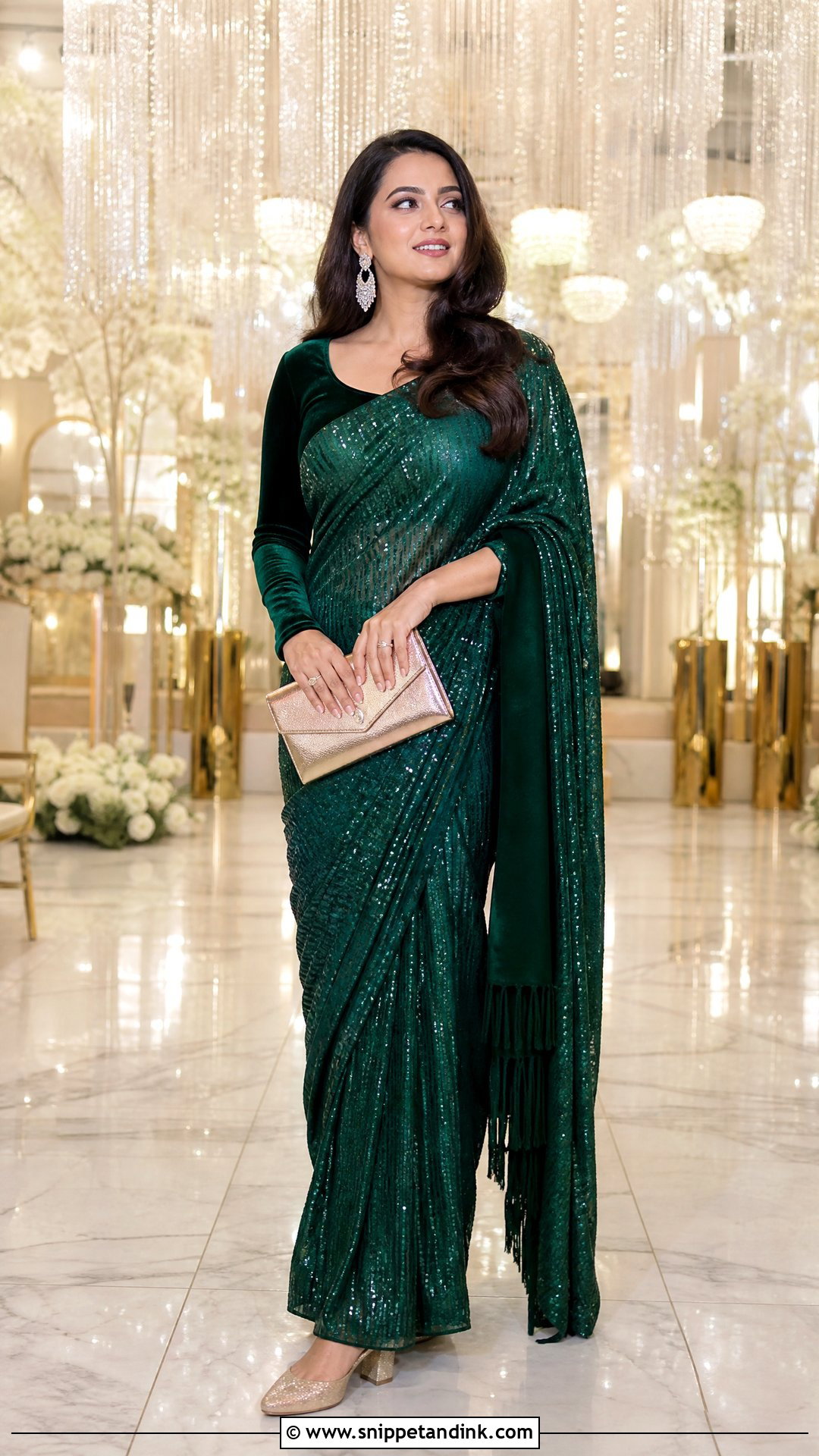
Sequin sarees are for evening receptions, full stop. In daylight they can look a little much. Choose sapphire, emerald, aubergine or pewter rather than very pale shades, which can read bridal under bright lights. A plain velvet blouse with full sleeves and a clean neckline calms the sparkle. Sequinned fabric is heavier than it looks and slips against itself, so the drape needs extra pins at the pleats and shoulder. Crystal drop earrings, a smooth metallic clutch and closed-toe block heels are all you need. Skip jewelled shoes and big necklaces, as the saree already reflects plenty of light. One honest warning: sequins can scratch the inner arm over a long night, so a fully lined blouse with sleeves is worth insisting on.
14. Winter Indian Wedding Peplum Lehenga Outfit
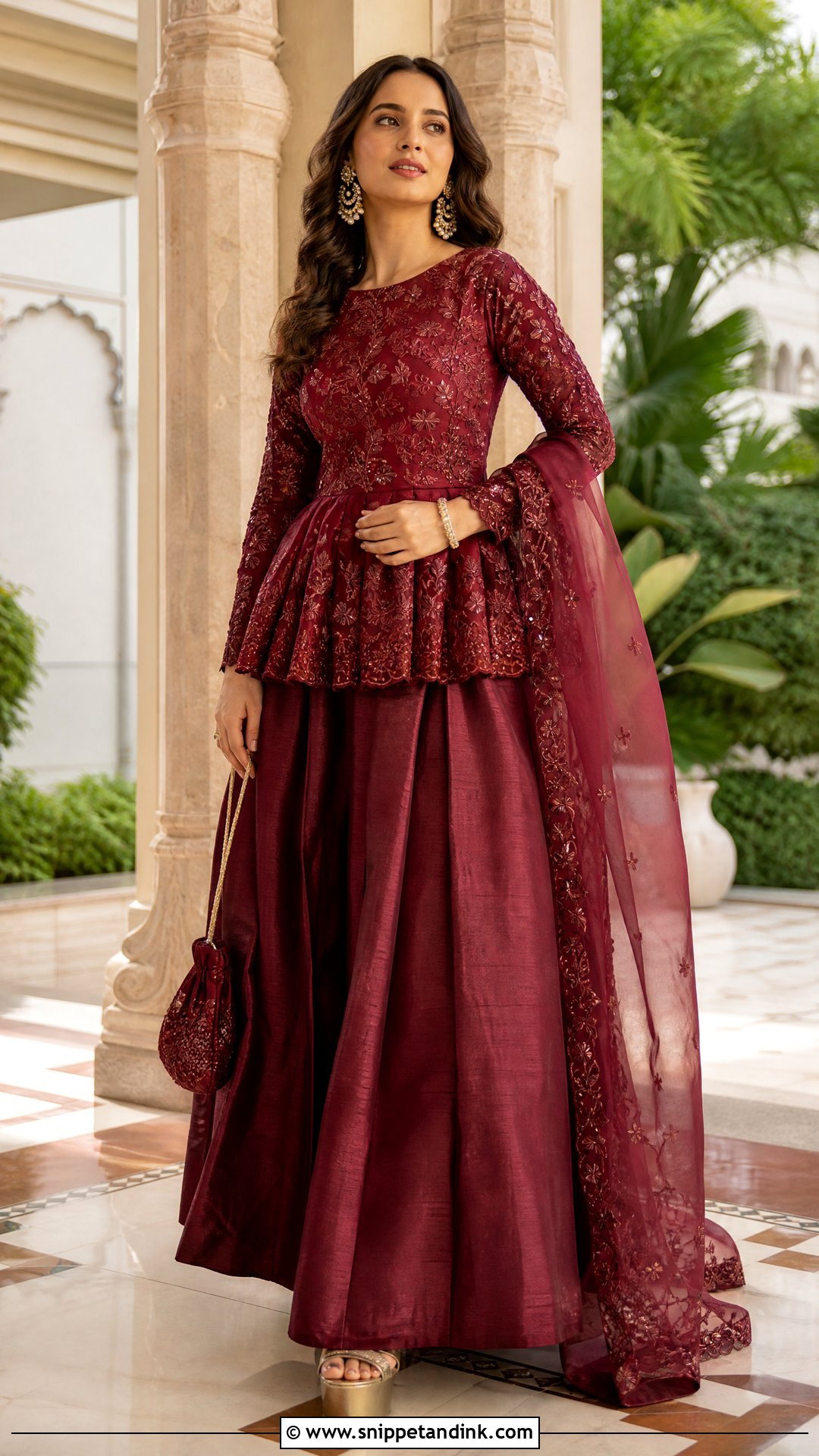
A peplum top covers the waist while still showing it, a useful balance for guests who don’t want a bare midriff in the cold. Pair a silk or brocade skirt with moderate flare with a fitted long-sleeve peplum that falls just below the natural waist. Monochrome in wine, forest green, navy or plum looks sophisticated, and gold embroidery adds festivity. If you add a dupatta, keep the drape narrow over one shoulder so it doesn’t hide the peplum shape. Kundan earrings, a bracelet, a potli and platform heels finish it. When I fit peplums, I check where the flare starts; if it begins above your natural waist it adds width rather than shape. There’s room underneath for a thermal camisole and leggings.
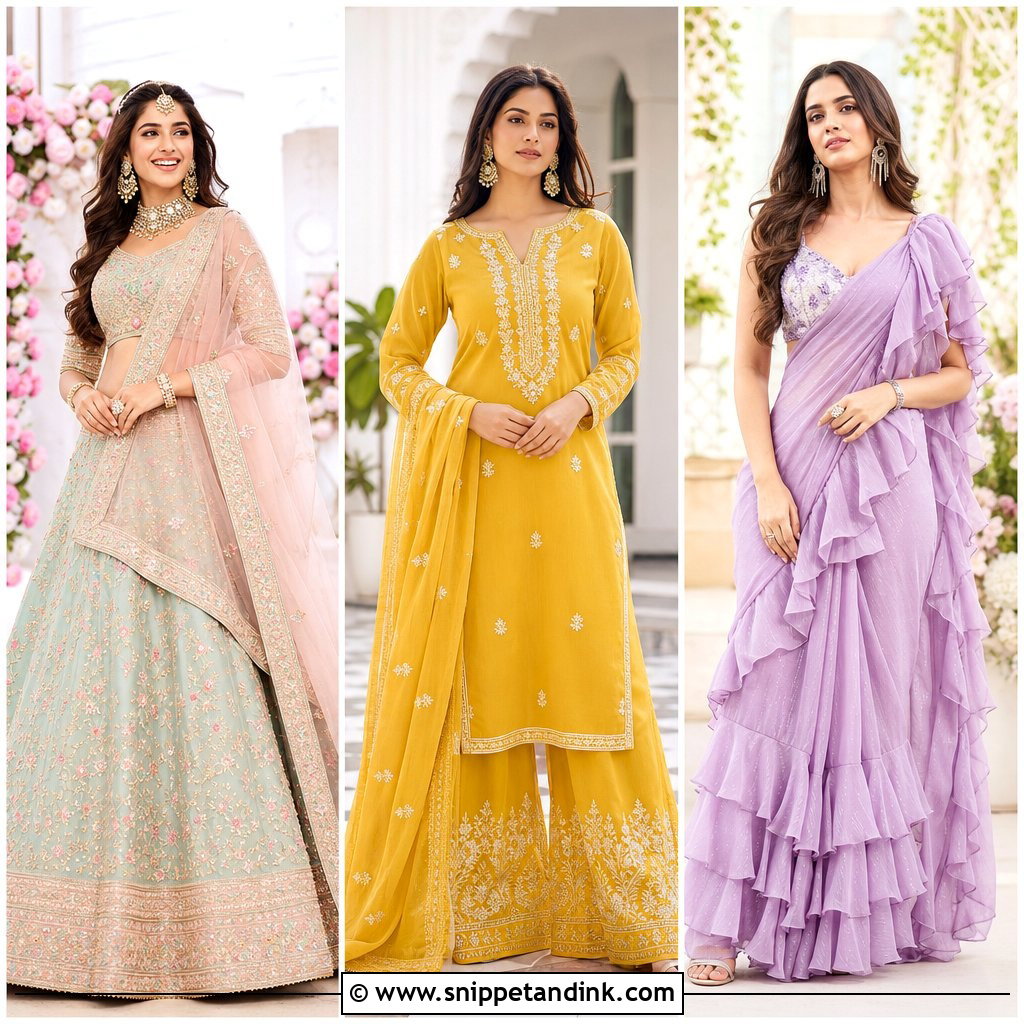
15. Winter Indian Wedding Velvet Anarkali Outfit
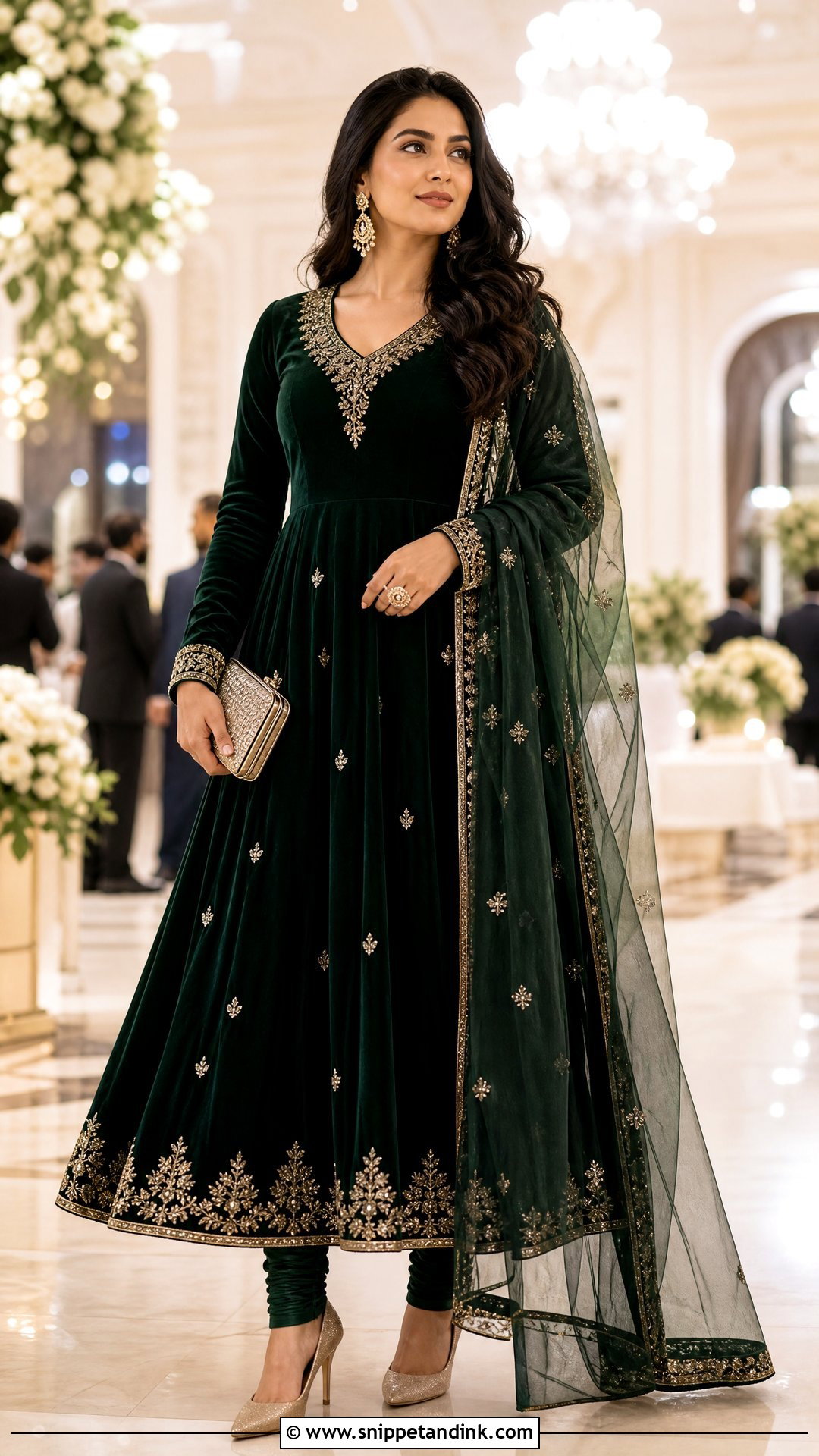
Velvet in an Anarkali cut is one of the warmest outfits on this list. Look for a floor-length design in navy, burgundy, bottle green or deep purple with embroidery at the neckline, cuffs or hem only. A fully embellished velvet Anarkali becomes very heavy and pulls on the shoulders, so balanced detailing is what I’d choose. Churidar pants and a light net or organza dupatta go with it. Long earrings, one statement ring, a structured clutch and closed-toe heels are enough, because velvet already looks rich. A neat bun or soft waves keep it formal. Velvet holds heat well, so in an overheated hall you’ll be warm; check the venue before you commit. It suits an evening ceremony or formal reception.
16. Winter Indian Wedding Brocade Pantsuit Outfit
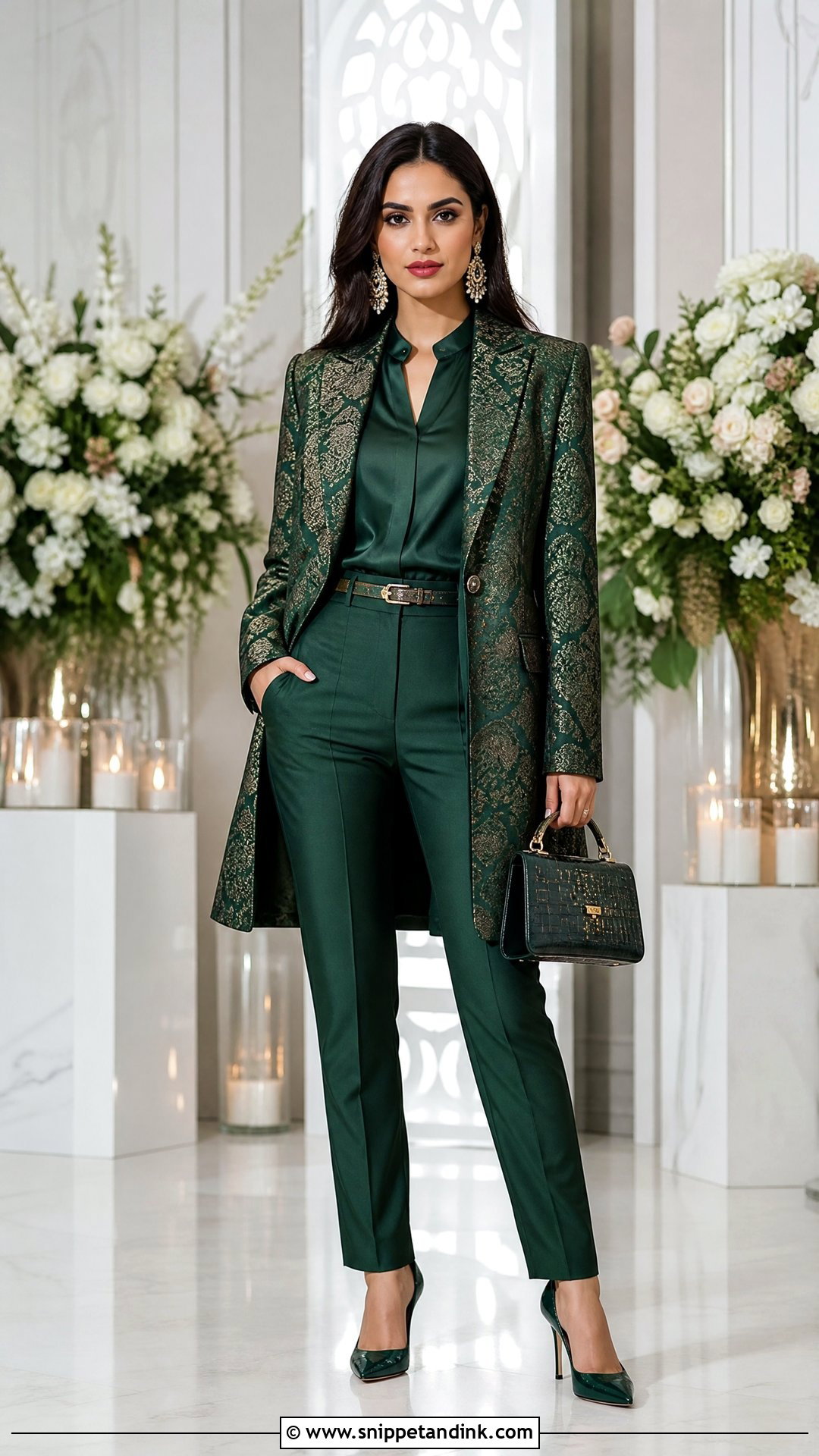
Not every guest wants a saree or a lehenga, and a brocade pantsuit is a confident alternative. Tailored straight-leg or gently flared pants with a matching longline blazer is the base. Underneath, wear an embroidered silk camisole or a modest fitted blouse that lies flat under the jacket. Antique gold, emerald, midnight blue and plum are strong winter choices. Statement earrings, a small structured bag and pointed pumps finish it. A narrow embroidered belt can define the waist, though I’d leave it off if the blazer is already fitted. Brocade has no stretch, so get the blazer fitted across the back; a tight back seam shows every time you reach for a plate. A thermal top hides easily inside.
17. Winter Indian Wedding Tissue Silk Saree And Jacket Outfit
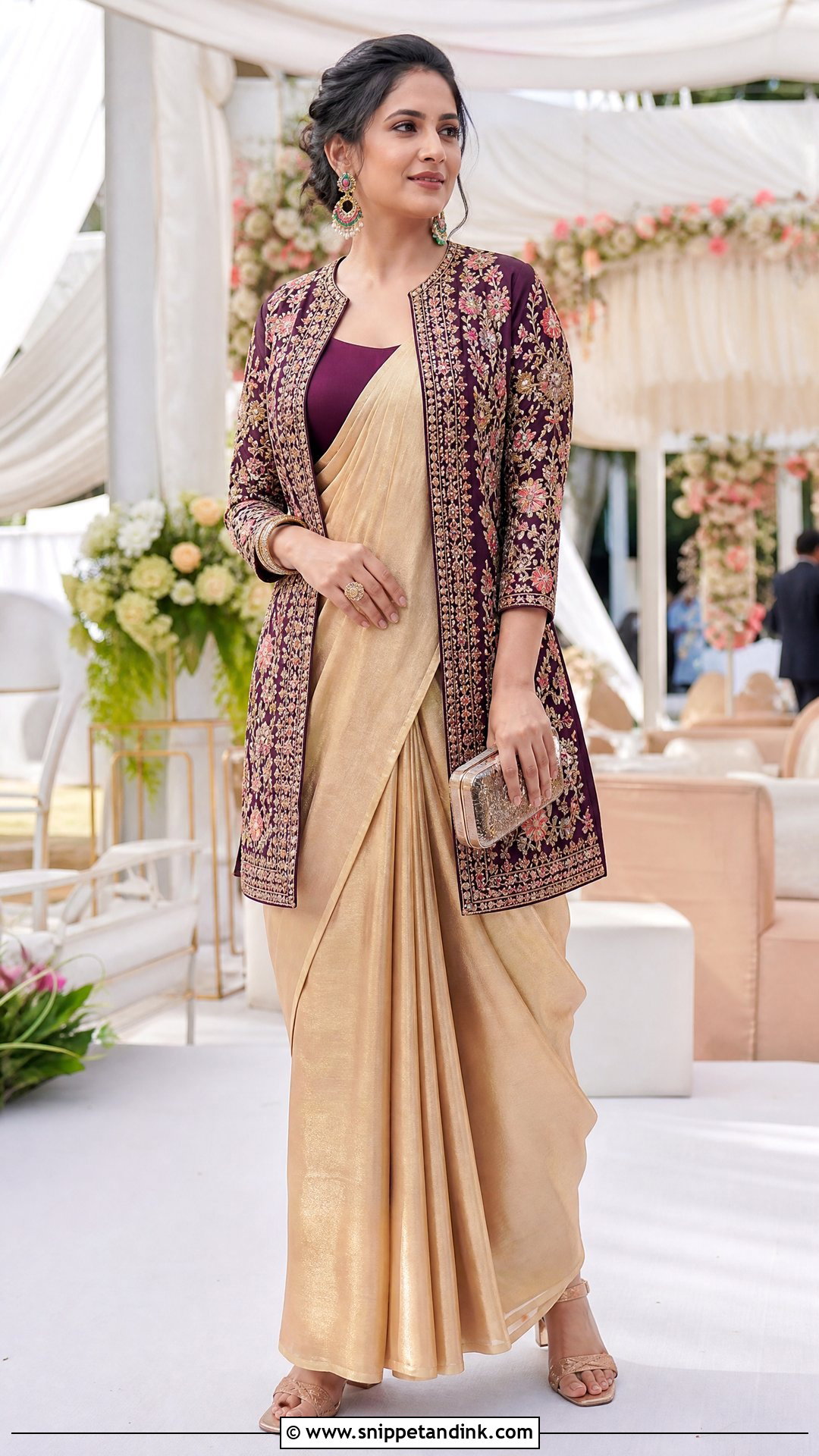
Tissue silk has a soft metallic sheen that looks lovely in daylight and under warm reception lights. Gold, copper, blush and silver-toned sarees balance well with a fitted blouse in a deeper complementary shade. Layer a waist-length or knee-length embroidered jacket over the drape for warmth and definition. The jacket should share the saree’s colours without matching every motif. Meenakari earrings, a small bangle stack, a little clutch and block heels complete it. Tissue is crisp and wrinkles where it’s crushed, so tuck the pallu under the jacket to keep it from creasing against your arm all evening. A thin camisole adds hidden warmth. It’s a smart way to stay covered without a separate shawl.
18. Winter Indian Wedding Cropped Jacket Lehenga Outfit
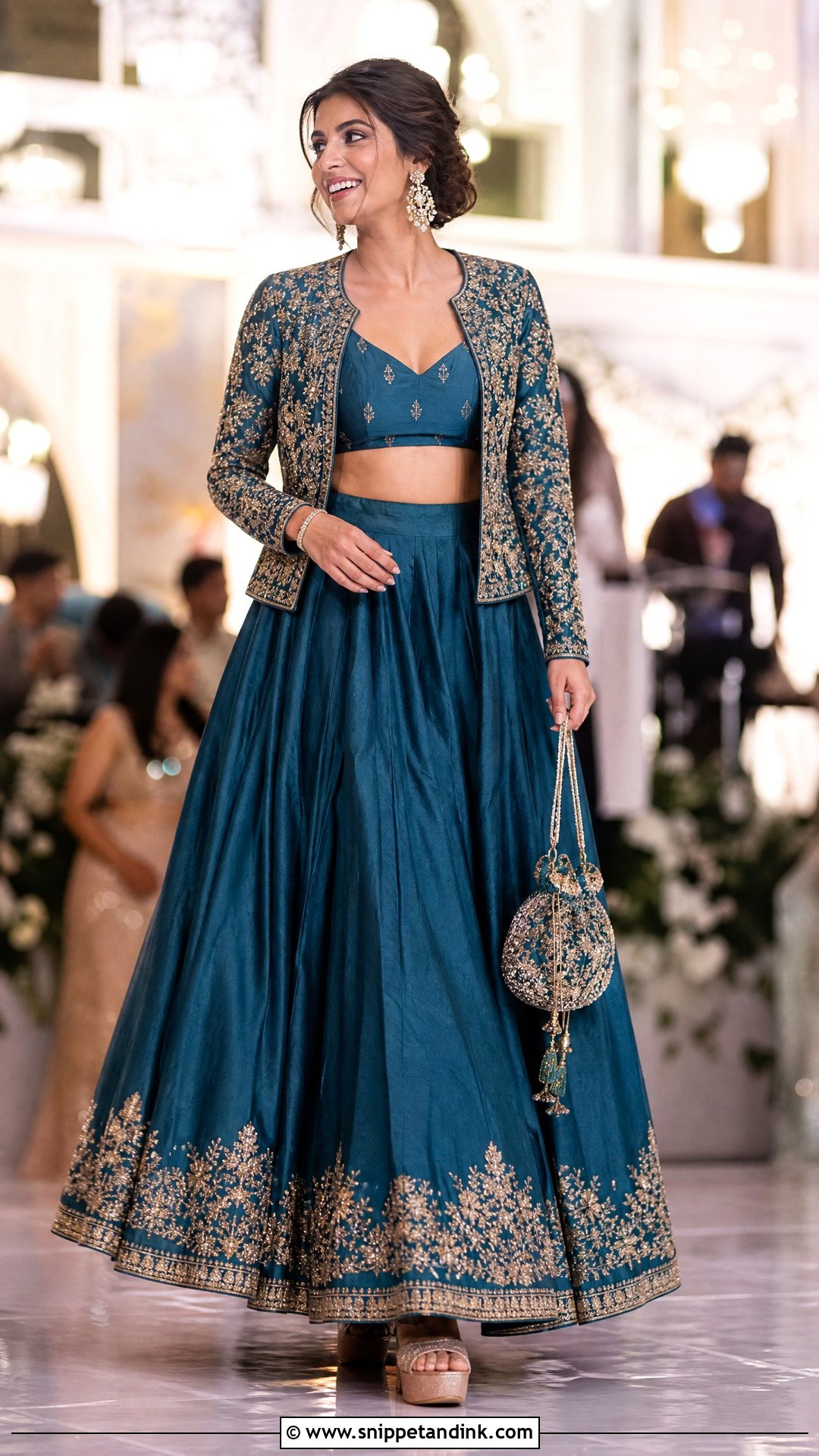
Cropped jackets make a traditional lehenga look tidier and warmer through the upper body. A high-waisted raw silk skirt with embroidery around the hem, a simple fitted blouse and a jacket ending at or just below the waist is the shape. Long sleeves are the point in winter. Deep teal, garnet, royal purple and midnight blue look rich. Chandelier earrings, a compact potli and cushioned platform sandals finish it. Skip the dupatta if the jacket is fully embroidered, or carry a light one over your arm for the ceremony. Raw silk creases at the lap when you sit for long rituals, so I’d hang the skirt on the morning of the event and avoid sitting on it in the car.
19. Winter Indian Wedding Angrakha Sharara Outfit
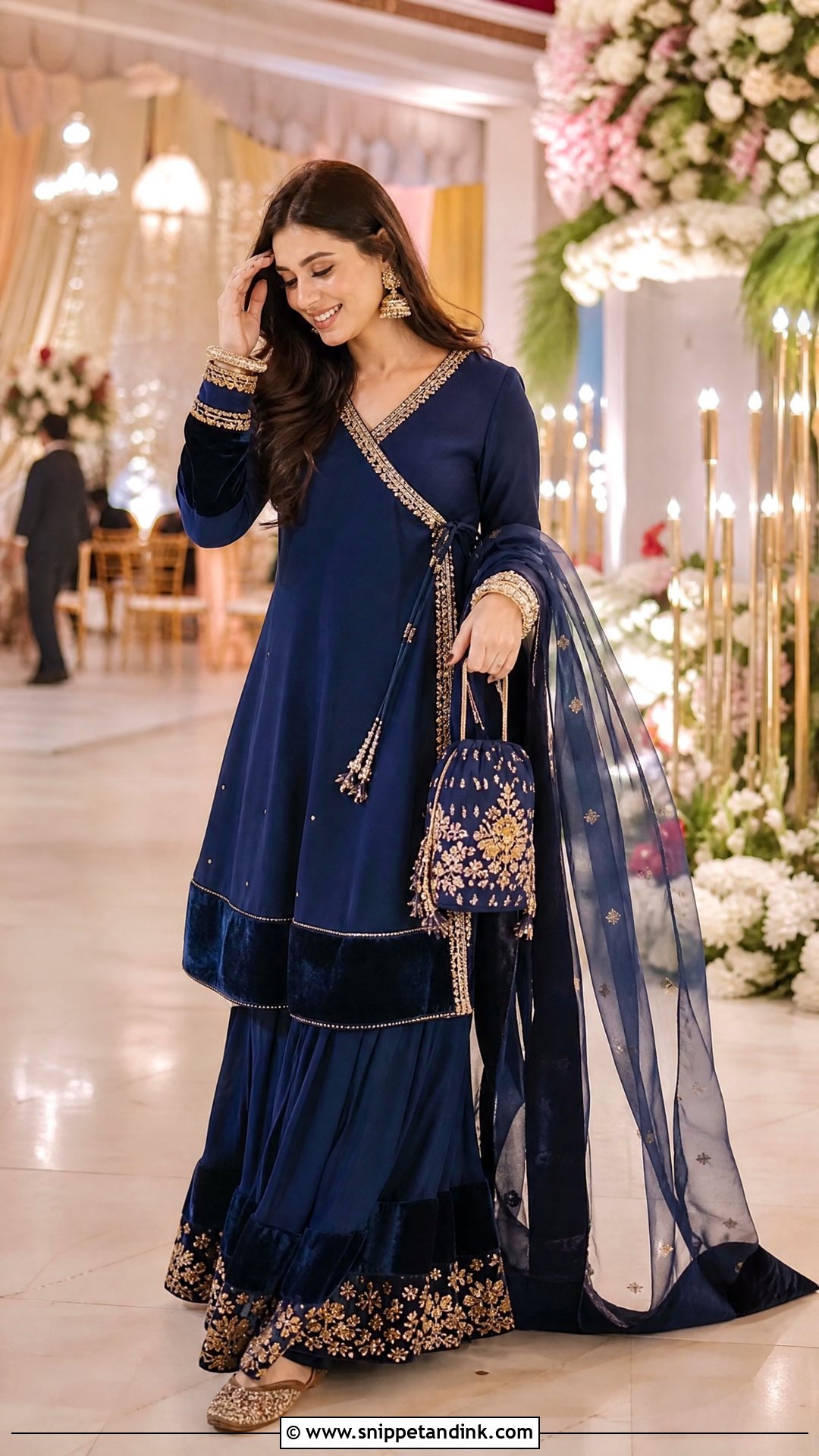
The overlapping wrap of an Angrakha kurta gives shape to an otherwise loose sharara outfit. Choose a full-sleeve silk or velvet-trimmed kurta that ties firmly at the side and matching flared sharara pants. Deep green, raspberry, indigo and warm rust suit winter. An organza or chiffon dupatta with a detailed border goes over one shoulder so the wrap front still shows. Jhumkas, stacked bangles, a small embroidered bag and flat juttis keep it easy to move in. Double-knot the side ties or ask your tailor to add a hidden hook; they loosen while dancing and the wrap opens. Thermal leggings stay invisible under the wide pants. It suits the mehendi, sangeet or a family dinner.
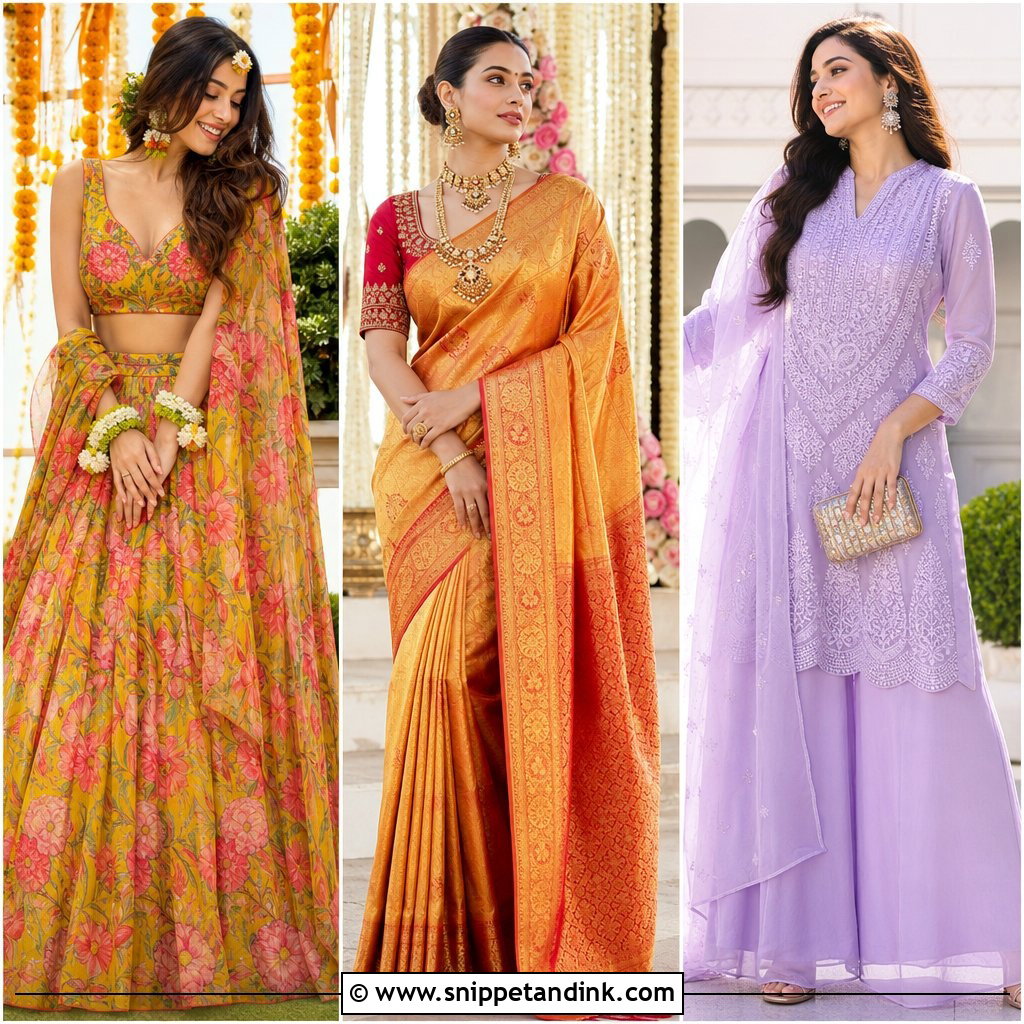
20. Winter Indian Wedding Pre-Draped Saree And Cape Outfit
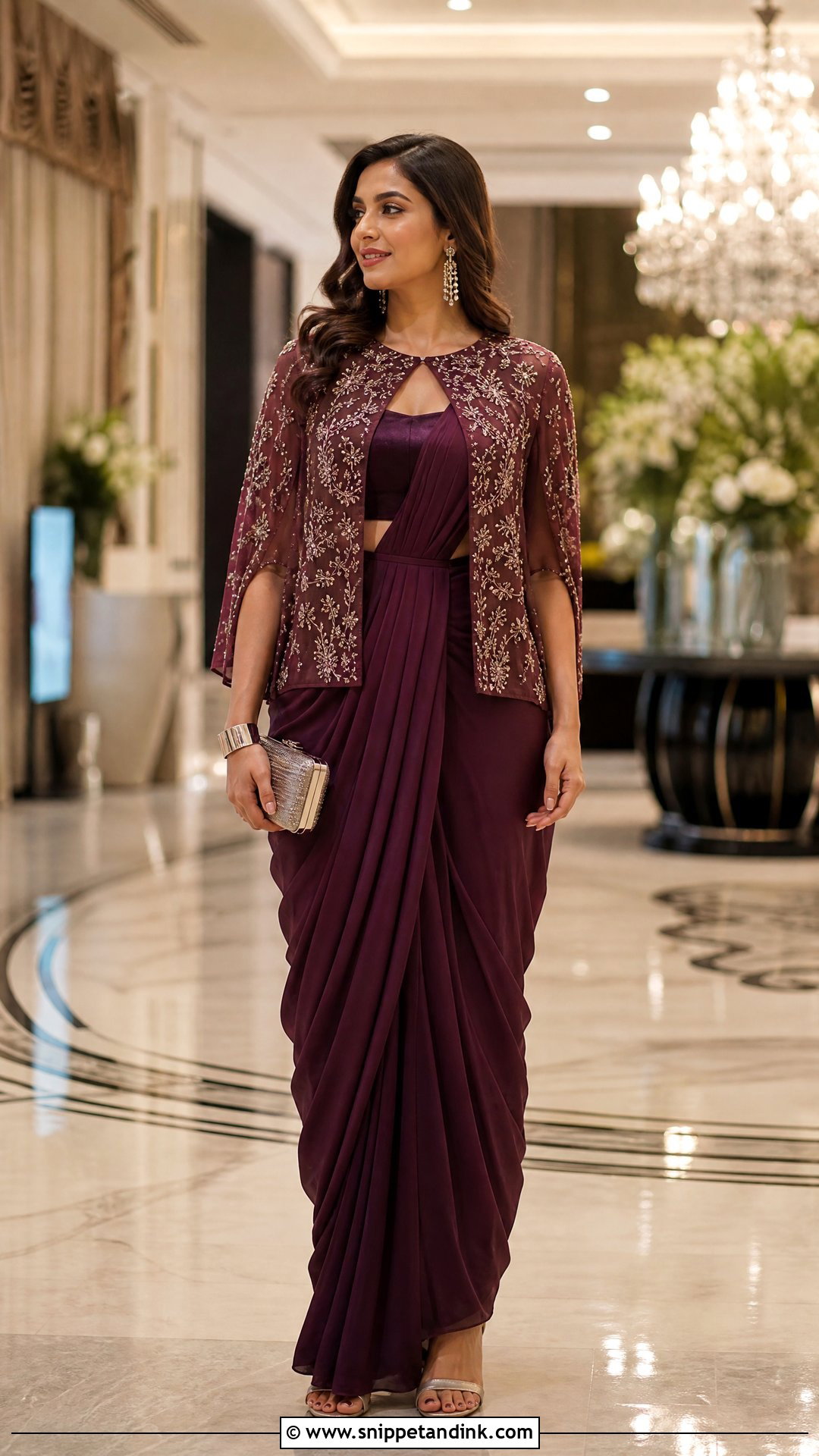
Pre-draped sarees are the answer for guests who can’t drape, or who don’t want to spend twenty minutes pleating in a hotel room. A lined crepe or georgette version in navy, plum, teal or a muted metallic, with a fitted blouse and a cape falling to the waist or hips, gives the look of a full drape with almost no effort. The cape replaces a separate shawl. Drop earrings, a cuff, a sleek clutch and stable block heels finish it. Do a walking and sitting test before the day: stitched pleats can be cut too narrow at the hem, and you’ll find out on the stairs. Avoid piling on jewelry if the cape is heavily beaded. It works well for receptions and destination weddings.
Hiding Warm Layers Under a Saree Without Adding Bulk
Thermals and sarees can work together, but the order of layers matters. I put a fitted thermal camisole on first, then the blouse over it. That means the blouse needs a fitting with the camisole underneath, or it will pull at the bust and the hooks will strain.
Below the waist, a fitted shapewear-style petticoat in a warm knit replaces the usual cotton one. It sits closer to the body, so pleats still fall straight. Thick leggings under a saree are a mistake, because they bunch at the ankle and show when you walk.
For lehengas and sharara sets
Bike-length thermal shorts work under lehengas, and full thermal leggings under shararas, ghararas and palazzos. Wool socks are fine under closed juttis but never with open sandals. And if you know you’ll be cold, a fitted velvet or knit blouse in the same colour as your thermals is warmer than any shawl, because it can’t slip off your shoulders while you’re eating.
Is Your Outfit Warm Enough for the Mandap After Dark?
When I help a guest decide, warmth, comfort and the ceremony itself come before trends. Velvet, brocade, Banarasi silk and lined fabrics give winter richness, and full sleeves, jackets, capes and pashmina shawls give coverage that looks planned. Think about how many hours you’ll stand, sit cross-legged or dance before choosing fabric weight and heel height. Pin your drape properly and wear the thermal layers you’d be embarrassed to admit to; nobody will see them. Above all, follow any colour guidance from the couple or the family. The saree, Anarkali, lehenga or pantsuit you pick will look far better on someone who isn’t shivering.
You'll Like These Ideas:


Leave a Reply