
A South Asian wedding rarely asks you to dress once. There may be a mehendi in the afternoon, a sangeet that runs late, a ceremony that starts early and a reception that ends after midnight, and each one calls for a different weight of fabric and a different level of shine. Bright color is usually welcome and modest cuts are the safe default, but families vary, so I always tell guests to read the invitation for each function before buying anything. Below are twenty traditional outfits I’d happily send a guest out in, from woven silk sarees to sharara sets and regional drapes, with notes on how each one actually behaves once you’re wearing it all day.
Matching the Garment to the Function, Not Just the Wedding
When a guest asks me what to wear, my first question is which function. A multi-day wedding has its own ladder of formality, and the outfit that’s right for the ceremony can look overdressed at a mehendi lunch.
- Mehendi and haldi: light cotton, Chanderi, Bandhani, sharara sets. You may sit on the floor, and turmeric and henna stain, so skip anything you’d be upset to mark.
- Sangeet: lehengas, shararas and gharara sets with some movement. You will probably dance, so check your hem and pin your dupatta.
- Ceremony: woven silk sarees, Anarkalis and Paithani or Kasavu drapes. Covered shoulders and a dupatta or pallu you can use to cover your head are wise at religious venues.
- Reception: velvet, jacket lehengas and organza, with more shine allowed. This is the one evening most families expect guests to go glamorous.
Colors deserve a quick check too. In many North Indian families red is the bride’s color, and in some South Indian and Bengali traditions white or cream carries specific meanings. If the invitation doesn’t say, I’d ask the couple or a family member directly. Nobody minds the question; they mind the clash in the photos.
1. Banarasi Silk Saree Wedding Outfit
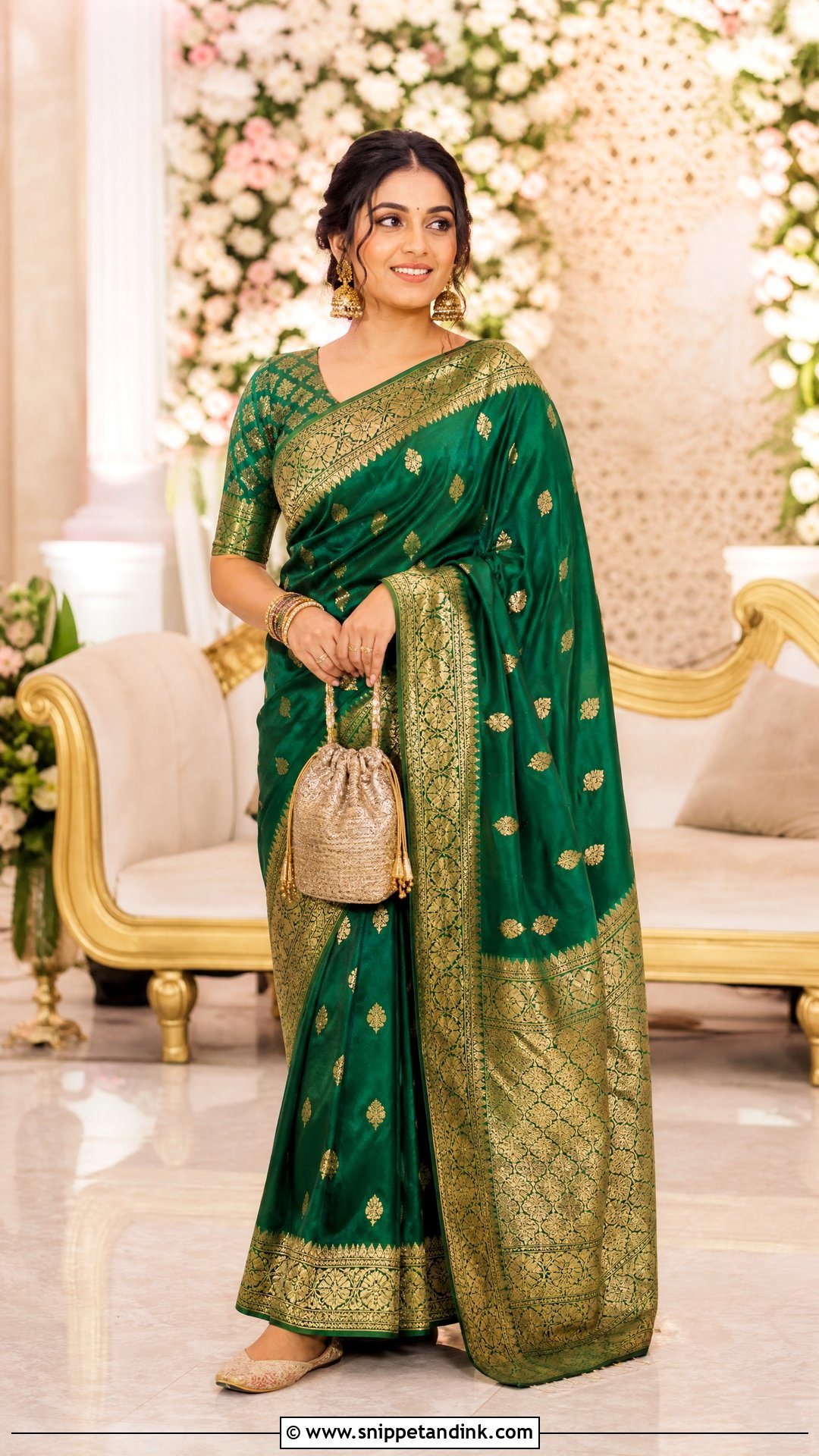
Banarasi silk is woven with zari, so the saree has real weight and a stiff hand that softens only after a few wears. For a guest, I lean toward emerald, royal blue, plum or deep teal and keep the blouse to a fitted elbow sleeve so the weave does the talking. A small bindi, gold jhumkas, a few stacked bangles and a compact potli are enough. Wear juttis or a low block heel, because the pleats of a heavy silk pull forward when you walk in a tall stiletto. If the saree has dense zari all over, I strip the jewelry back further; metal on metal turns busy fast in flash photos.
2. Kanjeevaram Silk Saree Wedding Outfit
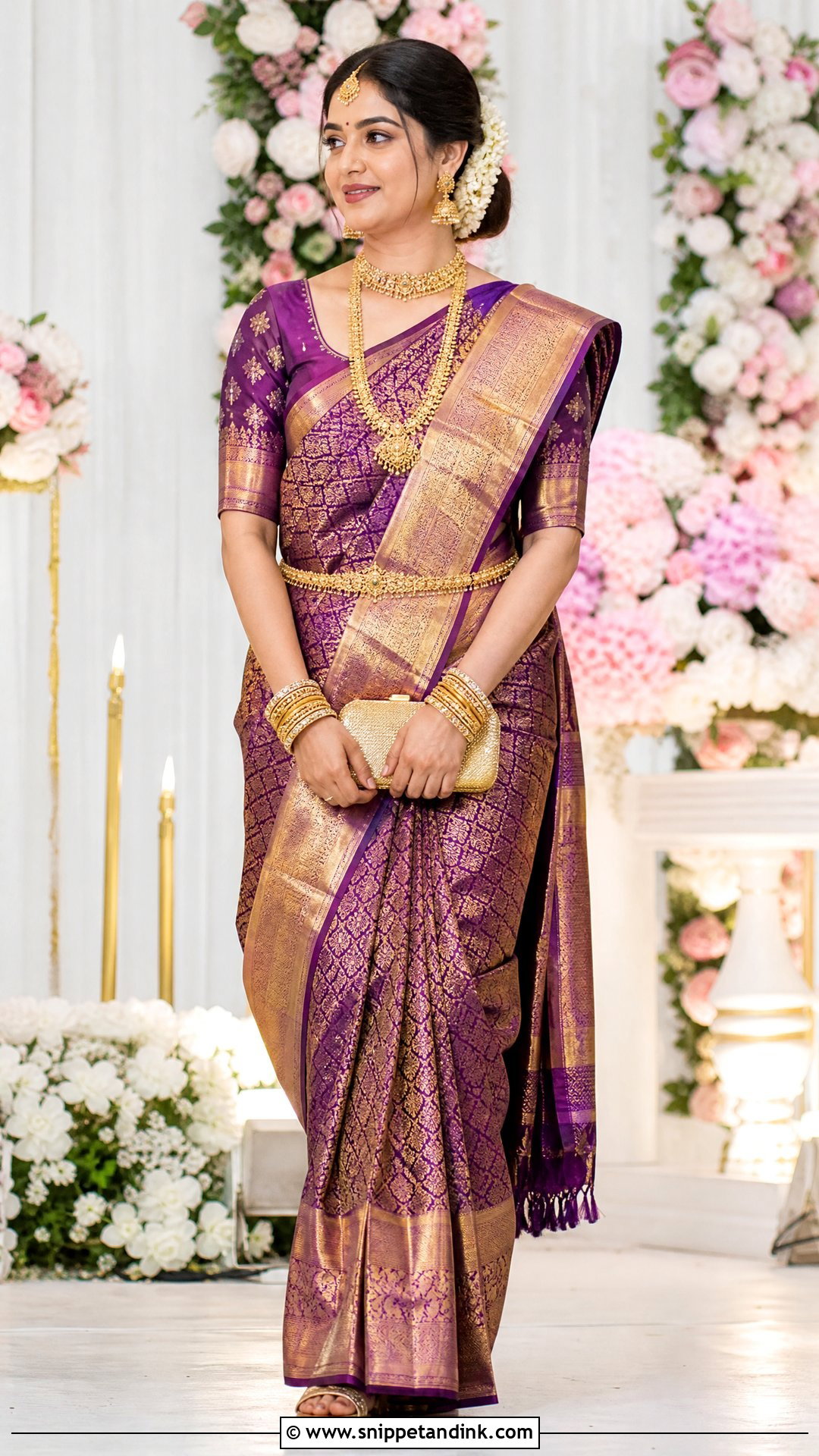
The structured drape and bold borders of a Kanjeevaram silk saree belong at a ceremony more than at a dance-heavy night. Contrast pairings like purple with gold, green with magenta or navy with rust are traditional to this weave and look right to older relatives. Kanjeevaram is heavier than most guests expect, and the pleats will sag by mid-afternoon unless they’re pinned at the waist and again at the knee on the inside. I pair it with a matching silk blouse in a round or boat neck, temple earrings and a short necklace, then stop. Jasmine in a center-parted bun suits it; a second layer of jewelry does not.
3. Chanderi Saree Wedding Outfit
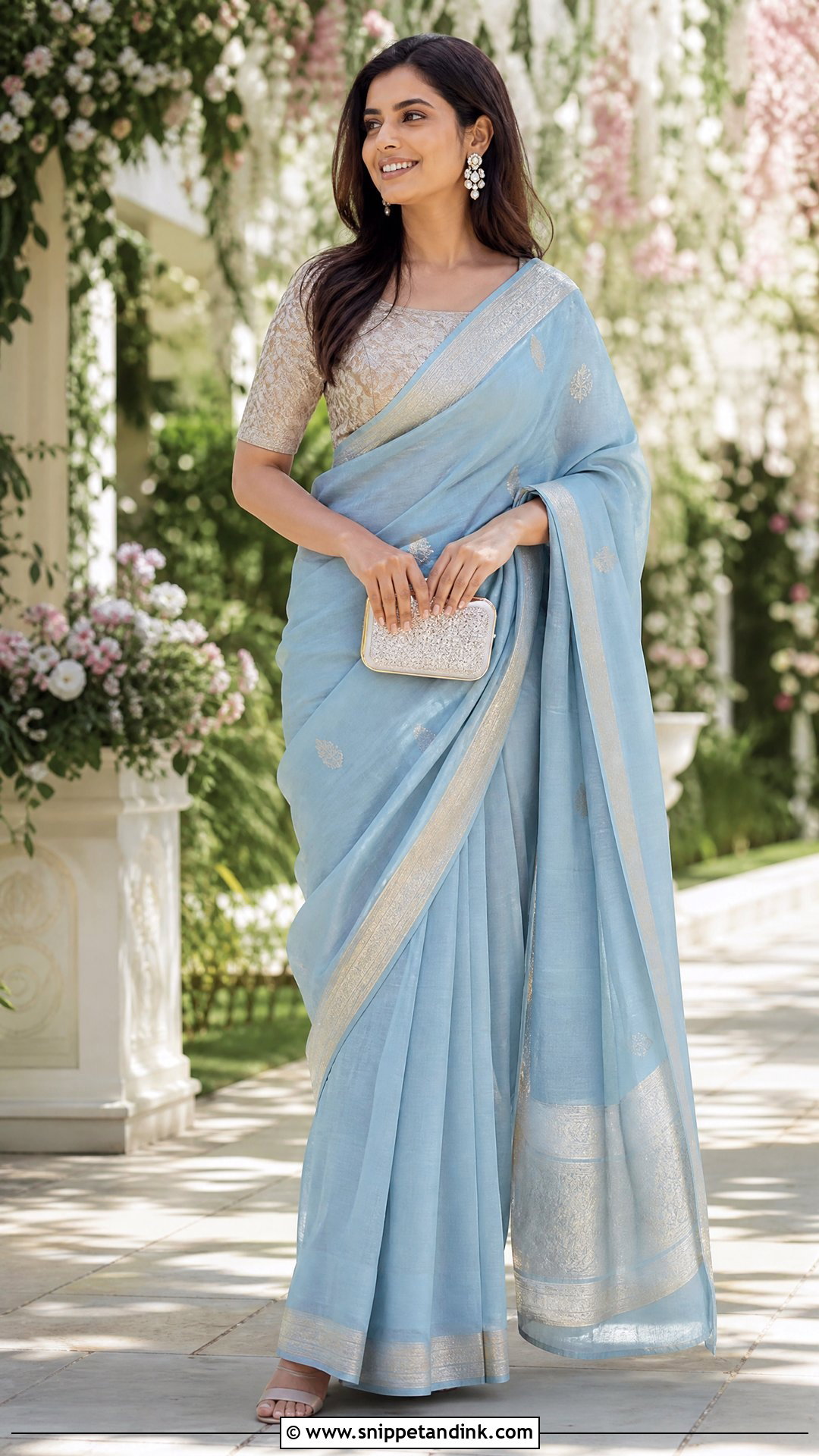
Chanderi is the saree I reach for when a ceremony is outdoors in the heat. It’s light and slightly sheer, which is exactly the catch: in direct sun the petticoat line shows through, so match the petticoat to the saree color rather than wearing a white one. Powder blue, peach, lavender, sage and soft yellow with a thin metallic border all suit daylight. A same-color blouse looks calm; a contrasting brocade blouse gives the light fabric some structure. Pearl drops, slim bangles and kitten heels or embellished flats are all it needs for lawns and courtyards, and a low bun or soft braid keeps hair off a neckline that’s meant to look airy.
4. Organza Saree Wedding Outfit
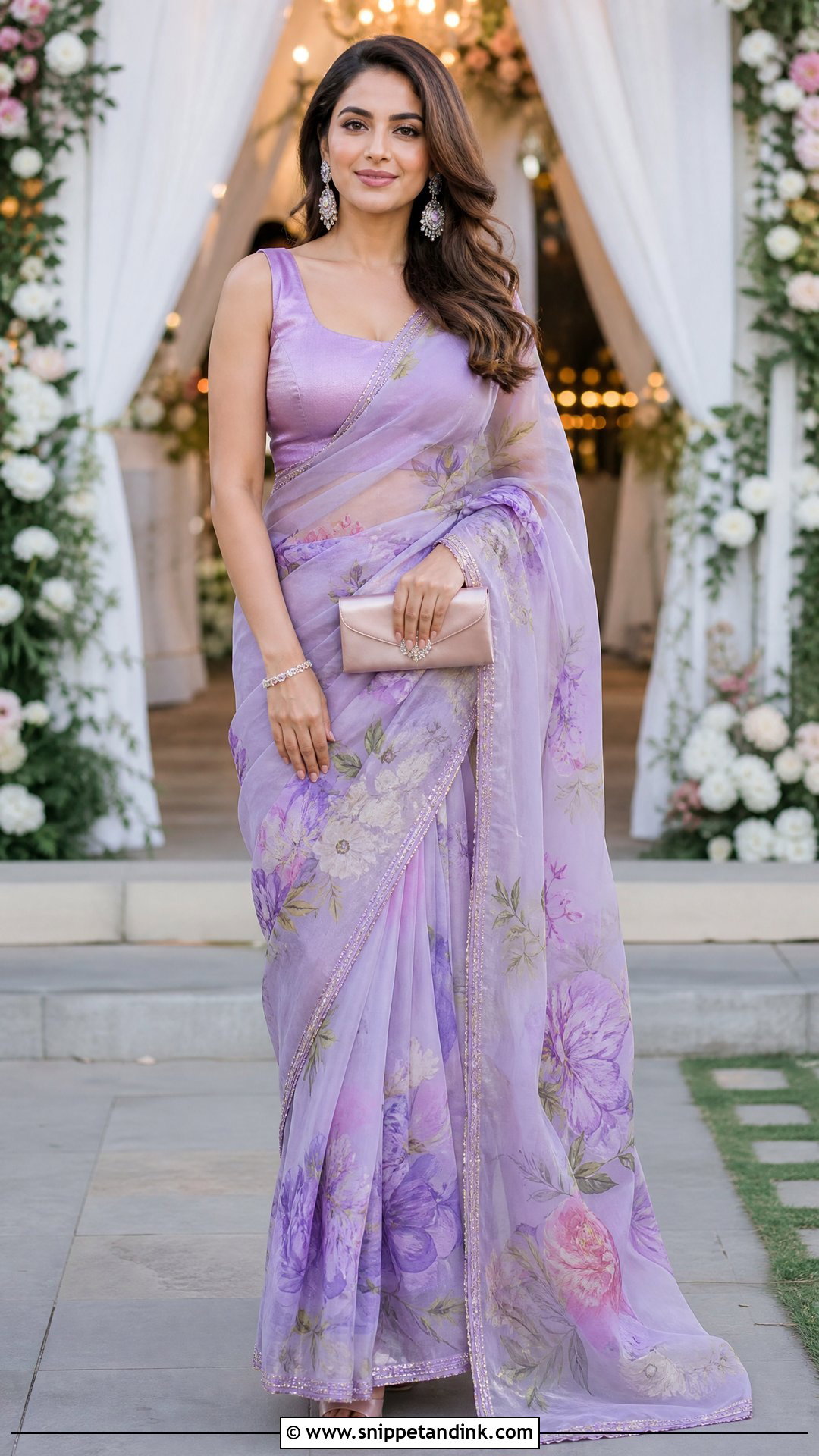
Organza holds a crisp shape, but it also creases sharply when you sit and it doesn’t relax back the way silk does. I’d choose it for a garden wedding, a daytime reception or a pre-wedding lunch, in a design with floral embroidery or a painted border rather than heavy embellishment that drags the fabric down. Press the pleats firmly and pin them flat, or the stiff fabric fans out and adds volume at the hip. A sleeveless silk blouse reads modern; elbow sleeves give more coverage. Keep the accessories in one coordinating color, especially with a printed saree, and choose a soft bun or a sleek ponytail so the top half doesn’t look as wide as the skirt.
5. Embroidered Lehenga Choli Wedding Outfit
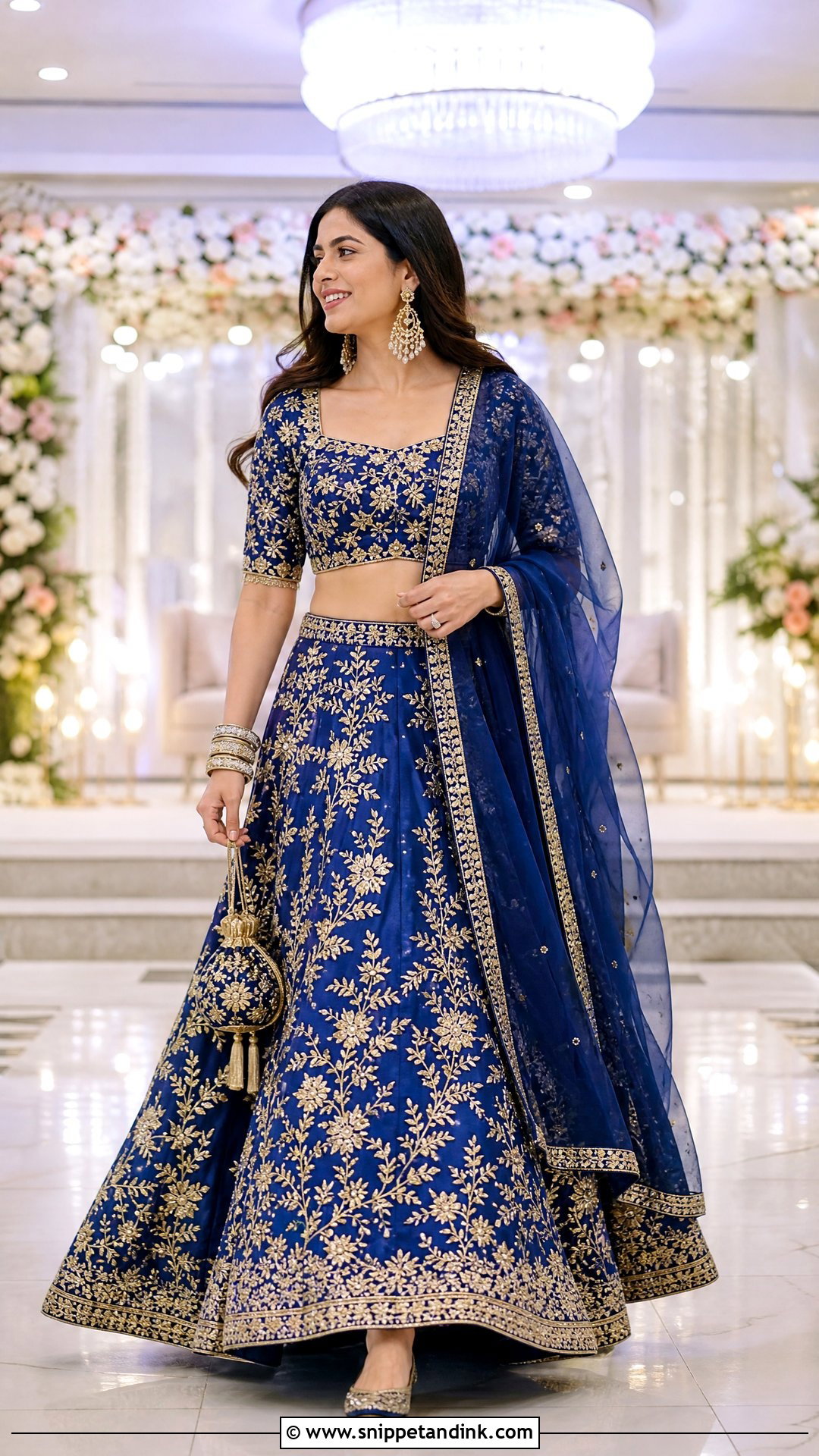
A lehenga choli is the easiest outfit to dance in, as long as the waistband actually fits. As a guest, aim for balanced embroidery in sapphire, mauve, turquoise or coral and leave the heavy, all-over bridal work to the bride. I usually pin the dupatta at one shoulder or cross it in front so you’re not chasing it all night. Chandelier earrings, bangles, a small potli and comfortable juttis finish it. Check the hem in the shoes you’ll wear: it should just clear the floor. A skirt that’s a little long will catch under your heel every time you stand up from a chair.
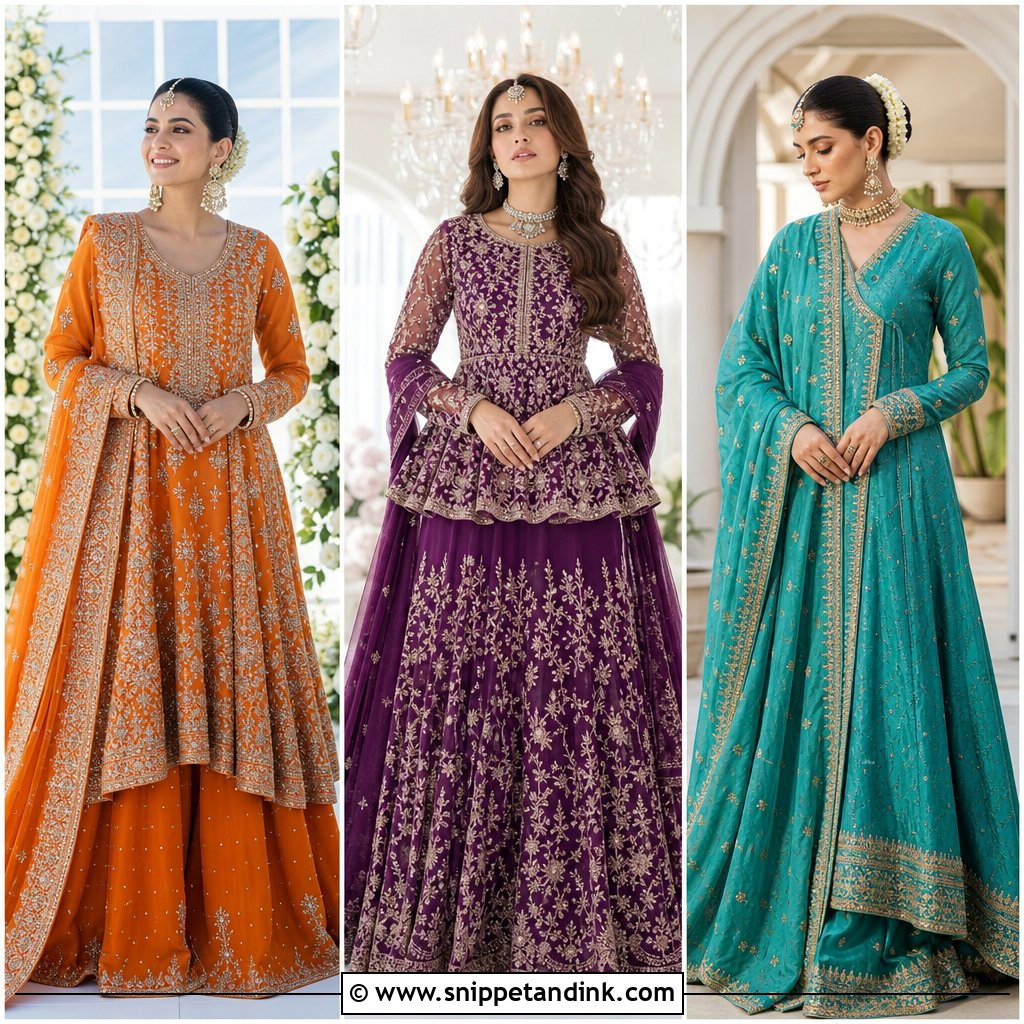
6. Anarkali Suit Wedding Outfit
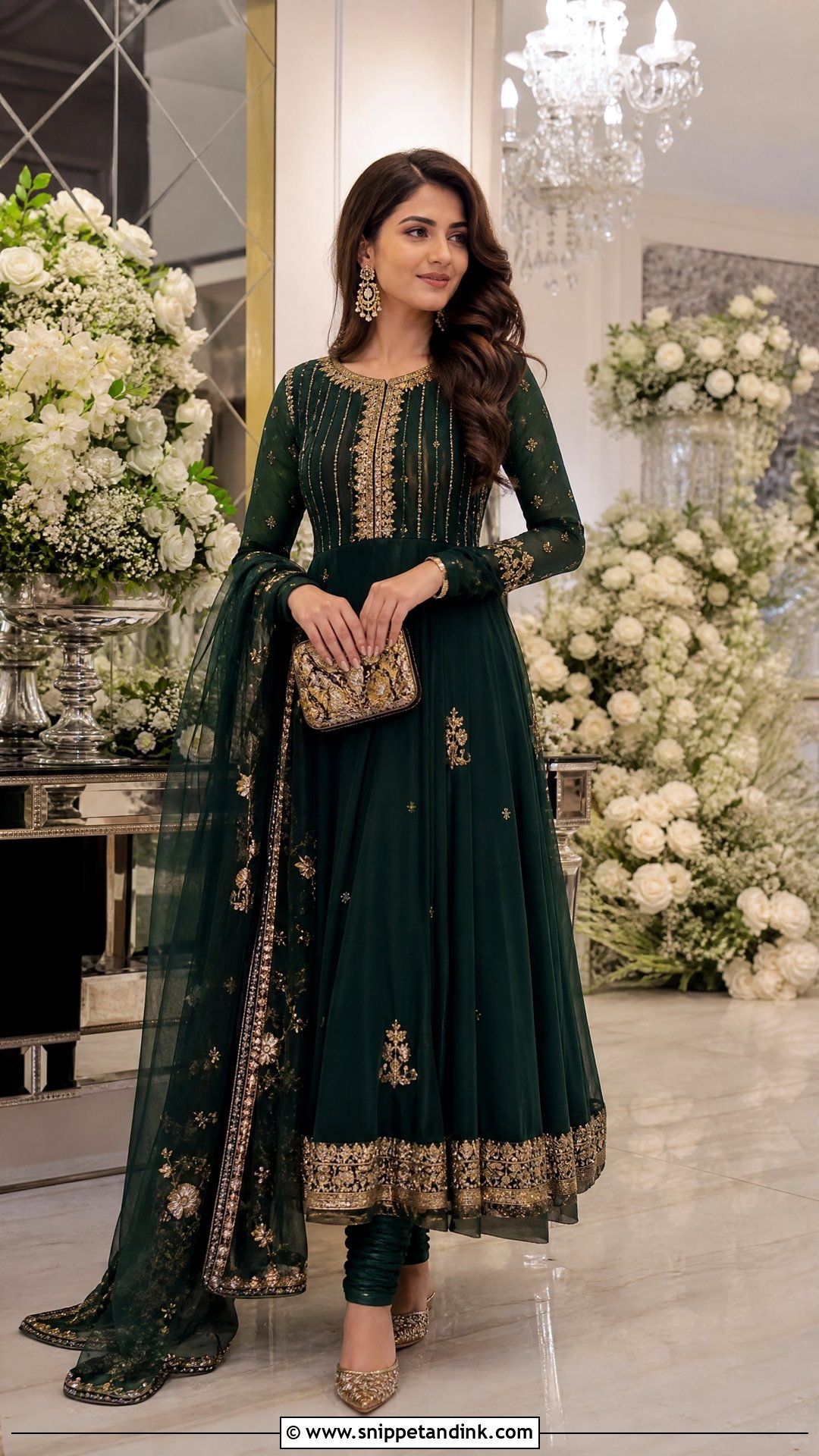
An Anarkali covers more than most outfits on this list, and that’s why I suggest it to guests attending a conservative family ceremony. The fit lives in the bodice. If the waist seam sits even an inch too low, the flared skirt starts from the hips and the whole silhouette looks heavy, so get it tailored to your natural waist. Deep green, wine, navy and dusty rose work in evening light. Wear it with narrow churidar pants and a light dupatta over both shoulders or one arm, statement earrings, a ring, an embroidered clutch, and pointed juttis or low heels. A low bun or side-parted waves suit the long line.
7. Sharara Set Wedding Outfit
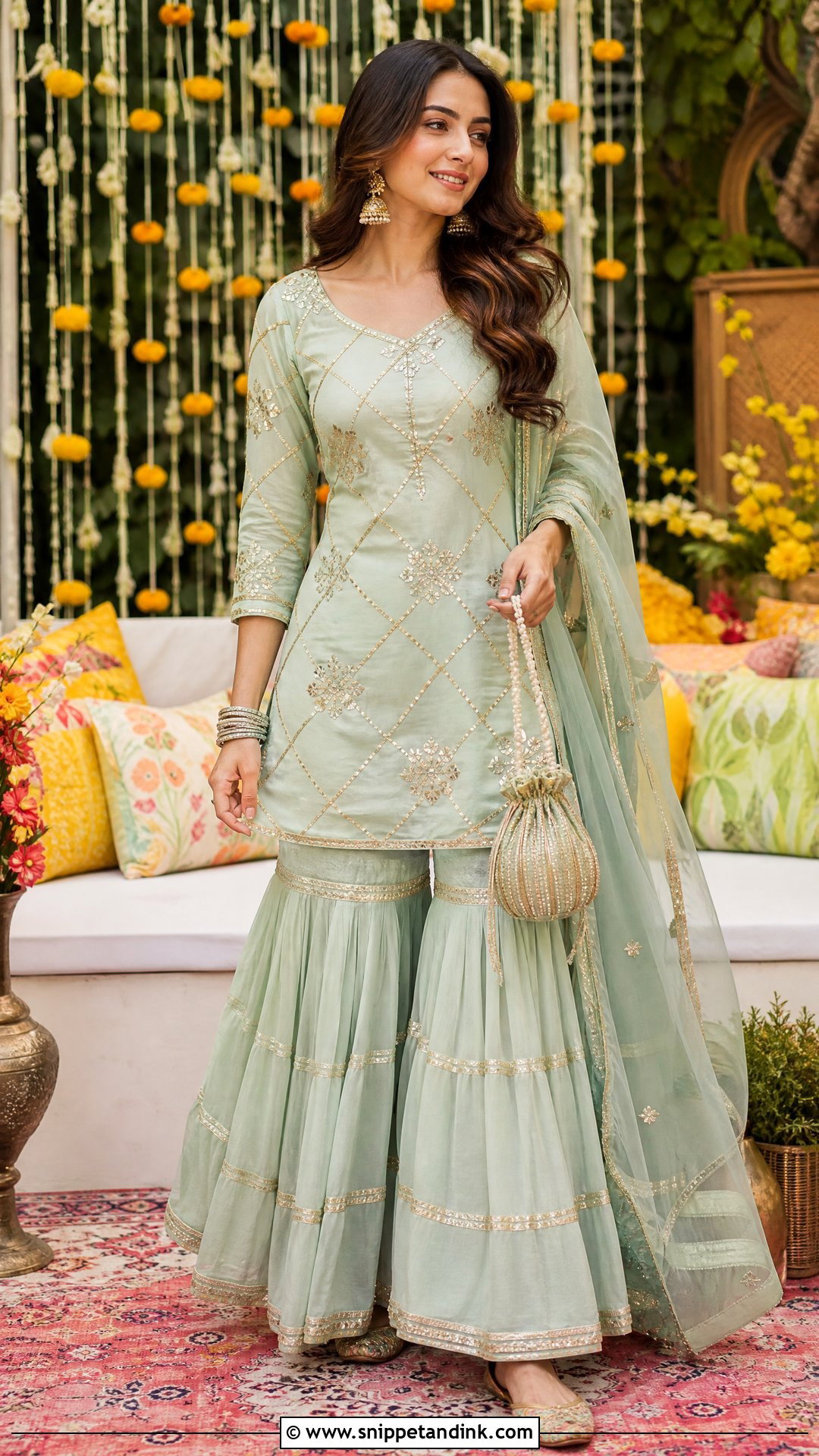
A sharara set is my first suggestion for a mehendi or sangeet, simply because you can sit cross-legged on a floor cushion in it. The short or mid-length kurta sits over wide, flared pants with a matching dupatta, and mint, marigold, fuchsia or aqua all feel right for a lively daytime function. Gota patti and mirror work add tradition without looking too formal. Pin the dupatta at one shoulder so the pants stay visible, and add jhumkas, stacked bangles, a drawstring bag and embellished flats. Have the pants hemmed so they skim the floor in your actual shoes. Wide hems that drag are the most common tripping hazard I see on a crowded dance floor.
8. Gharara Set Wedding Outfit
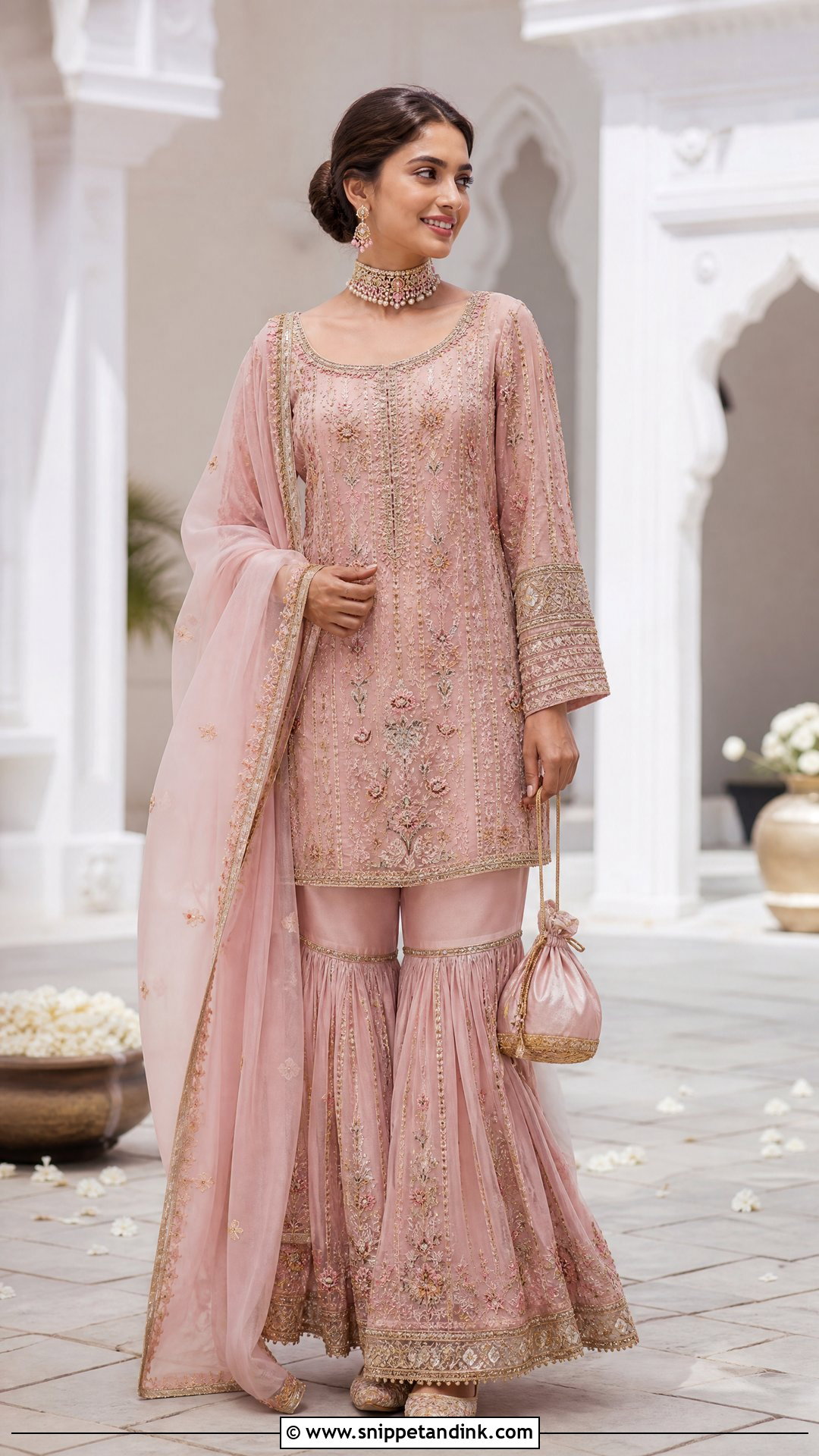
People mix up gharara and sharara constantly. A gharara is fitted through the thigh and flares from the knee, usually with a decorative trim at that knee seam, and that seam is where the tailoring succeeds or fails. If it sits above or below your actual knee, the flare starts in the wrong place and you’ll walk stiffly. I’d only recommend one if there’s time for a proper fitting. Pistachio, rose pink, ivory with colored work or deep plum all suit day or evening. Pair with a short embroidered kurta, a light dupatta, a choker, small earrings, a potli and heeled juttis, and wear a neat bun or side-swept waves so the neckline stays clear.
9. Palazzo Suit Wedding Outfit
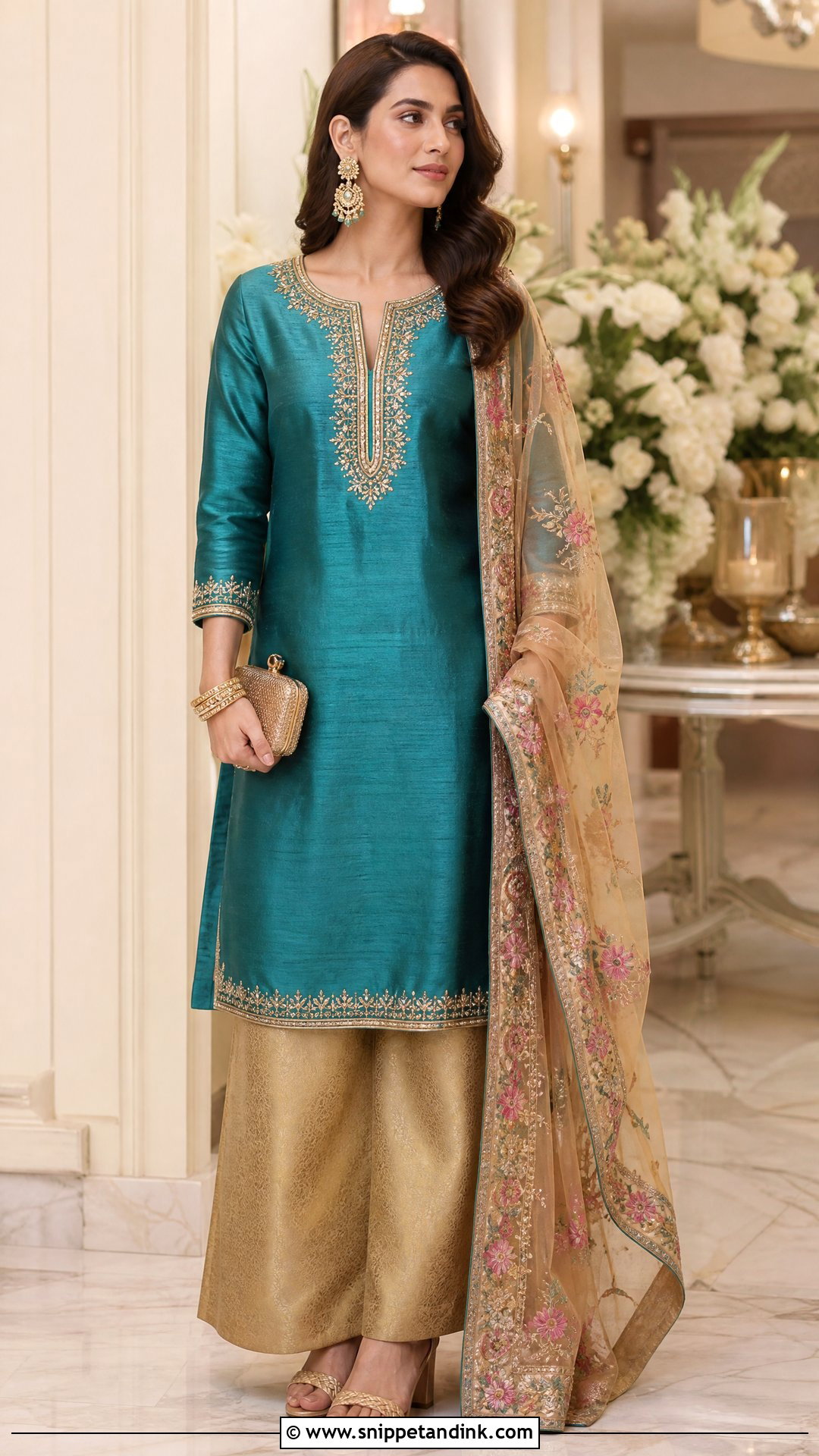
For a wedding lunch or welcome event, a silk or brocade palazzo suit gives you the ease of trousers with a traditional finish. The proportion to get right is kurta length: it should end at or above the knee, or the palazzos disappear and the outfit reads as a long tunic. Teal over gold palazzos, a blush monochrome set or navy with a contrasting dupatta all work. I keep the jewelry medium-sized, add slim bangles and a structured box clutch, and choose block-heel sandals, which stay stable under wide hems. Smooth waves or a low ponytail are enough for the hair.
10. Punjabi Salwar Suit Wedding Outfit
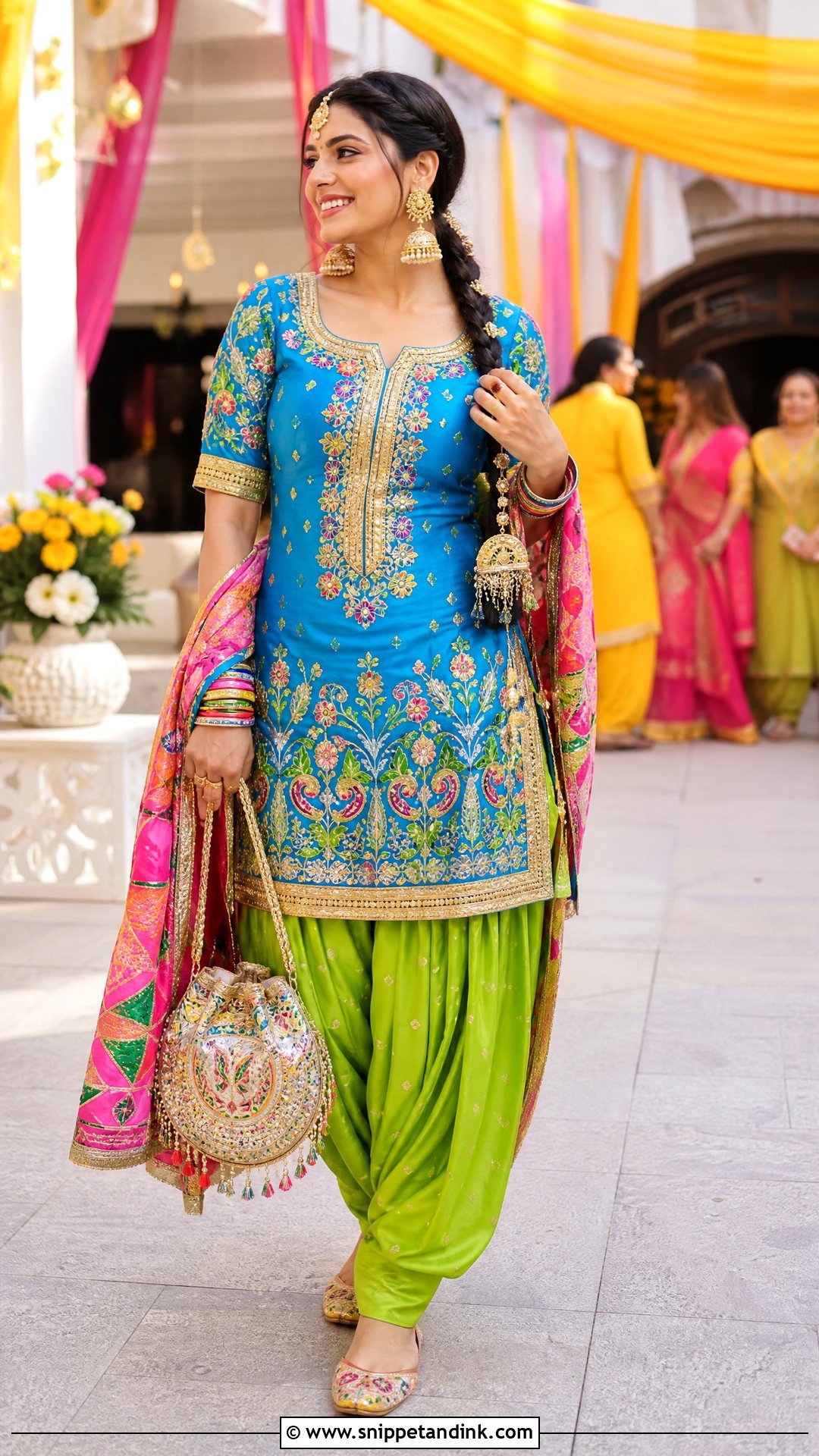
A Punjabi salwar suit is made for moving. Build it around a knee-length embroidered kameez, gathered salwar and a coordinating dupatta, then go bright: pink with orange, blue with green, yellow with magenta. The detail I check first is the salwar waistband. Drawstring waists bunch under a fitted kameez when you sit, so ask for an elastic-and-drawstring combination if you’ll be seated for a long ceremony. Traditional juttis, jhumkas, colorful bangles and a small embroidered bag are plenty. Pin the dupatta well if there will be bhangra, and choose a long braid or half-up style that won’t come loose with it.
11. Patiala Suit Wedding Outfit
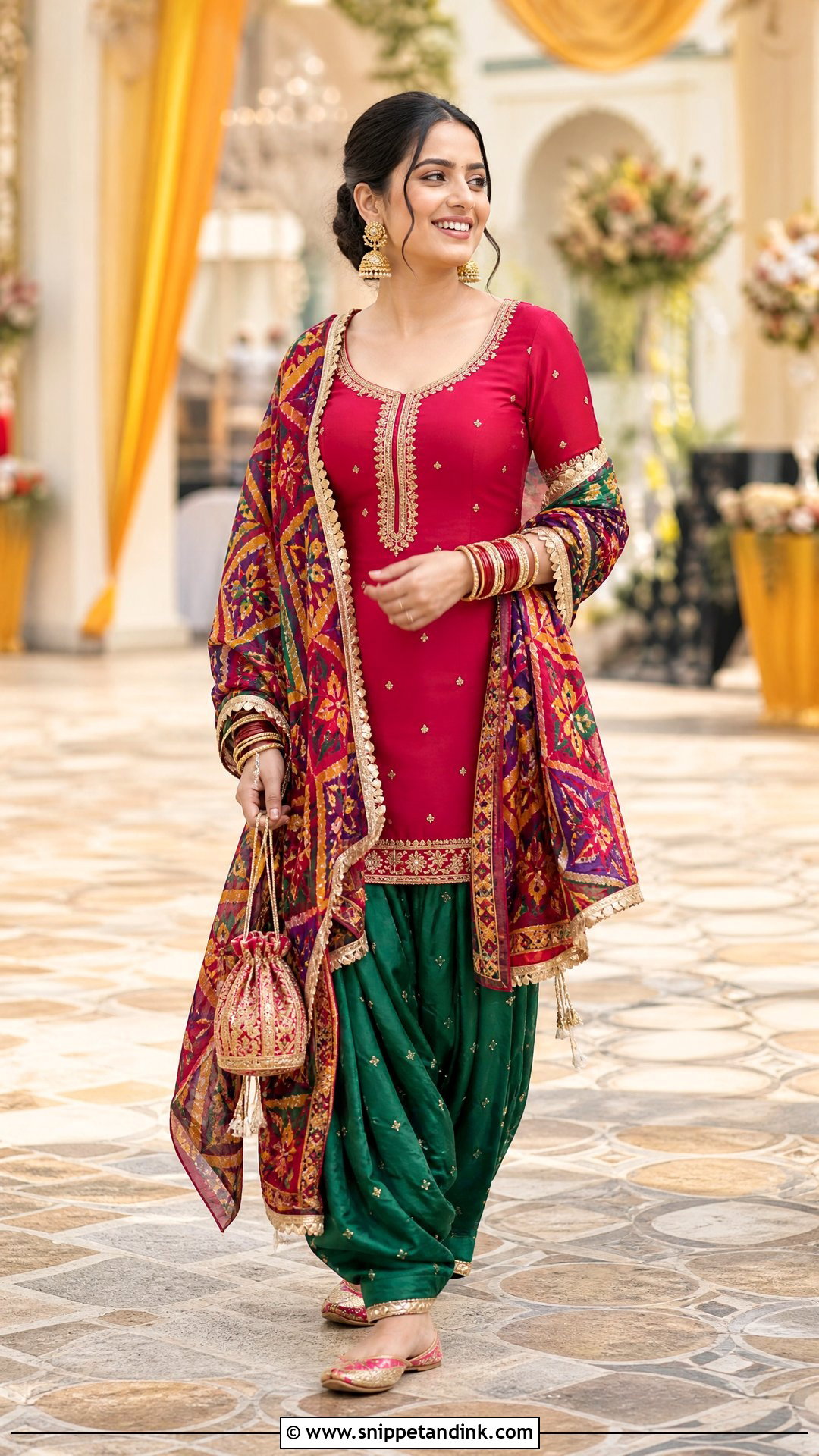
The deep pleats of a Patiala suit use a lot of fabric, which gives you movement and also bulk. That’s why the kameez should be shorter and properly tailored; a loose, long top over Patiala pants swallows the whole figure. A phulkari dupatta brings regional embroidery and color, and it looks best when the kurta and pants are plain. Mustard, raspberry, emerald and cobalt suit a daytime event. Add gold-toned earrings, glass bangles, a potli and flat Punjabi juttis, and keep hair in a braid or soft ponytail.
12. Bandhani Saree Wedding Outfit
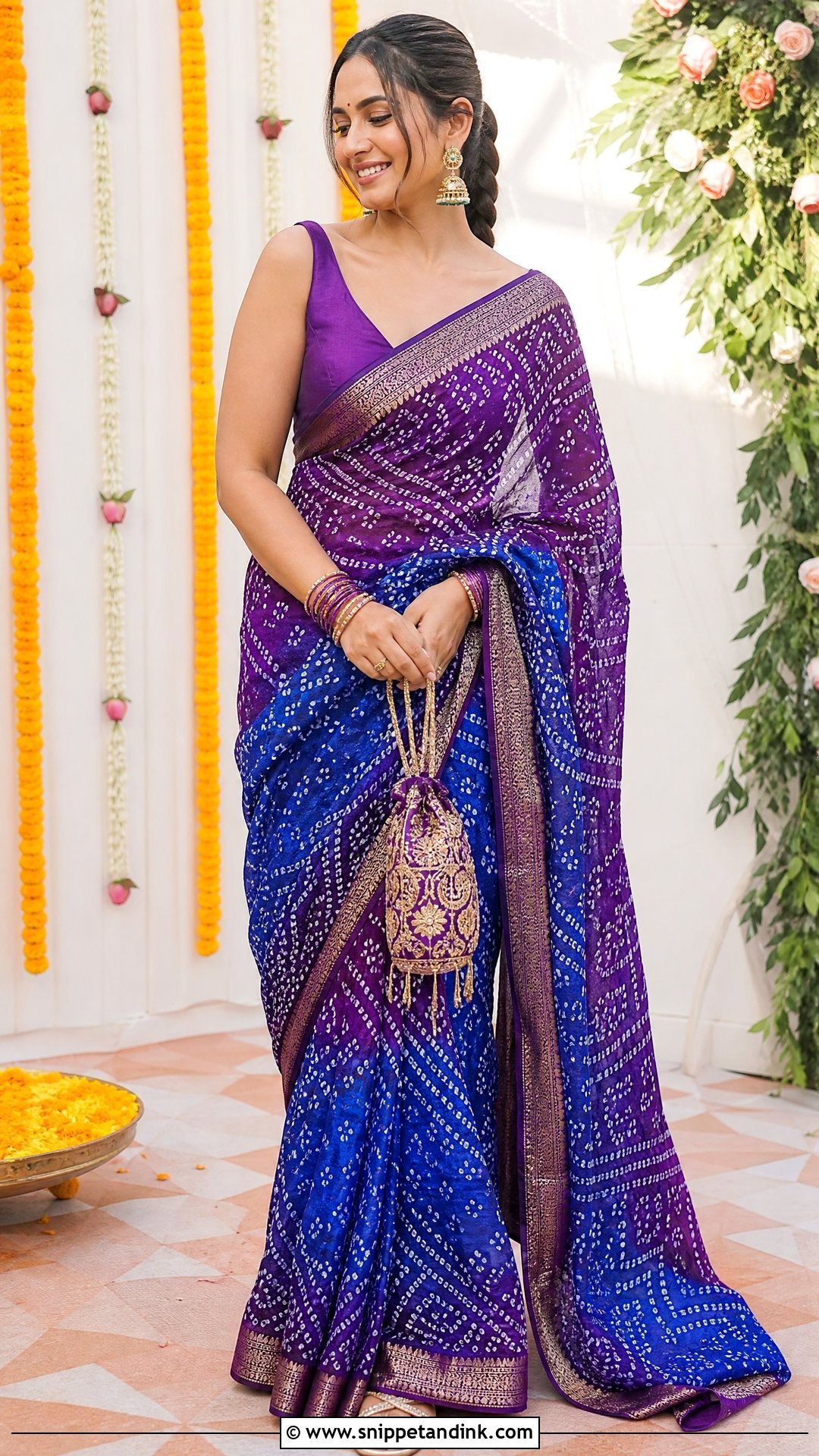
Tiny tie-dyed dots make a Bandhani saree instantly recognizable, and it feels most at home at a mehendi or a traditional daytime ceremony. Red with pink, green with yellow, purple with blue or orange with a contrast border are classic pairings, but red Bandhani is strongly associated with brides in some communities, so I’d confirm before wearing it. The fabric is light and slips easily, so pin the pallu at the shoulder and again at the back. Pair it with a plain fitted blouse, oxidized silver or gold jewelry, stacked bangles, a small potli and comfortable sandals, and keep the hair sleek.
13. Paithani Saree Wedding Outfit
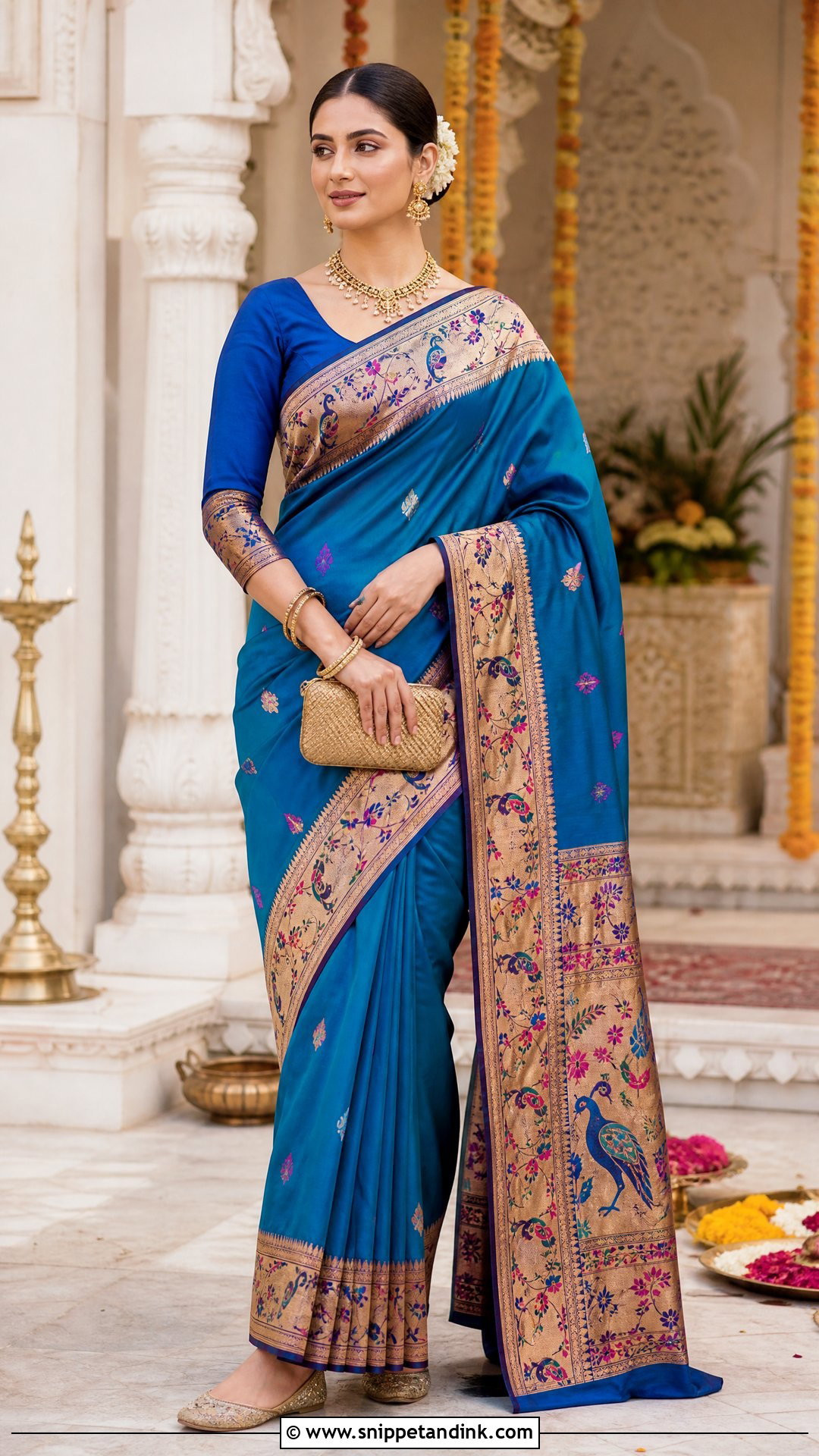
A Paithani’s value is in its border and pallu, which often carry woven peacock or lotus motifs. I drape it so the pallu falls clearly over the shoulder and the pleats are narrow and even, because a messy fold hides exactly the part of the weave that matters. Peacock blue, deep purple, green and warm coral are traditional. A tailored silk blouse with three-quarter sleeves balances the busy pallu. Gold earrings, bangles, a short necklace, a structured clutch and low heels or embellished flats are enough; anything more competes with the weave. A center-parted bun with flowers suits a ceremony.
14. Mekhela Chador Wedding Outfit
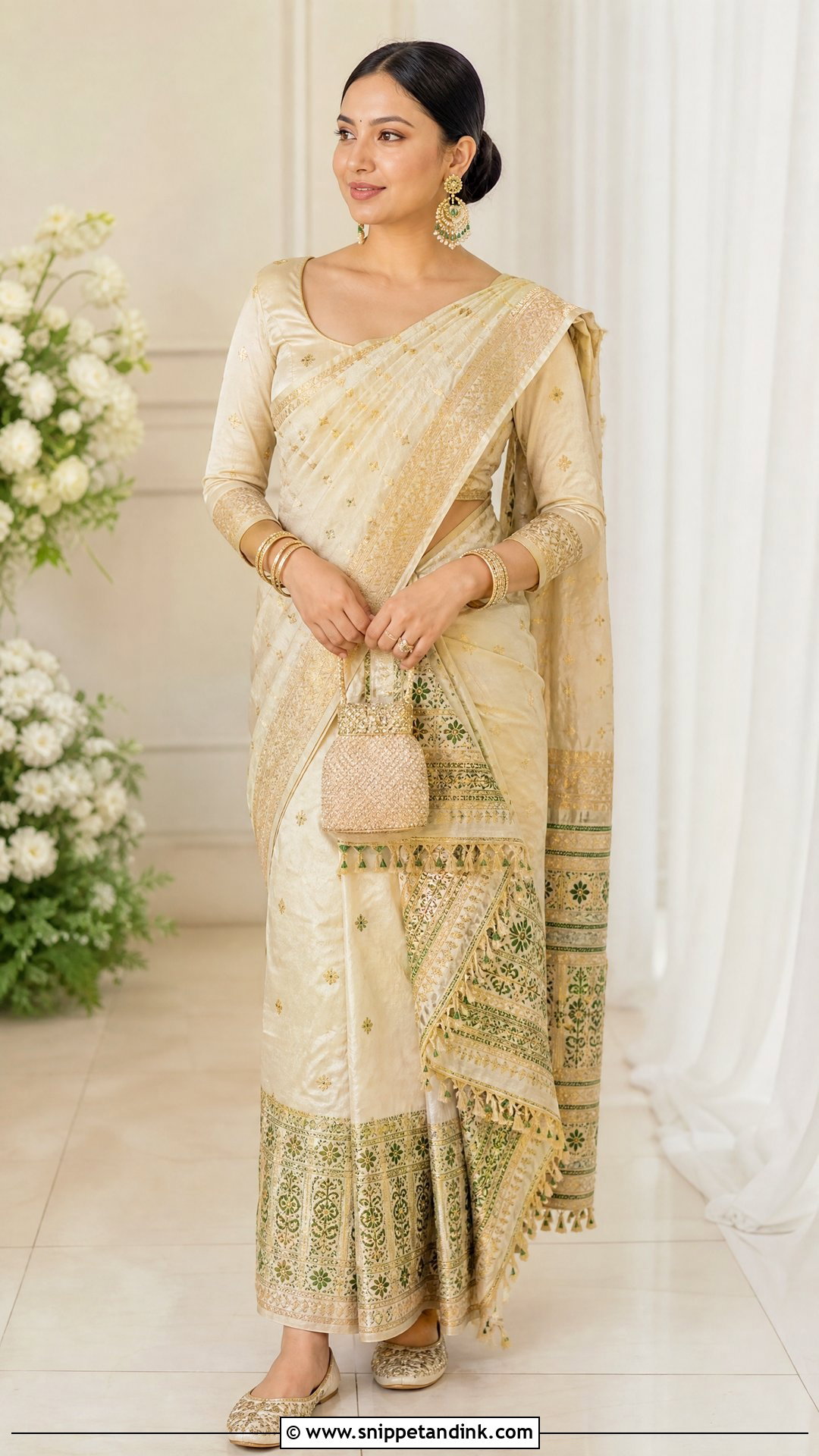
The Mekhela Chador is an Assamese two-piece drape: a cylindrical lower garment and a separate chador wrapped around the torso and over the shoulder. It isn’t draped like a saree, and I’ve seen guests struggle with it alone. If you haven’t worn one, ask someone who has to dress you on the day. For a wedding, silk in cream, gold, red or green with woven motifs is traditional. Pair it with a fitted blouse, traditional earrings, bangles, a compact bag and embroidered flats, and choose a smooth bun or long braid so the drape stays visible.
15. Kerala Kasavu Saree Wedding Outfit
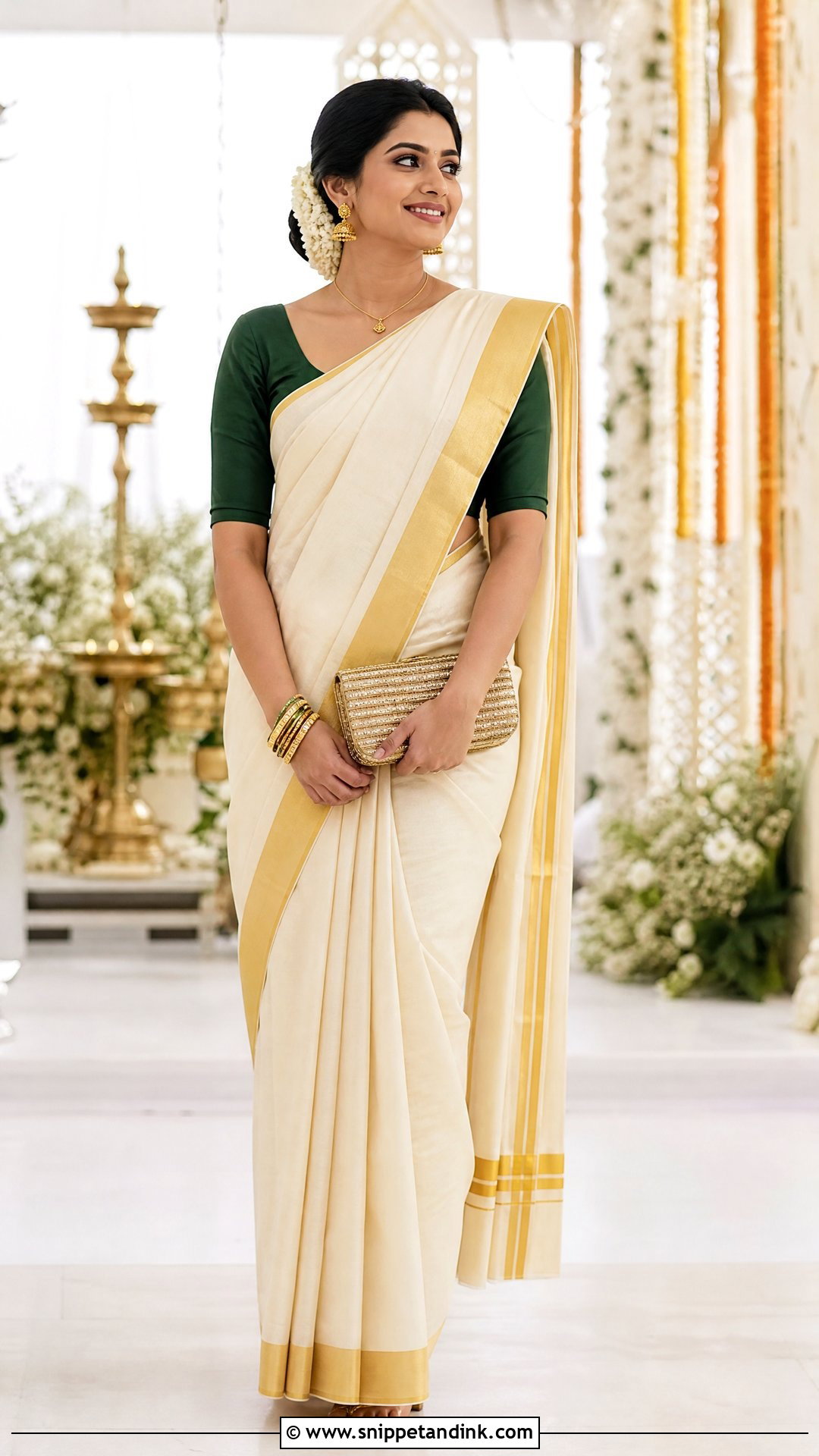
A cream Kasavu saree with a gold border is clean and restrained, which is why I like it for a South Indian ceremony in the morning. Because white and cream mean different things across traditions, check the dress code first; in some families it’s standard, in others it’s kept for specific roles. A green, maroon, mustard or jewel-toned blouse adds depth and keeps the look from reading as bridal. Narrow, crisp pleats help the cotton hold its line. Traditional gold earrings, a few bangles, a small necklace, a structured clutch and low gold sandals are all it needs, with jasmine in a center-parted bun.
16. Silk Kurta And Skirt Wedding Outfit
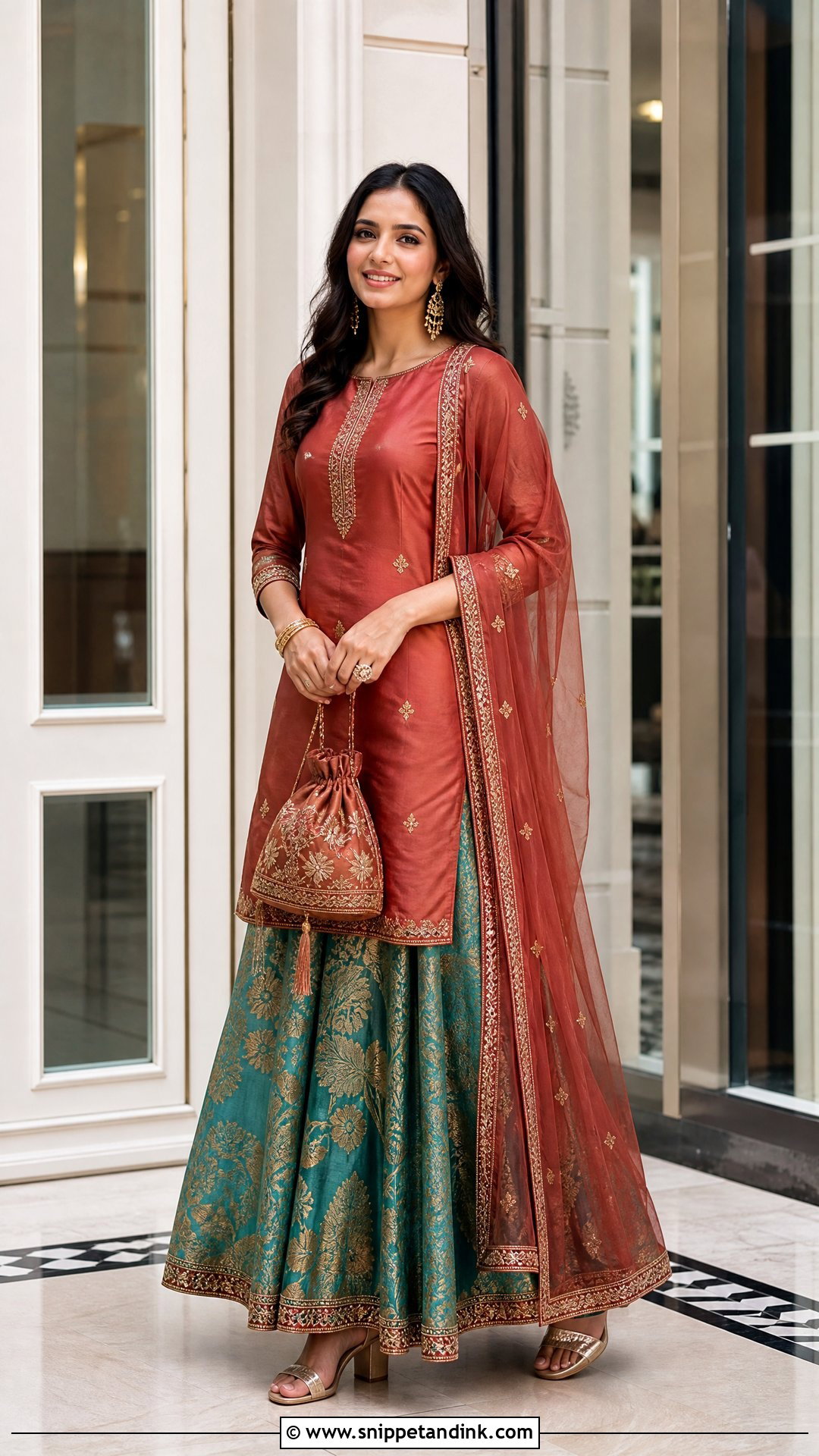
A silk kurta over a long skirt gives you lehenga drama with more coverage. The length decides whether it works: a short fitted kurta or one with side slits lets the skirt’s border show, while a long, loose kurta hides the waistband and makes the outfit look like a dress over a dress. I like a solid silk kurta over a brocade skirt in navy with gold, rust with teal or plum with blush. Add a sheer dupatta, drop earrings, bangles, an embroidered potli and juttis or block heels, and a low ponytail or soft curls.
17. Velvet Lehenga Wedding Outfit
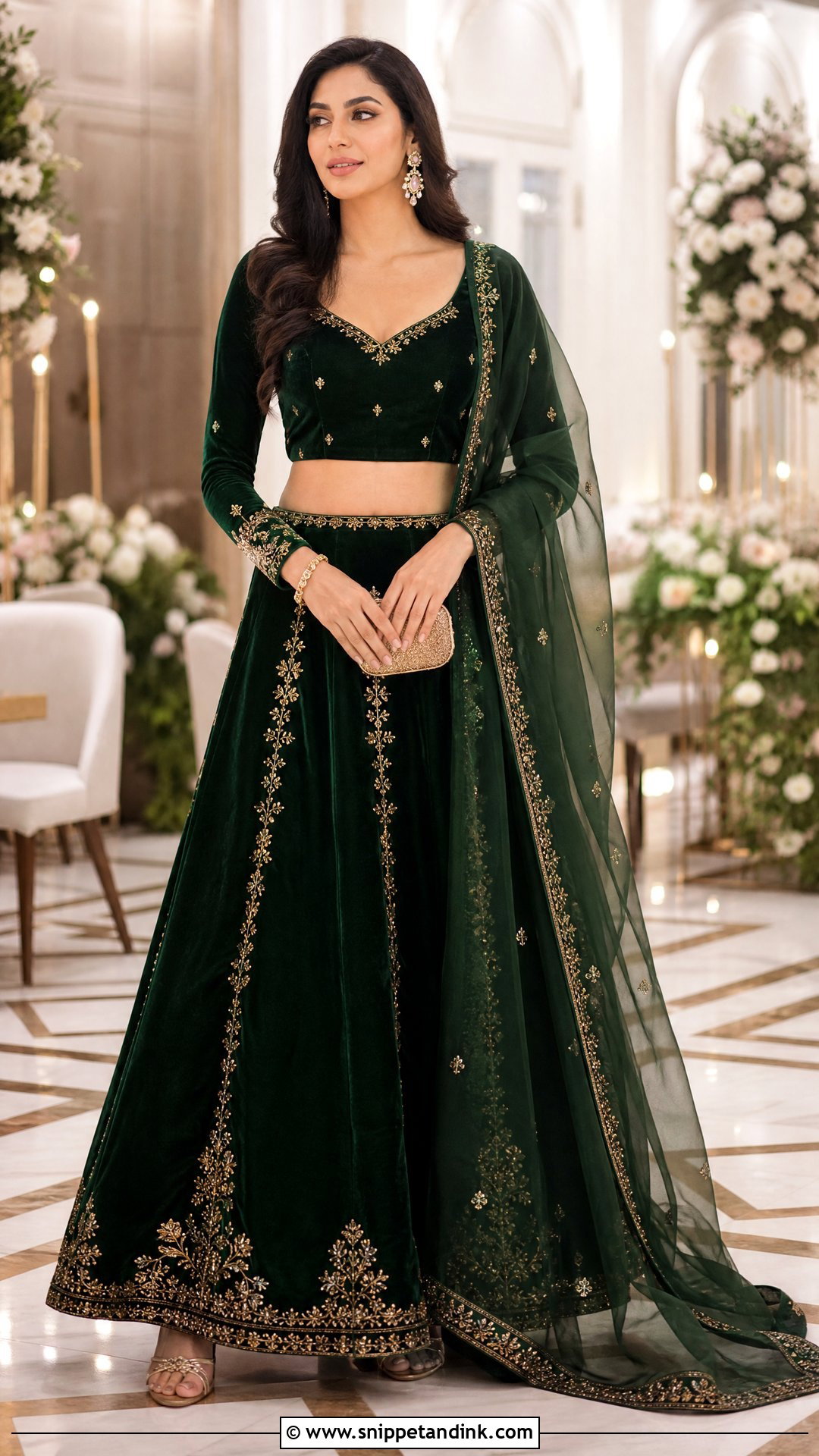
Velvet is the fabric I steer guests toward for a winter reception, and away from for anything outdoors in warm weather. It holds heat and shows every crush mark, so sit carefully and hang it the night before. Emerald, navy, burgundy and deep purple look richest under evening light. A net or organza dupatta keeps the outfit from feeling heavy, and controlled embroidery stops the skirt from adding bulk at the waist. Kundan-style earrings, a bracelet, a compact clutch and block heels complete it. Check the lining is breathable before you commit; cheap synthetic linings under velvet are uncomfortable after two hours.
18. Angrakha Suit Wedding Outfit
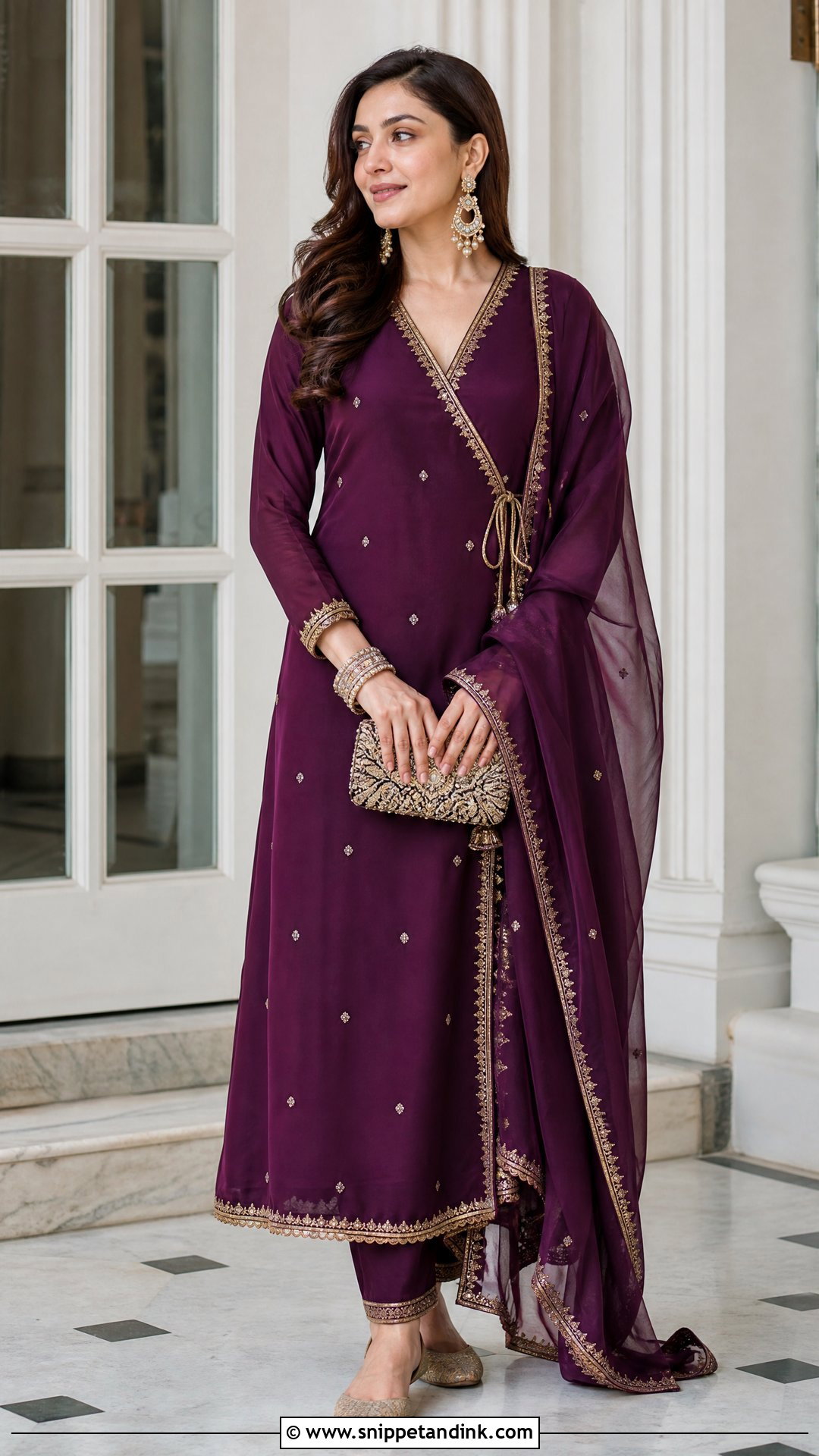
An Angrakha suit crosses over the bodice and ties at the side, which gives a defined waist without a fitted seam. Choose calf or floor length in silk, georgette or lightly embroidered cotton-silk, jewel tones for evening and pastels or florals for daytime. The inner tie is the weak point. Before leaving, I check it with a deep bend and a full arm raise, because if it slips, the wrap opens. Wear it with narrow pants or churidar and pointed juttis. The diagonal neckline is already decorative, so I skip the necklace and let drop earrings frame the face.
19. Jacket Lehenga Wedding Outfit
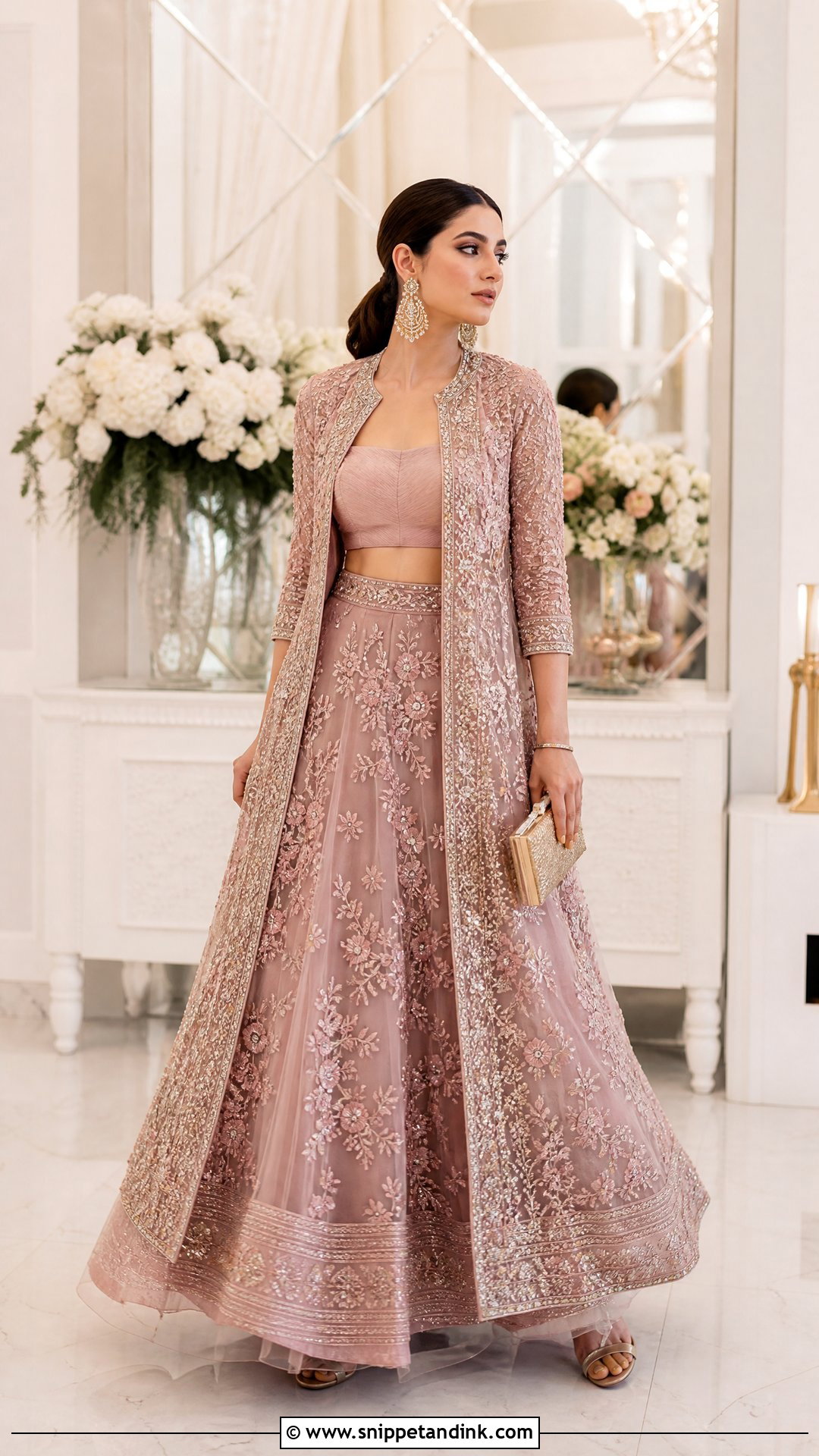
A jacket lehenga adds a layer, which means coverage and warmth but also heat. I recommend it for receptions and air-conditioned or cooler venues, not a summer lawn. A cropped embroidered jacket defines the waist; a long open-front jacket gives a flowing line but can shorten a petite frame. Keep the blouse and skirt plain and let the jacket carry the embroidery. Earrings, a slim bracelet, a small box clutch and heeled sandals are enough. Monochrome looks refined, a contrast jacket more festive, and a neat ponytail or low bun keeps the collar visible.
20. Brocade Kurta And Dhoti Pants Wedding Outfit
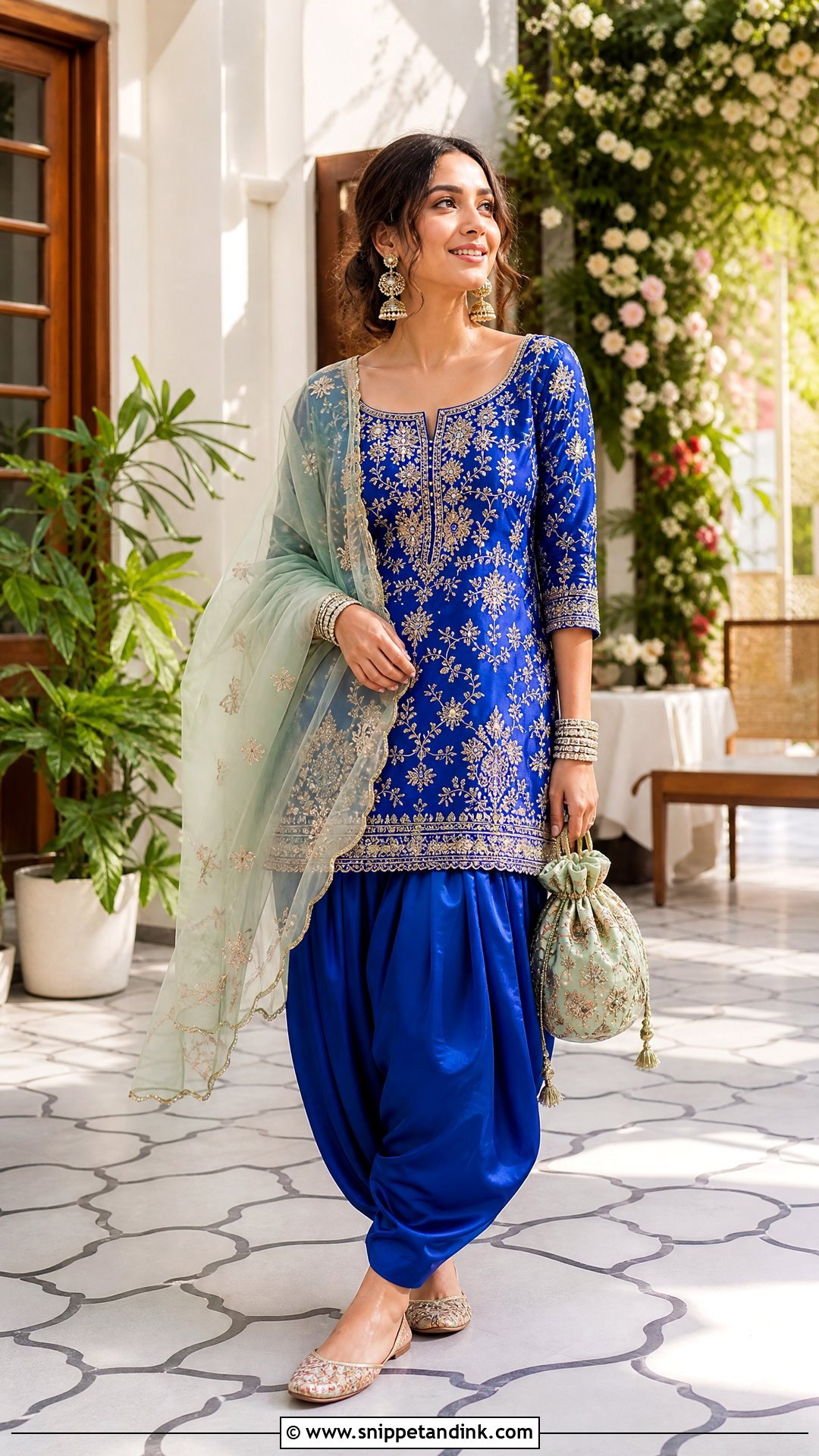
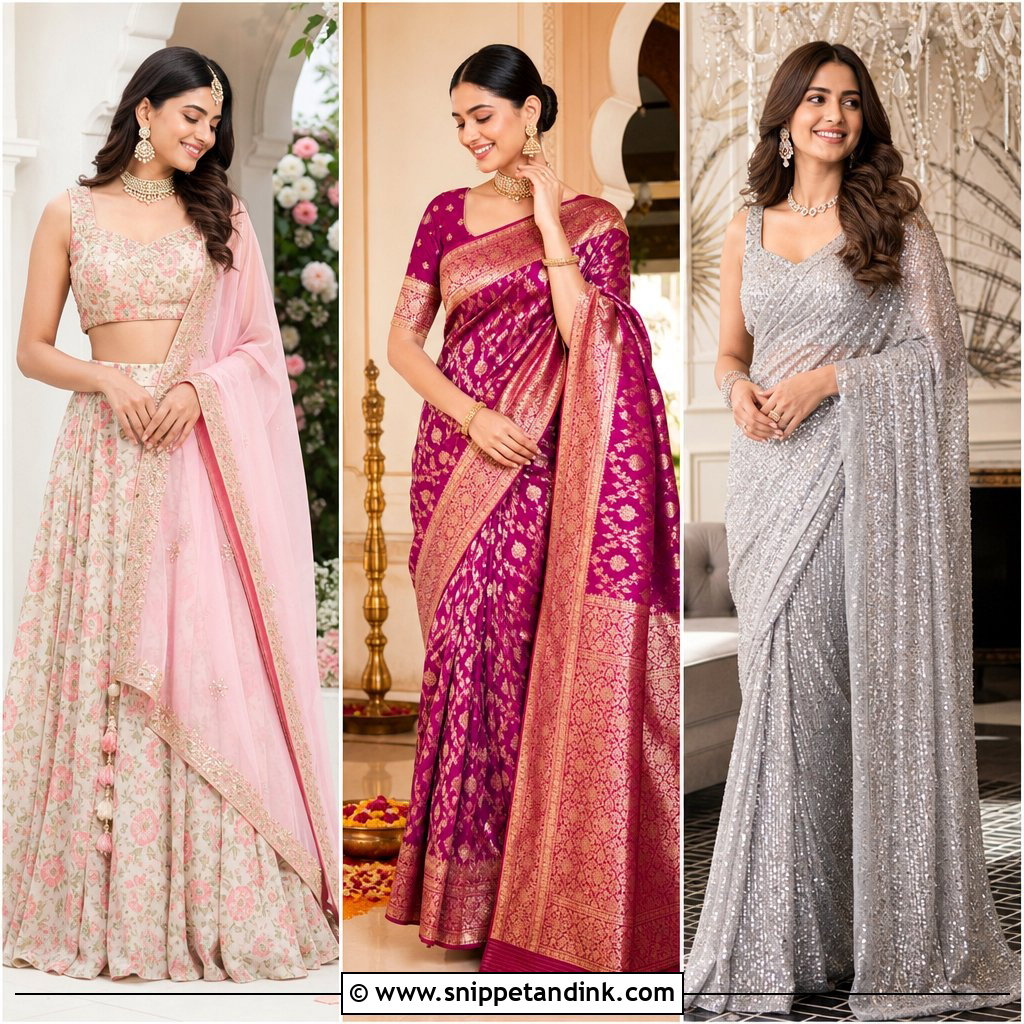
A brocade kurta with dhoti-style pants mixes traditional fabric with a draped, sculptural shape, and it’s comfortable for a long mehendi or wedding lunch. Keep the kurta short and fitted so the gathered pants show. Deep teal, magenta, mustard or royal blue look festive without heavy embellishment. Hem length matters more here than with most trousers: the drape should sit just above the shoe, because extra fabric pools and bunches at the ankle. Add a light dupatta or cropped jacket for coverage, statement earrings, metallic bangles, a potli and embroidered juttis, with a high ponytail or clean bun.
Getting Dressed When Nobody Is There to Pleat for You
Most guests dress in a hotel room, often in a hurry. A few habits make the difference between a drape that holds and one that collapses by dessert.
- Do a full practice drape at home at least a week before, in the petticoat and blouse you’ll wear. Photograph the steps.
- Bring a small kit: at least a dozen safety pins in two sizes, a few bobby pins, fashion tape and a needle with thread matched to your blouse.
- Wear your shoes while you set the saree length or check a lehenga hem. Flats and heels change the hem line by several inches.
- Pin pleats once at the waist and once low on the inside, and pin the pallu to the blouse at the shoulder so it can’t slide off when you hug people.
- Sit down, stand up and lift both arms before leaving the room. If anything shifts, fix it there, not in the venue bathroom.
If you’re truly unsure, many venues and salons offer drapers on wedding mornings, and pre-stitched sarees are a good shortcut for first-timers.
Packing Silk and Embroidery for a Wedding Week Away
Destination weddings mean several heavy outfits in one suitcase. I fold silk sarees with acid-free tissue between the folds and roll lehenga skirts loosely rather than flattening them, because hard creases across zari can crack the metallic thread over time.
Carry embroidered pieces in breathable cotton bags, never sealed plastic, and pack your ceremony outfit in your hand luggage if you can. Steam rather than iron on arrival, keeping the steamer away from sequins and mirror work, and press any velvet from the wrong side only. After the trip, air everything for a day before it goes back into storage, since perspiration left in silk weakens it.
Respect Shows in the Fit, the Pins and the Shoes
Start with the function, the family’s customs, the weather and the venue, then pick the garment. Silk sarees and lehengas carry formality, while shararas, Anarkalis and kurta sets give you room to move and sit. Regional drapes are a kind gesture when you wear them correctly, so get help if they’re new to you. Whatever you choose, the details I’d never skip are a proper tailoring appointment, pins at the pleats and pallu, and shoes you’ve already walked in. That’s what lets you stay comfortable from the first ritual to the last dance.
You'll Like These Ideas:


Leave a Reply