
The Sabyasachi bride is recognisable from across a room: deep red or antique gold, heritage jewellery, a dupatta over the head and embroidery dense enough to look old. It is a complete head-to-toe look, and that is exactly why it is easy to overdo. When I style a bride in this aesthetic, the heaviest version is rarely the right one. The outfit has to suit the ceremony, the hours you’ll sit through it and the jewellery you’ll actually wear. Below are lehengas, sarees, shararas and event outfits in that spirit, with the pairing notes I’d give at a fitting.
Wearing a Heavy Lehenga Through a Long Ceremony
A fully embroidered bridal lehenga can weigh several kilograms once the skirt, can-can, blouse and two dupattas are on, before any jewellery. The weight sits on the waist and the pins pull at the hair, and pheras or a nikah can run for hours. A few preparations make the difference between enjoying the ceremony and counting the minutes.
- Wear the full outfit, with jewellery, for at least an hour at home before the day, sitting and standing as you will at the mandap.
- Ask the tailor to fit the skirt waistband slightly lower and firmer than a casual lehenga, so the weight sits on the hips instead of digging into the waist.
- Pin the head dupatta into the bun with many small U-pins and the shoulder dupatta at the blouse and waist with small safety pins, never one large pin.
- Choose flat juttis or low block heels under the skirt. Nobody sees them, and you will stand on them for most of the day.
- Keep a small bag with spare pins, fashion tape and a few safety pins with a bridesmaid during the ceremony.
If the outfit still feels too heavy at the trial, ask about removing a layer of can-can or swapping the second dupatta for a lighter one. That is far easier than hoping it will feel better on the day.
1. Red Sabyasachi Bridal Lehenga
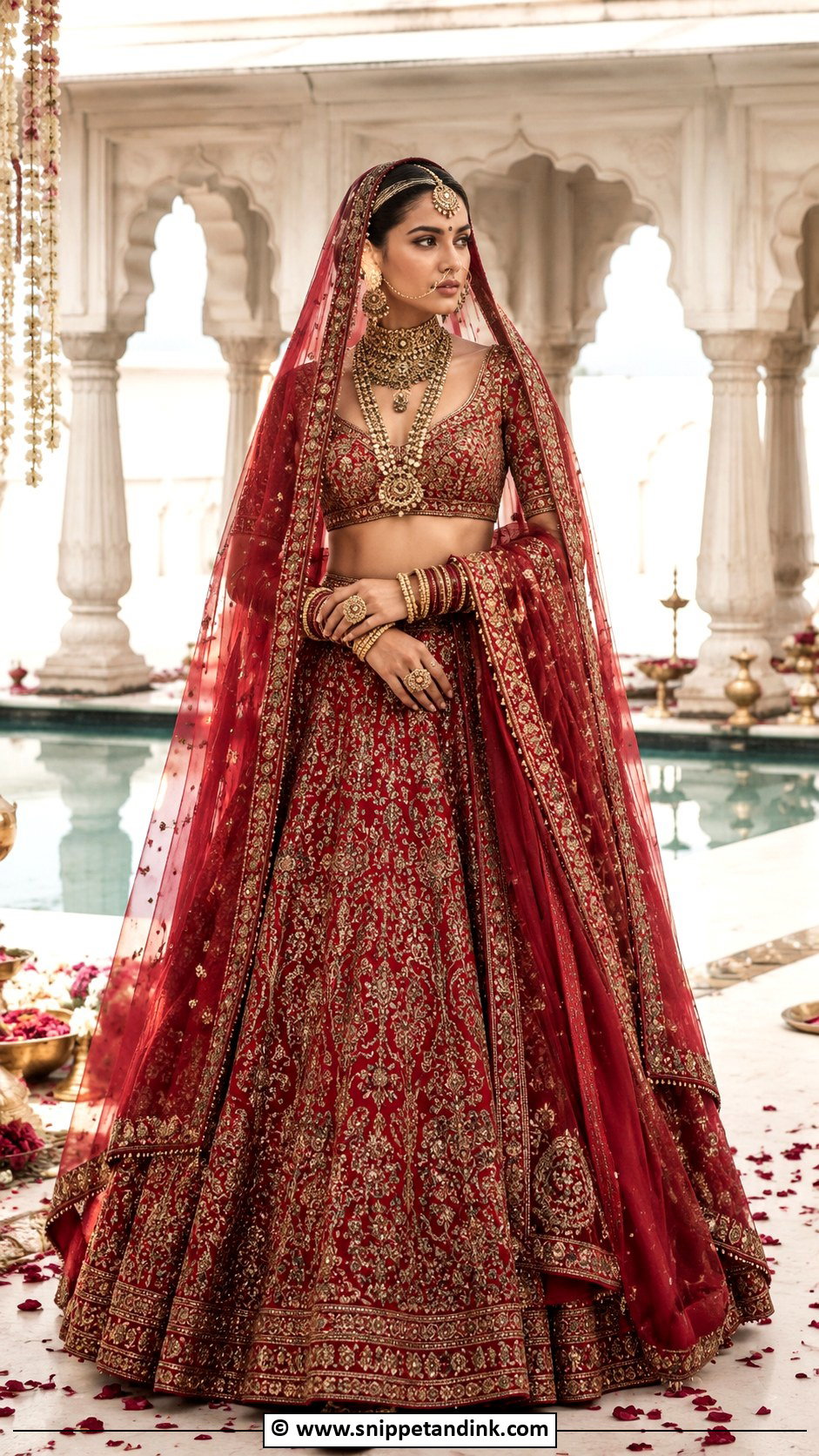
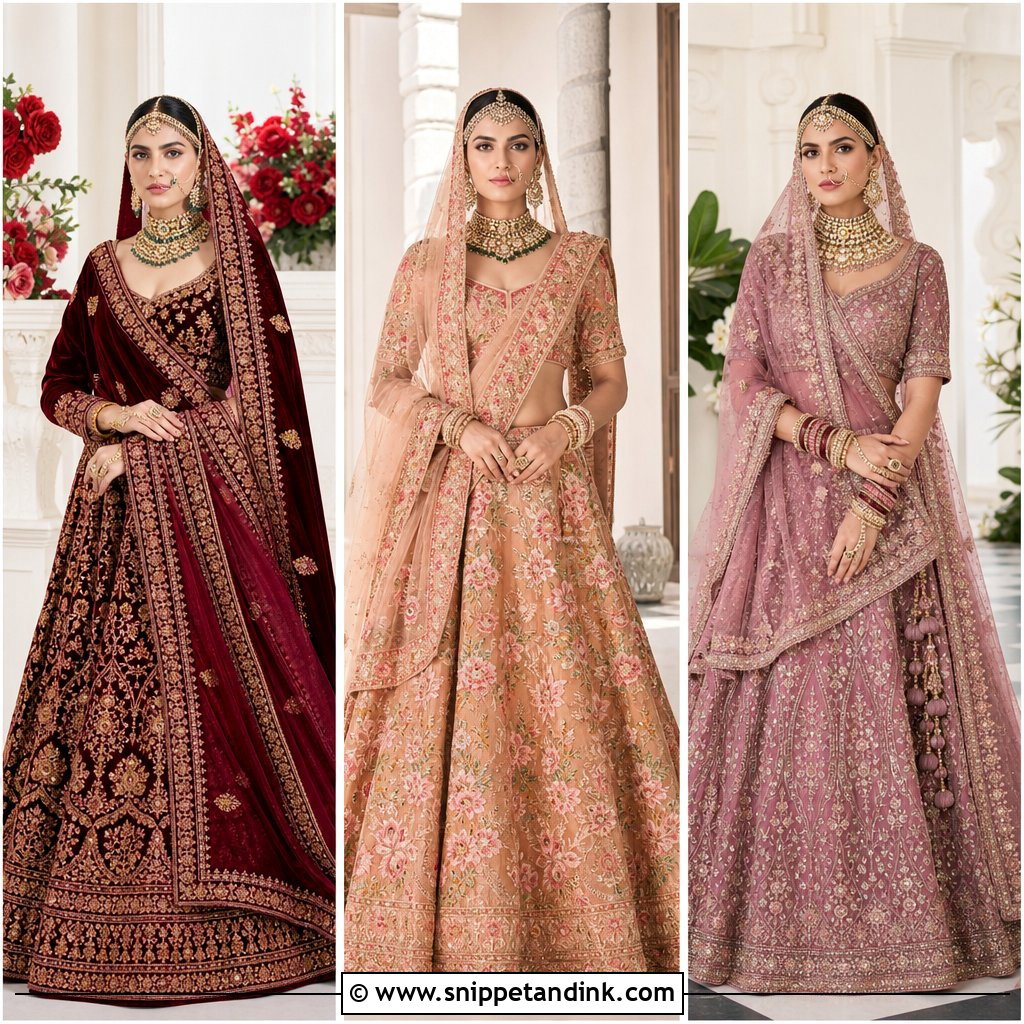
Sindoor or vermilion red is the classic, and a lehenga with detailed zardozi, gota or thread embroidery is the version everyone pictures. Two dupattas give it the layered look: a heavy one over the head and a lighter one across the shoulder. Antique gold suits red better than bright yellow gold, which can look brassy beside it. Put the choker, haar, matha patti, nath and bangles on together at a trial, because it is easy to stack more weight around the neck than you can comfortably wear for hours.
2. Maroon Sabyasachi Bridal Lehenga
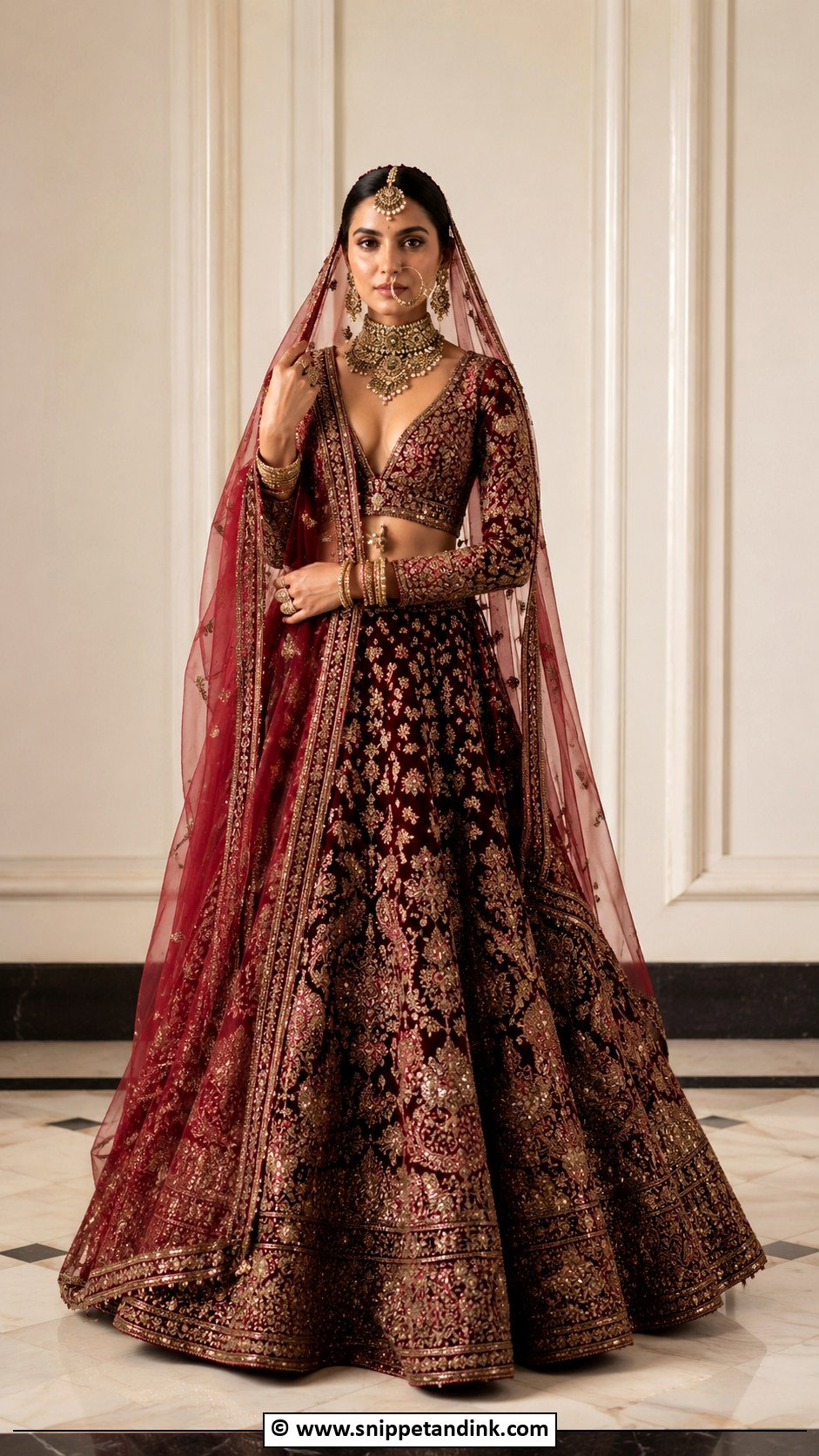
Maroon reads richer and a little more mature than bright red, and it suits evening pheras and winter weddings where the light is warm. Velvet or raw silk with antique gold embroidery carries it best. A blush or beige second dupatta lifts the face so the darker shade doesn’t feel heavy in photos. Kundan or polki with a centre-parted bun and fresh flowers keep it traditional.
3. Ivory Sabyasachi Bridal Lehenga
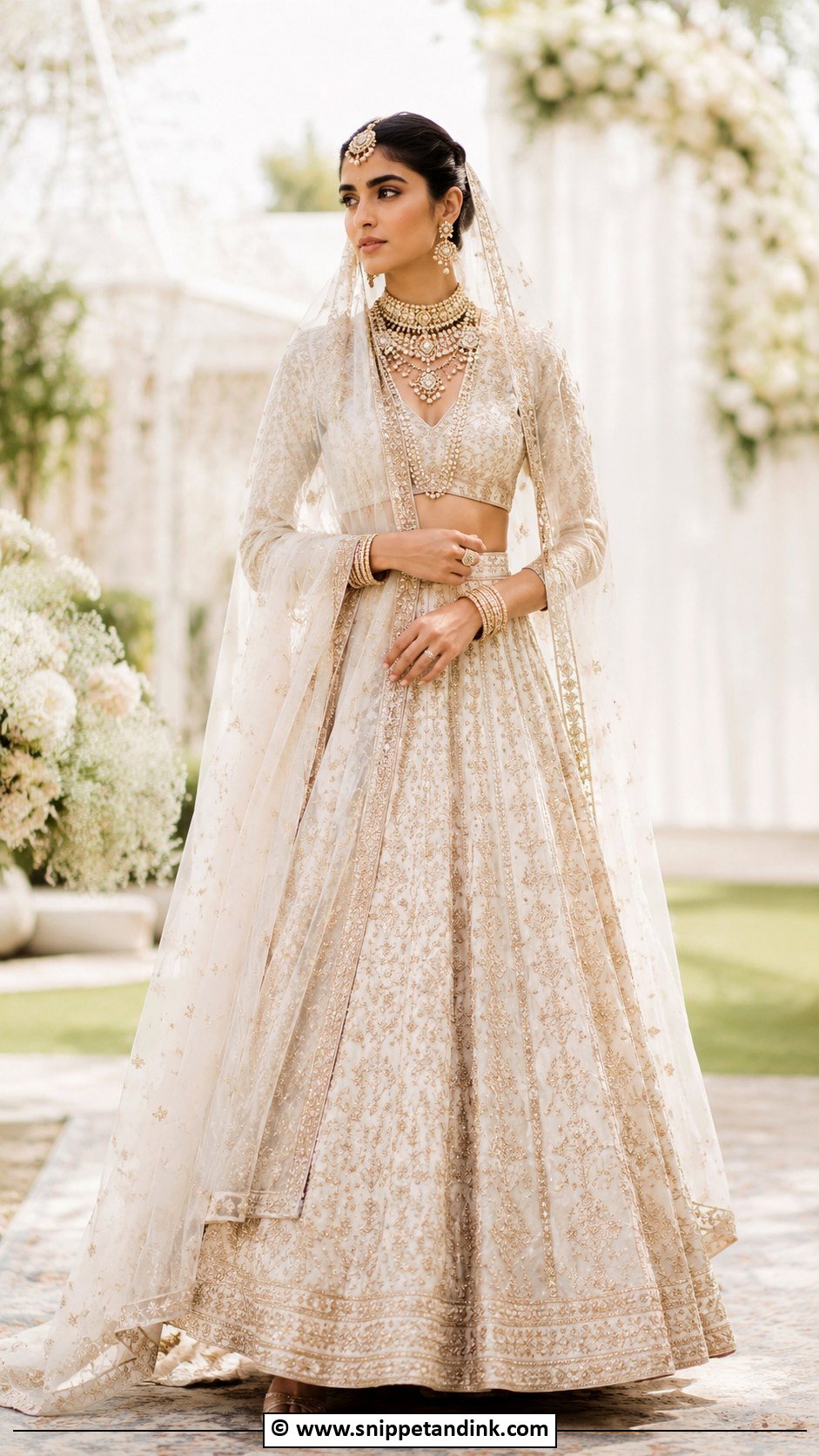
Ivory has become the quiet alternative for brides who don’t want red, and it works when the jewellery does the ceremonial work. Silk, tissue or organza with gold, pearl or tonal threadwork keeps it rich. One practical point: ivory shows every mark, from kajal smudges on the dupatta to henna transfer on the sleeves, so dress after the mehndi has fully dried and flaked off. Polki and pearls with warm brown eye makeup suit daytime and destination ceremonies.
4. Pastel Pink Sabyasachi Bridal Lehenga
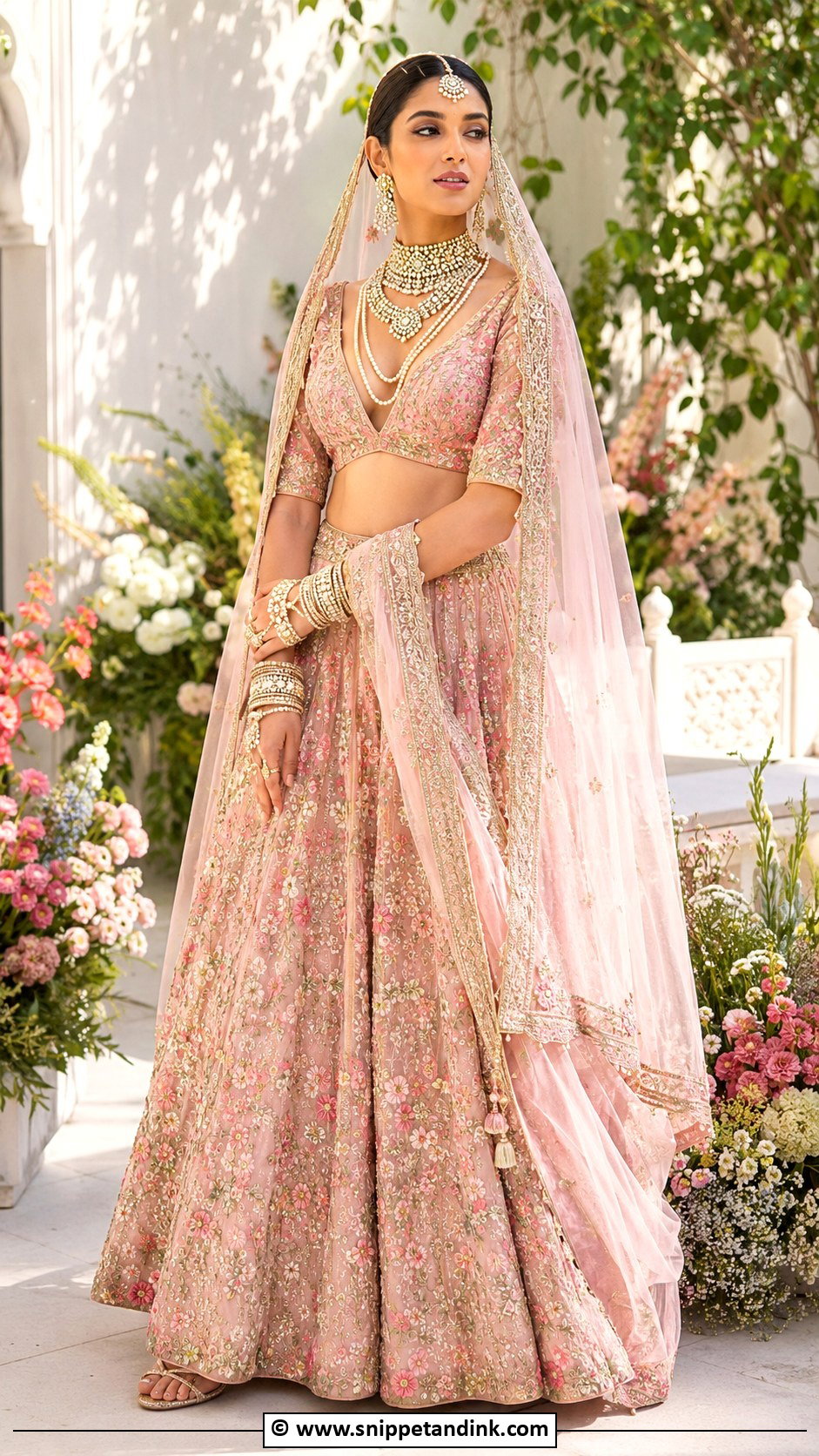
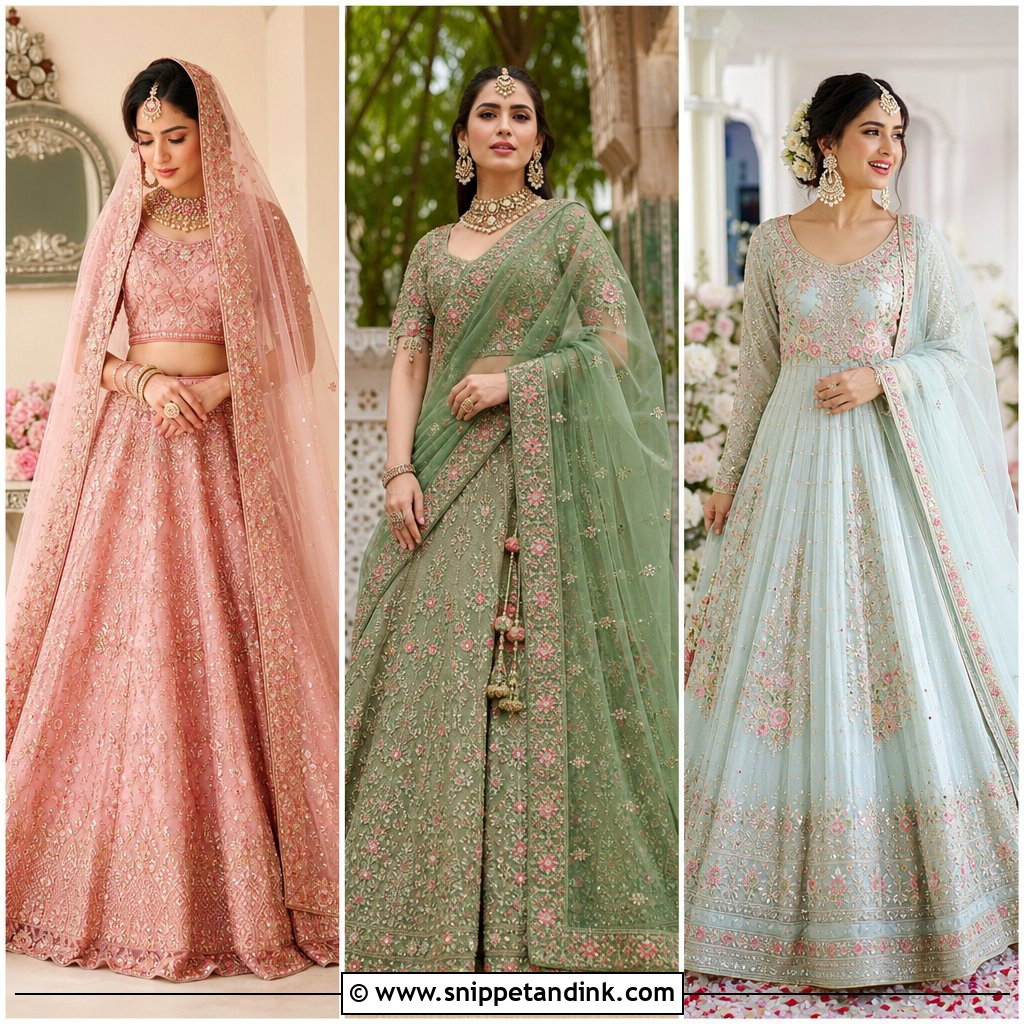
Pastel pink gives you romance while still looking bridal, especially with floral embroidery and fine gold borders. The risk with pale lehengas is looking washed out under harsh mandap lighting, so I keep the makeup a touch warmer than you’d expect: rosy cheeks, defined lashes and a muted pink lip. Diamond-polki and pearl jewellery suit it. Loose waves or a low bun keep the mood soft.
5. Gold Sabyasachi Bridal Lehenga
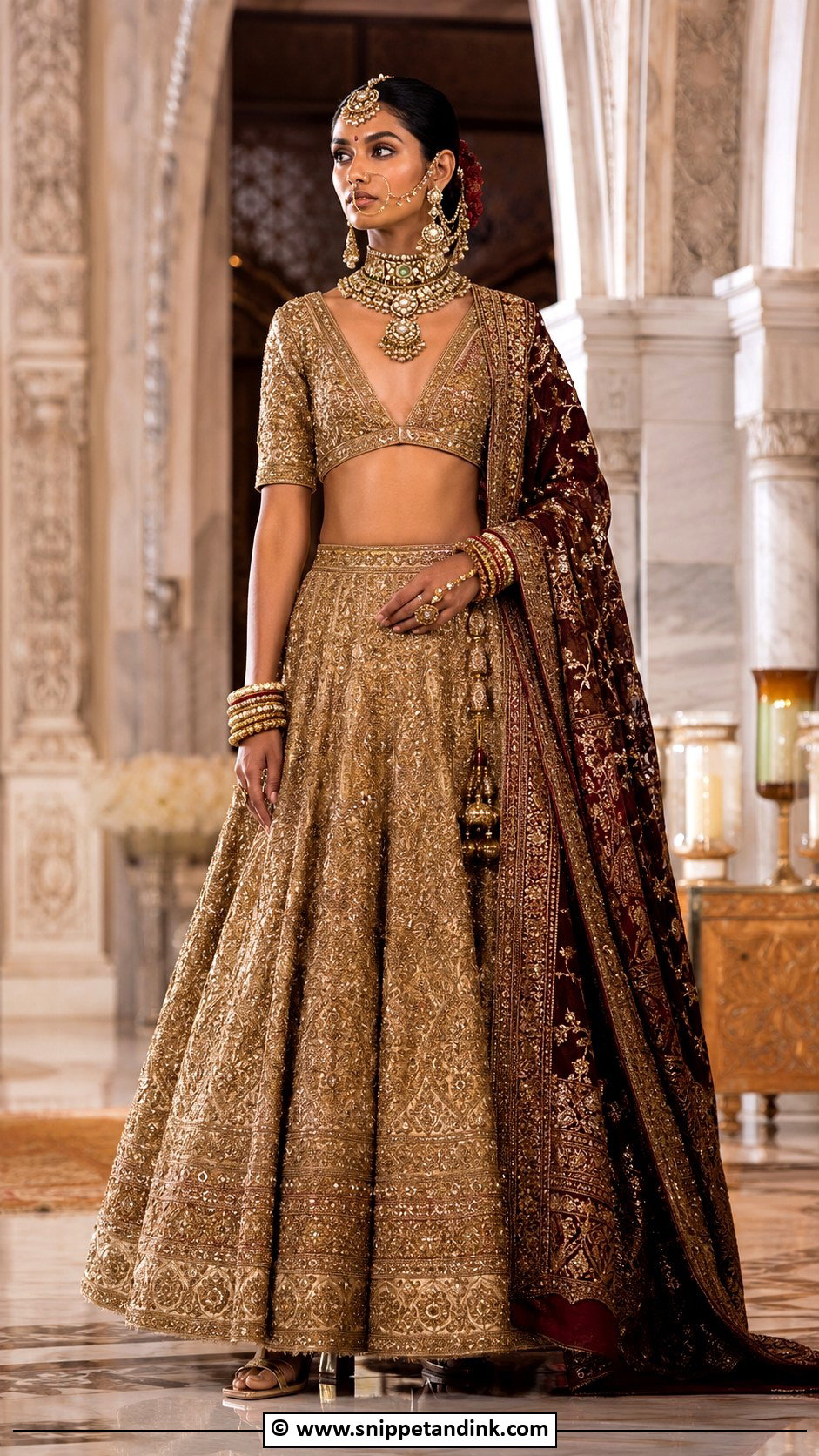
Gold looks royal when it’s antique, champagne or dull gold with texture; flat metallic gold looks like costume under flash. A red, maroon or rust dupatta gives contrast, while tonal pearl and polki keeps everything soft. Bronze eyes and a nude lip balance the shine. It suits large indoor weddings where the light is controlled.
6. Velvet Sabyasachi Bridal Lehenga
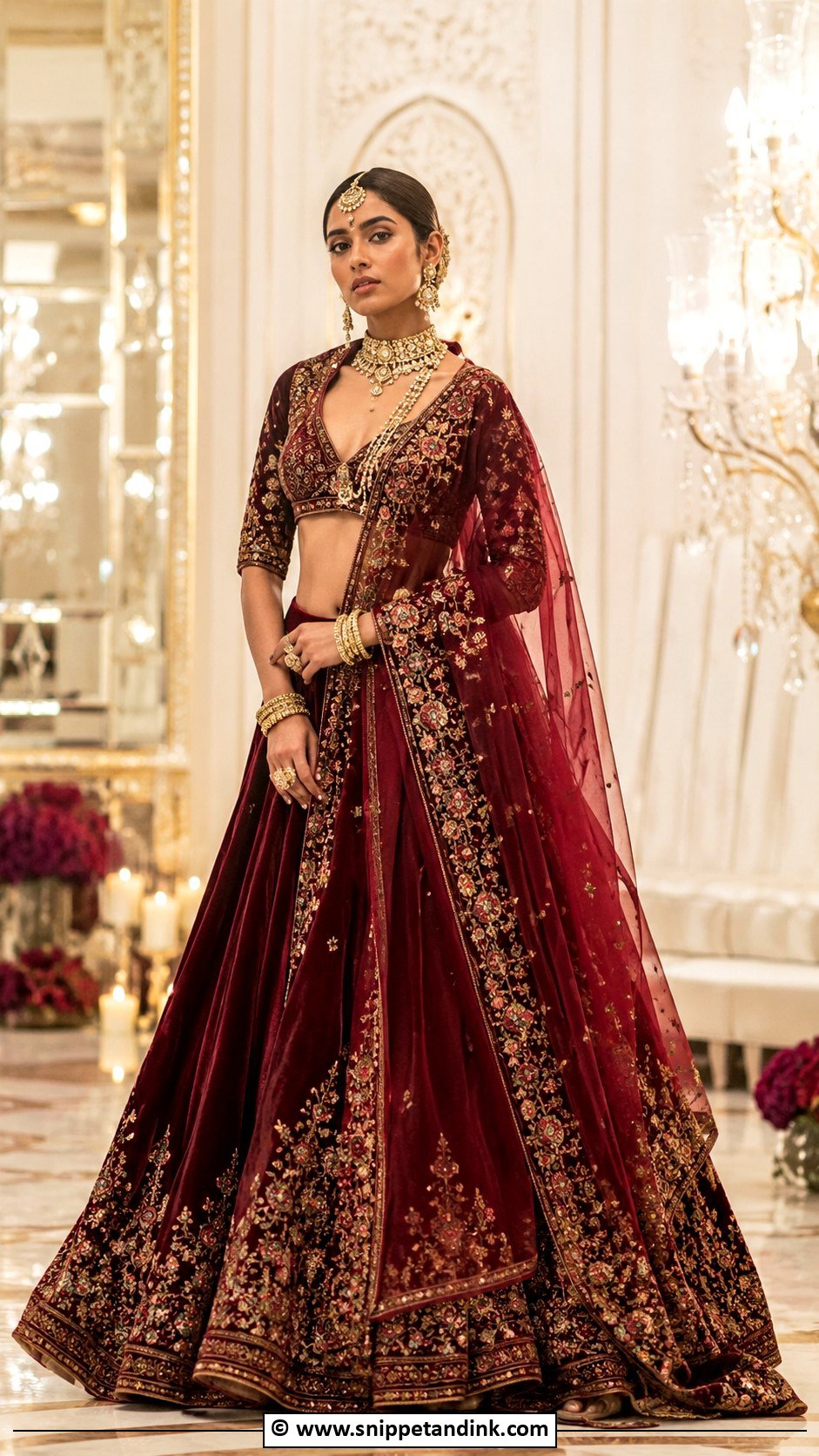
Velvet is the winter fabric, and it holds deep colours such as maroon, ruby, emerald, navy and wine better than anything else. It is also heavy and warm, so I wouldn’t put a bride in it for a daytime summer ceremony. Because the fabric is already rich, the embroidery can stay restrained. A sheer organza dupatta lightens it, and kohl-lined eyes with a soft matte lip finish the look.
7. Sabyasachi Bridal Saree
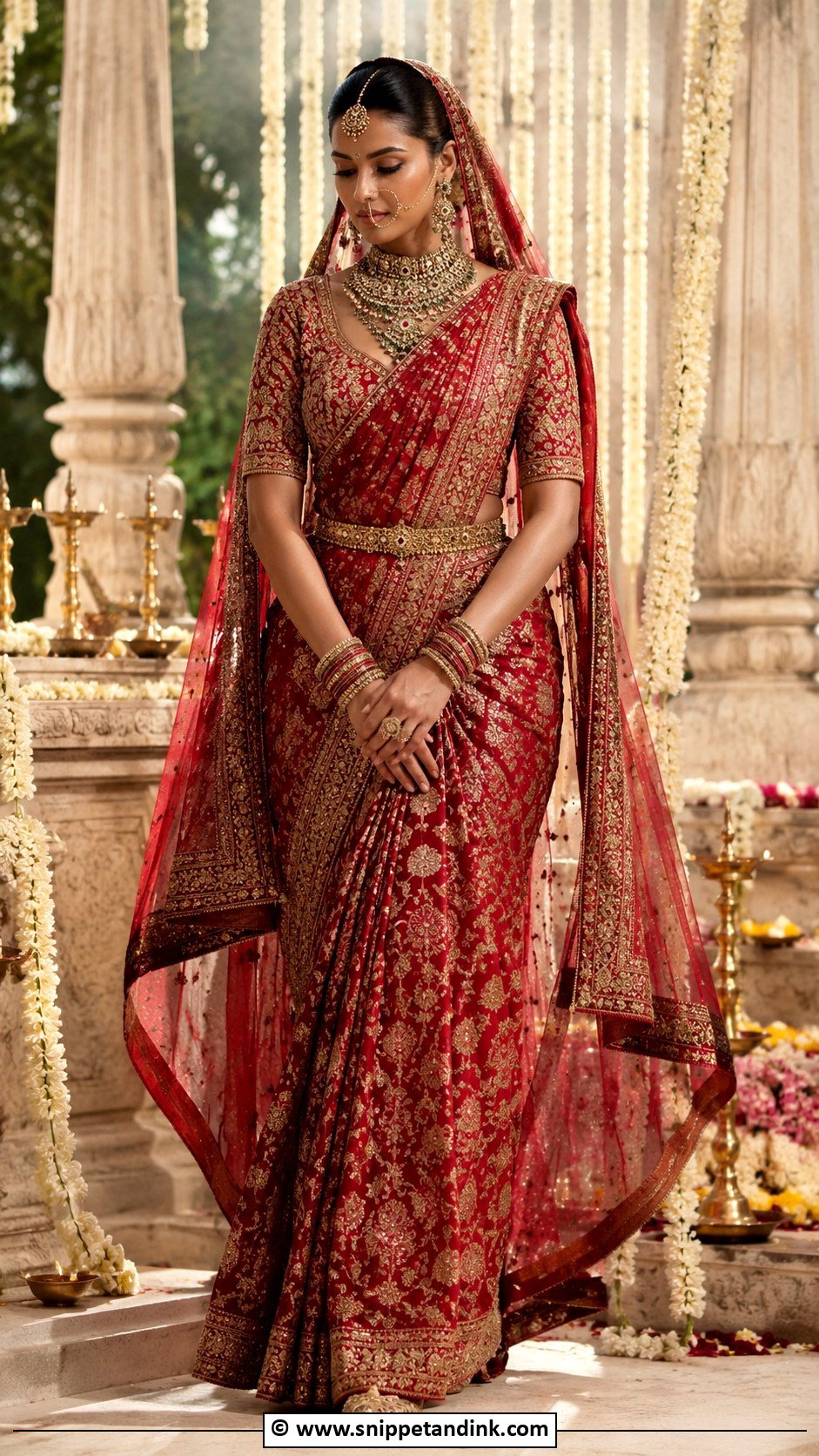
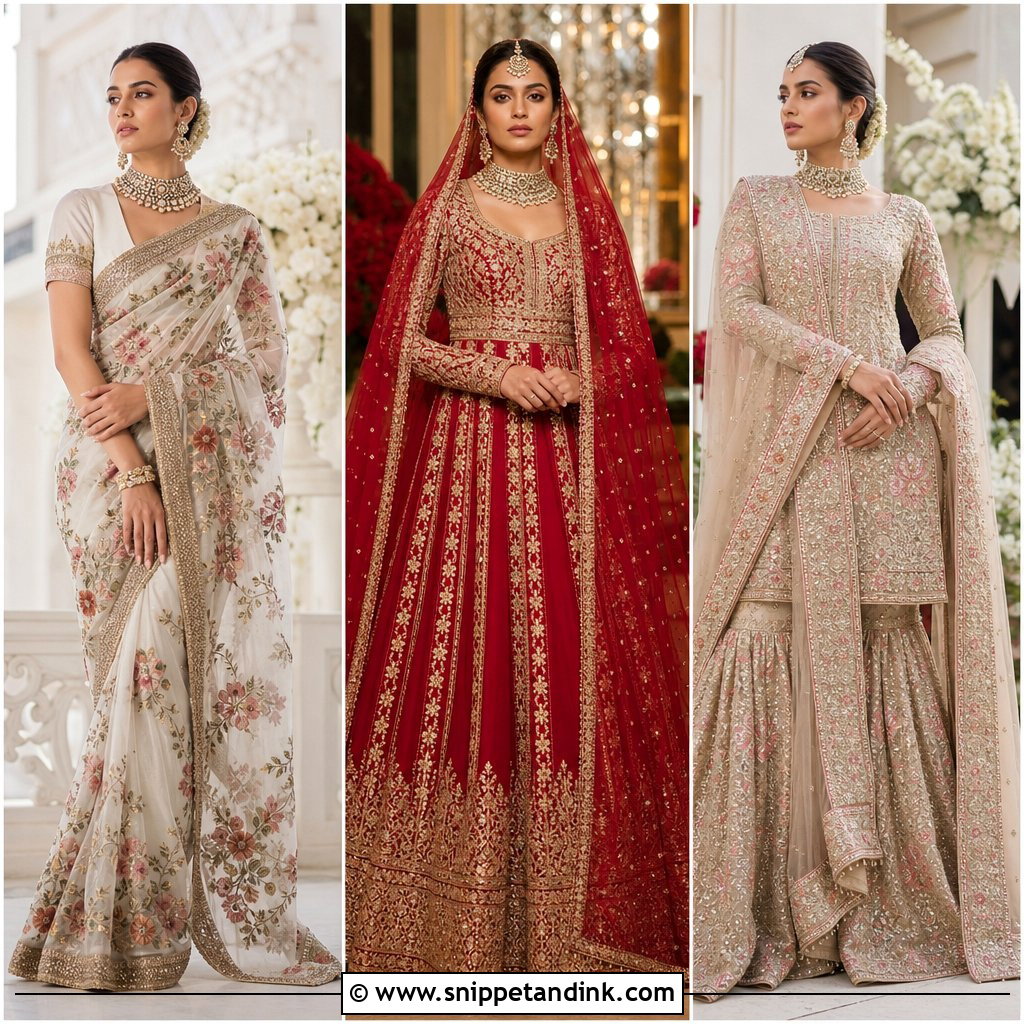
A saree gives a bride more ease of movement than most lehengas, which matters at long temple ceremonies. Look for red, ivory, gold or maroon with a heavy border, hand embroidery or a rich weave. The drape is what makes or breaks it, so book an experienced draper rather than trusting a cousin on the morning itself. A fitted blouse, a waist belt and a veil-style dupatta make it as bridal as any lehenga.
8. Red Sabyasachi Bridal Saree
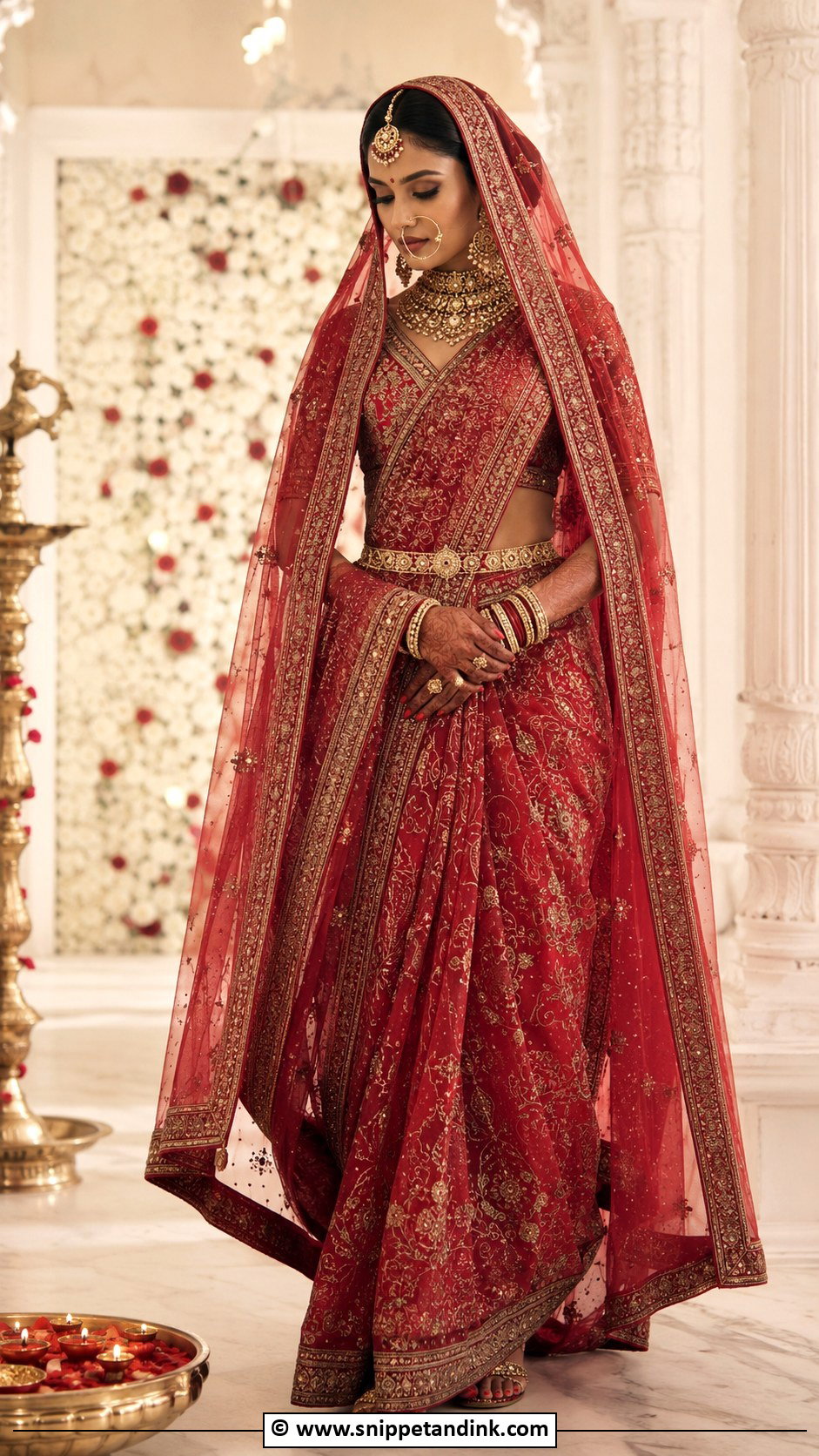
A red saree with a strong border gives the traditional red bride look in a more fluid shape. Silk, organza or embroidered fabrics all work, with a richly worked blouse. A gold kamarbandh does two jobs here, defining the waist and holding the pleats in place when you stand up from the mandap. Temple-style or antique gold pieces suit it, with a low centre-parted bun and flowers.
9. Ivory Sabyasachi Bridal Saree
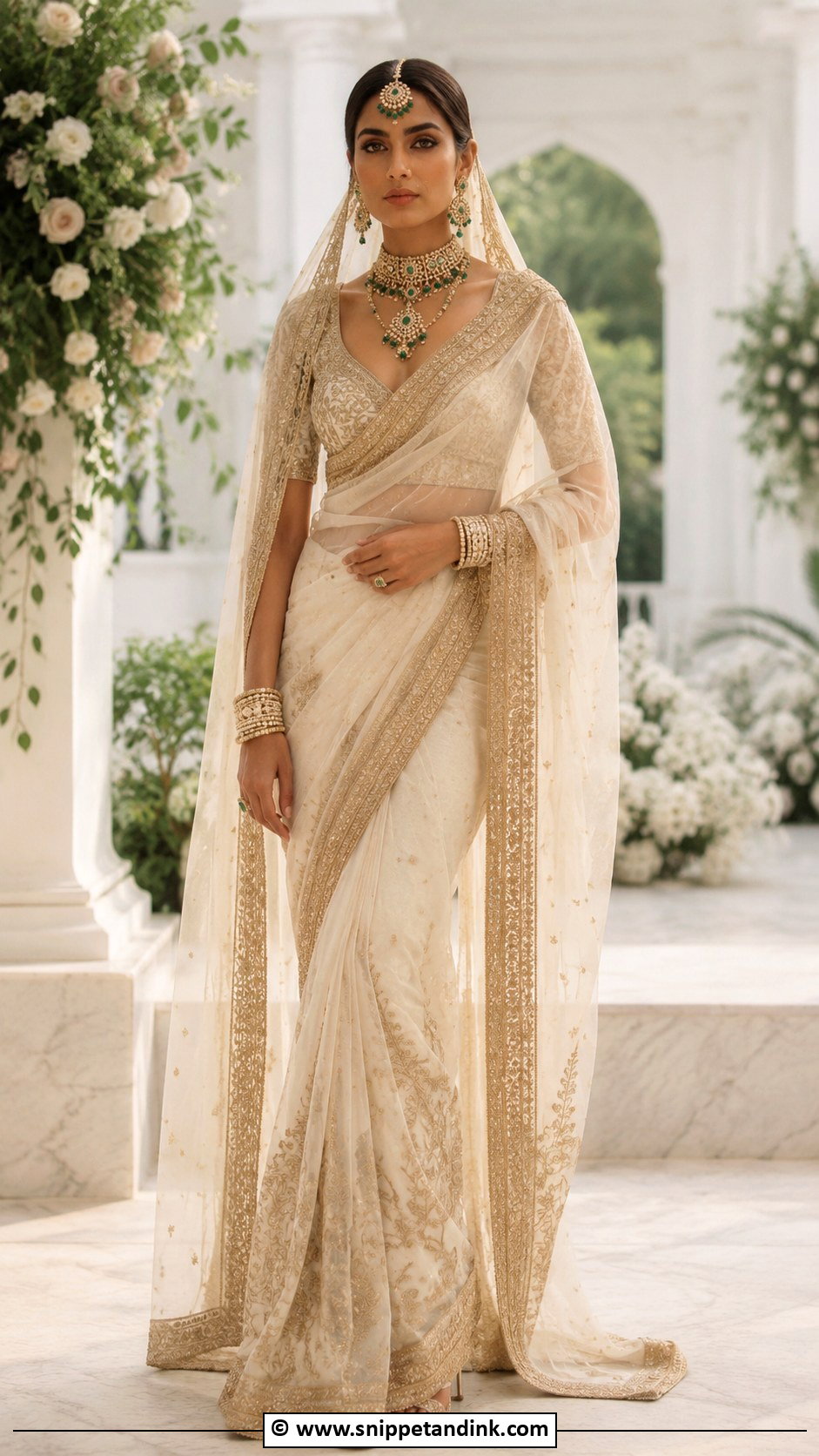
An ivory saree suits morning ceremonies, civil weddings and beach settings, where a red lehenga would feel heavy. Gold zari, pearl embroidery or a fine handwoven texture keep it from looking plain. Since the colour is quiet, the jewellery can be bold: layered polki, a pearl choker or emerald accents. Keep the makeup fresh, with soft brown eyes and a nude-pink lip.
10. Sabyasachi Bride With Double Dupatta
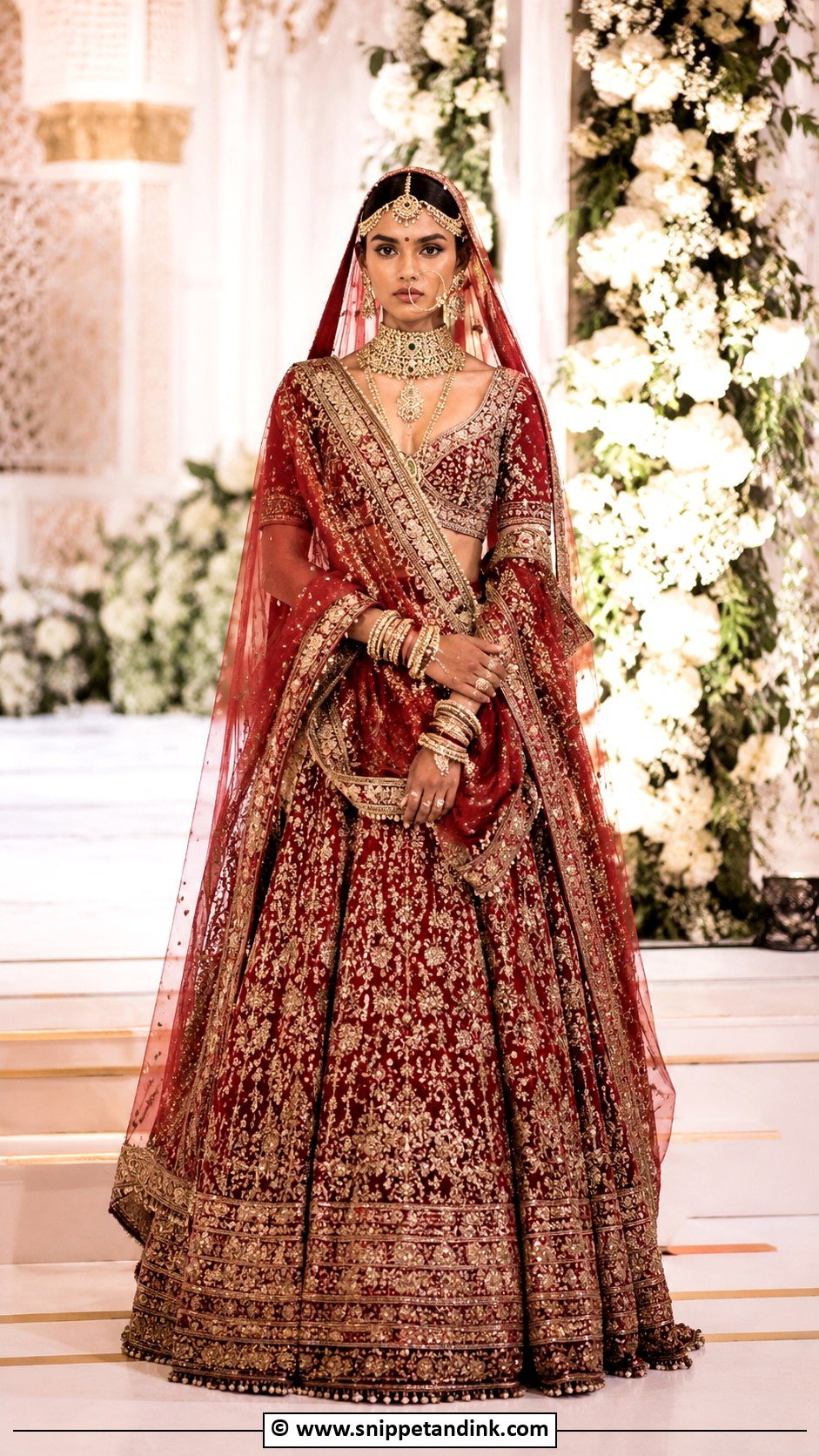
Two dupattas transform a lehenga without changing it. The head dupatta should be sheer and light, because a heavy one pulls at the hairstyle within an hour. The shoulder or waist dupatta can carry the heavier border. The order matters when you pin: head dupatta first, secured into the bun, then the second draped and pinned at the blouse and waist. Both need many small pins rather than a few large ones so you can still lift your arms.
11. Sabyasachi Bride With Veil
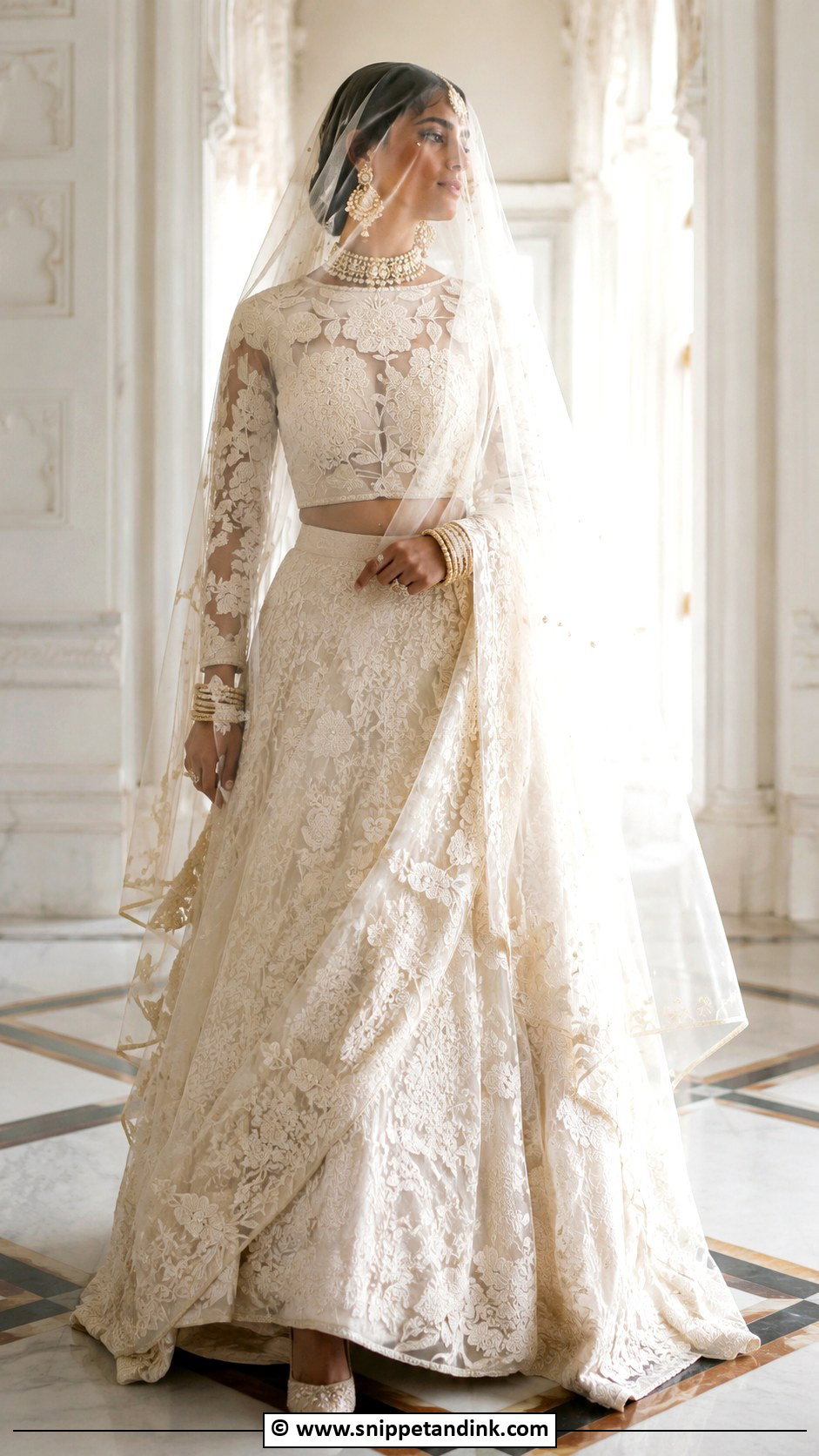
A veil-style dupatta over the head and shoulders gives the entry its drama, and it works best over a detailed blouse and heavy skirt because it frames them instead of hiding them. Choose a border that sits flat along the hairline. The hairstyle underneath must be smooth and firm, ideally a low bun, so the veil has something to anchor to. It is the look for the entry and the first ceremony portraits.
12. Sabyasachi Bride With Kamarbandh
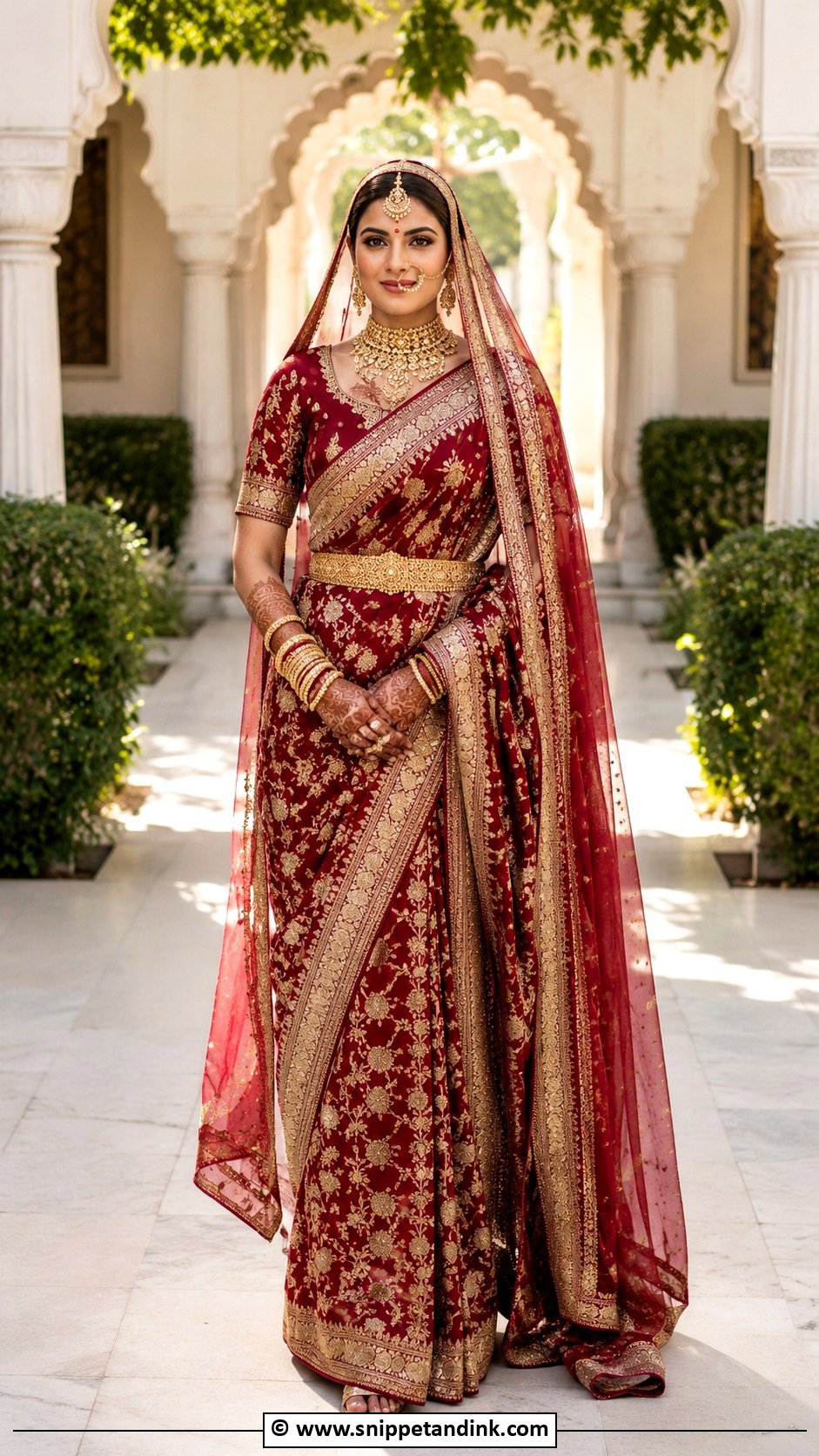
A kamarbandh is one of the most useful pieces in Indian bridal styling, not just decoration. It cinches the waist and stops the dupatta drifting during long rituals. Antique gold suits red and maroon, while pearl or kundan feels softer on ivory and pastels. Have it sized to sit over the outfit, not your bare waist, or it will press in after you’ve eaten.
13. Sabyasachi Bride With Polki Jewelry
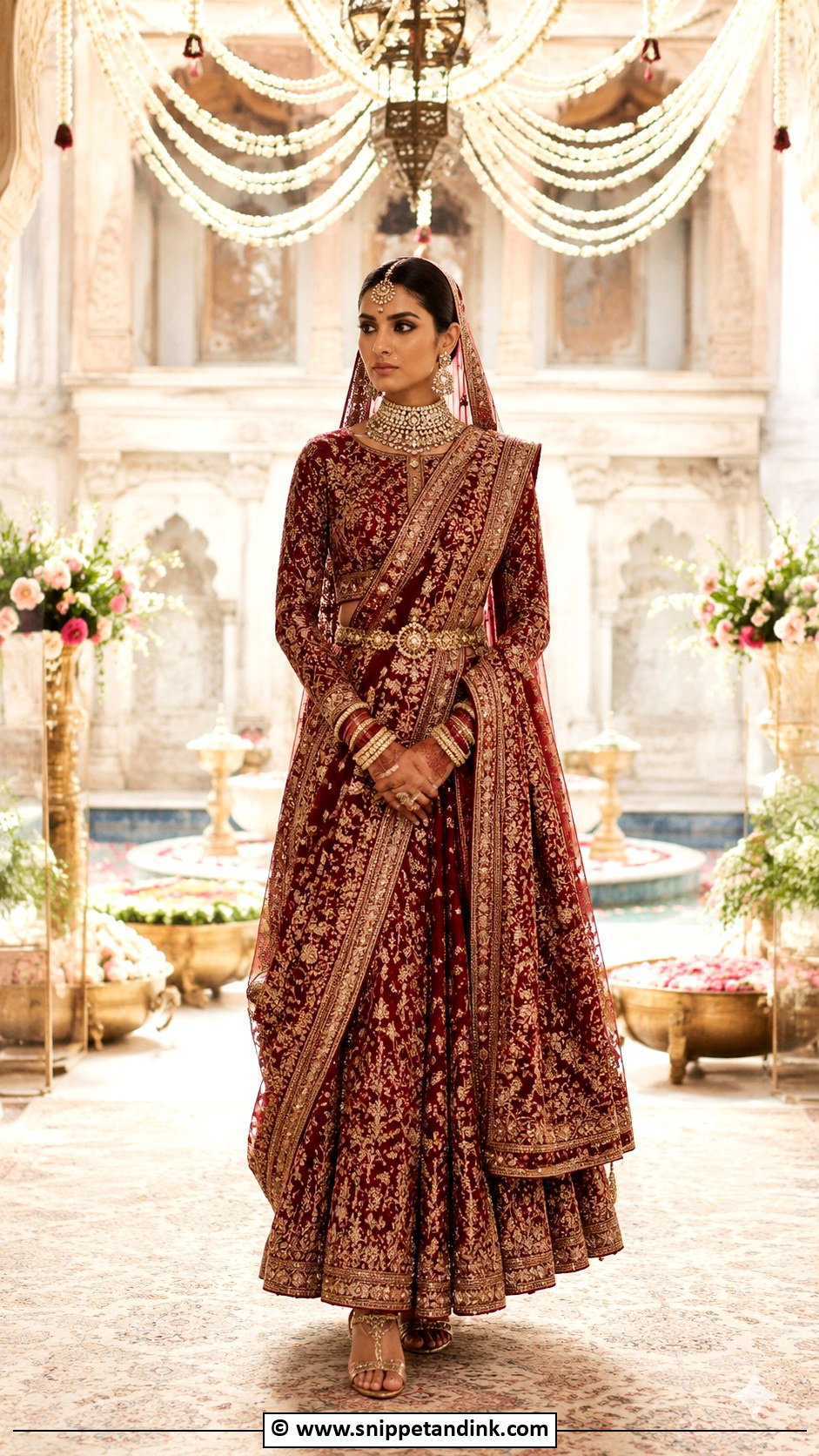
Polki uses uncut diamonds set in gold, and its soft, flat sparkle is what gives the old-world feel. Start with a choker close to the neck, then add a longer piece if the blouse neckline leaves room. Balance is the rule: a heavily worked lehenga needs cleaner pieces, a simpler outfit can take bold jewellery. Emerald drops, pearls or ruby accents add colour.
14. Sabyasachi Bride With Emerald Jewelry
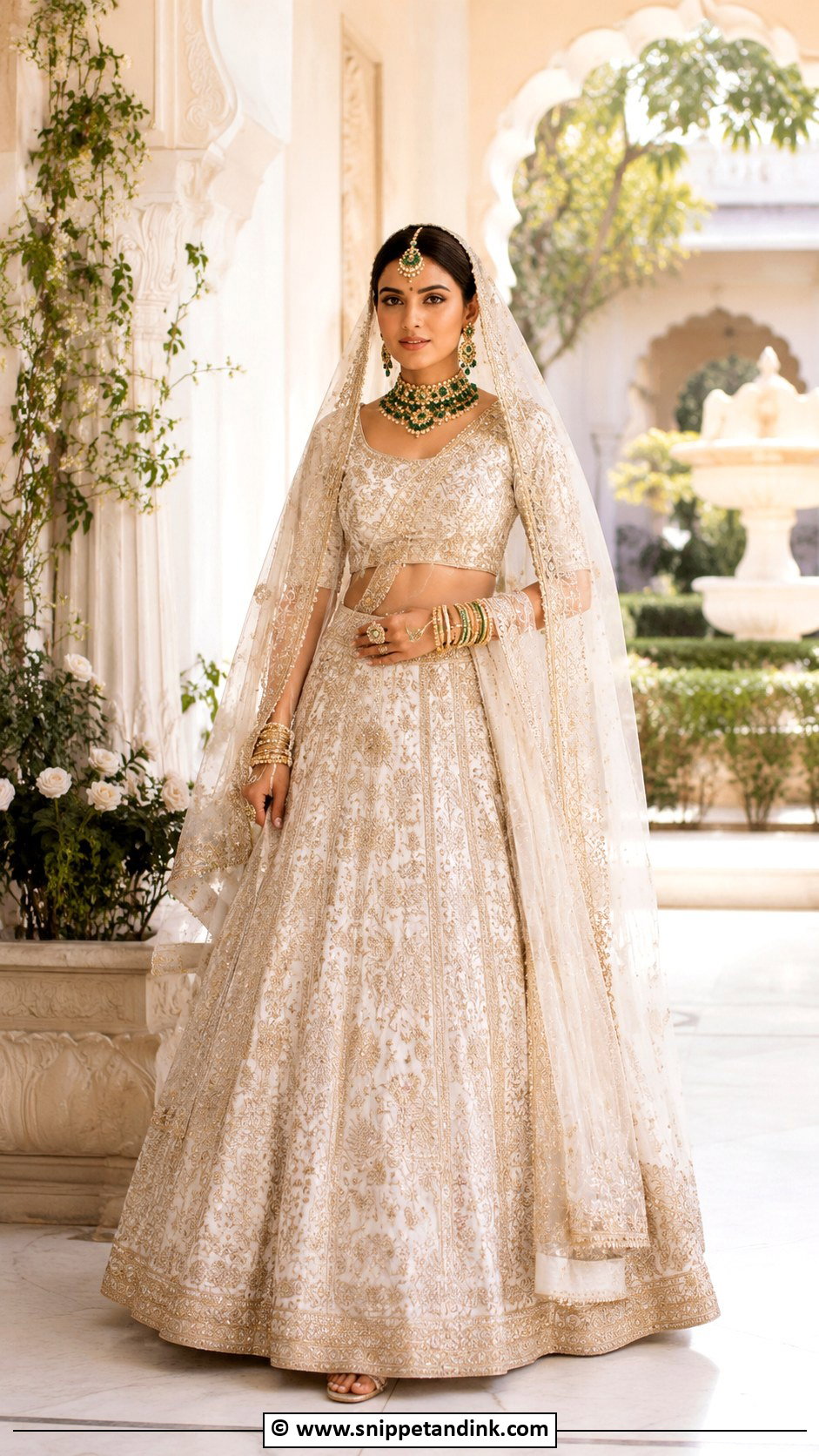
Emeralds against red are the classic contrast, and they read clearly in photos even from a distance. With ivory, emerald drops look modern and calm. Pick one focal point, whether a choker, a layered necklace or large earrings, and keep the rest simple with gold bangles and a fine maang tikka. Bronze eyes and a soft lip let the green stand out.
15. Sabyasachi Bride With Temple Jewelry
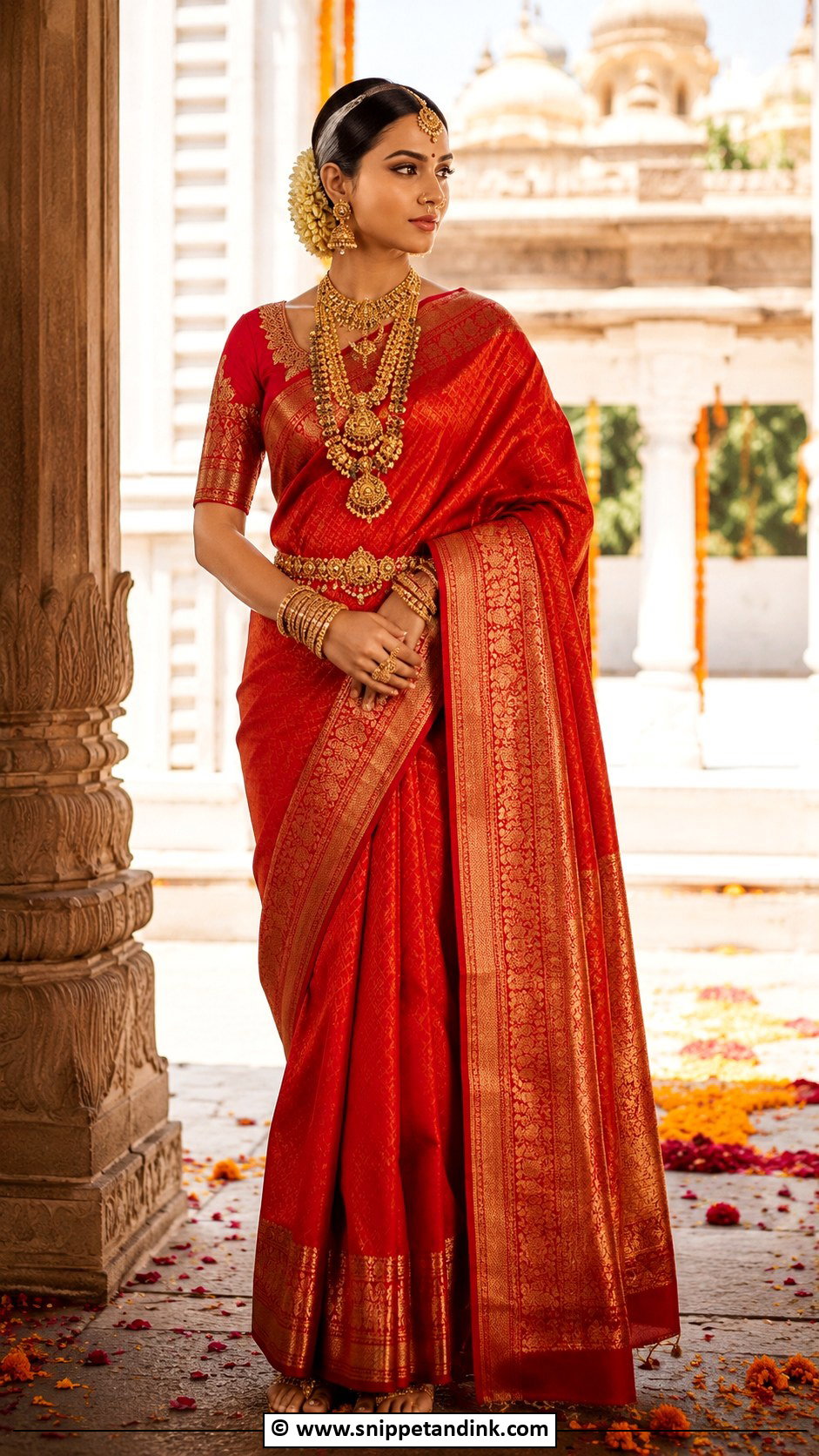
Temple jewellery, with its deity motifs, coin details and antique gold, belongs with silk sarees and South Indian bridal styling. Jhumkas, stacked bangles and a kamarbandh complete it. These pieces are heavy, especially long necklaces, so make sure the blouse fabric can take the weight without puckering at the neckline. A sleek bun with flowers and a strong classic eye suit it.
16. Sabyasachi Bride With Matha Patti
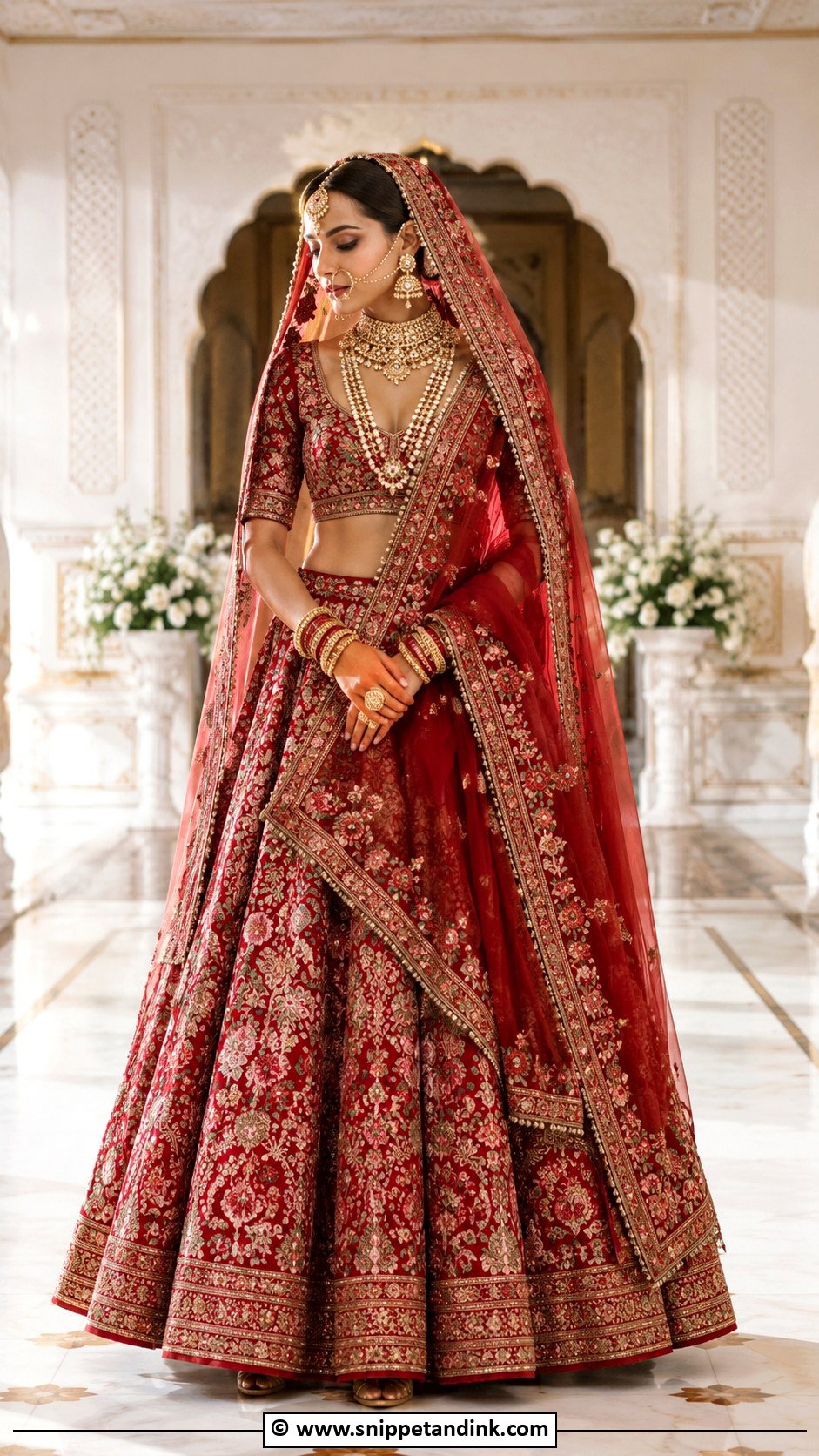
A matha patti frames the face, but it only sits flat on a centre parting with a smooth base. I pin it into the hair at the sides as well as the centre, otherwise it slides when the dupatta goes over it. Choose a broad piece for a grand lehenga and a fine one for a saree or pastel outfit. With a matha patti on, keep earrings and necklace in proportion so the face doesn’t look crowded.
17. Sabyasachi Bride With Nath
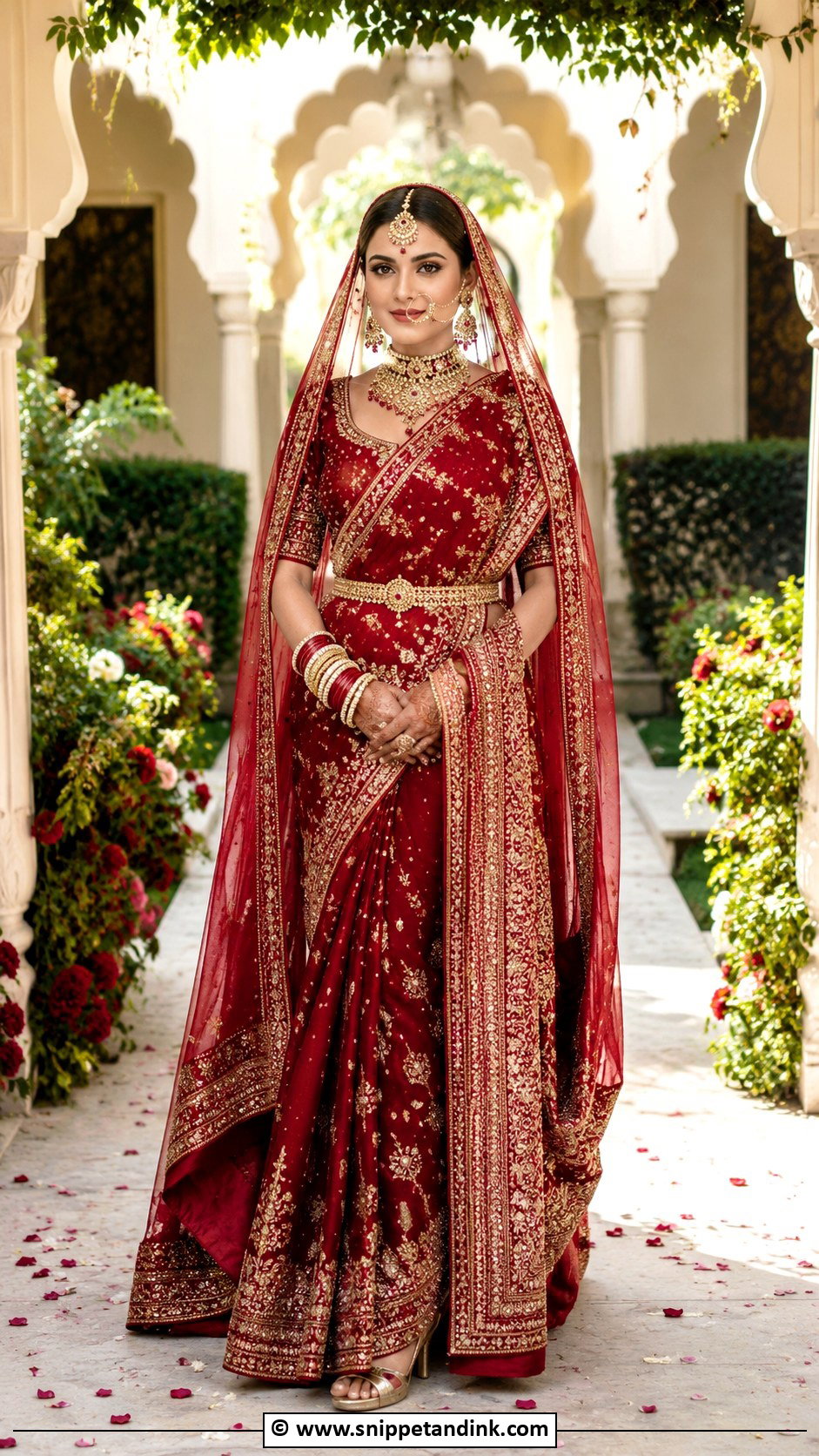
A nath is personal: small and delicate suits some faces, a large statement nath suits others. Large ones need a supporting chain clipped into the hair, otherwise the weight pulls on the nose all evening. Practise eating and drinking with it before the day. If you choose a large nath, keep the rest of the face jewellery clean.
18. Sabyasachi Bride With Long Veil
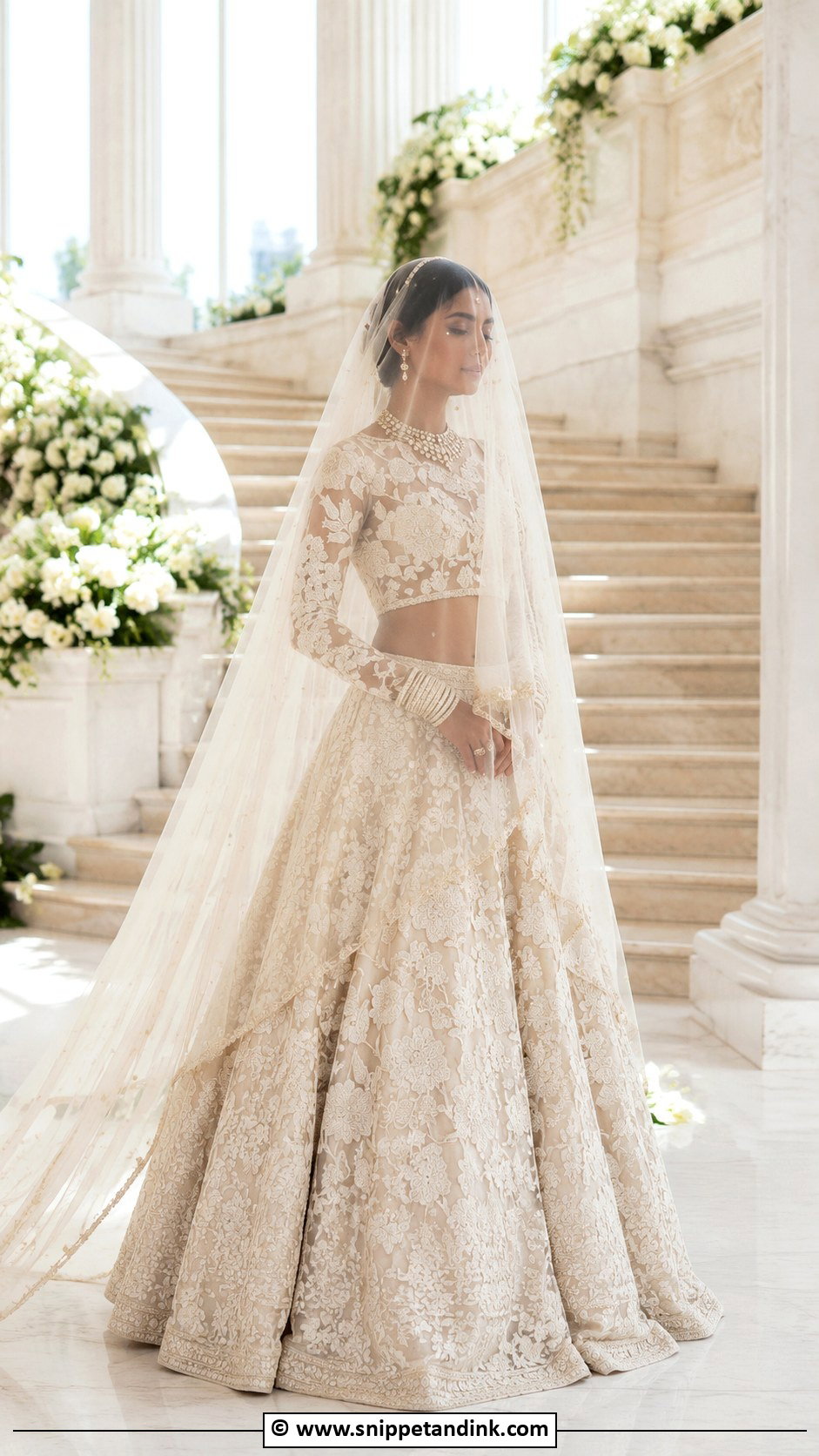
A long veil gives the entry a cinematic feel, as long as it’s light enough to float. Organza, net and tissue with an embroidered border all move well. Place it so the blouse and necklace stay visible over the shoulders, since covering them hides half the outfit. It looks dramatic with red, ivory, gold and pastels, and someone should be assigned to manage it on steps and mandap stairs.
19. Sabyasachi Bride In Floral Lehenga
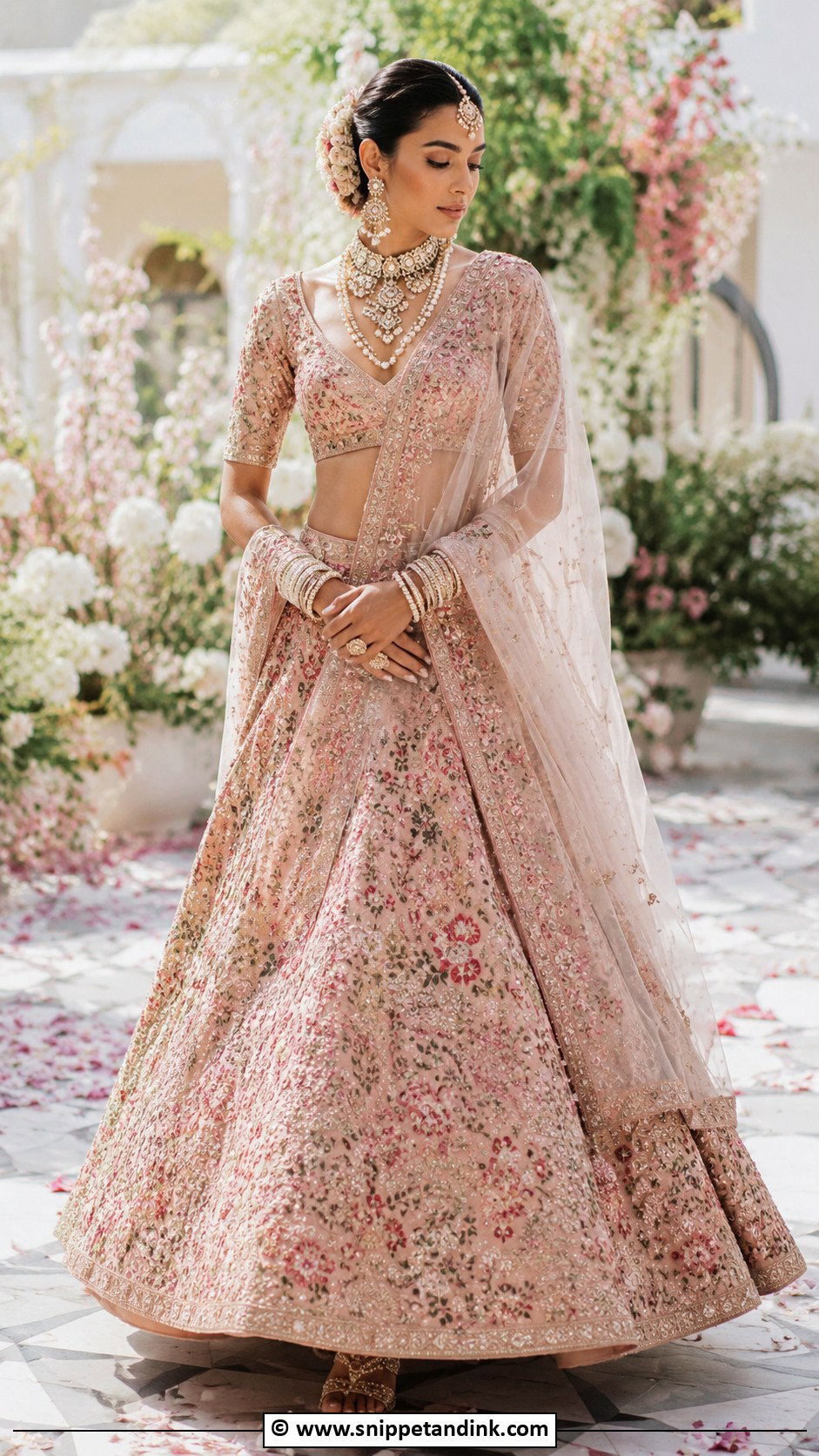
Floral embroidery on pink, ivory, peach, sage or muted gold suits daytime weddings and garden venues better than heavy red. A blouse that repeats the floral motif ties the outfit together. Pearl, polki or coloured stones that echo the flowers work for jewellery. I’d point brides here who want a designer feel without the weight of a traditional red lehenga.
20. Sabyasachi Bride In Organza Lehenga
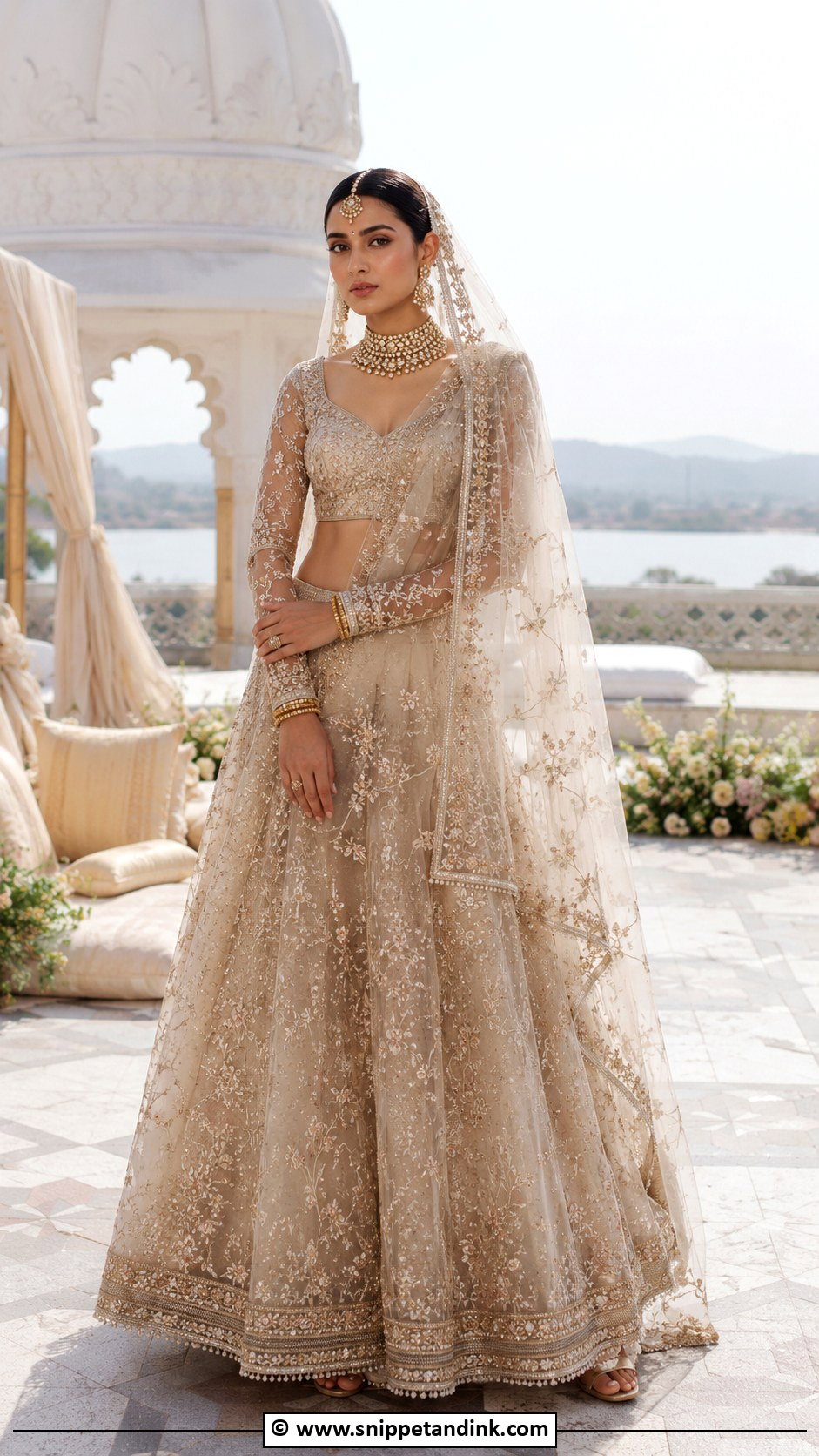
Organza gives volume without the weight of velvet or raw silk, which makes it the comfortable choice for outdoor and daytime weddings. It crushes into creases if you sit on it carelessly, so have someone spread the skirt every time you sit. Pastel pink, ivory, champagne, sage or soft gold with embroidered borders suit it. Pearl-polki jewellery and a low bun keep it light.
21. Sabyasachi Bride In Tissue Saree
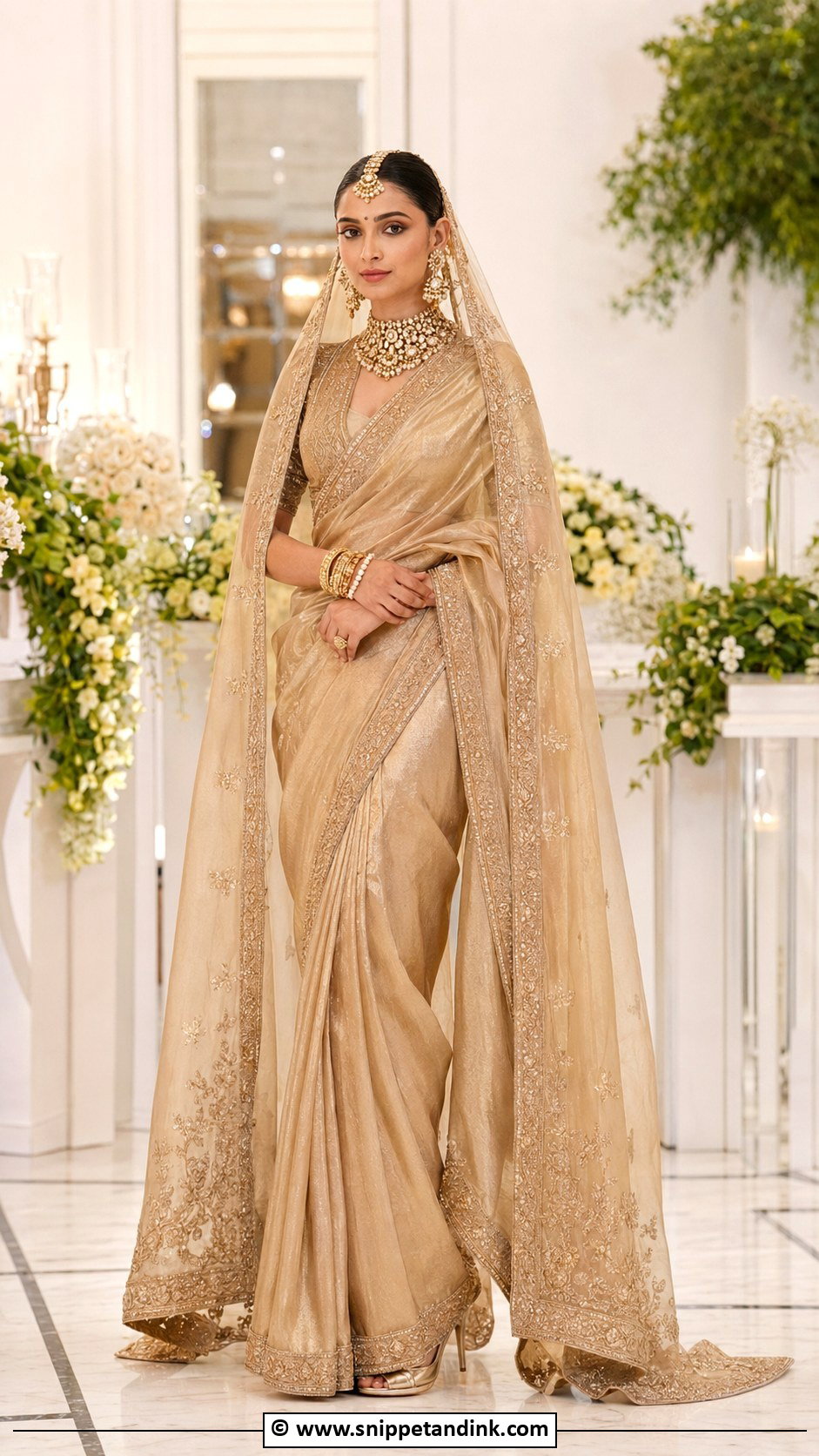
Tissue is woven with metallic zari, so it has a soft shine that catches light without needing embroidery everywhere. It also creases sharply and can’t simply be ironed at high heat, so have it professionally pressed and draped neatly. Gold, ivory, champagne or blush tissue with a strong border and structured blouse look refined. Polki or pearl accents suit it.
22. Sabyasachi Bride In Banarasi Saree
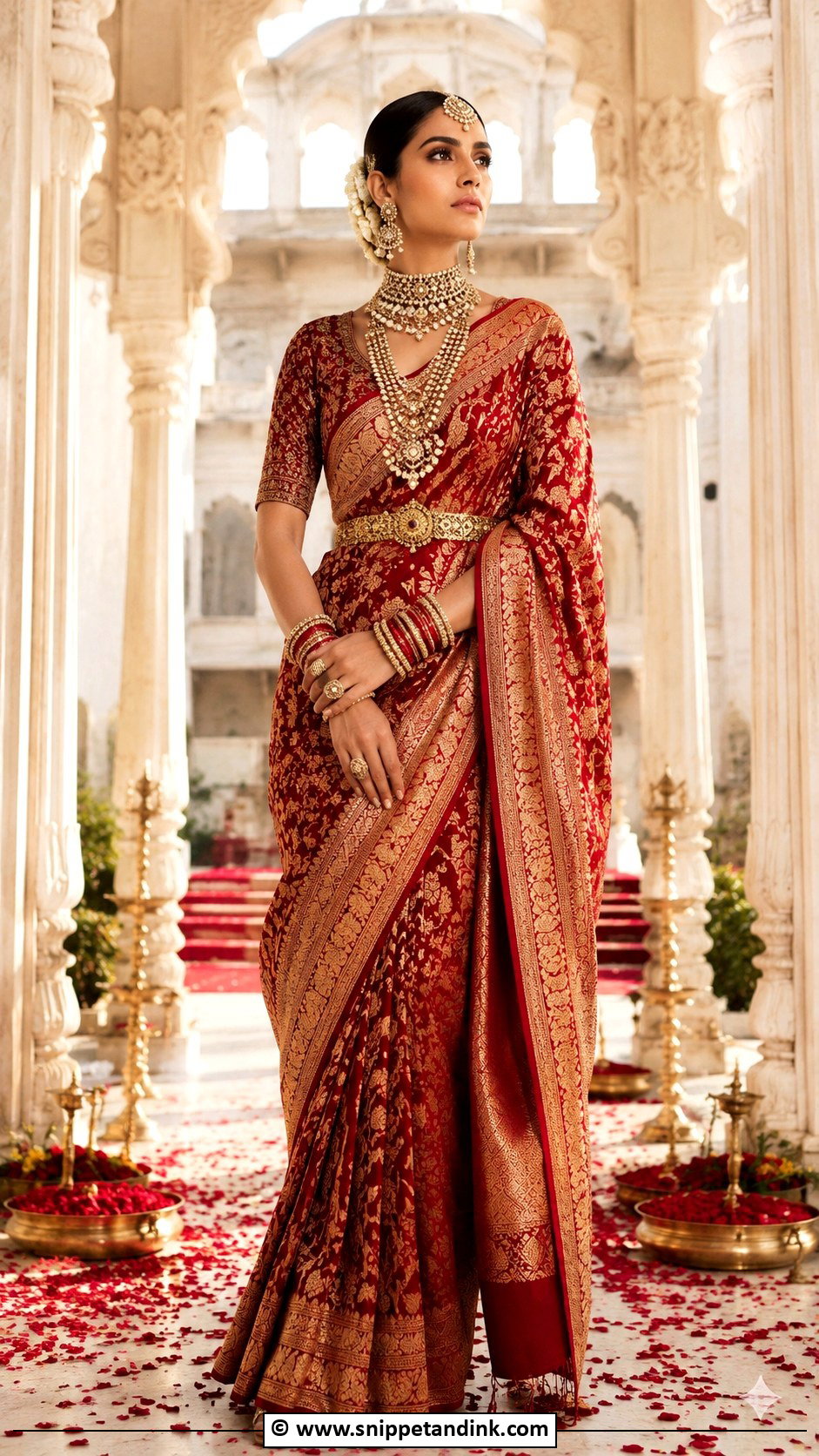
A Banarasi saree is all about the weave, so the drape should show it: sharp pleats and a structured pallu. Red, maroon, rani pink, gold or deep green with zari motifs are classic. Banarasi silk is heavy, so a kamarbandh helps keep the pleats in place. A centre-parted bun with flowers and layered gold jewellery finish it.
23. Sabyasachi Bride In Sharara
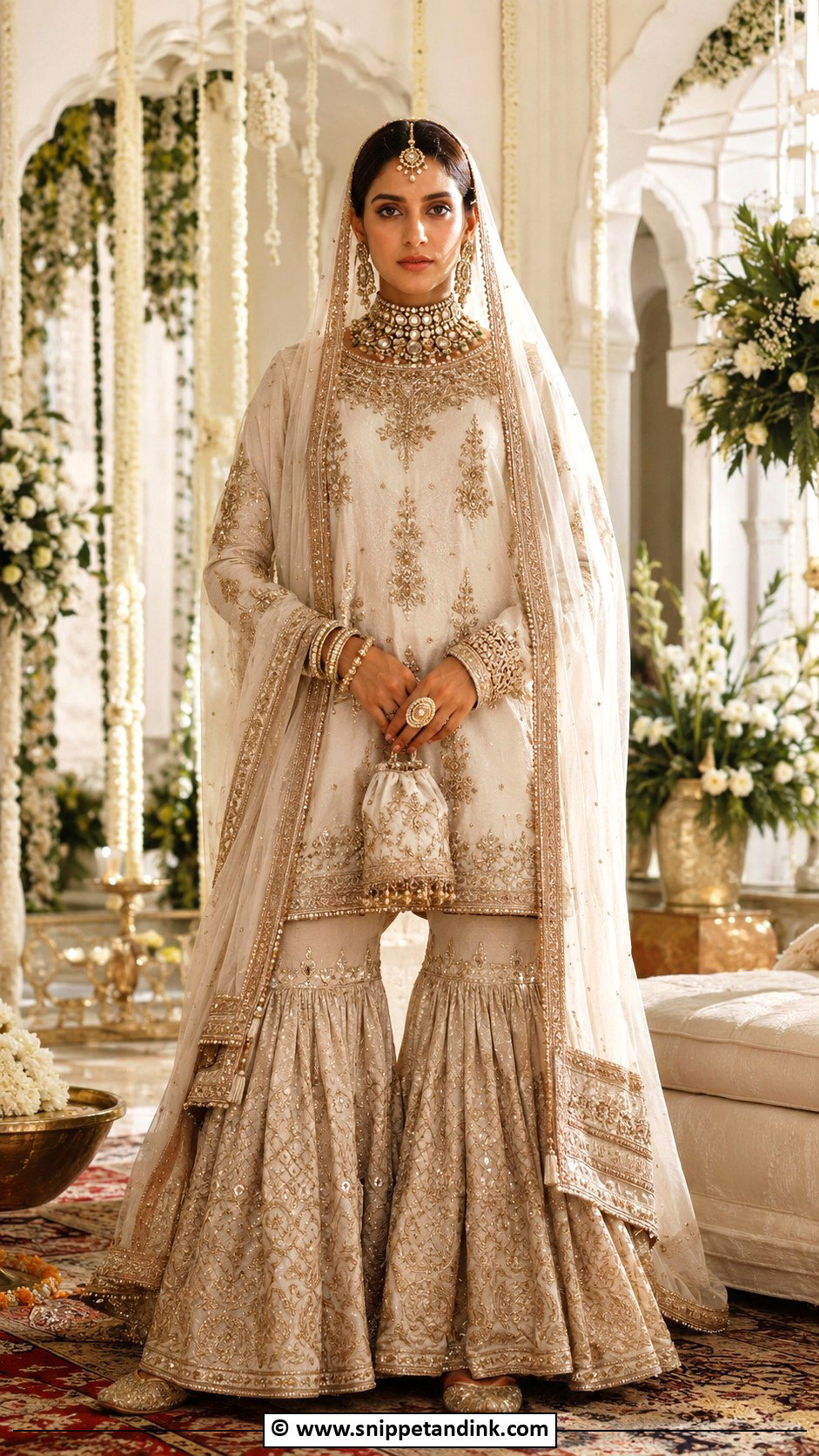
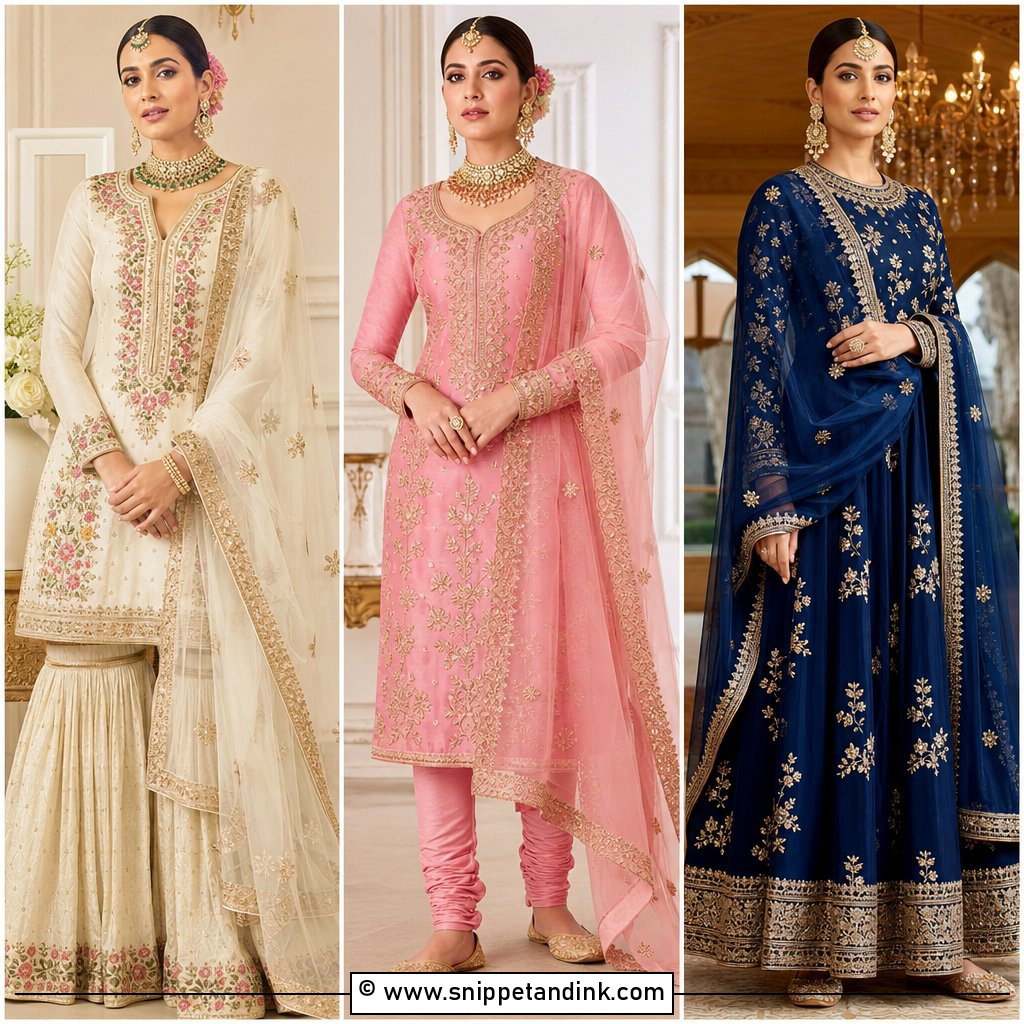
A sharara suits nikah ceremonies and pre-wedding rituals, and it’s easier to sit cross-legged in than a lehenga. An embroidered kurta or short blouse over wide sharara pants with a matching dupatta keeps it bridal. Ivory, gold, red, blush and emerald all work. Check the hem against your shoes, since sharara flares catch on heels.
24. Sabyasachi Bride In Anarkali
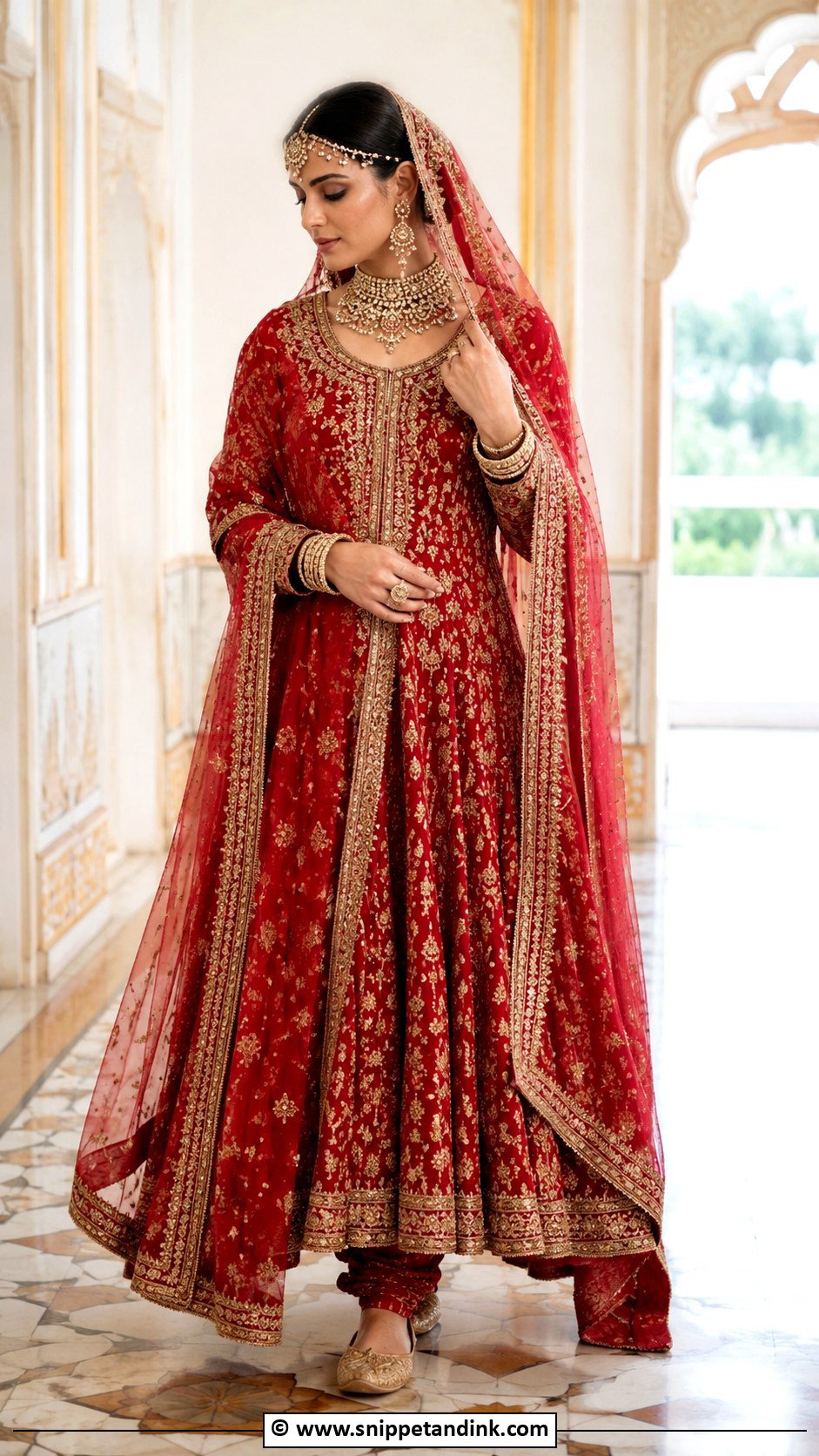
A floor-length Anarkali gives height and flow with full coverage, which makes it a natural choice for engagement rituals and smaller weddings. Embroidery at the neckline, sleeves and hem draws the eye along the length. Churidar pants and an embroidered dupatta complete it. A matha patti or maang tikka makes it more bridal, and the hem length should be set with your exact footwear.
25. Sabyasachi Bride In Reception Lehenga
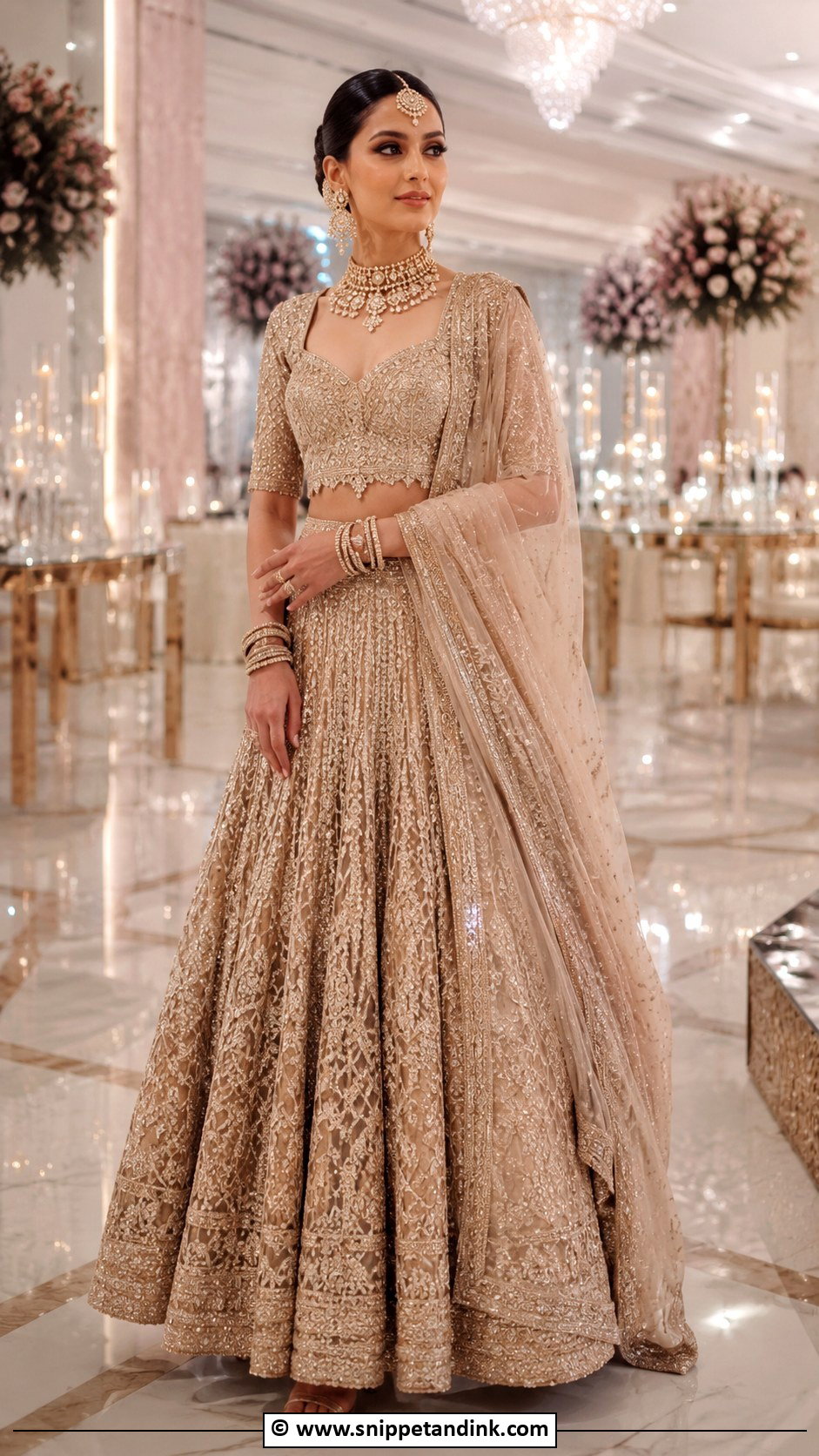
Reception lehengas can be more glamorous: ivory, champagne, silver-gold, blush, wine or midnight blue with shimmer or sequins. Drop the head dupatta, or switch to a cape-style dupatta, so the evening look feels different from the ceremony. Diamond-polki and a sleek hairstyle suit it. Since you’ll be standing to greet guests for hours, pick a lighter skirt than your wedding lehenga.
26. Sabyasachi Bride In Mehndi Lehenga
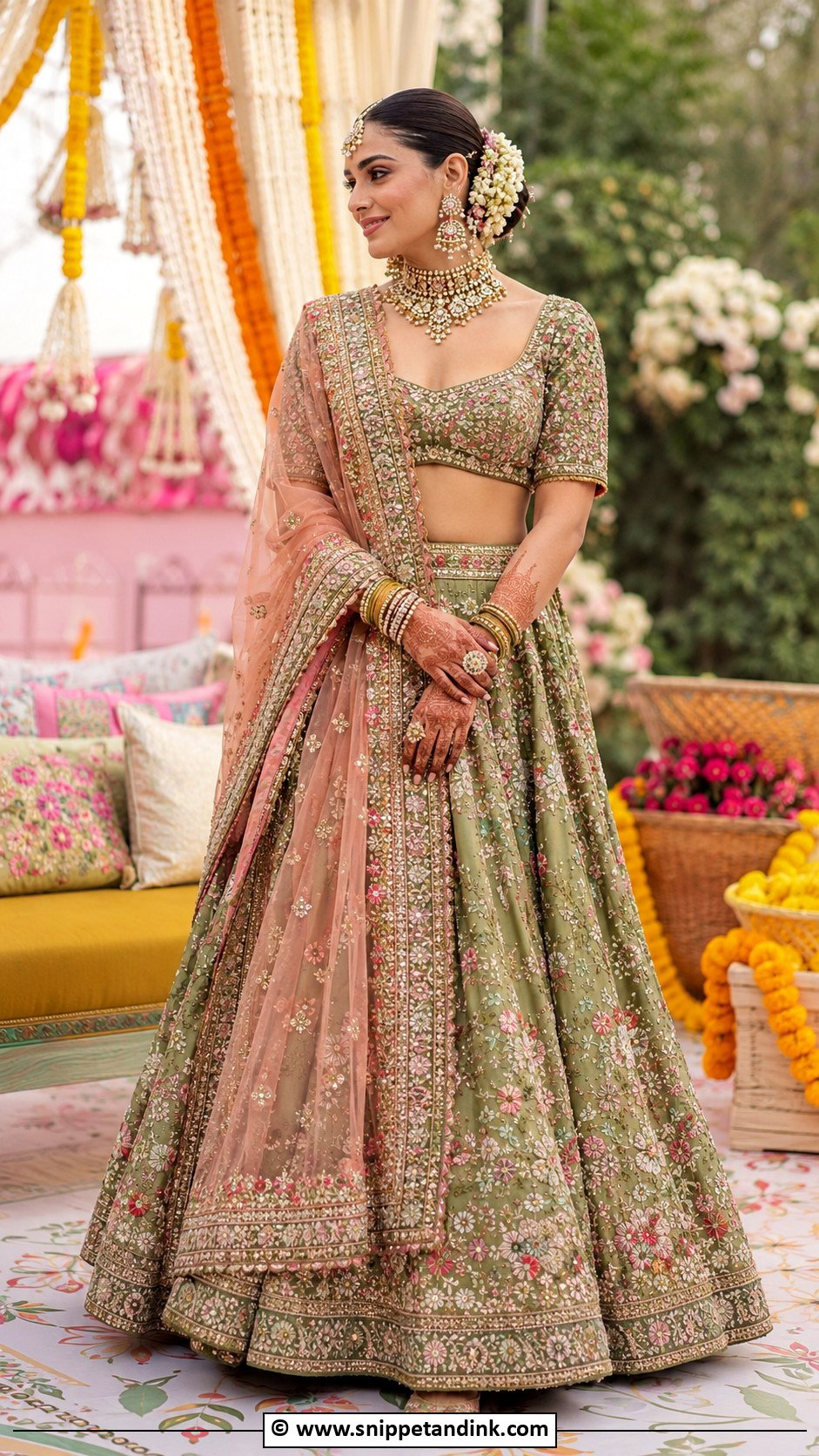
A mehndi lehenga should be light and colourful: yellow, green, peach, coral or multi-color floral embroidery. Sleeveless or short-sleeve blouses are practical here, because the paste on your hands and arms stays wet for hours and long sleeves will smear it. Floral jewellery or light polki pieces and comfortable juttis finish the outfit. Avoid anything you can’t sit in for a long stretch.
27. Sabyasachi Bride In Haldi Lehenga
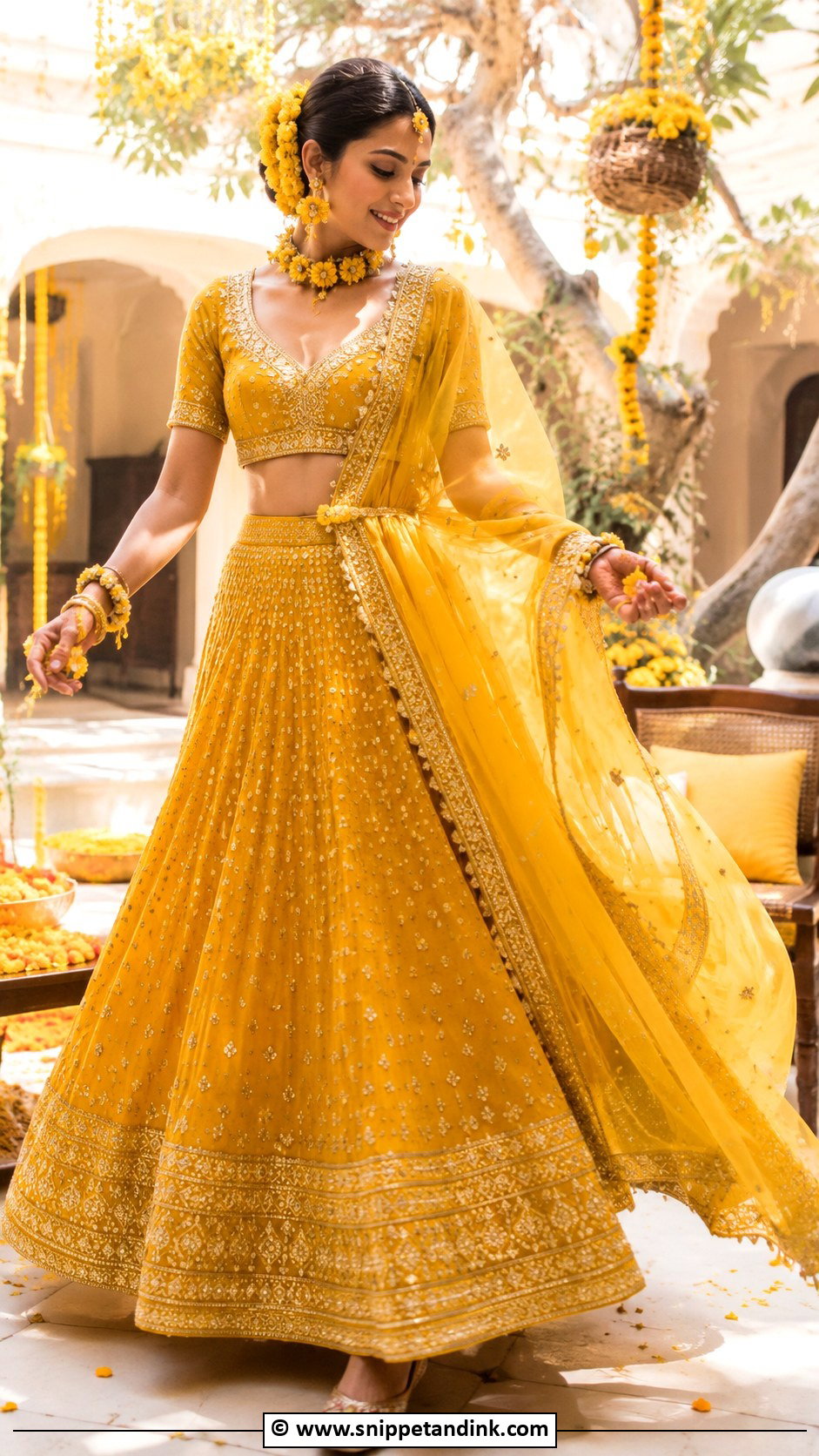
Haldi paste stains, and turmeric rarely comes fully out of fabric. That’s the first thing I tell a bride about this event, and it decides the outfit: cotton silk, organza or light silk in yellow, mustard or marigold that you won’t mind marking. Minimal embroidery, a cropped blouse, a light dupatta and floral jewellery keep it easy. Waterproof makeup helps, since the ceremony is messy and often ends in water.
28. Sabyasachi Bride In Sangeet Lehenga
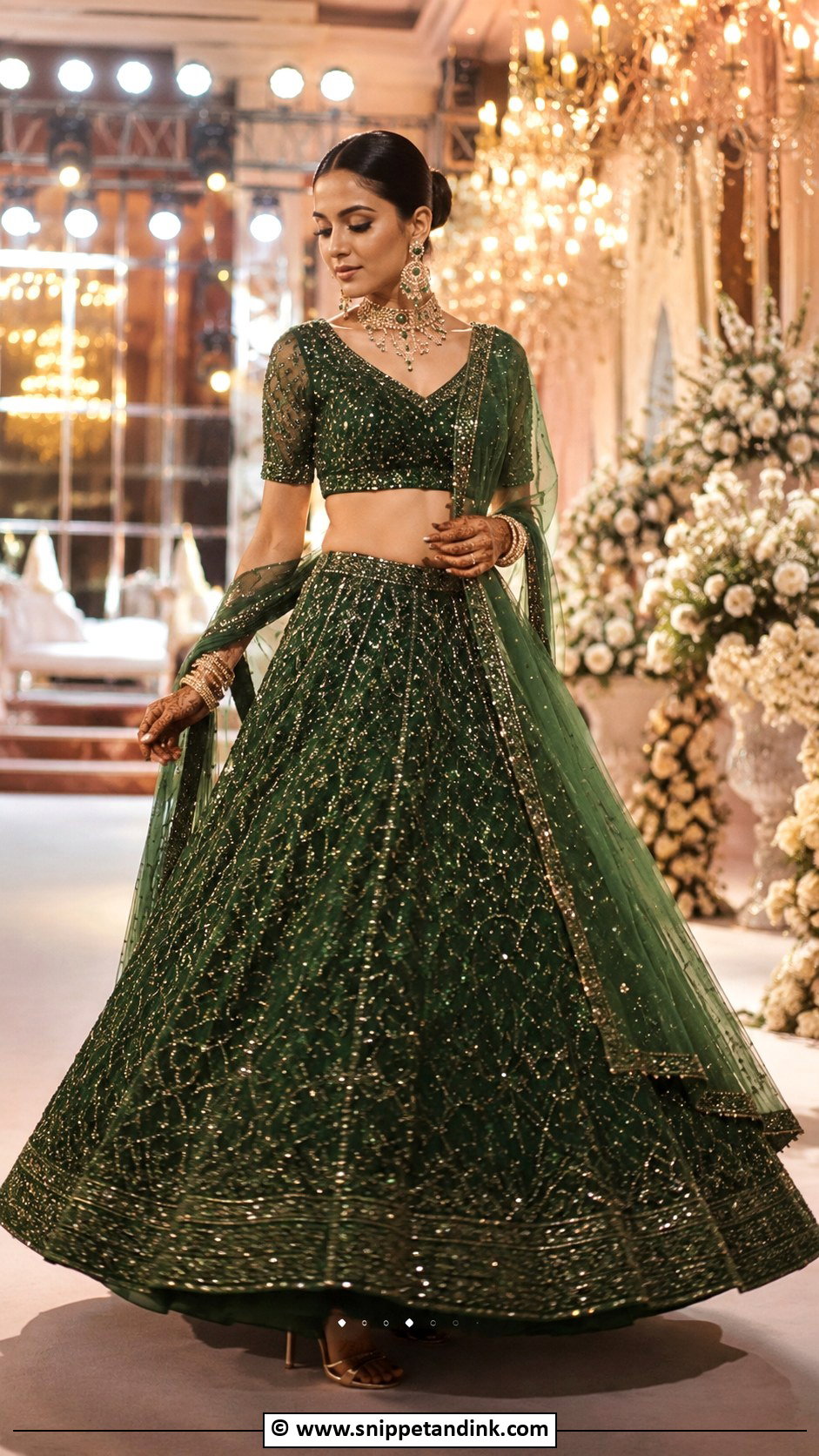
A sangeet lehenga needs to move. Choose a lighter skirt with sequins, mirror work or metallic embroidery in emerald, wine, navy, black-gold or champagne. Jewellery should be secure, with screw-back earrings and bangles that won’t fly off during a dance. If you’re performing, I always ask you to rehearse in the actual lehenga and shoes at least once to check the hem and spin.
29. Sabyasachi Bride In Cocktail Saree
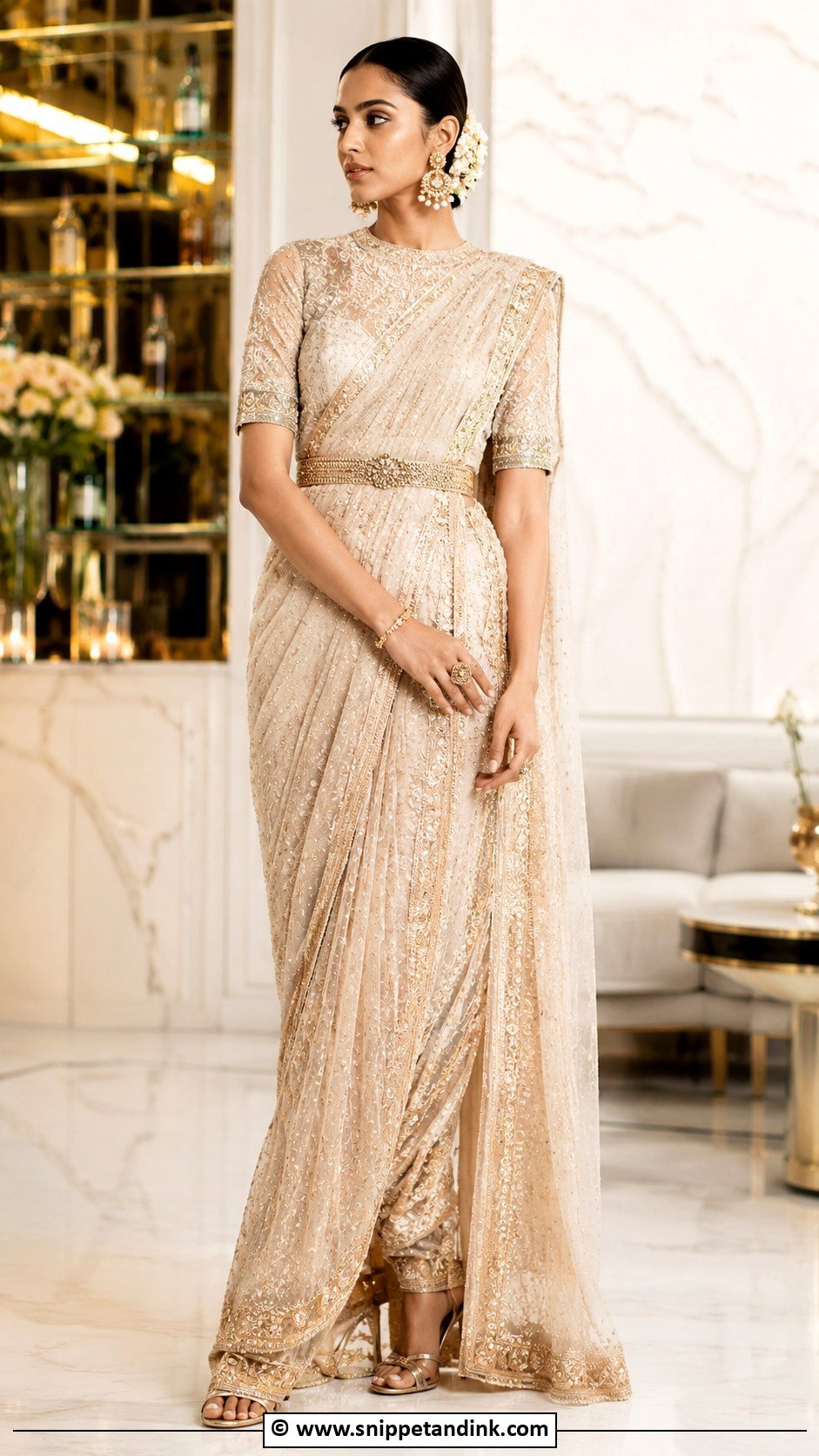
A cocktail saree suits a welcome dinner, engagement party or reception-adjacent event. Pre-draped, sequin or embroidered chiffon sarees in champagne, black, ivory, blush, emerald or silver make it quick to put on. A structured blouse, waist belt and statement earrings complete it. Keep the jewellery sleek; this is the event for smoky eyes and a modern line.
30. Sabyasachi Bride In Minimal Lehenga
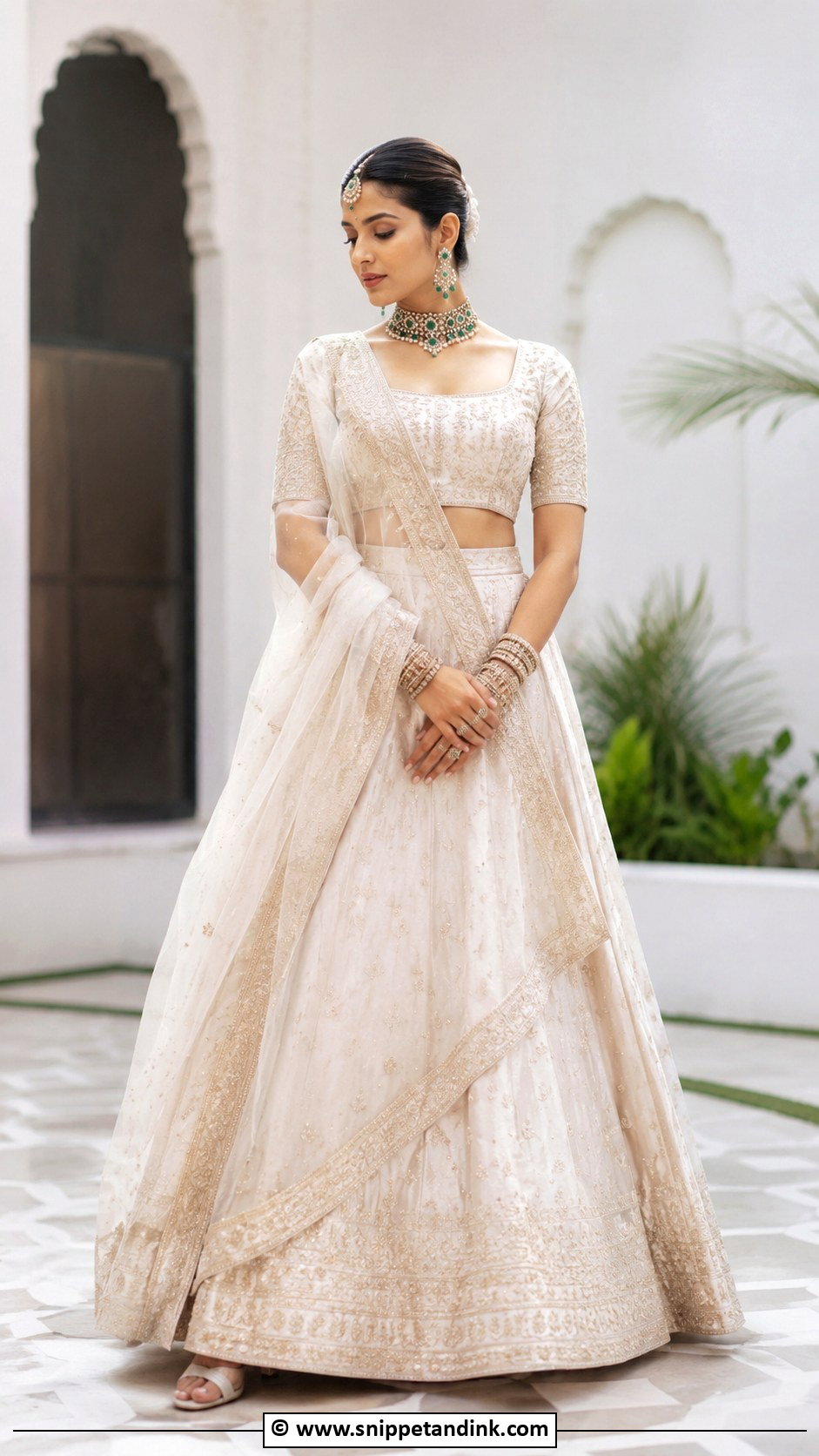
A minimal lehenga shows that bridal style doesn’t need to be overloaded. Clean silk, organza or tissue with subtle embroidery and a strong border depend on fabric quality, so feel the fabric before you commit. Ivory, blush, champagne, sage and muted gold suit it. Add one standout piece of jewellery and keep the blouse tailored. It’s also the outfit you’re most likely to wear again.
Zardozi Tarnishes in Plastic, So Wrap It in Muslin
Most heritage outfits get packed away the night after the wedding and come out a year later with darkened zari and creases set into the embroidery. Metallic thread reacts to moisture and trapped air, which is why sealed plastic garment bags do more harm than good.
Have the outfit cleaned by a specialist who handles bridal embroidery, never a general dry cleaner. Once it’s back, wrap the lehenga, blouse and dupattas separately in soft white muslin or cotton, with acid-free tissue in the folds so the embroidery isn’t pressed flat. Store it flat in a cool, dry cupboard, not hanging, since a heavy skirt stretches the waistband when it hangs for months.
Take it out every few months and refold along different lines. Spray perfume before you dress, never directly onto zari, and keep jewellery in separate pouches so the hooks don’t snag the fabric. Velvet needs extra care: fold it with tissue between layers so the pile doesn’t crush.
Red, Ivory or Velvet, the Styling Still Does the Work
A Sabyasachi-inspired look can be a classic red lehenga, a graceful saree, a velvet winter outfit, a pastel floral or a minimal ivory ensemble. What makes any of them work is the complete styling: outfit, jewellery, dupatta, hair, makeup and footwear planned together. Comfort belongs on that list too, because you’ll be wearing it through long rituals. Traditional or modern, the best version is the one you can enjoy every ceremony in.
You'll Like These Ideas:


Leave a Reply