
How Much Weight Can You Carry Through a Four-Hour Ceremony?
Royal outfits are heavy, and brides tend to judge them in a showroom while standing still for five minutes. A fully worked zardozi lehenga with a lined can-can, an embroidered dupatta and kundan sets can add up to a real load, and most of it hangs from your waist and shoulders. By the time the pheras come around, that weight is what you will feel.
At a first fitting I ask the bride to sit on the floor, stand without using her hands, and walk up a step. If the skirt pulls the waistband below the navel or the blouse shoulders dig in, we change things then, not the week before. The fixes are usually simple:
- A lighter underskirt with one can-can layer instead of two. Most of the flare comes from the panel cut, not the netting.
- A broader waistband with hooks plus a drawstring, so the skirt’s weight sits on the hips rather than one narrow band.
- Embroidery concentrated on the upper skirt and borders, with lighter fill near the hem.
- A second, lighter dupatta for the long seated rituals, swapped in once the entrance photographs are done.
Sarees and shararas spread their weight differently, which is one reason I suggest them to brides with back trouble or a long day of back-to-back ceremonies.
1. Red Zardozi Bridal Lehenga
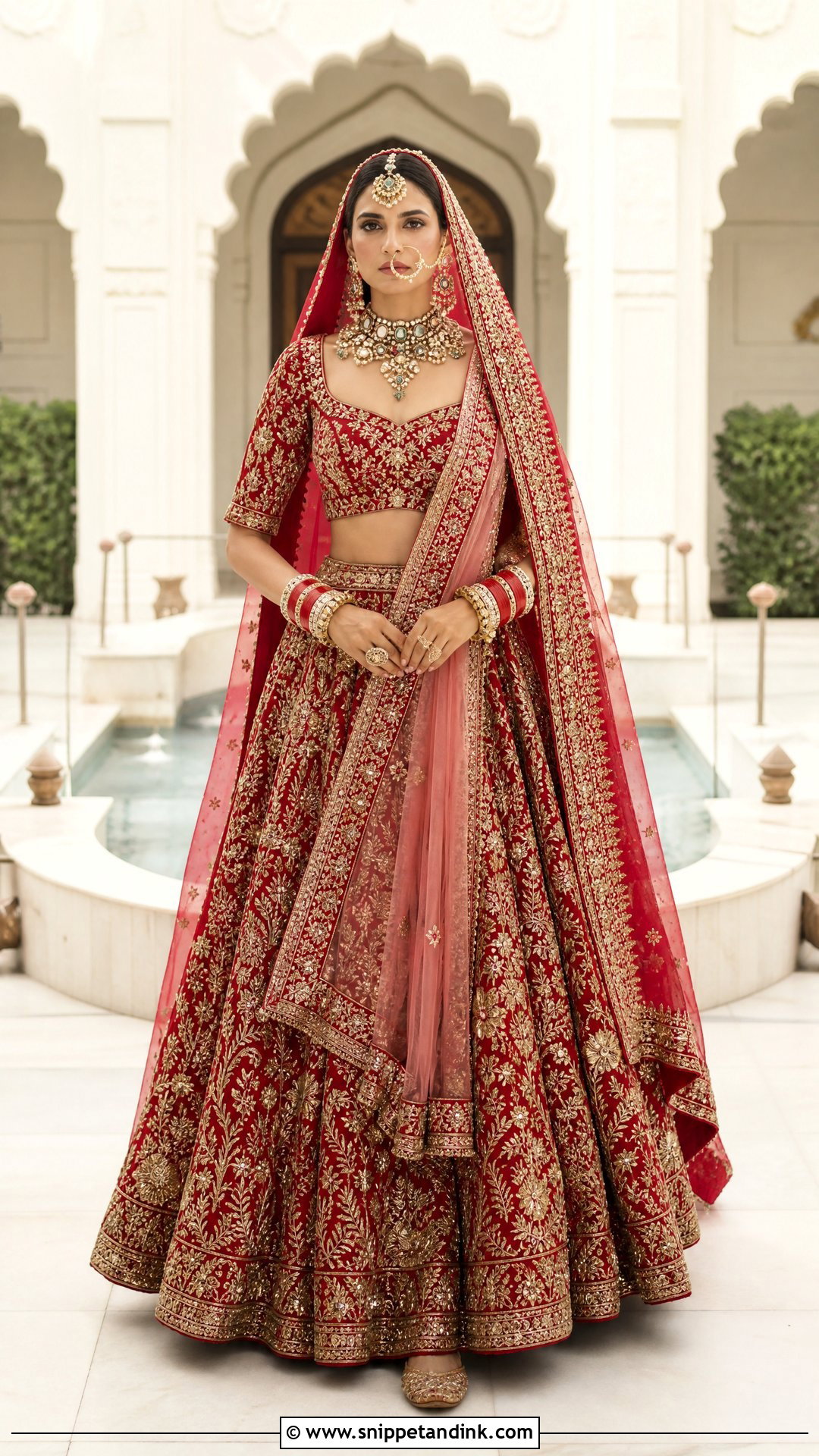
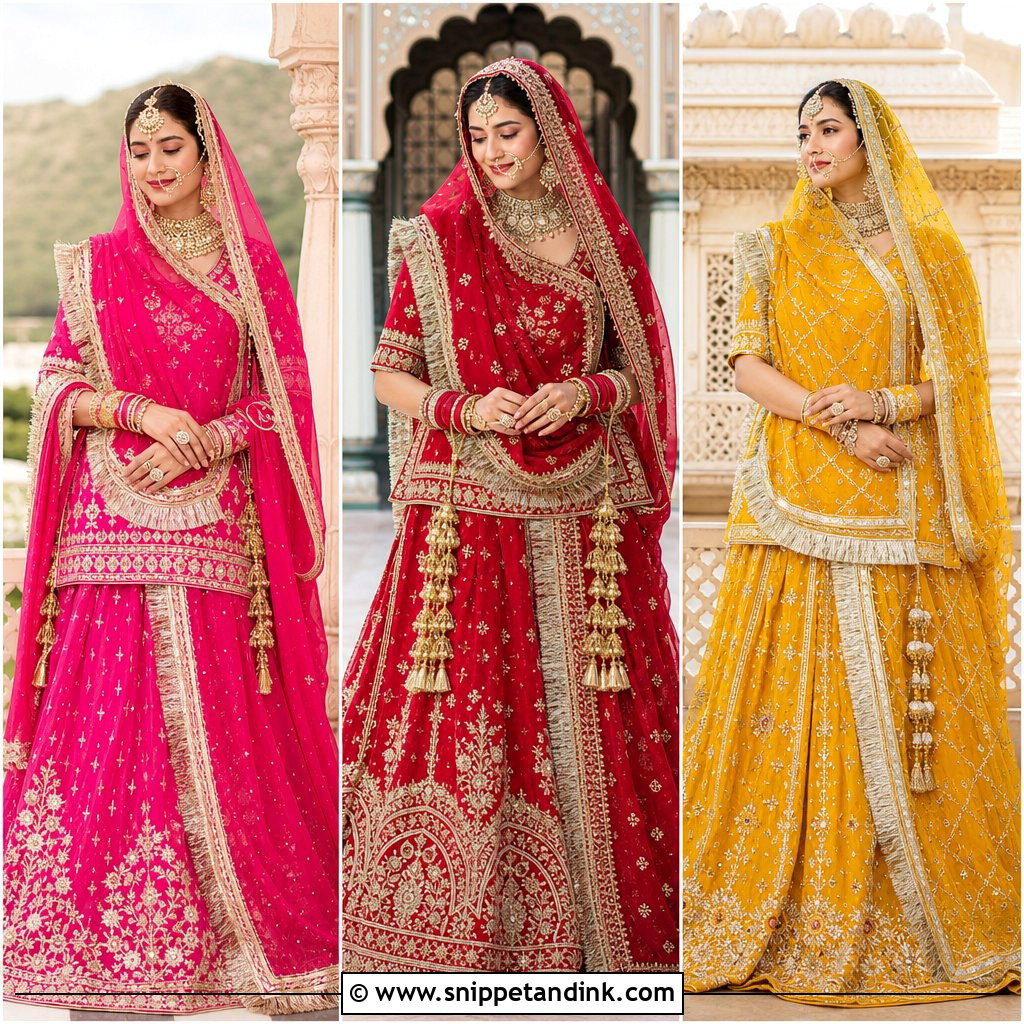
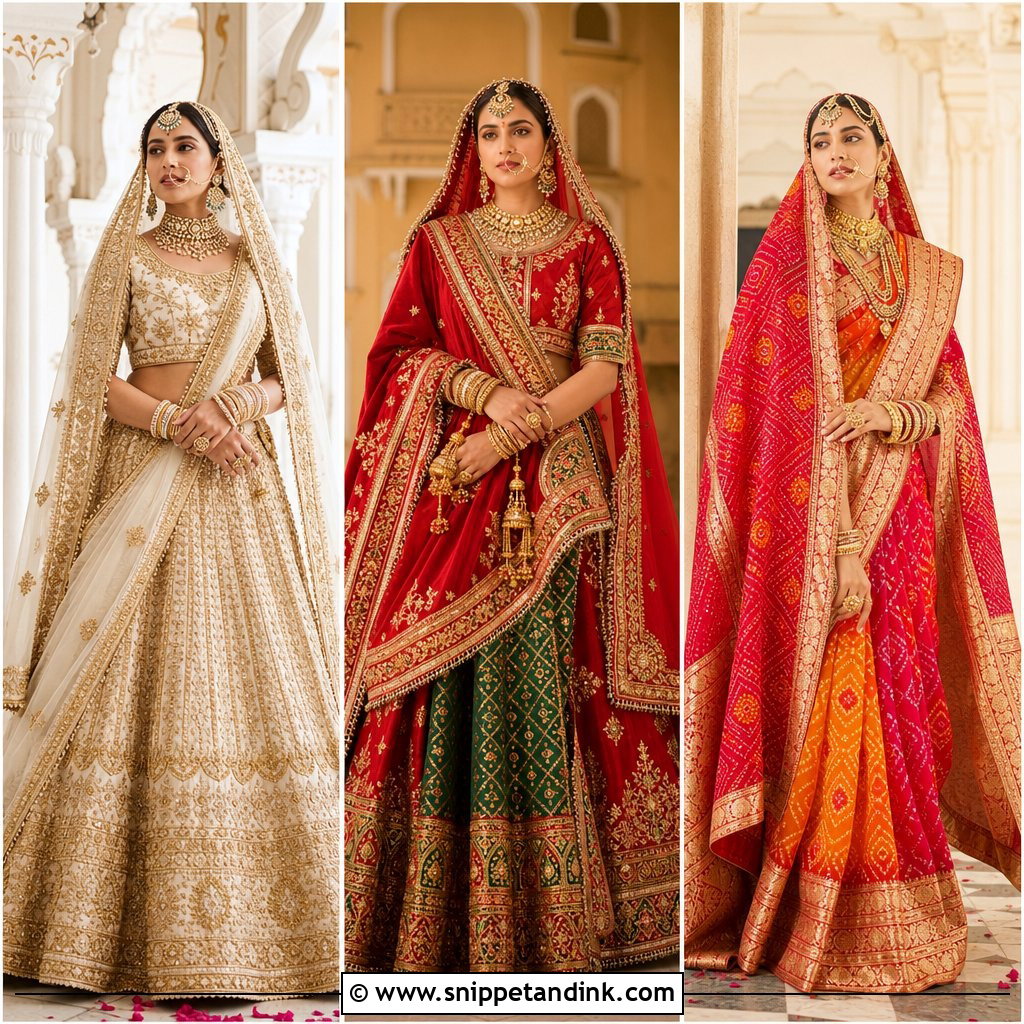
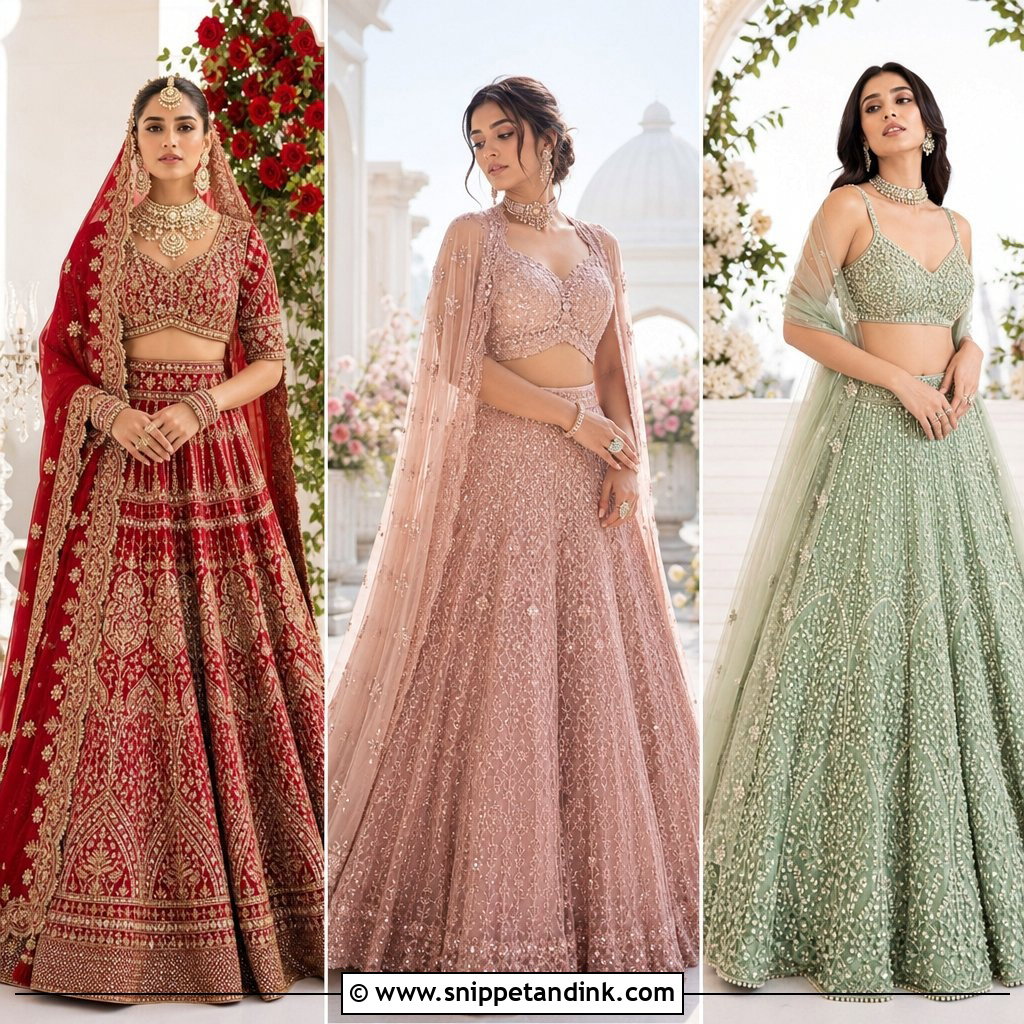
Red with antique-gold zardozi is the outfit I’m asked for most, and the one most often over-embroidered. On a deep red lehenga I want the motifs spread evenly up a high-waisted skirt rather than packed into the hem, because a heavy hem drags the waistband down every time you stand from the mandap. The blouse should have elbow sleeves and a modest curved neckline that leaves room for a kundan choker, long necklace, earrings, maang tikka and nath. I put a sheer red dupatta over the head and the heavier embroidered one across a shoulder, then ask the tailor for a lighter underskirt and small wrist loops stitched inside both dupattas. Embroidered juttis and a centre-parted bun with roses finish it, and the bun keeps the tikka sitting flat.
2. Maroon Velvet Bridal Lehenga
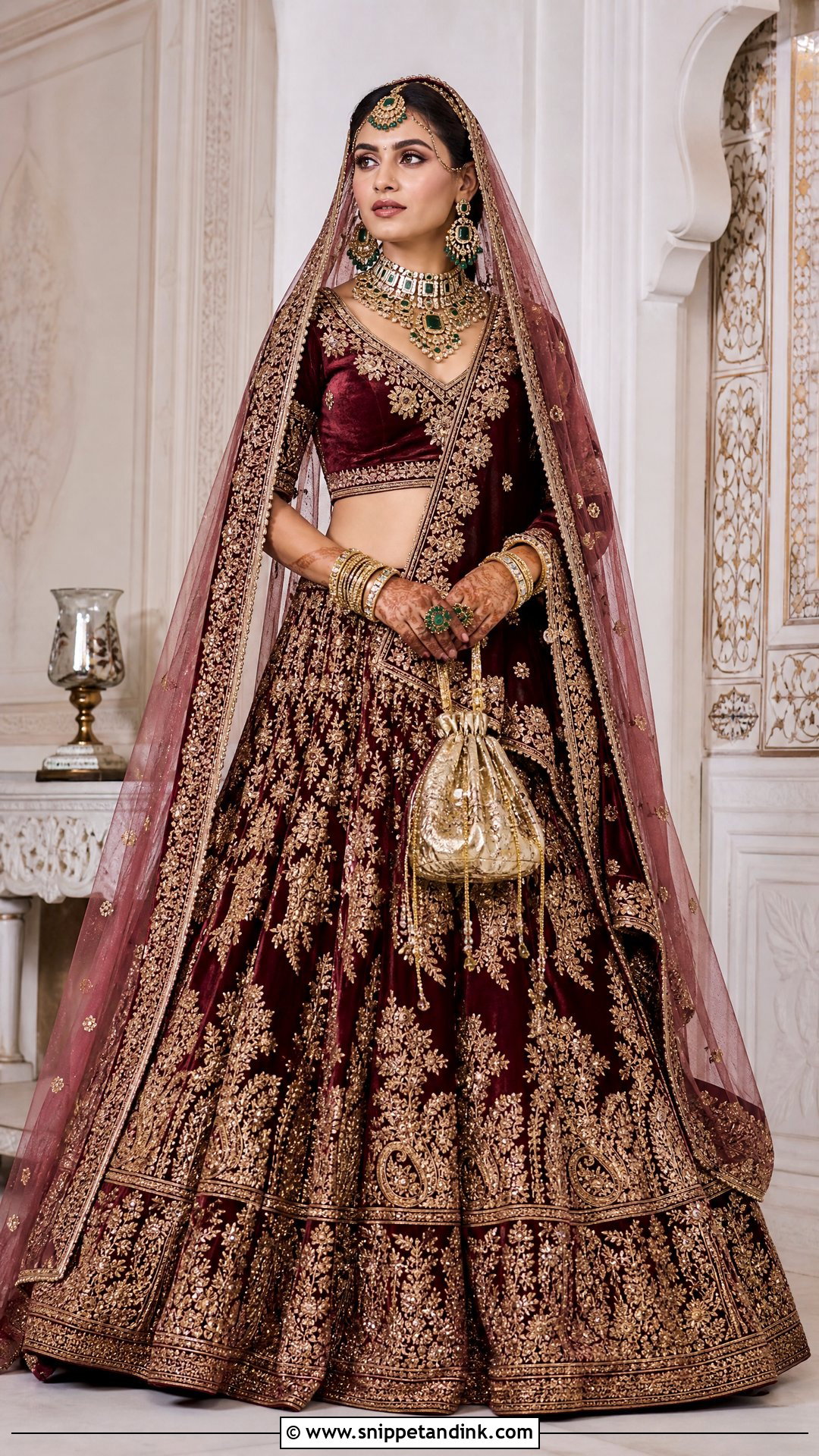
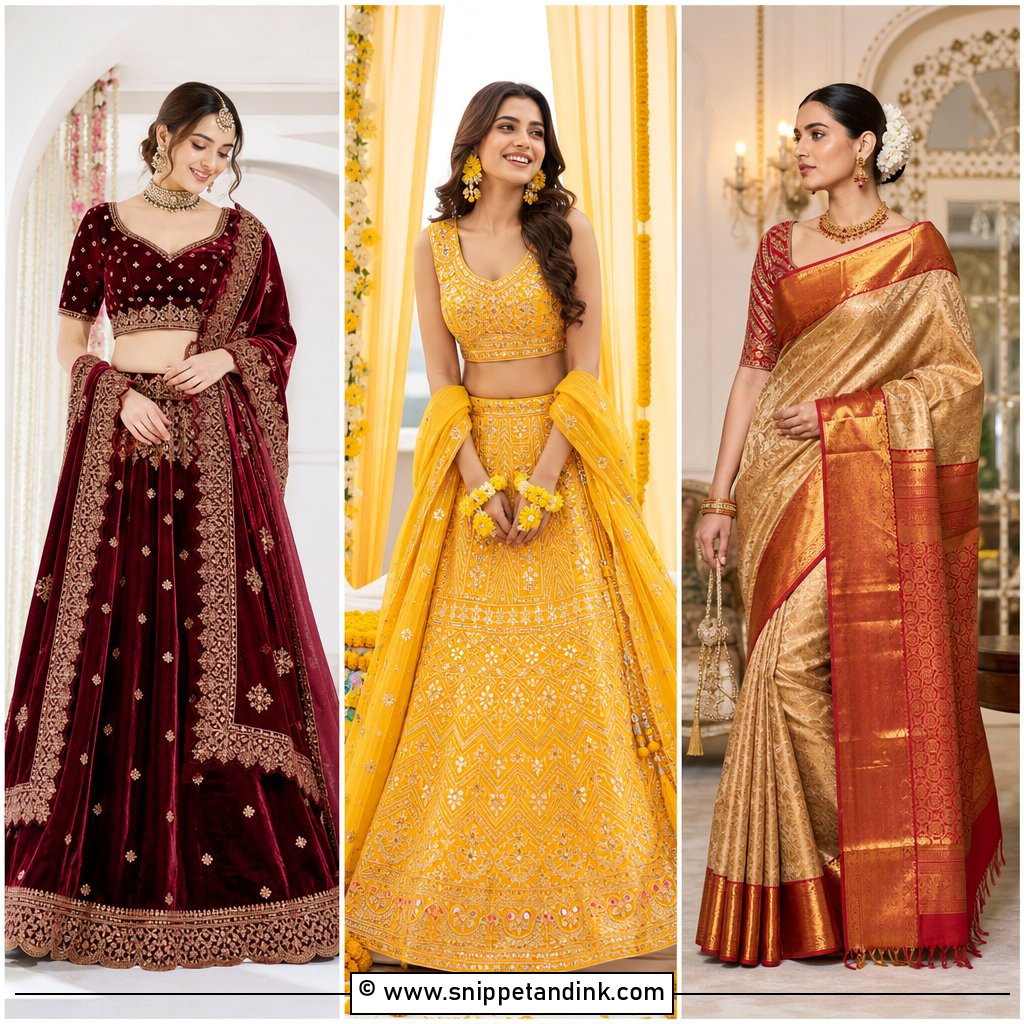
Velvet is a cold-weather fabric, full stop. In maroon it has a depth no silk matches under evening light, but in a warm marquee it will have you sweating through the blouse by the second ritual. I keep the gold work running along the skirt panels so the pile of the velvet still shows, and I pair it with a structured blouse with fitted sleeves. A light net dupatta goes over the head and a velvet-bordered one across the torso. Emeralds are my choice of contrast here: a choker, drop earrings and one ring. Maroon velvet juttis, a gold potli and a sleek low bun. Ask for breathable cotton lining and skip extra can-can layers, since the velvet already brings the volume.
3. Ivory Gold Bridal Lehenga
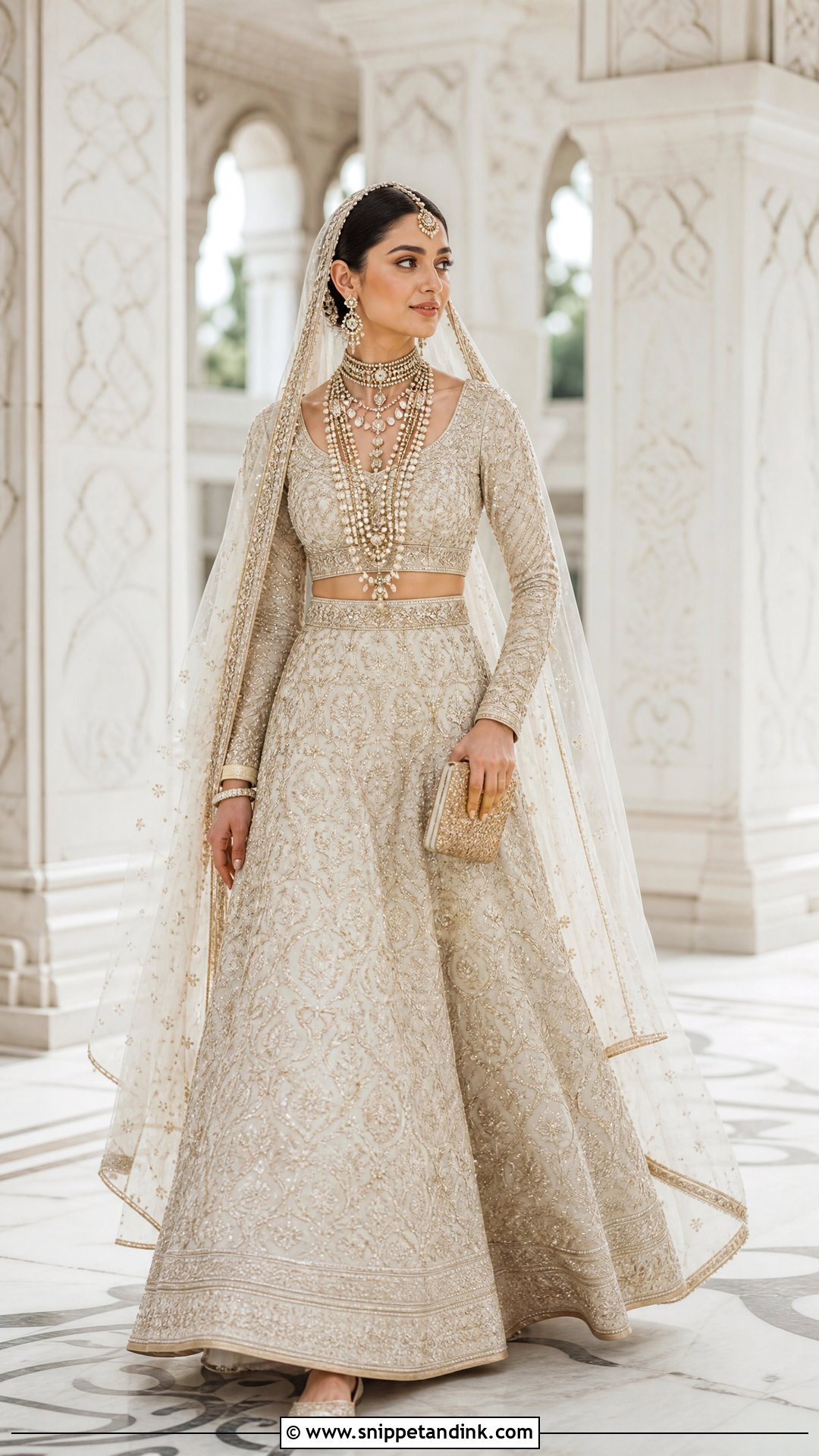
Ivory and gold reads regal without leaning on red, but it is unforgiving of mixed metals. I look for champagne zari, pearls and fine metallic threadwork that all sit in the same warm family, because a cool silver sequin next to warm gold shows up as a dull patch in daylight. A full skirt, fitted blouse and long sheer veil give the classic shape, with an ivory dupatta carrying a wide embroidered border. Polki, layered pearls, neutral juttis and a small gold clutch. White flowers in a low bun and luminous skin with a warm neutral lip. If you’d like something personal, a veil border stitched with initials or a family motif costs little and means a great deal. Save this one for a daytime ceremony, where the different gold textures read clearly instead of flashing.
4. Blush Pink Bridal Lehenga
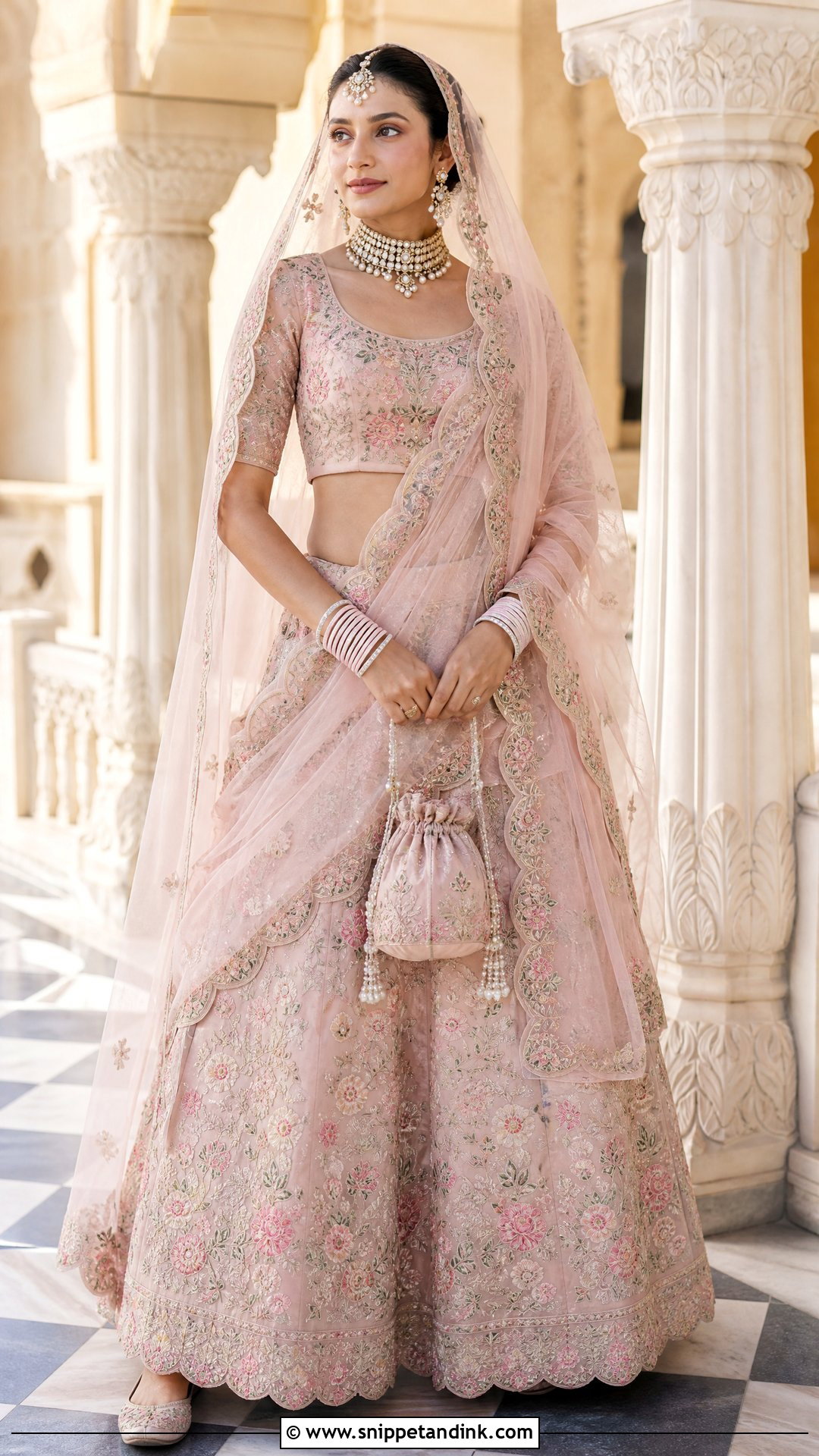
Blush on its own can look like a reception outfit, so the royal weight has to come from structure. I choose a voluminous skirt with dimensional silver-gold florals and a neatly fitted blouse, then a blush veil with a scalloped border to pull attention to the face. Jewelry stays in the same tonal range: polki choker, pearl strands, drop earrings, a delicate tikka. Ivory or pale pink juttis and a pearl-covered potli keep the colour story unbroken, and a textured low bun with small white flowers suits the softness. My one firm request to the embroiderer is slightly deeper work around the neckline and hem. Pale outfits lose their edges in photographs, and that extra density gives the camera something to hold.
5. Emerald Green Bridal Lehenga
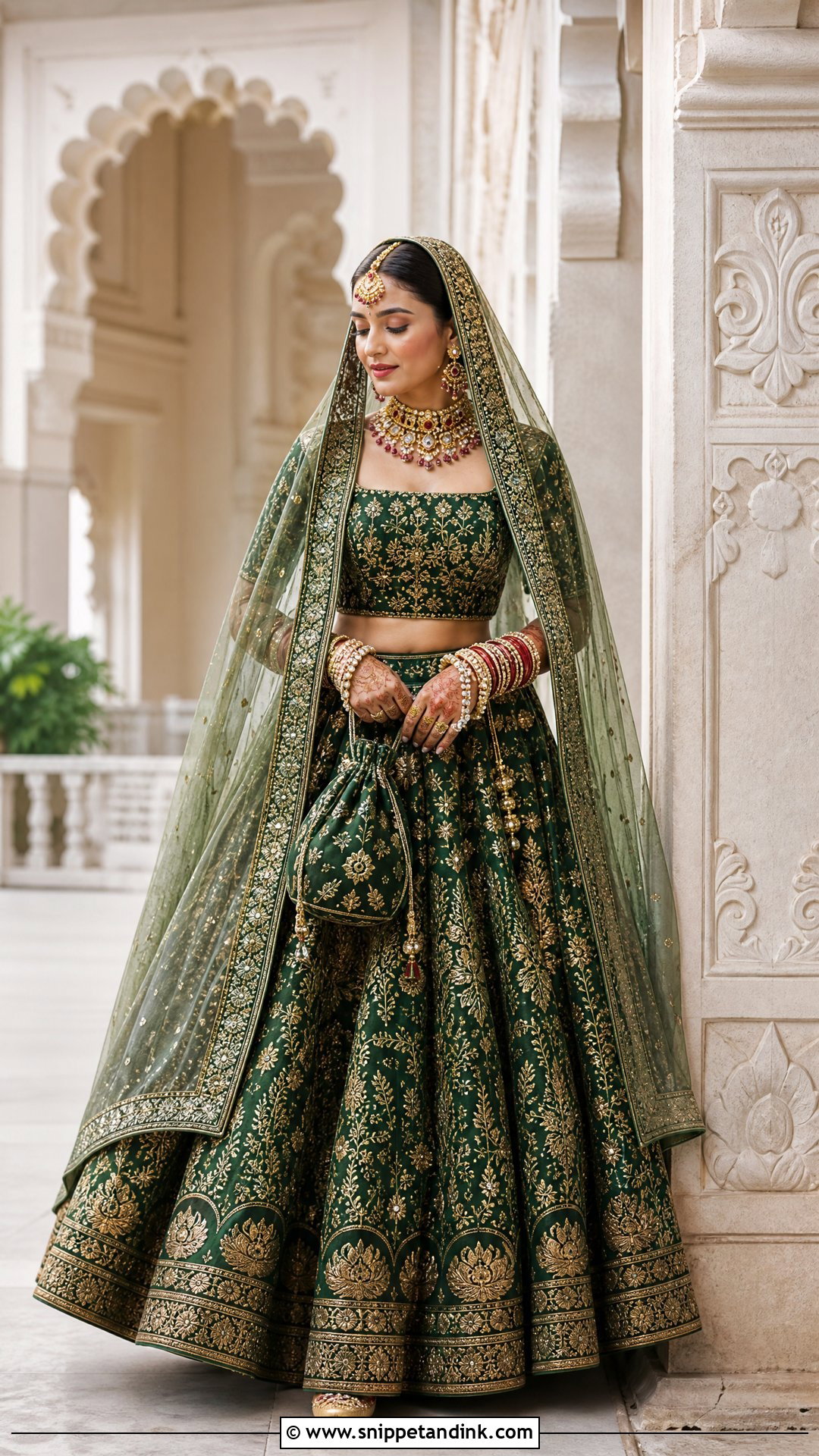
Emerald with antique gold is one of the richest pairings in Indian bridal wear, though it needs restraint elsewhere to stay bridal. I’d go for paneled silk or velvet worked in zardozi, dabka or traditional florals, with a square or softly curved neckline that gives the jewelry space. A matching green dupatta sits over one shoulder and a sheer gold-edged veil covers the head. Ruby-accented kundan is the classic contrast, finished with antique-gold juttis and a structured potli. Keep makeup to defined eyes and a muted rose lip; a bold lip on top of red stones and green silk turns busy fast. When the skirt is heavily worked, I ask for a calmer blouse so the eye has somewhere to rest.
6. Royal Blue Bridal Lehenga
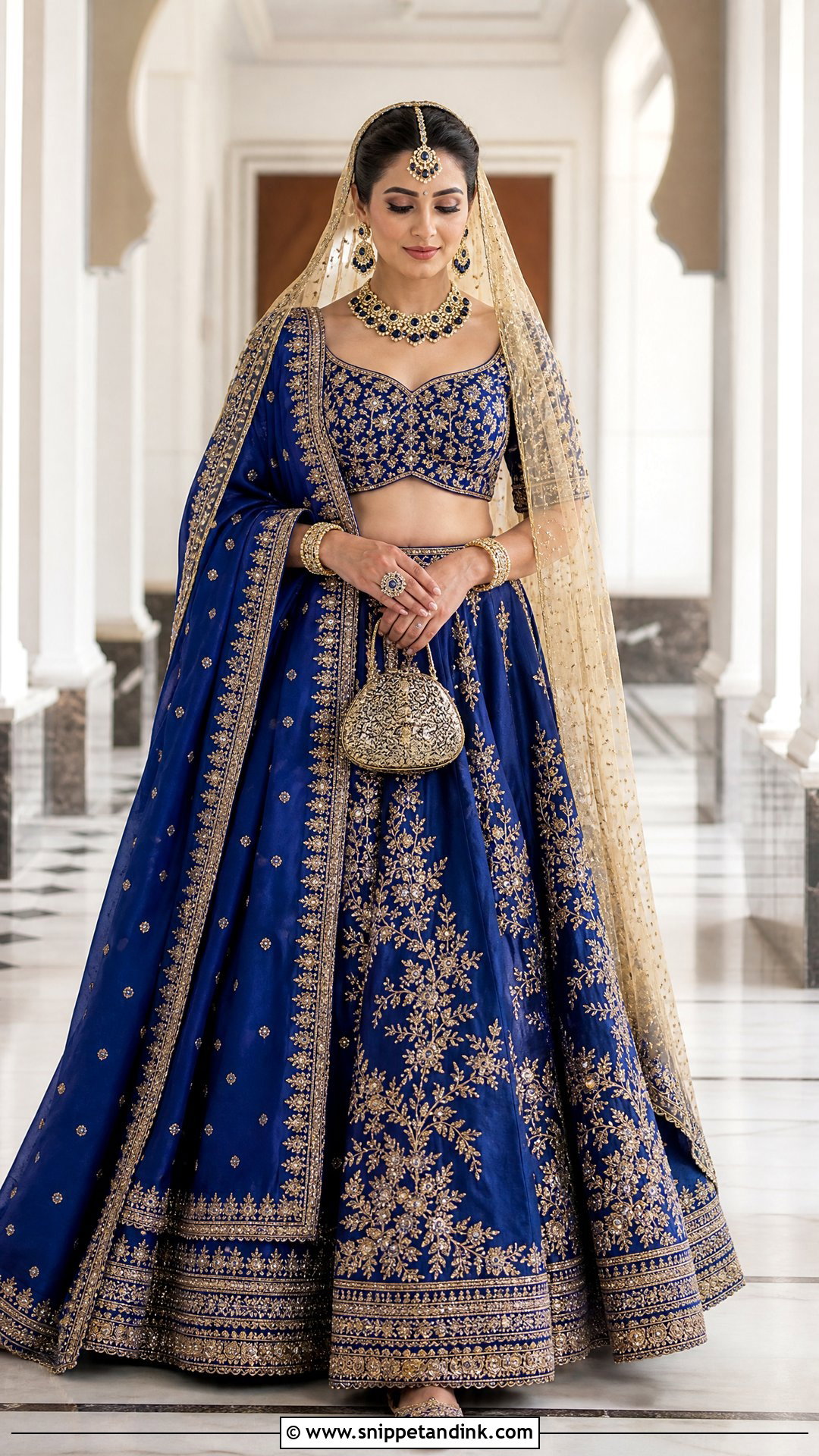
Royal blue is the colour I see brides hesitate over and then love on the day. It holds its own against red in a formal setting, but it shows every flaw in fit. A raw silk lehenga with gold threadwork, small crystal accents and generously spaced motifs is where I start, paired with a matching blouse and a sheer blue dupatta edged in antique gold. A second dupatta in soft gold or muted beige across the body breaks up the block of colour. Diamond-polki with sapphire details, blue embroidered juttis and a gold minaudiere suit it, along with a sleek centre-parted bun and defined eyes. Don’t add more shades. And book an extra fitting, because a strong saturated colour highlights every puckered blouse seam and uneven dupatta fall in full-length shots.
7. Purple Bridal Lehenga
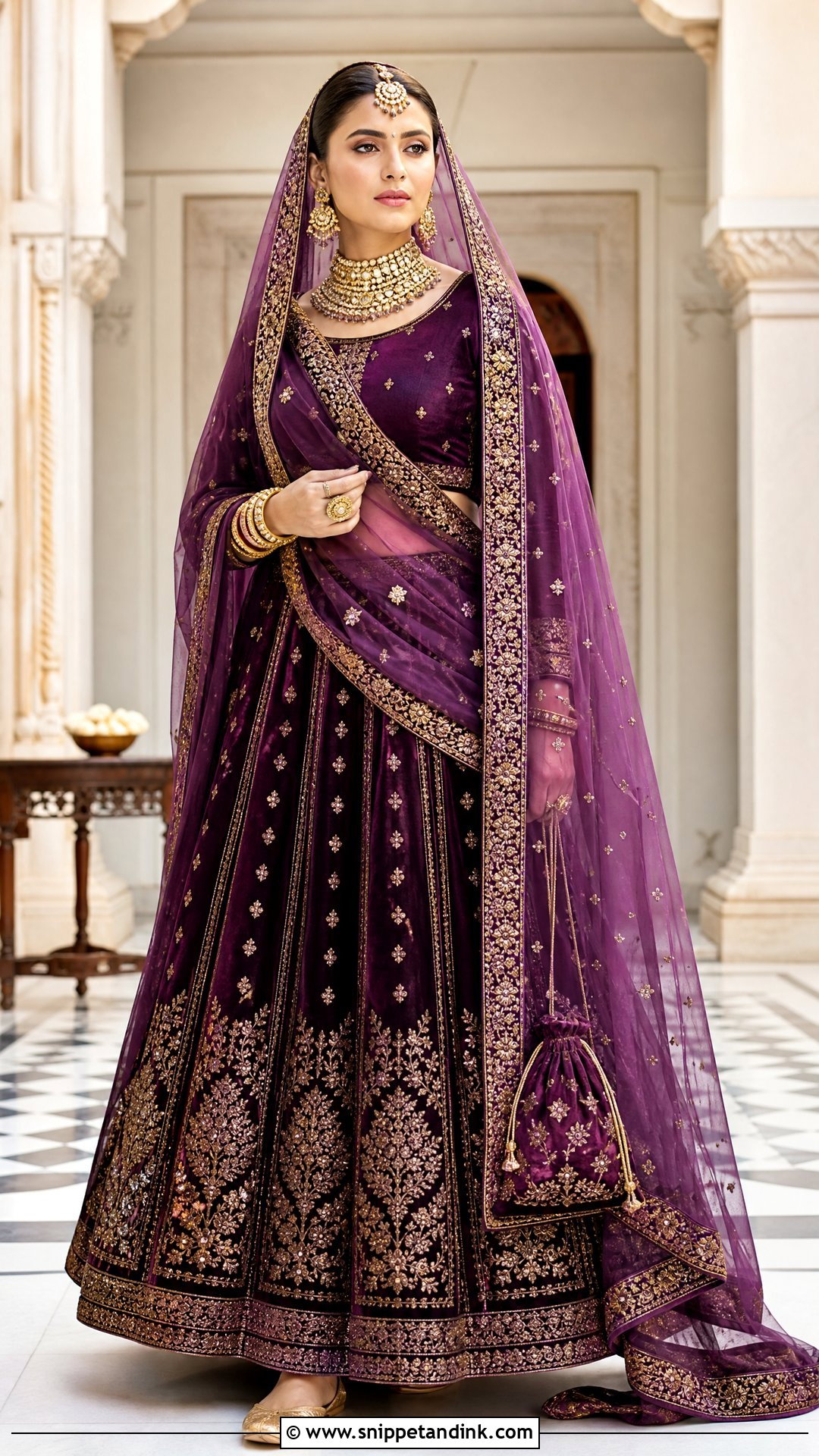
Purple works best after dark. Aubergine, plum or a true royal purple in silk or velvet, with antique-gold embroidery flecked with emerald or ruby, glows under warm evening lighting and can look flat in harsh midday sun. I like a slightly longer blouse with a defined waist here; it gives comfortable coverage and balances a wide skirt. One purple dupatta goes across the torso and a lighter net veil over the head. Layer a kundan choker with a longer necklace, add matching earrings, bangles and a centred tikka, then gold juttis and a compact embroidered potli. A low bun keeps the neckline open. Soft bronze makeup with a berry lip ties into the fabric; anything brighter starts to look like costume.
8. Rajputi Bridal Poshak
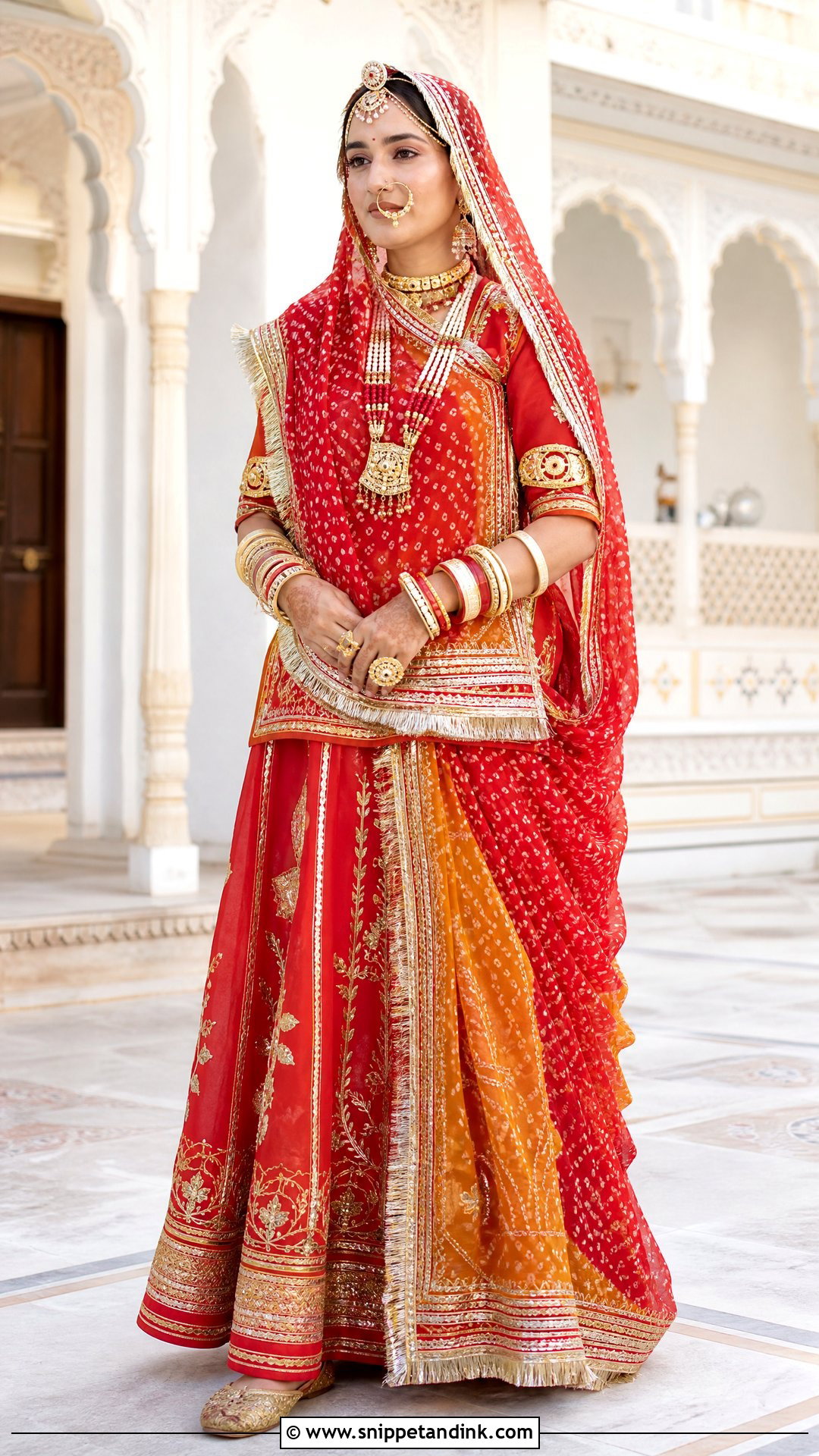
A Rajputi bridal poshak gets its regal line from four coordinated pieces: the skirt, kurti, kanchli and a carefully draped odhni. Red, orange or deep pink with gota patti and zari borders is traditional, and a bandhani or leheriya odhni brings regional character around the face. The borla, aad necklace, nath, bangles and armlets are not optional extras in many families, so I list them before anything else gets styled. The odhni is pinned before the ceremony and tested while walking, because it is the piece that slides when you bend for rituals. Keep the hair smooth underneath and the makeup focused on the eyes. Colours, ornaments and draping customs vary between clans, and I always check them with the elders who know before we finalise anything.
9. Red Banarasi Bridal Saree
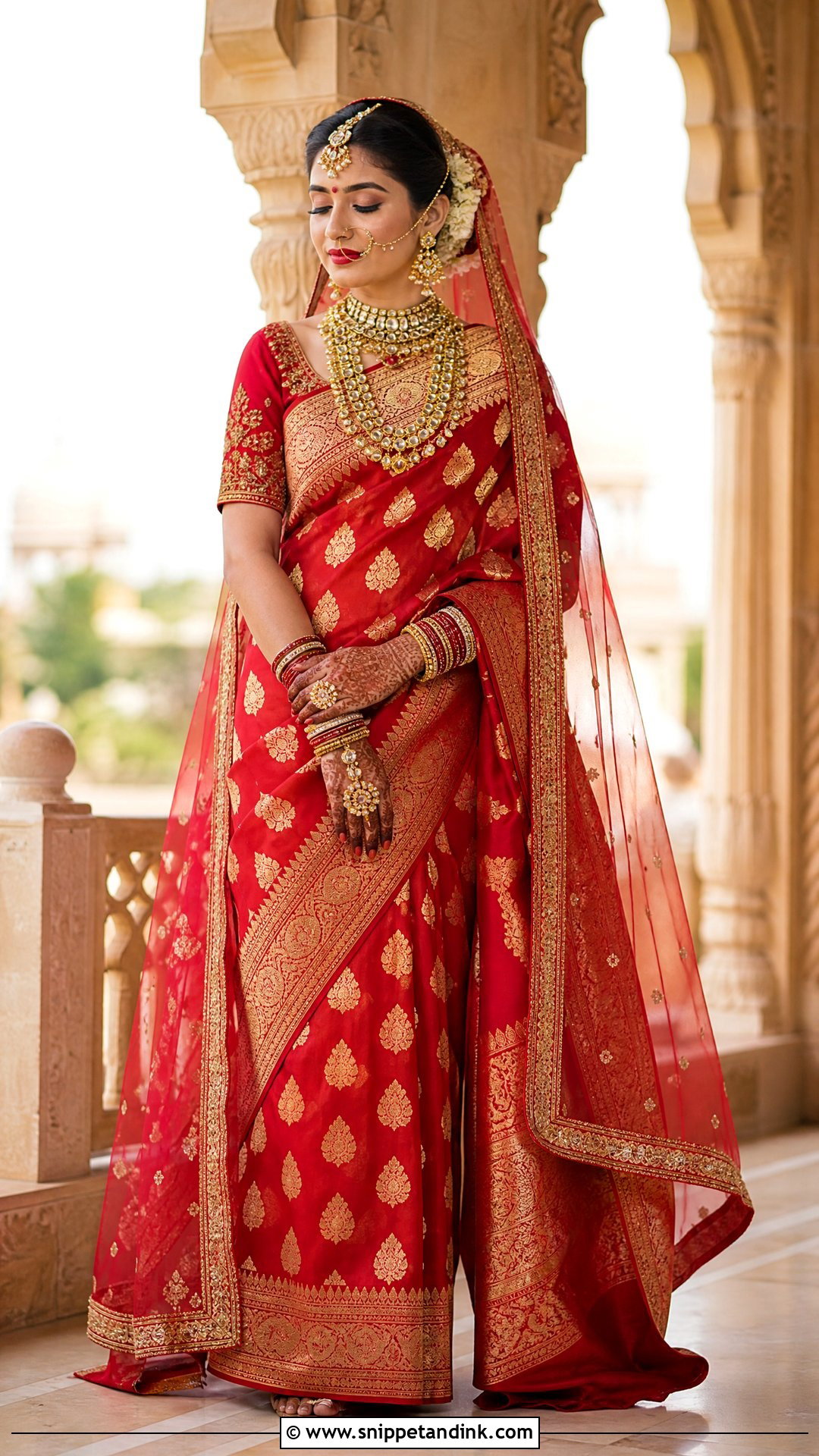
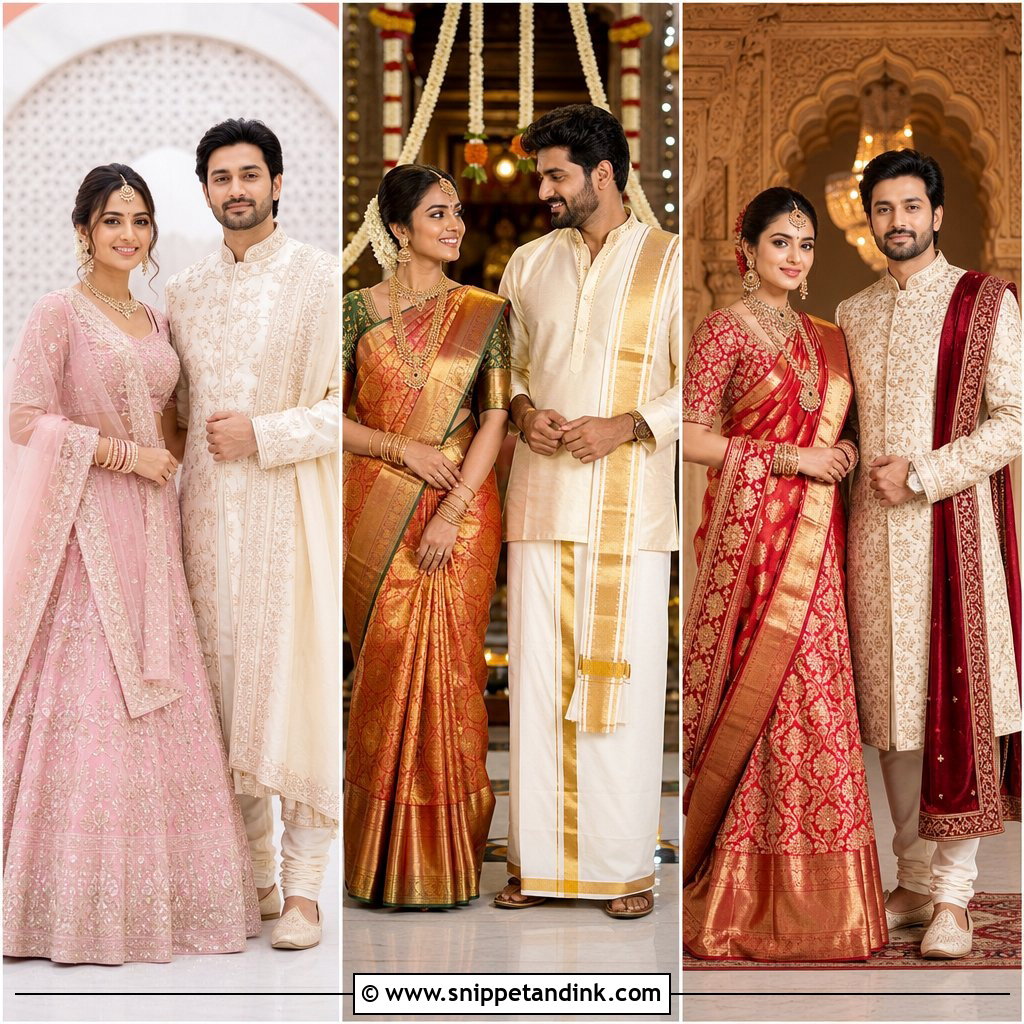
A Banarasi gives you royal presence without a huge silhouette, which is why I suggest it to petite brides who feel swallowed by a lehenga. Look for rich red or crimson woven with gold zari florals or architectural motifs, and pair it with a fitted brocade blouse with elbow sleeves. I pleat it neatly and add a separate sheer veil only if the ceremony calls for a head covering. Layered gold or kundan necklaces, statement earrings, a tikka, bangles and metallic sandals complete it, with red roses in a low bun. Banarasi silk is slippery at the pleats, so I use hidden pins, but I leave enough ease at the waist to sit cross-legged for an hour without the drape tugging loose.
10. Red Kanjeevaram Bridal Saree
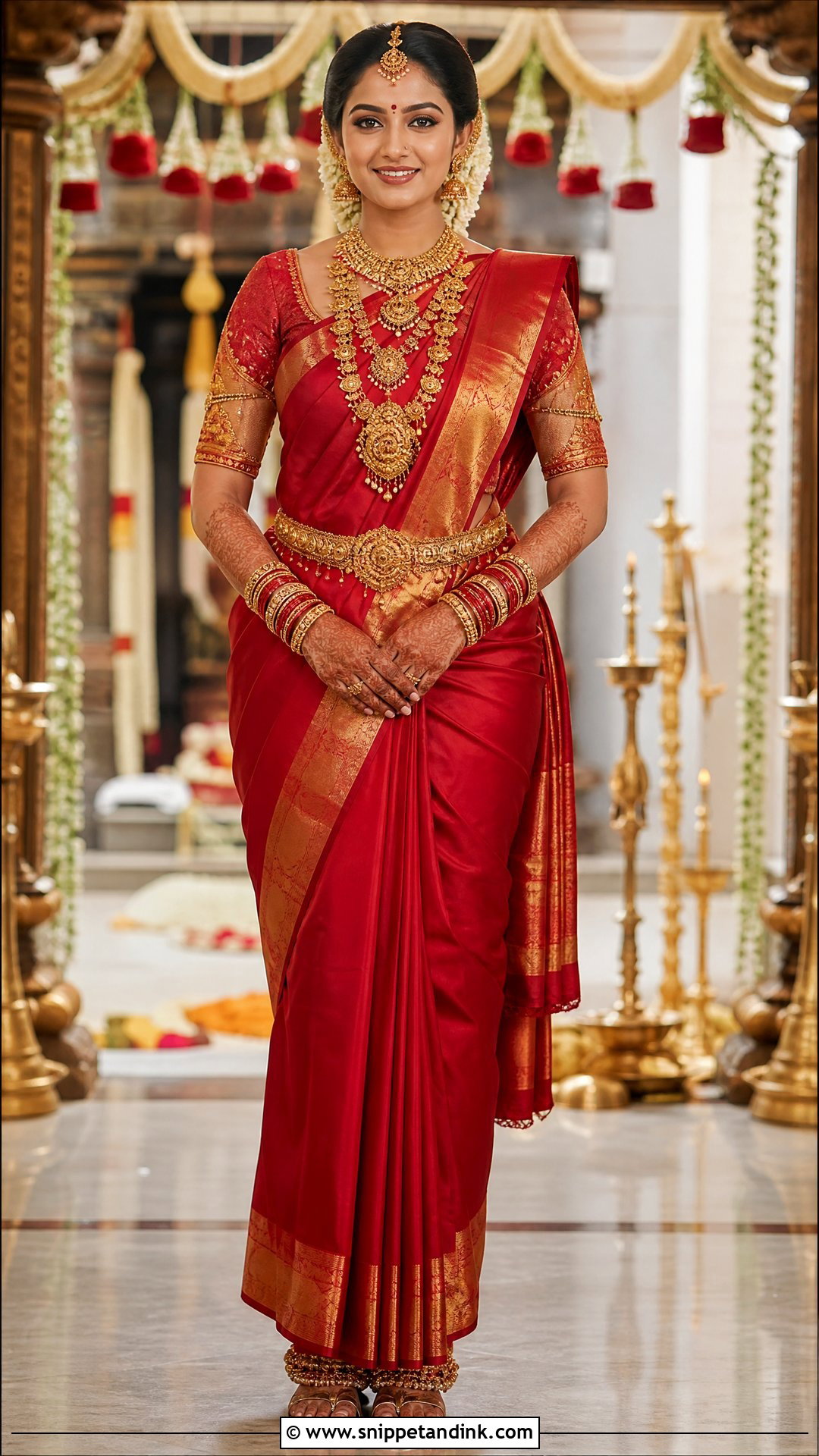
Kanjeevaram silk is heavy and has a natural body, which is exactly why it looks stately and why it punishes careless pleating. Crimson, vermilion or maroon with a broad gold border and traditional woven motifs is the classic choice, and the blouse can match or bring in a contrasting jewel tone depending on family custom. Temple jewelry, layered gold necklaces, jhumkas, a waist belt, bangles, armlets and anklets build the full picture. A long braid or bun with jasmine and traditional hair ornaments suits it. I steam the pleats before draping so they fall in crisp folds rather than fighting the fabric. Kanchipuram silk is a mainstay of Tamil bridal dressing, though jewelry and draping still differ from family to family. Gold sandals should be comfortable and stable, since you’ll be on your feet a lot.
11. Purple Paithani Bridal Saree
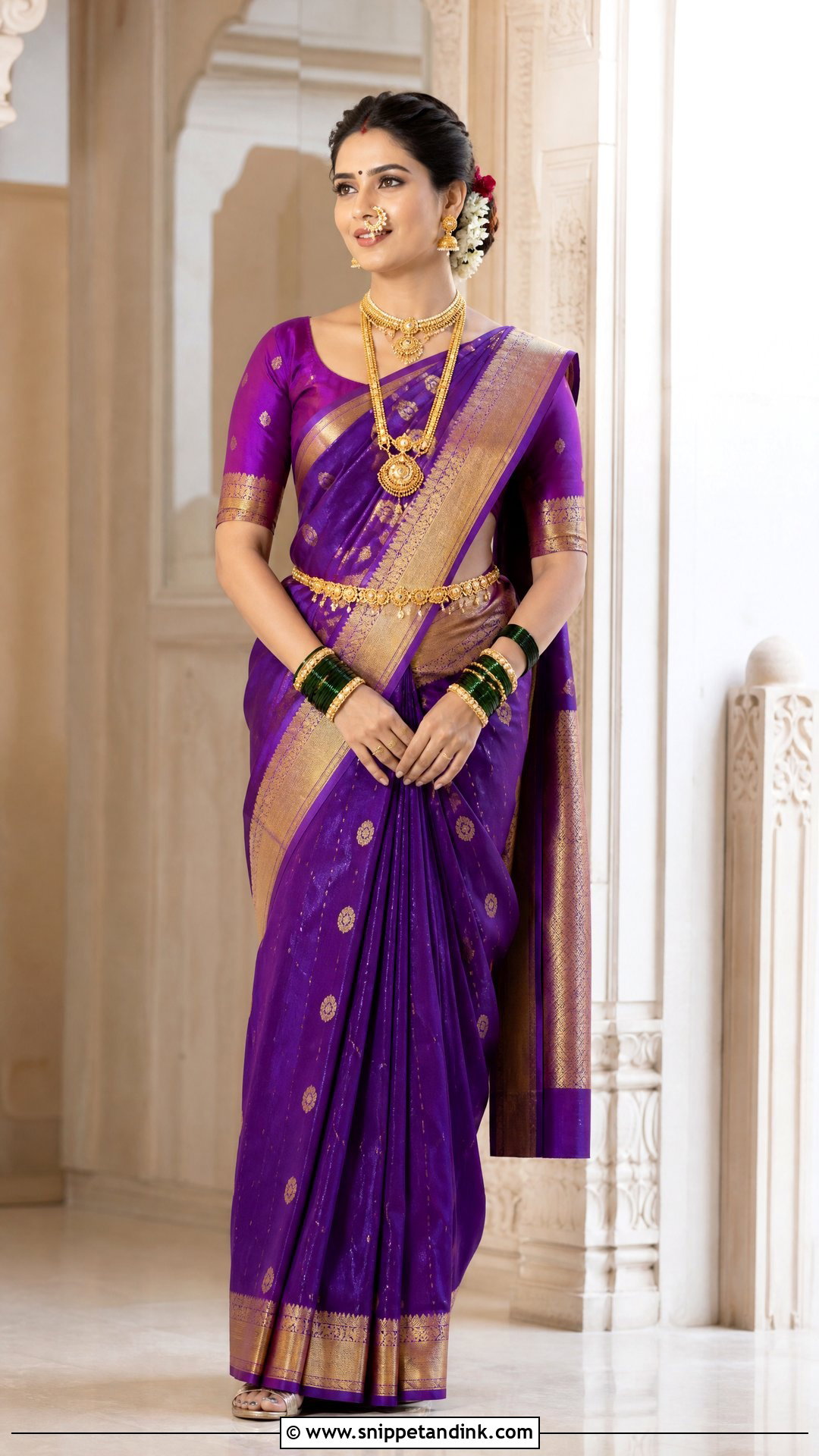
Paithani is about the pallu: the peacock and lotus motifs at the end are the whole reason to wear one, so the drape must show them off. A purple, magenta or wine Paithani with a contrasting border gives a vivid Maharashtrian bridal silhouette, worn in a traditional or classic drape according to the ceremony. I keep the silk blouse simple when the pallu is busy. Add a nath, layered gold necklaces, green glass and gold bangles, earrings and a crescent bindi. A gold waist belt defines the waist and does real work holding the pleats in place, which matters because the heavier silk wants to shift. Metallic sandals and a flower-wrapped bun finish it.
12. Bengali Red And White Bridal Saree
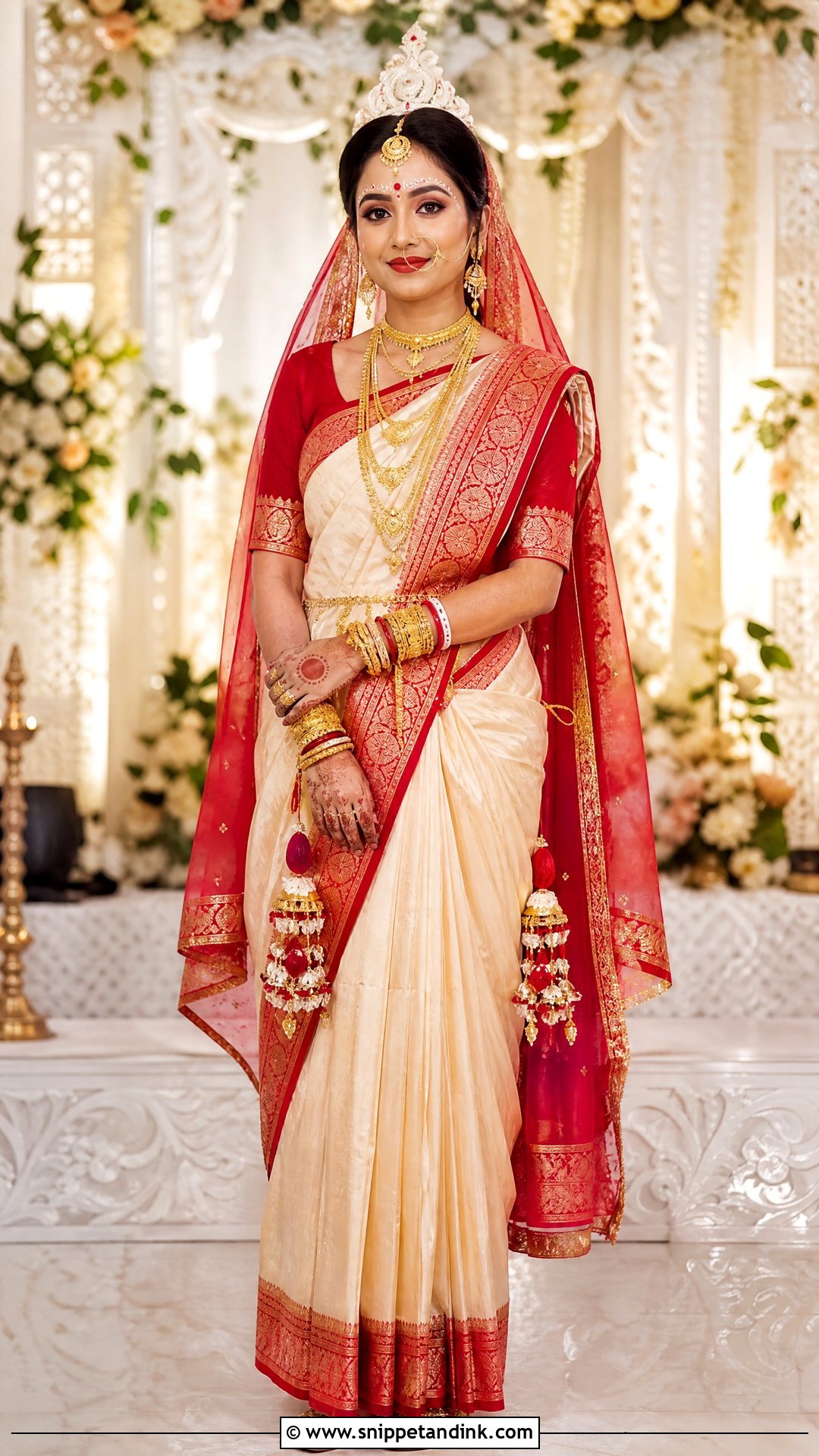
Red and white is the Bengali bridal combination, and the first thing I check is the base shade. Pure white can look stark against warm skin, so I often suggest cream or ivory with a bold red border and gold detailing. The red blouse needs flat, smooth seams; bulky seams show straight through a fine saree. Traditional gold necklaces, jhumkas, bangles, a forehead ornament and a prominent nath create the full bridal effect, and a red veil adds colour around the face. Hair goes in a neat bun, with forehead decoration if it suits the bride’s customs. Red footwear or gold sandals. Practices differ between communities, so I work alongside relatives or an experienced draper rather than guessing at placement.
13. Assamese Mekhela Sador Bridal Look
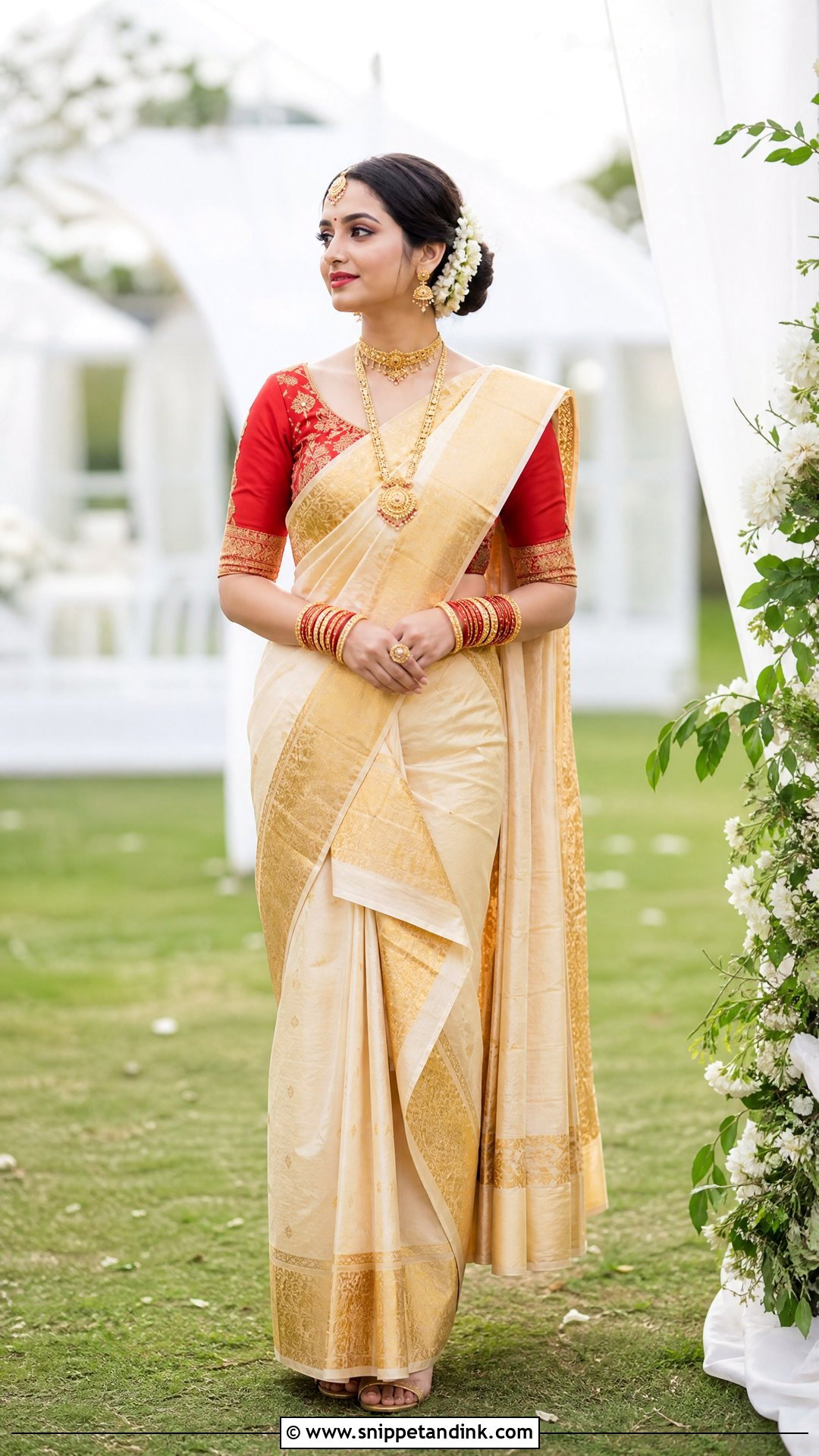
An Assamese bridal mekhela sador is quietly regal rather than loud, usually cream, ivory, gold and red in silk with woven motifs. The border must still show after draping, so I check where it will land before the blouse is even cut. The blouse can be red, maroon or matching ivory, with the sador arranged neatly across the upper body. Traditional gold jewelry, a statement necklace and earrings give the lighter palette its ceremonial weight, and red bangles, gold sandals and a small structured bag finish it. White flowers in a low bun keep attention on the drape. Draping methods are specific to the region, so I’d book a full trial with an experienced local dresser well before the day.
14. Kashmiri Bridal Pheran
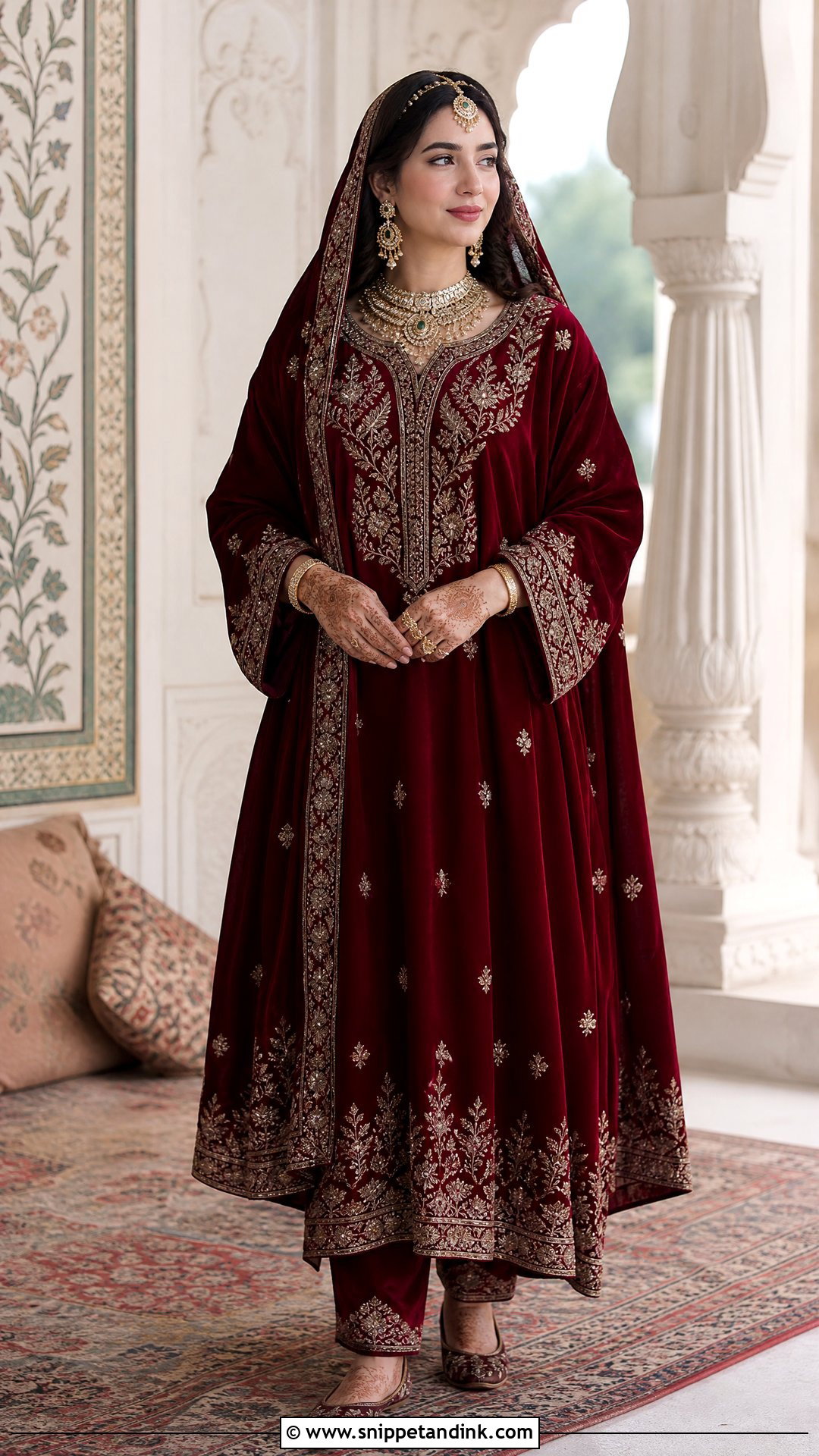
The pheran’s column shape is its strength, and bulk underneath ruins it. A richly embroidered Kashmiri bridal pheran in deep red, maroon, rust or another family-approved shade carries all its detail at the neckline, sleeves and border, so I keep base layers thin and smooth. Coordinated trousers or a traditional lower layer and comfortable embroidered shoes go underneath. A carefully positioned head covering, statement necklace, earrings, bangles and the traditional head ornament complete it. Hair should be soft and low so the headpiece sits correctly, with natural makeup. Kashmiri customs vary by community, and I build this look with the family’s guidance from the first conversation.



15. Punjabi Bridal Lehenga
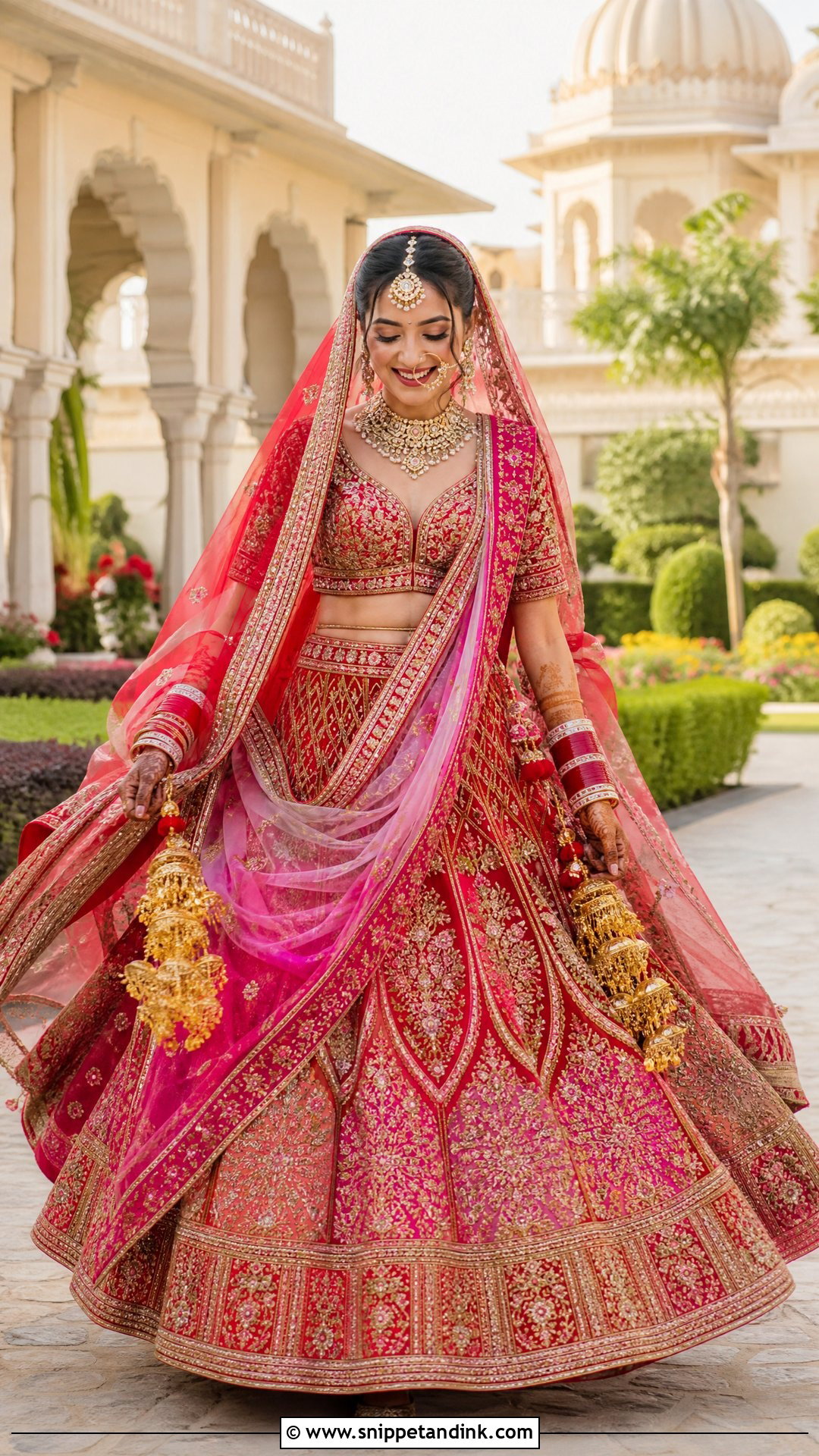
Chooda and kalire make a Punjabi bride recognisable from across the room, and they also change how you have to style everything else. A red, fuchsia or deep pink lehenga with gold embroidery needs a blouse with enough room at the armhole to lift your arms freely. I drape one dupatta across the body and a lighter veil over the head and secure both before any jewelry goes on. Then the kundan necklace, earrings, tikka, nath, bangles, kalire and juttis. With that much movement at the wrists, I keep everything else measured, and a sleek bun or braid keeps the upper body clear. Walk and sit in the full outfit at your trial; kalire catching on embroidered skirts is one of the most common snags I fix on the day.
16. Hyderabadi Khada Dupatta Bridal Look
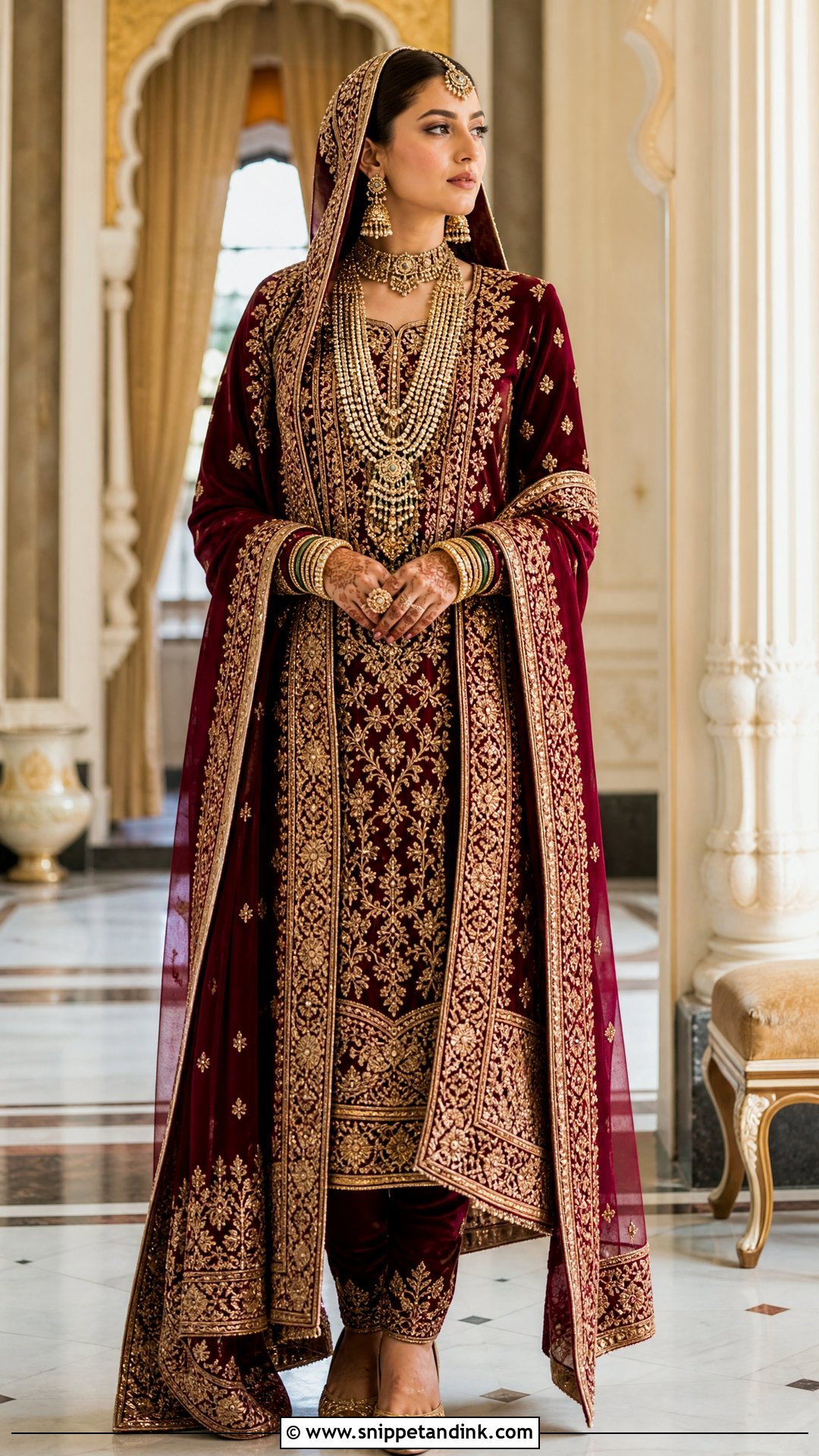
The upright drape is what defines a Hyderabadi khada dupatta outfit, and it is not something to improvise. The ensemble is an embroidered kurta, fitted churidar and a coordinated dupatta in red, maroon, gold or jewel tones, and the dupatta’s proportions and pinning take someone who has done it many times. Jewelry includes the satlada necklace, a choker, jhumkas, maang tikka, bangles and embroidered footwear. I go lighter on the jewelry where I can, since the outfit already has several layers competing. A low bun or neat braid suits the structure. This is a dress with real history in Hyderabadi weddings, and I let the family’s own practice guide the styling.
17. Mughal Bridal Sharara
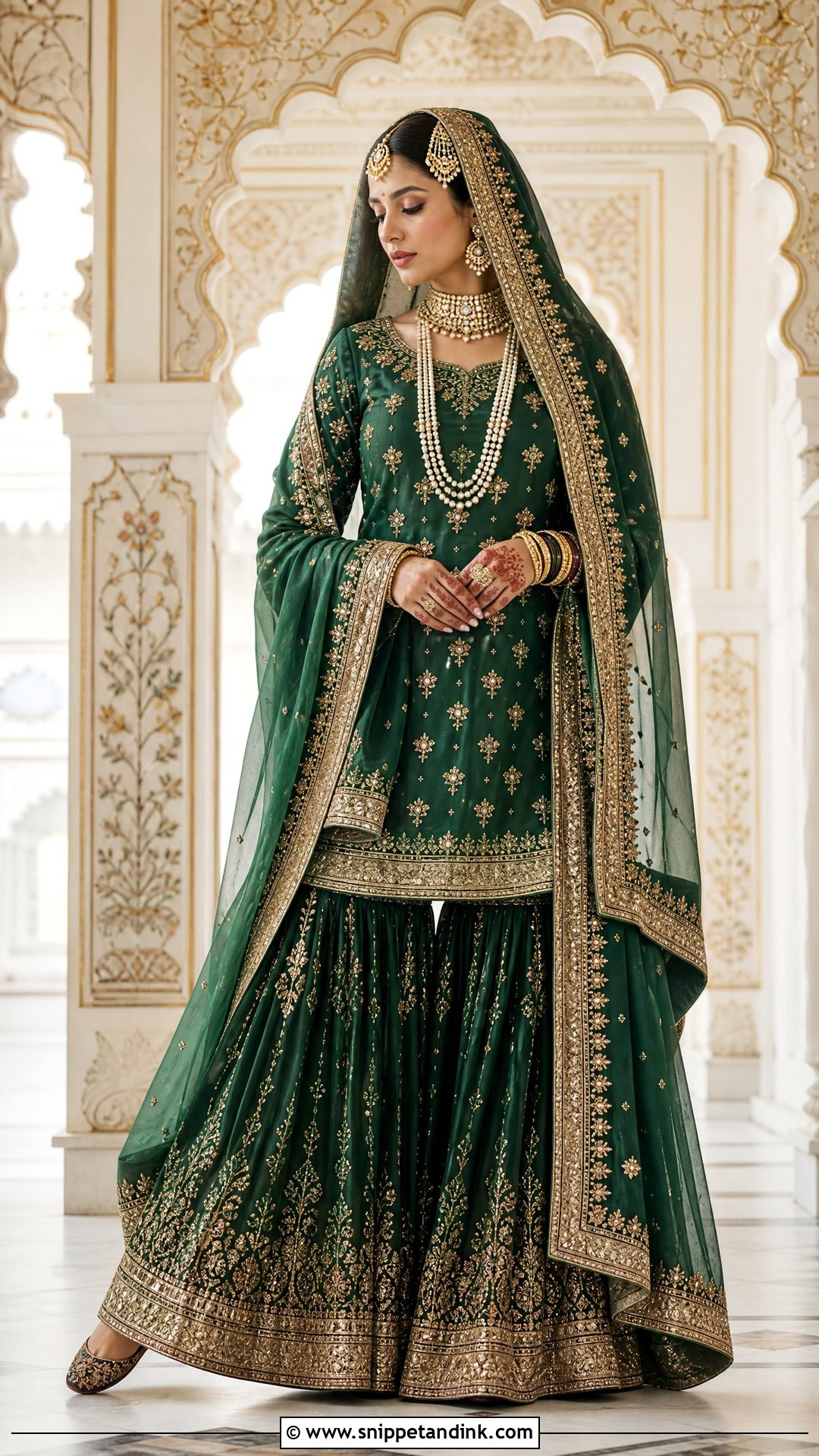
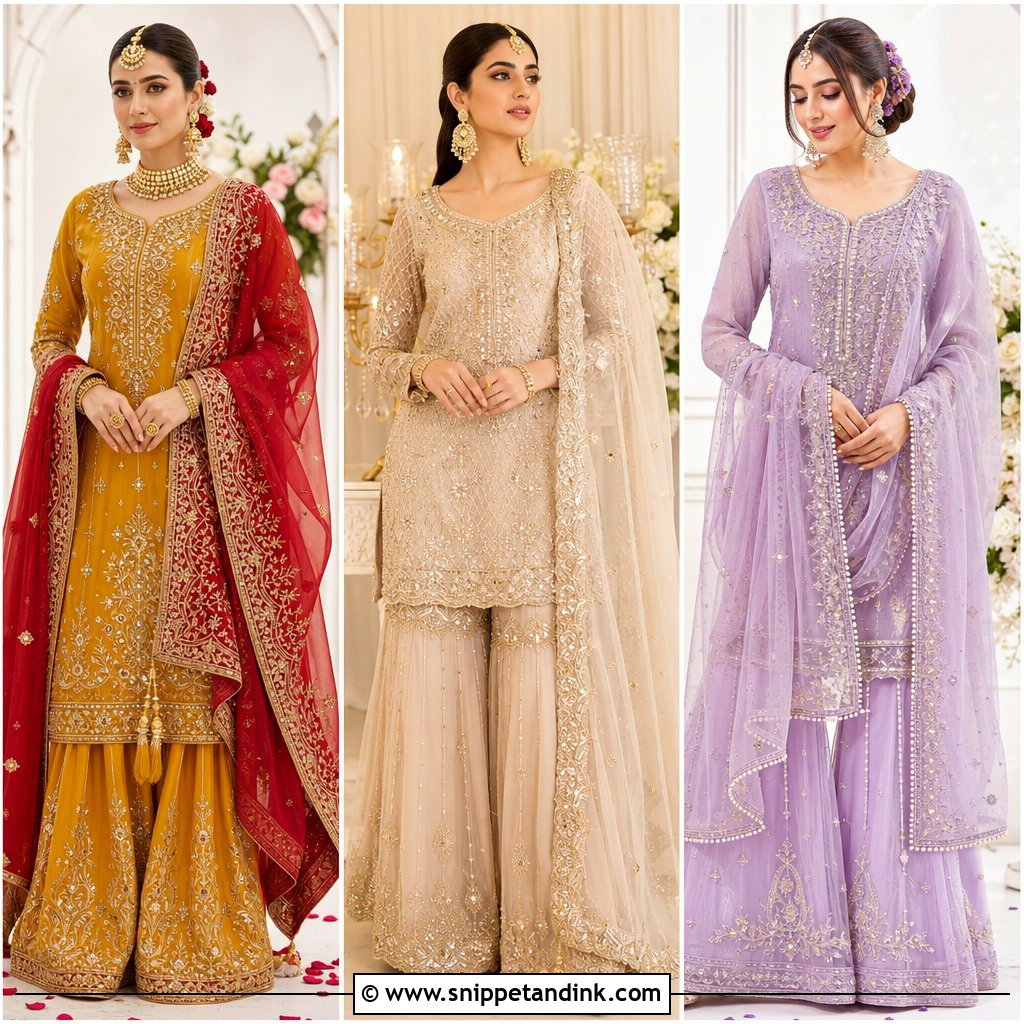
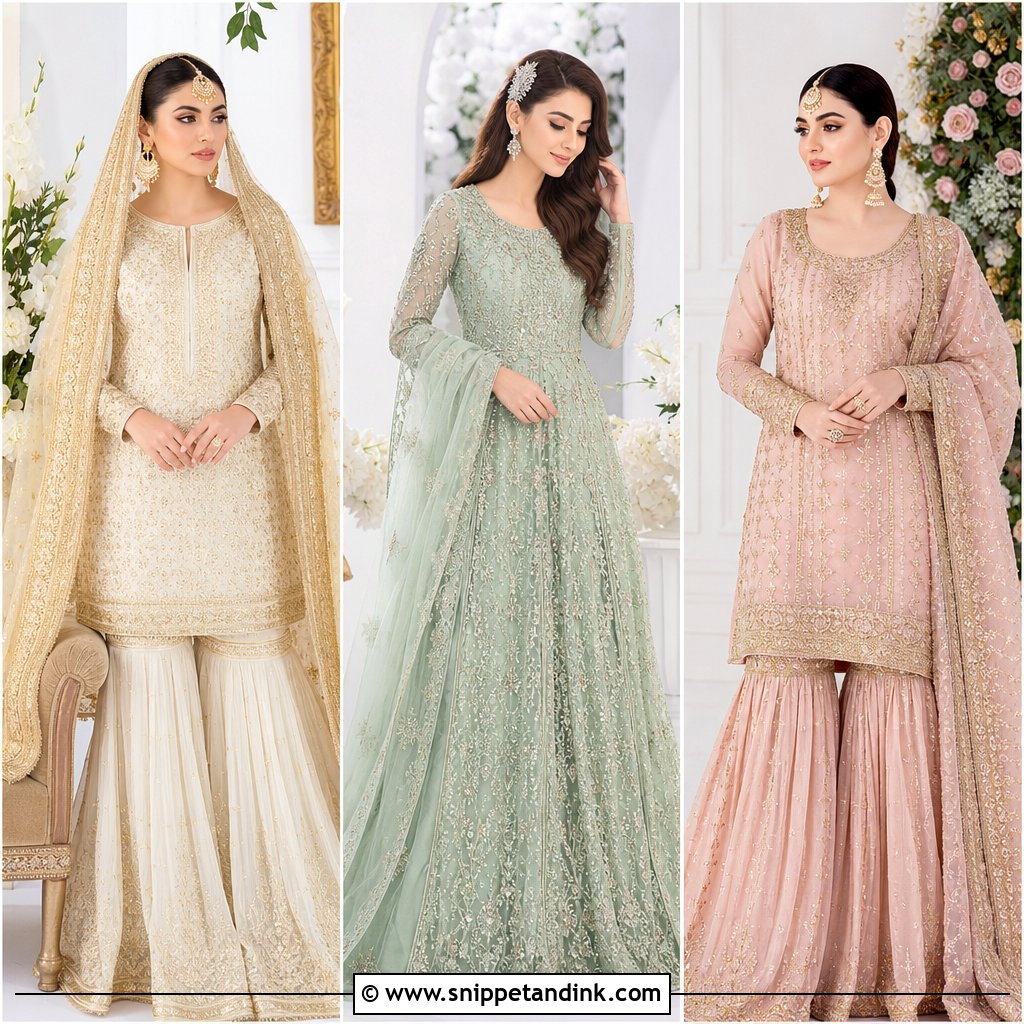
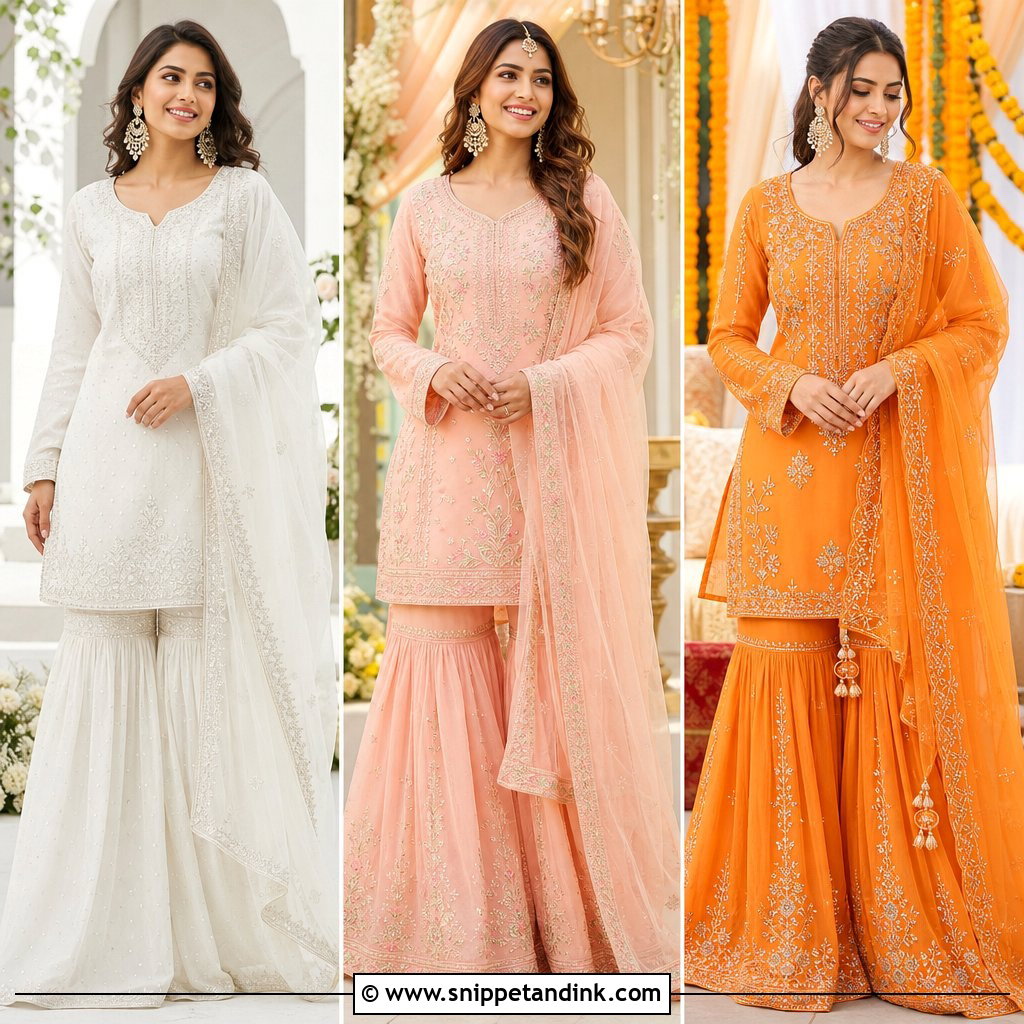
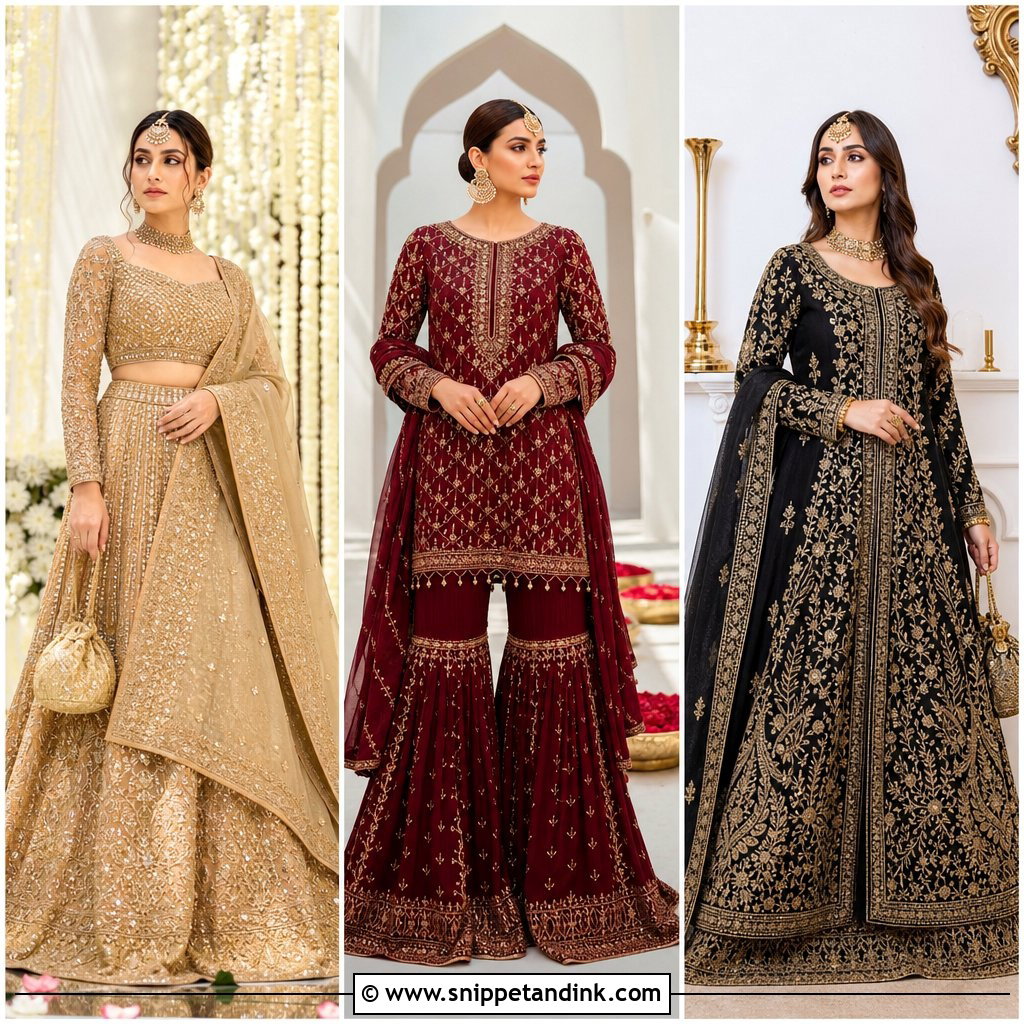
I recommend a sharara to brides who want royal drama but dread walking in a wide skirt. A long embroidered kurta with a shaped neckline, flared sharara pants and a wide-bordered dupatta, in deep red, emerald, ivory or maroon, takes antique-gold zardozi and fine pearl accents well. Drape the dupatta over the head and let one side fall straight down to stretch the line. A passa, kundan choker, long pearl necklace, earrings, bangles and embellished juttis complete it, and the bun has to be positioned to anchor the passa. A softly defined waist stops the layers looking shapeless. Hem length is the classic mistake: test it in your actual wedding shoes so the fabric floats just above the floor.
18. Gold Tissue Bridal Saree
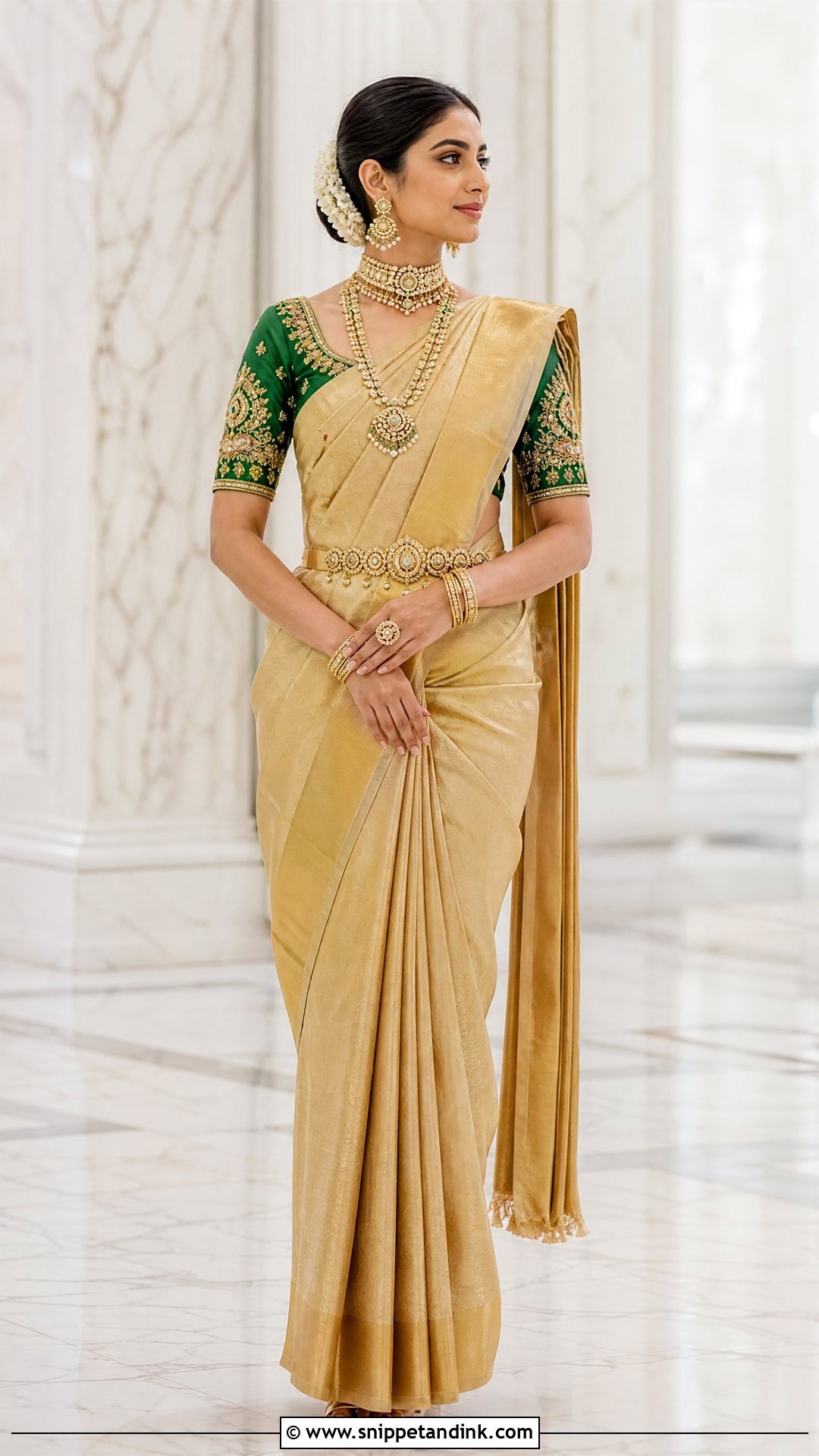
Tissue is woven with metallic threads, so it catches light more than almost any other saree fabric and creases just as easily. I steer brides toward a soft antique-gold rather than bright yellow gold, which can glare in photographs. The blouse can be gold, ivory, red or emerald. I use a structured drape here because the fabric is fine and will otherwise balloon around a small frame. Add a polki choker, layered necklace, earrings, bangles and a simple waist belt; emerald or ruby accents bring colour without breaking the metallic feel. Gold sandals, a small potli and a sleek floral bun. Practise sitting and walking in it, and ask for a light lining, which helps the saree hold its shape through a long ceremony.
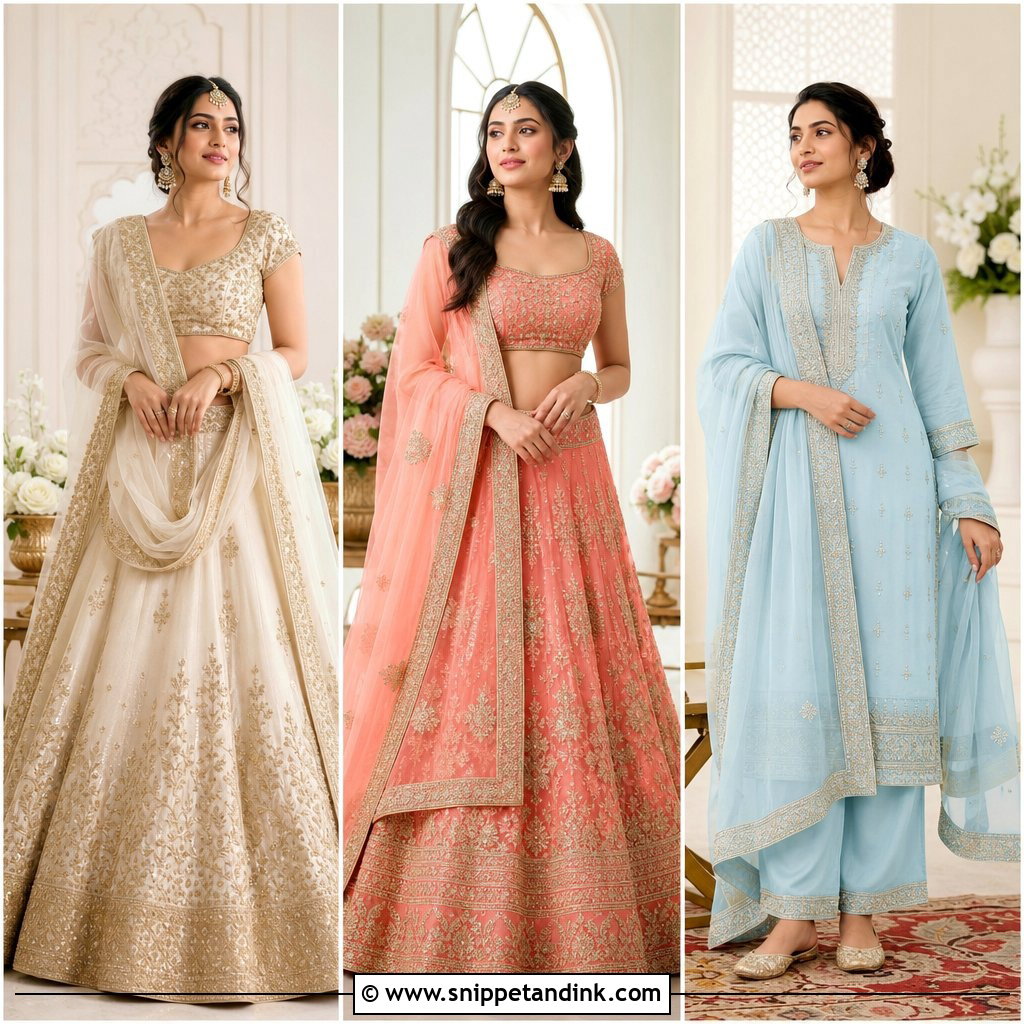
19. Pastel Floral Bridal Lehenga
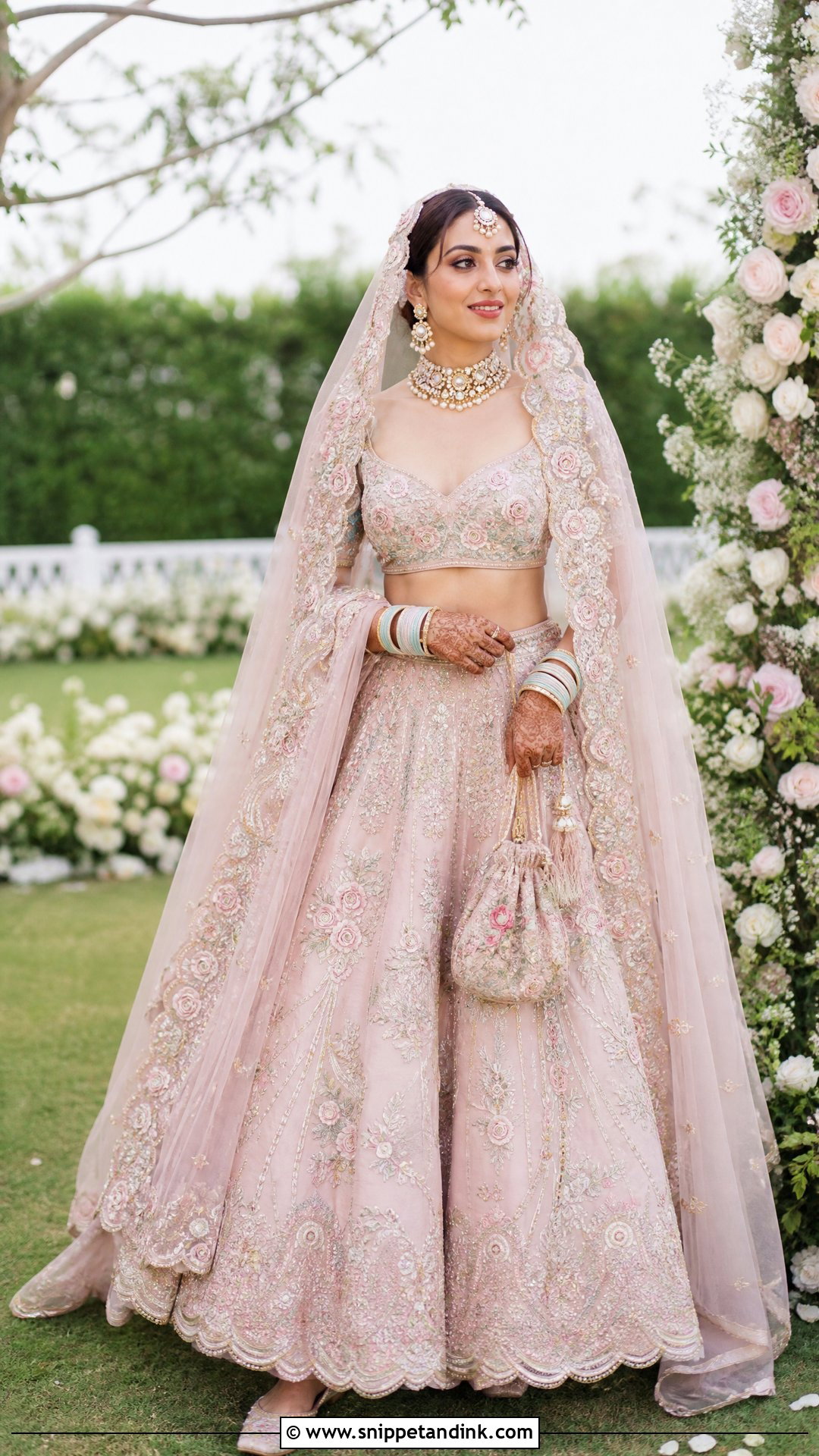
Pastels go wrong in one predictable way: outdoors in bright light they fade into the background. For a royal garden wedding, I choose blush, peach, mint or powder blue with hand-embroidered flowers, pearls and sequins dense enough to read as bridal, plus a defined border. The fitted blouse and sheer veil should repeat the floral motif around the edges. A pearl-polki choker, delicate earrings, tikka, pastel bangles and embroidered juttis keep the palette gentle, with a small floral potli. Hair goes in a loose low bun with small blossoms, not a large floral arrangement. My fix for the fading problem is one deeper accent in the border or jewelry, which gives the outfit an outline in photographs.

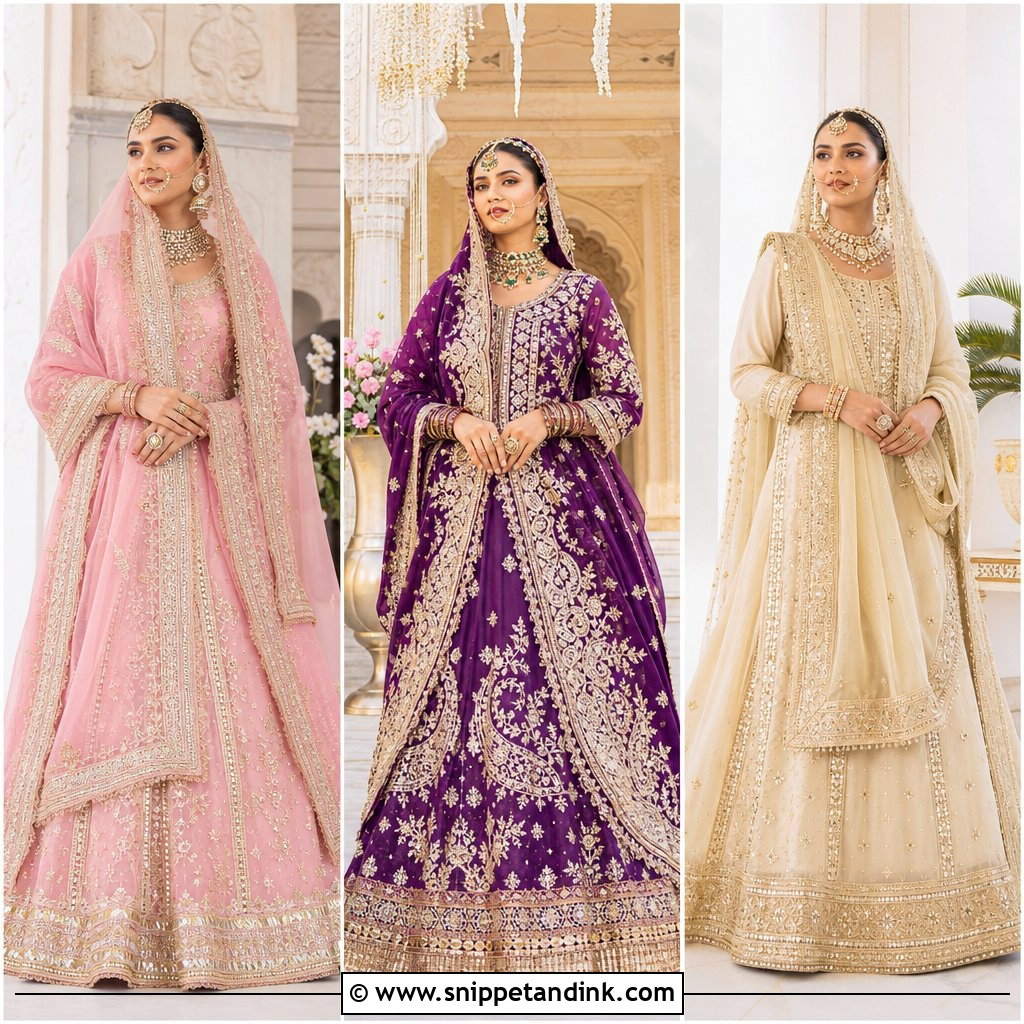

20. Fish Cut Bridal Lehenga
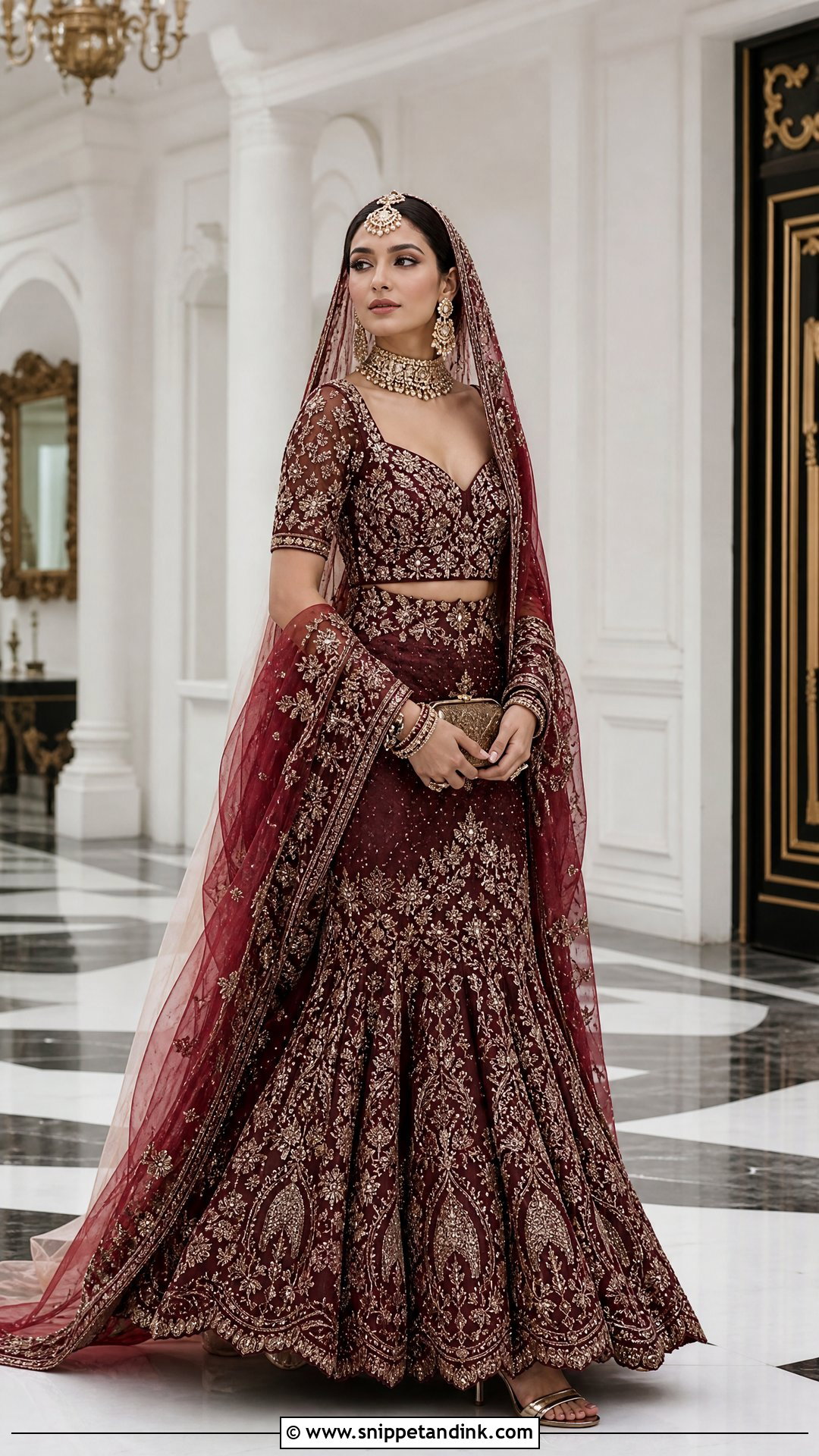
A fish cut lehenga follows the body through the waist and hips before flaring near the hem, and it lives or dies on tailoring. Red, wine, emerald or champagne with vertical embroidery supports the long line. A fitted blouse and lightweight dupatta over one shoulder keep the silhouette clear, and I add a detachable veil for the ceremony so the shape isn’t hidden. Statement choker, long earrings, bangles, a structured clutch and comfortable heels. The fit at the hips and knees is where I spend the most time at fittings, because you still need to walk, sit and take part in rituals. It is a sleek modern alternative to the heavily layered, can-can-supported skirt, though I’d steer you away from it if you’ll spend hours seated on the floor.
21. Jacket Bridal Lehenga
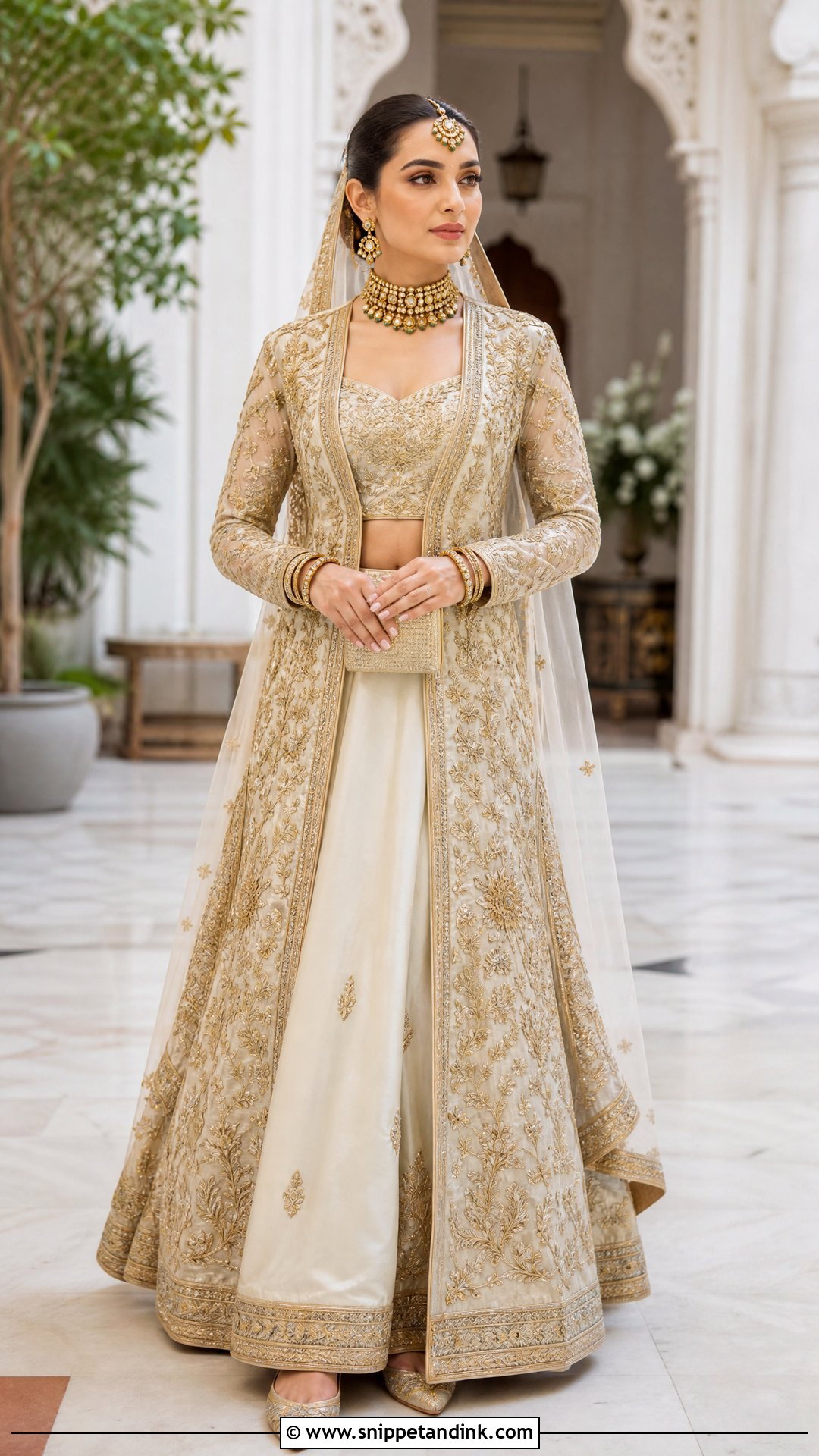
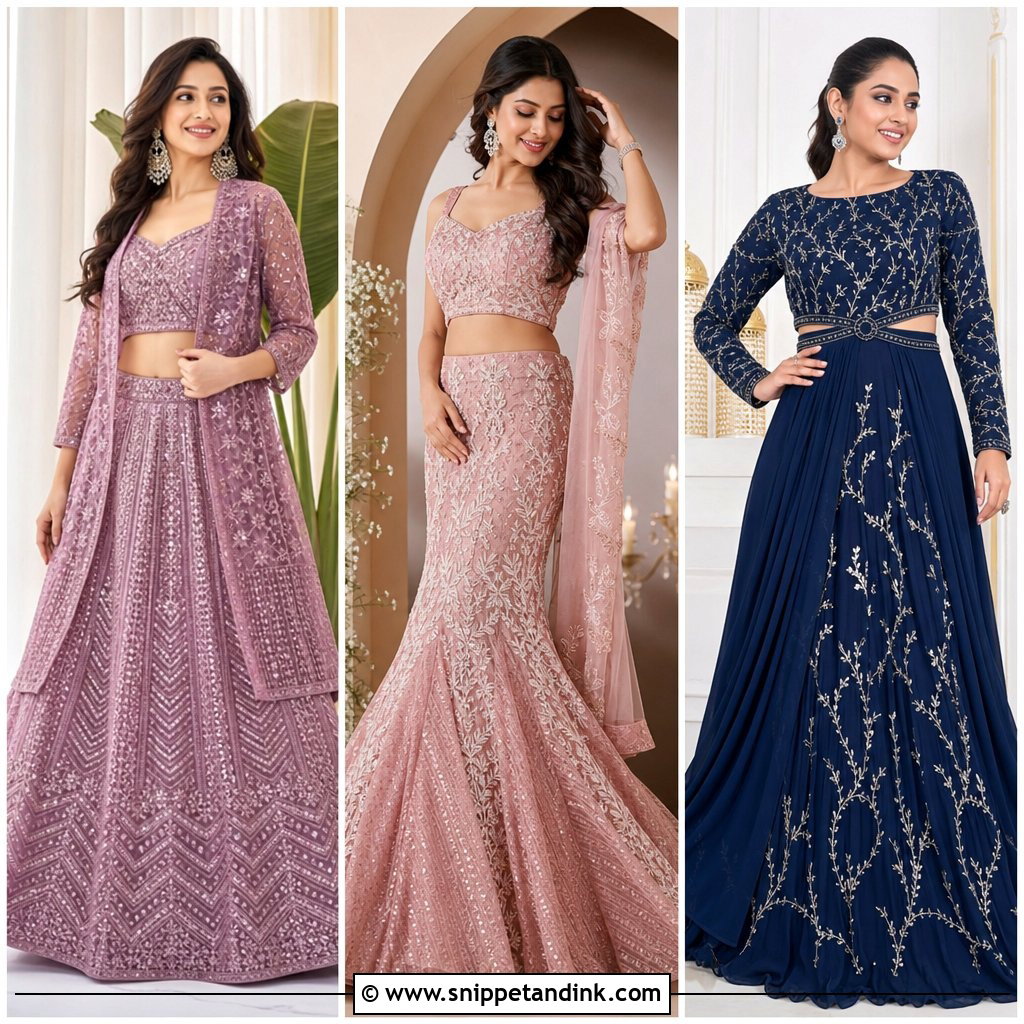
The jacket adds coverage and architecture, but only if the shoulders fit precisely. Loose shoulder seams make the whole outfit look heavier and older. I start with a flowing silk or brocade skirt and fitted blouse, then layer an embroidered long jacket over both, left open at the front so the waist still shows. Ivory and gold gives understated grandeur; emerald, maroon or navy go stronger. Add a choker, earrings, maang tikka, bangles, pointed juttis and a compact box clutch. A light veil can go over the head for the ceremony and come off afterwards. Hair in a sleek bun or polished waves both work.
22. Saree Gown Bridal Look
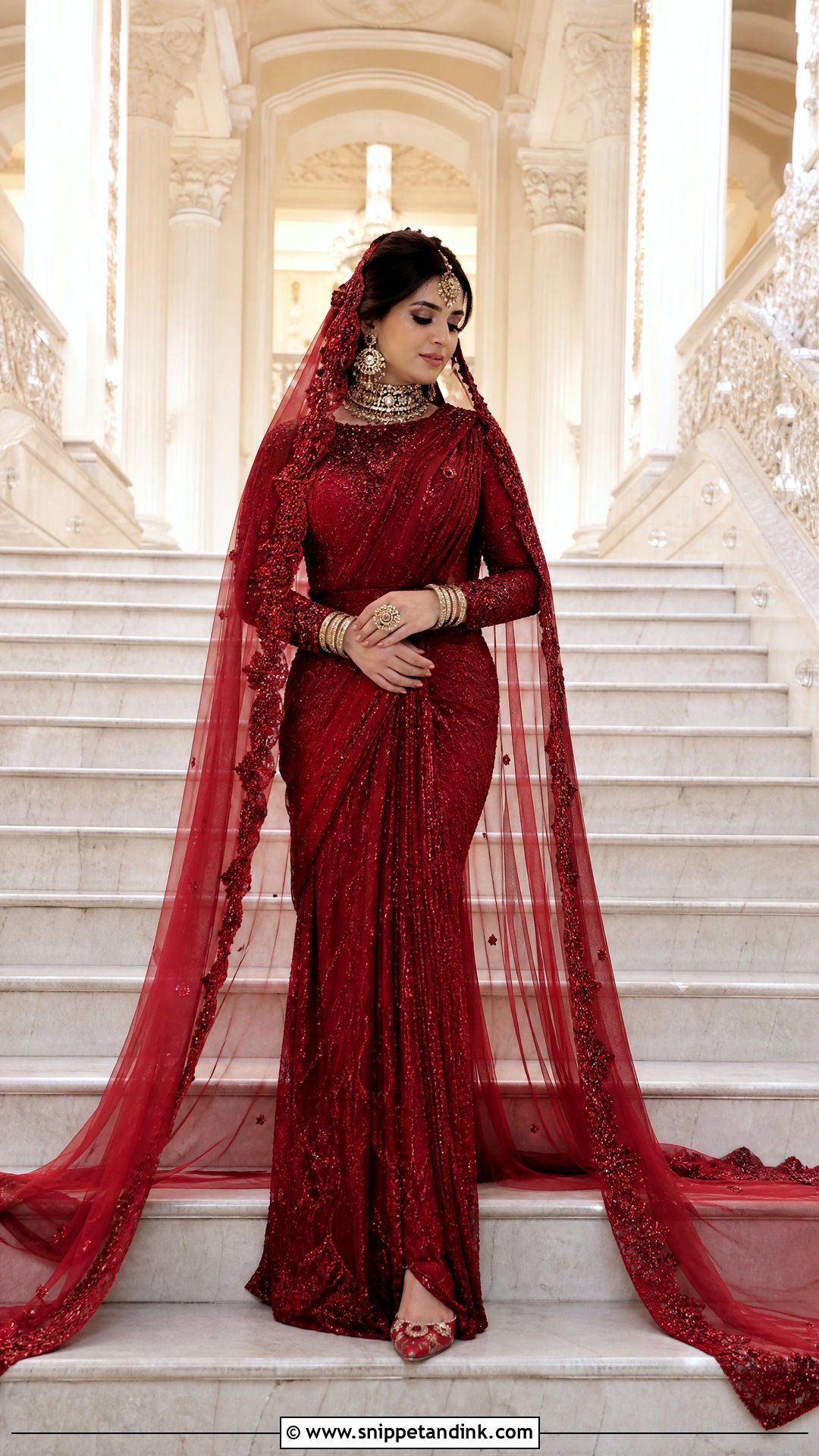
The saree gown is what I suggest when a bride loves a saree’s flow but doesn’t want an hour of pinning. Pleats and the pallu are stitched in, with a defined waist, in red, gold, ivory or a jewel tone. If you add a long veil, it has to connect cleanly to the gown rather than fight the draped section. A polki choker, matching earrings, bangles and a statement ring are enough, with closed-toe embroidered heels or stable sandals. A sleek bun keeps the neckline clear and supports the veil. The bodice and hips need careful fitting, so I schedule more than one trial and insist on the exact undergarments and wedding shoes each time.
23. Double Dupatta Bridal Lehenga
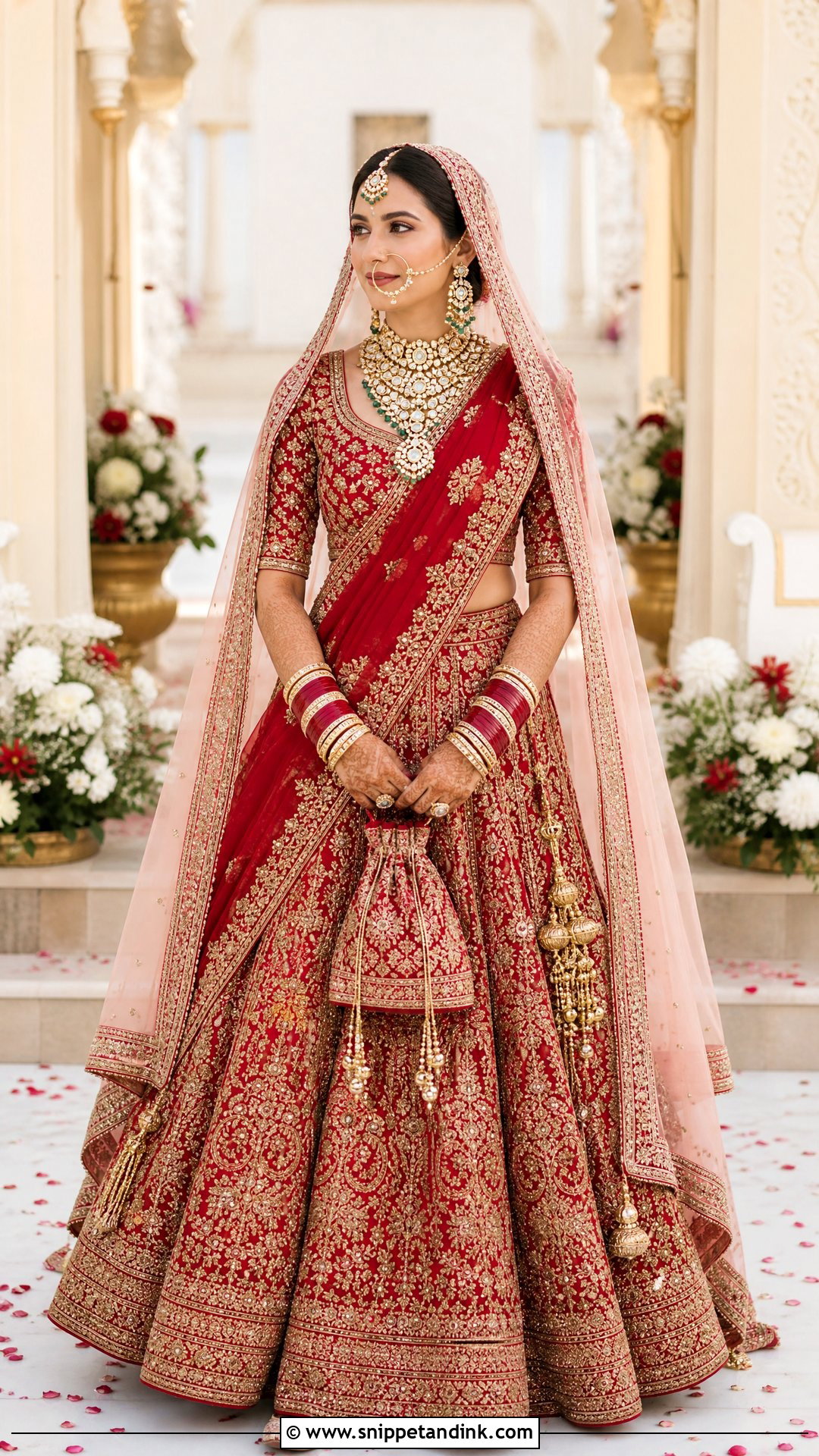
Two dupattas give a complete frame around the bride, and the risk is a crowded top half. A heavier embroidered dupatta goes across the torso and a lighter sheer veil sits over the head. They can match, or the veil can bring in a softer shade; with a red lehenga I like blush, ivory or muted gold. The kundan choker, long necklace, earrings, maang tikka, bangles, nath and juttis complete the look. The heavier dupatta must be pinned at both the shoulder and the waist, or its weight will drag the blouse off line within the hour. The veil should barely rest on the face. Done this way the visual weight spreads evenly instead of piling up around the neck.
24. Heirloom Saree Bridal Look
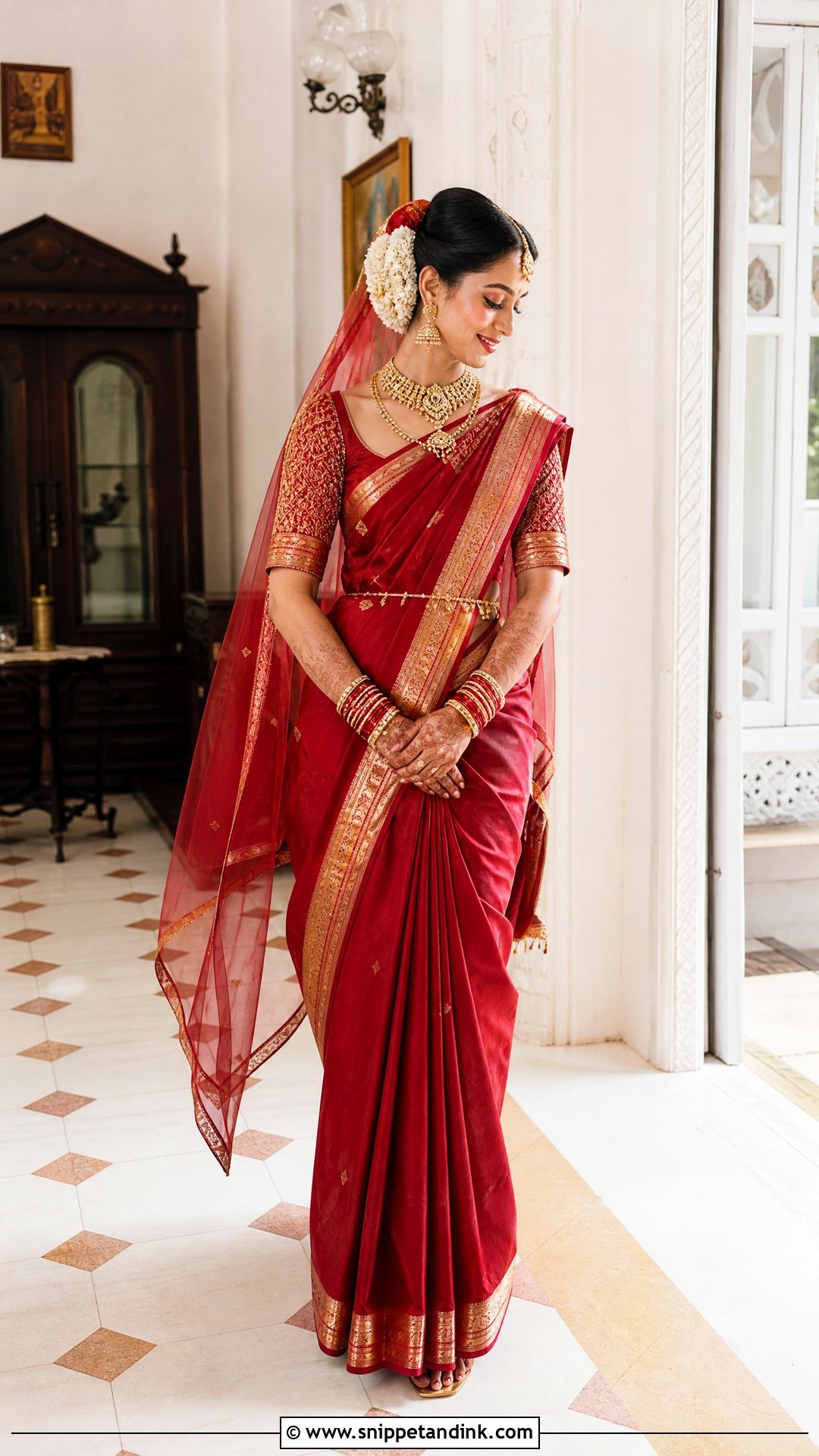
An heirloom saree carries a meaning no new outfit can, and it also needs the most care. I examine it in good light for weak folds, stains and fraying borders before anything else, since old silk often splits along the lines where it has been folded for decades. A textile conservator can reinforce delicate sections before draping. Have a custom blouse made to echo a colour or motif from the weave, then add family jewelry, a fresh veil, coordinated bangles and comfortable metallic footwear. When the saree is heavily worked, I keep the bag and hair accessories quiet. A classic bun and softly defined makeup let it speak. Inherited odhnis and embroidery pieces can be worked into a newer outfit too, linking generations without risking a fragile textile for a whole day.


25. Champagne Cape Bridal Lehenga
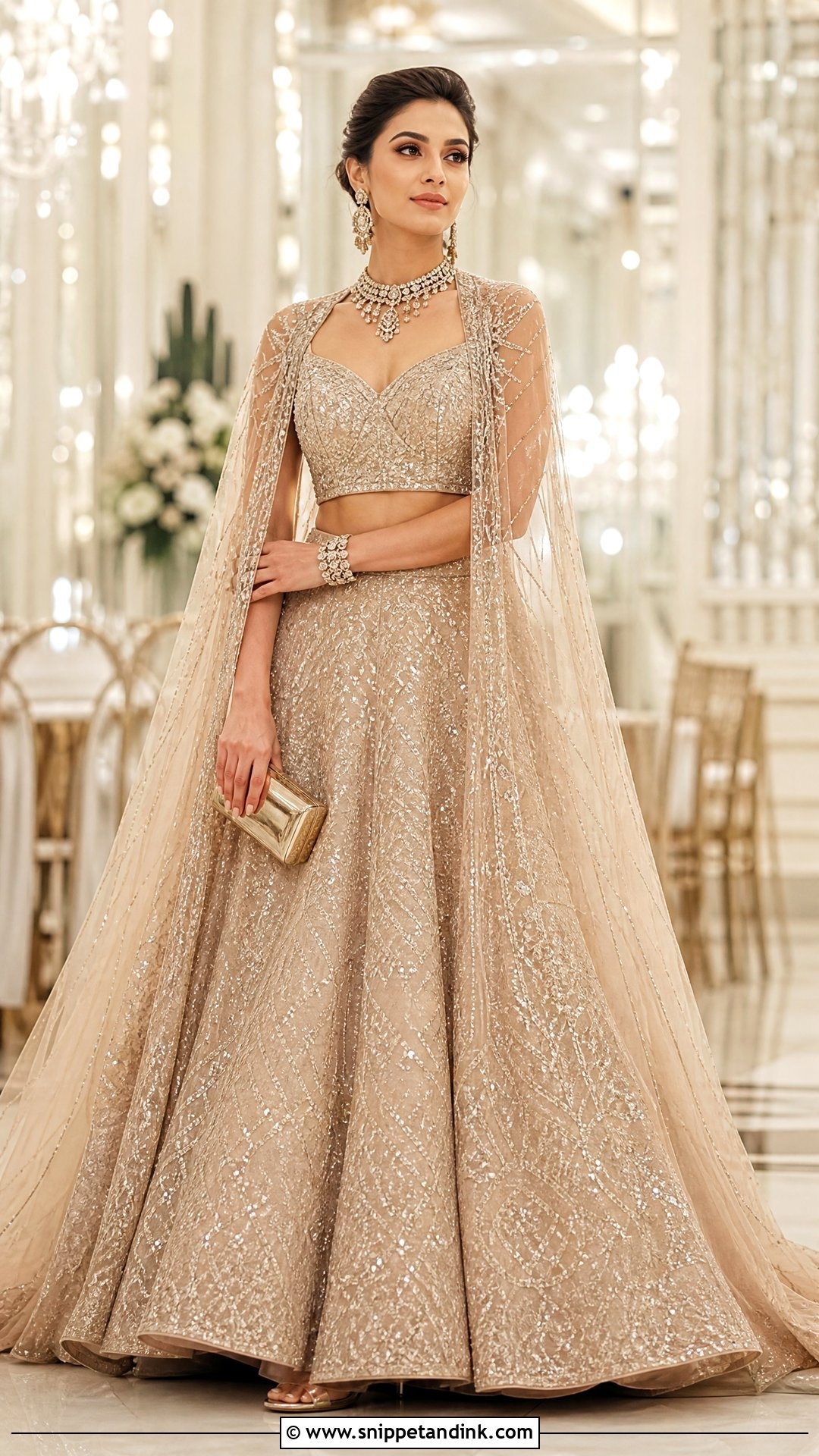
For the reception, a cape lehenga can replace the dupatta entirely, which is a relief by the last event of a long wedding. Champagne, soft gold or muted rose with controlled crystal, sequin and metallic embroidery shimmers without looking glitzy. The sheer cape attaches at the shoulders on a structured blouse, and I keep it only slightly longer than the skirt so it frames you and doesn’t trail into everyone’s feet. Diamond-polki, drop earrings, a statement bracelet, metallic heels and a sleek clutch. Soft waves or a polished low bun suit the open neckline. Keep makeup luminous and neutral, and let the cape do the work in portraits and on your entrance.
Hand Embroidery Runs on Its Own Calendar
Zardozi, gota patti and dabka are done by hand, and a heavily worked custom piece takes months, not weeks. I tell brides to place a bespoke order roughly four to six months ahead, and longer during the busy wedding season, when workshops fill up. Ready-to-alter pieces from a store move faster, but still allow time for two or three fittings.
When I plan the fittings, the first is for structure and length, the second for the blouse with your actual bra and jewelry weight, and the last a full dress rehearsal with shoes and both dupattas pinned. Bring the jewelry to that last one. A heavy choker changes how a neckline lies, and it is far easier to adjust a blouse than to reset a necklace.
Putting Zari Work Away After the Wedding
Metallic thread tarnishes when it meets moisture and plastic. After the wedding I air the outfit out of direct sun for a day, then fold it with acid-free tissue between the layers so embroidered panels don’t rub together, and wrap it in soft cotton or muslin. Refold it along different lines every few months, because silk weakens where it stays creased. For stains, take it to a dry cleaner who handles bridal zari and point out each mark rather than hoping they spot it.
The Outfit That Still Feels Regal at the Last Ritual
Royal bridal dressing covers far more than one colour or cut. A red zardozi lehenga brings classic grandeur, Banarasi, Kanjeevaram, Paithani and heirloom sarees honour remarkable textile traditions, and velvet, jackets, shararas, saree gowns and capes give a modern bride other ways to command a room. The outfit I’d choose is the one that respects your ceremony and fits your body well enough to forget about. Do one complete trial with the blouse, underskirt, drapes, jewelry, hair and shoes all on together, check the regional details with your family, and put secure tailoring ahead of any extra embellishment.
You'll Like These Ideas:







Leave a Reply