
A Nigerian wedding asks more of a face than most. There is often a traditional ceremony and a white wedding, sometimes on the same day, plus outfit changes, a long reception, hours of spraying and dancing, and a photographer working under strong lights. When I plan makeup for a Yoruba bride in gele, an Igbo bride in coral beads, a Hausa-inspired celebration or a church wedding, the brief is the same: skin that reads polished on camera and still looks intact at midnight. Below are twenty complete looks, from soft glam to full beat, each with notes on how I build it, what it pairs with, and who should probably skip it.
Planning One Face for a Traditional Ceremony and a White Wedding
Many Nigerian couples hold the traditional rites and the white wedding close together, sometimes on the same day. That means two outfits, two color stories and often two very different hairstyles or head ties. I plan both looks from one base so the skin doesn’t have to be redone, then change the eyes and lips between events.
- Bring fabric swatches or photos of every outfit to the trial, including the aso ebi colors your family is wearing.
- Tell your artist whether the gele goes on before or after makeup, and who is tying it. That decides how the forehead and brows are set.
- If you change into a lighter gown later, plan a lip and eye switch rather than a full redo. A clean, satin base takes a second layer of shadow well.
- Ask for your exact foundation and concealer shades written down, so a touch-up later in the day doesn’t come from a guess.
At the trial, I photograph the finished face with flash, in daylight and under warm indoor light. Shades that look perfect in a mirror can turn grey or orange in one of those three, and it’s far better to find that out weeks before the wedding.
Matching foundation on deeper skin
Deeper skin often has more than one tone across the face: a lighter center and a deeper perimeter. I usually mix two foundation shades rather than forcing one to work everywhere. Matching to the jaw and chest, not the inside of the wrist, keeps the face from looking lighter than the neck in photos, which is a common problem with open traditional necklines.
1. Nigerian Traditional Bridal Makeup
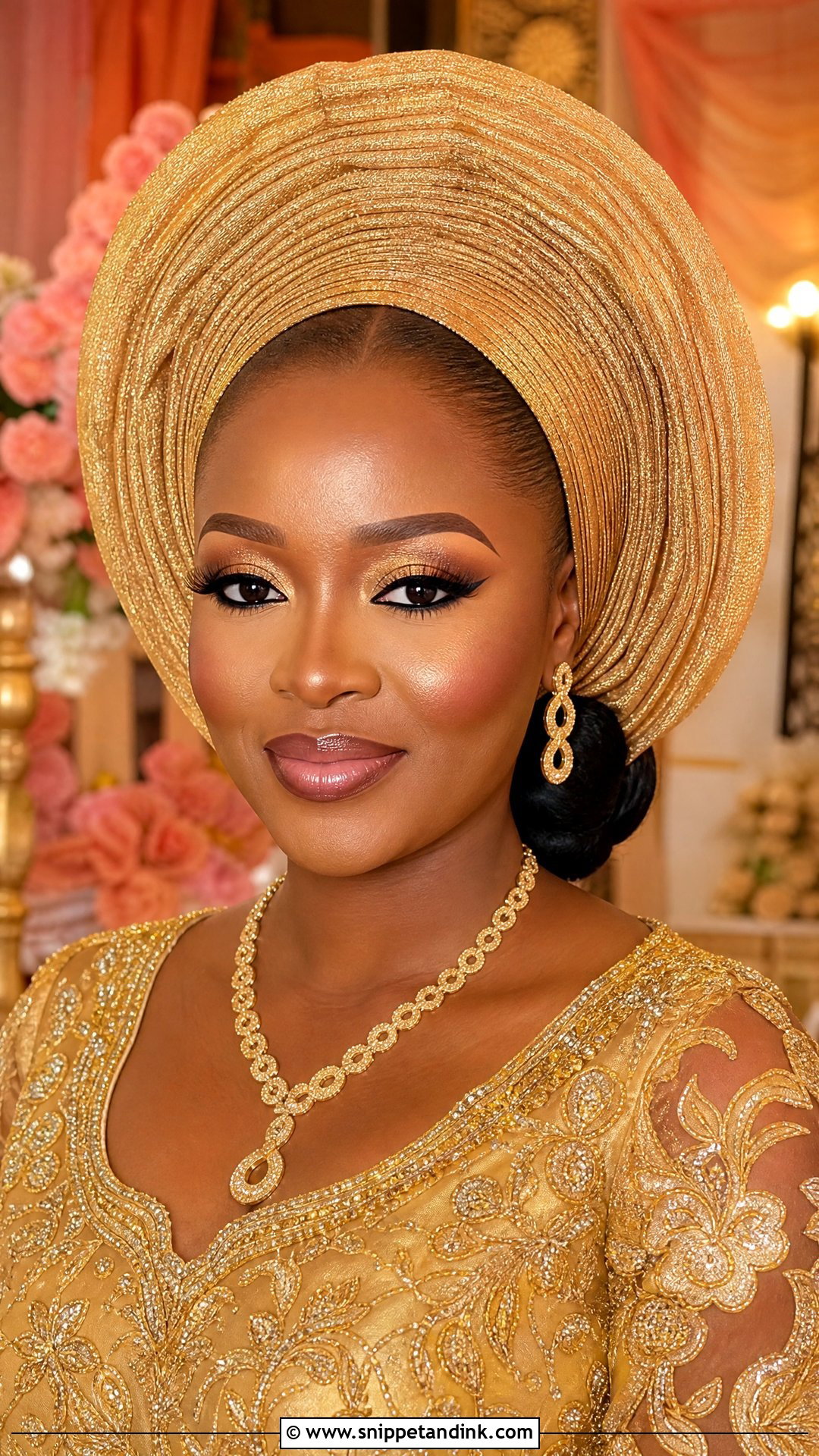
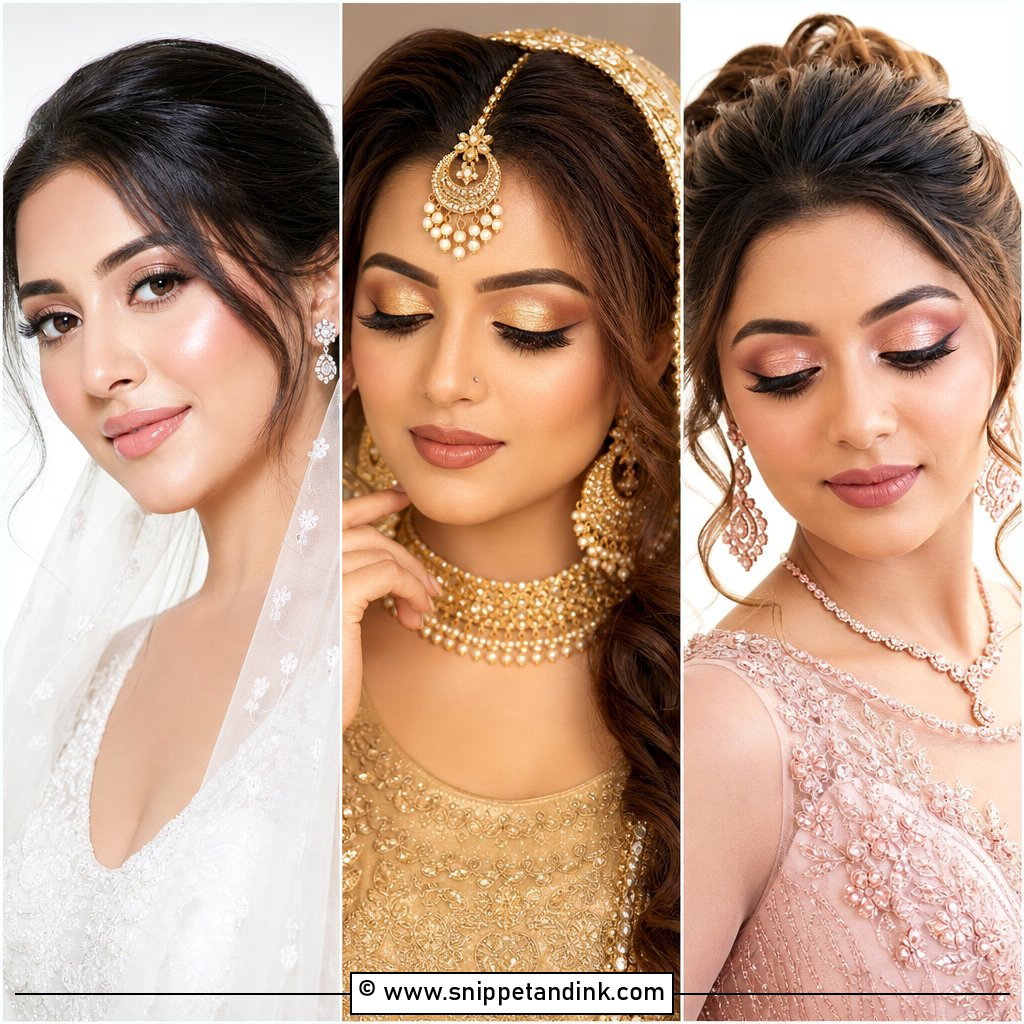
For a traditional ceremony, the base does most of the work. I color-correct dark circles with an orange or red corrector first, because skipping that step leaves grey patches under concealer once the flash hits. Then a long-wear foundation in a satin finish, matched to the chest rather than the jaw, since necklines on traditional outfits are open. Warm brown in the crease, gold on the lid, black liner and full lashes. I keep the brows structured but feathered at the front so they don’t look stamped on. A brown or berry nude lip lets the fabric and beads carry the color.
2. Nigerian Bridal Soft Glam Makeup
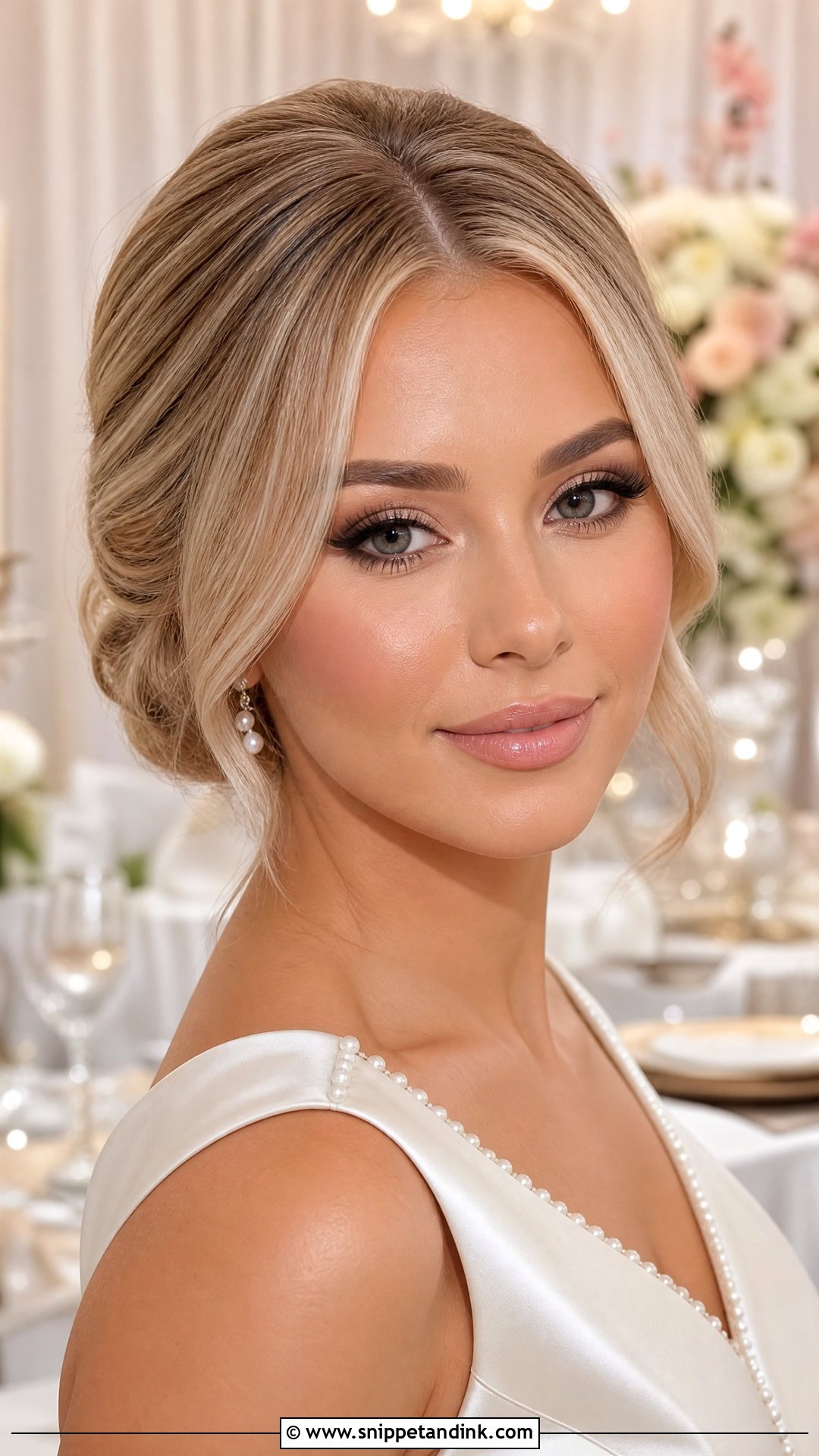
Soft glam on deeper skin is harder than it looks, because “soft” can quickly turn ashy if the shades are too light. I use caramel and taupe through the crease, a thin liner pressed into the lash roots and wispy lashes, then bronzer and a peach blush with enough pigment to actually show. The foundation goes medium to full, blended down the neck. A mauve or warm brown lip with a satin finish keeps it calm. It suits civil ceremonies and church weddings especially, where a heavy beat can feel out of step with a simple gown.
3. Nigerian Wedding Full Glam Makeup
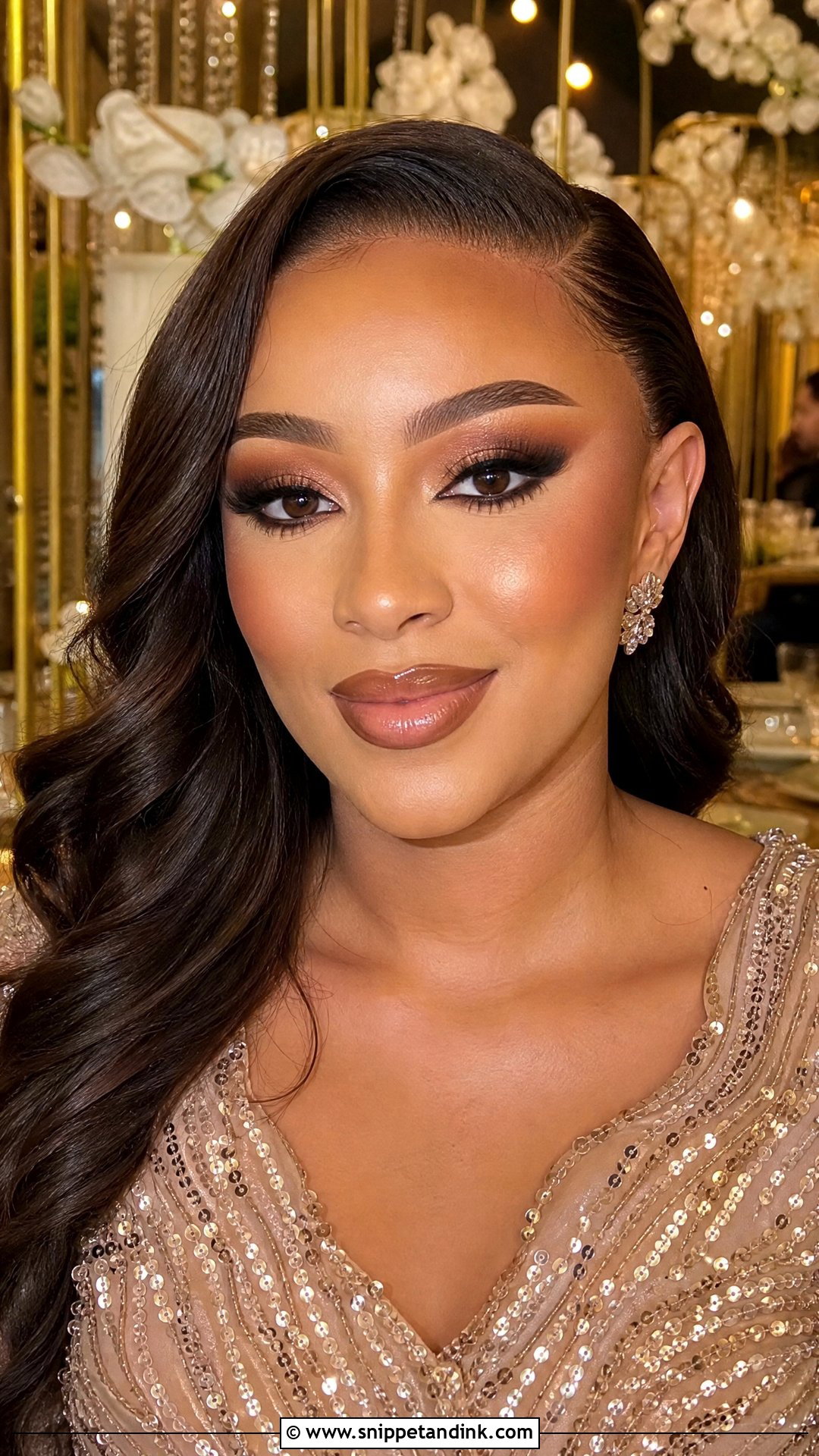
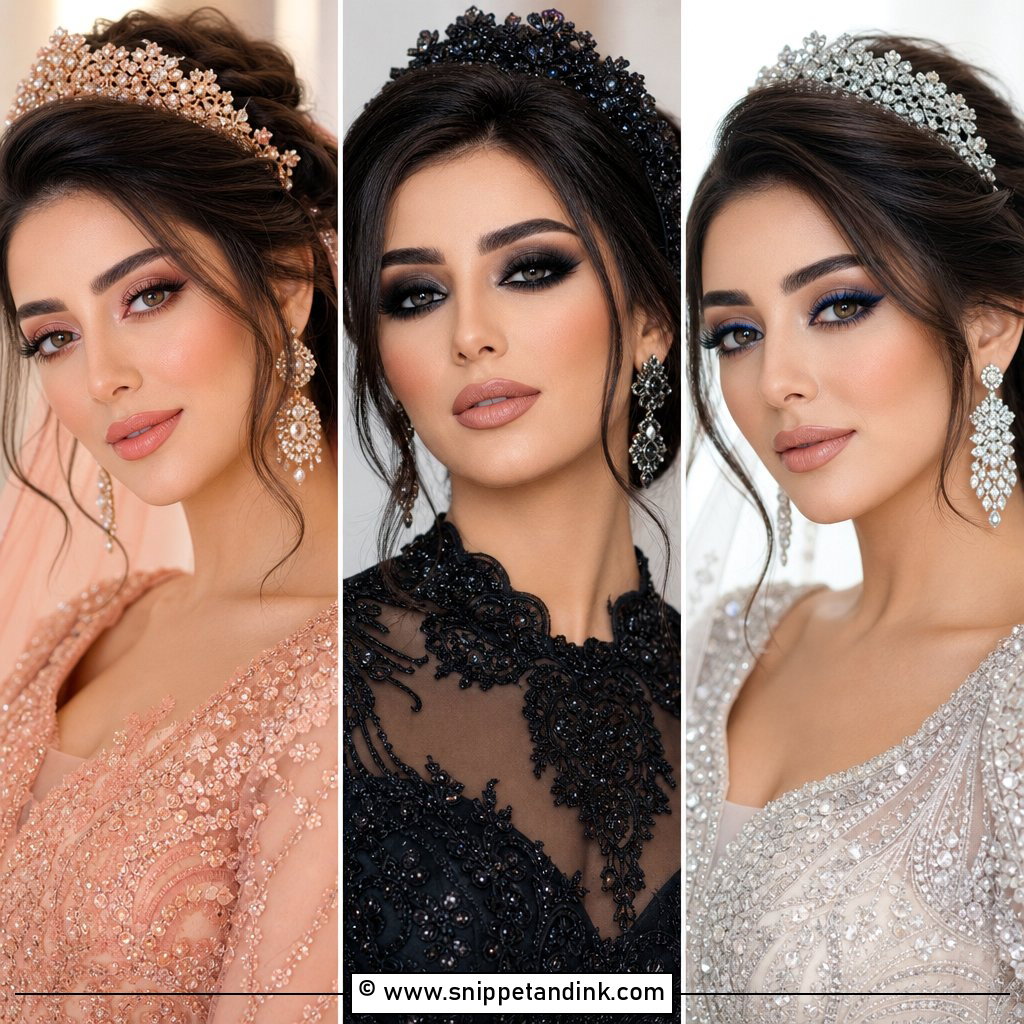
Full glam Nigerian wedding makeup is what many Nigerian brides mean when they say “beat.” Full-coverage base, brightened under-eyes, a carved contour, strong brows, and lashes that fill the eye. A smoky brown or bronze lid gives depth without fighting a brightly colored outfit, and a defined lower lash line is what keeps the eyes from disappearing in wide group shots. The risk is the under-eye: too much setting powder there cracks by evening, so I bake lightly and press out the excess. Brown liner with a nude gloss or a deep mauve finishes it.
4. Yoruba Bride Gele Makeup
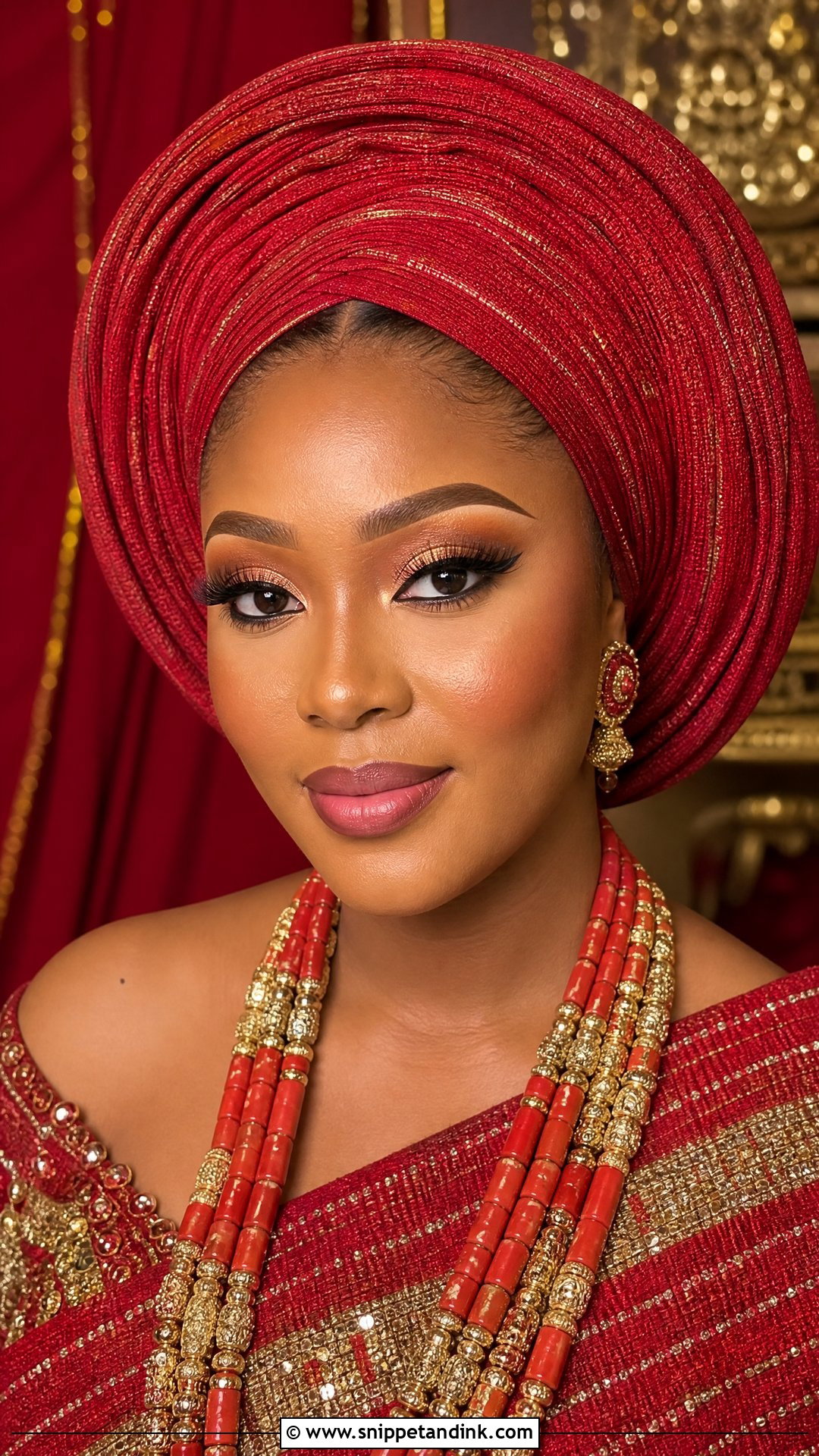
A gele changes the proportions of the face. Once that structure goes on, the forehead is partly hidden and the eye is drawn upward, so the brows and eyes become the frame. I always ask whether the gele will be tied before or after makeup; if after, I leave the forehead base slightly underset so the tie doesn’t drag it, then press powder once it’s on. Lashes need to stop short of the gele’s edge, or they brush the fabric every time she looks up. Gold, copper and champagne shadows sit well against aso oke. The lip depends entirely on the outfit color, so I wait to choose it until I see the fabric.
5. Igbo Bride Coral Bead Makeup
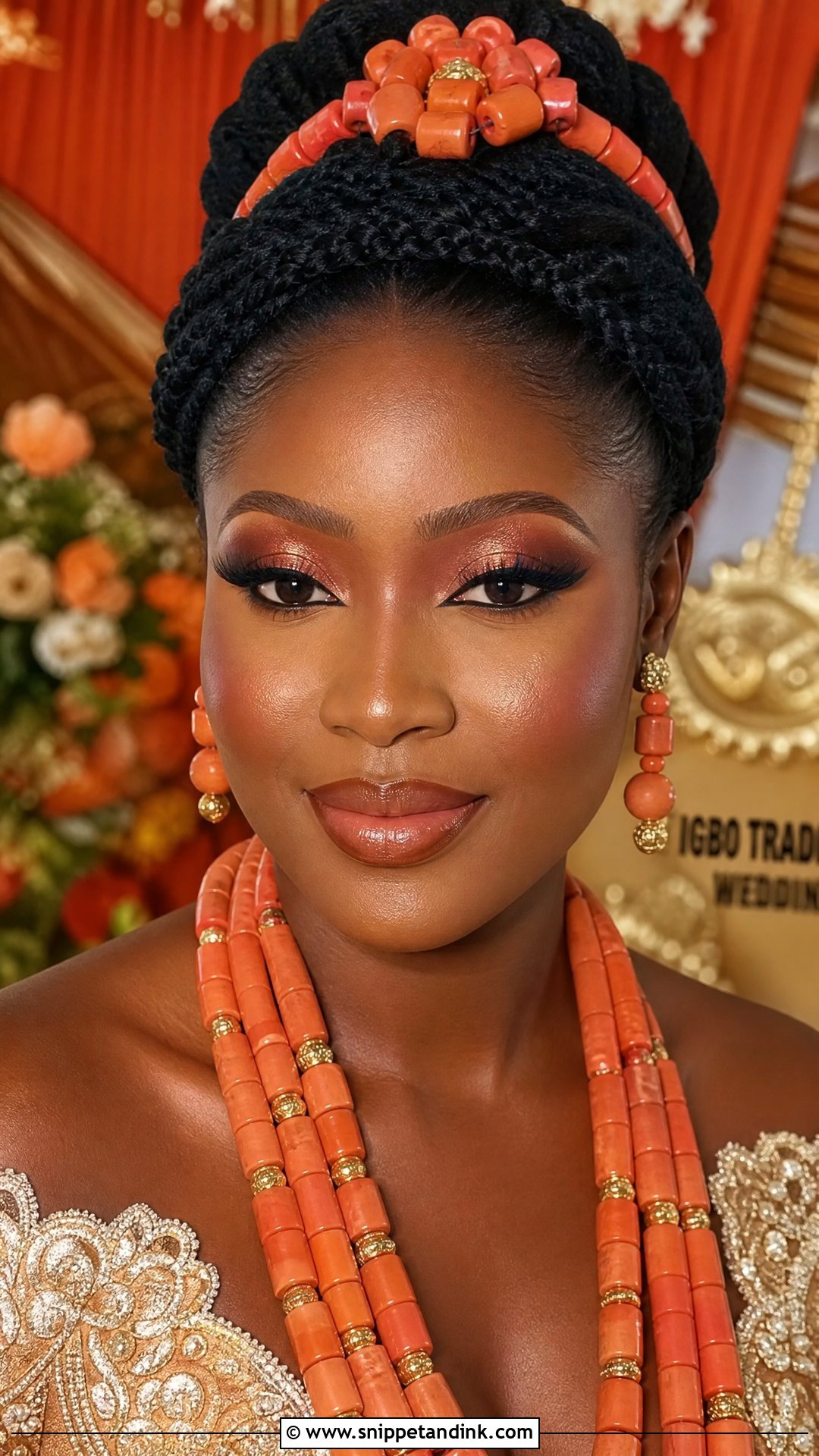
Coral beads sit at the neck, the wrists and often the crown, so the face is surrounded by strong orange-red. I lean into it with bronze or copper on the eye rather than cooler tones, which can look muddy next to coral. Black liner and a softly smoked lower lash line add depth. The skin works in satin or soft matte with a golden highlight placed high on the cheekbone. For lips, terracotta or a brick rose ties back to the beads without matching them exactly, which tends to look flat. It suits traditional Igbo bridal attire well, and it’s one of the few looks where I’d encourage a bride to stay warm from head to toe.
6. Nigerian Wedding Guest Soft Glam Makeup
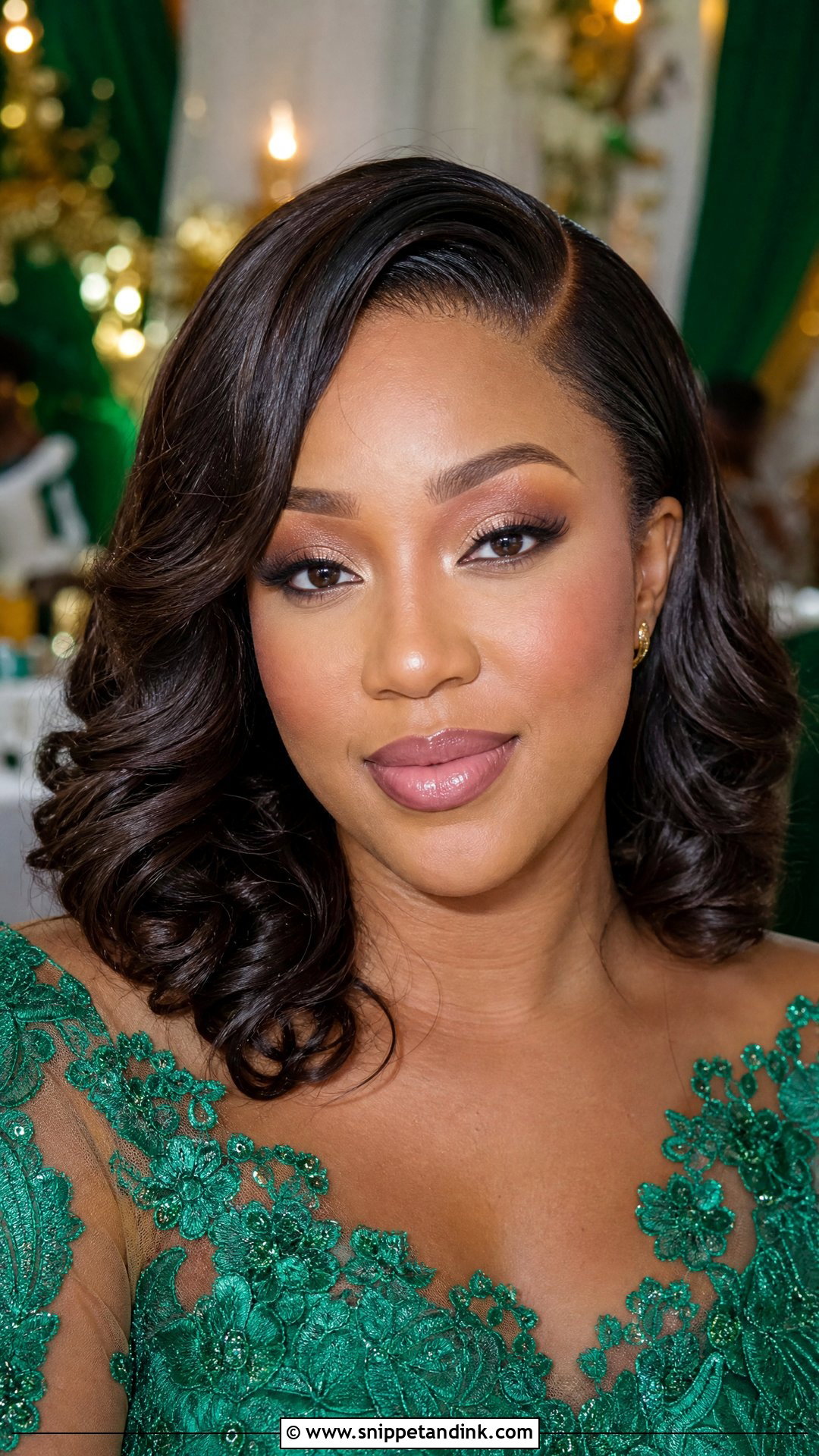
Guests at a Nigerian wedding are often in aso ebi, so the makeup needs to coordinate with a group color while staying a step below the bride. My advice for guests is soft matte skin, which copes better with a long event in a warm hall, brown shadow with a little champagne on the lid, and lashes that are full but not dramatic. Choose blush by depth: peach on lighter brown skin, berry on deeper. A comfortable lip matters more than a bold one, since you’ll be eating and greeting for hours. A mauve or soft brown works with most aso ebi colors.
7. Nigerian Wedding Matte Makeup
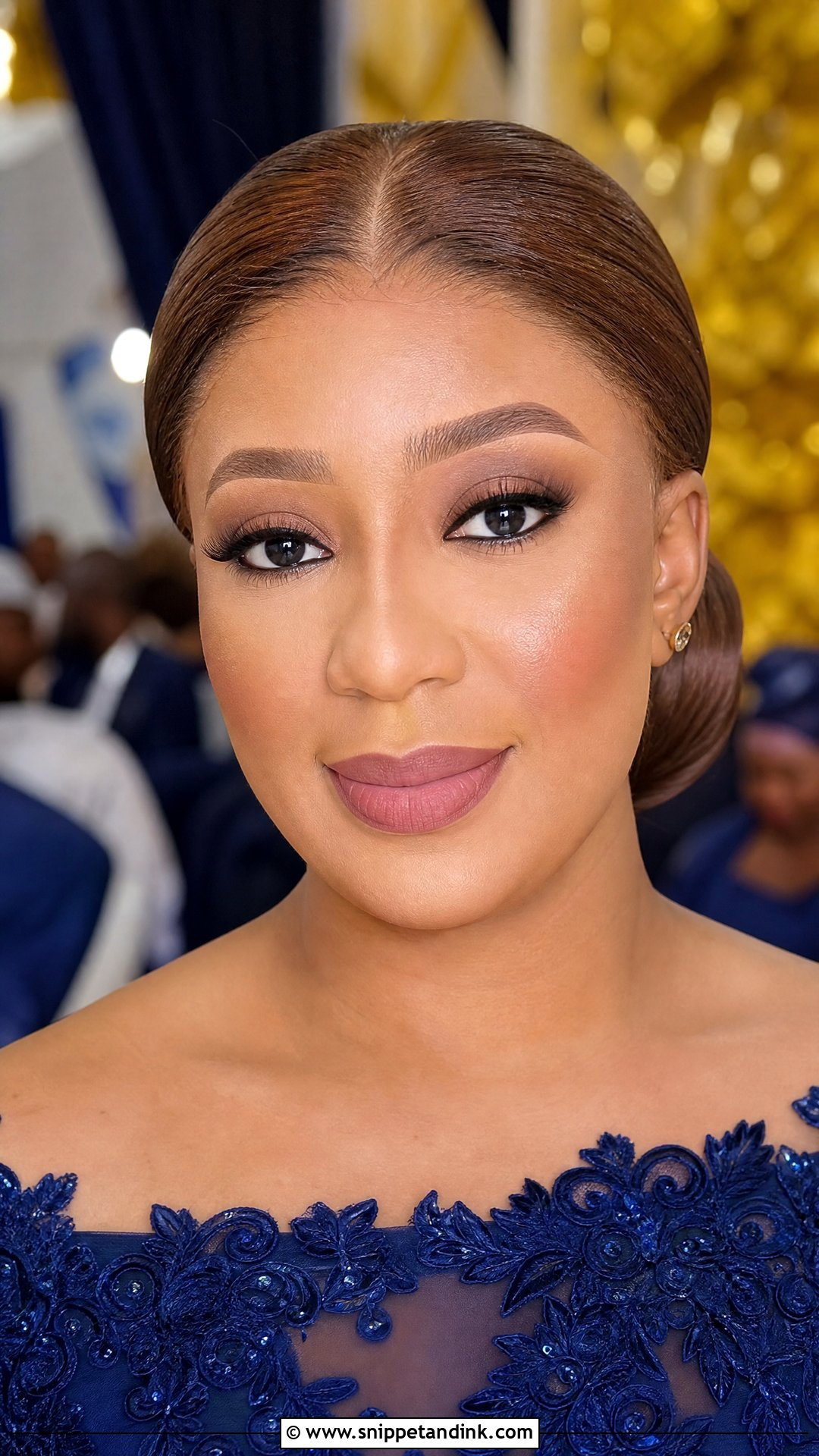
Matte is what I reach for on oily skin and outdoor ceremonies. The aim is controlled shine, not a flat mask. I put mattifying primer only on the T-zone, use a long-wear foundation and set lightly; heavy powder all over is what makes matte skin look dry and older in close-ups. Warm brown, soft gold or matte plum on the eye, depending on the outfit. Blush should be satin, not shimmer, with a tiny touch of highlight on the very top of the cheekbone. I’d steer brides with very dry or textured skin away from a fully matte finish, since it settles into every line by evening.
8. Nigerian Wedding Dewy Makeup
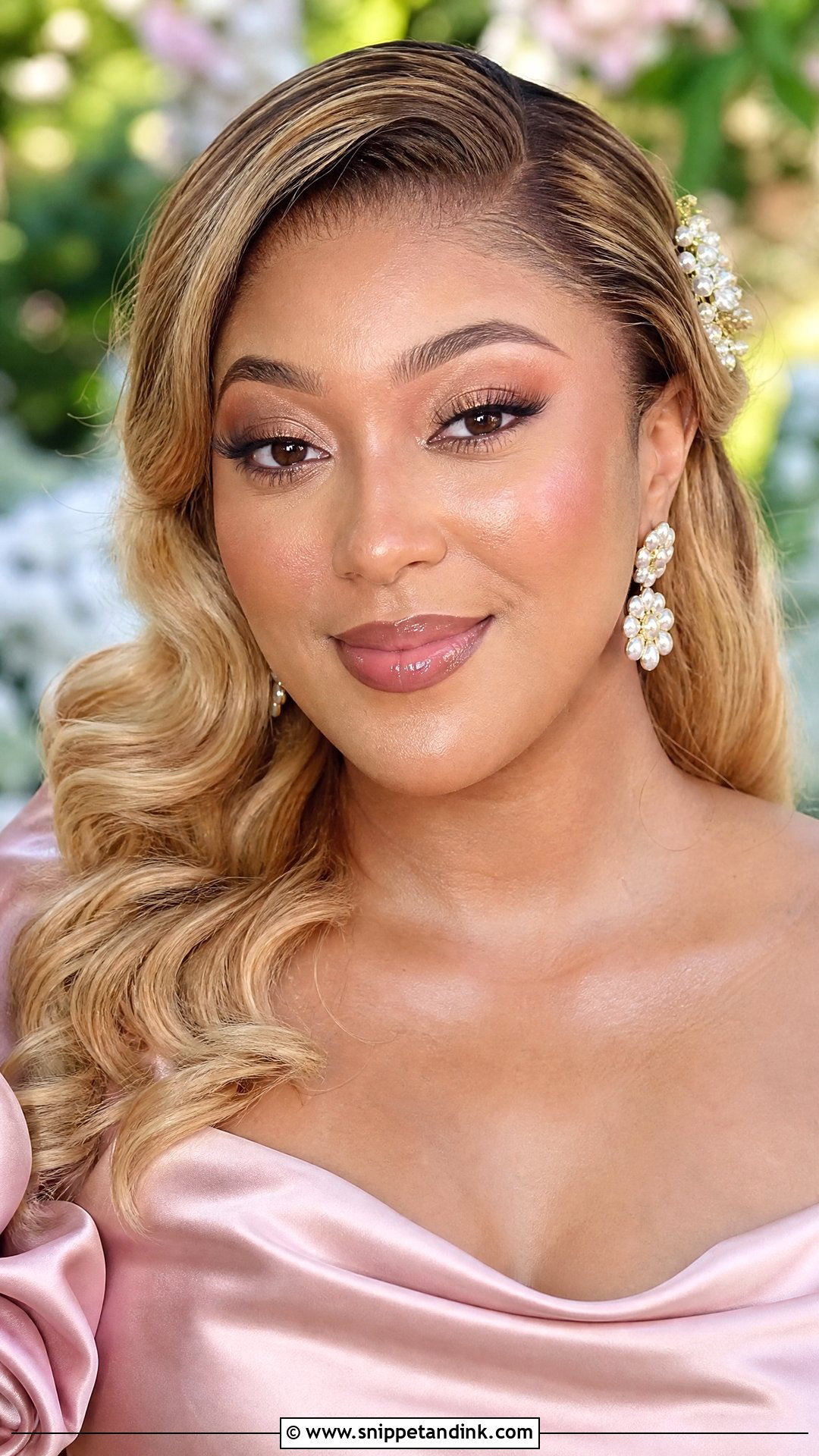
Dewy Nigerian wedding makeup only works if the shine is placed deliberately. I hydrate the skin well, use a smoothing primer and a luminous foundation, then set the center of the face, the sides of the nose and the chin, and leave the cheekbones unset. Cream blush in rose or berry melts in rather than sitting on top. Eyes stay soft with bronze shimmer and brown liner. The honest trade-off: dewy skin needs blotting through the day, and in a packed hot hall it can tip into greasy. I recommend it most for daytime garden weddings.
9. Nigerian Wedding Gold Eyeshadow Makeup
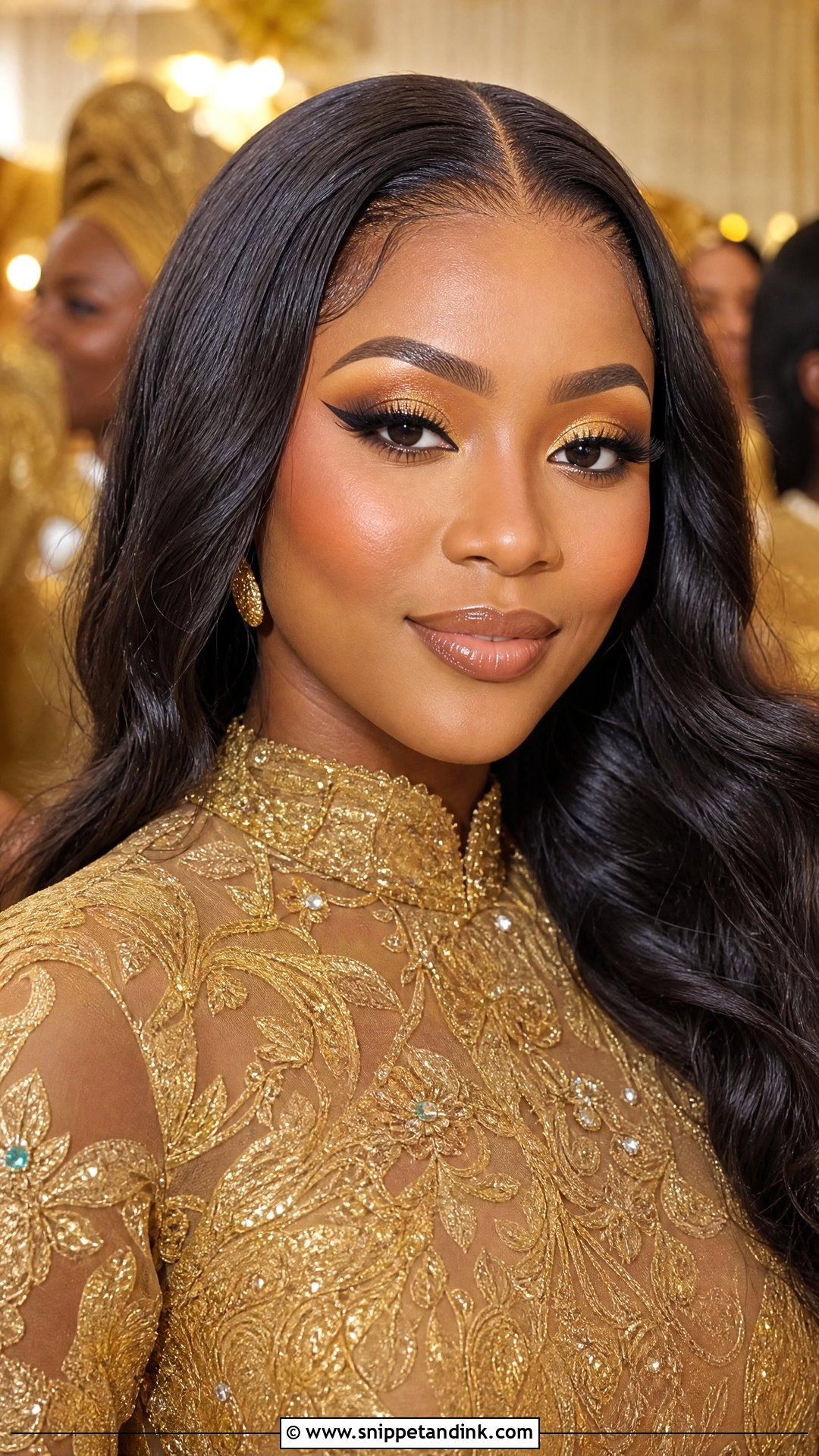
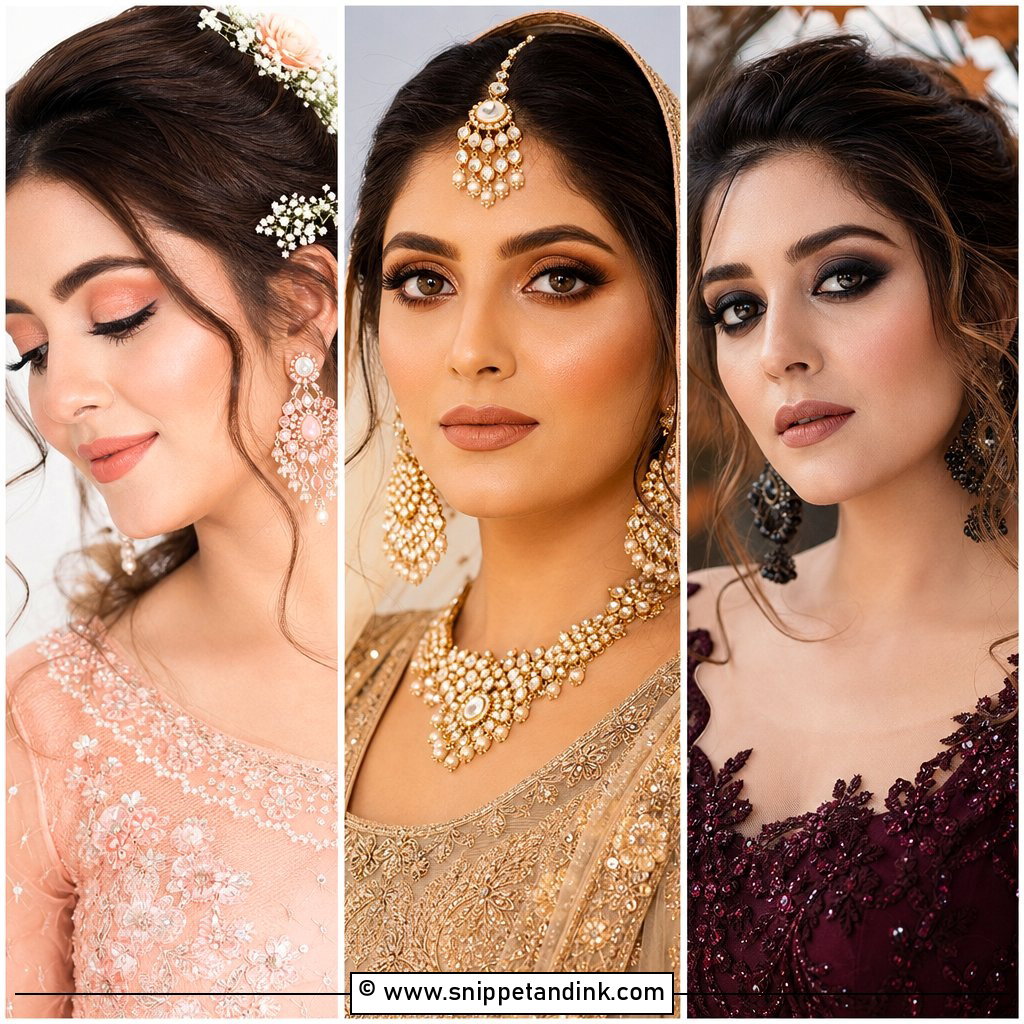
Gold on the lid is close to a default for Nigerian weddings, and for good reason: it picks up gele, sequins, beads and gold jewelry all at once. I blend brown or caramel through the crease first, then press gold onto the lid with a damp brush or fingertip so it stays metallic instead of turning powdery. Black or deep brown liner keeps the shape defined in photos. Keep the cheeks warm with bronzer and peach blush, and the lip quiet, a brown nude or rose beige. It works for brides, bridesmaids and guests, with the bride simply going fuller on lashes.
10. Nigerian Wedding Smokey Eye Makeup
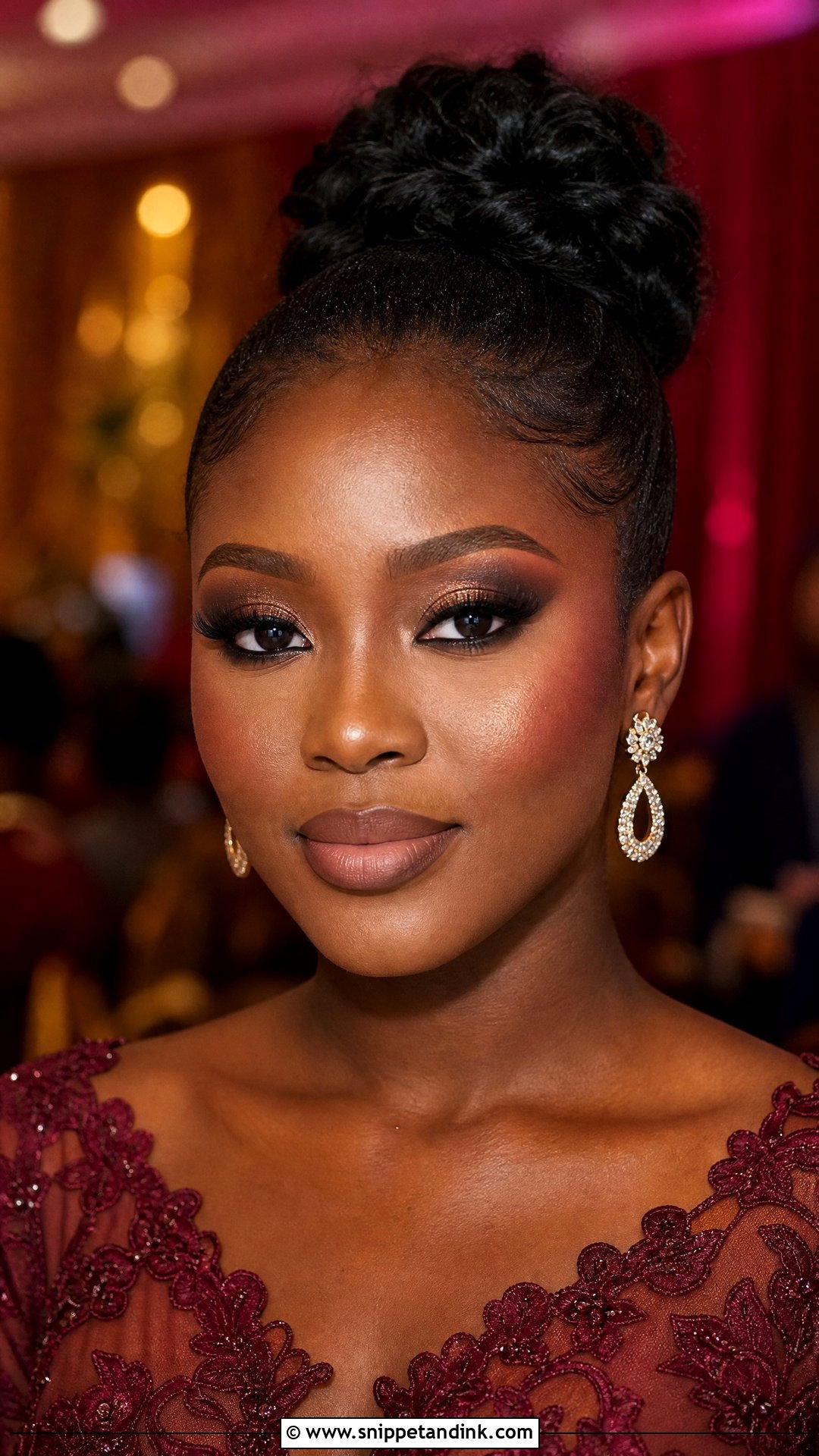
For an evening smokey eye, I rarely use pure black. Espresso, bronze or plum give the same depth but look softer and richer on brown skin, and black shadow can read grey under flash. The edges are where smokey eyes fail, so I blend upward and out with a clean brush until there’s no visible line. Shadow fallout is the other problem; I do the eyes before the base so I can clean up underneath. Brighten the under-eye, keep the complexion lighter around the eyes, and finish with a nude ombré lip to balance the weight on top.
11. Nigerian Wedding Red Lip Makeup
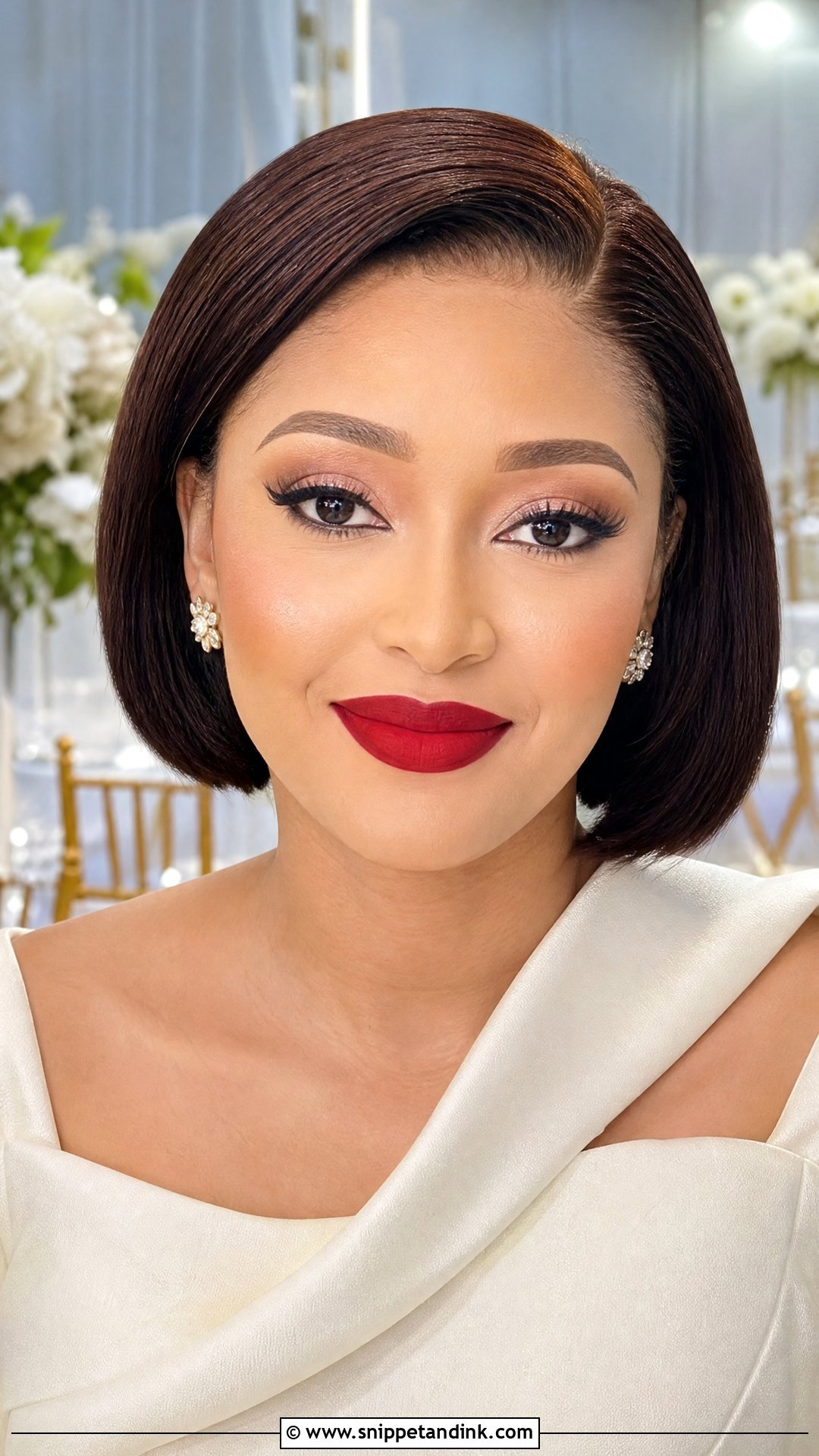
A red lip reads festive and confident, but the shade has to suit the undertone. Blue-red looks crisp on cool and neutral skin; orange-red or brick reads warmer and pairs well with traditional fabrics. I keep the eyes soft, neutral shadow with a winged liner and medium lashes, so the face doesn’t feel overloaded. The practical issue is transfer. I line and fill the whole lip with pencil, apply a long-wear formula, blot and reapply, and I hand the bride the lipstick and liner for after the meal. Red looks especially striking with a white gown, red aso ebi or gold accessories.
12. Nigerian Wedding Nude Lip Makeup
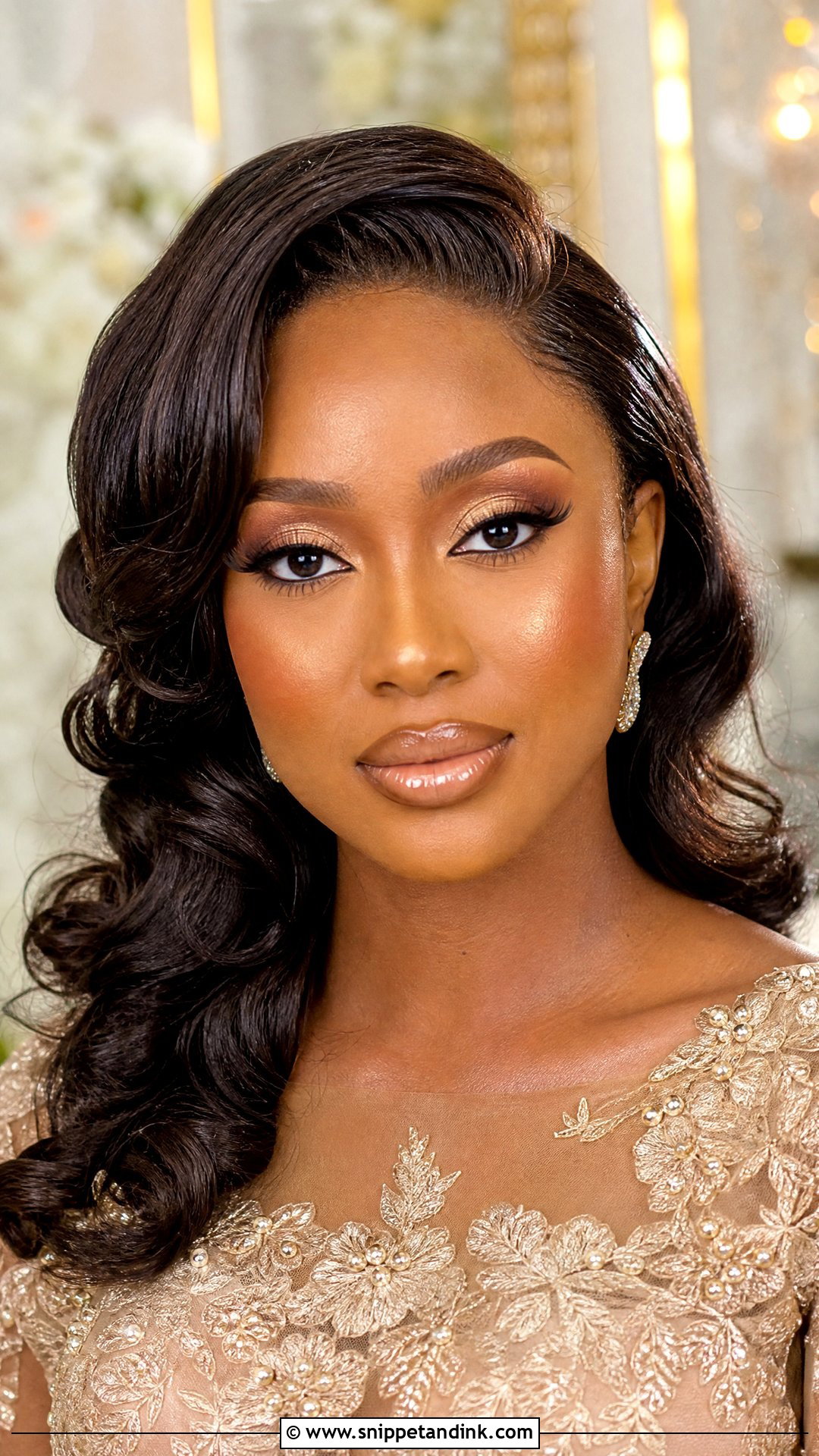
The nude lip goes with almost every outfit, which is why so many brides choose it. The mistake is going too light: a beige nude on medium or deep skin makes the mouth look chalky in photos. I line with a brown pencil, then fill with caramel, peach, rose or mauve depending on the undertone, so the result is a soft ombré with real depth. A dab of gloss in the center adds shape. Pair it with bronze shadow and defined lashes, and don’t skip blush, because a nude lip with no color on the cheeks can make a bride look tired by the evening.
13. Nigerian Wedding Bronze Makeup
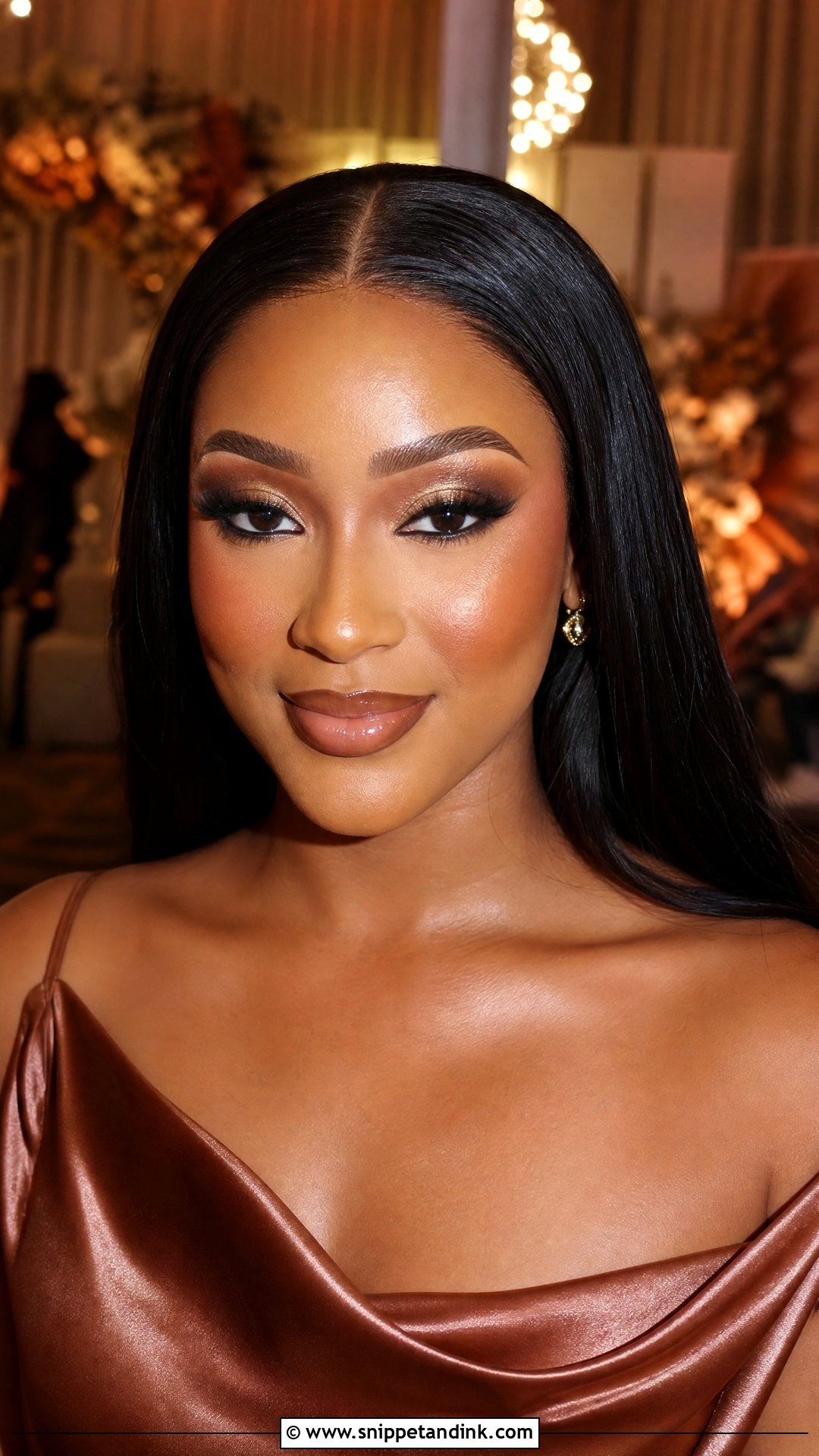
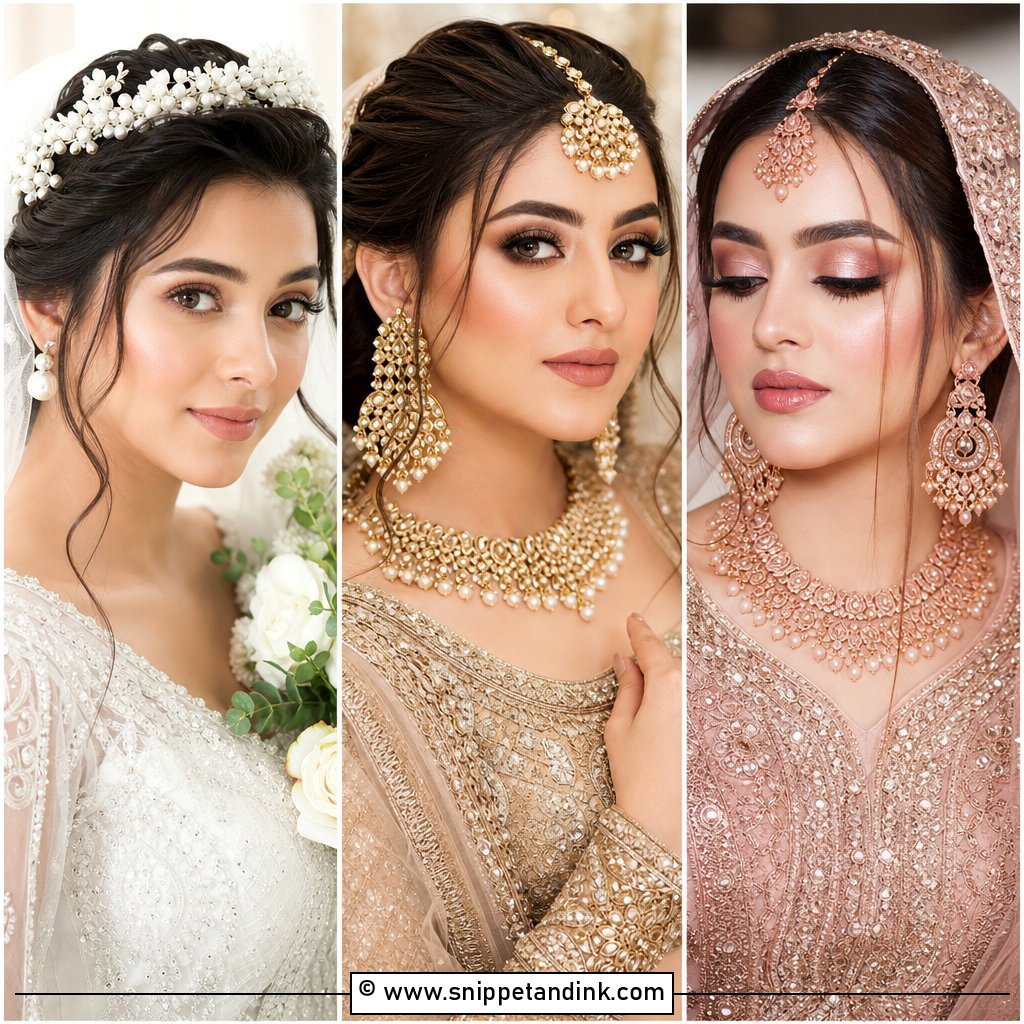
Bronze makes the face look warm and sculpted, and it’s especially good with gold jewelry, brown gele, champagne gowns and earthy aso ebi. Bronze on the lid, warm brown in the crease, dark liner tight to the lashes. I sculpt with bronzer around the hairline, under the cheekbones and along the jaw, then bring life back with terracotta blush so the face doesn’t go one-note brown. A little golden highlight on the cheekbone and nose bridge, and a caramel gloss. It’s one of the easiest looks to carry from a daytime ceremony into an evening reception.
14. Nigerian Wedding Pink Glam Makeup
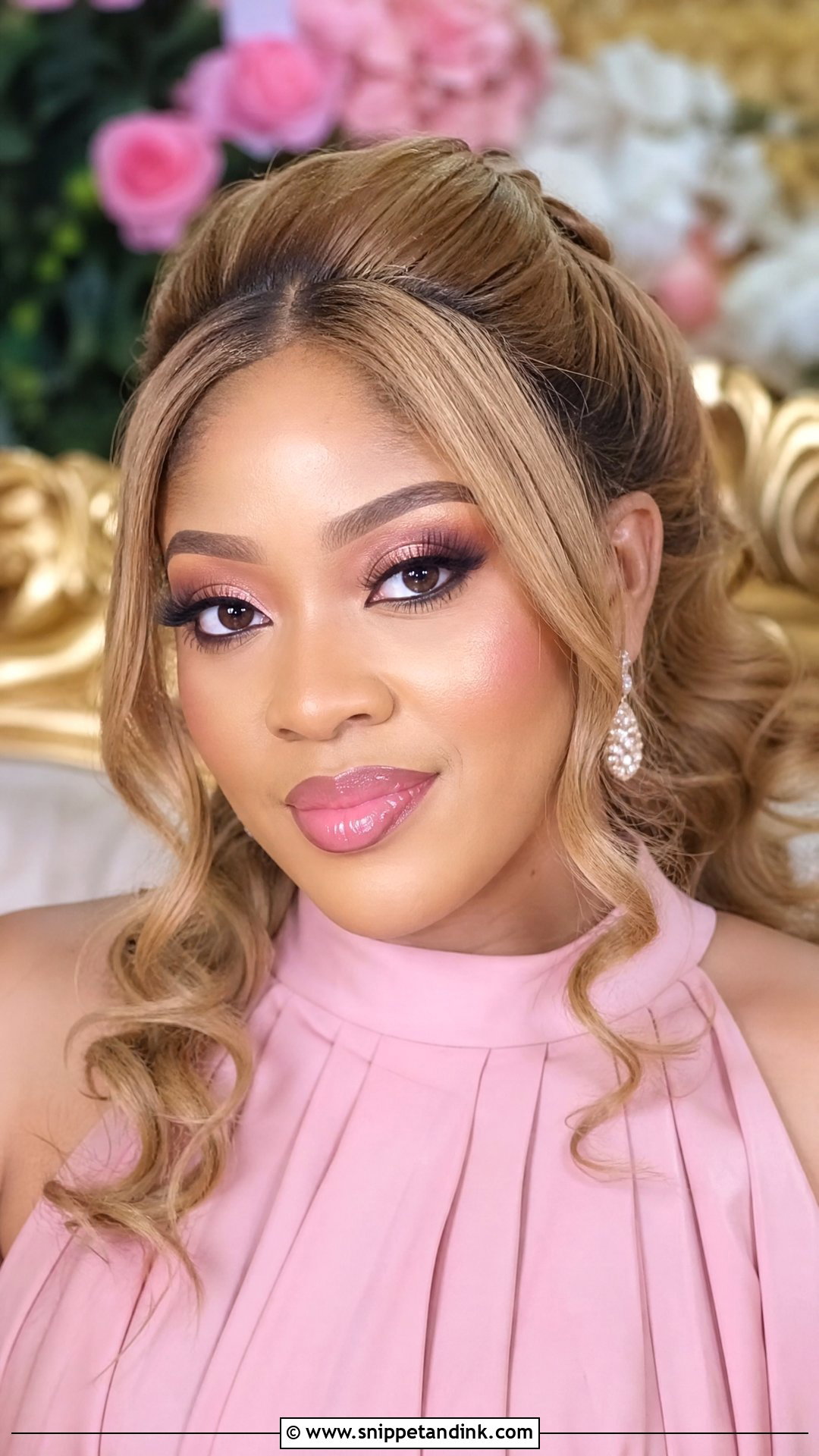
Pink glam needs the right pink. Bubblegum shades can look chalky on brown skin, so I use rose, mauve and berry, which have enough depth to show. Rose shimmer on the lid, brown liner and wispy lashes; a satin base with a rosy blush and a champagne highlight rather than a yellow-gold one. The lip can be pink nude, mauve or rose gloss. I’d pair this with blush gowns, silver jewelry and pastel aso ebi. With a heavily gold outfit, I’d usually talk a bride out of it, because pink and strong gold can fight each other.
15. Nigerian Wedding Brown Smokey Makeup
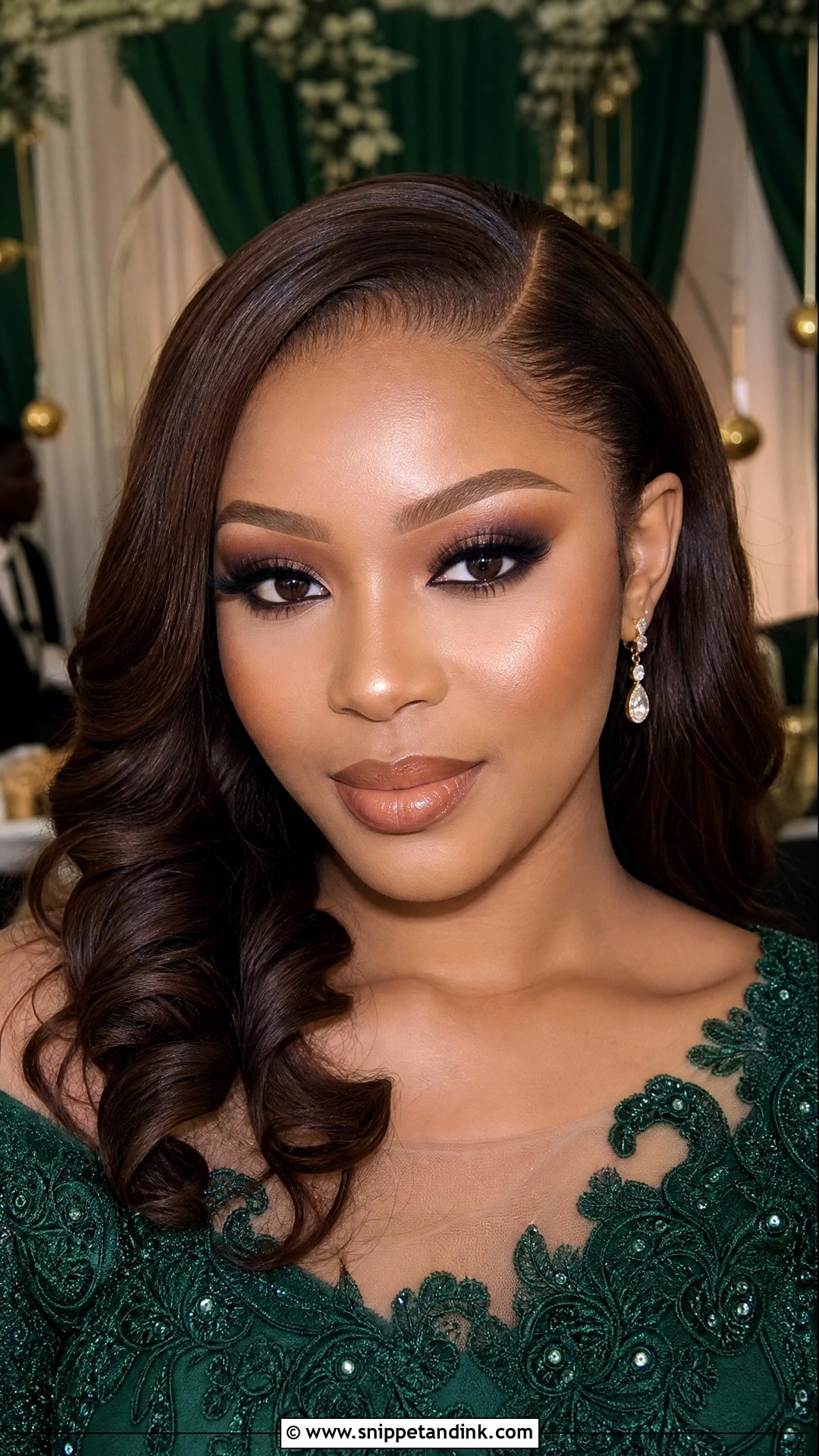
Brown smokey makeup is the look I suggest when a bride wants drama but is nervous about going dark. It suits nearly every complexion and sits well with gold, green, burgundy, navy and cream outfits. I lay a warm brown in the crease, deepen the outer corner with espresso, and press bronze or chocolate shimmer on the lid. Brown pencil smudged along the lower lash line softens the whole eye. Keep the base smooth with a light contour and a peach or warm rose blush, and finish with a brown nude lip. It holds up well for evening receptions.
16. Nigerian Wedding Burgundy Makeup
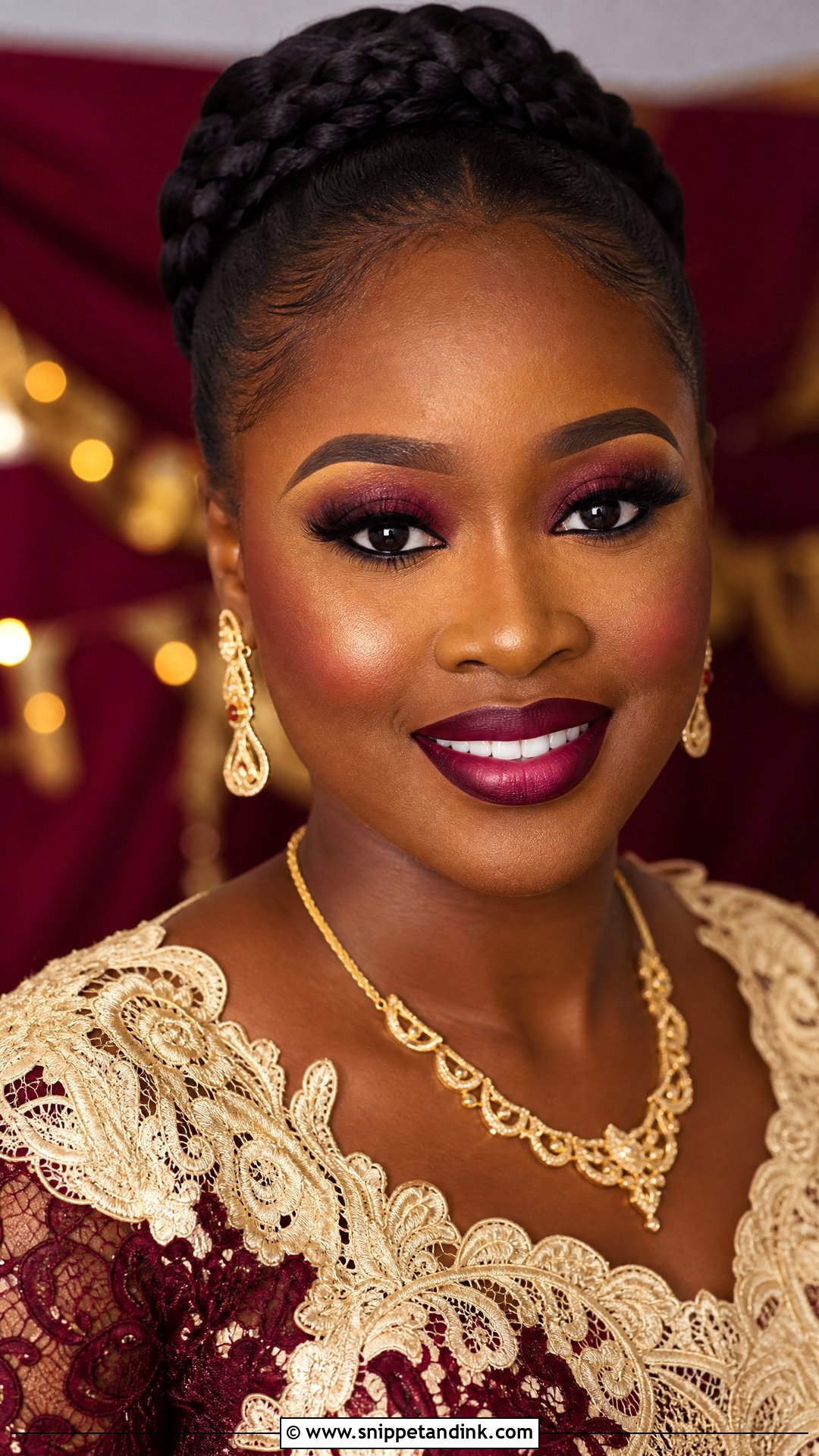
Burgundy on the eye looks rich with wine, plum, cream and emerald outfits, but used alone it can make the eyes look tired or irritated. I always blend it with warm brown so there’s a buffer between the red tone and the skin. Black liner and full lashes keep the eye defined. Blush should be a soft berry, applied lightly, because burgundy eyes plus heavy red cheeks quickly becomes too much. A satin matte base gives the color something clean to sit on. Lips can stay nude brown or go deep berry, depending on how bold she wants to be.
17. Nigerian Wedding Natural Makeup
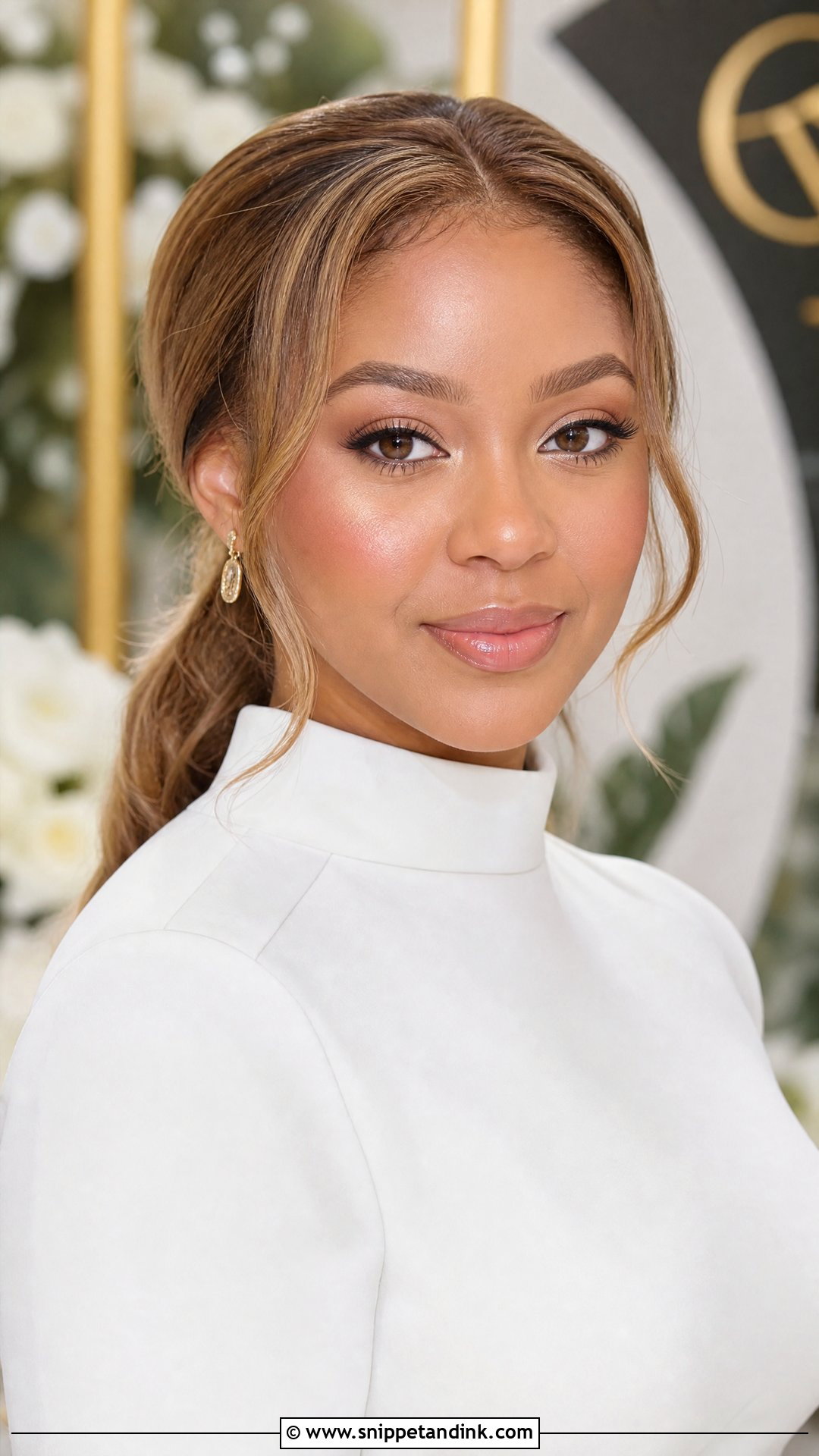
Natural makeup on a wedding day is still makeup, and plenty of it; it just doesn’t announce itself. I use a skin-like foundation, concealer only where needed and powder only on the areas that shine. Soft brown shadow, thin liner and natural lashes; brows brushed up and filled with hair-like strokes. Blush should look like a real flush, so I choose the shade that matches what her cheeks do naturally. A tinted balm or satin lipstick finishes it. It suits registry weddings and morning ceremonies, but I warn natural-makeup brides that cameras flatten the face, so the trial photos matter here.
18. Nigerian Wedding Cut Crease Makeup
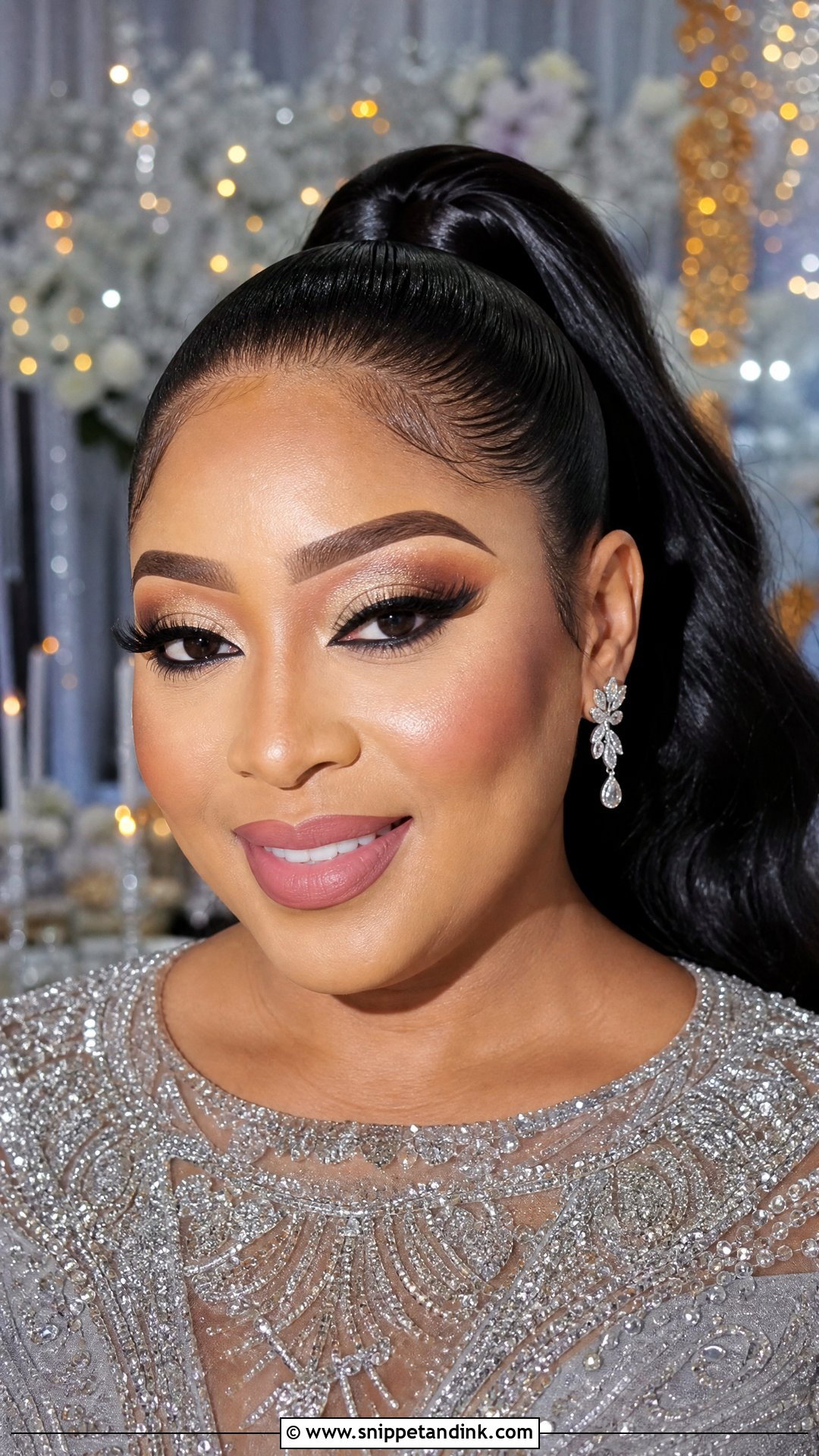
A cut crease gives the eye a very defined shape, which shows up clearly in photos. I carve the crease with concealer, then layer shimmer, matte or metallic shadow on the lid; gold, champagne, bronze and rose gold all suit traditional outfits. The technique depends on the eye shape. On hooded eyes, I place the cut slightly above the natural crease, otherwise it disappears when the eye is open. Soften the edges so it isn’t harsh, add liner, full lashes and bright under-eyes. Balance the face with warm blush, a subtle contour and a nude or soft pink lip.
19. Nigerian Wedding Glitter Makeup
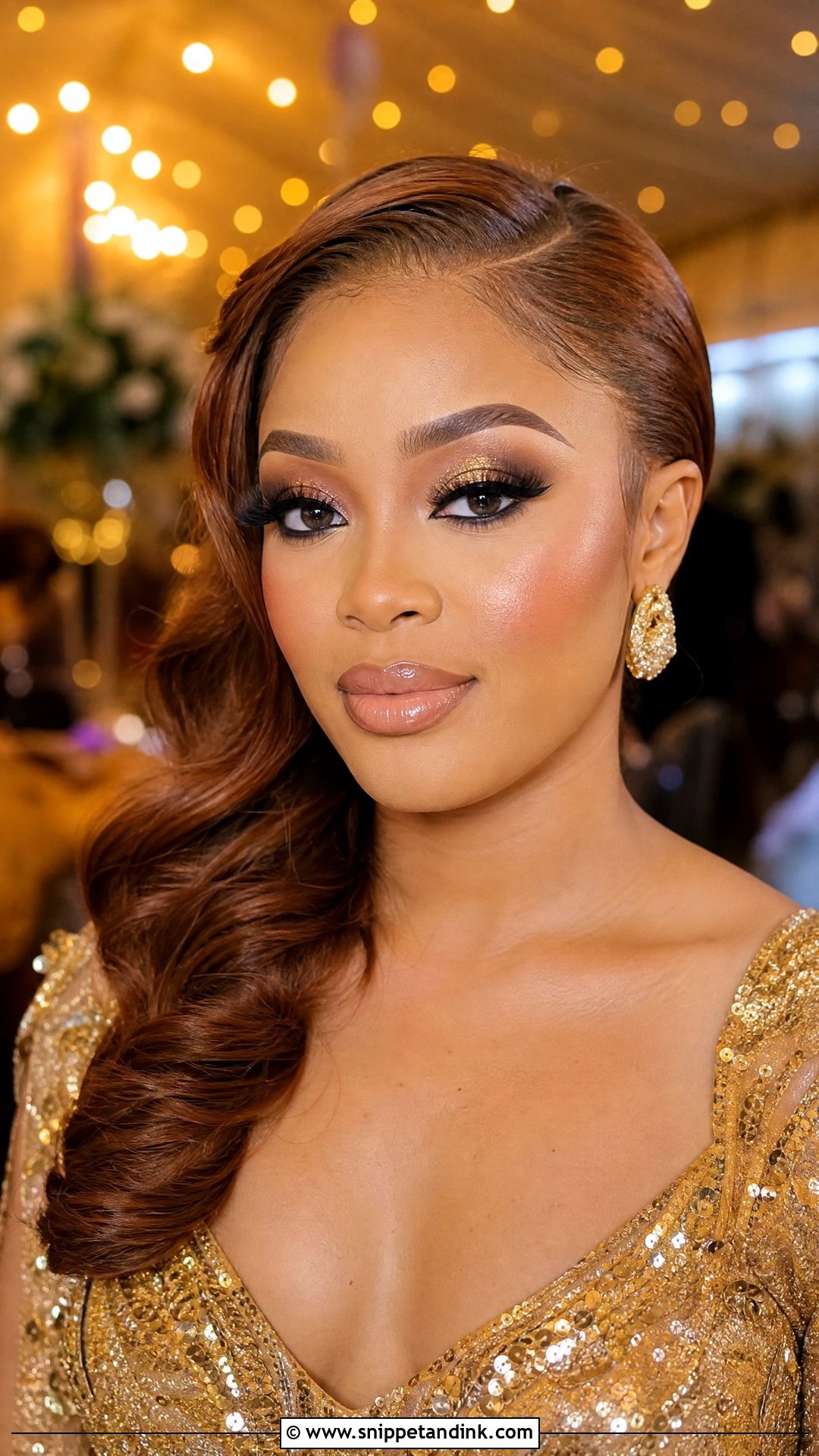
Glitter can work at a wedding, but only in a controlled amount. I use fine pressed glitter on the center of the lid, held with a glitter glue, rather than loose chunky glitter, which migrates onto cheeks and ends up in every close-up. Matte brown, bronze or plum around it gives depth. Waterproof liner helps. The skin should be smooth and not too shiny, so the glitter is the only sparkle on the face. A nude gloss or soft matte lip keeps it wearable. I reserve this mostly for after-party outfits and confident guests.
20. Nigerian Wedding Reception Makeup
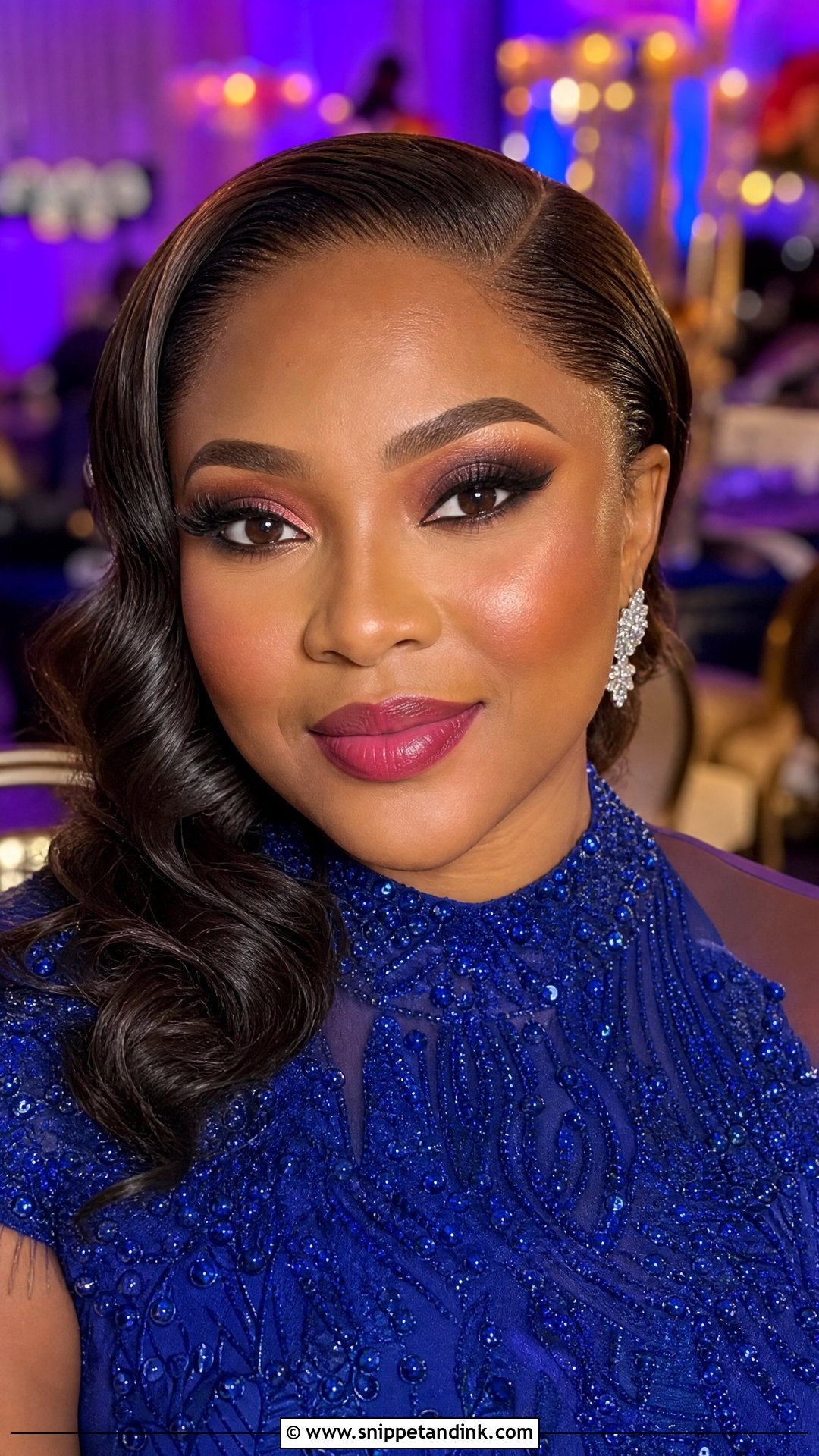
When a bride changes into her reception outfit, I often push the makeup further rather than starting again. The lighting is usually dimmer and the photos more dramatic, so the eyes can go deeper with bronze, brown or smoky plum shadow, with a winged liner and fuller lashes. I blot the skin, re-press powder only where it’s shiny, refresh the blush and add a controlled highlight. Lips can shift from nude to gloss, berry or red to match the second outfit. The satin matte base from the morning holds the extra layers well.
Making a Full Beat Survive Spraying, Dancing and a Hot Hall
Nigerian receptions are long and physical. You will be hugged, sprayed with money, danced with and photographed close up for hours, often in a warm hall. A few habits make the difference between makeup that holds and makeup that slides by the second outfit.
- Use blotting papers before powder. Adding powder over oil builds a cakey layer; lifting the oil first keeps the skin looking like skin.
- Carry your lip liner, lipstick and a small gloss. Lips are the first thing to go after eating, and the liner alone restores most of the shape.
- Keep a cotton bud and a little concealer for under the eyes, where liner and shadow tend to drift in heat.
- Lash glue can loosen at the outer corners after hours of dancing. A tiny tube of clear glue fixes it in a minute.
- Ask a bridesmaid to hold the kit. You will not have a free hand for most of the evening.
A setting spray at the end of the base and again after the full face helps the powders bind to the skin. I also avoid heavy SPF formulas under wedding makeup when the photographer is using flash, because some can bounce light back and make the face look lighter than the neck.
Who Should Do the Bridesmaids and the Guests
Bridesmaids in the same aso ebi look best when one artist or team does their faces, because consistent lashes and lip depth make group photos look intentional. Guests doing their own makeup should practice the look once in full before the day, in the actual outfit, and choose comfort over drama for a long event. A guest’s lip should be one she can reapply without a mirror.
Matching Your Makeup to the Fabric, the Lights and the Long Day
Start from the outfits and the schedule, not from a photo of someone else’s face. A gele, coral beads, aso oke or a lace gown each push the makeup in a different direction, and a wedding that runs from a morning ceremony into a late reception needs a base built for that length. Pick the look that brings out your own features, test it at a trial with the actual fabrics nearby, and plan your touch-ups before the day. With good prep and careful blending, the makeup will still look like you in the last photos of the night.
You'll Like These Ideas:


Leave a Reply