
Most brides who ask me for open hair worry about one thing: will it still be there by the last photo? It can be, if the style is chosen around the dress neckline, the veil or dupatta, the jewelry and the weather, rather than only around a picture. Loose waves, half-up shapes, soft braids and natural texture are what I’m asked for most right now, usually with a pearl or floral detail. Each of the 20 ideas below comes with the practical note I’d give you at a trial.
A Hair Calendar From the Last Big Cut to the Wedding Morning
Open hair shows the condition of your hair more than any updo, because every inch of length is on display. This is the schedule I give brides who plan to wear it down.
- Three to four months before: any big change in cut or color. New layers, a new shade or a lightening session all need time to settle, and you need time to get used to them.
- Two to three months before: the trial. Bring a photo of your dress and your actual veil, dupatta or jewelry, and arrive with hair washed the way you’ll wash it for the wedding.
- Six to eight weeks before: if you’re adding clip-in or tape extensions for fullness, order and color-match them now. A shade matched under salon lights can look off in daylight, so check it by a window or outdoors.
- Two to three weeks before: a small trim of the ends and bangs, plus a gloss if your color needs refreshing.
- The final week: no new products, no new masks, no experiments.
- The night before, or two days out: wash according to your texture. Straight and wavy hair usually on the eve, curly hair a day or two earlier.
If your wedding runs over several events and days, ask your stylist which look goes on which day, so the most demanding style isn’t done on hair that has already been curled twice that week.
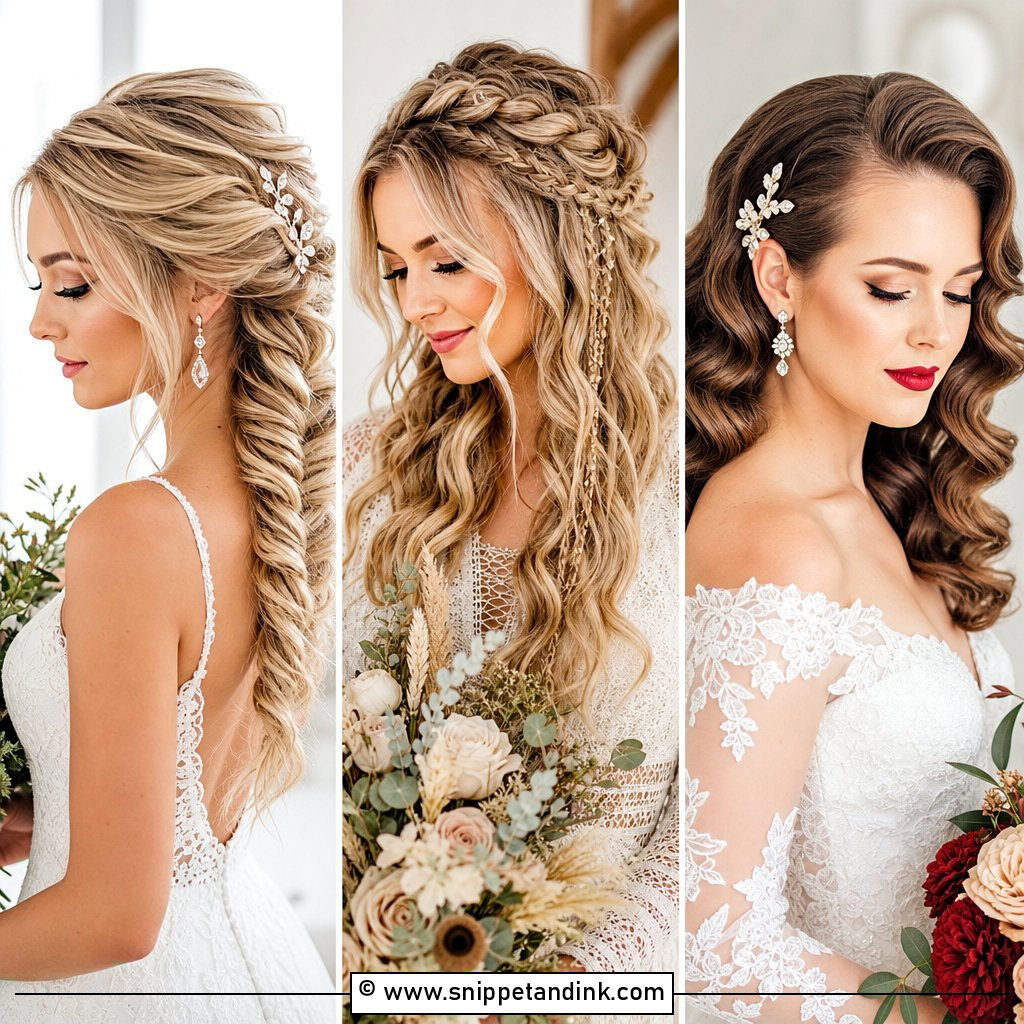
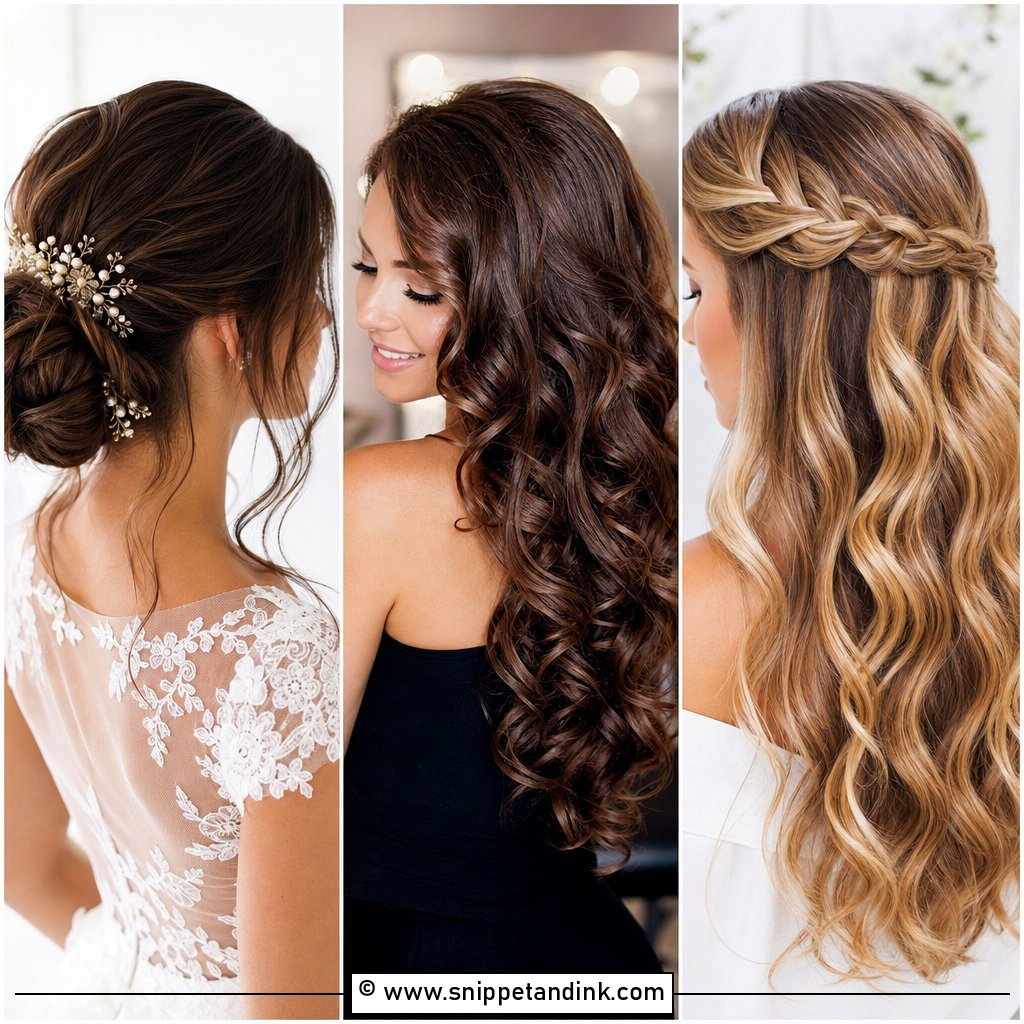
1. Open Hair Bride Loose Curls
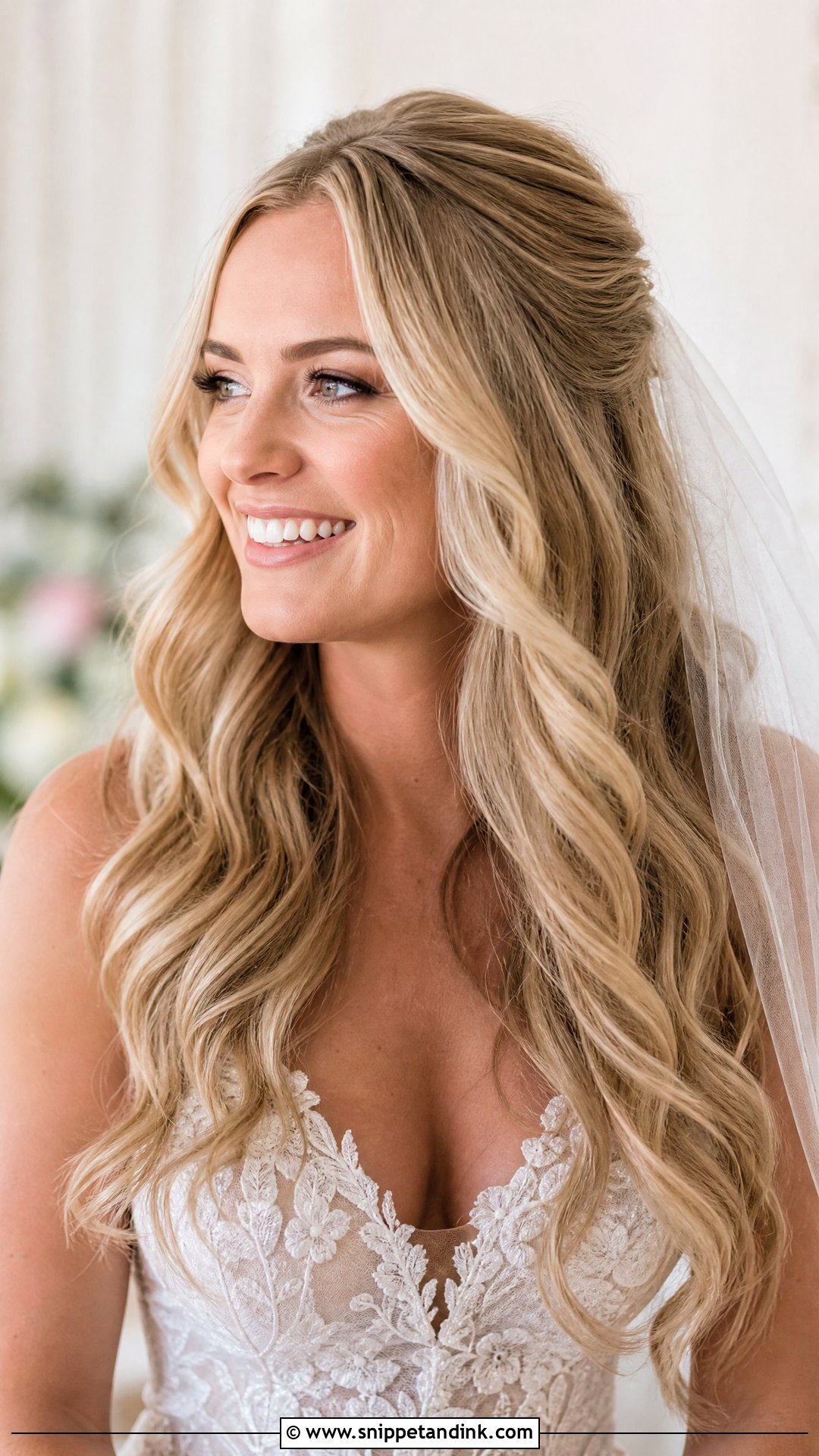
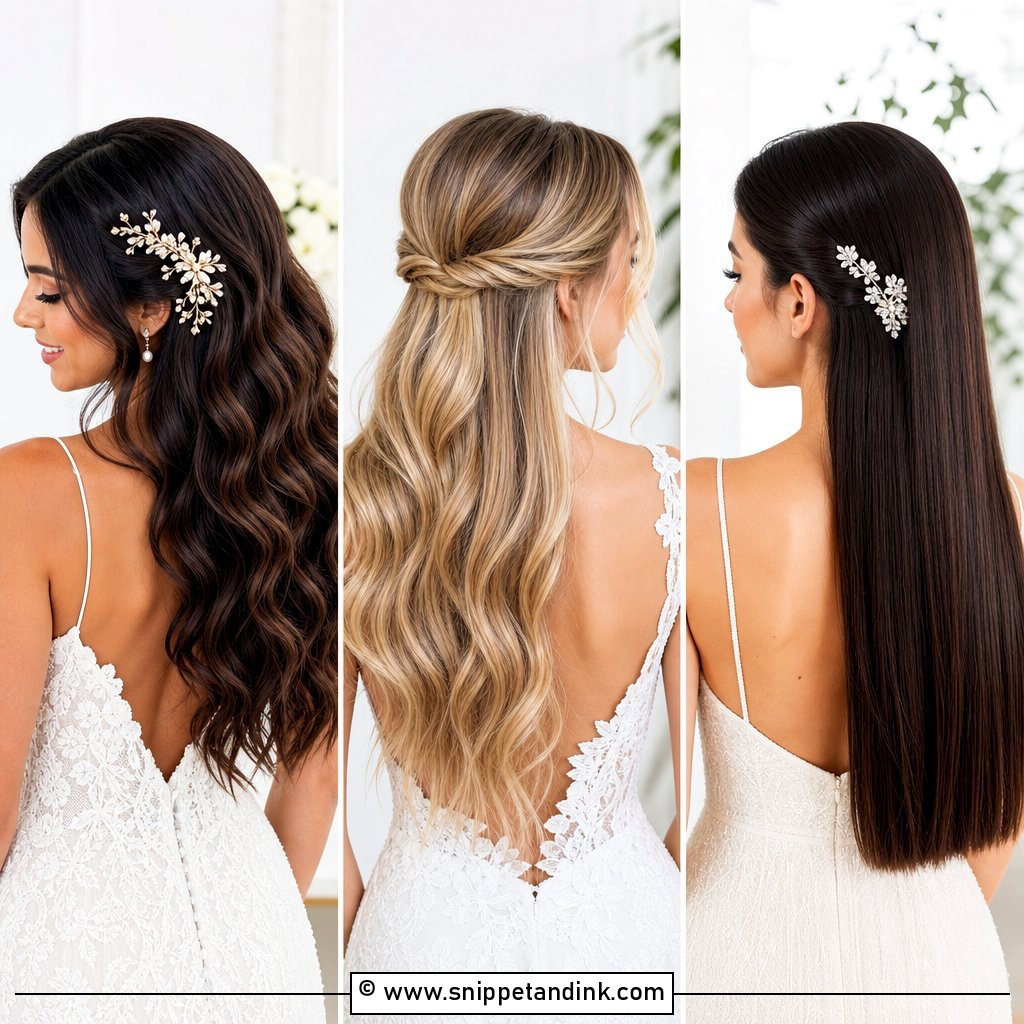
Loose curls hold for hours only if each curl is set before it’s brushed. I ask for light backcombing at the crown so the top doesn’t collapse, and I finish with a flexible hairspray, never a crunchy one, because curls that can’t move look stiff in candid shots. A center part reads cleaner; a side part puts more volume by the face. Medium to long hair suits it, and it sits well under a veil, with pearl pins or with a maang tikka.
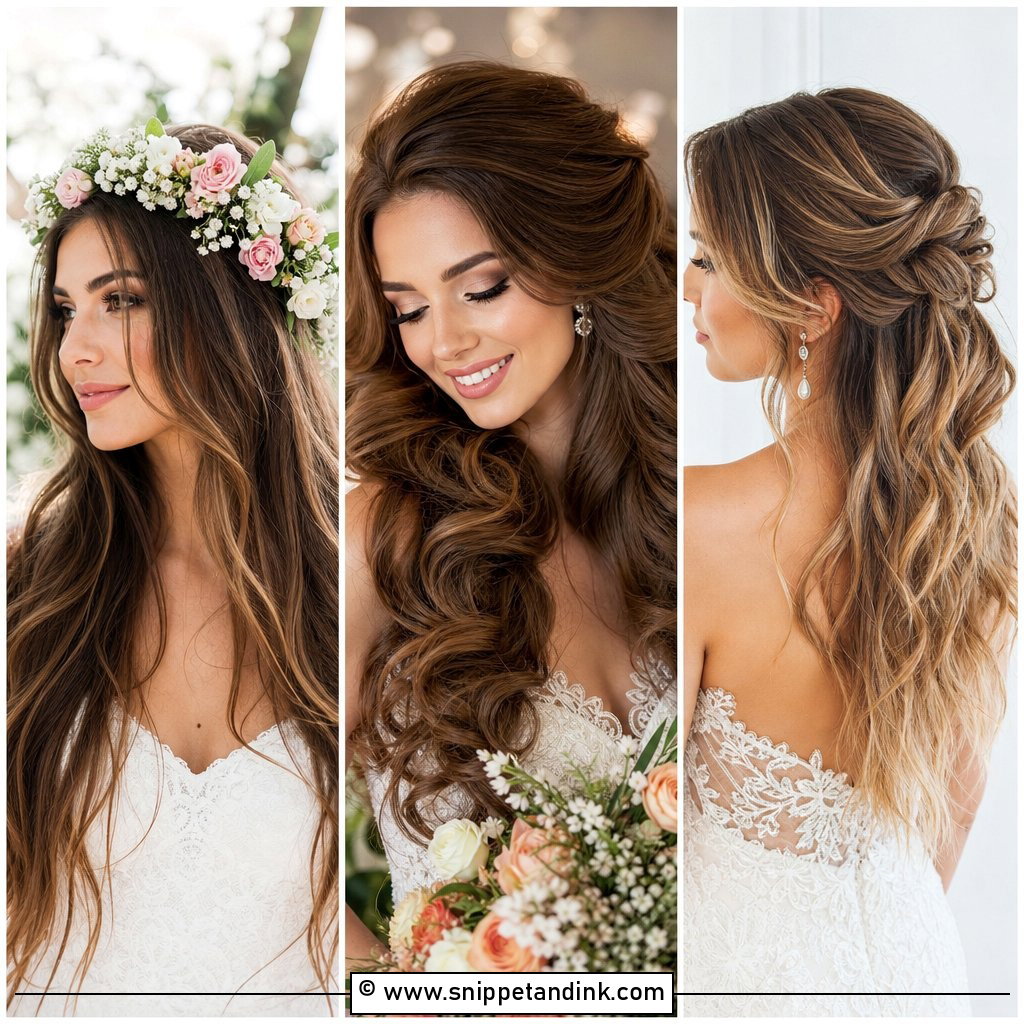
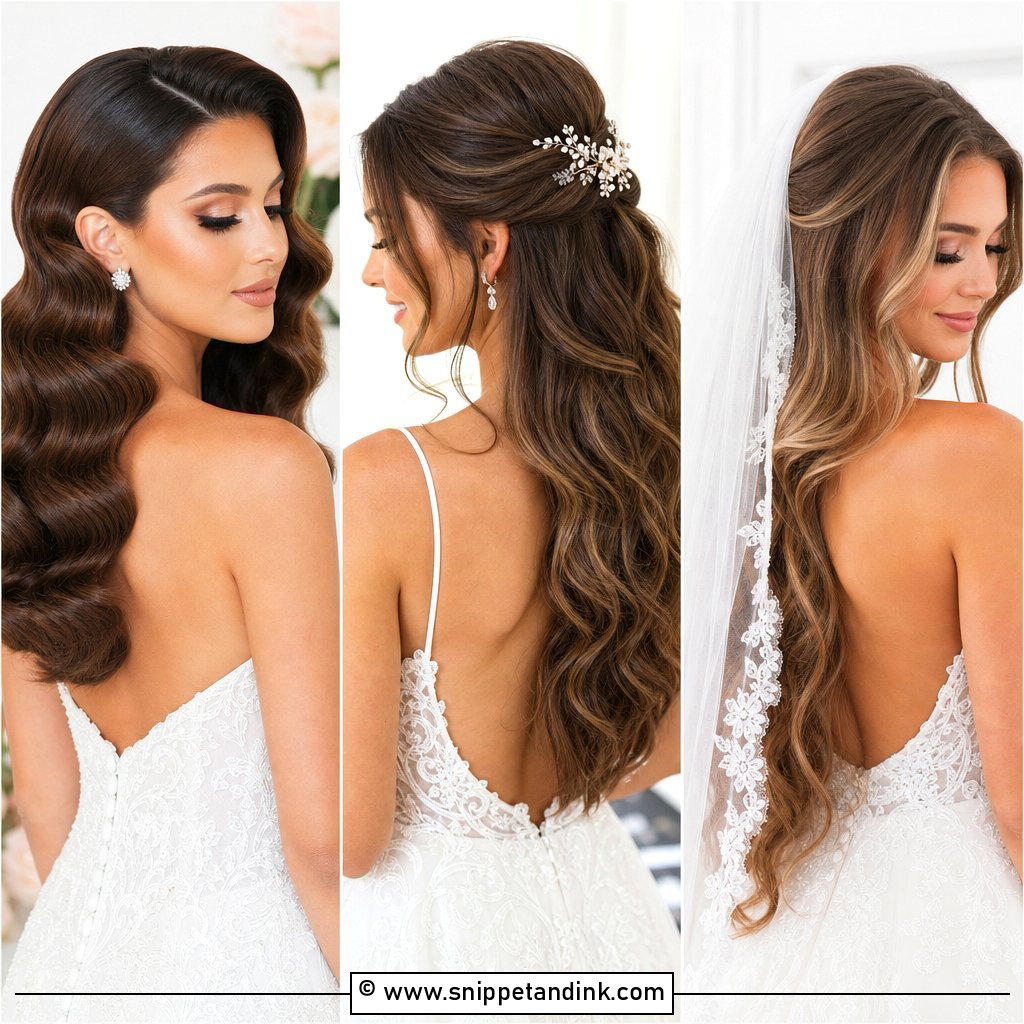
2. Open Hair Bride Soft Waves
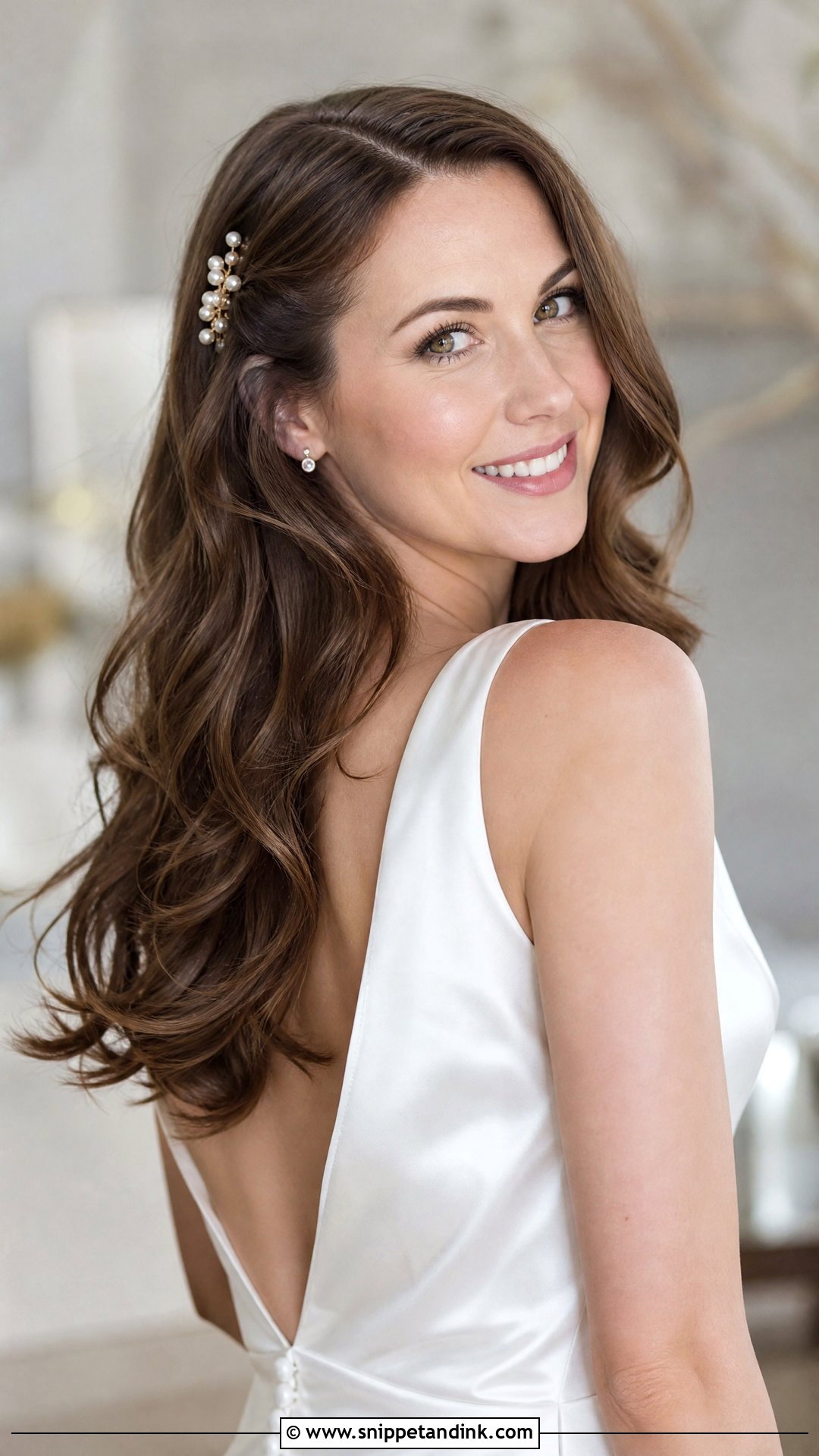
These waves should look smooth enough to touch, not beachy. On layered hair they’re especially flattering, because the layers break the wave at different heights and the ends turn up fuller. I keep the roots softly lifted with a round brush and curve only the mid-lengths and ends. For a garden or beach ceremony, a humidity-resistant setting mist does more than shine spray. Pin carefully where the veil will sit, since that’s the one place the wave gets crushed.
3. Open Hair Bride Hollywood Waves
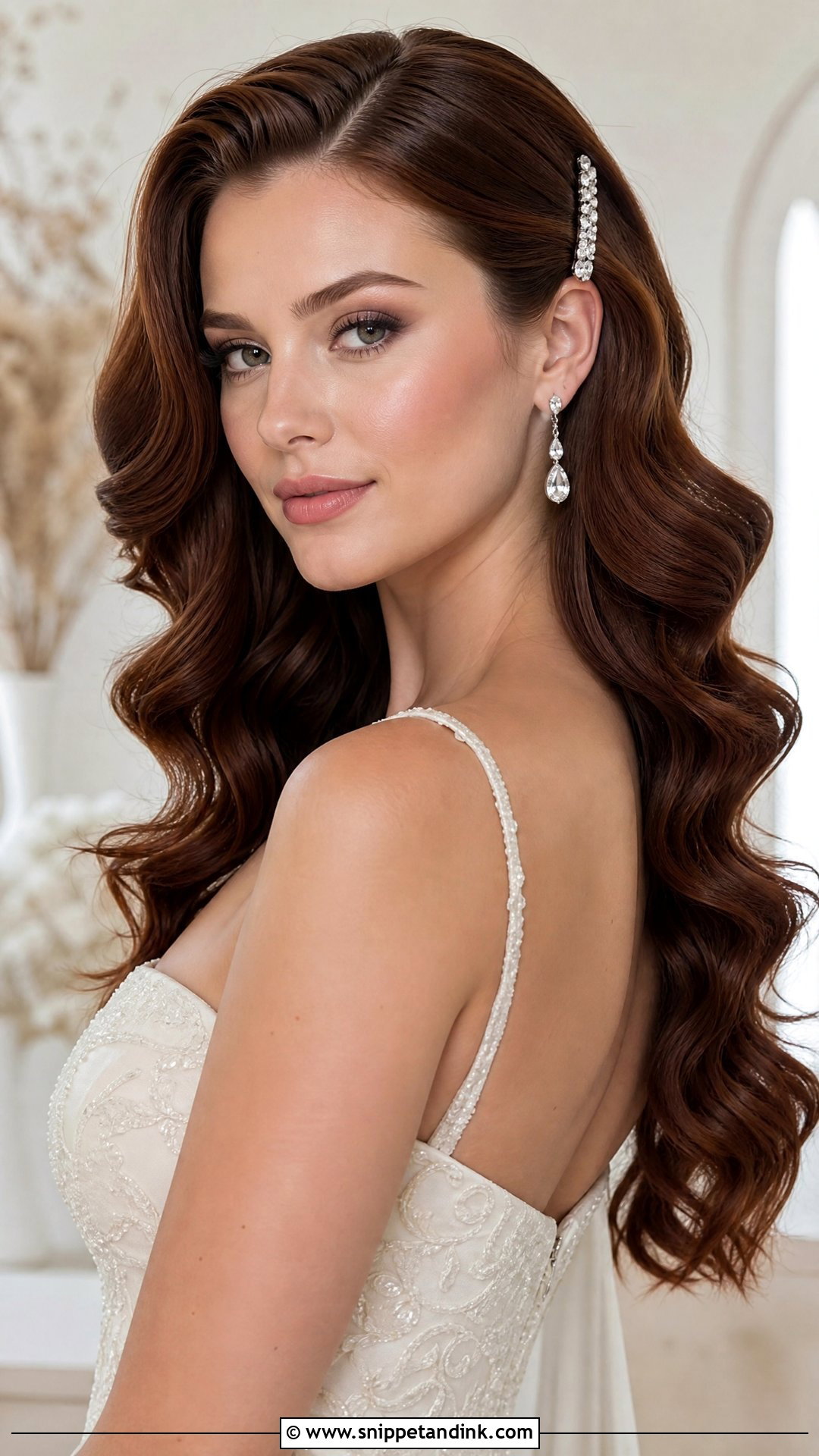
Glossy waves running in one direction take more trial time than any other style here. Every section has to be curled the same way and brushed together, and one misplaced curl shows as a break in the ribbon. I’d pair it with satin gowns, fitted dresses and vintage-style jewelry; next to a boho lace dress it looks out of place. A deep side part is the dramatic version, a soft center part the modern one. One jeweled clip above the ear is plenty.
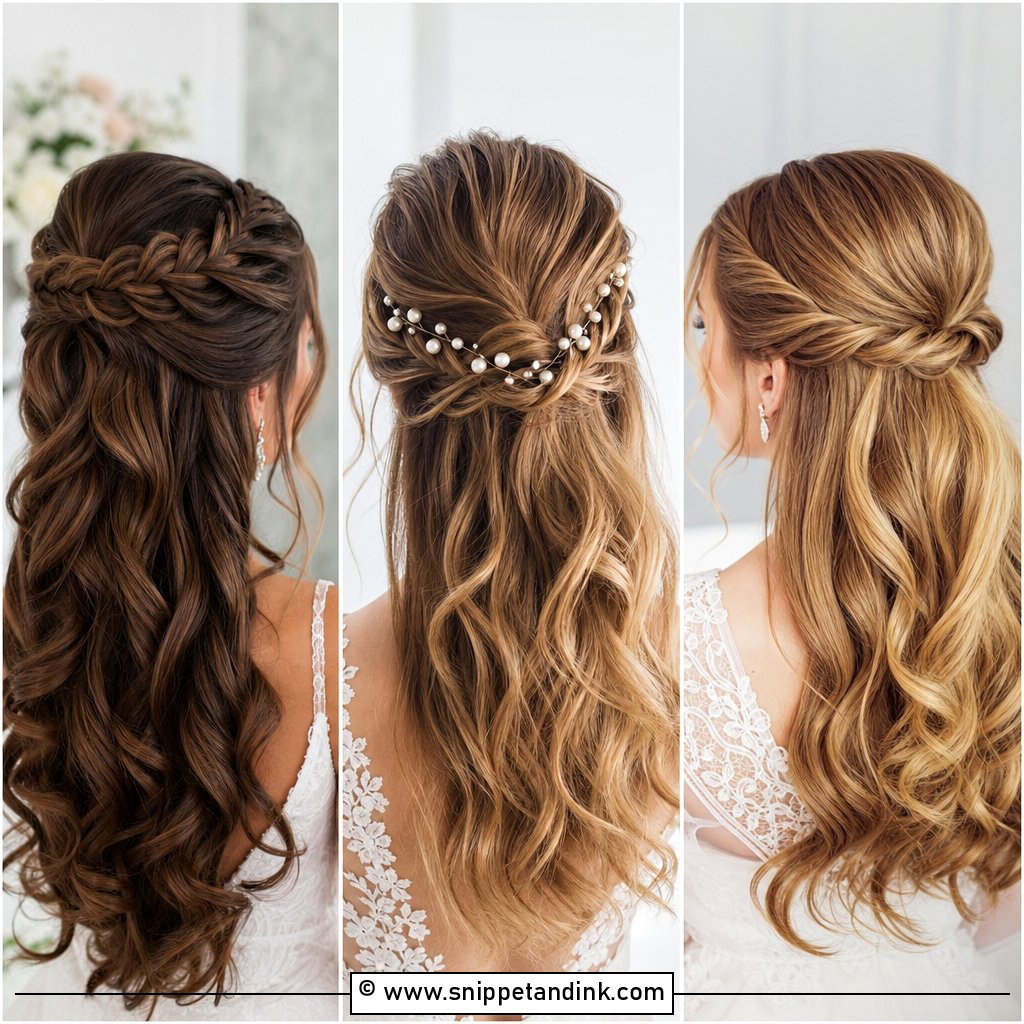
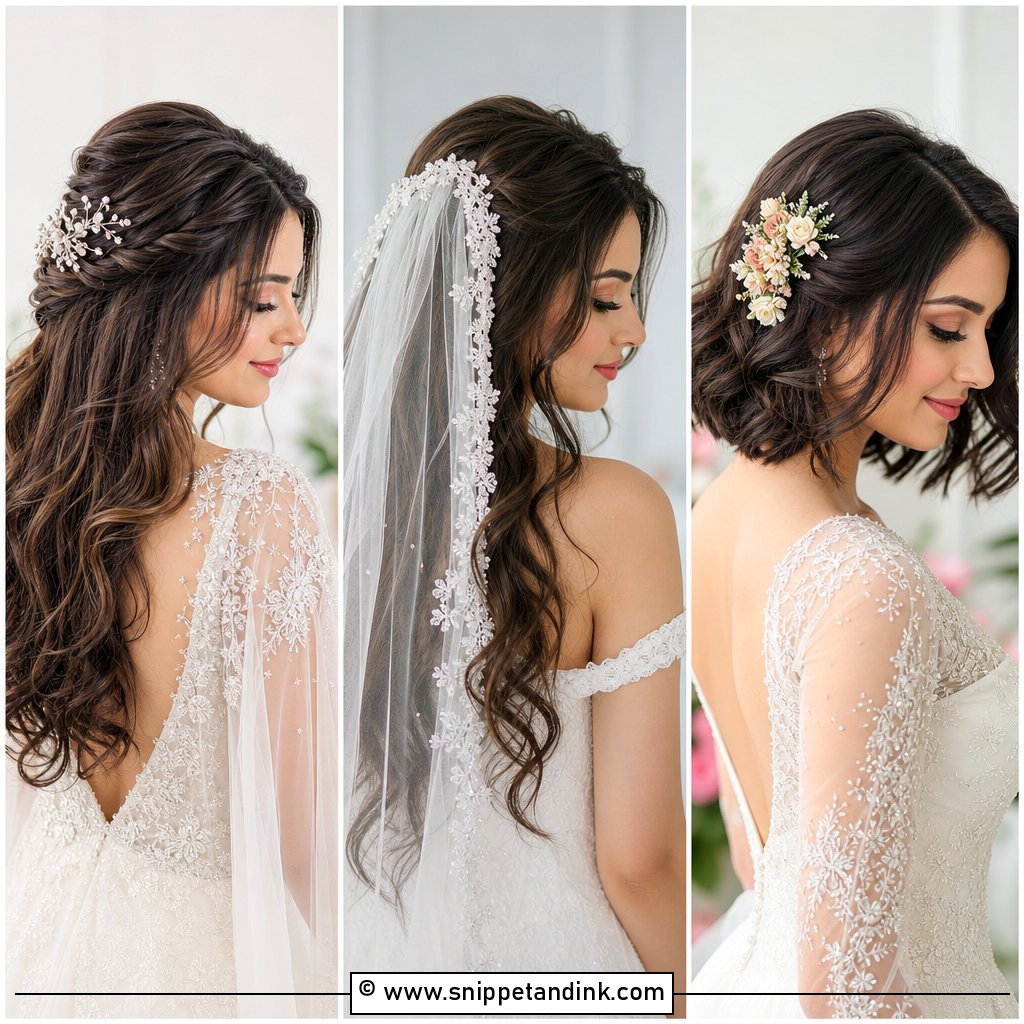
4. Open Hair Bride Half Up Curls
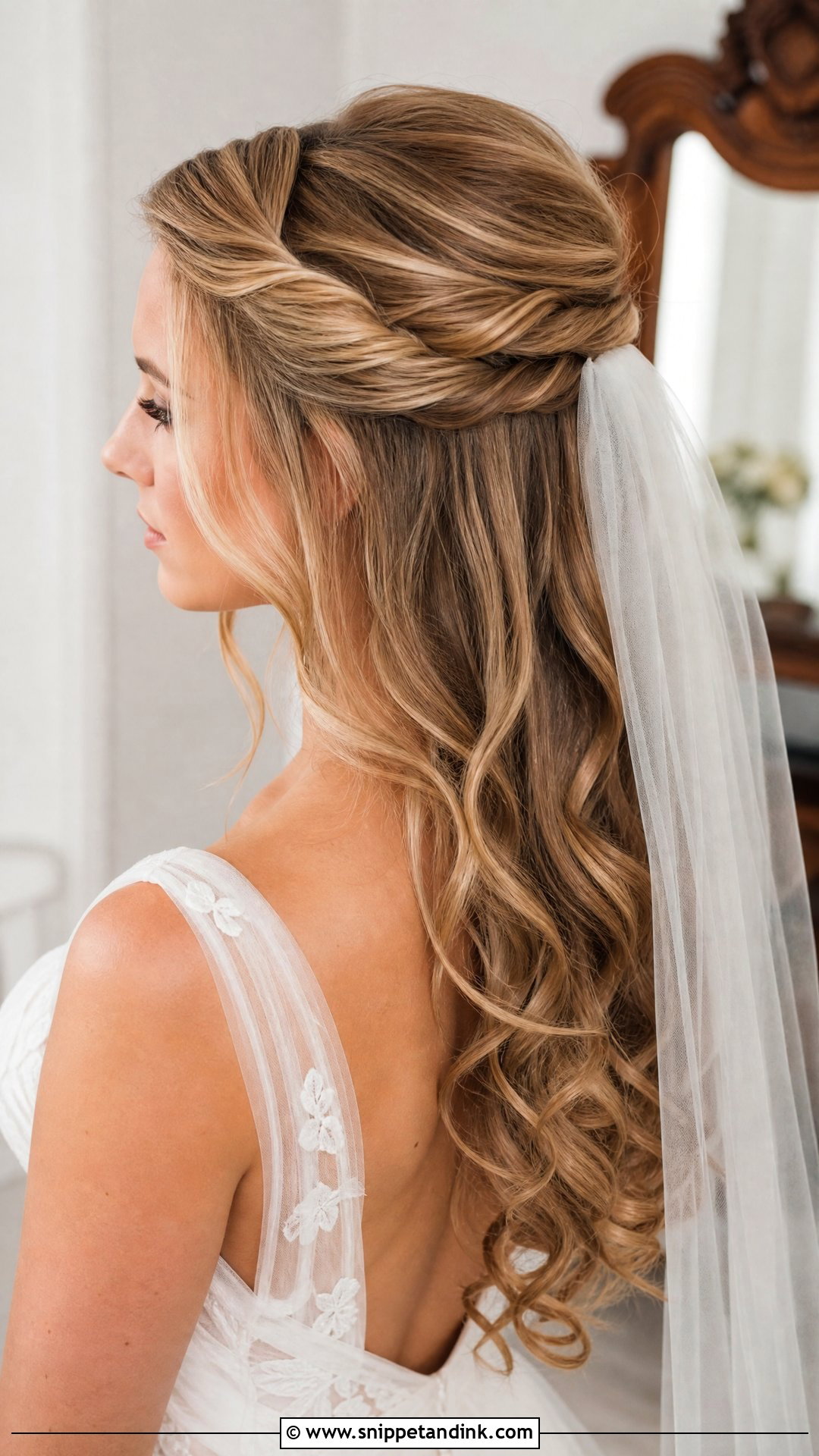
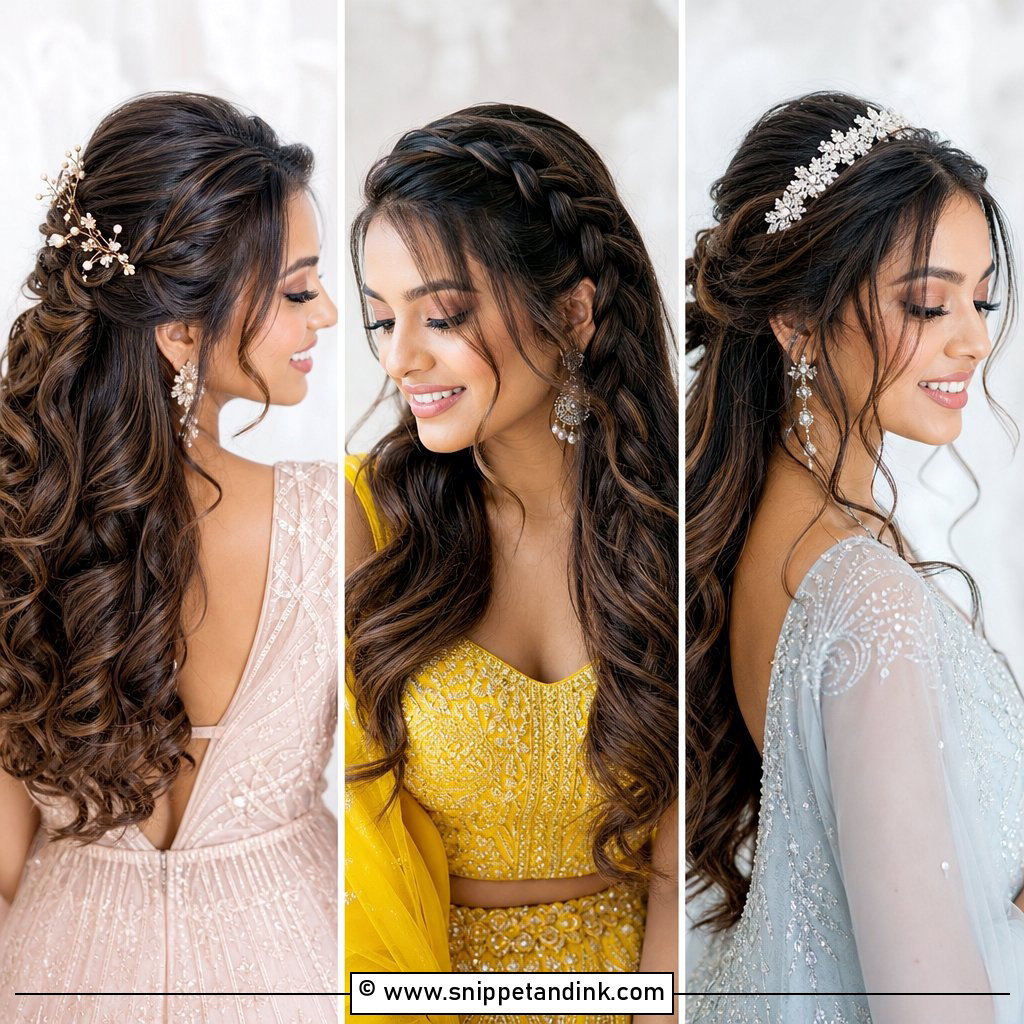
Wearing a cathedral veil or sitting through a two-hour ceremony but still want your hair down? This is the one I’d steer you toward. The top section is twisted, pinned or lightly braided, which gives a hairpiece real grip, while curls fall over the shoulders and back. I adjust the front pieces to the face, letting them fall a little longer on a round face. From the side and back it reads clearly as bridal, which matters because so many ceremony photos are taken from behind you.
5. Open Hair Bride Half Up Waves
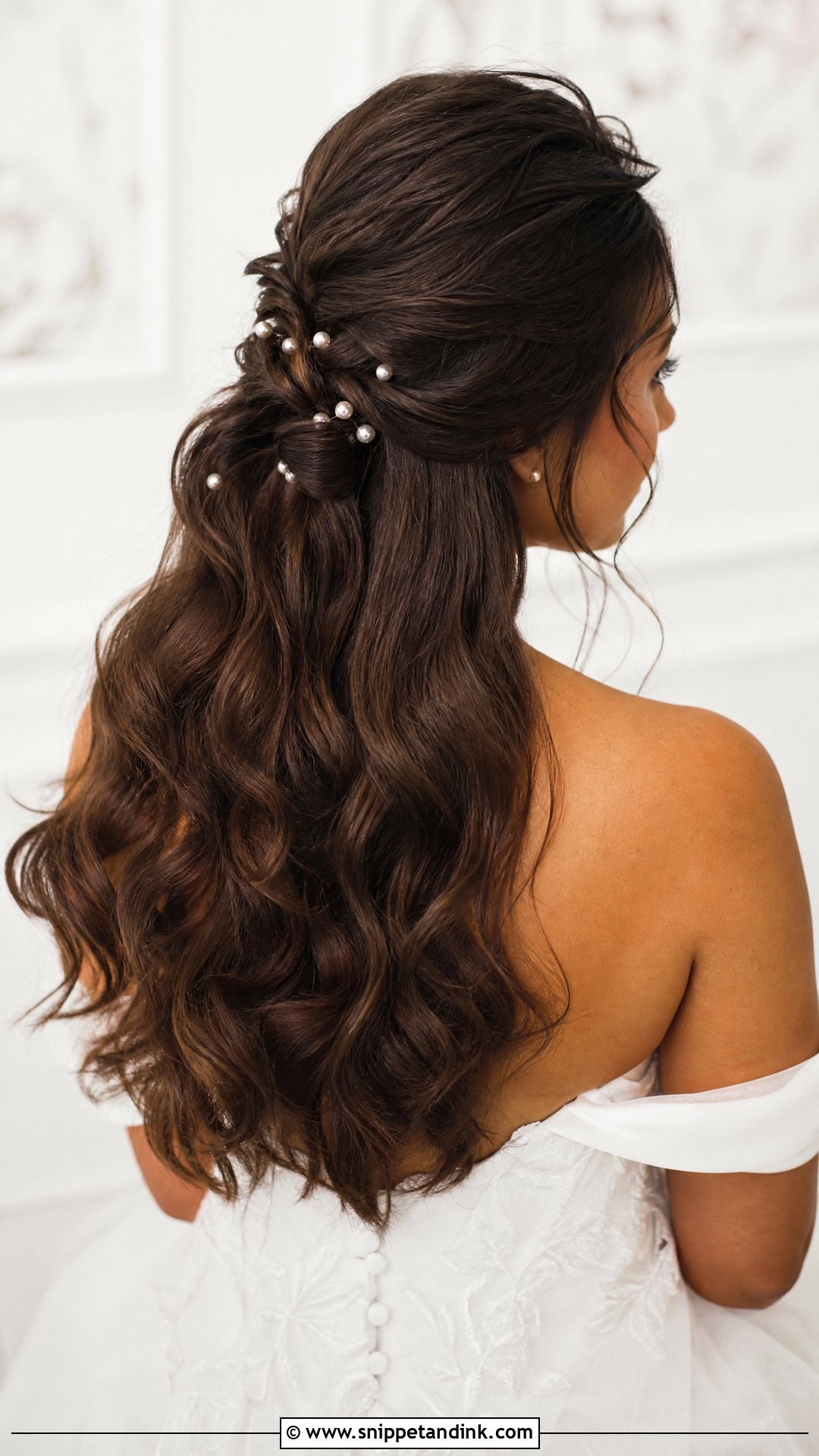
Brides who dislike tight updos usually like this one. The crown is lifted and the front is controlled, while the waves below stay loose. Smooth the pinned section for a classic finish, or rough it up a little with your fingers if the dress is boho. On fine hair I add a row or two of extensions under the half-up section, which bulks out the lengths without putting weight on top. A vine or a few small flowers sit easily in the pinned part.
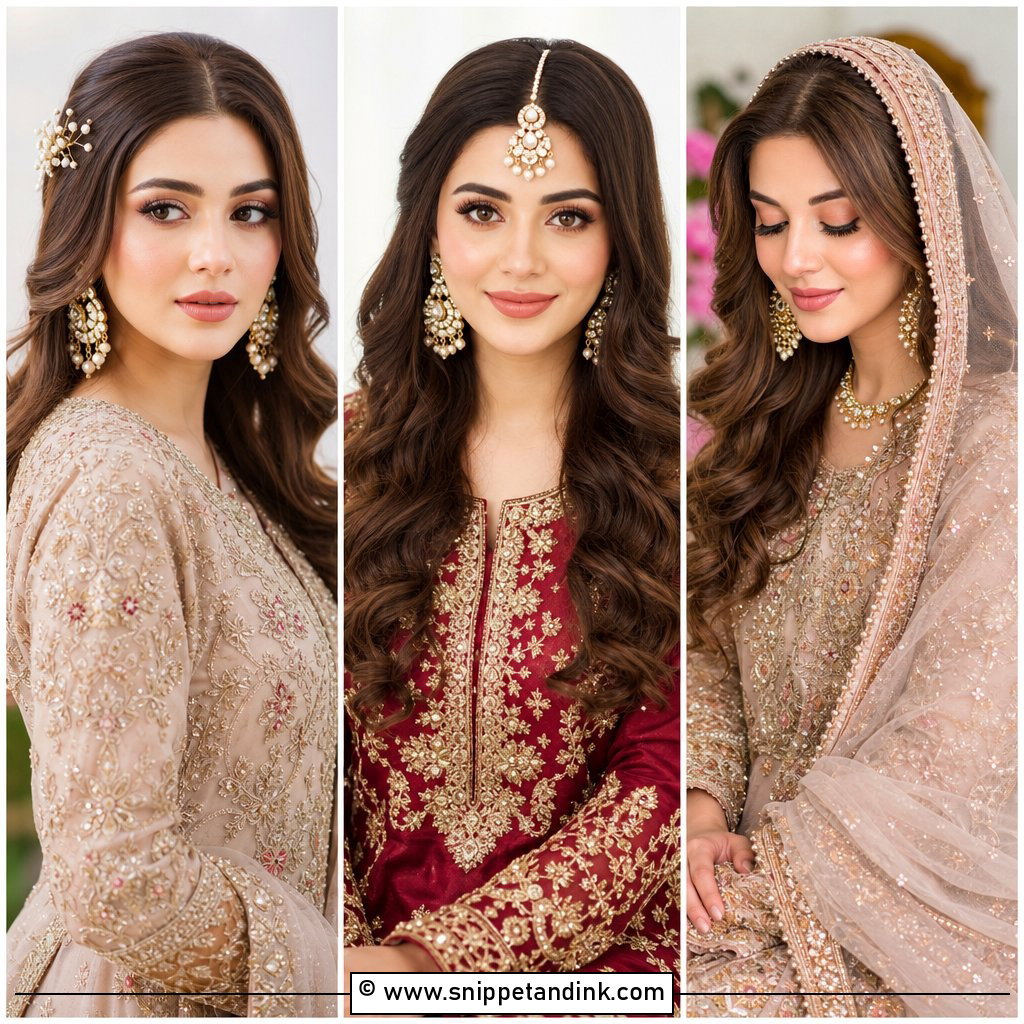
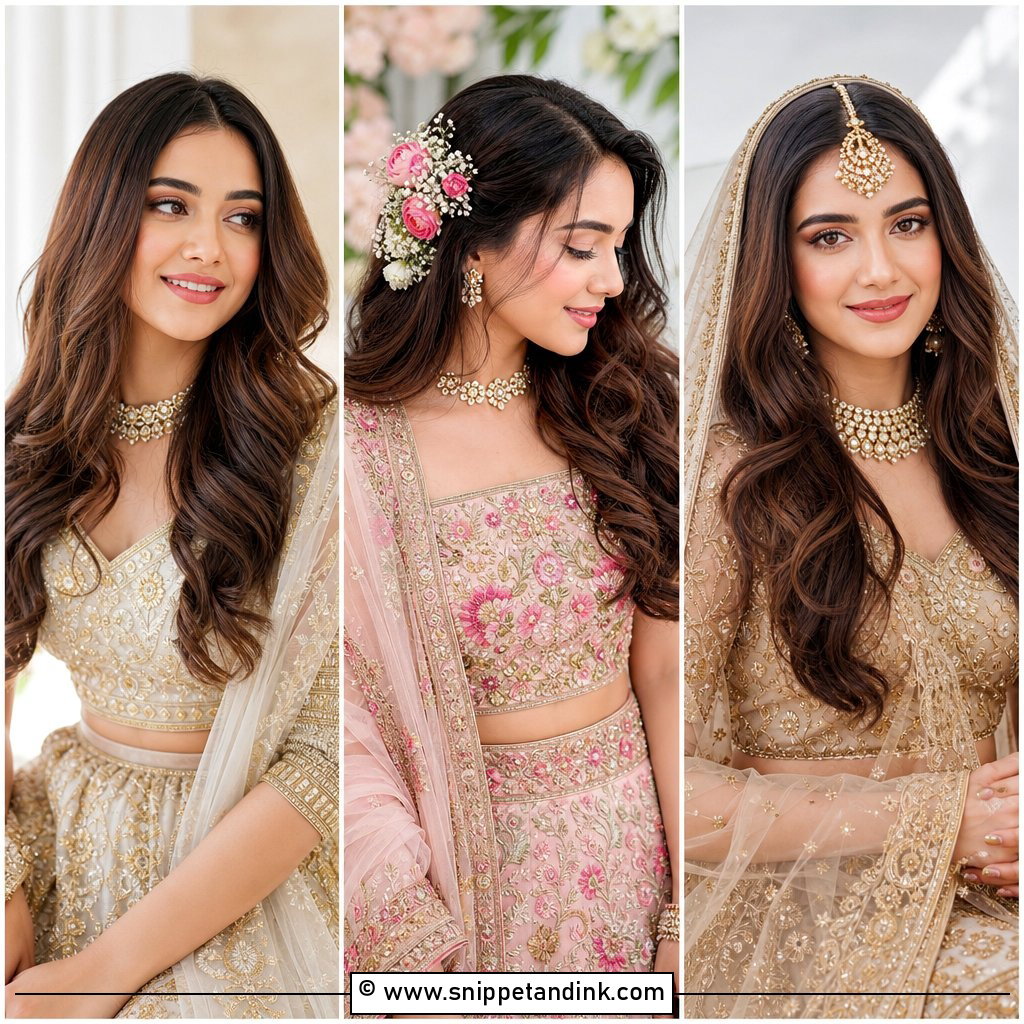
6. Open Hair Bride With Maang Tikka
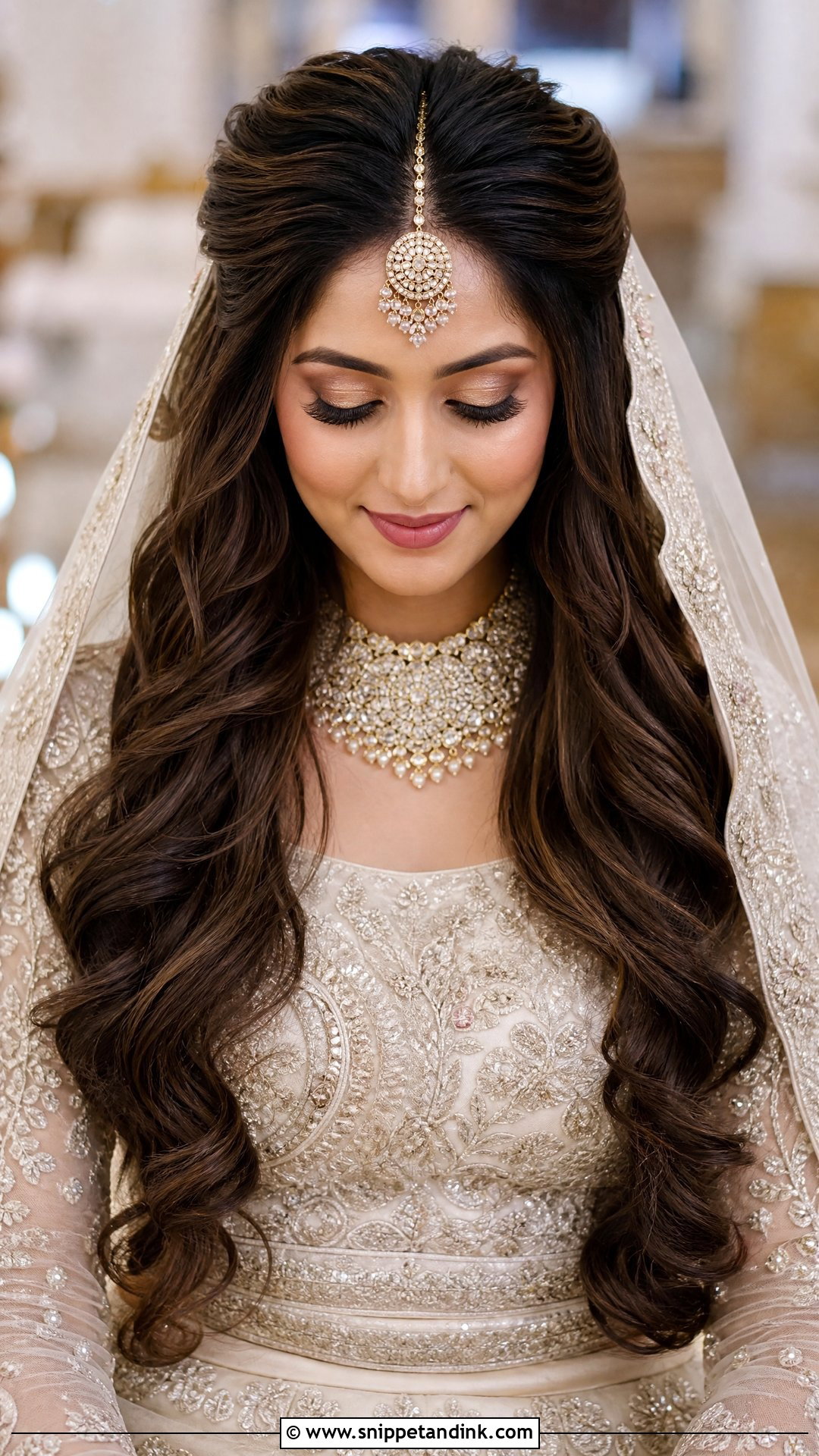
Open hair with a maang tikka starts with the part. I make a clean center part first, because the tikka chain follows it and a crooked part pulls the pendant off-center on the forehead. Then I pin the chain into a small teased section at the crown instead of just hooking it over smooth hair, so it survives hours of rituals and bending. Loose curls or soft waves suit lehengas and sarees without competing with the jewelry. Test it at your trial with the actual tikka; a heavy piece needs more pins than a light one.
7. Open Hair Bride With Veil
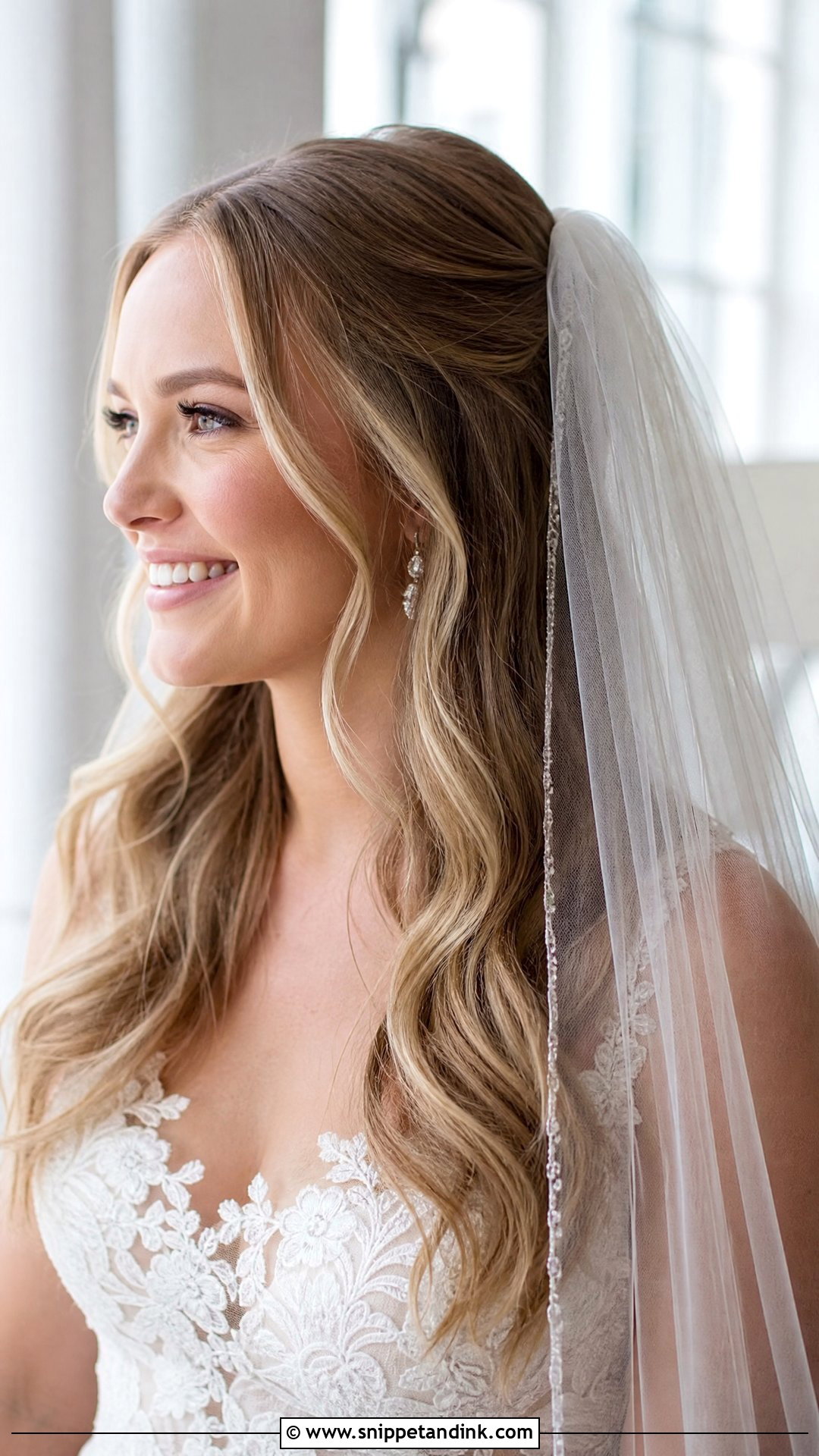
A veil comb slides straight out of loose silky hair. The fix is hidden support: I backcomb a small section at the crown, cross two or three bobby pins inside it, and push the comb in against them, so the veil sits on that base without flattening the waves on top. A heavy cathedral veil needs a bigger anchor than a short blusher. Soft waves, loose curls and half-up shapes all work under it, and lace gowns with long trains suit the look most.
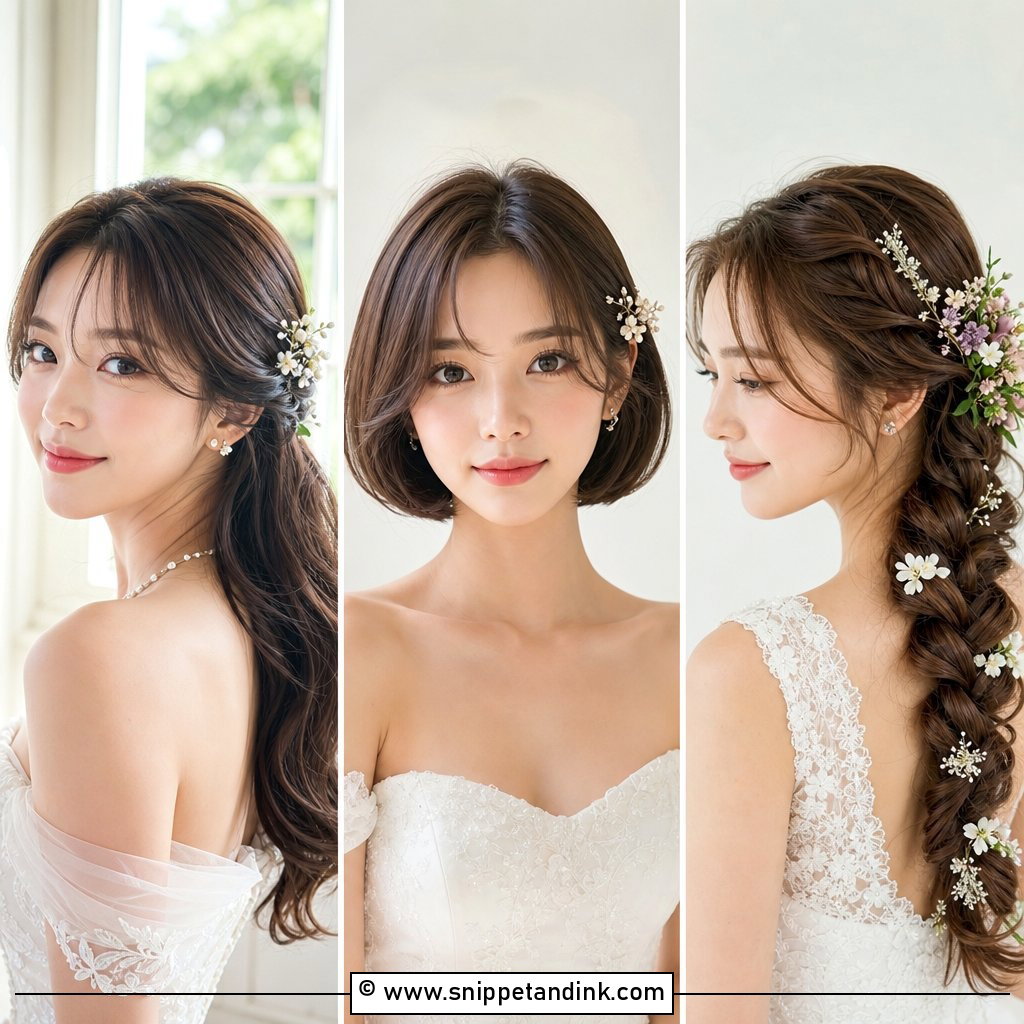
8. Open Hair Bride With Flowers
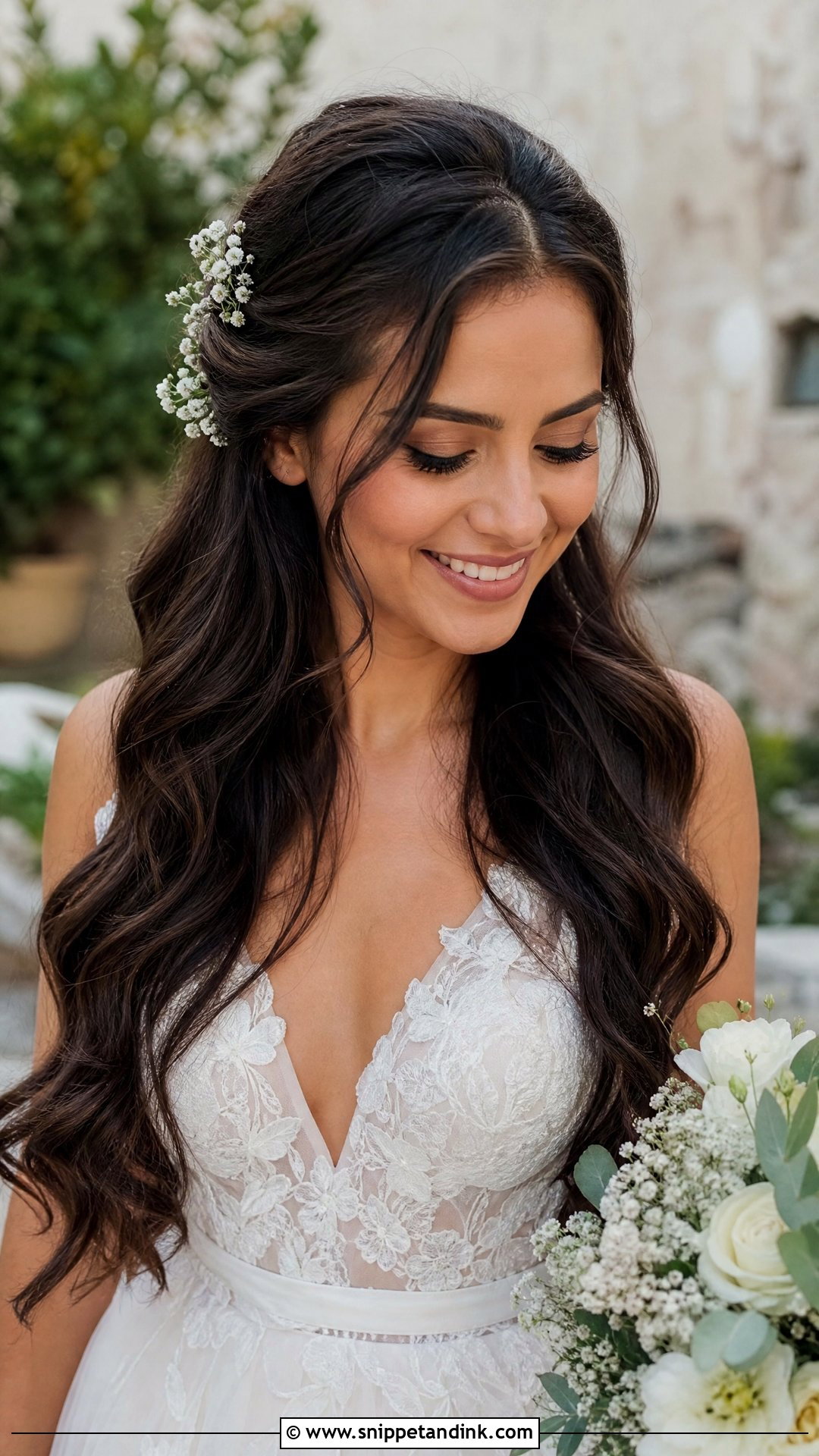
Flowers need texture to grip, so I add them to curls, waves or a half-up shape rather than sleek straight hair. Tiny blooms tucked into waves look delicate; one large bloom feels festive or tropical. Baby’s breath, jasmine, mini roses and orchids hold up through heat and movement better than most. Ask your florist for short, lightweight wired stems. Jasmine is strongly scented up close, so if fragrance bothers you, try it at the trial first.
9. Open Hair Bride With Pearl Pins
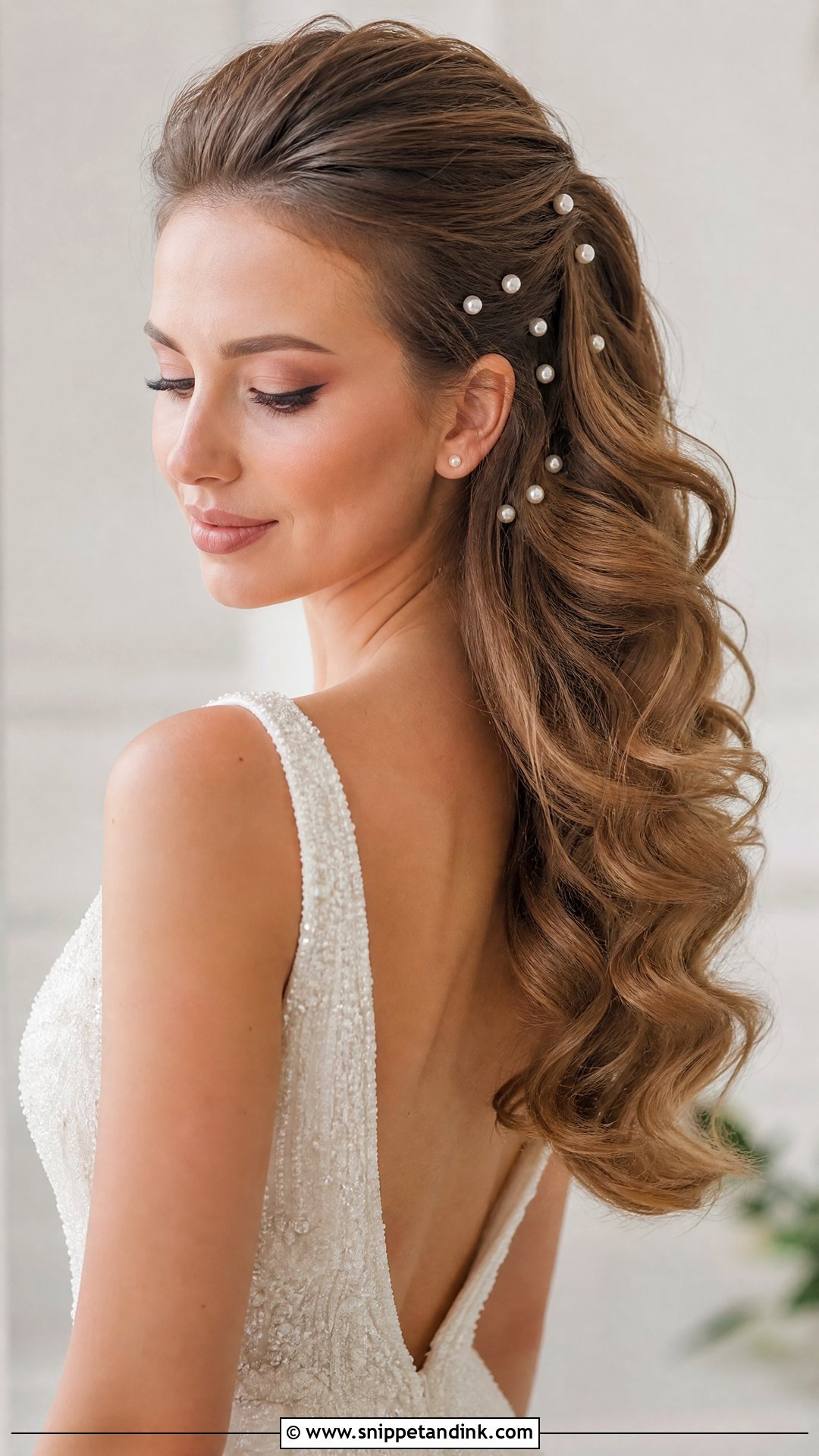
Too many pins look crowded and too few vanish in photos. I place pearl pins where the hair catches light, along the outer curve of a wave, around twists or near the crown, and step back after every few to check the balance from across the room. They suit simple gowns, lace and pearl earrings. On a minimalist dress, a single cluster on one side reads more modern than pins scattered everywhere.
10. Open Hair Bride With Side Part
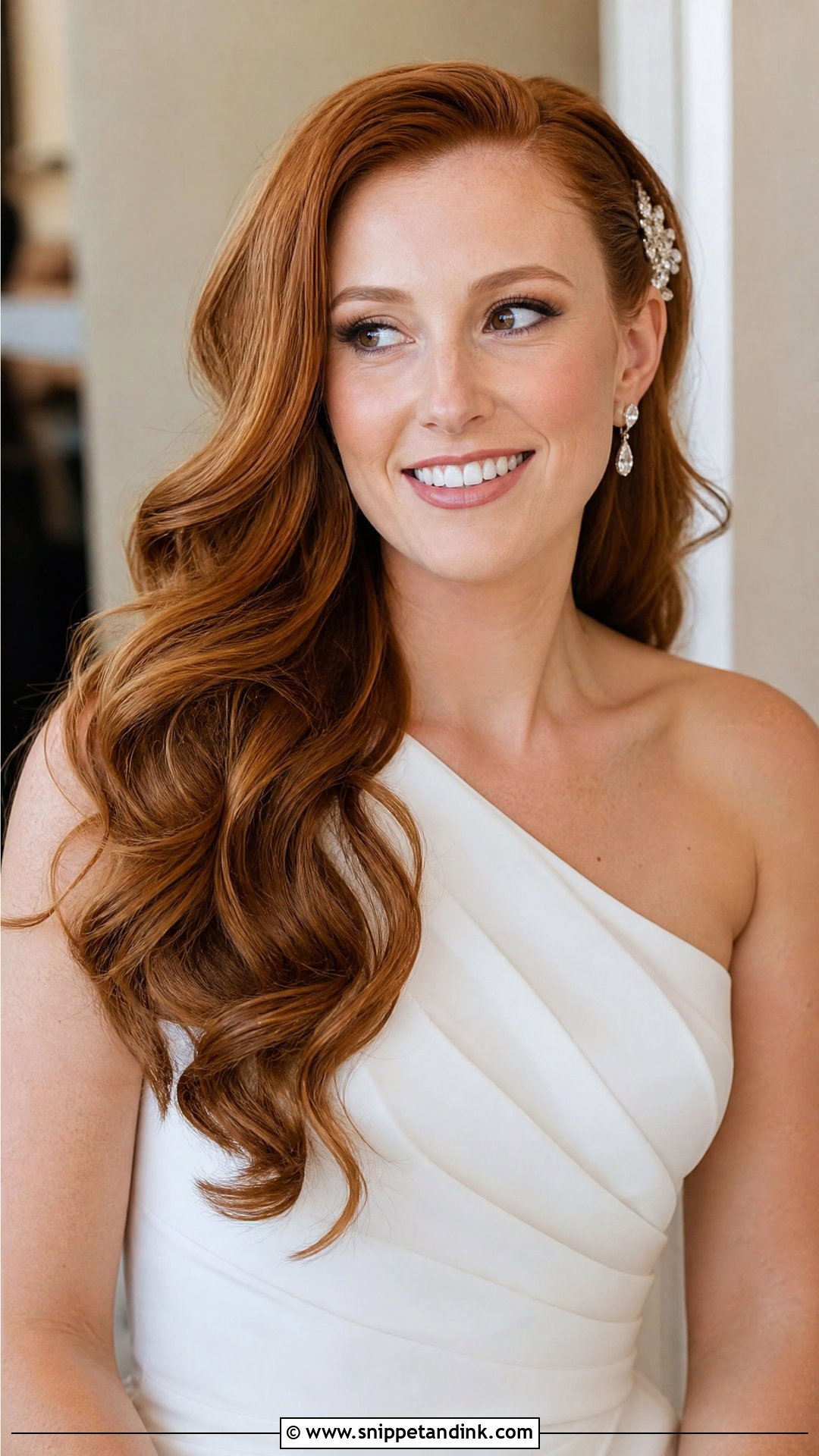
Moving the part to the side changes the whole mood. It puts volume on the heavy side, softens the face and lets you tuck the other side behind the ear with a comb to show off an earring. Thick hair takes to it well because it gives all that weight a direction. With a one-shoulder dress, I put the volume on the bare-shoulder side so the neckline balances in photos. Polished waves for a formal wedding, brushed curls for a softer one.
11. Open Hair Bride With Center Part
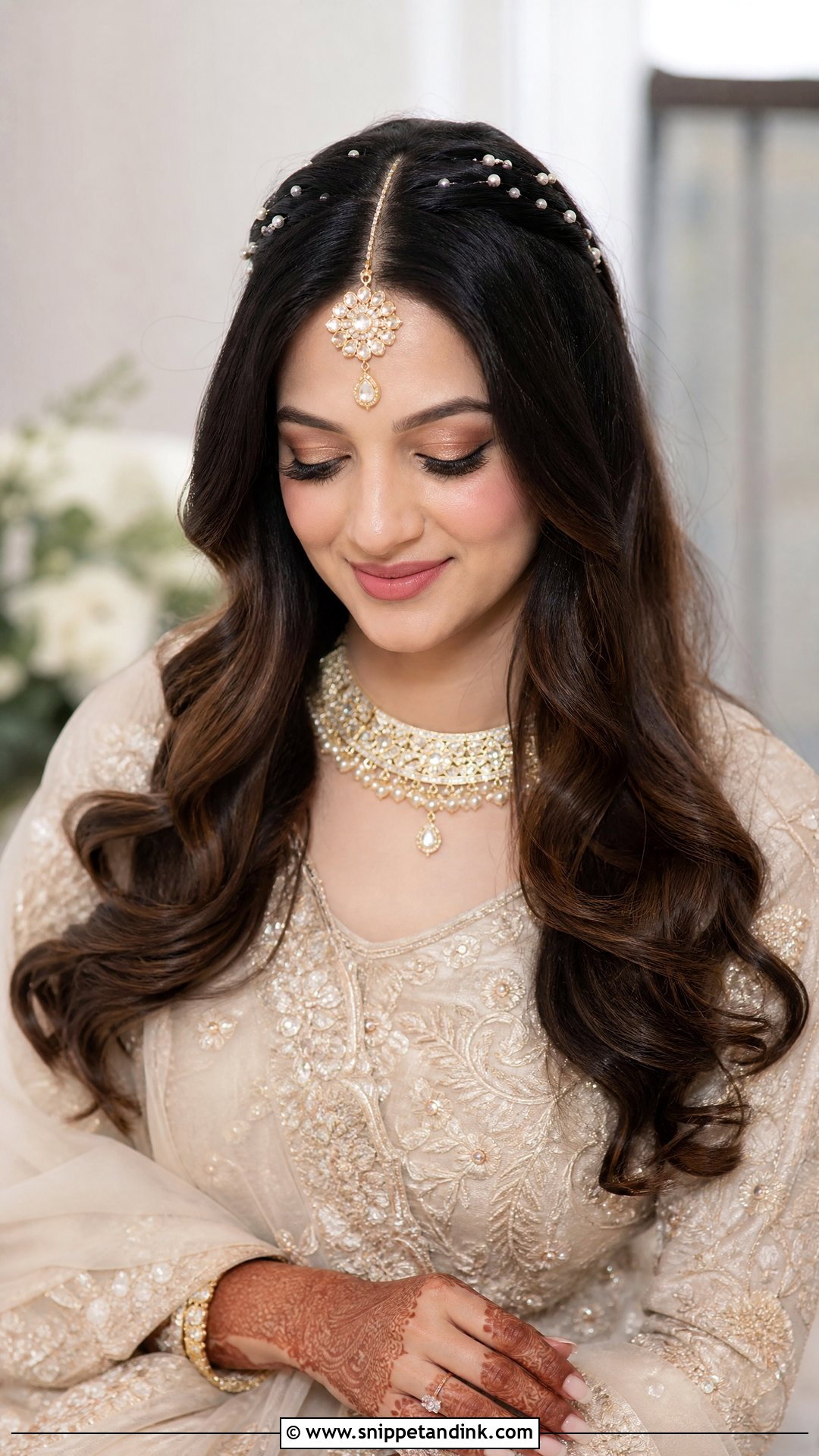
This part frames the face evenly and suits traditional jewelry, but it’s also the part most likely to go flat at the roots by the reception. I blow-dry the roots in the opposite direction first and then flip them back, which builds lift that lasts. Face-framing layers keep it from looking severe. It goes with loose curls, waves or straight hair, and with a veil or maang tikka.
12. Open Hair Bride Straight Hair
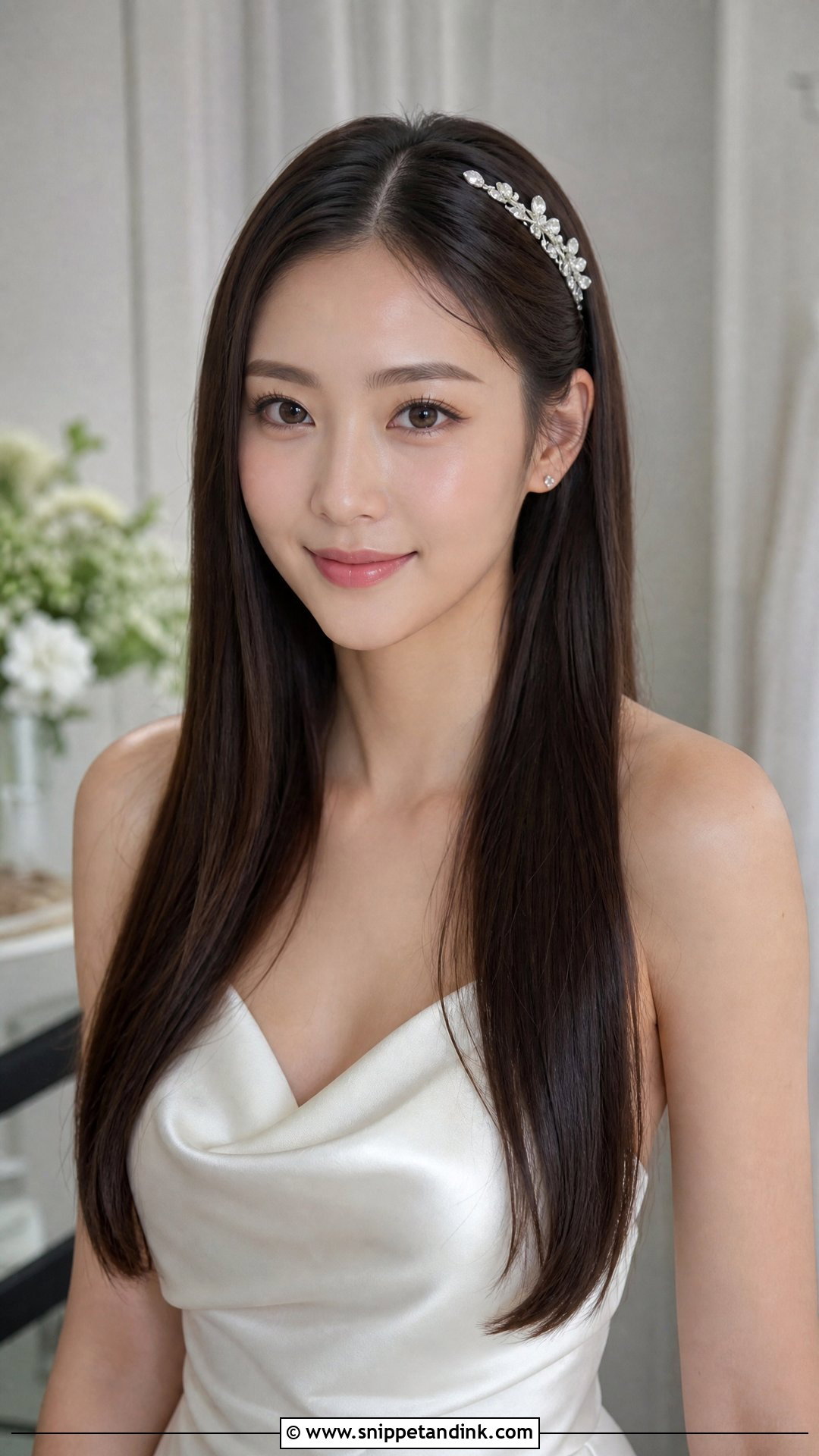
Straight hair only reads as bridal when the ends are healthy. I’d book a trim two to three weeks before the wedding, not the week of, so the line looks natural rather than freshly chopped. On the day, heat protection and anti-frizz prep go on before the flat iron, then a drop of serum on the ends. It suits modern gowns, sleek lehengas, high necklines and statement earrings. A crystal comb or a fine hair vine adds a bridal detail without breaking the clean lines.
13. Open Hair Bride With Braided Crown
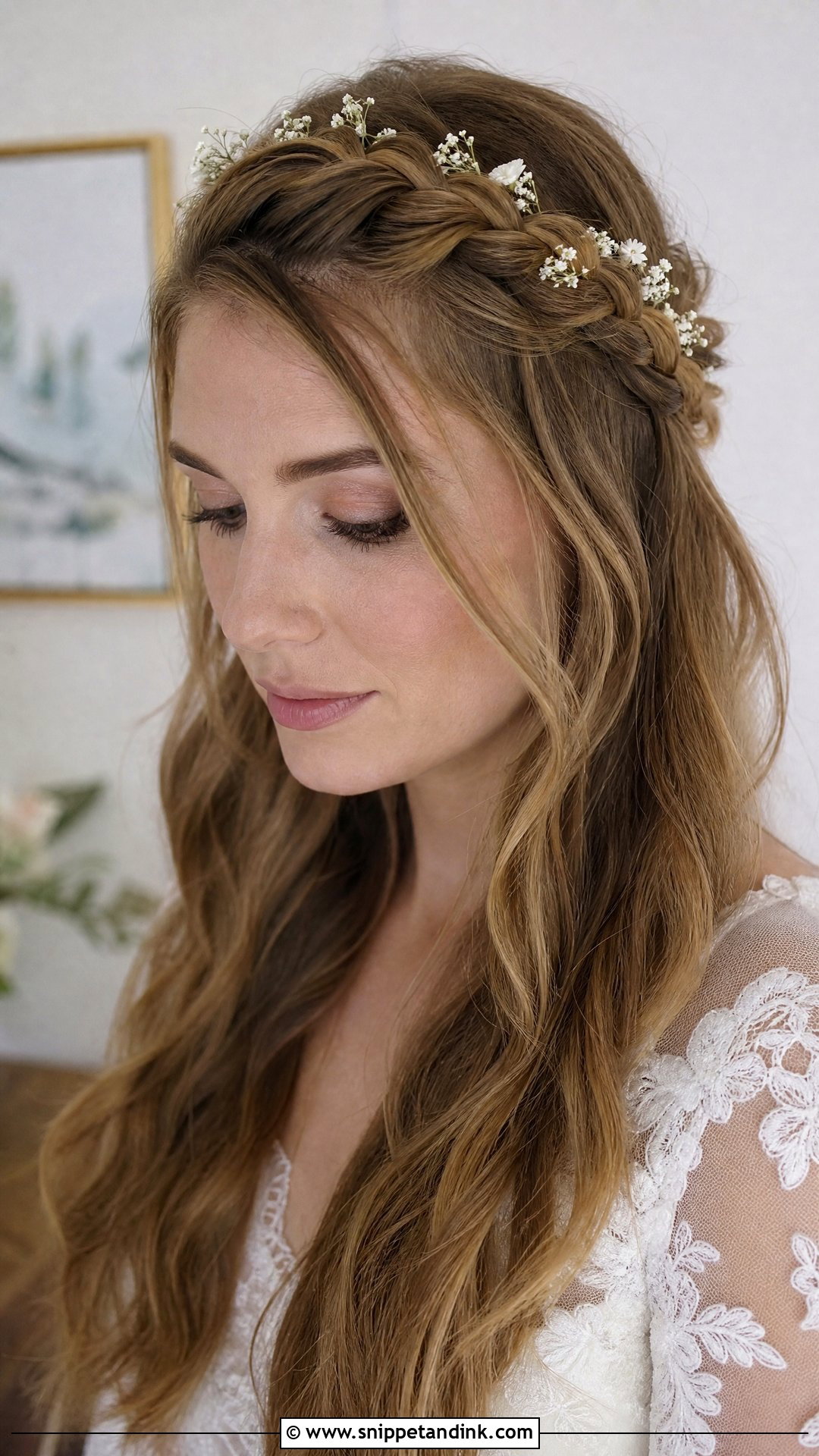
The braid can sit across the top like a headband or wrap around the back, and either way it holds the front pieces away from your face during the ceremony. I braid it slightly tight and loosen it afterward by pulling out the outer loops, which looks fuller than braiding it loose from the start. Waves underneath keep it from looking like a schoolgirl plait. Keep decorations small, since a heavy vine drags the braid down.
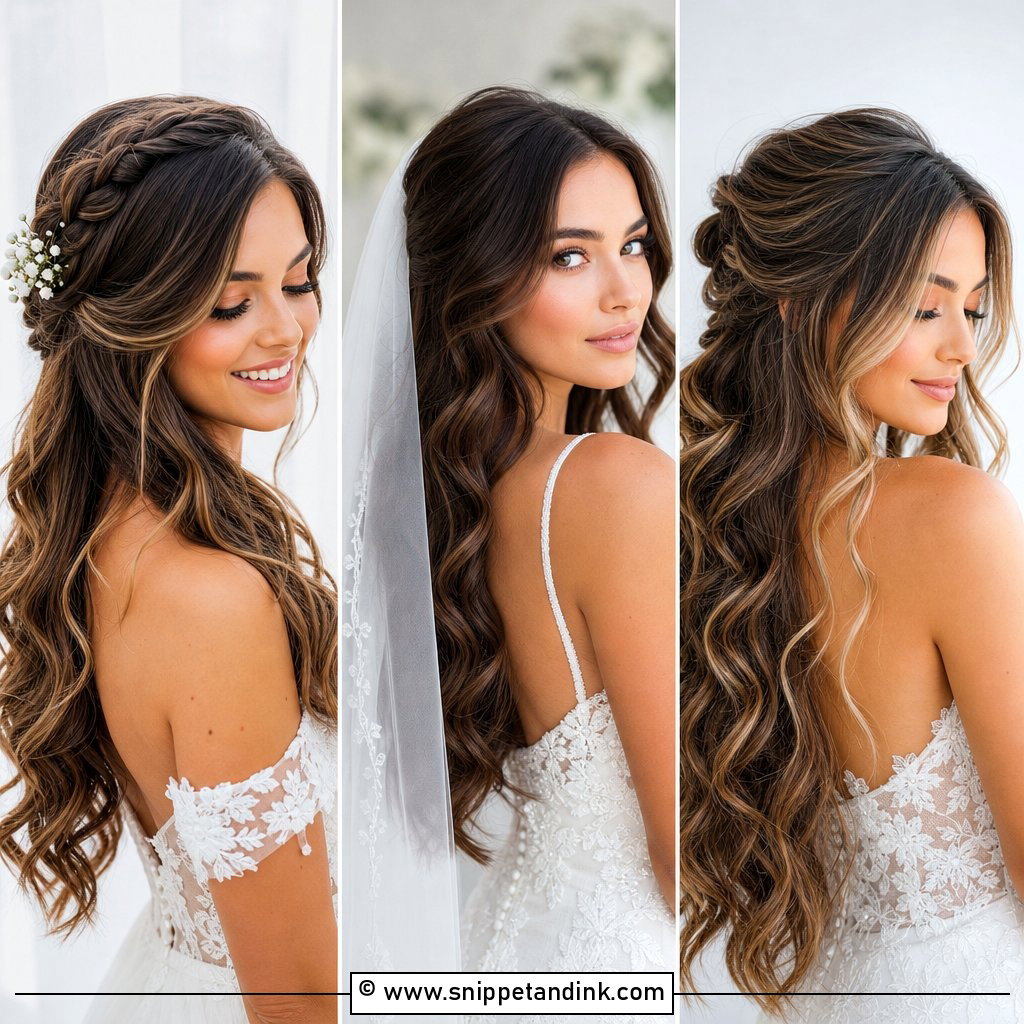
14. Open Hair Bride Waterfall Braid
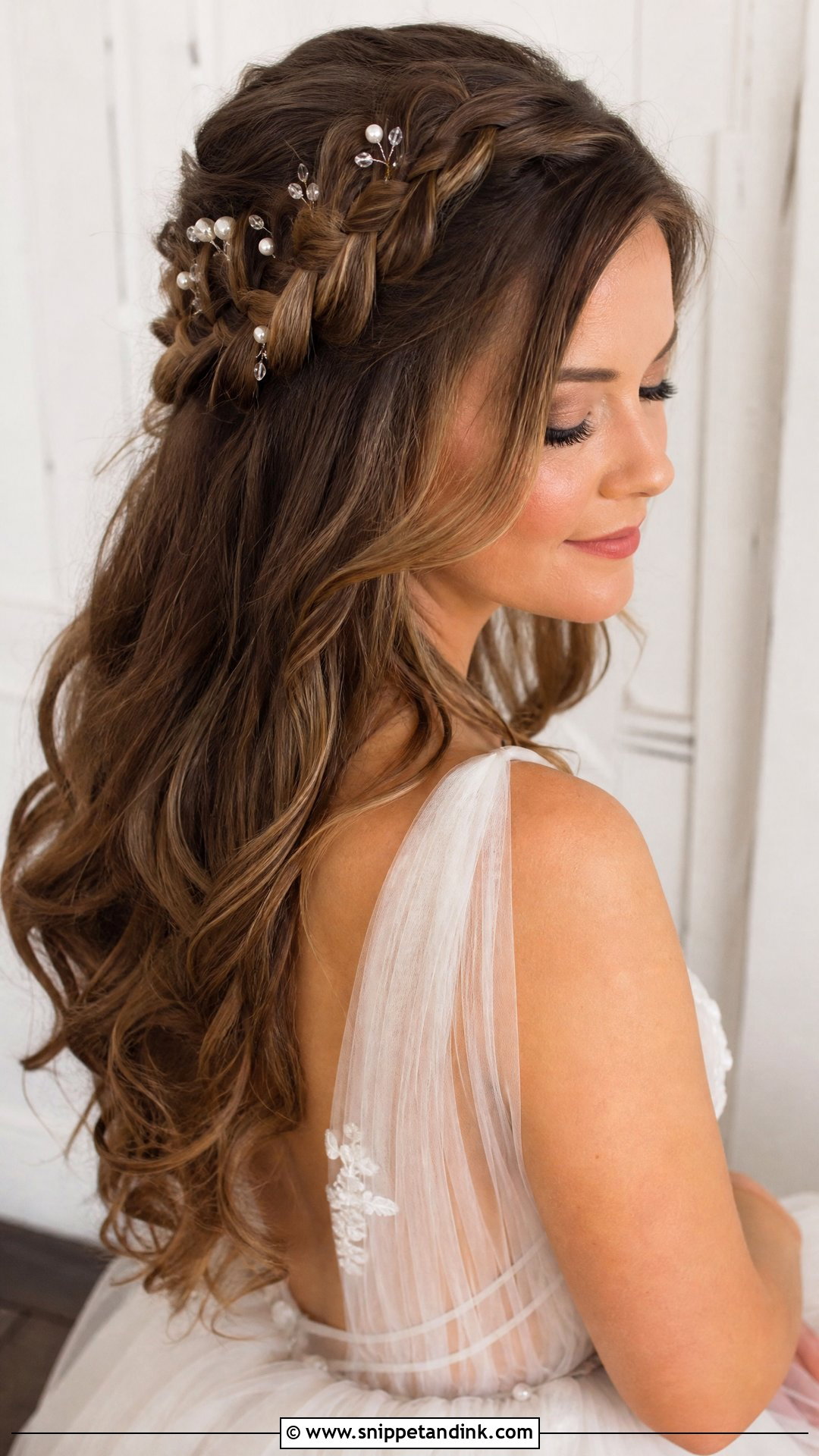
Sections drop through this braid as it crosses the back of the head, so it blends into the curls below. It needs curled hair to work; on straight hair, the dropped pieces just hang. I see it on bridesmaids a lot, so for the bride I’d add something to set it apart, like a pearl comb or a few sprigs of baby’s breath where the braid ends. Keep the braid itself loose.
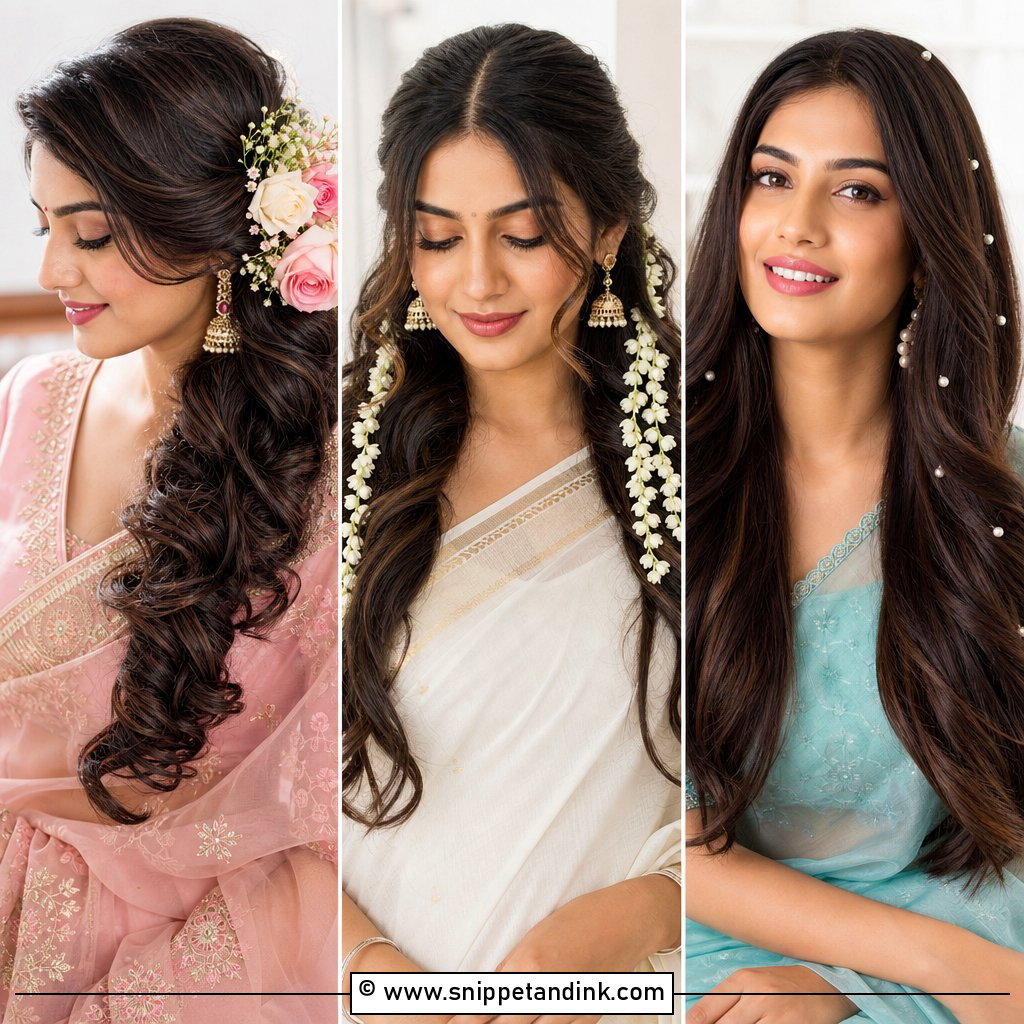
15. Open Hair Bride Side Swept Curls
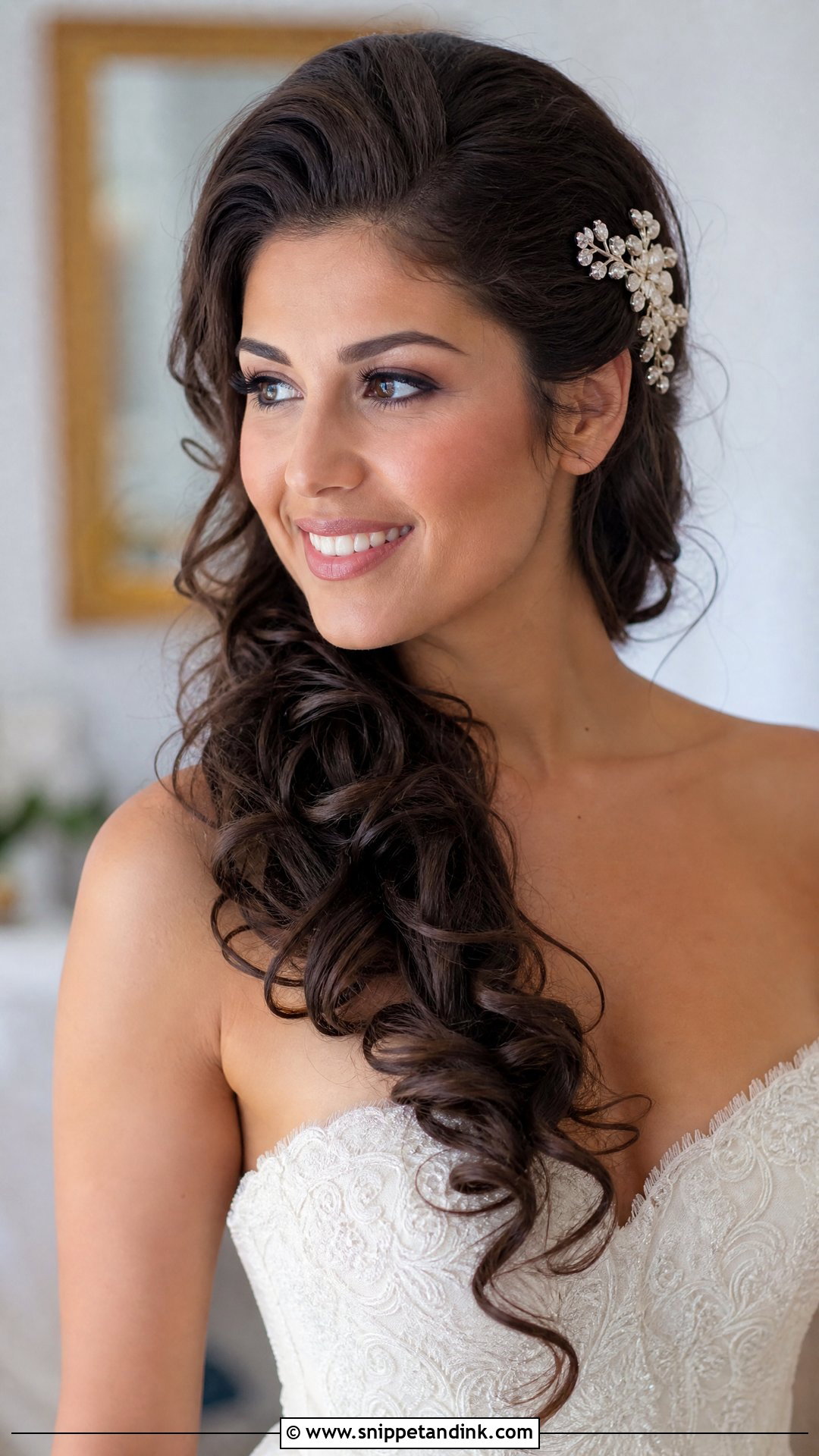
Pinning everything over one shoulder gives you drama without an updo, and it’s more controlled than fully open curls because pins hold one side. It shows off the neckline, so it goes well with strapless, sweetheart, and one-shoulder dresses. I hide a row of crossed pins behind the ear on the pinned side and add a little root volume on top so the head doesn’t look flat. A decorative comb over the pins finishes it.
16. Open Hair Bride Long Layers
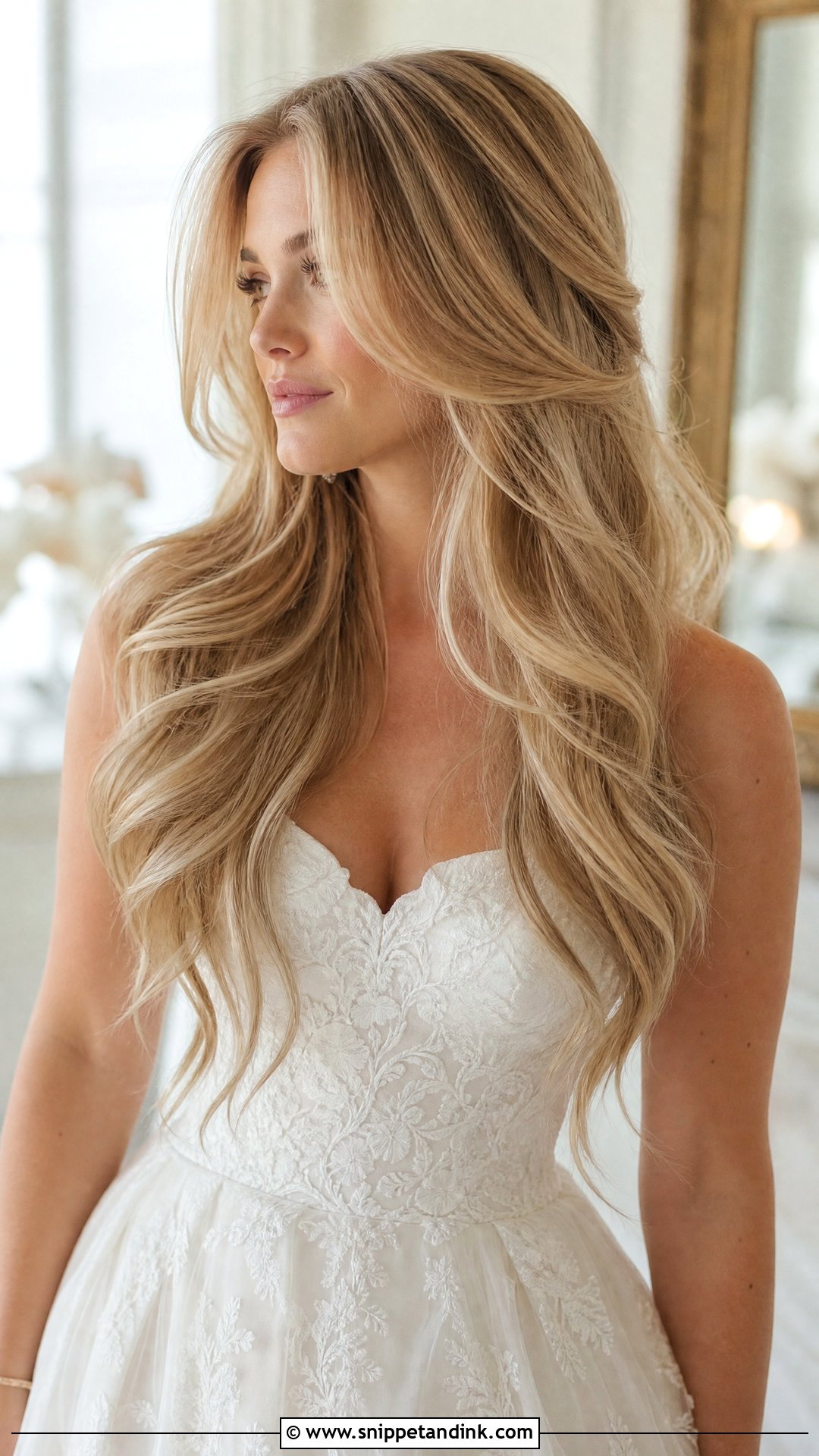
Very long one-length hair is heavy, and it drops a curl fast. Layers take some of that weight off so curls and waves keep their shape, and face-framing pieces lift the cheekbones and soften the jaw. My advice is to avoid a big cut close to the date. Get layers shaped two or three months ahead, then only a small tidy-up trim a couple of weeks before, ideally after your trial so your stylist has seen how the layers curl.
17. Open Hair Bride Curtain Bangs
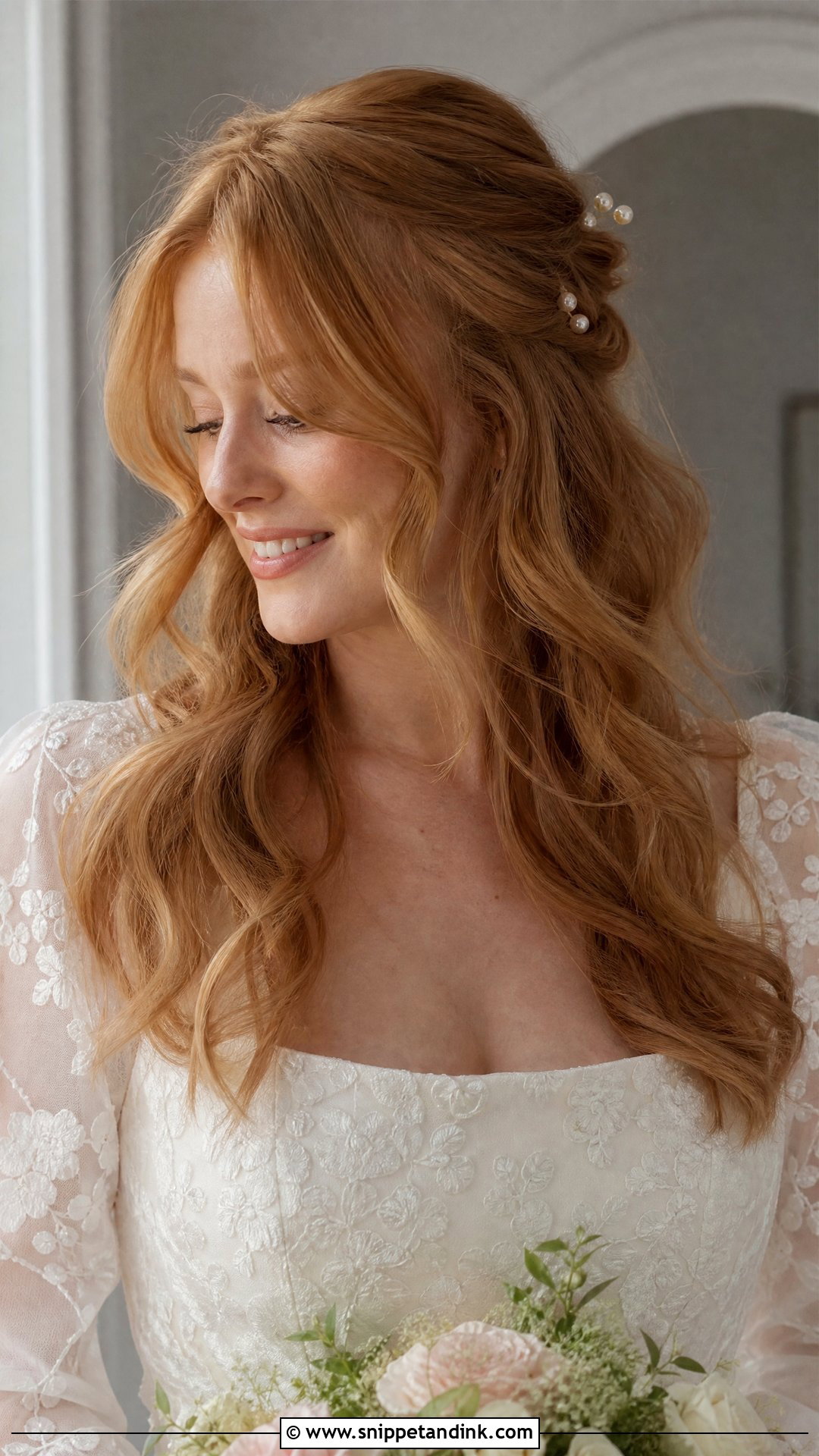
Curtain bangs blend into waves and blowouts because they sit like the shortest layer. Have them trimmed a couple of weeks before, never the day before, since freshly cut bangs sit too short and stiff. On the day I set them with a round brush, directed away from the face, so they split cleanly and stay out of your eyes. Middle or slightly off-center depends on your face and on your jewelry, especially if a tikka sits on the part. With half-up hair they look their best.
18. Open Hair Bride Natural Curls
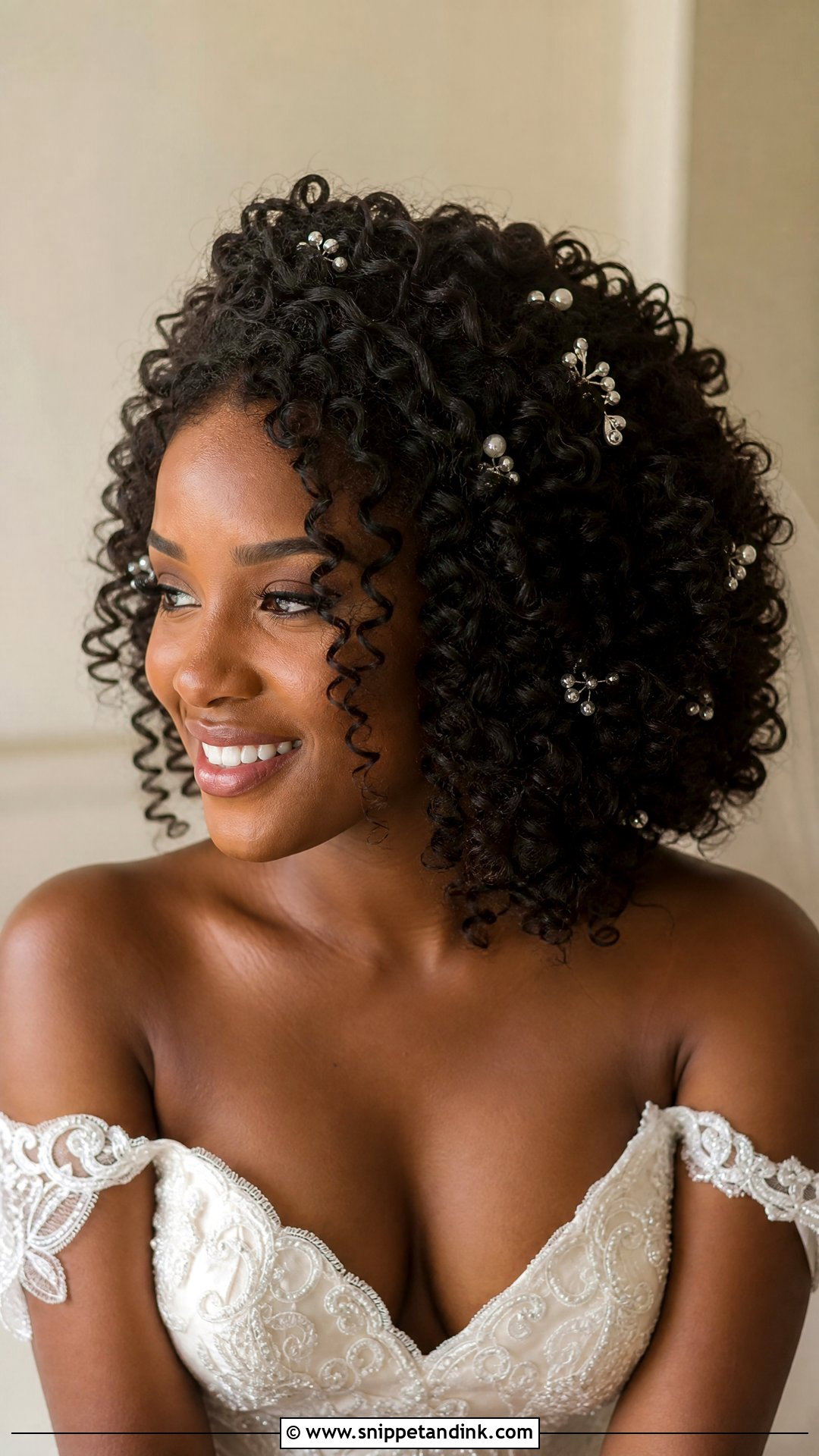
Here your own curl pattern and volume are the style, rather than something to be ironed away. Moisture-rich prep, a curl cream and gel, then diffusing on low heat give definition that lasts all day. A stylist who works with curls regularly can shape the silhouette so it’s balanced from the front, side and back. A few pinned sections near the crown support a veil without hiding the curls, and pearl pins or a slim headband add the bridal detail.
19. Open Hair Bride Beach Waves
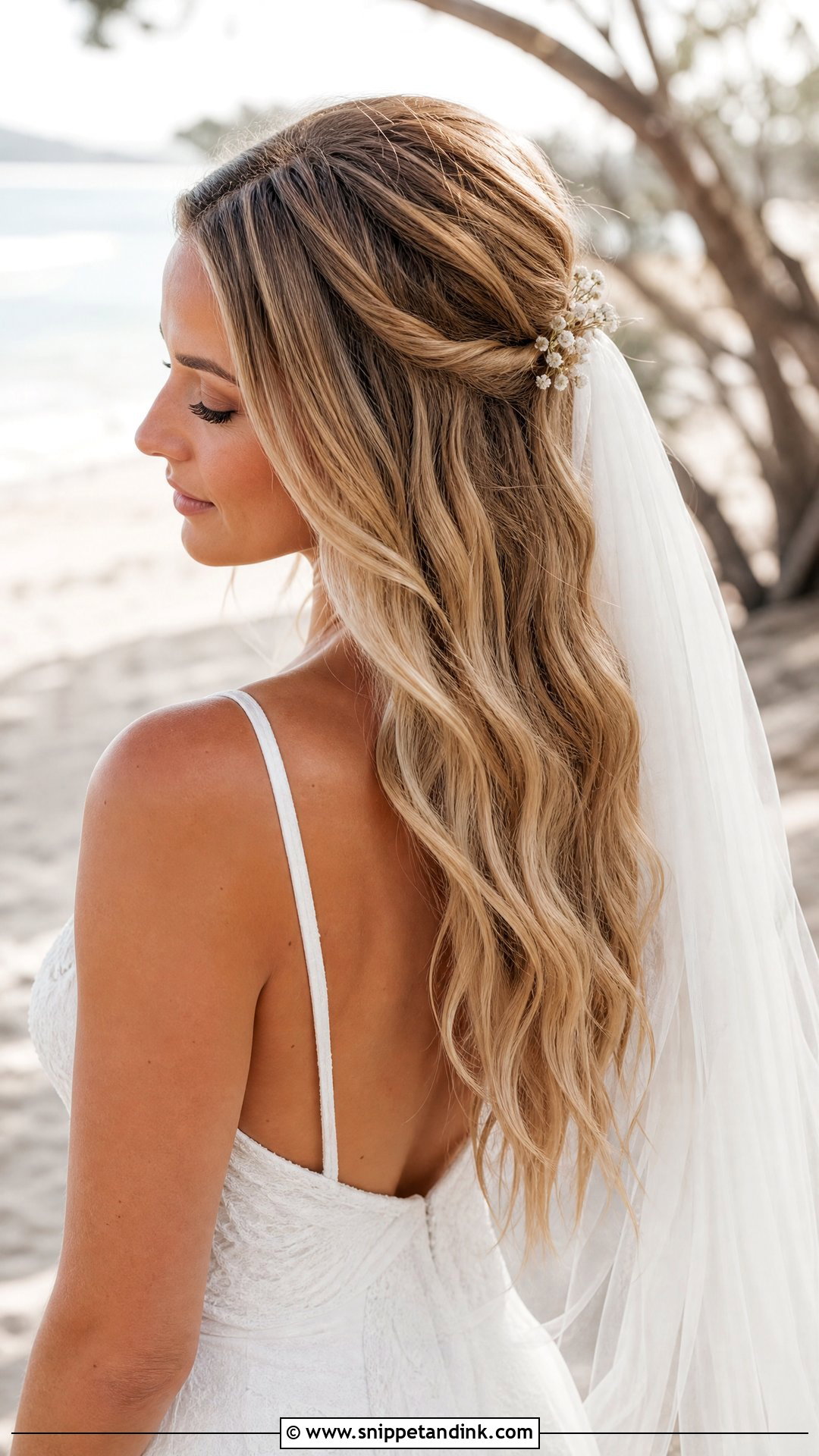
Wedding beach waves need more polish than everyday ones: smooth roots, and bends that are separated but not frizzy. Too much texture spray makes hair feel dry and look dull in photos, so I use it only on the mid-lengths. Destination ceremonies, coastal venues and simple dresses suit it, and a veil placed low at the back is less likely to catch the wind. A floral crown or a couple of tiny clips is enough decoration.
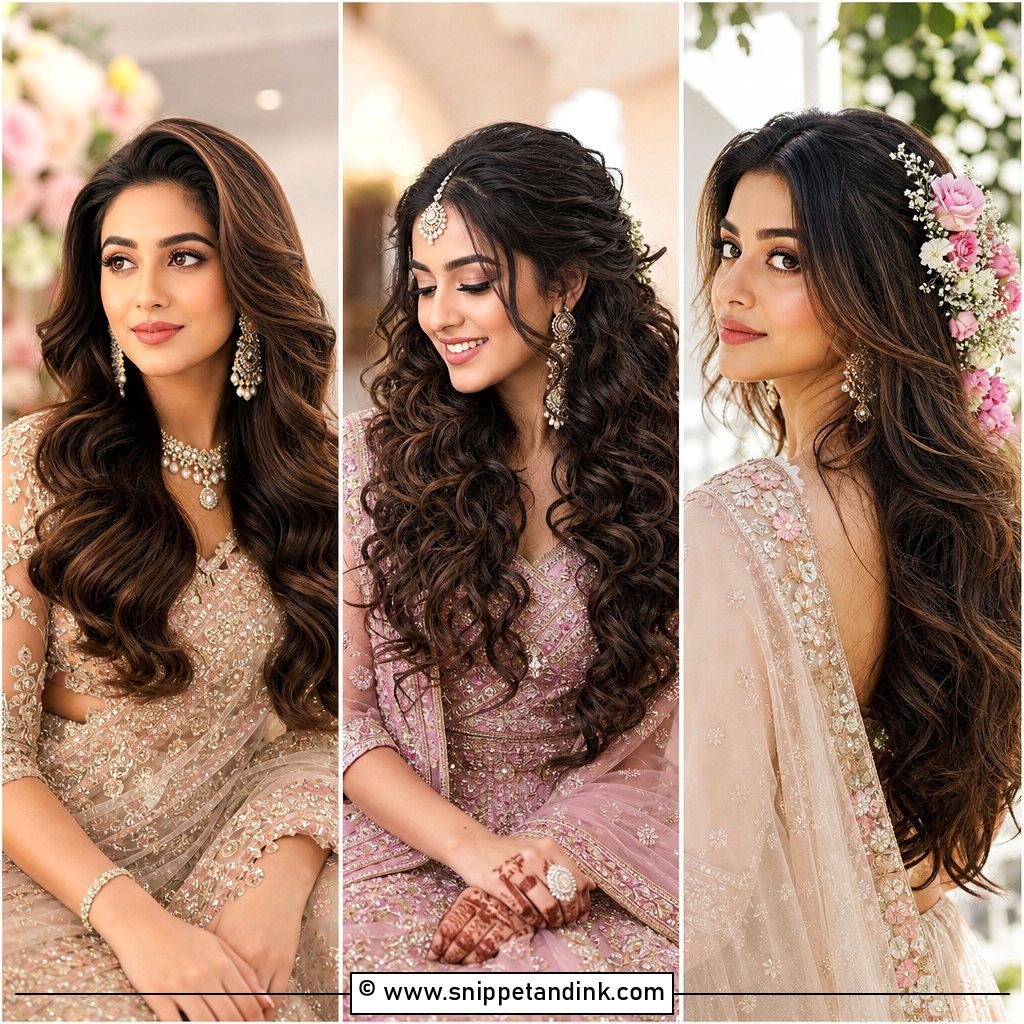
20. Open Hair Bride With Hair Vine
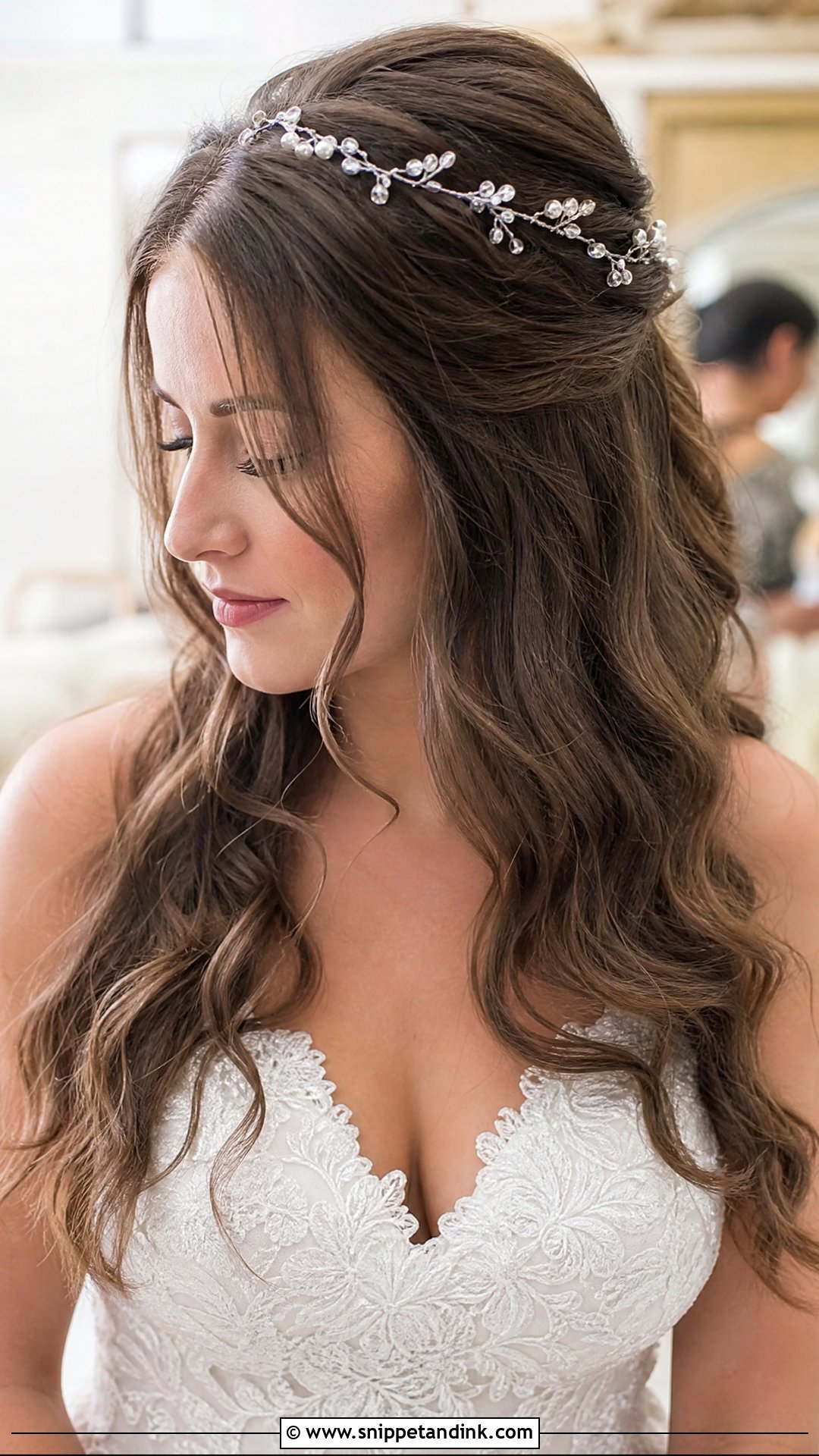
A vine is the most adaptable accessory on the list. It can be woven through half-up curls, run along one side or wrapped across the back of soft waves, and since most have pearls, crystals or leaves, they match many dress styles. The hair underneath needs texture. I thread the vine’s wire through small pinned sections every few inches, which is what stops it sliding on smooth hair. Loose curls and braided half-up looks are the easiest base.
Dupattas, Tikkas and Jewelry Weight on Hair Worn Down
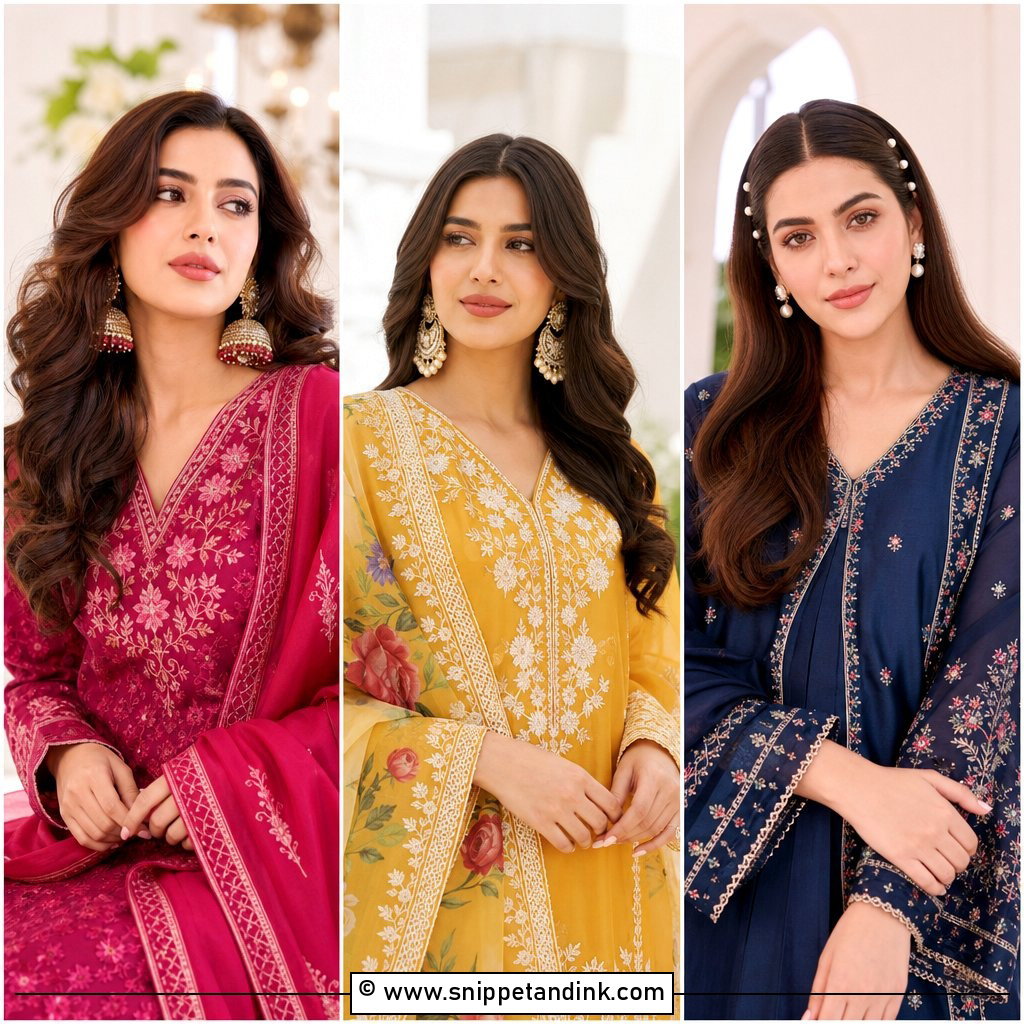
Several looks above pair open hair with South Asian bridal jewelry, and that changes the engineering. A dupatta pinned to loose hair has nothing to hold it except what I build underneath.
Anchoring the dupatta
I make a hidden base at the crown, either a small flat bun or a tight braid under the top layer, and pin the dupatta into that, never into loose strands. A heavy embroidered dupatta pulls backward all day, so this base takes more pins than a veil would.
Tikka, jhoomar and passa together
The tikka sits on the center part, while a side jhoomar or passa needs its own anchor above the ear. When you wear both, I pin back the hair on the jhoomar side or go half-up, because loose hair beneath the chains tangles in them within the first hour.
Long rituals and a dupatta that keeps being adjusted
Ceremonies involve sitting, bending and relatives fixing the drape. Show one family member where the main pins are before you leave the room, and keep spare U-pins and safety pins in a small pouch with them.
Will It Hold Until the Last Photo?
Planned properly, hair worn down holds up as reliably as a bun. Start with what your dress, jewelry and weather demand, then add the texture and accessory you love. At your trial, take photos from the front, both sides and the back, wear the real veil or tikka, and keep the style in for a few hours before you decide.
You'll Like These Ideas:






Leave a Reply