
More of my Indian brides now ask to keep their hair down for at least one function, usually the sangeet or reception, and sometimes for the pheras too. Open styles feel lighter on the scalp than a heavy bun, they move when you dance, and they sit naturally with lehengas, sarees and fusion outfits. They also take more planning than people expect, because loose hair has nowhere to hide when curls drop or a dupatta drags it flat. Below are 25 open looks I’d actually put on a bride, from bouncy curls and sleek lengths to half-up twists, with notes on what each one needs from your hair and which events it suits.
Will Open Curls Last Through a Humid Baraat and Hours of Rituals?
Loose curls are the first thing to fail at an Indian wedding, because they fight heat, humidity, a heavy dupatta and constant hugging all at once. An updo hides a dropped curl; open hair shows it. So the setting work matters more than the curling itself.
I ask brides to wash their hair the day before, not the morning of. Freshly washed, conditioned hair is too slippery to hold shape, especially the fine, silky hair many South Asian brides have. On the day I use heat protectant, curl in small sections, and pin each curl up in a coil to cool. Hair sets as it cools, not while it’s hot, and skipping that step is why curls are flat by the varmala.
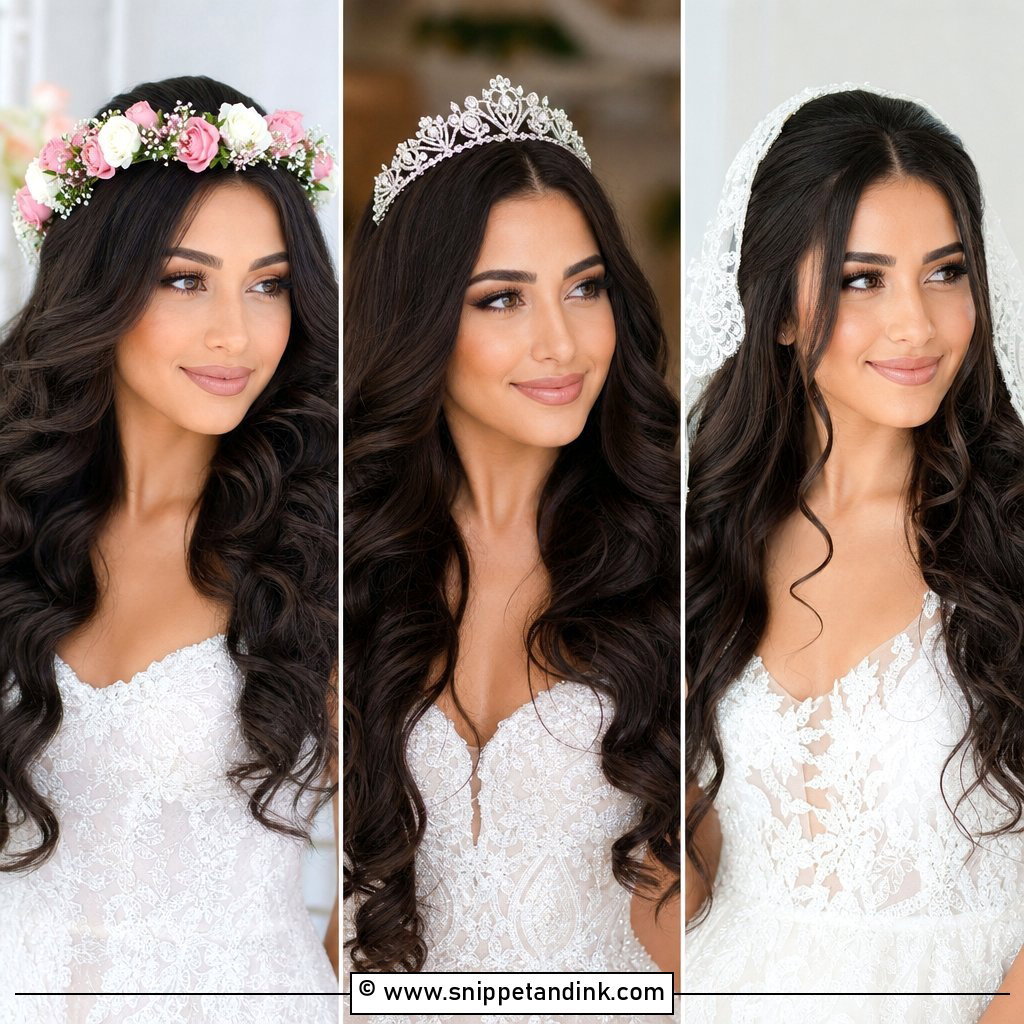
Adjusting for your hair type
- Fine or thin hair: clip-in extensions add the weight and volume that make open curls look full in photos, and they hold a curl better than very fine natural hair does.
- Very thick, heavy hair: curls drop under their own weight. Smaller sections and a longer cooling time help more than extra hairspray.
- Naturally curly or wavy hair: you can skip heat entirely and define your own pattern, which holds better in humidity than a blow-dried and recurled finish.
- Chemically straightened hair: it often refuses to hold a curl. Test this at your trial and consider soft waves instead of ringlets.
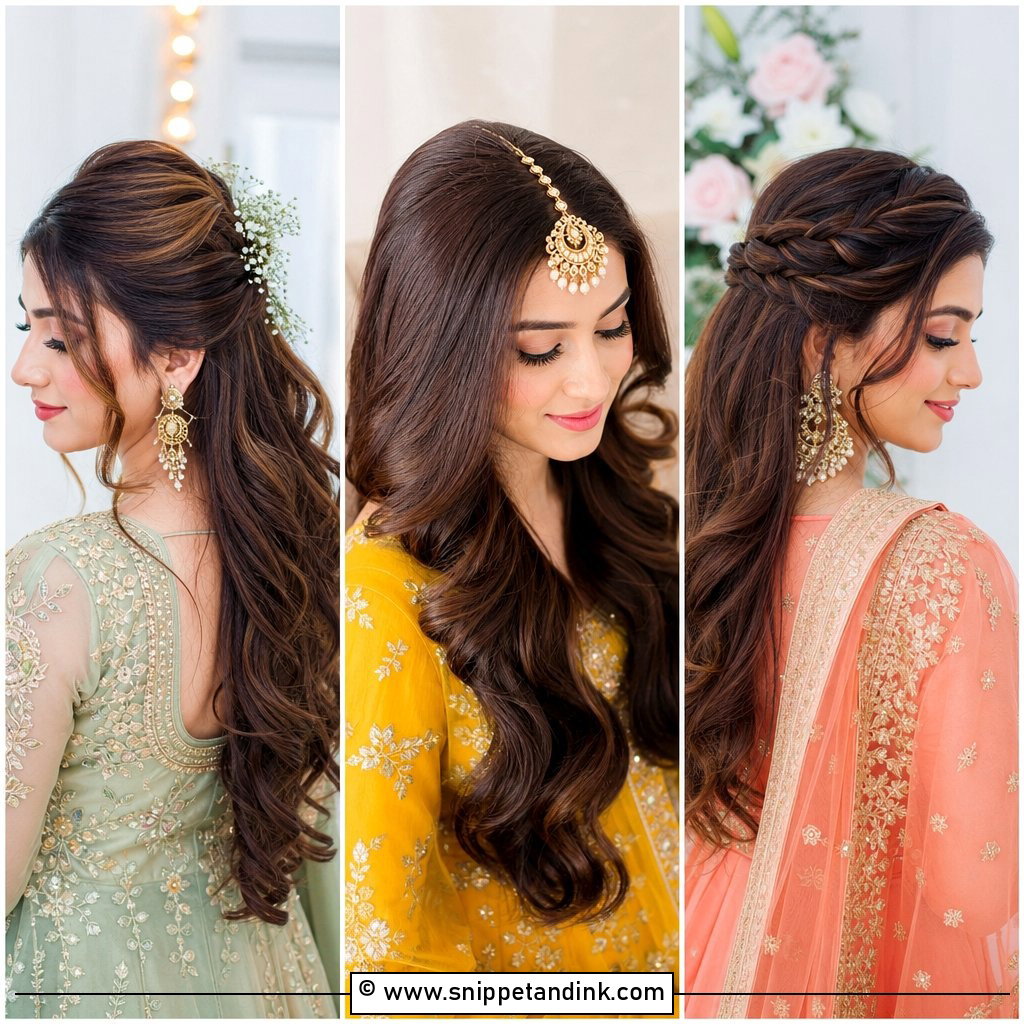
1. Loose Curls With Baby’s Breath
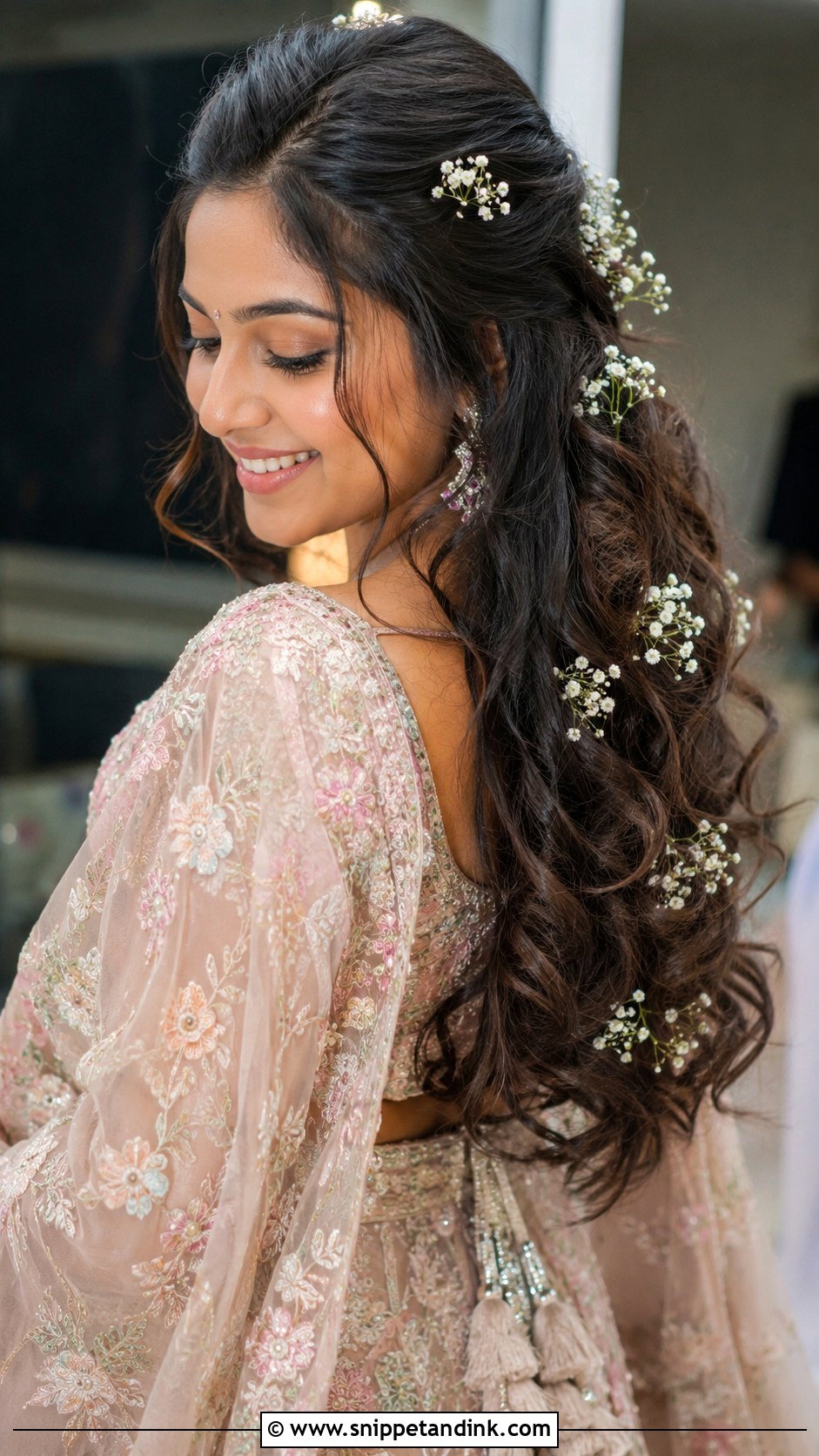
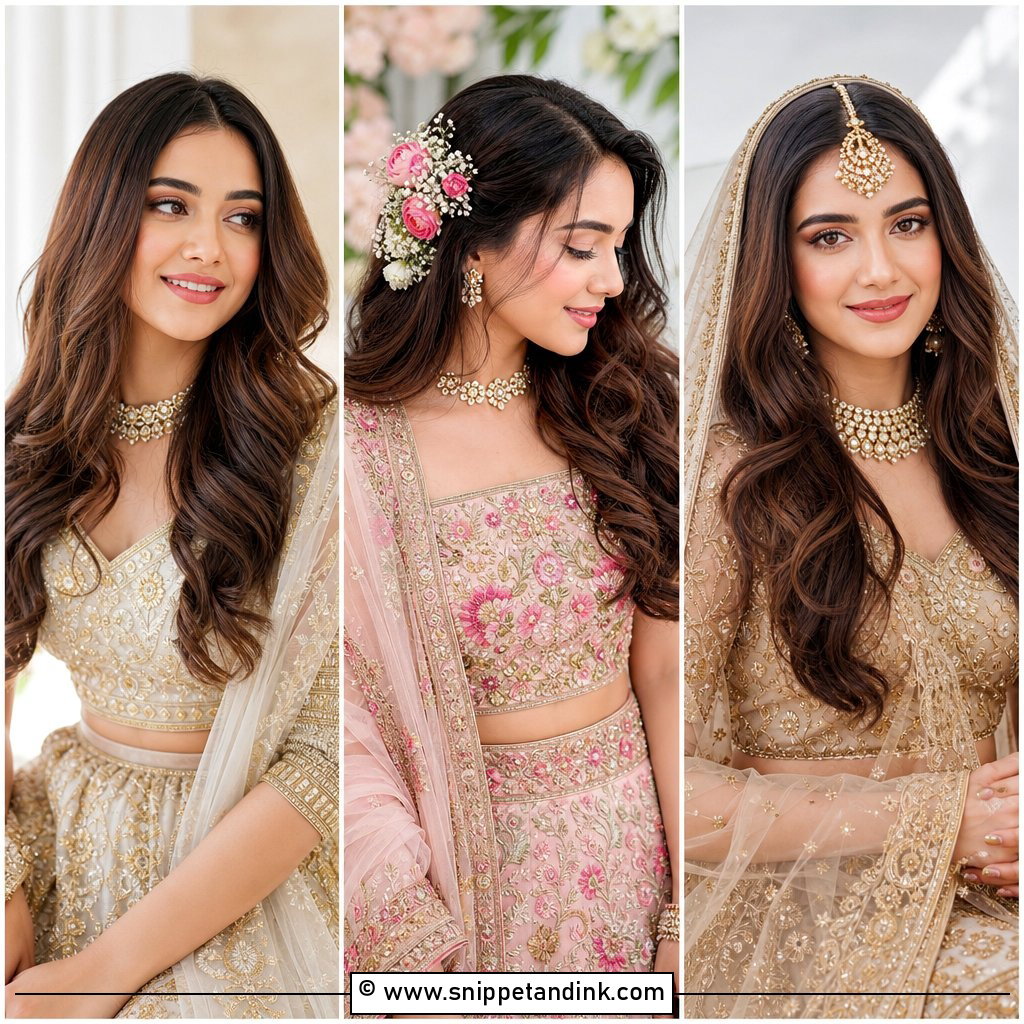
Baby’s breath scattered through loose curls gives a soft, airy finish that suits intimate ceremonies and garden settings. I curl everything first, let the curls set cool, then tuck small clusters of blooms in with fine U-pins rather than bobby pins, which crush the stems. On dark hair the tiny white flowers show up clearly in photos. The thing to know is that baby’s breath dries and drops petals after a few hours in heat, so I wire a few extra sprigs and leave them with a bridesmaid for a top-up before the evening portraits.
2. Side-Swept Curls With Fresh Flowers
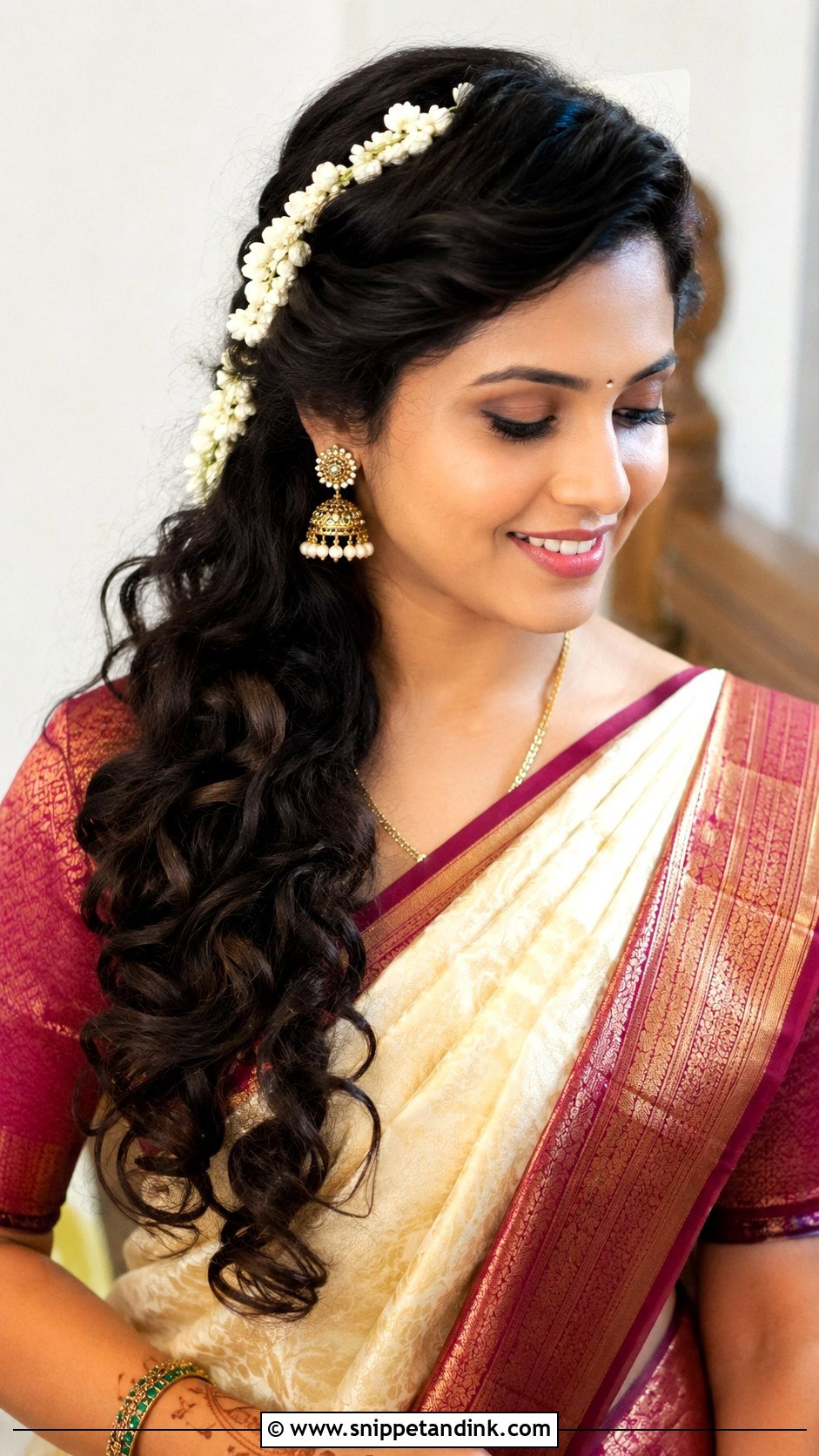
Curls swept over one shoulder flatter almost every face and show off a big earring on the open side. I gather everything to one side and anchor the opposite section with crossed bobby pins hidden behind the ear, which is what stops the sweep from creeping back. A string of mogra or a few roses along the parting gives the signature Indian bridal touch. It suits anything from haldi to reception. One practical point: a side sweep sends all the hair weight onto one shoulder, so if your blouse has heavy embroidery there, expect some tangling by the end of the night.
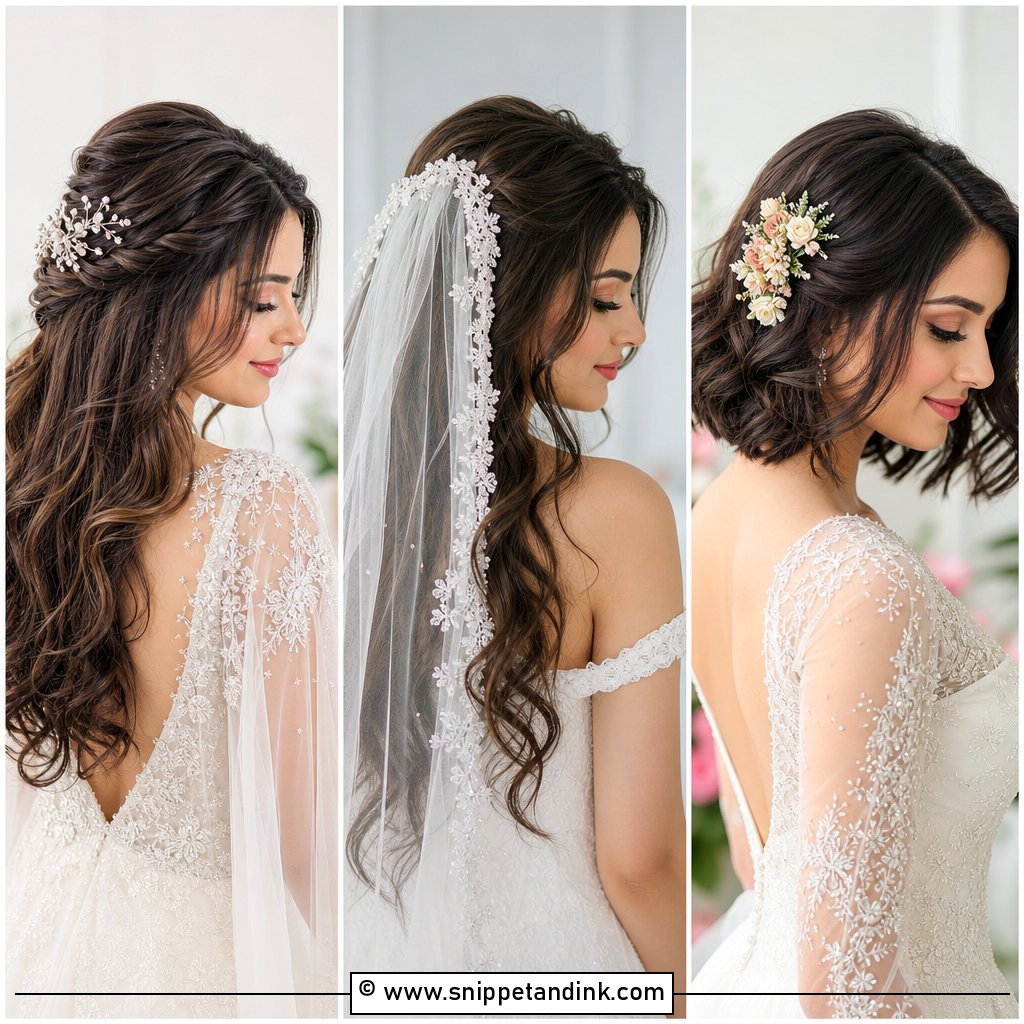
3. Half-Up Half-Down With Curls
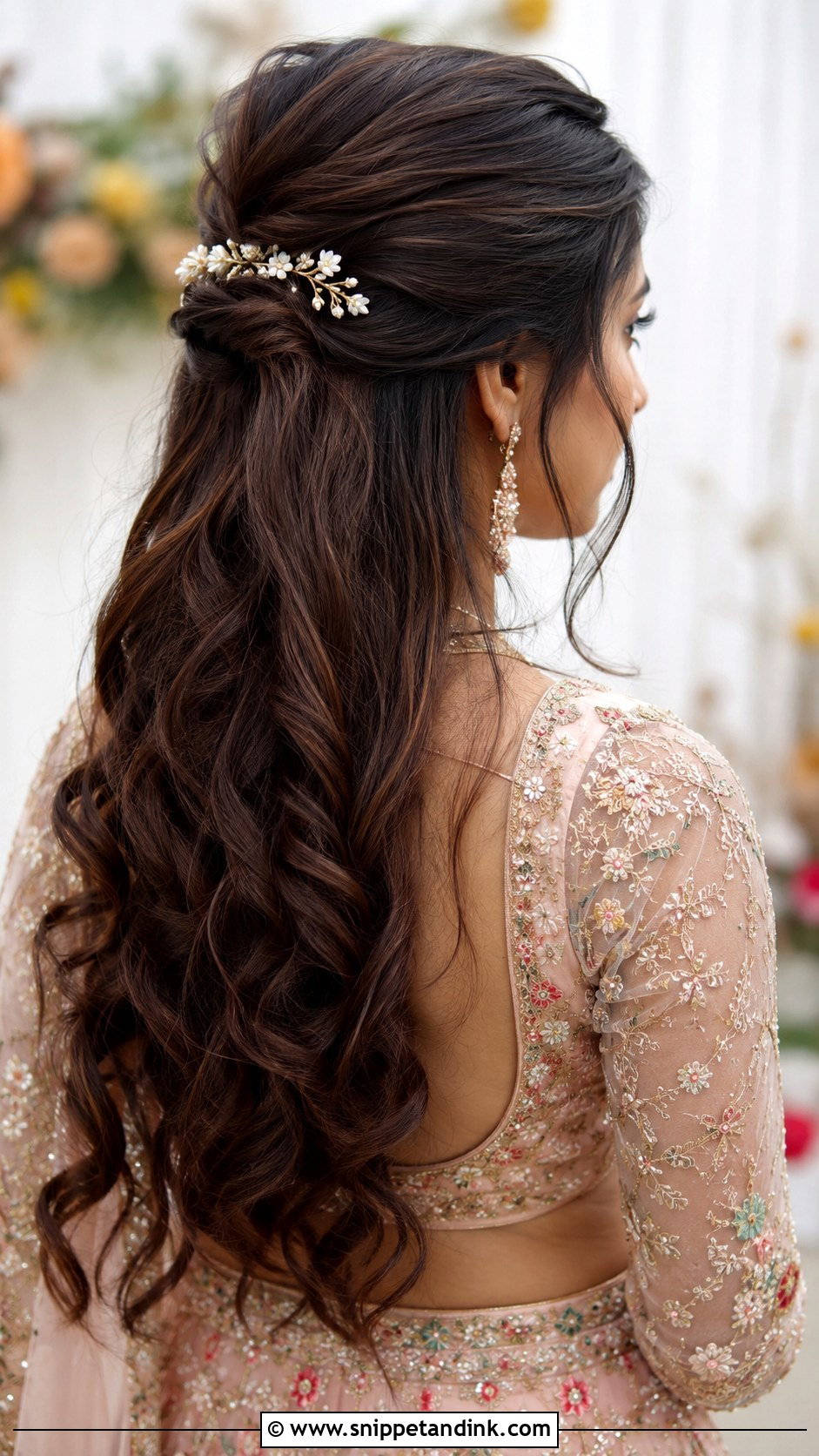
Half-up is my compromise style when a bride can’t decide. The top section gets lifted and secured at the crown, adding height and keeping hair off the face, while the curls underneath stay loose. Thick, long hair is ideal here; on fine hair I tease the crown section first so the gathered part doesn’t look flat. A small floral clip or jeweled pin covers the join. It moves easily between a fusion outfit at the sangeet and a lehenga later, and it gives me a solid base for pinning a dupatta, which full open hair doesn’t.
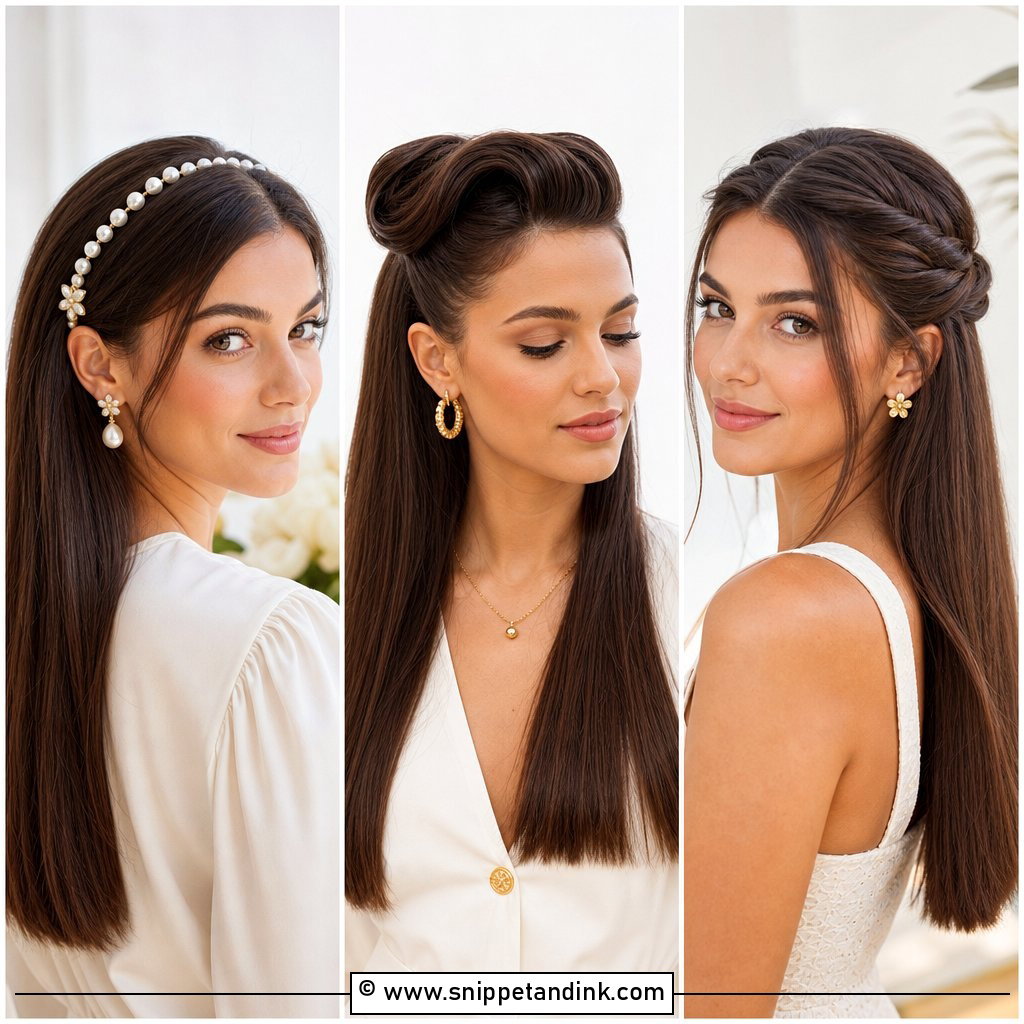
4. Open Hair With Diamond Hairband
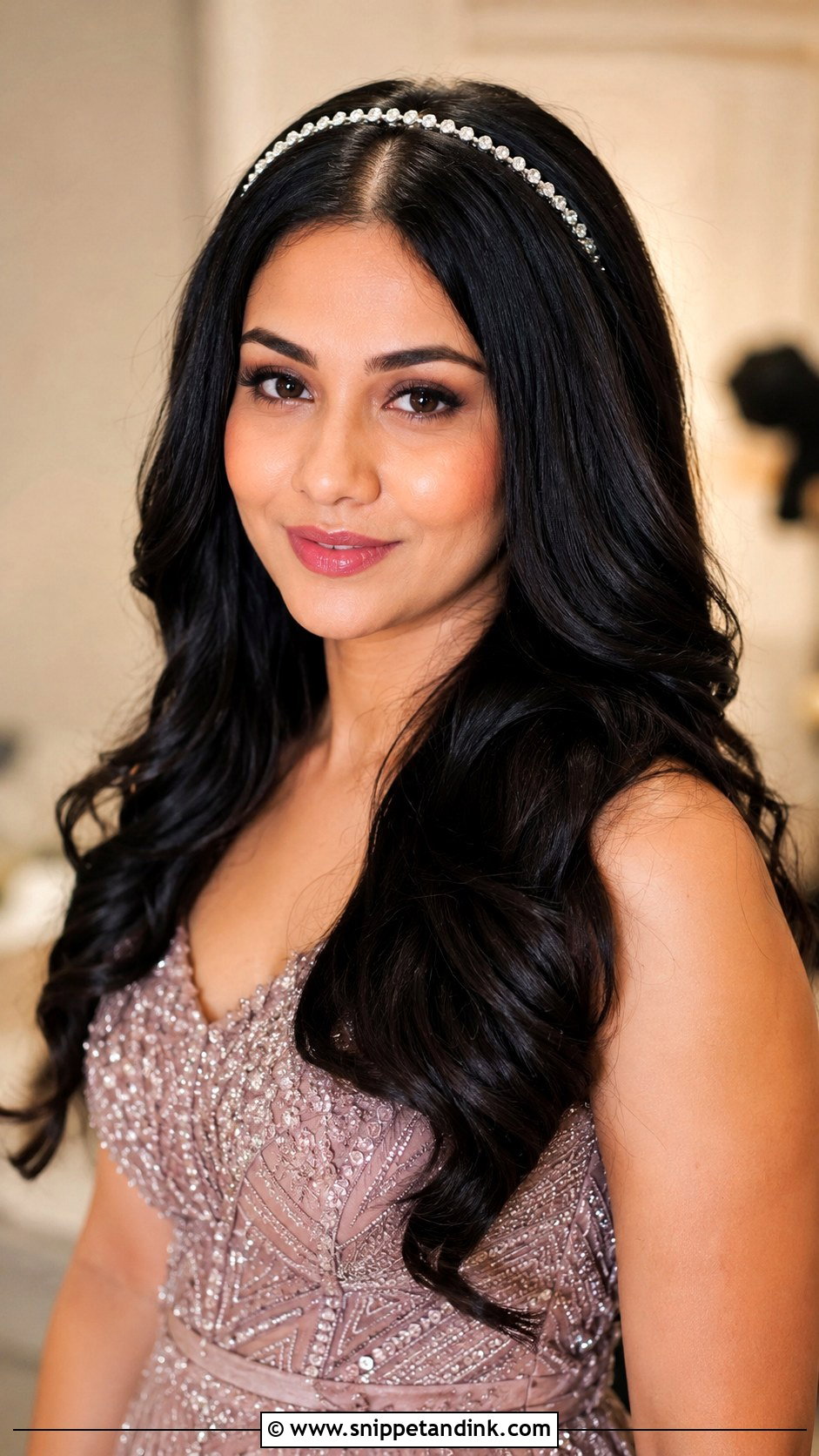
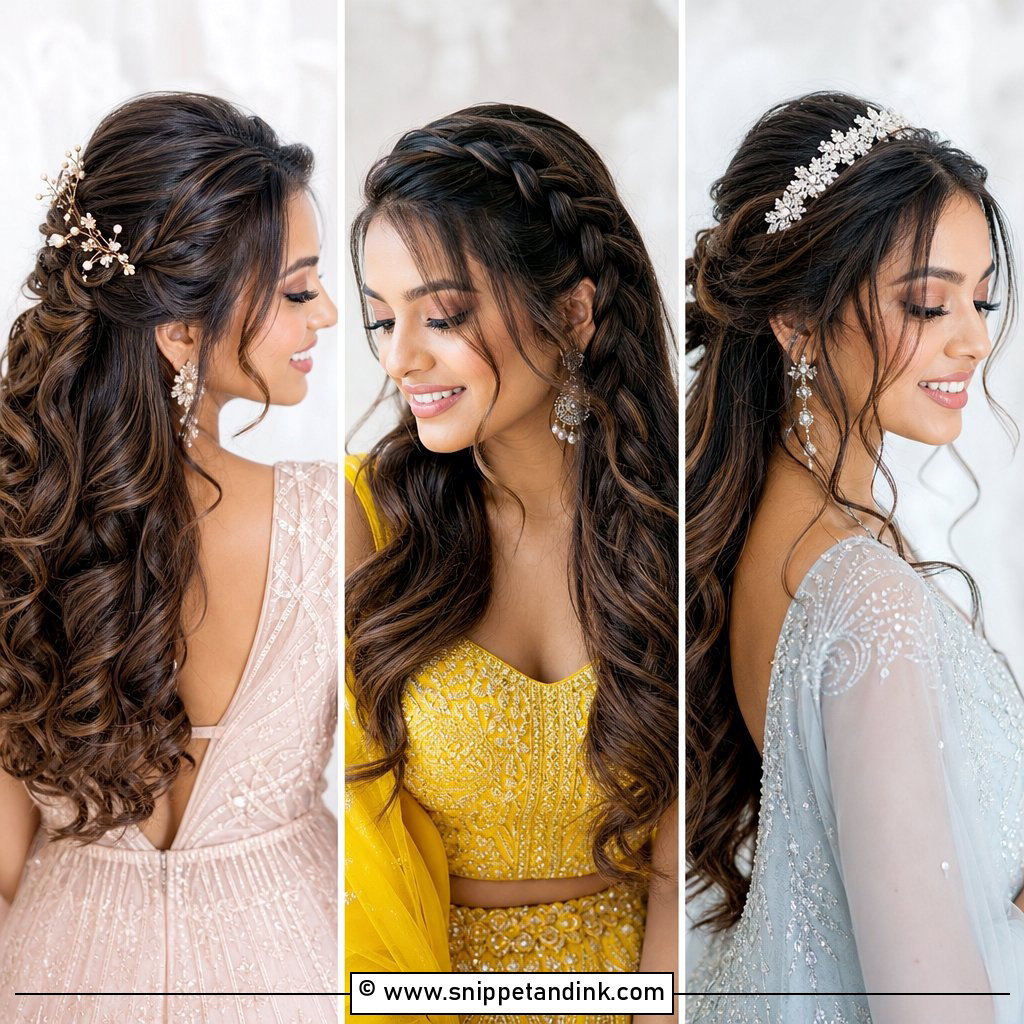
A slim diamond or crystal band turns loose waves or sleek curls into a reception look with almost no pinning. I set it a finger’s width behind the hairline so it doesn’t slide forward, and secure each end behind the ears with a pin through the band’s loop. It catches the light around the face and sits well with a structured gown or a heavily worked lehenga. Most hairbands press against the scalp, though, so if you get headaches from tight accessories, try wearing it for an hour at home before the day.
5. Bohemian Floral Crown With Loose Curls
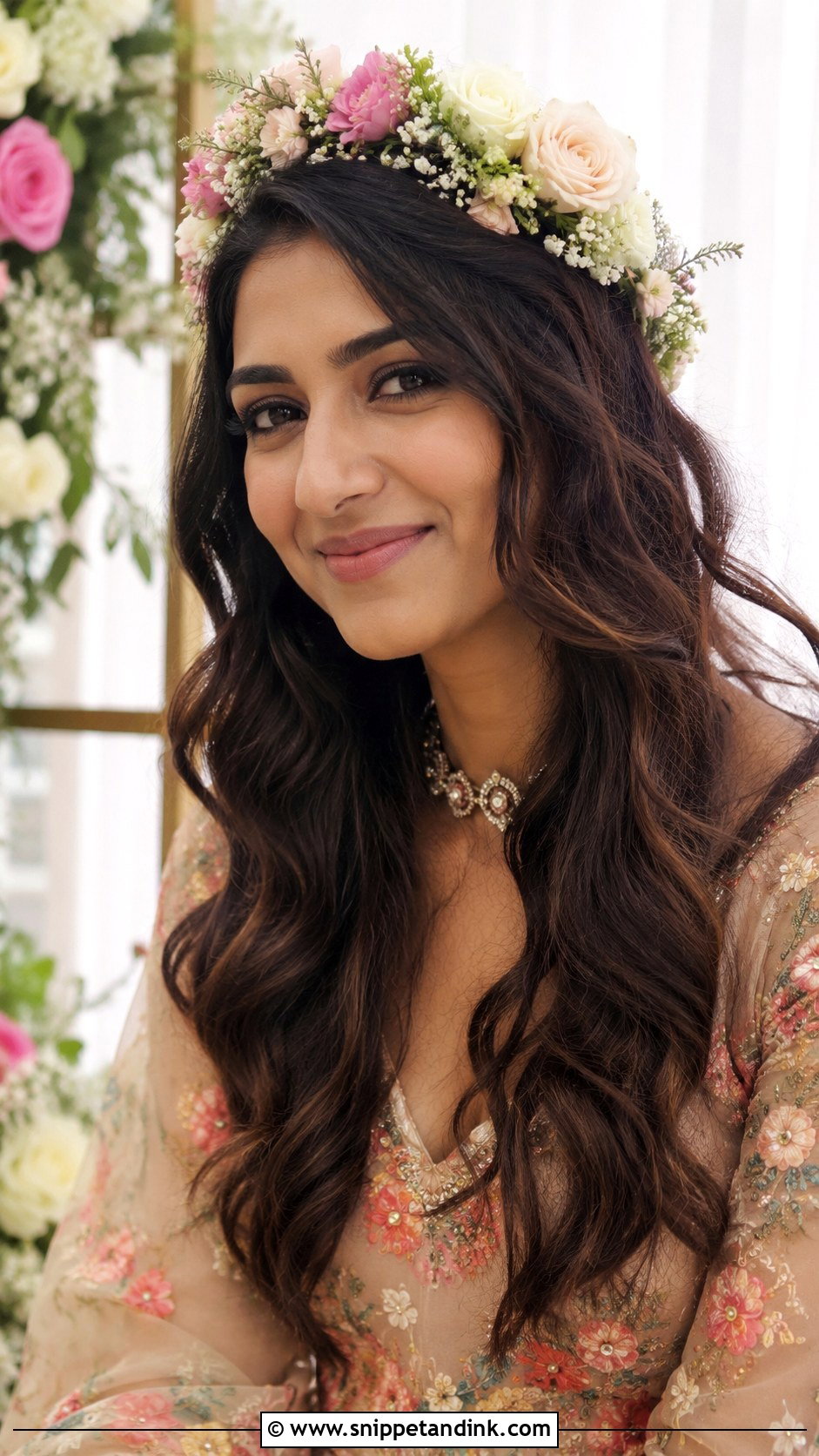
For outdoor or beach celebrations, a floral crown over loose, undone curls is the relaxed option. I curl the hair, brush the curls out into soft waves, then fit a crown of roses or seasonal blooms that sits slightly back on the head. Ask your florist to build it on a flexible wire base so I can shape it to your head; rigid crowns leave gaps at the temples. It’s my usual pick for haldi mornings and daytime mehndi. In strong wind, though, loose hair and a crown both get pushed around, so I add two hidden pins at the back.
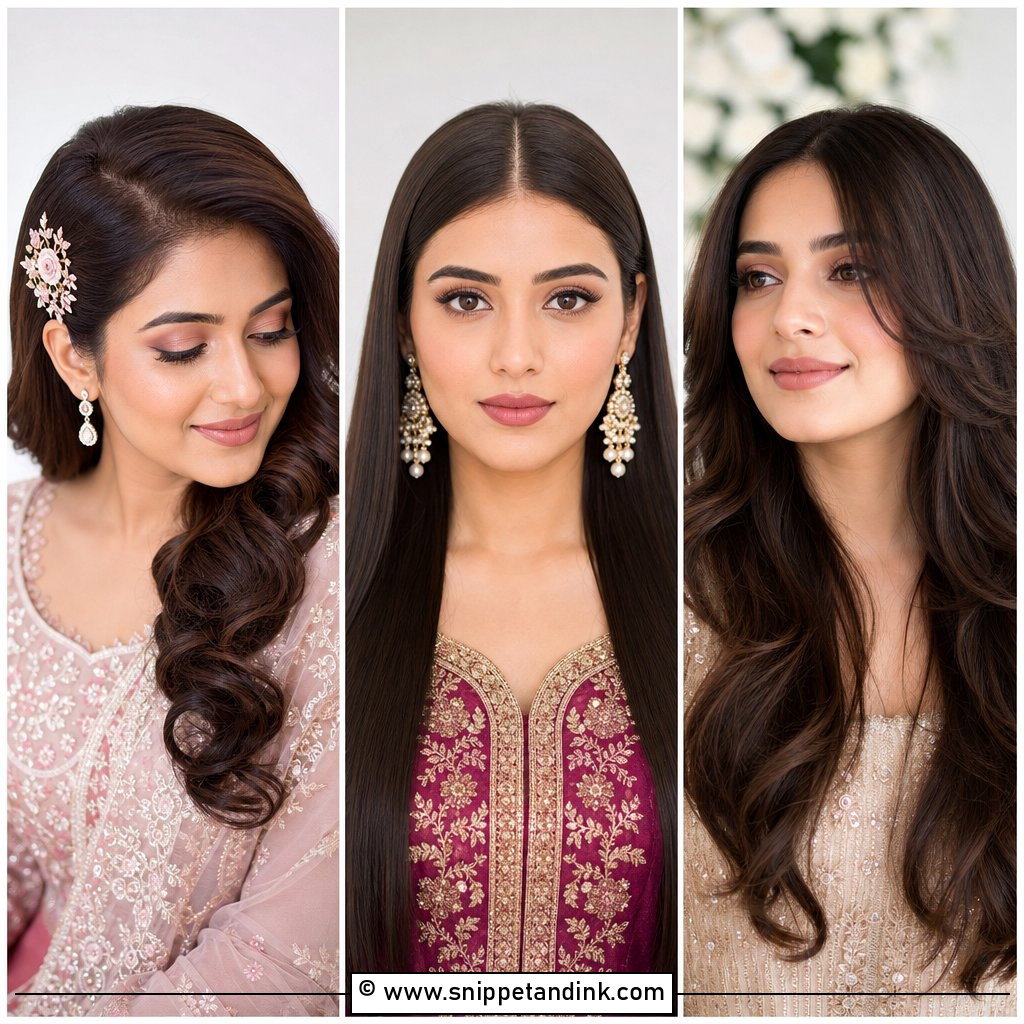
6. Sleek Straight Open Hair
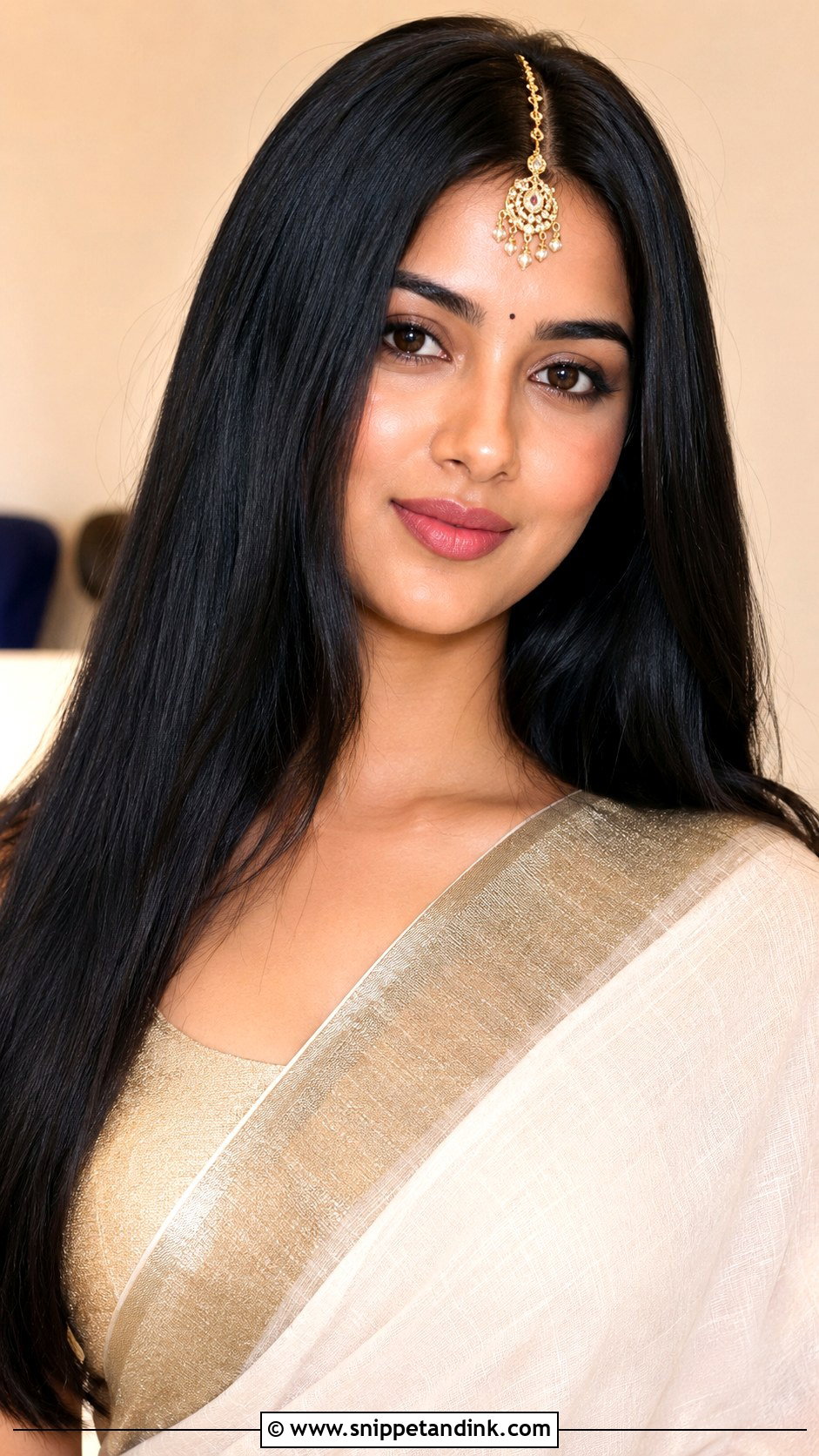
Sleek straight hair is the hardest open style to keep perfect, despite looking the simplest. I smooth sections with a flat iron at a moderate temperature, finish with a shine serum on the lengths only, and part it in the center or the side. The look puts all attention on the face and jewelry, and it pairs with modern saree drapes and gowns. A small maang tikka adds tradition. Straight open hair needs very little touching up through the day, but in humid weather naturally wavy hair will start to frizz at the crown, so I’d keep it for indoor or air-conditioned functions.
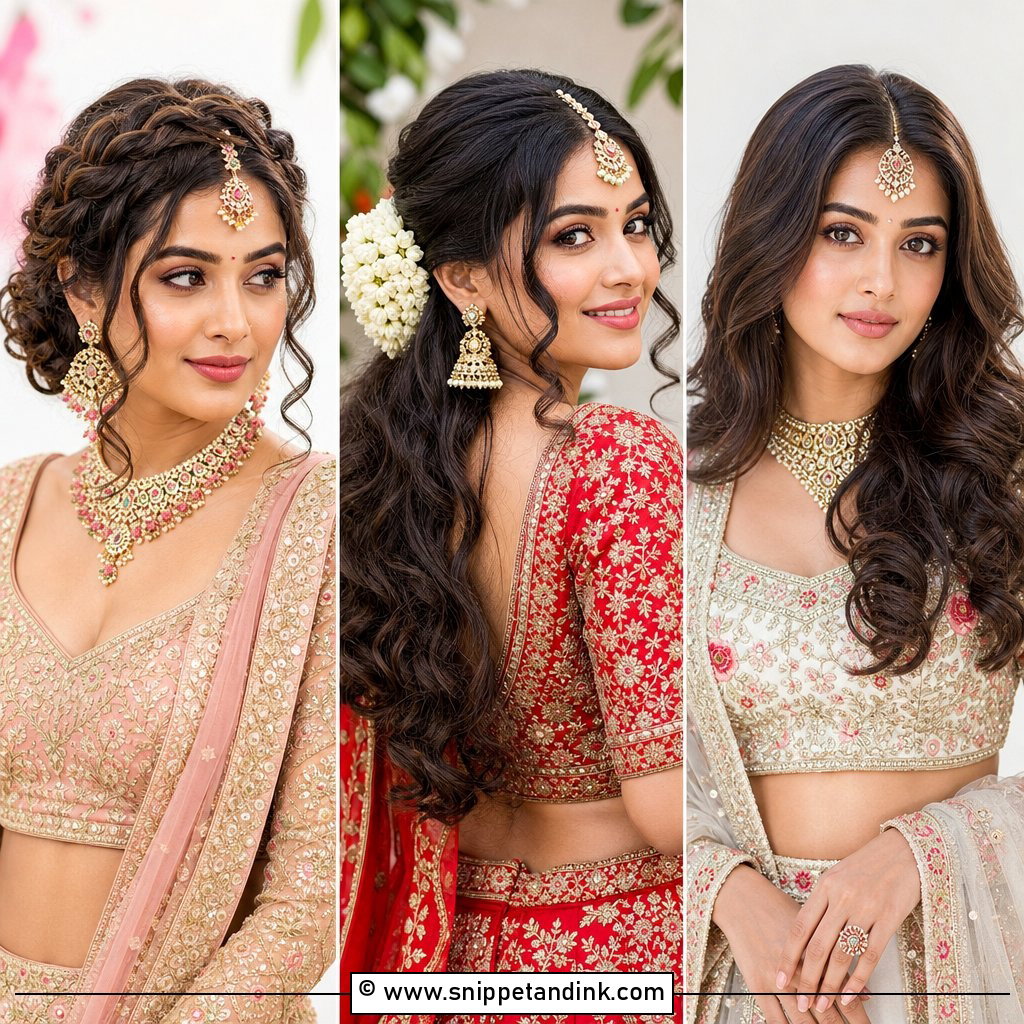
7. Open Hair With Maang Tikka
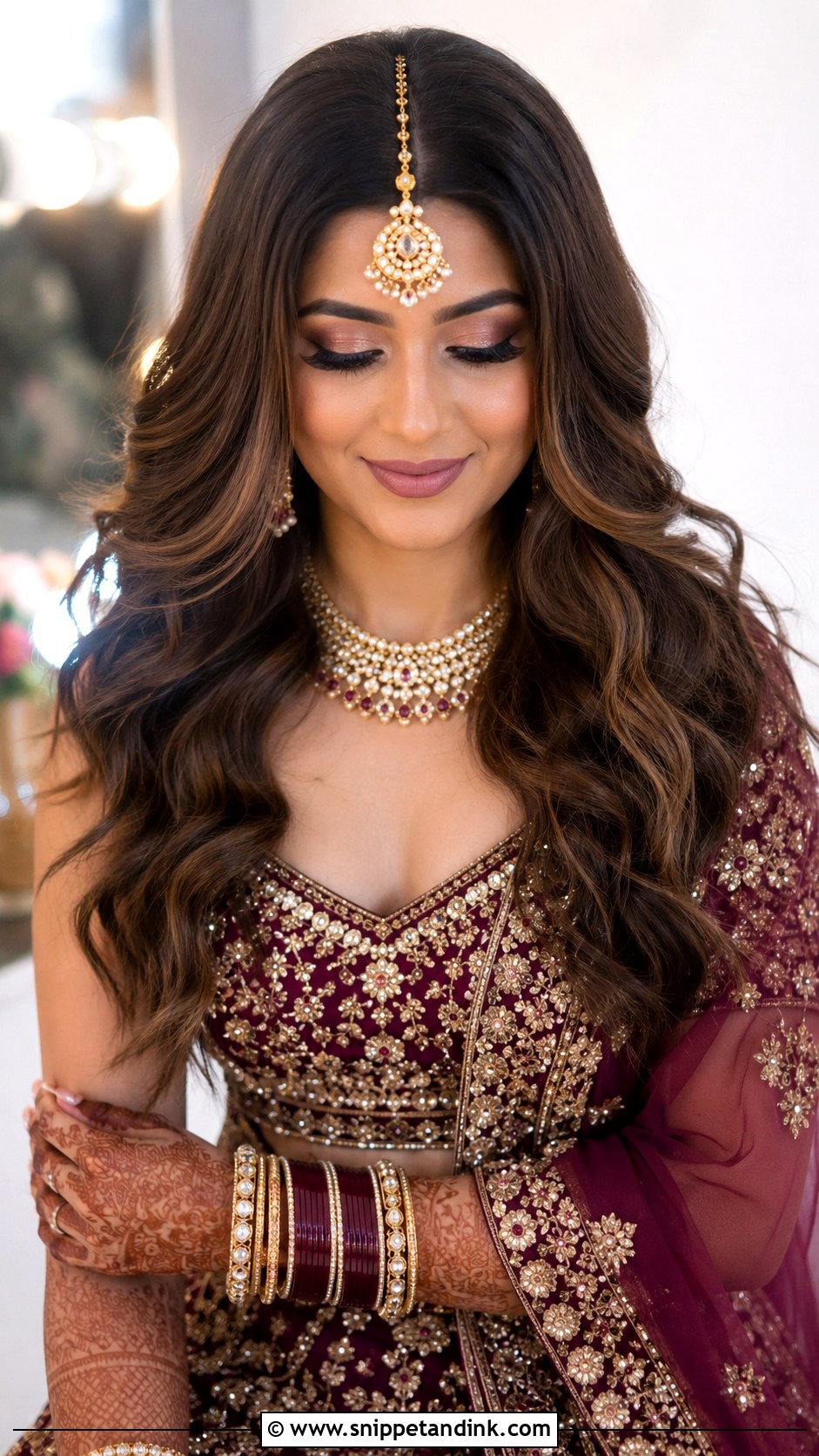
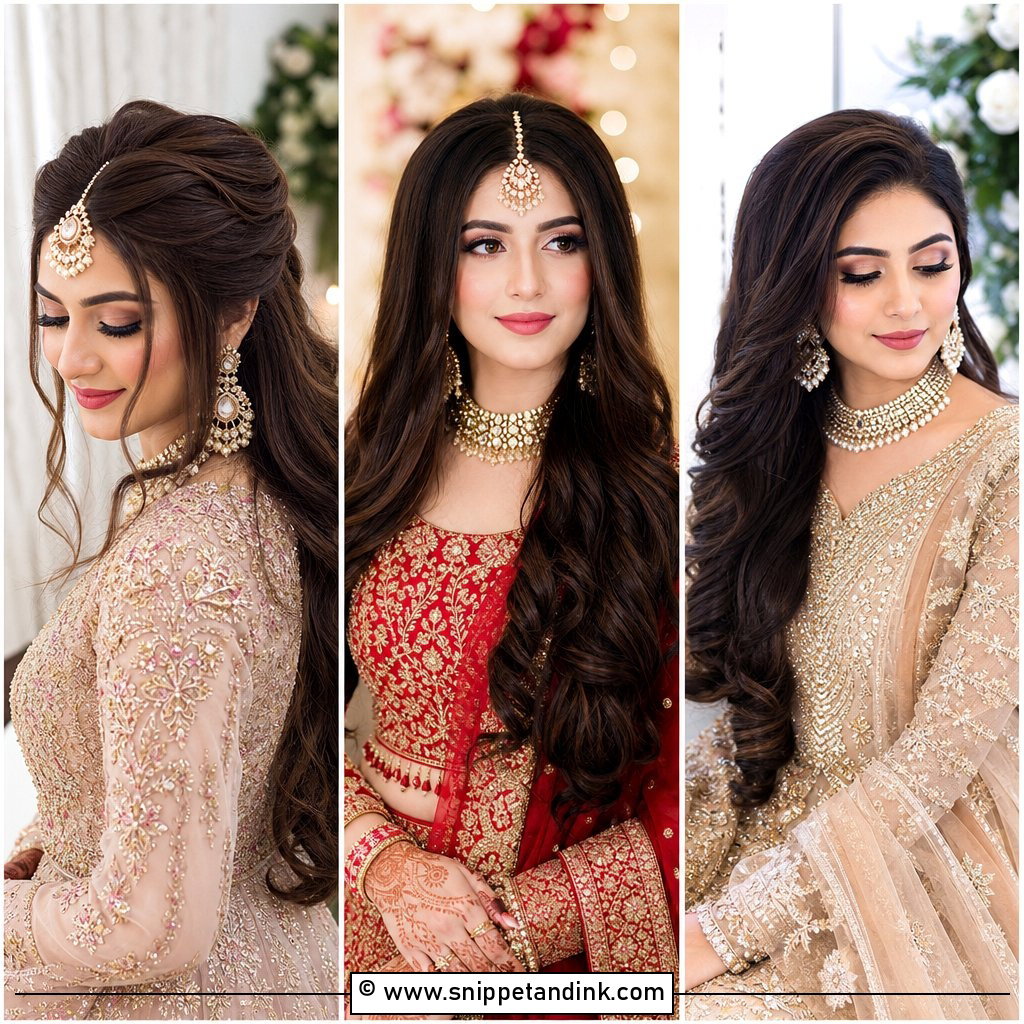
A maang tikka on loose hair is the most traditional way to wear it open. I style waves or soft curls, then fix the tikka along the center parting with a hook pin and a second hidden pin about two inches behind it, because a heavy tikka on open hair has nothing to hold it and will slide. It frames the forehead and links the hair to the jewelry set. Choose a tikka from the same set as your necklace and earrings so the metals match. This works for engagement ceremonies and the wedding itself.
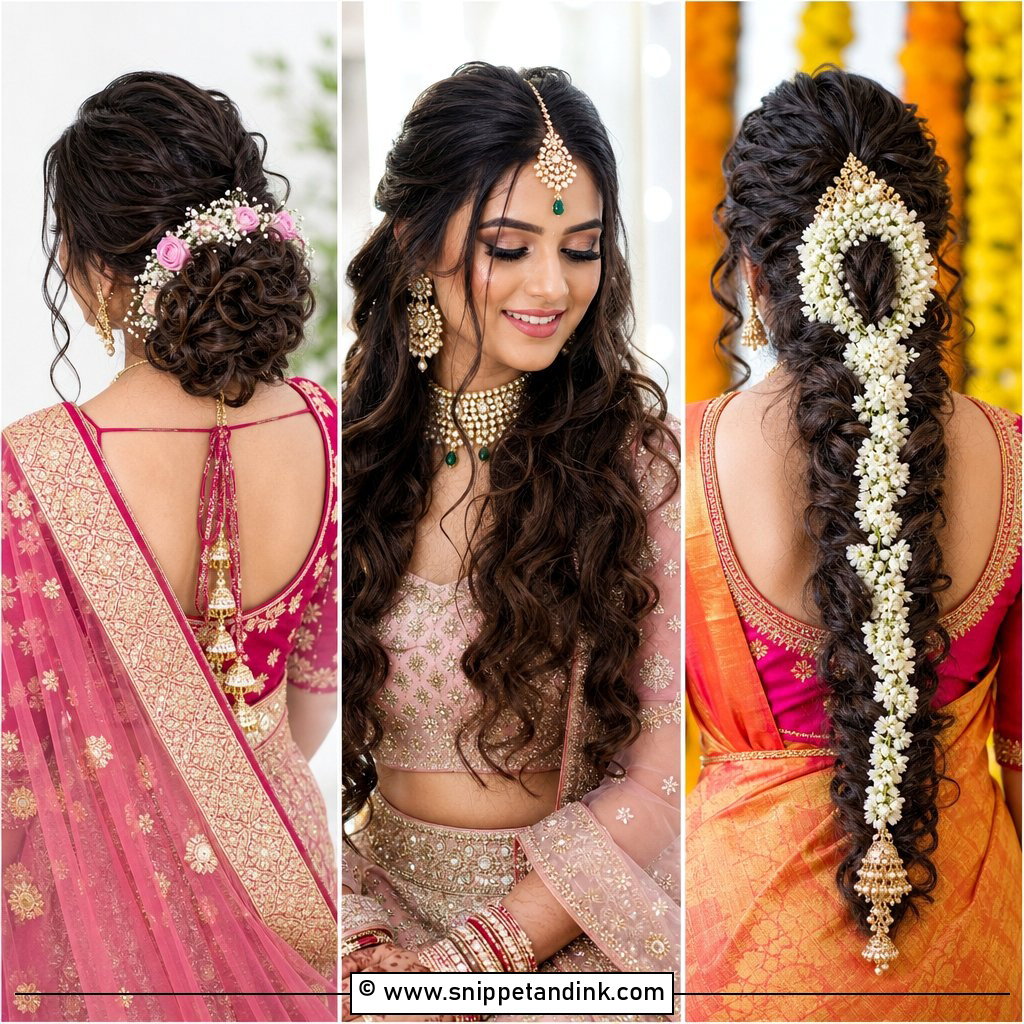
8. Wavy Curls With Mogra Strings
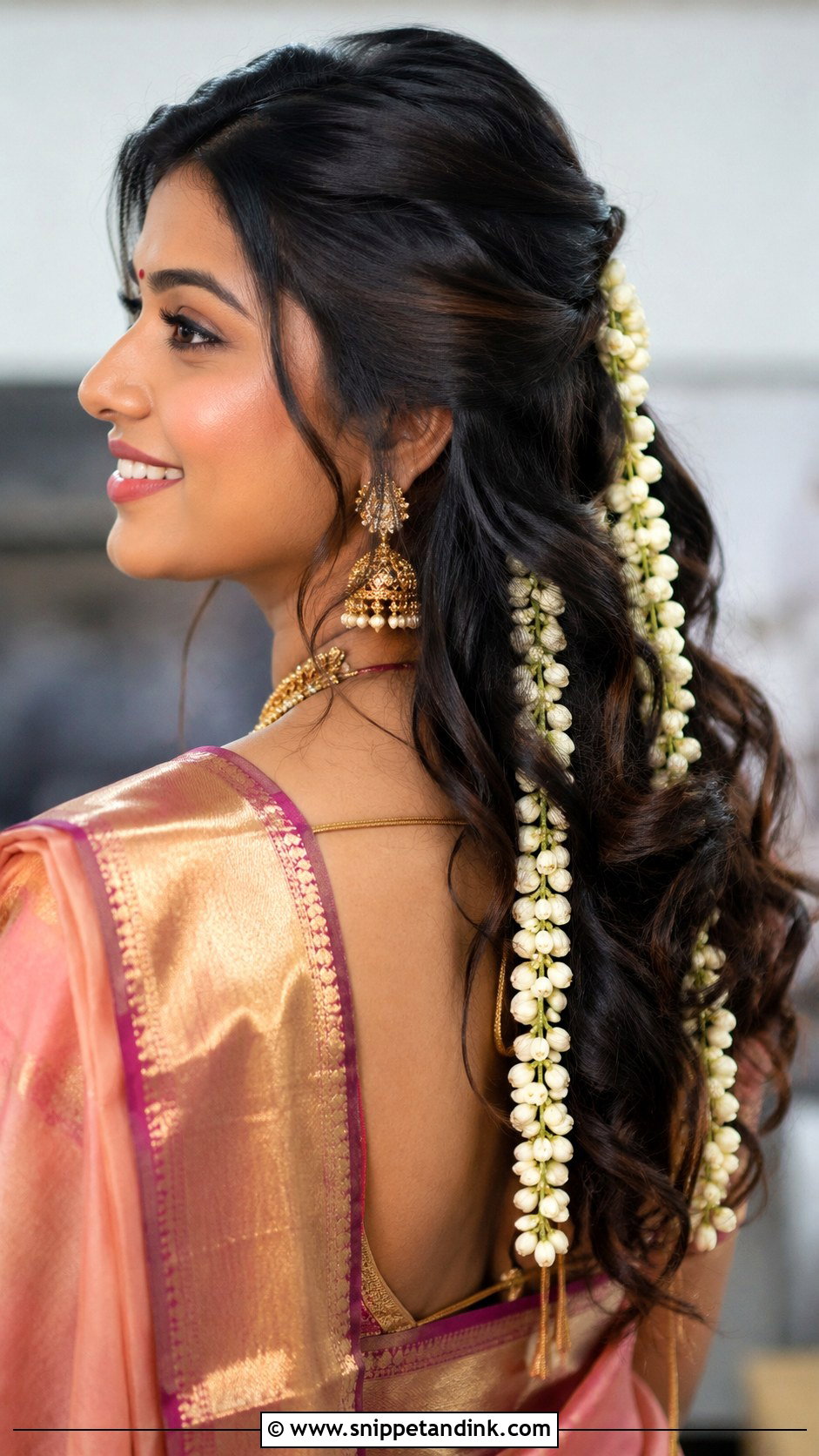
Mogra strings draped along wavy lengths carry a real regional tradition, and the scent fills the room. I leave the top natural, set the waves, then pin the strings from behind the ear and let them fall down the back. On dark hair the white flowers stand out well in photos. Mogra browns as the evening goes on, so I time the pinning as late as I can before the ceremony. It sits naturally with sarees and silk lehengas and suits the wedding ceremony or a close family function.
9. Braided Crown With Open Curls
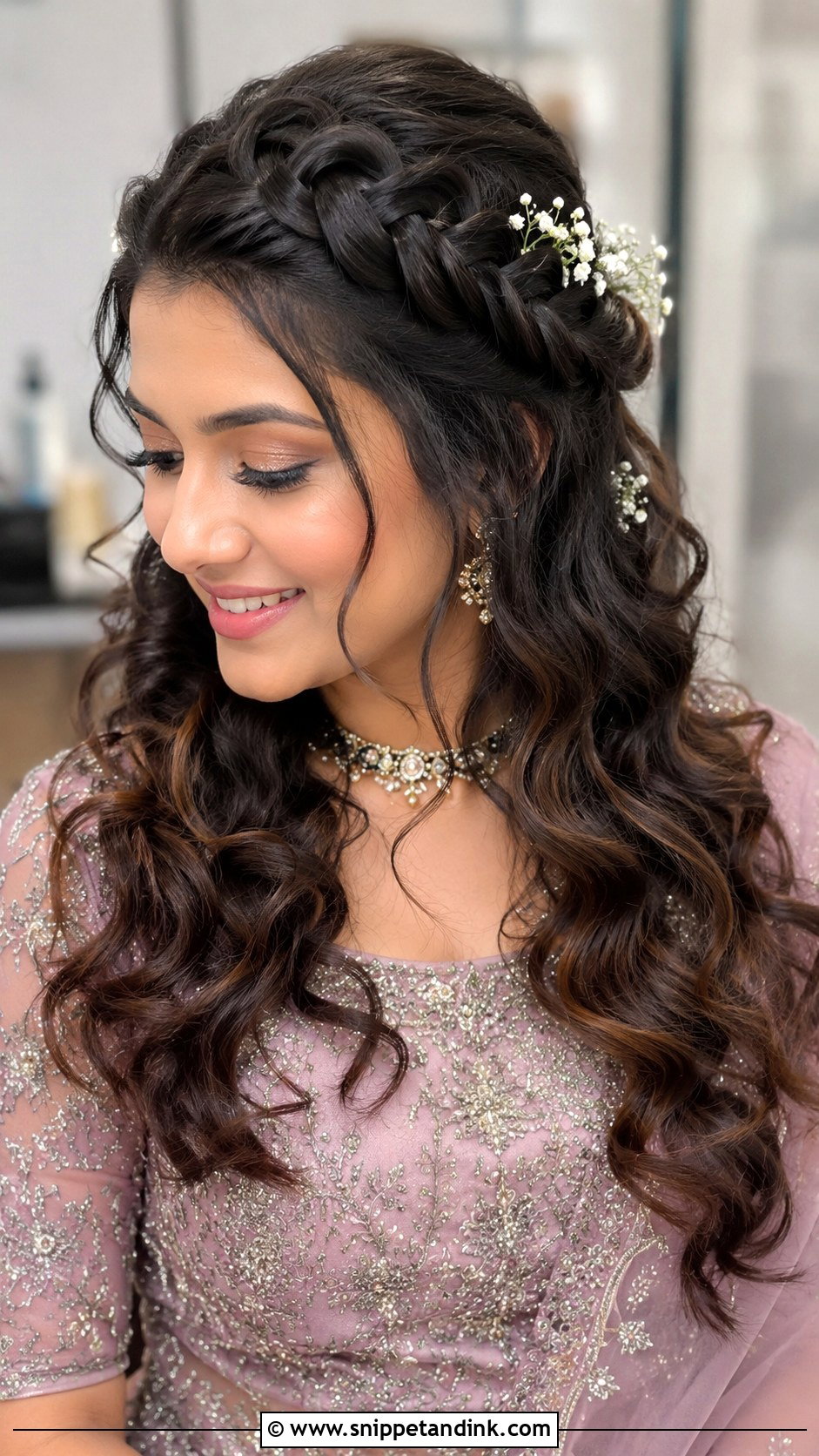
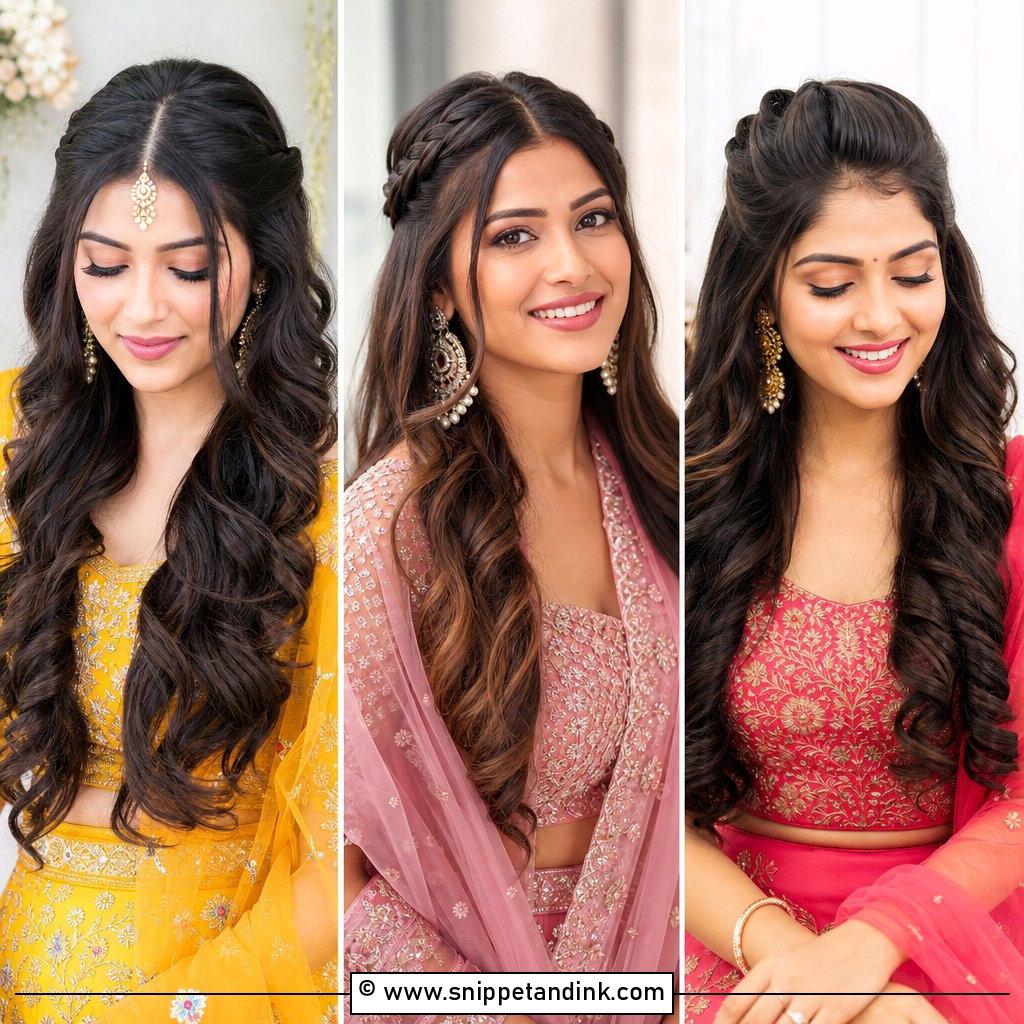
A braided crown with loose curls underneath combines structure with movement. I braid the top section across the head, tuck the ends under the opposite side, and leave the rest falling in curls. It keeps hair off the forehead and gives detail you can see from the side. A few small flowers tucked into the braid suit the sangeet, shagan or mehndi. Layered hair with short pieces around the face can poke out of the crown braid; I pin those in with a little texture paste rather than fighting them.
10. Open Hair With Balayage Curls
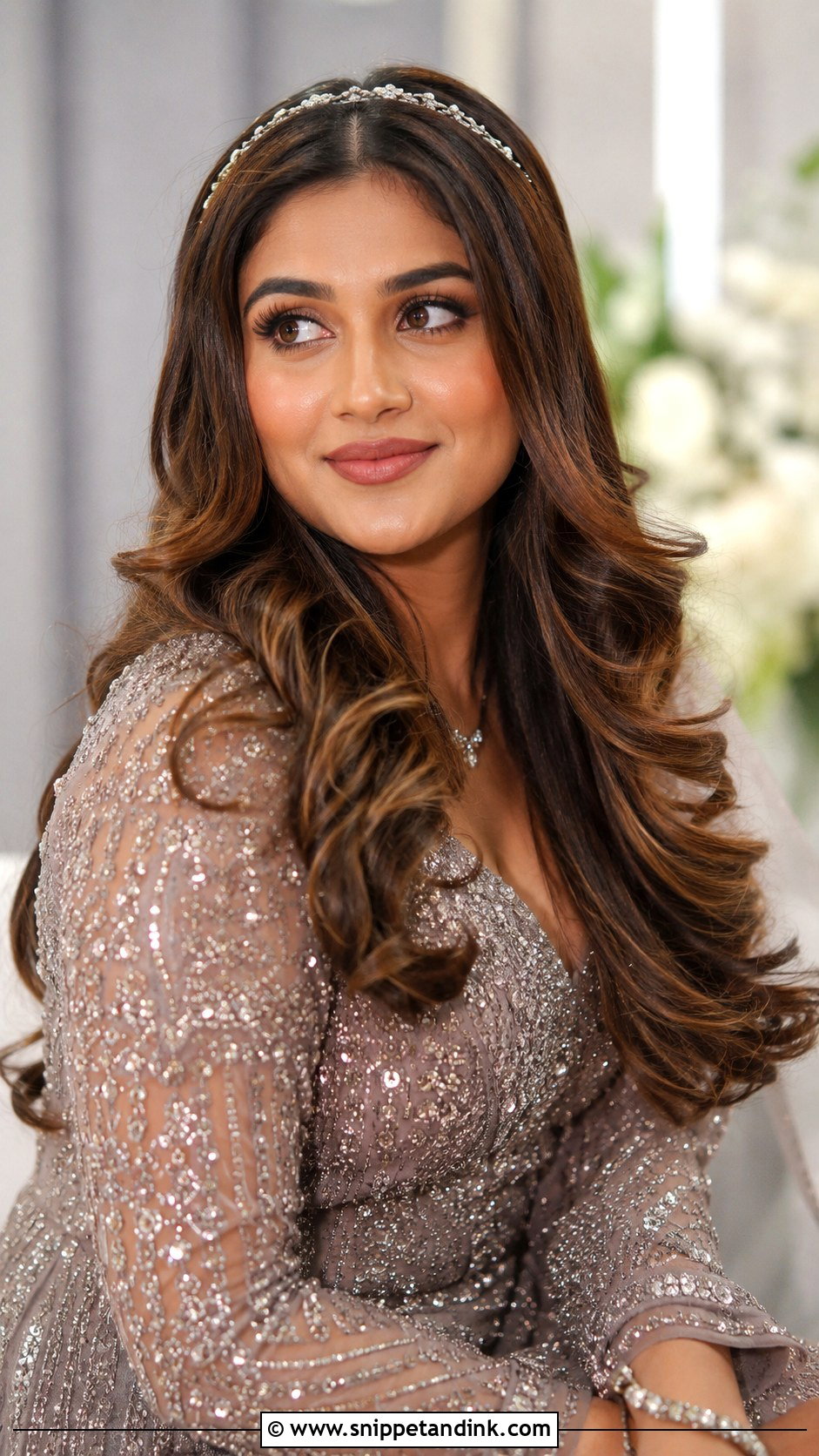
Balayage gives open curls real depth, because the lighter painted pieces catch the light and make each curl easier to see. I curl outward for bounce so the color gradient shows, and a sheeshpatti across the crown suits this editorial look. It’s my choice for reception events and pre-wedding shoots. If you’re getting balayage for the wedding, have it done three to four weeks before, not the week of; freshly lightened ends can feel dry and won’t hold a curl as well until they’ve had a couple of conditioning washes.
11. Messy Curls With Floral Headband
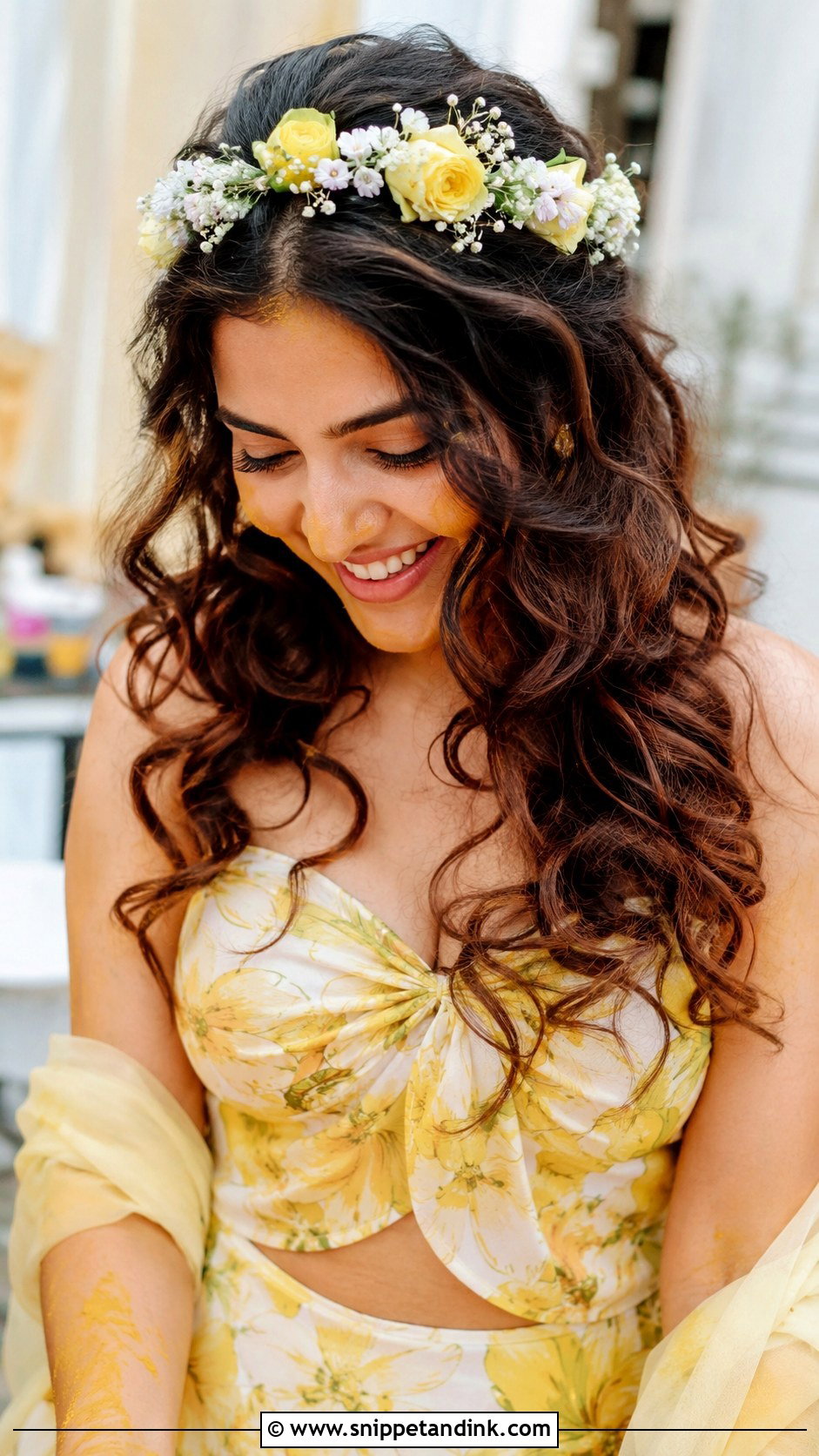
Messy curls with a floral headband suit a poolside party or a haldi morning. I curl loosely, break the curls up with my fingers and a dry texture spray, then slide the headband in to hold the top in place. It’s playful, youthful and sits well with resort wear and light, flowy outfits. The upside is that this look forgives everything: if curls drop or wind messes it up, it still looks deliberate. It’s less suited to a formal ceremony with heavy jewelry, where the undone texture can look accidental.
12. Open Hair With Side Braid
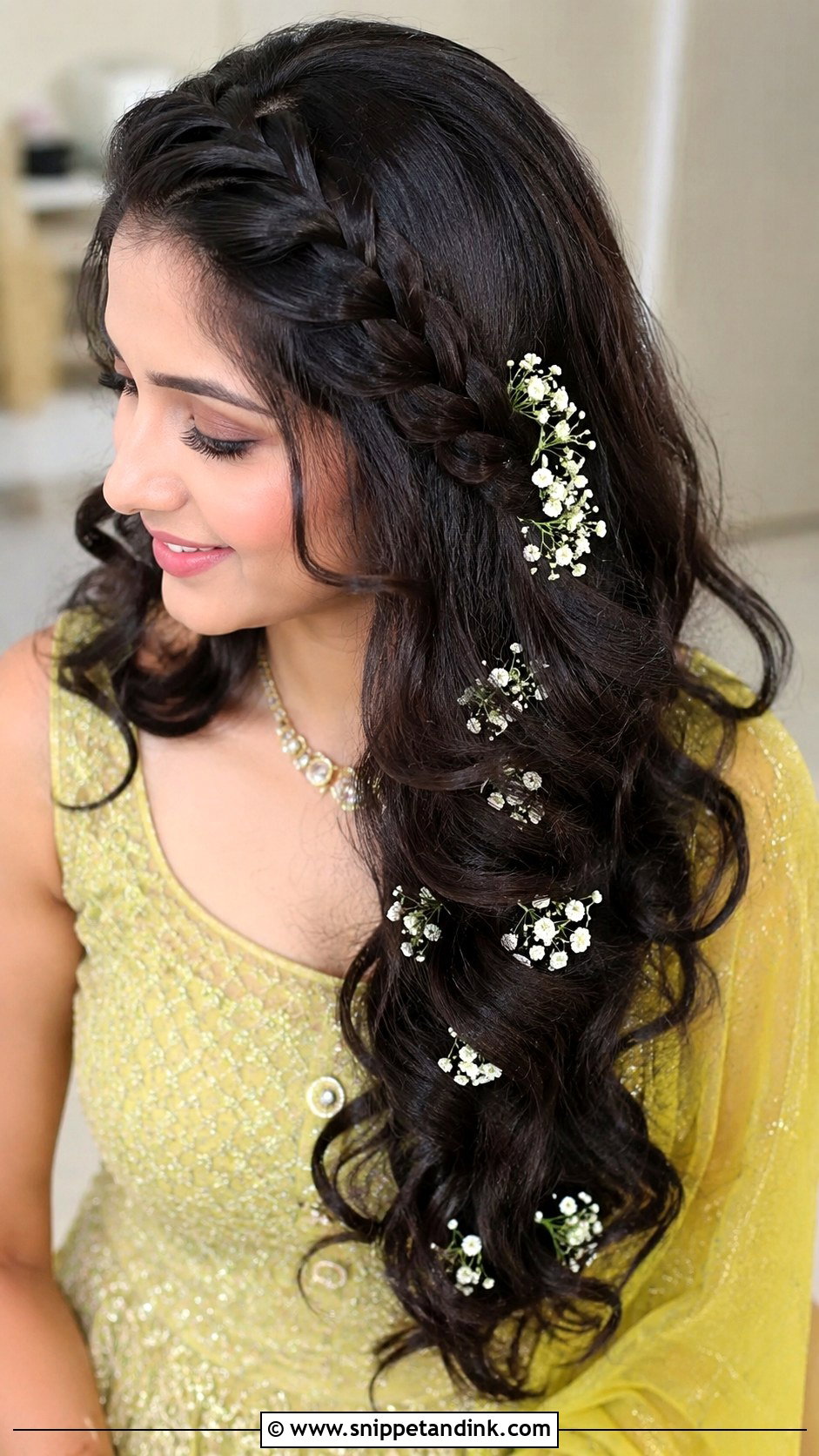
A side braid melting into open curls adds a little structure without losing the loose feel. I take a section from one side, braid it loosely, pancake it slightly, and pin the end under the curls so it blends in. It frames the face, and tiny pearls or flowers tucked into the plaits make it bridal. I use this for mehndi and sangeet looks because the braid holds that side back while you’re having henna applied or dancing. It’s a good choice for multiple events: the braid can stay in and only the accessories need to change.
13. Voluminous Curls With Gajra
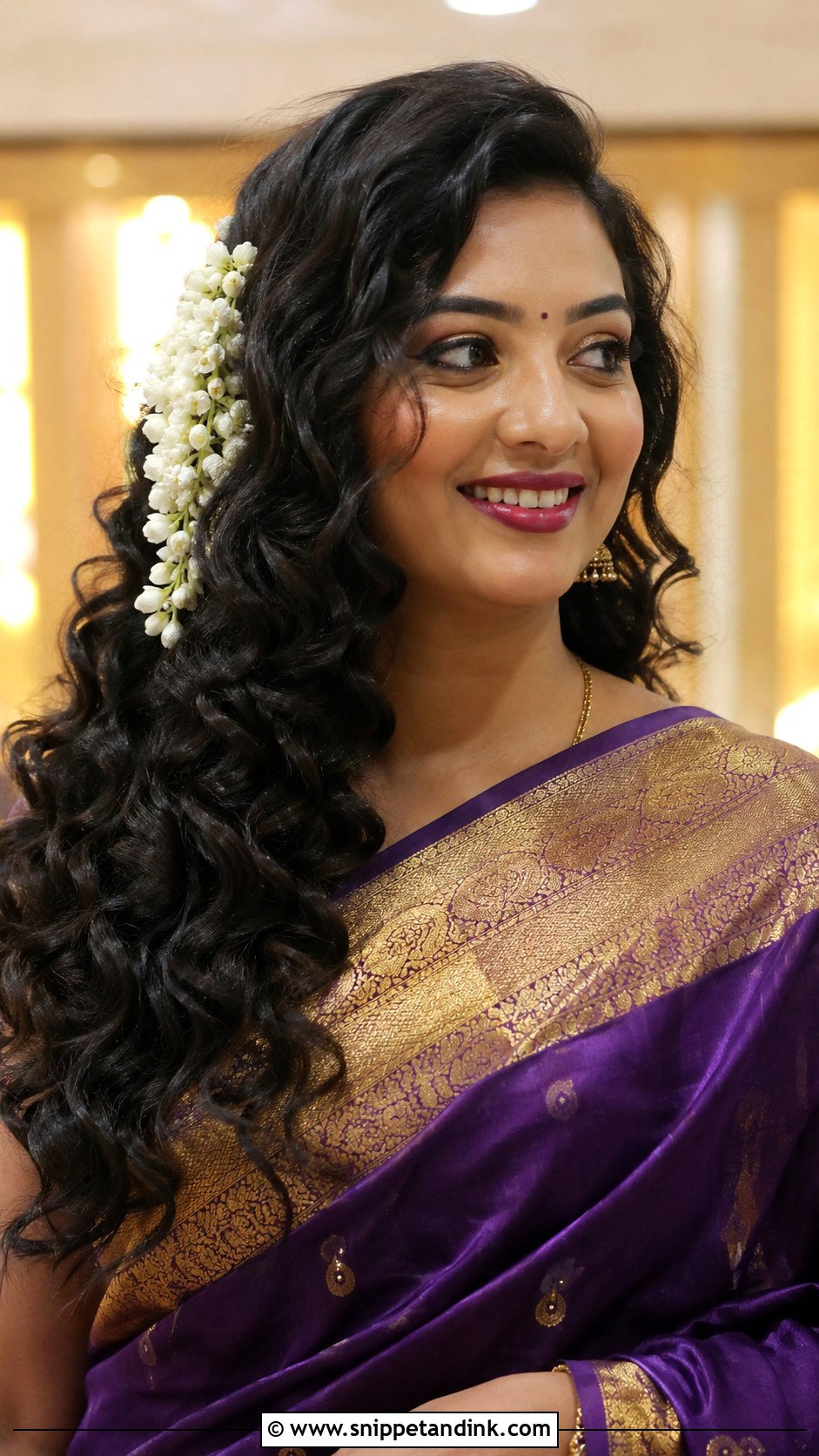
Big curls with a gajra are the fuller, more dramatic version of traditional open hair. I curl generously, back-comb lightly at the root for lift, then drape the gajra along one side or across the back. It matches rich silk sarees and heavy lehengas for the ceremony or a grand reception. A long gajra is heavier than it looks; pinned only at the top, it drags curls straight. I fix it at three points along its length so the weight spreads out, and that keeps the volume up for hours.
14. Open Hair With Pearl Accents
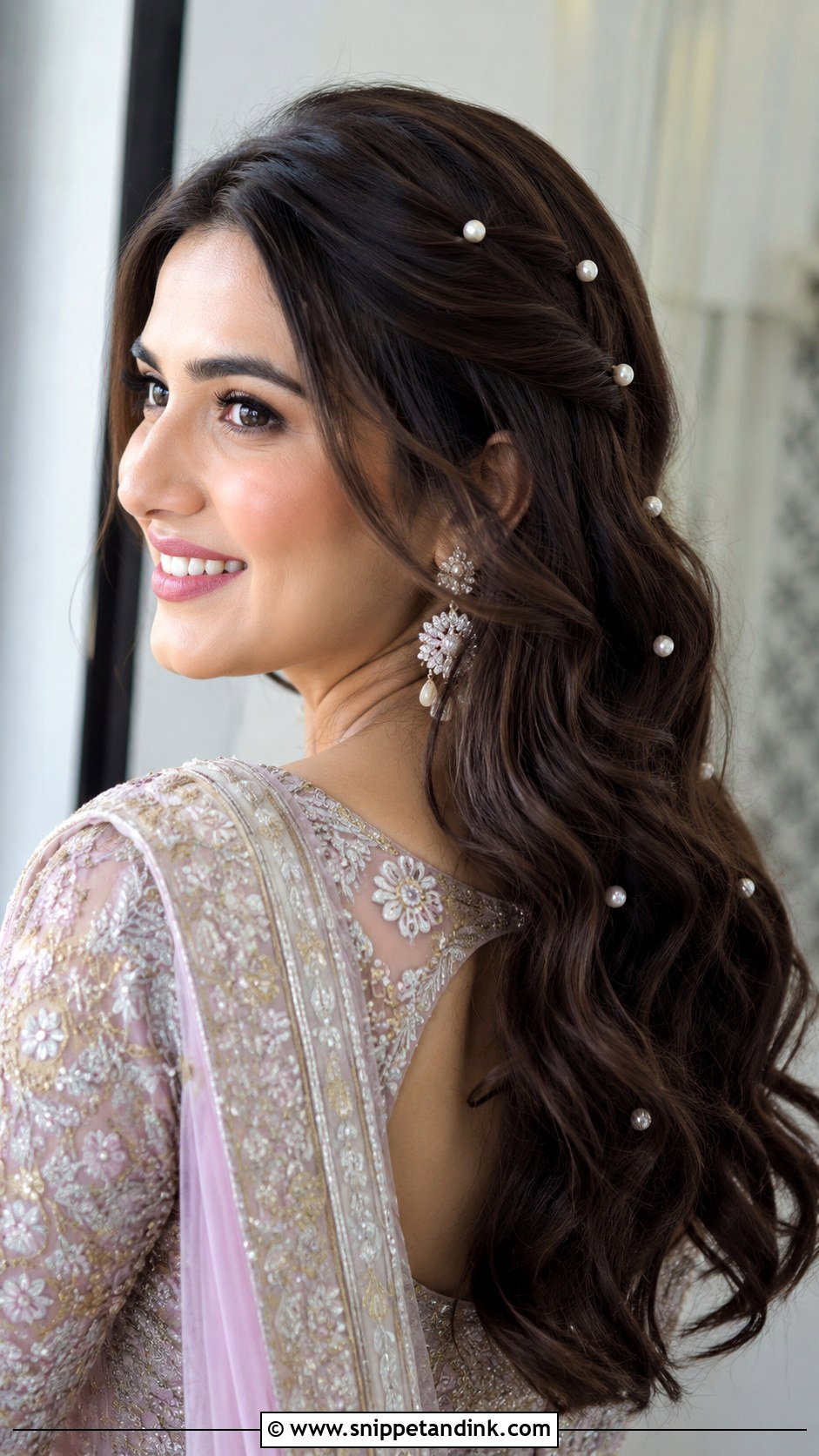
Pearl pins give loose hair a quiet shimmer. I set soft waves or curls, then place pearl-tipped pins at different depths through the lengths, angled so they hook into the hair instead of resting on top. Scattered at random, they look natural; in rows, they look like a pattern. Pearls go with pastels and jewel tones alike, and the look is easy to adjust with a few pins or many. It suits engagement and reception events. On very slippery straight hair, pins can work loose, so I add a little texture spray where each one goes.
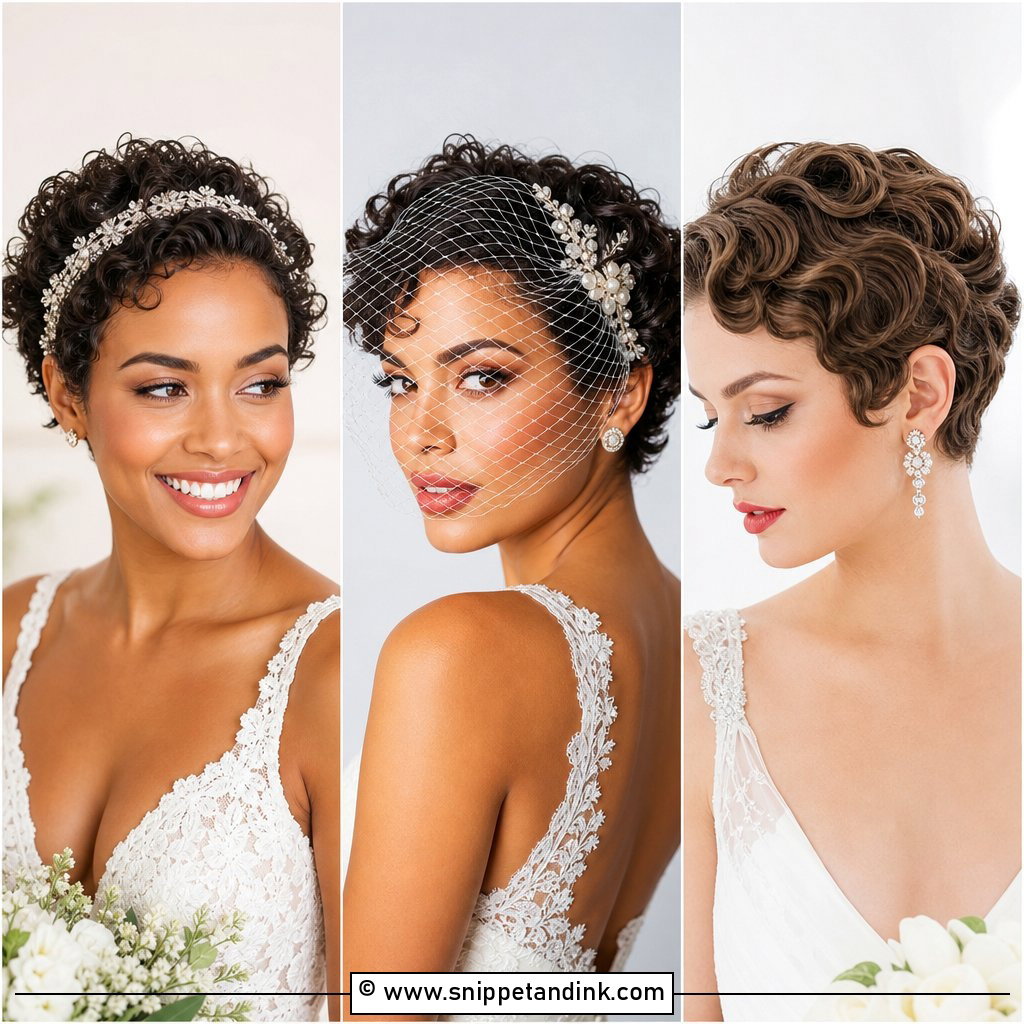
15. Curtain Bangs With Open Curls
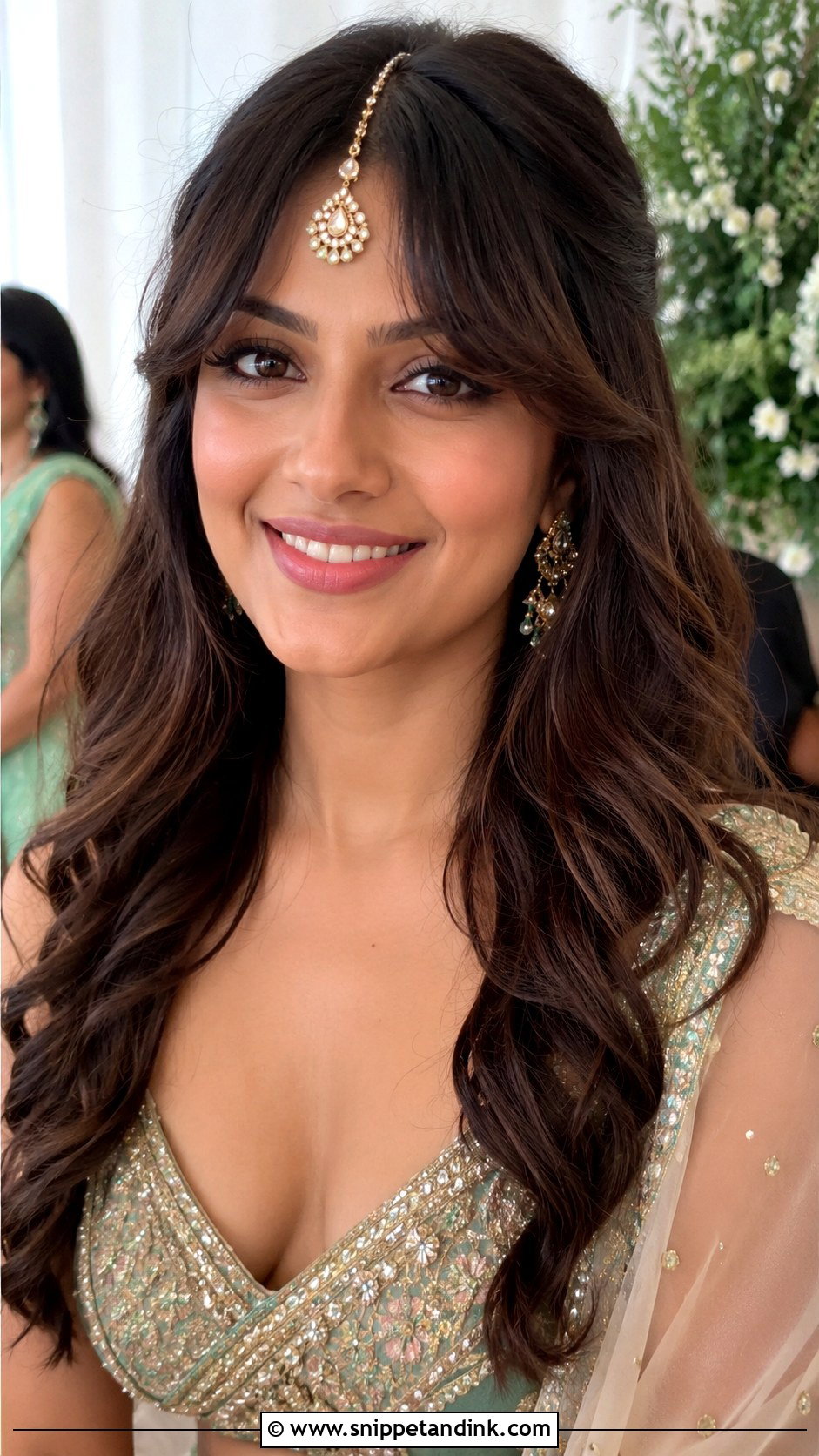
Curtain bangs with open curls are a modern take that frames the face and opens up the eyes. I curl the rest of the hair into loose waves and blow-dry the bangs away from the center with a round brush. A maang tikka or a few small flowers make it bridal. It works for the sangeet, engagement or reception. Don’t cut curtain bangs for the first time right before the wedding: they need two or three weeks to settle, and new bangs are always a little too short at first. Have the trim done about two weeks ahead.
16. Open Hair With Sheeshpatti
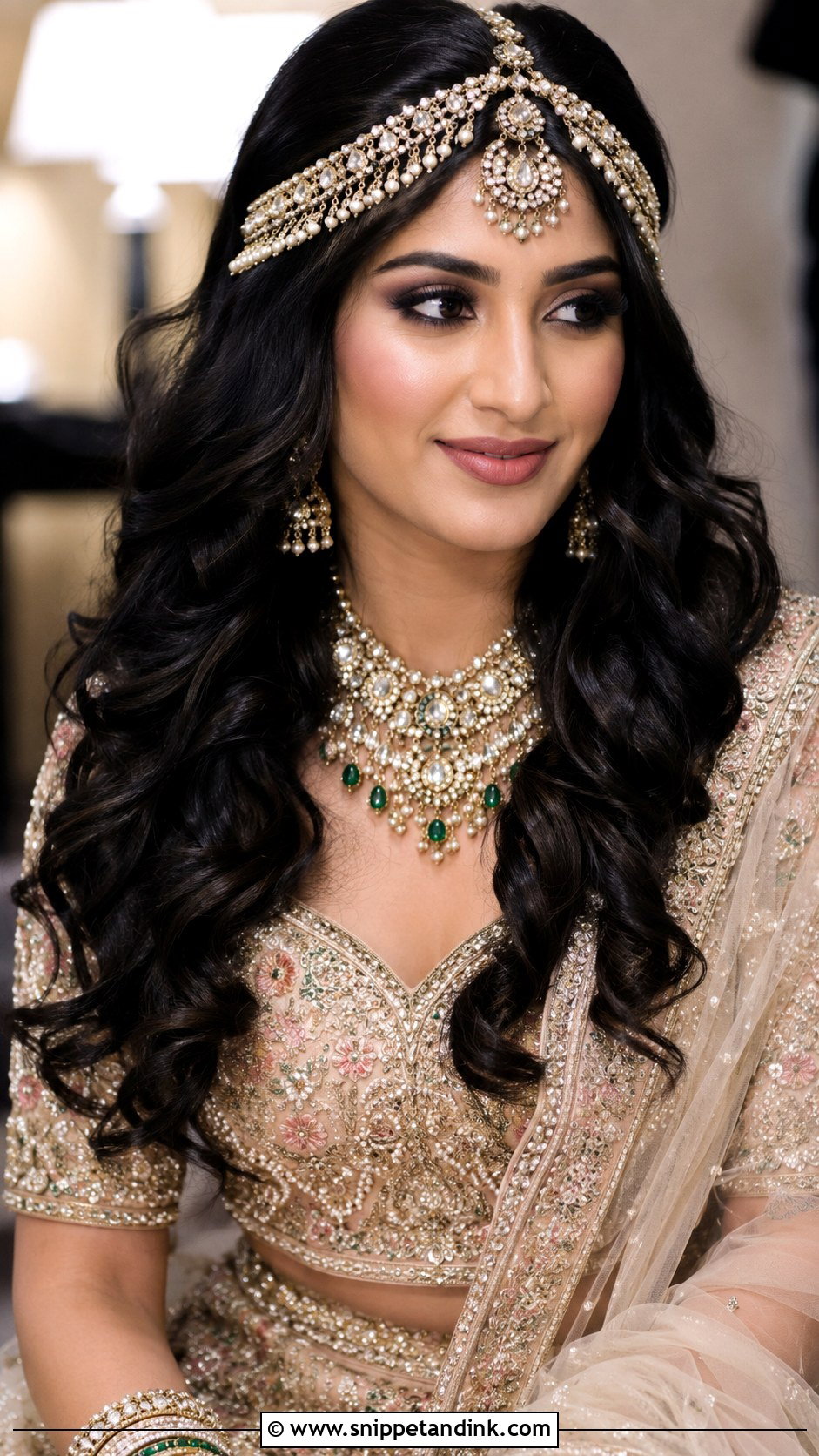
A sheeshpatti across the crown and forehead becomes the centerpiece of the look. I curl everything outward, then position the piece and pin it at both temples and behind the crown. Curls on both sides add width, which balances a longer face nicely. It goes with heavily embroidered lehengas and rich jewelry. Sheeshpattis can be heavy, and on open hair there’s no bun to anchor them, so I hide a small teased section at the crown and pin the chain into that. It stays put through the ceremony that way.
17. Beachy Waves With Flowers
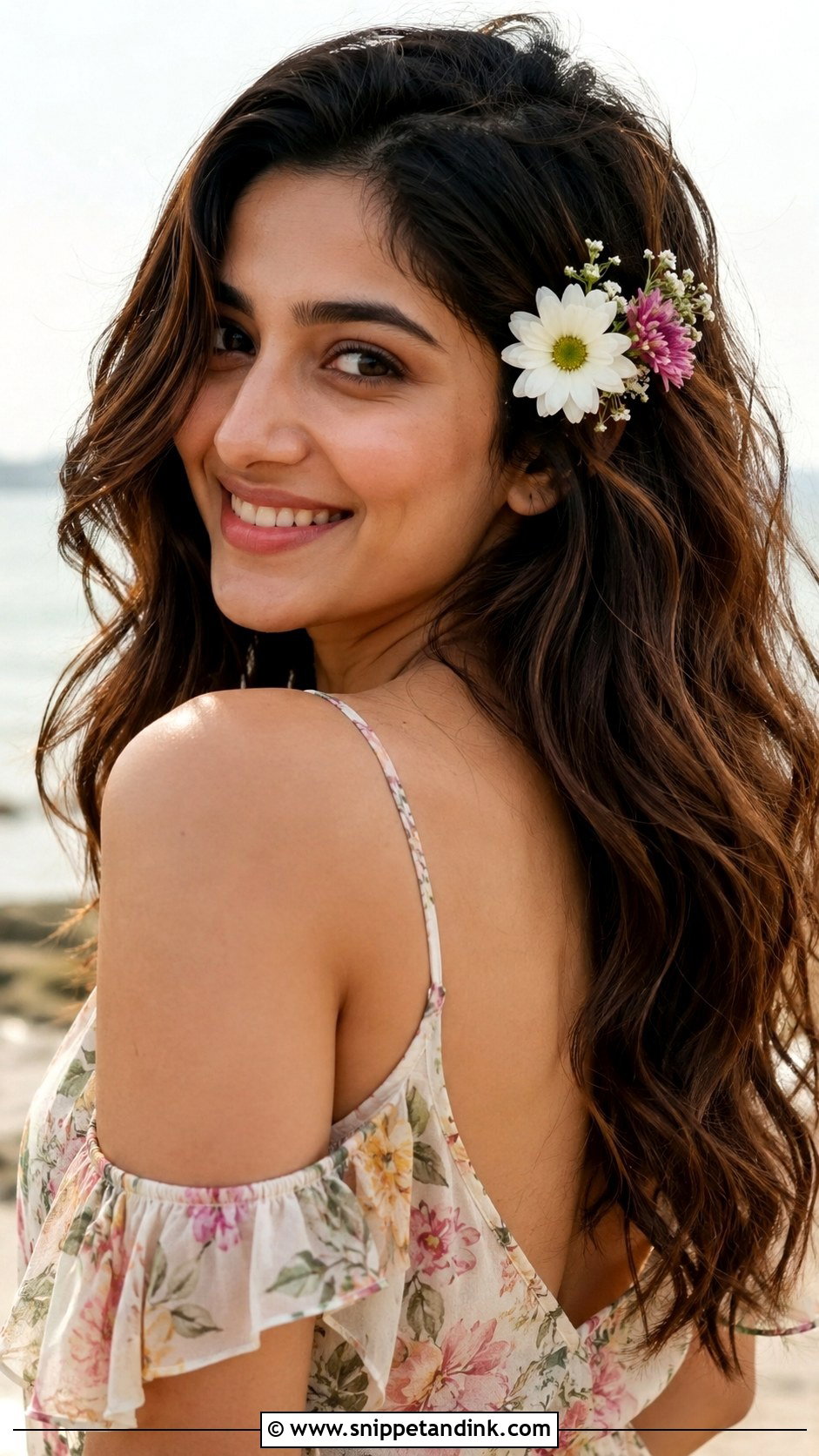
Beachy waves have a relaxed, sun-touched texture that suits daytime and outdoor functions. I use a large barrel or flat iron for loose bends, then brush them out and tuck a few fresh flowers on one side. The waves move without looking set, and they pair well with flowing pastels or resort wear. I reach for it most at haldi and mehndi, where comfort counts. Very thick hair can puff out with this texture in humidity, so I’d leave a few sections smooth near the face to keep the outline neat.
18. Open Hair With Center Parting
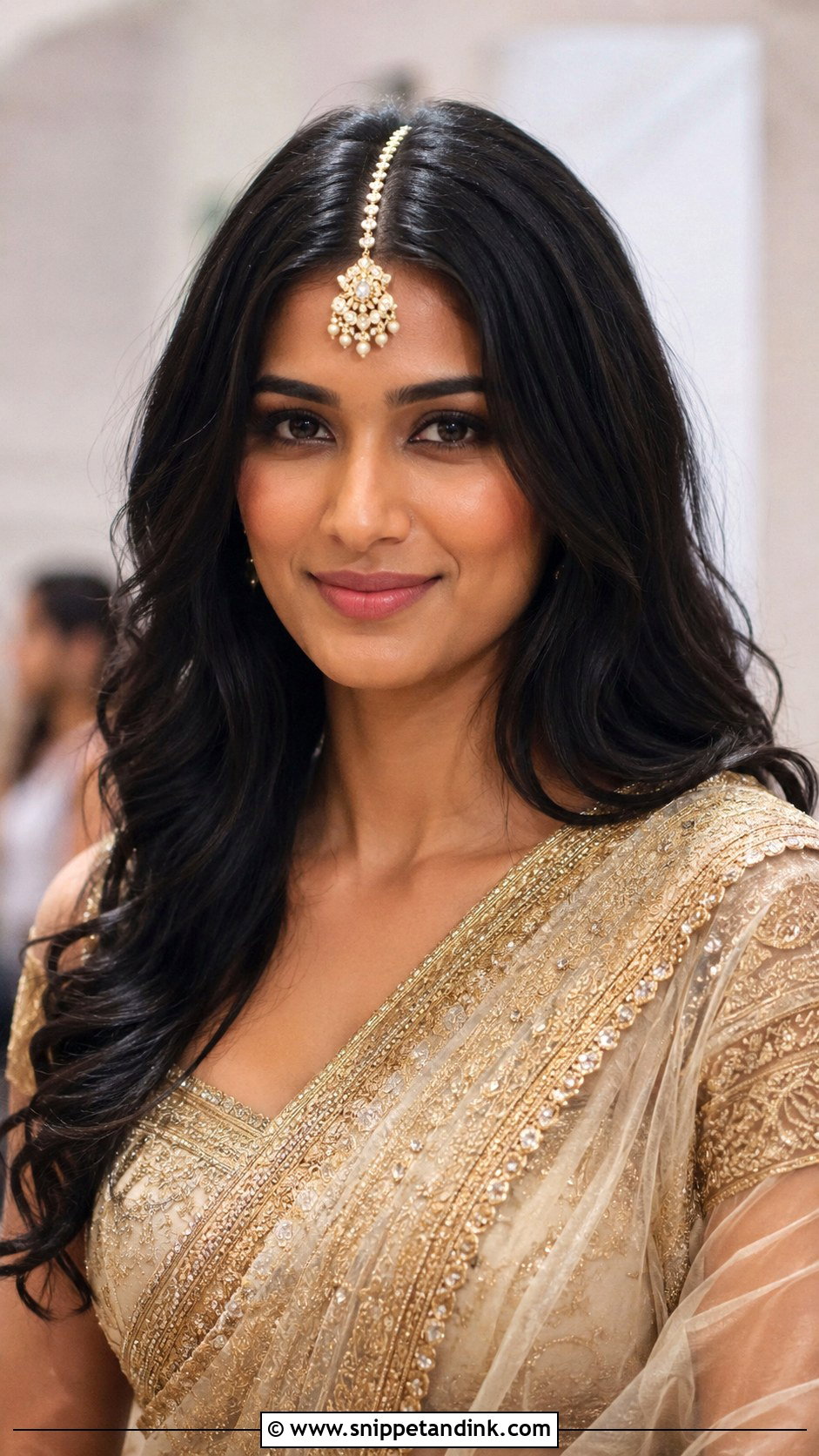
A center part gives open hair a symmetrical, calm frame and leaves room for a maang tikka exactly on the line. I style soft waves or sleek curls and keep both sides at the same volume, which is harder than it sounds because most people have a natural part that pushes one side up. It suits sarees and lehengas and works for engagement or wedding ceremonies. If your face is asymmetrical or your hairline has a strong cowlick, a slightly off-center part looks kinder in photos than a strict middle one.
19. Open Hair With Twisted Sides
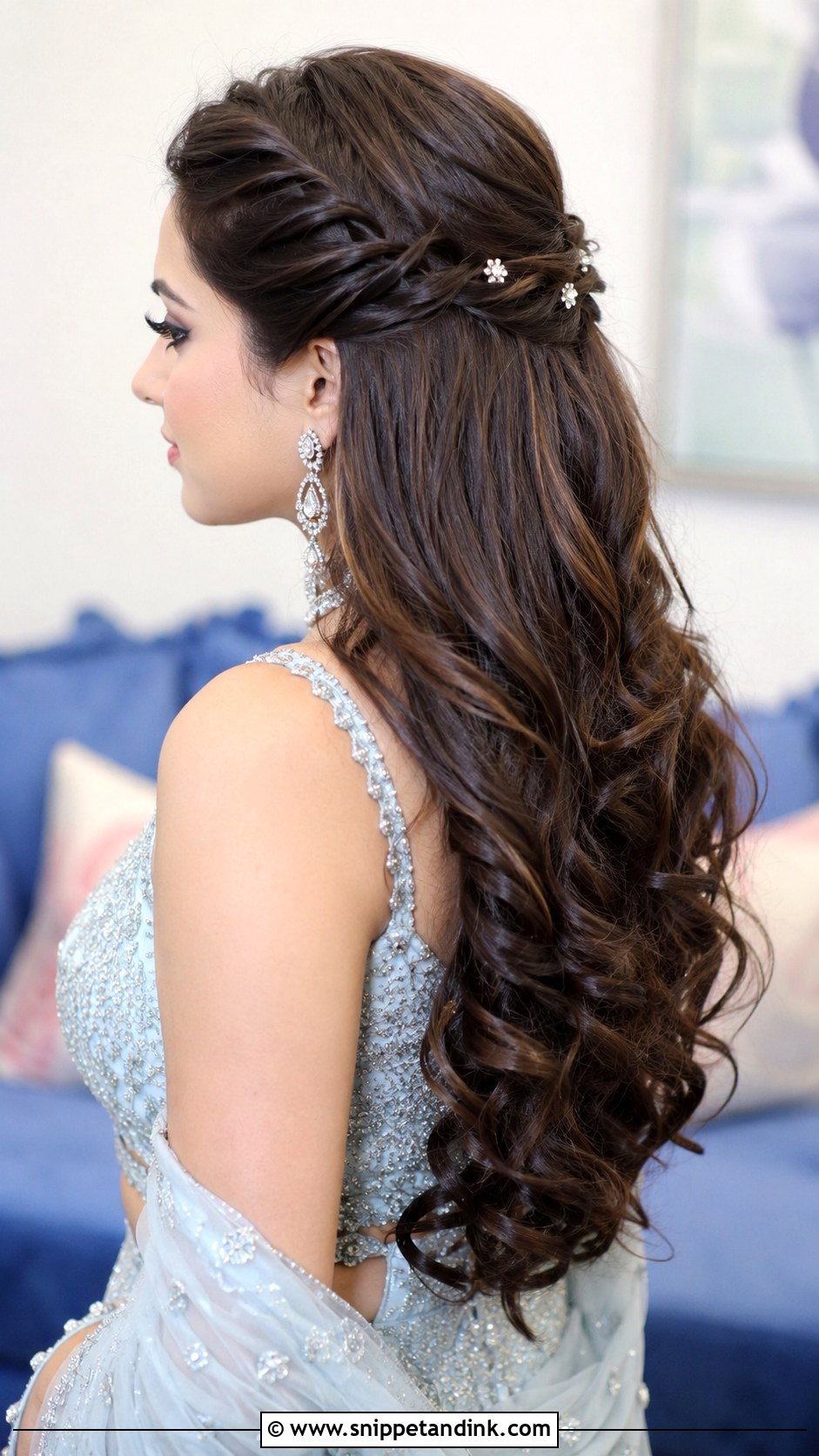
Twisted sides keep hair off the face while the back stays loose. I take a small section from each side, twist it back toward the crown, and cross-pin the twists together where they meet. Tiny flowers or jeweled pins over that join make it bridal. Leave the rest flowing in curls or waves. I like it for sangeet and mehndi functions because it holds up under a lot of movement. It looks good from the side and back, which matters when photographers shoot you during the pheras or seated rituals.
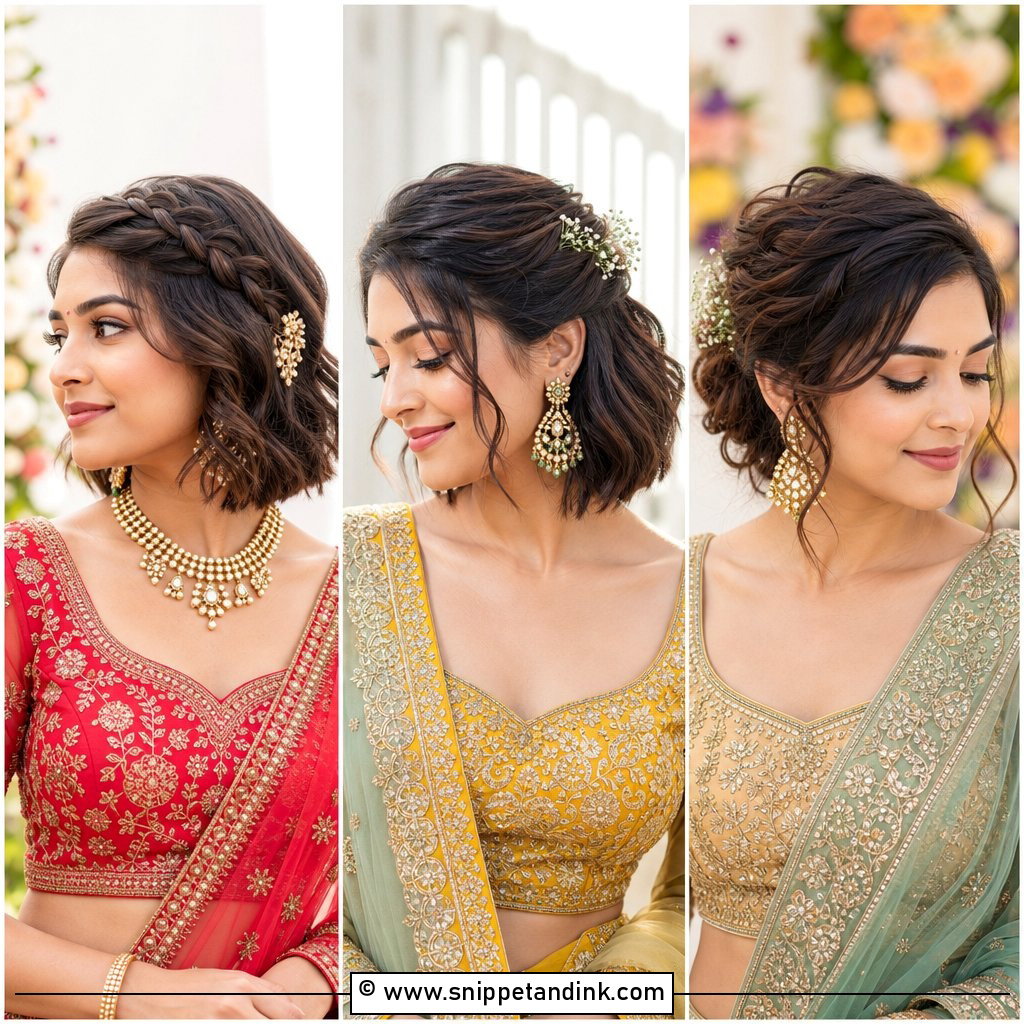
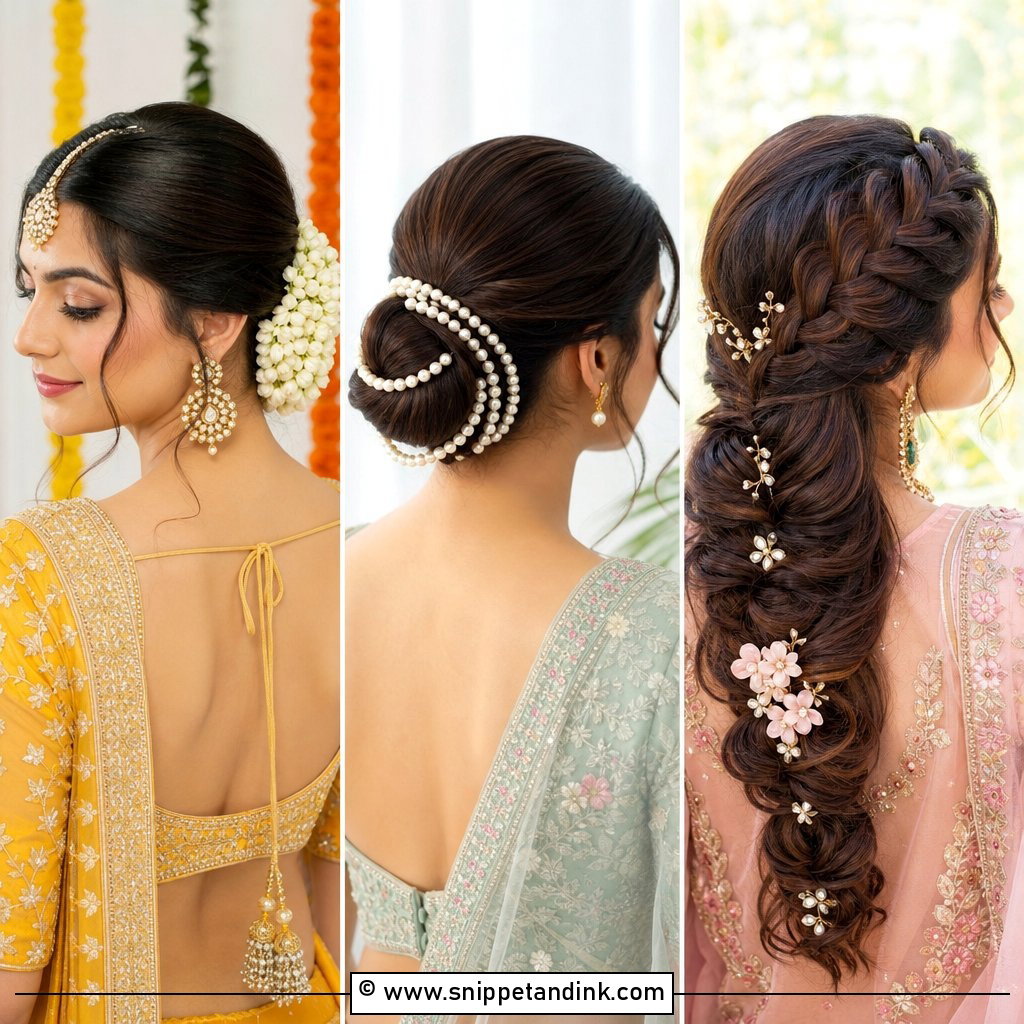

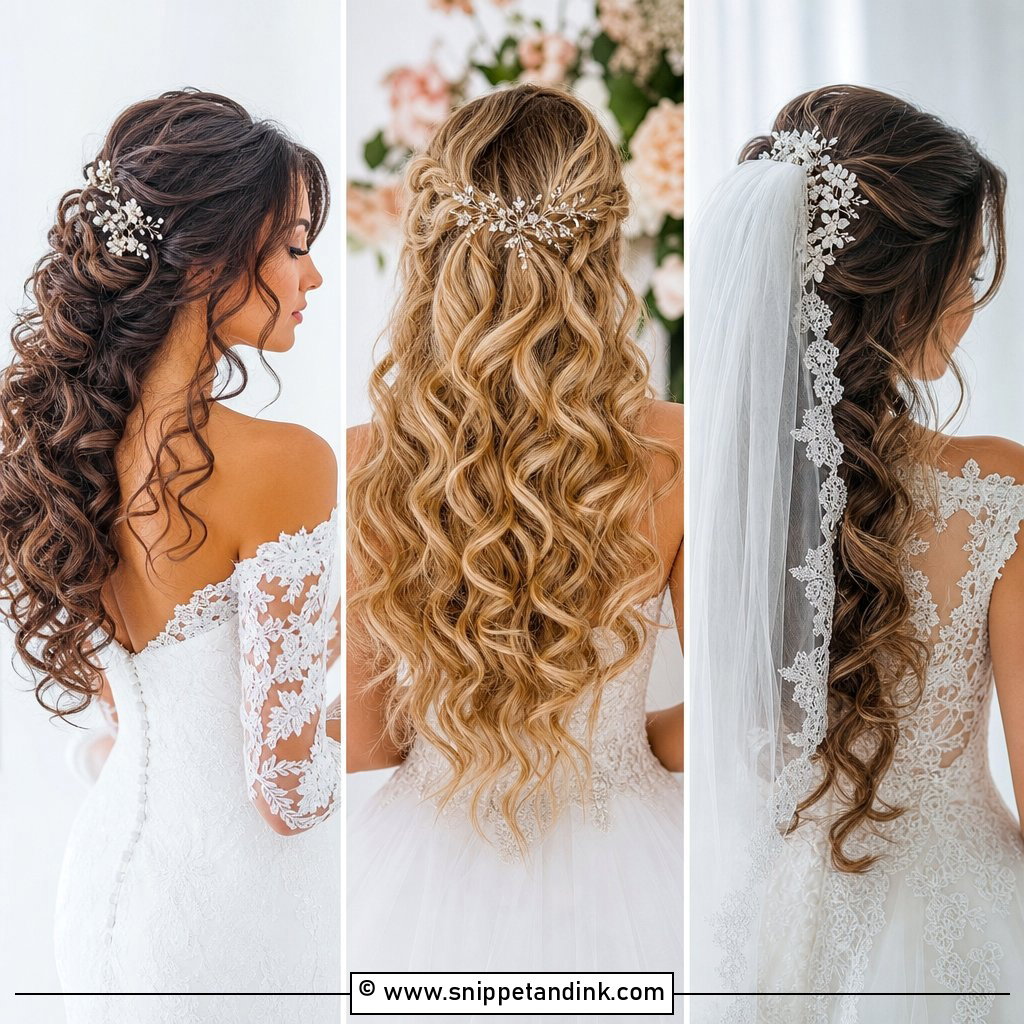
20. Long Layered Open Hair
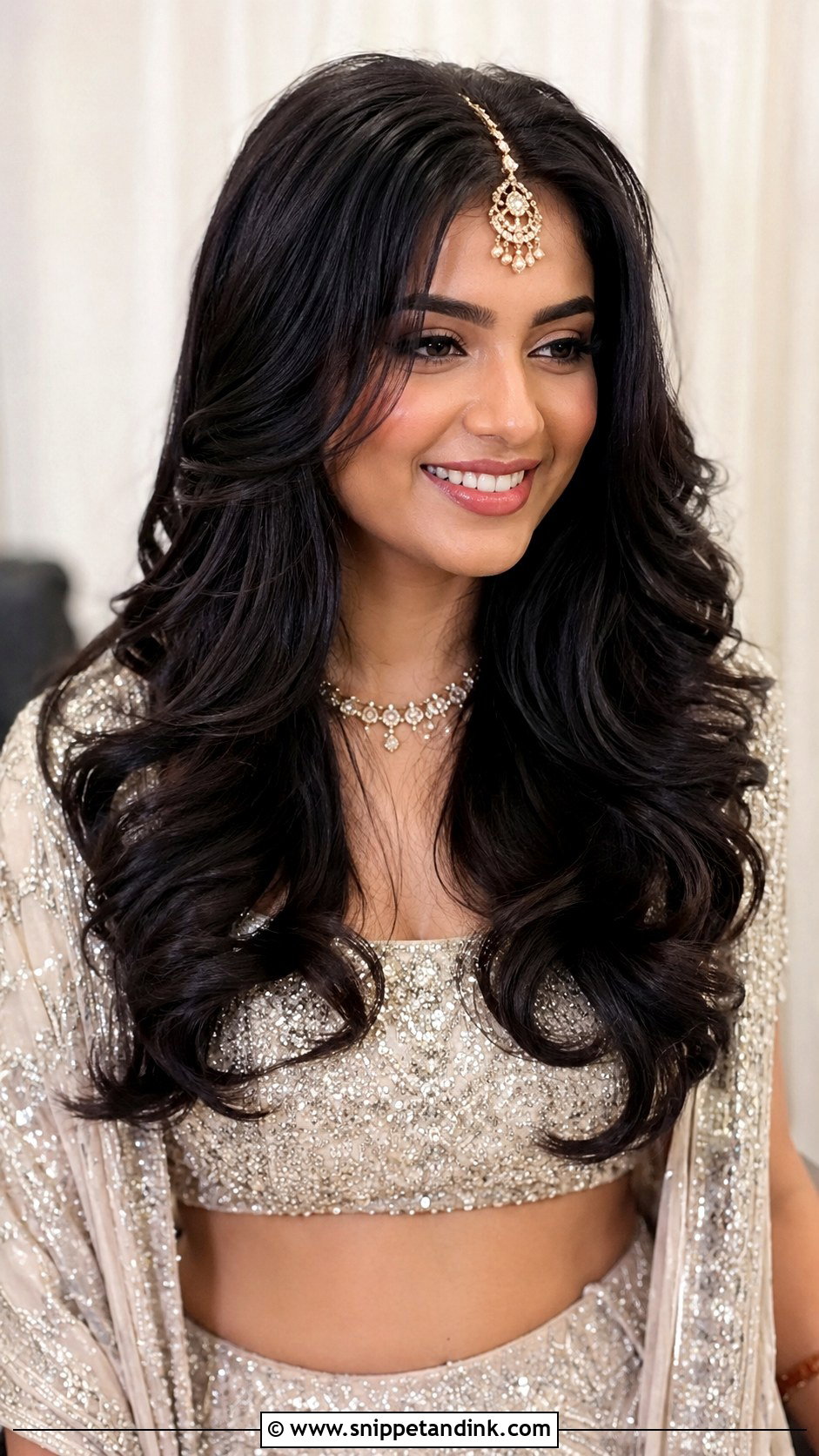
Layers give long hair movement, because the shorter lengths sit on top of the longer ones and the curls stack instead of lying flat. I curl in sections, following each layer’s length, so the cascade shows. A maang tikka, flowers or pearls finish it. This suits brides with long hair who want maximum bounce, and it works well for receptions and engagements. Ask your stylist for long layers at least four weeks before the wedding; short layers around the face can stick out of a dupatta and look messy in photos.
21. Open Hair With Rose Accents
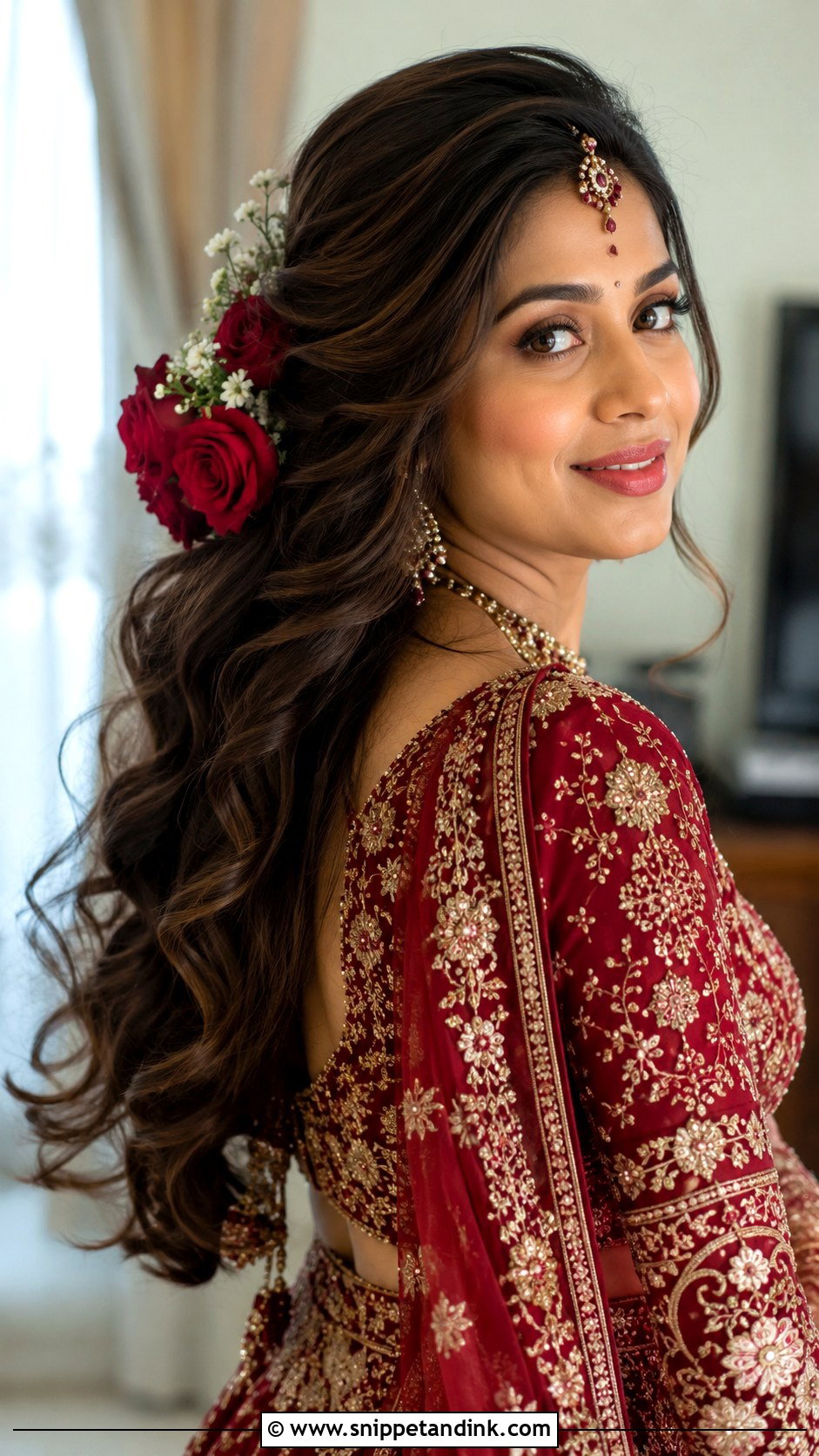
Roses tucked into loose curls add color and a lush, romantic finish. I set the curls, then pin a few fresh roses on one side or at the back, wiring the stems short so the heads sit close to the hair. They work with rich lehengas and elegant sarees for the ceremony or the reception. Open roses are heavier than buds and can tilt forward over time, so I choose half-open blooms and pin each one twice. Ask your florist to keep them in water until the last moment.
22. Open Hair With Front Puff
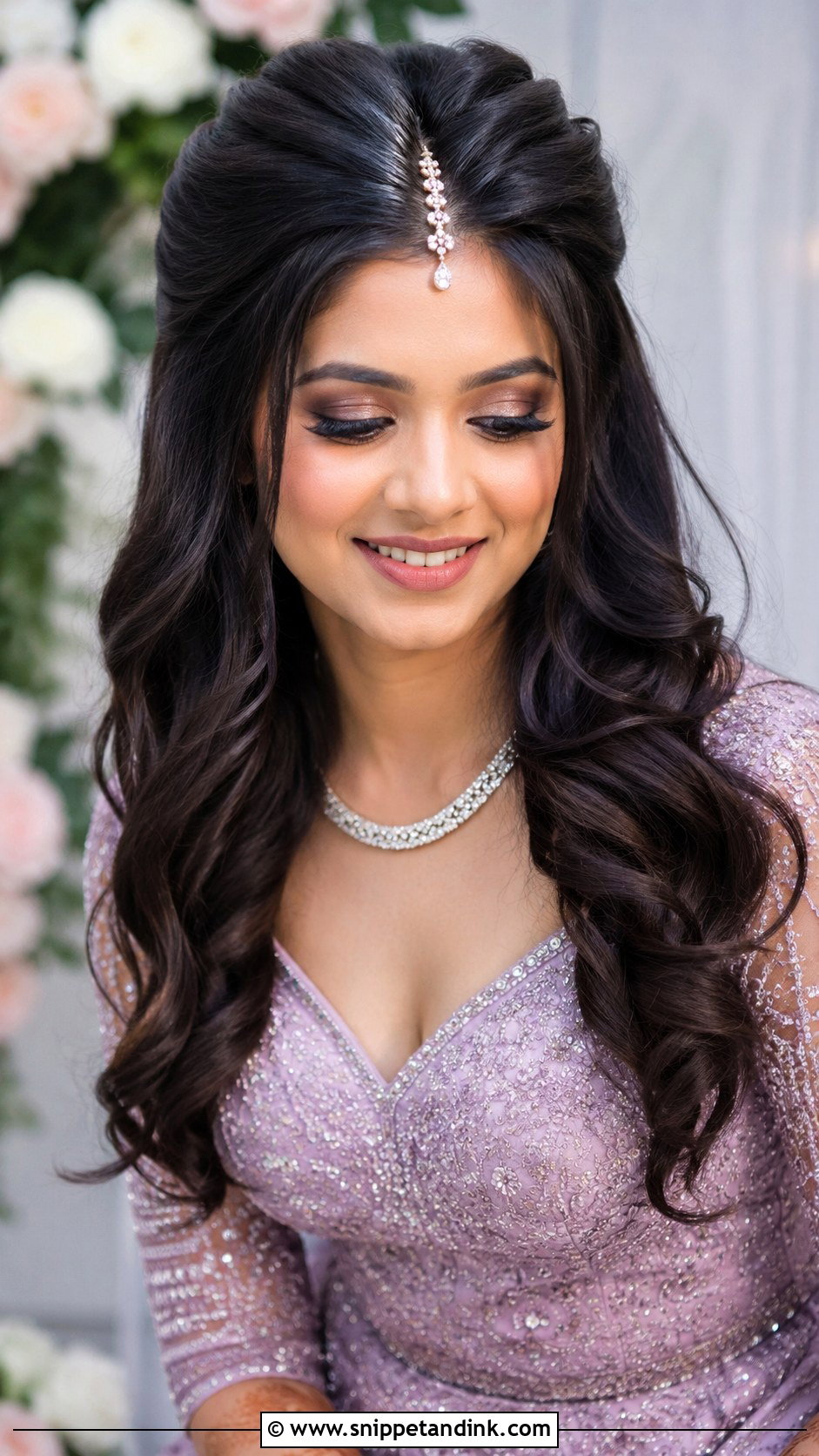
A front puff adds height at the crown while the rest stays loose. I tease the front section at the root, smooth the top layer over it, and secure it at the crown with crossed pins. It lifts the face and gives a classic, polished shape. Add a maang tikka for a traditional bridal touch at the engagement or the wedding. The front puff with open hair needs the right size: too big and it looks dated, so I keep it to about two fingers high on most face shapes.
23. Open Hair With Jeweled Hairpins
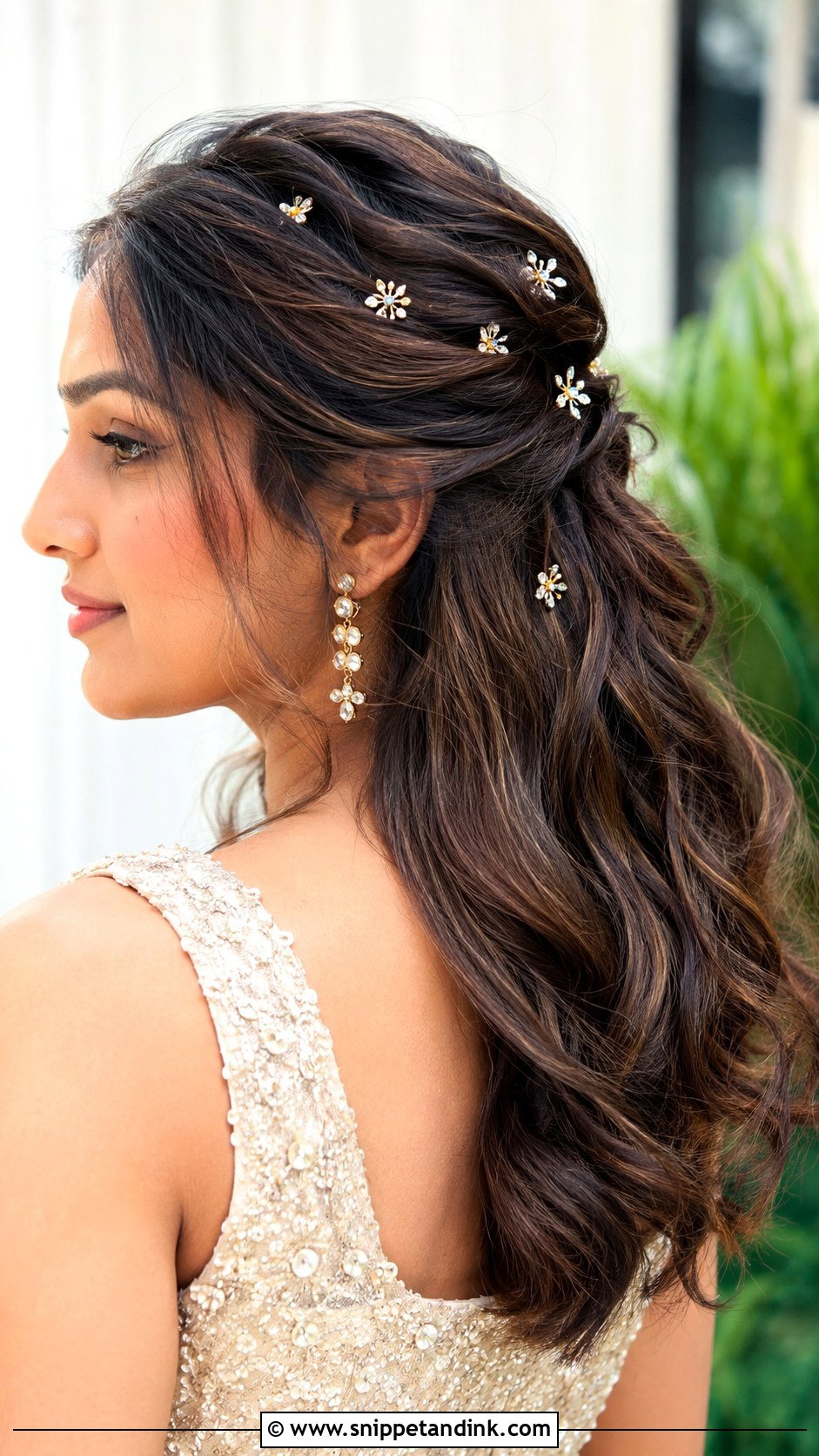
Jeweled pins scattered through loose hair give sparkle without heavy styling. I set soft waves or curls, then place a few decorative pins where light will catch them, usually around the crown and one side. The look is easy to wear and goes with pastels or bold colors. It’s my go-to for sangeet, reception or cocktail functions. Large jeweled pins on fine hair can slip, so I place a bobby pin crosswise underneath each one as a hidden anchor.
24. Open Hair With Loose Fishtail
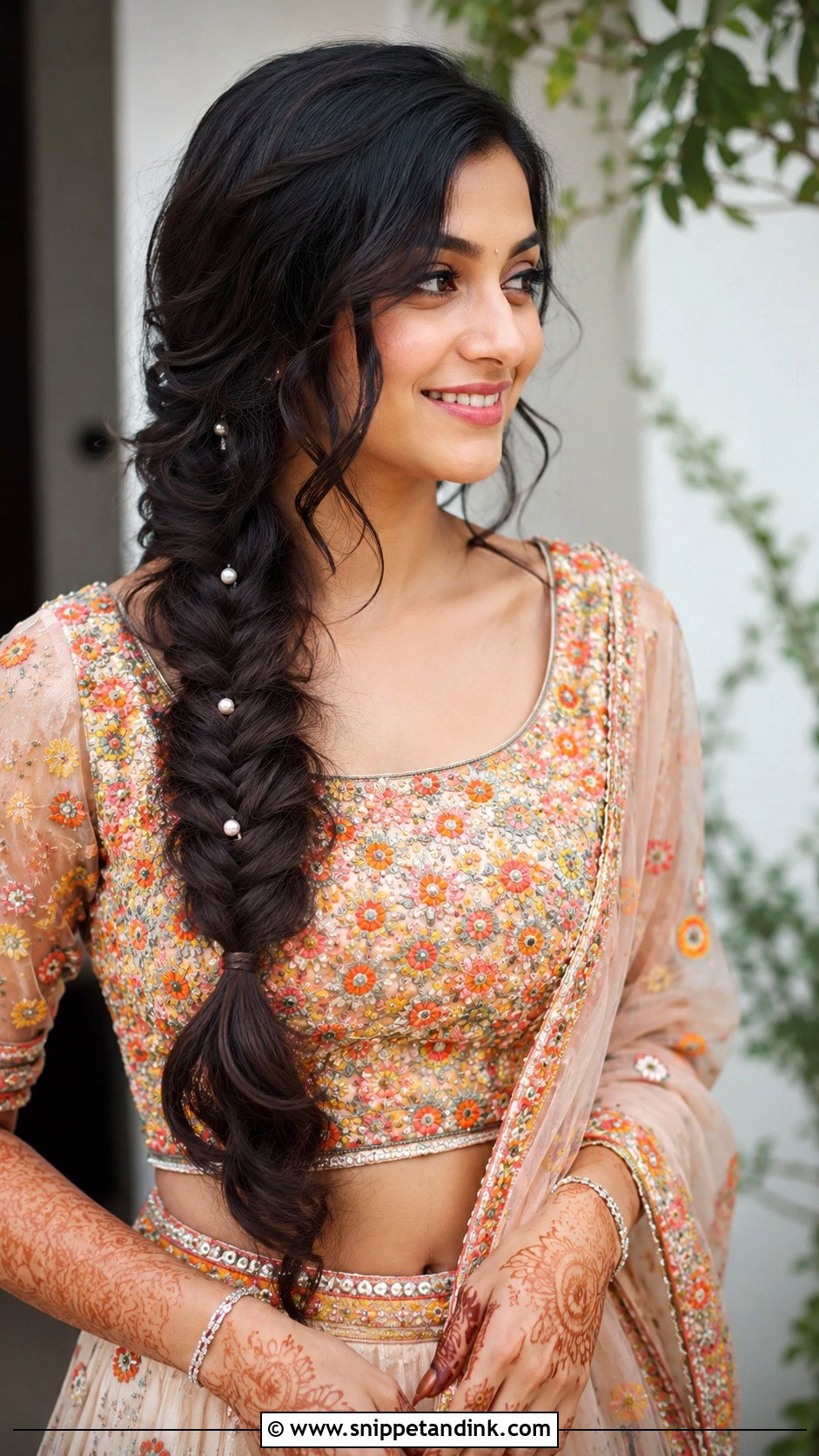
A loose fishtail on one side adds texture while the rest flows. I take a side section, weave a relaxed fishtail, pull the edges out a little for width, and tie it off with a clear elastic hidden under the curls. Small flowers or pearls tucked into the braid make it bridal. It works for mehndi and sangeet celebrations. Fishtails need a fair amount of length to look right; on hair above the shoulders, the braid ends too soon, so I’d choose a simple twist instead.
25. Open Hair With Outward Curls
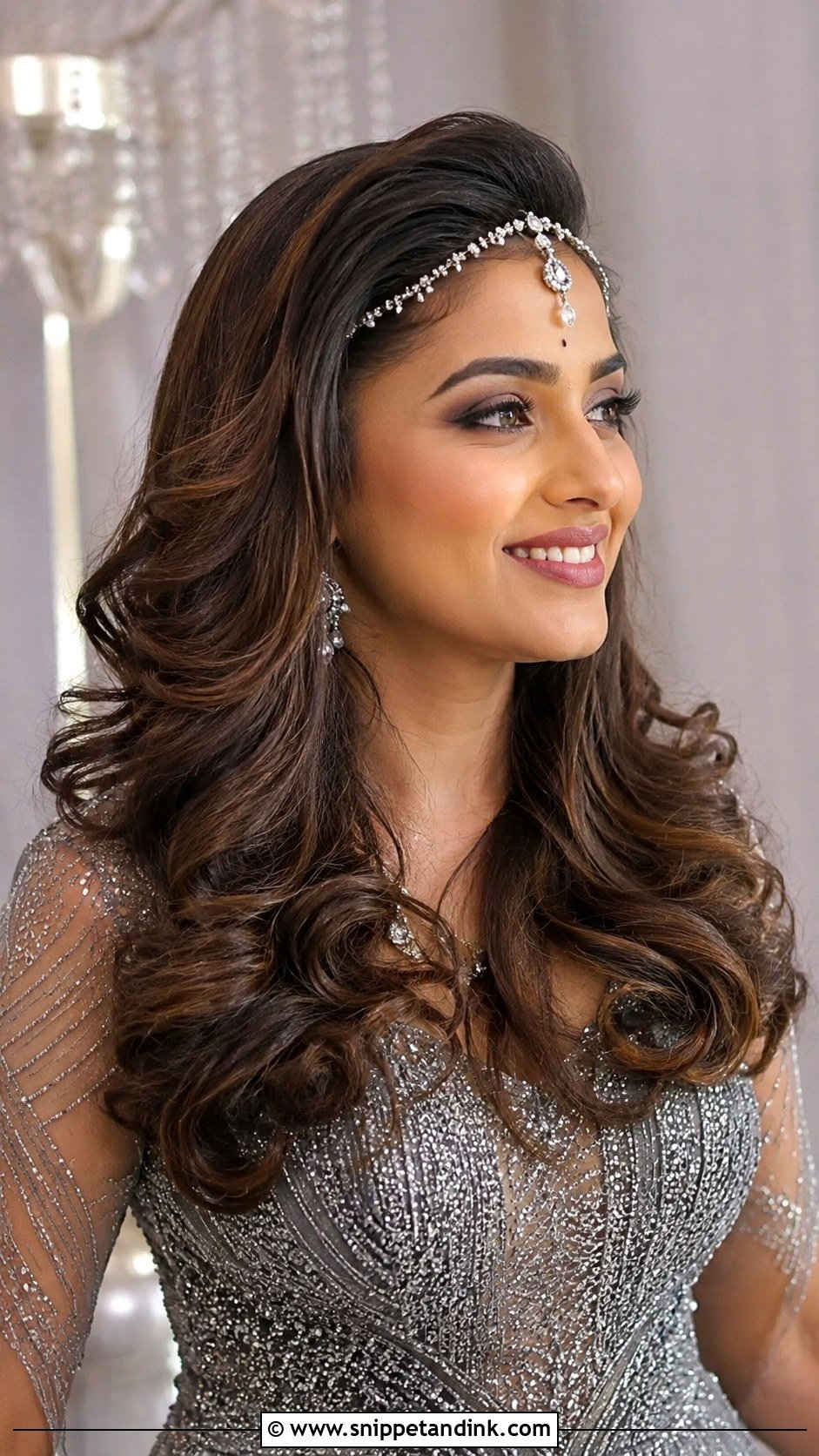
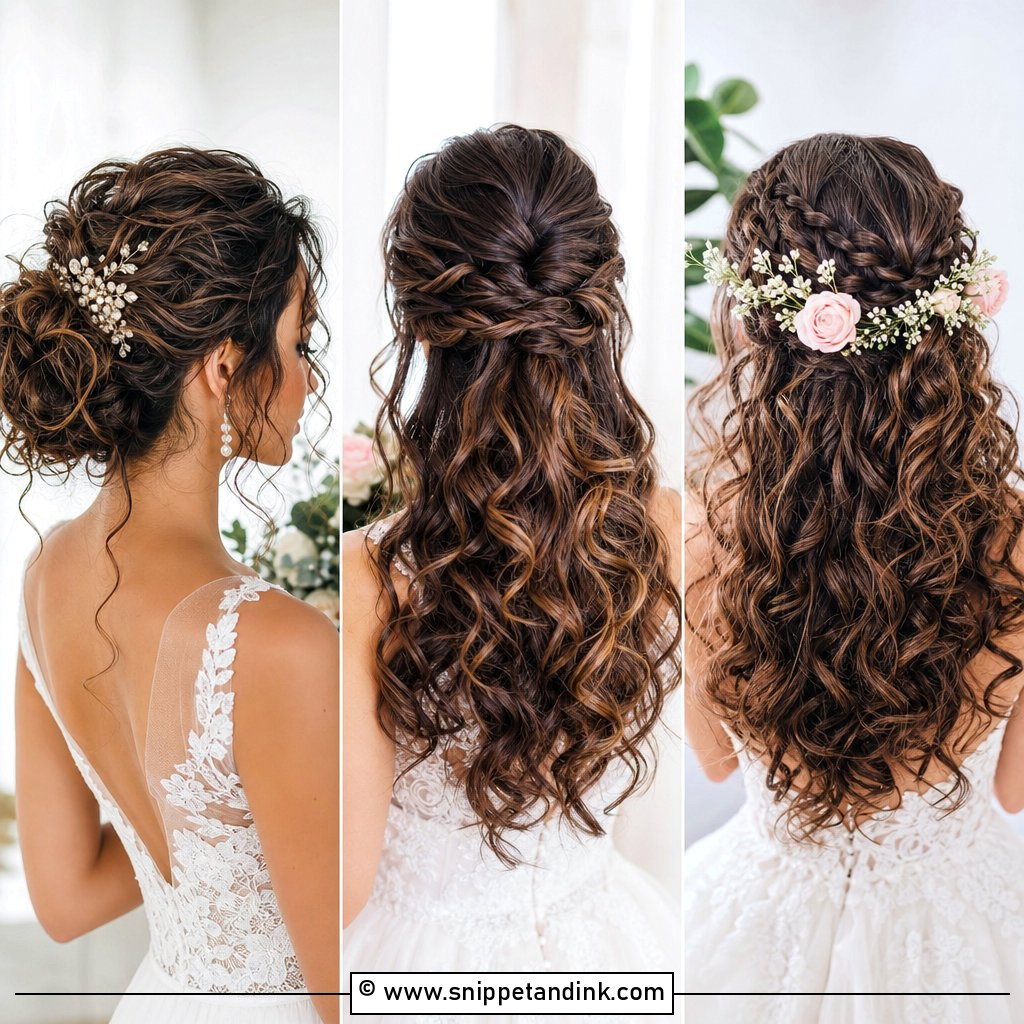
Outward-flipped curls are the full, flared finish, with all the volume brushed away from the face. They add width, which flatters long faces, and they pair well with a sheeshpatti, maang tikka or flowers. I curl every section away from the face and brush through gently once they’ve cooled. This suits receptions and grand celebrations. The retro shape needs hair that holds a curl; on very straight, heavy hair I set the curls in pin curls for at least twenty minutes before brushing them out.
Pinning a Heavy Dupatta Over Loose Hair Without Flattening It
The dupatta is the real test of any open hairstyle. A heavily embroidered bridal dupatta can weigh a lot, and when it sits directly on loose curls, it presses the crown flat and pulls the hair backward every time you turn your head.
My fix is a hidden anchor. Under the top layer at the crown, I make a small teased section or a tiny flat pin-cushion of crossed bobby pins. The dupatta pins into that, not into loose hair, so the curls underneath still move. I also ask brides to bring the actual dupatta to the trial. A lightweight practice scarf won’t show how the real one pulls.
Honestly, if your pheras are outdoors on a hot afternoon and your dupatta covers your head for the whole ceremony, fully open hair may not be the right call for that event. A half-up style gives the dupatta a firm base and still looks loose from the back. You can let it all down for the reception afterward, and that change between events often looks more deliberate than one style all day.
Open Hair Is Worth It If You Plan Around the Dupatta
Open hair keeps you light and comfortable through long celebrations, and the range is wide. From dreamy curls with baby’s breath to a regal sheeshpatti, there’s a version for every function and outfit. Sleek straight lengths suit air-conditioned receptions, bouncy curls need setting time, and soft waves with flowers handle a daytime mehndi best. Mix maang tikkas, pearls and gajras to make each event feel different. Bring photos of your outfit and jewelry to your trial, and plan the dupatta first; the rest falls into place.
You'll Like These Ideas:





Leave a Reply