
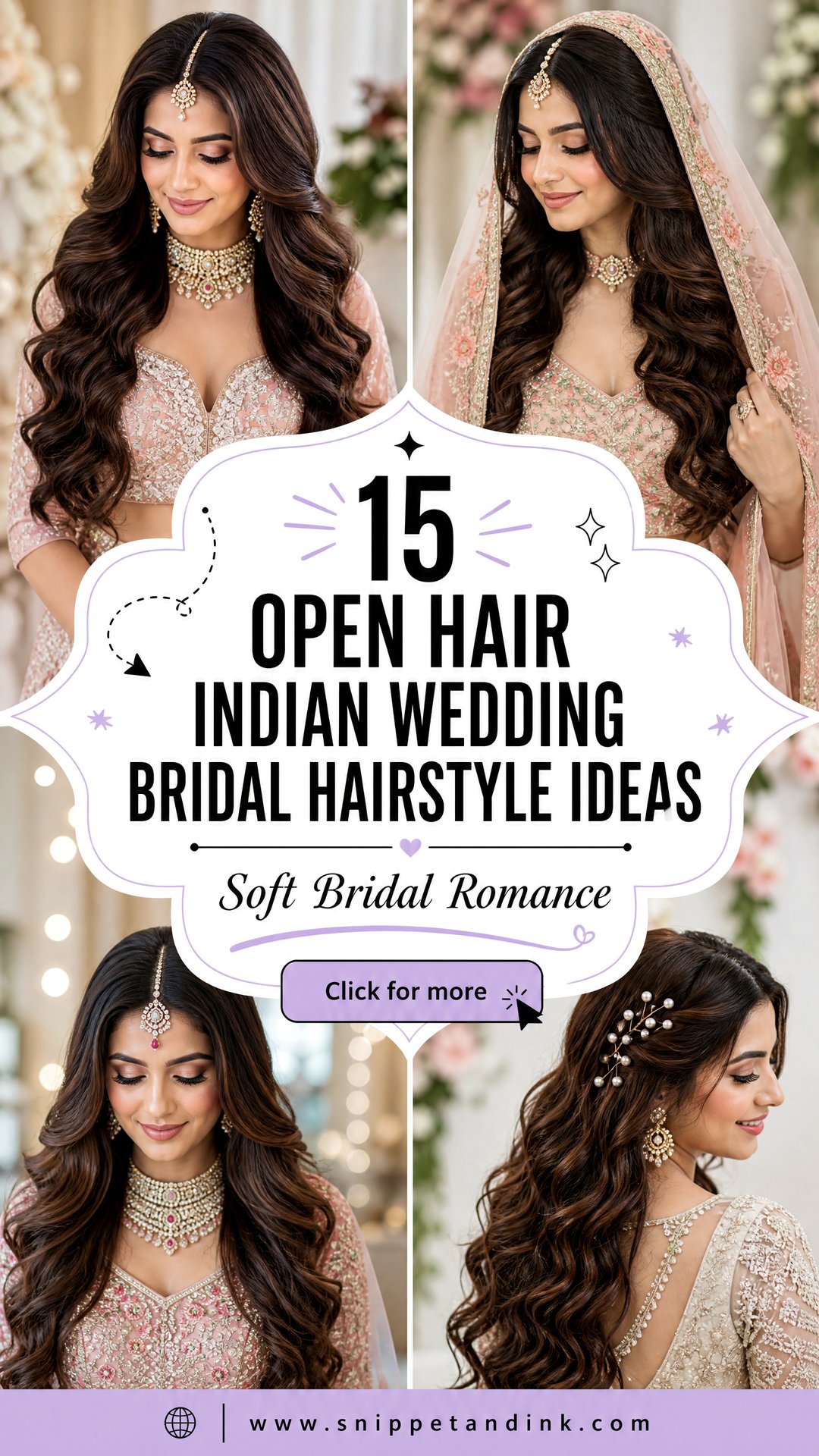
Open hair Indian wedding bridal hairstyles are more popular than ever, and I understand why. Loose hair moves in photos and softens a heavy outfit. The catch is that an Indian bride rarely wears loose hair alone; there’s usually a maang tikka, matha patti, passa, flowers or a dupatta on top, and every one of them needs something firm to hold on to. So the real question isn’t curls or waves. It’s how much hidden structure your look needs to survive rituals, portraits and a long night of dancing. Below are fifteen versions, with what I’d check for each before a bride commits to it.
Do You Need Extensions for an Open Bridal Look?
Many of the open styles brides save are built on more hair than the model naturally has. That isn’t a trick; it’s how stylists get full curls that last. Whether you need them depends on your density more than your length.
- If your ponytail is thinner than a finger’s width at the band, curls will look sparse against a lehenga by the evening. A few clip-in wefts fix that.
- Match the extensions to your ends, not your roots. Indian hair is often darker at the scalp and slightly lighter or warmer at the ends.
- Buy human hair if you want it curled. Synthetic fibres can melt or frizz under a curling iron.
- Bring them to the trial. Your stylist needs to cut or blend them into your layers so the joins don’t show when you turn your head.
Skip extensions if your hair is already thick and heavy. Adding weight to dense hair makes curls drop faster and can leave your scalp aching under jewellery. Wash and condition human-hair wefts once before the trial too, since new ones are often coated and won’t hold a curl straight out of the packet.
1. Open Hair With Soft Curls
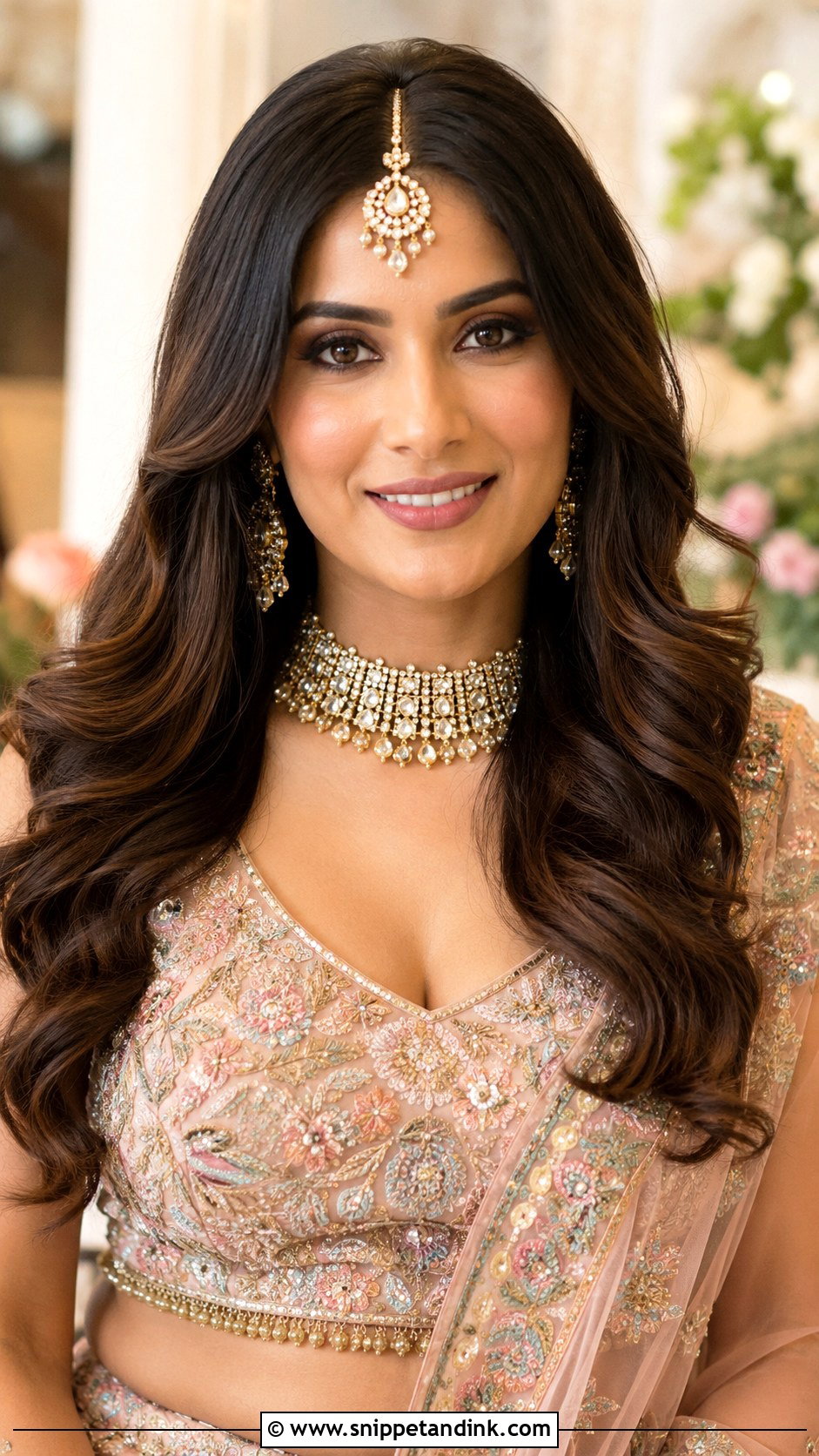
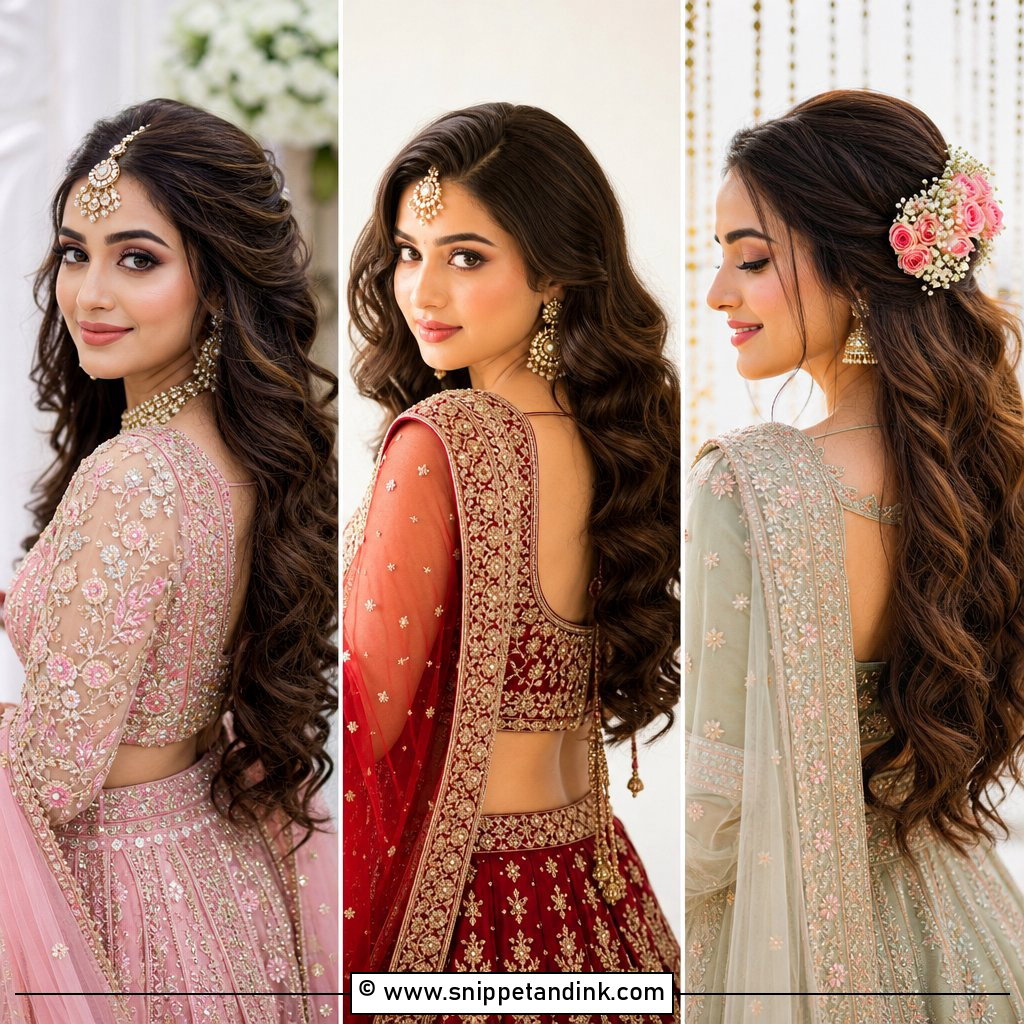
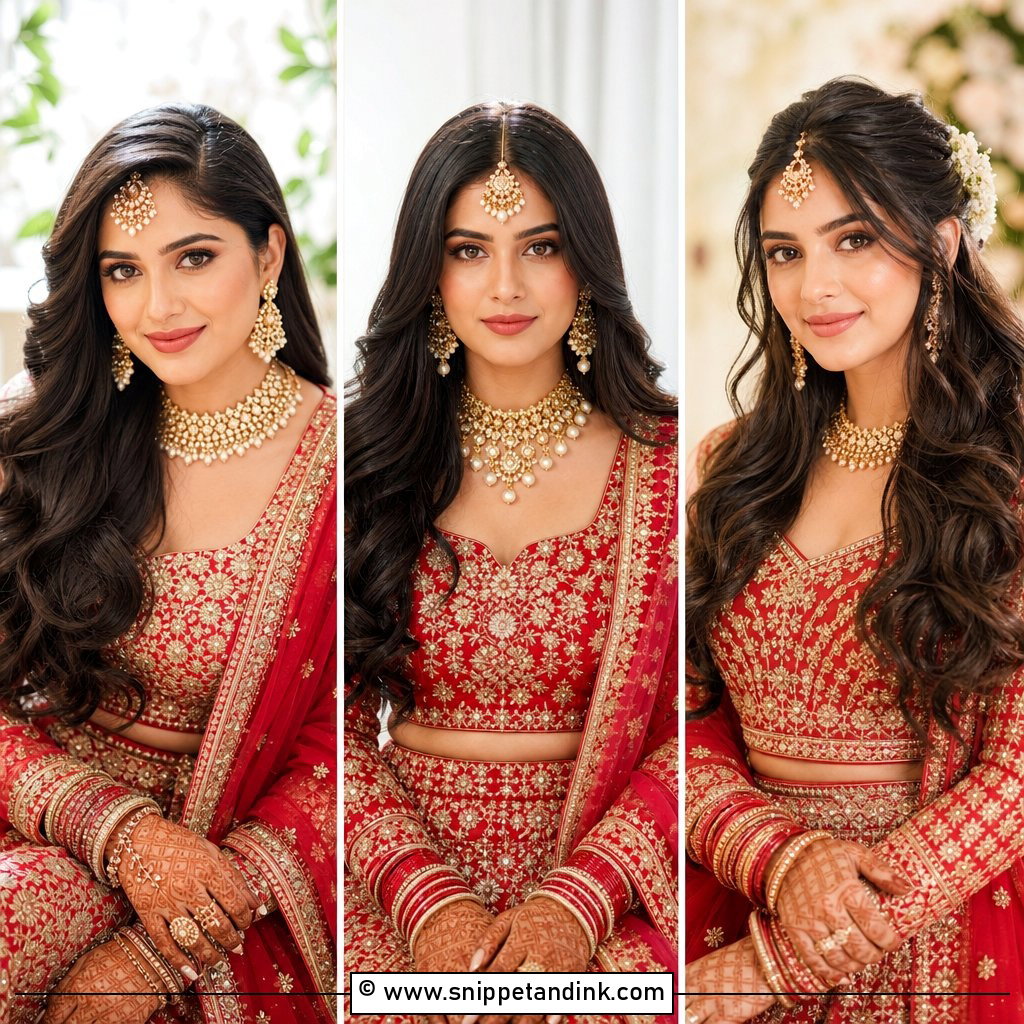
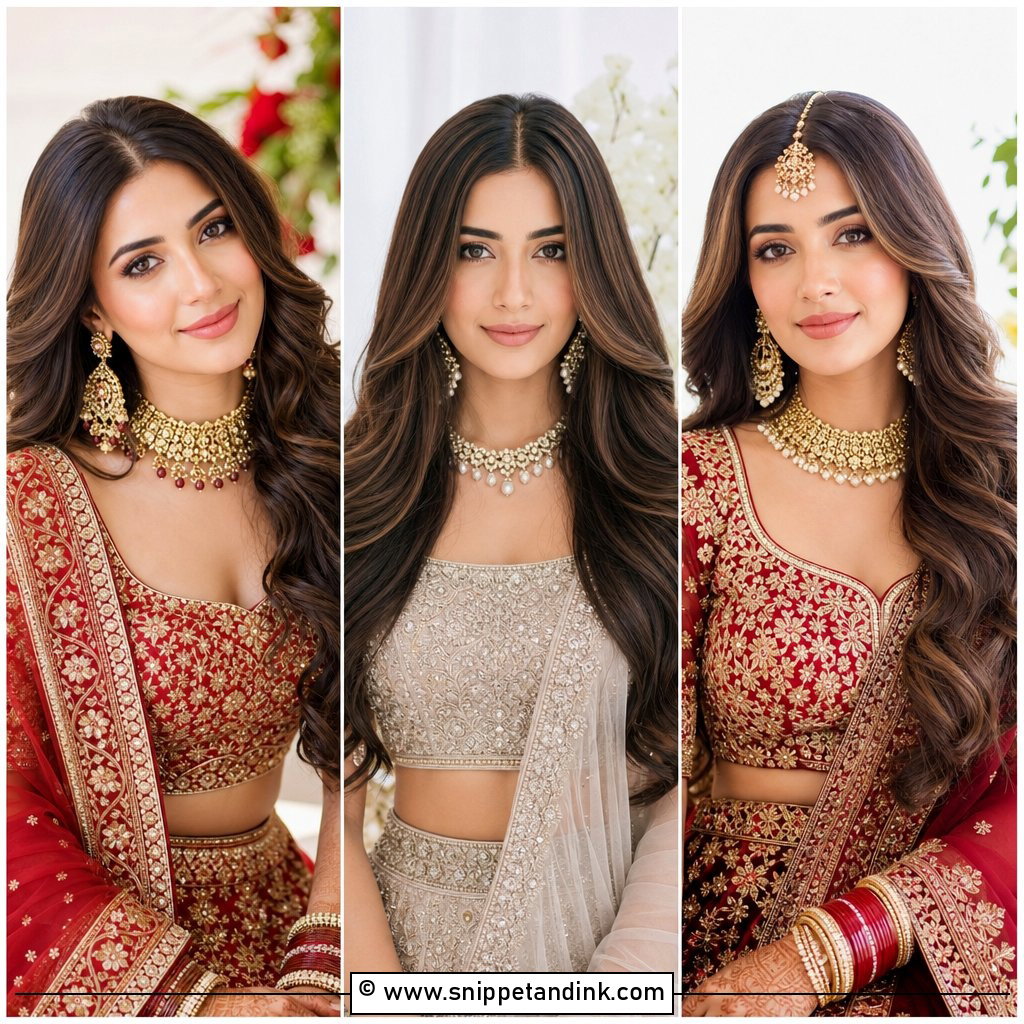
Brushed-out curls are the easiest open style to wear for hours, provided they start low. I begin the curl below the cheekbone so the face stays clear for jewellery and the makeup isn’t hidden in side shots. A centre part suits a maang tikka; moving the part a centimetre off-centre softens a round or square jaw without anyone noticing why. Tight ringlets read dated, so ask for curls that are brushed through with a paddle brush once they’ve cooled. A lightweight dupatta pinned just behind the crown won’t crush them.
2. Open Hair With Hollywood Waves
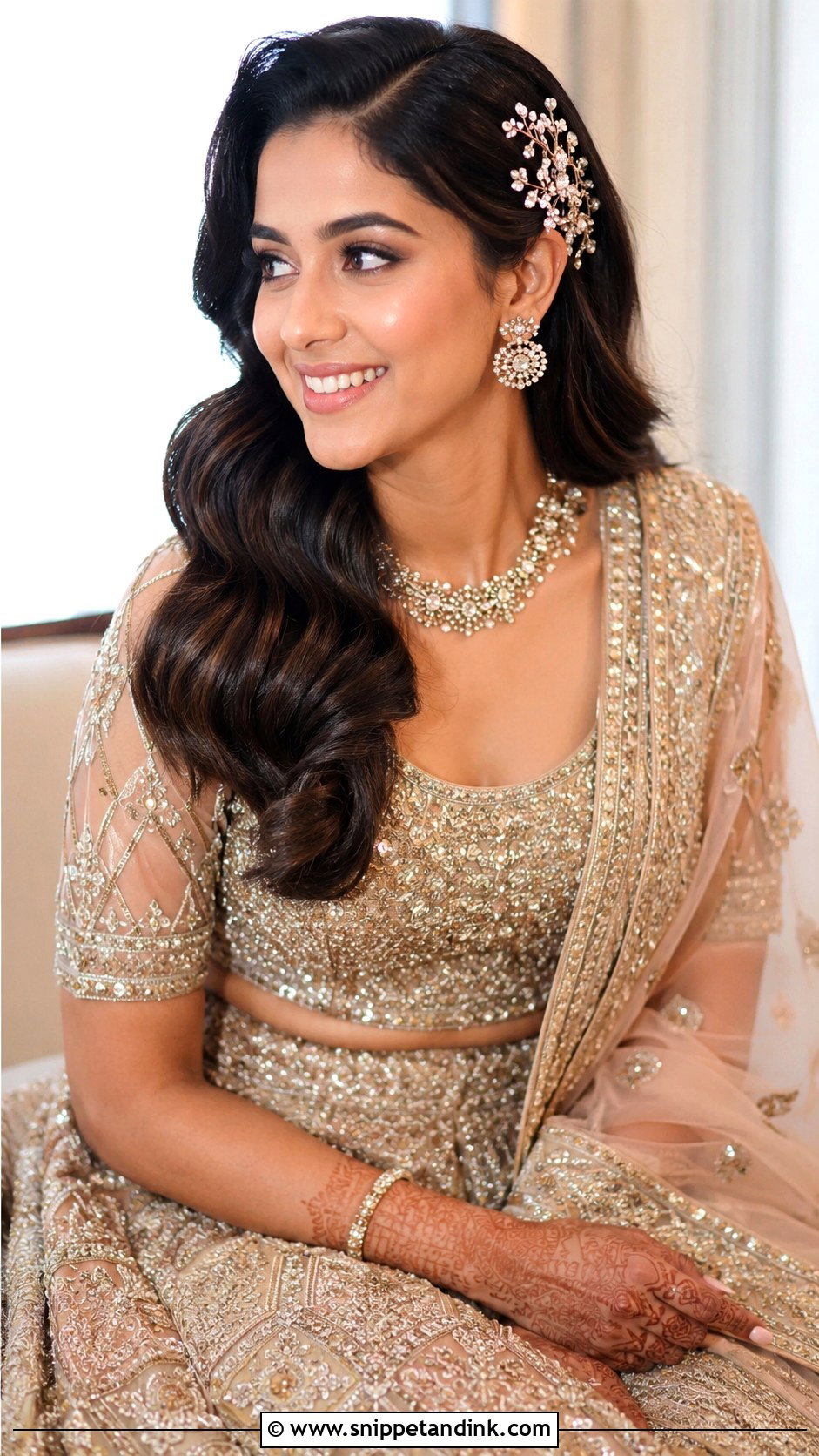
Hollywood waves take the longest of anything on this list, because every section has to be curled in the same direction and then brushed into one continuous S. The payoff is a glossy, sculpted finish that holds its shape at the reception or engagement. Medium to long hair is needed; shoulder-length hair breaks into separate curls instead of a ripple, and extensions fix that. A side part is the classic setting, though a middle part reads more traditional with Indian jewellery. Choose one accent at most, perhaps a passa or a crystal pin, since the waves are already the ornament.
3. Open Hair With Maang Tikka
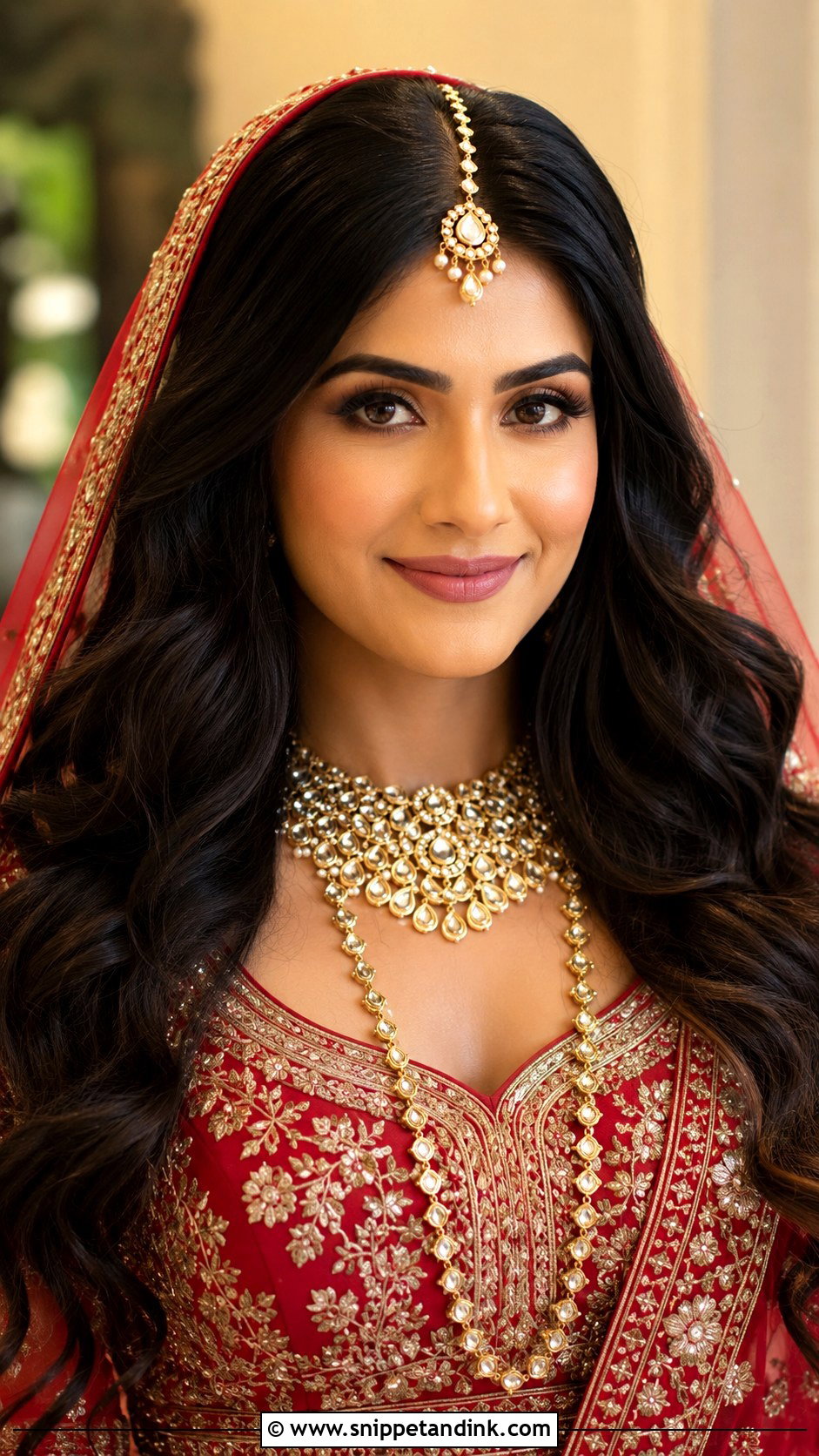
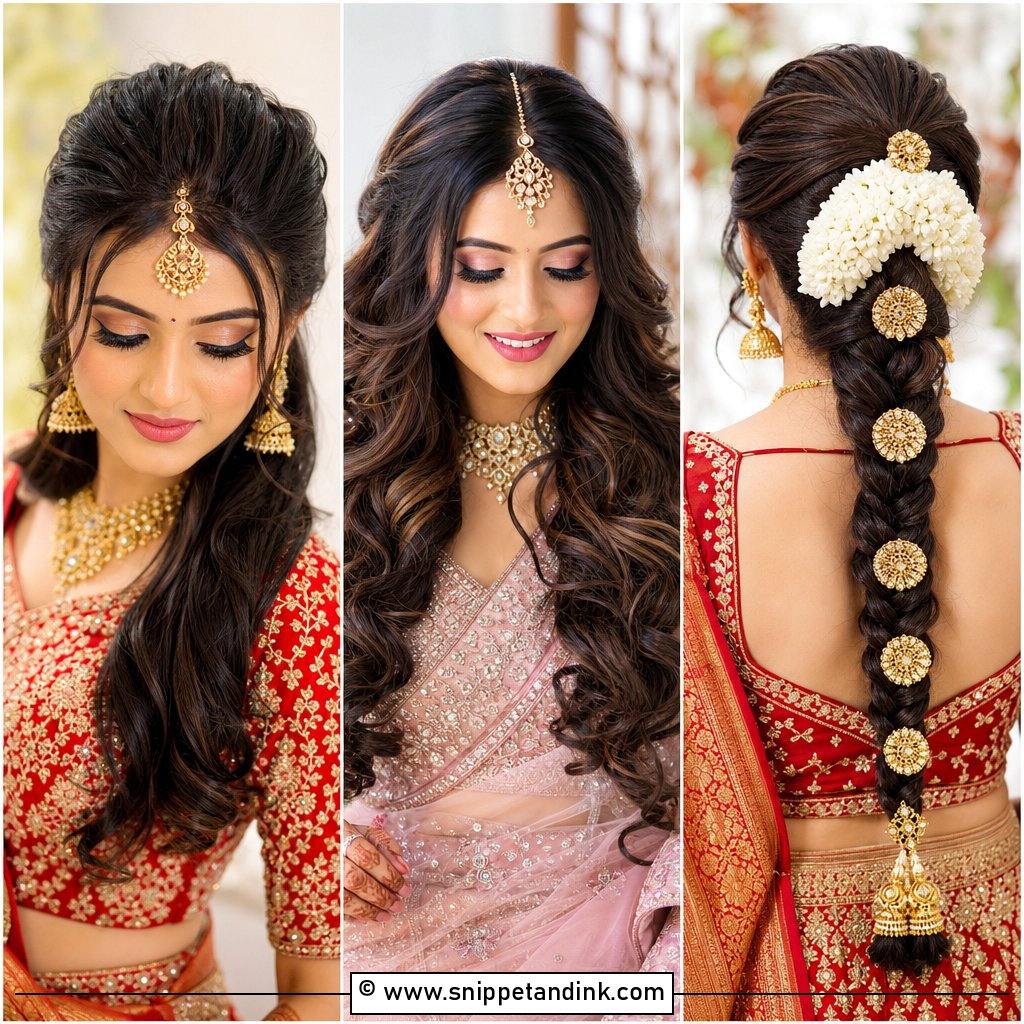
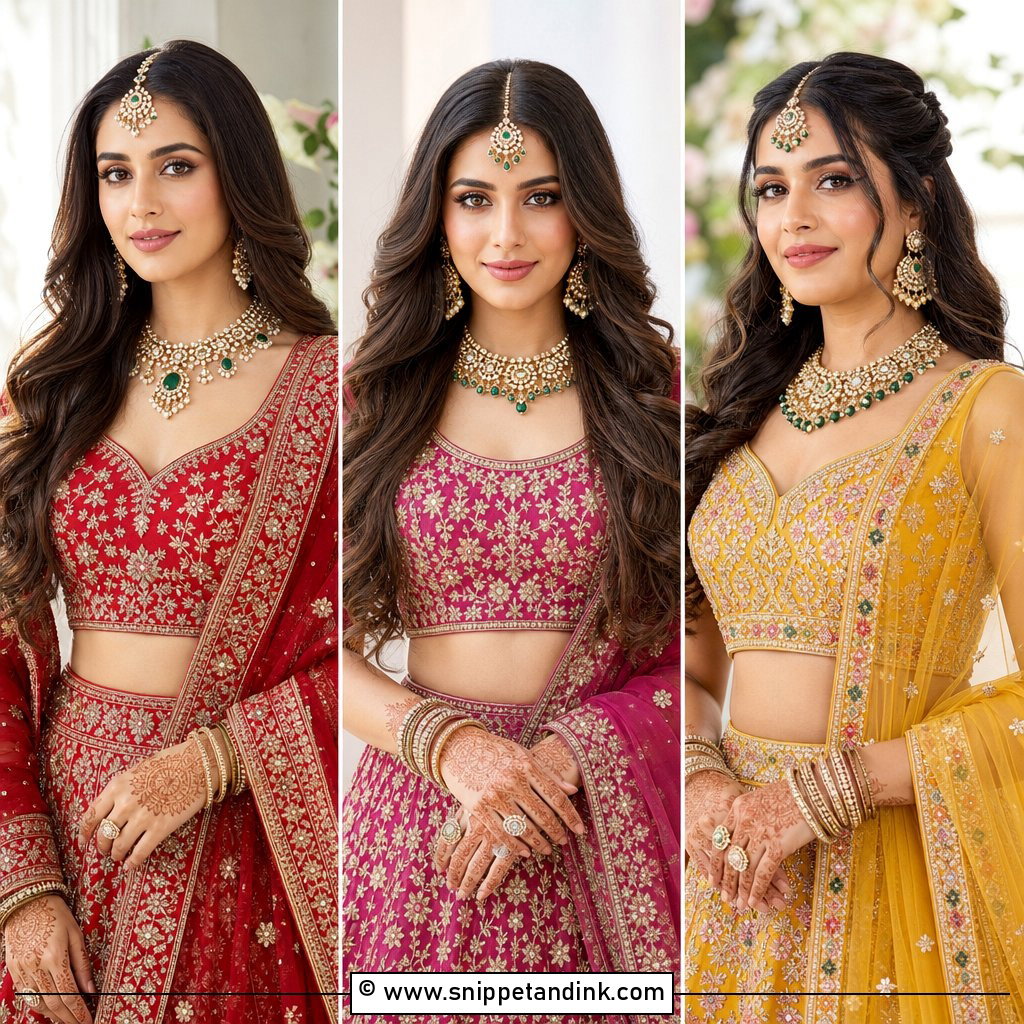
Open hair with maang tikka is the simplest way to look traditionally bridal without a bun. Everything depends on the part. If it wanders, the tikka sits crooked, so I comb the part with a tail comb under good light and spray the scalp line lightly before placing anything. A heavy tikka needs a small backcombed cushion near the crown and a pin threaded through its hook. Below that, the lengths can be curled, waved or left sleek to match the outfit.
4. Open Hair With Matha Patti
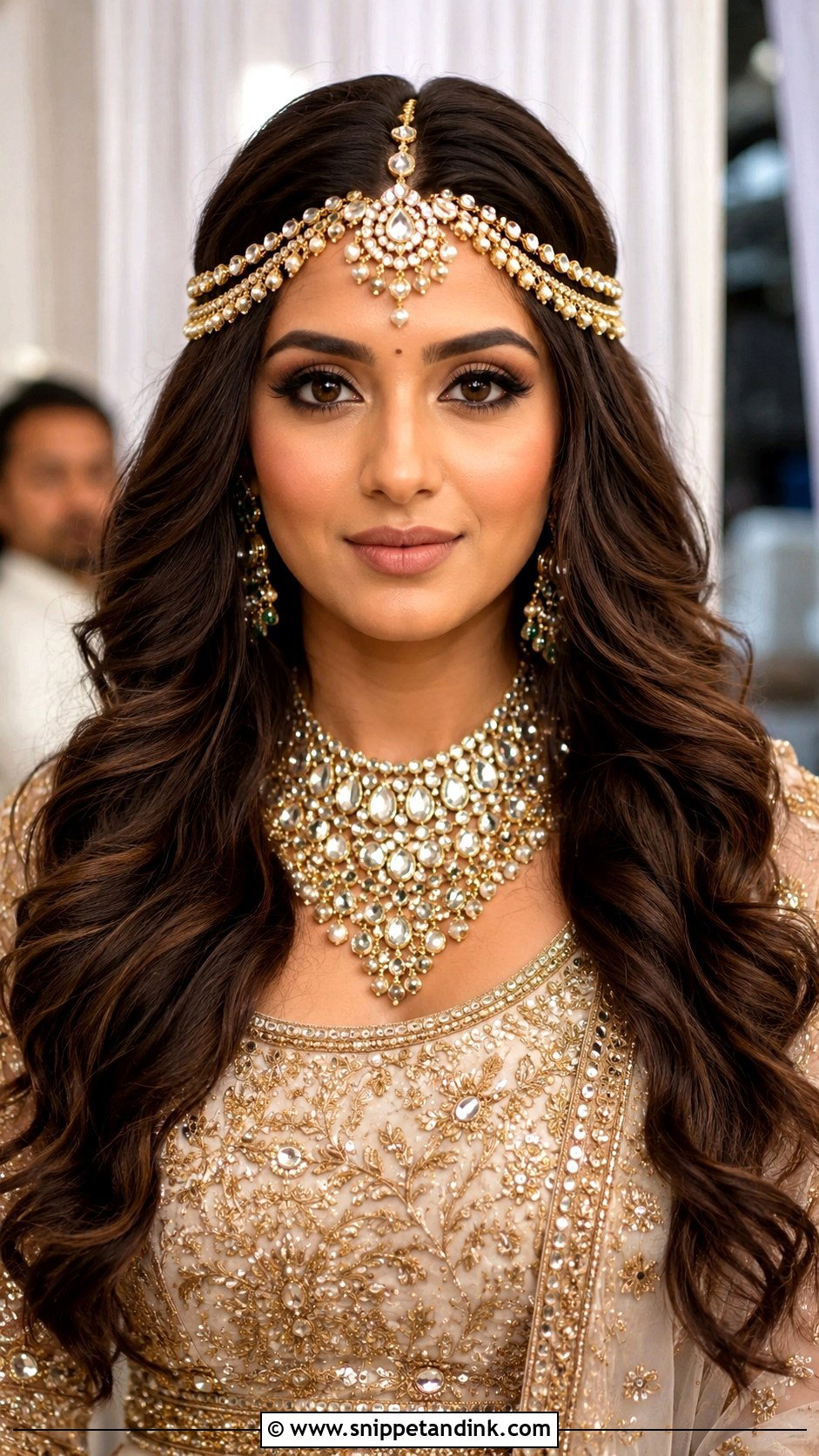
A matha patti asks for a smooth hairline and a centred part, or the side chains hang unevenly and one side ends up lower on the forehead. It’s at home with heavily embroidered lehengas and kundan jewelry. Keep the lengths soft, either brushed curls or relaxed waves. My one firm rule here: don’t tease the crown high. Too much height pushes the headpiece up and back, so I aim for controlled fullness instead. It frames the face well under a dupatta and still leaves the hair visible.
5. Open Hair With Dupatta
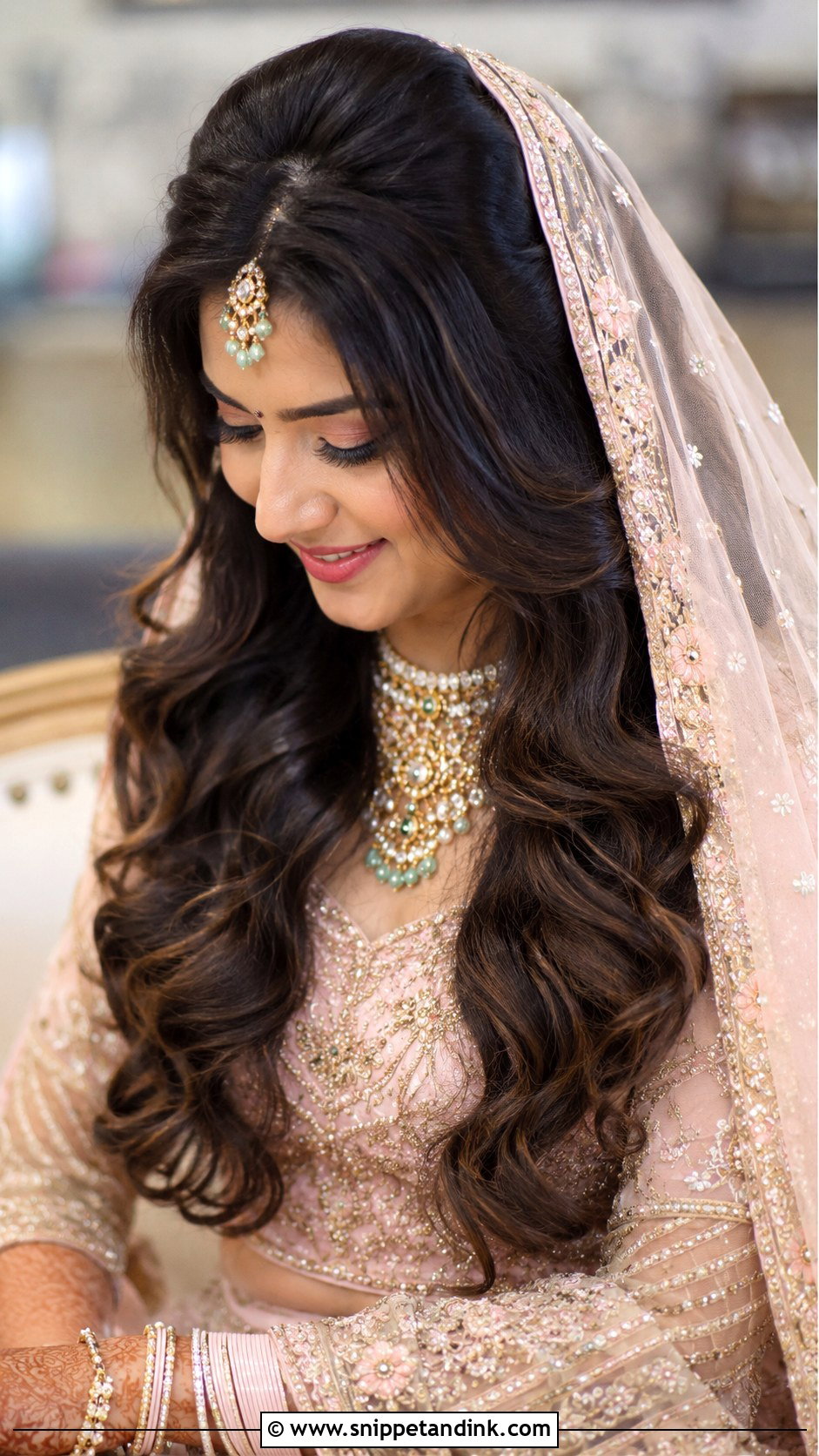
The usual problem with open hair under a dupatta is flat roots by the time the pheras begin. I avoid it by building an anchor section at the crown, a small twisted or backcombed patch that the dupatta pins grip, and by starting the curls lower down so the fabric’s weight doesn’t drag them out. Smooth face-framing pieces stay in front. Pin the dupatta just behind the crown or drape it like a soft veil, whichever the ritual calls for. If yours is heavily worked, say so at the trial so your stylist brings stronger pins. Red, ivory, gold and blush outfits all suit it.
6. Open Hair With Loose Waves
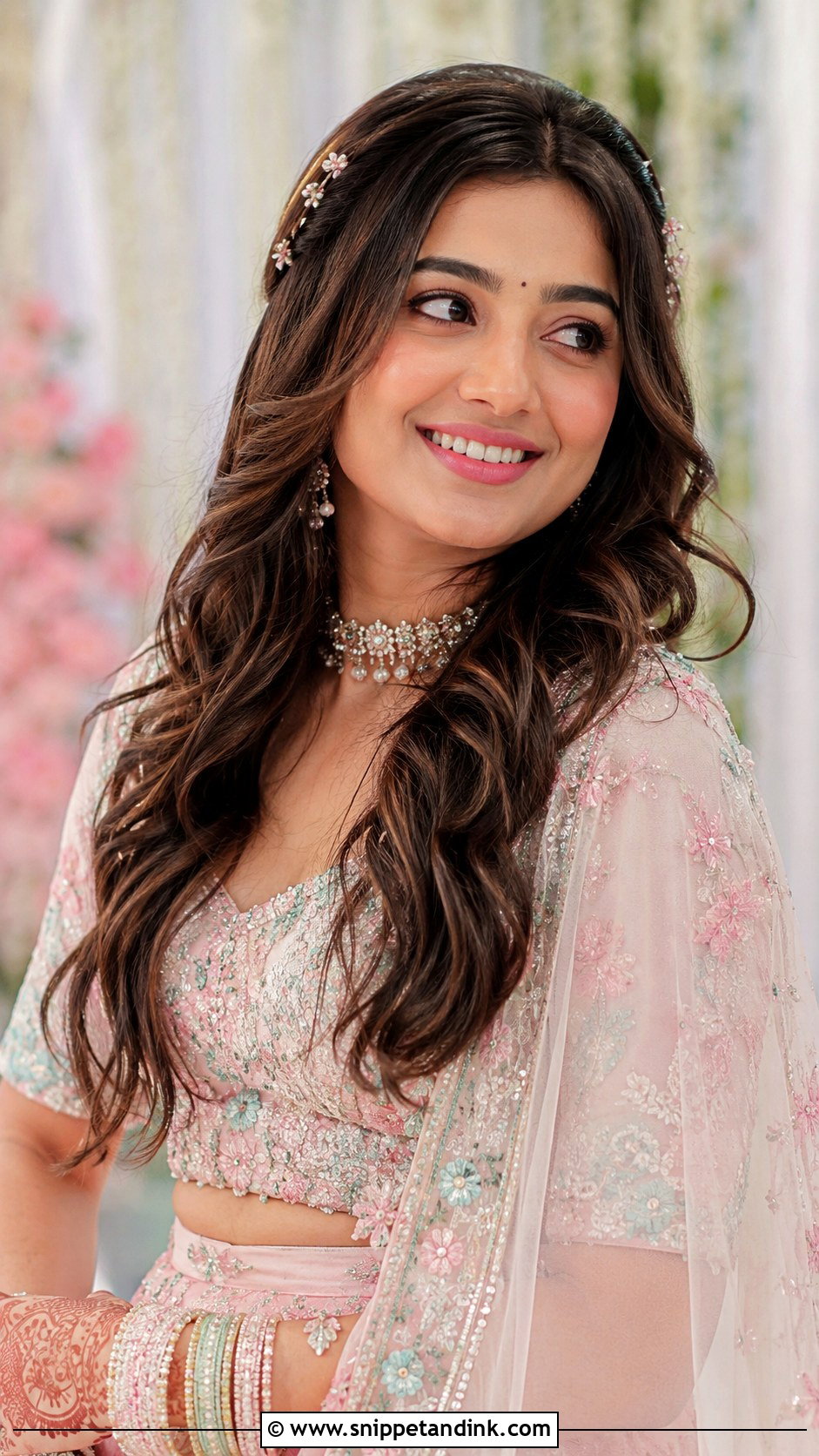
Loose waves are what I suggest to brides who hate the feeling of a set style. They need just enough hold to get through pictures and hugs, no more. Smooth roots and lightly textured ends keep them looking bridal instead of beachy. Daytime weddings, mehndi and outdoor events are where they sit most naturally, alongside floral jewellery, pearl pins or a simple tikka. In very humid weather I’d steer you toward a half-up version, because loose waves can relax into straight hair within a couple of hours.
7. Open Hair With Side Part
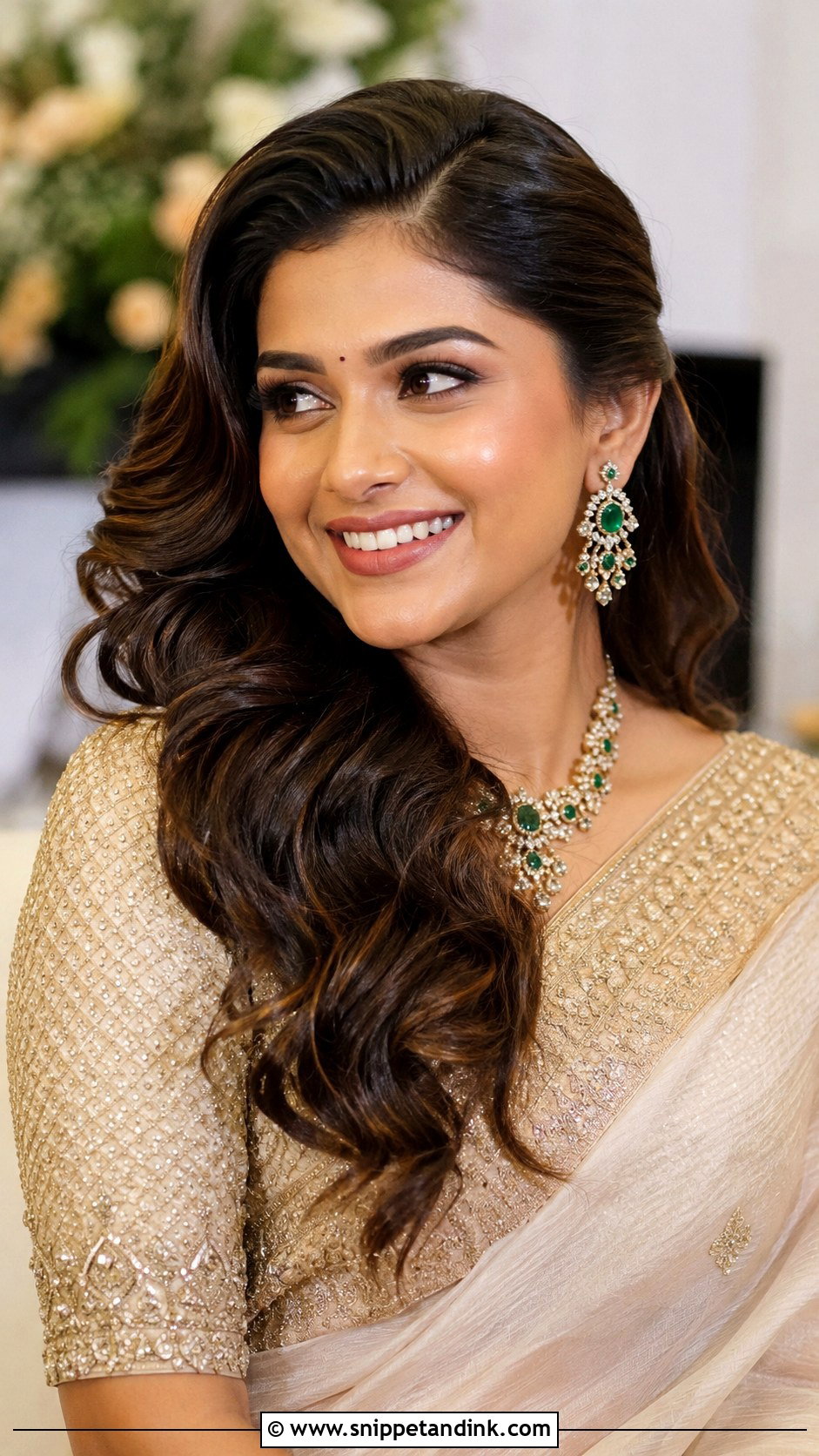
A side part lifts the face on one side and gives you a natural place to show a statement earring. The heavy side carries the volume; the other side is tucked behind the ear or pinned with a couple of ornaments. It looks especially polished with sarees, reception gowns and one-shoulder dupatta drapes. Plain straight hair falls flat with a deep part, so I always add waves or soft curls. If you’re wearing a passa, put it on the heavier side, where there’s more hair for the pins to grip.
8. Open Hair With Center Part
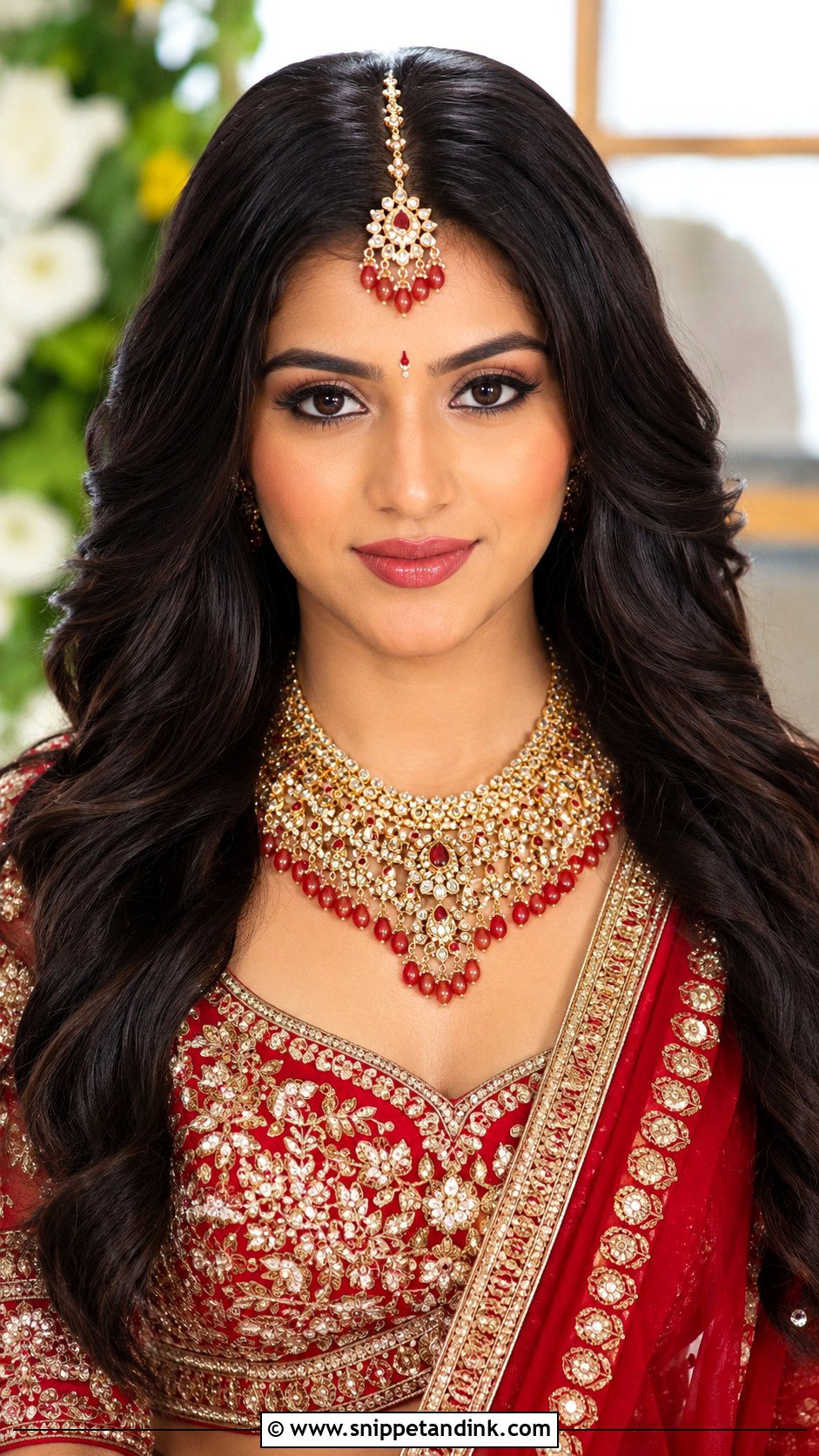
Symmetry is the whole point of a centre part, and Indian bridal jewellery is built for it: maang tikka, matha patti and layered necklaces all line up on that central axis. The part should be crisp, but the lengths can stay soft. Brushed curls, smooth waves or sleek ends all work. It draws attention to the eyes, forehead jewelry and makeup, and it sits naturally with silk sarees and embroidered lehengas. A little root-control spray and a few hidden pins near the crown keep the part from splitting open as the day goes on.
9. Open Hair With Front Braids
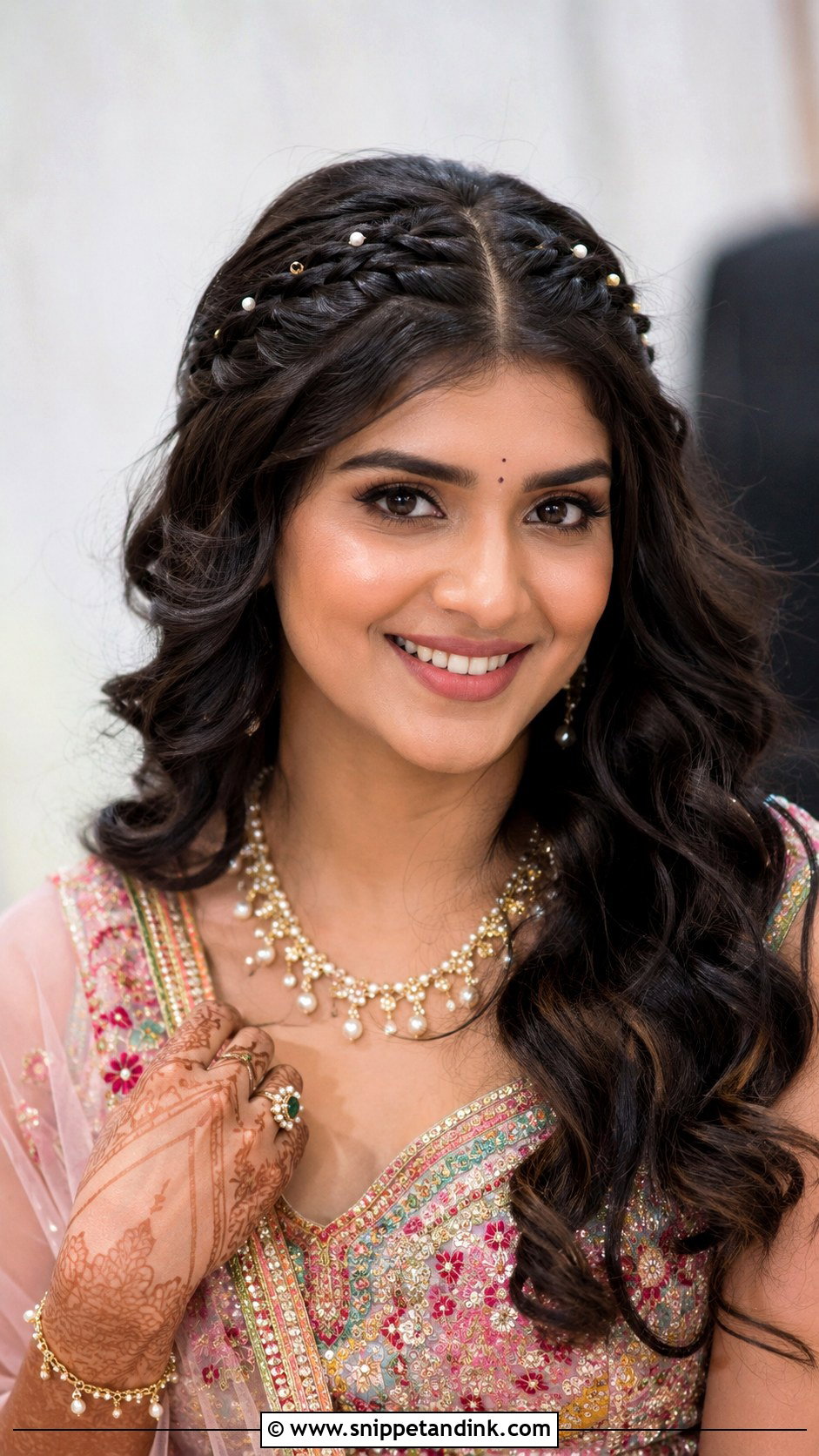
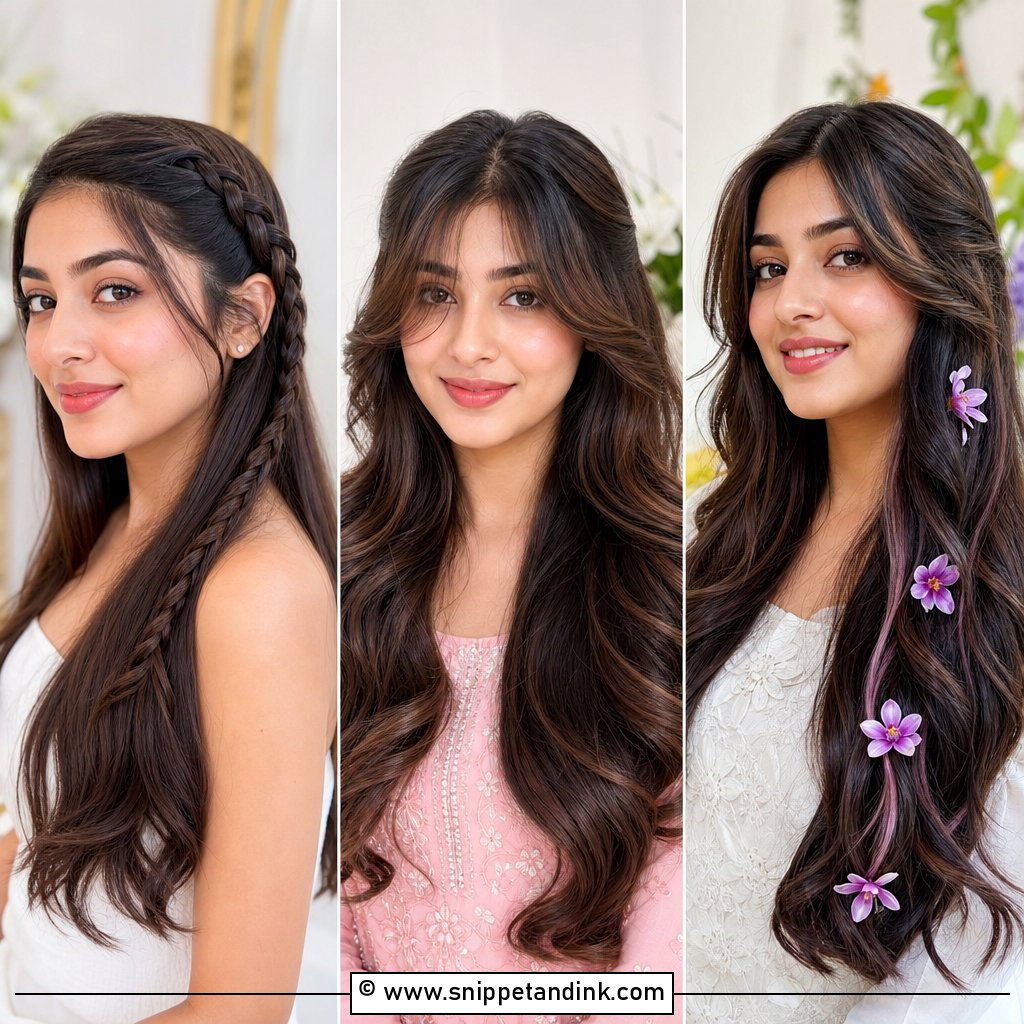
Two small braids from the front hairline, pinned back into the crown, solve the flyaway problem without tying the hair up. I braid them slightly loose and then tug the edges so they look soft from the front. The rest stays open in curls or waves. Those braids are also the best place to secure pearl pins, tiny flowers or gold ornaments, because pins grip plaits far better than loose hair. I like this for mehndi, sangeet and lighter ceremonies, when you’ll be moving around more.
10. Open Hair With Floral Accessories
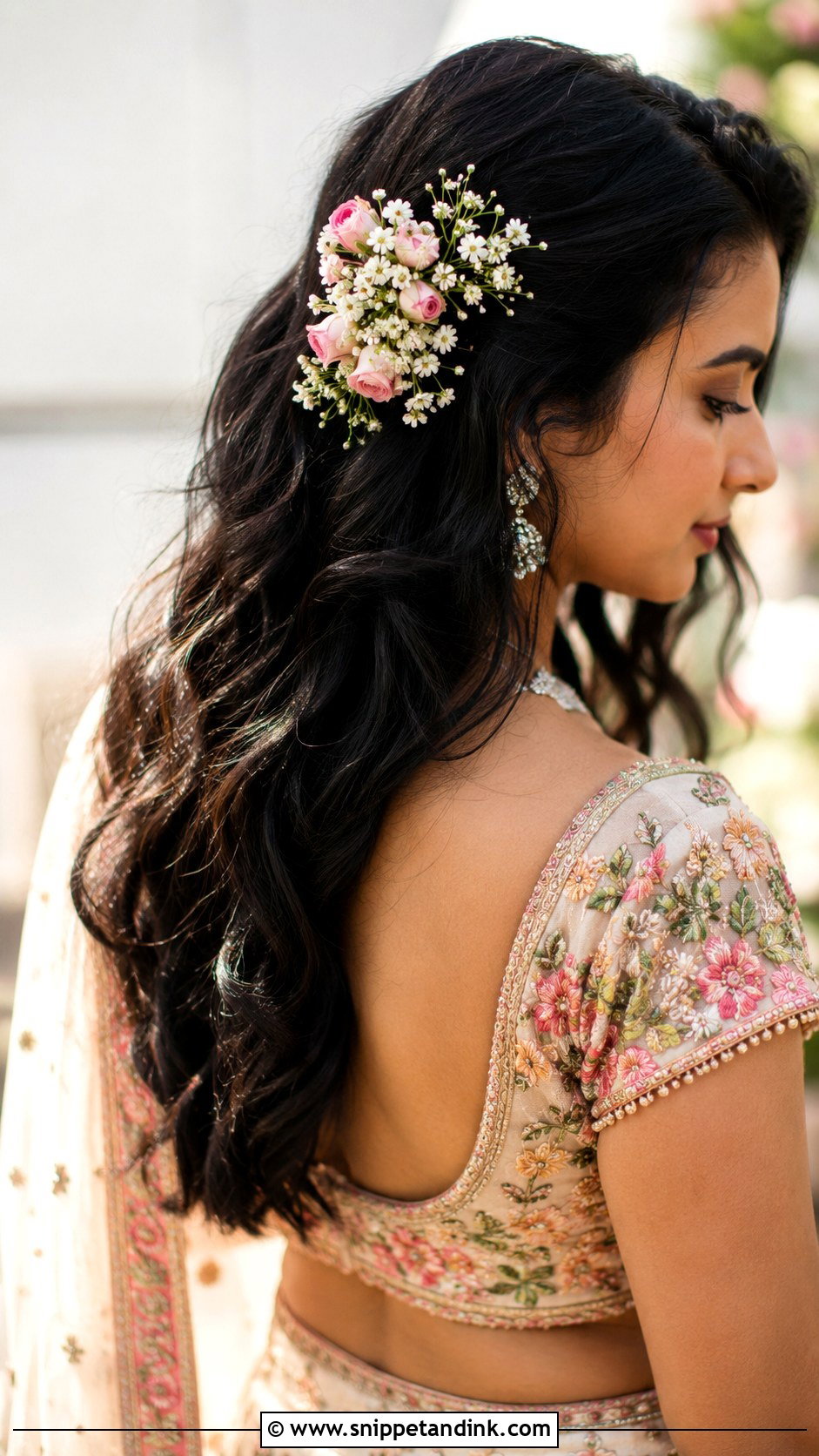
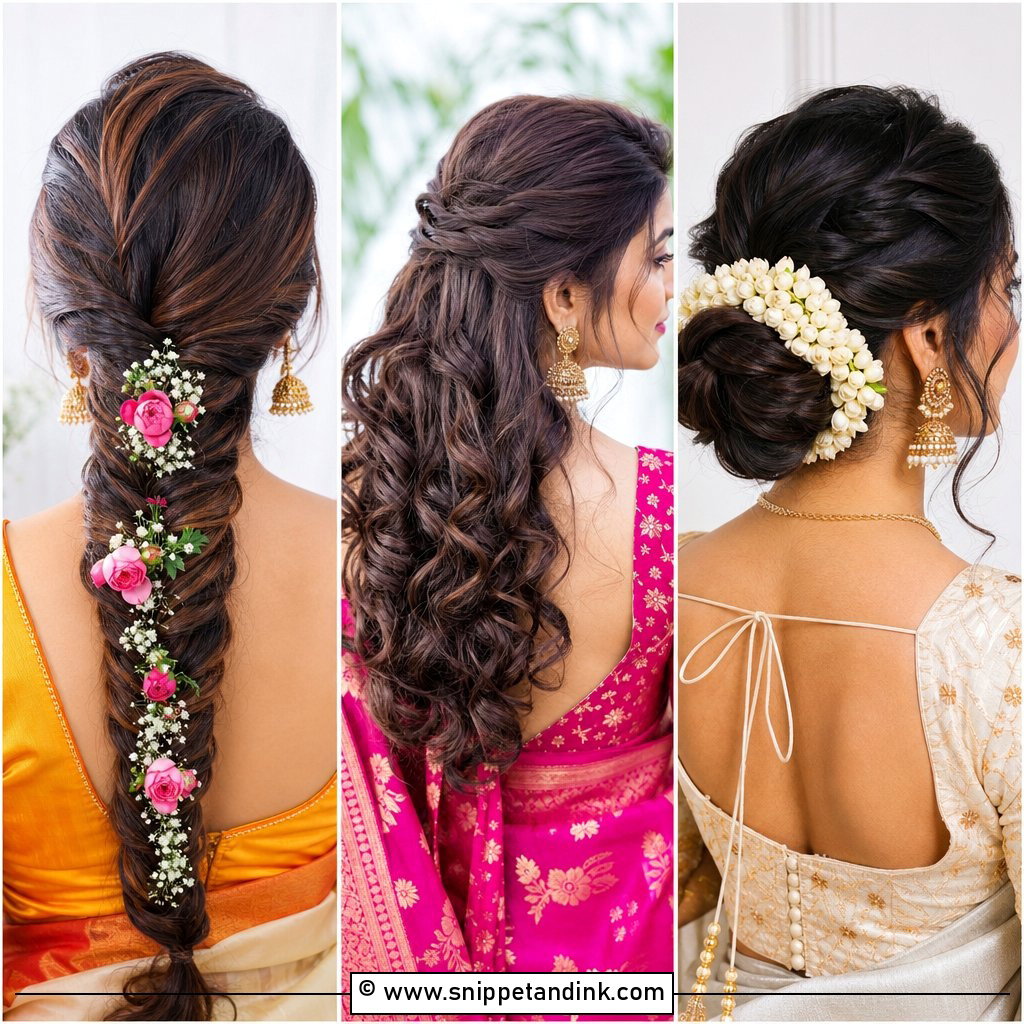
Flowers look intentional when they’re grouped, and crowded when they’re scattered across the whole head. I place them along one side, behind an ear or in a light line across the crown. Jasmine, baby’s breath, roses and mogra-style accents sit best in loose waves or soft curls. Fresh flowers drop petals and wilt in heat, so they should go in last, just before you leave the room. This is a haldi, mehndi and outdoor look, and it’s easiest to balance with pastel outfits. If you’re already wearing a maang tikka and big earrings, keep the flowers to one small cluster.
11. Open Hair With Passa
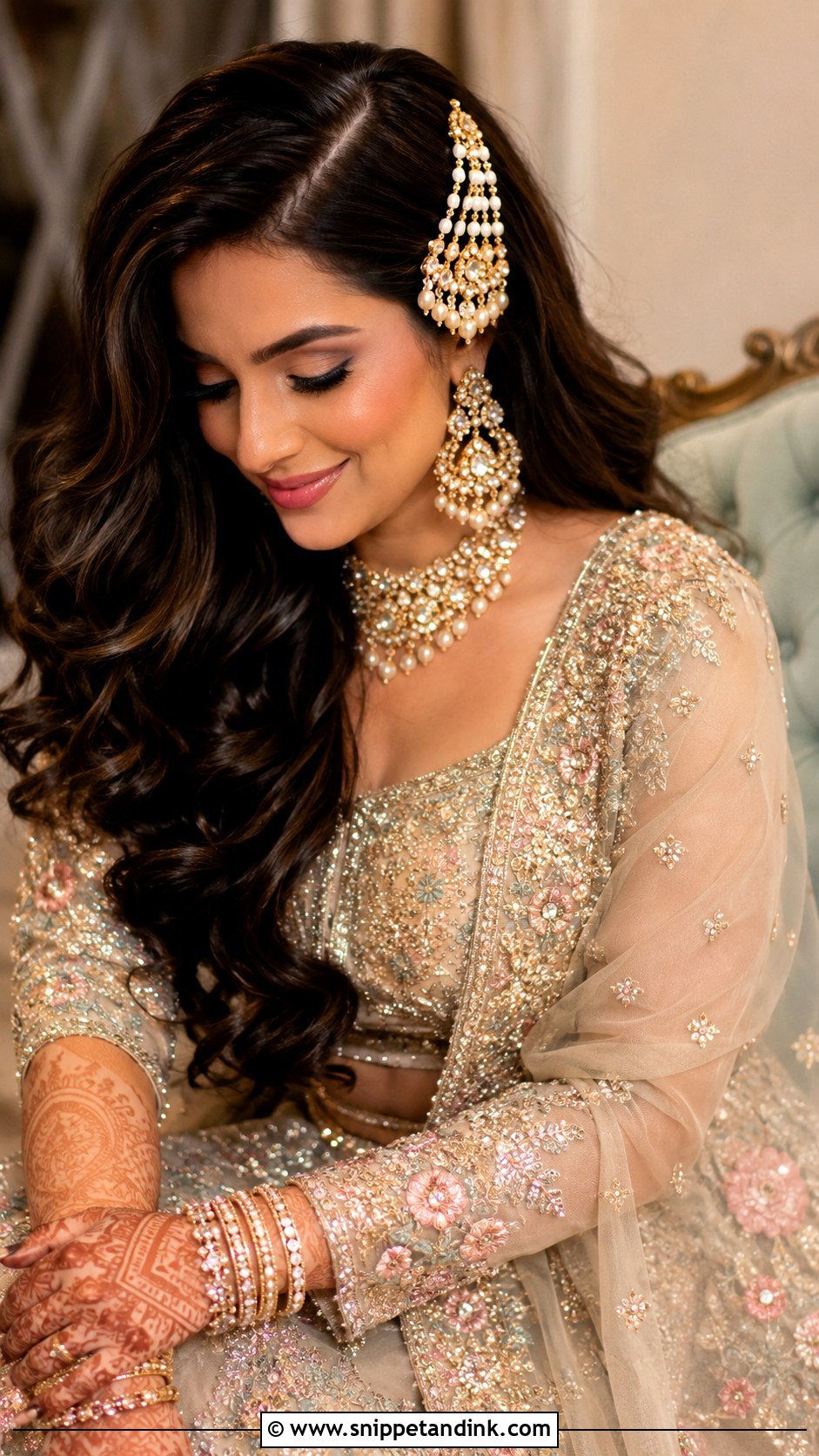
A passa gives you one regal detail at the temple, and it is heavier than it looks. The passa, also called jhoomar, belongs on a side part or a softly swept front section, with loose curls or smooth waves below so the jewellery stays the focus. Shararas, ghararas, lehengas and one-side dupatta drapes all suit it. I build a firm backcombed base under the passa and lock it with pins crossed in an X, because one pin on its own lets it swing forward. If it starts to ache, the base is too small; ask for it to be rebuilt instead of putting up with a headache.
12. Open Hair With Half Crown Twist
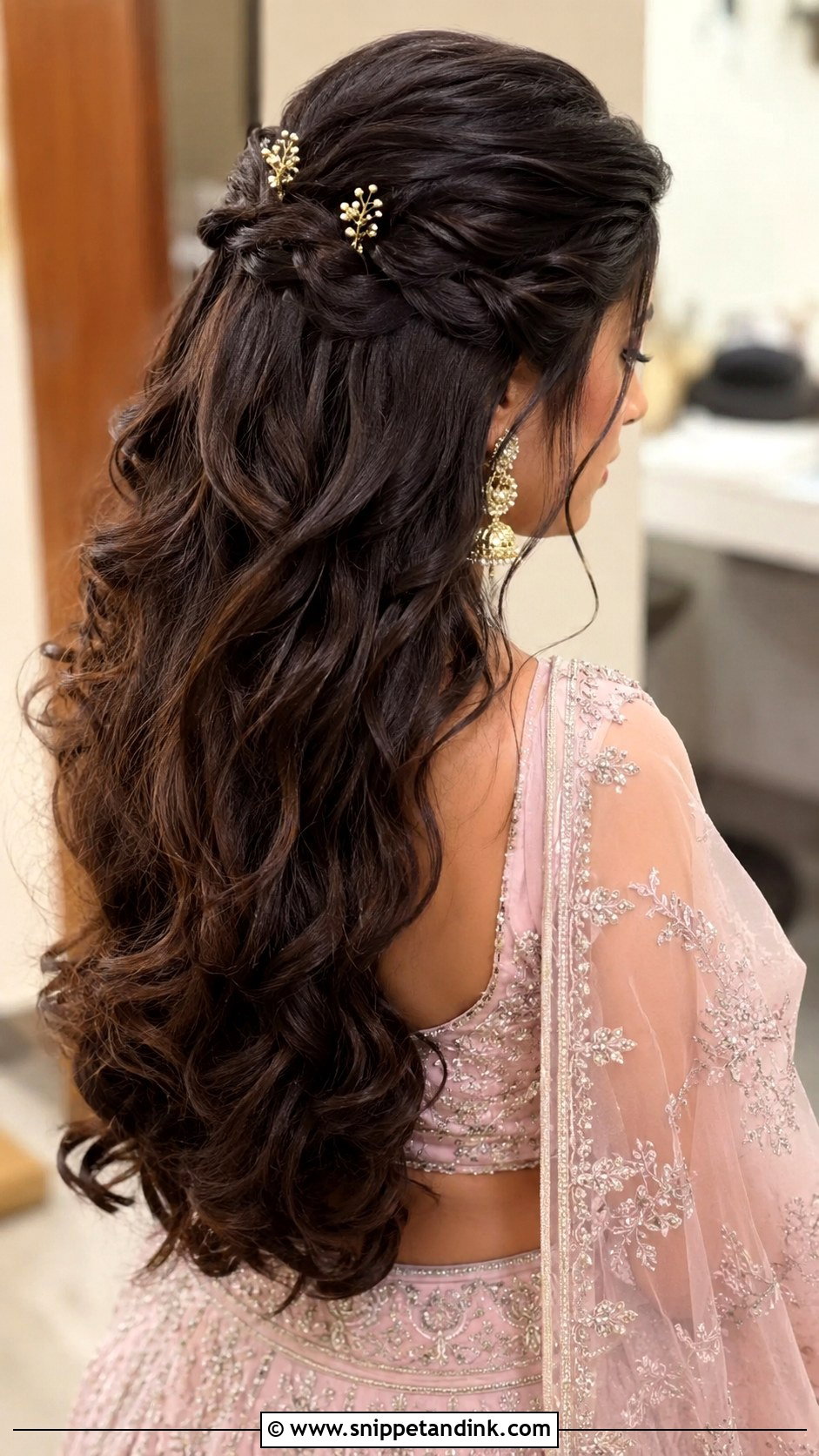
Twisting the two front sections back and pinning them at the crown gives open hair a hidden backbone without becoming a full half-up. The lengths still fall in curls or waves, and the pinned twists hold flowers, pins or a light dupatta. I recommend it to brides who love softness around the face but can’t stand hair swinging forward when they bow their head. Medium to long hair is needed for the twists to meet. It suits the sangeet, the engagement and portraits.
13. Open Hair With Sleek Straight Hair
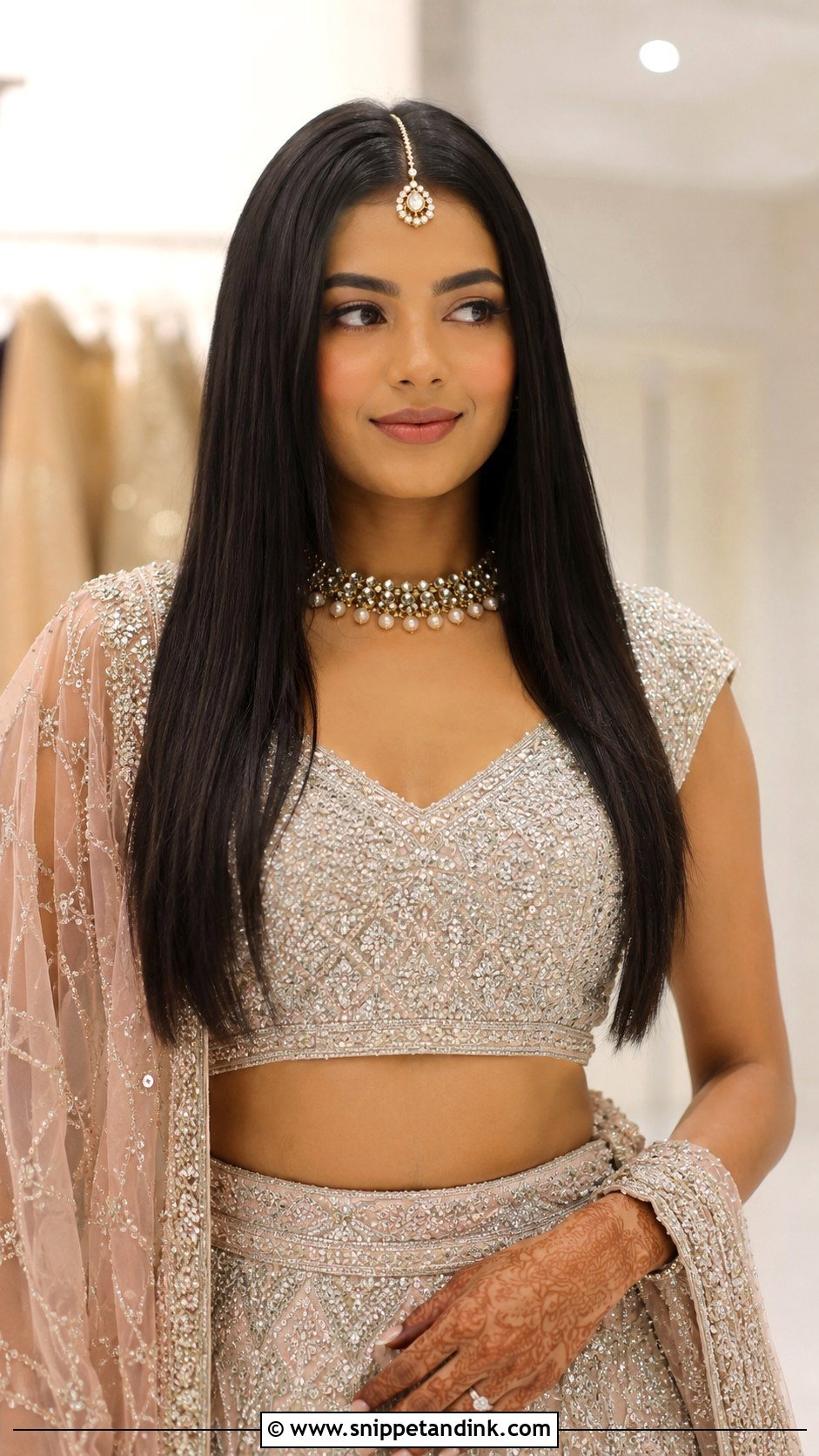
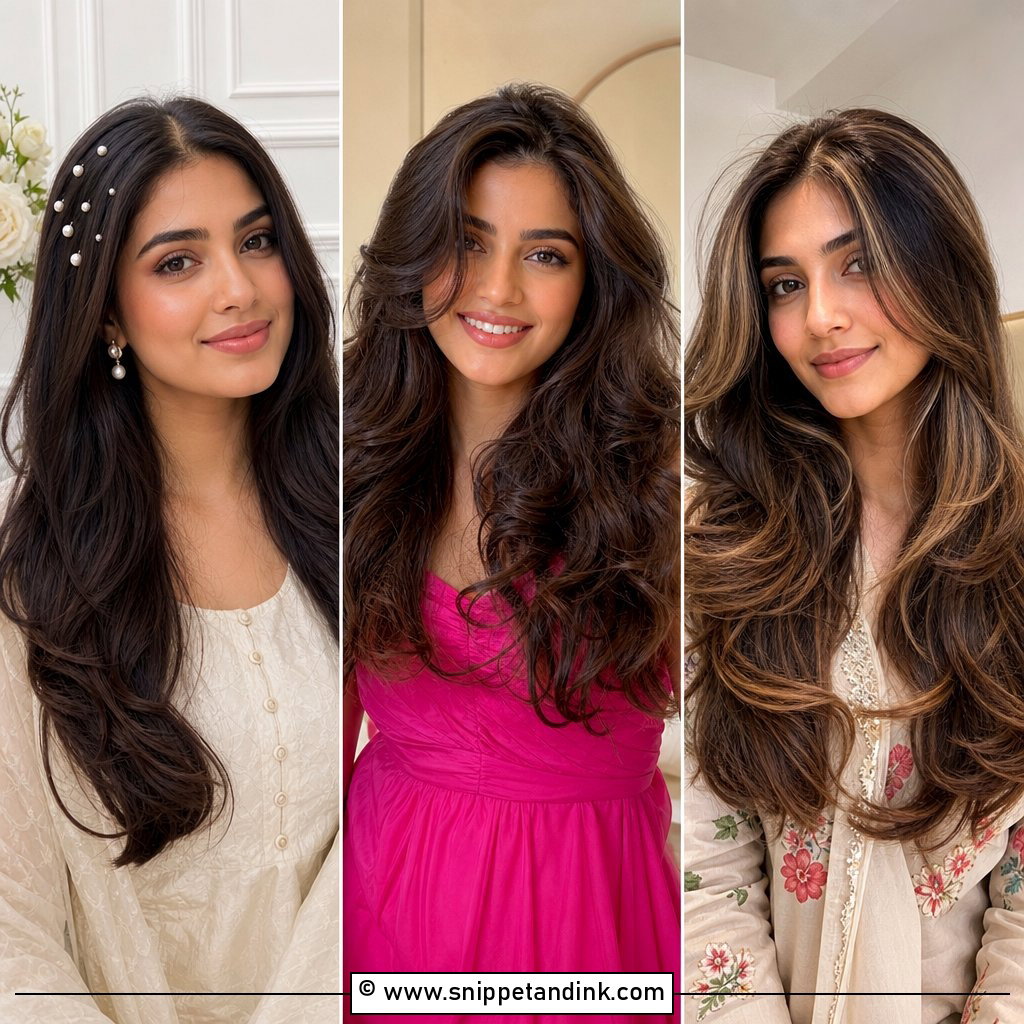
Sleek straight hair looks modern and calm, and it lets a heavily embellished outfit take the attention. It’s also harder than it looks. Any frizz at the part or the ends shows straight away, so I use heat protection, a thin flat iron pass and a shine spray, never a heavy oil. A centre part suits a maang tikka; a side part feels more like a reception. It behaves well under a dupatta because there’s no curl to crush. In heat and humidity, though, it can puff up before the varmala.
14. Open Hair With Voluminous Curls
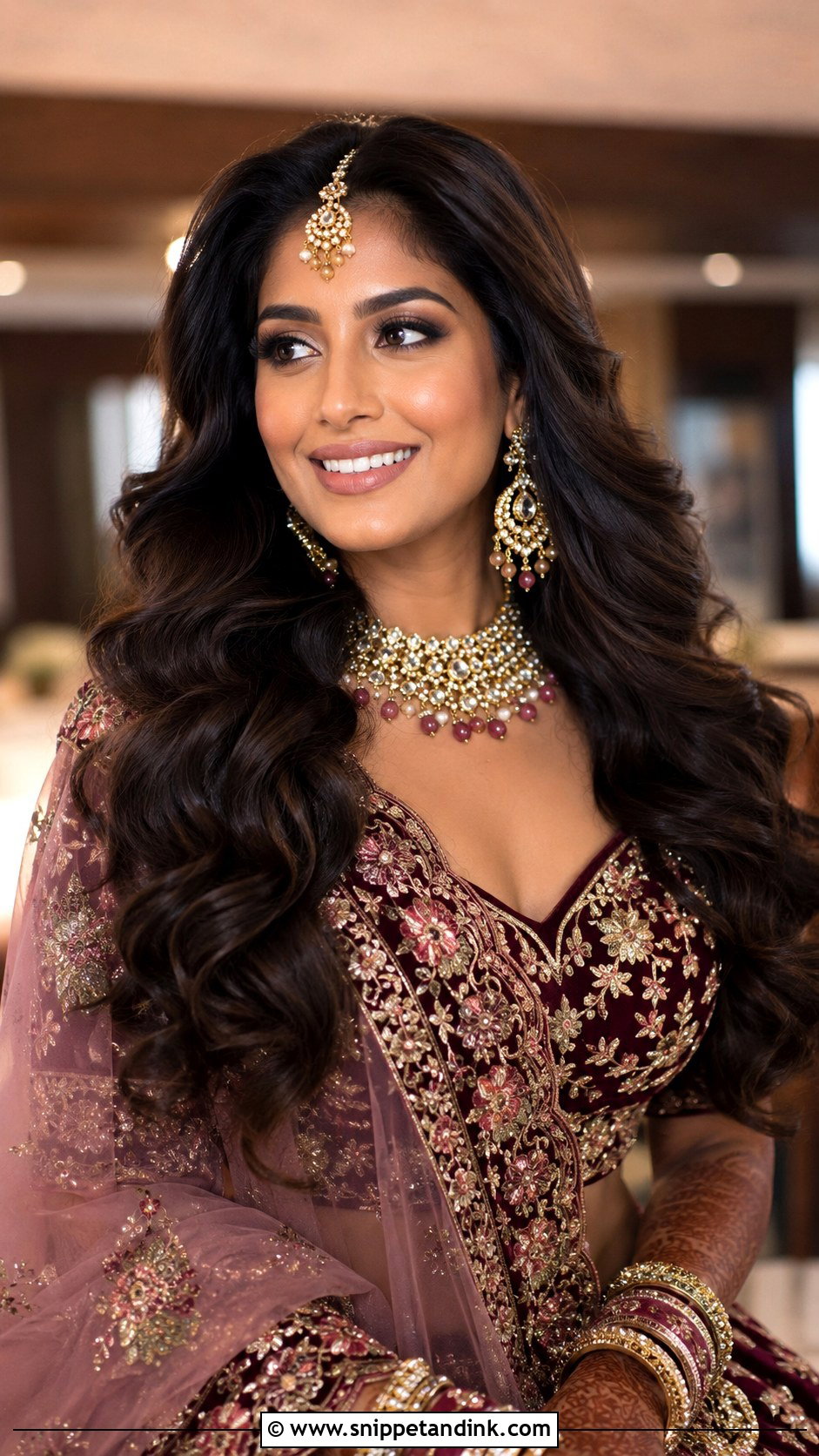
Big curls are the drama option for the reception, the sangeet entrance and bridal portraits. They need density. Most of the full, voluminous looks in inspiration photos involve extensions, and there’s no shame in that. Keep the top smooth so the jewellery sits flat, then build volume from the mid-lengths down. The curls should be large and brushed, never stiff. I’d hesitate on this one for a ceremony with a heavy dupatta on top, since the volume gets squashed and pushed forward.
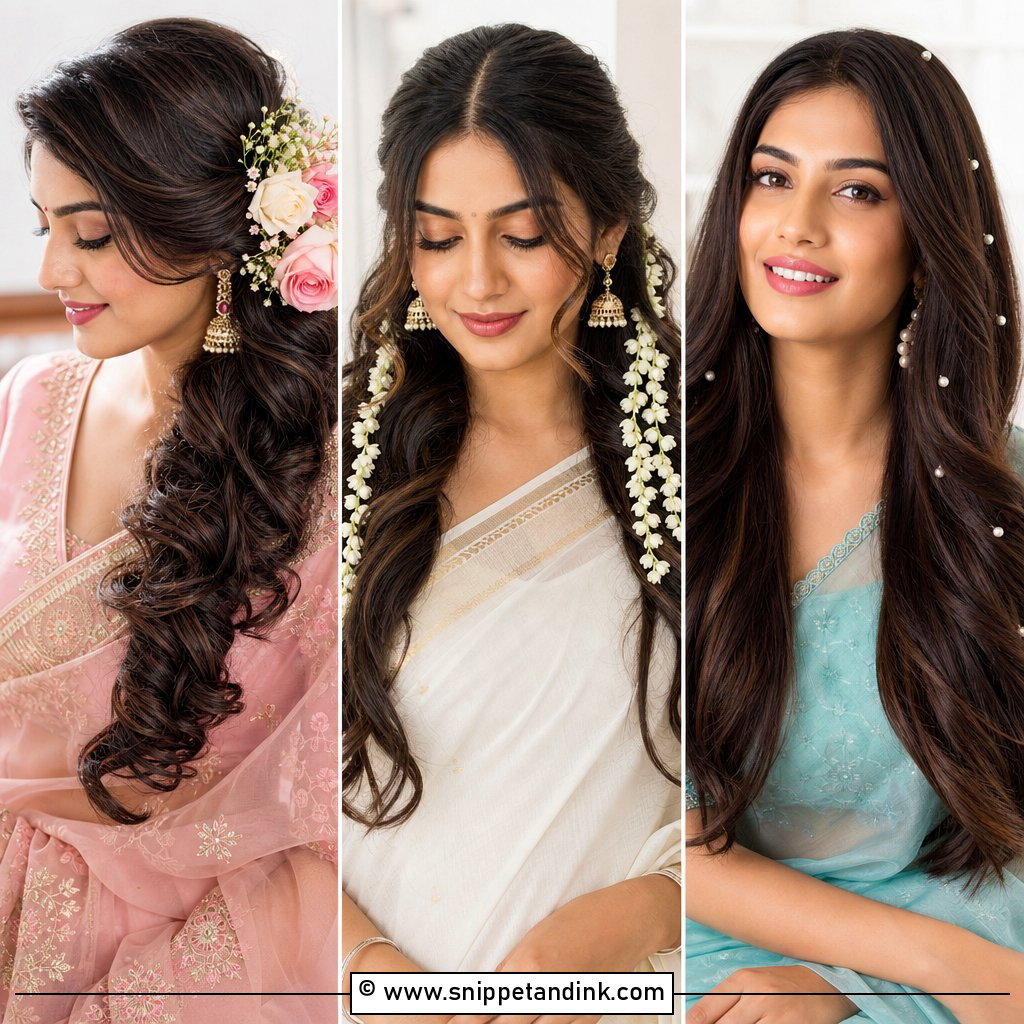

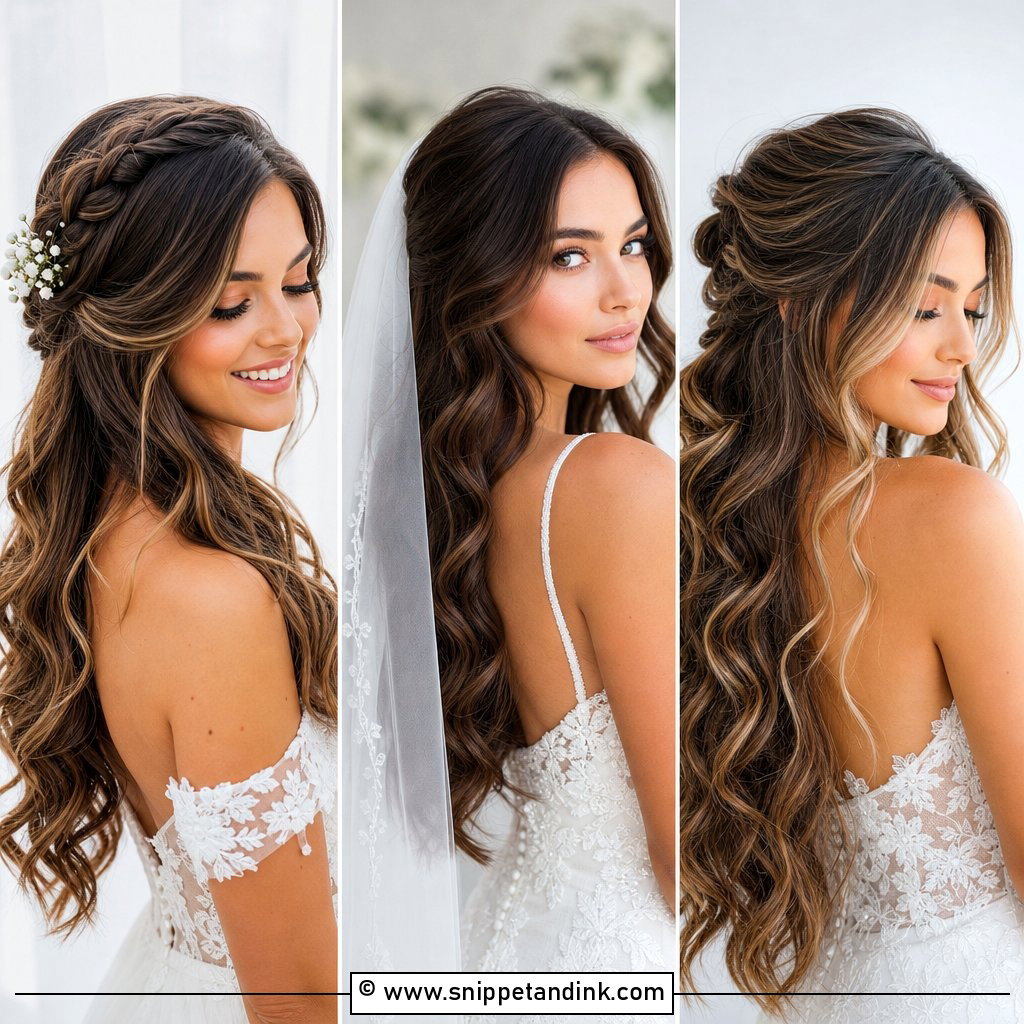
15. Open Hair With Pearl Pins
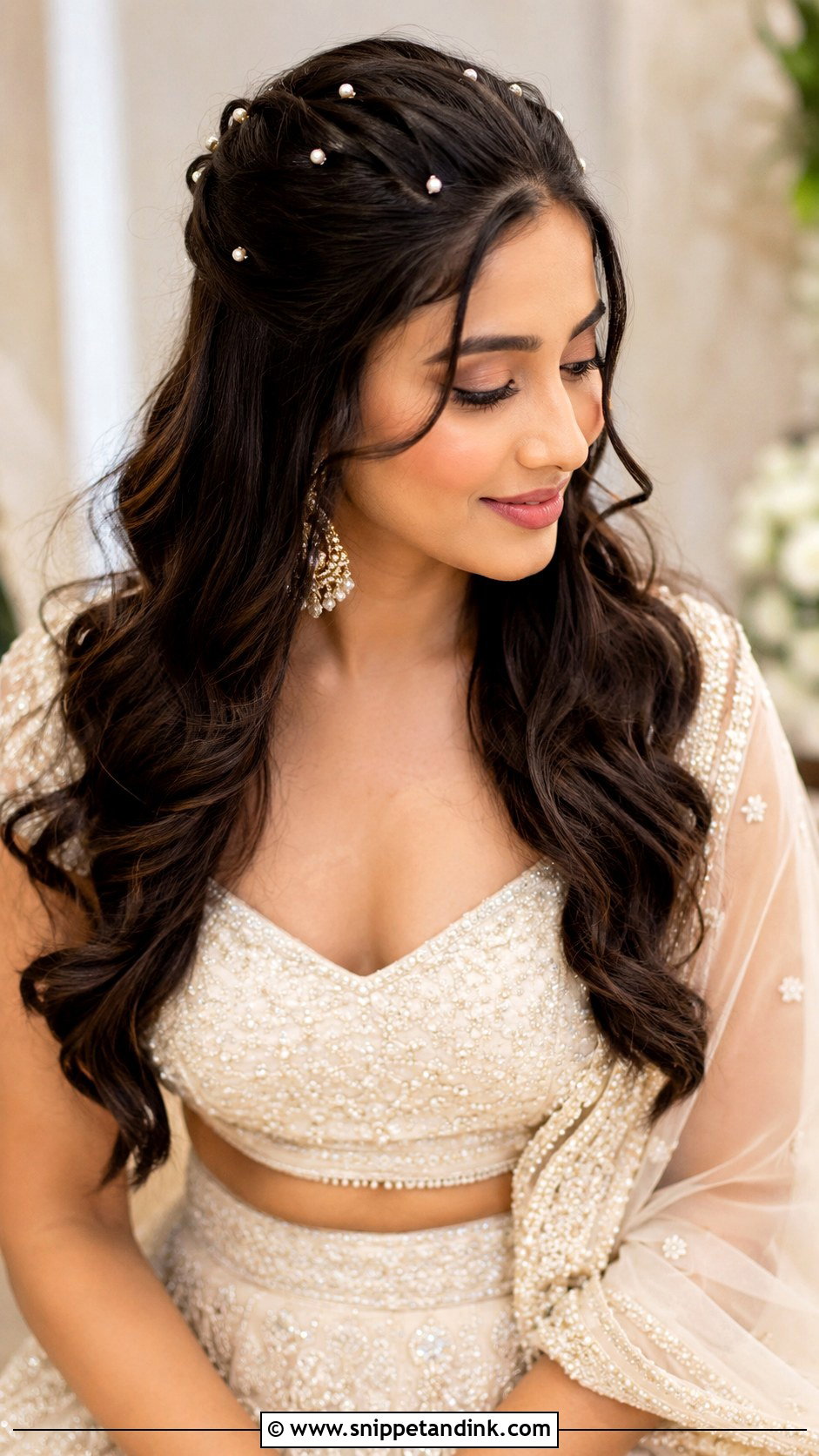
Pearl pins are a good answer when you want hair ornaments with almost no weight. Curl, wave or twist the sides lightly first, because pins slide out of smooth, freshly blow-dried hair. Then add the pearls near the crown or along one side rather than scattering them everywhere. They sit well with ivory lehengas, pastel sarees and reception outfits paired with pearl or diamond jewellery. They also come out in seconds if you want a simpler look for the after-party.
Adapting These Looks to Fine, Dense or Curly Texture
The same photo will turn out differently on three heads of hair. Here’s how I adjust the method for each texture.
Fine hair
It holds a curl but loses volume. I prep with a volumising mousse at the roots, curl in smaller sections and build any jewellery base from a slim padding piece rather than backcombing alone. Sleek straight styles show the scalp on fine hair, so I’d favour waves.
Dense, heavy hair
It has volume to spare but drops curls under its own weight. Larger barrels, longer cooling time and fewer, firmer pins help. Half-up versions take some of that weight off the lengths and keep curls springy for longer.
Naturally wavy or curly hair
Don’t automatically straighten and recurl it. Defining your own pattern with a cream and a diffuser often lasts longer in humidity than heat-set curls do. Tell your stylist early, since this needs a different product kit and more drying time on the morning.
Structure Under the Softness
Open bridal hair can look every bit as formal and secure as a bun or braid when the shape, accessories and hold are planned together. Each style here sets its own mood, from Hollywood waves and sleek lengths to flowers and pearls. Your outfit weight, dupatta placement, jewellery, face shape and schedule should drive the decision more than a photo does. Do a trial, ideally with your actual headpiece. With proper prep, you’ll stop thinking about your hair after the first hour, which is exactly how it should be.
You'll Like These Ideas:




Leave a Reply