
A dulhan wearing her hair open is carrying more than a Western bride ever does: a tikka or matha patti, maybe a passa, often a heavy dupatta, sometimes flowers, all anchored into hair that is supposed to look loose. So the styles below aren’t only loose curls. They’re polished waves, half-up shapes, center parts, soft volume and crown work strong enough to hold jewelry through the pheras. They suit lehenga, saree, sharara and gown-style bridal outfits. Plan the structure around what goes on your head first, and the softness can come after.
Tikka First, Dupatta Last: The Pinning Order That Holds
On a wedding morning, I put the hair and jewelry together in a fixed order. Change it and something heavy ends up with nothing to hold onto.
- Curl or wave the lengths and let them cool fully.
- Build the hidden anchor at the crown: teased hair, or a small padded base on fine hair, pinned firmly.
- Set the maang tikka or matha patti and pin its chains into the anchor. Check it’s centered from the front and from above.
- Add the passa or jhumar on its side, pinned separately.
- Brush out the curls, then spray.
- Place the dupatta last, pinning through the fabric into the anchor at the crown and once behind each ear.
Bring your real jewelry and dupatta to the trial. A matha patti borrowed from the salon will weigh and hang differently, and the pins would end up in the wrong place.
When open hair isn’t the right call
If your dupatta is heavily embroidered and you plan to keep it on your head through a long ceremony, open hair will feel the strain. A low bun or half-up style takes the weight better. You can still change to open hair for the reception.
1. Indian Bridal Open Hair With Soft Curls
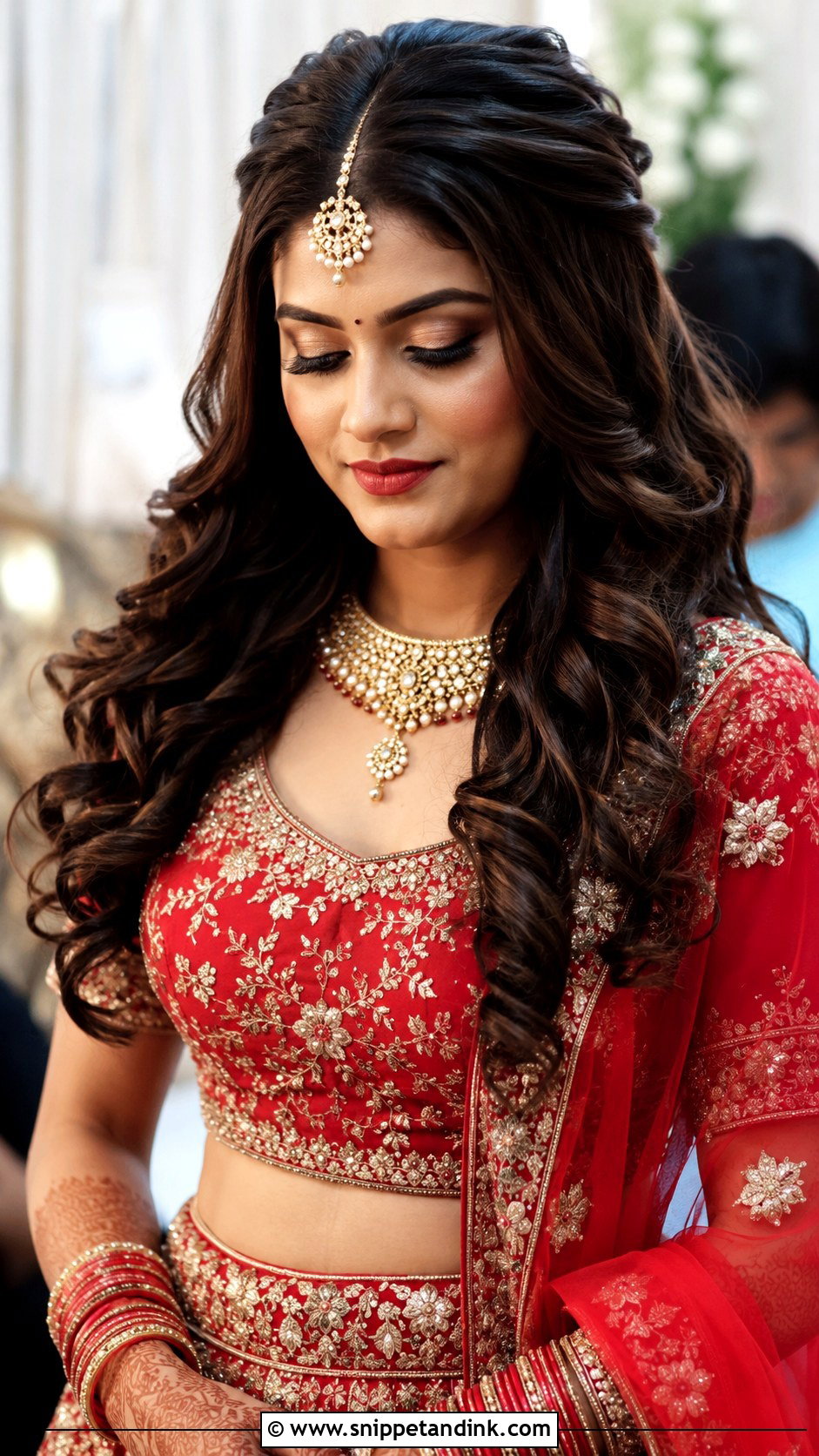
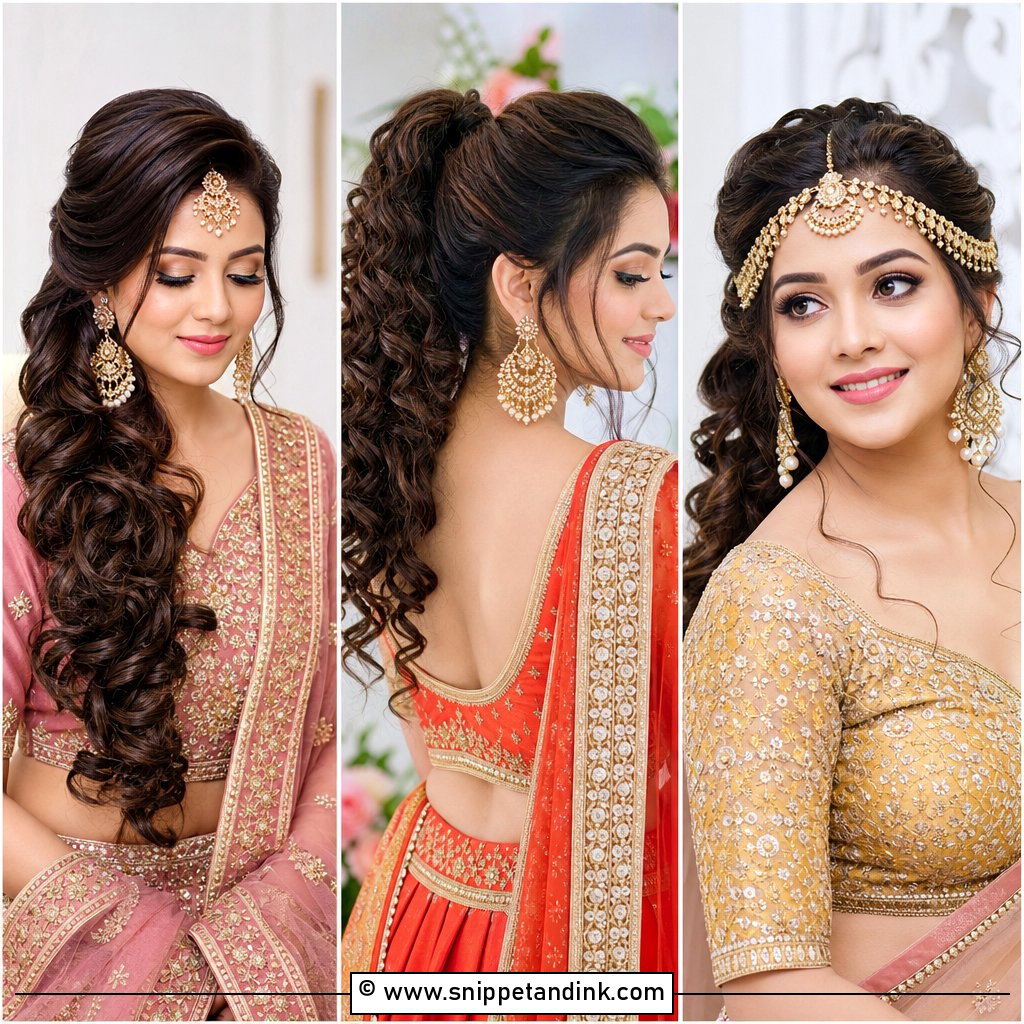
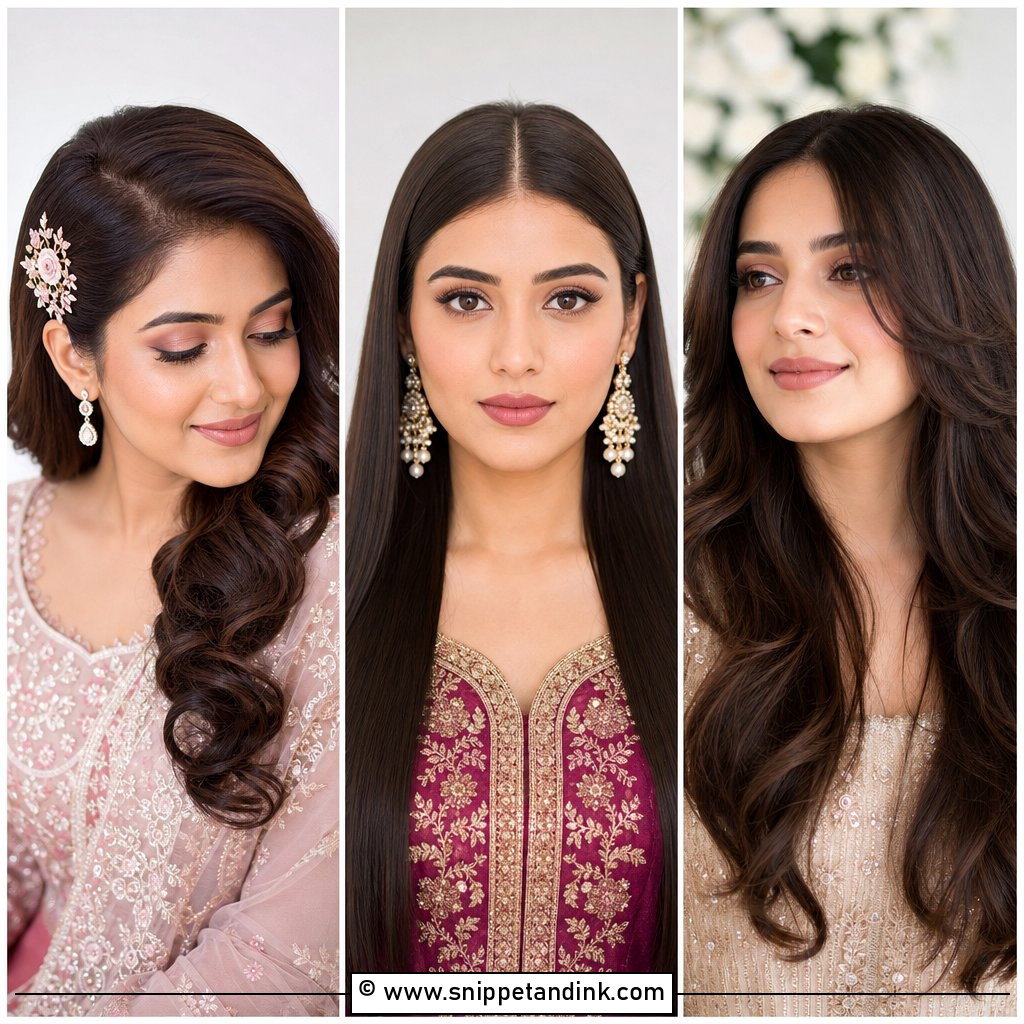
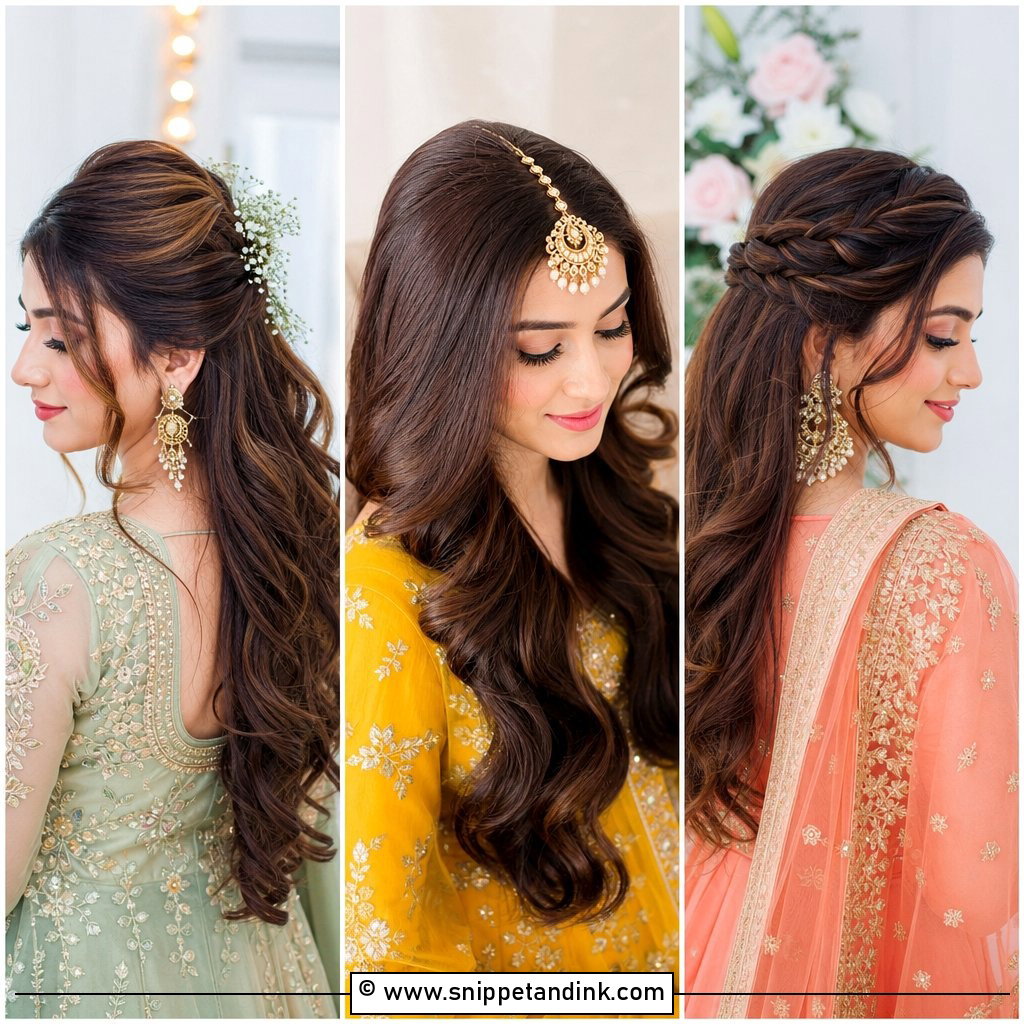
Soft curls are the dulhan look I’m booked for most. They move through the length while the top stays smooth enough for a maang tikka, passa or light veil. Long and medium hair both carry them, and they flatter round, oval and heart-shaped faces. Brushed curls read softer than ringlets. A middle part keeps it traditional; switch to a side part for the reception if you want more glamour. Indian hair is often thick and heavy, so I curl in smaller sections than the hair seems to need, otherwise the inside stays straight.
2. Indian Bridal Open Hair With Maang Tikka
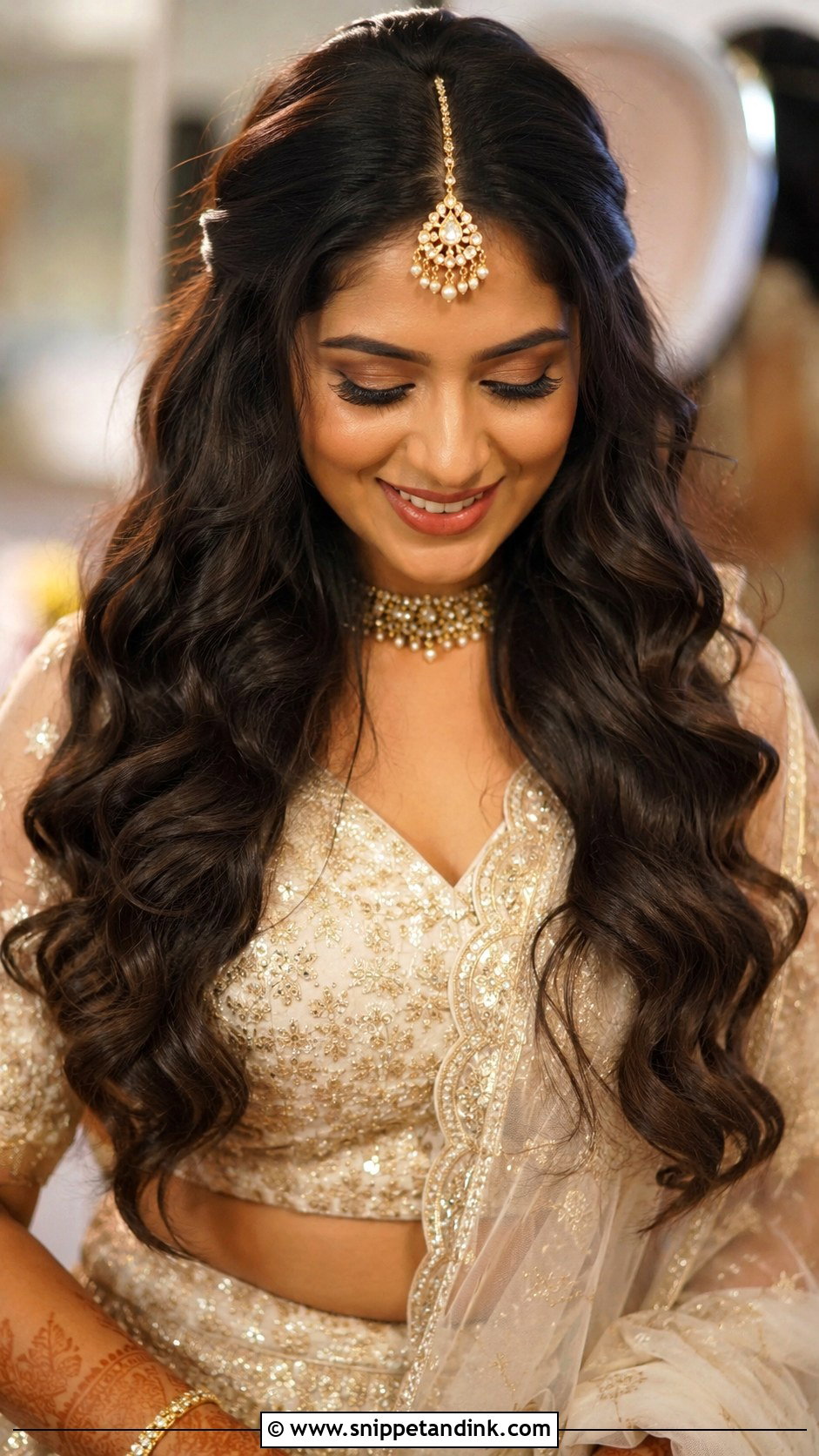
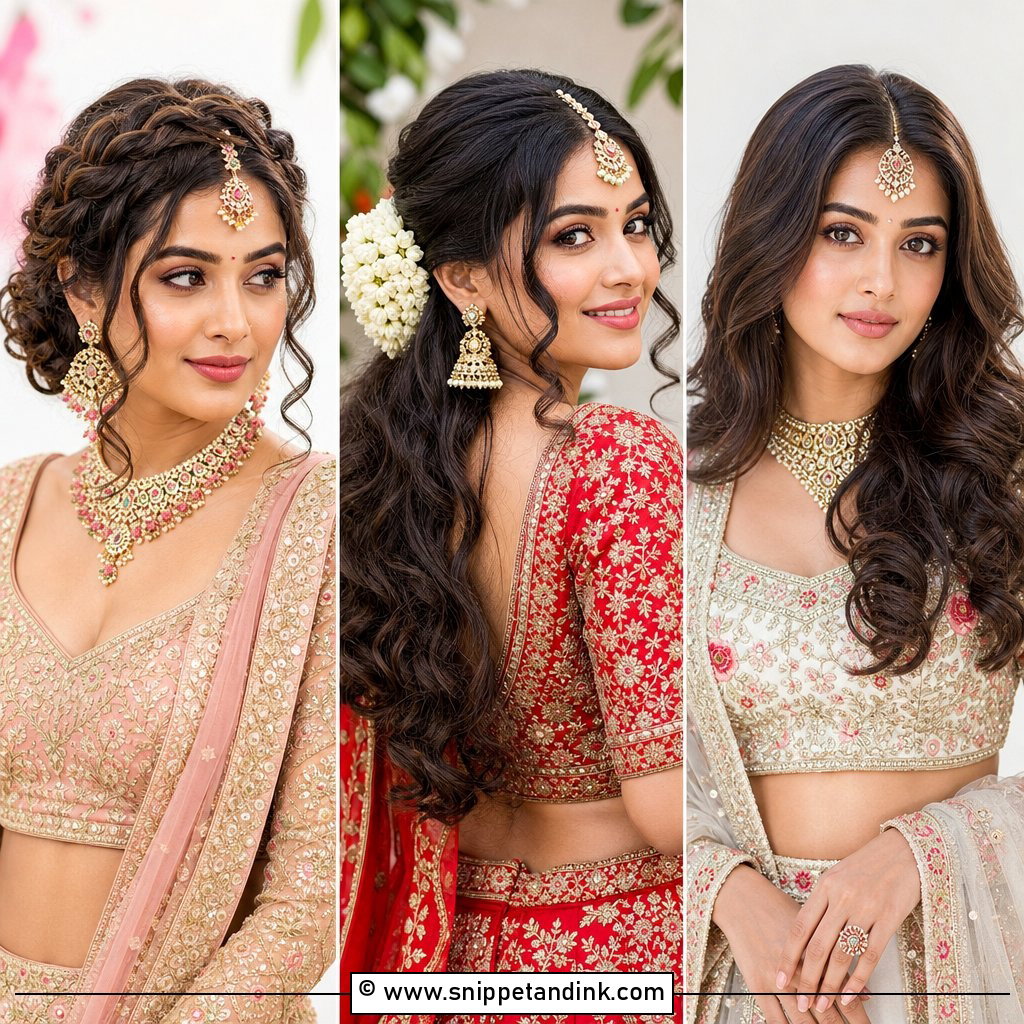
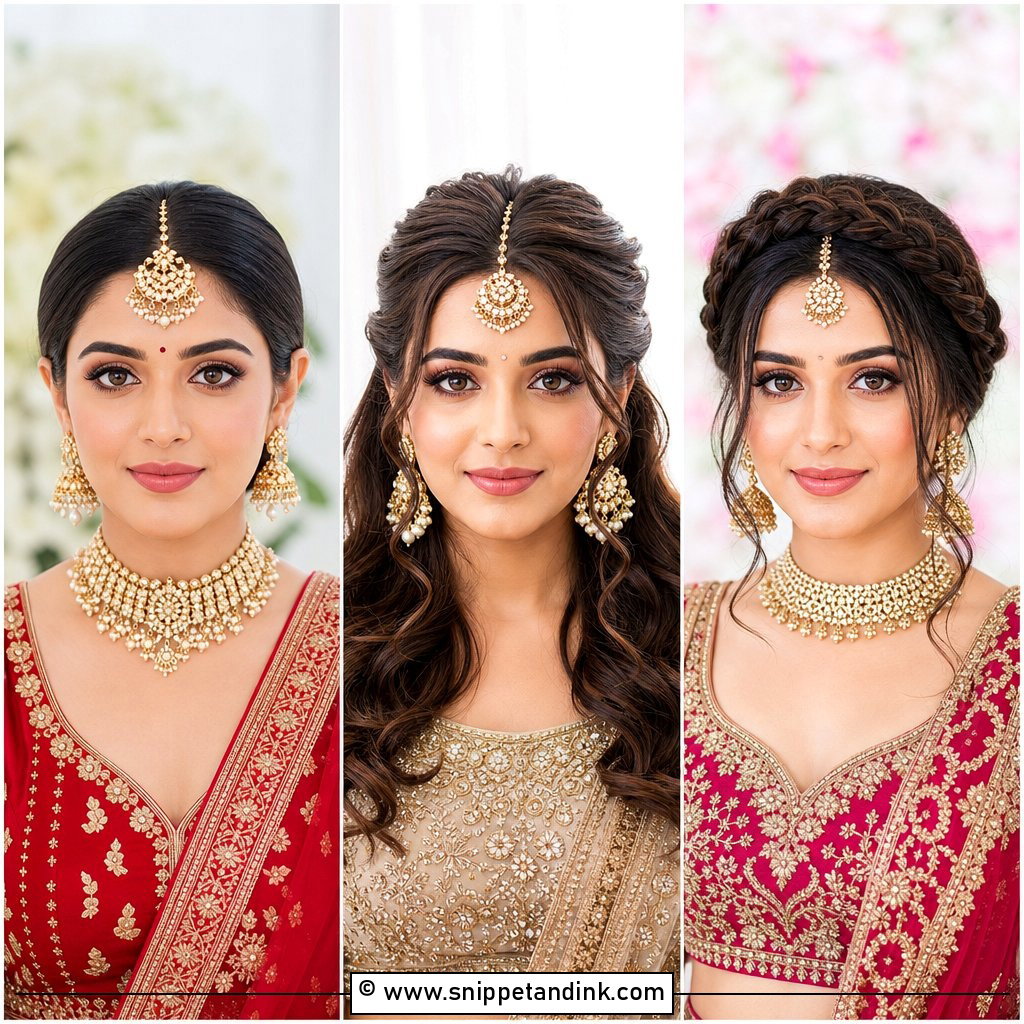
With a maang tikka, the jewelry is the center of the whole look. Indian bridal open hair around it can be waves, curls or a sleek blowout, but the front has to be neat and level, or the tikka sits crooked. A small backcombed base at the crown holds the chain. With a heavy lehenga or embroidered dupatta, keep the volume at the ends, not near the face, or the frame gets crowded. I check the tikka from a low camera angle too, because that’s where a tilted pendant shows.
3. Indian Bridal Open Hair With Matha Patti
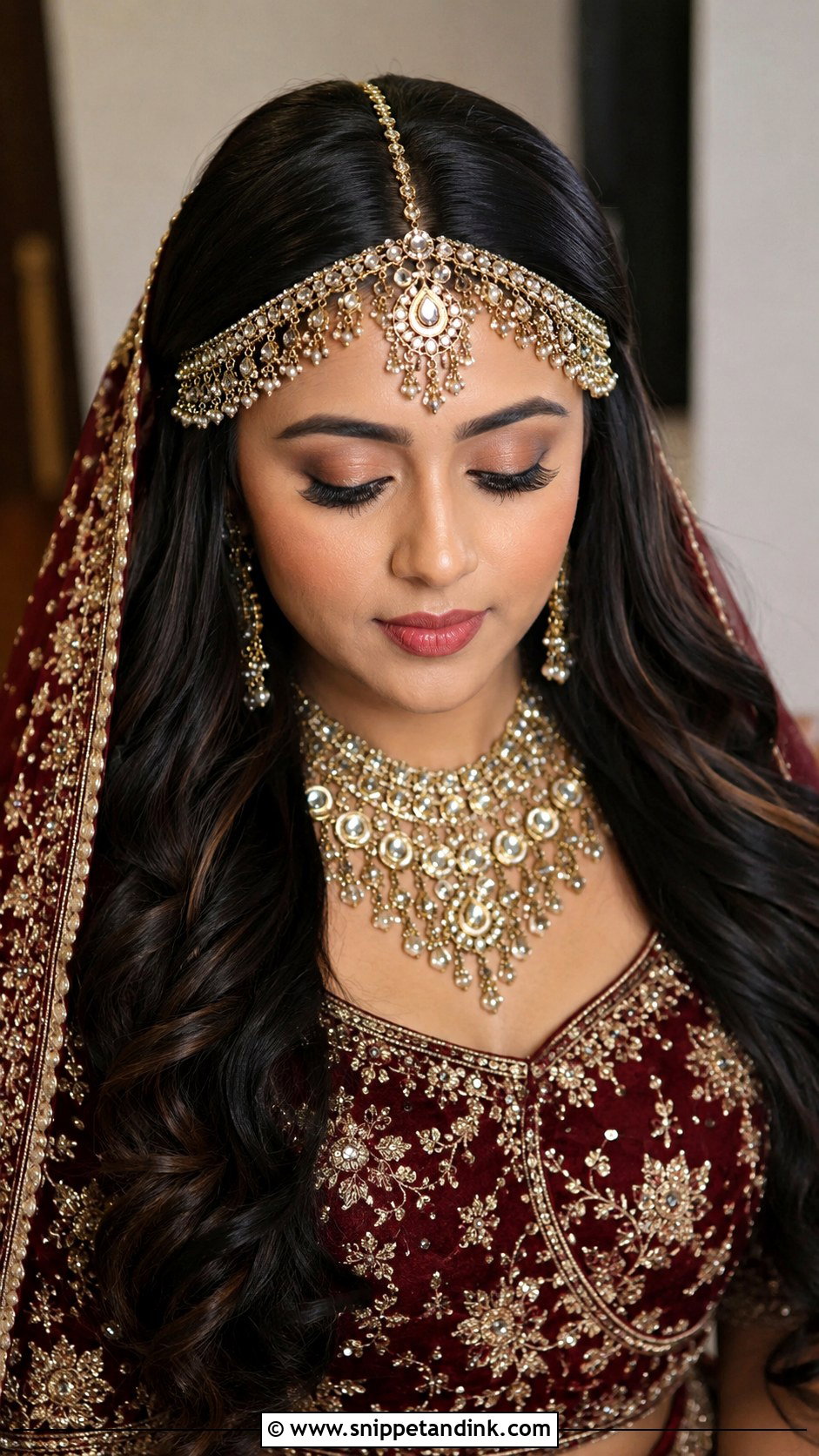
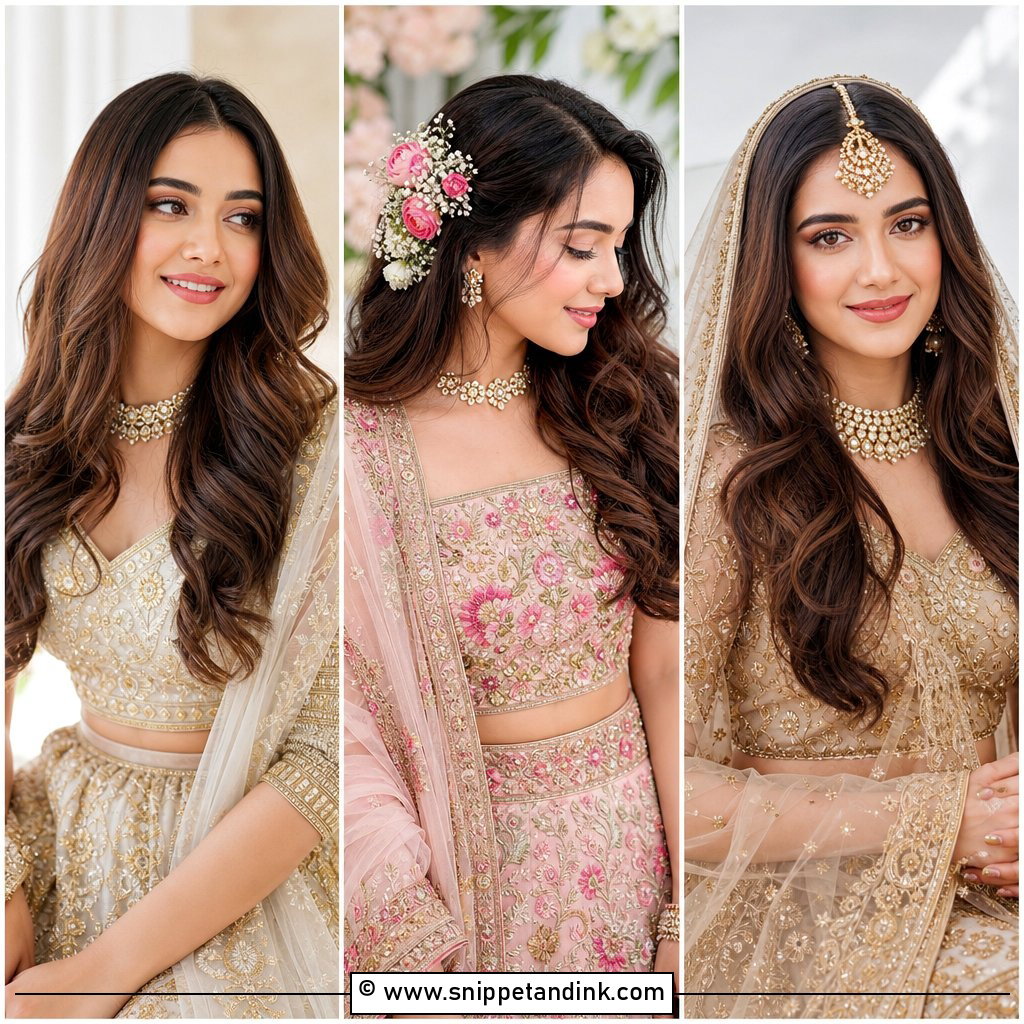
A matha patti covers more of the hairline, so the front needs to be clean and firmly anchored. Loose waves through the length soften all that metal. Red, maroon, ivory, gold and pastel lehengas all suit it. It works when the dupatta is pinned lightly at the crown or worn behind the shoulders. Control the volume at the temples. If the hair puffs out there, the side chains lift away from the head and the piece sits unevenly. I pin each side chain separately, not just the center.
4. Indian Bridal Open Hair With Dupatta
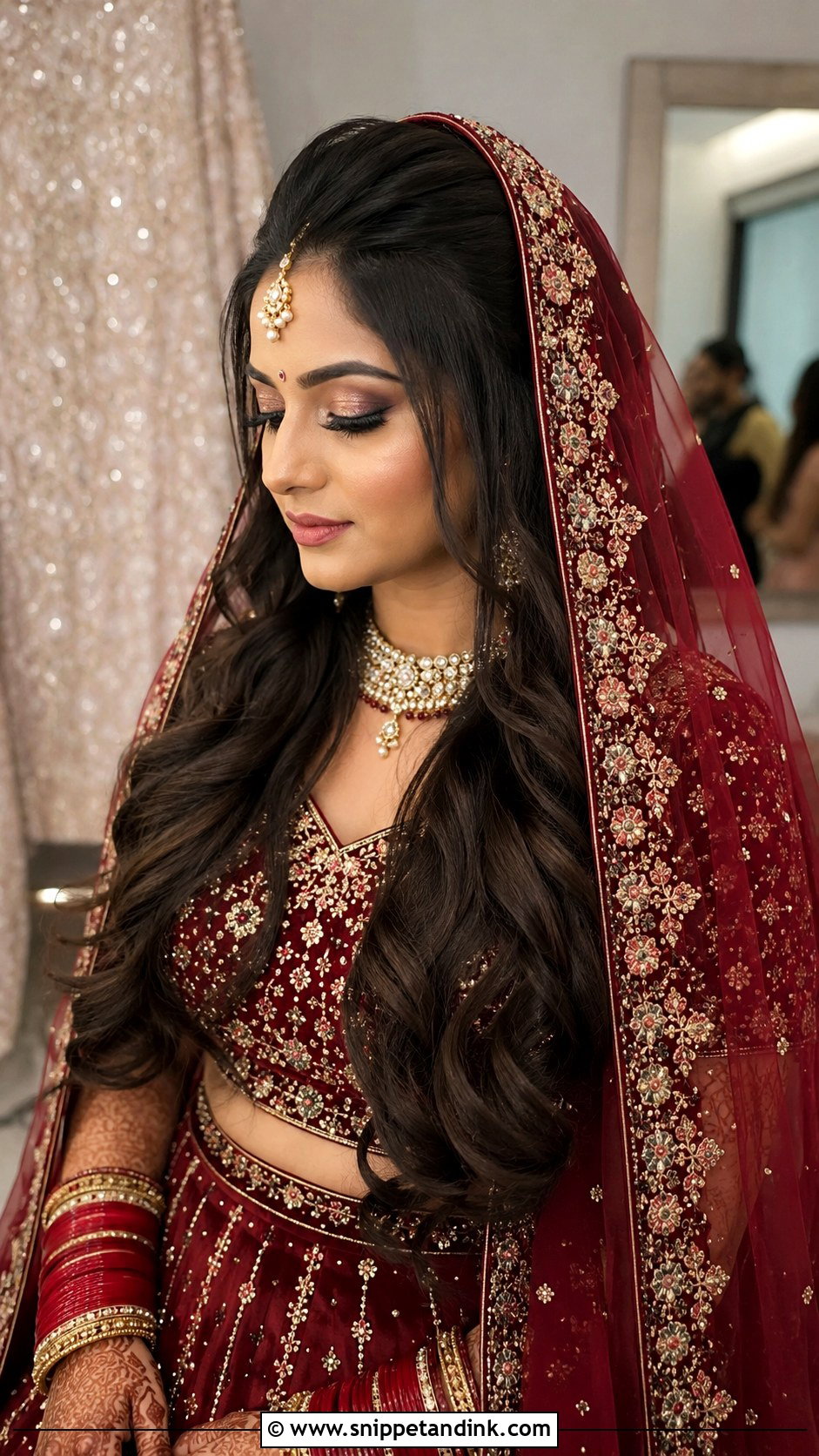
The dupatta is the real test of open bridal hair. It has to sit on a base firm enough to pin into, while curls or waves flow out below it. I lift the crown softly, pin the inner sections into a hidden anchor and leave the front and sides open. If your dupatta is very heavy, ask for hidden padding or cross-pinning, two pins crossing through the fabric into the anchor. It keeps the drape steady through the pheras, the portraits and every elder adjusting it for you.
5. Indian Bridal Open Hair With Gajra
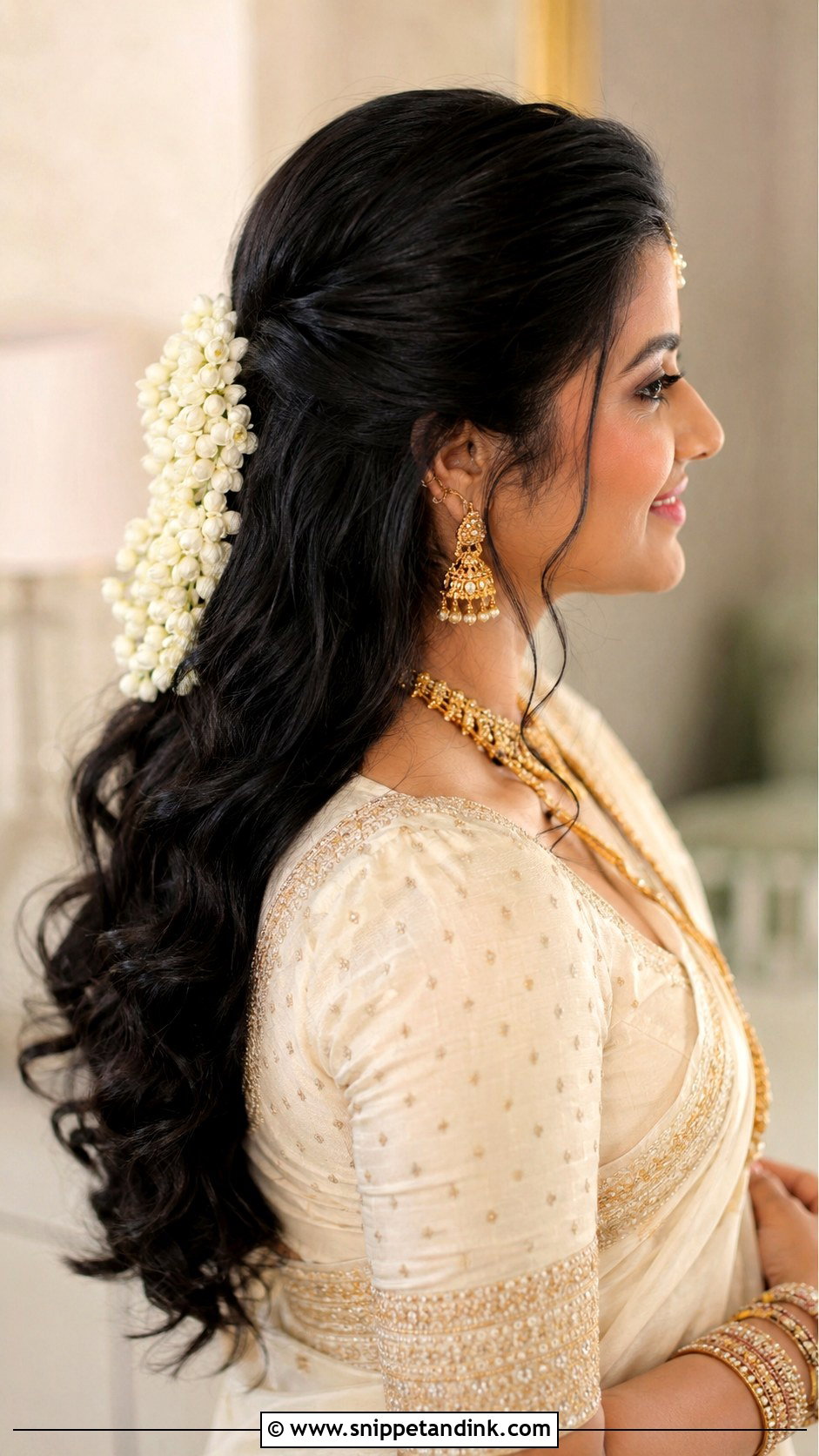
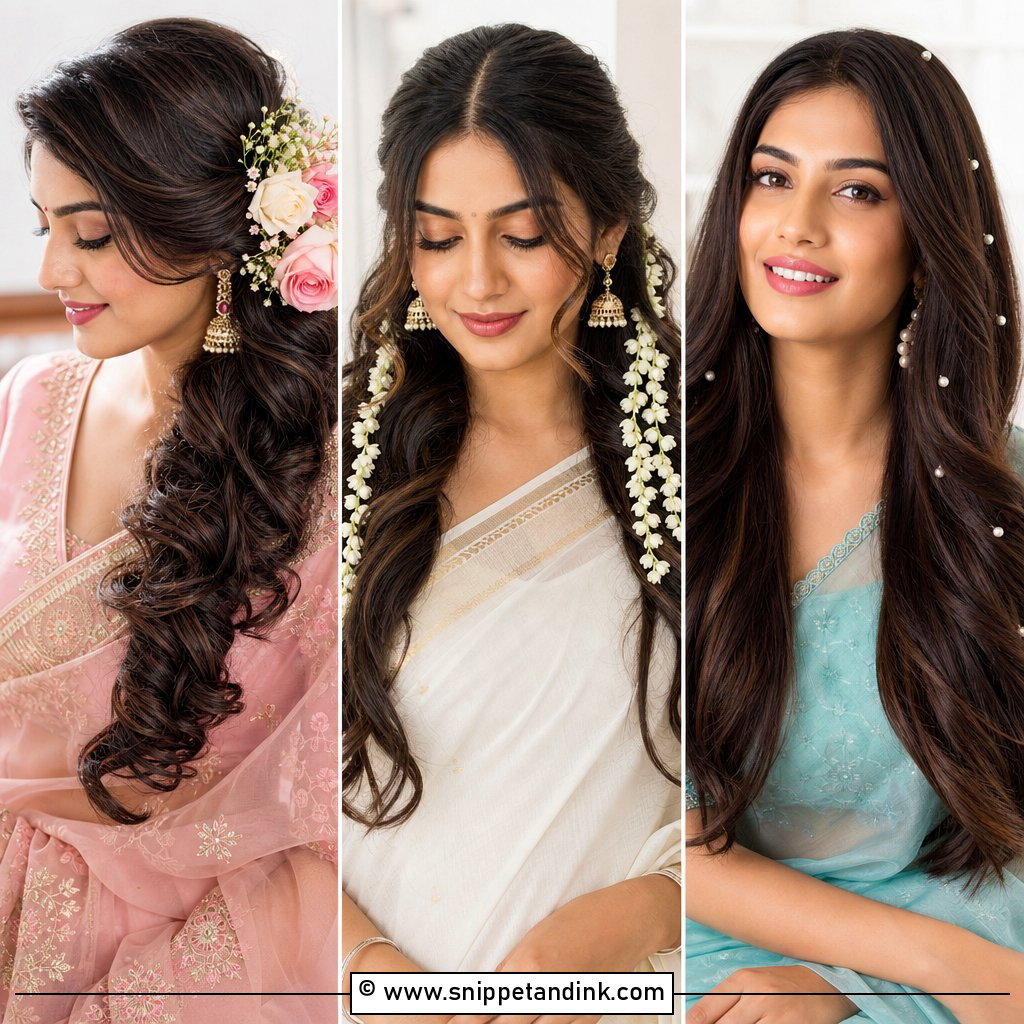
A gajra gives open hair a traditional touch without tying it all up. It can sit like a soft back crown, run along a half-up section or wrap a pinned twist while the rest stays loose. Mehndi, haldi, temple weddings and portraits all suit it. Curls and natural waves hold flowers better than straight hair. Fresh jasmine smells wonderful but browns within hours in heat. Order it for the morning, keep it wrapped in a damp cloth in the fridge, and pin it on last.
6. Indian Bridal Open Hair With Side Part
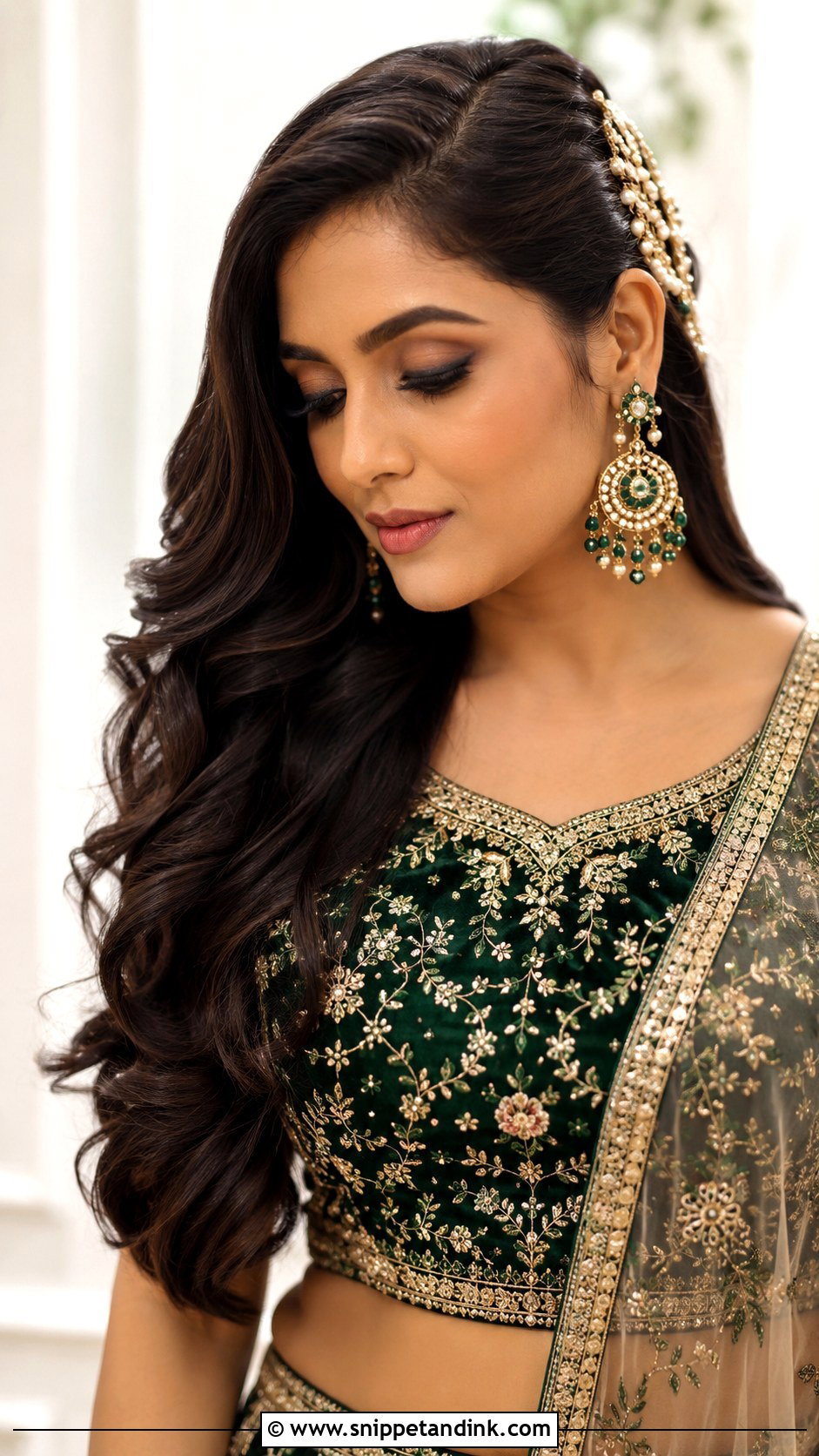
A side part frames the face and shifts the weight of the look to one side. Deep parts are dramatic; soft ones are easier to wear. It’s the natural partner for a passa, jhumar, statement earrings or an off-center dupatta drape. The length can be curled, waved or blown out. It also balances a wider face, since the hair crosses the forehead at an angle. Over a long event, pin the front section lightly underneath so it stays shaped without going crunchy.
7. Indian Bridal Open Hair With Loose Waves
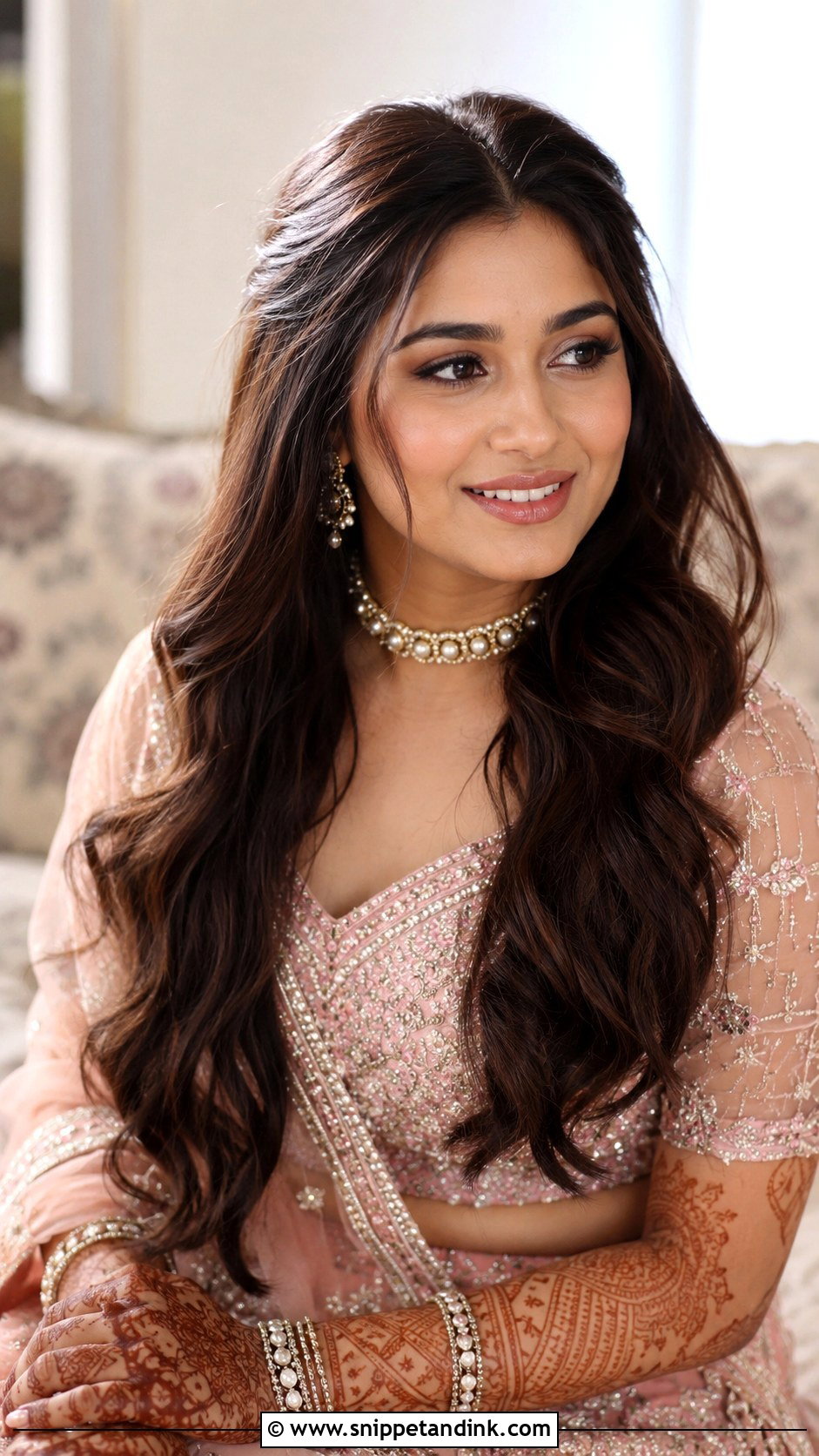
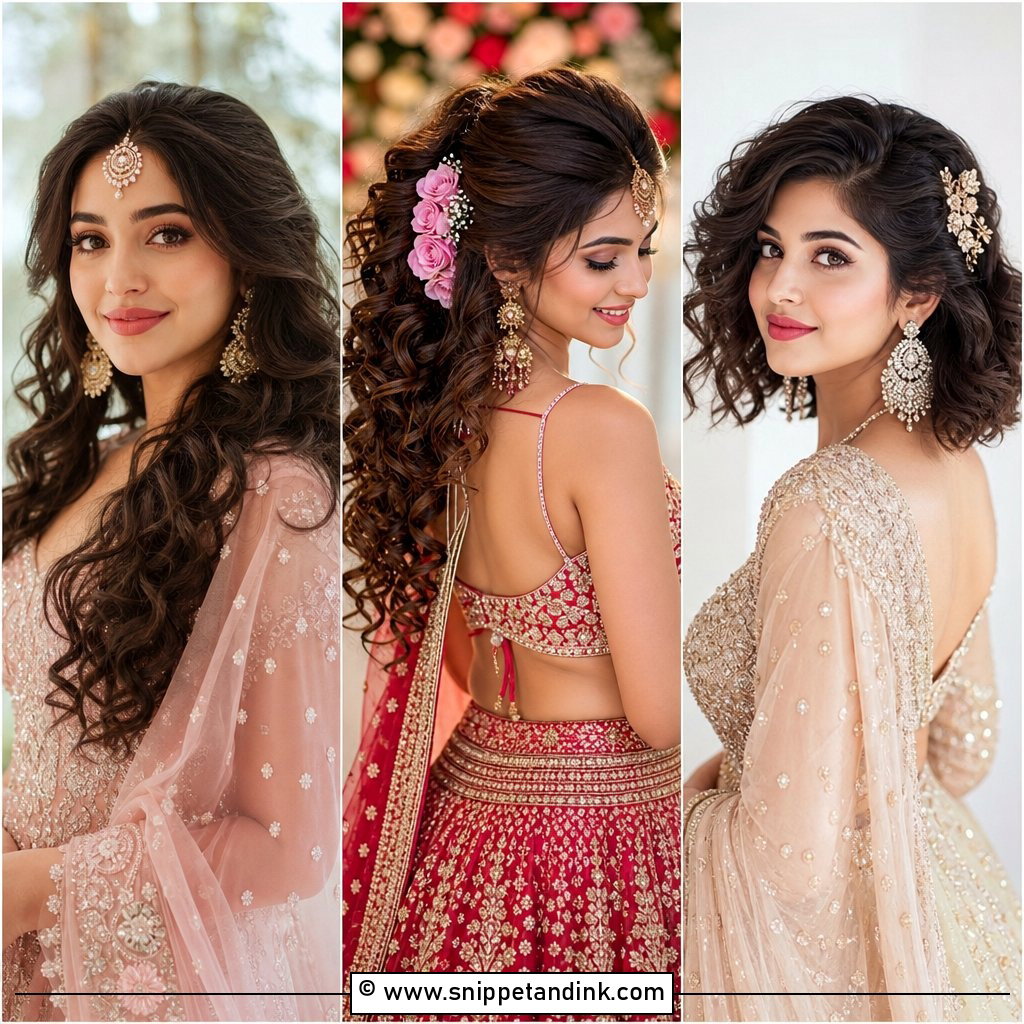
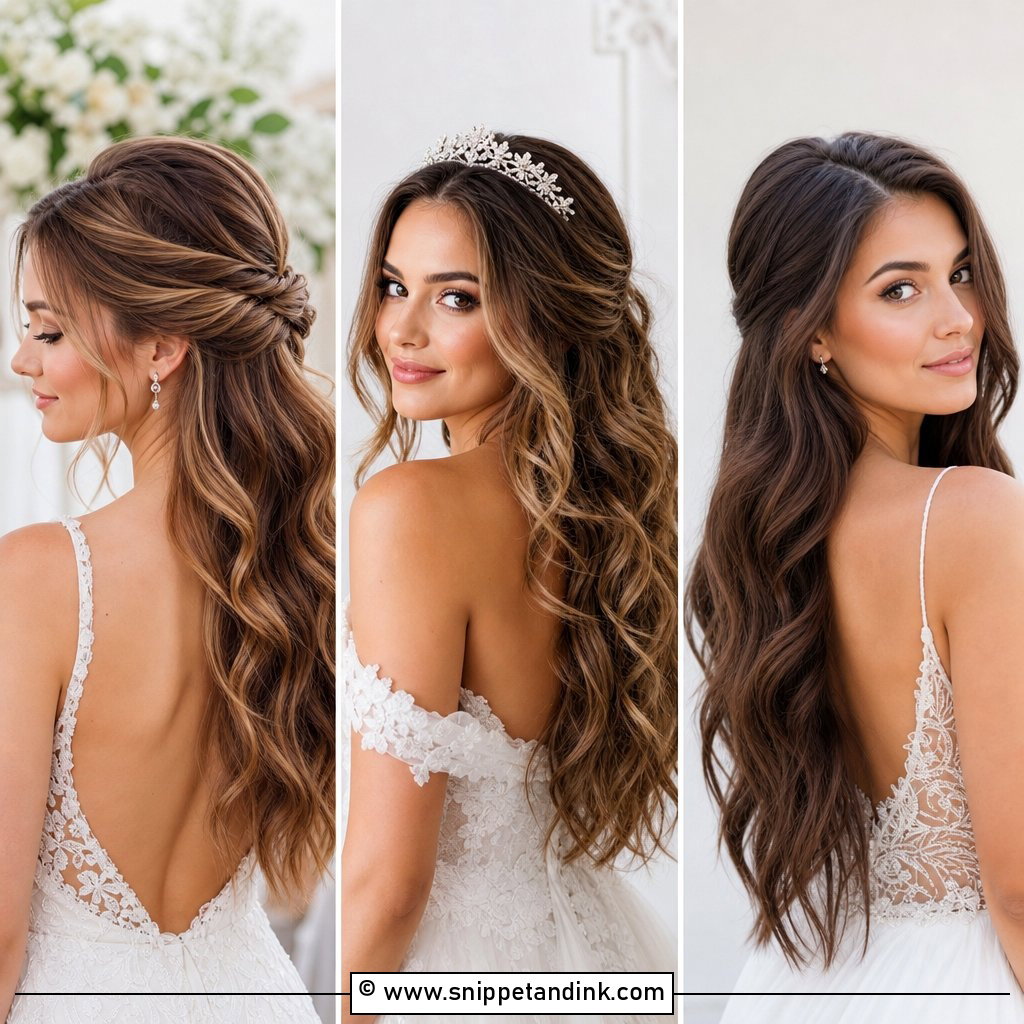
Loose waves suit a bride who finds heavy curls or a bun too traditional. They need to stay soft but structured enough to last through dancing. Pastel lehengas, pearl jewelry, floral dupattas and reception gowns all pair well. Middle parts read classic; a few face-framing pieces modernize it. Keep serum on the mid-lengths and ends only. A drop too much at the crown and the tikka slides on the slick surface.
8. Indian Bridal Open Hair With Half Up
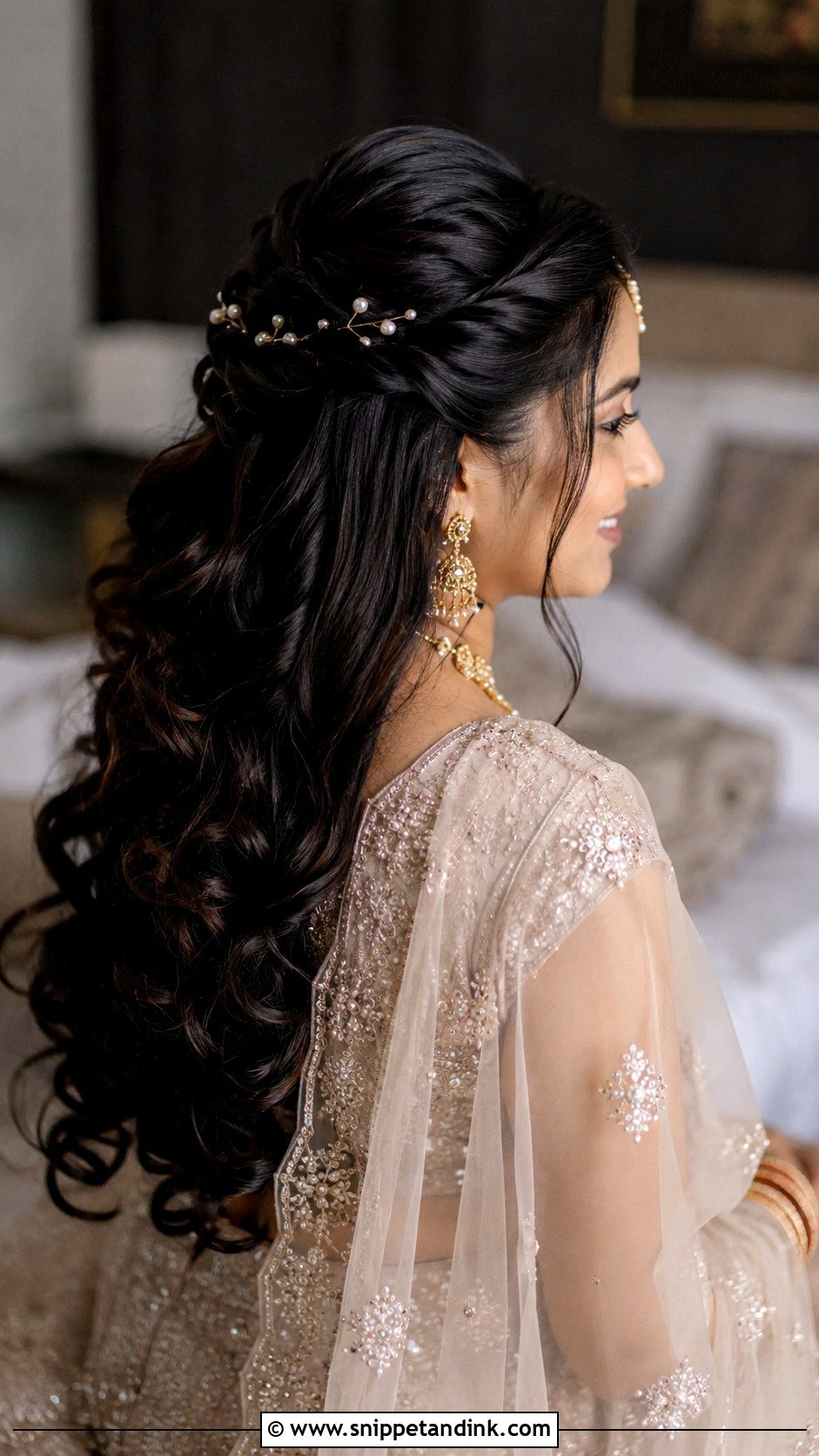
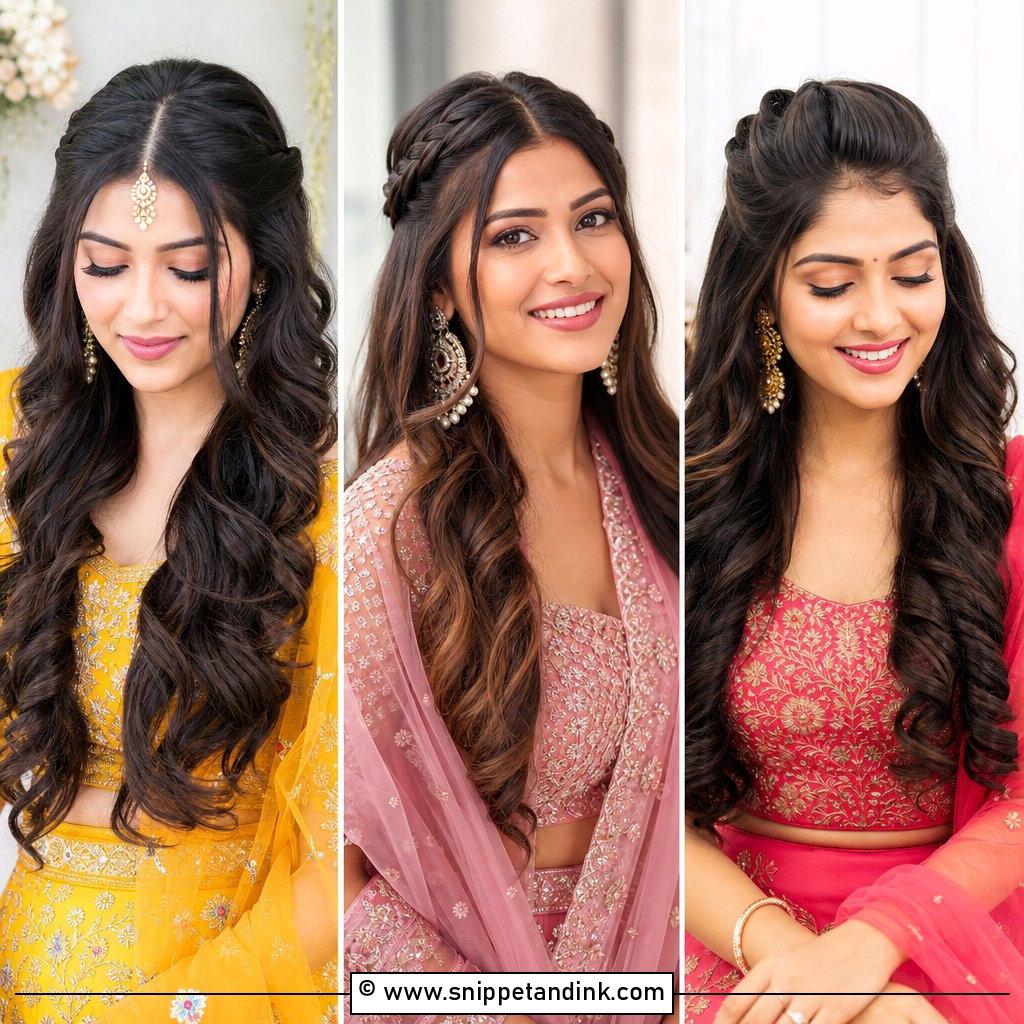
Half-up is the most practical open style for a dulhan. The pinned top gives jewelry, flowers and dupatta pins something solid to hold, while curls or waves fall below. Twist, braid, puff or simply pin the top depending on your face shape. Thick hair especially benefits, since the front stays controlled and off your face through hours of rituals. The pinned base is also what makes it hold from the front, side and back in group photos.
9. Indian Bridal Open Hair With Front Puff
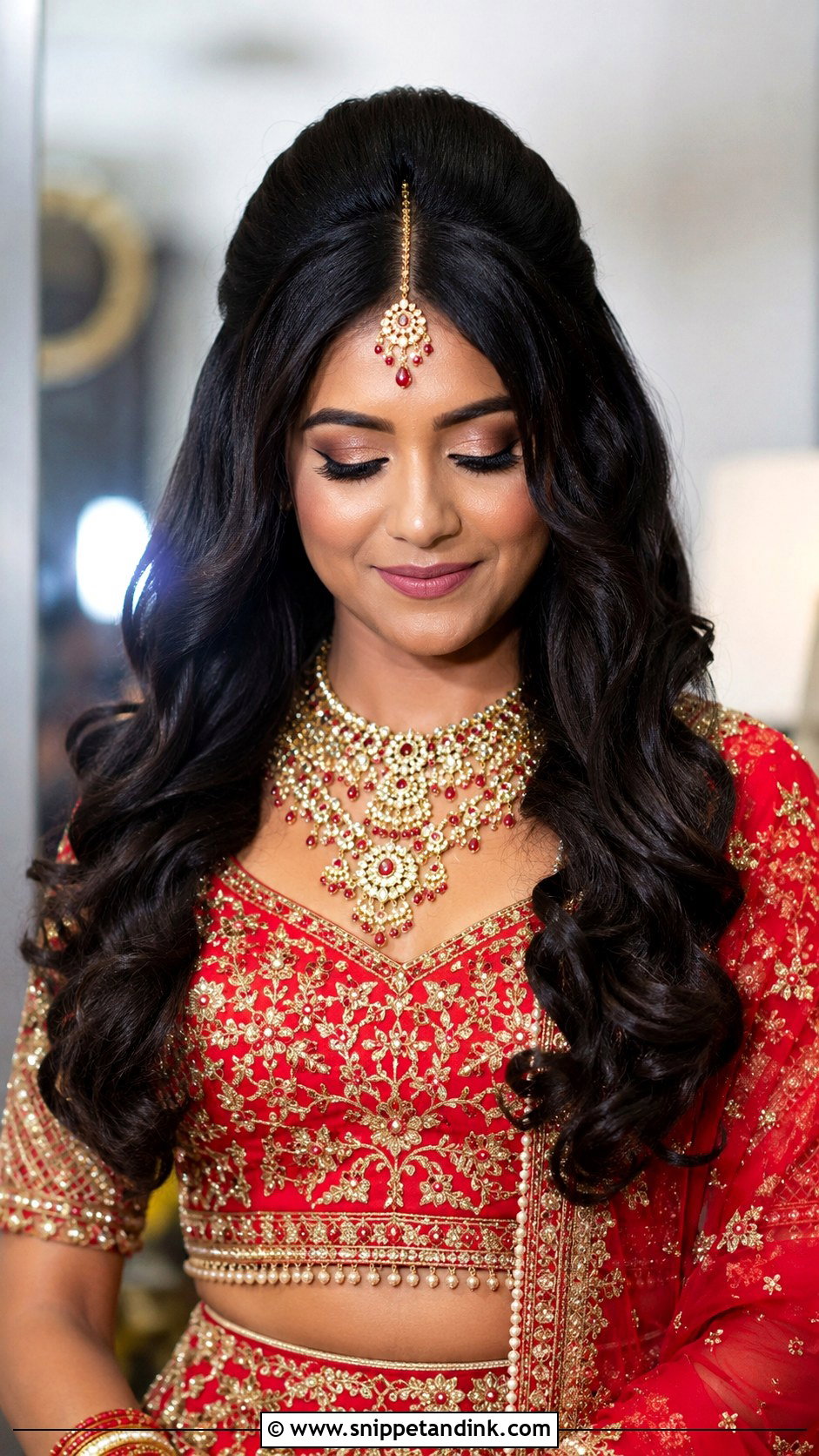
A soft front puff creates height at the crown and lifts the whole face. It balances heavy necklaces, high-neck blouses and layered dupattas. It doesn’t need to be tall. A low, rounded lift looks current, while a high puff can look dated in photos. The rest stays open in curls, waves or a smooth finish, and the center remains neat for a maang tikka. The puff’s hold comes from teasing at the root, then smoothing the top layer over it and pinning underneath.
10. Indian Bridal Open Hair With Hollywood Waves
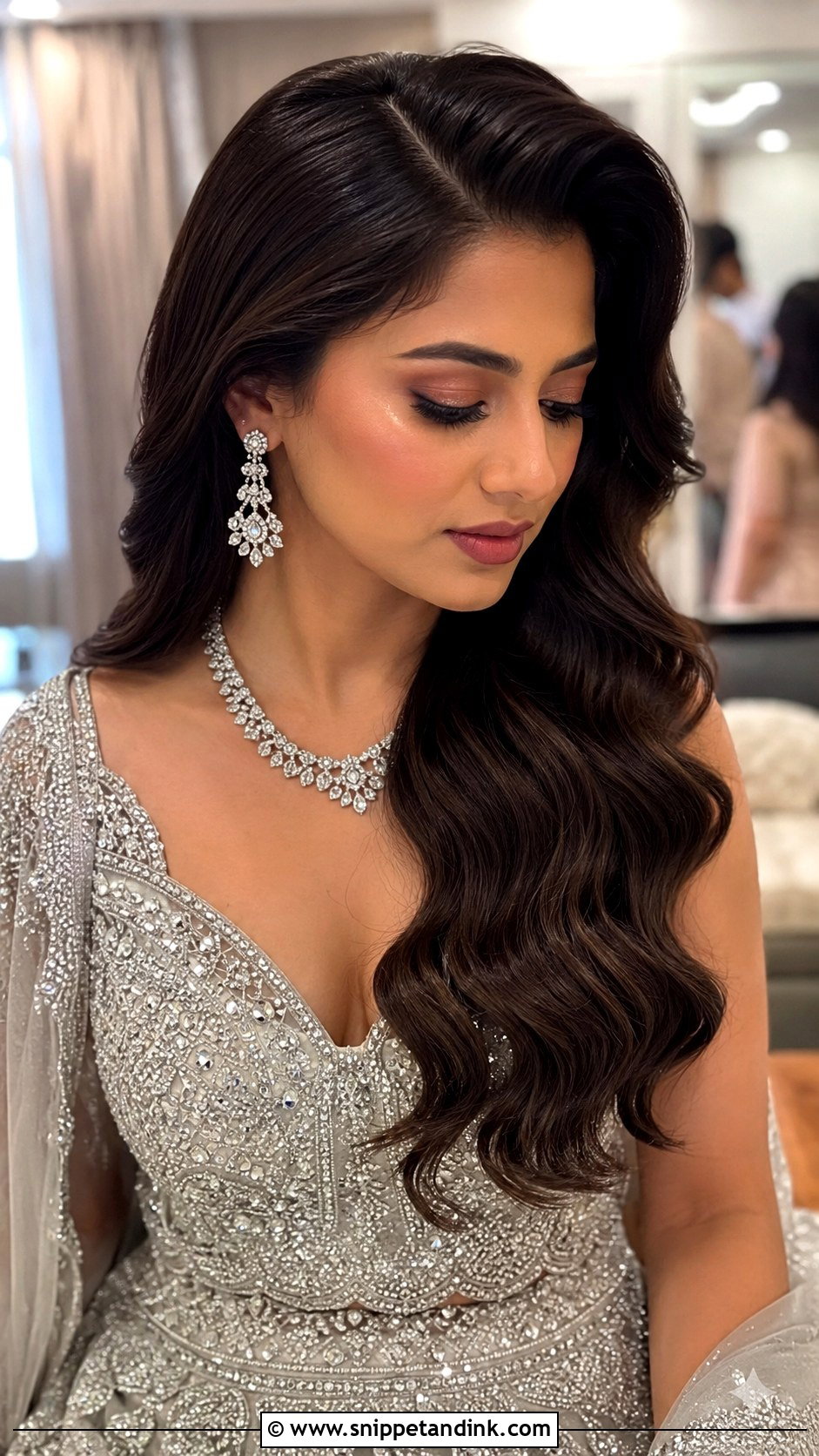
Hollywood waves belong at a reception, a cocktail evening or a modern ceremony. They’re smooth, glossy and set in one direction, so they pair with fitted lehengas, saree gowns and crystal jewelry. They need medium to long hair to show the pattern. A side part is glamorous, a center part softer. Choose one statement accessory at most. The waves are the feature, and too much jewelry breaks up the ripple.
11. Indian Bridal Open Hair With Curls And Flowers
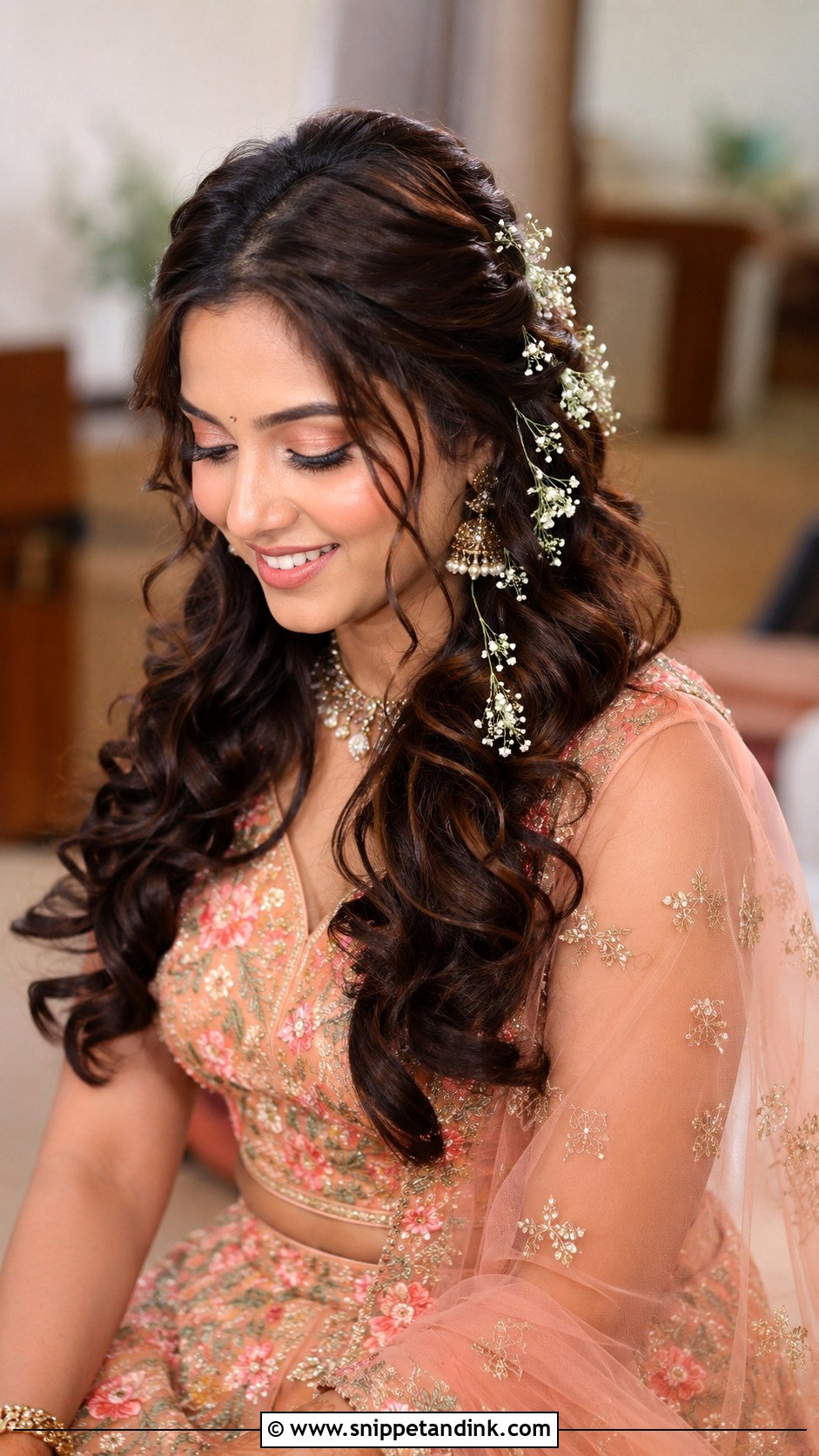
Curls and flowers suit mehndi, haldi, engagement or a main ceremony in a florally embroidered outfit. The curls add fullness and small flowers add detail without hiding the hair. Baby’s breath, jasmine buds, mini roses and orchids all work, and orchids hold up best in heat. Place them around a pinned crown or lightly on one side. With heavy jewelry, skip large flowers. The hair should look decorated, not crowded.
12. Indian Bridal Open Hair With Passa
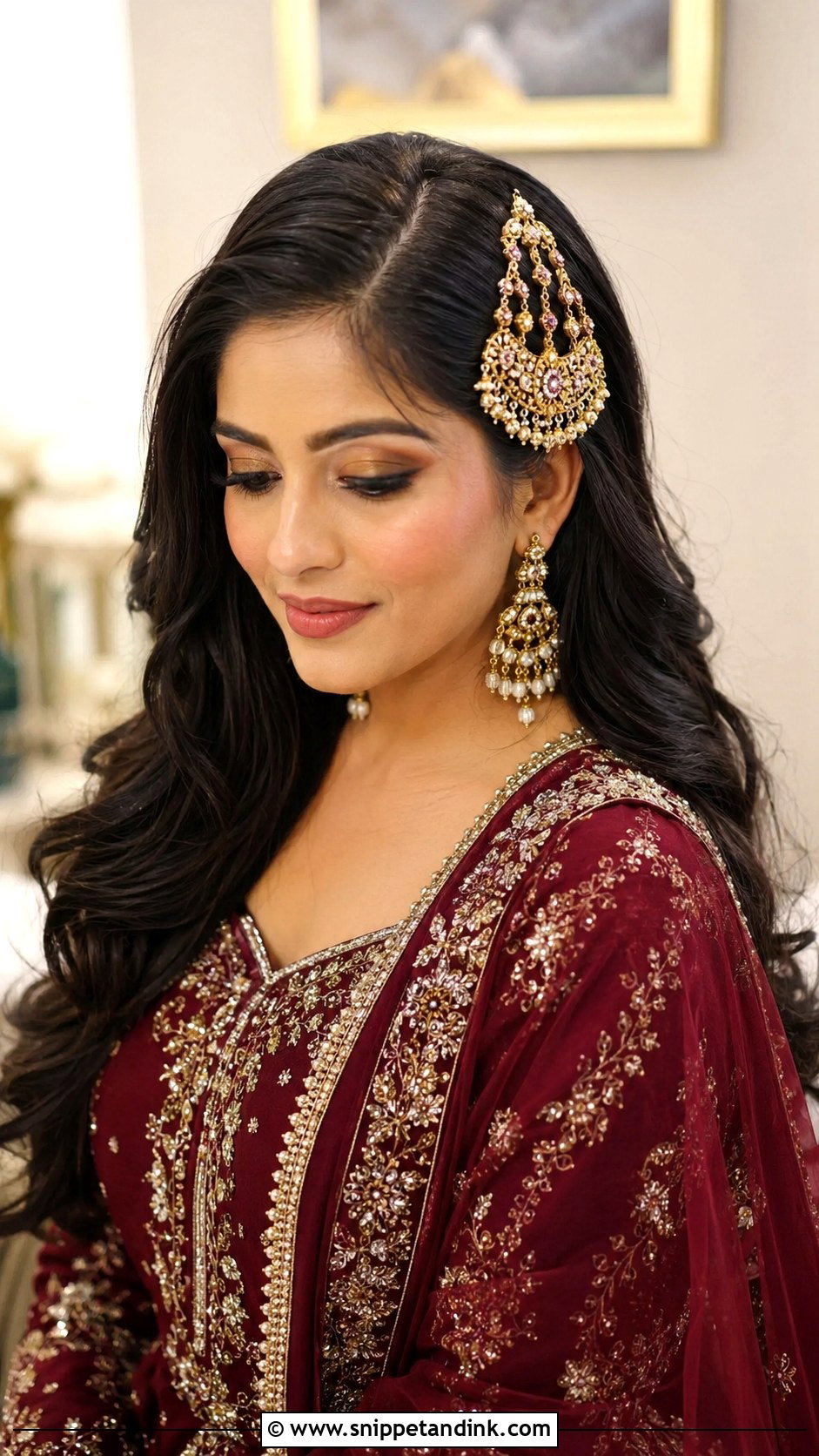
A passa has a Mughal-inspired feel and suits shararas, ghararas, lehengas and bridal sarees. It hangs on one side, so the hairstyle has to support that side without dragging the whole look off-center. Side or soft center parts both work. Loose curls on the other side balance the weight. I build a firm pinned base under the passa side and hook its chain into it, so it survives greetings, hugs and hours of photography.
13. Indian Bridal Open Hair With Saree
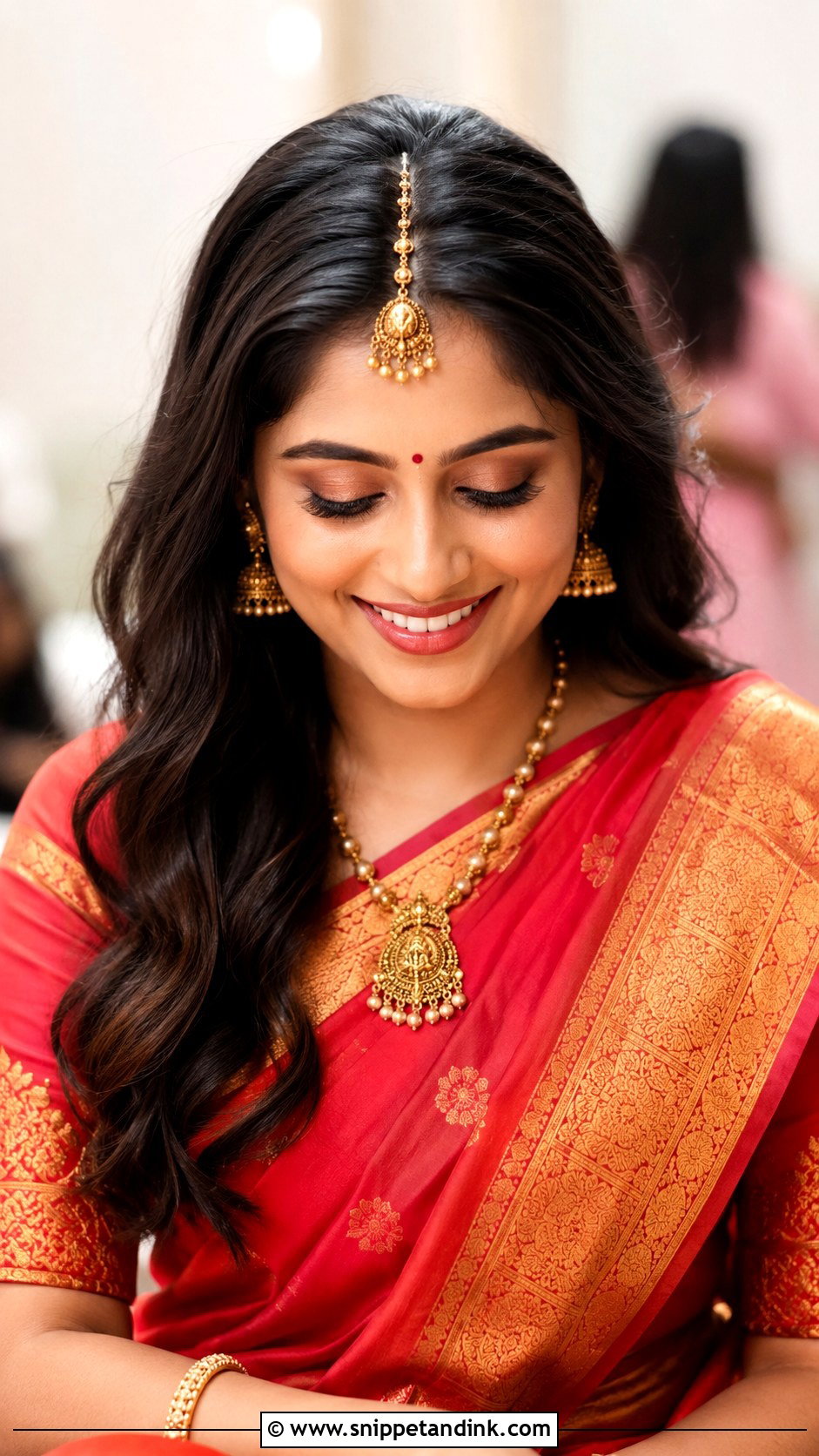
With a saree, match the hair to the fabric and the drape. Silk sarees take soft curls or polished waves; organza and georgette suit airier waves. A center part with tikka looks traditional, and side-parted waves read as reception. It fits South Indian, Bengali, Marathi, and modern fusion bridal looks. A heavy pallu pulls on the shoulder pin and the hair under it, so I keep the crown pinned and controlled. The open lengths then look intentional instead of tangled in the drape.
14. Indian Bridal Open Hair With Lehenga
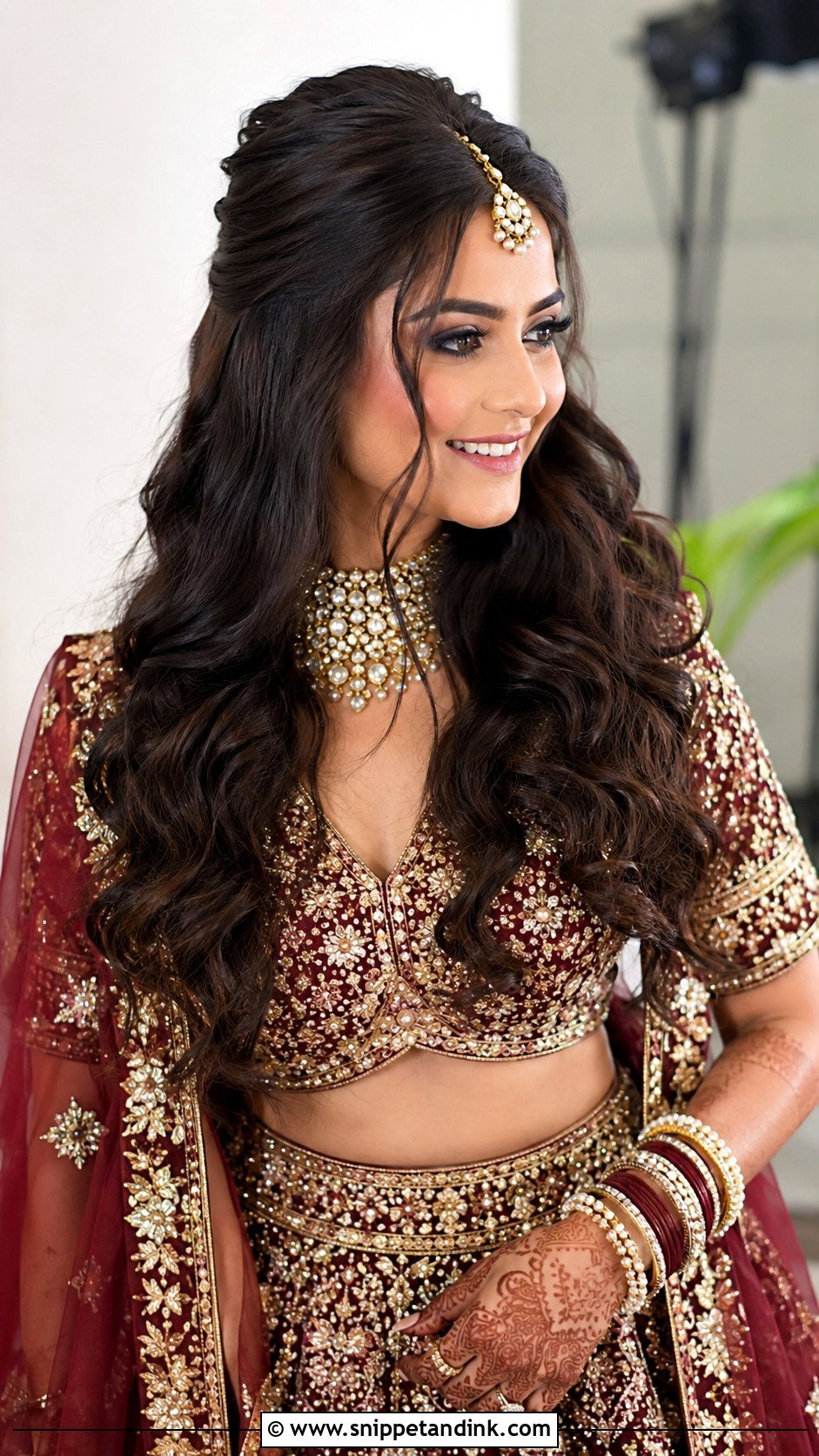
With a lehenga, the outfit, jewelry and hair are seen together in nearly every frame. Soft curls, glossy waves, half-up or a tikka look all work, depending on how heavy the embroidery is. Heavy bridal lehengas usually want controlled crown volume and curls below the shoulders. Lighter pastels can take loose waves, flowers or pearl pins. If the blouse has detailed sleeves or a high neckline, keep the hair behind the shoulders for photos so the embroidery shows.
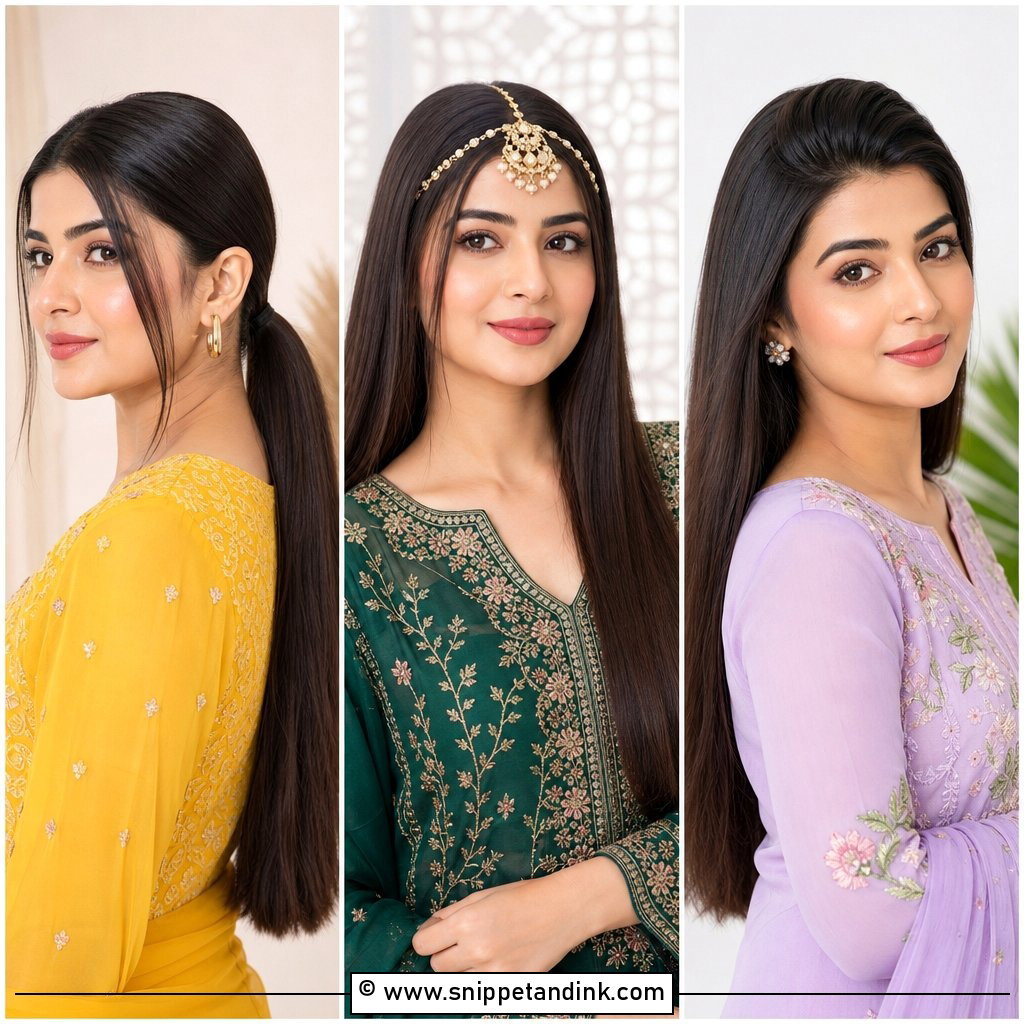
15. Indian Bridal Open Hair For Reception
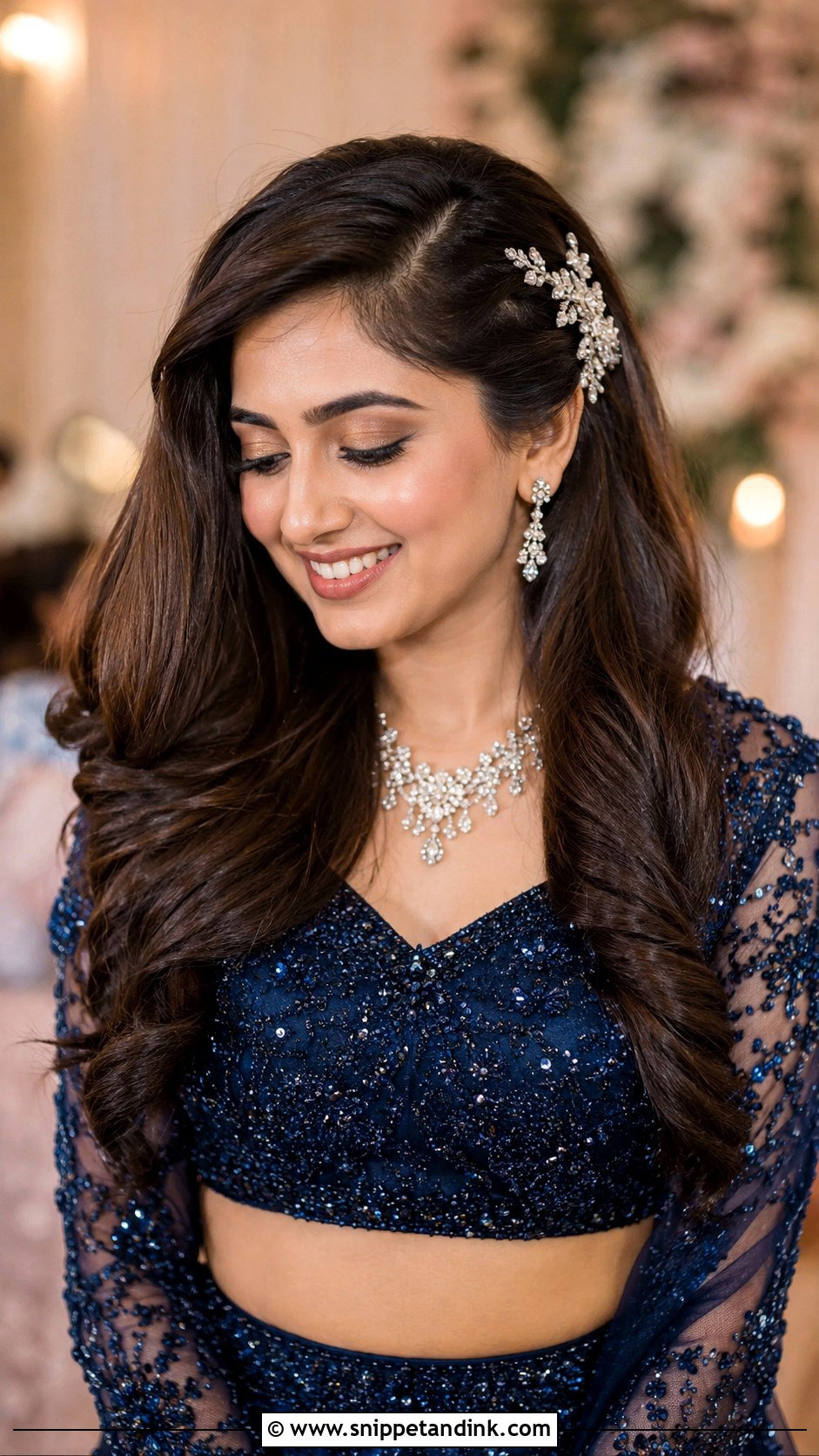
Reception hair can be more relaxed and more glamorous than the ceremony style. Without a heavy dupatta, glossy waves, full curls or a soft side part all come into play. It should move, catch the light and stay comfortable through hours of greeting guests. Add crystal pins, pearl clips or a sleek tikka only if they suit the outfit. Shine and smooth ends matter most under reception lighting. Ask for touchable hold so it doesn’t look stiff in close-ups.
What Haldi Paste, Oil and Sindoor Do to Hair Left Open
Indian weddings run over several functions, and each one does something to your hair. A bit of planning keeps the final look clean.
- Haldi paste can tint light, highlighted or grey hair yellow. Braid loosely or cover your hair for the ceremony, and wash with a clarifying shampoo afterwards.
- If you’re oiled as part of a ritual, the oil needs two washes to come out. Plan the wash the evening before the wedding styling so the hair has time to dry.
- Sindoor goes into the center part during the ceremony. With open hair, a clean, sharp part shows it clearly, and loose powder can settle on the curls near your face. Keep a soft brush to dust it off before photos.
- Mehndi drying time means sitting still for hours. Wear your hair tied up for it so it doesn’t brush the wet paste.
If your functions fall on consecutive days, sleep with your hair in a loose braid on a silk pillowcase. That gives the stylist a smoother starting point each morning.
Put Every Piece On at the Trial, Dupatta Included
Open dulhan hair brings softness and personality into a look that is otherwise heavy with tradition. Length is only one factor. Dupatta weight, where the jewelry sits, face shape, neckline, weather and the length of the event all decide what will hold. Soft curls, loose waves, half-up shapes, gajra and jewelry-based styles can all look bridal if they’re planned. Do your trial wearing every accessory and the actual dupatta. That’s the only way to see where the pins have to go.
You'll Like These Ideas:






Leave a Reply