
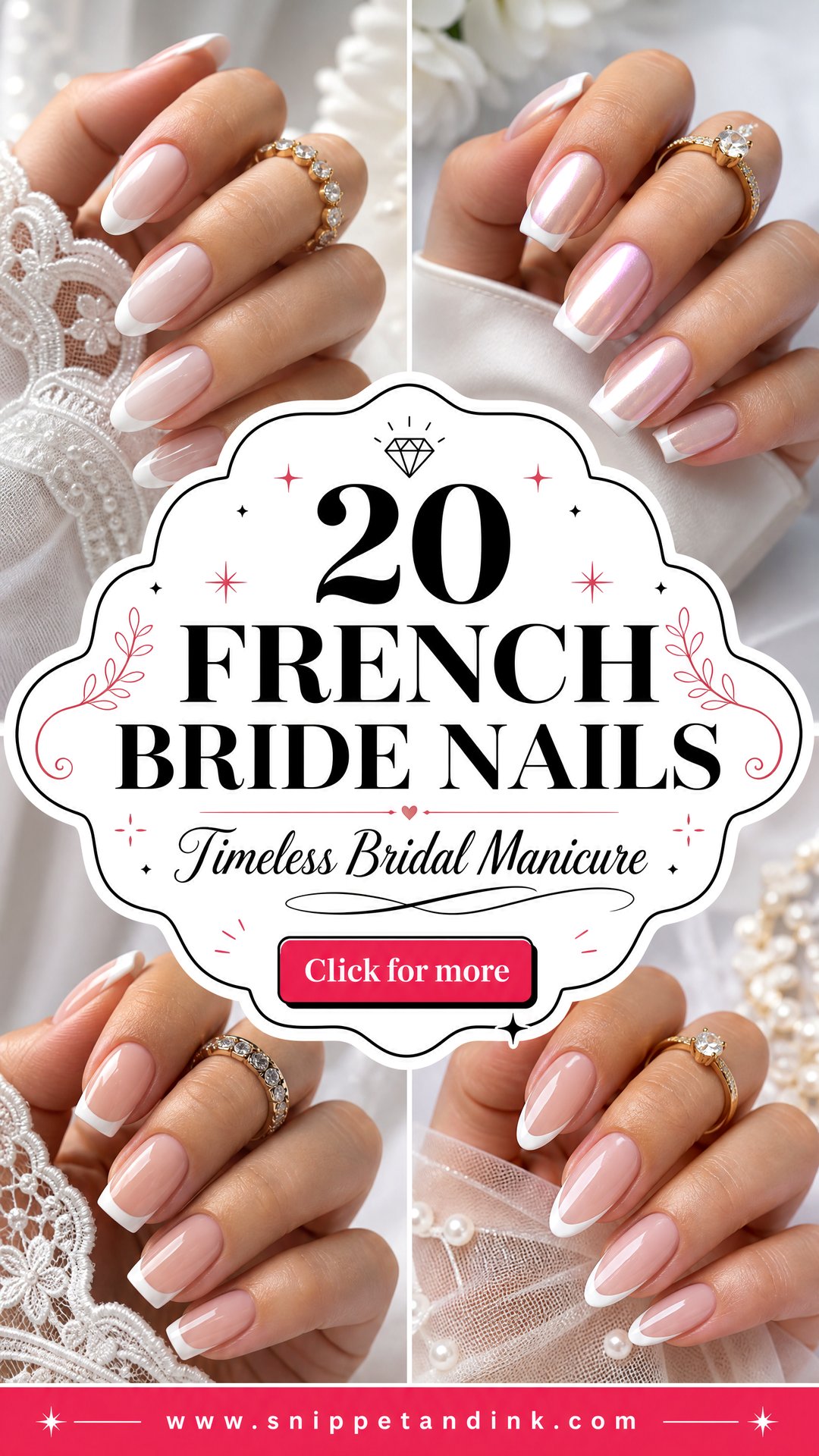
Most brides who sit at my table have already decided on a French manicure. The real conversation is which one. Today’s bridal versions are thinner, glossier and softer than the thick white tips of a few decades ago, with milky bases, pearl chrome, micro tips, lace, tiny flowers and fine shimmer all on the menu. The shape matters as much as the finish, so each set below comes with a note on the nails it suits. Use these French bride nails as a starting point, and keep your ring and dress in mind as you scroll; the manicure should frame them, not compete.
Growing Out Weak or Bitten Nails for a Wedding French
A French tip needs a free edge to sit on. If you bite your nails or they split, the white has nowhere to go, and that’s worth sorting out a couple of months before the wedding rather than the week of it.
Natural nails grow slowly, roughly a few millimeters a month, so a short nail won’t become a long almond in time unless you add extensions. What you can change is strength and shape. I usually suggest a thin structured gel overlay every three weeks or so in the run-up. It protects the edge while it grows, and it makes biting less tempting because there’s a hard coat in the way. Daily cuticle oil keeps the new growth flexible.
If the nails are still short by the final appointment, don’t panic. A micro French on short, neatly filed nails looks better in photos than a rushed set of extensions you aren’t used to wearing.
1. Classic French Bride Nails
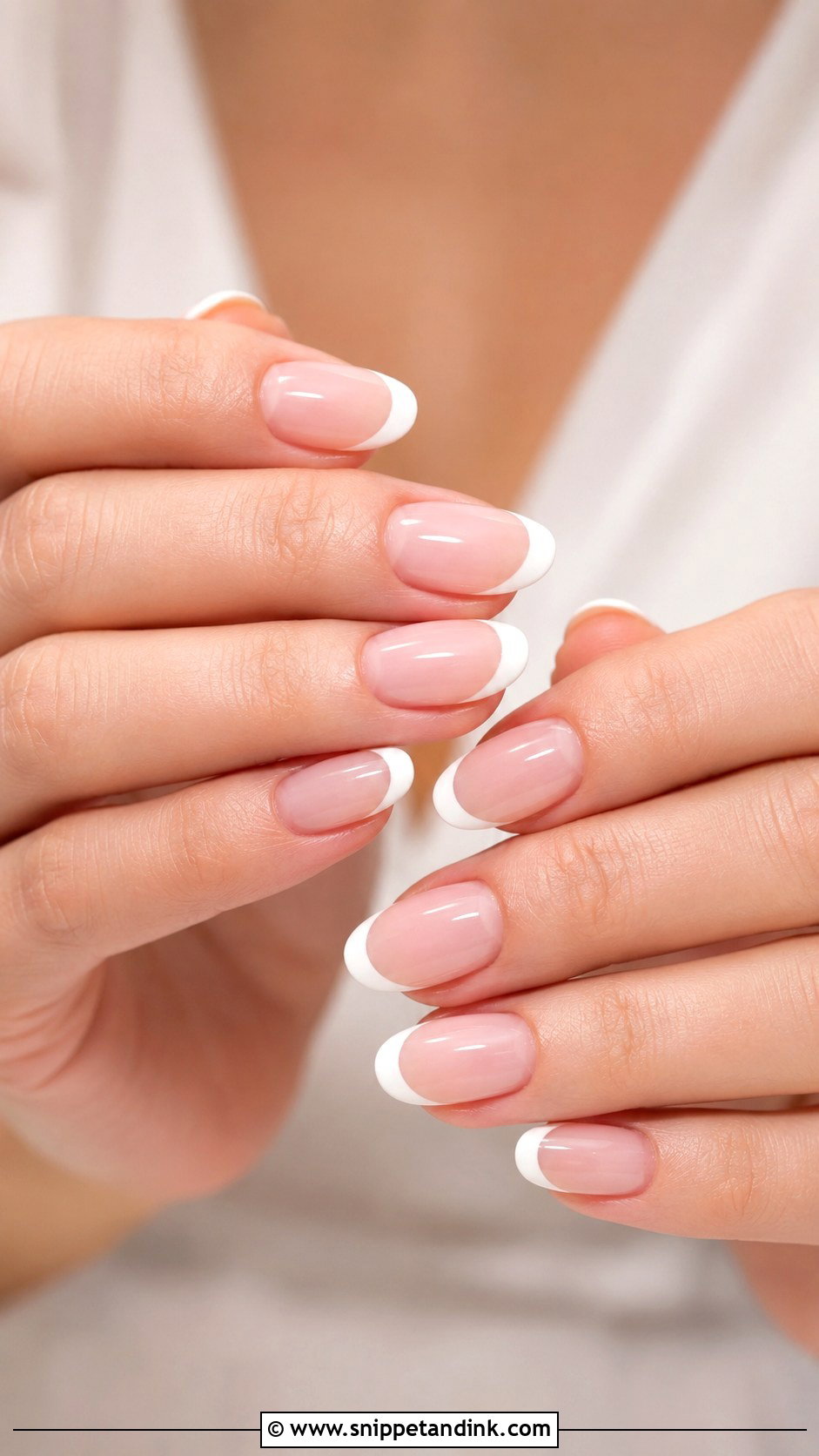
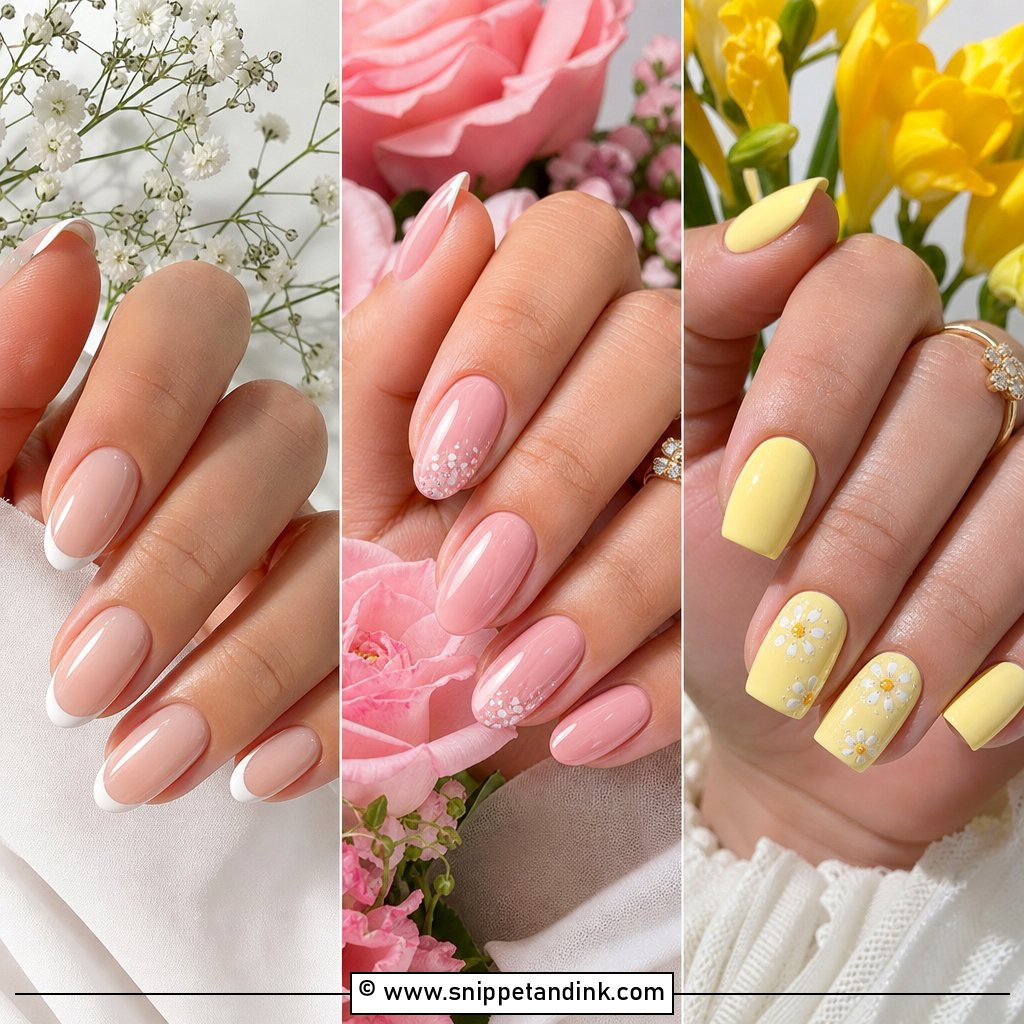
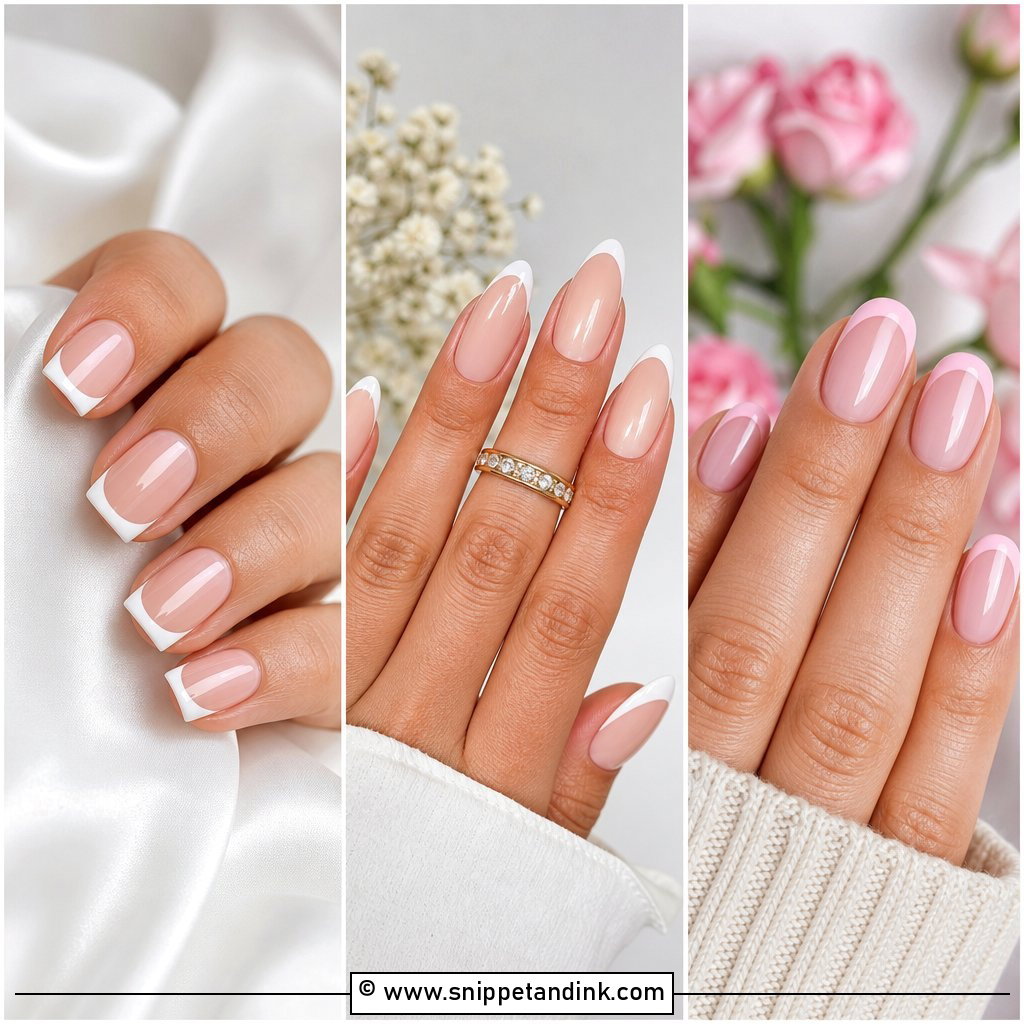
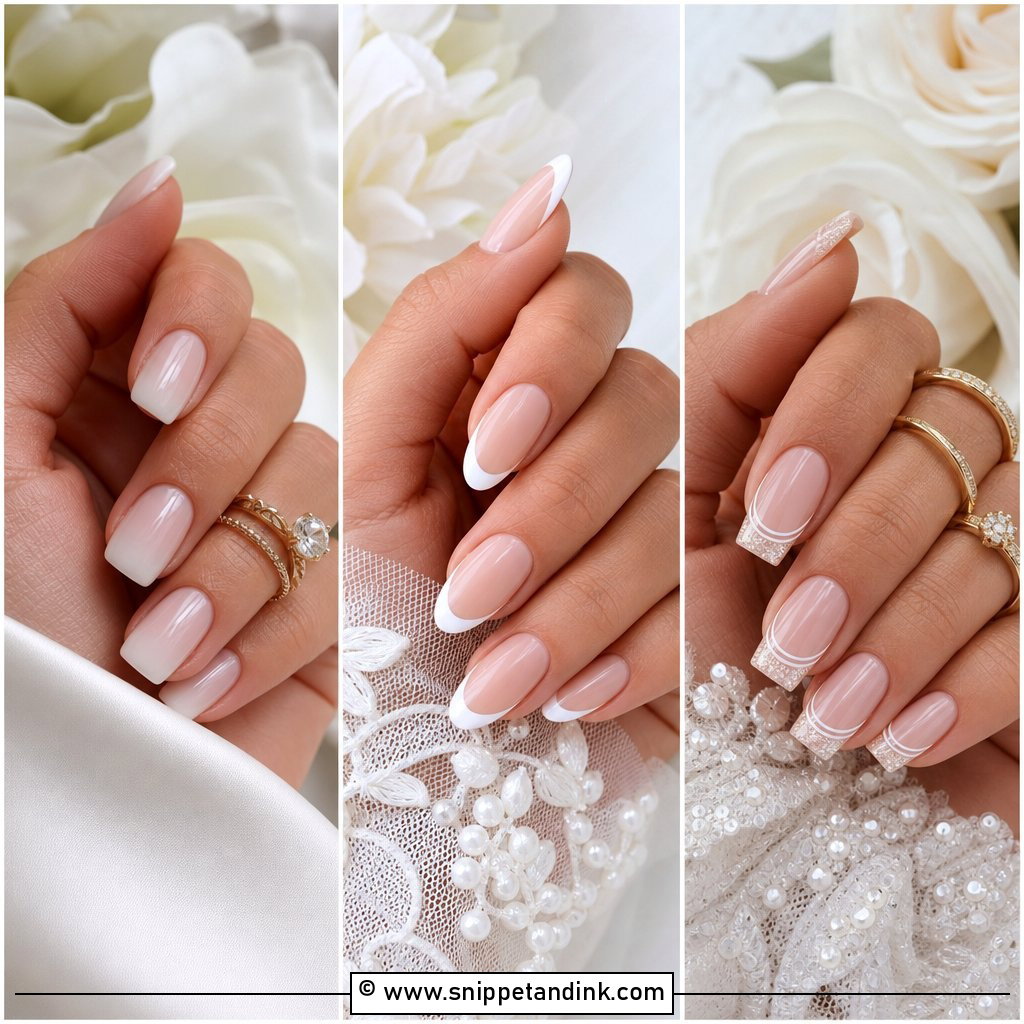
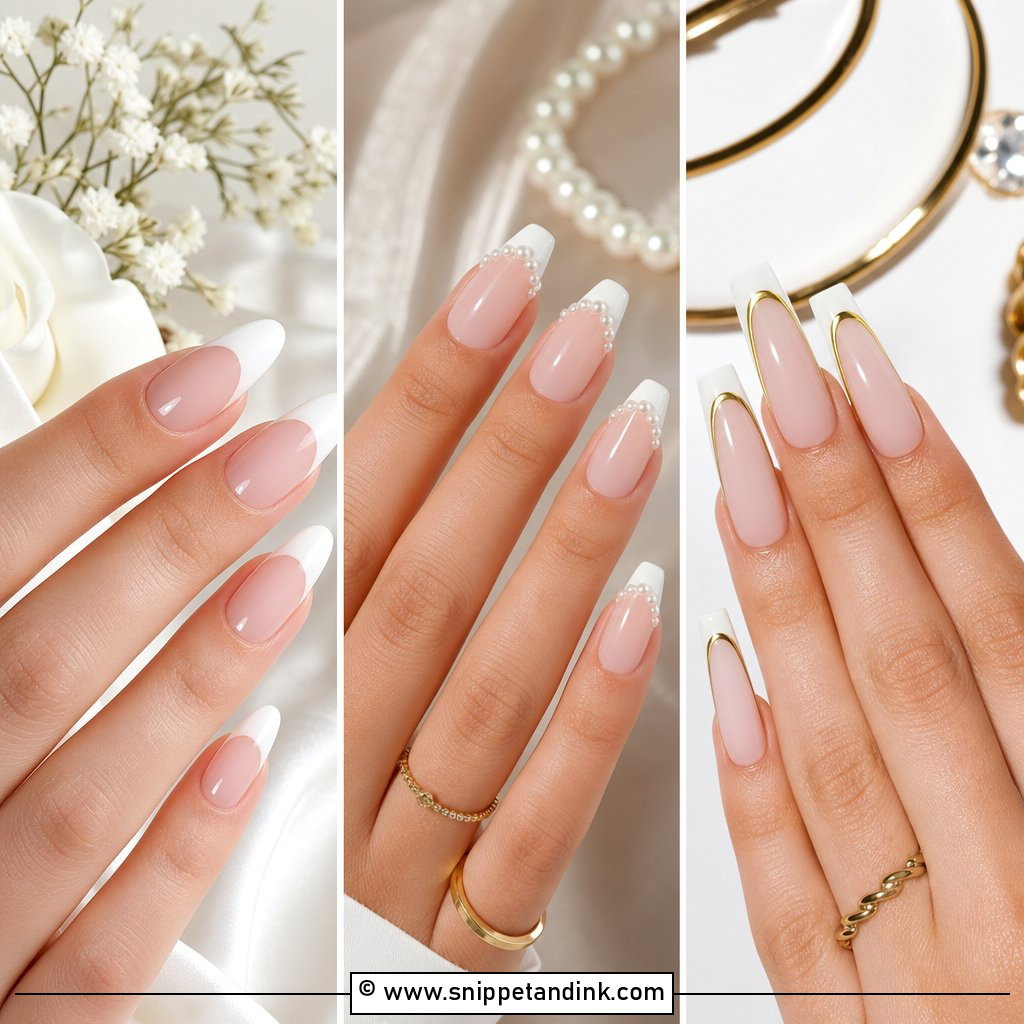
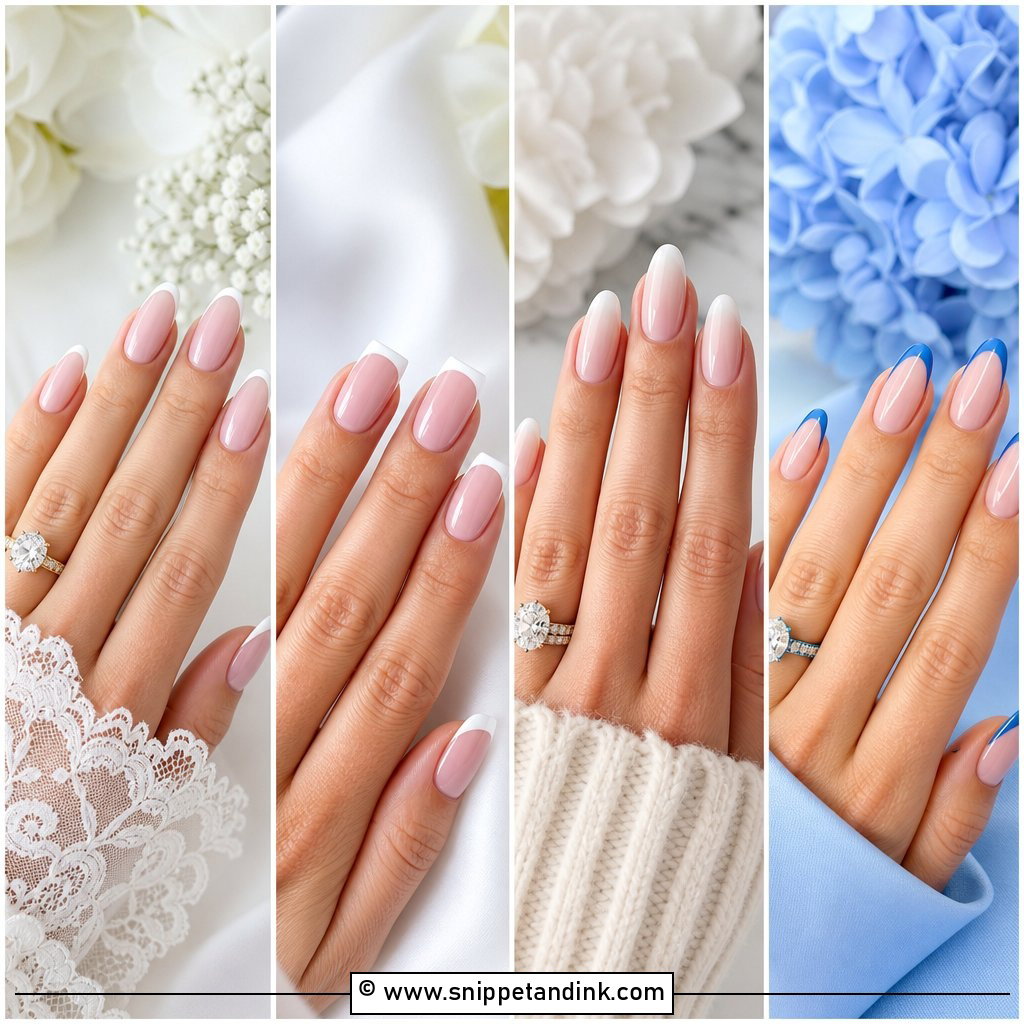
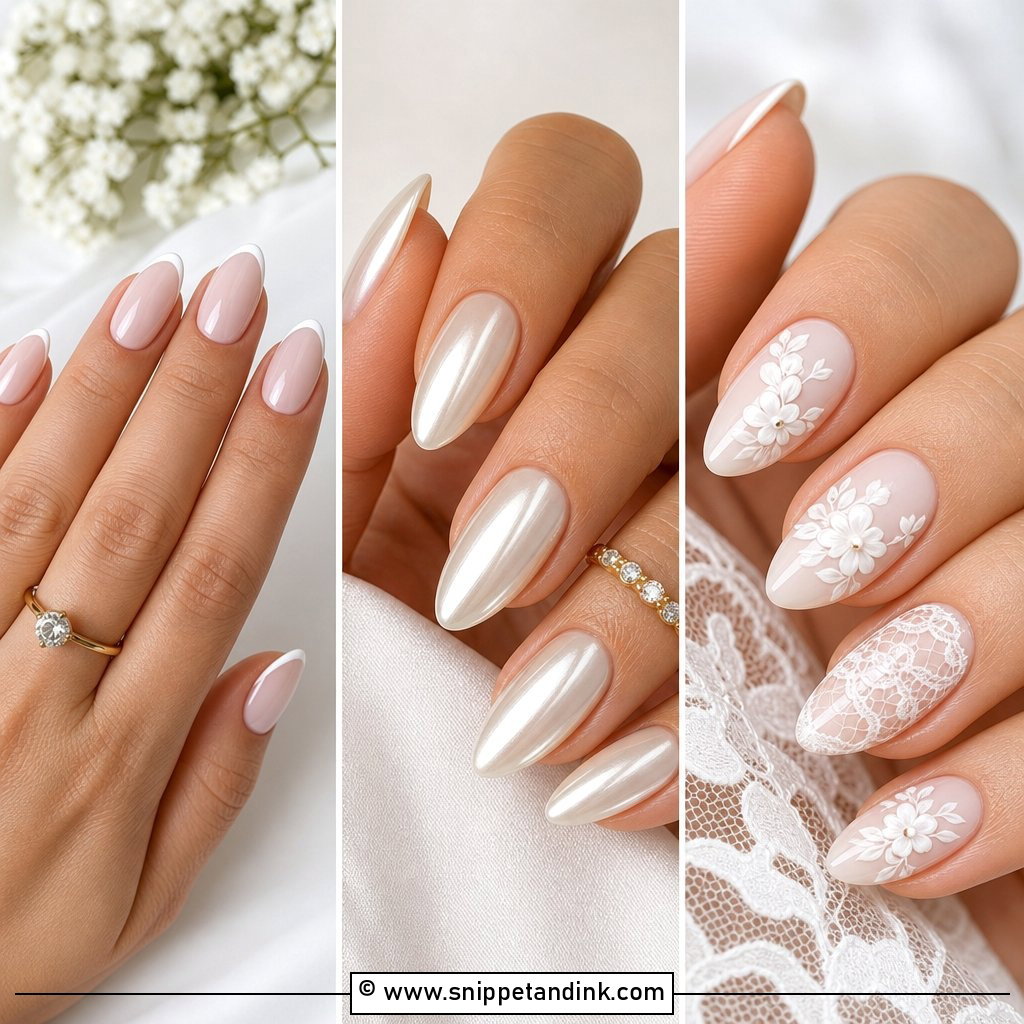
Sheer pink or nude, clean white tips, high shine. That’s the classic, and I’ve yet to see it look wrong beside a wedding dress. The base shade is where I spend my time: sheer blush for cool skin, soft beige or warm pink for warmer tones, tested on two nails before I commit. Then I paint the smile line to follow your own nail curve rather than a stock arc, because your free edge is rarely symmetrical and a template line exaggerates that. Almond, oval and square all carry it.
2. Micro French Bride Nails
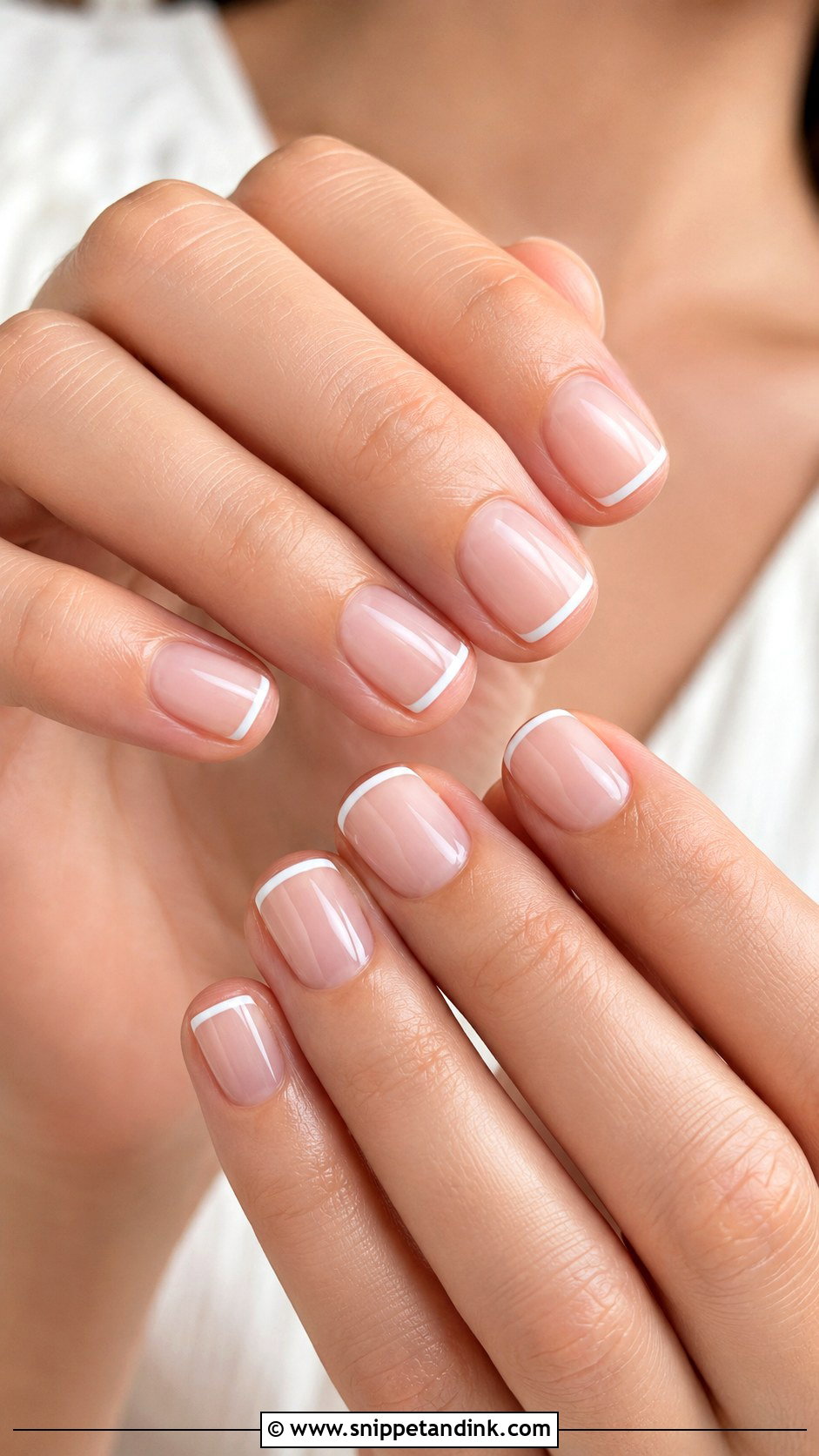
Micro French trims the white down to a sliver along the edge. On short nails it’s the version I’d steer you toward, since the thin line gives definition and leaves the nail bed looking as long as possible. The base can be sheer nude, milky pink or natural beige. Bright white looks crisp; an off-white feels softer next to ivory fabric. One practical bonus: when the white is this thin, a tiny chip at the edge is almost invisible, which isn’t true of a wide tip.
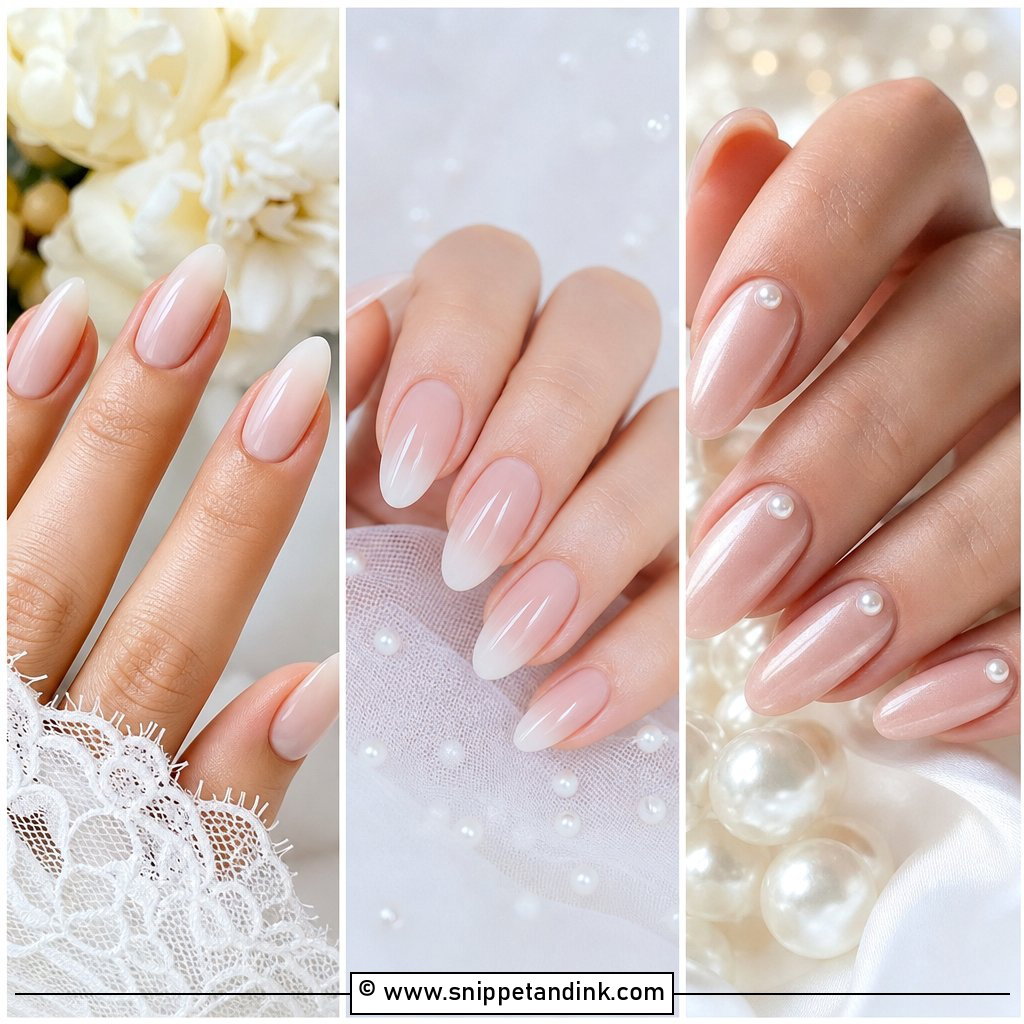
3. Milky French Bride Nails
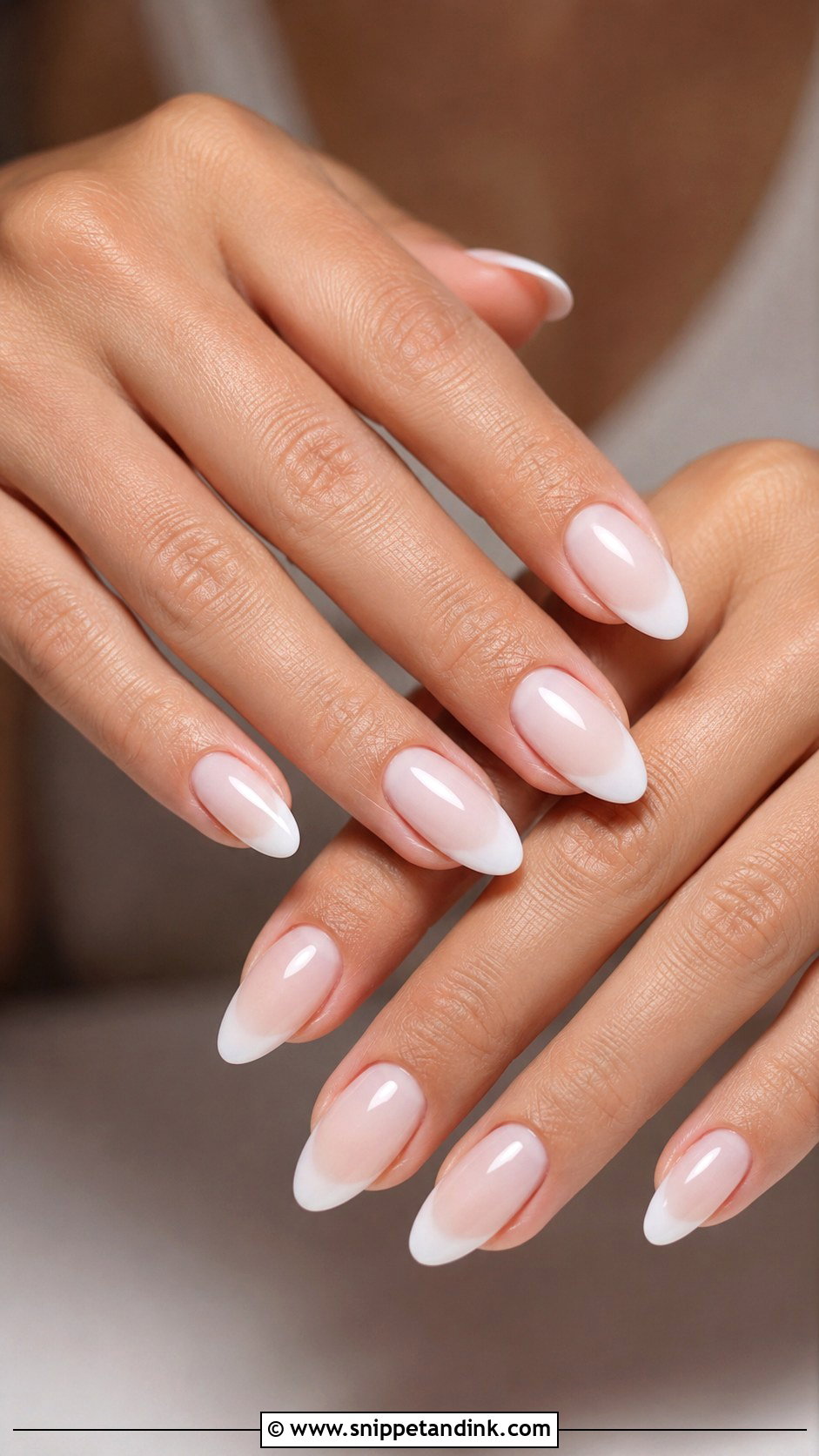
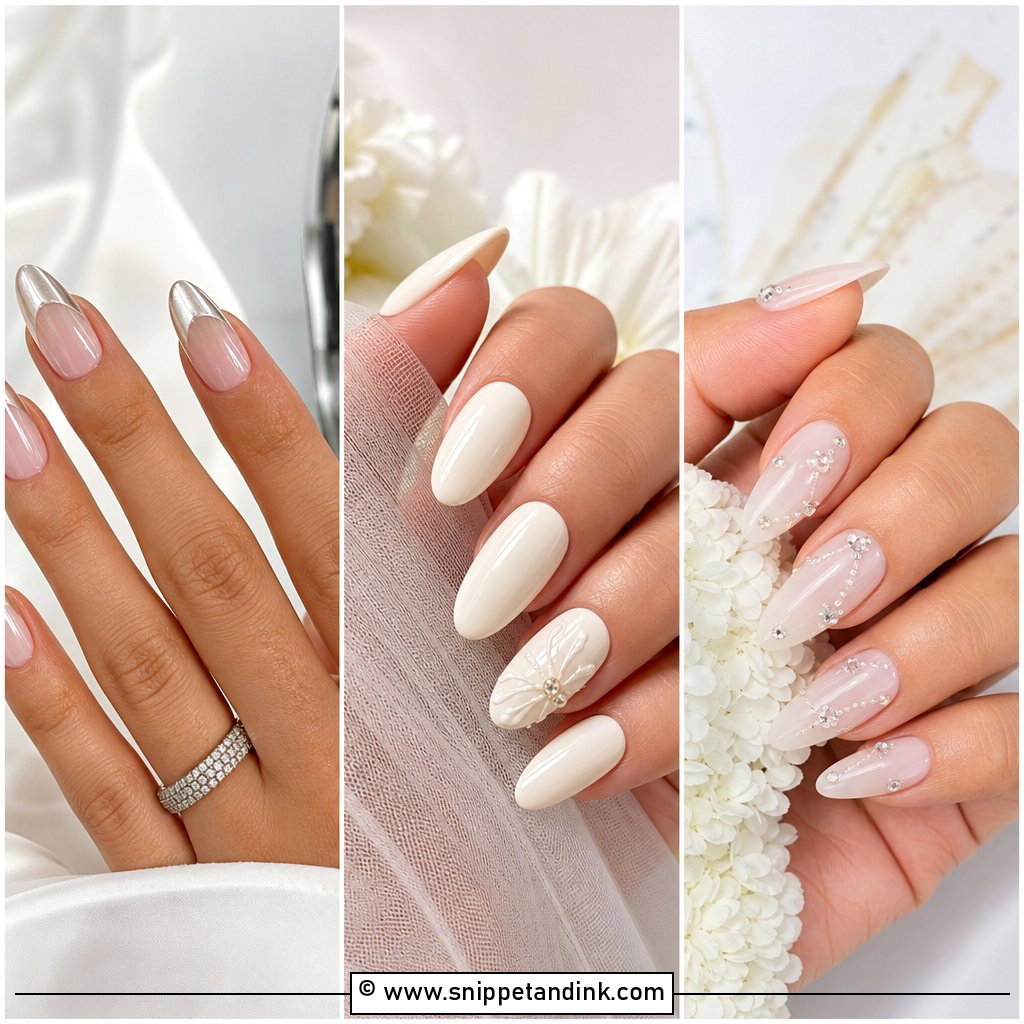
Milky French bride nails use a cloudy white or milky pink overlay instead of a clear base, with the tip melting into it. Milky gels are tricky to apply evenly; one coat looks streaky, so I build two or three thin layers and cure each one. The payoff is a creamy, blurred finish that hides ridges and old polish stains. It sits nicely with satin, pearls and soft makeup, in any season. Almond and oval look graceful; short square looks fresh and current.
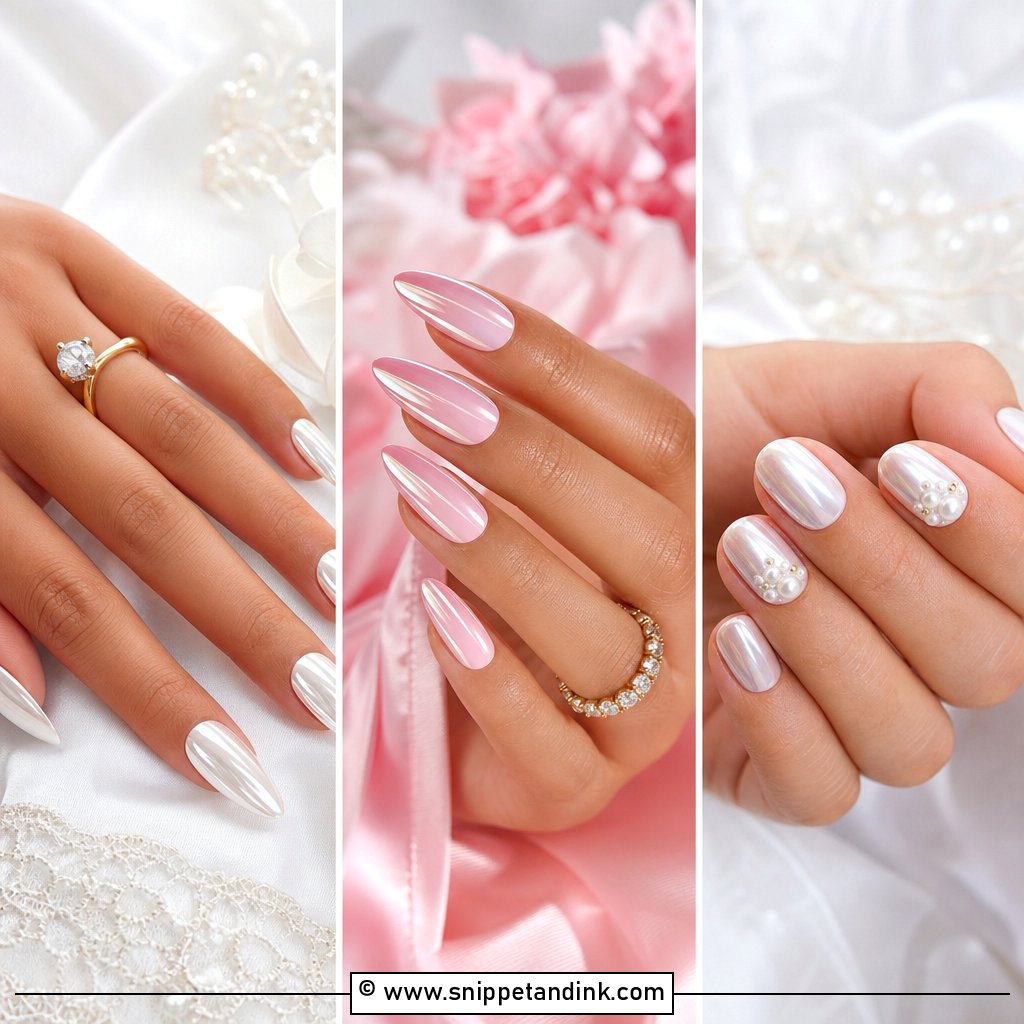
4. Pearl Chrome French Bride Nails
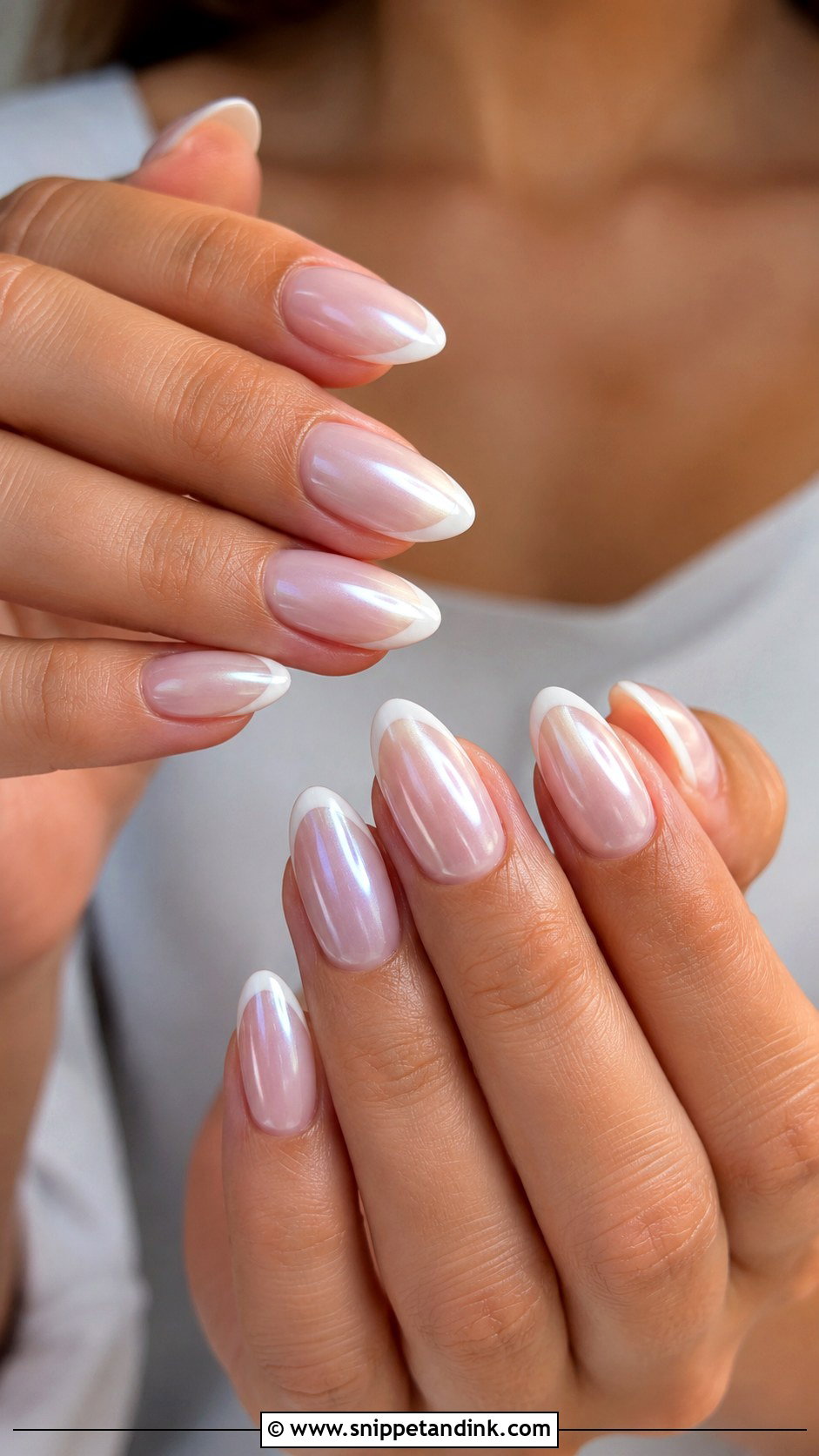
This is the same pink-and-white French, finished with a fine pearl chrome powder buffed over the top. The shine is iridescent rather than metallic, so it looks like the inside of a shell. Pearl chrome suits a dress with pearl buttons, beading or a warm ivory tone. I keep the powder to a single light pass. Overdo it and the white tips turn frosty and lose their edge. Almond and oval shapes make it romantic; square gives it a sharper, modern finish.
5. Glazed French Bride Nails
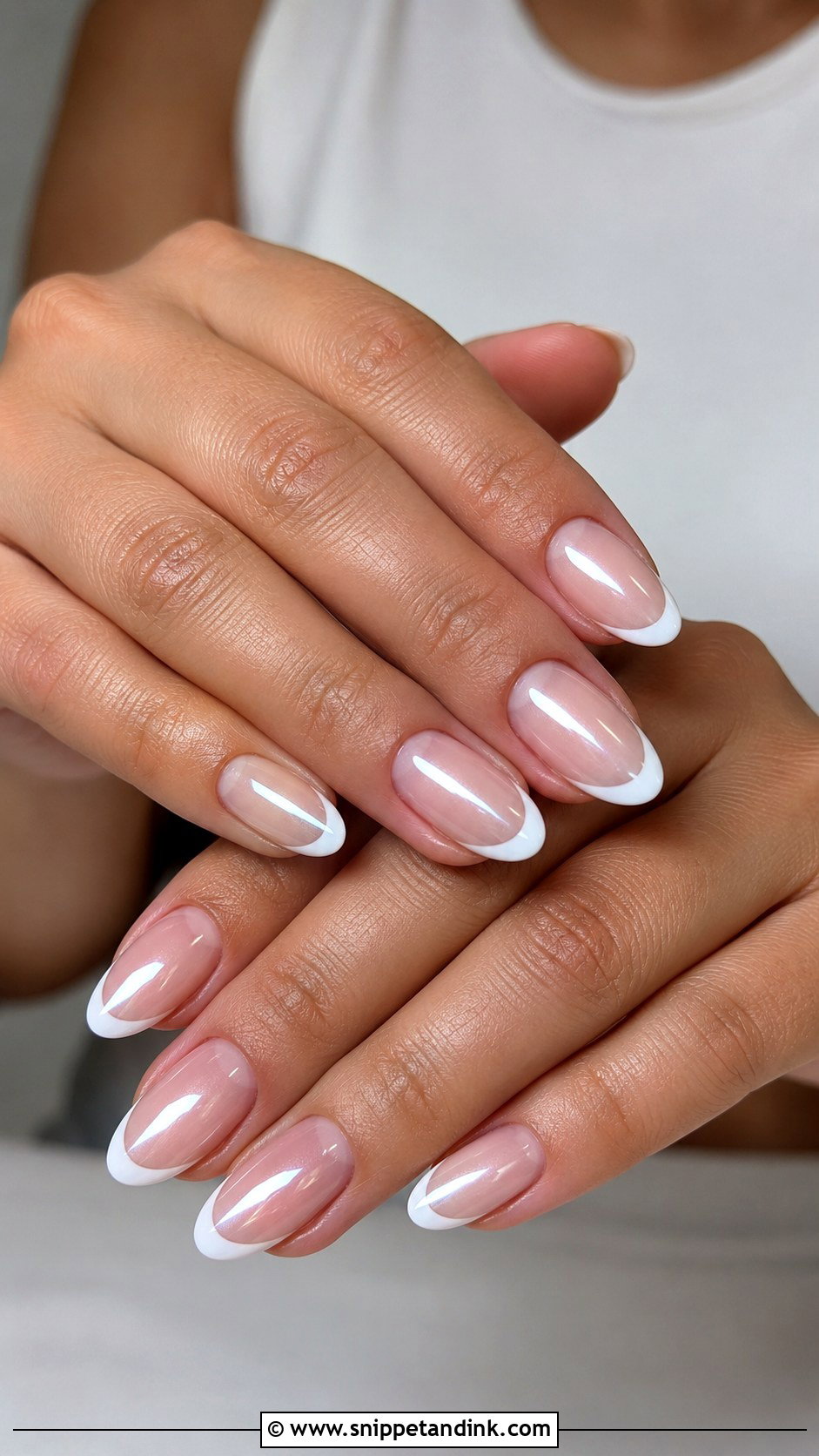
Glazed nails sit under a sheer, glossy layer that looks like a sugar glaze on a donut, which is where the name comes from. Under it, the French tip softens and looks less graphic. Pale pink, nude or creamy white bases work. In practice this finish is the easiest to photograph, because the light slides off it rather than bouncing back as one bright spot, which helps in outdoor ceremony light and close-up ring shots. Keep the tips thin and rounded.
6. Ombre French Bride Nails
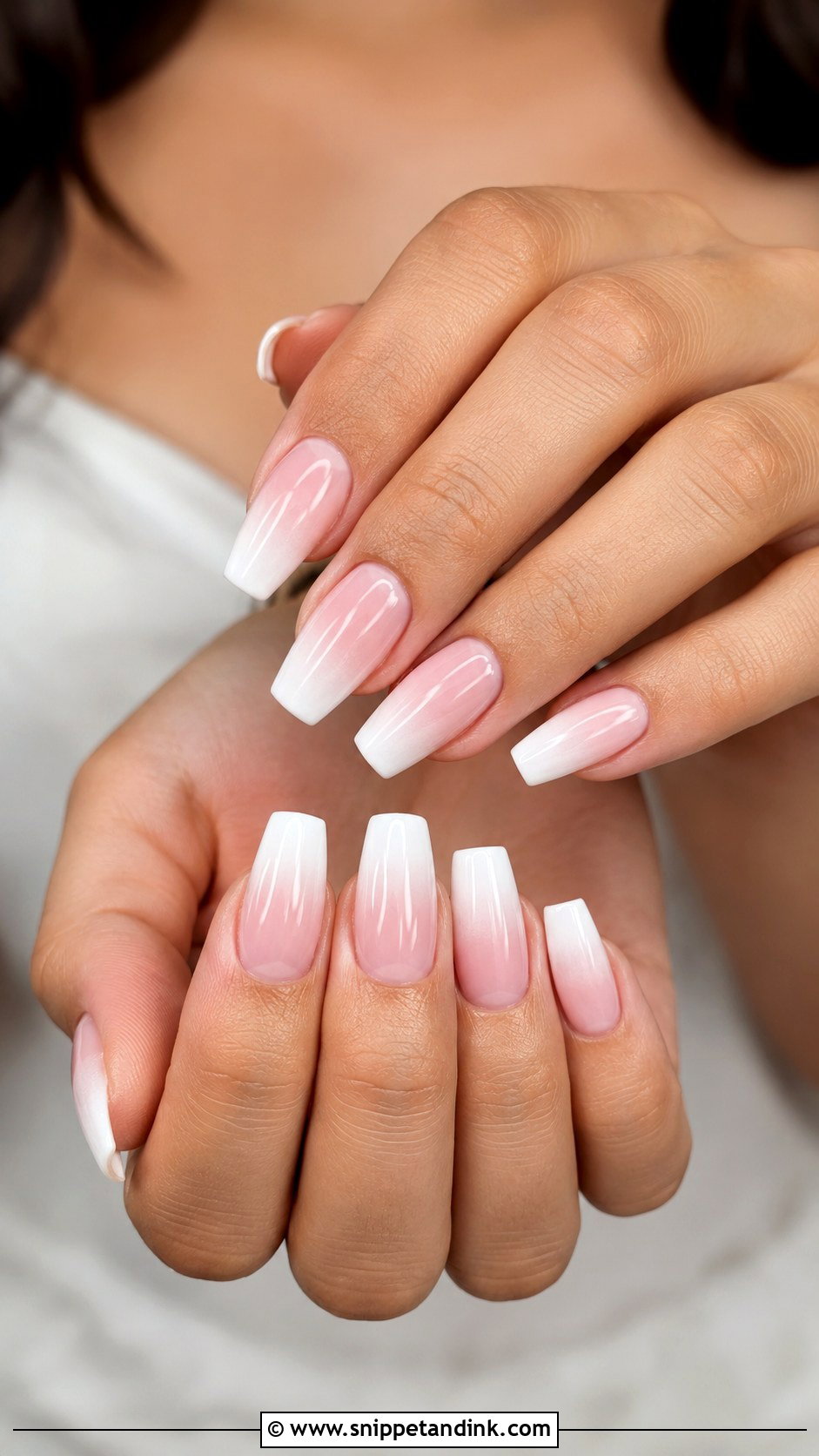
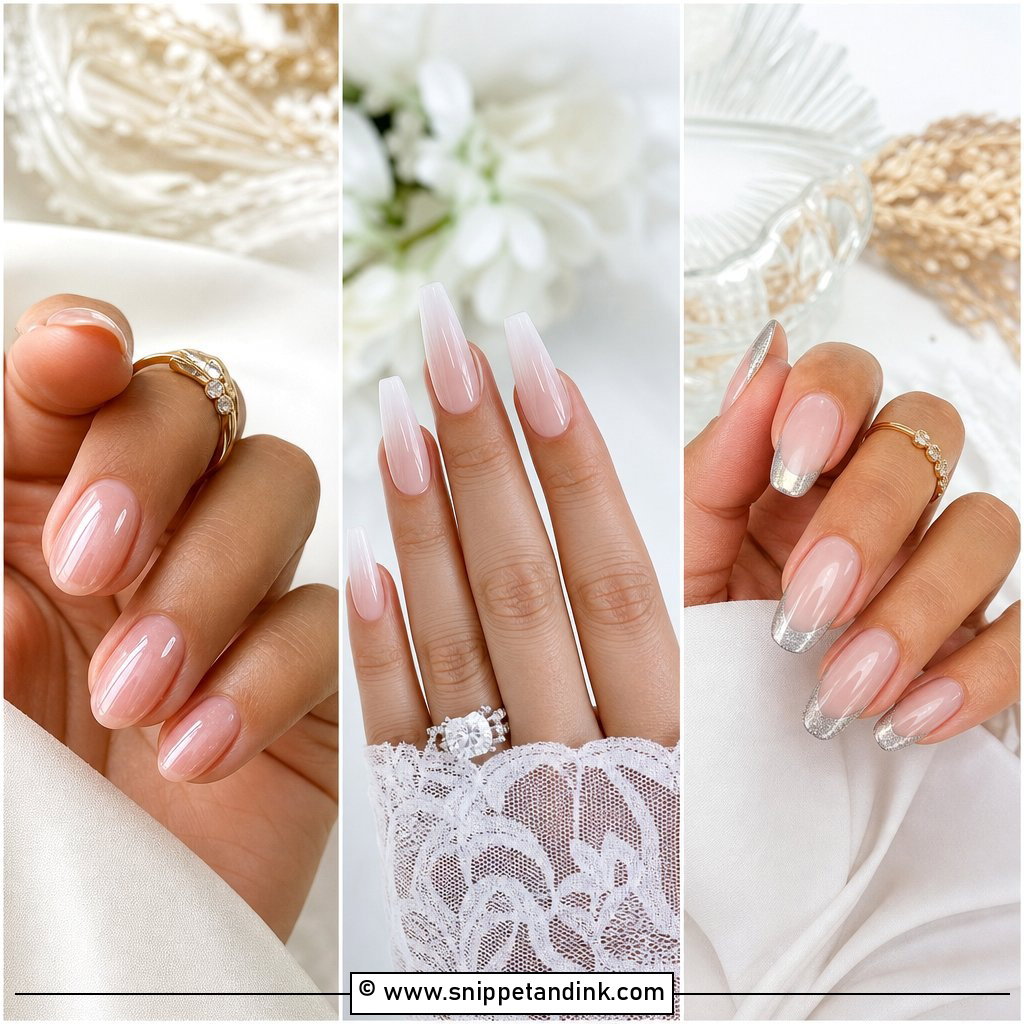
Ombre French bride nails drop the line between base and tip altogether, fading the white into pink, nude or milky beige. If you like French nails but worry a sharp tip will look harsh in photos, this solves it. The fade needs room, so it shows best on almond, coffin and oval nails with some length. I keep the white soft and finish with a thick glossy top coat, which smooths over any texture left from sponging.
7. Pink French Bride Nails
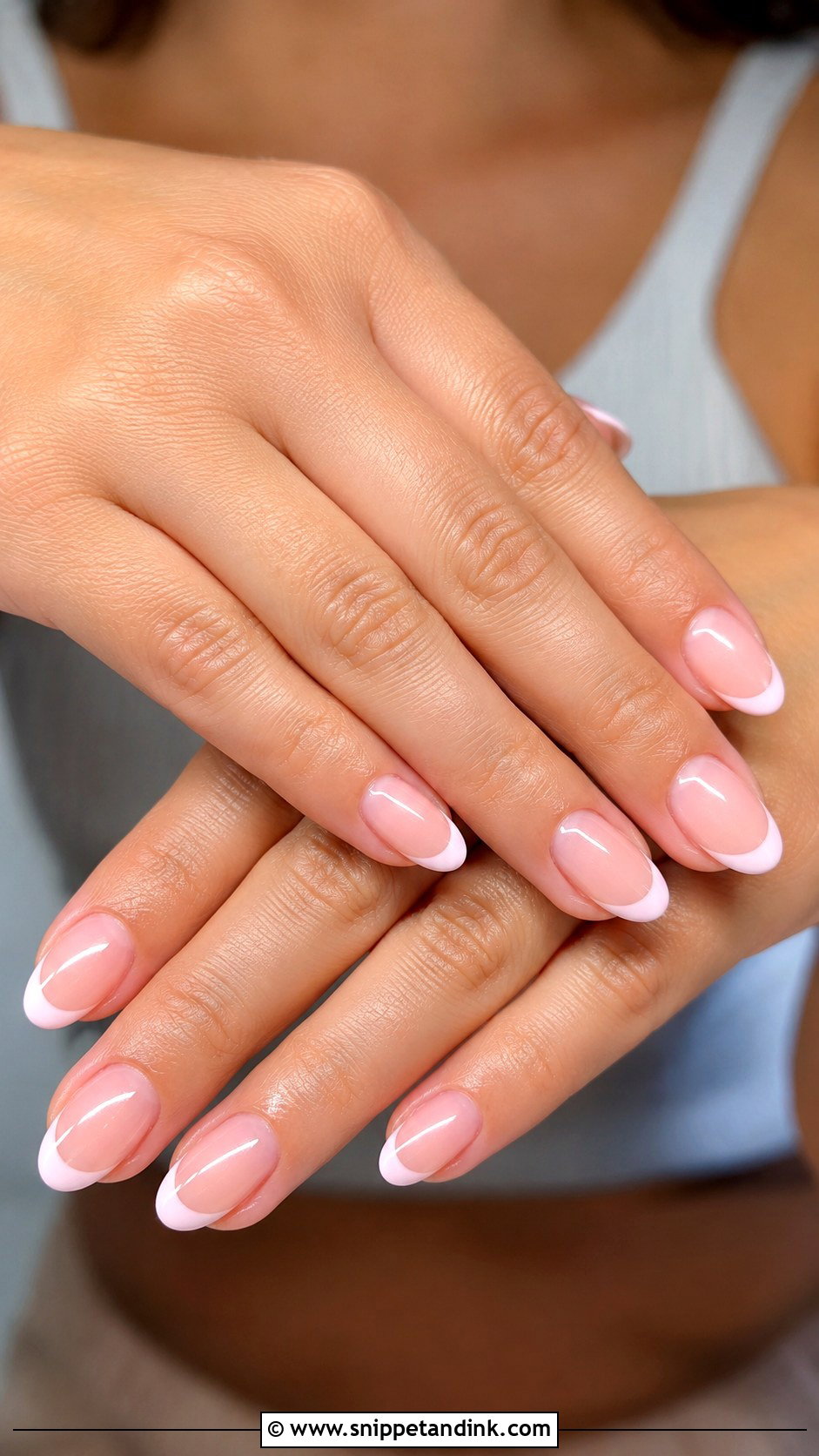
A rosy base with white or pale pink tips makes the hands look warm. The undertone of the pink is what I match to the wearer. Cool pinks with a hint of blue flatter fair, pink-toned skin; warmer, slightly peachy pinks sit better on olive and deeper skin. A sheer pink reads natural, a slightly brighter one adds color. Spring and summer weddings suit it most, though it’s subtle enough for any month. A pearl top coat softens it further.
8. Nude French Bride Nails
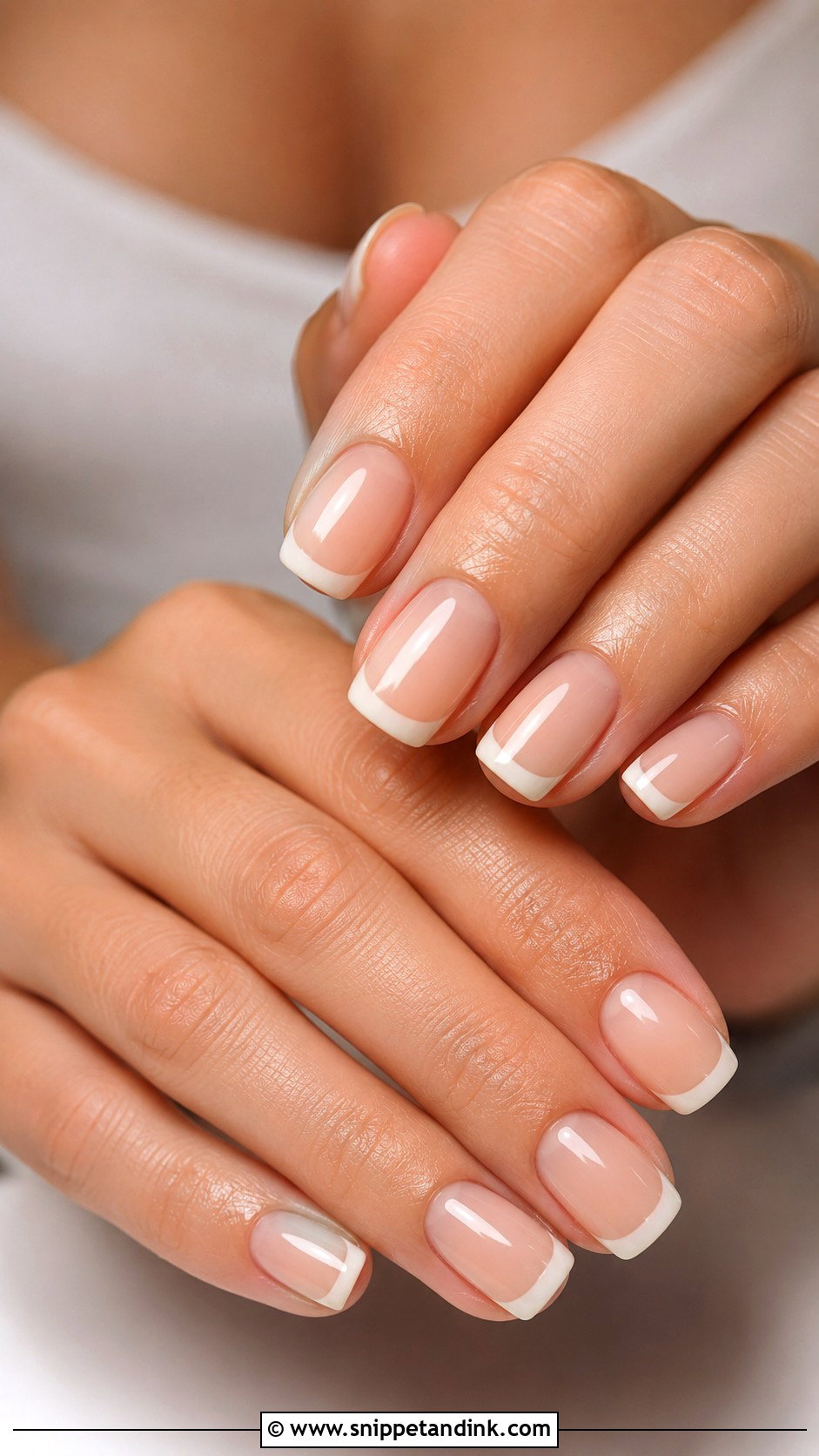
Nude French keeps the ring as the star. The base should match or slightly warm up your natural nail, and the tips stay soft white, ivory or cream. Finding the nude is the real work. As a starting point, pale beige or pink nudes tend to suit fair skin, peachy nudes suit medium skin, and caramel, mocha or warm brown bases glow on deeper skin, but I still test against your fingers because undertones vary within every range. Keep the tips thin.
9. White French Bride Nails
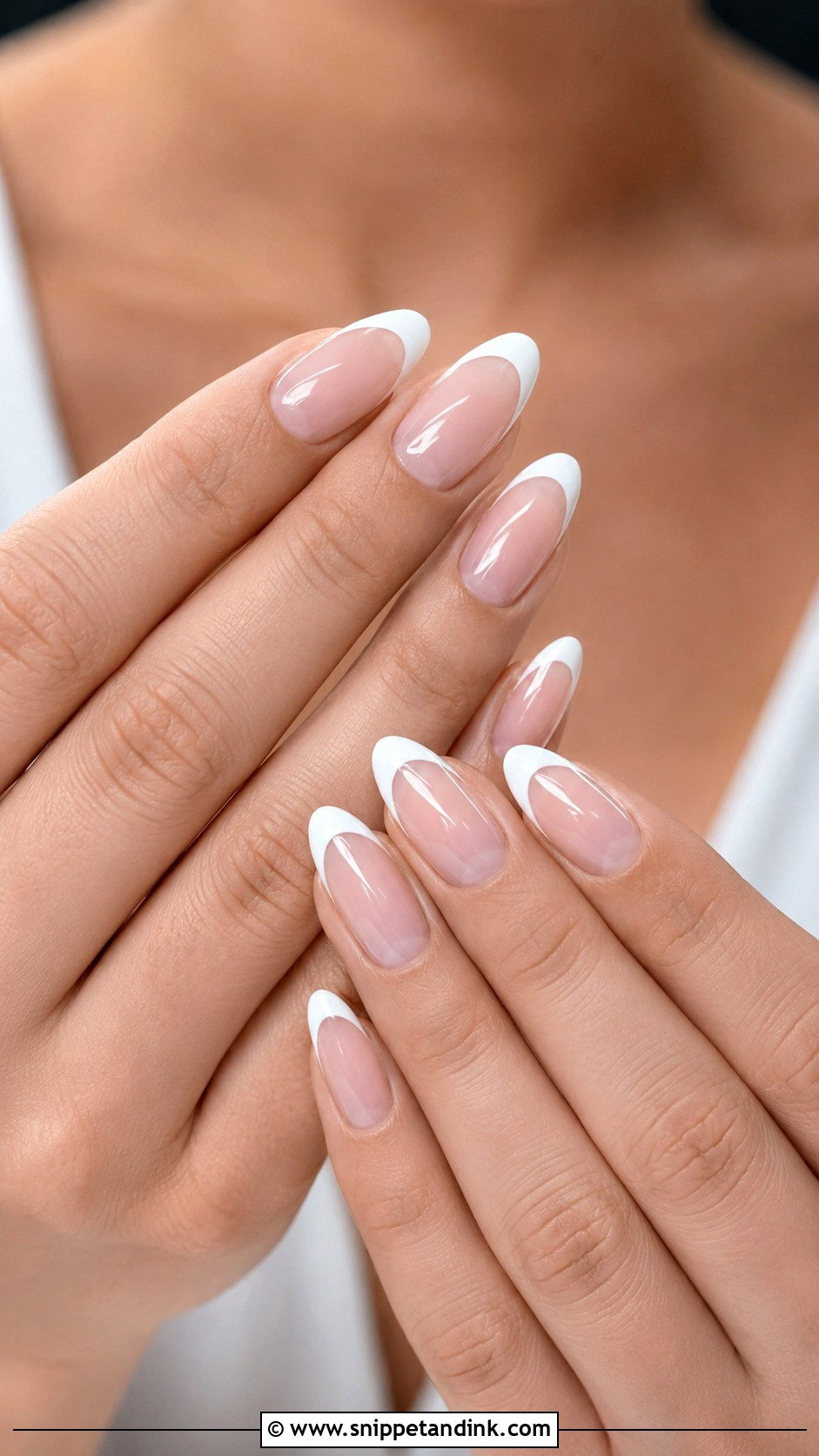
White French bride nails are the crispest version: sheer pink or nude with a bright white edge. If your dress isn’t pure white, I’ll suggest softening the tip to ivory or milky white so it doesn’t look blue beside the fabric. Tip width should follow length. Short nails want a slim line; longer almond or coffin nails can carry a deeper smile line. A glossy top coat finishes it, and that’s all it needs.
10. Ivory French Bride Nails
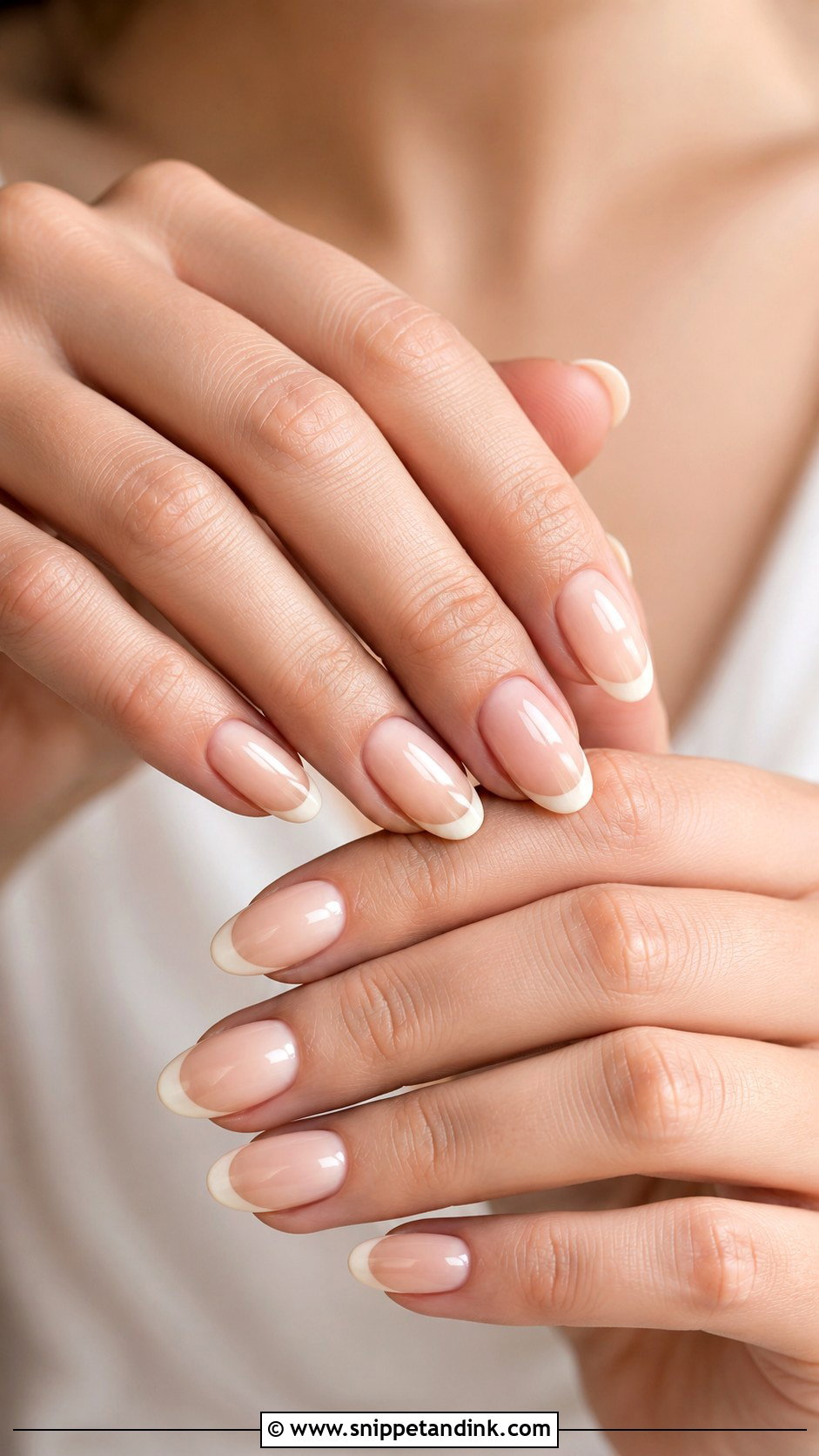
Champagne, cream and ivory gowns are where ivory tips earn their place. A bright white tip can look stark, even slightly grey, beside warm fabric, while ivory sits in the same color family as the dress. I pair it with a sheer beige, soft pink or milky nude base. Because the contrast is lower than a standard French, it suits most skin tones without looking stripy. Hold a swatch of your dress fabric against the polish bottle before the appointment; it’s the quickest way to check.
11. Square French Bride Nails
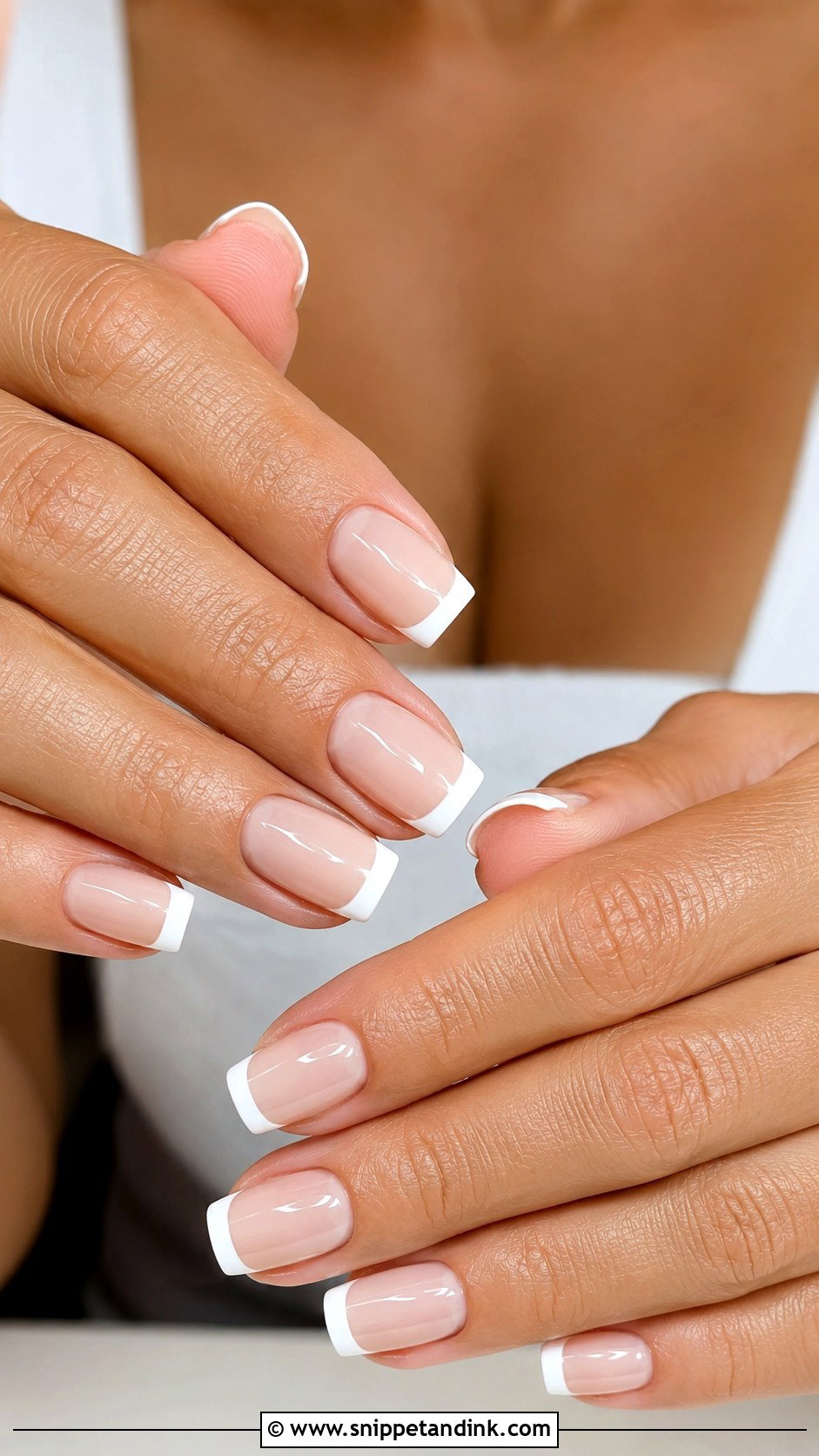
Square nails give the tip a straight, crisp edge and are the most practical shape at short to medium length. A thin tip looks modern; a medium one looks classic. The weak spot is the corners, which can catch on lace, tulle and sweater knits, so I often file a squoval, square with slightly rounded corners. That keeps the clean outline without the snagging. It pairs naturally with a simple gown, sleek hair and minimal jewelry.
12. Almond French Bride Nails
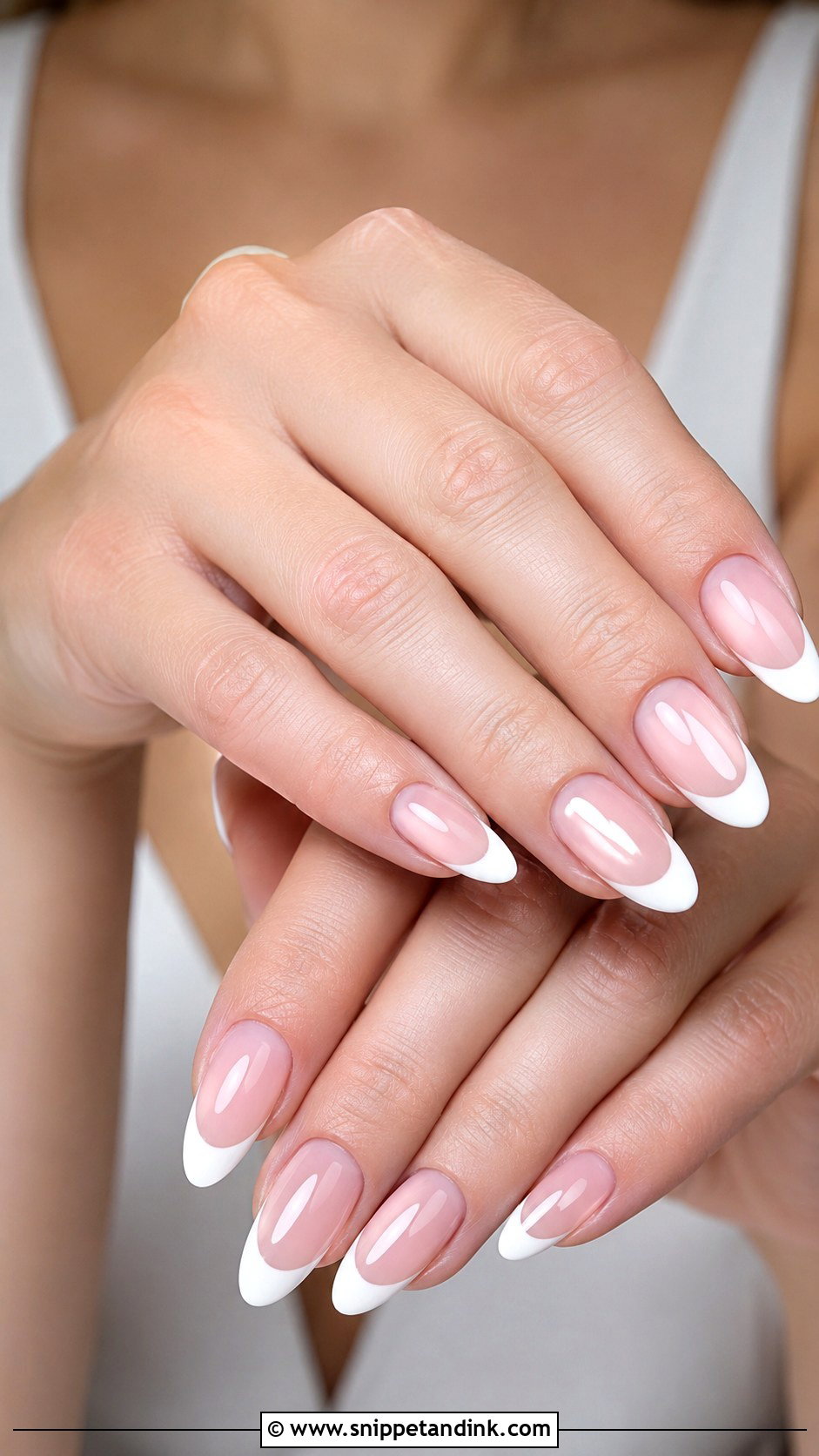
Almond is the shape I’d put on most hands if I could choose only one. The gentle taper makes fingers look longer, and the French tip can be classic, romantic or modern depending on the width and the base. Sheer pink with white is timeless; a milky base with ivory tips feels more current. It also takes small accents like pearls, lace or a tiny flower. Keep the length sensible. You’ll be holding a bouquet, fastening earrings and probably eating with your hands at some point.
13. Short French Bride Nails
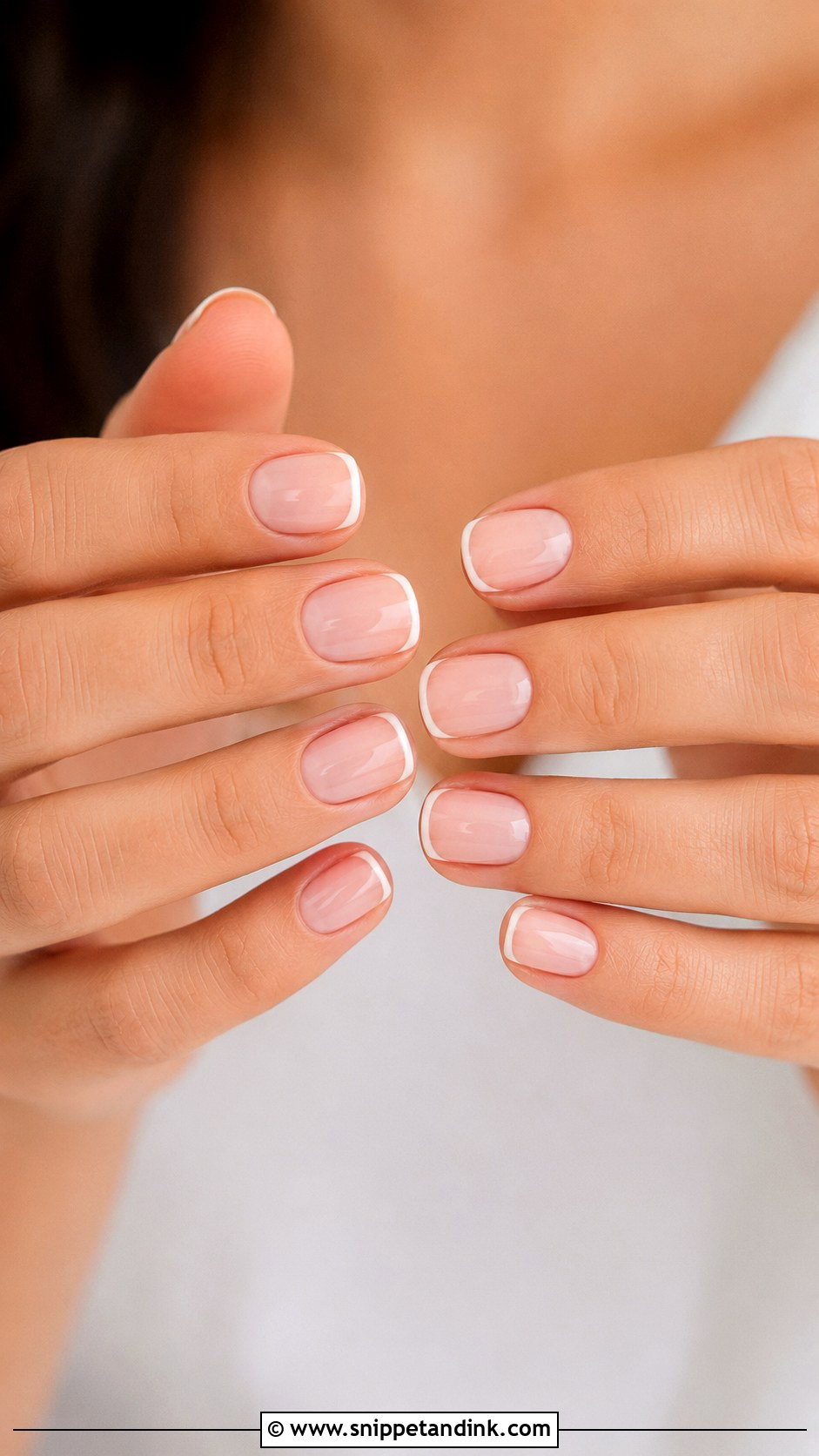
A short nail with a clean micro tip looks fresh, and it’s the set I’d recommend if you’re on your hands all day or simply don’t like length. Proportion is everything. On a short nail, the white needs to be very thin so the pink part still looks long. A sheer pink, nude or milky base keeps it healthy-looking. It suits every dress, and it’ll still look tidy the following week when you’re back at work.
14. Coffin French Bride Nails
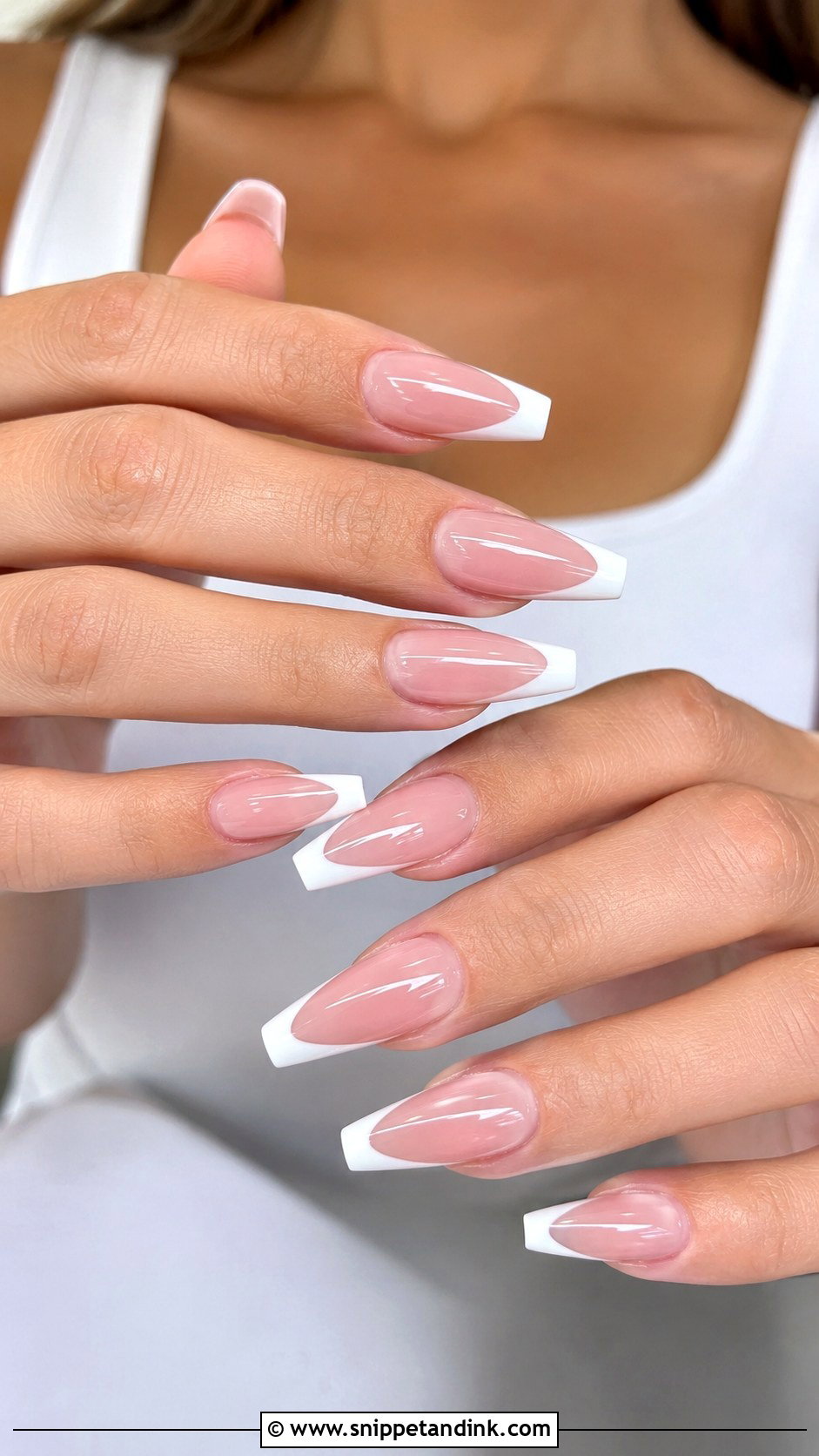
Coffin brings the glamour: tapered sides and a flat tip that only shows properly at medium to long lengths. For a wedding, a sheer nude or pale pink base with white, ivory or pearl tips keeps it from tipping into club nails, and a soft chrome adds shine if you want it. The flat tip takes knocks at its corners, so a structured gel or extension underneath is wise. Balance the tip width; a deep white band on a long coffin nail looks heavy. Fitted gowns and statement rings suit it.
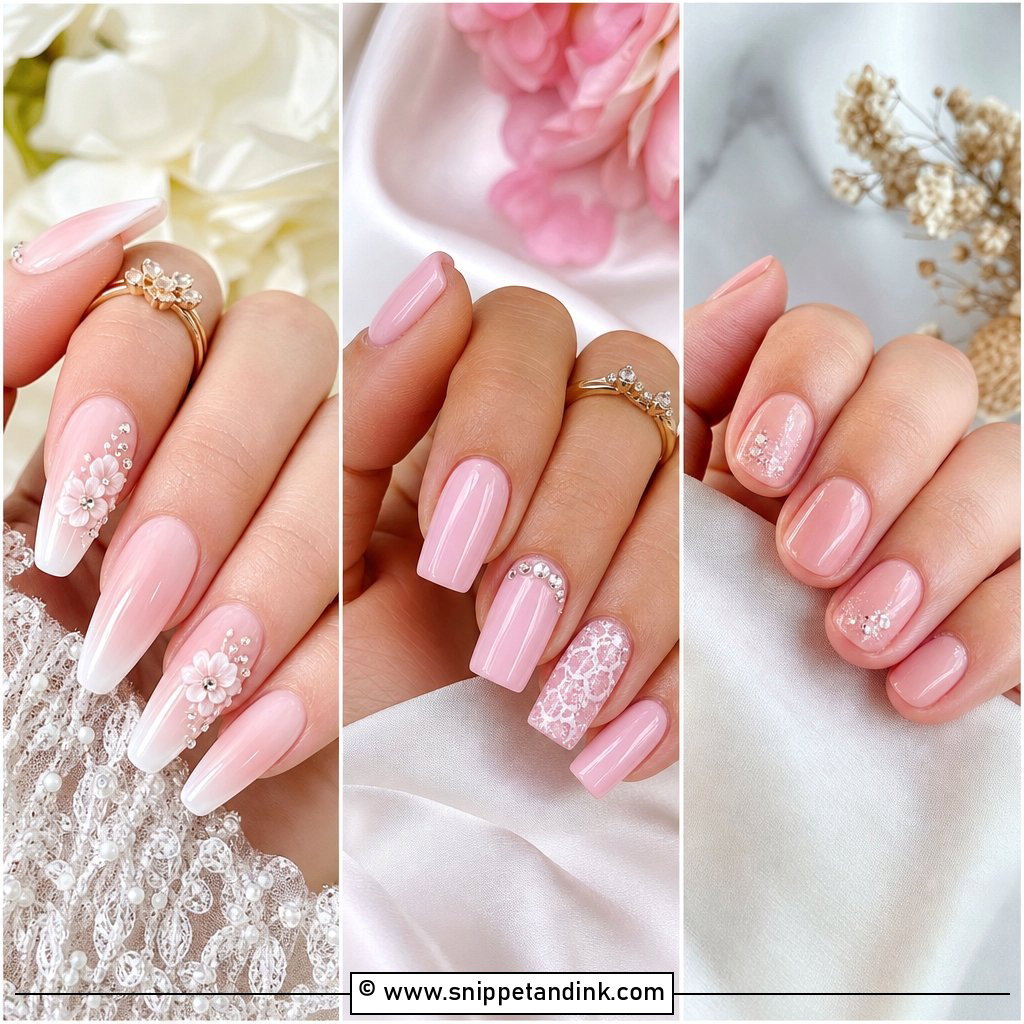
15. Lace French Bride Nails
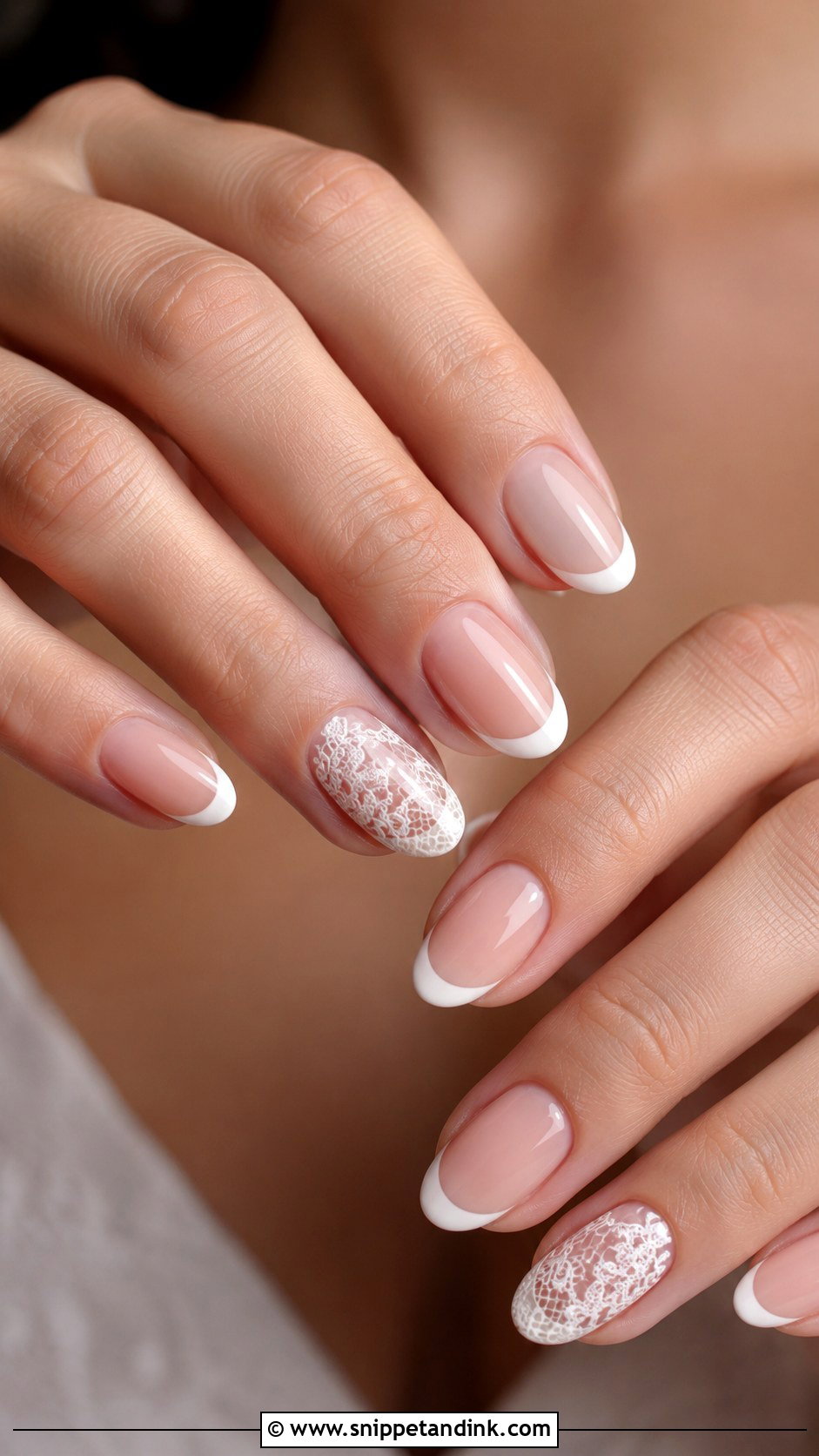
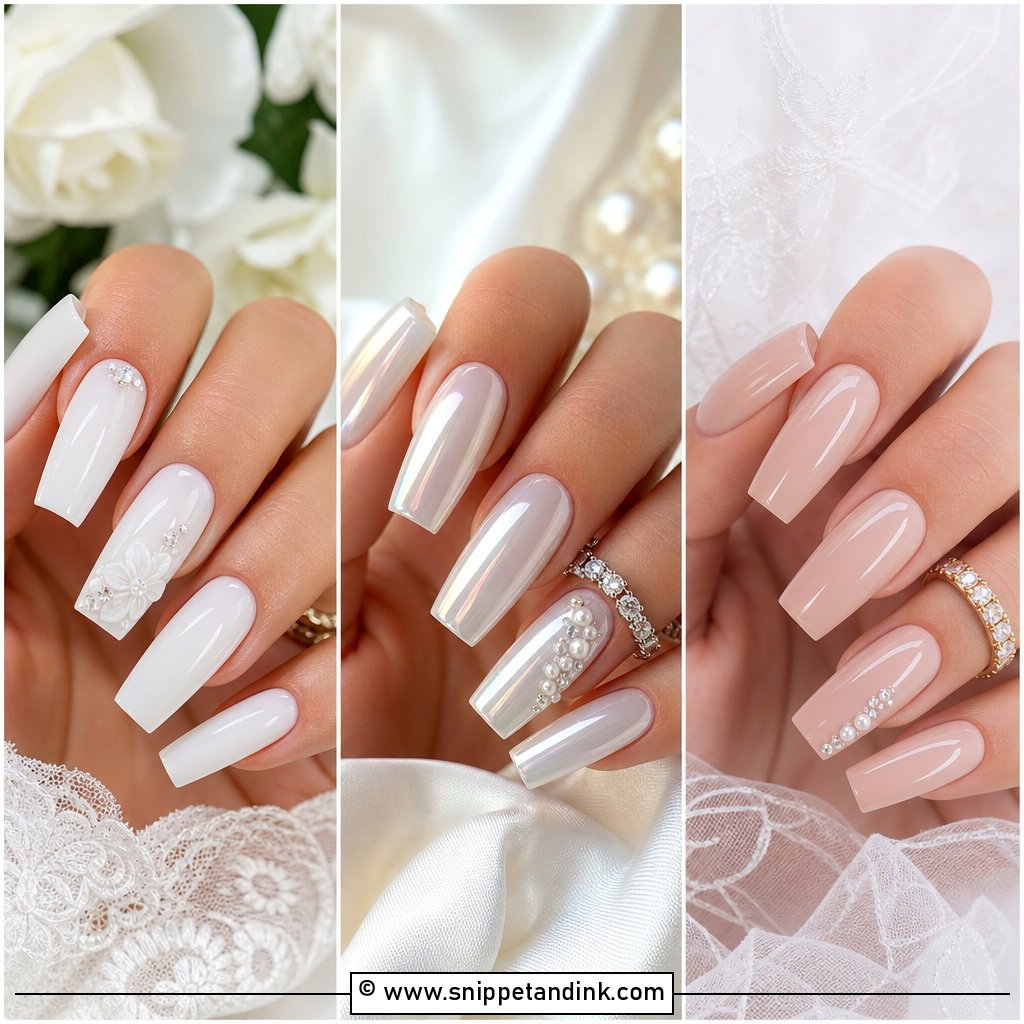
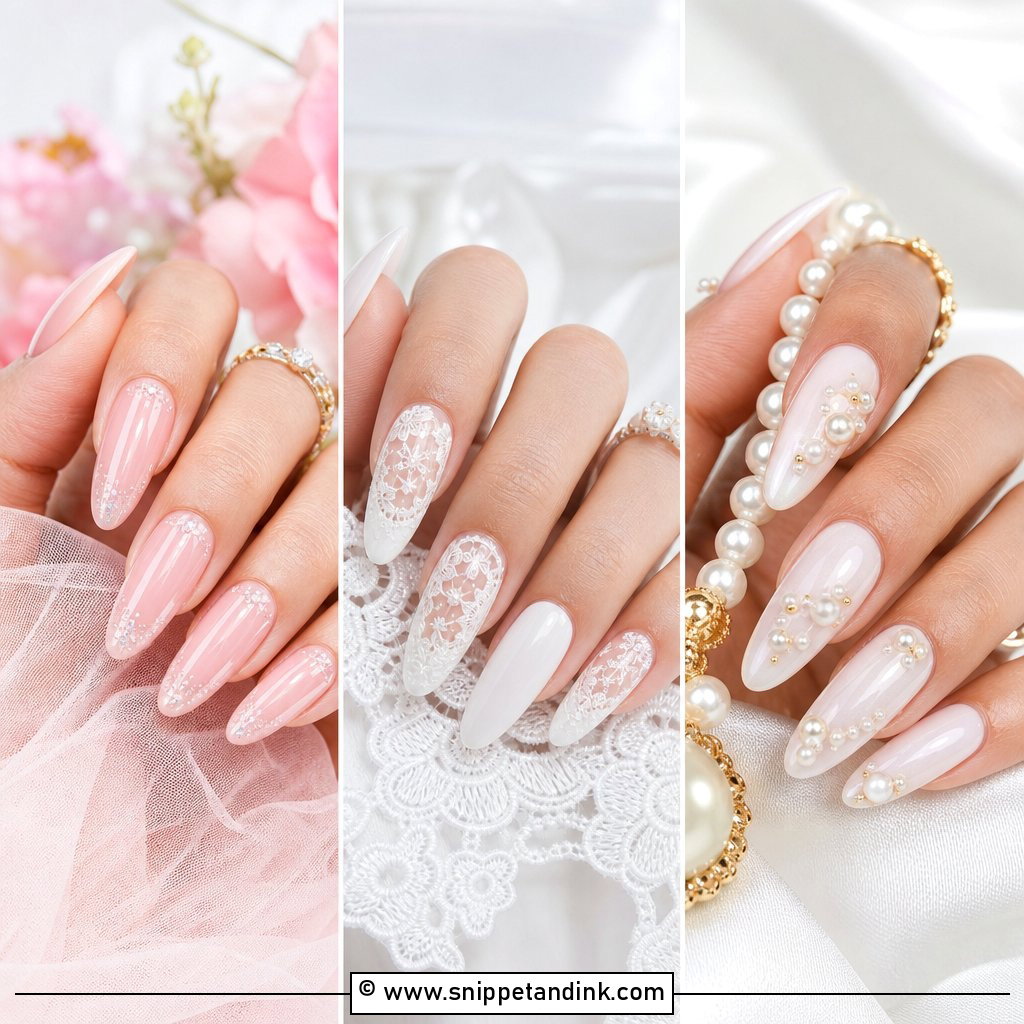
Lace on one or two nails is enough to tie your manicure to lace sleeves, a lace veil or embroidery. The lace can sit near the tip, along one side, or float over a sheer nude base. I’d resist covering every nail. Ten lace nails look busy in photos and take a long time to paint well, while two accent nails look intentional. Almond and oval suit the soft pattern best.
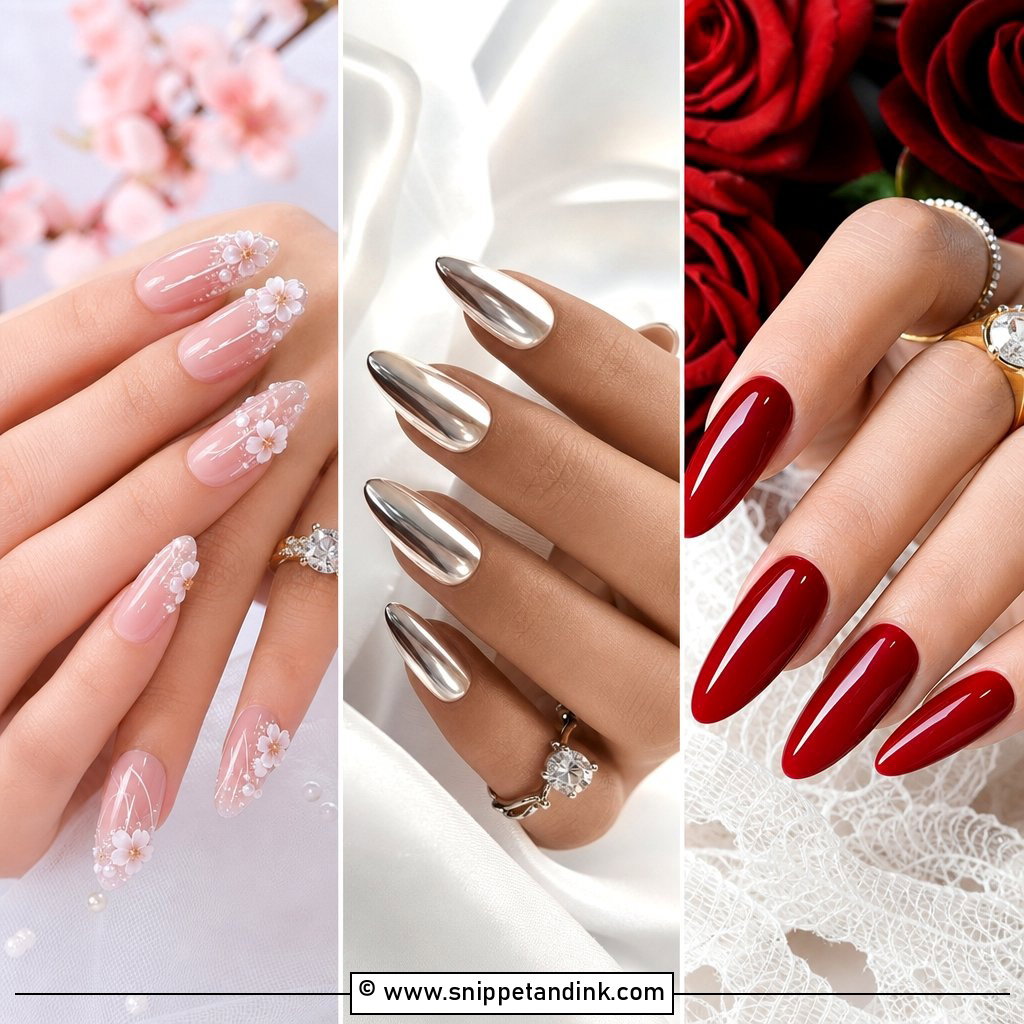
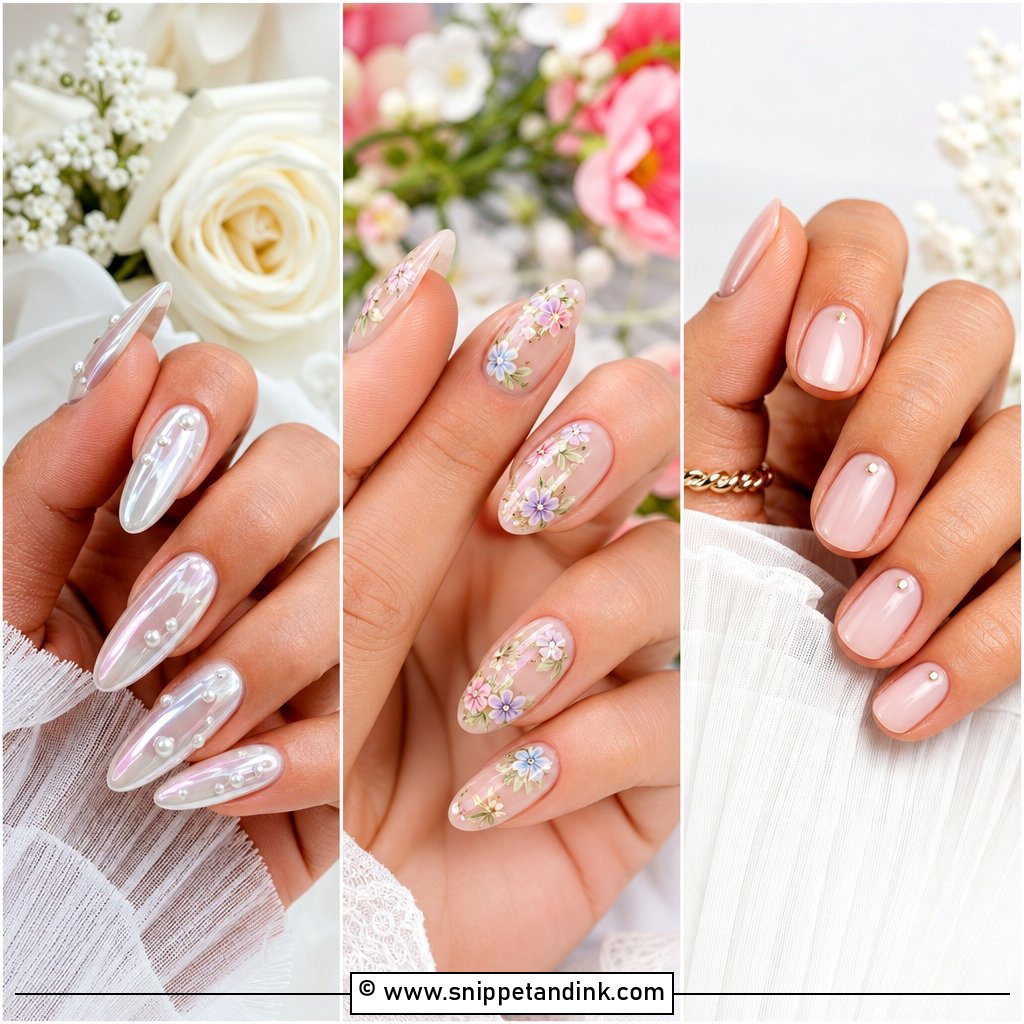
16. Floral French Bride Nails
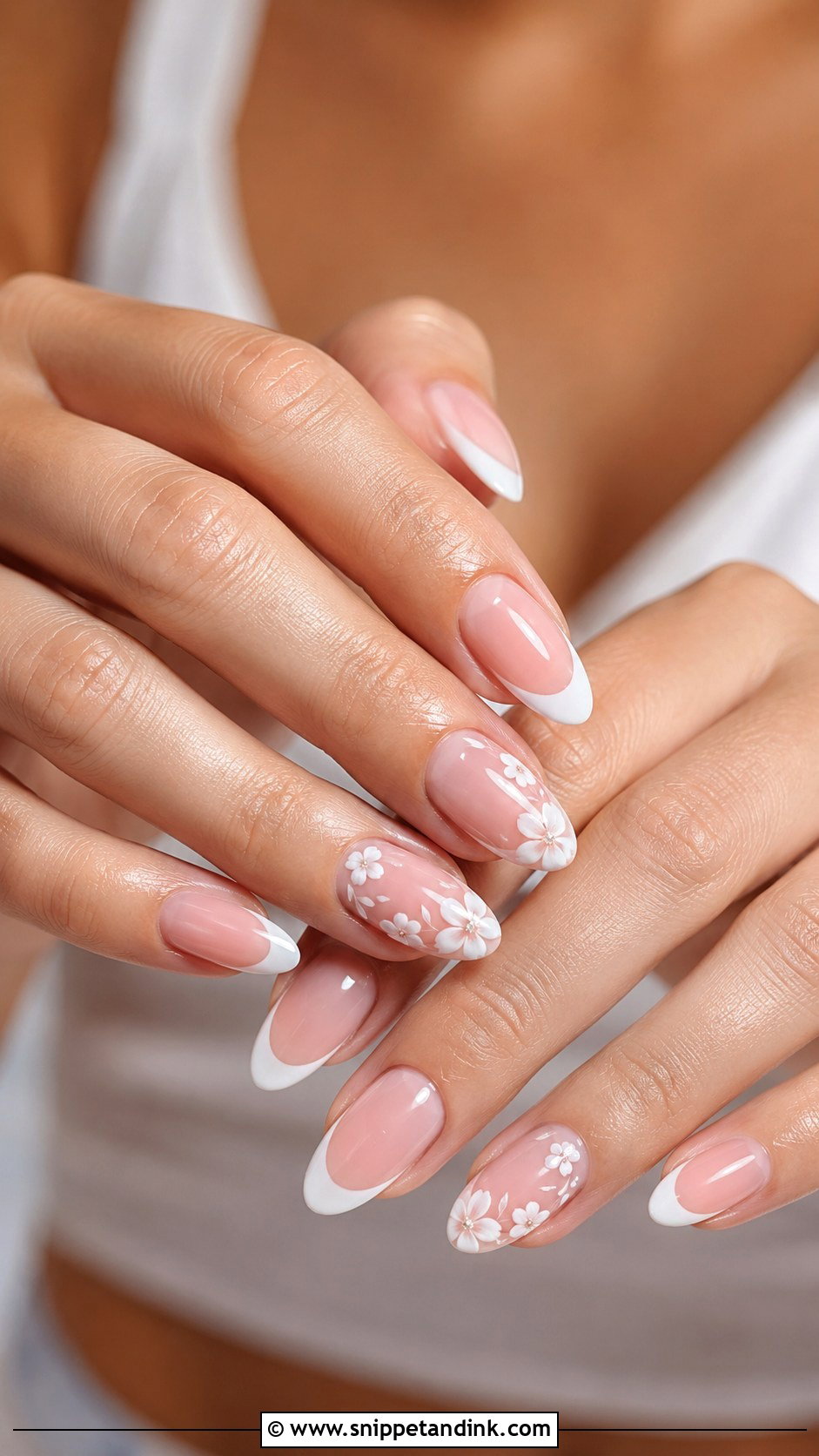
Tiny flowers on accent nails make a French feel personal without getting loud. The base stays sheer pink or nude with white tips, and the flowers are small: white blossoms or blush petals, which I usually build with a dotting tool rather than a brush for neater, rounder petals. Garden weddings and spring ceremonies suit it, as do dresses with floral texture. Keep the flowers airy so they don’t crowd the tip. A glossy top coat seals the art.
17. Pearl French Bride Nails
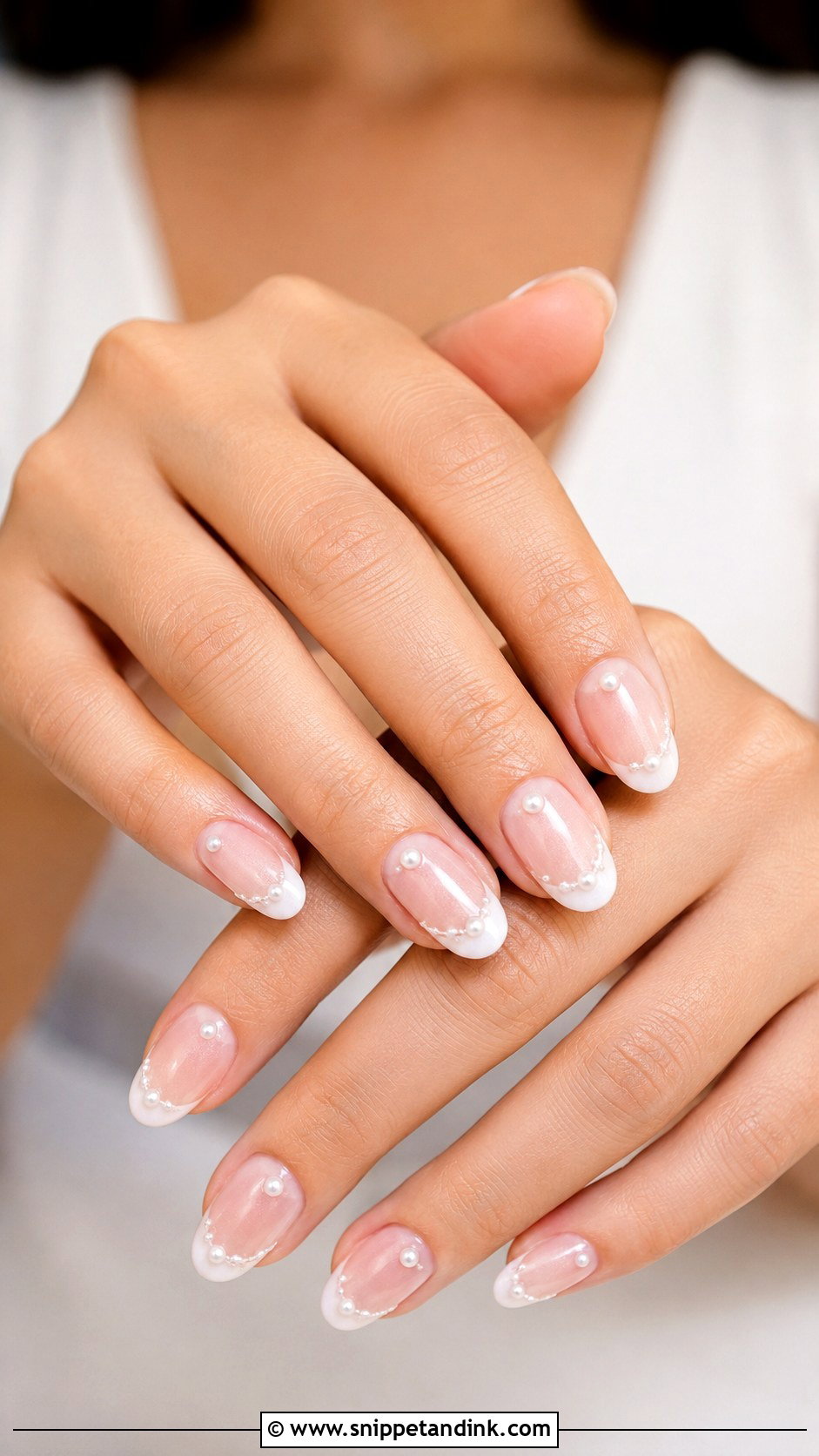
Tiny pearls add texture to a French set, near the cuticle, along the tip line or on one feature nail. Placement affects wear. Pearls by the cuticle are protected and last well; pearls at the very tip take every knock and are the first to pop off. I set them in a thick gel and cure them in place, then cap the edges with top coat. One or two per hand is subtle; micro pearls traced along the smile line give more detail. Almond, oval and short square all work.
18. Glitter French Bride Nails
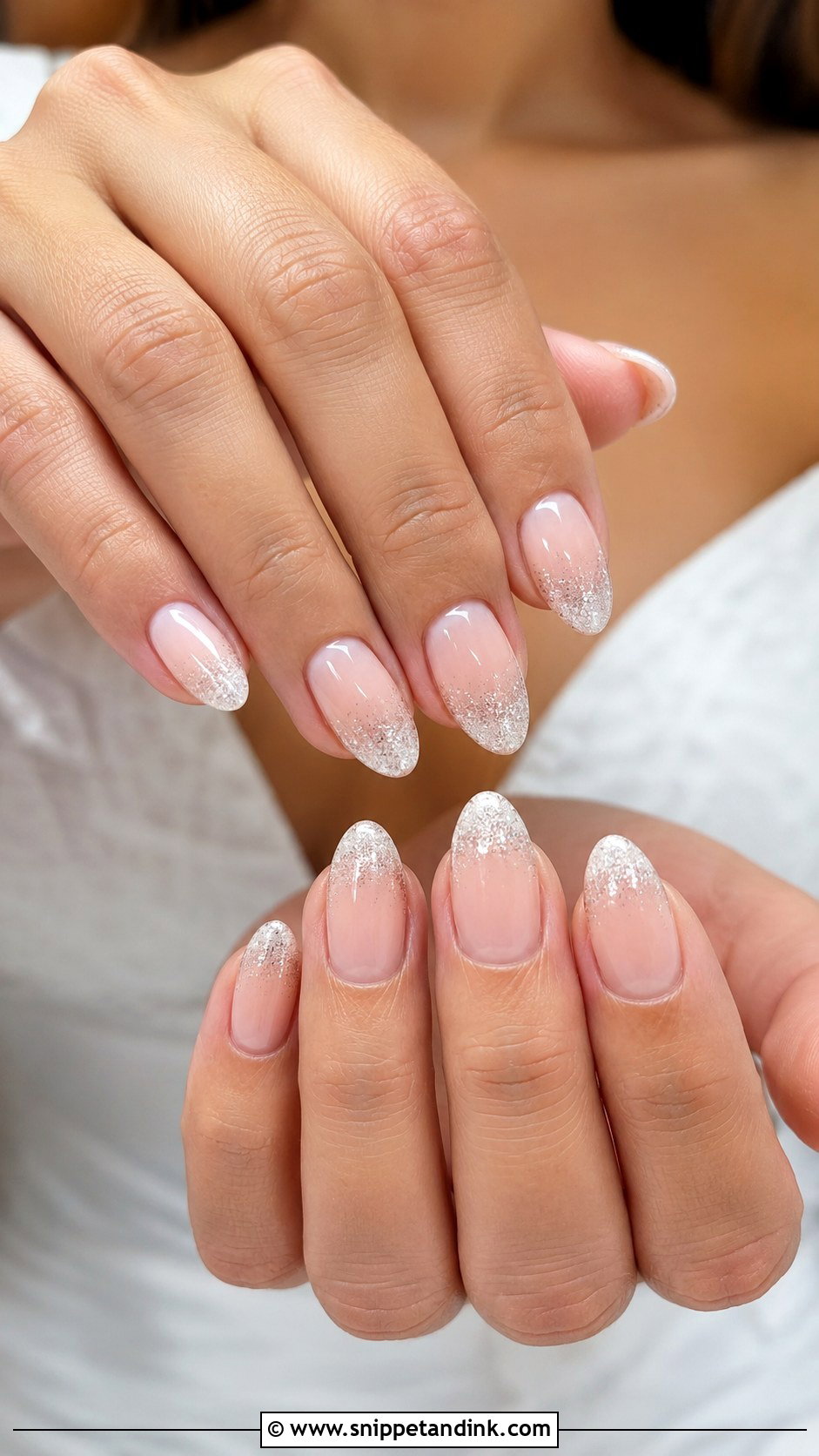
Fine glitter on the tips, or blended softly over the white edge, adds sparkle while the base stays sheer. Silver, champagne, pearl and soft rose gold are the most bridal shades. Keep the grain fine. Chunky glitter looks rough in macro photos and needs a long, aggressive soak to remove after the honeymoon. It comes alive at evening receptions under warm light. Oval or almond shapes keep it balanced.
19. Gold French Bride Nails
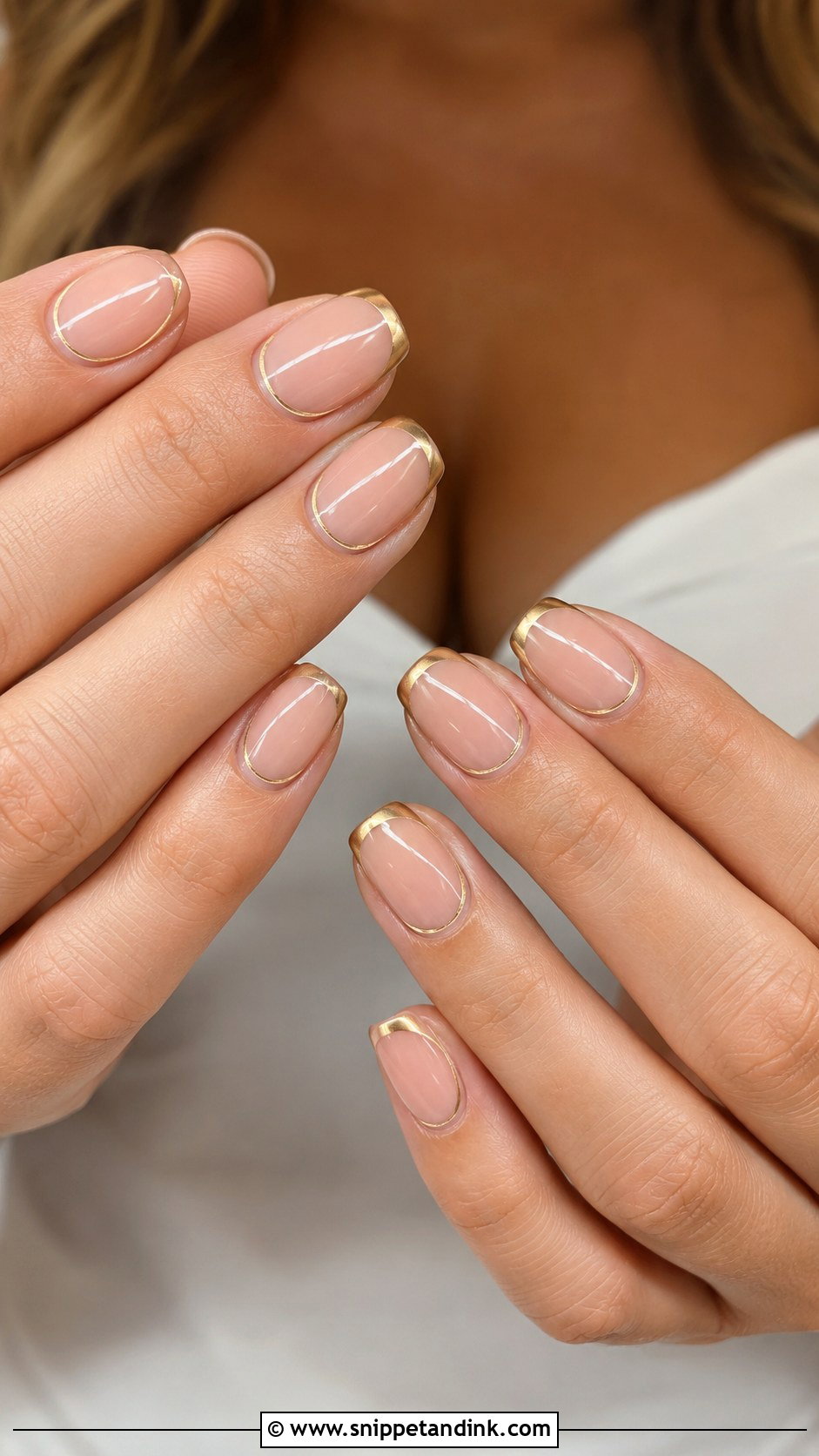
Gold tips belong with warm metals in your jewelry, shoes or dress details. The set can be a sheer nude with thin gold tips, or a white French with a fine gold line beneath. Champagne gold, pale gold and brushed finishes look more refined than bright yellow gold, which can clash with skin. I use either foil or gold gel; foil gives a mirror finish, gel a softer one. Fall weddings and formal venues suit it, on almond or square nails.
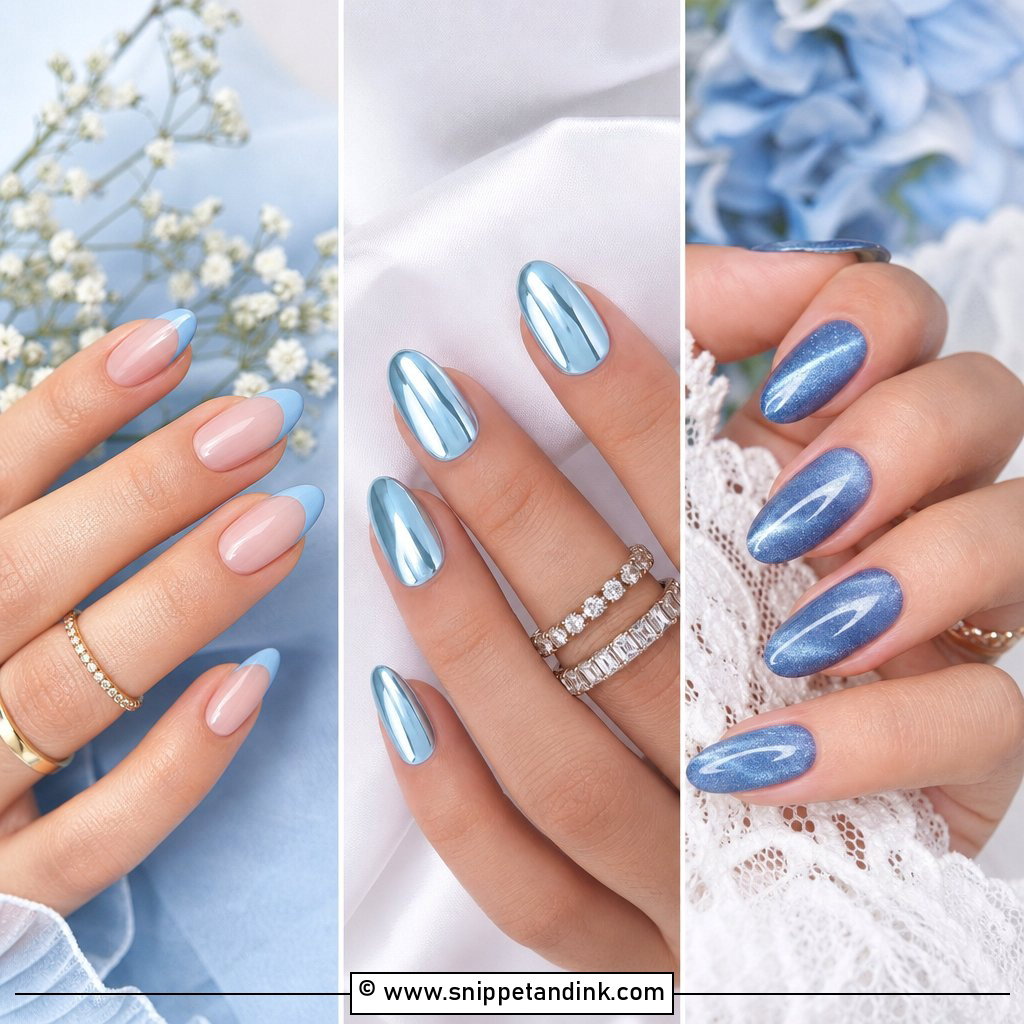
20. Blue French Bride Nails
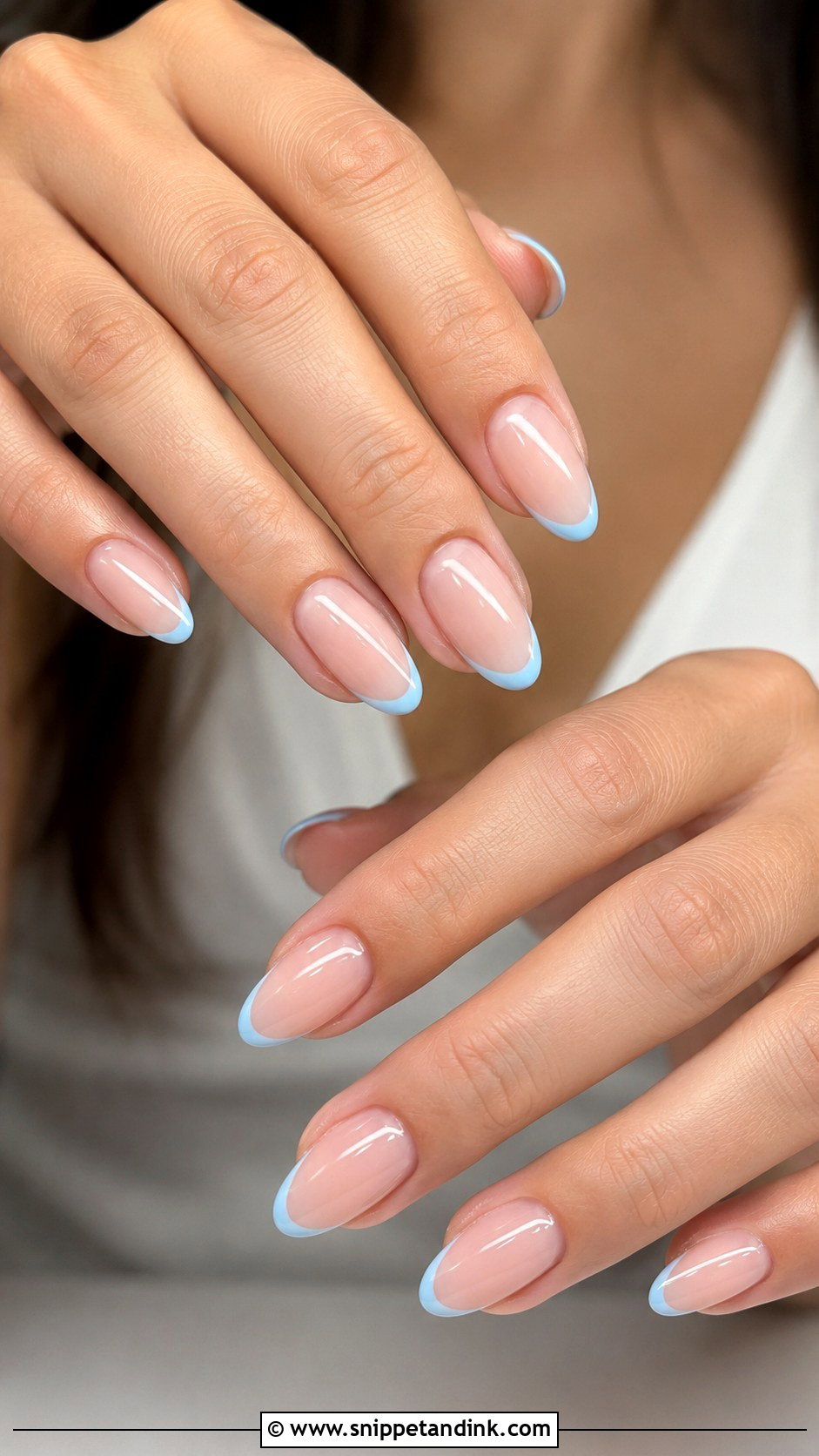
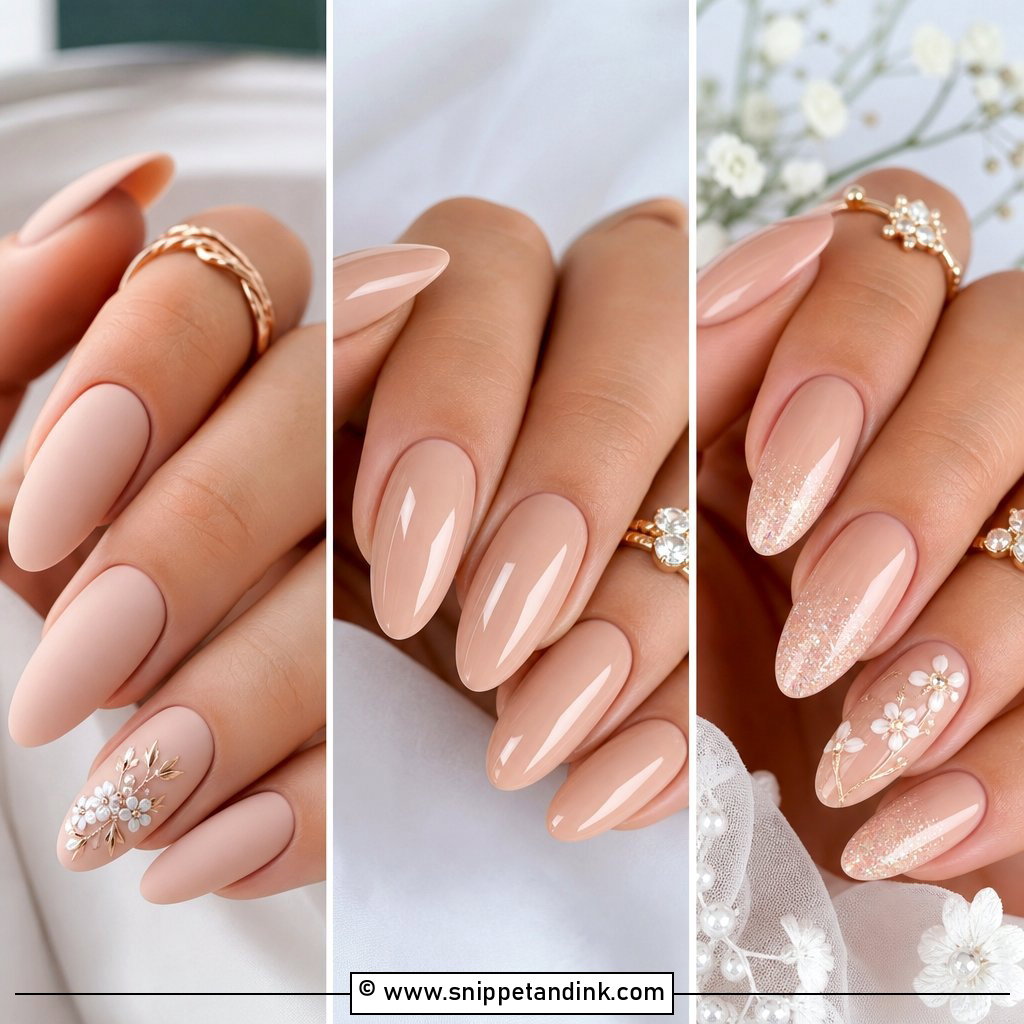
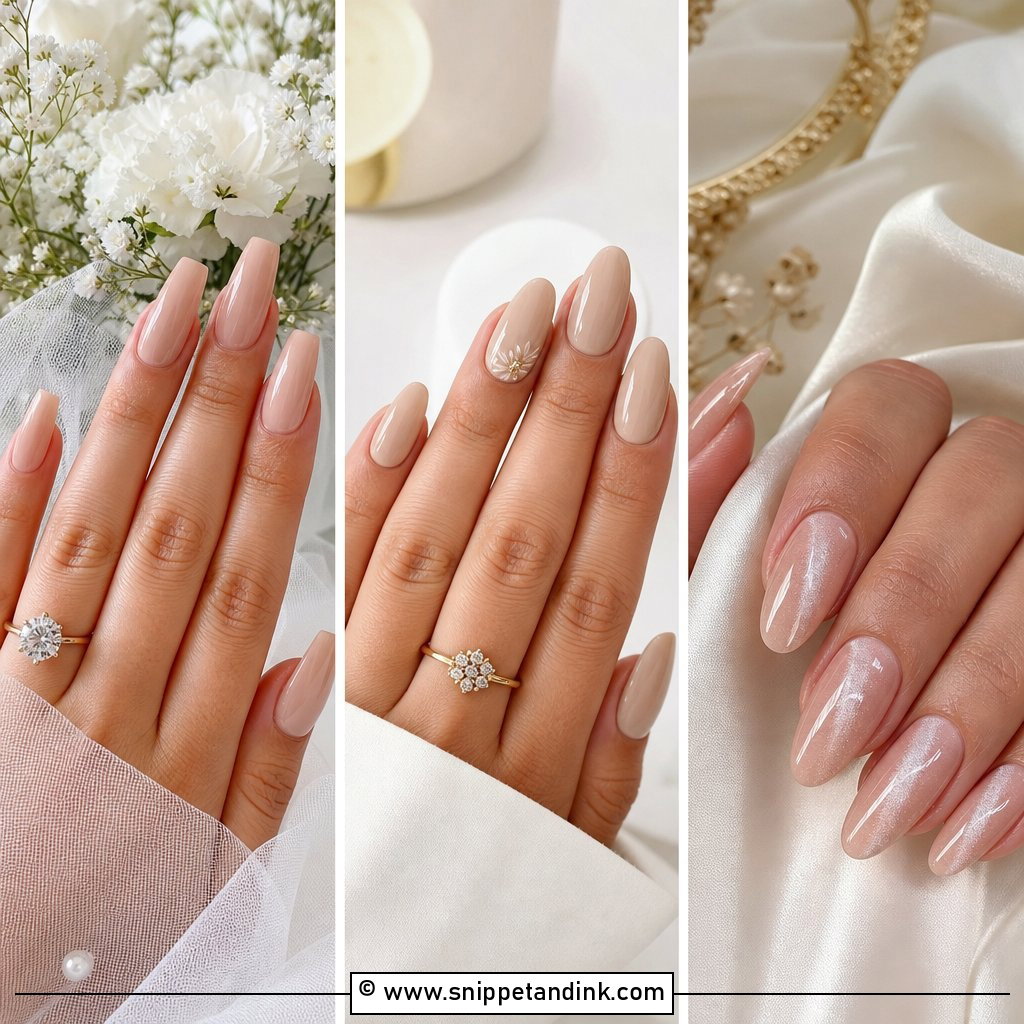
Blue tips are a sweet way to carry your “something blue.” They can be as quiet as pale blue micro tips over sheer pink, or a full soft blue French on every nail. Baby blue, powder blue and icy blue are the most bridal. If you’d rather keep it hidden, a tiny blue line under a white tip is barely visible. I always check a pale blue in the venue-style light if I can, because under some warm indoor bulbs it can read greyish. Coastal and spring weddings are its natural fit.
Should Your Toes Match Your Fingers?
Only if they’ll be seen. With open sandals, a beach ceremony or a barefoot first dance, I’d give your toes the same base color as your hands, with a slim white tip or none at all. Toenails are broader and flatter, so a full French tip there tends to look thick. A plain sheer pink or nude pedicure is the safer match. Book it a day or two before, and if you’re wearing new strappy shoes, do one test walk afterward to make sure the straps don’t scuff fresh polish.
Bridesmaid Nails That Sit Beside Yours
Bridesmaids hold bouquets in the same photos as you, so their nails show up more than people expect. I’d keep them in the same family but a step simpler:
- Same base shade as the bride, no white tip, or a very thin one.
- No chrome, pearls or lace, so the bride’s set stays the most detailed in the frame.
- Lengths kept short to medium, which also suits bridesmaids who are helping with dresses and buttons.
- A bridal party with a range of skin tones may need two or three nude shades rather than one, chosen to suit each person.
A French Set That Still Feels Like Yours on Day Five
French nails last as a bridal choice because they adapt to almost any dress, ring and season. A plain white French will always look right, but you can also choose micro tips, pearl chrome, milky ombre, lace, tiny flowers or a fine metallic line to make it yours. Comfort matters as much as style, since you’ll wear these for days. Book a trial manicure if you can, and use it to test the shape, base shade, tip color and finish before the final appointment.
You'll Like These Ideas:


Leave a Reply