
Dessert is the point of the night when guests leave their seats and crowd one table, so a cake station has to work as service before it works as styling. Plenty of couples now skip the single cake table in favor of a spread of tiers, minis, cupcakes and plated slices. From the catering side, I judge each setup by three things: how fast guests can get through it, how well the cake holds in that room, and how much staff it quietly needs. The 20 setups below range from a single cake on a cart to a full dessert wall, with notes on what each one demands behind the scenes.
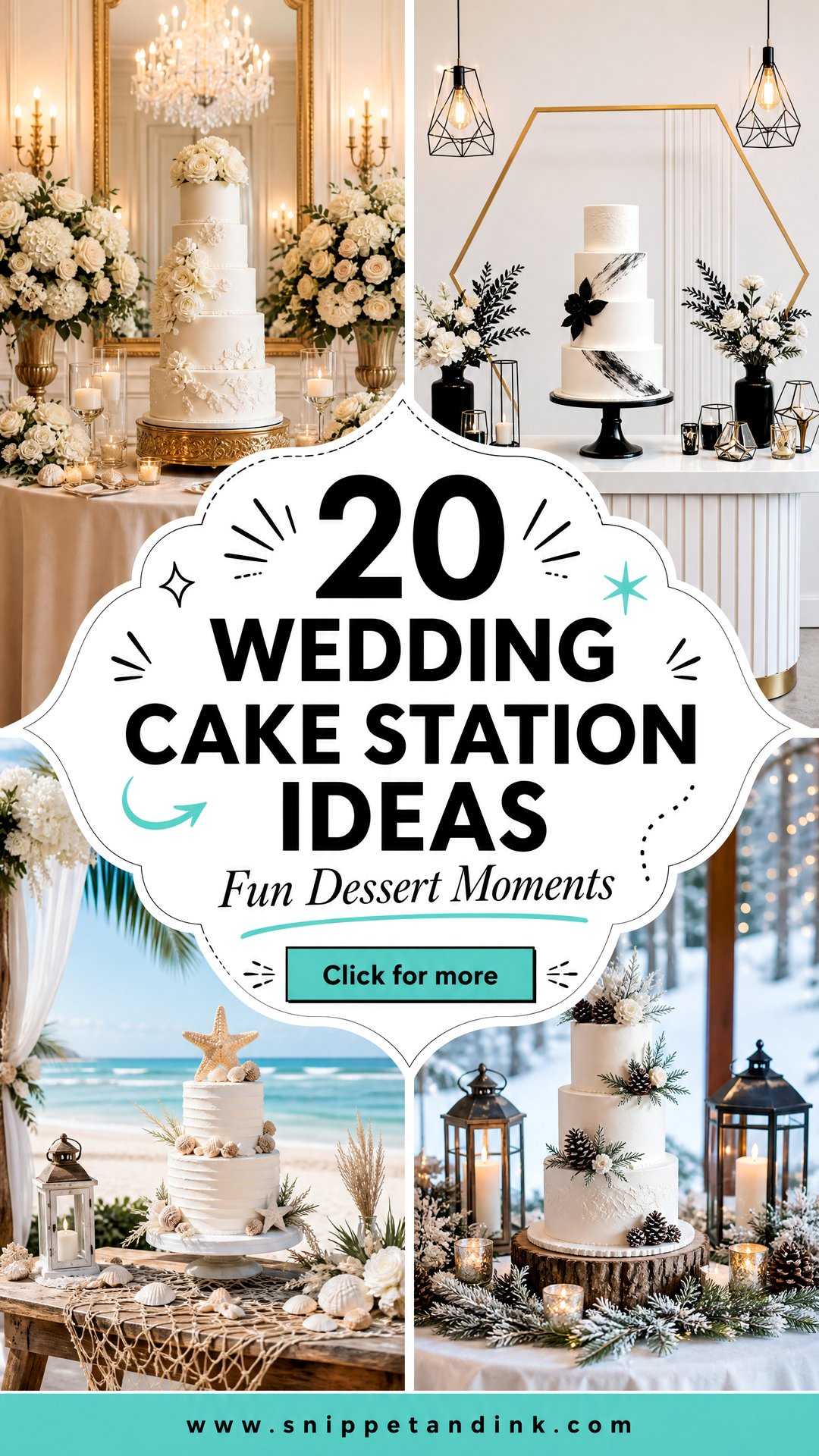
How Many Portions a Dessert Station Really Needs
The first number I ask a couple for is not the guest count but what else is on the table. Cake quantities change a lot depending on whether cake is the only dessert or one of several.
- Cake as the only dessert: plan one standard wedding portion per guest, plus a small buffer for seconds and vendor meals.
- Cake alongside cupcakes, cookies or minis: most guests take two small items, so you can order a smaller cake and spread the count across the sweets.
- Late reception or a heavy dinner: many guests skip dessert, and a full portion per person often goes to waste. Ask your caterer what they usually see return.
- Kids, vendors and any guests with allergies need counting separately, with a few clearly labeled pieces set aside.
Bakers quote servings based on a narrow wedding slice, smaller than a home cut. If you expect generous slices, tell your baker and your caterer at the same time, so the cake is sized for the knife that will actually cut it.
1. Wedding Cake Dessert Table
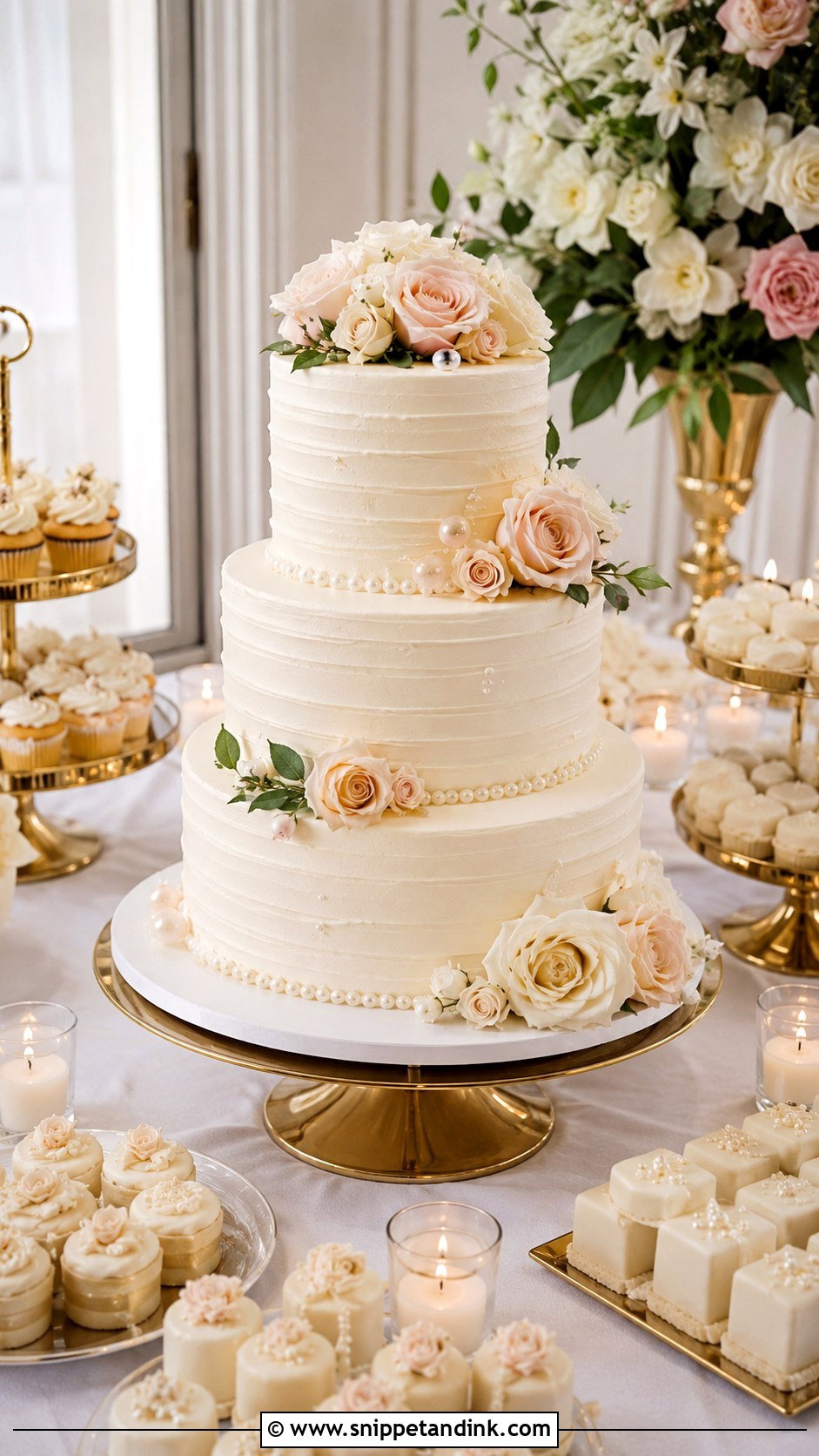
One main cake on a raised stand, with cupcakes, mini tarts, cake pops, brownies or cookies on trays around it, is the setup I see most and the one that handles a large guest count best. Guests help themselves to the small sweets while my team cuts the cake, so nobody stands in line for a slice. Tie it together with one frosting color carried into the flowers and linens. Put the smaller trays at the front edge and the tallest stands at the back, or guests reach over the cake to get a cookie.
2. Mini Wedding Cake Station
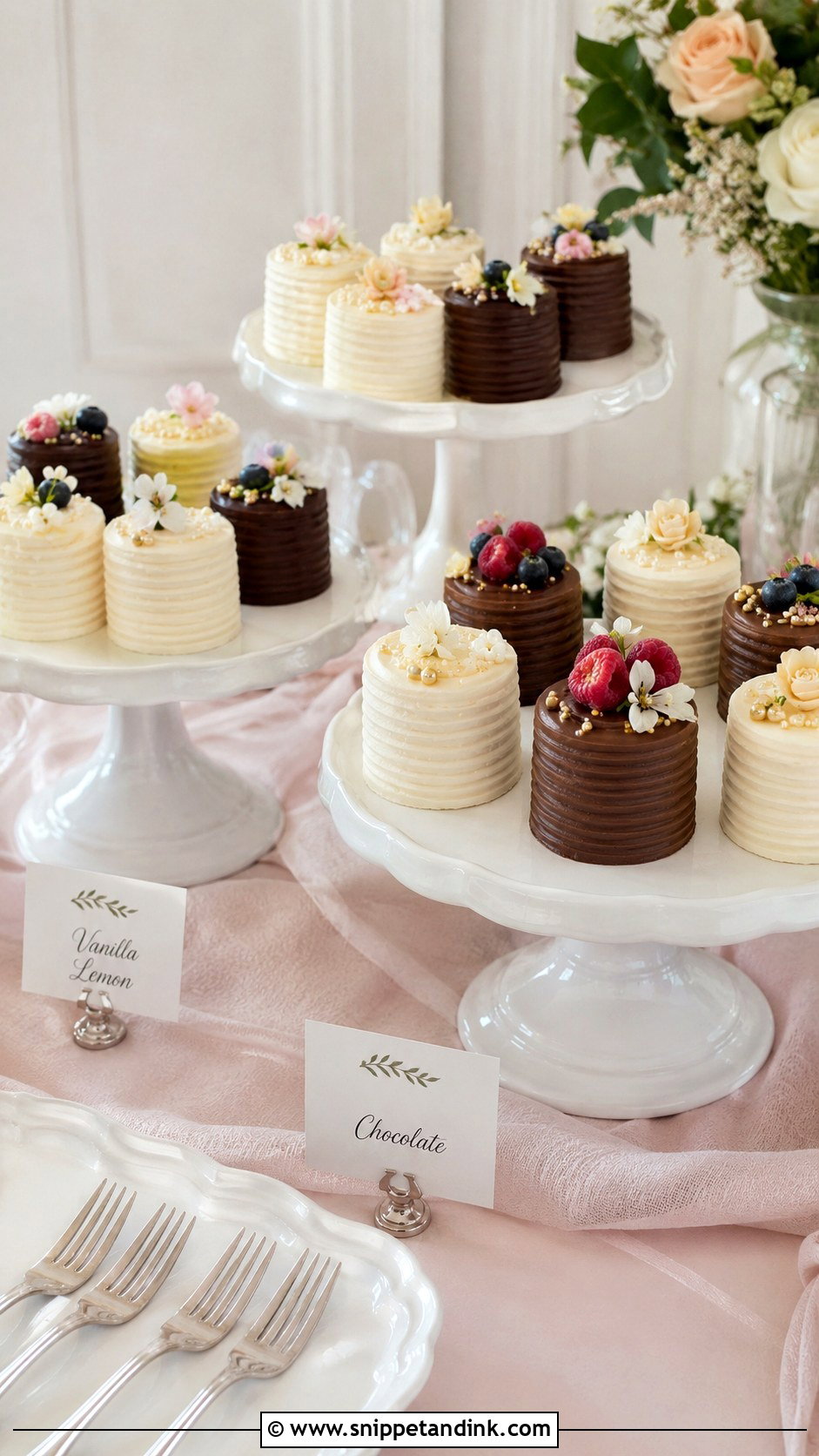
Individual mini cakes take cutting out of the evening entirely, which matters at venues with a tight end time. I’d offer three or four flavors at most (vanilla bean, lemon, chocolate, almond) with a name card under each row. Smooth frosting with a pearl, small bloom or berry keeps them uniform. One honest drawback: minis cost more per guest than slices, because each one is finished by hand. For an intimate wedding that trade is easy to justify.
3. Wedding Cupcake Cake Station
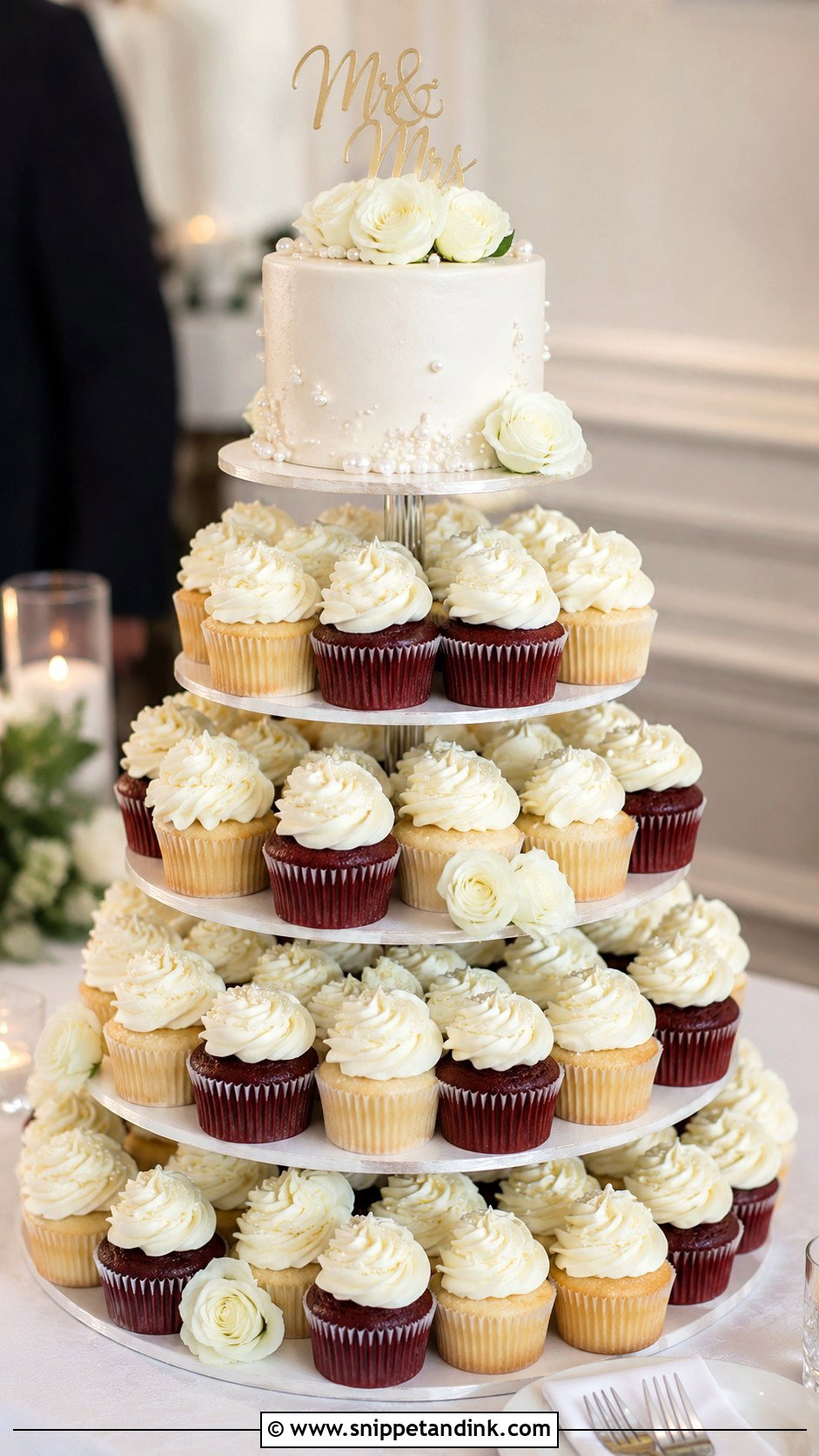
Cupcakes stacked in tiers with a small cutting cake on top give you the cake-cutting photo and a dessert guests can carry back to the dance floor. Two or three flavors is the limit I’d set; more than that and the tower turns into a decision queue. Vanilla, chocolate, red velvet, lemon and strawberry are the safe ones. Matching wrappers and one piping style keep it from reading like a bake sale. Ask your baker for a few spares in a box under the table to fill gaps as the tiers empty.
4. Wedding Cake Slice Station
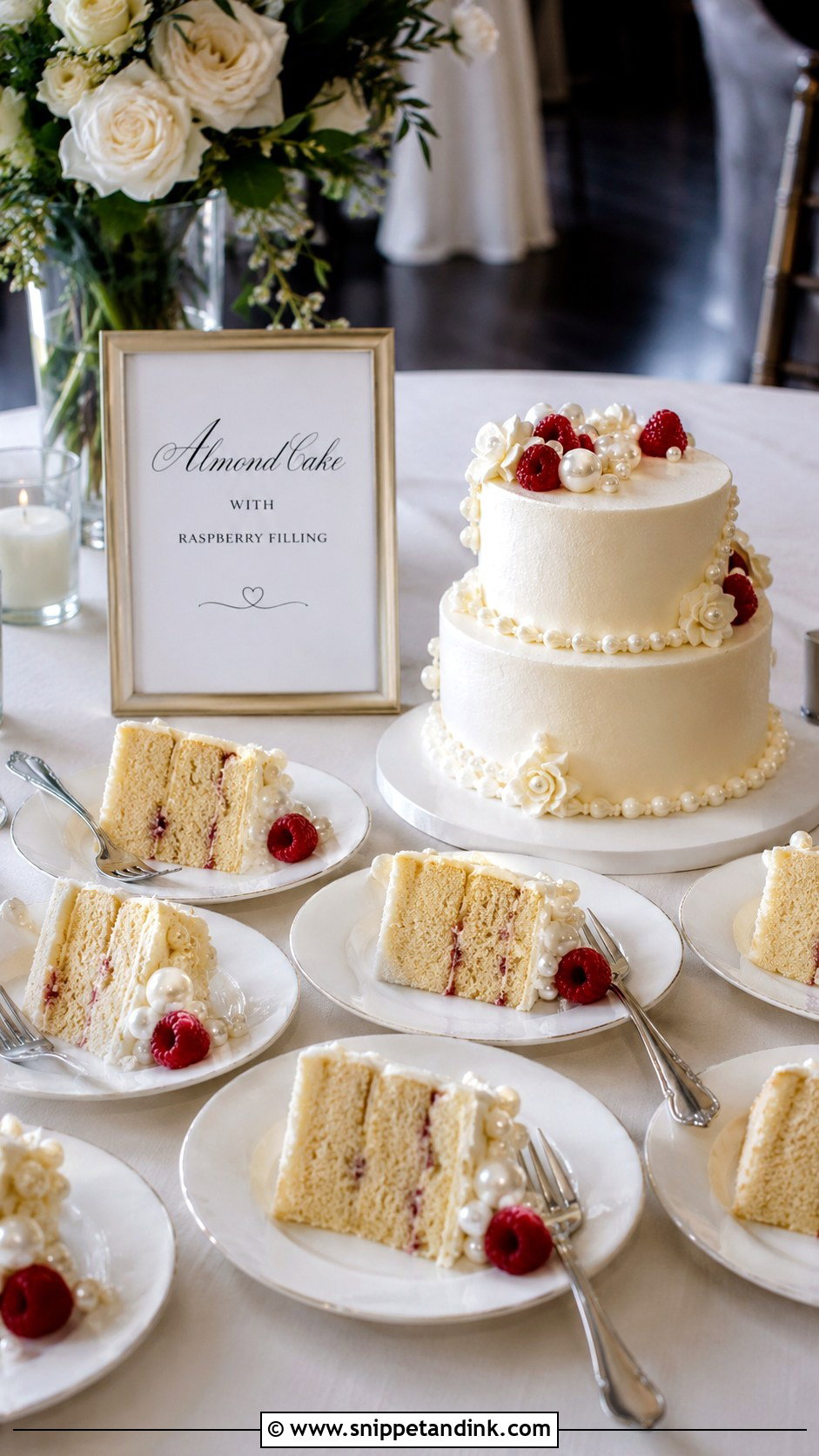
Cutting behind the scenes and setting plated slices on a styled table is the fastest service I can offer. A team in the kitchen can plate a large cake in a fraction of the time it takes to slice it in front of guests, portions stay even, and the decorated display cake stays whole for photos. If you serve more than one flavor, label each row. Coordinate plates, forks and napkins, and refill in small batches so the slices at the front don’t dry out under lights.
5. Rustic Wedding Cake Station
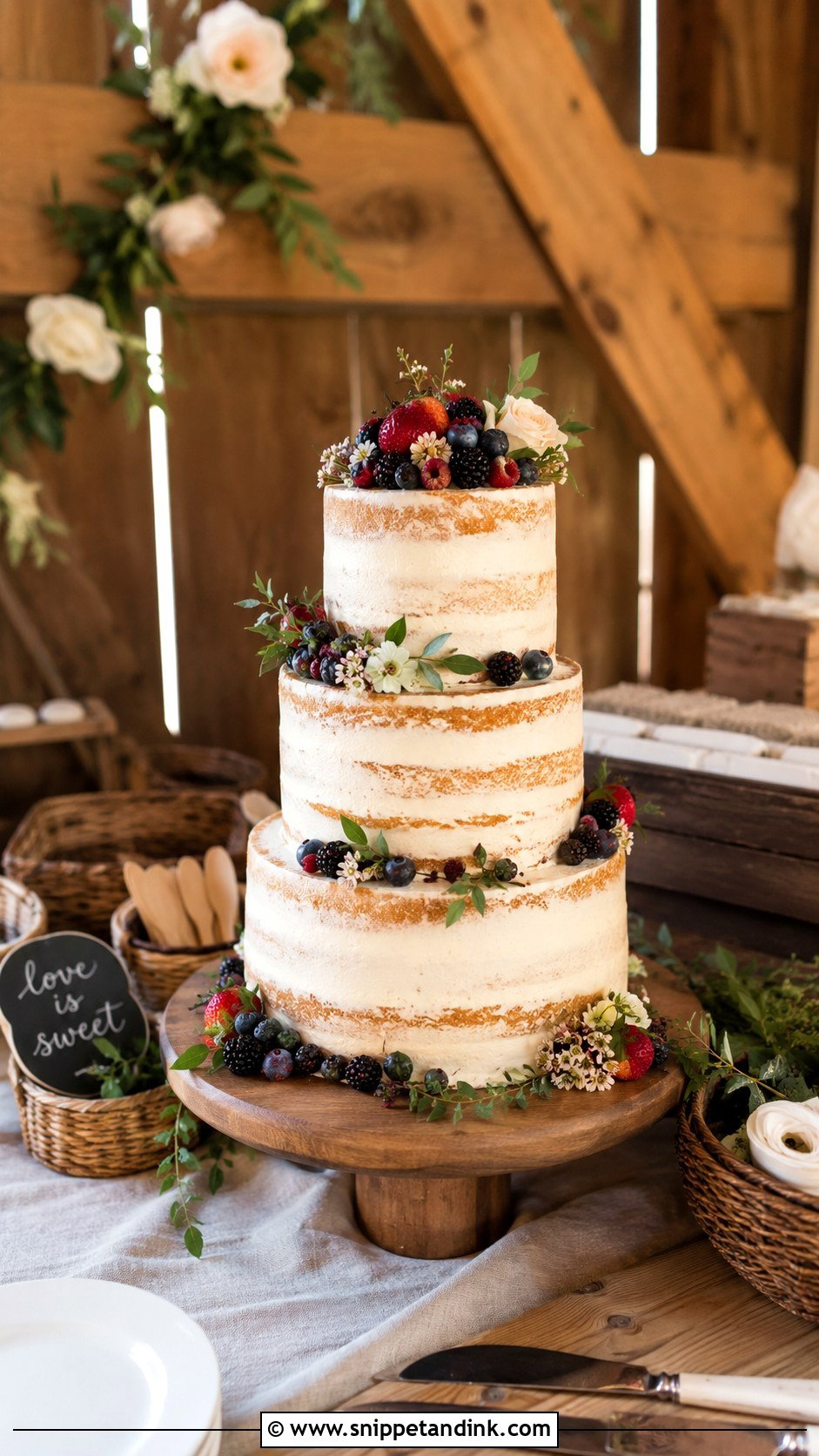
Wooden stands, a linen runner, woven baskets and loose greenery suit a barn or countryside venue, but outdoor timber tables are rarely level, so I bring shims for the stand before anything else. A semi-naked cake with buttercream, fresh berries or a few blooms fits the setting. Vary the heights and stick to two or three textures. Exposed sponge dries out quickly in open air, so ask for the cake to be brought out close to cutting rather than displayed all evening. Small wood or cream signs finish it without clutter.
6. Elegant Wedding Cake Station
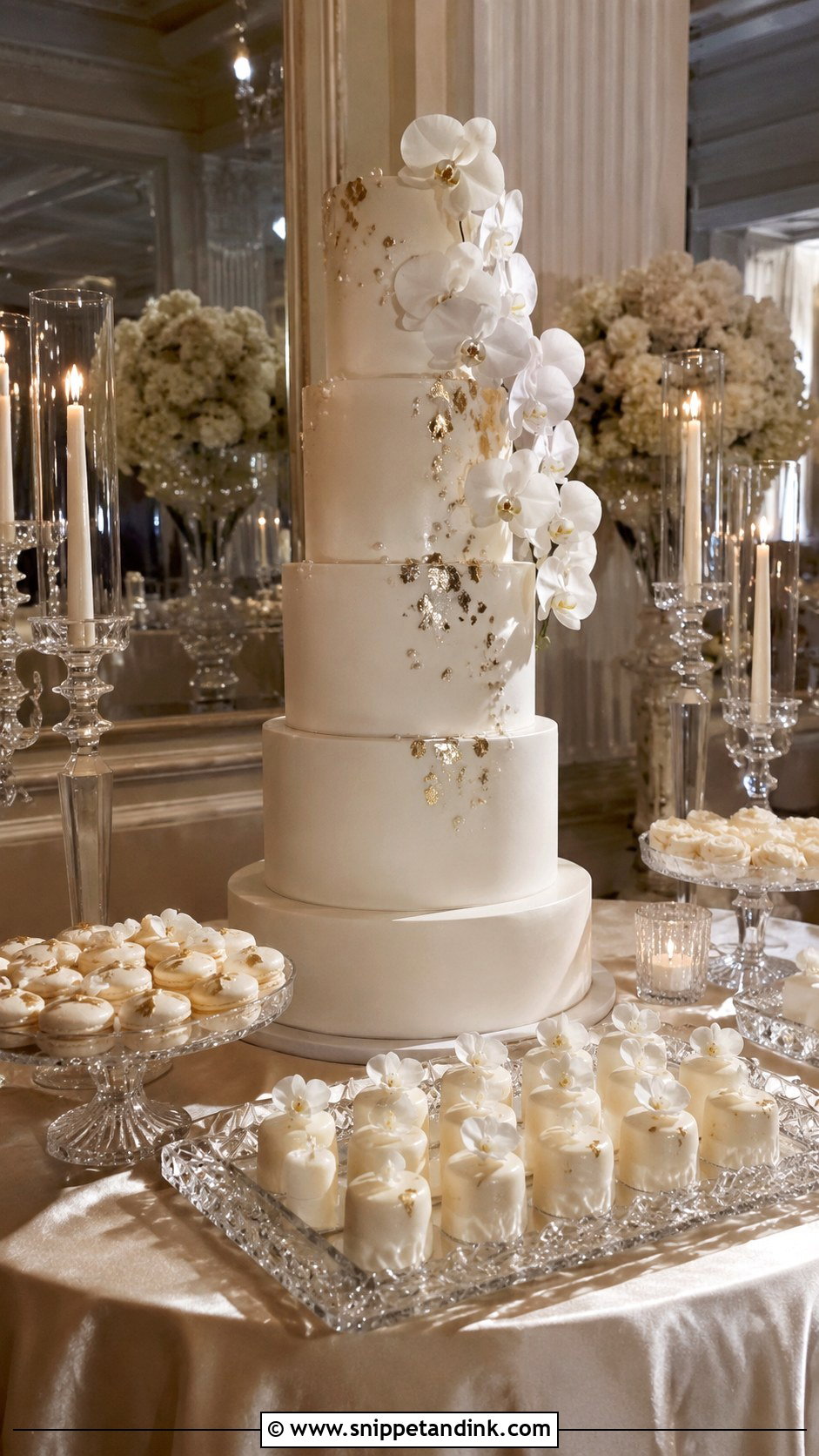
Formal stations depend on restraint and spacing. A smooth white, ivory, champagne or blush cake sits on a tall stand, flowers stay at the base, and the supporting desserts are small and neat: macarons, petit fours, mini slices. Candles, crystal trays and silk linens fit a ballroom or estate. I leave real empty table space around the cake; it reads as intentional and gives staff room to cut without knocking anything. Keep candles well away from the tiers, since buttercream softens fast near a flame.
7. Garden Wedding Cake Station
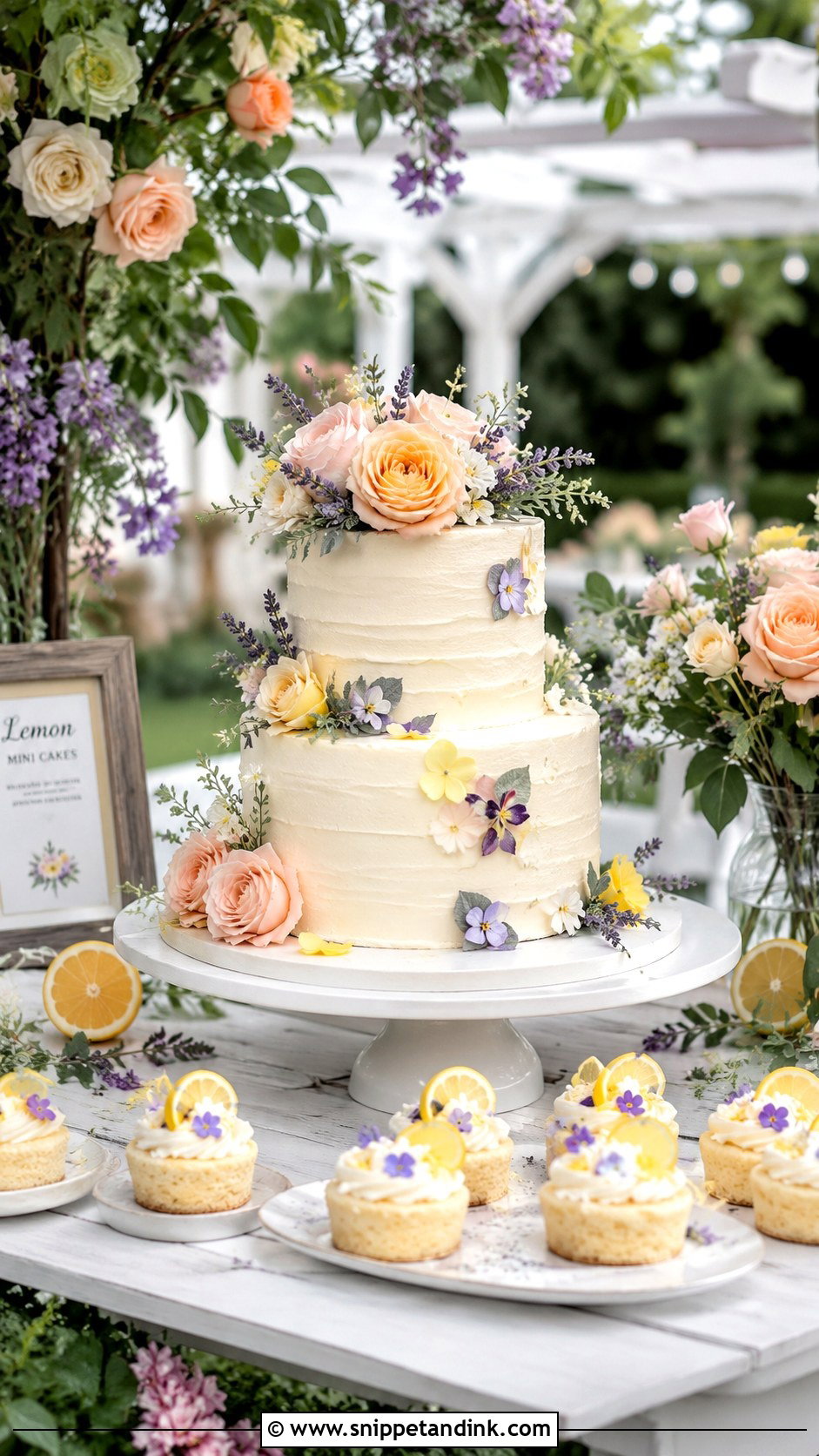
A garden station looks best in soft daylight, but direct sun on buttercream is the quickest way I know to lose a cake. Put the table under a tree, a tent edge or a market umbrella. A floral buttercream cake or a plain tier with seasonal blooms, greenery and fruit suits the space, in peach, lavender, ivory, sage or pale yellow. Flower-topped cupcakes or lemon mini cakes can sit beside it. Use a table cover that matches the garden rather than a heavy banquet cloth.
8. Vintage Wedding Cake Station
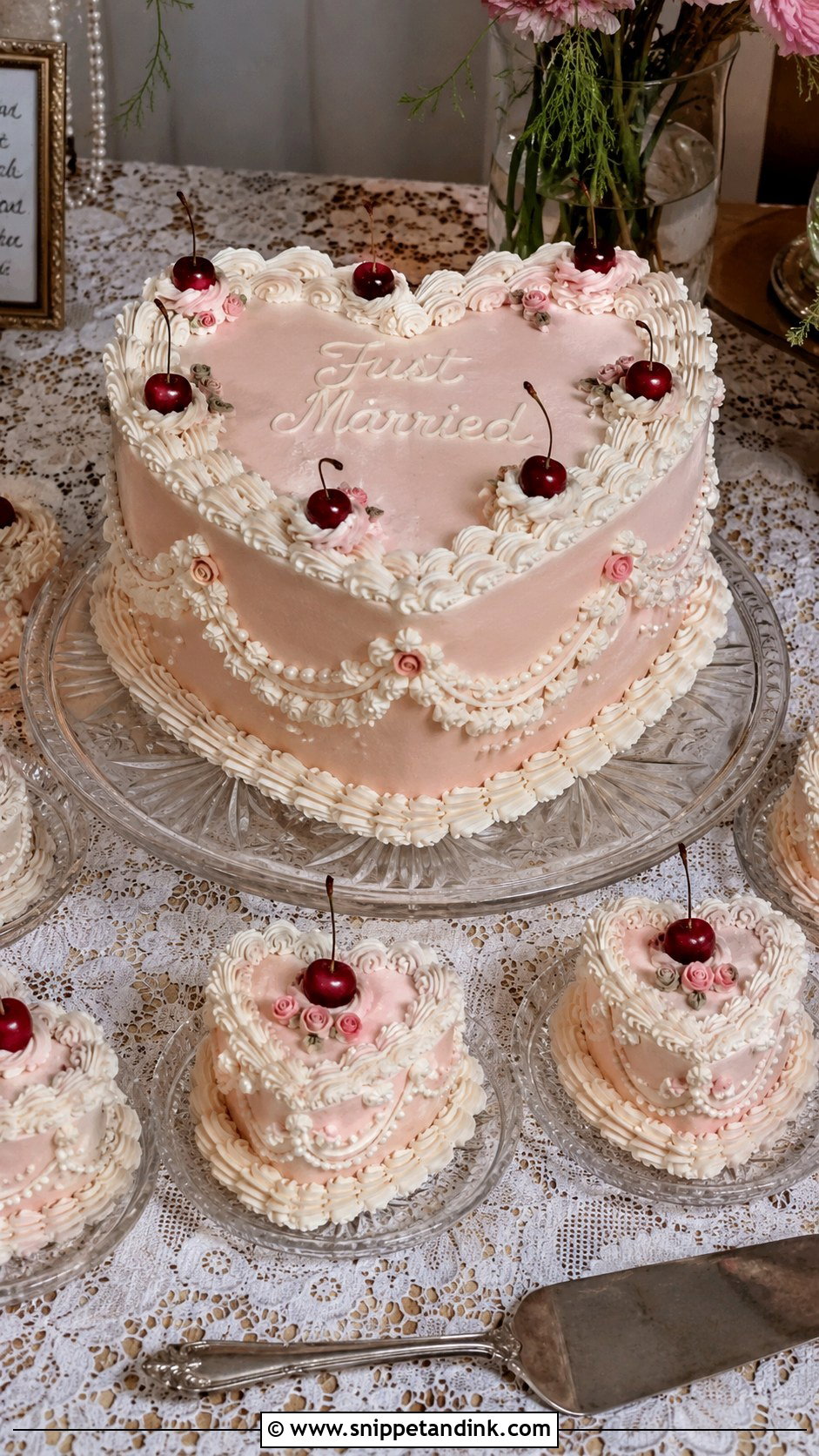
Lambeth piping, scalloped trays, lace linen and pastels make the vintage version. Pink, ivory, pale blue and butter yellow suit it. Keep props to one or two pieces, such as an old cake plate or a framed flavor sign; ten antique items read as a junk shop. Mini heart cakes or piped cupcakes in the same colors fill the table. Heavy piping adds weight to each tier, so make sure your baker supports the cake properly if it’s traveling.
9. Modern Wedding Cake Station
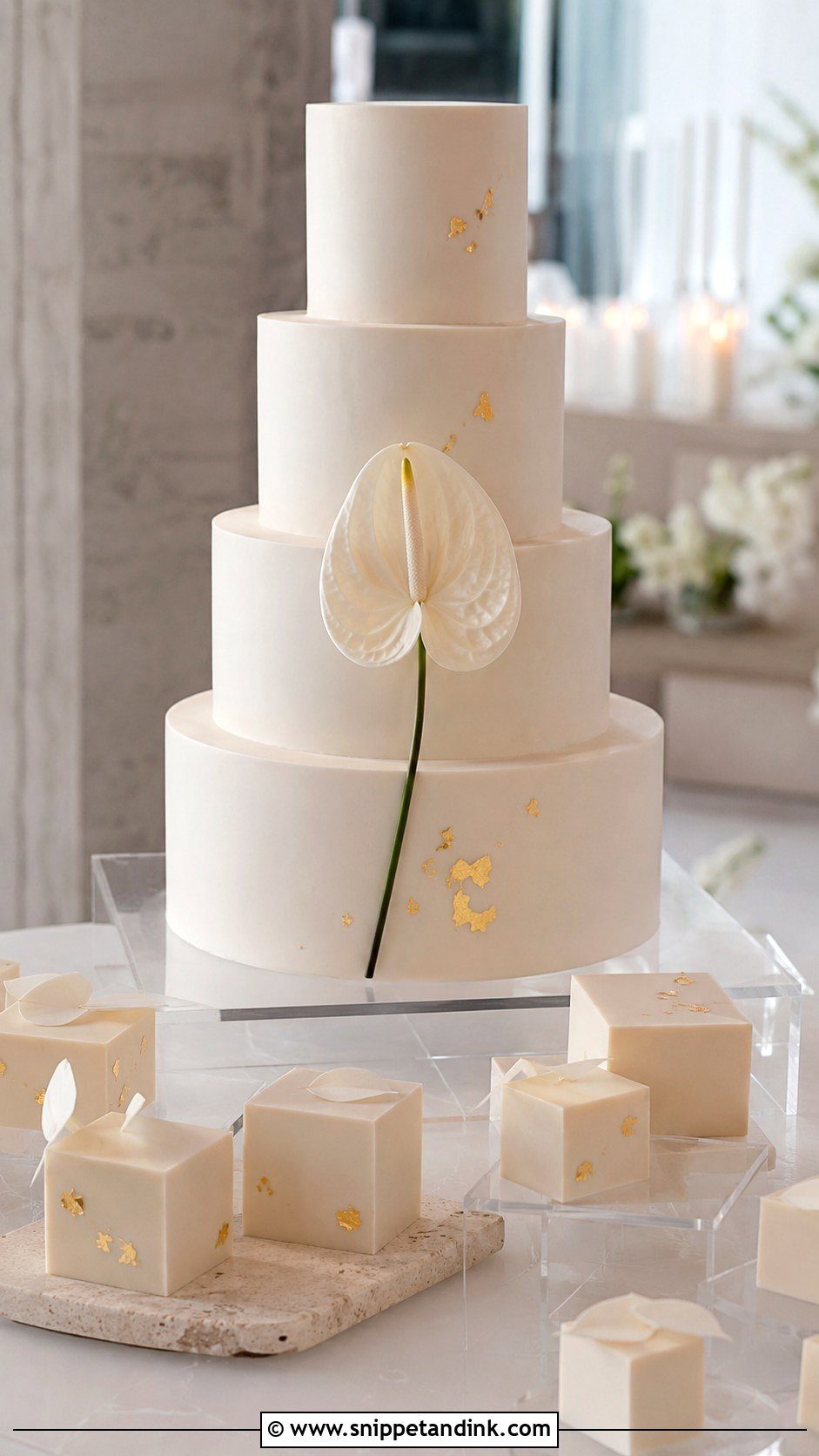
Sharp edges, smooth frosting and one restrained palette define the modern station. White on white, ivory with black or beige with gold all read clean. Acrylic stands, stone trays and plain ceramic keep the surface quiet. Use a single sculptural arrangement or a few sugar flowers rather than covering the tiers. This look suits city venues, galleries and rooftops. Acrylic shows fingerprints and crumbs instantly, so I keep a cloth handy and wipe stands before guests arrive.
10. Floral Wedding Cake Station
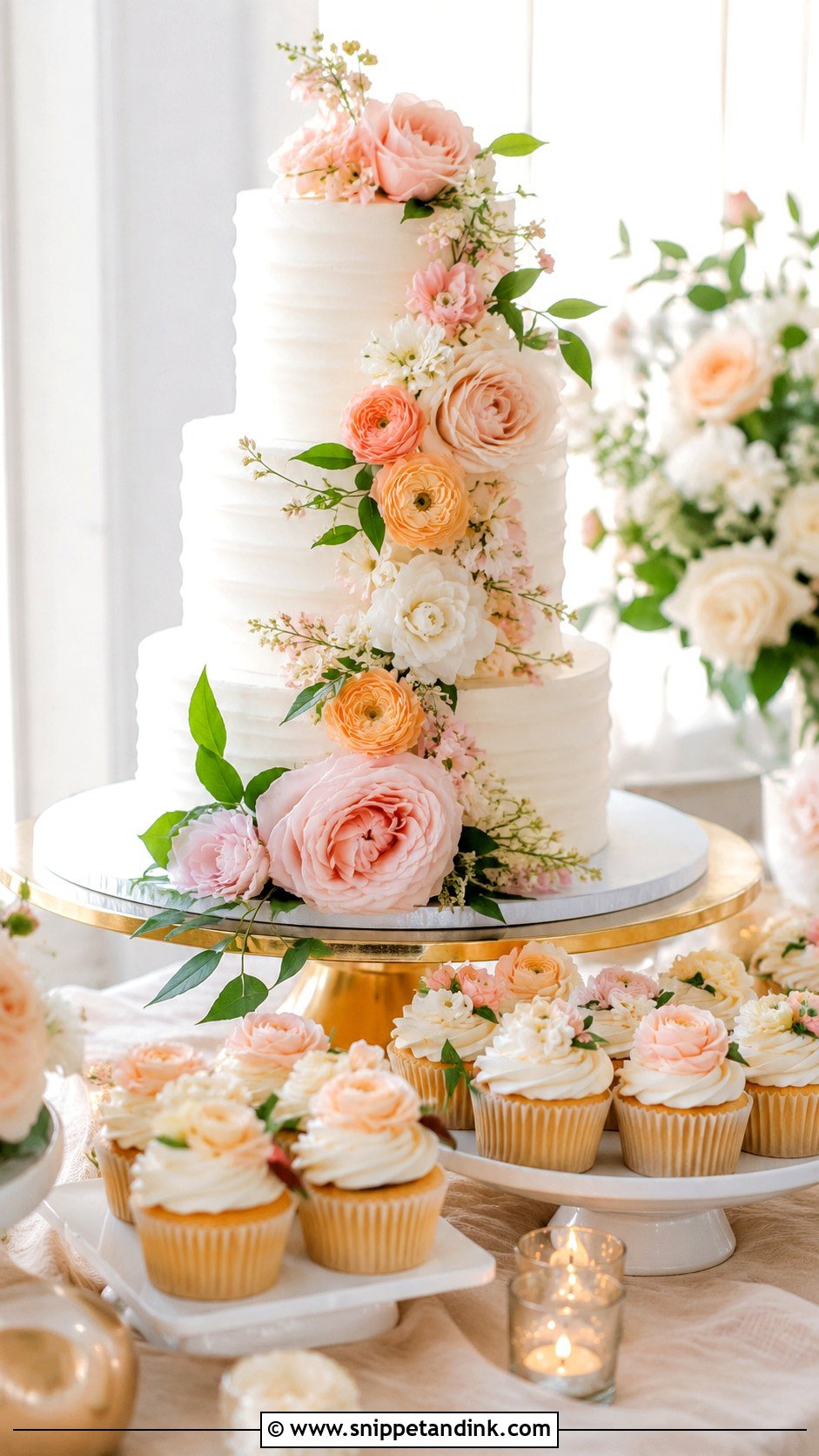
Building the table around flowers that echo the bouquet and centerpieces is one of the quickest ways to make a plain tiered cake look planned. Real blooms frame the table, while sugar flowers dress the cake itself. Keep to a two-color story such as blush and ivory or white and green. Floral cupcakes or cookies add choice. Any fresh flower that touches the cake must be food-safe and wrapped at the stem; that’s a conversation for your florist and baker together, not something to improvise on the day.
11. Black And White Wedding Cake Station
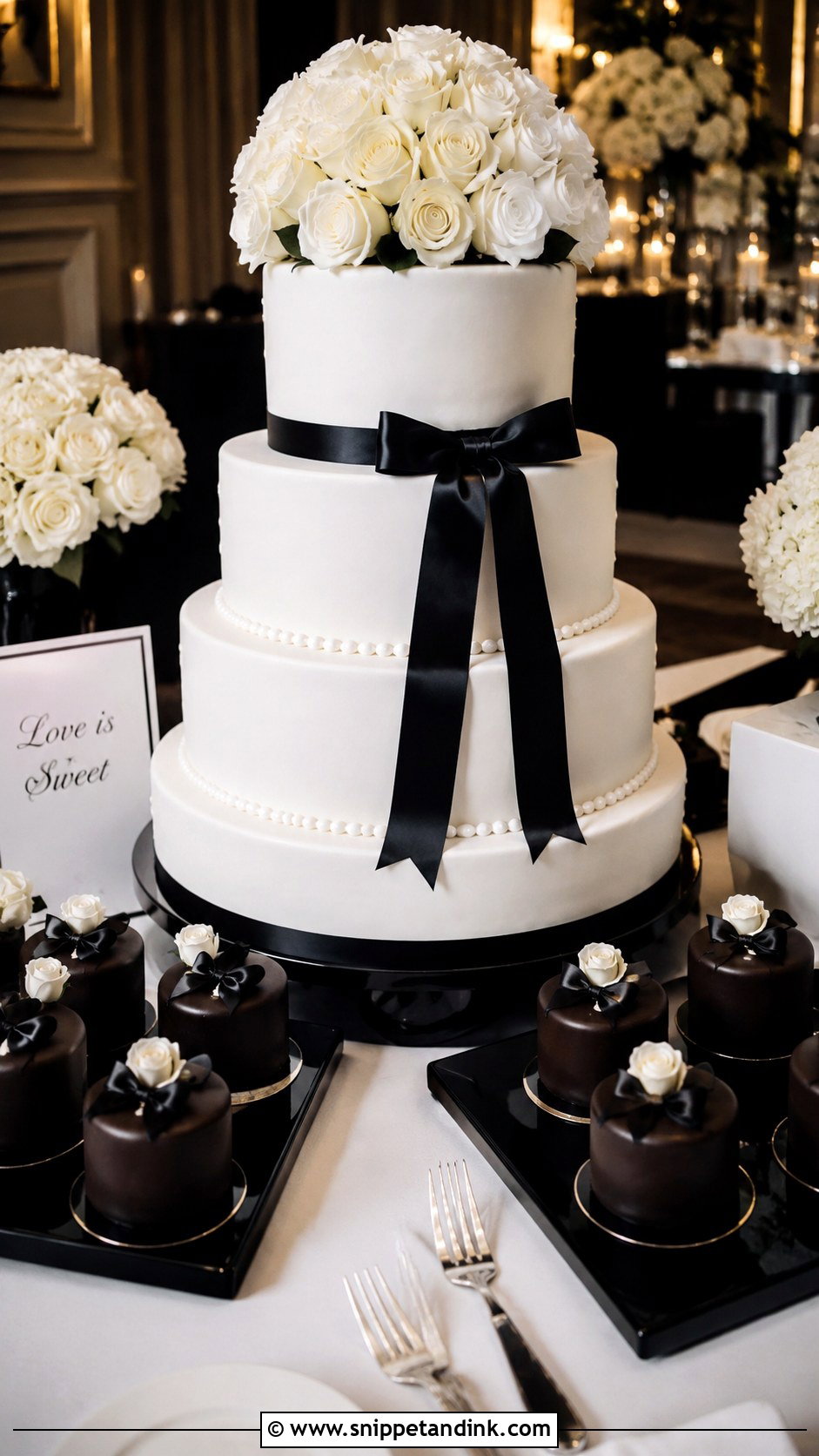
Black and white is a graphic look, and it needs balance. A white cake with black ribbon, piping or a pattern sits on a station of black trays, white plates and simple signs. Black-and-white cookies, vanilla cupcakes with dark chocolate details or mini chocolate cakes keep the color story going. Too much black reads heavy in photos, especially under low evening light, so I let white plates and reflective surfaces carry most of the table.
12. Beach Wedding Cake Station
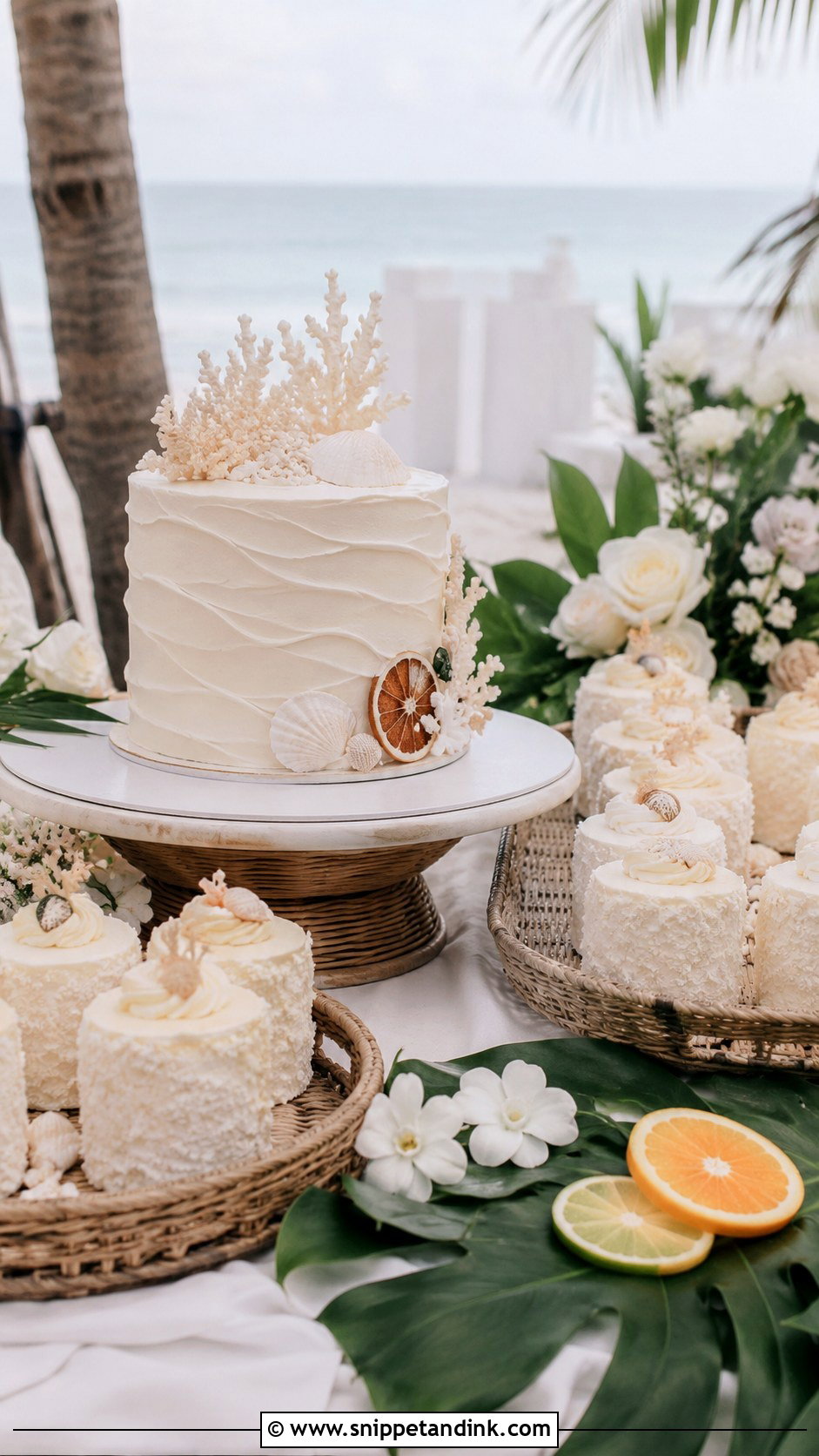
Beach stations fail for practical reasons: wind, sand and heat. I’d use a heavy table with a weighted cloth, keep desserts covered until service and choose a firm buttercream in ivory, pale blue, sand or coral. Sugar shells, a light wave texture, tropical flowers or citrus decorate without overdoing the theme. Coconut minis, lemon cupcakes and key lime slices taste right by the sea. Woven trays and white linen finish it. Shade isn’t optional here.
13. Fall Wedding Cake Station
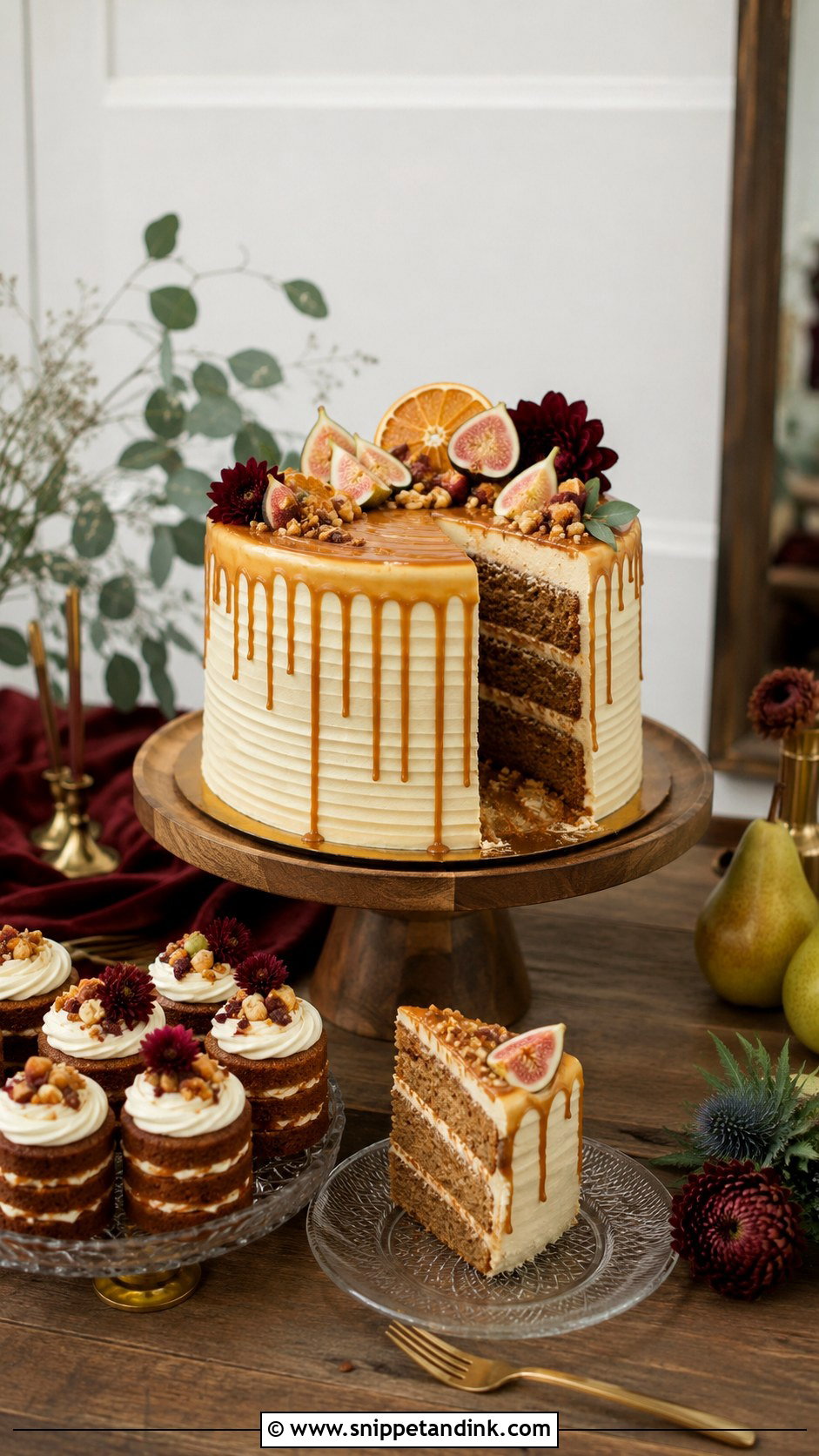
Autumn flavors such as spice cake, carrot cake, apple cake, chocolate or maple vanilla are the reason to pick a fall station. Decorate with a caramel drip, cream cheese frosting, dried orange, figs, pears or deep-toned flowers. Wood, brass, velvet and linen give it depth; rust, burgundy, cream, amber and sage set the palette. Cream cheese frosting softens quickly, so keep that cake chilled until shortly before display. Small cake bites in the same flavors give guests a second option.
14. Spring Wedding Cake Station
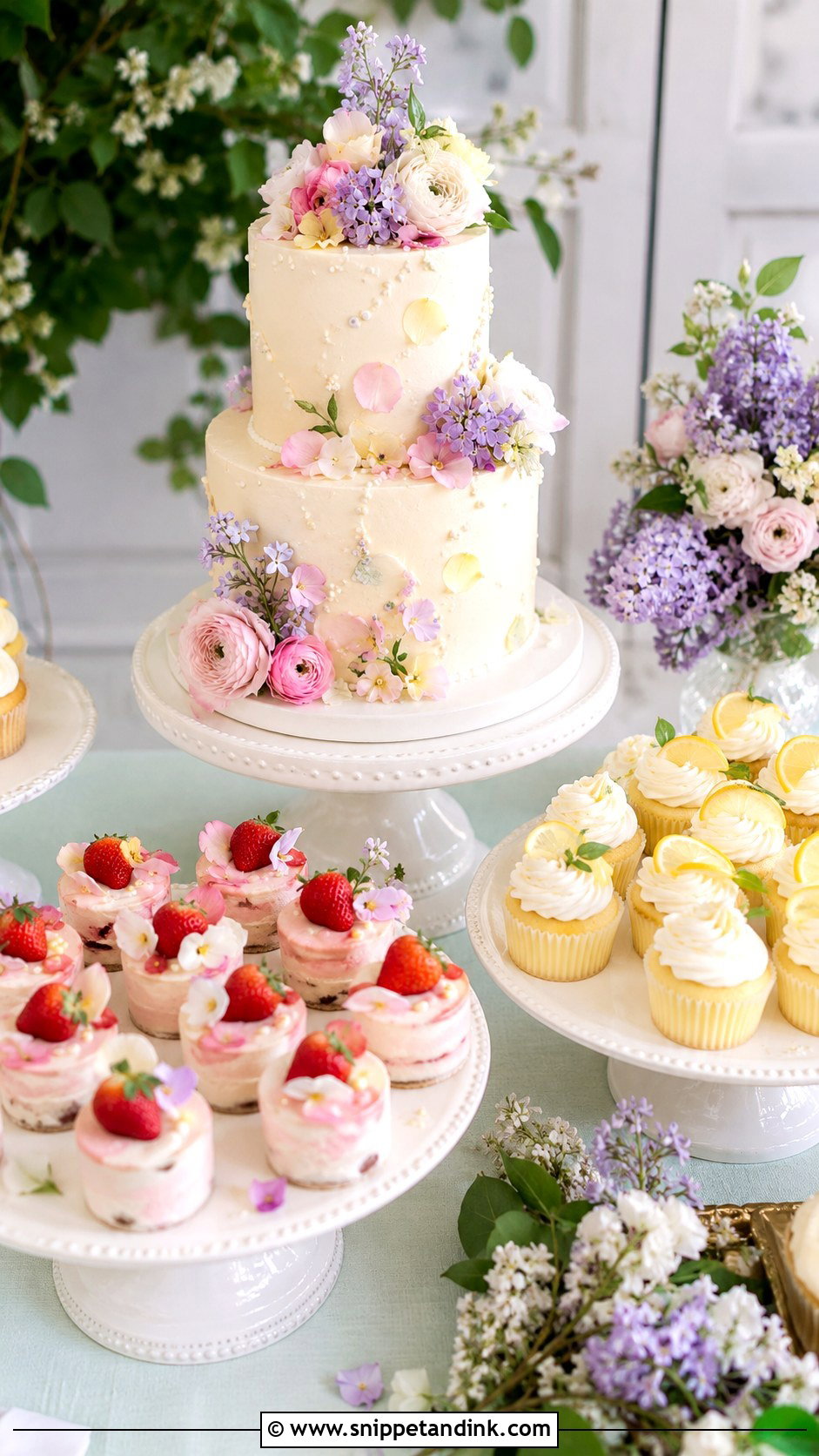
Lemon, vanilla bean, strawberry, almond and lavender honey are the flavors I’d put on a spring table. A white or pastel buttercream cake with delicate flowers anchors it, with mini cakes, cupcakes or slices carrying light fruit fillings for variety. Pale pink, butter yellow, lilac, mint and ivory work in linens and labels. Fresh flowers wilt under warm lights, so the florist should finish the station last, after the room has cooled. It suits garden ceremonies, brunch receptions and bright indoor rooms.
15. Summer Wedding Cake Station
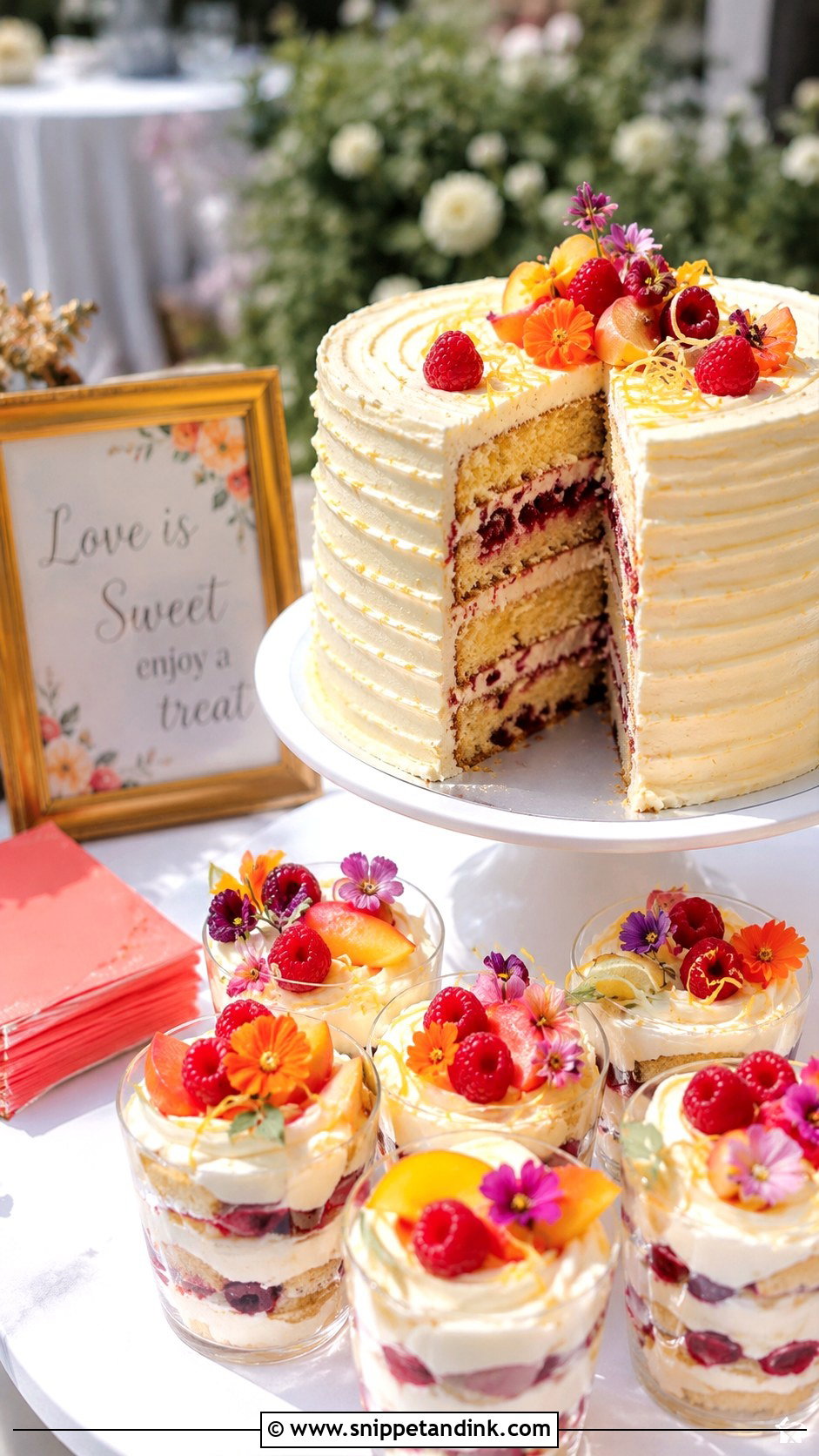
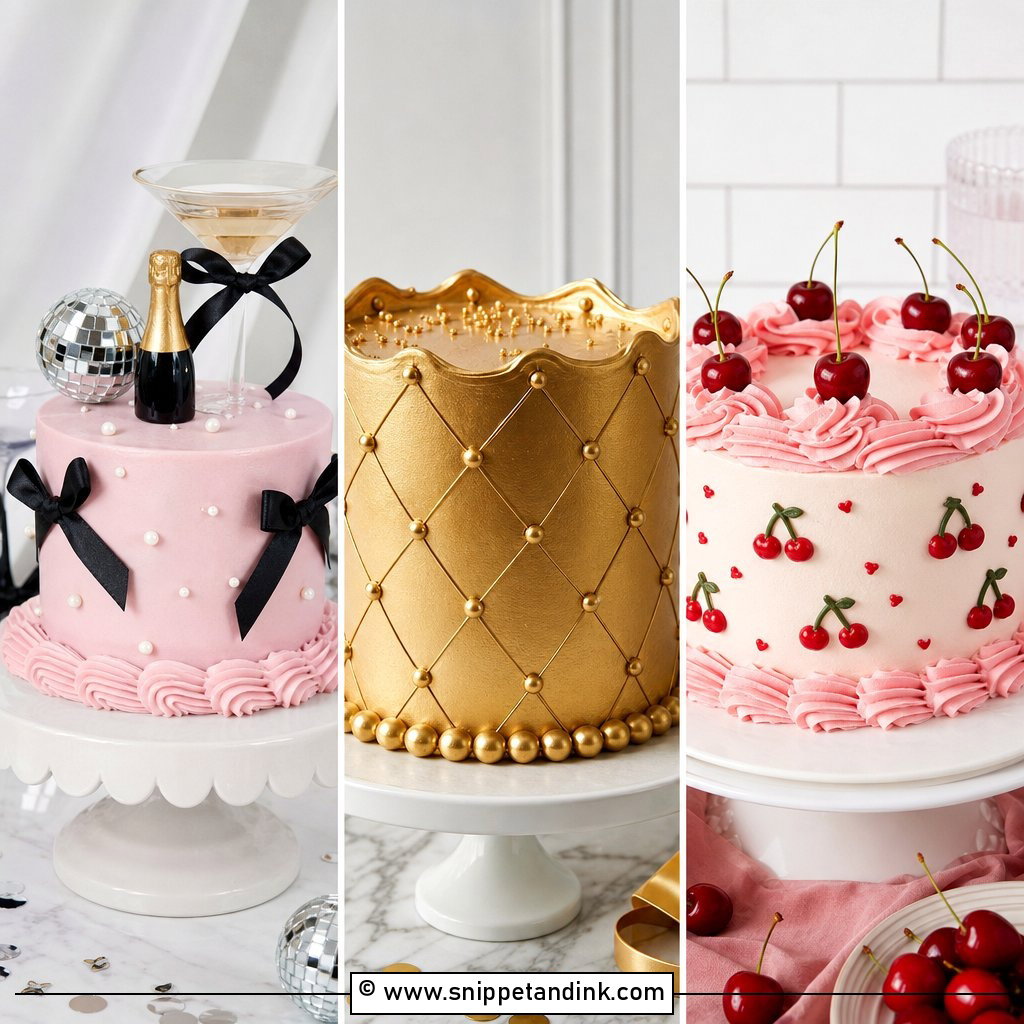
Summer stations should taste refreshing: lemon raspberry, strawberry shortcake, coconut, peach or vanilla with berries. Whipped frosting looks light, but it is the first to slump in heat, so I steer couples toward a stable buttercream unless the room is properly air-conditioned. Fruit, edible flowers, citrus slices and simple borders decorate. Keep the table in shade, and if the venue allows, serve chilled cake cups from a cooler under the table. White, coral, peach and yellow with greenery keep it fresh.
16. Winter Wedding Cake Station
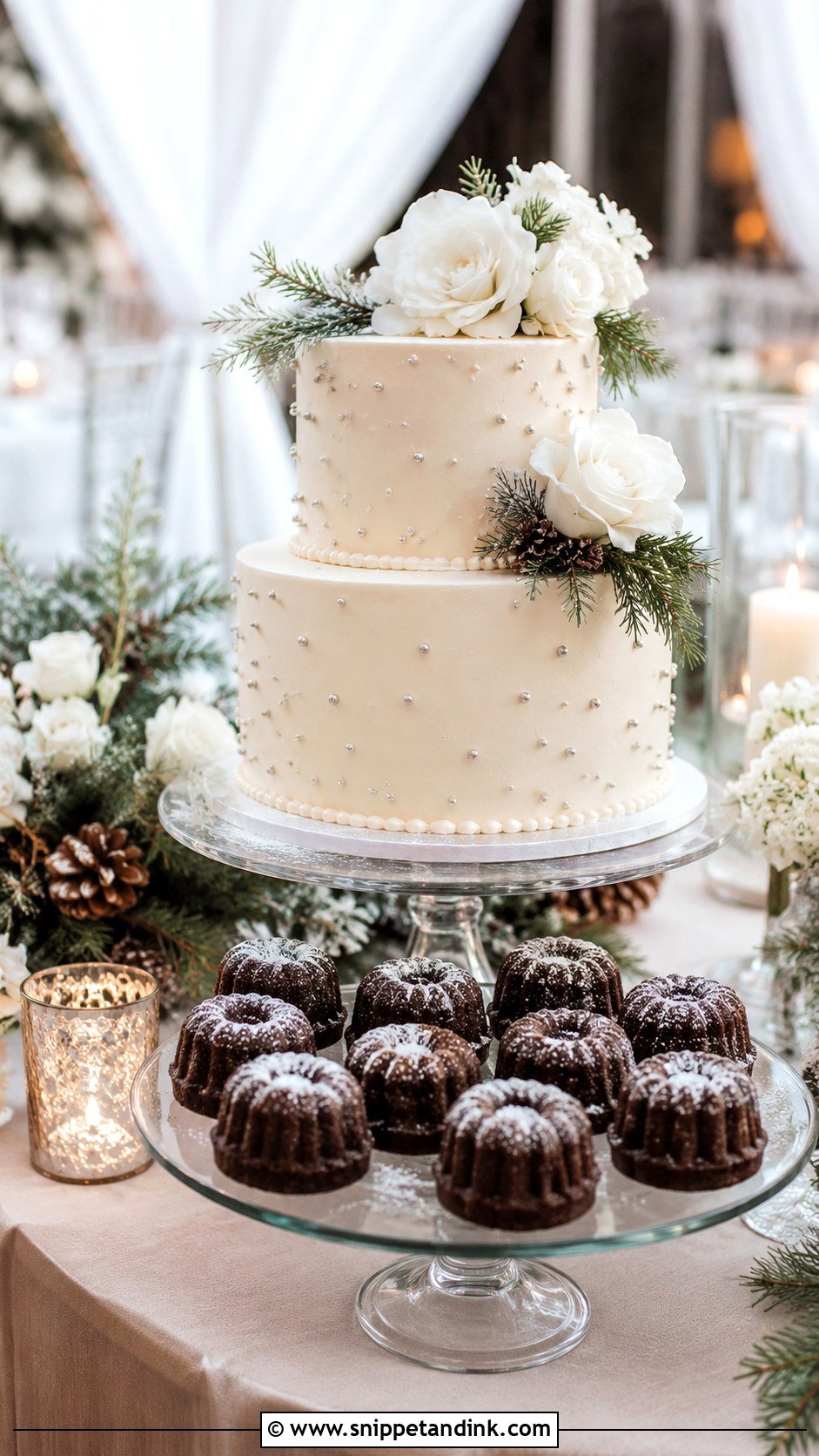
A winter station can feel warm without a single holiday prop. Vanilla almond, dark chocolate, coffee, spice and salted caramel all suit cold weather. A white buttercream cake with pearl details, silver accents, a sugar snow texture or soft greenery looks clean on glass stands with candles and cream linen. Add mini bundt cakes, chocolate cupcakes or frosted cake bites alongside. Ivory, champagne, silver, gray or deep green keep the palette calm. One trade-off: fireplaces and heaters soften frosting as fast as summer does, so place the table well away from them.
17. Small Wedding Cake Station
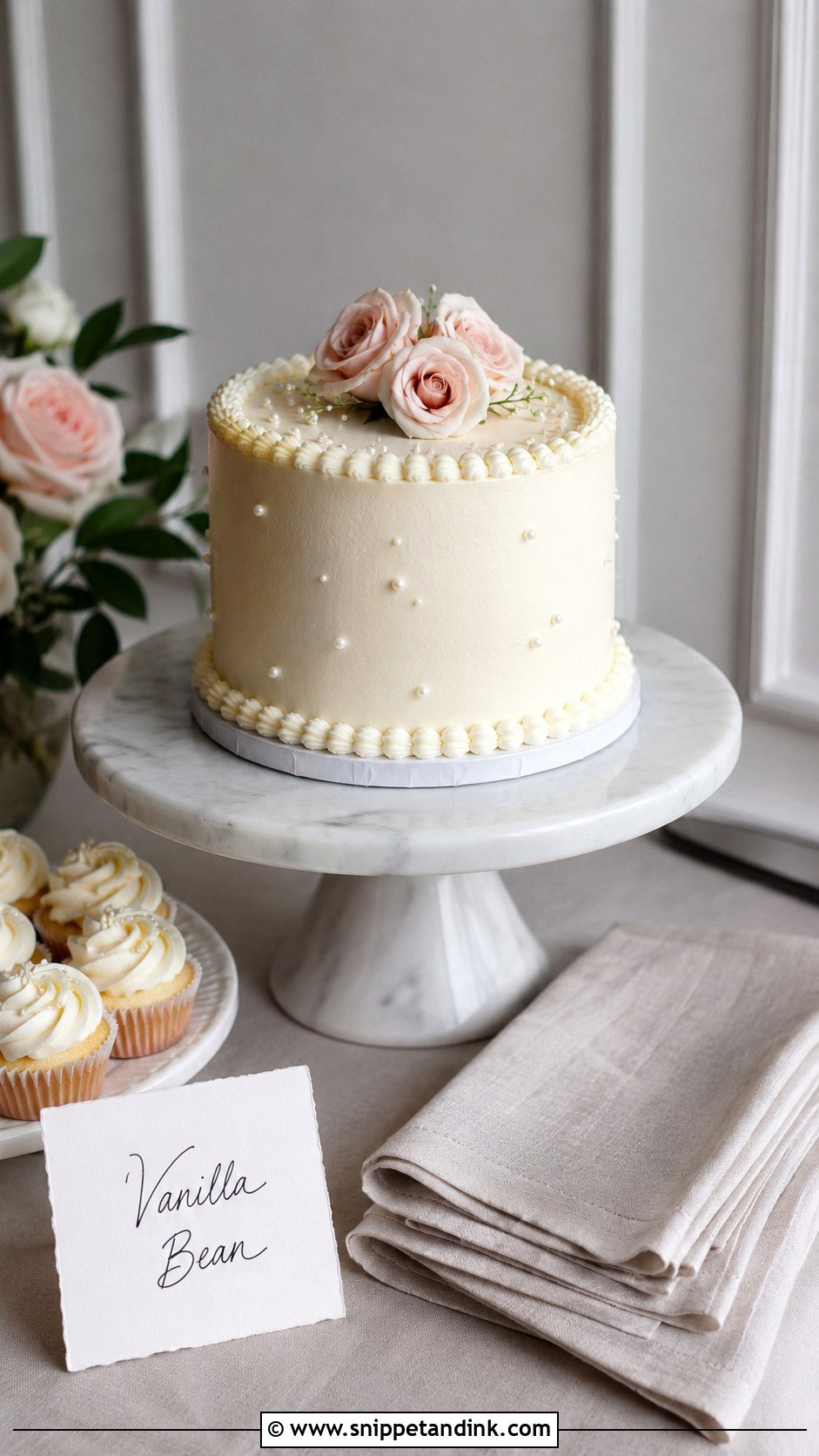
Micro weddings and elopement dinners rarely need a dessert spread. One single or two-tier cake, a stand, fresh flowers, a couple of candles, linen napkins and a handwritten flavor card is enough. If you want variety, add one extra flavor as mini cupcakes or slices. Size the table to the cake: a six-foot banquet table with one small cake looks empty, so I’d use a small round or a side table instead.
18. Luxury Wedding Cake Station
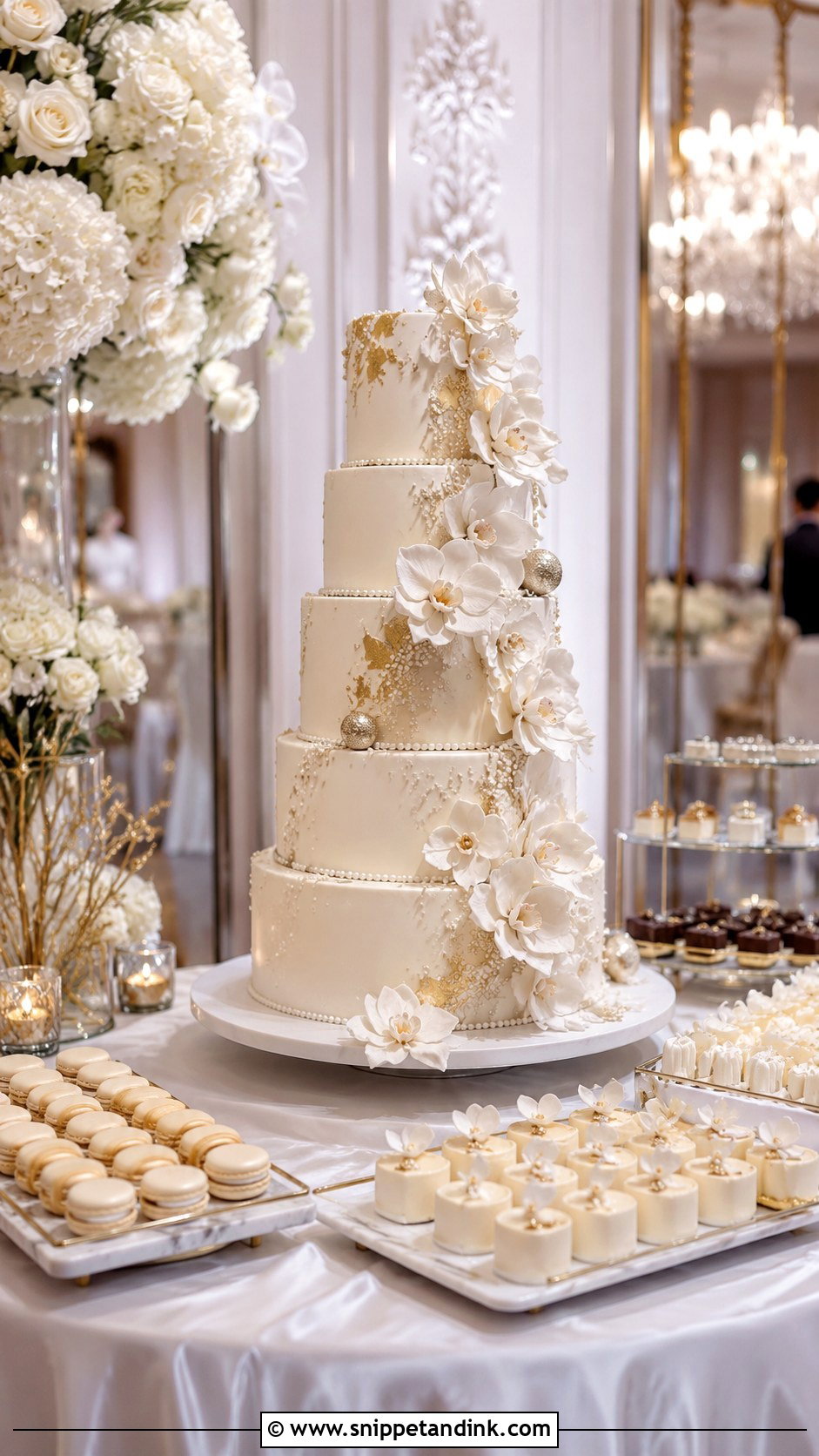
A high-end station is planned so that every side photographs well. A tall tiered cake, a sculptural cake or a detailed fondant design leads, with sugar flowers, edible pearls, gold leaf, silk linen, marble trays and layered lighting around it. Keep the supporting desserts to a few refined pieces such as macarons, mini entremets or petite squares. Symmetry, spacing and height do most of the work. Large flowers behind the table give impact without crowding the cake. It should look like part of the room design, which means your planner, florist and baker need the same floor plan.
19. Interactive Wedding Cake Station
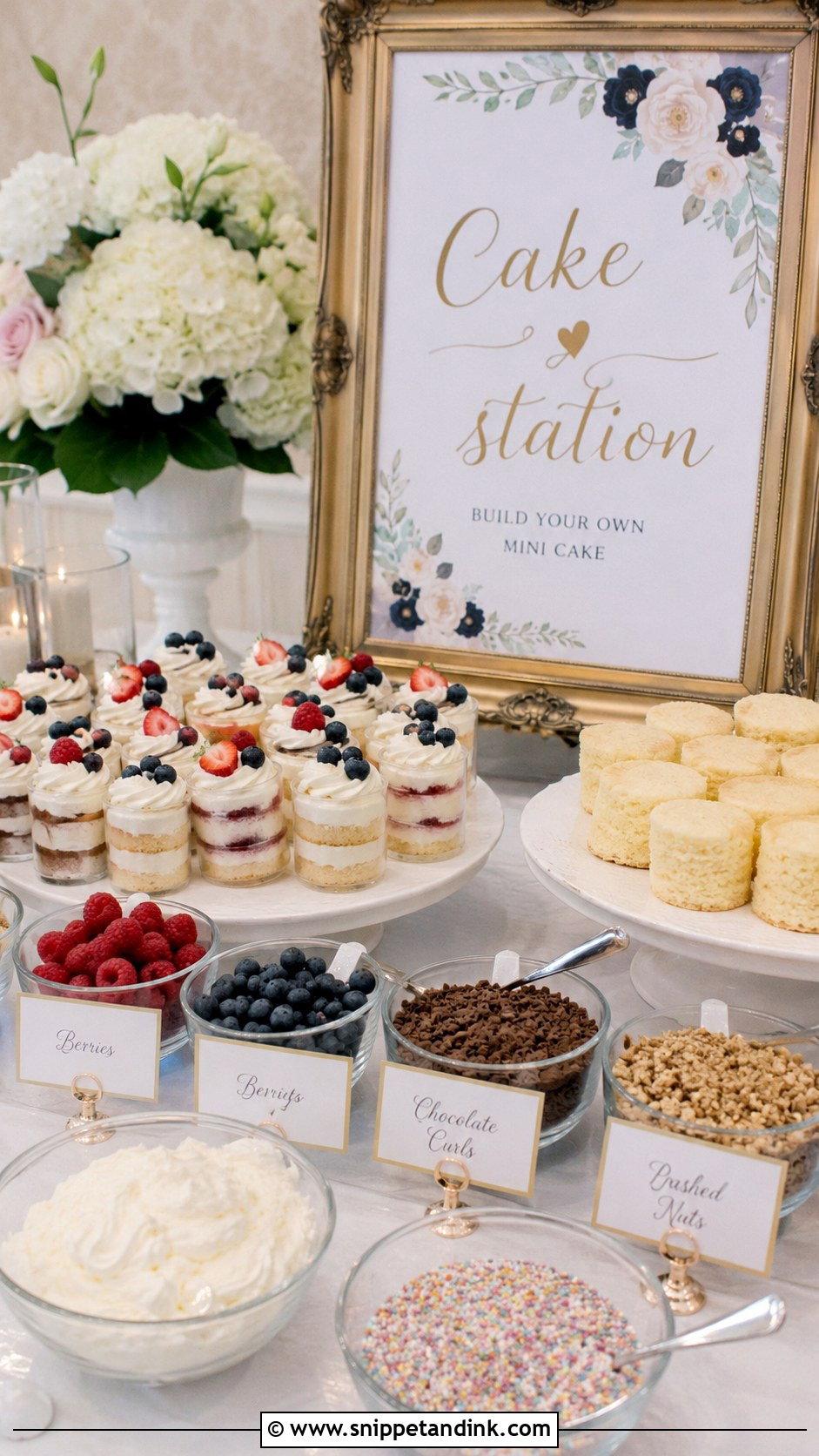
Letting guests top their own cake cups, mini naked cakes or slices is fun, and it is also the station that most needs a staff member. Sauces, berries, whipped frosting, chocolate curls, nuts and sprinkles go in labeled glass jars with their own spoons. Without someone tending it, toppings cross-contaminate (a real problem for nut allergies) and the table looks like a kids’ party within twenty minutes. Keep containers matching and the palette tight. It suits relaxed receptions and late-night dessert.
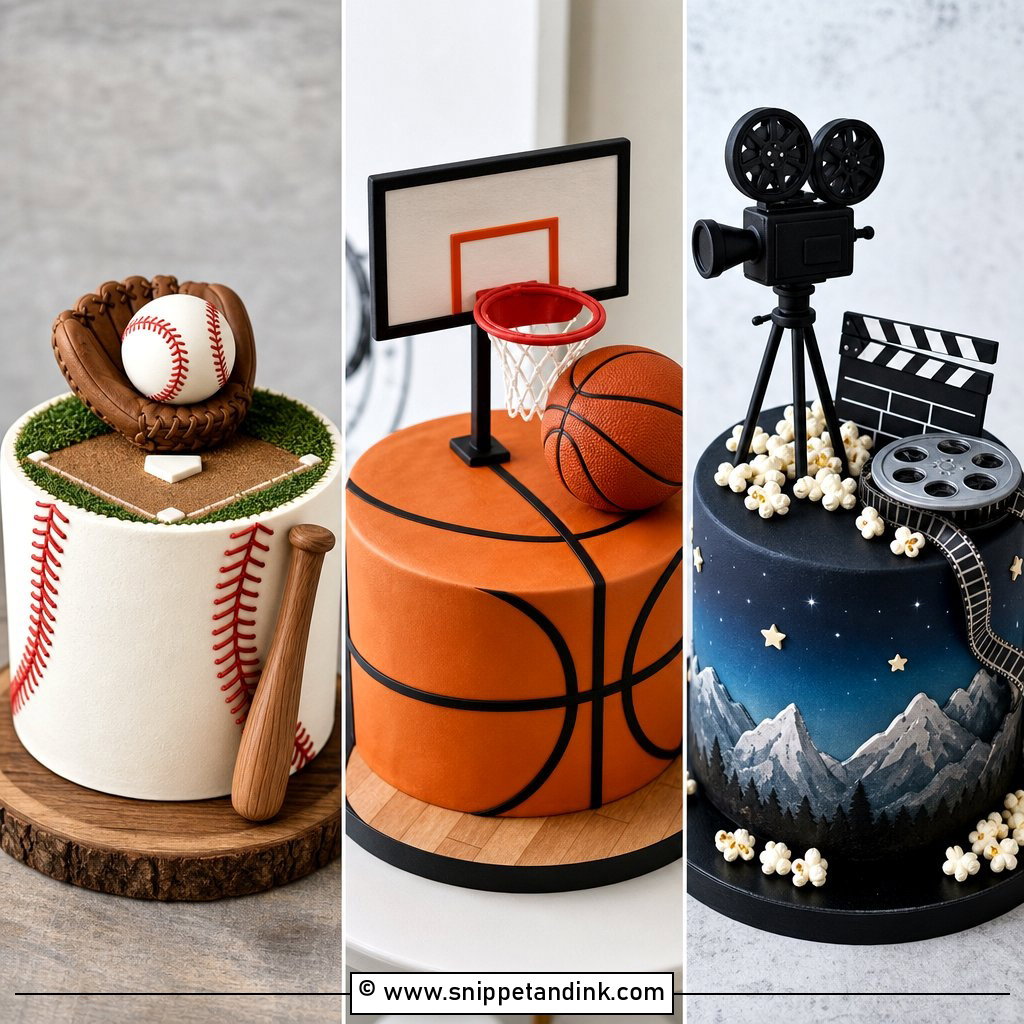
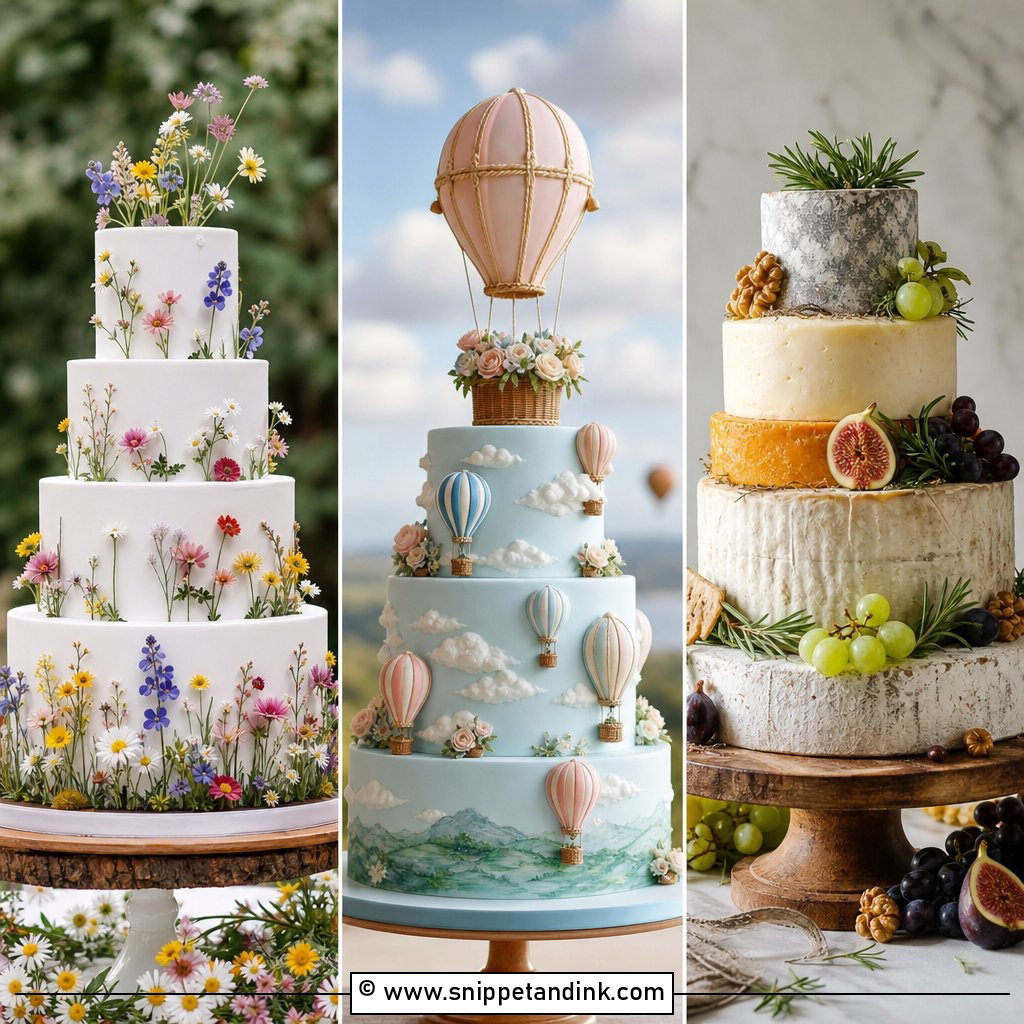
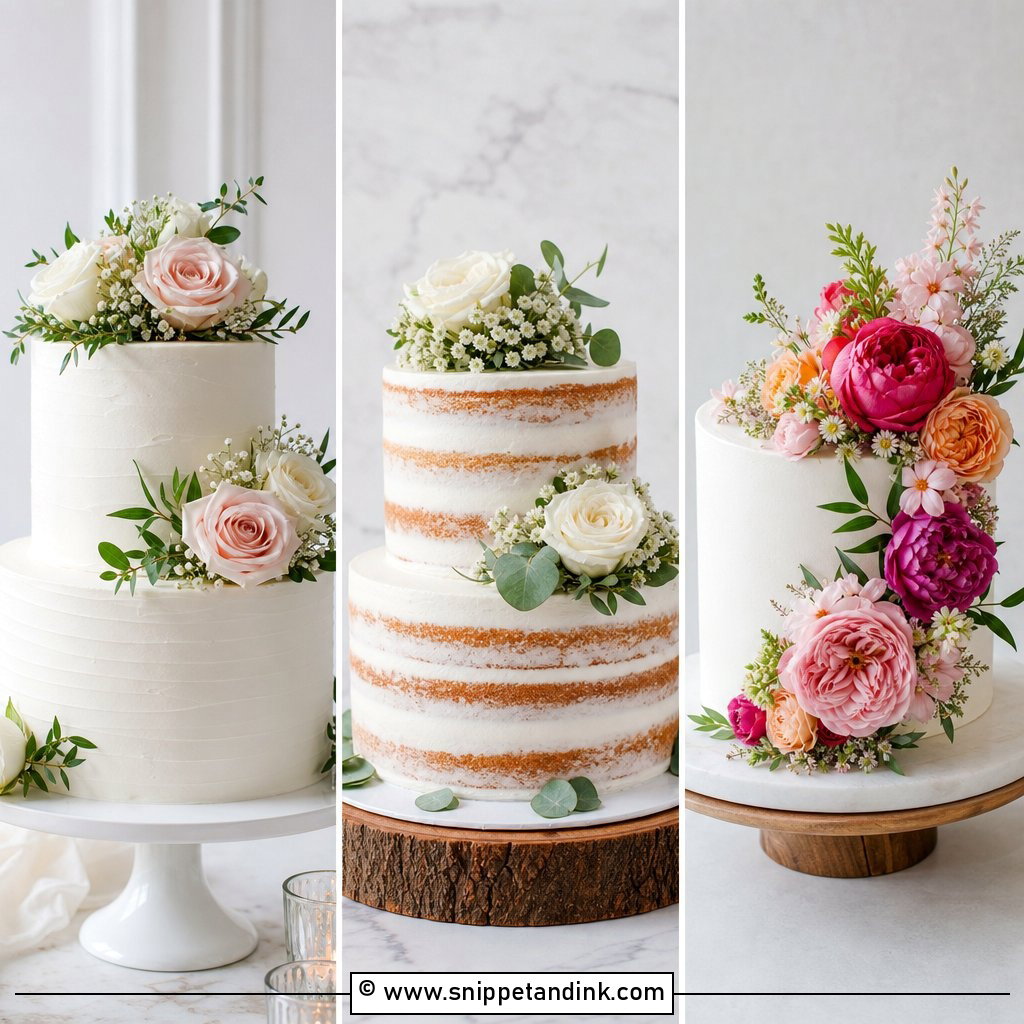
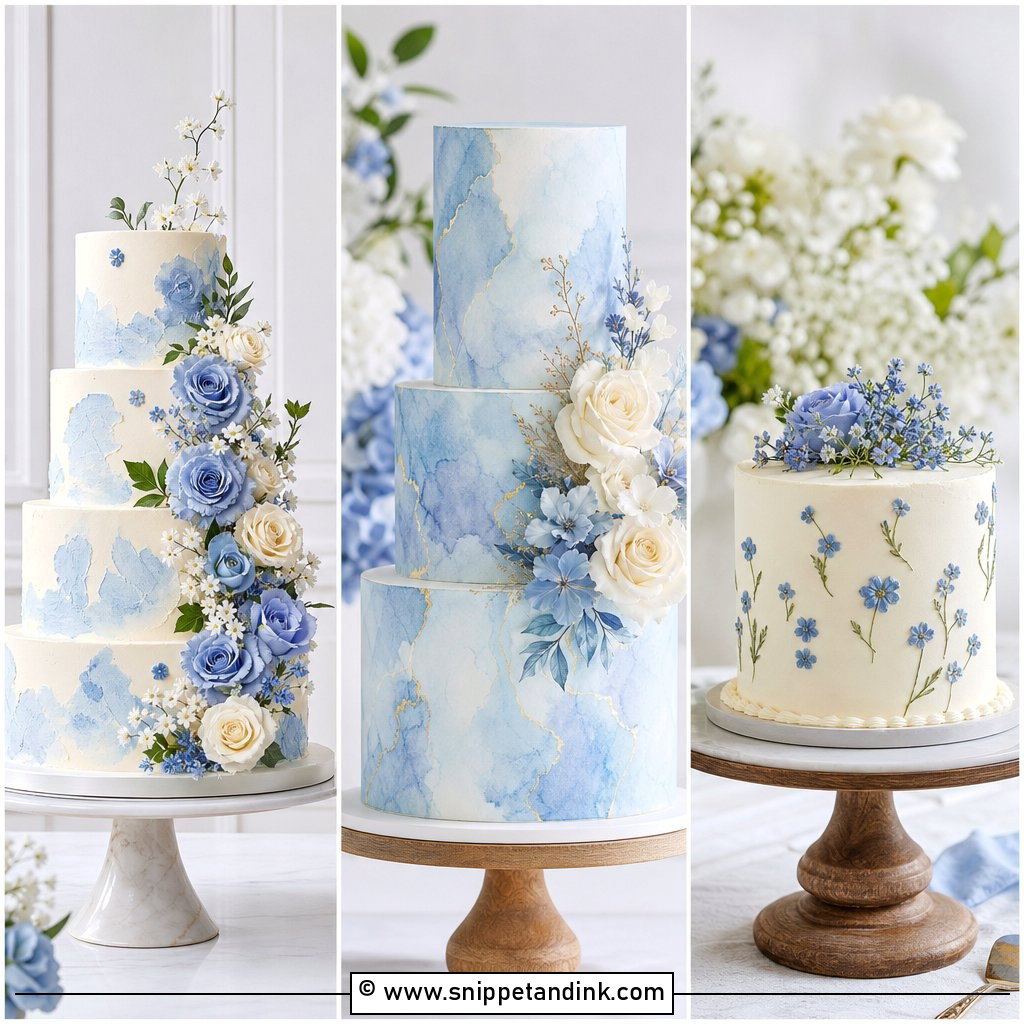

20. Wedding Cake Trolley Station
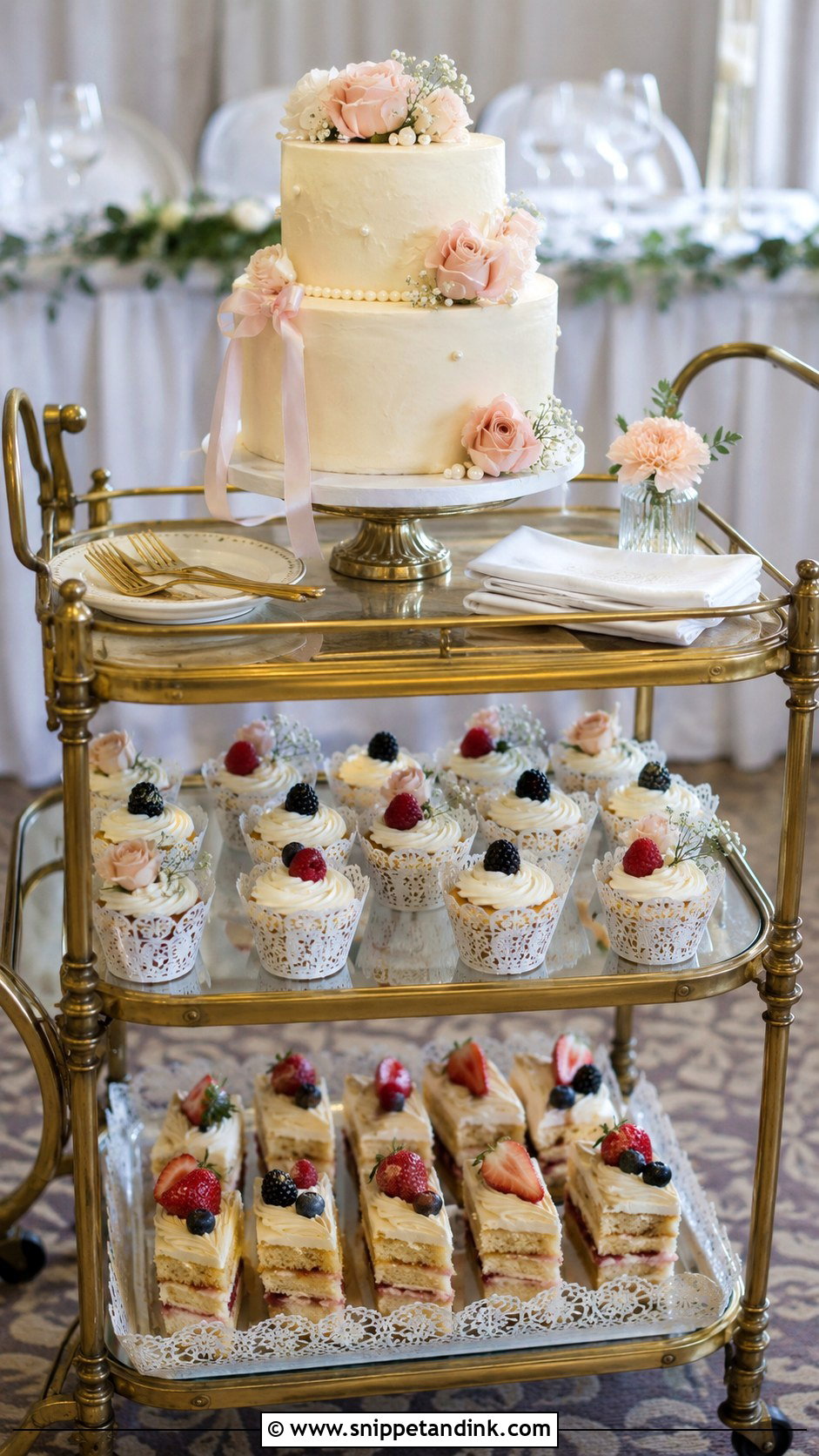
A trolley with a small cutting cake on top and minis, cupcakes or slices below can roll to the dance floor, a lounge or the entrance. It’s useful in restaurants and venues with no room for a dessert table. Dress it with flowers, ribbon, linen or small signs in your colors. Lock the wheels before cutting, and make sure the lower shelves have a lip or tray so nothing slides as it moves. I’d keep the cake modest in height; tall tiers on a moving cart are asking for trouble.
Where the Table Sits Changes Everything
I walk the room with the floor plan before anything is styled, because most cake problems come from placement rather than baking.
- Keep it away from windows with afternoon sun, heaters, fireplaces, candles on nearby tables and the speaker stack.
- Leave access on at least two sides, so guests can line up on one while staff refill from the other.
- Don’t put it right next to the dance floor; one stumbling guest is enough to tip a tier.
- Check for a power outlet if you want lit signs or pin spotting, and tape every cable down.
Who Cuts, Who Refills, and When
Many venues and caterers charge a cake cutting fee when the cake comes from an outside baker, so ask about it before you sign. Agree who cuts after the photo, how quickly plated slices go out, and who refills trays. On a busy night I assign one person to the station for the first half hour after cutting, which is when the table either looks generous or picked over. Ask for leftover tiers to be boxed for you before the venue clears the room, or they may be thrown out with everything else.
Plan the Serving Before the Linens
Plan the serving first and style second. Decide whether staff cut, guests self-serve or the kitchen plates, and the right setup follows: a dessert table for large crowds, minis for a tight timeline, a trolley for a small room. Pick one main cake, choose flavors people will actually eat, and use stands, linens, flowers and signs to finish it. Leave space to walk around the table, and resist adding a fifth dessert just because there’s room.
You'll Like These Ideas:


Leave a Reply