
Requests for slicked-back hair jumped after Sofia Richie’s 2023 wedding, and they haven’t slowed down. It fits the pared-back, quiet-luxury mood a lot of brides are after, and it’s far more flexible than people assume: a low bun, a ponytail under a cathedral veil, half-up, even hair worn down with the sides tucked. What it isn’t is forgiving. A slick finish shows every bump, every flyaway and your whole hairline, so the prep and the placement decide whether it looks expensive or just tight. Below are twenty versions with the notes I’d give you in the chair, to save and take to your stylist.

Slicked Hair Shows Your Hairline, So Start There
People ask me whether slicked-back hair suits their face shape. The more useful question is about the hairline, because a slick finish puts it on display from every angle.
- Cowlicks at the front or crown fight a flat finish. They can usually be trained down with a blow-dryer and a flat clip, but only if I know about them before the morning.
- Thinning at the temples looks more obvious with everything pulled away. A soft side part, tendrils or a hairline powder close to your shade fills it in.
- Baby hairs and short regrowth stick up unless they’re laid with a gel or edge control and a soft brush.
- A widow’s peak looks strong with no part. A center part frames it more softly.
Tension is the other thing I watch. A tight slick worn often can stress the hairline over time, especially on textured or chemically treated hair. For one day it’s fine, but if your edges are already fragile, I’ll set the ponytail with less pull and rely on product for the smooth finish rather than force.
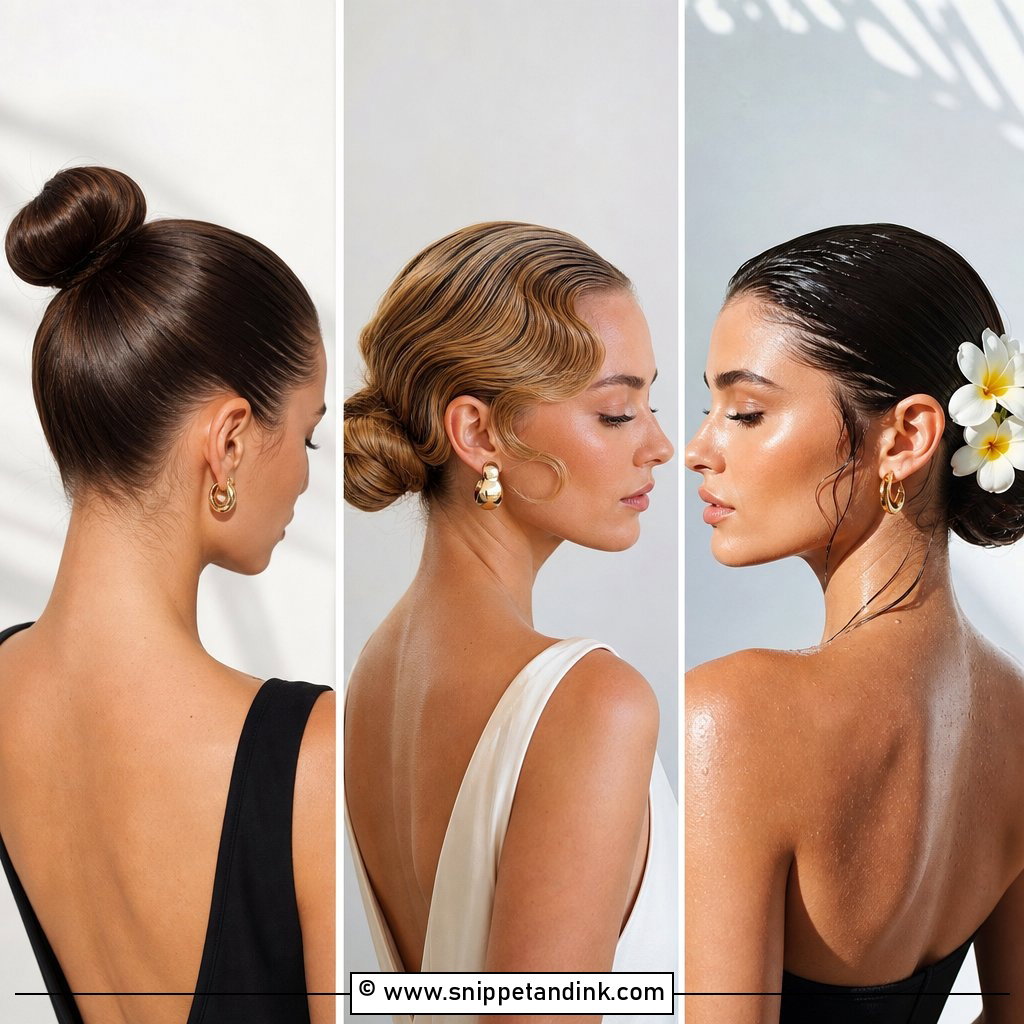
1. Slicked Back Low Bun

If I had to pick one slick style for a bride I’d never met, it would be this one. It sits at the nape, stays out of the veil’s way, and keeps an open back completely clear. A center or side part both work; I smooth with a cream first and only gel the surface. Statement earrings or a fine veil finish it. Its weak spot is a high-collared gown, which can push a very low bun upward, so I place it a little higher for those.
2. Slicked Back Ballerina Bun

Set higher than a classic bun, with a clean center part, the ballerina version lifts the face and lengthens the neck into that swan-like posture. Getting the crown smooth is the hard part: brushing hair up from the nape tends to leave ridges behind the ears, so I tip the head forward and brush toward the crown in sections. It holds well and shows chandelier earrings beautifully. I’d avoid it with a long blusher veil, which has nowhere tidy to anchor.
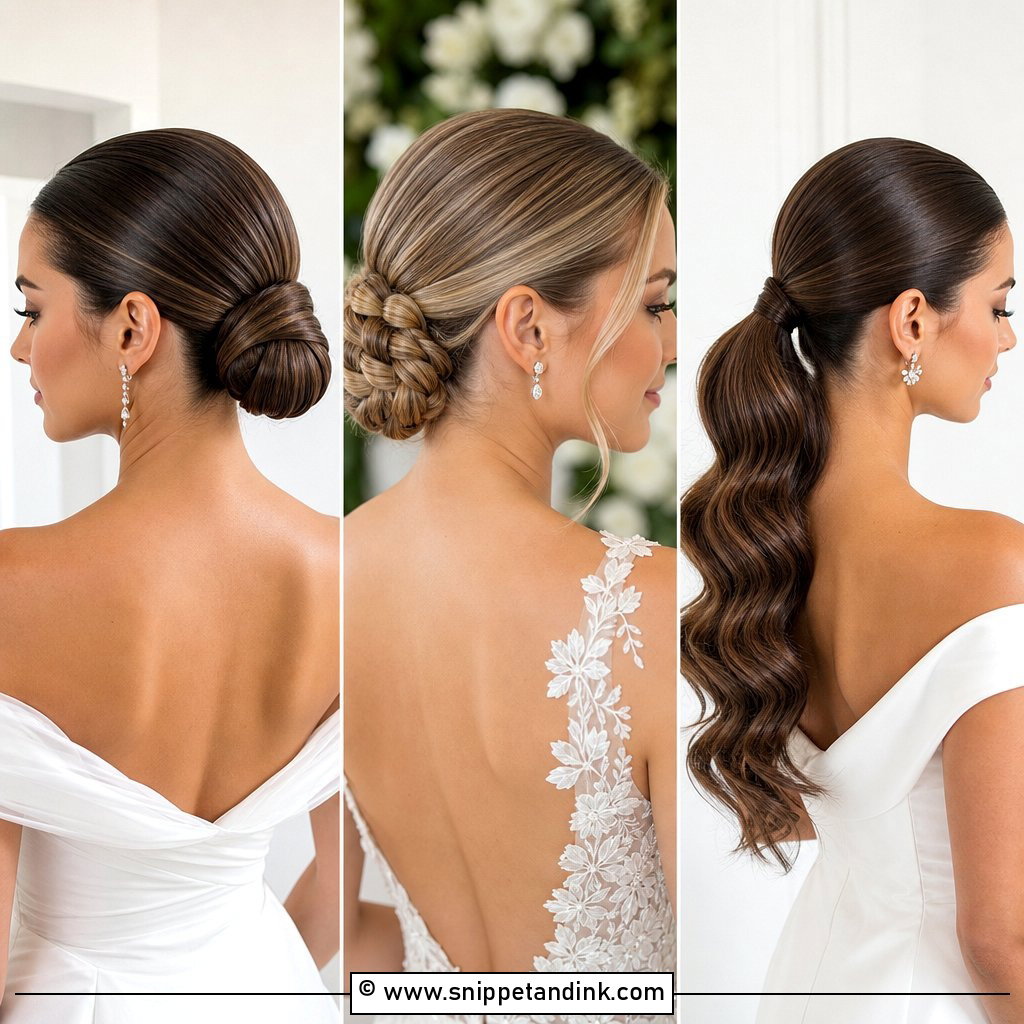
3. Slicked Back Low Ponytail

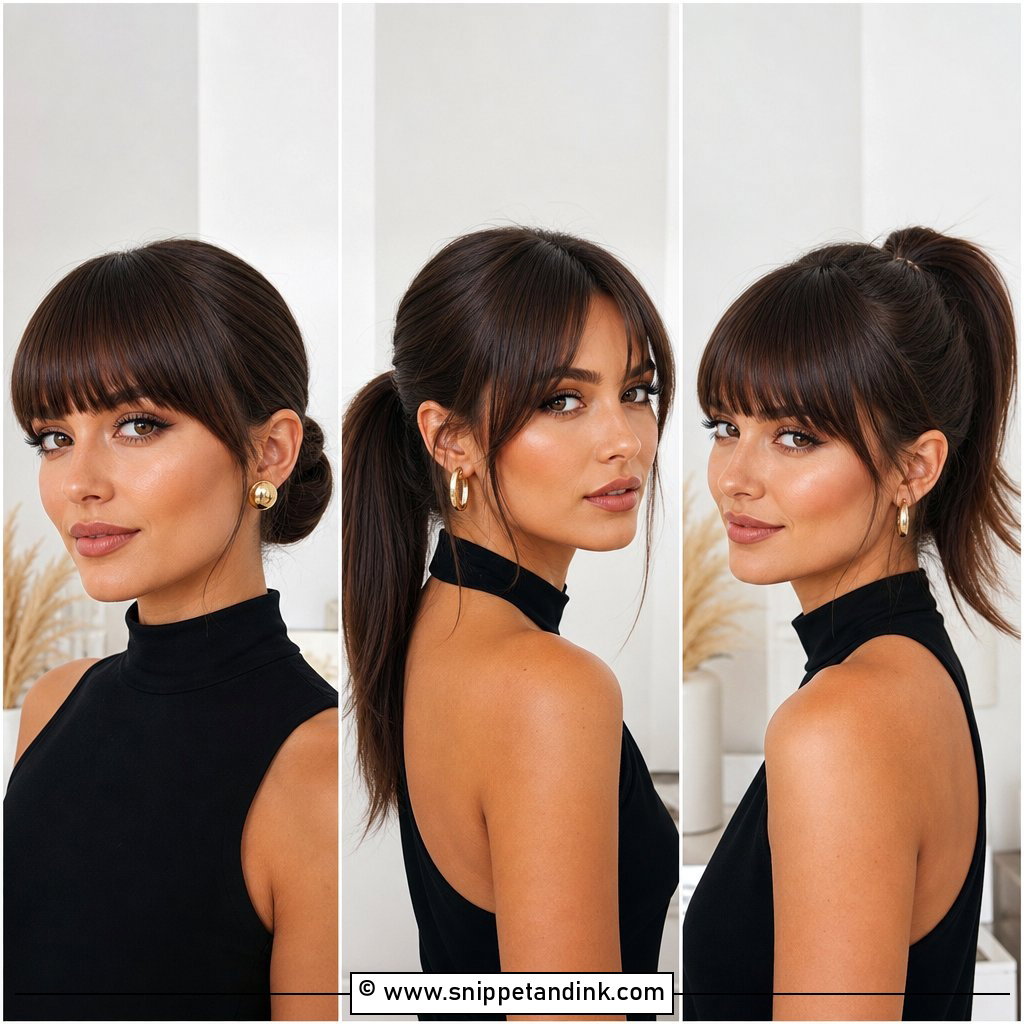
A slicked-back low ponytail takes less chair time than any bun and still looks polished. Hair is gathered at the nape and a small section is wrapped around the elastic and pinned underneath. A cathedral veil clips just above it and the tulle falls straight down the length. The ponytail itself is the part that suffers over a long day: the ends rub on lace and tangle, so I finish them with a light oil and give your maid of honor a wide-tooth comb. Shine serum handles flyaways at the crown.
4. Slicked Back Half Up Half Down

Half-up, half-down with a slick crown gives structure on top and movement below. The top section is smoothed back and secured; loose waves start just under the ear. It shows off length and keeps hair out of your face. The honest drawback is that the down part is exposed to everything, from humidity to hugs, so waves need a proper set and a flexible spray. Delicate pins along the join look neat. Choose it if you’d regret a full updo, not because it’s lower maintenance; it isn’t.
5. Slicked Back Chignon

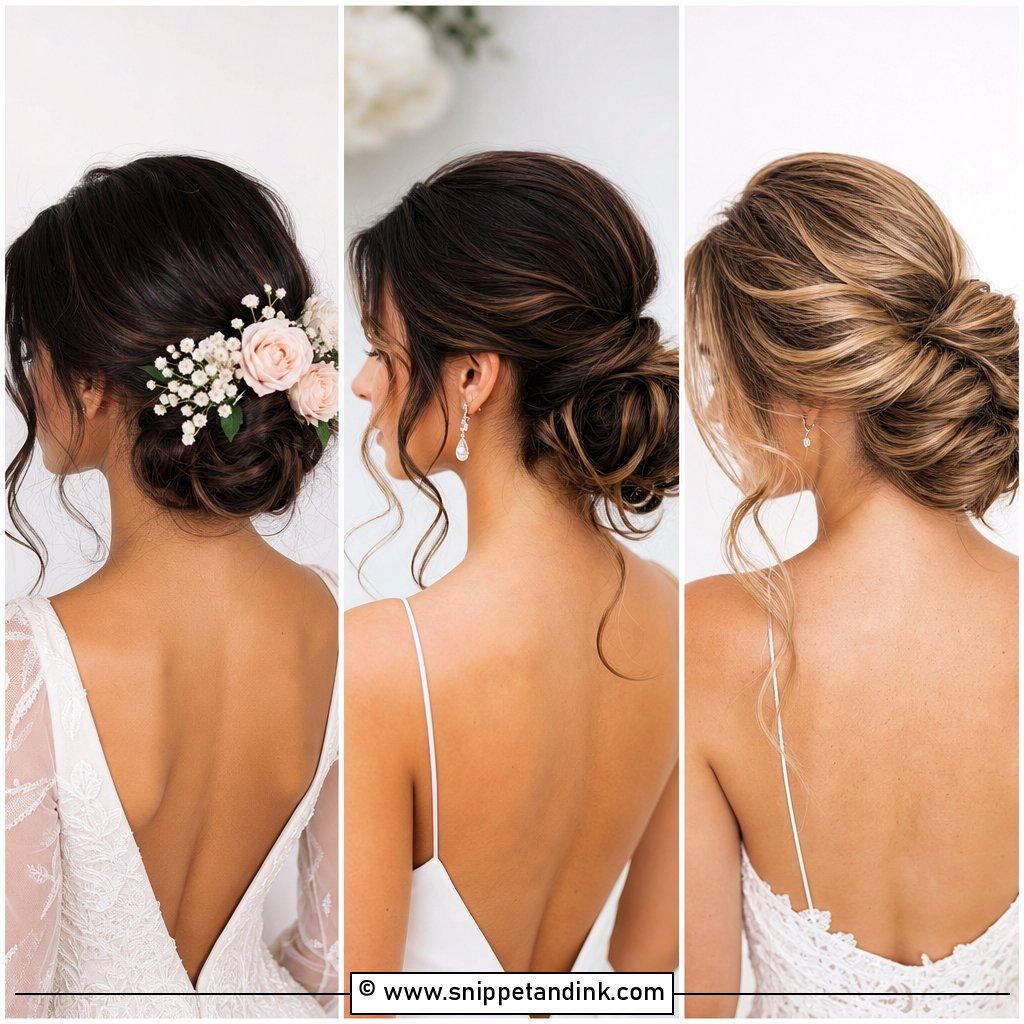
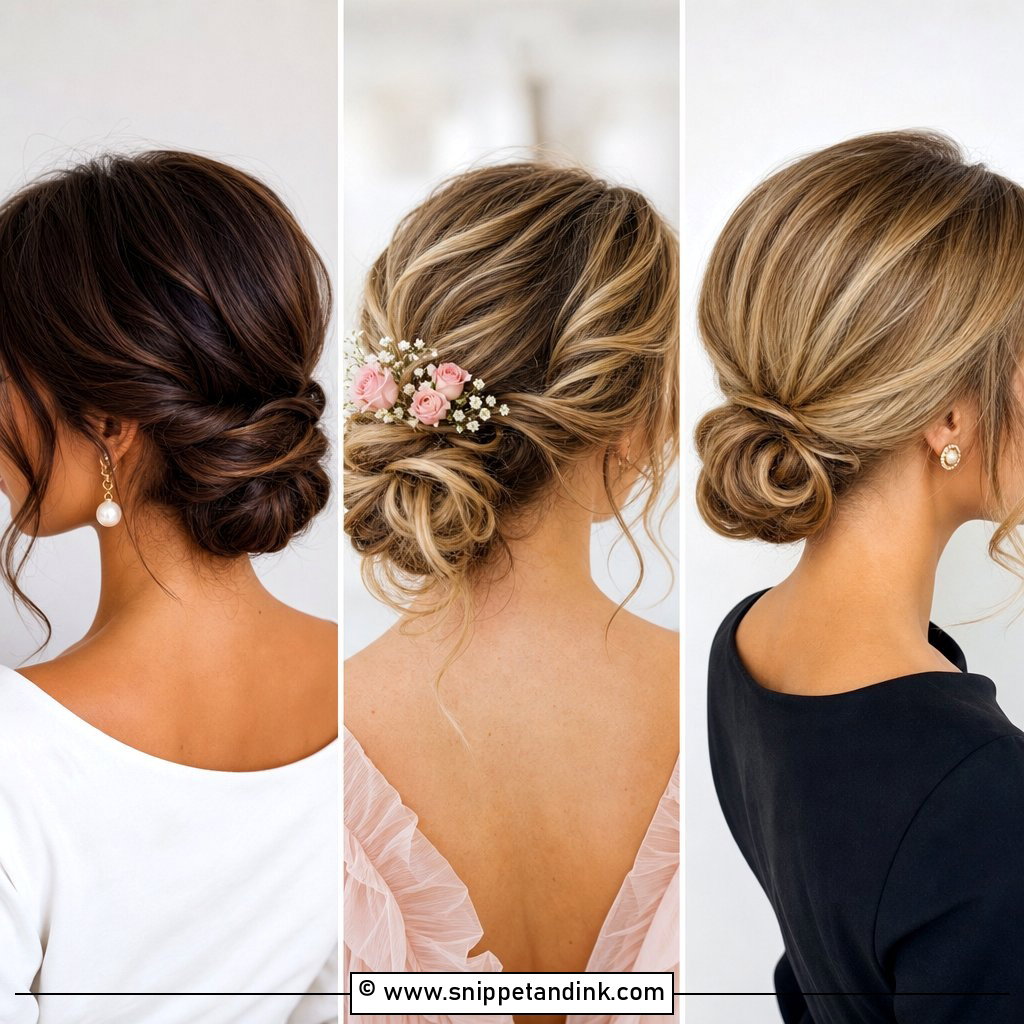
A chignon is a low twisted knot rather than a wrapped bun, and that twist gives it more shape at the nape. The front is smoothed back fully. I can keep the knot tight and structured or loosen a few loops for softness, which is something a plain bun can’t do. Because it’s built with crossed pins instead of relying on one elastic, it survives dancing well. Combs, a veil or a small cluster of flowers at the side all sit securely on it.
6. Slicked Back Bun With Middle Part

This is the version most people mean when they mention Sofia Richie. A precise middle part splits the hair evenly, everything is smoothed back, and a bun sits behind. The part line is where it’s won or lost. I cut it with a tail comb on dry hair, gel just an inch on each side, and check it in a hand mirror from above, because a crooked part shows instantly in overhead shots. It suits oval and heart-shaped faces most. Simple studs and a barely-there veil keep the minimal mood.
7. Slicked Back Hair With Tendrils

Tendrils at the temples stop the slick from looking severe while the rest goes into a sleek bun or ponytail. I separate them before any gel goes on; pieces pulled out afterward come out crunchy and bent. A slight bend with a small iron gives them movement. Fine hair loses that bend in humidity, so for a summer garden wedding I’d keep them few and short.
8. Slicked Back Hair With Cathedral Veil

With a cathedral veil, the hair should be quiet, and a slick finish lets the tulle take over. A low bun or a polished ponytail both give the comb a solid anchor; I set it just above the bun and pin it in an X underneath so the weight of a long veil can’t drag it. Long veils pull more than brides expect, and a heavy one can tug at the scalp by the end of the ceremony. Once it comes off, the hair underneath is untouched for the reception. Walking photos with the veil spread behind are the reason people pick it.
9. Slicked Back Hair With Embellished Headband

An embellished headband gives sparkle without the height of a tiara, and slick hair keeps its line clean. Crystal, pearl and rhinestone bands all suit it. I set it just behind the hairline over the finished style and leave it alone; moving it later drags the gel and leaves a ridge. Wear it for an hour at your trial. Some rigid bands press behind the ears, and you won’t notice until you’ve been in it for a while. It can work with or without a veil.
10. Slicked Back Braided Bun

A braid wrapped around the bun, or fed into it, adds texture to a smooth front. A French or Dutch braid works well, and Dutch stands out more because it sits on top of the hair. I plait that section before the surface is gelled; braiding through set product snaps hair and looks fuzzy. It’s sturdy through a long celebration. Pearl pins or a couple of small flowers can sit in the braid’s gaps.
11. Slicked Back Hair Down With Tucked Sections

Hair down with a center part and the front sections tucked behind the ears is one of the newer slick looks. I pin the tucked pieces with small bobbies hidden behind the ear, which keeps them flat even when you’re tucking your hair yourself later. The length hangs straight or with a soft bend. It needs smooth, fairly straight or loosely wavy hair; tight curls tend to push the tucked sections out. A smoothing serum adds shine, and statement earrings stop it looking too plain.
12. Slicked Back High Ponytail

A high ponytail at the crown is the boldest of the slicked styles, and it pulls the face up with it. I tease a little at the base for lift, then smooth the surface and wrap a section around the elastic. Weight is the issue: a long, thick ponytail can droop or cause a headache, so I often secure it with two elastics and a crossed pin or use a small hidden support. It suits a fashion-led bride and statement earrings. Straight ends look sharper; curled ends look softer and hide frizz later.
13. Slicked Back Bun With Pearl Pins

Pearl pins are the easiest way to add detail to a slick bun without adding bulk. I scatter them around the bun or along the part once the gel has fully set; pushed in while it’s damp, they slide down and leave residue. They suit every skin tone and nearly any gown. In photos, pearls read as a soft glow rather than a sparkle, which keeps the look restrained. Odd numbers placed unevenly look more natural than a neat row.
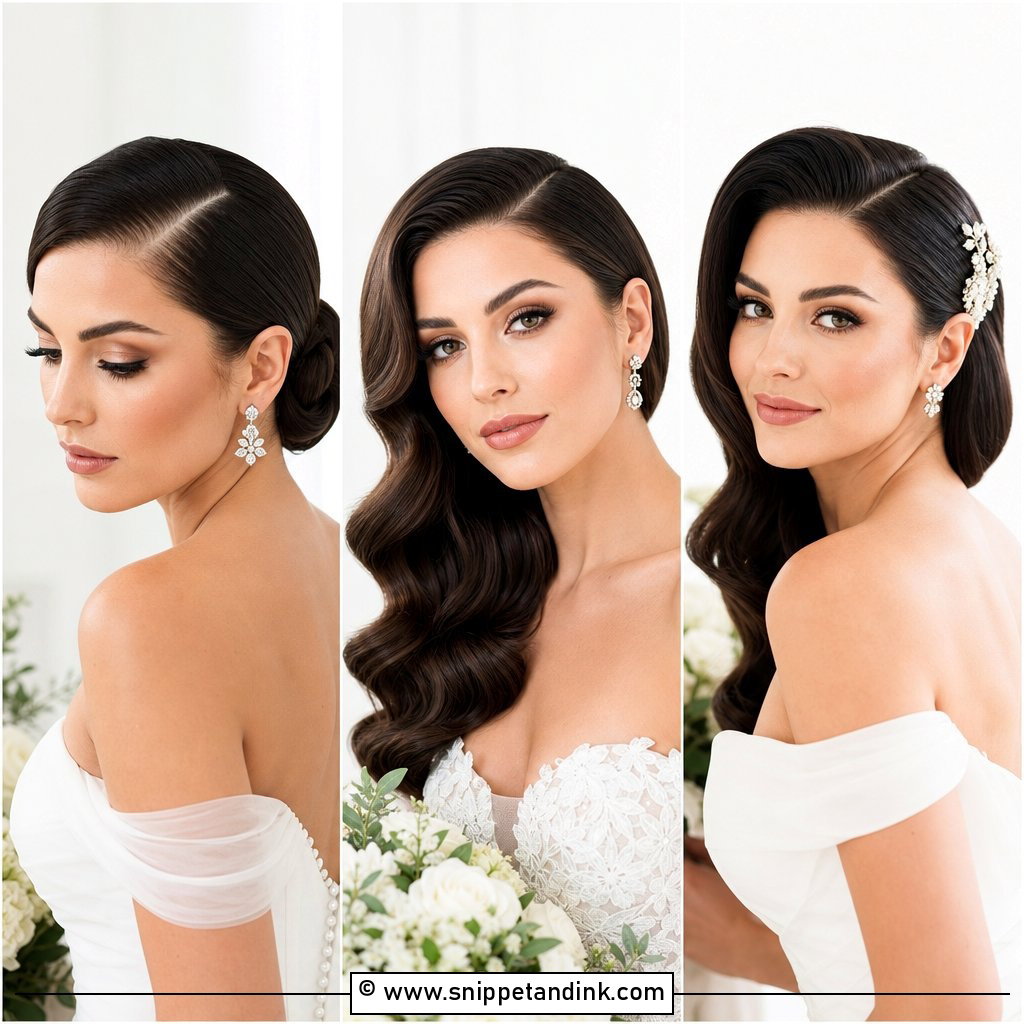
14. Slicked Back Hair With Side Part

Shifting the part deep to one side gives the slick an old-Hollywood feel and some asymmetry for strong jawlines or a broad forehead. All the hair is smoothed back from the part into a bun or ponytail. The heavy front sweep is the part that misbehaves: it wants to lift off the forehead within an hour. I set it with gel and flat clips while makeup finishes. Statement earrings and a bold lip suit it.
15. Slicked Back Wet Look Hair

The wet look uses enough gel to make hair appear just out of the water, either pulled into a bun or on a short cut. It’s fashion-forward and suits minimal, contemporary weddings. Most of the gel I apply goes in thin layers, with a shine spray on top, because a thick coat dries white and flakes by mid-evening. Keep makeup polished so it doesn’t look like you got caught in rain. I wouldn’t recommend it for a long outdoor summer day; the finish dulls with sweat.
16. Slicked Back Hair With Floral Accents

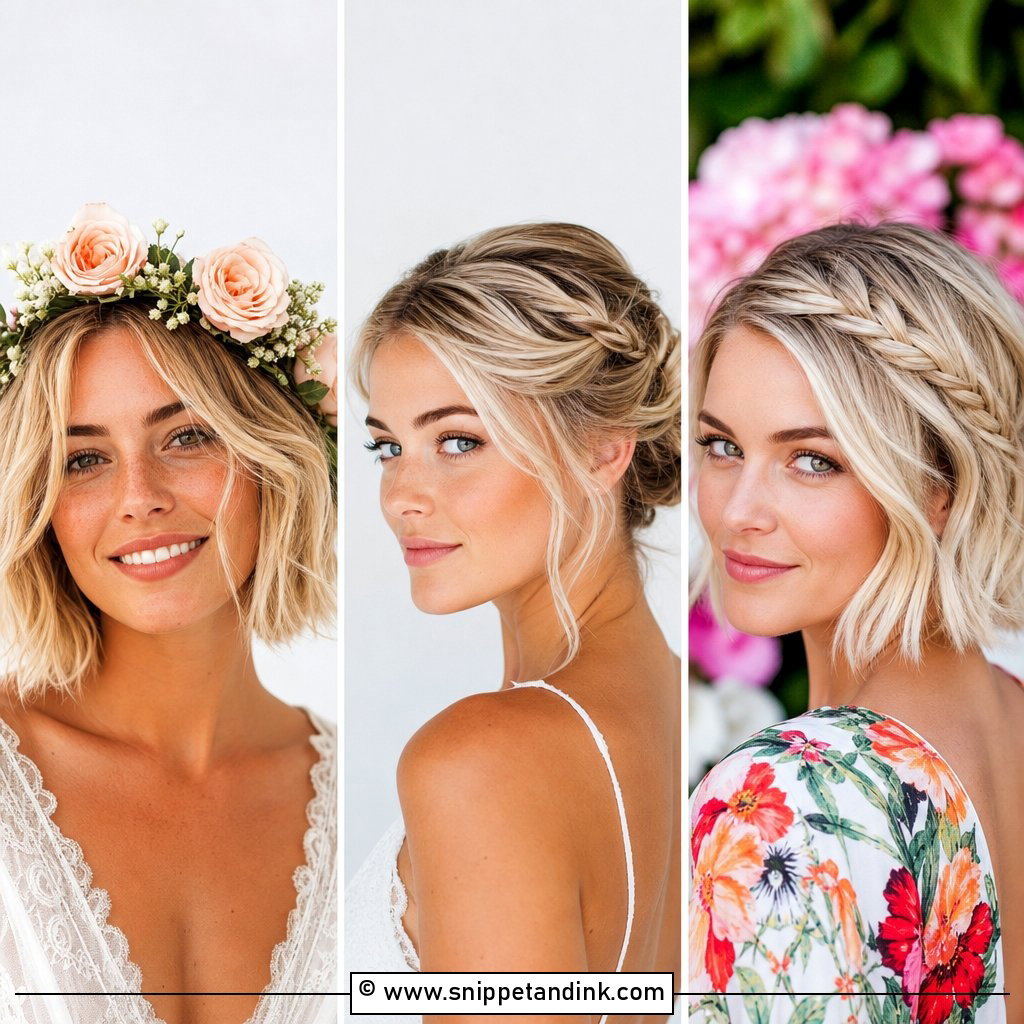
Small flowers along the bun or beside the part soften a slick finish. Baby’s breath, tiny roses and seasonal blossoms all work, and matching them to your bouquet ties the look together. I wire fresh stems into small clusters and pin the cluster, rather than stabbing single stems into gelled hair, so they stay put and last longer. Fragile blooms like gardenia brown quickly against warm skin. Ask your florist to send the hair flowers in their own box.
17. Slicked Back Hair With Hair Comb

A decorative comb is both decoration and hardware. It sits just above the bun or overlaps the veil, and it gives a veil a second anchor. Crystal, pearl and vintage styles all show up well against smooth hair. Weight matters: a heavy comb tilts forward on fine hair, so I sometimes stitch it to a small pinned base. It suits traditional and modern weddings alike.
18. Slicked Back Hair With Loose Waves

Top and sides slicked back, loose waves below the ear: that’s the contrast this one relies on. Your length stays on show while the face keeps a clean frame. I start the waves just under the slick sections so the change from smooth to wavy looks deliberate. Waves need to be set and cooled properly, or they fall flat by the speeches, and humid days call for a firmer spray than you’d normally choose.
19. Slicked Back Bun With No Part

No part at all, just hair brushed straight back from the hairline into a sculpted knot, is the most graphic version here. It shows your full hairline and forehead, which is exactly why I check those at the trial: a widow’s peak or uneven temples look stronger with no part to break them up. Bold makeup and statement jewelry match its tone. The knot can be large because there’s nothing else competing. It suits a bride who wants a fashion look and is happy with a strong, open face.
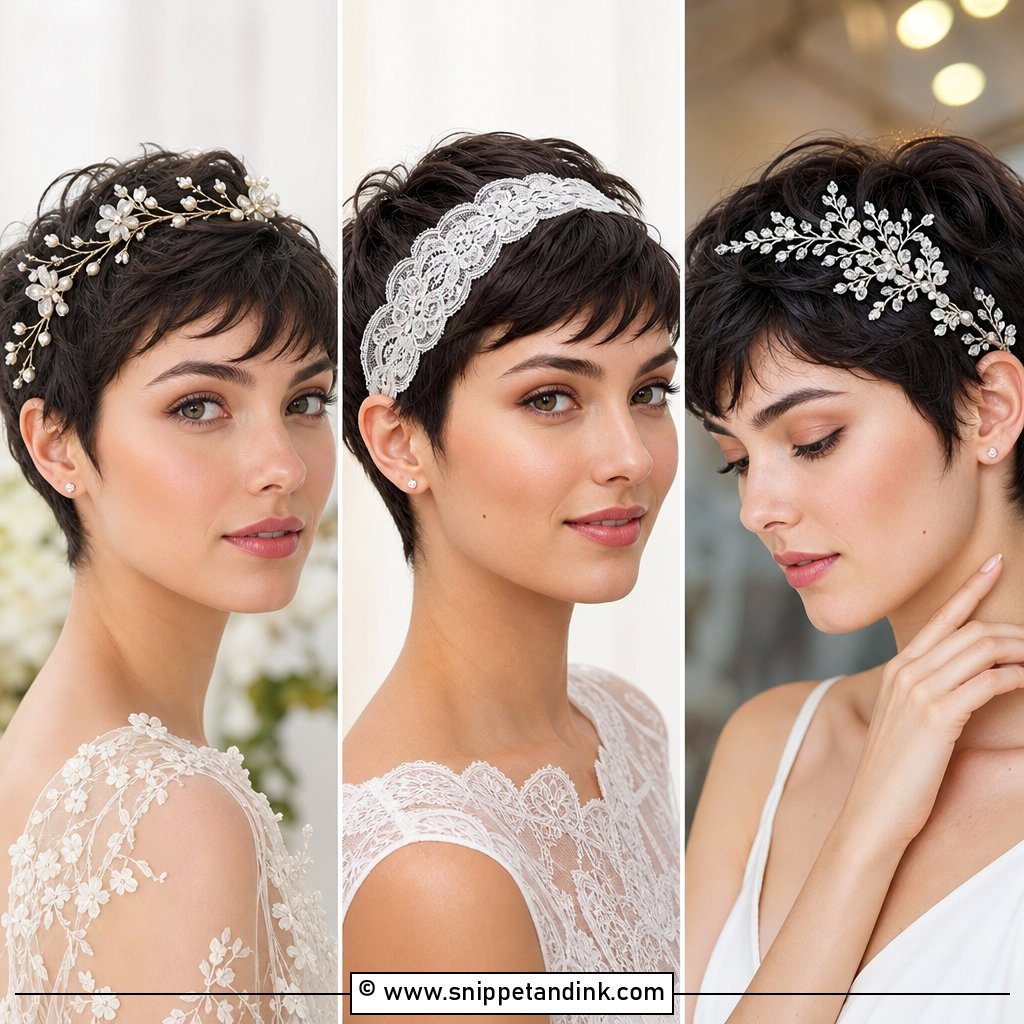
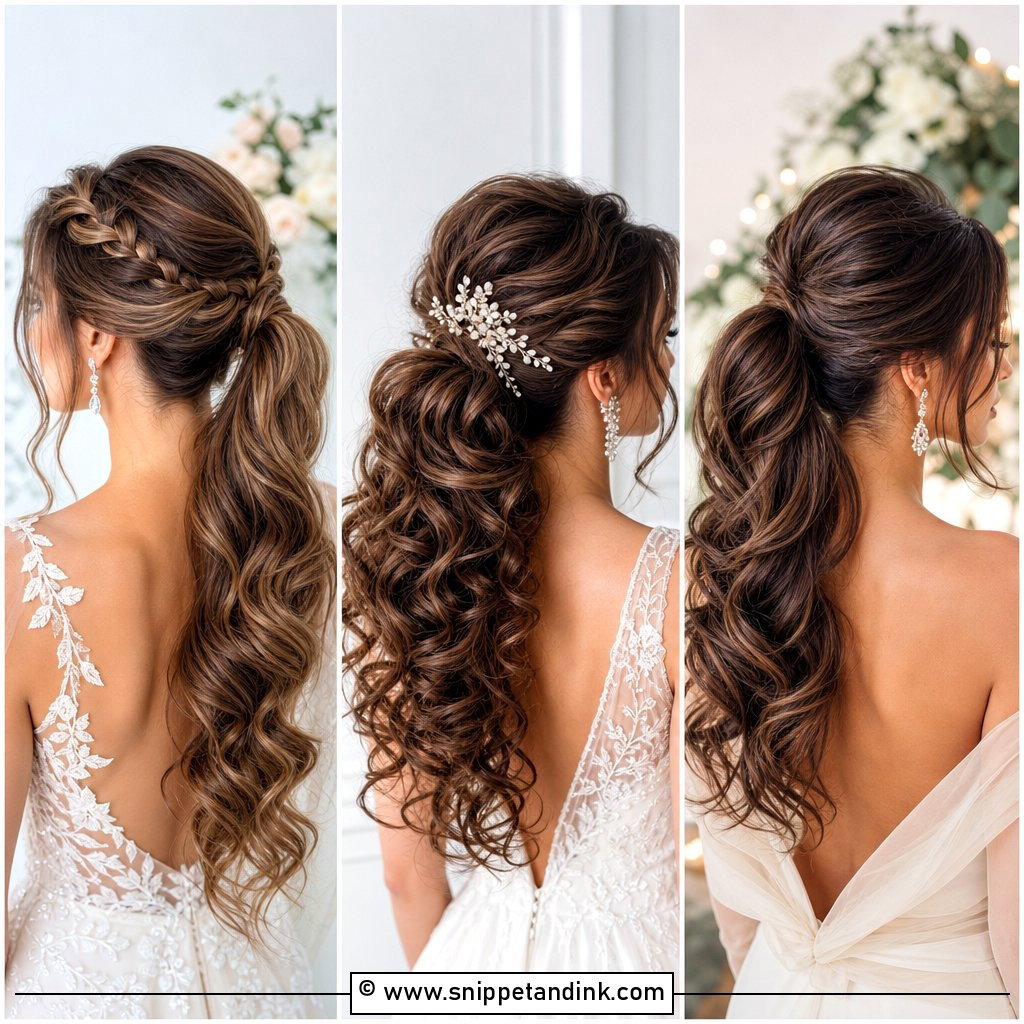
20. Slicked Back Short Wedding Hair

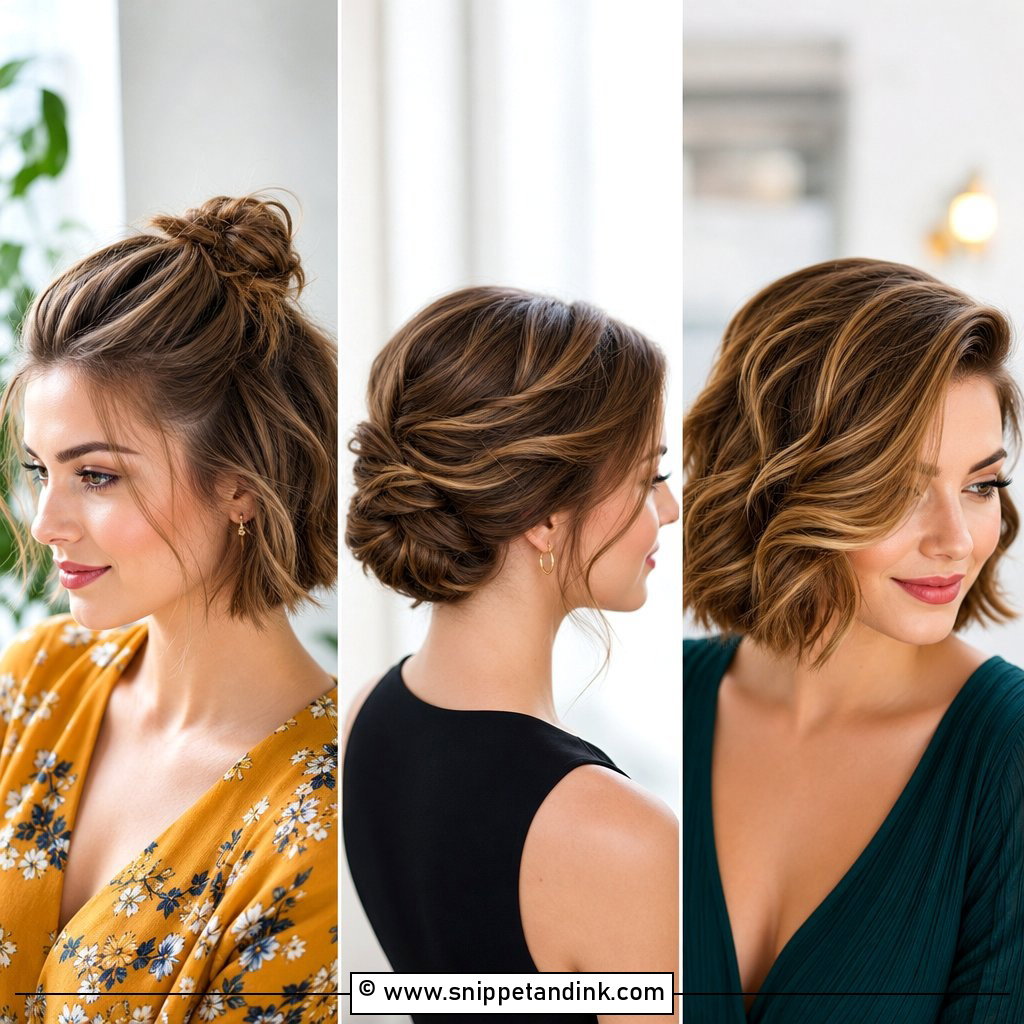
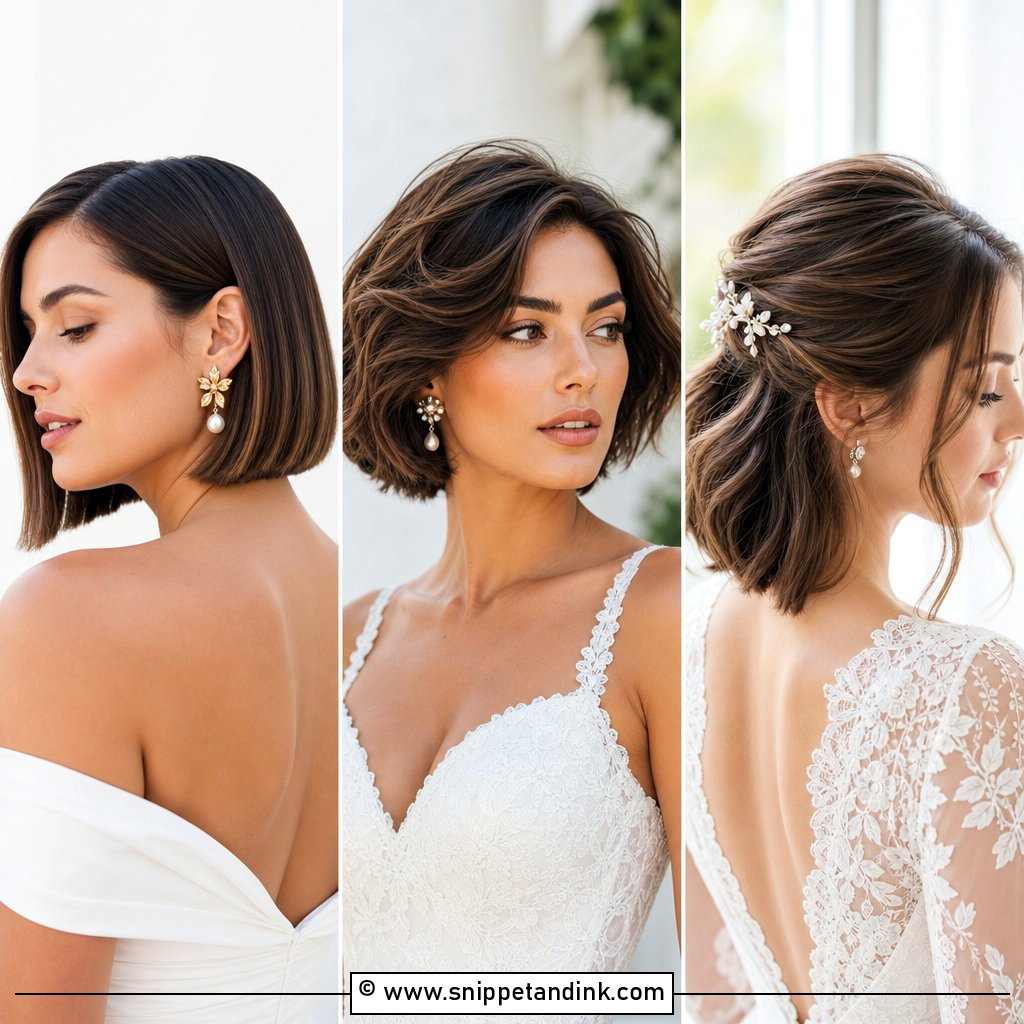
Bobs, lobs and pixies can all be slicked. Gel or pomade gives the gloss; on pixies I use pomade, since gel alone won’t keep short ends flat around the ears. Bobs usually slick back into a small knot or a tucked style with pins hidden underneath. It’s quick in the chair and holds well. Statement earrings and bold makeup help balance the proportions, and a veil can still be anchored with a small comb at the crown.
Ponytails Fray Before Buns Do
Every slick style starts the day looking identical at the crown. What separates them is what happens to the part below it after eight or ten hours.
The most durable
Low buns, chignons and braided buns hold their shape longest. All the length is tucked away, so nothing rubs, tangles or catches on a veil or a groom’s cufflink.
Needs a little help
Ponytails keep their slick top but the length frizzes and knots against lace and beading. A comb and a drop of oil at the cocktail hour fix most of it.
The most delicate
Half-up, tucked-down and waved styles are exposed all day. In humidity, waves relax first and the tucked sections slip out. If your wedding is outdoors in summer, I’d lean toward the up styles, or plan a quick switch to a low bun before the reception.
Whichever you pick, the crown itself needs the same small kit: a spoolie, a travel-size gel or wax stick, four bobby pins and blotting papers. Hand it to the person who’ll be next to you all evening, not to the bag that ends up under the head table.
Screenshots Are the Start, Your Trial Decides the Rest
The slick look suits most brides once you find the right placement and the right amount of softness, which is why it pairs so well with quiet-luxury elegance in makeup too. Save the photos you like and look for the pattern in them: are they all low, all middle-parted, all with tendrils? That pattern is your real brief. At the trial, wear something with your gown’s neckline, bring the veil or headpiece, and stay in the style for a few hours before you decide.
You'll Like These Ideas:


Leave a Reply