
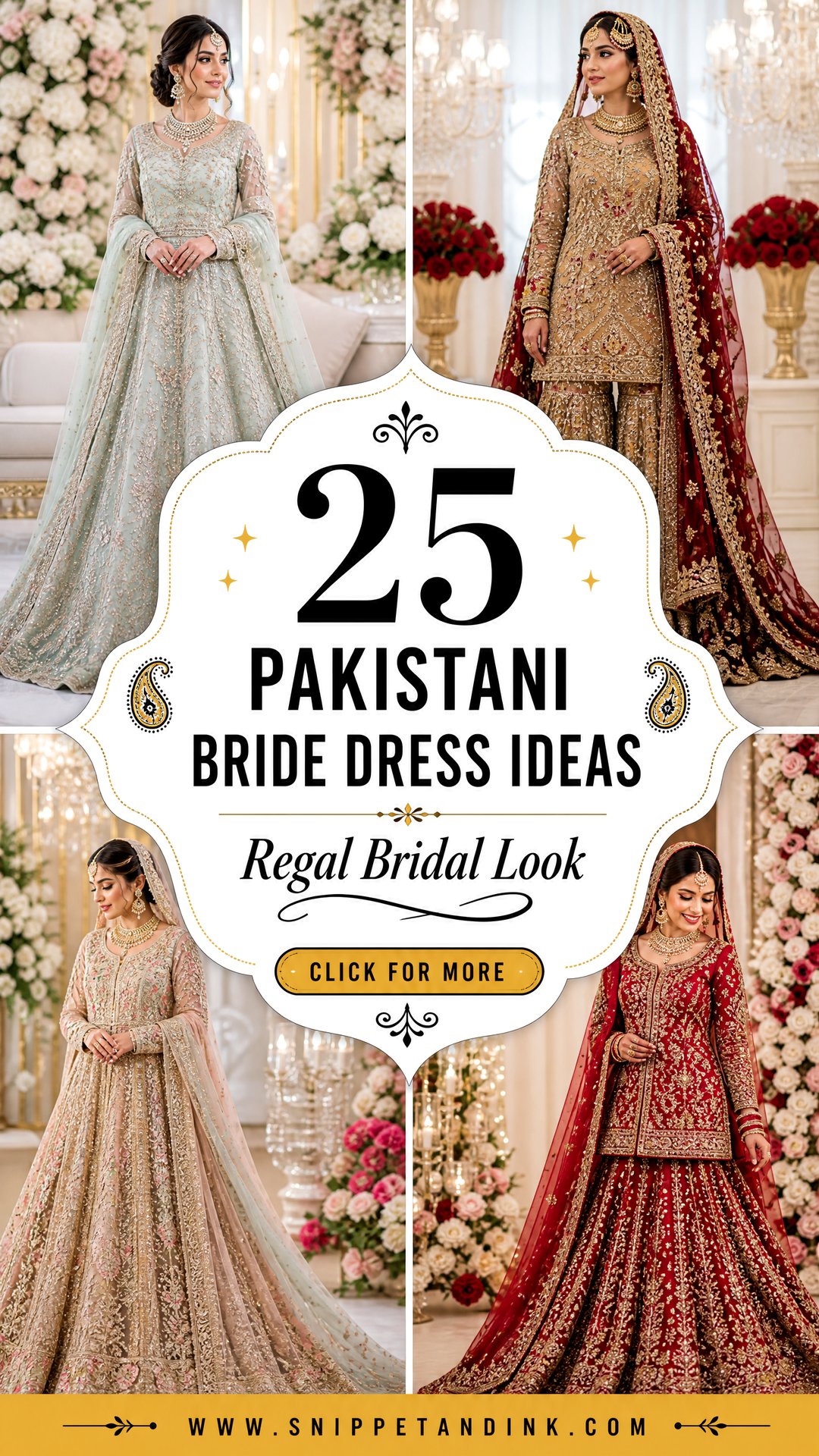
A Pakistani bride rarely wears one dress. She wears four or five across the mayun, mehndi, nikkah, barat and walima, and each event asks something different of the fabric. Below are 25 bridal outfits, from red barat lehengas to pastel walima gowns, with notes on how each one actually wears: how heavy it gets, how it moves on a stage, and what it needs alongside it. When I sit down with a bride, colour is never my first question. I ask which event, what season, and how many hours she’ll spend under hall lights with a dupatta pinned to her head.
How Long Hand Embroidery Takes, and When to Order
Hand zardozi, dabka and tilla work are slow crafts. A karigar sets each piece of metal thread or coil by hand on a frame, and a fully worked barat lehenga can occupy a workshop for weeks before it ever reaches the tailor. That’s why made-to-order bridal outfits commonly need three to six months from order to delivery, and longer if you’re ordering for the winter wedding season, when every workshop is booked solid. Ready-to-wear and lighter mehndi outfits move much faster.
My order of work is simple: barat first, then the walima and nikkah, then the mehndi and mayun, which can be sourced close to the date without much risk. Leave room for at least two fittings and keep the last one a few weeks before the wedding, because weight shifts in the final stretch and a kameez that fit in spring can pull at the side seams by the barat.
Settle these at the first appointment
- A small embroidered sample on your actual fabric, so you see the colour of the metal work against the base before the whole piece is made.
- A rough finished weight. Ask how heavy the lehenga will be once worked, and whether the waistband is built to carry it.
- Who drapes and pins the dupatta on the day, and whether loops or hooks will be stitched in for the pins.
- Delivery date in writing, with time left before the wedding for one more alteration.
1. Red Pakistani Bridal Lehenga
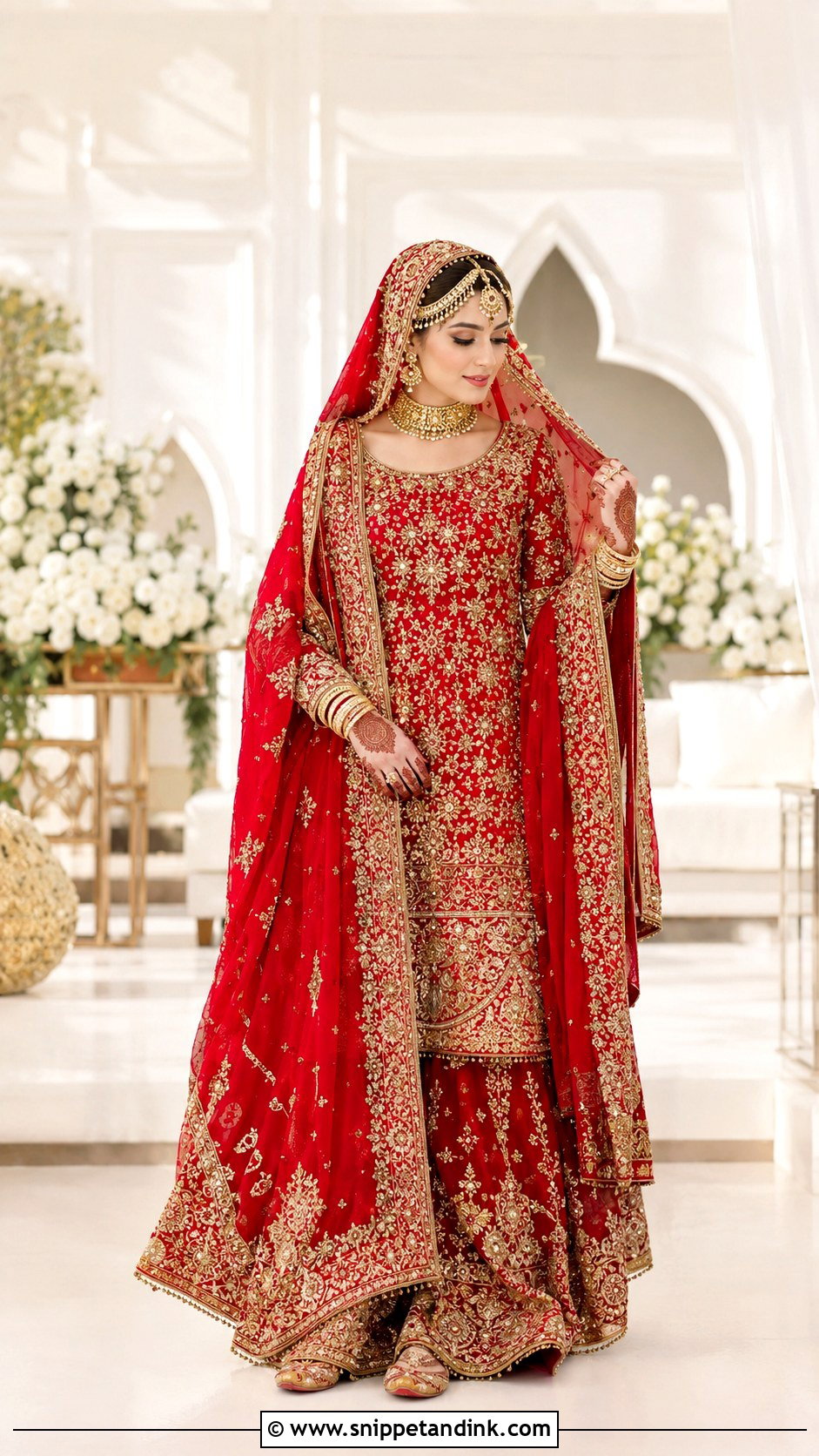
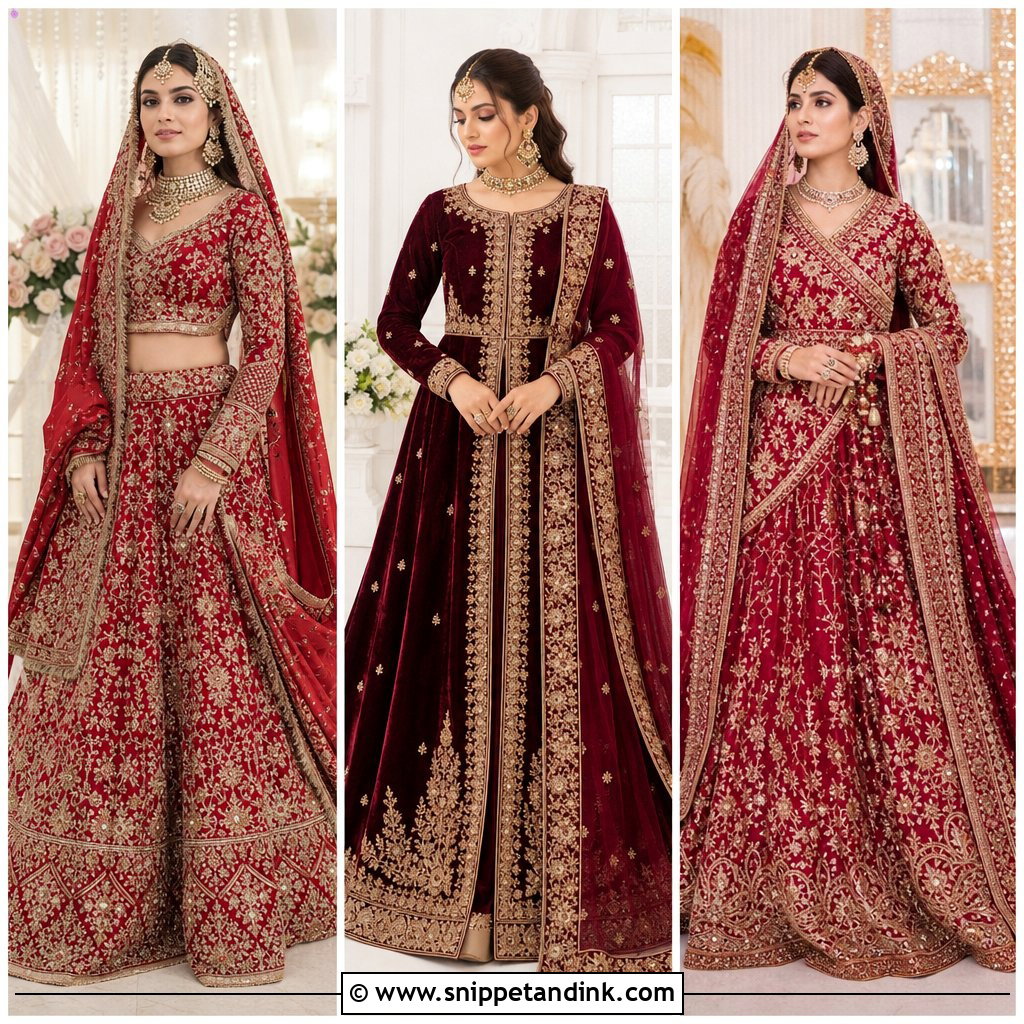
Red is still what most families picture for the barat, and there’s a practical reason it lasts: deep red holds its colour under hall lighting and against gold work in a way paler shades don’t. I steer cool-skinned brides toward a red with a slight blue base and warm-skinned brides toward an orange-leaning one, and I ask them to hold both swatches to the face in daylight before deciding. Zardozi, dabka, sequins and resham all sit well on it. A long kameez or a choli both work, so let comfort and family preference decide. Two dupattas, a heavy bordered one over the head and a lighter one on the shoulder, give that layered barat frame, but they add real weight, so ask your tailor to stitch small loops for the pins. Finish with gold jewelry, a matha patti, jhumkas and bangles, and wear khussas or a low block heel rather than stilettos under a skirt that heavy.
2. Maroon Pakistani Bridal Lehenga
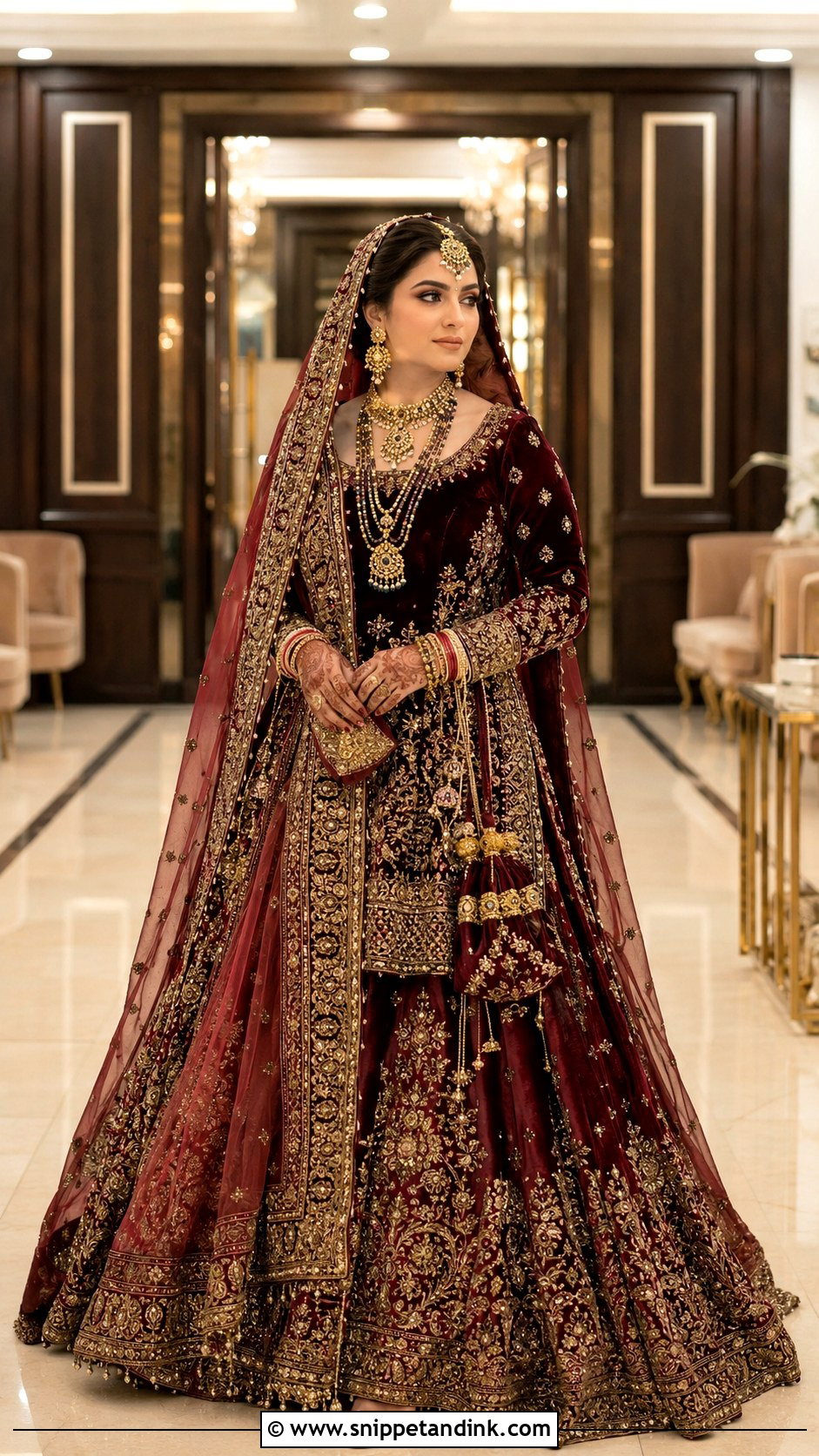
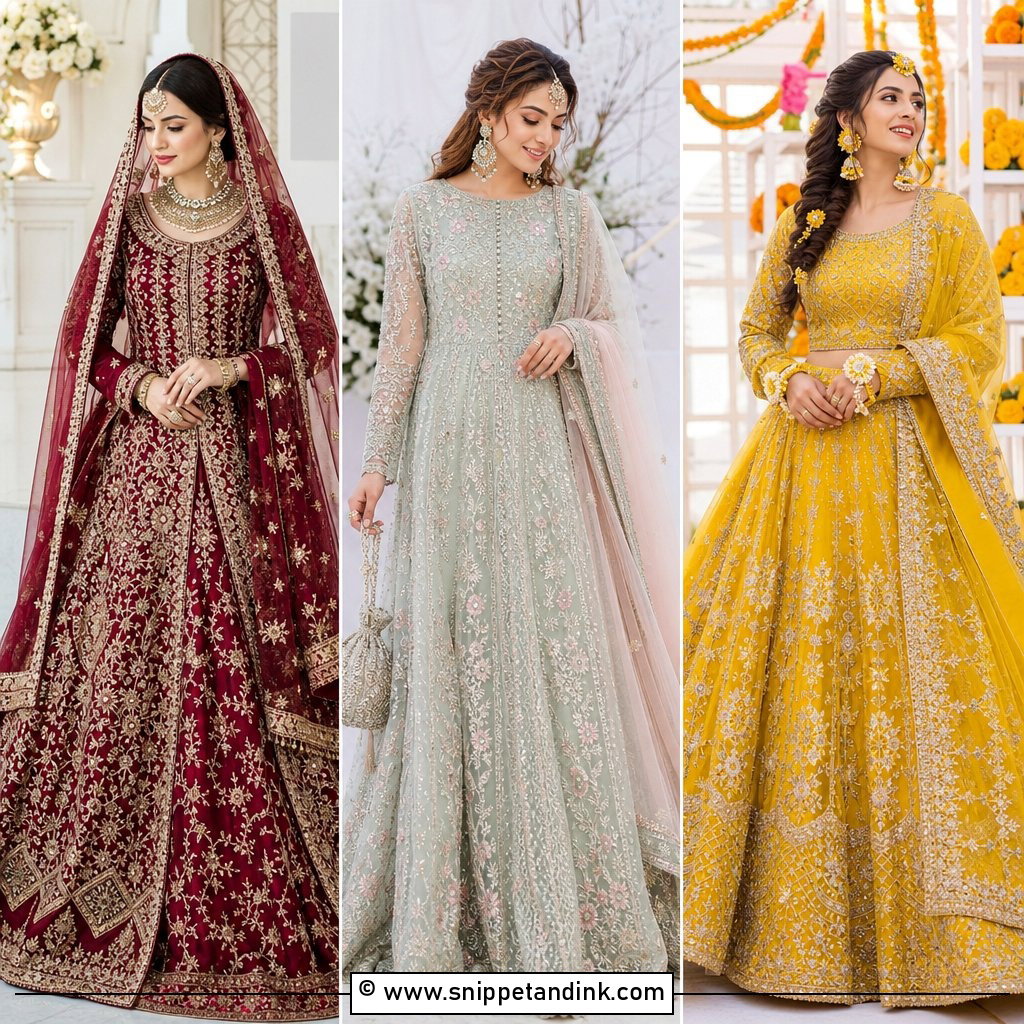
Maroon reads as richer and a little more grown-up than bright red, and it forgives a lot: it hides the faint shadowing that dense embroidery leaves on lighter cloth. Antique gold, champagne, copper and dull silver work all suit it. Velvet or raw silk gives it weight for a winter barat, though velvet crushes wherever you sit, so I always have brides sit down at the fitting and then check the back of the lehenga. A long embroidered shirt with fitted sleeves and a broad-bordered dupatta keeps the line long. Under strong lights maroon can swallow a very soft makeup look, so keep the eyes defined with kohl and pick a lip that doesn’t disappear into the fabric. A choker, layered necklace, passa, bangles and embroidered heels complete it.
3. Ivory Pakistani Nikkah Dress
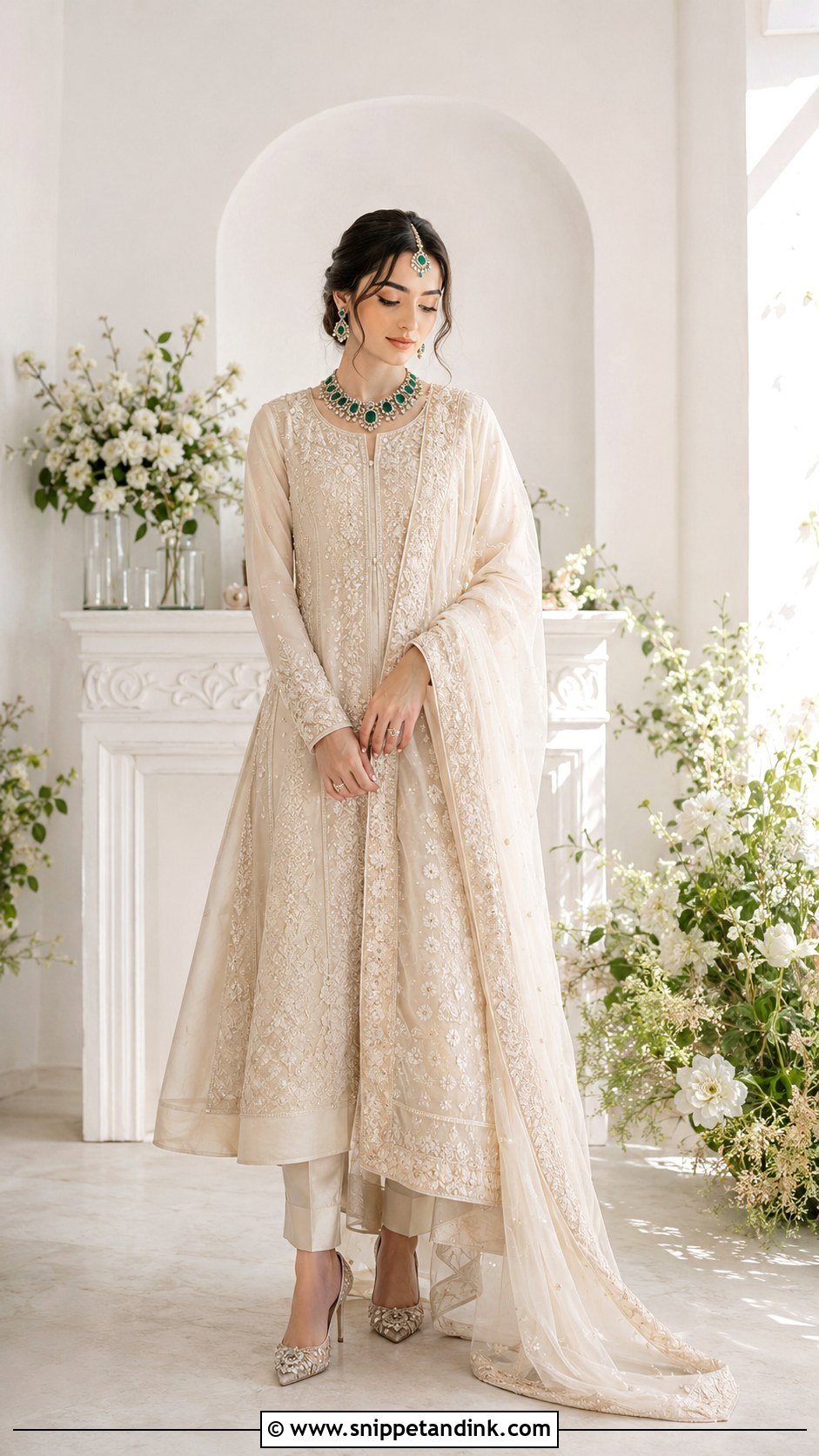
Ivory is the shade I suggest most for a daytime nikkah. It’s kinder to most skin tones than stark white and doesn’t turn blue-grey in daylight photos. Organza, chiffon, net, silk or self-jacquard all suit it, with pearl, sequin and thread embroidery keeping the surface quiet. A long shirt with straight trousers, a pishwas or a soft lehenga each make a modest outfit. The thing to watch on ivory is makeup transfer. Foundation on a neckline or dupatta edge shows at once, so I have brides dress before the final powder and keep a clean cotton cloth over the neckline until they leave the room. Emerald, pearl or kundan jewelry, a scalloped-border dupatta, and metallic heels or ivory khussas finish it.
4. Gold Pakistani Bridal Dress
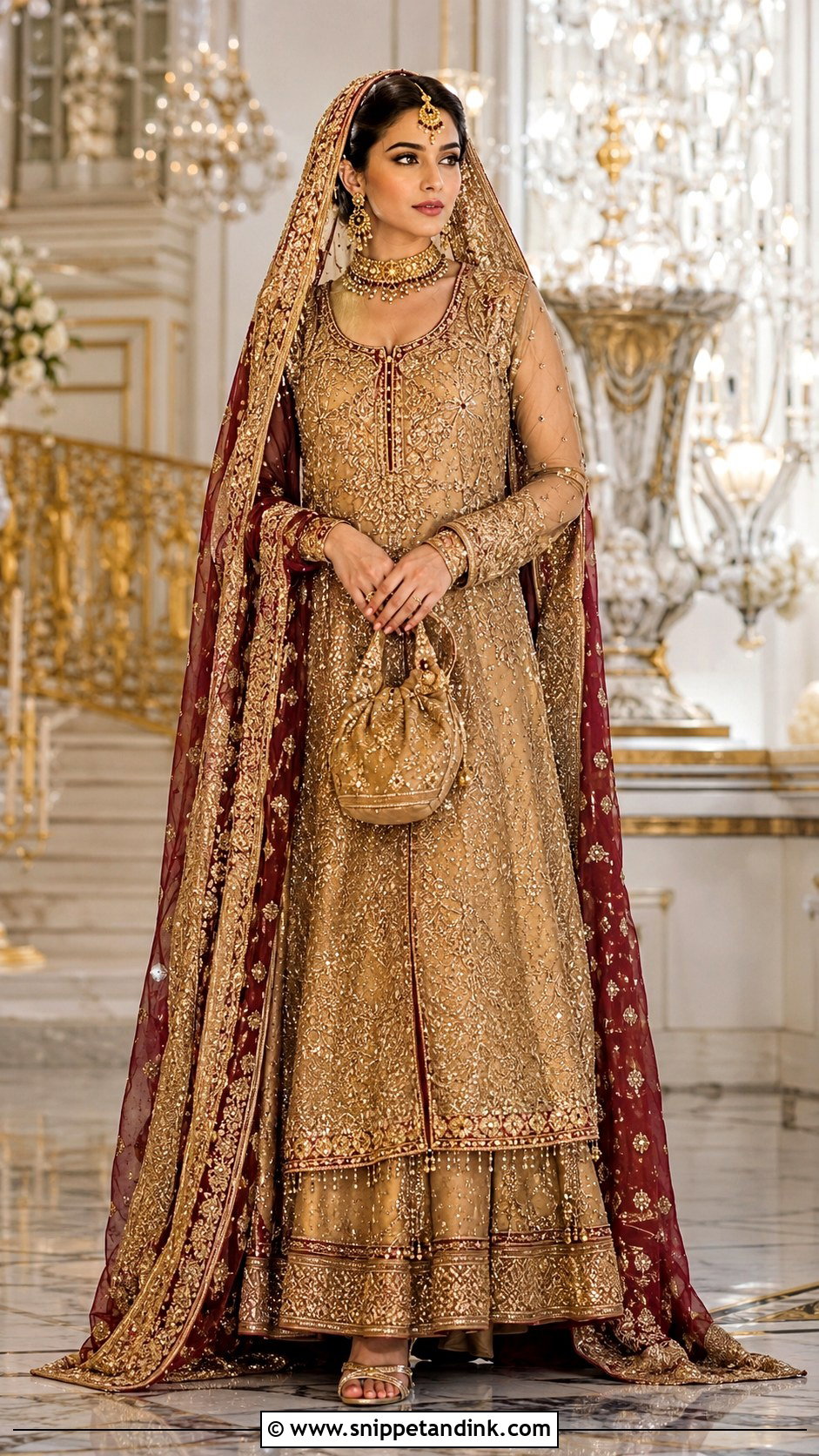
Gold is the barat colour for a bride who doesn’t want red but still wants the room to know exactly who the bride is. Look for antique gold rather than bright yellow gold, because the brassy shades can look flat under camera flash. Tonal zari, dabka, tilla, mirror or sequin work all suit it. A gold lehenga with a long shirt gives the classic shape, while a gold pishwas sits softer. One-tone gold tends to blur in photos, which is why I often add a deep red, maroon, emerald or champagne dupatta for contrast. Warm makeup, traditional jewelry, gold heels, a potli bag and a neat bun under the dupatta complete it.
5. Pastel Pakistani Walima Gown
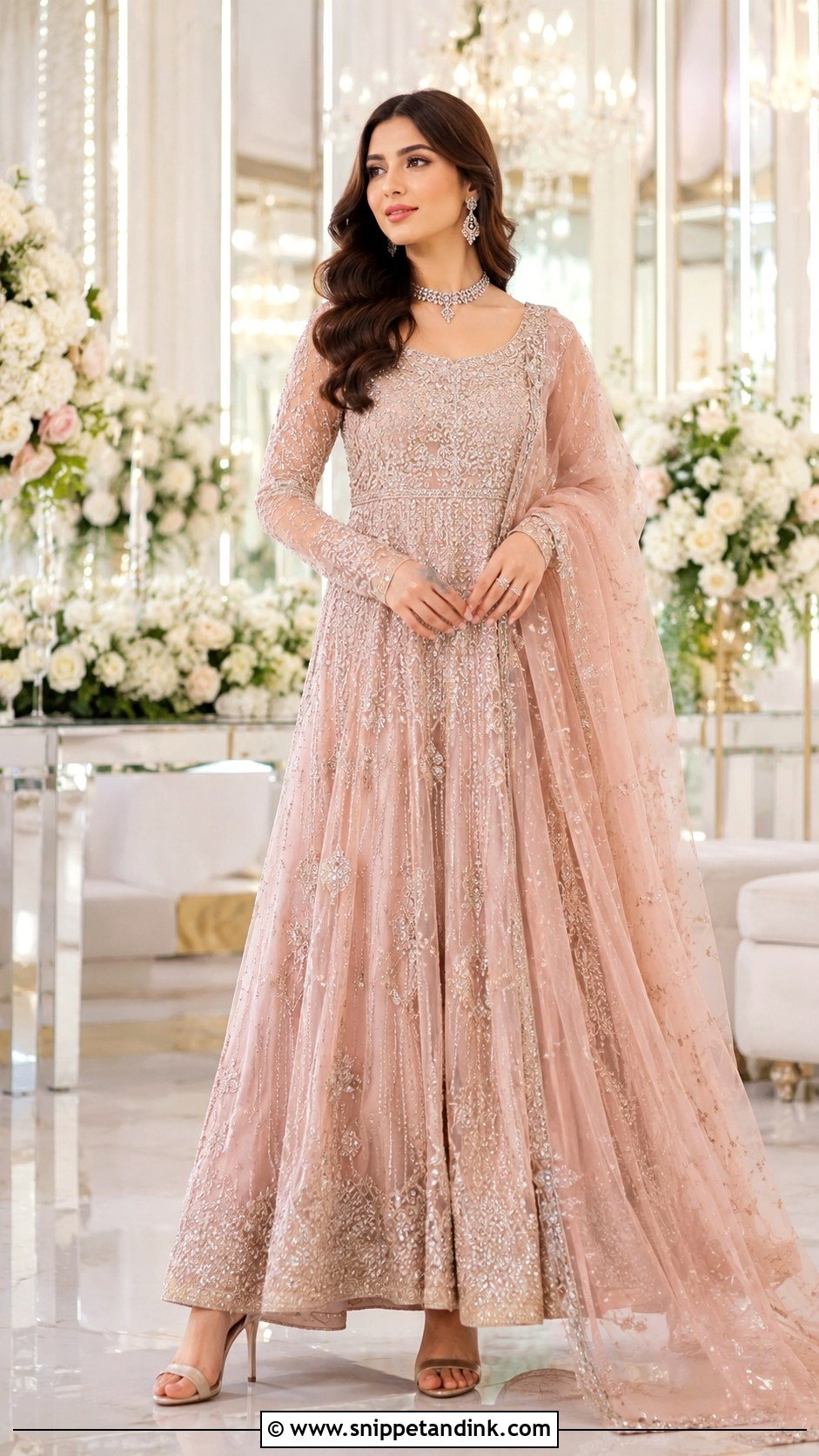
A pastel Pakistani walima gown is the outfit brides tend to enjoy wearing most, because by the walima the heaviest rituals are behind them. Blush, mint, powder blue, champagne, lilac and sage all read as bridal if the work is dense enough. Pastels are fussy about lighting, though. A mint that looks fresh in the shop can turn grey under warm hotel bulbs, so I ask for the fabric to be checked under the same kind of light as the venue before anything is cut. A fitted bodice over a flared skirt with a trail gives shape without bulk. Diamond-style jewelry, soft curls, a sheer dupatta loose on the shoulder and silver or champagne heels keep it light.
6. Pakistani Bridal Gharara
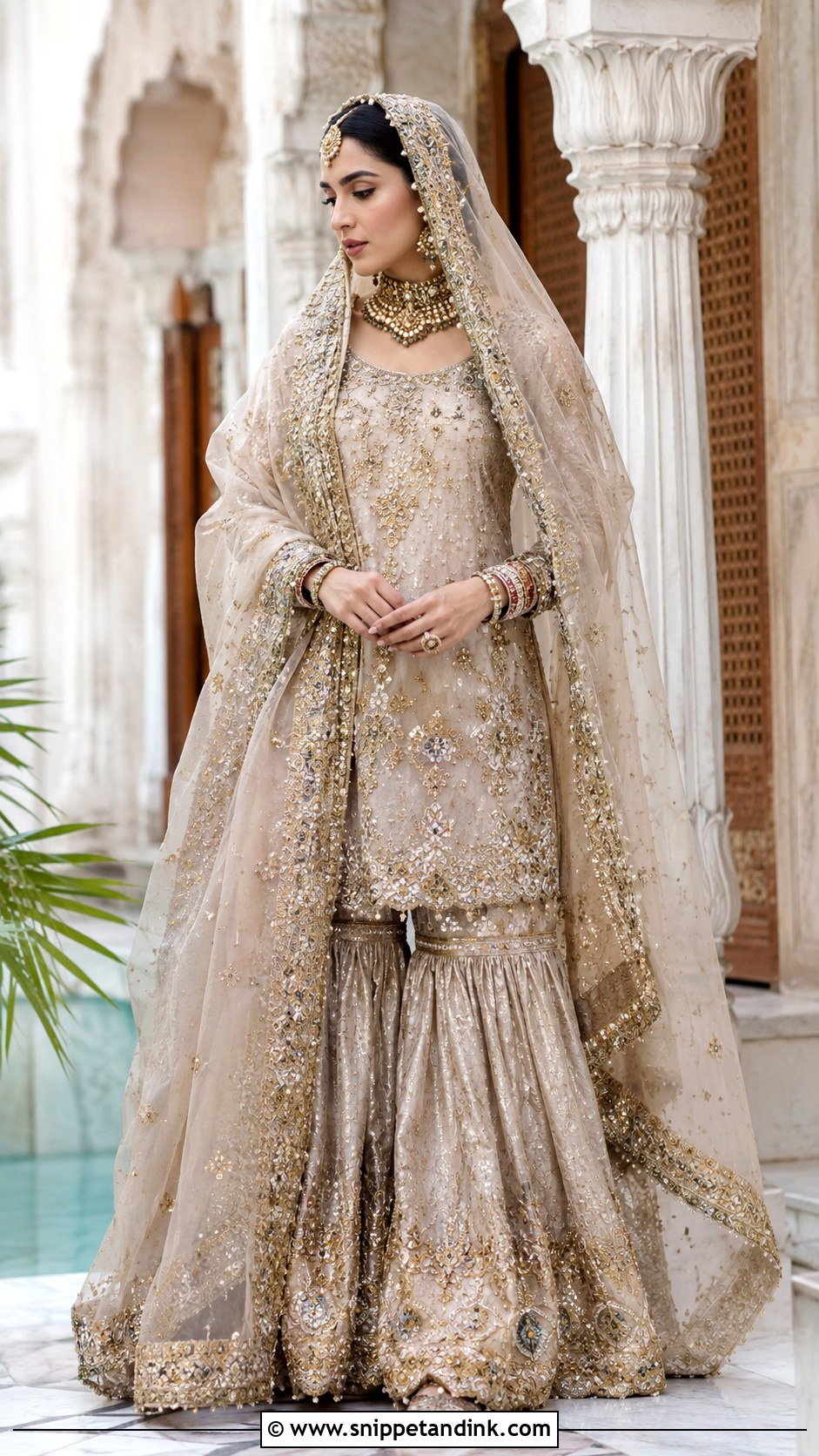
You can spot a gharara by its joint at the knee, the gota-covered band where the fitted upper leg breaks into the flare. That joint is also where most fitting problems show up. Too high and the flare starts mid-thigh and reads like a skirt; too low and it catches when you walk, so I mark it with the bride standing in her actual wedding shoes. Depending on colour and work, it suits a nikkah, barat, mehndi or family event, and a heavily worked gharara under a long kameez is about as traditional as Pakistani bridal dressing gets. Rich borders, gota, zardozi, pearls or tilla work give it the bridal finish, with a dupatta over the head and statement jewelry. Khussas are the practical shoe here, since they let the hem fall exactly where it was cut.
7. Pakistani Bridal Sharara
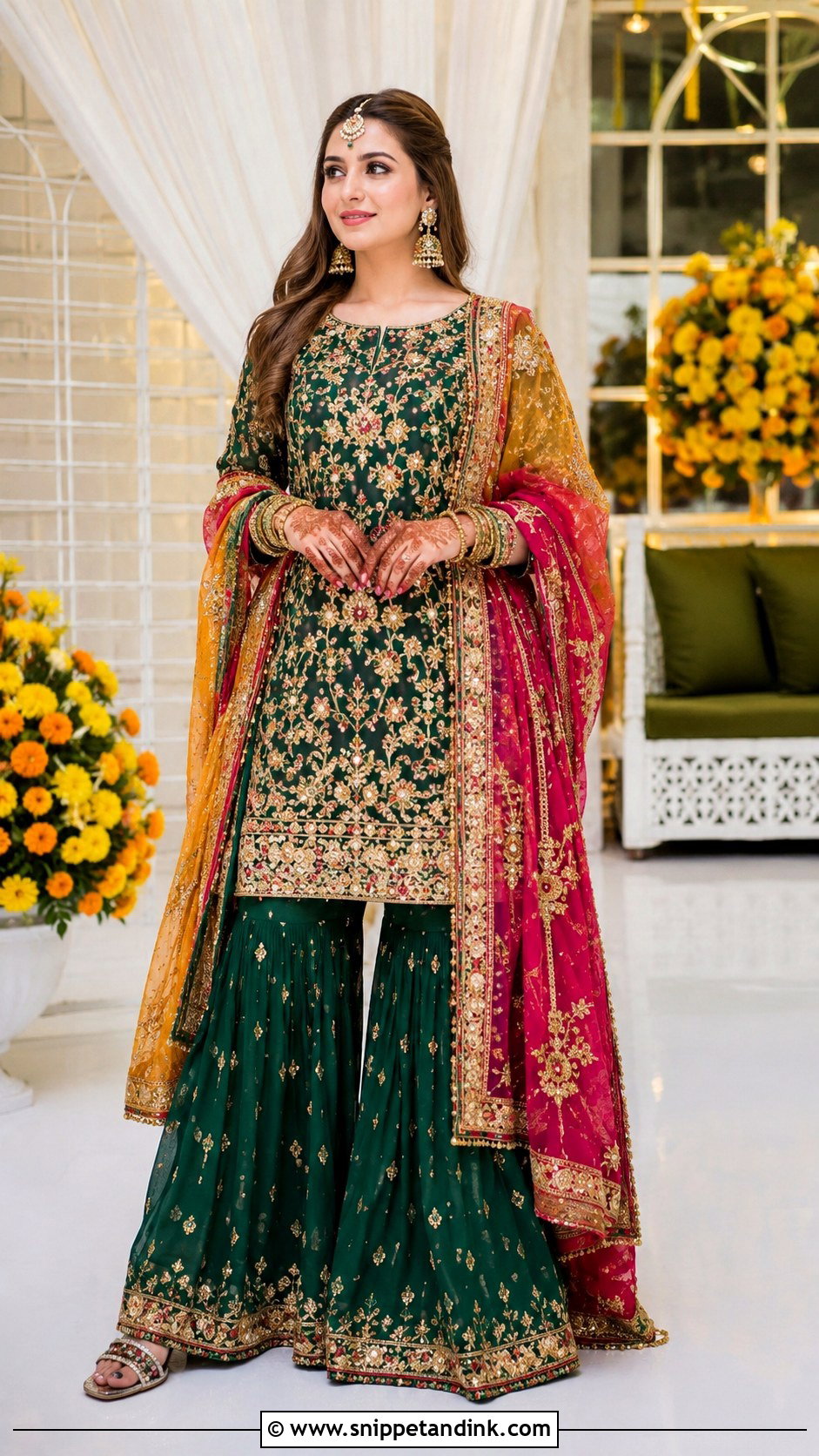
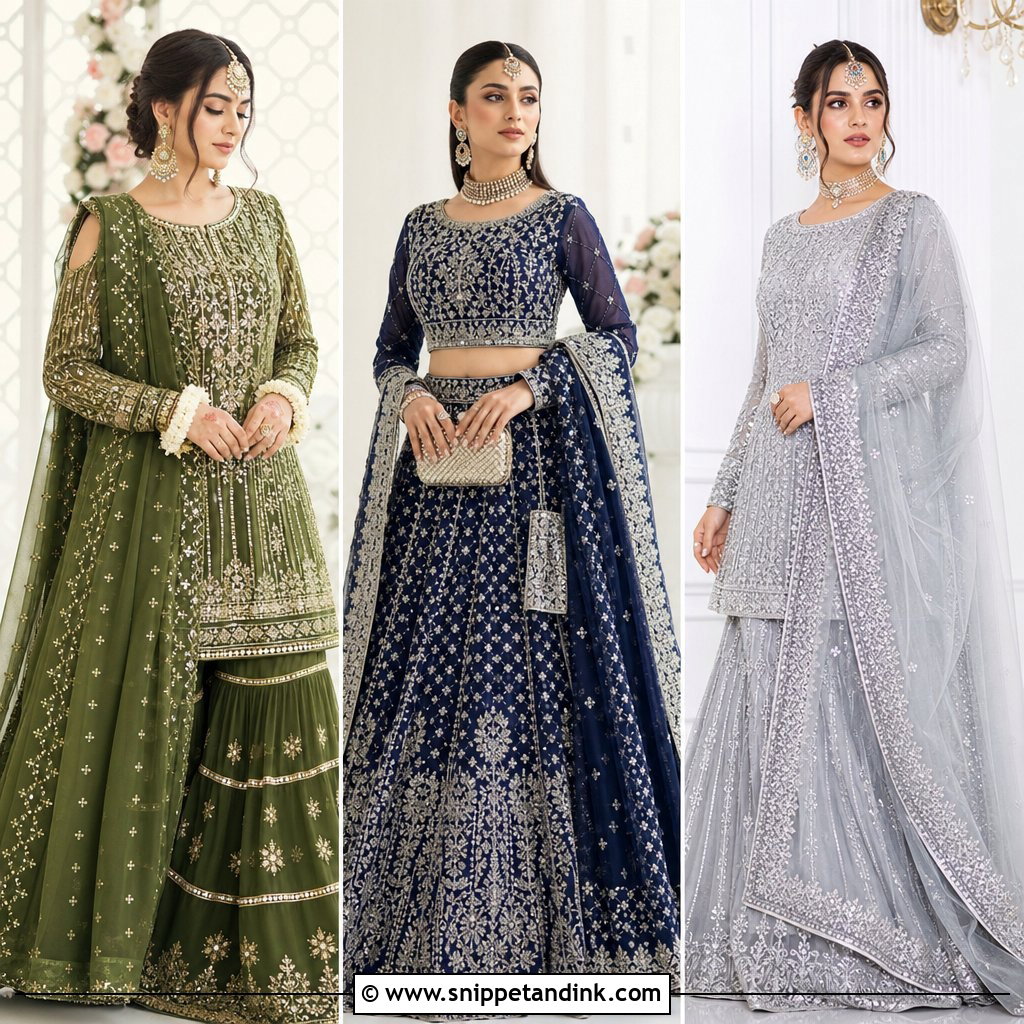
A Pakistani bridal sharara flares from the waist or hip rather than the knee, so it moves more freely than a gharara and is far easier to dance in. That makes it my usual suggestion for a mehndi, a nikkah or a lighter barat. Pair a short or mid-length kameez with a heavily embroidered sharara and a wide-bordered dupatta. Red, rust, mustard, emerald, ivory and tea pink keep it classic; pastels with mirror or tonal work feel newer. One caution: a full sharara in heavy fabric drags at the hem on every stair, so I have the length finished a touch shorter than I would a lehenga. Jhumkas, bangles, a tikka and embellished sandals complete it.
8. Pakistani Bridal Pishwas
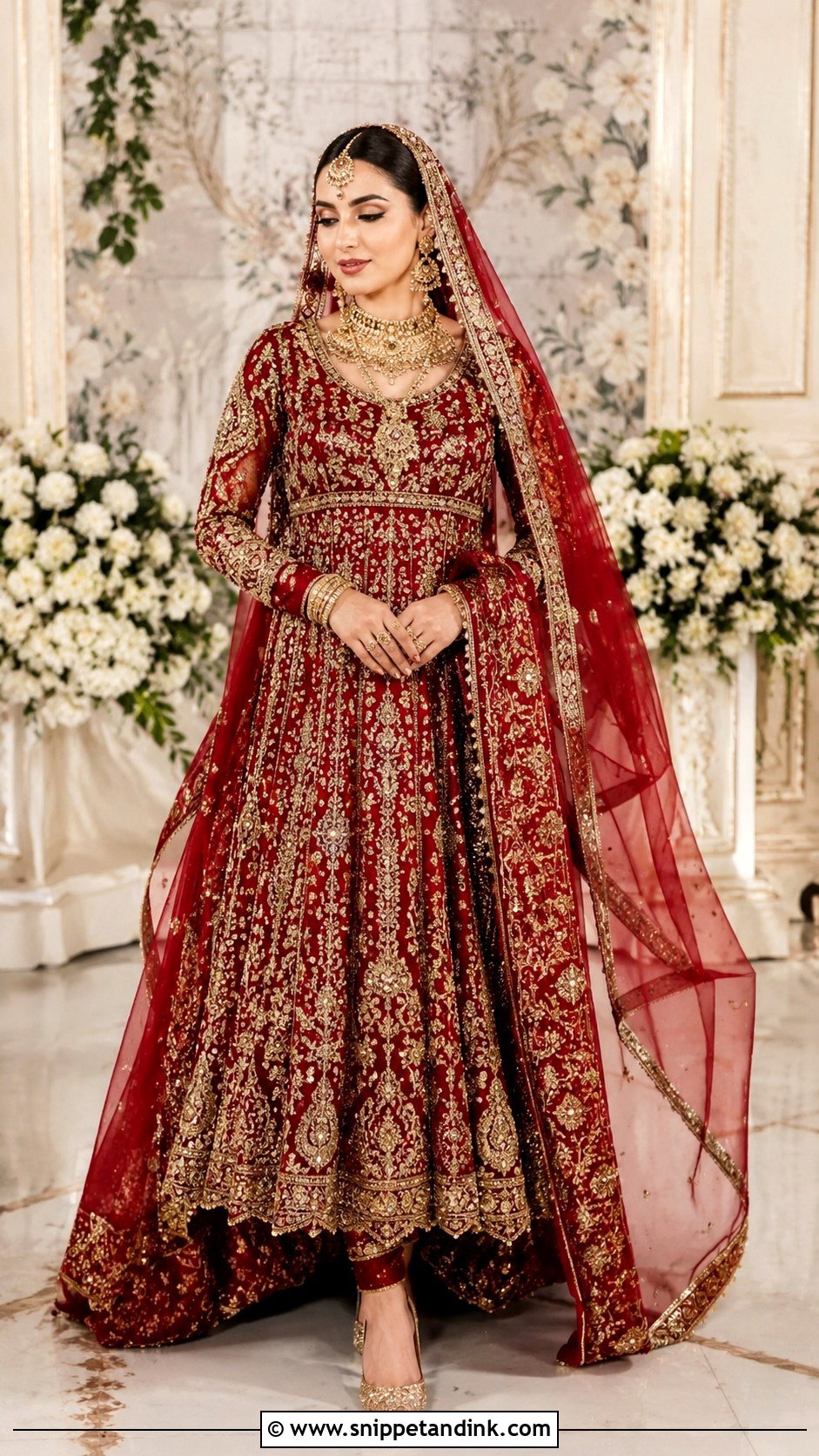
A Pakistani bridal pishwas is a long fitted bodice that opens into many flared panels, and the number of those panels decides how it moves. More kalis give a wide swirl on the entrance; fewer give a cleaner fall that suits a petite frame. It covers modestly and still has drama at the hem. Heavy zardozi and dabka push it toward the barat, while pearls and sequins keep it right for a nikkah or walima. Underneath, churidar, straight pants or a lehenga-style inner skirt all work, and the inner skirt helps the panels hold their shape. I always check the weight of the embroidered hem, because a heavy border pulls the panels flat. A sheer bordered dupatta, traditional jewelry and low heels finish it.
9. Pakistani Bridal Maxi Dress
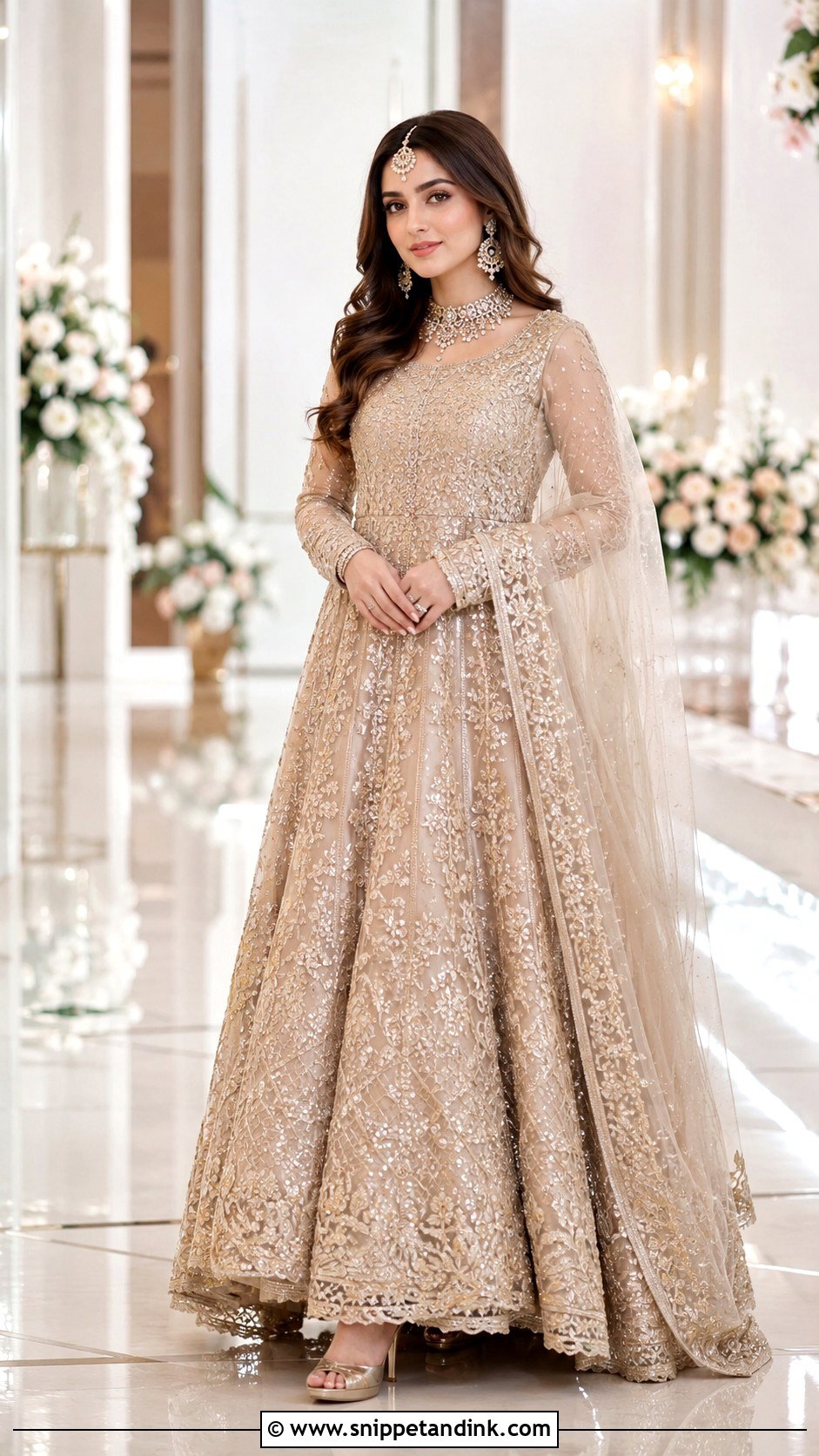
The maxi gives the line of a gown with the hand embroidery of Pakistani bridal wear, and it’s the silhouette brides find easiest to carry through a long walima. Work on the bodice, sleeves, hem and dupatta is enough; it doesn’t need the all-over coverage of a barat outfit. Net, organza, chiffon, tissue and silk all suit it, pastel for a softer feel and gold or champagne for something more formal. Heel height matters more here than with a lehenga, because the hem is cut to one fixed length. Bring the exact shoes to every fitting, or the front will either drag or show your ankles. Soft waves, refined jewelry and a sheer dupatta complete it.
10. Pakistani Bridal Anarkali Dress
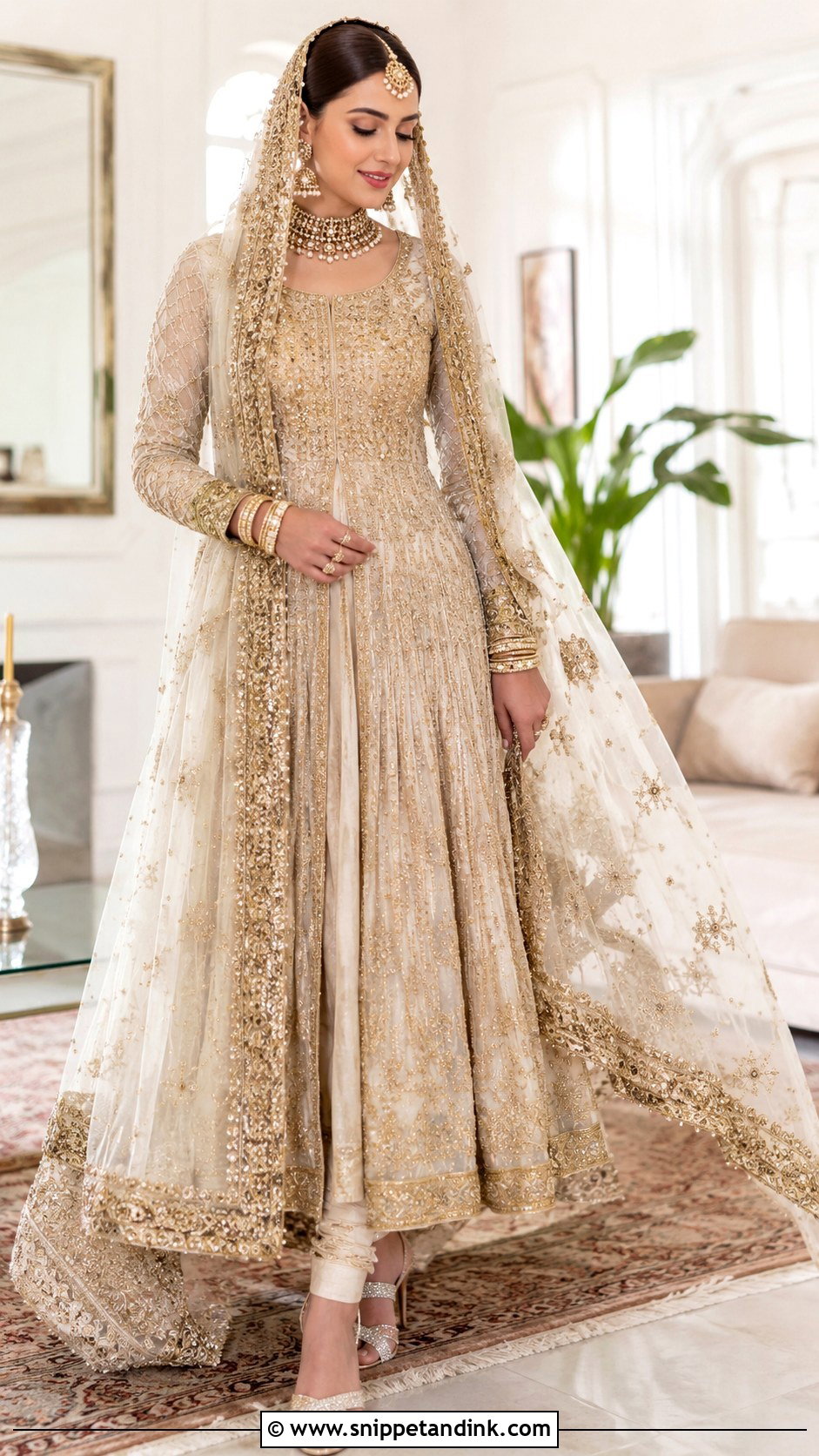
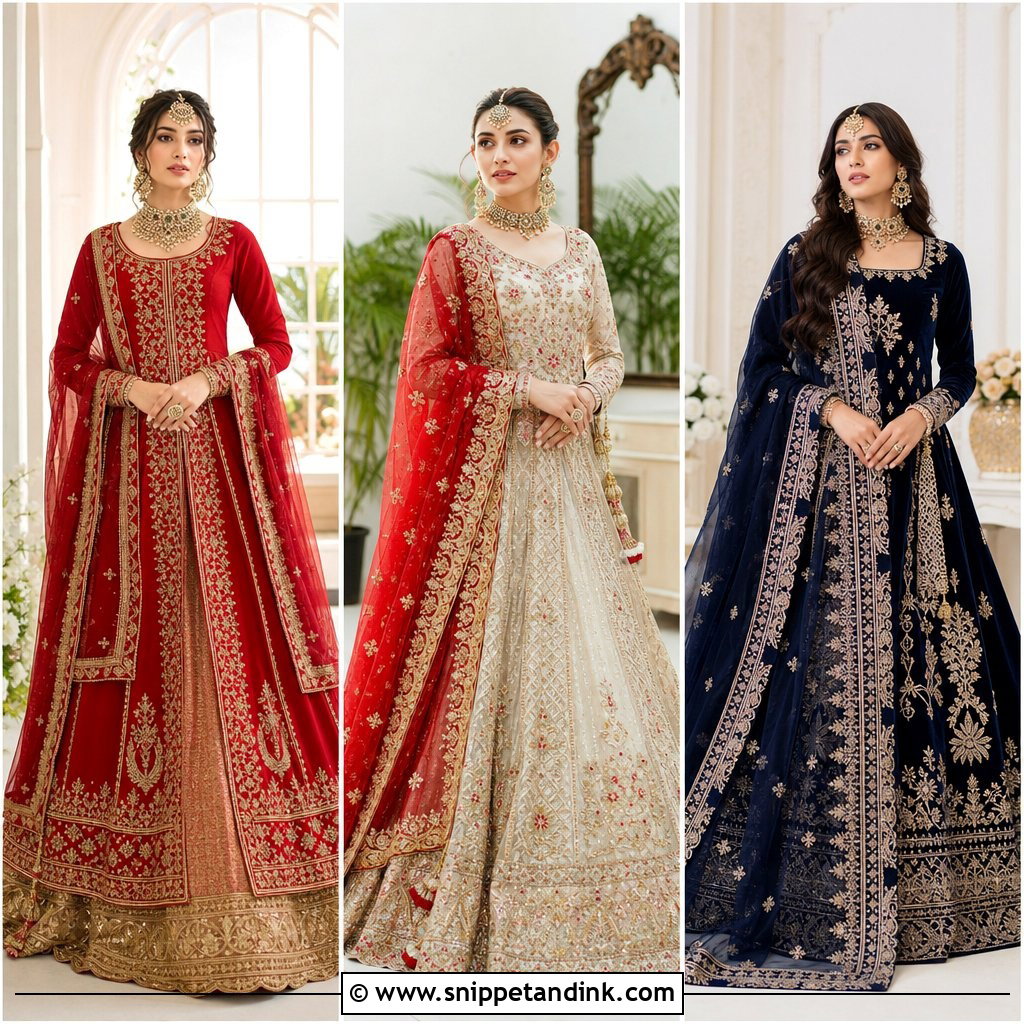
An anarkali is a long flared frock falling from a high fitted bodice, and it’s one of the easier bridal shapes to wear because the volume starts high and asks very little of you. For a bridal version I look for heavy work on the bodice, sleeves and hem border, in red, maroon, ivory, gold or a pastel. Churidar is the classic pairing, straight trousers look more current, and a lehenga-style base adds volume underneath. The fit point I’m strict about is the bodice seam. It has to sit at the natural waist or just under the bust, or the flare starts in an unflattering place. A dupatta over the head, kundan jewelry, a small clutch and embroidered heels or khussas suit it for a nikkah, reception, dholki or a smaller barat.
11. Pakistani Mehndi Bridal Lehenga
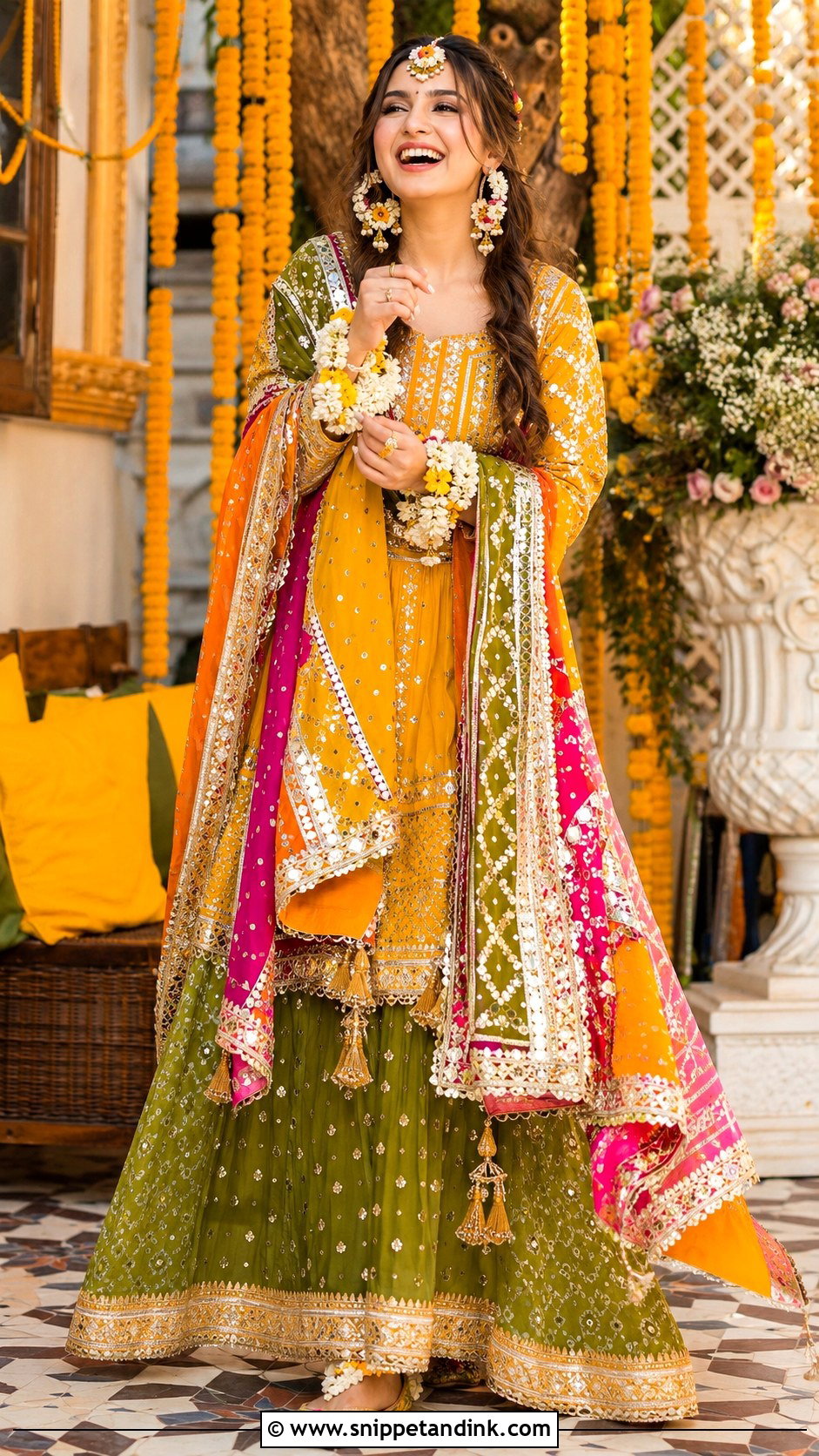
Mehndi is the event where you’ll actually dance, so the lehenga has to be cut for movement before anything else. Mustard, yellow, green, orange, fuchsia and turquoise make up the usual palette. I’d choose gota, mirror work, thread embroidery or playful borders over barat-weight embellishment. Mirror pieces catch the light well but can scratch the inner arms, so ask for them to be backed or kept clear of the sleeve seams. A short choli or kameez with a flared lehenga suits dancing and the rituals. Add a bright dupatta, floral jewelry, bangles or a passa, and stick to khussas or embellished flats. Guests will be in the same bright colours, so make sure the bride’s outfit still stands clearly apart.
12. Yellow Pakistani Mayun Dress
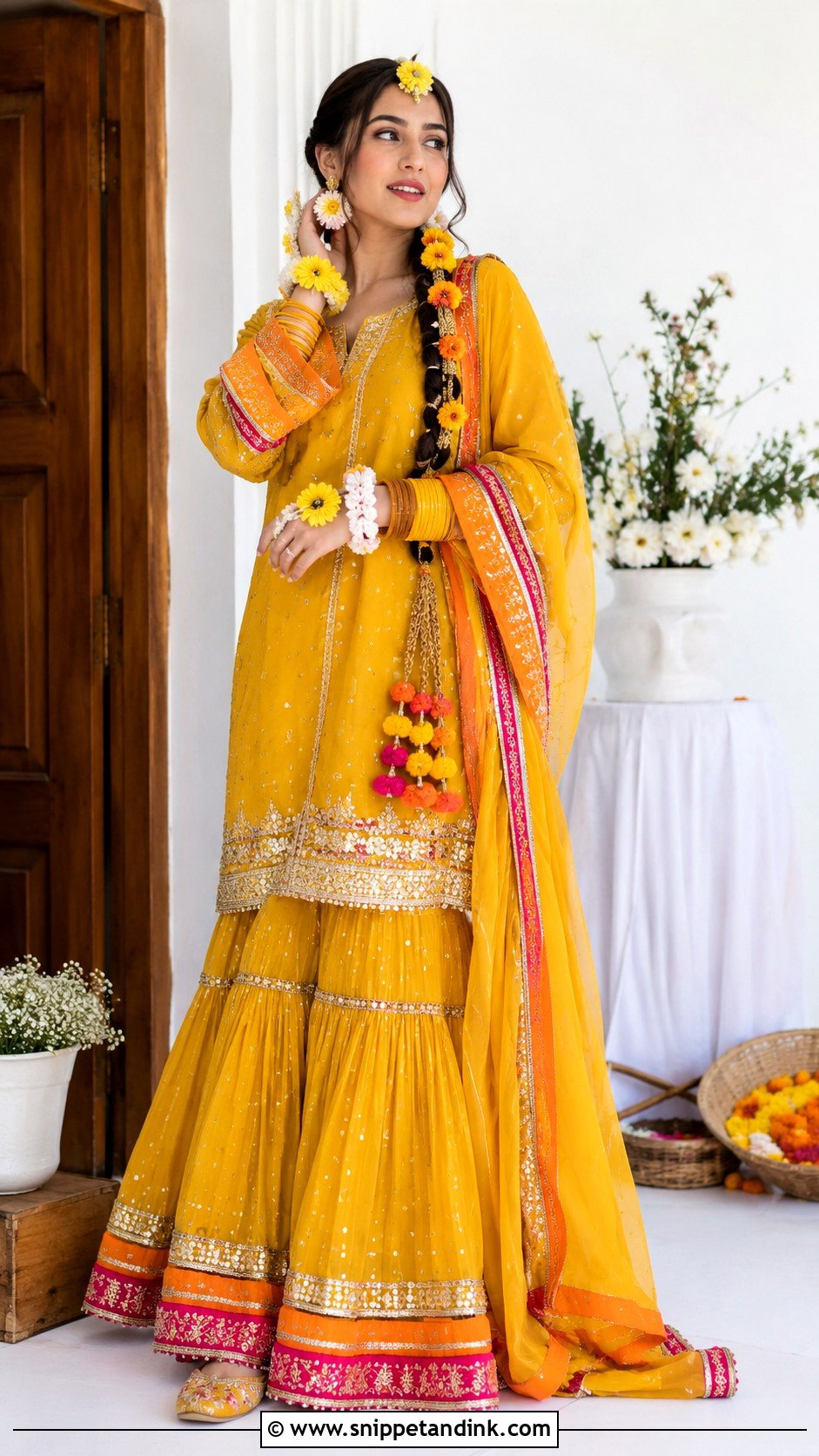
Mayun is the ubtan ritual, and the outfit will get turmeric paste on it, so this is the one dress I’d never make from anything precious. A simple yellow kameez with a gharara, sharara or lehenga is the tradition, lighter than the main outfits but still dressed up enough for photos. Gota lace, mirror work, thread borders and tassels add charm without weight. Turmeric also hides far better on yellow than on any pastel, which is half the reason the colour has lasted. Floral jewelry, a paranda, bangles and fresh makeup suit it, with a yellow dupatta touched with orange, green or pink, khussas, and loose waves or a braid threaded with flowers.
13. Green Pakistani Mehndi Bridal Dress
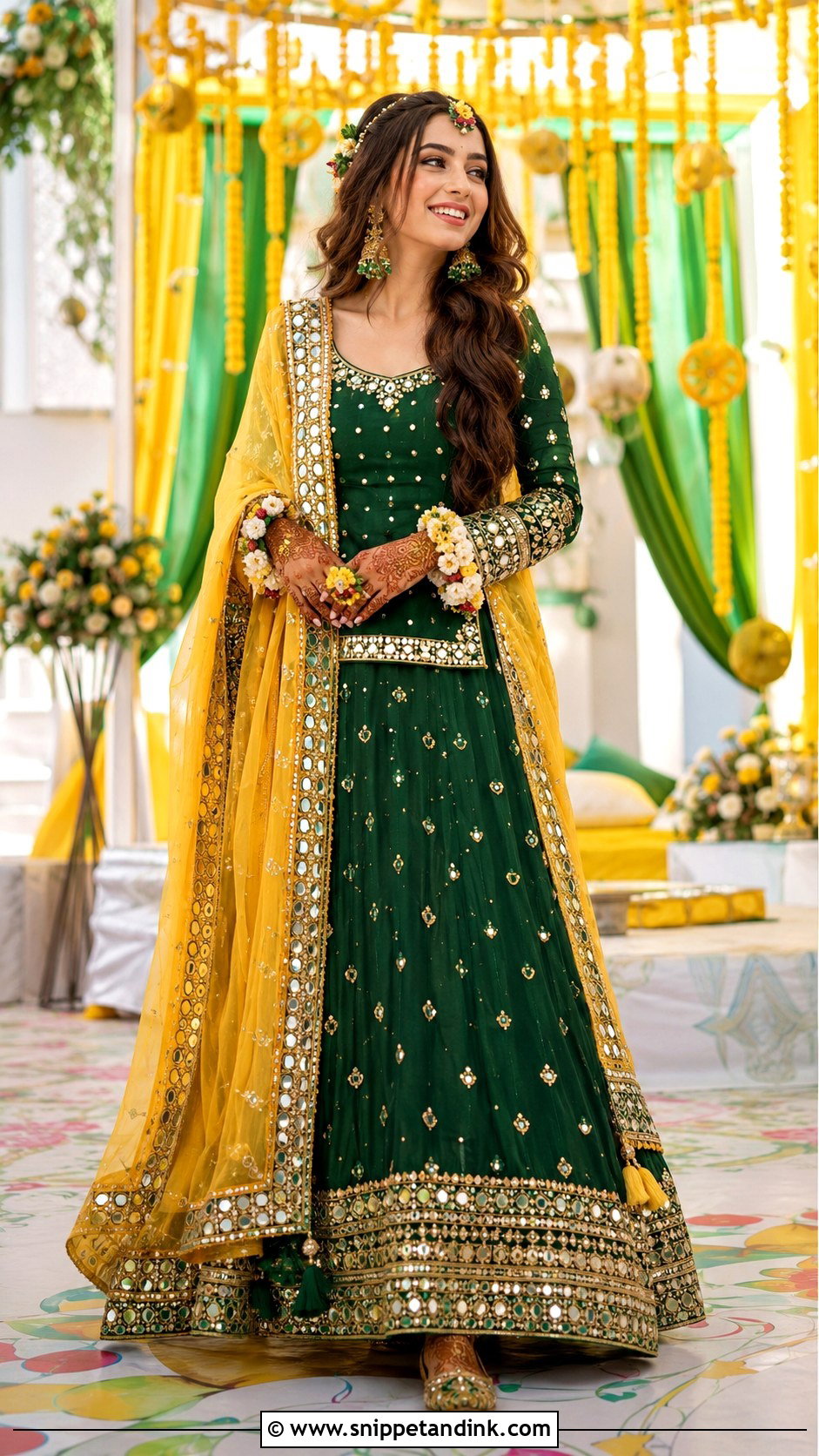
Green has a long link to the mehndi, and the shades range further than people expect: emerald, mehndi green, olive and bottle green each flatter different skin. Olive can drain a fair complexion, so try it against your face before committing. All of them carry gold gota, mirror and thread work well. A green sharara with a short kameez feels playful, while a green lehenga with a dupatta looks more traditional, and a yellow, orange, pink or turquoise dupatta adds contrast. Jhumkas, bangles and floral accents finish it. Mehndi nights often run late with plenty of dancing, so keep the shoes flat.
14. White Pakistani Bridal Dress
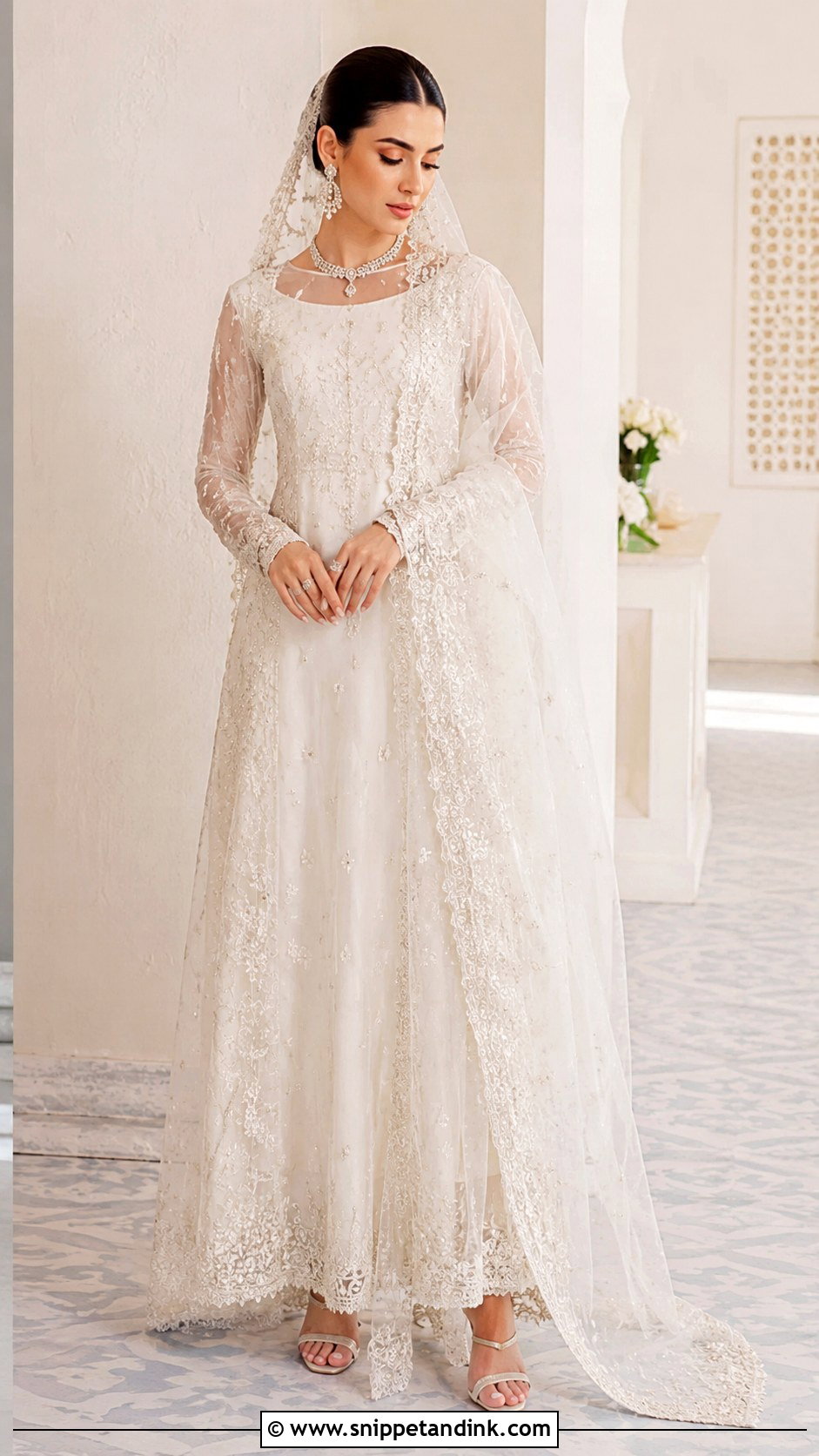
White suits a nikkah or walima, but pure white needs more care than ivory. On camera it can blow out into a flat shape with no detail, so the interest has to come from texture: borders, sleeve work, layered fabric and a finished dupatta edge. White net, organza, chiffon or silk with silver, pearl, crystal or white-on-white embroidery all hold detail well, whether cut as a pishwas, maxi, gharara or lehenga. Pearls, diamond-style pieces or an emerald accent give contrast. Glowing skin with defined eyes keeps the face from fading against the dress, and silver heels, ivory khussas or embellished sandals keep everything cohesive.
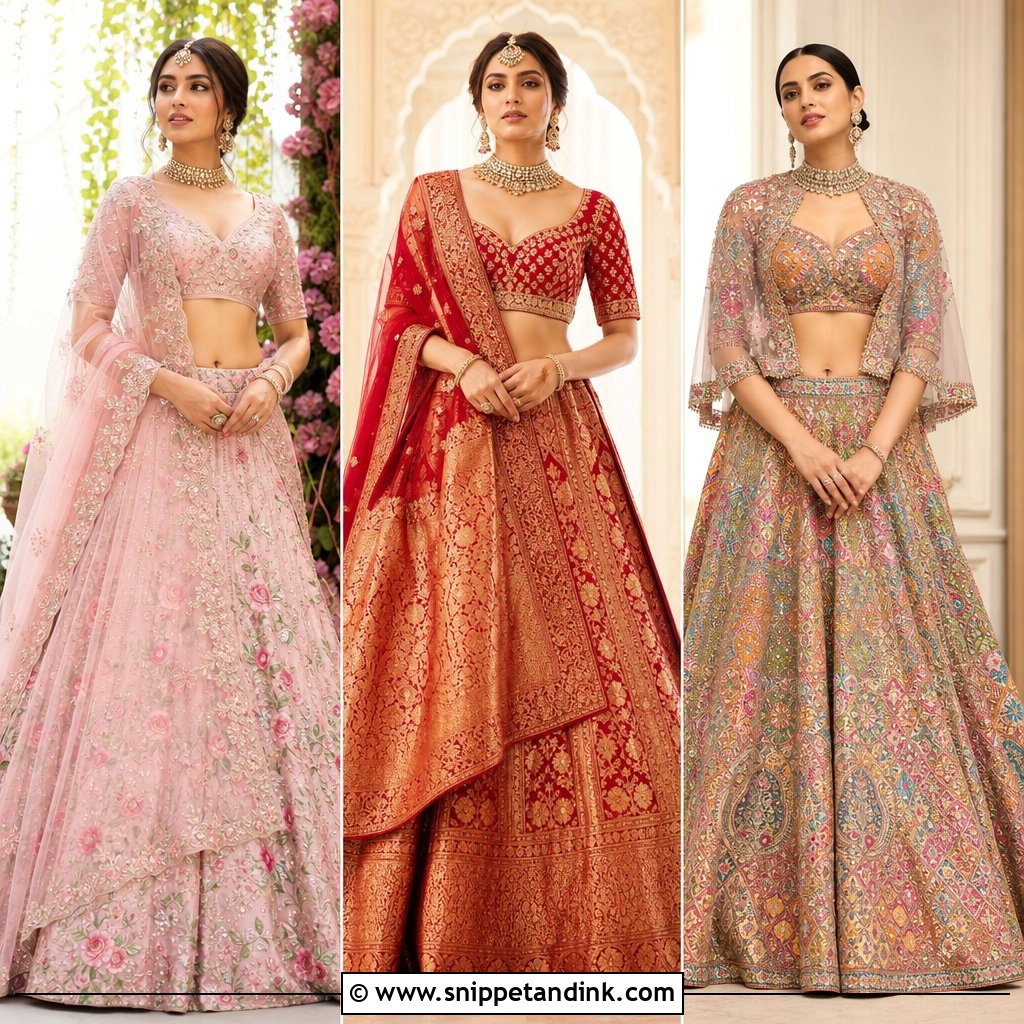
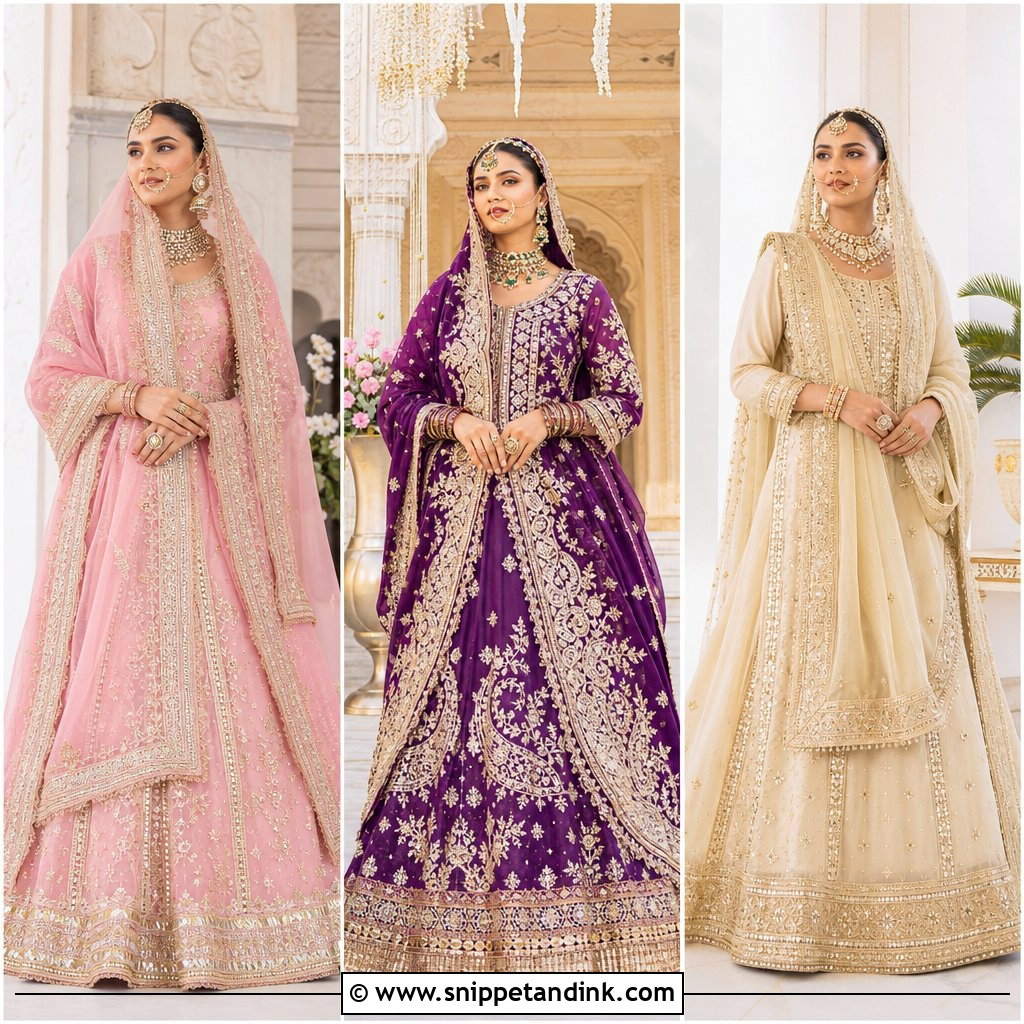

15. Blush Pink Pakistani Bridal Dress
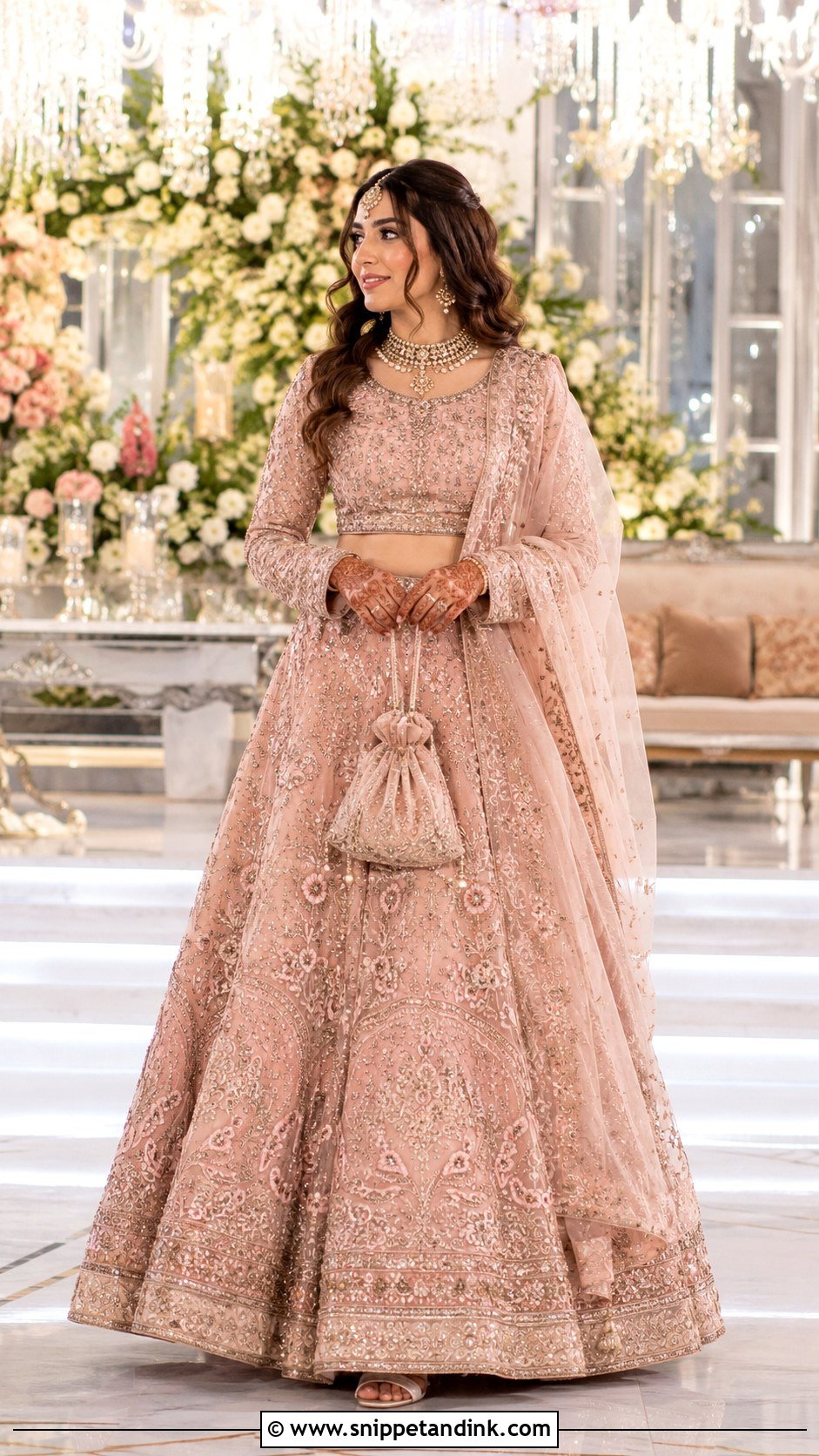
Blush is one of the more forgiving pastels across skin tones, which is why it turns up at so many nikkah, walima and engagement events. A blush lehenga, pishwas, maxi or gharara takes silver, rose gold, pearl or champagne work well. The risk is a pale blush looking washed out next to a warm skin tone, so if your undertone is golden I’d pick a shade that leans pink rather than beige. A detailed dupatta border and a statement set make it read as bridal rather than as a guest outfit. Kundan, pearls, diamonds and soft gold all suit it, along with pink blush, a rosy lip, champagne heels and a neat potli bag.
16. Champagne Pakistani Bridal Gown
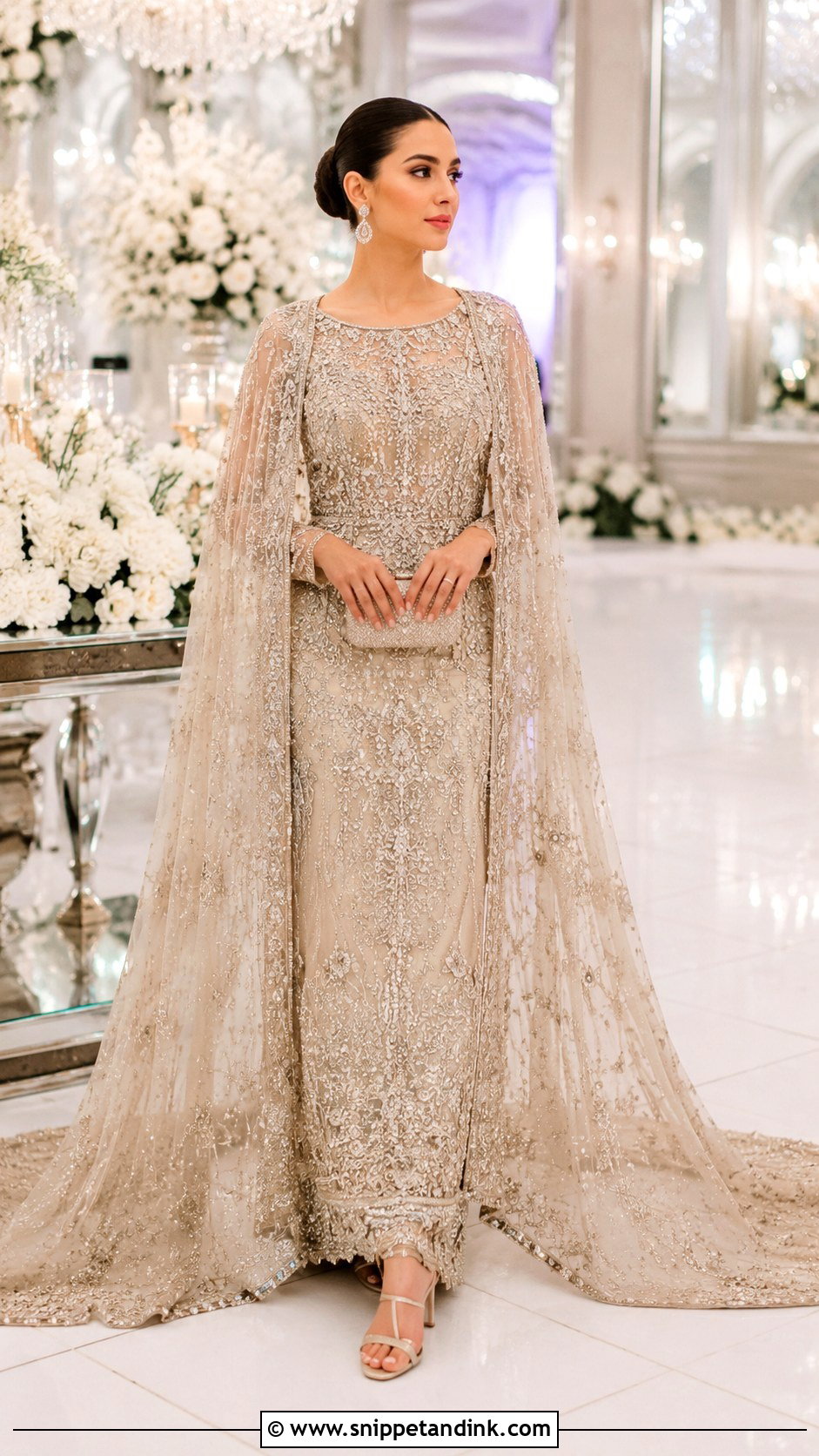
Champagne sits between gold, beige and soft ivory, so it looks expensive without shouting. It’s the colour I turn to for a formal hotel walima. Crystals, sequins, pearls and fine threadwork suit it, on a long shape with a fitted bodice and flowing skirt. A champagne too close to your own skin tone can make the outfit seem to vanish, so check in a plain phone photo that there’s enough contrast between dress and complexion before you order. A sheer dupatta or cape layer adds detail without crowding the neckline. Diamond-style jewelry, a sleek bun or soft waves, and nude, silver or champagne heels keep it balanced.
17. Velvet Pakistani Bridal Lehenga
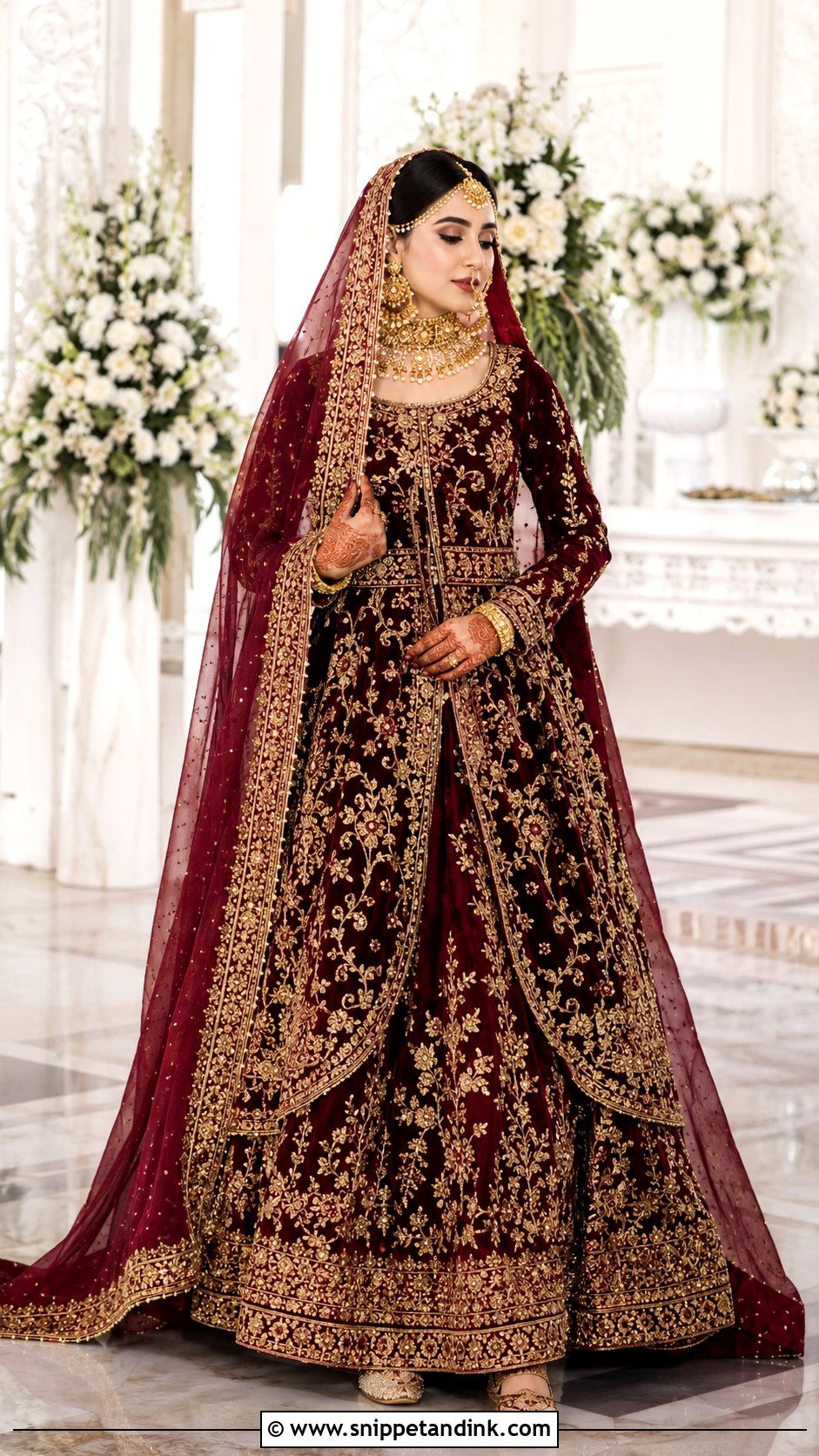
Velvet is a winter fabric, full stop. In a warm hall in early summer it is genuinely uncomfortable, and I’d talk a bride out of it for a hot-weather barat. In winter, though, it looks rich in maroon, emerald, navy, plum, rust or dark red with antique gold work and heavy borders. Velvet is heavy, so the waistband needs to be wide and well structured or the skirt drags down at the hips by the end of the evening. The pile also marks wherever it’s pressed, so it should be steamed, never ironed, and laid flat rather than folded the night before. Traditional gold jewelry, a statement choker, a neatly pinned dupatta and stable heels or khussas finish it.
18. Pakistani Bridal Saree
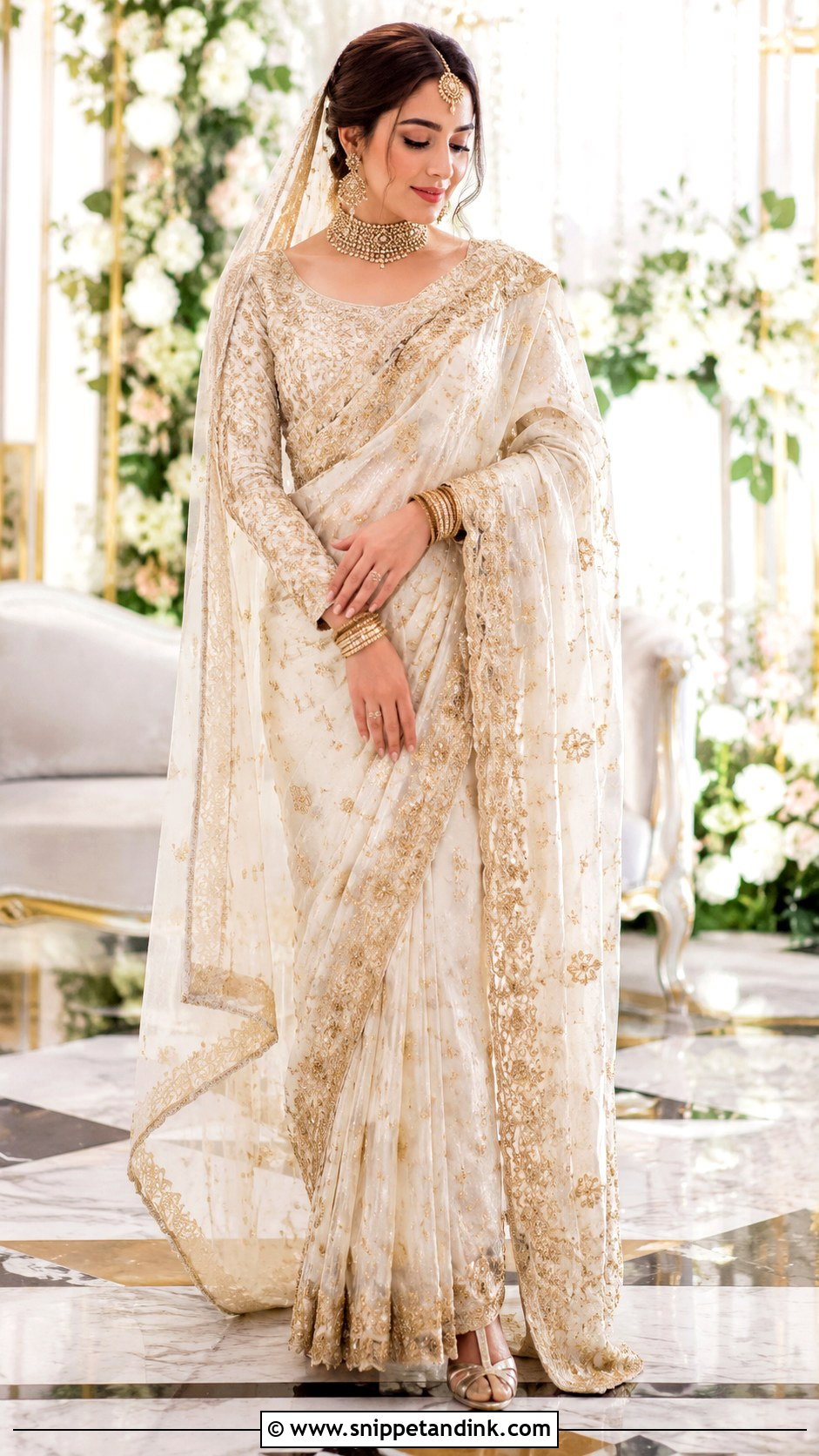
A Pakistani bridal saree is the less common choice, and it suits a bride who is comfortable managing a drape for hours. Silk, tissue, chiffon, net or organza with embroidered borders and a bridal blouse all work for a nikkah, walima, reception or civil ceremony. Red and gold feel traditional; ivory, champagne, blush or silver feel modern. For more coverage, choose a longer blouse, full sleeves or a pallu brought across the front. The practical issue is the pleats. A pre-stitched or professionally draped saree with pinned pleats holds through a long evening, while a quick home drape often loosens by dinner. A dupatta-style veil strengthens the bridal effect, with a choker, earrings, bangles and heels.
19. Pakistani Bridal Farshi Gharara
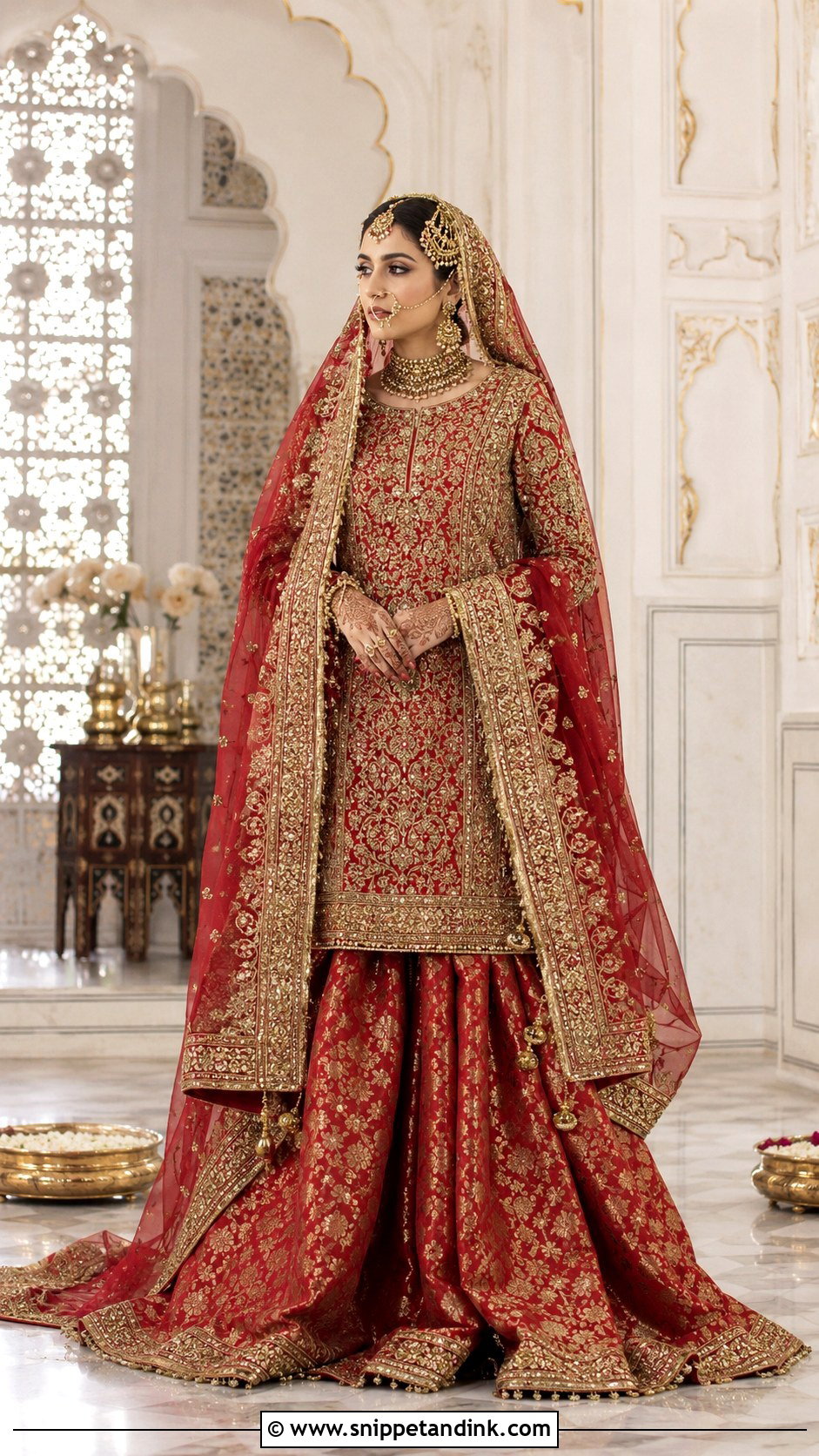
The farshi gharara trails across the floor (farsh means floor), which makes it the most ceremonial shape here and the least practical. It suits a bride who wants a Mughal or vintage feel and won’t have to walk far. Jamawar, tissue, silk or brocade with heavy zari, zardozi and gota work gives it the right weight under a long kameez. Because of that length, someone has to manage the hem on stairs and stages, and I tell brides to choose that helper before the day. The tailoring has to be exact, and since your shoes disappear under the fabric, pick them for comfort. A dupatta over the head and traditional jewelry suit a formal barat, nikkah or heritage portraits.




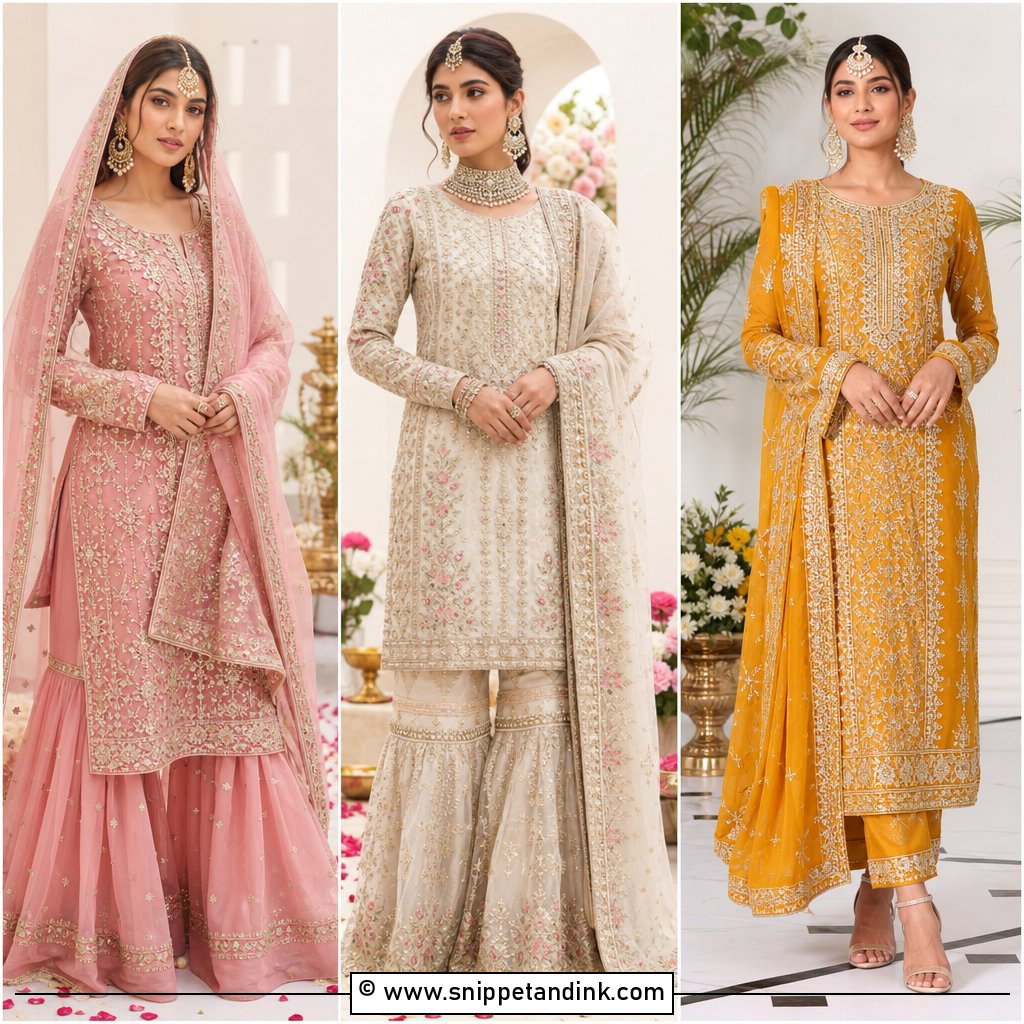
20. Pakistani Bridal Long Shirt Lehenga
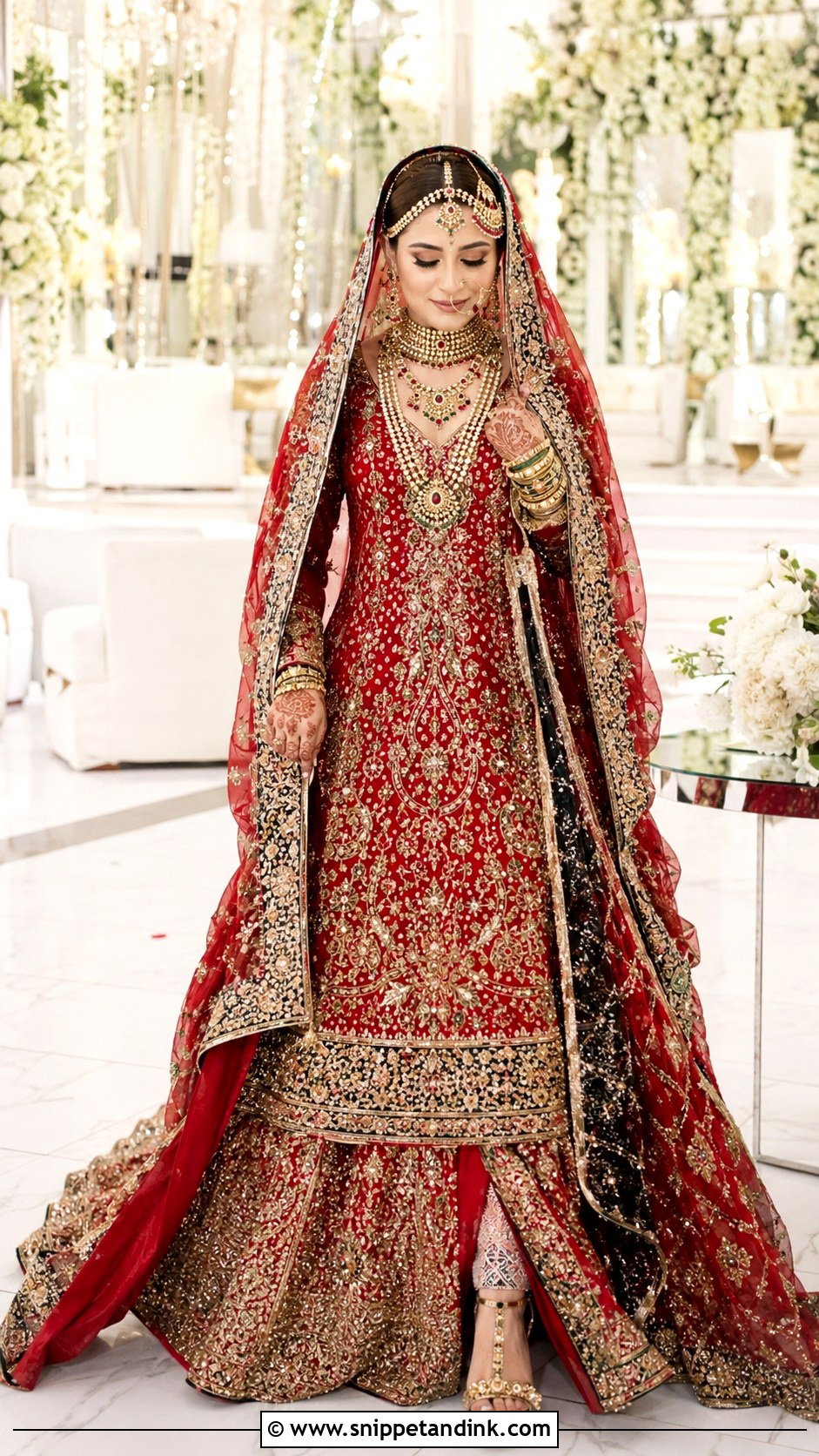
A long shirt over a lehenga gives coverage without losing volume, which is why so many families prefer it for the barat. The shirt draws a long vertical line and the lehenga carries the movement below. Red, maroon, ivory, gold and pastels all suit it. Where brides go wrong is letting the two borders compete. Heavy work at the shirt hem and heavy work on the lehenga border can sit too close and look busy, so I keep a band of plainer fabric between them. Detailed sleeves, a dupatta over the head, layered jewelry, a tikka or matha patti and bangles finish it.
21. Pakistani Bridal Short Shirt Lehenga
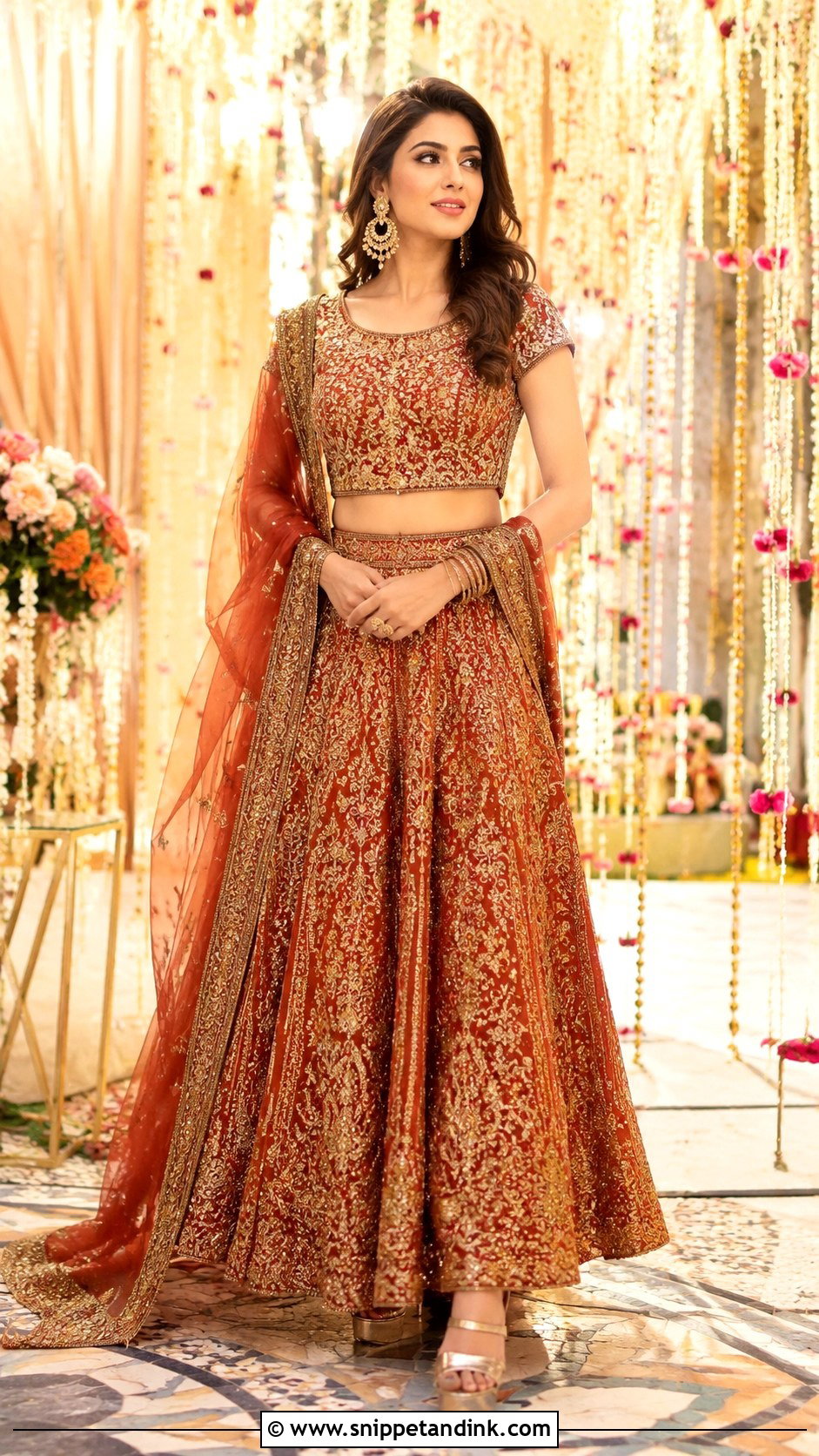
A short shirt with a lehenga looks younger and more festive, and it’s my first suggestion for a mehndi or a modern barat that wants a defined waist. The short shirt can carry heavy work, with matching motifs on the lehenga border. For more modesty, a slightly longer blouse or a high-waisted lehenga closes the gap at the midriff. Red, rust, mustard, green, pink and gold suit this cut. Short shirts ride up when you raise your arms, so do a quick dance test at the fitting and lift your arms the way you will for photos. Drape the dupatta over the shoulder or head to suit the ceremony, and add statement earrings, bangles and comfortable embellished heels.
22. Pakistani Bridal Cape Dress
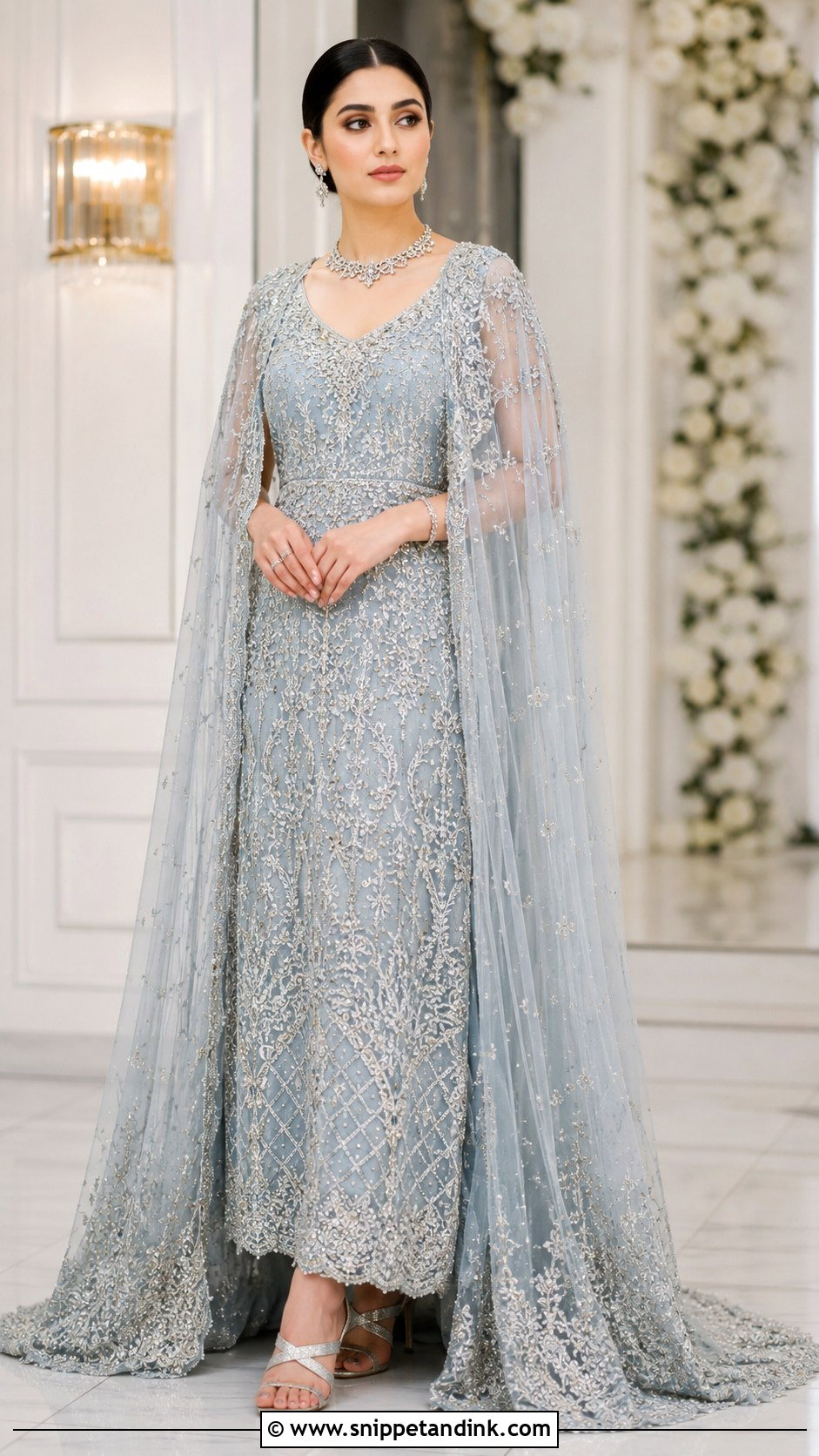
A cape replaces or sits over the dupatta, so it answers the bride who doesn’t want to keep adjusting fabric on her head all evening. It goes over a maxi, lehenga or gown for a walima, engagement, reception or a fashion-forward nikkah. Embroidery, pearls, sequins or scalloped edges keep it bridal; a sheer embellished cape over a pastel gown reads soft, while gold or ivory looks more formal. Because a cape covers the shoulders and upper back, I keep necklaces small and let earrings carry the jewelry. I also ask brides to hug someone at the fitting, since a stiff cape can strain at the shoulder seam when the arms go forward. Sleek hair and glowing makeup finish it.
23. Pakistani Bridal Peplum Lehenga
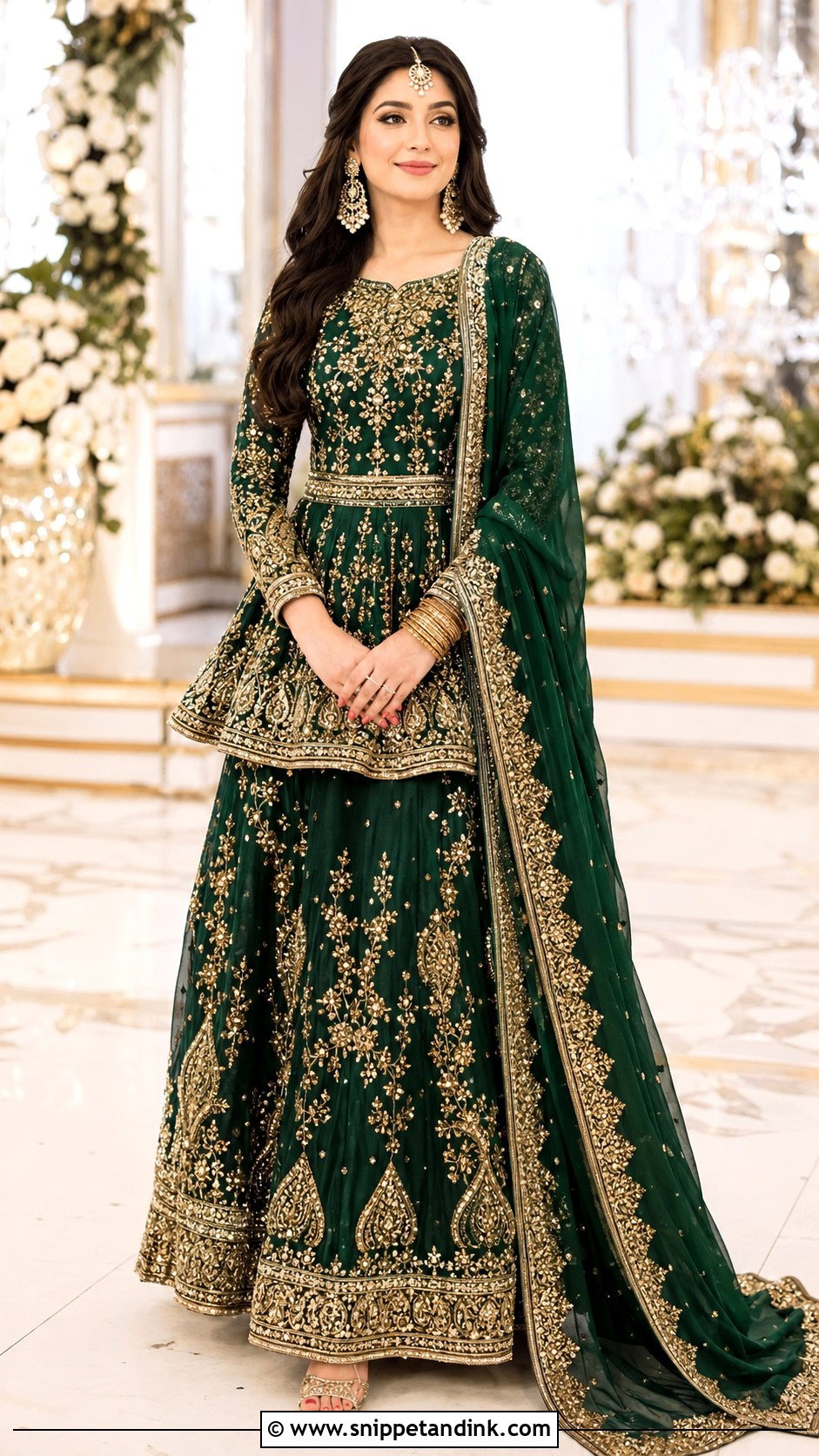
A peplum top defines the waist while covering more than a short blouse, and its flare hides the line where top meets skirt. Over a flared lehenga it suits a mehndi, barat or reception. Work on the peplum hem, sleeves, neckline and lehenga border keeps it balanced, in red, maroon, emerald, mustard, ivory or blush. On a petite frame I keep the peplum short, because a long one cuts the leg line in half. Drape a dupatta on one shoulder or over the head, and add statement earrings, bangles and heels or khussas.
24. Pakistani Bridal Organza Dress
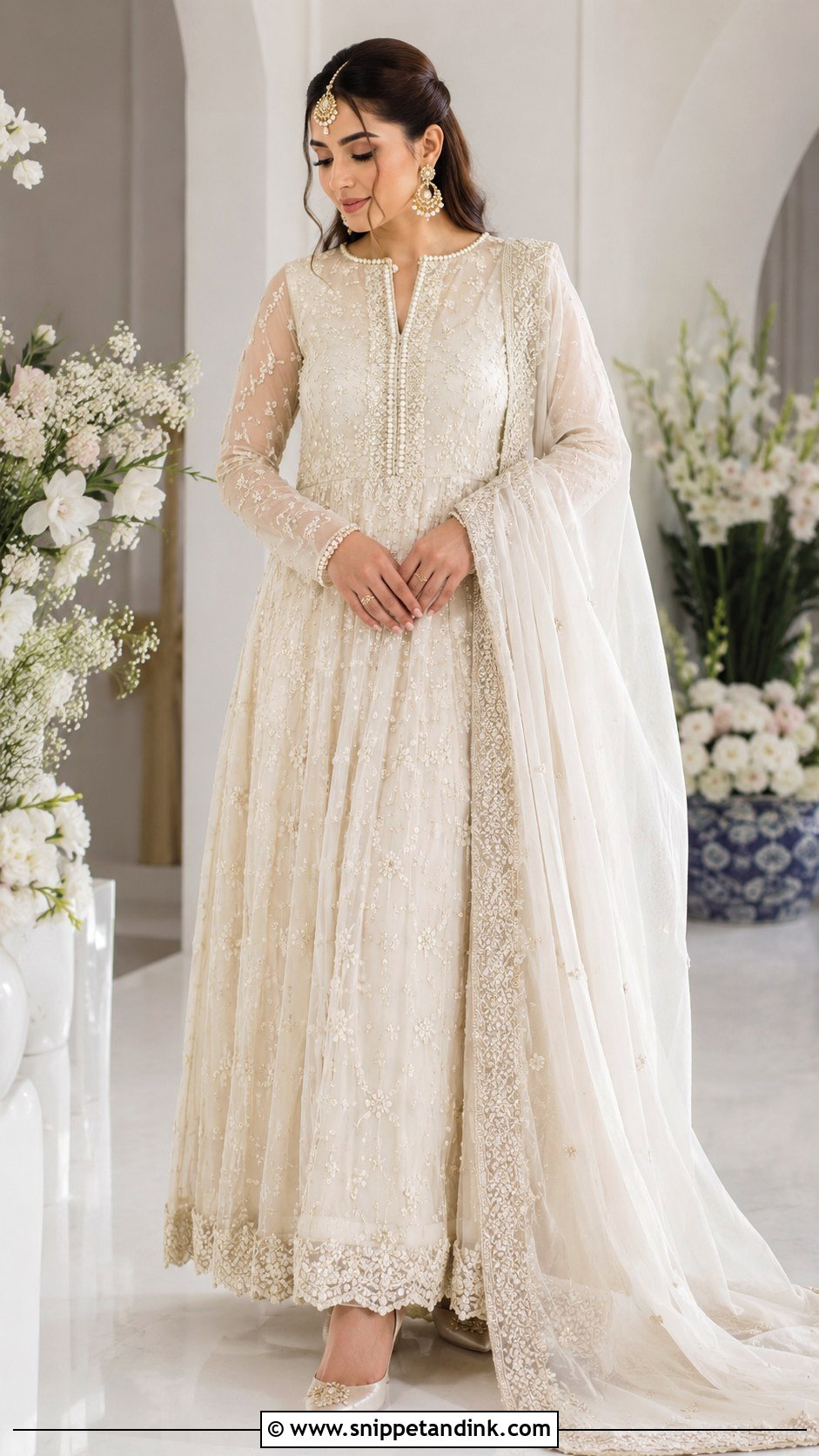
Organza is the summer bridal fabric I reach for first. It holds its shape without weight, so it suits a nikkah, walima or daytime wedding. A soft organza pishwas, maxi, lehenga, or gharara becomes bridal through the work and the dupatta, with pearl, sequin, thread or zari embroidery for texture, and pastels, ivory, white, gold and blush all sit gracefully in it. Organza is sheer and creases sharply, so the lining has to be right and so does the handling: it should travel on a hanger in a breathable cover, never folded into a suitcase. Delicate jewelry, soft makeup, comfortable heels and a bordered organza dupatta finish it.


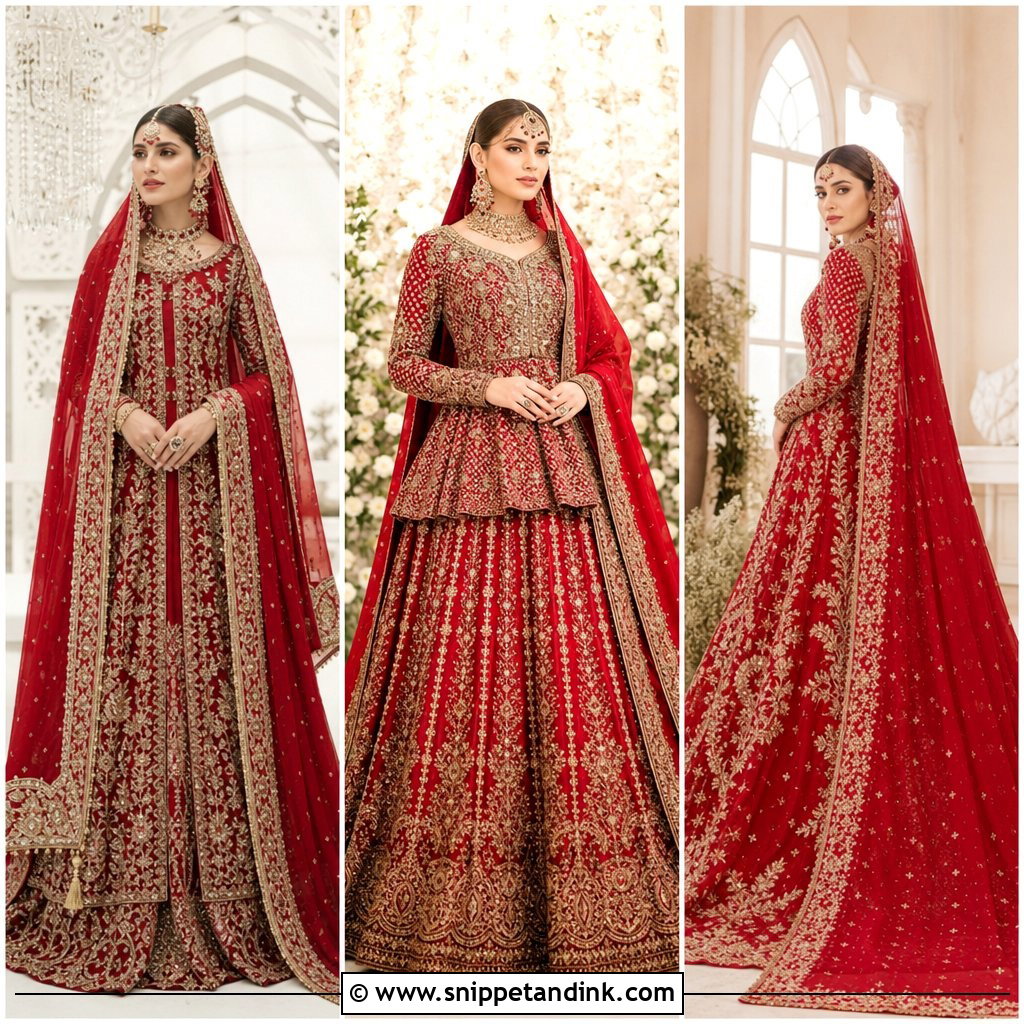


25. Pakistani Bridal Dupatta Dress
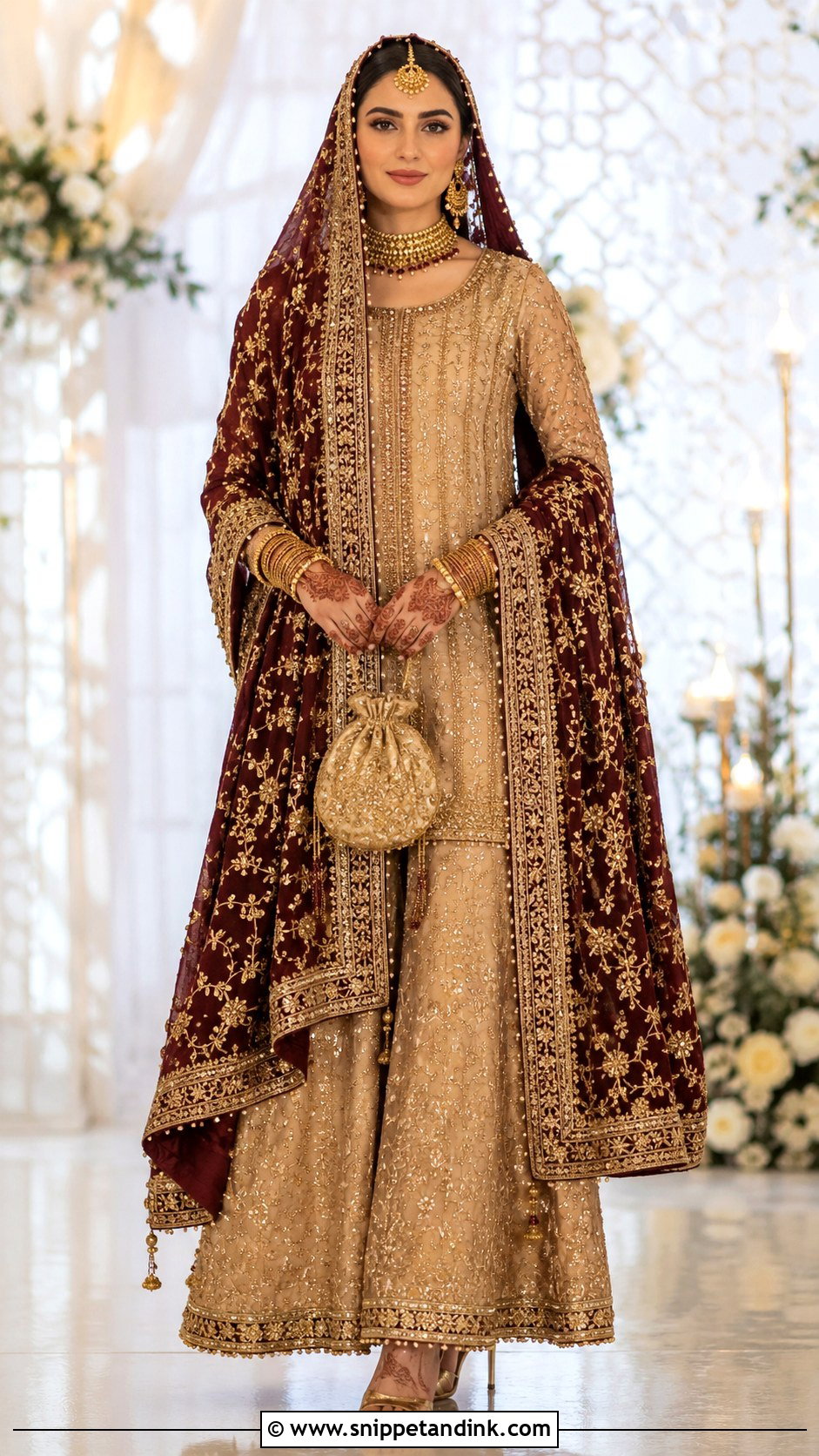
Here the dupatta does the work and the dress stays simple. A plain ivory pishwas with a red dupatta, a gold lehenga with a maroon one, or a pastel maxi under a pearl-work veil all rely on that single piece for drama. It’s a smart route if you want the bridal frame in photos without carrying a heavy dress for hours. Over the head, across both shoulders or layered with a second lighter one, the drape decides the whole look, so plan the pinning at your hair trial. A heavily worked dupatta also needs something firm to anchor to, a small bun or pinned section, or it slides back every time you turn your head. Choose jewelry that suits both the neckline and the head setting.
Putting a Zardozi Lehenga Away So the Metal Work Doesn’t Tarnish
Metallic zari and dabka darken when they’re stored damp or sealed in plastic, and a heavy lehenga left on a hanger slowly stretches at the waistband under its own weight. A few days of care after the walima saves the outfit for a daughter, a sister or simply your own anniversary photos.
- Air every outfit for a day on a broad padded hanger before you pack it, so perspiration and any trace of perfume can dry out.
- Check the inner neckline, cuffs and hem for makeup, food and floor marks. Take marked pieces to a dry cleaner who handles embellished bridal wear, and point the stains out by hand.
- Fold the lehenga with acid-free tissue between each layer of embroidery so metal work never rubs against metal work.
- Wrap it in plain cotton or muslin, never a plastic garment bag, and keep it in a cool, dry cupboard away from direct sunlight.
- Unfold and refold it along different lines every few months, so the creases don’t set into permanent cracks in the embroidery.
If you live somewhere humid, tuck a few silica gel sachets into the cupboard, but keep them off the fabric itself. Mothballs should never touch silk or metal work directly, since the fumes and residue can mark both.
One Bride, Five Events, Five Different Fabrics
Most Pakistani brides are dressing for a run of events, not one. The mayun and mehndi want colour you can move and get messy in, the nikkah wants something calm, the barat carries the weight and the walima gets lighter again. Settle the barat outfit first, since it takes longest to make, then build the others around it so colours don’t repeat in the album. At every fitting, wear the outfit the way you will on the day: dupatta pinned, shoes on, sitting down for a while. A dress that passes that test is one you’ll enjoy rather than endure.
You'll Like These Ideas:








Leave a Reply