
The red lehenga is where most brides start, and very often not where they finish. Pakistani bridal fashion now runs from farshi ghararas and pishwas to sarees and reception gowns, in jewel tones, pastels, metallics and ivory. The handwork vocabulary is just as wide: dabka, zardozi, naqshi, resham, pearls, sequins and gota each give a different texture and weight. When I sit down with a bride, I care less about which picture she loves and more about where she’ll be standing, how long she’ll wear it and what the weather is doing. The twenty looks below are complete outfits, and with each I’ve added what I’d check or change before saying yes.
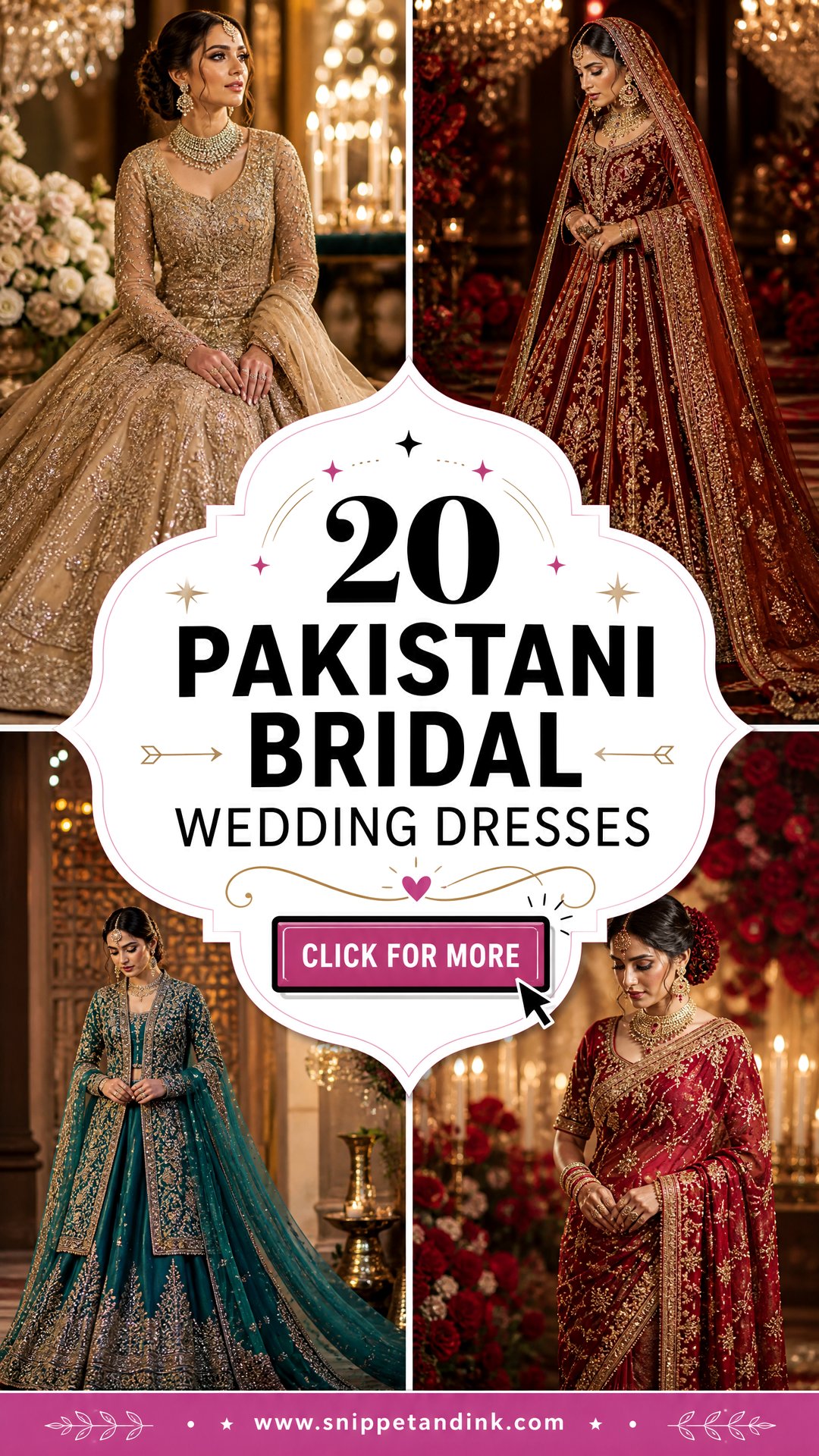
Match the Silhouette to the Room Before the Colour
Brides tend to fall for a colour first. I ask about the venue first, because the shape of the outfit has to work in the space you’ll actually be in. A farshi trail that glides across a ballroom floor drags through grass at a lawn wedding, and a full can-can lehenga can barely fit through the door of a car.
- Large hall or ballroom: the place for farshi lehengas, trail gowns and the full flare. You have room to turn, and the stage is usually wide.
- Lawn or marquee: ground-skimming hems collect grass and dust. Ankle-length pishwas, ghararas or shararas behave far better outdoors.
- Home nikkah or small venue: lighter pieces you can sit cross-legged in. Palazzo sets, sarees and soft shararas suit the closeness.
- Narrow stairs or a tight stage: keep trains short or detachable, and plan who will lift the hem for you.
Season comes next. Velvet and heavy raw silk belong to cool weather; in a warm marquee they become uncomfortable fast. Organza, chiffon, net and tissue breathe better and hold up through a summer evening. I’d also think about the journey: if the rukhsati involves a car, try sitting in the outfit before the day to see how much of the skirt you can gather on your lap.
1. Red Pakistani Bridal Lehenga
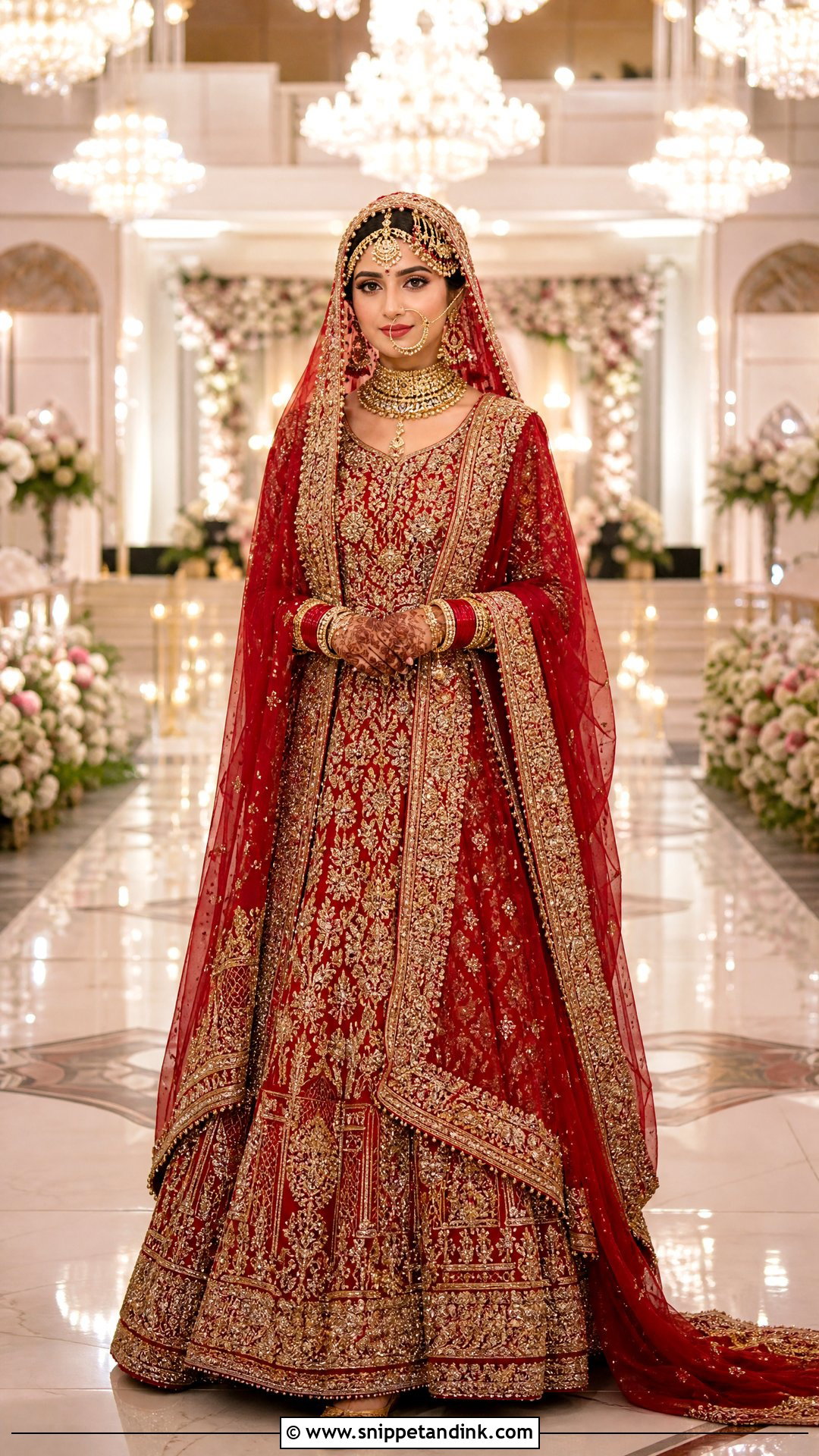
A traditional red lehenga still owns the baraat. The flared skirt carries antique-gold dabka, zari and resham, and a modest choli or waist-length blouse with matching sleeves keeps it balanced. A scalloped red dupatta goes over the head; a lighter second one across the shoulder adds layers. Gold choker, long necklace, jhumkas, matha patti and bangles complete the set. I steer most brides toward embroidered khussas over heels under a skirt this heavy, because nobody sees your feet and you’ll be standing for hours. Luminous skin, defined eyes and a deep rose lip let the dress lead.
2. Maroon Pakistani Bridal Farshi Lehenga
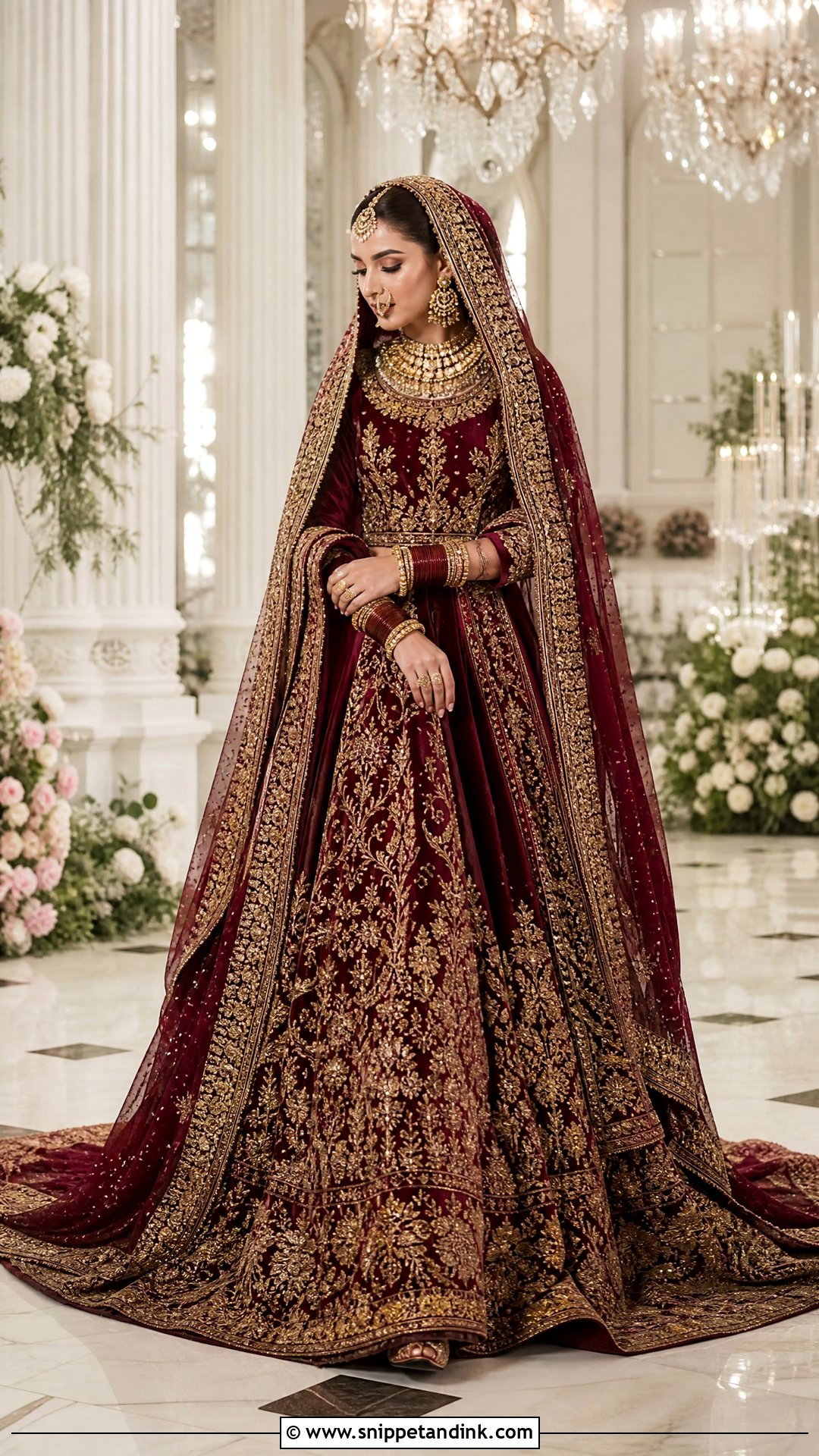
Maroon on a farshi lehenga is pure drama. The extended hem trails behind you, which looks incredible on a large stage or ballroom entrance and is a real nuisance in a narrow banquet corridor. Velvet suits winter; raw silk holds structure year-round. Antique-gold work at the border keeps the long line balanced. A fitted long-sleeve blouse and a heavily bordered dupatta over the head complete it, with polki, a nath, bangles and maroon khussas. The one addition I always request is a concealed wrist loop sewn inside the skirt, so you can lift the trail on stairs. Tailor the length precisely; an extra few inches turns graceful into a hazard.
3. Ivory Pakistani Bridal Nikkah Pishwas
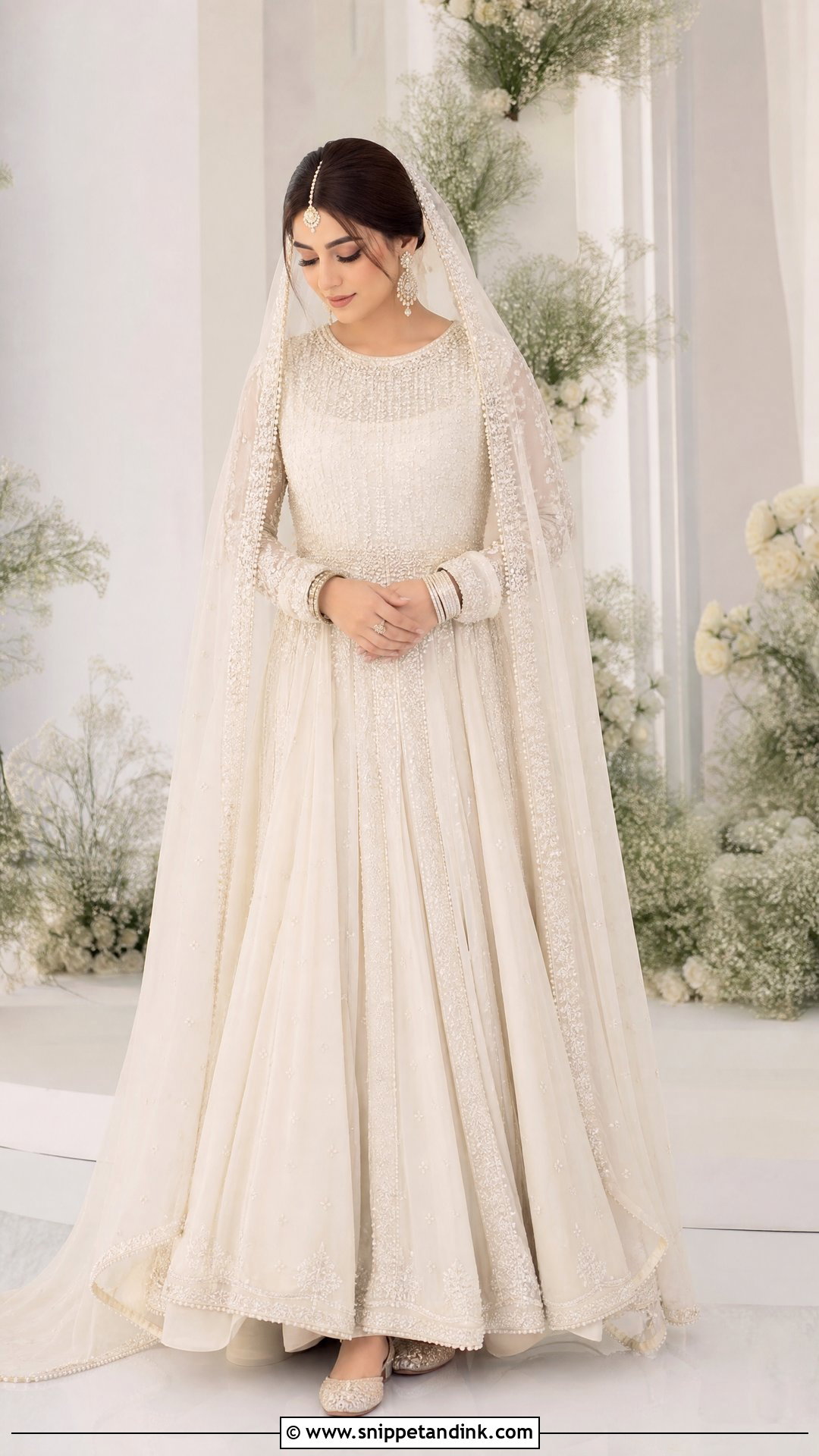
Ivory pishwas suits the quiet weight of a nikkah. A fitted bodice, full sleeves and a generous flare to the ankle or floor give it shape; fine pearl, silver and champagne embroidery at the neck, cuffs and hem keeps it from looking plain. An organza dupatta with delicate edging can sit over the head or loosely on the shoulders. Pearl drops, a slim tikka, bangles and ivory heels finish it. Some families don’t want pure white at a wedding. In that case, I’d move to cream, oyster or pale champagne; they keep the freshness with a little warmth, and they’re kinder to most skin tones in daylight anyway.
4. Blush Pink Pakistani Bridal Sharara
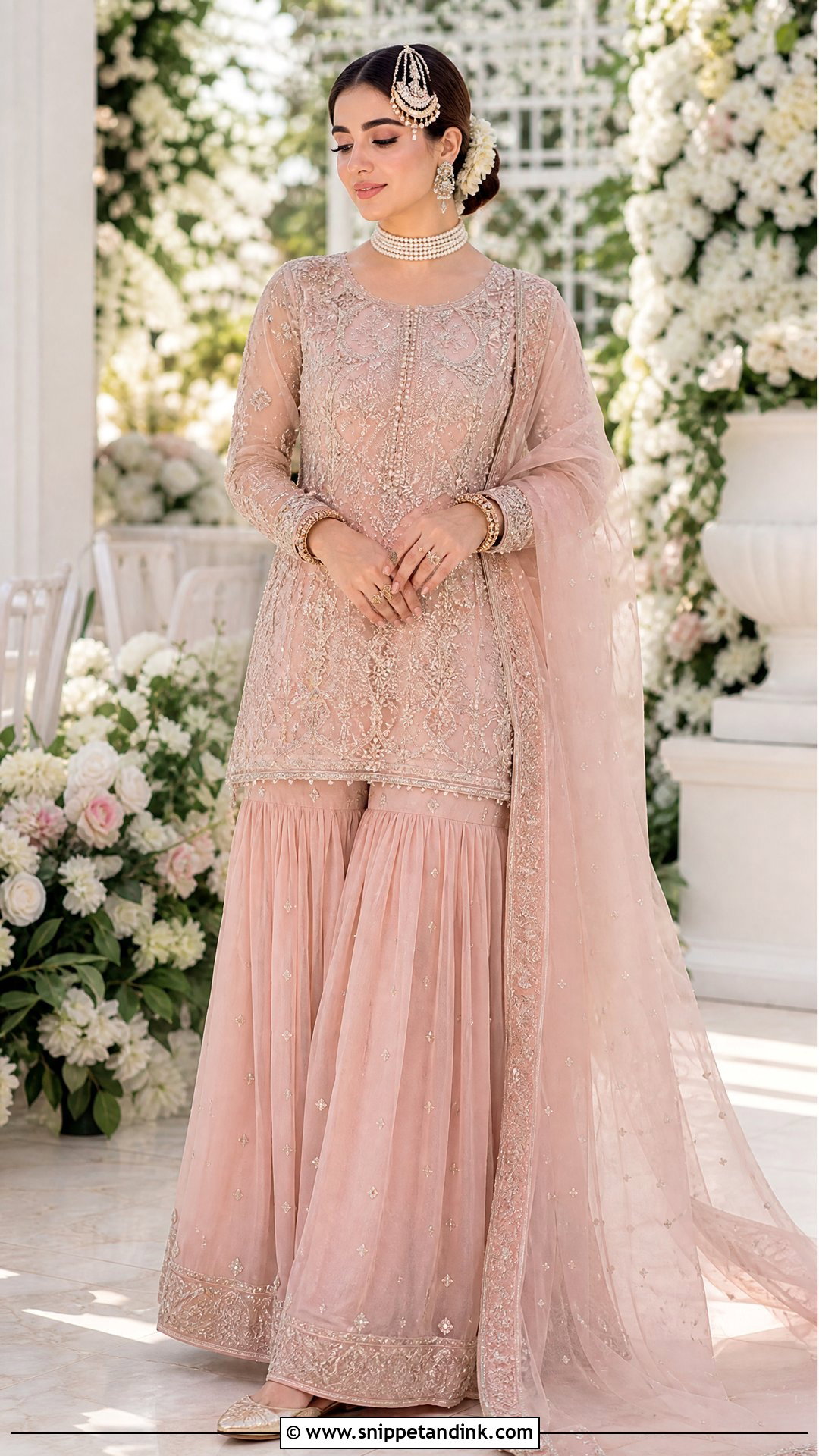
Blush pink stays grown-up when the metallic work is restrained. A short embroidered kurti over a flowing sharara with volume starting at the knee is the shape. Silver-gold thread, tiny pearls and muted sequins read well in daylight. Wear the dupatta on one shoulder so the border shows. A pearl choker, drop earrings, a passa and pointed metallic khussas complete it, with rose-toned makeup and a sleek low bun. The sharara waistband is where I fuss at fittings: it needs to sit comfortably when you’re seated on a low stage for the nikkah, and the hem must clear the floor.
5. Emerald Pakistani Bridal Gharara
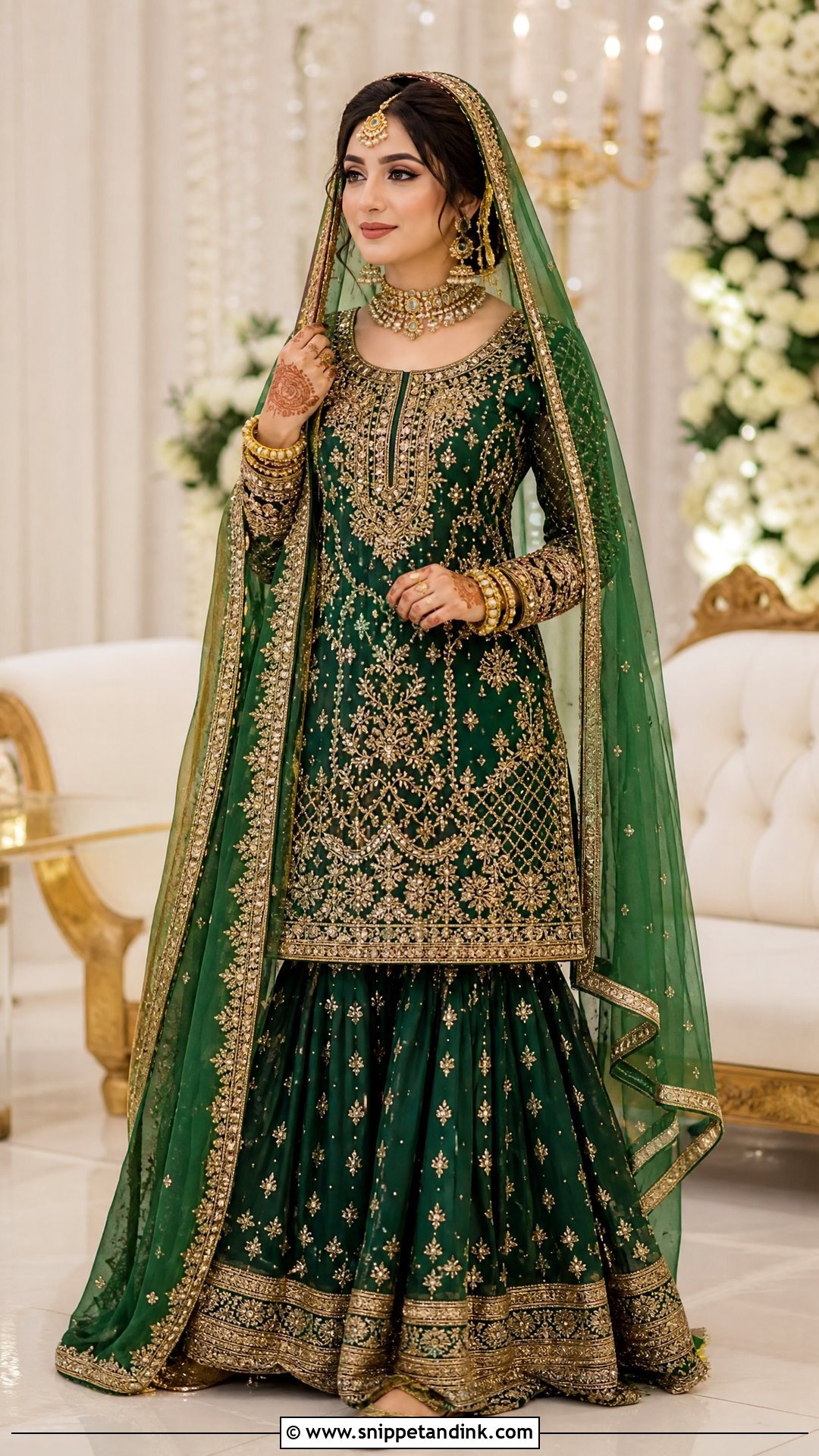
Emerald gharara outfits come straight from traditional formalwear. A structured knee-length shirt sits over a gharara that flares below the knee, with kora, dabka and zari framing the panels and marking the joint, which is the gharara’s signature detail. That’s why I’m strict about shirt length here: too long and it hides the joint, and the outfit loses its character. An emerald net or organza dupatta with a gold border goes over the head for the ceremony and moves to one shoulder later. Kundan choker, earrings, bangles and a small tikka suit the jewel tone, and padded gold khussas keep you comfortable through an evening or winter event.
6. Gold Pakistani Bridal Tissue Lehenga
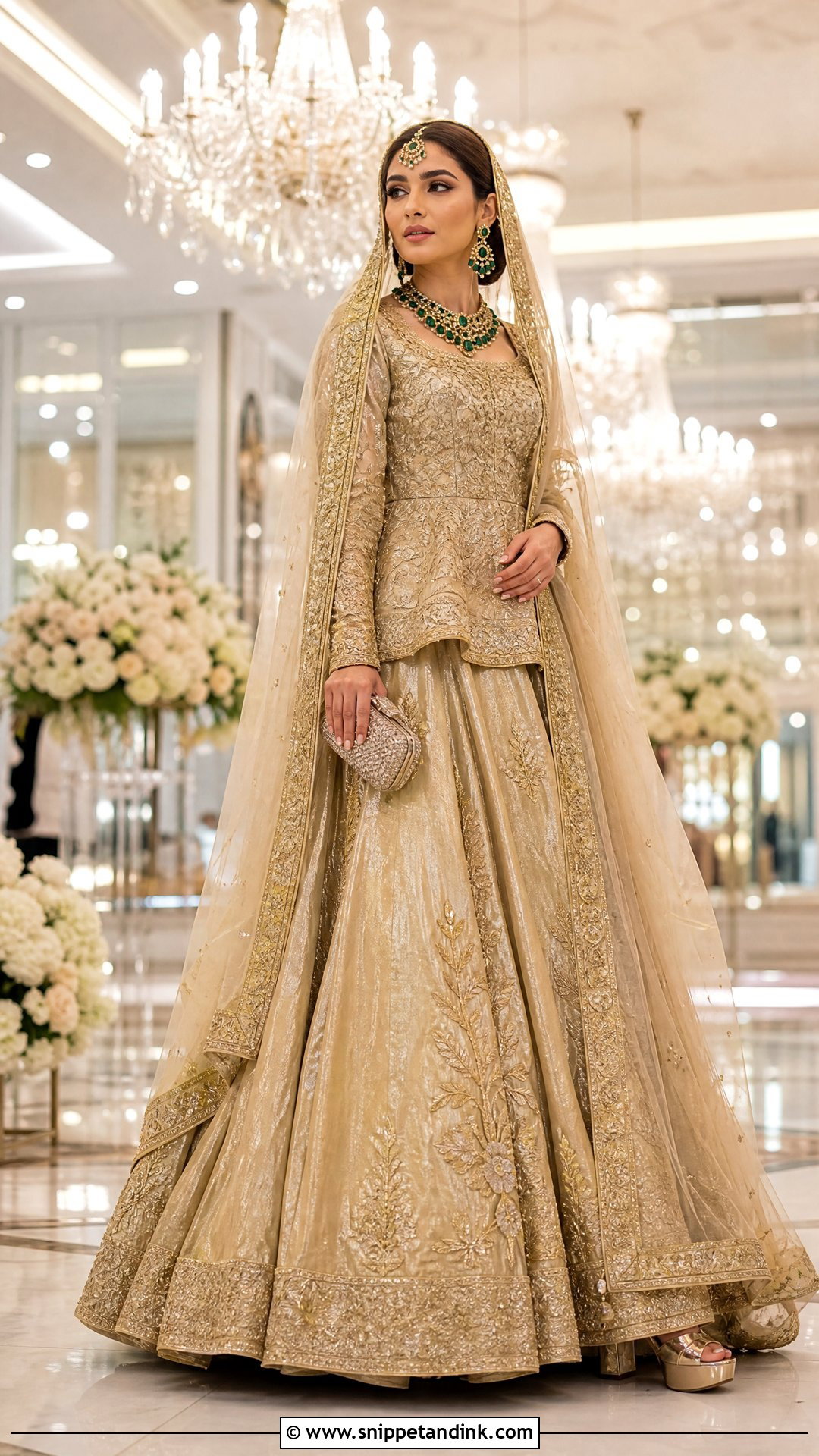
Gold tissue has a glow that flat metallics don’t. Choose a softly flared skirt with tonal zardozi, pearls and muted champagne sequins, and a long blouse or peplum top for coverage. A sheer gold dupatta with a worked border goes over the head and down one arm. Emerald or ruby jewelry stops an all-gold look from flattening out. Metallic block heels or khussas sit underneath, with neutral makeup and a rose-nude lip. Tissue reflects a lot of light, and under a photographer’s flash it can blow out to near white, so I always ask brides to take a flash photo of the fabric sample before ordering.
7. Pastel Floral Pakistani Bridal Lehenga
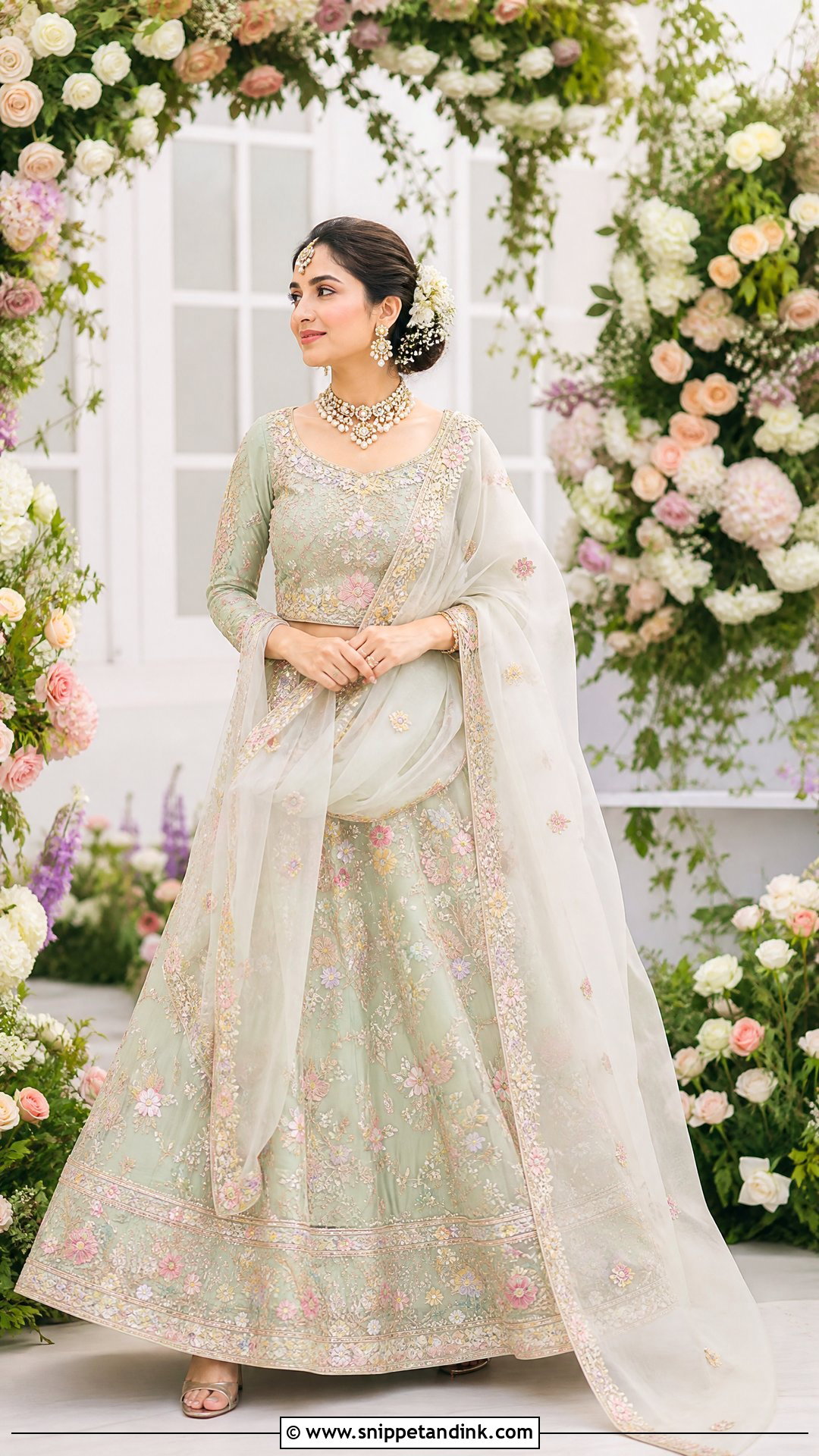
Floral embroidery on a pastel lehenga feels right for spring or a daytime event. Pistachio, peach, lavender or powder pink skirts carry multicoloured resham flowers and scattered pearls, and the fitted long-sleeve blouse repeats the motif lightly rather than densely. A translucent organza dupatta with small motifs keeps it airy. Pearl and kundan jewelry, a compact clutch and pale metallic shoes complete it, with small flowers in a low bun. I ask for lighter underlayers on this one; a heavy can-can makes pastels look stiff and fights the breeze outdoors. It’s a natural fit for nikkah and walima celebrations.
8. Silver Pakistani Bridal Maxi Dress
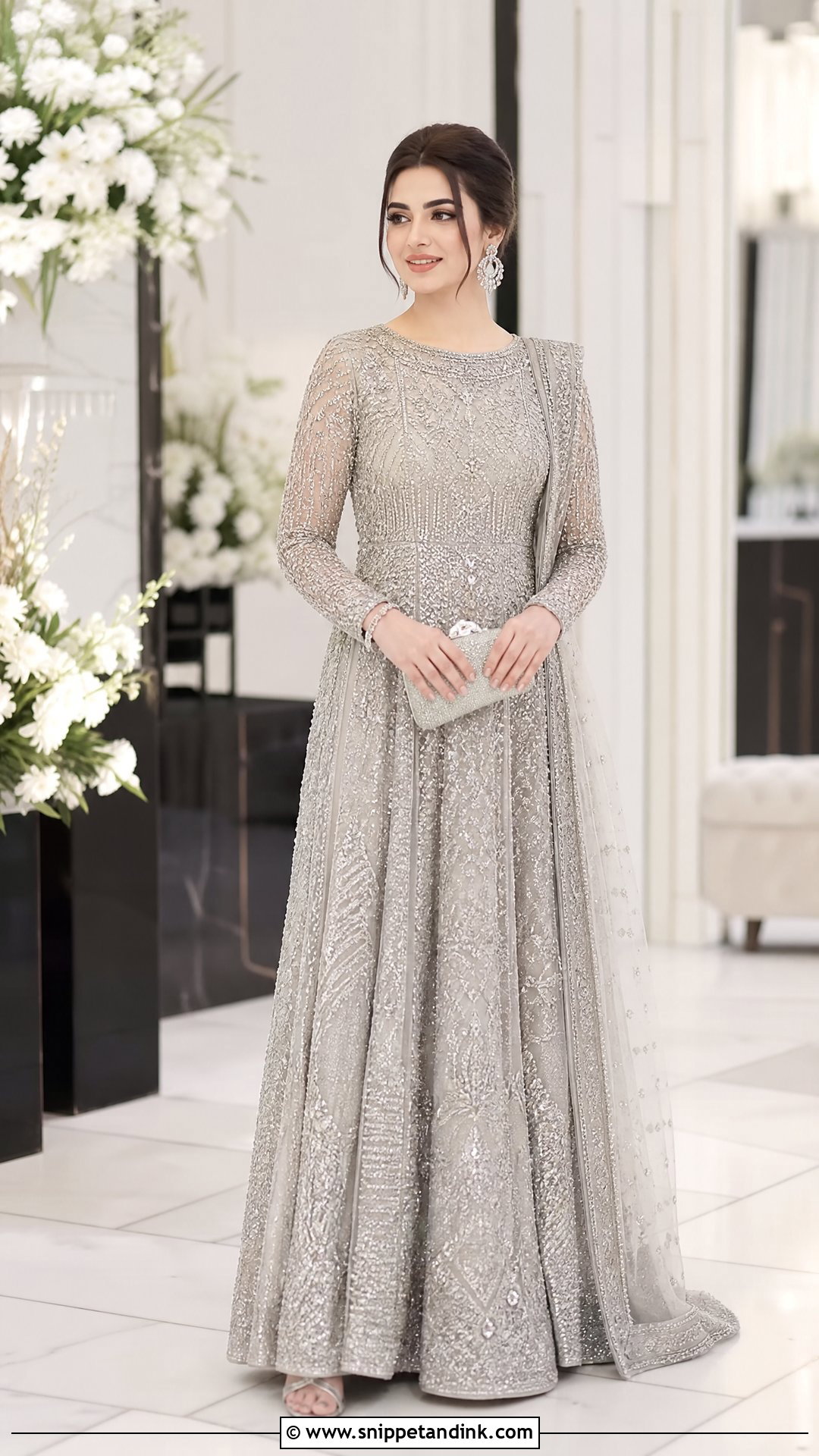
A silver maxi gives a cleaner, modern shape while keeping Pakistani handwork. A fitted upper body, full sleeves and a gradual flare below the waist is the silhouette. I like crystal, pearl and silver embellishment running in vertical lines; it lengthens the body, where horizontal bands cut it. A sheer matching dupatta with a slim border avoids competing with the dress. Diamond-style earrings, a bracelet and a small silver clutch are plenty of sparkle. Hide comfortable silver heels under the hem, add cool-toned makeup and soft waves, and it sits well in a hotel ballroom or a minimal indoor venue.
9. Champagne Pakistani Bridal Reception Gown
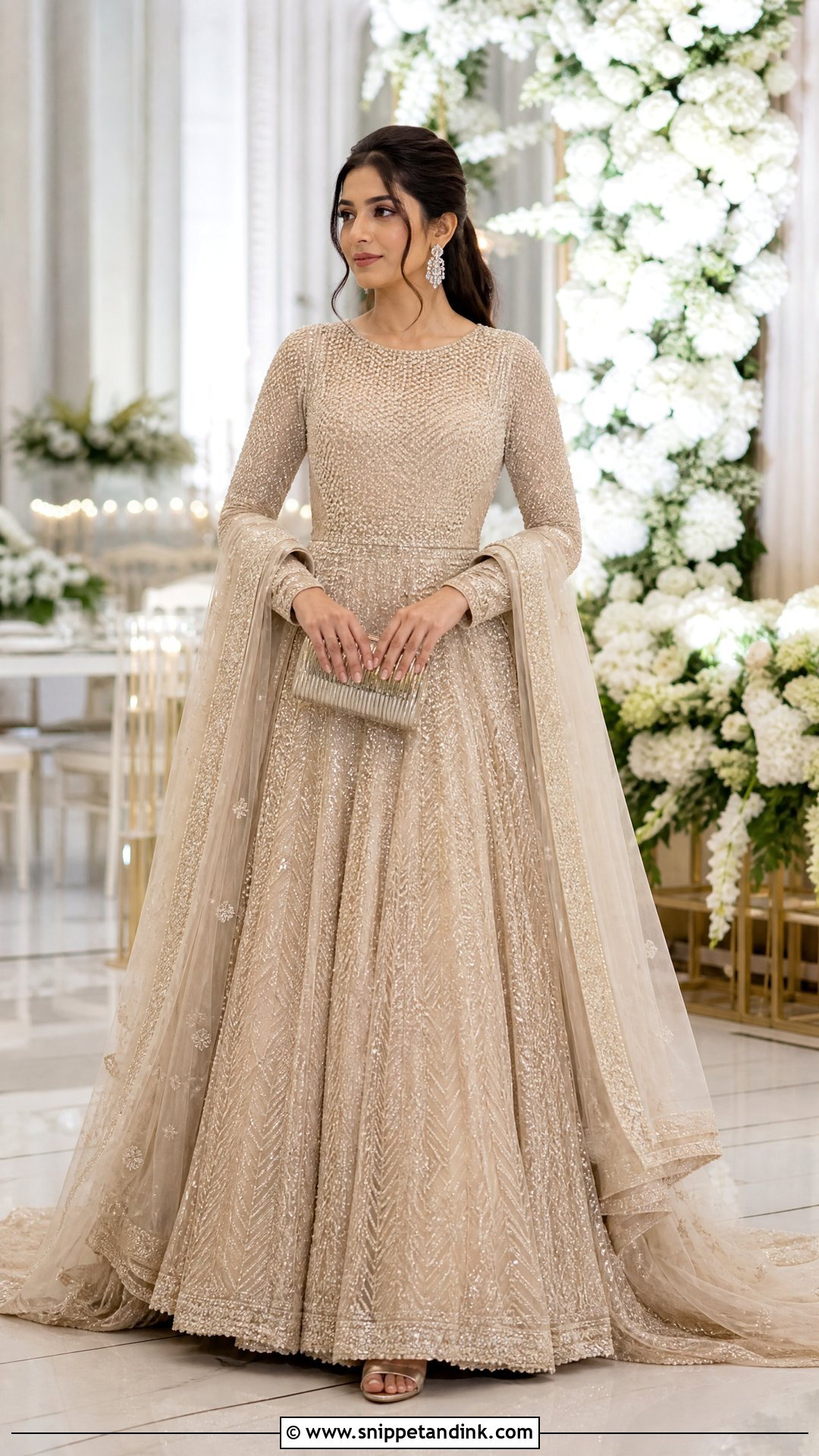
Champagne reads softer than gold in a reception gown. A long, modest design with a defined waist, structured bodice, full or three-quarter sleeves and a flowing skirt carries tonal beadwork, pearls and fine metallic thread. A detachable train is worth asking for: you get the entrance and photos, then remove it to move freely. Champagne heels, crystal earrings and a metallic clutch complete it; a light net dupatta over both arms is optional. Gowns with net, tulle or organza layers under the outer fabric need each layer hemmed separately, a little shorter than the one above, or the inner layers peek out and catch your heels.
10. Rust Velvet Pakistani Bridal Lehenga
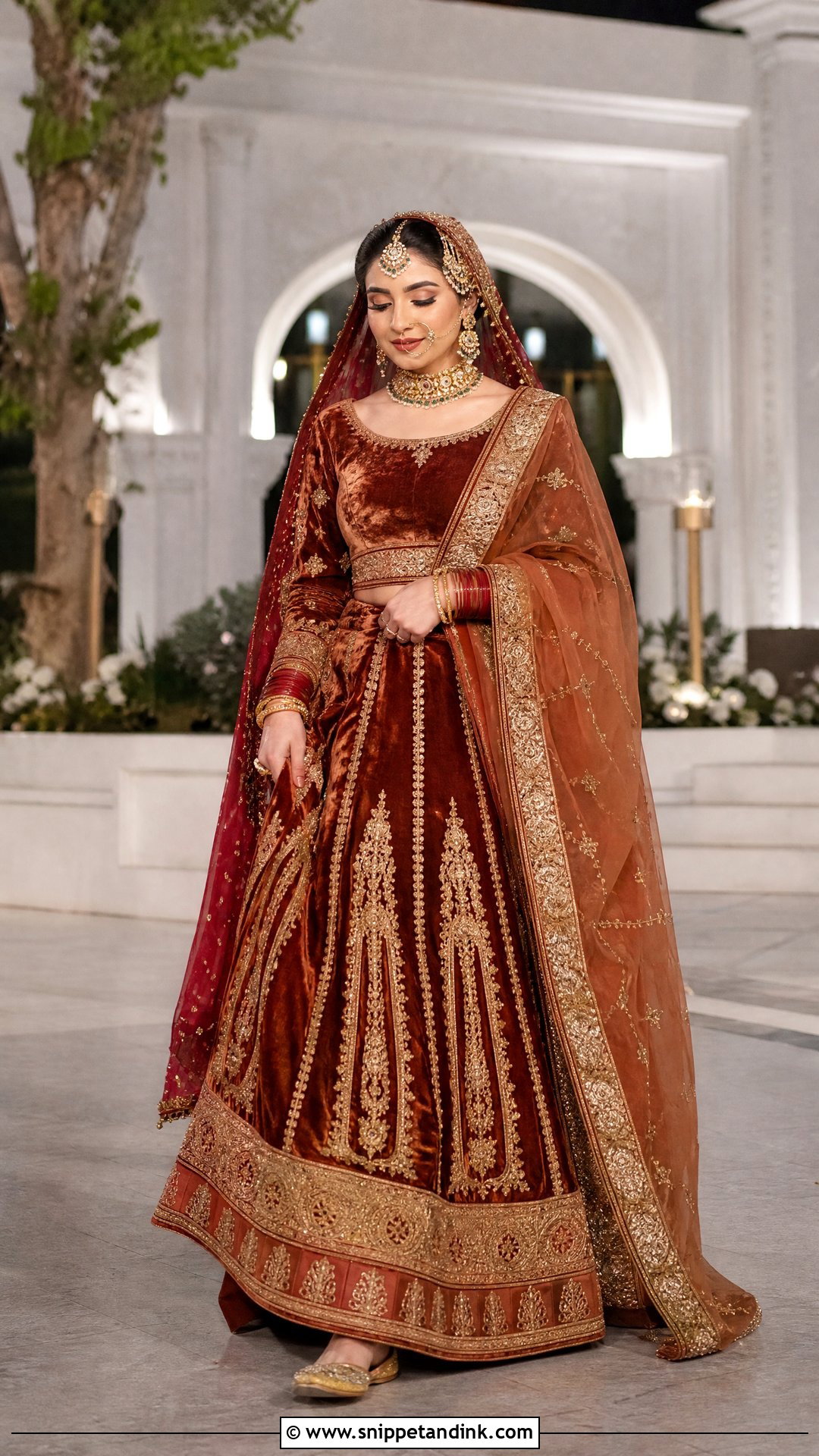
Can a bridal outfit feel traditional and unexpected at once? Rust velvet manages it at an autumn or winter baraat. A burnt-orange or copper skirt with antique-gold handwork along the border and vertical panels pairs with a fitted velvet blouse and a lighter organza dupatta. A deep-red or muted-gold head dupatta adds ceremony. Antique kundan, stacked bangles, a statement nath and gold khussas finish it, with bronze makeup and a brick-rose lip. Velvet is warm and heavy, so I cut back the underskirts and ask for a breathable cotton lining; the velvet already gives the skirt plenty of body.
11. Plum Pakistani Bridal Peplum Lehenga
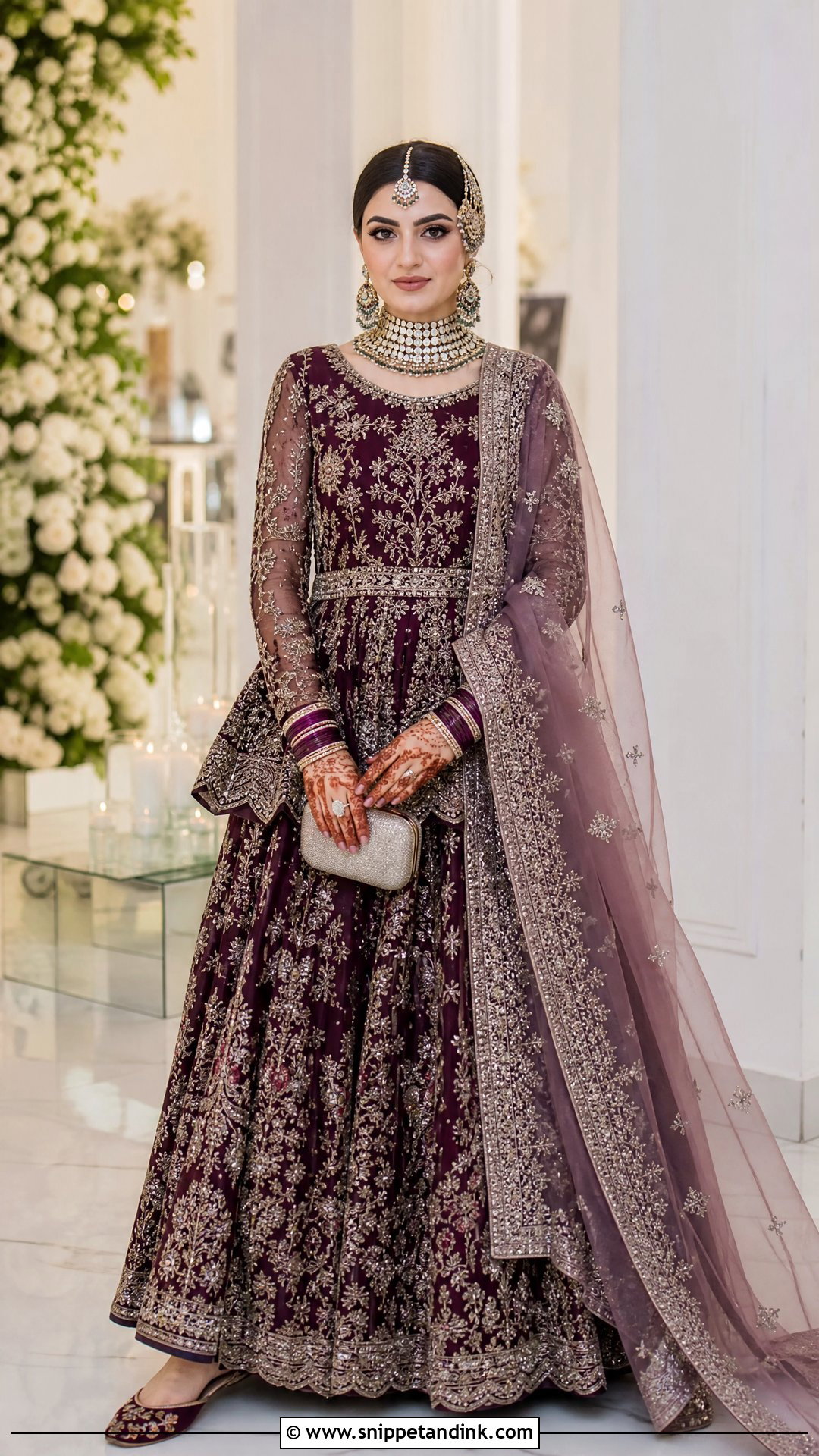
Plum peplum with a full lehenga gives you structure on top and tradition below. The peplum should finish just below the waist over a lehenga in the same purple. Tonal resham, antique-silver dabka and scattered crystals lift the dark colour. Keep the dupatta a shade lighter, plum organza or smoky lavender net, so the outfit doesn’t feel heavy. Silver kundan, a side passa, bangles and velvet khussas complete it, with a centre-parted bun and a berry lip. Watch the peplum length at fittings: if it’s even an inch too long, it covers the lehenga’s upper embroidery and makes the waist look thicker.
12. Mint Pakistani Bridal Anarkali
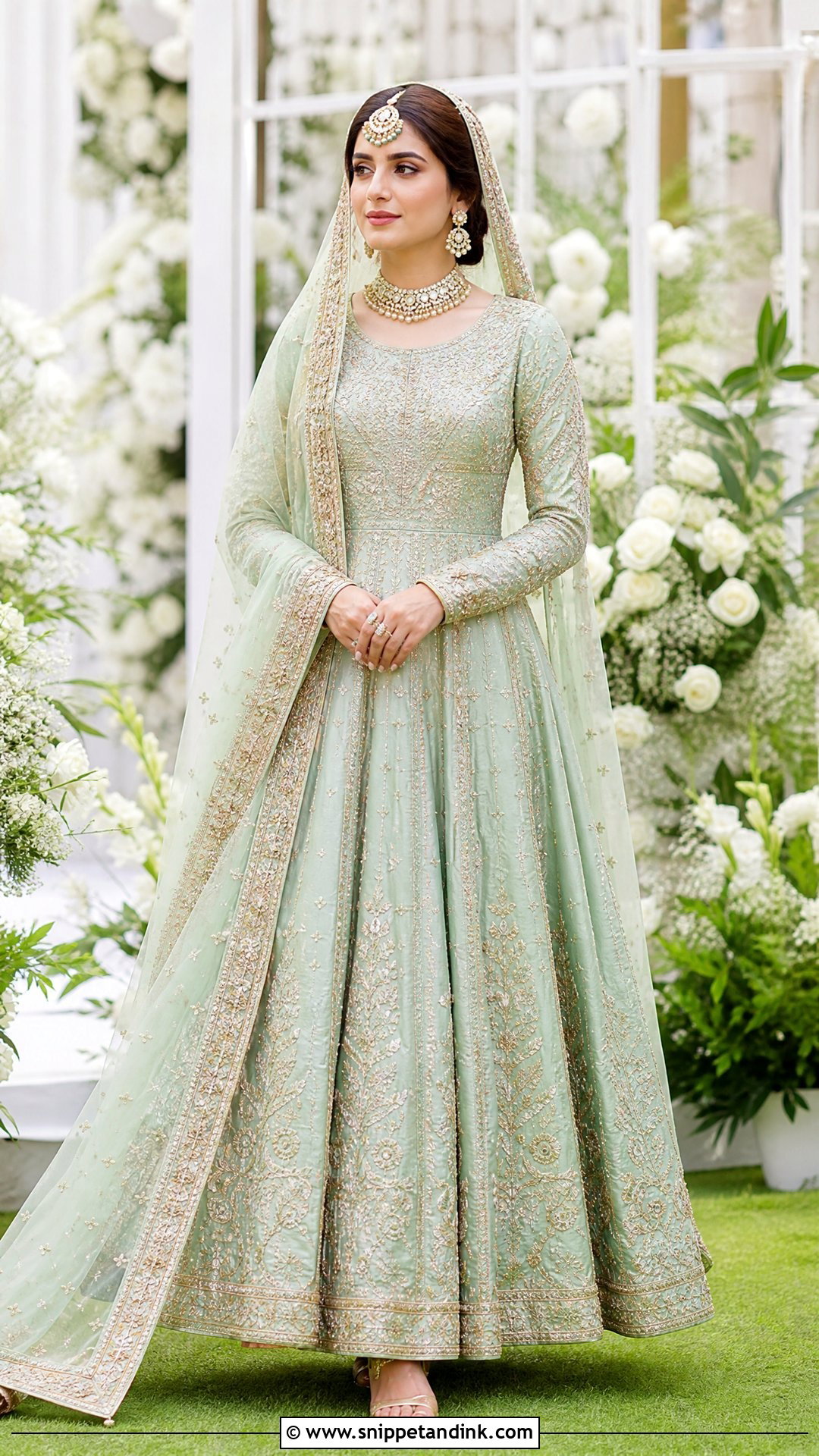
A mint anarkali gives full coverage with a graceful line. A floor-length design with a fitted bodice, a high or softly rounded neck, full sleeves and a generous paneled flare is the shape, and champagne-gold embroidery at the neck, cuffs and border looks right against mint. Slim trousers sit beneath, with a sheer worked dupatta over the head or both shoulders. Pearl and kundan choker, earrings, a small tikka and pale-gold heels finish it. More panels mean more fabric gathered at the waist, so I suggest silk, organza or light net to avoid bulk there. It suits a nikkah, daytime walima or garden event.
13. Powder Blue Pakistani Bridal Saree
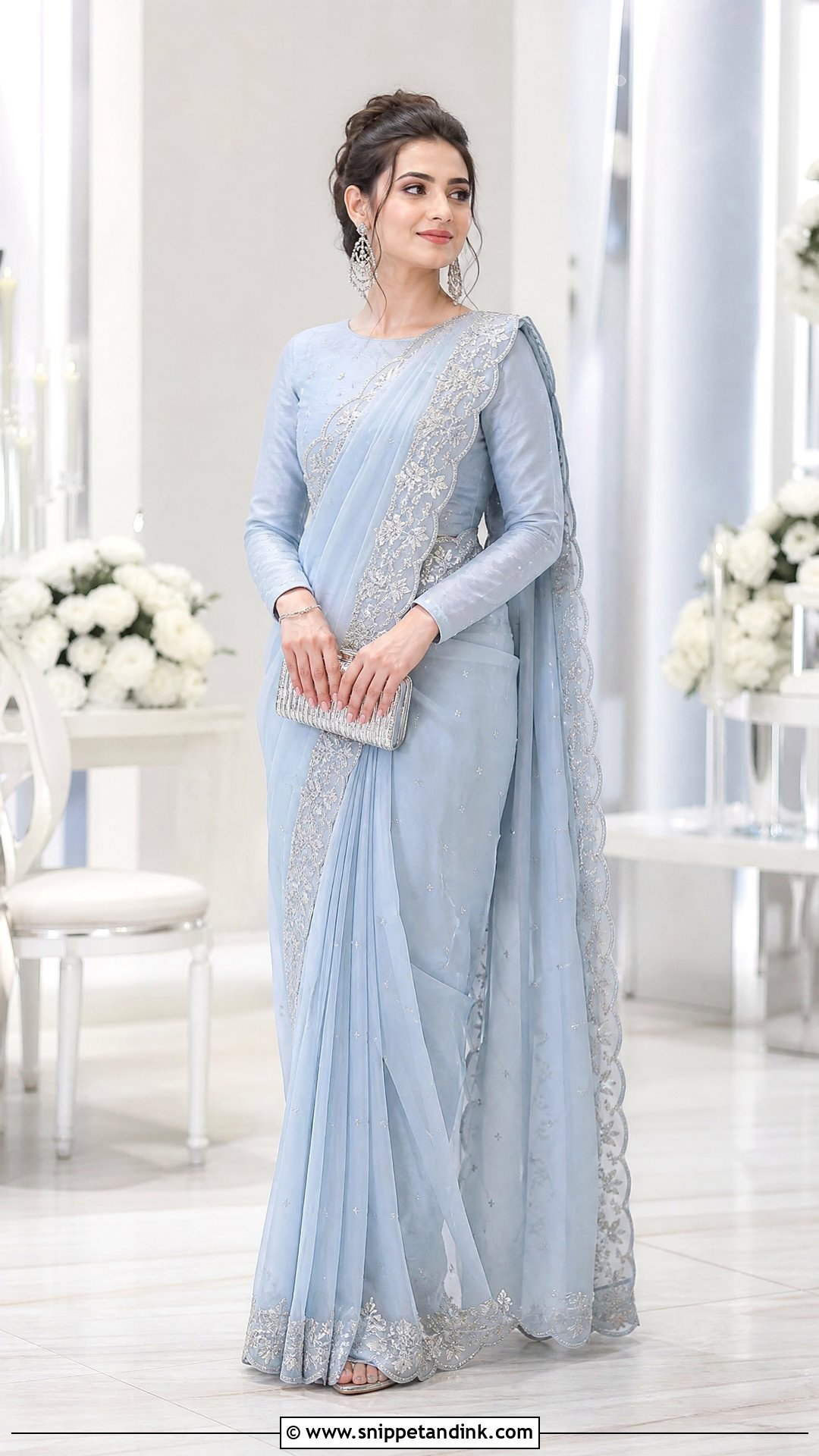
Powder-blue sarees suit a bride who wants her walima lighter. Chiffon, organza or tissue with silver at the border and pearl motifs across the body all work, with a fully lined blouse in elbow-length or full sleeves. Pleats should be pinned firmly and the pallu settled on one shoulder so the border shows in photos. Diamond-style earrings, a slim bracelet, silver heels and a structured clutch complete it. A low bun, side waves or a polished hijab all suit the drape. I always ask the tailor to stitch the pleats in place and add hidden hooks; a saree that has to be re-tucked every hour is not a saree you’ll enjoy at your own reception.
14. Coral Pakistani Bridal Angrakha Lehenga
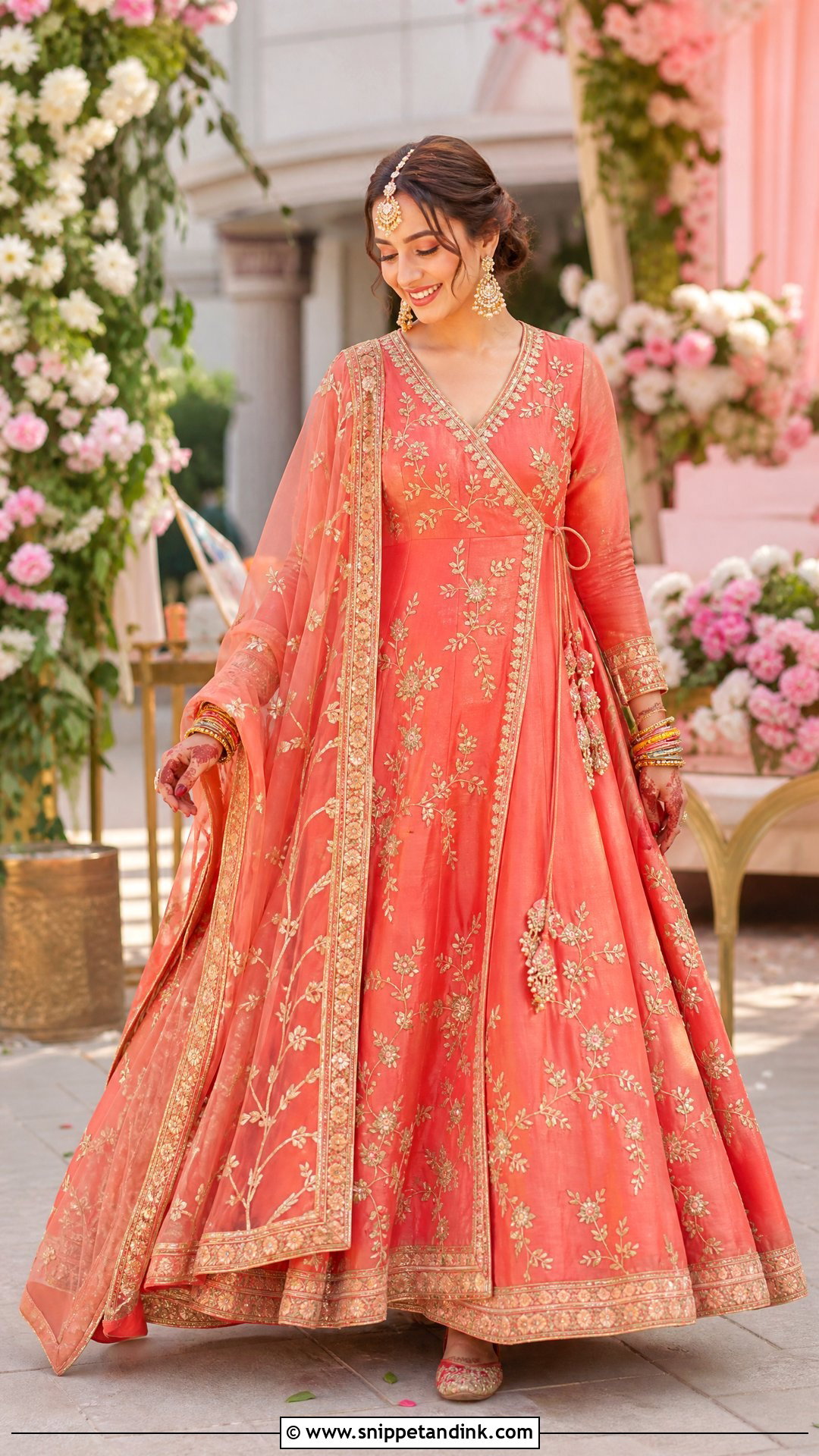
Coral angrakha tops bring brightness to a traditional shape. The overlapping neckline creates diagonal lines and a waist tie defines the figure. Choose coral raw silk with gold gota, resham flowers and small pearls, over a lightly flared lehenga that repeats the border details. A peach or coral organza dupatta goes over the head or one shoulder. Gold jhumkas, a small tikka, bangles and khussas suit it, with peach makeup and a braided bun. Angrakha wraps tend to open when you sit or reach, so I add a hidden hook and press stud under the overlap. It suits a daytime wedding or pre-wedding function.

15. Mustard Pakistani Bridal Mehndi Gharara
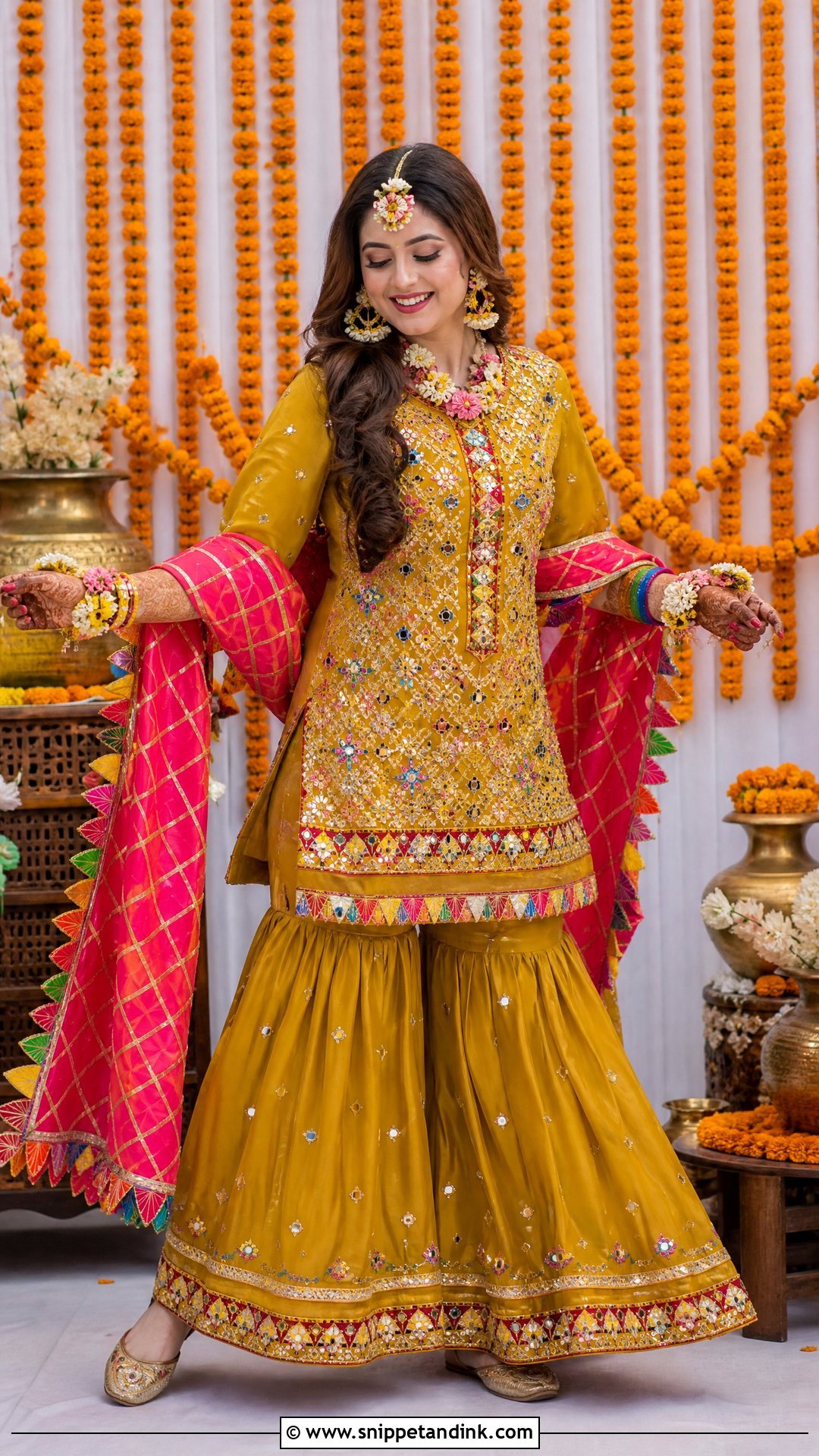
Mustard is made for a bride’s mehndi celebration. A short kurti over a full gharara worked in gota, mirrors and bright resham sets it up, with pink, green and orange coming in through borders or the dupatta. Drape a hot-pink or emerald dupatta over one shoulder and leave your arms free. Floral jewelry, colourful bangles, jhumkas and cushioned khussas suit the night; a flower-trimmed braid is practical. For dancing, I ask for light fabric and minimal lining around the knees, since that joint takes the most strain and a stiff one restricts your step.
16. Teal Pakistani Bridal Jacket Lehenga
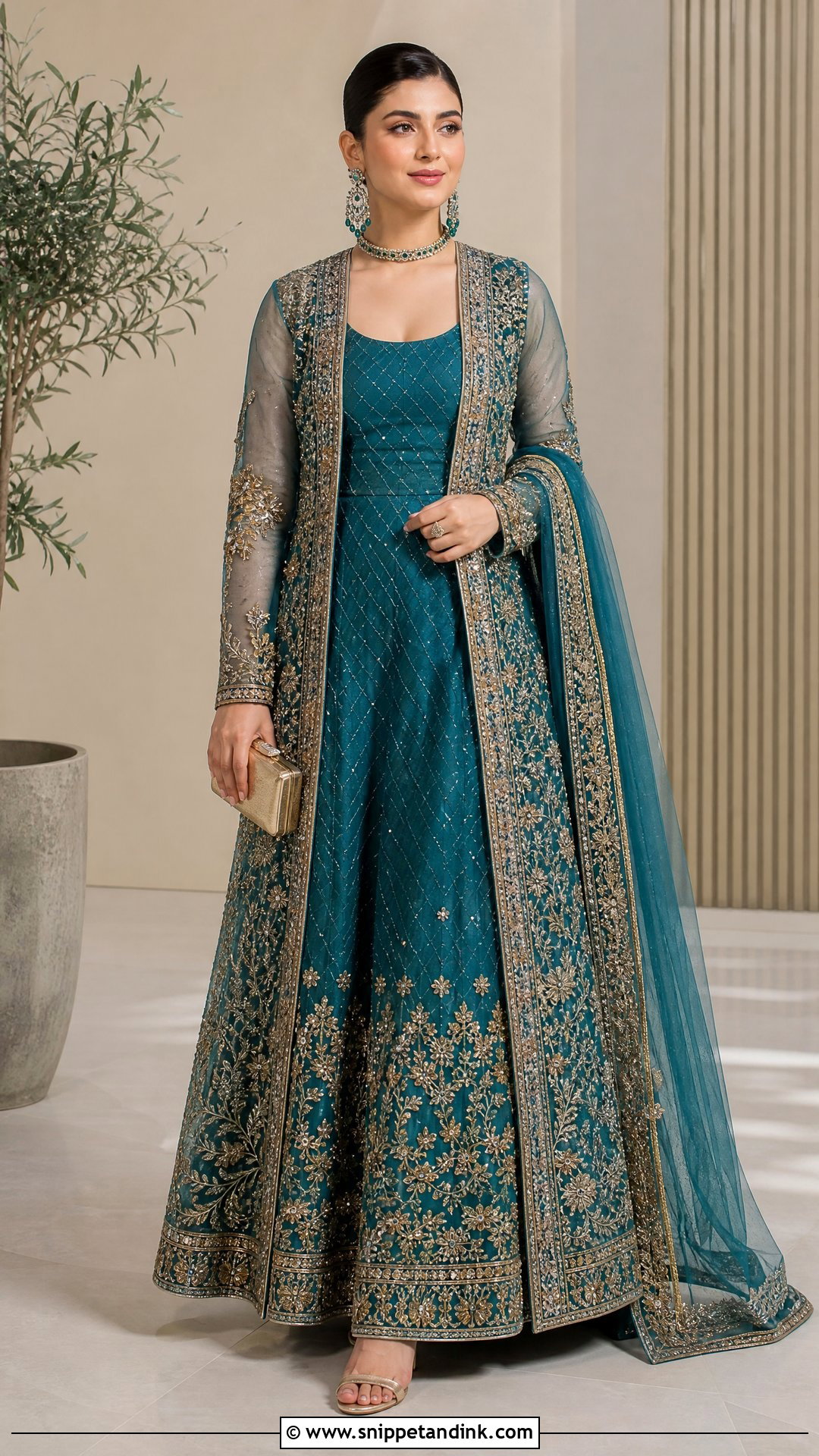
A front-open jacket gives a teal lehenga a layered, current look. Start with a fitted inner blouse and a moderately flared skirt, then a long organza or net jacket to the hem, with gold, turquoise and antique-silver work along the opening, sleeves and border. Keep the blouse simpler so the three pieces don’t all shout at once. You can skip the dupatta at the reception if the jacket gives enough coverage. Statement earrings, a slim choker, metallic heels and a structured clutch complete it, with a sleek bun and smoky eyes. Sequins and beads on the jacket edge love to snag on the skirt’s embroidery, so I check both while you walk and turn.
17. Dusty Rose Pakistani Bridal Farshi Shalwar
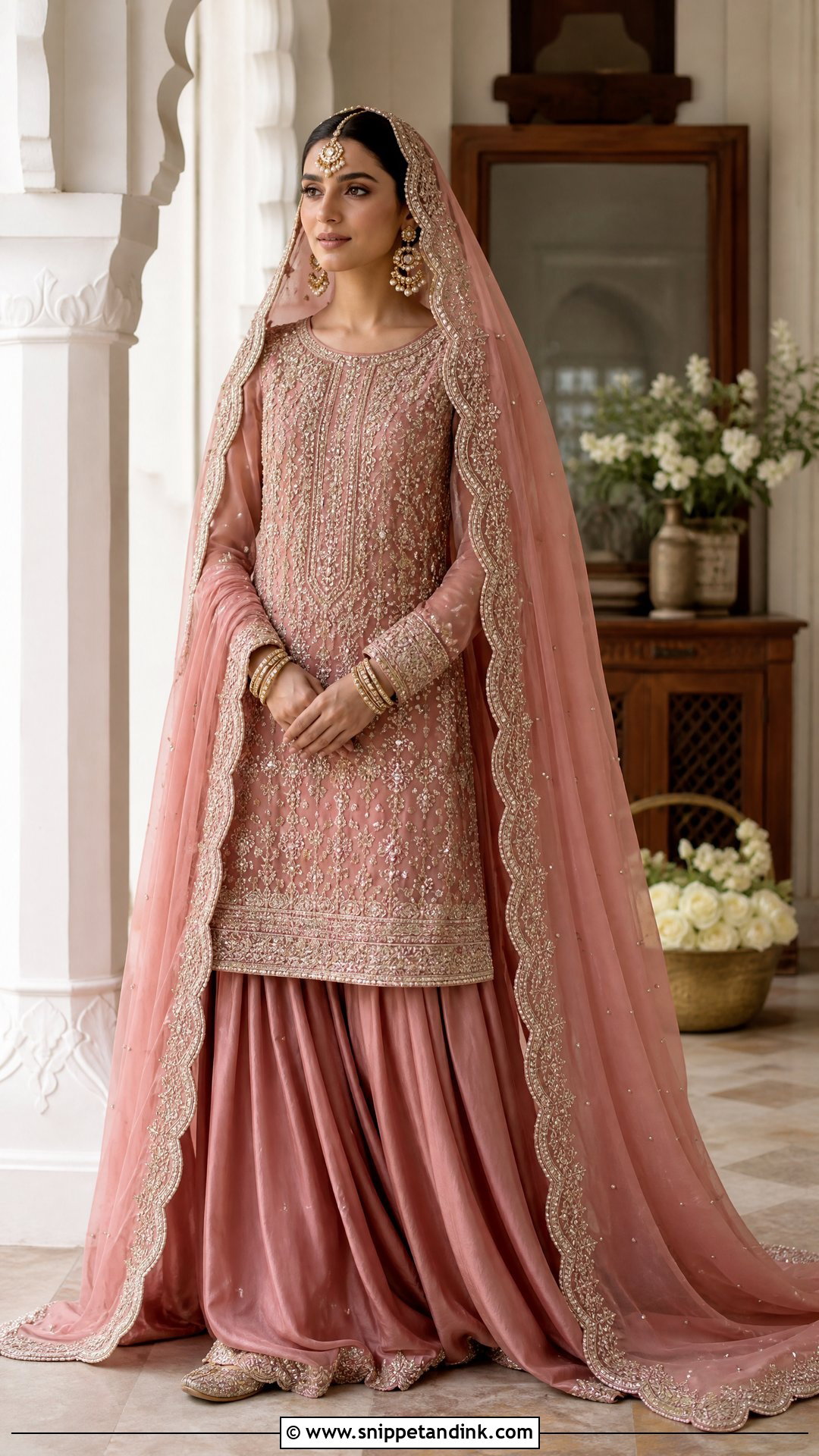
Dusty rose softens the sweep of a farshi shalwar. The trailing pants pair with a straight knee-length shirt in tonal thread, pearls and antique gold, structured enough to balance all that fabric below. Side openings let the farshi shape show. A sheer scalloped dupatta goes over the head for the ceremony. Pearl kundan earrings, a passa, bangles and flat khussas finish it, with rosy, refined makeup. Farshi hems demand small, controlled steps, and I’d practise walking in it at home before the day. A hidden lifting loop makes moving between rooms far easier.
18. Navy Pakistani Bridal Velvet Pishwas
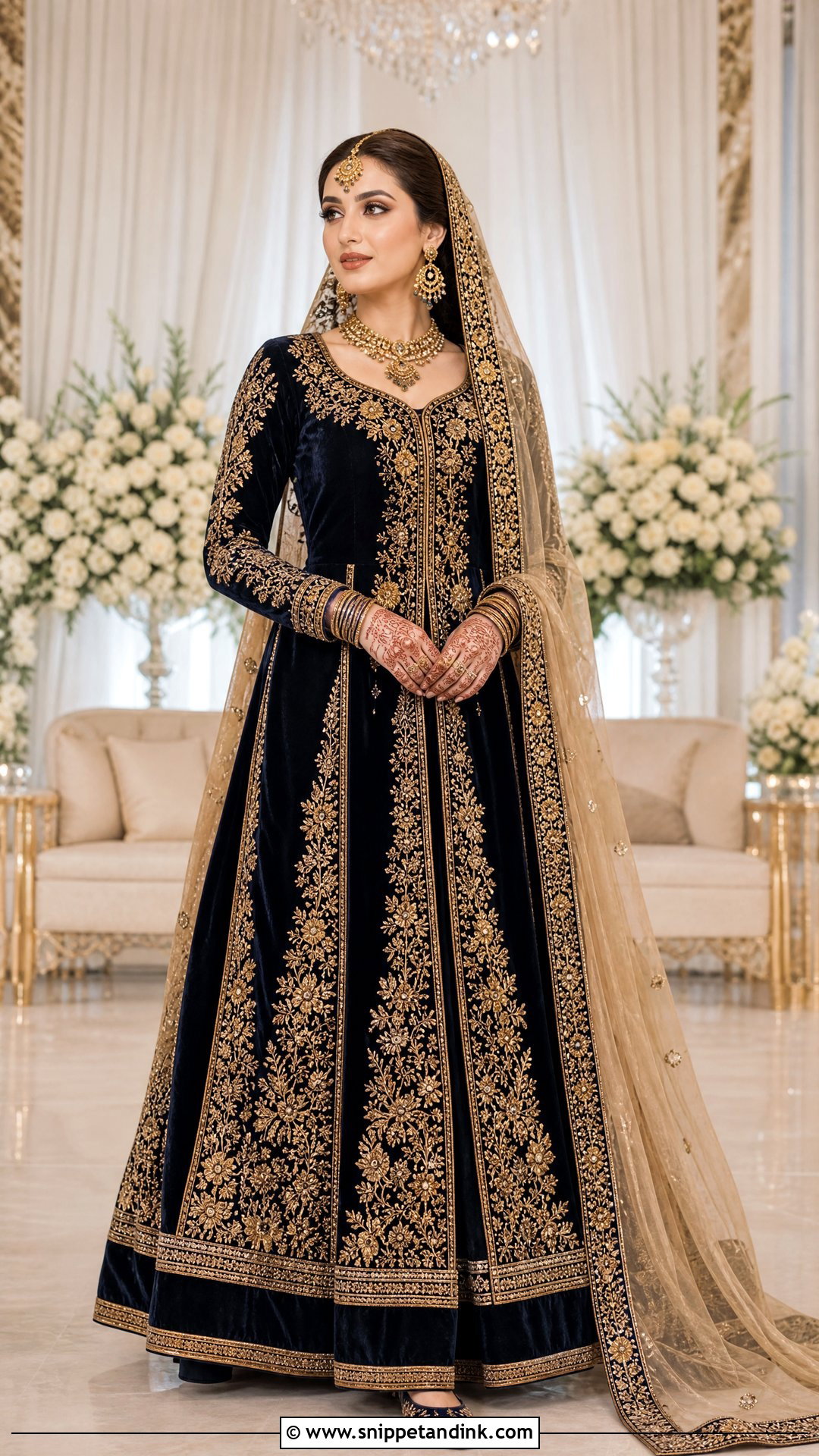
Navy velvet makes a rich pishwas for a winter wedding. A paneled design with a fitted top, full sleeves and a wide floor-length flare carries gold zardozi and dabka at the neck, waist, cuffs and hem, with plain velvet left between for rest. A navy or muted-gold organza dupatta keeps the weight down. Antique-gold jewelry, a tikka, bangles and velvet khussas complete it, with a low bun and defined eyes. Velvet sleeves are the thing I test hardest: set-in tightly, they stop you lifting your arms, so I ask brides to reach overhead at the final fitting before I sign off.
19. Lilac Pakistani Bridal Trail Gown
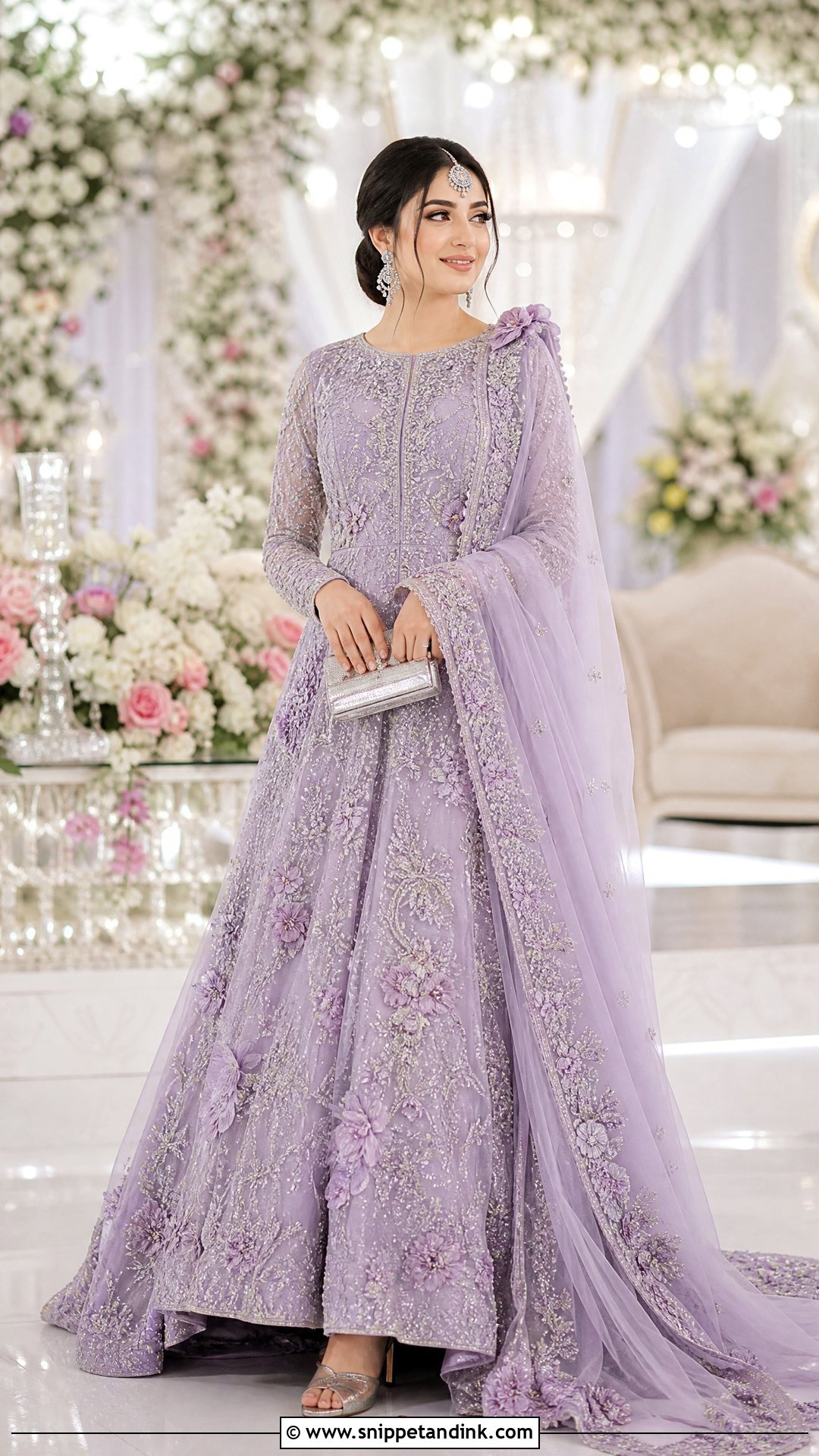
A lilac trail gown is soft and dramatic at the same time, which suits a walima. A fitted, fully lined bodice with modest sleeves leads into a flowing skirt and a manageable train. Silver embroidery, crystals and small 3D floral appliqués add detail without covering everything. A sheer lilac dupatta can rest on the arms or pin at one shoulder. Crystal earrings, a tiara-style piece or tikka, a silver clutch and matching heels complete it, with soft waves and cool pink makeup. Ask for a bustle or wrist loop so the train lifts after photos. Pale lilac can merge with pale backdrops, so the embellishment needs enough contrast to hold the outline.

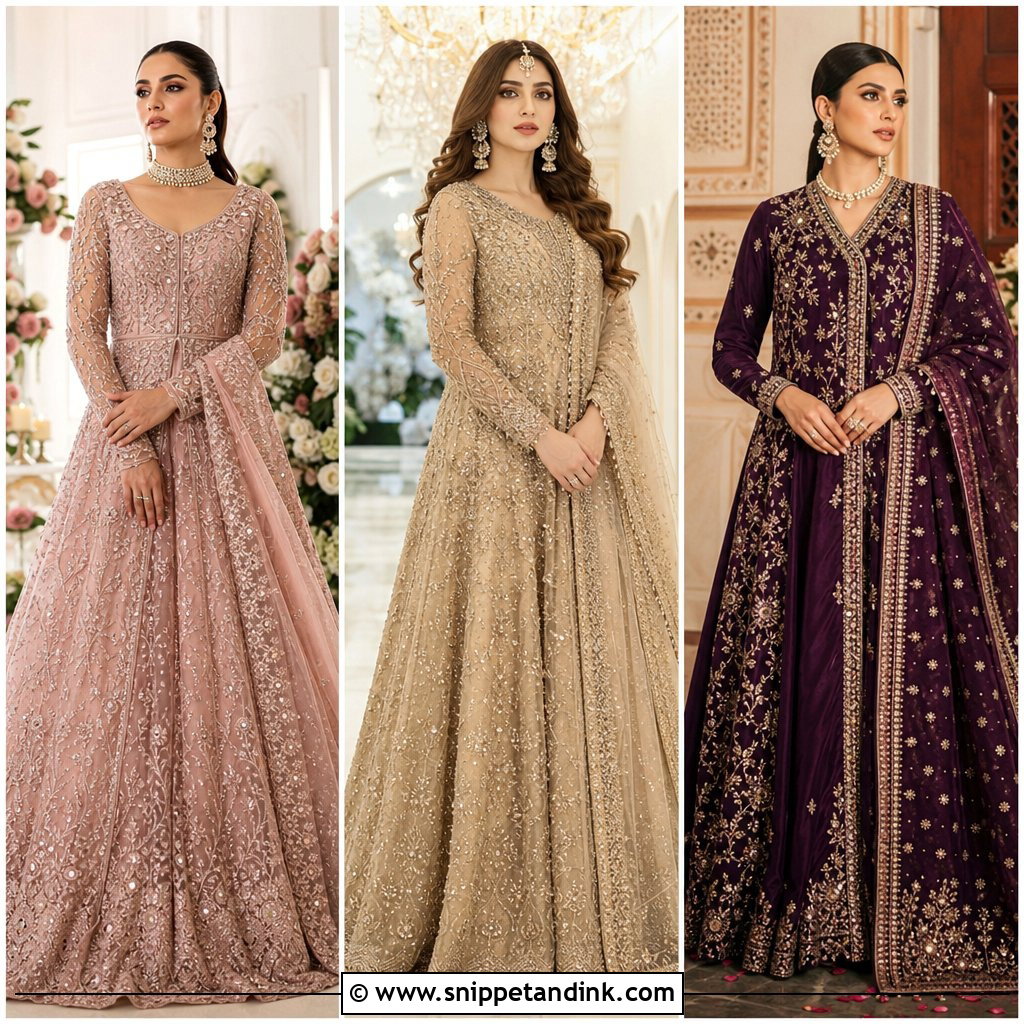
20. Crimson Pakistani Bridal Saree
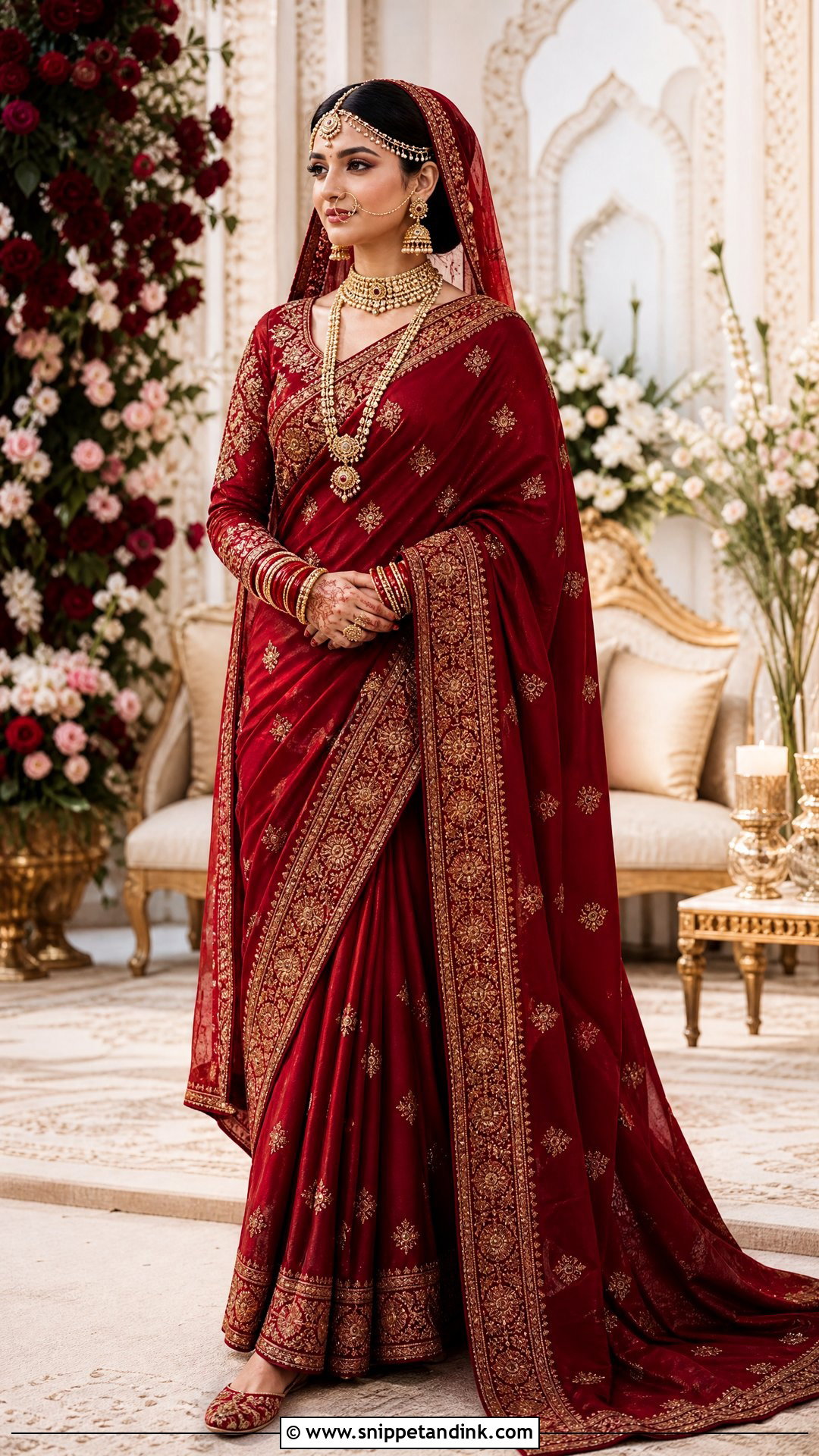
Crimson gives a saree red’s ceremonial weight with a deeper tone. Pure silk, tissue or structured organza with an antique-gold border and detailed pallu suits it, with a full-sleeve blouse in matching work. Keep pleats narrow and the pallu broad enough to show its craft. Gold choker, long necklace, jhumkas, matha patti, bangles and a nath complete the bridal set. Embroidered heels or khussas should stay comfortable under the hem. A centre-parted bun and a red lip finish it. If you want a head covering, use a light separate veil pinned to the hair, never to the pallu, so the drape stays intact.
Small Dress Emergencies and How I Fix Them on the Day
Something always gives during a Pakistani wedding. A hook pops, a dupatta pin pulls through the net, a hem gets stepped on during the rukhsati. None of it needs to show in photographs if someone close to you carries a small kit and knows what to do.
The fixes worth knowing
- A broken blouse hook: a safety pin threaded through the inside lining, never the outer fabric, holds until the end of the night.
- A dupatta pin tearing net: move the pin to a worked area or the border, where embroidery reinforces the fabric.
- A stepped-on hem: double-sided fashion tape tacks a dropped hem back in seconds.
- Foundation on a dupatta edge: blot, don’t rub. A clean tissue pressed on the mark lifts most of it; rubbing pushes it into the weave.
- Loose sequins or beads: snip the hanging thread close rather than pulling, or the whole row can unravel.
Give the kit to a sister or cousin who stays close all evening, not to yourself. My own rule is to pack the needle pre-threaded in red, ivory and gold, because nobody can thread a needle on a dim stage with shaking hands.
A Red Lehenga or Something Else Entirely?
Red lehengas for a grand baraat, ivory pishwas or blush shararas for the nikkah, metallic gowns and pastel lehengas for the walima: the range in Pakistani bridal wear is huge, and that’s the good news. The part that decides whether you enjoy wearing it is less glamorous. Think about the season, the venue, the ceremony and the hours of wear. Fabric weight, hem length, secure draping and careful tailoring matter as much as colour or embroidery. Pick the outfit that feels like you, keep the accessories in proportion, and make sure you can sit, walk and hug in it.
You'll Like These Ideas:



Leave a Reply