
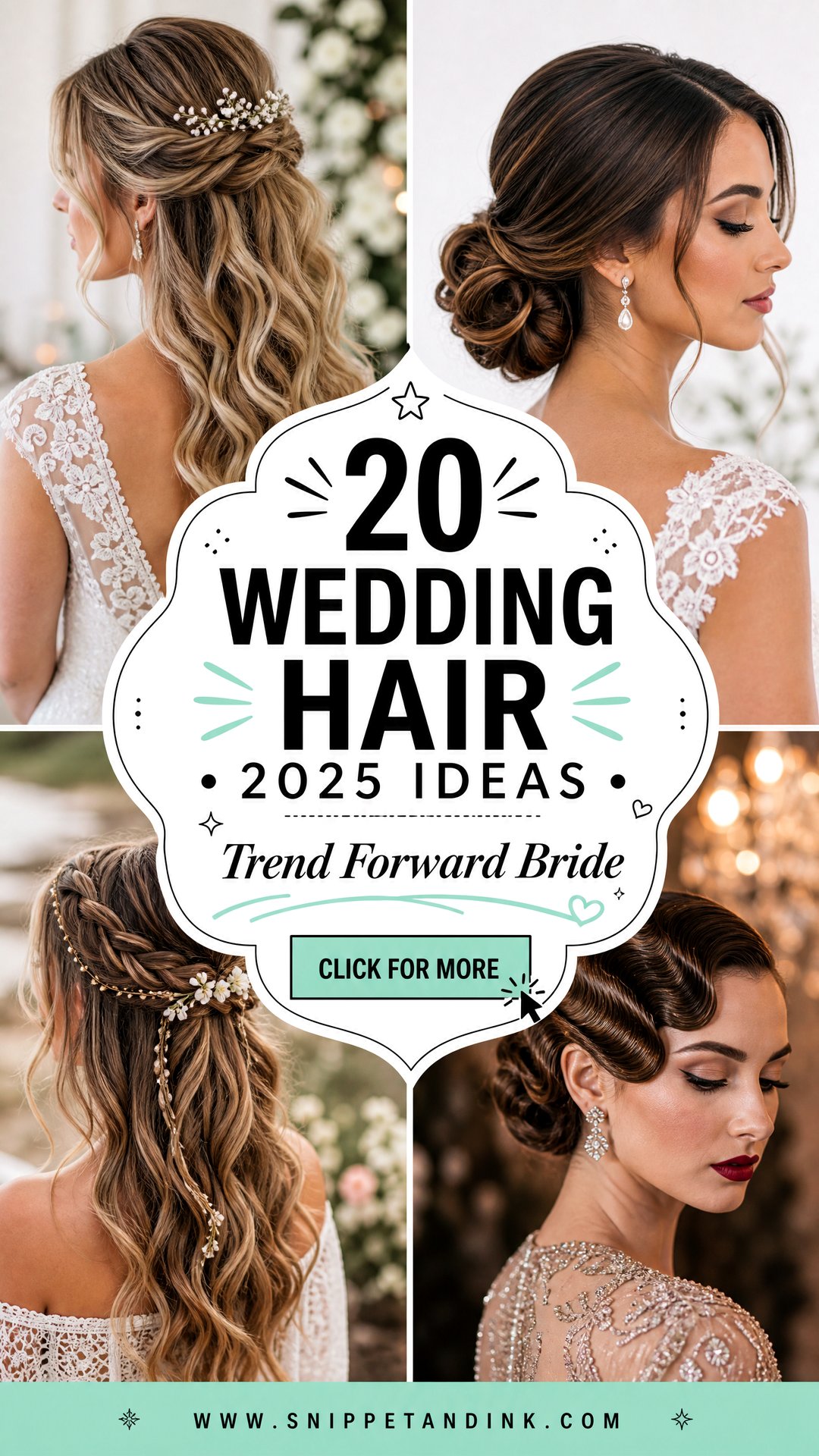
The bridal hair I was asked for most in 2025 had one thing in common: it moved. Brides wanted softness and texture that looked like their own hair on a very good day, not a helmet set for photos. That still covers a wide range, from sleek ballerina buns to braided styles threaded with greenery. Below are twenty styles that defined that season, with notes from the chair on which hair types each suits, how they behave over a long day and where they tend to go wrong. Use them to build a mood board, then bring that board to your trial.
Density Matters More Than Length for These Styles
Brides usually start with length when they pick a style. In the chair, density and texture decide far more about what will hold and how it will look by the last dance.
Fine or thin hair
Curls drop and buns look small. It does best with textured styles where some movement is planned in: the textured updo, the messy bun, the boho low bun. Root mousse, a set curl and pinning each curl to cool make a real difference. Clip-in wefts are an easy way to add bulk for a half-up or braid.
Thick, heavy hair
It holds a curl well but is heavy, so high buns and side-swept styles can drag. Low chignons, French twists and low ponytails carry the weight better. I sometimes thin out bulk on the underneath section before pinning.
Curly and coily hair
Working with your texture rather than straightening it gives the strongest, longest-lasting styles. Curly updos and voluminous curls suit it naturally. Plan wash and conditioning a day or two ahead so the curls are defined on the day.
1. Sleek Ballerina Bun With Center Part
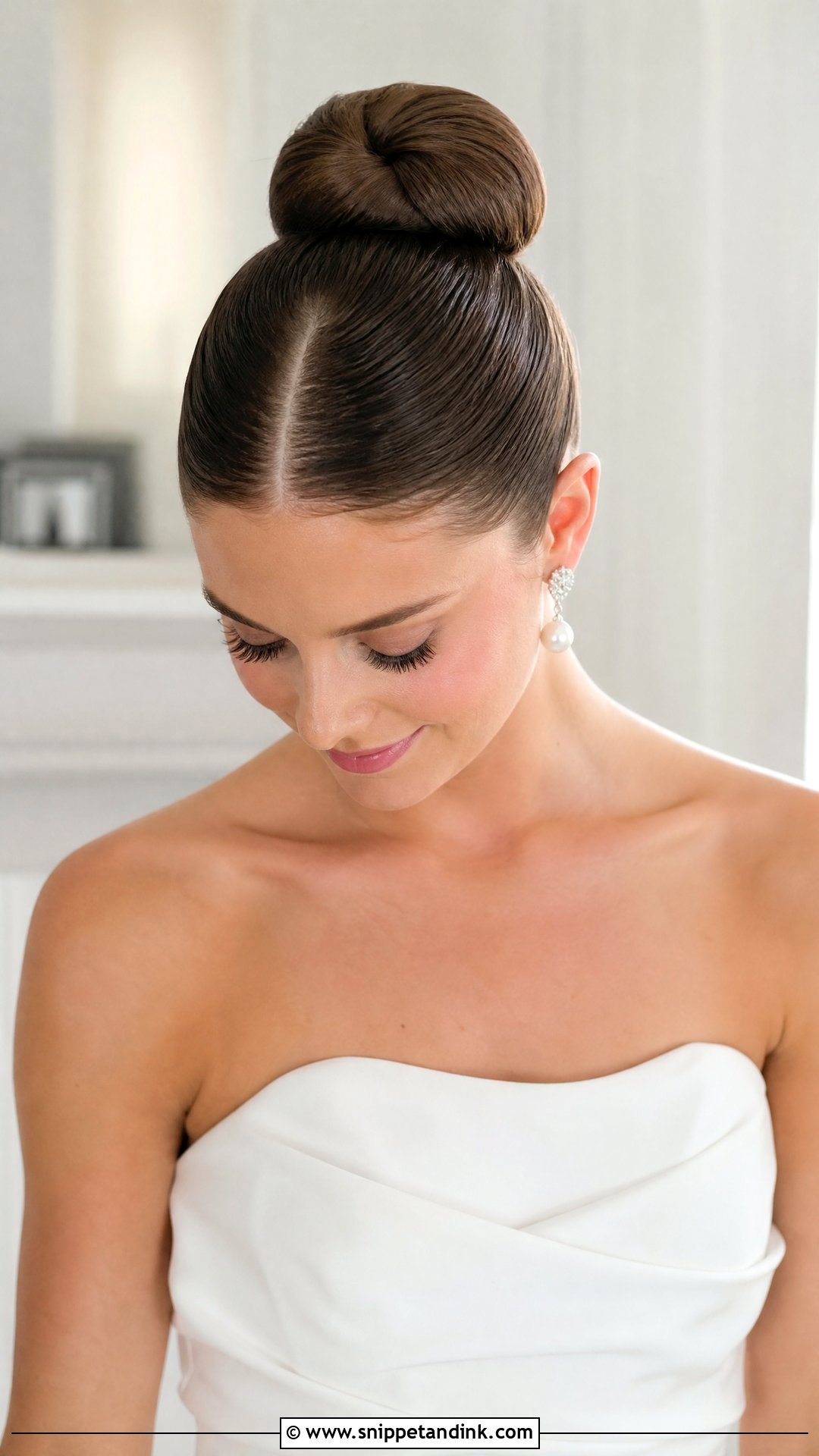
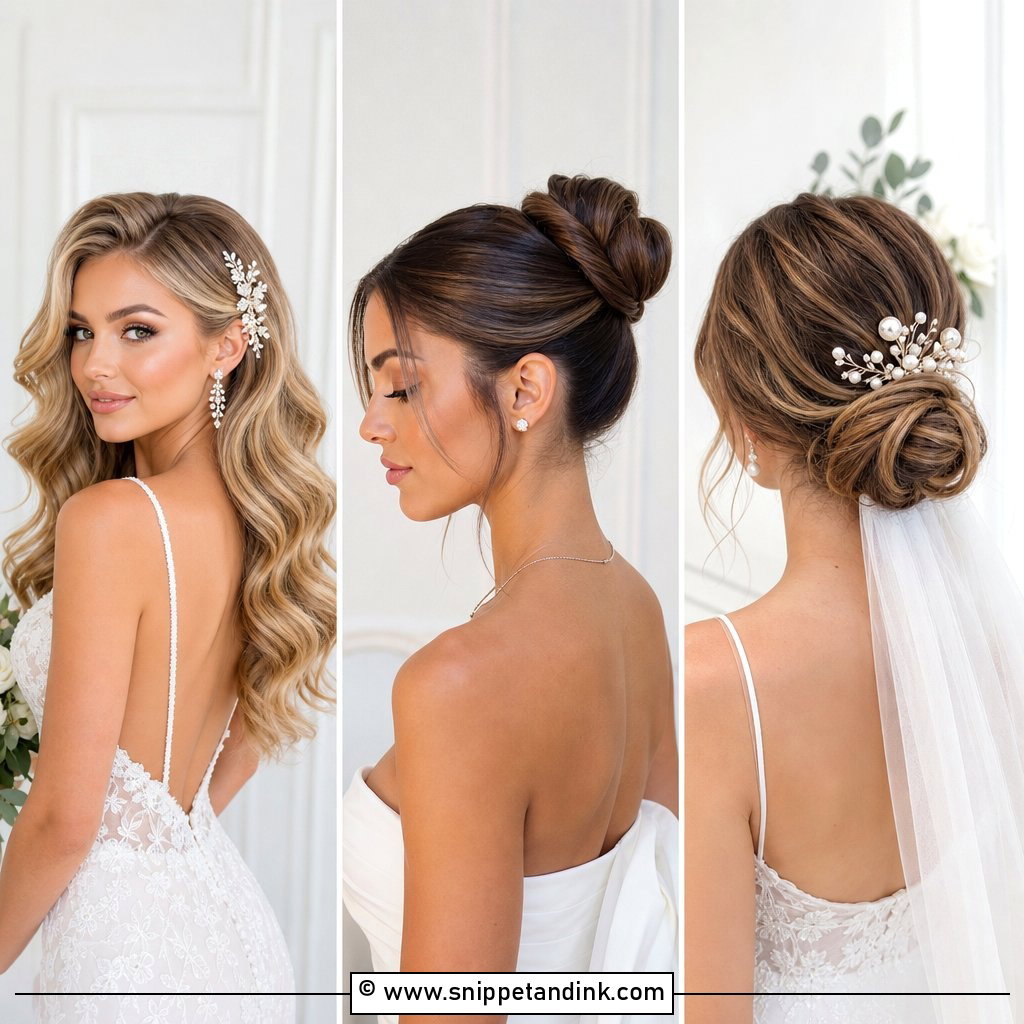
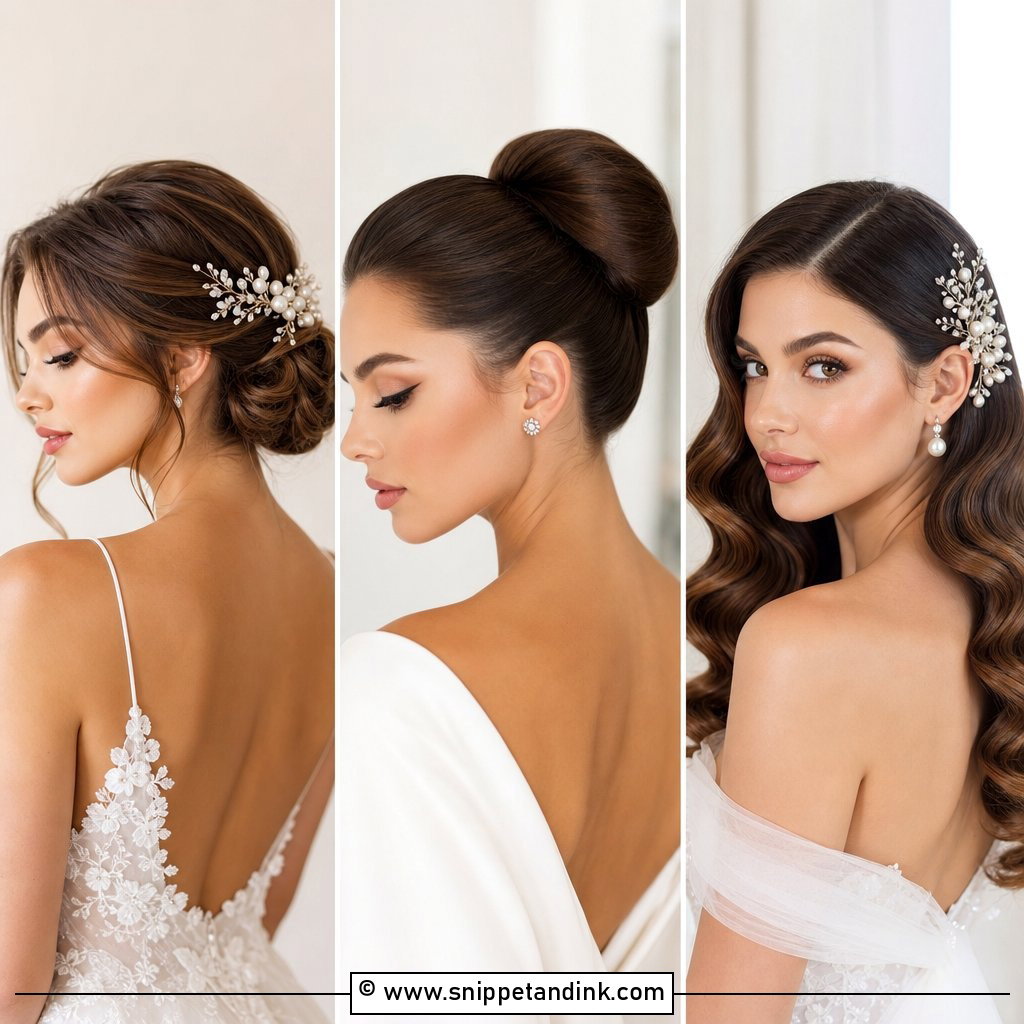
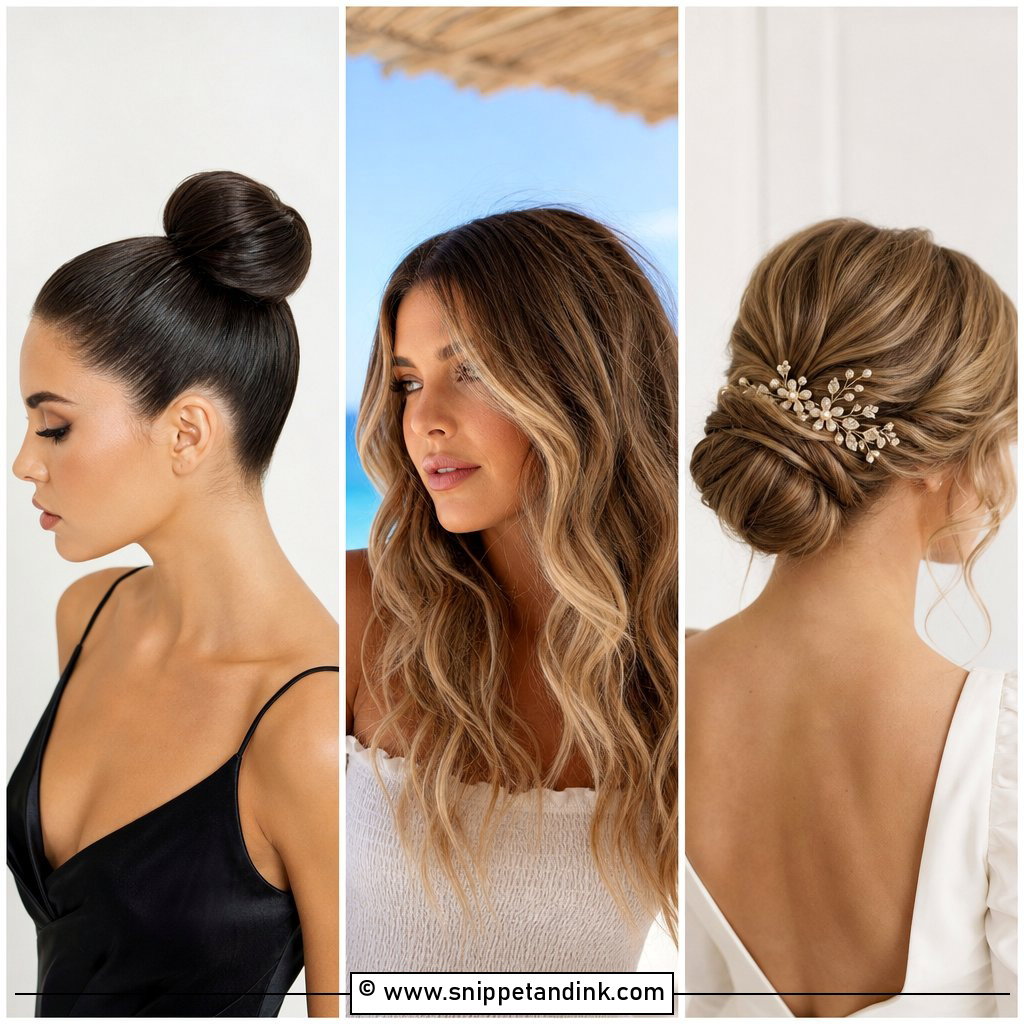
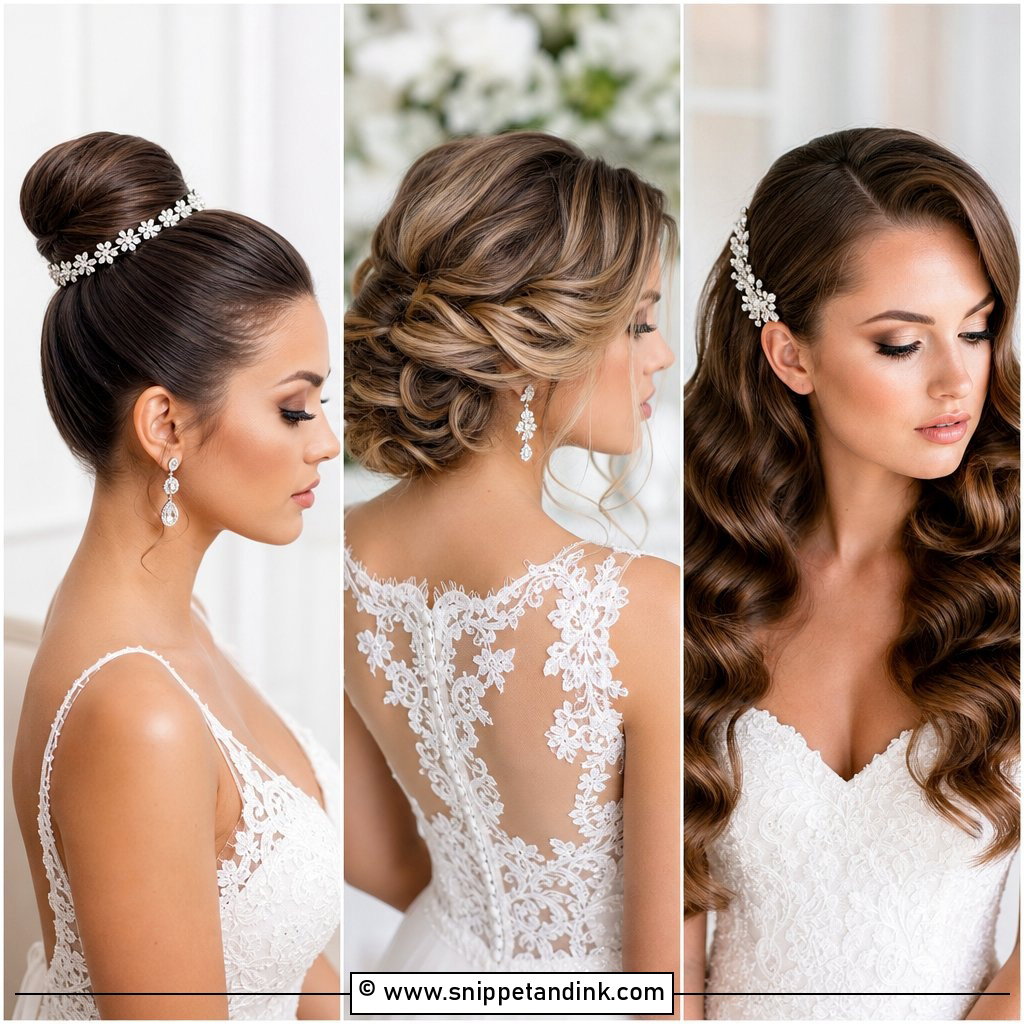
This is the sleekest style on the list, and sleek is the hardest finish to fake. The high knot with a centre part needs hair blow-dried completely straight first; any kink from sleeping on it shows as a ripple through the shine. I brush it back with a dense bristle brush and a small amount of smoothing cream, secure the elastic, then wrap and pin the bun. It shows off big earrings and a structured neckline. Before booking it, know the trade-off: a sharp centre part exposes a scalp that’s thinning or has a stubborn cowlick, so we test it at the trial before committing.
2. Classic French Twist
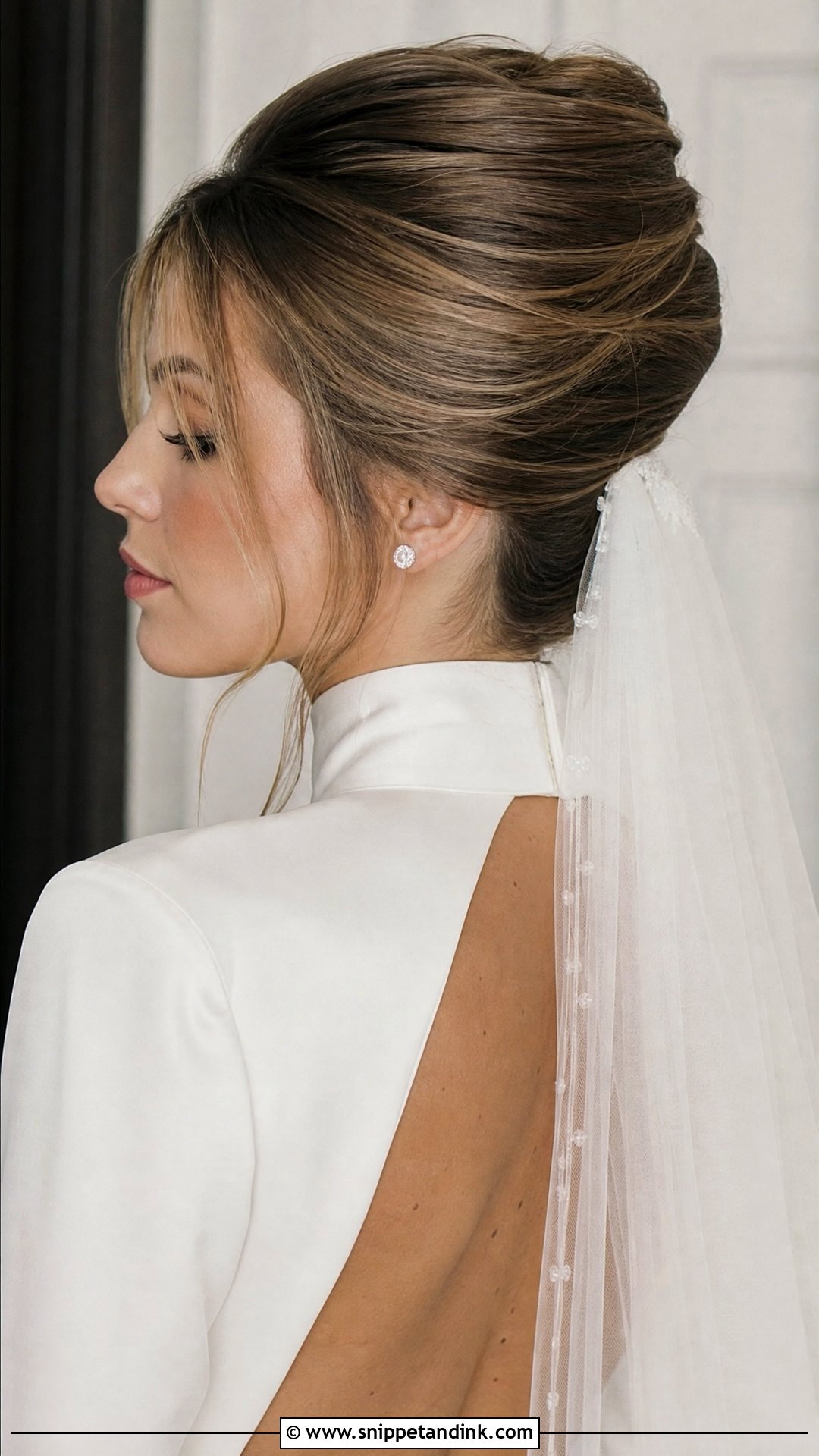
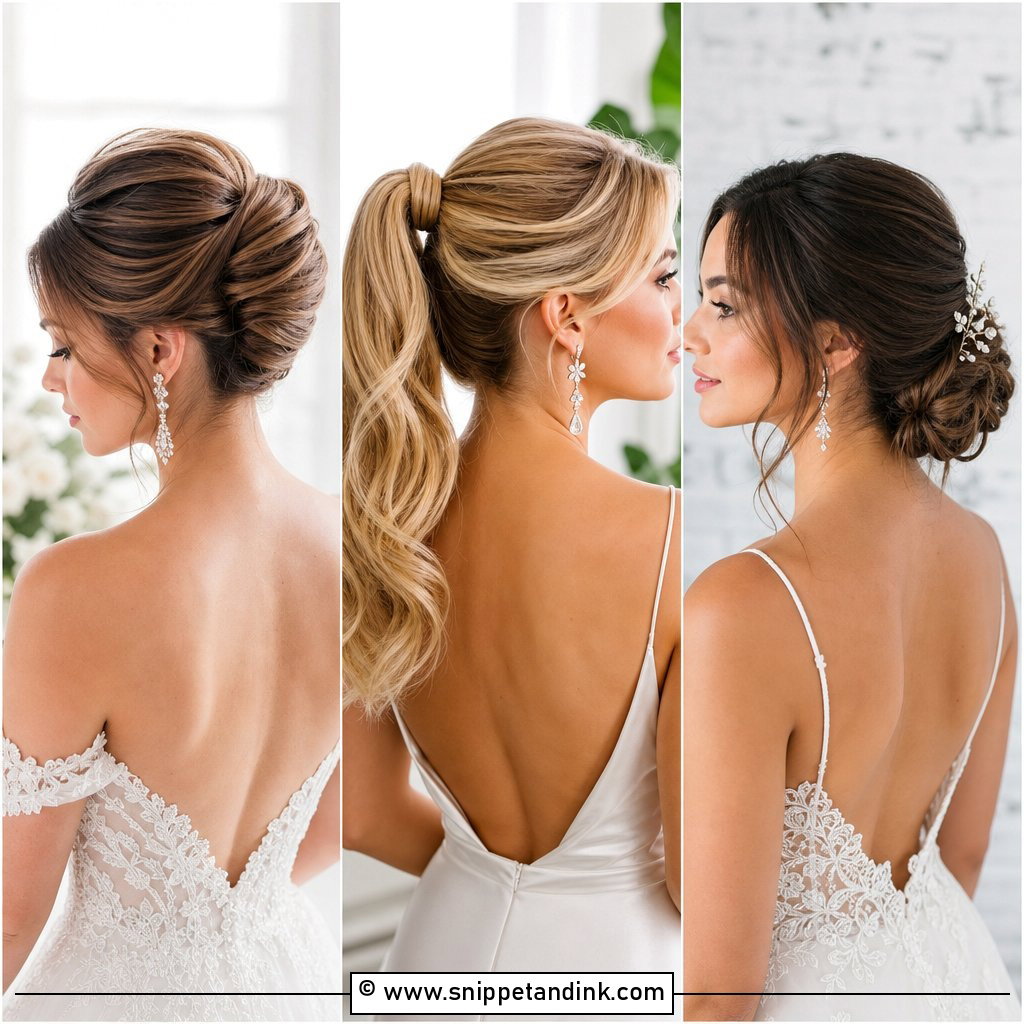
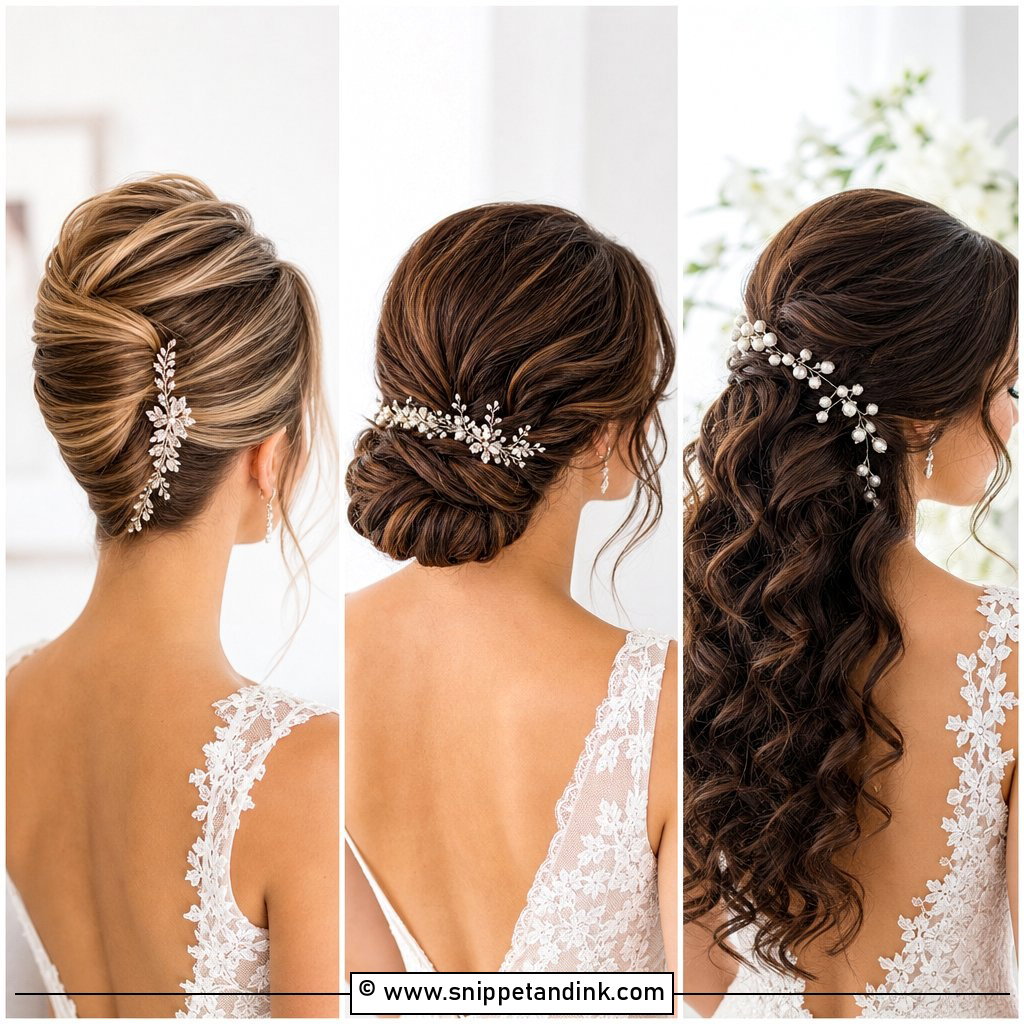
A French twist rolls the hair vertically up the back of the head and tucks the ends inside, so the shape depends on what’s underneath it. On fine hair I backcomb the inside of the roll and lock it with a row of crossed pins; thick hair needs fewer pins but more grip, often a spritz of texture spray first. It suits a formal ceremony and lets a cathedral veil sit cleanly at the crown. Keep it tight and polished, or pull out a couple of face-framing pieces. Pinned properly, it outlasts almost every other updo through dancing.
3. Hollywood Glamour Waves
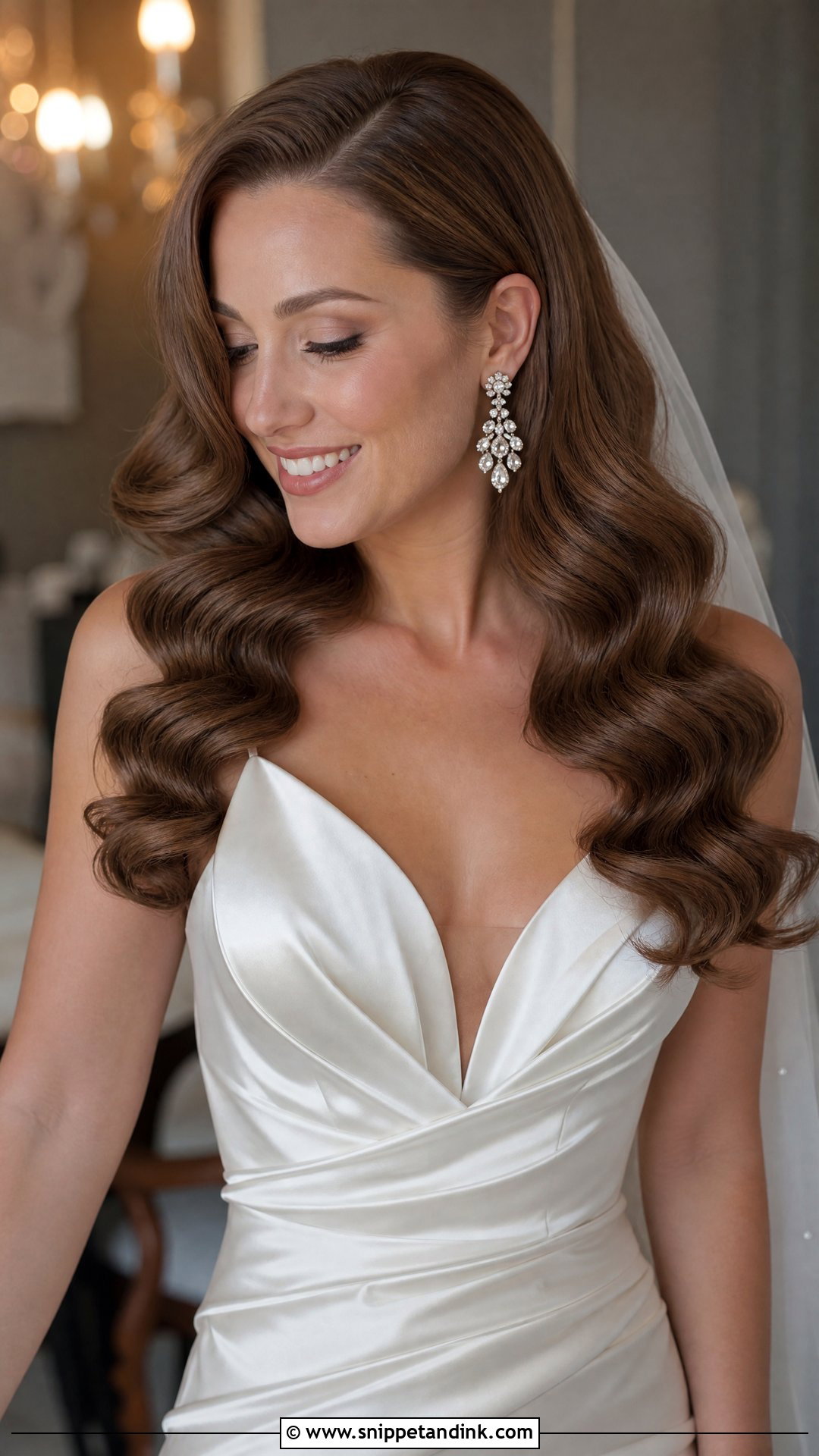
Hollywood waves are set curls brushed out into one continuous S-shape, and the brushing is where they’re made. I curl every section in the same direction, pin each one to cool, then brush the whole head through until the curls join into waves. Shaping clips along each bend while the spray dries keeps the ridges crisp. Side parts give the classic look; a centre part feels more current. They suit a fitted satin gown and need hair at least to the shoulders. Fine hair needs a strong setting product, or the waves soften within a few hours.
4. Natural Cascading Waves
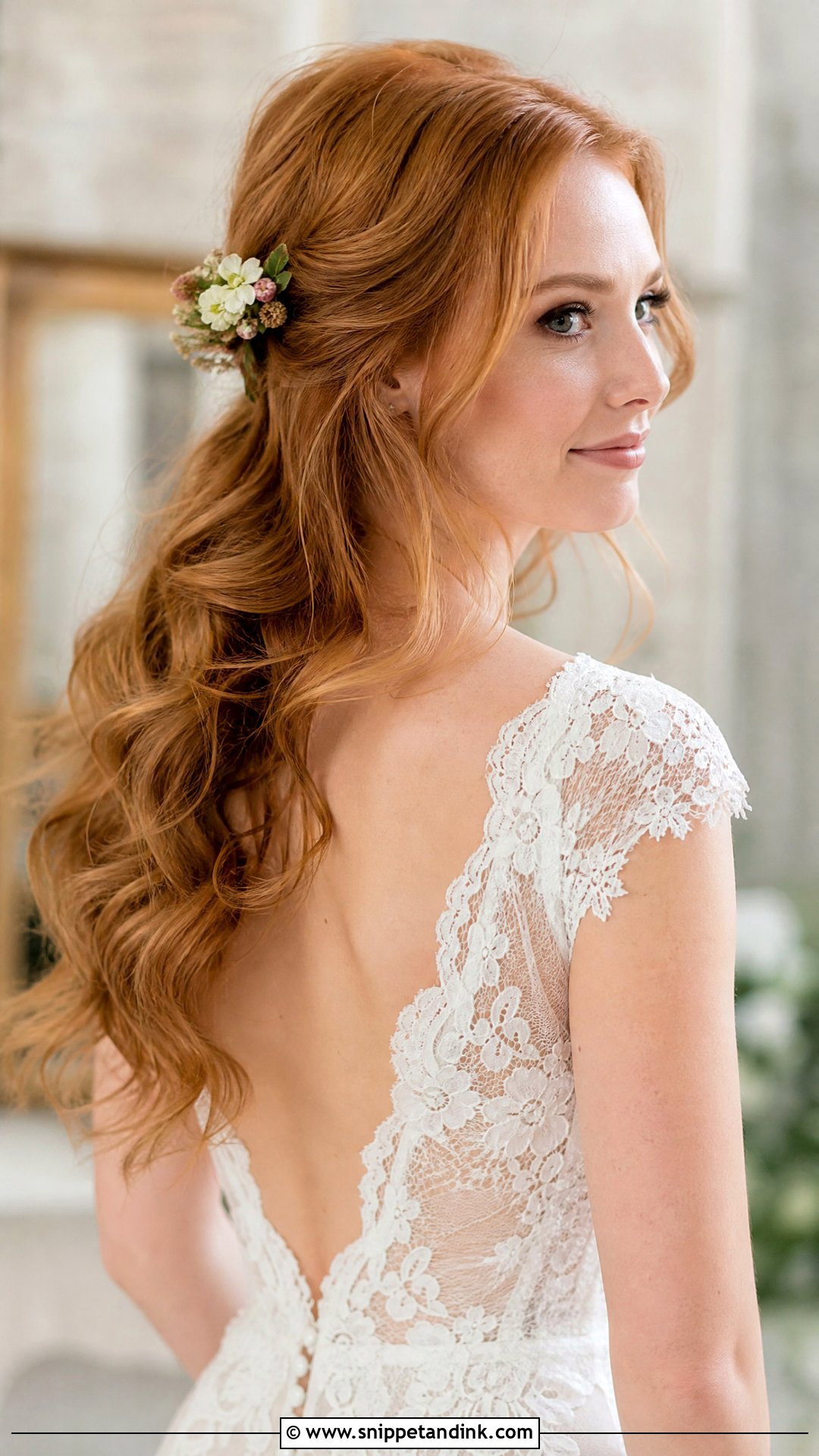
Loose waves look simple, and they’re the style most likely to fall flat by the reception. Hair that’s naturally straight and silky drops a curl quickly, so I prep with mousse at the roots, curl with a larger barrel, leave the ends out of the iron, and pin each section to cool before breaking it up with my fingers. Naturally wavy hair holds this best because we’re enhancing what’s already there. Beach and garden weddings suit it. A couple of small floral pins behind one ear are enough decoration.
5. Messy High Bun With Tendrils
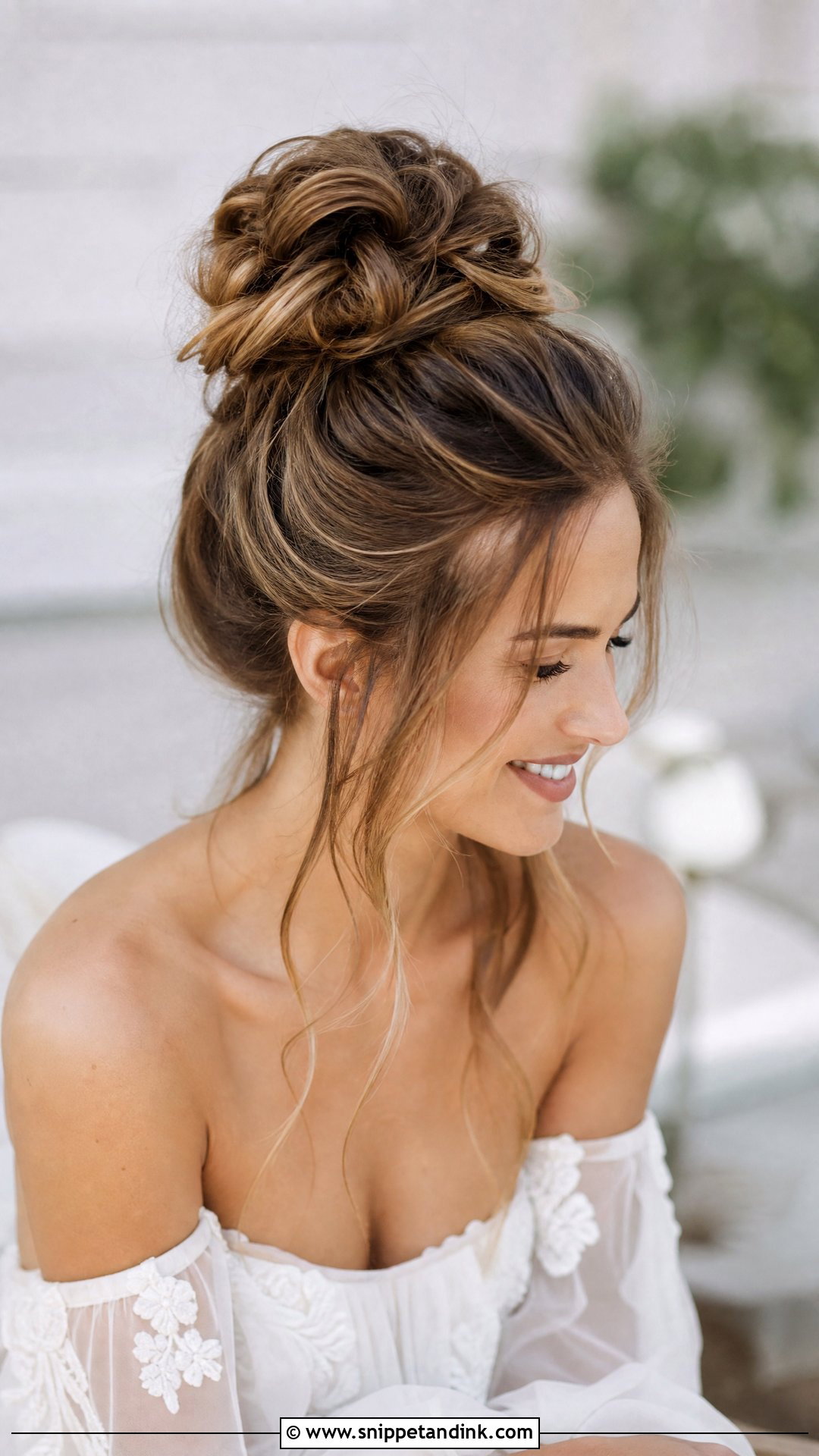
A messy high bun only looks careless if it’s built carefully. I curl or texturise the hair first so there’s grip, gather it at the crown with a strong elastic, then pin the bun in loose loops rather than a tight twist, pulling a few pieces out at the temples and nape. Rustic and outdoor weddings suit the relaxed finish. The weight sits high, so very long, heavy hair can drag it back by evening; for that hair, a slightly lower position wears better. Tiny pearl pins dress it up.
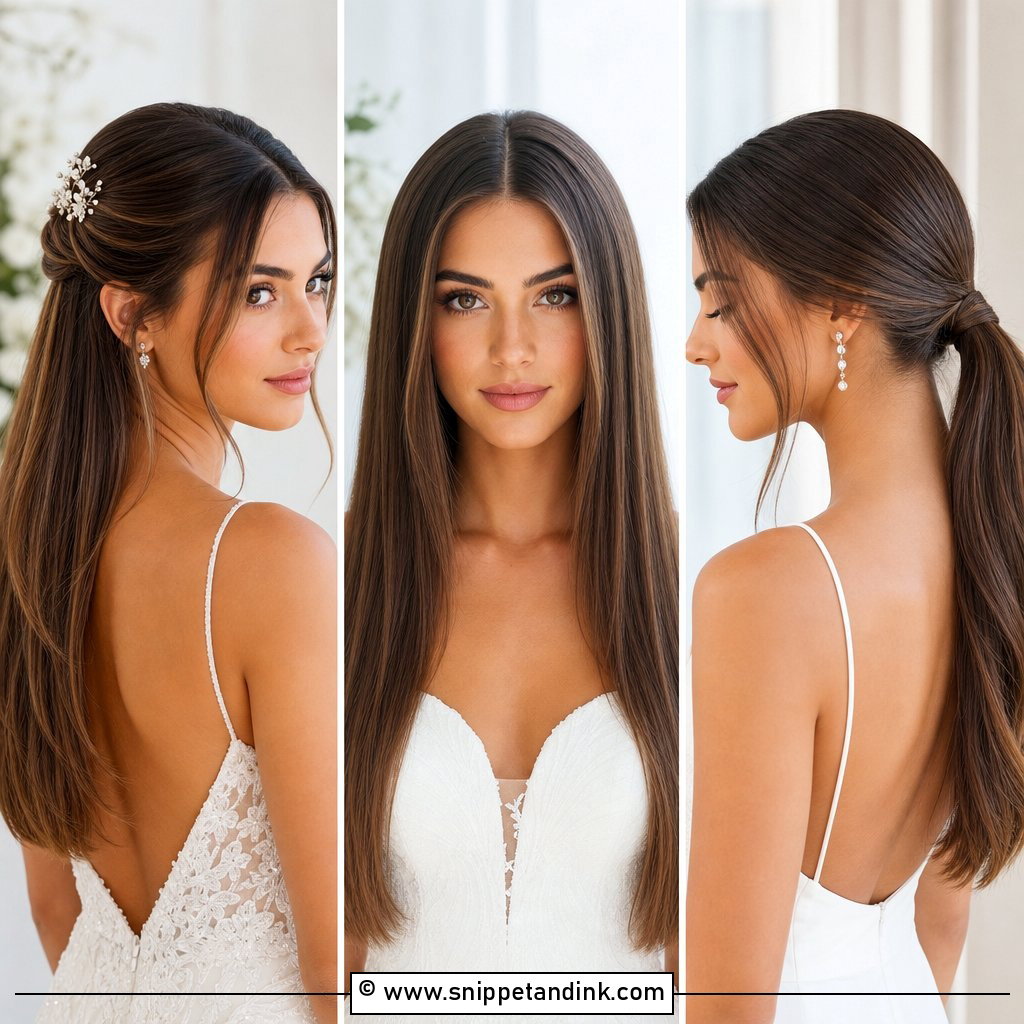
6. Half-Up Half-Down With Soft Waves
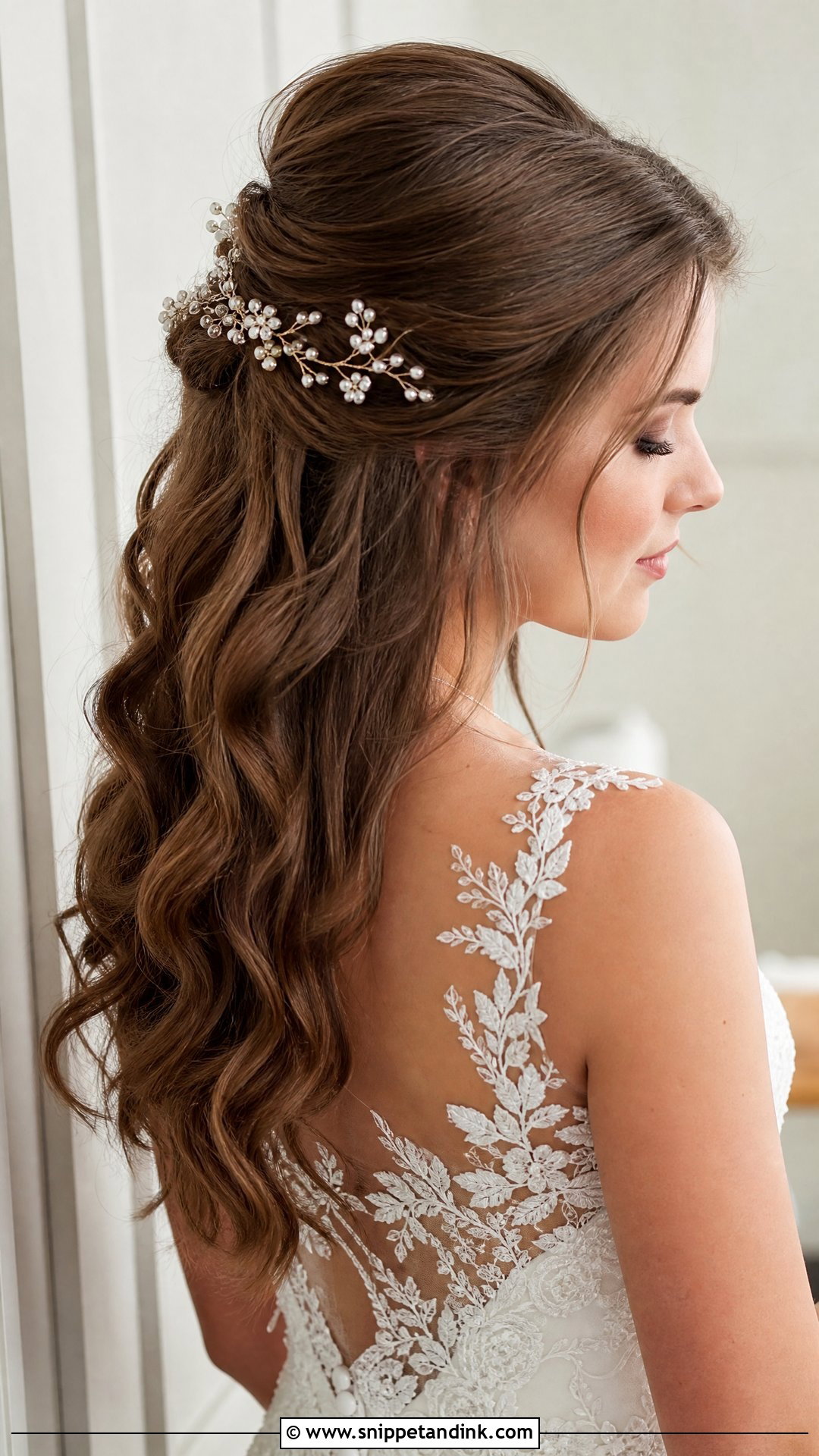
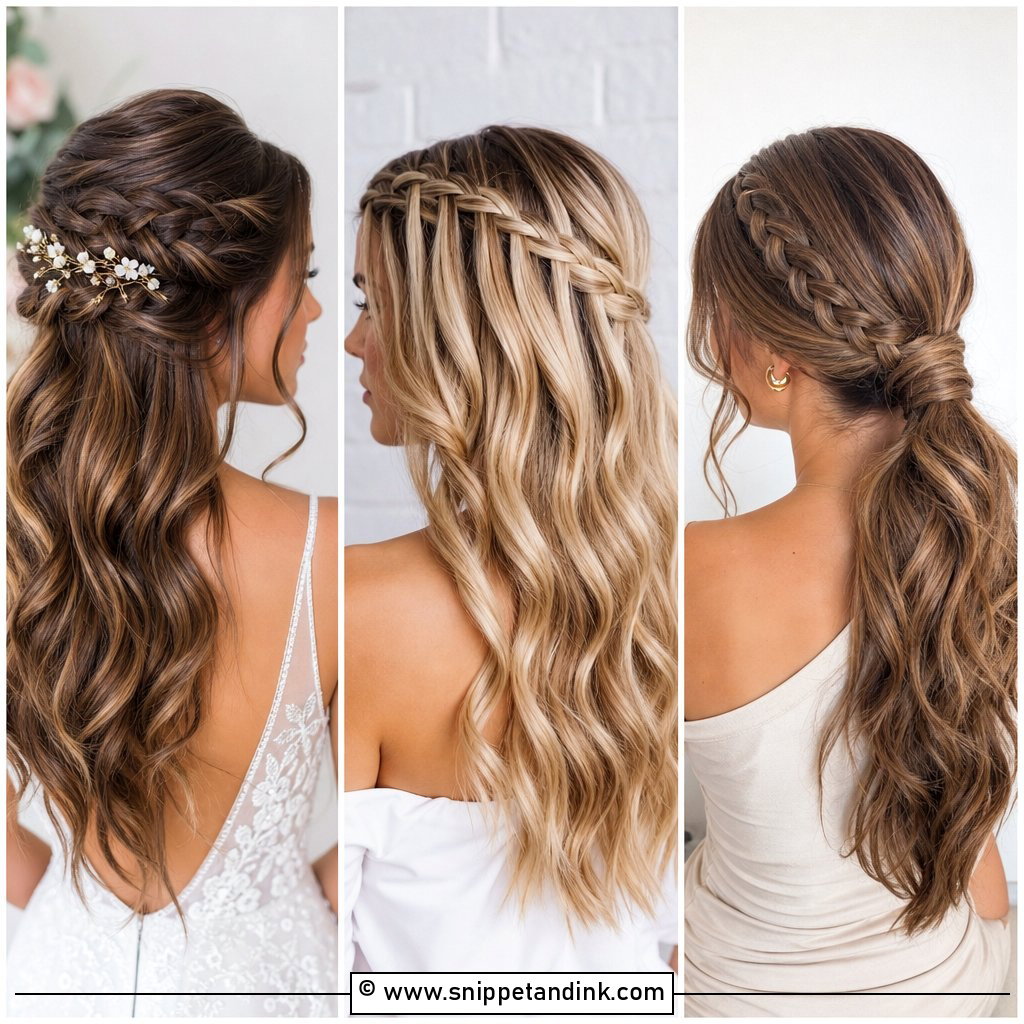
Half-up, half-down is the answer when a bride can’t choose, and it’s the style I adjust most for face shape. A little height at the crown lifts a round face; keeping it flatter suits a long one. The top section is secured with crossed pins hidden under a loop of hair, so the weight of the waves below doesn’t pull it down. It works with a tiara, hair vine or simple clip. On very fine or very short layers, the half-up section can look thin, so clip-in wefts underneath are worth considering.
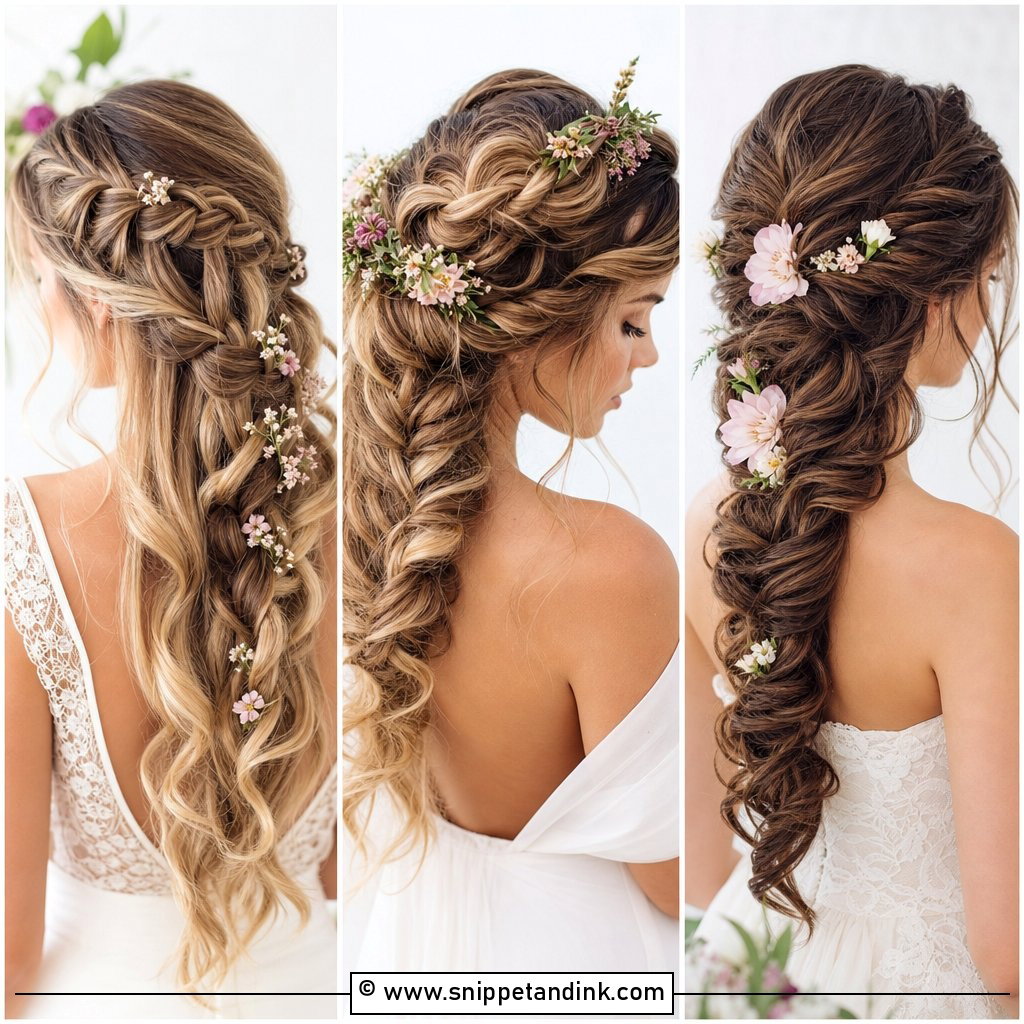
7. Boho Low Bun With Greenery
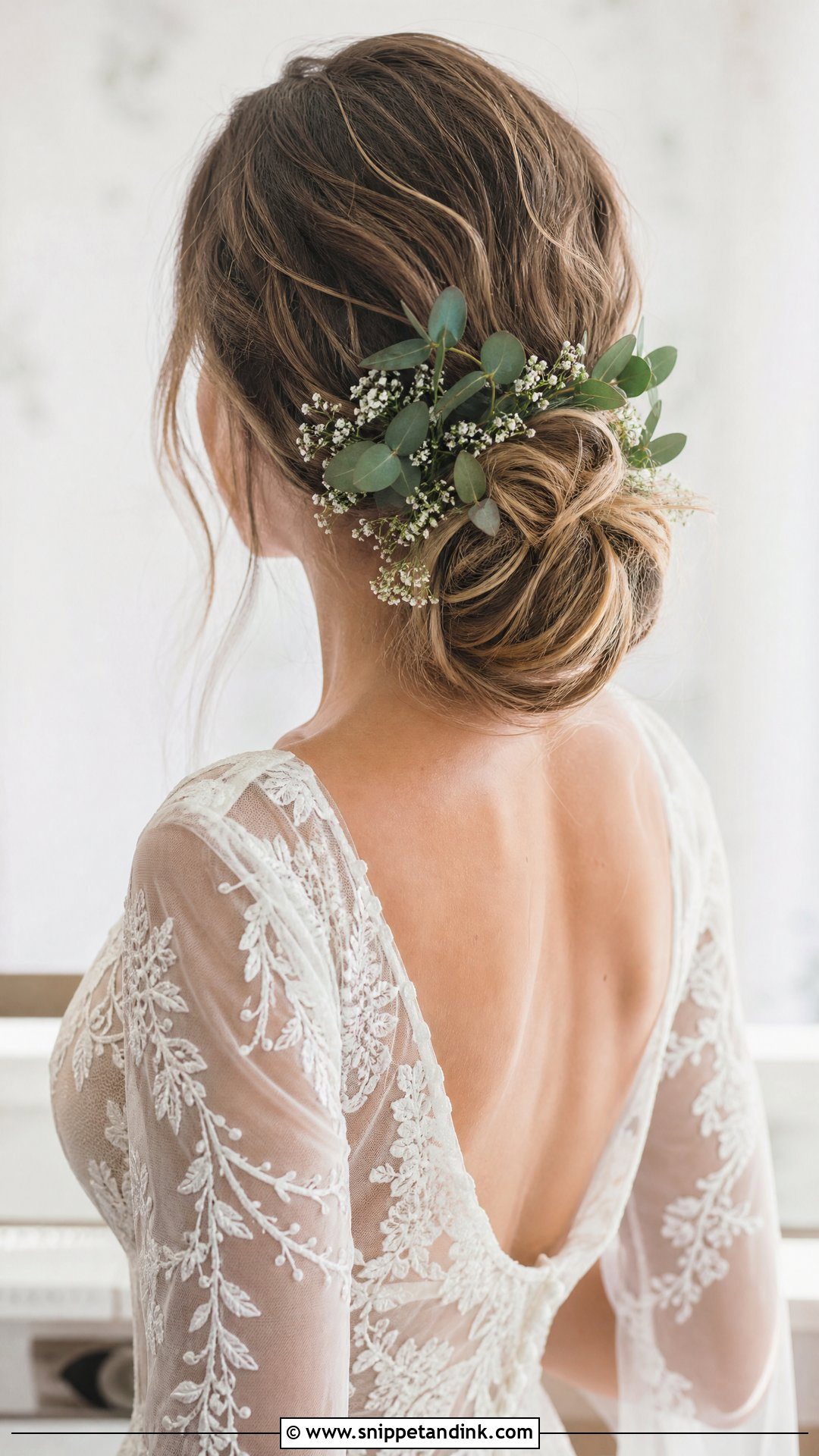
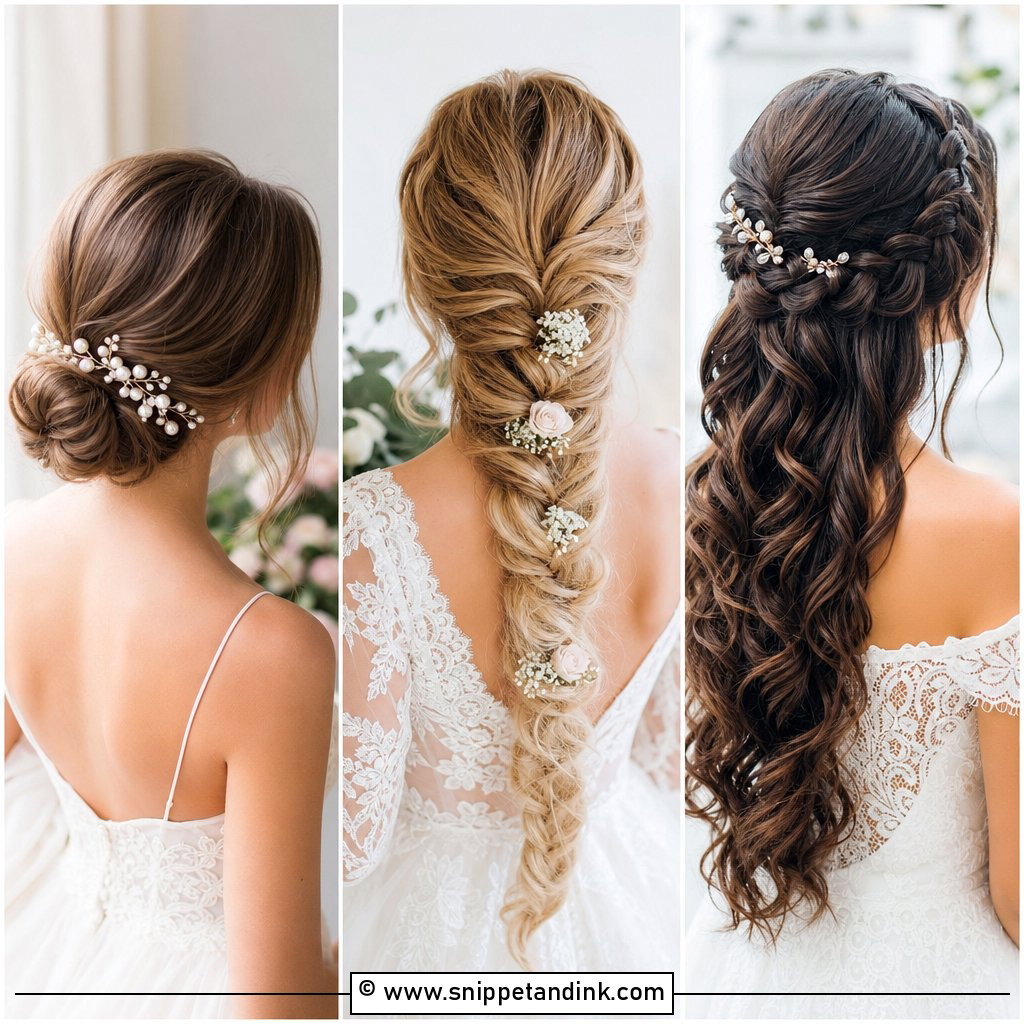
The boho low bun sits at the nape, built from loose twists and pinned sections rather than one tidy knot. Strands of greenery, baby’s breath or delicate wildflowers go in last. Fresh flowers wilt under warm lights, so I work with a florist on hardy stems, or wire them, and pin them in at the very end of styling. Face-framing tendrils finish it. Outdoor and rustic weddings are its natural home. If your hair is very slippery, a dry texture spray before twisting keeps the shape from sliding down your neck.
8. Face-Framing Waves With Pulled-Back Front
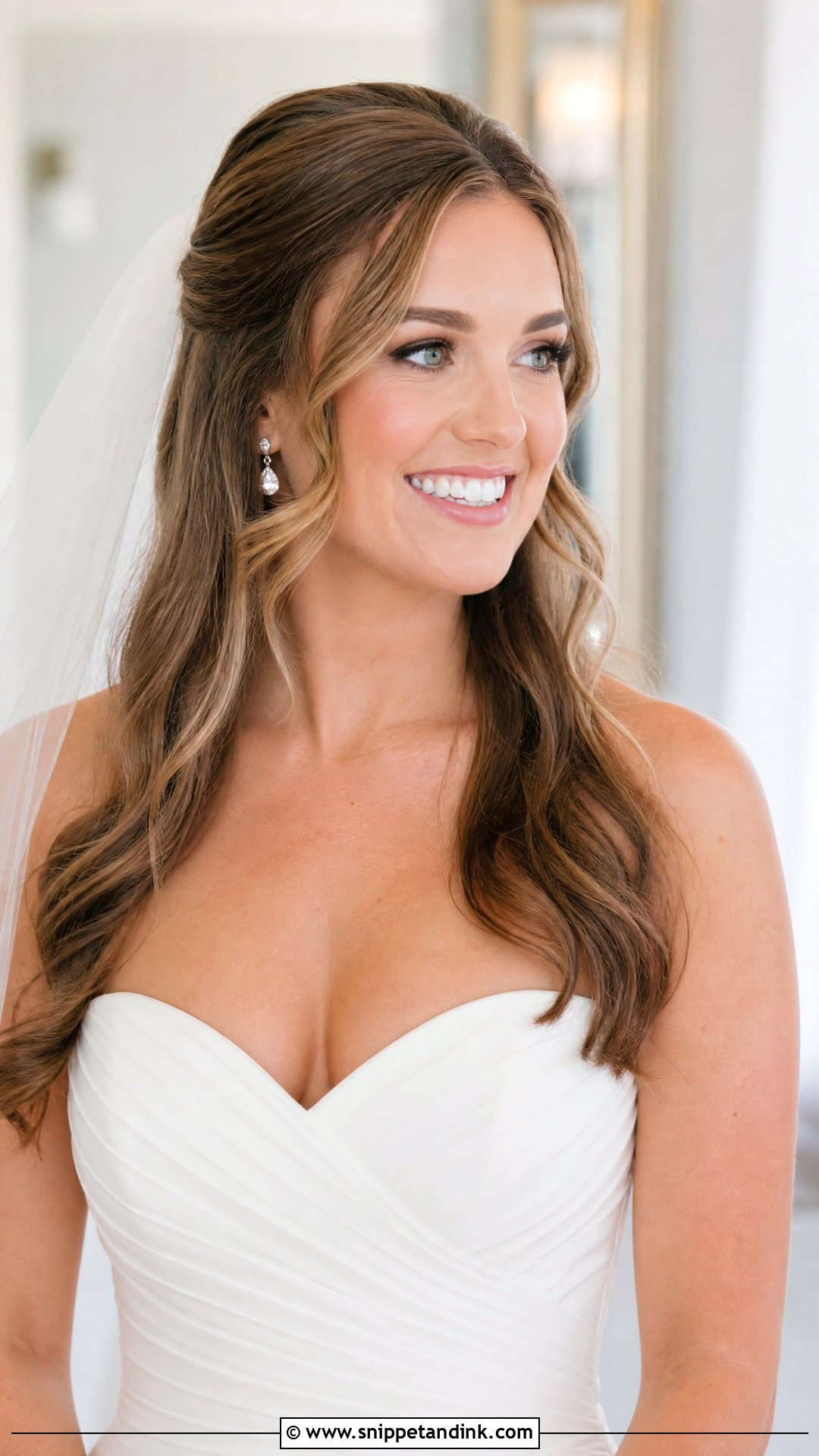
Pulling back the front pieces while leaving the rest in waves is one of the most practical styles here, because nothing sticks to your lip gloss in the wind. I sweep the front sections back, pin them behind the ears or at the crown, then curl through the lengths. It shows your face fully, which helps with photos where you’re looking down at your bouquet. It works with a veil or accessories. Bobby pins can show on light blonde hair, so I match pin colour to the hair, not the other way round.
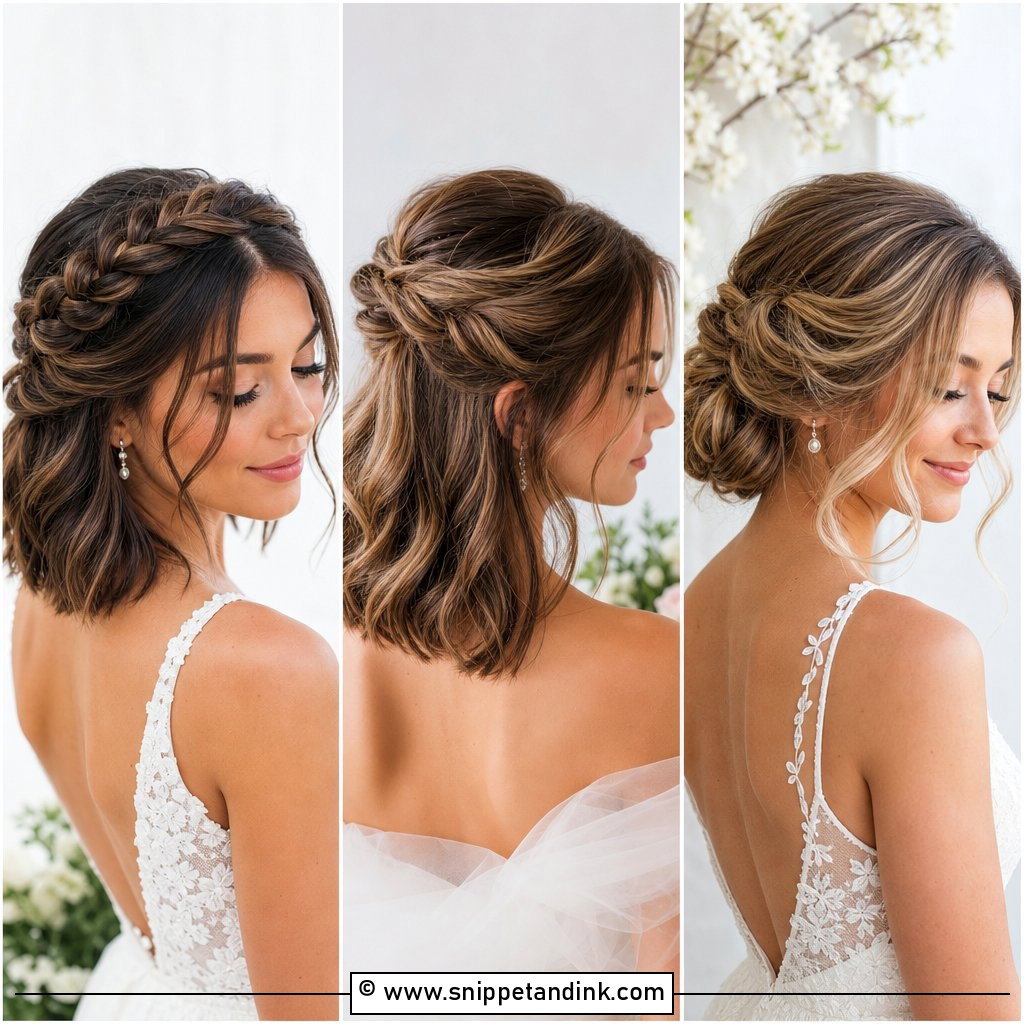
9. Romantic Braided Crown
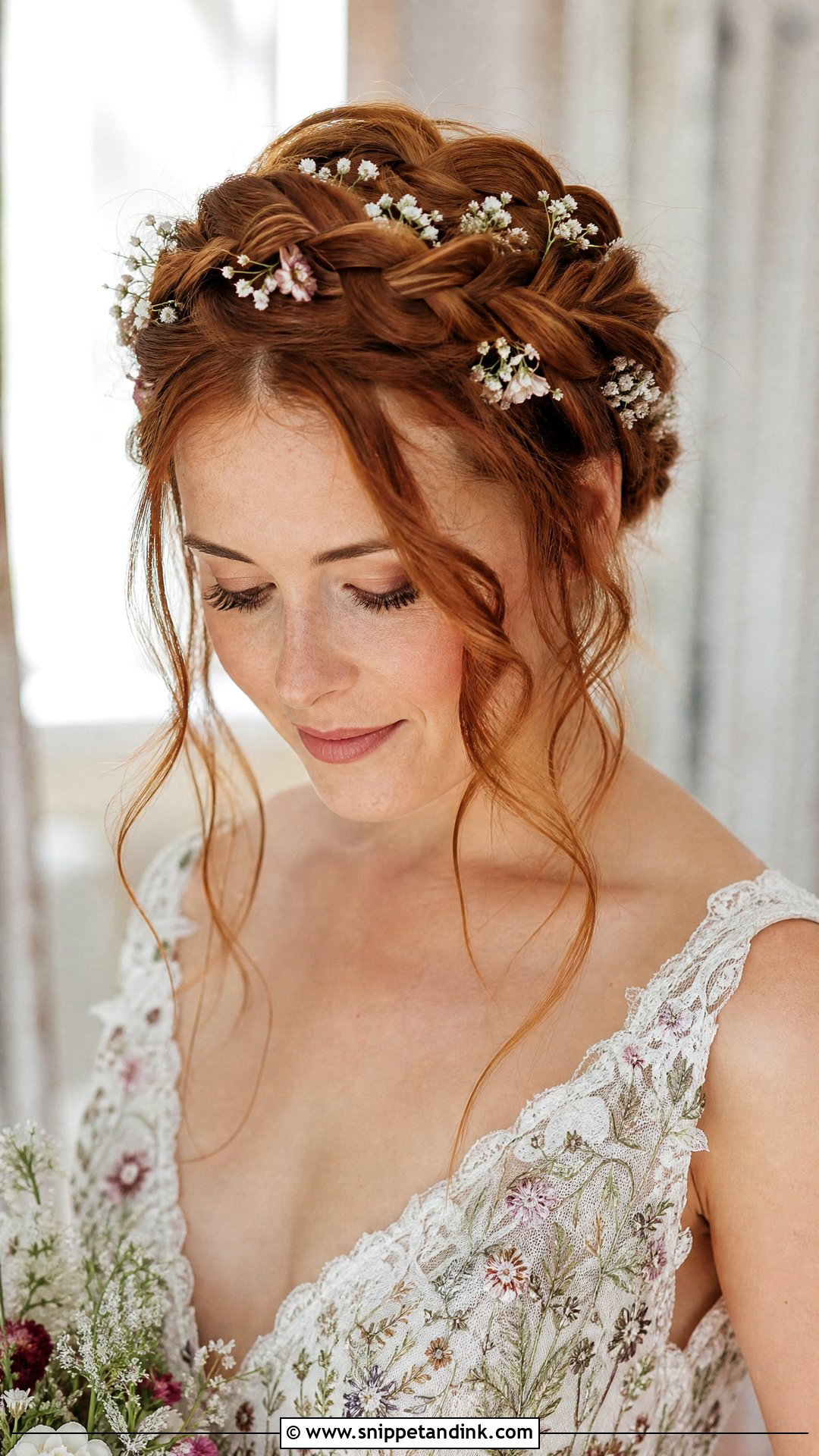
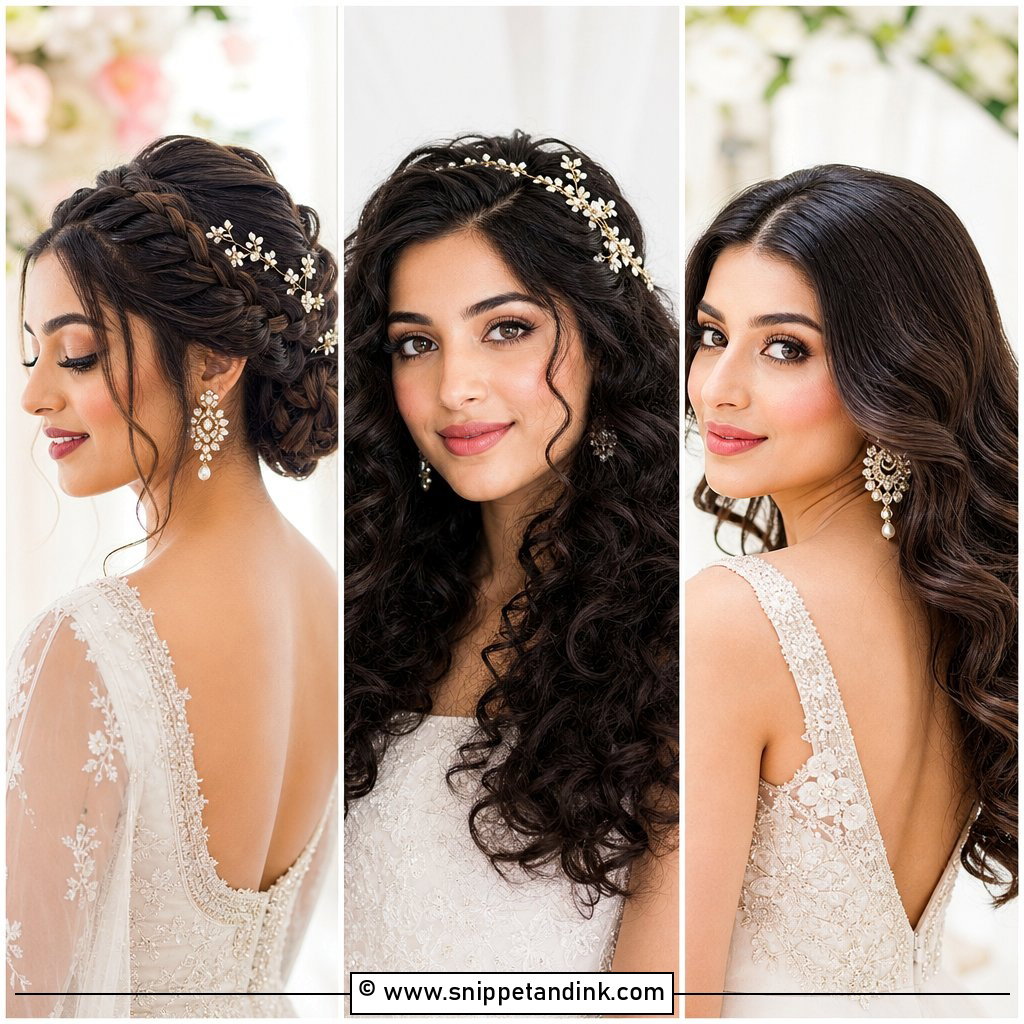
A braided crown needs length; hair should reach at least the shoulder blades to wrap all the way around. I braid from one side, pin the plait across the top of the head, then pancake the braid by gently pulling the outer loops to make it look fuller. Tight and neat or loose and lived-in both work. It keeps every strand off the face, which matters in heat. Layered hair is the challenge, as short layers poke out of the plait, so I use a little pomade on each section before braiding. Small flowers or pearls tuck in neatly.
10. Low Chignon With Side Part
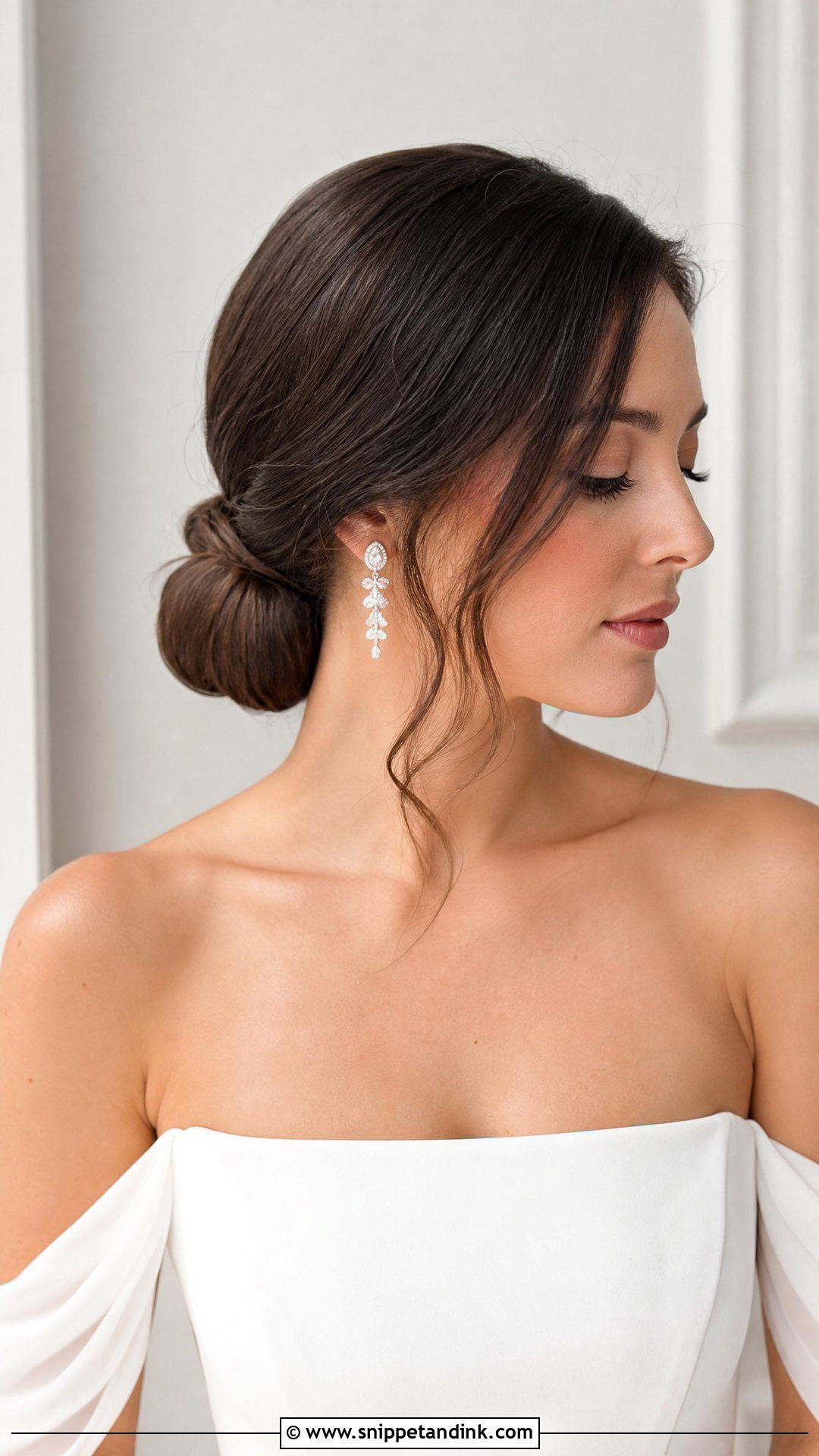
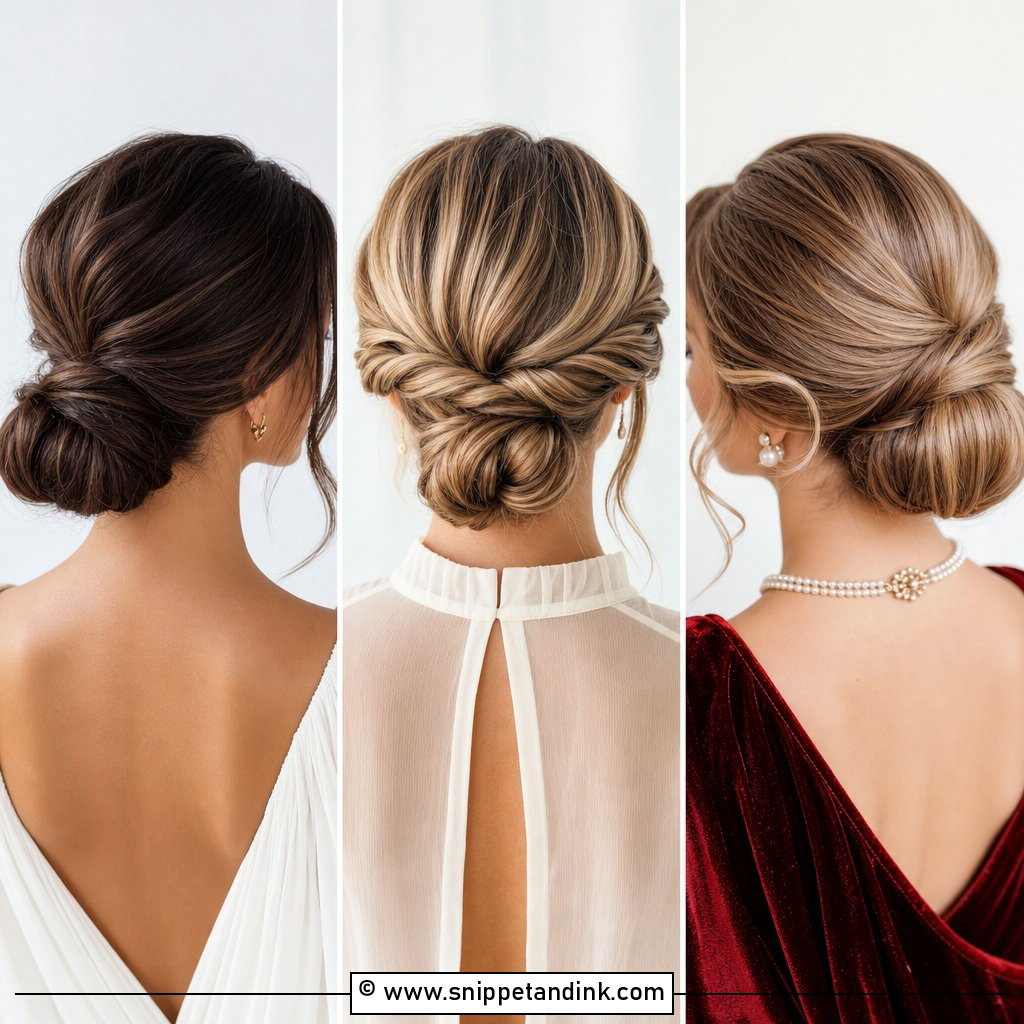
A low chignon with a deep side part gives a slightly asymmetric line that flatters most faces. This elegant knot sits at the nape, so it doesn’t clash with a veil comb above it. I set a light curl through the hair first; even a sleek chignon pins more securely on hair with a bit of grip. A few loosened strands at the front stop it from looking severe. It holds well through a long day and suits both small and large weddings. Shoulder-length hair can usually do a smaller version with a padding underneath.
11. Long Sleek Straight Hair
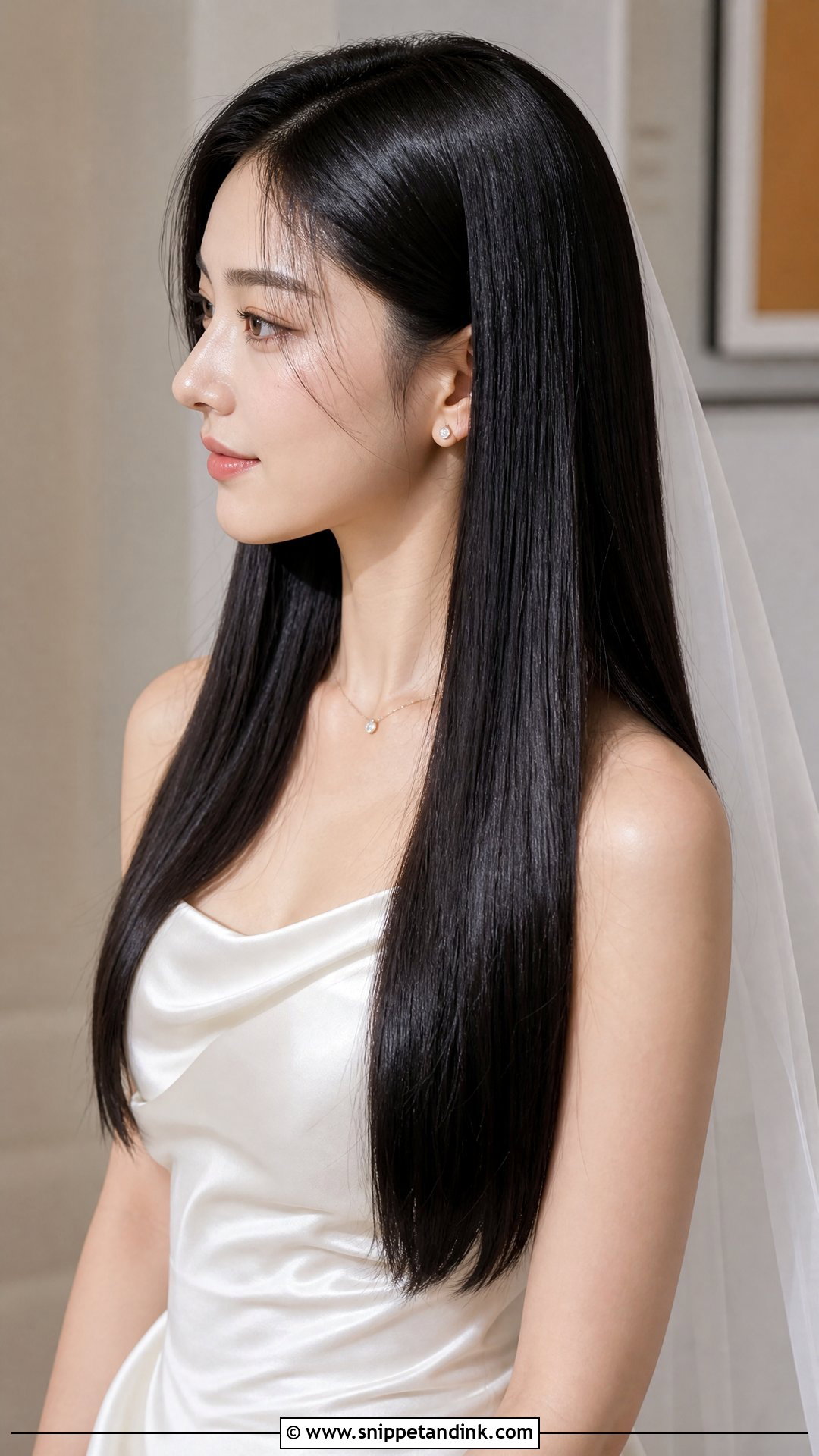
Long, straight, glossy hair is the simplest look and the least forgiving. Every split end shows, so book a trim four to six weeks before, not the week of, so the cut can settle. A blow-dry with a round brush, a light pass of the flat iron and a few drops of serum on the lengths give that mirror finish. Centre or deep side parts both suit it. The weak spot is humidity: straight hair can frizz or kink within an hour outside, so it’s better suited to indoor venues. Pair with a sleek gown and minimal jewellery.
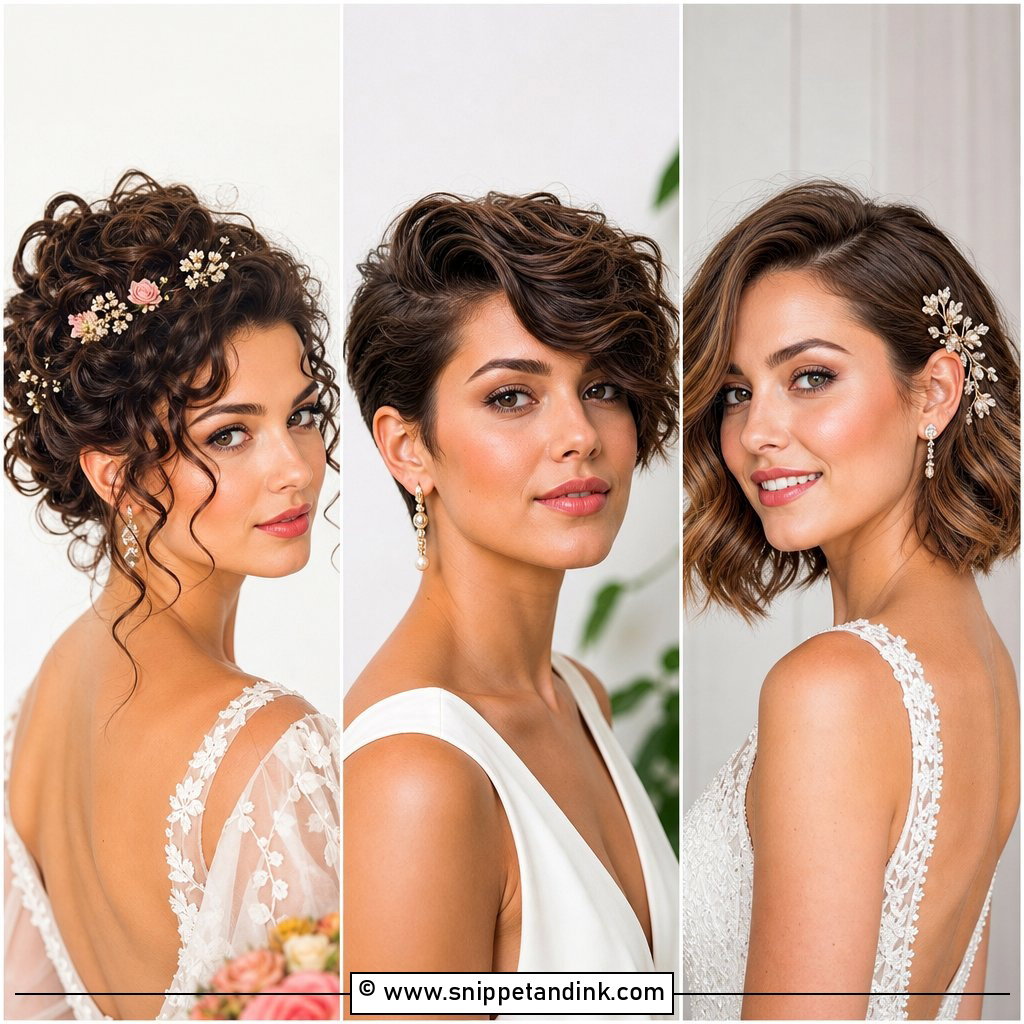
12. Soft Curls With Volume
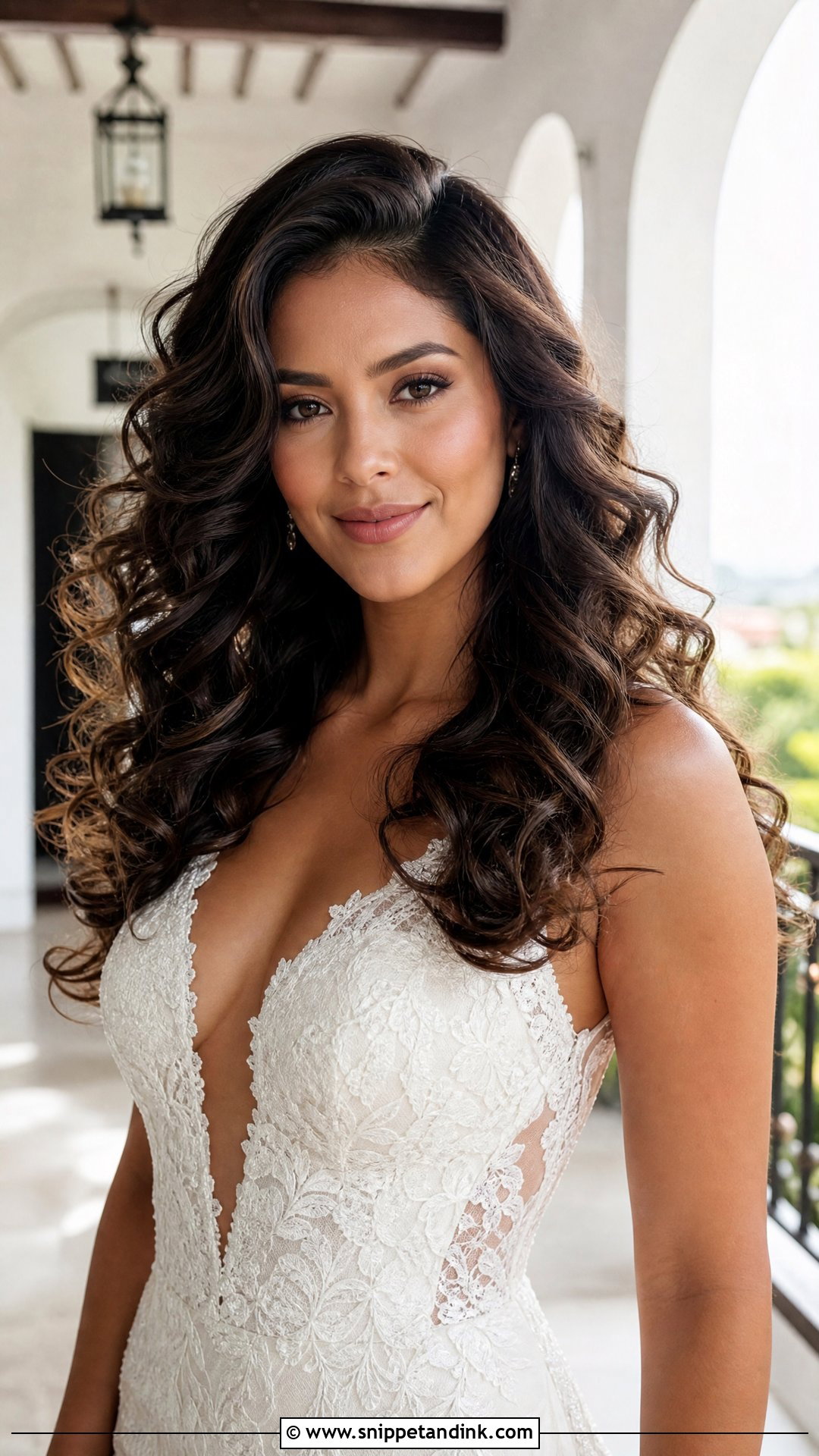
Soft, bouncy curls with real volume suit naturally wavy and curly hair best, because the texture is already there to build on. I add root lift with mousse and a round brush before curling, then break the curls up with fingers rather than a brush so they stay defined. Wear them down your back or pinned to one side for a vintage feel. On very thick hair, volume can tip into width; I keep the sides flatter and let the length carry the fullness.
13. Boho Braided Half-Up
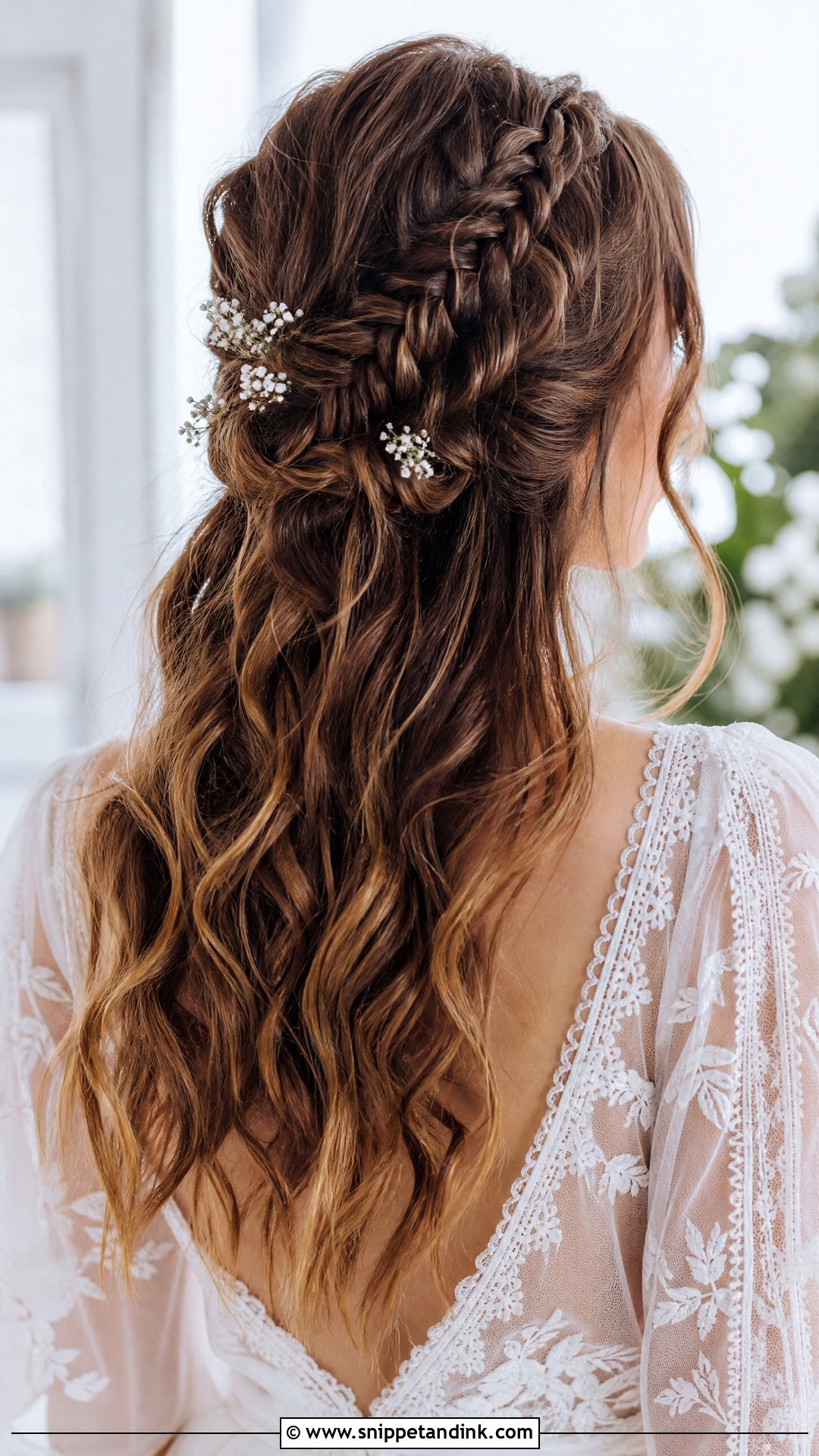
The boho braided half-up combines small braids through the crown with loose waves underneath. I braid the side sections back and join them at the back of the head, which keeps the face clear and hides the pins under the plaits. It suits longer hair and outdoor weddings. Tiny blooms, ribbon or beads can be threaded into the braids. If you’ll wear a veil, we test where the comb sits at the trial, because pinning it into a braid often pulls the plait out of shape.
14. Sleek Low Ponytail
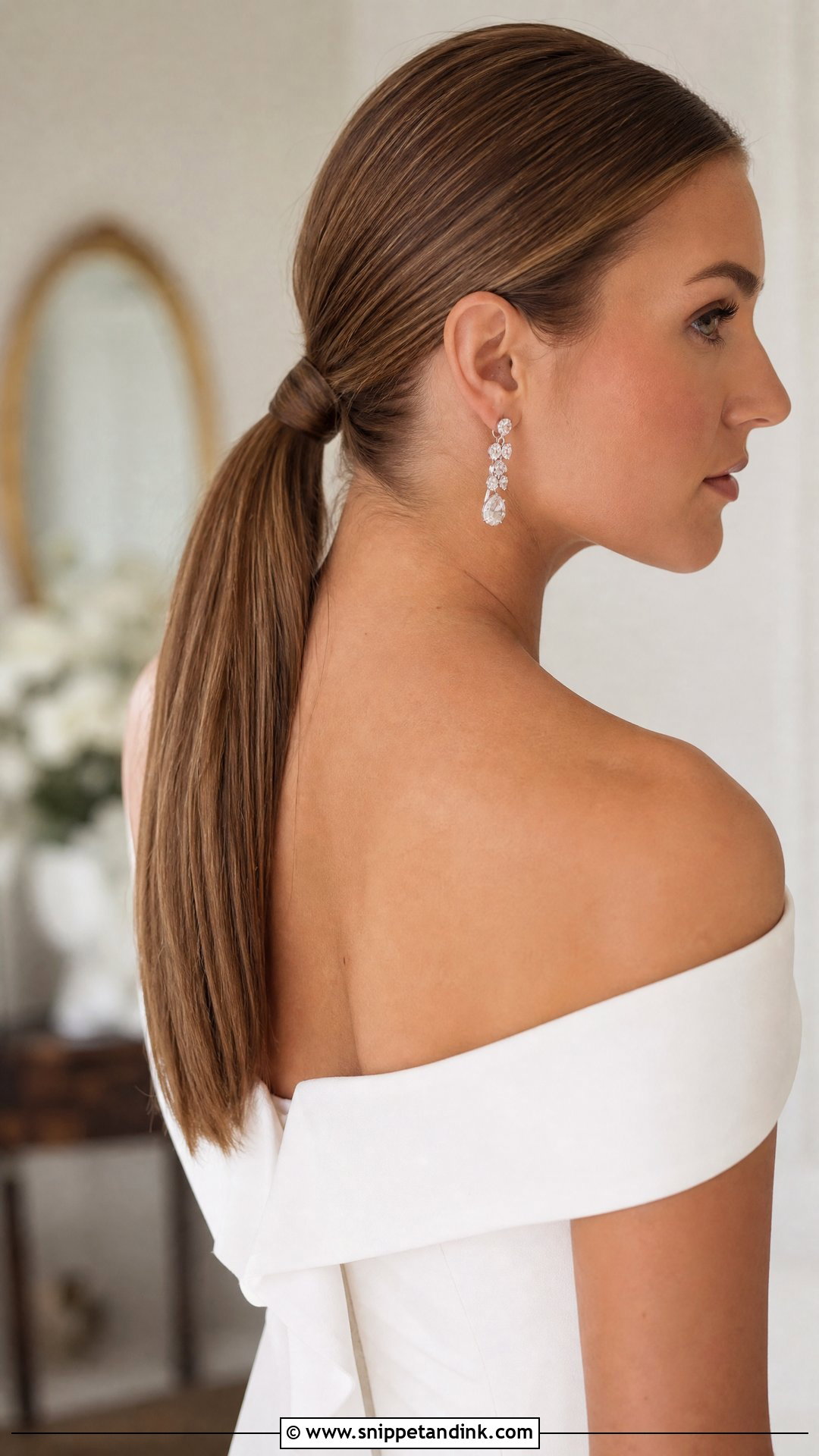
A low ponytail is quick to explain and hard to make perfect. The elastic sits right at the nape, the hair is brushed smooth with no bumps, and a section of hair wraps around the base to hide the band, pinned underneath. Straight and glossy or softly waved, both suit it. I’d steer you away from it if your hair is very fine at the nape, as gaps can show. It stays neat all evening and pairs with statement earrings and structured gowns. Chunky or layered hair may need a second, hidden elastic halfway down.

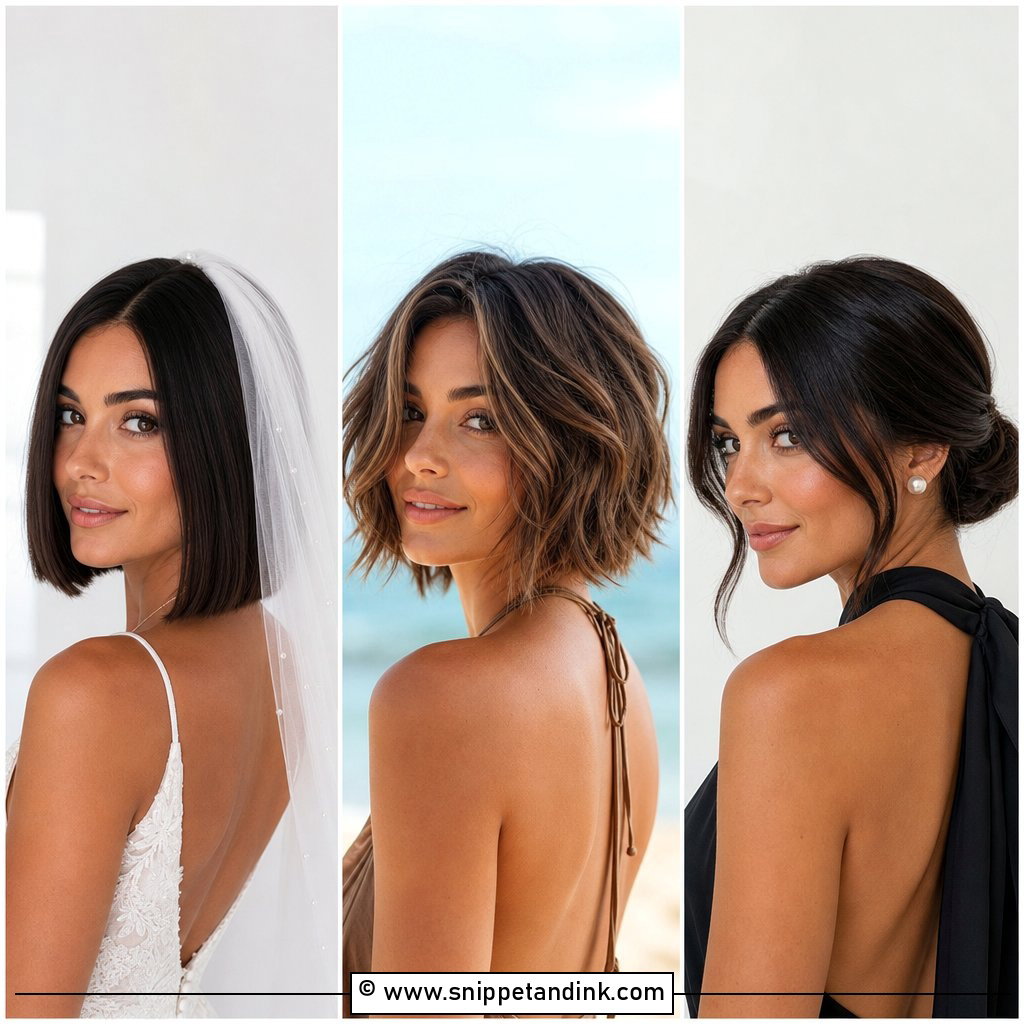
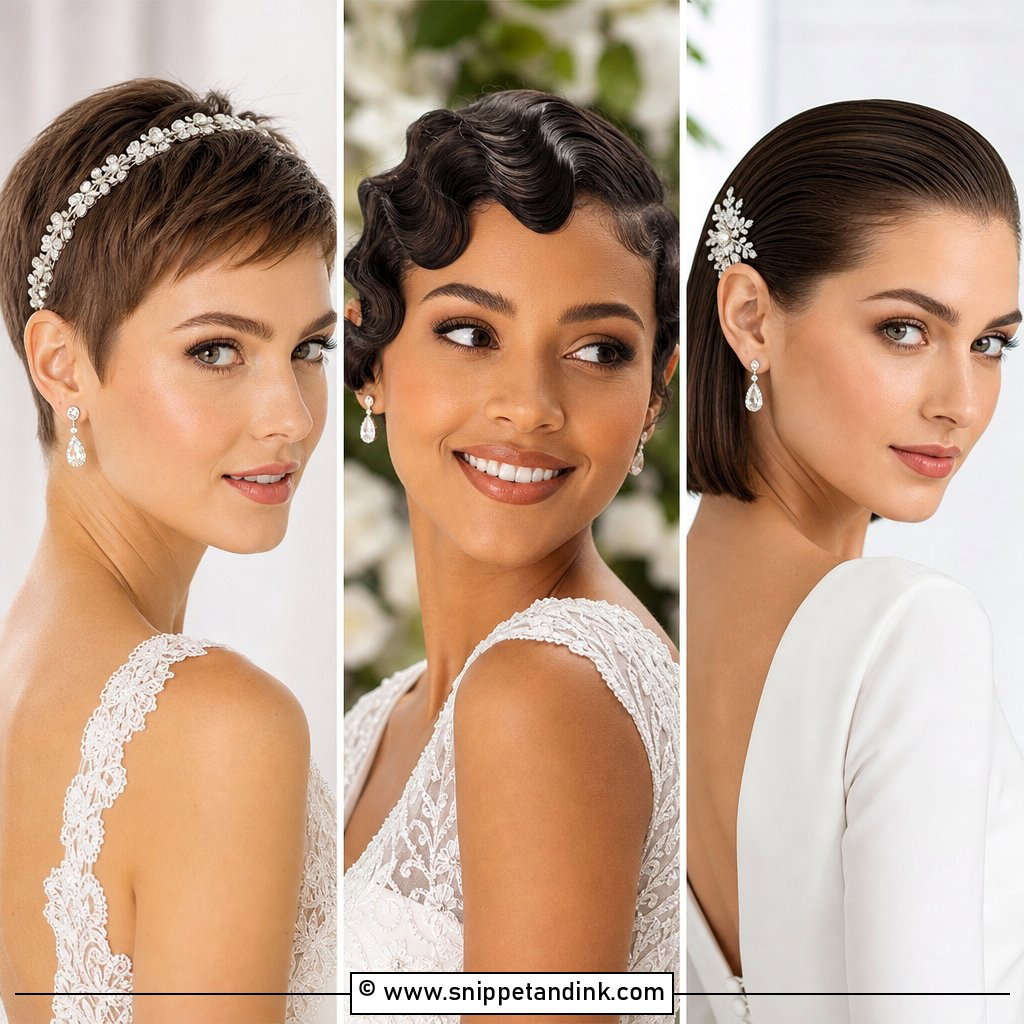
15. Vintage Finger Waves
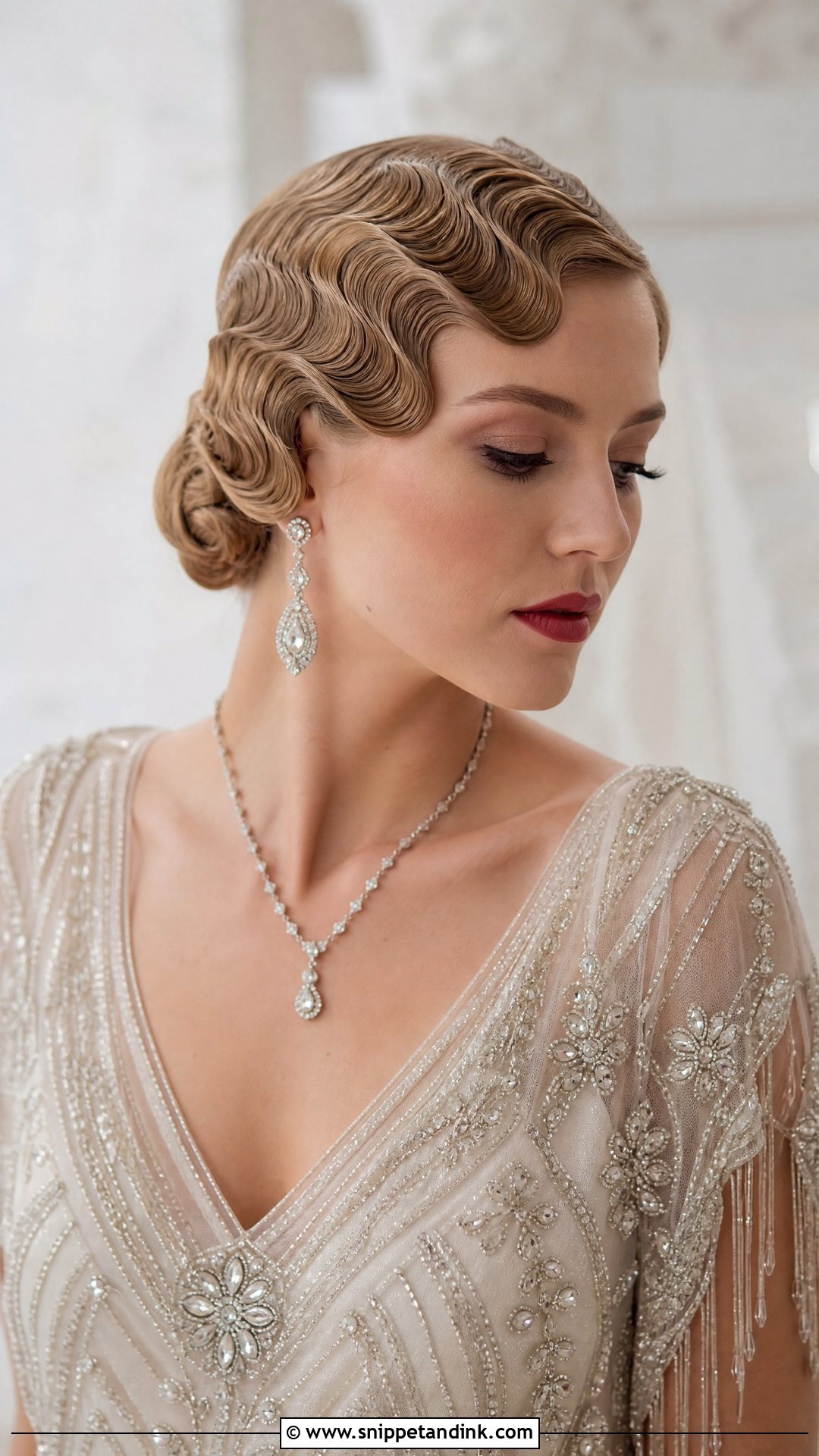
Finger waves are a set style: the hair is moulded into S-shaped ridges while wet with gel, clipped, and dried, so the setting and drying take a good chunk of your morning. They work on short hair or as a sculpted front section with a low bun behind. This is a specialist technique, so ask to see your stylist’s own finger-wave work before you book it. They suit vintage and Art Deco weddings and statement jewellery. Once set, they hold extremely well, though they can’t be easily changed later in the evening.
16. Textured Updo With Loose Pieces
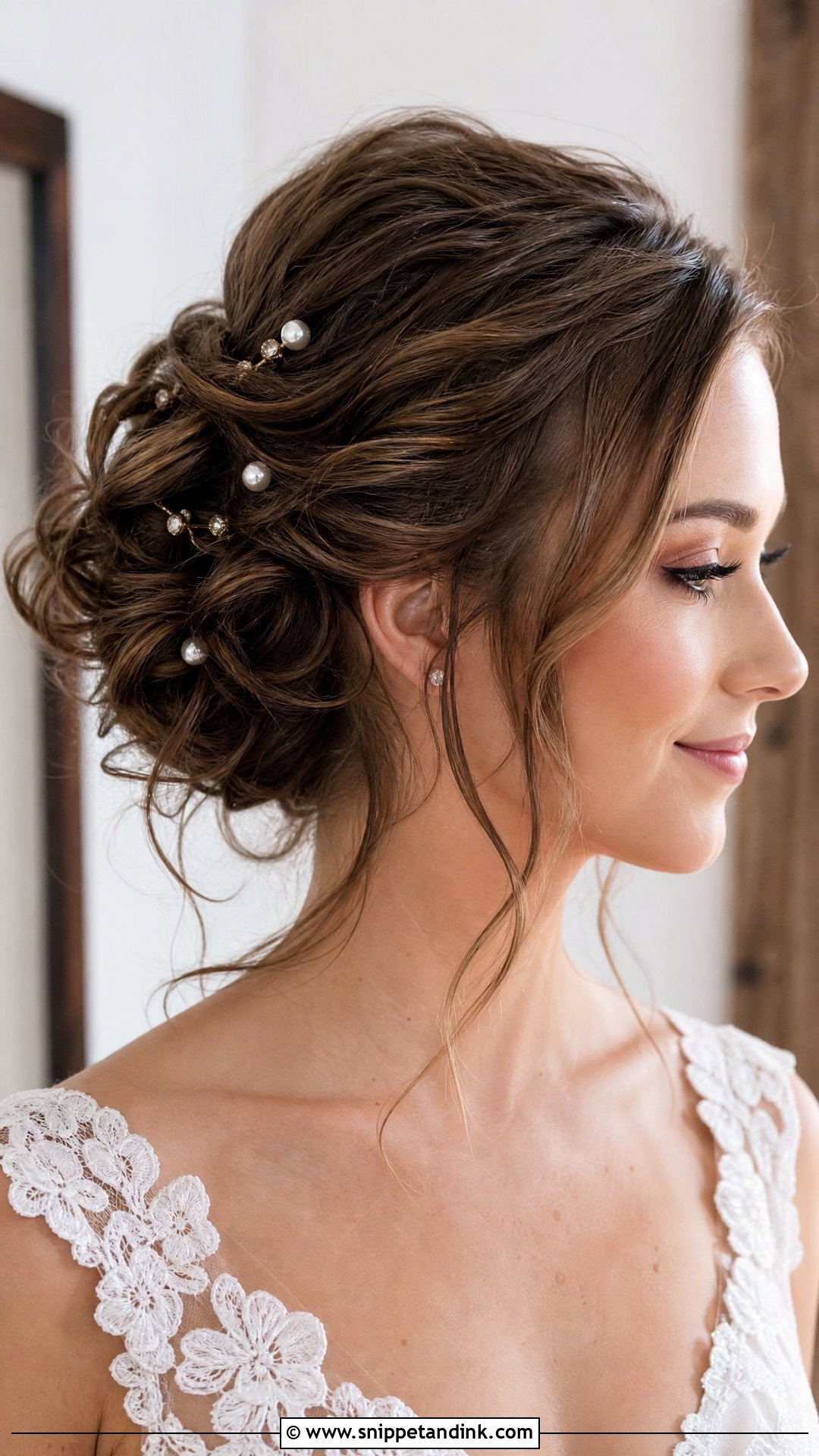
A textured updo with loose pieces is the style I’d pick if you want an updo that doesn’t look pinned. I curl the hair first, tease the roots lightly, then pin sections in a loose, dimensional shape, keeping a few strands free at the face. Because it’s meant to look relaxed, small slips during the day just blend in, which makes it one of the most forgiving choices for a long wedding. Pearl pins or a decorative comb add detail. It works for rustic and modern weddings alike.
17. Curly Updo For Natural Hair
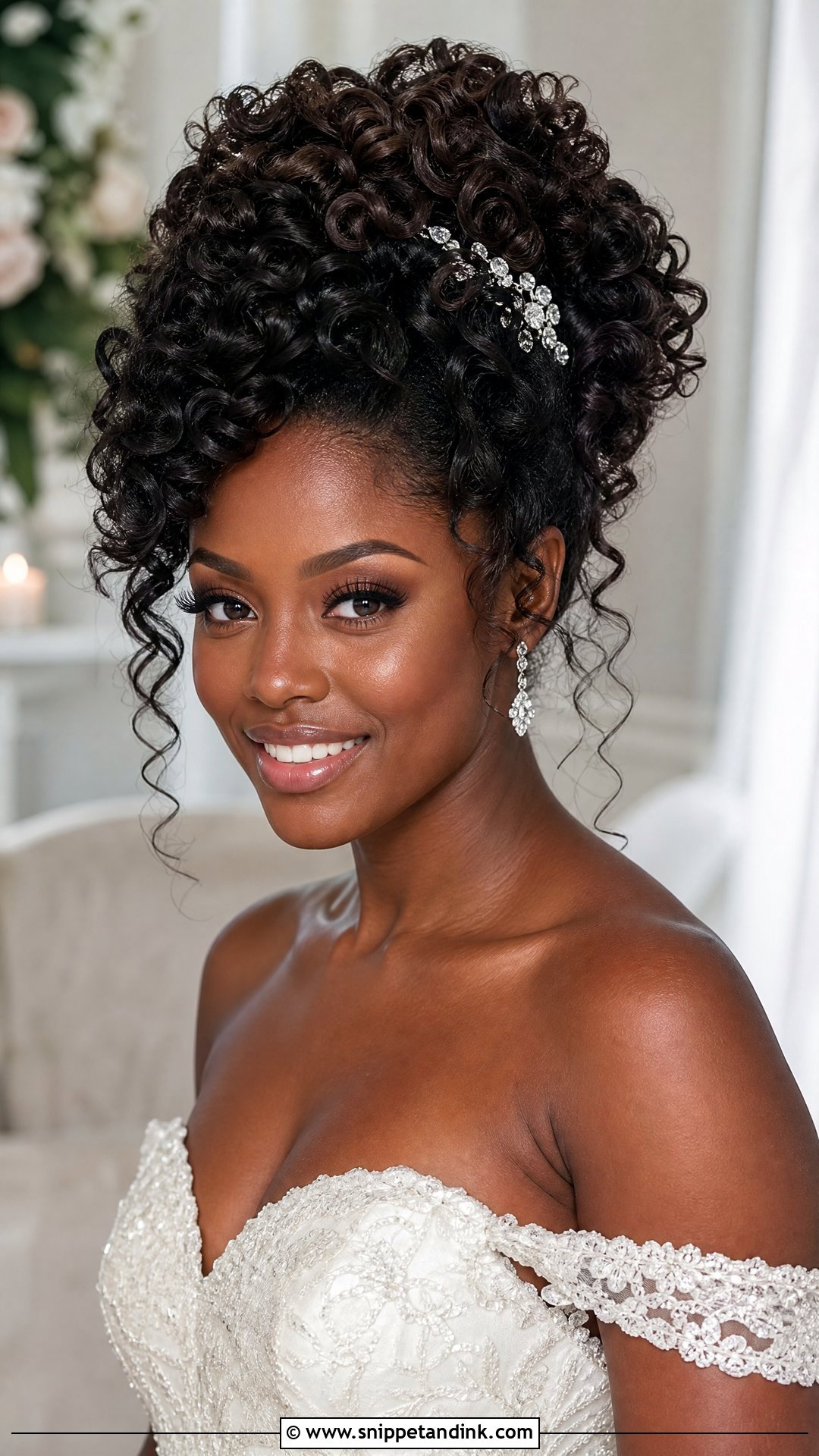
A curly updo for natural hair starts long before the wedding day. I’d rather work with coils that have been washed, deep-conditioned and stretched or set a day or two before, so the curls are defined and the hair isn’t fresh-wash slippery. The coils are gathered, high or low, into a full sculpted shape and secured with large pins rather than tiny bobby pins, which disappear into the hair and slide out. A few loose curls can frame the face. It keeps hair off the neck in warm weather. A jewelled pin or fresh flowers finish it.
18. Pinned Back Waves With Veil
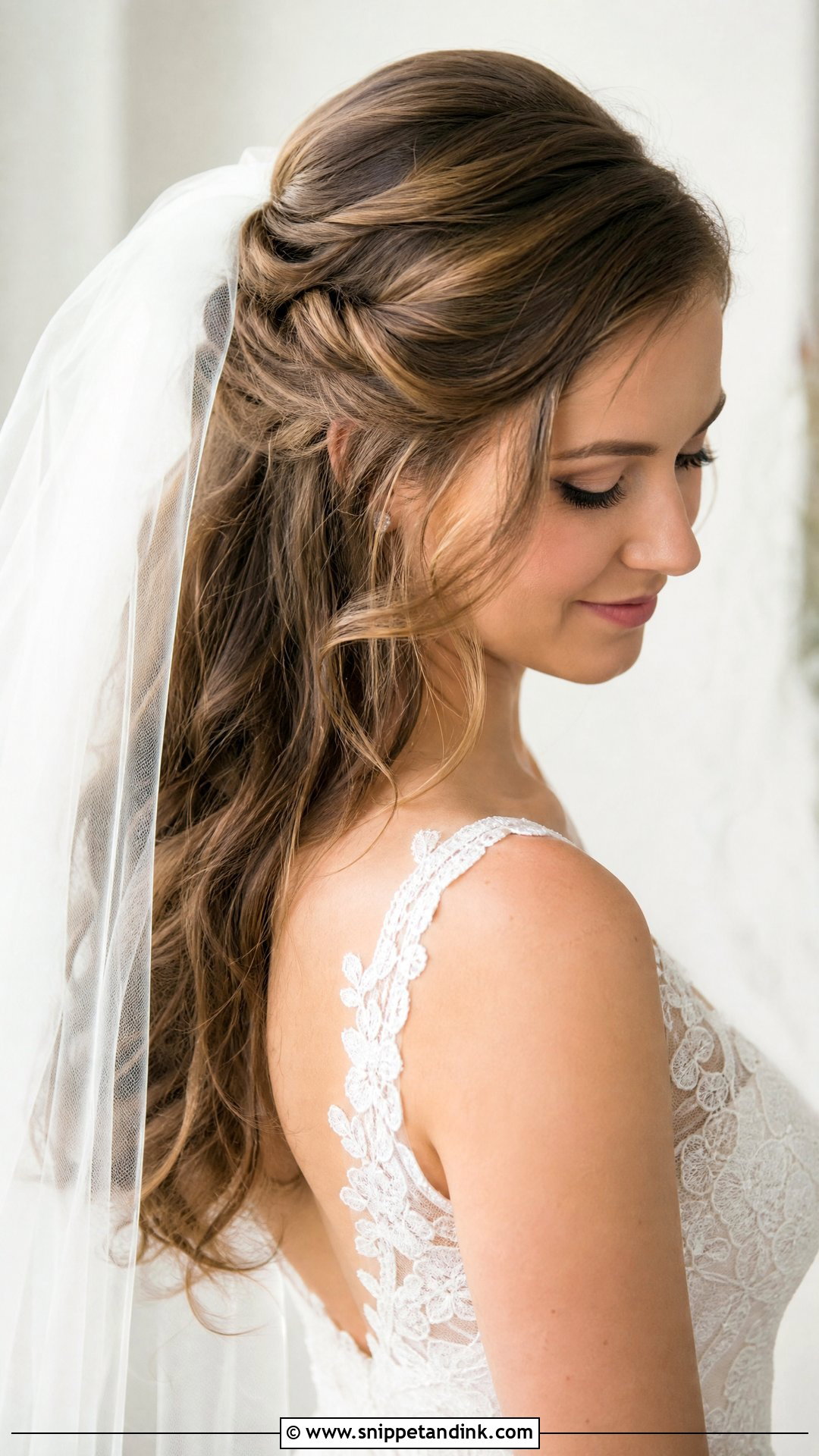
Pinned-back waves under a veil is one of the styles I plan around the veil comb first. The front sections are swept back and pinned, creating a firm base where the comb can grip. Then the lengths get curled, and the veil goes in last. It gives you hair partly down that still looks fully styled. When the veil comes off at the reception, the pinned sections stay put. Long cathedral veils are heavy, so I add extra crossed pins at the anchor point.
19. Side-Swept Curls
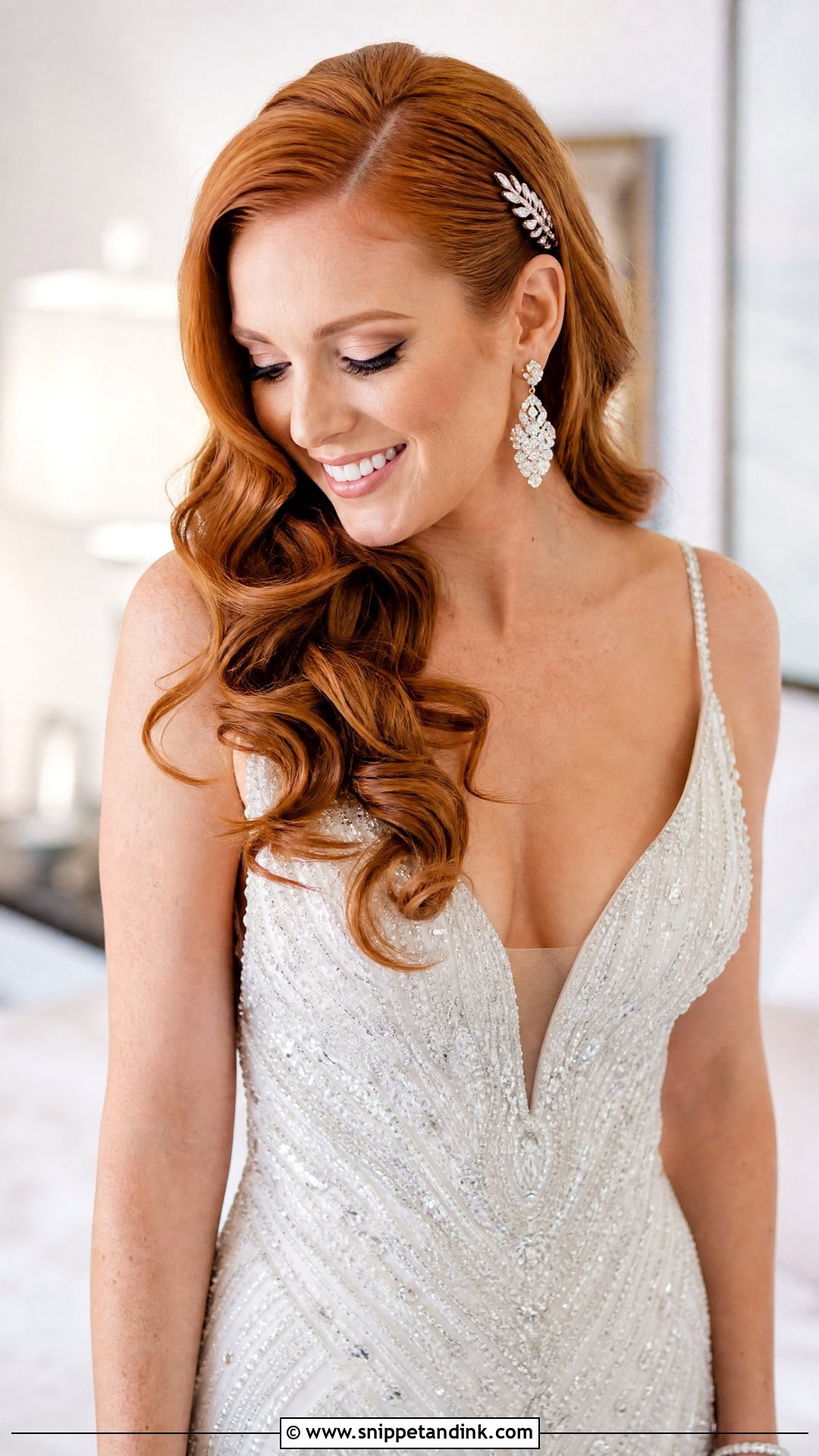
Side-swept curls gather everything over one shoulder, which means the back and opposite side need hidden pins to keep the shape from sliding. I pin a line of crossed pins behind one ear, curl the hair, then sweep and pin it over. It’s dramatic and good for photos where you’re angled. Wear an earring on the bare side, and a sparkly clip near the part if you want more. Heavy hair drags the curls back toward the centre by evening, so this suits medium to fine density best.
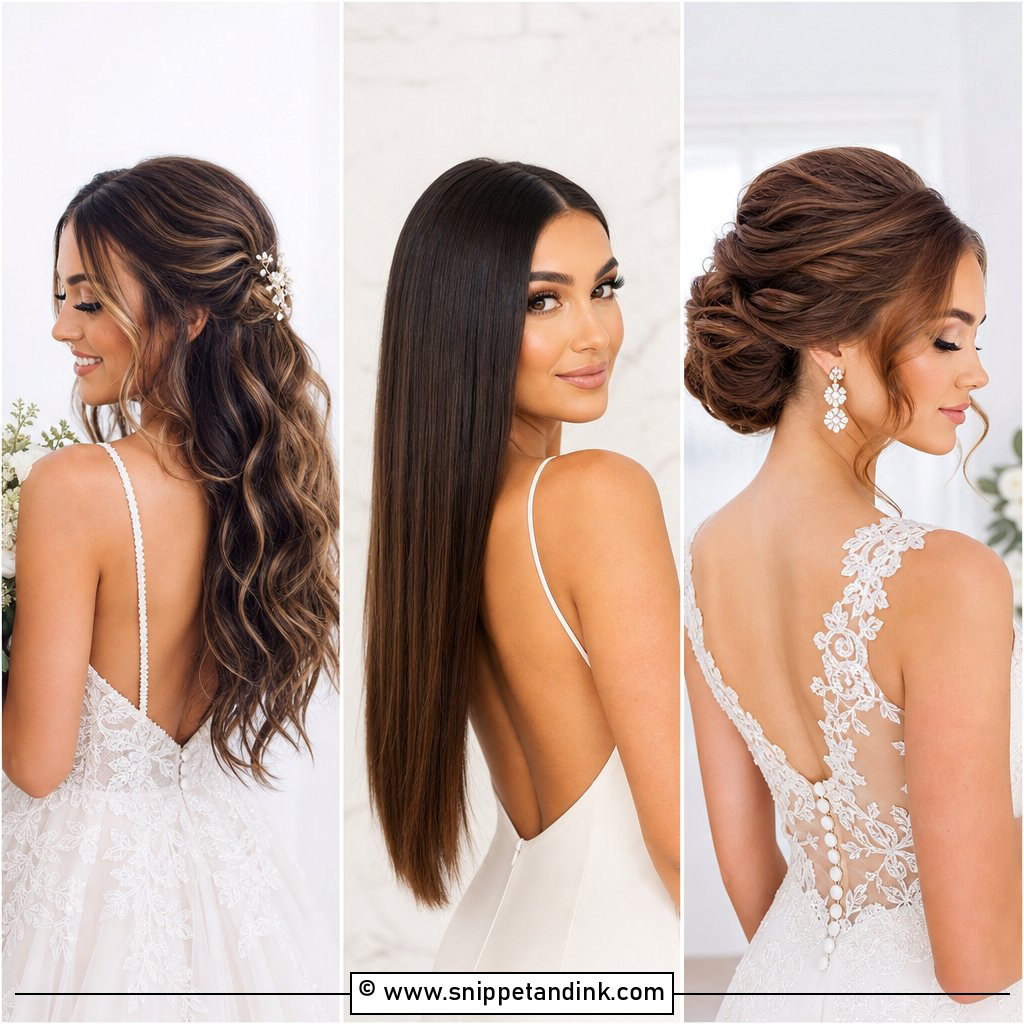
20. Low Bun With Hair Accessories
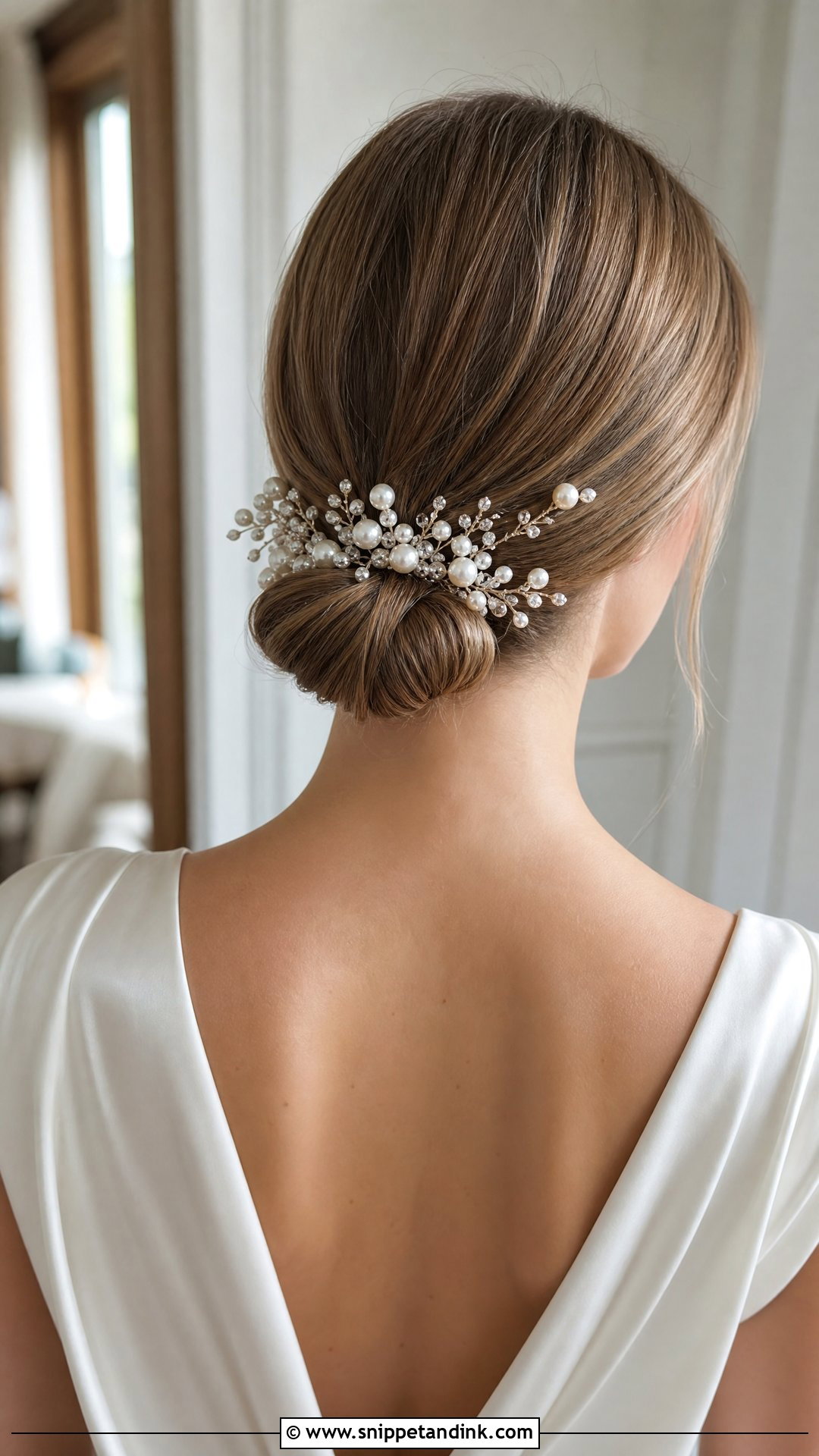
The accessorized low bun makes a simple knot feel personal. The bun sits low at the nape and is finished with pearls, jewelled combs or small flowers. Accessories need anchoring: a comb only holds if it slides into a pinned base, not loose hair. Smooth and polished or slightly loosened both work. It suits almost any wedding style, from classic to boho. Bring the accessories to your trial so we can decide placement and check the weight.
The Trial Checklist I Give Every Bride
A trial is where we find out whether a picture will work on your hair, so I ask brides to come prepared. A rushed trial with no references usually leads to a second one.
- Hair washed and fully dry, with no heavy oils or leave-in, unless your stylist asks otherwise for curly hair.
- Three to five reference photos, including one you don’t like, so we can see what to avoid.
- A top with a similar neckline to your dress, so we can judge how the style frames your shoulders.
- The veil, comb, pins or flowers you’ll wear, or a close substitute.
- Your makeup done roughly as planned, since hair and makeup are judged together.
- Time afterwards to wear it for a few hours and check how it holds, plus photos from the front, side and back.
Book the trial roughly one to three months before the wedding. Any later and there’s little room to change course; much earlier and you may change your hair colour or length in the meantime.
The Style You Forget You’re Wearing
The right style will look like you, just more finished. Ballerina buns, braids, waves and accessorised knots all share the same 2025 thread: softness, movement and a personal detail or two. Mix elements if one style doesn’t quite fit. Bring photos and your accessories to the trial, and tell your stylist honestly how you wear your hair day to day. The style you forget you’re wearing is usually the right one.
You'll Like These Ideas:


Leave a Reply