
Wearing your hair down keeps you looking like yourself. Your length, your colour and the way it falls around your face all stay in the pictures instead of being wound into a bun. The catch is that loose hair has nothing holding it up except the set, so it needs more planning than most brides expect, not less. When I do a down style properly, it lasts from the aisle to the last song. The fifteen versions below cover waves, curls, half-up details, veils and blowouts, and they suit anything from a ballroom to simple courthouse moments. Aim for your everyday hair on its very best day.
Is Your Wedding Actually a Hair-Down Day?
Loose hair isn’t right for every wedding, and I’d rather a bride hear that at the consultation than at four in the afternoon. A few honest questions sort it out.
- How hot will it be? Hair resting on your neck in August sun gets damp at the roots, and damp roots go flat. Outdoors in summer, lean toward half-up or side-swept so air reaches the back of your neck.
- What does the back of the dress look like? Covered buttons, an illusion panel or a low back you love will be hidden by long hair. Sweeping it over one shoulder for the ceremony solves that.
- How long is the day? A short courthouse ceremony and lunch asks very little of a set. Twelve hours with portraits and a dance floor asks a lot.
- Does your hair hold a bend overnight? If curls from a night out are gone by breakfast, plan for more pinning and more setting time.
None of these rule loose hair out. They tell me how much structure your version needs.
1. Bride Hair Down Soft Waves
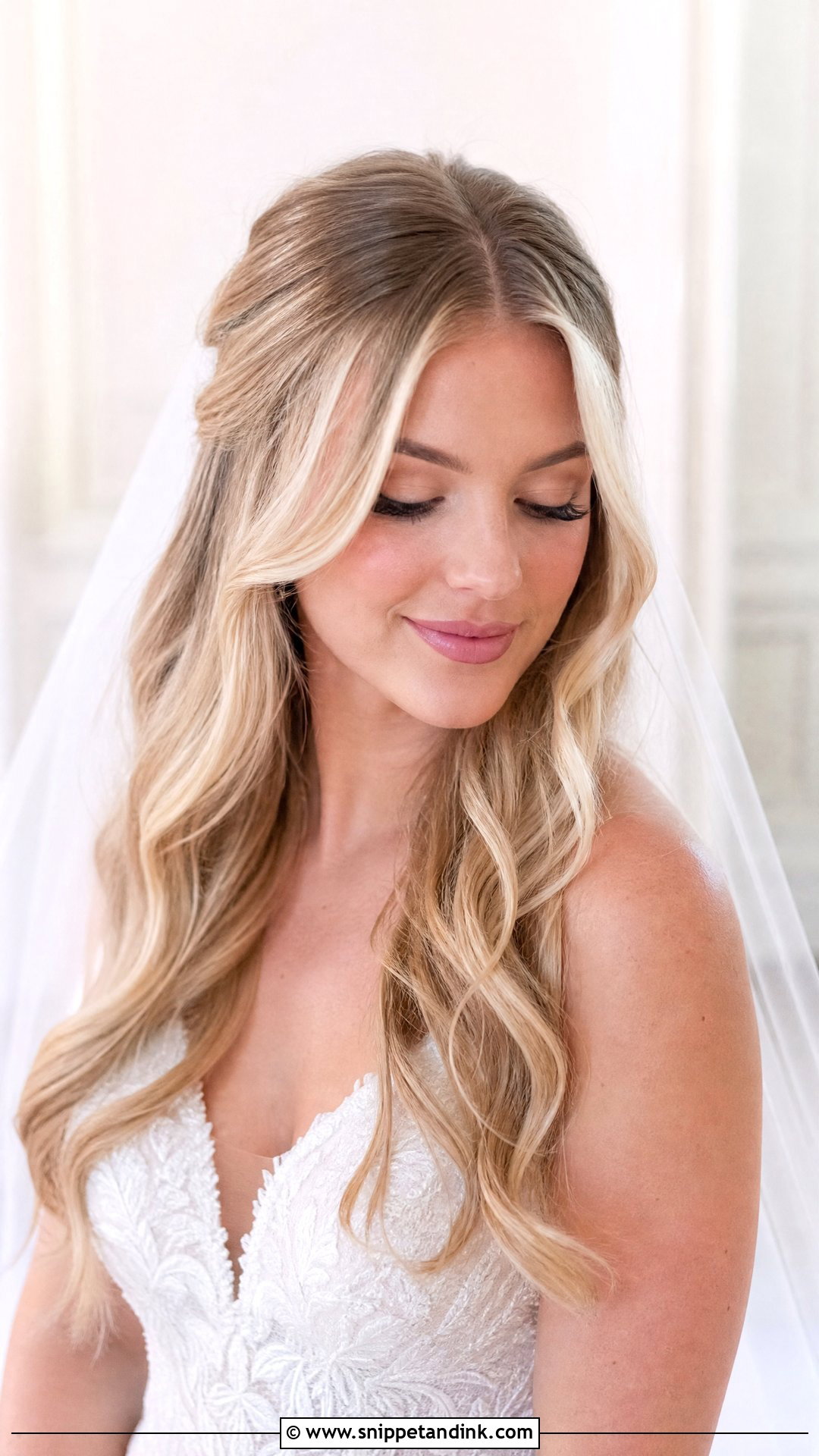
Soft waves are the version I’m asked for most, and the one that’s easiest to get wrong. Start the bend too high and the face gets crowded; I begin the waves just below the cheekbones so the top stays smooth and the movement happens where the camera wants it. Layered, long and medium hair all take this well. Finish with a flexible-hold spray so the waves can sway when you walk. They sit happily under a veil or next to pearl pins or floral combs, and they balance a lace or off-shoulder neckline without fighting it.
2. Bride Hair Down Hollywood Waves
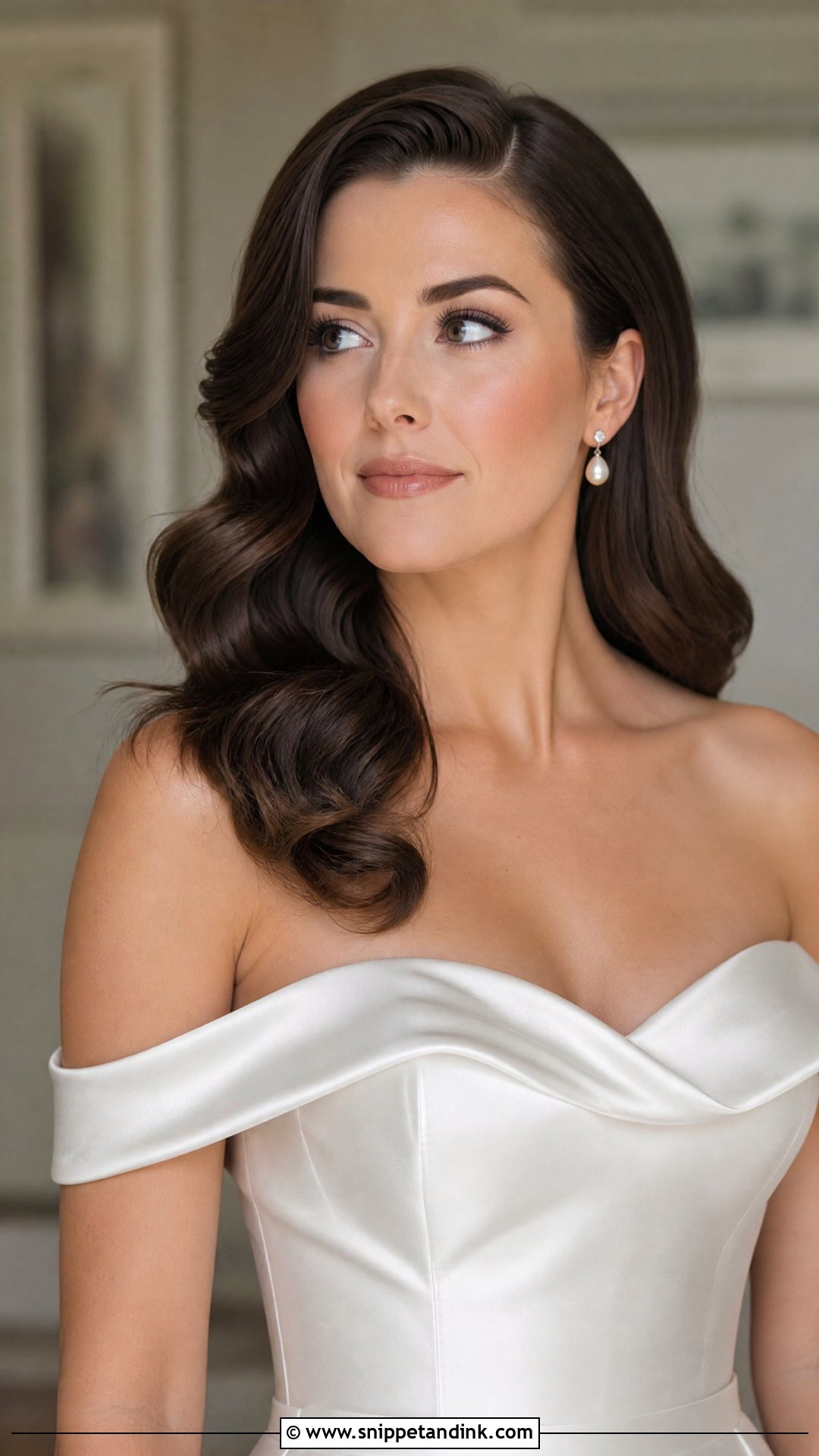
Hollywood waves are a set, not a curl. I curl every section in the same direction, let it cool completely, then brush it into one continuous ripple and press the ridges with clips while the spray dries. Rush the cooling and the wave won’t connect. You need at least shoulder length for the curve to repeat, and a deep side part to give it that red-carpet sweep. With satin, a structured gown or statement earrings, skip the hair accessories altogether. The shine is the accessory.
3. Bride Hair Down Beach Waves
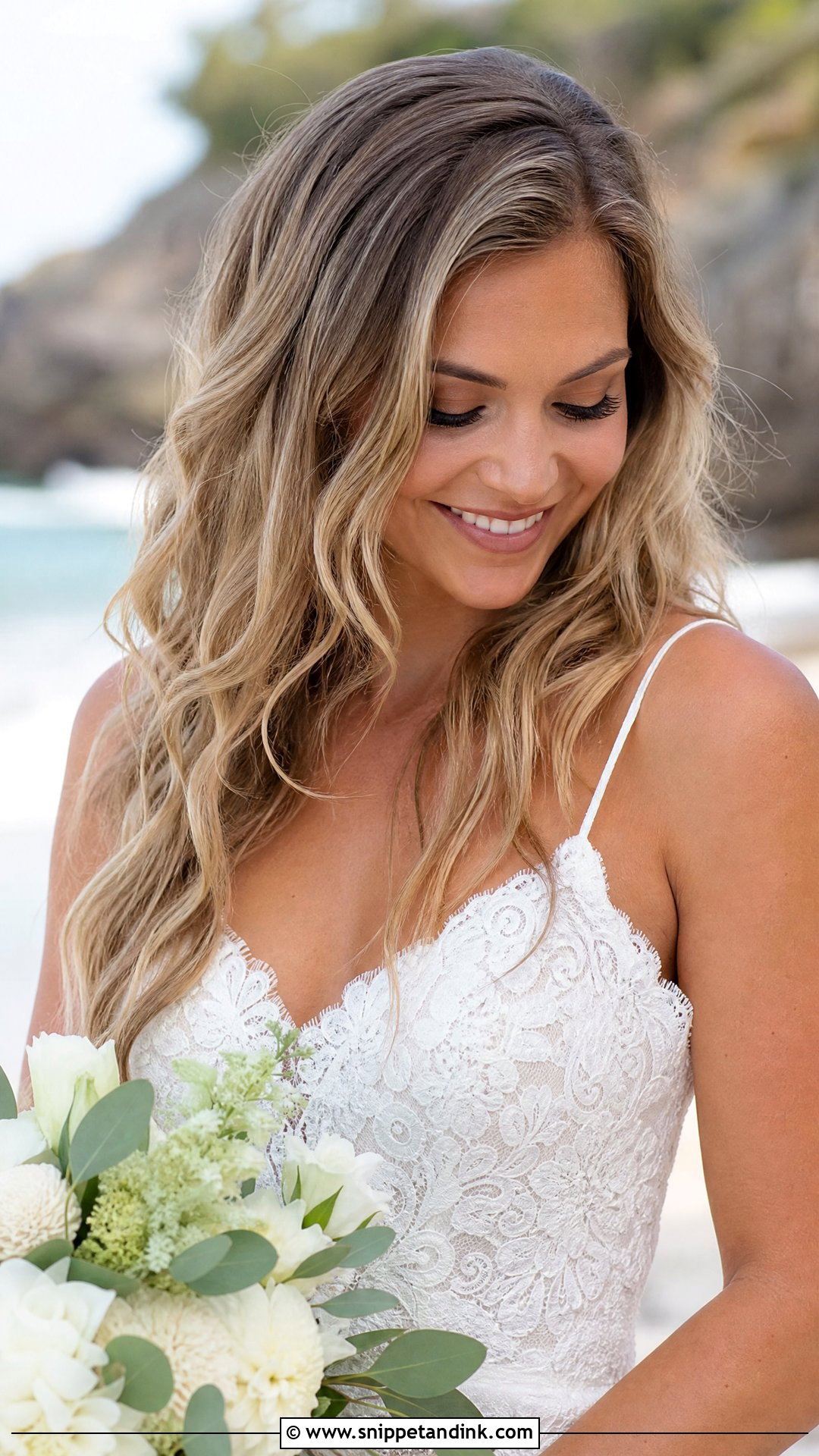
Done badly, beach waves look like you forgot to finish your hair. Done well, they’re airy with a little lift at the crown and softer, slightly open ends. I make them with a flat iron or a large wand and leave the last inch straight, which is what keeps them from reading as curls. Beach waves work with either part, a veil or a few small floral pins. If you’re getting married by the water, ask for an anti-humidity primer at the damp stage; salt air relaxes this texture faster than any other.
4. Bride Hair Down Loose Curls
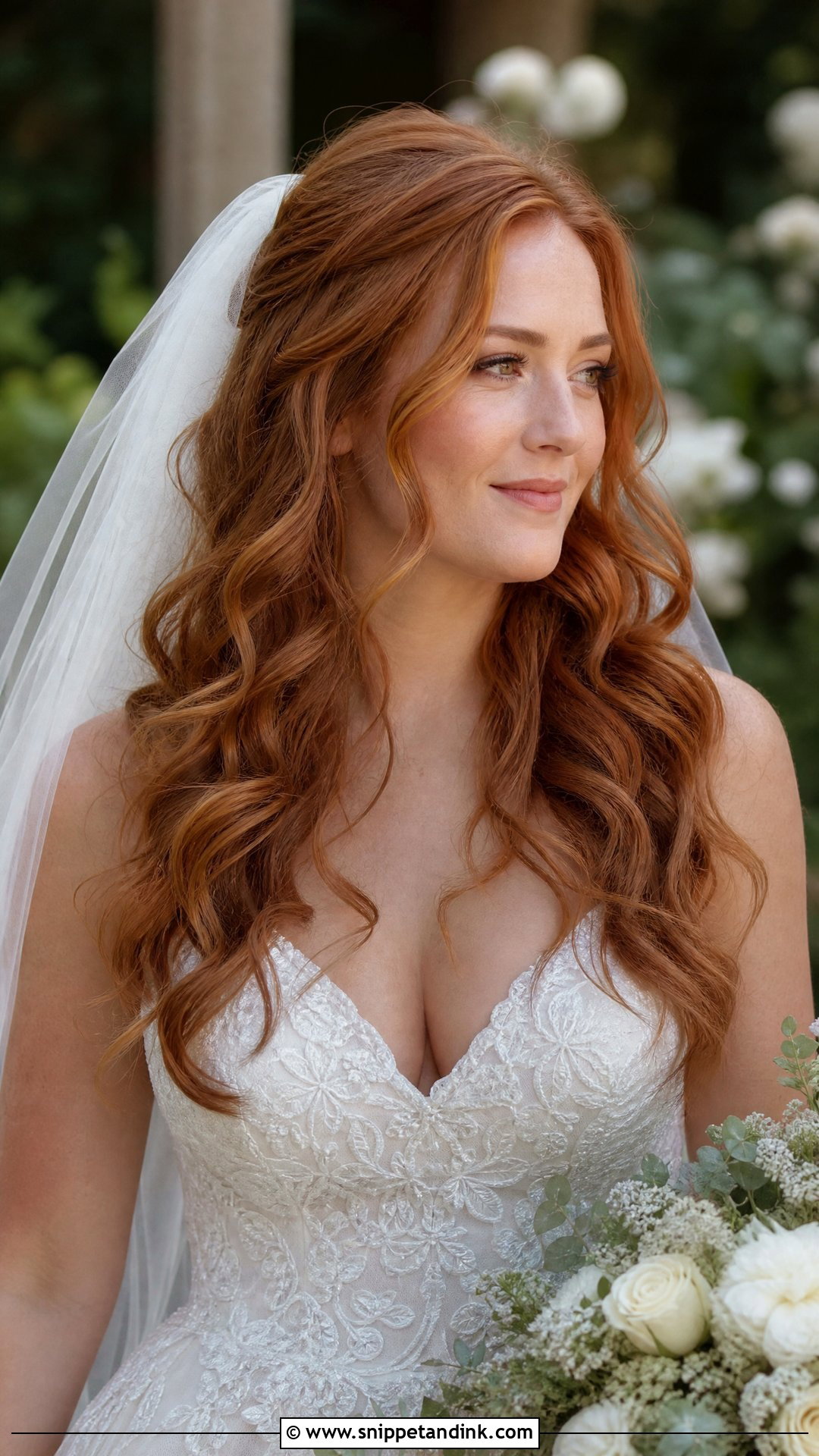
Loose curls sit between waves and ringlets: more defined than the first, less rigid than the second. I set them in medium sections and brush only lightly once they’ve cooled, so they blend at the edges but still read as individual curls. Layered hair helps a lot here because shorter pieces give volume around the cheeks and shoulders. Under a veil, keep the crown smooth and save the movement for the lengths. Whoever does your hair needs to pin each curl while it cools. That step is what keeps them there from the first look to the last dance.
5. Bride Hair Down Middle Part Waves
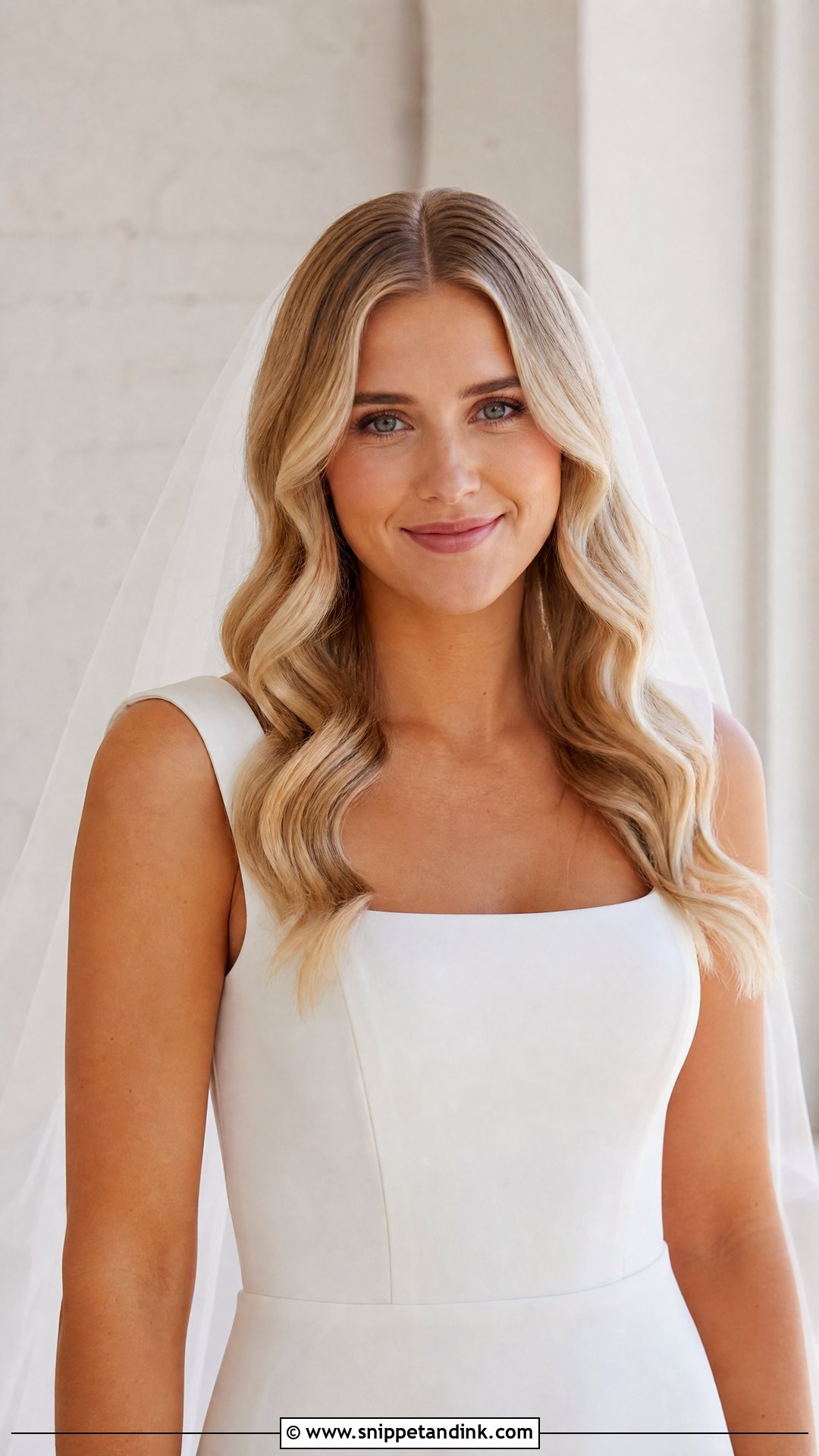
A centre part is honest. It shows your face symmetrically, which is why I’d do a trial with it before committing; some people find it severe on themselves in photos even when they love it on others. With soft waves through the lengths and a glossy, smooth crown, it pairs well with minimalist gowns, square necklines and natural makeup. Flat roots are the usual problem. I add hidden volume underneath at the crown, never on top, so the part stays clean.
6. Bride Hair Down Side Swept Curls
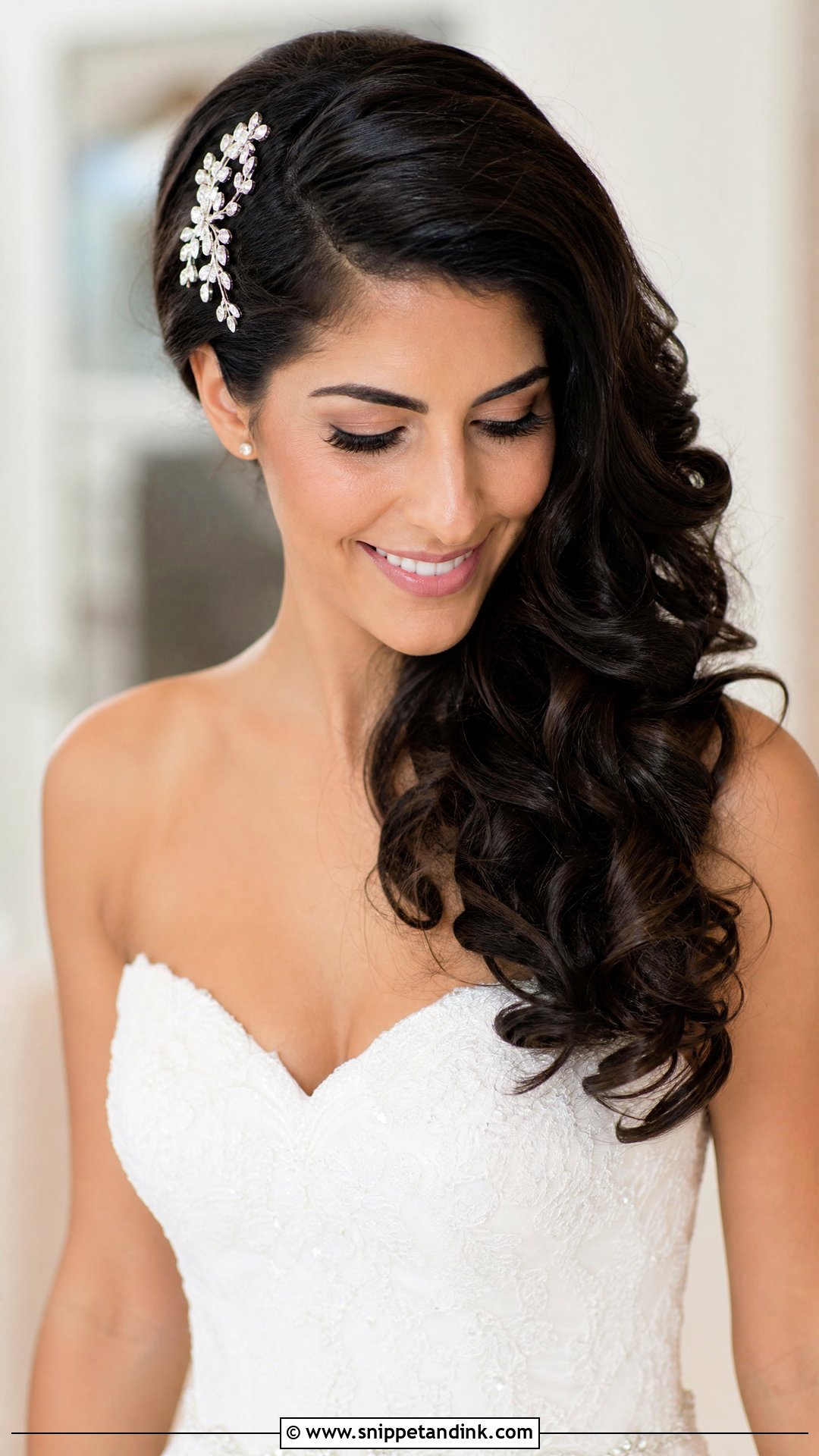
Sweeping the curls over one shoulder gives drama without an updo, and it’s practical as well: one side of your face stays clear for the whole day. The pinned side carries the work. I build a row of crossed grips behind the ear first, then bring the curls over. That suits strapless, one-shoulder and sweetheart necklines, and it leaves a clean spot for an earring. Cover the pins with pearls, crystals or a floral comb if you’d like, or keep it bare and let the shape speak.
7. Bride Hair Down With Veil
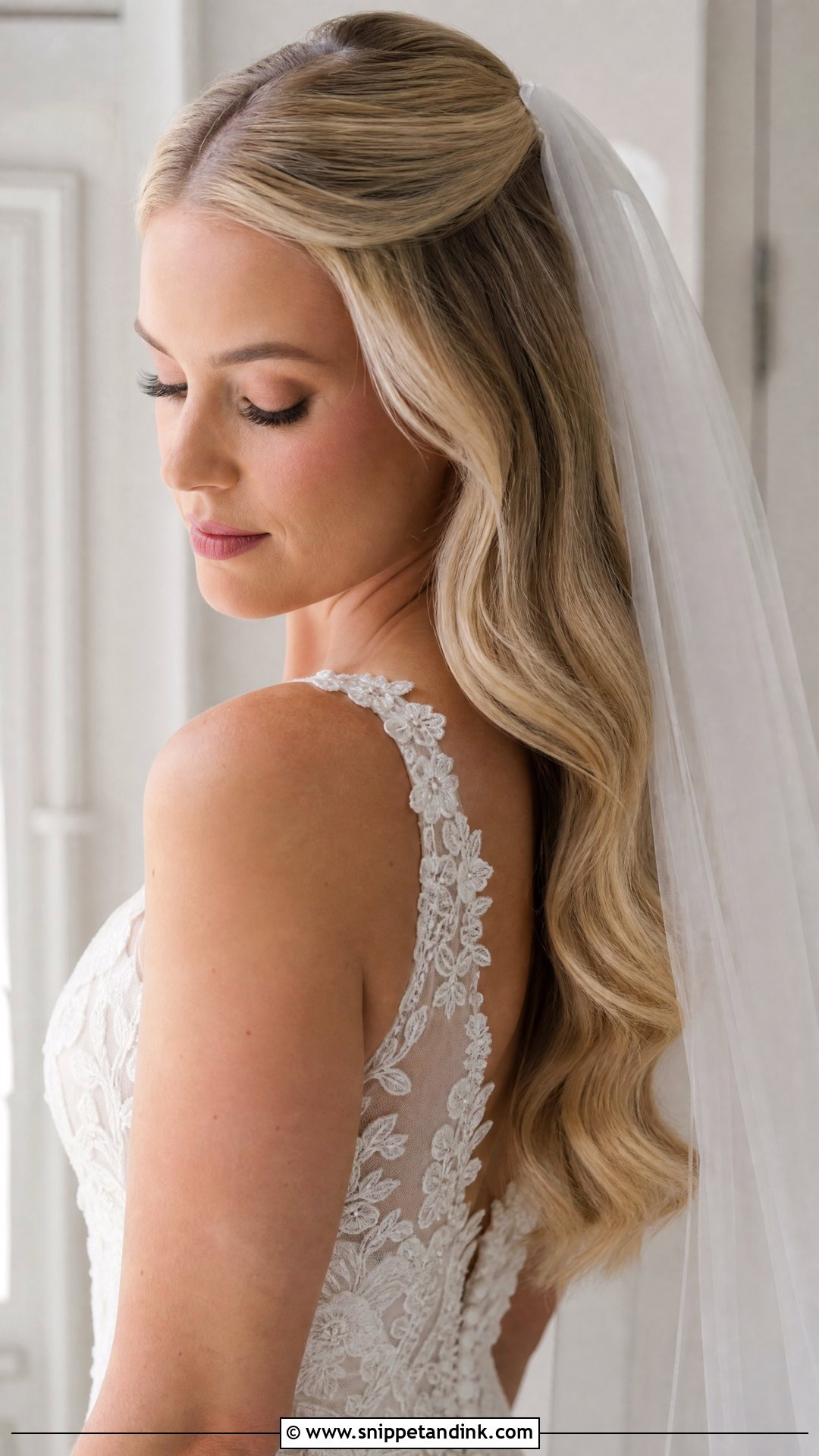
Placement is the whole question with a veil on loose hair. A comb pushed into slippery waves will slide, so I either anchor it into a small hidden pinned section at the crown or slip it under a soft half-up twist where it has something to grip. Sitting lower at the back gives a softer, more romantic profile; higher at the crown is more traditional. If your veil is long or heavily edged in lace, I keep the waves quieter. Two textures competing on the back of your head looks busy in every rear-view photograph.
8. Bride Hair Down With Pearl Pins
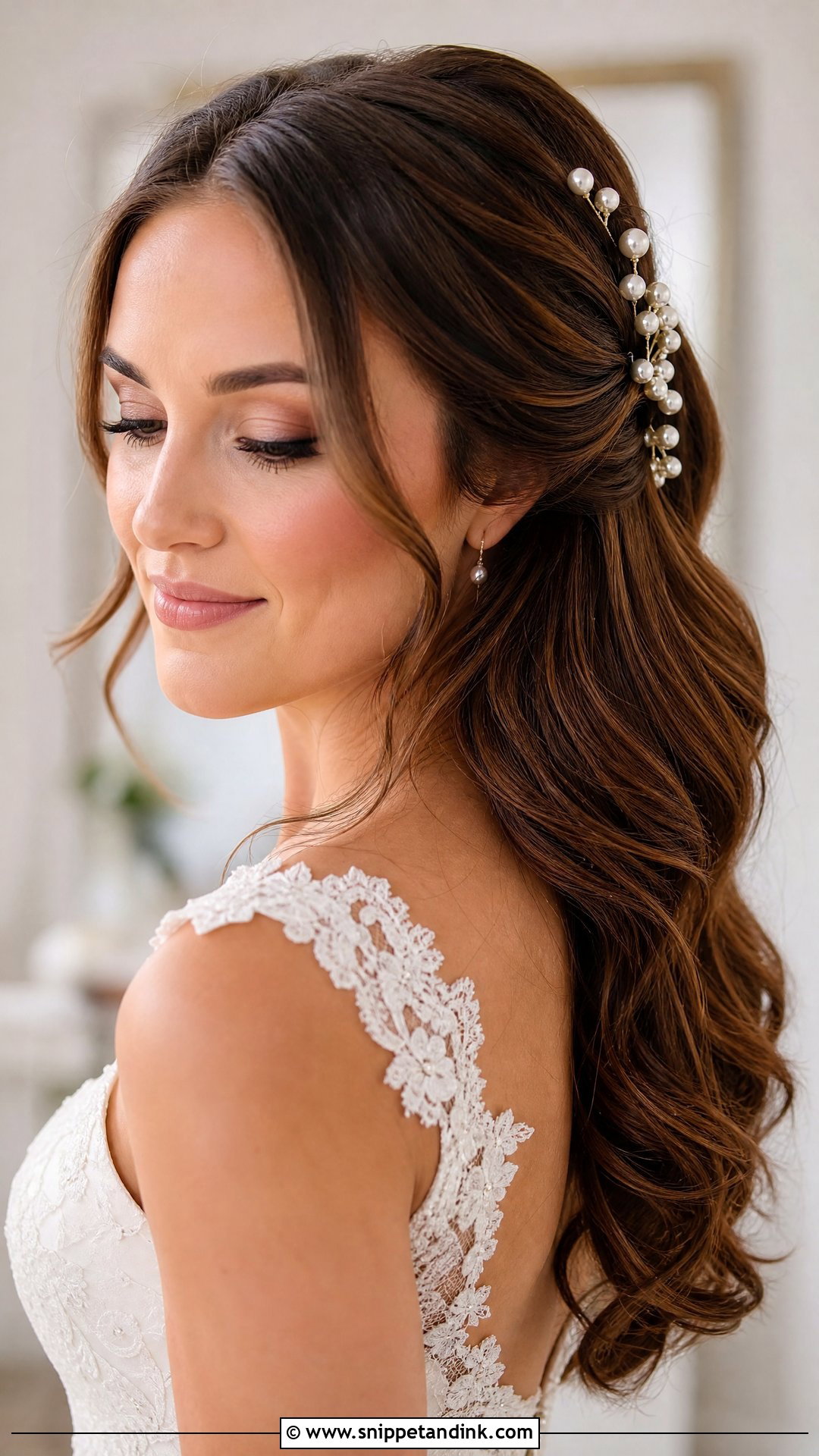
Pearl pins add detail without the weight of a headpiece. I’d place them deliberately: a curved line on one pinned-back side, a small cluster near the crown, or a scatter through the waves. Random placement looks like the pins fell in. Pearl heads are heavier than they look, so on fine or slippery hair I slide each pin in over a crossed bobby pin that gives it a base. They suit lace, sheer sleeves and pearl earrings, and they rescue a very plain gown from looking underdressed.
9. Bride Hair Down With Flower Crown
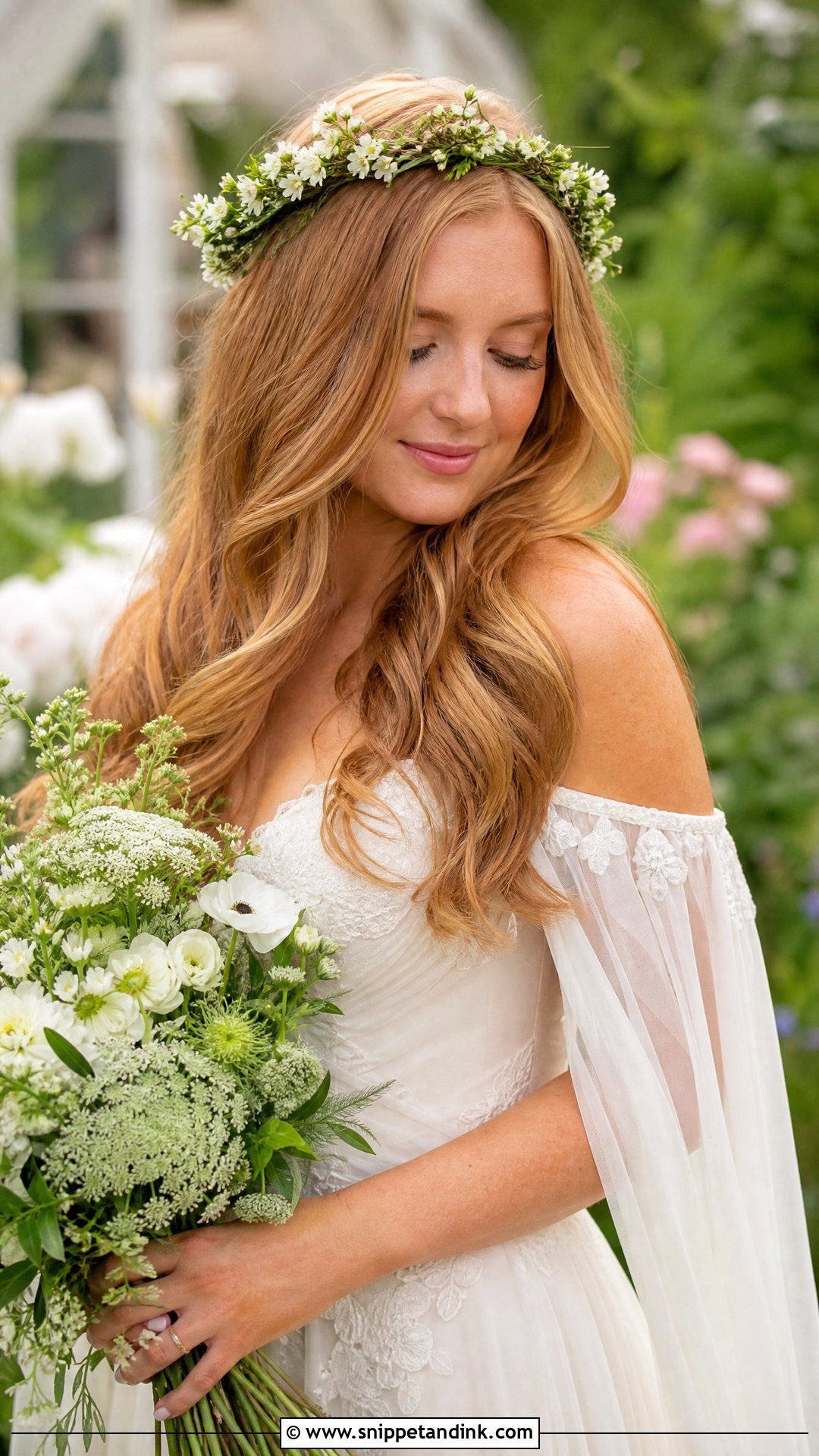
A flower crown on waves belongs outdoors: gardens, meadows, a relaxed vineyard. Texture matters, because sleek hair gives the crown nothing to sit in. Scale it to the dress; a thin band of small blooms reads more bridal, while a full, wild crown makes a bolder statement. Ask your florist to wire it on a soft base and to choose flowers that don’t wilt quickly out of water. I secure crowns with pins at the temples and two at the back, threaded through the base, not just resting on top.
10. Bride Hair Down Half Up Waves
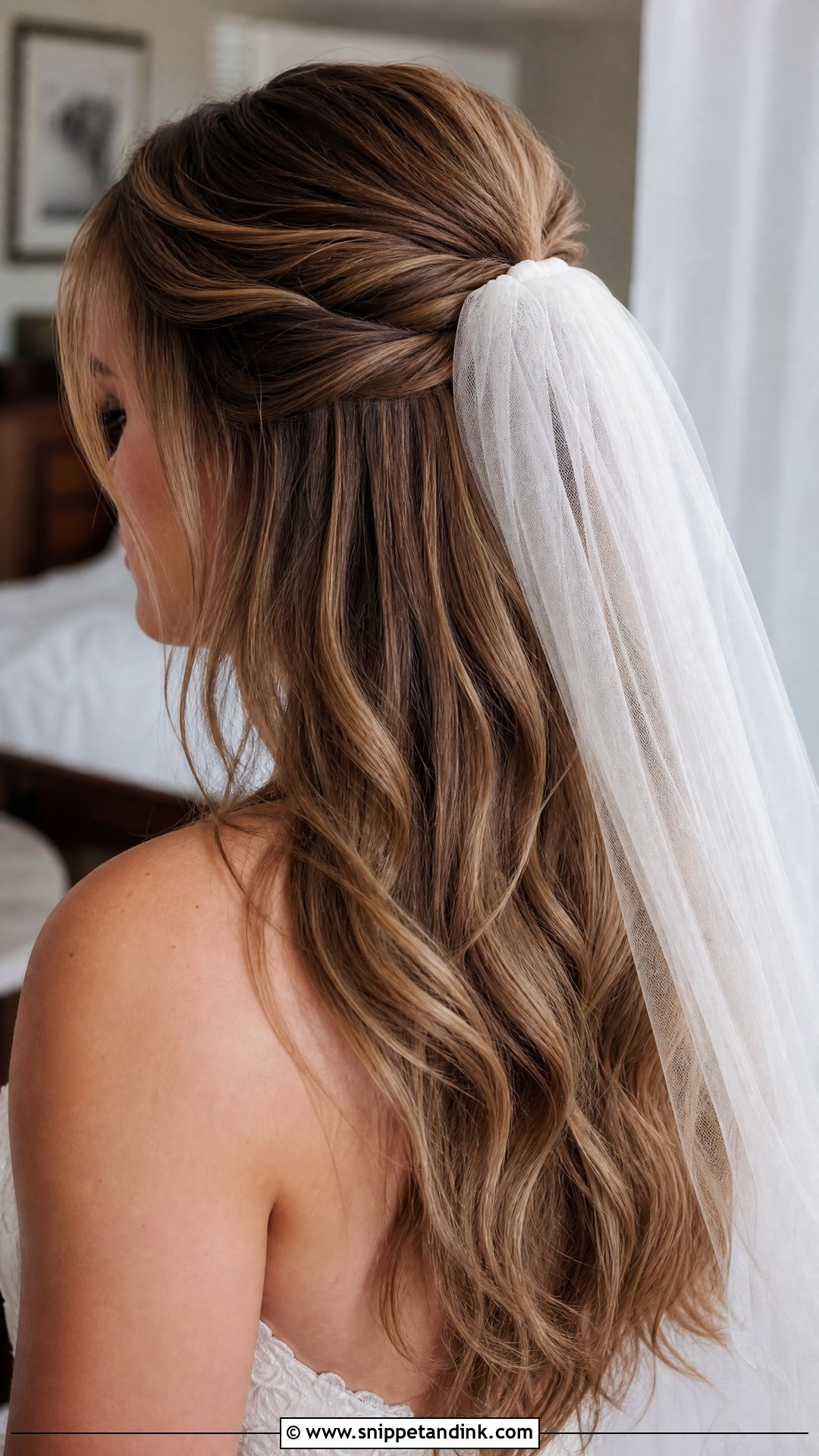
Half up with waves is the compromise I recommend more than any other, because it buys you support without giving up the loose look. The top section can be twisted, braided or simply lifted and pinned, and that pinned section is where a veil or accessory sits securely. I can also adjust its height to the face: more lift for a round face, flatter for a long one. Hair stays out of your eyes during the vows. It’s the most forgiving of all the down styles on a long, windy day.
11. Bride Hair Down Braided Crown
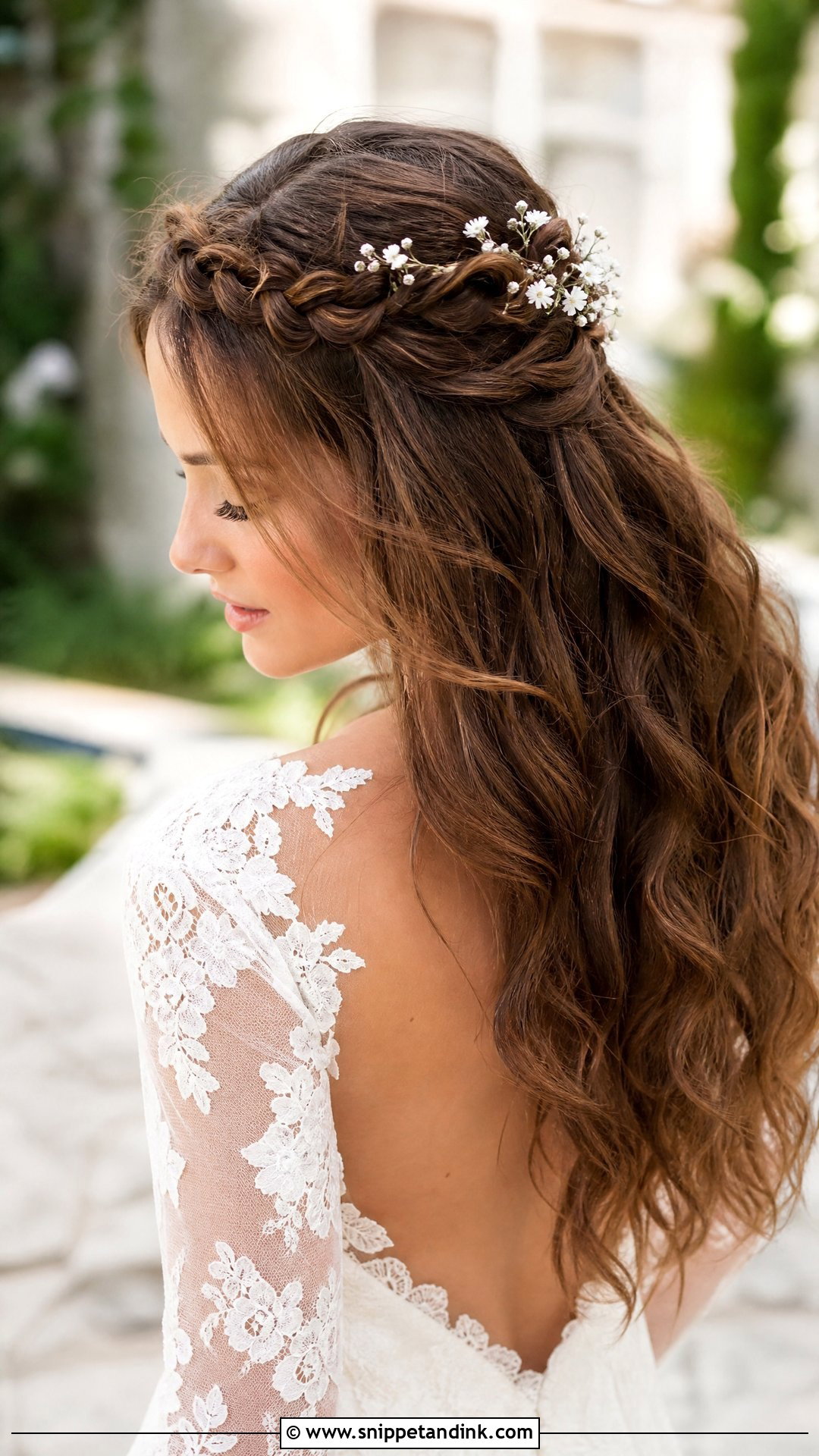
A braided crown controls the front while the lengths stay loose. The braid can wrap across the head, run down one side, or melt into the waves at the back. I braid it firmly and then pancake it, gently pulling the loops wider so it looks soft and not like a school plait. That firm base is also why it holds outdoors. Small flowers or pearl pins tuck into the braid easily, and a veil can sit just beneath it.
12. Bride Hair Down Long Layers
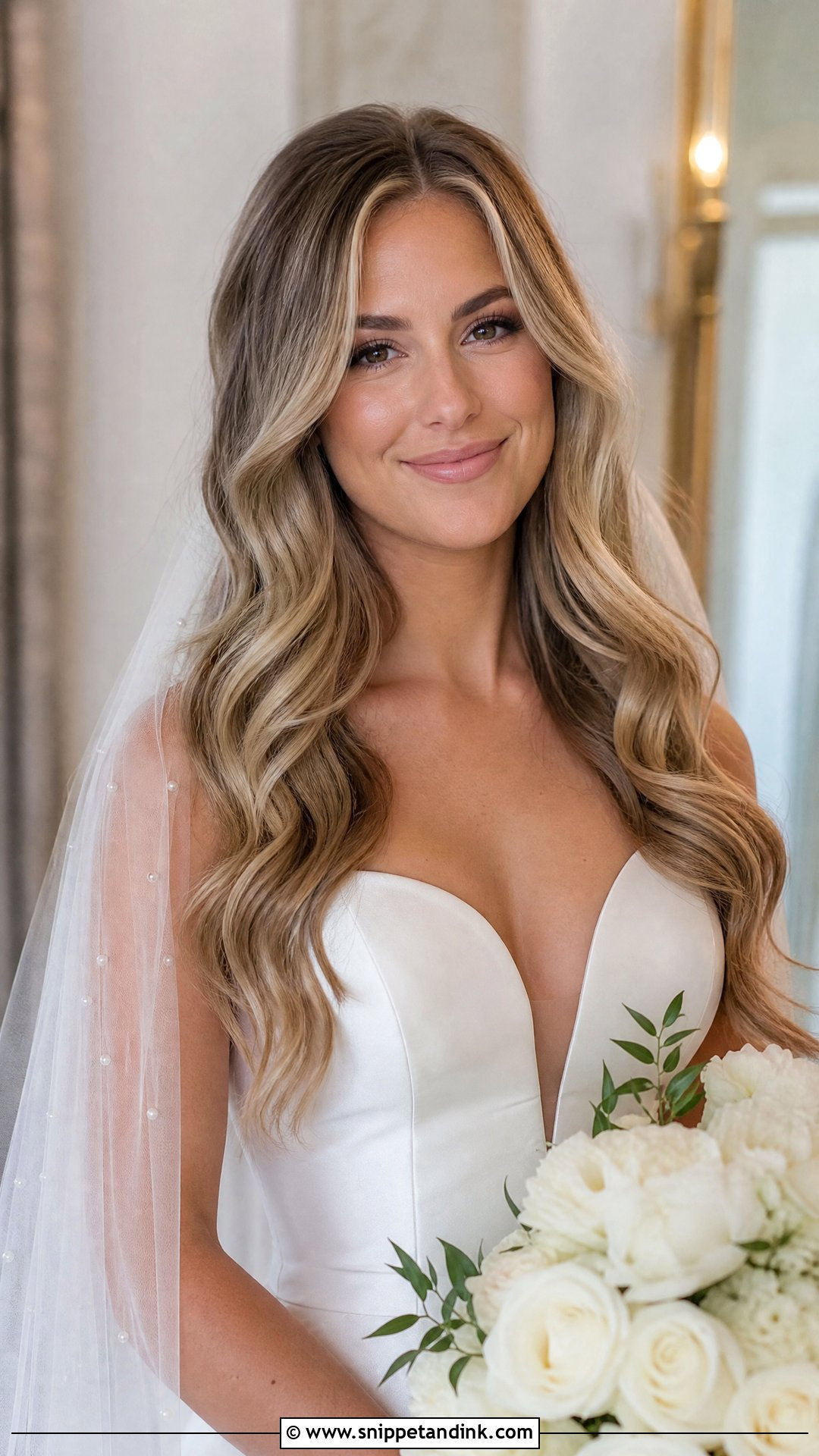
Good layers do half my job for me. They create movement when curled away from the face, take bulk out of thick hair without losing length, and give fine hair the illusion of more volume. Face-framing pieces are the most useful part, opening up the cheekbones and the neckline. One warning: book the cut four to six weeks before the wedding, not the week of, so the layers have settled and you’ve learned how they fall. Almost any accessory works with this, from a veil to a crystal comb.
13. Bride Hair Down Curly Hair
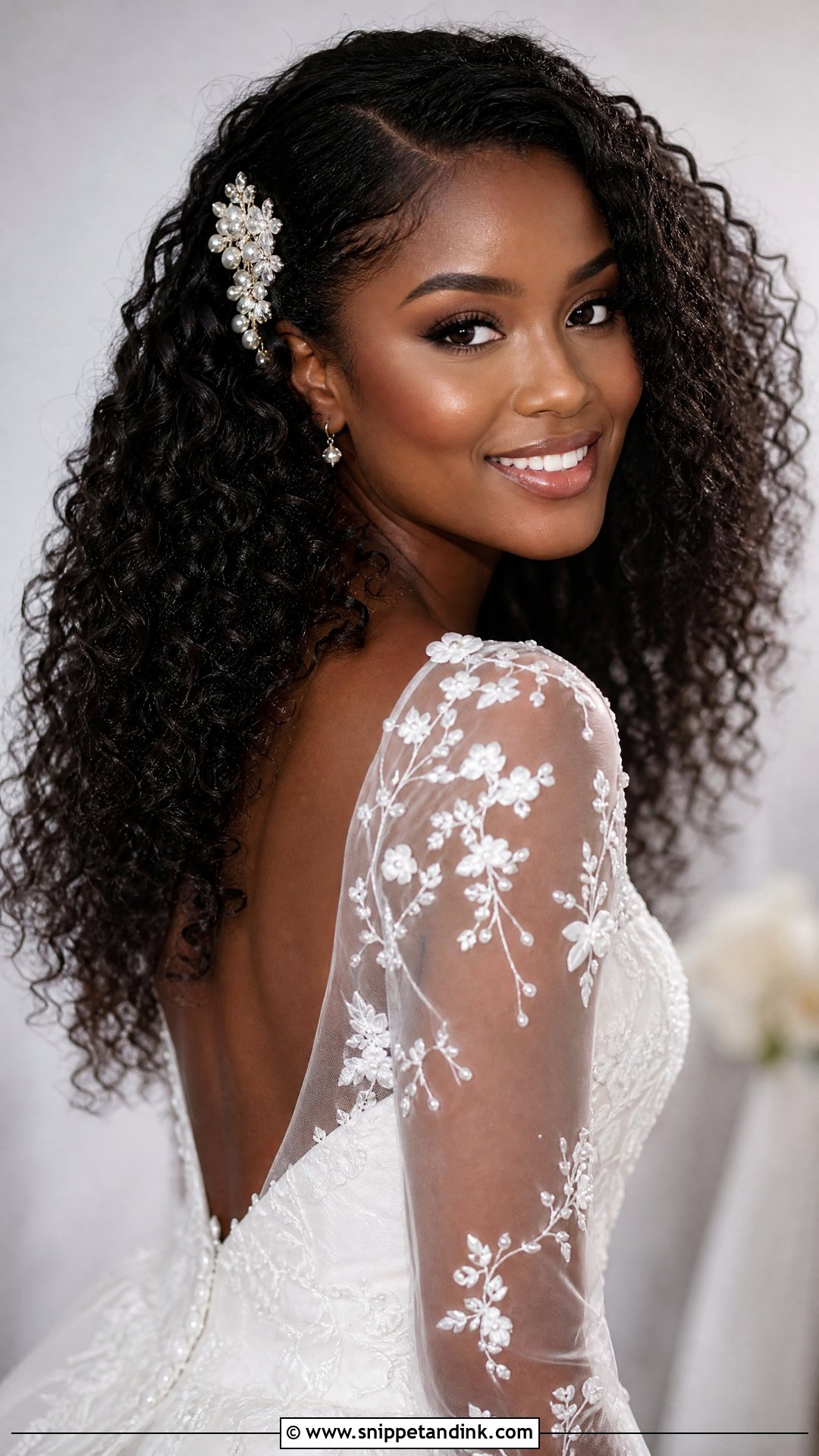
Natural curls shouldn’t be flattened for the wedding. The work is defining and shaping them, with frizz control so the pattern looks intentional. I ask clients with curly hair to arrive with it freshly washed and styled the way they love it, because curl products need real drying time and a diffuser can’t be rushed on the morning. A side part, a centre part or one side pinned back all work. Curly hair holds floral pins, pearl clips and veils better than straight hair does, since the texture grips.
14. Bride Hair Down Short Bob
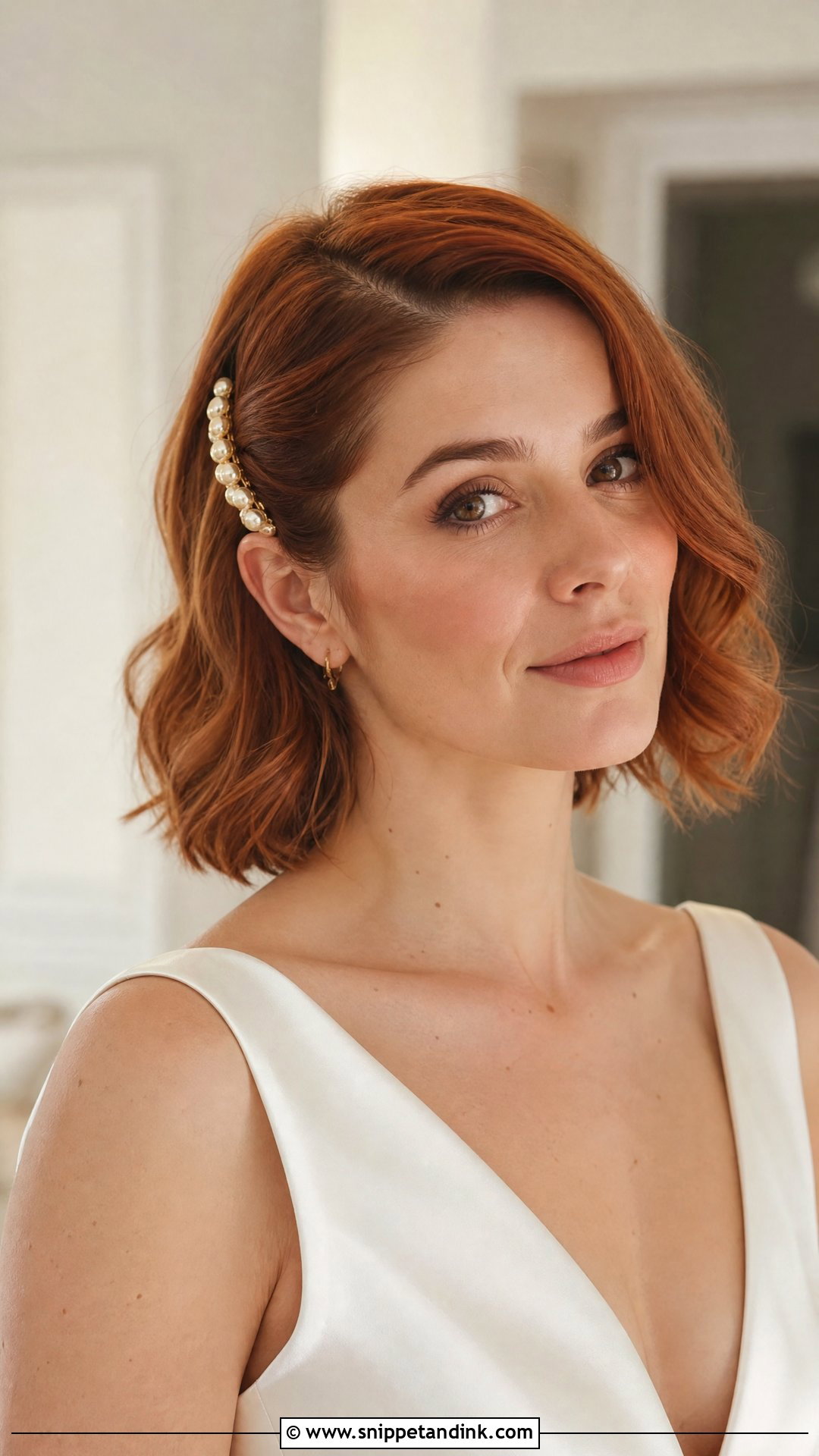
A short bob down for the wedding is chic and quick, with no extensions or pinning required. Styled with soft waves, glossy bends, a deep side part or tucked behind one ear, it frames the face and leaves earrings and the neckline fully on show. The difference between a wedding bob and your everyday one is shine and a crisp outline, so I’d get the ends tidied about a week before. Birdcage veils, pearl clips, mini combs and slim headbands all suit this length.
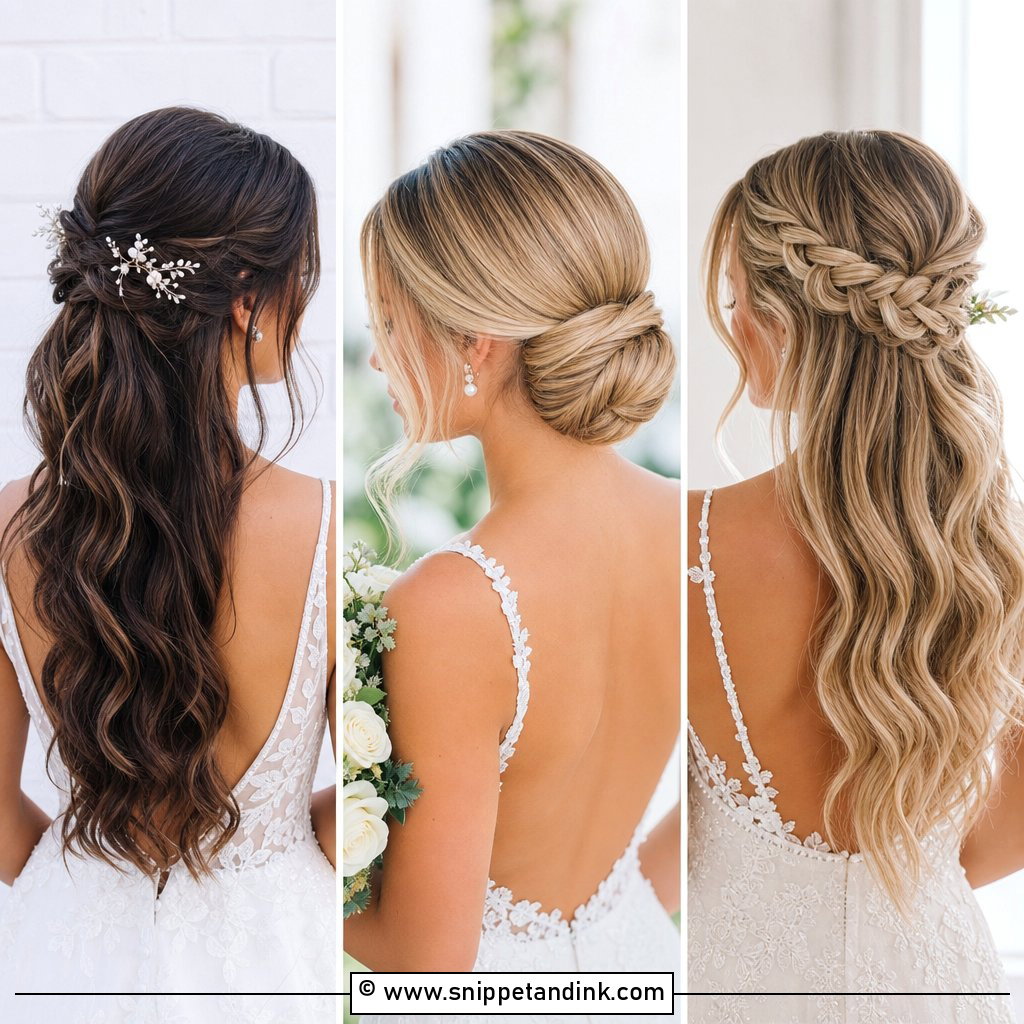
15. Bride Hair Down Old Money Blowout
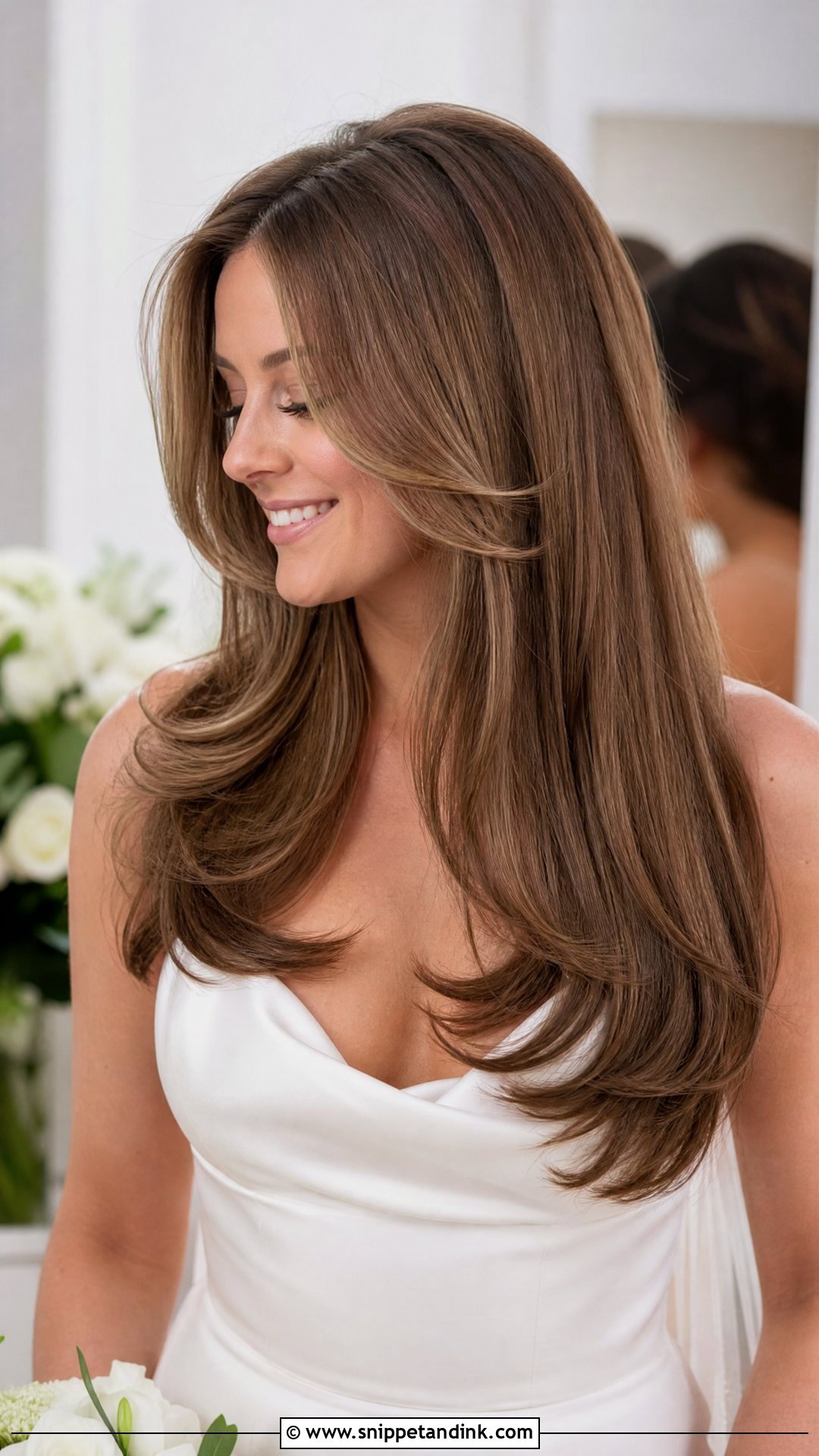
The old money blowout is volume and shine with no visible curl: lift at the crown, face-framing layers bent away from the face, rounded ends. I build it with a large round brush and set the crown in velcro rollers while the makeup is done, which is where the lasting body comes from. If you wear your hair down every day, this is the version that will feel most like you. It goes with satin gowns, simple veils and pearl earrings. Humidity is its weakness, so on a sticky day I’d add a light bend through the ends as insurance.
Clip-In Extensions, Honestly
Plenty of the full, swingy down styles you see in wedding photos have a little help. Clip-ins add weight at the ends and body through the middle, and good human-hair pieces hold a curl better than very fine natural hair does.
- Match the colour to the ends of your hair, not the roots, and have the pieces blended and trimmed into your own shape.
- Wear them to your trial. That’s when you find out whether the clips pull, whether they show when wind lifts your hair, and how they behave under a veil comb.
- Human hair can be heat-styled like your own. Most synthetic pieces can’t, so check the label before anyone points a hot iron at them.
- If you’ve never worn extensions, do a full day at home first. Clips worn for the first time on the wedding day can leave your scalp aching by evening.
Snags, Tangles and the Hug Problem
Loose hair’s small enemy is friction. Beaded straps, lace shoulders and chunky necklaces catch strands, and a veil comb resting on waves rubs a matted patch into the back by the reception. Every hug from a guest in a sequinned jacket adds a little more.
I work a few drops of shine serum through the lengths so hair slides instead of knotting. Take the veil out after the formal portraits. Keep a wide-tooth comb in your bag, never a paddle brush, which drags curls straight. And if the gown is heavily beaded at one shoulder, sweep the hair toward the plain side; it’s kinder to both the hair and the dress.
Plan a Two-Pin Backup for Hour Eight
Down hair can feel every bit as bridal as an updo, provided the shape and hold are planned rather than hoped for. Let the dress, the venue and the forecast narrow things down: Hollywood waves for satin in a ballroom, a braided crown or half-up waves for a breezy field, a glossy bob or blowout if you never wear curls in real life. Then add one accessory, not five. I also show the maid of honour how to pull the front back with two pins, just in case. Knowing there’s an easy plan B is what lets you stop touching your hair and enjoy the day.
You'll Like These Ideas:



Leave a Reply